


Abstract
Chicory holds considerable promise as a nutritious feed alternative. This study investigated the associations of dietary inclusion of 10% fresh chicory (dry-matter basis) with growth performance, meat quality, cecal microbiota, and muscle metabolite profiles in Diqing Tibetan pigs using integrated metagenomic and widely targeted metabolomic analyses. Thirty-six castrated male growing–finishing Diqing Tibetan pigs were randomly allocated into control and chicory-supplemented groups. Our findings revealed that the 10% fresh chicory inclusion did not compromise growth performance. Moreover, the chicory diet was associated with a significant enrichment of Prevotella sp., Bacteroides thetaiotaomicron, and Bacteroides uniformis within the cecum. Importantly, these specific microbial shifts exhibited correlations with alterations in the muscle metabolite profile. We observed that the chicory intervention was accompanied by elevated levels of glycerol 3-phosphate and glycerophospholipids, alongside a reduction in acylcarnitines. These exploratory associations suggest a potential link to shifted triglyceride metabolism, which corresponds to the significantly higher intramuscular fat content observed in the experimental group (5.89 ± 0.98) versus the control (4.23 ± 0.23). Overall, dietary inclusion of 10% fresh chicory was associated with changes in the cecal microbiota and muscle metabolome and supports further evaluation of fresh chicory as a forage ingredient in pig diets.
1. Introduction
Meat and meat products are widely recognized as excellent sources of high-quality nutrients [1], with pigs representing a crucial species for providing animal protein for human consumption. The demand for high-quality pork has increased substantially in recent decades, driven by consumer preferences for enhanced sensory attributes, including tenderness, juiciness, and flavor. Pork remains one of the most significant sources of animal protein globally, accounting for approximately 35% of total meat production (FAO). However, historical breeding strategies that prioritized rapid growth and lean meat yield have often compromised meat quality, particularly through reduced intramuscular fat (IMF) content. Given the rising costs of conventional feed ingredients such as maize and soybean meal, there is a growing need to develop nutritional strategies that can simultaneously enhance meat quality and potentially reduce production costs. Nutritional regulation represents a feasible and scalable approach to modulating meat quality.
Among dietary components, fiber has garnered considerable attention as a functional nutrient that cannot be directly digested by the host but serves as a substrate for microbial fermentation, thereby generating bioactive metabolites that influence host physiology [2,3,4]. More broadly, diet has emerged as a key determinant of gut microbiota structure and function, with microbiota-mediated metabolism increasingly recognized as an important pathway linking diet to host metabolic phenotypes [5]. In this context, the type and source of dietary fiber are critical factors influencing microbial ecology and downstream metabolic outcomes.
Green forages have been proposed as sustainable alternatives to conventional feed resources due to their high moisture content, nutritional density, and low production costs. In pig production systems, the supplementation of fresh forage has been associated with improved fatty acid composition and increased levels of antioxidant compounds, such as vitamin E, thereby enhancing the nutritional quality of meat [6,7]. These effects are likely attributable to the presence of bioactive compounds and vitamins that modulate oxidative stability and lipid metabolism in muscle tissue. However, the use of green forage in pig diets remains constrained by issues of digestibility and optimal inclusion levels, particularly in monogastric animals. Chicory (Cichorium intybus) is widely recognized as a promising alternative feed resource due to its high content of protein, carbohydrates, minerals, and bioactive compounds [8]. Previous studies have demonstrated that the dietary inclusion of chicory can improve growth performance, carcass traits, and meat quality in pigs [9,10,11]. Notably, these studies have predominantly utilized dried chicory powder, a processing form that may lead to the loss of heat-sensitive vitamins and phytochemicals. In contrast, fresh (green) chicory retains a more complete profile of native nutrients and bioactive substances. Despite this, the effects of fresh chicory on gut microbiota, host metabolism, and meat quality remain largely unexplored.
Diqing Tibetan pigs are a regional population of Tibetan pigs native to the highlands of northwestern Yunnan, China. They are well adapted to the high-altitude, cold, and hypoxic environment and are valued for their tender meat, distinctive flavor, and capacity for fat deposition. However, long-term adaptation to this resource-limited highland environment is also accompanied by a relatively slow growth rate compared with conventional commercial pig breeds. Traditional production has relied on grazing and locally available feed resources, with substantial seasonal variation in dietary composition [12]. Their ability to utilize fibrous feeds provides a rationale for evaluating cultivated fresh forages as dietary resources. Assessing both growth performance and meat quality is therefore relevant to the development of forage-based feeding strategies for this local pig population.
In the present study, finishing Diqing Tibetan pigs were fed a diet containing 10% fresh chicory, and integrated metagenomic and metabolomic analyses were conducted. We aimed to characterize changes in the gut microbiota and muscle metabolite profiles and to examine their associations with intramuscular fat deposition and meat quality.
2. Materials and Methods
2.1. Animal Subjects and Trial Design
The 135–day feeding trial was conducted from 1 August to 14 December 2024. A total of 36 healthy, three-month-old castrated male Diqing Tibetan pigs (barrows) obtained from the Weixi Jishun Ecological Pig Breeding Base (Weixi County, Diqing Tibetan Autonomous Prefecture, Yunnan Province, China), exhibiting uniform genetic backgrounds and comparable starting body weights (18.01 ± 3.26 kg), were assigned to two dietary treatments using a completely randomized design. The feeding trial used a pen-based housing system, with six replicate pens per treatment and three pigs per pen. The sample size was determined based on previous comparable pig feeding trials [13,14] and practical experimental conditions rather than through a formal a priori power calculation.
While the control cohort (CON) was fed a standard basal diet, the chicory-supplemented group (Chicory) received a diet in which fresh chicory replaced 10% of the basal diet on a dry matter basis, with all basal diet ingredients proportionally reduced to 90% of their original inclusion levels. Zhang et al. reported that dietary inclusion of 10% chicory powder improved feed efficiency and selected carcass and meat quality traits in growing–finishing Xiangcun Black pigs [11]. Specifically, the 10% treatment resulted in a lower feed-to-gain ratio than the 5% treatment during days 31–90. These favorable responses provide a rationale for evaluating fresh chicory at 10% of dietary dry matter in Diqing Tibetan pigs.
Before the formal feeding trial, the pig facilities were thoroughly cleaned and disinfected, and all pigs underwent a 10-day acclimatization period under the same housing and management conditions. Throughout the experimental period, all pigs were managed under the standard husbandry and biosecurity procedures of the farm, including routine vaccination and deworming. Pens were cleaned once daily, and adequate ventilation was maintained. Housing and management conditions were kept consistent across treatments.
Designated staff oversaw the entire 135-day feeding period. Before the morning meal each day, all pigs were checked for health status. No adverse events were observed during the feeding trial. No formal humane endpoints were prespecified. All animals completed the feeding trial, and no animals or experimental units were excluded from the analyses. No additional animal-level exclusion criteria were applied.
Upon trial completion, a single pig per replicate—yielding six animals per treatment—was chosen randomly for slaughter to assess carcass and meat quality parameters, as well as to harvest samples for cecal metagenomic and muscle metabolomic evaluations.
2.2. Feeding and Diet Characterization
2.2.1. Chicory Cultivation and Preparation
Forage chicory seeds were sown in late May 2024 in fields adjacent to the experimental pig farm. Field management was conducted in accordance with the Sichuan provincial standard DB51/T 685–2018, “Technical Code of Practice for Forage Chicory Cultivation” [15]. When the leaves reached 30–50 cm in length, the whole plants were harvested and mechanically chopped before feeding.
2.2.2. Nutrient Analysis and Chemical Composition of Fresh Chicory
Three fresh chicory samples were randomly collected at each of three time points: the beginning, middle, and end of the feeding trial. The nutritional components of the experimental chicory (Cichorium intybus) were analyzed following the procedures specified in applicable Chinese national standards. Moisture content was measured gravimetrically from the loss in sample mass during drying according to the Chinese national standard GB/T 6435–2014, “Determination of Moisture in Feedstuffs” [16]; crude protein content was measured by Kjeldahl digestion, distillation, and titration, with nitrogen content converted to crude protein using a factor of 6.25, according to the Chinese national standard GB/T 6432–2018, “Determination of Crude Protein in Feeds—Kjeldahl Method” [17]; crude fat content was measured by solvent extraction followed by gravimetric determination of the extract after solvent removal according to the Chinese national standard GB/T 6433–2025, “Determination of Crude Fat in Feeds” [18]; crude fiber content was measured by sequential acid and alkali digestion and filtration, followed by drying and weighing of the residue and correction for its ash content, according to the Chinese national standard GB/T 6434–2022, “Determination of Crude Fiber Content in Feeds” [19]; calcium content was measured by titrimetric analysis following sample mineralization according to the Chinese national standard GB/T 6436–2018, “Determination of Calcium in Feeds” [20]; and phosphorus content was measured spectrophotometrically following sample mineralization and formation of a yellow phosphovanadomolybdate complex according to the Chinese national standard GB/T 6437–2018, “Determination of Phosphorus in Feeds—Spectrophotometry” [21]. Potassium and vitamins B1, B2, B3, and C were also determined in the fresh chicory samples collected in the present study.
The chemical composition of fresh chicory is presented in Table 1. The moisture content of fresh chicory was 88.59%. On a dry matter basis, fresh chicory contained 13.41% crude protein, 4.62% crude fat, 13.69% crude fiber, 0.06% calcium, and 0.02% phosphorus. The vitamin B1, B3, C, and B2 contents were 132.26, 1.07, 0.78, and 0.49 μg g−1, respectively.
Table 1.
Chemical composition and digestible energy content of fresh chicory (cv. Puna) cultivated in Diqing, China.
The digestible energy value of 11.05 MJ/kg for fresh chicory aerial parts in growing pigs was obtained from the report entitled Comparative energy values of 10 forages in finishing pigs, which was presented by Renaudeau et al. at the 2023 EAAP annual meeting and officially archived in the French HAL open repository (archive number: hal-04286649; accessible online via: https://hal.science/hal-04286649; accessed on 1 October 2026).
2.2.3. Experimental Diets and Feeding Management
The composition and nutrient content of the experimental diets are presented in Table 2. Dietary formulations met the nutrient requirement guidelines established by the National Research Council (NRC, 2012). The CON and Chicory diets shown in Table 2 were used throughout the entire 135-day feeding trial without phase-specific reformulation. This design was adopted to maintain a consistent dietary treatment throughout the experimental period and to avoid introducing changes in diet formulation as an additional source of variation when evaluating the effects of dietary fresh chicory inclusion. For the Chicory group, the basal diet and mechanically chopped fresh chicory were weighed for each meal according to the prescribed dry-matter-based proportions. Before feeding, the weighed ingredients were mixed manually by turning to promote an even distribution of the chopped chicory throughout the basal diet. Feeders were replenished three times daily, at 07:00–08:00, 14:00–15:00, and 19:00–20:00, with feed provided ad libitum throughout the day. Water was available ad libitum at all times. Feed allocation and refusals were quantified daily on a pen basis. Individual body weights were obtained at trial initiation and termination for calculation of average daily gain (ADG). Daily feeding records were further used to derive cumulative basal diet intake, cumulative fresh chicory intake, and the feed-to-gain ratio (F:G).
Table 2.
Composition and nutrient content of the experimental diets on a dry-matter basis.
2.3. Carcass Trait Measurements
At the end of the experiment, six pigs were randomly selected from each group (one pig per replicate) and subjected to carcass evaluation and sample collection. Before slaughter, feed was withdrawn for 12 h, whereas water remained available. Pre-slaughter live weight was measured individually using an electronic livestock scale.
Pigs were slaughtered by exsanguination in accordance with the procedures specified in the Chinese national standard GB/T 17236–2019, “Operating Procedures of Livestock and Poultry Slaughtering—Pig” [22]. Following slaughter, the abdominal cavity was opened, and the visceral organs and leaf fat were removed and weighed individually using an electronic scale, with weights recorded in kilograms.
Carcass traits, including pre-slaughter live weight, dressing percentage, backfat thickness, and loin-eye area, were assessed with reference to the Chinese agricultural industry standard NY/T 825–2004, “Technical Regulation for Testing of Carcass Traits in Lean-Type Pig” [23]. Dressing percentage was calculated as carcass weight divided by pre-slaughter live weight × 100. Backfat thickness was measured using a digital vernier caliper. Loin-eye area was estimated using a modified procedure based on measurements of the width and height of the longissimus dorsi muscle cross-section: loin-eye area (cm2) = width (cm) × height (cm) × 0.7. Each carcass was divided into anterior, middle, and posterior sections. The skin, bones, lean tissue, and adipose tissue were separated by dissection following the tissue-classification criteria specified in NY/T 825–2004 [23]. Intermuscular fat, cartilage, and tendons were included in the lean tissue fraction, whereas the panniculus carnosus was included in the adipose tissue fraction. Lean tissue adhering to the bones was removed during dissection. The four tissue fractions were weighed separately, and lean meat and fat percentages were calculated using the following equations:
Here, Wskin, Wbone, Wlean, and Wfat denote the weights of the dissected skin, bones, lean tissue, and adipose tissue, respectively, all expressed in the same unit.
2.4. Meat Quality Evaluation
Muscle pH, meat color, marbling score, water loss rate, drip loss, shear force, and intramuscular fat content were evaluated in LD samples with reference to the Chinese agricultural industry standard NY/T 821–2019, “Technical Code of Practice for Pork Quality Assessment” [24]. Muscle pH was recorded potentiometrically at 45 min and 24 h postmortem with a calibrated pH meter. For meat color assessment, LD samples were collected at 1 h postmortem, cut into sections 2–3 cm thick, and scored by comparison with the standard meat color reference chart. The same samples were then placed in labeled resealable bags, stored at 0–4 °C for 24 h ± 15 min, and subsequently evaluated using the marbling reference chart.
Drip loss was determined using a suspension method. Approximately 30 g of LD muscle was weighed at 45 min postmortem to obtain the initial sample mass (W1). The sample was suspended by a wire inside a plastic bag and stored at 4 °C for 24 h. It was then removed, blotted with filter paper to remove surface moisture, and reweighed (W2). Drip loss (%) was calculated as [(W1 − W2)/W1] × 100.
Water loss rate was assessed using a compression method. Muscle samples were weighed before and after compression, and the reduction in sample mass was used to assess fluid release from the tissue. Tenderness was evaluated by shear force measurement, with the cutting direction perpendicular to the muscle fibers. The peak force required to shear the sample was recorded in newtons (N).
For intramuscular fat determination, LD samples were collected immediately after slaughter from six pigs per treatment. The samples were placed in insulated foam boxes containing ice packs and transported to the laboratory under chilled conditions. Visible connective tissue and subcutaneous fat were removed, after which the samples were dried and ground into powder. A weighed portion of the dried muscle powder (m1) was subjected to Soxhlet extraction using anhydrous diethyl ether as the solvent. After solvent removal, the extracted fat was weighed (m2). Intramuscular fat content (% of dry matter) was calculated as (m2/m1) × 100.
Cooking loss was determined separately using the psoas major muscle. A 20–30 g sample was weighed to obtain its initial mass (C1), steamed for 30 min, allowed to cool for 15 min, and reweighed to obtain its cooked mass (C2). Cooking yield was calculated as C2/C1, and cooking loss (%) was calculated as (1 − C2/C1) × 100.
2.5. Gut Microbiome Profiling Based on Metagenomic Sequencing
2.5.1. Sample Collection and Sequencing
After euthanasia, the gastrointestinal tract was exposed and the cecum was separated. Cecal digesta were aseptically collected into sterile tubes from six pigs in each treatment, immediately snap-frozen in liquid nitrogen, and transported to the laboratory for metagenomic analysis.
Cecal digesta served as the source material for microbial DNA, which was recovered using the FastDNA® SPIN Kit (MP Biomedicals, Irvine, CA, USA). DNA integrity was inspected on a 1% agarose gel, while concentration and purity were evaluated separately by NanoDrop spectrophotometry and Qubit fluorometry. Only extracts that met the quality requirements were carried forward, with 1 μg of DNA from each sample used for library preparation.
Metagenomic libraries were constructed with the Hieff NGS® OnePot Pro DNA Library Prep Kit V4 (Yeasen Biotechnology (Shanghai) Co., Ltd., Shanghai, China). Genomic DNA was first enzymatically fragmented to approximately 350 bp. The resulting fragments underwent end repair and A-tailing before ligation to sample-indexed adapters compatible with Illumina sequencing. After PCR amplification, library products were purified with AMPure XP beads (Beckman Coulter, Brea, CA, USA). Fragment-size distribution and library quality were checked using an Agilent 2100 Bioanalyzer (Agilent Technologies, Santa Clara, CA, USA). Libraries meeting the required quality criteria were sequenced using an Illumina NovaSeq 6000 system (Illumina, San Diego, CA, USA), with approximately 10 Gb of sequence data generated per sample.
2.5.2. Quality Control and Removal of Host-Derived Reads
Raw sequencing reads were initially analyzed using the Xiyou Cloud platform. After quality control, low-quality sequences and adapter contaminants were filtered out with fastp (v1.0.1). The obtained high-quality clean reads were subsequently mapped to the pig reference genome (Sscrofa11.1) using Bowtie2 (v2.5.4). Reads that failed to align to the host genome were further screened with SAMtools (v1.21) and retained in FASTQ format for subsequent bioinformatic analyses.
2.5.3. Taxonomic Classification
The Kraken2 Standard database released on 26 June 2026, was obtained from the official Kraken2/Bracken index repository (https://genome-idx.s3.amazonaws.com/kraken/k2_standard_20260626.tar.gz; accessed on 1 October 2026). This database contains reference sequences from archaea, bacteria, humans, vectors, and viruses. Metagenomic reads were taxonomically classified using Kraken2 (v2.1.2), and taxonomic reports were generated. Bracken (v2.8) was subsequently used to refine the initial classifications and estimate relative taxonomic abundances at the species level.
Within-sample microbial diversity was characterized by calculating the Chao1 and ACE indices, with intergroup comparisons performed using the Mann–Whitney U test. Between-sample variation in microbial communities was examined through Principal Coordinates Analysis (PCoA) based on Bray–Curtis dissimilarities. Differences in overall microbial community composition between dietary treatments were assessed by permutational multivariate analysis of variance (PERMANOVA) using the adonis2 function with 999 permutations. At the taxonomic level, relative-abundance data were used to generate community profiles, allowing identification of the predominant phyla and genera within each treatment group.
2.5.4. LEfSe Analysis
Differentially abundant microbial taxa between the control and chicory-fed groups were identified using linear discriminant analysis effect size (LEfSe), implemented with the trans_diff class in the R package microeco. The analysis was conducted at the species level, with abundance data normalized to 1 × 10⁶. A total of 100 bootstrap iterations were performed using a resampling proportion of 0.6667. To account for multiple taxon-wise comparisons, p-values were adjusted using the Benjamini–Hochberg false discovery rate (FDR) procedure. Taxa with an LDA score ≥ 3 and an FDR-adjusted p-value < 0.05 were considered discriminative features between the two dietary groups.
2.6. Widely Targeted Metabolomic Profiling of the Longissimus Dorsi Muscle
2.6.1. Sample Preparation and Extraction
Immediately after slaughter, longissimus dorsi (LD) tissue was collected from the area spanning the 12th–13th ribs and snap-frozen in liquid nitrogen. Six LD samples were collected from each dietary treatment. For extraction, 20 mg of homogenized muscle tissue was combined with 400 μL of methanol/water (7:3, v/v) containing internal standards; details of these standards, including composition, concentration, and supplier information, are provided in Table S1. An equal aliquot from every experimental extract was pooled to prepare the quality-control (QC) sample. Instrumental stability was monitored by inserting one QC sample after every 10 experimental injections.
2.6.2. Metabolite Annotation and Relative Quantification
UPLC–MS/MS data were acquired on an ExionLC AD system coupled with a QTRAP tandem mass spectrometer. Separation was carried out with a Waters ACQUITY UPLC HSS T3 C18 column. The aqueous and organic mobile phases were water and acetonitrile, respectively, each supplemented with 0.1% formic acid. Measurements were collected under both positive and negative electrospray ionization modes.
Metabolite assignments were made with the aid of three reference resources: the in-house MWDB library, DB-All, and MetDNA. Annotation was based on retention time, precursor-to-product ion transitions, and tandem MS spectral information. Relative quantification was achieved by multiple reaction monitoring (MRM) on the triple-quadrupole mass spectrometer.
Raw mass-spectrometric signals were handled in Analyst v1.6.3 before downstream statistical analysis. For an individual metabolite, an undetected value was imputed as 20% of the lowest observed abundance for that metabolite. Metabolites with a QC coefficient of variation exceeding 0.30 were excluded from further analysis.
2.6.3. Identification of Differentially Abundant Metabolites
Orthogonal partial least-squares discriminant analysis (OPLS-DA) was applied to characterize multivariate differences between the two dietary groups. Model performance was evaluated using R2Y and Q2, and potential overfitting was assessed by 200 permutation tests. For each metabolite, between-group differences were evaluated using Student’s t-test, and the resulting p-values were adjusted across all tested metabolites using the Benjamini–Hochberg FDR procedure. Variable importance in projection (VIP) scores were obtained from the OPLS-DA model to quantify the contribution of individual metabolites to group discrimination. Metabolites with a VIP score > 1 and an FDR-adjusted p-value < 0.05 were classified as differentially abundant metabolites.
2.7. Weighted Correlation Network Analysis of Metabolite Profiles
A weighted correlation network was constructed from the metabolomic profiles to identify groups of metabolites showing coordinated abundance patterns in relation to intramuscular fat (IMF) content. Network construction and module identification were conducted in R with the WGCNA package (v1.73).
The integrated dataset included IMF measurements together with abundance profiles for 1470 metabolites obtained from 12 pigs, with six animals assigned to the control group and six to the chicory-fed group. Before network construction, the metabolomics matrix underwent data preprocessing. Metabolites with missing observations exceeding 30% were removed, whereas the remaining missing entries were replaced with one-half of the lowest detected value for the corresponding metabolite. The resulting data were subsequently transformed as log2(x + 1), normalized by the quantile method, and filtered according to the coefficient of variation, retaining the upper 50% most variable metabolites for downstream network analysis. Hierarchical clustering of the samples was performed using the dist and hclust functions. Samples from the two dietary groups formed separate clusters and no outlier samples were detected, which not only indicates clear treatment-related separation but also directly confirms the high quality of the samples for downstream analyses.
The pickSoftThreshold function was used to select an appropriate soft-thresholding power for constructing a scale-free network. A soft-thresholding power of 16 was selected, at which the scale-free topology fit index exceeded 0.85. A signed adjacency matrix was constructed using biweight midcorrelation (bicor) to robustly evaluate correlations, and then transformed into a signed Topological Overlap Matrix (TOM) to measure network interconnectedness. Following hierarchical clustering of the corresponding dissimilarity matrix (1-TOM), modules were identified using the dynamic tree cut algorithm with a minimum module size of 28 and a deepSplit of 4. Highly similar modules were subsequently merged at a cut height of 0.15.
Module eigengenes were correlated with IMF content to identify metabolite modules associated with intramuscular fat deposition. Pearson correlation coefficients and their corresponding p-values were calculated. Modules with an FDR-adjusted p < 0.05 were considered significantly associated with IMF content. Given the relatively small sample size (n = 12), these results are defined as exploratory findings, providing candidate metabolic modules for downstream analyses.
2.8. Statistical Analysis
In this study, the replicate was considered the experimental unit for growth performance parameters, including feed intake, average daily gain, and feed-to-gain ratio (n = 6 per treatment). For carcass traits, meat quality, microbiome, and metabolomics analyses, the individual slaughtered pig was considered the experimental unit (n = 6 per treatment).
Growth performance, carcass characteristics, and meat quality data were processed with IBM SPSS Statistics 27.0 (SPSS Inc., Chicago, IL, USA). Before group comparisons, data were examined for normality using the Shapiro–Wilk test and for equality of variances using Levene’s test. Variables satisfying the assumption of normality were compared between the CON and Chicory groups by an independent-samples Student’s t-test. When the normality assumption was not met, differences between groups were assessed using the Mann–Whitney U test (Wilcoxon rank-sum test).
Intergroup differences in the Chao1 and ACE indices were assessed using the Mann–Whitney U test. Differences in overall microbial community composition between dietary treatments were assessed by permutational multivariate analysis of variance (PERMANOVA) using the adonis2 function with 999 permutations. For LEfSe analysis, p-values from taxon-wise comparisons were adjusted using the Benjamini–Hochberg false discovery rate (FDR) procedure, and an FDR-adjusted p-value < 0.05 was used as the statistical significance criterion.
Potential overfitting of the OPLS-DA model was assessed using 200 permutation tests. For each metabolite, between-group differences were evaluated using Student’s t-test. The resulting p-values were adjusted across all tested metabolites using the Benjamini–Hochberg FDR procedure, and an FDR-adjusted p-value < 0.05 was used as the statistical significance criterion for differential metabolite identification.
Associations between cecal microbial relative abundances and differentially abundant metabolites in the LD muscle were examined using Spearman’s rank correlation. Relationships between muscle metabolites and intramuscular fat (IMF) content were evaluated separately by Pearson correlation. Within each prespecified family of these pairwise correlation tests, p-values were corrected for multiple comparisons according to the Benjamini–Hochberg false discovery rate (FDR) method, and adjusted p-values below 0.05 were regarded as significant. In the WGCNA analysis, associations between module eigengenes and IMF content were evaluated using Pearson correlation, with correlation coefficients and corresponding p-values calculated. Modules with an FDR-adjusted p < 0.05 were considered significantly associated with IMF content.
Descriptive results are expressed as mean ± SD. For conventional single-variable comparisons without multiplicity adjustment, p ≤ 0.05 denoted statistical significance, whereas 0.05 < p ≤ 0.10 was interpreted as a statistical trend. When FDR correction was applied, significance was determined using an adjusted p-value threshold of 0.05. No blinding was used during treatment allocation, the conduct of the experiment, outcome assessment, or data analysis.
3. Results
3.1. Growth Performance, Carcass Traits, and Meat Quality
Growth performance data for the two dietary groups are presented in Table 3. No significant between-group differences were detected in final body weight, average daily gain (ADG), total dry matter intake, total digestible energy intake, or feed-to-gain ratio (F:G) according to independent-samples t-tests.
Table 3.
Effects of adding fresh chicory to the diet on the growth performance of Diqing Tibetan pigs.
Carcass measurements indicated greater average backfat thickness and greater backfat thickness at the shoulder and lumbar–sacral junction in the Chicory group than in the CON group (p < 0.05), whereas loin-eye area showed a decreasing tendency (Table 4). Pre-slaughter live weight, dressing percentage, lean meat percentage, and fat percentage were comparable between the two groups. Mesenteric and visceral fat percentages were numerically higher in Chicory than in CON, but these differences did not reach statistical significance.
Table 4.
Carcass characteristics of Diqing Tibetan pigs receiving the CON or Chicory diet.
Meat-quality traits are presented in Table 5. Intramuscular fat content and marbling score were significantly higher in the chicory-fed group than in the control group (p < 0.05). Shear force determination was performed on the LD muscle, and the results revealed that the shear force in the chicory-fed group was significantly lower than that in the control group (p < 0.05). This indicates that the addition of chicory resulted in more tender meat in Diqing Tibetan pigs. No significant differences were detected in other meat-quality traits, including pH at 45 min and 24 h post-mortem, meat color score, cooking loss, rate of water loss, and drip loss (p > 0.05). Collectively, these results indicate that fresh chicory can partially replace a conventional complete diet without compromising growth or overall carcass performance, while promoting traits associated with pork quality.
Table 5.
Meat quality traits and muscle chemical composition of Diqing Tibetan pigs fed diets with or without fresh chicory.
3.2. Cecal Microbiota Composition
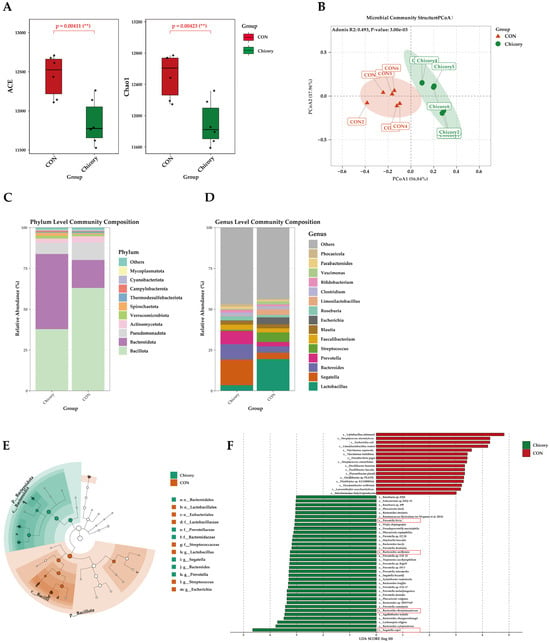
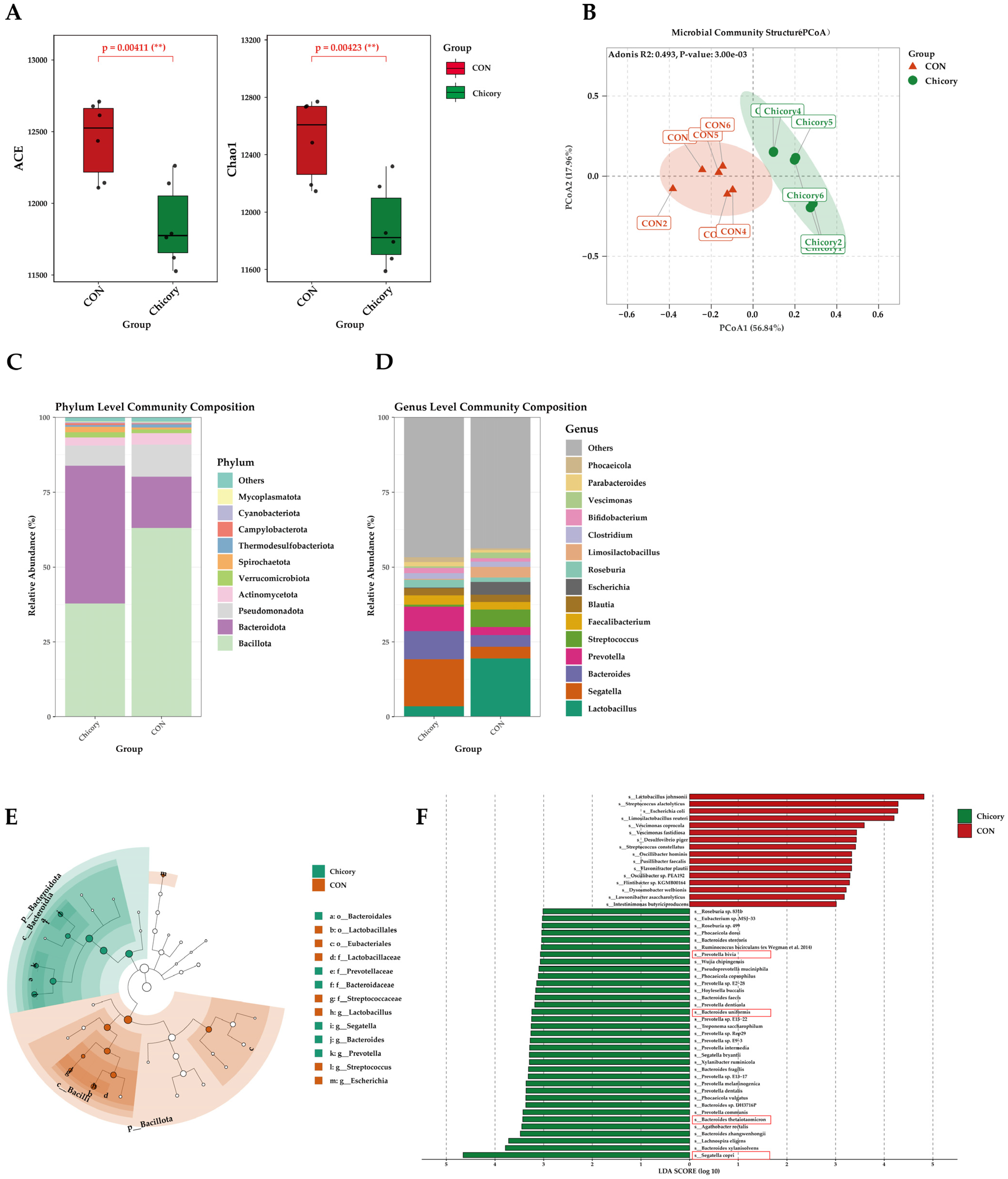
The Chicory group showed lower Chao1 and ACE values than the CON group, indicating reduced cecal microbial richness (Figure 1A). Bray–Curtis-based PCoA placed samples from the two dietary treatments in distinct regions of the ordination space (Figure 1B). PERMANOVA confirmed a treatment-related difference in overall community structure (R2 = 0.493, p = 0.003). This finding indicates that replacing 10% of the complete feed with chicory in the diet of Diqing Tibetan pigs modifies their cecal microbiota composition. Preliminary species analysis based on relative abundance data showed that at the phylum level (Figure 1C), the dominant bacterial phyla in the Chicory group were Bacteroidota and Spirochaetota, whereas the dominant phyla in the control group were Bacillota and Pseudomonadota. At the genus level, Bacteroides and Prevotella showed higher relative abundances in the Chicory group, whereas Lactobacillus and Streptococcus showed higher relative abundances in the CON group (Figure 1D).
Figure 1.
Cecal microbial diversity and community composition in Diqing Tibetan pigs receiving fresh chicory supplementation. (A) alpha-diversity analysis, including the ACE index and the Chao1 index; (B) PCoA-based beta diversity analysis among groups; (C) phylum-level microbiota composition; (D) genus-level microbial composition; (E) LEfSe taxonomic cladogram; (F) LDA score. Enriched taxa with an LDA score ≥ 3 and FDR-adjusted p < 0.05 are shown in the histogram, taxa enriched in the Chicory and CON groups are shown in green and red, respectively. Red brackets and the associated p values in panel (A) indicate pairwise comparisons between the CON and Chicory groups; ** denotes p < 0.01.
To identify taxa contributing to the observed differences in microbial community composition, LEfSe analysis was performed between the two groups. A cladogram was generated to visualize the structural characteristics and the distribution of predominant bacteria within the cecal microbiota (Figure 1E). In the green regions corresponding to the Chicory group, the phylum Bacteroidota and class Bacteroidia exhibited the highest abundance. Conversely, the red regions representing the control group were significantly enriched with the phylum Bacillota and class Bacilli. Linear discriminant analysis (LDA) results showed that a total of 51 differentially abundant microorganisms were identified at the species level (Figure 1F). The chicory group exhibited significant enrichment of Segatella copri (formerly Prevotella copri), Bacteroides thetaiotaomicron, Bacteroides uniformis, Prevotella bivia, and several other Prevotella species (including Prevotella communis and Prevotella dentalis).
3.3. Differential Metabolites in the Longissimus Dorsi Muscle
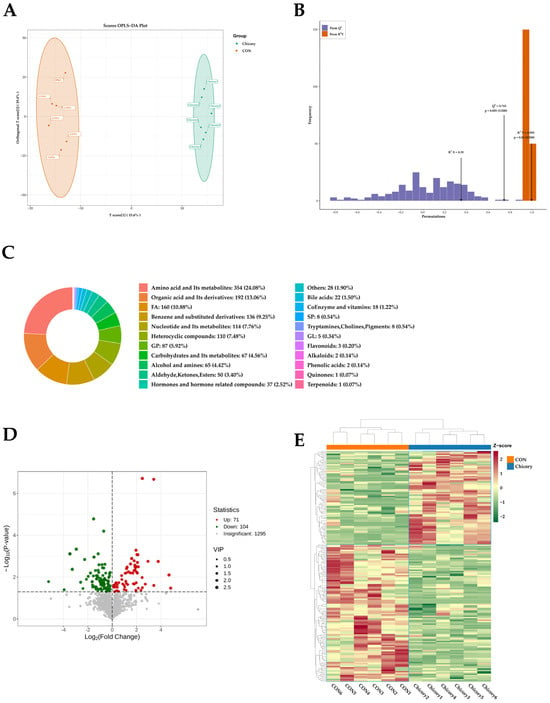
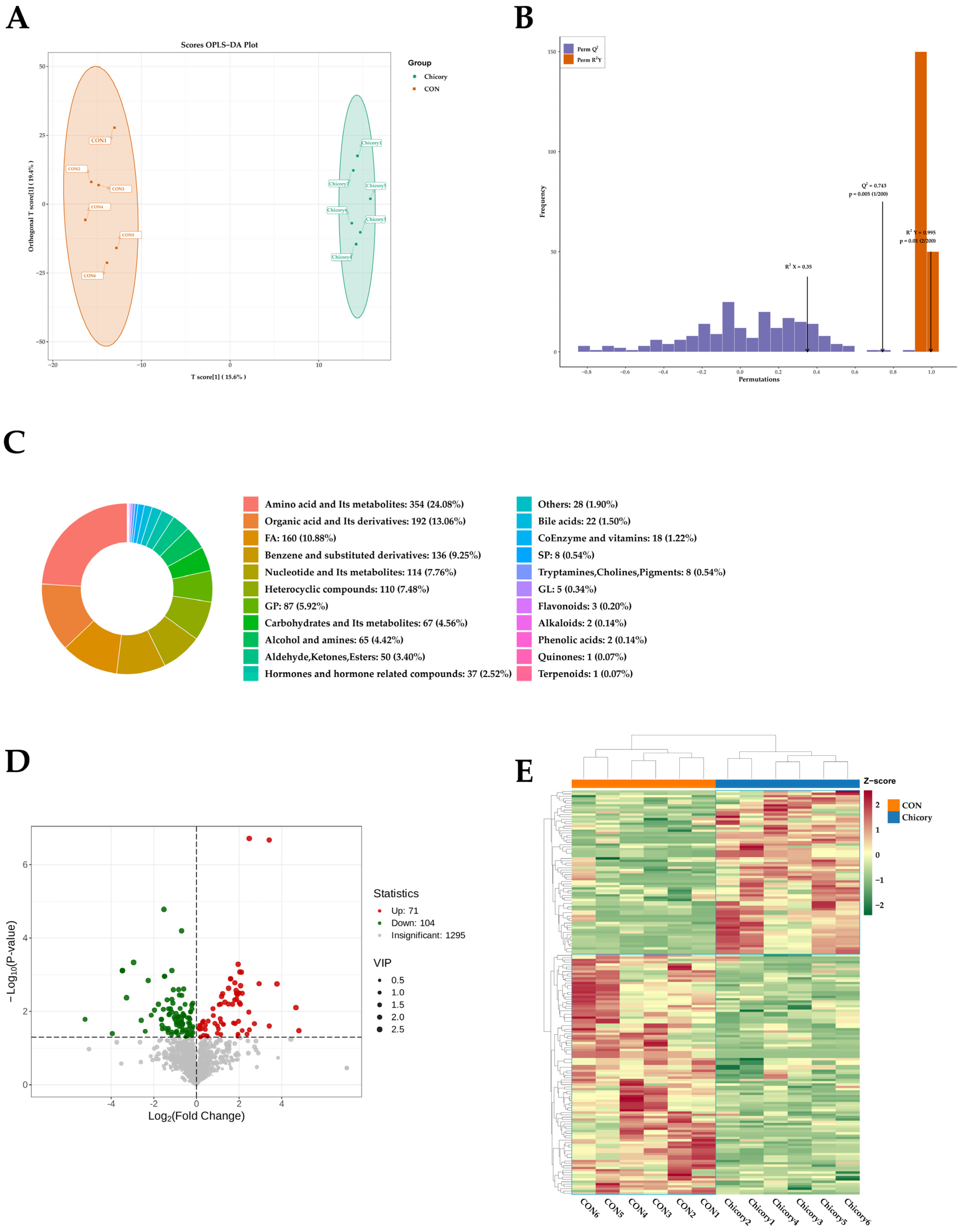
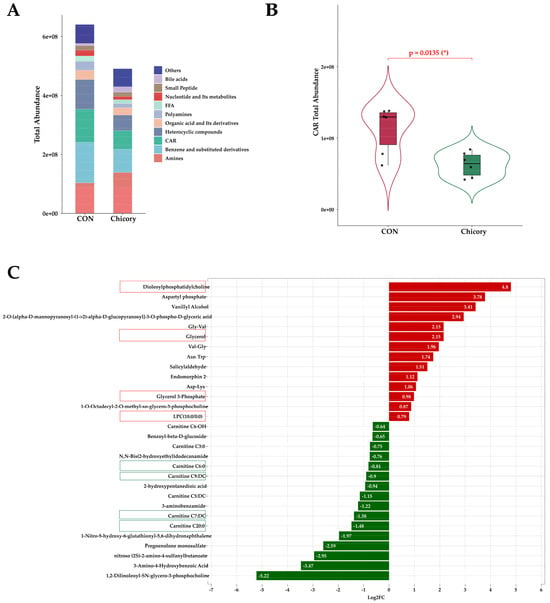
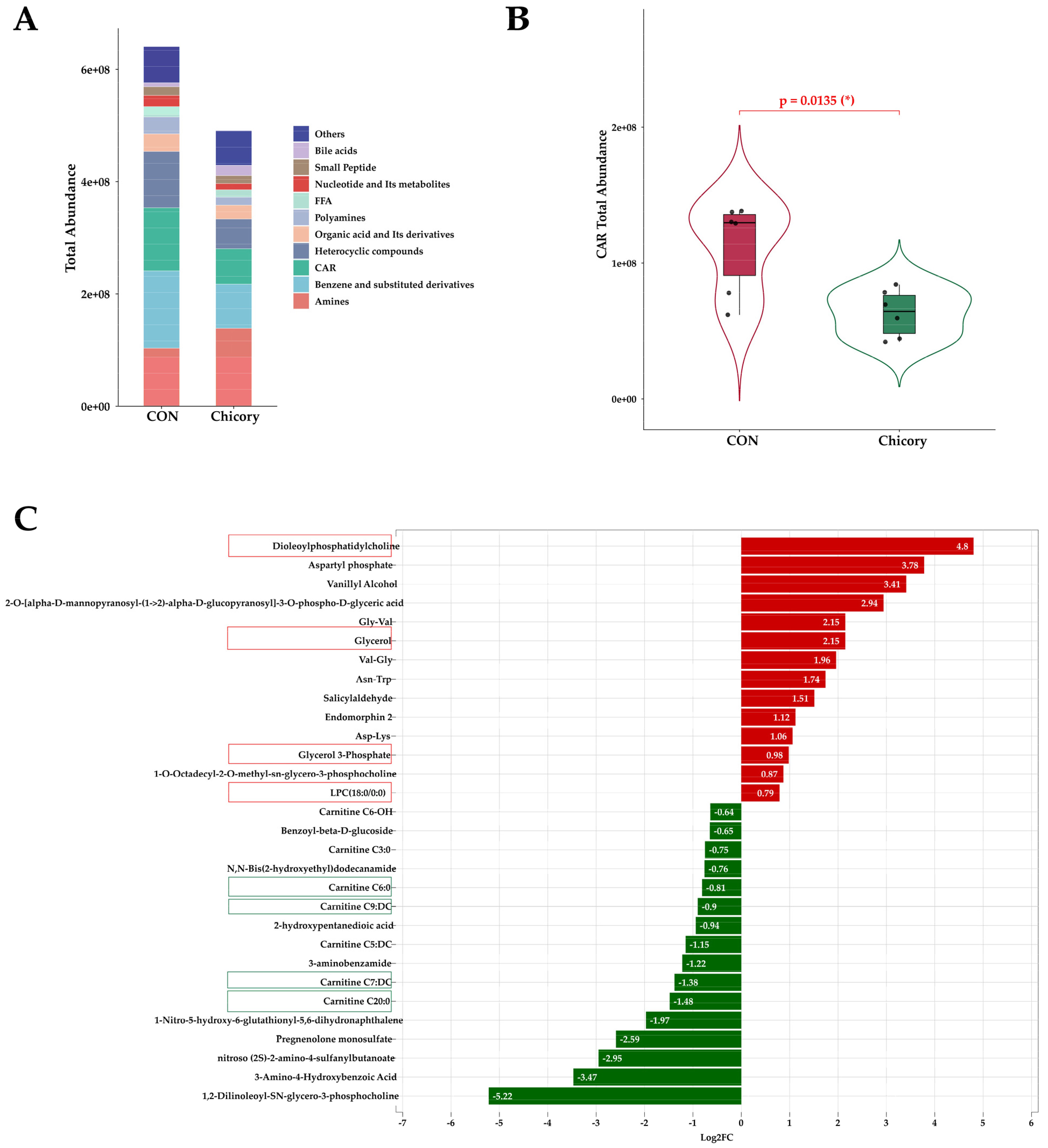
Widely targeted metabolomic profiling was conducted to characterize changes in the LD muscle metabolome associated with dietary chicory inclusion in Diqing Tibetan pigs. OPLS-DA clearly distinguished the metabolic profiles of the Chicory and CON groups (Figure 2A). Model evaluation yielded R2X = 0.35, R2Y = 0.995, and Q2 = 0.743, and the permutation analysis supported the robustness and predictive performance of the model (Figure 2B). Across all samples, 1470 metabolites were identified (Table S2). According to their chemical characteristics, the identified metabolites were mainly classified as amino acids and their metabolites (24.08%), organic acids and their derivatives (13.06%), fatty acyls (10.88%), benzene and substituted derivatives (9.25%), nucleotides and their metabolites (7.76%), heterocyclic compounds (7.48%), glycerophospholipids (5.92%), and carbohydrates and their metabolites (4.56%) (Figure 2C). By combining VIP and p with thresholds of VIP > 1 and FDR-adjusted p < 0.05, the study ultimately identified 175 differential metabolites (DEMs), including 71 upregulated and 104 downregulated metabolites (Figure 2D). Clustering analysis showed that the DEMs formed two distinct clusters, with clear differences between the two groups (Figure 2E). To further elucidate the compositional changes in DEMs at the classification level, we analyzed the total abundance of the major DEM categories (Figure 3A). The stacked bar chart revealed an alteration in the overall proportional composition of metabolites in the LD muscle of the Chicory group. Notably, the abundance of carnitine (CAR) metabolites exhibited a declining trend in the Chicory group. We conducted a differential analysis of the total CAR abundance (Figure 3B). The violin plot demonstrated that the total abundance of carnitines in the muscle of the Chicory group was significantly lower than that of the control group (p < 0.05).
Figure 2.
Overview of the muscle metabolomic profile and identification of differentially abundant metabolites in the LD muscle. (A) OPLS-DA score plot showing the separation of metabolomic profiles between the CON and Chicory groups. (B) Permutation test for validation of the OPLS-DA model; black arrows indicate the corresponding R2X, Q2, and R2Y statistics shown in the plot. (C) Chemical classification of the identified metabolites. (D) Volcano plot showing differentially abundant metabolites between the CON and Chicory groups. (E) Hierarchical clustering heatmap of differentially abundant metabolites across individual samples; metabolite abundances were scaled by Z-score.
Figure 3.
Composition and abundance patterns of differentially abundant metabolites in the longissimus dorsi muscle. (A) Class-level composition and total abundance of differentially abundant metabolites in the CON and Chicory groups. (B) Comparison of the total abundance of carnitine-related metabolites (CAR) between the two dietary groups. (C) Ranked bar plot showing the log2 fold changes (log2FC) of differentially abundant metabolites between the CON and Chicory groups; positive and negative values indicate metabolites enriched in the corresponding groups as indicated in the figure. In panel (B), the red bracket indicates the comparison between the CON and Chicory groups, and * denotes p < 0.05.
The upregulated metabolites primarily included glycerophospholipids (such as dioleoyl phosphatidylcholine and LPC(18:0/0:0)), amino acids and their metabolites (including glycyl-L-valine and asparagine-tryptophan), as well as glycerol and glycerol-3-phosphate. Conversely, the downregulated metabolites mainly consisted of benzene and its derivatives (including 3-amino-4-hydroxybenzoic acid and 3-aminobenzamide) and fatty acyls (such as carnitine C20:0, C6:0, C9:DC, and C7:DC) (Figure 3C).
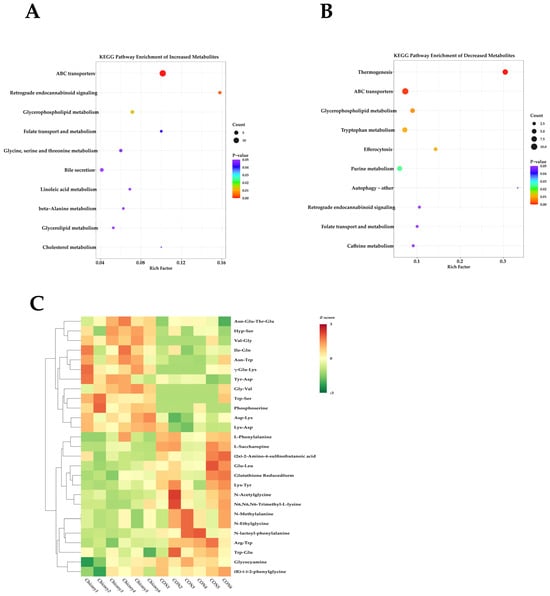
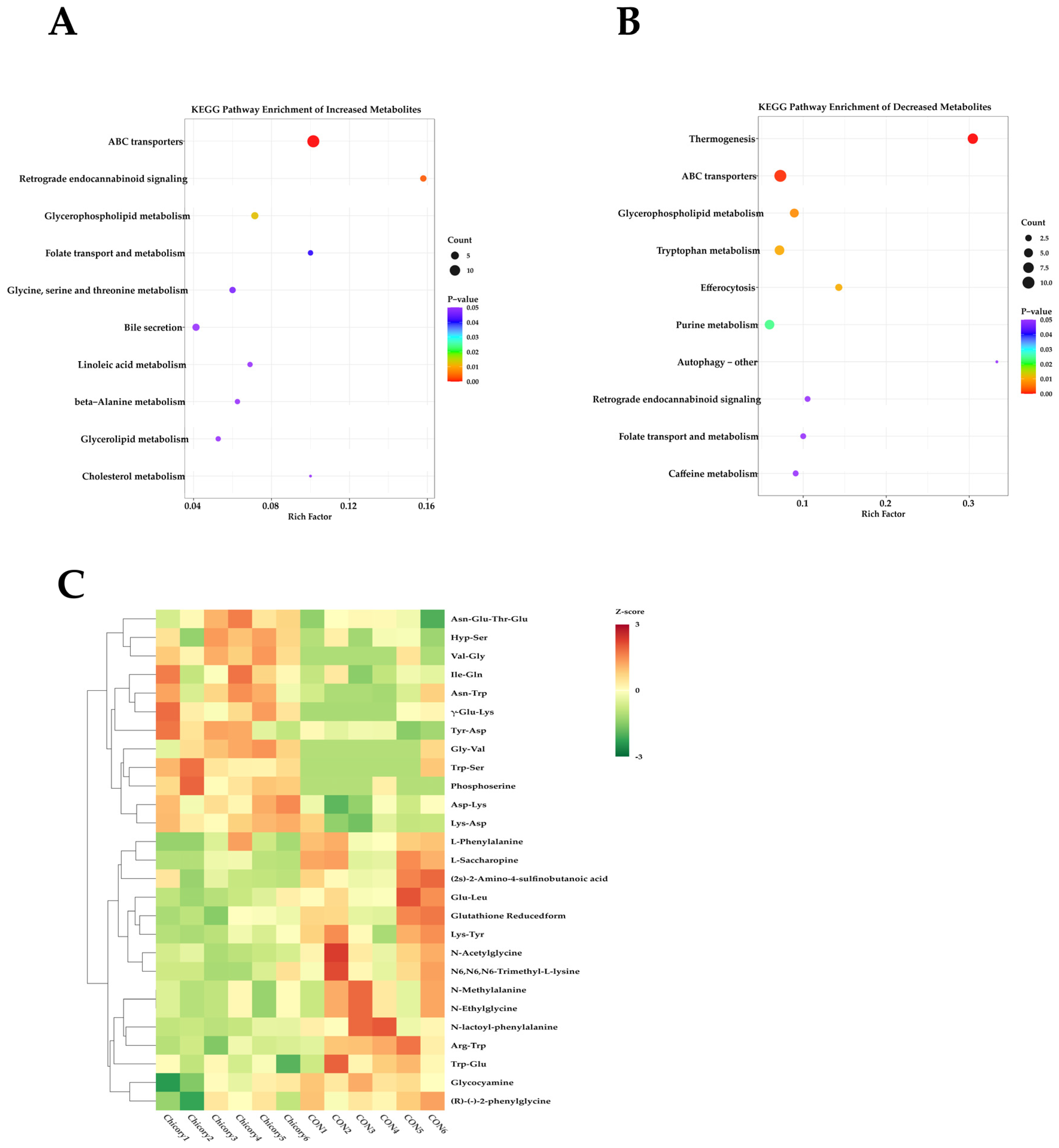
KEGG enrichment analysis revealed that metabolites increased in the Chicory group compared with the CON group were significantly enriched in the retrograde endocannabinoid signaling pathway (Figure 4A), indicating that the endocannabinoid-related metabolic network may be altered following chicory supplementation. Conversely, metabolites decreased in the Chicory group were significantly enriched in the thermogenesis pathway. The altered enrichment of thermogenesis-related metabolites suggests potential changes in mitochondrial energy metabolism and fatty acid utilization in skeletal muscle (Figure 4B).
Figure 4.
KEGG pathway enrichment and amino acid-related metabolic changes in the longissimus dorsi muscle. (A) KEGG pathway enrichment analysis of metabolites upregulated in the Chicory group relative to the CON group. (B) KEGG pathway enrichment analysis of metabolites downregulated in the Chicory group relative to the CON group. Bubble size represents the number of differential metabolites mapped to each pathway, and bubble color represents the enrichment significance. (C) Hierarchical clustering heatmap of differential amino acid-related metabolites across individual samples; relative metabolite abundances were standardized by Z-score.
Amino acids and their derivatives are primary contributors to meat flavor formation, as the types and concentrations of free amino acids in meat directly influence its flavor characteristics [25]. To investigate the potential effects of dietary chicory supplementation on the flavor of Diqing Tibetan pork, amino acids and their derivatives from significantly enriched amino acid metabolic pathways were selected for cluster analysis (Figure 4C). The results indicated that the relative abundances of umami amino acids, including aspartic acid (Asp) and glutamic acid (Glu), were significantly higher in the Chicory group than in the control group (FDR-adjusted p < 0.05). Additionally, the relative abundances of sweet amino acids such as threonine (Thr), serine (Ser), lysine (Lys), and glycine (Gly) were markedly elevated, whereas the relative abundance of the bitter amino acid L-phenylalanine was significantly lower in the Chicory group. Given that these amino acid levels were derived from widely targeted metabolomic quantification and that no sensory evaluation was performed in this study, these changes only suggest that chicory supplementation may favor a more desirable flavor-related amino acid profile.
3.4. Associations Among Cecal Microbiota, Muscle Metabolites, and Intramuscular Fat Content
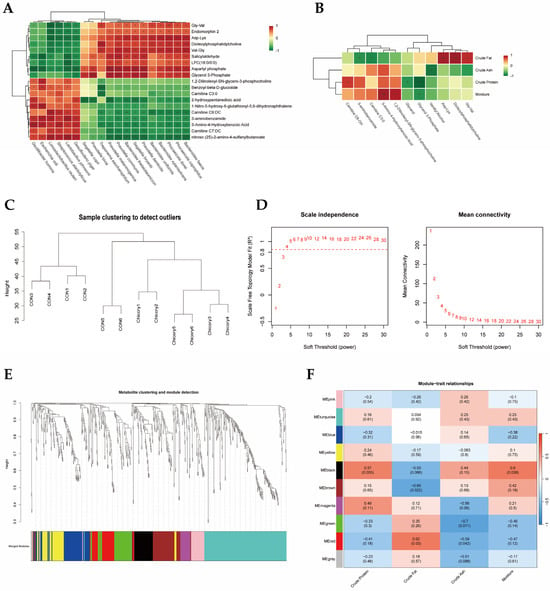
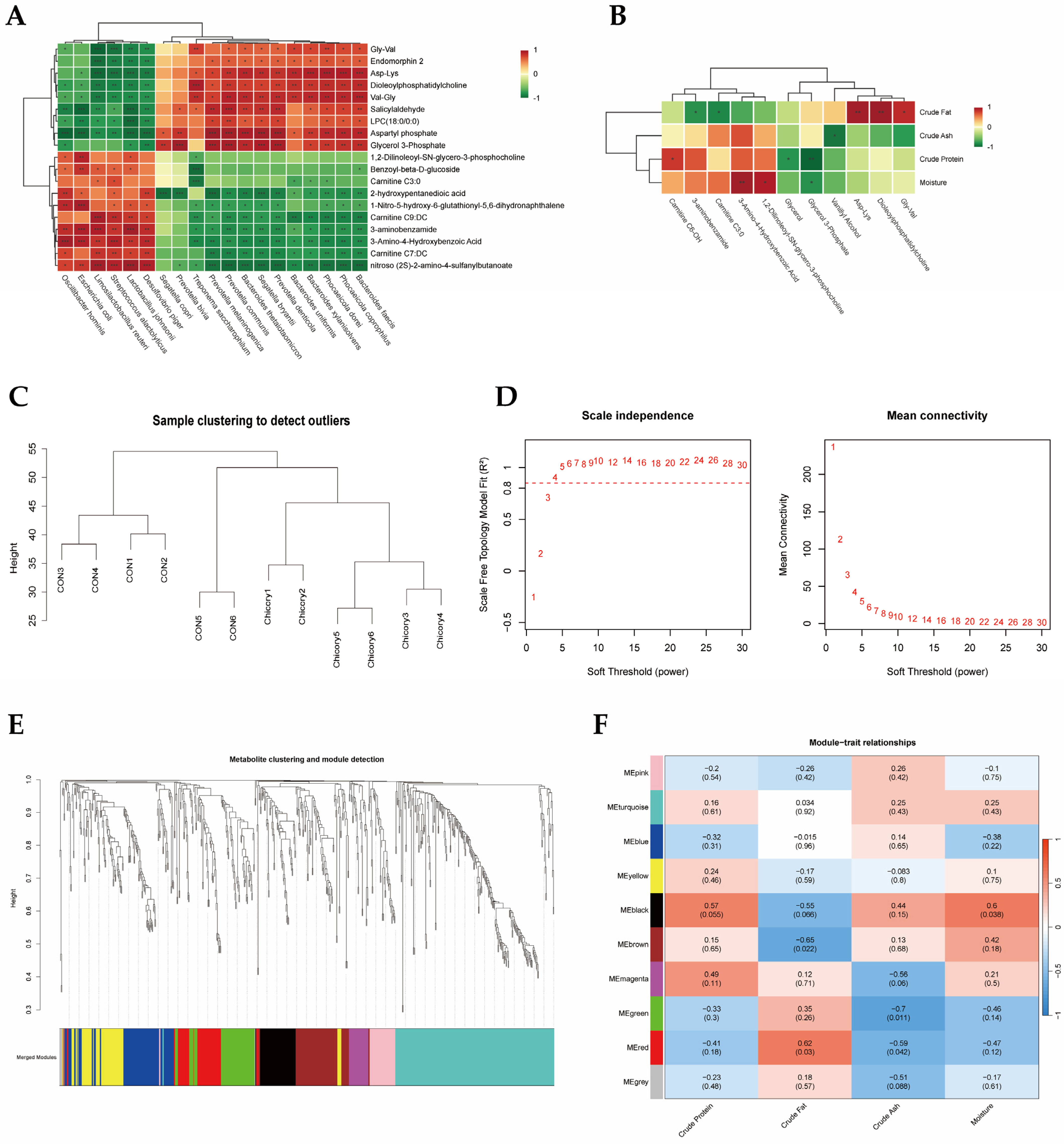
To further investigate the potential associations between dietary chicory supplementation and fat deposition in finishing pigs, as well as the possible underlying metabolic links, we integrated the metagenomic, metabolomic, and meat-quality datasets for correlation analysis. Given the potential involvement of the gut–muscle axis, Spearman’s rank correlation analysis was first performed between cecal microbial abundance and differentially abundant metabolites in the LD muscle (Figure 5A). Segatella copri, Bacteroides thetaiotaomicron, and Prevotella bivia, all of which were enriched in the chicory-fed group, were positively correlated with glycerol 3-phosphate. In addition, B. thetaiotaomicron and Bacteroides uniformis were positively correlated with dioleoylphosphatidylcholine, whereas B. thetaiotaomicron was positively correlated with LPC(18:0/0:0). Because metabolomic profiles are closely associated with phenotypic variation [26], we subsequently examined the relationships between muscle metabolites and intramuscular fat content. Dioleoylphosphatidylcholine was positively correlated with crude fat content (Figure 5B).
Figure 5.
Integrated analysis of the cecal metagenome and LD metabolome. (A) Correlation analysis between the cecal metagenome and LD metabolome; (B) Correlation analysis between differential metabolites in the LD and intramuscular fat; (C) sample clustering dendrogram used for WGCNA; (D) scale-free topology fit and mean connectivity for selection of the soft-thresholding power; (E) hierarchical clustering dendrogram of metabolites with module color assignments; (F) module–trait relationships between metabolite modules and intramuscular fat content.
Conventional single-omics analyses have limited power to identify the key metabolites associated with variation in porcine IMF content. We therefore applied weighted gene co-expression network analysis (WGCNA) to the metabolomic dataset to identify metabolite modules associated with IMF deposition (Figure 5C–F). A correlation matrix, adjacency matrix, and topological overlap matrix were constructed, resulting in the identification of ten metabolite modules; metabolites that could not be assigned to a specific module were grouped into the gray module. IMF content was included as a phenotypic trait, and Pearson correlations were calculated between module eigengenes and phenotypic traits. The red module was significantly and positively correlated with IMF content (FDR-adjusted p < 0.05).
The red module comprised 67 metabolites, including glycerol, glycerol 3-phosphate, dioleoylphosphatidylcholine, and LPC (18:0/0:0) (Appendix A Table A1). The WGCNA results corroborated the associations identified by the metabolite–IMF correlation analysis and provided additional evidence for prioritizing candidate metabolites involved in fat deposition. All four metabolites were differentially abundant and significantly enriched in the chicory-fed group. Notably, dioleoylphosphatidylcholine was also positively correlated with IMF content.
4. Discussion
Fresh forage provides a relatively balanced source of nutrients, supplies several nutrients essential for pigs, and may enhance satiety and mitigate stress. Because fresh chicory is fed without processing, many of its native and labile bioactive constituents are likely to be retained. Chicory may also offer economic advantages because it is inexpensive to cultivate, produces high biomass yields, and can be fed fresh, thereby reducing processing costs. Fresh chicory therefore represents a potentially cost-effective alternative feed resource for pig production. In the present study, dietary inclusion of 10% fresh chicory did not compromise growth performance or most carcass traits in Diqing Tibetan pigs, suggesting that this inclusion level was well tolerated by Diqing Tibetan pigs. Chinese indigenous pig breeds generally exhibit a greater capacity to utilize dietary fiber than intensively selected commercial breeds [27,28]. Consistent with this characteristic, a previous study found that a diet containing 30% alfalfa meal had no adverse effect on the growth performance of finishing Heigai pigs [13]. Other high-fiber diets containing approximately 20% fiber-rich ingredients have similarly been reported to have no detrimental effects on the growth performance of Chinese indigenous pigs [29]. As a Chinese indigenous breed, the Diqing Tibetan pig may have retained a strong capacity to utilize fibrous feeds, allowing it to adapt effectively to the fiber supplied by fresh chicory. Although liveweight and dressing percentage did not differ significantly between treatments, the chicory-fed pigs showed greater backfat thickness. They also had higher intramuscular fat content and marbling scores and lower shear force. Given the established contribution of intramuscular fat to tenderness, juiciness, flavor, and overall sensory quality [30], these findings indicate that chicory supplementation may improve the eating quality of pork from Diqing Tibetan pigs.
Because diet is a major determinant of gut microbial composition [5], we first characterized the cecal microbiota of the finishing pigs. Dietary inclusion of 10% fresh chicory altered both the composition and relative abundance of the intestinal microbiota. At the phylum level, Bacteroidota predominated in the chicory-fed group, whereas Bacillota predominated in the control group. This phylum-level shift is consistent with the microbiome response reported by Hu et al. in pregnant rats supplemented with chicory-derived fiber [31]. The phylum Bacteroidota primarily consists of Gram-negative bacteria, including Bacteroides, Parabacteroides, and Prevotella, which are highly adept at degrading dietary fiber. In contrast, the phylum Bacillota is mainly composed of Gram-positive bacteria, such as Lactobacillus, Roseburia, and Faecalibacterium, which specialize in fermenting carbohydrates. Several taxa enriched in the chicory-fed group have previously been associated with fiber degradation and lipid metabolism. These included Prevotella, members of which can ferment dietary substrates to produce succinate [32,33]; B. uniformis, a species implicated in the regulation of lipid deposition; and B. thetaiotaomicron, which may facilitate lipid digestion and absorption [34]. The relative abundances of these taxa were significantly increased by chicory supplementation. Their fermentation products may not only contribute to host energy supply but also provide metabolic substrates or signals relevant to lipid metabolism.
Members of the genus Prevotella are closely associated with dietary-fiber degradation and can facilitate energy extraction from fiber-rich diets [32,35]. Certain Prevotella taxa have also been implicated in glucose metabolism and adipose deposition [32]. In the present study, dietary inclusion of 10% fresh chicory significantly increased the relative abundance of Prevotella, accompanied by increased backfat thickness and higher IMF content. Enrichment of Prevotella may therefore have enhanced the microbial utilization of chicory-derived fiber, thereby increasing the availability of energy substrates for fat deposition. However, this proposed mechanism remains to be established experimentally. Previous evidence indicates that Segatella copri can induce the expression of genes involved in adipogenesis and lipid storage while repressing genes associated with lipolysis, lipid transport, and muscle growth [36]. Here, S. copri was significantly enriched by chicory supplementation and was the most abundant bacterial species detected in the chicory-fed group. Its enrichment may therefore be associated with the greater fat deposition observed in these pigs. Further functional experiments are nevertheless required to determine whether S. copri directly contributes to this phenotype. Previous studies have also reported associations of B. thetaiotaomicron, B. uniformis, and P. bivia with fat deposition-related phenotypes [37,38]. In the present study, these species were also enriched in the Chicory group. Their enrichment may therefore be associated with differences in fat deposition.
Fresh chicory is rich in vitamins, particularly thiamine (vitamin B1). In pigs, thiamine functions as an essential cofactor in carbohydrate metabolism and is required for normal nervous-system function. However, thiamine is thermolabile, and its molecular structure can be disrupted during high-temperature processing. Consequently, thermal processing of chicory may result in substantial thiamine loss. Thiamine availability is also important for maintaining gut microbial homeostasis. It provides an essential cofactor for the growth and competitive fitness of Bacteroides thetaiotaomicron, and adequate thiamine availability may help this species maintain stable colonization and a competitive advantage within the intestinal ecosystem [39,40,41]. Thiamine likewise serves as a central metabolic cofactor in Bacteroides uniformis and has been reported to induce the expression of genes encoding thiamine transporters, thereby supporting energy metabolism and bacterial growth [42,43,44]. The high thiamine content retained in fresh chicory may therefore have contributed to the enrichment of B. thetaiotaomicron and B. uniformis observed in the present study.
Changes in microbial composition induced by dietary interventions are closely associated with host metabolic phenotypes. Consistent with this relationship, metabolomic profiling showed that glycerol and glycerol-3-phosphate, both of which provide substrates for triglyceride synthesis, were significantly increased in the chicory-fed group. The glycerophospholipids dioleoylphosphatidylcholine and LPC(18:0/0:0) were also increased, whereas acylcarnitine abundance was reduced. Glycerol-3-phosphate provides the glycerol backbone for triglyceride synthesis. The increased levels of glycerol and glycerol-3-phosphate in the experimental group may promote triglyceride synthesis. Lipid droplets serve as the primary storage sites for triglycerides in adipocytes, with phosphatidylcholine playing a crucial role in their formation and regulation [45,46]. Among glycerophospholipids, dioleoyl phosphatidylcholine may stabilize the dispersed and independent structure of lipid droplets by forming their membranes, thereby facilitating triglyceride storage. Furthermore, LPC (18:0/0:0), a type of lysophosphatidylcholine, may function as a partial agonist of PPARγ, activating this receptor to enhance lipid droplet formation and inhibit lipid peroxidation [47]. Long-chain fatty acids enter mitochondria through the CPT1/2 + carnitine transport system for β-oxidation, generating energy and participating in the classical energy metabolism pathway. Studies have demonstrated that acylcarnitine, a crucial carrier in fatty acid oxidation, facilitates the transport of fatty acids into mitochondria for energy production [48]. In the experimental group (Chicory), levels of arachidic acid (a 20-carbon saturated fatty acid) carnitine and hexanoylcarnitine (C6:0) decreased, which may reduce muscle reliance on fatty acid-derived energy and promote the diversion of more fatty acids toward triglyceride synthesis. Furthermore, although ω-oxidation primarily occurs in the liver and kidneys, and muscle tissue itself does not engage in ω-oxidation, dicarboxylic acylcarnitines produced in the liver or kidneys can be released into the bloodstream and transported to muscles via circulation. The reduction in dicarboxylic acylcarnitines (C9:DC and C7:DC) in muscles suggests a compromised ω-oxidation compensatory pathway, coupled with diminished fatty acid oxidation metabolism in the liver and kidneys. In addition, increased metabolites were enriched in retrograde endocannabinoid signaling, whereas decreased metabolites were enriched in thermogenesis. Previous studies have demonstrated that elevated endocannabinoid system (ECS) activity typically promotes energy storage and lipid deposition [49,50,51]. In skeletal muscle, cannabinoid receptor 1 (CB1) activation is associated with a reduced capacity for fatty acid oxidation [52,53]. These metabolic alterations may be associated with differences in intramuscular lipid accumulation; however, further functional validation is required to confirm the underlying mechanisms. Together, the changes in glycerol-related metabolites, glycerophospholipids, acylcarnitines, and energy-related pathways suggest a coordinated alteration in muscle lipid metabolism associated with the higher IMF content.
The fatty-acid and amino-acid profiles of skeletal muscle are major determinants of the nutritional value, appearance, and flavor of pork and therefore represent important components of overall meat quality [54,55]. Metabolomic profiling of the LD muscle showed that dietary inclusion of 10% fresh chicory altered the muscle amino-acid profile. Chicory supplementation increased the relative abundance of amino acids associated with umami and sweet tastes while reducing that of bitter-tasting amino acids. In addition to regulating host energy metabolism, the gut microbiota possesses specialized enzyme systems for amino-acid utilization [56]. These microbial enzymes contribute to the digestion and metabolic transformation of proteins and amino acids within the gastrointestinal tract. Proteolytic activity in the large intestine of monogastric animals has been attributed predominantly to members of the genera Bacteroides, Propionibacterium, Streptococcus, Clostridium, and Lactobacillus. Notably, the relative abundance of Bacteroides was significantly increased in the chicory-fed group. This enrichment may partly explain the higher levels of threonine, serine, glutamate, lysine, aspartate, and glycine detected in the LD muscle of these pigs. Comparisons between germ-free and conventionally raised mice have further shown that intestinal microorganisms can incorporate 15N derived from 15NH4Cl into newly synthesized lysine, supporting a contribution of the gut microbiota to host amino-acid metabolism [57]. The chicory-induced enrichment of Bacteroides may therefore represent a candidate microbial contributor to the more favorable amino-acid profile observed in LD muscle. These findings suggest that fresh chicory may favor a more desirable flavor-related amino-acid profile in pork.
The gut–muscle axis has recently emerged as a conceptual framework for explaining bidirectional interactions between the intestinal microbiota and skeletal muscle [58]. To identify bacterial taxa potentially associated with intramuscular fat deposition, we performed Spearman’s rank correlation analysis between the relative abundances of differentially abundant cecal microbes and the levels of differentially abundant muscle metabolites. Both B. thetaiotaomicron and B. uniformis were positively correlated with dioleoylphosphatidylcholine. Pearson correlation analysis further showed that dioleoylphosphatidylcholine was positively associated with intramuscular fat content, identifying it as a candidate metabolite linked to intramuscular fat deposition. This association was further supported by WGCNA, which assigned dioleoylphosphatidylcholine to a metabolite module that was positively correlated with intramuscular fat content. Integrated analysis of the cecal metagenome and LD metabolome therefore prioritized B. thetaiotaomicron and B. uniformis as two candidate bacterial species associated with intramuscular fat deposition. Collectively, these findings suggest that dietary inclusion of 10% fresh chicory reshapes the intestinal microbiota and enriches bacterial taxa associated with lipid metabolism. These microbial changes were accompanied by shifts in the muscle metabolite profile and by increased intramuscular fat deposition, associations consistent with a possible role of the gut–muscle axis in the observed phenotype.
A limitation of this study is that fresh chicory replaced 10% of the complete basal diet on a dry matter basis, with all basal ingredients proportionally reduced. Consequently, the two diets differed in digestible energy, crude protein, crude fiber, lysine, calcium, and total phosphorus concentrations (Table 2). Accordingly, the observed responses should be interpreted at the level of the overall dietary treatment, as the present design cannot distinguish the contributions of chicory-specific constituents from those of accompanying changes in nutrient composition. Future studies using appropriately nutrient-matched control diets are needed to clarify these contributions.
5. Conclusions
In summary, dietary inclusion of 10% fresh chicory in growing–finishing Diqing Tibetan pigs was associated with coordinated changes in the cecal microbiome and muscle metabolome and significantly improved selected meat-quality traits without compromising growth performance. These findings provide a scientific basis for further evaluating fresh chicory as a dietary forage resource and offer new insights into nutritional strategies for improving pork quality.
Supplementary Materials
The following supporting information can be downloaded at https://www.mdpi.com/article/10.3390/agriculture16192170/s1, Table S1: Composition, concentrations, and supplier information of the internal standards used for metabolomic analysis; Table S2: All metabolites identified in the longissimus dorsi muscle.
Author Contributions
Conceptualization, S.L., D.Y. and X.D.; methodology, S.L., L.W. and H.H.; software, S.L., X.L. and J.S.; validation, L.W., H.H. and Y.X.; formal analysis, S.L., X.L., J.S. and Y.X.; investigation, S.L., L.W. and H.H.; resources, D.Y. and X.D.; data curation, S.L., X.L. and Y.X.; writing—original draft preparation, S.L.; writing—review and editing, S.L., D.Y. and X.D.; project administration, D.Y. and X.D.; funding acquisition, D.Y. and X.D. All authors have read and agreed to the published version of the manuscript.
Funding
Young Talents Program of Yunnan Xingdian Support Plan (Grant No. XDYC-QNRC-2023-0394), Yunnan Provincial Major Science and Technology Special Project (No. 202302AE090015), National Key Research and Development Program of China (No. 2022YFD1601903).
Institutional Review Board Statement
The animal procedures used in this study were approved by the Animal Ethics Committee of Yunnan Agricultural University (protocol No. APYNAU202401001; approved on 4 January 2024).
Informed Consent Statement
Not applicable.
Data Availability Statement
Raw metagenomic reads from the cecal samples are publicly available in the Genome Sequence Archive (GSA) of the National Genomics Data Center (NGDC), China National Center for Bioinformation (CNCB), under accession CRA049193. Metabolomic data obtained from the longissimus dorsi muscle are available through the OMIX repository under accession OMIX020103.
Conflicts of Interest
The authors declare no conflicts of interest.
Appendix A
Table A1.
Metabolites in the WGCNA red module.
References
- Mehta, N.; Ahlawat, S.S.; Sharma, D.P.; Dabur, R.S. Novel trends in development of dietary fiber rich meat products-a critical review. J. Food Sci. Technol. 2015, 52, 633–647. [Google Scholar] [CrossRef] [Scilit]
- Gamage, H.; Tetu, S.G.; Chong, R.W.W.; Bucio-Noble, D.; Rosewarne, C.P.; Kautto, L.; Ball, M.S.; Molloy, M.P.; Packer, N.H.; Paulsen, I.T. Fiber Supplements Derived from Sugarcane Stem, Wheat Dextrin and Psyllium Husk Have Different In Vitro Effects on the Human Gut Microbiota. Front. Microbiol. 2018, 9, 1618. [Google Scholar] [CrossRef] [Scilit]
- Tang, X.; Zhang, L.; Fan, C.; Wang, L.; Fu, H.; Ren, S.; Shen, W.; Jia, S.; Wu, G.; Zhang, Y. Dietary Fiber Influences Bacterial Community Assembly Processes in the Gut Microbiota of Durco × Bamei Crossbred Pig. Front. Microbiol. 2021, 12, 688554. [Google Scholar] [CrossRef] [Scilit]
- Pu, G.; Hou, L.; Du, T.; Wang, B.; Liu, H.; Li, K.; Niu, P.; Zhou, W.; Huang, R.; Li, P. Effects of short-term feeding with high fiber diets on growth, utilization of dietary fiber, and microbiota in pigs. Front. Microbiol. 2022, 13, 963917. [Google Scholar] [CrossRef] [Scilit]
- Zmora, N.; Suez, J.; Elinav, E. You are what you eat: Diet, health and the gut microbiota. Nat. Rev. Gastroenterol. Hepatol. 2019, 16, 35–56. [Google Scholar] [CrossRef] [Scilit]
- Olsson, V. The Effect of the RN¯allele and Production System on Meat Quality and the Formation of Heterocyclic Amines in Pork. Ph.D. Thesis, Swedish University of Agricultural Sciences, Uppsala, Sweden, 2004. [Google Scholar]
- Elgersma, A.; Soegaard, K.; Jensen, S.K. Fatty acids, alpha-tocopherol, beta-carotene, and lutein contents in forage legumes, forbs, and a grass-clover mixture. J. Agric. Food Chem. 2013, 61, 11913–11920. [Google Scholar] [CrossRef] [Scilit]
- Nwafor, I.C.; Shale, K.; Achilonu, M.C. Chemical Composition and Nutritive Benefits of Chicory (Cichorium intybus) as an Ideal Complementary and/or Alternative Livestock Feed Supplement. Sci. World J. 2017, 2017, 7343928. [Google Scholar] [CrossRef] [Scilit]
- Ivarsson, E.; Frankow-Lindberg, B.E.; Andersson, H.K.; Lindberg, J.E. Growth performance, digestibility and faecal coliform bacteria in weaned piglets fed a cereal-based diet including either chicory (Cichorium intybus L.) or ribwort (Plantago lanceolata L.) forage. Animal 2011, 5, 558–564. [Google Scholar] [CrossRef] [Scilit]
- Ivarsson, E.; Liu, H.Y.; Dicksved, J.; Roos, S.; Lindberg, J.E. Impact of chicory inclusion in a cereal-based diet on digestibility, organ size and faecal microbiota in growing pigs. Animal 2012, 6, 1077–1085. [Google Scholar] [CrossRef] [Scilit]
- Zhang, T.; Hu, B.W.; Duan, Y.H.; Deng, J.P.; Yin, Y.L.; Kong, X.F. Dietary chicory powder supplementation affects growth performance, carcass traits, and muscular profiles of amino acids and fatty acids in growing-finishing Xiangcun Black pigs. J. Appl. Anim. Res. 2021, 49, 46–52. [Google Scholar] [CrossRef] [Scilit]
- Yang, L.; Wang, G.; Zhou, J.; Yang, Y.; Pan, H.; Zeng, X.; Qiao, S. Exploration of the Potential for Efficient Fiber Degradation by Intestinal Microorganisms in Diqing Tibetan Pigs. Fermentation 2021, 7, 275. [Google Scholar] [CrossRef] [Scilit]
- Li, J.; Zhang, S.; Gu, X.; Xie, J.; Zhu, X.; Wang, Y.; Shan, T. Effects of alfalfa levels on carcass traits, meat quality, fatty acid composition, amino acid profile, and gut microflora composition of Heigai pigs. Front. Nutr. 2022, 9, 975455. [Google Scholar] [CrossRef] [Scilit]
- Almeida, V.V.; Silva, J.P.M.; Schinckel, A.P.; Meira, A.N.; Moreira, G.C.M.; Gomes, J.D.; Poleti, M.D.; Dargelio, M.D.B.; Patinho, I.; Contreras-Castillo, C.J.; et al. Effects of increasing dietary oil inclusion from different sources on growth performance, carcass and meat quality traits, and fatty acid profile in genetically lean immunocastrated male pigs. Livest. Sci. 2021, 248, 104515. [Google Scholar] [CrossRef] [Scilit]
- DB51/T 685-2018; Technical Code of Practice for Forage Chicory Cultivation. Sichuan Provincial Bureau of Quality and Technical Supervision: Chengdu, China, 2018.
- GB/T 6435-2014; Determination of Moisture in Feedstuffs. General Administration of Quality Supervision, Inspection and Quarantine of the People’s Republic of China (AQSIQ), Standardization Administration of China (SAC): Beijing, China, 2014.
- GB/T 6432-2018; Determination of Crude Protein in Feeds—Kjeldahl Method. State Administration for Market Regulation (SAMR), Standardization Administration of China (SAC): Beijing, China, 2018.
- GB/T 6433-2025; Determination of Crude Fat in Feeds. State Administration for Market Regulation (SAMR), Standardization Administration of China (SAC): Beijing, China, 2025.
- GB/T 6434-2022; Determination of Crude Fiber Content in Feeds. State Administration for Market Regulation (SAMR), Standardization Administration of China (SAC): Beijing, China, 2022.
- GB/T 6436-2018; Determination of Calcium in Feeds. State Administration for Market Regulation (SAMR), Standardization Administration of China (SAC): Beijing, China, 2018.
- GB/T 6437-2018; Determination of Phosphorus in Feeds—Spectrophotometry. State Administration for Market Regulation (SAMR), Standardization Administration of China (SAC): Beijing, China, 2018.
- GB/T 17236-2019; Operating Procedures of Livestock and Poultry Slaughtering—Pig. State Administration for Market Regulation (SAMR), Standardization Administration of China (SAC): Beijing, China, 2019.
- NY/T 825-2004; Technical Regulation for Testing of Carcass Traits in Lean-Type Pig. Ministry of Agriculture of the People’s Republic of China: Beijing, China, 2004.
- NY/T 821-2019; Technical Code of Practice for Pork Quality Assessment. Ministry of Agriculture and Rural Affairs of the People’s Republic of China: Beijing, China, 2019.
- Dashdorj, D.; Amna, T.; Hwang, I. Influence of specific taste-active components on meat flavor as affected by intrinsic and extrinsic factors: An overview. Eur. Food Res. Technol. 2015, 241, 157–171. [Google Scholar] [CrossRef] [Scilit]
- Rohart, F.; Paris, A.; Laurent, B.; Canlet, C.; Molina, J.; Mercat, M.J.; Tribout, T.; Muller, N.; Iannuccelli, N.; Villa-Vialaneix, N.; et al. Phenotypic prediction based on metabolomic data for growing pigs from three main European breeds. J. Anim. Sci. 2012, 90, 4729–4740. [Google Scholar] [CrossRef] [Scilit]
- Pu, G.; Li, P.; Du, T.; Niu, Q.; Fan, L.; Wang, H.; Liu, H.; Li, K.; Niu, P.; Wu, C.; et al. Adding Appropriate Fiber in Diet Increases Diversity and Metabolic Capacity of Distal Gut Microbiota Without Altering Fiber Digestibility and Growth Rate of Finishing Pig. Front. Microbiol. 2020, 11, 533. [Google Scholar] [CrossRef] [Scilit]
- Fevrier, C.; Bourdon, D.; Aumaitre, A. Effects of level of dietary fibre from wheat bran on digestibility of nutrients, digestive enzymes and performance in the european Large White and Chinese Mei Shan pig. J. Anim. Physiol. Anim. Nutr. 2009, 68, 60–72. [Google Scholar]
- Pu, G.; Huang, R.; Niu, Q.; Wang, H.; Gao, C.; Fan, L. Effects of Dietary Defatted Rice Bran Substitute Corn Levels on Growth Performance, Intestinal Development and Apparent Digestibility of Nutrients of Suhuai Pigs. Acta Vet. Zootech. Sin. 2019, 50, 758–770. [Google Scholar]
- Hocquette, J.F.; Gondret, F.; Baeza, E.; Medale, F.; Jurie, C.; Pethick, D.W. Intramuscular fat content in meat-producing animals: Development, genetic and nutritional control, and identification of putative markers. Animal 2010, 4, 303–319. [Google Scholar] [CrossRef] [Scilit]
- Hu, Y.; Huang, X.; Zong, X.; Bi, Z.; Cheng, Y.; Xiao, X.; Wang, F.; Wang, Y.; Lu, Z. Chicory fibre improves reproductive performance of pregnant rats involving in altering intestinal microbiota composition. J. Appl. Microbiol. 2020, 129, 1693–1705. [Google Scholar] [CrossRef] [Scilit]
- Kovatcheva-Datchary, P.; Nilsson, A.; Akrami, R.; Lee, Y.S.; De Vadder, F.; Arora, T.; Hallen, A.; Martens, E.; Bjorck, I.; Backhed, F. Dietary Fiber-Induced Improvement in Glucose Metabolism Is Associated with Increased Abundance of Prevotella. Cell Metab. 2015, 22, 971–982. [Google Scholar] [CrossRef] [Scilit]
- De Vadder, F.; Kovatcheva-Datchary, P.; Zitoun, C.; Duchampt, A.; Bäckhed, F.; Mithieux, G. Microbiota-Produced Succinate Improves Glucose Homeostasis via Intestinal Gluconeogenesis. Cell Metab. 2016, 24, 151–157. [Google Scholar] [CrossRef] [Scilit]
- Cho, S.H.; Cho, Y.J.; Park, J.H. The human symbiont Bacteroides thetaiotaomicron promotes diet-induced obesity by regulating host lipid metabolism. J. Microbiol. 2022, 60, 118–127. [Google Scholar] [CrossRef] [Scilit]
- Tremaroli, V.; Bäckhed, F.J.N. Functional interactions between the gut microbiota and host metabolism. Nature 2012, 489, 242–249. [Google Scholar] [CrossRef] [Scilit]
- Chen, C.; Fang, S.; Wei, H.; He, M.; Fu, H.; Xiong, X.; Zhou, Y.; Wu, J.; Gao, J.; Yang, H.; et al. Prevotella copri increases fat accumulation in pigs fed with formula diets. Microbiome 2021, 9, 175. [Google Scholar] [CrossRef] [Scilit]
- Backhed, F.; Ding, H.; Wang, T.; Hooper, L.V.; Koh, G.Y.; Nagy, A.; Semenkovich, C.F.; Gordon, J.I. The gut microbiota as an environmental factor that regulates fat storage. Proc. Natl. Acad. Sci. USA 2004, 101, 15718–15723. [Google Scholar] [CrossRef] [Scilit]
- Xie, C.; Teng, J.; Wang, X.; Xu, B.; Niu, Y.; Ma, L.; Yan, X. Multi-omics analysis reveals gut microbiota-induced intramuscular fat deposition via regulating expression of lipogenesis-associated genes. Anim. Nutr. 2022, 9, 84–99. [Google Scholar] [CrossRef] [Scilit]
- Costliow, Z.A.; Degnan, P.H. Thiamine Acquisition Strategies Impact Metabolism and Competition in the Gut Microbe Bacteroides thetaiotaomicron. mSystems 2017, 2, e00116-17. [Google Scholar] [CrossRef] [Scilit]
- Uebanso, T.; Shimohata, T.; Mawatari, K.; Takahashi, A. Functional Roles of B-Vitamins in the Gut and Gut Microbiome. Mol. Nutr. Food Res. 2020, 64, e2000426. [Google Scholar] [CrossRef] [Scilit]
- Magnúsdóttir, S.; Ravcheev, D.; de Crécy-Lagard, V.; Thiele, I. Systematic genome assessment of B-vitamin biosynthesis suggests co-operation among gut microbes. Front. Genet. 2015, 6, 148. [Google Scholar] [CrossRef] [Scilit]
- Costliow, Z.A.; Degnan, P.H.; Vanderpool, C.K. Thiamine pyrophosphate riboswitches in Bacteroides species regulate transcription or translation of thiamine transport and biosynthesis genes. bioRxiv 2019. [Google Scholar] [CrossRef] [Scilit]
- Costliow, Z.A. Identification and Characterization of Thiamine Biosynthesis, Transport, and Regulation Elements Among Bacteroides Species. Ph.D. Thesis, University of Illinois at Urbana-Champaign, Urbana, IL, USA, 2018. [Google Scholar]
- Muller, E.; Shiryan, I.; Borenstein, E. Multi-omic integration of microbiome data for identifying disease-associated modules. Nat. Commun. 2024, 15, 2621. [Google Scholar] [CrossRef] [Scilit]
- Krahmer, N.; Guo, Y.; Wilfling, F.; Hilger, M.; Lingrell, S.; Heger, K.; Newman, H.W.; Schmidt-Supprian, M.; Vance, D.E.; Mann, M.; et al. Phosphatidylcholine synthesis for lipid droplet expansion is mediated by localized activation of CTP: Phosphocholine cytidylyltransferase. Cell Metab. 2011, 14, 504–515. [Google Scholar] [CrossRef] [Scilit]
- Padilla-Benavides, T.; Velez-del Valle, C.; Marsch-Moreno, M.; Castro-Muñozledo, F.; Kuri-Harcuch, W. Lipogenic Enzymes Complexes and Cytoplasmic Lipid Droplet Formation During Adipogenesis. J. Cell Biochem. 2016, 117, 2315–2326. [Google Scholar] [CrossRef] [Scilit]
- Wang, J.; Wang, B.; Zhang, Y. Agonism activities of lyso-phosphatidylcholines (LPC) Ligands binding to peroxisome proliferator-activated receptor gamma (PPARgamma). J. Biomol. Struct. Dyn. 2020, 38, 398–409. [Google Scholar] [CrossRef] [Scilit]
- Reuter, S.E.; Evans, A.M. Carnitine and acylcarnitines: Pharmacokinetic, pharmacological and clinical aspects. Clin. Pharmacokinet. 2012, 51, 553–572. [Google Scholar]
- Cota, D.; Marsicano, G.; Tschop, M.; Grubler, Y.; Flachskamm, C.; Schubert, M.; Auer, D.; Yassouridis, A.; Thone-Reineke, C.; Ortmann, S.; et al. The endogenous cannabinoid system affects energy balance via central orexigenic drive and peripheral lipogenesis. J. Clin. Investig. 2003, 112, 423–431. [Google Scholar] [CrossRef]
- Schulz, P.; Hryhorowicz, S.; Rychter, A.M.; Zawada, A.; Slomski, R.; Dobrowolska, A.; Krela-Kazmierczak, I. What Role Does the Endocannabinoid System Play in the Pathogenesis of Obesity? Nutrients 2021, 13, 373. [Google Scholar] [CrossRef] [Scilit]
- Dornyei, G.; Vass, Z.; Juhasz, C.B.; Nadasy, G.L.; Hunyady, L.; Szekeres, M. Role of the Endocannabinoid System in Metabolic Control Processes and in the Pathogenesis of Metabolic Syndrome: An Update. Biomedicines 2023, 11, 306. [Google Scholar] [CrossRef] [Scilit]
- Cavuoto, P.; McAinch, A.J.; Hatzinikolas, G.; Cameron-Smith, D.; Wittert, G.A. Effects of cannabinoid receptors on skeletal muscle oxidative pathways. Mol. Cell Endocrinol. 2007, 267, 63–69. [Google Scholar] [CrossRef] [Scilit]
- Muller, G.A.; Wied, S.; Herling, A.W. Analysis of Direct Effects of the CB1 Receptor Antagonist Rimonabant on Fatty Acid Oxidation and Glycogenolysis in Liver and Muscle Cells in vitro. Biochemistry 2019, 84, 954–962. [Google Scholar] [CrossRef] [Scilit]
- Raj, S.; Skiba, G.; Sobol, M.; Pastuszewska, B. Effects of dietary fat on the saturated and monounsaturated fatty acid metabolism in growing pigs. Arch. Anim. Nutr. 2017, 71, 257–271. [Google Scholar] [CrossRef] [Scilit]
- Yin, J.; Li, Y.; Zhu, X.; Han, H.; Ren, W.; Chen, S.; Bin, P.; Liu, G.; Huang, X.; Fang, R.; et al. Effects of Long-Term Protein Restriction on Meat Quality, Muscle Amino Acids, and Amino Acid Transporters in Pigs. J. Agric. Food Chem. 2017, 65, 9297–9304. [Google Scholar] [CrossRef] [Scilit]
- Laparra, J.M.; Sanz, Y. Interactions of gut microbiota with functional food components and nutraceuticals. Pharmacol. Res. 2010, 61, 219–225. [Google Scholar] [CrossRef] [Scilit]
- Torrallardona, D.; Harris, C.I.; Fuller, M.F. Microbial amino acid synthesis and utilization in rats: The role of coprophagy. Br. J. Nutr. 1996, 76, 701–709. [Google Scholar] [CrossRef] [Scilit]
- He, Y.; Hu, H.; Liang, X.; Liang, J.; Li, F.; Zhou, X. Gut microbes-muscle axis in muscle function and meat quality. Sci. China Life Sci. 2025, 68, 1–14. [Google Scholar] [CrossRef] [Scilit]

Disclaimer/Publisher’s Note: The statements, opinions and data contained in all publications are solely those of the individual author(s) and contributor(s) and not of MDPI and/or the editor(s). MDPI and/or the editor(s) disclaim responsibility for any injury to people or property resulting from any ideas, methods, instructions or products referred to in the content. |
© 2026 by the authors. Licensee MDPI, Basel, Switzerland. This article is an open access article distributed under the terms and conditions of the Creative Commons Attribution (CC BY) license.