


Abstract
Phenolic compounds were separated and identified using liquid chromatography coupled with tandem mass spectrometry (LC-MS/MS) and analyzed with OPLS-DA and metabolomics in eight cashew apples. The results showed that the phenolic compound content in Bra4 was the highest, while Gua had the lowest levels. The content of 39 phenolic compounds (nine types) showed significant variability across the 8 cashew apples. Sixteen phenolic compounds with significant differences were excavated and could be used to differentiate and identify cashew apple varieties. The 18 differentially significant phenolic compounds present in Bra4 and Gua were mainly distributed in 6 metabolic pathways, and the metabolic pathways of flavonoid biosynthesis and phenylpropanoid biosynthesis were elucidated to regulate the synthesis of luteolin and syringin, respectively. These studies provide a scientific basis for selecting and breeding cashew varieties and developing products.
1. Introduction
Cashew (Anacardium occidentale Linnaeus) is an important tropical evergreen fruit tree in the world’s hot zones; the fruit mainly consists of cashew nuts in the shell and cashew apples. In the main cashew-producing areas, companies and farmers primarily use the cashew nut in the shell, and the shell is used in a variety of products. While cashew apples account for more than 90% of the total weight of the cashew fruit, only a small portion of it is used for juice extraction [1], wine brewing [2], feed additives, and other purposes [3], and most of it is discarded. This not only generates a large amount of waste but also creates more significant difficulties in environmental management [4]. Finding ways to exploit the value of cashew apples and increase the value of cashew apples has become a key industrial problem that needs to be solved urgently.
Cashew apples contain 87.8% water, 11.6% sugar compounds, 0.2% protein, 2.52 g/kg vitamin C, 100 mg/kg calcium, 100 mg/kg phosphorus, 2 mg/kg iron, etc., [5], making them a high-quality raw material for producing cashew apple juice, beverages, or other fermented products. Olusegun et al. [6] reported the production of citric acid through the fermentation of cashew apple juice using the Aspergillus niger LCFS5 strain, achieving a citric acid yield of up to 16.0–92.8 g/L. Barreto et al. [7] reported the production of ethanol from the fermentation of cashew apple juice by yeast, achieving ethanol concentrations in the fermentation broth of up to 50 g/L. The main components of cashew pomace after juice extraction are cellulose, hemifibre, and lignin. Cellulose and other components were used by Edvan et al. [8] to produce lactic acid through the fermentation of lactic acid bacteria (Lactobacillus plantarum FJ05311 and Lactobacillus plantarum FJ05315), achieving a lactic acid content of up to 24.3 g/L. Cellulose and other components were used by Silva et al. [9], where nanocellulose with rod-shaped crystals and a particle size of 30–40 nm was prepared by sulphuric acid combined with ultrasonic treatment. Lignin components were prepared by Albuquerque et al. [10] as hydrogels with inhibitory effects against E. coli and S. aureus. In addition, cashew apple pomace was used by Tavares et al. [11] to produce bacterial cellulose by Komagataeibacter xylinus ATCC 53582 and Komagataeibacter xylinus ARS B42, and the resulting bacterial cellulose had high heat resistance and significantly high water absorption properties. Cashew apple juice extract was found by Mamadou et al. [12] to have ameliorative effects on ALT, AST, bilirubin, and sleep time in mice, which can be used in traditional medicine to prevent liver disease and other ailments. The cashew apple has promising applications for use in fermented products as new renewable materials to produce cellulose nanocrystals, and in developing functional products.
Phenolic compounds are compounds with one or more aromatic hydrocarbons and one or more hydroxyl groups, which belong to the secondary metabolites in the process of plant growth and are widely distributed in plant tissues and organs such as fruits, leaves, barks, and roots, and their content is second only to that of cellulose, hemicellulose, and lignin. Furthermore, they have good bioactivity in the areas of bacteriostasis and antioxidant and antitumor activity [13,14,15]. Phenolic compounds are important bioactive substances in cashew apples and are responsible for the astringent taste of cashew apples and the change in skin color. Huang et al. [16] used UPLC–electrospray mass spectrometry/mass spectrometry-targeted metabolomics to isolate and identify a total of 26 anthocyanin analogs, including geranoside-3-O-galactoside from three cashew apples. They elucidated that the red color of cashew apple skin is due to the presence of geranoside-3-O-galactoside, ligand-3-O-arabinopyranoside, and sagittariuside-3-O-galactoside. Silva et al. [17] found that red cashew apples had higher carotenoid content than yellow cashew apples. Abhipriya et al. [18] isolated and extracted compounds from cashew apples, obtaining a total phenolic content of 30.61 mg GAE/g, total tannin content of 30.80 μg/g, and β-carotene 19.50 μg/g. It was found that the hydrolysis of cashew apples by tanninase not only reduced the tannin content in cashew apples but also contributed to a 1.67-fold increase in the total polyphenol content [19]. Patra et al. [20] isolated and extracted cashew apple pomace to obtain the total phenolic content (41.01 ± 2.11 mg GAE/g), antioxidant activity (91.96 ± 0.92% free radical scavenging activity), protein content (166.25 ± 2.75 mg/g), tannin content (81.17 ± 1.84 μg tannins/g), and ascorbic acid content (2.39 ± 0.62 mg/g). However, variability in the distribution of phenolic compounds among different varieties of cashew apples has rarely been reported. Meanwhile, if the phenolic compounds (0.02% polyphenols and 0.018% tannins) in cashew apples could be rationally utilized, the industry could generate an annual economic value of USD 1 billion [21]. Thus, this study used targeted metabolomics combined with orthogonal partial least squares discriminant analysis (OPLS-DA) to resolve the differences of 39 phenolic compounds in 8 cashew apples to provide a scientific basis for the rational use of cashew apples.
2. Materials and Methods
2.1. Materials
Cashew apples were collected from the Ledong Cashew Germplasm Resource Nursery of the Ministry of Agriculture and Rural Development, Danzhou City, Hainan Province, China. The varieties included Moz3, Bra4, Bra1, Tan, Hua, Bra6, Fro, and Gua.
2.2. Pretreatment of Cashew Apples
Ripe cashew apples were harvested and promptly washed with pure water to remove impurities, and the clean cashew apples were quickly frozen to −40 °C by liquid nitrogen for measurement.
2.3. Extraction of Phenolic Compounds from Cashew Apples
The phenolic compounds were extracted according to the method of Zhang et al. [22]. First, about 90–100 mg of cashew apple powder was taken into a glass tube with 1.5 mL of n-hexane, and a similar extraction was performed twice using 1.5 mL of 80% aqueous methanol, and the supernatant was pipetted and transferred to another glass tube. Then, 1.5 mL of 80% aqueous methanol was extracted twice, and the three extracts were combined to obtain the methanol extract. Secondly, 1.0 mL of deep eutectic solvent (DES) was added to the precipitate remaining after extraction, vortexed at 2000 rpm for 20 min, heated in a water bath at 45 °C for 10 min, and lastly, centrifuged at 10,000 r/min for 10 min. The supernatant was passed through a solid-phase extraction (SPE) cartridge (Strata-x, 60 mg/3 mL), in which the SPE was activated with 5 mL of methanol and 15 mL of 0.35% formic acid in water. After sampling, the column was eluted sequentially with 10 mL of 0.35% formic acid in water and 3 mL of 0.1% formic acid in methanol, and the eluent was collected and combined with the above methanol extract before being nitrogen-blown to dryness. At the end of the nitrogen-blowing process, the solution was reconstituted with 1 mL of chromatographic-grade methanol, vortexed, and mixed homogeneously; then, the reconstituted solution was centrifuged at 10,000 r/min for 10 min, and the supernatant was transferred to the injection vial and stored in a refrigerator at 4 °C.
2.4. Determination of Phenolic Compounds in Cashew Apples
2.4.1. Chromatographic Conditions
A 5 μL sample of cashew apple phenolic compounds was passed through a Zorbax Eclipse Plus C18 reversed-phase chromatography column (Agilent, 4.6 mm × 100 mm, 1.8 μm) at a flow rate of 0.4 mL/min at a column temperature of 40 °C under the action of mobile phases A (0.1% (v/v) aqueous acetic acid) and B (pure acetonitrile). The column was then eluted using a gradient elution programmed with a mobile phase B volume fraction of 5% for 2 min, followed by an increase in the elution volume fraction of mobile phase B from 5% to 15% over 2 min, then from 15% to 60% over 6 min and 60% to 95% over 5 min, holding for 1 min. Then, the following procedure was performed: the volume fraction of eluent B was decreased from 95% to 60% over 2 min, and lastly, decreased from 60% to 5% over 2 min.
2.4.2. Mass Spectrometry Conditions
The samples were analyzed using deep mass spectrometry in a high-performance liquid chromatograph (LC20AD, Shimadzu, Kyoto, Japan) in tandem with a triple quadrupole ion trap mass spectrometer Q/trap 4000 from Scitex (4615200 Herzliya, Tel Aviv, Israel). The mass spectra were set to the following parameters: an ion source temperature of 550 °C, an ion spray voltage of 4.5 kV, an air curtain gas flow rate of 35 mL/min, a spray gas flow rate of 40 mL/min, and a heated gas flow rate of 45 mL/min. Phenolic compound standards and cashew samples were analyzed by MRM scanning in positive ion mode.
2.5. Data Processing
All samples in this experiment were measured three times in parallel. The data were analyzed qualitatively and quantitatively using the Quantitation Wizard module included in Analyst 1.6 developed by AB company (Milwaukee, WI, USA). Significance analysis of phenolic compound content was analyzed using IBM SPSS Statistic software 22.0, comparing means under one-way ANOVA with LSD test at 0.05 significance level. Origin Pro 2021 and Multi Experiment Viewer were used for plotting, data processing, and principal component analysis.
Orthogonal partial least squares discriminant analysis (OPLS-DA) and variable importance in projection (VIP) of experiment data were carried out by SIMCA 14.1.
Pathway analysis: The data were imported into MetaboAnalyst in CSV format, the sample was normalized using the median, and the data were transformed using log transformation. Specify pathway analysis parameters as follows: the visualization method was a scatter plot (testing significant features), the enrichment method was a global test, the topology measure was relative centrality, the reference metabolome used all compounds in the selected pathway library, and the pathway library (KEGG pathway info were obtained in December 2023) pertained to Arachis hypogaea (peanut) (KEGG).
3. Results and Discussion
3.1. Composition and Relative Content of Phenolic Compounds in Eight Cashew Apples
The quantitative analysis results of 39 phenolic compounds in eight cashew nuts are shown in Table 1, where the 39 phenolic compounds consisted of 5 monophenols and 34 polyphenols. The polyphenolic compounds can be categorized into nine classes, including six classes of flavonoids (chalcones, flavanols, flavanones, flavones, flavonols, and isoflavones) and three classes of non-flavonoids (lignans, phenolic acids, and stilbenes). The phenolic compounds of chalcones, flavanols, flavanones, flavones, and isoflavones were 2, 1, 1, 3, 9, and 2, respectively, and the lignans, phenolic acids, and stilbenes were 2, 12, and 2, respectively. In descending order, phenolic compound contents in the eight cashew apples were Bra4, Hua, Moz3, Bra1, Tan, Bra6, Fro, and Gua, with Bra4 having the highest content of 3.36 mg/g. The difference with the content of phenolic compounds reported by Patra et al. [20] (41.01 GAE/g) was mainly due to the fact that the present study was carried out only for the 39 phenolic compounds that were quantitatively compared and not quantitatively analyzed for anthocyanins and tannins among the phenolic compounds. In terms of significant differences in phenolic content, Bra4 differed significantly from all other varieties, except for Moz3 and Hua, Tan, and Bra6, which differed significantly from each other.
Table 1.
Types and contents of thirty-nine phenolic compounds in eight cashew apples.
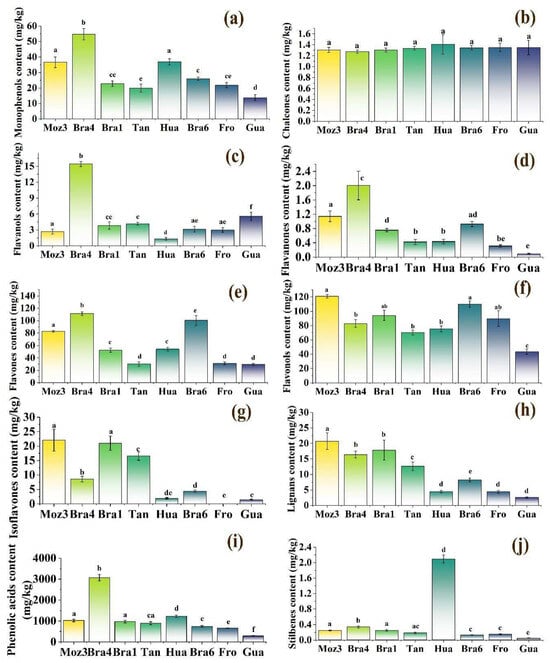
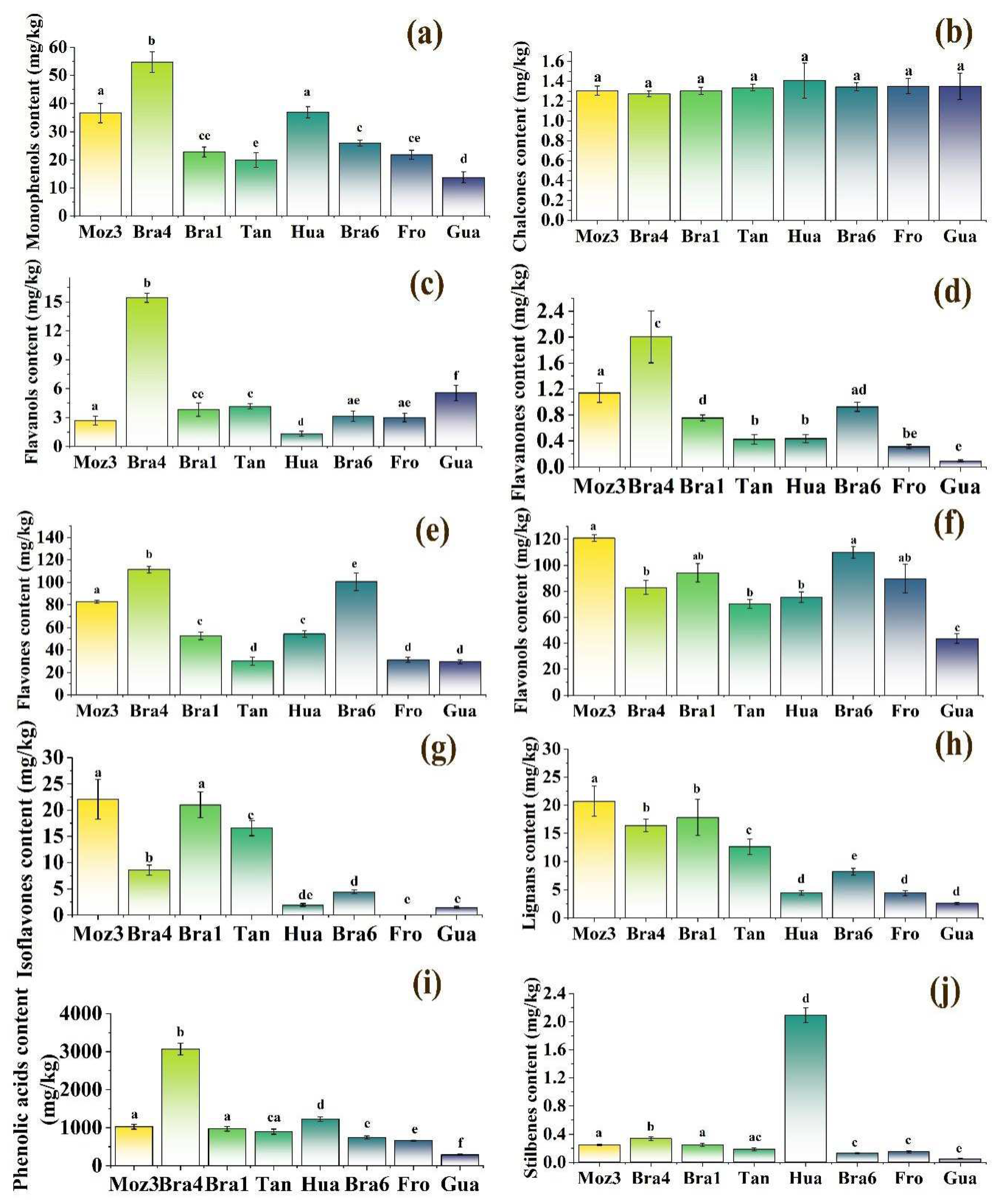
As can be seen in Table 1 and Figure 1a, monophenol content was the highest in Bra4 (54.67 mg/kg) and the lowest in Gua (13.75 mg/kg). The monophenol content in Bra4 was significantly different from the other seven varieties. As seen in Figure 1b, the chalcone content is the highest in Hua (1.41 mg/kg) and the lowest in Bra4 (1.27 mg/kg). The variability in chalcone content among the eight cashew apple varieties was not significant. From Figure 1c, it could be seen that the flavanol content was the highest in Bra4 (15.42 mg/kg) and the lowest in Hua (1.33 mg/kg). Significant variability was observed in the flavanol content of Bra4 in relation to the other seven varieties. As shown in Figure 1d, the flavanone content was the highest in Bra4 (2.00 mg/kg) and the lowest in Gua (0.09 mg/kg). There was significant variability in the flavanone content of Bra4 with the other seven varieties. As shown in Figure 1e, the flavone content was the highest in Bra4 (111.25 mg/kg) and the lowest in Gua (29.54 mg/kg). The flavone content in Bra4 was significantly different from the other seven varieties. From Figure 1f, it can be observed that the flavonol content was the highest in Moz3 (120.94 mg/kg) and the lowest in Gua (43.68 mg/kg). Flavonol content in Moz3 was significantly different from Bra4, Tan, Hua, and Gua. From Figure 1g, the isoflavone content was the highest in Moz3 (22.08 mg/kg) and the lowest in Fro (0.005 mg/kg). The isoflavone content in Bra4 was significantly different from Bra4, Tan, Hua, Bra6, Fro and Gua. From Figure 1h, the lignan content was the highest in Moz3 (20.75 mg/kg) and the lowest in Gua (2.59 mg/kg). The lignan content in Moz3 was significantly different from all other seven varieties. From Figure 1i, phenolic acid content was the highest in Bra4 (3067.99 mg/kg) and the lowest in Gua (288.04 mg/kg). The content of phenolic acids in Bra4 was significantly different from the other seven cultivars. From Figure 1j, the stilbene content was the highest in Hua (2.09 mg/kg) and the lowest in Gua (0.05 mg/kg). The stilbene content in Hua was significantly different from all other seven varieties. The phenolic acid content was higher in the eight cashew apples than in grapes (216 mg/kg), the flavanol content was lower than in grapes (408 mg/kg), and the flavonol content was higher than in grapes (65 mg/kg) [23]. This shows that phenolic compounds vary according to the fruit type and variety.
Figure 1.
(a–j) represent the comparative analysis of the content of monophenols, chalcones, flavanols, flavanones, flavones, flavonols, isoflavones, lignans, phenolic acids, and stilbenes in eight cashew apples. Different letters represent significant differences at the 0.05 level.
3.2. Analysis of Phenolic Metabolomic Differences in Eight Cashew Apples
To better identify the distribution pattern of 39 phenolic compounds in eight cashew apples, OPLS-DA, VIP, and Heatmaps were used in this study to profile the phenolic compounds in eight cashew apples. OPLS-DA analysis has been successfully applied in various scenarios such as drug screening, analysis of variability of constituents to identify the quality and origin of food products, and analysis of the chemical composition of crops to distinguish between crop varieties and growing conditions [24,25,26,27].
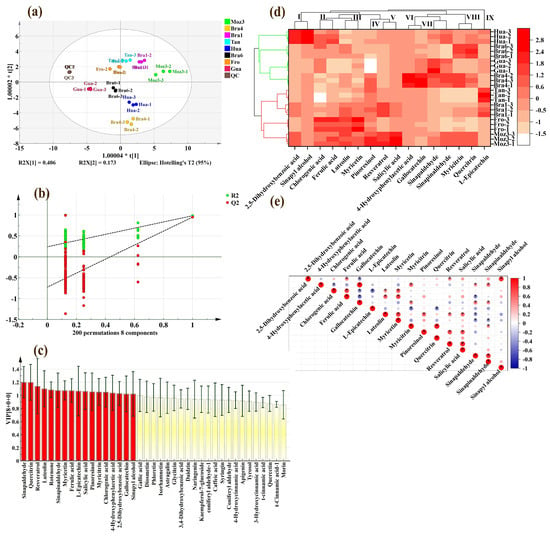
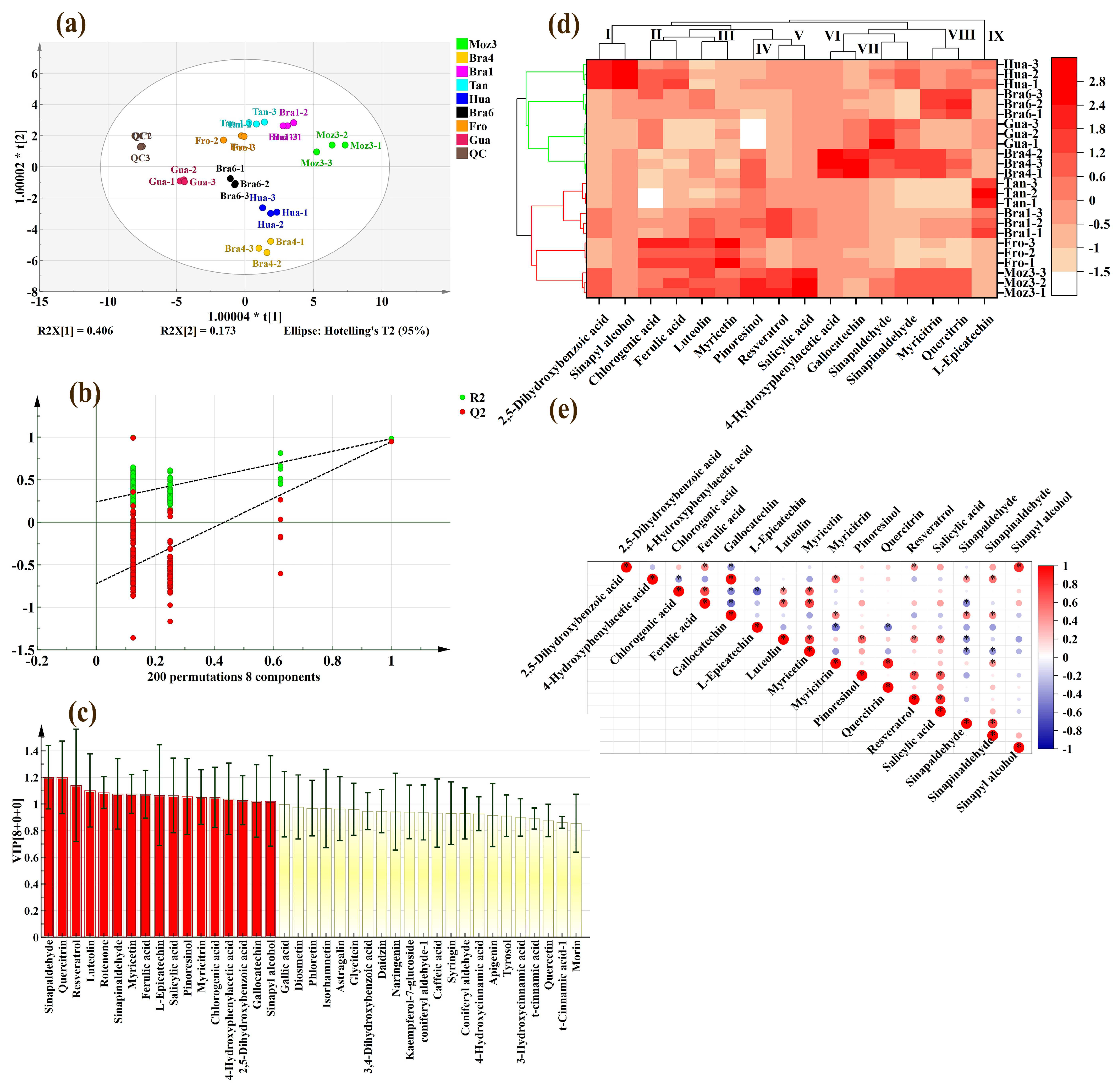
The OPLS-DA model of phenolic compounds in eight cashew apples is shown in Figure 2a, and the calculations show R2X = 0.982, R2Y = 0.979, and Q2 = 0.937 for the OPLS-DA model, indicating that it can reflect 97.9% of the variations in the data; at the same time, Q2 was close to 1, indicating that the model has a good degree of interpretability [24]. The cashew apple samples were well clustered on the scatter plot of OPLS-DA scores, the differences within the groups were small, and the eight cashew apple varieties achieved complete separation, suggesting that they have a greater influence on the type and content of phenolic compounds. Meanwhile, to avoid the overfitting phenomenon of the fitted OPLS-DA model, it was cross-validated 200 times, as shown in Figure 2b. From Figure 2b, the model is statistically significant when the Q2 regression line crosses the horizontal coordinate, the intercept is less than 0, and both R2 and Q2 are less than 1.0, indicating an overfitting phenomenon. Therefore, the model is statistically significant [26].
Figure 2.
(a) represents the scattering of scores of OPLS-DA of phenolic compounds in eight cashew apples, (b) represents the results of the permutation test of OPLS-DA of phenolic compounds in eight cashew apples, (c) represents the VIP values of phenolic compounds in eight cashew apples (Red represents VIP>1 and light yellow represents VIP<1), and (d,e) represent the clustering heatmap and correlation analysis of the sixteen significantly different phenolic compounds in eight cashew apples, respectively. The symbol * indicates that the correlation is significant at the level of 0.05.
Based on the OPLS-DA model, VIP analysis was used in this study to analyze the differences in the distribution of 39 phenolic compounds in eight cashew apple cultivars, as shown in Figure 2c. From Figure 2c, the analysis screened a total of 17 phenolic compounds with VIP greater than 1, including sinapaldehyde, quercitrin, resveratrol, and luteolin. To make the analytical results more accurate, compounds with VIP greater than 1 were analyzed using the Kruskal–Wallis test [26], and the results are shown in Table 2. Table 2 shows that the difference in the phenolic compound rotenone was not significant (p = 0.562, >0.05), while the other 16 differential phenolic compounds differed significantly, indicating that the 16 differential phenolic compounds screened for the identification of eight cashew apple varieties were of greater significance.
Table 2.
p-values of phenolic compounds with VIP > 1 analyzed based on OPLS-DA modeling.
Clustered heat maps are often used to show the differences in expression between different samples [28]. The clustered heat maps of the contents of 16 different phenolic compounds in 8 cashew apple samples after Z-score normalization are shown in Figure 2d. Figure 2d shows that the phenolic compounds in the eight cashew apples could be classified into nine groups. Group I compounds (2,5-dihydroxybenzoic acid and sinapyl alcohol) were higher in Hua and lowest in Gua, Group II compounds (chlorogenic acid and ferulic acid) were higher in Fro and Moz3 and lowest in Tan, Group III compounds (luteolin and myricetin) were higher in Fro and Moz3 and lowest in Gua, Group IV compounds (pinoresinol) were highest in Moz3 and lowest in Gua, and Group V compounds (resveratrol and salicylic acid) were highest in Moz3. Group VI compounds (4-hydroxyphenylacetic acid and gallocatechin) were the highest in Bra4 and lower in Hua and Moz3. Group VII compounds (sinapaldehyde and sinapin aldehyde) were the highest in Gua and Bra4 and lower in Tan and Fro; group VIII compounds (myricitrin and quercitrin) were higher in Bra6, Bra4, and Moz3 and lower in Tan and Fro; group IX compounds (l-epicatechin) were highest in Tan and lower in varieties such as Moz3 and Fro. It can be seen that the content of phenolic compounds had a significant influence on different cashew apple varieties, and they can be selected according to actual application requirements. For example, Moz3 contained higher contents of chlorogenic acid, ferulic acid, salvage acid, and salicylic acid, indicating greater advantages in developing food antibacterial additives, functional dietary supplements, and other products with antibacterial, antioxidant, and antiviral properties [14,15]. Myricitrin was abundant in Bra6, Bra4, and Moz3, and these varieties had more advantages in extracting red pigment for food colorants.
Phenolic compounds were common secondary metabolites in the process of plant growth, they played different roles in the metabolic pathway, and there was a correlation between them. [29]. The results of 16 phenolic compounds analyzed by correlation are shown in Figure 2e. From Figure 2e, 2,5-dihydroxybenzoic acid significantly correlated with ferulic acid, gallocatechin, resveratrol, and sinapyl alcohol. The 4-hydroxyphenylacetic acid significantly correlated with chlorogenic acid, gallocatechin, myricitrin, sinapaldeyde, and sinapinaldehyde. The chlorogenic acid significantly correlated with 4-hydroxyphenylacetic acid, ferulic acid, gallocatechin, l-epicatechin, luteolin, and myricetin. The ferulic acid with 2,5-dihydroxybenzoic acid, chlorogenic acid, gallocatechin, luteolin, myricetin, and sinapaldehyde showed a significant correlation. This shows that phenolic compounds in cashew apples are closely related by metabolism.
3.3. Analysis of Differential Phenolic Compound Metabolic Pathways
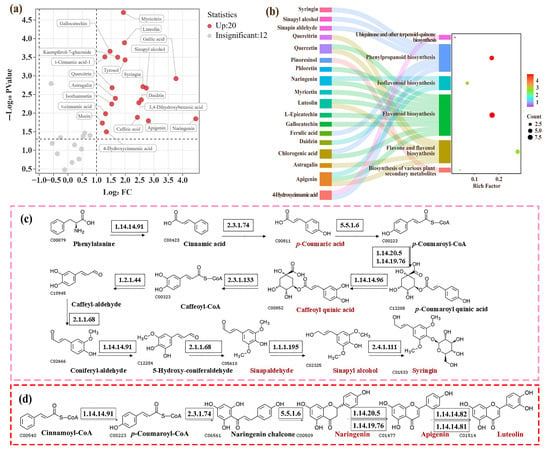
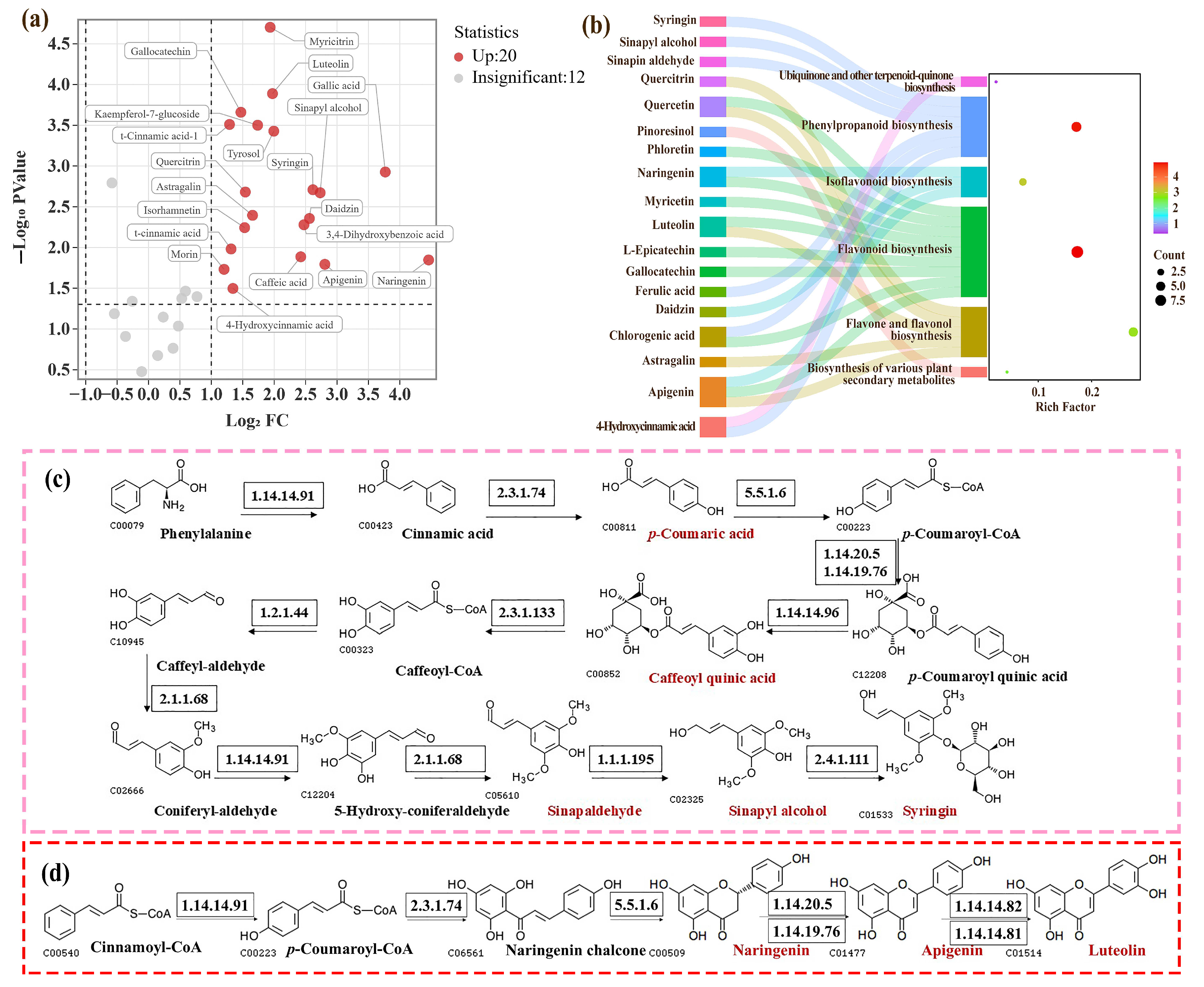
Given the characteristics of the phenolic compound content and distribution patterns in the eight cashew apple varieties mentioned above, the present study took two varieties, Bra4 and Gua, as typical representatives and used the pathway analysis function of the Metabo Analyst 6.0 analysis software to elucidate the differences in the metabolic pathways of each phenolic compound. As shown in Table 1, a total of 35 phenolic compounds were isolated and identified from Bra4 and Gua, among which 4-hydroxyphenylacetic acid, coniferyl aldehyde, and pinoresinol were detected in Bra4 but not in Gua. As shown in Figure 3a, myricitrin, lutcolin, gallic acid, sinapyl alcohol, syringin, daidzin, 3,4-dihydroxybenzoic acid, and caffeic acid were present in Bra4 compared to Gua, while apigenin, naringein, 4-hydroxycinnamic acid, morin, t-cinnamic acid, isorhamnetin, astragalin, quericitrin, t-cinnamic acid-1, tyrosol, kaempferol-7-glucoside, and gallocatechin represent 20 phenolic compounds that were significantly upregulated in comparison. As shown in Figure 3b, phenolic compounds in Bra4 and Gua were mainly concentrated in flavonoid biosynthesis, phenylpropanoid biosynthesis, isoflavonoid biosynthesis, flavone, and flavonol biosynthesis, as well as in the biosynthesis of various plant secondary metabolites and ubiquinone and other terpenoid quinone biosynthesis pathways. Among them, 18 phenolic compounds were involved in the above six pathways, of which six compounds, syringin, sinapyl alcohol, sinapin aldehyde, ferulic acid, chlorogenic acid, and 4-hydroxycinnamic acid, were involved in ubiquinone and other terpenoid quinone biosynthesis. 4-Hydroxycinnamic acid was also involved in ubiquinone and other terpenoid quinone biosynthesis. Chlorogenic acid, along with other compounds—naringenin, apigenin, gallocatechin, myricetin, phloretin, l-epicatechin, quercetin, and luteolin—were involved in flavonoid biosynthesis. Naringenin, apigenin, and daidzin were involved in isoflavonoid biosynthesis. Apigenin, quercetin, luteolin, astragalin and quercitrin were involved in flavone and flavonol biosynthesis. Pinoresinol was involved in the biosynthesis of several plant secondary metabolites.
Figure 3.
Volcano plots of 32 phenolic compounds in Bra4 and Gua (a), Sankey bubble plots of phenolic compound pathways in Bra4 and Gua (b), plots of syringin pathways in phenylpropanoid biosynthesis (c), and plots of luteolin pathways in flavonoid biosynthesis (d), and 4.3.1.24 represented phenylalanine ammonia-lyase, 4.3.1.25 phenylalanine/tyrosine ammonia-lyase, 6.2.1.12 4-coumarate--CoA ligase, 2.3.1.133 shikimate O-hydroxycinnamoyltransferase, 1.14.14.96 5-O-(4-coumaroyl)-D-quinate 3′-monooxygenase), 2.3.1.133 shikimate O-hydroxycinnamoyltransferase, 1.2.1.44 cinnamoyl-CoA reductase, 2.1.1.68 caffeic acid 3-O-methyltransferase, F5H ferulate-5-hydroxylase, 1.1.1.95 D-3-phosphoglycerate dehydrogenase, 2.4.1.111 coniferyl-alcohol glucosyltransferase, 1.14.14.91 cinnamate 4-hydroxylase, 2.3.1.74 chalcone synthase, 5.5.1.6 chalcone isomerase, 1.14.20.5 flavone synthase I, 1.14.19.76 flavone synthase II, 1.14.14.81 flavonoid 3′,5′-hydroxylase, and 1.14.14.82 flavonoid 3′-monooxygenase.
In order to investigate the role of different phenolic compounds in the pathway in greater depth, the present study targeted syringin and luteolin synthesis. Using the KEGG database under the genome category, the synthesis mechanisms of syringin and luteolin in the metabolic pathway of phenylpropanoid biosynthesis and flavonoid biosynthesis, respectively, were shown in Figure 3c,d.
As could be seen from Figure 3c, the synthesis mechanism of syringin was as follows: firstly, phenylalanine synthesized the target product p-coumaric acid under the action of cinnamate 4-hydroxylase and chalcone synthase. Secondly, the target product p-coumaric acid was synthesized from the presence of chalcone isomerase, flavone synthase I, flavone synthase II, and 5-O-(4-coumaroyl)-D-quinate 3′-monooxygenase. Thirdly, caffeoyl quinic acid was synthesized from p-coumaric acid in the presence of shikimate 4-hydroxylase and chalcone synthase. Fourthly, quinic acid was synthesized in the presence of shikimate O-hydroxycinnamoyltransferase, cinnamoyl-CoA reductase, caffeic acid 3-O-methyltransferase, and cinnamate 4-hydroxylase. Fifthly, sinapaldehyde was synthesized by D-3-phosphoglycerate dehydrogenase to the target product sinapyl alcohol. Sixthly, syringin was synthesized from the sinapyl alcohol in the presence of coniferyl–alcohol glucosyltransferase. From Figure 3d, the synthesis mechanism of luteolin was as follows: cinnamoyl-CoA was synthesized in the presence of cinnamate 4-hydroxylase, chalcone CoA was synthesized from cinnamoyl-CoA under the action of cinnamate 4-hydroxylase, chalcone synthase, chalcone isomerase to synthesize the target product naringein, which was synthesized by flavone synthase I and flavone synthase II to synthesize the target product apigenin, which was synthesized under the action of flavonoid 3′,5′-hydroxylase and flavonoid 3′-monooxygenase to synthesize the final target product luteolin. From Figure 3d, the synthesis mechanism of luteolin was as follows: firstly, naringein was synthesized from the cinnamoyl-CoA in the presence of cinnamate 4-hydroxylase, chalcone synthase, and chalcone isomerase. Secondly, luteolin was synthesized from the luteolin in the presence of cinnamate 4-hydroxylase, chalcone synthase, and chalcone isomerase.
4. Conclusions
Targeted metabolomics and the OPLS-DA method were found to be useful in profiling the variability of phenolic compounds in different cashew apple cultivars. The qualitative and quantitative analysis results of phenolic compounds showed that Bra4 had the highest number of phenolic compounds while Gua had the lowest amount, and Bra4 had more advantages in developing beverages, drugs, or nutritional products. The 16 phenolic compounds that differed significantly among the eight cashew apple varieties were sinapaldehyde, quercitrin, resveratrol, luteolin, sinapin, aldehyde, myricetin, ferulic acid, l-epicatechin, salicylic acid, pinoresinol, myricitrin, chlorogenic acid, 4-hydroxyphenylacetic acid, 2,5-dihydroxybenzoic acid, gallocatechin, and sinapyl alcohol. The phenolic compounds in Bra4 and Gua were mainly involved in flavonoid biosynthesis, phenylpropanoid biosynthesis, isoflavonoid biosynthesis, flavone and flavonol biosynthesis, biosynthesis of various plant secondary metabolites, and ubiquinone and other terpenoid quinone biosynthesis. Six pathways were identified, of which phenylpropanoid biosynthesis and flavonoid biosynthesis were the most important, and it provided the scientific basis for revealing the color change in cashew peel and directionally breeding new varieties rich in Lutcolin and other bioactive components such as antibacterial, antiviral and anticancer, and opened up a new direction for realizing the value-added utilization of pericarp byproducts. In the future, we would analyze the genes related to phenolic compounds metabolism from the perspective of transcriptomics to realize the targeted selection of cashew apple varieties, providing a scientific basis for selecting new cashew varieties and product development.
Author Contributions
H.H.: Conceptualization, Investigation, Data curation, Writing—original draft, Funding acquisition. H.M.: Conceptualization, Formal analysis, Writing—review and editing. L.Z.: Methodology, Investigation, Writing—review and editing. W.H.: Resources, Software, Formal analysis. X.F.: Formal analysis, Project administration. F.H.: Investigation, Validation, Project administration. Y.Z.: Methodology. L.C.: Investigation, Resources. Y.Y.: Data curation. Z.Z.: Visualization, Writing—review and editing. Y.L.: Conceptualization, Data curation, Writing—original draft, Writing—review and editing, Funding acquisition. All authors have read and agreed to the published version of the manuscript.
Funding
This work was supported by the National Tropical Plants Germplasm Resource Center (NTPGRC2025-006), the Hainan Agricultural Germplasm Resources Protection Project (2024-10), the Hainan Provincial Natural Science Foundation of China (No. 320QN327), and the Central Public-interest Scientific Institution Basal Research Fund (NO.1630122024015).
Institutional Review Board Statement
Not applicable.
Data Availability Statement
Data will be made available upon request.
Conflicts of Interest
The authors declare that they have no known competing financial interests or personal relationships that could have appeared to influence the work reported in this paper.
References
- Angela, A.; Edna, M.; Neema, K. Effect of clarification on physicochemical properties and nutrient retention of pressed and blended cashew apple juice. Food Sci. Nutr. 2023, 11, 1891–1903. [Google Scholar] [CrossRef] [Scilit]
- Kamble, A.B.; Pawar, C.D.; Khanvilkar, M.H.; Kadam, J.J.; Kasture, M.C. Effect of Blending Cashew Apple (Anacardium occidentale L.) and Aonla (Emblica officinalis Gaertn.) Juice on Fermentation of Wine. J. Adv. Biol. Biotechnol. 2024, 27, 1378–1383. [Google Scholar] [CrossRef] [Scilit]
- Gyau, A.Y.; Dufie WM, F.; Francis, A.; Mary, A. Cashew Apples in Ghana: Stakeholders’ Knowledge, Perception, and Utilization. Int. J. Food Sci. 2022, 2022, 2749234. [Google Scholar] [CrossRef] [Scilit]
- van Nathalie, W.; Hannah, S.A. From food waste to functional component: Cashew apple pomace. Crit. Rev. Food Sci. Nutr. 2023, 64, 7101–7117. [Google Scholar] [CrossRef] [Scilit]
- Wang, J.; Liang, L.; Huang, W.; Zhang, Z.; Huang, H. Main Components and Processing Utilization of Cashew Apple. J. Trop. Biol. 2010, 1, 85–89. [Google Scholar] [CrossRef]
- Olusegun, A.A.; Agbaje, L. Biotechnological valorization of cashew apple juice for the production of citric acid by a local strain of Aspergillus niger LCFS 5. J. Genet. Eng. Biotechnol. 2021, 19, 137. [Google Scholar] [CrossRef] [Scilit]
- Barreto, C.I.; de Almeida Rodrigues da Silva, M.; de Sousa Santos, L. Multi-objective optimization study applied to an ethanol fermentation of cashew apple juice. Braz. J. Chem. Eng. 2023, 41, 71–85. [Google Scholar] [CrossRef] [Scilit]
- Junior, J.E.M.; de Queiroz, L.P.; de Albuquerque, T.L.; de Souza Zampieri, D.; Melo, V.M.M.; Rocha, M.V.P. Lactic acid production from cashew apple bagasse, an agro-industrial waste, and its application in the enzymatic synthesis of polylactic acid. Biocatal. Agric. Biotechnol. 2024, 56, 102987. [Google Scholar] [CrossRef] [Scilit]
- de Araújo, L.G.S.; Rodrigues, T.H.S.; Alencar, L.M.R.; de Freitas Rosa, M.; Rocha, M.V.P. Production of nanocellulose from cashew apple bagasse: The influence of pretreatment. Cellulose 2023, 31, 937–952. [Google Scholar] [CrossRef] [Scilit]
- de Albuquerque, T.L.; Cavalcante, V.G.C.; da Silva Rocha, W.; de Macedo, A.C.; Rocha, M.V.P. Hydrogels based on lignin extracted from cashew apple bagasse and its application in antimicrobial wound dressings. Int. J. Biol. Macromol. 2024, 262, 130169. [Google Scholar] [CrossRef] [Scilit]
- Guimarães, D.T.; de Oliveira Barros, M.; e Silva, R.D.A.; Silva, S.M.F.; de Almeida, J.S.; de Freitas Rosa, M.; Gonçalves, L.R.B.; Santa Brígida, A.I. Superabsorbent bacterial cellulose film produced from industrial residue of cashew apple juice processing. Int. J. Biol. Macromol. 2023, 242, 124405. [Google Scholar] [CrossRef] [Scilit]
- Mamadou, D.; Adama, C.; Innocent, K.N.G.; Doudjo, S. Hepatoprotective Activity of Aqueous Extract of Cashew Apple Cake (Anacardium occidentale L.) in Rats and Mice. Biotechnol. J. Int. 2022, 26, 30–37. [Google Scholar] [CrossRef] [Scilit]
- de Barros Kobi, H.; Fernandes, R.B.A.; de Senna, D.S.; Borges, L.L.R.; Vidigal, M.C.T.R.; Marrocos, P.C.L.; Freitas, V.V.; de Souza, M.S.D.S.; Castro, G.A.D.; Fernandes, S.A.; et al. Metabolic profile of fatty acids, phenolic compounds, and methylxanthines of cocoa kernels (Theobroma cacao L.) from different cultivars produced in cabruca and full sun farming systems. Food Res. Int. 2024, 197, 115198. [Google Scholar] [CrossRef] [Scilit] [PubMed]
- Lima, E.M.F.; Bueris, V.; Germano, L.G.; Sircili, M.P.; Pinto, U.M. Synergistic effect of the combination of phenolic compounds and tobramycin on the inhibition of Pseudomonas aeruginosa biofilm. Microb. Pathog. 2024, 197, 107079. [Google Scholar] [CrossRef] [Scilit]
- Mueed, A.; Aljahdali, S.M.; Albalawi, M.; Altarjami, L.R.; Aljhdli, M.O.; Al-Hoshani, N.; AlShaqhaa, M.A.; Almutairi, H.H.; Alkahtani, A.M.; El-Saadony, M.T.; et al. Phenolic compounds and biological activities of berberis fruit: Enhancing role on physiochemical and antioxidant properties of yogurt. LWT 2024, 211, 116834. [Google Scholar] [CrossRef] [Scilit]
- Huang, H.; Zhao, L.; Zhang, B.; Huang, W.; Zhang, Z.; An, B. Integrated analysis of the metabolome and transcriptome provides insights into anthocyanin biosynthesis of cashew apple. Food Res. Int. 2024, 175, 113711. [Google Scholar] [CrossRef] [Scilit] [PubMed]
- Coelho, T.L.S.; Silva, D.S.N.; dos Santos Junior, J.M.; Dantas, C.; de Araujo Nogueira, A.R.; Júnior, C.A.L.; Vieira, E.C. Multivariate optimization and comparison between conventional extraction (CE) and ultrasonic-assisted extraction (UAE) of carotenoid extraction from cashew apple. Ultrason. Sonochem. 2022, 84, 105980. [Google Scholar] [CrossRef] [Scilit] [PubMed]
- Patra, A.; Abdullah, S.; Pradhan, R.C. Application of artificial neural network-genetic algorithm and response surface methodology for optimization of ultrasound-assisted extraction of phenolic compounds from cashew apple bagasse. J. Food Process Eng. 2021, 44, e13828. [Google Scholar] [CrossRef] [Scilit]
- Pham, B.A.; Tran TY, N.; Nguyen TX, T.; Dao, T.P.; Ngo, H.D.; Vu, N.D. Evaluating polyphenol and ascorbic acid contents, tannin removal ability, and physical properties during hydrolysis and convective hot-air drying of cashew apple powder. Open Chem. 2024, 22, 20240067. [Google Scholar] [CrossRef] [Scilit]
- Patra, A.; Abdullah, S.; Pradhan, R.C. Microwave-assisted extraction of bioactive compounds from cashew apple (Anacardium occidenatale L.) bagasse: Modeling and optimization of the process using response surface methodology. J. Food Meas. Charact. 2021, 15, 4781–4793. [Google Scholar] [CrossRef] [Scilit]
- Shirsat, V.R.; Vaidya, P.D.; Dalvi, V.H.; Singhal, R.S.; Kelkar, A.K.; Joshi, J.B. Mathematical modeling of bioactive extraction from cashew apple: Maxwell-Stefan approach to resolve effect of internal diffusivity and external mass transfer. Sep. Purif. Technol. 2025, 354, 129215. [Google Scholar] [CrossRef] [Scilit]
- Zhang, Y.; Xiao, H.; Lv, X.; Zheng, C.; Wu, Z.; Wang, N.; Wang, J.; Chen, H.; Wei, F. Profiling and spatial distribution of phenolic compounds in rapeseed by two-step extraction strategy and targeted metabolomics combined with chemometrics. Food Chem. 2022, 401, 134151. [Google Scholar] [CrossRef] [Scilit]
- Yang, T.; Liu, S.; Shan, S. Comparative study on phenolic compounds in early maturing superior plants of wine grape ‘Shelongzhu’. Xiandai Hortic. 2024, 47, 6–9. [Google Scholar] [CrossRef]
- Huang, X.; Zhao, L.; Pang, S.; Liu, Y.; Liu, J.; Zhang, M. Effects of Varieties, Cultivation Methods, and Origins of Citrus sinensis ‘hongjiang’ on Volatile Organic Compounds: HS-SPME-GC/MS Analysis Coupled with OPLS-DA. Agriculture 2022, 12, 1725. [Google Scholar] [CrossRef] [Scilit]
- Liu, Y.; Xia, Q.; Qian, Y.; Kuang, Y.; Liu, J.; Lin, L. Effects of Three Extraction Methods on Avocado Oil Lipid Compounds Analyzed via UPLC-TOF-MS/MS with OPLS-DA. Foods 2023, 12, 1174. [Google Scholar] [CrossRef] [Scilit] [PubMed]
- Tu, X.; Liu, Y.; Yao, Y.; Li, W.; Luo, P.; Du, L.; He, J.; Lu, J. Effects of four drying methods on Amomum villosum Lour. ’Guiyan1’ volatile organic compounds analyzed via headspace solid phase microextraction and gas chromatography-mass spectrometry coupled with OPLS-DA. RSC Adv. 2022, 12, 26485–26496. [Google Scholar] [CrossRef] [Scilit]
- Zhang, X.; Zhang, Y.; Liu, J.; Dai, Z. Effects of surimi by-product hydrolysates on processing quality and difference analysis of volatile compounds of silver carp surimi gel. LWT 2024, 211, 116906. [Google Scholar] [CrossRef] [Scilit]
- Zhou, Y.; Wang, D.; Duan, H.; Zhou, S.; Guo, J.; Yan, W. Detection and analysis of volatile flavor compounds in different varieties and origins of goji berries using HS-GC-IMS. LWT 2023, 187, 115322. [Google Scholar] [CrossRef] [Scilit]
- Zhan, L.; Li, J.; Huang, W.; Song, C.; Li, J.; Pang, L.; Li, Y. Light irradiation affects the total antioxidant capacity, total phenolic compounds, phenolic acids, and related enzyme activities of minimally processed spinach (Spinacia oleracea L.). J. Food Process. Preserv. 2020, 44, e14825. [Google Scholar] [CrossRef] [Scilit]

Disclaimer/Publisher’s Note: The statements, opinions and data contained in all publications are solely those of the individual author(s) and contributor(s) and not of MDPI and/or the editor(s). MDPI and/or the editor(s) disclaim responsibility for any injury to people or property resulting from any ideas, methods, instructions or products referred to in the content. |
© 2025 by the authors. Licensee MDPI, Basel, Switzerland. This article is an open access article distributed under the terms and conditions of the Creative Commons Attribution (CC BY) license (https://creativecommons.org/licenses/by/4.0/).