


Abstract
Chronic nightmares are very common in psychiatric disorders, affecting up to 70% of patients with personality or post-traumatic stress disorders. In other psychiatric disorders, the relationships with nightmares are poorly known. This review aimed to clarify the relationship between nightmares and both mood and psychotic disorders. We performed a systematic literature search using the PubMed, Cochrane Library and PsycINFO databases until December 2019, to identify studies of patients suffering from either a mood disorder or a psychotic disorder associated with nightmares. From the 1145 articles screened, 24 were retained, including 9 studies with patients with mood disorders, 11 studies with patients with psychotic disorders and 4 studies with either psychotic or mood disorders. Nightmares were more frequent in individuals with mood or psychotic disorders than in healthy controls (more than two-fold). Patients with frequent nightmares had higher suicidality scores and had more frequently a history of suicide attempt. The distress associated with nightmares, rather than the frequency of nightmares, was associated with the severity of the psychiatric disorder. Further studies assessing whether nightmare treatment not only improves patient–sleep perception but also improves underlying psychiatric diseases are needed. In conclusion, nightmares are overrepresented in mood and psychotic disorders, with the frequency associated with suicidal behaviors and the distress associated with the psychiatric disorder severity. These findings emphasize major clinical and therapeutic implications.
1. Introduction
Sleep disorders are often implicated in the clinical course of psychiatric disorders. Among these sleep disorders, insomnia and nightmares are very common in clinical practice associated with psychiatric disorders [1]. Nightmares are associated with increased psychological distress [1], worse physical health outcomes [2], and increased risk of self-harm and suicide [3,4]. Whereas episodic nightmares are very common with a prevalence of about 35–45% (one nightmare per month) [5,6,7], the prevalence of chronic nightmares is relatively low in the general population, ranging from 2–8% [5,6,7,8,9,10]. Nevertheless, the prevalence of these chronic nightmares seems significantly more frequent in individuals with psychiatric disorders [11]. Indeed, chronic nightmares are very common in psychiatric disorders, affecting up to 70% of patients with personality or post-traumatic stress disorders [2,12,13]. In other psychiatric disorders such as psychotic and mood disorders, which are very frequent, the relationships between nightmares and these disorders is poorly known. The prevalence of nightmares is consistent across several countries and cultures, including the United States, Canada, Europe, Japan, and Middle East [14]. The International Classification of Sleep Disorders, third edition (ICSD-3) defines nightmares as “coherent dream sequences that seem real and become increasingly more disturbing as they unfold. Emotions usually involve anxiety, fear or terror. The dream content most often focuses on imminent physical danger to the individual, but may also involve other distressing themes” [15,16]. Nightmares occur frequently in the context of REM sleep, and would usually awaken the sleeper, with a recollection of disturbing mental activity [10].
Episodic nightmares should be distinguished from a nightmare disorder. The fifth edition of the Diagnostic and Statistical Manual of Mental Disorders (DSM-5) [17] defines nightmare disorder according to five diagnostic criteria: (A) repeated occurrences of extended, extremely dysphoric and well-remembered dreams that generally occur during the second half of the major sleep episode; (B) the individual rapidly becomes oriented and alert on awakening from the dysphoric dreams; (C) the sleep disturbance causes clinically significant distress or impairment in social, occupational, or other important areas of functioning; (D) the nightmare symptoms are not attributable to the physiological effects of a substance; (E) coexisting mental and medical disorders do not explain the predominant complaint of dysphoric dreams. The DSM-5 specifies the nightmare disorder’s duration: acute (<1 month), sub-acute (more than 1 month but less than 6 months) or persistent (>6 months). The DSM-5 also specifies the severity of the disorder: severe (one episode per night) and moderate disorder (one or more episode per week).
Sleep complaints directly impact mental health and predict suicide attempts independently of all psychopathologies and sociodemographic characteristics [18]. More specifically, nightmares are overrepresented in almost all psychiatric disorders and are also associated with suicidal thoughts and behaviors, as well as suicide, independently of psychiatric disorders and symptoms [19,20,21]. Moreover, nightmares are also associated with other suicide risk factors, including hopelessness and depression [22,23] which predict suicidal ideation and behavior [24,25]. Nightmares seem to be more frequent in patients with major depressive disorders (MDD), bipolar disorders (BD), and schizophrenia than in the general population [26]. It has also been proposed that nightmares and psychotic symptoms represent a common domain with shared pathophysiology [27]. Nevertheless, some findings are controversial, including whether these associations correlate or not with the intensity of psychiatric symptoms, or if the frequency and/or the intensity of nightmares are associated with psychiatric disorders and suicidal behaviors. In addition, the question of whether nightmares are a specific or unspecific symptom shared by all or some psychiatric disorders still needs to be unraveled. Finally, although nightmares were associated with an increased risk of suicide in the general population, we wanted to clarify whether this association also exist in individuals with psychiatric disorders.
In this context and the absence of extensive reviews on mood and psychotic disorders, this systematic review aimed to clarify the association between nightmares and these psychiatric disorders by analyzing all studies assessing nightmares and mood disorders (major depressive disorders and bipolar disorders), and psychotic disorders (schizophrenic and non-schizophrenic disorders). The objective was to specify the prevalence of nightmares in patients with mood disorders or psychotic disorders, and their association with psychiatric manifestations and suicidal risk.
2. Methods
We followed the Preferred Reporting Items for Systematic Reviews and Meta-analyses (PRISMA) [28] guidelines for the literature search and analysis.
2.1. Eligibility Criteria
We decided to include only studies examining mood or psychotic disorders because of their high prevalence and the absence of systematic reviews.
We included all studies meeting the following inclusion criteria: (A) must be an original paper (including case report, case study and case series, and epidemiological studies), (B) must have enrolled patients with a primary diagnosis of either: mood disorder (bipolar disorder or major depressive episode), psychotic disorder (schizophrenic and non-schizophrenic disorders), suicide, according to DSM or International Classification of Disease (ICD) criteria [17,29], and assessed by standardized scales, (C) must have studied nightmares, with any type of nightmare assessment, and (D) must study adolescents or adults over 18 years of age.
Studies were excluded if: (A) they enrolled patients with another primary psychiatric disorder (personality disorders, anxiety disorder, phobia, Post-Traumatic Stress Disorder (PTSD), eating disorder, attention-deficit hyperactivity disorder (ADHD), addictions, autism spectrum disorders) or non-psychiatric disorders (dementia, cognitive disorders), (B) they studied other parasomnias, (C) they were not in English or French, (D) patients were younger than 18 years old or older than 80 years old, (E) they were a systematic review or a meta-analysis, (F) nightmares were induced by treatments, and (G) participants were selected from the general population.
2.2. Search Strategy
We searched on PubMed, Cochrane Library and PsycINFO and attempted to screen all the scientific literature until December 2019. The following terms were used for the literature search: (“nightmare” (All Fields) OR “dream” (All Fields) OR “parasomnia” (All Fields) OR “nightmare” (Medical Subject Headings (MeSH)Terms)) AND (“psychosis” (All Fields) OR “psychosis “(MeSH Terms) OR “hallucination” (All Fields) OR “schizophrenia” (All Fields) OR “bipolar disorder” (All Fields) OR “bipolar disorder” (MeSH Terms) OR “suicide” (All Fields) OR “suicide” (MeSH Terms) OR “depression” (All Fields) OR “major depressive episode” (All Fields) OR “depressive disorder” (All Fields) OR “depressive disorder” (MeSH Terms) OR “manic” (All Fields)). Relevant studies were identified and their reference lists were hand searched.
2.3. Study Selection
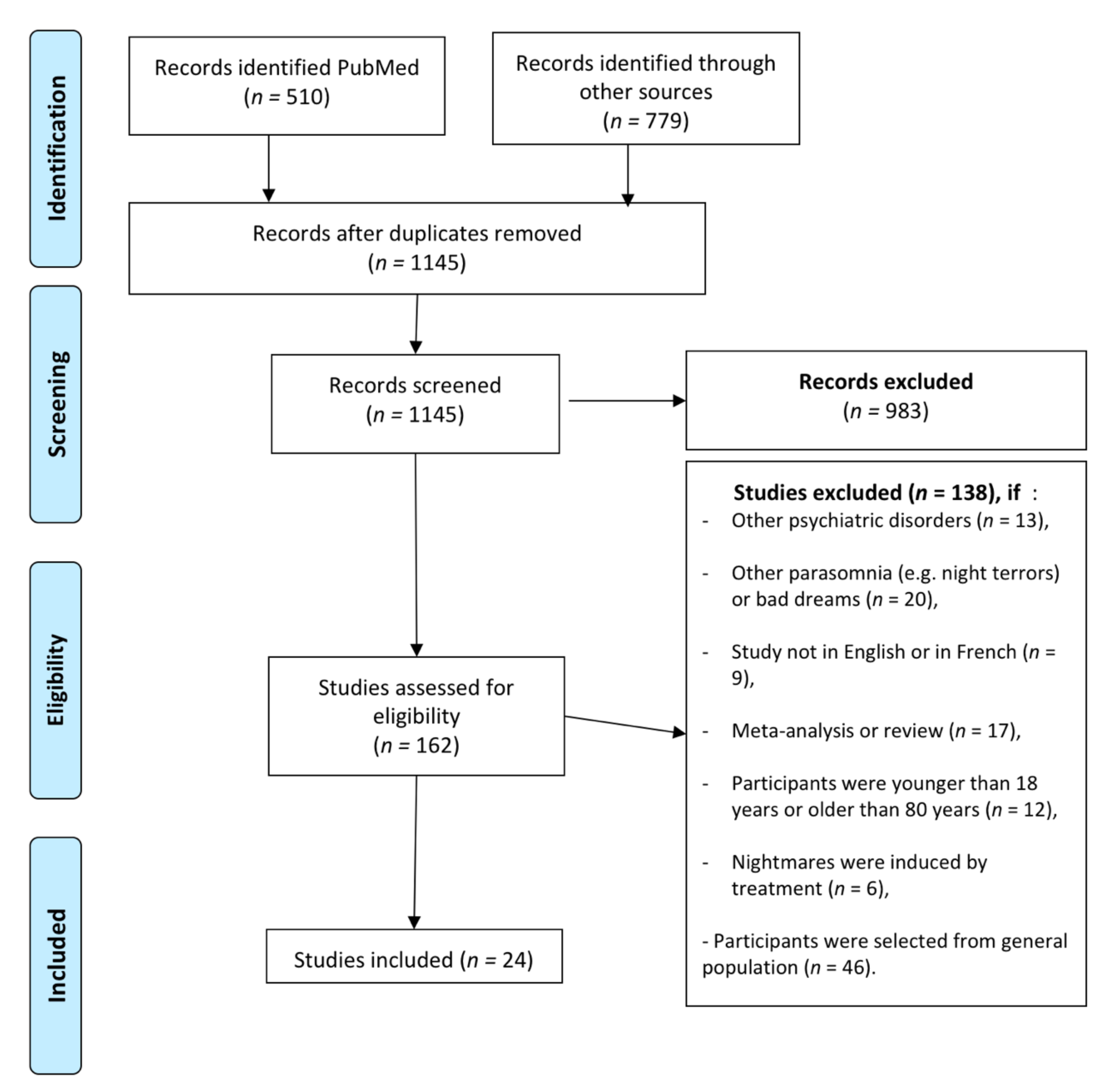
Two authors (M.A.A. and P.A.G.) independently screened for the titles of potentially eligible publications. Some papers were excluded at this stage (See Figure 1). After review of abstracts and papers, likely inclusions were assessed by MAA and PAG who independently extracted all information on age, sex, main diagnosis, nightmares frequency and distress, other comorbid sleep disorders and psychiatric disorders including post-traumatic stress symptoms and suicidality.
Figure 1.
Flow diagram of nightmares and psychiatric disorders (mood and psychotic disorders) selection process.
2.4. Frequent-Nightmare Definition
As no consensus exists regarding frequent-nightmare definition, this definition varies considerably between studies. In the table, the frequency definitions used in reported studies are indicated as follow: * Frequent nightmares were defined as ≥2/week, **: ≥1/week, ***: monthly to weekly, **** no definitions.
3. Results
Among the 1145 screened articles, 24 were included in this systematic review (Figure 1). The diagnostic criteria used in the retained studies, as well as the characteristics of studies that were included, are summarized in Table 1, Table 2 and Table 3.
Table 1.
Mood disorders and nightmares.
Table 2.
Psychotic Disorders and nightmares.
Table 3.
Studies comparing psychiatric disorders and nightmares.
The results were separated into four categories: prevalence, association with symptoms, association with suicide, and treatment.
3.1. Nightmares and Mood Disorders
We found nine studies on nightmares and mood disorders (Table 1).
3.1.1. Major Depressive Disorders (MDD)
Nightmare Frequency in MDD
Few studies have estimated the prevalence of nightmares in patients suffering from MDD. One study found that patients with MDD experienced nightmares more than twofold than healthy controls (mean of 44.6 nightmares per year in patients with MDD, versus 18 nightmares per year in healthy controls; the prevalence of nightmares was 16.7% and 4.9%, respectively) [25].
Suicidality and Nightmare in MDD
Patients with MDD and nightmares seem to have a higher risk of suicidality than MDD patients without nightmares. Agargun et al. found a significantly higher suicidality scores in patients with MDD and nightmares than without nightmares [29]. They also found, in a subgroup analysis, that this difference was significant in women, but not in men. In another study, Agargun et al. [32] found that nightmares were more frequent in MDD patients with suicidal attempts than in those without suicidal attempts (86% vs. 71% respectively). Marinova et al. explored the suicide risk in patients with unipolar recurrent depression and confirmed that patients with nightmares had a significantly higher suicidal score than those without nightmares (2.36 vs. 1.00 on the Hamilton Depression Rating Scale (HDRS) subscale for suicide) and had significantly more frequently a history of suicide attempt (35% vs. 6%) [22].
Nightmares and MDD Symptoms
Patients were more likely to experience frequent nightmares (≤2/week) when they had a MDD with melancholic features than without nightmares (respectively 90% of nightmares vs. 56%) [31]. Moreover, in the same study, nightmares were significantly more frequent in depressed patients with terminal insomnia (e.g., “early morning waking”) than without insomnia, regardless of melancholic features (90.1% vs. 19.4% respectively) [31].
Agargun et al. [32] studied 100 patients with melancholic features, and observed an increased frequency of nightmares and of middle and terminal insomnia in patients who committed a suicide attempt than those without suicide attempt (nightmares, n = 27 e.g., 96% in suicide attempt group, vs. n = 57 e.g., 79% in the non-suicide attempt group). The authors found no significant differences in non-melancholic depressed patients for suicide attempt, both for nightmares and insomnia. Moreover, nightmares were more common in major depressed patients with melancholic features (84%) than without melancholic features (57%).
Treatment of Nightmares in MDD
Thünker et al. [33] tested the effectiveness of standardized nightmare therapy based on image rehearsal therapy (IRT), in MDD patients suffering from nightmares, and showed a decrease in the nightmare frequency. Woo et al. [35] found an improvement for nightmares in MDD patients after four sessions of eye movement desensitization and reprocessing (EMDR). Li et al. [34] found that MDD patients with nightmares and insomnia had fewer chances to be in remission at four years of MDD (29.8% of remission in patients with nightmares vs. 47.3% in patients without nightmares). Moreover, they found that residual nightmares, but not residual insomnia, were significantly associated with suicidal ideation in patients remitted from major depressive disorders.
3.1.2. Bi-Polar Disorders
Marinova et al. [22] tested the hypothesis that nightmares were associated with an elevated suicidal risk in depressed patient, differentiating bipolar depression from recurrent depression. They found a significantly higher frequency of nightmares in unipolar- than in bipolar-depression (64% vs. 25%). There were no differences in the bipolar depression group for the suicide risk in patients with nightmares, compared with those without nightmares. However, the sample of depressed patients with bipolar disorder was small (n = 8 patients), which may explain the absence of significant results despite the large differences of frequencies reported. Lai et al. [36] also found that frequent nightmares (not defined) in bipolar or unipolar depression were associated with a higher risk of suicidal ideation (OR = 2.88) and attempts (OR = 1.89), after adjustment for age and sex.
Of notice, the scientific literature is very poor regarding nightmares and mania. Only one study [30] reported nightmares in three patients suffering from a first manic episode. The three patients reported at least one prodromal nightmare before their first episode [30].
3.2. Nightmares and Psychotic Disorders
We found 11 studies on nightmares and psychotic disorders (Table 2).
3.2.1. Nightmare Frequency in Psychotic Disorders
Nightmares are the second most frequent sleep disorder in patients with psychotic disorders, after insomnia, with a prevalence of frequent nightmares (defined as ≤1/week) ranging from 9.0% to 55% [45,46]. Insomnia and nightmares were frequently comorbid in patients with psychotic disorders. Accordingly, patients who had frequent nightmares (defined a ≤1/week) were more likely to report frequent insomnia (37.1% vs. 17.6%). No data examined whether the severity of insomnia symptoms correlates or not with nightmare frequency or intensity.
3.2.2. Nightmares and Psychotic Symptoms
Fennig et al. [38] reported the case of a 78 year old patient, which saw a transition from a nightmare to a brief psychotic episode. The delirium had the same thematic as his recurrent nightmare of the last three years. He was treated with neuroleptics, with no recurrences of nightmare after six months of follow up. Another case report [39] found an association between decompensation and nightmares in a 40 year old woman suffering from schizophrenia: she had insomnia and nightmares the week before relapse, with the same thematic of delusion and hallucination as in her nightmares.
Three studies found that patients with schizophrenia reported nightmares significantly more frequently than healthy controls [26,41,42]. Moreover, patients with schizophrenia had a higher score of distress related to nightmares than healthy controls [41]. Neither significant correlations between nightmare frequency and intensity of psychotic symptoms measured by the Positive And Negative Syndrome Scale (PANNS), nor correlations for depressive symptoms (Beck scale for depression) and nightmare frequency were found in those patients with schizophrenia [41]. However, nightmare distress, rather than nightmare frequency, was correlated with delusional severity, depression, anxiety, and stress [43].
One study found in exploratory measures in fourteen patients with at-risk mental states for psychosis (ARMS) that they experienced significantly more nightmares compared to healthy controls [41], even ARMS patients who did not receive any treatment.
3.2.3. Suicidality and Nightmares in Psychotic Disorders
In one study [45], nightmare frequency was associated with a lifetime history of suicide attempts but did not predict an increased risk of suicide attempt over the eight years follow up period. In the same study, insomnia and nightmare were significantly associated with an increased risk of suicide attempts (lifetime history and during the follow-up period) [45].
3.2.4. Treatment of Nightmares in Psychotic Disorders
One case report [37] was of a 38 year old patient with schizophrenia. The patient had daily nightmares about the devil in the shape of a snake. The patient was treated by desensitization of the fear of snakes, with good efficacy on nightmares. This treatment efficacy was maintained over time, and the patient did not experience any nightmares during the two years follow-up [37].
Sheaves and al. [42] experienced imagery rehearsal therapy (IRT)—a cognitive-behavioral treatment for reducing the frequency and intensity of nightmares—for the treatment of nightmares in the context of psychosis in six patients, and observed an improvement on vividness and intensity of nightmares, without a decrease in nightmare frequency. One other non-randomized study found efficacy of IRT on the emotional response of nightmares in psychotic patients [50]. Interestingly, one pilot randomized clinical trial has evaluated IRT to reduce nightmare severity in 24 patients with persecutory delusions, with large size effect improvements in nightmare severity and insomnia [47]. In addition to IRT, the intervention included cognitive behavioral therapy techniques to target identified causal factors for nightmares. Large effect size improvements in nightmare severity and insomnia were reported post-treatment (4-weeks) and maintained at follow-up (8-weeks) [47].
3.3. Study Comparing MDD and Schizophrenic Patients
We found four additional studies comparing different psychiatric disorders regarding nightmares (Table 3).
One study [25] compared nightmare frequency in MDD and schizophrenic patients with a population without psychiatric disorders and found that nightmares were significantly more frequent in psychiatric patients, but did not find any differences between MDD and schizophrenic patients (respectively 17% and 4.9% in patients with psychiatric disorders and healthy controls).
In one cohort study [48] with 165 patients (33.3% MDD, 6.6% psychotic disorder, 24.8% alcohol/substance misuse disorder, and 16.3% anxiety disorder), frequent nightmares (not defined) were more present in patients with a higher score of suicidality irrespective of underlying psychiatric disorder. Another study [19] conducted in the same cohort of patients found that patients with more than one suicide attempt had more frequent nightmares than those with one unique suicide attempt. Moreover, after a two-month follow-up, patients with more than one suicide attempt were more likely to have persistent nightmares during the follow-up period (46% vs. 14% respectively).
More recently, Lamis et al. [49], in a cohort of 172 patients with bipolar disorders (29.7%), MDD (11.6%), and psychotic disorders (46.6%), found that patients who reported nightmares (defined as weekly to monthly), compared to patient who reported yearly or no nightmares, were younger and more likely to have been hospitalized for a recent suicide attempt, with no differences between these psychiatric disorders.
4. Discussion
Nightmares were more frequent in individuals with mood disorders and psychotic disorders [26,42] than in individuals without psychiatric disorders. This is concordant with the observed higher prevalence of sleep complaints in psychiatric patients than in the general population [51]. Table 4 summarizes key findings from this systematic review of nightmares in mood and psychotic disorders (Table 4).
Table 4.
Synthesis of the findings from the literature.
Nightmares were found to be associated with higher suicidality in several studies, including suicidal ideations and attempts, in patients with mood disorders [23,31,32,35,36], or psychotic disorders [45]. In the general population, nightmares are also associated with a higher risk of suicidal thoughts, suicide attempts, or death by suicide [19,20,21]. Moreover, several studies found frequent co-occurrence of insomnia and nightmares. Insomnia is one of the most common comorbid sleep disorders associated with psychiatric disorders [51,52], and is by itself associated with a higher risk of suicidal ideation in healthy and psychiatric populations [53]. Whereas insomnia is much more often screened for by psychiatrists, being a core symptom in the classification of some psychiatric disorders such as MDD or Bipolar disorder [16], the identification of nightmares is rare and is not included in mood or psychotic disorders classification. In this context, practitioners frequently consider nightmares and disturbing dreams as secondary symptoms, with no predicting or therapeutic relevance. However, even if most of the studies assessing nightmares and suicide are cohorts or case series, and that controlled studies are needed to clarify the role of nightmares on suicidal behavior, the present review suggests that patients should be systematically screened for recurrent or frequent nightmares, as they are both very frequent and seem to be associated with a higher risk of suicide [15,34,44,45,54].
The correlation between nightmares and intensity of symptoms in mood disorders or psychotic disorders is not clear. Indeed, rather than nightmare frequency, nightmare distress may be more specifically associated with psychotic and depressive symptoms [42]. No studies have reported relationships between nightmare distress and depressive symptoms in patients with MDD, nor the relationship between nightmare distress and suicidality in patients with MDD or psychotic disorders. In the general population, nightmares have been associated with hallucinatory experiences [55] and with psychotic-like experiences [46,47,48,49,50,51,52,53,54,55,56].
We decided to exclude all studies with patients under 18 years old because nightmares are more common in children and teenagers, and to avoid potential confusion factors. Nevertheless, one longitudinal study [57] interestingly found that nightmares at 12 years old were a significant predictor of psychotic experiences at 18 years old, after adjustment for possible confounders. This report is in line with our observations previously mentioned. Moreover, Michels et al. found that ARMS patients had more frequent nightmares than healthy controls [41], suggesting that nightmares may be present at a very early stage of the disease.
The exact pathophysiology of nightmares in patients with mood and psychotic disorders is not entirely known. In a recent review, Gieselman et al. hypothesized the etiology of nightmares by hyperarousal and impaired fear extinction, with facilitating factors such as traumatic experiences and childhood adversity, trait susceptibility, maladaptive cognitive factors, and physiological factors [58]. Levin et al. proposed that nightmares reflect problems with the fear extinction function of dreaming [10]. Schredl et al. propose that certain nightmare themes, such as suicide, are of particular interest because they may be related to the psychopathology of waking life [59]. Further studies are expected to better unravel these physio-pathologies and specificities in psychiatric disorders, since nightmares in the context of trauma, stress, delirium, anxiety, or depressed mood may have different pathways and causes.
4.1. Clinical and Therapeutic Implications
Suicide, which is the first cause of death among young people, is associated with several modifiable or non-modifiable risk factors, so it is important to be able to identify and manage [17]. Nightmares have been identified as one of the modifiable risk factors for suicide, with specific treatments, such as Image Rehearsal Therapy or Systematic Desensitization and Progressive Deep Muscle Relaxation training for treatment of idiopathic nightmares, or Prazosin if nightmares are associated with of Posttraumatic Stress Disorder (PTSD) [58,60]. Furthermore, as mentioned above, nightmares may be associated with early stages of psychotic or mood disorders, and its treatment may prevent the conversion to a full psychiatric disorder.
4.2. Limitations
This work clearly emphasizes a need to use standardized definitions of nightmares across studies, as we observed a lack of consensus criterion. Indeed, “frequent nightmare” was differently defined from one study to another, and sometimes not defined at all. With our code with asterisks (from * to **** when no definitions were proposed, see our methods), we tried to clarify this issue. We plead for standardized use of either the DSM-5 definition or systematic use of published questionnaires such as the Mannheim Dream Questionnaire (MADRE) [60]. DSM-5 defines a mild nightmare disorder as less than one episode per week on average, a moderate disorder as one or more episodes per week, but less than nightly, and a severe disorder as nightly episodes. An acute episode has a duration of 1 month or less, a sub-acute episode a duration between 1 to 6 months, and chronic nightmares endure for 6 months or longer (APA, 2013). Instruments to assess nightmare frequency and nightmare distress exist such as the Nightmare Frequency Questionnaire (NFQ) [61] or the MADRE [60]. The use of such instruments should be more generalized.
Some caveats and limitations of the existing scientific literature reviewed here should be emphasized. First, most studies of nightmares and mood disorders [62] assessed major depressive disorders (MDD), without any information about the unipolar of bipolar subtype of depression. This could bias results; for example, Marinova et al. [22] found a difference in the frequency of nightmares between unipolar and bipolar depression. Patients with unipolar depression and nightmares were more likely to have suicidal thoughts than those without nightmares; this difference was not found in patients with bipolar disorder (although this was a smaller group with underpowered statistics). Second, patients with PTSD or recent trauma were either not screened, nor always excluded from the studies. Yet nightmares are one of the mains symptoms of PTSD and stress-related disorders. This may have been a confounding factors in reported studies [46,48]. Third, there was no information of comorbid personality disorders; as in PTSD it may have been a confounding factor, as it is known that some personality disorders such as borderline personality are more associated with nightmares [2]. Fourth, most cohort studies examined the frequency of nightmares in their patients and looked for an association with suicidality. A significant majority did not report information on the severity of psychiatric symptoms. Patients who had more frequent nightmares were more likely to have suicidal thoughts or attempts but may also have had a higher intensity in their symptoms, which may have led to higher suicidality. Fifth, there was little information about the distinction between bad dreams/nightmares in reported studies. Nightmares are different from bad dreams since nightmares awaken the sleeper [10]. Sixth, only few studies mentioned their patient medication. However, nightmares have been found as being a side effect of some antipsychotics and antidepressant treatments, and so may have been a confounding factor as well [63]. Finally, all the studies were based on clinical evaluation (self-report nightmares or clinician interview), which can have led to a memory bias. There were no laboratory examinations of nightmares with more objective measures (except in the study of Lusignan et al. [40], who explored dreams and not nightmares).
5. Conclusions
Nightmares are much more frequent in patients with mood and psychotic disorders than in the general population. Patients with nightmares, compared to those without nightmares, also suffered from more suicidal thoughts and attempts. Little information was available on the association of nightmares and the severity of psychiatric symptoms, and this relationship warrants further investigations. Besides, rather than the frequency of nightmares, it may be the distress associated with nightmares that is correlated with the severity of the psychiatric disorder. Importantly, nightmares seem to respond to specific therapies such as IRT, and further investigations are needed to see if they should be used as add-on treatments and may prevent conversion to full psychiatric disorders or poorer outcomes of existing mood and psychotic disorders. Further studies assessing whether nightmare treatment not only improves patient–sleep perception but also underlying psychiatric diseases are definitively needed.
Legends: The literature search was performed from PubMed, Cochrane Library and PsycINFO electronic database, using the following terms: (“nightmare” (All Fields) OR “dream” (All Fields) OR “parasomnia” (All Fields) OR “nightmare” (MeSH Terms)) AND (“psychosis” (All Fields) OR “psychosis “(MeSH Terms) OR “hallucination” (All Fields) OR “schizophrenia” (All Fields) OR “bipolar disorder” (All Fields) OR “bipolar disorder” (MeSH Terms) OR “suicide” (All Fields) OR “suicide” (MeSH Terms) OR “depression” (All Fields) OR “major depressive episode” (All Fields) OR “depressive disorder” (All Fields) OR “depressive disorder” (MeSH Terms) OR “manic” (All Fields)).
Author Contributions
M.A.A. and P.A.G. drew the design; M.A.A. and P.A.G. acquired the data; M.A.A. and P.A.G. analyzed the data; M.A.A., M.L., M.-P.d. and P.A.G. wrote the first version; M.A.A., M.L., M.-P.d. and P.A.G. made significant contributions to the paper. All authors have read and agreed to the published version of the manuscript.
Funding
This research received no external funding.
Conflicts of Interest
The authors declare no conflict of interest.
References
- Geoffroy, P.A.; Tebeka, S.; Blanco, C.; Dubertret, C.; Le Strat, Y. Shorter and longer durations of sleep are associated with an increased twelve-month prevalence of psychiatric and substance use disorders: Findings from a nationally representative survey of US adults (NESARC-III). J. Psychiatr. Res. 2020, 124, 34–41. [Google Scholar] [CrossRef] [Scilit] [PubMed]
- Krakow, B. Nightmare Complaints in Treatment-Seeking Patients in Clinical Sleep Medicine Settings: Diagnostic and Treatment Implications. Sleep 2006, 29, 1313–1319. [Google Scholar] [CrossRef] [Scilit] [PubMed]
- Semiz, U.B.; Başoğlu, C.; Ebrinc, S.; Cetin, M. Nightmare disorder, dream anxiety, and subjective sleep quality in patients with borderline personality disorder. Psychiatry Clin. Neurosci. 2008, 62, 48–55. [Google Scholar] [CrossRef] [Scilit] [PubMed]
- Pigeon, W.R.; Pinquart, M.; Conner, K. Meta-Analysis of Sleep Disturbance and Suicidal Thoughts and Behaviors. J. Clin. Psychiatry 2012, 73, e1160–e1167. [Google Scholar] [CrossRef] [Scilit]
- Li, S.X.; Zhang, B.; Li, A.M.; Wing, Y.K. Prevalence and Correlates of Frequent Nightmares: A Community-Based 2-Phase Study. Sleep 2010, 33, 774–780. [Google Scholar] [CrossRef] [Scilit]
- Sandman, N.; Valli, K.; Kronholm, E.; Ollila, H.M.; Revonsuo, A.; Laatikainen, T.; Paunio, T. Nightmares: Prevalence among the Finnish General Adult Population and War Veterans during 1972–2007. Sleep 2013, 36, 1041–1050. [Google Scholar] [CrossRef] [Scilit]
- Janson, C.; Gislason, T.; De Backer, W.; Plaschke, P.; Björnsson, E.; Hetta, J.; Kristbjarnason, H.; Vermeire, P.; Boman, G. Prevalence of sleep disturbances among young adults in three European countries. Sleep 1995, 18, 589–597. [Google Scholar]
- Schredl, M. Nightmare frequency and nightmare topics in a representative German sample. Eur. Arch. Psychiatry Clin. Neurosci. 2010, 260, 565–570. [Google Scholar] [CrossRef] [Scilit]
- Kerkhof, G.A. Epidemiology of sleep and sleep disorders in The Netherlands. Sleep Med. 2017, 30, 229–239. [Google Scholar] [CrossRef] [Scilit]
- Nielsen, T.; Levin, R. Nightmares: A new neurocognitive model. Sleep Med. Rev. 2007, 11, 295–310. [Google Scholar] [CrossRef] [Scilit]
- Forbes, D.; Phelps, A.J.; McHugh, A.F.; Debenham, P.; Hopwood, M.; Creamer, M. Imagery rehearsal in the treatment of posttraumatic nightmares in Australian veterans with chronic combat-related PTSD: 12-month follow-up data. J. Trauma. Stress 2003, 16, 509–513. [Google Scholar] [CrossRef] [Scilit] [PubMed]
- Leskin, G.A.; Woodward, S.H.; Young, H.E.; Sheikh, J.I. Effects of comorbid diagnoses on sleep disturbance in PTSD. J. Psychiatr. Res. 2002, 36, 449–452. [Google Scholar] [CrossRef] [Scilit]
- Neylan, T.C.; Marmar, C.R.; Metzler, T.J.; Weiss, D.S.; Zatzick, D.F.; Delucchi, K.L.; Wu, R.M.; Schoenfeld, F.B. Sleep Disturbances in the Vietnam Generation: Findings from a Nationally Representative Sample of Male Vietnam Veterans. Am. J. Psychiatry 1998, 155, 929–933. [Google Scholar] [CrossRef] [Scilit] [PubMed]
- Levin, R.; Nielsen, T. Disturbed dreaming, posttraumatic stress disorder, and affect distress: A review and neurocognitive model. Psychol. Bull. 2007, 133, 482–528. [Google Scholar] [CrossRef] [Scilit]
- Woo, M. Eye Movement Desensitization and Reprocessing Treatment of Nightmares: A Case Report. J. EMDR Pr. Res. 2014, 8, 129–134. [Google Scholar] [CrossRef] [Scilit]
- Sateia, M.J. International Classification of Sleep Disorders-Third Edition. Chest 2014, 146, 1387–1394. [Google Scholar] [CrossRef] [Scilit]
- American Psychiatric Association (Ed.) Diagnostic and Statistical Manual of Mental Disorders: DSM-5, 5th ed.; American Psychiatric Association: Washington, DC, USA, 2013. [Google Scholar]
- Geoffroy, P.A.; Oquendo, M.; Courtet, P.; Blanco, C.; Olfson, M.; Peyre, H.; Lejoyeux, M.; Limosin, F.; Hoertel, N. Sleep complaints are associated with increased suicide risk independently of psychiatric disorders: Results from a national 3-year prospective study. Mol. Psychiatry 2020, 1–11. [Google Scholar] [CrossRef] [Scilit]
- Cukrowicz, K.C.; Otamendi, A.; Pinto, J.V.; Bernert, R.A.; Krakow, B.; Joiner, T.E. The impact of insomnia and sleep disturbances on depression and suicidality. Dreaming 2006, 16, 1–10. [Google Scholar] [CrossRef] [Scilit]
- Sjöström, N.; Hetta, J.; Waern, M. Persistent nightmares are associated with repeat suicide attempt. Psychiatry Res. 2009, 170, 208–211. [Google Scholar] [CrossRef] [Scilit]
- Tanskanen, A.; Tuomilehto, J.; Viinamäki, H.; Vartiainen, E.; Lehtonen, J.; Puska, P. Nightmares as Predictors of Suicide. Sleep 2001, 24, 845–848. [Google Scholar] [CrossRef] [Scilit]
- Littlewood, D.; Gooding, P.A.; Panagioti, M.; Kyle, S.D. Nightmares and Suicide in Posttraumatic Stress Disorder: The Mediating Role of Defeat, Entrapment, and Hopelessness. J. Clin. Sleep Med. 2016, 12, 393–399. [Google Scholar] [CrossRef] [Scilit] [PubMed]
- Marinova, P.; Koychev, I.; Laleva, L.; Kancheva, L.; Tsvetkov, M.; Bilyukov, R.; Vandeva, D.; Felthouse, A.; Koychev, G. Nightmares and suicide: Predicting risk in depression. Psychiatr. Danub. 2014, 26, 159–164. [Google Scholar] [PubMed]
- Ribeiro, J.D.; Yen, S.; Joiner, T.; Siegler, I.C. Capability for suicide interacts with states of heightened arousal to predict death by suicide beyond the effects of depression and hopelessness. J. Affect. Disord. 2015, 188, 53–59. [Google Scholar] [CrossRef] [Scilit] [PubMed]
- Horwitz, A.G.; Berona, J.; Czyz, E.K.; Yeguez, C.E.; King, C.A. Positive and Negative Expectations of Hopelessness as Longitudinal Predictors of Depression, Suicidal Ideation, and Suicidal Behavior in High-Risk Adolescents. Suicide Life-Threat. Behav. 2017, 47, 168–176. [Google Scholar] [CrossRef] [Scilit]
- Mume, C.O. Nightmare in schizophrenic and depressed patients. Eur. J. Psychiatry 2009, 23, 177–183. [Google Scholar] [CrossRef] [Scilit]
- Koffel, E.; Watson, D. Unusual sleep experiences, dissociation, and schizotypy: Evidence for a common domain. Clin. Psychol. Rev. 2009, 29, 548–559. [Google Scholar] [CrossRef] [Scilit] [PubMed]
- Moher, D.; Liberati, A.; Tetzlaff, J.; Altman, D.G. For the PRISMA Group Preferred reporting items for systematic reviews and meta-analyses: The PRISMA statement. BMJ 2009, 339, b2535. [Google Scholar] [CrossRef]
- World Health Organization. International Classification of Diseases for Mortality and Morbidity Statistics, (11th Revision); WHO: Geneva, Switzerland, 2018. [Google Scholar]
- Ağargün, M.Y.; Cilli, A.S.; Kara, H.; Tarhan, N.; Kincir, F.; Oz, H. Repetitive and frightening dreams and suicidal behavior in patients with major depression. Compr. Psychiatry 1998, 39, 198–202. [Google Scholar] [CrossRef] [Scilit]
- Agargun, M.Y.; Besiroglu, L.; Cilli, A.S.; Güleç, M.; Aydin, A.; Inci, R.; Selvi, Y. Nightmares, suicide attempts, and melancholic features in patients with unipolar major depression. J. Affect. Disord. 2007, 98, 267–270. [Google Scholar] [CrossRef] [Scilit]
- Besiroglu, L.; Agargun, M.Y.; Inci, R. Nightmares and terminal insomnia in depressed patients with and without melancholic features. Psychiatry Res. 2005, 133, 285–287. [Google Scholar] [CrossRef] [Scilit]
- Thünker, J.; Pietrowsky, R. Effectiveness of a manualized imagery rehearsal therapy for patients suffering from nightmare disorders with and without a comorbidity of depression or PTSD. Behav. Res. Ther. 2012, 50, 558–564. [Google Scholar] [CrossRef] [Scilit] [PubMed]
- Li, S.X.; Lam, S.P.; Chan, J.W.Y.; Yu, M.W.M.; Wing, Y.-K. Residual Sleep Disturbances in Patients Remitted From Major Depressive Disorder: A 4-Year Naturalistic Follow-up Study. Sleep 2012, 35, 1153–1161. [Google Scholar] [CrossRef] [Scilit] [PubMed]
- Lai, Y.-C.; Huang, M.-C.; Chen, H.-C.; Lu, M.-K.; Chiu, Y.-H.; Shen, W.W.; Lu, R.-B.; Kuo, P.-H. Familiality and clinical outcomes of sleep disturbances in major depressive and bipolar disorders. J. Psychosom. Res. 2014, 76, 61–67. [Google Scholar] [CrossRef] [Scilit] [PubMed]
- Agargun, M.Y.; Kara, H.; Inci, R. Nightmares associated with the onset of mania: Three case reports. Sleep Hypn. 2003, 5, 192–196. [Google Scholar]
- Li, S.X.; Lam, S.P.; Zhang, J.; Yu, M.W.M.; Chan, J.W.Y.; Chan, C.S.Y.; Espie, C.A.; Freeman, D.; Mason, O.; Wing, Y.K. Sleep Disturbances and Suicide Risk in an 8-Year Longitudinal Study of Schizophrenia-Spectrum Disorders. Sleep 2016, 39, 1275–1282. [Google Scholar] [CrossRef] [Scilit]
- Reeve, S.; Sheaves, B.; Freeman, D. Sleep Disorders in Early Psychosis: Incidence, Severity, and Association with Clinical Symptoms. Schizophr. Bull. 2019, 45, 287–295. [Google Scholar] [CrossRef] [Scilit]
- Fennig, S.; Salganik, E.; Chayat, M. Psychotic Episodes and Nightmares: A Case Study. J. Nerv. Ment. Dis. 1992, 180, 60. [Google Scholar] [CrossRef] [Scilit]
- Levin, R. Nightmares and Schizotypy. Psychiatry 1998, 61, 206–216. [Google Scholar] [CrossRef] [Scilit]
- Lusignan, F.-A.; Zadra, A.; Dubuc, M.-J.; Daoust, A.-M.; Mottard, J.-P.; Godbout, R. Dream content in chronically-treated persons with schizophrenia. Schizophr. Res. 2009, 112, 164–173. [Google Scholar] [CrossRef] [Scilit]
- Michels, F.; Schilling, C.; Rausch, F.; Eifler, S.; Zink, M.; Meyer-Lindenberg, A.; Schredl, M. Nightmare frequency in schizophrenic patients, healthy relatives of schizophrenic patients, patients at high risk states for psychosis, and healthy controls. Int. J. Dream Res. 2014, 7, 9–13. [Google Scholar]
- Sheaves, B.; Onwumere, J.; Keen, N.; Stahl, D.; Kuipers, E. Nightmares in Patients with Psychosis: The Relation with Sleep, Psychotic, Affective, and Cognitive Symptoms. Can. J. Psychiatry 2015, 60, 354–361. [Google Scholar] [CrossRef] [Scilit] [PubMed]
- Shorkey, C.; Himle, D.P. Systematic desensitization treatment of a recurring nightmare and related insomnia. J. Behav. Ther. Exp. Psychiatry 1974, 5, 97–98. [Google Scholar] [CrossRef] [Scilit]
- Sheaves, B.; Onwumere, J.; Keen, N.; Kuipers, E. Treating your worst nightmare: A case-series of imagery rehearsal therapy for nightmares in individuals experiencing psychotic symptoms. Cogn. Behav. Ther. 2015, 8. [Google Scholar] [CrossRef] [Scilit]
- Sheaves, B.; Porcheret, K.; Tsanas, A.; Espie, C.A.; Foster, R.G.; Freeman, D.; Harrison, P.J.; Wulff, K.; Goodwin, G.M. Insomnia, Nightmares, and Chronotype as Markers of Risk for Severe Mental Illness: Results from a Student Population. Sleep 2016, 39, 173–181. [Google Scholar] [CrossRef] [Scilit]
- Sheaves, B.; Holmes, E.A.; Rek, S.; Taylor, K.M.; Nickless, A.; Waite, F.; Germain, A.; Espie, C.A.; Harrison, P.J.; Foster, R.; et al. Cognitive Behavioural Therapy for Nightmares for Patients with Persecutory Delusions (Nites): An Assessor-Blind, Pilot Randomized Controlled Trial. Can. J. Psychiatry 2019, 64, 686–696. [Google Scholar] [CrossRef] [Scilit]
- Sjöström, N.; Waern, M.; Hetta, J. Nightmares and Sleep Disturbances in Relation to Suicidality in Suicide Attempters. Sleep 2007, 30, 91–95. [Google Scholar] [CrossRef] [Scilit]
- Lamis, D.A.; Innamorati, M.; Erbuto, D.; Berardelli, I.; Montebovi, F.; Serafini, G.; Amore, M.; Krakow, B.; Girardi, P.; Pompili, M. Nightmares and suicide risk in psychiatric patients: The roles of hopelessness and male depressive symptoms. Psychiatry Res. 2018, 264, 20–25. [Google Scholar] [CrossRef] [Scilit]
- Hombali, A.; Seow, E.; Yuan, Q.; Chang, S.H.S.; Satghare, P.; Kumar, S.; Verma, S.K.; Mok, Y.M.; Chong, S.A.; Subramaniam, M. Prevalence and correlates of sleep disorder symptoms in psychiatric disorders. Psychiatry Res. 2019, 279, 116–122. [Google Scholar] [CrossRef] [Scilit]
- Khurshid, K.A. Comorbid Insomnia and Psychiatric Disorders: An Update. Innov. Clin. Neurosci. 2018, 15, 28–32. [Google Scholar] [PubMed]
- Geoffroy, P.A.; Hoertel, N.; Etain, B.; Bellivier, F.; Delorme, R.; Limosin, F.; Peyre, H. Insomnia and hypersomnia in major depressive episode: Prevalence, sociodemographic characteristics and psychiatric comorbidity in a population-based study. J. Affect. Disord. 2018, 226, 132–141. [Google Scholar] [CrossRef] [Scilit] [PubMed]
- Richardson, J.D.; Thompson, A.; King, L.; Corbett, B.; Shnaider, P.; Cyr, K.S.; Nelson, C.; Sareen, J.; Elhai, J.D.; Zamorski, M. Insomnia, psychiatric disorders and suicidal ideation in a National Representative Sample of active Canadian Forces members. BMC Psychiatry 2017, 17, 1–10. [Google Scholar] [CrossRef] [Scilit] [PubMed]
- Nadorff, M.R.; Lambdin, K.K.; Germain, A. Pharmacological and non-pharmacological treatments for nightmare disorder. Int. Rev. Psychiatry 2014, 26, 225–236. [Google Scholar] [CrossRef] [Scilit] [PubMed]
- Rek, S.; Sheaves, B.; Freeman, D. Nightmares in the general population: Identifying potential causal factors. Soc. Psychiatry Psychiatr. Epidemiol. 2017, 52, 1123–1133. [Google Scholar] [CrossRef] [Scilit] [PubMed]
- Andorko, N.D.; Millman, Z.B.; Klingaman, E.A.; Medoff, D.; Kline, E.R.; Devylder, J.E.; Reeves, G.; Schiffman, J. Association between sleep, childhood trauma and psychosis-like experiences. Schizophr. Res. 2018, 199, 333–340. [Google Scholar] [CrossRef] [Scilit] [PubMed]
- Thompson, A.; Lereya, S.T.; Lewis, G.; Zammit, S.; Fisher, H.L.; Wolke, D. Childhood sleep disturbance and risk of psychotic experiences at 18: UK birth cohort. Br. J. Psychiatry 2015, 207, 23–29. [Google Scholar] [CrossRef] [Scilit]
- Gieselmann, A.; Aoudia, M.A.; Carr, M.; Germain, A.; Gorzka, R.; Holzinger, B.; Kleim, B.; Krakow, B.; Kunze, A.E.; Lancee, J.; et al. Aetiology and treatment of nightmare disorder: State of the art and future perspectives. J. Sleep Res. 2019, 28, e12820. [Google Scholar] [CrossRef] [Scilit]
- Schredl, M.; Göritz, A.S. Nightmare Themes: An Online Study of Most Recent Nightmares and Childhood Nightmares. J. Clin. Sleep Med. 2018, 14, 465–471. [Google Scholar] [CrossRef] [Scilit]
- Nisha, A.R.; Rochelle, S.Z.; Sanford, H.A.; Kenneth, R.C.; Susmita, C.; Anoop, K.; Rama, K.M.; Kannan, R.; David, A.K.; Sabin, R.B.; et al. Best practice guide for the treatment of nightmare disorder in adults. J. Clin. Sleep Med. 2010, 6, 389–401. [Google Scholar]
- Schredl, M. The Mannheim Dream Questionnaire (MADRE): Retest reliability, age and gender effects. Int. J. Dream Res. 2014, 7, 141–147. [Google Scholar]
- Krakow, B.; Schrader, R.; Tandberg, D.; Hollifield, M.; Koss, M.P.; Yau, C.; Cheng, D.T. Nightmare frequency in sexual assault survivors with PTSD. J. Anxiety Disord. 2002, 16, 175–190. [Google Scholar] [CrossRef] [Scilit]
- Wichniak, A.; Wierzbicka, A.; Walęcka, M.; Jernajczyk, W. Effects of Antidepressants on Sleep. Curr. Psychiatry Rep. 2017, 19, 1–7. [Google Scholar] [CrossRef] [Scilit] [PubMed]

Publisher’s Note: MDPI stays neutral with regard to jurisdictional claims in published maps and institutional affiliations. |
© 2020 by the authors. Licensee MDPI, Basel, Switzerland. This article is an open access article distributed under the terms and conditions of the Creative Commons Attribution (CC BY) license (http://creativecommons.org/licenses/by/4.0/).