


Abstract
This narrative review examines therapeutic cancer vaccines, which have undergone a profound renaissance, transitioning from early peptide and dendritic cell-based formulations to next-generation mRNA platforms enabling personalized neoantigen targeting. Despite unprecedented successes—most notably the autogene cevumeran trial in pancreatic ductal adenocarcinoma achieving durable CD8+ T cell responses, with a model-estimated mean clonal lifespan of 7.7 years in a small phase I trial—a fundamental “durability paradox” persists: robust peripheral T cell responses frequently fail to translate into long-term clinical benefit. This review systematically examines the immunological basis of durable antitumor immunity, the clinical evidence supporting long-lived T cell responses, and the formidable barriers imposed by the tumor microenvironment (TME). We dissect how chronic antigen exposure, metabolic competition, and epigenetic reprogramming—particularly TOX-driven exhaustion—conspire to erode memory T cell pools. We then evaluate engineering strategies to enhance durability, including optimized antigen selection (neoantigens over TAAs), rational adjuvant selection (TLR9/CD40/STING agonists), sustained-release delivery systems (LNPs, polymeric depots), prime-boost scheduling, and combinatorial approaches with immune checkpoint inhibitors and TME modulators. Finally, we discuss emerging biomarkers (TCR clonality tracking, ctDNA dynamics) and future directions, including AI-driven multi-omics modeling and neoadjuvant vaccination. The convergence of compelling decade-scale durability data—from mRNA, UV1, and WT1 peptide vaccines—with next-generation engineering platforms suggests that cancer vaccines may evolve from short-term immune activators into long-term immune sentinels, provided that the dual challenges of T cell stemness preservation and TME immunosuppression are simultaneously addressed.
1. Introduction
The “Durability Paradox” of Cancer Vaccines
Cancer vaccines are undergoing a profound renaissance. From the humble beginnings of early peptide vaccines and dendritic cell (DC) vaccines to the recent breakthroughs of mRNA neoantigen vaccines in solid tumors, an age-old dream of cancer immunotherapy is being rekindled [1,2,3]. Of particular note is the fact that mRNA vaccine technology was originally developed for cancer applications, and its convenience and personalized potential in neoantigen delivery have made it possible to create “tailor-made” vaccines targeting each patient’s unique mutational profile [3,4,5,6]. A landmark phase I trial of the individualized mRNA neoantigen vaccine autogene cevumeran in resectable pancreatic ductal adenocarcinoma has demonstrated durable vaccine-induced CD8+ T cell responses with unprecedented clonal longevity [7,8].
However, a fundamental dilemma, which may be termed the “durability paradox,” has consistently plagued the field of cancer vaccines. A large body of vaccine clinical trials has repeatedly revealed a paradoxical phenomenon: vaccines are capable of inducing detectable, and even substantial, antigen-specific T cell responses in peripheral blood, yet there is no necessary linear correlation between the magnitude of this initial immune activation and long-term clinical benefit [9,10,11,12,13,14]. Such a paradox is exemplified by major vaccine trials: several platforms, including the UV1 long-peptide vaccine, have achieved measurable multi-year antigen-specific T cell responses [15,16,17], yet phase III trials targeting shared tumor-associated antigens—MAGE-A3 in MAGRIT [18] and Tecemotide (MUC1) in START [19,20,21]—have repeatedly failed to improve survival. In short, durability is the most critical missing piece of the puzzle connecting the moment of immune activation to long-term tumor control (Figure 1).
Figure 1.
The “Durability Paradox” of Cancer Vaccines: The Nonlinear Gap Between Immune Activation and Clinical Benefit. This schematic illustrates the central paradox addressed in this review. Left panel: Vaccination induces a transient surge of antigen-specific CD8+ T cells in the periphery, which can be detected by IFN-γ ELISpot. This initial expansion is driven by antigen presentation, adjuvant-mediated innate immune activation, and CD4+ T cell help (MHC-II/TCR interaction). Right panel: Long-term tumor control requires that these T cells differentiate into durable memory subsets—stem cell-like memory T cells (T_SCM) and tissue-resident memory T cells (T_RM)—while avoiding terminal exhaustion (T_EX). Exhausted T cells upregulate inhibitory receptors (PD-1, TIM-3, LAG-3) and lose effector functions. The question mark denotes the “persistence gap”: the observation that peripheral immune activation does not necessarily translate into sustained tumor control. The figure emphasizes that durability depends not only on the magnitude of the initial response but also on the quality, longevity, and tissue localization of the memory T cell pool.
This review adopts this “durability” perspective to systematically examine the immunological foundations, clinical evidence, core obstacles posed by the TME, and strategies for engineering enhanced durability of cancer vaccines. The article also discusses biomarkers for assessing durability and future research directions, aiming to provide a theoretical framework for the rational design of “long-acting cancer vaccines.” This article is a narrative review, not a systematic review. The literature was selected based on the authors’ expertise and a comprehensive evaluation of the most relevant studies, without a predefined systematic search protocol.
2. Immunological Memory Induced by Cancer Vaccines: What Do We Expect?
2.1. The Ideal Anti-Tumor Immune Memory Phenotype
The core of immunological memory is the heterogeneous population of memory T cells. Early models proposed a linear differentiation pathway from naïve T cells to T_SCM, T_CM, T_EM, and terminally differentiated effector memory cells [22,23,24,25,26]. However, current evidence indicates that memory T-cell differentiation is more complex and can follow multiple pathways depending on antigen exposure, inflammatory context, and host immune environment. T_SCM, T_CM, T_EM, and T_RM are not simply sequential stages but represent distinct, partially overlapping populations that can arise through alternative differentiation routes. Within this lineage, the proliferative capacity, tissue distribution propensity, and effector functions of different subsets differ fundamentally [22,23,27,28,29].
In this review, immune durability is defined as the capacity of vaccine-induced T cells to: (i) persist numerically as detectable antigen-specific clones over time; (ii) maintain functional activity, including cytokine production, cytotoxicity, and proliferative capacity; (iii) retain a memory phenotype, such as T_SCM, T_CM, or T_RM; (iv) localize to relevant tissues, particularly tumor or mucosal sites; and (v) ultimately translate into long-term clinical benefit, such as prolonged recurrence-free or overall survival. These five components are related but not equivalent, and each should be assessed separately when evaluating vaccine durability.
The subsets truly capable of assuming the responsibility of “durability” are those at the apex of differentiation that retain self-renewal and multipotent differentiation potential. T_SCM stands at the very top of the pyramid—possessing both the self-renewal capacity of naïve T cells and the rapid response characteristics of memory T cells, enabling them to continuously “feed” the downstream effector T cell pool [23,30,31,32]. In studies of adoptive cell therapy, the enrichment of T_SCM has been significantly associated with enhanced T cell proliferation and long-term anti-tumor control [33,34]. The formation of T_SCM depends on specific signals from the lymph node microenvironment, including responsiveness to IL-7 and IL-15 as well as the precise regulation of the Wnt/β-catenin pathway [34,35].
If T_SCM can be considered the strategic reserve force in the lymphatic circulation, then tissue-resident memory T cells (T_RM) are the tactical sentinels stationed locally within tumors. T_RM cells constitute a distinct, tissue-adapted memory population that resides permanently in peripheral tissues and does not recirculate through the blood. They are characterized by the expression of tissue-retention molecules, most commonly CD69 and CD103, although the marker phenotype varies across tissues and inflammatory contexts (e.g., CD103 is not universally expressed, and CD49a or other integrins may define certain T_RM subsets). Upon antigen re-encounter, T_RM cells rapidly initiate in situ effector responses. Importantly, T_RM cells should not be viewed merely as a terminal stage of circulating memory T-cell differentiation, but as a separate lineage adapted to the local tissue environment [36,37,38,39]. Numerous studies have demonstrated that the infiltration density of CD103+CD8+ T_RM-like cells in tumor tissues is significantly associated with favorable prognosis across multiple cancer types [40]. In ovarian cancer, patients with a high density of CD103+CD8+ TILs exhibit significantly superior survival compared to those with low density [41,42,43]; in non-small cell lung cancer, T_RM cells have been identified as a key cell population responsible for responses to anti-PD-1 therapy [41,42]. More critically, local (e.g., mucosal) vaccination is more effective than systemic (intramuscular) vaccination in inducing tissue-resident TRM cells [44,45]. Therefore, an ideal vaccine should not only establish a central memory reservoir in lymphoid organs but also deploy “sentinels” to the tissue sites where tumor recurrence is most likely to occur.
Under chronic tumor antigen exposure, T cells face a differentiation choice: whether to proceed toward a memory/stem cell-like fate or to slide toward terminal exhaustion. These represent two fundamentally distinct pathways at the transcriptional, epigenetic, and metabolic levels [46,47,48]. Exhausted T cells are characterized by the sustained high expression of inhibitory receptors (PD-1, TIM-3, LAG-3) and the hierarchical loss of effector functions (IL-2 → TNF-α → IFN-γ) [46,49]. The fundamental task of vaccines is to employ every possible means to tip the balance of differentiation toward the former—to induce a stem-like population characterized by TCF1+PD-1+, rather than the terminally differentiated effector cells destined for short-lived existence [50,51,52,53]. It should be emphasized that the TCF1+PD-1+ stem-like population referred to here is not equivalent to T_SCM [28,52]. T_SCM arise from naïve T cells under homeostatic or vaccine-induced conditions and possess multipotent differentiation potential [30,32]. In contrast, TCF1+PD-1+ Tpex cells arise under chronic antigen stimulation and reside within the exhaustion differentiation trajectory [46,51]. Although both populations share stem-like features and self-renewal capacity, they originate from distinct immunological contexts and should be clearly distinguished [28,30,53].
CD4+ T-cell help is critical for the generation and maintenance of durable antitumor CD8+ T-cell responses [29]. CD4+ T cells, particularly T follicular helper (Tfh) and Th1 subsets, license dendritic cells (DCs) through CD40L–CD40 interactions and cytokine secretion (e.g., IL-2, IFN-γ), thereby enhancing antigen cross-presentation, co-stimulation, and the priming of high-avidity CD8+ T cells. CD4+ T cells also provide essential help for the formation of memory CD8+ T cells and their tissue residency [32]. In the tumor microenvironment, CD4+ T-cell help can prevent early CD8+ T-cell exhaustion and sustain effector function [46]. Thus, vaccine strategies should aim to activate both CD4+ and CD8+ T-cell compartments, for example, by including MHC-II-restricted neoantigen epitopes or by using adjuvants that promote Th1/Tfh differentiation [29,52].
These immunological principles have direct implications for vaccine design: strategies that promote T_SCM and T_RM differentiation while avoiding terminal exhaustion—such as sustained but finite antigen delivery, appropriate adjuvant selection (e.g., TLR9/CD40 agonists), and CD4+ T-cell help—are likely to enhance durability [34,35,46,49].
2.2. Clinical Evidence for the Durability of Cancer Vaccines
Milestones of mRNA neoantigen vaccines. The phase I trial of autogene cevumeran in PDAC has provided the most compelling data to date. Using single-cell TCR sequencing, responders showed a model-estimated mean clonal lifespan of 7.7 years (range 1.5–100 years) [8], and their median RFS has not yet been reached versus 13.4 months in non-responders [7]. These findings demonstrate that properly designed neoantigen vaccines can generate T cell clones with remarkable longevity [7,8]. However, these findings should be interpreted with caution, as they are derived from a small, non-randomized phase I trial involving only 16 patients, and the subsequent longitudinal analysis was based on the same limited cohort. Therefore, the observed T-cell persistence and its association with RFS require validation in larger, randomized trials.
Long-term durability of peptide vaccines: In a pooled analysis of three phase I trials of the hTERT long-peptide vaccine UV1, most patients generated sustained vaccine-specific T cell responses detectable for several years [16,54]. In long-term surviving cancer patients, vaccine-induced peptide-specific T cell responses have been shown to persist for more than a decade, with detailed TCR clonotype tracking revealing that these persisting T cells acquire effector memory phenotypes and maintain self-renewal capacity [55,56,57]. In a retrospective study of neoantigen peptide-pulsed DC vaccine as adjuvant therapy following pancreatic cancer surgery, only a few of the treated patients experienced recurrence during the median follow-up period [58]. Despite the termination of the phase III Nelipepimut-S (HER2) trial, other HER2 peptide vaccine studies have observed disease-free survival trends in specific subgroups [59,60,61], and OSE2101 (five TAAs) improved overall survival over chemotherapy in the phase III ATALANTE-1 trial [62].
Viral vector vaccines: PROSTVAC (a poxviral vector vaccine expressing PSA and co-stimulatory molecules) prolonged median survival in patients with metastatic prostate cancer in a phase II trial, but failed to meet its primary endpoint in a phase III trial [63,64,65]. TG4010 (MUC1/IL-2 MVA vector) showed trends toward improved survival in NSCLC in the phase IIb TIME trial [66,67,68,69].
Whole-cell vaccines: GVAX induces tertiary lymphoid structures and T cell infiltration but has limited efficacy as monotherapy; combining GVAX with anti-PD-1 and anti-CD137 antibodies prolonged disease-free survival in resectable pancreatic cancer [70,71,72].
The divergent clinical outcomes of these trials can be mechanistically explained by the nature of the target antigens and the quality of the induced T-cell response. MAGE-A3, Tecemotide (MUC1), and PROSTVAC (PSA) all target tumor-associated antigens (TAAs), which are self-derived and subject to central and peripheral tolerance. Consequently, the T cells they elicit typically exhibit low TCR avidity, limited functional heterogeneity, and a propensity for terminal exhaustion [18,20,21,64,65]. Moreover, TAA expression is heterogeneous and can be downregulated under immune pressure, leading to antigen escape [2,3]. In contrast, autogene cevumeran targets patient-specific neoantigens derived from somatic mutations, which bypass central tolerance and elicit high-avidity T cells with stem-like memory properties and durable effector function [7,8]. The success of mRNA-4157 further supports this paradigm [6]. However, not all neoantigen vaccines succeed, and factors such as antigen clonality, HLA presentation, and the immunosuppressive TME remain critical determinants [2,3]. Thus, the choice between TAA and neoantigen targets, and the capacity to induce functional memory rather than terminal exhaustion, are central to the divergent outcomes of cancer vaccine trials [46,49].
Across platforms, durable T-cell responses are achievable but vary markedly between individual patients, depending on antigen selection (neoantigens over TAAs), platform choice, adjuvant formulation, and combination with immune checkpoint inhibitors. It is important to note that the persistence of vaccine-induced T-cell clones does not, by itself, demonstrate sustained tumor control. Immunological durability reflects the longevity and functional potential of vaccine-primed T cells, whereas clinical benefit requires that these cells successfully infiltrate tumors, overcome local immunosuppression, and mediate tumor regression. Therefore, immunological persistence alone is not sufficient for long-term clinical efficacy; whether it is also a prerequisite cannot be established from the available data, and the relationship between the two is likely to vary with tumour and platform.
Collectively, these clinical data suggest that durable T-cell responses are achievable but depend on antigen selection (neoantigens over TAAs), platform choice (mRNA, viral vectors, or whole-cell vaccines), and combination with immune checkpoint inhibitors. These considerations directly inform the design strategies discussed in Section 4 and Section 5 [6,7,8,62,70,71,72] (Table 1).
Table 1.
Summary of Major Clinical Cancer Vaccine Studies.
2.3. Cancer Vaccines vs. Infectious Disease Vaccines: The Essential Difference in Durability Challenges
Compared with classical infectious disease vaccines, cancer vaccines face a fundamental biological dilemma, and the core of this difference lies in the fundamental distinction in antigen kinetics. The classical paradigm of infectious disease vaccines (and acute infections) is as follows: pathogen or antigen levels rise sharply following vaccination, and are then completely cleared by the immune system. During this process, a large number of activated effector T cells undergo contraction after antigen clearance, leaving only a small fraction of antigen-specific T cells to survive. These surviving cells, supported by homeostatic cytokines, undergo phenotypic and functional remodeling from effector cells to memory cells, eventually differentiating steadily into long-lived memory T cells with durable survival capacity. Among these cytokines, IL-7 and IL-15, as two key members of the common gamma chain (γc) receptor family, play irreplaceable core roles in the maintenance of memory T cells. Specifically, for antigen-specific memory CD8+ T cells, IL-7 primarily supports their survival, whereas IL-15 is critical for their homeostatic proliferation; the two cytokines act in synergy to maintain the long-term stability of the memory T cell pool. Furthermore, IL-7 and IL-15 can induce the generation of stem cell-like memory T cells (T_SCM) from naïve T cell precursors in vitro, which possess self-renewal capacity and multipotent differentiation potential [34,35,77].
The scenario for cancer vaccines is diametrically opposite—tumor antigens (especially self-derived TAAs or persistently expressed neoantigens) never truly disappear. Even after surgical resection, minimal residual disease or dormant disseminated tumor cells may continuously release low levels of antigen, placing T cells under chronic, low-intensity TCR stimulation. This chronic stimulation is precisely the core driver that pushes T cells toward exhaustion [78,79]. Under chronic antigen exposure, T cells are deprived of the opportunity to “rest” and differentiate into long-lived memory cells as they would following acute infection; instead, persistent antigenic signaling forces T cells into a sustained state of activation, leading to the progressive upregulation of inhibitory receptors and the sequential loss of effector functions. This exhaustion is reinforced by TOX-centered epigenetic reprogramming [80,81]. Moreover, long-lived memory T cells fail to be established when homeostatic γc cytokines are limiting, or when inflammation or cognate antigen persists [77]. The contribution of regulatory T cells (Tregs) and IL-10 is mechanistically distinct and has been misunderstood: rather than acting as simple barriers to memory, Treg-derived IL-10 and Treg-mediated restraint of CD28 co-stimulation during the resolution phase are required to insulate newly formed memory CD8+ T cells from residual inflammatory signals, thereby permitting their transition to a quiescent, antigen-independent long-lived state; loss of Tregs or of IL-10 signalling during this window drives memory precursors toward a terminally differentiated KLRG-1hiIL-7Rαlo state with impaired metabolic fitness, polyfunctionality, and long-term persistence—that is, they fail to become cytokine-dependent long-lived cells. In the tumor microenvironment, however, this same Treg–IL-10 axis is co-opted, and acts on already-established memory T cells to suppress effector and recall function [77]. This context-dependent duality explains why memory T cells are so difficult to maintain long term within the tumor microenvironment, and why therapeutic Treg depletion alone is unlikely to restore durable vaccine-induced immunity. The essence of durability in cancer vaccines is no longer simply “how to induce memory,” but rather “how to protect and maintain the functional integrity of the memory T cell pool in the face of persistent antigenic stimulation and immunosuppression.”
This fundamental difference underscores the need for vaccine delivery systems that mimic acute, finite antigen exposure rather than chronic stimulation, and for dosing schedules that prioritize early intervention before the exhaustion program becomes epigenetically fixed [78,79,80].
3. Unique Challenges of the Tumor Microenvironment for Immune Durability
3.1. The “Sustained Assault” of the TME on Memory T Cell Survival
The TME comprises a complex network of immunosuppressive circuits that collectively impair memory T cell survival and function. It harbors a vast network of suppressive cells—MDSCs, Tregs, and tumor-associated macrophages (TAMs) with immunosuppressive phenotypes (often referred to as M2-like, although TAMs exhibit considerable functional heterogeneity and plasticity beyond the M1/M2 dichotomy)—which not only directly suppress memory T cell function through IL-10 and TGF-β, but also actively diminish memory T cell survival by depleting essential amino acids such as arginine and tryptophan, and by expressing apoptosis-inducing ligands [82,83,84,85]. These suppressive circuits are not uniform across tumor types; for example, pancreatic tumors are characterized by a dense fibrotic stroma and abundant MDSCs, whereas melanomas often exhibit prominent Treg infiltration and checkpoint molecule expression, reflecting the heterogeneity of the TME [85]. Under the combined action of persistent antigen and suppressive cytokines, memory T cells continuously upregulate checkpoint molecules such as PD-1, CTLA-4, TIM-3, and LAG-3 [86,87].
Even so, within the exhausted T cell population there exists a subset that retains stem cell-like properties (TCF1+PD-1+), which still preserves self-renewal capacity and serves as a critical cellular source for ICI responses [53,88]. This TCF1+PD-1+ subset represents progenitor-exhausted T cells (Tpex), which are distinct from T_SCM despite sharing some stem-like characteristics. Tpex cells are generated under persistent antigen exposure and are committed to the exhaustion program, whereas T_SCM are generated from naïve precursors and retain full multipotent differentiation capacity. However, under relentless TCR stimulation and immunosuppressive pressure, this reservoir is gradually depleted or undergoes epigenetic locking, completely losing its regenerative capacity [51,53].
Therefore, vaccine design must incorporate strategies to counteract the immunosuppressive TME, such as combining vaccines with TME modulators (e.g., anti-angiogenic agents, FAK inhibitors) or metabolic interventions that preserve the stem-like T-cell reservoir [82,83,84,85,88].
3.2. The Metabolic Microenvironment and T Cell Durability
The TME’s assault on memory T cells penetrates to the metabolic level. The formation and maintenance of memory T cells are highly dependent on catabolic metabolism centered on fatty acid oxidation and mitochondrial respiration [89,90,91]. However, glycolysis by tumor cells causes extreme glucose depletion and massive lactate accumulation in the microenvironment, directly limiting rapid energy synthesis in T cells, while high concentrations of lactate inhibit T cell proliferation and memory-related gene expression [92]. The scavenging of glutamine by tumor cells further impairs T cell mitochondrial function and oxidative stress response capacity [93].
There is a profound cross-regulatory interaction between metabolism and epigenetics: the abundance of key metabolites (acetyl-CoA, α-ketoglutarate, S-adenosylmethionine) directly influences the activity of DNA and histone-modifying enzymes, shaping the T cell epigenetic landscape [94,95,96]. Under metabolic stress, the epigenetic reprogramming of exhausted T cells is largely sustained by the scarcity of metabolic intermediates. Metabolic intervention to “unlock” T cells has thus become a new direction for enhancing vaccine durability [97,98].
These metabolic barriers highlight the potential of combining vaccines with metabolic modulators (e.g., metformin, PI3K/mTOR inhibitors) to reshape the TME and support memory T-cell longevity [92,93,94,95,96,97,98].
3.3. Persistent Antigen Exposure and T Cell Exhaustion
The persistence of chronic antigen stimulation dictates the irreversible deviation of T cell differentiation trajectories. Under sustained low-level TCR signaling, effector T cells gradually upregulate exhaustion-associated transcription factors centered on TOX [99,100,101]. Once the exhaustion program is established, even if subsequent ICI administration temporarily restores some function, the T cell epigenetic landscape has already been profoundly altered [80,102].
This raises a critical clinical insight—the timing of vaccine intervention. In a liver cancer model, early-stage vaccination can induce functional progenitor-like TST cells (PD1+TCF1+TOX−) that retain robust proliferative and differentiation capacity; whereas in late-stage tumors, the same antigen-specific TST cells have transitioned to a PD1+TCF1^lo/-TOX+ state, losing effector function and no longer responding to ICI [103,104,105]. Advancing the timing of vaccination to the neoadjuvant or immediate postoperative window may be a decisive strategy for overcoming the durability bottleneck (Figure 2).
Figure 2.
The “Triple Hit” of the Tumor Microenvironment on Memory T Cells: Antigen, Metabolism, and Suppression. This figure depicts how the tumor microenvironment (TME) systematically dismantles memory T cells through three interconnected forces. Force 1—Chronic antigen stimulation: Persistent low-level antigen released by residual tumor cells or dormant disseminated tumor cells continuously engages the TCR, driving TOX expression and epigenetic reprogramming toward exhaustion. Force 2—Metabolic starvation: Tumor glycolysis depletes glucose and elevates lactate, while glutamine consumption further impairs mitochondrial function and oxidative stress responses. These metabolic constraints, together with the scarcity of key metabolites (acetyl-CoA, α-ketoglutarate, S-adenosylmethionine), lock T cells in a dysfunctional state via metabolic–epigenetic crosstalk. Force 3—Immunosuppressive network: Myeloid-derived suppressor cells (MDSCs), regulatory T cells (Tregs), and M2-like tumor-associated macrophages (TAMs) secrete IL-10 and TGF-β, deplete essential amino acids, and express apoptosis-inducing ligands. The combined effect is the “triple hit” that drives memory CD8+ T cells into an epigenetically locked exhaustion state. The figure also shows that metabolic and checkpoint interventions can potentially restore a T_SCM-like reservoir (TCF1+).
Thus, clinical dosing schedules should prioritize neoadjuvant or immediate postoperative vaccination, when tumor burden and antigen load are lowest, to induce functional progenitor T cells rather than terminally exhausted cells [103,104,105].
4. Vaccine Design Factors Determining Cancer Vaccine Durability
4.1. Antigen Selection and Presentation Modality
Antigen selection fundamentally defines the upper limits of the breadth, quality, and durability of immune responses. Neoantigens arise from tumor-specific somatic mutations and are absent from normal tissues; their reactive T cells have not undergone central tolerance screening, and thus theoretically can generate T cell responses with higher affinity and stronger functionality [106,107,108]. Tumor-associated antigens (TAAs), in contrast, are overexpressed self-proteins that are constrained by self-tolerance, resulting in low affinity and difficulty in forming robust memory pools [109]. The failure of MAGE-A3-targeting vaccines to demonstrate survival benefit in phase III trials for melanoma and NSCLC [18,110], and the similar failure of MUC1-targeting Tecemotide [20,21], both corroborate this limitation.
A balanced comparison of neoantigens and TAAs should consider multiple factors [1,2,3,107,108]. Clonality: Neoantigens are often subclonal and may be lost under immune pressure, whereas TAAs are typically clonal but can be heterogeneously expressed [2,3]. Expression: TAAs are overexpressed in tumors but often retain low-level expression in normal tissues, raising tolerance and safety concerns; neoantigens are tumor-specific but may be expressed at low levels [107,108]. Processing and presentation: Neoantigen presentation depends on efficient antigen processing and HLA alleles, which can be impaired in tumors; TAAs may benefit from more efficient processing but are subject to central tolerance [107,110]. HLA presentation: Neoantigens require personalized prediction and are HLA-restricted, while TAAs contain shared epitopes applicable to broader patient populations [1,3]. Immunogenicity: Neoantigens are inherently more immunogenic due to their foreign nature, but their immunogenicity can be limited by peripheral tolerance; TAAs are less immunogenic because they are self-derived [107,110]. Tumor heterogeneity: Neoantigen targeting is challenged by intratumoral heterogeneity, whereas TAAs may be more stable but can be downregulated by immunoediting [2,3,111]. Therefore, both antigen classes have distinct advantages and limitations, and rational vaccine design should consider the specific tumor context, HLA type, and heterogeneity of the target antigens [1,2,3].
Beyond antigen selection, tumors employ multiple additional mechanisms of immune escape that can undermine vaccine durability [2,3,12,81,107]. Antigen loss may occur through deletion or downregulation of the targeted antigen, leading to immune evasion; this is particularly relevant for single-epitope vaccines and can be mitigated by targeting multiple antigens [2,12]. Alterations in HLA expression, including loss of heterozygosity, mutations in β2-microglobulin (B2M), or transcriptional downregulation of HLA class I molecules, impair antigen presentation to CD8+ T cells and are associated with resistance to immunotherapies [3,107]. Impaired antigen processing and presentation can result from defects in the proteasome, transporter associated with antigen processing (TAP), or other components of the antigen-processing machinery, further limiting T cell recognition [3,107]. Defects in interferon signaling, such as mutations in JAK1/JAK2 or IFNGR1, render tumor cells insensitive to IFN-γ-mediated growth inhibition and reduce MHC class I expression, thereby promoting immune escape [107]. These mechanisms collectively contribute to tumor heterogeneity and resistance, and their consideration is essential for the rational design of durable cancer vaccines [2,3,12]. Strategies to overcome these barriers include targeting multiple antigens, using vaccines that bypass HLA restriction (e.g., CAR-T or TCR-T with HLA-independent recognition), and combining vaccines with agents that restore antigen presentation or interferon signaling [1,3,12].
The breadth of the antigen repertoire is equally critical. Single-epitope vaccines are highly susceptible to failure due to immunoediting. Multi-epitope vaccines can induce a richer TCR clonotypic repertoire, creating a “polyclonal encirclement.” More importantly, successful T cell responses can trigger “epitope spreading”—the immune attack disseminates from the initially targeted epitopes to other tumor antigen epitopes [57,111,112]. Personalized neoantigen vaccines (such as NeoVax) have successfully induced durable memory CD4+ and CD8+ T cell responses in melanoma patients, with some patients achieving tumor regression following combination with anti-PD-1 therapy [57]. mRNA-4157 (V940) plus pembrolizumab prolonged recurrence-free survival versus pembrolizumab monotherapy in the phase IIb adjuvant trial for melanoma (KEYNOTE-942) [6], with the benefit sustained at 5 years (5-y RFS 68.8% vs. 49.1%; HR 0.51) [73]; it is the first mRNA cancer vaccine to enter phase III trials. In pancreatic cancer, the amphiphilic peptide vaccine ELI-002 targeting KRAS mutations induced robust KRAS-specific T cell responses in MRD-positive patients, with observed decreases in tumor biomarkers and ctDNA clearance in some patients [74].
4.2. Adjuvants and Innate Immune Activation
Adjuvants “tune” the adaptive immune response by activating innate immune PRRs. LNP delivery of the TLR9 agonist CpG efficiently activates the TLR9/MyD88 pathway, promotes DC maturation and drives Th1 polarization, inducing the expansion of large numbers of functionally diverse CD8+ T cells and the formation of durable memory [113]. CD40 agonists mimic natural T cell helper signals and directly support T_SCM generation in animal models, enabling them to persistently eradicate tumors even in “hostile” microenvironments [114]. Incomplete Freund’s adjuvant (Montanide ISA-51), when used as an adjuvant for peptide vaccines, effectively induces systemic T cell and antibody responses by forming an immune cell-rich “nursery” at the injection site—in patients with vulvar intraepithelial neoplasia, the HPV16 synthetic long peptide vaccine achieved significant clinical regression, and the intensity of T cell responses correlated with clinical responses [75,115,116,117].
STING agonists induce type I interferon responses by activating the cytosolic DNA sensing pathway [118]. STING agonists (such as cGAMP) and TLR9 agonists (CpG), when used as vaccine adjuvants, can effectively induce IFN-I production and activate APCs to promote CD8+ T cell responses; nanoparticle delivery systems can significantly enhance their efficacy and help convert “cold” tumors into “hot” tumors [119,120,121]. Cyclic dinucleotide (CDN) adjuvants have demonstrated great potential in preclinical models, but genetic polymorphisms in the human STING gene—with a significant proportion of East Asians and Caucasians carrying hypofunctional variants—may affect their clinical trial efficacy [122,123].
4.3. Delivery Systems and Sustained-Release Strategies
Delivery systems have become a core element in shaping the kinetics of immune responses. Conventional injection causes a “burst” release of antigens, inducing potent but short-lived effector responses. Systems capable of sustained co-release of antigens and adjuvants, by mimicking the natural infection pattern, can significantly alter T cell fate—under appropriate conditions, such as controlled antigen dose, limited duration, and adequate co-stimulation, prolonged antigen presentation is often associated with high-affinity CD8+ T cells and reduced exhaustion, whereas transient stimulation tends to yield weak or short-lived responses [124]. However, prolonged presentation alone is not sufficient: release kinetics must be coordinated with co-stimulation, as both too-rapid and too-slow release miss the CD86 window and cause T-cell apoptosis or suboptimal activation [125]. Prolonged antigen engagement also sustains high-avidity stem-like CD8+ T cells through the PD-1 axis [126]. It is therefore the coordination of antigen presentation with co-stimulation, rather than duration alone, that determines T-cell fate. However, sustained-release systems are not universally beneficial; if antigen dose, duration, or inflammatory context are not properly controlled, prolonged antigen exposure may instead contribute to T-cell dysfunction or exhaustion.
The mRNA-LNP platform serves as a perfect illustration of this principle [7]. In addition, tumor cell membrane-coated nanoparticles preserve the full antigen diversity and native conformational architecture, making them an ideal antigen source for nanovaccines [127,128]. Polymeric nanocarriers can induce strong and long-lasting immune responses, consistent with a sustained antigen-release mechanism [129]. Moreover, polymeric particle-based delivery systems have been shown to form antigen depots at the injection site, continuously releasing antigens and converting ‘pulse’ vaccination into ‘sustained’ immune education [130].
Although sustained antigen release from delivery systems may appear to contradict the concept that chronic antigen exposure drives T-cell exhaustion, these two phenomena differ fundamentally in antigen dose, duration, localization, and inflammatory context [46,78]. Vaccine delivery systems are designed to provide controlled, finite antigen release—typically over days to weeks—in the presence of adjuvants that provide co-stimulation and promote dendritic cell maturation [125]. This mimics the transient antigen exposure of acute infection and favors the generation of high-affinity memory T cells [126]. In contrast, chronic antigen exposure in the tumor microenvironment persists for months to years at low levels, without adequate co-stimulation, and drives epigenetic reprogramming and exhaustion [46,78]. Thus, the timing, dose, and context of antigen exposure, rather than its mere persistence, determine the immunological outcome [125,126]. Therefore, the design of sustained-release systems should carefully consider antigen dose, duration, localization, and inflammatory context to avoid unintended T-cell dysfunction.
4.4. Optimization of Prime-Boost Strategies
The interval, number, and platform combination of vaccination regimens constitute the “soft engineering” that determines durability. An overly short prime-boost interval results in rapid clearance of the subsequent vaccine; an overly long interval leads to excessive contraction of the memory pool. The optimal interval should allow the immune system to complete its initial contraction, at which point memory T cells are most sensitive to the booster dose [131,132,133,134]. Heterologous prime-boost (sequential immunization with different platforms) can avoid anti-vector immunity interference and significantly enhance the magnitude and durability of responses [135,136,137].
5. Engineering Strategies to Enhance the Durability of Cancer Vaccines
5.1. Combination with Immune Checkpoint Inhibitors
Vaccines provide the “fuel” (antigen-specific T cells), while ICIs release the “brakes” (immunosuppressive signals). This synergy is equally critical in the dimension of durability. Fresh effector T cells and stem-like memory T cells generated by vaccines inevitably encounter suppressive signals such as PD-L1 upon entering the TME; pre-administration or concurrent use of anti-PD-1/PD-L1 can prevent their premature exhaustion, buying time and space for their differentiation into long-lived memory cells [138,139,140,141].
The triple combination regimen of GVAX plus anti-PD-1 and anti-CD137 agonist antibodies has demonstrated the potential to prolong disease-free survival in patients with resectable pancreatic cancer [71,142]. A phase II trial of TG01 (a KRAS peptide vaccine) in combination with immune checkpoint inhibitors is currently evaluating its value in the adjuvant setting. The HPV16 E6/E7 peptide vaccine ISA101 combined with nivolumab has shown antitumor activity and trends toward survival benefit in patients with incurable HPV-related cancers [75,76]. The personalized neoantigen vaccine mRNA-4157 combined with pembrolizumab prolonged recurrence-free survival versus pembrolizumab monotherapy in the phase IIb adjuvant trial for melanoma [6].
However, combination therapy must be approached with caution, as the management of immune-related adverse events (irAEs) is of critical importance [143,144,145]. A more profound discovery comes from a liver cancer model: vaccination, rather than ICB, can generate functional progenitor TST cells from the source and halt cancer progression, whereas ICB can only transiently restore already-exhausted T cells [103].
5.2. Combination with TME Modulators
Directly remodeling the TME is an essential pathway to preserving durability. Targeting MDSCs and Tregs: a preventive DNA vaccine targeting Foxp3 can persistently reduce Treg populations in mouse models [146,147,148,149]. Improving tumor vasculature (vascular normalization) can alleviate interstitial hypertension and hypoxia, providing a relatively normal survival microenvironment for T_RM cells [150,151,152]. Metabolic modulators reshape the metabolic composition of the TME, converting it from a suppressive mode to one that favors the longevity of memory T cells [89,153,154]. Among these, the hypoxia–adenosine axis is particularly relevant to durability: hypoxia-driven upregulation of CD39 and CD73 on tumor and stromal cells converts extracellular ATP to adenosine, which signals through A2A/A2B receptors on T cells to raise intracellular cAMP, suppressing TCR signaling, IL-2 production, and effector function while favouring their terminal differentiation at the expense of memory formation [150,151,152,153,154]. Blockade of this axis—alone or in combination with vaccination—can therefore be expected to relieve a metabolic brake on memory T-cell persistence, although whether such combinations durably extend vaccine-induced immunity can only be established in prospective clinical trials. FAK inhibitors can reduce fibrosis and MDSCs while promoting T cell infiltration [155,156,157].
5.3. Novel Delivery Systems and Combination Therapies
Multifunctional nanoplatforms are emerging as “immuno-nano hubs” that integrate antigen delivery, adjuvant presentation, and TME modulation into a single entity [158]. In situ vaccine strategies utilize photothermal therapy, radiotherapy, or chemotherapy to induce immunogenic cell death (ICD) in tumor cells, releasing in situ tumor antigens, which are then captured by functionalized nanoparticles [159,160]. Antigen-capturing nanoparticles can capture neoantigens released after radiotherapy, enhancing the “abscopal effect” [161,162,163].
Oncolytic viruses represent another important direction. NDV (Newcastle disease virus) not only directly lyses tumors but also converts the “cold” TME into a “hot” TME by activating innate immunity (NK cells, macrophages, DCs) and adaptive immunity (T cells) [164,165]. T-VEC (an oncolytic HSV expressing GM-CSF) in combination with ipilimumab has demonstrated superior objective response rates compared to monotherapy in melanoma patients [166]. The ATV-NDV vaccine (autologous tumor cells infected with NDV) has shown trends toward long-term survival benefit in clinical trials for colorectal cancer [167].
6. Biomarkers for Evaluating the Durability of Cancer Vaccines
It is important to distinguish immune durability biomarkers from tumor-response biomarkers. TCR persistence and antigen-specific T-cell phenotype and function directly assess immune durability, whereas ctDNA mainly reflects tumor burden and residual disease status. The traditional single-time-point “short-term readout” of IFN-γ ELISpot is no longer sufficient; a multidimensional prospective biomarker system must be established. TCR repertoire diversity and clonal longevity tracking represent the “gold standard,” enabling precise mapping of T cell clonal rise and fall curves over several years through single-cell sequencing [168,169,170]. Frequency analysis of memory T cell subsets (proportions of T_SCM and T_CM) is closely associated with tumor stage and prognosis [26,171]. Long-term peripheral blood tracking of vaccine-specific T cell frequency, phenotype, and function, delineating the kinetics of decay or maintenance, represents the most direct means of assessing durability [172,173]. Tumor tissue analysis (composition, density, and function of TILs) constitutes the ultimate evidence of immunological memory establishing residence in target organs [39,174,175]. Dynamic changes in ctDNA, as a non-invasive ‘liquid biopsy,’ primarily reflect tumor burden and residual disease status rather than directly assessing immune durability. Nevertheless, sustained ctDNA clearance or re-elevation is closely associated with durable immune control or escape [74,176,177,178].
Despite their potential, the clinical implementation of these biomarkers faces several practical constraints. First, ctDNA clearance criteria lack standardized assay platforms and thresholds [176,177,178], making results difficult to compare across trials and a universally accepted cutoff for ‘molecular response’ difficult to define. Second, single-cell TCR tracking remains technically demanding and not yet standardized, and its reliance on peripheral blood sampling may introduce bias [168,169,170], as circulating T-cell frequencies do not always mirror those in tumor or tissue sites. Third, confirming T_RM persistence ideally requires serial tumor or tissue specimens, which are invasive and difficult to obtain repeatedly and are subject to sampling error from tumor heterogeneity [174,175]; peripheral blood surrogates are therefore often used, but their correlation with tissue-resident memory remains incompletely validated. These limitations underscore the need for standardized, validated, and less invasive biomarker platforms before immune durability can be reliably monitored in routine clinical practice.
7. Perspectives and Unresolved Questions
The “optimal dose” and maintenance strategy for durability: premature boosting may damage the established memory pool [179,180,181]. Heterogeneity of personalized vaccine durability: in the autogene cevumeran trial, T cell lifespan varied enormously among different patients [8], with host genetics, HLA type, TMB, gut microbiota, and baseline T cell exhaustion prior to treatment all potentially contributing factors. Epigenetic reprogramming “reversal”: can epigenetic drugs reprogram terminally exhausted T cells back into memory/stem cell-like cells [46,182,183,184]? Future studies should clearly separate immunological endpoints (e.g., T-cell persistence) from clinical endpoints (e.g., recurrence-free survival), as the former does not always translate into the latter.
The role of AI: deep learning of multi-omics data holds promise for establishing digital models to predict individualized immune durability in the future [185,186,187,188]. However, such models remain to be developed and validated. The durability contest between neoadjuvant and adjuvant therapy: while neoadjuvant vaccination has shown promise in preclinical models [189,190], adjuvant mRNA vaccination has also demonstrated durable T-cell immunity in triple-negative breast cancer [191]. Determining the optimal timing—whether during the window of lowest tumor burden or after surgery—remains an open question. The potential for a ‘curative’ vaccine: the long-term T cell survival demonstrated by mRNA vaccines in pancreatic cancer has brought this long-term goal within sight [8]. In preclinical mouse models of pancreatic cancer, mRNA vaccines encoding multiplexed cytokines and antigens have induced curative responses in 50% of animals and persistence of antigen-reactive T cells [192], although these findings await clinical validation.
8. Conclusions
The immune durability of cancer vaccines is a core engineering attribute that runs through the entire design chain—from antigen selection, to the precise tuning of innate immunity by adjuvants, to the spatiotemporal kinetics of delivery systems, and to the combinatorial layout with ICIs and TME modulators—each link shaping the ultimate fate of memory T cells [2,193,194,195,196,197] (Figure 3).
Figure 3.
Systematic Engineering of “Long-Acting” Vaccines: Programming Durable Immunity from Antigen to Niche. This schematic summarizes the multi-layered engineering strategies proposed in this review to enhance vaccine durability. Antigen selection: Neoantigens (tumor-specific mutations) are preferred over tumor-associated antigens (TAAs) because they bypass central tolerance and can induce higher-avidity T cells. Adjuvant selection: TLR9 agonists (CpG), CD40 agonists, and STING agonists activate innate immune pathways (MyD88, NF-κB, IFN-I) to promote dendritic cell maturation and Th1 polarization. Delivery systems: Lipid nanoparticles (LNPs), polymeric depots, and cell membrane-coated nanoparticles provide sustained antigen/adjuvant release, lymph node targeting, and improved cross-presentation. Combination strategies: Immune checkpoint inhibitors (ICIs) release brakes on T cells, while TME modulators (e.g., FAK inhibitors, metabolic modulators, anti-angiogenic agents) reshape the immunosuppressive niche. Outcome: These layers act in concert to guide T cell differentiation toward long-lived, multipotent T_SCM and T_RM populations, while avoiding terminal exhaustion, thereby establishing a durable immune barrier against tumor recurrence.
Although durable T-cell responses have been observed—including in the pancreatic cancer mRNA vaccine trial [8], the UV1 peptide vaccine trial [15], and studies demonstrating decade-scale persistence [56,57]—their direct translation into sustained tumor control remains to be conclusively demonstrated in large, randomized trials. Yet persistent immunosuppression within the TME and T cell exhaustion driven by chronic antigen stimulation remain the “sword of Damocles” hanging overhead.
The rational design of future “long-acting cancer vaccines” must achieve victory on two battlefields simultaneously: at the T cell level, by guiding T cells toward a long-lived, multipotent stem cell-like fate through antigen repertoire breadth, adjuvant-induced bias toward T_SCM/T_RM, and kinetic programming of sustained-release systems; at the TME level, by combining with ICIs, eliminating suppressive cells, and remodeling the metabolic ecosystem to create a habitable survival microenvironment for memory T cells.
Author Contributions
Writing—original draft preparation, review, and editing, Z.S., Q.F., F.W., and H.L. All authors have read and agreed to the published version of the manuscript.
Funding
This work was supported by grants from the Natural Science Foundation of Hubei Province (Joint Fund Project) (Grant Nos.: 2025AFD016, 2024AFD017, and 2023AFD004), the Key Project of Scientific Research Plan of Education Department of Hubei Province (Title: Study on the Inhibitory Effect of Immune Cells on Renal Cancer Cells Recombinantly Expressing Fas Gene; No: D20224501), Research Project of Hubei Polytechnic University, China (No. 23xjz09A), the Scientific Research Project of Huangshi Maternal and Children’ Health Hospital (No. HSMCHH2022002), 2025-2026 Academic Year “Supervisor + Project + Team” Program of Wenzhou Vocational College of Science and Technology (No. 28), 2026 Zhejiang Provincial Innovation and Entrepreneurship Training Program for College Students and the 2026 Wenzhou Municipal Science and Technology Project (self-funded) (Agricultural Project, No. 9).
Data Availability Statement
The data supporting this study are available from the corresponding author upon reasonable request.
Acknowledgments
Conflicts of Interest
The authors declare no conflicts of interest.
References
- Rota, M.; Torresan, I.; Palmerio, S.; Tasselli, E.; Rossi, A.; Zivi, A.; Zacchi, F. The role of therapeutic cancer vaccines in the modern immunotherapy era: State of the art with recent progress and future challenges. Crit. Rev. Oncol. Hematol. 2026, 217, 105068. [Google Scholar] [CrossRef] [Scilit] [PubMed]
- Shi, J.; Wang, J.; Luo, H.; Zhao, Q.; Yao, Z.; Wu, G.; Li, Z.; Wang, H.; Chen, G.; Wu, D. Neoantigen-based T cell vaccines design strategies, therapeutic barriers, and clinical advances. Vaccine 2026, 83, 128659. [Google Scholar] [CrossRef] [Scilit] [PubMed]
- Ye, L.; Zhao, G.; Ma, J.; Gan, Q.; Luo, N.; Pan, D.; Chen, C.; Chen, X.; Ning, S. Personalized cancer vaccines: Bridging immune-oncology and precision medicine for advanced therapeutics. Signal Transduct. Target. Ther. 2026, 11, 285. [Google Scholar] [CrossRef] [Scilit] [PubMed]
- Gilboa, E.; Boczkowski, D.; Nair, S.K. The Quest for mRNA Vaccines. Nucleic Acid Ther. 2022, 32, 449–456. [Google Scholar] [CrossRef] [Scilit] [PubMed]
- Garg, P.; Salgia, R.; Singhal, S.S. mRNA-based cancer vaccines: A new frontier in personalized immunotherapy. Biochim. Biophys. Acta Rev. Cancer 2026, 1881, 189577. [Google Scholar] [CrossRef] [Scilit] [PubMed]
- Weber, J.S.; Carlino, M.S.; Khattak, A.; Meniawy, T.; Ansstas, G.; Taylor, M.H.; Kim, K.B.; McKean, M.; Long, G.V.; Sullivan, R.J.; et al. Individualised neoantigen therapy mRNA-4157 (V940) plus pembrolizumab versus pembrolizumab monotherapy in resected melanoma (KEYNOTE-942): A randomised, phase 2b study. Lancet 2024, 403, 632–644. [Google Scholar] [CrossRef] [Scilit] [PubMed]
- Rojas, L.A.; Sethna, Z.; Soares, K.C.; Olcese, C.; Pang, N.; Patterson, E.; Lihm, J.; Ceglia, N.; Guasp, P.; Chu, A.; et al. Personalized RNA neoantigen vaccines stimulate T cells in pancreatic cancer. Nature 2023, 618, 144–150. [Google Scholar] [CrossRef] [Scilit] [PubMed]
- Sethna, Z.; Guasp, P.; Reiche, C.; Milighetti, M.; Ceglia, N.; Patterson, E.; Lihm, J.; Payne, G.; Lyudovyk, O.; Rojas, L.A.; et al. RNA neoantigen vaccines prime long-lived CD8(+) T cells in pancreatic cancer. Nature 2025, 639, 1042–1051. [Google Scholar] [CrossRef] [Scilit] [PubMed]
- Wang, E.; Monaco, A.; Monsurro, V.; Sabatino, M.; Pos, Z.; Uccellini, L.; Wang, J.; Worschech, A.; Stroncek, D.F.; Marincola, F.M. Antitumor vaccines, immunotherapy and the immunological constant of rejection. IDrugs 2009, 12, 297–301. [Google Scholar] [PubMed]
- Kyte, J.A.; Trachsel, S.; Risberg, B.; Thor Straten, P.; Lislerud, K.; Gaudernack, G. Unconventional cytokine profiles and development of T cell memory in long-term survivors after cancer vaccination. Cancer Immunol. Immunother. 2009, 58, 1609–1626. [Google Scholar] [CrossRef] [Scilit] [PubMed]
- van der Burg, S.H. Correlates of immune and clinical activity of novel cancer vaccines. Semin. Immunol. 2018, 39, 119–136. [Google Scholar] [CrossRef] [Scilit] [PubMed]
- Qiu, F.; Sun, Y.; Lim, D.W. Therapeutic vaccines targeting solid tumors: A series of clinical trial analysis over the past decade. Transl. Oncol. 2026, 70, 102831. [Google Scholar] [CrossRef] [Scilit] [PubMed]
- Morse, M.A.; Gwin, W.R., 3rd; Mitchell, D.A. Vaccine Therapies for Cancer: Then and Now. Target. Oncol. 2021, 16, 121–152. [Google Scholar] [CrossRef] [Scilit] [PubMed]
- Ninmer, E.K.; Xu, F.; Slingluff, C.L., Jr. The Landmark Series: Cancer Vaccines for Solid Tumors. Ann. Surg. Oncol. 2025, 32, 1443–1452. [Google Scholar] [CrossRef] [Scilit] [PubMed]
- Ellingsen, E.B.; Mangsbo, S.M.; Hovig, E.; Gaudernack, G. Telomerase as a Target for Therapeutic Cancer Vaccines and Considerations for Optimizing Their Clinical Potential. Front. Immunol. 2021, 12, 682492. [Google Scholar] [CrossRef] [Scilit] [PubMed]
- Ellingsen, E.B.; Aamdal, E.; Guren, T.; Lilleby, W.; Brunsvig, P.F.; Mangsbo, S.M.; Aamdal, S.; Hovig, E.; Mensali, N.; Gaudernack, G.; et al. Durable and dynamic hTERT immune responses following vaccination with the long-peptide cancer vaccine UV1: Long-term follow-up of three phase I clinical trials. J. Immunother. Cancer 2022, 10, e004345. [Google Scholar] [CrossRef] [Scilit] [PubMed]
- Zhao, G.; Wang, S.; Li, N. When UV1 cancer vaccine meets immune checkpoint blockade: Positive immune response but negative clinical outcome. Med 2025, 6, 100664. [Google Scholar] [CrossRef] [Scilit] [PubMed]
- Vansteenkiste, J.F.; Cho, B.C.; Vanakesa, T.; De Pas, T.; Zielinski, M.; Kim, M.S.; Jassem, J.; Yoshimura, M.; Dahabreh, J.; Nakayama, H.; et al. Efficacy of the MAGE-A3 cancer immunotherapeutic as adjuvant therapy in patients with resected MAGE-A3-positive non-small-cell lung cancer (MAGRIT): A randomised, double-blind, placebo-controlled, phase 3 trial. Lancet Oncol. 2016, 17, 822–835. [Google Scholar] [CrossRef] [Scilit] [PubMed]
- Villanueva, N.; Bazhenova, L. New strategies in immunotherapy for lung cancer: Beyond PD-1/PD-L1. Ther. Adv. Respir. Dis. 2018, 12, 1753466618794133. [Google Scholar] [CrossRef] [Scilit] [PubMed]
- Butts, C.; Socinski, M.A.; Mitchell, P.L.; Thatcher, N.; Havel, L.; Krzakowski, M.; Nawrocki, S.; Ciuleanu, T.E.; Bosquée, L.; Trigo, J.M.; et al. START trial team. Tecemotide (L-BLP25) versus placebo after chemoradiotherapy for stage III non-small-cell lung cancer (START): A randomised, double-blind, phase 3 trial. Lancet Oncol. 2014, 15, 59–68. [Google Scholar] [CrossRef] [Scilit] [PubMed]
- Mitchell, P.; Thatcher, N.; Socinski, M.A.; Wasilewska-Tesluk, E.; Horwood, K.; Szczesna, A.; Martín, C.; Ragulin, Y.; Zukin, M.; Helwig, C.; et al. Tecemotide in unresectable stage III non-small-cell lung cancer in the phase III START study: Updated overall survival and biomarker analyses. Ann. Oncol. 2015, 26, 1134–1142. [Google Scholar] [CrossRef] [Scilit] [PubMed]
- Tan, J.X.; Yu, H.R.; Gu, Y.; Hong, H. Distribution and function of human long-lasting T cells in aging and non-small cell lung cancer. Front. Immunol. 2026, 17, 1788541. [Google Scholar] [CrossRef] [Scilit] [PubMed]
- Fazeli, P.; Kalani, M.; Hosseini, M. T memory stem cell characteristics in autoimmune diseases and their promising therapeutic values. Front. Immunol. 2023, 14, 1204231. [Google Scholar] [CrossRef] [Scilit] [PubMed]
- Hu, J.; Liu, X. Generation of CAR-T(SCM): CAR-T with super clutch. Int. Immunopharmacol. 2024, 136, 112379. [Google Scholar] [CrossRef] [Scilit] [PubMed]
- Chen, S.; Nguyen, T.D.; Lee, K.Z.; Liu, D. Ex vivo T cell differentiation in adoptive immunotherapy manufacturing: Critical process parameters and analytical technologies. Biotechnol. Adv. 2024, 77, 108434. [Google Scholar] [CrossRef] [Scilit] [PubMed]
- Fazeli, P.; Kalani, M.; Mahdavi, M.; Hosseini, M. The significance of stem cell-like memory T cells in viral and bacterial vaccines: A mini review. Int. Immunopharmacol. 2024, 137, 112441. [Google Scholar] [CrossRef] [Scilit] [PubMed]
- Zhao, Y.; Samir, J.; Keoshkerian, E.; Li, H.; An, H.; Bull, R.A.; Luciani, F.; Lloyd, A.R. Progenitor effects and unique transcriptomic signatures linked to differentiation phenotype in clonally expanded antigen-specific CD8 T memory stem cells. J. Immunol. 2026, 215, vkaf299. [Google Scholar] [CrossRef] [Scilit] [PubMed]
- Chen, Z.; Zhu, Z.; Hu, T.; Yao, C.; Wu, T. Regulation of T cell exhaustion and stemness: Molecular mechanisms and implications for cancer immunotherapy. Cell Mol. Immunol. 2026, 23, 1–14. [Google Scholar] [CrossRef] [Scilit] [PubMed]
- Hughes, E.P.; Syage, A.R.; Tantin, D. Durable CD4(+) T cell immunity: Cherchez la stem. Trends Immunol. 2024, 45, 158–166. [Google Scholar] [CrossRef] [Scilit] [PubMed]
- Koftori, D.; Kaur, C.; Mora Bitria, L.; Zhang, Y.; Hadcocks, L.; Yan, A.W.C.; Burzyński, P.F.; Ladell, K.; Speiser, D.E.; Pollock, K.M.; et al. Two distinct subpopulations of human stem-like memory T cells exhibit complementary roles in self-renewal and clonal longevity. PLoS Biol. 2025, 23, e3003179. [Google Scholar] [CrossRef]
- Liu, Z.; Jiao, Q.; Xie, H.; Liu, J. Role of stem cell-like memory T cells in autoimmune diseases. Zhong Nan Da Xue Xue Bao Yi Xue Ban 2023, 48, 1098–1104. [Google Scholar] [PubMed]
- Gattinoni, L.; Speiser, D.E.; Lichterfeld, M.; Bonini, C. T memory stem cells in health and disease. Nat. Med. 2017, 23, 18–27. [Google Scholar] [CrossRef] [Scilit] [PubMed]
- Kouro, T.; Himuro, H.; Sasada, T. Exhaustion of CAR T cells: Potential causes and solutions. J. Transl. Med. 2022, 20, 239. [Google Scholar] [CrossRef] [Scilit] [PubMed]
- Luo, M.; Gong, W.; Zhang, Y.; Li, H.; Ma, D.; Wu, K.; Gao, Q.L.; Fang, Y. New insights into the stemness of adoptively transferred T cells by gammac family cytokines. Cell Commun. Signal. 2023, 21, 347. [Google Scholar] [CrossRef] [Scilit] [PubMed]
- Cieri, N.; Camisa, B.; Cocchiarella, F.; Forcato, M.; Oliveira, G.; Provasi, E.; Bondanza, A.; Bordignon, C.; Peccatori, J.; Ciceri, F.; et al. IL-7 and IL-15 instruct the generation of human memory stem T cells from naive precursors. Blood 2013, 121, 573–584. [Google Scholar] [CrossRef] [Scilit] [PubMed]
- Wang, T.; Shen, Y.; Luyten, S.; Yang, Y.; Jiang, X. Tissue-resident memory CD8(+) T cells in cancer immunology and immunotherapy. Pharmacol. Res. 2020, 159, 104876. [Google Scholar] [CrossRef] [Scilit] [PubMed]
- Osman, M.; Park, S.L.; Mackay, L.K. Tissue-resident memory T (T(RM)) cells: Front-line workers of the immune system. Eur. J. Immunol. 2023, 53, e2250060. [Google Scholar] [CrossRef] [Scilit] [PubMed]
- Chude, C.F.; Uzonna, J.E.; Arsenio, J. Tissue Resident Memory Cells: Friend or Foe? Immunology, 2025; Online ahead of print. [CrossRef] [Scilit] [PubMed]
- Ali, A.; Bari, M.F.; Arshad, S.; Wahid, M.; Safdar, J.; Anwar, K.; Farooqui, W.A. Tissue-resident memory T-cell expressions and their prognostic role in head and neck squamous cell carcinoma: A systematic review and meta-analysis. BMC Cancer 2025, 25, 356. [Google Scholar] [CrossRef] [Scilit] [PubMed]
- Shen, A.; Garrett, A.; Chao, C.C.; Liu, D.; Cheng, C.; Wang, Z.; Qian, C.; Zhu, Y.; Mai, J.; Jiang, C. A comprehensive meta-analysis of tissue resident memory T cells and their roles in shaping immune microenvironment and patient prognosis in non-small cell lung cancer. Front. Immunol. 2024, 15, 1416751. [Google Scholar] [CrossRef] [Scilit] [PubMed]
- Webb, J.R.; Milne, K.; Watson, P.; Deleeuw, R.J.; Nelson, B.H. Tumor-infiltrating lymphocytes expressing the tissue resident memory marker CD103 are associated with increased survival in high-grade serous ovarian cancer. Clin. Cancer Res. 2014, 20, 434–444. [Google Scholar] [CrossRef] [Scilit] [PubMed]
- Hao, J.; Yu, H.; Yu, H.; Zhang, T.; An, R.; Xue, Y. Prognostic impact of tumor-infiltrating lymphocytes in high grade serous ovarian cancer: A systematic review and meta-analysis. Ther. Adv. Med. Oncol. 2020, 12, 1758835920967241. [Google Scholar] [CrossRef] [Scilit] [PubMed]
- Laumont, C.M.; Wouters, M.C.A.; Smazynski, J.; Gierc, N.S.; Chavez, E.A.; Chong, L.C.; Thornton, S.; Milne, K.; Webb, J.R.; Steidl, C.; et al. Single-cell Profiles and Prognostic Impact of Tumor-Infiltrating Lymphocytes Coexpressing CD39, CD103, and PD-1 in Ovarian Cancer. Clin. Cancer Res. 2021, 27, 4089–4100. [Google Scholar] [CrossRef] [Scilit] [PubMed]
- Craig, D.J.; Creeden, J.F.; Einloth, K.R.; Gillman, C.E.; Stanbery, L.; Hamouda, D.; Edelman, G.; Dworkin, L.; Nemunaitis, J.J. Resident Memory T Cells and Their Effect on Cancer. Vaccines 2020, 8, 562. [Google Scholar] [CrossRef] [Scilit] [PubMed]
- Oltmanns, F.; Vieira Antao, A.; Irrgang, P.; Viherlehto, V.; Jorg, L.; Schmidt, A.; Wagner, J.T.; Rückert, M.; Flohr, A.S.; Geppert, C.I.; et al. Mucosal tumor vaccination delivering endogenous tumor antigens protects against pulmonary breast cancer metastases. J. Immunother. Cancer 2024, 12, e008652. [Google Scholar] [CrossRef] [Scilit] [PubMed]
- Baessler, A.; Vignali, D.A.A. T Cell Exhaustion. Annu. Rev. Immunol. 2024, 42, 179–206. [Google Scholar] [CrossRef] [PubMed]
- Shangguan, Y.; Wang, J.; Ho, P.C.; Xu, Y. CD8(+) T cell stressors converge on shared metabolic-epigenetic networks. Trends Endocrinol. Metab. 2026, 37, 440–453. [Google Scholar] [CrossRef] [Scilit] [PubMed]
- Frlic, T.; Pavlin, M. Metabolic reprogramming of CAR T cells: A new frontier in cancer immunotherapy. Front. Immunol. 2025, 16, 1688995. [Google Scholar] [CrossRef] [Scilit] [PubMed]
- Wherry, E.J. T cell exhaustion. Nat. Immunol. 2011, 12, 492–499. [Google Scholar] [CrossRef] [Scilit] [PubMed]
- Hashimoto, M.; Ramalingam, S.S.; Ahmed, R. Harnessing CD8 T cell responses using PD-1-IL-2 combination therapy. Trends Cancer 2024, 10, 332–346. [Google Scholar] [CrossRef] [Scilit] [PubMed]
- Srirat, T.; Hayakawa, T.; Mise-Omata, S.; Nakagawara, K.; Ando, M.; Shichino, S.; Ito, M.; Yoshimura, A. NR4a1/2 deletion promotes accumulation of TCF1(+) stem-like precursors of exhausted CD8(+) T cells in the tumor microenvironment. Cell Rep. 2024, 43, 113898. [Google Scholar] [CrossRef] [Scilit] [PubMed]
- Steiner, C.; Denlinger, N.; Huang, X.; Yang, Y. Stem-like CD8(+) T cells in cancer. Front. Immunol. 2024, 15, 1426418. [Google Scholar] [CrossRef] [Scilit] [PubMed]
- McManus, D.T.; Valanparambil, R.M.; Medina, C.B.; Scharer, C.D.; McGuire, D.J.; Sobierajska, E.; Hu, Y.; Chang, D.Y.; Wieland, A.; Lee, J.; et al. An early precursor CD8(+) T cell that adapts to acute or chronic viral infection. Nature 2025, 640, 772–781. [Google Scholar] [CrossRef] [Scilit] [PubMed]
- Vahidi, S.; Zabeti Touchaei, A. Telomerase-based vaccines: A promising frontier in cancer immunotherapy. Cancer Cell Int. 2024, 24, 421. [Google Scholar] [CrossRef] [Scilit] [PubMed]
- Mizukoshi, E.; Nakagawa, H.; Tamai, T.; Kitahara, M.; Fushimi, K.; Nio, K.; Terashima, T.; Iida, N.; Arai, K.; Yamashita, T.; et al. Peptide vaccine-treated, long-term surviving cancer patients harbor self-renewing tumor-specific CD8(+) T cells. Nat. Commun. 2022, 13, 3123. [Google Scholar] [CrossRef] [Scilit] [PubMed]
- Suwabe, T.; Shibasaki, Y.; Tamura, S.; Katagiri, T.; Fuse, K.; Ida-Kurasaki, T.; Ushiki, T.; Sone, H.; Narita, M.; Masuko, M. Decade-long WT1-specific CTLs induced by WT1 peptide vaccination. Int. J. Hematol. 2024, 119, 399–406. [Google Scholar] [CrossRef] [Scilit] [PubMed]
- Hu, Z.; Leet, D.E.; Allesoe, R.L.; Oliveira, G.; Li, S.; Luoma, A.M.; Liu, J.; Forman, J.; Huang, T.; Iorgulescu, J.B.; et al. Personal neoantigen vaccines induce persistent memory T cell responses and epitope spreading in patients with melanoma. Nat. Med. 2021, 27, 515–525. [Google Scholar] [CrossRef] [Scilit] [PubMed]
- Oyama, K.; Nakata, K.; Abe, T.; Hirotaka, K.; Fujimori, N.; Kiyotani, K.; Iwamoto, C.; Ikenaga, N.; Morisaki, S.; Umebayashi, M.; et al. Neoantigen peptide-pulsed dendritic cell vaccine therapy after surgical treatment of pancreatic cancer: A retrospective study. Front. Immunol. 2025, 16, 1571182. [Google Scholar] [CrossRef] [Scilit] [PubMed]
- Mittendorf, E.A.; Lu, B.; Melisko, M.; Price Hiller, J.; Bondarenko, I.; Brunt, A.M.; Sergii, G.; Petrakova, K.; Peoples, G.E. Efficacy and Safety Analysis of Nelipepimut-S Vaccine to Prevent Breast Cancer Recurrence: A Randomized, Multicenter, Phase III Clinical Trial. Clin. Cancer Res. 2019, 25, 4248–4254. [Google Scholar] [CrossRef] [Scilit] [PubMed]
- Mittendorf, E.A.; Ardavanis, A.; Litton, J.K.; Shumway, N.M.; Hale, D.F.; Murray, J.L.; Perez, S.A.; Ponniah, S.; Baxevanis, C.N.; Papamichail, M.; et al. Primary analysis of a prospective, randomized, single-blinded phase II trial evaluating the HER2 peptide GP2 vaccine in breast cancer patients to prevent recurrence. Oncotarget 2016, 7, 66192–66201. [Google Scholar] [CrossRef] [Scilit] [PubMed]
- You, Z.; Zhou, W.; Wen, J.; Feng, H.; Liang, P.; Li, Y.; Shi, F. Application of HER2 peptide vaccines in patients with breast cancer: A systematic review and meta-analysis. Cancer Cell Int. 2021, 21, 489. [Google Scholar] [CrossRef] [Scilit] [PubMed]
- Besse, B.; Felip, E.; Garcia Campelo, R.; Cobo, M.; Mascaux, C.; Madroszyk, A.; Cappuzzo, F.; Hilgers, W.; Romano, G.; Denis, F.; et al. ATALANTE-1 study group. Randomized open-label controlled study of cancer vaccine OSE2101 versus chemotherapy in HLA-A2-positive patients with advanced non-small-cell lung cancer with resistance to immunotherapy: ATALANTE-1. Ann. Oncol. 2023, 34, 920–933. [Google Scholar] [CrossRef] [Scilit] [PubMed]
- Hu, X.; Zhou, W.; Pi, R.; Zhao, X.; Wang, W. Genetically modified cancer vaccines: Current status and future prospects. Med. Res. Rev. 2022, 42, 1492–1517. [Google Scholar] [CrossRef] [Scilit] [PubMed]
- Kantoff, P.W.; Schuetz, T.J.; Blumenstein, B.A.; Glode, L.M.; Bilhartz, D.L.; Wyand, M.; Manson, K.; Panicali, D.L.; Laus, R.; Schlom, J.; et al. Overall survival analysis of a phase II randomized controlled trial of a Poxviral-based PSA-targeted immunotherapy in metastatic castration-resistant prostate cancer. J. Clin. Oncol. 2010, 28, 1099–1105. [Google Scholar] [CrossRef] [Scilit] [PubMed]
- Gulley, J.L.; Borre, M.; Vogelzang, N.J.; Ng, S.; Agarwal, N.; Parker, C.C.; Pook, D.W.; Rathenborg, P.; Flaig, T.W.; Carles, J.; et al. Phase III Trial of PROSTVAC in Asymptomatic or Minimally Symptomatic Metastatic Castration-Resistant Prostate Cancer. J. Clin. Oncol. 2019, 37, 1051–1061. [Google Scholar] [CrossRef] [Scilit] [PubMed]
- Tang, Z.; Zha, L.; Liang, R.; Li, T. Lung cancer vaccines to enhance immune checkpoint inhibitor therapy: Evidence and future perspectives. J. Hematol. Oncol. 2026, 19, 15. [Google Scholar] [CrossRef] [Scilit] [PubMed]
- Quoix, E.; Ramlau, R.; Westeel, V.; Papai, Z.; Madroszyk, A.; Riviere, A.; Koralewski, P.; Breton, J.L.; Stoelben, E.; Braun, D.; et al. Therapeutic vaccination with TG4010 and first-line chemotherapy in advanced non-small-cell lung cancer: A controlled phase 2B trial. Lancet Oncol. 2011, 12, 1125–1133. [Google Scholar] [CrossRef] [Scilit] [PubMed]
- Quoix, E.; Lena, H.; Losonczy, G.; Forget, F.; Chouaid, C.; Papai, Z.; Gervais, R.; Ottensmeier, C.; Szczesna, A.; Kazarnowicz, A.; et al. TG4010 immunotherapy and first-line chemotherapy for advanced non-small-cell lung cancer (TIME): Results from the phase 2b part of a randomised, double-blind, placebo-controlled, phase 2b/3 trial. Lancet Oncol. 2016, 17, 212–223. [Google Scholar] [CrossRef] [Scilit]
- Tosch, C.; Bastien, B.; Barraud, L.; Grellier, B.; Nourtier, V.; Gantzer, M.; Limacher, J.M.; Quemeneur, E.; Bendjama, K.; Préville, X. Viral based vaccine TG4010 induces broadening of specific immune response and improves outcome in advanced NSCLC. J. Immunother. Cancer 2017, 5, 70. [Google Scholar] [CrossRef] [Scilit] [PubMed]
- Liang, K.L.; Azad, N.S. Immune-Based Strategies for Pancreatic Cancer in the Adjuvant Setting. Cancers 2025, 17, 1246. [Google Scholar] [CrossRef] [Scilit] [PubMed]
- Heumann, T.; Judkins, C.; Li, K.; Lim, S.J.; Hoare, J.; Parkinson, R.; Cao, H.; Zhang, T.; Gai, J.; Celiker, B.; et al. A platform trial of neoadjuvant and adjuvant antitumor vaccination alone or in combination with PD-1 antagonist and CD137 agonist antibodies in patients with resectable pancreatic adenocarcinoma. Nat. Commun. 2023, 14, 3650. [Google Scholar] [CrossRef] [Scilit] [PubMed]
- Zheng, L.; Ding, D.; Edil, B.H.; Judkins, C.; Durham, J.N.; Thomas, D.L., 2nd; Bever, K.M.; Mo, G.; Solt, S.E.; Hoare, J.A.; et al. Vaccine-Induced Intratumoral Lymphoid Aggregates Correlate with Survival Following Treatment with a Neoadjuvant and Adjuvant Vaccine in Patients with Resectable Pancreatic Adenocarcinoma. Clin. Cancer Res. 2021, 27, 1278–1286. [Google Scholar] [CrossRef] [Scilit] [PubMed]
- Carlino, M.S.; Khattak, A.; Meniawy, T.; Ansstas, G.; Taylor, M.H.; Kim, K.B.; McKean, M.; Long, G.V.; Sullivan, R.J.; Faries, M.B.; et al. Individualized neoantigen therapy intismeran autogene (intismeran) plus pembrolizumab (pembro) in resected melanoma: 5-year update of the KEYNOTE-942 study. J. Clin. Oncol. 2026, 44, 9500. [Google Scholar] [CrossRef] [Scilit]
- Pant, S.; Wainberg, Z.A.; Weekes, C.D.; Furqan, M.; Kasi, P.M.; Devoe, C.E.; Leal, A.D.; Chung, V.; Basturk, O.; VanWyk, H.; et al. Lymph-node-targeted, mKRAS-specific amphiphile vaccine in pancreatic and colorectal cancer: The phase 1 AMPLIFY-201 trial. Nat. Med. 2024, 30, 531–542. [Google Scholar] [CrossRef] [Scilit] [PubMed]
- Massarelli, E.; William, W.; Johnson, F.; Kies, M.; Ferrarotto, R.; Guo, M.; Feng, L.; Lee, J.J.; Tran, H.; Kim, Y.U.; et al. Combining Immune Checkpoint Blockade and Tumor-Specific Vaccine for Patients With Incurable Human Papillomavirus 16-Related Cancer: A Phase 2 Clinical Trial. JAMA Oncol. 2019, 5, 67–73. [Google Scholar] [PubMed]
- Sousa, L.G.; Rajapakshe, K.; Rodriguez Canales, J.; Chin, R.L.; Feng, L.; Wang, Q.; Barrese, T.Z.; Massarelli, E.; William, W.; Johnson, F.M.; et al. ISA101 and nivolumab for HPV-16(+) cancer: Updated clinical efficacy and immune correlates of response. J. Immunother. Cancer 2022, 10, e004232. [Google Scholar] [CrossRef] [Scilit] [PubMed]
- Raeber, M.E.; Zurbuchen, Y.; Impellizzieri, D.; Boyman, O. The role of cytokines in T-cell memory in health and disease. Immunol. Rev. 2018, 283, 176–193. [Google Scholar] [CrossRef] [Scilit] [PubMed]
- Hsiung, S.; Egawa, T. Population dynamics and gene regulation of T cells in response to chronic antigen stimulation. Int. Immunol. 2023, 35, 67–77. [Google Scholar] [CrossRef] [Scilit] [PubMed]
- Li, C.; Yuan, Y.; Jiang, X.; Wang, Q. Epigenetic regulation of CD8(+) T cell exhaustion: Recent advances and update. Front. Immunol. 2025, 16, 1700039. [Google Scholar] [CrossRef] [Scilit] [PubMed]
- Huang, Y.J.; Ngiow, S.F.; Baxter, A.E.; Manne, S.; Park, S.L.; Wu, J.E.; Khan, O.; Giles, J.R.; Wherry, E.J. Continuous expression of TOX safeguards exhausted CD8 T cell epigenetic fate. Sci. Immunol. 2025, 10, eado3032. [Google Scholar] [CrossRef] [Scilit] [PubMed]
- Xiong, D.; Zhang, L.; Sun, Z.J. Targeting the epigenome to reinvigorate T cells for cancer immunotherapy. Mil. Med. Res. 2023, 10, 59. [Google Scholar] [CrossRef] [Scilit] [PubMed]
- Wang, Z.; Du, X.; Xing, X.; Xie, W.; Xin, H.; Liu, W. Myeloid-Derived Suppressor Cells: Orchestrators of Tumor Immune Evasion and Therapeutic Vulnerabilities. Mol. Cancer Res. 2025, 23, 829–838. [Google Scholar] [CrossRef] [Scilit] [PubMed]
- Chen, K.; Luo, L.; Li, Y.; Yang, G. Reprogramming the immune microenvironment in lung cancer. Front. Immunol. 2025, 16, 1684889. [Google Scholar] [CrossRef] [Scilit] [PubMed]
- Roy, R.; Haldar, A.; Das, P.K.; Biswas, N. Post-treatment tumor immune microenvironment and the dual role of myeloid-derived suppressor cells (MDSCs) in cancer progression and therapeutic resistance. Crit. Rev. Oncol. Hematol. 2026, 221, 105148. [Google Scholar] [CrossRef] [Scilit] [PubMed]
- Heidari-Foroozan, M.; Rezalotfi, A.; Rezaei, N. The molecular landscape of T cell exhaustion in the tumor microenvironment and reinvigoration strategies. Int. Rev. Immunol. 2024, 43, 419–440. [Google Scholar] [CrossRef] [Scilit] [PubMed]
- Garcia-Barrientos, N.T.; Solorzano-Ibarra, F.; Klimov-Kravtchenko, K.; Rojas-Diaz, J.M.; Guitron-Avina, M.S.; Ceja-Flores, F.J.; Cruz-Ramos, J.A.; Ortiz-Lazareno, P.C.; Bustos-Rodriguez, F.J.; Vazquez-Limon, J.C.; et al. T Cell Exhaustion in the Cervical Cancer Tumor Microenvironment: PD-1 Overexpression and Co-Expression with TIGIT, Tim-3, LAG-3, and NKG2A. Cancers 2025, 17, 3627. [Google Scholar] [CrossRef] [Scilit] [PubMed]
- Joller, N.; Anderson, A.C.; Kuchroo, V.K. LAG-3, TIM-3, and TIGIT: Distinct functions in immune regulation. Immunity 2024, 57, 206–222. [Google Scholar] [CrossRef] [Scilit] [PubMed]
- Wang, J.; Yan, R.; Jia, D.; Chen, S. Reprogramming T cell stemness against cancer. Trends Cancer 2026, 12, 68–79. [Google Scholar] [CrossRef] [Scilit] [PubMed]
- Bevilacqua, A.; Franco, F.; Lu, Y.T.; Rahiman, N.; Kao, K.C.; Chuang, Y.M.; Zhu, Y.; Held, W.; Xie, X.; Gunsalus, K.C.; et al. PPARbeta/delta-orchestrated metabolic reprogramming supports the formation and maintenance of memory CD8(+) T cells. Sci. Immunol. 2024, 9, eadn2717. [Google Scholar] [CrossRef] [Scilit] [PubMed]
- Kanno, T.; Nakano, K.; Iwao, Y.; Endo, Y. Multi-omics approach to dissect the significance of lipid metabolism in helper T cell subset. Front. Immunol. 2025, 16, 1708616. [Google Scholar] [CrossRef] [Scilit] [PubMed]
- Shi, Y.; Zhang, H.; Miao, C. Metabolic reprogram and T cell differentiation in inflammation: Current evidence and future perspectives. Cell Death Discov. 2025, 11, 123. [Google Scholar] [CrossRef] [Scilit] [PubMed]
- Liu, Y.; Wang, F.; Peng, D.; Zhang, D.; Liu, L.; Wei, J.; Yuan, J.; Zhao, L.; Jiang, H.; Zhang, T.; et al. Activation and antitumor immunity of CD8(+) T cells are supported by the glucose transporter GLUT10 and disrupted by lactic acid. Sci. Transl. Med. 2024, 16, eadk7399. [Google Scholar] [CrossRef] [Scilit] [PubMed]
- Liang, P.; Li, Z.; Chen, Z.; Chen, Z.; Jin, T.; He, F.; Chen, X.; Gou, H.; Yang, K. Metabolic Reprogramming of Glycolysis, Lipids, and Amino Acids in Tumors: Impact on CD8+ T Cell Function and Targeted Therapeutic Strategies. FASEB J. 2025, 39, e70520. [Google Scholar] [CrossRef] [Scilit] [PubMed]
- Ma, S.; Dahabieh, M.S.; Mann, T.H.; Zhao, S.; McDonald, B.; Song, W.S.; Chung, H.K.; Farsakoglu, Y.; Garcia-Rivera, L.; Hoffmann, F.A.; et al. Nutrient-driven histone code determines exhausted CD8(+) T cell fates. Science 2025, 387, eadj3020. [Google Scholar] [CrossRef] [Scilit] [PubMed]
- Pan, X.; Wang, J.; Zhang, L.; Li, G.; Huang, B. Metabolic plasticity of T cell fate decision. Chin. Med. J. (Engl.) 2024, 137, 762–775. [Google Scholar] [CrossRef] [Scilit] [PubMed]
- Rousseau, L.; Hajdu, K.L.; Ho, P.C. Meta-epigenetic shifts in T cell aging and aging-related dysfunction. J. Biomed. Sci. 2025, 32, 51. [Google Scholar] [CrossRef] [Scilit] [PubMed]
- Yong, S.B.; Ha, M.; Cho, S. Microbiome Metabolite-Incorporated Lipid Nanoparticles Augment CD8(+) T Cell Memory Potential and Immunity for mRNA Cancer Vaccines. ACS Biomater. Sci. Eng. 2025, 11, 4254–4265. [Google Scholar] [CrossRef] [Scilit] [PubMed]
- Yang, Y.; Li, X.; Liu, F.; Ma, M.; Yang, Y.; Ruan, C.; Lu, Y.; Li, X.; Wang, X.; Shi, Y.; et al. Immunometabolite L-2-HG promotes epigenetic modification of exhausted T cells and improves antitumor immunity. JCI Insight 2025, 10, e174600. [Google Scholar] [CrossRef] [Scilit] [PubMed]
- Ngiow, S.F.; Manne, S.; Huang, Y.J.; Azar, T.; Chen, Z.; Mathew, D.; Chen, Q.; Khan, O.; Wu, J.E.; Alcalde, V.; et al. LAG-3 sustains TOX expression and regulates the CD94/NKG2-Qa-1b axis to govern exhausted CD8 T cell NK receptor expression and cytotoxicity. Cell 2024, 187, 4336–4354.e19. [Google Scholar] [CrossRef] [Scilit] [PubMed]
- Yao, Z.; Zeng, Y.; Liu, C.; Jin, H.; Wang, H.; Zhang, Y.; Ding, C.; Chen, G.; Wu, D. Focusing on CD8(+) T-cell phenotypes: Improving solid tumor therapy. J. Exp. Clin. Cancer Res. 2024, 43, 266. [Google Scholar] [CrossRef] [Scilit] [PubMed]
- Zhang, B.; Liu, J.; Mo, Y.; Zhang, K.; Huang, B.; Shang, D. CD8(+) T cell exhaustion and its regulatory mechanisms in the tumor microenvironment: Key to the success of immunotherapy. Front. Immunol. 2024, 15, 1476904. [Google Scholar] [CrossRef] [Scilit] [PubMed]
- Kang, T.G.; Lan, X.; Mi, T.; Chen, H.; Alli, S.; Lim, S.E.; Bhatara, S.; Vasandan, A.B.; Ward, G.; Bentivegna, S.; et al. Epigenetic regulators of clonal hematopoiesis control CD8 T cell stemness during immunotherapy. Science 2024, 386, eadl4492. [Google Scholar] [CrossRef] [Scilit] [PubMed]
- Detres Roman, C.R.; Erwin, M.M.; Rudloff, M.W.; Revetta, F.; Murray, K.A.; Favret, N.R.; Roetman, J.J.; Roland, J.T.; Washington, M.K.; Philip, M. Vaccination generates functional progenitor tumor-specific CD8 T cells and long-term tumor control. J. Immunother. Cancer 2024, 12, e009129. [Google Scholar] [CrossRef] [Scilit] [PubMed]
- Moseman, J.E.; Rastogi, I.; Jeon, D.; McNeel, D.G. PD-1 blockade employed at the time CD8+ T cells are activated enhances their antitumor efficacy. J. Immunother. Cancer 2025, 13, e011145. [Google Scholar] [CrossRef] [Scilit] [PubMed]
- Siddiqui, I.; Schaeuble, K.; Chennupati, V.; Fuertes Marraco, S.A.; Calderon-Copete, S.; Pais Ferreira, D.; Carmona, S.J.; Scarpellino, L.; Gfeller, D.; Pradervand, S.; et al. Intratumoral Tcf1(+)PD-1(+)CD8(+) T Cells with Stem-like Properties Promote Tumor Control in Response to Vaccination and Checkpoint Blockade Immunotherapy. Immunity 2019, 50, 195–211.e10. [Google Scholar] [CrossRef] [Scilit] [PubMed]
- Huang, R.; Zhou, Q.; Liu, J.; Xia, Y.; Jiao, Y.; Zhao, B.; Feng, T.; Zhou, H.; Song, X.; Qin, H.; et al. Depletion of regulatory T cells enhances the T cell response induced by the neoantigen vaccine with weak immunogenicity. Neoplasia 2025, 59, 101088. [Google Scholar] [CrossRef] [Scilit] [PubMed]
- Srivastava, P.K. Cancer neoepitopes viewed through negative selection and peripheral tolerance: A new path to cancer vaccines. J. Clin. Investig. 2024, 134, e176740. [Google Scholar] [CrossRef] [Scilit] [PubMed]
- Baka, S.; Iraklis, G.; Papadopoulou, E. Novel vaccines against lung cancer. Curr. Opin. Oncol. 2025, 37, 73–83. [Google Scholar] [CrossRef] [Scilit] [PubMed]
- Zhang, J.; Terreni, M.; Liu, F.; Sollogoub, M.; Zhang, Y. Ganglioside GM3-based anticancer vaccines: Reviewing the mechanism and current strategies. Biomed. Pharmacother. 2024, 176, 116824. [Google Scholar] [CrossRef] [Scilit] [PubMed]
- Telang, G.; Mishra, S.; Sureshbabu, A.; Kulkarni, S.; Joshi, S.; Singh, R. MAGE-A3 as a target for cancer immunotherapy: A systematic review of clinical and preclinical evidence. Curr. Probl. Cancer 2025, 58, 101237. [Google Scholar] [CrossRef] [Scilit] [PubMed]
- Brossart, P. The Role of Antigen Spreading in the Efficacy of Immunotherapies. Clin. Cancer Res. 2020, 26, 4442–4447. [Google Scholar] [CrossRef] [Scilit] [PubMed]
- Chen, W.; Baig, J.; Choi, H.; Son, S. Combinatorial in situ cancer vaccines: Unlocking broad and enhanced antitumor responses. Signal Transduct. Target. Ther. 2026, 11, 289. [Google Scholar] [CrossRef] [Scilit] [PubMed]
- Zeng, Y.; Xu, J.; Han, F.; Zhang, S.; Su, R.; Li, Y.; Gao, R.; Zhang, X.; Zhou, L.; Li, T.; et al. LNP-based delivery of a Toll-like receptor 9 agonist elicits potent adjuvant effects and antitumor immunity. npj Vaccines 2026, 11, 149. [Google Scholar] [CrossRef] [Scilit] [PubMed]
- Zhang, Y.; Wang, N.; Ding, M.; Yang, Y.; Wang, Z.; Huang, L.; Zhu, W.; Mellor, A.L.; Hou, X.; Zhou, C.; et al. CD40 Accelerates the Antigen-Specific Stem-Like Memory CD8(+) T Cells Formation and Human Papilloma Virus (HPV)-Positive Tumor Eradication. Front. Immunol. 2020, 11, 1012. [Google Scholar] [CrossRef] [Scilit] [PubMed]
- Melssen, M.M.; Fisher, C.T.; Slingluff, C.L.; Melief, C.J.M. Peptide emulsions in incomplete Freund’s adjuvant create effective nurseries promoting egress of systemic CD4(+) and CD8(+) T cells for immunotherapy of cancer. J. Immunother. Cancer 2022, 10, e004709. [Google Scholar] [CrossRef] [Scilit] [PubMed]
- van Poelgeest, M.I.; Welters, M.J.; van Esch, E.M.; Stynenbosch, L.F.; Kerpershoek, G.; van Persijn van Meerten, E.L.; van den Hende, M.; Löwik, M.J.; Berends-van der Meer, D.M.; Fathers, L.M.; et al. HPV16 synthetic long peptide (HPV16-SLP) vaccination therapy of patients with advanced or recurrent HPV16-induced gynecological carcinoma, a phase II trial. J. Transl. Med. 2013, 11, 88. [Google Scholar] [CrossRef] [Scilit] [PubMed]
- Nan, L.; Zhang, X.; Ziyi, L.; Li, S.; Xia, N. Montanide ISA-51: A promising adjuvant in cancer vaccine immunotherapy. Expert Rev. Vaccines 2025, 24, 958–971. [Google Scholar] [CrossRef] [Scilit] [PubMed]
- Hanson, M.C.; Crespo, M.P.; Abraham, W.; Moynihan, K.D.; Szeto, G.L.; Chen, S.H.; Melo, M.B.; Mueller, S.; Irvine, D.J. Nanoparticulate STING agonists are potent lymph node-targeted vaccine adjuvants. J. Clin. Investig. 2015, 125, 2532–2546. [Google Scholar] [CrossRef] [Scilit] [PubMed]
- Ying, X.; Chen, Q.; Yang, Y.; Wu, Z.; Zeng, W.; Miao, C.; Huang, Q.; Ai, K. Nanomedicines harnessing cGAS-STING pathway: Sparking immune revitalization to transform ’cold’ tumors into ’hot’ tumors. Mol. Cancer 2024, 23, 277. [Google Scholar] [CrossRef] [Scilit] [PubMed]
- Temizoz, B.; Ishii, K.J. STING agonists as next-generation vaccine adjuvants: Mechanisms, opportunities, and challenges. Curr. Opin. Virol. 2026, 76, 101543. [Google Scholar] [CrossRef] [Scilit] [PubMed]
- Castro Eiro, M.D.; Hioki, K.; Li, L.; Wilmsen, M.E.P.; Kiernan, C.H.; Brouwers-Haspels, I.; van Meurs, M.; Zhao, M.; de Wit, H.; Grashof, D.G.B.; et al. TLR9 plus STING Agonist Adjuvant Combination Induces Potent Neopeptide T Cell Immunity and Improves Immune Checkpoint Blockade Efficacy in a Tumor Model. J. Immunol. 2024, 212, 455–465. [Google Scholar] [CrossRef] [Scilit] [PubMed]
- Gogoi, H.; Mansouri, S.; Jin, L. The Age of Cyclic Dinucleotide Vaccine Adjuvants. Vaccines 2020, 8, 453. [Google Scholar] [CrossRef] [Scilit] [PubMed]
- Yan, H.; Chen, W. The Promise and Challenges of Cyclic Dinucleotides as Molecular Adjuvants for Vaccine Development. Vaccines 2021, 9, 917. [Google Scholar] [CrossRef] [Scilit] [PubMed]
- Zhang, W.; Zhang, Q.; Cai, J.; He, J.; Xu, Z.; Chen, X.; Chen, G. Hydrogel-Based Vaccines: A Promising Approach for Cancer Immunotherapy. Int. J. Nanomed. 2025, 20, 11389–11415. [Google Scholar] [CrossRef] [Scilit] [PubMed]
- Peng, S.; Yan, Y.; Ogino, K.; Ma, G.; Xia, Y. Spatiotemporal coordination of antigen presentation and co-stimulatory signal for enhanced anti-tumor vaccination. J. Control Release 2024, 374, 312–324. [Google Scholar] [CrossRef] [Scilit] [PubMed]
- Hor, J.L.; Schrom, E.C.; Wong-Rolle, A.; Vistain, L.; Shang, W.; Dong, Q.; Zhao, C.; Jin, C.; Germain, R.N. Inhibitory PD-1 axis maintains high-avidity stem-like CD8(+) T cells. Nature 2026, 649, 194–204. [Google Scholar] [CrossRef] [Scilit] [PubMed]
- Wusiman, D.; Wang, Y.; Wang, M.; Wang, J.; Wu, R.; Tuo, Z.; Wang, Z.; Yu, Q.; An, Z.; Cho, W.C.; et al. Biomimetic nanovaccines in cancer therapy: Mechanisms, efficacy, and clinical translation. Mater. Today Bio 2025, 34, 102116. [Google Scholar] [CrossRef] [Scilit] [PubMed]
- Chen, Y.; Zhang, W.; Huang, X. Biomimetic Cell Membrane-coated Nanovaccines in Anti-tumor Immunotherapy. Theranostics 2026, 16, 5085–5104. [Google Scholar] [CrossRef] [Scilit] [PubMed]
- Wusiman, A.; Jiang, W.; Yu, L.; Zhu, T.; He, J.; Liu, Z.; Bo, R.; Liu, J.; Wang, D. Cationic polymer-modified Alhagi honey polysaccharide PLGA nanoparticles as an adjuvant to induce strong and long-lasting immune responses. Int. J. Biol. Macromol. 2021, 177, 370–382. [Google Scholar] [CrossRef] [Scilit] [PubMed]
- Shi, Y.; Zhu, L.; Qiao, Z.; Zhai, Y.; Di, J.; Wang, S.; Cui, J.; Wang, Y.; Ran, Y.; Gao, J. Polymeric particle-based antigen delivery system: From immunological engineering to clinical translation. Int. J. Pharm. X 2025, 10, 100466. [Google Scholar] [CrossRef] [Scilit] [PubMed]
- Da Silva, D.M.; Martinez, E.A.; Bogaert, L.; Kast, W.M. Investigation of the Optimal Prime Boost Spacing Regimen for a Cancer Therapeutic Vaccine Targeting Human Papillomavirus. Cancers 2022, 14, 4339. [Google Scholar] [CrossRef] [Scilit] [PubMed]
- Thompson, E.A.; Beura, L.K.; Nelson, C.E.; Anderson, K.G.; Vezys, V. Shortened Intervals during Heterologous Boosting Preserve Memory CD8 T Cell Function but Compromise Longevity. J. Immunol. 2016, 196, 3054–3063. [Google Scholar] [CrossRef] [Scilit] [PubMed]
- Natalini, A.; Simonetti, S.; Sher, C.; D’Oro, U.; Hayday, A.C.; Di Rosa, F. Durable CD8 T Cell Memory against SARS-CoV-2 by Prime/Boost and Multi-Dose Vaccination: Considerations on Inter-Dose Time Intervals. Int. J. Mol. Sci. 2022, 23, 14367. [Google Scholar] [CrossRef] [Scilit] [PubMed]
- Marcus, H.; Thompson, E.; Zhou, Y.; Bailey, M.; Donaldson, M.M.; Stanley, D.A.; Asiedu, C.; Foulds, K.E.; Roederer, M.; Moliva, J.I.; et al. Ebola-GP DNA Prime rAd5-GP Boost: Influence of Prime Frequency and Prime/Boost Time Interval on the Immune Response in Non-human Primates. Front. Immunol. 2021, 12, 627688. [Google Scholar] [CrossRef] [Scilit] [PubMed]
- Huang, C.H.; Chen, J.Y.; Chang, H.Y.; Hong, W.Z.; Jiang, Y.W.; Lee, C.Y.; Wu, C.H.; Lin, Y.S.; Tsai, Y.Y.; Kao, W.L.; et al. Heterologous prime-boost immunization of AAV-based neoantigen cancer vaccine induces anti-tumor immunity to inhibit tumor growth and relapse. Cancer Immunol. Immunother. 2026, 75, 86. [Google Scholar] [CrossRef] [Scilit] [PubMed]
- Zhang, K.; Zuo, D.; Wang, Z.; Ding, J.; Xu, J.; Liu, Y.; Zhong, Y.; Jia, W. Heterologous prime-boost with an mRNA vaccine and an oncolytic virus enhances tumor regression through overcoming intratumoral immune suppression. Cell Rep. 2025, 44, 115745. [Google Scholar] [CrossRef] [Scilit] [PubMed]
- Ramirez-Valdez, R.A.; Baharom, F.; Khalilnezhad, A.; Fussell, S.C.; Hermans, D.J.; Schrager, A.M.; Tobin, K.K.S.; Lynn, G.M.; Khalilnezhad, S.; Ginhoux, F.; et al. Intravenous heterologous prime-boost vaccination activates innate and adaptive immunity to promote tumor regression. Cell Rep. 2023, 42, 112599. [Google Scholar] [CrossRef] [Scilit] [PubMed]
- Fournier, C.; Mercey-Ressejac, M.; Derangere, V.; Al Kadi, A.; Rageot, D.; Charrat, C.; Leroy, A.; Vollaire, J.; Josserand, V.; Escudé, M.; et al. Nanostructured lipid carriers based mRNA vaccine leads to a T cell-inflamed tumour microenvironment favourable for improving PD-1/PD-L1 blocking therapy and long-term immunity in a cold tumour model. EBioMedicine 2025, 112, 105543. [Google Scholar] [CrossRef] [Scilit] [PubMed]
- Xiang, Y.; Tian, M.; Huang, J.; Li, Y.; Li, G.; Li, X.; Jiang, Z.; Song, X.; Ma, X. LMP2-mRNA lipid nanoparticle sensitizes EBV-related tumors to anti-PD-1 therapy by reversing T cell exhaustion. J. Nanobiotechnol. 2023, 21, 324. [Google Scholar] [CrossRef] [Scilit] [PubMed]
- Dang, G.C.; Loeurng, V.; Pa, P.; Seng, C.Y.; Lee, S.E.; Rhee, J.H. Antigen cross-presentation potentiating cancer vaccine adjuvant for T cell expansion and synergy with anti-PD-1. npj Vaccines 2026, 11, 56. [Google Scholar] [CrossRef] [Scilit] [PubMed]
- Fan, A.E.; Sultan, H.; Kumai, T.; Fesenkova, V.I.; Wu, J.; Klement, J.D.; Bernstock, J.D.; Friedman, G.K.; Celis, E. STAT5 Activation Enhances Adoptive Therapy Combined with Peptide Vaccination by Preventing PD-1 Inhibition. Mol. Cancer Ther. 2025, 24, 419–430. [Google Scholar] [CrossRef] [Scilit] [PubMed]
- Montagne, J.M.; Mitchell, J.T.; Tandurella, J.A.; Christenson, E.S.; Danilova, L.V.; Deshpande, A.; Loth, M.; Sidiropoulos, D.N.; Davis-Marcisak, E.; Bergman, D.R.; et al. CD137 agonism enhances anti-PD1 induced activation of expanded CD8(+) T cell clones in a neoadjuvant pancreatic cancer clinical trial. iScience 2025, 28, 111569. [Google Scholar] [CrossRef] [Scilit] [PubMed]
- Rahman, M.M.; Behl, T.; Islam, M.R.; Alam, M.N.; Islam, M.M.; Albarrati, A.; Albratty, M.; Meraya, A.M.; Bungau, S.G. Emerging Management Approach for the Adverse Events of Immunotherapy of Cancer. Molecules 2022, 27, 3798. [Google Scholar] [CrossRef] [Scilit] [PubMed]
- Ramos-Casals, M.; Siso-Almirall, A. Immune-Related Adverse Events of Immune Checkpoint Inhibitors. Ann. Intern. Med. 2024, 177, ITC17–ITC32. [Google Scholar] [CrossRef] [Scilit] [PubMed]
- Puzanov, I.; Diab, A.; Abdallah, K.; Bingham, C.O., 3rd; Brogdon, C.; Dadu, R.; Hamad, L.; Kim, S.; Lacouture, M.E.; LeBoeuf, N.R.; et al. Society for Immunotherapy of Cancer Toxicity Management Working Group. Managing toxicities associated with immune checkpoint inhibitors: Consensus recommendations from the Society for Immunotherapy of Cancer (SITC) Toxicity Management Working Group. J. Immunother. Cancer 2017, 5, 95. [Google Scholar] [CrossRef] [Scilit] [PubMed]
- Namdar, A.; Mirzaei, R.; Memarnejadian, A.; Boghosian, R.; Samadi, M.; Mirzaei, H.R.; Farajifard, H.; Zavar, M.; Azadmanesh, K.; Elahi, S.; et al. Prophylactic DNA vaccine targeting Foxp3(+) regulatory T cells depletes myeloid-derived suppressor cells and improves anti-melanoma immune responses in a murine model. Cancer Immunol. Immunother. 2018, 67, 367–379. [Google Scholar] [CrossRef] [Scilit] [PubMed]
- Alfar, R.; Napoleon, J.V.; Shahriar, I.; Finnell, R.; Walchle, C.; Johnson, A.; Low, P.S. Selective reprogramming of regulatory T cells in solid tumors can strongly enhance or inhibit tumor growth. Front. Immunol. 2023, 14, 1274199. [Google Scholar] [CrossRef] [Scilit] [PubMed]
- Mortezaee, K. FOXP3 (in)stability and cancer immunotherapy. Cytokine 2024, 178, 156589. [Google Scholar] [CrossRef] [Scilit] [PubMed]
- Hu, W.; Dolsten, G.A.; Wang, E.Y.; Beroshvili, G.; Wang, Z.M.; Ghelani, A.P.; Uhl, L.F.K.; Bou-Puerto, R.; Huang, X.; Michaels, A.J.; et al. Temporal and context-dependent requirements for the transcription factor Foxp3 expression in regulatory T cells. Nat. Immunol. 2025, 26, 2059–2073. [Google Scholar] [CrossRef] [Scilit] [PubMed]
- Wang-Bishop, L.; Kimmel, B.R.; Ngwa, V.M.; Madden, M.Z.; Baljon, J.J.; Florian, D.C.; Hanna, A.; Pastora, L.E.; Sheehy, T.L.; Kwiatkowski, A.J.; et al. STING-activating nanoparticles normalize the vascular-immune interface to potentiate cancer immunotherapy. Sci. Immunol. 2023, 8, eadd1153. [Google Scholar] [CrossRef] [Scilit] [PubMed]
- Tokumasu, M.; Nishida, M.; Zhao, W.; Chao, R.; Imano, N.; Yamashita, N.; Hida, K.; Naito, H.; Udono, H. Metformin synergizes with PD-1 blockade to promote normalization of tumor vessels via CD8T cells and IFNgamma. Proc. Natl. Acad. Sci. USA 2024, 121, e2404778121. [Google Scholar] [CrossRef] [Scilit] [PubMed]
- Meo, C.; de Nigris, F. Clinical Potential of YY1-Hypoxia Axis for Vascular Normalization and to Improve Immunotherapy. Cancers 2024, 16, 491. [Google Scholar] [CrossRef] [Scilit] [PubMed]
- Agarwala, Y.; Brauns, T.A.; Sluder, A.E.; Poznansky, M.C.; Gemechu, Y. Targeting metabolic pathways to counter cancer immunotherapy resistance. Trends Immunol. 2024, 45, 486–494. [Google Scholar] [CrossRef] [Scilit] [PubMed]
- Xu, M.; Zhang, X.; Yu, X.; Ma, C.; Li, X.; Chen, G.; Yuan, G.; Lin, S.; Cui, R. Epigenetic and metabolic reprogramming via nanotechnology: A synergistic approach to cancer vaccination in lung tumors. Front. Genet. 2025, 16, 1666561. [Google Scholar] [CrossRef] [Scilit] [PubMed]
- Shi, Y.C.; An, Q.; Tang, N.; Zhang, Y.Q.; Xing, S.Q.; Song, F.; Li, X.Q. Inhibition of FAK promotes pancreatic cancer immunotherapy by mediating CXCL10 secretion to enhance CD8(+) T cell infiltration. Oncoimmunology 2025, 14, 2539442. [Google Scholar] [CrossRef] [Scilit] [PubMed]
- Canel, M.; Slawinska, A.D.; Lonergan, D.W.; Kallor, A.A.; Upstill-Goddard, R.; Davidson, C.; von Kriegsheim, A.; Biankin, A.V.; Byron, A.; Alfaro, J.; et al. FAK suppresses antigen processing and presentation to promote immune evasion in pancreatic cancer. Gut 2023, 73, 131–155. [Google Scholar] [CrossRef] [Scilit] [PubMed]
- Lander, V.E.; Belle, J.I.; Kingston, N.L.; Herndon, J.M.; Hogg, G.D.; Liu, X.; Kang, L.I.; Knolhoff, B.L.; Bogner, S.J.; Baer, J.M.; et al. Stromal Reprogramming by FAK Inhibition Overcomes Radiation Resistance to Allow for Immune Priming and Response to Checkpoint Blockade. Cancer Discov. 2022, 12, 2774–2799. [Google Scholar] [CrossRef] [Scilit] [PubMed]
- Li, Y.; Xu, Y.; Su, W.; Xu, J.; Ye, Z.; Wang, Z.; Liu, Q.; Chen, F. Exploring the immuno-nano nexus: A paradigm shift in tumor vaccines. Biomed. Pharmacother. 2025, 184, 117897. [Google Scholar] [CrossRef] [Scilit] [PubMed]
- Peng, P.; Cao, J.; Cheng, W.; Ming, H.; He, B.; Duan, X.; Li, L.; Tian, Y.; Nice, E.C.; Zhang, Z.; et al. Manganese dioxide-based in situ vaccine boosts antitumor immunity via simultaneous activation of immunogenic cell death and the STING pathway. Acta Biomater. 2025, 194, 467–482. [Google Scholar] [CrossRef] [Scilit] [PubMed]
- Cheng, S.L.; Lee, H.M.; Li, C.P.; Lin, M.W.; Chou, M.Y.; Yen, Y.T.; Wu, T.H.; Lian, Y.C.; Shih, Y.C.; Chiang, C.S.; et al. Robust and Sustained STING Pathway Activation via Hydrogel-Based In Situ Vaccination for Cancer Immunotherapy. ACS Nano 2024, 18, 29439–29456. [Google Scholar] [CrossRef] [Scilit] [PubMed]
- Min, Y.; Roche, K.C.; Tian, S.; Eblan, M.J.; McKinnon, K.P.; Caster, J.M.; Chai, S.; Herring, L.E.; Zhang, L.; Zhang, T.; et al. Antigen-capturing nanoparticles improve the abscopal effect and cancer immunotherapy. Nat. Nanotechnol. 2017, 12, 877–882, Erratum in Nat. Nanotechnol. 2021, 16, 743–744. [Google Scholar] [CrossRef] [Scilit] [PubMed]
- Yang, K.; Choi, C.; Cho, H.; Ahn, W.G.; Kim, S.Y.; Shin, S.W.; Kim, Y.; Jang, T.; Lee, N.; Park, H.C. Antigen-Capturing Mesoporous Silica Nanoparticles Enhance the Radiation-Induced Abscopal Effect in Murine Hepatocellular Carcinoma Hepa1-6 Models. Pharmaceutics 2021, 13, 1811. [Google Scholar] [CrossRef] [Scilit] [PubMed]
- Zhu, J.; Li, M.; Zhang, Y.; Lv, Z.; Zhao, Z.; Guo, Y.; Chen, Y.; Ren, X.; Cheng, X.; Shi, H. S-Sulfenylation Driven Antigen Capture Boosted by Radiation for Enhanced Cancer Immunotherapy. ACS Nano 2024, 18, 20142–20156. [Google Scholar] [CrossRef] [Scilit] [PubMed]
- Schirrmacher, V.; van Gool, S.; Stuecker, W. Counteracting Immunosuppression in the Tumor Microenvironment by Oncolytic Newcastle Disease Virus and Cellular Immunotherapy. Int. J. Mol. Sci. 2022, 23, 13050. [Google Scholar] [CrossRef] [Scilit] [PubMed]
- Burman, B.; Pesci, G.; Zamarin, D. Newcastle Disease Virus at the Forefront of Cancer Immunotherapy. Cancers 2020, 12, 3552. [Google Scholar] [CrossRef] [Scilit] [PubMed]
- Chesney, J.A.; Puzanov, I.; Collichio, F.A.; Singh, P.; Milhem, M.M.; Glaspy, J.; Hamid, O.; Ross, M.; Friedlander, P.; Garbe, C.; et al. Talimogene laherparepvec in combination with ipilimumab versus ipilimumab alone for advanced melanoma: 5-year final analysis of a multicenter, randomized, open-label, phase II trial. J. Immunother. Cancer 2023, 11, e006270. [Google Scholar] [CrossRef] [Scilit] [PubMed]
- Schirrmacher, V.; Schlude, C.; Weitz, J.; Beckhove, P. Strong T-cell costimulation can reactivate tumor antigen-specific T cells in late-stage metastasized colorectal carcinoma patients: Results from a phase I clinical study. Int. J. Oncol. 2015, 46, 71–77. [Google Scholar] [CrossRef] [Scilit] [PubMed]
- Sentis, I.; Melero, J.L.; Cebria-Xart, A.; Grzelak, M.; Soto, M.; Michel, A.; Rovira, Q.; Rodriguez-Hernandez, C.J.; Caratù, G.; Urpi, A.; et al. Spatiotemporal T-cell tracking for personalized T-cell receptor T-cell therapy designs in childhood cancer. Ann. Oncol. 2025, 36, 1096–1106. [Google Scholar] [CrossRef] [Scilit] [PubMed]
- Shorer, O.; Pinhasi, A.; Yizhak, K. Single-cell meta-analysis of T cells reveals clonal dynamics of response to checkpoint immunotherapy. Cell Genom. 2025, 5, 100842. [Google Scholar] [CrossRef] [Scilit] [PubMed]
- Chiffelle, J.; Genolet, R.; Michielin, O.; Harari, A. Harnessing TCR repertoires: Predictive insights and therapeutic monitoring in cancer immunotherapy. Immunooncol. Technol. 2025, 28, 101076. [Google Scholar] [CrossRef] [Scilit] [PubMed]
- Ariafar, A.; Mansourabadi, Z.; Rasekh, S.; Fakhimi, M.; Faghih, Z. Diversity of Memory CD8(+) T Cells in Tumor-Draining Lymph Nodes from Patients with Bladder Cancer. Int. J. Mol. Cell Med. 2024, 13, 147–159. [Google Scholar] [CrossRef] [Scilit] [PubMed]
- Liao, J.B.; Dai, J.Y.; Reichow, J.L.; Lim, J.B.; Hitchcock-Bernhardt, K.M.; Stanton, S.E.; Salazar, L.G.; Gooley, T.A.; Disis, M.L. Magnitude of antigen-specific T-cell immunity the month after completing vaccination series predicts the development of long-term persistence of antitumor immune response. J. Immunother. Cancer 2024, 12, e010251. [Google Scholar] [CrossRef] [Scilit] [PubMed]
- Sahin, U.; Derhovanessian, E.; Miller, M.; Kloke, B.P.; Simon, P.; Löwer, M.; Bukur, V.; Tadmor, A.D.; Luxemburger, U.; Schrörs, B.; et al. Personalized RNA mutanome vaccines mobilize poly-specific therapeutic immunity against cancer. Nature 2017, 547, 222–226. [Google Scholar] [CrossRef] [Scilit] [PubMed]
- Chan, R.; Aphivatanasiri, C.; Poon, I.K.; Tsang, J.Y.; Ni, Y.; Lacambra, M.; Li, J.; Lee, C.; Tse, G.M. Spatial Distribution and Densities of CD103+ and FoxP3+ Tumor Infiltrating Lymphocytes by Digital Analysis for Outcome Prediction in Breast Cancer. Oncologist 2024, 29, e299–e308. [Google Scholar] [CrossRef] [Scilit] [PubMed]
- Fang, Q.; Chen, S.; Chen, X.; Zou, W.; Chen, D.; Huang, Y.; Wu, C. Mature tertiary lymphoid structure associated CD103+ CD8+ Trm cells determined improved anti-tumor immune in breast cancer. Front. Oncol. 2025, 15, 1480461. [Google Scholar] [CrossRef] [Scilit] [PubMed]
- Grosso, A.A.; Cadenar, A.; Pillozzi, S.; Carli, G.; Lipparini, F.; Di Maida, F.; Pichler, R.; Krajewski, W.; Albisinni, S.; Laukhtina, E.; et al. En representación del Grupo de Trabajo de Carcinoma Urotelial de la Sección de Jóvenes Urólogos Académicos—Asociación Europea de Urología (EAU-YAU). Circulating tumor DNA in muscle-invasive bladder cancer: A systematic review. Actas Urol. Esp. (Engl. Ed.) 2025, 49, 501717. [Google Scholar] [PubMed]
- Honore, N.; Laliotis, G.; Aushev, V.N.; Velichko, S.; Palsuledesai, C.C.; Dahou, H.; van Marcke, C.; Galot, R.; Liu, M.C.; Machiels, J.P. Tumor-Informed ctDNA Assay to Predict Outcome in Recurrent and/or Metastatic Squamous Cell Carcinoma of the Head and Neck Treated with PD-1 Inhibitor. Clin. Cancer Res. 2025, 31, 4790–4801. [Google Scholar] [CrossRef] [Scilit] [PubMed]
- Powles, T.; Kann, A.G.; Castellano, D.; Gross-Goupil, M.; Nishiyama, H.; Bracarda, S.; Bjerggaard Jensen, J.; Makaroff, L.; Jiang, S.; Ku, J.H.; et al. ctDNA-Guided Adjuvant Atezolizumab in Muscle-Invasive Bladder Cancer. N. Engl. J. Med. 2025, 393, 2395–2408. [Google Scholar] [CrossRef] [Scilit] [PubMed]
- Soerens, A.G.; Kunzli, M.; Quarnstrom, C.F.; Scott, M.C.; Swanson, L.; Locquiao, J.J.; Ghoneim, H.E.; Zehn, D.; Youngblood, B.; Vezys, V.; et al. Functional T cells are capable of supernumerary cell division and longevity. Nature 2023, 614, 762–766. [Google Scholar] [CrossRef] [Scilit] [PubMed]
- Xu, H.; Yue, M.; Zhou, R.; Wang, P.; Wong, M.Y.; Wang, J.; Huang, H.; Chen, B.; Mo, Y.; Tam, R.C.; et al. A Prime-Boost Vaccination Approach Induces Lung Resident Memory CD8+ T Cells Derived from Central Memory T Cells That Prevent Tumor Lung Metastasis. Cancer Res. 2024, 84, 3173–3188. [Google Scholar] [CrossRef] [Scilit] [PubMed]
- Natalini, A.; Simonetti, S.; Favaretto, G.; Lucantonio, L.; Peruzzi, G.; Muñoz-Ruiz, M.; Kelly, G.; Contino, A.M.; Sbrocchi, R.; Battella, S.; et al. Improved memory CD8 T cell response to delayed vaccine boost is associated with a distinct molecular signature. Front. Immunol. 2023, 14, 1043631, Corrigendum in Front. Immunol. 2023, 14, 1199754. [Google Scholar] [CrossRef] [Scilit] [PubMed]
- Samareh, P.; Agudelo-Garcia, P.; Zhang, Z.; Gilbert, M.; Mendoza, M.; Huang, H.; Wu, J.E.; Baxter, A.E.; Chen, Z.; Alexander, K.; et al. Chromatin repression by PRC2 results in reduced gene expression driving key features of CD8 T cell exhaustion. J. Immunol. 2025, 214, 2987–3002. [Google Scholar] [CrossRef] [Scilit] [PubMed]
- Ahn, T.; Bae, E.A.; Seo, H. Decoding and overcoming T cell exhaustion: Epigenetic and transcriptional dynamics in CAR-T cells against solid tumors. Mol. Ther. 2024, 32, 1617–1627. [Google Scholar] [CrossRef] [Scilit] [PubMed]
- Ford, B.R.; Poholek, A.C. Regulation and Immunotherapeutic Targeting of the Epigenome in Exhausted CD8 T Cell Responses. J. Immunol. 2023, 210, 869–879. [Google Scholar] [CrossRef] [Scilit] [PubMed]
- Banday, A.H.; Manzoor, M.M.; Nissar, U.; Jaleel, S. From Neoantigen Discovery to Immune-Checkpoint Synergy: Peptide Cancer Vaccines as Precision Tools for Personalised Cancer Therapy. Scand. J. Immunol. 2026, 103, e70084. [Google Scholar] [CrossRef] [Scilit] [PubMed]
- Bakhshian, A.; Ghorghanlu, S.; Atanaki, F.F.; Ezadyar, E.E.; Ashkiyan, A.; Etemadi, A.; Negahdari, B.; Kavousi, K.; Kardar, G.; Mazloomi, M. AI-driven neoantigen identification: A comprehensive review from somatic variant calling to T cell recognition. J. Transl. Med. 2026, 24, 924. [Google Scholar] [CrossRef] [Scilit] [PubMed]
- Vasudevan, K.T.D.; Hebbar, S.R.; Selvam, P.K.; Rambabu, M.; Anbarasu, K.; Rohini, K. Multi-omics and AI-driven immune subtyping to optimize neoantigen-based vaccines for colorectal cancer. Sci. Rep. 2025, 15, 19333. [Google Scholar] [CrossRef] [Scilit] [PubMed]
- Zhang, J.; Xiao, L.; Zhang, Y.; Jin, G.; Zheng, K. AI-powered vaccine breakthroughs: Targeting pancreatic cancer with neoantigens and combination therapies. Biochim. Biophys. Acta Rev. Cancer 2025, 1880, 189484. [Google Scholar] [CrossRef] [Scilit] [PubMed]
- Secli, L.; Nocchi, L.; Leoni, G.; Cotugno, G.; Troise, F.; Romano, G.; Busiello, T.; Micarelli, E.; Garzia, I.; Antonucci, L.; et al. Neoadjuvant personalized viral vaccine prevents tumor relapse in checkpoint-resistant murine melanoma model. J. Immunother. Cancer 2025, 13, e013035. [Google Scholar] [CrossRef] [Scilit] [PubMed]
- Richard, G.; Ruggiero, N.; Steinberg, G.D.; Martin, W.D.; De Groot, A.S. Neoadjuvant personalized cancer vaccines: The final frontier? Expert Rev. Vaccines 2024, 23, 205–212. [Google Scholar] [CrossRef] [Scilit] [PubMed]
- Sahin, U.; Schmidt, M.; Derhovanessian, E.; Cortini, A.; Vogler, I.; Omokoko, T.; Godehardt, E.; Attig, S.; Newrzela, S.; Grützner, J.; et al. Individualized mRNA vaccines evoke durable T cell immunity in adjuvant TNBC. Nature 2026, 651, 1088–1096. [Google Scholar] [CrossRef] [Scilit] [PubMed]
- Parikh, C.N.; DeMarco, K.D.; Bhalerao, N.; Giwa, H.K.; Kane, G.I.; Dinnell, R.W.; Ma, B.; Mori, H.; Brassil, M.L.; Murphy, K.C.; et al. Multiplexed cytokine and antigen mRNA administration generates durable anti-tumor immunity against pancreatic cancer. Nat. Commun. 2026, 17, 7618. [Google Scholar] [CrossRef] [Scilit] [PubMed]
- Zhou, Y.; Wei, Y.; Tian, X.; Wei, X. Cancer vaccines: Current status and future directions. J. Hematol. Oncol. 2025, 18, 18. [Google Scholar] [CrossRef] [Scilit] [PubMed]
- Khleif, S.N.; Gupta, S. Cancer vaccines as enablers of immunotherapy. Nat. Immunol. 2025, 26, 1877–1889. [Google Scholar] [CrossRef] [Scilit] [PubMed]
- Wang, W.; Zhai, Y.; Yang, X.; Ye, L.; Lu, G.; Shi, X.; Zhai, G. Effective design of therapeutic nanovaccines based on tumor neoantigens. J. Control. Release 2025, 380, 17–35. [Google Scholar] [CrossRef] [Scilit] [PubMed]
- Lei, W.; Zhou, K.; Lei, Y.; Li, Q.; Zhu, H. Cancer vaccines: Platforms and current progress. Mol. Biomed. 2025, 6, 3. [Google Scholar] [CrossRef] [Scilit] [PubMed]
- Brandenburg, A.; Heine, A.; Brossart, P. Next-generation cancer vaccines and emerging immunotherapy combinations. Trends Cancer 2024, 10, 749–769. [Google Scholar] [CrossRef] [Scilit] [PubMed]
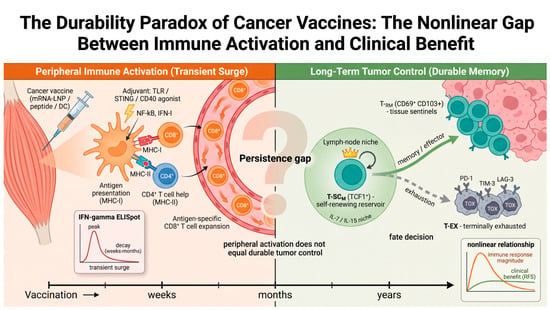
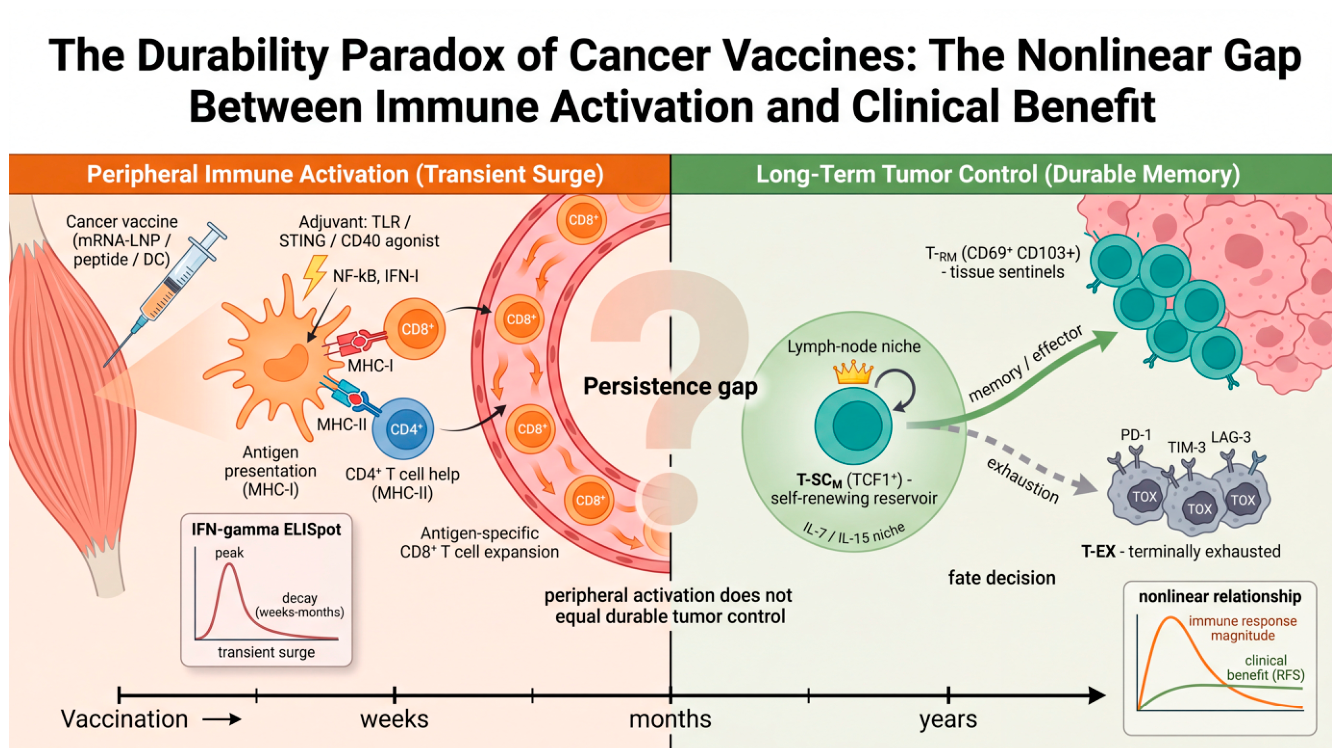
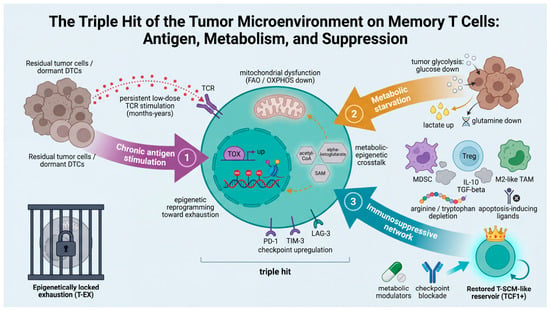
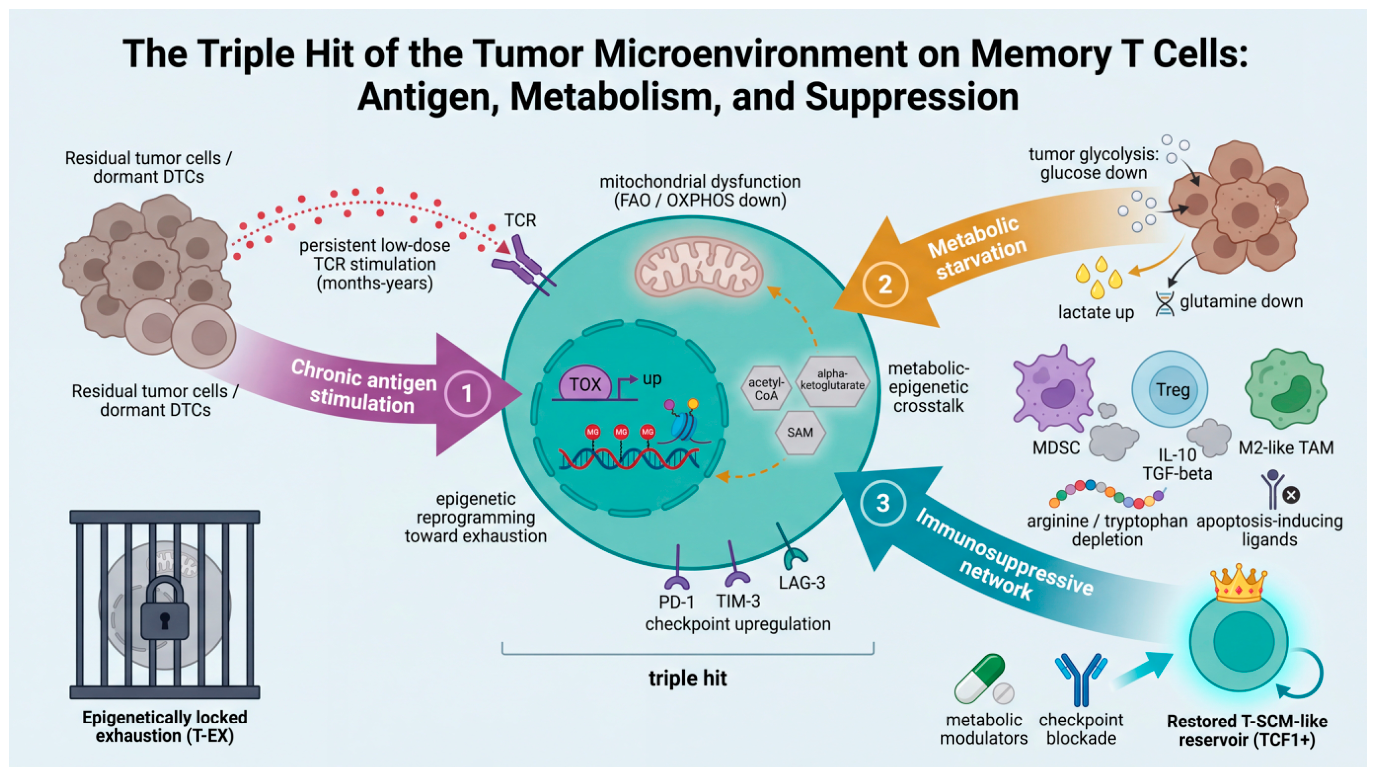
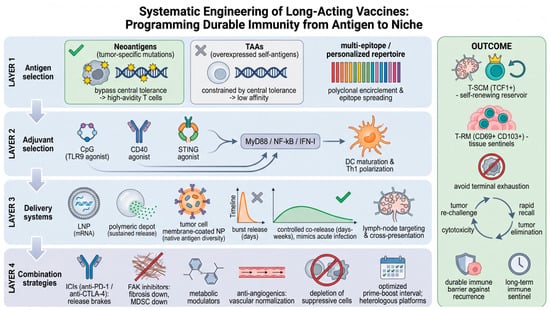
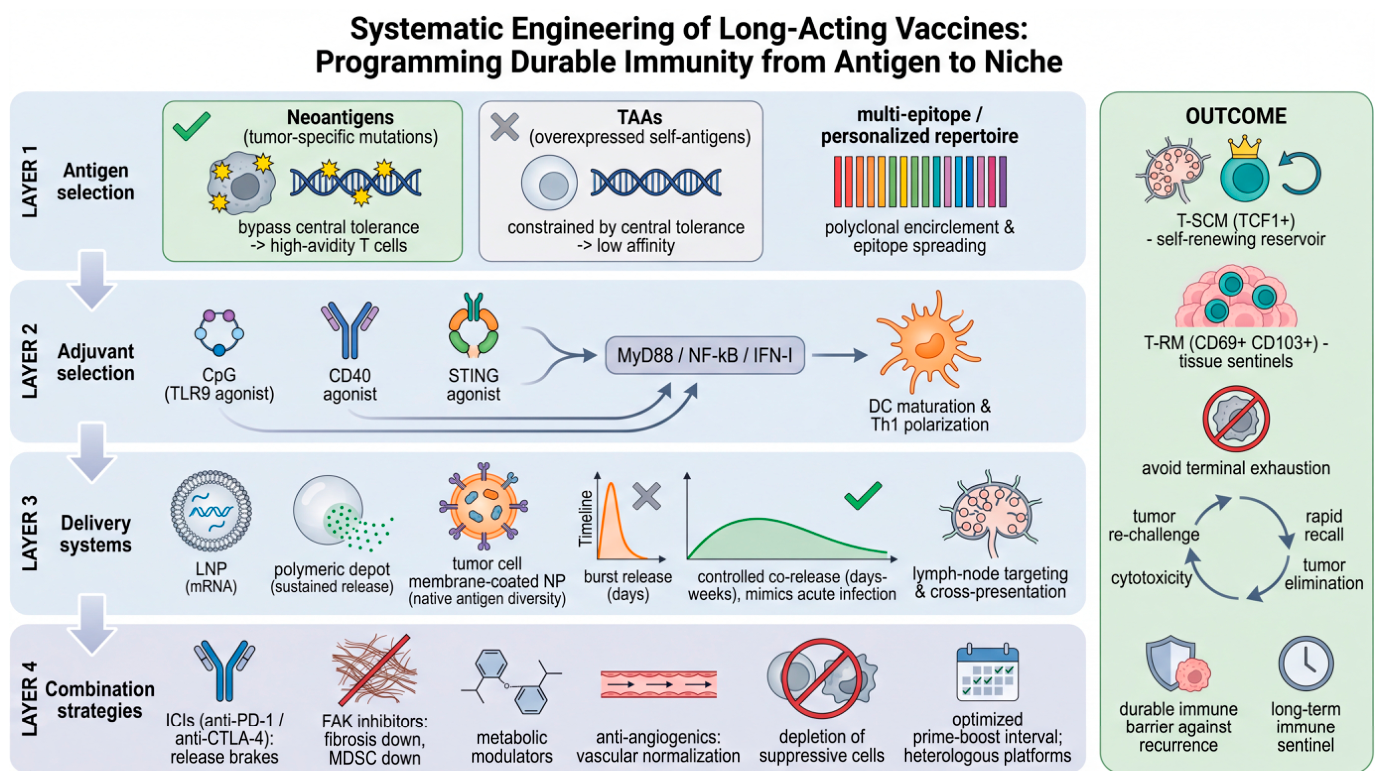

Disclaimer/Publisher’s Note: The statements, opinions and data contained in all publications are solely those of the individual author(s) and contributor(s) and not of MDPI and/or the editor(s). MDPI and/or the editor(s) disclaim responsibility for any injury to people or property resulting from any ideas, methods, instructions or products referred to in the content. |
© 2026 by the authors. Licensee MDPI, Basel, Switzerland. This article is an open access article distributed under the terms and conditions of the Creative Commons Attribution (CC BY) license.