


Abstract
Carex is among the most species-rich genera of angiosperms and plays important ecological roles in wetlands, alpine regions, and temperate ecosystems worldwide. However, research on this genus has long been challenged by pronounced phenotypic plasticity, reduced floral morphology, frequent hybridization, and complex chromosomal evolution. Although recent advances in molecular phylogenetics, comparative genomics, reproductive biology, and ecophysiology have substantially expanded the knowledge of Carex, these findings remain fragmented across disciplines. Here, we synthesize current evidence on Carex taxonomy and phylogeny, genomic and karyotypic evolution, reproductive and life history strategies, abiotic stress responses, ecosystem functions, and bioresource potential within a cross-scale framework. This review emphasizes how genomic architecture, life history variation, and ecophysiological adaptation jointly shape species diversification and ecosystem functioning, while clarifying their implications for habitat restoration and the sustainable use of Carex resources. Finally, we identify key priorities for future research, including improved phylogenomic resolution, comparative functional studies, climate-resilience assessment, and germplasm conservation and sustainable use.
1. Introduction
Carex L. is the largest genus within the family Cyperaceae and ranks among the three most species-rich genera of angiosperms [1]. Characterized by remarkable morphological plasticity and extensive ecological adaptability, the genus has long been served as a focal taxon in botanical and ecological research [2,3]. As a keystone group in fragile habitats, including northern temperate and Arctic wetlands, alpine steppes, and periglacial zones, Carex plays an irreplaceable role in maintaining ecosystem stability by virtue of its unique reproductive strategies, robust clonal propagation capabilities, and strong resilience to stress [4]. Furthermore, the genus possesses significant economic value. Many species not only provide high-quality forage but also show great potential as landscaping ground covers due to their early green-up and prolonged green periods [5].
Despite its massive ecological footprint and application potential, the taxonomic delimitation of Carex has historically been notoriously difficult [6,7]. Because the genus exhibits complex morphological variation heavily influenced by environmental plasticity, traditional morphology-based taxonomic methods often fail to accurately resolve phylogenetic relationships. However, in response to growing global imperatives surrounding biodiversity conservation and the restoration of degraded ecosystems, Carex research has transcended the boundaries of traditional taxonomy. The field is now rapidly expanding into interdisciplinary domains, particularly genomics and physiological ecology, providing novel perspectives for unraveling the molecular and physiological basis of its adaptive mechanisms.
Accordingly, unlike previous reviews that have mainly focused on individual aspects of Carex, such as taxonomy, phylogeny, ecology, or resource utilization, the present review adopts a cross-scale and interdisciplinary framework. This review systematically summarizes recent progress in Carex taxonomy and phylogeny, genomic and karyotypic evolution, reproductive and life-histroy strategies, stress adaptation mechanisms, ecosystem functions, and bioresource potential. By linking genomic architecture, life history variation, ecophysiological adaptation, and ecosystem functioning, this review aims to provide an integrated perspective on how the evolutionary characteristics of Carex shape both species diversification and ecological roles. This synthesis also highlights future research priorities and provides a reference for germplasm conservation, habitat restoration, and the sustainable use of Carex resources.
2. Global Distribution and Species Diversity
Carex ranks among the three largest genera of angiosperms and boasts a nearly cosmopolitan distribution (www.plantsoftheworldonline.org). While taxonomic databases log over 9400 entries for the genus, the currently accepted species count stands at approximately 2000, reflecting its immense diversity and historical taxonomic complexity. Originating in East Asia during the late Eocene, the genus displays a striking inverted latitudinal richness gradient (Figure 1). Consequently, species are relatively rare at low elevations in the tropical Southern Hemisphere and most abundant in the cold and temperate regions of the Northern Hemisphere. Globally, East Asia harbors the highest diversity (~1019 species), followed by the Nearctic (~562 species) [8].
Figure 1.
The distribution of the Carex genus. Data source: Plants of the World Online (POWO), Royal Botanic Gardens, Kew (https://powo.science.kew.org/results?f=species_f&q=CareX) (accessed on 5 April 2026).
3. Taxonomy of Carex: Progress and Challenges
Carex stands as one of the largest genera of vascular plants, comprising approximately 2000 recognized species worldwide. However, taxonomic research within this genus has historically been considered notoriously challenging [9]. This complexity is primarily attributed to extreme floral reduction, prevalent convergent evolution, frequent interspecific hybridization, and high levels of phenotypic plasticity. Consequently, relying solely on traditional macromorphological characters is often insufficient to clearly delimit species or resolve robust phylogenetic relationships. In recent decades, modern systematics has shifted toward integrating multiple lines of evidence, such as microanatomy, cytogenetics, and molecular biology, to establish a more objective and stable taxonomic basis for this complex group.
3.1. Classification Based on Vegetative Organs
Vegetative organs, including leaves, culms, and roots, provide a wealth of taxonomic characters for Carex, yet their application requires careful discrimination to avoid interference from environmental plasticity. For instance, within Central European populations of C. buekii, soil bioavailable potassium (K+) content acts as a key driver of morphological variation. Under low-K+ conditions, individuals are generally smaller, and even traditionally critical taxonomic traits, such as utricle and beak lengths, are significantly reduced [10]. Neglecting these habitat effects frequently leads to the erroneous recognition of mere ecotypes as distinct taxonomic units. Similarly, many leaf anatomical characters, including the shape, size, and position of vascular bundles, as well as the quantity and length of bulliform cells, exhibit high intraspecific variation and therefore possess low taxonomic reliability [11]. This highlights that structural qualitative traits are often of greater taxonomic value than quantitative measurements, which are inherently more susceptible to environmental fluctuations.
Nevertheless, vegetative anatomy remains indispensable for delimiting specific taxa. Certain anatomical characters demonstrate high intraspecific consistency, particularly the shape of the transverse leaf section, the relative size of adaxial to abaxial epidermal cells, and the presence of high-density papillae [11]. In morphologically cryptic groups such as Carex sect. Phacocystis, stomatal distribution patterns (e.g., amphistomous versus hypostomous) and quantitative indices of intercostal cells provide effective means for species delimitation [12]. Furthermore, leaf and culm anatomy serve as powerful tools for distinguishing closely related species, as demonstrated by the successful differentiation of C. backii and C. saximontana within Carex sect. Phyllostachys [13]. Belowground, root traits exhibit strong taxonomic signals at the subgeneric level. For instance, dauciform (carrot-shaped) roots appear restricted to the subgenus Carex, which also harbors a significantly higher abundance of dark septate endophytes and bulbous (shortened) root hairs compared to the subgenus Vignea [14]. This distinction not only separates these taxonomic groups but also reveals profound evolutionary divergence in their belowground nutrient acquisition strategies.
3.2. Classification Based on Reproductive Organs
Traditional taxonomy relies heavily on reproductive organs; however, floral reduction and convergent evolution within Carex have led to significant controversies regarding macromorphological characters, such as inflorescence structure. Even the terminology for the genus’s most iconic feature, the sac-like structure enveloping the achene, remains inconsistently applied between “perigynium” and “utricle” [15]. These challenges have prompted a shift toward micromorphological characters, particularly facilitated by the application of scanning electron microscopy, revealing a significant “scale-dependency” in their taxonomic utility.
In terms of pollen micromorphology, Carex is characterized by a unique “pseudomonad” developmental pattern, where only one of the four microspores develops normally while the remaining three abort [16]. Furthermore, morphological examinations reveal that exine thickness can clearly delimit the subgenera Vignea and Carex. However, this specific trait possesses almost no taxonomic value at ranks below the subgenus level, such as section or species.
Achene epidermal micromorphology, particularly intracellular silica deposits, exhibits a similar taxonomic pattern. At a macro-scale, these features display high levels of homoplasy. For instance, species with vastly different overall morphologies, traditionally placed in different sections (e.g., within Carex sect. Hymenochlaenae), can possess nearly indistinguishable achene surface features [17]. Furthermore, the presence of a single conical silica body is likely a plesiomorphy retained across distantly related lineages or a result of parallel evolution, making it an unreliable character for delimiting “sectional” taxonomic units [18]. Conversely, within clearly defined, monophyletic small groups, the diagnostic value of these micromorphological characters becomes highly significant. In Carex sect. Phyllostachys, for example, achene silica body characteristics are strongly congruent with molecular phylogenetic hypotheses, providing robust support for splitting the C. willdenowii complex into three independent species [13]. Even in the absence of broader diagnostic morphological traits, as observed in C. jamesii, the intraspecific variation in these silica bodies aligns closely with genetic diversity, demonstrating their effectiveness in reflecting population structure.
3.3. Classification Based on Molecular Methods
Holocentric chromosomes represent a core cytogenetic feature of Carex. Unlike monocentric chromosomes, in which spindle microtubules attach to a single localized centromere, holocentric chromosomes have kinetochore activity distributed along almost the entire chromosome length. This structure allows chromosome fragments to be transmitted more stably during cell division, thereby facilitating chromosomal fission and fusion that lead to extensive aneuploidy (n = 6–68). This mechanism of chromosomal rearrangement has been proven to significantly influence lineage diversification rates and acts as a key driver of speciation and rapid radiation within the genus.
Molecular phylogenetic studies have revealed that the traditional genus Carex (s.s.) was, in fact, a paraphyletic group. Supported by robust molecular evidence, the establishment of a monophyletic framework for Carex (s.l.) necessitated the incorporation of allied genera, specifically Kobresia, Uncinia, and Schoenoxiphium. Building upon this expanded circumscription, advanced genomic tools, particularly targeted enrichment sequencing (HybSeq), have successfully overcome the lack of phylogenetic signal inherent in traditional markers. This methodological shift has culminated in the proposal of a new, highly resolved classification system comprising six subgenera, including Carex, Vignea, and Psyllophora [19].
However, reticulate evolution remains a major obstacle in Carex taxonomy. For example, within the taxonomically challenging Carex sect. Ceratocystis, severe incongruence between nuclear (ITS) and plastid (rps16, 5′-trnK) gene trees, coupled with numerous additive polymorphisms in ITS sequences, confirms the widespread prevalence of introgression [20]. Consequently, due to rapid lineage radiation and frequent hybridization, the identification success rate of standard DNA barcodes (e.g., matK, rbcL, trnH-psbA) is extremely low, ranging from only 19% to 38% [21]. Beyond recent radiations, this paucity of interspecific genetic variation and poor barcode resolution is heavily driven by the exceptionally slow molecular evolutionary rate of the Carex plastid genome [21]. Therefore, modern taxonomy must carefully integrate multi-scale evidence, encompassing micromorphology, anatomy, and geography, within a robust macro-molecular phylogenetic framework.
4. Genomics and Karyotype Evolution
Carex represents one of the most species-rich genera in the plant kingdom. Despite the formidable challenges posed by holocentric chromosomes, recent innovations in sequencing technologies, spanning karyotype analysis to chromosome-scale genome assembly, are systematically unveiling the genus’s complex genetic background. These advancements are crucial for elucidating the genomic mechanisms driving its rapid lineage diversification and ecological adaptation.
4.1. Chromosome, Genome Size, and Karyotype Evolution
The most prominent feature of Carex cytogenetics is the tremendous variation in chromosome numbers. Extensive cytological surveys across hundreds of species have revealed a continuous aneuploid series, with haploid numbers ranging from n = 13 to n = 56 and diploid counts spanning from 2n = 18 to 2n = 108 [22,23].
This extensive variation stems directly from the unique holocentric structure characteristic of the Cyperaceae. Unlike monocentric organisms, this diffuse centromere organization allows for the stable inheritance of chromosome fission (agmatoploidy) and fusion (symploidy) while avoiding the common loss of genetic material [24]. Although polyploidy events may have occurred during early evolution, holocentric-driven chromosomal rearrangements are widely considered the primary source of this extraordinary variation.
Within the phylogenetic framework of the major Carex clades (Siderostictae, Caricoid, Vignea, and Core Carex) [25], chromosome evolution operates as a significantly nonuniform process. Evolutionary rates differ vastly among lineages; for instance, the North American section Ovales within the Vignea clade exhibits an extremely high rate of chromosome fission [26]. Furthermore, analytical models demonstrate that the evolution of chromosome numbers is not governed by mere random drift. Instead, it is subject to strict selective constraints, tending to converge toward clade-specific stationary distributions.
Genome size is a crucial dimension for understanding karyotype evolution, but its relationship with chromosome number is highly intricate. Empirical measurements across 157 taxa reveal that 1C values vary significantly, ranging from 0.24 pg in C. secalina to 1.64 pg in C. cuspidata [27]. Furthermore, among non-polyploids, a strong negative correlation exists between genome size and chromosome number. This pattern supports the hypothesis that fission and fusion events lead to an increased chromosome number accompanied by a decrease in average DNA content per chromosome. However, at deeper evolutionary scales, such as within the Vignea clade, the evolution of chromosome number and genome size appears to be completely decoupled [28]. This decoupling suggests that the independent proliferation and removal of long terminal repeat (LTR) retrotransposons may be the specific molecular mechanism driving fluctuations in genome size, a process distinct from karyotype changes driven by chromosome fission or fusion.
Although specific mechanisms remain controversial, drastic karyotypic changes are widely recognized as a core driver of species diversity in Carex. Macroevolutionary analyses confirm that karyotypic instability, resulting from a holocentric structure, serves as a key engine for the genus’s evolutionary radiation by promoting reproductive isolation [29]. Notably, this promoting effect is not a simple linear relationship. Lineage diversification rates peak at intermediate recombination rates (chromosome number 2n ≈ 60), while rates are lower at extremely high or low chromosome numbers. This indicates the existence of an optimal window for the impact of karyotype evolution on speciation.
4.2. Nuclear Genome Assembly and Repetitive Sequence Characteristics
Although Carex genomes are relatively small, their holocentric nature and high repetitive sequence content have historically hindered assembly efforts. In recent years, however, the combination of PacBio/Nanopore long-read sequencing and Hi-C technology has catalyzed major breakthroughs in this field. For instance, the first chromosome-scale genomes were successfully assembled for C. cristatella (301.6 Mb, anchored to 35 chromosomes) and C. scoparia (298.0 Mb) [30]. This progress quickly expanded to geographically distinct taxa, including Qinghai–Tibet Plateau species, resulting in assemblies for the inferred tetraploid C. parvula (783.49 Mb) and the inferred triploid C. kokanica (673.40 Mb) [31]. The repository of Carex genomic resources continues to grow rapidly, now encompassing a draft genome for C. pumila (~0.346 Gb; 23,402 predicted protein-coding genes) [32] and a high-quality assembly for C. breviculmis (469.01 Mb; 37,372 annotated genes) [33].
Repetitive sequence analysis reveals a high proportion of repetitive elements in Carex genomes (e.g., 52.0% in C. breviculmis and 52.5% in C. parvula) [31,33], with recent bursts of LTR retrotransposons acting as the primary driver of genome expansion. Uniquely, the genomes of C. cristatella and C. scoparia contain a higher proportion of DNA transposons than retrotransposons, a phenomenon that is relatively rare among plants [30].
In-depth comparative genomic analyses have revealed drastic structural variations resulting from holocentricity. For instance, despite the availability of chromosome-level assemblies, large-scale conserved syntenic blocks are almost undetectable between Carex and Poaceae species such as rice. This profound lack of synteny indicates that frequent fission and fusion events have extensively reshaped the genomic landscape. Furthermore, the absence of typical tandem repetitive centromeric sequences within these high-quality assemblies strongly corroborates the diffuse nature of their centromeres. In terms of functional evolution, high-altitude species from the Qinghai–Tibet Plateau exhibit a significant expansion of stress-resistance gene families, particularly heat shock proteins [31]. This expansion highlights the critical role of genomic plasticity in facilitating adaptation to extreme environments. Ultimately, these expanding genomic resources lay a crucial foundation for deeply elucidating the molecular mechanisms of holocentricity and the broader adaptive evolution of this genus.
4.3. Structural Variation in Organelle Genomes
The evolution of organelle genomes offers complementary insights into understanding the phylogeny of the genus Carex while exhibiting unique patterns of variation in its own right.
Regarding chloroplast genomes, in contrast to the highly conserved structure characteristic of most angiosperms, those within Carex have undergone significant rearrangement and expansion. Comparative analyses of multiple Carex species (including C. breviculmis, C. lithophila, C. littledalei, and C. siderosticta) reveal that their genome lengths (181–213 kb) are significantly larger than the typical angiosperm average of approximately 150 to 160 kb [34]. This profound size increase is primarily attributed to the dramatic expansion of the inverted repeat (IR) regions, which, for instance, reach up to 51,303 bp in C. breviculmis. Similar characteristics of enlarged genomes are consistently observed across the genus, as demonstrated in C. agglomerata (184 kb) and C. laevissima (188 kb) [35,36]. Furthermore, breakpoint analyses indicate that these sites of variation overlap highly with long repetitive sequences, strongly suggesting that illegitimate recombination acts as the primary molecular mechanism driving these drastic structural changes.
Mitochondrial genomes within the genus exhibit even greater complexity and instability. For instance, the first completely assembled Carex mitochondrial genome (C. breviculmis) features a massive circular master conformation reaching 1,414,795 bp in length [37]. Abundant internal repetitive sequences within this genome mediate frequent homologous recombination, allowing it to dynamically exist in multiple alternative conformations. Similarly, recent sequencing efforts demonstrate that the C. pseudochinensis mitochondrial genome also approaches 1 Mb (965,836 bp) in size [38]. Collectively, these findings confirm that dramatic genome expansion and structural rearrangement, fundamentally driven by repetitive sequences, are core features of organelle evolution in Carex.
4.4. Functional Genomics and Molecular Marker Development
Genome and transcriptome sequencing have laid a solid foundation for characterizing functional genes and developing molecular markers within the genus Carex. For example, the application of PacBio SMRT technology has enabled the construction of a high-quality, full-length transcriptome for C. breviculmis, generating over 60,000 high-confidence transcripts with an average length of 2302 bp. This comprehensive dataset facilitated the unprecedented identification of 3588 alternative splicing events and 1273 long non-coding RNAs (lncRNAs) in this species. Consequently, these molecular resources provide a critical reference for elucidating complex stress-resistance mechanisms, such as shade tolerance [5].
At the genomic level, whole-genome duplication (WGD) events have emerged as a significant driving force for adaptive evolution within the genus Carex. Synonymous substitution rate (Ks) distribution analyses robustly confirm that the genus experienced a recent, lineage-specific WGD event. In this evolutionary context, the enhanced environmental adaptability of C. breviculmis is largely attributed to the rapid expansion and positive selection of tandemly repeated genes involved in sugar, amino acid, and phenylpropanoid biosynthesis pathways. Similarly, specific gene expression responses to high-altitude cold stress have been well-characterized in species including C. parvula and C. kokanica, further highlighting the critical role of duplicated genes in facilitating adaptation to extreme environments [31].
Omics technologies have significantly accelerated the development and application of molecular markers within the genus. For instance, a robust set of 13 polymorphic SSR markers effectively distinguishes between two morphologically cryptic subspecies of C. curvula (subsp. curvula and subsp. rosae). Molecular evidence reveals that these subspecies represent distinct gene pools, primarily shaped by profound ecological isolation along elevational gradients [39]. Furthermore, emerging genomic resources, such as the C. pumila genome, have facilitated the rapid validation of 30 highly polymorphic SSR markers, exhibiting a substantial mean polymorphism information content of 0.660 [32]. In the context of species delimitation, EST-SSRs have proven invaluable for tracing complex gene flow between the extremophyte C. angustisquama and its close relatives. Analytical results demonstrate that while natural F1 hybridization occurs, subsequent gene introgression via backcrossing is severely impeded. This dynamic confirms that species cohesion is effectively maintained through microhabitat isolation and strict reproductive barriers [40].
5. Reproductive Biology and Life History Strategies
As a dominant taxon across demanding ecosystems, particularly northern temperate and Arctic wetlands, Carex demonstrates highly diverse life history strategies and remarkable environmental adaptability. Its reproductive and developmental frameworks encompass unique gamete development mechanisms, sophisticated regulation of seed dormancy, and highly efficient modes of clonal propagation.
5.1. Gamete Development: Unique “Pseudomonad” and Sex Differentiation
Species within the family Cyperaceae display a highly specific “pseudomonad” pollen development pattern during sexual reproduction [41]. Following meiosis, out of the four resulting microspore nuclei, only one develops into a functional pollen grain, while the remaining three abort. Cytological evidence from Carex ciliato-marginata reveals that during the tetrad stage, only the functional nucleus undergoes DNA replication. Conversely, the abortive nuclei possess half the DNA content and present as unreplicated chromosomes [42]. Investigations into C. blanda further demonstrate that this process is strictly regulated by the cytoskeleton. Specifically, microtubules and microfilaments guide the functional nucleus to the abaxial end, positioning it adjacent to the tapetum responsible for nutrient supply. Simultaneously, these cytoskeletal elements squeeze the abortive nuclei to the adaxial tip, ultimately completing a highly unequal cytokinesis [43]. This extreme developmental asymmetry is widely regarded as an evolutionary adaptation designed to ensure the concentrated supply of resources to the male gametophyte.
Regarding sex differentiation, Carex species are predominantly monoecious and protogynous, serving as a critical evolutionary strategy to avoid self-pollination. While environmental factors, including light, water, and nutrients, significantly influence sex ratios, their regulatory magnitude is generally modest. For instance, across monoecious Carex taxa, elevated nutrient levels and high light intensity tend to promote “femaleness” (an increased proportion of female flowers), a pattern highly consistent with fitness gain theories based on resource acquisition capacity. Unexpectedly, however, high water availability appears to induce “maleness” [44]. Despite these environmentally driven statistical shifts, the overarching necessity to avoid self-pollination remains the primary driver maintaining monoecy. In contrast, dioecious species such as C. picta exhibit distinct temporal differences in resource allocation between the sexes. Although total reproductive investment is comparable, the timing diverges significantly due to the inherent energetic costs of different reproductive structures. Specifically, male investment is highly concentrated during the flowering period to produce resource-intensive wind-dispersed pollen, whereas female investment peaks during the fruiting period to support less costly, single-ovulate non-fleshy fruits [45]. This staggered allocation strategy effectively maintains a resource balance between the sexes. Furthermore, controlled experiments involving defoliation and inflorescence removal definitively confirm a trade-off between growth and reproduction, demonstrating direct resource competition between vegetative and reproductive tissues.
5.2. Ecological Strategies of Seed Dormancy and Germination
The successful establishment and population recruitment of Carex depend largely on sophisticated seed strategies designed to cope with environmental heterogeneity (Figure 2). These strategies typically manifest as complex dormancy patterns and the precise detection of “germination windows”. Seeds of most temperate Carex species exhibit strict physiological or conditional dormancy at maturity (e.g., C. frigida and C. ferruginea, respectively). This mechanism effectively prevents germination during autumn and winter, seasons unfavorable for seedling survival [46,47]. Unlike many other angiosperms, drying after ripening is often ineffective for Carex (e.g., C. divisa); instead, cold moist stratification has been widely proven to be the most effective method for dormancy release [48,49]. The efficacy and required duration of stratification exhibit high species specificity. For instance, C. granularis requires up to six months of stratification, whereas C. vulpinoidea requires only two weeks. Furthermore, lower stratification temperatures (3–8 °C) are generally superior to higher temperatures (e.g., 12 °C) for breaking dormancy [46,50].
Figure 2.
The ecological strategy of Carex seed dormancy, germination, and application.
Once dormancy is released, temperature fluctuations and light signals act synergistically to screen for suitable microenvironments, functioning as an efficient “gap detection” mechanism. Research indicates that Carex seeds respond positively to diurnal temperature fluctuations, requiring an average daily amplitude of roughly 10 °C, whereas germination is negligible under constant temperatures (e.g., C. diandra). Additionally, the generally high mean temperature threshold required for germination characterizes these species as typical “late spring germinators”, a strategy that effectively avoids early spring cold spells [51,52].
Light constitutes another critical signal regulating germination. The vast majority of Carex species are photoblastic, exhibiting significantly higher germination rates in light than in darkness [48,52]. Studies on North American wetland sedges confirm that this photosensitivity is mediated by phytochrome: white and red light promote germination, while far-red light reverses this effect [52]. This dynamic constitutes an efficient “shade-avoidance strategy”. Because vegetation canopies filter out substantial red light, the resulting low red-to-far-red ratio beneath the canopy suppresses phytochrome activity. This inhibition prevents seeds from germinating under dense vegetation and serves as the physiological basis for the formation of persistent soil seed banks.
These environmental signals are intrinsically linked to the seed’s internal physiological state. Recent molecular and physiological studies have elucidated the mechanisms of resource mobilization in response to germination cues. In C. rigescens, transcriptomic analysis revealed that alternating temperatures (30/20 °C) increased the germination rate by 5.68-fold compared to constant temperatures. This response is driven by the activation of starch and sucrose metabolic pathways, specifically the upregulation of key genes such as sucrose synthase (SUS), which provides the energy required for germination [53]. Similarly, for C. schmidtii, simulating a natural “drought–rehydration” hydrological rhythm is critical. Maximum germination and seedling vigor were achieved with an initial soil water content of 50% followed by rehydration to 100% on the 14th day. Physiological analysis indicated that this regime maximizes the degradation of stored reserves (starch, soluble proteins, and fats) and the accumulation of soluble sugars [54].
Despite broad similarities in germination strategies within the genus, significant adaptive variation exists. Even among wetland sedges inhabiting similar environments, germination requirements can be strikingly different [46]. These requirements do not correlate significantly with phenology or seed size, although smaller-seeded species generally possess weaker dormancy. Adaptive differentiation is also evident within species across diverse habitats. For instance, C. pendula and C. remota exhibit distinct responses to stratification temperatures during primary and secondary dormancy, depending on their geographic provenance [55]. Notably, alpine species such as C. frigida have evolved a “carry-over” (risk-spreading) mechanism: even under optimal conditions, only approximately 13% of seeds germinate. This strategy ensures that the majority of the seed load remains in the soil bank, providing a crucial buffer against unpredictable environmental fluctuations in high-altitude ecosystems [56].
A profound understanding of these mechanisms is currently being applied to resolve challenges in ecological restoration. Addressing the low natural germination rate of C. arenaria (13%), researchers achieved 100% in vitro germination via perigynium removal and GA3 treatment. However, hydroponic culture, which yielded 79% germination, produced seedlings with significantly higher vigor and acclimatization survival rates (76%), making it the optimal propagation pathway [57]. For C. utriculata and C. nebrascensis, autumn seeding poses a risk of flood washout; thus, surface-seeding in early summer, after spring floods recede, is recommended to align with their requirements for light and warm, fluctuating temperatures [58]. Additionally, pre-treating seeds with artificial stratification to accelerate germination is an effective strategy to competitively inhibit invasive species such as Phalaris arundinacea [46].
5.3. Trade-Offs Between Clonal and Sexual Reproduction
Although Carex possesses complex sexual reproductive mechanisms, clonal growth frequently dominates population maintenance and expansion. As typical modular organisms, Carex species achieve efficient clonal propagation primarily through the development of rhizomes or tussock formations.
In wetland habitats subject to periodic disturbance, sexual and clonal reproduction exhibit distinct functional differentiation. The dynamics of C. rugulosa provide a compelling demonstration of the competitive suppression of sexual recruitment by clonal growth. In mature, high-density clonal populations (590–950 shoots m−2), the closed canopy and thick litter layer completely inhibit seedling establishment. Significant germination rates, restoring 17.5% to 39.5% of the seed bank, occur only after ramets are artificially removed or naturally die off due to flooding events. These findings indicate that the primary ecological function of seeds is recovery following disturbance or the colonization of novel patches [59,60]. Beyond reliance on seeds, Carex can dynamically adjust its clonal architecture to cope with environmental stress. For example, as sedimentation depth increases, the clonal growth form of C. brevicuspis can rapidly shift from a “phalanx” strategy (maintaining local dominance via short rhizomes) to a “guerrilla” strategy (escaping stress via long rhizomes) [4]. This high degree of morphological plasticity serves as a key mechanism for adapting to dynamic wetland environments.
In terms of modular demography, the life history of ramets—the fundamental building blocks of Carex—demonstrates profound habitat dependence. Temperate species, such as C. lacustris, exhibit rapid population turnover, characterized by ramet lifespans typically lasting only 12 to 24 months and high mortality rates. In contrast, Arctic–alpine species adopt an extreme slow-life strategy to adapt to low temperatures and nutrient poverty. Ramets of C. bigelowii can survive for 5 to 7 years, while molecular analyses of the alpine species C. curvula have revealed that single clonal genets can persist within the same microhabitat for over 2000 years [61,62]. This extreme clonal persistence effectively minimizes the reliance on high-risk sexual recruitment in harsh environments and represents the ultimate evolutionary outcome of life history trade-offs across distinct climatic zones.
5.4. Interspecific Hybridization and Speciation
The developmental strategies of Carex are not only reflected in individual life histories but also extend to its dynamic evolutionary processes. Hybridization is extremely common within the genus, profoundly influencing taxonomic patterns and evolutionary trajectories. An early systematic review of North American sedges documented as many as 253 hybrid combinations, noting that the incidence of hybridization in the subgenus Carex (78.8% of total reports) was significantly higher than in the subgenus Vignea (21.7%). Ecologically, hybridization frequently occurs in disturbed sites or intermediate habitats. Geographic distribution patterns reveal that 84.1% of North American hybrids are distributed in areas affected by Late Pleistocene glaciation. Consequently, the availability of bare ground following glacial retreat, habitat instability, and the overlap of flowering phenology caused by migration convergence are considered key drivers promoting hybridization events [63].
From a cytological perspective, hybrids typically exhibit high sterility due to severe meiotic abnormalities, particularly the frequent occurrence of univalents, multivalents, and laggards. Although F1 generations are largely sterile, backcrosses can partially restore fertility. Therefore, hybridization has long been regarded as an important evolutionary force driving speciation and generating aneuploid chromosomal variation [63].
However, with the advancement of genomic technologies, increasing evidence suggests that hybridization is not merely an evolutionary “dead end” but a potent catalyst for adaptive evolution. For instance, genotype–environment association analyses of C. nova, C. nelsonii, and their hybrid zones in the Rocky Mountains demonstrate that hybrid offspring do not simply display intermediate traits. Instead, these lineages acquire unique genetic combinations through adaptive introgression [64]. Such hybrid individuals are often enriched with adaptive variations that enable them to occupy distinct climatic niches inaccessible to either parent, thereby achieving significant niche expansion. This dynamic indicates that, in the context of rapid climate change, interspecific hybridization may provide the essential genetic raw material for Carex to adapt to novel environments.
Furthermore, hybridization serves as a primary driver of taxonomic complexity and the formation of cryptic species within Carex. Because hybrid offspring are often morphologically indistinguishable from their parents, traditional classification systems frequently fail to achieve accurate delimitation. By integrating morphological data with molecular phylogenetic evidence, for instance, a new species, C. lucennoiberica, was successfully identified and described within Carex sect. Phacocystis. This discovery confirms that hybridization can effectively blur species boundaries while simultaneously leading to the formation of novel taxa [65]. Similarly, genomic approaches such as ddRAD sequencing have been instrumental in rigorously testing historical hybridization hypotheses, as seen in the study of C. salina and C. ramenskii [66]. These analyses reveal complex reticulate evolutionary relationships along the North Atlantic coast, demonstrating the indispensability of high-resolution genomic data in resolving taxonomic controversies among closely related, hybridizing species.
Notably, despite the prevalence of hybridization, Carex species can maintain their evolutionary independence within specific habitats. Strong habitat selection pressures, including extreme soil acidity and heavy metal stress, have been shown to maintain genetic cohesion and prevent species fusion, even in the presence of frequent interspecific hybridization. A compelling case is found in C. angustisquama inhabiting the extreme environments of Japanese solfatara fields. Although natural hybridization frequently occurs with the surrounding C. sociata, the intense selective forces of the solfatara environment effectively preserve the species’ genetic integrity [40]. This case clearly demonstrates the dynamic balance between reproductive isolation and natural selection in maintaining species boundaries within complex hybrid zones.
6. Ecophysiological Adaptation and Abiotic Stress Response
6.1. Strategies for Nutrient and Water Acquisition, Transport, and Utilization
Carex species have evolved a complex set of strategies to adapt to habitat heterogeneity, encompassing morphological plasticity, physiological trade-offs, and clonal integration mechanisms.
Habitat nutrient availability directly reshapes biomass allocation patterns. Highly productive species (such as C. acutiformis and C. lasiocarpa) increase aboveground investment and total nitrogen content to establish a competitive advantage for light. Conversely, low-productivity species (C. diandra, C. rostrata) increase belowground allocation to enhance nutrient acquisition. Because of their inherently slow growth rates, these species exhibit a “nutrient concentrating effect”, resulting in paradoxically elevated leaf nitrogen concentrations [67]. Significant trade-offs exist in nitrogen use strategies. Highly productive species (C. acutiformis) prolong the mean residence time of nitrogen by reducing leaf turnover rates. In contrast, low-productivity species (C. diandra) rely on higher nitrogen productivity to maintain survival, despite the risk of nitrogen loss associated with high turnover [68]. Notably, when nitrogen supply increases, nitrogen productivity significantly decreases across all species, indicating that plants respond to resource enrichment through physiological downregulation mechanisms.
When subjected to low phosphorus stress, all species reduce their fresh shoot ratio. Among them, C. rostrata exhibits extremely high tissue phosphorus content, demonstrating a strategy of “luxury consumption” in response to nutrient pulses [69]. This physiological regulation coexists with the species-specific utilization of insoluble phosphorus sources. While all tested species can utilize Al-P and glycerophosphate, only C. acutiformis can efficiently utilize Fe-P and Ca-P, further enhancing acquisition efficiency by increasing the total root absorption surface area. Conversely, C. lasiocarpa, originating from P-limited habitats, specializes in utilizing organic phosphorus [70]. Under phosphorus deficiency, morphological strategies diverge among species. C. lasiocarpa exhibits a conservative strategy with fixed morphology, whereas C. diandra displays significant plasticity, expanding its foraging range by significantly increasing the root weight ratio and specific root length (SRL) [70].
On a temporal scale, C. aquatilis in alpine and arctic habitats demonstrates a precise response to seasonal resources. During the winter–spring transition, when soil temperatures hovered near 0 °C, its roots intercepted 63.4% of the isotopic 15N injected into the soil, far exceeding the 7.7% captured by microbes. This high interception efficiency is largely attributed to the competitive window opened by the collapse of soil microbial populations during this period. The plants temporarily store the vast majority of nitrogen in the roots, adopting an “absorb–store–utilize” strategy to support summer growth [71].
On a spatial scale, physiological integration is central to coping with resource patchiness. The sand dune species C. arenaria shows a strong tendency for resource sharing in nutrient-poor habitats. Its tracer transport distance and translocation amount (which is 20% higher) are both superior to those of wetland species, and this massive transport does not significantly inhibit the growth of donor ramets [72]. Nutrient translocation is often coupled with water transport. When subjected to reciprocal resource heterogeneity, C. flacca can assist ramets in acquiring soil nitrogen through “hydraulic lift”. By achieving a “spatial division of labor” within the clonal system through the morphological specialization of interconnected ramets, the species maximizes its overall benefits [73].
6.2. Morphological and Functional Traits in Extreme Environments
The heterogeneity of soil factors, particularly nutrient availability and soil pH, serves as a primary driver shaping morphological variation in Carex. Within C. buekii populations, soil bioavailable K+ content acts as a key factor driving plant miniaturization. Specifically, low potassium directly leads to shortened utricle and beak lengths, indicating that this species possesses high phenotypic plasticity rather than an independent taxonomic status [10]. Similarly, the abundance of C. pulicaris is synergistically regulated by soil pH and rainfall, exhibiting a decreasing trend as pH and latitude increase [74]. In the extremely acidic habitats of solfatara fields, C. angustisquama exhibits unique adaptation mechanisms. The key abiotic stressor limiting its distribution is extremely low pH (<2.0) rather than Al3+ toxicity. This profound acidity restricts distribution primarily by inhibiting root elongation rather than inducing direct mortality. Evolutionary analyses suggest that tolerance to low pH is a derived trait acquired following species divergence, whereas high tolerance to Al3+ likely represents a pre-adaptation feature [75].
Water and light availability drive significant differentiation in root and leaf functional traits. Across numerous Carex species, root anatomy effectively predicts ecological niches. Species from wet habitats develop extensive aerenchyma, whereas species from dry soils tend to develop thicker sclerenchyma and wider steles [76]. At the leaf level, C. breviculmis and C. heterostachya demonstrate distinct resource acquisition strategies. The former operates as a slow investment-return plant, tolerating barren and arid conditions through thick cuticles, highly developed bulliform cells, and high water use efficiency. The latter functions as a quick investment-return plant, possessing a larger specific leaf area and highly developed vascular tissues, where SLA serves as a key indicator for assessing its light energy use efficiency [77].
To address physical stresses, including high altitude, mechanical trampling, and hydrological fluctuations, Carex maintains survival through fine-tuned structural adjustments and phenological shifts. For instance, C. ecostata in the western Himalayas significantly increases plant height and root cortical area, alongside accumulating proline and total free amino acids, with increasing elevation up to 2600 m. Furthermore, its sclerenchyma thickness reaches a maximum at 2200 m, reflecting robust adaptation to extreme cold [78]. When subjected to trampling stress, C. filispica shifts toward resource-acquisitive root traits. As trampling intensity increases from 0 to 500 passages, the density of its specialized dauciform roots significantly rises, promoting biomass recovery by enhancing phosphorus acquisition [79]. Furthermore, the phenology of floodplain wetland Carex is interactively regulated by hydrothermal factors. The start of the growing season before flooding is primarily driven by air temperature, contributing approximately 76.1%. Conversely, the onset of the post-flooding growing season is dominated by the timing of water recession, which accounts for an 80.1% contribution [80].
6.3. Physiological, Biochemical, and Molecular Mechanisms of Abiotic Stress
6.3.1. Salt Stress
Research on salt tolerance mechanisms in Carex has revealed diverse adaptive strategies across different species and genotypes (Figure 3A). In Carex moorcroftii, the glucose-6-phosphate dehydrogenase (G6PDH)-mediated signaling pathway primarily responds to low-concentration salt stress. Under 100 mM NaCl conditions, G6PDH activity increases significantly, inducing the accumulation of the signal molecule H2O2, which subsequently upregulates the activities of plasma membrane H+-ATPase and the Na+/H+ antiporter. This regulation effectively maintains a high intracellular K+/Na+ ratio. However, under 300 mM NaCl stress, the activity of this pathway is suppressed, leading to a collapse of ion homeostasis. Exogenous NADPH replenishment experiments indicate that the depletion of intracellular redox power under high salinity is the key limiting factor precipitating the failure of this signaling pathway [81].
Figure 3.
Diverse adaptation strategies of the genus Carex to major abiotic stresses. (A) Salt-stress responses. (B) Drought-stress adaptation. (C) Low-light adaptation. (D) Flooding or oxygen-deficiency responses.
Recent investigations into the differential mechanisms between salt-tolerant (‘Huanghua’, ‘Lvping NO.2’) and salt-sensitive (‘Beijing’, ‘Lvping NO.1’) genotypes of C. rigescens have substantially enriched the understanding of the salt tolerance network in sedges. Dynamic transcriptome analyses demonstrate that the salt-tolerant genotype activates a markedly higher number of differentially expressed genes under stress (10,752 versus 5764), significantly enhancing the regulation of transcription factors, hormone signaling, and redox networks [82]. Physiological and metabolic evidence corroborates that the tolerant genotype possesses a more robust ROS scavenging capacity (characterized by higher GPX and GR activities, and an elevated GSH/GSSG ratio) and more active Ca2+ signaling [83]. Furthermore, this genotype specifically accumulates the proline precursor ornithine and glycine, while promoting trehalose accumulation to maintain osmotic balance through the upregulation of the trehalose-6-phosphate synthase (TPS) gene [82,84]. In contrast, the sensitive genotype relies on the synthesis of phenylpropanoids, including lignin, and the accumulation of 4-hydroxycinnamic acid as supplementary defense measures [83,84].
Building on these transcriptomic insights, the functions of multiple key salt tolerance genes have been successfully elucidated. The caffeic acid O-methyltransferase (COMT) gene, which responds rapidly in the tolerant genotype, significantly improves salt tolerance and water retention in transgenic Arabidopsis by promoting melatonin synthesis [83,85]. Concurrently, the overexpression of CrUGT87A1 (a UDP-sugar glycosyltransferase gene) enhances antioxidant capacity through the accumulation of flavonoids [86]. Notably, exogenous acetic acid treatment reveals a novel mechanism of acetic acid-mediated lipid remodeling. This treatment upregulates the content of key phospholipids (phosphatidic acid, PA; phosphatidylcholine, PC; phosphatidylglycerol, PG) and glycolipids (digalactosyl diacylglycerol; monogalactosyl diacylglycerol), increases the PC:PE ratio to maintain membrane fluidity, and reduces toxic free fatty acid content, thereby significantly improving salt tolerance [87]. The gene encoding pyruvate decarboxylase, CrPDC1, was subsequently identified as a key downstream effector of this pathway. Its specific upregulation in roots effectively activates stress-responsive genes such as SOS1 and RD22 [88].
Furthermore, research on the molecular basis of stress tolerance has expanded to other species within the genus. For example, ADP, TBP, and eIF4A have been screened and verified as the most stable reference genes for RT-qPCR analysis in C. muskingumensis under salt and PEG stress. This provides a robust methodological foundation for broad gene expression analysis across the genus [89].
6.3.2. Drought Stress
Carex species exhibit diverse and sophisticated drought tolerance strategies (Figure 3B). Some species, including C. schmidtii, possess strong resilience; although studies indicate that they are most sensitive to water deficit during the middle growth stage, re-flooding after consecutive drought can restore photosynthetic capacity, as reflected by chlorophyll content and chlorophyll fluorescence-derived parameters such as ΔFv/Fm′, rETRmax, and Ik, while also promoting compensatory growth in leaf area and biomass [90]. The typical drought-tolerant species C. duriuscula not only activates the ROS scavenging system (by upregulating CAT, POD, and SOD) and accumulates proline and soluble sugars under stress but, more importantly, utilizes an energetically efficient osmotic adjustment mechanism via inorganic ions. It absorbs large amounts of Na+ and Cl− while maintaining stable K+ uptake to avoid ion toxicity, thereby rapidly adapting to arid habitats [91]. In C. breviculmis, a significant resource trade-off strategy is observed. This species drastically reduces leaf biomass (fresh weight decreased by 61%) to lower transpiration while significantly increasing the root-to-shoot ratio (increased by 223.3%) to maintain water balance. Furthermore, when drought is superimposed with phosphorus deficiency, the leaf N/P ratio and oxidative damage (MDA) peak, indicating that nutritional status further modifies its drought response [92]. Metabolomic analyses reveal that it shifts resources from growth to defense under stress, significantly upregulating key defense metabolites, such as jasmonic acid, pipecolic acid, and neotrehalose (which are negatively correlated with growth indices), and specifically remodeling pathways including aminoacyl-tRNA biosynthesis, the TCA cycle, and starch and sucrose metabolism [93].
The adjustment of root microstructure serves as another important mechanism for Carex adaptation to moisture gradients. Research on C. moorcroftii demonstrates that as soil moisture decreases, the root transverse section area, thickness of epidermal cells, and area of aerenchyma significantly decrease, effectively shortening the radial water transport distance. Meanwhile, the vascular cylinder diameter, number of vessels, and total vessel area significantly increase, enhancing vertical transport efficiency. A significant complementary relationship exists between the high plasticity of these anatomical structures across different moisture habitats and their low variability (coefficient of variation) within the same habitat, constituting a sophisticated anatomical adaptation to drought stress [94].
In addition to exploring the intrinsic physiological and anatomical adaptation mechanisms of Carex, recent research has focused on the application of plant growth regulators to enhance drought resistance. In C. leucochlora, the application of coronatine significantly alleviates drought stress, increasing the net photosynthetic rate by 44.8% and water use efficiency by 114.2%, while reducing relative electrolyte leakage by 42.6% [95]. Treatment with the novel regulator B2 (a 2,4-dichloroformamide cyclopropane acid derivative) increases leaf dry weight by 35.0% and root vitality by 100.7% in C. breviculmis following drought. The mechanism involves activating AP2/ERF and WRKY transcription factors, significantly upregulating key genes for lignin synthesis (HCT, POD, COMT) and the ABA signaling pathway, and inhibiting starch degradation [96]. Furthermore, the melatonin biosynthesis gene CrCOMT is strongly induced by drought in C. rigescens, with high expression mainly observed in new tillers and rhizomes. Overexpression of this gene not only increases endogenous melatonin levels and antioxidant enzyme activity in transgenic plants but also significantly reduces MDA content. Exogenous application of melatonin exhibits the same drought-resistance effect [97].
6.3.3. Low Light
Light availability operates as a key limiting factor determining the establishment and maintenance of Carex populations, exerting a particularly significant role during early life history stages (Figure 3C). For the declining wetland species C. loliacea, seed germination exhibits a strict light requirement. Specifically, germination is significantly repressed under low-light environments, particularly under “green shade” conditions that simulate vegetation canopies. Although this species can form a persistent soil seed bank and demonstrates seasonal dormancy cycles, breaking dormancy and seedling establishment are highly dependent on light signals (requiring a high R/FR ratio). Furthermore, seedling survival is strongly constrained by light intensity. Increased vegetation density, driven by drainage or forest succession, exacerbates light competition. This dynamic hinders generative reproduction and ultimately drives population decline [98].
For established plants, physiological and morphological adaptation strategies under low-light conditions demonstrate significant interspecific differentiation. Under simulated urban low-light environments (150 μmol·m−2·s−1), for instance, C. scabrirostris adopts a “fast investment–high return” strategy. By significantly increasing peroxidase (POD) activity and specific leaf area (SLA), it maintains higher productivity, demonstrating superior potential for urban understory applications [99]. In contrast, species like C. parva exhibit a more sluggish “slow investment–low return” strategy. Despite these divergent approaches, POD activity, SLA, and leaf relative water content consistently emerge as the key factors determining overall photosynthetic capacity. Notably, while low-light conditions completely inhibit the development of specialized dauciform roots in both species, the growth of standard lateral roots remains unhindered. This highlights a critical belowground allocation trade-off: under severe carbon limitation, plants prioritize maintaining basic absorptive functions over investing in high-cost specialized structures.
In-depth molecular investigations further corroborate the complexity of these adaptations. Multi-omics analyses of C. adrienii demonstrate that its shade tolerance relies not only on morphological increases in SLA and decreases in the chlorophyll a/b ratio but also involves a profound remodeling of metabolic flux. Shade conditions significantly induce the flavonoid biosynthesis pathway and activate the ABA signal transduction network to coordinate energy allocation between light harvesting and stress defense [100]. Furthermore, certain lineages have evolved unique mechanisms to cope with combined low-light and drought stress. For instance, C. planostachys tolerates extreme water potentials as low as −10 MPa under canopy shade. By utilizing the low transpiration demand afforded by the low-light environment, this species successfully occupies dry understory niches where other herbaceous plants struggle to survive [101].
In summary, Carex species exhibit diverse adaptive trade-offs under low-light conditions. While some species maintain growth by improving photosynthetic efficiency, expanding SLA, and enhancing antioxidant levels, others, particularly during the regeneration stage, remain highly light-dependent. Consequently, their population dynamics are more susceptible to understory shading and vegetation competition. From the remodeling of molecular pathways to the occupation of specific ecological niches, this species-specific response to low-light stress serves as a critical factor determining the distribution patterns and regeneration capacity of Carex in understory habitats.
6.3.4. Flooding/Oxygen Deficiency
In plant responses to flooding stress, the formation of root aerenchyma has long been regarded as central to waterlogging tolerance [102]. However, aerenchyma formation alone cannot fully explain the pronounced differences in adaptive capacity observed among species. For instance, although various alpine Carex species successfully induce aerenchyma under hypoxia and survive waterlogged soils, they exhibit significant survival differentiation when subjected to partial submergence (e.g., water levels 5 cm above the soil surface). Under such conditions, species including C. sempervirens and even the wetland-adapted C. davalliana fail to survive, whereas others, such as C. nigra, C. limosa, and C. rostrata, maintain the highest biomass [103]. This divergence indicates that the mere presence of aerenchyma does not guarantee tolerance to deep submergence. Instead, factors including aerenchyma structural type, overall gas transport efficiency, and potential impediments to gas exchange at the shoot base likely play a much more critical role.
Further anatomical investigations have revealed the structural and physiological basis of differences in waterlogging tolerance. In hypoxic hydroponics, root growth of the xerophytic species C. extensa is significantly repressed, whereas C. remota and C. pseudocyperus, which are adapted to periodic or permanent flooding, exhibit stronger root growth vigor [104]. Anatomical mechanisms demonstrate that this is closely related to root structural strategies. C. extensa forms extensive lysigenous aerenchyma regardless of oxygen conditions, leading to a substantial loss of living cortical tissue. In contrast, the most flood-tolerant species, C. pseudocyperus, maintains an intact cortex throughout, facilitating oxygen transport through a system of fine and regular intercellular spaces down to the root tip. C. remota displays high plasticity, forming lysigenous aerenchyma under aerobic conditions while maintaining a “juvenile growth habit”, characterized by the retention of intact cortical cells, under hypoxia [105]. This structure not only ensures gas transport but also maintains the viability of root cortical cells, thereby safeguarding nutrient uptake in hypoxic environments.
In addition to morphological and anatomical adaptations, energy metabolism and nutrient homeostasis serve as key internal factors determining waterlogging tolerance in Carex. Analyses of C. brevicuspis reveal that it adopts a “Quiescence Strategy” to cope with deep submergence, suppressing shoot elongation to reduce energy consumption. This strategy relies on the efficient conversion of non-structural carbohydrates (NSC), rapidly converting starch in rhizomes into soluble sugars to provide energy substrates for anaerobic respiration and regrowth after de-submergence [106]. Furthermore, stoichiometric analyses show that this species can maintain strong nitrogen homeostasis under long-term submergence, but phosphorus (P) homeostasis is significantly weakened. This suggests that the root system’s ability to conserve P may represent a potential nutritional bottleneck for adaptation to long-term flooding environments [107].
Overall, waterlogging tolerance in Carex depends not only on the presence of aerenchyma but, more importantly, on the type and continuity of the ventilation structure and its ability to balance oxygen supply with the maintenance of root physiological functions (Figure 3D). Concurrently, metabolic flexibility based on NSC reserves and the maintenance of homeostasis for key nutrient elements, specifically N and P, collectively constitute the physiological basis for the survival of flood-tolerant species in complex hydrological environments.
7. Community Ecology, Ecosystem Function, and Ecological Restoration
7.1. Biological Interactions and Community Assembly
7.1.1. Interaction Mechanisms of Rhizosphere and Phyllosphere Microorganisms
The assembly of Carex rhizosphere microbial communities is dually regulated by the soil environment and plant genotype, exhibiting significant spatiotemporal differences. Multi-site investigations of Carex arenaria demonstrate that its rhizosphere bacterial community structure is highly similar to that of the bulk soil, where pH, rather than plant genotype, acts as the primary driver. This indicates that its community composition largely depends on the habitat’s indigenous microbial pool [108]. However, recent studies have revealed the ability of Carex to enrich specific functional microbial groups. Specifically, comparing between the native species C. leucochlora and the non-native Poa pratensis, the former not only significantly enhances soil organic carbon (SOC) and enzyme activity but also increases microbial network complexity and vertical connectivity across soil layers (0 to 40 cm). During this process, it specifically recruits key taxa involved in carbon and nitrogen cycling, such as Actinobacteria and Nitrospirae [109].
Regarding fungal interactions, the “non-mycorrhizal” attribute of Carex is now understood to be highly context-dependent. In alpine ecosystems on the Qinghai–Tibet Plateau, although C. capillacea struggles to independently maintain a mycorrhizal network, it can undergo “passive colonization” when co-existing with host plants (including Poa annua and Medicago sativa), reaching a colonization rate of 30%. However, only hyphae and vesicles are found inside roots, with no observation of arbuscules responsible for nutrient exchange, confirming its non-functional character [110,111]. Such colonization can even exhibit parasitism under specific contexts. For example, under water deficit, AMF colonization reduces the nitrogen uptake rate and N:P ratio of C. thunbergii by downregulating the expression of root ammonium (CtAMT1.3) and nitrate (CtNRT2.5) transporter genes [112]. In contrast, dark septate endophytes (DSE) functionally substitute for AMF to perform ecological functions in alpine barren habitats. Although they significantly increase host phosphorus content, their growth effects show significant species specificity. DSE significantly promotes biomass accumulation in C. firma but does not promote, and may even slightly inhibit the growth of C. sempervirens due to carbon drain [113].
Beyond symbiotic fungi, biochemical processes in the rhizosphere microenvironment also shape unique bacterial functional groups. In the dominant wetland species C. cinerascens, the radial oxygen loss (ROL) process induces the formation of significant iron plaque on the root surface, a microhabitat that specifically recruits the colonization of iron-oxidizing bacteria. This “root–microbe–mineral” complex structure not only regulates the rhizosphere redox potential but also serves as a barrier against heavy metals, effectively intercepting the translocation of lead (Pb) to the shoots, thereby conferring a survival advantage to the sedge in polluted habitats [114]. Furthermore, in the context of invasion ecology, certain sedges, such as C. kobomugi, can displace native species through fundamental community restructuring. It not only exhibits extremely low AMF dependency but also constructs a rhizosphere bacterial network distinct from native species, inhibiting the establishment and restoration of native dune plants through consequent “soil microbial legacy effects” [115].
Investigations of phyllosphere microbiomes predominantly focus on pathogenic fungal diversity. Field surveys have isolated 54 fungal taxa, among which C. acutiformis exhibited the highest phyllosphere diversity (38 taxa). These studies clarify specific pathogenic relationships, identifying Puccinia caricina var. caricina as the main rust pathogen, while Stagonospora caricinella causes leaf spot disease in various sedges like C. riparia. The activity of these pathogens directly reflects the interaction between host health status and habitat stress [116]. These findings collectively depict a dynamic adaptive landscape of Carex, ranging from rhizosphere functional recruitment to microbial symbiotic trade-offs.
7.1.2. Community Assembly Mechanisms and Spatiotemporal Distribution Patterns
In studies of Carex community assembly, multi-scale niche differentiation and environmental filtering mechanisms have been confirmed as core drivers maintaining species diversity. At the microhabitat scale, different sedge species in the understory of old-growth deciduous forests show significant differences in their responses to resource gradients. For instance, C. plantaginea tends to be distributed in moist habitats with high nitrate availability, whereas C. backii and C. platyphylla occupy dry habitats and differ in their responses to phosphorus availability [117]. This fine-scale niche differentiation exhibits a strong phylogenetic signal in subarctic fens at the 0.25 m2 scale. Tests based on the “limiting similarity hypothesis” demonstrate that closely related species are often significantly negatively correlated (exhibiting mutual exclusion) due to competition for pH and water table depth, while stably co-occurring species mostly originate from distantly related lineages [118]. Beyond competition-driven niche separation, internal self-organization mechanisms within populations also profoundly dictate spatial patterning. For example, populations of C. stricta exhibit a highly regular spatial distribution. This remarkable pattern is not a product of underlying environmental heterogeneity but instead emerges from “scale-dependent inhibition”. By inhibiting neighbor growth at close ranges (<15 cm) through localized litter accumulation, the plants spontaneously generate a stable, self-organized population structure with an average spacing of approximately 60 cm [119].
Regarding interspecific interactions, biogeomorphic ecosystem engineering by dominant species plays a critical facilitative role alongside competition. Investigations of the tussock sedge (C. stricta) demonstrate that the elevated tussocks, constructed by its roots and litter, create significant microtopographic heterogeneity. The tussock tops provide dry, high-light refuges, enabling numerous flood-intolerant non-wetland plants to coexist within the wetland environment. Quantitative analyses indicate that a single mature tussock (averaging 33 cm in height) can support an average of 7.6 associated plant species. This micro-scale positive interaction significantly offsets the negative effects of environmental filtering [120]. Similarly, plant–soil microbial interactions are important mechanisms for maintaining habitat diversity. In C. appendiculata wetlands, increased plant diversity significantly influences the relative abundance of functional bacterial genera (including Geobacter) involved in N, S, and C cycling by altering litter inputs. This dynamic reveals a tight above–belowground coupling in community assembly [121].
However, habitat fragmentation and global climate change pose severe challenges to the genetic diversity and distribution patterns of C. populations. In C. davalliana, fragmented habitats precipitate genetic drift and inbreeding depression, culminating in a 35% reduction in aboveground biomass and a 30% reduction in tiller number [122]. On a large geographic scale, the abundance of C. pulicaris is positively correlated with precipitation and soil acidity, indicating that precipitation reduction driven by climate change is a key factor limiting its distribution [74]. Predictive models under future climate scenarios indicate that the narrow endemic species C. panormitana faces an approximate 95% risk of losing suitable habitat. Furthermore, even for the widespread species C. reuteriana, gene flow between populations may be impeded by climate warming, driving the solidification of genetic structure [123]. These studies emphasize that self-organization mechanisms, biotic facilitation, and macroscopic climate drivers must be comprehensively considered to fully understand the spatiotemporal dynamics of Carex communities.
7.2. Key Ecosystem Functions
7.2.1. Litter Decomposition and Nutrient Cycling
In wetland ecosystems, the high biomass accumulation of Carex is closely related to its unique internal nutrient cycling mechanisms. For instance, the total primary productivity of C. lacustris can reach 1173 g·m−2 (with 965 g·m−2 allocated aboveground), establishing litter as the primary pathway for nutrient return to the soil. However, this process is not a simple linear release but exhibits significant seasonal dynamics. Plants invest substantial annual productivity (approximately 600 g·m−2) to construct overwintering green shoots, maintaining a winter standing crop of approximately 178 g·m−2. During this phase, mobile elements, specifically N, P, and K, are translocated and stored from senescing leaves. This translocation provides a competitive advantage for growth in the subsequent spring, constituting a highly efficient internal nutrient conservation strategy [124,125].
Litter decomposition rates are dually regulated by habitat conditions and substrate quality, and they do not consistently align with the hypothesis that high-nutrient species inevitably accelerate elemental cycling. For example, the decomposition rate of the highly productive species C. acutiformis is significantly slower than that of C. diandra, with first-year dry weight losses of 27% and 45%, respectively. Furthermore, C. acutiformis almost completely immobilizes N and P over a two-year period. In contrast, K is rapidly released across all species, primarily driven by physical leaching [126]. Mechanistic analyses reveal that decomposition-limiting factors undergo spatiotemporal shifts and are significantly modulated by plant physiological regulation. For instance, while fertilization increases litter nitrogen concentration in C. rostrata, it paradoxically decreases it in C. acutiformis due to a pronounced “growth dilution effect”, wherein the increase in biomass production exceeds the rate of nutrient uptake. This dilution consequently inhibits the subsequent decomposition of its litter [127].
In addition to substrate quality, the hydrological regime acts as another key external filter regulating decomposition. Investigations of C. brevicuspis challenge the traditional paradigm that flooding universally inhibits decomposition. Under flooded conditions, driven by strong physical leaching, the litter mass loss rate and dissolved organic carbon (DOC) release reach peak levels. Surprisingly, this dynamic favors the rapid accumulation of surface SOC more effectively than under drought conditions [128]. Furthermore, the contribution of sedges to the wetland carbon pool exhibits significant organ-specific differences. Although aboveground leaves turn over rapidly, root litter demonstrates extremely strong recalcitrance due to its high lignin content. Molecular evidence indicates that deep peat is predominantly composed of root residues, firmly establishing the dominant role of Carex belowground biomass in long-term ecosystem carbon sequestration [129].
In extreme alpine habitats, litter decomposition is accompanied by a characteristic succession of microbial communities. In the Bayinbuluk alpine wetland, physical fragmentation and the release of soluble organic matter, both induced by freeze–thaw cycles, form the material basis for this community succession. During this process, bacterial communities are primarily driven by air temperature and humidity, whereas fungal assemblages are more strongly influenced by substrate quality. As decomposition proceeds, psychrotolerant taxa adapted to cold environments, including Cryobacterium and Mrakia, are gradually replaced by microbial groups possessing specific metabolic functions, such as Ilumatobacter after four months, and Brevundimonas and Paracoccus after six months. This trajectory indicates that litter decomposition under extreme climatic conditions is fundamentally an ecological succession process, wherein functional microorganisms dynamically adjust to shifting environmental constraints and substrate availability [130].
7.2.2. Carbon Storage and Methane Dynamics
Regarding carbon storage, the unique tussock structure of Carex forms a substantial organic carbon pool. Investigations into C. stricta demonstrate that its tussocks are primarily composed of roots, rhizomes, and duff, exhibiting an organic matter content as high as 95%. Due to the significantly lower decomposition rate of leaves within the tussock (k = 0.26 yr−1) compared to the inter-tussock spaces (k = 0.39 yr−1), these structures exhibit remarkable persistence, with ages exceeding 50 years. They typically contribute 41% to 62% of the total biomass carbon (approximately 843 to 1697 g C m−2), representing the second-largest carbon pool after the soil [131]. Furthermore, the integrity of Carex tussocks profoundly influences the vertical distribution of the SOC pool. In undisturbed habitats, a distinct SOC accumulation peak occurs in the 11 to 20 cm soil layer. While anthropogenic disturbances (such as mowing and grazing) can increase SOC in the 0 to 10 cm surface layer by improving soil aeration, they disrupt deep-layer accumulation patterns. Soil water content and soil respiration are identified as more critical driving factors for these dynamics than the disturbance itself [132].
In terms of methane (CH4) emission dynamics, Carex acts as a “conduit” connecting anaerobic soil with the atmosphere, providing both physical transport and substrate supply. Clipping experiments on C. aquatilis and C. rostrata demonstrate that the aboveground biomass offers negligible resistance to gas transport. CH4 is primarily emitted through the lower 15 cm of the plant (leaf sheath bundles) near the water surface rather than through the stomata, sealing the clipped ends can reduce emissions to 65% [133]. Long-term studies confirm that plant-mediated transport accounts for 40% to 70% of the total methane flux. Moreover, green leaf area is strongly positively correlated with CH4 flux—an effect particularly pronounced during the senescence period in autumn—indicating that the input of photosynthates to the roots provides essential substrates for methanogens [134].
The rhizosphere of Carex is also a crucial site for methane oxidation. Stable isotope tracing confirms that emitted methane is depleted in 13C relative to pore water (due to mass-dependent fractionation during passive diffusion), whereas rhizospheric methane is enriched in 13C relative to deeper soil layers (as methanotrophs preferentially utilize 12C). Mass balance calculations indicate that rhizospheric oxidation can attenuate emissions by 0% to 34% [135]. However, in situ measurements using inhibitors (CH3F) reveal that oxidation is highly seasonal; during peak emission periods, its actual mitigative effect is less than 20%. This discrepancy suggests that the high oxidation potential measured by aerobic laboratory incubations (58% to 92%) is often not fully expressed in complex natural habitats [136].
7.3. Ecological Restoration and Environmental Governance
7.3.1. Restoration Strategies: Propagule Selection and Hydrological Regulation
In the restoration of Carex wetlands, the screening of propagules constitutes the primary step. Natural restoration relying on soil seed banks is often limited, as Carex seeds account for a low proportion of the seed bank, exhibit an insufficient germination rate (<20%), and experience a significant loss of viability after six months. However, because their aboveground parts can continuously provide massive amounts of seeds, artificial surface sowing utilizing fresh seeds from the current year, combined with a shallow-water moist environment, serves as an effective replenishment strategy [137,138].
Given the uncertainty of seed germination, seedling transplantation has proven to be a more reliable method. In particular, planting seedlings near the edge of water bodies can yield extremely high survival rates. After surviving the sensitive period in their first growing season, the establishment survival rate of C. stricta seedlings can reach 98%, significantly outperforming rhizome transplantation [139]. If rhizomes are used for restoration, the transplantation season is crucial. Because autumn transplantation disrupts the plant’s overwintering mechanism, the survival rate for spring transplantation is significantly higher than for autumn transplantation [140].
Once suitable propagules are established, refined hydrological regulation and micro-topography management serve as the keys to ensuring population maintenance. Macroscopically, Carex prefers natural-like water-level fluctuations with high amplitudes, whereas a long-term, stable reservoir-type pattern significantly inhibits biomass accumulation. Hydrology exerts a strong interactive driving effect on phenology. Specifically, temperature dominates the pre-flood growing season, while the timing of water recession determines the post-flood growing season, with populations in high-altitude areas being more sensitive to hydrological shifts [80].
Regulating the duration of summer floods requires a trade-off between restoration goals. For example, a 5.5-month flooding period can maximize the recovery of autumn vegetative biomass, while a 6-month flooding period is beneficial for stimulating sexual reproduction in the following spring [141]. Microscopically, “hummock” micro-topographies constructed by species such as C. schmidtii can contribute nearly 89% of the community’s productivity during flooding periods. However, during drought periods, hydrological connectivity must be maintained to prevent a decline in dominance and the invasion of mesophytes [142].
7.3.2. Bioremediation and Eutrophication Control
Carex species demonstrate multi-dimensional application potential in wetland restoration, with mechanisms encompassing heavy metal retention and organic matter degradation.
In heavy metal management, C. pendula exhibits extremely high tolerance and significant rhizofiltration capacity for lead-containing wastewater. Even in water bodies with a lead concentration of 10 mg·L−1, the lead accumulation in its roots can reach approximately 10 times that of the aboveground parts, accumulating up to 1600 mg·kg−1 [143]. This characteristic of retaining heavy metals in the belowground parts rather than translocating them to the shoots effectively reduces the migration risk of heavy metals in water bodies, although it inherently limits phytoextraction efficiency. Consequently, restoration projects must be coupled with rigorous biomass harvesting and proper disposal, such as incineration, to prevent secondary pollution.
For organic pollutants with complex compositions, the synergistic effect between Carex and rhizosphere microorganisms serves as the key to pollutant degradation. When treating oil sand process-affected water (OSPW) containing toxic naphthenic acid fraction components (NAFCs), wetland systems planted with C. aquatilis demonstrate a robust attenuation capacity. These systems significantly reduce the total concentration of NAFCs from an initial 72.1 mg·L−1 to 17.1 mg·L−1 within 84 days. In contrast, unplanted control groups show no significant change over the same period, only decreasing from 64.5 to 59.0 mg·L−1, directly confirming the core role of plants in the system [144]. Furthermore, the bioremediation process alters the chemical fingerprint of the pollutants. High-molecular-weight naphthenic acids decrease, whereas the abundance of compounds with higher oxygen content, including O3 and O4 types, increases. This shift indicates that the plants promote oxidative degradation, thereby reducing overall toxicity. Nevertheless, under this high-load pollution, the plants exhibit physiological stress symptoms of toxicity, including chlorosis and necrosis, by the end of the exposure period [144].
In terms of eutrophication control and habitat amelioration, the regular harvesting of aboveground biomass, known as paludiculture, is an effective strategy for removing excess nutrients. Nutrient removal potential depends on species productivity rather than habitat preference. High-yielding species, such as C. acutiformis and C. rostrata, can remove up to one-third of the total nitrogen load in the system. Theoretical models suggest it requires only six to 16 annual harvesting cycles to convert a highly loaded peatland into an oligotrophic state [145]. To ensure lasting effectiveness, the biomass must be completely removed from the wetland to block decomposition and recirculation. Furthermore, the removed high-yielding dry matter can serve as a substitute for fossil fuels, providing additional climate mitigation benefits [145].
Additionally, in the restoration of saline–alkali habitats, C. aquatilis adopts a root exclusion strategy to cope with Na+ stress. Although its physiological functions face a significant decline when the concentration exceeds 1079 mg·L−1, it can still survive in extreme sodium environments of 2354 mg·L−1, accumulating approximately three times more Na+ in its belowground tissues than in its aboveground parts. This root retention effect helps stabilize the substrate during the initial stage of vegetation reconstruction, thereby creating conditions for the progressive succession of the plant community [146].
8. Bioactive Substances and Resource Development
8.1. Antioxidant Activity
Carex species, inherently rich in diverse bioactive substances, demonstrate significant application potential in the field of antioxidants [147] (Figure 4A). Phenolic compounds, particularly flavonoids, function as the core contributors to this antioxidant capacity.
Figure 4.
Bioactive compounds and resource-development potential of the Carex genus. (A) Antioxidant activity and representative phenolic compounds of Carex species. (B) Antibacterial and antifungal activities of Carex extracts or compounds against representative microorganisms. (C) Potential food applications of Carex distachya related to natural antioxidant and preservative compounds. (D) Potential medical applications of Carex-derived compounds. (E) Industrial utilization of Carex biomass for lignin extraction, cellulose fiber production, and bio-composite reinforcement.
The methanol extract derived from the roots of the Mediterranean species C. distachya exhibits a robust DPPH radical scavenging ability (IC50 = 4.2 μg·mL−1), which is comparable to commercial antioxidants, including butylated hydroxytoluene (BHT) and ascorbic acid. Furthermore, numerous poly-phenolic components within this extract are also typical constituents of common edible plants, such as grapes and olives, highlighting its potential as a novel and safe food additive [148].
The accumulation of antioxidant substances and their associated mechanisms of action are significantly modulated by environmental habitats. For example, partially submerged C. acuta plants accumulate higher concentrations of phenols and flavonoids compared to those grown in moist soil, thereby enhancing their capacity to reduce Fe3+ and chelate iron ions. In contrast, the moist soil group performs more effectively in scavenging ABTS radicals, indicating distinct antioxidant strategies driven by habitat variations [149].
Separation and purification processes further amplify antioxidant activity. Purified flavonoids from C. meyeriana (PFCMK) exhibit significantly superior scavenging capabilities for DPPH (IC50 = 0.034 mg·mL−1) and hydroxyl radicals (IC50 = 0.643 mg·mL−1) compared to crude extracts, approaching the efficacy of ascorbic acid [150]. Extensive screenings of various Carex taxa corroborate these findings. For instance, Carex divisa Huds., Carex melanostachya M. Bieb. ex Willd., and Carex stenophylla Wahlenb. They all contain flavone C- and O-glycosides, while sulfated flavonoids with chemotaxonomic significance are prevalent across most evaluated species [151]. Additionally, the ethyl acetate fractions of species such as C. petriei and C. siderosticta not only demonstrate high antioxidant activity in DPPH and ORAC assays but also exhibit significant xanthine oxidase (XO) inhibitory activity. This dual functionality reveals a multi-target synergistic mechanism encompassing both the direct scavenging of free radicals and the inhibition of free-radical-generating enzymes [147].
Alongside flavonoids, stilbenes, particularly resveratrol oligomers, constitute another highly scrutinized class of compounds. Chemical isolations from the roots of species including C. distachya and C. capillacea have yielded compounds such as resveratrol-diglucoside, miyabenol A/C, and α-viniferin. Furthermore, the discovery of a completely novel stilbene tetramer, carexinol A, establishes the genus Carex as a natural reservoir of complex and structurally novel poly-phenolic compounds [148,152]. However, comparative analyses indicate that the direct in vitro antioxidant contribution of stilbenes may be secondary to that of flavonoids. For instance, the DPPH scavenging activity of stilbene derivatives, such as pallidol isolated from C. folliculata seeds (IC50 > 1500 μM), is substantially lower than that of flavonoids derived from the same plant (IC50 values ranging from 57 to 188 μM). Nevertheless, these seed extracts concurrently possess multiple biological activities, including antibacterial properties, highlighting the pharmacological potential of Carex seed-derived compounds [153].
Beyond small molecules, macro-molecular polysaccharides also present significant antioxidant potential. Polysaccharides extracted from C. meyeriana (CMKP) exhibit robust free radical scavenging capabilities. Specifically, the hot water extract (HWEP) demonstrates optimal efficacy against hydroxyl radicals (IC50 = 0.3286 mg·mL−1), an effect attributed to its high uronic acid content and specific molecular weight distribution [154]. In contrast, the essential oil from the same species exhibits relatively mild antioxidant activity (DPPH IC50 of 2.33 mg·mL−1), primarily because its main constituents are non-phenolic aliphatic compounds, such as palmitic acid [155].
Furthermore, the genus Carex serves as an extensive repository for novel antioxidant molecules. Distachyasin, a novel isoprenylated stilbene isolated from C. distachya leaves, performs exceptionally well in scavenging superoxide anions and inhibiting TBARS formation [156]. Additionally, two dibenzoxazolone compounds discovered concurrently display potent nitric oxide scavenging ability, along with superoxide anion scavenging capabilities comparable to those of α-tocopherol [157].
In summary, Carex species construct a natural, multifaceted antioxidant system driven by the synergistic action of flavonoids, stilbenes, polysaccharides, and other specifically structured molecules. Ultimately, the accumulation and efficacy of these bioactive compounds are co-regulated by both genetic lineage and habitat-induced stress factors.
8.2. Antibacterial and Antifungal Activity
Carex plants possess an abundance of active antimicrobial components, with modern separation technologies elucidating their pharmacological potential (Figure 4B). Curcusinol, the principal component isolated from the fruits of C. baccans (accounting for 3.1% of dry weight), exhibits significant bactericidal and anti-biofilm activities against multidrug-resistant bacteria, including methicillin-resistant Staphylococcus aureus (MRSA) and vancomycin-resistant Enterococcus (VRE). Furthermore, it functions as an adjuvant to enhance antibiotic sensitivity [158]. In C. siderosticta, its isomer curcusionol demonstrates antibacterial activity against Rhodococcus nicotianae with a minimum inhibitory concentration (MIC) of 12.5 μg mL−1, a potency comparable to that of streptomycin. Mechanistic analyses reveal that this compound disrupts cell membrane architecture and inhibits quorum sensing (QS). Additionally, miyabenol C and kobophenol A, isolated from the same species, exhibit inhibitory activity against the phytopathogen Ralstonia solanacearum [159]. Evaluations of C. meyeriana demonstrate that its essential oil, rich in palmitic and linolenic acids, possesses an MIC value of 3.13 mg·mL−1 against S. aureus, whereas purified flavonoids (PFCMK) exhibit an MIC of 0.875 mg·mL−1 against Escherichia coli [156,160]. Moreover, the ethanol extract of this species strongly inhibits the growth of the pathogenic fungus Candida albicans (MIC = 62.5 μg mL−1) [161].
Broad-spectrum screenings corroborate the universality of antimicrobial activity across the genus Carex. Evaluations of 41 European Cyperaceae taxa demonstrate that the ethyl acetate extracts of multiple Carex species, including C. elata, C. melanostachya, C. oshimensis, and C. siderosticta, consistently exhibit high antimicrobial activity, producing inhibition zones exceeding 15 mm. Notably, C. oshimensis displays highly effective inhibition against all tested Gram-positive bacteria. Concurrently, the extract of C. praecox produces significant inhibition zones of 18 mm and 14 mm against Staphylococcus epidermidis and MRSA, respectively [147,160].
In summary, acting as a natural chemical arsenal, Carex species synthesize diverse secondary metabolites, encompassing oligomeric stilbenes, flavonoids, and essential oils. These compounds construct a broad-spectrum and highly efficient inhibitory network against human bacteria, fungi, and agricultural plant pathogens. Consequently, this genus provides a highly valuable source of lead structures for the development of novel natural phytopharmaceuticals targeting multidrug-resistant microbes and plant diseases.
8.3. Food Applications
Because they are rich in bioactive polyphenols, including stilbene derivatives, lignans, and flavonoids, species within the genus Carex are increasingly regarded as a highly promising source of natural food additives and functional food ingredients (Figure 4C). Comprehensive chemical profiling of C. distachya roots has successfully isolated and identified 16 distinct poly-phenolic compounds. These specifically include seven lignans, four phenylethanoids, three resveratrol derivatives, one monolignol, and one secoiridoid glucoside [148]. Many of these components are structurally homologous to the active substances found in common edible plants, such as grapes and olives. This similarity in chemical composition strongly supports the potential application of C. distachya root extracts as safe and efficient natural antioxidants within the food industry.
8.4. Medical Applications
Carex species are rich in stilbenes and flavonoids, which exhibit significant anti-tumor potential [162]. In colon cancer models, luteolin extracted from C. folliculata seeds demonstrates inhibitory activity against HCT116 cells (IC50 = 45 μM) [153]. Stilbene oligomers demonstrate particularly high efficacy. For instance, α-viniferin isolated from C. folliculata and C. gynandra exhibits IC50 values ranging from 6 to 32 μM against colon cancer cell lines [163,164]. Concurrently, (-)-hopeaphenol derived from C. praecox significantly inhibits Colo 205 and Colo 320 adenocarcinoma cell lines [165].
Specific active components within Carex possess significant value in modulating cancer signaling pathways. Kobochromone A (KC-A), derived from C. kobomugi, exhibits a potent anti-androgen effect. It inhibits the androgen signaling pathway by suppressing DHRS11 (IC50 = 0.35 μM) and downregulating the androgen receptor (AR) [165]. Furthermore, in the luminal androgen receptor (LAR) subtype of triple-negative breast cancer (TNBC), KC-A generates a synergistic anti-proliferative effect when combined with the AKT inhibitor capivasertib [166]. Additionally, the flavonoid tricin, isolated from C. meyeriana, effectively inhibits the proliferation of gastric cancer SGC-7901 cells. This inhibition is achieved by impeding energy metabolism—specifically reducing lactic acid production, ATP synthesis, and glucose uptake—and inducing cell cycle arrest at the S and G2/M phases [167].
In the domains of anti-infection and cardiovascular disease therapeutics, Carex species also provide critical lead compounds. Specifically, α-viniferin from the roots of C. humilis exhibits potent activity against drug-resistant Mycobacterium tuberculosis, demonstrating intracellular MIC50 values at the micromolar level (2.3 to 4.6 μM) alongside low cytotoxicity [168]. Regarding cardiovascular applications, (-)-hopeaphenol from C. praecox functions as an effective inhibitor of angiotensin-converting enzyme (ACE) (IC50 = 7.7 ± 0.9 μM). It preferentially acts on the N-terminal domain of ACE, thereby providing a novel scaffold for the development of antihypertensive drugs [161] (Figure 4D).
8.5. Industrial Applications
In industrial applications, the biomass components of Carex plants exhibit substantial potential (Figure 4E).
Investigations into C. meyeriana Kunth demonstrate that alkaline extraction methods can achieve lignin yields of up to 48.2%. However, while elevated alkali concentrations enhance purity, they concurrently induce reductions in molecular weight and thermal stability, necessitating a strategic trade-off during processing [169].
Regarding cellulose utilization, the stem fibers of C. panicea demonstrate significant advantages as lightweight polymer reinforcements. These fibers possess a high cellulose content (65.7%), low density (1.247 g cm−3), and robust thermal stability (stable up to 219.4 °C). Notably, their surface hydrophobicity, indicated by an O/C ratio of 0.17, facilitates effective interfacial bonding with non-polar polymer matrices. Regarding mechanical properties, their moderate crystallinity (56.4%) results in a tensile strength of 143 ± 41 MPa and a Young’s modulus of 5.5 ± 1.86 GPa. Although these values do not represent the absolute maximum for natural fibers, they remain highly competitive, positioning C. panicea fibers as a highly promising lightweight bio-reinforcement material [170].
9. Conclusions and Future Perspectives
As one of the most widely distributed and species-rich taxa in the Cyperaceae family, the global ecological radiation and broad habitat adaptability of the genus Carex arise from its synergistic adaptations across multiple dimensions (Table S1), including genomics, anatomy, and physiological metabolism. The karyotype evolution mechanism of holocentric chromosomes confers upon this genus extremely high genetic plasticity, enabling it to adapt to variable environments through rapid chromosome fission and fusion. Concurrently, the unique “pseudomonad” pollen development and refined seed dormancy regulation strategies facilitate the reproductive success and establishment capacity of its populations. These adaptive traits, from genes to individuals, ultimately translate into significant ecosystem service functions. Whether in maintaining wetland carbon sinks, regulating methane emissions, or bioremediating degraded habitats, Carex plants play a critical role. Furthermore, their abundant secondary metabolites, including flavonoids, stilbenes, and specific alkaloids, exhibit substantial potential for application in the pharmaceutical, food, and industrial sectors.
Despite considerable progress in Carex research, significant knowledge gaps persist. First, regarding taxonomy, while genomics has provided new perspectives, reticulate evolution and frequent interspecific hybridization continue to obscure the phylogenetic relationships of certain species complexes. Future research must integrate pangenomics with multi-dimensional phenotypic data to construct a more robust taxonomic framework. Second, in the context of global climate change, research on the response mechanisms of this genus, particularly alpine and wetland endemic species, remains insufficient. It is necessary to strengthen long-term in situ observations and molecular mechanism analyses under multi-factor synergistic stress to accurately predict shifts in their distribution patterns. Finally, concerning resource utilization, current research largely focuses on the activity screening of primary extracts, lacking the resolution of biosynthetic pathways for key active molecules and the development of efficient utilization technologies. Future research should aim to bridge the continuum from basic biology to ecological function and resource utilization, thereby providing robust scientific support for biodiversity conservation and the sustainable use of germplasm resources.
Supplementary Materials
The following supporting information can be downloaded at https://www.mdpi.com/article/10.3390/antiox15070838/s1; Table S1: Carex species cited in the manuscript: study place, vegetation/altitude, and covered attribute/function.
Author Contributions
Writing—original draft preparation, S.X.; writing—review and editing, X.L., and Y.Y.; visualization, S.X., Y.W., H.W. and J.W.; supervision, H.Z. and X.F. All authors have read and agreed to the published version of the manuscript.
Funding
This research was funded by the Academy Innovation Program of Beijing Academy of Agriculture and Forestry Sciences, “Quality Control Technology for Characteristic Flower and Grass Seedlings”, grant number KJCX20261406. The APC was funded by the same program.
Institutional Review Board Statement
Not applicable.
Informed Consent Statement
Not applicable.
Data Availability Statement
No new data were created or analyzed in this study. Data sharing is not applicable to this article.
Acknowledgments
We have explicitly added the AI tool statement to the manuscript. No AI-generated figures are included in the manuscript. If any AI-assisted language-editing tools were used, they were used only to improve language clarity and readability, and all scientific content was checked and approved by the authors.
Conflicts of Interest
The authors declare no conflicts of interest.
References
- Bruhl, J.J. Sedge genera of the world: Relationships and a new classification of the Cyperaceae. Aust. Syst. Bot. 1995, 8, 125–305. [Google Scholar] [CrossRef] [Scilit]
- Hipp, A.L.; Jiménez-Mejías, P.; Waterway, M.J.; Hahn, M.; Roalson, E.H. Proceedings introduction: Phylogeny and ecological diversification in Carex. Syst. Bot. 2016, 41, 498–499. [Google Scholar] [CrossRef] [Scilit]
- Pender, J.E. Climatic Niche Estimation, Trait Evolution and Species Richness in North American Carex (Cyperaceae). Master’s Thesis, University of Ottawa, Ottawa, ON, Canada, 2016. [Google Scholar]
- Chen, X.S.; Xie, Y.H.; Deng, Z.M.; Li, F.; Hou, Z.Y. A change from phalanx to guerrilla growth form is an effective strategy to acclimate to sedimentation in a wetland sedge species Carex brevicuspis (Cyperaceae). Flora 2011, 206, 347–350. [Google Scholar] [CrossRef] [Scilit]
- Teng, K.; Teng, W.; Wen, H.; Yue, Y.; Guo, W.; Wu, J.; Fan, X. PacBio single-molecule long-read sequencing shed new light on the complexity of the Carex breviculmis transcriptome. BMC Genom. 2019, 20, 789. [Google Scholar]
- Lois, R.; Reznicek, A.A.; González-Elizondo, M.S.; Cano, A.; Acedo, C.; Jiménez-Mejías, P. When basics are much needed: Morphometric exploration of twenty-one known species of the Neotropical Carex sect. Fecundae (Cyperaceae) reveals eighteen neglected new species. Bot. J. Linn. Soc. 2025, 00, 1–39. [Google Scholar]
- Lu, Y.F.; Jin, X.F.; Yu, M.J. Carex borealifujianica (Cyperaceae), a new species of the core Carex clade from Fujian, southeastern China. PLoS ONE 2022, 17, e0264419. [Google Scholar] [CrossRef] [Scilit] [PubMed]
- Martín Bravo, S.; Jiménez Mejías, P.; Villaverde, T.; Escudero, M.; Hahn, M.; Spalink, D.; Roalson, E.H.; Hipp, A.L.; Group, G.C.; Benítez Benítez, C. A tale of worldwide success: Behind the scenes of Carex (Cyperaceae) biogeography and diversification. J. Syst. Evol. 2019, 57, 695–718. [Google Scholar] [CrossRef] [Scilit]
- Starr, J.R.; Ford, B.A. Phylogeny and evolution in Cariceae (Cyperaceae): Current knowledge and future directions. Bot. Rev. 2009, 75, 110–137. [Google Scholar]
- Więcław, H.; Bosiacka, B.; Hrivnák, R.; Dajdok, Z.; Mesterházy, A.; Koopman, J. Morphological variability of Carex buekii (Cyperaceae) as a function of soil conditions: A case study of the Central European populations. Sci. Rep. 2022, 12, 11761. [Google Scholar] [CrossRef] [Scilit] [PubMed]
- Bugg, C.; Smith, C.; Blackstock, N.; Simpson, D.; Ashton, P.A. Consistent and variable leaf anatomical characters in Carex (Cyperaceae). Bot. J. Linn. Soc. 2013, 172, 371–384. [Google Scholar] [CrossRef] [Scilit]
- Dean, M.; Ashton, P.A. Leaf surfaces as a taxonomic tool: The case of Carex section Phacocystis (Cyperaceae) in the British Isles. Plant Syst. Evol. 2008, 273, 97–105. [Google Scholar] [CrossRef] [Scilit]
- Starr, J.R.; Ford, B.A. The taxonomic and phylogenetic utility of vegetative anatomy and fruit epidermal silica bodies in Carex section Phyllostachys (Cyperaceae). Can. J. Bot. 2001, 79, 362–379. [Google Scholar] [CrossRef] [Scilit]
- Konoplenko, M.A.; Güsewell, S.; Veselkin, D.V. Taxonomic and ecological patterns in root traits of Carex (Cyperaceae). Plant Soil 2017, 420, 37–48. [Google Scholar] [CrossRef] [Scilit]
- Jiménez-Mejías, P.; Luceño, M.; Wilson, K.L.; Waterway, M.J.; Roalson, E.H. Clarification of the use of the terms perigynium and utricle in Carex L. (Cyperaceae). Syst. Bot. 2016, 41, 519–528. [Google Scholar] [CrossRef] [Scilit]
- Wronska-Pilarek, D.; Janyszek, M.; Jagodzinski, A.M. Pollen morphology of selected Central European species from subgenera Vignea and Carex (Carex, Cyperaceae) and its relation to taxonomy. Bot. J. Linn. Soc. 2010, 164, 422–439. [Google Scholar] [CrossRef] [Scilit]
- Waterway, M.J. Systematic implications of achene micromorphology in Carex section Hymenochlaenae (Cyperaceae). Can. J. Bot. 1990, 68, 630–639. [Google Scholar] [CrossRef] [Scilit]
- Standley, L.A. Anatomical aspects of the taxonomy of sedges (Carex, Cyperaceae). Can. J. Bot. 1990, 68, 1449–1456. [Google Scholar] [CrossRef] [Scilit]
- Villaverde, T.; Jiménez-Mejías, P.; Luceño, M.; Waterway, M.J.; Kim, S.; Lee, B.; Rincón-Barrado, M.; Hahn, M.; Maguilla, E.; Roalson, E.H. A new classification of Carex (Cyperaceae) subgenera supported by a HybSeq backbone phylogenetic tree. Bot. J. Linn. Soc. 2020, 194, 141–163. [Google Scholar] [CrossRef] [Scilit]
- Jiménez-Mejías, P.; Martín-Bravo, S.; Luceño, M. Systematics and taxonomy of Carex sect. Ceratocystis (Cyperaceae) in Europe: A molecular and cytogenetic approach. Syst. Bot. 2012, 37, 382–398. [Google Scholar] [CrossRef] [Scilit]
- Starr, J.R.; Naczi, R.F.; Chouinard, B.N. Plant DNA barcodes and species resolution in sedges (Carex, Cyperaceae). Mol. Ecol. Resour. 2009, 9, 151–163. [Google Scholar] [CrossRef] [Scilit] [PubMed]
- Rotreklová, O.; Bureš, P.; Řepka, R.; Grulich, V.; Šmarda, P.; Hralova, I.; Zedek, F.; Koutecký, T. Chromosome numbers of Carex. Preslia 2011, 83, 25–58. [Google Scholar]
- Wahl, H.A. Chromosome numbers and meiosis in the genus Carex. Am. J. Bot. 1940, 27, 458–470. [Google Scholar] [CrossRef] [Scilit]
- Heilborn, O. Chromosome Numbers and Dimensions, Species-Formation and Phylogeny in the Genus Carex. Doctoral Dissertation, Faculty of Science in Stockholm, Stockholm, Sweden, 1924. [Google Scholar]
- Maguilla, E.; Escudero, M.; Waterway, M.J.; Hipp, A.L.; Luceño, M. Phylogeny, systematics, and trait evolution of Carex section Glareosae. Am. J. Bot. 2015, 102, 1128–1144. [Google Scholar] [CrossRef] [Scilit] [PubMed]
- Hipp, A.L. Nonuniform processes of chromosome evolution in sedges (Carex: Cyperaceae). Evolution 2007, 61, 2175–2194. [Google Scholar] [CrossRef] [Scilit] [PubMed]
- Lipnerová, I.; Bureš, P.; Horová, L.; šmarda, P. Evolution of genome size in Carex (Cyperaceae) in relation to chromosome number and genomic base composition. Ann. Bot. 2013, 111, 79–94. [Google Scholar] [PubMed]
- Chung, K.S.; Hipp, A.L.; Roalson, E.H. Chromosome number evolves independently of genome size in a clade with nonlocalized centromeres (Carex: Cyperaceae). Evolution 2012, 66, 2708–2722. [Google Scholar] [CrossRef] [Scilit] [PubMed]
- Márquez Corro, J.I.; Martín Bravo, S.; Jiménez Mejías, P.; Hipp, A.L.; Spalink, D.; Naczi, R.F.; Roalson, E.H.; Luceño, M.; Escudero, M. Macroevolutionary insights into sedges (Carex: Cyperaceae): The effects of rapid chromosome number evolution on lineage diversification. J. Syst. Evol. 2021, 59, 776–790. [Google Scholar] [CrossRef] [Scilit]
- Planta, J.; Liang, Y.Y.; Xin, H.; Chansler, M.T.; Prather, L.A.; Jiang, N.; Jiang, J.; Childs, K.L. Chromosome-scale genome assemblies and annotations for Poales species Carex cristatella, Carex scoparia, Juncus effusus, and Juncus inflexus. G3-Genes Genom. Genet. 2022, 12, jkac211. [Google Scholar] [CrossRef] [Scilit]
- Qu, G.; Bao, Y.; Liao, Y.; Liu, C.; Zi, H.; Bai, M.; Liu, Y.; Tu, D.; Wang, L.; Chen, S. Draft genomes assembly and annotation of Carex parvula and Carex kokanica reveals stress-specific genes. Sci. Rep. 2022, 12, 4970. [Google Scholar] [CrossRef] [Scilit] [PubMed]
- Kim, K.R.; Yu, J.N.; Hong, J.M.; Kim, S.Y.; Park, S.Y. Genome assembly and microsatellite marker development using Illumina and PacBio Sequencing in the Carex pumila (Cyperaceae) from Korea. Genes 2023, 14, 2063. [Google Scholar] [CrossRef] [Scilit] [PubMed]
- Yuan, T.; Gao, X.; Xiang, N.; Wei, P.; Zhang, G. The genome assembly of Carex breviculmis provides evidence for its phylogenetic localization and environmental adaptation. Ann. Bot. 2024, 134, 467–484. [Google Scholar] [CrossRef] [Scilit] [PubMed]
- Xu, S.; Teng, K.; Zhang, H.; Gao, K.; Wu, J.; Duan, L.; Yue, Y.; Fan, X. Chloroplast genomes of four Carex species: Long repetitive sequences trigger dramatic changes in chloroplast genome structure. Front. Plant Sci. 2023, 14, 1100876. [Google Scholar] [CrossRef] [Scilit] [PubMed]
- Ren, W.; Wang, Y.R.; Zhao, H.D.; Wang, Y.Z.; Wang, Z.F. The complete chloroplast genome of Carex laevissima Nakai (Cyperaceae). Mitochondrial DNA B 2022, 7, 1421–1423. [Google Scholar] [CrossRef] [Scilit]
- Xun, L.L.; Ding, F.B.; Chen, C.; Liu, P.L.; Lu, Y.; Zhou, Y.F.; Zhang, Y.W.; Li, S.F. The complete chloroplast genome of Carex agglomerata CB Clarke (Cyperaceae), an endemic species from China. Mitochondrial DNA B 2021, 6, 3117–3118. [Google Scholar]
- Xu, S.; Teng, K.; Zhang, H.; Wu, J.; Duan, L.; Zhang, H.; Wen, H.; Teng, W.; Yue, Y.; Fan, X. The first complete mitochondrial genome of Carex (C. breviculmis): A significantly expanded genome with highly structural variations. Planta 2023, 258, 43. [Google Scholar] [CrossRef] [Scilit] [PubMed]
- Lee, J.; Choi, S.C.; Kim, S. The mitochondrial genome of Carex pseudochinensis H. Lev. & Vaniot, an endemic sedge in Korea. Mitochondrial DNA B 2025, 10, 88–93. [Google Scholar] [CrossRef] [Scilit]
- Șuteu, D.; Pușcaș, M.; Băcilă, I.; Miclăuș, M.; Balázs, Z.R.; Choler, P. Development of SSR markers for Carex curvula (Cyperaceae) and their importance in investigating the species genetic structure. Mol. Biol. Rep. 2023, 50, 4729–4733. [Google Scholar] [CrossRef] [Scilit] [PubMed]
- Nagasawa, K.; Setoguchi, H.; Maki, M.; Sawa, K.; Horie, K.; Sakaguchi, S. Species cohesion of an extremophyte (Carex angustisquama, Cyperaceae) in solfatara fields maintained under interspecific natural hybridization. Ann. Bot. 2021, 128, 343–356. [Google Scholar] [CrossRef] [Scilit] [PubMed]
- Halbritter, H.; Weber, M.; Hesse, M. Unique aperture stratification in Carex (Cyperaceae) pollen. Grana 2010, 49, 1–11. [Google Scholar] [CrossRef] [Scilit]
- Hoshino, T.; Shimizu, T. Cytological studies on degenerative nuclei at pollen development of Carex ciliato-marginata. Bot. Mag. 1986, 99, 185–190. [Google Scholar] [CrossRef] [Scilit]
- Brown, R.C.; Lemmon, B.E. The cytoskeleton and polarization during pollen development in Carex blanda (Cyperaceae). Am. J. Bot. 2000, 87, 1–11. [Google Scholar] [CrossRef] [Scilit] [PubMed]
- Bertin, R.I. Sex allocation in Carex (Cyperaceae): Effects of light, water, and nutrients. Botany 2007, 85, 377–384. [Google Scholar] [CrossRef] [Scilit]
- Delph, L.F.; Lu, Y.; Jayne, L.D. Patterns of resource allocation in a dioecious Carex (Cyperaceae). Am. J. Bot. 1993, 80, 607–615. [Google Scholar] [CrossRef] [Scilit]
- Kettenring, K.M.; Galatowitsch, S.M. Tools for Carex revegetation in freshwater wetlands: Understanding dormancy loss and germination temperature requirements. Plant Ecol. 2007, 193, 157–169. [Google Scholar] [CrossRef] [Scilit]
- Mohammad Esmaeili, M.; Sattarian, A.; Bonis, A.; Bouzille, J.B. Ecology of seed dormancy and germination of Carex divisa Huds.: Effects of stratification, temperature and salinity. Int. J. Plant Prod. 2012, 3, 27–40. [Google Scholar]
- Schütz, W.; Rave, G. The effect of cold stratification and light on the seed germination of temperate sedges (Carex) from various habitats and implications for regenerative strategies. Plant Ecol. 1999, 144, 215–230. [Google Scholar] [CrossRef] [Scilit]
- Brändel, M.; Schütz, W. Temperature effects on dormancy levels and germination in temperate forest sedges (Carex). Plant Ecol. 2005, 176, 245–261. [Google Scholar] [CrossRef] [Scilit]
- Fernández-Pascual, E.; Seal, C.E.; Pritchard, H.W. Simulating the germination response to diurnally alternating temperatures under climate change scenarios: Comparative studies on Carex diandra seeds. Ann. Bot. 2015, 115, 201–209. [Google Scholar] [CrossRef] [Scilit] [PubMed]
- Schütz, W. Germination responses of temperate Carex-species to diurnally fluctuating temperatures–a comparative study. Flora 1999, 194, 21–32. [Google Scholar]
- Kettenring, K.M.; Gardner, G.; Galatowitsch, S.M. Effect of light on seed germination of eight wetland Carex species. Ann. Bot. 2006, 98, 869–874. [Google Scholar] [CrossRef] [Scilit] [PubMed]
- Li, H.; Teng, K.; Yue, Y.; Teng, W.; Zhang, H.; Wen, H.; Wu, J.; Fan, X. Seed germination mechanism of Carex rigescens under variable temperature determined using integrated single-molecule long-read and Illumina sequence analysis. Front. Plant Sci. 2022, 13, 818458. [Google Scholar] [PubMed]
- Zhang, M.; Liu, S.; An, Y.; Zhang, D.; Qi, Q.; Jiang, M.; Cui, G.; Tong, S. Re-watering solution facilitates seed germination and seedling growth of Carex schmidtii: Implication for species re-introduction in degraded semi-arid wetlands. J. Environ. Manag. 2024, 362, 121286. [Google Scholar]
- Brändel, M. The effect of stratification temperatures on the level of dormancy in primary and secondary dormant seeds of two Carex species. Plant Ecol. 2005, 178, 163–169. [Google Scholar] [CrossRef] [Scilit]
- Schütz, W. Dormancy characteristics and germination timing in two alpine Carex species. Basic Appl. Ecol. 2002, 3, 125–134. [Google Scholar] [CrossRef] [Scilit]
- Banaszczyk, L.; Kapusta, M.; Rojek, J.; Kozieradzka-Kiszkurno, M. Effective germination strategies for the coastal dune pioneer Carex arenaria L. Plant Cell Tissue Organ Cult. 2025, 160, 22. [Google Scholar] [CrossRef] [Scilit]
- Jones, K.L.; Roundy, B.A.; Shaw, N.L.; Taylor, J.R. Environmental effects on germination of Carex utriculata and Carex nebrascensis relative to riparian restoration. Wetlands 2004, 24, 467–479. [Google Scholar] [CrossRef] [Scilit]
- Araki, S.; Kunii, H. Relationship between seed and clonal growth in the reproduction of Carex rugulosa KüK. in riverside meadows. Plant Species Biol. 2008, 23, 81–89. [Google Scholar] [CrossRef] [Scilit]
- Araki, S.; Kunii, H. Conditions for seedling establishment and probable function of seed in the clonal sedge Carex rugulosa Kük. in riverside marshes. Plant Species Biol. 2013, 28, 12–20. [Google Scholar]
- Bernard, J.M. Life history and vegetative reproduction in Carex. Can. J. Bot. 1990, 68, 1441–1448. [Google Scholar] [CrossRef] [Scilit]
- Steinger, T.; Körner, C.; Schmid, B. Long-term persistence in a changing climate: DNA analysis suggests very old ages of clones of alpine Carex curvula. Oecologia 1996, 105, 94–99. [Google Scholar] [CrossRef] [Scilit] [PubMed]
- Cayouette, J.; Catling, P.M. Hybridization in the genus Carex with special reference to North America. Bot. Rev. 1992, 58, 351–438. [Google Scholar] [CrossRef] [Scilit]
- Hodel, R.G.; Massatti, R.; Knowles, L.L. Hybrid enrichment of adaptive variation revealed by genotype–environment associations in montane sedges. Mol. Ecol. 2022, 31, 3722–3737. [Google Scholar] [CrossRef] [Scilit] [PubMed]
- Maguilla, E.; Escudero, M. Cryptic species due to hybridization: A combined approach to describe a new species (Carex: Cyperaceae). PLoS ONE 2016, 11, e0166949. [Google Scholar] [CrossRef] [Scilit] [PubMed]
- Nowak, M.D.; Pedersen, A.T.M.; Brysting, A.K.; Schrøder-Nielsen, A.; Elven, R.; Bjorå, C.S. Testing hypotheses of hybrid origins for two seashore species of Carex section Phacocystis (Cyperaceae). Bot. J. Linn. Soc. 2020, 194, 100–117. [Google Scholar]
- Aerts, R.; De Caluwe, H.; Konings, H. Seasonal allocation of biomass and nitrogen in four Carex species from mesotrophic and eutrophic fens as affected by nitrogen supply. J. Ecol. 1992, 80, 653–664. [Google Scholar] [CrossRef] [Scilit]
- Aerts, R.; De Caluwe, H. Nitrogen use efficiency of Carex species in relation to nitrogen supply. Ecology 1994, 75, 2362–2372. [Google Scholar] [CrossRef] [Scilit]
- Veerkamp, M.T.; Corré, W.J.; Atwell, B.J.; Kuiper, P.J. Growth rate and phosphate utilization of some Carex species from a range of oligotrophic to eutrophic swamp habitats. Physiol. Plant. 1980, 50, 237–240. [Google Scholar] [CrossRef] [Scilit]
- Pérez Corona, M.E.; Van der Klundert, I.; Verhoeven, J. Availability of organic and inorganic phosphorus compounds as phosphorus sources for Carex species. New Phytol. 1996, 133, 225–231. [Google Scholar] [CrossRef] [Scilit] [PubMed]
- Edwards, K.A.; Jefferies, R.L. Nitrogen uptake by Carex aquatilis during the winter–spring transition in a low Arctic wet meadow. J. Ecol. 2010, 98, 737–744. [Google Scholar] [CrossRef] [Scilit]
- D’Hertefeldt, T.; Falkengren-Grerup, U. Extensive physiological integration in Carex arenaria and Carex disticha in relation to potassium and water availability. New Phytol. 2002, 156, 469–477. [Google Scholar] [CrossRef] [Scilit] [PubMed]
- de Kroon, H.; van der Zalm, E.; van Rheenen, J.W.; van Dijk, A.; Kreulen, R. The interaction between water and nitrogen translocation in a rhizomatous sedge (Carex flacca). Oecologia 1998, 116, 38–49. [Google Scholar] [CrossRef] [Scilit] [PubMed]
- Sotek, Z.; Stasińska, M.; Malinowski, R.; Gamrat, R.; Gałczyńska, M.; Kull, T.; Mochnacký, S.; Grzejszczak, G.; Paprota, D.; Kolarčik, V. Carex pulicaris abundance is positively associated with soil acidity, rainfall and floristic diversity in the eastern distribution range. Sci. Rep. 2022, 12, 3059. [Google Scholar] [CrossRef] [Scilit] [PubMed]
- Nagasawa, K.; Fukushima, K.; Setoguchi, H.; Katsuyama, M.; Sakaguchi, S. Extreme low pH, not Al3+, is a key abiotic stressor for the extremophyte Carex angustisquama (Cyperaceae) in highly acidic solfatara fields. Plant Biol. 2023, 25, 551–562. [Google Scholar] [CrossRef] [Scilit] [PubMed]
- Hoffmann, M.H.; Gebauer, S.; Lühmann, R. Root anatomy predicts ecological optima in Carex (Cyperaceae) in terms of Ellenberg indicator values. Ecol. Indic. 2021, 129, 107979. [Google Scholar] [CrossRef] [Scilit]
- Wang, X.; Feng, Y.; Feng, X.; Liu, W.; Huang, Y.; Jiang, S.; Hua, J.; Xie, F.; Ji, W. Environmental adaptability of the genus Carex-A case study of Carex heterostachya and Carex breviculmis in northwest China. Plant Ecol. 2023, 224, 617–634. [Google Scholar] [CrossRef] [Scilit]
- Asghar, A.; Ameer, A.; Ahmad, F.; Hameed, M.; Ahmad, M.S.A.; Qin, M.; Asghar, A.; Khan, S.A.; Li, H.Y.; Zhang, Z.F. Adaptive response of rare mountain sedge (Carex Ecostata CB Clarke) to hyper-cold environments. Plant Soil 2025, 512, 751–775. [Google Scholar]
- Fan, R.; Liu, W.; Jiang, S.; Huang, Y.; Ji, W. Recovering from trampling: The role of dauciform roots to functional traits response of Carex filispica in alpine meadow. Ecol. Evol. 2023, 13, e10709. [Google Scholar] [CrossRef] [Scilit] [PubMed]
- Huang, Y.; Chen, X.; Zou, Y.; Zhang, P.; Li, F.; Hou, Z.; Li, X.; Zeng, J.; Deng, Z.; Zhong, J.; et al. Exploring the relative contribution of flood regimes and climatic factors to Carex phenology in a Yangtze River-connected floodplain wetland. Sci. Total Environ. 2022, 847, 157568. [Google Scholar] [CrossRef] [Scilit] [PubMed]
- Li, J.; Chen, G.; Wang, X.; Zhang, Y.; Jia, H.; Bi, Y. Glucose-6-phosphate dehydrogenase-dependent hydrogen peroxide production is involved in the regulation of plasma membrane H+-ATPase and Na+/H+ antiporter protein in salt-stressed callus from Carex moorcroftii. Physiol. Plant. 2011, 141, 239–250. [Google Scholar] [PubMed]
- Zhang, K.; Cui, H.; Li, M.; Xu, Y.; Cao, S.; Long, R.; Kang, J.; Wang, K.; Hu, Q.; Sun, Y. Comparative time-course transcriptome analysis in contrasting Carex rigescens genotypes in response to high environmental salinity. Ecotoxicol. Environ. Saf. 2020, 194, 110435. [Google Scholar] [CrossRef] [Scilit] [PubMed]
- Li, M.; Zhang, K.; Sun, Y.; Cui, H.; Cao, S.; Yan, L.; Xu, M. Growth, physiology, and transcriptional analysis of two contrasting Carex rigescens genotypes under salt stress reveals salt-tolerance mechanisms. J. Plant Physiol. 2018, 229, 77–88. [Google Scholar] [CrossRef] [Scilit] [PubMed]
- Wu, Y.; Zhu, K.; Wang, C.; Li, Y.; Li, M.; Sun, Y. Comparative metabolome and transcriptome analyses reveal molecular mechanisms involved in the responses of two Carex rigescens varieties to salt stress. Plants 2024, 13, 2984. [Google Scholar] [CrossRef] [Scilit] [PubMed]
- Zhang, K.; Cui, H.; Cao, S.; Yan, L.; Li, M.; Sun, Y. Overexpression of CrCOMT from Carex rigescens increases salt stress and modulates melatonin synthesis in Arabidopsis thaliana. Plant Cell Rep. 2019, 38, 1501–1514. [Google Scholar] [CrossRef] [Scilit] [PubMed]
- Zhang, K.; Sun, Y.; Li, M.; Long, R. CrUGT87A1, a UDP-sugar glycosyltransferases (UGTs) gene from Carex rigescens, increases salt tolerance by accumulating flavonoids for antioxidation in Arabidopsis thaliana. Plant Physiol. Biochem. 2021, 159, 28–36. [Google Scholar] [PubMed]
- Hu, Q.; Cui, H.; Ma, C.; Li, Y.; Yang, C.; Wang, K.; Sun, Y. Lipidomic metabolism associated with acetic acid priming-induced salt tolerance in Carex rigescens. Plant Physiol. Biochem. 2021, 167, 665–677. [Google Scholar] [CrossRef] [Scilit] [PubMed]
- Cui, H.; Ma, C.; Wang, L.; Li, M.; Zhang, K.; Li, Y.; Hu, Q.; Sun, Y. Heterologous expression of Carex rigescens PDC1 enhances salt tolerance in transgenic Arabidopsis thaliana seedlings. Plant Sci. 2025, 362, 112810. [Google Scholar] [CrossRef] [Scilit] [PubMed]
- Sozoniuk, M.; Parzymies, M.; Kozak, D.; Ismael, B.S. Carex muskingumensis and osmotic stress: Identification of reference genes for transcriptional profiling by RT-qPCR. Genes 2020, 11, 1022. [Google Scholar] [CrossRef] [Scilit] [PubMed]
- Zhang, D.; Tong, S.; Qi, Q.; Zhang, M.; An, Y.; Wang, X.; Lu, X. Effects of drought and re-flooding on growth and photosynthesis of Carex schmidtii Meinsh: Implication for tussock restoration. Ecol. Indic. 2019, 103, 134–144. [Google Scholar] [CrossRef] [Scilit]
- Hou, P.; Wang, F.; Luo, B.; Li, A.; Wang, C.; Shabala, L.; Ahmed, H.A.I.; Deng, S.; Zhang, H.; Song, P. Antioxidant enzymatic activity and osmotic adjustment as components of the drought tolerance mechanism in Carex duriuscula. Plants 2021, 10, 436. [Google Scholar] [CrossRef] [Scilit] [PubMed]
- Jiang, S.; Tang, Y.; Fan, R.; Bai, S.; Wang, X.; Huang, Y.; Li, W.; Ji, W. Response of Carex breviculmis to phosphorus deficiency and drought stress. Front. Plant Sci. 2023, 14, 1203924. [Google Scholar] [CrossRef] [Scilit] [PubMed]
- Mi, Z.; Ma, Y.; Liu, P.; Zhang, H.; Zhang, L.; Jia, W.; Zhu, X.; Wang, Y.; Zhang, C.; Du, L. Combining metabolic analysis with biological endpoints provides a view into the drought resistance mechanism of Carex breviculmis. Front. Plant Sci. 2022, 13, 945441. [Google Scholar] [CrossRef] [Scilit] [PubMed]
- Yang, J.Y.; Wang, H.B.; Zhang, D.C. Response of the root anatomical structure of Carex moorcroftii to habitat drought in the Western Sichuan Plateau of China. Planta 2024, 259, 131. [Google Scholar] [CrossRef] [Scilit] [PubMed]
- Wang, Y.; Shi, J.; Ren, Z.; Fan, X.; Li, R.; Yu, C.; Peng, Z.; Gao, Y.; Liu, Z.; Duan, L. Physiological and transcriptomic analyses of the effects of coronatine on drought tolerance in Carex leucochlora. Environ. Exp. Bot. 2023, 206, 105184. [Google Scholar]
- Shi, J.; Wang, Y.; Fan, X.; Li, R.; Yu, C.; Peng, Z.; Gao, Y.; Liu, Z.; Duan, L. A novel plant growth regulator B2 mediates drought resistance by regulating reactive oxygen species, phytohormone signaling, phenylpropanoid biosynthesis, and starch metabolism pathways in Carex breviculmis. Plant Physiol. Biochem. 2024, 213, 108860. [Google Scholar] [CrossRef] [Scilit] [PubMed]
- Li, Y.; Sun, Y.; Cui, H.; Li, M.; Yang, G.; Wang, Z.; Zhang, K. Carex rigescens caffeic acid O-methyltransferase gene CrCOMT confer melatonin-mediated drought tolerance in transgenic tobacco. Front. Plant Sci. 2022, 13, 971431. [Google Scholar] [PubMed]
- Kull, T.; Kull, T.; Sammul, M. Reduced light availability and increased competition diminish the reproductive success of wet forest sedge Carex loliacea L. Plant Species Biol. 2011, 26, 84–92. [Google Scholar]
- Liu, W.; Fan, R.; Yang, S.; Chen, S.; Huang, Y.; Ji, W. Carex parva and Carex scabrirostris adopt diverse response strategies to adapt to low-light conditions. Front. Plant Sci. 2024, 15, 1432539. [Google Scholar] [CrossRef] [Scilit] [PubMed]
- Guo, T.; Wang, S.; Tian, Z.; Chen, S.; Li, X.; Zou, S.; Tan, Z.; Wang, J.; Wang, S.; Ai, L. Integrative analysis of metabolome and transcriptome profiles to evaluate the response mechanisms of Carex adrienii to shade conditions. Agronomy 2024, 14, 2800. [Google Scholar] [CrossRef] [Scilit]
- Wayne, E.R.; Van Auken, O.W. Drought tolerance and recovery of the sedge Carex planostachys (cyperaceae) from central texas woodlands. Am. J. Plant Sci. 2024, 15, 746–765. [Google Scholar]
- Yamauchi, T.; Shimamura, S.; Nakazono, M.; Mochizuki, T. Aerenchyma formation in crop species: A review. Field Crops Res. 2013, 152, 8–16. [Google Scholar] [CrossRef] [Scilit]
- Visser, E.J.W.; Bögemann, G.M.; Van de Steeg, H.M.; Pierik, R.; Blom, C.W.P.M. Flooding tolerance of Carex species in relation to field distribution and aerenchyma formation. New Phytol. 2000, 148, 93–103. [Google Scholar] [CrossRef] [Scilit] [PubMed]
- Moog, P.R.; Janiesch, P. Root growth and morphology of Carex species as influenced by oxygen deficiency. Funct. Ecol. 1990, 4, 201–208. [Google Scholar] [CrossRef] [Scilit]
- Moog, P.R. Flooding tolerance of Carex species. I. Root structure. Planta 1998, 207, 189–198. [Google Scholar] [CrossRef] [Scilit]
- Gao, X.; Ge, D.B.; Deng, Z.M.; Xie, Y.H.; Gao, T.J. Survival strategy in the wetland sedge Carex brevicuspis (Cyperaceae) in response to flood and drought: Avoidance or tolerance? Ann. Bot. Fenn. 2015, 52, 401–410. [Google Scholar] [CrossRef] [Scilit]
- Hu, C.; Xu, C.H.; Hu, G.; Zhang, Z.H.; Li, F.; Xie, Y.H. Effect of water level and submergence time on leaf growth, stoichiometry and homeostasis of Carex brevicuspis. Appl. Ecol. Environ. Res. 2023, 21, 623–635. [Google Scholar] [CrossRef] [Scilit]
- de Ridder-Duine, A.S.; Kowalchuk, G.A.; Gunnewiek, P.J.K.; Smant, W.; van Veen, J.A.; de Boer, W. Rhizosphere bacterial community composition in natural stands of Carex arenaria (sand sedge) is determined by bulk soil community composition. Soil Biol. Biochem. 2005, 37, 349–357. [Google Scholar] [CrossRef] [Scilit]
- Liu, X.; Fan, X.; Zhang, M.; Zhang, H.; Yue, Y.; Wu, J.; Teng, W.; Mu, N.; Teng, K.; Wen, H. Insights into the interlinkages between rhizosphere soil extracellular enzymes and microbiome assemblages across soil profiles in grasslands. Appl. Soil Ecol. 2025, 211, 106139. [Google Scholar] [CrossRef] [Scilit]
- Yang, Y.; Zhang, H.; Chai, Y.; Xie, H.; Mi, N.; Li, X.; Jin, Z.; Gai, J. Elevational distribution and occurrence of arbuscular mycorrhizal fungi in non-host Carex capillacea. Mycorrhiza 2021, 31, 713–722. [Google Scholar] [CrossRef] [Scilit] [PubMed]
- Zhang, H.; Qin, Z.; Chu, Y.; Li, X.; Christie, P.; Zhang, J.; Gai, J. Interactions between arbuscular mycorrhizal fungi and non-host Carex capillacea. Mycorrhiza 2019, 29, 149–157. [Google Scholar] [CrossRef] [Scilit] [PubMed]
- Huangfu, C.; Wang, B.; Hu, W. Mycorrhizal colonization had little effect on growth of Carex thunbergii but inhibited its nitrogen uptake under deficit water supply. Ann. Bot. 2023, 132, 217–227. [Google Scholar] [CrossRef] [Scilit] [PubMed]
- Haselwandter, K.; Read, D.J. The significance of a root-fungus association in two Carex species of high-alpine plant communities. Oecologia 1982, 53, 352–354. [Google Scholar] [PubMed]
- Liu, C.Y.; Gong, X.F.; Yang, J.Y. The formation of iron plaque on the roots of Carex cinerascens in Poyang Lake and its effect on the lead accumulation. Appl. Mech. Mater. 2014, 675, 1018–1023. [Google Scholar] [CrossRef] [Scilit]
- Boss, B.L.; Charbonneau, B.R.; Izquierdo, J.A. Spatial diversity in bacterial communities across barren and vegetated, native and invasive, coastal dune microhabitats. Diversity 2021, 13, 525. [Google Scholar] [CrossRef] [Scilit]
- Mazurkiewicz-Zapałowicz, K. Phyllosphere microorganisms and state of health of species of Carex in the Drawa National Park. Phytopathology 2009, 51, 13–20. [Google Scholar]
- Vellend, M.; Lechowicz, M.J.; Waterway, M.J. Environmental distribution of four Carex species (Cyperaceae) in an old-growth forest. Am. J. Bot. 2000, 87, 1507–1516. [Google Scholar] [PubMed]
- Waterway, M.J.; Martins, K.T.; Dabros, A.; Prado, A.; Lechowicz, M.J. Ecological and evolutionary diversification within the genus Carex (Cyperaceae): Consequences for community assembly in subarctic fens. Syst. Bot. 2016, 41, 558–579. [Google Scholar] [CrossRef] [Scilit]
- Koppel, J.V.D.; Crain, C.M. Scale-dependent inhibition drives regular tussock spacing in a freshwater marsh. Am. Nat. 2006, 168, E136–E147. [Google Scholar] [PubMed]
- Werner, K.J.; Zedler, J.B. How sedge meadow soils, microtopography, and vegetation respond to sedimentation. Wetlands 2002, 22, 451–466. [Google Scholar] [CrossRef] [Scilit]
- Li, Y.; Shi, C.; Wei, D.; Ding, J.; Xu, N.; Jin, L.; Wang, L. Associations of soil bacterial diversity and function with plant diversity in Carex tussock wetland. Front. Microbiol. 2023, 14, 1142052. [Google Scholar] [CrossRef] [Scilit] [PubMed]
- Hooftman, D.A.; Van Kleunen, M.; Diemer, M. Effects of habitat fragmentation on the fitness of two common wetland species, Carex davalliana and Succisa pratensis. Oecologia 2003, 134, 350–359. [Google Scholar] [CrossRef] [Scilit] [PubMed]
- Benítez-Benítez, C.; Sanz-Arnal, M.; Urbani, M.; Jiménez-Mejías, P.; Martín-Bravo, S. Dramatic impact of future climate change on the genetic diversity and distribution of ecologically relevant Western Mediterranean Carex (Cyperaceae). PeerJ 2022, 10, e13464. [Google Scholar] [CrossRef] [Scilit] [PubMed]
- Bernard, J.M.; Solsky, B.A. Nutrient cycling in a Carex lacustris wetland. Can. J. Bot. 1977, 55, 630–638. [Google Scholar] [CrossRef] [Scilit]
- Bernard, J.M.; Solander, D.; Květ, J. Production and nutrient dynamics in Carex wetlands. Aquat. Bot. 1988, 30, 125–147. [Google Scholar] [CrossRef] [Scilit]
- Verhoeven, J.; Arts, H. Carex litter decomposition and nutrient release in mires with different water chemistry. Aquat. Bot. 1992, 43, 365–377. [Google Scholar] [CrossRef] [Scilit]
- Aerts, R.; de Caluwe, H. Nutritional and plant-mediated controls on leaf litter decomposition of Carex species. Ecology 1997, 78, 244–260. [Google Scholar] [CrossRef] [Scilit]
- Zhu, L.; Deng, Z.; Xie, Y.; Li, X.; Li, F.; Chen, X.; Zou, Y.; Zhang, C.; Wang, W. Factors controlling Carex brevicuspis leaf litter decomposition and its contribution to surface soil organic carbon pool at different water levels. Biogeosciences 2021, 18, 1–11. [Google Scholar] [CrossRef] [Scilit]
- Hoyos-Santillan, J.; Lomax, B.H.; Large, D.; Turner, B.L.; Boom, A.; Lopez, O.R.; Sjögersten, S. Getting to the root of the problem: Litter decomposition and peat formation in lowland Neotropical peatlands. Biogeochemistry 2015, 126, 115–129. [Google Scholar] [CrossRef] [Scilit]
- Chen, M.; Zhu, X.; Zhao, C.; Yu, P.; Abulaizi, M.; Jia, H. Rapid microbial community evolution in initial Carex litter decomposition stages in Bayinbuluk alpine wetland during the freeze–thaw period. Ecol. Indic. 2021, 121, 107180. [Google Scholar] [CrossRef] [Scilit]
- Lawrence, B.A.; Zedler, J.B. Carbon storage by Carex stricta tussocks: A restorable ecosystem service? Wetlands 2013, 33, 483–493. [Google Scholar] [CrossRef] [Scilit]
- Qi, Q.; Zhang, D.; Zhang, M.; Tong, S.; Wang, W.; An, Y. Spatial distribution of soil organic carbon and total nitrogen in disturbed Carex tussock wetland. Ecol. Indic. 2021, 120, 106930. [Google Scholar] [CrossRef] [Scilit]
- Kelker, D.; Chanton, J. The effect of clipping on methane emissions from Carex. Biogeochemistry 1997, 39, 37–44. [Google Scholar] [CrossRef] [Scilit]
- Noyce, G.L.; Varner, R.K.; Bubier, J.L.; Frolking, S. Effect of Carex rostrata on seasonal and interannual variability in peatland methane emissions. J. Geophys. Res.-Biogeosci. 2014, 119, 24–34. [Google Scholar]
- Popp, T.J.; Chanton, J.P.; Whiting, G.J.; Grant, N. Methane stable isotope distribution at a Carex dominated fen in north central Alberta. Glob. Biogeochem. Cycle 1999, 13, 1063–1077. [Google Scholar] [CrossRef] [Scilit]
- Popp, T.J.; Chanton, J.P.; Whiting, G.J.; Grant, N. Evaluation of methane oxidation in the rhizosphere of a Carex dominated fen in northcentral Alberta, Canada. Biogeochemistry 2000, 51, 259–281. [Google Scholar]
- Van Der Valk, A.G.; Bremholm, T.L.; Gordon, E. The restoration of sedge meadows: Seed viability, seed germination requirements, and seedling growth of Carex species. Wetlands 1999, 19, 756–764. [Google Scholar] [CrossRef] [Scilit]
- Wang, H.; Zhang, X.; Xu, Y.; Wang, H.; Song, M.; Shen, Y. Ecological regulation of water level should be combined with seed supplementation for lakeshore Carex community restoration in Yangtze-disconnected lakes. Sci. Total Environ. 2023, 897, 165358. [Google Scholar] [CrossRef] [Scilit] [PubMed]
- Budelsky, R.A.; Galatowitsch, S.M. Establishment of Carex stricta Lam. seedlings in experimental wetlands with implications for restoration. Plant Ecol. 2004, 175, 91–105. [Google Scholar] [CrossRef] [Scilit]
- Yetka, L.A.; Galatowitsch, S.M. Factors affecting revegetation of Carex lacustris and Carex stricta from rhizomes. Restor. Ecol. 1999, 7, 162–171. [Google Scholar] [CrossRef] [Scilit]
- Feng, W.; Mariotte, P.; Xu, L.; Bragazza, L.; Buttler, A.; Cheng, J.; Santonja, M. Legacy Effects of flooding duration on growth and reproductive traits of Carex cinerascens in the Poyang Lake Wetland. Ecol. Evol. 2025, 15, e71395. [Google Scholar] [CrossRef] [Scilit] [PubMed]
- Qi, Q.; Zhang, D.; Zhang, M.; Tong, S.; An, Y.; Wang, X.; Zhu, G. Hydrological and microtopographic effects on community ecological characteristics of Carex schmidtii tussock wetland. Sci. Total Environ. 2021, 780, 146630. [Google Scholar] [CrossRef] [Scilit] [PubMed]
- Yadav, B.K.; Siebel, M.A.; van Bruggen, J.J. Rhizofiltration of a heavy metal (lead) containing wastewater using the wetland plant Carex pendula. Clean-Soil Air Water 2011, 39, 467–474. [Google Scholar] [CrossRef] [Scilit]
- Trepanier, K.E.; Vander Meulen, I.J.; Ahad, J.M.; Headley, J.V.; Degenhardt, D. Evaluating the attenuation of naphthenic acids in constructed wetland mesocosms planted with Carex aquatilis. Environ. Monit. Assess. 2023, 195, 1228. [Google Scholar] [CrossRef] [Scilit] [PubMed]
- Hinzke, T.; Tanneberger, F.; Aggenbach, C.; Dahlke, S.; Knorr, K.H.; Kotowski, W.; Kozub, Ł.; Lange, J.; Li, G.; Pronin, E. Can nutrient uptake by Carex counteract eutrophication in fen peatlands? Sci. Total Environ. 2021, 785, 147276. [Google Scholar] [CrossRef] [Scilit] [PubMed]
- Vitt, D.H.; Glaeser, L.C.; House, M.; Kitchen, S.P. Structural and functional responses of Carex aquatilis to increasing sodium concentrations. Wetl. Ecol. Manag. 2020, 28, 753–763. [Google Scholar] [CrossRef] [Scilit]
- Dávid, C.Z.; Kincses, A.; Kiss, T.; Girst, G.; Papp, L.; Hohmann, J.; Vasas, A. Antibacterial, antioxidant, and xanthine-oxidase inhibitory screening studies of selected cyperaceae species occurring in Europe. Biol. Futur. 2026, 77, 139–154. [Google Scholar] [PubMed]
- Fiorentino, A.; Ricci, A.; D’Abrosca, B.; Pacifico, S.; Golino, A.; Letizia, M.; Piccolella, S.; Monaco, P. Potential food additives from Carex distachya roots: Identification and in vitro antioxidant properties. J. Agric. Food. Chem. 2008, 56, 8218–8225. [Google Scholar] [CrossRef] [Scilit] [PubMed]
- Kos, N.; Škondrić, S.; Kukavica, B. Non-enzymatic antioxidant capacity of Carex acuta L. (Cyperaceae). Ann. Inst. Biol. 2023, 45, 29–40. [Google Scholar] [CrossRef] [Scilit]
- Cheng, X.; Cheng, Y.; Zhang, N.; Zhao, S.; Cui, H.; Zhou, H. Purification of flavonoids from Carex meyeriana Kunth based on AHP and RSM: Composition analysis, antioxidant, and antimicrobial activity. Ind. Crop. Prod. 2020, 157, 112900. [Google Scholar] [CrossRef] [Scilit]
- Noori, M.; Jafari, M.; Zakeri, M. Root and aerial parts flavonoids of 3 Iranian Carex L. (Cyperaceae) species. Int. J. Plant Res. 2015, 5, 51–56. [Google Scholar]
- Arraki, K.; Tristan, R.; Badoc, A.; Pédrot, E.; Bisson, J.; Waffo-Téguo, P.; Mahjoub, A.; Mérillon, J.M.; Decendit, A. Isolation, characterization and quantification of stilbenes from some Carex species. Rec. Nat. Prod. 2013, 7, 281. [Google Scholar]
- Li, L.; Henry, G.E.; Seeram, N.P. Identification and bioactivities of resveratrol oligomers and flavonoids from Carex folliculata seeds. J. Agric. Food. Chem. 2009, 57, 7282–7287. [Google Scholar] [CrossRef] [Scilit] [PubMed]
- Hu, Z.; Wang, P.; Zhou, H.; Li, Y. Extraction, characterization and in vitro antioxidant activity of polysaccharides from Carex meyeriana Kunth using different methods. Int. J. Biol. Macromol. 2018, 120, 2155–2164. [Google Scholar] [CrossRef] [Scilit] [PubMed]
- Cui, H.; Pan, H.W.; Wang, P.H.; Yang, X.D.; Zhai, W.C.; Dong, Y.; Zhou, H.L. Essential oils from Carex meyeriana Kunth: Optimization of hydrodistillation extraction by response surface methodology and evaluation of its antioxidant and antimicrobial activities. Ind. Crop. Prod. 2018, 124, 669–676. [Google Scholar] [CrossRef] [Scilit]
- Fiorentino, A.; D’Abrosca, B.; Pacifico, S.; Iacovino, R.; Mastellone, C.; Di Blasio, B.; Monaco, P. Distachyasin: A new antioxidant metabolite from the leaves of Carex distachya. Bioorg. Med. Chem. Lett. 2006, 16, 6096–6101. [Google Scholar] [CrossRef] [Scilit] [PubMed]
- Fiorentino, A.; D’Abrosca, B.; Pacifico, S.; Cefarelli, G.; Uzzo, P.; Monaco, P. Natural dibenzoxazepinones from leaves of Carex distachya: Structural elucidation and radical scavenging activity. Bioorg. Med. Chem. Lett. 2007, 17, 636–639. [Google Scholar] [CrossRef] [Scilit] [PubMed]
- Liu, T.; Wang, Z.J.; Shi, Y.Z.; Tao, R.; Huang, H.; Zhao, Y.L.; Luo, X.D. Curcusinol from the fruit of Carex baccans with antibacterial activity against multidrug-resistant strains. J. Ethnopharmacol. 2024, 318, 116892. [Google Scholar] [PubMed]
- Ren, X.; Zhou, J.; Liu, T.; Zhong, C.; Wang, Y.; Yan, H.; Feng, J. Antibacterial activity and action mechanism of curcusionol from Carex siderosticta Hance against Ralstonia nicotianae. Pest Manag. Sci. 2023, 79, 4607–4616. [Google Scholar] [CrossRef] [Scilit] [PubMed]
- Dávid, C.Z.; Kúsz, N.; Agbadua, O.G.; Berkecz, R.; Kincses, A.; Spengler, G.; Hunyadi, A.; Hohmann, J.; Vasas, A. Phytochemical investigation of Carex praecox Schreb. and ACE-Inhibitory activity of oligomer stilbenes of the plant. Molecules 2024, 29, 3427. [Google Scholar] [CrossRef] [Scilit] [PubMed]
- Du, P.; Liu, B.; Wang, X.; Zheng, Z.; Liu, S.; Guan, S.; Hou, Z. Carex meyeriana Kunth extract is a novel natural drug against Candida albicans. Int. J. Mol. Sci. 2024, 25, 7288. [Google Scholar] [CrossRef] [Scilit] [PubMed]
- Gajbhiye, R.; Sarma, S.S.; Kumar, D.; Singh, S. The treasure trove of the genus Carex: A phytochemical and pharmacological review. Health Sci. Rev. 2024, 10, 100151. [Google Scholar] [CrossRef] [Scilit]
- Gonzalez-Sarrias, A.; Gromek, S.; Niesen, D.; Seeram, N.P.; Henry, G.E. Resveratrol oligomers isolated from Carex species inhibit growth of human colon tumorigenic cells mediated by cell cycle arrest. J. Agric. Food. Chem. 2011, 59, 8632–8638. [Google Scholar] [CrossRef] [Scilit] [PubMed]
- Tříska, J.; Vrchotová, N.; Horník, Š.; Sýkora, J.; Kučerová, A. Stilbenes in Carex acuta and Carex lepidocarpa. Molecules 2024, 29, 3840. [Google Scholar] [CrossRef] [Scilit] [PubMed]
- Kudo, Y.; Endo, S.; Tanio, M.; Saka, T.; Himura, R.; Abe, N.; Takeda, M.; Yamaguchi, E.; Yoshino, Y.; Arai, Y. Antiandrogenic effects of a polyphenol in Carex kobomugi through inhibition of androgen synthetic pathway and downregulation of androgen receptor in prostate cancer cell Lines. Int. J. Mol. Sci. 2022, 23, 14356. [Google Scholar] [CrossRef] [Scilit] [PubMed]
- Tanio, M.; Miyamoto, Y.; Saka, T.; Kudo, Y.; Hayashi, R.; Kawano, S.; Yoshino, Y.; Abe, N.; Yamaguchi, E.; Arai, Y. Kobochromone A, a polyphenol in Carex kobomugi, suppresses androgen signaling induced by 11-oxygenated androgens and enhances the efficacy of AKT inhibitors in triple-negative breast cancer cells. Steroids 2025, 223, 109692. [Google Scholar] [CrossRef] [Scilit] [PubMed]
- Cui, B.; Sun, J.; Chang, S.; Zhang, H.; Li, Y.; Feng, X.; Guo, Z. Preparation and tumor inhibitory activity of tricin from Carex meyeriana Kunth. Molecules 2024, 29, 4530. [Google Scholar] [CrossRef] [Scilit] [PubMed]
- Seo, H.; Kim, M.; Kim, S.; Al Mahmud, H.; Islam, M.I.; Nam, K.W.O.; Cho, M.L.E.; Kwon, H.S.; Song, H.Y. In vitro activity of alpha-viniferin isolated from the roots of Carex humilis against Mycobacterium tuberculosis. Pulm. Pharmacol. Ther. 2017, 46, 41–47. [Google Scholar] [CrossRef] [Scilit] [PubMed]
- Mao, J.Z.; Zhang, L.M.; Xu, F. Fractional and structural characterization of alkaline lignins from Carex meyeriana Kunth. Cellul. Chem. Technol. 2012, 46, 193–205. [Google Scholar]
- Keskin, O.Y.; Koktas, S.; Seki, Y.; Dalmis, R.; Kilic, G.B.; Albayrak, D. Natural cellulosic fiber from Carex panicea stem for polymer composites: Extraction and characterization. Biomass Convers. Biorefin. 2024, 14, 13901–13912. [Google Scholar]
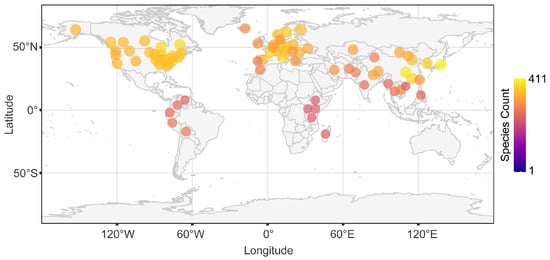
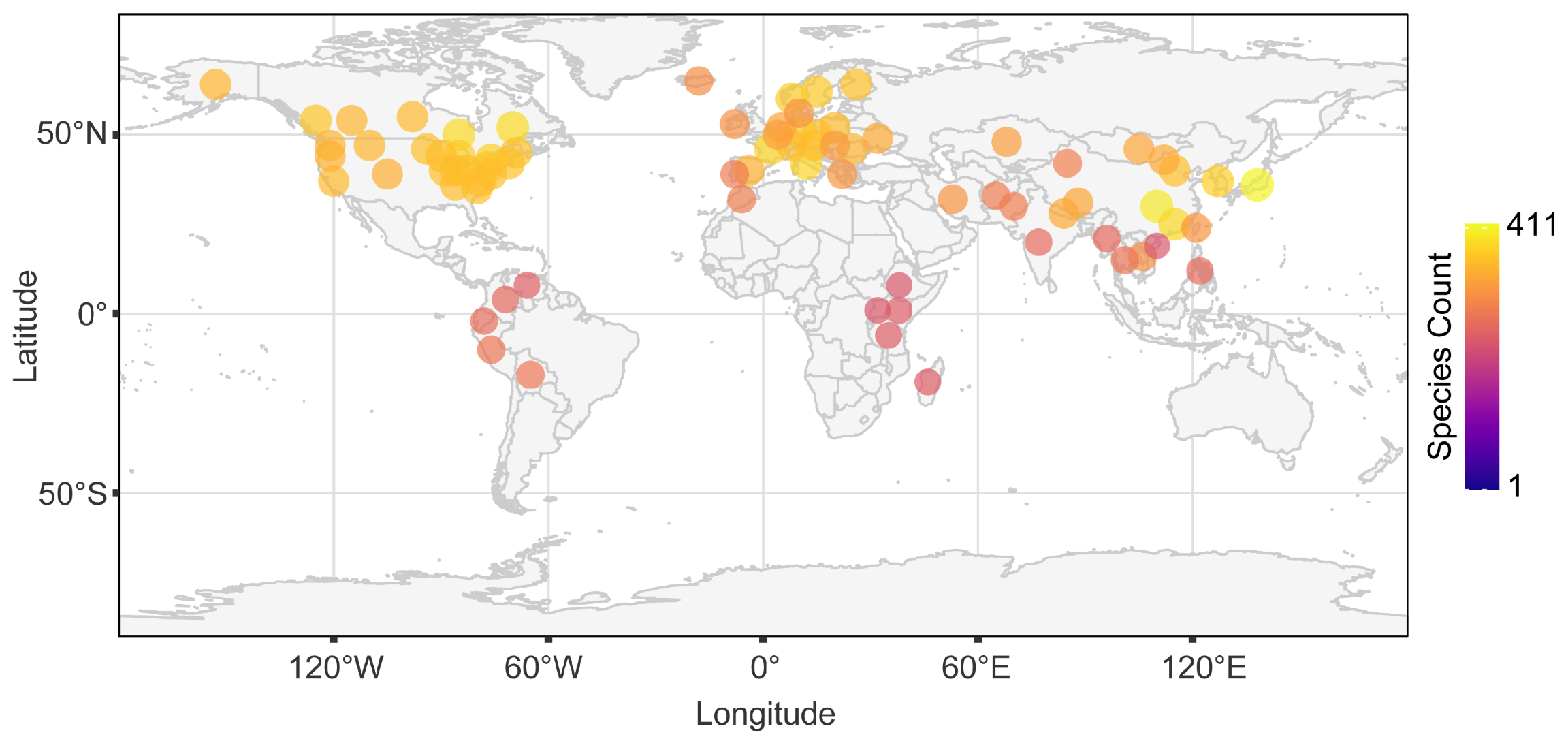
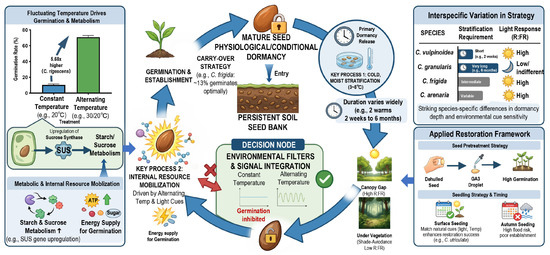
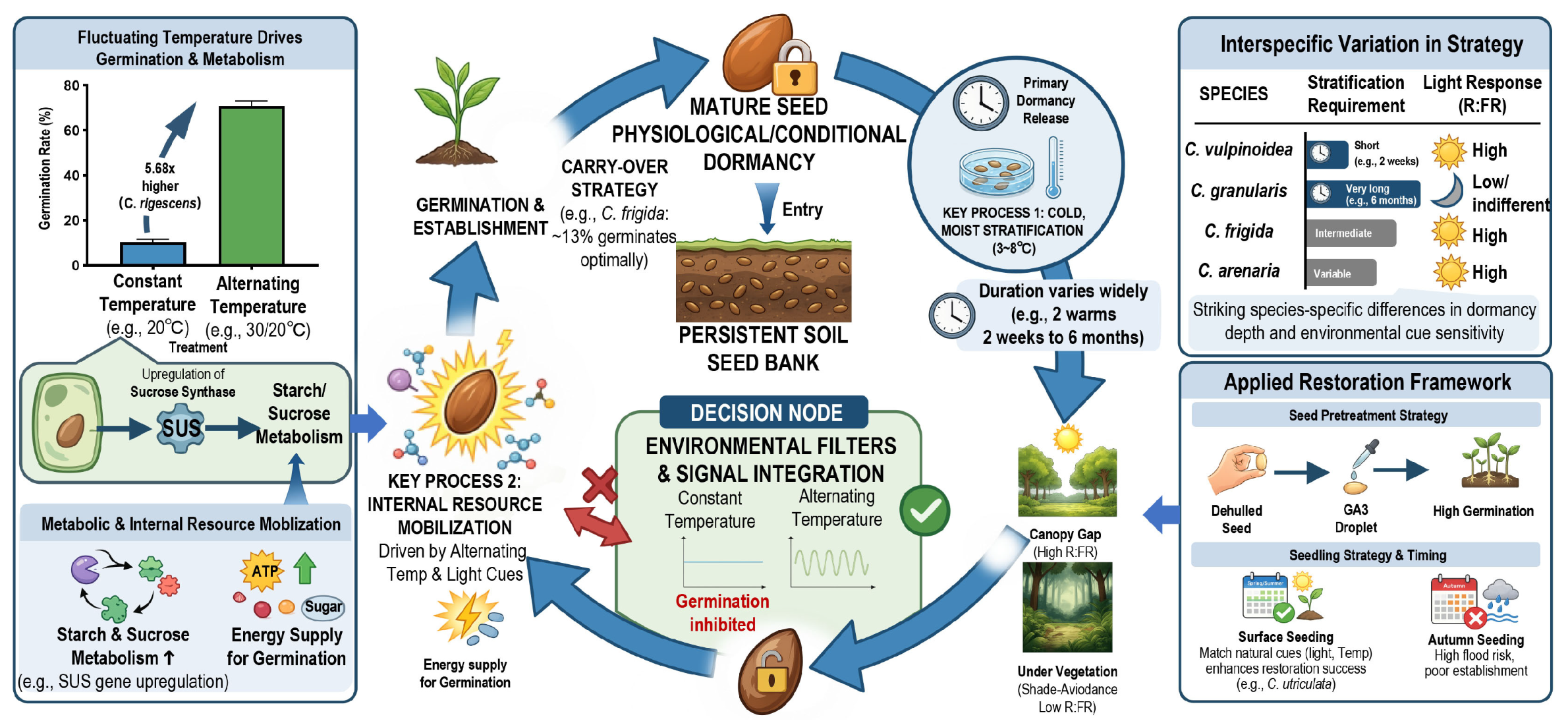
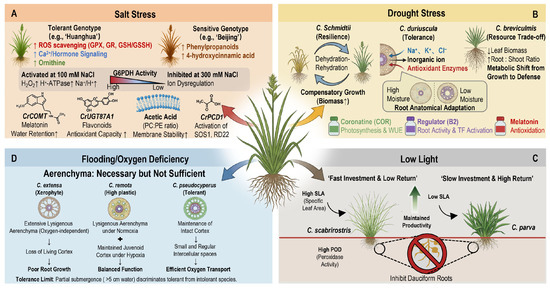
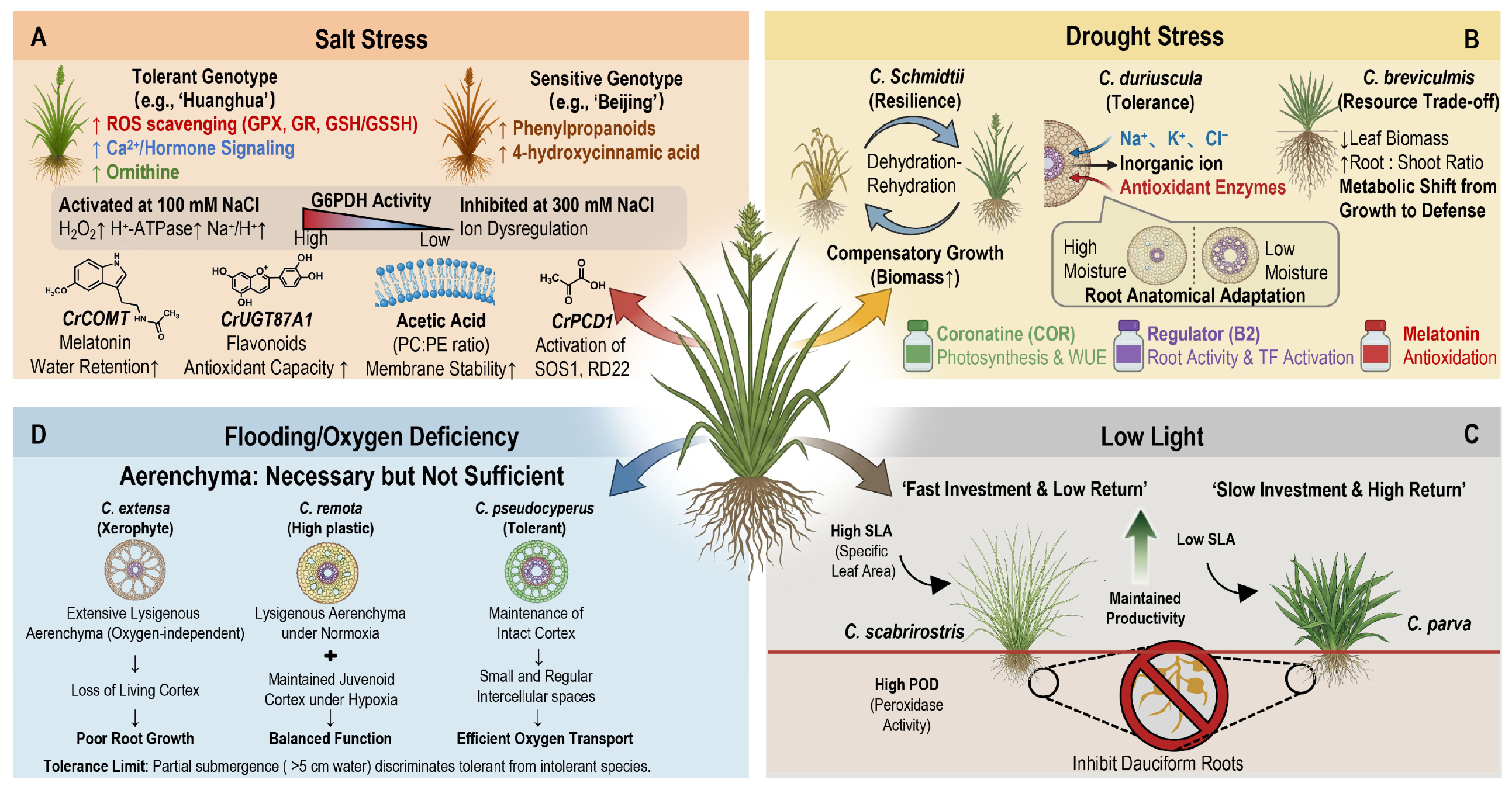
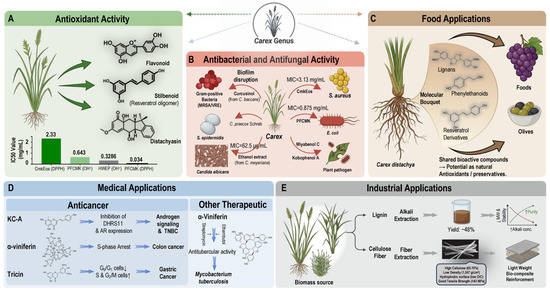
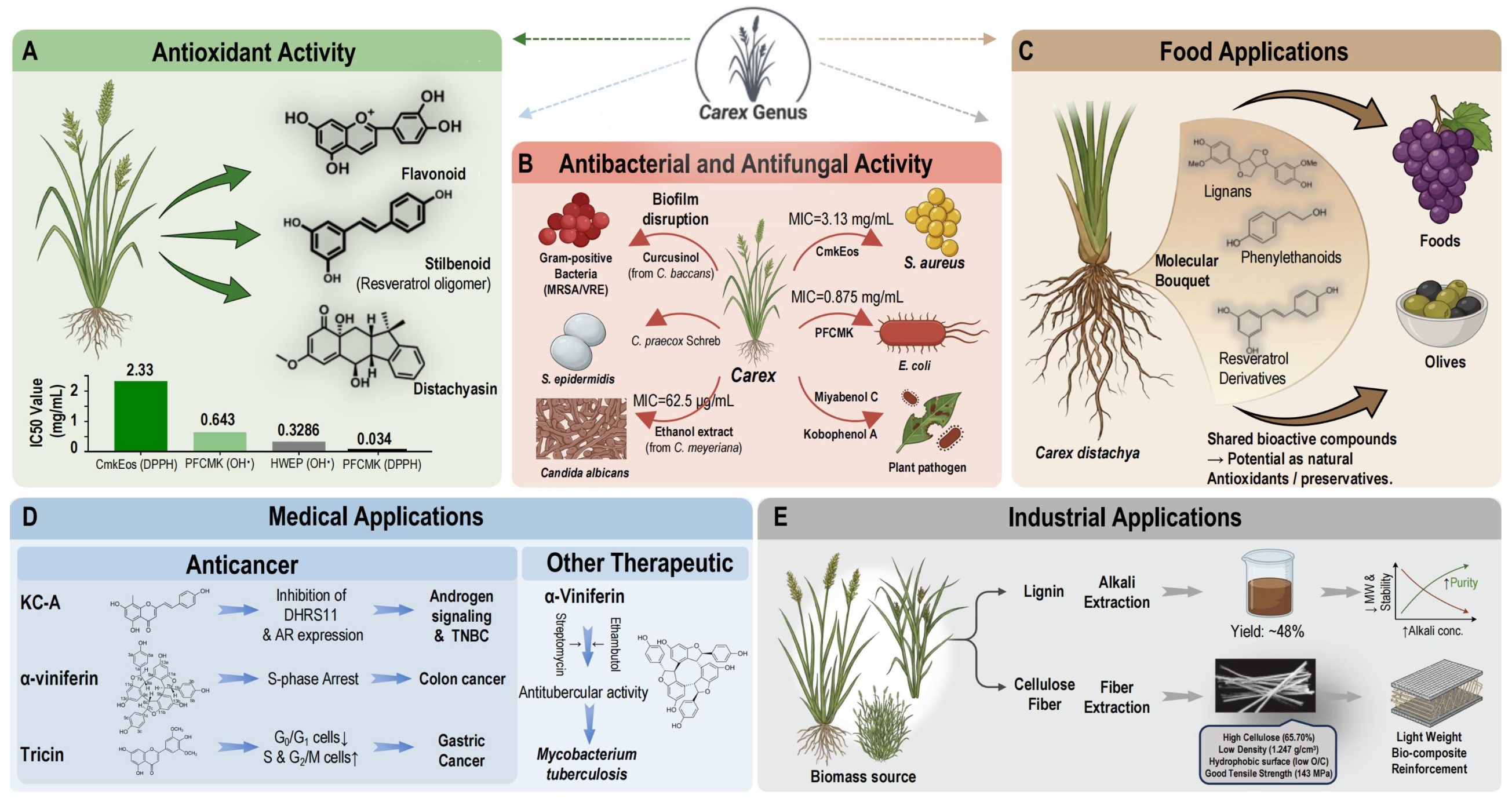
Disclaimer/Publisher’s Note: The statements, opinions and data contained in all publications are solely those of the individual author(s) and contributor(s) and not of MDPI and/or the editor(s). MDPI and/or the editor(s) disclaim responsibility for any injury to people or property resulting from any ideas, methods, instructions or products referred to in the content. |
© 2026 by the authors. Licensee MDPI, Basel, Switzerland. This article is an open access article distributed under the terms and conditions of the Creative Commons Attribution (CC BY) license.