


Abstract
Background: Dynamic technological development and its enormous impact on modern societies are posing new challenges for 21st-century neuroscience. A special place is occupied by technologies based on virtual reality (VR). VR tools have already played a significant role in both basic and clinical neuroscience due to their high accuracy, sensitivity and specificity and, above all, high ecological value. Objective: Being in a digital world affects the functioning of the body as a whole and its individual systems. The data obtained so far, both from experimental and modeling studies, as well as (clinical) observations, indicate their great and promising potential, but apart from the benefits, there are also losses and negative consequences for users. Methods: This review was conducted according to the PRISMA (Preferred Reporting Items for Systematic Reviews and Meta-Analyses) framework across electronic databases (such as Web of Science Core Collection; PubMed; and Scopus, Taylor & Francis Online and Wiley Online Library) to identify beneficial effects and applications, as well as adverse impacts, especially on brain health in human neuroscience. Results: More than half of these articles were published within the last five years and represent state-of-the-art approaches and results (e.g., 54.7% in Web of Sciences and 63.4% in PubMed), with review papers accounting for approximately 16%. The results show that in addition to proposed novel devices and systems, various methods or procedures for testing, validation and standardization are presented (about 1% of articles). Also included are virtual developers and experts, (bio)(neuro)informatics specialists, neuroscientists and medical professionals. Conclusions: VR environments allow for expanding the field of research on perception and cognitive and motor imagery, both in healthy and patient populations. In this context, research on neuroplasticity phenomena, including mirror neuron networks and the effects of applied virtual (mirror) tasks and training, is of interest in virtual prevention and neurogeriatrics, especially in neurotherapy and neurorehabilitation in basic/clinical and digital neuroscience.
1. Introduction
1.1. Basic Features of Virtual Environments
The essence of VR is the experience of being in computer-generated interactive worlds. This makes it possible to evoke physiological and psychological reactions similar to real ones [1,2,3]. In addition, it is possible to control the virtual environment (VE) to eliminate many influencing and interfering factors, giving the VE a high ecological value [1,2,3,4,5].
Virtual reality is described by three basic features: immersion, sense of presence and interaction. Immersion (an objective feature) is the sensual context of the experienced reality providing sensory stimuli that give the impression of being in the digital reality. Immersion is primarily affected by the quality of the equipment used. The more high-quality sensory stimuli the system provides, the better its fidelity to the real world. With infinitely high immersion, our brain would not see the difference between the real world and the computer-created one. The second feature of VR is the sense of presence (a subjective feature), i.e., the psychological perception of being involved in (or being part of) VR. People in VEs react realistically, while the degree of realness is determined by the experienced illusion of the place and its probability. Reactions range from physiological arousal to emotional and behavioral responses of participants in virtual worlds. This emphasizes that the important aspect of this presence is participant engagement in VR. The third feature of VR is interaction, which is related to the computer’s ability to detect the subject’s actions and respond to them in real time.
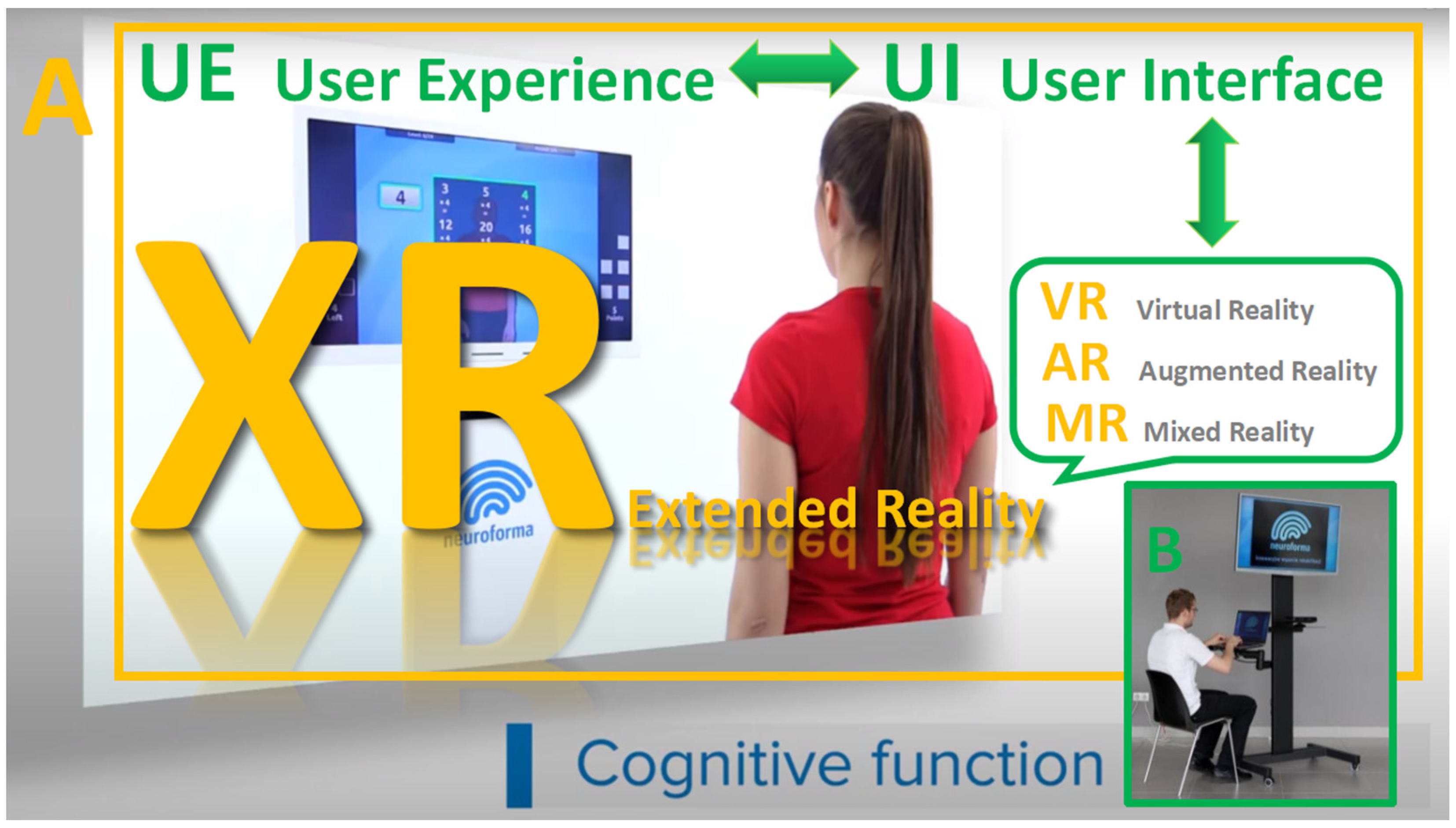
Nowadays, advanced and attractive extended reality (XR) refers to novel technologies such as virtual reality (VR immerses users in a computer-generated environment), augmented reality (AR superimposes digital information onto a user’s view of the real world) and mixed reality (MR mixes VR and AR by combining elements of virtual and real environments) as shown in Figure 1 [2,6,7]. XR environments and tools play significant roles in both basic and clinical neuroscience as well as in modern medical practice due to their high accuracy, sensitivity and specificity and, most importantly, their high ecological value [4,5,8,9,10].
Figure 1.
Illustration of XR and its classical components VR, AR and MR, although their areas can overlap. Panel (A) presents an example of a non-immersive virtual system, where the participant stands in front of the screen and sees herself surrounded by virtual objects (user interface, UI) performing the most accurate test task (user experience, UE). Using the biofeedback and prompts of the system assistant, as well as the precise preparation of the training sessions according to the activity/test goal by the operator–researcher in panel (B), the participant is emotionally engaged in the best possible execution of the virtual task (from our lab repository, with the permission of Titanis Ltd., Warsaw, Poland).
1.2. Development of Virtual Environments
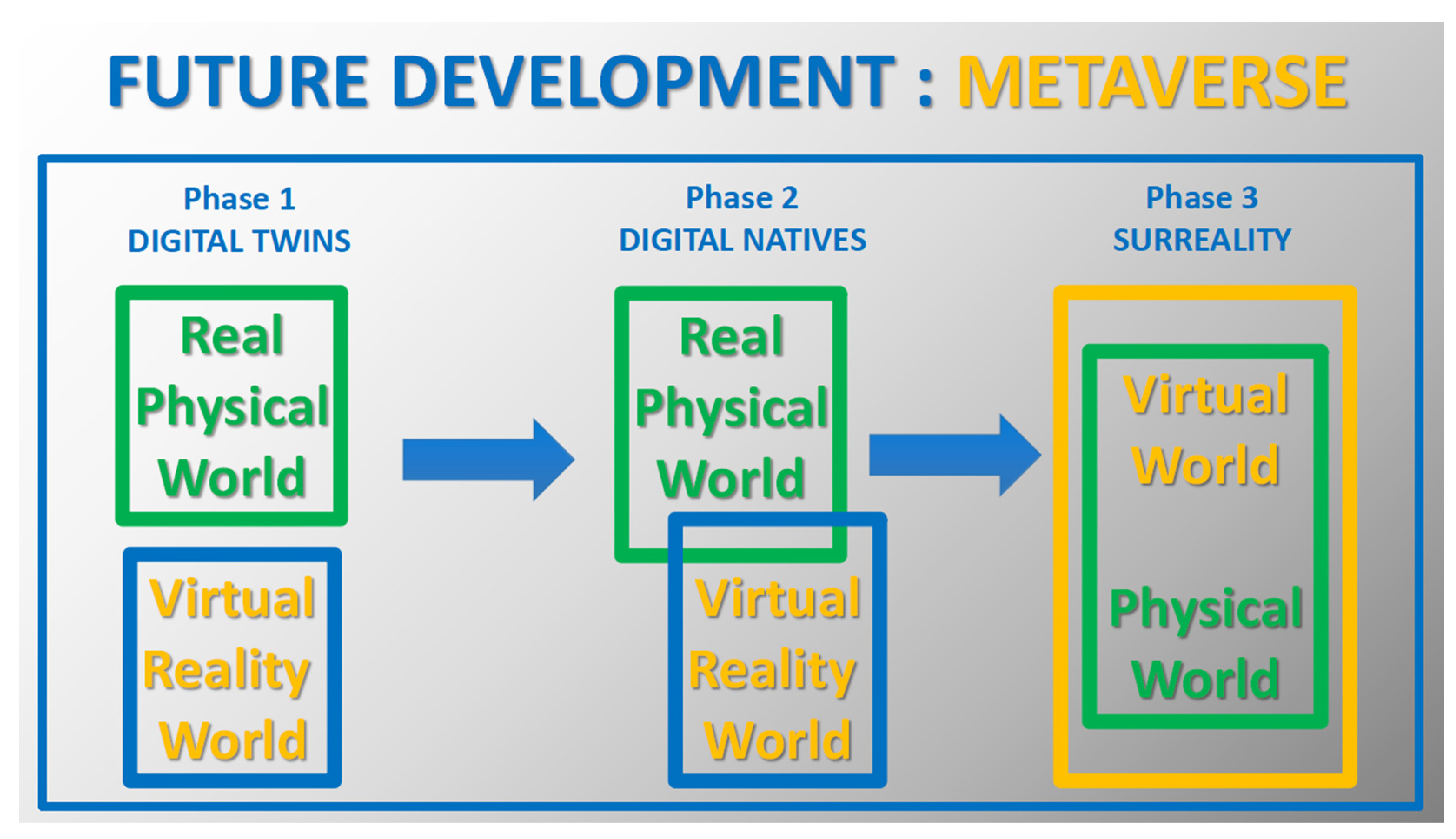
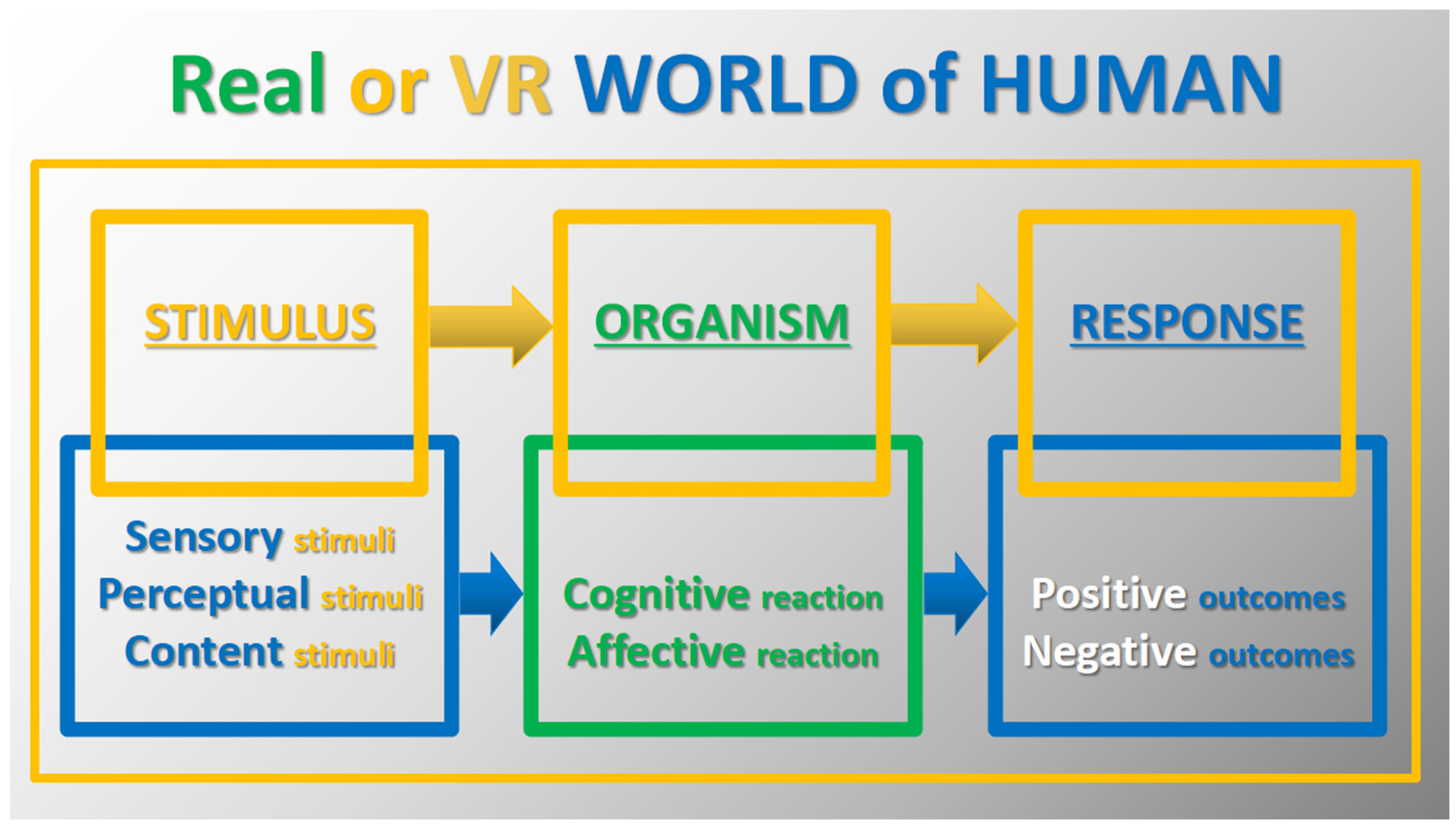
Today, XR development offers an innovative concept for the digital future of the current world, dubbed the “Metaverse”, aimed at enhancing virtual experiences and creating a digital world that is complex, interactive and connected to the real world [11,12]. This would be a digital environment for communicating, shopping, educating, working and doing everything that would normally be planned and executed online. Although there are already projects related to this, many neuroscientists, other researchers and experts point to emerging limitations and possible/potential risks [13,14,15]. Figure 2 illustrates this new concept within the framework of the observed subsequent stages of development of information technology (IT) and information and communication technology (ICT) [15,16]. The general concept of modeling research in the real and virtual human world can be presented in the following steps: exposure to various stimuli and the body’s reaction to them, which ultimately leads to positive or negative effects, as shown in Figure 3 [17,18].
Figure 2.
Illustration of the creation of the concept of digital development as the Metaverse: the first phase as digital twins (real physical and virtual reality worlds), the second phase as extended reality and the future perspective (the third phase) as the Metaverse environment.
Figure 3.
Illustration of the stimulus–organism–response (SOR) concept with the human world may be presented in the following steps: exposure to various stimuli and the body’s response to them, which ultimately leads to positive or negative outcomes.
1.3. Research Area, Objectives and Research Hypothesis/Premise
The research covered in this review is primarily human neuroscience, with an emphasis on brain research. The review is based on the basic premise that the current extremely rapid technological development not only has observed and documented benefits, but can also be a source of potential risks. Some of the negative effects associated with being in VEs are presented. Directions for development and steps being taken to eliminate them are also indicated. The prospects for future generations to live in a completely new, integrated digital environment, covering the basic areas of their activity, are outlined.
2. Methods
2.1. Identification and Selection of Articles
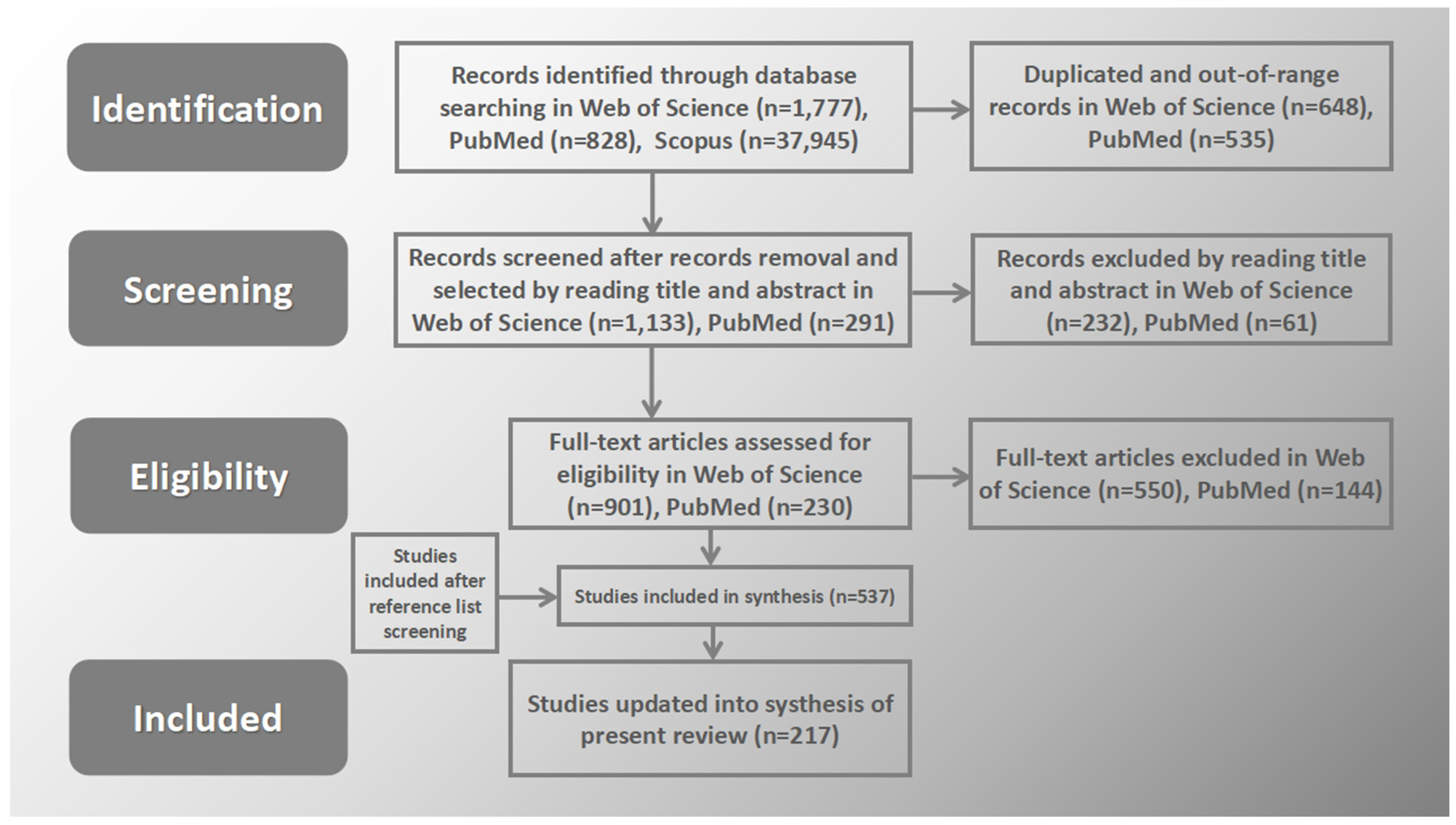
The electronic databases Web of Science Core Collection; PubMed; and Scopus, Taylor & Francis Online and Wiley Online Library (the latter to complete the obtained core datasets) were searched, and the focus was primarily on the post-COVID-19 period. This is due to the fact that most of the selected articles (more than half of them) were published in the last five years and represent state-of-the-art approaches and new results/discoveries. The pandemic and lockdown were a period of extraordinary acceleration in the development of innovative IT/ITC technologies and the resulting widespread use of these technologies both in everyday life and in medical and scientific research centers or institutes. The literature search was conducted in accordance with the PRISMA (Preferred Reporting Items of Systematic Reviews and Meta-Analyses) guidelines as depicted in Figure 4 [19].
Figure 4.
Illustration of article identification and screening process flow diagram (adapted from PRISMA, i.e., Preferred Reporting Items for Systematic Reviews and Meta-Analyses).
2.2. Eligibility Criteria
The analysis included English-language articles that (1) used virtual environments that were not only immersive, but also non-immersive or semi-immersive, and (2) addressed key application areas in neuroscience and medicine, including brain health. The author chose to focus on the term “virtual reality”, which also included interesting novel combined/mixed environments (such as “augmented reality”, “mixed reality”, “extended reality”). If both conditions were not met, the paper was excluded. Final inclusion decisions were made by consensus, and articles were grouped based on topics in basic and clinical neuroscience, medical practice (current and future) and data type. The selected articles were analyzed for information on the virtual technology model used, proposed and applied programs/sessions and procedures, defined and/or testing/validating conditions/groups (e.g., traditional vs. virtual), number of subjects, and documented favorable and unfavorable/adverse results of being in virtual worlds.
3. Results and Discussion
3.1. VR Approaches as Novel Beneficial Environments/Tools and Discussion on Their Significance in Neuroscience
3.1.1. Traditional Versus Virtual Research Approaches
In neuroscience, neuropsychology plays a key role in brain and behavior research using VR, and methods for verifying the effects in VEs are usually classic neuropsychological tools [20,21,22,23]. This leads to interesting comparisons between conventional and innovative tools, often in favor of virtual ones. The ecological limitations of traditional neuropsychological testing and some difficulties in conducting tests or training in real-life scenarios have paved the way for the use of VR-based tools. VR tests are often based on “real-world” tasks such as behavior in the classroom, kitchen, supermarket or street [21,22,23]. Therefore, most of these tests are designed to assess executive functions (EFs) and the interactions between various cognitive and sensorimotor processes using real-life task patterns. Moreover, the engaging form of VR testing is an interesting alternative to classical neuropsychological tests that require a high level of attention [20].
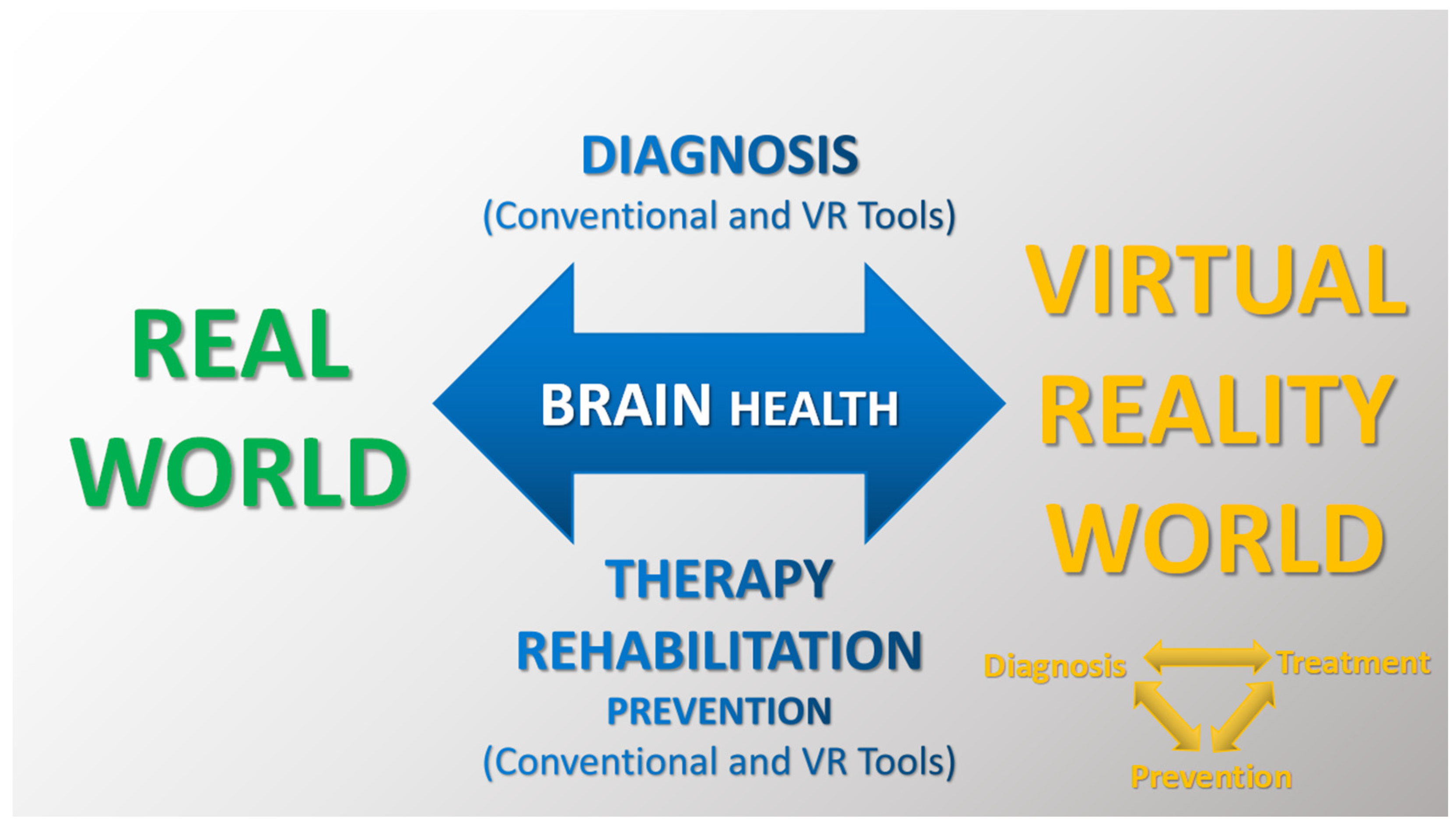
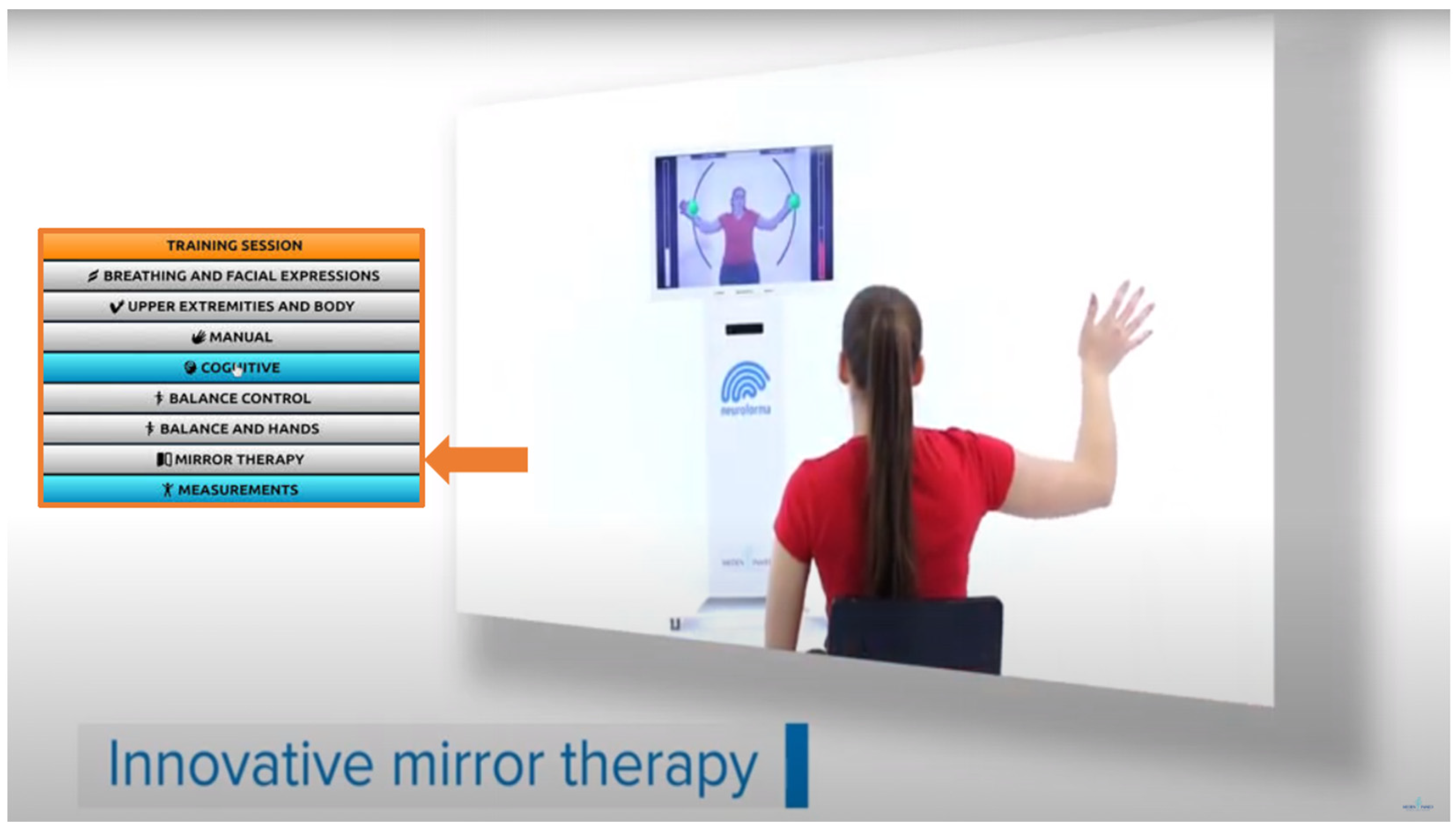
Scientists indicate that VR has the potential to become the gold standard in neuropsychological diagnostics. Innovative VR technologies are computer–user interface platforms that implement real-time simulation of an action or environment, enabling participant interaction via multiple sensory modalities. As a result, VR diagnosis can be very effective, and similarly, VR treatment can be an effective intervention and support for improving multiple functions and skills in participants’ virtual worlds [24,25]. Figure 5 and Figure 6 illustrate that the VR tools can be used both to diagnose and treat dysfunctions and deficits of body systems/organs and to provide an environment for adaptation to daily life after treatment, as well as for prevention and support of natural aging processes [20,21,22,23,24,25].
Figure 5.
Illustration of basic brain research tools in both real (conventional approach) and virtual (VR approach) environments for modern diagnosis, therapy, rehabilitation and prevention.
Figure 6.
Illustration of a VR training session with a mirror therapy option: the participant exercises one hand, but sees an image of herself with both hands exercising in a non-immersive VR system (which is at MMRI PAS, from our lab repository, with Titanis’s permission).
3.1.2. Basic Benefits of Using Virtual Environments
It can be noted that in addition to the remarkable diagnostic value of VEs, a number of findings demonstrate that VR training/exercise can have a positive impact on an individual’s (neuro)physiological, (neuro)psychological and (neuro)rehabilitation outcomes compared to traditional training and exercise [26,27]. Neuroscientists point out that classical neuropsychological tests/tasks have certain limitations in terms of generalizing their results, while the results obtained in VEs can be extrapolated to real (actual) functioning due to the high ecological validity of VEs (while maintaining the laboratory precision of the measurements) [21,22,23,24,25,26,27]. It is indicated that the advantage of VR is a higher degree of objectivity compared to clinical interviews or self-report methods, which are largely dependent on the circumstances, including unreliable memory (as a result, VR can effectively support and even verify classical approaches). Also of interest are researchers’ observations that VR seems to allow for a more realistic simulation of social interactions compared to standard methods of testing personal space, such as the use of photographs or abstract verbal stimuli, as well as traditional methods of assessing emotions based on role-play tests, in which the effect depends on the individual’s imagination and the examining person. Whether the improvement observed in the VE can be generalized to patients’ daily functioning remains an open question. Nevertheless, a number of studies point to this possibility (Table 1). In addition, every participant in the digital world knows that everything depicted in it is not real. At the same time, the mind and body behave as if it were real after all. This makes it easier for people to face difficult situations or test new therapeutic strategies. A feature of exposure therapies in VEs is the therapist’s ability to constantly adjust the parameters of the environment to match the patient’s actions and feelings. This allows the therapist/system to tailor the level of difficulty to the specific patient, thus providing a highly personalized therapeutic program. The Neuroforma environment, which we use in our modeling studies, works in a similar way [28,29,30].
3.1.3. Examples of Research Area on the Impact of Virtual Environments on (Brain) Health
Digital reality is constantly evolving, so its impact on human health is changing and requires the updating of knowledge. On the other hand, there are already many areas of the use of virtual technologies, such as precise (neuro)diagnostics and effective support in the treatment of a wide range of diseases (also those related to the nervous system), including the latest findings in neuroscience, such as the phenomena of (neuro)plasticity or mirror neuron networks [31,32,33].
For example, the Riva, Cavedoni and Kourtesis teams conducted neuroscientific research to propose, develop, test and validate various models of VR technology (e.g., different levels of immersion) for healthy and patient populations [2,9,20,34,35]. Their novel studies and others [5,21,22,23,24,25] illustrate the benefits of using VR and demonstrate new findings on brain structure/function and plasticity. In addition, Bonini and co-workers [36] provide an interesting summary of 30 years of research on mirror neurons (MNs) from the first description by Rizzolatti’s group [37,38,39] as a class of monkey premotor cells discharging during both action execution and observation to current implications and applications in humans. A recent study by Thompson’s team [40] demonstrates that mirror neuron brain areas contribute to action identification, but not intention. Zhou and colleagues [41] suggest that the configuration of an action observation network depends on the observer’s goals. Plata-Bello’s group [42] analyzed patterns of brain activity during the observation of painful expressions and assessed the relationship between this activity and interpersonal reactivity index (IRI) scores. For non-invasive brain stimulation, authors concluded that observing painful expressions triggers activation in sensorimotor MNs, and this activation is influenced by a person’s level of empathy. Studies of the MN system and neural plasticity using VR environments [43] involving data from electroencephalography, neuroimaging and non-invasive brain stimulation [44,45,46,47] present innovative multidisciplinary treatment models based on the mixed methodologies and/or objective (neuro)physiological signals. Recent findings demonstrate novel individualized biomarker-based approaches with a well-targeted patient population in neurotherapy and neurorehabilitation, for example, individuals with schizophrenia and autism spectrum disorders and individuals with neurological or neuromuscular diseases [48,49,50,51,52,53]. Table 1 presents examples of VR use, as well as comparisons of traditional methods with new digital proposals. Additionally, research using VEs can provide recommendations for their specific application, as well as aiding in the validation and standardization of VEs.
Table 1.
Examples of areas of use of digital environments with the participation of healthy individuals (experimental and modeling studies) and various patient populations (proposed diagnostic, therapeutic and preventive approaches) in basic and clinical neuroscience. Today we can observe not only the rapid development of innovative technologies but also their implementation in many different areas of modern human activity. In the future, digital environments may constitute the basis for the functioning of human societies.
Novel VR-based technologies are constantly developing, and their areas of application are expanding and even overlapping, as we see in neuroscience. Table 1 presents and indicates examples of neuroscientific areas of using virtual environments and tools, including pain management [31,56,57,58], improvement of brain injury patients [5,26,59,60,61], post-stroke [10,20,25,33,65,66,67], prevention, and diagnosis and therapy of many serious illnesses. Examples include diseases such as neurodevelopmental disorders (e.g., attention-deficit hyperactivity disorder, ADHD [22,80,81]); schizophrenia spectrum disorders (e.g., schizophrenia [82,83]); autism spectrum disorders (e.g., autism [84,85]); mood (e.g., depressive disorders [86,87]), anxiety (e.g., panic and phobias [74,75,76]), trauma- and stressor-related (e.g., post-traumatic stress disorder, PTSD [73]), neurocognitive (e.g., Parkinson’s or Alzheimer’s and memory cognitive impairment diseases [23,24,47,69,70,71,72,77,78,79]) and neuromuscular disorders (e.g., multiple sclerosis [32,62,63,64]). In addition, VEs are increasingly being incorporated into research and evaluation of natural aging processes or effective support in (neuro)geriatric care (e.g., preventing falls or improving cognitive function in the elderly) [21,70,71]. Model studies with healthy participants are important and interesting in evaluating/testing new technologies [4,28,29,54,55,56].
Overall, it has been observed that current research approaches primarily (a) compare the effects of traditional methods with those based on VEs; (b) combine traditional and innovative approaches/mixed methodology, e.g., searching for (digital) (neural) biomarkers, additionally taking into account data of EEG, neuroimaging and NIBS, as well as EOG, EMG and other biosignals; (c) present different models of VEs; (d) observe the accompanying beneficial and adverse effects and assess potential risks to eliminate them; and (d) predict the next phases of digital reality development.
Although unusual and unexpected challenges are only beginning to be encountered, VR environments make it possible to expand the scope of research on perception, cognitive and motor imagery, and the effects of different learning and teaching pathways. In this context, studies of neuroplasticity phenomena, including the effects of applied virtual (mirror) tasks and training, are of interest in virtual prevention, neurogeriatrics, neurotherapy and neurorehabilitation [5,31,32,33,36,42,58,61].
3.2. Being in VR and Discussing the Impact of Technical Aspects and Adverse Symptoms on (Brain) Health
3.2.1. VR Equipment for Non-Immersion, Partial Immersion and Full Immersion
Virtual environments are offered with different degrees of immersion: non-immersive, partial immersion and full immersion [9,18,23,88,89,90]. We carried out our research in the non-immersive virtual environment created by the Neuroforma system [28,29,30]. Such environments are willingly used due to the fact that there are practically no adverse symptoms related to being in them or participating in virtual tests, tasks and training. Above all, however, VEs with full immersion are very attractive. These environments most often use an HMD (head-mounted display) interface. Nowadays, professional HMD sets, in addition to the classic two small high-resolution screens and a headset, increasingly offer additional equipment such as hand-tracking controllers or gloves for the perfect imitation of hand work, as well as an eye-tracking system, shoes mapping leg movement and a system for tracking the user’s location in space. The amount of information available increases even more when additional equipment allows, for example, the measurement of heart rate or galvanic skin response. Such feedback can be recorded by the system and influence what happens in the virtual environment (which, however, can limit the subject’s freedom in VR). An interesting and unusual development of VR technology is a costume worn over all or part of the body. Every movement of the body is monitored and then mapped to the virtual space, which gives excellent visual–motor synchronicity and is used to create a strong illusion of having a virtual body. Moreover, it is pointed out that the use of first-person perspective in visual–motor synchronization gives an even stronger illusion of virtual body possession. Undoubtedly, the ability to virtually represent a subject’s entire body is one of the most important advantages of the latest VR technology over other types of computer user interfaces. Another interesting VE, although already expensive, is the Cave Automatic Virtual Environment (CAVE), in which images are projected via a projector onto the walls and floor of a small cubic room. In this environment, the participant wears glasses that allow stereoscopic vision, and sound is played through loudspeakers in the room [20]. Furthermore, research suggests that the strength of fully immersive virtual environments will be higher than that of non-immersive VEs, which is supported by findings indicating that higher immersion is associated with a stronger sense of presence, and often with more pronounced emotional reactions. Nevertheless, the relationship between immersion and emotional reactions is not clear, nor are the relationships between specific emotions and the sense of presence in VR yet known.
3.2.2. VR and Adverse Symptoms such as Cybersickness
It has already been mentioned that VR can be a non-immersive environment, as well as low-immersive, semi-immersive and fully immersive. The latter may be responsible for the increased incidence of cybersickness (virtual reality sickness). It is a similar, but not identical, term to the concept of motion sickness or simulator sickness. Cybersickness (CS) most likely results from, e.g., the inconsistency between the sense of movement in the virtual environment and stillness in the real world, according to sensory conflict theory [91]. Its main symptoms include (a) disorientation (systemic and non-systemic dizziness), (b) nausea (belching, unpleasant feeling in the stomach, salivation) and (c) oculomotor symptoms (eye fatigue, difficulty focusing, blurred vision, headaches). These symptoms are exacerbated by various factors, and among the important ones are (a) personal factors: age (the younger the person, the more severe the symptoms), female gender, fatigue, posture (sitting is safest); (b) technical inadequacies (devices/interfaces that are inconvenient to use, image lag and flickering, calibration; and (c) the specifics of the virtual task: a sense of lack of control, too long a virtual session (the longer, the greater the risk of adverse symptoms) [90,91]. It is noteworthy that in simulator sickness, oculomotor complaints predominate, while in cybersickness. it is primarily disorientation [92]. It is estimated that CS symptoms affect 60–70% of HMD users, and their severity is about three times that of simulator sickness. The considerations so far show how serious a problem cybersickness symptoms can be. Hence, intensive research is being conducted to reduce the adverse symptoms associated with being in the digital world [54,90,91,92]. Recommendations are being prepared, and interesting neuroscientific studies are being presented to reduce the risk of adverse symptoms. In addition, various questionnaires are proposed to assess this risk in participants of virtual worlds, for example, by the Stanney [91], Kourtesis [92], Laessoe [93] and Kim [94] groups.
3.2.3. VR and the Development of Validation and Standardization Procedures
Another difficulty worth mentioning is the lack of validation and standardization of VEs, which consequently leads, for example, to difficulties in replicating studies and their results [9,26,69,83]. As a consequence, evaluations of different environments are incomparable and thus less reliable. Furthermore, the very nature of both non-immersive and immersive VR largely depends on the use of vision to navigate and perform virtual tests and tasks. Therefore, the inclusion criteria for participants in many studies include normal or corrected vision [22,23]. Moreover, VR training requires a certain level of cognitive functioning and supports computer interfaces and/or virtual objects [20]. Above all, the final success depends on the motivation of the participants themselves to complete tasks and programs in VEs [25,64,65,67,95]. The difficulties indicated may result in different and/or inconclusive results, especially when, for example, reviewing studies using these modern technologies in different non-clinical and clinical groups. Therefore, when interpreting the results of various VR studies, in addition to methodological diligence, it is necessary to take into account the specifics of the VEs.
3.2.4. Summary
Virtual technologies offer new opportunities and perspectives for physical and/or cognitive exercise to improve human health. An interesting summary of current considerations for the future era of virtual/digital neuroscience is a systematic review by Ali’s team [1]. The authors point out that VR has emerged as an innovative, safe and effective tool for the rehabilitation of many childhood and adult diseases. VR-based therapies have the potential to improve both motor and functional skills across a wide range of age groups through cortical reorganization and activation of various neuronal connections [24,71,73,75]. The great potential of using serious VR-based games that combine perceptual learning and dichoptic stimulation in the rehabilitation of ophthalmic and neurological disorders has been demonstrated. Current research on memory retrieval has been inspired by theories of brain plasticity and discoveries about the nervous system’s ability to reconstruct cellular synapses as a result of interaction with enriched environments [32,76]. Therefore, for example, the use of VR training can play an important role in improving cognitive functions and motor disabilities [25,47,59,62,84,86,95]. VR-based training is currently being researched to prevent and control measurements in ocular diseases such as myopia, amblyopia, presbyopia and age-related macular degeneration [1,96]. As indicated by the dynamic development of IT/ITC (which accelerated even further during the COVID-19 pandemic, including futuristic Metaverse concepts), as well as findings in neuroscience, VR technologies will be more accessible and thus widely used in (digital) healthcare in the future [4,8,12,97]. Finally, it is worth mentioning the important issue of the ethical implications of digital technologies [3,98]. This topic, which represents a new challenge for the future, is already being addressed by many researchers, philosophers and computer scientists, pointing out both benefits and serious dangers (cybersecurity, privacy, lack of general recommendations and methods for validation and standardization of virtual environments and tools) and potential threats (cybersickness, addiction to new technologies, currently unknown negative consequences) to future users of virtual worlds [14,97,99].
3.3. Limitations and Future Prospects of Digital Worlds with Artificial Intelligence
3.3.1. Basic Limitations of Virtual Environments
Innovative technologies are very attractive and are developing extremely rapidly. Therefore, we are constantly studying their limitations, including in the context of brain research. An important and perceived serious issue is an addiction to the Internet, and consequently to modern technologies. The problem is so important that extensive research is being conducted on the subject [100,101,102,103,104]. Another serious threat noted among users of virtual worlds is the occurrence of cybersickness. Nevertheless, further development of digital technologies will most likely reduce the appearance of its symptoms. Undoubtedly, an important issue is not only health safety but also the security and regulation of the use of new technologies in general. This certainly includes the protection of privacy, collected VR data and other information about participants of VEs. It should be noted that all of these limitations are very important in the context of IT/ICT technologies becoming cheaper and thus more accessible to large groups of users, both in the healthy population and among patients.
3.3.2. Future Development of VR with Artificial Intelligence
The digital worlds of the future seem even more interesting and fascinating with the new challenges and opportunities associated with the development of artificial intelligence (AI). AI is a broad field that encompasses various disciplines, from computer science, (intelligent) data analysis/retrieval and (bio)statistics, (bio)(neuro)hardware and software engineering, linguistics, medicine and neuroscience to philosophy and psychology [105,106,107]. Another interesting proposed direction for the future development of AI is artificial general intelligence (AGI) [107,108]. AGI would be the ability of a machine to “feel, think and act” like a human. Although AGI does not currently exist, it is already being considered that the next level would be artificial superintelligence (ASI), in which a machine would be able to function in all respects, perhaps even “better” than a human [109]. For now, however, these are only very distant time horizons of the future world in which future human generations will live.
AI is expected to be one of the most important technologies of the future and will therefore have an increasing impact on our lives [110,111,112]. This impact includes not only the collection and processing of data, but especially the fusion of AI with AR/VR technologies, and consequently the emergence of the future Metaverse with AI [113]. Discoveries and knowledge about future new digital worlds and their impact on humans will be a great challenge for brain science [114,115,116,117].
4. Conclusions
- (1)
- The purpose of this review was to present interesting findings on the effects of using innovative virtual technologies in neuroscience. Immersion and being in created digital worlds influence the behavior of the brain and body. The significant impact on the human brain is still unknown, especially in the long term.
- (2)
- The data obtained to date, both from experimental and modeling studies and from (clinical) observations, indicate the vast and important potential of digital worlds, but their use can have both beneficial and unfavorable effects, including digital ethical aspects that require further research.
- (3)
- Current VR research on human health (and disease) has shown that digital technologies (a) are attractive and stimulate the rapid development of contemporary civilization and the exploration of human brain capabilities and (b) are promising, motivating, easy to personalize and control, and relatively safe for rebuilding/remodeling motor and cognitive functions in brain health and/or disorders.
From the perspective of the future, it is worth noting that this is only the beginning of research into understanding human brain behavior in the digital world of modern civilization’s development. Today we know for sure that we still know very little not only about ourselves but also about our fundamental and extraordinary organ of cognition of reality—the brain. Moreover, the human brain, functioning in the individual, social and cultural spheres, creates multidimensional realities, which will be true in the Metaverse concept with AI. The possibility of creating the illusion of embodiment opens new research perspectives.
5. Limitations of the Present Review
Since general standards and methods for validating VR applications have not yet been developed for innovative IT/ICT technologies, many of the studies presented cannot be compared with each other. In the future, it would be worthwhile to include such a meta-analysis comparing results in different virtual environments, from a non-immersive model through a semi-immersive model to a full immersion. However, there is still no independent virtual standard in scientific research and clinical practice. This is also pointed out by the researchers themselves. Therefore, especially important are those VR studies that also propose validation approaches in similar areas of VR applications. This is also illustrated in the review (Table 1). It is not possible to present the full spectrum of so many proposed and already ongoing VR studies. Even this limited overview shows the many benefits of novel technologies based on virtual environments, while also demonstrating that they may not be neutral to their users (Table 2). The proposed virtual worlds, while very attractive, interesting and increasingly popular, require an extremely cautious approach due to their still-unknown possible negative effects on human health, as well as unregulated privacy/security issues and concerns about digital bioethics.
Table 2.
Overall benefits, limitations and prospects of VR-based digital worlds.
Funding
This research received no external funding.
Institutional Review Board Statement
Not applicable.
Informed Consent Statement
Not applicable.
Data Availability Statement
Not applicable.
Acknowledgments
Our studies were carried out using the Neuroforma system, and as part of our own scientific project on “Research of the Movement System using the Augmented and Virtual Reality”. The author would like to thank the very kind employees of the MMRI PAS Library for excellent help in bibliographic searches: Barbara Bugalska, Dominika Masternak and Katarzyna Nieszporska.
Conflicts of Interest
The author declares no conflicts of interest.
Abbreviations
| ABI | acquired brain injury |
| ADHD | attention-deficit hyperactivity disorder |
| AGI | artificial general intelligence |
| AI | artificial inteligence |
| AO | action observation |
| AOT | action observation therapy |
| AR | augmented reality |
| ASD | autism spectrum disorder |
| ASI | artificial superintelligence |
| CAVE | cave automatic virtual environment |
| CBT | cognitive-behavioral therapy |
| CS | cybersickness |
| DT | dual-tasking |
| EEG | electroencephalogram |
| EF | executive function |
| EMG | electromyogram |
| EOG | electrooculogram |
| HMD | head-mounted display |
| IT | information technology |
| ICT | information and communication technology |
| ICU-AW | intensive care unit weakness |
| IRT | interpersonal reactivity index |
| MCI | mild cognitive impairment |
| MR | mixed reality |
| MS | multiple sclerosis |
| MNs | mirror neurons |
| NIBS | non-invasive brain stimulation |
| PD | Parkinson’s disease |
| PLP | phantom limb pain |
| PRISMA | Preferred Reporting Items for Systematic Reviews and Meta-Analyses |
| PTSD | post-traumatic stress disorder |
| SOR | stimulus–organism–response |
| SSD | schizophrenia spectrum disorder |
| TBI | traumatic brain injury |
| TENS | transcutaneous electrical nerve stimulation |
| UE | user experience |
| UI | user interface |
| USN | unilateral spatial neglect |
| VE | virtual environment |
| VR | virtual reality |
| VRET | VR exposure therapy |
| VRT | VR training |
| XR | extended reality |
References
- Ali, S.G.; Wang, X.; Li, P.; Jung, Y.; Bi, L.; Kim, J.; Chen, Y.; Feng, D.D.; Magnenat Thalmann, N.; Wang, J.; et al. A systematic review: Virtual-reality-based techniques for human exercises and health improvement. Front. Public Health 2023, 11, 1143947. [Google Scholar] [CrossRef] [Scilit] [PubMed]
- Riva, C.G. Special Topics in Information Technology; Springer Nature: Cham, Switzerland, 2023. [Google Scholar]
- Hamad, A.; Jia, B. How Virtual Reality Technology Has Changed Our Lives: An Overview of the Current and Potential Applications and Limitations. Int. J. Environ. Res. Public Health 2022, 19, 11278. [Google Scholar] [CrossRef] [Scilit] [PubMed]
- Kodithuwakku Arachchige, S.N.K.; Chander, H.; Shojaei, A.; Knight, A.C.; Brown, C.; Freeman, H.R.; Burch, V.R.F.; Chen, C.C. Effects of virtual heights, dual-tasking, and training on static postural stability. Appl. Ergon. 2024, 114, 104145. [Google Scholar] [CrossRef] [Scilit] [PubMed]
- Keller, J.; Štětkářová, I.; Macri, V.; Kühn, S.; Pětioký, J.; Gualeni, S.; Simmons, C.D.; Arthanat, S.; Zilber, P. Virtual reality-based treatment for regaining upper extremity function induces cortex grey matter changes in persons with acquired brain injury. J. Neuroeng. Rehabil. 2020, 17, 127. [Google Scholar] [CrossRef] [Scilit]
- Milgram, P.; Takemura, H.; Utsumi, A.; Kishino, F. Augmented Reality: A class of displays on the reality-virtuality continuum. In Telemanipulator and Telepresence Technologies; Proc. SPIE 2351; SPIE: Bellingham, WA, USA, 1994; Volume 2351, pp. 282–292. [Google Scholar] [CrossRef] [Scilit]
- Skarbez, R.; Smith, M.; Whitton, M.C. Revisiting Milgram and Kishino’s Reality-Virtuality Continuum. Front. Virtual Real. 2021, 2, 647997. [Google Scholar] [CrossRef] [Scilit]
- Buhusi, C.V.; Oprisan, S.A.; Buhusi, M. The future of integrative neuroscience: The big questions. Front. Integr. Neurosci. 2023, 17, 1113238. [Google Scholar] [CrossRef] [Scilit] [PubMed]
- Mauri, M.; Rancati, G.; Riva, G.; Gaggioli, A. Comparing the effects of immersive and non-immersive real estate experience on behavioral intentions. Comput. Hum. Behav. 2024, 150, 107996. [Google Scholar] [CrossRef] [Scilit]
- Leong, S.C.; Tang, Y.M.; Toh, F.M.; Fong, K.N.K. Examining the effectiveness of virtual, augmented, and mixed reality (VAMR) therapy for upper limb recovery and activities of daily living in stroke patients: A systematic review and meta-analysis. J. Neuroeng. Rehabil. 2022, 19, 93. [Google Scholar] [CrossRef] [Scilit]
- Dwivedi, Y.K.; Hughes, L.; Baabdullah, A.M.; Ribeiro-Navarrete, S.; Giannakis, M.; Al-Debei, M.M.; Dennehy, D.; Metri, B.; Buhalis, D.; Cheung, C.M.K.; et al. Metaverse beyond the hype: Multidisciplinary perspectives on emerging challenges, opportunities, and agenda for research, practice and policy. Int. J. Inf. Manage. 2022, 66, 102542. [Google Scholar] [CrossRef] [Scilit]
- Rahaman, T. Into the Metaverse—Perspectives on a New Reality. Med. Ref. Serv. Q. 2022, 41, 330–337. [Google Scholar] [CrossRef] [Scilit]
- Cho, K.H.; Park, J.B.; Kang, A. Metaverse for Exercise Rehabilitation: Possibilities and Limitations. Int. J. Environ. Res. Public Health 2023, 20, 5483. [Google Scholar] [CrossRef] [Scilit] [PubMed]
- Paquin, V.; Ferrari, M.; Sekhon, H.; Rej, S. Time to Think “Meta”: A Critical Viewpoint on the Risks and Benefits of Virtual Worlds for Mental Health. JMIR Serious Games 2023, 11, e43388. [Google Scholar] [CrossRef] [Scilit] [PubMed]
- Wang, Y.; Su, Z.; Zhang, N.; Liu, D.; Xing, R.; Luan, T.H.; Shen, X.S. A Survey on Metaverse: Fundamentals, Security, and Privacy. IEEE Commun. Surv. Tutor. 2022, 25, 319–352. [Google Scholar] [CrossRef] [Scilit]
- Taylor, S.; Soneji, S. Bioinformatics and the Metaverse: Are We Ready? Front. Bioinform. 2022, 2, 863676. [Google Scholar] [CrossRef] [Scilit] [PubMed]
- Logeswaran, A.; Munsch, C.; Chong, Y.J.; Ralph, N.; McCrossnan, J. The role of extended reality technology in healthcare education: Towards a learner-centred approach. Future Healthc. J. 2021, 8, e79–e84. [Google Scholar] [CrossRef] [Scilit] [PubMed]
- Suh, A.; Prophet, J. The state of immersive technology research: A literature analysis. Comput. Hum. Behav. 2018, 86, 77–90. [Google Scholar] [CrossRef] [Scilit]
- Page, M.J.; McKenzie, J.E.; Bossuyt, P.M.; Boutron, I.; Hoffmann, T.C.; Mulrow, C.D.; Shamseer, L.; Tetzlaff, J.M.; Akl, E.A.; Brennan, S.E.; et al. The PRISMA 2020 statement: An updated guideline for reporting systematic reviews. Int. J. Surg. 2021, 88, 105906. [Google Scholar] [CrossRef]
- Cavedoni, S.; Cipresso, P.; Mancuso, V.; Bruni, F.; Pedroli, E. Virtual reality for the assessment and rehabilitation of neglect: Where are we now? A 6-year review update. Virtual Real. 2022, 30, 1–42. [Google Scholar] [CrossRef] [Scilit]
- Msika, E.F.; Ehrlé, N.; Gaston-Bellegarde, A.; Orriols, E.; Piolino, P.; Narme, P. Using a Computer-Based Virtual Environment to Assess Social Cognition in Aging: An Exploratory Study of the REALSoCog Task. Front. Psychol. 2022, 13, 882165. [Google Scholar] [CrossRef] [Scilit]
- Ribas, M.O.; Micai, M.; Caruso, A.; Fulceri, F.; Fazio, M.; Scattoni, M.L. Technologies to support the diagnosis and/or treatment of neurodevelopmental disorders: A systematic review. Neurosci. Biobehav. Rev. 2023, 145, 105021. [Google Scholar] [CrossRef] [Scilit]
- Allain, P.; Foloppe, D.A.; Besnard, J.; Yamaguchi, T.; Etcharry-Bouyx, F.; Le Gall, D.; Nolin, R.P. Detecting everyday action deficits in Alzheimer’s disease using a nonimmersive virtual reality kitchen. J. Int. Neuropsychol. Soc. 2014, 20, 468–477. [Google Scholar] [CrossRef] [Scilit] [PubMed]
- Liu, Q.; Song, H.; Yan, M.; Ding, Y.; Wang, Y.; Chen, L.; Yin, H. Virtual reality technology in the detection of mild cognitive impairment: A systematic review and meta-analysis. Ageing Res. Rev. 2023, 87, 101889. [Google Scholar] [CrossRef] [Scilit] [PubMed]
- Wiley, E.; Khattab, S.; Tang, A. Examining the effect of virtual reality therapy on cognition post-stroke: A systematic review and meta-analysis. Disabil. Rehabil. Assist. Technol. 2022, 17, 50–60. [Google Scholar] [CrossRef] [Scilit]
- Brassel, S.; Power, E.; Campbell, A.; Brunner, M.; Togher, L. Recommendations for the Design and Implementation of Virtual Reality for Acquired Brain Injury Rehabilitation: Systematic Review. J. Med. Internet Res. 2021, 23, e26344. [Google Scholar] [CrossRef] [Scilit]
- Qian, J.; McDonough, D.J.; Gao, Z. The Effectiveness of Virtual Reality Exercise on Individual’s Physiological, Psychological and Rehabilitative Outcomes: A Systematic Review. Int. J. Environ. Res. Public Health 2020, 17, 4133. [Google Scholar] [CrossRef] [Scilit]
- Sokołowska, B. A Novel Perspective for Examining and Comparing Real and Virtual Test Tasks Performed by the Dominant and Non-Dominant Hand in Healthy Adults. Symmetry 2021, 13, 1810. [Google Scholar] [CrossRef] [Scilit]
- Sokołowska, B. A novel virtual reality approach for functional lateralization in healthy adults. Brain Res. 2021, 1766, 147537. [Google Scholar] [CrossRef] [Scilit] [PubMed]
- Sokołowska, B.; Sokołowska, E. An Example of the Assessment of Human Laterality Using Virtual reality. Int. J. Innov. Res. Comput. Commun. Eng. 2019, 7, 3555–3562. [Google Scholar]
- Hali, K.; Manzo, M.A.; Koucheki, R.; Wunder, J.S.; Jenkinson, R.J.; Mayo, A.L.; Ferguson, P.C.; Lex, J.R. Use of virtual reality for the management of phantom limb pain: A systematic review. Disabil. Rehabil. 2023, 1–8. [Google Scholar] [CrossRef] [Scilit]
- Milewska-Jędrzejczak, M.; Głąbiński, A. The Influence of Conventional and Innovative Rehabilitation Methods on Brain Plasticity Induction in Patients with Multiple Sclerosis. J. Clin. Med. 2023, 12, 1880. [Google Scholar] [CrossRef] [Scilit]
- Zhou, Z.; Chen, X.; Li, Y.; Chen, S.; Zhang, S.; Wu, Y.; Shi, X.; Ren, M.; Shan, C. Effects of integrated action and sensory observation therapy based on mirror neuron and embodied cognition theory on upper limb sensorimotor function in chronic stroke: A study protocol for a randomised controlled trial. BMJ Open 2023, 13, e069126. [Google Scholar] [CrossRef] [Scilit] [PubMed]
- Kourtesis, P.; Kouklari, E.C.; Roussos, P.; Mantas, V.; Papanikolaou, K.; Skaloumbakas, C.; Pehlivanidis, A. Virtual Reality Training of Social Skills in Adults with Autism Spectrum Disorder: An Examination of Acceptability, Usability, User Experience, Social Skills, and Executive Functions. Behav. Sci. 2023, 13, 336. [Google Scholar] [CrossRef] [Scilit]
- Kourtesis, P.; MacPherson, S.E. How immersive virtual reality methods may meet the criteria of the National Academy of Neuropsychology and American Academy of Clinical Neuropsychology: A software review of the Virtual Reality Everyday Assessment Lab (VR-EAL). CHB Rep. 2021, 4, 100151. [Google Scholar] [CrossRef] [Scilit]
- Bonini, L.; Rotunno, C.; Arcuri, E.; Gallese, V. Mirror neurons 30 years later: Implications and applications. Trends Cogn. Sci. 2022, 26, 767–781. [Google Scholar] [CrossRef] [Scilit]
- di Pellegrino, G.; Fadiga, L.; Fogassi, L.; Gallese, V.; Rizzolatti, G. Understanding motor events: A neurophysiological study. Exp. Brain Res. 1992, 91, 176–180. [Google Scholar] [CrossRef] [Scilit] [PubMed]
- Rizzolatti, G.; Fadiga, L.; Gallese, V.; Fogassi, L. Premotor cortex and the recognition of motor actions. Brain Res. Cogn. Brain Res. 1996, 3, 131–141. [Google Scholar] [CrossRef] [Scilit] [PubMed]
- Gallese, V.; Fadiga, L.; Fogassi, L.; Rizzolatti, G. Action recognition in the premotor cortex. Brain 1996, 119 Pt 2, 593–609. [Google Scholar] [CrossRef] [Scilit] [PubMed]
- Thompson, E.L.; Bird, G.; Catmur, C. Mirror neuron brain regions contribute to identifying actions, but not intentions. Hum. Brain Mapp. 2022, 43, 4901–4913. [Google Scholar] [CrossRef] [Scilit]
- Zhou, X.; Stehr, D.A.; Pyles, J.; Grossman, E.D. Configuration of the action observation network depends on the goals of the observer. Neuropsychologia 2023, 191, 108704. [Google Scholar] [CrossRef] [Scilit]
- Plata-Bello, J.; Privato, N.; Modroño, C.; Pérez-Martín, Y.; Borges, Á.; González-Mora, J.L. Empathy Modulates the Activity of the Sensorimotor Mirror Neuron System during Pain Observation. Behav. Sci. 2023, 13, 947. [Google Scholar] [CrossRef] [Scilit]
- Miyamoto, Y.; Uchitomi, H.; Miyake, Y. Effects of avatar shape and motion on mirror neuron system activity. Front. Hum. Neurosci. 2023, 17, 1173185. [Google Scholar] [CrossRef] [Scilit] [PubMed]
- Gunduz, M.E.; Bucak, B.; Keser, Z. Advances in Stroke Neurorehabilitation. J. Clin. Med. 2023, 12, 6734. [Google Scholar] [CrossRef] [Scilit]
- Aurucci, G.V.; Preatoni, G.; Damiani, A.; Raspopovic, S. Brain-Computer Interface to Deliver Individualized Multisensory Intervention for Neuropathic Pain. Neurotherapeutics 2023, 20, 1316–1329. [Google Scholar] [CrossRef] [Scilit]
- Ansado, J.; Chasen, C.; Bouchard, S.; Northoff, G. How brain imaging provides predictive biomarkers for therapeutic success in the context of virtual reality cognitive training. Neurosci. Biobehav. Rev. 2021, 120, 583–594. [Google Scholar] [CrossRef] [Scilit] [PubMed]
- Cassani, R.; Novak, G.S.; Falk, T.H.; Oliveira, A.A. Virtual reality and non-invasive brain stimulation for rehabilitation applications: A systematic review. J. Neuroeng. Rehabil. 2020, 17, 147. [Google Scholar] [CrossRef] [Scilit]
- Minissi, M.E.; Gómez-Zaragozá, L.; Marín-Morales, J.; Mantovani, F.; Sirera, M.; Abad, L.; Cervera-Torres, S.; Gómez-García, S.; Chicchi Giglioli, I.A.; Alcañiz, M. The whole-body motor skills of children with autism spectrum disorder taking goal-directed actions in virtual reality. Front. Psychol. 2023, 14, 1140731. [Google Scholar] [CrossRef] [Scilit] [PubMed]
- Pinarello, C.; Elmers, J.; Inojosa, H.; Beste, C.; Ziemssen, T. Management of multiple sclerosis fatigue in the digital age: From assessment to treatment. Front. Neurosci. 2023, 17, 1231321. [Google Scholar] [CrossRef] [Scilit]
- Sattin, D.; Parma, C.; Lunetta, C.; Zulueta, A.; Lanzone, J.; Giani, L.; Vassallo, M.; Picozzi, M.; Parati, E.A. An Overview of the Body Schema and Body Image: Theoretical Models, Methodological Settings and Pitfalls for Rehabilitation of Persons with Neurological Disorders. Brain Sci. 2023, 13, 1410. [Google Scholar] [CrossRef] [Scilit]
- Jacob, D.; Unnsteinsdóttir Kristensen, I.S.; Aubonnet, R.; Recenti, M.; Donisi, L.; Ricciardi, C.; Svansson, H.Á.R.; Agnarsdóttir, S.; Colacino, A.; Jónsdóttir, M.K.; et al. Towards defining biomarkers to evaluate concussions using virtual reality and a moving platform (BioVRSea). Sci. Rep. 2022, 12, 8996. [Google Scholar] [CrossRef] [Scilit]
- Cavedoni, S.; Chirico, A.; Pedroli, E.; Cipresso, P.; Riva, G. Digital Biomarkers for the Early Detection of Mild Cognitive Impairment: Artificial Intelligence Meets Virtual Reality. Front. Hum. Neurosci. 2020, 14, 245. [Google Scholar] [CrossRef] [Scilit]
- Nishimoto, R.; Fujiwara, S.; Kutoku, Y.; Ogata, T.; Mihara, M. Effect of dual-task interaction combining postural and visual perturbations on cortical activity and postural control ability. Neuroimage 2023, 280, 120352. [Google Scholar] [CrossRef] [Scilit] [PubMed]
- Benelli, A.; Neri, F.; Cinti, A.; Pasqualetti, P.; Romanella, S.M.; Giannotta, A.; De Monte, D.; Mandalà, M.; Smeralda, C.; Prattichizzo, D.; et al. Frequency-Dependent Reduction of Cybersickness in Virtual Reality by Transcranial Oscillatory Stimulation of the Vestibular Cortex. Neurotherapeutics 2023, 20, 1796–1807. [Google Scholar] [CrossRef] [Scilit]
- Brock, K.; Vine, S.J.; Ross, J.M.; Trevarthen, M.; Harris, D.J. Movement kinematic and postural control differences when performing a visuomotor skill in real and virtual environments. Exp. Brain Res. 2023, 241, 1797–1810. [Google Scholar] [CrossRef] [Scilit] [PubMed]
- Li, J.; Yang, H.; Xiao, Y.; Liu, X.; Ma, B.; Ma, K.; Hu, L.; Lu, X. The analgesic effects and neural oscillatory mechanisms of virtual reality scenes based on distraction and mindfulness strategies in human volunteers. Br. J. Anaesth. 2023, 131, 1082–1092. [Google Scholar] [CrossRef] [Scilit] [PubMed]
- Phelan, I.; Furness, P.J.; Matsangidou, M.; Babiker, N.T.; Fehily, O.; Thompson, A.; Carrion-Plaza, A.; Lindley, S.A. Designing effective virtual reality environments for pain management in burn-injured patients. Virtual Real. 2023, 27, 201–215. [Google Scholar] [CrossRef] [Scilit] [PubMed]
- Annapureddy, D.; Annaswamy, T.M.; Raval, G.; Chung, Y.Y.; Prabhakaran, B. A novel mixed reality system to manage phantom pain in-home: Results of a pilot clinical trial. Front. Pain Res. 2023, 4, 1183954. [Google Scholar] [CrossRef] [Scilit]
- Bulle-Smid, L.; Keuning, W.; Van Den Heuvel, R.; Hakvoort, G.; Verhoeven, F.; Daniels, R.; Hettinga, M. The Use of Extended Reality in Rehabilitation for Patients with Acquired Brain Injury: A Scoping Review. Stud. Health Technol. Inform. 2023, 306, 583–590. [Google Scholar] [CrossRef] [Scilit]
- Calabrò, R.S.; Bonanno, M.; Torregrossa, W.; Cacciante, L.; Celesti, A.; Rifici, C.; Tonin, P.; De Luca, R.; Quartarone, A. Benefits of Telerehabilitation for Patients With Severe Acquired Brain Injury: Promising Results From a Multicenter Randomized Controlled Trial Using Nonimmersive Virtual Reality. J. Med. Internet Res. 2023, 25, e45458. [Google Scholar] [CrossRef] [Scilit]
- Castelli, L.; Iacovelli, C.; Fusco, A.; Amoruso, V.; Cuccagna, C.; Loreti, C.; Giovannini, S.; Padua, L. The Role of Technological Rehabilitation in Patients with Intensive Care Unit Weakness: A Randomized Controlled Pilot Study. J. Clin. Med. 2023, 12, 2612. [Google Scholar] [CrossRef] [Scilit]
- Kamm, C.P.; Blättler, R.; Kueng, R.; Vanbellingen, T. Feasibility and usability of a new home-based immersive virtual reality headset-based dexterity training in multiple sclerosis. Mult. Scler. Relat. Disord. 2023, 71, 104525. [Google Scholar] [CrossRef] [Scilit]
- Cortés-Pérez, I.; Sánchez-Alcalá, M.; Nieto-Escámez, F.A.; Castellote-Caballero, Y.; Obrero-Gaitán, E.; Osuna-Pérez, M.C. Virtual Reality-Based Therapy Improves Fatigue, Impact, and Quality of Life in Patients with Multiple Sclerosis. A Systematic Review with a Meta-Analysis. Sensors 2021, 21, 7389. [Google Scholar] [CrossRef] [Scilit] [PubMed]
- Leonardi, S.; Maggio, M.G.; Russo, M.; Bramanti, A.; Arcadi, F.A.; Naro, A.; Calabrò, R.S.; De Luca, R. Cognitive recovery in people with relapsing/remitting multiple sclerosis: A randomized clinical trial on virtual reality-based neurorehabilitation. Clin. Neurol. Neurosurg. 2021, 208, 106828. [Google Scholar] [CrossRef] [Scilit]
- Bedendo, V.; Aruanno, B.; Dozio, N.; Covarrubias, M.; Ferrise, F. Exploiting Virtual Reality to Design Exercises for the Recovery of Stroke Patients at Home. Comput. Aided Des. Appl. 2024, 21, 463–473. [Google Scholar] [CrossRef] [Scilit]
- Bargeri, S.; Scalea, S.; Agosta, F.; Banfi, G.; Corbetta, D.; Filippi, M.; Sarasso, E.; Turolla, A.; Castellini, G.; Gianola, S. Effectiveness and safety of virtual reality rehabilitation after stroke: An overview of systematic reviews. EClinicalMedicine 2023, 64, 102220. [Google Scholar] [CrossRef] [Scilit]
- Martino Cinnera, A.; Bisirri, A.; Chioccia, I.; Leone, E.; Ciancarelli, I.; Iosa, M.; Morone, G.; Verna, V. Exploring the Potential of Immersive Virtual Reality in the Treatment of Unilateral Spatial Neglect Due to Stroke: A Comprehensive Systematic Review. Brain Sci. 2022, 12, 1589. [Google Scholar] [CrossRef] [Scilit]
- Errante, A.; Saviola, D.; Cantoni, M.; Iannuzzelli, K.; Ziccarelli, S.; Togni, F.; Simonini, M.; Malchiodi, C.; Bertoni, D.; Inzaghi, M.G.; et al. Effectiveness of action observation therapy based on virtual reality technology in the motor rehabilitation of paretic stroke patients: A randomized clinical trial. BMC Neurol. 2022, 22, 109. [Google Scholar] [CrossRef] [Scilit] [PubMed]
- Gómez-Cáceres, B.; Cano-López, I.; Aliño, M.; Puig-Perez, S. Effectiveness of virtual reality-based neuropsychological interventions in improving cognitive functioning in patients with mild cognitive impairment: A systematic review and meta-analysis. Clin. Neuropsychol. 2023, 37, 1337–1370. [Google Scholar] [CrossRef] [Scilit]
- Yang, J.G.; Thapa, N.; Park, H.J.; Bae, S.; Park, K.W.; Park, J.H.; Park, H. Virtual Reality and Exercise Training Enhance Brain, Cognitive, and Physical Health in Older Adults with Mild Cognitive Impairment. Int. J. Environ. Res. Public Health 2022, 19, 13300. [Google Scholar] [CrossRef] [Scilit]
- Liao, Y.Y.; Tseng, H.Y.; Lin, Y.J.; Wang, C.J.; Hsu, W.C. Using virtual reality-based training to improve cognitive function, instrumental activities of daily living and neural efficiency in older adults with mild cognitive impairment. Eur. J. Phys. Rehabil. Med. 2020, 56, 47–57. [Google Scholar] [CrossRef] [Scilit]
- Mancuso, V.; Stramba-Badiale, C.; Cavedoni, S.; Pedroli, E.; Cipresso, P.; Riva, G. Virtual Reality Meets Non-invasive Brain Stimulation: Integrating Two Methods for Cognitive Rehabilitation of Mild Cognitive Impairment. Front. Neurol. 2020, 11, 566731. [Google Scholar] [CrossRef] [Scilit]
- Siehl, S.; Wicking, M.; Pohlack, S.; Winkelmann, T.; Zidda, F.; Steiger-White, F.; Nees, F.; Flor, H. Altered frontolimbic activity during virtual reality-based contextual fear learning in patients with posttraumatic stress disorder. Psychol. Med. 2023, 53, 6345–6355. [Google Scholar] [CrossRef] [Scilit] [PubMed]
- Binder, F.P.; Pöhlchen, D.; Zwanzger, P.; Spoormaker, V.I. Facing Your Fear in Immersive Virtual Reality: Avoidance Behavior in Specific Phobia. Front. Behav. Neurosci. 2022, 16, 827673. [Google Scholar] [CrossRef] [Scilit]
- Álvarez-Pérez, Y.; Rivero, F.; Herrero, M.; Viña, C.; Fumero, A.; Betancort, M.; Peñate, W. Changes in Brain Activation through Cognitive-Behavioral Therapy with Exposure to Virtual Reality: A Neuroimaging Study of Specific Phobia. J. Clin. Med. 2021, 10, 3505. [Google Scholar] [CrossRef] [Scilit] [PubMed]
- Hinze, J.; Röder, A.; Menzie, N.; Müller, U.; Domschke, K.; Riemenschneider, M.; Noll-Hussong, M. Spider Phobia: Neural Networks Informing Diagnosis and (Virtual/Augmented Reality-Based) Cognitive Behavioral Psychotherapy-A Narrative Review. Front. Psychiatry 2021, 12, 704174. [Google Scholar] [CrossRef] [Scilit] [PubMed]
- Alavian, S.; Taghizade, G.; Mahdizade, H.; Behzadipour, S. A computerized assessment tool for the upper extremities motor performance in individuals with Parkinson’s disease. Biomed. Signal Process. Control 2024, 87, 105547. [Google Scholar] [CrossRef] [Scilit]
- Kaplan, A.; Barkan-Slater, S.; Zlotnik, Y.; Levy-Tzedeket, S. Robotic technology for Parkinson’s disease: Needs, attitudes and concerns of individuals with Parkinson’s disease and their family members. A focus group study. Int. J. Hum.-Comput. Stud. 2024, 181, 103148. [Google Scholar] [CrossRef] [Scilit]
- Baugher, B.; Szewczyk, N.; Liao, J. Augmented reality cueing for freezing of gait: Reviewing an emerging therapy. Parkinsonism Relat. Disord. 2023, 116, 105834. [Google Scholar] [CrossRef] [Scilit]
- Goharinejad, S.; Goharinejad, S.; Hajesmaeel-Gohari, S.; Bahaadinbeigy, K. The usefulness of virtual, augmented, and mixed reality technologies in the diagnosis and treatment of attention deficit hyperactivity disorder in children: An overview of relevant studies. BMC Psychiatry 2022, 22, 4. [Google Scholar] [CrossRef] [Scilit]
- Coleman, B.; Marion, S.; Rizzo, A.; Turnbull, J.; Nolty, A. Virtual Reality Assessment of Classroom—Related Attention: An Ecologically Relevant Approach to Evaluating the Effectiveness of Working Memory Training. Front. Psychol. 2019, 10, 1851. [Google Scholar] [CrossRef] [Scilit]
- Holopainen, R.; Tiihonen, J.; Lähteenvuo, M. Efficacy of immersive extended reality (XR) interventions on different symptom domains of schizophrenia spectrum disorders. A systematic review. Front. Psychiatry 2023, 14, 1208287. [Google Scholar] [CrossRef] [Scilit]
- Aubin, G.; Béliveau, M.F.; Klinger, E. An exploration of the ecological validity of the Virtual Action Planning-Supermarket (VAP-S) with people with schizophrenia. Neuropsychol. Rehabil. 2018, 28, 689–708. [Google Scholar] [CrossRef] [Scilit] [PubMed]
- Zhang, M.; Ding, H.; Naumceska, M.; Zhang, Y. Virtual Reality Technology as an Educational and Intervention Tool for Children with Autism Spectrum Disorder: Current Perspectives and Future Directions. Behav. Sci. 2022, 12, 138. [Google Scholar] [CrossRef] [Scilit] [PubMed]
- De Luca, R.; Naro, A.; Colucci, P.V.; Pranio, F.; Tardiolo, G.; Billeri, L.; Le Cause, M.; De Domenico, C.; Portaro, S.; Rao, G.; et al. Improvement of brain functional connectivity in autism spectrum disorder: An exploratory study on the potential use of virtual reality. J. Neural Transm. 2021, 128, 371–380. [Google Scholar] [CrossRef] [Scilit]
- Yan, S.; Shen, S.; Lu, Q.; Zhong, S.; Lv, S.; Lai, S.; Luo, Y.; Ran, H.; Duan, M.; Song, K.; et al. Virtual reality working memory training improves cognitive performance of acute and remitted patients with major depressive disorder. J. Affect. Disord. 2024, 344, 267–276. [Google Scholar] [CrossRef] [Scilit]
- Baghaei, N.; Chitale, V.; Hlasnik, A.; Stemmet, L.; Liang, H.N.; Porter, R. Virtual Reality for Supporting the Treatment of Depression and Anxiety: Scoping Review. JMIR Ment. Health 2021, 8, e29681. [Google Scholar] [CrossRef] [Scilit] [PubMed]
- Vrigkas, M.; Nikou, C. A virtual reality 3D game: A comparison between an immersive virtual reality application and a desktop experience. In Proceedings of the 1st Workshop on 3D Computer Vision and Photogrammetry, Held in Conjunction with IEEE International Conference on Image Processing (ICIP’23), Kuala Lumpur, Malaisia, 8–11 October 2023; pp. 1–5. [Google Scholar]
- Sokołowska, B. Impact of Virtual Reality Cognitive and Motor Exercises on Brain Health. Int. J. Environ. Res. Public Health 2023, 20, 4150. [Google Scholar] [CrossRef] [Scilit]
- Martirosov, S.; Bureš, M.; Zítka, T. Cyber sickness in low-immersive, semi-immersive, and fully immersive virtual reality. Virtual Real. 2022, 26, 15–32. [Google Scholar] [CrossRef] [Scilit]
- Stanney, K.; Lawson, B.D.; Rokers, B.; Dennison, M.; Fidopiastis, C.; Stoffregen, T.; Weech, S.; Fulvio, J.M. Identifying Causes of and Solutions for Cybersickness in Immersive Technology: Reformulation of a Research and Development Agenda. Int. J. Hum. Comput. Interact. 2020, 36, 1783–1803. [Google Scholar] [CrossRef] [Scilit]
- Kourtesis, P.; Linnell, J.; Amir, R.; Argelaguet, F.; MacPherson, S.E. Cybersickness in Virtual Reality Questionnaire (CSQ-VR): A Validation and Comparison against SSQ and VRSQ. Virtual Worlds 2023, 2, 16–35. [Google Scholar] [CrossRef] [Scilit]
- Laessoe, U.; Abrahamsen, S.; Zepernick, S.; Raunsbaek, A.; Stensen, C. Motion sickness and cybersickness-Sensory mismatch. Physiol. Behav. 2023, 258, 114015. [Google Scholar] [CrossRef] [Scilit]
- Kim, H.K.; Park, J.; Choi, Y.; Choe, M. Virtual reality sickness questionnaire (VRSQ): Motion sickness measurement index in a virtual reality environment. Appl. Ergon. 2018, 69, 66–73. [Google Scholar] [CrossRef] [Scilit]
- Wenk, N.; Penalver-Andres, J.; Buetler, K.A.; Nef, T.; Müri, R.M.; Marchal-Crespo, L. Effect of immersive visualization technologies on cognitive load, motivation, usability, and embodiment. Virtual Real. 2023, 27, 307–331. [Google Scholar] [CrossRef] [Scilit] [PubMed]
- Seki, R.; Shimomura, Y.; Asakawa, N.; Wada, H. Development of Orientation and Mobility Training System for Visually Impaired Children Using VR. Stud. Health Technol. Inform. 2023, 306, 527–534. [Google Scholar] [CrossRef] [Scilit]
- Kaddoura, S.; Al Husseiny, F. The rising trend of Metaverse in education: Challenges, opportunities, and ethical considerations. PeerJ Comput. Sci. 2023, 9, e1252. [Google Scholar] [CrossRef] [Scilit] [PubMed]
- Segkouli, S.; Giakoumis, D.; Votis, K.; Triantafyllidis, A.; Paliokas, I.; Tzovaras, D. Smart Workplaces for older adults: Coping ‘ethically’ with technology pervasiveness. Univers. Access Inf. Soc. 2023, 22, 37–49. [Google Scholar] [CrossRef] [Scilit] [PubMed]
- Parsons, T.D. Ethical Challenges of Using Virtual Environments in the Assessment and Treatment of Psychopathological Disorders. J. Clin. Med. 2021, 10, 378. [Google Scholar] [CrossRef] [Scilit]
- Chung, S.; Lee, H.K. Public Health Approach to Problems Related to Excessive and Addictive Use of the Internet and Digital Media. Curr. Addict. Rep. 2023, 10, 69–76. [Google Scholar] [CrossRef] [Scilit]
- Danielsen, P.A.; Mentzoni, R.A.; Låg, T. Treatment effects of therapeutic interventions for gaming disorder: A systematic review and meta-analysis. Addict. Behav. 2024, 149, 107887. [Google Scholar] [CrossRef] [Scilit]
- Lundin, R.M.; Yeap, Y.; Menkes, D.B. Adverse Effects of Virtual and Augmented Reality Interventions in Psychiatry: Systematic Review. JMIR Ment. Health 2023, 10, e43240. [Google Scholar] [CrossRef] [Scilit]
- Souchet, A.D.; Lourdeaux, D.; Pagani, A.; Rebenitsch, L. A narrative review of immersive virtual reality’s ergonomics and risks at the workplace: Cybersickness, visual fatigue, muscular fatigue, acute stress, and mental overload. Virtual Real. 2023, 27, 19–50. [Google Scholar] [CrossRef] [Scilit]
- Lavoie, R.; Main, K.; King, C.; King, D. Virtual experience, real consequences: The potential negative emotional consequences of virtual reality gameplay. Virtual Real. 2021, 25, 69–81. [Google Scholar] [CrossRef] [Scilit]
- Aimone, J.B.; Parekh, O. The brain’s unique take on algorithms. Nat. Commun. 2023, 14, 4910. [Google Scholar] [CrossRef] [Scilit]
- Ienca, M.; Ignatiadis, K. Artificial Intelligence in Clinical Neuroscience: Methodological and Ethical Challenges. AJOB Neurosci. 2020, 11, 77–87. [Google Scholar] [CrossRef] [Scilit]
- Zhao, L.; Zhang, L.; Wu, Z.; Chen, Y.; Dai, H.; Yu, X.; Liu, Z.; Zhang, T.; Hu, X.; Jiang, X.; et al. When brain-inspired AI meets AGI. Meta-Radiol. 2023, 1, 100005. [Google Scholar] [CrossRef] [Scilit]
- McLean, S.; Read, G.J.M.; Thompson, J.; Baber, C.; Stanton, N.A.; Salmon, P.M. The risks associated with Artificial General Intelligence: A systematic review. J. Exp. Theor. Artif. Intell. 2023, 35, 649–663. [Google Scholar] [CrossRef] [Scilit]
- Diederich, J. The Psychology of Artificial Superintelligence; Springer Nature: Cham, Switzerland, 2021. [Google Scholar]
- Available online: https://www.europarl.europa.eu/news/en/headlines/society/20230601STO93804/eu-ai-act-first-regulation-on-artificial-intelligence (accessed on 5 November 2023).
- Jungwirth, D.; Haluza, D. Artificial Intelligence and Public Health: An Exploratory Study. Int. J. Environ. Res. Public Health 2023, 20, 4541. [Google Scholar] [CrossRef] [Scilit]
- Tang, L.; Li, J.; Fantus, S. Medical artificial intelligence ethics: A systematic review of empirical studies. Digit. Health 2023, 9, 20552076231186064. [Google Scholar] [CrossRef] [Scilit]
- Huynh-The, T.; Pham, Q.-V.; Pham, X.-Q.; Nguyen, T.T.; Han, Z.; Kim, D.-S. Artificial intelligence for the metaverse: A survey. Eng. Appl. Artif. Intell. 2023, 117 Pt A, 105581. [Google Scholar] [CrossRef] [Scilit]
- Shao, F.; Shen, Z. How can artificial neural networks approximate the brain? Front. Psychol. 2023, 13, 970214. [Google Scholar] [CrossRef] [Scilit]
- Doya, K.; Fristan, K.; Sagiyama, M.; Tenenbaum, J. Neural Networks special issue on Artificial Intelligence and Brain Science. Neural Netw. 2022, 155, 328–329. [Google Scholar] [CrossRef] [Scilit]
- Fan, J.; Fang, L.; Wu, J.; Guo, Y.; Dai, Q. From Brain Science to Artificial Intelligence. Engineering 2020, 6, 248–252. [Google Scholar] [CrossRef] [Scilit]
- Liu, S.; Wang, L.; Gao, R.X. Cognitive neuroscience and robotics: Advancements and future research directions. Robot. Comput. Integr. Manuf. 2024, 85, 102610. [Google Scholar] [CrossRef] [Scilit]







Disclaimer/Publisher’s Note: The statements, opinions and data contained in all publications are solely those of the individual author(s) and contributor(s) and not of MDPI and/or the editor(s). MDPI and/or the editor(s) disclaim responsibility for any injury to people or property resulting from any ideas, methods, instructions or products referred to in the content. |
© 2024 by the author. Licensee MDPI, Basel, Switzerland. This article is an open access article distributed under the terms and conditions of the Creative Commons Attribution (CC BY) license (https://creativecommons.org/licenses/by/4.0/).