


Featured Application
This review provides practical guidance for the planning, operation, and governance of AI-enabled smart grids integrated with green hydrogen systems. The synthesized framework can support transmission and distribution system operators, technology developers, and policymakers in designing resilient, flexible, and digitally coordinated energy systems under real-world market, cyber-security, and environmental constraints.
Abstract
The rapid digitalization of power systems and the growing penetration of variable renewable energy sources have intensified the need for flexible and resilient smart-grid architectures capable of coordinating cross-sector energy flows. This review aims to provide a system-level synthesis of the artificial-intelligence-enabled integration of smart grids and green hydrogen, explicitly addressing coordination across physical infrastructure, digital control layers, market mechanisms, and environmental constraints. Following the PRISMA 2020 framework, 142 high-relevance studies published between 2010 and 2025 were systematically screened and classified into five interdependent thematic pillars: demand-side flexibility, ICT and IoT infrastructures, cybersecurity and resilience, communication and control performance, and AI-based optimization and decision-making. The synthesis reveals three principal findings. First, while core technologies such as photovoltaics, battery storage, and proton exchange membrane electrolyzers exhibit high component-level maturity, system-integration readiness remains limited by interoperability, communication latency, cybersecurity compliance, and market eligibility constraints. Second, electrolyzers can technically provide fast-response and multi-timescale flexibility services, yet their economic viability depends strongly on market product granularity, settlement intervals, and regulatory frameworks. Third, environmental and resource constraints, including water availability and material criticality, are emerging as binding factors that must be embedded directly into planning and optimization models. Overall, the review positions artificial intelligence as a cross-layer coordination mechanism that links operational control, digital observability, market participation, and sustainability boundaries, providing an integrated architecture to guide scalable and resilient smart grid–hydrogen deployment.
1. Introduction
Electric power systems are undergoing a profound structural transformation driven by global decarbonization objectives, rapid electrification of end uses, and the accelerating deployment of variable renewable energy sources. This transition is reshaping conventional, centralized electricity systems into decentralized, digitalized, and increasingly interactive smart grids capable of coordinating distributed generation, storage, and flexible demand. At the policy level, this shift is reflected in large-scale strategic frameworks, including the European Union’s Green Deal, which targets a 90% reduction in power-sector greenhouse-gas emissions by 2040 [1], and the U.S. Bipartisan Infrastructure Law, which allocates substantial investment to grid modernization and clean-energy integration [2].
This transformation is driven by the dual imperatives of decarbonization and resilience. Renewable energy sources accounted for approximately 32% of global electricity generation in 2024, with wind and solar representing the majority of new capacity additions [3]. At the same time, power systems face increasing operational stress due to aging infrastructure, electrification of transport and heating, rising data-center demand, and the growing frequency of extreme weather events [4]. Unlike traditional one-way electricity systems, smart grids enable bidirectional flows of both electricity and information, allowing distributed energy resources, such as rooftop photovoltaics, battery energy storage systems, electric vehicles, and flexible loads, to interact dynamically with the grid [5].
Key technological enablers of this evolution include real-time sensing and monitoring, decentralized and hierarchical control architectures, and interoperable communication networks spanning home, community, and wide-area levels [6]. These capabilities support advanced functionalities such as real-time pricing, automated demand response, self-healing operation, and multi-level optimization of power flows [7]. Beyond the electricity sector, smart grids are increasingly embedded within broader sector-coupling strategies that link power systems to transport, heat, and gas infrastructures through technologies such as vehicle-to-grid systems, thermal storage, and power-to-hydrogen conversion [8].
While electricity-based flexibility options, such as batteries and conventional demand response, play a critical role, they are often insufficient to address long-duration imbalances, seasonal variability, and cross-sector interactions in renewable-rich systems [9]. In this context, green hydrogen has emerged as a complementary flexibility vector capable of extending the operational envelope of smart grids. Through power-to-hydrogen pathways, surplus renewable electricity can be converted into hydrogen and stored over long time horizons, enabling energy shifting across days, seasons, and sectors (International Energy Agency, 2024) [10]. In addition, electrolyzers can function as controllable and rapidly adjustable electrical loads, providing services such as curtailment mitigation, load shifting, and participation in ancillary-service markets [11].
The growing strategic importance of hydrogen is reflected in the scale and geographic distribution of current investment commitments. Global tracking of announced and committed hydrogen projects indicates an investment pipeline exceeding USD 680 billion worldwide, with Europe, Latin America, and North America accounting for the largest shares (Hydrogen Council, 2024) [12]. As illustrated in Figure 1, Europe alone represents nearly USD 200 billion in planned hydrogen investments, underscoring the central role assigned to hydrogen within renewable integration, grid flexibility, and sector-coupling strategies. Similar momentum is observed in other regions, where hydrogen deployment is increasingly linked to large-scale renewable resources and emerging export markets. At the same time, the scale, heterogeneity, and cross-sectoral nature of these investments amplify coordination challenges across physical infrastructure, digital control systems, market mechanisms, and environmental constraints, challenges that cannot be adequately addressed through isolated technological or sector-specific analyses.
Figure 1.
Green Hydrogen Investments by Region (2024) [12].
Increasingly, the literature suggests that deployment barriers are no longer dominated by component-level performance, but by system-level integration challenges involving information and communication technologies, interoperability, cybersecurity, market design, and environmental boundaries [13]. As smart grids evolve into complex cyber–physical energy systems, effective coordination across physical assets, digital infrastructures, control algorithms, and institutional frameworks becomes a primary determinant of deployment success.
Artificial intelligence (AI) and advanced optimization techniques are widely recognized as key enablers for managing this growing complexity. Data-driven forecasting, distributed intelligence, reinforcement learning, model predictive control, and digital-twin approaches are increasingly applied to support real-time decision-making, adaptive control, and coordination of heterogeneous assets under uncertainty [14]. At the same time, the expansion of digital connectivity exposes power systems to new cyber risks, requiring resilience-oriented control and security strategies that explicitly account for cyber–physical interdependencies [15].
Although numerous review studies have examined individual aspects of this landscape, such as demand-side flexibility, hydrogen technologies, smart grid communication infrastructures, optimization methods, or cybersecurity mechanisms, these contributions largely remain siloed [9]. While significant progress has been achieved in AI-based control, smart grid digitization, and hydrogen system modeling, these advances are often compartmentalized. A system-level coordination perspective that explicitly aligns technical, cyber–physical, market, and environmental layers is therefore required to enable scalable and regulation-compliant deployment.
This paper adopts an integrated conceptual framework that situates smart grids and green hydrogen within a unified cyber–physical energy system architecture. Figure 2 illustrates this framework, representing smart grid and hydrogen integration as a layered system in which physical energy assets, ICT and data infrastructures, control and optimization mechanisms, market and institutional structures, and environmental and social constraints are tightly interlinked. In this representation, the physical energy layer comprises renewable generation, storage technologies, hydrogen assets, and network infrastructure.
Figure 2.
Integrated system-level framework. Vertical arrows indicate bidirectional interactions and feedback between system layers, while the upper curved arrow represents overarching environmental and social constraints influencing all layers of the framework.
This is supported by an ICT and data layer enabling sensing, communication, and data exchange, and a control and optimization layer implementing real-time and predictive decision-making. These technical layers are embedded within a market and institutional layer governing incentives, flexibility valuation, and regulatory compliance, while an overarching environmental and social constraint layer bounds all other layers through water use, material criticality, and societal acceptance.
Recent large-scale deployments of grid-integrated hydrogen systems provide concrete illustrations of the layered interactions represented in Figure 2. These engineering implementations highlight how physical assets, digital infrastructures, control strategies, and regulatory mechanisms operate as interdependent components within a unified cyber–physical architecture.
For instance, multi-megawatt power-to-hydrogen installations in Germany couple proton exchange membrane (PEM) electrolyzers directly with variable renewable generation and transmission networks. In these configurations, hydrogen production is dynamically adjusted in response to grid conditions and market signals, illustrating the interaction between demand-side flexibility, communication infrastructure, and optimization layers. Operational compliance with grid codes, telemetry requirements, and balancing-market rules further demonstrates how market and institutional layers constrain and shape technical flexibility.
Comparable sector-coupling initiatives in the United Kingdom and Denmark integrate hydrogen production into existing electricity and gas infrastructures. These projects require coordinated monitoring, cybersecurity safeguards, and real-time control to maintain system stability while enabling renewable curtailment mitigation and ancillary-service participation. Their implementation underscores the necessity of synchronizing physical infrastructure, digital observability, communication performance, and regulatory governance.
Such deployments indicate that successful smart grid–hydrogen integration emerges from coordinated cross-layer orchestration rather than isolated device optimization, reinforcing the relevance of the system-level architecture developed in this review.
While several review studies have examined individual dimensions of smart grids, artificial intelligence, hydrogen systems, or cyber–physical energy systems, these analyses typically focus on isolated components. Existing AI-based smart grid reviews emphasize forecasting, optimization, or control strategies without explicitly embedding hydrogen as a structural flexibility resource. Conversely, hydrogen-focused reviews concentrate on production technologies, techno-economic assessments, or policy frameworks, often without integrating AI-enabled operational intelligence or cyber–physical coordination layers.
Similarly, cyber–physical energy system reviews frequently analyze communication infrastructures and control architectures but do not explicitly model hydrogen-enabled sector coupling within market–environment interactions. In contrast, this review proposes an integrated system-level framework that jointly maps:
- −
- AI-driven operational intelligence for electricity–hydrogen coordination,
- −
- Cyber–physical grid and hydrogen infrastructures,
- −
- Market-based coordination mechanisms across the electricity and hydrogen sectors,
- −
- Environmental and resource performance dimensions.
By moving beyond single-dimension analysis, this work extends prior reviews and provides a consolidated architecture for AI-enabled smart grid–hydrogen integration. Table 1 presents a structured comparison of representative review studies cited in this paper, highlighting their primary analytical focus, methodological strengths, and structural limitations. While these contributions provide valuable insights into specific dimensions such as IoT architectures, demand-side flexibility, reinforcement learning, or cyber resilience, they predominantly adopt a component-oriented perspective, examining these elements separately or treating cross-sector interactions as secondary extensions. Even when interdependencies are acknowledged, they are rarely positioned as the central analytical axis.
Table 1.
Comparative positioning of existing review studies and identified research gaps.
In contrast, the present review adopts cross-layer coordination as its organizing principle. Artificial intelligence is framed not merely as an optimization technique but as a structural integrator linking physical energy assets, digital communication infrastructures, market participation mechanisms, regulatory compliance requirements, and environmental boundaries. By explicitly analyzing how constraints and performance metrics propagate across these layers, the proposed framework shifts the focus from isolated technological maturity to systemic coherence, scalability, and regulation-aligned deployment under real-world operating conditions.
The main contributions of this review can be summarized as follows:
- Development of a unified system-level framework integrating artificial intelligence, hydrogen-enabled flexibility, cyber–physical infrastructures, market coordination mechanisms, and environmental constraints.
- Systematic classification of 142 peer-reviewed studies (2010–2025) into five interdependent thematic pillars using the PRISMA 2020 methodology.
- Cross-layer synthesis demonstrating how AI functions as a coordination mechanism linking operational control, digital observability, market participation, and sustainability boundaries.
- Critical evaluation of scalability barriers, regulatory constraints, and methodological assumptions limiting large-scale deployment.
- Structured identification of open research gaps related to AI safety, cross-jurisdictional scalability, benchmarking frameworks, and environmental embedding in operational optimization.
Consistent with this framework, this review is developed around five inter-related thematic pillars that map directly onto the layers and interfaces shown in Figure 2: (1) demand-side flexibility and virtual storage; (2) ICT and IoT infrastructures for grid modernization; (3) cybersecurity and resilience; (4) communication and control performance; and (5) advanced optimization and AI-driven control strategies. By reframing smart grid and hydrogen integration as a coordination problem spanning physical, digital, institutional, and environmental layers, this review seeks to identify systemic bottlenecks, clarify the role of artificial intelligence as a cross-cutting enabler, and outline high-impact research directions required to bridge the gap between pilot-scale demonstrations and resilient, large-scale energy systems.
Within this architecture, artificial intelligence is not treated merely as an optimization tool, but as a cross-layer coordination mechanism that links physical assets, digital infrastructures, market participation, and environmental constraints. AI-driven forecasting, adaptive control, and multi-agent optimization operate at the interfaces between layers, enabling dynamic alignment between operational feasibility, economic signals, and sustainability boundaries. Positioning AI as a systemic integrator rather than a standalone technique provides the conceptual foundation for the synthesis developed in the following sections.
This paper is structured as follows. Section 2 presents the methodological framework and PRISMA-based study selection process. Section 3 reports the thematic synthesis across the identified pillars. Section 4 provides a system-level discussion of integration dynamics and constraints. Section 5 consolidates research gaps and future priorities. Section 6 concludes the study.
2. Methods: Review Protocol and Scope
2.1. Review Design and Objectives
This paper adopts a structured, systematic review methodology to synthesize and critically assess the literature on the AI-enabled integration of smart grids and green hydrogen. This review evaluates research contributions across interconnected dimensions, including digital control architectures, cyber–physical infrastructures, electricity–hydrogen coordination mechanisms, market design structures, and environmental performance considerations. To ensure transparency, reproducibility, and methodological rigor, the review protocol follows the PRISMA 2020 guidelines for systematic reviews.
The primary objective is to examine how artificial intelligence and advanced optimization techniques support cross-sector coordination between smart grids and hydrogen systems, and to assess the maturity, scalability, and systemic coherence of existing approaches across operational, regulatory, and environmental layers.
Consistent with the conceptual framework presented in Figure 2, this review is structured around five interdependent thematic pillars: (i) demand-side flexibility and virtual storage, (ii) ICT and IoT infrastructures, (iii) cybersecurity and system resilience, (iv) communication and control performance, and (v) AI-based optimization and decision-making.
2.2. Literature Search Strategy
A comprehensive literature search was conducted across major scientific databases commonly used in energy systems, power engineering, and computer science research. These included Scopus, Web of Science, IEEE Xplore, and ScienceDirect, complemented by targeted searches of reports from international organizations and industry bodies active in smart grids and hydrogen deployment (e.g., International Energy Agency and Hydrogen Council).
The search covered publications released between 2010 and early 2025, reflecting the period during which smart grid digitalization, hydrogen strategies, and AI-based control methods have matured significantly. Search strings were constructed by combining keywords related to smart grids, hydrogen, artificial intelligence, and system integration. Representative terms included “smart grid”, “green hydrogen”, “power-to-hydrogen”, “artificial intelligence”, “reinforcement learning”, “model predictive control”, “digital twins”, “cyber-physical systems”, and “energy system integration”. Boolean operators were used to refine and expand the search where appropriate.
2.3. Eligibility Criteria and Study Selection
The eligibility criteria were defined to ensure relevance to system-level integration while maintaining a strong focus on AI-enabled approaches. Studies were included if they: (i) addressed smart grids, hydrogen systems, or their integration; (ii) explicitly considered digital control, optimization, or artificial intelligence methods; (iii) examined system-level performance, coordination, or operational impacts rather than isolated component design; and (iv) were published in peer-reviewed journals, conference proceedings, or authoritative institutional reports.
Studies were excluded if they focused exclusively on hydrogen production chemistry, materials science, or laboratory-scale component testing without relevance to grid integration or system operation. Opinion pieces, editorial notes, and studies lacking sufficient methodological detail were also excluded.
The selection process followed the PRISMA 2020 workflow (Figure 3), including identification, screening, eligibility assessment, and final inclusion. Titles and abstracts were initially screened to remove duplicates and clearly irrelevant records. Full-text screening was subsequently conducted to evaluate methodological relevance and thematic alignment.
Figure 3.
PRISMA Flow Diagram.
The final dataset comprised 142 high-relevance publications, forming the analytical basis of the review. While 122 representative and thematically central studies are explicitly discussed in the main narrative and comparative tables, the remaining publications contribute to the broader quantitative and thematic synthesis underpinning this work. To enhance methodological clarity, Table 2 summarizes how these inclusion and exclusion criteria were operationalized at each stage of the review process, from initial search to final synthesis.
Table 2.
Inclusion and exclusion criteria applied during the review process.
2.4. Screening and Selection Process
All retrieved records were exported and deduplicated across databases. The screening process was conducted in two stages. First, titles and abstracts were independently screened by two researchers using the predefined eligibility criteria. A pilot screening of 100 records was performed to ensure consistency, yielding a Cohen’s κ coefficient of 0.81, indicating strong inter-researcher agreement. Disagreements were resolved through discussion and, when necessary, consultation with a third researcher.
In the second stage, full-text screening was applied to the remaining records using the same criteria. The PRISMA flow resulted in 2346 records identified, 412 duplicates removed, 1934 records screened, 286 full-text articles assessed, and 142 studies included in the final synthesis. Reasons for exclusion at the full-text stage were documented. The screening and selection procedure, including exclusion reasons at each stage, is summarized in the PRISMA flow diagram (Figure 3) and the eligibility criteria matrix (Table 2).
2.5. Data Extraction and Synthesis Approach
For each selected study, structured information was extracted covering publication year, geographical focus, system scale, technologies considered, artificial intelligence (AI) or optimization methods employed, and the type of system-level interaction addressed. Particular attention was given to identifying how studies linked physical assets (e.g., electrolyzers, storage, and networks) with digital infrastructures, control strategies, and market mechanisms.
The extracted studies were subsequently classified according to the five thematic pillars defined in Section 2.1. While each study was assigned a primary pillar based on its dominant focus, cross-cutting contributions were explicitly noted to capture interactions across layers, consistent with the integrated framework shown in Figure 2. This approach avoided rigid categorization and allowed overlapping themes, such as AI-based cybersecurity or market-aware control, to be analyzed holistically.
2.6. Quality Appraisal and Bias Mitigation
Methodological quality was assessed using a concise appraisal checklist addressing clarity of objectives, data provenance, reproducibility of methods, appropriateness of models or experiments, and transparency of assumptions. To mitigate selection bias, dual independent screening and consensus resolution were applied. Reporting bias was limited by including neutral or negative findings where available and by triangulating peer-reviewed studies with standards and TSO (Transmission System Operator) documents specifying operational or technical requirements. Terminology related to services, communication performance, and control functions was normalized to avoid misclassification across studies.
2.7. Updates, Ethics, and Transparency
The literature search was finalized in October 2025. All figures and tables presented in this review are original to the authors unless otherwise stated; any reused schematic elements were redrawn or cleared for use. Detailed search strings, screening checklists, and extraction templates are available from the authors upon reasonable request.
3. Results—Thematic Synthesis
The thematic synthesis presented in this section extends beyond descriptive summarization by comparatively evaluating methodological approaches, performance assumptions, and scalability implications within each pillar. Particular attention is given to identifying recurring structural limitations, integration bottlenecks, and cross-layer coordination gaps across the reviewed studies. This approach allows the synthesis to move from isolated technological assessment toward system-level analytical interpretation.
3.1. Demand-Side Flexibility and Virtual Storage
This section addresses the physical and operational flexibility mechanisms at the demand side, corresponding primarily to the physical energy layer and its interface with the control and optimization layer in the integrated framework shown in Figure 2.
One cornerstone of smart grids is the active use of demand-side flexibility, adjusting and shifting electricity demand via consumer participation to better match supply, especially from intermittent renewables [18]. Commercial and industrial (C&I) consumers, as well as residential prosumers, can provide significant flexibility by modulating their loads or using onsite resources. A comprehensive survey by Roksana [19] examines demand response (DR) in C&I settings combined with energy storage and onsite renewables.
The authors highlight that while onsite solar generation and battery energy storage systems (BESS) enable load shifting and peak shaving, many C&I entities lack knowledge or incentives to fully participate in DR programs. Bridging this gap through better awareness, contractual frameworks, and automation could unlock substantial flexibility potential in these sectors [20].
As illustrated in Figure 4, surplus electricity from renewable sources, such as solar and wind, is directed to an electrolyzer, where water is split into hydrogen and oxygen. The generated green hydrogen is then stored and can be utilized in various downstream applications: reconverted to electricity via fuel cells, used in hydrogen-ready gas turbines, or supplied to industrial processes and transport systems.
Figure 4.
Surplus Renewable Electricity-to-Hydrogen Pathway via PEM Electrolysis and Sectoral End-Uses.
This closed-loop Power-to-Hydrogen lifecycle not only mitigates curtailment of renewables but also supports multi-sectoral coupling, reinforcing the flexibility and resilience of the smart grid.
DR can be broadly categorized into incentive-based programs (direct load control, interruptible load contracts, etc.) and price-based programs (time-of-use pricing, real-time pricing, critical peak pricing, etc.). In practice, efficient DR implementation often involves technology like advanced metering infrastructure (AMI) and home energy management systems (HEMS) to automate responses.
For example, residential DR can leverage smart thermostats, electric vehicle (EV) chargers, and other smart appliances to shift load from peak to off-peak hours. Rathor and Saxena [7] provide a critical overview of residential DR strategies and note that increasing consumer awareness and IoT connectivity (smart meters and IoT devices) have recently improved DR performance.
An outstanding concept in demand-side management is treating flexible loads as virtual storage [9]. Instead of physical batteries, flexible loads (like HVAC systems, water heaters, or EV charging) can be adjusted to store energy in other forms (e.g., thermal energy in buildings, or deferred vehicle charging) and released later [21]. This approach effectively shifts demand in time, accomplishing a similar peak shaving or valley filling effect as batteries. For instance, an EV charging fleet can be coordinated to act as a giant distributed battery: charging is delayed or even fed back to the grid (V2G) during peaks, and then resumed off-peak [22]. Studies have demonstrated valley-filling by scheduling EV charging at night and peak shaving by temporarily injecting power from EVs during high demand [23]. These strategies transform EVs into grid assets, a form of virtual storage on wheels.
Although demand-side flexibility is frequently described as “virtual storage,” its operational characteristics differ structurally from those of electrochemical battery systems. Batteries provide fast, deterministic responses governed by explicit state-of-charge dynamics and are well-suited for short-duration balancing and frequency support services. Their performance envelope is clearly defined, but constrained by capital intensity, degradation mechanisms, and finite cycling capability.
Flexible loads, by contrast, do not store energy directly but reshape demand profiles within operational, behavioral, or industrial process constraints. Their effective flexibility window depends on ramping limits, temporal tolerance of end-use processes, and market incentives rather than on physical energy capacity. Under sustained renewable surplus conditions, controllable loads—such as electrolyzers or aggregated demand-response portfolios—can absorb excess generation without incurring electrochemical wear costs, potentially providing lower-cost system balancing over longer durations. However, their response speed, dispatch certainty, and availability may be more variable than battery-based storage, particularly for high-frequency ancillary services. The comparative system value of virtual versus physical storage, therefore, depends strongly on renewable penetration levels, temporal granularity of market products, and regulatory eligibility conditions.
Across the reviewed studies within this pillar, optimization-based scheduling models, probabilistic load forecasting, and demand response aggregation frameworks dominate the methodological landscape. These approaches demonstrate measurable improvements in peak shaving, load smoothing, and short-term operational efficiency under structured scenarios. A structured comparative overview of representative contributions in this area is presented in Table 3, summarizing their methodological approaches, reported strengths, and identified structural limitations.
Table 3.
Comparative synthesis of representative studies on demand-side flexibility.
However, a recurring limitation is the assumption of static market conditions and simplified network representations, which restricts real-world transferability. Moreover, only a limited subset of contributions explicitly models hydrogen electrolyzers as dynamic flexibility resources interacting with electricity markets across multiple time horizons. As a result, while demand-side flexibility is extensively characterized at the electrical level, its coordinated operation with hydrogen systems under regulatory and cyber-physical constraints remains underexplored.
3.2. ICT/IoT Infrastructure for Smart Grids
This section focuses on the Information and Communication Technologies (ICT) and data layer of the integrated framework (Figure 2), covering sensing, communication, and data-management technologies that enable system-wide observability and coordination. At the heart of the smart grid transformation is the large-scale deployment of advanced ICT, particularly Internet of Things (IoT) devices, to enable real-time sensing, secure communication, and decentralized control. Unlike traditional power grids, which relied on limited monitoring confined to central generation assets and high-voltage substations, modern smart grids extend visibility and automation to low-voltage networks, buildings, EVs, and even individual appliances. Countries like Italy, Sweden, and South Korea have achieved near-universal smart meter rollouts, while China’s State Grid Corporation (Beijing, China) has deployed IoT-based fault detection systems across urban distribution networks serving over 400 million customers [8].
Table 4 distills the essential trade-offs among the principal smart grid communication technologies. Short-range, high-bandwidth Wi-Fi 6 performs effectively within premises, whereas ZigBee’s self-healing mesh extends coverage with minimal power consumption. Power Line Communication (PLC) offers a cost-effective wired backbone along LV/MV feeders.
Table 4.
Communication technologies used in smart grids.
In contrast, fiber optics and 5G-URLLC provide the sub-millisecond latencies required for protection functions and synchrophasor streaming, while NB-IoT and LoRaWAN support ultra-low-cost, long-range telemetry where seconds-level latency is acceptable. Taken together, these characteristics explain why utilities typically adopt tiered hybrid architectures rather than relying on a single communication protocol.
This section surveys the architectures, communication protocols, and real-world IoT applications that underpin smart grid evolution. It also explores how edge computing, artificial intelligence, and secure-by-design network protocols are being integrated into smart grid ICT systems to enhance responsiveness, cybersecurity, and scalability, core features for managing complex, decentralized, and renewable-rich energy systems.
3.2.1. IoT-Enabled Grid Architecture
Yasir Saleem et al. [6] provide a comprehensive survey of IoT-aided smart grid systems, describing how billions of IoT devices (sensors, smart meters, and actuators) are being embedded across generation, transmission, distribution, and consumption layers of the grid. A typical high-level architecture, as illustrated in their work, consists of four power subsystems (generation, transmission, distribution, and utilization) overlaid with three communication network layers: the Home Area Network (HAN) at customer premises, the Neighborhood/Field Area Network (NAN/FAN) at the distribution level, and the Wide Area Network (WAN) connecting substations and control centers.
3.2.2. Communication Technologies
A variety of wired and wireless communication technologies are employed in smart grids. Wired [26]: Optical fiber and ethernet networks provide high bandwidth and low latency for critical links (e.g., substation communication and control center connectivity). PLC leverages existing power cables for data, especially in NANs and HANs, although its bandwidth is moderate [27]. Wireless: Technologies range from Wireless Personal Area Networks like ZigBee (IEEE 802.15.4) for home device networking, to Wi-Fi (802.11) [28] for local networks, to cellular (3G/4G/5G) for wide-area connections, and even dedicated utilities’ radio systems. Each has trade-offs in range, data rate, and reliability [29].
For example, ZigBee is low-power and sufficient for sensor data with ~250 kbps over tens of meters [30]. Cellular networks can cover wide areas and are increasingly used for smart meter backhaul and mobile asset connectivity [31]. Emerging 5G networks, with their low-latency and network slicing features, are anticipated to support mission-critical grid control communications. Additionally, specialized protocols like IEEE 802.16 [32] (WiMAX) and LTE Cat-M/NB-IoT target IoT communications with QoS features for utility use [33].
The coexistence of these technologies reflects the diverse latency and reliability needs of grid applications. Figure 5 visualizes this trade-off, showing how latency requirements vary with application criticality, highlighting the rationale for hybrid communication infrastructures across the grid.
Figure 5.
Communication Latency vs. Application Criticality in Smart Grid Systems.
3.2.3. Interoperability and Standards
Ensuring different devices and systems work together is crucial. There are numerous standards: for instance, IEC 61850 [34] for substation automation data modeling, DNP3 60870-5 [35]/IEC 60870-5 [36] for SCADA systems, and MQTT/CoAP for IoT sensor messaging. Saleem et al. highlight [37] that many earlier smart grid architectures were proprietary or utility-specific, but the trend is toward adopting open standards and layered architectures similar to the internet. Efforts like IEEE P2030 [38] and NIST’s Smart Grid Framework have cataloged use cases and reference architectures [39].
Modern IoT-based designs often use a three-layer model (perception, network, and application) or more complex four-layer models to separate sensing, communications, data management, and application logic. For example, a three-layer IoT architecture includes: (1) Perception layer (the physical devices and sensors collecting data); (2) Network layer (communication infrastructure and protocols); and (3) Application layer (data processing, grid analytics, and user-facing applications). Some proposals extend this with middleware layers (for data aggregation and translation of protocols) or specific fog/edge computing layers to handle processing near the data source.
3.2.4. Engineering Constraints and Deployment Realities
While ICT architectures and communication technologies are often evaluated in terms of bandwidth, latency, and protocol compatibility, their deployment in operational power systems is strongly shaped by engineering and economic constraints. Communication infrastructure upgrades, particularly fiber backbones, redundant routing, and 5G-based mission-critical links, require substantial capital investment and long regulatory approval cycles. In distribution-level networks, cost considerations frequently favor hybrid architectures that combine legacy PLC systems with selective wireless overlays rather than full infrastructure replacement.
Real-time performance requirements further constrain architectural choices. Protection schemes and fast frequency services require millisecond-level latency and deterministic behavior, which cannot be guaranteed under congested or best-effort communication networks. Packet loss, synchronization errors, and edge-device computational limits can propagate into control instability or delayed hydrogen dispatch responses. Moreover, regional heterogeneity in grid topology, renewable penetration levels, and regulatory standards results in uneven ICT maturity across jurisdictions. Consequently, the practical effectiveness of digital smart grid architectures depends not only on theoretical communication capabilities but on cost-feasible deployment models, reliability under disturbance conditions, and compliance with safety-critical operational standards.
3.2.5. Applications of IoT in Smart Grids
The range of applications is vast. A few notable ones include: Advanced Metering Infrastructure (AMI) [40], networks of smart meters enabling automated meter reading [41], real-time pricing [42], and outage detection [43]; Distribution automation, IoT sensors on transformers [44], feeders, and switches allow remote monitoring of voltage, current, and fault conditions, enabling faster detection and isolation of faults [45]; Microgrid control—within microgrids, IoT devices monitor DER outputs and load, feeding into controllers that balance local supply and demand [46]; Energy management systems (EMS)—IoT data (like weather forecasts and building occupancy) feed algorithms to optimize energy use in buildings or campuses [47]; Demand-side management—smart thermostats, EV chargers, and appliances respond to signals to reduce or shift load [24]; and Asset management—sensors measure equipment health (temperature and vibrations) to enable predictive maintenance and avoid outages [48].
The benefits of IoT and ICT in the grid are improved situational awareness and finer control granularity [16]. Operators can see near real-time status of even low-voltage networks and respond dynamically [49]. For example, high-frequency monitoring of distribution grid voltage allows proactive voltage regulation when a cloud passes over a solar PV farm [50]. ICT also enables new transactive energy models, where devices can automatically trade energy or flexibility on marketplaces [5].
However, increased connectivity brings challenges: massive data volumes, the need for robust communications under adverse conditions, and cybersecurity. Scalability is a concern—networks may involve millions of nodes [51]. Technologies like edge computing and hierarchical control are being explored so that local issues can be handled locally while still coordinating with central systems [52].
Another challenge is ensuring Quality of Service (QoS) for critical control messages [53]. Not all IoT data is equal; a sensor reporting temperature every 5 min is low priority, but a trip signal from a protection relay is time-critical. Hence, network architectures must prioritize and sometimes use redundant paths. For instance, some utilities use radio mesh networks for normal smart meter polling but rely on a cellular fallback for critical outage notifications [54].
ICT and IoT technologies form the digital nervous system of the smart grid. They connect myriad components, enabling advanced functionalities and new energy services. Continued evolution in this space, such as the adoption of 5G/6G, software-defined networking, and standard data models, will further shape smart grid capabilities in the coming decade.
The literature within this pillar emphasizes distributed sensing architectures, real-time monitoring platforms, and interoperability frameworks designed to enhance grid observability. A structured comparative synthesis of representative studies in this domain is provided in Table 5, outlining their methodological focus, reported strengths, and recurring integration limitations.
Table 5.
Comparative synthesis of representative studies on ICT and IoT infrastructures.
While these studies highlight improvements in data granularity and latency reduction, their analytical focus often remains technology-centric rather than system-integrative. Scalability challenges related to heterogeneous device standards, communication protocol fragmentation, and cybersecurity exposure are frequently acknowledged but rarely quantified under hydrogen-integrated configurations. Furthermore, few contributions assess how ICT performance constraints propagate to AI-based optimization and hydrogen dispatch decisions. This indicates a structural gap between digital infrastructure enhancement and coordinated multi-vector energy operation.
3.3. Cybersecurity and Grid Resilience
This section examines cybersecurity and resilience mechanisms that cut across the ICT, control, and physical layers, reflecting the cyber–physical interdependencies highlighted in Figure 2.
As power grids digitalize and connect to the internet, they become targets for cyber threats and are more vulnerable to disruptions. Cybersecurity and resilience are thus paramount in smart grid design. This section reviews strategies to protect smart grid infrastructure from cyber-attacks and to maintain resilient operation in the face of failures, whether caused by cyber incidents or other disturbances.
To effectively manage the cyber–physical complexity of smart grids, it is essential to assess security vulnerabilities at each network layer, ranging from consumer-level HANs to utility-operated SCADA systems. These layers differ significantly in terms of exposure, protocol usage, and attack surface.
Table 6 provides a comparative summary of prevalent threats, deployed intrusion detection systems (IDS), relevant standards, and persistent challenges across HAN, NAN, and SCADA domains. This layered perspective offers insight into the security heterogeneity that must be addressed to safeguard grid resilience.
Table 6.
Comparative Cybersecurity Measures Across Smart Grid Layers.
3.3.1. Cyber-Security
- Threat Landscape
Smart grids face diverse cyber threats, ranging from malware infections and ransomware on utility IT networks to targeted attacks on operational technology (OT) components like substations [17]. The infamous 2015 cyberattack on Ukraine’s power grid demonstrated that coordinated cyber intrusions can cause large-scale outages. Li [66] describes how the field of network security has evolved through stages, from early idealized designs focused on preventing any intrusion, to modern cyber situational awareness that emphasizes continuous monitoring and trend prediction.
They outline a five-stage framework: factor acquisition (collecting data), model representation, metric establishment, solution analysis, and situation prediction as a cycle for network security situational awareness. In the context of a smart grid, this means gathering data from various sources (firewalls, intrusion detection systems, and device logs), analyzing it for anomalies or threats, and forecasting the security status to proactively defend the system.
- Intrusion Detection Systems (IDS)
One key defensive tool is the use of IDS specifically tailored to power system protocols and environments [67]. Traditional IT-IDS (like signature-based systems for enterprise networks) are not fully effective for grid OT networks because they often do not understand grid-specific communication semantics [15]. For example, an IDS needs to comprehend IEC 61850 messages between protection relays to detect suspicious patterns [68]. Kabir-Querrec’s work proposed a substation-aware IDS that not only inspects the traffic for known malicious patterns but also checks it against the expected power system behavior and substation topology [69].
By incorporating real-time grid state information, the IDS can determine whether a sequence of commands (although compliant with communication protocols) is inconsistent with the current operational conditions, thereby signaling a potential cyberattack targeting equipment manipulation. This approach extends the IDS beyond pure network anomalies to include power engineering knowledge.
A concrete example is the detection of false data injection attacks: An attacker might spoof sensor readings to mislead control systems [70]. A sophisticated IDS would cross-correlate such data with adjacent sensor data and physical laws (Kirchhoff’s laws and system models) to flag inconsistencies [71]. Similarly, abnormal control commands can be caught. Research has produced IDS prototypes that combine multiple detection techniques like protocol whitelisting, model-based detection [72], and anomaly detection algorithms for network traffic statistics [73].
- Standards and Defense-in-Depth:
The power industry has also developed cybersecurity standards. IEC 62351 is a standard specifically to secure communication protocols like IEC 61850, DNP3, and Modbus—it adds features such as authentication, encryption, and key management for substation communications [74]. Defense-in-depth principles are applied: for example, substation networks are isolated and monitored, control center systems are kept in separate security zones, and critical devices have strict access control [75]. The IEC 62443 series is often referenced for segmenting the grid network into security levels and defining requirements for each level [57].
Moreover, regular risk assessments and penetration testing are recommended for utilities. An emerging tool is the creation of cyber–physical testbeds for the grid. Bhattacharjee built a testbed with real relays, a simulated power system, and attack generation tools to study vulnerabilities in IEC 61850 systems. Such testbeds let researchers safely simulate attacks (like a false breaker trip or a desynchronized protection relay via timing attacks) and observe the physical consequences, thereby informing better security measures [76].
3.3.2. Physical Resilience
- Resilience and Self-Healing:
Beyond cybersecurity, resilience strategies aim for the grid to tolerate and quickly recover from any disruptions, whether cyber, equipment failure, or natural disasters [4]. Reliability-Centered Maintenance (RCM) and Reliability-Centered Asset Management (RCAM) are practices that maximize reliability through optimal maintenance planning [77].
Rastegari’s thesis on RCAM applied multi-objective optimization to schedule maintenance of distribution network components, such that reliability is improved while managing costs. By analyzing failure rates and criticality of each asset, such models can prioritize maintenance that most reduces outage risk. The thesis reported developing a maintenance plan for dozens of components over a 10-year horizon, achieving a balance between cost and reliability performance. This proactive asset management is crucial for resilience—well-maintained infrastructure is less likely to fail under stress [78].
Another aspect is islanding and microgrids: In the event of major disturbances, portions of the grid can island (disconnect) and operate autonomously [79]. Microgrids with local generation and storage can sustain critical loads during broader grid outages, enhancing resilience [80]. Controllers are designed to seamlessly transition to island mode when needed (intentional islanding in an emergency) and later resynchronize [81].
- Black Start, Recovery, and Resilience:
Resilience also involves having black-start capabilities, procedures, and distributed resources that can re-energize the system after a blackout [82]. Decentralization helps here: multiple microgrid black-start units can each restore sections of the grid faster than a centralized strategy [83].
Both cyber and physical resilience benefit from redundancy and diversity. For communications, having redundant paths ensures that a cyber-attack or fault on one channel does not isolate devices. For power supply, diversity in generation (mix of solar, wind, storage, and flexible demand) makes the system less prone to a single point of failure [13]. The concept of graceful degradation is emphasized; the grid should degrade service (e.g., shed non-critical loads) under extreme conditions rather than collapse entirely [84].
Securing the smart grid requires a fusion of cybersecurity measures and classical reliability engineering. Techniques like anomaly detection tailored to grid protocols, and adherence to standards (IEC 62351) fortify the cyber side, while robust design, maintenance optimization, and automated self-healing controls improve physical resilience. The literature indicates a need for continued advancement, e.g., using AI to detect sophisticated multi-stage attacks and integrating cyber-awareness into grid state estimation are active research frontiers.
Importantly, building a culture of cybersecurity in historically OT-focused utilities is ongoing, as Kabir-Querrec noted that the domain is still maturing and requires improved methods to evaluate and enhance security.
Research in this domain predominantly concentrates on intrusion detection systems, anomaly detection algorithms, and resilience metrics under simulated attack scenarios. Machine learning-based detection techniques demonstrate high classification accuracy and adaptive response capabilities. A structured comparative overview of representative contributions in this area is presented in Table 7, summarizing their methodological approaches, performance strengths, and identified systemic resilience limitations.
Table 7.
Comparative synthesis of representative studies on cybersecurity and resilience.
Nevertheless, many studies rely on controlled datasets that do not fully capture the complexity of coupled electricity–hydrogen infrastructures. The interaction between cybersecurity events and hydrogen asset dispatch, electrolyzer ramping constraints, or market participation mechanisms remains insufficiently addressed. Consequently, while detection performance is frequently optimized, the systemic resilience implications for cross-sector energy coordination are not comprehensively evaluated.
3.4. Communication and Control Performance
This section relates to the control and optimization layer of the framework, analyzing how communication performance and control architectures jointly affect system stability and power quality. Smart grid performance depends not only on what control and communication strategies are used but also on how well they perform. This section looks at studies evaluating the performance of smart grid communication networks and control architectures, particularly in maintaining power quality and stability as the grid becomes more complex.
3.4.1. Power Quality in Active Networks
As renewable distributed generation and power electronics-interfaced loads proliferate, maintaining power quality (PQ) is a challenge [85]. Aksan explored the use of data analytics to assess PQ in a Virtual Power Plant (VPP), which is an aggregated control of distributed energy resources acting as a single plant [86]. They applied clustering algorithms (K-means and hierarchical clustering) to large PQ datasets from a VPP to automatically categorize the PQ levels and identify patterns of disturbances. One finding was that hierarchical clustering via dendrograms gave consistent results on the optimal number of PQ categories but was computationally heavy, whereas the K-means with Calinski–Harabasz and silhouette indices was faster but sometimes inconsistent.
Importantly, their analysis confirmed that in their case study, all clusters of PQ measurements were within EN 50160 [87] standard limits, meaning the VPP’s control kept quality in check. This demonstrates how big data techniques can be used to evaluate and validate the performance of control schemes in maintaining power quality across numerous distributed resources. If an out-of-limit cluster had emerged, it would indicate scenarios where the VPP control might be failing to mitigate, such as voltage sags or harmonic distortion events, thereby prompting further technical investigation.
3.4.2. Communication Network Performance
The latency and reliability of communication networks are critical for control actions that protect and stabilize the grid. For instance, if an overcurrent protection relies on sending a trip signal via a communication network, delays or packet loss could be dangerous. Performance evaluation involves simulation or field measurement of network metrics under various loads [88]. Studies often model different communication technologies in a simulation with grid control events [89].
Results generally show that fiber-based and wired ethernet networks easily meet protection and control timing, whereas wireless networks need careful design. In one example from the ITS domain, Dedicated Short-Range Communications (DSRC) technology (widely used in vehicular networks) was noted to support reliable low-latency links of ~30 m for tolling and safety applications. DSRC’s characteristics, including fast, local, highly reliable data exchange, are analogous to what certain grid applications might require [90].
The Dedicated Short-Range Communications (DSRC) standard ensures confidentiality and reliability for financial transactions in tolling, which parallels the need to secure and assure metering or demand response signals in smart grids [91].
While DSRC itself is focused on transport, its example underscores how communication zones and ranges [56] in smart grids must be engineered: short-range for very fast local control, and longer-range with robust protocols for feeder-level or grid-wide coordination [92].
3.4.3. Centralized vs. Distributed Control Performance
Traditional grid control architectures were centralized, with decisions made at a control center, but this may not scale well for fast dynamics in a distributed grid. Distributed control architectures are being evaluated for performance benefits. Utkarsh demonstrated a consensus-based distributed control on distribution networks with many distributed generators (DGs) and controllable loads [93].
By allowing agents associated with each DG or load to communicate only with neighbors and iteratively reach consensus on control actions, they avoided communication bottlenecks and single points of failure of a centralized controller. Performance metrics of interest were convergence speed, optimality gap, and adaptability (Figure 6).
Figure 6.
Decentralized Grid Control: Signal Flow from Devices to TSO.
The consensus-based computational intelligence approach showed significantly faster convergence to a near-optimal solution compared to a purely centralized optimization, achieving results in fewer iterations. This is critical in real-time operations where decisions must be made in seconds or less. Moreover, the distributed approach inherently improved scalability; as more DERs are added, the computation is spread out among them rather than burdening one central processor [94].
Another performance aspect is privacy: distributed strategies can keep each participant’s data local, which encourages participation by alleviating privacy concerns. This social/performance hybrid metric (maintaining control performance while respecting privacy) is increasingly considered in evaluating architectures [95].
3.4.4. Stability and Control Response
With high DER penetration, ensuring dynamic stability is an important performance outcome [96]. Controls like inverter droop settings, or secondary frequency control via demand response, must act within certain timeframes [11]. For instance, if a large solar farm’s output drops suddenly due to clouds, how fast can batteries or demand response compensate? Communication delays plus decision delays matter.
Several papers simulate such events with different control setups: a fully centralized control might introduce a 1 s delay for computing a response and sending signals, whereas a decentralized control reacts in cycles [97]. The trade-off is that autonomous local control is fast but might not achieve optimal global results, while centralized control is optimal but slower [98]. A hybrid approach is hierarchical control: fast local control for immediate response, with a slower supervisory control to correct any steady-state errors [99].
Contributions within this pillar analyze latency reduction, distributed control architectures, and model predictive control strategies aimed at improving operational stability. These approaches provide strong theoretical performance guarantees under defined communication assumptions. A structured comparative synthesis of representative contributions in this domain is provided in Table 8, outlining their methodological focus, operational strengths, and recurring robustness limitations.
Table 8.
Comparative synthesis of representative studies on communication and control performance.
However, sensitivity to packet loss, synchronization errors, and heterogeneous communication standards is often treated parametrically rather than through real-world deployment validation. Additionally, integration with hydrogen flexibility services is typically modeled at an aggregated level, without detailed representation of electrochemical dynamics or cross-market interactions. This suggests that while communication-aware control strategies are advancing, their robustness under realistic multi-layer disturbances requires further examination.
3.5. Advanced Optimization and AI-Driven Control
This section addresses advanced optimization and AI-based control strategies situated at the interface between the control layer and the market and institutional layer of the integrated framework.
3.5.1. Consensus-Based Distributed Optimization
As introduced earlier, consensus algorithms enable distributed agents to reach agreement on certain values through local communications. In grid control, this can be used for optimal power flow, economic dispatch, or voltage control in a distributed manner. Utkarsh proposed a dimension-decomposed consensus algorithm combined with computational intelligence for real-time optimal control in distribution grids. Here, each controllable device is an agent that optimizes its local setpoint while periodically averaging information with neighboring agents to converge towards a global optimum [100].
The advantage is that it eliminates the need for a central optimizer collecting all data, thus avoiding communication bottlenecks and single points of failure. Results showed that this method achieved near-optimal loss minimization and voltage regulation in test feeders with far fewer iterations than a basic consensus approach, thanks to the PSO aiding convergence. This highlights a trend of combining classical consensus (which ensures agreement) with swarm intelligence or evolutionary methods (which provide optimization capability) to get the best of both worlds [101].
3.5.2. Game-Theoretic Approaches
Many smart grid interactions can be modeled as games multiple EV charging operators competing for limited grid capacity, or an aggregator trying to incentivize many consumers [102]. Game theory provides a framework to predict equilibrium outcomes and design strategies or tariffs that lead to desirable behavior [103]. A dynamic game approach was applied by Rahmani-Andebili & Venayagamoorthy for demand-side and EV aggregators to maximize profit and efficiency. In such models, each player optimizes its payoff given the actions of others [104].
Concepts like Nash equilibrium or Stackelberg games are used when modeling, such as utility vs. consumers in a demand response setting [105]. The literature has proposed, for example, load shifting games where consumers decide when to use electricity and get rewards for aligning with grid needs [106]. Game-theoretic control can ensure no one has an incentive to deviate unilaterally, which is a kind of stability in behavior.
3.5.3. Markov Decision Processes and Reinforcement Learning
The stochastic and sequential nature of decision-making in power systems, particularly in dynamic environments such as smart grids, can be effectively modeled using Markov Decision Processes (MDPs). MDPs provide a mathematical framework in which an agent selects actions in a stochastic environment with the objective of maximizing cumulative reward over time [107]. This makes them particularly suitable for operational problems involving uncertainty, delayed effects, and evolving system states, such as those encountered in grid balancing, energy storage control, or demand response scheduling [108].
When the probabilistic model of the environment is unknown or too complex to derive analytically, Reinforcement Learning (RL) offers a model-free alternative [14]. In RL, agents learn optimal or near-optimal policies through interaction with the environment, observing states, taking actions, and receiving feedback in the form of rewards or penalties [109]. Over time, this trial-and-error learning process allows the agent to approximate the best action policy for each state without requiring a predefined transition or reward model [110].
RL is particularly useful in grid applications where system dynamics are nonlinear, high-dimensional, or involve complex interactions among distributed assets [111]. Moreover, its adaptability to real-time data streams makes it suitable for environments with non-stationary behavior, such as grids with high renewable penetration [112]. Nonetheless, deploying RL in safety-critical systems remains challenging due to exploration risks and lack of transparency, which are issues that are driving current research into safe RL and hybrid (model-based + model-free) approaches [113].
3.5.4. Robust and Stochastic Optimization
Uncertainty in photovoltaic (PV) generation, electric vehicle (EV) behavior, and electricity prices presents a significant challenge in microgrid scheduling. To address this, researchers have developed scenario-based and robust optimization frameworks that capture different realizations of uncertain parameters, such as solar irradiance profiles, EV charging availability, and market price fluctuations. As reviewed by Hemmati, a widely adopted strategy is two-stage optimization: a day-ahead scheduling phase based on probabilistic forecasts, followed by real-time adjustments using updated measurements [114]. This hierarchical structure allows the system to plan resource allocation in advance while remaining adaptable to operational deviations.
In particular, robust optimization techniques offer solutions that are less sensitive to the worst-case realizations of uncertainty. For example, Shaier formulated a robust energy management scheme for islanded microgrids, which prioritized reliability by maintaining additional battery reserve to cover unforeseen PV shortfalls, such as those caused by unexpected cloud cover [115].
While such strategies may reduce efficiency under typical conditions, they provide enhanced resilience and operational security, which is increasingly important in systems with high renewable penetration and variable demand patterns. These approaches enable microgrids to balance economic performance with risk management, ensuring service continuity in the face of fluctuating supply and demand.
3.5.5. Metaheuristics
For very complex or non-convex problems [116], metaheuristic algorithms are frequently employed. These include Genetic Algorithms (GA) [117], Ant Colony, Simulated Annealing (SA), Tabu Search, and others. While these do not guarantee the absolute optimal solution, they can find good solutions in a reasonable time, even as the problem size scales. An example given is using Simulated Annealing for a Virtual Power Plant dispatch with hundreds of units, which found a solution with lower cost and faster than a nonlinear programming approach [118].
The effectiveness of metaheuristics often depends on problem tuning, but their population-based nature (like PSO or GA) can exploit parallelism and avoid being trapped in poor local optima [119].
3.5.6. Model Predictive Control (MPC)
MPC is another popular strategy, especially for managing storage and EVs, because it explicitly handles dynamics and constraints over a time horizon [120]. Sliding window MPC can use forecasts (for load, solar, etc.) to plan an optimal control trajectory for the next few hours, and then update the plan as time moves on. It is essentially solving a series of optimizations, each adjusting the previous plan with new information. This yields a balance between myopic decisions and long-term considerations.
A wide range of optimization algorithms has been developed to manage the complexity of smart grid control tasks, ranging from short-term scheduling to real-time demand response and market operations. Each method varies in computational demand, scalability, and adaptability to dynamic environments. Table 9 compares prominent algorithms, highlighting their control objectives, real-time feasibility, learning complexity, and typical use cases. This comparative view helps identify the most suitable optimization strategy based on the system’s operational and architectural requirements.
Table 9.
Comparison of Optimization Algorithms in Smart Grid Control.
Reinforcement learning, hybrid model-based optimization, and multi-objective dispatch algorithms increasingly dominate the AI-focused literature. These methods demonstrate improved adaptability, cost–emission balancing, and dynamic resource coordination in simulation environments. A structured comparative evaluation of representative studies in this area is presented in Table 10, summarizing their methodological paradigms, performance advantages, and recurring deployment constraints.
Table 10.
Comparative synthesis of representative studies on AI-driven optimization.
However, several structural constraints persist. Many implementations lack formal safety guarantees, explainability mechanisms, or verification under extreme cyber–physical events. In addition, economic assumptions are frequently simplified, with limited representation of multi-settlement markets, ancillary-service eligibility rules, or hydrogen certification constraints. Consequently, while algorithmic sophistication is rapidly progressing, translation from computational performance to scalable, regulation-compliant deployment remains a key integration challenge.
3.5.7. Engineering and Regulatory Constraints on AI Deployment
Although advanced optimization and reinforcement learning methods demonstrate strong performance in simulation environments, their deployment in operational energy systems is constrained by safety, observability, computational, and regulatory requirements. In safety-critical infrastructures such as power grids, control policies must satisfy stability margins, protection coordination rules, and grid-code compliance under strict real-time limits. Communication delays and hardware-induced time lags have been shown to directly affect converter stability and grid frequency behavior under high renewable penetration scenarios [96,97]. Consequently, AI-based controllers must operate within bounded latency and deterministic execution guarantees rather than under idealized computational assumptions.
From a control-theoretic perspective, uncertainty in measurement quality and state estimation further complicates implementation. Recent advances in optimal sensor selection under unknown noise covariances demonstrate that robust observability is a prerequisite for reliable feedback regulation in uncertain environments [121]. Similarly, inverse optimal control formulations for nonlinear systems with uncertain reward structures indicate that learned policies may not uniquely correspond to physically meaningful objectives unless properly constrained [122]. These findings underscore that AI-driven dispatch strategies require formal stability guarantees, constraint-aware design, and interpretable objective structures before integration into grid operations.
Reinforcement learning introduces additional safety challenges in cyber–physical systems. Exploration-based learning may generate infeasible or unsafe control actions unless embedded within constrained policy optimization frameworks or learning-based model predictive control architectures [123,124]. In hydrogen-integrated energy systems, ramp-rate limits of electrolyzers, reserve qualification criteria, and market telemetry obligations impose further operational boundaries [125,126]. Moreover, regional heterogeneity in settlement intervals, ancillary-service eligibility rules, and demand-response participation mechanisms significantly influences whether algorithmically derived flexibility can translate into monetizable services [105].
Taken together, these engineering and institutional constraints indicate that scalable AI deployment in smart grid–hydrogen systems depends not solely on algorithmic sophistication but also on alignment between computational feasibility, robust observability, safety certification, communication reliability, and regulatory compliance. Emerging work on explainable AI for critical decision systems further suggests that transparency and verifiability will become central requirements for regulatory acceptance in energy infrastructures [127].
3.6. Emerging Advances in Safe and Integrated AI for Cyber-Physical Energy Systems
Recent contributions published between 2023 and 2025 increasingly address the need for verifiable, interpretable, and system-aware artificial intelligence in cyber–physical energy infrastructures. Safe reinforcement learning frameworks now incorporate constraint-aware policy optimization, Lyapunov-based stability conditions, and formal verification mechanisms to ensure operational feasibility in safety-critical environments [123,124,128,129]. These approaches extend beyond performance-driven dispatch optimization by embedding hard safety constraints and robustness guarantees directly within the learning architecture. For smart-grid–hydrogen integration, such developments are particularly relevant, as coordinated control must simultaneously respect grid-code limits, electrolyzer ramping constraints, market participation rules, and cybersecurity safeguards.
In parallel, research on AI-enabled digital twins and integrated cyber–physical architectures has advanced significantly [130,131,132]. Contemporary digital twin frameworks combine real-time sensing, predictive analytics, and dynamic system modeling to improve observability and resilience in distributed energy systems. While most implementations remain electricity-centric, emerging studies have begun to explore sector coupling and multi-vector coordination under uncertain operating conditions. Extending these architectures to explicitly incorporate hydrogen conversion dynamics, certification requirements, and lifecycle environmental metrics represents a promising direction for achieving holistic system validation.
Recent work on market-coupled power-to-hydrogen optimization further emphasizes the importance of embedding regulatory and economic constraints within algorithmic control structures [125,126]. Multi-objective formulations increasingly co-optimize energy dispatch, reserve provision, carbon performance under stochastic pricing environments, and optimization of green hydrogen integration [133]. However, these models often abstract away explainability and transparency considerations. Advances in explainable artificial intelligence for critical infrastructures [127] suggest that interpretable control policies and human-in-the-loop validation mechanisms may facilitate regulatory acceptance and stakeholder trust in AI-driven grid coordination. Collectively, these emerging strands reinforce the transition toward certified, transparent, and regulation-aligned AI architectures capable of supporting scalable smart-grid–hydrogen ecosystems.
4. Discussion
The thematic synthesis presented in the previous section reveals a consistent and robust pattern across the reviewed literature. The pace of the energy transition is increasingly constrained not by the maturity of individual hardware components, but by the effectiveness with which physical infrastructure, digital systems, market mechanisms, and environmental constraints are jointly orchestrated. While capital costs for photovoltaics, batteries, and megawatt-scale electrolyzers have declined rapidly, evidence from pilot and early commercial deployments indicates that these gains are often offset by system-level integration bottlenecks. In this context, artificial intelligence functions as the coordinating intelligence across layers, translating digital observability into actionable control, market participation, and constraint-aware system adaptation.
Recent large-scale demonstrations, including grid-connected electrolyzer projects in Germany and Denmark, confirm that integration challenges arise primarily at the interfaces between physical flexibility assets, digital control systems, and market frameworks rather than at the component level. These real-world implementations validate the structural relevance of the five-pillar framework, as successful operation requires simultaneous coordination across communication performance, cybersecurity compliance, operational optimization, and regulatory eligibility.
Across smart grid and green-hydrogen projects, delays and cost overruns are most frequently attributed to challenges in interoperability, communication latency, cybersecurity hardening, grid-code compliance, and coordination between network operators and market platforms, rather than to failures of generation, storage, or power-electronics hardware. This shift confirms that technology-readiness gaps have largely migrated from component performance toward cyber–physical co-design and system integration, underscoring the need to treat smart grids as tightly coupled socio-technical systems rather than assemblages of optimized devices.
Beyond integration and deployment barriers, several methodological assumptions embedded in the reviewed literature warrant critical scrutiny. A substantial share of AI-based forecasting and control studies relies on simulation environments with static system parameters, ideal communication conditions, and simplified market representations. Such assumptions may underestimate the sensitivity of optimization performance to non-stationary renewable generation, evolving load behavior, and cross-layer disturbances.
Moreover, the literature reflects unresolved divergence between centralized optimization frameworks and decentralized multi-agent architectures. While centralized approaches are frequently associated with global efficiency and coordinated dispatch, decentralized AI strategies are promoted for modularity and resilience. The absence of comparative large-scale validation under heterogeneous real-world conditions suggests that architectural superiority remains context-dependent rather than universally established.
Demand-side flexibility and hydrogen electrolyzers exemplify this transition. Laboratory and pilot studies demonstrate that certain electrolyzer technologies, particularly proton exchange membrane systems, can provide rapid ramping and flexible operation. However, these capabilities are not universal and depend strongly on technology type, system scale, grid-connection architecture, and control design. Alkaline electrolyzers generally exhibit slower dynamic responses, while solid oxide electrolyzers are typically operated under quasi-steady conditions to preserve thermal integrity. Consequently, extrapolating fast-response performance from laboratory or pilot-scale demonstrations to system-wide deployment requires careful qualification.
Although technical flexibility is increasingly available, its system value is largely conditioned by market architecture. Electricity markets structured around hourly settlement intervals provide limited incentives for high-frequency AI-driven dispatch, whereas five- or fifteen-minute markets better reward fast-response resources such as dynamically controlled electrolyzers. The distinction between energy-only designs and markets incorporating capacity remuneration or ancillary service products further determines the economic viability of hydrogen-based flexibility. In many jurisdictions, electrolyzers remain partially excluded from balancing or frequency services due to telemetry requirements, minimum bid thresholds, and response-certification constraints.
Regulatory frameworks (including grid-code compliance, data-sharing obligations, and cybersecurity standards) also shape the permissible design space of optimization algorithms. Consequently, the practical impact of AI-enabled hydrogen integration depends not only on control sophistication but also on alignment between technical capabilities, product design, and regulatory eligibility criteria.
Large-scale deployment further unfolds under multiple layers of uncertainty that shape planning and operational decisions. Technological uncertainty relates to electrolyzer degradation under dynamic operation, long-term reliability of power-electronics interfaces, and robustness of digital control and cybersecurity architectures outside controlled pilot environments.
Financial uncertainty arises from volatility in electricity prices, hydrogen demand, and flexibility revenues, while regulatory uncertainty reflects evolving grid codes, subsidy schemes, and decarbonization targets. Operational uncertainty includes forecast errors, communication failures, cyber incidents, and extreme climate events. These uncertainties interact across layers, reinforcing the importance of adaptive and resilient coordination strategies.
Artificial intelligence emerges as a critical enabler for managing this complexity, but also introduces new governance challenges. Data-driven forecasting, reinforcement learning, and distributed optimization offer powerful tools for coordinating heterogeneous assets under uncertainty. However, profit-seeking autonomous agents can amplify price volatility or violate operational constraints if not carefully bounded. This tension highlights the importance of embedding safety, explainability, and constraint-awareness within AI-enabled grid coordination frameworks.
Cybersecurity represents a further cross-cutting constraint. As digital coordination intensifies and market participation becomes increasingly software-mediated, cyber risks extend beyond traditional operational-technology boundaries into cloud-based platforms and market interfaces. This evolution requires a shift from perimeter-based defense toward architectures that integrate authentication, anomaly detection, and cyber-resilience directly into control and optimization layers, with regulatory oversight comparable to that applied to physical protection schemes.
Environmental constraints are also becoming binding in ways that materially affect system design. Water requirements for electrolysis, mineral demand for batteries and power electronics, and land-use and biodiversity impacts increasingly shape the feasibility of large-scale deployment. While life-cycle assessment and water–energy nexus modeling provide established analytical foundations, their integration into operational planning and optimization remains limited. Emerging spatially explicit optimization approaches that jointly consider cost, carbon intensity, water stress, mineral supply, and ecosystem services offer a promising pathway to move sustainability from qualitative consideration to operational decision-making.
In synthesis, realizing the potential of AI-enabled smart grids and green hydrogen requires treating flexibility, storage, and digital intelligence as co-optimized services within a unified cyber–physical framework. Progress will depend on aligning technical innovation with market design, regulatory coherence, and environmental stewardship, thereby accelerating the transition from pilot-scale demonstrations to resilient, scalable, and equitable energy systems.
5. Research Gaps and Future Research Priorities
Despite rapid advances in AI-enabled smart grid and hydrogen integration, several structural research gaps remain insufficiently addressed in the current literature. A major limitation concerns the absence of standardized benchmarking frameworks for evaluating AI-driven control strategies under heterogeneous, sector-coupled conditions. Most studies rely on proprietary datasets or synthetic simulations, limiting comparability, reproducibility, and cross-study validation. Establishing openly accessible, multi-layer test systems incorporating physical network models, communication latency constraints, hydrogen dynamics, and market participation rules would significantly enhance methodological robustness.
The structured research priorities emerging from this review are synthesized in Figure 7, which illustrates the interdependencies between AI safety, cyber–physical co-design, market integration, and environmental constraints in future hydrogen-enabled smart grids.
Figure 7.
Structured research roadmap for AI-enabled smart grid and green hydrogen integration.
Another unresolved challenge lies in large-scale validation and regulatory harmonization. While pilot projects demonstrate technical feasibility, few studies examine cross-jurisdictional scalability under differing market rules, grid codes, and hydrogen certification frameworks (double-counting risks). In particular, the integration of water-use constraints, carbon-intensity accounting, and hydrogen guarantees-of-origin mechanisms into operational optimization models remains underdeveloped.
Future research must therefore advance formal verification of AI-based controllers, multi-objective optimization frameworks embedding environmental boundaries, and interoperable digital infrastructures capable of supporting sector-coupled coordination at transmission and distribution scales. Addressing these gaps will be essential to transition from technically promising prototypes to resilient, certifiable, and globally scalable energy system architectures.
6. Conclusions
This review has examined the AI-enabled integration of smart grids and green hydrogen through a systematic thematic synthesis of the recent literature. The results demonstrate that the primary constraints on large-scale deployment have shifted away from the performance of individual technologies toward challenges associated with system-level integration. While renewable generation, battery storage, and electrolyzer technologies have reached advanced stages of technical maturity, their effective deployment increasingly depends on how physical assets, digital infrastructures, market mechanisms, and environmental constraints are jointly coordinated.
Across the reviewed studies, demand-side flexibility and hydrogen electrolyzers emerge as complementary resources capable of supporting renewable-rich power systems over multiple time horizons. However, their realized system value remains strongly conditioned by digital coordination, market design, and regulatory alignment. Artificial intelligence plays a central role in enabling this coordination by supporting forecasting, adaptive control, and optimization under uncertainty, but it also introduces new requirements for safety, explainability, and governance in critical energy infrastructures.
The analysis further highlights that technical flexibility alone is insufficient to drive deployment. Market design and regulatory alignment ultimately determine whether technically capable assets translate into measurable system impact. In parallel, cyber-resilience and environmental constraints, particularly those related to water use, material demand, and system vulnerability, are emerging as binding conditions that must be integrated directly into planning, optimization, and control frameworks rather than treated as external considerations.
Collectively, the evidence reviewed in this paper suggests that future progress in smart grid and green-hydrogen integration will be driven primarily by advances in coordinated system architectures rather than incremental improvements at the device level. Priority research directions therefore include the development of sector-coupled digital twins, certifiable and safe AI-based control strategies, resilience-oriented valuation methods capable of capturing compound cyber–climate–market risks, and optimization frameworks that explicitly embed environmental boundaries within operational decision-making.
Ultimately, the transformation of smart grids and green hydrogen from promising technologies into scalable, resilient energy infrastructures hinges on artificial intelligence functioning as a cross-layer integrator. By orchestrating interactions between physical assets, digital networks, market mechanisms, and environmental constraints, AI emerges not merely as an optimization tool but as the structural coordination backbone of next-generation cyberphysical energy systems.
Author Contributions
Conceptualization, M.B.; methodology, M.B. and K.C.; investigation, M.B., K.C. and M.E.K.; formal analysis, M.B. and M.E.K.; data curation, M.B. and K.C.; writing—original draft preparation, M.B.; writing—review and editing, M.B., K.C., M.E.K. and H.E.C.; visualization, M.B. and M.E.K.; supervision, H.E.C.; project administration, H.E.C. All authors have read and agreed to the published version of the manuscript.
Funding
This research received no external funding.
Institutional Review Board Statement
Not applicable.
Informed Consent Statement
Not applicable.
Data Availability Statement
No new data were created or analyzed in this study. Data sharing is not applicable to this article.
Acknowledgments
The authors used artificial intelligence–based tools (Gemini) solely for language editing and correction of English grammar and style. The AI tools were not used for content generation, data analysis, interpretation of results, or drawing conclusions. All scientific content, analyses, and interpretations are the sole responsibility of the authors.
Conflicts of Interest
The authors declare no conflicts of interest.
Abbreviations
The following abbreviations are used in this manuscript:
| AI | Artificial Intelligence |
| BESS | Battery Energy Storage System |
| CAISO | California Independent System Operator |
| CPS | Cyber-Physical System |
| DER | Distributed Energy Resource |
| DR | Demand Response |
| EV | Electric Vehicle |
| FCR | Frequency Containment Reserve |
| GHG | Greenhouse Gas |
| H2 | Hydrogen |
| HVAC | Heating, Ventilation, and Air Conditioning |
| ICT | Information and Communication Technology |
| IoT | Internet of Things |
| LCA | Life Cycle Assessment |
| LCOH | Levelized Cost of Hydrogen |
| MPC | Model Predictive Control |
| OT | Operational Technology |
| PEM | Proton Exchange Membrane |
| PV | Photovoltaic |
| RL | Reinforcement Learning |
| SCADA | Supervisory Control and Data Acquisition |
| SOEC | Solid Oxide Electrolyzer Cell |
| TSO | Transmission System Operator |
| VPP | Virtual Power Plant |
References
- European Commission. Proposal for a 2040 Climate Target: Stepping up Europe’s Climate Ambition. Available online: https://ec.europa.eu/commission/presscorner/detail/en/ip_24_662 (accessed on 13 January 2026).
- U.S. Department of Energy. Bipartisan Infrastructure Law: Transforming; U.S. Energy Infrastructure: Washington, DC, USA, 2021.
- International Energy Agency. Electricity Market Report—January 2025; International Energy Agency: Paris, France, 2025. [Google Scholar]
- Mohanty, A.; Ramasamy, A.; Verayiah, R.; Bastia, S.; Dash, S.S.; Cuce, E.; Khan, T.Y.; Soudagar, M.E.M. Power system resilience and strategies for a sustainable infrastructure: A review. Alex. Eng. J. 2024, 105, 261–279. [Google Scholar] [CrossRef] [Scilit]
- Mohassel, R.R.; Fung, A.; Mohammadi, F.; Raahemifar, K. A survey on Advanced Metering Infrastructure. Int. J. Electr. Power Energy Syst. 2014, 63, 473–484. [Google Scholar] [CrossRef] [Scilit]
- Saleem, Y.; Crespi, N.; Rehmani, M.H.; Copeland, R. Internet of Things-Aided Smart Grid: Technologies, Architectures, Applications, Prototypes, and Future Research Directions. IEEE Access 2019, 7, 62962–63003. [Google Scholar] [CrossRef] [Scilit]
- Rathor, S.K.; Saxena, D. Energy management system for smart grid: An overview and key issues. Int. J. Energy Res. 2020, 44, 4067–4109. [Google Scholar] [CrossRef] [Scilit]
- Sospiro, P.; Amarnath, L.; Di Nardo, V.; Talluri, G.; Gandoman, F.H. Smart Grid in China, EU, and the US: State of Implementation. Energies 2021, 14, 5637. [Google Scholar] [CrossRef] [Scilit]
- Plaum, F.; Ahmadiahangar, R.; Rosin, A.; Kilter, J. Aggregated demand-side energy flexibility: A comprehensive review on characterization, forecasting and market prospects. Energy Rep. 2022, 8, 9344–9362. [Google Scholar] [CrossRef] [Scilit]
- IEA. Global Hydrogen Review 2024; IEA: Paris, France, 2024; Available online: https://www.iea.org/reports/global-hydrogen-review-2024 (accessed on 18 January 2026).
- Tsybina, E.; Winstead, C.; Ollis, B.; Olama, M.; Kuruganti, T. Demand response for frequency regulation: Research continuity and knowledge gaps. Renew. Sustain. Energy Rev. 2025, 207, 114958. [Google Scholar] [CrossRef] [Scilit]
- Hydrogen Council. Hydrogen Insights 2024. Hydrogen Council. Available online: https://hydrogencouncil.com/wp-content/uploads/2024/09/Hydrogen-Insights-2024.pdf (accessed on 27 February 2026).
- Longo, A.; Ardebili, A.A.; Lazari, A.; Ficarella, A. Cyber-Physical Resilience: Evolution of Concept, Indicators, and Legal Frameworks. Electronics 2025, 14, 1684. [Google Scholar] [CrossRef] [Scilit]
- Ginzburg-Ganz, E.; Segev, I.; Balabanov, A.; Segev, E.; Naveh, S.K.; Machlev, R.; Belikov, J.; Katzir, L.; Keren, S.; Levron, Y. Reinforcement Learning Model-Based and Model-Free Paradigms for Optimal Control Problems in Power Systems: Comprehensive Review and Future Directions. Energies 2024, 17, 5307. [Google Scholar] [CrossRef] [Scilit]
- Islam, U.; Ullah, H.; Khan, N.; Saleem, K.; Ahmad, I. AI-enhanced intrusion detection in smart renewable energy grids: A novel industry 4.0 cyber threat management approach. Int. J. Crit. Infrastruct. Prot. 2025, 50, 100769. [Google Scholar] [CrossRef] [Scilit]
- Reka, S.S.; Dragicevic, T. Future effectual role of energy delivery: A comprehensive review of Internet of Things and smart grid. Renew. Sustain. Energy Rev. 2018, 91, 90–108. [Google Scholar] [CrossRef] [Scilit]
- Paul, B.; Sarker, A.; Abhi, S.H.; Das, S.K.; Ali, F.; Islam, M.; Islam, R.; Moyeen, S.I.; Badal, F.R.; Ahamed, H.; et al. Potential smart grid vulnerabilities to cyber attacks: Current threats and existing mitigation strategies. Heliyon 2024, 10, e37980. [Google Scholar] [CrossRef] [Scilit] [PubMed]
- Wolsink, M. Conceptualizations of smart grids—Anomalous and contradictory expert paradigms in transitions of the electricity system. Energy Res. Soc. Sci. 2024, 109, 103392. [Google Scholar] [CrossRef] [Scilit]
- Yasmin, R.; Amin, B.M.R.; Shah, R.; Barton, A. A Survey of Commercial and Industrial Demand Response Flexibility with Energy Storage Systems and Renewable Energy. Sustainability 2024, 16, 731. [Google Scholar] [CrossRef] [Scilit]
- El Mezdi, K.; El Magri, A.; El Myasse, I.; Watil, A.; Bahatti, L.; Elaadouli, N.; Ouabi, H. Performance improvement through nonlinear control design and power management of a grid-connected wind-battery hybrid energy storage system. Results Eng. 2023, 20, 101491. [Google Scholar] [CrossRef] [Scilit]
- Franzelin, T.; Schwarz, S.; Rinderknecht, S. Smart Charging and V2G: Enhancing a Hybrid Energy Storage System with Intelligent and Bidirectional EV Charging. World Electr. Veh. J. 2025, 16, 121. [Google Scholar] [CrossRef] [Scilit]
- El Azzab, A.; El Magri, A.; El Myasse, I.; Lajouad, R. Efficient energy management using fuzzy logic control in a gym microgrid with stationary bikes, PV generation, and battery storage systems. Sci. Afr. 2025, 28, e02674. [Google Scholar] [CrossRef] [Scilit]
- Ioakimidis, C.S.; Thomas, D.; Rycerski, P.; Genikomsakis, K.N. Peak shaving and valley filling of power consumption profile in non-residential buildings using an electric vehicle parking lot. Energy 2018, 148, 148–158. [Google Scholar] [CrossRef] [Scilit]
- Kanakadhurga, D.; Prabaharan, N. Smart home energy management using demand response with uncertainty analysis of electric vehicle in the presence of renewable energy sources. Appl. Energy 2024, 364, 12306. [Google Scholar] [CrossRef] [Scilit]
- IEEE 802.15.4; IEEE Standard for Low-Rate Wireless Networks. IEEE Standards Association: Piscataway, NJ, USA, 2020.
- Bayvel, P.; Behrens, C.; Millar, D.S. Digital Signal Processing (DSP) and Its Application in Optical Communication Systems. In Optical Fiber Telecommunications VIB: Systems and Networks, 6th ed; Elsevier: Amsterdam, The Netherlands, 2013; pp. 163–219. [Google Scholar] [CrossRef] [Scilit]
- Xia, T.J.; Wellbrock, G.A. Commercial 100-Gbit/s Coherent Transmission Systems. In Optical Fiber Telecommunications VIB: Systems and Networks, 6th ed.; Elsevier: Amsterdam, The Netherlands, 2013; pp. 45–82. [Google Scholar] [CrossRef] [Scilit]
- Kumar, A.; Manjunath, D.; Kuri, J. Networking: Functional Elements and Current Practice. In Communication Networking; Elsevier: Amsterdam, The Netherlands, 2004; pp. 19–90. [Google Scholar] [CrossRef] [Scilit]
- Sweeney, S.J.; Eales, T.D.; Marko, I.P. The physics of mid-infrared semiconductor materials and heterostructures. In Mid-infrared Optoelectronics: Materials, Devices, and Applications; Elsevier: Amsterdam, The Netherlands, 2019; pp. 3–56. [Google Scholar] [CrossRef] [Scilit]
- Jahid, A.; Alsharif, M.H.; Hall, T.J. A contemporary survey on free space optical communication: Potentials, technical challenges, recent advances and research direction. J. Netw. Comput. Appl. 2022, 200, 103311. [Google Scholar] [CrossRef] [Scilit]
- Optical Fibre Infrastructure—An overview|ScienceDirect Topics. Available online: https://www.sciencedirect.com/topics/engineering/optical-fibre-infrastructure (accessed on 19 July 2025).
- IEEE 802.16; Working Group on Broadband Wireless Access. IEEE Standards Association: Piscataway, NJ, USA, 2003.
- Hamami, L.; Nassereddine, B. Application of wireless sensor networks in the field of irrigation: A review. Comput. Electron. Agric. 2020, 179, 105782. [Google Scholar] [CrossRef] [Scilit]
- IEC 61850; Communication Networks and Systems for Power Utility Automation. International Electrotechnical Commission (IEC): Geneva, Switzerland, 2003.
- DNP3 60870-5; IEEE Standard for Electric Power Systems Communications—Distributed Network Protocol (DNP3). Institute of Electrical and Electronics Engineers (IEEE): New York, NY, USA, 2012.
- IEC 60870-5; Telecontrol Equipment and Systems – Part 5: Transmission Protocols. International Electrotechnical Commission (IEC): Geneva, Switzerland, 1990.
- Howell, S.; Rezgui, Y.; Hippolyte, J.-L.; Jayan, B.; Li, H. Towards the next generation of smart grids: Semantic and holonic multi-agent management of distributed energy resources. Renew. Sustain. Energy Rev. 2017, 77, 193–214. [Google Scholar] [CrossRef] [Scilit]
- IEEE P2030-2011; IEEE Guide for Smart Grid Interoperability of Energy Technology and Information Technology Operation with the Electric Power System (EPS), End-Use Applications, and Loads. Institute of Electrical and Electronics Engineers (IEEE): New York, NY, USA, 2011.
- Mishra, D.K.; Ghadi, M.J.; Li, L.; Hossain, J.; Zhang, J.; Ray, P.K.; Mohanty, A.A. A review on solid-state transformer: A breakthrough technology for future smart distribution grids. Int. J. Electr. Power Energy Syst. 2021, 133, 107255. [Google Scholar] [CrossRef] [Scilit]
- Yong, J.Y.; Ramachandaramurthy, V.K.; Tan, K.M.; Mithulananthan, N. A review on the state-of-the-art technologies of electric vehicle, its impacts and prospects. Renew. Sustain. Energy Rev. 2015, 49, 365–385. [Google Scholar] [CrossRef] [Scilit]
- Sharma, K.; Saini, L.M. Performance analysis of smart metering for smart grid: An overview. Renew. Sustain. Energy Rev. 2015, 49, 720–735. [Google Scholar] [CrossRef] [Scilit]
- Beck, F.; Martinot, E. Renewable Energy Policies and Barriers. In Encyclopedia of Energy; Elsevier: Amsterdam, The Netherlands, 2004; pp. 365–383. [Google Scholar] [CrossRef] [Scilit]
- Rivas, A.E.L.; Abrão, T. Faults in smart grid systems: Monitoring, detection and classification. Electr. Power Syst. Res. 2020, 189, 106602. [Google Scholar] [CrossRef] [Scilit]
- Al Noman, A.; Baidya, P.; Hossain, M.A.; Dev, P.; Saha, K.; Hossain, M.L. Design and Implementation IoT-Driven Distribution Transformer Health Monitoring System for the Smart Power Grid. In ASEC 2024; MDPI: Basel, Switzerland, 2025; p. 27. [Google Scholar] [CrossRef] [Scilit]
- Shivadasan, A.E.; Shanmugam, P.K. Advanced fault detection methodologies and communication protocols for DC micro grid—A technical review. Results Eng. 2025, 25, 104398. [Google Scholar] [CrossRef] [Scilit]
- Votava, J.; Saker, M.; Ghanem, S.; Rehabi, M.; Fandi, G.; Müller, Z.; Krepl, V.; Čábelková, I.; Smutka, L.; Tlustý, J. Sustainable Energy Management System for Microgrids Assisted by IOT and Improved by AI. In Results in Engineering; Elsevier: Amsterdam, The Netherlands, 2025; p. 106158. [Google Scholar] [CrossRef] [Scilit]
- Poyyamozhi, M.; Murugesan, B.; Rajamanickam, N.; Shorfuzzaman, M.; Aboelmagd, Y. IoT—A Promising Solution to Energy Management in Smart Buildings: A Systematic Review, Applications, Barriers, and Future Scope. Buildings 2024, 14, 3446. [Google Scholar] [CrossRef] [Scilit]
- Murtaza, A.A.; Saher, A.; Zafar, M.H.; Moosavi, S.K.R.; Aftab, M.F.; Sanfilippo, F. Paradigm shift for predictive maintenance and condition monitoring from Industry 4.0 to Industry 5.0: A systematic review, challenges and case study. Results Eng. 2024, 24, 102935. [Google Scholar] [CrossRef] [Scilit]
- Hou, C.; Zhang, C.; Wang, P.; Liu, S. Renewable energy based low-voltage distribution network for dynamic voltage regulation. Results Eng. 2024, 21, 101701. [Google Scholar] [CrossRef] [Scilit]
- Hossain, M.T.; Hossen, Z.; Badal, F.R.; Islam, R.; Hasan, M.; Ali, M.; Ahamed, M.; Abhi, S.; Islam, M.; Sarker, S.K. Next generation power inverter for grid resilience: Technology review. Heliyon 2024, 10, e39596. [Google Scholar] [CrossRef] [Scilit] [PubMed]
- Aktas, F.; Shayea, I.; Ergen, M.; Aldasheva, L.; Saoud, B.; Tussupov, A.; Yedilkhan, D.; Amanzholova, S. Routing Challenges and Enabling Technologies for 6G–Satellite Network Integration: Toward Seamless Global Connectivity. Technologies 2025, 13, 245. [Google Scholar] [CrossRef] [Scilit]
- Maia, A.M.; Vieira, D.; Ghamri-Doudane, Y.; Rodrigues, C.; Pereira, M.B.; de Castro, M.F. A hierarchical control for application placement and load distribution in Edge Computing. Future Gener. Comput. Syst. 2025, 166, 107631. [Google Scholar] [CrossRef] [Scilit]
- Mazhar, T.; Malik, M.A.; Mohsan, S.A.H.; Li, Y.; Haq, I.; Ghorashi, S.; Karim, F.K.; Mostafa, S.M. Quality of Service (QoS) Performance Analysis in a Traffic Engineering Model for Next-Generation Wireless Sensor Networks. Symmetry 2023, 15, 513. [Google Scholar] [CrossRef] [Scilit]
- Javaid, M.; Haleem, A.; Singh, R.P.; Rab, S.; Suman, R. Significance of sensors for industry 4.0: Roles, capabilities, and applications. Sens. Int. 2021, 2, 100110. [Google Scholar] [CrossRef] [Scilit]
- IEC 62443; Industrial Communication Networks – Network and System Security. International Electrotechnical Commission (IEC): Geneva, Switzerland, 2009.
- Abrahamsen, F.E.; Ai, Y.; Cheffena, M. Communication Technologies for Smart Grid: A Comprehensive Survey. Sensors 2021, 21, 8087. [Google Scholar] [CrossRef] [Scilit]
- Cindrić, I.; Jurčević, M.; Hadjina, T. Mapping of Industrial IoT to IEC 62443 Standards. Sensors 2025, 25, 728. [Google Scholar] [CrossRef] [Scilit]
- ZigBee SEP 2.0; ZigBee Alliance: ZigBee Smart Energy Profile 2.0 Specification. ZigBee Alliance (now Connectivity Standards Alliance): San Ramon, CA, USA, 2013.
- NISTIR 7628; Rev. 1: Guidelines for Smart Grid Cybersecurity. National Institute of Standards and Technology (NIST): Gaithersburg, MD, USA, 2014.
- IEEE 802.11; IEEE Standard for Information Technology--Telecommunications and Information Exchange between Systems Local and Metropolitan Area Networks--Specific Requirements Part 11: Wireless LAN Medium Access Control (MAC) and Physical Layer (PHY) Specifications. IEEE: New York, NY, USA, 2024.
- LTE 3GPP TS 36.300; E-UTRA and E-UTRAN; Overall Description; Stage 2. 3rd Generation Partnership Project (3GPP): Sophia Antipolis, France, 2008.
- NIST SP 800-53; Rev. 5: Security and Privacy Controls for Information Systems and Organizations. National Institute of Standards and Technology (NIST): Gaithersburg, MD, USA, 2020.
- IEC 62351; Power Systems Management and Associated Information Exchange—Data and Communications Security. International Electrotechnical Commission (IEC): Geneva, Switzerland, 2007.
- IEC 60870-5-104; Telecontrol Equipment and Systems—Part 5-104: Transmission Protocols—Network Access for IEC 60870-5-101 Using Standard Transport Profiles. International Electrotechnical Commission (IEC): Geneva, Switzerland, 2006.
- ISA/IEC 62443; Industrial Automation and Control Systems Security. International Society of Automation (ISA): Research Triangle Park, NC, USA, 2009.
- Li, Y.; Liu, Q. A comprehensive review study of cyber-attacks and cyber security; Emerging trends and recent developments. Energy Rep. 2021, 7, 8176–8186. [Google Scholar] [CrossRef] [Scilit]
- Diana, L.; Dini, P.; Paolini, D. Overview on Intrusion Detection Systems for Computers Networking Security. Computers 2025, 14, 87. [Google Scholar] [CrossRef] [Scilit]
- Nhung-Nguyen, H.; Girdhar, M.; Kim, Y.-H.; Hong, J. Machine-Learning-Based Anomaly Detection for GOOSE in Digital Substations. Energies 2024, 17, 3745. [Google Scholar] [CrossRef] [Scilit]
- Kabir-Querrec, M. Cyber Security of Smart-Grid Control Systems: Intrusion Detection in IEC 61850 Communication Networks. Ph.D. Thesis, Université Grenoble Alpes, Grenoble, France, 2016. Available online: https://theses.hal.science/tel-01609230v2 (accessed on 18 January 2026).
- Andrew, J.; Isravel, D.P.; Sagayam, K.M.; Bhushan, B.; Sei, Y.; Eunice, J. Blockchain for healthcare systems: Architecture, security challenges, trends and future directions. J. Netw. Comput. Appl. 2023, 215, 103633. [Google Scholar] [CrossRef] [Scilit]
- Wang, X.; Hu, M.; Luo, X.; Guan, X. False Data Injection Attacks Data Recovery in Smart Grids: A Graph Characteristics-Based Model. Smart Power Energy Secur. 2025, 1, 86–96. [Google Scholar] [CrossRef] [Scilit]
- Dini, P.; Elhanashi, A.; Begni, A.; Saponara, S.; Zheng, Q.; Gasmi, K. Overview on Intrusion Detection Systems Design Exploiting Machine Learning for Networking Cybersecurity. Appl. Sci. 2023, 13, 7507. [Google Scholar] [CrossRef] [Scilit]
- Liu, H.; Wang, H. Real-Time Anomaly Detection of Network Traffic Based on CNN. Symmetry 2023, 15, 1205. [Google Scholar] [CrossRef] [Scilit]
- Reda, H.T.; Ray, B.; Peidaee, P.; Anwar, A.; Mahmood, A.; Kalam, A.; Islam, N. Vulnerability and Impact Analysis of the IEC 61850 GOOSE Protocol in the Smart Grid. Sensors 2021, 21, 1554. [Google Scholar] [CrossRef] [Scilit]
- Hussain, S.; Fernandez, J.H.; Al-Ali, A.K.; Shikfa, A. Vulnerabilities and countermeasures in electrical substations. Int. J. Crit. Infrastruct. Prot. 2021, 33, 100406. [Google Scholar] [CrossRef] [Scilit]
- Bhattacharjee, T.; Jamil, M.; Alotaibi, M.A.; Malik, H.; Nassar, M.E. Hardware Development and Interoperability Testing of a Multivendor-IEC-61850-Based Digital Substation. Energies 2022, 15, 1785. [Google Scholar] [CrossRef] [Scilit]
- Enjavimadar, M.H.; Rastegar, M. Optimal reliability-centered maintenance strategy based on the failure modes and effect analysis in power distribution systems. Electr. Power Syst. Res. 2022, 203, 107647. [Google Scholar] [CrossRef] [Scilit]
- Rastegari, A. Condition Based Maintenance in the Manufacturing Industry From Strategy to Implementation. Ph.D. Thesis, Mälardalen University, Västerås, Sweden, 2017. [Google Scholar]
- Silva, D.P.E.; Salles, J.L.F.; Fardin, J.F.; Pereira, M.M.R. Management of an island and grid-connected microgrid using hybrid economic model predictive control with weather data. Appl. Energy 2020, 278, 115581. [Google Scholar] [CrossRef] [Scilit]
- Masrur, H.; Sharifi, A.; Islam, M.R.; Hossain, M.A.; Senjyu, T. Optimal and economic operation of microgrids to leverage resilience benefits during grid outages. Int. J. Electr. Power Energy Syst. 2021, 132, 107137. [Google Scholar] [CrossRef] [Scilit]
- Chandak, S.; Rout, P.K. Seamless transition of microgrid between islanded and grid-connected mode of operation. IET Energy Syst. Integr. 2021, 3, 60–72. [Google Scholar] [CrossRef] [Scilit]
- Pan, Z.; Jenkins, N.; Wu, J. Black start from renewable energy resources: Review and a case study of Great Britain. Renew. Sustain. Energy Rev. 2025, 209, 115143. [Google Scholar] [CrossRef] [Scilit]
- Isakov, I.; Vekić, M.; Rapaić, M.; Todorović, I.; Grabić, S. Decentralized self-stabilizing primary control of microgrids. Int. J. Electr. Power Energy Syst. 2024, 155, 109477. [Google Scholar] [CrossRef] [Scilit]
- Nelson, J.; Johnson, N.G.; Fahy, K.; Hansen, T.A. Statistical development of microgrid resilience during islanding operations. Appl. Energy 2020, 279, 115724. [Google Scholar] [CrossRef] [Scilit]
- Madgula, S.; Veeramsetty, V.; Durgam, R. Signal processing approaches for power quality disturbance classification: A comprehensive review. Results Eng. 2025, 25, 104569. [Google Scholar] [CrossRef] [Scilit]
- Aksan, F.; Jasiński, M.; Sikorski, T.; Kaczorowska, D.; Rezmer, J.; Suresh, V.; Leonowicz, Z.; Kostyła, P.; Szymańda, J.; Janik, P. Clustering Methods for Power Quality Measurements in Virtual Power Plant. Energies 2021, 14, 5902. [Google Scholar] [CrossRef] [Scilit]
- EN 50160; Voltage Characteristics of Electricity Supplied by Public Electricity Networks. European Committee for Electrotechnical Standardization (CENELEC): Brussels, Belgium, 2010.
- Tobar-Rosero, O.A.; Candelo-Becerra, J.E.; Zapata, G. Performance Analysis of Overcurrent Protection in a Digital Substation with Process Bus. Sustainability 2022, 14, 7958. [Google Scholar] [CrossRef] [Scilit]
- Li, W.; Zhang, X. Simulation of the smart grid communications: Challenges, techniques, and future trends. Comput. Electr. Eng. 2014, 40, 270–288. [Google Scholar] [CrossRef] [Scilit]
- Liu, Y.; Dion, F.; Biswas, S. Dedicated Short-Range Wireless Communications for Intelligent Transportation System Applications. Transp. Res. Rec. J. Transp. Res. Board 2005, 1910, 29–37. [Google Scholar] [CrossRef]
- Mendes, B.; Araújo, M.; Goes, A.; Corujo, D.; Oliveira, A.S.R. Exploring V2X in 5G networks: A comprehensive survey of location-based services in hybrid scenarios. Veh. Commun. 2025, 52, 100878. [Google Scholar] [CrossRef] [Scilit]
- Syed, M.; Mehrizi-Sani, A.; Robowska, M.; Guillo-Sansano, E.; Wang, D.; Burt, G. Dynamically robust coordinated set point tracking of distributed DERs at point of common coupling. Int. J. Electr. Power Energy Syst. 2022, 143, 108481. [Google Scholar] [CrossRef] [Scilit]
- Utkarsh, K.; Trivedi, A.; Srinivasan, D.; Reindl, T. A Consensus-Based Distributed Computational Intelligence Technique for Real-Time Optimal Control in Smart Distribution Grids. IEEE Trans. Emerg. Top. Comput. Intell. 2017, 1, 51–60. [Google Scholar] [CrossRef] [Scilit]
- Fose, N.; Singh, A.R.; Krishnamurthy, S.; Ratshitanga, M.; Moodley, P. Empowering distribution system operators: A review of distributed energy resource forecasting techniques. Heliyon 2024, 10, e34800. [Google Scholar] [CrossRef] [Scilit]
- Pramila, V.; Kannadasan, R.; Bharathsingh, J.; Rameshkumar, T.; Alsharif, M.H.; Kim, M.K. Smart grid management: Integrating hybrid intelligent algorithms for microgrid energy optimization. Energy Rep. 2024, 12, 2997–3019. [Google Scholar] [CrossRef] [Scilit]
- Saha, S.; Saleem, M.I.; Roy, T.K. Impact of high penetration of renewable energy sources on grid frequency behaviour. Int. J. Electr. Power Energy Syst. 2023, 145, 108701. [Google Scholar] [CrossRef] [Scilit]
- Wang, S.; Heath, T.; Barnes, M.; Preece, R.; Green, P.R. Hardware measurement of MMC time delay and its impact on the stability of grid-connected MMC-HVDC systems. Int. J. Electr. Power Energy Syst. 2025, 167, 110605. [Google Scholar] [CrossRef] [Scilit]
- Pendleton, S.D.; Andersen, H.; Du, X.; Shen, X.; Meghjani, M.; Eng, Y.H.; Rus, D.; Ang, M.H. Machines Perception, Planning, Control, and Coordination for Autonomous Vehicles. Machines 2017, 5, 6. [Google Scholar] [CrossRef] [Scilit]
- Long, Q.; Das, K.; Pombo, D.V.; Sørensen, P.E. Hierarchical control architecture of co-located hybrid power plants. Int. J. Electr. Power Energy Syst. 2022, 143, 108407. [Google Scholar] [CrossRef] [Scilit]
- Nguyen, T.-L.; Guillo-Sansano, E.; Syed, M.H.; Nguyen, V.-H.; Blair, S.M.; Reguera, L.; Tran, Q.-T.; Caire, R.; Burt, G.M.; Gavriluta, C.; et al. Multi-Agent System with Plug and Play Feature for Distributed Secondary Control in Microgrid-Controller and Power Hardware-in-the-Loop Implementation. Energies 2018, 11, 3253. [Google Scholar] [CrossRef]
- Gad, A.G. Particle Swarm Optimization Algorithm and Its Applications: A Systematic Review. Arch. Comput. Methods Eng. 2022, 29, 2531–2561. [Google Scholar] [CrossRef] [Scilit]
- Motlagh, S.G.; Oladigbolu, J.; Li, L. A review on electric vehicle charging station operation considering market dynamics and grid interaction. Appl. Energy 2025, 392, 126058. [Google Scholar] [CrossRef] [Scilit]
- Wang, B.; Evergreen, S.; Forest, J. Game Theory in Smart Grids: Strategic decision-making for renewable energy integration. Sustain. Cities Soc. 2024, 108, 105480. [Google Scholar] [CrossRef] [Scilit]
- Rahmani-Andebili, M.; Venayagamoorthy, G.K. Investigating effects of changes in power market regulations on demand-side resources aggregators. In Proceedings of the 2015 IEEE Power & Energy Society General Meeting, Denver, CO, USA, 26–30 July 2015; IEEE: Piscataway, NJ, USA; pp. 1–5. [Google Scholar] [CrossRef] [Scilit]
- Wan, Y.; Qin, J.; Shi, Y.; Fu, W.; Xiao, F. Stackelberg–Nash game approach for price-based demand response in retail electricity trading. Int. J. Electr. Power Energy Syst. 2024, 155, 109577. [Google Scholar] [CrossRef] [Scilit]
- Diatta, R.; Loisel, R.; Richefort, L. Demand Response in power off-grid microgrids in Nigeria: A game theory approach. Glob. Energy Interconnect. 2025, 8, 581–597. [Google Scholar] [CrossRef] [Scilit]
- Adawadkar, A.M.K.; Kulkarni, N. Cyber-security and reinforcement learning—A brief survey. Eng. Appl. Artif. Intell. 2022, 114, 105116. [Google Scholar] [CrossRef] [Scilit]
- Mimica, M.; Sinovčić, Z.; Jokić, A.; Krajačić, G. The role of the energy storage and the demand response in the robust reserve and network-constrained joint electricity and reserve market. Electr. Power Syst. Res. 2022, 204, 107716. [Google Scholar] [CrossRef] [Scilit]
- Vitek, M.; Peer, P. Intelligent agents in games: Review with an open-source tool. Adv. Comput. 2020, 116, 251–303. [Google Scholar] [CrossRef] [Scilit]
- Nikookar, S.; Nia, S.N.; Roy, S.B.; Amer-Yahia, S.; Omidvar-Tehrani, B. Model reusability in Reinforcement Learning. VLDB J. 2025, 34, 41. [Google Scholar] [CrossRef] [Scilit]
- Muresan, V.; Rojas, L.; Yepes, V.; Garcia, J. Complex Dynamics and Intelligent Control: Advances, Challenges, and Applications in Mining and Industrial Processes. Mathematics 2025, 13, 961. [Google Scholar] [CrossRef] [Scilit]
- Hafez, S.; Alkhedher, M.; Ramadan, M.; Gad, A.; Alhalabi, M.; Yaghi, M.; Jama, M.; Ghazal, M. Advancements in grid resilience: Recent innovations in AI-driven solutions. Results Eng. 2025, 26, 105042. [Google Scholar] [CrossRef] [Scilit]
- Inamdar, R.; Sundarr, S.K.; Khandelwal, D.; Sahu, V.D.; Katal, N. A comprehensive review on safe reinforcement learning for autonomous vehicle control in dynamic environments. E-Prime—Adv. Electr. Eng. Electron. Energy 2024, 10, 100810. [Google Scholar] [CrossRef] [Scilit]
- Hemmati, R.; Hooshmand, R.A.; Khodabakhshian, A. State-of-the-art of transmission expansion planning: Comprehensive review. Renew. Sustain. Energy Rev. 2013, 23, 312–319. [Google Scholar] [CrossRef] [Scilit]
- Shaier, A.A.; Elymany, M.M.; Enany, M.A.; Elsonbaty, N.A.; Tharwat, M.M.; Ahmed, M.M. An efficient and resilient energy management strategy for hybrid microgrids inspired by the honey badger’s behavior. Results Eng. 2024, 24, 103161. [Google Scholar] [CrossRef] [Scilit]
- Yu, N.; Zhang, S.; Qin, J.; Hidalgo-Gonzalez, P.; Dobbe, R.; Liu, Y.; Dubey, A.; Wang, Y.; Dirkman, J.; Zhong, H.; et al. Data-driven control, optimization, and decision-making in active power distribution networks. Appl. Energy 2025, 397, 126253. [Google Scholar] [CrossRef] [Scilit]
- Tsai, C.-W.; Chiang, M.-C. Conclusion and future research directions. In Handbook of Metaheuristic Algorithms; Academic Press: Cambridge, MA, USA, 2023; pp. 459–469. [Google Scholar] [CrossRef] [Scilit]
- Taheri, S.I.; Davoodi, M.; Ali, M.H. A modified modeling approach of virtual power plant via improved federated learning. Int. J. Electr. Power Energy Syst. 2024, 158, 109905. [Google Scholar] [CrossRef] [Scilit]
- Wang, C.-H.; Hu, K.; Wu, X.; Ou, Y. Rethinking Metaheuristics: Unveiling the Myth of ‘Novelty’ in Metaheuristic Algorithms. Mathematics 2025, 13, 2158. [Google Scholar] [CrossRef] [Scilit]
- Nie, Z.; Farzaneh, H. Role of Model Predictive Control for Enhancing Eco-Driving of Electric Vehicles in Urban Transport System of Japan. Sustainability 2021, 13, 9173. [Google Scholar] [CrossRef] [Scilit]
- Li, J.; Wang, X.; Meng, X.; Lewis, F.L. Learning Based Optimal Sensor Selection for Linear Quadratic Control with Unknown Sensor Noise Covariance. In Proceedings of the IEEE/CAA American Control Conference, San Diego, CA, USA, 31 May 2023–2 June 2023; pp. 1–10. [Google Scholar] [CrossRef] [Scilit]
- Zhou, X.; Li, J. Inverse Optimal Control for High-order Nonlinear Fully Actuated Systems with Unknown Reward Weights. In International Journal of Robust and Nonlinear Control; Wiley Online Library: Hoboken, NJ, USA, 2026; pp. 1–22. [Google Scholar] [CrossRef] [Scilit]
- Brunke, L.; Greeff, M.; Hall, A.W.; Yuan, Z.; Zhou, S.; Panerati, J.; Schoellig, A.P. Safe Reinforcement Learning: A Survey. Annu. Rev. Control. Robot. Auton. Syst. 2023, 6, 1–37. [Google Scholar]
- Hewing, L.; Wabersich, K.P.; Menner, M.; Zeilinger, M.N. Learning-Based Model Predictive Control: Toward Safe Learning in Control. Annu. Rev. Control. 2020, 49, 15–37. [Google Scholar] [CrossRef] [Scilit]
- Loschan, C.; Schwabeneder, D.; Maldet, M.; Lettner, G.; Auer, H. Hydrogen as Short-Term Flexibility and Seasonal Storage in a Sector-Coupled Electricity Market. Energies 2023, 16, 5333. [Google Scholar] [CrossRef] [Scilit]
- Abbas, T.; Chen, S.; Zhang, X.; Wang, Z. Coordinated Optimization of Hydrogen-Integrated Energy Hubs with Demand Response-Enabled Energy Sharing. Processes 2024, 12, 1338. [Google Scholar] [CrossRef] [Scilit]
- Wiggerthale, J.; Reich, C. Explainable Machine Learning in Critical Decision Systems: Ensuring Safe Application and Correctness. AI 2024, 5, 2864–2896. [Google Scholar] [CrossRef] [Scilit]
- García, J.; Fernández, F. A comprehensive survey on safe reinforcement learning. J. Mach. Learn. Res. 2023, 16, 1437–1480. [Google Scholar]
- Liu, X.; Xu, H.; Liao, W.; Yu, W. Reinforcement Learning for Cyber-Physical Systems. In Proceedings of the 2019 IEEE International Conference on Industrial Internet (ICII), Orlando, FL, USA, 11–12 November 2019. [Google Scholar] [CrossRef] [Scilit]
- Mchirgui, N.; Quadar, N.; Kraiem, H.; Lakhssassi, A. The Applications and Challenges of Digital Twin Technology in Smart Grids: A Comprehensive Review. Appl. Sci. 2024, 14, 10933. [Google Scholar] [CrossRef] [Scilit]
- Andreadou, N.; Del Papa, G. Digital Twins for Intelligent Vehicle-to-Grid Systems: A Multi-Physics EV Model for AI-Based Energy Management. Appl. Sci. 2025, 15, 8214. [Google Scholar] [CrossRef] [Scilit]
- Fan, H.; Sheng, Y.; Lu, E.; Wang, H.; Zhuang, M.; Zhou, B. Integrated energy cyber–physical system fusion modeling and operation state analysis under the cooperative attack. Electr. Power Syst. Res. 2024, 234, 110466. [Google Scholar] [CrossRef] [Scilit]
- Bibih, M.; Choukri, K.; El Khaili, M.; Chakir, H. Optimal coupling of battery and green hydrogen storage for variable wind power: A real-world case study. J. Renew. Sustain. Energy 2026, 18, 016312. [Google Scholar] [CrossRef] [Scilit]
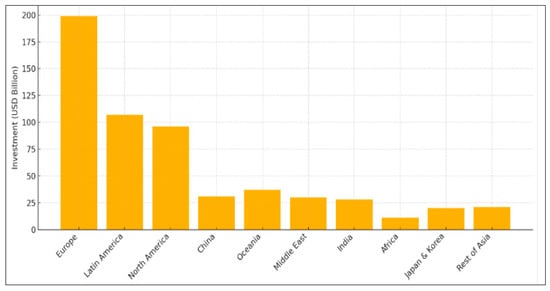
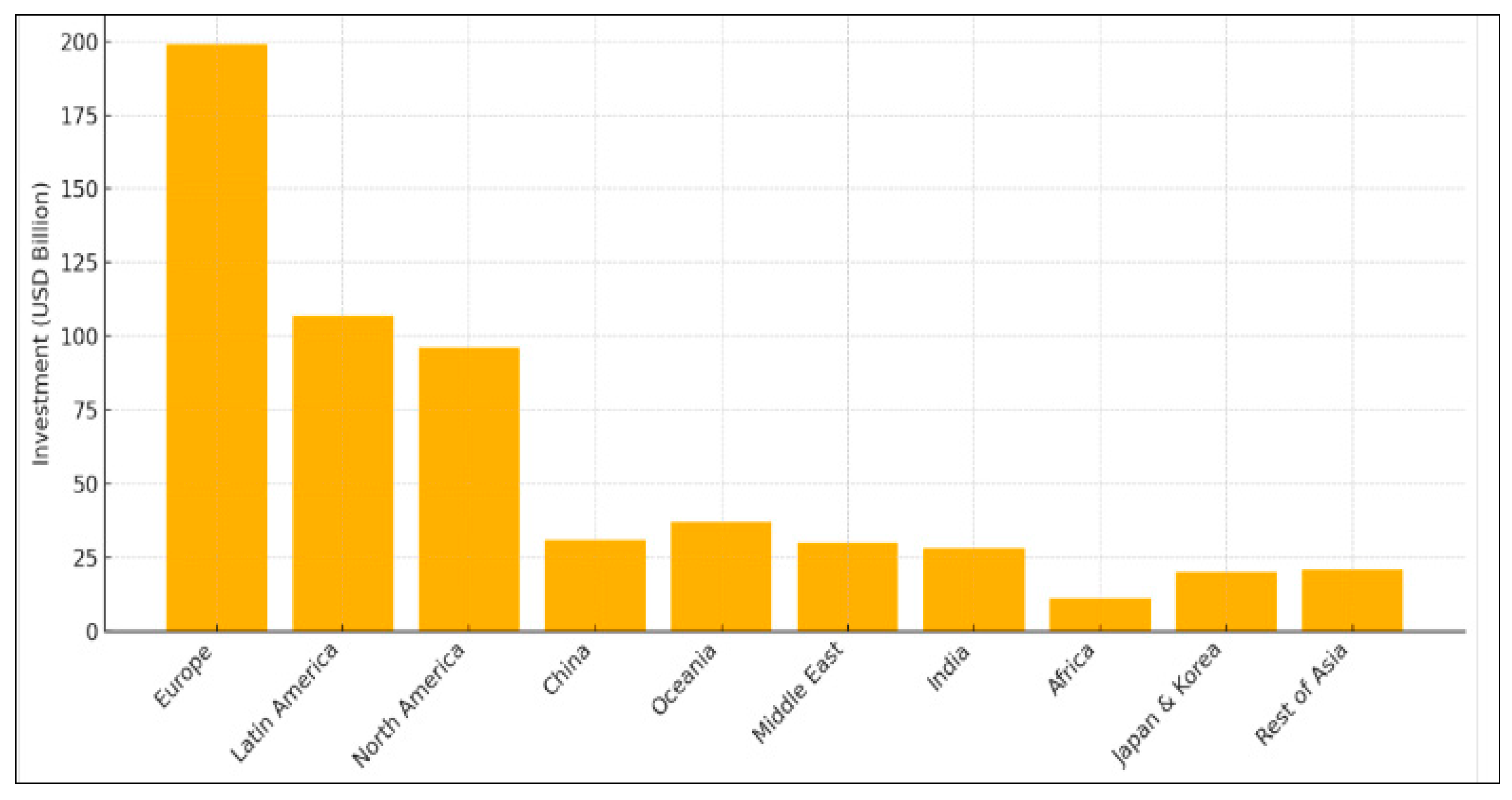
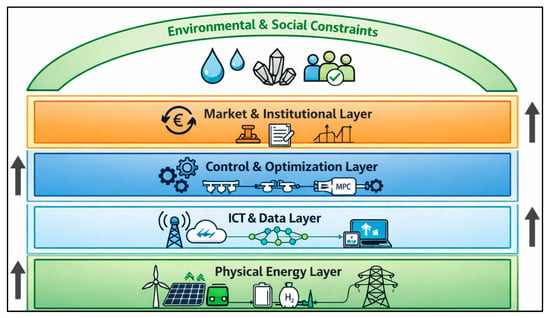
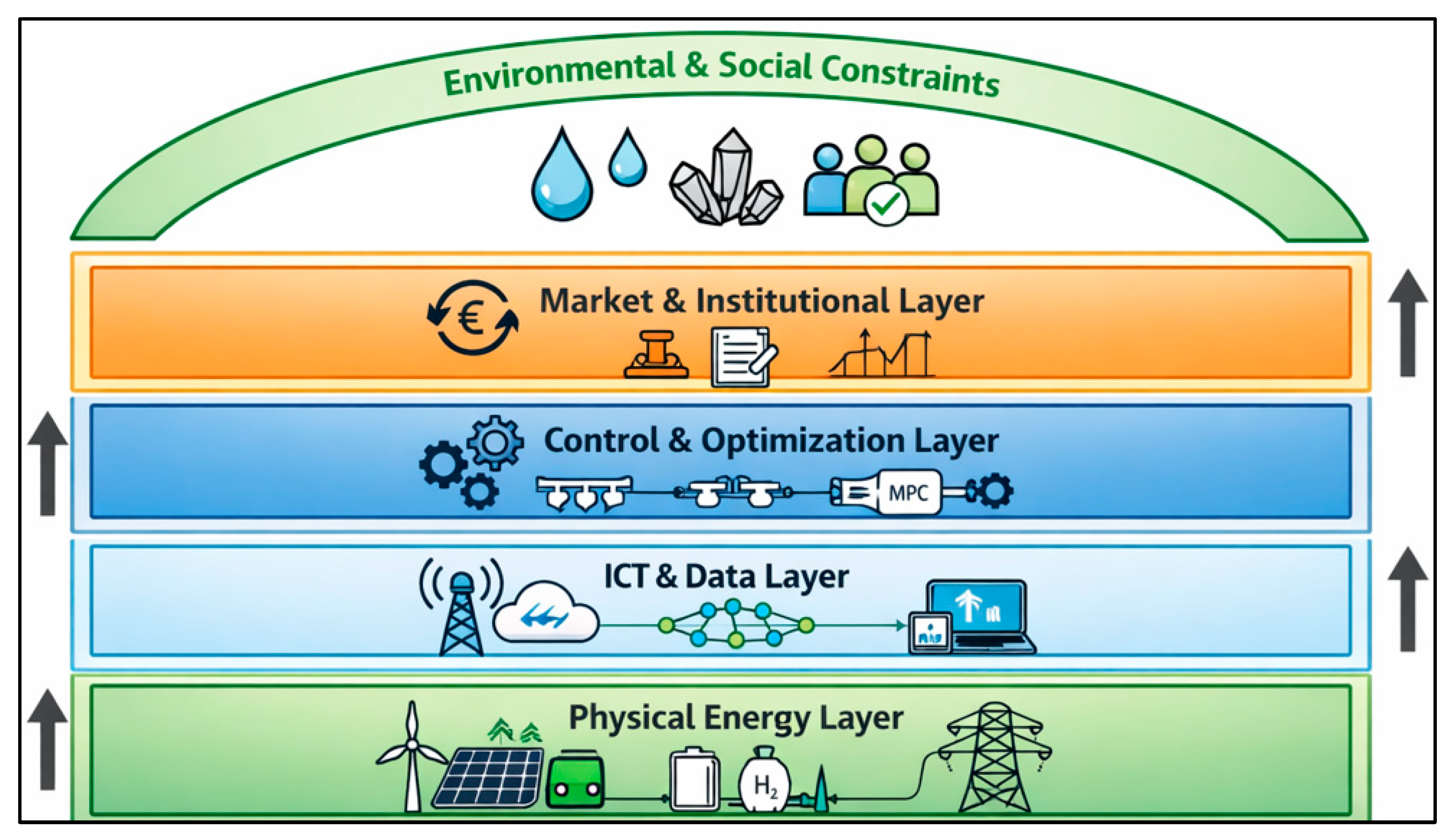
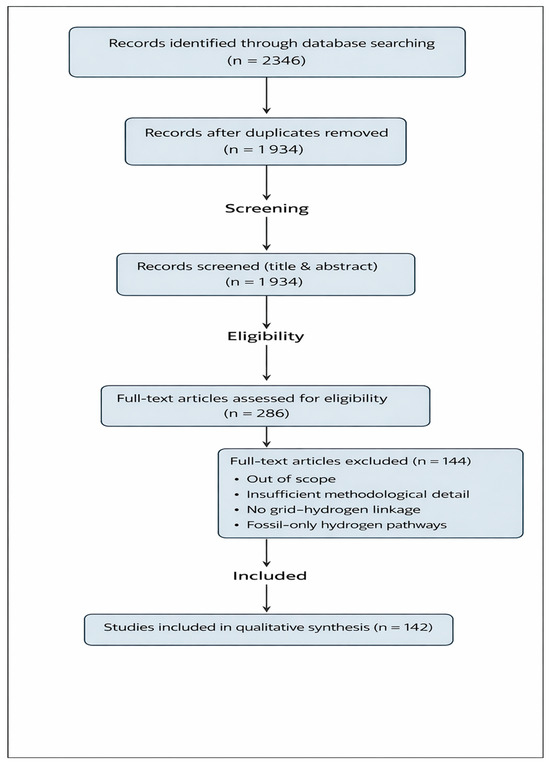
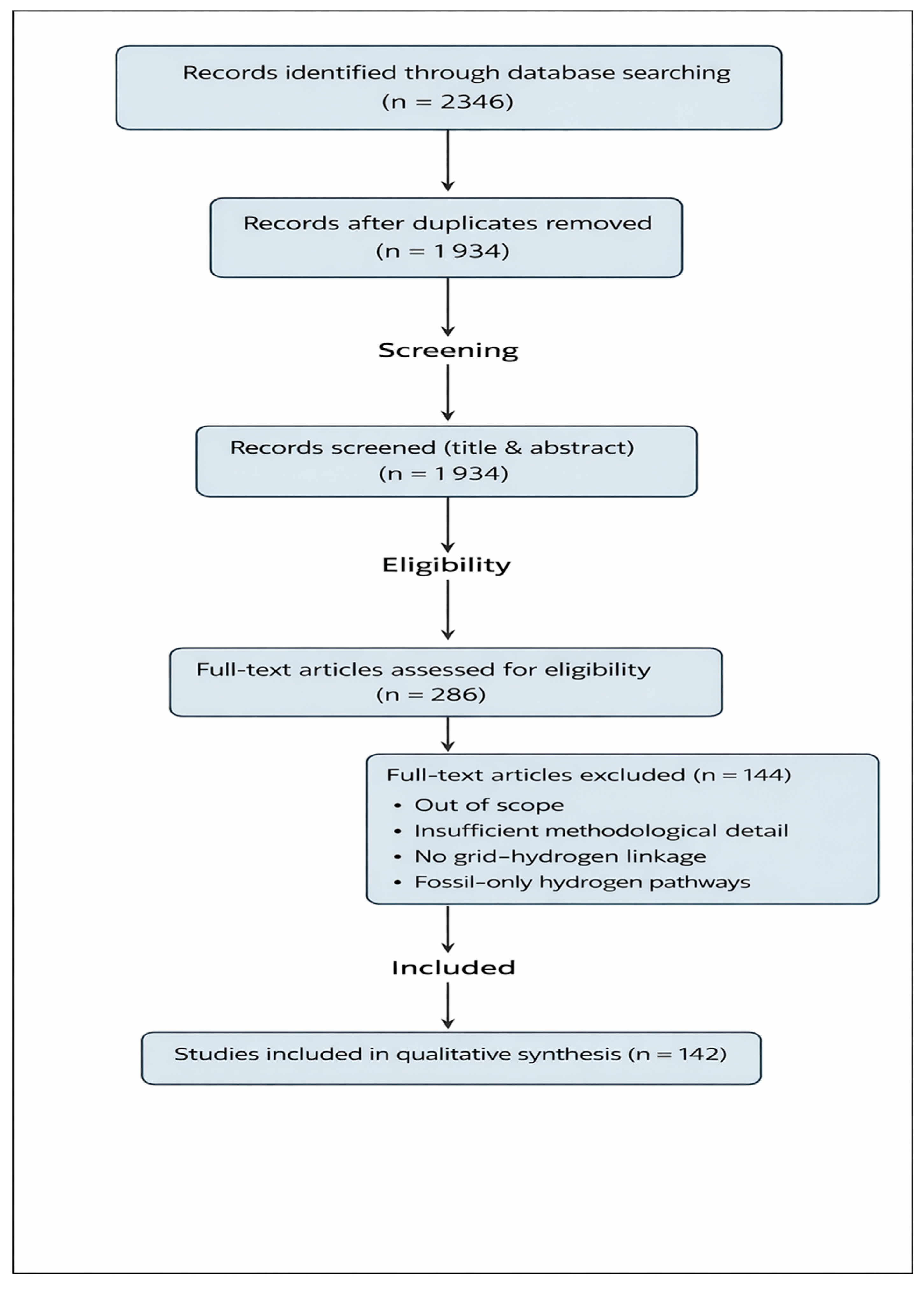
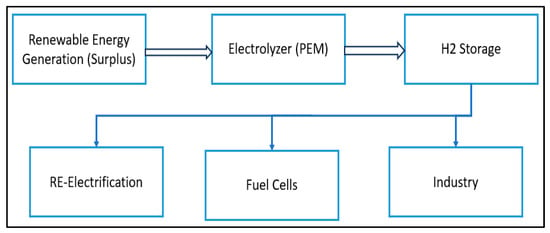
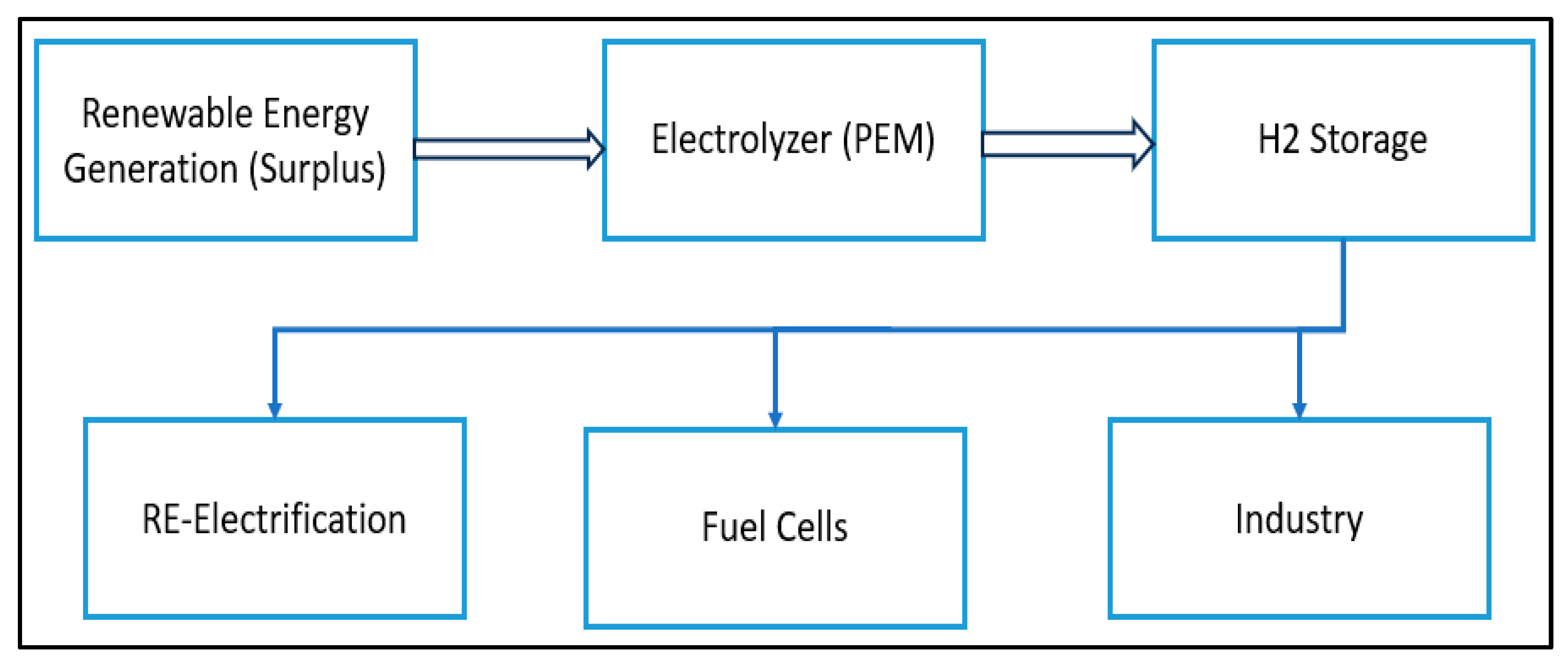
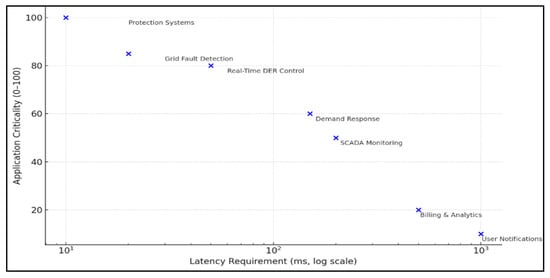
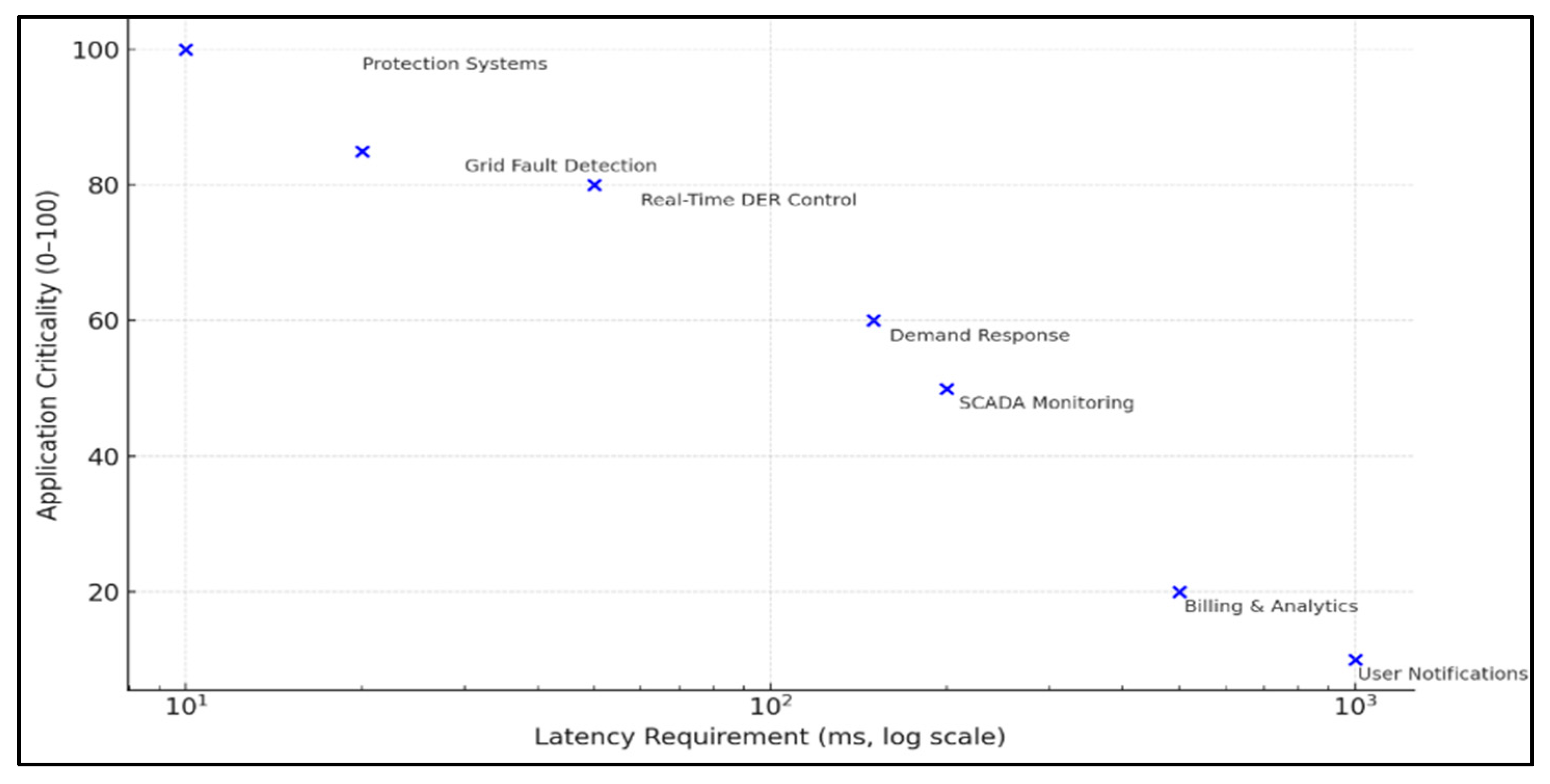
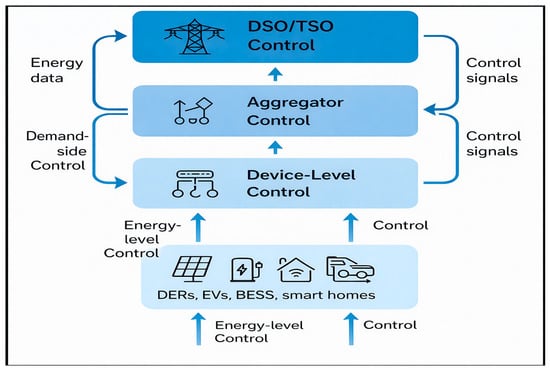
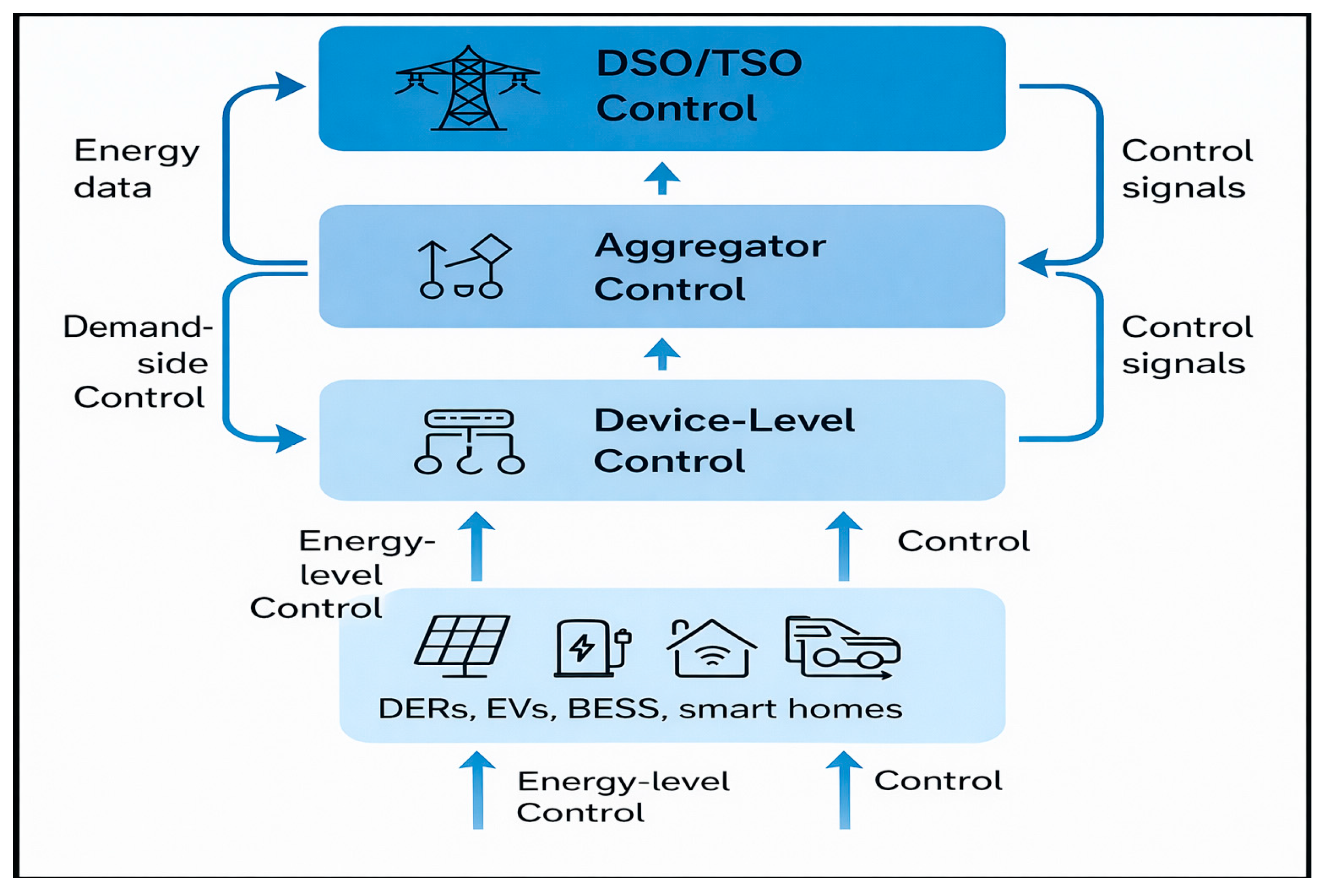
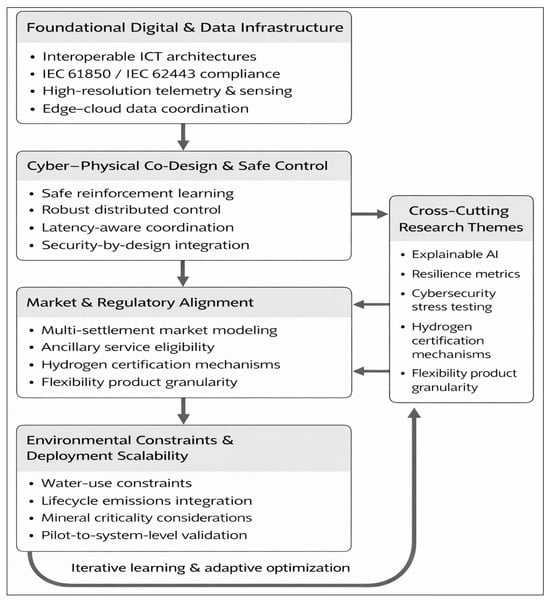
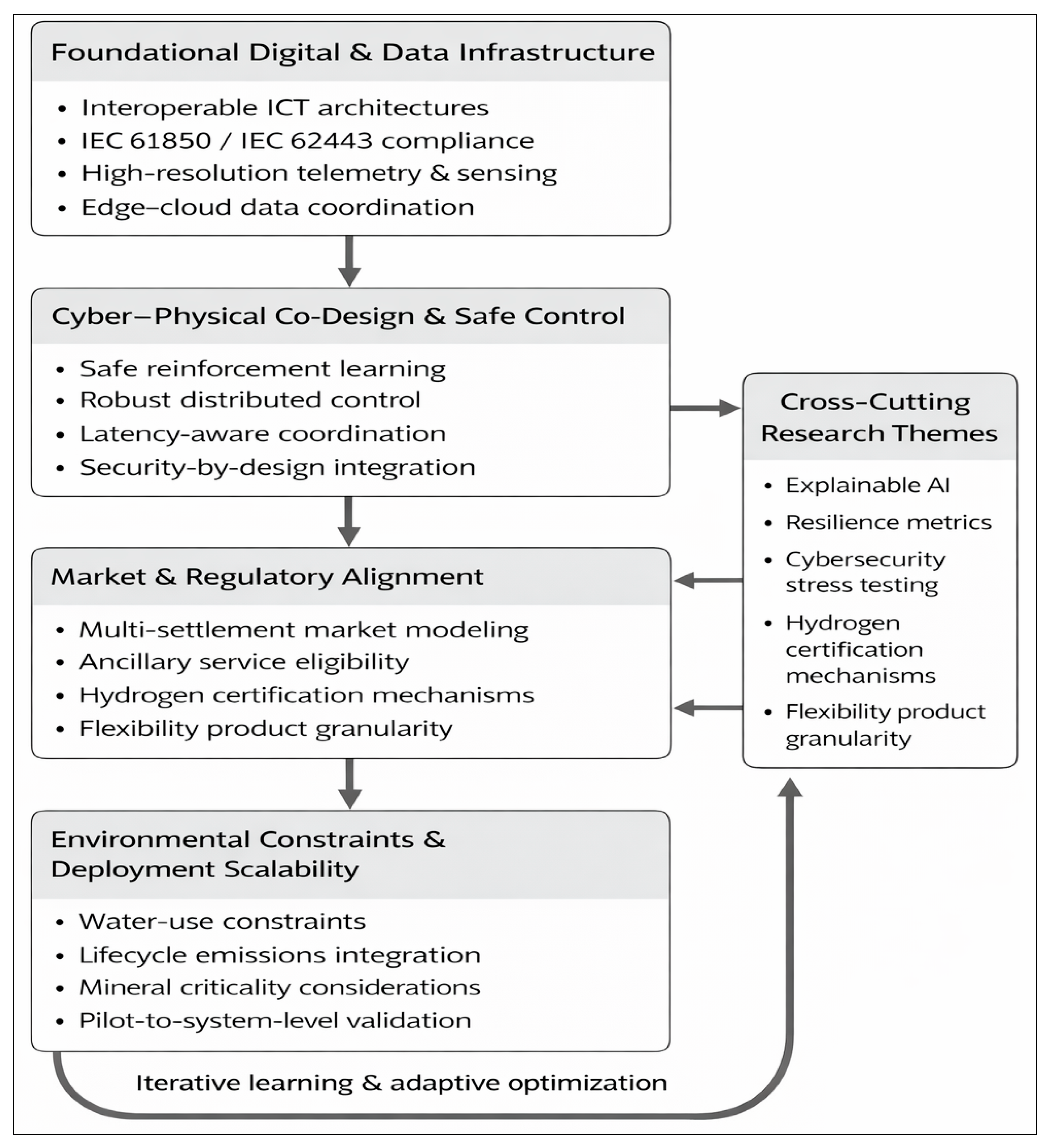

Disclaimer/Publisher’s Note: The statements, opinions and data contained in all publications are solely those of the individual author(s) and contributor(s) and not of MDPI and/or the editor(s). MDPI and/or the editor(s) disclaim responsibility for any injury to people or property resulting from any ideas, methods, instructions or products referred to in the content. |
© 2026 by the authors. Licensee MDPI, Basel, Switzerland. This article is an open access article distributed under the terms and conditions of the Creative Commons Attribution (CC BY) license.