


Abstract
Fermented meat products rely on complex microbial ecosystems in which lactic acid bacteria (LAB) play a central role in safety, quality, and sensory development. In recent years, increasing demand for reduced-nitrite formulations, clean-label products, and improved risk management have driven renewed interest in microbial control strategies beyond traditional fermentation practices. This systematic review aims to synthesize current knowledge on the microbiological aspects of meat fermentation, spanning traditional spontaneous processes and modern approaches to microflora control, including starter cultures, biocontrol strategies, and omics-based tools. A systematic literature search was conducted in PubMed, Web of Science, Scopus, and Google Scholar, with the final search performed on 15 May 2025. After screening and eligibility assessment following PRISMA 2020 guidelines, 141 studies were included in the qualitative synthesis. The review integrates evidence on microbial succession, metabolic functions, pathogen inhibition, biogenic amine control, and flavour formation, with particular emphasis on advances in metagenomics, metabolomics, and predictive microbiology. Across studies, LAB-dominated ecosystems—particularly those involving Latilactobacillus sakei, Latilactobacillus curvatus, and Lactiplantibacillus plantarum—consistently emerge as the primary drivers of fermentation stability and safety. The strongest evidence supports the use of selected starter and protective cultures, bacteriocinogenic LAB, and omics-guided predictive control to enhance process reliability, support reduced-nitrite strategies, and mitigate microbiological risks without compromising product quality. Overall, the integration of traditional fermentation knowledge with data-driven microbial management provides a robust framework for developing safe, authentic, and sustainable fermented meat products.
1. Introduction
Fermentation is one of the oldest biotechnological methods of meat preservation and remains fundamental for ensuring microbiological safety and developing characteristic sensory attributes. During fermentation, lactic acid production, protein breakdown, and the formation of flavour-active compounds create products with distinctive colour, aroma, and texture that can be stored for extended periods [1,2]. In combination with drying, salting, and smoking, fermentation has long been a cornerstone of meat processing and contributes to the wide diversity of traditional products found across cultures [3]. Historically, fermented meat products originated from spontaneous fermentation driven by the autochthonous microbiota naturally present in raw meat and the processing environment. Modern production integrates this traditional knowledge with controlled fermentation using selected starter cultures, which enhances safety, reproducibility, and uniformity of sensory properties [4]. Recent advances in metagenomics, starter culture design, and predictive microbiology have transformed traditional fermentation knowledge into data-driven microflora control strategies. Today, fermentation is also explored for nutritional and functional innovation, including the use of probiotic strains that may provide additional health benefits [2]. Fermented meat products developed independently across different regions and reflect local raw materials, climatic conditions, and cultural practices [5]. European dry-cured sausages such as salami, chorizo, saucisson sec, or soppressata exemplify long-standing food traditions shaped by regional environments and artisanal methods [4,6]. Similar products evolved in Asia, such as Chinese lap cheong or Southeast Asian nham, where fermentation provided a natural means of preservation in warmer climates [7]. As noted by Leroy, Scholliers, and Amilien [5], fermented meats illustrate the idea of “innovation-through-tradition”, in which long-established techniques coexist with technological improvements.
The defining sensory and safety characteristics of fermented meats result from interactions between raw materials and complex microbial communities, particularly lactic acid bacteria (LAB) such as Lactobacillus sakei, L. curvatus, Pediococcus pentosaceus, and Leuconostoc mesenteroides [1,8]. These organisms drive acidification, inhibit spoilage and pathogenic bacteria, and contribute to aroma formation through their metabolic activity. Traditional fermentations depend on “house microbiota”—complex microbial consortia specific to each facility—whereas modern processes increasingly rely on selected starter cultures to ensure greater safety and consistency [5]. Advances in microbial ecology and molecular techniques have improved understanding of how microbial composition, fermentation kinetics, and environmental conditions shape the quality and authenticity of fermented meat products [1]. Despite the availability of several reviews on fermented meat products, recent advances in microbial control strategies have not yet been comprehensively integrated. In particular, the application of omics-based tools, such as metagenomics and metabolomics, for guiding fermentation control and starter culture design remains fragmented across the literature. Moreover, emerging challenges related to reduced-nitrite formulations, clean-label production, and antifungal biocontrol strategies are often addressed separately rather than within a unified microbiological framework. Therefore, a systematic and integrative review is timely to bridge traditional fermentation knowledge with data-driven microbial management approaches and to support the development of safe, high-quality, and sustainable fermented meat products.
The aim of this systematic review is to synthesize current knowledge on the microbiological dynamics of meat fermentation, from traditional spontaneous processes to advanced microflora control techniques. The scope covers microbial succession and metabolic roles, starter and protective cultures, biocontrol strategies, omics-based monitoring, and predictive tools, with emphasis on safety, quality, authenticity, and reduced-nitrite products.
2. Materials and Methods
2.1. Literature Search Strategy
A systematic literature search was conducted following PRISMA 2020 guidelines [9]. Four databases were searched: PubMed, Web of Science, Scopus, and Google Scholar. The search strategy was designed to capture the broad microbiological scope of meat fermentation, including lactic acid bacteria (LAB), starter cultures, microbial ecology, bacteriocins, biocontrol, safety, metagenomics, and emerging fermentation technologies.
The final search string combined three conceptual blocks:
- Fermented meat products;
- Microbiological processes and microbial groups;
- Technological, historical or safety-related context.
An example search query (PubMed) was
(“meat fermentation”[tiab] OR “fermented meat”[tiab] OR “fermented sausage”[tiab] OR “dry-cured ham”[tiab]) AND (“lactic acid bacteria”[tiab] OR “starter culture”[tiab] OR microbiota[tiab] OR bacteriocin[tiab] OR probiotic[tiab] OR metagenomics[tiab] OR “microbial control”[tiab]) AND (“traditional methods”[tiab] OR history[tiab] OR innovation[tiab] OR “food safety”[tiab] OR sustainability[tiab]).
The final literature search was conducted on 15 May 2025 without an initial publication date restriction. Google Scholar was screened manually (first ~150 results), which is a common approach for broad topics. The literature search and study selection process are summarized in the PRISMA 2020 flow diagram (Figure 1). The PRISMA checklist is provided as Supplementary Materials and was used to guide the systematic review process. The study protocol was registered in the International Prospective Register of Systematic Reviews (PROSPERO) with registration number CRD420261278938 (https://www.crd.york.ac.uk/PROSPERO/view/CRD420261278938) accessed on 5 January 2026.
Figure 1.
PRISMA 2020 flow diagram illustrating the study selection process.
2.2. Identification and Deduplication
Across all databases, the search produced 2232 initial records:
- −
- PubMed: n = 17;
- −
- Web of Science: n = 893;
- −
- Scopus: n = 1172;
- −
- Google Scholar: n = 150.
After merging all records in Mendeley Reference Manager and removing duplicates, 622 unique records remained, corresponding to a reduction of approximately 72%. This level of duplication is typical for multi-database systematic searches with overlapping biomedical and food science coverage.
2.3. Screening of Titles and Abstracts
The 622 unique records underwent title and abstract screening based on predefined inclusion and exclusion criteria.
Inclusion criteria are the following:
- −
- Studies on fermented meat products (any region);
- −
- Research reporting microbial ecology, LAB, starter cultures, safety, bacteriocins, metagenomics or fermentation mechanisms;
- −
- Original research articles, reviews, or benchmark reports;
- −
- English-language publications.
Exclusion criteria are the following:
- −
- Fish fermentation;
- −
- Plant fermentations;
- −
- Purely technological (non-microbiological) studies;
- −
- Conference abstracts;
- −
- Non-English records.
After the screening phase, 320 studies were deemed eligible for full-text evaluation.
2.4. Full-Text Assessment and Data Extraction
The 320 records that passed title and abstract screening were retrieved in full text and assessed for eligibility. Each study was evaluated based on methodological relevance, availability of microbiological data, and alignment with the review’s conceptual scope, and relevant microbiological information was extracted for qualitative synthesis.
During full-text assessment, all studies were assigned to one or more predefined thematic categories:
- Historical context and traditional products;
- LAB ecology and metabolic roles;
- Starter cultures and protective cultures;
- Biocontrol mechanisms and bacteriocins;
- Microbial ecology and metagenomics;
- Flavour formation and metabolic pathways;
- Future trends and sustainability.
After full-text evaluation, 140 studies met the inclusion criteria and were incorporated into the final synthesis.
The remaining records were excluded for reasons such as
- −
- Insufficient microbiological data;
- −
- Lack of relevance to fermented meat systems;
- −
- Focus solely on technological aspects without microbial analysis;
- −
- Use of non-meat matrices;
- −
- Inadequate methodological detail.
Eligible studies were required to report microbiological data such as microbial counts, LAB/CNS identification (culture-dependent or molecular), sequencing-based community profiling, fermentation kinetics, or safety/quality outcomes linked to microbial activity (e.g., pathogen inhibition, biogenic amines, VOC formation). “Insufficient microbiological data” referred to studies lacking these measurable outputs or providing inadequate methodological detail for interpretation.
All exclusion decisions were documented in accordance with PRISMA 2020 guidelines.
A formal quality or risk-of-bias scoring tool was not applied due to the high heterogeneity of product types, experimental designs, and analytical approaches (culture-dependent studies, sequencing-based surveys, and applied fermentation trials). Instead, methodological relevance and availability of microbiological data guided inclusion and interpretation, consistent with a qualitative systematic synthesis.
3. Historical and Cultural Perspectives on Meat Fermentation
3.1. Traditional Fermented Meat Products as Cultural Heritage
Meat fermentation has long served both as a means of preservation and as a cultural practice embedded in regional food traditions. Leroy, Scholliers, and Arnilien [5] describe fermented meats as “cultural technologies”, shaped not only by raw materials but also by inherited knowledge and environmental conditions. This view aligns with the historical synthesis by Toldrá [7], who notes that before industrialization, European, Asian, and Latin American communities independently developed fermentation techniques based on salt, drying, and spontaneous microbial activity. Earlier studies by Hammes & Hertel [10] also highlight the influence of seasonality, livestock type, and household-scale production on spontaneous fermentation processes.
Mediterranean products provide a clear example of this continuity. Traditional sausages from France, Spain, and Italy maintain production practices that have changed little over centuries [5,7]. Flores & Toldrá [11] further emphasize that the characteristic sensory traits of fermented meats result not only from processing methods but also from the microbial heritage passed across generations. This perspective is supported by recent studies of contemporary traditional sausages [12,13], which document the persistence of culturally embedded production routines. The predominance of European case studies reflects the availability of detailed microbiological datasets in the literature, while fermented meats from Africa, Asia, the Middle East, and Latin America remain comparatively underrepresented despite their cultural and technological relevance.
3.2. Regional Fermented Sausages as Cultural Markers
Regional sausages function as cultural and geographic markers shaped by local ingredients, processing knowledge, and indigenous microbiota. Faria et al. [14] demonstrated that the Portuguese product Chouriça de Carne hosts LAB and staphylococcal communities that reflect local environmental conditions, echoing earlier findings from Italian and Spanish traditional meats [1,15]. These microbial signatures support the concept of “microbial terroir” proposed by Leroy et al. [5].
Franciosa et al. [13] report similar patterns in Pitina PGI, where LAB, CNS, and yeast consortia characteristic of the local production area contribute directly to sensory identity. Earlier studies of soppressata and regional salami [15,16] likewise show that unique microbial communities are central to authenticity and are difficult to replicate under industrial conditions.
3.3. Indigenous Microbiota and the Concept of “Microbial Terroir”
The idea of microbial terroir—first developed in wine research—has increasingly been applied to fermented meats. Palavecino Prpich et al. [17] showed that artisanal facilities harbour stable microbial reservoirs dominated by LAB and coagulase-negative staphylococci, which influence fermentation in a consistent manner. Similar ecological patterns have been described in French, Spanish, and Belgian sausages [15,18,19], demonstrating that local microbial communities shape both safety and sensory development. However, microbial terroir remains debated due to batch-to-batch variability, differences between producers, and the impact of improved hygiene practices that may reduce microbial diversity. Additional challenges include defining terroir robustly using metagenomics across sites and seasons, as well as regulatory considerations related to standardization and product claims.
Autochthonous LAB have also been identified as key drivers of regional typicity. Studies by Palavecino Prpich et al. [17], Benito et al. [20], and Settanni et al. [21] show that indigenous strains often outperform commercial cultures under local processing conditions. At the same time, Toldrá [7] and Leroy et al. [5] caution that the widespread adoption of standardized starters may homogenize sensory profiles and undermine traditional identities—an issue frequently raised in contemporary heritage-food discussions.
3.4. Historical Knowledge and Technological Continuity
The move from spontaneous to controlled fermentation represents a gradual evolution rather than a rupture. Toldrá [7] traces this shift from household production to early scientific research in the 20th century, when the role of LAB in acidification and safety was first recognized. These foundational insights underpin modern approaches such as controlled fermentation, predictive microbiology, and hazard management.
Environmental factors—such as regional microclimates, facility architecture, and artisanal routines—have historically shaped the microbial environment of fermentation spaces [5,22]. Contemporary studies of traditional sausages [14,15] show that many of these influences persist. Reviews by Toldrá [7] and Flores & Toldrá [11] further highlight how modern industry continues to rely on principles rooted in the ecological logic of historical fermentation systems. Insights from traditional fermented meat systems provide a foundation for modern microbial control strategies. Understanding historical microbial succession and regional specificity informs contemporary starter culture design, authenticity preservation, and data-driven fermentation control, as discussed in the following sections.
4. Role of LAB in Fermentation
4.1. Acidification and Safety: pH Dynamics, Curing Chemistry, and Control of Toxic Metabolites
Lactic acid bacteria (LAB) are the primary drivers of acidification in fermented meats. An overview of the key mechanisms through which lactic acid bacteria (LAB) contribute to the safety and quality of fermented meat products is provided in Table 1. During early fermentation, they convert available carbohydrates into lactic acid, lowering pH and inhibiting spoilage and pathogenic microorganisms. This mechanism, described early by Hammes et al. [10], forms the main microbiological barrier in dry-fermented sausages. Studies conducted in commercial facilities confirm that Enterobacteriaceae, Staphylococcus aureus, and other unwanted bacteria decline as LAB become dominant and the pH drops [23,24].
Beyond acidification, LAB interact with coagulase-negative staphylococci (CNS) in nitrate–nitrite–nitric oxide (NO) metabolism. Hammes [22] notes that nitrate reduction remains an important technological feature of European fermented meats, with staphylococci serving as the main nitrate-reducing bacteria and LAB contributing indirectly through their effect on redox potential. Recent work by Gou et al. [25] shows that some LAB strains can generate nitric oxide via arginine-related pathways, contributing directly to cured colour development. In fermented sausages inoculated with NO-producing LAB, nitrosomyoglobin accounted for approximately 14–17% of total pigments, compared with ~22% in nitrite-treated controls, while NOS-like activity reached up to 0.35 nmol NO min−1 mg−1 protein in the most active strains. These findings indicate that LAB-mediated NO production can partially reproduce nitrite functions, supporting colour formation and antimicrobial effects, thereby enabling substantial nitrite reduction without compromising product safety.
Challenge tests illustrate how these mechanisms interact during fermentation. Ducic et al. [23] monitored Listeria monocytogenes, Salmonella sp., and E. coli in Serbian traditional sausages and demonstrated that LAB growth, pH decline, and decreasing water activity progressively suppressed these pathogens. In heat-treated sucuk, Ercoskun [24] showed that extending fermentation improved safety by intensifying acidification and LAB proliferation, which also enhanced selected technological parameters [6,26,27,28,29].
Table 1.
Mechanisms of lactic acid bacteria (LAB) contributing to safety and quality of fermented meat products, with key literature sources.
4.2. Flavour Formation in Fermented Meat Products
Flavour development in fermented meats results from the combined action of microbial metabolism, endogenous enzymes, and processing conditions. Lactic acid bacteria (LAB) contribute substantially to this process through proteolysis, lipolysis, and the transformation of amino acids and fatty acids into volatile organic compounds (VOCs). These reactions define the sensory identity of each product.
4.2.1. Microbial Enzymatic Activities Shaping Aroma
LAB supply a wide range of enzymes, including aminopeptidases, esterases, and lipases, which act alongside residual muscle enzymes. As ripening progresses, microbial enzymes increasingly dominate, releasing peptides, free amino acids, and fatty acids that serve as aroma precursors. Flores & Toldrá [11] described these microbial contributions as essential for generating characteristic volatile compounds. Fadda et al. [31] further demonstrated that peptide (particularly low-molecular-weight fractions below 3000 Da) accumulation during ripening correlates with umami and kokumi attributes, supporting the role of microbial proteolysis in sensory development.
4.2.2. Microbiota as a Driver of VOC Diversity
The VOC composition of fermented meats varies widely across regions and products, reflecting differences in microbial communities. In Painho de Porco Preto, Belleggia et al. [32] reported that Latilactobacillus, Lactiplantibacillus, and Companilactobacillus species were associated with short-chain organic acids, alcohols, and esters, which contributed to fruity and mildly acidic aromatic notes. Earlier work on Ciauscolo salami showed that even well-characterized products harbour previously unrecognized taxa that contribute to unique VOC profiles [33].
Microbial diversity also shapes product-specific sensory outcomes. In ’Nduja, Chiavari et al. [34] demonstrated that LAB activity influences aldehydes and ketones responsible for its characteristic pungent and spicy aroma. Studies on Asian fermented meats show similar relationships. Wang et al. [35], analyzing Suan zuo rou, linked LAB and staphylococci diversity with lipid-derived aldehydes and amino acid catabolites, indicating that microbial succession strongly affects flavour formation.
4.2.3. Strain-Dependent Flavour Modulation by LAB
LAB species differ markedly in their contributions to aroma. Hu et al. [36] demonstrated that inoculation with different autochthonous LAB strains resulted in distinct VOC profiles, including esters, aldehydes, and branched-chain fatty acid derivatives. Zheng et al. [37] further showed that Lactiplantibacillus strains tend to favour ester formation, whereas Latilactobacillus species promote amino acid catabolism, enriching cured and savoury notes. These results point to the possibility of selecting “aroma-targeted” starter cultures.
A broader synthesis by Zhao et al. [38] highlights that flavour development arises from interactions between LAB, yeasts, staphylococci, and endogenous enzymes, forming a multi-organism metabolic network. This complexity explains why traditional products often exhibit richer aromatic profiles than starter-driven industrial fermentations.
4.3. Proteolysis, Peptide, and Amino Acid Metabolism
Proteolysis is a central biochemical process underlying texture, flavour, and safety in dry-fermented sausages. It begins with endogenous muscle enzymes and is progressively taken over by microbial activities—primarily from lactic acid bacteria (LAB) and coagulase-negative staphylococci (CNS). These microorganisms generate peptides, free amino acids (FAAs), and downstream metabolites that contribute to both desirable flavour compounds and, in some cases, to the formation of biogenic amines (BAs).
4.3.1. Primary and Secondary Proteolysis: Muscle Enzymes and LAB Activity
Primary proteolysis is driven by residual muscle proteases, which break down proteins into large peptides. As fermentation progresses, microbial activity becomes increasingly important. LAB possess extensive proteolytic systems—proteinases, endopeptidases, and a wide range of amino- and dipeptidyl-peptidases—that convert large peptides into smaller ones and release free amino acids [31]. These peptides and amino acids contribute to sensory traits, influencing bitterness, umami, and overall flavour intensity.
Autochthonous microbial communities often show distinctive proteolytic profiles. Ravyts, De Vuyst, and Leroy [39] demonstrated species- and strain-specific metabolic patterns within indigenous LAB and CNS, further linking proteolytic diversity to typical sensory characteristics of traditional products.
4.3.2. Amino Acid Metabolism and Generation of Flavour Precursors
Free amino acids produced through proteolysis undergo extensive microbial catabolism. LAB and staphylococci transform amino acids via deamination, transamination, and decarboxylation, yielding numerous volatile compounds—including aldehydes, organic acids, and alcohols—that contribute to aroma production. Fadda et al. [31] showed that specific peptides and amino acids correlate with sensory markers of ripening, reinforcing the role of microbial proteolysis in flavour generation.
4.3.3. Amino Acids as Precursors for Biogenic Amines
The same amino acids that serve as flavour precursors can also be converted into biogenic amines. Tyramine, histamine, putrescine, and cadaverine are the most relevant BAs in fermented sausages. Their synthesis depends on the availability of amino acid precursors and the presence of decarboxylase-positive microorganisms [28,40]. Intensive proteolysis, while desirable for flavour development, can therefore increase the risk of BA formation if aminogenic bacteria persist.
Bover-Cid et al. [41] demonstrated early on that sausage diameter strongly influences BA accumulation: larger formats retain moisture longer and limit oxygen penetration, creating conditions favourable to BA formation. In traditional dry-fermented sausages, total biogenic amine contents were reported to increase markedly with product size, with putrescine levels exceeding 100 mg/kg (dry matter) and tyramine concentrations above 140 mg/kg in larger-diameter products, while thinner sausages generally showed substantially lower values. Subsequent studies [6,27,42] confirmed the interplay between microbial ecology, process parameters, and the BA profile.
4.3.4. Microbial Ecology Modulating Peptide and BA Dynamics
BA formation is a dynamic process influenced by microbial succession, environmental conditions, and substrate availability. Suvajdžić et al. [29] showed that temperature, oxygen availability, and glucose levels affect both amino acid catabolism and BA accumulation, with total biogenic amine contents in traditionally produced dry-fermented sausages reaching over 300 mg/kg in the final product, and individual compounds such as cadaverine and tyramine exceeding 100 mg/kg. Their work further emphasizes that batch-to-batch variability—common in traditional products—can markedly alter BA profiles.
CNS also participate in peptide turnover and amino acid metabolism. Stavropoulou et al. [43] reported pronounced inter- and intra-species heterogeneity among CNS strains, with average total biogenic amine production remaining below 100 μM, while individual strains were capable of producing substantially higher concentrations (e.g., up to ~300 μM of 2-phenylethylamine), highlighting their variable contribution to both flavour precursor formation and BA dynamics.
4.3.5. Balancing Desirable Proteolysis with Safety
Proteolysis enriches flavour but can elevate BA risk if decarboxylase-positive strains are not controlled [6,27,28,31,39,40,41]. Studies by Bover-Cid et al. [6,41,42] demonstrated that intensified proteolysis and increased availability of free amino acids during ripening are associated with higher BA accumulation, particularly in larger-diameter products and under conditions favouring the persistence of Enterobacteriaceae. Fadda et al. [31] further showed that the same peptide fractions contributing to umami and kokumi perception may serve as substrates for aminogenic reactions when aminogenic strains are present, highlighting the dual role of proteolysis in sensory development and BA formation. In contrast, intervention studies by Ravyts et al. [39] and Wang et al. [28] demonstrated that the application of selected starter cultures and controlled fermentation parameters can reduce total BA levels by approximately 40–70% compared with spontaneous fermentation, while maintaining or improving sensory quality. These findings collectively indicate that sensory quality and safety are linked outcomes of shared metabolic pathways, and that effective BA control relies on steering proteolysis toward desirable, non-aminogenic end products through targeted microbial and process management.
4.4. Microbial Ecology and Dominance of Lab in Fermented Meat Products
The microbial ecology of fermented sausages is shaped by multiple factors, including raw materials, environmental conditions, and processing parameters. Despite this complexity, lactic acid bacteria (LAB) remain the dominant group across most fermented meat systems due to their strong adaptation to the meat matrix.
4.4.1. Overall Microbial Structure and LAB Dominance
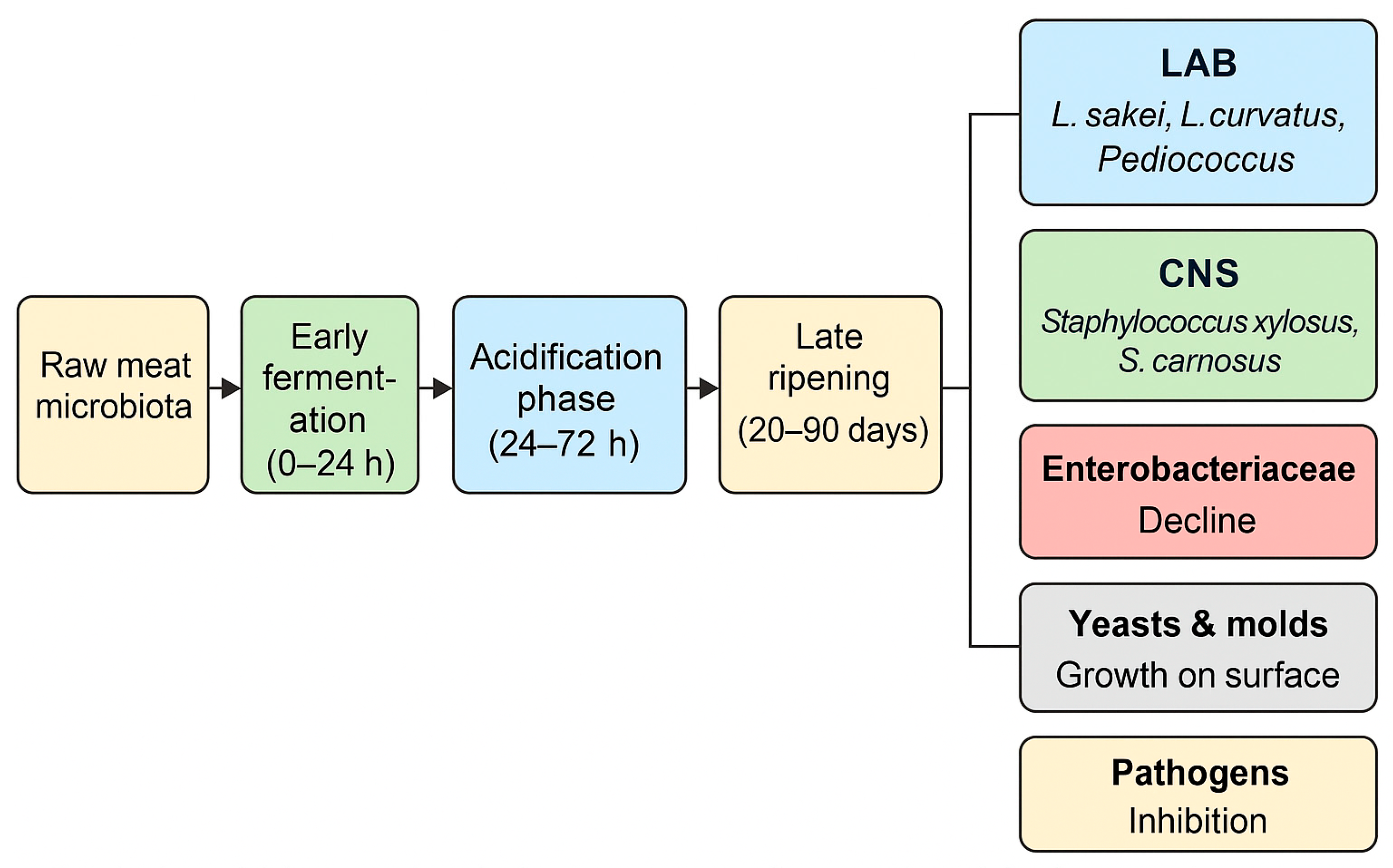
The general microbial structure and succession patterns during fermented meat fermentation, including LAB dominance, are schematically summarized in Figure 2. High-throughput sequencing studies consistently identify Latilactobacillus sakei as the principal LAB species in dry-fermented sausages [44,45]. Its cold tolerance, salt resistance, and efficient utilization of meat-associated substrates allow it to outcompete Enterobacteriaceae sp. and other early colonizers, thereby improving product stability [46]. Metagenomic data further demonstrate that LAB dominate key metabolic pathways essential for safe fermentation [44].
4.4.2. Impact of Raw Material Quality and Meat Type
The initial meat characteristics strongly influence microbial succession. High-pH meats and game products tend to support more diverse—and sometimes less predictable—microbial patterns, providing competitive advantages to L. curvatus or even spoilage-associated Proteobacteria [45]. Similar effects have been reported in traditional Asian and South American sausages, where raw material origin shapes LAB distribution [47,48].
Figure 2.
Microbial successional sequence during spontaneous fermentation of dry-fermented sausages. Colours are used to distinguish microbial groups and fermentation stages for clarity. Authors’ own elaboration based on [46,49].
4.4.3. Environmental and Process-Related Factors
Temperature, humidity, microbiota of casing, and smoking practices significantly modulate microbial communities. Surface yeasts and moulds affect oxygen diffusion and secondary metabolite formation, indirectly guiding LAB development [49]. Moreover, microenvironmental niches are formed inside sausages; Tremonte et al. [46] reported spatially distinct L. sakei biotypes depending on fat/lean gradients.
4.4.4. Regional Differences and Microbial “Terroir”
Regional processing techniques create characteristic microbial signatures or “microbial terroir”. Facility-specific LAB and CNS communities have been reported in Spanish, Balkan, and Italian sausages [48,50,51]. Similar patterns occur in Southeast Asian products, such as Balinese “Urutan” [52] and Vietnamese fermented meats [47].
4.4.5. Succession Patterns During Fermentation
Fermentation follows a consistent ecological sequence: early coexistence of LAB, CNS, and Enterobacteriaceae → rapid LAB expansion and pH drop → stabilization of LAB with concurrent roles of CNS and yeasts in flavour formation [48]. This succession reflects the competitive advantage of LAB under acidic, low-oxygen, and nutrient-limited conditions [46].
4.5. Species-Specific Roles of Key LACTIC Acid Bacteria in Meat Fermentation
Lactic acid bacteria form the functional core of fermented meat ecosystems, yet individual species differ significantly in their metabolic roles. Among them, Latilactobacillus sakei, Latilactobacillus curvatus, and Lactiplantibacillus plantarum are the most influential, contributing to acidification, flavour development, and ecological stabilization. The key metabolic pathways and functional traits of major LAB species involved in fermented meat production are summarized in Table 2.
Table 2.
Functional differentiation of key LAB species involved in meat fermentation.
4.5.1. Latilactobacillus sakei: The Dominant Ecological Specialist
L. sakei is widely recognized as the dominant LAB species in meat fermentation. Genomic analyses by Chaillou et al. [53] revealed three distinct evolutionary lineages reflecting long-term adaptation to the meat niche. Tremonte et al. [46] showed that L. sakei forms spatially structured subpopulations within sausages, adjusting its metabolism to fat-rich or lean microenvironments. Regional studies support this ecological sensitivity: Quijada et al. [48] found plant-specific L. sakei populations in “Chorizo de León”, highlighting the influence of house microbiota on strain distribution.
4.5.2. Latilactobacillus curvatus: Metabolically Versatile and Flavour-Active
L. curvatus frequently co-dominates with L. sakei but provides a different metabolic profile. Chen et al. [54] report strong amino acid-converting activities, including γ-aminobutyric acid (GABA) formation, and robust stress tolerance. Its proteolytic and carbohydrate-metabolizing capabilities contribute to flavour generation and competitive exclusion of spoilage microorganisms. Zheng et al. [55] showed that L. curvatus plays an important role in volatile formation, influencing lipid-derived aldehydes, organic acids, and esters. These findings align with studies on traditional sausages where LAB diversity contributes to regional aromatic signatures [33,35].
4.5.3. Lactiplantibacillus plantarum: A Generalist Adjunct with Broad Metabolic Flexibility
L. plantarum is less dominant but serves as a functionally valuable adjunct culture. It exhibits extensive proteolytic and aminotransferase activities that enhance peptide and amino acid pools during ripening [11]. Ravyts et al. [39] classify this species as a metabolic generalist capable of adapting to diverse fermentation conditions. Its competitive metabolism often limits BA-producing bacteria, contributing to safer fermentations [29,30]. As a result, L. plantarum is widely used in mixed starter cultures where fermentation stability and flavour uniformity are required.
4.6. Regional Differences in the Microbial Ecology of Fermented Meat Products
Regional variations in fermented meat products arise from a combination of raw material characteristics, environmental conditions, and local processing traditions. These factors influence microbial community structure and drive differences in fermentation behaviour, flavour development, and safety profiles.
4.6.1. Europe–Complex, Slow-Fermented Ecosystems Shaped by Artisanal Terroir
European dry-fermented sausages exhibit strong regional signatures, frequently attributed to facility-specific microbiota and long-established production habits. Spanish “Chorizo de León” displays distinct Lactobacillus and CNS communities depending on the manufacturing plant, despite similarities in raw materials and processing [48]. Similar patterns occur in Portuguese and Italian traditional sausages, where climatic factors, artisanal practices, and endemic microbiota interact to generate product-specific microbial profiles [50,51]. These ecological differences contribute directly to sensory outcomes, confirming the role of “microbial terroir” in European fermented meats.
4.6.2. Asia–Fast, LAB-Dominant Fermentations with Distinctive Flavour Signatures
Asian fermented sausages show even greater microbial diversity, reflecting warmer climates, variable hygiene conditions, and household-scale fermentation practices. Tran et al. [47] documented region-specific LAB and CNS profiles in Vietnamese products, indicating strong geographical clustering. In Indonesia, Balinese “Urutan” sausages harbour diverse autochthonous LAB formed through spontaneous fermentation, strongly influenced by domestic preparation environments [52]. Chinese and Southeast Asian products frequently demonstrate more dynamic microbial successions due to higher fermentation temperatures and shorter processing cycles, contributing to distinctive volatile profiles and texture characteristics [35].
4.6.3. South American Traditional Sausages
South American fermented meats reflect both European heritage and local adaptations. Products from Argentina, Brazil, and Chile exhibit microbial communities shaped by local livestock breeds, spice mixtures, and climatic conditions. Limited industrial standardization and strong reliance on artisanal methods often enhance the influence of house microbiota, contributing to greater batch-to-batch variability. These features align with findings from European and Asian contexts, where regional LAB populations are shaped by the interaction of environmental and cultural factors [47,48,50].
4.6.4. Ecological Mechanisms Underlying Regional Diversity
Despite geographical differences, several ecological mechanisms consistently shape regional microbial profiles. Variations in pH, moisture, salt content, and fermentation temperature select for distinct LAB populations. Casing type, smoking practices, and the presence of moulds or yeasts further modify microbial succession [49]. Facility microbiota—particularly persistent LAB and CNS strains—often act as inoculum sources, driving reproducible microbial patterns unique to specific locations [48,51]. These observations underscore how regional ecosystems serve as reservoirs of microbial diversity that influence technological performance and sensory outcomes.
5. Starter Cultures
5.1. Fundamentals of Starter Culture Technology in Fermented Meat Products
Starter cultures play a central role in modern fermented meat production, ensuring predictable fermentation kinetics, improved safety, and consistent sensory quality. While traditional products rely on spontaneous fermentation driven by autochthonous microbiota, controlled fermentation using selected lactic acid bacteria (LAB) and coagulase-negative staphylococci (CNS) reduces variability and enhances reliability [18,56]. The choice of starter cultures influences acidification rate, flavour formation, colour stability, and the overall microbial ecology of the product.
Commercial starter cultures, typically composed of Latilactobacillus sakei, L. curvatus, Lactiplantibacillus plantarum, and selected Staphylococcus species, are widely used in industrial processes due to their robustness and technological performance. At the same time, there is increasing interest in autochthonous strains, which may better reflect regional identity, support unique flavour development, and enhance product authenticity [18,36]. The integration of these strains into controlled fermentations is attracting significant research attention as producers seek to balance safety and typicity.
Starter cultures also contribute to safety enhancement by accelerating acidification, reducing water activity, inhibiting spoilage bacteria, and supporting biocontrol mechanisms, including bacteriocin production. Novel strategies include multifunctional cultures with anti-Listeria activity, decarboxylase-negative LAB for biogenic amine control, and strains adapted to low-nitrite or nitrite-free fermentations [25,28].
5.1.1. Types of Starter Cultures
Starter cultures used in fermented meats can be classified into three main categories:
1. Commercial starter cultures: Commercial cultures are designed for reliability, fast acidification, and broad applicability. They typically include combinations of L. sakei, L. curvatus, Lactiplantibacillus plantarum, and Staphylococcus xylosus/S. carnosus. Their advantages include strong stress tolerance, predictable fermentation kinetics, and consistent sensory outcomes. However, their widespread use may lead to reduced product differentiation and diminished expression of regional characteristics [57].
2. Autochthonous starter cultures: Autochthonous cultures are isolated from traditional products or artisanal facilities and selected based on technological performance. They reflect the “microbial terroir” of a region and tend to enhance authenticity and flavour complexity. Several studies demonstrate their capacity to improve volatile profiles, colour stability, and sensory depth in traditional sausages [33,36].
3. Protective and functional cultures: Protective cultures include bacteriocin-producing LAB or strains with strong competitive activity against Listeria monocytogenes, Salmonella sp., or biogenic-amine-forming microorganisms. Recent advances include cultures optimized for low-nitrite systems, strains expressing nitric oxide-forming pathways, and decarboxylase-negative LAB designed to limit BA accumulation [25,28].
5.1.2. Technological Functions of Starter Cultures
Starter cultures influence multiple technological aspects of fermentation:
- −
- Acidification: LAB initiate rapid carbohydrate fermentation, ensuring early pH decline and stabilizing microbial succession. This acidification is crucial for inhibiting Enterobacteriaceae sp. and pathogenic bacteria [10].
- −
- Colour stability: CNS contribute to nitrate and nitrite reduction, support nitric oxide formation, and maintain cured colour. LAB indirectly support this process through redox regulation and metabolic activity [22,25].
- −
- Flavour formation: LAB and CNS generate volatile compounds through proteolysis, amino acid catabolism, and lipid metabolism. Autochthonous cultures, in particular, produce complex VOC patterns associated with regional typicity [32].
- −
- Texture and drying behaviour: Starter cultures influence protein hydrolysis, water-binding properties, and matrix structuring. LAB improve cohesiveness, while CNS help stabilize lipid oxidation processes.
- −
- Safety: Protective cultures inhibit pathogens, lower BA levels, and compete with spoilage microorganisms. Multifunctional cultures with tailored metabolic pathways are of growing interest in nitrite-reduction strategies.
5.1.3. Criteria for Starter Culture Selection
Selecting appropriate starter cultures requires evaluating a combination of technological, ecological, and safety-related criteria. According to Ammor & Mayo [58], Leroy, Verluyten, & De Vuyst [56], and Talon et al. [59], the most important parameters include
- −
- Acidification capacity, i.e., the speed and extent of pH reduction, which is essential for inhibiting spoilage organisms and pathogens [58];
- −
- Tolerance to salt, nitrite, low temperature, and reduced water activity, which ensures robust performance under typical curing and ripening conditions characteristic of fermented sausages [56];
- −
- Proteolytic and lipolytic activities, which contribute to flavour and texture development through amino acid conversion and lipid catabolism [60];
- −
- Competitiveness against indigenous microbiota, ensuring that added LAB and CNS dominate fermentation and suppress undesirable contaminants [18];
- −
- Absence of amino acid decarboxylase activity, which is critical for preventing excessive biogenic amine formation [13];
- −
- Bacteriocin production, especially anti-Listeria activity, which strengthens safety through natural biopreservation [61];
- −
- Adaptation to regional raw materials and traditional processes, which is particularly relevant for artisanal and PDO/PGI products relying on terroir-associated microbiota [59].
Recent trends highlight growing interest in tailored starter cultures, which combine the robustness of commercial strains with the sensory authenticity provided by autochthonous microbiota. Such hybrid approaches allow producers to balance safety, fermentation control, and regional typicity, meeting both technological needs and modern consumer expectations.
Autochthonous LAB have received increasing attention due to their potential to enhance flavour authenticity and reflect regional microbiological signatures. Studies demonstrate that indigenous strains often outperform commercial cultures in flavour formation, environmental adaptation, and metabolic plasticity [32,39]. Many autochthonous strains show strong proteolytic activity, efficient amino acid metabolism, and the ability to produce strain-specific volatile profiles. Their metabolic traits influence umami development, ester formation, and the release of flavour-active amino acid derivatives. Additionally, their adaptation to local raw materials and processing conditions often ensures robust performance in traditional sausage fermentations [35,36].
However, safety screening is essential. Autochthonous strains may carry decarboxylase genes, antibiotic-resistance determinants, or undesirable proteolytic profiles. Rigorous characterization—including genomic, phenotypic, and challenge-test evaluation—is necessary before they can be integrated into controlled industrial processes. In addition to technological performance, regulatory and safety considerations are essential criteria for starter culture selection. Industrial starter cultures are typically expected to comply with recognized safety frameworks, such as the EFSA Qualified Presumption of Safety (QPS) or GRAS status, ensuring a documented history of safe use. Safety assessment increasingly includes screening for antibiotic resistance determinants and potential virulence factors, particularly for strains intended for large-scale or reduced-nitrite applications, to minimize unintended safety risks.
5.2. Protective Cultures and Biocontrol Strategies
Protective cultures include strains selected specifically to inhibit pathogens, limit spoilage, and reduce toxic metabolites such as biogenic amines. Bacteriocin-producing LAB, particularly Latilactobacillus sakei, Pediococcus acidilactici, and Lactiplantibacillus plantarum, show strong antagonistic activity against Listeria monocytogenes and spoilage-associated Gram-negative bacteria. Multiple studies confirm the inhibitory capacity of sakacin-, pediocin-, and plantaricin-producing strains in fermented meat matrices [60,62,63,64]. Additional approaches include decarboxylase-negative LAB to reduce biogenic amine accumulation [65,66]; strains adapted to nitrite-reduced or nitrite-free systems, including LAB contributing to nitric oxide-forming pathways that support colour and antimicrobial activity [22,25]; mixed LAB–CNS protective consortia, which improve both safety and flavour formation through complementary metabolic roles [67,68]; and the use of metagenomic and metabolomic tools to identify multifunctional protective strains, particularly those combining bacteriocin production, BA mitigation, and sensory enhancement [69,70].
5.3. Future Developments in Starter Culture Technology
Future developments in starter culture technology focus on integrating precision fermentation, omics-guided strain selection, and regional authenticity. Current research highlights several emerging directions:
- −
- Tailored starter consortia optimized for specific product types and regional flavour signatures, supported by recent work on designed LAB–CNS communities [55,71];
- −
- Genome-guided selection, identifying strains with favourable proteolytic, lipolytic, nitrate-reductase, or low BA-forming characteristics [72,73];
- −
- Next-generation protective cultures, targeting nitrite-free colour formation and enhanced pathogen suppression, including bacteriocinogenic Lactiplantibacillus and Latilactobacillus strains [74,75];
- −
- Synergistic LAB–CNS–yeast systems, which improve flavour complexity, metabolic stability, and maturation—demonstrated in recent yeast–LAB co-inoculation studies [76];
- −
- Integration of multi-omics datasets to model fermentation trajectories, predict strain performance, and build customized microbial communities [55,72,77].
These innovations reflect a broader shift toward sustainable, low-additive, regionally authentic fermented meat production driven by microbial ecology, data-driven tools, and precision starter design.
6. Biocontrol and Advanced Microbial Techniques
6.1. Bacteriocins and Bacteriocinogenic Lactic Acid Bacteria
Bacteriocins produced by lactic acid bacteria (LAB) represent one of the most important natural biocontrol mechanisms in fermented meat products. The major bacteriocins reported in fermented meat systems, together with their producer strains, target pathogens and modes of action, are summarized in Table 3. These ribosomally synthesized peptides effectively inhibit both spoilage organisms and major pathogens, including Listeria monocytogenes and enteric bacteria [62,78,79]. Their mode of action typically involves pore formation in the cell membrane or disruption of essential transport processes [80,81], which makes them highly efficient even at low concentrations and in complex matrices such as dry-fermented sausages.
The bacteriocins most frequently reported in meat systems include sakacins produced by Latilactobacillus sakei, pediocins from Pediococcus spp., plantaricins from Lactiplantibacillus plantarum, and weisselicins produced by Weissella sp. [82,83,84,85,86,87,88]. These compounds differ in spectrum and stability: pediocins are particularly active against Listeria sp. due to interaction with the Man-PTS receptor [79,80], whereas sakacins generally display a broader range of inhibition and greater stability in protein-rich environments [82,83].
Studies across various sausage fermentation systems show that bacteriocinogenic LAB often dominate the early stages of fermentation and effectively suppress Enterobacteriaceae sp. and amino-biogenic bacteria [63,64,89]. Pediococcus pentosaceus and P. acidilactici isolated from traditional products exhibited strong anti-Listerial activity in Portuguese “Alheira” [90,91], while L. sakei-producing sakacin K markedly reduced L. monocytogenes during sausage ripening [60,62]. More recent isolates, such as L. curvatus UFV-NPAC1, show promising activity against both listeriae and enterococci [64].
Bacteriocins also interact synergistically with modern preservation strategies, including reduced-nitrite formulations, high-pressure processing [92], plant extracts [93], and bioactive compounds that stabilize peptide structure [94]. This synergy is particularly valuable in low-nitrite or nitrite-free products, where bacteriocinogenic LAB can help compensate for weakened chemical hurdles [95,96]. Some strains additionally limit biogenic amine formation by inhibiting aminogenic bacteria or degrading precursors [97,98,99], thereby contributing both to safety and sensory quality.
In recent years, molecular methods have significantly expanded our understanding of bacteriocins and their producers. PCR-based screening of bacteriocin genes [98], peptide purification combined with mass spectrometry [85,99,100], and multi-omics profiling of bacteriocinogenic consortia [69] have enabled the discovery of new peptides and improved insight into their ecological roles. These findings confirm that traditional fermented meats are a rich reservoir of bacteriocinogenic strains and that autochthonous LAB hold substantial potential as natural, label-friendly biopreservation agents [87,101].
6.2. Protective Cultures and Pathogen Control
Protective cultures—defined as microbial strains intentionally added to suppress pathogens, inhibit spoilage organisms, or prevent the accumulation of toxic metabolites—have become an essential biocontrol tool in fermented meat systems. Their activity complements traditional hurdles such as acidification, drying, salting, and nitrite curing, and is particularly valuable in products with reduced-nitrite content or limited process control. A wide range of LAB strains have demonstrated the ability to inhibit Listeria monocytogenes, Salmonella sp., Escherichia coli O157:H7, Staphylococcus aureus, and toxin-producing moulds, providing both direct antimicrobial effects and ecological stabilization of early fermentation phases.
Table 3.
Bacteriocins produced by LAB in fermented meat systems: producer strains, target pathogens, and modes of action. The reported studies were conducted either in real meat systems (in situ) or in model media, as specified in the original publications.
6.2.1. Key Targets and Mechanisms of Action
Listeria monocytogenes remains the principal target for protective cultures in fermented sausages. Numerous studies [103,104] show that bacteriocin-producing LAB, rapid-acidifying Latilactobacillus sakei and Pediococcus strains, and competitive Lactiplantibacillus plantarum isolates can significantly reduce Listeria sp. survival or prevent its growth altogether. Beyond Listeria sp., protective cultures have also been evaluated against Salmonella sp., E. coli O157:H7, and S. aureus, especially in scenarios involving high initial contamination or slow acidification.
Protection is achieved through multiple pathways: organic acid production, rapid pH decline, nutrient competition, hydrogen peroxide formation, and bacteriocin secretion. Some cultures also influence the fermentation trajectory by modulating redox balance or amino acid metabolism, particularly during early fermentation stages [105]. Although LAB dominate most protective formulations, recent work has shown that certain coagulase-negative staphylococci (CNS) and even selected yeasts can contribute indirectly to inhibitory pressure through redox activity and metabolite shaping [68].
6.2.2. Challenge Tests and Predictive Models
Challenge-test studies are a standard tool for evaluating protective cultures, as they replicate real processing conditions and allow researchers to quantify pathogen reductions during fermentation and ripening. Such tests provide a clearer picture of how protective strains behave under realistic pH, water activity (aw), temperature, and salt levels. Orihuel et al. [67] demonstrated this well, showing that combining bacteriocinogenic LAB with curing agents results in significantly better Listeria sp. control than curing alone, reinforcing the principle of multihurdle protection.
In naturally fermented products, the initial load of spoilage microorganisms can strongly influence how effective protective cultures are. Rivera-Reyes et al. [106] reported that traditional processing steps already reduce pathogens such as E. coli, offering a baseline level of safety that can be further improved through the addition of protective LAB strains.
More recent work introduces predictive modelling to better describe and anticipate pathogen behaviour. Siddi et al. [107], for example, analyzed growth and inactivation patterns of target pathogens under different fermentation conditions and showed how factors such as casing type, fermentation temperature, and salt content shape inhibition kinetics. These models support the design of fermentation strategies that balance microbiological safety with desired sensory outcomes.
6.2.3. Reduction in Nitrite Dependency
One of the key technological benefits of protective cultures is their ability to lessen reliance on nitrite, a curing agent increasingly questioned due to its potential role in nitrosamine formation. Numerous studies indicate that the antimicrobial activity of LAB can partially compensate for reduced-nitrite levels by suppressing pathogens through natural mechanisms such as acidification, competitive exclusion, and bacteriocin production. A clear example comes from Martin et al. [108], who demonstrated that selected LAB strains enabled the safe manufacture of dry-cured sausages with substantially lowered nitrite content while still ensuring microbiological stability against Listeria monocytogenes.
6.3. Biocontrol of Moulds and Mycotoxin-Producing Fungi
Surface colonization by filamentous fungi remains one of the major safety concerns in traditional dry-fermented sausages, primarily because of the risk of contamination with ochratoxin A (OTA) and cyclopiazonic acid (CPA). OTA is particularly prevalent due to the halotolerance and psychrotrophic capacity of Penicillium nordicum and, increasingly, Aspergillus westerdijkiae [109,110]. Since chemical or physical antifungal treatments are generally incompatible with products that rely on mould flora for flavour development, microbial biocontrol has become the central strategy for managing fungal hazards in these systems.
6.3.1. Yeasts as Primary Bioprotective Agents
Among the various candidates for fungal biocontrol, the yeast Debaryomyces hansenii consistently stands out for its strong antagonistic effects against toxigenic Penicillium species. Large-scale screenings of 280 isolates showed that roughly 14% demonstrated relevant antifungal activity, which was attributed to a combination of competition for nutrients and surface space, secretion of soluble inhibitory metabolites, and production of volatile compounds with antifungal properties [111]. Several D. hansenii strains maintained P. verrucosum populations below levels associated with OTA accumulation during sausage ripening, confirming their in situ effectiveness.
Mechanically, D. hansenii employs several modes of action:
- −
- Competition for nutrients and ecological niches on the sausage surface [111];
- −
- Production of volatile antifungal metabolites such as short-chain alcohols and esters;
- −
- Secretion of killer toxins and hydrolytic enzymes capable of disrupting fungal cell walls [112];
- −
- In some cases, adsorption of OTA or interference with its biosynthetic pathway [113].
Taken together, this multi-layered protection makes D. hansenii one of the most promising non-LAB organisms for controlling moulds in dry-fermented sausages.
6.3.2. LAB and Mixed Cultures in Mould Suppression
Lactic acid bacteria (LAB) also play an important role in mould suppression, although their effects tend to be more variable. Studies indicate that selected strains of Lactobacillus sp., Pediococcus sp., and Enterococcus sp. can inhibit fungal growth and reduce OTA production through acidification, competitive exclusion, and the synthesis of antifungal peptides or metabolites [112,114].
One particularly notable observation concerns the strain-dependent duality of LAB effects. Alvarez et al. (2020) [109] showed that Enterococcus faecium was capable of suppressing ochratoxigenic moulds in dry-fermented sausages, while certain commercial LAB starter cultures unexpectedly increased OTA production by P. nordicum and A. westerdijkiae in some matrices [110]. These findings highlight the need for the careful selection of LAB strains and validation within specific product environments.
6.3.3. Mechanistic Insights from In Vitro and In Situ Studies
Integrated in vitro–in situ studies reveal that toxigenic fungi can respond quite differently to the same biocontrol agents depending on the matrix. For example, in ham-based media, Candida zeylanoides inhibited OTA production by P. nordicum but stimulated OTA synthesis by A. westerdijkiae [110]. Likewise, several starter cultures showed inhibitory effects in sausage-based substrates but became stimulatory in high-protein ham media. These contrasting results illustrate the complexity of interactions among fungi, biocontrol organisms, and the surrounding matrix, particularly for A. westerdijkiae, a species increasingly implicated in high-OTA contamination episodes.
6.3.4. Environmental Modulation and Combined Strategies
Environmental conditions can further strengthen microbial biocontrol strategies. Studies report enhanced OTA suppression when D. hansenii is combined with
- −
- Reduced water activity during mid-to-late ripening;
- −
- Controlled temperature profiles;
- −
- Specific casing permeability;
- −
- LAB-driven acidification dynamics [13].
The fungal community of dry-fermented sausages shifts significantly during ripening. Early colonizers are gradually replaced by a more stable consortium dominated by non-toxigenic species—especially in products where protective yeasts are applied [13]. Through this ecological steering effect, biocontrol cultures help guide mycobiota succession toward safer, less toxigenic fungal communities.
6.4. Hurdle Technologies, Omics, and Predictive Modelling
Modern safety strategies for fermented meat products increasingly rely on hurdle technology, where several sublethal barriers—including acidification, reduced water activity, salt, nitrite alternatives, bacteriocins, plant-derived compounds, and high-pressure processing (HPP)—are combined to inhibit pathogens and spoilage organisms while maintaining product quality. This multifactorial approach has become particularly important as nitrite levels are reduced, weakening traditional chemical hurdles and creating a stronger need for complementary biological or physical interventions. Although the effectiveness of multi-hurdle systems was demonstrated nearly two decades ago [115], recent research has shifted toward more integrated designs supported by omics-based tools and mechanistic evaluations.
One of the best-studied hurdle combinations is HPP used alongside bacteriocinogenic LAB. This pairing has repeatedly shown strong synergistic inhibition of Listeria monocytogenes and enteric pathogens in dry-fermented meats. Castro et al. [92] reported that applying moderate-pressure treatments together with pediocin-producing Pediococcus acidilactici led to significantly greater pathogen reductions than either hurdle alone, suggesting that pressure can sensitize Gram-positive bacteria to pore-forming bacteriocins. Complementary studies have shown similar benefits when LAB are combined with bacteriophage P100 and HPP [116], reinforcing the idea that biochemical and physical hurdles can be deliberately aligned to improve safety outcomes.
Nitrite-free or nitrite-reduced products represent another major direction in hurdle-based design. In such systems, the absence of traditional curing agents must be offset by enhanced biological interventions. Studies by Cenci-Goga et al. [117] and Dalzini et al. [118] illustrate that selected LAB or CNS starter cultures can compensate for reduced-nitrite levels by accelerating acidification, competing for nutrients, suppressing Enterobacteriaceae sp., and limiting biogenic amine formation. These strains act as dynamic biological barriers, whose performance depends on environmental conditions, particularly under low-nitrite, low-salt, or modified-humidity regimes. However, precise control of processing parameters remains essential. Shen et al. [119] showed that shifts in redox conditions can alter key pathways in nitrite metabolism, with direct implications not only for microbiological safety but also for sensory attributes.
High-resolution monitoring of microbial ecosystems has advanced substantially through the adoption of metagenomics, metatranscriptomics, and metabolomics. These tools enable detailed tracking of microbial succession, metabolic activity, and hazard-associated pathways during fermentation and ripening. Franciosa et al. [13] demonstrated that shotgun metagenomics offers accurate quantification of mycobiota and toxigenic fungi in sausages, allowing risks to be detected earlier than through traditional culture-based methods. In parallel, Qu et al. [120] advanced the characterization of resistomes—collections of antimicrobial resistance genes—by using high-throughput sequencing to map co-occurrence patterns between LAB, CNS, and ARGs, identifying critical processing stages where selective pressures may enhance or suppress resistance gene transfer. Metabolomics adds another dimension: Zhou et al. [121] showed that nitrite-reduced sausages follow distinct metabolic routes, particularly in amino acid and polyamine metabolism, depending on the starter cultures used. These findings illustrate how multi-omics can guide safer formulation and optimization strategies.
Predictive microbiology has developed into a central tool for designing and validating multi-hurdle systems. Hashemi et al. [122] applied dynamic modelling approaches to simulate the behaviour of L. monocytogenes under different LAB densities, salt concentrations, and temperature conditions, identifying threshold combinations required for pathogens inactivation. Building on this, Martin et al. [103,108] demonstrated that LAB inhibit pathogens not only through acidification but also by modulating L. monocytogenes virulence gene expression—an insight now integrated into advanced predictive models linking microbial kinetics with transcriptomic responses. These dynamic models complement classical survival curves and increasingly incorporate omics-based data, enabling more robust predictions of inactivation dynamics and growth/no-growth conditions.
Finally, the development of synthetic microbial communities and controlled multi-strain consortia represents an emerging frontier in hurdle-based design. Liu et al. [68] and related multi-strain engineering studies focus on constructing LAB–CNS combinations optimized for safety, sensory attributes, and ecological resilience. While initially explored for improving flavour complexity and stability, these engineered consortia show strong potential for targeted pathogen exclusion and predictable ecological performance when paired with hurdle-based processing steps. Integrated with multi-omics and predictive frameworks, synthetic communities are likely to become key elements of next-generation fermented meat systems.
From an applied perspective, predictive microbiology models integrated with meta-genomic and metabolomic data allow simulation of microbial succession, pathogen inhibition and safety margins under different fermentation scenarios. Such approaches support process optimization, validation of reduced-nitrite formulations, and quantitative risk assessment, reducing the need for extensive trial-and-error experimentation. Importantly, these tools enable processors to anticipate microbial deviations during fermentation and implement corrective actions in a data-driven manner.
The integration of traditional fermentation, starter culture technology, and omics-based predictive tools is summarized in Figure 3.
Figure 3.
From spontaneous fermentation to omics-guided predictive control in fermented meat products. Traditional spontaneous fermentation relies on autochthonous microbiota and exhibits high variability, whereas controlled fermentation using selected starter and protective cultures improves process stability and safety. The integration of metagenomics, metabolomics, and predictive microbiology enables data-driven optimization of fermentation parameters, risk management, and the development of reduced-nitrite fermented meat products. The figure is created by the authors using https://www.biorender.com/ (accessed on 22 December 2025).
6.5. Safety, Antibiotic Resistance, and Biosafety of Fermentation Microbiota
Antibiotic resistance (AMR) has become one of the most critical biosafety issues in fermented meat ecosystems. Although lactic acid bacteria (LAB) and coagulase-negative staphylococci (CNS) are generally recognized as safe under GRAS and QPS frameworks, growing evidence shows that strains isolated from fermented meats may carry an extensive resistome, including transferable resistance genes capable of horizontal gene transfer (HGT) within the food chain. Foundational work already highlighted the need to evaluate starter cultures not only for technological suitability but also for the absence of acquired and mobile AMR determinants [57,123,124].
Ammor et al. [125] demonstrated that several LAB species—particularly those naturally associated with meat fermentation—harbour intrinsic resistance traits, most commonly to tetracyclines, macrolides, and glycopeptides, with some determinants located on mobile genetic elements. These findings align with Fraqueza et al. [8], who reported widespread tetracycline resistance among LAB isolated from Portuguese traditional sausages, including strains carrying tet(M) or tet(S), in some cases situated on conjugative transposons.
Among the bacteria encountered in fermented meats, Enterococcus sp. represent the greatest concern due to their well-documented capacity to accumulate and disseminate AMR determinants. Belgacem et al. [126] showed that even technologically promising E. faecium strains, despite notable bacteriocinogenic potential, harboured multiple resistance genes, raising doubts about their suitability as starter or adjunct cultures. This concern is reinforced by evidence that enterococci frequently engage in HGT, transferring vanA/B, erm (B), tet (M), and other clinically relevant genes from food-associated strains to pathogenic species [127]. Gevers et al. [128] further demonstrated that tet (M) diversity is closely tied to mobile genetic elements such as the Tn916/Tn1545 family, underscoring the potential role of food matrices as reservoirs of AMR genes.
Non-enterococcal LAB are often viewed as safer, but several studies indicate that they too may carry acquired resistance determinants. Gazzola et al. [129] reported that multiple LAB and CNS isolates from artisanal sausages exhibited transferable resistance to macrolides and streptogramins, with plasmid-mediated exchange confirmed under laboratory conditions. Similarly, Demirgül et al. [130] identified a high prevalence of multidrug-resistant staphylococci in fermented meat environments, including resistance to β-lactams and tetracyclines. These findings highlight the need for rigorous AMR screening, even for beneficial CNS species commonly used as starter cultures such as S. xylosus and S. carnosus.
Recent studies have also linked AMR dynamics to processing conditions and environmental pressures. Jahan et al. [131] demonstrated that sub-inhibitory antibiotic residues in raw meat can alter fermentation trajectories, reduce LAB competitiveness, and favour the proliferation of resistant Enterococcus sp. A follow-up study [132] provided molecular evidence that exposure to residual antibiotics during fermentation enriches mobile resistome signatures and modifies gene expression patterns—potentially increasing HGT likelihood during ripening.
High-throughput sequencing (HTS) technologies have significantly expanded the understanding of biosafety in fermented meats. Metagenomic studies reveal that resistome components persist throughout fermentation and drying, including genes conferring resistance to tetracyclines, erythromycin, and aminoglycosides [120,133]. HTS-based profiling enables researchers to monitor ARG dynamics, distinguish intrinsic from acquired determinants, and identify critical stages where selective pressures may encourage resistance propagation.
From a regulatory perspective, the QPS/GRAS frameworks require that starter strains lack acquired AMR genes, contain no virulence determinants, and remain genetically stable under fermentation conditions. The original criteria proposed by Hertel et al. [124] continue to guide such evaluations, reinforcing the principle that safety must be assessed at the strain level rather than inferred from species identity. Findings from contemporary AMR surveys [8,58,126] show that artisanal and autochthonous isolates—although technologically valuable—frequently do not fulfil above requirements.
Overall, antibiotic resistance in fermentation microbiota is not an incidental occurrence but an established ecological feature shaped by historical antibiotic use, environmental exposure and microbial interactions within meat matrices.
7. Future Perspectives and Sustainability
7.1. Functional and Probiotic Fermented Meats
Interest in functional and probiotic fermented meats has grown rapidly over the past decade, reflecting increasing consumer demand for products that combine traditional processing with added health benefits. Early studies introduced the concept of using fermented sausages as carriers for probiotic microorganisms. One of the first to explicitly use the term “probiotic sausage” was Khan et al. [134], who showed that selected LAB strains can survive fermentation, maturation, and refrigerated storage, although these strains often accelerate acidification and may negatively affect sensory attributes.
A broader framework for understanding the health relevance of fermented foods was later proposed by Marco et al. [135]. Their review emphasizes that microbes present in fermented foods can interact with the gut microbiota, modulate immune responses, and generate bioactive metabolites. At the same time, they highlight a major challenge for meat-based probiotic products: ensuring probiotic viability through processing and digestion, which is particularly difficult in the high-salt, low-moisture environment characteristic of dry-cured sausages.
A promising approach involves the use of probiotic strains originating directly from meat ecosystems. Petrović et al. [136] demonstrated that Lactobacillus curvatus isolated from fermented sausages possesses desirable probiotic properties, including acid and bile tolerance, antibacterial activity, and a safe genetic profile. This is an important insight, indicating that traditional fermented meats themselves harbour strains adapted to the meat matrix, which may outperform conventional dairy-derived probiotics.
From a mechanistic perspective, probiotic LAB contribute to fermented meat quality by competitively excluding pathogens, producing antimicrobial metabolites such as organic acids and bacteriocins, and modulating proteolysis in ways that generate bioactive peptides. De Vuyst, Falony and Leroy [137] provide an in-depth analysis of these mechanisms and note the technological challenges associated with maintaining probiotic viability without compromising sensory traits such as acidity, texture, and cured flavour. They also emphasize that the meat matrix represents a stressful environment and that survival is heavily strain-dependent.
Despite their potential, several limitations hinder commercial development. As observed by Khan et al. [134] many probiotic strains ferment carbohydrates rapidly, leading to excessive acidification and a sour flavour profile that may be unacceptable to consumers. Furthermore, probiotic cultures must meet QPS/GRAS criteria, including the absence of transferable antibiotic-resistance genes. Marco et al. [135] stress that thorough safety screening is essential prior to approval, while Petrović et al. [136] note that even meat-derived LAB require careful evaluation to ensure the absence of virulence determinants.
7.2. Reduced-Nitrite/Clean-Label/Safety Trends
Reduced-nitrite and clean-label strategies are becoming increasingly important in fermented meat production, largely driven by consumer concerns over nitrosamine formation and the use of synthetic additives. However, nitrite remains technologically indispensable, and lowering its concentration introduces safety challenges that must be addressed through biological and technological alternatives.
Shen et al. [119] argue that the future does not lie in eliminating nitrite entirely but in better understanding and managing its biochemical transformations. Their review shows that vegetable-based nitrate preparations—often marketed as “natural alternatives”—still produce nitrite through microbial reduction and therefore require the same safety considerations as conventional curing agents. They also highlight that certain LAB species (Lactiplantibacillus plantarum, Levilactobacillus brevis, Latilactobacillus curvatus) can degrade nitrite and modulate nitrogen metabolism, offering partial biological mitigation in reduced-nitrite systems.
Zhou et al. [121] extend this view by demonstrating that metabolomics and metagenomics will be essential tools in future clean-label strategies. Their findings indicate that natural compounds, such as polyphenols, can influence pathways linked to biogenic amines and nitrosamine precursors, thereby contributing to safer nitrite-reduction approaches.
7.3. Predictive Modelling, Omics, and Advanced Analytical Tools
Rapid advancements in omics-based analytics are reshaping how fermented-meat processes are monitored, optimized, and controlled. Traditional safety assessments have relied on physicochemical indicators such as pH, water activity, and salt concentration, together with culture-dependent microbiology. Contemporary research, however, is moving toward integrated, data-driven systems that combine metagenomics, metabolomics, and predictive microbiology. Beyond descriptive profiling, omics-based approaches increasingly serve as practical decision-support tools in fermented meat production. When combined with predictive modelling, these datasets enable forecasting of fermentation trajectories, rational starter culture design, and early identification of safety-critical deviations, particularly in low-nitrite and clean-label products.
Metagenomic and metatranscriptomic tools now enable strain-level characterization of microbial dynamics, metabolic functions, and safety-relevant traits. For example, van der Veken & Leroy [72] highlight how whole-genome sequencing, transcriptomics, and metabolomics can reveal links between genetic determinants and technological properties of coagulase-negative cocci, supporting more rational starter-culture selection and in situ performance assessment. Their review also emphasizes the importance of omics for understanding nitrate-reductase pathways, proteolytic systems, and factors associated with antibiotic-resistance dissemination.
Predictive modelling is emerging as a complementary pillar of safety management. Karimian-Khosroshahi et al. [138] illustrate how Monte Carlo simulations and risk-based modelling can integrate pathogen inactivation kinetics, nitrite exposure scenarios, and processing variability. Such digital tools allow producers to anticipate pathogen behaviour under different formulations or process settings, providing a route toward digitally optimized fermentations and real-time decision support—particularly valuable in nitrite-reduced products, where safety margins are narrower.
Genomics-based functional predictions add an additional layer of innovation. van der Veken & Leroy [72] propose using comparative genomics and pan-genome models to predict metabolic potential, competitiveness, flavour-associated traits, and safety markers in CNC starter cultures. Parallel to this, emerging work on engineered bacteriocins and next-generation biopreservatives [139] suggests that future production systems may use predictive tools to select strains not only for fermentation performance but also for targeted inhibition of pathogens or spoilage organisms. Singh et al. [139] also provide detailed insights into Weissella sp. bacteriocins, opening the door to computationally designed LAB consortia tailored to specific hurdle or sensory objectives.
From a broader production perspective, Stavropoulou et al. [140] offer a strategic outlook on non-conventional CNS starter cultures, emphasizing that sustainability, local adaptation, and microbial biodiversity will play an increasingly important role. Their SWOT analysis underscores why predictive and omics-based tools are essential for evaluating unconventional candidates, particularly with respect to virulence, ecological fitness, and technological resilience.
7.4. Sustainability and Socio-Technological Future
Sustainability has become a central theme in the modern development of fermented meat products, reframing fermentation not only as a cultural practice but also as an environmentally compatible preservation strategy. According to Leroy, Charmpi, and De Vuyst [141], fermented meats operate “at the crossroads of historical craftsmanship and contemporary technological pressures,” where traditional microbial consortia, global supply chains, and consumer expectations for clean-label foods often intersect and compete. They argue that the long-term future of fermented meats will depend on achieving a balance between these forces while safeguarding the microbiological heritage that underpins product typicity.
7.4.1. Fermentation as a Low-Energy, Low-Waste Preservation System
One of the key sustainability advantages of fermentation is its ability to extend shelf life without relying on high energy inputs. Historically, fermentation developed as a practical response to the absence of refrigeration; today, it is being reframed as a low-energy preservation method aligned with climate-conscious food production. Natural acidification, reduction in water activity, and competitive microbial exclusion collectively slow spoilage and suppress pathogens, thereby reducing food loss. Leroy et al. [141] describe these processes as a form of “microbial self-regulation,” capable of replacing—or at least reducing—the need for synthetic preservatives.
7.4.2. Local Microbiota as a Resource for Sustainable Production
Settanni et al. [21] highlight the importance of preserving autochthonous microbial resources as a foundation for future sustainable fermented meat production. Local populations of LAB and CNS are not only culturally significant, but also frequently better adapted to regional raw materials and environmental conditions. Their use strengthens typicity while reducing reliance on globally standardized commercial starter cultures, thereby supporting biodiversity, regional identity, and decentralized small-scale production models. In this sense, local microbial communities function much like “regional seed banks,” providing resilience and continuity within modernized supply chains.
7.4.3. Socio-Technological Tensions: Standardization vs. Tradition
Leroy et al. [141] also point to several socio-technical tensions that will shape future fermentation systems. They identify conflicts between global markets and regional authenticity—where increasing standardization risks eroding distinct microbial signatures—and between technological stability and terroir microbiologique, as tighter process control may reduce sensory diversity. Another tension concerns innovation versus perceived naturalness: consumers may be sceptical of advanced biotechnological tools, even when such tools support sustainability. These challenges underscore the need for hybrid strategies that protect artisanal qualities while integrating appropriate modern safety and process-control technologies.
7.4.4. Circularity and Resource Efficiency
From a circular-economy perspective, fermentation promotes more efficient use of raw materials by enabling the valorisation of underused cuts, species, and fat fractions, thereby reducing waste along the supply chain. Settanni et al. [21] also emphasize the opportunity to source functional microbial strains from local ecosystems or even from processing by-products, creating a sustainable cycle between primary production and fermentation microbiology.
While advanced microbial control strategies significantly enhance process safety and predictability, they may also influence sensory complexity, particularly in highly standardized starter-driven fermentations. Balancing microbiological risk management with the preservation of traditional sensory attributes remains a key challenge in fermented meat production. This trade-off is especially relevant in clean-label and reduced-nitrite products, where safety margins are narrower. Future strategies should therefore aim to integrate risk-based microbial control with approaches that maintain or enhance sensory diversity.
8. Conclusions
Fermented meat products represent one of the most historically rooted yet technologically dynamic sectors of food biotechnology. Across both traditional and industrial systems, the central importance of lactic acid bacteria (LAB) is clear: they drive acidification, stabilize microbial ecology, shape proteolytic and lipolytic transformations, and ultimately determine sensory quality. Modern high-throughput sequencing studies reinforce this understanding, consistently identifying Latilactobacillus sakei, L. curvatus, and Lactiplantibacillus plantarum as ecological keystone taxa that dominate microbial succession and guide fermentation along predictable biochemical pathways. Their capacity to adapt, compete, and metabolize across diverse conditions echoes principles recognized long ago in classical fermentation science.
Starter cultures remain essential tools for ensuring safety and reproducibility. Commercial LAB and CNS cultures reliably suppress pathogens, limit biogenic amine accumulation, accelerate nitrite depletion, and stabilize flavour across a range of processes. At the same time, increasing evidence highlights the value of autochthonous starter cultures, which help preserve microbial terroir and reinforce regional typicity while still meeting contemporary safety requirements. Tailored, facility-specific LAB and staphylococci increasingly offer a balance between authenticity and technological control—an issue of growing importance for artisanal and PDO/PGI products.
Parallel advances in biocontrol strategies—including bacteriocin-producing LAB, protective cultures, antifungal yeasts, and mixed consortia—provide natural, label-friendly alternatives to chemical preservatives. Bacteriocins such as pediocins, sakacins, and plantaricins show strong anti-Listeria activity, while Debaryomyces hansenii and selected LAB or Enterococcus strains effectively counteract toxigenic Penicillium species. Such biological hurdles are especially important in nitrite-reduced and clean-label fermentations, where chemical barriers are intentionally weakened and microbial ecology takes on a more critical safety role.
Recent innovations—microencapsulated starters, probiotic formulations, synthetic microbial communities and metabolite-driven LAB selection—illustrate that fermentation can now be deliberately engineered rather than simply managed. Omics technologies, including metagenomics, metabolomics, and transcriptomics, deepen our understanding of microbial interactions and resistome dynamics, supporting the development of precision starter systems and predictive models capable of anticipating fermentation behaviour. These integrative approaches effectively bridge traditional empirical knowledge with modern computational and analytical tools.
Future developments converge around two major priorities. First, clean-label and nitrite-reduced production will require biological hurdles to replace or complement classical curing agents. Second, sustainability and the preservation of microbial biodiversity will play an increasingly central role, emphasizing the importance of local microbiota as cultural and technological assets. Reduced salt and nitrite levels, valorisation of regional strains, waste reduction via extended shelf-life, and protection of microbial heritage all align with broader socio-technological trends favouring environmentally responsible and culturally respectful fermentation practices.
Overall, contemporary research shows that fermented meats are both deeply traditional and scientifically progressive. Although LAB-driven fermentation continues to rely on long-established ecological principles, new analytical tools and advances in starter-culture design are reshaping how these systems are controlled. Integrating microbial ecology, biocontrol strategies, omics technologies, and sustainability perspectives will be key to developing fermented meat products that are safe, authentic, health-oriented, and aligned with consumer expectations for cleaner labels and more environmentally conscious production.
Supplementary Materials
The following supporting information can be downloaded at https://www.mdpi.com/article/10.3390/app16020641/s1. Table S1: PRISMA checklist; Table S2: Characteristics of the studies included in the systematic review.
Author Contributions
Conceptualization, K.P. and M.W.; software, K.P.; writing—original draft preparation, K.P. and M.W.; writing—review and editing, K.P. and M.W.; visualization, K.P. and M.W. All authors have read and agreed to the published version of the manuscript.
Funding
This research received no external funding.
Institutional Review Board Statement
Not applicable.
Informed Consent Statement
Not applicable.
Data Availability Statement
No new data were created or analyzed in this study. Data sharing is not applicable to this article.
Conflicts of Interest
The authors declare no conflicts of interest.
Abbreviations
The following abbreviations are used in this manuscript:
| AcH | Pediocin AcH (bacteriocin) |
| AMR | Antimicrobial Resistance |
| ARGs | Antimicrobial Resistance Genes |
| BA | Biogenic Amines |
| CNS | Coagulase-Negative Staphylococci |
| DNA | Deoxyribonucleic Acid |
| Eh | Redox Potential |
| erm(B) | Erythromycin Resistance Gene |
| FAA | Free Amino Acids |
| GRAS | Generally Recognized As Safe |
| H2O2 | Hydrogen Peroxide |
| HGT | Horizontal Gene Transfer |
| HTS | High-Throughput Sequencing |
| LAB | Lactic Acid Bacteria |
| L. curvatus | Latilactobacillus curvatus |
| L. delbrueckii subsp. lactis | Lactobacillus delbrueckii subsp. lactis |
| L. mesenteroides | Leuconostoc mesenteroides |
| L. plantarum | Lactiplantibacillus plantarum |
| L. sakei | Latilactobacillus sakei |
| Man-PTS | Mannose-specific Phosphotransferase System |
| M1-UVs300 | Bacteriocin designation |
| mRNA/RNA | Ribonucleic Acid |
| P. acidilactici | Pediococcus acidilactici |
| P. pentosaceus | Pediococcus pentosaceus |
| PA-1 | Pediocin PA-1 |
| PCR | Polymerase Chain Reaction |
| PCR–RFLP | Polymerase Chain Reaction–Restriction Fragment Length Polymorphism |
| PGI | Protected Geographical Indication |
| PDO | Protected Designation of Origin |
| PlnEF | Plantaricin EF (two-peptide bacteriocin) |
| PlnJK | Plantaricin JK (two-peptide bacteriocin) |
| QPS | Qualified Presumption of Safety |
| RFLP | Restriction Fragment Length Polymorphism |
| RNA | Ribonucleic Acid |
| S. carnosus | Staphylococcus carnosus |
| S. simulans | Staphylococcus simulans |
| S. xylosus | Staphylococcus xylosus |
| Tn916 / Tn1545 | Conjugative Transposons |
| tet(L) | Tetracycline Resistance Gene (plasmid-associated) |
| tet(M) | Tetracycline Resistance Gene (mobile) |
| tet(S) | Tetracycline Resistance Gene |
| vanA/vanB | Vancomycin Resistance Genes |
| VOC | Volatile Organic Compounds |
| W. sp. | Weissella species |
References
- Cocolin, L.; Dolci, P.; Rantsiou, K. Biodiversity and Dynamics of Meat Fermentations: The Contribution of Molecular Methods for a Better Comprehension of a Complex Ecosystem. Meat Sci. 2011, 89, 296–302. [Google Scholar] [CrossRef] [Scilit] [PubMed]
- Munekata, P.E.S.; Pateiro, M.; Tomasevic, I.; Domínguez, R.; da Silva Barretto, A.C.; Santos, E.M.; Lorenzo, J.M. Functional Fermented Meat Products with Probiotics—A Review. J. Appl. Microbiol. 2022, 133, 91–103. [Google Scholar]
- Prache, S.; Adamiec, C.; Astruc, T.; Baéza-Campone, E.; Bouillot, P.E.; Clinquart, A.; Feidt, C.; Fourat, E.; Gautron, J.; Girard, A.; et al. Review: Quality of Animal-Source Foods. Animal 2022, 16, 100376. [Google Scholar] [CrossRef] [Scilit]
- Christieans, S.; Picgirard, L.; Parafita, E.; Lebert, A.; Gregori, T. Impact of Reducing Nitrate/Nitrite Levels on the Behavior of Salmonella Typhimurium and Listeria monocytogenes in French Dry Fermented Sausages. Meat Sci. 2018, 137, 160–167. [Google Scholar] [CrossRef] [Scilit]
- Leroy, F.; Scholliers, P.; Amilien, V. Elements of Innovation and Tradition in Meat Fermentation: Conflicts and Synergies. Int. J. Food Microbiol. 2015, 212, 2–8. [Google Scholar] [CrossRef] [Scilit]
- Bover-Cid, S.; Torriani, S.; Gatto, V.; Tofalo, R.; Suzzi, G.; Belletti, N.; Gardini, F. Relationships between Microbial Population Dynamics and Putrescine and Cadaverine Accumulation during Dry Fermented Sausage Ripening. J. Appl. Microbiol. 2009, 106, 1397–1407. [Google Scholar] [CrossRef] [Scilit] [PubMed]
- Toldrá, F. Handbook of Fermented Meat and Poultry, 1st ed.; Blackwell Publishing: Ames, IA, USA, 2007; ISBN 13: 978-0-8138-1477-3/2007. [Google Scholar]
- Fraqueza, M.J. Antibiotic Resistance of Lactic Acid Bacteria Isolated from Dry-Fermented Sausages. Int. J. Food Microbiol. 2015, 212, 76–88. [Google Scholar] [CrossRef] [Scilit]
- Page, M.J.; McKenzie, J.E.; Bossuyt, P.M.; Boutron, I.; Hoffmann, T.C.; Mulrow, C.D.; Shamseer, L.; Tetzlaff, J.M.; Akl, E.A.; Brennan, S.E.; et al. The PRISMA 2020 statement: An updated guideline for reporting systematic reviews. BMJ 2021, 372, n71. [Google Scholar] [CrossRef] [Scilit]
- Hammes, W.P.; Bantleon, A.; Min, S. Lactic Acid Bacteria in Meat Fermentation. FEMS Microbiol. Lett. 1990, 87, 165–174. [Google Scholar] [CrossRef]
- Flores, M.; Toldrá, F. Microbial Enzymatic Activities for Improved Fermented Meats. Trends Food Sci. Technol. 2011, 22, 81–90. [Google Scholar] [CrossRef] [Scilit]
- Fernandes, N.; Faria, A.S.; Carvalho, L.; Choupina, A.; Rodrigues, C.; Gonzales-Barron, U.; Cadavez, V. Genetic Identification and Technological Potential of Indigenous Lactic Acid Bacteria Isolated from Alheira, a Traditional Portuguese Sausage. Foods 2024, 13, 598. [Google Scholar] [CrossRef] [Scilit] [PubMed]
- Franciosa, I.; Coton, M.; Ferrocino, I.; Corvaglia, M.R.; Poirier, E.; Jany, J.-L.; Rantsiou, K.; Cocolin, L.; Mounier, J. Mycobiota Dynamics and Mycotoxin Detection in PGI Salame Piemonte. J. Appl. Microbiol. 2021, 131, 2336–2350. [Google Scholar] [CrossRef] [Scilit]
- Faria, A.S.; Bonilla-Luque, O.M.; Carvalho, L.; Fernandes, N.; Prieto, M.A.; Cadavez, V.; Gonzales-Barron, U. Microbiological and Physicochemical Profile of Traditionally Produced Chouriça de Carne Dry-Fermented Sausages: Towards Benchmarking of Products Against Established Quality Groups. Foods 2024, 13, 3705. [Google Scholar] [CrossRef] [Scilit]
- Rantsiou, K.; Urso, R.; Iacumin, L.; Cantoni, C.; Cattaneo, P.; Comi, G.; Cocolin, L. Culture-Dependent and -Independent Methods to Investigate the Microbial Ecology of Italian Fermented Sausages. Appl. Environ. Microbiol. 2005, 71, 1977–1986. [Google Scholar] [CrossRef] [Scilit]
- Coppola, R.; Giagnacovo, B.; Iorizzo, M.; Grazia, L. Characterization of Lactobacilli Involved in the Ripening of Soppressata Molisana, a Typical Southern Italy Fermented Sausage. Food Microbiol. 1998, 15, 347–353. [Google Scholar] [CrossRef] [Scilit]
- Palavecino Prpich, N.Z.; Camprubí, G.E.; Cayré, M.E.; Castro, M.P. Indigenous Microbiota to Leverage Traditional Dry Sausage Production. Int. J. Food Sci. 2021, 2021, 6696856. [Google Scholar] [CrossRef] [Scilit]
- Talon, R.; Lebert, I.; Lebert, A.; Leroy, S.; Garriga, M.; Aymerich, T.; Drosinos, E.H.; Zanardi, E.; Ianieri, A.; Fraqueza, M.J.; et al. Traditional Dry Fermented Sausages Produced in Small-Scale Processing Units in Mediterranean Countries and Slovakia. 1: Microbial Ecosystems of Processing Environments. Meat Sci. 2007, 77, 570–579. [Google Scholar] [CrossRef] [Scilit]
- Ruiz-Moyano, S.; Martín, A.; Benito, M.J.; Hernández, A.; Casquete, R.; De Guia Córdoba, M. Application of Lactobacillus Fermentum HL57 and Pediococcus acidilactici SP979 as Potential Probiotics in the Manufacture of Traditional Iberian Dry-Fermented Sausages. Food Microbiol. 2011, 28, 839–847. [Google Scholar] [CrossRef] [Scilit]
- Benito, M.J.; Martin, A.; Aranda, E.; Perez-Nevado, F.; Ruiz-Moyano, S.; Cordoba, M.G. Characterization and Selection of Autochthonous Lactic Acid Bacteria Isolated from Traditional Iberian Dry-Fermented Salchichon and Chorizo Sausages. J. Food Sci. 2007, 72, M193–M201. [Google Scholar] [CrossRef] [Scilit]
- Settanni, L.; Barbaccia, P.; Bonanno, A.; Ponte, M.; Di Gerlando, R.; Franciosi, E.; Di Grigoli, A.; Gaglio, R. Evolution of Indigenous Starter Microorganisms and Physicochemical Parameters in Spontaneously Fermented Beef, Horse, Wild Boar and Pork Salamis Produced under Controlled Conditions. Food Microbiol. 2020, 87, 103385. [Google Scholar] [CrossRef] [Scilit] [PubMed]
- Hammes, W.P. Metabolism of Nitrate in Fermented Meats: The Characteristic Feature of a Specific Group of Fermented Foods. Food Microbiol. 2012, 29, 151–156. [Google Scholar] [CrossRef] [Scilit]
- Ducic, M.; Blagojevic, B.; Markov, S.; Velicanski, A.; Buncic, S. General Patterns of Background Microbiota and Selected Bacterial Pathogens during Production of Fermented Sausages in Serbia. Food Control 2014, 43, 231–237. [Google Scholar] [CrossRef] [Scilit]
- Ercoşkun, H. The Effects of Fermentation Time on Heat Treated Sucuk (Turkish-Style Dry-Fermented Sausage). J. Food Saf. Food Qual.-Arch. Für Leb. 2021, 72, 164–175. [Google Scholar] [CrossRef]
- Gou, M.; Liu, X.; Qu, H. The Role of Nitric Oxide in the Mechanism of Lactic Acid Bacteria Substituting for Nitrite. Cyta-J. Food 2019, 17, 593–602. [Google Scholar] [CrossRef] [Scilit]
- Suzzi, G.; Gardini, F. Biogenic Amines in Dry Fermented Sausages: A Review. Int. J. Food Microbiol. 2003, 88, 41–54. [Google Scholar] [CrossRef] [Scilit] [PubMed]
- Bover-Cid, S.; Hernández-Jover, T.; Miguélez-Arrizado, M.J.; Vidal-Carou, M.C. Contribution of Contaminant Enterobacteria and Lactic Acid Bacteria to Biogenic Amine Accumulation in Spontaneous Fermentation of Pork Sausages. Eur. Food Res. Technol. 2003, 216, 477–482. [Google Scholar] [CrossRef] [Scilit]
- Wang, Y.; Han, J.; Wang, D.; Gao, F.; Zhang, K.; Tian, J.; Jin, Y. Research Update on the Impact of Lactic Acid Bacteria on the Substance Metabolism, Flavor, and Quality Characteristics of Fermented Meat Products. Foods 2022, 11, 2090. [Google Scholar] [CrossRef] [Scilit]
- Suvajdzic, B.; Tasic, T.; Teodorovic, V.; Jankovic, V.; Dimitrijevic, M.; Karabasil, N.; Vasilev, D. Biogenic Amine Content during the Production and Ripening of Sremski Kulen, Serbian Traditional Dry Fermented Sausage. Anim. Sci. J. 2020, 91, e13466. [Google Scholar] [CrossRef] [Scilit]
- Wang, H.; Zhang, H.; Liu, S.; Qin, L.; Chen, Q.; Kong, B. Analysis of Biogenic Amine in Dry Sausages Collected from Northeast China: From the Perspective of Free Amino Acid Profile and Bacterial Community Composition. Food Res. Int. 2022, 162, 112084. [Google Scholar] [CrossRef] [Scilit]
- Fadda, S.; Lopez, C.; Vignolo, G. Role of Lactic Acid Bacteria during Meat Conditioning and Fermentation: Peptides Generated as Sensorial and Hygienic Biomarkers. Meat Sci. 2010, 86, 66–79. [Google Scholar] [CrossRef] [Scilit]
- Belleggia, L.; Ferrocino, I.; Reale, A.; Corvaglia, M.R.; Milanovic, V.; Cesaro, C.; Boscaino, F.; Di Renzo, T.; Garofalo, C.; Cardinali, F.; et al. Unfolding Microbiota and Volatile Organic Compounds of Portuguese Painho de Porco Preto Fermented Sausages. Food Res. Int. 2022, 155, 111063. [Google Scholar] [CrossRef] [Scilit]
- Belleggia, L.; Milanovic, V.; Ferrocino, I.; Cocolin, L.; Haouet, M.N.; Scuota, S.; Maoloni, A.; Garofalo, C.; Cardinali, F.; Aquilanti, L.; et al. Is There Any Still Undisclosed Biodiversity in Ciauscolo Salami? A New Glance into the Microbiota of an Artisan Production as Revealed by High-Throughput Sequencing. Meat Sci. 2020, 165, 108128. [Google Scholar] [CrossRef] [Scilit] [PubMed]
- Chiavari, C.; Grazia, L.; Benevelli, M.; Faustini, L.; Coloretti, F. Physicochemical, Microbiological, and Sensory Characterization of ’Nduja, a Typical Sausage from Calabria, Southern Italy. J. Food Saf. 2018, 38, e12572. [Google Scholar] [CrossRef] [Scilit]
- Wang, Z.; Wang, Z.; Ji, L.; Zhang, J.; Zhao, Z.; Zhang, R.; Bai, T.; Hou, B.; Zhang, Y.; Liu, D.; et al. A Review: Microbial Diversity and Function of Fermented Meat Products in China. Front. Microbiol. 2021, 12, 645435. [Google Scholar] [CrossRef] [Scilit]
- Hu, Y.; Wang, J.; Liu, Q.; Wang, Y.; Ren, J.; Chen, Q.; Kong, B. Unraveling the Difference in Flavor Characteristics of Dry Sausages Inoculated with Different Autochthonous Lactic Acid Bacteria. Food Biosci. 2022, 47, 101778. [Google Scholar] [CrossRef] [Scilit]
- Zheng, S.; Hu, Y.; Tan, L.; Yang, L.; Wang, C.; Xu, B. Innovative Insights into Dry Fermented Sausages Flavor: Unraveling the Impact of Varied Lactobacillus Genera-Driven Fermentation. Food Biosci. 2024, 60, 104331. [Google Scholar] [CrossRef] [Scilit]
- Zhao, S.; Yue, J.; Wang, Y.; Shao, J.; Li, Z.; Li, M. The Regulation of Volatile Flavor Compounds in Fermented Meat Products Mediated by Microorganisms: A Review. Food Biosci. 2024, 62, 105180. [Google Scholar] [CrossRef] [Scilit]
- Ravyts, F.; De Vuyst, L.; Leroy, F. Bacterial Diversity and Functionalities in Food Fermentations. Eng. Life Sci. 2012, 12, 356–367. [Google Scholar] [CrossRef] [Scilit]
- Luz Latorre-Moratalla, M.; Bover-Cid, S.; Bosch-Fuste, J.; Teresa Veciana-Nogues, M.; Carmen Vidal-Carou, M. Amino Acid Availability as an Influential Factor on the Biogenic Amine Formation in Dry Fermented Sausages. Food Control 2014, 36, 76–81. [Google Scholar] [CrossRef] [Scilit]
- Bover-Cid, S.; Schoppen, S.; Izquierdo-Pulido, M.; Vidal-Carou, M.C. Relationship between Biogenic Amine Contents and the Size of Dry Fermented Sausages. Meat Sci. 1999, 51, 305–311. [Google Scholar] [CrossRef] [Scilit]
- Bover-Cid, S.; Izquierdo-Pulido, M.; Vidal-Carou, M.C. Effectiveness of a Lactobacillus sakei Starter Culture in the Reduction of Biogenic Amine Accumulation as a Function of the Raw Material Quality. J. Food Prot. 2001, 64, 367–373. [Google Scholar] [CrossRef] [Scilit] [PubMed]
- Stavropoulou, D.A.; Borremans, W.; De Vuyst, L.; De Smet, S.; Leroy, F. Amino Acid Conversions by Coagulase-Negative Staphylococci in a Rich Medium: Assessment of Inter- and Intraspecies Heterogeneity. Int. J. Food Microbiol. 2015, 212, 34–40. [Google Scholar] [CrossRef] [Scilit]
- Ferrocino, I.; Bellio, A.; Giordano, M.; Macori, G.; Romano, A.; Rantsiou, K.; Decastelli, L.; Cocolin, L. Shotgun Metagenomics and Volatilome Profile of the Microbiota of Fermented Sausages. Appl. Environ. Microbiol. 2018, 84, e02120-17. [Google Scholar] [CrossRef] [Scilit]
- Charmpi, C.; Van der Veken, D.; Van Reckem, E.; De Vuyst, L.; Leroy, F. Raw Meat Quality and Salt Levels Affect the Bacterial Species Diversity and Community Dynamics during the Fermentation of Pork Mince. Food Microbiol. 2020, 89, 103434. [Google Scholar] [CrossRef] [Scilit]
- Tremonte, P.; Sorrentino, E.; Pannella, G.; Tipaldi, L.; Sturchio, M.; Masucci, A.; Maiuro, L.; Coppola, R.; Succi, M. Detection of Different Microenvironments and Lactobacillus sakei Biotypes in Ventricina, a Traditional Fermented Sausage from Central Italy. Int. J. Food Microbiol. 2017, 242, 132–140. [Google Scholar] [CrossRef] [Scilit]
- Tran, K.T.M.; May, B.K.; Smooker, P.M.; Van, T.T.H.; Coloe, P.J. Distribution and Genetic Diversity of Lactic Acid Bacteria from Traditional Fermented Sausage. Food Res. Int. 2011, 44, 338–344. [Google Scholar] [CrossRef] [Scilit]
- Quijada, N.M.; De Filippis, F.; Javier Sanz, J.; del Camino Garcia-Fernandez, M.; Rodriguez-Lazaro, D.; Ercolini, D.; Hernandez, M. Different Lactobacillus Populations Dominate in “Chorizo de Leon” Manufacturing Performed in Different Production Plants. Food Microbiol. 2018, 70, 94–102. [Google Scholar] [CrossRef] [Scilit] [PubMed]
- Coton, M.; Deniel, F.; Mounier, J.; Joubrel, R.; Robieu, E.; Pawtowski, A.; Jeuge, S.; Taminiau, B.; Daube, G.; Coton, E.; et al. Microbial Ecology of French Dry Fermented Sausages and Mycotoxin Risk Evaluation During Storage. Front. Microbiol. 2021, 12, 737140. [Google Scholar] [CrossRef] [Scilit]
- Fonseca, S.; Cachaldora, A.; Gómez, M.; Franco, I.; Carballo, J. Monitoring the Bacterial Population Dynamics during the Ripening of Galician Chorizo, a Traditional Dry Fermented Spanish Sausage. Food Microbiol. 2013, 33, 77–84. [Google Scholar] [CrossRef] [Scilit] [PubMed]
- Marty, E.; Buchs, J.; Eugster-Meier, E.; Lacroix, C.; Meile, L. Identification of Staphylococci and Dominant Lactic Acid Bacteria in Spontaneously Fermented Swiss Meat Products Using PCR-RFLP. Food Microbiol. 2012, 29, 157–166. [Google Scholar] [CrossRef] [Scilit]
- Yogeswara, I.B.A.; Nursini, N.W.; Kusumawati, I.G.A.W.; Kusumaningsih, P. Metagenomic Insights into the Bacterial Diversity of Balinese Fermented Sausage (Urutan) from the Household Industry. Fermentation 2024, 10, 629. [Google Scholar] [CrossRef] [Scilit]
- Chaillou, S.; Lucquin, I.; Najjari, A.; Zagorec, M.; Champomier-Verges, M.-C. Population Genetics of Lactobacillus sakei Reveals Three Lineages with Distinct Evolutionary Histories. PLoS ONE 2013, 8, e73253. [Google Scholar] [CrossRef] [Scilit]
- Chen, Y.; Yu, L.; Qiao, N.; Xiao, Y.; Tian, F.; Zhao, J.; Zhang, H.; Chen, W.; Zhai, Q. Latilactobacillus Curvatus: A Candidate Probiotic with Excellent Fermentation Properties and Health Benefits. Foods 2020, 9, 1366. [Google Scholar] [CrossRef] [Scilit] [PubMed]
- Zheng, S.; Wang, C.; Hu, Y.; Yang, L.; Xu, B. Enhancement of Fermented Sausage Quality Driven by Mixed Starter Cultures: Elucidating the Perspective of Flavor Profile and Microbial Communities. Food Res. Int. 2024, 178, 113951. [Google Scholar] [CrossRef] [Scilit]
- Leroy, F.; Verluyten, J.; De Vuyst, L. Functional Meat Starter Cultures for Improved Sausage Fermentation. Int. J. Food Microbiol. 2006, 106, 270–285. [Google Scholar] [CrossRef] [Scilit]
- Talon, R.; Leroy, S. Diversity and Safety Hazards of Bacteria Involved in Meat Fermentations. Meat Sci. 2011, 89, 303–309. [Google Scholar] [CrossRef] [Scilit] [PubMed]
- Ammor, M.S.; Mayo, B. Selection Criteria for Lactic Acid Bacteria to Be Used as Functional Starter Cultures in Dry Sausage Production: An Update. Meat Sci. 2007, 76, 138–146. [Google Scholar] [CrossRef] [Scilit] [PubMed]
- Talon, R.; Leroy, S.; Lebert, I.; Giammarinaro, P.; Chacornac, J.-P.; Latorre-Moratalla, M.; Vidal-Carou, C.; Zanardi, E.; Conter, M.; Lebecque, A. Safety Improvement and Preservation of Typical Sensory Qualities of Traditional Dry Fermented Sausages Using Autochthonous Starter Cultures. Int. J. Food Microbiol. 2008, 126, 227–234. [Google Scholar] [CrossRef] [Scilit]
- Arihara, K.; Ota, H.; Itoh, M.; Kondo, Y.; Sameshima, T.; Yamanaka, H.; Akimoto, M.; Kanai, S.; Miki, T. Lactobacillus Acidophilus Group Lactic Acid Bacteria Applied to Meat Fermentation. J. Food Sci. 1998, 63, 544–547. [Google Scholar] [CrossRef] [Scilit]
- De Vuyst, L.; Leroy, F. Bacteriocins from Lactic Acid Bacteria: Production, Purification, and Food Applications. J. Mol. Microbiol. Biotechnol. 2007, 13, 194–199. [Google Scholar] [CrossRef] [Scilit]
- Hugas, M.; Garriga, M.; Aymerich, M.T.; Monfort, J.M. Inhibition of Listeria in Dry Fermented Sausages by the Bacteriocinogenic Lactobacillus-Sake CTC494. J. Appl. Bacteriol. 1995, 79, 322–330. [Google Scholar] [CrossRef] [Scilit]
- Albano, H.; Oliveira, M.; Aroso, R.; Cubero, N.; Hogg, T.; Teixeira, P. Antilisterial Activity of Lactic Acid Bacteria Isolated from “Alheiras” (Traditional Portuguese Fermented Sausages): In Situ Assays. Meat Sci. 2007, 76, 796–800. [Google Scholar] [CrossRef] [Scilit]
- Augusto Castilho, N.P.; Colombo, M.; de Oliveira, L.L.; Todorov, S.D.; Nero, L.A. Lactobacillus Curvatus UFV-NPAC1 and Other Lactic Acid Bacteria Isolated from Calabresa, a Fermented Meat Product, Present High Bacteriocinogenic Activity against Listeria monocytogenes. BMC Microbiol. 2019, 19, 63. [Google Scholar] [CrossRef] [Scilit]
- Alfaia, C.M.; Gouveia, I.M.; Fernandes, M.H.; Fernandes, M.J.; Semedo-Lemsaddek, T.; Barreto, A.S.; Fraqueza, M.J. Assessment of Coagulase-Negative Staphylococci and Lactic Acid Bacteria Isolated from Portuguese Dry Fermented Sausages as Potential Starters Based on Their Biogenic Amine Profile. J. Food Sci. 2018, 83, 2544–2549. [Google Scholar] [CrossRef] [Scilit] [PubMed]
- Dias, I.; Laranjo, M.; Potes, M.E.; Agulheiro-Santos, A.C.; Ricardo-Rodrigues, S.; Fialho, A.R.; Véstia, J.; João Fraqueza, M.J.; Oliveira, M.; Elías, M. Autochthonous Starter Cultures Are Able to Reduce Biogenic Amines in a Traditional Portuguese Smoked Fermented Sausage. Microorganisms 2020, 8, 686. [Google Scholar] [CrossRef] [Scilit] [PubMed]
- Orihuel, A.; Bonacina, J.; Jose Vildoza, M.; Bru, E.; Vignolo, G.; Saavedra, L.; Fadda, S. Biocontrol of Listeria monocytogenes in a Meat Model Using a Combination of a Bacteriocinogenic Strain with Curing Additives. Food Res. Int. 2018, 107, 289–296. [Google Scholar] [CrossRef] [Scilit]
- Liu, P.; Zhang, H.; Li, H.; Tang, H.; Ma, X.; Ge, S.; Chen, L.; Xu, C.; Zhao, K. Insights into the Quality and Safety Control of Traditional Chinese Fermented Sausages via Dynamic Profiling of the Microbiota and Metabolome. J. Food Meas. Charact. 2025, 19, 5539–5553. [Google Scholar] [CrossRef] [Scilit]
- Bertuci, M.L.; Alves, C.A.; Souza, C.V.B.; Penna, A.L.B.; da Silva Barretto, A.C. Bio Preservation Capacity of Potentially Probiotic Lacticaseibacillus Strains in Fermented Sausage. Int. J. Food Sci. Technol. 2023, 58, 6253–6262. [Google Scholar] [CrossRef] [Scilit]
- Jiao, Y.; Cai, M.; Tang, W.; Wang, Z.; Liu, Y. Beneficial Effects of Lactobacillus Delbrueckii Subsp. Lactis N102 and Lactobacillus sakei H1-5 Added as Starter Strains on the Metabolome, Safety and Quality of Dry-Fermented Sausages. Foods 2025, 14, 1675. [Google Scholar] [CrossRef] [Scilit]
- Wu, L.; Zhao, L.; Tao, Y.; Zhang, D.; He, A.; Ma, X.; Zhang, H.; Li, G.; Rong, L.; Li, R. Improving the Aroma Profile of Inoculated Fermented Sausages by Constructing a Synthetic Core Microbial Community. J. Food Sci. 2023, 88, 4388–4402. [Google Scholar] [CrossRef] [Scilit]
- van der Veken, D.; Leroy, F. Prospects for the Applicability of Coagulase-Negative Cocci in Fermented-Meat Products Using Omics Approaches David Van Der Veken and Frederic Leroy. Curr. Opin. Food Sci. 2022, 48, 100918. [Google Scholar] [CrossRef] [Scilit]
- dos Santos Cruxen, C.E.; Funck, G.D.; Haubert, L.; da Silva Dannenberg, G.; de Lima Marques, J.; Chaves, F.C.; da Silva, W.P.; Fiorentini, A.M. Selection of Native Bacterial Starter Culture in the Production of Fermented Meat Sausages: Application Potential, Safety Aspects, and Emerging Technologies. Food Res. Int. 2019, 122, 371–382. [Google Scholar] [CrossRef] [Scilit]
- Barbieri, F.; Montanari, C.; Angelucci, C.; Gardini, F.; Tabanelli, G. Use of Indigenous Lactic Acid Bacteria for Industrial Fermented Sausage Production: Microbiological, Chemico-Physical and Sensory Features and Biogenic Amine Content. Fermentation 2024, 10, 507. [Google Scholar] [CrossRef] [Scilit]
- Nikodinoska, I.; Baffoni, L.; Di Gioia, D.; Manso, B.; Garcia-Sanchez, L.; Melero, B.; Rovira, J. Protective Cultures against Foodborne Pathogens in a Nitrite Reduced Fermented Meat Product. LWT-Food Sci. Technol. 2019, 101, 293–299. [Google Scholar] [CrossRef] [Scilit]
- Ding, Y.; Chen, Y.; Ge, C.; Zhang, Y.; Xu, B.; Yang, L. Enhancing Dry-Fermented Sausages: Meyerozyma Guilliermondii as a Flavor-Boosting Yeast in Co-Inoculation with Latilactobacillus sakei. J. Sci. Food Agric. 2025, 105, 8027–8037. [Google Scholar] [CrossRef] [Scilit]
- Zheng, J.; Wang, Z.; Xiang, S.; Tan, Z.; Wu, G.; Zhang, J.; Luo, X.; Wang, L.; Wang, H. Effects of Lactobacillus Curvatus SQ-425 and Staphylococcus Simulans 65-4 as Starter Cultures on Sensory Characteristics, Microbial Communities and Metabolites in Fermented Sausage. Food Res. Int. 2025, 206, 116030. [Google Scholar] [CrossRef] [Scilit]
- Aymerich, T.; Garriga, M.; Jofre, A.; Martin, B.; Monfort, J.M. The Use of Bacteriocins against Meat-Borne Pathogens. In Advanced Technologies for Meat Processing; CRC Press: Boca Raton, FL, USA, 2006; pp. 371–399. [Google Scholar]
- Foegeding, P.M.; Thomas, A.B.; Pilkington, D.H.; Klaenhammer, T.R. Enhanced Control of Listeria-Monocytogenes by Insitu-Produced Pediocin During Dry Fermented Sausage Production. Appl. Environ. Microbiol. 1992, 58, 884–890. [Google Scholar] [CrossRef] [Scilit]
- Gaussier, H.; Lefèvre, T.; Subirade, M. Binding of Pediocin PA-1 with Anionic Lipid Induces Model Membrane Destabilization. Appl. Environ. Microbiol. 2003, 69, 6777–6784. [Google Scholar] [CrossRef] [Scilit] [PubMed]
- Aymerich, T.; Garriga, M.; Monfort, J. Applications of Protective Cultures, Bacteriocins and Bacteriophages in Fermented Meat Products. In Protective Cultures, Antimicrobial Metabolites and Bacteriophages for Food and Beverage Biopreservation; Lacroix, C., Ed.; Woodhead Publishing: Cambridge, UK, 2011; pp. 297–323. ISBN 978-1-84569-669-6. [Google Scholar]
- Hugas, M.; Pagés, F.; Garriga, M.; Monfort, J.M. Application of the Bacteriocinogenic Lactobacilus Sakei CTC494 to Prevent Growth of Listeria in Fresh and Cooked Meat Products Packed with Different Atmospheres. Food Microbiol. 1998, 15, 639–650. [Google Scholar] [CrossRef] [Scilit]
- Hu, Y.; Liu, X.; Shan, C.; Xia, X.; Wang, Y.; Dong, M.; Zhou, J. Novel Bacteriocin Produced by Lactobacillus Alimentarius FM-MM4 from a Traditional Chinese Fermented Meat Nanx Wudl: Purification, Identification and Antimicrobial Characteristics. Food Control 2017, 77, 290–297. [Google Scholar] [CrossRef] [Scilit]
- Nieto-Lozano, J.C.; Reguera-Useros, J.I.; Peláez-Martínez, M.D.C.; Sacristan-Perez-Minayo, G.; Gutierrez-Fernandez, A.J.; de la Torre, A.H. The Effect of the Pediocin PA-1 Produced by Pediococcus acidilactici against Listeria monocytogenes and Clostridium Perfringens in Spanish Dry-Fermented Sausages and Frankfurters. Food Control 2010, 21, 679–685. [Google Scholar] [CrossRef] [Scilit]
- An, Y.; Wang, Y.; Liang, X.; Yi, H.; Zuo, Z.; Xu, X.; Zhang, D.; Yu, C.; Han, X. Purification and Partial Characterization of M1-UVs300, a Novel Bacteriocin Produced by Lactobacillus Plantarum Isolated from Fermented Sausage. Food Control 2017, 81, 211–217. [Google Scholar] [CrossRef] [Scilit]
- Mandal, V.; Sen, S.K.; Mandal, N.C. Isolation and Characterization of Pediocin NV 5 Producing Pediococcus acidilactici LAB 5 from Vacuum-Packed Fermented Meat Product. Indian J. Microbiol. 2011, 51, 22–29. [Google Scholar] [CrossRef] [Scilit]
- Woraprayote, W.; Pumpuang, L.; Tosukhowong, A.; Roytrakul, S.; Perez, R.H.; Zendo, T.; Sonomoto, K.; Benjakul, S.; Visessanguan, W. Two Putatively Novel Bacteriocins Active against Gram-Negative Food Borne Pathogens Produced by Weissella Hellenica BCC 7293. Food Control 2015, 55, 176–184. [Google Scholar] [CrossRef] [Scilit]
- Bhattacharya, D.; Nanda, P.K.; Pateiro, M.; Lorenzo, J.M.; Dhar, P.; Das, A.K. Lactic Acid Bacteria and Bacteriocins: Novel Biotechnological Approach for Biopreservation of Meat and Meat Products. Microorganisms 2022, 10, 2058. [Google Scholar] [CrossRef] [Scilit]
- Ravyts, F.; Barbuti, S.; Frustoli, M.A.; Parolari, G.; Saccani, G.; De Vuyst, L.; Leroy, F. Competitiveness and Antibacterial Potential of Bacteriocin-Producing Starter Cultures in Different Types of Fermented Sausages. J. Food Prot. 2008, 71, 1817–1827. [Google Scholar] [CrossRef] [Scilit]
- Abrams, D.; Barbosa, J.; Albano, H.; Silva, J.; Gibbs, P.A.; Teixeira, P. Characterization of BacPPK34 a Bacteriocin Produced by Pediococcus Pentosaceus Strain K34 Isolated from “Alheira”. Food Control 2011, 22, 940–946. [Google Scholar] [CrossRef] [Scilit]
- Albano, H.; Pinho, C.; Leite, D.; Barbosa, J.; Silva, J.; Carneiro, L.; Magalhaes, R.; Hogg, T.; Teixeira, P. Evaluation of a Bacteriocin-Producing Strain of Pediococcus acidilactici as a Biopreservative for “Alheira”, a Fermented Meat Sausage. Food Control 2009, 20, 764–770. [Google Scholar] [CrossRef] [Scilit]
- Castro, S.M.; Silva, J.; Casquete, R.; Queiros, R.; Saraiva, J.A.; Teixeira, P. Combined Effect of Pediocin BacHA-6111-2 and High Hydrostatic Pressure to Control Listeria innocua in Fermented Meat Sausage. Int. Food Res. J. 2018, 25, 553–560. [Google Scholar]
- Moracanin, S.V.; Turubatovic, L.; Skrinjar, M.; Obradovic, D. Antilisterial Activity of Bacteriocin Isolated from Leuconostoc mesenteroides ssp Mesenteroides IMAU:10231 in the Production of Sremska Sausages: Lactic Acid Bacteria Isolation, Bacteriocin Identification and Meat Application Experiments. Food Technol. Biotechnol. 2013, 51, 247–256. [Google Scholar]
- Pragalaki, T.; Bloukas, J.G.; Kotzekidou, P. Inhibition of Listeria monocytogenes and Escherichia coli O157:H7 in Liquid Broth Medium and during Processing of Fermented Sausage Using Autochthonous Starter Cultures. Meat Sci. 2013, 95, 458–464. [Google Scholar] [CrossRef] [Scilit]
- Hampikyan, H. Efficacy of Nisin against Staphylococcus Aureus in Experimentally Contaminated Sucuk, a Turkish-Type Fermented Sausage. J. Food Prot. 2009, 72, 1739–1743. [Google Scholar] [CrossRef] [Scilit]
- Barbieri, F.; Tabanelli, G.; Comas-Baste, O.; Latorre-Moratalla, M.; Angelucci, C.; Gardini, F.; Montanari, C.; Garcia-Lopez, J.D.; Banos, A. Improvement of the Safety of Artisanal Spanish Fermented Sausages: Spotlight on the Role of Bacteriocinogenic Lactiplantibacillus paraplantarum against a Companilactobacillus alimentarius Histaminogenic Strain. Food Control 2025, 168, 110962. [Google Scholar] [CrossRef] [Scilit]
- Cosansu, S.; Geornaras, I.; Ayhan, K.; Sofos, J.N. Control of Listeria monocytogenes by Bacteriocin-Producing Pediococcus aciditactici 13 and Its Antimicrobial Substance in a Dry Fermented Sausage Sucuk and in Turkey Breast. J. Food Nutr. Res. 2010, 49, 206–214. [Google Scholar]
- Xu, J.; Wang, Z.; Shi, Z.; Liu, M.; Fan, X.; Zhang, T.; Wu, Z.; Zhu, M.; Tu, M.; Pan, D. Detection and development of lactic acid bacteria bacteriocins-A hint on the screening of bacteriocins of lactic acid bacteria. LWT 2025, 222, 117627. [Google Scholar]
- Pringsulaka, O.; Thongngam, N.; Suwannasai, N.; Atthakor, W.; Pothivejkul, K.; Rangsiruji, A. Partial Characterisation of Bacteriocins Produced by Lactic Acid Bacteria Isolated from Thai Fermented Meat and Fish Products. Food Control 2012, 23, 547–551. [Google Scholar] [CrossRef] [Scilit]
- Xiraphi, N.; Georgalaki, M.; Rantsiou, K.; Cocolin, L.; Tsakalidou, E.; Drosinos, E.H. Purification and Characterization of a Bacteriocin Produced by Leuconostoc mesenteroides E131. Meat Sci. 2008, 80, 194–203. [Google Scholar] [CrossRef] [Scilit] [PubMed]
- da Costa, R.J.; Voloski, F.L.S.; Mondadori, R.G.; Duval, E.H.; Fiorentini, A.M. Preservation of Meat Products with Bacteriocins Produced by Lactic Acid Bacteria Isolated from Meat. J. Food Qual. 2019, 2019, 4726510. [Google Scholar] [CrossRef] [Scilit]
- Hugas, M.; Garriga, M.; Pascual, M.; Aymerich, M.T.; Monfort, J.M. Enhancement of Sakacin K Activity against Listeria monocytogenes in Fermented Sausages with Pepper or Manganese as Ingredients. Food Microbiol. 2002, 19, 519–528. [Google Scholar] [CrossRef] [Scilit]
- Martin, I.; Alia, A.; Rodriguez, A.; Gomez, F.; Cordoba, J.J. Growth and Expression of Virulence Genes of Listeria monocytogenes during the Processing of Dry-Cured Fermented “Salchichon” Manufactured with a Selected Lactilactobacillus sakei. Biology 2021, 10, 1258. [Google Scholar] [CrossRef] [Scilit] [PubMed]
- Austrich-Comas, A.; Jofre, A.; Gou, P.; Bover-Cid, S. Assessing the Impact of Different Technological Strategies on the Fate of Salmonella in Chicken Dry-Fermented Sausages by Means of Challenge Testing and Predictive Models. Microorganisms 2023, 11, 432. [Google Scholar] [CrossRef] [Scilit] [PubMed]
- Papathomopoulou, K.; Kotzekidou, P. Inactivation of Verocytotoxigenic Escherichia coli and Listeria monocytogenes Co-Cultured with Lactobacillus sakei in a Simulated Meat Fermentation Medium. J. Food Saf. 2009, 29, 331–347. [Google Scholar] [CrossRef] [Scilit]
- Rivera-Reyes, M.; Campbell, J.A.; Cutter, C.N. Pathogen Reductions Associated with Traditional Processing of Landjager. Food Control 2017, 73, 768–774. [Google Scholar] [CrossRef] [Scilit]
- Siddi, G.; Piras, F.; Spanu, V.; Meloni, M.P.; Sanna, R.; Carta, N.; Errico, M.; Cuccu, M.; De Santis, E.P.L.; Scarano, C. Selection of Commercial Protective Cultures to Be Added in Sardinian Fermented Sausage to Control Listeria monocytogenes. Ital. J. Food Saf. 2022, 11, 10368. [Google Scholar] [CrossRef] [Scilit]
- Martin, I.; Rodriguez, A.; Alia, A.; Martinez, R.; Cordoba, J.J. Selection and Characterization of Lactic Acid Bacteria with Activity against Listeria monocytogenes from Traditional RTE Ripened Foods. LWT-Food Sci. Technol. 2022, 163, 113579. [Google Scholar] [CrossRef] [Scilit]
- Alvarez, M.; Rodriguez, A.; Peromingo, B.; Nunez, F.; Rodriguez, M. Enterococcus faecium: A Promising Protective Culture to Control Growth of Ochratoxigenic Moulds and Mycotoxin Production in Dry-Fermented Sausages. Mycotoxin Res. 2020, 36, 137–145. [Google Scholar] [CrossRef] [Scilit]
- Meftah, S.; Abid, S.; Dias, T.; Rodrigues, P. Mechanisms Underlying the Effect of Commercial Starter Cultures and a Native Yeast on Ochratoxin A Production in Meat Products. LWT-Food Sci. Technol. 2020, 117, 108611. [Google Scholar] [CrossRef] [Scilit]
- Nunez, F.; Lara, M.S.; Peromingo, B.; Delgado, J.; Sanchez-Montero, L.; Andrade, M.J. Selection and Evaluation of Debaryomyces hansenii Isolates as Potential Bioprotective Agents against Toxigenic Penicillia in Dry-Fermented Sausages. Food Microbiol. 2015, 46, 114–120. [Google Scholar] [CrossRef] [Scilit]
- Andrade, M.J.; Thorsen, L.; Rodriguez, A.; Cordoba, J.J.; Jespersen, L. Inhibition of Ochratoxigenic Moulds by Debaryomyces hansenii Strains for Biopreservation of Dry-Cured Meat Products. Int. J. Food Microbiol. 2014, 170, 70–77. [Google Scholar] [CrossRef] [Scilit]
- Delgado, J.; Peromingo, B.; Rodriguez, A.; Rodriguez, M. Biocontrol of Penicillium griseofulvum to Reduce Cyclopiazonic Acid Contamination in Dry-Fermented Sausages. Int. J. Food Microbiol. 2019, 293, 1–6. [Google Scholar] [CrossRef] [Scilit]
- Cebrian, E.; Nunez, F.; Alvarez, M.; Roncero, E.; Rodriguez, M. Biocontrol of Ochratoxigenic Penicillium Nordicum in Dry-Cured Fermented Sausages by Debaryomyces hansenii and Staphylococcus xylosus. Int. J. Food Microbiol. 2022, 375, 109744. [Google Scholar] [CrossRef] [Scilit] [PubMed]
- Drosinos, E.H.; Mataragas, M.; Veskovic-Moracanin, S.; Gasparik-Reichardt, J.; Hadziosmanovic, M.; Alagic, D. Quantifying Nonthermal Inactivation of Listeria monocytogenes in European Fermented Sausages Using Bacteriocinogenic Lactic Acid Bacteria or Their Bacteriocins: A Case Study for Risk Assessment. J. Food Prot. 2006, 69, 2648–2663. [Google Scholar] [CrossRef] [Scilit]
- Komora, N.; Maciel, C.; Isidro, J.; Pinto, C.A.; Fortunato, G.; Saraiva, J.M.A.; Teixeira, P. The Impact of HPP-Assisted Biocontrol Approach on the Bacterial Communities’ Dynamics and Quality Parameters of a Fermented Meat Sausage Model. Biology 2023, 12, 1212. [Google Scholar] [CrossRef] [Scilit] [PubMed]
- Cenci-Goga, B.T.; Karama, M.; Sechi, P.; Iulietto, M.F.; Grispoldi, L.; Selvaggini, R.; Ceccarelli, M.; Barbera, S. Fate of Selected Pathogens in Spiked “SALANIE NOSTRANO” Produced without Added Nitrates Following the Application of NONITTM Technology. Meat Sci. 2018, 139, 247–254. [Google Scholar] [CrossRef] [Scilit]
- Dalzini, E.; Merigo, D.; Caproli, A.; Monastero, P.; Cosciani-Cunico, E.; Losio, M.-N.; Daminelli, P. Inactivation of Listeria monocytogenes and Salmonella Spp. in Milano-Type Salami Made with Alternative Formulations to the Use of Synthetic Nitrates/Nitrites. Microorganisms 2022, 10, 562. [Google Scholar] [CrossRef] [Scilit]
- Shen, Q.; Zeng, X.; Kong, L.; Sun, X.; Shi, J.; Wu, Z.; Guo, Y.; Pan, D. Research Progress of Nitrite Metabolism in Fermented Meat Products. Foods 2023, 12, 1485. [Google Scholar] [CrossRef] [Scilit]
- Qu, T.; Wang, P.; Zhao, X.; Liang, L.; Ji, Q.; Ge, Y.; Chen, Y. Metagenomic Profiles of the Antimicrobial Resistance in Traditional Chinese Fermented Meat Products: Core Resistome and Co-Occurrence Patterns. Int. J. Food Microbiol. 2024, 418, 110740. [Google Scholar] [CrossRef] [Scilit]
- Zhou, Q.; Jiang, L.; Zhu, J.; Lu, Y.; He, Q. The Metabolic Regulation Mechanism of Gallic Acid on Biogenic Amines and Nitrosamines in Reduced-Nitrite Chinese Fermented Sausages: A Perspective of Metabolomics and Metagenomics. Food Chem. 2024, 456, 139900. [Google Scholar] [CrossRef] [Scilit] [PubMed]
- Hashemi, S.M.B.; Roohi, R.; Akbari, M.; Di Natale, A.; Conte, F. Inactivation of Foodborne Pathogens by Lactiplantibacillus Strains during Meat Fermentation: Kinetics and Mathematical Modelling. Foods 2023, 12, 3150. [Google Scholar] [CrossRef] [Scilit]
- Vinayamohan, P.G.; Viju, L.S.; Joseph, D.; Venkitanarayanan, K. Fermented Foods as a Potential Vehicle of Antimicrobial-Resistant Bacteria and Genes. Fermentation 2023, 9, 688. [Google Scholar] [CrossRef] [Scilit]
- Hertel, C.; Probst, A.J.; Cavadini, C.; Meding, E.; Hammes, W.P. Safety Assessment of Genetically Modified Microorganisms Applied in Meat Fermentations. Syst. Appl. Microbiol. 1995, 18, 469–476. [Google Scholar] [CrossRef] [Scilit]
- Ammor, M.S.; Gueimonde, M.; Danielsen, M.; Zagorec, M.; van Hoek, A.H.A.M.; de Los Reyes-Gavilán, C.G.; Mayo, B.; Margolles, A. Two Different Tetracycline Resistance Mechanisms, Plasmid-Carried Tet(L) and Chromosomally Located Transposon-Associated Tet(M), Coexist in Lactobacillus sakei Rits 9. Appl. Environ. Microbiol. 2008, 74, 1394–1401. [Google Scholar] [CrossRef] [Scilit]
- Ben Belgacem, Z.; Abriouel, H.; Omar, N.B.; Lucas, R.; Martinez-Canamero, M.; Galvez, A.; Manai, M. Antimicrobial Activity, Safety Aspects, and Some Technological Properties of Bacteriocinogenic Enterococcus faecium from Artisanal Tunisian Fermented Meat. Food Control 2010, 21, 462–470. [Google Scholar] [CrossRef] [Scilit]
- Cocconcelli, P.S.; Cattivelli, D.; Gazzola, S. Gene Transfer of Vancomycin and Tetracycline Resistances among Enterococcus Faecalis during Cheese and Sausage Fermentations. Int. J. Food Microbiol. 2003, 88, 315–323. [Google Scholar] [CrossRef] [Scilit] [PubMed]
- Gevers, D.; Danielsen, M.; Huys, G.; Swings, J. Molecular Characterization of Tet(M) Genes in Lactobacillus Isolates from Different Types of Fermented Dry Sausage. Appl. Environ. Microbiol. 2003, 69, 1270–1275. [Google Scholar] [CrossRef] [Scilit]
- Gazzola, S.; Fontana, C.; Bassi, D.; Cocconcelli, P.S. Assessment of Tetracycline and Erythromycin Resistance Transfer during Sausage Fermentation by Culture-Dependent and -Independent Methods. Food Microbiol. 2012, 30, 348–354. [Google Scholar] [CrossRef] [Scilit] [PubMed]
- Demirgul, F.; Tuncer, Y. Detection of Antibiotic Resistance and Resistance Genes in Enterococci Isolated from Sucuk, a Traditional Turkish Dry-Fermented Sausage. Korean J. Food Sci. Anim. Resour. 2017, 37, 670–681. [Google Scholar] [CrossRef] [Scilit]
- Jahan, M.; Krause, D.O.; Holley, R.A. Antimicrobial Resistance of Enterococcus Species from Meat and Fermented Meat Products Isolated by a PCR-Based Rapid Screening Method. Int. J. Food Microbiol. 2013, 163, 89–95. [Google Scholar] [CrossRef] [Scilit]
- Jahan, M.; Zhanel, G.G.; Sparling, R.; Holley, R.A. Horizontal Transfer of Antibiotic Resistance from Enterococcus faecium of Fermented Meat Origin to Clinical Isolates of E-Faecium and Enterococcus Faecalis. Int. J. Food Microbiol. 2015, 199, 78–85. [Google Scholar] [CrossRef] [Scilit] [PubMed]
- Wang, X.; Ren, H.; Zhan, Y. Characterization of Microbial Community Composition and Pathogens Risk Assessment in Typical Italian-Style Salami by High-Throughput Sequencing Technology. Food Sci. Biotechnol. 2018, 27, 241–249. [Google Scholar] [CrossRef] [Scilit]
- Khan, M.I.; Arshad, M.S.; Anjum, F.M.; Sameen, A.; Rehman, A.U.; Gill, W.T. Meat as a Functional Food with Special Reference to Probiotic Sausages. Food Res. Int. 2011, 44, 3125–3133. [Google Scholar] [CrossRef] [Scilit]
- Marco, M.L.; Heeney, D.; Binda, S.; Cifelli, C.J.; Cotter, P.D.; Foligne, B.; Ganzle, M.; Kort, R.; Pasin, G.; Pihlanto, A.; et al. Health Benefits of Fermented Foods: Microbiota and Beyond. Curr. Opin. Biotechnol. 2017, 44, 94–102. [Google Scholar] [CrossRef] [Scilit] [PubMed]
- Petrovic, T.Z.; Ilic, P.; Grujovic, M.; Mladenovic, K.; Kocic-Tanackov, S.; Comic, L. Lactobacillus Curvatus from Fermented Sausages as New Probiotic Functional Foods. Food Sci. Technol. 2022, 42, e17121. [Google Scholar] [CrossRef] [Scilit]
- De Vuyst, L.; Falony, G.; Leroy, F. Probiotics in Fermented Sausages. Meat Sci. 2008, 80, 75–78. [Google Scholar] [CrossRef] [Scilit] [PubMed]
- Karimian-Khosroshahi, N.; Aeini, K.; Shahraz, F.; Hosseini, H.; Shahdoost, M.; Khosravi-Darani, K.; Nabizadehh, S. Integration of Kinetics Parameters and Risk Models for Nitrite Exposure Risk Assessment in Fermented Sausages during Shelf-Life: Development of Modular Process Risk Model Based on Monte-Carlo Simulation. LWT-Food Sci. Technol. 2025, 228, 118094. [Google Scholar] [CrossRef] [Scilit]
- Singh, J.K.; Devi, P.B.; Reddy, G.B.; Jaiswal, A.K.; Kavitake, D.; Shetty, P.H. Biosynthesis, Classification, Properties, and Applications of Weissella Bacteriocins. Front. Microbiol. 2024, 15, 1406904. [Google Scholar] [CrossRef] [Scilit]
- Stavropoulou, D.A.; De Vuyst, L.; Leroy, F. Nonconventional Starter Cultures of Coagulase-Negative Staphylococci to Produce Animal-Derived Fermented Foods, a SWOT Analysis. J. Appl. Microbiol. 2018, 125, 1570–1586. [Google Scholar] [CrossRef] [Scilit]
- Leroy, F.; Charmpi, C.; De Vuyst, L. Meat Fermentation at a Crossroads: Where the Age-Old Interplay of Human, Animal, and Microbial Diversity and Contemporary Markets Meet. FEMS Microbiol. Rev. 2023, 47, fuad016. [Google Scholar] [CrossRef] [Scilit]
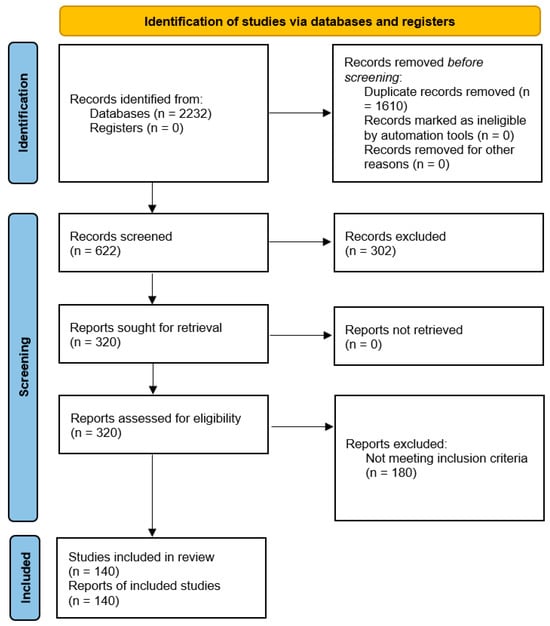
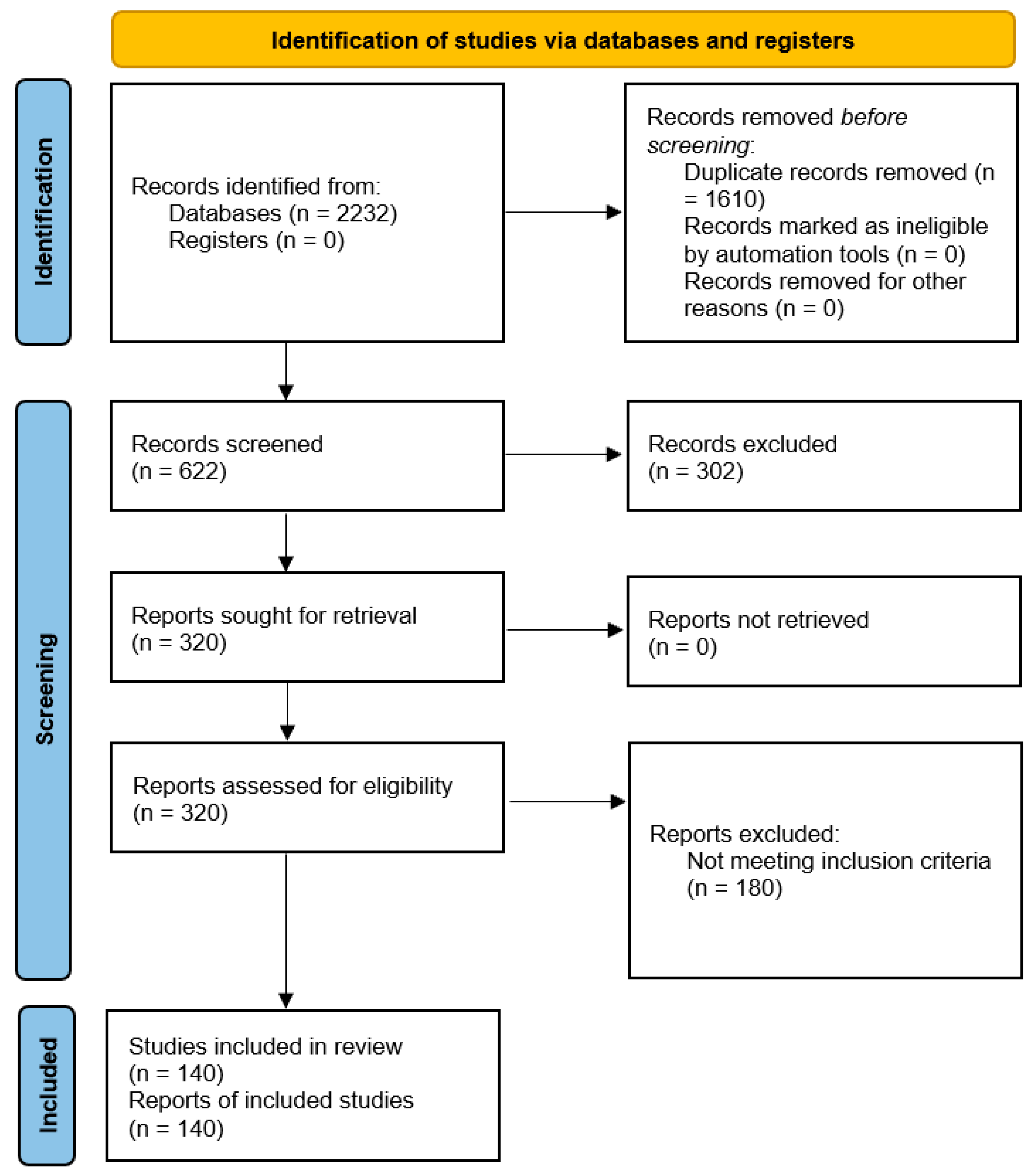
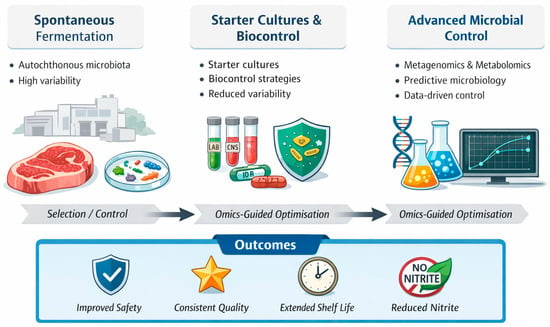
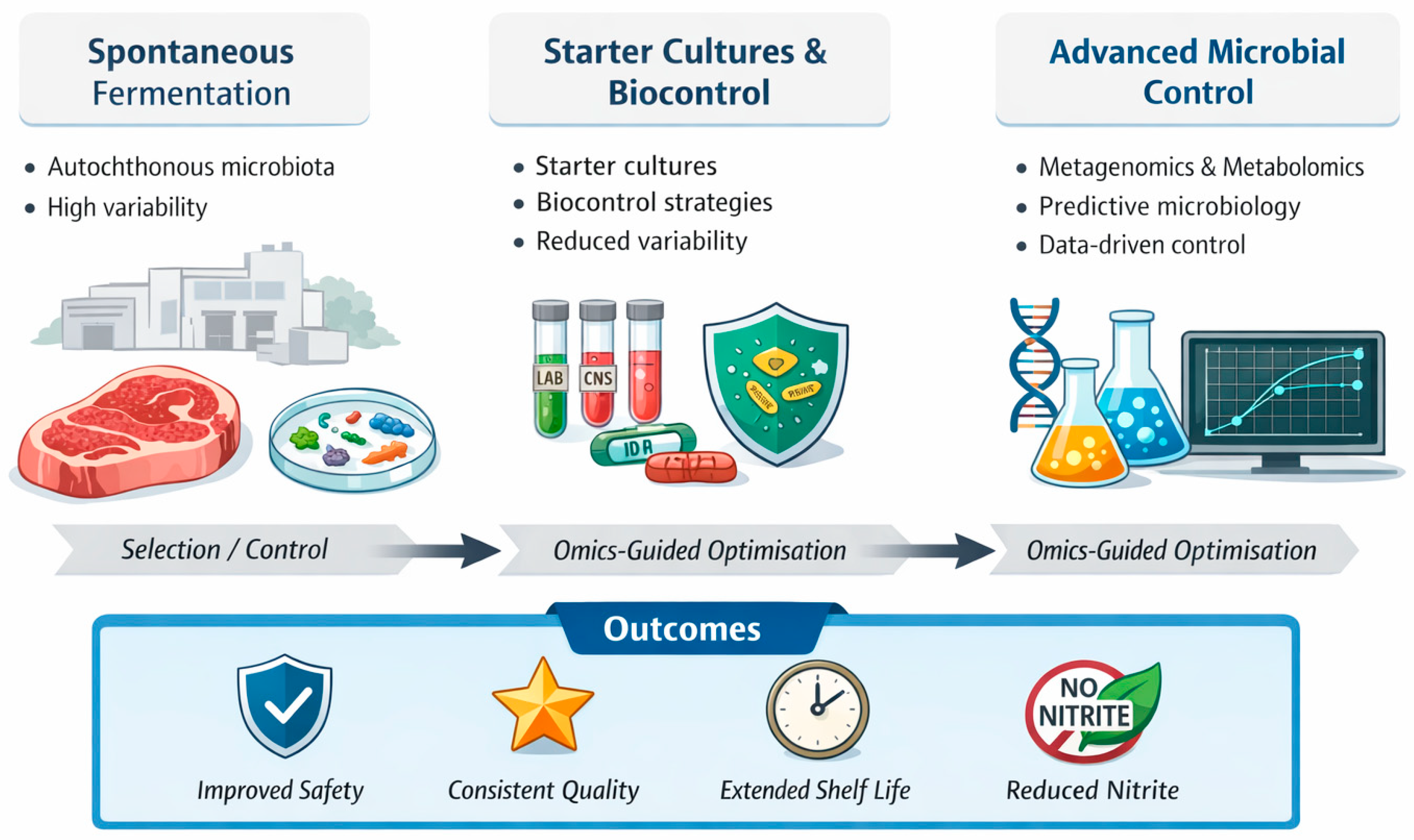

Disclaimer/Publisher’s Note: The statements, opinions and data contained in all publications are solely those of the individual author(s) and contributor(s) and not of MDPI and/or the editor(s). MDPI and/or the editor(s) disclaim responsibility for any injury to people or property resulting from any ideas, methods, instructions or products referred to in the content. |
© 2026 by the authors. Licensee MDPI, Basel, Switzerland. This article is an open access article distributed under the terms and conditions of the Creative Commons Attribution (CC BY) license.