


Abstract
Reliable models for predicting the uniaxial compressive strength (UCS) of rocks are crucial for mining operations and rock engineering design. Empirical methods, including statistical methods, are often faced with many limitations when generalizing in a wide range of lithological types. To address this limitation, this study investigates the capability of grey wolf optimization (GWO)-optimized ensemble machine learning models, including decision tree (DT), extreme gradient boosting (XGBoost), and adaptive boosting (AdaBoost) for predicting UCS using a small dataset of easily measurable and non-destructive rock index properties. The study’s objective is to evaluate whether metaheuristic-based hyperparameter optimization can enhance model robustness and generalization performance under small-sample conditions. A unified experimental framework incorporating GWO-based optimization, three-fold cross-validation, sensitivity analysis, and multiple statistical performance indicators was implemented. The findings of this study confirm that although the GWO-XGBoost model achieves the highest training accuracy, it exhibits signs of mild overfitting. In contrast, the GWO-AdaBoost model outpaced with significant improvement in terms of coefficient of determination (R2) = 0.993, root mean square error (RMSE) = 2.2830, mean absolute error (MAE) = 1.6853, and mean absolute percentage error (MAPE) = 4.6974. Therefore, the GWO-AdaBoost has proven to be the most effective in terms of its prediction potential of UCS, with significant potential for adaptation due to its effectively learned parameters. From a theoretical perspective, this study highlights the non-equivalence between training accuracy and predictive reliability in UCS modeling. Practically, the findings support the use of GWO-AdaBoost as a reliable decision-support tool for preliminary rock strength assessment in mining and geotechnical engineering, particularly when comprehensive laboratory testing is not feasible.
1. Introduction
Uniaxial compressive strength (UCS) is an important parameter in rock mechanics and rock engineering, affecting rock excavation design and stability analysis, particularly in underground excavations, rock slopes, and rock foundation designs. Traditionally, UCS values have been measured through laboratory uniaxial compression tests according to standards set by the American Society for Testing and Materials (ASTM) and the International Society for Rock Mechanics (ISRM) [1,2]. Although this parameter has great importance, laboratory tests carried out on rock samples to determine the UCS often encounter difficulties and costs in preparing samples, especially when dealing with weaker rock samples, such as weathered rock formations [3]. Conventional empirical correlations and regression models have proven to be less accurate since they fail to address nonlinear relationships between UCS and the related parameters [4]. However, machine learning (ML) models have gained popularity in recent years for predicting UCS values, outperforming conventional methods by accounting for intricate nonlinear relationships among geological and mechanical parameters [5,6,7]. Some researchers have described a paradigm shift in predictive models of UCS from individual models to ensemble- and optimization-driven ML methods to enhance accuracy and generalization ability across rock types [6,8]. Models based on decision trees (DT) have been used as ML models to facilitate interpretability in UCS predictions. These models divide the feature space into homogeneous regions and define decision-making rules by explicitly expressing them, which is a notable benefit in engineering applications [9]. Ensemble models, like boosting and bagging, often outperform individual models by combining multiple approaches. For example, Barzegar et al. developed a tree-based ensemble model that surpassed standalone ML and multivariate regression models in predicting UCS [10].
These comparative analyses clearly demonstrate that ensemble models are more effective than classical regression methods, but tend to perform poorly in comparison to other ensemble models, including random forests (RF) and boosting methods [11,12]. Indeed, ensemble models tend to be susceptible to the underlying tree structures and cutting variables and are also known to experience the problem of overfitting when employed independently [13]. Thus, ensemble models are increasingly employed as base models within an ensemble setup for the prediction of UCS, rather than being employed independently [14]. Ensemble models are employed to design effective models by combining a set of weak DTs to sequentially reduce the residuals from the earlier model. This allows these models to handle the nonlinear relationships within rock mechanics data. Applications of these models in predicting UCS values have been observed in sedimentary, carbonate, and combined lithology types of rocks [15,16,17]. These experiments have clearly revealed the superiority of ensemble models over single tree-based methods as well as conventional ML methods like support vector machines (SVMs). More recently, experiments have emphasized the importance of ensemble models in rendering robust results even in differing rock conditions; given adequate data input in this context, ML has proven to be an effective approach for analyzing data and forecasting the compressive strength of rocks [18]. Ensemble models are characterized by high parameter-sensitive behavior, requiring careful optimization methods to fully harness their potential. Extreme gradient boosting (XGBoost) is an optimized version of ensemble methods, incorporating various strategies like regularization, parallel processing, and sparse data handling. Over the years, particularly since 2020, XGBoost has been identified as one of the most potent ML tools available in the literature for predicting UCS values [19,20,21]. Currently, ML models, such as artificial neural networks (ANNs), SVMs, and tree-based models, have successfully predicted UCS and other rock strength parameters. Some recent studies have shown that XGBoost is superior to RF, ANN, and traditional boosting methods for UCS estimation tasks [12,15,16,22]. XGBoost can be effectively employed with laboratory index properties, drilling parameters, and multiple-source datasets compiled from the literature. Moreover, Gowida et al. and Zhao et al. [20,21] developed artificial intelligence models for real-time prediction of UCS while drilling rocks—an indirect approach. Shahani et al. displayed similar potential in predicting the UCS of rocks using gradient boosted regression (GBR), Catboost, light gradient boosting machine (LightGBM), and XGBoost, achieving an XGBoost prediction accuracy of R2 of 0.99 [22]. A hybrid [23,24] and a supervised learner were used by [25] for predicting the UCS of rocks.
However, metaheuristic optimization methods have been widely incorporated with ML models, including UCS estimation problems. Studies have shown that metaheuristic optimization models can greatly improve the performance of ensemble models [7]. The literature proposes to devise a simple and robust predictive model for the UCS of rocks in deep mines. Fereidooni et al. 2024 proposed a stacking ensemble for predicting the UCS and E of intact carbonated rock samples, achieving R2 values of 0.909 and 0.831, respectively [26,27]. Additionally, Zhang et al. used genetic algorithms (GA) alongside 10-fold cross-validation to optimize backpropagation neural networks and SVM, improving predictions for both final setting time and UCS [28]. For this reason, there is great applicability and importance in developing effective, short-run, and robust methods to predict the value of the UCS to meet the engineering and scientific demands. Huajin et al. [29] found that for natural rock samples taken from mining-related contexts, ensemble learning frameworks significantly increased the reliability of UCS prediction. When used in ensemble models for UCS estimation, Bayesian optimization has been shown to produce better convergence and lower prediction errors [30,31]. Yu et al. [32] applied a novel hybrid model to predict UCS from index properties of rocks. The developed model fairly assessed the reliability in both training and testing phases.
The GWO, which is based on the social structure and hunting process of grey wolves, has shown robust global search ability and convergence speed [33]. In the domain of UCS prediction, the use of GWO has been successfully demonstrated in optimizing learning models, such as kernel-based and neural models, to improve prediction accuracy and robustness. Metaheuristic-based ML models have also demonstrated high prediction accuracy. For example, combining ensemble models with the GWO for carbonate rock UCS yielded an R2 of approximately 0.951 [34]. Although GWO has shown promise in handling UCS-related problems, its use in ensemble tree models has remained relatively unexplored. Therefore, the work presents a reliable predictive platform for rock behavior analysis with relevance to mining and rock engineering projects [35,36].
Despite extensive research on methods for predicting the UCS of rock, significant gaps remain in developing highly reliable models capable of adapting to the limited and site-dependent datasets that are commonly encountered in mining and rock engineering. Traditional geomechanical analyses typically rely on simplifying assumptions, making it difficult to fully capture the complex and highly nonlinear interactions among rock mechanical parameters. To overcome these limitations, this study integrates ensemble learning methods, such as DT, XGBoost, and AdaBoost, with the GWO algorithm to propose a UCS prediction model suitable for limited data conditions. The primary purpose of incorporating GWO is to effectively enhance the model’s parameter optimization capability under small dataset scenarios. This approach enables more accurate characterization of the nonlinear characteristics of rock strength and deformation behavior while improving the stability and generalization capability of the model’s prediction results. In addition, this study provides a foundational solution for improving understanding of rock mass behavior, enabling safer and more efficient decision-making in mining operations and rock engineering design.
Despite the extensive application of ML techniques for UCS prediction, most existing studies either rely on standalone models or emphasize training accuracy without sufficiently addressing model robustness under limited data conditions. Moreover, the influence of metaheuristic optimization on ensemble learning models, particularly in balancing overfitting and generalization, remains insufficiently investigated in rock mechanics. This study addresses this scientific gap by systematically comparing GWO-optimized ensemble models and demonstrating that superior training performance does not necessarily translate into reliable predictive capability.
2. Data Acquisition
The dataset reflects critical geomechanical properties of rock samples, including UCS in MPa, P-wave velocity (Vp) in m/s, point load index (Is) in MPa, density (ρ) in g/cm3, slake durability index (SDI) in %, and shear strength (SS) in MPa. This dataset originates from the publicly available online literature, where the application of metaheuristic optimization ensemble models holds significant importance for limited data [37]. Before modeling, the data underwent cleaning to create consistency and reliability. After that, it was split into 70% for training and 30% for testing to support model development. At the phase of modeling, the hyperparameters were tuned using the GWO in integration with XGBoost, DT, and AdaBoost. The performance of all models was evaluated with R2, RMSE, MAE, and MAPE. Table 1 shows the statistical distribution of the dataset (n = 40) used in this work. Given the limited data available for this study, the selection of ensemble models has demonstrated significant effectiveness in enhancing prediction accuracy and handling small datasets [38,39].
Table 1.
Statistical distribution of the actual dataset.
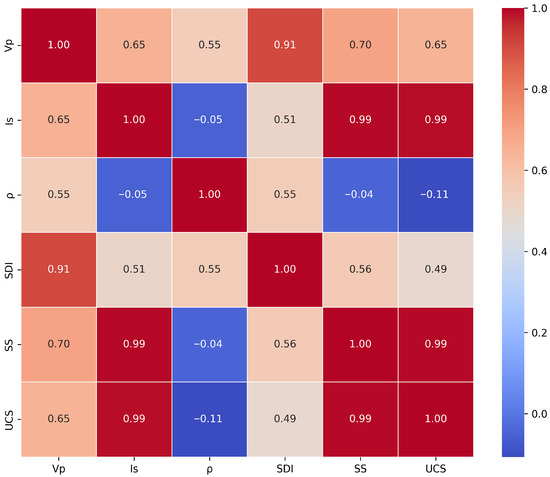
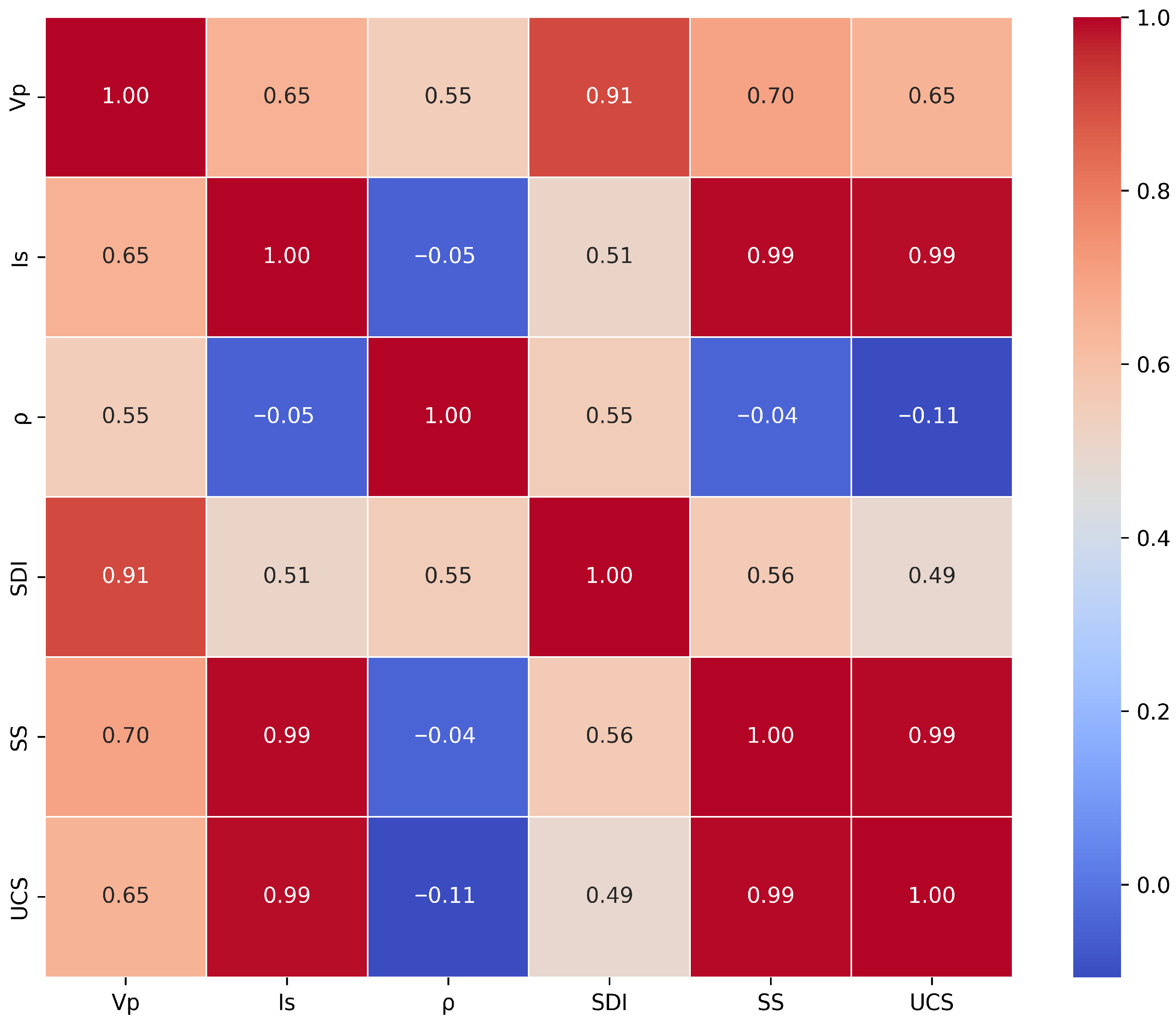
Figure 1 demonstrates the correlation heatmap, which shows the relationships between the inputs (Vp, Is, ρ, SDI, and SS) and the output UCS. A positive correlation close to 1 proposes a strong correlation, while a negative correlation indicates an inverse relationship. From Figure 1, it is evident that UCS has a very strong positive correlation with Is = 0.99 and an SS = 0.99, signifying that these parameters significantly influence the UCS. Vp = 0.65 also shows a positive correlation with UCS, and SDI (0.49) shows a moderate positive correlation with UCS, indicating its relevance in predicting UCS. On the contrary, ρ (−0.05) exhibits weak or non-significant correlations with UCS, indicating minimal direct impact on the UCS.
Figure 1.
Correlation heatmap between input parameters and output UCS of the original dataset.
3. Methods
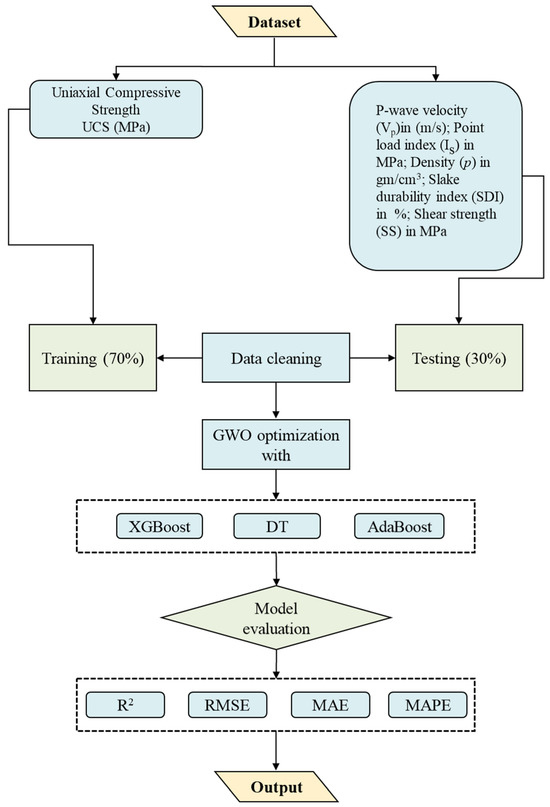
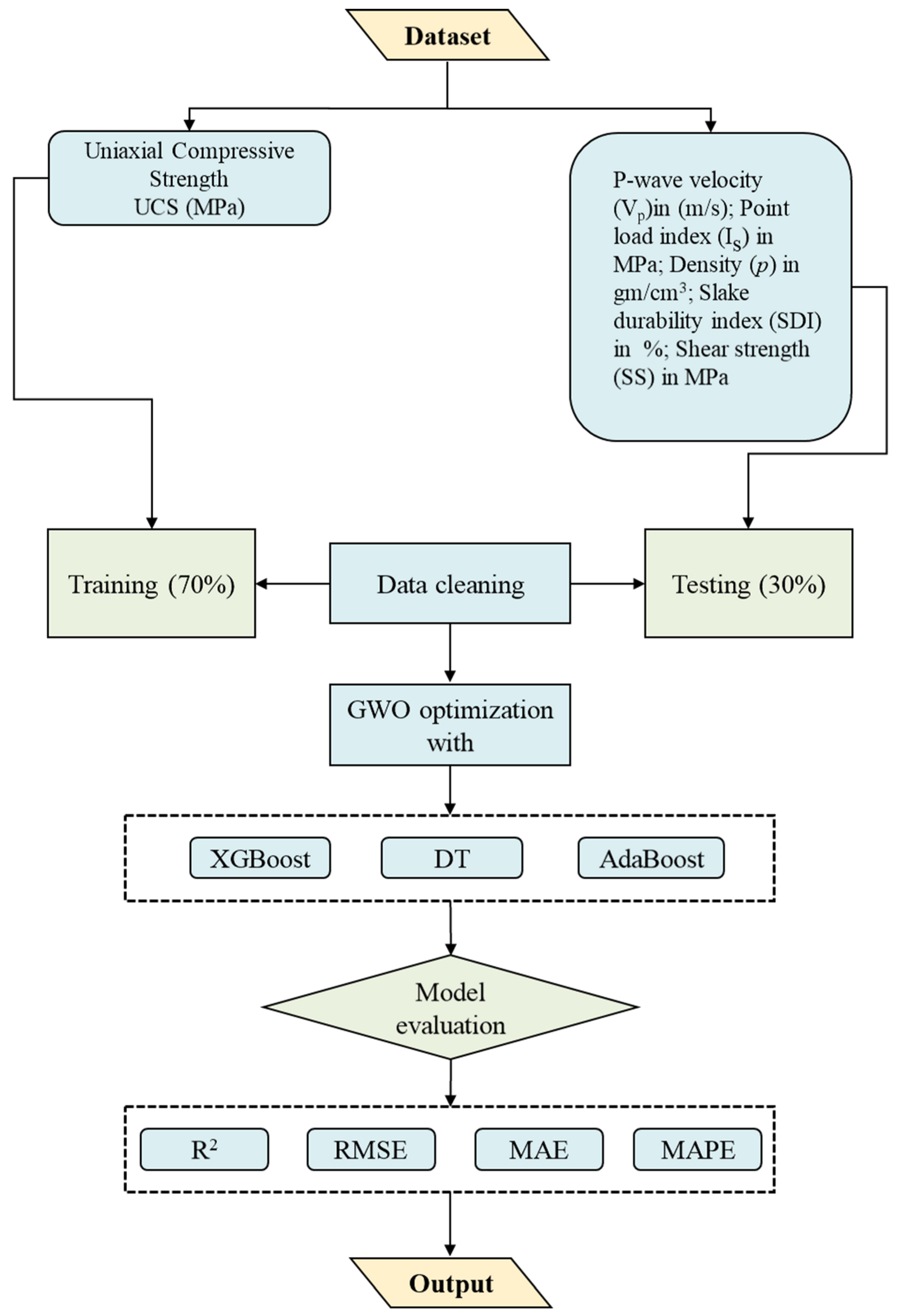
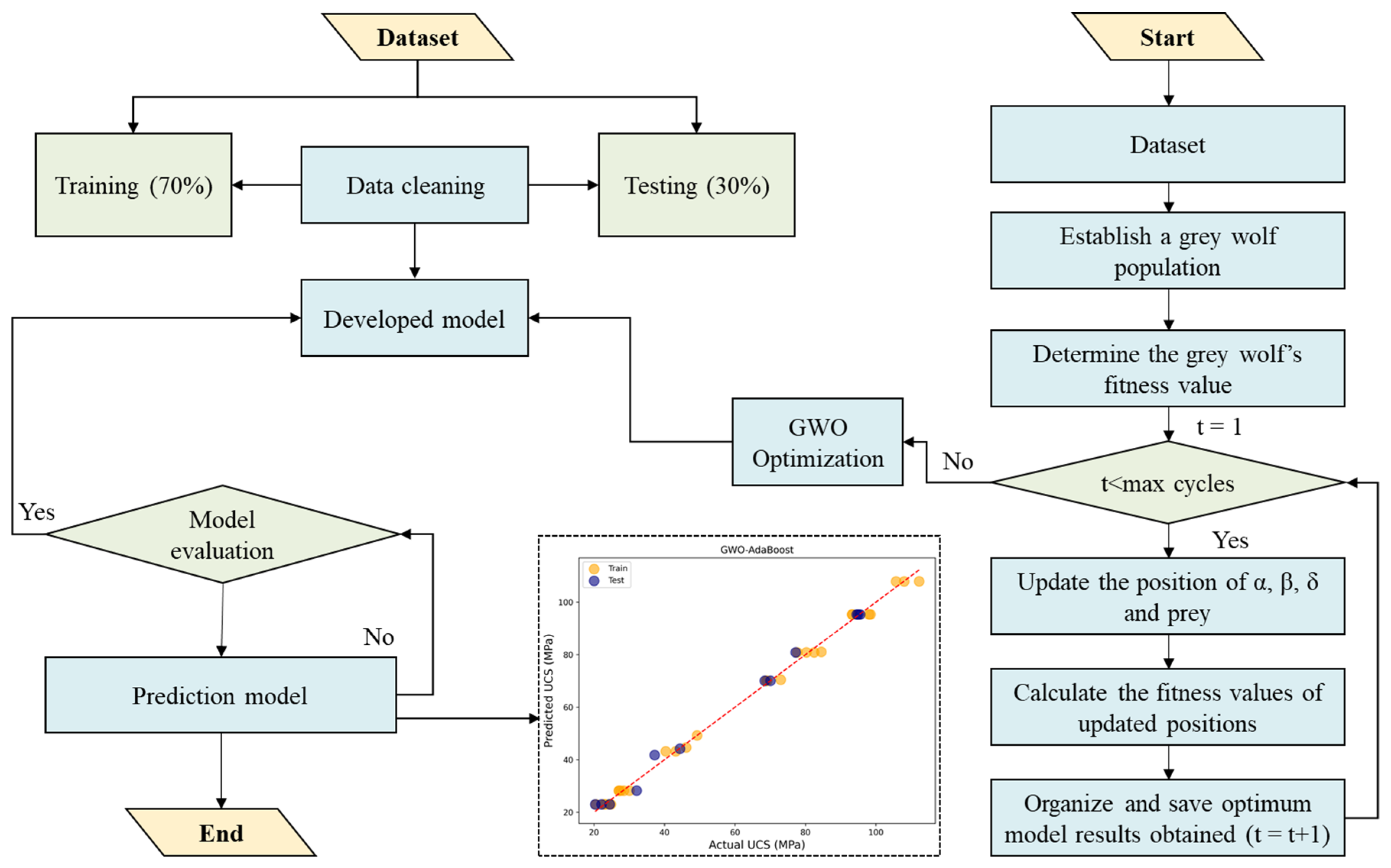
To predict the UCS of rocks, this section first introduces the ensemble models and optimization strategy employed in this study, followed by the data preparation, model training, and evaluation procedures. XGBoost, DT, and AdaBoost were selected due to their proven effectiveness in nonlinear regression problems. GWO, a nature-inspired metaheuristic algorithm, was adopted to optimize model hyperparameters and improve generalization performance. “Python 3.14-based implementations, such as scikit-learn for DT and AdaBoost, and the XGBoost library for XGBoost, are used to ensure the transparency and reproducibility of the study.” Figure 2 shows the systematic flowchart of the proposed methodology in this study, illustrating the data modeling workflow based on rock physical parameters: data cleaning and training/testing partitioning, optimizing an ensemble model using GWO, and evaluating model performance using multiple metrics.
Figure 2.
Flowchart of the proposed methodology used in this study.
3.1. XGBoost
XGBoost is an ensemble regression algorithm incorporating various classification and regression trees (CART) into a single predictive structure such that the solution is obtained by combining the predictions produced by individual trees [40]. The algorithm utilizes the concept of gradient boosting to generate an ensemble of trees, allowing it to improve predictive performance by combining the predictions obtained by individual trees. In fact, XGBoost is characterized by high predictive accuracy and efficiency during the training phase. The optimization procedure used by XGBoost is based on the concept of gradient tree boosting (GTB), which is very efficient and significantly applicable when dealing with complex problems [32].
First, XGBoost has several benefits in the prediction of UCS, and it has a finer ability to predict UCS compared to traditional plotting techniques and/or regression analysis. This is achieved by incorporating various logging information to predict UCS more accurately. XGBoost also has several benefits when compared to other ML models, such as DTs and AdaBoost. These benefits include having a superior ability to handle outliers and missing observations, having robustness to over-fitting, and having high flexibility to new data. XGBoost has greater predictive accuracy and efficiency compared to conventional models.
3.2. Decision Tree
A DT, which is a supervised learning algorithm, can effectively identify regional areas by employing an iterative split. The structure of the DT is composed of internal nodes and leaf nodes. This method may be utilized for classification and regression problems [34]. Although regression trees are built similarly to classification trees, the difference is due to the impurity measure. In regression, the impurity measure used for classification is replaced by another regression-oriented classifier.
3.3. AdaBoost
The most commonly used ensemble method for ML is adaptive boosting (AdaBoost), which was initially developed to increase the accuracy of weak classifiers, often DTs, to improve their performance [35]. This approach can be used for both classification and regression problems. AdaBoost’s adaptability, which allows it to work with a variety of model types, is one of its main advantages. However, optimizing the model’s performance frequently necessitates fine-tuning a number of characteristics, configurations, and parameters [41].
3.4. Grey Wolf Optimization
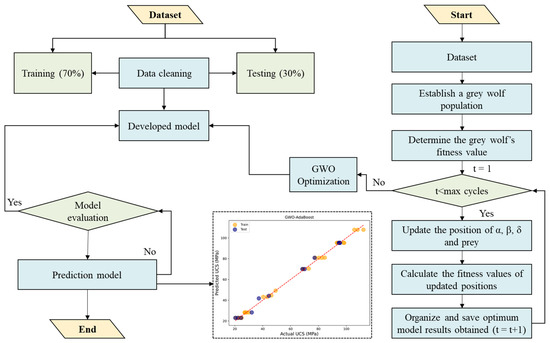
GWO is a metaheuristic optimization method introduced by Mirjalili et al. [33], inspired by the hunting strategies of grey wolves. It has a simple structure and is easy to implement, such that an optimization problem can easily be solved by only tuning the population size. However, the effectiveness of a grey wolf as a hunter is determined by its rank in the social hierarchy of the association. In connection, wolves are arranged in order from alpha down to omega: alphas lead the entire process and determines the major decisions about hunting, resting, and division food; betas serve as the messenger for the alphas, passing instructions and providing feedback from the others; delta members are responsible for more peripheral tasks, such as investigation for prey and security; and omega is the lowest-ranking member of the relationship, which may be forced to leave the relation if its behavior is not in the best interest of the relationship. This rigid social hierarchy defines the connection between cooperative behavior, making its hunting cautious and effective. GWO is a population-based, swarm-inspired metaheuristic intended for solving both continuous and discrete optimization problems by emulating the social structure and cooperative hunting tactics of grey wolves. It provides a research-quality, detailed overview of GWO for this study: its biological inspiration, mathematical formulation, step-by-step algorithm, variants, and discretization are designed for ML applications, such as hyperparameter tuning, feature selection, and training, computational complexity, recommended experimental protocol, evaluation metrics, current limitations, and future work directions. Figure 3 represents the flowchart of the proposed GWO optimization model. This flowchart illustrates the GWO-based workflow, encompassing data partitioning, model training and testing, parameter optimization, and prediction evaluation, to systematically achieve high-precision prediction of rock UCS.
Figure 3.
Flowchart of the proposed GWO optimization model used in this study.
Herein, X is the vector position of a grey wolf, Xp is the vector position of the prey, D is the distance between X and Xp, t represents the current iteration index, and A and C are respective component-wise multiplications.
Equations (5)–(9) depict how the grey wolves calculate the position of the α, β, and δ wolves to simulate the hunting process performed by the species. Moreover, it has been noticed that when the α, β, and δ wolves are the nearest to the prey, they have an attractive effect on the other wolves to move towards the prey’s location. The population of grey wolves follow the following equations to calculate the prey’s location:
Equation (11) utilizes the values derived in Equations (8)–(10) to calculate the next position of the wolves.
At this point, the value represented by X(t + 1) refers to the target spatial location in the next iteration. Through the application of Equation (11), the omega wolves are compelled to adjust their spatial locations to converge with the prey.
3.5. Grid Search Cross-Validation
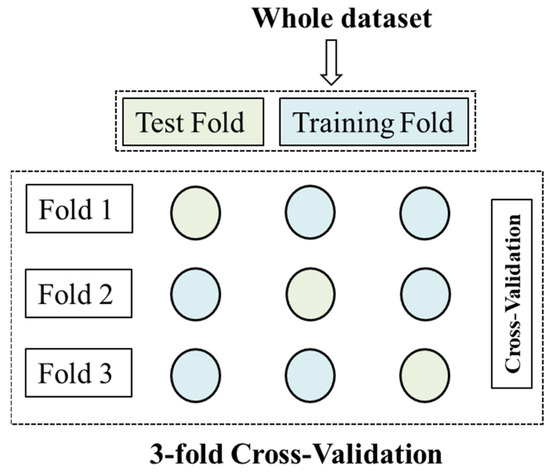
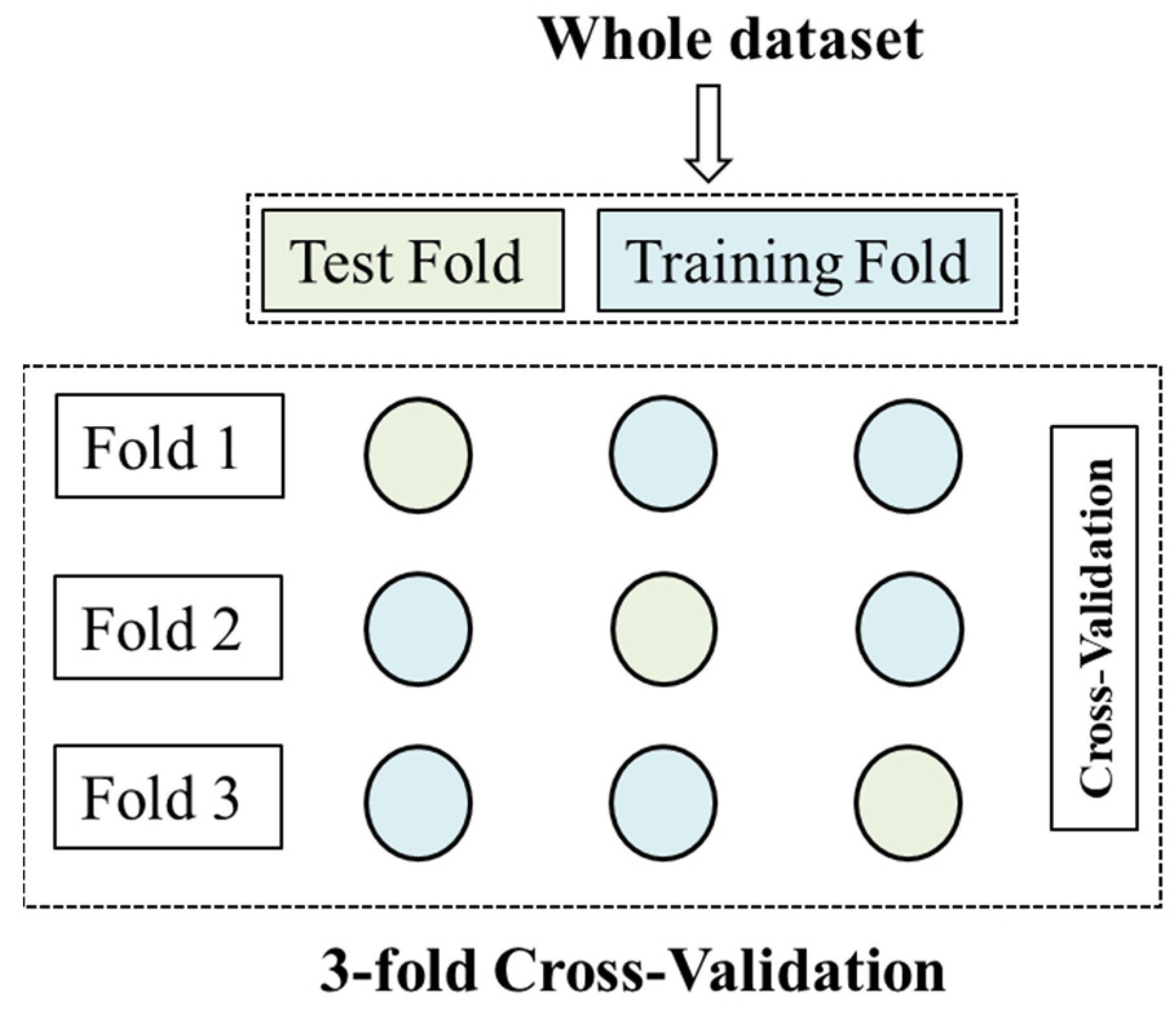
A systematic optimization approach integrating grid search with K-fold cross-validation is employed to improve model hyperparameters. The optimal parameter combination is comprehensively determined using the coefficient of determination (R2), root mean square error (RMSE), and mean absolute error (MAE) as evaluation metrics. The GridSearchCV framework is developed using Python’s scikit-learn library to sequentially evaluate and score all candidate combinations within the predefined hyperparameter space. To enhance the reliability of model generalization performance assessment, a three-fold cross-validation approach is adopted, as illustrated in Figure 4. A three-fold cross-validation strategy was adopted to balance statistical reliability and data availability. Given the limited dataset size, higher fold numbers would reduce the number of samples available for training in each iteration, potentially increasing variance. Preliminary sensitivity checks with alternative fold numbers showed no significant improvement in predictive stability, supporting the selection of three-fold cross-validation as a practical and robust compromise. Throughout this entire process, GridSearchCV not only facilitated model performance evaluation, but also enabled the optimization of hyperparameters.
Figure 4.
A systematic three-fold cross-validation method used in this study.
3.6. Performance Metrics
To evaluate the performance of the proposed GWO-optimized XGBoost, DT, and AdaBoost, the R2, RMSE, MAE, and MAPE are used. The performance metrics are calculated using Equations (12)–(15).
where and are the actual and predicted UCS values, respectively. is the mean of the actual UCS values. n is the total number of datasets.
4. Results
4.1. Model Training
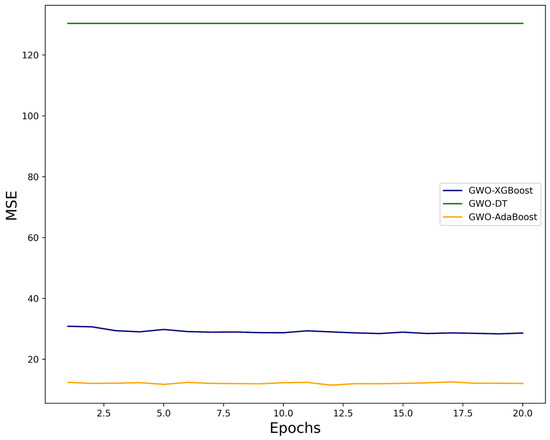
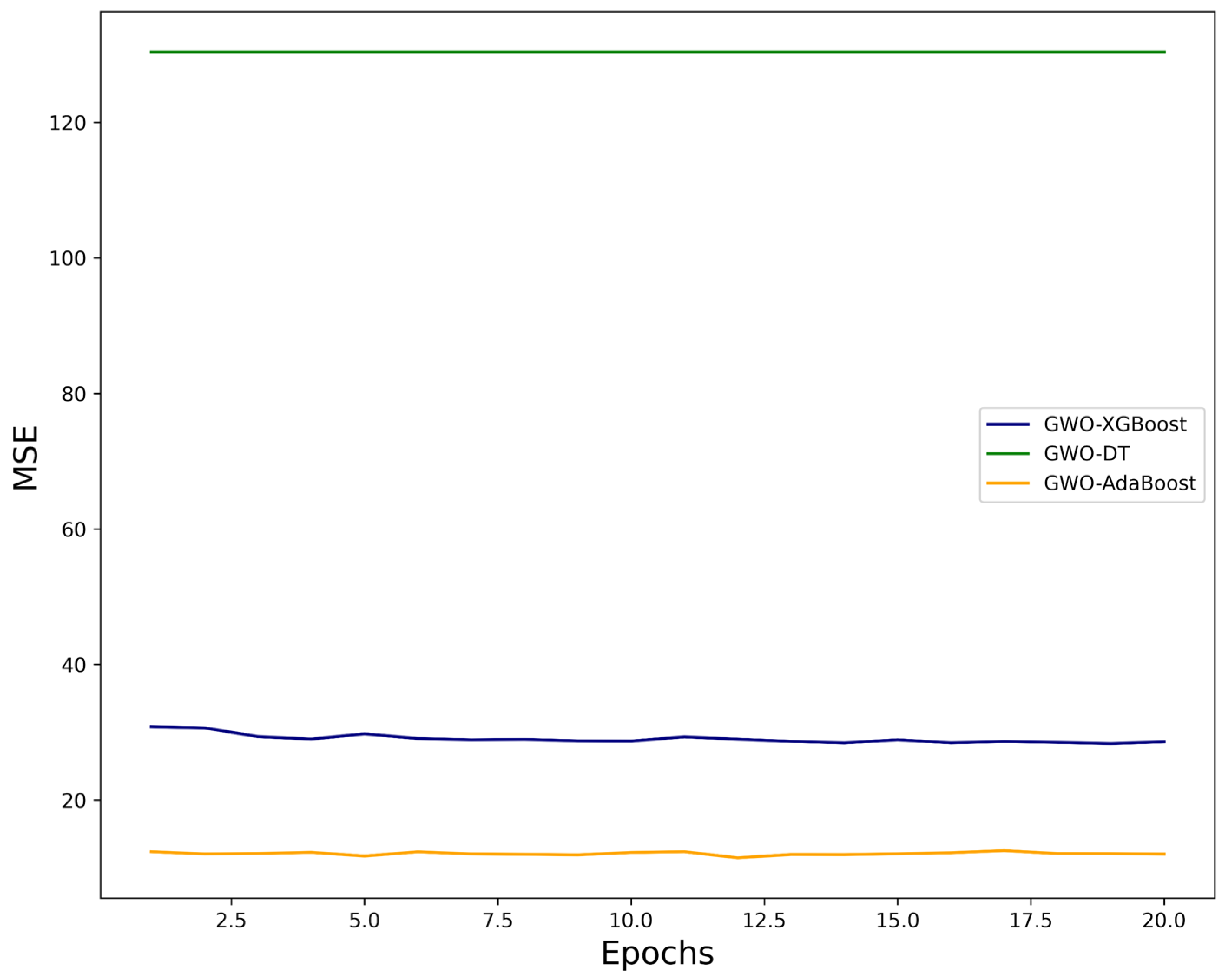
Figure 5 demonstrates prediction error in MSE grows during 20 training epochs for the GWO-optimized ensemble learning models with XGBoost, DT, and AdaBoost. The purpose of this comparison is to observe the learning behavior and stability of each model during iterative optimization.
Figure 5.
Line graph of error vs. epoch during model training.
In Figure 5, the GWO-AdaBoost model consistently achieves the lowest MSE during all epochs, exhibiting robust learning stability and rapid convergence. With a slightly higher MSE than GWO-DT, the GWO-XGBoost model similarly performs steadily. However, it gradually declines over the first few epochs before stabilizing. In contrast, when compared to the other two ensemble-based models, the GWO-DT model exhibits minimal learning improvement and a clear tendency to underfit, as it retains the highest MSE throughout all epochs and shows nearly no decrease in error with additional iterations.
4.2. Hyperparameter Tuning
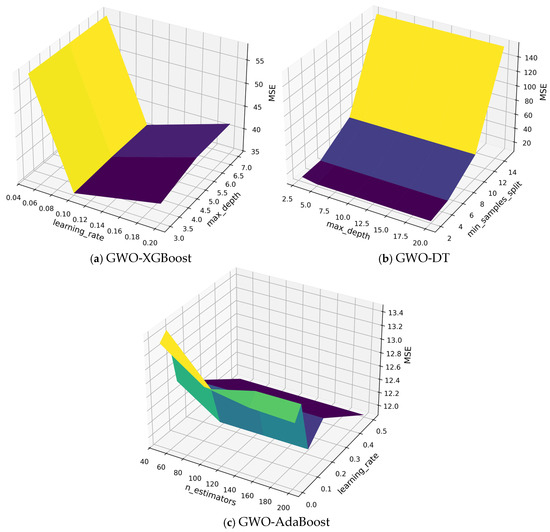
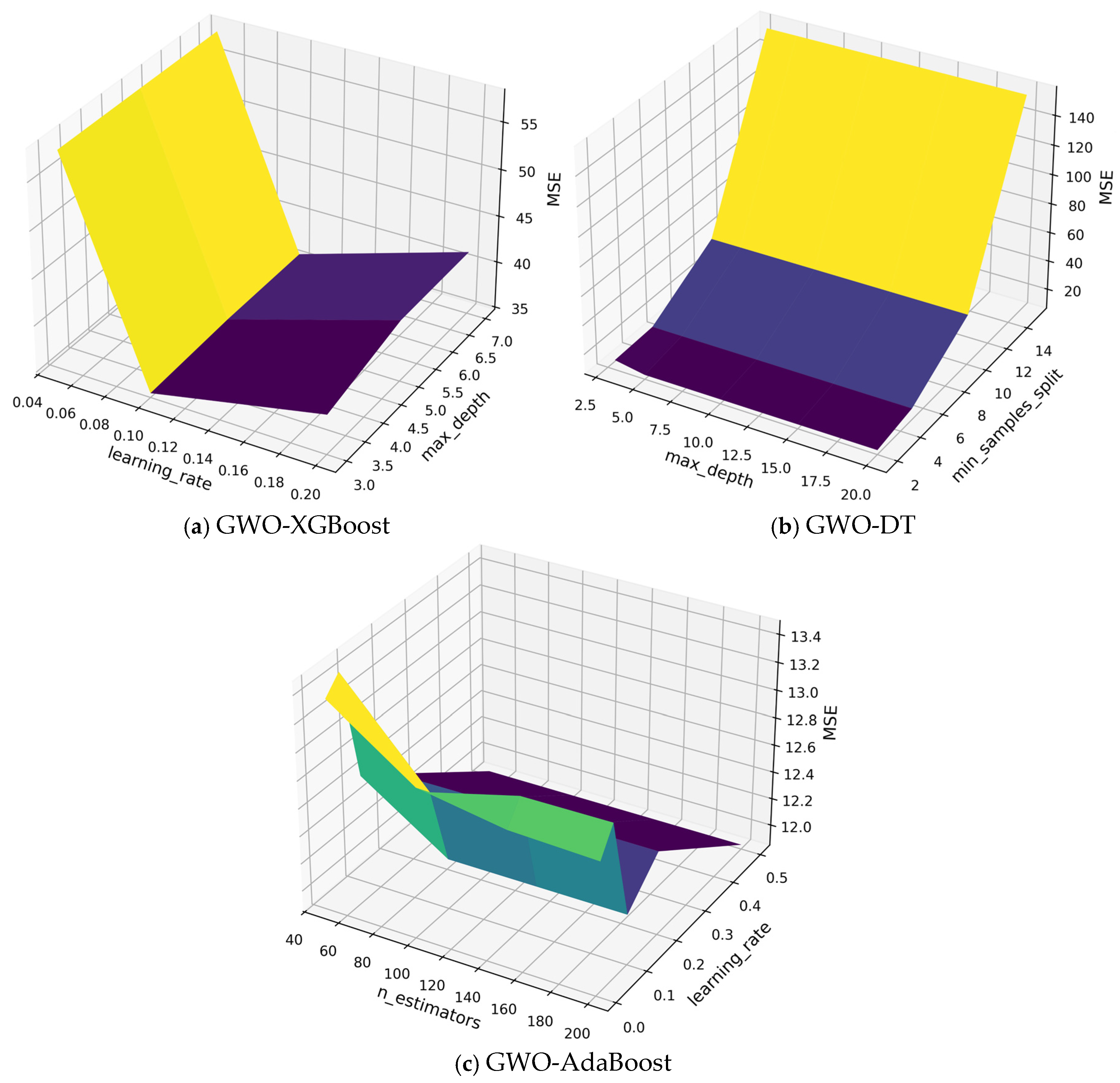
Figure 6 depicts the 3D surface plots of the MSE values for the GWO-XGBoost, GWO-DT, and GWO-AdaBoost under varying combinations of their key hyperparameters. The purpose of these plots is to illustrate how model performance responds to changes in parameter values during hyperparameter tuning.
Figure 6.
Three-dimensional surface plots for hyperparameter optimization for developed models.
Given the small dataset size and the need to minimize overfitting, the optimization process employs the mean test set MSE to ensure generalization performance on unseen data. In Figure 6a, representing GWO-XGBoost, the 3D surface plots show that model error is highly sensitive to the interaction between learning rate and maximum depth. Lower MSE values are concentrated in the region where the learning rate is moderate, and the tree depth is neither too shallow nor too deep. This indicates that balanced parameter settings help the model generalize better, whereas extreme configurations result in performance deterioration. In Figure 6b, the GWO-DT reveals a steep rise in error as both maximum depth and minimum samples split increase. The model reaches its lowest MSE only when the depth remains limited, and the minimum number of samples required to split a node is small. This trend indicates that overly complex trees cause severe overfitting, whereas more constrained trees provide more stable predictive behavior. Figure 6c illustrates the hyperparameter space for GWO-AdaBoost. The plot highlights that the lowest MSE is achieved when the learning rate is low and the number of estimators is sufficiently high. Increasing the number of estimators continues to improve accuracy up to a threshold, beyond which further changes bring minimal benefit. However, higher learning rates consistently lead to higher error, showing that GWO-AdaBoost performs best with gradual boosting updates. Table 2 highlights the GWO configuration and hyperparameters of the XGBoost, DT, and AdaBoost used in this study.
Table 2.
GWO configuration and hyperparameters of the XGBoost, DT, and AdaBoost.
4.3. Predictive Performance Analysis
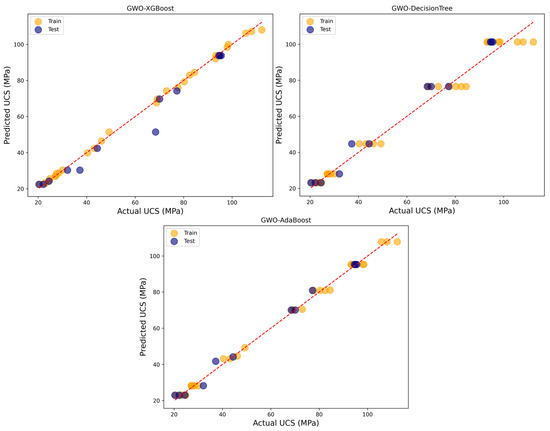
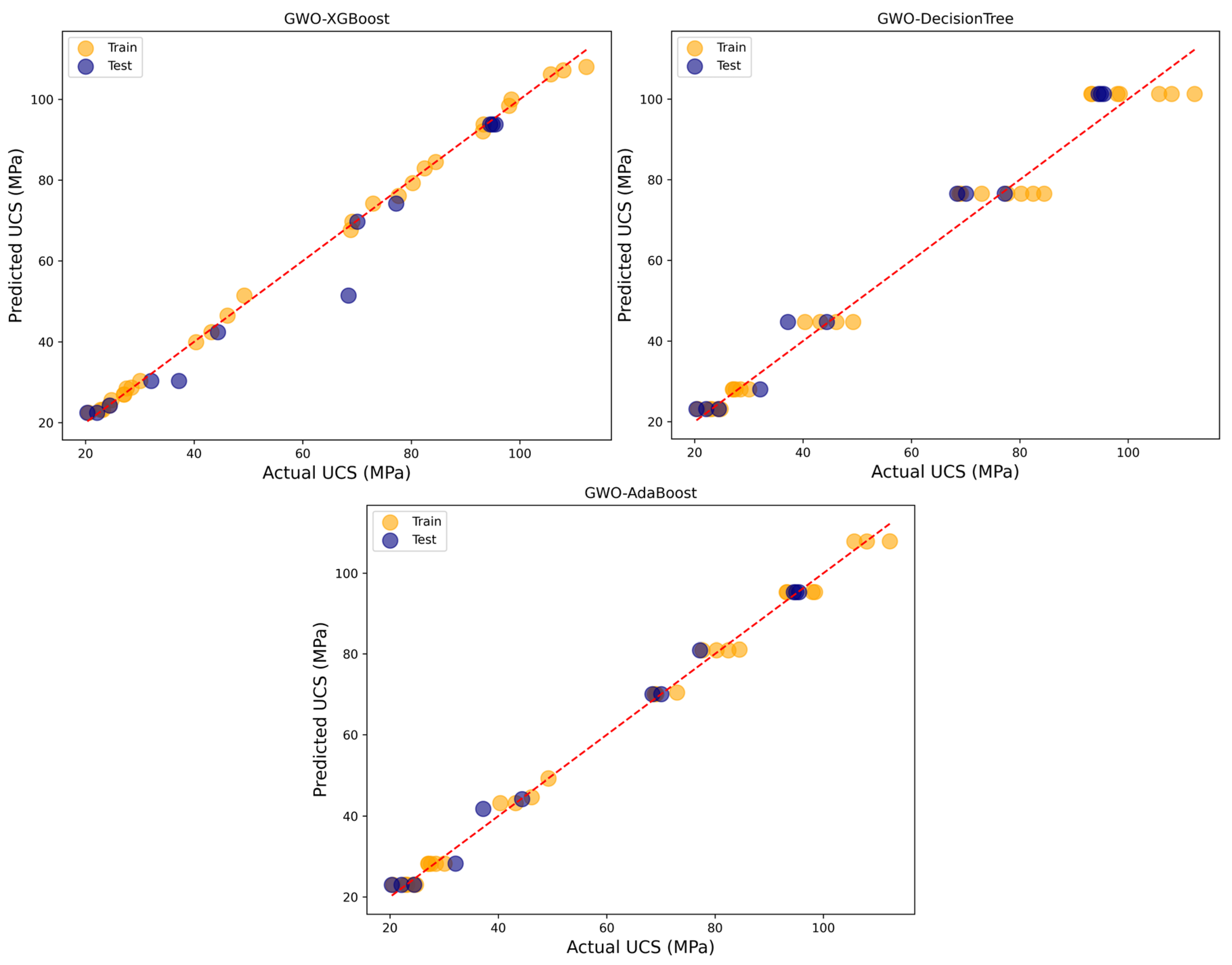
In this study, the performances of GWO-optimized XGBoost, DT, and AdaBoost models are estimated for UCS prediction using scatter plots, performance metrics, and side-by-side line graphs. These sections together give a full view of each model’s accuracy and generalization capability on unseen data. In Figure 7, the actual versus predicted UCS scatter plots show a stark contrast in the behavior of the models. GWO-XGBoost presents a tight, almost perfect alignment with the 1:1 line for both training and testing data, with points collected close to that reference; this suggests very high accuracy with low prediction variance. While GWO-DT highlights a more scattered distribution, particularly around the middle range of UCS values, many test points lie considerably away from the ideal line. This phenomenon points to less consistency and a lower ability to capture nonlinear patterns. GWO-AdaBoost shows overall uniform dispersion about the 1:1 line, reflecting good predictive stability over both training and testing phases.
Figure 7.
Scatter plots comparing the developed models at actual versus predicted UCS between training and testing data.
Table 3 reinforces these impressions visually during training and testing the models. GWO-XGBoost achieves the top R2 0.998 and the smallest errors, RMSE = 1.2049; MAE = 0.8444; MAPE = 1.6173, an indication of its strongest learning capability. GWO-AdaBoost also delivers high accuracy with R2 = 0.995 and moderate error figures. GWO-DT shows notably larger RMSE, MAE, and MAPE, which indicates much weaker training performance. On the testing data, generalization becomes clearest. GWO-AdaBoost has the most robust records, with R2 = 0.993, RMSE = 2.2830, the lowest MAE, and MAPE among the three, indicating very excellent reliability on unseen data. GWO-XGBoost retains reasonable predictive power, with R2 = 0.963, but higher errors, which shows a touch of overfitting. GWO-DT lags, with less predictive accuracy and higher testing errors, pointing to limited generalization.
Table 3.
Model performance evaluation of GWO-XGBoost, GWO-DT, and GWO-AdaBoost.
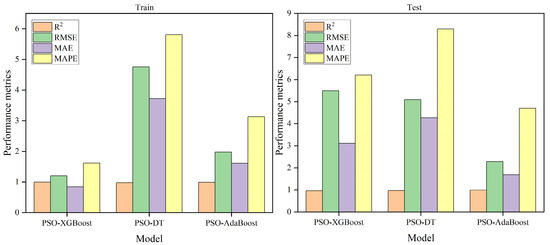
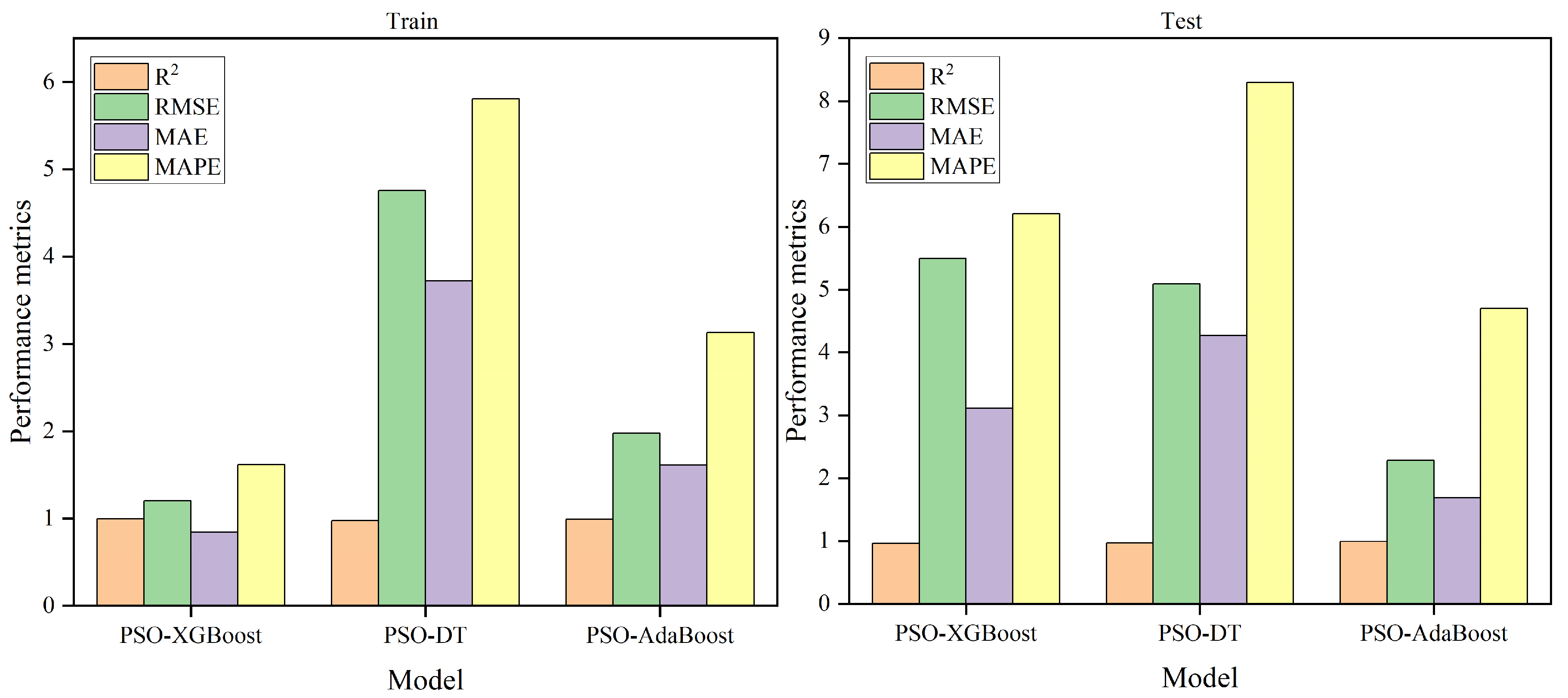
In Figure 8, line graphs confirm this ranking visually across all metrics for the performances of these methods. During both training and testing, GWO-AdaBoost and GWO-XGBoost consistently yield low errors and high R2, while GWO-DT had much higher error metrics, further suggesting inferior predictive behavior. The GWO-DT model shows sharper spikes in RMSE, MAE, and MAPE, revealing instability, while the smoother, lower-error profile of GWO-AdaBoost demonstrates greater robustness.
Figure 8.
Line graphs of the performance metrics for GWO-XGBoost, GWO-DT, and GWO-AdaBoost.
5. Discussion
The findings of this study align with previous research demonstrating the effectiveness of ensemble models in predicting UCS. Earlier studies have primarily focused on standalone models or emphasized training accuracy as the main performance indicator. In contrast, this study explicitly evaluates generalization performance under limited data, which more closely reflects real-world rock engineering scenarios. Unlike several previous works that reported XGBoost as the best-performing model [12,15,16,22], this study’s results show that GWO-AdaBoost achieves superior test performance. This difference highlights the importance of evaluating model robustness rather than relying solely on training accuracy. The integration of metaheuristic optimization further distinguishes this study from earlier approaches that employed fixed or manually tuned hyperparameters.
The innovation of this study lies in its systematic comparison of ensemble models based on GWO optimization, with a focus on the bias-variance tradeoff and generalization reliability. The findings provide quantitative evidence that the most accurate training model is not necessarily the most reliable predictor. This discovery contributes to a deeper understanding of machine learning’s applicability in rock mechanics and challenges the traditional emphasis solely on training performance.
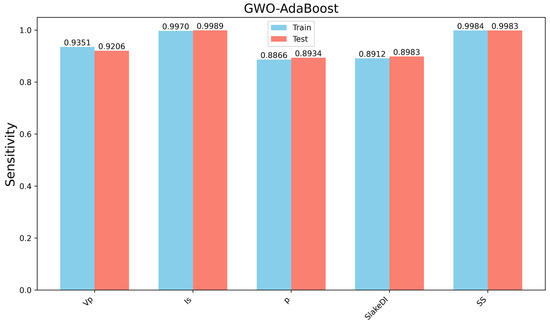
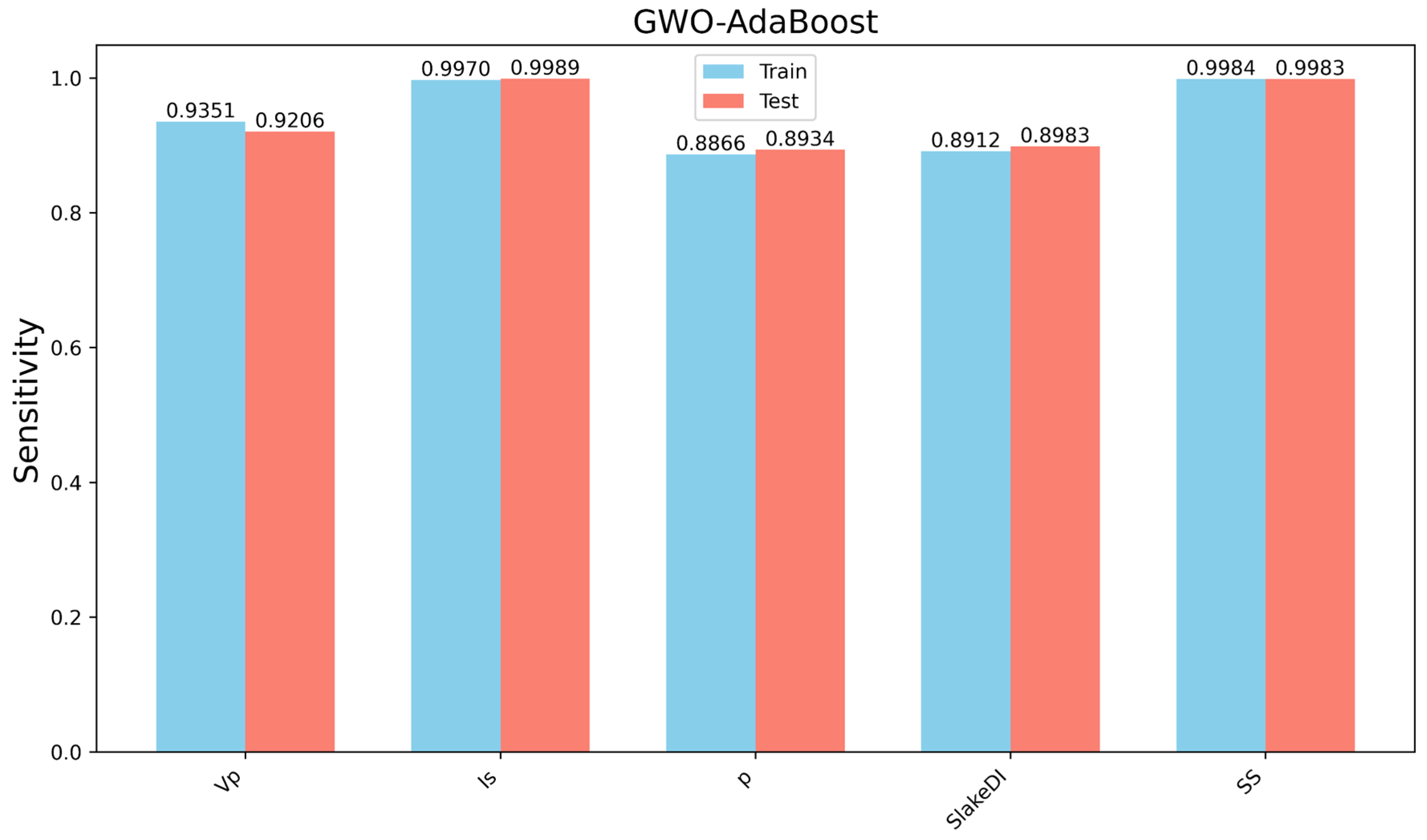
The accurate prediction of the parameters that drive rock UCS is crucial, but it complicates the prediction of slope stability by increasing uncertainty in strength-related inputs. To address this, we used the cosine amplitude method [41,42] to determine the sensitivity of each input parameter on the output. The approach adopted is represented in Equation (16), where xi is the input data and yj is the output. The variable n is the number of datasets used for testing. The value rij, which varies between 0 and 1, further provides additional information on the strength of the relationship between each variable and the target. In this context, a value of 0 indicates that there is little or no linear relationship between the variables and the target, while values close to 1 indicate a very strong relationship that could significantly impact UCS.
Figure 9 shows the effect of the input parameters, such as Vp, Is, ρ, SDI, and SS, upon the observed UCS from the test data. In this sensitivity analysis, the Is and SS indicate the most influential factor, while ρ is the least effective. Since the accuracy obtained by the GWO-AdaBoost model on the test set was very high, the sensitivity analysis reports the following specific coefficient values: Vp = (train = 0.9351, test = 0.9206), Is = (train = 0.9970, test = 0.9989), ρ = (train = 0.8866, test= 0.8934), SDI = (train = 0.8912, test = 0.8983), and SS = (train = 0.9984, test = 0.9983).
Figure 9.
Sensitivity analysis of GWO-AdaBoost model.
The findings of this study, particularly in light of the comparative performance analysis, indicate that model generalization is more critical than training accuracy for reliable UCS prediction. GWO-XGBoost has outstanding performance in training but with slightly weaker stability in test data, which could indicate slight overfitting. This tendency is largely due to XGBoost’s strong learning capacity, which may overfit sparse training data when combined with metaheuristic optimization. GWO-DT is very consistent in producing the poorest ranking and hence is less suitable for complex nonlinear UCS predictions. In a nutshell, the results confirm that metaheuristic GWO optimization combined with an ensemble model, particularly AdaBoost, significantly improves the predictive performance of UCS. From an engineering perspective, the proposed framework offers an understanding of a more efficient and practical decision-support tool for preliminary rock strength assessment in mining, tunneling, and civil engineering-related [43] projects where laboratory testing is constrained.
The research confirms the viability of using optimized ensemble models within engineering decision-making problems, particularly in scenarios where destructive UCS testing is difficult, expensive, and labor-intensive. The introduced model can be easily generalized across various geological environments and can be improved with additional variables describing rocks, making it applicable within field testing, preliminary designs, and risk analysis. Future research should focus on developing methods that utilize larger datasets and 3D geological features, and on developing ensemble models with deep learning architectures as an efficient strategy to improve prediction accuracy. The GWO-optimized ensemble method presents a useful tool within modern geomechanics for rapid, reliable, and nondestructive UCS prediction.
6. Conclusions
The study yielded the following important conclusions:
- This study demonstrated that GWO-optimized ensemble models are effective tools for predicting the UCS of rocks using limited data and provide a reliable platform capable of precise, accurate, and consistent predictions.
- Among the evaluated models, GWO-XGBoost achieved the highest training accuracy but exhibited mild overfitting, highlighting the limitation of relying solely on training performance.
- GWO-AdaBoost model proved to be the most reliable and accurate model, capable of properly representing relationships among various variables and properties associated with rocks. In addition, it provided the best generalization capability, achieving a balanced bias-variance trade-off and superior testing performance.
- Sensitivity analysis confirmed that Is and SS have a prominent effect on UCS, as geologically predicted and properly projected.
- From an engineering perspective, the proposed framework offers a practical decision-support tool for preliminary rock strength assessment in mining, tunneling, and geotechnical projects where laboratory testing is constrained.
Author Contributions
Conceptualization, A.B.; Methodology, X.Z. and A.B.; Software, N.M.S.; Validation, S.K.; Formal analysis, S.K.; Investigation, A.B.; Data curation, S.K.; Writing—original draft, A.B.; Writing—review & editing, X.Z., S.K. and N.M.S.; Visualization, N.M.S.; Supervision, X.Z. and N.M.S.; Funding acquisition, X.Z. All authors have read and agreed to the published version of the manuscript.
Funding
This study was funded by the Guizhou Provincial Education Department’s (Hundred Schools Thousands of Enterprises Science and Technology Research List) Project ([2024]013) and the Qiankehezhongyindi ([2024]039).
Institutional Review Board Statement
Not applicable.
Informed Consent Statement
Not applicable.
Data Availability Statement
The raw data supporting the conclusions of this article will be made available by the authors on request.
Acknowledgments
We are grateful to the esteemed editors and potential reviewers for their valuable suggestions to improve the quality of our article.
Conflicts of Interest
The authors declare no conflict of interest.
References
- ASTM D7012-14; Standard Test Method for Compressive Strength and Elastic Moduli of Intact Rock Core Specimens. ASTM International: West Conshohocken, PA, USA, 2014.
- Ulusay, R.; Hudson, J.A. The Complete ISRM Suggested Methods for Rock Characterization, Testing and Monitoring: 1974–2006; International Society for Rock Mechanics (ISRM); Turkish National Group: Lisbon, Portugal, 2007; pp. 137–150. [Google Scholar]
- Hoek, E.; Brown, E.T. Underground Excavations in Rock; CRC Press: Boca Raton, FL, USA, 2019. [Google Scholar]
- Kahraman, S. Evaluation of simple methods for assessing UCS of rock. Int. J. Rock Mech. Min. Sci. 2001, 32, 981–994. [Google Scholar] [CrossRef] [Scilit]
- Dadhich, S.; Sharma, J.K.; Madhira, M. Prediction of Uniaxial Compressive Strength of Rock Using Machine Learning. J. Inst. Eng. 2022, 103, 1209–1224. [Google Scholar] [CrossRef] [Scilit]
- Sun, J.; Zhang, R.; Zhang, A.; Wang, X.; Wang, J.; Ren, L.; Zhang, Z.; Zhang, Z. Rock strength prediction based on machine learning: A study from prediction model to mechanism explanation. Measurement 2024, 238, 115373. [Google Scholar] [CrossRef] [Scilit]
- Qiu, J.; Yin, X.; Pan, Y.; Wang, X.; Zhang, M. Prediction of Uniaxial Compressive Strength in Rocks Based on Extreme Learning Machine Improved with Metaheuristic Algorithm. Mathematics 2022, 10, 3490. [Google Scholar] [CrossRef] [Scilit]
- Wang, J.; Fang, X.; He, D.; Song, Y.; Chen, N.; Feng, H. Research on prediction method of rock uniaxial compressive strength based on interpretable INFO-Stacking model. Eng. Anal. Bound. Elem. 2025, 179, 106390. [Google Scholar] [CrossRef] [Scilit]
- Gao, S.; Gu, Z.; Xiong, X.; Wang, C. Influence Mechanism of Rock Compressive Mechanical Properties Under Freeze-Thaw Cycles: Insights from Machine Learning. Big Data Cogn. Comput. 2025, 9, 323. [Google Scholar] [CrossRef] [Scilit]
- Barzegar, R.; Sattarpour, M.; Deo, R.; Fijani, E.; Adamowski, J. An ensemble tree-based machine learning model for predicting the uniaxial compressive strength of travertine rocks. Neural Comput. Appl. 2020, 32, 9065–9080. [Google Scholar] [CrossRef] [Scilit]
- Wang, M.; Wan, W.; Zhao, Y. Prediction of the uniaxial compressive strength of rocks from simple index tests using a random forest predictive model. Comptes Rendus Mécanique 2020, 348, 3–32. [Google Scholar] [CrossRef] [Scilit]
- Xu, B.; Tan, Y.; Sun, W.; Ma, T.; Liu, H.; Wang, D. Study on the prediction of the uniaxial compressive strength of rock based on the SSA-XGBoost model. Sustainability 2023, 15, 5201. [Google Scholar] [CrossRef] [Scilit]
- Li, C.; Zhou, J.; Dias, D.; Gui, Y. A Kernel Extreme Learning Machine-Grey Wolf Optimizer (KELM-GWO) Model to Predict Uniaxial Compressive Strength of Rock. Appl. Sci. 2022, 12, 8468. [Google Scholar] [CrossRef] [Scilit]
- Wei, X.; Shahani, N.M.; Zheng, X. Predictive modeling of the uniaxial compressive strength of rocks using an artificial neural network approach. Mathematics 2023, 11, 1650. [Google Scholar] [CrossRef] [Scilit]
- Zhao, J.; Li, D.; Jiang, J.; Luo, P. Uniaxial compressive strength prediction for rock material in deep mine using boosting-based machine learning methods and optimization algorithms. Comput. Model. Eng. Sci. 2024, 140, 1453–1474. [Google Scholar] [CrossRef] [Scilit]
- Wang, Y.; Hasanipanah, M.; Rashid, A.S.A.; Le, B.N.; Ulrikh, D.V. Advanced Tree-Based Techniques for Predicting Unconfined Compressive Strength of Rock Material Employing Non-Destructive and Petrographic Tests. Materials 2023, 16, 3731. [Google Scholar] [CrossRef] [Scilit]
- Liu, Z.; Li, D.; Liu, Y.; Yang, B.; Zhang, Z.X. Prediction of uniaxial compressive strength of rock based on lithology using stacking models. Rock Mech. Bull. 2023, 2, 100081. [Google Scholar] [CrossRef] [Scilit]
- Akosah, S.; Gratchev, I.; Gidigasu, S.S.R. A systematic literature review on artificial intelligence techniques for rock UCS and elastic modulus estimation. Neural Comput. Appl. 2025, 37, 20721–20753. [Google Scholar] [CrossRef] [Scilit]
- Xie, H.; Lin, P.; Kang, J.; Zhai, C.; Du, Y. Prediction Method of Rock Uniaxial Compressive Strength Based on Feature Optimization and SSA-XGBoost. Sustainability 2024, 16, 8460. [Google Scholar] [CrossRef] [Scilit]
- Gowida, A.; Elkatatny, S.; Gamal, H. Unconfined compressive strength (UCS) prediction in real-time while drilling using artificial intelligence tools. Neural Comput. Appl. 2021, 33, 8043–8054. [Google Scholar] [CrossRef] [Scilit]
- Zhao, R.; Shi, S.; Li, S.; Guo, W.; Zhang, T.; Li, X.; Lu, J. Deep learning for intelligent prediction of rock strength by adopting measurement while drilling data. Int. J. Geomech 2023, 23, 04023028. [Google Scholar] [CrossRef] [Scilit]
- Shahani, N.M.; Kamran, M.; Zheng, X.; Liu, C.; Guo, X. Application of Gradient Boosting Machine Learning Algorithms to Predict Uniaxial Compressive Strength of Soft Sedimentary Rocks at Thar Coalfield. Adv. Civ. Eng. 2021, 2021, 2565488. [Google Scholar] [CrossRef] [Scilit]
- Rouhani, M.M.; Dolatshahi, A. Advanced hybrid models for predicting dynamic compressive strength of rocks: Exploring various input scenarios and introducing novel empirical approaches. Results Eng. 2025, 28, 107947. [Google Scholar] [CrossRef] [Scilit]
- Lawal, A.I.; Mulenga, F. Predicting the uniaxial compressive strength of different rock types using implementable stochastically modified artificial neural network and Shapley additive explanations. Multiscale Multidiscip. Model. Exp. Des. 2025, 8, 469. [Google Scholar] [CrossRef] [Scilit]
- Davoodi, S.; Mehrad, M.; Wood, D.A.; Rukavishnikov, V.S.; Bajolvand, M. Predicting uniaxial compressive strength from drilling variables aided by hybrid machine learning. Int. J. Rock Mech. 2023, 170, 105546. [Google Scholar] [CrossRef] [Scilit]
- Fereidooni, D.; Karimi, Z.; Ghasemi, F. Non-destructive test-based assessment of uniaxial compressive strength and elasticity modulus of intact carbonate rocks using stacking ensemble models. PLoS ONE 2024, 19, e0302944. [Google Scholar] [CrossRef] [Scilit]
- Fereidooni, D.; Karimi, Z.; Ghasemi, F. Prediction of Rock Abrasivity Index (RAI) and Uniaxial Compressive Strength (UCS) of Granite Building Stones Using Nondestructive Tests. Eng. Geol. 2022, 40, 3343–3356. [Google Scholar]
- Zhang, P.; Yin, Z.; Jin, Y.; Chan, T.H.T.; Gao, F. Intelligent modelling of clay compressibility using hybrid meta-heuristic and machine learning algorithms. Geosci. Front. 2021, 12, 441–452. [Google Scholar] [CrossRef] [Scilit]
- Zhang, H.; Wu, S.; Zhang, Z. Prediction of Uniaxial Compressive Strength of Rock Via Genetic Algorithm—Selective Ensemble Learning. Nat. Resour. Res. 2022, 31, 1721–1737. [Google Scholar] [CrossRef] [Scilit]
- Kumar, A.; Patil, S.; Kovacevic, A.; Ponnusami, S.A. Performance prediction and Bayesian optimization of screw compressors using Gaussian Process Regression. Eng. Appl. Artif. Intell. 2024, 133, 108270. [Google Scholar] [CrossRef] [Scilit]
- Daniel, C.; Yin, X.; Huang, X.; Busari, J.A.; Daniel, A.I.; Yu, H.; Pan, Y. Bayesian optimization-enhanced ensemble learning for the uniaxial compressive strength prediction of natural rock and its application. Geohazard Mech. 2024, 2, 197–215. [Google Scholar] [CrossRef] [Scilit]
- Yu, Z.; Zhou, J.; Hu, L. Prediction of compressive strength of granite: Use of machine learning techniques and intelligent system. Earth Sci. Inform. 2023, 16, 4113–4129. [Google Scholar] [CrossRef] [Scilit]
- Mirjalili, S.; Mirjalili, S.M.; Lewis, A. Grey wolf optimizer. Adv. Eng. Softw. 2014, 69, 46–61. [Google Scholar] [CrossRef] [Scilit]
- Breiman, L.; Friedman, J.H.; Olshen, R.A.; Stone, C.J. Classification and Regression Trees; Wadsworth International Group: Belmont, CA, USA, 1984. [Google Scholar]
- Freund, Y.; Schapire, R.E. A decision-theoretic generalization of on-line learning and an application to boosting. J. Comput. Syst. Sci. 1997, 55, 119–139. [Google Scholar] [CrossRef] [Scilit]
- Khana, A.; Lib, Y.; Shoaiba, M.; Sajjada, U.; Ruia, F. Utilizing machine learning and digital twin technology for rock parameter estimation from drilling data. J. Intell. Constr. 2025, 3, 9180088. [Google Scholar] [CrossRef] [Scilit]
- Sarkar, K.; Tiwary, A.; Singh, T.N. Estimation of strength parameters of rock using artificial neural networks. Bull. Eng. Geol. 2010, 69, 599–606. [Google Scholar] [CrossRef] [Scilit]
- Mabayoje, M.A.; Balogun, A.O.; Bajeh, A.O.; Musa, B.A. Software defect prediction: Effect of feature selection and ensemble methods. FUW Trends Sci. Technol. J. 2018, 3, 518–522. [Google Scholar]
- Majd, A.; Vahidi-Asl, M.; Khalilian, A.; Poorsarvi-Tehrani, P.; Haghighi, H. SLDeep: Statement-level software defect prediction using deep-learning model on static code features. Expert Syst. Appl. 2020, 147, 113156. [Google Scholar] [CrossRef] [Scilit]
- Yang, Y.; Zhang, Q. A hierarchical analysis for rock engineering using the cosine amplitude method. Int. J. Rock Mech. Min. Sci. 1997, 30, 207–222. [Google Scholar] [CrossRef] [Scilit]
- Wang, G.; Chen, X.; Chen, W. Spatial Prediction of Landslide Susceptibility Based on GIS and Discriminant Functions. ISPRS Int. J. Geo-Inf. 2020, 9, 144. [Google Scholar] [CrossRef] [Scilit]
- Gandomi, A.H.; Roke, D.A. Assessment of artificial neural network and genetic programming as predictive tools. Adv. Eng. Softw. 2015, 88, 63–72. [Google Scholar] [CrossRef] [Scilit]
- Asteris, P.G.; Plevris, V.; Sarhosis, V.; Papaloizou, L.; Mohebkhah, A.; Komodromos, P.; Lemos, J.V. Numerical Modeling of Historic Masonry Structures; IGI Global: Hershey, PA, USA, 2015; pp. 213–256. [Google Scholar] [CrossRef] [Scilit]

Disclaimer/Publisher’s Note: The statements, opinions and data contained in all publications are solely those of the individual author(s) and contributor(s) and not of MDPI and/or the editor(s). MDPI and/or the editor(s) disclaim responsibility for any injury to people or property resulting from any ideas, methods, instructions or products referred to in the content. |
© 2026 by the authors. Licensee MDPI, Basel, Switzerland. This article is an open access article distributed under the terms and conditions of the Creative Commons Attribution (CC BY) license.