


Featured Application
This synthesis can inform occupational risk-management programs, task-specific personal protective equipment policies, vaccination strategies, and priority-setting for future injury-surveillance research in the water supply and wastewater treatment sector.
Abstract
Water and wastewater workers encounter complex occupational exposures, but evidence on related injuries and adverse health outcomes remains fragmented. We systematically searched PubMed/MEDLINE, Scopus, Web of Science Core Collection, and Embase on 23 April 2026 and synthesized evidence using a Population–Exposure–Outcome framework and PRISMA 2020. Two reviewers independently screened and extracted data. Methodological quality was evaluated with design-specific Joanna Briggs Institute tools, and certainty for prevention measures was assessed using a GRADE-informed narrative approach. Seventy studies published from 1940 to 2025 were included; most were cross-sectional. The most reproducible findings concerned respiratory effects from bioaerosols, endotoxins, and hydrogen sulfide, musculoskeletal morbidity (12-month low-back-pain prevalence up to 72.8%), and severe acute hazards during chemical handling and confined-space entry. Infectious findings, including hepatitis A/E, Helicobacter pylori, and intestinal parasites, were heterogeneous and particularly vulnerable to confounding by community background prevalence. Employment duration, inadequate personal protective equipment, insufficient training, and unsafe facility design amplified risk. Meta-analysis was precluded by heterogeneity, and confidence was limited by cross-sectional designs and inconsistent adjustment. The review was not registered and received no external funding. Engineering controls, confined-space safeguards, and task-specific protective equipment are priority measures, although intervention-effectiveness evidence remains low or very low certainty.
1. Introduction
Water supply and wastewater treatment workers perform essential functions for public health, environmental protection, and continuity of urban services. Sanitation work is an essential public service that can nevertheless compromise workers’ health, safety, and dignity when prevention systems are inadequate [1,2].
Despite their essential role, these workers have received less attention than many other occupational groups, and their health and safety conditions remain incompletely characterized [1,3].
Workers in these sectors may encounter biological agents through wastewater aerosols, sludge handling, and contaminated surfaces, with respiratory symptoms, airway inflammation, and selected infectious outcomes reported across several settings [4,5,6,7].
In addition to biological hazards, these workers may experience relevant chemical and physical risks. Wastewater collection and treatment activities are associated with exposure to toxic gases, particularly hydrogen sulphide, which may cause acute and chronic health effects and may be especially dangerous in confined spaces or poorly ventilated environments [5,8]. International hazard profiles for water and wastewater treatment plant operators also identify chemical agents, slippery surfaces, falls, machinery-related accidents, electrical hazards, and ergonomic strain as important components of the occupational risk profile in this sector [9,10]. Although the evidence base is more limited for drinking-water facilities, exposure to physical agents such as radon has also been reported among water-plant operators [11].
Beyond respiratory and infectious outcomes, occupational injuries include cuts, falls, traffic events, chemical poisonings, and confined-space incidents. Organizational determinants include training, access to task-appropriate personal protective equipment, safety culture, maintenance, infrastructure, and occupational-health oversight [1,9,12].
The evidence remains fragmented because broad sanitation-worker syntheses often combine sewer work, street sanitation, fecal-sludge management, and waste handling, whereas narrower reviews address only selected respiratory or infectious exposures [1,4,13]. A focused synthesis is therefore needed for water supply and wastewater treatment workers.
Therefore, this systematic review aims to synthesize the available evidence on the main occupational hazards and risk factors associated with work-related injuries among water supply and wastewater treatment workers.
2. Materials and Methods
2.1. Study Design and Reporting Guideline
This systematic review was conducted and reported according to PRISMA 2020 [14,15]. The review question, eligibility criteria, search strategy, selection procedure, extraction form, appraisal approach, and synthesis plan were defined a priori in an internal working protocol. The review was not prospectively registered, and no public protocol is available. A narrative synthesis was planned because substantial heterogeneity was anticipated in designs, exposure definitions, outcome ascertainment, and effect measures.
The review question was formulated using the Population–Exposure–Outcome (PEO) framework, which is commonly applied to non-interventional systematic reviews addressing etiology, risk factors, and related outcomes [16,17]. In line with methodological guidance for reviews of etiology and risk, the population of interest comprised workers employed in water supply and wastewater treatment settings, the exposure included occupational hazards and injury-related risk factors, and the outcome of interest was work-related injury. Accordingly, the review was guided by the following question: What are the primary occupational hazards and risk factors associated with work-related injuries among water supply and wastewater treatment workers?
Eligibility criteria were defined a priori on the basis of this framework. Studies were considered eligible if they included workers engaged in water supply systems, drinking-water treatment plants, wastewater treatment plants, sewerage services, or related operational activities, and if they examined occupational hazards or risk factors associated with work-related injury. The exposures of interest included biological, chemical, physical, ergonomic, mechanical, environmental, and organizational hazards. The primary outcome, work-related injury, was operationalized broadly to include fatal and non-fatal injuries occurring during work activities as well as occupational infections, respiratory impairment, musculoskeletal disorders, and other adverse health outcomes arising as a consequence of occupational exposure. Observational studies, including cross-sectional, cohort, case-control, and record-based epidemiological studies, were eligible for inclusion, as these designs are commonly used in etiology and risk reviews.
Studies were excluded if they did not involve the target occupational groups, did not examine occupational hazards or exposure-related health outcomes, or focused exclusively on community or environmental health without worker-level data. Studies dealing only with unrelated occupational groups, purely laboratory-based or theoretical models without worker exposure relevance, editorials, commentaries, and conference abstracts without extractable data were excluded. Prior reviews were used for background and reference-list checking, but primary empirical studies and structured risk-assessment studies formed the basis of the evidence synthesis. No geographical restrictions were applied. Only studies published in English were considered for inclusion.
2.2. Information Sources and Search Strategy
A systematic search was performed on 23 April 2026 in PubMed/MEDLINE, Scopus, Web of Science Core Collection, and Embase. Controlled vocabulary, where available, and free-text terms were combined for the Population, Exposure, and Outcome concepts. Reference lists of included studies and relevant reviews were checked. Complete database-specific search strategies, including syntax and field tags, are reproduced in Supplementary Table S1 in accordance with PRISMA-S [18].
Table 1 summarizes the PEO concepts used to construct each database strategy. No date, geographic, or publication-status limit was applied at the search stage; eligibility was restricted to English-language reports at screening.
Table 1.
PEO framework and search strategy used in the review.
2.3. Study Selection
All records were exported to a reference-management file, de-duplicated, and imported into Rayyan [19]. Rayyan was used for duplicate detection and machine-learning-assisted prioritization; the 67 records shown as automation exclusions in Figure 1 were records flagged by Rayyan and then manually verified as ineligible by both reviewers. Automation did not make final inclusion decisions. Two reviewers independently screened titles/abstracts against seven predefined domains: target population; occupational-exposure focus; worker-level outcome; eligible design; empirical/workplace data; relevant sector; and worker-health focus. Any record considered potentially eligible by either reviewer advanced to full-text assessment. Specifically, every one of the 67 Rayyan-flagged records was removed only after both reviewers confirmed that it failed at least one of the following title/abstract criteria: population outside water-supply or wastewater work; absence of an occupational exposure; absence of a worker-level injury or health outcome; ineligible design or publication type; absence of empirical or workplace data; sector outside water supply, wastewater treatment, or sewerage; or a focus limited to community/environmental outcomes. Criterion-level counts were not retained in the available Rayyan export, and no record was excluded solely by the algorithm.
Figure 1.
PRISMA 2020 study-selection flow diagram. All 97 reports sought were retrieved; 70 studies/evidence sources were included in the qualitative synthesis.
Two reviewers independently assessed full texts using the same criteria. Disagreements were discussed, and unresolved cases were referred to a third reviewer; the final decision and exclusion category were recorded in Rayyan. A Cohen κ statistic was not calculated because paired pre-consensus decisions were not retained in an exportable form suitable for retrospective computation [20]. This absence is acknowledged as a reporting limitation.
2.4. Data Extraction
Two reviewers independently extracted author/year, country, design, source population and sample size, occupational setting, exposure or task, assessment method, risk modifiers, outcome, effect estimate, precision measure, prevention strategy, and key finding. Prespecified outcome domains were fatal/non-fatal injury, infection, respiratory impairment, musculoskeletal disorder, acute poisoning/asphyxiation, cardiovascular or neuropsychological effect, cancer, and other work-related morbidity. All compatible results within these domains were sought; when several estimates were available, adjusted estimates were prioritized, followed by unadjusted relative measures and then raw proportions or counts. Discrepancies were resolved by consensus.
Extraction used the full report whenever available. For limited reports, only verifiable information was extracted and reporting limitations were carried into appraisal. Odds ratios, risk ratios, prevalence ratios, standardized incidence ratios, mean differences, prevalences, proportions, and event counts were accepted. Estimates were not transformed or back-calculated when required data were absent; missing confidence intervals are explicitly labeled as not reported. To make statistical stability explicit in this revision, study-level results were classified as P1 when the principal estimate was accompanied by a confidence interval and/or p-value; P2 when a numerical estimate, prevalence, count, or exposure result was reported without a compatible confidence interval or p-value, or was based on sparse data; and P3 when inferential precision was not assessable or not applicable because the source was narrative, descriptive, model-based, or lacked a comparative health-effect estimate. P1/P2 denotes mixed precision reporting within the same source. This reporting classification was kept separate from the design-specific JBI appraisal.
2.5. Methodological Appraisal and Certainty of Evidence
Two reviewers independently applied the JBI checklist appropriate to each design [21]. Because JBI discourages relying on a single numerical cutoff across different designs, studies were summarized as higher, moderate, or lower methodological confidence using domain judgments on sampling, exposure measurement, outcome validity, confounding, follow-up, precision, and reporting. Structured risk assessments, surveillance reports, accident analyses, and QMRAs were judged with adapted domains covering population/setting clarity, exposure transparency, outcome definition, confounding or model uncertainty, and reproducibility. Appraisal did not determine eligibility. Certainty for preventive measures was judged with a GRADE-informed approach considering risk of bias, consistency, directness, precision, and possible missing-results bias [22,23].
2.6. Effect Measures and Narrative Synthesis
Studies were grouped first by hazard domain and then by task, setting, and outcome. Tables were used to compare population, design, exposure, outcome, effect estimate, and methodological confidence. Direction and consistency were compared across designs and geographic contexts following SWiM principles [24]. Heterogeneity was explored qualitatively by study design, task-specific versus job-title exposure classification, outcome definition, community background infection prevalence, and methodological confidence. No statistical pooling was performed because clinically and methodologically comparable effect estimates were insufficient. To examine historical context, sources were also grouped descriptively into four publication-era strata (before 2000, 2000–2009, 2010–2019, and 2020–2025), with attention to changes in treatment technology, occupational safeguards, exposure measurement, diagnostic methods, and study design. Because these era-related factors were inseparable from geography and design, no temporal pooling or trend estimate was attempted.
2.7. Sensitivity Analysis, Missing Results, and Reporting Bias
Qualitative sensitivity analyses examined whether conclusions changed after excluding lower-confidence sources and, for infectious outcomes, studies from settings with high community background infection. Statistical small-study or publication-bias tests were not appropriate because no outcome contained a sufficiently homogeneous pooled set. Risk due to missing results was therefore considered qualitatively from incomplete precision reporting, selective outcome reporting, and the balance of peer-reviewed and gray-literature evidence; it could not be quantified. Guidance from the Cochrane Handbook informed this assessment [25].
3. Results
3.1. Study Selection
Figure 1 summarizes study selection. Database searches identified 542 records and no register records. Before screening, 327 duplicates, 67 Rayyan-flagged records that were manually verified as ineligible, and 3 records removed for other prespecified reasons were removed. Thus, 145 records underwent title/abstract screening. The 67 Rayyan-flagged records were therefore automation-assisted prioritization records followed by dual manual eligibility verification, not automated-only exclusions.
Forty-eight records were excluded at title/abstract screening. All 97 reports sought were retrieved (not retrieved, n = 0). After full-text assessment, 27 reports were excluded for wrong population, exposure, or outcome; ineligible report type; or insufficient extractable data. Seventy unique studies/evidence sources were included in the qualitative synthesis.
3.2. Characteristics of Included Studies
The 70 studies and structured evidence sources included in this review span from 1940 to 2025 and encompass observational epidemiological studies, case reports, workplace health-hazard evaluations, accident analyses, quantitative microbial risk assessments, and structured occupational-risk assessments (Figure 2). Study populations range from a single case report of three workers [26] to a nationwide survey of approximately 9000 workers [27]. Most studies focus on municipal wastewater treatment plant (WWTP) workers, with some addressing sewer network maintenance workers, drinking-water treatment staff, and combined water and sewerage company employees.
Figure 2.
Closed-loop conceptual framework linking worker populations, occupational exposures, outcomes, and risk modifiers. Surveillance and incident findings feed back into risk assessment and prevention.
The temporal distribution was 11/70 sources (15.7%) published before 2000, 19/70 (27.1%) in 2000–2009, 21/70 (30.0%) in 2010–2019, and 19/70 (27.1%) in 2020–2025. Earlier evidence consisted mainly of narrative safety records, outbreak/incident investigations, exposure surveys, and cross-sectional serological or respiratory studies. Recent evidence more often used prospective personal bioaerosol monitoring, national administrative data, quantitative microbial risk assessment, and structured task-based modeling. These strata describe an evolution in the evidence base and should not be interpreted as a secular trend in occupational risk.
The studies are geographically diverse, including substantial contributions from Egypt, Scandinavia, the United States, South/Southeast Asia, and Turkey. Worker populations are overwhelmingly male, with female representation typically at or below 20% [6,27,28]. Most studies employed cross-sectional designs, with a smaller number of retrospective cohorts [29,30], prospective exposure-monitoring studies [6,31], quantitative microbial risk-assessment frameworks [32,33,34,35,36], and accident-record analyses [37,38]. Differences in study design, exposure definition, outcome ascertainment, and reporting quality were considered when interpreting the consistency and certainty of findings.
3.3. Main Occupational Hazards and Risk Factors Identified
The following subsections summarize the main findings of the 70 included primary studies, organized by hazard domain and by the risk factors that modify exposure and health outcomes [39].
3.3.1. Biological Hazards and Infectious Disease Risk
Biological hazards represent the most extensively studied category of occupational risk in this literature. Raw sewage contains diverse pathogenic organisms including bacteria, viruses, fungi, helminths, and protozoa [39], and WWTP workers encounter these through inhalation of bioaerosols, hand-to-mouth contact, and direct dermal exposure to raw sewage or sludge.
Hepatitis A virus (HAV) is the most frequently studied biological hazard, with at least 15 sources examining seroprevalence or clinical incidence. The evidence is broadly supportive of elevated occupational risk, though findings are not uniformly consistent. Brugha et al. (1998) found an odds ratio of 3.73 (95% CI 1.48–9.37) for HAV seropositivity among workers with frequent raw sewage exposure [40], with 60% of workers reporting frequent contact having evidence of prior infection [40]. Weldon et al. (2000) found anti-HAV positivity of 28.4% in wastewater workers versus 23.6% in drinking water workers, yielding an adjusted odds ratio of 2.0 (95% CI 1.0–3.8) [41]. Toseva et al. (2017) found 52.7% seroprevalence in Bulgarian WWTP workers, with operators having 2.9 times the odds of support staff and 4.3 times the odds of administrative workers [28]. Nuebling & Hofmann (2001) documented a dose-response relationship between task-related exposure level and anti-HAV seroprevalence among 343 non-vaccinated sewerage workers [42]. The principal task-level relationships are summarized in Figure 3.
Figure 3.
Evidence-informed conceptual task framework for hazards, outcomes, and controls. Task-level risk codes are hypothesis-generating methodological interpretations based on limited task-resolved evidence, not pooled quantitative estimates or a validated classification.
A minority of studies found no significant occupational elevation. Trout et al. (2000) found that wastewater work was not significantly associated with anti-HAV after controlling for age and race (prevalence ratio 1.3, 95% CI 0.7–2.4) [43]. Montuori et al. (2009) similarly found no significant association in a large Italian study (n = 869 workers, n = 311 controls), and identified age and shellfish consumption as the dominant confounders [44]. The systematic review by Glas et al. (2001) concluded that no increased risk of clinical hepatitis A was found, though subclinical seroprevalence may be modestly elevated (OR < 2.5) when the best-designed studies are considered [45]. The case report by Serres et al. (1997) confirmed transmission during a community outbreak, with three confirmed occupational cases among 85 plant employees [26]. Abd-Elshafy et al. (2022) extended the hepatitis A story further, documenting that 96.2% of WWTP workers were anti-HAV IgG positive and that rheumatoid arthritis development was observed in 19% of workers with more than 10 working years versus 8% with fewer years, with disease onset occurring a decade earlier than in non-WWTP workers [46].
Evidence for hepatitis E virus (HEV), hepatitis B virus (HBV), and hepatitis C virus (HCV) was more limited. Vaidya et al. (2003) reported 56.5% IgG anti-HEV positivity among sewage workers versus 19% in controls, with the risk rising significantly after five years of employment [47]. Albatanony & El-Shafie (2011) found significantly higher antibody levels to both HAV and HEV than in non-exposed controls [39] (95% CIs not reported). Helal & Rashed (2009) found HAV antibodies in 58.82% of exposed workers versus 20% of controls, and HBV-related markers were also elevated [48] (95% CIs not reported).
For Helicobacter pylori and gastrointestinal parasites, H. pylori infection was consistently elevated in sewage worker populations. Foad & Awadalla (2011) reported 56.7% H. pylori prevalence among sewage workers versus 16.7% in controls, with low education (OR 43.35) and poor PPE compliance (OR 5.21) as the strongest independent predictors [49]. Helal & Rashed (2009) found Helicobacter antibodies in 47.05% of exposed workers versus 22.85% in controls [48]. Hassanein et al. (2019) examined a large Egyptian sample (n = 410) and found 31.2% H. pylori prevalence alongside 56.8% intestinal parasitic infection (IPI) prevalence and 12.2% hepatitis (primarily HCV at 9.8%) [50]. The predominant parasitic organisms were Blastocystis spp. (46.8%), Cryptosporidium spp. (15.6%), and Entamoeba histolytica/dispar (11.7%) [50]. Hammouda et al. (1992) similarly found sewage workers at higher risk for ascariasis, amoebiasis, and Enterobius vermicularis in Alexandria [51] (95% CIs not reported).
Leptospira spirochete was detected in the stool of WWTP workers using PCR in one Egyptian study, at significantly higher rates than in the control group [39]; Helal & Rashed (2009) found serum leptospira antibodies in 29.41% of exposed workers versus 2.85% of controls [48].
Even without a confirmed pathogen, multiple studies consistently found elevated rates of gastrointestinal symptoms. Khuder et al. (1998) found significantly higher prevalence of gastroenteritis and abdominal pain but no significant differences in respiratory symptoms [52]. The Swedish nationwide survey by Thorn et al. (2002) confirmed increased risk for non-specific gastrointestinal symptoms [53]. Scarlett-Kranz et al. (1987) reported significantly elevated diarrhea among sewage workers relative to water treatment controls [54]. The NIOSH health hazard evaluation at a Missouri WWTP (Marlow, 1995) documented employee-reported gastrointestinal disturbances alongside sore throats and hoarseness in belt press room operators [55].
Antibiotic-resistant organisms are an emerging concern. Denpetkul et al. (2025) examined ESBL-producing E. coli exposure in hospital WWTP workers, finding that 88% of untreated samples were positive for ESBL E. coli at concentrations up to 1.83 × 10⁷ colony-forming units (CFU)/100 mL, with aerosol and droplet ingestion posing the highest infection risk, often exceeding the U.S. Environmental Protection Agency (EPA) benchmark of 10−4 per person per year [35]. Møller et al. (2025) identified Enterobacter cloacae, Staphylococcus aureus, Yersinia enterocolitica, Clostridium perfringens, and Aspergillus fumigatus in workers’ personal air samples, with at least 70% of airborne bacteria capable of depositing in the lower respiratory tract [6].
Interpretive warning: infectious prevalence estimates from high-endemicity settings, particularly Egypt and India, were not interpreted as causal occupational effects unless supported by a comparator, task gradient, or multivariable adjustment. Community sanitation, socioeconomic conditions, vaccination, prior immunity, and food/water exposures may account for a substantial proportion of the observed prevalence.
3.3.2. Respiratory Hazards and Pulmonary Health Effects
Respiratory hazards are the second major category of occupational harm, arising from exposure to bioaerosols, endotoxins, hydrogen sulfide, volatile organic compounds (VOCs), particulate matter, and chemical disinfectants.
For bioaerosols and endotoxins, Cyprowski et al. (2005) measured endotoxins from 0.08 to 223 ng/m3 and glucans from 0 to 163 ng/m3 in a Polish WWTP, with over 60% of results exceeding the proposed reference value of 10 ng/m3; concentrations were highest among sludge treatment workers during summer [56]. Lee et al. (2007) measured geometric mean endotoxin at 91 endotoxin units (EU)/m3 with a range spanning 0.59 to 39,742 EU/m3 across specific tasks [57]. Lu et al. (2020) found that 34% of personal exposure samples exceeded the suggested occupational exposure limit for bacteria (≥500 CFU/m3) and 14% exceeded the limit for endotoxin (≥50 EU/m3), with the total inflammatory potential (TIP) of exposures elevated above a reference sample and peaking in autumn [31]. Jahangiri et al. (2015) measured mean airborne bacteria at 308 CFU/m3 and fungi at 34.1 CFU/m3 in Iranian petrochemical WWTP workers [58].
Møller et al. (2025) used long-read nanopore sequencing and MALDI-TOF to characterize bioaerosol communities at four Danish WWTPs, finding significant associations between C-reactive protein (CRP) levels and bacterial exposure (p = 0.013), though serum amyloid A (SAA) and club cell protein 16 (CC16) did not show significant associations [6]. Workshop activities, sewer system inspection, and sewer cleaning were associated with the highest bacterial and fungal exposure levels [6].
Pulmonary function and respiratory symptoms were examined in several controlled cross-sectional studies. Multiple cross-sectional studies with control groups documented statistically significant decrements in pulmonary function among sewage and WWTP workers. Shadab et al. (2014) reported significant decreases in PEFR, FEV1, FEV1/FVC ratio, and FEF 25–75% in sewage workers with more than five years of experience, alongside significantly elevated serum malondialdehyde (MDA) levels as an oxidative stress marker, supporting a mechanistic link between bioaerosol-induced oxidative injury and obstructive lung impairment [59]. Albatanony & El-Shafie (2011) found an obstructive pattern of pulmonary function impairment and significantly higher mean sulf-hemoglobin, indicating H2S exposure, in WWTP workers compared to controls [39]. Jahangiri et al. (2015) found significantly lower pulmonary function test parameters and higher respiratory symptom prevalence in exposed versus unexposed workers at petrochemical WWTPs [58].
The nationwide Swedish survey by Thorn et al. (2002) found significantly increased risks for airway symptoms, chronic bronchitis, and toxic pneumonitis [53]. Friis et al. (1999) found a significantly elevated adjusted odds ratio for adult-onset asthma of 5.3 (95% CI 1.1–26) in Swedish sewage workers compared to other municipal workers [60]; this asthma finding was corroborated in the companion dissertation (Health of Municipal Sewage Workers, 2001) [61]. Lee et al. (2007) found 36.6% prevalence of organic dust toxic syndrome (ODTS) and 12.9% chronic bronchitis among Korean WWTP workers [57]. Giri et al. (2010) found respiratory ailments in 52.6% of Mumbai sewage workers, with an obstructive pattern in 48.1% of those tested spirometrically [62].
Hydrogen sulfide (H2S) was a priority chemical respiratory hazard. H2S is identified as a priority chemical respiratory hazard in multiple reviews and primary studies [59,63]. Lee et al. (2007) measured H2S concentrations averaging less than 1 ppm during most tasks but with a peak of 122 ppm, far exceeding safe limits [57]. The Marlow (1995) NIOSH evaluation recorded H2S concentrations above 10 ppm in a Missouri belt press room, prompting recommendations for continuous direct-reading monitors and ventilation controls [55]. Cowie et al. (2006) concluded that sulfide inhalation (H2S, CS2) was the main chemical exposure of concern, with risk estimates for most other chemicals being at least one order of magnitude below levels considered unsafe [64]. The confined space accident analysis by Wu (2014) identified H2S toxic gas exposure as a principal cause of 47% of deaths in Taiwanese WWTP confined-space accidents [37].
For particulate matter and volatile organic compounds, Mwenda et al. (2025) measured PM2.5 and PM10 levels exceeding WHO guidelines at a Kenyan WWTP, with formaldehyde (HCHO) at the inlet reaching 0.81 ± 0.18 mg/m3 against a WHO guideline of 0.08 mg/m3, yielding a hazard quotient of 5.125 for HCHO—indicating substantial respiratory and potential carcinogenic risk [65]. PM2.5 was highest near the pond (11.60 ± 1.57 µg/m3) while PM10 was highest at inlet works (17.41 ± 1.55 µg/m3), and pollutant levels were consistently highest during morning hours [65]. Hussein et al. (2024) found all 16 EPA-priority polycyclic aromatic hydrocarbons (PAHs) in WWTP air samples and documented dyspnea in approximately 50% of workers alongside electrocardiographic (ECG) abnormalities, with the operating department most heavily exposed [63].
Cancer findings were heterogeneous. The Hansen et al. (2003) Danish cohort found elevated overall mortality (RR = 1.25) and a strongly elevated liver cancer incidence (RR = 8.9, 95% CI 1.5–51.5) [29]. Nasterlack et al. (2009) found significantly elevated bladder cancer risk in the sewage sludge treatment subgroup (SIR 6.82, 95% CI 1.86–17.46), though the overall plant population did not differ significantly from the general population [30].
3.3.3. Chemical and Physical Hazards
Disinfectants and treatment chemicals were the most frequent agents in acute poisoning incidents. Chlorine and its derivatives are the most common agents involved in acute poisoning incidents at water and wastewater facilities. Forrester (2014) reviewed Texas poison center data and found chlorine implicated in 52.7% of 54 exposure incidents, followed by hypochlorite (9.1%), sodium hydroxide (7.3%), and aluminum sulfate (5.5%); clinical effects included throat irritation (24.1%), cough (20.4%), dyspnea (20.4%), and ocular irritation (18.5%) [66]. Most exposures (74.1%) were not serious, involved inhalation as the primary route (44.4%), and were manageable on-site, yet these figures likely represent significant underreporting [66]. Oluoch et al. (2017) categorized both biological and chemical risks as “high or major” in the Kenyan water service sector, encompassing chlorinated organic solvents, pesticides, polychlorinated biphenyls (PCBs), heavy metals, and asbestos alongside conventional treatment chemicals [67]. The Turkish risk analysis by Özgür (2021) identified disinfection units—where workers handle chlorine, chloramine, and ozone—as the highest-risk work zones in drinking water treatment facilities, with inadequate training and improper PPE use as the primary root causes [68].
For heavy metals, Ibrahem et al. (2020) found significantly elevated blood lead and cadmium levels in Iraqi WWTP workers compared to controls, with both metals positively associated with duration of employment [69]. Lead levels were inversely associated with delta-aminolevulinic acid dehydratase activity and positively correlated with urinary delta-ALA and the DNA oxidative-damage marker 8-hydroxy-2′-deoxyguanosine (8-OHdG) [57]. Cyprowski et al. (2005) [56] documented exposure to Pb, Cu, Zn, Cd, Cr, and Ni in Polish WWTPs, though concentrations of heavy metals in air samples did not exceed maximum allowable concentration (MAC) values in that study.
Noise from mechanical equipment was a pervasive physical hazard. Malakahmad et al. (2012) measured noise at 94.2 dB in a Malaysian STP, reduced to 92.1 dB with carpet and 90.6 dB with cardboard sound absorbers—still above occupational exposure limits in most jurisdictions [70]. Toseva et al. (2014) found conductive and sensorineural hearing loss among the most prevalent conditions in Bulgarian water sector workers (occupying a leading position in the morbidity register alongside arterial hypertension) [71].
Musculoskeletal disorders represent a major source of morbidity and work disability. Friedrich et al. (2000) reported 12-month prevalences of neck pain (52.4%), upper back pain (54.8%), and low back pain (72.8%) in 255 Austrian sewage workers, with work disability due to low back pain significantly associated with age, stooping and lifting history, and abnormal illness behavior scores [72]. The Slovenian nationwide sick-leave analysis by Zerbo Šporin et al. (2023) found low back disorders to be the most prevalent musculoskeletal cause of sick-leave, while lower limb disorders generated the longest mean sick-leave durations; older age and male sex were consistently associated with higher sick-leave frequency and duration [27]. Giri et al. (2010) found musculoskeletal problems in 68.0% of Mumbai sewage workers [62].
Confined-space entry was a distinctly high-fatality hazard. Confined space entry is a distinctly high-fatality hazard category. The Taiwanese accident analysis (Wu, 2014) identified 31 deaths and 9 injuries across 17 confined space accidents from 2003 to 2012 in wastewater systems, with 47% of all deaths attributable to confined space hazards; poor training (17 instances), inadequate safety procedures (14 instances), and deficient self-checking plans (12 instances) were the leading causal factors [37]. Ning (2012) analyzed 47 Chinese WWTP accidents and concluded that asphyxiation and poisoning in confined areas such as inspection wells, sewage reservoirs, and pipe networks were the primary accident types, with non-use of personal protective articles being the primary cause [38]. The Ecuadorian risk assessment using William Fine’s method (Pinargote & Athala, 2018) found that work inside confined spaces posed the highest mechanical risk score for hydrosuction vehicle operators, siphon technicians, and sewerage builders [73].
Slips, falls, and ergonomic hazards also contributed to morbidity. Malakahmad et al. (2012) identified “slip and fall” as one of the three principal hazards at a Malaysian STP alongside noise and skin irritation [70]. Saleh et al. (2023) documented that workers were exposed to high levels of chemical hazards followed by biological, physical, and mechanical hazards, with skin problems as the most common health outcome (followed by respiratory and gastrointestinal problems) [74]. Physical demands including stooping, lifting, and confined postures drive musculoskeletal morbidity [72].
3.3.4. Cardiovascular and Neuropsychological Effects
Cardiovascular health effects have received less systematic attention but emerge in several studies. Albatanony & El-Shafie (2011) found significantly higher prevalence of left ventricular hypertrophy on ECG and altered ejection fraction on echocardiography in WWTP workers compared to controls [39]. Hussein et al. (2024) documented hypertension in 30.9% of WWTP workers, with ventricular extrasystole as the most prevalent ECG abnormality, and significantly elevated apolipoprotein B (Apo B) and Apo B/apolipoprotein A (Apo A) ratios in operator workers, suggesting that PM and PAH exposure contributes to atherogenic lipid profiles and CVD risk [63]. Haleema et al. (2019) found hypertension in seven of 32 STP workers and clinical anemia in two, though with a small sample [75]. The Toseva (2014) Bulgarian periodic medical examination data identified arterial hypertension as a leading registered disease in both water supply and sewage workers [71].
Neurological symptoms including headache, dizziness, memory difficulties, unusual fatigue, and concentration difficulties are consistently reported across multiple study designs and countries. Thorn et al. (2002) found significantly elevated central nervous system symptoms in the Swedish nationwide survey [53]. Lee et al. (2007) found memory and concentration difficulties significantly associated with sludge handling and plant inspection tasks, and documented a depression prevalence of 45.2% among WWTP workers—higher than in the general Korean male population [57]. Scarlett-Kranz et al. (1987) reported significantly higher headache and dizziness in US sewage workers compared to water treatment controls [54]. Abdou (2007) found psychological problems in 84.4% of Jeddah WWTP workers, significantly associated with work duration, and mucous membrane irritation in 42.2% [76].
3.3.5. Risk Factors Modifying Exposure and Health Outcomes
Duration of employment or cumulative exposure was among the most consistently reported risk modifiers. Vaidya et al. (2003) found significantly elevated HEV positivity in workers with more than five years of employment [47]. Weldon et al. (2000) found that eight or more years in the wastewater industry was an independent predictor of anti-HAV positivity [41]. Ibrahem et al. (2020) found blood lead and cadmium levels positively associated with work duration [69]. Foad & Awadalla (2011) found H. pylori infection risk elevated fourfold among workers with more than 20 years’ duration [49]. Friedrich et al. (2000) found a stooping and lifting history over five years to be a significant predictor of work disability due to low back pain [72]. Abd-Elshafy et al. (2022) found RA development in 19% of workers with more than 10 years versus 8% with fewer years [46].
Non-use of personal protective equipment (PPE) amplified risk across hazard categories. PPE non-compliance is a major amplifier of risk across all hazard categories. Foad & Awadalla (2011) found poor PPE compliance associated with threefold higher H. pylori risk (OR = 3.00, 95% CI 1.07–10.35) [49]. Weldon et al. (2000) found that never wearing face protection was an independent predictor of anti-HAV positivity [41]. Vaidya et al. (2003) noted that none of the workers in their study used any PPE [47]. Robinson et al. (2006) found that workers reporting more health symptoms were, paradoxically, the least compliant with PPE use [77]. Denpetkul et al. (2025) showed that surgical and FFP2 masks significantly reduced ESBL E. coli infection risk, though highly virulent strains remained problematic even with masking [35]. Heida et al. (2024) documented that N95 respirator use reduced median respiratory infection risks by 77% [32]. Morales et al. (2023) estimated that PPE use could reduce disease burden by nearly two orders of magnitude in Costa Rican WWTPs, though this alone did not bring risk below the WHO benchmark [34].
Task type and work location strongly influenced exposure magnitude. Sludge handling and dewatering, pre-treatment screening, sewer cleaning, and confined space entry consistently emerge as the highest-exposure scenarios [6]. Lee et al. (2007) found that sludge handling and plant inspection tasks showed statistically significant associations with memory difficulties, throat irritation, and stomach pain [57]. Heida et al. (2024) found that “walking the WWTP” (involving splashing, bioaerosol, and hand-to-mouth exposure) generated the highest ingestion risks, and peak-hour exposure (5:00–9:00 AM) was approximately five times greater than non-peak exposure [32]. Maal-Bared (2022) developed a task risk taxonomy with five ascending categories (Types A–E), where emergency repairs and washing inside confined tanks represented the highest exposure scenarios [36]. Møller et al. (2025) confirmed that workshop activities, sewer system inspection, and sewer cleaning were associated with the highest personal bioaerosol exposure levels across four Danish WWTPs [6].
Seasonal and environmental conditions modified bioaerosol levels. Seasonal factors influence bioaerosol levels substantially. Cyprowski et al. (2005) found endotoxin and glucan concentrations almost ten times lower in winter than summer in a Polish WWTP [56]. Lu et al. (2020) found the highest TIP of bioaerosol exposure in autumn [31]. Mwenda et al. (2025) found the highest pollutant levels in the morning and correlated elevated temperatures with increased PM2.5, while higher humidity correlated with greater PM10, HCHO, and CO2 concentrations [65].
Age, sex, education, and comorbidity modified risk in several studies. Age, sex, and educational level modify risk in several studies. Foad & Awadalla (2011) found H. pylori risk elevated fourfold in workers over 45 years old and associated low education with the highest independent risk (OR 43.35) [49]. Toseva et al. (2017) found increasing age positively associated with anti-HAV prevalence, consistent with cumulative exposure over a working lifetime [28]. Zhang et al. (2022) surveyed 246 US wastewater personnel and identified three susceptibility “personas” based on the intersection of gender, age, underlying health conditions, job tasks, and wastewater exposure level, with high occupational susceptibility and high health susceptibility representing the highest-risk clusters [78]. The Zerbo Šporin et al. (2023) sick-leave analysis found male sex consistently associated with greater sick-leave duration from musculoskeletal disorders, while older females had more frequent sick-leave than older males [27]. Jambwa & Chitongo (2013) noted that long-serving workers were more prone to accidents through over-familiarity and complacency [79].
Training, knowledge, and safety culture were recurrent organizational determinants. Poor occupational health knowledge is documented in multiple studies, particularly in lower-income settings. Saleh et al. (2023) found a majority of Egyptian sewage workers had poor knowledge about occupational hazards and PPE, with chemical hazards being the most prevalent reported exposure [74]. Elsayed et al. (2024) found more than half of Egyptian STP workers had poor knowledge of occupational hazards, and a statistically significant relationship between PPE use and chemical and mechanical health problems [80]. Abd Eltwab et al. (2025) found that 65.1% of workers had unsatisfactory knowledge about occupational health hazards and first aid, with 89.3% having experienced a workplace injury [81]. The Taiwanese confined space accident analysis (Wu, 2014) identified poor education and training as the leading causal factor across 17 fatal accidents [37]. Malakahmad et al. (2012) explicitly incorporated an occupational health and safety management system (OSHMS) approach and demonstrated measurable noise reductions through engineering controls [70].
Facility design and engineering factors modified exposure at the structural level. Facility configuration affects exposure at the structural level. Seasonal heating, ventilation, and air-conditioning (HVAC) management, sludge handling automation, presence of confined spaces without proper ventilation, absence of barricades at hazardous locations, and lack of separate facilities for PPE storage and eating all amplify worker risk [26,36,75]. The Lei Ning (2012) Chinese accident data showed inspection wells, sewage reservoirs, and pipe networks to be the predominant accident sites [38]. Causo Neto et al. (2016) confirmed that most accidents at Brazilian water treatment stations resulted from non-compliance with existing regulatory obligations, the absence of sector-specific norms, and outdated safety manuals with inaccessible language [82].
3.3.6. Prevention Strategies and Their Effectiveness
A range of preventive interventions are recommended across the literature, though quantitative effectiveness data are sparse.
Vaccination against HAV was the most frequently proposed biological control. Vaccination against HAV is the most frequently recommended biological hazard control. Multiple studies advocate vaccination of all sewage workers or, at minimum, of those with confirmed frequent exposure to raw sewage [26,40]. Brugha et al. (1998) proposed pre-vaccination IgG testing using a salivary assay for older workers more likely to already be immune, as a cost-effective strategy [40]. The systematic review by Glas et al. (2001) stopped short of recommending universal vaccination, suggesting it may be beneficial for heavily exposed workers but noting it had not been conclusively demonstrated in the context of the evidence base [45].
For PPE, LeChevallier et al. (2019) developed a PPE selection matrix based on job safety analysis of 43 distinct WWTP tasks, identifying durable gloves as universally required, safety glasses for 24 tasks, Tyvek suits for 4 tasks, and respiratory protection (N95 or face masks) for 10 tasks [83]. N95 respirators reduced median respiratory infection risks by 77% in the QMRA analysis by Heida et al. (2024) [32]. Morales et al. (2023) estimated PPE use reduces disease burden by nearly two orders of magnitude in Costa Rican WWTPs, but PPE alone does not achieve the WHO drinking water safety benchmark [34]. Surgical and FFP2 masks significantly reduced ESBL E. coli gastrointestinal risks in Thai hospital WWTP workers [35].
For engineering controls, Chen et al. (2023) demonstrated that partial ozonation and dissolved ozone flotation thickening reduced E. coli infection risks at secondary and tertiary treatment stages by 90–98% [33]. Ventilation improvements for H2S reduction are recommended by Marlow (1995) [55] and Ning (2012) [38], and gas monitoring in confined spaces is a consistent recommendation across multiple sources [38,84]. Remote-controlled robotic cameras for sewer inspections are proposed as a high-value substitution control to eliminate direct human exposure during high-risk pipeline inspections [48].
QMRA was increasingly used as a risk-management tool. Several recent studies apply QMRA to quantify pathogen-specific risks and model intervention effectiveness. Heida et al. (2024) developed a web-based QMRA tool for multi-pathogen, multi-pathway risk estimation across nine enteric and respiratory pathogens and seven WWTP job tasks [32]. Maal-Bared (2022) categorized task-based risks from Type A (lowest) to Type E (highest) to guide job safety analyses and PPE prioritization [36]. Morales et al. (2023) used QMRA informed by field surveillance in Costa Rica to estimate disease burden one to three orders of magnitude above the WHO benchmark for WWTP workers [34]. Chen et al. (2023) used QMRA alongside 12-month environmental monitoring to identify hand-to-mouth ingestion of sludge in dewatering workshops and accidental ingestion in secondary sedimentation tanks as the highest-risk exposure pathways, exceeding the U.S. Environmental Protection Agency (EPA) benchmark of 1 × 10⁻⁴ per person per year (pppy) [33]. Babalola et al. (2023) applied the Sanitation Safety Planning (SSP) semi-quantitative approach and found that a novel membrane-based secondary treatment increased the number of health risks STP workers faced but reduced their severity [85].
3.4. Methodological Appraisal and Sensitivity Analyses
The study-level appraisal identified 25 sources with higher, 18 with moderate, and 27 with lower methodological confidence (Table 2; Supplementary Table S2). Higher-confidence evidence was concentrated in controlled analytical cross-sectional studies, cohorts, registry analyses, exposure-monitoring studies, and transparent QMRAs. Lower-confidence sources were mainly small or unspecified samples, self-reported surveys, accident narratives, theses, and structured risk assessments with limited reproducibility. Excluding lower-confidence sources did not materially alter the direction of evidence for respiratory impairment, musculoskeletal burden, or the severity of acute gas/confined-space hazards. In contrast, the magnitude and consistency of infectious associations weakened after excluding high-background-infection settings, and cancer findings remained inconsistent and imprecise. Study-level precision stratification identified 6 P1 sources, 2 with mixed P1/P2 reporting, 40 P2 sources, and 22 P3 sources; therefore, most numerical findings lacked a compatible confidence interval or p-value, or did not permit inferential assessment. The HBI sensitivity stratum comprised seven infectious-outcome studies: six from Egypt [39,46,48,49,50,51] and one from India [47], all marked HBI in Table 2. Excluding this stratum removed the largest unadjusted prevalence estimates for H. pylori and intestinal parasites and attenuated the apparent consistency and magnitude of viral-hepatitis associations. The remaining lower-background evidence for HAV was mixed and task-dependent; consequently, high infection prevalences from HBI studies were not interpreted as causal occupational effects.
Table 2.
Core characteristics, exposures, outcomes, and methodological appraisal of included studies (n = 70). Statistical-precision tiers and HBI context flags are reported for each source.
3.5. Certainty of Evidence for Preventive Measures
Preventive-effectiveness evidence was generally low or very low certainty because few studies directly compared interventions and most estimates came from observational studies, accident analyses, job-safety assessments, or models (Table 3). Recommendations for controls addressing potentially fatal confined-space and toxic-gas hazards remain strong on safety grounds despite low certainty in comparative effectiveness (Table 4).
Table 3.
Comparative synthesis by hazard domain and methodological confidence.
Table 4.
GRADE-informed hierarchy for preventive measures.
4. Discussion
Across this heterogeneous literature, the most reproducible evidence concerns respiratory effects from bioaerosol/endotoxin exposure, musculoskeletal morbidity, and severe task-concentrated hazards involving toxic gases, chemicals, and confined spaces. Infectious outcomes require more cautious interpretation because community background prevalence, prior immunity, vaccination, and socioeconomic context often compete with workplace exposure. The review therefore distinguishes observed associations from prevention-oriented methodological recommendations and does not treat task-level risk categories as validated causal estimates.
4.1. Interpretation of Heterogeneity
The accumulated evidence identifies a consistent and multi-dimensional occupational health burden among water supply and wastewater treatment workers, but substantial heterogeneity in findings, particularly for infectious disease risks such as HAV, warrants systematic explanation rather than a simple tally of positive versus null findings.
4.1.1. Conflicting Findings on HAV Risk
The apparent contradiction between studies reporting high HAV seroprevalence or odds ratios (Brugha et al. with OR = 3.73 [40]; Toseva et al. with 52.7% seroprevalence [28]; Weldon et al. with OR = 2.0 [41]) and those finding no significant excess (Trout et al. [43]; Montuori et al. [44]; Glas et al. [45]) is most parsimoniously explained by three interacting factors. First, background seroprevalence in the general population strongly determines whether an occupational elevation is detectable: Montuori et al. (2009) explicitly state that the apparent occupational risk of HAV is inversely correlated with background HAV prevalence in the general population [44]. In high-prevalence settings (e.g., older cohorts, lower-income countries, communities with poor sanitation), the incremental occupational risk is diluted by pre-existing population immunity, making it statistically undetectable. Studies finding null associations were predominantly conducted in populations where background seroprevalence was already high (Italy: Montuori et al.) or where age and race adequately explained the distribution (United States: Trout et al.). Second, exposure intensity mediates the dose-response: Nuebling & Hofmann (2001) demonstrated a dose-response relationship between task-related exposure and seroprevalence [42], and Brugha et al. (1998) found that the OR of 3.73 was specifically observed among workers with frequent raw sewage contact [40]—a distinction not always made in studies classifying all wastewater employees as equivalently exposed. Third, methodological differences in vaccination status ascertainment confound seroprevalence studies, as Cowie et al. (2006) noted many studies did not adequately account for vaccination history [64].
4.1.2. Task-Specific and Job-Title Exposure Classification
A consistent methodological limitation across the literature is the use of job title rather than task-specific exposure as the exposure metric. Lee et al. (2007) explicitly identified sludge handling and plant inspection as high-symptom tasks, whereas other tasks within the same job classification were comparatively low risk [57]. Maal-Bared (2022) demonstrated that exposure varies enormously within a single plant by task type, spanning five risk categories [36]. These observations support a methodological critique of job-title exposure classification, but they do not establish a validated task-level risk hierarchy. Only a minority of studies supplied task-resolved data, and the direction of within-plant heterogeneity should therefore be treated as hypothesis-generating. Studies finding weak or null associations (e.g., Khuder et al., 1998 [52] for respiratory outcomes) were notably those employing broad job-category exposures with no task differentiation.
4.1.3. Geographic and Socioeconomic Context
The severity of health effects reported is conspicuously higher in studies from lower-income settings in Egypt, India, and sub-Saharan Africa compared to studies from Scandinavia, Germany, and Australia. This likely reflects genuine differences in baseline exposure severity (older, less mechanized treatment infrastructure), PPE availability and compliance, vaccination programs, and healthcare access, rather than fundamental biological differences in susceptibility. The high IPIs (56.8% [50]) and H. pylori prevalence (56.7% [49]) reported in Egyptian studies reflect environmental conditions—including fecal contamination of community water supply—that make it difficult to attribute infection solely to occupational exposure. Hassanein et al. (2019) acknowledged that almost all detected infectious hazards can affect sewage workers through sources other than occupational contact [50], illustrating that confounding by community-level exposure is a persistent challenge in studies from resource-constrained settings.
4.1.4. Respiratory and Cancer Evidence
Among the various health outcome categories, the evidence for respiratory effects—particularly obstructive pulmonary function impairment—is the most methodologically consistent, with multiple controlled cross-sectional studies in different countries finding significant spirometric decrements. The mechanistic pathway through bioaerosol-induced endotoxin exposure and oxidative stress (elevated MDA as shown by Shadab et al. [59]) is well-supported. In contrast, the cancer findings are heterogeneous across organ sites (liver, bladder, prostate, lung, stomach, larynx, leukemia) and inconsistent across studies, lacking a coherent mechanistic unification.
4.1.5. Acute and Chronic Risk Profiles
Acute hazards—including H2S and oxygen deficiency in confined spaces, disinfectant poisoning, and mechanical accidents—carry the greatest immediate fatality risk and are concentrated in specific tasks and locations [37,38,66,68,73,84]. Chronic respiratory, musculoskeletal, infectious, and possible cancer outcomes accumulate over longer exposure periods, although the supporting evidence varies substantially in quality [27,29,30,47,59,72]. Prevention must therefore address both immediate catastrophic events and cumulative morbidity.
4.1.6. Historical and Regulatory Context
The 85-year span does not represent a homogeneous occupational-risk environment. The pre-2000 literature includes narrative safety records and incident/outbreak reports [26,51,54,55,87,92] produced before, or during uneven national adoption of, modern process enclosure, continuous gas detection, permit-to-work systems, non-entry rescue planning, task-specific PPE, and vaccination programs. Those sources preferentially captured overt injuries, acute poisonings, outbreaks, and crude prevalence, often without denominators or precision estimates. Studies from 2000–2019 increasingly used comparator-based serology, spirometry, national surveys, and cohort or sick-leave data, whereas the 2020–2025 evidence more often incorporated prospective personal monitoring, molecular or biomarker methods, QMRA, and task-resolved modeling [6,27,31,32,33,34,35,36]. Apparent differences across eras may therefore reflect changes in infrastructure, regulation, prevention, diagnostic sensitivity, exposure measurement, and reporting rather than changes in biological susceptibility. Earlier and recent studies were used together to identify recurring hazard domains, but they were not treated as directly exchangeable quantitative estimates or as evidence of a temporal trend.
4.2. Strengths and Limitations
This systematic review has several strengths. First, the review question was clearly defined using a Population–Exposure–Outcome framework, allowing a focused synthesis of occupational hazards and risk factors among water supply and wastewater treatment workers. Second, the search strategy was conducted across multiple bibliographic databases and was structured around predefined eligibility criteria, thereby improving transparency and reproducibility. Third, study selection and data extraction were performed independently, reducing the risk of selection bias and extraction errors. Finally, the narrative synthesis was organized by hazard domain and by risk modifiers, which enabled a structured interpretation of a highly heterogeneous evidence base and facilitated the identification of priority areas for occupational health prevention.
However, some limitations should be acknowledged. The included studies were heterogeneous in terms of design, population, exposure assessment, outcome definitions, and reporting quality. Most studies were cross-sectional, limiting causal inference and the ability to assess temporal relationships between occupational exposures and health outcomes. In several studies, exposure assessment was not task-specific and relied on broad occupational categories, making it difficult to quantify risk according to specific activities such as sludge handling, sewer maintenance, confined-space entry, or disinfection procedures. In addition, many studies provided limited adjustment for relevant confounders, including age, socioeconomic status, community-level infectious exposures, previous immunity, and vaccination status. The restriction to English-language publications may also have introduced language bias. Pairwise pre-consensus screening decisions and an itemized export of excluded full-text reports were not available for this revision; consequently, κ could not be calculated retrospectively and the 27 exclusions could only be reported by category. Selective outcome reporting and publication bias could not be quantified because effect measures were too heterogeneous for formal tests. The 85-year publication span also introduces era-related confounding because working conditions, mechanization, regulatory safeguards, diagnostic assays, and statistical reporting changed substantially over time and unevenly across jurisdictions. Moreover, the P2/P3 distribution shows that statistical stability could not be established for most source-level findings; absent precision measures were not imputed, and those results were interpreted as signals rather than stable risk estimates.
Because of this methodological and clinical heterogeneity, a meta-analysis was not considered appropriate. The findings should therefore be interpreted as a qualitative synthesis of the available evidence rather than as pooled estimates of risk. Particular caution is warranted when interpreting the magnitude of associations for infectious outcomes, musculoskeletal disorders, and cancer endpoints, given the variability in study design, exposure measurement, latency periods, and confounder control. Despite these limitations, the review provides a comprehensive overview of the main occupational hazards affecting this workforce and highlights key areas where more robust longitudinal and task-specific studies are needed.
4.3. Implications for Practice and Future Research
Practical priorities include confined-space isolation and non-entry rescue, continuous gas monitoring, engineering control of chemical and bioaerosol sources, provision and training in task-appropriate PPE, targeted HAV vaccination after local risk assessment, and ergonomic measures. Task-based stratification is presented as a methodological and prevention-oriented recommendation derived from a limited subset of task-resolved studies, not as a quantitatively validated conclusion for the entire evidence base.
Future research should use prospective, task-stratified surveillance; standardized exposure and outcome definitions; comparator groups and adjustment for community background infection; and direct evaluations of engineering, rescue, PPE, vaccination, and ergonomic interventions. Confined-space studies should specifically assess non-entry retrieval and remote inspection technologies while reporting denominators, near misses, and multi-victim events.
5. Conclusions
Water and wastewater workers face interacting biological, respiratory, chemical, physical, ergonomic, and organizational hazards. Respiratory impairment, musculoskeletal morbidity, and acute toxic-gas/confined-space events are the most consistent or consequential findings. Infectious associations are plausible but highly context-dependent, and cancer evidence remains sparse and imprecise. Engineering and confined-space controls should be prioritized because of the severity and directness of the hazards; task-specific PPE and targeted vaccination are supported by lower-certainty observational and modeling evidence. Task-level exposure classification is a research and prevention recommendation, not a validated risk scale derived from pooled evidence.
Supplementary Materials
The following supporting information can be downloaded at: https://www.mdpi.com/article/10.3390/app16178553/s1, Table S1: Complete database-specific search strategies; Table S2: Study-level methodological appraisal.
Author Contributions
Conceptualization, D.A. and C.L. (Caterina Ledda); methodology, C.L. (Caterina Ledda); validation, D.A., F.G. and C.L. (Caterina Ledda); formal analysis, P.B., C.L. (Cinzia Lombardo) and C.L. (Caterina Ledda); investigation, G.G. and V.C.; resources, C.L. (Caterina Ledda); data curation, C.L. (Caterina Ledda); writing—original draft preparation, C.L. (Caterina Ledda); writing—review and editing, D.A. and V.C.; visualization, F.G. and V.C.; supervision, C.L. (Caterina Ledda). All authors have read and agreed to the published version of the manuscript.
Funding
This research received no external funding.
Informed Consent Statement
Not applicable.
Data Availability Statement
The database search strategies, study-level characteristics, effect estimates, and methodological-appraisal summaries are provided in the manuscript and Supplementary Tables S1 and S2. Additional screening records are available from the corresponding author where retained.
Acknowledgments
During revision of this manuscript, the authors used (GPT-5.6 model; OpenAI, San Francisco, CA, USA) to assist with language editing and document organization. The authors reviewed and edited all output and take full responsibility for the content of the publication.
Conflicts of Interest
The authors declare no conflicts of interest.
Abbreviations
The following abbreviations are used in this manuscript:
| PRISMA | Preferred Reporting Items for Systematic Reviews and Meta-analyses |
| PEO | Population–Exposure–Outcome |
| JBI | Joanna Briggs Institute |
| WWTP | Wastewater Treatment Plant |
| WTP | Water Treatment Plant |
| HAV | Hepatitis A Virus |
| HEV | Hepatitis E Virus |
| HBV | Hepatitis B Virus |
| HCV | Hepatitis C Virus |
| H2S | Hydrogen Sulfide |
| PPE | Personal Protective Equipment |
| OR | Odds Ratio |
| RR | Relative Risk |
| SIR | Standardized Incidence Ratio |
| CI | Confidence Interval |
| QMRA | Quantitative Microbial Risk Assessment |
| PM2.5/PM10 | Particulate Matter (≤2.5/≤10 µm diameter) |
| VOC | Volatile Organic Compound |
| ODTS | Organic Dust Toxic Syndrome |
| ESBL | Extended-Spectrum Beta-Lactamase |
| MDA | Malondialdehyde |
| NIOSH | National Institute for Occupational Safety and Health |
| OHS | Occupational Health and Safety |
| IPI | Intestinal Parasitic Infection |
| MAC | Maximum Allowable Concentration |
| CFU | Colony-Forming Unit |
| EU | Endotoxin Unit |
| TIP | Total Inflammatory Potential |
| CRP | C-Reactive Protein |
| SAA | Serum Amyloid A |
| CC16 | Club Cell Protein 16 |
| ECG | Electrocardiogram/Electrocardiographic |
| Apo B/Apo A | Apolipoprotein B/Apolipoprotein A |
| PAH | Polycyclic Aromatic Hydrocarbon |
| EPA | Environmental Protection Agency |
| HCCPD | Hexachlorocyclopentadiene |
| pppy | Per Person Per Year |
| HVAC | Heating, Ventilation, and Air-Conditioning |
| OSHMS | Occupational Health and Safety Management System |
| 8-OHdG | 8-Hydroxy-2′-deoxyguanosine |
| PCB | Polychlorinated Biphenyl |
| FEV1 | Forced Expiratory Volume in One Second |
| FVC | Forced Vital Capacity |
| PEFR | Peak Expiratory Flow Rate |
| HCHO | Formaldehyde |
| SSP | Sanitation Safety Planning |
| SWiM | Synthesis Without Meta-analysis |
References
- Tolera, S.T.; Temesgen, S.; Mulat Endalew, S.; Alamirew, T.S.; Temesgen, L.M. Global Systematic Review of Occupational Health and Safety Outcomes among Sanitation and Hygiene Workers. Front. Public Health 2023, 11, 1304977. [Google Scholar] [CrossRef] [Scilit]
- World Health Organization. Global Research Agenda for Improving the Health Safety and Dignity of Sanitation Workers; World Health Organization: Geneva, Switzerland, 2022. [Google Scholar]
- Oza, H.H.; Lee, M.G.; Boisson, S.; Pega, F.; Medlicott, K.; Clasen, T. Occupational Health Outcomes among Sanitation Workers: A Systematic Review and Meta-Analysis. Int. J. Hyg. Environ. Health 2022, 240, 113907. [Google Scholar] [CrossRef] [Scilit]
- Muzaini, K.; Yasin, S.M.; Ismail, Z.; Ishak, A.R. Systematic Review of Potential Occupational Respiratory Hazards Exposure Among Sewage Workers. Front. Public Health 2021, 9, 646790. [Google Scholar] [CrossRef] [Scilit]
- Heldal, K.K.; Austigard, Å.D.; Svendsen, K.H.; Einarsdottir, E.; Goffeng, L.O.; Sikkeland, L.I.; Nordby, K.-C. Endotoxin and Hydrogen Sulphide Exposure and Effects on the Airways Among Waste Water Workers in Sewage Treatment Plants and Sewer Net System. Ann. Work Expo. Health 2019, 63, 437–447. [Google Scholar] [CrossRef] [Scilit]
- Møller, S.A.; Frederiksen, M.W.; Rasmussen, P.U.; Østergaard, S.K.; Nielsen, J.L.; Madsen, A.M. Characterization of Bioaerosol Exposures in Wastewater Treatment Plant Workers and Serum Levels of Lung and Inflammatory Markers. J. Hazard. Mater. 2025, 487, 137254. [Google Scholar] [CrossRef] [Scilit]
- Van Hooste, W.; Charlier, A.-M.; Rotsaert, P.; Bulterys, S.; Moens, G.; van Sprundel, M.; De Schryver, A. Work-Related Helicobacter Pylori Infection among Sewage Workers in Municipal Wastewater Treatment Plants in Belgium. Occup. Environ. Med. 2010, 67, 91–97. [Google Scholar] [CrossRef] [Scilit]
- Austigard, Å.D.; Smedbold, H.T.; Svendsen, K.v.H. Risk Characteristics of Hydrogen Sulphide Exposure in Wastewater Collection and Treatment Related Occupations. Ann. Work Expo. Health 2023, 67, 216–227. [Google Scholar] [CrossRef] [Scilit]
- International Labour Organization. Water Treatment Plant Operator: International Hazard Datasheets on Occupation; International Labour Organization: Geneva, Switzerland, 2009. [Google Scholar]
- International Labour Organization. Wastewater Treatment Plant Operator: International Hazard Datasheets on Occupation; International Labour Organization: Geneva, Switzerland, 2000. [Google Scholar]
- Fisher, E.L.; Fuortes, L.J.; Field, R.W. Occupational Exposure of Water-Plant Operators to High Concentrations of Radon-222 Gas. J. Occup. Environ. Med. 1996, 38, 759–764. [Google Scholar] [CrossRef] [Scilit]
- Tolera, S.T.; Gobena, T.; Assefa, N.; Geremew, A. Global Prevalence of Occupational Injuries among Sanitation Workers: A Systematic Review and Meta-Analysis. Front. Public Health 2024, 12, 1425904. [Google Scholar] [CrossRef] [Scilit]
- Thorn, J.; Kerekes, E. Health Effects among Employees in Sewage Treatment Plants: A Literature Survey. Am. J. Ind. Med. 2001, 40, 170–179. [Google Scholar] [CrossRef] [Scilit]
- Page, M.J.; Moher, D.; Bossuyt, P.M.; Boutron, I.; Hoffmann, T.C.; Mulrow, C.D.; Shamseer, L.; Tetzlaff, J.M.; Akl, E.A.; Brennan, S.E.; et al. PRISMA 2020 Explanation and Elaboration: Updated Guidance and Exemplars for Reporting Systematic Reviews. BMJ 2021, 372, n160. [Google Scholar] [CrossRef] [PubMed]
- Page, M.J.; McKenzie, J.E.; Bossuyt, P.M.; Boutron, I.; Hoffmann, T.C.; Mulrow, C.D.; Shamseer, L.; Tetzlaff, J.M.; Akl, E.A.; Brennan, S.E.; et al. The PRISMA 2020 statement: An updated guideline for reporting systematic reviews. BMJ 2021, 372, n71. [Google Scholar] [CrossRef] [Scilit]
- Munn, Z.; Stern, C.; Aromataris, E.; Lockwood, C.; Jordan, Z. What Kind of Systematic Review Should I Conduct? A Proposed Typology and Guidance for Systematic Reviewers in the Medical and Health Sciences. BMC Med. Res. Methodol. 2018, 18, 5. [Google Scholar] [CrossRef] [Scilit]
- Moola, S.; Munn, Z.; Sears, K.; Sfetcu, R.; Currie, M.; Lisy, K.; Tufanaru, C.; Qureshi, R.; Mattis, P.; Mu, P. Conducting Systematic Reviews of Association (Etiology): The Joanna Briggs Institute’s Approach. Int. J. Evid.-Based Healthc. 2015, 13, 163–169. [Google Scholar] [CrossRef] [Scilit]
- Rethlefsen, M.L.; Kirtley, S.; Waffenschmidt, S.; Ayala, A.P.; Moher, D.; Page, M.J.; Koffel, J.B.; PRISMA-S Group. PRISMA-S: An extension to the PRISMA Statement for Reporting Literature Searches in Systematic Reviews. Syst. Rev. 2021, 10, 39. [Google Scholar] [CrossRef] [Scilit] [PubMed]
- Rayyan. Available online: https://www.rayyan.ai/ (accessed on 18 August 2026).
- Cohen, J. A coefficient of agreement for nominal scales. Educ. Psychol. Meas. 1960, 20, 37–46. [Google Scholar] [CrossRef] [Scilit]
- Aromataris, E.; Munn, Z. JBI Manual for Evidence Synthesis; JBI: Adelaide, Australia, 2020; Available online: https://synthesismanual.jbi.global (accessed on 5 July 2026).
- Guyatt, G.H.; Oxman, A.D.; Akl, E.A.; Kunz, R.; Vist, G.; Brozek, J.; Norris, S.; Falck-Ytter, Y.; Glasziou, P.; DeBeer, H.; et al. GRADE guidelines: 1. Introduction—GRADE evidence profiles and summary of findings tables. J. Clin. Epidemiol. 2011, 64, 383–394. [Google Scholar] [CrossRef] [Scilit]
- Balshem, H.; Helfand, M.; Schünemann, H.J.; Oxman, A.D.; Kunz, R.; Brozek, J.; Vist, G.E.; Falck-Ytter, Y.; Meerpohl, J.; Norris, S.; et al. GRADE guidelines: 3. Rating the quality of evidence. J. Clin. Epidemiol. 2011, 64, 401–406. [Google Scholar] [CrossRef] [Scilit]
- Campbell, M.; McKenzie, J.E.; Sowden, A.; Katikireddi, S.V.; Brennan, S.E.; Ellis, S.; Hartmann-Boyce, J.; Ryan, R.; Shepperd, S.; Thomas, J.; et al. Synthesis without meta-analysis (SWiM) in systematic reviews: Reporting guideline. BMJ 2020, 368, l6890. [Google Scholar] [CrossRef] [Scilit] [PubMed]
- Higgins, J.P.T.; Thomas, J.; Chandler, J.; Cumpston, M.; Li, T.; Page, M.; Welch, V. (Eds.) Cochrane Handbook for Systematic Reviews of Interventions, Version 6.5; Cochrane: London, UK, 2024. [Google Scholar]
- Serres, G.; Laliberté, D. Hepatitis A among workers from a waste water treatment plant during a small community outbreak. Occup. Environ. Med. 1997, 54, 60–62. [Google Scholar] [CrossRef] [Scilit]
- Šporin, D.Z.; Kozinc, Ž.; Prijon, T.; Šarabon, N. The prevalence and severity of sick-leaves due to musculoskeletal disorders among workers in water supply; sewerage, waste management and remediation activities. Arch. Environ. Occup. Health 2023, 78, 187–195. [Google Scholar] [CrossRef] [Scilit]
- Toseva, E.; Atanasova, M.; Turnovska, T. Seroprevalence of anti-HAV total antibodies among workers in wastewater treatment plants. Int. J. Occup. Med. Environ. Health 2017, 31, 307–315. [Google Scholar] [CrossRef] [Scilit]
- Hansen, E.S.; Hilden, J.; Klausen, H.; Rosdahl, N. Wastewater exposure and health---a comparative study of two occupational groups. Occup. Environ. Med. 2003, 60, 595–598. [Google Scholar] [CrossRef] [Scilit]
- Nasterlack, M.; Messerer, P.; Pallapies, D.; Ott, M.G.; Zober, A. Cancer incidence in the wastewater treatment plant of a large chemical company. Int. Arch. Occup. Environ. Health 2009, 82, 851–856. [Google Scholar] [CrossRef] [Scilit]
- Lu, R.; Frederiksen, M.W.; Uhrbrand, K.; Li, Y.; Østergaard, C.; Madsen, A.M. Wastewater Treatment Plant Workers’ Exposure and Methods for Risk Evaluation of Their Exposure. Ecotoxicol. Environ. Saf. 2020, 205, 111365. [Google Scholar] [CrossRef] [Scilit]
- Heida, A.; Maal-Bared, R.; Veillette, M.; Duchaine, C.; Reynolds, K.A.; Ashraf, A.; Ogunseye, O.O.; Jung, Y.; Shulman, L.; Ikner, L.; et al. Quantitative microbial risk assessment (QMRA) tool for modelling pathogen infection risk to wastewater treatment plant workers. Water Res. 2024, 260, 121858. [Google Scholar] [CrossRef] [Scilit]
- Chen, S.; Chen, J.; Wang, X.; Li, J.; Dong, B.; Xu, Z. Footprints of total coliforms, faecal coliforms and E. coli in a wastewater treatment plant and the probabilistic assessment and reduction of E. coli infection risks. Sci. Total Environ. 2023, 900, 165845. [Google Scholar] [CrossRef] [Scilit]
- Morales, E.; Badilla, A.; Rivera, P.; Alfaro, E.; Symonds, E.M.; Barrantes, K.; Ruepert, C.; Crowe, J.; Chacón, L. A novel approach to biological risk surveillance in occupational hygiene: A case study on the use of quantitative microbial risk assessment to determine occupational risks for wastewater treatment plants workers in Costa Rica. Microb. Risk Anal. 2023, 24, 100262. [Google Scholar] [CrossRef] [Scilit]
- Denpetkul, T.; Srathongneam, T.; Sittipunsakda, O.; Tancharoen, S.; Krabkran, P.; Mongkolsuk, S.; Sirikanchana, K. Protective Masks Reduced Gastrointestinal Risks of Antibiotic-Resistant E. coli for Hospital Wastewater Treatment Plant Workers: A Quantitative Microbial Risk Assessment. Environ. Pollut. 2025, 374, 126180. [Google Scholar] [CrossRef] [Scilit]
- Maal-Bared, R. Protecting Wastewater Workers by Categorizing Risks of Pathogen Exposures by Splash and Fecal-Oral Transmission during Routine Tasks. Waste 2022, 1, 95–104. [Google Scholar] [CrossRef] [Scilit]
- Wu, H. Hazard Evaluation of Confined Space in Wastewater Treatment Facilities—Case Studies. Bachelor’s Thesis, National Chung Hsing University, Taichung, Taiwan, 2014. [Google Scholar] [CrossRef]
- Ning, L. Study on statistic analysis and countermeasures for wastewater treatment plant accidents in China. J. Saf. Sci. Technol. 2012, 8, 125–128. [Google Scholar]
- Albatanony, M.A.; El-Shafie, M. Work-related health effects among wastewater treatment plants workers. Int. J. Occup. Environ. Med. 2011, 2, 237–244. [Google Scholar]
- Brugha, R.; Heptonstall, J.; Farrington, P.; Andren, S.; Perry, K.; Parry, J. Risk of hepatitis A infection in sewage workers. Occup. Environ. Med. 1998, 55, 567–569. [Google Scholar] [CrossRef] [Scilit]
- Weldon, M.; Vanegdom, M.J.; Hendricks, K.; Regner, G.; Bell, B.P.; Sehulster, L.M. Prevalence of antibody to hepatitis A virus in drinking water workers and wastewater workers in Texas from 1996 to 1997. J. Occup. Environ. Med. 2000, 42, 821–826. [Google Scholar] [CrossRef] [Scilit]
- Nuebling, M.; Hofmann, F. Task profile and risk of occupational hepatitis A infection in sewerage workers. Int. Arch. Occup. Environ. Health 2001, 74, 589–593. [Google Scholar] [CrossRef] [Scilit]
- Trout, D.; Mueller, C.; Venczel, L.; Krake, A. Evaluation of occupational transmission of hepatitis A virus among wastewater workers. J. Occup. Environ. Med. 2000, 42, 83–87. [Google Scholar] [CrossRef] [Scilit]
- Montuori, P.; Negrone, M.; Triassi, M. Wastewater Workers and Hepatitis A Virus Infection. Occup. Med. 2009, 59, 506–508. [Google Scholar] [CrossRef] [Scilit]
- Glas, C.; Hotz, P.; Steffen, R. Hepatitis A in workers exposed to sewage: A systematic review. Occup. Environ. Med. 2001, 58, 762–768. [Google Scholar] [CrossRef] [Scilit]
- Abd-Elshafy, D.; Raslan, H.; Nadeem, R.; Awad, M.A.-E.; Shalaby, S.; Bahgat, M.M. Multiple infections with hepatitis A virus and development of rheumatoid arthritis among waste water treatment plant workers. J. Infect. Dev. Ctries. 2022, 16, 187–195. [Google Scholar] [CrossRef] [Scilit]
- Vaidya, S.; Tilekar, B.; Walimbe, A.; Arankalle, V. Increased Risk of Hepatitis E in Sewage Workers from India. J. Occup. Environ. Med. 2003, 45, 1167–1170. [Google Scholar] [CrossRef] [Scilit]
- Helal, F.; Rashed, A. Some biological health hazards among sewage workers. Egypt. J. Occup. Med. 2009, 33, 119–130. [Google Scholar] [CrossRef] [Scilit][Green Version]
- Foad, F.; Nj, A. Prevalence and risk factors of helicobacter pylori and intestinal protozoal infections among sewage workers in mansoura, Egypt. Egypt. J. Occup. Med. 2011, 35, 67–81. [Google Scholar] [CrossRef] [Scilit][Green Version]
- Hassanein, F.; Masoud, I.M.; Shehata, A. Infection hazard of exposure to intestinal parasites, H. pylori and hepatitis viruses among municipal sewage workers: A neglect high risk population. Parasitol. United J. 2019, 12, 130–138. [Google Scholar] [CrossRef] [Scilit]
- Hammouda, N.; El-Gebali, W.M.; Razek, M.K. Intestinal parasitic infection among sewage workers in Alexandria, Egypt. J. Egypt. Soc. Parasitol. 1992, 22, 299–303. [Google Scholar]
- Khuder, S.; Arthur, T.; Bisesi, M.; Schaub, E.A. Prevalence of infectious diseases and associated symptoms in wastewater treatment workers. Am. J. Ind. Med. 1998, 33, 571–577. [Google Scholar]
- Thorn, J.; Beijer, L.; Rylander, R. Work Related Symptoms among Sewage Workers: A Nationwide Survey in Sweden. Occup. Environ. Med. 2002, 59, 562–566. [Google Scholar] [CrossRef] [Scilit]
- Scarlett-Kranz, J.M.; Babish, J.; Strickl, D.; Lisk, D. Health Among Municipal Sewage and Water Treatment Workers. Toxicol. Ind. Health 1987, 3, 311–319. [Google Scholar] [CrossRef] [Scilit]
- Marlow, D.A. Health Hazard Evaluation Report HETA 94-0182-2519, Little Blue Valley Sewer District, Independence, Missouri; National Inst. for Occupational Safety and Health: Cincinnati, OH, USA, 1995. [Google Scholar] [CrossRef] [Scilit]
- Cyprowski, M.; Szarapińska-Kwaszewska, J.; Dudkiewicz, B.; Krajewski, J.A.; Szadkowska-Stańczyk, I. Exposure assessment to harmful agents in workplaces in sewage plant workers. Med. Pr. 2005, 56, 213–222. [Google Scholar]
- Lee, J.A.; Thorne, P.; Reynolds, S.; O’Shaughnessy, P. Monitoring Risks in Association With Exposure Levels Among Wastewater Treatment Plant Workers. J. Occup. Environ. Med. 2007, 49, 1235–1248. [Google Scholar] [CrossRef] [Scilit]
- Jahangiri, M.; Neghab, M.; Nasiri, G.; Aghabeigi, M.; Khademain, V.; Rostami, R.; Kargar, V.; Rasooli, J. Respiratory Disorders Associated with Occupational Inhalational Exposure to Bioaerosolsamong WastewaterTreatment Workers of Petrochemical Complexes. Int. J. Occup. Environ. Med. 2015, 6, 41–49. [Google Scholar] [CrossRef] [Scilit][Green Version]
- Shadab, M.; Agrawal, D.K.; Aslam, M.; Islam, N.; Ahmad, Z. Occupational Health Hazards among Sewage Workers: Oxidative Stress and Deranged Lung Functions. J. Clin. Diagn. Res. JCDR 2014, 8, BC11. [Google Scholar] [CrossRef] [Scilit]
- Friis, L.; Norbäck, D.; Edling, C. Self-Reported Asthma and Respiratory Symptoms in Sewage Workers. J. Occup. Health 1999, 41, 87–90. [Google Scholar] [CrossRef] [Scilit]
- Friis, L. Health of Municipal Sewage Workers. Ph.D. Thesis, University of Gothenburg, Gothenburg, Sweden, 2001. [Google Scholar]
- Giri, P.; Kasbe, A.; Aras, R. A Study on Morbidity Profile of Sewage Workers in Mumbai City. Int. J. Collab. Res. Intern. Med. Public Health 2010, 2, 450–463. [Google Scholar]
- Hussein, A.S.; Beshir, S.; Shaheen, W.; Saleh, I.A.; Hafez, S.F.; Mohammed, A.M.F. Evaluation of the impacts of occupational exposure to PM and PAH on cardiovascular problems in wastewater treatment plant workers. Egypt. J. Chem. 2024, 67, 1127–1135. [Google Scholar] [CrossRef] [Scilit]
- Cowie, C.; Driscoll, T.; Armstrong, B.; Foster, G.; Priestly, B.; Deere, D. Assessment of Occupational Exposure Risks to Sewage Workers. Epidemiology 2006, 18, S204–S205. [Google Scholar] [CrossRef] [Scilit]
- Mwenda, F.F.; Njogu, P.; Karanja, B. Occupational Health Risks Associated with Exposure to Particulate Matter; PM2.5, PM10, Formaldehyde (HCHO) and other Gases in Wastewater Treatment Plants. Am. J. Environ. Stud. 2025, 8, 67–81. [Google Scholar] [CrossRef] [Scilit]
- Forrester, M. Poisoning injuries associated with water and wastewater treatment facilities. J. Occup. Environ. Med. 2014, 56, e1. [Google Scholar] [CrossRef] [Scilit]
- Oluoch, I.; Ndeda, J.; Njogu, P. Effects of Occupational Safety and Health Hazards’ Exposure on Work Environment in the Water Service Industry within Kisumu County—Kenya. IOSR J. Environ. Sci. Toxicol. Food Technol. 2017, 11, 46–51. [Google Scholar] [CrossRef] [Scilit]
- Özgür, C. Dezenfeksiyon ünitesi risk analizi: Içme suyu aritma tesisi. Niğde Ömer Halisdemir Üniversitesi Mühendis. Bilim. Derg. 2021, 10, 16–22. [Google Scholar] [CrossRef] [Scilit]
- Ibrahem, S.Q.; Hassan, M.; Ibraheem, Q.; Arif, K. Genotoxic Effect of Lead and Cadmium on Workers at Wastewater Plant in Iraq. J. Environ. Public Health 2020, 2020, 9171027. [Google Scholar] [CrossRef] [Scilit]
- Malakahmad, A.; Downe, A.; Fadzil, S.D.M. Application of occupational health and safety management system at sewage treatment plants. In IEEE Business Engineering and Industrial Applications Colloquium; IEEE: New York, NY, USA, 2012. [Google Scholar] [CrossRef] [Scilit]
- Toseva, E.I.; Turnovska, T.H.; Nikolov, D.G. Analysis of the Results of the Periodic Medical Exam of the Employees in the Water Supply and Sewerage Company in Bulgaria. Int. Res. J. 2014, 10, 57–60. [Google Scholar]
- Friedrich, M.; Cermak, T.; Heiller, I. Spinal troubles in sewage workers: Epidemiological data and work disability due to low back pain. Int. Arch. Occup. Environ. Health 2000, 73, 245–254. [Google Scholar] [CrossRef] [Scilit]
- Pinargote, A.; Athala, S. Evaluación de Riesgos Mecánicos y Propuesta de Medidas de Control en Trabajadores Operativos de la Unidad de Operaciones Norte Alcantarillado de la Empresa Pública Metropolitana de Agua Potable y Saneamiento de Quito; Universidad Internacional SEK: Quito, Ecuador, 2018. [Google Scholar]
- Saleh, A.; Lassy, R.E.; Madian, A. Prevalence and Determinants of Occupational Health Hazards among Sewage Workers in EL-Beheira Governorate. Damanhour Sci. Nurs. J. 2023, 1, 66–84. [Google Scholar] [CrossRef] [Scilit]
- Haleema, M.; Bhargava, M.; Nirgude, A.; Irfan. An occupational health survey of sewage treatment plant workers of Dakshina Kannada, Karnataka. Int. J. Community Med. Public Health 2019, 6, 1467. [Google Scholar] [CrossRef] [Scilit]
- Abdou, M. Health impacts on workers in wastewater treatment plants in jeddah city, saudi arabia. J. Egypt. Public Health Assoc. 2007, 82, 405–417. [Google Scholar]
- Robinson, C.; Robinson, K.; Tatgenhorst, C.; Campbell, D.; Webb, C. Assessment of Wastewater Treatment Plant Workers Exposed to Biosolids. AAOHN J. 2006, 54, 301–306. [Google Scholar] [CrossRef] [Scilit]
- Zhang, Y.; Ha, J.; Kinyua, M.N. Developing occupational and health susceptibility personas for wastewater personnel in the United States in the age of COVID-19. Water Environ. Res. 2022, 94, e10778. [Google Scholar] [CrossRef] [Scilit]
- Jambwa, M.T.; Chitongo, L. Challenges of Implementation of Occupational Health and Safety Measures in the Marondera Municipality Department of Works. Int. J. Econ. Manag. Soc. Sci. 2013, 2, 304–309. [Google Scholar]
- Elsayed, S.A.; Sarhan, A.E.; Mahmoud, A.A.-E. Occupational Health Hazards among Workers in Sewage Treatment Plants. J. Nurs. Sci. Benha Univ. 2024, 5, 719–735. [Google Scholar] [CrossRef] [Scilit]
- Eltwab, G.S.A.; Hasaneen, S.; Alkotb, Z.G.; Ahmed, S. Work Related Emergencies First Aid: Health Awareness and Practices among Sewage Workers. Tanta Sci. Nurs. J. 2025, 37. [Google Scholar] [CrossRef] [Scilit]
- Causo Neto, J.P.; Figueiredo, R.F.; Coraucci Filho, B. Segurança e higiene do trabalho em estações de tratamento de água. Resumo dos Trabalhos do SIMTEC Simpósio dos Profissionais da UNICAMP 2016, 2, 321. [Google Scholar]
- LeChevallier, M.; Mansfield, T.J.; Gibson, J. Protecting wastewater workers from disease risks: Personal protective equipment guidelines. Water Environ. Res. 2019, 92, 524–533. [Google Scholar] [CrossRef] [Scilit]
- Özkoç, H.; Uslu, A.; Türkmen, S. Sewage Treatment Plants: Occupational Safety Risks and Health Hazards. Iğdır Üniversitesi Fen. Bilim. Enstitüsü Derg. 2025, 15, 1280–1296. [Google Scholar] [CrossRef] [Scilit]
- Babalola, F.M.; Breitenmoser, L.; Furlong, C.; Campling, P.; Hooijmans, C.M. Occupational Health Risk Assessment for Wastewater Treatment and Reuse in Kanpur, India. Int. J. Environ. Res. Public Health 2023, 20, 6072. [Google Scholar] [CrossRef] [Scilit]
- Salano, R.; Copello, F. An epidemiological study of a group of workers employed in the maintenance of a sewer network and of urban waste water treatment plants. Med. Lav. 1998, 33, 119–130. [Google Scholar]
- Morse, D.L.; Kominsky, J.; Wisseman, C.; Landrigan, P. Occupational exposure to hexachlorocyclopentadiene. How safe is sewage? J. Am. Med. Assoc. (JAMA) 1979, 241, 2177–2179. [Google Scholar] [CrossRef] [Scilit]
- Özkars, R.; Yildiz, S. Türkiye’deki atıksu arıtma tesislerinin iş sağlığı ve güvenliği yönünden değerlendirilmesi/Assessment of waste water treatment plants in terms of occupational health and safety in Turkey. Erciyes Üniversitesi Fen. Bilim. Enstitüsü Fen. Bilim. Derg. 2013, 29, 254–261. [Google Scholar]
- das Chagas Neto, F. Estudo das Condições Laborais em Estações de Tratamento de Esgoto. Master’s Thesis, Universidade Federal do Ceará, Fortaleza, Brazil, 2005. [Google Scholar]
- Cárdenas, C.; Virginia, S. Determinación de los Riesgos Laborales y su Influencia en la Salud en el Personal que Labora en la Planta de Agua de Uchupucun-Azogues, Durante el Proceso de Potabilización 2007–2008; Universidad Católica de Cuenca: Cuenca, Ecuador, 2008. [Google Scholar]
- Abdelrahman, H. Assessment of Occupational Health and Safety in Khartoum Drinking Water Facilities. J. Civ. Constr. Environ. Eng. 2017, 2, 12–16. [Google Scholar]
- Soldner, A. Hazards to Employees in Water Works Plants. J. Am. Water Work. Assoc. 1940, 32, 294–304. [Google Scholar] [CrossRef] [Scilit]
- Laitinen, S.; Kangas, J.; Kotimaa, M.; Liesivuori, J.; Martikainen, P.J.; Nevalainen, A.; Sarantila, R.; Husman, K. Workers’ Exposure to Airborne Bacteria and Endotoxins at Industrial Wastewater Treatment Plants. AIHA J. 1994, 55, 1055–1060. [Google Scholar] [CrossRef] [Scilit]
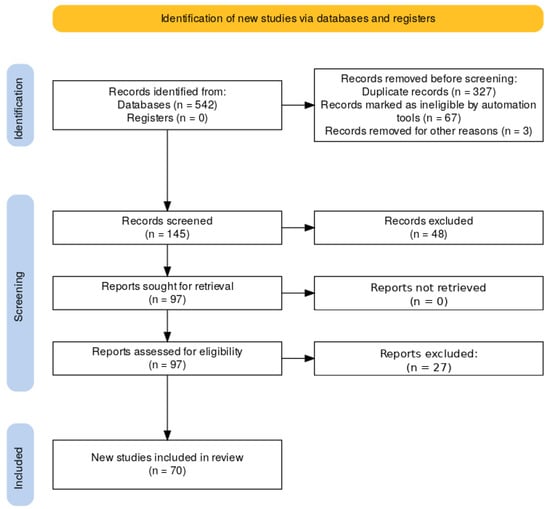
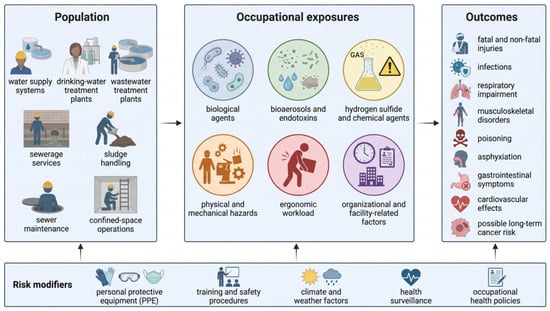
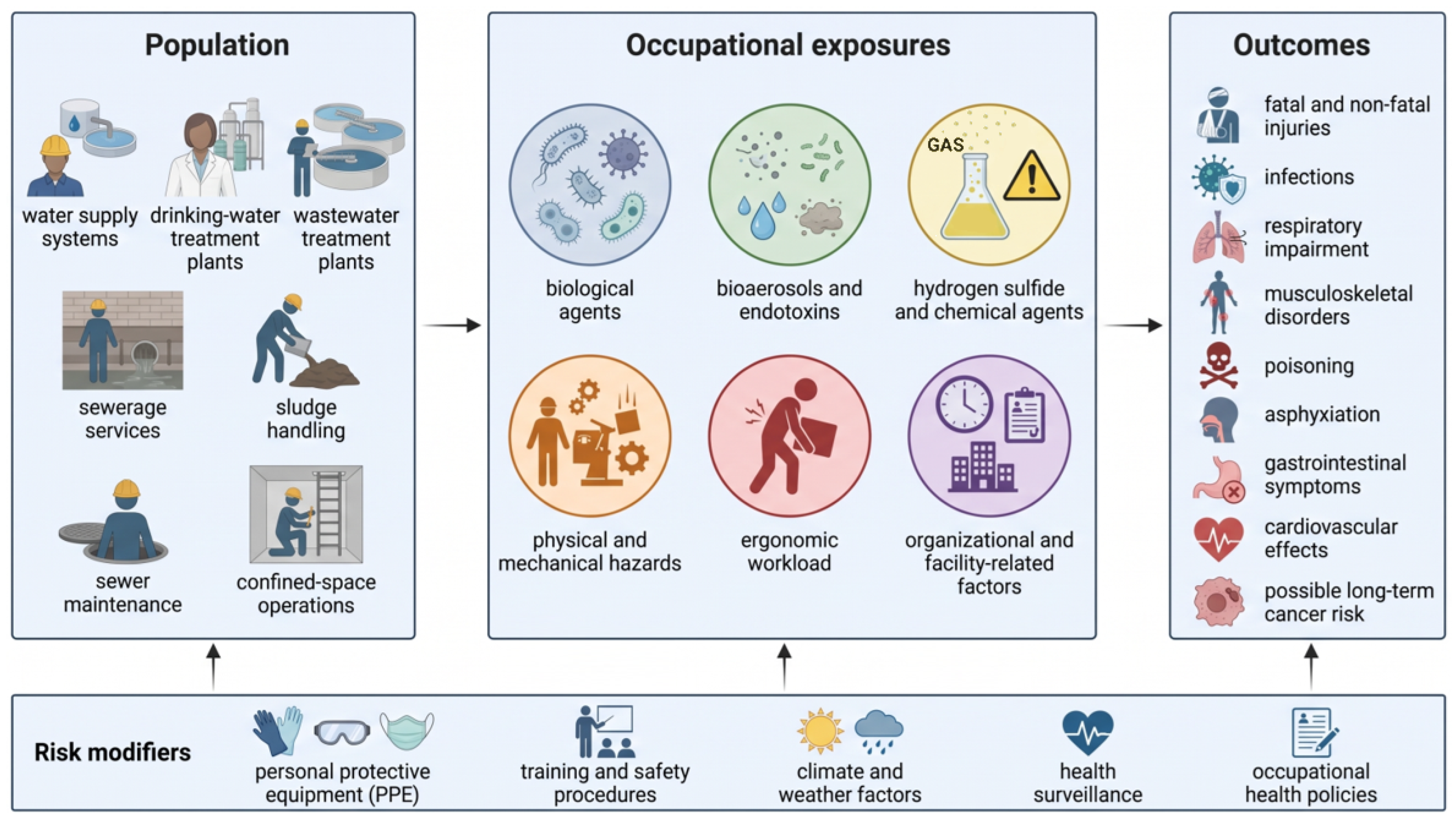
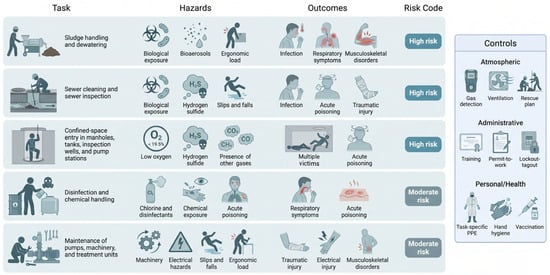
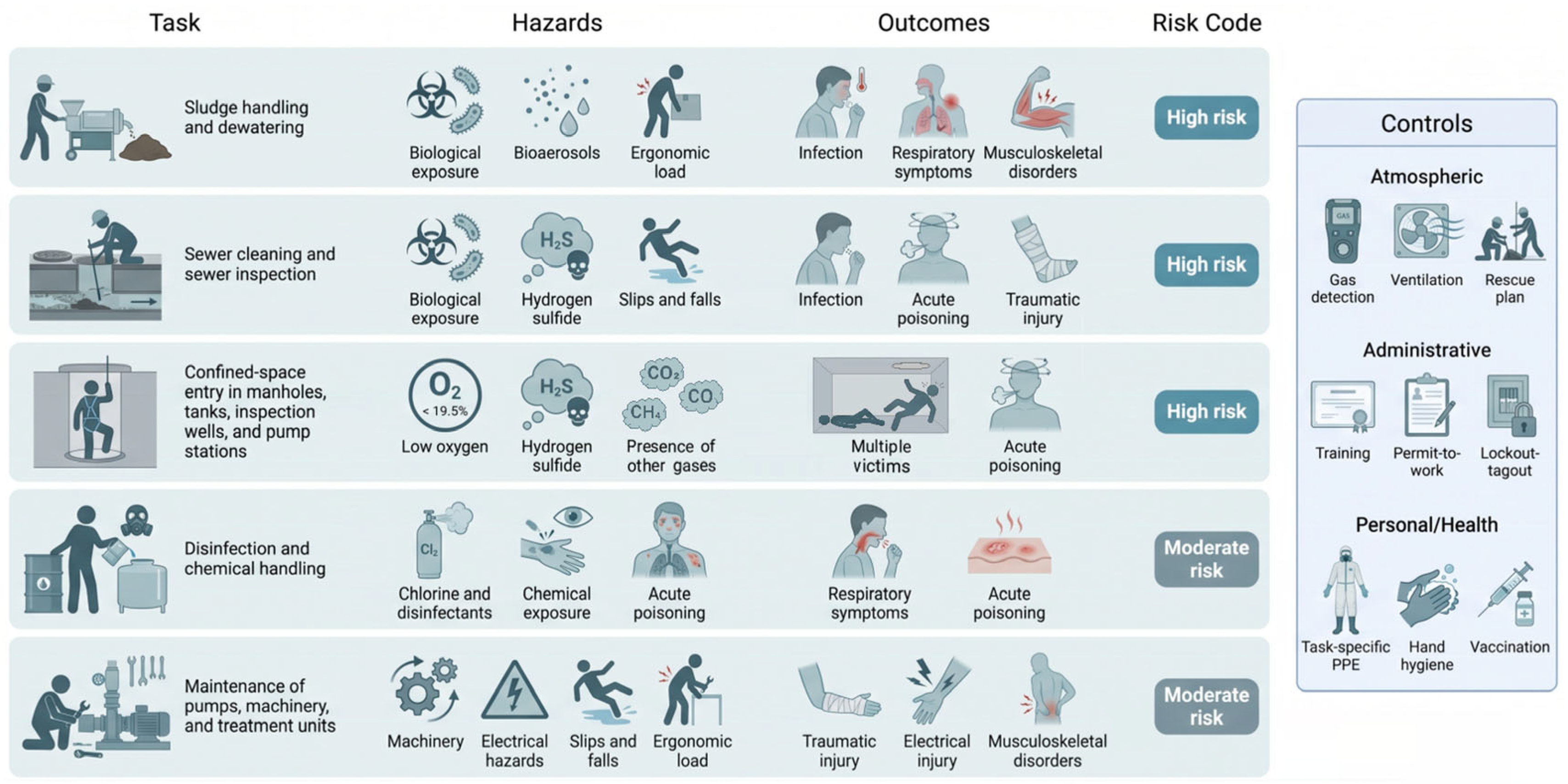

Disclaimer/Publisher’s Note: The statements, opinions and data contained in all publications are solely those of the individual author(s) and contributor(s) and not of MDPI and/or the editor(s). MDPI and/or the editor(s) disclaim responsibility for any injury to people or property resulting from any ideas, methods, instructions or products referred to in the content. |
© 2026 by the authors. Licensee MDPI, Basel, Switzerland. This article is an open access article distributed under the terms and conditions of the Creative Commons Attribution (CC BY) license.