


Featured Application
This review provides an integrated foundation for the practical use of juglone as a natural bioactive compound. By combining current knowledge on its chemistry, extraction, and biological activity, the paper supports the development of juglone-based antimicrobial and antioxidant formulations, redox-active anticancer candidates, and environmentally friendly allelopathic agents for sustainable agriculture.
Abstract
Juglone (5-hydroxynaphthoquinone) is a naturally occurring naphthoquinone broadly present in Juglans species and selected taxa of other plant families. Owing to its redox-active structure, it exhibits a wide range of biological effects, including antimicrobial, anti-inflammatory, and cytotoxic activity. Despite increasing interest in its potential applications, research on juglone remains dispersed, particularly with regard to extraction strategies, analytical approaches, and the relationship between composition and biological activity. This review provides an integrated overview of juglone, focusing on its natural occurrence, modern extraction techniques, analytical determination, and reported biological properties. Special attention is given to emerging green extraction approaches and challenges related to process standardization and reproducibility. The paper also highlights current limitations in linking phytochemical composition with biological effects and outlines future directions for improving the reliability and applicability of juglone-based systems. By combining chemical, analytical, and application-oriented perspectives, this paper offers a concise framework for further research and supports the development of safe, efficient, and sustainable strategies for the utilization of juglone in various industrial sectors.
1. Introduction
Juglone (5-hydroxynaphthalene-1,4-dione) is a naturally occurring naphthoquinone found primarily in species of the genus Juglans, but also in selected representatives of other plant families [1,2]. Structurally, it belongs to a broader group of 1,4-naphthoquinones—secondary metabolites widely distributed in plants, fungi, and bacteria—which play key roles in electron transport, redox regulation, and defense mechanisms against biotic and abiotic stress [3,4,5].
Over the past decade, there has been a growing research interest in natural quinones due to their chemical versatility and their relevance in pharmacology, biotechnology, and green chemistry [6,7,8,9]. In this context, juglone is considered one of the most representative and biologically potent plant-derived naphthoquinones, serving as both a model compound and a promising bioactive scaffold for further functionalization and application [7,10].
The unique chemical reactivity of juglone arises from its ability to undergo reversible redox transformations—responsible for its dual antioxidant and prooxidant properties, which depend on environmental conditions and cellular context [5,11]. At the molecular level, juglone can participate in redox cycling, generating reactive oxygen species (ROS), which in turn influence intracellular signaling pathways, mitochondrial function, and oxidative stress responses [12,13]. Simultaneously, the electrophilic quinone moiety enables covalent interactions with nucleophilic biomolecules such as proteins and nucleic acids, leading to modifications in enzyme activity and gene expression [11,14]. As a result, juglone exhibits a broad spectrum of biological activities, including antimicrobial, anti-inflammatory, allelopathic, and cytotoxic activity, which have been documented in numerous in vitro and in vivo studies [10,15,16,17]. Recent reports also indicate its ability to modulate apoptosis pathways, affect DNA integrity, and interfere with cancer cell metabolism, highlighting its potential as a lead compound in drug discovery [9,18,19].
Although juglone has long been recognized in traditional medicine and plant ecology—particularly due to the well-documented allelopathic effects of walnut species on surrounding vegetation [20,21]—scientific knowledge of its chemistry, biosynthesis, extraction, and biological activity remains dispersed across multiple research areas. Its biosynthesis involves complex metabolic pathways associated with plant developmental stages and environmental stress responses, which significantly influence juglone accumulation and distribution in plant tissues [1,4]. Moreover, its occurrence varies among plant organs such as leaves, husks, roots, and bark, further contributing to variability in experimental findings [22,23].
The diversity of plant raw materials, extraction solvents, and analytical procedures applied across studies results in substantial variability in reported extraction yields, purity, and activity of juglone [24,25]. Conventional and modern extraction methods, including ultrasound-, microwave-, supercritical fluid-, and deep eutectic solvent-based techniques, have been explored, each offering different efficiencies and selectivities [25,26,27]. However, the lack of standardized procedures complicates the comparison of results and limits reproducibility, which is a critical barrier to scientific progress. Additionally, recent studies emphasize that emerging green extraction technologies and solvent systems may significantly improve recovery efficiency and sustainability, although further optimization is required [28,29].
Another major challenge is the chemical instability of juglone. Its susceptibility to oxidation, photodegradation, and interactions with oxygen and metal ions makes it highly sensitive to extraction, processing, and storage conditions [30,31,32]. These factors may lead to structural transformations or degradation, thereby affecting both analytical results and biological activity assessments. Strategies such as encapsulation, complexation (e.g., with cyclodextrins) and formulation into nanosystems have been proposed to improve its stability and bioavailability [33,34].
The growing demand for natural bioactive compounds in the food, cosmetics, nutraceutical, and pharmaceutical industries has significantly increased interest in juglone as a multifunctional ingredient. Its antimicrobial and antioxidant properties support its potential use as a natural preservative and functional additive [16,35]. At the same time, its cytotoxic, proapoptotic, and antiproliferative activities make it a promising candidate for anticancer research and the development of novel therapeutic strategies [36,37,38]. This is particularly relevant in light of the increasing global incidence of many cancer types. Conventional chemotherapy is often associated with severe toxicities (e.g., hematological, gastrointestinal, and neurological), which limit both the dosage and duration of treatment. These challenges highlight the urgent need for new therapeutic approaches, including the development of plant-derived anticancer agents and formulations that may offer improved efficacy and safety profiles. In this context, juglone has emerged as a potential candidate, as demonstrated by numerous studies conducted in recent years—particularly within the last two years—investigating its anticancer properties [22,24,39,40,41]. Much of this research focuses on enhancing its hydrophilicity and bioavailability to broaden its biomedical applicability. Moreover, juglone’s allelopathic activity has significant implications for sustainable agriculture, particularly in the development of natural herbicides and environmentally friendly plant protection strategies [39,42,43]. In addition, juglone and its derivatives are increasingly being explored in advanced applications, including biosensors, nanotechnology-based delivery systems, and functional biomaterials [34,44].
Despite these promising perspectives, translating juglone from laboratory-scale research to practical applications requires a more comprehensive understanding of its chemical behavior, biological mechanisms, toxicity profile, and technological limitations. Interdisciplinary approaches integrating phytochemistry, molecular biology, pharmacology, and engineering are therefore essential to fully exploit its potential and ensure safe use.
The aim of this review is to organize the available knowledge through a detailed and up-to-date analysis of juglone’s natural sources, biosynthetic pathways, extraction methods, analytical tools, documented biological activities, and emerging application directions. By integrating chemical, biological, and technological perspectives, this paper provides a coherent framework for researchers and industry professionals interested in utilizing juglone as a versatile bioactive compound. This synthesis provides the basis for further scientific advancement and supports the development of safe, effective, and sustainable applications of juglone in modern biotechnological and industry.
2. Historical Outline
Juglone has been known since the 19th century, when it was first isolated from walnut tissues, most likely in the 1850s. Its original name, nucin, derives from the Latin word nux, meaning “nut” [11]. In 1887, the German chemists August Bernthsen and August Semper elucidated the structure of juglone and described its synthesis from naphthalene [24]. Earlier observations also contributed to the understanding of this compound; for example, French researchers M. Brissemoret and R. Combes, in 1905, reported the presence of juglone in all green parts of walnut trees, including leaves, stems, and husks, referring to studies published as early as 1884 [40].
The biological activity of juglone began to attract attention at the turn of the 20th century. Although the first reports of its adverse effects on plant growth appeared as early as 1881, its allelopathic (toxic) effects on other plant species were formally recognized in 1928 [41].
3. Natural Sources of Juglone
Juglone is found primarily in species of the genus Juglans, particularly J. nigra (black walnut) [22], J. regia (walnut) [45], and J. cinerea (white walnut) [46]. This compound is present in various plant organs—leaves, bark, roots, green fruits, and shells—with their contribution to metabolite accumulation varying significantly and reflecting the specific physiological functions of individual tissues [45,47]. The highest concentrations are typically observed in fresh shells and unripe fruits, indicating their specific protective role for the developing seed [48]. Representative examples of Juglans species in which juglone occurs at relatively high levels are illustrated in Figure 1.
Figure 1.
Example images of plants from the Juglans genus in which juglone occurs in the highest amounts: (from left to right) Juglans nigra, Juglans regia, and Juglans cinerea.
Although Juglans remains the richest source of juglone, its presence has also been confirmed in a few representatives of other genera, such as Plumbago and Eucalyptus [49]. In these cases, however, the metabolite content is significantly lower and often depends on specific environmental conditions or the plant’s developmental stage. This broadens the ecological perspective, suggesting that juglone may serve similar defensive functions in different evolutionary lineages, although its greatest biosynthetic significance is achieved within the genus Juglans.
A better understanding of the diversity of juglone sources requires a discussion of its formation method. The compound’s biosynthesis is linked to the naphthoquinone pathway, which leads to the production of numerous secondary metabolites with protective functions [1,3]. In plants, juglone acts both as an antibacterial and antifungal compound and as an allelopathic factor inhibiting the growth of competing species. Importantly, its action can be exerted in two ways: through direct excretion from roots or through release from decaying leaves and peels, which has long-lasting effects on soil properties and the microbiome [50,51].
When analyzing natural sources of juglone, it is impossible to ignore the wide variability in its content across different tissues and developmental stages. Young leaves and immature fruits typically exhibit higher concentrations than older tissues, confirming the metabolite’s importance in protecting the early stages of plant growth. This variability also reflects the influence of environmental factors—sunlight, water availability, soil type, and pathogen pressure—which modulate the activity of enzymes involved in the naphthoquinone pathway [4].
Juglone occurs in nut tissues as a glycoside, which, after hydrolysis by the enzyme β-glucosidase, is converted into the colorless and non-toxic α-hydrojuglone—see Figure 2. Only upon contact with air does α-hydrojuglone oxidize to a toxic but much more stable form: juglone [52,53].
Figure 2.
Formation of juglone.
The wide variability in juglone content emphasizes the need for careful selection of plant material for both extraction and functional purposes. Depending on the intended use—whether chemical analysis, bioactivity assessment, or technological applications—it is crucial to consider the species, organ, developmental stage, and environmental conditions that determine the final quality and activity of the extracted compound.
4. Molecular Mechanisms of Action of Juglone and Its Derivatives—Structure–Activity Relationship (SAR) of Juglone
The molecular mechanisms underlying juglone’s activity arise directly from its unique chemical structure, which allows it to affect numerous cellular processes simultaneously [7]. Understanding its structure–activity relationship (SAR) is therefore essential for interpreting its biological effects and for the rational design of derivatives with improved selectivity and reduced toxicity.
Juglone contains two key structural elements: a planar naphthalene scaffold and an electrophilic quinone system with a hydroxyl group at the C5 position. The interplay between these features determines its redox behavior, oxidative potential, and interactions with biomacromolecules such as proteins and DNA [44]. To improve clarity, representative chemical structures illustrating key modifications and their functional consequences are presented in Figure 3.
Figure 3.
Structural determinants of juglone activity and their mechanistic implications: (A) Core juglone scaffold with key features governing redox activity, electrophilicity, and planarity. (B) Representative derivatives illustrating major structural modification strategies and their biological consequences. (C) Redox cycling mechanism of juglone, including one-electron reduction leading to ROS generation and two-electron reduction associated with detoxification pathways.
The central determinant of juglone activity is the quinone system (see Figure 3A), which, in the presence of cellular electron donors such as NADH or NADPH, enables reversible transition between oxidized (quinone) and reduced (hydroquinone) forms [54]. This redox flexibility underlies the capacity of juglone to generate ROS, which contribute to its anticancer, antimicrobial, and allelopathic effects [8,11,55,56]. Modifications within the quinone ring, particularly the introduction of electron-donating or electron-withdrawing substituents, directly alter the redox potential. As a result, compounds with stronger electron-accepting character typically exhibit enhanced ROS production and cytotoxicity, although often at the expense of increased nonspecific toxicity [5].
A more detailed mechanistic insight involves redox cycling processes characteristic of naphthoquinones. In biological systems, juglone undergoes enzymatically mediated one-electron reduction, typically catalyzed by NAD(P)H-dependent reductases, generating a semiquinone radical intermediate (see Figure 3C). This unstable species rapidly reacts with molecular oxygen, regenerating the parent quinone while producing superoxide anion (O2•−), thereby establishing a catalytic redox cycle. Superoxide subsequently undergoes dismutation, either spontaneously or via superoxide dismutase, forming hydrogen peroxide (H2O2), which can further participate in Fenton-type reactions to generate highly reactive hydroxyl radicals (•OH). These processes collectively amplify oxidative stress, leading to damage of lipids, proteins, and DNA. Importantly, the biological outcome depends on the balance between one-electron reduction pathways, which promote ROS generation, and two-electron reduction pathways mediated by enzymes such as NAD(P)H: quinone oxidoreductase 1 (NQO1), which yield more stable hydroquinone species and may contribute to detoxification.
An equally important element of SAR is the hydroxyl group at the C5 position. It modulates polarity, hydrogen bonding capacity, and the stability of the quinone system. As illustrated in Figure 3B, modifications at this position (e.g., substitution or acylation) significantly alter electron distribution and electrophilicity. The presence of the hydroxyl group enhances Michael-type reactivity toward cellular nucleophiles such as glutathione, cysteine, or thiol residues in enzymes [57,58,59], leading to enzyme inhibition and disruption of redox homeostasis [60]. In addition, it may facilitate interactions with metal ions, suggesting a potential ability to form coordination complexes. Despite these proposed interactions, quantitative data on stability constants and coordination geometry under physiological conditions remain unavailable. Conversely, modifications that attenuate electrophilicity generally reduce biological activity, confirming the functional importance of this group [16]. At the same time, such modifications may increase chemical stability by reducing susceptibility to oxidation in solution or plant matrices [18,33].
The planar naphthalene framework also plays a significant role by enabling π–π stacking interactions and facilitating intercalation into DNA [14,61]. This property disrupts replication and transcription and activates DNA damage response pathways, which are particularly relevant for anticancer and antimicrobial activity. As indicated in Figure 3, derivatives with greater steric hindrance or disrupted planarity typically display reduced intercalation capacity and diminished cytotoxicity [62]. In addition, mitochondrial interactions represent an important aspect of juglone activity. The compound interferes with the electron transport chain, enhances ROS production, and decreases mitochondrial membrane potential, ultimately leading to caspase activation and apoptosis [12,19]. Increased lipophilicity of certain derivatives may enhance mitochondrial targeting but can also be associated with higher toxicity.
Overall, juglone’s SAR is governed by the interplay of redox properties, electrophilicity, molecular planarity, and hydrogen bonding capacity [58,63]. These features operate in a highly interdependent manner, with structural modifications simultaneously influencing multiple aspects of reactivity and biological response. However, quantitative correlations between redox potential (E°) and biological activity remain scarce and inconsistent across studies, limiting predictive SAR modeling.
The relationships between key structural elements, their chemical consequences, and associated biological effects are summarized in Table 1, while Figure 3 provides a visual representation of representative derivatives. Together, this integrated framework supports a more mechanism-oriented approach to the rational design of juglone-based compounds with improved selectivity, controlled reactivity, and enhanced stability.
Table 1.
Juglone SAR summary.
Juglone Derivatives and the Influence of Structural Modifications on Their Activity
Building on the SAR considerations, juglone serves as a versatile scaffold for the design of a wide range of natural and synthetic derivatives, including hybrid systems. Their biological properties are highly sensitive to structural modifications within the naphthoquinone core, and even minor changes may significantly affect activity, stability, and selectivity. This makes juglone-derived compounds an important focus in medicinal chemistry, pharmacology, and biotechnology [7,36,69].
Structural modification strategies (see Figure 3B) include functionalization of the quinone core, variation in the position and nature of substituents, and incorporation of additional pharmacophoric fragments. In particular, hybrid molecules—combining the juglone scaffold with other bioactive moieties—have attracted considerable attention as a strategy to enhance biological performance and tailor selectivity. Reported examples include juglone–chalcone conjugates, metal–juglone complexes, and hybrids with nitrogen-containing heterocycles, which often exhibit improved cytotoxic or antimicrobial activity compared to the parent scaffold. An overview of representative juglone derivatives and their reported biological activities is provided in Table 2.
A representative example of positional modification is lawsone (2-hydroxynaphthoquinone), in which the hydroxyl group is shifted from C5 to C2. This seemingly minor change alters the electrophilicity and redox potential of the molecule, resulting in stronger antifungal and antibacterial activity together with reduced cytotoxicity toward mammalian cells. The long-standing use of lawsone as a component of henna further supports its favorable safety profile [70,71].
Substituent effects are also illustrated by methoxy derivatives, such as 5-methoxyjuglone. Replacement of the hydroxyl group with a methoxy group reduces the electrophilicity of the quinone system, thereby reducing reactivity toward cellular nucleophiles. Although this leads to lower cytotoxicity, the increased lipophilicity improves permeability and chemical stability. These features make methoxy derivatives attractive for applications where stability and controlled activity are required, including antimicrobial and cosmetic formulations [72,73].
Table 2.
Comparison of selected juglone derivatives and their biological activity.
Another important strategy involves the introduction of amine groups into the naphthalene framework. Amine-substituted derivatives exhibit altered electronic properties and an increased capacity to interact with biomolecules through covalent or non-covalent interactions. Notably, many of these compounds show enhanced selectivity toward cancer cells along with improved anticancer activity and reduced nonspecific toxicity, highlighting their potential as lead structures in drug development [74]. Modification of the hydroxyl group through acylation represents a further approach to tuning juglone reactivity. Acyl derivatives, typically formed via esterification, display reduced redox activity and increased chemical stability. This attenuation of electrophilicity is often accompanied by lower cytotoxicity, which may be advantageous in applications requiring a milder biological profile, such as dermatological or cosmetic formulations, as well as in prodrug strategies enabling controlled release [75,76].
Halogenation constitutes another widely explored modification. The introduction of chlorine or bromine atoms increases lipophilicity and facilitates membrane penetration, often leading to enhanced antimicrobial activity. However, these benefits are accompanied by a potential increase in environmental persistence and toxicity, underscoring the need for careful evaluation of risk–benefit relationships in practical applications [63,64].
A broad range of additional synthetic derivatives have been described, encompassing aromatic ring substitutions, incorporation of alkyl or heterocyclic moieties, and structural modifications that increase molecular planarity. These strategies are primarily aimed at improving bioavailability, enhancing stability in biological environments, and enabling more effective interactions with specific molecular targets. Many such derivatives exhibit greater anticancer activity than the parent compound, often associated with an increased ability to intercalate into DNA or to promote oxidative stress more effectively [79,80]. In this context, hybrid systems that integrate the juglone scaffold with additional pharmacophores represent a particularly promising direction, as they allow multiple mechanisms of action to be combined within a single molecular framework.
Overall, these examples demonstrate that structural modifications of the juglone scaffold directly influence key parameters determining biological activity, selectivity, and physicochemical properties relevant to practical use. Consequently, juglone derivatives constitute a structurally diverse and functionally versatile class of compounds whose properties can be finely tuned through rational design. The key structural modifications, their chemical implications, and corresponding biological effects are summarized in Table 3, providing a comparative overview of major juglone derivatives discussed in this section.
Table 3.
Key structural modifications of juglone, their chemical consequences, and associated biological effects.
5. Biological Activity
Juglone is often perceived in everyday contexts as an undesirable substance, for example due to its ability to stain the skin during contact with walnut husks. However, from a chemical and biological perspective, it represents a highly reactive secondary metabolite with a broad spectrum of both beneficial and potentially harmful effects. The diversity of juglone’s biological activities arises directly from its multifunctional chemical nature, which enables it to interfere with key metabolic processes in living cells.
Its reported biological effects include antioxidant and prooxidant activity, as well as antimicrobial, anti-inflammatory, cytotoxic and anticancer properties, together with well-documented allelopathic interactions [11,24]. Importantly, these activities should not be considered independent or intrinsic properties of the molecule. Rather, they originate from a common mechanistic basis involving redox cycling and covalent interactions with cellular nucleophiles and other biomolecules. Consequently, juglone’s activity is strongly context-dependent and governed by factors such as concentration, cellular redox status, oxygen availability, and the presence of competing metabolites.
In contrast to earlier, predominantly descriptive summaries, the biological profile of juglone presented in this review is interpreted as a dynamic and context-dependent reactivity pattern that varies across biological systems. This perspective highlights that even small changes in environmental conditions—or in molecular structure—can significantly shift the balance between antioxidant and prooxidant effects, as well as alter biological selectivity. In this regard, increasing attention has been directed toward structurally modified juglone derivatives, in which substitution patterns modulate redox potential, electrophilicity, and interaction with biological targets.
In the following sections, the major biological activities of juglone are discussed with emphasis on their mechanistic background, particularly redox-related processes and emerging structure–activity relationships, to provide a more integrated and critically interpreted view of this compound. Representative quantitative parameters reported for juglone, including biological activity thresholds and extraction efficiency, are summarized in Table 4. Although these values provide a useful reference framework, their comparability remains limited due to differences in experimental models and conditions.
Table 4.
Quantitative parameters reported for juglone and selected systems.
5.1. Allelopathic Effect
According to the literature [43,102], allelopathy is defined as any direct or indirect effect of one plant on another mediated by chemical compounds released into the environment. The concept, introduced by Hans Molish (1856–1937), encompasses both inhibitory and stimulatory biochemical interactions between organisms, including microorganisms, fungi, algae, and higher plants, resulting from the action of secondary metabolites [103]. In the case of juglone, allelopathic effects were first confirmed in the late 19th century in Wisconsin (USA), were black walnut trees were observed to inhibit the growth of neighboring plants [41]. Subsequent studies, including those by Davis, identified juglone as the primary allelochemical responsible for this phenomenon [21].
Species of the Juglandaceae family release allelochemicals through multiple pathways, including volatilization, leaching from plant tissues, and decomposition of organic matter. In the case of juglone, the dominant route is root exudation, leading to its accumulation in the surrounding soil. Juglone present in the rhizosphere can affect neighboring plants within a limited distance from the root system, causing symptoms such as wilting, chlorosis, necrosis, and ultimately plant death [50,104]. Notably, phytotoxic effects are strongly concentration-dependent, with inhibitory activity typically observed at relatively high concentrations (approximately 250 µM to 1 mM). In natural conditions, such levels are reached gradually over extended periods (12–25 years), reflecting the cumulative release and persistence of juglone in the soil environment [50]. To better illustrate the variability in plant responses to juglone exposure, representative species classified according to their sensitivity are summarized in Table 5.
Table 5.
Plant species exhibiting different levels of sensitivity to juglone exposure.
From a mechanistic perspective (see Figure 3C), the allelopathic effects of juglone are closely associated with its redox-active quinone structure and electrophilic properties [91,92]. The redox cycling process leads to oxidative stress, disrupting cellular homeostasis in susceptible species. At the physiological and cellular level, juglone reduces photosynthetic efficiency through a decrease in chlorophyll content and interferes with respiration processes. It also inhibits seed germination and early seedling development, and restricts both shoot and root growth.
These effects are linked to several molecular targets. Juglone interferes with membrane-associated processes, including inhibition of plasma membrane H+-ATPase, which limits proton transport and reduces water and nutrient uptake. It also alters membrane potential by affecting ion transport, particularly through interactions with potassium channels. It should be noted, however, that the proposed mechanisms involving K+ channel blocking and H+-ATPase inhibition are largely inferred, and direct electrophysiological evidence (e.g., patch-clamp or membrane potential measurements) confirming these molecular targets in plant systems remains limited. In addition, juglone induces lipid peroxidation and protein damage as a consequence of ROS accumulation and can form covalent adducts with cysteine-rich proteins, thereby disrupting essential processes such as cell division. The compound may also affect plant–microbe interactions by impairing symbiotic organisms that contribute to nutrient acquisition [21].
Despite its predominantly inhibitory role, juglone can exhibit stimulatory effects at lower concentrations, highlighting a hormetic response. Under such conditions, enhanced seed germination and increased yield have been observed, along with the activation of detoxification mechanisms, such as those occurring in seed coats [92]. This dual behavior is consistent with a redox-mediated signaling role, in which moderate oxidative stimuli can activate adaptive responses, whereas excessive ROS levels lead to cellular damage.
The differential sensitivity of plant species to juglone (see Table 5), ranging from high sensitivity to relative tolerance, likely reflects variations in redox buffering capacity and detoxification mechanisms, including differences in glutathione levels and antioxidant enzyme activity, although these relationships have not yet been systematically quantified. The concentration-dependent nature of juglone activity is further illustrated by studies on Solanum lycopersicum L., where application of two concentrations (10−3 M and 10−4 M) to different plant parts revealed contrasting effects. Over a seven-day period, the lower concentration stimulated plant growth, manifested by enhanced cell division, accelerated filament development, and improved mitochondrial function, whereas higher concentrations produced inhibitory effects [50].
Taken together, these observations indicate that juglone-mediated allelopathy should be interpreted not solely as a toxic phenomenon but rather as a complex, redox-driven interaction, in which chemical reactivity, environmental conditions, and species-specific responses collectively determine the biological outcome.
5.2. Toxicity to Other Organisms: Redox and Electrophilic Mechanisms
Assessing the toxicity of juglone is essential for understanding its biological potential, since the same chemical features responsible for its activity also underlie its adverse effects in living systems. However, quantitative toxicological parameters such as LD50, NOAEL, or LOAEL remain sparsely reported and are often derived from heterogeneous experimental models, which limits direct comparison and hampers comprehensive risk assessment. The currently available data are summarized in Table 4.
The toxicity of juglone (see Figure 3) is primarily governed by two interrelated mechanisms: redox cycling associated with ROS generation and covalent modification of cellular nucleophiles. Juglone toxicity is defined by the balance between one-electron reduction pathways, which promote ROS generation, and two-electron reduction pathways mediated by enzymes such as NAD(P)H:quinone oxidoreductase 1 (NQO1), which may contribute to detoxification. The resulting oxidative processes lead to the formation of hydrogen peroxide and highly reactive hydroxyl radicals, causing damage to DNA, lipids, and proteins [81,106].
In parallel, juglone exhibits pronounced electrophilic reactivity and forms Michael-type adducts with thiol-containing biomolecules such as glutathione and cysteine residues in proteins. These interreactions lead to depletion of intracellular antioxidant reserves, inactivation of redox-sensitive enzymes, and disruption of key signaling pathways, thereby intensifying oxidative damage [107]. The combined action of these redox and electrophilic interactions underlies the overall cytotoxic profile of juglone.
At the cellular level, these mechanisms lead primarily to apoptosis associated with mitochondrial dysfunction, while higher concentrations may result in loss of membrane integrity and necrotic cell death. In vitro studies consistently demonstrate significant cytotoxicity across a wide range of cell lines [84,108], with the magnitude of the effect depending on concentration, exposure time, and intrinsic cellular properties such as baseline oxidative stress and detoxification capacity. Cancer cells often exhibit increased susceptibility due to altered redox homeostasis; however, the relatively low selectivity of juglone limits its direct therapeutic applicability. In vivo studies further confirm systemic toxicity, particularly affecting the liver and kidneys [37,93]. Observed effects include histological changes, alterations in biochemical parameters, and symptoms of systemic oxidative stress. At higher doses, juglone may induce circulatory and respiratory disorders, gastrointestinal damage, and neurotoxic effects [94,95]. Its toxicity profile is therefore strongly dependent on dose, route of administration, exposure time, and formulation.
In addition to systemic toxicity, juglone exhibits irritant and sensitizing effects, causing irritation of the skin and mucous membranes and, upon prolonged exposure, inflammatory reactions or contact hypersensitivity [109,110]. From an environmental perspective, its impact extends beyond plants to a wide range of organisms, including microorganisms, fungi, insects, and aquatic species. Although juglone is biodegradable, locally elevated concentrations may significantly alter plant communities and microbial ecosystems [24]. Toxic effects have been reported in marine organisms at relatively low concentrations, whereas higher doses are required to induce toxicity in mammals, although severe outcomes, including necrosis and mortality, may occur at excessive exposure levels [22].
In summary, juglone toxicity reflects its intrinsic redox activity and electrophilic nature, which together disrupt cellular homeostasis and biomolecular integrity. These properties account for its broad biological activity but simultaneously limit its practical use. From a medicinal chemistry perspective, this lack of selectivity has stimulated growing interest in structurally modified juglone derivatives and advanced delivery systems, aimed at fine-tuning redox potential, reducing non-specific reactivity, and improving biological specificity—an aspect that has been insufficiently emphasized in earlier reviews.
5.3. Medicinal Properties
5.3.1. Antioxidant and Prooxidant Properties
Juglone is a compound with an exceptionally complex redox profile, combining structural features characteristic of phenolic antioxidants with the prooxidant behavior typical of quinones [13,111]. In simplified in vitro systems, juglone often exhibits behavior consistent with classical phenolic antioxidants. Its conjugated quinone structure allows for efficient electron delocalization, stabilizing radical intermediates [112]. The hydroxyl group can donate a hydrogen atom or an electron, enabling direct scavenging of free radicals such as DPPH• and ABTS•+ [113,114]. In addition, juglone demonstrates reducing capacity in assays such as FRAP and ORAC, inhibits lipid peroxidation, and can chelate Fe2+ ions, thereby limiting their participation in Fenton-type reactions and reducing the formation of highly reactive hydroxyl radicals [45,115,116]. These properties translate into decreased levels of oxidative damage markers and protection of cellular components under controlled experimental conditions. At the biological level, the antioxidant effects are also linked to modulation of endogenous defense systems, including increased activity of enzymes such as superoxide dismutase and reduction in oxidative damage in tissues. Juglone has been reported to influence redox-related signaling pathways, reduce markers of oxidative stress in animal models, and interfere with phosphorylation processes associated with pathological conditions, including neurodegenerative and fibrotic diseases [11]. These observations, however, need to be interpreted with caution, as they depend strongly on experimental conditions and dose.
In contrast, in complex biological environments—particularly in vivo—the prooxidant character of juglone becomes dominant. As a quinone, juglone readily undergoes enzymatically mediated reduction to a semiquinone radical in the presence of NAD(P)H-dependent reductases (see Figure 3). This unstable intermediate reacts rapidly with molecular oxygen, generating superoxide anion and regenerating the parent molecule, thereby initiating a redox cycle [5,90]. The resulting superoxide is further converted into hydrogen peroxide, which in the presence of transition metal ions can yield hydroxyl radicals. This cyclic process leads to sustained ROS production and amplification of oxidative stress. In many biological systems, including cancer cells and microorganisms, this prooxidant activity is the primary determinant of biological effects. Elevated ROS levels disrupt mitochondrial function, alter membrane potential, and trigger oxidative modification of lipids, proteins, and nucleic acids, ultimately leading to activation of apoptotic or necrotic pathways [19,82]. Interestingly, juglone may act as a relatively selective prooxidant in cells with an already disturbed redox balance, such as tumor cells, although this selectivity remains limited and context-dependent.
Overall, juglone should be regarded as a redox-active molecule with a dual and dynamic nature. In simple chemical systems and at lower concentrations, antioxidant effects may predominate, whereas in cellular environments, particularly at higher concentrations or in the presence of active redox cycling, ROS generation becomes the dominant mechanism. This duality is fundamental for interpreting its biological effects and for the rational development of its potential therapeutic applications.
5.3.2. Cytotoxic and Anticancer Activity
Currently, one of the extensively investigated aspects of juglone activity is its cytotoxic and anticancer potential. In vitro studies have shown that juglone exhibits pronounced cytotoxicity against a wide range of human cancer cell lines, including glioma, melanoma, breast, colon, leukemia, gastric, ovarian, prostate, and bladder cancers [11,47,84]. These effects are primarily associated with its ability to disrupt cellular homeostasis and induce programmed cell death pathways.
From a mechanistic perspective, as illustrated in Figure 3, juglone acts as a redox-active mediator, sustaining ROS generation through cyclic quinone–semiquinone interconversion [83,117]. While moderate levels of ROS play essential physiological roles in intracellular signaling, proliferation, and cell cycle regulation, excessive ROS accumulation leads to oxidative stress and triggers cell death via apoptotic or necrotic pathways, depending on cellular context and environmental conditions [117].
At the molecular level, juglone modulates key regulators of apoptosis. It has been shown to downregulate antiapoptotic BCL-2 and upregulate proapoptotic BAX, thereby promoting mitochondrial outer membrane permeabilization. This process is accompanied by a decrease in mitochondrial membrane potential, release of cytochrome c, activation of caspase-3, and subsequent execution of apoptosis [85]. In parallel, increased intracellular Ca2+ levels and oxidative modification of cellular macromolecules further contribute to mitochondrial dysfunction and cell death. However, the precise mitochondrial targets of juglone remain unclear, as available studies do not differentiate between potential effects on individual respiratory chain complexes (e.g., Complex I vs. Complex III) or provide detailed bioenergetic measurements such as oxygen consumption rates.
In addition to apoptosis, increasing evidence suggests that juglone can induce ferroptosis, a distinct and regulated form of cell death driven by iron-dependent lipid peroxidation. However, the evidence for ferroptosis induction remains largely indirect, as key markers such as lipid peroxidation products (e.g., MDA, 4-HNE), GPX4 activity, or the use of specific inhibitors (e.g., ferrostatin-1) are not consistently reported across studies. Mechanistically, this process involves intracellular Fe2+ accumulation, depletion of glutathione (GSH), and impairment of antioxidant defense systems, leading to uncontrolled lipid peroxidation and membrane damage. Juglone has been shown to enhance HMOX1 expression and facilitate heme degradation, thereby increasing the intracellular iron pool and promoting ferroptotic processes [59,107]. However, it should be noted that, in the case of quinones such as juglone, ferroptosis is not an isolated pathway but rather part of a broader redox imbalance, in which ROS generation, thiol depletion, and iron metabolism are tightly interconnected [5,11,19]. This highlights the need for further mechanistic studies to clearly distinguish between overlapping modes of cell death and to better define the conditions under which ferroptosis predominates.
Additionally, juglone has been reported to interfere with cell cycle progression, particularly by inducing S-phase arrest. This effect is associated with downregulation of cyclin A and upregulation of p21 at both transcriptional and protein levels, contributing to the inhibition of cancer cell proliferation [107].
Despite these promising anticancer properties, it is important to emphasize that juglone’s cytotoxic effects are not inherently selective toward cancer cells. Its mechanism of action relies largely on non-specific redox cycling and electrophilic interactions, which can also affect normal cells. This limited selectivity represents a major barrier to clinical application and underscores the importance of developing structurally modified derivatives and targeted delivery systems that can improve therapeutic index and reduce systemic toxicity.
Taken together, juglone’s anticancer activity should be viewed as a consequence of its redox-driven and multi-target reactivity. While this multifunctionality underpins its biological potency, it also necessitates a more nuanced, structure–activity-oriented approach to its further development and application. Future studies should aim to integrate quantitative redox parameters with biological activity data to establish predictive structure–activity relationships.
5.3.3. Antimicrobial Activity of Juglone
Antimicrobial activity refers to the ability of a compound to inhibit the growth or eliminate microorganisms, including bacteria, fungi, and, in some cases, viruses. In the case of juglone, this activity is well documented and encompasses both antifungal and antibacterial effects [11,118]. These effects are consistent with the general redox-mediated reactivity of juglone described in previous sections. Traditionally, the antimicrobial properties of juglone have been exploited in folk medicine. For example, the juice obtained from freshly macerated, unripe black walnut (Juglans nigra) shells has been used for the treatment of local fungal infections, reflecting the presence of bioactive naphthoquinones in plant tissues [111,118]. Experimental studies have confirmed the antifungal efficacy of juglone and walnut-derived extracts against a broad spectrum of pathogens, including plant pathogens (Alternaria alternata, Rhizoctonia solani, Botrytis cinerea, Fusarium culmorum, Phytophthora cactorum, Penicillium verrucosum, Fusarium graminearum), bee pathogens (Ascosphaera apis), and food-contaminating fungi (Penicillium digitatum, Aspergillus niger, Fusarium verticilliode) [88,119,120]. In some cases, the antifungal effectiveness of juglone has been reported to be comparable with selected commercially used agents such as zinc undecylenate and selenium sulfide [11].
Juglone also exhibits activity against both Gram-positive and Gram-negative bacteria, as well as certain viruses. Its antimicrobial mechanism leads to membrane damage, increased permeability, cytoplasmic leakage, metabolic disruption, and ultimately cell death [87]. Although these effects are consistent with redox-mediated stress and electrophilic reactivity, specific molecular targets in microbial cells (e.g., defined enzymes or DNA damage pathways) have not been clearly identified, and the mechanism remains largely non-specific. Juglone can also undergo Michael-type addition reactions with thiol groups in microbial proteins, resulting in enzyme inhibition and impairment of essential metabolic pathways. At the same time, it should be noted that the antimicrobial activity of juglone is not always selective, and its efficacy is strongly dependent on concentration and environmental conditions. This limitation has stimulated interest in strategies to improve its bioavailability and reduce toxicity. Among these, nanostructured delivery systems have attracted particular attention. Encapsulation of juglone in nanoparticulate carriers has been shown to enhance stability, improve bioavailability, and enable controlled release, thereby increasing antimicrobial efficacy while reducing required doses [34,120].
Beyond medical and agricultural applications, juglone has also been investigated as an agent for controlling cyanobacterial growth in aquatic systems, particularly in open pond environments [38]. Interestingly, its antimicrobial activity in such systems appears to be transient, as juglone undergoes relatively rapid degradation in aqueous environments. Studies indicate that juglone is rapidly converted to less toxic components and can be metabolized by environmental microflora [16,99,100,121]. This rapid degradation may reduce long-term environmental impact, although locally elevated concentrations can still pose ecological risks.
In response to these limitations, recent research has increasingly focused on the design of juglone analogs and derivatives with improved antimicrobial profiles. Structural modifications of the naphthoquinone core offer the possibility to modulate redox potential, stability, and target selectivity, thereby enhancing efficacy while minimizing toxicity toward non-target organisms. This direction highlights the importance of integrating SAR considerations into the future development of juglone-based antimicrobial agents.
5.3.4. Anti-Inflammatory Activity
Experimental studies indicate that juglone reduces the production of pro-inflammatory cytokines, including TNF-α, IL-6, and IL-1β, thereby attenuating inflammatory signaling cascades [11,31,122]. In addition, it inhibits the activity of enzymes such as cyclooxygenases (COX) and lipoxygenases (LOX), leading to decreased synthesis of prostaglandins and other inflammatory mediators. These effects are consistent with the suppression of oxidative stress-driven inflammatory responses.
At the molecular level, juglone interferes with major redox-sensitive signaling pathways, including NF-κB and MAPK. Since these pathways are activated in response to oxidative stimuli and regulate the expression of numerous inflammatory genes, their modulation by juglone further supports a mechanism linking redox activity to anti-inflammatory outcomes. This relationship should be interpreted in the broader context of juglone’s dual redox behavior, where both antioxidant and prooxidant effects may influence inflammatory responses depending on concentration and cellular environment [11,31,122]. It remains unclear whether these effects result from direct modulation of signaling proteins or are secondary to changes in intracellular redox status, which may indirectly influence pathway activation. Although these findings highlight the potential of juglone as a modulator of inflammation, it is important to consider that its biological effects are not inherently selective and may be accompanied by cytotoxicity at higher concentrations. Therefore, its therapeutic applicability remains contingent on careful dose optimization and, potentially, structural modification aimed at improving selectivity. In this context, the development of juglone derivatives with tuned redox properties represents a promising direction for future anti-inflammatory applications.
5.3.5. Other Properties
In addition to the activities discussed above, juglone exhibits a range of additional medicinal and functional properties that reflect its broad chemical reactivity and interaction with biological systems. These applications, although diverse, can generally be linked to its redox activity, antimicrobial effects, and ability to interact with biomacromolecules.
In the field of dentistry, juglone has been investigated as a multifunctional agent with antiplaque, antifungal, antibacterial, and anticaries properties. Its potential use in oral care formulations is currently being explored, where its antimicrobial activity may contribute to improved oral hygiene and prevention of biofilm formation [123]. However, as in other applications, its effectiveness must be balanced against possible cytotoxic effects, particularly at higher concentrations.
Juglone has also been reported to exhibit antispasmodic and antihypertensive effects, as wel as cardioprotective activity. These effects have been associated with its influence on membrane stability and redox balance in cardiac tissue, leading to reduced myocardial damage under stress conditions. In this context, juglone has been shown to exert protective effects on cardiomyocytes, in some cases comparable to established pharmacological agents such as atenolol [124]. Nevertheless, the underlying mechanisms remain insufficiently defined, and further studies are required to clarify its mode of action and therapeutic relevance.
In dermatological applications, extracts from black walnut (Juglans regia and Juglans nigra) containing juglone are used in the treatment of acne and inflammatory skin conditions [125,126]. These effects likely arise from a combination of antimicrobial and anti-inflammatory activities, although the potential for irritation or sensitization must also be taken into consideration.
Beyond pharmacological uses, juglone is widely recognized for its physicochemical properties as a natural pigment. It is the principal coloring component of walnut extracts and has long been used as a brown dye for natural fibers, such as wool, cotton, and silk, as well as synthetic materials [127]. Its ability to form stable interactions with protein-based substrates has also led to its application in cosmetic formulations, particularly as a natural, semi-permanent hair dye. In this context, juglone combines coloring capability with antimicrobial activity, offering a functional advantage over some synthetic dyes while generally causing lower levels of skin irritation [128,129].
Interestingly studies using infrared spectroscopy have demonstrated that juglone can interact directly with hair fibers, modifying the cuticle structure and improving surface smoothness [35]. This suggests that its effects extend beyond coloration to include structural modification of keratinous materials, likely through interactions with protein functional groups.
Despite these promising applications, it should be emphasized that juglone’s multifunctionality is intrinsically linked to its chemical reactivity, which may limit its safe use in certain contexts. Therefore, future development in this area is expected to focus on optimizing formulation strategies and exploring structurally modified derivatives that retain beneficial properties while minimizing undesired effects. This approach aligns with broader efforts to better understand structure–activity relationships and improve the applicability of juglone-based systems across different domains.
Taken together, the diverse biological activities of juglone—ranging from allelopathic and antimicrobial effects to cytotoxic, anti-inflammatory, and functional applications—originate from a common chemical foundation defined by its redox-active quinone scaffold and electrophilic nature. As highlighted throughout this section, the interplay between redox cycling, ROS generation, and covalent interactions with biomolecules underlies both its beneficial and adverse effects. Importantly, these activities should not be interpreted in isolation, but rather as interconnected outcomes of a dynamic and context-dependent reactivity profile.
This perspective emphasizes that juglone does not act as a single-target compound but rather as a multi-modal redox mediator, whose biological effects depend on concentration, cellular environment, and intrinsic defense capacity. Consequently, its lack of inherent selectivity represents a major limitation for practical applications, particularly in therapeutic contexts. At the same time, this chemical versatility provides opportunities for rational optimization. In this regard, increasing attention has been directed toward structurally modified derivatives and advanced formulation strategies aimed at modulating redox properties, improving selectivity, and reducing toxicity.
A deeper understanding of the interplay between chemical structure, redox behavior, and biological response is essential for advancing the development of juglone-based systems. Such an approach not only bridges the chemistry–biology interface but also promotes a more critical, mechanism-oriented interpretation of its biological activity. Taken together, these observations suggest that juglone should be regarded as a non-selective redox-active compound rather than a target-specific agent. While this characteristic offers certain opportunities, it also imposes significant limitations on its practical application.
5.4. Pharmacokinetics and Bioavailability
Despite extensive research on the biological activity of juglone, its pharmacokinetic profile remains poorly characterized. Available data are limited and derived mainly from in vitro or animal studies, which restricts direct translation to human systems. Juglone is a small, moderately lipophilic molecule, suggesting a potential for passive diffusion across biological membranes. However, its high reactivity and susceptibility to redox transformations significantly influence its stability, distribution, and metabolic fate. In biological systems, juglone is rapidly reduced to hydroquinone forms, which may undergo conjugation reactions (e.g., glucuronidation or sulfation) and subsequent elimination [5,81,106].
An important factor affecting juglone pharmacokinetics is its interaction with intracellular thiols, particularly glutathione. This leads to rapid detoxification but also contributes to depletion of antioxidant defenses and modulation of intracellular redox balance [107]. Additionally, enzymatic pathways such as those involving NAD(P)H:quinone oxidoreductase 1 (NQO1) may play a dual role by promoting either detoxification (via two-electron reduction) or influencing redox cycling depending on cellular context [5,81].
At the cellular level, these transformations affect both the persistence and biological activity of juglone, contributing to its relatively short intracellular lifetime and high reactivity. Consequently, systemic distribution and accumulation are expected to be limited, although detailed quantitative data are not available.
Currently, there is a lack of systematic data on absorption, distribution, metabolism, and excretion (ADME), as well as on plasma half-life, bioavailability, and tissue distribution following different routes of administration. This gap represents a major limitation for the therapeutic development of juglone and highlights the need for comprehensive pharmacokinetic and toxicological studies [37,93].
6. Juglone Instability—Degradation Mechanisms and Practical Implications
Juglone is a compound particularly susceptible to degradation [130]. In the presence of oxygen, it readily undergoes autoxidation, leading to the formation of hydroxy derivatives and semiquinone intermediate. The resulting products can subsequently polymerize or interreact with other components of the extract matrix, resulting in color changes and a reduction in biological activity. The degradation process is further accelerated by exposure to light, especially UV radiation, as photolysis initiates the rupture of bonds in the naphthoquinone system and promotes the generation of reactive oxygen species [99,100]. This leads to products with modified structures and often altered bioactive profiles.
The exact pathway of juglone degradation has not yet been fully elucidated. Nevertheless, it is known that certain soil microorganisms, such as Pseudomonas putida J1, are capable of utilizing juglone as their sole source of carbon and energy. Available studies suggest that its degradation proceeds through a series of sequential biochemical transformations involving specific intermediate compounds, ultimately leading to complete mineralization into simple, non-toxic products. As illustrated in Figure 4, this process likely involves stepwise modification of the naphthoquinone core structure, accompanied by oxidative and ring-cleavage reactions [26].
Figure 4.
Proposed degradation pathway of juglone, showing key intermediate products formed during microbial transformation and progressive mineralization [131].
Juglone’s stability is also strongly influenced by temperature and environmental pH [99,132]. Elevated temperatures accelerate oxidation reactions and can lead to irreversible degradation of the molecule, particularly in alkaline environments, where the quinone system is more susceptible to nucleophilic attack. In contrast, slightly acidic conditions slow down degradation processes and help preserve chemical integrity. Understanding these relationships is crucial for the rational design of extraction processes and the selection of appropriate analytical conditions [100].
To illustrate the complexity of juglone degradation and the interplay between oxidative, photochemical, and matrix-dependent pathways, a mechanistic scheme has been included (Figure 5). This visualization summarizes the major transformation routes and highlights how environmental and processing conditions shape the chemical fate and biological activity of juglone.
Figure 5.
Degradation pathways of juglone under environmental and processing conditions.
6.1. Stability of Juglone During Storage of Extracts
Despite juglone’s well-recognized chemical instability, its behavior during storage of plant extracts requires separate consideration. Extracts containing juglone are exposed to multiple degradation-promoting factors simultaneously—oxygen, residual moisture, light, and temperature fluctuations—which can significantly accelerate the loss of the native compound.
Studies on walnut husk and bark extracts demonstrate that juglone content decreases progressively during storage, with the rate of degradation depending on solvent polarity, oxygen availability, and storage temperature [87,113]. Oxidative pathways dominate under aerobic conditions, leading to the formation of brown polymeric products and a measurable decline in antioxidant and antimicrobial activity. Light exposure further intensifies these changes, even in semi-opaque containers, due to the high photosensitivity of the naphthoquinone chromophore [31,99].
Solvent choice also plays a critical role. Alcohol-based extracts show slower degradation compared to aqueous ones, while the presence of natural phenolics or reducing agents can partially stabilize juglone by limiting ROS-driven transformations [113]. Conversely, extracts stored in alkaline or neutral conditions degrade substantially faster, consistent with the pH-dependent reactivity of the quinone system.
To minimize degradation during storage, several strategies are recommended:
- –
- Limiting oxygen exposure through sealed or inert-gas-flushed containers;
- –
- Storing extracts at low temperatures (preferably <4 °C);
- –
- Protecting samples from light;
- –
- Using stabilizing solvents or additives such as DES, glycerol, or antioxidant co-extracts [128,133].
Implementing these measures is essential for ensuring reproducibility of analytical results and maintaining the biological relevance of stored samples.
To provide a concise overview of both the factors that accelerate juglone degradation and the practical strategies that can be applied to mitigate these effects, a summary table has been prepared (Table 6). This integrated presentation facilitates the assessment of degradation risks at different stages of extract handling and supports the selection of appropriate storage and analytical conditions.
Table 6.
Factors accelerating juglone degradation and recommended stabilization strategies.
6.2. Practical Consequences for Extraction and Analysis
Juglone’s instability has several practical implications. High-temperature extraction methods, such as Soxhlet, pressurized-liquid extraction, or microwave-assisted extraction, require strict parameter control, as inappropriate conditions may lead to substantial compound losses or the formation of artifacts [32]. Closed-system techniques, which limit oxygen access and thus slow oxidative reactions, are significantly more advantageous in this regard [25]. Rapid cooling of the obtained extracts, their storage in the dark, and the use of stabilizing solvents or additives are equally important [133].
A thorough understanding of juglone degradation mechanisms is directly relevant to the interpretation of research results and the accuracy of chemical analyses. For this reason, monitoring juglone stability should be an integral part of all stages of the workflow—from extraction, through storage, to bioactivity assessment.
7. Optimization of Juglone Extraction Conditions: The Role of the Solvent and Extraction Method
7.1. Influence of the Solvent on the Juglone Extraction Efficiency—Classical Solvents
The choice of solvent is a key factor in juglone extraction efficiency, influencing not only its solubility but also its ability to penetrate plant tissues, the chemical stability of the resulting extract, and the profile of co-extracted metabolites [112]. Juglone is a compound of moderate polarity, highly soluble in alcohols, acetone, and ethers, but poorly soluble in water [2]. This necessitates a precise match between solvent polarity and chemical properties to achieve an optimal balance between extraction efficiency, selectivity, and compound stability. A comparative overview of commonly used solvent systems, including their selectivity and impact on juglone stability, is presented in Table 7.
Alcohols, particularly methanol and ethanol, are among the most frequently used solvents in juglone extraction [22,28,45]. Their relatively high polarity promotes dissolution of naphthoquinones while enabling effective penetration of plant tissues. At the molecular level, solvation in ethanol and ethanol–water systems is primarily governed by dipole–dipole interactions and a limited number of hydrogen bonds [131,134]. Ethanol, as a moderately polar solvent, effectively solvates the aromatic (hydrophobic) fragment of juglone but has a reduced capacity to stabilize carbonyl groups [135]. In binary ethanol–water mixtures, the situation becomes more complex: the addition of water increases overall polarity and enhances solvation of carbonyl functionalities, but simultaneously decreases the solubility of the aromatic ring system. As a result, juglone in such systems may exhibit reduced solubility and increased susceptibility to oxidative degradation.
Alcohol–water mixtures, typically in the range of 50–80%, are nevertheless widely used because they balance solvent polarity with improved plant tissue swelling and enhanced mass transfer [26]. However, excessive alcohol content limits hydration and diffusion, whereas high water content decreases solubility and stabilizes competing polar compounds. Moreover, in ethanol-based systems, juglone remains exposed to oxygen and light, which can accelerate degradation processes and modify the chemical composition of extracts. These systems often yield complex mixtures rich in co-extracted phenolics, including tannins and polysaccharides, which may mask or modulate juglone activity [136]. As reflected in Table 7, hydroalcoholic systems therefore provide a compromise between extraction efficiency, selectivity, and chemical stability.
Table 7.
Solvent performance summary for juglone extraction with selectivity–stability assessment.
Acetone represents an alternative solvent with moderate polarity and high extraction efficiency [112]. It is particularly effective for extracting juglone from dense plant matrices such as shells. However, its use is associated with co-extraction of lipophilic components (e.g., waxes, pigments), which can complicate downstream purification and reduce selectivity. This illustrates a common trade-off between efficiency and extract purity in conventional solvent systems.
Non-polar solvents, such as ethyl ether and chloroform [80], exhibit high juglone solubility and enable rapid extraction with relatively high selectivity toward non-polar fractions. Nevertheless, their practical application is limited by toxicity, volatility, and environmental concerns. In addition, as summarized in Table 7, they offer limited protection against oxidative degradation, which may negatively affect juglone stability during extraction and storage.
Although water is an environmentally friendly solvent, its capacity to dissolve juglone remains low [142]. However, it plays an important role in mixed solvent systems, where it promotes plant tissue swelling and facilitates diffusion of low-molecular-weight compounds [143]. For this reason, modern techniques such as ultrasound-assisted extraction (UAE) and microwave-assisted extraction (MAE) commonly employ water–alcohol mixtures, combining improved extraction kinetics with better control over selectivity and stability [144,145].
Overall, the influence of the solvent on juglone extraction is multidimensional, encompassing both physicochemical interactions at the molecular level and macroscopic process parameters. Optimal solvent selection requires consideration of polarity, solvation capacity, compatibility with extraction techniques, juglone stability, and the intended application of the extract. Consequently, no single universal solvent can be identified, and extraction efficiency depends on the careful alignment of solvent properties with the characteristics of the plant matrix and the specific research or industrial objective.
7.2. Deep Eutectic Solvents (DESs) and Natural Deep Eutectics (NADES)—Perspectives and Challenges in Juglone Extraction
DESs are one of the most promising classes of green solvents used in modern secondary metabolite extraction. They are formed by combining a hydrogen bond donor and acceptor, resulting in a liquid with a melting point significantly lower than the melting points of the individual components [146]. This phenomenon results from intense intermolecular interactions that disrupt the ordered crystalline structure and stabilize the liquid phase. DESs are characterized by low toxicity, biodegradability, and the ability to precisely shape their physicochemical properties through the appropriate selection of components, making them an attractive alternative to traditional organic solvents [147].
A special subgroup of DESs are NADES, composed exclusively of naturally derived components such as choline, organic acids, amino acids, sugars, and polyphenols. Thanks to this, NADES are fully compliant with the assumptions of green chemistry and the principles of sustainable development, and are increasingly perceived as an alternative to classic organic solvents in phytochemistry and extraction technology [148,149].
7.2.1. Importance of DES and NADES in Juglone Extraction
Juglone, as a reactive naphthoquinone with moderate polarity and high susceptibility to redox processes, poses numerous extraction challenges. This challenge is not limited solely to its efficient transfer to the liquid phase but also encompasses maintaining the compound’s chemical stability during the process and during storage of extracts. Classical solvents such as ethanol, methanol, and acetone are widely used due to their relatively low viscosity and high diffusivity, which ensures rapid mass transfer and short extraction times [25,150]. However, these systems often provide only a compromise between extraction efficiency and protection of juglone from oxidation and photodegradation, prompting the search for more tailored solvent systems.
In this context, DES and NADES have emerged as promising alternatives, although their advantages must be considered in relation to conventional solvents under comparable conditions. The available literature indicates that NADES can provide similar or moderately higher extraction yields of phenolic compounds, including juglone, especially when solvent composition and water content are optimized [97,151]. However, this improvement is not universal. In non-optimized systems, conventional hydroalcoholic mixtures may achieve comparable or even superior extraction efficiency due to lower viscosity and more favorable mass transfer conditions [25,150]. Therefore, direct comparisons under identical experimental setups remain essential to objectively assess the benefits of NADES-based extraction. However, it should be emphasized that such benchmarking studies remain limited, which complicates definitive conclusions regarding the superiority of NADES over conventional solvents.
The potential advantage of DES/NADES lies not only in extraction yield but also in enhanced chemical stability of juglone. The dense hydrogen-bonding network and reduced oxygen diffusivity can limit oxidative degradation, which may result in higher effective recovery of bioactive compound over time rather than just higher initial extraction yield [89,101]. Thus, their superiority, when observed, is often linked to stabilization effects rather than purely extraction efficiency.
In practice, NADES based on choline and organic acids (lactic, citric, malic), as well as mixtures of glycerol with sugars or amino acids, are most commonly used [152]. Although the high viscosity of these systems can limit diffusion, this problem is usually resolved by controlled dilution with water or operating the process at 40–60 °C—conditions that are gentle on juglone stability [96,153].
Importantly, extracts obtained from NADES often exhibit higher biological activity than alcoholic or aqueous extracts. This is due both to the higher juglone content and the preservation of a more complete profile of co-occurring metabolites, which can act synergistically—consistent with Wianowska observations regarding the importance of a comprehensive phytochemical profile [119,120].
From an environmental perspective, NADES fit into the concept of a circular economy: they are non-toxic, non-volatile, regenerable, and reusable, making them attractive in processes requiring high extract purity and stability [96]. It should be emphasized, however, that despite their numerous advantages, the use of NADES in juglone extraction still requires further research. Standardizing the solvent composition, assessing their long-term safety, and the potential for implementation in pharmaceutical and cosmetic products are particularly important. Nevertheless, the data collected so far clearly indicate that NADES represent one of the most promising directions for the development of juglone extraction technology, offering a unique combination of efficiency, selectivity, and chemical stability [98].
7.2.2. Mechanism of Juglone Solvation in NADES
The solvation of juglone in NADES is multidimensional and significantly different from solvation in classical solvents. NADES form a three-dimensional, dynamic, and highly ordered matrix based on an intense network of hydrogen bonds and dipole interactions [96,98,154]. Juglone, possessing both hydrophobic fragments (aromatic ring) and carbonyl groups capable of forming hydrogen bonds, is stabilized simultaneously in the NADES environment by several mechanisms. Hydrogen bonds between juglone oxygen atoms and the proton donors present in NADES play the most important role [29]. Additionally, π–H interactions stabilize the aromatic fragment, ensuring a balance between polar and nonpolar interactions [155]. Another crucial element is matching the solvent polarity to the nature of the juglone. The precise selection of NADES components allows for the formation of systems with intermediate polarity, ideally matching the nature of juglone. In practice, this means that juglone is more soluble in NADES than in pure water, and often even more soluble than in alcohols [152]. Furthermore, NADES exhibit the ability to create microenvironments of varying polarity, which favors the solvation of both the hydrophobic and hydrophilic fragments of the juglone molecule [156].
NADES also ensure juglone’s redox stability. The high viscosity and limited molecular mobility reduce oxygen diffusion, and some components—especially organic acids and polyphenols—can act as mild antioxidants [89]. It is also worth emphasizing that juglone solvation in NADES is dynamic, not static. NADES molecules do not form a single rigid complex with juglone, but constantly reorganize around it, adapting their interactions to local conditions. This structural flexibility is one of the reasons why NADES are so effective in extracting compounds of diverse polarity [156]. Consequently, differences in the solvation mechanisms of juglone in (NA)DES and classical solvents directly impact the phytochemical profile of the extracts and their biological activity. In the context of the phytochemical synergy discussed in Olszowy-Tomczyk and Wianowska [113], NADES enable a balance between juglone and other phenolics while minimizing the presence of undesirable compounds.
7.2.3. Designing NADES “For Juglone” (Tailor-Made NADES)
The creation of NADES dedicated to juglone extraction is based on matching the solvent composition to the chemical properties of the compound [96]. The most effective systems are formed by combining choline or glycerol with organic acids. The acidic components provide strong proton donors that stabilize the juglone carbonyl groups through hydrogen bonds. Choline or polyglycols, in turn, provide the appropriate structural flexibility and the ability to solvate hydrophobic fragments [96]. In practice, this means that juglone is surrounded by a dynamic network of interactions that protects it from degradation and increases its solubility. Controlling the polarity is crucial—the proportions of the components are selected to obtain a solvent with a polarity similar to that of medium-polar alcohols but with a significantly greater ability to form hydrogen bonds. Dilution of NADES with water (10–30%) is often used, which lowers viscosity and improves diffusion without disrupting the hydrogen network structure [157].
NADES design also involves selecting components with antioxidant properties that limit oxygen access and stabilize juglone during longer extraction processes [158]. NADES design also involves optimizing physical parameters such as viscosity, melting point, and conductivity [96]. Overly viscous NADES impedes juglone diffusion, so viscosity-lowering additives or heating to temperatures of 40–60 °C are often used [159]. It is also important to ensure NADES compatibility with extraction-assisted techniques such as UAE or MAE, which can further increase process efficiency [160].
As a result, tailor-made NADES allow for the creation of a solvent perfectly matched to juglone’s properties—one that maximizes its solubility, stability, and extraction selectivity, while also adhering to the principles of green chemistry.
7.2.4. Limitations and Prospects
The growing interest in DES and NADES stems primarily from their potential to redefine standards for the extraction of secondary metabolites. Designing solvents with properties tailored to the naphthoquinone structure is particularly promising for juglone, enabling increased selectivity and, in some cases, improved stability of the target compound [158]. However, these advantages must be interpreted in the context of process efficiency and practical applicability.
Another significant advantage of DES is its ability to perform dual functions—as a solvent and stabilizer—which helps limit juglone degradation during the extraction stage [96]. This is crucial both for bioactivity research and for potential industrial applications. Furthermore, integrating DES with energy-assisted techniques such as UAE or MAE opens the door to the development of rapid, efficient, and environmentally friendly extraction protocols [160]. In the long term, DES and NADES could become the basis for scalable industrial processes, especially in sectors requiring high extract purity and minimal environmental impact.
One of the most significant limitations of DES and NADES is their high dynamic viscosity, typically ranging from approximately 20 to over 500 mPa·s at room temperature, depending on composition, compared to ~1 mPa·s for water and ethanol [89,148]. Such high viscosity directly reduces diffusion coefficients and limits solvent penetration into plant tissues, which can significantly slow extraction kinetics. As a result, while final equilibrium yields may be comparable to those obtained using conventional solvents, the time required to reach these yields can be substantially longer in NADES systems.
This effect is particularly pronounced under static or poorly mixed conditions, where mass transfer becomes the rate-limiting step. Consequently, without process intensification, NADES extraction may be less efficient in practical terms than conventional extraction using hydroalcoholic solvents [25,150].
To mitigate viscosity-related limitations, several practical strategies have been developed. Controlled dilution with water (typically 10–40%) is the most widely applied method, reducing viscosity by several folds and improving diffusion while maintaining favorable solvent properties [96,97]. However, excessive dilution may disrupt the hydrogen-bonding network, reducing selectivity and solubilization capacity.
Thermal control represents another approach: moderate heating (40–60 °C) can decrease viscosity by more than 50%, significantly improving mass transfer without compromising juglone stability [29,148]. In contrast to previously simplified descriptions, heating alone is not universally sufficient and must be combined with other process control strategies.
More effective solutions involve the integration of NADES with energy-assisted extraction techniques such as ultrasound-assisted extraction (UAE) and microwave-assisted extraction (MAE). Ultrasound improves solvent penetration and disrupts plant matrices through cavitation, while microwave irradiation enhances internal heating and accelerates compound release, effectively compensating for diffusion limitations [152,160,161,162]. Additionally, mechanical stirring, increased solvent-to-solid ratios, and mechanochemical pretreatment have been shown to further improve extraction performance in highly viscous systems [26,27].
Another important consideration is that the relationship between viscosity and extraction efficiency is not strictly linear. In some cases, higher viscosity may promote stronger intermolecular interactions and improved selectivity or stabilization of juglone [155,159]. Therefore, optimization must balance viscosity, solvation capacity, and process kinetics rather than minimizing viscosity alone.
Finally, practical aspects such as solvent recovery, recyclability, and compatibility with industrial equipment remain critical for large-scale implementation. Although NADES are often described as environmentally friendly, their real sustainability depends on lifecycle assessment, regeneration efficiency, and long-term stability under process conditions [96,163].
In summary, DES and NADES represent a promising but not universally superior alternative to conventional solvents. Their successful application in juglone extraction requires careful optimization of composition and process parameters, as well as direct benchmarking against classical solvent systems. Addressing viscosity-related limitations through combined strategies—dilution, temperature control, and process intensification—is essential for their effective and scalable use.
7.3. Efficient Extraction of Juglone—The Importance of Extraction Technique for the Composition and Bioactivity of Extracts
Efficient extraction of juglone from plant material poses a significant analytical and technological challenge, stemming from both the physicochemical properties of this compound and the complexity of the plant matrix in which it occurs. As a reactive naphthoquinone, juglone requires extraction methods that ensure high yields while minimizing its degradation. The choice of extraction technique is therefore crucial for the quality, stability, and usefulness of the resulting extracts.
Maceration, Soxhlet extraction, and reflux extraction are the classic basis for the isolation of secondary metabolites. Their operation relies on passive solvent diffusion and the slow release of soluble compounds in the extraction medium. Soxhlet, unlike reflux, allows for continuous rinsing of the sample with hot solvent, which increases efficiency but exposes juglone to prolonged exposure to high temperatures and oxygen. Maceration, although gentler, requires many hours of contact with the solvent, which reduces the process efficiency. These methods are simple and versatile, but they are characterized by long extraction times, high solvent consumption, and limited selectivity [164]. Furthermore, conducting the process at elevated temperatures increases the risk of juglone degradation, leading to an underestimation of its actual content and a change in the extract’s phytochemical profile. Despite these limitations, classical techniques remain an important benchmark for comparative studies [27,165].
In response to the limitations of traditional methods, assisted extraction techniques are gaining increasing importance, aiming to intensify the process while simultaneously shortening extraction time and reducing solvent consumption.
7.3.1. Assisted Juglone Extraction Techniques
Assisted extraction techniques are a key element of modern phytochemistry, enabling the efficient extraction of juglone from plant matrices while limiting its degradation [45]. Unlike conventional methods based on slow diffusion and prolonged heating, these techniques utilize physical or biocatalytic energy to intensify the process, increase selectivity, and shorten extraction times [151]. Their common goal is to facilitate the release of juglone from plant tissues, which are often characterized by a compact, lignocellulosic structure that hinders solvent access. A comparative overview of these techniques is presented in Table 8.
One of the most commonly used methods is UAE, in which the energy of acoustic waves generates cavitation. The implosion of cavitation bubbles leads to the generation of micro-jet streams and shock waves that mechanically disrupt cellular structures, increasing the surface area of contact with the solvent and intensifying mass transfer. This allows juglone to be released faster and in larger quantities, which is particularly important for dense materials such as nutshells. However, the effectiveness of this technique depends on precise parameter control, as excessive power or excessively long sonication times can lead to local overheating and degradation of the compound [150].
Another approach is pressurized liquid extraction (PLE), which uses elevated temperature and pressure to increase juglone solubility and diffusion. Under these conditions, the solvent remains liquid even above its boiling point, allowing the process to be carried out at temperatures that significantly accelerate extraction kinetics. Reduced viscosity and surface tension facilitate tissue penetration, and the closed system limits juglone’s contact with oxygen. This technique provides high yields in a short time, although it requires careful temperature control due to juglone’s susceptibility to thermal degradation [112,166].
Subcritical water extraction (SWE) is also gaining in importance. Water heated to 100–250 °C at high pressure changes its physicochemical properties and begins to behave like an organic solvent of medium polarity. This allows it to effectively extract juglone while remaining fully compliant with the principles of green chemistry. Its limitation is the risk of degradation of thermolabile metabolites, requiring careful parameter optimization [167].
A similar process-intensifying effect is achieved in MAE, where microwave energy is absorbed by polar solvent and water molecules present in tissues. Dipole oscillation leads to a rapid temperature increase, which causes a rapid increase in pressure inside cells and their rupture. The short process time promotes juglone stability, and this technique is both energy-efficient and requires small amounts of solvent [145,168].
One of the most advanced and eco-friendly methods is supercritical fluid extraction (SFE) using CO2. In the supercritical state, CO2 combines the properties of a gas and a liquid, enabling efficient penetration through plant tissues and the selective dissolution of lipophilic metabolites. The addition of a small amount of ethanol increases the polarity of the system and improves juglone recovery. The process is conducted under mild thermal conditions, protecting the compound from oxidative and thermal degradation, and the obtained extracts are characterized by high Its purity and lack of solvent residues are particularly evident in the production of pharmaceutical, cosmetic, and nutraceutical extracts, as well as natural herbicides and biopesticides, where juglone’s high purity and stability are crucial [137,169].
In recent years, biocatalytic methods, such as enzyme-assisted extraction (EAE), have also been gaining in importance. Hydrolytic enzymes degrade cell wall polysaccharides, loosening them and increasing their permeability. As a result, juglone, which is often bound or trapped in lignocellulosic cell structures, becomes more readily accessible to the solvent. The process, in accordance with green chemistry principles, operates under mild temperature and pH conditions, promoting the compound’s stability. EAE also increases the recovery of other phenols and naphthoquinones, enhancing the synergistic nature of the extracts. In an industrial context, this method is scalable and can be combined with other techniques [170,171].
One of the most innovative and promising techniques is plasma-assisted extraction (PAE) [172]. This technique utilizes the action of low-temperature plasma on the surface of plant material, leading to controlled structural modifications that increase the availability of secondary metabolites. Atmospheric plasma, containing electrons, ions, UV photons, and reactive oxygen and nitrogen species (RONS), initiates oxidative changes in cell wall components such as cellulose, hemicelluloses, and lignin. This creates micropores and cracks, increasing tissue porosity and facilitating solvent penetration. Simultaneously, chemical modification of the material’s surface occurs, including the introduction of hydroxyl and carboxyl groups, which increases the hydrophilicity and wettability of the material. These changes promote more efficient release of secondary metabolites, including juglone. Conducting the process at temperatures below 40 °C allows for the stability of thermolabile compounds and the production of extracts with higher purity and a higher content of biologically active species. Depending on the raw material characteristics, different types of plasma are used, including dielectric plasma (DBD), jet plasma, and microwave plasma. These differ in the intensity of reactive particle generation and the depth of interaction, allowing for precise adjustment of process conditions. Microwave plasma, characterized by high electron density at low gas temperature, is particularly beneficial for the extraction of thermolabile compounds. Plasma exposure affects not only the extraction efficiency but also the phytochemical profile of extracts. An increased content of free phenols is observed, which may be due to the partial degradation of ester and glycosidic bonds. In some cases, plasma initiates the formation of more reactive phenolic derivatives, which translates into increased antioxidant activity of the extracts. In the context of juglone, which often co-occurs with other naphthoquinones and phenols, PAE can lead to extracts with a more complex and biologically beneficial profile [173]. It should be noted, however, that direct applications of plasma-assisted extraction specifically for juglone remain scarce, and most conclusions are extrapolated from general studies on plasma-treated plant matrices rather than juglone-targeted systems.
A complement to these assisted techniques is matrix solid-phase dispersion (MSPD), which combines mechanical sample fragmentation with dispersion on a solid sorbent, increasing the contact surface area and enabling the selective retention or release of specific groups of compounds [174]. The process, conducted at room temperature, minimizes juglone degradation, and the appropriate selection of the sorbent enables the selective retention or release of specific metabolites. MSPD is particularly valuable in quantitative analyses, where minimizing matrix interference is crucial. However, its limited scalability compared to other techniques remains. Nevertheless, this method is an interesting complement, and in some cases an alternative, to classical and advanced energy-assisted extraction techniques, offering high efficiency with minimal environmental impact [175].
Table 8.
Comparison of juglone extraction techniques from plant materials.
Comparing the techniques described, it is clear that the choice of extraction method should be tailored to the study’s objective. If obtaining a high-purity extract for chemical analysis is a priority, PLE or MSPD are the most appropriate. For bioactivity studies, where a broad metabolite profile is essential, UAE or MAE are more suitable. For larger-scale extraction, especially in the context of industrial applications, UAE and PLE prove to be the most practical due to their efficiency and ease of adaptation to continuous processes. Integrating these techniques with green solvents, such as deep eutectic solvents or modified supercritical systems, is also gaining importance, further improving selectivity and reducing environmental impact.
7.3.2. Hybrid Juglone Extraction Techniques
Future research directions in juglone extraction are clearly shifting toward technologies that combine high efficiency with full compliance with the principles of green chemistry. With the growing interest in natural metabolites with potent biological activity, there is a need to develop methods that not only increase extraction efficiency but also preserve the chemical integrity of juglone and the full phytochemical profile of extracts. In this context, hybrid extraction methods are particularly important, opening up new possibilities for both fundamental research and industrial applications.
Hybrid juglone extraction methods combine different energy sources or processing steps to increase process efficiency, shorten extraction time, and reduce solvent consumption. The most commonly used configurations utilize microwave heating, ultrasound, enzymatic treatment, or supercritical CO2 extraction [176]. To facilitate comparison of these approaches, a summary of the most widely applied hybrid techniques is presented in Table 9.
Table 9.
Summary of hybrid extraction techniques used for juglone isolation.
The raw material is typically dried and ground green walnut shells with a moisture content below 10%, ensuring process stability and repeatability.
One of the most effective approaches is the sequential use of microwaves and ultrasound [177,178,179]. Brief microwave treatment causes tissue swelling and initial release of juglone, while ultrasound enhances mass transfer, enabling rapid recovery of the compound. After filtration and solvent evaporation, juglone can be purified by crystallization or chromatography. The entire process is rapid and highly efficient.
Another approach combines enzymatic treatment with ultrasound, reducing the use of toxic solvents. Enzymes degrade cell wall components, increasing the availability of juglone, and ultrasound enables its rapid release using mild solvents such as ethanol. This method aligns with the principles of green chemistry and allows for the simultaneous extraction of other bioactive fractions [175].
The last technique discussed combines short ultrasound treatment with supercritical CO2 extraction. Ultrasound loosen the structure of the raw material, facilitating subsequent extraction, while supercritical CO2—often with a small addition of a cosolvent—ensures high extract purity and easy solvent recovery. This solution is well suited for industrial scale-up [181].
Combining SFE with adjunctive methods such as ultrasound or plasma is particularly promising for the further development of extraction technologies [180]. Such approaches can further enhance the release of secondary metabolites and represent an important direction in the sustainable production of juglone and other naphthoquinones.
In summary, modern extraction techniques offer significant advantages over conventional methods, both in terms of yield and extract quality. Their conscious use allows for precise adaptation of the process to analytical, biological, or technological requirements, and the further development of methods based on green chemistry principles guides future research on juglone extraction [150].
8. Analytical Approaches for Quantification—Expanded with Analytical Conditions
Accurate quantitative analysis of juglone is a key element in phytochemical research, as its content in plant material depends on the species, plant part, environmental conditions, and extraction method used. Reliable juglone determination enables the assessment of the relationship between the chemical composition and biological activity of extracts; therefore, the development of analytical methods focuses on increasing selectivity, sensitivity, and resistance to matrix interference. This compound occurs in complex plant matrices and is easily oxidized, requiring the use of techniques with high precision and signal stability. In practice, several complementary methods are used, varying in their analytical capabilities and degree of complexity. Their expanded characteristics, along with typical analytical conditions, are presented below.
High-performance liquid chromatography (HPLC–UV/Vis or HPLC–DAD) remains the reference method for juglone determination. C18 columns (150–250 mm × 4.6 mm, 5 μm) are most commonly used, ensuring efficient separation of naphthoquinones. Elution is typically performed in a gradient system using a mixture of acetonitrile and water acidified with 0.1% acetic or phosphoric acid, with the acetonitrile content increasing from 40% to 80% over 15–20 min. Detection is performed at 420–430 nm, corresponding to the maximum absorption of juglone, and the column is maintained at 25–30 °C. This method allows for the determination of juglone in the low μg/mL range and allows for the simultaneous determination of other naphthoquinones, such as lawsone, as confirmed in studies of extracts from Juglans regia and Juglans nigra [48,181]. This method is particularly useful in comparative analyses of different plant matrices.
Liquid chromatography coupled to mass spectrometry (LC–MS) provides the highest sensitivity and unambiguous identification of juglone. ESI ionization in negative mode is most commonly used, where the [M–H]− ion at m/z 173 is observed, and MS/MS fragmentation generates characteristic ions confirming the structure [86]. Chromatographic conditions are similar to HPLC, but the mobile phase contains volatile buffers such as 0.1% formic or acetic acid. The retention time of juglone is typically 6–10 min, and the limit of quantification can reach ng/mL [23,176]. LC–MS is indispensable in stability and metabolism analyses, as well as in studies of extracts with low juglone content, as confirmed by numerous reports monitoring its oxidative transformations.
Capillary electrophoresis (CE) is an alternative to chromatography, offering short analysis times and minimal solvent consumption. Juglone is most often determined in zone electrophoresis (CZE) mode using a borate buffer at a pH of 9.0–10.0, which ensures ionization of the molecule and its migration in an electric field. Capillaries 50–60 cm long and 50 μm in diameter allow for separation in 5–8 min, and detection is performed at 420 nm. Although CE is less sensitive than HPLC, it is useful for rapid screening analyses and studies consistent with green chemistry principles, as confirmed by analyses of aqueous and alcoholic extracts [182].
Thin-layer chromatography (TLC) remains a simple and economical method for the preliminary identification of juglone and the evaluation of extract profiles. Silica gel 60 F254 plates are most commonly used, with mixtures such as toluene:diethyl ether:acetic acid (80:20:1) or chloroform:methanol (95:5) as the mobile phase. Juglone exhibits a characteristic yellow–orange color when sprayed with KOH or exposed to UV light (254 nm), and its Rf value is typically in the range of 0.45–0.60. This method is particularly useful in quality control of plant materials and evaluation of extract stability [183].
UV-Vis spectrophotometry is used to determine the total content of naphthoquinones, particularly in screening analyses. Juglone exhibits intense absorption at 420–430 nm, which allows for rapid estimation of its concentration in extracts. Some procedures employ color reactions with alkaline reagents, which enhance the absorption signal. Although spectrophotometric methods do not allow for the selective determination of juglone, they are useful in assessing antioxidant potential and comparing extracts of similar composition [30].
9. Applications of Juglone-Containing Extracts—A Cross-Sectoral Perspective
Juglone-rich extracts are increasingly explored across multiple economic sectors due to their diverse bioactivity and availability from underutilized plant materials such as green walnut husks, leaves, and bark. However, the practical implementation of juglone-based solutions remains at different stages of development, ranging from laboratory investigations to early-stage applied research.
In the pharmaceutical and nutraceutical fields, juglone and its derivatives are investigated primarily for their anticancer, antimicrobial, and anti-inflammatory potential. Numerous in vitro studies demonstrate their ability to inhibit cancer cell proliferation and induce cell death across multiple cell lines. These effects have been confirmed in various experimental cancer models, including leukemia, breast, and colon cancer systems [19,36,37,55]. Despite promising activity, translation into clinical applications remains limited due to insufficient selectivity, toxicity concerns, and lack of pharmacokinetic data.
In the food sector, juglone-containing extracts are investigated as natural antioxidants and preservatives. Extracts from walnut byproducts show the ability to limit oxidative degradation and extend shelf life in model systems. This antioxidant potential has been demonstrated in phenolic-rich walnut matrices exhibiting radical scavenging and lipid-protective activity [113,114,146]. However, regulatory restrictions and safety concerns currently prevent the direct use of juglone as a food additive in major jurisdictions.
In agriculture, juglone is one of the best-characterized allelopathic compounds. Its ability to inhibit the growth of competing plant species has been widely documented and is being explored for the development of natural herbicides and crop management tools. Its phytotoxic and growth-inhibitory effects have been extensively reported in controlled and semi-field conditions [43,91,104,105]. Nevertheless, large-scale field validation, environmental risk assessment, and formulation stability remain insufficiently addressed.
In cosmetology, juglone and related compounds are applied mainly for their antimicrobial and pigmenting properties. Lawsone, a structural analog, is widely used as a natural dye in cosmetic formulations. Studies on walnut-derived compounds support their use as natural colorants and antimicrobial ingredients in cosmetic systems [35,128,129]. At the same time, strict concentration control is required to avoid irritation and sensitization.
Across all these sectors, a key limitation is the narrow therapeutic window and the dependence of biological effects on concentration and exposure conditions. The coexistence of protective and cytotoxic effects has been widely reported and reflects the intrinsic redox versatility of quinone-based compounds [5,13,118]. This imposes constraints on safe application and highlights the need for careful dose optimization and formulation design.
Finally, juglone-containing plant tissues represent an attractive resource within the framework of sustainable development and circular economy. Agricultural byproducts, particularly walnut green husks, constitute a renewable source of phenolic compounds with potential industrial value. Recent studies emphasize their valorization as bioactive-rich waste streams suitable for further processing and application [87,184]. A summary of the current application areas, evidence level, and key limitations of juglone is presented in Table 10.
Table 10.
Application potential of juglone: evidence, development stage, and limitations.
Despite its broad biological activity, the practical application of juglone remains largely limited by its non-selective redox reactivity and narrow safety window, highlighting the need for targeted structural modification and controlled delivery strategies. Moreover, these potential applications should be interpreted with caution, as most available evidence is still restricted to in vitro or early-stage studies.
10. Final Conclusions
Juglone is a key secondary metabolite with a broad spectrum of biological activity, but its effects cannot be interpreted solely based on the concentration of a single molecule. Metabolomic and phytochemical studies clearly indicate that the full chemical profile of the extracts, including flavonoids, phenolic acids, tannins, and other naphthoquinones, explains the observed biological activity much better than juglone alone. The synergy or additivity of co-occurring metabolites enhances the antioxidant, antimicrobial, and cytotoxic properties of the extracts, as confirmed by both metabolomic analyses [184] and activity studies of walnut shell extracts [119,120].
In this context, the extraction strategy becomes a key element determining the composition and bioactivity of the extracts. Conventional methods, although simple, often lead to juglone degradation and lack selectivity. Advanced techniques—such as UAE, PLE, MAE, and MSPD—enable increased juglone recovery, reduced solvent consumption, and improved protection of thermolabile components. Combined with modern analytical methods (HPLC, LC-MS, chemometrics), they allow for the capture of the full complexity of extracts and the reliable correlation of chemical composition with biological activity.
Extracts containing juglone, especially those obtained using methods consistent with green chemistry principles, constitute a high-value source of natural bioactive substances with pharmaceutical, nutraceutical, food, agricultural, and cosmetic applications. Preserving the natural mixture of juglone and co-occurring phenols may contribute to the overall biological activity of the extracts; however, it should be noted that the nature of these interactions—whether synergistic, additive, or even antagonistic—has not yet been fully established and requires further systematic investigation.
From an industrial perspective, the development of scalable, energy-efficient, and sustainable extraction technologies, such as NADES, SFE, and EAE, is crucial, as they enable reduced solvent consumption, minimize waste, and allow the valorization of by-products (e.g., walnut shells). The integration of advanced analytical tools, including chemometric approaches and high-resolution metabolomic techniques, offers promising opportunities for correlating chemical composition with biological activity. Nevertheless, comprehensive metabolomic studies specifically focused on juglone-containing systems remain limited, and their application in extract standardization is still at an early stage. In summary, juglone remains a compound with significant, yet not fully explored, potential, and the direction of its future use will depend on the further advances in extraction technologies, analytical methods, and biotechnological strategies. Particular attention should be given to the development of robust approaches for linking chemical composition with biological effects, including the implementation of quantitative interaction models and metabolomics-guided analyses. Such strategies may provide a more reliable basis for designing extracts with predictable activity and high functional value. This approach is crucial for their safe and effective implementation in sectors requiring both biological efficacy and compliance with sustainability and regulatory standards.
Author Contributions
D.W. and M.O.-T. have made equal contributions. All authors have read and agreed to the published version of the manuscript.
Funding
This research received no external funding.
Institutional Review Board Statement
Not applicable.
Informed Consent Statement
Not applicable.
Data Availability Statement
Data are contained within the article.
Acknowledgments
The authors would like to thank the Institute of Chemical Sciences of the Maria Curie-Skłodowska University in Lublin for creating the research infrastructure, without which this research would not be possible.
Conflicts of Interest
The authors declare no conflicts of interest.
References
- McCoy, R.M.; Utturkar, S.M.; Crook, J.W.; Thimmapuram, J.; Widhalm, J.R. The origin and biosynthesis of the naphthalenoid moiety of juglone in black walnut. Hortic. Res. 2018, 5, 67. [Google Scholar] [CrossRef] [Scilit]
- Liu, S.; Cheng, S.; Jia, J.; Cui, J. Resource efficiency and environmental impact of juglone in Pericarpium juglandis: A review. Front. Environ. Sci. 2022, 10, 999059. [Google Scholar] [CrossRef] [Scilit]
- Widhalm, J.R.; Rhodes, D. Biosynthesis and molecular actions of specialized 1,4-naphthoquinone natural products produced by horticultural plants. Hortic. Res. 2016, 3, 16046. [Google Scholar] [CrossRef] [Scilit]
- Jan, R.; Asaf, S.; Numan, M.; Lubna; Kim, K.-M. Plant Secondary Metabolite Biosynthesis and Transcriptional Regulation in Response to Biotic and Abiotic Stress Conditions. Agronomy 2021, 11, 968. [Google Scholar] [CrossRef] [Scilit]
- Bolton, J.L.; Dunlap, T. Formation and Biological Targets of Quinones: Cytotoxic versus Cytoprotective Effects. Chem. Res. Toxicol. 2017, 30, 13–37. [Google Scholar] [CrossRef] [Scilit] [PubMed]
- Klotz, L.-O.; Hou, X.; Jacob, C. 1,4-Naphthoquinones: From Oxidative Damage to Cellular and Inter-Cellular Signaling. Molecules 2014, 19, 14902–14918. [Google Scholar] [CrossRef] [Scilit] [PubMed]
- dos S. Moreira, C.; Santos, T.B.; Freitas, R.H.C.N.; Pacheco, P.A.F.; da Rocha, D.R. Juglone: A Versatile Natural Platform for Obtaining New Bioactive Compounds. Curr. Top. Med. Chem. 2021, 21, 2018–2045. [Google Scholar] [CrossRef] [Scilit]
- Navarro-Tovar, G.; Vega-Rodríguez, S.; Leyva, E.; Loredo-Carrillo, S.; de Loera, D.; López-López, L.I. The Relevance and Insights on 1,4-Naphthoquinones as Antimicrobial and Antitumoral Molecules: A Systematic Review. Pharmaceuticals 2023, 16, 496. [Google Scholar] [CrossRef] [Scilit]
- Angulo-Elizari, E.; Henriquez-Figuereo, A.; Morán-Serradilla, C.; Plano, D.; Sanmartín, C. Unlocking the potential of 1,4-naphthoquinones: A comprehensive review of their anticancer properties. Eur. J. Med. Chem. 2024, 268, 116249. [Google Scholar] [CrossRef] [Scilit]
- Majdi, C.; Duvauchelle, V.; Meffre, P.; Benfodda, Z. An overview on the antibacterial properties of juglone, naphthazarin, plumbagin and lawsone derivatives and their metal complexes. Biomed. Pharmacother. 2023, 162, 114690. [Google Scholar] [CrossRef] [Scilit]
- Ahmad, T.; Suzuki, Y.J. Juglone in Oxidative Stress and Cell Signaling. Antioxidants 2019, 8, 91. [Google Scholar] [CrossRef] [Scilit] [PubMed]
- Krylova, N.G.; Kulahava, T.A.; Cheschevik, V.T.; Dremza, I.K.; Semenkova, G.N.; Zavodnik, I.B. Redox regulation of mitochondrial functional activity by quinones. Physiol. Int. 2016, 103, 439–458. [Google Scholar] [CrossRef] [Scilit]
- Chobot, V.; Hadacek, F. Milieu-Dependent Pro- and Antioxidant Activity of Juglone May Explain Linear and Nonlinear Effects on Seedling Development. J. Chem. Ecol. 2009, 35, 383–390. [Google Scholar] [CrossRef] [Scilit]
- Shen, B.; Yang, H.; Chen, J.; Liu, X.; Zhou, M. Study the interaction between juglone and calf thymus DNA by spectroscopic and molecular docking techniques. Spectroc. Acta Part A Mol. Biomol. Spectr. 2021, 261, 119998. [Google Scholar] [CrossRef] [Scilit]
- Vardhini, S.R. Exploring the antiviral activity of juglone by computational method. J. Recept. Signal Transduct. Res. 2014, 34, 456–457. [Google Scholar] [CrossRef] [Scilit]
- Wang, L.; Qiu, M.; Li, X.; Liu, M.; Li, L.; Chen, Y. Antimicrobial activity and possible mechanisms of juglone against Escherichia coli, Staphylococcus aureus, and Salmonella pullorum. BMC Microbiol. 2025, 25, 668. [Google Scholar] [CrossRef] [Scilit]
- Futuro, D.O.; Ferreira, P.G.; Nicoletti, C.D.; Borba-Santos, L.P.; Da Silva, F.C.; Rozental, S.; Ferreira, V.F. The Antifungal Activity of Naphthoquinones: An Integrative Review. An. Acad. Bras. Ciênc 2018, 90, 1187–1214. [Google Scholar] [CrossRef] [Scilit]
- Zhang, J.; Fu, M.; Wu, J.; Fan, F.; Zhang, X.; Li, C.; Yang, H.; Wu, Y.; Yin, Y.; Hua, W. The Anti-Glioma Effect of Juglone Derivatives through ROS Generation. Front. Pharmacol. 2022, 13, 911760. [Google Scholar] [CrossRef] [Scilit]
- Zhong, J.; Hua, Y.; Zou, S.; Wang, B. Juglone triggers apoptosis of non-small cell lung cancer through the reactive oxygen species -mediated PI3K/Akt pathway. PLoS ONE 2024, 19, e0299921. [Google Scholar] [CrossRef] [Scilit]
- Medic, A.; Zamljen, T.; Slatnar, A.; Hudina, M.; Grohar, M.C.; Veberic, R. Effect of Juglone and Other Allelochemicals in Walnut Leaves on Yield, Quality and Metabolites of Snack Cucumber (Cucumis sativus L.). Foods 2023, 12, 371. [Google Scholar] [CrossRef] [Scilit]
- Shibu, J.; Gillespie, A.R. Allelopathy in Black Walnut (Juglans nigra L.) Alley Cropping. II. Effects of Juglone on Hydroponically Grown Corn (Zea mays L.) and Soybean (Glycine max L. Merr.) Growth and Physiology. Plant Soil 1998, 203, 199–205. [Google Scholar] [CrossRef] [Scilit]
- Athaillah, Z.A.; Lia, X.; Wang, S.C. Analysis of juglone concentrations in walnut shells and woods. Cogent Food Agric. 2024, 10, 2437135. [Google Scholar] [CrossRef] [Scilit]
- Medic, A.; Zamljen, T.; Hudina, M.; Solar, A.; Veberic, R. Seasonal variations of naphthoquinone contents (juglone and hydrojuglone glycosides) in Juglans regia L. Sci. Hortic. 2022, 300, 111065. [Google Scholar] [CrossRef] [Scilit]
- Strugstad, M.P.; Despotovski, S. A summary of extraction, synthesis, properties, and potential uses of juglone: A literature review. J. Ecosyst. Manag. 2012, 13, 1–16. [Google Scholar] [CrossRef] [Scilit]
- Osorio-Tobón, J.F. Recent advances and comparisons of conventional and alternative extraction techniques of phenolic compounds. J. Food Sci. Technol. 2020, 12, 4299–4315. [Google Scholar] [CrossRef] [Scilit]
- Wei, S.; Zhou, X.; Xi, Y. Mechanochemistry assisted aqueous two-phase extraction: An efficient technique to extract high-purity juglone from the bark of Juglans mandshurica. RSC Mechanochem. 2025, 2, 680–691. [Google Scholar] [CrossRef] [Scilit]
- Abd Alelah, S.M.; Abdulrazzaq, A.M.; Hussein, M.O.; Nasser, S.J.; Mssdf, A.K. Overview of extraction methods for phytochemicals: Principles, applications, and future directions. Results Chem. 2026, 24, 103221. [Google Scholar] [CrossRef] [Scilit]
- Suthar, P.; Kaushal, M.; Vaidya, D.; Thakur, M.; Chauhan, P.; Angmo, D.; Kashyap, S.; Negi, N. Deep eutectic solvents (DES): An update on the applications in food sectors. J. Agric. Food Res. 2023, 14, 100678. [Google Scholar] [CrossRef] [Scilit]
- Freitas, D.S.; Ribeiro, A.; Cavaco-Paulo, A.; Silva, C. The Versatility of NADES Across Applications. Molecules 2025, 30, 3862. [Google Scholar] [CrossRef] [Scilit] [PubMed]
- Masek, A.; Chrzescijanska, E.; Latos-Brozio, M.; Zaborski, M. Characteristics of juglone (5-hydroxy-1,4,-naphthoquinone) using voltammetry and spectrophotometric methods. Food Chem. 2019, 31, 125279. [Google Scholar] [CrossRef] [Scilit]
- Wright, D.A.; Mitchelmore, C.L.; Dawson, R.; Cutler, H.G. The influence of water quality on the toxicity and degradation of juglone (5-hydroxy 1,4-naphthoquinone). Environ. Technol. 2007, 28, 1091–1101. [Google Scholar] [CrossRef] [Scilit]
- Caballero, E.; Soto, C.; Jara, J. Thermal stability data of juglone from extracts of walnut (Juglans regia) green husk, and technologies used to concentrate juglone. Data Brief 2019, 25, 104081. [Google Scholar] [CrossRef] [Scilit]
- Arayıcı, P.P.; Acar, T.; Özbek, T.; Acar, S. Enhanced antimicrobial potency and stability of juglone/β-cyclodextrin inclusion complexes: A comparative study of formulation methods. Mater. Res. Express 2024, 11, 075004. [Google Scholar] [CrossRef] [Scilit]
- Yilmaz, D.E.; Gumus, B.; Demirci, H. Juglone Encapsulation in PLGA Nanoparticles Improves Solubility and Enhances Apoptosis in HeLa Cells. Cell Biochem. Biophys. 2025, 83, 3081–3092. [Google Scholar] [CrossRef] [Scilit]
- Beiki, T.; Najafpour, G.D.; Hosseini, M. Evaluation of anti-microbial and dyeing properties of walnut (Juglans regia L.) green husk extract for cosmetics. Color. Technol. 2017, 134, 71–81. [Google Scholar] [CrossRef] [Scilit]
- Tang, Y.T.; Li, Y.; Chu, P.; Ma, X.D.; Tang, Z.Z.; Sun, Z.L. Molecular biological mechanism of action in cancer therapies: Juglone and its derivatives, the future of development. Biomed. Pharmacother. 2022, 148, 112785. [Google Scholar] [CrossRef] [Scilit]
- Karki, N.; Aggarwal, S.; Laine, R.A.; Greenway, F.; Losso, J.N. Cytotoxicity of juglone and thymoquinone against pancreatic cancer cells. Chem. Biol. Interact. 2020, 327, 109142. [Google Scholar] [CrossRef] [Scilit]
- Shah, V.M.; Rizvi, S.; Smith, A.; Tsuda, M.; Krieger, M.; Pelz, C.; MacPherson, K.; Eng, J.; Chin, K.; Munks, M.W.; et al. Micelle-Formulated Juglone Effectively Targets Pancreatic Cancer and Remodels the Tumor Microenvironment. Pharmaceutics 2023, 15, 2651. [Google Scholar] [CrossRef] [Scilit] [PubMed]
- Wang, K.; Wang, B.; Ma, H.; Wang, Z.; Liu, Y.; Wang, Q. Natural Products for Pesticides Discovery: Structural Diversity Derivation and Biological Activities of Naphthoquinones Plumbagin and Juglone. Molecules 2023, 28, 3328. [Google Scholar] [CrossRef] [Scilit] [PubMed]
- Available online: https://www.acs.org/molecule-of-the-week/archive/j/juglone.html (accessed on 17 April 2026).
- Doggett, C.A.; Perry, J.M.; Doggett, W.R. Black Walnut Allelopathy in a 28-Year-Old Loblolly Pine Stand and Implications for Initial Plantation Establishment. Tree Plant. Notes 2016, 59, 48–51. [Google Scholar]
- Islam, A.K.M.M.; Widhalm, J.R. Agricultural Uses of Juglone: Opportunities and Challenges. Agronomy 2020, 10, 1500. [Google Scholar] [CrossRef] [Scilit]
- Khamare, Y.; Chen, J.; Marble, S.C. Allelopathy and its application as a weed management tool: A review. Front. Plant Sci. 2022, 13, 1034649. [Google Scholar] [CrossRef] [Scilit] [PubMed]
- Emelyanova, E.V.; Solyanikova, I.P. Understanding the Mechanism of Formation of a Response to Juglone for Intact and Immobilized Bacterial Cells as Recognition Elements of Microbial Sensors: Processes Causing the Biosensor Response. Biosensors 2021, 11, 56. [Google Scholar] [CrossRef] [Scilit] [PubMed]
- Jahanban-Esfahlan, A.; Ostadrahimi, A.; Tabibiazar, M.; Amarowicz, R. A Comparative Review on the Extraction, Antioxidant Content and Antioxidant Potential of Different Parts of Walnut (Juglans regia L.) Fruit and Tree. Molecules 2019, 24, 2133. [Google Scholar] [CrossRef] [Scilit] [PubMed]
- Moore, M.J.; Ostry, M.E. Inhibition of Ophiognomonia clavigignenti-juglandacearum by Juglans Species Bark Extracts. Plant Dis. 2015, 99, 401–408. [Google Scholar] [CrossRef] [Scilit]
- Catanzaro, E.; Greco, G.; Potenza, L.; Calcabrini, C.; Fimognari, C. Natural Products to Fight Cancer: A Focus on Juglans regia. Toxins 2018, 10, 469. [Google Scholar] [CrossRef] [Scilit]
- Cosmulescu, S.; Trandafir, I.; Achim, G.; Baciu, A. Juglone Content in Leaf and Green Husk of Five Walnut (Juglans regia L.) Cultivars. Not. Bot. Hort. Agrobot. Cluj-Napoca 2011, 39, 237–240. [Google Scholar] [CrossRef] [Scilit]
- Kavi Kishor, P.B.; Thaddi, B.N.; Guddimalli, R.; Nikam, T.D.; Sambasiva Rao, K.R.S.; Mukhopadhyay, R.; Singam, P. The Occurrence, Uses, Biosynthetic Pathway, and Biotechnological Production of Plumbagin, a Potent Antitumor Naphthoquinone. Molecules 2025, 30, 1618. [Google Scholar] [CrossRef] [Scilit]
- Kozak, A.; Leszczyński, B.; Sempruch, C.; Sytykiewicz, H. Allelopatyczne Oddziaływanie Juglonu. Kosmos—Probl. Nauk Biol. 2014, 305, 611–622. [Google Scholar]
- Zhang, L.; Wu, G.; Su, Z.; Zhu, R.; Zhou, Q.; Liu, C. Diversity of Soil Microbial Community in Juglans mandshurica Plantation in Eastern Liaoning Mountains. Pol. J. Environ. Stud. 2024, 33, 1915–1924. [Google Scholar] [CrossRef] [Scilit]
- Gueldner, R.C.; Yates, I.E.; Reilly, C.C.; Wood, B.W.; Smith, M.T. Levels of a Hydrojuglone Glucoside in Developing Pecan Leaves in Relation to Scab Susceptibility. J. Am. Soc. Hort. Sci. 1994, 119, 498–504. [Google Scholar] [CrossRef] [Scilit]
- Duroux, L.; Delmotte, F.M.; Lancelin, J.-M.; Kéravis, G.; Jay-Allemand, C. Insight into naphthoquinone metabolism: β-glucosidase-catalysed hydrolysis of hydrojuglone β-D-glucopyranoside. Biochem. J. 1998, 333, 275–283. [Google Scholar] [CrossRef] [Scilit]
- Akutsu, Y.; Fujiwara, T.; Suzuki, R.; Nishigaya, Y.; Yamazaki, T. Juglone, a plant-derived 1,4-naphthoquinone, binds to hydroxylamine oxidoreductase and inhibits the electron transfer to cytochrome c554. Appl. Environ. Microbiol. 2023, 21, e0129123. [Google Scholar] [CrossRef] [Scilit] [PubMed]
- Soto-Maldonado, C.; Vergara-Castro, M.; Jara-Quezada, J.; Caballero-Valdés, E.; Müller-Pavez, A.; Zúñiga-Hansen, M.E.; Altamirano, C. Polyphenolic extracts of walnut (Juglans regia) green husk containing juglone inhibit the growth of HL-60 cells and induce apoptosis. Electron. J. Biotechnol. 2019, 39, 1–7. [Google Scholar] [CrossRef] [Scilit]
- Nowicka, B.; Żądło, A.; Pluciński, B.; Kruk, J.; Kuczyńska, P. The oxidative stress in allelopathy: Participation of prenyllipid antioxidants in the response to juglone in Chlamydomonas reinhardtii. Phytochemistry 2017, 144, 171–179. [Google Scholar] [CrossRef] [Scilit]
- Murakami, K.; Haneda, M.; Iwata, S.; Yoshino, M. Effect of hydroxy substituent on the prooxidant action of naphthoquinone compounds. Toxicol. In Vitro 2010, 24, 905–909. [Google Scholar] [CrossRef] [Scilit]
- Jin, R. A DFT study on the radical scavenging activity of juglone and its derivatives. J. Mol. Struct. THEOCHEM 2010, 939, 9–13. [Google Scholar] [CrossRef] [Scilit]
- Meyer, G.W.; Shaikh, M.A.; Mildenhall, F.; Drowns, M.; Hearn, C.T.; Wang, X.; Liao, C.-J.; Thirumalaikumar, V.P.; Varala, K.; Widhalm, J.R. Thiol depletion and disruption of proteostasis contribute to the phytotoxicity of juglone. bioRxiv 2026. [Google Scholar] [CrossRef] [Scilit]
- Saling, S.C.; Comar, J.F.; Mito, M.S.; Peralta, R.M.; Bracht, A. Actions of juglone on energy metabolism in the rat liver. Toxicol. Appl. Pharmacol. 2011, 257, 319–327. [Google Scholar] [CrossRef] [Scilit] [PubMed]
- Vaverkova, V.; Vrana, O.; Adam, V.; Pekarek, T.; Jampilek, J.; Babula, P. The study of naphthoquinones and their complexes with DNA by using Raman spectroscopy and surface enhanced Raman spectroscopy: New insight into interactions of DNA with plant secondary metabolites. BioMed Res. Int. 2014, 2014, 461393. [Google Scholar] [CrossRef] [Scilit]
- Erisen, S.; Arasoğlu, T.; Mansuroglu, B.; Kocacaliskan, İ.; Derman, S. Cytotoxic and mutagenic potential of juglone: A comparison of free and nano-encapsulated form. Arh. Hig. Rada Toksikol. 2020, 71, 69–77. [Google Scholar] [CrossRef] [Scilit]
- Bhattacharjee, A.K.; Pundlik, S.S.; Gadre, S.R. Conformational and electrostatic properties of naphthazarin, juglone, and naphthoquinone: An ab initio theoretical study. Cancer Investig. 1997, 15, 531–541. [Google Scholar] [CrossRef] [Scilit]
- Salunke-Gawali, S.; Pereira, E.; Ali Dar, U.; Bhand, S. Metal complexes of hydroxynaphthoquinones: Lawsone, bis-lawsone, lapachol, plumbagin and juglone. J. Mol. Struct. 2017, 1148, 435–458. [Google Scholar] [CrossRef] [Scilit]
- Campora, M.; Francesconi, V.; Schenone, S.; Tasso, B.; Tonelli, M. Journey on Naphthoquinone and Anthraquinone Derivatives: New Insights in Alzheimer’s Disease. Pharmaceuticals 2021, 14, 33. [Google Scholar] [CrossRef] [Scilit]
- Tian, M.; Meng, X.; Ahmad, N.; Li, C.; Yuan, Z.; Luo, Z.; Zhang, Y.; Liang, C.; Zhao, C. Back extraction combined with magnetic solid phase extraction based on bubble column for separation and purification of juglone from Juglans mandshurica Maxim. Coproducts. Chem. Eng. Process. 2023, 183, 109257. [Google Scholar] [CrossRef] [Scilit]
- Anaissi-Afonso, L.; Oramas-Royo, S.; Ayra-Plasencia, J.; Martín-Rodríguez, P.; García-Luis, J.; Lorenzo-Castrillejo, I.; Fernández-Pérez, L.; Estévez-Braun, A.; Machín, F. Lawsone, Juglone, and β-Lapachone Derivatives with Enhanced Mitochondrial-Based Toxicity. ACS Chem. Biol. 2018, 13, 1950–1957. [Google Scholar] [CrossRef] [Scilit] [PubMed]
- Wang, S.H.; Lo, C.Y.; Gwo, Z.H.; Lin, H.J.; Chen, L.G.; Kuo, C.D.; Wu, J.Y. Synthesis and Biological Evaluation of Lipophilic 1,4-Naphthoquinone Derivatives against Human Cancer Cell Lines. Molecules 2015, 20, 11994–12015. [Google Scholar] [CrossRef] [Scilit] [PubMed]
- Cui, J.; Jia, J. Discovery of juglone and its derivatives as potent SARS-CoV-2 main proteinase inhibitors. Eur. J. Med. Chem. 2021, 225, 113789. [Google Scholar] [CrossRef] [Scilit] [PubMed]
- Nair, A.S.; Sekar, M.; Gan, S.H.; Kumarasamy, V.; Subramaniyan, V.; Wu, Y.S.; Mat Rani, N.N.I.; Ravi, S.; Wong, L.S. Lawsone Unleashed: A Comprehensive Review on Chemistry, Biosynthesis, and Therapeutic Potentials. Drug Des. Dev. Ther. 2024, 26, 3295–3313. [Google Scholar] [CrossRef] [Scilit]
- Dash, A.; Panda, J.; Samanta, B.; Mohapatra, S. Advancements in synthetic methodologies and biological applications of lawsone derivatives. Org. Biomol. Chem. 2025, 23, 2302–2322. [Google Scholar] [CrossRef] [Scilit]
- Yu, H.Y.; Liu, L.; Li, J.; Liu, D.; Ruan, H.-L. 2-Methoxyjuglone, a Promising Bioactive Compound for Pharmaceutical and Agricultural Purposes: A Review. Curr. Med. Sci. 2022, 42, 905–912. [Google Scholar] [CrossRef] [Scilit]
- Zhou, Y.; Yang, B.; Jiang, Y.; Liu, Z.; Liu, Y.; Wang, X.; Kuang, H. Studies on Cytotoxic Activity against HepG-2 Cells of Naphthoquinones from Green Walnut Husks of Juglans mandshurica Maxim. Molecules 2015, 20, 15572–15588. [Google Scholar] [CrossRef] [Scilit]
- Majdi, C.; Seghir, M.; Wegrich, Y.; Behilil, D.; Bénimélis, D.; Dunyach-Rémy, C.; Meffre, P.; Benfodda, Z. Synthesis of amino juglone derivatives with adjuvant activity against clinical isolated methicillin-resistant staphylococcus aureus strains. Bioorg. Chem. 2024, 150, 107627. [Google Scholar] [CrossRef] [Scilit]
- Bhatti, M.A.; Khan Khalil, A.A.; Shah Bukhari, A.M.A.U.; Hanif, F.; Ahn, M.-J.; Abbasi, S.W.; Lone, N.A.; Li, W.J.; Sajjad, W. Breaking the biofilm barrier: Juglone derivatives as dual-action inhibitors and anti-quorum sensing agents. Phytomed. Plus 2025, 5, 100698. [Google Scholar] [CrossRef] [Scilit]
- Fiorito, S.; Genovese, S.; Taddeo, V.A.; Mathieu, V.; Kiss, R.; Epifano, F. Novel juglone and plumbagin 5-O derivatives and their in vitro growth inhibitory activity against apoptosis-resistant cancer cells. Bioorg. Med. Chem. Lett. 2016, 26, 334–337. [Google Scholar] [CrossRef] [Scilit]
- Fouegue, A.D.F.; Mama, D.B.; Ghogomu, J.N.; Elie, Y.; Etoh, M.-A. The Substitution Effect on Reaction Enthalpies of Antioxidant Mechanisms of Juglone and Its Derivatives in Gas and Solution Phase: DFT Study. J. Chem. 2018, 2018, 1958047. [Google Scholar] [CrossRef] [Scilit]
- Tan, D.T.C.; Osman, H.; Mohamad, S.; Kamaruddin Azlina, H. Synthesis and Antibacterial Activity of Juglone Derivatives. J. Chem. Chem. Eng. 2012, 6, 84–89. [Google Scholar]
- Vessally, E.; Fereyduni, E.; Kamaee, M.; Moradi, S. A theoretical study of the intramolecular proton transfer and calculation of the nucleus independent chemical shift in juglone and some of its derivatives. J. Serb. Chem. Soc. 2011, 76, 879–890. [Google Scholar] [CrossRef] [Scilit]
- Zhang, X.B.; Zou, C.L.; Duan, Y.X.; Wu, F.; Li, G. Activity guided isolation and modification of juglone from Juglans regia as potent cytotoxic agent against lung cancer cell lines. BMC Complement. Altern. Med. 2015, 15, 396. [Google Scholar] [CrossRef] [Scilit]
- Kurtyka, R.; Pokora, W.; Tukaj, W.; Karcz, W. Effects of juglone and lawsone on oxidative stress in maize coleoptile cells treated with IAA. AoB Plants 2016, 8, plw073. [Google Scholar] [CrossRef] [Scilit] [PubMed]
- Colucci, M.A.; Moody, C.J.; Couch, G.D. ChemInform Abstract: Natural and Synthetic Quinones and Their Reduction by the Quinone Reductase Enzyme NQO1: From Synthetic Organic Chemistry to Compounds with Anticancer Potential. Org. Biomol. Chem. 2008, 6, 637–656. [Google Scholar] [CrossRef] [Scilit]
- Sun, Y.; Li, Q.; Huang, Y.; Yang, Z.; Li, G.; Sun, X.; Gu, X.; Qiao, Y.; Wu, Q.; Xie, T.; et al. Natural products for enhancing the sensitivity or decreasing the adverse effects of anticancer drugs through regulating the redox balance. Chin. Med. 2024, 19, 110. [Google Scholar] [CrossRef] [Scilit]
- Zielińska, A.; Płonka-Czerw, J.; Kuśmierz, D. Effect of juglone on C-32 and COLO 829 melanoma cells in in vitro cultures. BioTechnologia 2022, 103, 29–39. [Google Scholar] [CrossRef] [Scilit]
- Meskelevicius, D.; Sidlauskas, K.; Bagdonaviciute, R.; Liobikas, J.; Majiene, D. Juglone Exerts Cytotoxic, Anti-proliferative and Anti-invasive Effects on Glioblastoma Multiforme in a Cell Culture Model. Anticancer Agents Med. Chem. 2016, 16, 1190–1197. [Google Scholar] [CrossRef] [Scilit] [PubMed]
- Amaral, J.S.; Seabra, R.M.; Andrade, P.B.; Valentnao, P.; Pereira, J.A.; Ferrere, F. Phenolic profile in the quality control of walnut (Juglans regia L.) leaves. Food Chem. 2004, 88, 373–379. [Google Scholar] [CrossRef] [Scilit]
- Romano, R.; Aiello, A.; Meca, G.; De Luca, L.; Pizzolongo, F.; Masi, P. Recovery of bioactive compounds from walnut (Juglans regia L.) green husk by supercritical carbon dioxide extraction. Int. J. Food Sci. Technol. 2021, 56, 4658–4668. [Google Scholar] [CrossRef] [Scilit]
- Wianowska, D.; Garbaczewska, S.; Cieniecka-Roslonkiewicz, A.; Dawidowicz, A.L.; Typek, R.P.; Kielczewska, A. Influence of the Extraction Conditions on the Antifungal Properties of Walnut Green Husk Isolates. Anal. Lett. 2020, 53, 1970–1981. [Google Scholar] [CrossRef] [Scilit]
- Liu, Y.; Friesen, J.B.; McAlpine, J.B.; Lankin, D.C.; Chen, S.N.; Pauli, G.F. Natural Deep Eutectic Solvents: Properties, Applications, and Perspectives. J. Nat. Prod. 2018, 81, 679–690. [Google Scholar] [CrossRef] [Scilit]
- Cintesun, S.; Ozman, Z.; Kocyigit, A.; Mansuroglu, B.; Kocacaliskan, I. Effects of walnut (Juglans regia L.) kernel extract and juglone on dopamine levels and oxidative stress in rats. Food Biosci. 2023, 51, 102327. [Google Scholar] [CrossRef] [Scilit]
- Park, M.-H.; Kim, K.; Hwang, S.-J. Differential Effects of the Allelochemical Juglone on Growth of Harmful and Non-Target Freshwater Algae. Appl. Sci. 2020, 10, 2873. [Google Scholar] [CrossRef] [Scilit]
- Kocaçalışkan, I.; Turan, E.; Ertürk, Ü.; Demir, Y.; Terzi, İ. Varietal and time dependent differences in juglone and total phenolic contents of the walnut (Juglans regia L.) leaves. Prog. Nutr. 2020, 22, 193–198. [Google Scholar] [CrossRef] [Scilit]
- Kiran Aithal, B.; Sunil Kumar, B.; Nageshwar Rao, B.; Upadhya, R.; Prabhu, V.; Shavi, G.; Arumugam, K.; Sajankila, S.N.; Udupa, N.; Satyamoorthy, K.; et al. Evaluation of Pharmacokinetic, Biodistribution, Pharmacodynamic, and Toxicity Profile of Free Juglone and Its Sterically Stabilized Liposomes. J. Pharm. Sci. 2011, 100, 3517–3528. [Google Scholar] [CrossRef] [Scilit]
- Şenol, N. The Histopathological Effects of Juglone: From Cellular Mechanisms to Organ-Level Manifestations. In Innovative Applications and Research Methods in Health Sciences, 1st ed.; Akça, H.S., Ünal, R., Eds.; Platanus Publishing: Ankara, Turkey, 2025; Volume 7, pp. 71–78. [Google Scholar]
- Hosseini Adarmanabadi, S.M.H.; Karami Gilavand, H.; Taherkhani, A.; Sadat Rafiei, S.K.; Shahrokhi, M.; Faaliat, S.; Biabani, M.; Abil, E.; Ansari, A.; Sheikh, Z.; et al. Pharmacotherapeutic potential of walnut (Juglans spp.) in age-related neurological disorders. IBRO Neurosci. Rep. 2022, 14, 1–20. [Google Scholar] [CrossRef] [Scilit]
- Hikmawanti, N.P.E.; Ramadon, D.; Jantan, I.; Mun’im, A. Natural Deep Eutectic Solvents (NADES): Phytochemical Extraction Performance Enhancer for Pharmaceutical and Nutraceutical Product Development. Plants 2021, 10, 2091. [Google Scholar] [CrossRef] [Scilit]
- Li, D. Natural deep eutectic solvents in phytonutrient extraction and other applications. Front. Plant Sci. 2022, 13, 1004332. [Google Scholar] [CrossRef] [Scilit]
- Pinheiro Martins, K.; Hernandez Brito, N.L.; Costa, G.B.; Silva Ramos, J.; Silvestre Barbosa Alessi, A.C.; Santos, T.A.; Melo da Silva, A.M.; Machado, I.F.; Medeiros Marques, L.L.; Droval Arcain, A.A.; et al. Natural Deep Eutectic Solvents (NADES) in Food Systems: Emerging Applications, Extraction Efficiency, Safety Concerns, and Regulatory Challenges. J. Agric. Food Chem. 2025, 73, 32982–32994. [Google Scholar] [CrossRef] [Scilit] [PubMed]
- Marking, L.L. Juglone (5-hydroxy-l,4-naphthoquinone) as a fish toxicant. Trans. Am. Fish. Soc. 1970, 99, 510–514. [Google Scholar] [CrossRef] [Scilit]
- von Kiparski, G.R.; Lee, L.S.; Gillespie, A.R. Occurrence and fate of the phytotoxin juglone in alley soils under black walnut trees. J. Environ. Qual. 2007, 36, 709–717. [Google Scholar] [CrossRef] [Scilit] [PubMed]
- Paiva, A.; Craveiro, R.; Aroso, I.; Martins, M.; Reis, R.L.; Duarte, A.R.C. Natural deep eutectic solvents—Solvents for the 21st century. ACS Sustain. Chem. Eng. 2014, 2, 1063–1071. [Google Scholar] [CrossRef] [Scilit]
- Cheema, Z.; Farooq, M.; Wahid, A. Allelopathy: Current Trends and Future Applications; Springer: Berlin/Heidelberg, Germany, 2013. [Google Scholar]
- Chaïb, S.; Pistevos, J.C.A.; Bertrand, C.; Bonnard, I. Allelopathy and allelochemicals from microalgae: An innovative source for bio-herbicidal compounds and biocontrol research. Algal Res. 2021, 54, 102213. [Google Scholar] [CrossRef] [Scilit]
- Sytykiewicz, H.; Kozak, A.; Łukasik, I.; Sempruch, C.; Goławska, S.; Mikrus, J.; Kurowska, M.; Kmieć, K.; Chrzanowski, G.; Leszczyński, B. Juglone-Triggered Oxidative Responses in Seeds of Selected Cereal Agrosystem Plant Species. Pol. J. Environ. Stud. 2019, 28, 2389–2397. [Google Scholar] [CrossRef] [Scilit]
- Milewska-Hendel, A.; Polak, M.; Sala, K.; Zieleźnik-Rusinowska, P.; Gawecki, R.; Kurczyńska, E. Morpho-histological analysis of tomato (Solanum lycopersicum L.) plants after treatment with juglone. Acta Agrobot. 2017, 70, 1701. [Google Scholar] [CrossRef] [Scilit]
- Available online: https://www.soilservice.com/wp-content/uploads/2018/06/Landscaping-Near-Black-Walnut-Trees.pdf (accessed on 19 April 2026).
- Paulsen, M.T.; Ljungman, M. The natural toxin juglone causes degradation of p53 and induces rapid H2AX phosphorylation and cell death in human fibroblasts. Toxicol. Appl. Pharmacol. 2005, 209, 1–9. [Google Scholar] [CrossRef] [Scilit]
- Suyal, S.; Choudhury, C.; Kaur, D.; Bachhawat, A.K. Identification of Juglone, a ‘first-in-class’ inhibitor of the human glutathione degrading enzyme, ChaC1, using yeast-based high throughput screens. bioRxiv 2024. [Google Scholar] [CrossRef] [Scilit]
- Available online: https://petsvetcheck.de/en/diseases-and-disorders/poisonings/poisoning-from-a-z/walnuts-juglans-regia/ (accessed on 19 April 2026).
- Foti, C.; Romita, P.; Angelini, G.; Bonamonte, D. Allergic Contact Dermatitis to Walnut (Juglans regia) Husk. Indian J. Dermatol. 2015, 60, 622–623. [Google Scholar] [CrossRef] [Scilit]
- Bonamonte, D.; Foti, C.; Angelini, G. Hyperpigmentation and contact dermatitis due to Juglans legia. Contact Dermat. 2001, 44, 101–102. [Google Scholar] [CrossRef] [Scilit]
- Mouithys-Mickalad, A.; Storms, N.; Franck, T.; Ceusters, J.; de la Rebière de Pouyade, G.; Deby-Dupont, G.; Serteyn, D. Effects of Juglone on Neutrophil Degranulation and Myeloperoxidase Activity Related to Equine Laminitis. Front. Vet. Sci. 2021, 8, 677675. [Google Scholar] [CrossRef] [Scilit] [PubMed]
- Olszowy-Tomczyk, M.; Wianowska, D. Comparison of the Antioxidant Properties of Extracts Obtained from Walnut Husks as well as the Influence of Juglone on Their Evaluation. Appl. Sci. 2024, 14, 2972. [Google Scholar] [CrossRef] [Scilit]
- Sharma, N.; Ghosh, P.; Sharma, U.K.; Sinha, A.K. Antioxidant potential of Juglans regia bark: Quantification of seven phenolic compounds by RP-HPLC. Chem. Nat. Compd. 2012, 48, 881–882. [Google Scholar] [CrossRef] [Scilit]
- Mathiyazhagan, K.; Kumaran, A.; Arjun, P. Isolation of Natural Naphthoquinones from Juglans regia and In Vitro Antioxidant and Cytotoxic Studies of Naphthoquinones and the Synthetic Naphthofuran Derivatives. Russ. J. Bioorg. Chem. 2018, 44, 346–353. [Google Scholar] [CrossRef] [Scilit]
- Tamafo Fouegue, A.D.; Ghogomu, J.N.; Bikélé Mama, D.; Nkungli, N.K.; Younang, E. Structural and Antioxidant Properties of Compounds Obtained from Fe2+ Chelation by Juglone and Two of Its Derivatives: DFT, QTAIM, and NBO Studies. Bioinorg. Chem. Appl. 2016, 2016, 8636409. [Google Scholar] [CrossRef] [Scilit]
- Arya, A.K.; Arora, M.; Singh, M.F. A review on pharmacological activity of Juglans regia. Int. J. Pharmacogn. 2020, 7, 1–11. [Google Scholar] [CrossRef] [Scilit]
- Korucu, E.N.; Erkoc-Kaya, D.; Menevse, S.; Arikoglu, H. Effects of Juglone on Antioxidant Status in Pancreatic Cancer Cell Lines. J. Med. Sci. Health 2019, 5, 21–26. [Google Scholar] [CrossRef] [Scilit]
- Ara, T.; Shafi, S.; Ghazwani, M.; Mir, J.I.; Shah, A.H.; Qadri, R.A.; Hakami, A.R.; Khalid, M.; Hani, U.; Wahab, S. In Vitro Potent Anticancer, Antifungal, and Antioxidant Efficacy of Walnut (Juglans regia L.) Genotypes. Agronomy 2023, 13, 1232. [Google Scholar] [CrossRef] [Scilit]
- Wianowska, D.; Garbaczewska, S.; Cieniecka-Roslonkiewicz, A.; Dawidowicz, A.L.; Jankowska, A. Comparison of antifungal activity of extracts from different Juglans regia cultivars and juglone. Microb. Pathog. 2016, 100, 263–267. [Google Scholar] [CrossRef] [Scilit] [PubMed]
- Forlani, G. Juglone and Other Biogenic Quinones Differentially Inhibit Cyanobacterial Growth and Could Be Used to Help Maintain Monospecificity of Microalgae Cultures. Fermentation 2025, 11, 608. [Google Scholar] [CrossRef] [Scilit]
- Kim, N.-H.; Kim, H.-K.; Lee, J.-H.; Jo, S.-I.; Won, H.-M.; Lee, G.-S.; Lee, H.-S.; Nam, K.-W.; Kim, W.-J.; Han, M.-D. Juglone Suppresses LPS-induced Inflammatory Responses and NLRP3 Activation in Macrophages. Molecules 2020, 25, 3104. [Google Scholar] [CrossRef] [Scilit]
- Chen, S.; Wu, X.; Yu, Z. Juglone Suppresses Inflammation and Oxidative Stress in Colitis Mice. Front. Immunol. 2021, 12, 674341. [Google Scholar] [CrossRef] [Scilit] [PubMed]
- Khattak, P.; Khalil, T.F.; Bibi, S.; Jabeen, H.; Muhammad, N.; Khan, M.A.; Liaqat, S. Juglans regia (Walnut Tree) Bark in Dentistry. Pak. BioMed. J. 2022, 5, 152–156. [Google Scholar] [CrossRef] [Scilit]
- Ahmad, T.; Khan, T.; Tabassum, T.; Alqahtani, Y.S.; Mahnashi, M.H.; Alyami, B.A.; Alqarni, A.O.; Alasmary, M.Y.; Almedhesh, S.A.; Shah, A.J. Juglone from Walnut Produces Cardioprotective Effects against Isoproterenol-Induced Myocardial Injury in SD Rats. Curr. Issues Mol. Biol. 2022, 44, 3180–3193. [Google Scholar] [CrossRef] [Scilit]
- Ho, K.V.; Schroeiber, K.L.; Vu, D.C.; Rottinghaus, S.M.; Jackson, D.E.; Brown, C.R.; Lei, Z.; Sumer, L.W.; Coggeshall, M.V.; Lin, C.H. Black Walnut (Juglans nigra) Extracts Inhibit Proinflammatory Cytokine Production From Lipopolysaccharide-Stimulated Human Promonocytic Cell Line U-937. Front. Pharmacol. 2019, 10, 1059. [Google Scholar] [CrossRef] [Scilit]
- Atif, M.; Mehmood, R.A.; Noor, A.Z.; Shaukat, S.; Mahmood, S.; Ali, I. Surface modified walnut shell derived carbon particles for anti-acne skin treatment. Diam. Relat. Mater. 2023, 140, 110394. [Google Scholar] [CrossRef] [Scilit]
- Arifeen, W.; Rehman, F.; Adeel, S.; Zuber, M.; Ahmad, M.N.; Ahmad, T. Environmental friendly extraction of walnut bark-based juglone natural colorant for dyeing studies of wool fabric. Environ. Sci. Pollut. Res. 2021, 28, 49958–49966. [Google Scholar] [CrossRef] [Scilit]
- Boga, C.; Delpivo, C.; Ballarin, B.; Morigi, M.; Galli, S.; Micheletti, G.; Tozzi, S. Investigation on the dyeing power of some organic natural compounds for a green approach to hair dyeing. Dye. Pigment. 2013, 97, 9–18. [Google Scholar] [CrossRef] [Scilit]
- Di Foggia, M.; Taddei, P.; Boga, C.; Nocentini, B.; Micheletti, G. Interactions between Damaged Hair Keratin and Juglone as a Possible Restoring Agent: A Vibrational and Scanning Electron Microscopy Study. Molecules 2024, 29, 320. [Google Scholar] [CrossRef] [Scilit]
- Parke, S.A.; Birch, G.G. Solution properties of ethanol in water. Food Chem. 1999, 67, 241–246. [Google Scholar] [CrossRef] [Scilit]
- Schmidt, S.K. Degradation of juglone by soil bacteria. J. Chem. Ecol. 1988, 7, 1561–1571. [Google Scholar] [CrossRef] [Scilit] [PubMed]
- Raynie, D.E. Modern Extraction Techniques. Anal. Chem. 2006, 12, 3997–4004. [Google Scholar] [CrossRef] [Scilit]
- Chemat, F.; Rombaut, N.; Sicaire, A.G.; Meullemiestre, A.; Fabiano-Tixier, A.S.; Abert-Vian, M. Ultrasound assisted extraction of food and natural products. Mechanisms, techniques, combinations, protocols and applications. A review. Ultrason. Sonochem. 2017, 34, 540–560. [Google Scholar] [CrossRef] [Scilit] [PubMed]
- Petong, P.; Pottel, R.; Kaatze, U. Water−Ethanol Mixtures at Different Compositions and Temperatures. A Dieletric Relaxation Study. Phys. Chem. A 2000, 32, 7420–7428. [Google Scholar] [CrossRef] [Scilit]
- Celikbag, Y.; Via, B.K.; Adhikari, S.; Buschle-Diller, G.; Auad, M.L. The effect of ethanol on hydroxyl and carbonyl groups in biopolyol produced by hydrothermal liquefaction of loblolly pine: 31P-NMR and 19F-NMR analysis. Bioresour. Technol. 2016, 214, 37–44. [Google Scholar] [CrossRef] [Scilit]
- Sharma, N.; Ghosh, P.; Sharma, U.K.; Sood, S.; Sinha, A.K.; Gulati, A. Microwave-Assisted Efficient Extraction and Stability of Juglone in Different Solvents from Juglans regia: Quantification of Six Phenolic Constituents by Validated RP-HPLC and Evaluation of Antimicrobial Activity. Anal. Lett. 2009, 42, 2592–2609. [Google Scholar] [CrossRef] [Scilit]
- Gîrzu, M.; Fraisse, D.; Carnat, A.P.; Carnat, A.; Lamaison, J.L. High-performance liquid chromatographic method for the determination of juglone in fresh walnut leaves. J. Chromatogr. A 1998, 805, 315–318. [Google Scholar] [CrossRef] [Scilit]
- Matławska, I.; Bylka, W.; Widy-Tyszkiewicz, E.; Stanisz, B. Determination of the Juglone Content of Juglans regia Leaves by GC/MS. Nat. Prod. Commun. 2015, 7, 1239–1242. [Google Scholar] [CrossRef] [Scilit]
- Barekat, S.; Nasirpour, A.; Keramat, J.; Dinari, M.; Meziane-Kaci, M.; Paris, C.; Desobry, S. Phytochemical Composition, Antimicrobial, Anticancer Properties, and Antioxidant Potential of Green Husk from Several Walnut Varieties (Juglans regia L.). Antioxidants 2022, 12, 52. [Google Scholar] [CrossRef] [Scilit] [PubMed]
- Hamdi, A.; Córdoba-Rojano, M.A.; Monje-Moreno, J.M.; Guillén-Izquierdo, E.; Rodríguez-Arcos, R.; Jiménez-Araujo, A.; Muñoz-Ruiz, M.J.; Guillén-Bejarano, R. Harnessing the Potential of Walnut Leaves from Nerpio: Unveiling Extraction Techniques and Bioactivity Through Caenorhabditis elegans Studies. Foods 2025, 14, 1048. [Google Scholar] [CrossRef] [Scilit]
- Soto-Maldonado, C.; Caballero-Valdés, E.; Santis-Bernal, J.; Jara-Quezada, J.; Fuentes-Viveros, L.; Zúñiga-Hansen, M.E. Potential of solid wastes from the walnut industry: Extraction conditions to evaluate the antioxidant and bioherbicidal activities. Electron. J. Biotechnol. 2022, 58, 25–36. [Google Scholar] [CrossRef] [Scilit]
- Thakur, A. Juglone: A therapeutic phytochemical from Juglans regia L. J. Med. Plants Res. 2011, 5, 5324–5330. [Google Scholar]
- Gallina, L.; Cravotto, C.; Capaldi, G.; Grillo, G.; Cravotto, G. Plant Extraction in Water: Towards Highly Efficient Industrial Applications. Processes 2022, 10, 2233. [Google Scholar] [CrossRef] [Scilit]
- Dahmoune, F.; Nayak, B.; Moussi, K.; Remini, H.; Madani, K. Optimization of microwave-assisted extraction of polyphenols from Myrtus communis L. leaves. Food Chem. 2015, 166, 585–595. [Google Scholar] [CrossRef] [Scilit]
- Masek, A.; Latos-Brozio, M.; Chrzescijanska, E.; Podsedek, A. Polyphenolic Profile and Antioxidant Activity of Juglans regia L. Leaves and Husk Extracts. Forests 2019, 10, 988. [Google Scholar] [CrossRef] [Scilit]
- Negi, T.; Kumar, A.; Sharma, S.K.; Rawat, N.; Saini, D.; Sirohi, R.; Prakash, O.; Dubey, A.; Dutta, A.; Shahi, N.C. Deep eutectic solvents: Preparation, properties, and food applications. Heliyon 2024, 10, e28784. [Google Scholar] [CrossRef] [Scilit]
- El Achkar, T.; Greige-Gerges, H.; Fourmentin, S. Basics and properties of deep eutectic solvents: A review. Environ. Chem. Lett. 2021, 19, 3397–3408. [Google Scholar] [CrossRef] [Scilit]
- Dai, Y.; van Spronsen, J.; Witkamp, G.J.; Verpoorte, R.; Choi, Y.H. Natural deep eutectic solvents as new potential media for green technology. Anal. Chim. Acta 2013, 766, 61–68. [Google Scholar] [CrossRef] [Scilit]
- Bitwell, C.; Indra, S.S.; Luke, C.; Kakoma, M.K. A review of modern and conventional extraction techniques and their applications for extracting phytochemicals from plants. Sci. Afr. 2023, 19, e01585. [Google Scholar] [CrossRef] [Scilit]
- Luksiene, J.; Zevzikoviene, A.; Kazlauskaite, J.A.; Marksa, M.; Majiene, D.; Zevzikovas, A. Examining the Role of Extraction Techniques and Regional Variability in the Antioxidant and Phytochemical Composition of Juglans regia L. Septa. Plants 2025, 14, 2524. [Google Scholar] [CrossRef] [Scilit] [PubMed]
- Aydin, Ç.M. Ultrasound assisted extraction of phenolic compounds from Tunceli walnut varieties using deep eutectic solvents. Cogent Food Agric. 2026, 12, 2653838. [Google Scholar] [CrossRef] [Scilit]
- Albertini, B.; Bertoni, S.; Sangiorgi, S.; Nucci, G.; Passerini, N.; Mezzina, E. NaDES as a green technological approach for the solubility improvement of BCS class II APIs: An insight into the molecular interactions. Int. J. Pharm. 2023, 634, 122696. [Google Scholar] [CrossRef] [Scilit]
- Ezra, L.; Paquin, L.; Sauvager, A.; Tomasi, S.; Muholland, D.A. Natural deep eutectic solvents as a new extraction media to extract compounds from Pseudevernia furfuracea (Parmeliaceae). Planta Med. 2016, 82, S1–S381. [Google Scholar] [CrossRef] [Scilit]
- Bleus, D.; Jolivet, R.B.; Marchal, W.; Vandamme, D.; Dziubinska-Kuehn, K. The role of hydrogen bond formation in the extracting efficiency of NADES formulations. J. Mol. Liq. 2025, 435, 128147. [Google Scholar] [CrossRef] [Scilit]
- Pietropaoli, E.; Mannucci, G.; Cirillo, L.; Palluzzi, M.; Busato, M.; D’Angelo, P. Exploring the Synergy between π-π Interactions and Hydrogen-Bonding in the Formation of Type V Deep Eutectic Solvents. ACS Sustain. Chem. Eng. 2025, 13, 14980–14989. [Google Scholar] [CrossRef] [Scilit]
- Mehariya, S.; Fratini, F.; Lavecchia, R.; Zuorro, A. Green extraction of value-added compounds form microalgae: A short review on natural deep eutectic solvents (NaDES) and related pre-treatments. J. Environ. Chem. Eng. 2021, 9, 105989. [Google Scholar] [CrossRef] [Scilit]
- Alsaidi, R.; Thiemann, T. Use of Natural Deep Eutectic Solvents (NADES) in Food Science and Food Processing. Sustainability 2025, 17, 2293. [Google Scholar] [CrossRef] [Scilit]
- Gomez-Urios, C.; Puchades-Colera, P.; Frigola, A.; Esteve, M.J.; Blesa, J.; Lopez-Malo, D. Natural deep eutectic solvents: A paradigm of stability and permeability in the design of new ingredients. J. Mol. Liq. 2024, 412, 125864. [Google Scholar] [CrossRef] [Scilit]
- Maimulyanti, A.; Nurhidayati, I.; Mellisani, B.; Putri, F.A.R.; Puspita, F.; Puspita, A.R. Development of natural deep eutectic solvent (NADES) based on choline chloride as a green solvent to extract phenolic compound from coffee husk waste. Arab. J. Chem. 2023, 16, 104634. [Google Scholar] [CrossRef] [Scilit]
- Abdelrahman, R.; Hamdi, M.; Baba, W.N.; Hassan, H.M.; Maqsood, S. Synergistic combination of natural deep eutectic solvents and green extraction techniques for the valorization of date palm leaves: Optimization of the solvent-biomass interaction. Microchem. J. 2023, 195, 109503. [Google Scholar] [CrossRef] [Scilit]
- Şahin, S.; Kurtulbaş, E.; Toprakçı, İ.; Anwar, F.; Khan, R.; Ciğeroğlu, Z.; İnce Yardımcı, A.; Torun, M.; Balcı Torun, F.; Falsafi, S.R. Deep Eutectic Solvents for Sustainable Extraction of Bioactive Compounds from Biomass: Mechanistic Insights and Scale-Up Challenges. Molecules 2026, 31, 880. [Google Scholar] [CrossRef] [Scilit] [PubMed]
- Coscarella, M.; Nardi, M.; Alipieva, K.; Bonacci, S.; Popova, M.; Procopio, A.; Scarpelli, R.; Simeonov, S. Alternative Assisted Extraction Methods of Phenolic Compounds Using NaDESs. Antioxidants 2023, 13, 62. [Google Scholar] [CrossRef] [Scilit]
- Ahmed, E.I.; Ryder, K.L.; Abbott, A.P. Corrosion of iron, nickel and aluminium in deep eutectic solvents. Electrochim. Acta 2021, 397, 139284. [Google Scholar] [CrossRef] [Scilit]
- Dulo, B.; Phan, K.; Githaiga, J.; Raes, K.; De Meester, S. Natural Quinone Dyes: A Review on Structure, Extraction Techniques, Analysis and Application Potential. Waste Biomass Valor. 2021, 12, 6339–6374. [Google Scholar] [CrossRef] [Scilit]
- Chemat, F.; Vian, M.A.; Cravotto, G. Green extraction of natural products: Concept and principles. Int. J. Mol. Sci. 2012, 13, 8615–8627. [Google Scholar] [CrossRef] [Scilit] [PubMed]
- Mustafa, A.; Turner, C. Pressurized liquid extraction as a green approach in food and herbal plants extraction: A review. Anal. Chim. Acta 2011, 703, 8–18. [Google Scholar] [CrossRef] [Scilit] [PubMed]
- Cheng, Y.; Xue, F.; Yu, S.; Du, S.; Yang, Y. Subcritical Water Extraction of Natural Products. Molecules 2021, 26, 4004. [Google Scholar] [CrossRef] [Scilit]
- Ramezani, N.; Raji, F.; Rezakazemi, M.; Younas, M. Juglone extraction from walnut green husk by supercritical CO2: Optimization using Taguchi method. J. Environ. Chem. Eng. 2020, 8, 103776. [Google Scholar] [CrossRef] [Scilit]
- Pourmortazavi, S.M.; Hajimirsadeghi, S.S. Supercritical fluid extraction in plant essential and volatile oil analysis. J. Chromatogr. A 2007, 1163, 2–24. [Google Scholar] [CrossRef] [Scilit]
- Puri, M.; Sharma, D.; Barrow, C.J. Enzyme-assisted extraction of bioactives from plants. Trends Biotechnol. 2012, 30, 37–44. [Google Scholar] [CrossRef] [Scilit]
- Łubek-Nguyen, A.; Ziemichód, W.; Olech, M. Application of Enzyme-Assisted Extraction for the Recovery of Natural Bioactive Compounds for Nutraceutical and Pharmaceutical Applications. Appl. Sci. 2022, 12, 3232. [Google Scholar] [CrossRef] [Scilit]
- Misra, N.N.; Jo, C. Applications of cold plasma technology for microbiological safety in meat industry. Trends Food Sci. Technol. 2017, 64, 74–86. [Google Scholar] [CrossRef] [Scilit]
- Thirumdas, R.; Sarangapani, C.; Annapure, U.S. Cold plasma: A novel non-thermal technology for food processing. Food Biophys. 2015, 10, 1–11. [Google Scholar] [CrossRef] [Scilit]
- Wianowska, D.; Olszowy-Tomczyk, M. Matrix Solid-Phase Dispersion. In Integrated Analytical Systems Microextraction Techniques; Rodríguez-Delgado, M.Á., Socas-Rodríguez, B., Herrera-Herrera, A.V., Eds.; Springer International Publishing: Cham, Switzerland, 2024; pp. 161–191. [Google Scholar]
- Zheng, X.; Deng, Y.; Cheng, S.; Lu, D.; Wang, Y.; Tian, Z.; Xue, H.; Yin, L.; Shi, M. A Sensitive and Selective UHPLC–MS/MS Method Based on Mercaptopropionic Acid Derivatization for Quantification of Juglone in Biological Matrices. J. Sep. Sci. 2026, 49, e70409. [Google Scholar] [CrossRef] [Scilit]
- Jha, A.K.; Sit, N. Effect of ultrasound, microwave, and enzymatically pre-treated Terminalia chebula pulp on extraction of bioactive compounds using supercritical CO2. Sustain. Chem. Pharm. 2023, 33, 101098. [Google Scholar] [CrossRef] [Scilit]
- Yu, J.; Lou, Q.; Zheng, X.; Cui, Z.; Fu, J. Sequential Combination of Microwave- and Ultrasound-Assisted Extraction of Total Flavonoids from Osmanthus fragrans Lour. Flowers. Molecules 2017, 22, 2216. [Google Scholar] [CrossRef] [Scilit]
- Xu, M.H.; Yang, X.Y.; Fu, M.R. Combined Ultrasonic and Microwave Method for Juglone Extraction from Walnut Green Husk (Juglans nigra). Waste Biomass Valor. 2016, 7, 1159–1166. [Google Scholar] [CrossRef] [Scilit]
- Acoglu Celik, B.; Celik, M.A.; Jūrienė, L.; Jovaišaitė, J.; Kazernavičiūtė, R.; Bekar, E.; Yolci Omeroglu, P.; Venskutonis, P.R.; Kamiloglu, S. Biorefining of Walnut Shells into Polyphenol-Rich Extracts Using Ultrasound-Assisted, Enzyme-Assisted, and Pressurized Liquid Extraction Coupled with Chemometrics. Foods 2025, 14, 2245. [Google Scholar] [CrossRef] [Scilit]
- Dias, A.L.B.; de Aguiar, A.C.; Rostagno, M.A. Extraction of natural products using supercritical fluids and pressurized liquids assisted by ultrasound: Current status and trends. Ultrason. Sonochem. 2021, 74, 105584. [Google Scholar] [CrossRef] [Scilit]
- Li, C.; Liu, J.-X.; Zhao, L.; Di, D.L.; Meng, M.; Jiang, S.J. Capillary zone electrophoresis for separation and analysis of four diarylheptanoids and an α-tetralone derivative in the green walnut husks (Juglans regia L.). J. Pharm. Biomed. Anal. 2008, 48, 749–753. [Google Scholar] [CrossRef] [Scilit] [PubMed]
- Ghosh, P.; Katiya, A. Densitometric HPTLC analysis of juglone, quercetin, myricetin, rutin, caffeic acid, and gallic acid in Juglans regia L. JPC—J. Planar Chromatogr.—Mod. TLC 2012, 25, 420–425. [Google Scholar] [CrossRef] [Scilit]
- Sindhu, O.; Divyashri, G.; Murthy, T.P.K.; Chandraprabha, M.N. Valorising walnut shells for sustainable circular economy applications. Discov. Food 2025, 5, 435. [Google Scholar] [CrossRef] [Scilit]
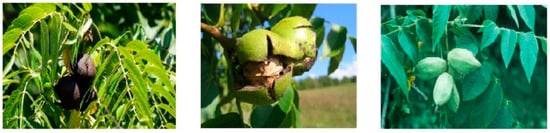
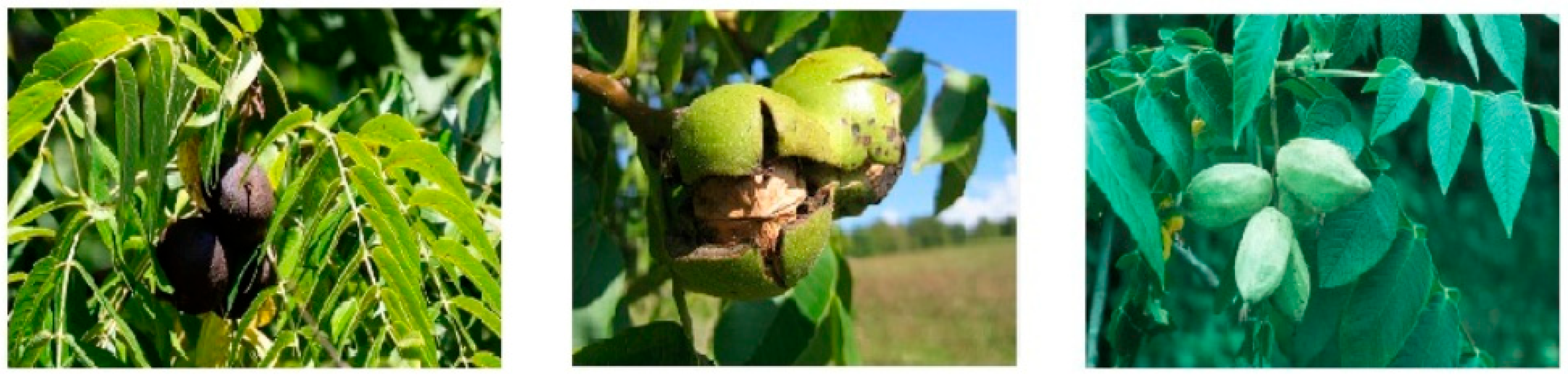
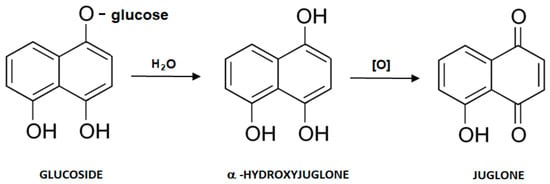
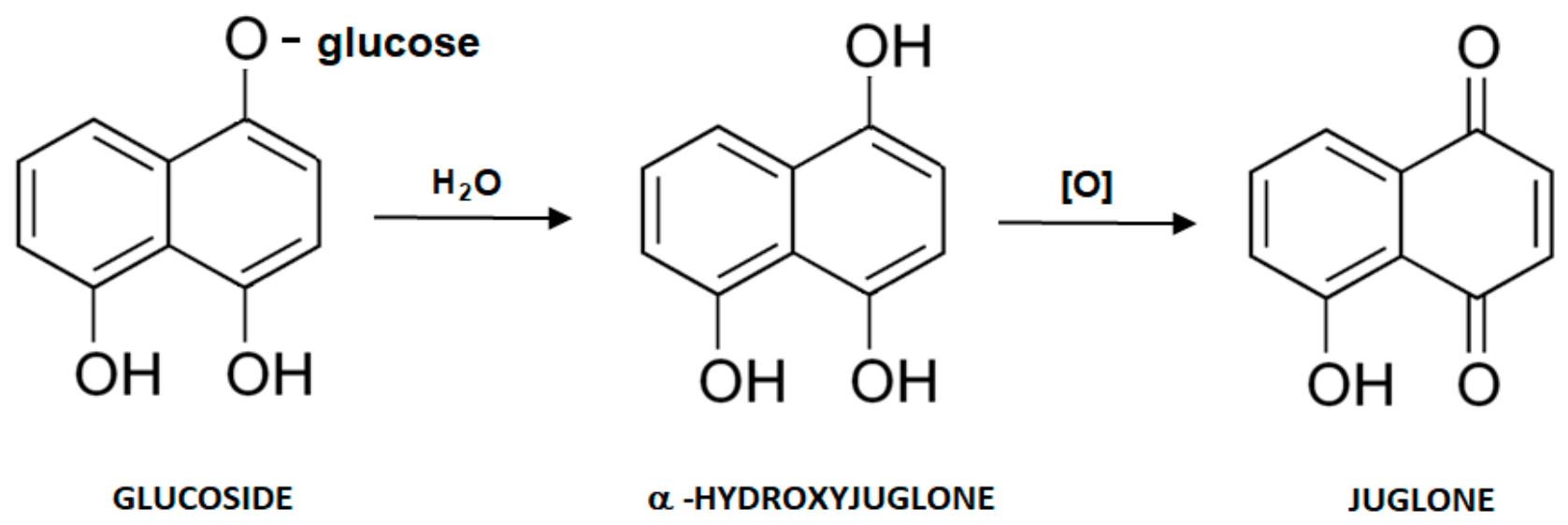
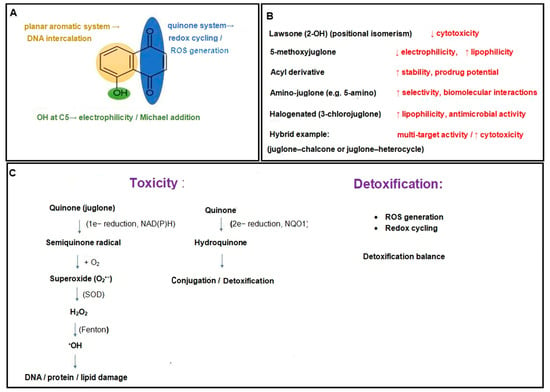
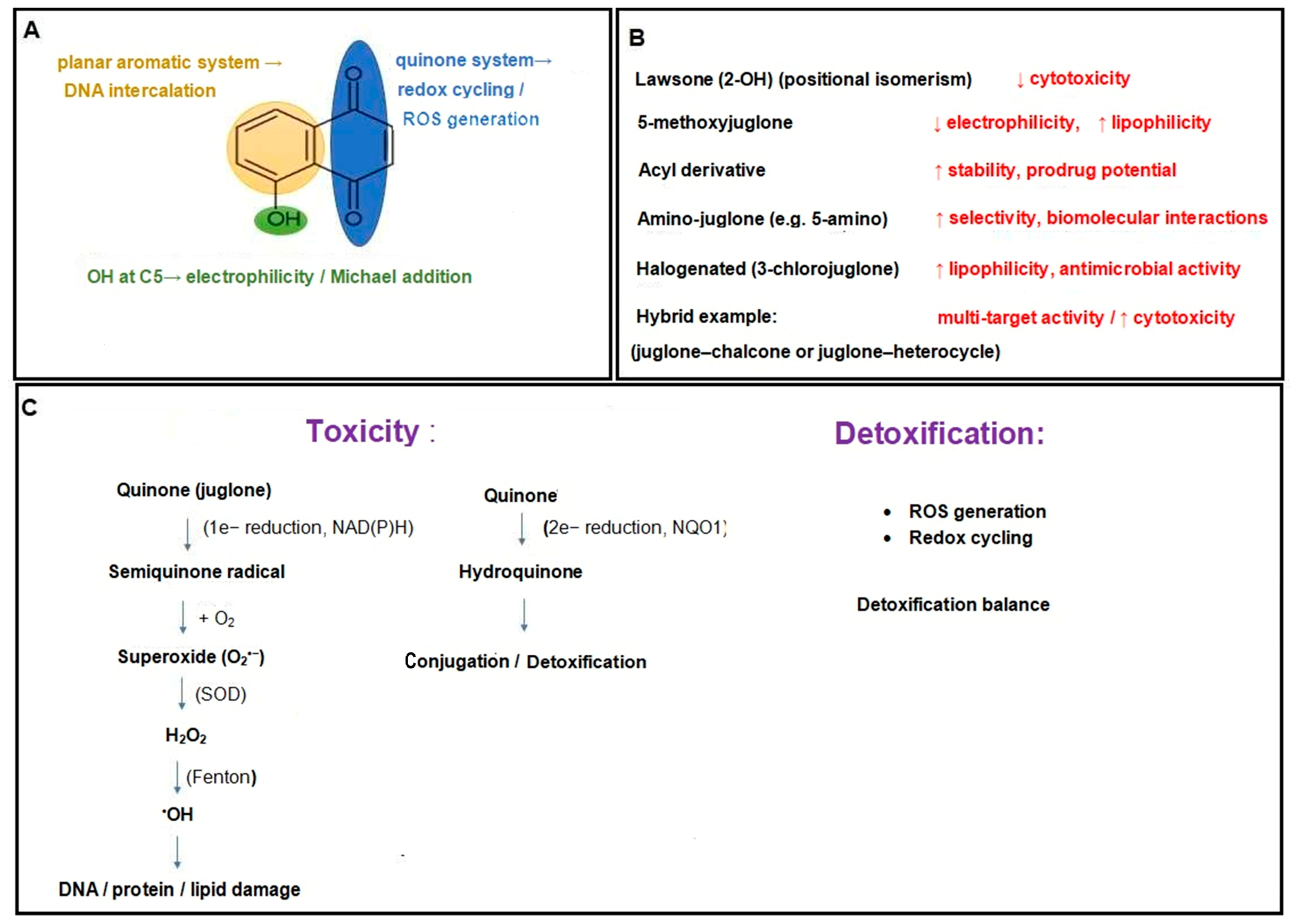


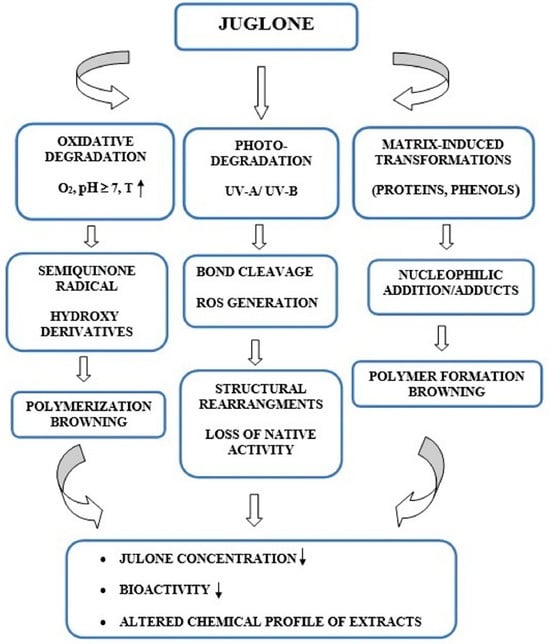
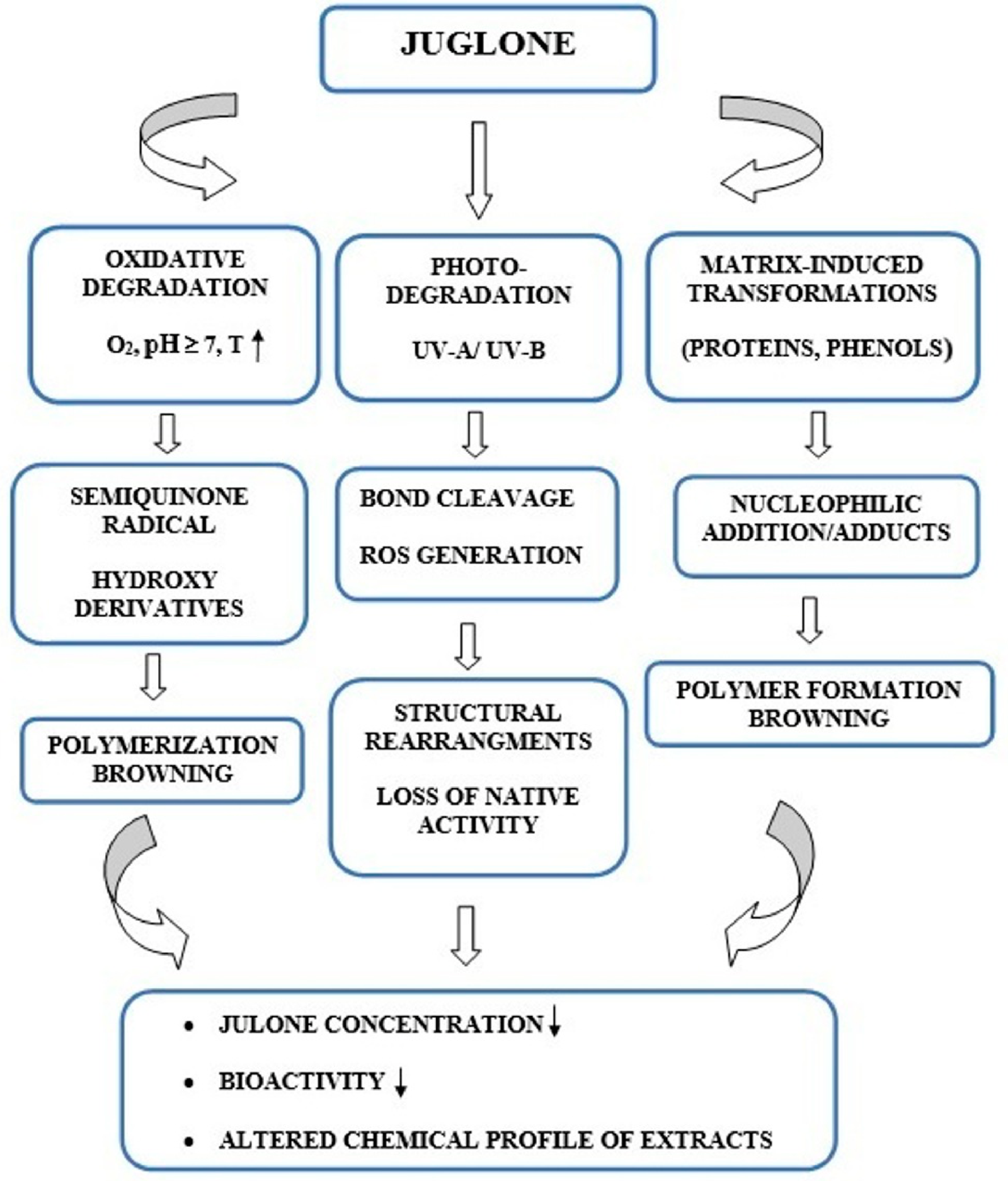

Disclaimer/Publisher’s Note: The statements, opinions and data contained in all publications are solely those of the individual author(s) and contributor(s) and not of MDPI and/or the editor(s). MDPI and/or the editor(s) disclaim responsibility for any injury to people or property resulting from any ideas, methods, instructions or products referred to in the content. |
© 2026 by the authors. Licensee MDPI, Basel, Switzerland. This article is an open access article distributed under the terms and conditions of the Creative Commons Attribution (CC BY) license.