


Abstract
The batch, repeated batch and fed-batch cultivation strategies, in stirred tank bioreactors, were evaluated to maximize biomass production and the cells’ desulfurization activity (CDA) of Rhodococcus qingshengii IGTS8. The batch culture reached 2.62 g DCW/L biomass, with a productivity of 0.03 g DCW·L−1·h−1 and only 26% glycerol consumption. The repeated batch strategy reduced cultivation time during the first cycle, increasing biomass production by 15%, with 30% glycerol consumed and productivity 2.3 times higher than the batch process; however, subsequent cycles showed no further improvement. CDA peaked early in both modes but declined to 12–13 U/mg DCW by the end of the exponential growth phase. Fed-batch cultivation achieved 8.35 g DCW/L with 87% glycerol consumption, resulting in a threefold increase in volumetric productivity and a 1.7-fold higher specific growth rate compared with the batch mode. CDA remained stable during the fed-batch process and was approximately 40% higher compared with the batch and repeated batch processes. The fed-batch culture was used directly in a two-phase bubble column bioreactor for the desulfurization of dibenzothiophene (DBT), 4-methyl-dibenzothiophene (4-MDBT) and their mixture. The complete desulfurization of 1.4 mM DBT was achieved at a rate of 21.6 mmol DBT/kg DCW/h, while 0.9 mM 4-MDBT was fully converted but at a 2.5-fold lower rate. The simultaneous conversion of the DBT/4-MDBT mixture showed reduced efficiencies of 59.6% and 41.2%, respectively.
1. Introduction
Carbon and hydrogen are the most abundant elements in crude oil followed by sulfur. Depending on the origin of the crude oil, sulfur compounds account for 0.1% to 8% (w/w) [1]. Various forms of sulfur compounds are present in crude oil, e.g., hydrogen sulfide, mercaptans, thiophenes, benzothiophenes and dibenzothiophenes [2,3]. The organosulfur compounds (OSCs) are unwanted in the refining process since they can deactivate the catalyst during the processing of crude oil and also can corrode pumping equipment and pipelines [2,4]. Furthermore, upon combustion they emit large amounts of sulfur dioxides which are harmful for the environment and human health [5]. As a result, current environmental regulations have become increasingly stringent, demanding very low sulfur contents in diesel and gasoline.
The recommended limit of sulfur content set by the Environmental Protection Agency (EPA) of the USA is 15 ppm for gasoline and 30 ppm for diesel [6]. On the other hand, EU regulations are more strict concerning the sulfur content in gas-oil (commercial fuel used as an alternative to road diesel, also known as red diesel), which was set at 10 ppm [7].
Hydrodesulfurization (HDS) is the current industry standard for the removal of sulfur from the OSCs present in crude oils; it is conducted under a high temperature and pressure in the presence of an expensive chemical catalyst [8,9]. HDS is not very effective in removing recalcitrant molecules, mainly from the dibenzothiophene (DBT) chemical group, which adds up to 60% of the total sulfur content in crude oils [10]. According to Mohabeli & Ball, [11] the susceptibility of OSCs in HDS follows the subsequent order: thiophene (TH) > alkylated TH > benzothiophene (BT) > alkylated BT > dibenzothiophene (DBT) and alkylated DBT without substituents at the fourth and sixth positions > alkylated DBT with alkyl substituents at the fourth and sixth positions. Deep (ultra-deep) HDS (sulfur levels below 15 ppm) on the other hand requires higher temperatures (≥425 °C), a higher pressure (≥250 psi) and more expensive catalysts in order to remove recalcitrant OSCs [9]. That leads to an increase in the operational and capital costs as well as an increase in the greenhouse gas (GHG) and H2S emissions [5,12].
Biodesulfurization (BDS) is a green approach for the removal of sulfur from the recalcitrant OSCs; it has been proposed as a complementary technology to HDS treatment for petroleum products and can contribute to the reduction in GHG and H2S emissions. BDS involves the use of microorganisms capable of removing the sulfur from the recalcitrant OCSs and produces ultra-low sulfur fuels [2,11].
In general, microorganisms have two pathways for OCS metabolism/biodesulfurization, i.e., the oxidative C-C cleavage pathway (Kodama pathway) and the oxidative C-S cleavage pathway (4S pathway) [13,14]. The 4S pathway is a four-step enzymatic process that converts DBT to 2-hydroxybiphenyl (HBP) and sulfate. More specifically, DBT is converted initially to DBT-sulfoxide (DBTO), and then to DBT- sulfone (DBTO2). Both reactions are catalyzed by the action of a DBT-monooxygenase (DszC) and an NADH-flavin mononucleotide oxidoreductase (DszD) supplying the FMNH2 needed. DBT-sulfone is then converted to 2-hydroxybiphenyl-2-sulfinic acid (HBPS) by the action of a DBT-sulfone monooxygenase (DszA) and DszD. Finally, 2-hydroxybiphenyl sulfinate desulfinase (DszB) converts HBP-sulfinate to 2-HBP and sulfate [13]. The 4S pathway is of great biotechnological importance since it is a non-destructive process leaving the carbon skeleton of OCSs intact, thus maintaining the calorific value of the fuel [1]. Natural desulfurizing Gram-positive and -negative bacteria include several species belonging to the genera of Bacillus [15], Gordonia [16,17,18,19,20,21], Mycobacterium [22,23], Microbacterium [24], Paenibacillus [5], Pseudomonas [25,26,27], Ralstonia [28], Sphingomonas [29], Staphylococcus [30] and Rhodococcus [30,31,32,33,34,35,36,37].
BDS is advantageous compared with traditional HDS since it operates at a low temperature and atmospheric pressure and has no need for H2 or metal catalysts. Moreover, in a biorefinery context, BDS can be combined with the co-production of high-value products like carotenoids, biosurfactants and other biomolecules, all of which can help to improve the bioprocess’s sustainability [21,38]. Due to its inherent biological nature, the BDS process has some limitations, including (a) low reaction rates (slower process) [39], (b) inhibition by easily metabolized sulfur sources such as sulfate (SO42−) [40], (c) the biocatalysts (the microorganisms) must be maintained under optimal conditions for their growth/metabolic activity and can be affected by the toxicity of compounds present in the fuels, as mentioned by Silva et al. [20].
Several authors propose genetic engineering as a tool to bypass the above limitations [41,42,43]. Even if this approach is successful, the transformations can be partially or completely lost in a few generations, since heterologous genes constitute a metabolic burden for the microorganism [44]. Furthermore, plasmid instability necessitates antibiotic addition, a practice prohibitive from both an environmental and a sustainability point of view [39]. Another approach, implemented in the literature, includes changes in process design. In that context, BDS can be conducted by growing cells or resting cells. In the former approach, microorganisms are cultivated directly in oil and the OSCs act as the sulfur source for their proliferation [28,45,46]. BDS by resting cells differentiates the step of cell proliferation from that of biodesulfurization. Two approaches are described in the literature based on the biocatalyst production method: the “one step process” where the biocalayst is produced in sulfur sources such as dimethyl sulfoxide (DMSO) or DBT that do not inhibit the BDS activity of the microorganism [18,26,31,33] and the “two-step process” where the biocatalyst is produced in an easily metabolized sulfur source, followed by the induction of the BDS activity with molecules like DBT [47,48].
Since the desulfurization of oil needs to be carried out continuously on a massive scale, the mass production of DBT-degrading bacteria with high desulfurization activity is required. Cultivation processes such as repeated batch and fed-batch can fulfill the requirement of high cell mass production. The bacterium R. qingshengii IGTS8, used in the present study, is a well-characterized and widely studied biocatalyst for biodesulfurization. It offers several advantages, including high efficiency in selectively removing sulfur from refractory OCSs such as dibenzothiophene (DBT) via the 4S pathway, without degrading the hydrocarbon skeleton. Moreover, R. qingshengii IGTS8 exhibits a strong tolerance to toxic compounds and the harsh conditions typical of petroleum environments, largely due to its robust and hydrophobic cell wall [42]. In a previous study [33], we have demonstrated that in batch cultivation the cell mass concentration was quite low and also the desulfurization activity of R. qingshengii IGTS8 was dependent on the age of the cells and maximized at the beginning of the exponential growth phase. These limitations restricted biomass yield and overall desulfurization efficiency, which are critical factors for practical industrial applications. The current study aims to overcome these challenges by systematically investigating different cultivation processes, batch, repeated batch and fed-batch, in order to enhance the biomass production of R. qingshengii IGTS8. The effect of these processes on the cells’ biodesulfurization activity (CDA) is also evaluated, with the objective of integrating biocatalyst production and biodesulfurization into an efficient process. Unlike many previous studies that require separate induction or cell processing steps such as washing and concentration, this approach employs a one-step bioprocess that achieves both a high biomass and sustained desulfurization activity, thereby eliminating these costly and time-consuming procedures.
2. Materials and Methods
2.1. Microorganism
Rhodococcus qingshengii IGTS8, formerly known as R. erythropolis IGTS8 (ATCC 53968), was supplied from the American Type Culture Collection and maintained in glycerol at −85 °C.
2.2. Materials
Dibenzothiophene (DBT) (≥99%), 2-hydroxybiphenyl (2-HBP) (99%) and 4-methyldibenzothiophene (4-MDBT) (96%) were purchased from Sigma-Aldrich (Merck KGaA, Darmstadt, Germany). n-dodecane (99%) was purchased from ThermoFisher Scientific (Waltham, MA, USA). All other chemicals were of analytical grade and commercially available.
2.3. Culture Media and Inoculum Set Up
The basalt salt medium (BSM) used had the following composition (g/L): NaH2PO4.H2O, 4; K2HPO4, 4; NH4Cl, 2; MgCl2.6H2O, 0.25; CaCl2.2H2O, 0.001; FeCl3.6H2O, 0.001 [33]. Glycerol and DMSO (1.3 mM) were used as carbon and sulfur sources, respectively. The pH of the medium was adjusted to 7.0. DMSO was added to the culture medium after sterilization. Inoculum cultures were prepared according to Prasoulas et al. [33].
2.4. Batch, Repeated Batch and Fed-Batch Cultivation
Batch, repeated batch and fed-batch cultivations were conducted in 2 L working volume stirred tank bioreactors (BioFlo 310 Benchtop Fermentor/Bioreactor, New Brunswick Scientific, Eppendorf AG, Hamburg, Germany) with process control for pH, dissolved oxygen (DO), agitation, temperature and pump feed. All cultivations were inoculated with 10% (v/v) of the inoculum’s cultures with initial biomass concentration in the bioreactors ranging from 0.10 to 0.15 g DCW/L. The initial operational conditions were as follows: initial pH 7.0 (not controlled during the process); temperature 30 °C; agitation 250 rpm; dissolved oxygen (DO) 90–98% saturation and aeration rate 0.8 L/min.
In batch cultivation, the BSM described above was supplemented with 20 g/L glycerol and 1.3 mM DMSO. Cultivation volume was 2 L. Repeated batch cultivation experiments involved the replacement of a part of the culture broth with fresh sterile medium at an appropriate time during the batch cultivation process. More specifically, when cells reached the end of the exponential growth phase, 80% (v/v) of the culture broth was removed and replaced with fresh sterile medium. Glycerol and DMSO concentrations after medium replacement were maintained at 20 g/L and 1.3 mM, respectively. Cultivation volume was also maintained at 2 L. Two batches of cultivation were performed.
Fed-batch cultivation was carried out by feeding sterilized glycerol + DMSO solutions into the bioreactor. The concentration of glycerol and DMSO in the feed was 40 g/L and 1.3 mM, respectively. Initially, the bioreactor was filled with 900 mL of the medium supplemented with 5 g/L glycerol and inoculated with 100 mL of the inoculum culture prepared as described above (initial volume 1000 mL). The fed-batch operation was initiated approximately 21 h after inoculation. Pulse feeding was applied. DO was maintained above 20% saturation adjusting the aeration and agitation rate in the bioreactor. Feeding was terminated when cell concentration between two successive samplings was constant.
Samples were withdrawn periodically to monitor cell growth, glycerol concentration and cells’ desulfurization activity (CDA) following the methods described below. All experiments were conducted in duplicate.
2.5. Cells’ Desulfurization Activity (CDA)
Cells’ desulfurization activity (CDA) was determined as described previously [33]. Briefly, cells harvested from different growth stages were washed and resuspended in 50 mM Hepes buffer (pH = 8.0) at a defined concentration. One volume of cell suspension was mixed with one volume of 2 mM DBT in the same buffer. Incubation was conducted at 30 °C, under agitation. Following 1 h incubation, two volumes of acetonitrile were added and the mixture was centrifuged to remove the cells. The cell pellet was discarded while the supernatant was assayed for 2-HBP content by HPLC. CDA was expressed as units per mg DCW, with 1 U corresponding to the release of 1 nmole 2-HBP per h under the above-described conditions.
2.6. Desulfurization of DBT and 4-MDBT in a Two-Phase Bubble Column Bioreactor
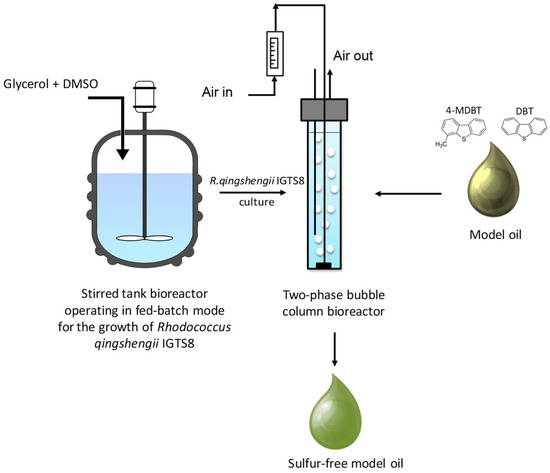
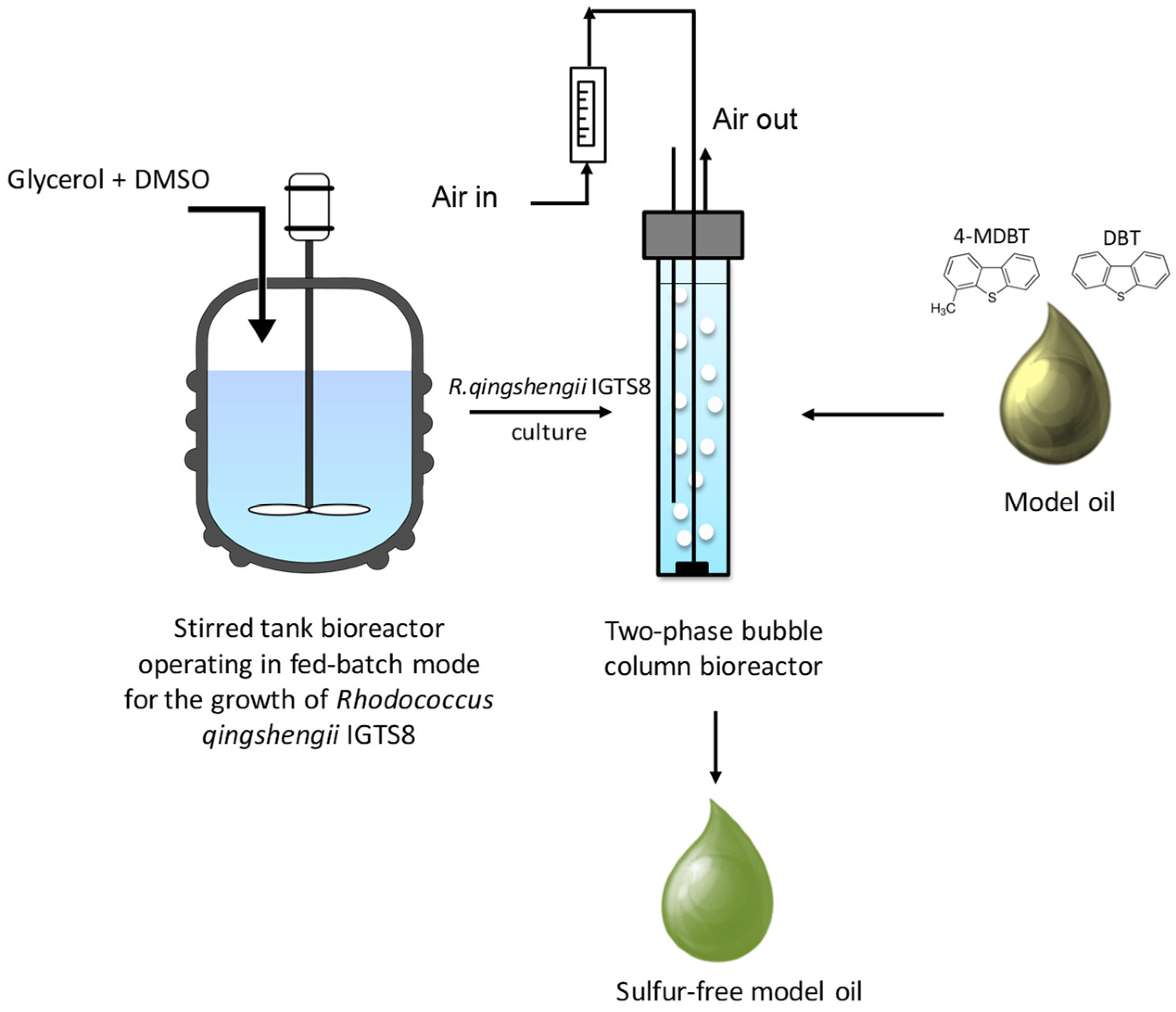
Desulfurization in the two-phase bubble column bioreactor was conducted as described elsewhere [33]. Briefly, 50 mL of the culture broth derived from the fed-batch cultivation of R. qingshengii IGTS8 was transferred to the bubble column reactor and supplemented with 50 mL of n-dodecane (organic phase) to represent the hydrocarbons present in petroleum, resulting in an organic fraction phase (OFP) (expressed as the organic phase to total volume percentage) of 50% (v/v). DBT and 4-MDBT were dissolved in the organic phase at the appropriate concentrations. The air flow was set at 4 L/h (approximately 0.7 vvm) and the temperature at 30 °C (Figure 1).
Figure 1.
Schematic overview of the integrated biodesulfurization process. Fed-batch cultivation of R. qingshengii IGTS8 is applied to produce high biomass with elevated CDA. The R. qingshengii IGTS8 culture is then directly used in a two-phase bubble column bioreactor containing model oil for desulfurization.
Samples were withdrawn at different time intervals and subjected to centrifugation (8000 rpm for 15 min) in order to remove the cells. The organic phase was collected and the concentration of the OSCs was determined as described below. The cell pellet was discarded after desulfurization. Each experimental condition was conducted in triplicate.
2.7. Analytical Methods
Cell concentration was determined using optical density measurements at 600 nm (OD600) and expressed as g DCW/L using a calibration curve.
High-performance liquid chromatography (HPLC) was used to quantify DBT, 2-HBP and 4-MDBT. The analysis was performed on an Agilent HPLC 1220 Infinity LC System, equipped with a fluorescence detector (FLD). A C18 reversed phase column (Poroshell 120 EC-C18, 4 μm, 4.6 × 150 mm, Agilent, Santa Clara, CA, USA) was used for the separation. The elution profile (at 1.2 mL/min) consisted of 4 min isocratic elution with 60/40 (v/v) acetonitrile/H2O, followed by a 15 min linear gradient to 100% acetonitrile. Fluorescence detection was performed at an excitation wavelength of 245 nm and emission wavelength of 345 nm. Quantification of DBT, 2-HBP and 4-MDBT was performed using appropriate calibration curves.
Glycerol quantification was also conducted by HPLC. The analysis was performed on a Shimadzu LC-20AD system equipped with a refractive index detector (RI). An Aminex HPX-87H (Bio-Rad, Hercules, CA, USA) chromatography column was used for separation. The column was eluted isocratically with HPLC-grade water at a flow rate of 0.6 mL/min. The temperature of the column was set to 50 °C. Quantification of glycerol was performed using the appropriate calibration curves.
2.8. Statistical Analysis
The results were expressed as mean values with the standard deviation (SD) of three independent measurements (n = 3) and significance was assumed at p < 0.05. Analysis of variance (ANOVA) was used to assess the possible differences among the different cultivation strategies. Non-linear regression was used to determine the parameters of the logistic growth model from the experimental data, using SigmaPlot software (Version 12.5).
3. Results and Discussion
3.1. Cultivation of R. qingshengii IGTS8 Under Batch and Repeated Batch Modes
R. qingshengii IGTS8 was cultivated in a 2 L (working volume) stirred tank bioreactor with 20 g/L glycerol as the carbon source and 1.3 mM DMSO as the sulfur source [33]. A wide range of carbon sources have been reported in the literature for the preparation of the biocatalyst for a BDS process. Concerning the bacteria of the genus Rhodococcus, carbon sources such as glucose, glycerol, ethanol, acetate, glutamate, succinate, citrate and malate have been employed [31,47,49,50,51,52]. The production cost of the biocatalyst is one of the drawbacks for the commercialization of the BDS process. In the present study glycerol was chosen as a carbon source since it is cheap and abundant [53]. DMSO has been used as a sulfur source for the growth of R. qingshengii IGTS8, since it has been reported that DMSO does not repress the expression of desulfurization enzymes in the bacterium [11].
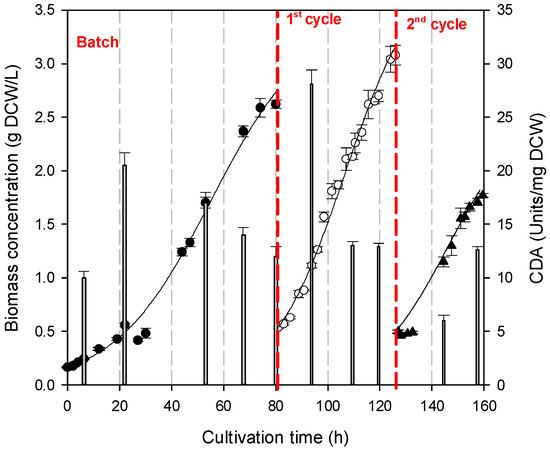
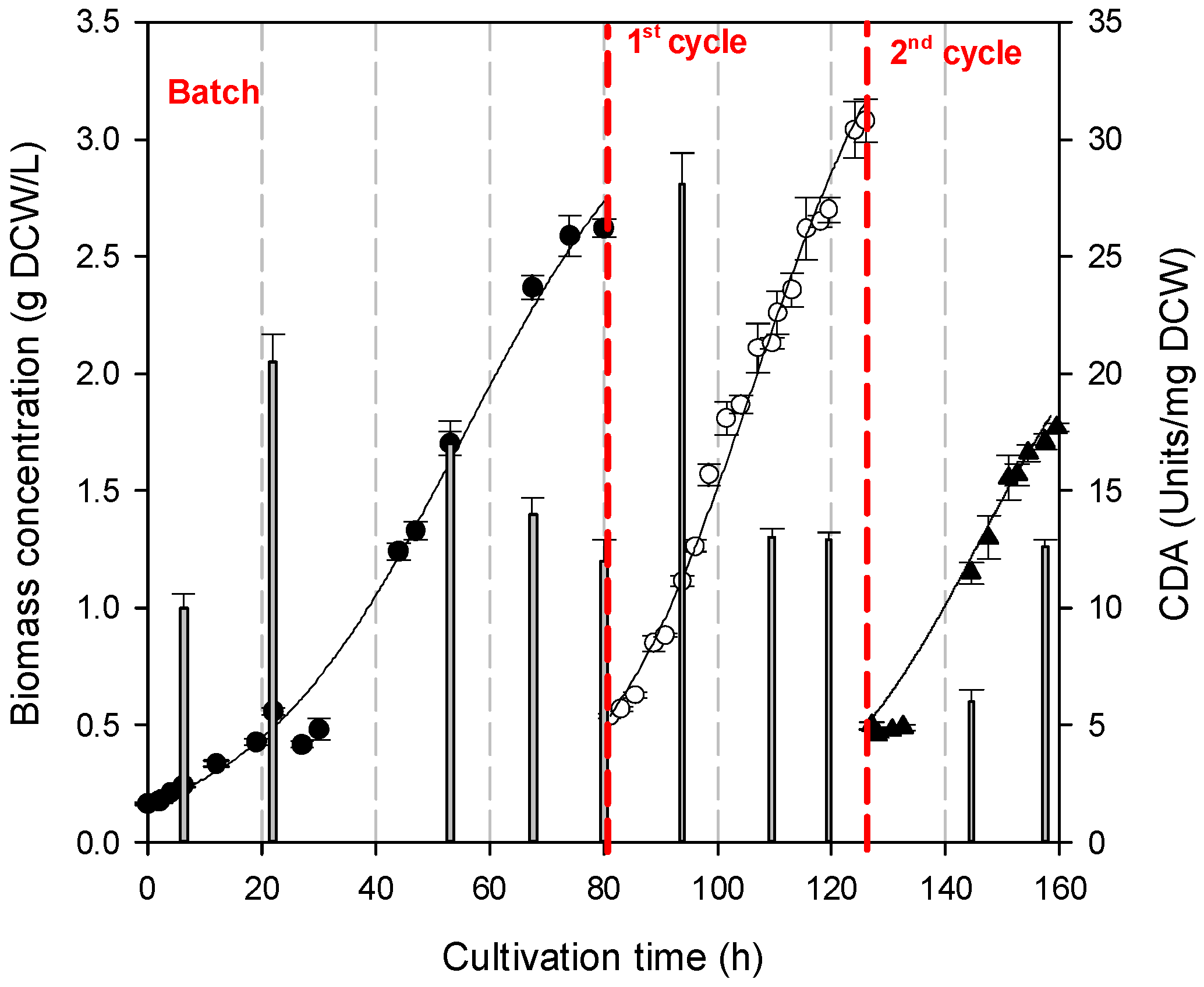
Initially, R. qingshengii IGTS8 was cultivated under batch mode and, following completion of the batch process (at 80 h), the repeated batch fermentation strategy was applied, substituting 80% (v/v) of the culture broth with fresh medium. Two consecutive substitutions were made: the first (first cycle) at 80 h and the second (second cycle) at 126 h from the onset of the process. Repeated batch culture is a well-known method in fermentation technology [54,55]. It consists of using a part of the culture as an inoculum into the next batch of fresh medium. Repeated batch culture offers many advantages over microbial batch culture, including the reuse of microbial cells for subsequent fermentation runs which results in a reduction in the labor and time required for inoculum preparation, washing and sterilization of the bioreactor, high cell concentration in the culture, low time required for process operation, and increased process productivity [55].
Figure 2 depicts the evolution of cell mass during the growth of R. qingshengii IGTS8 in the batch and repeated batch modes. The batch cultivation of R. qingshengii IGTS8 resulted in a maximum cell concentration of 2.62 ± 0.04 g DCW/L, observed at 80 h of cultivation. The bacterium consumed about 26% of the initial glycerol in the medium with a cell yield (Yx/s) of 0.46 ± 0.03 g DCW/g glycerol. The biomass volumetric rate was estimated at the end of the batch process and was found to be equal to 0.03 ± 0.001 g DCW/L/h (Table 1).
Figure 2.
Evolution of cell mass concentration during batch (●) and repeated batch [(◯) 1st cycle and (▲) 2nd cycle] cultivation of R. qingshengii IGTS8. Gray bars indicate the CDA at different time intervals in each culture. Solid lines represent model fitting (Equation (2)).
Table 1.
Overall performance of batch, repeated batch and fed-batch processes.
In the first cycle of the repeated batch process, the cultivation period was shortened (45 h) and approximately 15% more cells (3.08 ± 0.09 g DCW/L) were obtained and the bacterium consumed 30% of the initial glycerol (Yx/s = 0.43 ± 0.02 g DCW/g glycerol), while the productivity of the biomass was 2.3-fold higher than the batch culture (Table 1). The second replacement (second cycle) of the medium did not improve the process. Even though the time required to obtain the maximum biomass concentration was shortened (32.5 h), the biomass concentration was significantly decreased (Table 1). The biomass volumetric productivity in the second cycle decreased compared with the first one. Furthermore, Yx/s declined to 0.24 ± 0.02 g DCW/g glycerol despite the fact that the glycerol consumed was in the above range. This phenomenon during repeated batch cultivation could be attributed to the fact that in aerobic cultures, cells are particularly susceptible to senescence and metabolic activity is prone to decline [55].
The experimental data of biomass concentration with time were fitted to the logistic model for growth [10,31,52] as follows:
This equation is categorized as an unstructured model to describe the sigmoid relationship between time and microbial growth [56].
Integrating Equation (1) with the initial condition t = 0, X = X0, which is known according to the inoculum procedure employed, yields
where μ (h−1) is the specific growth rate, Xmax (g DCW/L) is the maximum biomass concentration at the end of growth, X0 (g DCW/L) is the initial biomass concentration and t (h) is the cultivation time.
The logistic growth model was used to fit all experiments carried out in this work, and the results are summarized in Table 1. In all cases the R2 values were found to be greater than 0.97 and the p values ≤ 0.001, indicating a very good fit.
The specific growth rate (μ), which is a measure of the dynamic behavior of microorganisms, was 0.054 ± 0.001 h−1 when R. qingshengii IGTS8 was cultivated under the batch process mode. Del Olmo et al. [52] reported that 1.8 g DCW/L of the same bacterium could be obtained under batch cultivation using 20 g/L of glucose and 1.3 mM DMSO with a higher specific growth rate (μ = 0.202 h−1), but with a lower cell yield (Yx/s = 0.14 g DCW/g glucose). In general, the specific growth rate of a microorganism is influenced by the type or amount of carbon available in the growth medium, the environmental conditions of growth (pH, T, DO, etc.), as well as the cultivation process.
During the repeated batch cultivation, the specific growth rate was found to be similar in the two cycles and was increased by 25% compared with the batch process (Table 1).
Cells’ desulfurization activity (CDA) can be considered a measure of the overall performance of the Dsz enzymes involved in the 4S pathway. CDA varied with the growth phase of the culture and, as reported earlier, the cells exhibited a maximum CDA at the beginning of the exponential phase when the cell concentration is very low [32]. According to Calzada et al. [57] the activities of the different Dsz enzymes (Dsz A, Dsz B and Dsz C) involved in the 4S pathway reach their maximum at different stages of growth, causing variations in CDA with the age of the cells. A high cell concentration and high specific activity of desulfurization (CDA) are the most important factors for the industrial application of the biodesulfurization technique to oil refining processes [11].
During the batch cultivation of R. qingshengii IGTS8, a maximum CDA (20.5 ± 0.5 Units/mg DCW or 20.5 ± 0.5 nmols 2-HBP/mg DCW/h) was recorded at 22 h of cultivation when the cell mass concentration was low (0.56 ± 0.02 g DCW/L) (Figure 2). As growth proceeded, CDA gradually declined to 12.0 ± 0.1 Units/mg DCW, a value that was obtained at the end of exponential growth phase (80 h of cultivation), when the highest biomass concentration was obtained.
Repeated batch cultivation exhibited almost the same trend as far as the CDA is concerned in both cycles. More specifically, in the first cycle, the highest CDA (28.1 ± 0.4 Units/mg DCW) was recorded at approximately 14 h from the beginning of the first cycle (94 h total cultivation time), when the cell mass concentration was 1.12 ± 0.02 g DCW/L. The CDA decreased to 13.0 ± 0.4 Units/mg DCW at 29.5 h (109.5 h total cultivation time) and remained constant until the end of the cycle (126 h total cultivation time) (Table 1).
The overall application of the repeated batch cultivation process (first cycle) resulted in decreasing the time required for the cultivation to be completed by almost half and increasing the cell mass concentration by 15% compared with the batch system. As far as CDA is concerned, a similar final value was observed in all cases.
3.2. Cultivation of R. qingshengii IGTS8 Under Fed-Batch Mode
The fundamental feature of fed-batch cultivation is that the concentrations of nutrients fed into the bioreactor can be controlled by manipulating the feed rate. Fed-batch cultivation can be carried out by the continuous or sequential feeding of the nutrients. Compared with batch cultivation it is advantageous since it can eliminate substrate-associated growth inhibition and/or achieve high cell density cultures. The performance of a fed-batch process is highly dependent on the feeding strategy applied [58]. Several fed-batch strategies, including indirect control methods that couple substrate feeding with the measurement of pH or dissolved oxygen (DO) have been reported in the literature [47,58,59]. However, the response of the cells to the changes in pH or DO due to substrate utilization is slow and that can cause over- or under-feeding, affecting the final production. The direct control of the carbon source is one of the most efficient feeding strategies to control commercial-scale bioprocesses. By measuring carbon source concentration regularly, in the bioreactor (offline or online), under- or over-feeding during the cultivation can be prevented [58].
In the present study a fed-batch process was established with R. qingshengii IGTS8 in a stirred tank bioreactor with the following characteristics:
- (a)
- Due to the poor assimilation of glycerol (carbon source) in batch and repeated batch cultivation, the initial glycerol concentration in the bioreactor was set at 5 g/L and was maintained relatively constant during the culture process (<6 g/L) by feeding glycerol manually (pulse feeding)
- (b)
- The growth and desulfurization activity of R. qingshengii IGTS8 is strongly dependent on the availability of oxygen [52,60], and thus the DO will be maintained above 20% of saturation, adjusting the air flow and agitation rate in the bioreactor.
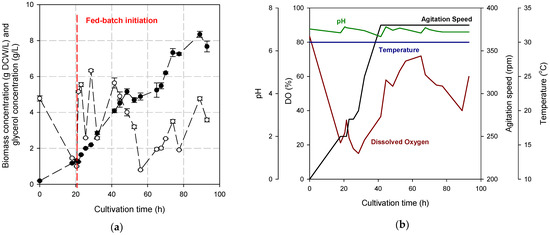
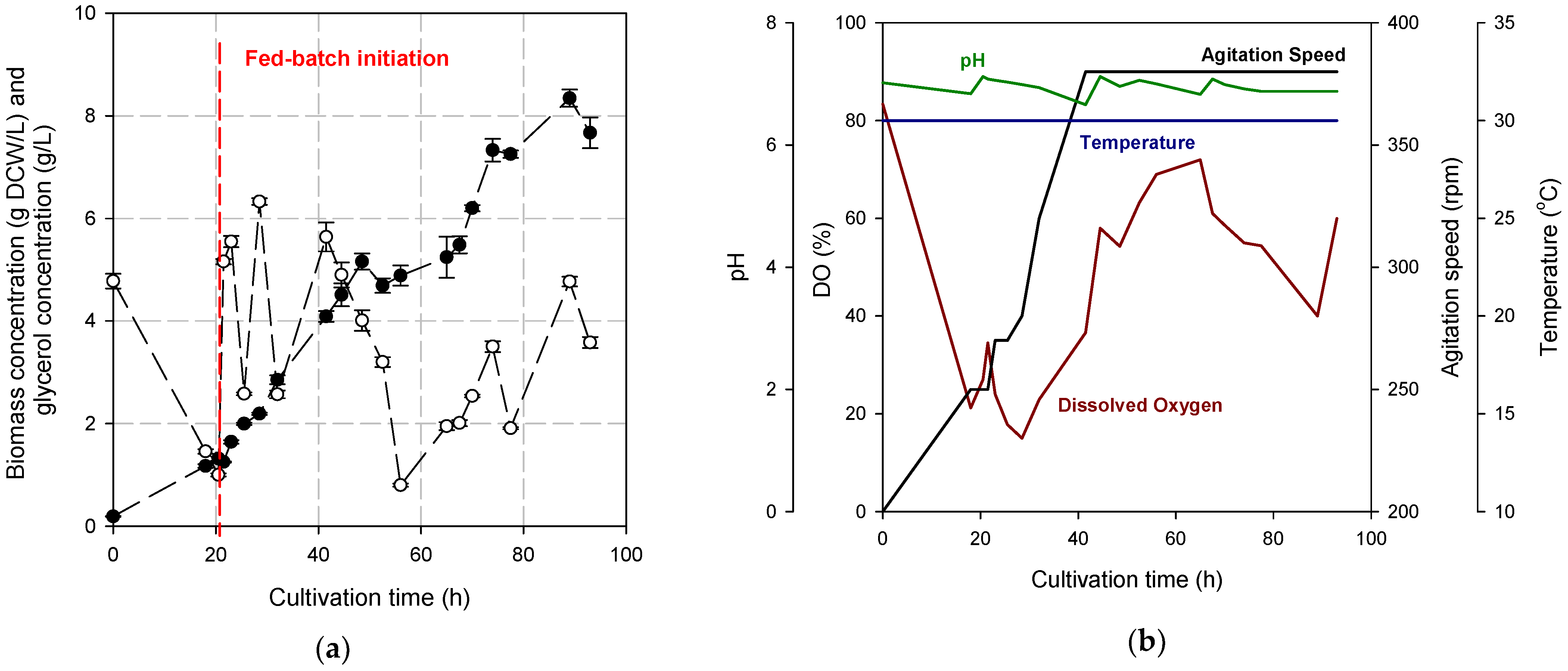
The concentration of glycerol in the feed was 40 g/L. The process performance is shown in Figure 3.
Figure 3.
Fed-batch culture of R. qingshengii IGTS8. (a) Time course of biomass (●) and residual glycerol (◯) concentrations. (b) The curves of parameters monitored online.
During the initial stage of batch growth of the bacterium, air flow and agitation speed were maintained constantly (air flow 0.8 L/min and 200 rpm). As shown in Figure 3b, DO rapidly decreased and at the beginning of the fed-batch process was approximately at 35% saturation, indicating active cell metabolism. The cell mass concentration at the end of the batch process was 1.3 ± 0.4 g DCW/L (Figure 3a) and Yx/s was estimated at 0.26 ± 0.03 g DCW/g glycerol. CDA increased during the initial batch stage reaching an average of 22.6 ± 0.5 U/mg DCW at the onset of the fed-batch process.
The fed-batch process started at 21 h of cultivation, when the glycerol was almost exhausted (glycerol concentration in the culture medium < 1 g/L). The whole process lasted for 93 h (Figure 3a). The biomass concentration during the fed-batch process increased to 8.35 ± 0.17 (at 89 h) g DCW/L. After the start of the fed-batch process, the glycerol concentration in the culture broth remained between 0.8 and 6.0 g/L and was randomly distributed (Figure 3a). Contrary to the batch and repeated batch cultivations, where the consumption of glycerol was low, approximately 87% of the glycerol fed to the bioreactors was assimilated by the bacterium. The biomass yield (g DCW/g glycerol) during the initial stages of the fed-batch process was higher compared with the batch stage, while it decreased at the end of the process. More specifically, up to 48 h total cultivation time (20 h from the initiation of the fed-batch process) the biomass yield was 0.55 ± 0.05 g DCW/g glycerol, while at the end of the process the respective value declined to 0.41 ± 0.04 g DCW/g glycerol. Biomass productivity, calculated at the time point of maximum cell mass concentration, was found to be three times higher (0.09 ± 0.001 g DCW/L/h) compared with batch cultivation (Table 1). As mentioned above, the DO at the end of the batch stage was approximately at 35% of saturation (air flow 0.8 L/min). When the fed-batch process started, the air flow was adjusted to 1.25 L/min and kept constant until the end of the process. Further changes in DO were accomplished by changing agitation speed, when necessary. It should be noted that the agitation speed was kept in the range of 200 rpm (initial conditions) to 380 rpm (maximum agitation speed) (Figure 3b). Changes in both agitation rate and air flow cause changes in the hydrodynamic conditions and those in turn may negatively affect the growth of the microorganism due to the possible cell damage caused by shear effects. Gomez et al. [60] reported that the growth of R. erythropolis under different fluid dynamic conditions (air flow and agitation rate) in the bioreactor is negatively influenced at high agitation rates (>450 rpm), while the change in the air flow rate (1–10 L/min) hardly has any influence on the growth rate when agitation rate is kept at 250 rpm.
The DO continued to decrease after the change in air flow to 1.25 L/min and at the minimum point, changes in agitation rate resulted in an increase in DO. As feeding continued, the DO started to decrease again, indicating the demand for oxygen by the cells (Figure 3b).
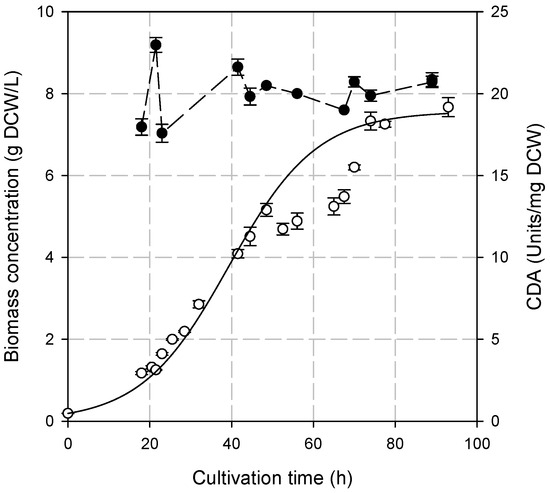
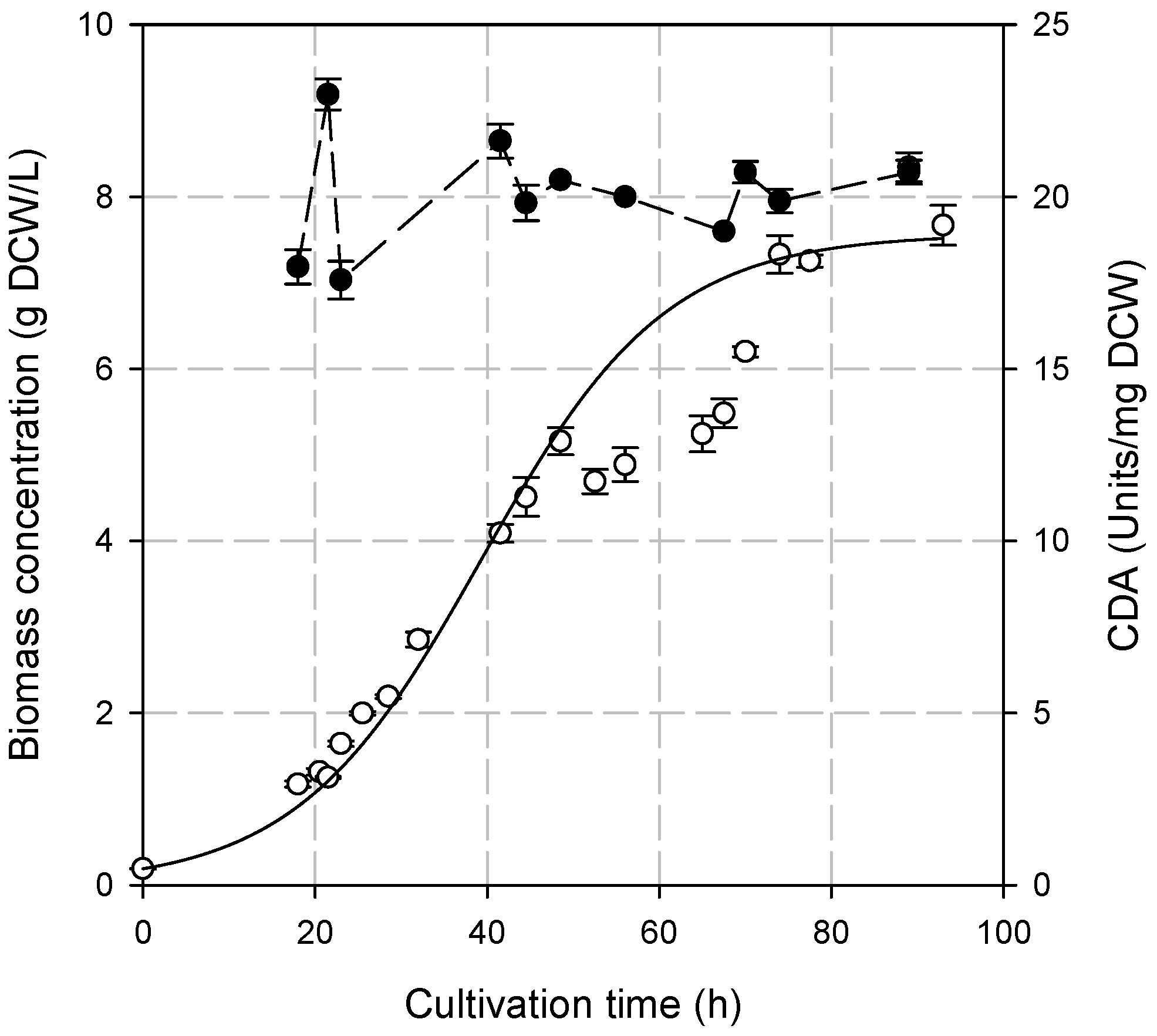
Figure 4 depicts the evolution of CDA during the fed-batch process. CDA at the onset of the fed-batch process had an average value of 22.6 ± 0.5 U/mg DCW. CDA was almost stable during the fed-batch process, while the value of 20.7 ± 0.09 Units/mg DCW was achieved at the time point of maximum cell mass concentration (89 h). Furthermore, CDA in the fed-batch process was found to be approximately 40% higher at the end of the fed-batch process compared with the batch and repeated batch processes (Table 1).
Figure 4.
Evolution of CDA (●) and logistic model fitting (solid line) on biomass (◯) evolution during R. qingshengii IGTS8 growth under fed-batch mode. Data are presented until the time point where the maximum biomass concentration was reached.
Figure 4 also depicts the logistic model fitting. The specific growth rate (μ) improved significantly compared with the batch and repeated batch cultivation (Table 1). Overall, the fed-batch process was proved to be the best cultivation mode to obtain a high biomass concentration with a high CDA.
Furthermore, the analysis of variance revealed statistically significant differences (p < 0.0001) across all evaluated process parameters, namely biomass concentration (X), specific growth rate (μ), biomass yield (Yx/s), volumetric productivity and cells’ desulfurization activity (CDA), among the different cultivation strategies (Table 1). Fed-batch cultivation consistently exhibited superior performance, with significantly elevated values in each metric compared with the batch and repeated batch modes.
Different fed-batch approaches for the production of high cell density cultures with high desulfurization activity (CDA) have been reported in the literature. A two-step process was reported by Honda et al. [47], in which the step of growth (fed-batch cultivation) of R. erythropolis IGTS8 and that of the desulfurization activity induction were separated. The application of a pH-stat feeding method using acetate as the carbon source, resulted in 33 g DCW/L after 28 h of cultivation. Following completion of the fed-batch process, biodesulfurization activity was induced by incubating the cells for 3 to 4 h in an induction medium containing DBT. Cells exhibited a desulfurization activity of 6.1 mmol 2-HBP/kg DCW/h (corresponding to 6.1 Units/mg DCW). A two-step process was also reported by Chang et al. [48] for the bacterium Gordonia nitida CYKS1. A fed-batch process using sucrose as a carbon source resulted in 92.6 g DCW/L at 120 h of cultivation. Cells were subjected to a 4–8 h induction in the presence of DBT and tested in low-sulfur diesel oil (250 mg sulfur/L) where the specific desulfurization efficiency was found to be equal to 10.8 mmol sulfur/kg DCW/h.
A one-step process for the production of Rhodococcus erythropolis KA 2-5-1 desulfurizing cells has been reported by Kishimoto et al. [51], who applied a fed-batch process controlled by an expert system which regulated the feeding of a sulfur component. The maximum cell concentration, using glycerol and DBT as the carbon and sulfur sources, respectively, was 45 g/L with a desulfurization activity of 10 mmol 2-HBP/kg DCW/h (corresponding to 10 Units/mg DCW). Guobin et al. [25] reported that 25 g DCW/L of Pseudomonas delafieldii R-8 could be produced under the fed-batch mode, with glycerol and DBT/DMSO mixture as the carbon and sulfur sources, respectively. The cells exhibited a specific desulfurization activity of 10.3 mmol (total sulfur)/kg DCW/h.
Recently, a continuous cultivation system for G. alkanivorans strain 1B has been proposed by Silva et al. [21] to counteract the inhibition of biodesulfurization activity by easily metabolized sulfur compounds, simply by adjusting the sulfur (Na2SO4)/carbon (fructose) ratio. Biomass production at a steady state was found at 5.14 g DCW/L while the biodesulfurization activity of the cells accounted for 6.1 mmol 2-HBP/kg DCW/h (corresponding to 6.1 Units/mg DCW). The application of the above conditions to R. erythropolis strain D1 resulted in 2.4 g DCW/L with a biodesulfurization activity of 1.6 mmol 2-HBP/kg DCW/h [21].
In the majority of the above studies, even though a higher cell concentration was obtained, the cells’ desulfurization activity was lower compared with the present study. Moreover, the application of a multi-step procedure (separate steps of growth and induction of CDA) requires additional infrastructures which can increase the capital and the operational cost of industrial application.
One of the highest desulfurization activities reported, 135.5 mmol 2-HBP/kg DCW/h (corresponding to 135.5. Units/mg DCW), was achieved when R. erythropolis KA2-5-1 was cultivated under a fed-batch mode, with ethanol and DBT as the carbon and sulfur sources, respectively, at 144 h of cultivation with a cell concentration of 37 g DCW/L [49]. By changing the sulfur source to 2-aminoethanesulfonic acid, a lower cell concentration was achieved (20 g DCW/L) in a shorter time (86 h) with a specific desulfurization activity of 111 mmol of 2-HBP/kg DCW/h (corresponding to 111 Units/mg DCW) [50].
3.3. Biodesulfurization of DBT, 4MDBT and Their Mixture in a Bubble Column Bioreactor
Previously we developed a two-phase bubble column bioreactor system which was used for desulfurization experiments by resting cells [33]. The application of resting cells in BDS offers many advantages, among them greater desulfurization efficiencies compared with BDS conducted simultaneously with the growth of the microorganism [11]. Biodesulfurization by resting cells requires intermediate steps before the cells can be employed in the biphasic system, such as the harvesting of the cells by centrifugation, and resuspension in a suitable aqueous medium in order to obtain the desired cell concentration. The elimination of those steps could make the BDS process cost effective.
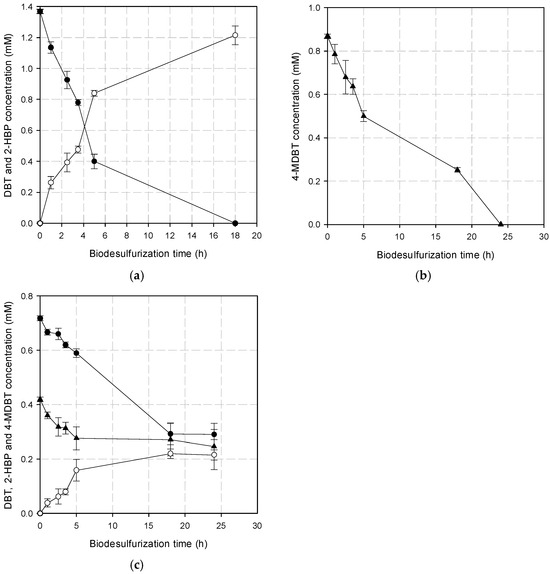
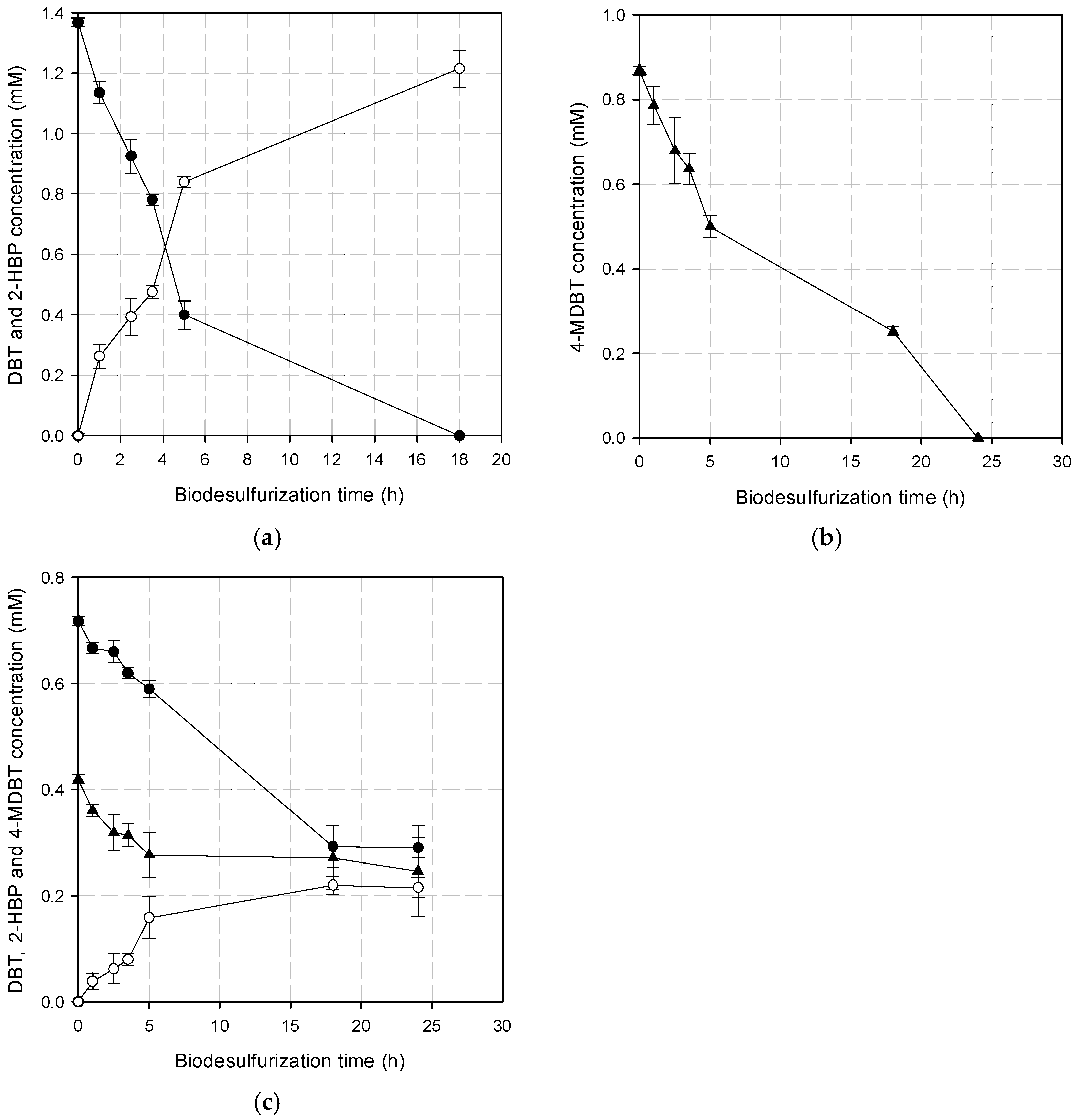
Cells derived from the fed-batch culture were used directly for the biodesulfurization of DBT (1.3 mM), 4-MDBT (0.9 mM) and a mixture of the above (0.7 mM DBT and 0.5 mM 4-MDBT) in the two-phase bubble column bioreactor. The OFP was set at 50% (v/v) while the biomass concentration in the aqueous phase was 8.35 g DCW/L (as derived from fed-batch culture, Figure 3a).
The desulfurization efficiency for DBT and 4-MDBT was expressed as follows [33]:
where (%) is the desulfurization efficiency, COSC,0 (mM) is the initial OSC concentration and COSC,t (mM) is the concentration at time t
The maximum percentage of desulfurization of the cells for DBT reaction was calculated according to the following equation [33]:
where is the maximum percentage of desulfurization, CDBT,0 is the initial concentration of DBT (mM) and C2-HBP,max (mM) is the maximum amount of 2-HBP produced.
Figure 5 depicts the time course of the desulfurization of the OSCs studied in the present work. Bacterial cells completely desulfurized DBT and 4-MDBT (YBDS = 100% for both OSCs) within 18 hr (Figure 5a) and 24 h (Figure 5b), respectively, in the single systems. It should be noted though that approximately 70% of the DBT was desulfurized within the first 5 h of reaction, while at the same time point the respected value for 4-MDBT was 42%. Even if DBT was completely desulfurized, the maximum percentage of desulfurization of the cells (XBDS) was 88.7% (Table 2).
Figure 5.
Biodesulfurization of DBT, 4-DMDBT or mixture thereof by R. qingshengii IGTS8 cells derived directly from the fed-batch culture. (a) Single system of DBT, (b) single system of 4-MDBT, nd (c) mixture DBT and 4-MDBT. Symbols: (●) DBT, (◯) 2-HBP, (▲) 4-MDBT.
Table 2.
ΥBDS, XBDS, specific desulfurization rate and specific product formation rate (qp) during desulfurization of DBT, 4-MDBT and a mixture of DBT + 4-DMDBT in a two-phase bubble column bioreactor.
Specific desulfurization rates as well as specific product formation rates (qp) were calculated from the linear parts of the curves (linear part between 0 and 5 h) depicted in Figure 5. DBT exhibited a desulfurization rate approximately 2.5 times higher compared with that of 4-MDBT (Table 2). This difference may be attributed to the lower affinity of the methylated substrate (4-MDBT) for the 4S pathway enzymes, as demonstrated by Prasoulas et al. [33], who reported that the apparent Km value for 4-MDBT is 7.5 times higher than that of DBT. Furthermore, the size of these molecules is different and that could affect the rate of trans-membrane mass transport. DBT is a smaller molecule and is expected to diffuse faster inside the cell compared with 4-MDBT [35]. The specific product formation rate (qp) for DBT desulfurization was equal to 17.8 ± 0.8 mmol 2-HBP/kg DCW/h (Table 2) which compares favorably with the product formation rates reported in the literature for the biodesulfurization of DBT under optimized conditions by resting cells of various bacteria in biphasic systems (model oil) (Table 3).
Table 3.
Biodesulfurization of DBT in model oil by resting cells of various desulfurizing bacteria.
The main difference between the approach of the present study and the majority of the cases reported in the literature is that the cells were used directly from the culture, avoiding the washing or concentration steps. Biodesulfurization by resting cells is affected by various process parameters, for instance the organic fraction phase (OFP), cell mass concentration in the aqueous phase, OSC concentration in the organic phase and oxygen [33]. Differences in the product formation rates could be attributed to the different experimental conditions applied. Furthermore, high 2-HBP production rates are often associated with a low organic fraction phase (OFP) (Table 3). OFP is among the most important technical bottlenecks in an industrial setting, since the higher the organic phase concentration, the lower the costs associated with the subsequent separation of the aqueous phase from the desired product, water handling and disposal [11].
The desulfurization efficiencies (YBDS) of DBT and 4-MDBT in the binary mixture declined to 59.6 and 41.2% compared with the single systems. Both compounds were desulfurized simultaneously by the cells within the initial 5 h of desulfurization without any preference for either one. The simultaneous desulfurization of different OSCs, which are highly resistant to HDS, is of great importance in the practical desulfurization of petroleum products.
The desulfurization of 4-MDBT seems to be terminated at 5 h of reaction, while DBT desulfurization continued up to 18 h (Figure 5c). In the binary system, the desulfurization rates of DBT and 4-MDBT were reduced significantly compared with the individual substrate condition and both OSCs exhibited similar specific desulfurization rates (2.8 and 3.1 mmoles/kg DCW/h for DBT and 4-MDBT, respectively). Furthermore, a significant reduction in qp compared with the single DBT system was observed (Table 2). Silva et al. [20] reported that when using a mixture of DBT, 4-MDBT, 4,6-DMDBT and 4,6-DEDBT, the biodesulfurization of DBT and 4-MDBT using the cells of the G. alkanivorans strain 1B directly used from a continuous cultivation system proceeded simultaneously and at a similar rate. The biodesulfurization of a mixture of DBT and 4,6-DMDBT using Rhodococcus rhodochrous MTCC 3552 cells in single and binary systems showed that the biodesulfurization rates of the two substrates in the binary system were reduced compared with the corresponding single systems [35].
4. Conclusions
Organosulfur compounds (OSCs) in petroleum pose significant challenges to refining processes and environmental compliance due to catalyst poisoning and SO2 emissions. Biodesulfurization (BDS) via the selective 4S pathway offers a green alternative to hydrodesulfurization (HDS) but is limited by low biocatalyst concentrations and cells’ desulfurization activity (CDA). This study addressed these challenges through a comparative evaluation of batch, repeated batch and fed-batch cultivation strategies for Rhodococcus qingshengii IGTS8. Among the three cultivation modes tested, the fed-batch process proved to be the most effective in achieving high biomass concentrations and maintaining elevated levels of CDA. In contrast, batch and repeated batch cultivations exhibited lower productivity and a marked decline in CDA over time, with no performance gains observed beyond the first replacement in the repeated batch regime.
The application of the biomass obtained from fed-batch cultivation directly in a two-phase bubble column reactor demonstrated the functional robustness of the process. Complete desulfurization of model sulfur compounds (DBT and 4-MDBT) was achieved without the need for further cell processing, while partial but concurrent desulfurization in mixed-substrate systems confirmed the catalyst’s applicability to more complex matrices. Overall, this work establishes fed-batch cultivation as an efficient and scalable method for producing active biocatalysts suitable for industrial biodesulfurization applications.
Future research should focus on exploring the genetic or metabolic engineering of R. qingshengii IGTS8 to improve enzyme activity, broaden substrate specificity and increase resistance to inhibitory compounds such as aromatic hydrocarbons or desulfurization by-products like 2-HBP. In parallel, the identification and characterization of other microorganisms with high biodesulfurization potential could expand the range of available biocatalysts. Additionally, future studies could investigate bioreactor design improvements, such as optimizing bubble column or airlift configurations as well as packed-bed reactors with immobilized cells to enhance mass transfer and overall process efficiency. Scaling up the process to pilot and industrial levels will be essential to assess its technical feasibility, economic viability and environmental impact.
Author Contributions
Conceptualization, D.M., D.K. and D.G.H.; methodology, D.M. and D.G.H.; software, P.D.G.; validation, K.D., S.K. and G.P.; formal analysis, O.M., K.D. and S.K.; investigation, K.D., S.K. and G.P.; resources, D.M. and D.G.H.; data curation, O.M., S.K. and P.D.G.; writing—original draft preparation, D.M.; writing—review and editing, D.M. and D.G.H.; supervision, D.M. and D.G.H. All authors have read and agreed to the published version of the manuscript.
Funding
This work was co-financed by the European Regional Development Fund of the European Union, and Greek national funds through the Operational Program “Competitiveness, Entrepreneurship, and Innovation”, under the call RESEARCH-CREATE-INNOVATE (grant number: T1EDK-02074, MIS 5030227).
Institutional Review Board Statement
Not applicable.
Informed Consent Statement
Not applicable.
Data Availability Statement
The data are contained within the article.
Conflicts of Interest
The authors declare no conflicts of interest.
Abbreviations
The following abbreviations are used in this manuscript:
| 2-HBP | 2-Hydroxybiphenyl |
| 4-MDBT | 4-Methyldibenzothiophene |
| BDS | Biodesulfurization |
| CDA | Cells’ desulfurization activity |
| DBT | Dibenzothiophene |
| DMSO | Dimethyl sulfoxide |
| DO | Dissolved oxygen |
| HDS | Hydrodesulfurization |
| GHG | Greenhouse Gas |
| OSCs | Organosulfur compounds |
References
- Sousa, J.P.M.; Ferreira, P.; Neves, R.P.P.; Ramos, M.J.; Fernandes, P.A. The bacterial 4S pathway—An economical alternative for crude oil desulphurization that reduces CO2 emissions. Green Chem. 2020, 22, 7604–7621. [Google Scholar] [CrossRef] [Scilit]
- Sadare, O.O.; Obazu, F.; Daramola, M.O. Biodesulfurization of petroleum distillates-Current status, opportunities and future challenges. Environments 2017, 4, 85. [Google Scholar] [CrossRef] [Scilit]
- Shi, Q.; Wu, J. Review on Sulfur Compounds in Petroleum and Its Products: State-of-the-Art and Perspectives. Energy Fuels 2021, 35, 14445–14461. [Google Scholar] [CrossRef] [Scilit]
- Chen, S.; Zhao, C.; Liu, Q.; Zang, M.; Liu, C.; Zhang, Y. Thermophilic biodesulfurization and its application in oil desulfurization. Appl. Microbiol. Biotechnol. 2018, 102, 9089–9103. [Google Scholar] [CrossRef] [Scilit]
- Nassar, H.N.; Abu Amr, S.S.; El-Gendy, N.S. Biodesulfurization of refractory sulfur compounds in petro-diesel by a novel hydrocarbon tolerable strain Paenibacillus glucanolyticus HN4. Environ. Sci. Pollut. Res. 2021, 28, 8102–8116. [Google Scholar] [CrossRef] [Scilit]
- EPA Standards for Fuel Sulfur. Available online: https://www.epa.gov/emission-standards-reference-guide/epa-standards-fuel-sulfur (accessed on 15 June 2025).
- Directive 2012/33/EU of the European Parliament and of the Council (12 November 2012). Available online: https://eur-lex.europa.eu/legal-content/EN/TXT/PDF/?uri=CELEX:32012L0033&from=EN (accessed on 15 June 2025).
- Heidarinasab, A.; Soltanieh, M.; Ardjmand, M.; Ahmadpanahi, H.; Bahmani, M. Comparison of Mo/MgO and Mo/ɣ-Al2O3 catalysts: Impact of support on the structure and dibenzothiophene hydrodesulfurization reaction pathways. Int. J. Environ. Sci. Technol. 2016, 13, 1065–1076. [Google Scholar] [CrossRef] [Scilit]
- Abid, M.F.; Ahmed, S.M.; AbuHamid, W.H.; Ali, S.M. Study on novel scheme for hydrodesulfurization of middle distillates using different types of catalyst. J. King Saud Univ. Eng. Sci. 2019, 31, 144–151. [Google Scholar] [CrossRef] [Scilit]
- Caro, A.; Boltes, K.; Letón, P.; García-Calvo, E. Biodesulfurization of dibenzothiophene by growing cells of Pseudomonas putida CECT 5279 in biphasic media. Chemosphere 2008, 73, 663–669. [Google Scholar] [CrossRef] [Scilit]
- Mohabeli, G.; Ball, A.S. Biodesulfurization of diesel fuels: Past, present and future perspectives. Int. Biodeterior. Biodegrad. 2016, 110, 163–180. [Google Scholar] [CrossRef] [Scilit]
- Lateef, S.A.; Ajumobi, O.O.; Onaiz, S.A. Enzymatic desulfurization of crude oil and its fractions: A mini review on the recent progresses and challenges. Arab. J. Sci. Eng. 2019, 44, 5181–5193. [Google Scholar] [CrossRef] [Scilit]
- Kilbane, J.J.; Stark, B. Biodesulfurization: A model system for microbial physiology research. World J. Microbiol. Biotechnol. 2016, 32, 137. [Google Scholar] [CrossRef] [Scilit]
- Ahmad, A.; Zamzami, M.A.; Ahmad, V.; Al-Thawadi, S.; Akhtar, M.S.; Khan, M.J. Bacterial Biological Factories Intended for the Desulfurization of Petroleum Products in Refineries. Fermentation 2023, 9, 211. [Google Scholar] [CrossRef] [Scilit]
- Buzanello, E.B.; Rezende, R.P.; Sousa, F.M.O.; Marques, E.L.S.; Loguercio, L.L. A novel Bacillus pumilus-related strain from tropical landfarm soil is capable of rapid dibenzothiophene degradation and biodesulfurization. BMC Microbiol. 2014, 14, 257. [Google Scholar] [CrossRef] [Scilit]
- Adlakha, J.; Singh, P.; Ram, S.K.; Kumar, M.; Singh, M.P.; Singh, D.; Sahai, V.; Srivastava, P. Optimization of conditions for deep desulfurization of heavy crude oil and hydrodesulfurized diesel by Gordonia sp. IITR100. Fuel 2016, 184, 761–769. [Google Scholar] [CrossRef] [Scilit]
- Akhtar, N.; Akhtar, K.; Ghauri, M.A. Biodesulfurization of thiophenic compounds by a 2-hydroxybiphenyl-resistant Gordonia sp. HS126-4N carrying dszABC genes. Curr. Microbiol. 2018, 75, 597–603. [Google Scholar] [CrossRef] [Scilit]
- Chen, S.; Zang, M.; Li, L.; Chen, J.; Liu, Q.; Feng, X.; Sun, S.; Zang, C.; Zhao, C. Efficient biodesulfurization of diesel oil by Gordonia sp. SC-10 with highly hydrophobic cell surfaces. Biochem. Eng. J. 2021, 174, 108094. [Google Scholar] [CrossRef] [Scilit]
- Kalita, M.; Chutia, M.; Jha, D.K.; Subrahmanyam, G. Mechanistic Understanding of Gordonia sp. in Biodesulfurization of Organosulfur Compounds. Curr. Microbiol. 2022, 79, 82. [Google Scholar] [CrossRef] [Scilit]
- Silva, T.P.; Paixão, S.M.; Tavares, J.; Paradela, F.; Crujeira, T.; Roseiro, J.C.; Alves, L. Streamlining the biodesulfurization process: Development of an integrated continuous system prototype using Gordonia alkanivorans strain 1B. RSC Adv. 2024, 14, 725. [Google Scholar] [CrossRef] [Scilit]
- Silva, T.P.; Paixão, S.M.; Alves, L. A new impetus for biodesulfurization: Bypassing sulfate inhibition in biocatalyst production. Green Chem. 2023, 25, 6416–6431. [Google Scholar] [CrossRef] [Scilit]
- Chen, H.; Zhang, W.J.; Chen, J.M.; Cai, Y.B.; Li, W. Desulfurization of various organic sulfur compounds and the mixture of DBT+4,6-DMDBT by Mycobacterium sp. ZD-19. Bioresour. Technol. 2008, 99, 3630–3634. [Google Scholar] [CrossRef] [Scilit]
- Li, F.; Zhang, Z.; Feng, J.; Cai, X.; Xu, P. Biodesulfurization of DBT in tetradecane and crude oil by a facultative thermophilic bacterium Mycobacterium goodii X7B. J. Biotechnol. 2007, 127, 222–228. [Google Scholar] [CrossRef] [Scilit]
- Li, W.; Zhang, Y.; Wang, M.D.; Shi, Y. Biodesulfurization of dibenzothiophene and other organic sulfur compounds by a newly isolated Microbacterium strain ZD-M2. FEMS Microbiol. Lett. 2005, 247, 45–50. [Google Scholar] [CrossRef] [Scilit]
- Guobin, S.; Huaiying, Z.; Jianmin, X.; Guo, C.; Wangliang, L.; Huizhou, L. Biodesulfurization of hydrodesulfurized diesel oil with Pseudomonas delafieldii R-8 from high density culture. Biochem. Eng. J. 2006, 27, 305–309. [Google Scholar] [CrossRef] [Scilit]
- Sadare, O.O.; Daramola, M.O. Bio-catalytic degradation of dibenzothiophene (DBT) in petroleum distillate (diesel) by Pseudomonas spp. Sci. Rep. 2023, 13, 6020. [Google Scholar] [CrossRef] [Scilit]
- Luo, M.F.; Xing, J.M.; Gou, Z.X.; Li, S.; Liu, H.Z.; Chen, J.Y. Desulfurization of dibenzothiophene by lyophilized cells of Pseudomonas delafieldii R-8 in the presence of dodecane. Biochem. Eng. J. 2003, 13, 1–6. [Google Scholar] [CrossRef] [Scilit]
- Dejaloud, A.; Vahabzadeh, F.; Habibi, A. Ralstonia eutropha as a biocatalyst for desulfurization of dibenzothiophene. Bioprocess Biosyst. Eng. 2017, 40, 969–980. [Google Scholar] [CrossRef] [Scilit]
- Gunam, I.B.W.; Yamamura, K.; Sujaya, I.N.; Antara, N.S.; Aryanta, W.R.; Tanaka, M.; Tomita, F.; Sone, T.; Asano, K. Biodesulfurization of dibenzothiophene and its derivatives using resting and immobilized cells of Sphingomonas subarctica T7b. J. Microbiol. Biotechnol. 2013, 23, 473–482. [Google Scholar] [CrossRef] [Scilit]
- Goindi, H.K.; Saini, V.S.; Verma, P.S.; Adhikari, D.K. Dibenzothiophene desulfurization in hydrocarbon environment by Staphylococcus sp. resting cells. Biotechnol. Lett. 2002, 24, 779–781. [Google Scholar] [CrossRef] [Scilit]
- Dejaloud, A.; Habibi, A.; Vahabzadeh, F. DBT desulfurization by Rhodococcus erythropolis PTCC 1767 in aqueous and biphasic systems. Chem. Pap. 2020, 74, 3605–3615. [Google Scholar] [CrossRef] [Scilit]
- Hokmabadi, M.; Khosravinia, S.; Mahdavi, M.A.; Gheshlaghi, R. Enhancing the biodesulphurization capacity of Rhodococcus sp. FUM94 in a biphasic system through optimization of operational factors. J. Appl. Microbiol. 2022, 132, 3461–3475. [Google Scholar] [CrossRef] [Scilit]
- Prasoulas, G.; Dimos, K.; Glekas, P.; Kalantzi, S.; Sarris, S.; Templis, C.; Vavitsas, K.; Hatzinikolaou, D.G.; Papayannakos, N.; Kekos, D.; et al. Biodesulfurization of Dibenzothiophene and Its Alkylated Derivatives in a Two-Phase Bubble Column Bioreactor by Resting Cells of Rhodococcus erythropolis IGTS8. Processes 2021, 9, 2064. [Google Scholar] [CrossRef] [Scilit]
- Glekas, P.D.; Martzoukou, O.; Mastrodima, M.-E.; Zarkadoulas, E.; Kanakoglou, D.S.; Kekos, D.; Pachnos, M.; Mavridis, G.; Mamma, D.; Hatzinikolaou, D.G. Deciphering the biodesulfurization potential of two novel Rhodococcus isolates from a unique Greek environment. AIMS Microbiol. 2022, 8, 484–506. [Google Scholar] [CrossRef] [Scilit]
- Das, P.; Roy, K.; Barbora, L.; Moholkar, V.S. Interactive effects in biodesulfurization of model oil containing dibenzothiophene and 4,6-dimethyl dibenzothiophene using Rhodococcus rhodochrous MTCC 3552. Bioresour. Technol. Rep. 2024, 26, 101842. [Google Scholar] [CrossRef] [Scilit]
- Derikvand, P.; Etemadifar, Z.; Biria, D. RSM optimization of dibenzothiophene biodesulfurization by newly isolated strain of Rhodococcus erythropolis PD1 in aqueous and biphasic systems. Microbiology 2015, 84, 65–72. [Google Scholar] [CrossRef] [Scilit]
- Davoodi-Dehaghani, F.; Vosoughi, M.; Ziaee, A.A. Biodesulfurization of dibenzothiophene by a newly isolated Rhodococcus erythropolis strain. Bioresour. Technol. 2010, 101, 1102–1105. [Google Scholar] [CrossRef] [Scilit]
- Tamjidi, S.; Esmaeili, H. A review on biodesulfurization of crude oil using different microorganisms: Reaction mechanisms, effective factors, and removal efficiency of organic sulfur compounds. Process Biochem. 2025, 150, 288–305. [Google Scholar] [CrossRef] [Scilit]
- Mamuad, R.Y.; Choi, A.E.S. Biodesulfurization Processes for the Removal of Sulfur from Diesel Oil: A Perspective Report. Energies 2023, 16, 2738. [Google Scholar] [CrossRef] [Scilit]
- Martzoukou, O.; Glekas, P.D.; Avgeris, M.; Mamma, D.; Scorilas, A.; Kekos, D.; Amillis, S.; Hatzinikolaou, D.G. Interplay between Sulfur Assimilation and Biodesulfurization Activity in Rhodococcus qingshengii IGTS8: Insights into a Regulatory Role of the Reverse Transsulfuration Pathway. mBio 2022, 13, e0075422. [Google Scholar] [CrossRef] [Scilit]
- Parveen, S.; Akhtar, N.; Ghauri, M.A.; Akhtar, K. Conventional genetic manipulation of desulfurizing bacteria and prospects of using CRISPR-Cas systems for enhanced desulfurization activity. Crit. Rev. Microbiol. 2020, 46, 300–320. [Google Scholar] [CrossRef] [Scilit]
- Martzoukou, O.; Amillis, S.; Glekas, P.D.; Breyanni, D.; Avgeris, M.; Scorilas, A.; Kekos, D.; Pachnos, M.; Mavridis, G.; Mamma, D.; et al. Advancing Desulfurization in the Model Biocatalyst Rhodococcus qingshengii IGTS8 via an In Locus Combinatorial Approach. Appl. Environ. Microbiol. 2023, 89, e0197022. [Google Scholar] [CrossRef] [Scilit]
- Bagchi, A.; Srivastava, P. Genetic and metabolic engineering approaches for enhanced biodesulfurization of petroleum fractions. Front. Bioeng. Biotechnol. 2024, 12, 1482270. [Google Scholar] [CrossRef] [Scilit]
- Arbel-Groissman, M.; Menuhin-Gruman, I.; Naki, D.; Bergman, S.; Tuller, T. Fighting the battle against evolution: Designing genetically modified organisms for evolutionary stability. Trends Biotechnol. 2023, 41, 1518–1531. [Google Scholar] [CrossRef] [Scilit]
- Al-khazaali, W.M.K.; Ataei, S.A. Optimization of Biodesulfurization of sour heavy crude oil. PLoS ONE 2023, 18, e0283285. [Google Scholar] [CrossRef] [Scilit]
- Stylianou, M.; Samanides, C.G.; Vyrides, I.; Agapiou, A. High biodesulfurization efficiency of oil by aerobic (Burkholderia sp. and Serratia sp.) and anaerobic bacteria using various additives. Energy 2023, 282, 128950. [Google Scholar] [CrossRef] [Scilit]
- Honda, H.; Sugiyama, H.; Saito, I.; Kobayashi, T. High Cell Density Culture of Rhodococcus rhodochrous by pH-Stat Feeding and Dibenzothiophene Degradation. J. Ferment. Bioeng. 1998, 85, 334–338. [Google Scholar] [CrossRef] [Scilit]
- Chang, J.H.; Kim, Y.J.; Lee, B.H.; Cho, K.-S.; Ryu, H.W.; Chang, Y.K.; Chang, H.N. Production of a Desulfurization Biocatalyst by Two-Stage Fermentation and Its Application for the Treatment of Model and Diesel Oils. Biotechnol. Prog. 2001, 17, 876–880. [Google Scholar] [CrossRef] [Scilit]
- Yan, H.; Kishimoto, M.; Omasa, T.; Katakura, Y.; Suga, K.; Okumura, K.; Yoshikawa, O. Increase in desulfurization activity of Rhodococcus erythropolis KA2-5-1 using ethanol feeding. J. Biosci. Bioeng. 2000, 89, 361–366. [Google Scholar] [CrossRef] [Scilit]
- Yoshikawa, O.; Ishii, Y.; Koizumi, K.; Ohshiro, T.; Izumi, Y.; Maruhashi, K. Enhancement and stabilization of desulfurization activity of Rhodococcus erythropolis KA2-5-1 by feeding ethanol and sulfur components. J. Biosci. Bioeng. 2002, 94, 447–452. [Google Scholar] [CrossRef]
- Kishimoto, M.; Inui, M.; Omasa, T.; Katakura, Y.; Suga, K.; Okumura, K. Efficient production of desulfurizing cells with the aid of expert system. Biochem. Eng. J. 2000, 5, 143–147. [Google Scholar] [CrossRef] [Scilit]
- Del Olmo, C.H.; Alcon, A.; Santos, V.E.; Garcia-Ochoa, F. Modeling the production of a Rhodococcus erythropolis IGTS8 biocatalyst for DBT biodesulfurization: Influence of media composition. Enzyme Microb. Technol. 2005, 37, 157–166. [Google Scholar] [CrossRef] [Scilit]
- Russmayer, H.; Egermeier, M.; Kalemasi, D.; Sauer, M. Spotlight on biodiversity of microbial cell factories for glycerol conversion. Biotechnol. Adv. 2019, 37, 107395. [Google Scholar] [CrossRef] [Scilit]
- Xu, X.; Zhang, W.; Xia, G.; Guo, Z.; Song, J.; Zhua, D.; Liu, Y.; Liu, Y.; Xue, G.; Li, X.; et al. Stabilizing lactate production through repeated batch fermentation of food waste and waste activated sludge. Bioresour. Technol. 2020, 300, 122709. [Google Scholar] [CrossRef] [Scilit]
- Li, G.; Chen, Z.; Chen, N.; Xu, Q. Enhancing the efficiency of L-tyrosine by repeated batch fermentation. Bioengineered 2020, 11, 852–861. [Google Scholar] [CrossRef] [Scilit]
- Kargi, F. Re-interpretation of the logistic equation for batch microbial growth in relation to Monod kinetics. Lett. Appl. Microbiol. 2009, 48, 398–401. [Google Scholar] [CrossRef] [Scilit]
- Calzada, J.; Zamarro, M.T.; Alcón, A.; Santos, V.E.; Díaz, E.; García, J.L.; Garcia-Ochoa, F. Analysis of dibenzothiophene desulfurization in a recombinant Pseudomonas putida strain. Appl. Environ. Microbiol. 2009, 75, 875–877. [Google Scholar] [CrossRef] [Scilit]
- Fei, Q.; O’Brien, M.; Nelson, R.; Chen, X.; Lowell, A.; Dowe, N. Enhanced lipid production by Rhodosporidium toruloides using different fed-batch feeding strategies with lignocellulosic hydrolysate as the sole carbon source. Biotechnol. Biofuels 2016, 9, 130. [Google Scholar] [CrossRef] [Scilit]
- Chi, L.; Wei, J.; Hou, J.; Wang, J.; Hu, X.; He, P.; Wei, T. Optimizing the DO-stat protocol for enhanced production of thermostable pullulanase in Escherichia coli by using oxygen control strategies. J. Food Biochem. 2020, 44, e13173. [Google Scholar] [CrossRef] [Scilit]
- Gomez, E.; Alcon, A.; Escobar, S.; Santos, V.E.; Garcia-Ochoa, F. Effect of fluiddynamic conditions on growth rate and biodesulfurization capacity of Rhodococcus erythropolis IGTS8. Biochem. Eng. J. 2015, 99, 138–146. [Google Scholar] [CrossRef] [Scilit]

Disclaimer/Publisher’s Note: The statements, opinions and data contained in all publications are solely those of the individual author(s) and contributor(s) and not of MDPI and/or the editor(s). MDPI and/or the editor(s) disclaim responsibility for any injury to people or property resulting from any ideas, methods, instructions or products referred to in the content. |
© 2025 by the authors. Licensee MDPI, Basel, Switzerland. This article is an open access article distributed under the terms and conditions of the Creative Commons Attribution (CC BY) license (https://creativecommons.org/licenses/by/4.0/).