Article

Probabilistic Seismic Hazard Assessment for United Arab Emirates, Qatar and Bahrain


1
Department of Geology, Faculty of Science, Assiut University, 71516 Assiut, Egypt
2
Institute of Geophysics, Morelia Campus, National Autonomous University of Mexico, 58190 Morelia, Michoacán, Mexico
3
Department of Physics, University of Jaén, 23071 Jaén, Spain
4
Département Études et Surveillance Sismique, CRAAG, 16358 Algiers, Algeria
*
Author to whom correspondence should be addressed.
Appl. Sci. 2020, 10(21), 7901; https://doi.org/10.3390/app10217901
Submission received: 24 September 2020 / Revised: 3 November 2020 / Accepted: 5 November 2020 / Published: 7 November 2020
(This article belongs to the Section Earth Sciences)

Abstract

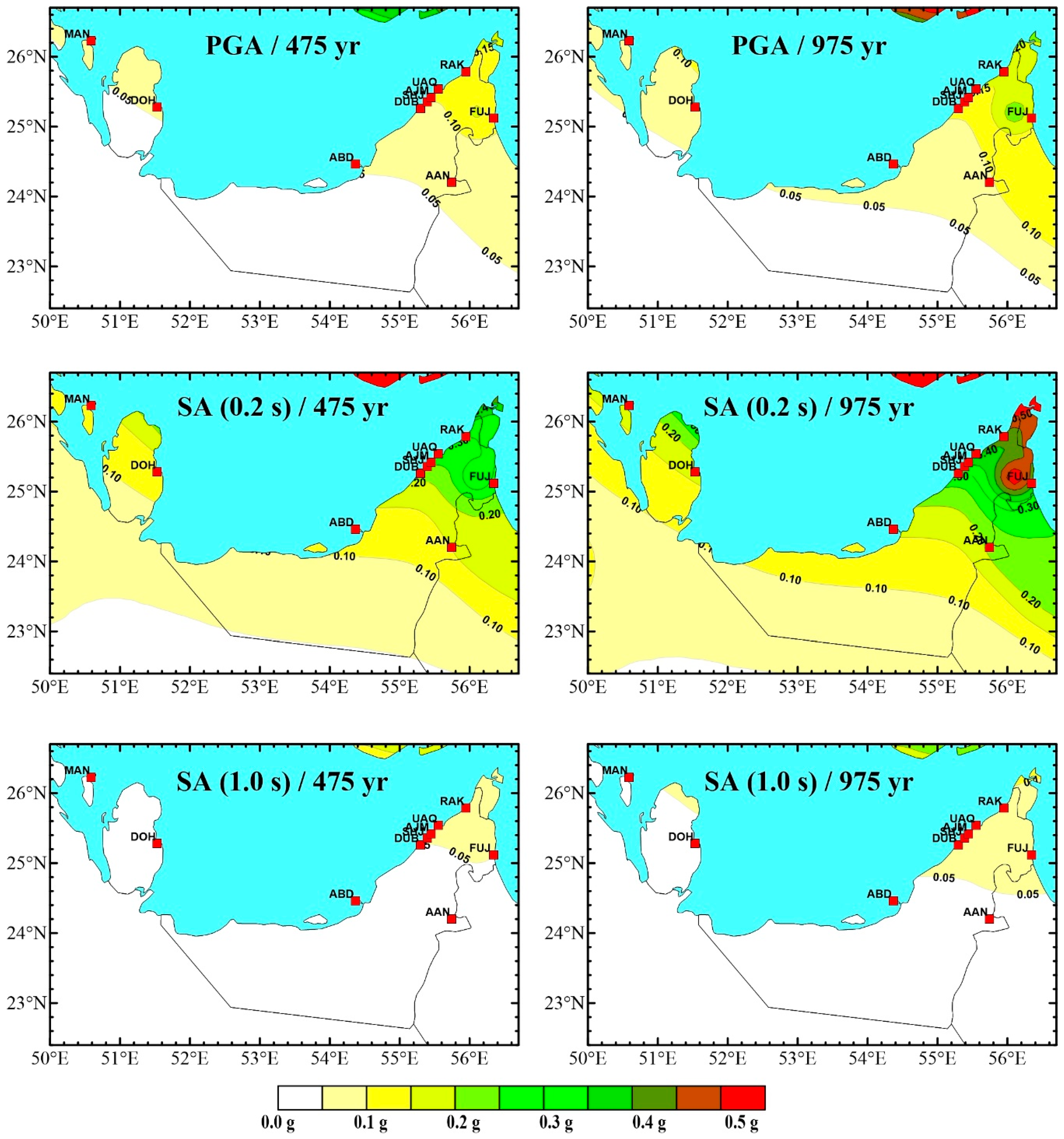
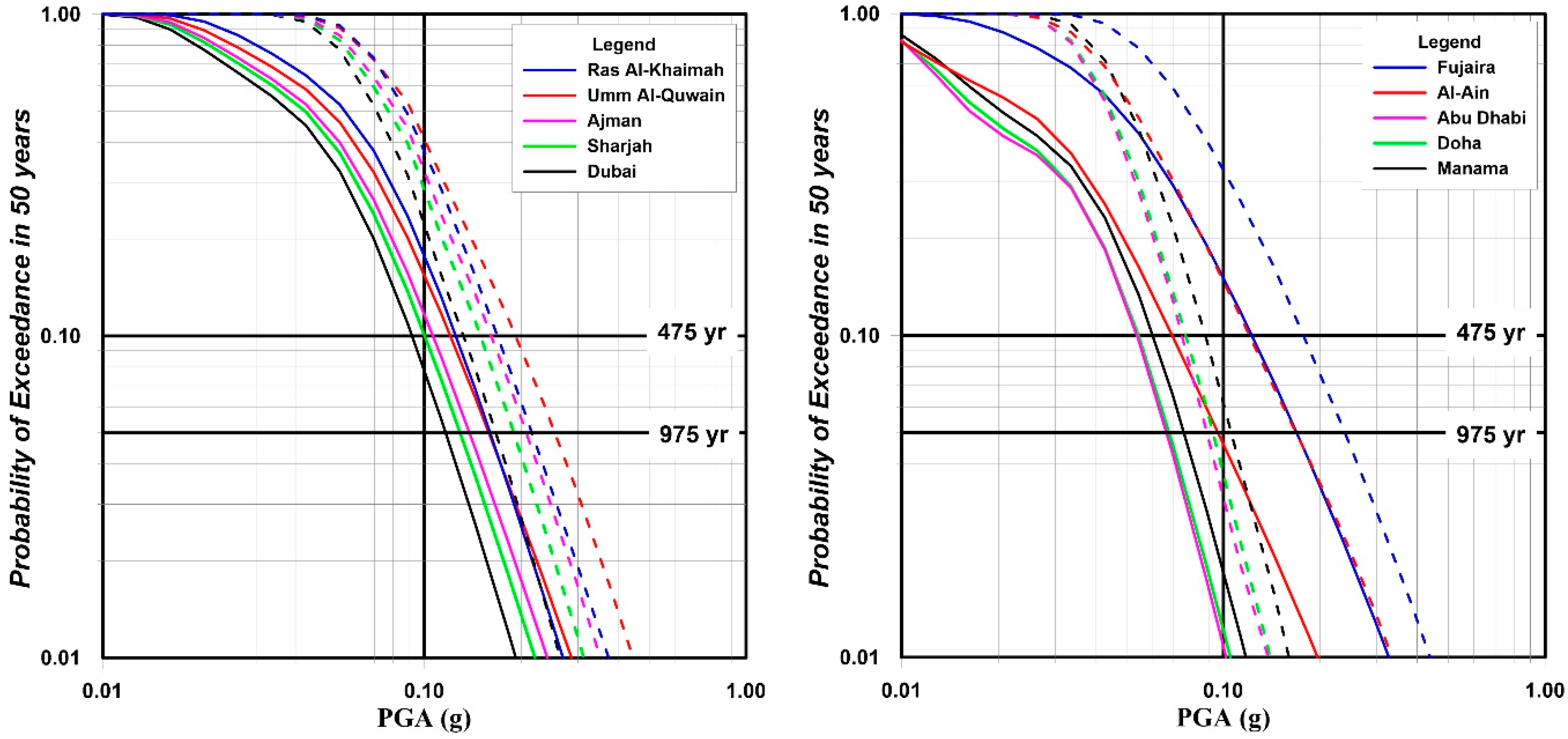
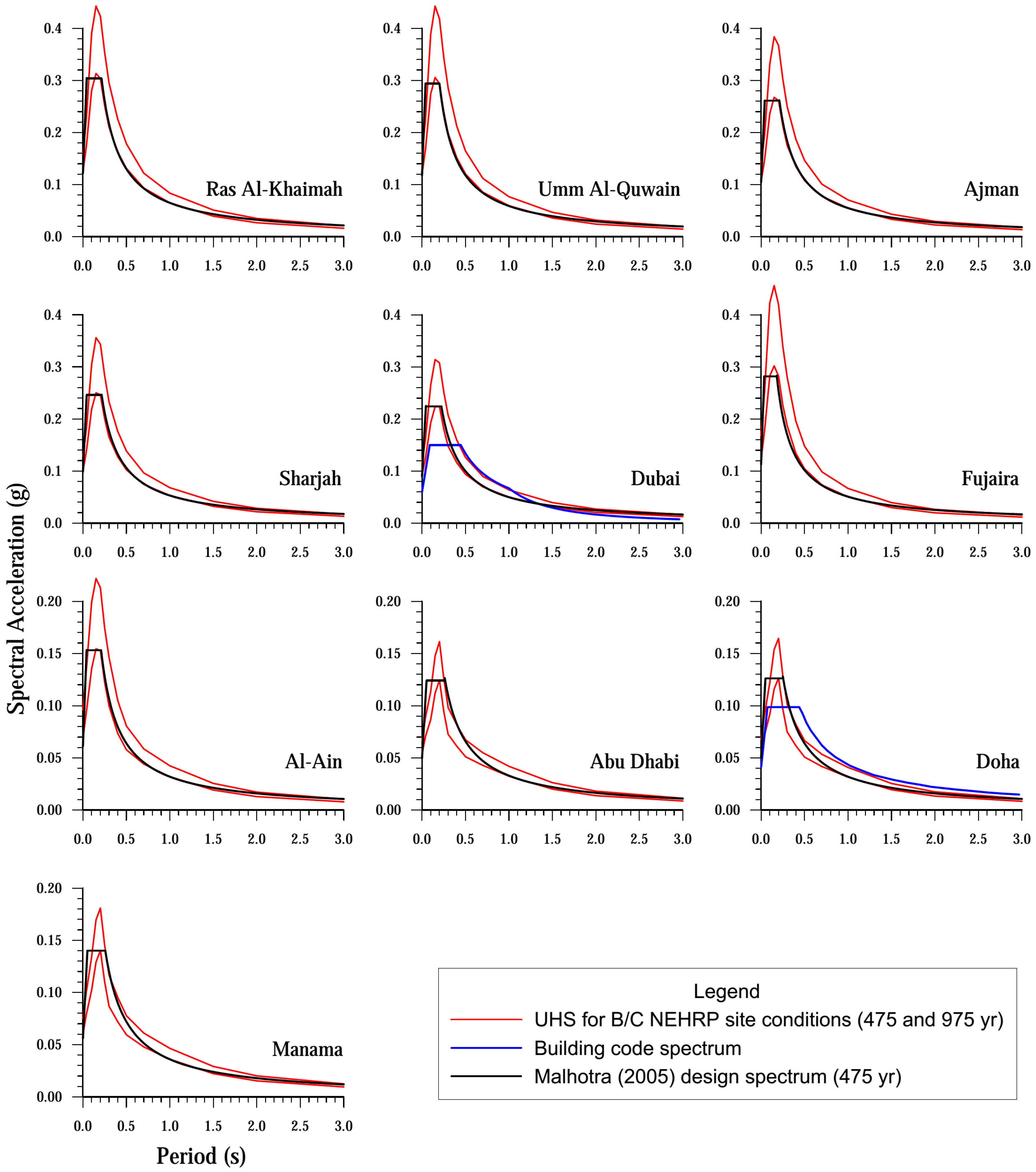
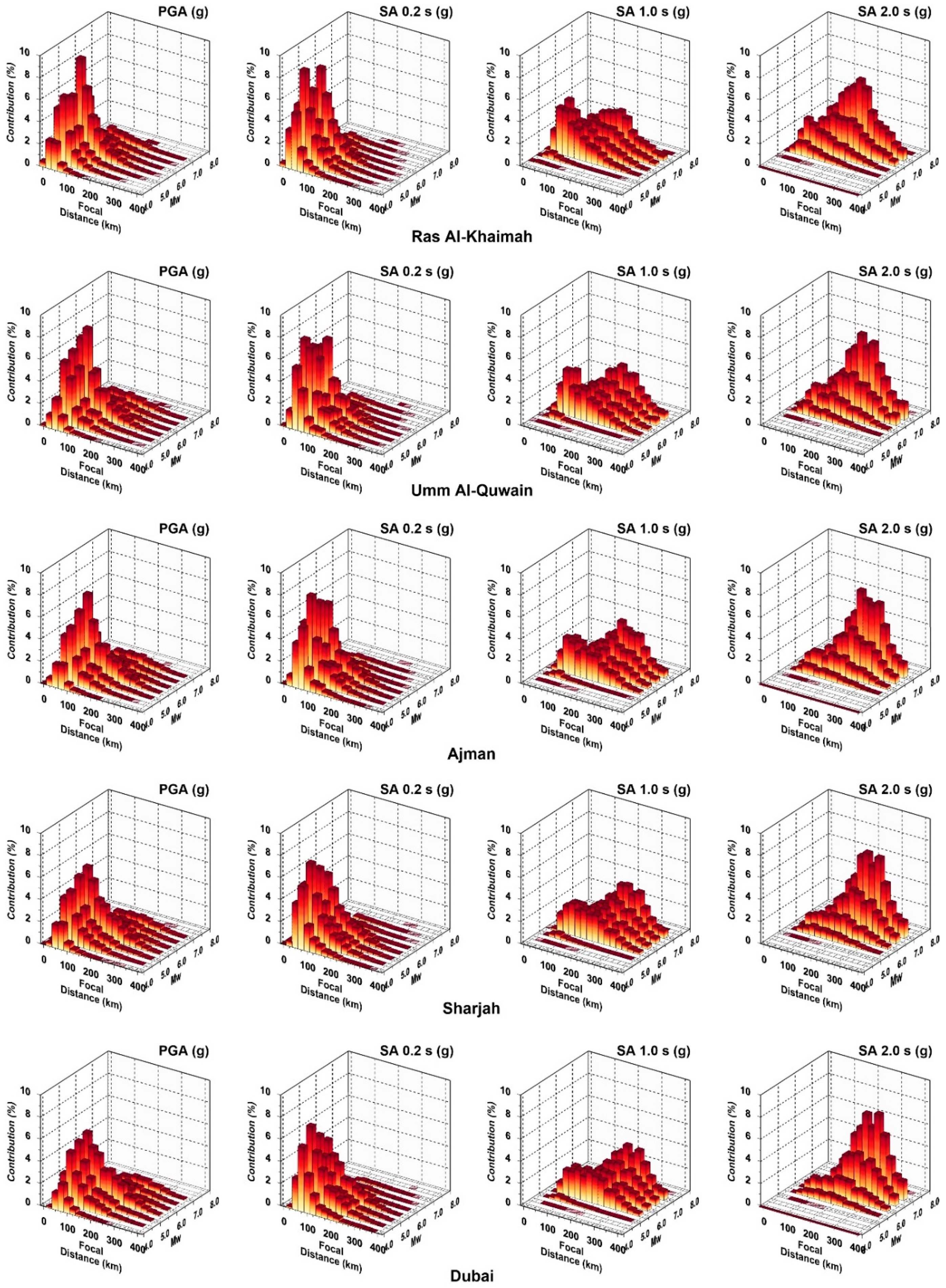
A probabilistic seismic hazard assessment in terms of peak ground acceleration (PGA) and spectral acceleration (SA) values, for both 10% and 5% probability of exceedance in 50 years, has been performed for the United Arab Emirates, Qatar, and Bahrain. To do that, an updated, unified, and Poissonian earthquake catalog (since 685 to 2019) was prepared for this work. Three alternative seismic source models were considered in a designed logic-tree framework. The discrimination between the shallow and intermediate depth seismicity along the Zagros and the Makran regions was also considered in this assessment. Three alternative ground-motion attenuation models for crustal earthquakes and one additional for intermediate-depth ones have been selected and applied in this study, considering the predominant stress regime computed previously for each defined source. This assessment highlights that the maximum obtained hazard values are observed in the northeastern part of the studied region, specifically at Ras Al-Khaimah, Umm Al-Quwain, and Fujaira, being characterized by mean PGA and SA (0.2 s) pair values equal to (0.13 g, 0.30 g), (0.12 g, 0.29 g), and (0.13 g, 0.28 g), respectively, for a 475-year return period and for B/C National Earthquake Hazards Reduction Program (NEHRP) boundary site conditions. Seismic hazard deaggregation in terms of magnitude and distance was also computed for a return period of 475 years, for ten emirates and cities, and for four different spectral periods.
Keywords: seismic hazard; peak ground acceleration; deaggregation; uniform hazard spectra; zagros-biltis fold thrust belt; makran subduction zone; United Arab Emirates; Qatar; Bahrain seismic hazard; peak ground acceleration; deaggregation; uniform hazard spectra; zagros-biltis fold thrust belt; makran subduction zone; United Arab Emirates; Qatar; Bahrain