


Abstract
This study examines students’ job search behaviour in the context of an increasingly digital labour market, focusing on preferred employer contact channels and the use of professional networking platforms. Despite the growing importance of digital tools for recruitment and employability, it remains unclear how students actually engage with these channels. The study is based on quantitative data collected through a structured questionnaire administered in person to 209 university students in Slovakia. The analysis employs descriptive statistics, chi-square tests and binary logistic regression to examine differences in preferences and the determinants of platform use. The findings show that job portals remain the dominant employer contact channel, while social media platforms, including LinkedIn, are significantly less utilised. A key result is the identification of a gap between LinkedIn awareness, profile ownership, and its actual use for job search. The results further indicate that job portal preference differs by field of study, while employment status is not significantly associated with the analysed employer contact channels. The study contributes to the literature by highlighting the importance of behavioural engagement in digital job search and offers implications for universities, students, and employers.
1. Introduction
Today’s labour markets are undergoing substantial transformation driven by technological change, digitalisation, demographic shifts, and evolving skill requirements. The World Economic Forum’s Future of Jobs Report 2025 identifies broadening digital access as the most transformative macrotrend, with 60% of employers expecting it to reshape their business by 2030, while advances in artificial intelligence and information processing technologies are expected to affect 86% of organisations. At the same time, nearly two-fifths of workers’ current skill sets are expected to change or become outdated by 2030, highlighting the growing importance of adaptability and continuous skill development (World Economic Forum, 2025). In this context, graduates equipped with digital communication competencies and the ability to use collaboration and project management tools are better positioned to succeed in increasingly digital work environments. Continuous updating of digital skills has therefore become a critical factor for employability and competitiveness in modern labour markets (Job & Job, 2025). This perspective is consistent with human capital theory, which emphasises that investments in education, skills, and competencies represent a key driver of individual performance and employability, as well as organisational competitiveness (Kucharčíková et al., 2023, 2024). Human Capital Theory therefore provides an important foundation for understanding why university students invest in developing professional knowledge, digital competencies, and career-related skills that facilitate their transition to the labour market. Recent research further confirms that human capital positively influences students’ job-search intentions and employability, highlighting the importance of career development activities in preparing graduates for successful labour market entry (Islam et al., 2024). However, understanding students’ job-search behaviour in digital labour markets also requires explaining how these competencies are communicated to prospective employers. In this regard, Signalling Theory suggests that job applicants reduce information asymmetry by communicating observable indicators of otherwise unobservable qualities, such as competencies, motivation, professionalism, and career potential (Cheng & Ji, 2026). In digital recruitment, professional networking platforms such as LinkedIn enable students to communicate these signals through their educational background, work experience, certifications, skills, recommendations, and professional self-presentation, thereby strengthening their professional identity and personal brand (Wang & Wang, 2026; Korzynski et al., 2023). Furthermore, signalling mechanisms have become increasingly important in digital recruitment, where employers increasingly rely on applicants’ online professional profiles to evaluate their competencies and professional potential before establishing direct contact (Cheng & Ji, 2026). In addition to communicating competencies, students also rely on professional relationships and networks when searching for employment. This perspective is explained by Social Capital Theory, which emphasises that access to social networks provides individuals with valuable information, resources, and career opportunities. Networking behaviours and individual social capital have been shown to positively influence career development, career satisfaction, and career prospects, suggesting that employment outcomes depend not only on human capital but also on the ability to establish and utilise professional relationships (Fryczyńska & Ivanova, 2019; Grimme et al., 2025). In digital labour markets, professional networking platforms such as LinkedIn facilitate the development of social capital by enabling students to establish professional connections, expand their networks, and interact directly with potential employers (Korzynski et al., 2023). Together, these complementary theoretical perspectives provide a broader conceptual foundation for understanding students’ use of LinkedIn and their preferences for employer contact channels in digital labour markets.
These theoretical perspectives also help explain why the ongoing digitalisation of labour markets has fundamentally transformed students’ job-search behaviour, making digital recruitment channels, professional networking platforms, and online self-presentation increasingly important components of the transition from higher education to employment.
Alongside these changes, the nature of the job search itself is evolving. Traditionally, job search functioned as a relatively straightforward matching process, where individuals with certain skills were looking for employers demanding those skills. However, recent industry perspectives suggest that this logic is shifting. According to Roslansky and Raman (2026), job search is no longer only about matching predefined skills with job requirements, but increasingly about how individuals create, signal, and communicate their value in dynamic and competitive labour markets. This shift implies that visibility, personal branding, and digital presence have become central elements of employability, particularly for younger generations entering the workforce.
Digital transformation has fundamentally changed the interaction between employers and job seekers. Career sites, job portals, and professional social networks now constitute the core infrastructure of modern recruitment systems. In practice, the recruitment landscape remains heavily anchored by traditional digital platforms and emerging networks. Job boards still facilitate nearly half of all global applications and roughly one-fifth of successful hires. Parallel to this, the talent search has become increasingly social, with 58% of hiring managers now viewing professional social networks as indispensable tools for identifying high-calibre candidates (Slotta, 2025). Although job portals remain dominant in terms of usage, their effectiveness is not necessarily superior to other recruitment channels. Evidence from 2018 suggests that job boards receive one of the lowest effectiveness scores compared to alternative channels such as hiring managers, referrals, and social media-based recruitment (Yang, 2025). However, employee recruitment is crucial to organisational development, and a healthy employee recruitment system helps the organisation achieve better performance (K. Chang & Cheng, 2025).
Professional social networking platforms, such as LinkedIn, have expanded job search beyond traditional application-based processes. These platforms enable users to present their professional identity, build networks, and engage with job-related content. In doing so, these platforms bridge the gap between formal recruitment, interpersonal networking, and personal branding. For both active and passive seekers, LinkedIn is considered one of the most relevant platforms for accessing employment opportunities due to its perceived reliability, relevance, and cost-effectiveness (Hosain & Liu, 2020).
For younger job seekers, particularly students and members of Generation Z (born between 1997 and 2012), job searching is closely intertwined with digital and social environments. Research shows that job-related decision-making is influenced not only by rational evaluation of job information but by social signals too. These social signals can be, for example, credibility, trust, and perceived relevance of information sources (Kumar et al., 2026).
While recruitment has moved decisively into the digital sphere, there is a lack of understanding of how university students navigate these environments. Current literature offers only limited insights into the practical realities of student engagement, leaving several critical questions unanswered. Specifically, it remains unclear how students truly prefer to be approached by recruiters, and whether their reliance on dominant channels, such as traditional job portals, reflects a strategic choice or just a habit.
Furthermore, a significant conceptual gap exists between students’ awareness of the platform, their ownership of a profile, and their active engagement with the job market. Furthermore, students from different fields of study may operate under distinct labour market logics. The role of academic background in shaping recruitment preferences remains largely underexplored.
Despite the growing body of research on digital recruitment and online job-search behaviour, previous studies have primarily focused on the use of digital recruitment channels or the adoption of professional networking platforms. Comparatively little attention has been paid to the distinction between students’ awareness of LinkedIn, ownership of a LinkedIn profile, and its active use during the job search process. Furthermore, limited empirical evidence is available on how these different levels of engagement relate to students’ preferred employer contact channels. Addressing these gaps, this study provides a more nuanced understanding of students’ digital job-search behaviour by examining awareness, profile ownership, and active LinkedIn use as distinct behavioural stages.
Building on Human Capital Theory, Signalling Theory, and Social Capital Theory, this study adopts an exploratory approach to examine how students’ competencies, professional self-presentation, and networking behaviours relate to employer contact preferences and LinkedIn engagement in digital labour markets. Given the exploratory nature of the study, it is guided by research questions rather than theory-driven hypotheses. This approach is appropriate because the study seeks to examine associations among variables and identify behavioural patterns rather than test a predefined causal model. Accordingly, this study aims to examine university students’ preferred employer contact channels and to identify selected factors associated with these preferences, with particular attention to job portals, social media, LinkedIn awareness, LinkedIn profile ownership, LinkedIn use for job search, employment status, and field of study.
The study addresses the following research questions:
- RQ1: What employer contact channels do university students prefer when searching for employment opportunities?
- RQ2: Do preferred employer contact channels differ according to students’ employment status and field of study?
- RQ3: Is there a gap between students’ awareness of LinkedIn, ownership of a LinkedIn account, and actual use of LinkedIn for job search purposes?
- RQ4: Which factors influence students’ preference for social media and job portals as employer contact channels?
2. Theoretical Framework
Understanding the factors that influence students’ employment pathways is crucial for both educational institutions and employers seeking to attract emerging talent. This review synthesises existing research under four dimensions: students’ job-seeking behaviours, their preferences and criteria, the influence of study fields, and the sources and platforms they use when searching for employment.
2.1. Job Seeking of Students
The transition from higher education to the labour market is widely recognised as one of the most complex phases in a student’s professional life. The job search process requires adaptability, resilience, and access to structural and informational support systems. According to Qazi et al. (2024), employability confidence is closely linked to students’ perceptions of their skills, adaptability, and the support they receive from their institutions. Mao and Zhao (2023) emphasised that the job-seeking process is often accompanied by psychological stress, which can lead students to adopt maladaptive coping behaviours such as excessive reliance on social media. These behaviours may provide temporary relief but ultimately undermine well-being and job search effectiveness. J. Kim et al. (2022) found that heightened job-seeking anxiety sometimes motivates preparation behaviours such as CV development and interview practice but can equally result in avoidance and withdrawal.
Differences also emerge across disciplines and national contexts. Shyu et al. (2022) demonstrated that pathology graduates in Taiwan secured employment relatively quickly, often within six months, though satisfaction and career progression varied by specialisation. For international students, Wilson-Gürler et al. (2022) identified challenges linked to perceptions of inequality in host labour markets, with students often relying on personal networks over formal qualifications. Mamun et al. (2019) linked unemployment-related stress with excessive internet use among graduates in Bangladesh, illustrating the negative feedback loop between unemployment, coping strategies, and mental health. Digital innovation also offers potential solutions: Zhao and Liu (2024) explored AI-driven systems that support training in job search and interview skills, highlighting how technology can augment employability. In addition, civic education and structured career counselling are increasingly recognised as essential supports to guide students through the uncertainties of the labour market. Higher education is a developmental arena where students learn to balance demands and resources to prepare for transitions into the labor market (Ingusci et al., 2026). However, education systems are unable to keep pace with rapidly changing labour market demands, particularly in terms of technological and digital competencies (Poór et al., 2026).
2.2. Preferences and Criteria
Job preferences reflect a complex interplay of personal aspirations, cultural values, and structural conditions. Gyarteng-Mensah et al. (2021) reported that postgraduate students in Ghana prioritised job security, career advancement, and alignment with personal interests. Similar findings emerged in Bangladesh, where Mamun et al. (2019) showed that students strongly preferred public sector jobs due to stability, predictable working hours, and the opportunity to serve society, often accepting lower wages in exchange for security. Cross-cultural comparisons reveal further nuances. Opstad et al. (2024) found that Norwegian students valued work–life balance and corporate social responsibility, while Polish students emphasised salary and advancement potential.
Gender and personality also mediate preferences. Noh and Son (2025) and Horta and Dai (2025) highlight that women and risk-averse individuals typically lean toward job security, whereas entrepreneurial orientations are more common among students with traits such as extraversion and openness. Wronowska (2023), Ch’ng and Phang (2024), and Şahin and Özkurt (2025) emphasise the role of social recognition, respect, and career prestige as decisive factors in job choice. Zhu et al. (2024) and Serafín et al. (2024) further illustrate that career perceptions begin early, with technical and medical students shaping preferences around prestige, identity, and social contribution. Yao et al. (2023) introduced recommendation systems that integrate salary expectations and speciality matching, demonstrating the increasing role of technology in shaping decision-making. While technological tools refine preference formation, core values such as stability, financial independence, and meaningful work remain consistently influential.
2.3. Sources, Networks, and Platforms
Students increasingly rely on a diverse array of platforms and networks to identify career opportunities. Traditional supports such as career services, faculty, and academic databases remain important, with accessibility and credibility as key determinants of use (Lee et al., 2012; K. Kim & Sin, 2007). Early digital job hunting studies highlighted the role of web search and online boards (Hasebrook & Saha, 2007; Greene & Byrne, 2011), while more recent research emphasises professional networking sites and gig platforms. Karacsony et al. (2020) argue that gig work offers flexibility and immediate income but is often characterised by precarity. Similarly, Zeshan et al. (2025) warned of the risks of digital overload on sustainable work. Zhao and Liu (2024) further underline the challenges and opportunities of digital gig platforms, noting the balance between job demands and resources.
Institutional supports also play a bridging role. Internships, recognition models, and structured career guidance programs help students connect academic experiences to employment opportunities (Simpfenderfer et al., 2024; Martinez-Vazquez, 2023). Social networks remain equally crucial. Wilson-Gürler et al. (2022) found that international students often perceive personal connections as more influential than qualifications in labour markets. Digitalisation further amplifies these dynamics, with social media and LinkedIn providing platforms for networking but demanding strategic identity management (Cheikh-Ammar & Jabagi, 2025; R. Chang et al., 2024). Al-Hail et al. (2023) and Linzalone et al. (2020) add that university-led digital platforms, if designed inclusively, can widen participation and democratize access to opportunities. Thus, while digital and social platforms broaden reach, effective navigation requires strong information literacy and adaptability.
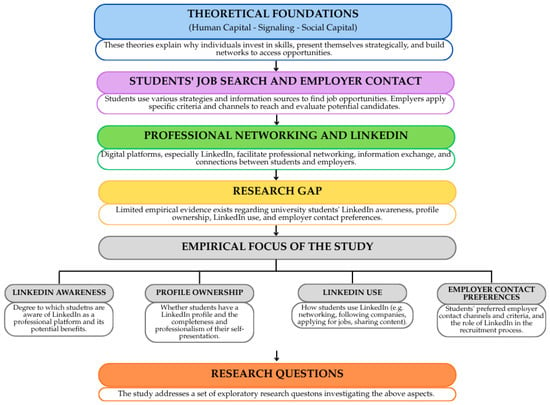
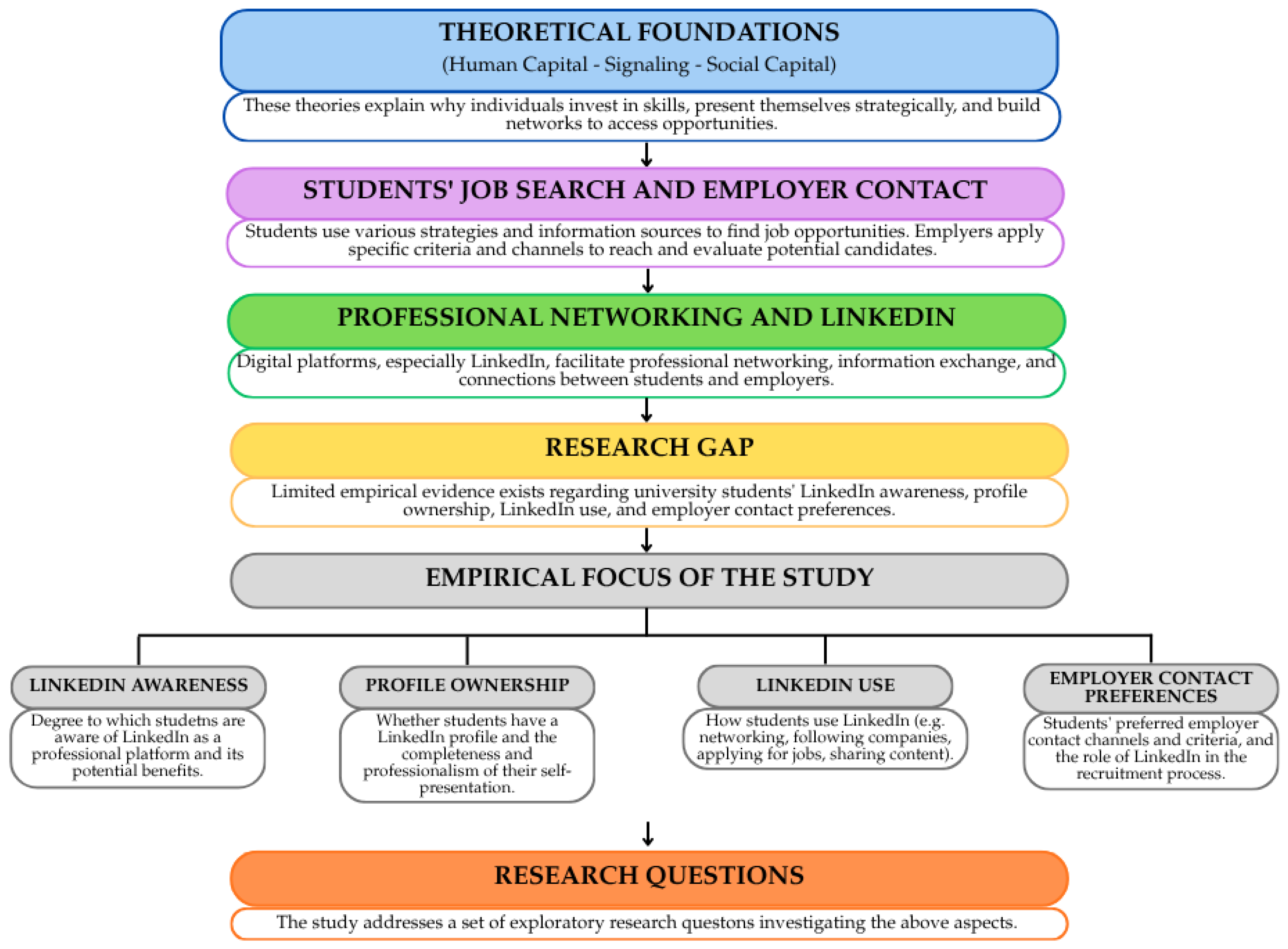
Overall, the reviewed literature suggests that students’ job-search behaviour in digital labour markets is shaped by the interaction of several complementary factors. Individual employability depends not only on the development of knowledge and competencies but also on the ability to communicate these competencies effectively through professional networking platforms and to utilise professional networks during the job-search process. At the same time, students’ employer contact preferences are influenced by disciplinary context and digital job-search behaviours. Building on these complementary perspectives, Figure 1 synthesises the theoretical framework and illustrates how these concepts are integrated into the empirical focus of the present study, which examines employer contact preferences, LinkedIn awareness, profile ownership, and active LinkedIn use as interconnected dimensions of students’ digital job-search behaviour.
Figure 1.
Conceptual overview of the theoretical foundation and empirical focus of the study.
Figure 1 synthesises the theoretical framework presented in this section and illustrates how the reviewed literature informs the empirical focus of the present study. Specifically, it demonstrates how the theoretical foundations underpin students’ job-search behaviour, employer contact, and professional networking through LinkedIn, thereby leading to the identified research gap. The figure further illustrates how this gap is addressed through the empirical dimensions examined in the study and the corresponding exploratory research questions.
3. Materials and Methods
The study sample consisted of 209 university students enrolled at a public university in Slovakia. The respondents represented three disciplinary areas: economic sciences (47.4%), socio-humanitarian sciences (27.3%), and technical sciences (25.4%). Economic sciences were considered as a separate category in order to capture the specific perspective of students from economics and management fields.
Data were collected using a structured questionnaire administered in person at the university premises. Respondents were asked the questionnaire questions in person, and their answers were recorded by the interviewers in the questionnaire form (Appendix A). The questionnaire included mainly closed-ended items, where interviewers marked the respondent’s answer from predefined response options. The questionnaire was developed by the authors specifically for the purposes of this study based on the research objectives and the variables investigated in the empirical analysis. Prior to the main data collection, the questionnaire was pilot-tested with university students to assess the clarity, comprehensibility, and wording of the questions. Based on the feedback obtained during the pilot testing, minor revisions were made to improve the wording and clarity of several questionnaire items before the final version was administered. The present study focuses mainly on the quantitative data derived from the closed-ended questions. The open-ended responses provide additional qualitative insights that may be explored in future research. The questions related to the variables analysed in this study are provided in Appendix A.
The survey mainly targeted students in later years of study, as they were expected to be closer to entering the labour market and therefore more familiar with job-search practices and employer contact channels. Students were approached directly during their presence at the university, mainly in corridors and common areas, and were invited to participate voluntarily. Since there was no complete list of eligible students from which respondents could be randomly selected, the sampling procedure can be described as non-probability purposive intercept sampling. The in-person administration enabled a controlled data collection process and ensured a high response rate, particularly among students in later stages of their studies.
Most respondents were in the third year (46.9%) and fourth year (41.6%) of their studies, while fifth-year students represented 9.1% of the sample and second-year students 2.4%. The study, therefore, mainly focuses on students in later stages of their studies, who are already more familiar with their field and the labour market environment.
Regarding employment status, 74.6% of respondents reported having a job or part-time work, while 25.4% were not employed at the time of the survey. Table 1 presents the detailed structure of the sample.
Table 1.
Sample characteristics (N = 209).
Before conducting the statistical analysis, responses related to preferred employer contact methods were recoded into broader categories. Since respondents could indicate more than one contact method, all recorded options were retained. The original dataset included multiple specific recruitment channels, such as individual job portals (e.g., Profesia, Kariéra.sk, Pretlak), which were grouped into a single category labelled job portals. Informal recruitment channels, such as contacting employers through personal networks, were grouped under personal contacts. To enable further statistical analysis, selected contact channels were transformed into binary variables, indicating whether a respondent mentioned the given channel. This recoding strategy resulted in channel-specific dichotomous outcome variables, where the value 1 indicated that a respondent preferred a given employer contact channel and the value 0 indicated that the respondent did not prefer that channel. Separate binary logistic regression models were therefore used to analyse the factors associated with specific contact-channel preferences.
The analysis was conducted in several steps. First, descriptive statistics were used to examine students’ preferred employer contact channels. Subsequently, differences between groups were analysed using chi-square tests of independence. The strength of statistically significant relationships was assessed using Cramer’s V.
To further examine the factors influencing students’ preferences, binary logistic regression models were estimated for selected contact channels. In particular, two models were constructed with the dependent variables representing the preference for (1) social media and (2) job portals as employer contact channels. The independent variables included employment status, field of study, year of study, LinkedIn account ownership, and the use of LinkedIn for job search purposes. Field of study was treated as a categorical variable, with economic sciences used as the reference category. Year of study was included as a continuous variable reflecting students’ progression through their studies.
For each binary logistic regression model, odds ratios were reported together with 95% confidence intervals. Model fit was assessed using the omnibus likelihood-ratio chi-square test, Nagelkerke R2, and the Hosmer–Lemeshow goodness-of-fit test. Multicollinearity among predictors was assessed using variance inflation factors.
Binary logistic regression models were also estimated for personal contacts and direct contact channels. However, these models were not statistically significant and were therefore not included in the Results section.
4. Results
This section presents the main empirical findings related to students’ preferred employer contact channels and their use of professional social media.
4.1. Preferred Employer Contact Channels
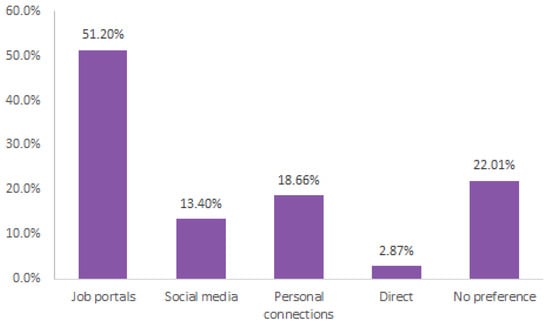
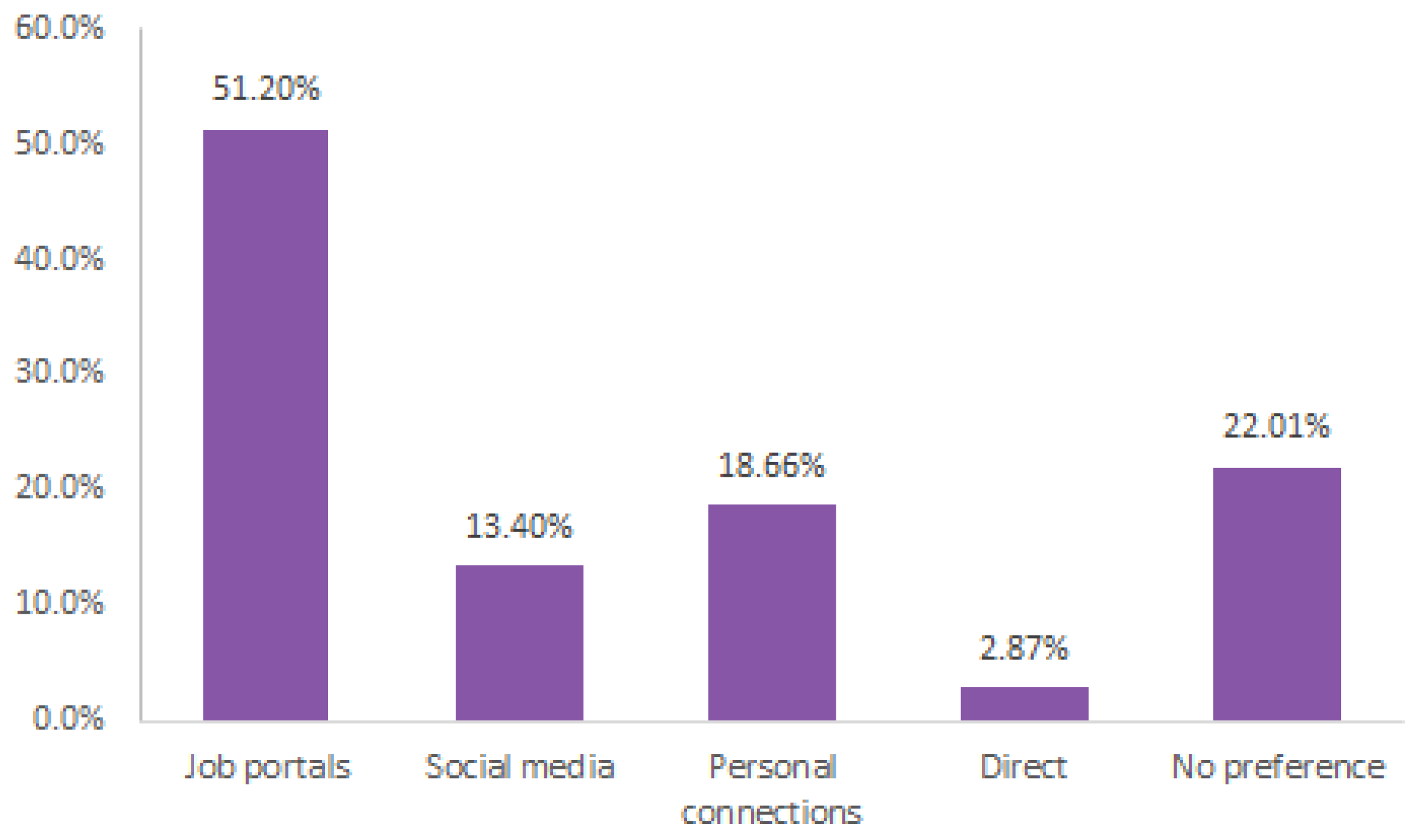
Figure 2 presents students’ preferred employer contact channels. Job portals represent the most preferred communication channel (51.2%), followed by no specific preference (22.0%) and personal contacts (18.7%). Social media platforms, including LinkedIn, are preferred by a smaller proportion of students (13.4%), while direct contact is used only marginally (2.9%).
Figure 2.
Preferred employer contact channels among students.
A comparison between working and non-working students indicates only minor differences in preferred employer contact channels. In both groups, job portals remain the dominant option, with a slightly higher preference among non-working students (50.8%) compared to working students (46.1%). Working students show a higher preference for social media (13.2%) than non-working students (10.2%), whereas non-working students rely more on personal contacts (20.3% vs. 16.2%). The share of students reporting no clear preference is higher among working students (22.2%) than among non-working students (15.3%).
The results of the Chi-square test of independence show that employment status was not significantly associated with the selection of any of the analysed employer contact channels. No statistically significant differences were found for job portals (χ2(1) = 1.162, p = 0.281), social media (χ2(1) = 0.264, p = 0.607), or personal connections (χ2(1) = 0.741, p = 0.389). Direct contact was selected by only a very small number of respondents and was therefore reported descriptively only. Overall, these results suggest that students’ current employment or part-time work status did not substantially shape their preferred employer contact channels.
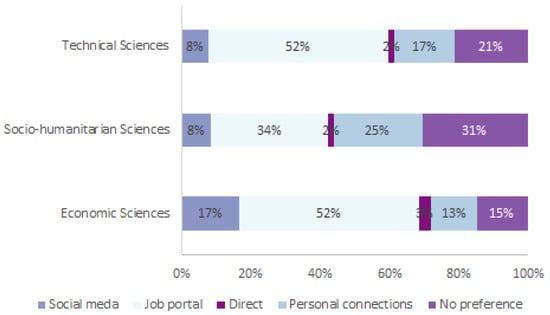
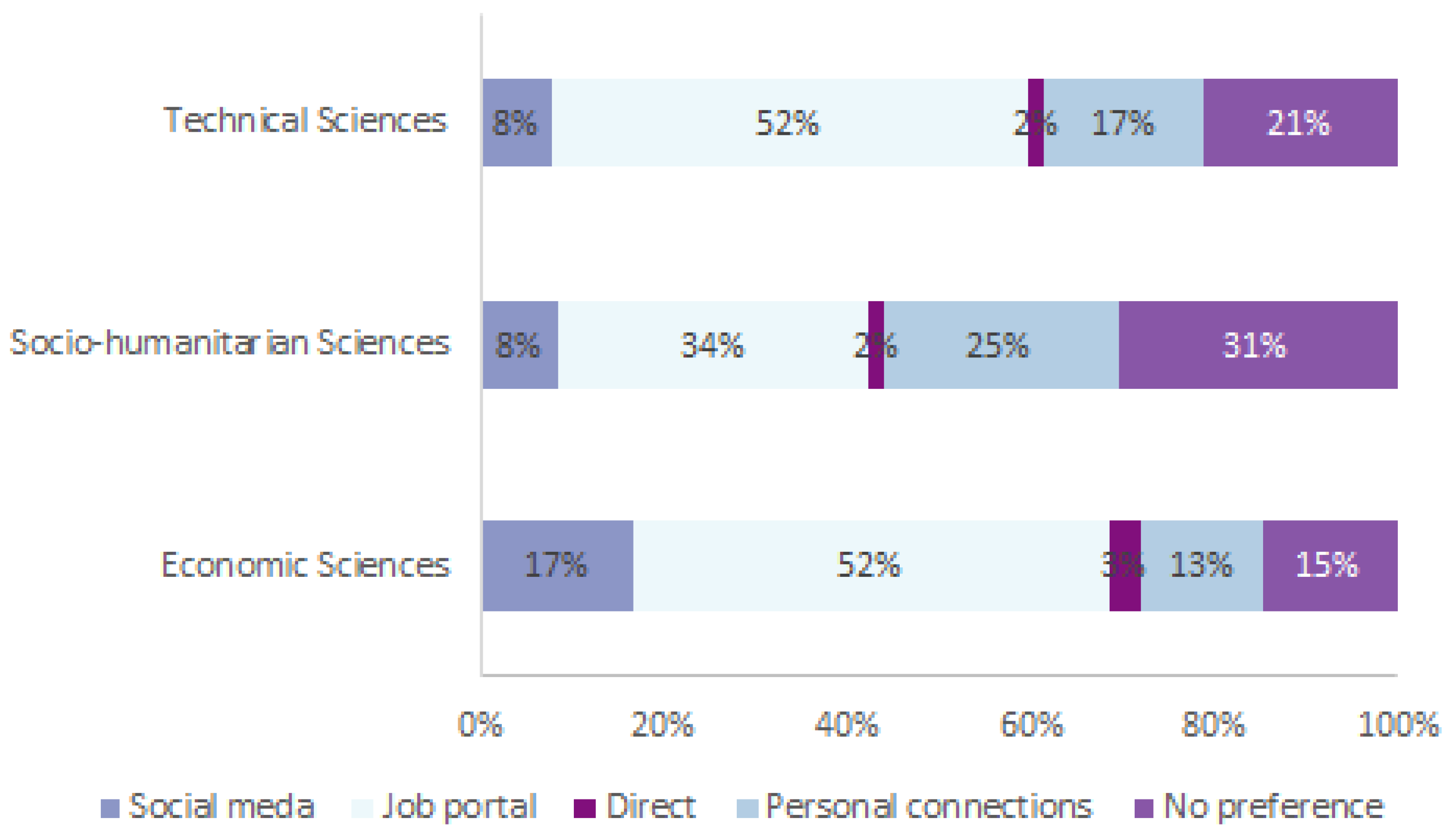
Differences in preferred employer contact channels are more evident across fields of study (Figure 3). Job portals remain the most preferred channel across all groups; however, their dominance is strongest among students of technical and economic sciences, where preferences exceed 50%, while it is lower among socio-humanitarian students (approximately 34%). In contrast, students in socio-humanitarian fields show a stronger preference for personal contacts compared to other groups. Students of economic sciences also demonstrate a relatively higher preference for social media platforms.
Figure 3.
Preferred employer contact channels by field of study.
The chi-square tests revealed a statistically significant association between field of study and the job portals preference (χ2(2) = 9.239, p = 0.010). The effect size (Cramer’s V = 0.210) indicates a small to moderate relationship. This suggests that students’ tendency to prefer job portals as an employer contact channel differed across disciplinary groups. In contrast, the associations between the field of study and the selection of social media or personal connections were not statistically significant. The results of the chi-square tests are presented in Table 2.
Table 2.
Results of chi-square tests for preferred employer contact methods.
4.2. LinkedIn Awareness, Profile Ownership, and Job Search Use
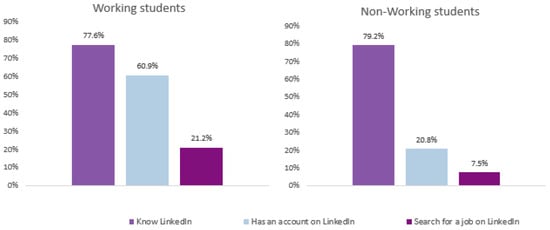
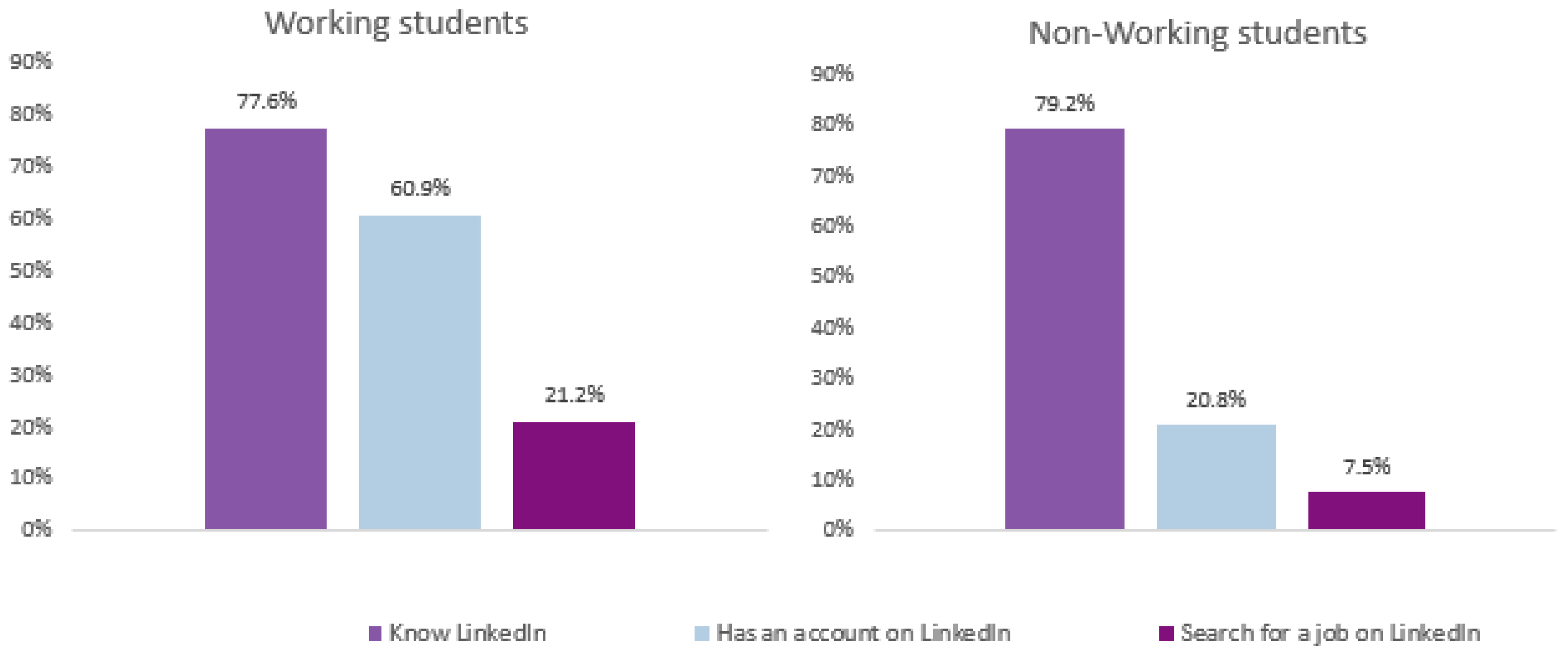
Subsequently, the relationships between LinkedIn awareness, account ownership, and its use for job search purposes were examined. Figure 4 illustrates the differences between working and non-working students in terms of their familiarity with LinkedIn, ownership of a LinkedIn account, and its use for job search.
Figure 4.
Comparison of LinkedIn awareness, account ownership, and job search usage between working and non-working students.
Both groups demonstrate a high level of awareness of LinkedIn (77.6% of working students and 79.2% of non-working students). However, working students are substantially more likely to have a LinkedIn account (60.9%) compared to non-working students (20.8%). Despite this difference, the use of LinkedIn for job search remains relatively low in both groups, although it is higher among working students (21.2%) than among non-working students (7.5%). This indicates a clear gap between LinkedIn awareness, profile ownership, and its actual use for job search purposes.
A Chi-square test of independence revealed no statistically significant association between employment status and familiarity with LinkedIn (χ2(1) = 0.0606, p = 0.8055), indicating that both working and non-working students demonstrate a similar level of awareness. In contrast, a statistically significant relationship was found between employment status and having a LinkedIn account (χ2(1) = 26.1956, p < 0.001), with a medium effect size (Cramer’s V = 0.3407), suggesting that working students are more likely to have a LinkedIn account. Additionally, the relationship between employment status and using LinkedIn for job search purposes was also statistically significant (χ2(1) = 4.5683, p = 0.0325), although the effect size was small (Cramer’s V = 0.1421), indicating only a modest association between these variables.
The results of the chi-square tests are summarised in Table 3.
Table 3.
Results of chi-square tests for employment status and LinkedIn usage.
4.3. Determinants of Preferred Employer Contact Channels
To further examine the factors influencing students’ preferences, binary logistic regression analyses were conducted for selected contact channels.
4.3.1. Determinants of Social Media as a Preferred Employer Contact Channel
To further examine the factors associated with students’ preference for social media as an employer contact channel, a binary logistic regression analysis was conducted. The model was statistically significant (χ2 = 22.550, p = 0.001), indicating that the selected variables contribute to explaining students’ preferences. The model explained approximately 18.8% of the variance (Nagelkerke R2 = 0.188). Model diagnostics indicated an acceptable model fit. The Hosmer–Lemeshow goodness-of-fit test was non-significant, χ2(7) = 3.889, p = 0.792, suggesting that the model fitted the data adequately. Multicollinearity was assessed using variance inflation factors. All VIF values were below 2, indicating no serious multicollinearity among the predictors.
The results show (Table 4) that the use of LinkedIn for job search purposes was significantly associated with students’ preference for social media as an employer contact channel (B = 1.672, p = 0.005). Students who actively use LinkedIn are more than five times more likely to prefer social media channels (OR = 5.322).
Table 4.
Results of binary logistic regression for social media as a preferred employer contact channel.
The field of study also has a significant effect. Students from socio-humanitarian fields are significantly more likely to prefer social media compared to students from economic fields (B = 1.495, p = 0.022; OR = 4.461).
In contrast, employment status and LinkedIn profile ownership were not found to have a statistically significant effect. The effect of year of study was marginally significant (p = 0.096), suggesting only a weak relationship.
4.3.2. Determinants of Job Portals as a Preferred Contact Channel
A binary logistic regression analysis was also conducted to examine the factors influencing students’ preference for job portals as an employer contact channel. The model was statistically significant (χ2 = 13.561, p = 0.035), suggesting that the included variables contribute to explaining this preference. However, the explanatory power of the model was relatively low, accounting for approximately 8.4% of the variance (Nagelkerke R2 = 0.084).
Model diagnostics indicated an acceptable model fit. The Hosmer–Lemeshow goodness-of-fit test was non-significant, χ2(7) = 3.557, p = 0.829, indicating an acceptable fit of the model to the data. As in the previous model, all VIF values were below 2, indicating no serious multicollinearity among the predictors.
None of the individual predictors reached conventional levels of statistical significance (Table 5). Nevertheless, the field of study showed a marginal effect, with students from technical fields being less likely to prefer job portals compared to students from economic fields (OR = 0.472, p = 0.063).
Table 5.
Results of binary logistic regression for job portals as a preferred employer contact channel.
Overall, the results indicate that preferences for job portals are less strongly associated with the examined individual characteristics compared to social media.
Overall, the results of the regression analyses reveal notable differences between the examined contact channels. While the model for social media preferences demonstrated a relatively stronger explanatory power and identified significant predictors, particularly LinkedIn usage and field of study, the model for job portals showed weaker explanatory capacity, with no statistically significant individual predictors. This suggests that preferences for social media are more strongly shaped by individual characteristics and digital behaviour, whereas job portals appear to represent a more general or default communication channel among students.
5. Discussion
The findings show that despite the growing importance of professional social media and online networking, the students’ preferred employer contact channels remain strongly anchored in traditional digital recruitment infrastructure. In relation to RQ1, the results indicate that job portals persist as the dominant channel for employer engagement. Social media platforms, including LinkedIn, are preferred by a considerably smaller proportion of respondents. That confirms that job portals continue to function as the primary and most familiar job search mechanism. This is happening in a labour market environment increasingly shaped by digitalisation and technological change (Slotta, 2025).
At the same time, the dominance of job portals should not be interpreted as evidence of their superior effectiveness. Recruitment channel evidence suggests that job boards often generate high application volumes but achieve lower effectiveness compared with other channels such as referrals, hiring managers, or social media-based recruitment (Yang, 2025). This suggests that students’ preferences may be associated with the accessibility and familiarity of job portals rather than with the relative effectiveness of different job-search strategies. However, as students’ motivations and decision-making processes were not directly examined, this interpretation should be treated with caution.
With respect to RQ2, the results show that employment status was not significantly associated with the analysed employer contact channels, while field of study was significantly associated only with the selection of job portals. The results thus suggest that being employed does not substantially change students’ preferences in job searching. On the other hand, the field of study exhibited a statistically significant relationship with preferred job portals, indicating that disciplinary context plays an important role in labour market expectation and in shaping job searching behaviour.
In relation to RQ3, the study identifies a clear gap between LinkedIn awareness, LinkedIn profile ownership, and actual use of LinkedIn for job search. Even if most students are familiar with LinkedIn, fewer have an account, and only a limited proportion actively use it for searching for a job. This finding highlights that awareness of professional platforms such as LinkedIn does not automatically translate into active engagement. Given that LinkedIn is widely recognised as a platform connecting job seekers, employees, and employers and enabling professional networking and visibility (Hosain & Liu, 2020), the identified gap suggests an underutilisation of available digital opportunities among students.
Finally, in response to RQ4, the regression analysis indicates that actual usage of LinkedIn for job searching significantly increases the likelihood of preferring social media as an employer contact channel, whereas mere profile ownership does not. This suggests that behavioural engagement is a key determinant of digital preferences in the process of job searching. In contrast, preferences for job portals are not significantly explained by the examined individual characteristics, supporting the interpretation that job portals function as a default or habitual choice rather than a behaviour driven by active digital engagement.
The results can be further interpreted within the broader transformation of labour markets and recruitment processes driven by digitalisation and technological change. Despite the increasing importance of professional networking platforms, the findings suggest that students’ behaviour has not yet fully adapted to these developments. This is particularly relevant as digital competencies, adaptability, and continuous skill development are becoming essential for employability. The World Economic Forum’s Future of Jobs Report 2025 highlights that technological advancements, especially in artificial intelligence and digital access, are among the most significant drivers reshaping jobs and required skills, with a substantial proportion of workers expected to update their competencies in the coming years (World Economic Forum, 2025). The report also suggests that graduates equipped with digital communication and project management skills are better prepared to succeed in modern work environments. However, the present findings indicate that the existence of digital tools alone does not guarantee their effective use.
Professional platforms such as LinkedIn play a dual role in this context. They function not only as tools for job searching but also as mechanisms for communicating competencies, building professional identity, and increasing visibility in the labour market. LinkedIn can serve as an important platform for both active and passive job seekers, enabling access to job opportunities and maintaining connections between candidates and employers (Hosain & Liu, 2020). On the other hand, social media-based job search can influence decision-making processes through credibility, social connections, and perceived information quality (Kumar et al., 2026).
The gap between LinkedIn awareness and its actual use for job search can be interpreted as a behavioural rather than purely informational issue. One possible explanation is that students may differ in their motivation, digital competencies, or strategic understanding of professional networking platforms. However, these factors were not directly measured in the present study and should therefore be interpreted as plausible explanations informed by previous research rather than empirical findings.
This interpretation is consistent with previous research showing that job-seeking behaviour is influenced not only by access to information but also by social, psychological, and contextual factors, such as job-search anxiety, perceived opportunities, and reliance on familiar or low-effort strategies (J. Kim et al., 2022; Mao & Zhao, 2023; Qazi et al., 2024).
This finding also suggests that students’ limited engagement with LinkedIn may reflect a broader capability gap in navigating digital recruitment environments rather than merely limited awareness of professional networking platforms. As recruitment processes increasingly incorporate digital and AI-supported technologies, successful job search depends not only on access to these platforms but also on the competencies required to use them strategically, communicate professional value effectively, and adapt to evolving recruitment practices. These findings reinforce the importance of developing digital employability competencies alongside technical knowledge to support students’ successful transition into increasingly digital labour markets.
The continued dominance of job portals suggests that easily accessible recruitment channels remain highly attractive to students. The job portals provide students with clearly defined job opportunities and require relatively low levels of engagement, which may partly explain their widespread use, although this interpretation was not directly examined in the present study. This is consistent with broader recruitment statistics indicating that job boards account for a substantial share of job applications worldwide, despite not being the most effective recruitment channels (Slotta, 2025; Yang, 2025).
The preference for job portals may also be associated with a more passive approach to job searching, whereby students primarily respond to available opportunities rather than actively creating them through networking and professional self-presentation. However, this behavioural interpretation was not directly examined in the present study and should therefore be interpreted with caution. Earlier research on online job search already indicated that while the internet significantly expanded access to job information, the effectiveness of job search depends on how actively individuals engage with available tools and platforms (Jansen et al., 2005). The study extends this perspective by showing that even in a highly digitalised environment, behavioural engagement remains uneven.
Furthermore, the differences observed across fields of study suggest that job-search behaviour is shaped by disciplinary and institutional contexts. Previous research indicates that study field influences career aspirations, perceived employability, and job preferences, which may in turn affect how students approach job search and employer contact channels (Simpfenderfer et al., 2024; Horta & Dai, 2025). Recruitment strategies and career support services should therefore not adopt a one-size-fits-all approach but should be tailored to the specific characteristics of different disciplines, labour-market expectations, and professional networking practices.
The findings contribute to the literature on job-search behaviour and digital recruitment in several ways. First, the study moves beyond examining students’ awareness of professional networking platforms by distinguishing between LinkedIn awareness, profile ownership, and active platform use as separate stages of digital job-search behaviour. Second, the findings demonstrate that active LinkedIn engagement, rather than mere profile ownership, is associated with students’ preferences for digital employer contact channels, suggesting that behavioural engagement may represent an important dimension of digital job-search behaviour. Finally, the study shows that disciplinary context plays a more important role than employment status in shaping students’ job-search preferences, providing new insights into behavioural differences across student groups in digital labour markets.
Furthermore, the results show that students’ preferences for employer contact channels are influenced not only by effectiveness but also by accessibility and habit. The dominance of job portals, despite evidence of their lower effectiveness compared to other recruitment channels, suggests that students may rely on familiar job-search strategies. However, whether these strategies reflect lower levels of engagement or other behavioural factors cannot be determined from the present data. At the same time, the significant role of the field of study indicates that job-search behaviour is shaped by disciplinary context, supporting previous research on the influence of educational background on employability and career decisions.
These findings have several practical implications. For universities, they highlight the need to strengthen students’ digital employability skills, particularly in the area of professional networking and the active use of platforms such as LinkedIn. This also highlights the importance of structured support within academic environments, where the development of skills and competencies requires systematic approaches and appropriate institutional processes (Tumová & Mičiak, 2023). Career support services should move beyond providing information and focus on developing students’ ability to strategically manage their professional digital identity, build professional networks, and effectively engage with digital labour-market environments. Integrating curricular activities focused on digital identity management, networking strategies, and the effective use of professional networking platforms could help bridge the observed gap between LinkedIn awareness and active engagement.
For students, the results suggest that relying solely on job portals may limit access to opportunities, especially in increasingly network-driven labour markets. Active engagement with professional platforms, including profile development, networking, and content interaction, may enhance visibility and improve job-search outcomes.
For employers, the findings indicate that recruitment strategies should not rely exclusively on a single channel. While job portals remain widely used, professional social networks offer additional opportunities to reach candidates who are not actively applying for positions. A multi-channel recruitment approach may therefore be more effective in attracting diverse talent pools. Employers could also support students’ transition into the labour market by providing transparent job advertisements and clearer guidance on how professional networking platforms are used during recruitment and candidate sourcing.
6. Conclusions
This study examined students’ preferred employer contact channels and the factors influencing these preferences in the context of an increasingly digital labour market. The findings show that job portals remain the dominant channel, despite their lower effectiveness compared to alternative recruitment methods, while social media platforms, including LinkedIn, are underutilised by students. A key contribution of the study is the identification of a gap between LinkedIn awareness, profile ownership, and its actual use for job search, highlighting the importance of behavioural engagement in digital job-search processes. The results further show that the selection of job portals differs by field of study, while employment status was not significantly related to the analysed employer contact channels. However, this difference by field of study was found only for job portals. The field of study was not significantly associated with the selection of social media or personal connections. This suggests that disciplinary background may influence students’ reliance on job portals, but it does not explain preferences for all employer contact channels. Overall, the study emphasises that effective job search in digital environments requires not only access to platforms but also active and strategic engagement with them.
Despite these contributions, several limitations of the study should be acknowledged. First, the sample consists of students from a single public university in Slovakia, which may limit the generalisability of the findings to other institutional or national contexts. The findings should therefore be interpreted within the context of the Slovak higher education system and labour market, where digital recruitment has become increasingly important, and employers are progressively adopting professional networking platforms such as LinkedIn alongside traditional recruitment channels. Although these contextual characteristics may differ across countries, they reflect broader digitalisation trends observed in many European labour markets, suggesting that the findings are likely to be most transferable to countries undergoing similar developments. Second, the sample is composed primarily of students in later stages of their studies, which may influence the results, as these students are typically more familiar with the labour market and job-search processes. Third, the study relies on self-reported data, which may be subject to response bias and may not fully capture actual job-search behaviour. In addition, the cross-sectional design of the study does not allow for the analysis of changes in job-search behaviour over time. Finally, although the study identifies significant relationships for selected variables, the explanatory power of some models, particularly for job portal preference, remains limited, suggesting that additional factors influencing students’ job-search behaviour were not captured in the present analysis. More specifically, the range of covariates included in the regression models was limited to the variables collected in the questionnaire. Other theoretically relevant factors, such as gender, age, job-search intensity, and digital competencies, were not measured in the present study. These variables may influence students’ employer contact preferences and could affect the estimated relationships.
Future research could address these limitations by including students from multiple higher education institutions across Slovakia and other countries, enabling both institutional and cross-national comparisons. Longitudinal studies could provide deeper insight into how students’ job-search behaviour evolves over time, particularly during the transition from education to employment. Future studies should also employ more granular measures of LinkedIn engagement, such as usage frequency, recency of use, or the intensity of platform activities, to better capture behavioural engagement in digital job-search processes.
Furthermore, future research could incorporate additional variables, such as digital competencies, personality traits, or career orientation, to better explain students’ preferences for employer contact channels. Given the observed gap between LinkedIn awareness and its actual use, qualitative approaches could also be employed to explore the underlying reasons for this discrepancy in more depth. This interpretation is consistent with research showing that employees continuously update their job-related decisions based on new information about their current position and external opportunities, leading to increased job-search activity when such information becomes available (deHaan et al., 2023). Finally, future studies could examine the effectiveness of different recruitment channels from both student and employer perspectives, providing a more comprehensive understanding of job-search dynamics in digital labour markets.
Author Contributions
Conceptualization, E.M. and D.K.; methodology, E.M.; validation, E.M. and D.K.; formal analysis, E.M. and E.T.; resources, D.K. and E.T.; data curation, E.M., D.K. and E.T.; writing—original draft preparation, E.M. and D.K.; writing—review and editing, E.M., D.K. and E.T.; visualization, E.M.; supervision, E.T.; project administration, D.K.; funding acquisition, E.M. All authors have read and agreed to the published version of the manuscript.
Funding
This paper was written with the support of VEGA 1/0112/25 SHARECOM: Exploring the potential use and effects of the sharing economy in companies.
Institutional Review Board Statement
Ethical review and approval were waived for this study due to its non-interventional design. The research was conducted using an in-person questionnaire survey among university students. Participation was voluntary, and all respondents were informed about the purpose of the study, the anonymous nature of data collection, and their right to decline or withdraw at any time without any consequences. No personally identifiable or sensitive data were collected, and all responses were processed in aggregated form. The study was conducted in accordance with applicable ethical standards and in compliance with the General Data Protection Regulation (GDPR). Data collection and handling followed institutional guidelines of Žilinská univerzita v Žiline. In Slovakia, Act No. 131/2002 Coll. on Higher Education Institutions assigns responsibility for ethical conduct in research to higher education institutions; however, no formal institutional review board approval is required for anonymous, non-interventional survey-based research of this type.
Informed Consent Statement
Informed consent was obtained from all subjects involved in the study.
Data Availability Statement
Dataset available on request from the authors.
Conflicts of Interest
The authors declare no conflicts of interest.
Appendix A
This appendix presents the questionnaire items used in the empirical analysis. The questionnaire was administered in person to university students and consisted of both closed-ended and open-ended questions. For the purposes of this study, only the closed-ended items were analysed. The items reported here correspond directly to the variables included in the statistical analysis, ensuring transparency and replicability of the research design.
Table A1.
Questionnaire items used for the analysis.
References
- Al-Hail, M., Zguir, M. F., & Koc, M. (2023). University students’ and educators’ perceptions on the use of digital and social media platforms: A sentiment analysis and multicountry review. iScience, 26, 107322. [Google Scholar] [CrossRef] [Scilit] [PubMed]
- Chang, K., & Cheng, K.-T. (2025). The emerging technology in hiring: Insights from assembly line workers and managers. Administrative Sciences, 15(12), 463. [Google Scholar] [CrossRef] [Scilit]
- Chang, R., Wei, X., Zhang, X., Xiong, H., & Zhu, H. (2024). How recommendation letters affect career mobility: Evidence from a social networking sites LinkedIn. Computers in Human Behavior, 152, 108084. [Google Scholar] [CrossRef] [Scilit]
- Cheikh-Ammar, M., & Jabagi, N. (2025). LinkedIn’s dilemma: Navigating stress and well-being on professional networking platforms. Internet Research, 5(7), 71–90. [Google Scholar] [CrossRef] [Scilit]
- Cheng, J., & Ji, S. (2026). Signaling organizational artificial intelligence adoption in recruitment materials: Role of perceived innovation ability in organizational attractiveness. Behavioral Sciences, 16(3), 455. [Google Scholar] [CrossRef] [Scilit] [PubMed]
- Ch’ng, C. K., & Phang, Z. (2024). Analysing the determinants of job selection preferences among quantitative science students in Malaysia using multi-criteria decision making (MCDM). ASM Science Journal, 19, 1–14. [Google Scholar] [CrossRef] [Scilit]
- deHaan, E., Li, N., & Zhou, F. S. (2023). Financial reporting and employee job search. Journal of Accounting Research, 61, 571–617. [Google Scholar] [CrossRef] [Scilit]
- Fryczyńska, M., & Ivanova, A. (2019). The impact of networking behaviour and individual social capital related to work on perceived career satisfaction and its prospects: The case of Poland. Journal of East European Management Studies, 24(2), 324. [Google Scholar] [CrossRef] [Scilit]
- Greene, B., & Byrne, C. (2011). The web 2.0 job finder: Winning social media strategies to get the job you want from fortune 500 hiring pros. The Career Press, Inc. [Google Scholar]
- Grimme, F., Wittner, B., & Kauffeld, S. (2025). Netwroking and career success: Analysing social capital in formal female networks. Journal of Management Development, 45(2), 226–248. [Google Scholar] [CrossRef] [Scilit]
- Gyarteng-Mensah, H., Edwards, D. J., Owusu-Manu, D., & Baidoo, I. (2021). An assessment of students’ job preference using a discrete choice experiment: A postgraduate case study Assessment of students’ job preference. Journal of Humanities and Applied Social Sciences, 4(3), 159–178. [Google Scholar] [CrossRef] [Scilit]
- Hasebrook, J. P., & Saha, A. (2007). Web 2.0 job hunting: How students look for jobs online. In eLearn: World conference on EdTech (Vol. 2007). Association for the Advancement of Computing in Education (AACE). [Google Scholar]
- Horta, H., & Dai, M. W. (2025). Job preferences of Chinese PhD students in competitive labor markets. Studies in Higher Education, 50(10), 2135–2156. [Google Scholar] [CrossRef] [Scilit]
- Hosain, M. S., & Liu, P. (2020). LinkedIn for searching better job opportunity: Passive jobseekers’ perceived experience. The Qualitative Report, 25(10), 3719–3732. [Google Scholar] [CrossRef] [Scilit]
- Ingusci, E., Carlo, E. D., Catalano, A. A., Semeraro, C. G., & Signore, F. (2026). Are university students ready to work? The role of soft skills and psychological capital in building sustainable employability. Education Sciences, 16(2), 181. [Google Scholar] [CrossRef] [Scilit]
- Islam, R., Chowdhury, S., Liza, S. A., & Saha, A. (2024). Does career development learning lead to greater job search intentions? Uncovering the underlying mechanisms. BUFT Journal of Business and Economics, 5, 247–261. [Google Scholar] [CrossRef] [Scilit]
- Jansen, B. J., Jansen, K. J., & Spink, A. (2005). Using the web to look for work: Implications for online job seeking and recruiting. Internet Research, 15(1), 49–66. [Google Scholar] [CrossRef] [Scilit]
- Job, P., & Job, S. (2025). The critical role of digital skills in enhancing graduate employability in the GCC: A perspective on today’s job market. In R. K. Hamdan (Ed.), Tech fusion in business and society. Studies in systems, decision and control (Vol. 233). Springer. [Google Scholar] [CrossRef] [Scilit]
- Karacsony, P., Izsák, T., & Vasa, L. (2020). Attitudes of Z generation to job searching through social media. Economics and Sociology, 13(4), 227–240. [Google Scholar] [CrossRef] [Scilit]
- Kim, J., Oh, J., & Rajaguru, V. (2022). Job-seeking anxiety and job preparation behavior of undergraduate students. Healthcare, 10(288), 288. [Google Scholar] [CrossRef] [Scilit] [PubMed]
- Kim, K., & Sin, S. J. (2007). Perception and selection of information sources by undergraduate students: Effects of avoidant style, confidence, and personal control in problem-solving. The Journal of Academic Librarianship, 33(6), 655–665. [Google Scholar] [CrossRef] [Scilit]
- Korzynski, P., Paniagua, J., & Mazurek, G. (2023). Corporate opinion leadership on professional social media. Management Decision, 61(1), 223–242. [Google Scholar] [CrossRef] [Scilit]
- Kucharčíková, A., Ďurišová, M., & Staffenov, N. (2024). Implementing of the human capital management concept: An empirical study of small trading company. Humanities and Social Sciences Communications, 11, 1620. [Google Scholar] [CrossRef] [Scilit]
- Kucharčíková, A., Mičiak, M., Tokarčíková, E., & Štaffenová, N. (2023). The investments in human capital within the human capital management and the impact on the enterprise’s performance. Sustainability, 15, 5015. [Google Scholar] [CrossRef] [Scilit]
- Kumar, M., Mishra, S., Peetambaran, M., & Kumar, V. (2026). Motivation to decision: A serially mediating effect of SWOM seeking, consultant source, information truthfulness, and source closeness in the elaboration likelihood model lens. Acta Psychologica, 264, 106522. [Google Scholar] [CrossRef] [Scilit] [PubMed]
- Lee, J. Y., Paik, W., & Joo, S. (2012). Information resource selection of undergraduate students in academic search tasks. Information Research, 17(1), n1. [Google Scholar]
- Linzalone, R., Schiuma, G., & Ammirato, S. (2020). Connecting universities with entrepreneurship through digital learning platform: Functional requirements and education-based knowledge exchange activities. International Journal of Entrepreneurial Behavior & Research, 26(7), 1525–1545. [Google Scholar] [CrossRef] [Scilit]
- Mamun, M. A., Rafi, M. A., Mamun, A. H. M. S., Hasan, M. Z., Akter, K., Hsan, K., & Griffiths, M. D. (2019). Prevalence and psychiatric risk factors of excessive internet use among Northerm Bangladeshi job-seeking graduate students: A pilot study. International Journal of Mental Health and Addiction, 19, 908–918. [Google Scholar] [CrossRef] [Scilit]
- Mao, E., & Zhao, L. (2023). The influence of job search stress on college students’ addictive social media use: Seeking of social support and perceived social support as serial mediators and sense of coherence as a moderator. Frontiers in Psychology, 14, 1101674. [Google Scholar] [CrossRef] [Scilit] [PubMed]
- Martinez-Vazquez, P. (2023). Work recognition model for a higher education unit. Cogent Education, 10(2), 2248912. [Google Scholar] [CrossRef] [Scilit]
- Noh, Y., & Son, K. (2025). Enrollment motivations, career perceptions, and preferences of pharmacy students under a changing educational landscape: An exploratory survey at a single institution in South Korea. BMC Medical Education, 25, 1016. [Google Scholar] [CrossRef] [Scilit] [PubMed]
- Opstad, L., Karevoll, G. G., Lewicka, D., & Arethun, T. (2024). How gender and personality traits influence job preferences among students in Norway and Poland. Cogent Business & Management, 11(1), 2354946. [Google Scholar] [CrossRef] [Scilit]
- Poór, J., Engle, A., Jenei, S., Szalai, S. M., & Caha, Z. (2026). Shifting employment: Labor challenges in Czechia, Hungary and Slovakia beyond the pandemic. Administrative Sciences, 16, 210. [Google Scholar] [CrossRef] [Scilit]
- Qazi, W., Ahsan, N., Qazi, Z., & Khan, K. A. (2024). “Will I find a job?”—Understanding the employability confidence of students in Pakistan’s Labor market. ASR: CMU Journal of Social Sciences and Humanities, 11(1), e2024006. [Google Scholar] [CrossRef] [Scilit]
- Roslansky, R., & Raman, A. (2026). Open to work: How to get ahead in the age of AI. Harper Business. [Google Scholar]
- Serafín, Č., Mrázek, M., & Sedláček, M. (2024). Attitudes of secondary technical school students towards their choice of educational path. International Journal of Engineering Pedagogy, 14(4), 108–124. [Google Scholar] [CrossRef] [Scilit]
- Shyu, I., Johnson, A., Gratzinger, D., Brissette, D., Childs, J. M., Dixon, L. R., George, M. R., McCloskey, C. B., Prieto, V. G., Rojiani, A. M., Timmons, C. F., & Hoffman, R. D. (2022). Positive job search experience for new pathologists seeking first employment between 2017 and 2019. Archives of Pathology & Laboratory Medicine, 145, 1117–1122. [Google Scholar] [CrossRef] [Scilit] [PubMed]
- Simpfenderfer, A. D., Wolniak, G., Wise, K., & Blaich, C. (2024). Exploring the associations among major fields of study, pre-professional activities, and post-college job quality in alumnx of liberal arts colleges. Higher Education, 90, 667–690. [Google Scholar] [CrossRef] [Scilit]
- Slotta, D. (2025). Online and social media recruiting—Statistics & facts. Statista. Available online: https://www.statista.com/topics/2727/online-recruiting/?srsltid=AfmBOoqnAFfVUCOOO5rBnEe2VH70FrGDNz8nTXzwKs0PiVQP6rcHyLQe#topicOverview (accessed on 5 April 2026).
- Şahin, E., & Özkurt, B. (2025). Reasons for department preference of faculty of sport sciences students with classification judgment based scaling method. Journal of Sport Sciences Research, 10(2), 281–304. [Google Scholar] [CrossRef] [Scilit]
- Tumová, D., & Mičiak, M. (2023). The mechanism of identification and management of risks affecting the process of supporting creativity based on the sample from the Slovak academic environment. Journal of Risk and Financial Management, 16, 198. [Google Scholar] [CrossRef] [Scilit]
- Wang, G., & Wang, H. (2026). The impact of perceived social support on Chinese university students’ employability: A perspective based on signaling theory. Frontiers in Psychology, 17, 1726553. [Google Scholar] [CrossRef] [Scilit] [PubMed]
- Wilson-Gürler, T., Keshavarz, M. H., & Bhatti, F. A. (2022). Will they enjoy equal opportunities? University students’ perceptions of employment opportunities in the Globalitzed world. Pegem Journal of Education and Instruction, 12(4), 113–127. [Google Scholar] [CrossRef] [Scilit]
- World Economic Forum. (2025). The future of jobs report 2025. Insight Report. Available online: https://www.weforum.org/publications/the-future-of-jobs-report-2025/ (accessed on 5 April 2026).
- Wronowska, G. (2023). Determination of the importance of job offer characteristics by students of economic studies: Factor analysis. Economics and Law, 22(4), 861–886. [Google Scholar] [CrossRef] [Scilit]
- Yang, J. (2025). Effectiveness of recruitment channels worldwide 2018. Statista. Available online: https://www.statista.com/statistics/881148/effectiveness-of-recruitment-channels-worldwide/?srsltid=AfmBOopT5VK_q8vz48ddUqldUHYxAansUdWsK7apow23YkzaGBalUkm4 (accessed on 5 April 2026).
- Yao, J., Xu, Y., & Gao, J. (2023). A study of reciprocal job recommendation for college graduates integrating semantic keyword matching and social networking. Applied Sciences, 13, 12305. [Google Scholar] [CrossRef] [Scilit]
- Zeshan, M., Khalid, H., Rasool, S., Centobelli, P., Cerchione, R., & Morelli, M. (2025). Digitalization for sustainable working environments: The role of job crafting and job resources on employees engagement. Business Strategy and the Environment, 34(8), 10296–10312. [Google Scholar] [CrossRef] [Scilit]
- Zhao, S., & Liu, Y. (2024). Job demands-resources on digital gig platforms and counterproductive work behavior. Frontiers in Psychology, 15, 1378247. [Google Scholar] [CrossRef] [Scilit] [PubMed]
- Zhu, J., Li, G., Zhang, J., & Liu, H. (2024). A decision model for high school students’ summer job choices: A study combining hierarchical analysis and entropy power methods. International Journal of Education and Humanities, 14(1), 23–28. [Google Scholar] [CrossRef] [Scilit]

Disclaimer/Publisher’s Note: The statements, opinions and data contained in all publications are solely those of the individual author(s) and contributor(s) and not of MDPI and/or the editor(s). MDPI and/or the editor(s) disclaim responsibility for any injury to people or property resulting from any ideas, methods, instructions or products referred to in the content. |
© 2026 by the authors. Licensee MDPI, Basel, Switzerland. This article is an open access article distributed under the terms and conditions of the Creative Commons Attribution (CC BY) license.