


Abstract
Administrative reforms increasingly organize consultation without achieving collaborative governance, yet the two are rarely distinguished claim by claim. This article asks how a temporary parliamentary reform body organizes participation across arenas and transforms contributions into a common administrative record while retaining centralized formal authority, and it reads the result against European consultation standards. We conducted an abductive, interpretive, Gioia-informed document analysis of 44 canonical invitations, minutes, and summaries linked to 23 event identifiers in Albania’s Administrative-Territorial Reform 2.0, auditing 40 transformation probes across five complete invitation–minutes–summary chains with a second-coder check. None of the 33 traceable propositions retained speaker attribution in the corresponding summary, 32 of 33 retained geographic context, 13 of 14 applicable conflict markers remained visible (11 of 16 under adjudicated coding), and all five sampled interaction rules were absent from the summaries. Two constructs are grounded: asymmetric responsiveness (the unequal allocation of documented opportunities to obtain a response, contest an interpretation, supplement evidence, or revise the record) and documentary standardization. In form, the process resembles consultation the Council of Europe has judged Charter-compliant, but it falls below the collaborative-governance threshold: the consultation-phase record shows no shared authority, joint action, policy uptake, or durable collaborative capacity.
1. Introduction
Administrative-territorial reorganization has become a recurring twenty-first-century public-management challenge. Municipal amalgamation was implemented in some fifteen European countries within a single decade, with effects that remain contested (Swianiewicz, 2018; Tavares, 2018), and territorial consolidation in post-communist settings has met mixed public approval over the course of implementation, as the Ukrainian case shows (Dmytryshyn et al., 2021). For European Union candidate countries in the Western Balkans, such reorganization is additionally framed by accession conditionality, which expects sub-national governance and policymaking procedures to align with European standards of public administration, including inclusive, evidence-based policy development and consultation (OECD, 2023, 2025).
Albania illustrates both pressures. Law No. 115/2014 merged 373 local authorities into 61 municipalities with effect from 2015 (Congress of Local and Regional Authorities, 2021, para. 10; Republic of Albania, 2014a). The Council of Europe’s monitoring body judged the consultation that accompanied that reform—thirteen consultation meetings, eight public hearings of a parliamentary special committee, a further series of forty-two meetings on merger options, and a national survey of 16,000 respondents, in the absence of a legal basis for local referendums—to comply with Article 5 of the European Charter of Local Self-Government (Congress of Local and Regional Authorities, 2021, paras. 151–152), whereas domestic analysts have argued that the reform proceeded without opposition consensus and without the consultation of local communities required by Article 108(2) of the Constitution, under which local boundaries may not be changed without first taking the opinion of the inhabitants (Hysi et al., 2024; Republic of Albania, 1998). A decade later, Parliamentary Decision No. 75/2025 established a bipartisan Special Parliamentary Committee for Administrative-Territorial Reform 2.0 with a nine-month mandate, and the committee scheduled public hearings in each of the country’s 12 counties between April and June 2026 (Parliament of Albania, 2025, 2026). The committee therefore operated in a setting in which consultation was expected to be organized, documented, and visible to domestic and European audiences, while formal decision authority remained with Parliament.
Beyond this national setting, administrative reform increasingly depends on arrangements that connect political institutions, levels of government, experts, territories, and publics around problems that no single organization can define or address alone (Barbera et al., 2025). Public-management scholarship commonly locates such boundary crossing within collaborative governance, co-creation, or collaborative innovation (Emerson et al., 2012; Jukić et al., 2019). These labels are useful only if they retain an exacting distinction: collecting stakeholder knowledge is not the same institutional achievement as sharing problem definition, authority, or responsibility for collective action. Recent research accordingly examines rules, power, conflict, engagement, and representation rather than inferring collaboration from attendance alone (Ambrose et al., 2026; Ambrose & Siddiki, 2024; Purdy, 2012; Siddiki et al., 2015). For public managers, the distinction matters because a reform body may broaden participation and create a usable record while retaining control over agenda, synthesis, and decision.
This intermediate configuration is especially consequential in a temporary public institution. A time-bounded body must assemble procedures, connect actors who occupy different political and territorial positions, and produce outputs that can travel beyond episodic meetings. Temporariness makes repeatable formats and portable records salient, but it does not by itself explain interaction rights or documentary transformation (Bakker, 2010; Bakker et al., 2016; Burke & Morley, 2016). Participation in this setting is therefore not a single condition. It is an architecture of entry routes, speaking rules, response opportunities, evidence channels, and connections to formal authority. Government invitations may widen participation, yet their effects depend on how access is designed and what follows after entry (Bunea & Nørbech, 2025; Fung, 2006).
The documentary record creates a second difficulty, which is inseparable from the first because the record is the main evidence through which consultation is later assessed. Invitations state who is imagined as a legitimate participant, minutes render selected features of an event durable, and summaries reorganize contributions for later use. Such documents are not transparent containers. Their categories, genres, and circulation help constitute the policy process by selecting and stabilizing what becomes institutionally visible (Freeman & Maybin, 2011; Lezaun & Soneryd, 2007; Prior, 2008). Classification and standardization can make heterogeneous contributions administratively comparable while changing their specificity, attribution, and contestability (Bowker & Star, 1999; Timmermans & Epstein, 2010). A consultation may consequently widen voice at the event stage while narrowing the provenance and procedural context carried into the common record.
This article examines these linked problems through the Special Parliamentary Committee for Administrative-Territorial Reform 2.0 introduced above. The case is information-rich because political committee sessions, hearings with mayors, territorial public hearings, invitations, minutes, and summaries created several observable interfaces within one temporary reform process, so that participation rights, response opportunities, documentary transformations, and authority boundaries can be examined under a single temporary mandate.
The studies on collaborative governance, participation, administrative documents, and temporary organizing each explain part of this configuration. Collaborative-governance research supplies a demanding benchmark of principled engagement and capacity for joint action (Ansell & Gash, 2008; Emerson et al., 2012). Participation scholarship distinguishes presence from inclusion and directs attention to the institutional handling of voice (Johnston et al., 2011; Quick & Feldman, 2011). Power-oriented research makes the distribution of authority and resources analytically unavoidable (Gray et al., 2022; Purdy, 2012). Document scholarship explains how contributions acquire administrative form, while temporary-organization research explains why rapid sequencing and closure matter.
What remains less specified is how these mechanisms work together when a temporary public body broadens participation but retains authority: how differentiated entry can expand the knowledge base, how institutional rules allocate response and revision opportunities asymmetrically, and how documentary standardization makes unlike contributions comparable without proving influence or shared control. This under-specification is the research problem addressed here. Organized consultation below the collaborative-governance threshold is widespread, is externally expected in accession settings, and is documented mainly through official records, yet its internal organization—who may enter, who obtains a response, and what travels into the common record—is seldom examined at the level of individual documented claims.
We therefore ask the following main research question: How does a temporary parliamentary reform body organize participation across arenas and transform heterogeneous contributions into a common administrative record while retaining centralized formal authority? Four sub-questions operationalize it. RQ1: How are entry, interaction, follow-up, and authority rights distributed across the political, municipal, and public arenas of the process and its documentary stage? RQ2: How do documented opportunities to obtain a response, supplement evidence, contest procedure, and revise the record differ among actor categories? RQ3: Which elements of recorded contributions—substance, territory, attribution, conflict, and interaction rules—travel from minutes into summaries, and through which transformations? RQ4: What does the resulting record establish, and fail to establish, about collaborative governance and about European consultation standards? Correspondingly, the study pursues four objectives: to map the participation architecture; to examine whether and how documented response opportunities differ across actor categories; to audit documentary transformation through matched document chains; and to locate the resulting configuration relative to the collaborative-governance threshold and to the consultation standards of the European Charter of Local Self-Government. Because the design is interpretive and abductive, these questions are examined through four evidence-bound expectations (E1–E4, Section 2.4).
We answer through an abductive, interpretive, Gioia-informed qualitative analysis of 44 canonical invitations, minutes, and summaries linked to 23 event identifiers. The design compares promised access, documented interaction, and subsequent condensation. Raw video-derived transcripts, automatic speech-to-text files, duplicate copies, and non-canonical format derivatives are excluded. The evidence can establish how official documents organized and represented participation; it cannot establish the totality of what occurred in a meeting or the downstream effect of a contribution.
The study is justified on three grounds. Theoretically, it supplies the concepts needed to describe the space between consultation and collaboration without inflating either (Batory & Svensson, 2019; Rowe & Frewer, 2005). Methodologically, it demonstrates a matched-chain audit that traces individual propositions from minutes into summaries and thereby makes transformation claims inspectable proposition by proposition. Practically, reform bodies in candidate countries are expected to consult under the European Charter of Local Self-Government and the SIGMA principles, and they typically do so while retaining central authority; an audit of how such consultation is organized and recorded is directly usable by the parliaments, ministries, and monitoring bodies that design and assess these processes.
Our analysis identifies four connected findings. First, the committee assembled a differentiated participation architecture rather than one homogeneous forum. Second, responsiveness was asymmetric: political actors, mayors, and public participants received different opportunities to question, answer, supplement, and challenge. Third, documentary standardization converted situated claims into recurring administrative categories while selectively preserving substantive and territorial content and weakening speaker provenance and process visibility. Fourth, the resulting common record produced administrative legibility under centralized authority, while collaborative capacity and actor coordination were not evidenced in the record. Such a configuration is best described as organized consultation that created limited conditions for later collaboration without demonstrating collaborative governance.
The article contributes by specifying how organized consultation operates below the collaborative-governance threshold rather than extending that label. It conceptualizes participation as a cross-arena distribution of rights, identifies asymmetric responsiveness as the interaction pattern separating breadth from institutional response, and shows how documentary standardization produces common administrative legibility through selective preservation and decontextualization. Temporariness remains a scope condition: it explains why serial interfaces and portable records matter without being treated as the cause of asymmetry or evidence of durable institutionalization. The remainder of the article is organized as follows. Section 2 develops the analytical framework, including a typology of engagement configurations and the European benchmark against which the case is read. Section 3 explains the source-critical method, the research phases, and the analytic protocol. Section 4 presents the results for each research question, including a cross-location comparison of the five complete document chains. Section 5 summarizes and compares the results across constructs and arenas, discusses their theoretical and practical implications, and states the study’s limitations. Section 6 concludes by returning to the research question and objectives.
2. Theoretical Background and Analytical Framework
2.1. Consultation, Collaboration, and the Evidentiary Threshold
Public engagement arrangements differ in the direction of information flow and in the authority attached to that flow. Rowe and Frewer (2005) distinguish public communication, in which information moves from a sponsor to a public; public consultation, in which information is elicited from a public; and public participation, in which information is exchanged in both directions. Collaborative governance sets a substantially higher threshold. It involves public agencies and relevant stakeholders in a collective process oriented toward deliberation and public decision making, or toward principled engagement, shared motivation, and capacity for joint action within a broader governance system (Ansell & Gash, 2008; Emerson et al., 2012). The widespread use of the collaboration label has blurred these distinctions (Bandelow et al., 2025; Batory & Svensson, 2019). Accordingly, invitations, attendance, testimony, or a shared documentary record cannot by themselves establish collaboration. Table 1 summarizes the engagement configurations that structure the analysis, the direction of information flow and locus of authority that distinguish them, and the documentary indicators that would be required to establish each; the configuration examined here is expected to lie between consultation and collaborative governance.
Table 1.
Engagement configurations, their defining features, and the documentary indicators required to establish each.
Collaboration is also multidimensional. Thomson et al. (2009) treat it as a process involving governance, administration, organizational autonomy, mutuality, and shared norms rather than as a single observable event. Emerson et al. (2012) similarly separate collaborative dynamics from the capacity and actions that may follow from them. Participation research makes an equivalent distinction among engagement processes, intermediate outputs, implementation pathways, and downstream outcomes (Jager et al., 2020/2021). Recent work further shows that collaborative arrangements change across political and lifecycle conditions and that continued engagement is related to actors’ ability to advance interests more than to their formal presence (Ambrose & Siddiki, 2024; Ulibarri et al., 2023). A defensible analysis must therefore specify whether its evidence concerns an institutional design, an interaction process, an organizational capability, a documentary output, coordinated action, or a policy outcome.
This distinction is decisive for claims about collaborative capacity. Prior scholarship locates collaborative capacity in the ability of networks and partnerships to integrate knowledge, sustain relationships, mobilize resources, organize joint work, and connect collaboration to performance (Gazley, 2010; Weber & Khademian, 2008). Recent research describes it as an institutionalized collaborative practice that exceeds the mere availability of a common information base (Friman et al., 2023). Official invitations, minutes, and summaries can reveal formal access, documented interaction, recurring categories, and the boundaries of recorded authority. They cannot reveal shared authority, joint action, or sustained relationships. Collaborative governance and collaborative capacity are therefore used here as demanding benchmarks. Consequently, the empirical question is narrower: how a temporary public body organizes consultation and renders heterogeneous contributions administratively usable while retaining centralized formal authority.
2.2. Participation Architecture and Asymmetric Responsiveness
The first component of the framework is the design of participation itself. Participation should be analyzed as an institutional design rather than as a scalar amount. Arnstein’s (1969) ladder remains a critical reminder that participation without redistributed power can be tokenistic, but complex public processes cannot be adequately represented by one vertical scale. Fung (2006) separates three design dimensions: who participates, how participants communicate and make decisions, and how their deliberations connect to public authority. We use participation architecture descriptively to map how these dimensions are configured across linked arenas. The phrase has previously described opportunity structures in sponsored open-source communities (West & O’Mahony, 2008); here it is adapted as a descriptive cross-arena map, without the status of an autonomous mechanism or new general theory. It identifies the arrangement through which political actors, public officials, organized stakeholders, and territorial publics may receive different routes of entry, interaction, follow-up, record access, and connection to decision authority. Boundary-crossing integrative-leadership research similarly finds that collaborative outcomes depend on aligning participants, processes, and structures across organizational lines (Parkkinen, 2025); the present analysis examines the participant and process sides of that alignment through documentary evidence rather than observing leadership practice directly.
Entry is not equivalent to inclusion. Participation may offer an opportunity to provide input, whereas inclusion requires sustained engagement with differences in defining and addressing a public problem (Quick & Feldman, 2011). Inclusion is actively managed through decisions about representation, information, interaction, and the treatment of participant contributions (Ansell et al., 2020; Johnston et al., 2011; Vento, 2024). Government invitations can affect how many and which stakeholders enter a consultation, but invitation effects do not establish what happens after entry (Bunea & Nørbech, 2025). The relevant analytical unit is therefore a bundle of documented rights: who may attend or submit evidence, who may ask questions or receive answers, who may contest procedure, who may supplement an intervention, who may review or revise the record, and who retains authority over synthesis and closure.
Public hearings and public meetings are the most common direct-engagement formats in local and territorial governance, and their limitations are well documented: serial, time-limited testimony, weak dialogue between officials and participants, uncertain influence on decisions, and attendance that is unrepresentative of the wider public (Adams, 2004; Baker et al., 2005; Nabatchi & Amsler, 2014). Deliberative scholarship adds that an abundance of opportunities to speak does not oblige any institution to listen, so that the deficit of participation is frequently one of listening and response rather than of voice (Ercan et al., 2019). Consultation designs also vary in the combination of tools used—open calls, targeted invitations, hearings, written submissions—and these combinations shape who participates and how diverse the input becomes (Fraussen et al., 2020). These findings motivate treating the hearing as one element in an architecture and asking what response obligations attach to each element.
These bundles make power observable without reducing every asymmetry to exclusion. Formal opportunities can be broad while control over agendas, knowledge, resources, and decisions remains concentrated (Gray et al., 2022; Purdy, 2012). We define asymmetric responsiveness as the unequal allocation of documented opportunities to elicit a response, answer questions, contest an interpretation, supplement evidence, or revise the institutional record. This is an interaction pattern; interpersonal reciprocity, participant motivations, and the actual influence of any contribution lie outside its scope. It also does not presume that public input is merely symbolic. Its discriminating implication is that arenas can be open in different ways while granting non-equivalent capacities to prompt an institutional response or alter what is carried forward.
Response opportunities matter because participation and policy influence are connected through transmission and uptake rather than by attendance alone. Contributions must travel from a participatory site to an authorized institution, survive selection and translation, and enter later decisions or implementation (Boswell et al., 2016). Studies of participatory proposals show that uptake is selective, while research on implementation pathways distinguishes procedural engagement from outputs and eventual outcomes (Font et al., 2018; Jager et al., 2020/2021). Communication patterns and actor positions can also shape which topics an ongoing collaborative venue prioritizes (Ambrose et al., 2026). The present documentary design can assess formal conditions for transmission—including response, supplementation, and recorded continuation—but not realized policy influence. A parsimonious baseline is centralized evidence extraction: differentiated channels obtain diagnostic knowledge while authority remains central. A symbolic-participation rival instead predicts publicity without traceable institutional response or uptake. Comparing response rights and what enters the record can discriminate between these accounts, while collaboration remains reserved for evidence of shared authority and action.
2.3. Documentary Standardization and Selective Preservation
The second component concerns what happens to contributions after they have been voiced and recorded. Official documents are not transparent containers of an underlying process. They are institutional artifacts produced, circulated, and used within administrative practice (Prior, 2008). Documentary forms coordinate activity by stabilizing categories, sequences, and authorized representations across sites (Freeman & Maybin, 2011). In bureaucratic settings, their formats, circulation, and material organization shape what becomes visible and actionable (Hull, 2012). Invitations, minutes, and summaries should therefore be analyzed as a document chain. Invitations specify anticipated participants and promised forms of access; minutes stabilize selected features of recorded interaction; summaries reorganize contributions for circulation and subsequent administrative use. Because these genres perform different institutional tasks, observed differences may reflect ordinary genre effects. Transformation claims require recurring patterns across comparable chains rather than differences that follow automatically from document type.
Documentary standardization provides the primary mechanism for explaining that chain. Classification systems sort heterogeneous objects into administratively consequential categories, often making some distinctions visible while rendering others less apparent (Bowker & Star, 1999). Standards create partial equivalence across places, times, and practices without eliminating local variation or producing a fully standardized world (Nisar & Masood, 2024; Timmermans & Epstein, 2010). In a multi-site consultation, repeated headings, policy domains, territorial identifiers, and reporting templates can make unlike contributions comparable enough to aggregate and circulate. We define documentary standardization as the use of recurring genres and categories to transform situated contributions into a common administrative format. Evidence for it must be document-native and recurrent rather than produced only by the analyst’s coding scheme. The mechanism concerns comparability and portability; it does not by itself establish coordination or agreement.
Standardization has a dual effect. It can create common administrative legibility by allowing a central body to read contributions across arenas and territories through a shared categorical scheme. At the same time, the transformation can selectively preserve or decontextualize what participants contributed. Official formats and categories are policy instruments rather than neutral technical devices: they embody particular representations of the problem and distribute interpretive authority (Lascoumes & Le Galès, 2007). As documents travel, substantive claims, territorial references, speaker attribution, specificity, conflict, uncertainty, and procedural context need not travel together (Freeman & Maybin, 2011; Hull, 2012). The relevant empirical question concerns which elements remain traceable, which are merged or generalized, and which disappear, more than whether a summary is faithful in the abstract. These transformations can be described without imputing a suppressive intention to document producers.
Commensuration is a more demanding and conditional interpretation. In its canonical formulation, commensuration converts different qualities into a common metric or equivalence relation that permits comparison and valuation (Espeland & Stevens, 1998). Later quantification scholarship retains this metric-centered concern (Mennicken & Espeland, 2019). Repeated textual headings establish standardization, classification, and condensation; they do not necessarily demonstrate that qualitatively different claims have been rendered equivalent by a common rule. The analysis therefore does not presume documentary commensuration. That interpretation is warranted only if the document chain reveals a recurrent equivalence rule beyond the use of common categories. Otherwise, documentary standardization together with selective preservation and decontextualization provides the more precise and parsimonious account.
2.4. Temporariness, Embeddedness, and the Integrated Framework
The third component is the scope condition under which the first two operate. Temporary organizations are formed around a finite task, bounded duration, designated participants, and an anticipated transition or termination (Lundin & Söderholm, 1995). Yet temporary organizing is never institutionally self-contained. Temporary bodies draw authority, routines, resources, and audiences from more permanent contexts, and their effects depend on how temporary and permanent organizing are connected (Bakker et al., 2016; Sydow & Windeler, 2020). Temporariness therefore functions in this study as a scope condition, distinct from a causal explanation for participation asymmetry or documentary de-attribution. A permanent agency could employ the same participation rules and documentary genres, while a temporary body could organize repeated deliberation and shared decision making.
Temporary advisory and reform commissions are a recognized instrument through which governments assemble expertise and stakeholder input under a time-bounded mandate, and their legitimacy depends on who is appointed, how they consult, and how their outputs enter the policy process (Christensen & Holst, 2017). A parliamentary special committee differs from an expert commission in that its members are elected politicians, but it shares the finite mandate, the serial production of records, and the question of how consultation outputs travel into permanent institutions.
The finite and serial character of a reform process nevertheless makes interface work consequential. Research on sequential temporary projects shows that connections across episodes require boundary work between temporary activities and permanent organizations (Stjerne & Svejenova, 2016). Recurrent formats can support such connections by making contributions portable from one event to the next and from a temporary committee into a permanent parliamentary or administrative setting. But ordinary administrative standardization remains a direct rival explanation: repeated genres may arise from legal procedure, bureaucratic convention, or efficiency rather than from the temporary mandate itself (Timmermans & Epstein, 2010). Evidence of serial documents therefore supports claims about scope and portability, stopping short of claims that temporariness caused asymmetry, transferred authority, or generated durable institutionalization.
The integrated framework follows a deliberately modest sequence. A temporary mandate defines the scope of the process, and centralized legal authority defines its boundary. Within that boundary, a differentiated participation architecture distributes access and interaction across arenas. Asymmetric responsiveness specifies how formal opportunities to question, answer, contest, supplement, and revise differ among those arenas. Documentary standardization then converts contributions into recurring administrative categories, with patterns of selective preservation and decontextualization determining what travels. The immediate outcome is common administrative legibility: an official record through which a central body can read heterogeneous territorial and institutional claims in a shared format. This outcome may provide a condition for later collaboration or coordination, but it is not evidence that either has occurred.
This framework directs the analysis to four evidence-bound expectations, which operationalize the research questions stated in Section 1 and are formulated so that the record could contradict them. First (E1, RQ1), the political, municipal, and public arenas and the documentary stage should allocate non-equivalent bundles of entry, response, follow-up, revision, and authority. Second (E2, RQ2), documented response and revision rights should decline from the political arena through the municipal arena to the public arena, even where entry is broadest. Third (E3, RQ3), linked documentary genres should standardize contributions into recurrent categories while preserving substantive and territorial content more readily than attribution and procedural context. Fourth (E4, RQ4), the resulting common record should contain none of the indicators of collaborative governance listed in Table 1: joint agenda setting, co-produced outputs, shared decision rules, or evidence of joint action and policy uptake. These expectations connect institutional design to documented interaction and documentary transformation while keeping the claims within an official-document corpus. Absence from that record is documentary absence unless corroborating evidence establishes event-level absence. Section 2.5 adds the European benchmark against which E4 is read.
2.5. The European Benchmark: Multi-Level Governance, Accession Conditionality, and Consultation Standards
The case is embedded in a multi-level governance setting that shapes what consultation is expected to accomplish. Multi-level governance describes the dispersion of authority between general-purpose jurisdictions nested at several territorial levels and task-specific arrangements that cut across them (Hooghe & Marks, 2003). Territorial reform redraws the first type of jurisdiction, and the committee’s hearings with mayors are the interface at which the central jurisdiction that redraws boundaries meets the general-purpose jurisdictions being redrawn. It is therefore a matter on which the European Charter of Local Self-Government requires consultation: Article 4(6) obliges states to consult local authorities “in due time and in an appropriate way” on all matters that concern them directly, and Article 5 provides that changes in local authority boundaries “shall not be made without prior consultation of the local communities concerned, possibly by means of a referendum where this is permitted by statute” (Council of Europe, 1985).
The Additional Protocol extends this to a right to participate in the affairs of a local authority (Council of Europe, 2009). Albania ratified the Charter in 2000 and signed the Protocol in 2016, but it had not ratified the Protocol when the Congress of Local and Regional Authorities last reported, and the Congress recommended ratification (Congress of Local and Regional Authorities, 2021). Domestic law adds Article 108(2) of the Constitution, which requires the prior opinion of the inhabitants before boundaries change (Republic of Albania, 1998), the duty of central government to consult local government bodies under Law No. 139/2015 on local self-government, and the procedural standards of Law No. 146/2014 on notification and public consultation (Republic of Albania, 2014b, 2015). The latter binds public bodies that exercise administrative functions (Article 2(9)), sets a minimum consultation period of 20 working days (Article 15), and requires draft acts to be accompanied by a summary of the recommendations accepted and of the reasons for rejecting the others (Article 19(3)); it does not name the Assembly or its committees, so whether it binds a parliamentary special committee is unsettled.
These instruments set a consultation standard, not a collaboration standard. They require that affected authorities and communities be heard, and the Council of Europe’s monitoring practice assesses compliance by whether consultation of an appropriate form took place, not by whether authority was shared. The Congress found Albania compliant with Article 5 on the basis of the consultation that accompanied the 2014 reform (Congress of Local and Regional Authorities, 2021, paras. 151–152). It also found Article 4(6) respected on the basis of the consultative council created in 2016, while observing that this consultation “sometimes takes on a somewhat routine character” and that the municipalities’ association regarded the council as functioning “more as a conference than as a genuinely participative body” (paras. 144, 147). Member states operationalize Article 5 differently; Slovakia, for example, requires a local referendum for municipal mergers, divisions, or dissolutions (Srebalová & Peráček, 2022), whereas Albanian legislation provided no local referendum and relied on meetings, hearings, and a survey. The right to good administration, codified for EU institutions in Article 41 of the Charter of Fundamental Rights and elaborated as a general principle of EU law (European Union, 2012; Hofmann & Mihaescu, 2013), and the Council of Europe’s recommendation on good administration (Council of Europe, 2007) likewise emphasize the right to be heard, reasoned decisions, and transparency. These standards treat consultation as a component of effective administration rather than as a cost to it: the SIGMA principles tie inclusive policy development to the quality of policy and legislation (OECD, 2023), and Srebalová and Peráček (2022) present the means of direct democracy at the local level as one route to more efficient processes in public administration. For a candidate country, these function as benchmarks that accession monitoring translates into assessable principles (OECD, 2023, 2025), rather than as directly binding obligations.
Accession conditionality also helps to explain why consultation is organized at all and why its documentation matters. Europeanization research on post-communist new member states and on the Western Balkans has shown that formal adoption of European rules can coexist with limited substantive change, so that rules risk remaining “empty shells” (Dimitrova, 2010), that a gap between adopted policies and practice persists across the Western Balkans (Kmezić, 2020), and that conditionality interacts with domestic concentration of power in ways that can reinforce rather than disperse central control (Richter & Wunsch, 2020). A geopolitical turn in enlargement was debated before 2022 (Petrovic & Tzifakis, 2021) and has since intensified: enlargement has been reframed as a geopolitical instrument, which has accelerated the political timetable for candidates while leaving progress in the Western Balkans comparatively slow and contested (Anghel & Džankić, 2023; Ivančík & Andrassy, 2026). Ivančík and Andrassy (2026) characterize this reframing as strategic adaptation within a multi-level system whose internal fragmentation and legitimacy problems limit the Union’s geopolitical agency; for a candidate government, that configuration raises the value of demonstrable, documented compliance with reform expectations. The configuration this article describes—organized consultation under retained central authority—is consistent with that literature, but the present design cannot establish that external conditionality caused it. We therefore use the European benchmark in two bounded ways: as the standard against which the observed consultation is read (Section 5.6), and as a scope condition that makes the Albanian case plausibly comparable with other reform bodies in candidate and transition settings (Section 5.7).
3. Materials and Methods
3.1. Research Design and Methodological Orientation
This study uses an interpretive, abductive qualitative document-analysis design. The design is appropriate because the study examines how a temporary public reform body organized participation and transformed contributions into administrative records. Documents are therefore treated as situated institutional artifacts rather than transparent reproductions of events or neutral containers of information (Bowen, 2009; Freeman & Maybin, 2011; Prior, 2008; Scott, 1990).
The study follows an interpretive approach because its purpose is to understand how participation rights, interactional arrangements, and documentary representations acquire meaning within a particular institutional and political setting. Interpretive research does not assume that institutional categories have self-evident meanings; it examines how those meanings are produced, stabilized, and contested through situated practices (Denzin & Lincoln, 2018; Yanow & Schwartz-Shea, 2014).
We apply abductive analysis, moving iteratively between empirical observations, sensitizing concepts, theoretical expectations, rival explanations, and conceptual refinement (Tavory & Timmermans, 2014; Timmermans & Tavory, 2012). For initial coding, we focused on participation rights, speaking rules, questioning and response opportunities, documentary genres, attribution, and connections to formal authority. The comparison that followed revealed tensions that were not adequately captured by a simple distinction between participation and non-participation. In particular, our analysis identified broad territorial access alongside limited direct institutional response, and substantive preservation alongside reduced speaker attribution and procedural context. These empirical tensions informed our refinement of the concepts developed in the article.
The present study is explanatory and mechanism-oriented within a bounded qualitative case, using process-sensitive reasoning to connect participation arrangements with documentary transformations (Langley, 1999). We do not evaluate the substantive merits of Albania’s territorial reform, measure participant satisfaction, establish public legitimacy, or determine whether recorded contributions affected policy adoption, implementation, or later accountability. Instead, our analysis explains how participation arrangements and documentary transformations were organized and how they produced common administrative legibility under centralized authority. Table 2 summarizes the research phases described in Section 3.3, Section 3.4, Section 3.5, Section 3.6, Section 3.7, Section 3.8, Section 3.9 and Section 3.10, the protocol steps and criteria applied in each phase, the analytic categories that served as the study’s variables, and the audit records documented in the Supplementary Materials.
Table 2.
Research phases, protocol steps and criteria, analytic categories, and audit records.
Table 3.
Composition of the frozen canonical document corpus.
3.2. Case Selection and Analytical Boundaries
Our case is Albania’s Special Parliamentary Committee for Administrative-Territorial Reform 2.0. The case was selected purposively because it combines three analytically relevant characteristics. First, it is a temporary public reform body. Second, it generated multiple participation arenas. Third, it produced linked documentary genres, including invitations, minutes, and summaries. This configuration makes it possible to compare political, municipal, public, and documentary arenas within one bounded reform process.
Consequently, our case is theoretically useful rather than statistically representative. Its value lies in the possibility of examining how heterogeneous participation arrangements and documentary transformations operate within the same temporary institutional process. Case-study research is particularly appropriate when the relationship between institutional context, process, and emerging theoretical concepts is central to the inquiry (Eisenhardt, 1989; Flyvbjerg, 2006; Ragin & Becker, 1992; Stake, 1995).
The present case is bounded institutionally by the committee and its consultation program, temporally from the committee record dated 11 November 2025 through the public-hearing record dated 25 June 2026, and empirically by the eligible documentary corpus described below. Later political developments, implementation outcomes, and subsequent institutional changes were excluded. This temporal boundary prevents later events from being used retrospectively as unsupported explanations of the participation architecture observed in the corpus. It also means that the committee’s mandate had not concluded at corpus freeze: its final product lies outside the corpus, so the absence of joint outputs or downstream uptake in the record partly reflects the timing of the study (Section 5.7).
3.3. Archive, Sampling Logic, and Corpus Construction
The study uses purposive documentary sampling. Our purpose was not to produce a statistically representative sample of reform-related documents but to identify information-rich materials directly relevant to the research questions and capable of revealing participation rules, interactional arrangements, documentary transformations, and connections to formal authority (Palinkas et al., 2015; Patton, 2015).
We sampled through predefined eligibility criteria. Eligible materials were: (1) official or institutionally circulated invitations; (2) official committee or hearing minutes; (3) official or working summaries; (4) documents linked to an identifiable event within the bounded reform process; and (5) documents containing sufficient information to examine participation, interaction, representation, or documentary transformation.
The data archive contained PDF, DOCX, image, and nested-archive materials. We assessed each file through provenance, content, metadata, format, and relationship to other records.
Our corpus was constructed in four stages. First, we inventoried all supplied files by original path, file type, size, cryptographic hash, extraction status, and apparent provenance. Second, we identified exact duplicates using SHA-256 hashes. Third, we compared text-equivalent and derivative files using normalized text, metadata, dates, locations, and document content. Fourth, we mapped files to event identifiers before document and event counts were calculated.
The final analytic corpus was constructed through explicit canonicalization decisions. Exact duplicate copies, archive containers, unofficial reconstructions, automatic speech-to-text files, raw video-derived transcripts, and non-canonical derivatives were excluded.
The final frozen analytic corpus contains 44 canonical documents linked to 23 event identifiers: seven committee minutes, 12 mayor-hearing minutes, eight public-hearing minutes, nine summaries, and eight public invitations. These indicators refer to distinct canonical documents, and we do not interpret them as equivalent to the number of meetings, participants, statements, or interactions. The 12 mayor-hearing minutes map to five event identifiers because each hearing day covered a cluster of counties and produced between one and three separate minutes documents (13 May 2026: Elbasan, Kukës, and Durrës, three documents; 20 May: Gjirokastër, Lezhë, and Korçë, three; 28 May: Berat, Fier, and Shkodër, three; 3 June: Dibër and Vlorë, two, the Tirana segment having no retained canonical document; 24 June: a supplementary hearing for mayors absent from earlier sessions, one). The remaining event identifiers are the seven committee sessions, the eight public hearings with canonical minutes, and three public hearings (Elbasan, Fier, and Vlorë) represented in the corpus only by a summary or an invitation. The archive, physical files, canonical documents, events, coded passages, and transformation probes were maintained as separate registry fields.
This boundary reflects a design choice rather than an evidentiary gap: the research question concerns how official institutional documents represent and organize participation, for which the canonical parliamentary and hearing record is the appropriate analytic universe. Raw video-derived transcripts and automatic speech-to-text files would instead support a different question—reconstructing what occurred at the event level independently of its official representation—and are reserved for future research using a prospectively defined triangulation protocol. A bounded spot-check of individual probes against transcripts was not undertaken because transcript provenance and completeness could not be established under the same canonicalization criteria; such a check is part of the protocol proposed in Section 5.7. Transcript-derived materials are accordingly excluded from the analytic corpus and are not used here to corroborate, repair, or contest the documentary evidence reported.
3.4. Documentary Provenance and Analytical Units
We treated documentary provenance as analytically relevant. During our analysis, we recorded document genre, source location, date, place, apparent issuing body, relationship to the event, and documentary status. This approach follows the principle that documents should be evaluated not only for what they say but also for how, why, and under what institutional conditions they were produced and circulated (Bowen, 2009; Prior, 2008; Scott, 1990).
Our primary unit of analysis was the event–document link: a documentary genre associated with a verified event identifier, date, location, and participation arena. We selected this unit for two reasons: (i) a document may represent an event without exhaustively reproducing it, and (ii) invitations, minutes, and summaries perform different institutional functions.
The coding unit was the smallest passage that retained enough context to interpret a procedural rule, participation right, interactional arrangement, or substantive claim. The transformation unit was a traceable relationship between a proposition in a minutes document and its counterpart, if any, in a summary. Transformations included retention, generalization, merging, softening, elevation or demotion in salience, loss of attribution, and sampled documentary omission.
3.5. Data Preparation, Language, and Anomaly Handling
We extracted the text from PDF files. Image-based invitations were checked against rendered images, particularly for dates, venues, access language, and participation instructions. The source-checking and coding process was conducted in Albanian, while English analytical paraphrases were prepared for the manuscript.
Translation was treated as an interpretive decision rather than a purely technical operation. We recognize that translation can affect conceptual nuance, institutional terminology, and the perceived force of statements (Temple & Young, 2004; van Nes et al., 2010). Where terms were analytically consequential, we retained the original wording and source context in the internal audit materials.
We linked each of the 103 coded excerpts to its source identifier and locator. The excerpts were selected purposively because they addressed participation rights, interaction rules, documentary representation, or the article’s theoretical categories; they constitute theory-directed evidence rather than a frequency census.
Each of the 40 transformation probes was rechecked against both the relevant minutes and the relevant summary. We coded a missing summary counterpart as documentary absence in that summary only and did not treat it as proof that the issue was absent from the meeting, absent from the original testimony, or intentionally suppressed.
3.6. Abductive Coding, Memoing, and Data Structure
The analysis proceeded through four overlapping iterations. First, we coded document-native terms and procedural markers. These included co-chairing, speaking order, question-and-answer sequences, short speaking turns, listening-oriented formulations, written follow-up, thematic findings, conflict, attribution, and references to decision authority. The codes remained close to the language and institutional categories appearing in the documents, consistent with the use of initial coding to stay analytically connected to the source material (Gioia et al., 2013; Saldaña, 2021).
Second, we compared these concepts across political, municipal, public, and documentary arenas. The comparison focused on who could enter, speak, question, respond, supplement evidence, revise the record, and influence synthesis.
Third, we examined the developing codes in relation to the relevant studies and rival explanations. This process generated second-order themes concerning contestable political parity, diagnostic municipal and political responsiveness, serial testimony with limited collective response, selective preservation and category-based abstraction, and provisional cross-event legibility.
Fourth, we integrated the themes into four aggregate dimensions: differentiated participation architecture, asymmetric responsiveness, documentary standardization and selective preservation, and common administrative legibility under centralized authority.
Analytical memos accompanied these stages. We used memos to record changes in code definitions, emerging relationships among codes, unresolved ambiguities, negative cases, rival explanations, and the basis for moving from descriptive observations to interpretive concepts. Memoing was used as a record of analytical reasoning rather than as a substitute for evidence (Birks et al., 2008; Charmaz, 2014).
We describe the resulting structure as Gioia-informed rather than as a full application of the Gioia methodology. The first-order concepts were derived from institutional documents and therefore do not represent unmediated informant voice. The data structure was used to make the movement from document-native observations to interpretive themes and aggregate theoretical dimensions visible and inspectable, reflecting the principle of theory–method fit (Gehman et al., 2018; Gioia et al., 2013).
3.7. Document-Chain and Transformation Analysis
For each complete invitation–minutes–summary chain, our analysis compared three documentary stages: (1) the participant categories, communication rights, and expectations stated in the invitation; (2) the speakers, interaction rules, responses, and substantive claims recorded in the minutes; and (3) the thematic representation produced in the summary.
Five public events had complete chains: Gjirokastër, Shkodër, Kukës, Berat, and Korçë. These chains were selected because they contained the three documentary stages required for transformation analysis.
Forty propositions were purposively selected across the five chains to examine how substantive content and participation conditions traveled from minutes into summaries. Our selection sought variation in geography, conflict, and procedural content across the five chains; Table S4 (Supplementary Materials) lists, for each probe, the dimensions on which it contributes to that variation. For each probe, our audit record included the minutes locator, the summary locator or, where no counterpart was found, the summary passages searched, primary and secondary transformation type, specificity, attribution, conflict, geographic context, and alternative interpretation.
The transformation analysis was diagnostic rather than statistical. Our probes were used to identify recurrent forms of documentary change and their implications for institutional legibility, provenance, and comparability. The resulting counts describe the audited probe set and do not estimate the prevalence of any transformation across all statements or documents.
The transformation analysis first examined documentary standardization: whether recurrent, document-native categories rendered heterogeneous claims administratively comparable across sites (Bowker & Star, 1999; Timmermans & Epstein, 2010). Commensuration was retained only as a conditional rival interpretation requiring evidence of a common equivalence rule (Espeland & Stevens, 1998; Mennicken & Espeland, 2019). We did not treat comparability as neutral. Instead, we traced whether condensation altered attribution, procedural context, specificity, conflict, or contestability.
3.8. Negative Cases and Rival Explanations
The analysis examined seven rival explanations: (i) ordinary administrative standardization, (ii) symbolic participation or legitimation, (iii) selection bias in the official record, (iv) analyst-imposed comparability, (v) variation caused by document genre, (vi) variation caused by regional administrative capacity, and (vii) partisan-political strategy, in which consultation functions as inter-party positioning in a polarized context. The seventh rival was not part of the initial design; it was added abductively after the committee minutes made opposition absence and parity demands visible (Section 4.2), and it is specified here so that the full set tested in Section 4.6 is stated before the results.
We used the negative cases to constrain rather than merely decorate the interpretation. Political challenges to procedure, demands for parity, summaries that retained conflict, and summaries that preserved place-specific criticism were treated as evidence against a simple containment account. Limited public response, systematic loss of speaker attribution, and omission of interaction rules were treated as evidence against interpreting the process as full collaborative governance.
This procedure follows the qualitative logic of seeking disconfirming evidence and testing whether an emerging interpretation can accommodate variation rather than selecting only confirming examples (Lincoln & Guba, 1985; Patton, 2015; Yin, 2018).
3.9. Reflexivity and Positionality
Interpretation is shaped by the researcher’s theoretical commitments, institutional location, language, prior knowledge, and relationship to the case. The authors therefore treat positionality as part of methodological transparency rather than as a detachable biographical statement (Berger, 2015; England, 1994; Finlay, 2002).
The principal reflexive risk in this study is that the comparative categories used across arenas may impose an appearance of commonality on documents produced for different institutional purposes. A second risk is that English analytical paraphrase may smooth distinctions present in the Albanian source language. These risks were addressed by preserving source provenance, retaining document-native markers, recording anomalies, separating documentary absence from event-level absence, memoing interpretive decisions, and requiring source locators for transformation claims.
Positionality is not treated as a guarantee of objectivity. Its purpose is to make the conditions of interpretation more visible and to allow readers to assess how the researchers’ standpoint may have shaped the analytical process.
3.10. Trustworthiness, Quality, and Transparency
The study pursued trustworthiness through safeguards tailored to the evidentiary risks of documentary research. These safeguards included a complete file inventory, cryptographic duplicate control, explicit eligibility criteria, a frozen canonical corpus, provenance and anomaly documentation, source-and-locator verification, analytical memos, negative-case analysis, rival-explanation review, a codebook with inclusion and exclusion rules, a transformation matrix, and a claim-evidence ledger.
These procedures support credibility by linking interpretations to identifiable documentary evidence, dependability by documenting how the analytic process developed, and confirmability by making the relationship between claims and sources open to inspection (Lincoln & Guba, 1985; Miles et al., 2014; Nowell & Albrecht, 2019; Tracy, 2010).
The study does not equate trustworthiness with mechanical replication. In interpretive qualitative research, transparency enables critical assessment but does not imply that another researcher would produce identical conceptual interpretations from the same materials (Pratt et al., 2020; Pratt et al., 2022).
To supplement these procedures, a second coder, blind to the first coder’s judgments, independently re-coded a stratified sample of 16 of the 40 transformation probes (40%), selected to guarantee coverage of all five regional chains, all primary-transformation categories, and all rows flagged as interaction-rule probes. Independent double coding was limited to this subsample; member checking, researcher-generated interviews, and participant observation were not undertaken. The study’s quality claims rest on corpus transparency, source verification, explicit interpretive procedures, negative cases, memoing, careful limitation of the conclusions, and, for the audited dimensions, the reliability results reported below.
Agreement between coders on the audited subsample, computed across eight categorical coding dimensions (Table S7), ranged from fair to substantial (Cohen’s κ = 0.24–0.74; Gwet’s AC1 = 0.28–0.84; Gwet, 2008; Landis & Koch, 1977). Two dimensions reached substantial agreement (counterpart located, κ = 0.74; attribution retained, κ = 0.74); four reached moderate agreement (specificity retained, κ = 0.54; conflict preserved, κ = 0.46; geographic context retained, κ = 0.41; interaction-rule probe, κ = 0.52); two reached only fair agreement (primary-transformation category, κ = 0.35; conflict-marker applicability, κ = 0.24). All 55 identified differences were adjudicated on 28 August 2026 by document-based review against the operational codebook and the underlying minutes–summary chains; the adjudicated value and rationale for each instance are recorded in Table S7. This was adjudication by document review rather than a consensus meeting of the two coders; both coders’ blind values are preserved, and the reliability coefficients report the original blind coding. The results reported in Section 4 use the original values of Table S4. Adopting the adjudicated values would change the primary-transformation breakdown from 15/7/6/4/1 to 14/7/6/5/1 and the conflict figures from 13 of 14 to 11 of 16 applicable markers, and would leave counterpart location (33 of 40), attribution (0 of 33), geographic context (32 of 33), and interaction rules (5 of 5) unchanged (Table S7). Two disagreement patterns were systematic rather than incidental: on rows where no summary counterpart could be located, the first coder recorded conflict-marker applicability as “not assessed”, while the second coder independently assessed the underlying source proposition and recorded “no”, a coding-convention gap rather than an interpretive difference; and the second coder applied a broader operational definition of the interaction-rule probe, additionally flagging four rows the first coder had not. Disagreements on the primary-transformation dimension clustered among adjacent categories (generalized, merged, softened, elevated/demoted) rather than between conceptually distant categories. Full per-dimension statistics and the adjudication log appear in Table S7.
The reporting structure was informed by the Standards for Reporting Qualitative Research (SRQR; O’Brien et al., 2014). We used SRQR as a transparency aid, supplementing our methodological reasoning.
Transferability should be considered conceptual and conditional, following the scope conditions developed further in Section 5.7 below (Firestone, 1993; Lincoln & Guba, 1985).
3.11. Ethics, Data Governance, and Generative AI
The study analyzes publicly disseminated institutional documents and involves no researcher-generated interaction with human participants. That said, public availability does not eliminate the need to consider identifiability, context, potential harm, and responsible representation. Names were used only where already public and analytically necessary for internal source tracking. However, we primarily use role and arena labels in the manuscript.
Generative AI tools (claude-sonnet-5) were used to assist with archive reconciliation, literature screening, and language editing. AI did not determine corpus inclusion, coding decisions, transformation classifications, interpretation, or theoretical claims.
4. Results
4.1. A Differentiated Participation Architecture
The committee did not assemble a single collaborative forum. It built four linked interfaces with different entry routes, interaction rules, evidentiary functions, and connections to authority. For instance, committee members entered through institutional appointment and could contest procedure and vote, while mayors entered targeted diagnostic hearings and answered questions, sometimes with a written follow-up channel. Public participants, by contrast, entered through open territorial invitations and mainly received a bounded speaking opportunity. At the documentary stage, summaries reorganized contributions into thematic findings without an observed participant revision right. Table 4 compares these rights and thereby answers RQ1 (expectation E1).
Table 4.
Observed participation-rights bundles across arenas.
The eight available public invitations used a standardized access script addressed to citizens and presented the events as open consultation and direct communication (SRC-046–SRC-053, image lines 5–14). The invitations did not specify a question right, individual response, record-revision process, feedback loop, or decision role. This absence does not prove those rights were unavailable at an event, but it establishes that the promised access layer was broader and less procedurally specific than the rights documented later. Bunea and Nørbech’s (2025) invitation argument therefore captures only the first stage of this architecture.
The architecture combined breadth with stratification. Political actors were closest to agenda and closure; mayors supplied institutionally recognized operational knowledge; public participants supplied territorial experience; summaries converted all three into a common policy vocabulary. This arrangement made disparate knowledge available in the reform body’s record, but it did so through non-equivalent channels. The empirical pattern supports differentiated participation; we do not claim that every invited actor was included in Quick and Feldman’s (2011) stronger sense.
4.2. Political Parity as a Contestable Procedural Resource
Within the political arena, formal co-chairing created a procedural basis for challenge, but parity was neither complete nor self-executing. The constituent record allowed the committee to begin despite opposition absence, establishing a formal but unequal starting condition (SRC-002, p. 2). Other committee minutes preserved a challenge over speaking order (SRC-004, p. 10), an opposition demand for a jointly produced final product (SRC-005, p. 3), and a demand for partisan parity in the selection of consultation participants (SRC-001, p. 5). These passages show that parity operated as a resource for making procedural claims rather than as evidence of trust or consensus.
The 7 April 2026 ministerial hearing illustrates asymmetric responsiveness within this higher-authority arena. The chair established a presentation–questions–answers sequence with questions from each political group (SRC-006, p. 2). Participants could test evidence and receive responses, but the chair bounded lateral debate, and one member recorded that a question had not been answered (SRC-006, p. 51). The documented interaction pattern was diagnostic and contestable: actors could interrogate information and procedure, while sequencing and closure remained chaired.
These negative and positive observations jointly reject two simple readings. The record is inconsistent with an uncomplicated collaborative forum because distrust, absence, non-response, and recurring procedural disputes are visible. It is also inconsistent with total containment because opposition interventions were recorded and used to demand changes in participation design and ownership of the eventual product. Political parity therefore made procedure contestable without demonstrating agreement or shared authority. This arena supplies the first component of the answer to RQ2 (expectation E2); Section 4.3 completes it.
4.3. Municipal Diagnostic Exchange and Public Serial Testimony
All 12 canonical mayor-hearing records used a moderated question-and-answer format (SRC-023–SRC-033; SRC-043). Committee actors elicited municipal evidence on territorial organization, services, competences, finance, and administrative capacity. In five records, answers to unanswered or data-intensive questions could be supplied in writing (SRC-028, p. 6; SRC-029, p. 1; SRC-030, p. 1; SRC-031, p. 1; SRC-033, para. 3). This channel gave mayors more opportunity for targeted response and evidentiary supplementation than the public arena. It did not give them a documented right to set the committee agenda, revise the synthesis, or decide the reform.
The eight public-hearing minutes display a different interaction form. The official portal lists public hearings in all 12 counties between 22 April and 25 June 2026 (Parliament of Albania, 2026); the frozen corpus contains canonical minutes for eight of them (Lezhë, Gjirokastër, Shkodër, Durrës, Dibër, Kukës, Berat, and Korçë). Every record organized short serial turns. Gjirokastër allocated approximately two to three minutes and divided the hearing into three thematic axes (SRC-039, para. 10). Kukës set three-minute turns and asked each speaker to begin with a self-introduction (SRC-021, para. 11). Dibër and Korçë explicitly framed the event as listening rather than debate or dialogue (SRC-019, para. 12; SRC-035, para. 9). Shkodër ruled out direct panel–audience exchange and substituted note-taking and a summarized closing response for it (SRC-041, para. 10). Berat described the clock as marking when each speaking opportunity began and ended (SRC-037, para. 6).
The public events were not entirely non-responsive. Collective closing remarks are documented in Lezhë and Kukës (SRC-044, para. 139; SRC-021, para. 62), and the form of closing response varied elsewhere. Yet these responses followed the testimony sequence rather than providing turn-by-turn exchange, and they remained controlled by the chair. The cross-case formulation is therefore serial testimony with limited collective response, short of an absolute absence of dialogue.
The contrast specifies asymmetric responsiveness. Broader public entry and territorial reach were made manageable through short turns and deferred collective response. Mayors received a stronger question, answer, and follow-up bundle because the arena was organized for diagnostic evidence extraction. Political actors retained the strongest ability to challenge procedure. Participation was thus differentiated not only by who attended but by which response, follow-up, or contestation rights each actor category could exercise. Together with Section 4.2, this pattern answers RQ2 and supports expectation E2; Table 5 displays the underlying data structure.
Table 5.
Gioia-informed data structure.
4.4. Documentary Standardization in the Matched Chains
The matched chains show how heterogeneous testimony became a common documentary record and thereby address RQ3 (expectation E3). Across 40 purposive probes, 33 propositions recorded in the minutes had a traceable summary counterpart and seven did not. Within the 33 located counterparts, 15 were retained with substantive specificity, seven were generalized, six were merged, four were softened, and one changed in salience (the elevated/demoted category). These counts describe a sample drawn from the five complete chains to test the mechanism, not to estimate its prevalence (Table 6). Because inter-coder agreement on the primary-transformation category was only fair (κ = 0.35, Section 3.10) and disagreements clustered among adjacent categories, the fine-grained breakdown is reported descriptively; under the adjudicated coding of Table S7 it would read 14/7/6/5/1, which does not alter the pattern described below.
Table 6.
Matched-chain transformation audit across five complete public-event chains.
Substantive continuity was real. A Gjirokastër claim about institutions removed from the region reappeared as a finding about weakened access to justice, agriculture, and public administration (TRL-003; SRC-039, para. 70; SRC-060, p. 1). A proposal to integrate delegated-function transfers into the unconditional transfer remained traceable (TRL-004; SRC-039, para. 78; SRC-060, p. 2). Shkodër claims about rural disadvantage, distance from citizens, and participatory budgeting also traveled into the summary (TRL-011–TRL-013). This pattern demonstrates substantive documentary continuity: specific proposals and place-based claims, beyond mere headings and categories, remained traceable into the summary stage.
Comparability nevertheless had a consistent cost. None of the 33 located counterparts retained speaker attribution. Geographic context remained in 32 of 33, indicating that territory was more portable than attribution. Among 14 located probes containing an applicable conflict marker, conflict remained visible in 13, although often in a softened or generalized form; under the adjudicated coding, which applies a stricter test of what counts as preserved contention, conflict remained visible in 11 of 16 applicable markers (Table S7). The summary stage did not simply erase disagreement; it recoded claims from named interventions into territorial and policy categories.
The Korçë chain is a particularly important negative case against simple containment. Criticism concerning Pustec, Kolonjë, Devoll, centralization, and the fairness of the meeting remained traceable across several probes (TRL-034–TRL-040). At the same time, all five complete-chain summaries omitted the sampled public-hearing interaction rule, and two further sampled propositions had no located counterpart: a place-specific survival claim from Gjirokastër concerning Libohovë (TRL-005) and a civil-society criticism of the process from Shkodër (TRL-014). These five interaction-rule probes and two propositions are the seven probes without a counterpart. Summaries represented what participants raised more consistently than the conditions under which they were allowed to raise it.
This pattern is documentary standardization with selective preservation and decontextualization rather than neutral transcription. Recurring policy headings and territorial labels rendered claims portable across five locations, whereas de-attribution weakened provenance and the omission of interaction rules reduced the visibility of participation conditions. The record does not demonstrate the common equivalence rule required for a stronger commensuration claim. Since summary authorship and approval are not known, the evidence supports an observable transformation mechanism, without claims to deliberate manipulation.
4.5. Cross-Location Comparison of the Five Complete Chains
Comparison across locations further bounds the answer to RQ3 and tests the regional-capacity rival considered in Section 4.6. Table 7 compares the five complete chains by the interaction rule documented in the minutes, the documented form of institutional response, the transformation evidence traced, and the distinctive feature of each chain. The governing pattern—short serial testimony, deferred or collective response, and de-attributed thematic summaries—recurred in all five locations, although the local framing of the rule varied (Table 7). Documentary transformation likewise did not follow a regional gradient: substantive and territorial content remained traceable in every chain, including the most critical Korçë interventions, while speaker attribution was absent from every located counterpart regardless of location. This consistency across locations is what allows the pattern to be attributed to arena and genre rather than to local administrative capacity (Section 4.6).
Table 7.
Cross-location comparison of the five complete invitation–minutes–summary chains.
4.6. Rival Explanations and the Boundary of the Finding
Table 8 tests seven rival explanations against the corpus, including the partisan-political rival added during analysis (Section 3.8). The minutes evidence discussed in Section 4.2—opposition absence at the constituent session and recorded parity demands—is consistent with strategic positioning, but demanding changes in participation design is equally consistent with sincere procedural concern, so this rival cannot be discriminated with the present corpus. Ordinary administrative standardization is the strongest rival and the best basic organizational description, but it under-explains why political challenges were recorded and procedurally admissible, why mayors received written follow-up, and why critical propositions remained traceable. A legitimation or containment account has partial support from the loss of attribution and the disappearance of process rules, but it overpredicts substantive erasure given that conflict, minority and rural concerns, and territorial specificity often survived. Selection bias in the official record is an irreducible limitation the design cannot resolve, and analyst-imposed comparability was addressed by verifying all excerpts and probes against source text and retaining disconfirming items. Genre and regional-capacity effects are detailed in Table 8; as the cross-location comparison in Section 4.5 shows, the recurring contrast followed arena and genre—appearing in all eight public minutes and all five complete chains—more consistently than region. A further objection is that the arenas are different legal formats whose procedural rules confer different response rights almost by definition. The comparison remains informative because the public-hearing format was not fixed in advance: the minutes show locally chosen rules (Table 7), and nothing in the committee’s recorded procedures precluded individual written feedback to public testimony of the kind that Law No. 146/2014 expects of public bodies’ consultations (Article 19(3)). The counterfactual of more symmetric responsiveness was therefore available within the documented format rather than hypothetical.
Table 8.
Rival explanations for the observed participation and documentary pattern.
The abductive conclusion is therefore bounded and answers RQ4 (expectation E4). The body produced a common, portable record and rendered political, municipal, and territorial knowledge administratively legible through differentiated procedures. It did not provide equivalent responsiveness across arenas, preserve speaker provenance in summaries, or document shared public decision authority. The corpus contains no eligible downstream output that would establish policy adoption, implementation, accountability effects, consensus, or durable institutionalization. Figure 1 traces this grounded process from constituent formation through provisional documentary closure.
Figure 1.
Asymmetric responsiveness, documentary standardization, and the collaborative-governance threshold in Administrative-Territorial Reform 2.0. Note: The mechanism model summarizes how the committee’s three participation arenas convert differentiated response rights into a single administrative record. Political/ministerial actors receive direct answers and can challenge procedure; municipal actors receive a direct reply, with written follow-up in five of 12 hearings; territorial publics receive a bounded speaking turn closed only collectively, without an individual reply loop. Asymmetric responsiveness denotes the unequal allocation of documented opportunities to obtain a response, answer questions, contest an interpretation, supplement evidence, or revise the institutional record, as defined in Section 2.2. Documentary standardization then recodes these tracks into recurring policy and territorial categories, retaining substantive and geographic content while weakening speaker provenance and procedural visibility, per the matched-chain audit (Table 6). Arrows indicate the direction of documentary conversion, not causal sequence in time. The dashed line marks the collaborative-governance threshold (Section 2.1); items below it are not established in the analyzed documentary corpus and are not evidence that shared authority, joint action, policy uptake, or durable collaborative capacity did not occur outside that record.
5. Discussion
5.1. Summary of Results and Cross-Construct Comparison
Table 9 summarizes the results by research question and compares the four aggregate dimensions across the political, municipal, and public arenas and the documentary stage. Read along its rows, the table shows that each construct takes a different value in each arena and that, on the responsiveness dimension, the arenas are ordered from strongest to weakest institutional response: political actors, then mayors, then territorial publics. Read down its columns, it shows that documentary standardization applied to all three arenas and that the constructs diverge: breadth of entry is greatest in the public arena, where responsiveness is weakest, and substantive preservation is high in the summaries, where provenance and procedural visibility are lowest. These contrasts are the empirical basis for the claim that participation must be assessed as a distribution of rights across arenas rather than as a single quantity (Section 5.3), and that documentary standardization produces legibility at the cost of attribution (Section 5.4).
Table 9.
Summary of results by research question and cross-construct comparison across arenas.
5.2. From Organized Consultation to Common Administrative Legibility
Our findings show that the temporary parliamentary body first organized consultation through arena-specific routes for political contest, municipal diagnosis, and territorial testimony, then standardized selected contributions into a common administrative record. Institutional responsiveness was strongest for actors closest to the committee and weakest for the broadly open public arena, as Figure 1 and Table 9 summarize. Documentary standardization connected dispersed knowledge by retaining territory and policy categories while removing speaker attribution and much of the procedure through which testimony was produced.
This pattern falls below the collaborative-governance threshold defined in Section 2.1 (Ansell & Gash, 2008; Emerson et al., 2012): the records show cross-boundary entry, information exchange, and procedural challenge, but not shared agenda control, reciprocal control over synthesis, or negotiated implementation, and calling the process collaborative governance would collapse consultation into joint governance (Batory & Svensson, 2019).
Common administrative legibility captures the immediate outcome without inflating it into collaborative capacity. It is stronger than one-way communication because political challenges could make the procedure contestable, municipal actors could answer and supplement evidence, and critical local propositions remained available in the record. Nonetheless, it remains organized consultation because public response and revision rights were limited, summary production was centralized, and our corpus shows neither shared authority nor coordinated action. Consequently, the contribution is an explanation of how centralized institutions can widen inputs and standardize them without redistributing decision control.
5.3. Participation as Rights and Asymmetric Responsiveness
Our first theoretical contribution is to recast participation as an architecture of rights rather than as a scalar amount. Fung (2006) separates entry, communication, and authority; Nabatchi et al. (2017) likewise disaggregate participation by who takes part, when, and in what; and Quick and Feldman (2011) distinguish input opportunities from the practice of inclusion. Our case shows why these distinctions must be applied across linked venues. An open public invitation, a targeted mayoral hearing, and a political committee meeting can all belong to the same reform process while creating very different capacities to question, respond, supplement, revise, and decide.
The phenomenon of asymmetric responsiveness explains this divergence. Rather than a claim about intentional withholding or interpersonal reciprocity, it is an inference from documented rights bundles and repeated rules. On one hand, two-to-three-minute turns and deferred collective responses made the broad territorial testimony administratively manageable. On the other hand, structured question-and-answer rounds and written follow-up turned mayors into useful diagnostic interlocutors. Furthermore, committee membership made procedure contestable. As a result, power was structured through the allocation of communicative moves, consistent with Purdy (2012), Gray et al. (2022), and Siddiki et al. (2015). At a different institutional level in the same national context, prior research on a municipal strategic-planning process showed how the temporal and narrative organization of public participation conditioned which accounts acquired strategic force (Kola & Ergun, 2022). That contextual insight from municipal strategy-making is extended here to a national parliamentary reform by specifying asymmetry as unequal documented opportunities to obtain responses, submit follow-up evidence, contest procedure, and affect the institutional record.
Our mechanism also qualifies optimistic interpretations of invitations. Bunea and Nørbech (2025) show that invitations can increase participation and diversity. Our case suggests that their democratic and administrative significance depends on the post-entry architecture. Breadth can expand while direct reply, revision, and decision rights remain narrow. Participation research should therefore trace invited access, documented voice, institutional response, record transformation, and downstream uptake as separate but connected stages.
5.4. Documentary Standardization, Legibility, and Control
The second contribution is to place documentary transformation inside the explanation of administrative legibility. Existing research treats documents as active components of policy work (Freeman & Maybin, 2011; Prior, 2008); the matched chains show this operation concretely. In our case, summaries created recurring territorial and policy categories that made it possible to compare otherwise unlike claims. This portable record connected episodic hearings and made dispersed knowledge available beyond the original interaction. Accordingly, documentary work was not post hoc reporting but the mechanism itself through which heterogeneous inputs became portable and readable by the authorized center.
The mechanism carried consequences for visibility, provenance, traceability, and contestability. Classification and standardization change objects as they make them comparable (Bowker & Star, 1999; Timmermans & Epstein, 2010). Here, geography usually survived, while attribution never did in the matched counterparts, and process rules were less visible than substantive claims. The common record was consequently easier to compare across territories but harder to interrogate as a sequence of claims made by particular actors under particular constraints. Nevertheless, the pattern does not establish commensuration since no common equivalence rule was demonstrated, and our study does not infer improved or weakened accountability. We identify only a design tension relevant to policy instrumentation (Lascoumes & Le Galès, 2007) and accountability (Ansell et al., 2025; Pérez-Durán, 2024; Sørensen & Torfing, 2021).
In our context, selective preservation proved important. If summaries had removed all criticism, a legitimation account would dominate. If they had retained speakers, procedures, and contestation intact, documentary transformation would add little explanatory value. Instead, critical and place-specific content often remained while attribution and interaction rules weakened. As a result, documentary standardization explains how common administrative legibility can be produced while provenance and procedural visibility are weakened.
5.5. Temporariness and Provisional Administrative Legibility
Temporary-organizing scholarship helps us bound our contribution. A finite mandate and expected closure distinguish temporary organizations from enduring administrative systems (Bakker, 2010; Lundin & Söderholm, 1995). Repeated invitations, hearing formats, minutes, and summaries created documentary continuity across events without evidence of a durable collaborative institution. In Bakker et al.’s (2016) process terms, the genres linked temporary work to a more permanent parliamentary and local-government context.
Our contribution here is deliberately narrow: temporariness (Section 2.4) made portable records and repeatable procedures salient within a finite sequence and established provisional administrative legibility, a common documentary record whose downstream use and continuity remain unobserved. We therefore distinguish temporary organizing as a scope condition from later political or institutional trajectories, which require longitudinal evidence.
5.6. The European Benchmark Revisited: Consultation Standards, Multi-Level Governance, and the Threshold
Reading the results against Section 2.5 clarifies which standards the configuration meets in form and which it does not. We did not conduct a legal compliance assessment, and Article 5 governs consultation before a boundary change that, at corpus freeze, had not been enacted; what can be said is narrower. In form, the documented process resembles the consultation that the Congress found compliant with Article 5 in 2021: open territorial invitations convened public hearings scheduled in all 12 counties, eight of which are documented by canonical minutes in the corpus; mayors were heard in targeted diagnostic hearings; no local referendum is recorded in the corpus or announced on the official portal; and the minutes and summaries make the contributions institutionally visible (Congress of Local and Regional Authorities, 2021, paras. 151–152). The Charter requires that affected local authorities be consulted “in due time and in an appropriate way” (Article 4(6)) and that local communities be consulted before boundaries change (Article 5); it does not require shared authority, and some member states go further by requiring a local referendum (Srebalová & Peráček, 2022). The gap the article identifies is therefore not a failure to consult in the Charter’s sense. It is the distance between that standard and two higher benchmarks. The first is collaborative governance: the record shows elicitation and documentation but no shared authority over synthesis or decision. The second is responsiveness: the record shows no reasoned response to individual contributions of the kind that the SIGMA principles treat as part of inclusive, evidence-based policy development (OECD, 2023) and that Law No. 146/2014 requires of public bodies’ consultations through its summary of accepted and rejected recommendations (Article 19(3)), although the law does not name the Assembly or its committees (Republic of Albania, 2014b). The asymmetric-responsiveness finding thus specifies where organized consultation stops short of both the collaborative threshold and the responsiveness benchmark while resembling, in form, consultation that has been judged to satisfy the Charter.
The multi-level governance setting also helps to interpret why this configuration arises, although our design cannot test that interpretation. The mayoral hearings are the interface between the central jurisdiction redrawing boundaries and the general-purpose jurisdictions being redrawn (Section 2.5), and it is precisely there that responsiveness was strongest short of the political arena. Europeanization scholarship on the Western Balkans would read organized consultation under retained central authority as one way in which candidate countries reconcile external demands for participatory, evidence-based reform with domestic concentration of political control (Dimitrova, 2010; Kmezić, 2020; Richter & Wunsch, 2020), a reconciliation made more pressing by the geopolitical acceleration of enlargement (Anghel & Džankić, 2023; Ivančík & Andrassy, 2026). On this reading, de-attributed thematic summaries are well suited to an audience of monitoring bodies and ministries that need portable, comparable evidence that consultation took place, and less suited to the accountability of a central body to the particular people who spoke. We offer this as a conjecture that comparative research across candidate countries could test by asking whether participation architectures converge where accession monitoring is more intense, rather than as a finding of the present single-case analysis.
5.7. Implications, Transferability, and Limitations
For public-management design, our findings support a rights-based audit of consultation. This audit situates consultation design within the wider accountability agenda for collaborative and network governance (Sørensen & Torfing, 2021), without implying that any single procedural change would itself improve legitimacy, accountability, or policy performance. Temporary reform bodies should specify separately who may enter, speak, ask questions, receive a response, submit supplementary evidence, inspect or revise the record, and influence synthesis. An open invitation should not stand in for this specification. For bodies operating under the European Charter of Local Self-Government and the SIGMA principles, the audit also distinguishes compliance with the duty to consult from the responsiveness that those standards associate with consultation (Section 5.6). Where summaries are used to support later decisions, preserving source attribution or an auditable claim identifier can improve traceability, and conditions of participation are more visible if interaction rules are reported alongside substantive findings.
The transferability of our findings is most plausible for time-bounded public commissions, task forces, and reform committees that gather heterogeneous territorial or stakeholder knowledge while formal authority remains centralized. But it also depends on the coexistence of multiple participation arenas and linked documentary genres. Our concepts are less useful where participants already share binding decision rights, where no common documentary record is produced, or where sustained relationships rather than temporary sequencing organize the process.
The limitations are considerable. Official invitations, minutes, and summaries reveal institutional representation more directly than lived interaction, intention, or participant experience. Only five complete chains support full transformation analysis, and the 40 probes are purposive selections, without prevalence-sample status. Summary authorship and approval remain unresolved. The committee’s mandate was unfinished at corpus freeze, so the absence of a joint product or downstream uptake in the record is partly a matter of timing, and no eligible downstream policy output establishes whether recorded claims affected adoption, implementation, or later accountability. The single-case, single-workflow design also limits comparative and inter-analyst inference, and inter-coder agreement was only fair on the primary-transformation category (κ = 0.35) and on conflict-marker applicability (κ = 0.24), the former being the dimension behind the 15/7/6/4/1 breakdown in Section 4.4; the adjudication of coding differences was document-based rather than a coder consensus meeting, and the sensitivity of the counts to it is reported in Section 3.10. Finally, the European benchmark is applied as an interpretive standard rather than through a legal compliance assessment, and the multi-level-governance interpretation of why the configuration arises (Section 5.6) remains a conjecture that this design cannot test.
Future research should combine official records with interviews and verified audio or video evidence under a prospectively defined protocol, compare temporary reform bodies, and trace which documentary categories travel into proposals and decisions. Larger studies could test whether asymmetric responsiveness varies by scale, mandate, or actor status and whether de-attribution systematically changes contestability. Longitudinal work is also needed to determine when provisional administrative legibility becomes durable, fails, or is displaced by later political action.
6. Conclusions
This article began from a problem that is at once conceptual and practical: administrative reforms in transition and EU-candidate settings are expected to organize consultation, are judged largely through the documents that consultation produces, and are often labeled collaborative on the basis of participation counts alone (Batory & Svensson, 2019). We asked how a temporary parliamentary reform body organizes participation across arenas and transforms heterogeneous contributions into a common administrative record while retaining centralized formal authority, and we answered through a source-critical, Gioia-informed audit of 44 canonical documents and 40 matched transformation probes from Albania’s Administrative-Territorial Reform 2.0.
The four objectives were met as follows. The committee assembled a differentiated participation architecture of three participation arenas and a documentary synthesis stage, with non-equivalent bundles of entry, interaction, follow-up, and authority rights (RQ1; Table 4). Documented responsiveness was asymmetric: political actors could question, answer, and contest procedure; mayors obtained direct replies and, in five of 12 hearings, written follow-up; territorial publics received a bounded speaking turn closed collectively, with no individual reply loop in the record (RQ2; Section 4.2 and Section 4.3; Table 9). Documentary standardization converted situated testimony into recurring policy and territorial categories: in the five complete chains, 33 of 40 probed propositions were traceable into the summaries, substance and geography traveled (32 of 33), conflict markers usually remained visible, often in softened or generalized form, but no located counterpart retained speaker attribution (0 of 33) and no summary preserved the interaction rule under which testimony was given (RQ3; Table 6 and Table 7). The resulting record produced common administrative legibility under centralized authority; in form, it resembles consultation that the Council of Europe has judged compliant with the Charter of Local Self-Government, but within the consultation-phase record, it shows no shared authority, joint action, policy uptake, or durable collaborative capacity, and it therefore remains below the collaborative-governance threshold (RQ4; Section 5.6; Table 9).
Three contributions follow. Theoretically, the article specifies the space between consultation and collaboration through two grounded constructs, asymmetric responsiveness and documentary standardization, and recasts participation as a cross-arena distribution of rights rather than a scalar amount. Methodologically, it demonstrates a matched-chain audit in which transformation claims are tied to proposition-level locators, tested against seven rival explanations, and checked for inter-coder reliability, so that document-based claims about participation become inspectable. Practically, it supplies a rights-based audit that distinguishes compliance with the duty to consult from the responsiveness that European good-administration standards associate with consultation, and it identifies the documentary practices—retained attribution, reported interaction rules, and reasoned response—that would move a process from the former toward the latter.
The conclusions are bounded by the design, as Section 5.7 sets out: official documents reveal institutional representation rather than lived interaction; five complete chains and 40 purposive probes support the transformation analysis; summary authorship is unknown; the mandate was unfinished at corpus freeze; and the multi-level-governance reading is a conjecture. Future research should triangulate official records with interviews and verified audio–visual evidence under a prospectively defined protocol, compare temporary reform bodies across candidate and transition countries to test whether participation architectures converge under accession monitoring, trace which documentary categories travel into proposals and decisions once a reform mandate has closed, and follow provisional administrative legibility over time to see whether it becomes durable, fails, or is displaced by later political action.
Supplementary Materials
The following supporting information can be downloaded at: https://www.mdpi.com/article/10.3390/admsci16110549/s1, Table S1: corpus manifest and registry reconciliation; Table S2: duplicate and version map; Table S3: codebook; Table S4: transformation matrix; Table S5: claim–evidence ledger; Table S6: SRQR compliance table; Table S7: second-coder reliability audit.
Author Contributions
Conceptualization, V.K. and E.H.; methodology, V.K.; software, I.K.; validation, V.K., I.K. and E.H.; formal analysis, V.K.; investigation, V.K. and E.H.; resources, E.H.; data curation, G.U.; writing—original draft preparation, V.K.; writing—review and editing, I.K.; visualization, D.A.; supervision, E.D.; project administration, I.K. All authors have read and agreed to the published version of the manuscript.
Funding
This research received no external funding.
Institutional Review Board Statement
The Council of Ethics at the University of New York Tirana determined that ethical approval was not applicable to this study.
Informed Consent Statement
Not applicable. This study did not involve direct research contact or intervention with human participants; it analyzes only publicly available institutional documents (invitations, minutes, and summaries) produced and circulated by the Parliament of Albania and its Special Parliamentary Committee for Administrative-Territorial Reform 2.0.
Data Availability Statement
The canonical-source registry, duplicate/version map, codebook, transformation matrix, claim–evidence ledger, SRQR compliance table, and second-coder reliability audit accompany this article as Supplementary Tables S1–S7. Primary materials are public institutional documents, available where still hosted through the official reform portal and parliamentary records.
Acknowledgments
Generative AI tools (claude-sonnet-5) were used to assist with archive reconciliation, literature screening, and language editing, as described in Section 3.11; AI did not determine corpus inclusion, coding decisions, transformation classifications, interpretation, or theoretical claims.
Conflicts of Interest
The authors declare no conflicts of interest.
References
- Adams, B. (2004). Public meetings and the democratic process. Public Administration Review, 64(1), 43–54. [Google Scholar] [CrossRef] [Scilit]
- Ambrose, G., Li, S., Yusuf, A. M. A. S., & Siddiki, S. (2026). Evaluating conflict, interest advancement, and representation in collaborative governance. Public Administration, 104(1), 101–127. [Google Scholar] [CrossRef] [Scilit]
- Ambrose, G., & Siddiki, S. (2024). Assessing drivers of sustained engagement in collaborative governance arrangements. Journal of Public Administration Research and Theory, 34(4), 498–514. [Google Scholar] [CrossRef] [Scilit]
- Anghel, V., & Džankić, J. (2023). Wartime EU: Consequences of the Russia–Ukraine war on the enlargement process. Journal of European Integration, 45(3), 487–501. [Google Scholar] [CrossRef] [Scilit]
- Ansell, C., Doberstein, C., Henderson, H., Siddiki, S., & ’t Hart, P. (2020). Understanding inclusion in collaborative governance: A mixed methods approach. Policy and Society, 39(4), 570–591. [Google Scholar] [CrossRef] [Scilit]
- Ansell, C., & Gash, A. (2008). Collaborative governance in theory and practice. Journal of Public Administration Research and Theory, 18(4), 543–571. [Google Scholar] [CrossRef] [Scilit]
- Ansell, C., Sørensen, E., & Torfing, J. (2025). Theorizing the political dimension of collaborative governance. Perspectives on Public Management and Governance, 8(3), 158–171. [Google Scholar] [CrossRef] [Scilit]
- Arnstein, S. R. (1969). A ladder of citizen participation. Journal of the American Institute of Planners, 35(4), 216–224. [Google Scholar] [CrossRef] [Scilit]
- Baker, W. H., Addams, H. L., & Davis, B. (2005). Critical factors for enhancing municipal public hearings. Public Administration Review, 65(4), 490–499. [Google Scholar] [CrossRef] [Scilit]
- Bakker, R. M. (2010). Taking stock of temporary organizational forms: A systematic review and research agenda. International Journal of Management Reviews, 12(4), 466–486. [Google Scholar] [CrossRef] [Scilit]
- Bakker, R. M., DeFillippi, R. J., Schwab, A., & Sydow, J. (2016). Temporary organizing: Promises, processes, problems. Organization Studies, 37(12), 1703–1719. [Google Scholar] [CrossRef] [Scilit]
- Bandelow, N. C., Hornung, J., & Schröder, I. (2025). Collaboration and participation in governance. Review of Policy Research, 42(3), 428–443. [Google Scholar] [CrossRef] [Scilit]
- Barbera, C., Ferry, L., Hyndman, N., Liguori, M., McCandless, S., & Midgley, H. C. (2025). Governance and accountability in reshaping public services: Open challenges and wicked problems of the 21st century. Public Administration, 103(3), 677–692. [Google Scholar] [CrossRef] [Scilit]
- Batory, A., & Svensson, S. (2019). The fuzzy concept of collaborative governance: A systematic review of the state of the art. Central European Journal of Public Policy, 13(2), 28–39. [Google Scholar] [CrossRef] [Scilit]
- Berger, R. (2015). Now I see it, now I don’t: Researcher’s position and reflexivity in qualitative research. Qualitative Research, 15(2), 219–234. [Google Scholar] [CrossRef] [Scilit]
- Birks, M., Chapman, Y., & Francis, K. (2008). Memoing in qualitative research: Probing data and processes. Journal of Research in Nursing, 13(1), 68–75. [Google Scholar] [CrossRef] [Scilit]
- Boswell, J., Hendriks, C. M., & Ercan, S. A. (2016). Message received? Examining transmission in deliberative systems. Critical Policy Studies, 10(3), 263–283. [Google Scholar] [CrossRef] [Scilit]
- Bowen, G. A. (2009). Document analysis as a qualitative research method. Qualitative Research Journal, 9(2), 27–40. [Google Scholar] [CrossRef] [Scilit]
- Bowker, G. C., & Star, S. L. (1999). Sorting things out: Classification and its consequences. MIT Press. [Google Scholar]
- Bunea, A., & Nørbech, I. (2025). Do government invitations to consultations shape stakeholder participation in public policymaking? European Journal of Political Research, 64(4), 1872–1898. [Google Scholar] [CrossRef] [Scilit]
- Burke, C. M., & Morley, M. J. (2016). On temporary organizations: A review, synthesis and research agenda. Human Relations, 69(6), 1235–1258. [Google Scholar] [CrossRef] [Scilit]
- Charmaz, K. (2014). Constructing grounded theory (2nd ed.). SAGE. [Google Scholar]
- Christensen, J., & Holst, C. (2017). Advisory commissions, academic expertise and democratic legitimacy: The case of Norway. Science and Public Policy, 44(6), 821–833. [Google Scholar] [CrossRef] [Scilit]
- Congress of Local and Regional Authorities. (2021). Monitoring of the application of the European charter of local self-government in Albania (Report CG(2021)41-14final and recommendation 468 (2021)). Council of Europe. Available online: https://rm.coe.int/cg-2021-41-14-en-monitoring-of-the-application-of-the-european-charter/1680a42072 (accessed on 1 July 2026).
- Council of Europe. (1985). European charter of local self-government (ETS no. 122). Council of Europe. Available online: https://rm.coe.int/168007a088 (accessed on 1 July 2026).
- Council of Europe. (2007). Recommendation CM/Rec(2007)7 of the Committee of Ministers to member states on good administration. Council of Europe. Available online: https://rm.coe.int/16807096b9 (accessed on 1 July 2026).
- Council of Europe. (2009). Additional protocol to the European charter of local self-government on the right to participate in the affairs of a local authority (CETS no. 207). Available online: https://www.coe.int/en/web/conventions/full-list?module=treaty-detail&treatynum=207 (accessed on 1 July 2026).
- Denzin, N. K., & Lincoln, Y. S. (Eds.). (2018). The SAGE handbook of qualitative research (5th ed.). SAGE. [Google Scholar]
- Dimitrova, A. L. (2010). The new member states of the EU in the aftermath of enlargement: Do new European rules remain empty shells? Journal of European Public Policy, 17(1), 137–148. [Google Scholar] [CrossRef] [Scilit]
- Dmytryshyn, M., Dmytryshyn, R., Yakubiv, V., & Zagorodnyuk, A. (2021). Peculiarities of Ukrainians’ approval of decentralization reform. Administrative Sciences, 11(4), 104. [Google Scholar] [CrossRef] [Scilit]
- Eisenhardt, K. M. (1989). Building theories from case study research. Academy of Management Review, 14(4), 532–550. [Google Scholar] [CrossRef] [Scilit]
- Emerson, K., Nabatchi, T., & Balogh, S. (2012). An integrative framework for collaborative governance. Journal of Public Administration Research and Theory, 22(1), 1–29. [Google Scholar] [CrossRef] [Scilit]
- England, K. V. L. (1994). Getting personal: Reflexivity, positionality, and feminist research. The Professional Geographer, 46(1), 80–89. [Google Scholar] [CrossRef] [Scilit]
- Ercan, S. A., Hendriks, C. M., & Dryzek, J. S. (2019). Public deliberation in an era of communicative plenty. Policy & Politics, 47(1), 19–35. [Google Scholar] [CrossRef] [Scilit]
- Espeland, W. N., & Stevens, M. L. (1998). Commensuration as a social process. Annual Review of Sociology, 24, 313–343. [Google Scholar] [CrossRef] [Scilit]
- European Union. (2012). Charter of fundamental rights of the European Union (pp. C 326/391–C 326/407). Official Journal of the European Union. [Google Scholar]
- Finlay, L. (2002). Negotiating the swamp: The opportunity and challenge of reflexivity in research practice. Qualitative Research, 2(2), 209–230. [Google Scholar] [CrossRef] [Scilit]
- Firestone, W. A. (1993). Alternative arguments for generalizing from qualitative research. Educational Researcher, 22(4), 16–23. [Google Scholar] [CrossRef]
- Flyvbjerg, B. (2006). Five misunderstandings about case-study research. Qualitative Inquiry, 12(2), 219–245. [Google Scholar] [CrossRef] [Scilit]
- Font, J., Smith, G., Galais, C., & Alarcón, P. (2018). Cherry-picking participation: Explaining the fate of proposals from participatory processes. European Journal of Political Research, 57(3), 615–636. [Google Scholar] [CrossRef] [Scilit]
- Fraussen, B., Albareda, A., & Braun, C. (2020). Conceptualizing consultation approaches: Identifying combinations of consultation tools and analyzing their implications for stakeholder diversity. Policy Sciences, 53(3), 473–493. [Google Scholar] [CrossRef] [Scilit]
- Freeman, R., & Maybin, J. (2011). Documents, practices and policy. Evidence & Policy, 7(2), 155–170. [Google Scholar] [CrossRef] [Scilit]
- Friman, M., Olsson, L. E., & Thorin, L. (2023). Collaborative capacity as an institutionalized practice for sustainable travel. Case Studies on Transport Policy, 11, 100954. [Google Scholar] [CrossRef] [Scilit]
- Fung, A. (2006). Varieties of participation in complex governance. Public Administration Review, 66(S1), 66–75. [Google Scholar] [CrossRef] [Scilit]
- Gazley, B. (2010). Linking collaborative capacity to performance measurement in government–nonprofit partnerships. Nonprofit and Voluntary Sector Quarterly, 39(4), 653–673. [Google Scholar] [CrossRef] [Scilit]
- Gehman, J., Glaser, V. L., Eisenhardt, K. M., Gioia, D., Langley, A., & Corley, K. G. (2018). Finding theory–method fit: A comparison of three qualitative approaches to theory building. Journal of Management Inquiry, 27(3), 284–300. [Google Scholar] [CrossRef] [Scilit]
- Gioia, D. A., Corley, K. G., & Hamilton, A. L. (2013). Seeking qualitative rigor in inductive research: Notes on the Gioia methodology. Organizational Research Methods, 16(1), 15–31. [Google Scholar] [CrossRef] [Scilit]
- Gray, B., Purdy, J., & Ansari, S. (2022). Confronting power asymmetries in partnerships to address grand challenges. Organization Theory, 3(2), 1–25. [Google Scholar] [CrossRef] [Scilit]
- Gwet, K. L. (2008). Computing inter-rater reliability and its variance in the presence of high agreement. British Journal of Mathematical and Statistical Psychology, 61(1), 29–48. [Google Scholar] [CrossRef] [Scilit] [PubMed]
- Hofmann, H. C. H., & Mihaescu, B. C. (2013). The relation between the Charter’s fundamental rights and the unwritten general principles of EU law: Good administration as the test case. European Constitutional Law Review, 9(1), 73–101. [Google Scholar] [CrossRef] [Scilit]
- Hooghe, L., & Marks, G. (2003). Unraveling the central state, but how? Types of multi-level governance. American Political Science Review, 97(2), 233–243. [Google Scholar] [CrossRef] [Scilit]
- Hull, M. S. (2012). Documents and bureaucracy. Annual Review of Anthropology, 41, 251–267. [Google Scholar] [CrossRef] [Scilit]
- Hysi, A., Dede, G., & Xhoxhi, O. (2024). In research of an optimal size for local government in Albania. Lex Localis—Journal of Local Self-Government, 22(4), 319–341. [Google Scholar] [CrossRef] [Scilit]
- Ivančík, R., & Andrassy, V. (2026). The geopolitisation of the European Union: Strategic adaptation in a shifting global order. World, 7(6), 97. [Google Scholar] [CrossRef] [Scilit]
- Jager, N. W., Newig, J., Challies, E., & Kochskämper, E. (2020). Pathways to implementation: Evidence on how participation in environmental governance impacts environmental outcomes. Journal of Public Administration Research and Theory, 30(3), 383–399, (Correction in 2021, Journal of Public Administration Research and Theory, 31, 616). [Google Scholar] [CrossRef] [Scilit]
- Johnston, E. W., Hicks, D., Nan, N., & Auer, J. C. (2011). Managing the inclusion process in collaborative governance. Journal of Public Administration Research and Theory, 21(4), 699–721. [Google Scholar] [CrossRef] [Scilit]
- Jukić, T., Pevcin, P., Benčina, J., Dečman, M., & Vrbek, S. (2019). Collaborative innovation in public administration: Theoretical background and research trends of co-production and co-creation. Administrative Sciences, 9(4), 90. [Google Scholar] [CrossRef] [Scilit]
- Kmezić, M. (2020). Rule of law and democracy in the Western Balkans: Addressing the gap between policies and practice. Southeast European and Black Sea Studies, 20(1), 183–198. [Google Scholar] [CrossRef] [Scilit]
- Kola, V., & Ergun, H. S. (2022). Strategy as a narrative practice: The story of Tirana Master Plan TR030 [Ph.D. Dissertation, Marmara University]. [Google Scholar] [CrossRef]
- Landis, J. R., & Koch, G. G. (1977). The measurement of observer agreement for categorical data. Biometrics, 33(1), 159–174. [Google Scholar] [CrossRef] [Scilit]
- Langley, A. (1999). Strategies for theorizing from process data. Academy of Management Review, 24(4), 691–710. [Google Scholar] [CrossRef] [Scilit]
- Lascoumes, P., & Le Galès, P. (2007). Introduction: Understanding public policy through its instruments—From the nature of instruments to the sociology of public policy instrumentation. Governance, 20(1), 1–21. [Google Scholar] [CrossRef] [Scilit]
- Lezaun, J., & Soneryd, L. (2007). Consulting citizens: Technologies of elicitation and the mobility of publics. Public Understanding of Science, 16(3), 279–297. [Google Scholar] [CrossRef] [Scilit]
- Lincoln, Y. S., & Guba, E. G. (1985). Naturalistic inquiry. SAGE. [Google Scholar]
- Lundin, R. A., & Söderholm, A. (1995). A theory of the temporary organization. Scandinavian Journal of Management, 11(4), 437–455. [Google Scholar] [CrossRef] [Scilit]
- Mennicken, A., & Espeland, W. N. (2019). What’s new with numbers? Sociological approaches to the study of quantification. Annual Review of Sociology, 45, 223–245. [Google Scholar] [CrossRef] [Scilit]
- Miles, M. B., Huberman, A. M., & Saldaña, J. (2014). Qualitative data analysis (3rd ed.). SAGE. [Google Scholar]
- Nabatchi, T., & Amsler, L. B. (2014). Direct public engagement in local government. The American Review of Public Administration, 44(Suppl. S4), 63S–88S. [Google Scholar] [CrossRef] [Scilit]
- Nabatchi, T., Sancino, A., & Sicilia, M. (2017). Varieties of participation in public services: The who, when, and what of coproduction. Public Administration Review, 77(5), 766–776. [Google Scholar] [CrossRef] [Scilit]
- Nisar, M. A., & Masood, A. (2024). Governance by artifacts: Theory and evidence on materiality of administrative burdens. Public Administration Review, 84(6), 1052–1066. [Google Scholar] [CrossRef] [Scilit]
- Nowell, B., & Albrecht, K. (2019). A reviewer’s guide to qualitative rigor. Journal of Public Administration Research and Theory, 29(2), 348–363. [Google Scholar] [CrossRef] [Scilit]
- O’Brien, B. C., Harris, I. B., Beckman, T. J., Reed, D. A., & Cook, D. A. (2014). Standards for reporting qualitative research: A synthesis of recommendations. Academic Medicine, 89(9), 1245–1251. [Google Scholar] [CrossRef] [Scilit] [PubMed]
- OECD. (2023). The principles of public administration (2023 ed.). OECD Publishing. [Google Scholar] [CrossRef] [Scilit]
- OECD. (2025). Public administration in the Western Balkans 2024: Regional overview of assessments against the Principles of Public Administration (SIGMA monitoring reports). OECD Publishing. [Google Scholar] [CrossRef] [Scilit]
- Palinkas, L. A., Horwitz, S. M., Green, C. A., Wisdom, J. P., Duan, N., & Hoagwood, K. (2015). Purposeful sampling for qualitative data collection and analysis in mixed-method implementation research. Administration and Policy in Mental Health and Mental Health Services Research, 42(5), 533–544. [Google Scholar] [CrossRef] [Scilit] [PubMed]
- Parkkinen, J. (2025). Integrative public leadership: A systematic review. International Journal of Public Sector Management, 38(4), 426–447. [Google Scholar] [CrossRef] [Scilit]
- Parliament of Albania. (2025). Vendim nr. 75/2025, për ngritjen e komisionit të posaçëm për reformën administrativo-territoriale në Republikën e Shqipërisë [Decision no. 75/2025 on the establishment of the special committee for the administrative-territorial reform in the Republic of Albania]. Parliament of the Republic of Albania. [Google Scholar]
- Parliament of Albania. (2026). Administrative-territorial reform 2.0: Official reform portal. Available online: https://reformaterritoriale.parlament.al/ (accessed on 24 August 2026).
- Patton, M. Q. (2015). Qualitative research & evaluation methods (4th ed.). SAGE. [Google Scholar]
- Petrovic, M., & Tzifakis, N. (2021). A geopolitical turn to EU enlargement, or another postponement? An introduction. Journal of Contemporary European Studies, 29(2), 157–168. [Google Scholar] [CrossRef] [Scilit]
- Pérez-Durán, I. (2024). Twenty-five years of accountability research in public administration: Authorship, themes, methods, and future trends. International Review of Administrative Sciences, 90(3), 546–562. [Google Scholar] [CrossRef] [Scilit]
- Pratt, M. G., Kaplan, S., & Whittington, R. (2020). The tumult over transparency: Decoupling transparency from replication in establishing trustworthy qualitative research. Administrative Science Quarterly, 65(1), 1–19. [Google Scholar] [CrossRef] [Scilit]
- Pratt, M. G., Sonenshein, S., & Feldman, M. S. (2022). Moving beyond templates: A bricolage approach to conducting trustworthy qualitative research. Organizational Research Methods, 25(2), 211–238. [Google Scholar] [CrossRef] [Scilit]
- Prior, L. (2008). Repositioning documents in social research. Sociology, 42(5), 821–836. [Google Scholar] [CrossRef] [Scilit]
- Purdy, J. M. (2012). A framework for assessing power in collaborative governance processes. Public Administration Review, 72(3), 409–417. [Google Scholar] [CrossRef] [Scilit]
- Quick, K. S., & Feldman, M. S. (2011). Distinguishing participation and inclusion. Journal of Planning Education and Research, 31(3), 272–290. [Google Scholar] [CrossRef] [Scilit]
- Ragin, C. C., & Becker, H. S. (Eds.). (1992). What is a case? Exploring the foundations of social inquiry. Cambridge University Press. [Google Scholar]
- Republic of Albania. (1998). Constitution of the Republic of Albania (As amended through 2016) (English translation). Constitute Project. Available online: https://www.constituteproject.org/constitution/Albania_2016 (accessed on 12 July 2026).
- Republic of Albania. (2014a). Law no. 115/2014 on the administrative-territorial division of local government units in the Republic of Albania. Official Journal of the Republic of Albania. [Google Scholar]
- Republic of Albania. (2014b). Law no. 146/2014 on notification and public consultation. Official Journal of the Republic of Albania. [Google Scholar]
- Republic of Albania. (2015). Law no. 139/2015 on local self-government. Official Journal of the Republic of Albania. [Google Scholar]
- Richter, S., & Wunsch, N. (2020). Money, power, glory: The linkages between EU conditionality and state capture in the Western Balkans. Journal of European Public Policy, 27(1), 41–62. [Google Scholar] [CrossRef] [Scilit]
- Rowe, G., & Frewer, L. J. (2005). A typology of public engagement mechanisms. Science, Technology, & Human Values, 30(2), 251–290. [Google Scholar] [CrossRef] [Scilit]
- Saldaña, J. (2021). The coding manual for qualitative researchers (4th ed.). SAGE. [Google Scholar]
- Scott, J. (1990). A matter of record: Documentary sources in social research. Polity Press. [Google Scholar]
- Siddiki, S. N., Carboni, J. L., Koski, C., & Sadiq, A.-A. (2015). How policy rules shape the structure and performance of collaborative governance arrangements. Public Administration Review, 75(4), 536–547. [Google Scholar] [CrossRef] [Scilit]
- Sørensen, E., & Torfing, J. (2021). Accountable government through collaborative governance? Administrative Sciences, 11(4), 127. [Google Scholar] [CrossRef] [Scilit]
- Srebalová, M., & Peráček, T. (2022). Effective public administration as a tool for building smart cities: The experience of the Slovak Republic. Laws, 11(5), 67. [Google Scholar] [CrossRef] [Scilit]
- Stake, R. E. (1995). The art of case study research. SAGE. [Google Scholar]
- Stjerne, I. S., & Svejenova, S. (2016). Connecting temporary and permanent organizing: Tensions and boundary work in sequential film projects. Organization Studies, 37(12), 1771–1792. [Google Scholar] [CrossRef] [Scilit]
- Swianiewicz, P. (2018). If territorial fragmentation is a problem, is amalgamation a solution?—Ten years later. Local Government Studies, 44(1), 1–10. [Google Scholar] [CrossRef] [Scilit]
- Sydow, J., & Windeler, A. (2020). Temporary organizing and permanent contexts. Current Sociology, 68(4), 480–498. [Google Scholar] [CrossRef] [Scilit]
- Tavares, A. F. (2018). Municipal amalgamations and their effects: A literature review. Miscellanea Geographica, 22(1), 5–15. [Google Scholar] [CrossRef] [Scilit]
- Tavory, I., & Timmermans, S. (2014). Abductive analysis: Theorizing qualitative research. University of Chicago Press. [Google Scholar]
- Temple, B., & Young, A. (2004). Qualitative research and translation dilemmas. Qualitative Research, 4(2), 161–178. [Google Scholar] [CrossRef] [Scilit]
- Thomson, A. M., Perry, J. L., & Miller, T. K. (2009). Conceptualizing and measuring collaboration. Journal of Public Administration Research and Theory, 19(1), 23–56. [Google Scholar] [CrossRef] [Scilit]
- Timmermans, S., & Epstein, S. (2010). A world of standards but not a standard world: Toward a sociology of standards and standardization. Annual Review of Sociology, 36, 69–89. [Google Scholar] [CrossRef] [Scilit]
- Timmermans, S., & Tavory, I. (2012). Theory construction in qualitative research: From grounded theory to abductive analysis. Sociological Theory, 30(3), 167–186. [Google Scholar] [CrossRef] [Scilit]
- Tracy, S. J. (2010). Qualitative quality: Eight “big-tent” criteria for excellent qualitative research. Qualitative Inquiry, 16(10), 837–851. [Google Scholar] [CrossRef] [Scilit]
- Ulibarri, N., Imperial, M. T., Siddiki, S., & Henderson, H. (2023). Drivers and dynamics of collaborative governance in environmental management. Environmental Management, 71(3), 495–504. [Google Scholar] [CrossRef] [Scilit] [PubMed]
- van Nes, F., Abma, T., Jonsson, H., & Deege, M. (2010). Language differences in qualitative research: Is meaning lost in translation? European Journal of Ageing, 7(4), 313–316. [Google Scholar] [CrossRef] [Scilit] [PubMed]
- Vento, I. (2024). Trust, collaboration, and participation in governance: A Nordic perspective on public administrators’ perceptions of citizen involvement. Public Administration Review, 84(5), 870–887. [Google Scholar] [CrossRef] [Scilit]
- Weber, E. P., & Khademian, A. M. (2008). Wicked problems, knowledge challenges, and collaborative capacity builders in network settings. Public Administration Review, 68(2), 334–349. [Google Scholar] [CrossRef] [Scilit]
- West, J., & O’Mahony, S. (2008). The role of participation architecture in growing sponsored open source communities. Industry and Innovation, 15(2), 145–168. [Google Scholar] [CrossRef] [Scilit]
- Yanow, D., & Schwartz-Shea, P. (Eds.). (2014). Interpretation and method: Empirical research methods and the interpretive turn (2nd ed.). Routledge. [Google Scholar]
- Yin, R. K. (2018). Case study research and applications: Design and methods (6th ed.). SAGE. [Google Scholar]
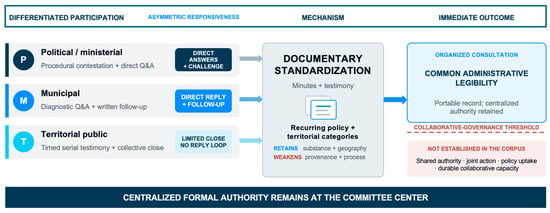
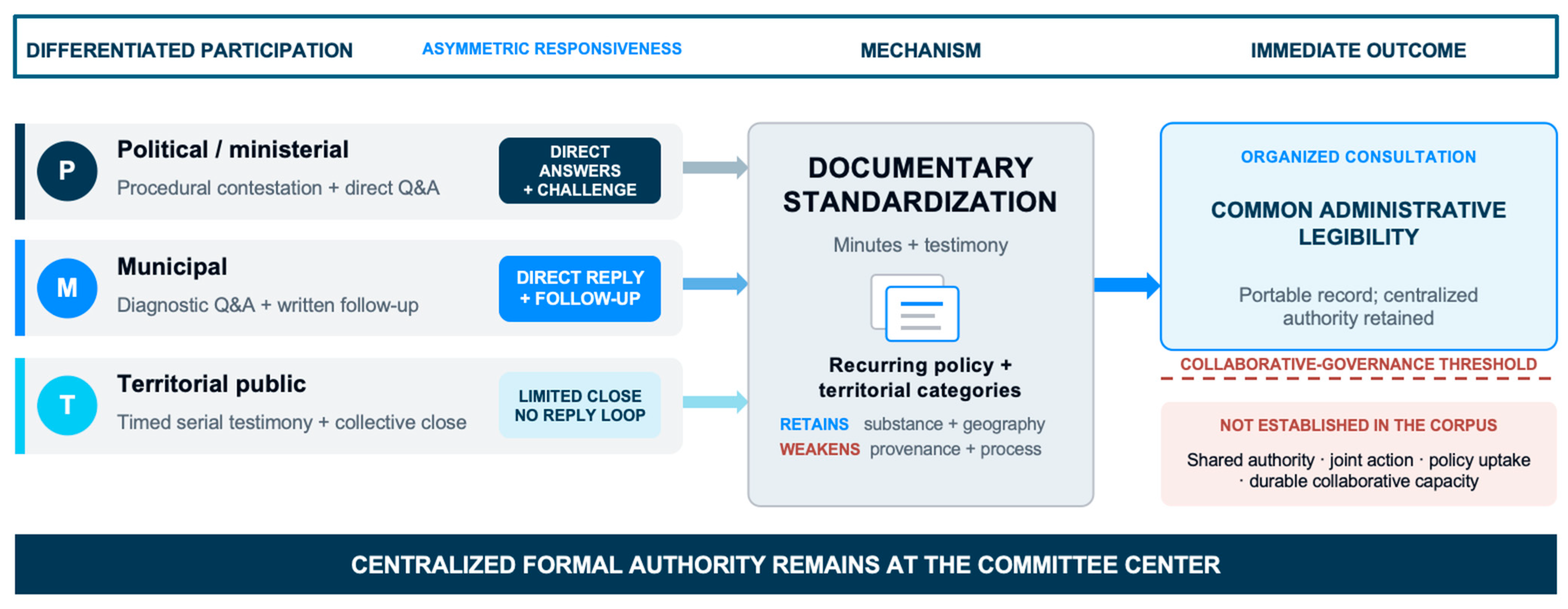

Disclaimer/Publisher’s Note: The statements, opinions and data contained in all publications are solely those of the individual author(s) and contributor(s) and not of MDPI and/or the editor(s). MDPI and/or the editor(s) disclaim responsibility for any injury to people or property resulting from any ideas, methods, instructions or products referred to in the content. |
© 2026 by the authors. Licensee MDPI, Basel, Switzerland. This article is an open access article distributed under the terms and conditions of the Creative Commons Attribution (CC BY) license.