


Abstract
Water contamination with surface-active agents, such as sodium lauryl sulfate (SLS), represents a serious environmental concern, driving the need for efficient and low-cost alternative adsorbents as a step toward sustainable waste valorization. In this study, waste biomass derived from plum stones, date stones, and walnut shells was successfully transformed into activated carbons via chemical activation using potassium hydroxide (KOH) at 850 °C with a 1:1 impregnation ratio. The synthesized materials underwent comprehensive physicochemical characterization utilizing TG-DSC, elemental analysis, Boehm titration, SEM, TEM, and nitrogen physisorption (BET), whereas their adsorption performance was evaluated against aqueous SLS solutions across various concentrations. The obtained results reveal a predominantly microporous structure with a high specific surface area, reaching up to 1059.01 m2/g for ACdate. The equilibrium adsorption data were well described by the Langmuir isotherm model, which yielded model-estimated asymptotic adsorption capacities (qm) of 219.70 mg/g for ACwalnut, 178.25 mg/g for ACdate, and 57.80 mg/g for ACplum. These values represent Langmuir-derived model parameters rather than experimentally attained adsorption capacities within the investigated concentration range. Notably, despite having a lower specific surface area than ACdate, ACwalnut exhibited the highest Langmuir-estimated qm, which may be associated with its structural balance and well-developed mesoporous network (0.210 cm3/g), facilitating the intraparticle transport of SLS molecules. These findings highlight that high efficiency originates from a synergistic combination of accessible porosity, a mesoporous transport network, hydrophobic character, and specific surface functional groups, demonstrating the exceptional potential of these activated carbons for anionic surfactant wastewater remediation.
1. Introduction
Contamination of aquatic systems by surface-active compounds is an important environmental issue with potential consequences for both ecosystem integrity and human health. Sodium lauryl sulfate (SLS; C12H25NaO4S; CAS No. 151-21-3) is among the most commonly used synthetic anionic surfactants and is incorporated into a wide range of detergents, personal-care formulations, cosmetic products, and industrial preparations. As a result of its extensive use, SLS is frequently introduced into municipal and industrial wastewater streams. Owing to the coexistence of hydrophilic and hydrophobic moieties within its molecular structure, SLS can modify the interfacial and physicochemical characteristics of water, lower surface tension, and influence the transport and bioavailability of other contaminants in aquatic environments [1,2,3].
The presence of lauryl sulfate in natural waters may adversely affect different levels of aquatic ecosystems. Its surface-active and detergent properties can impair the protective mucus layers and gill tissues of aquatic organisms, potentially disturbing respiration and membrane integrity in fish and invertebrates. Surfactant-containing discharges may also promote foam formation at the water surface, thereby interfering with air–water gas exchange and natural oxygenation processes. In addition, SLS may inhibit the activity and growth of microorganisms and algae that play essential roles in aquatic food webs and biogeochemical processes. At elevated concentrations, these effects may alter the structure and functioning of aquatic communities and may also reduce the efficiency of conventional biological wastewater treatment under certain operating conditions [1,2,3].
Because of these potential environmental impacts, the occurrence and release of surfactants are subject to regulatory oversight and environmental quality requirements. Authorities and legislative bodies such as the U.S. Environmental Protection Agency (EPA) and the European Union provide policy, safety, and regulatory frameworks addressing the environmental performance, biodegradability, handling, and use of surfactant-containing products and waste streams. These frameworks emphasize safer chemical selection and adequate treatment of municipal and industrial effluents before their release into receiving waters, with the aim of limiting pollutant loading and reducing long-term ecological effects [4,5].
The removal of surfactants such as lauryl sulfate from contaminated water is an important requirement for protecting aquatic ecosystems and maintaining water quality. A broad range of physical, chemical, and biological treatment strategies have therefore been developed, with their applicability depending on wastewater composition and process conditions. Biological treatment commonly employs activated sludge systems and selected microbial communities capable of degrading organic contaminants; however, their effectiveness may decrease when poorly biodegradable or structurally persistent synthetic compounds are present. Chemical treatment methods include coagulation and flocculation with iron- or aluminum-based salts, which promote the separation of dispersed and emulsified substances and have been applied to anionic-surfactant-containing industrial wastewater [6]. More intensive degradation can be achieved by advanced oxidation processes, including ozonation, photocatalytic oxidation, and Fenton-based reactions, where highly reactive species facilitate the conversion of surfactant molecules into smaller and potentially less harmful products.
Pressure-driven membrane processes, such as ultrafiltration, nanofiltration, and reverse osmosis, can provide efficient separation of surfactants and other dissolved contaminants from water. Their broader application, however, may be restricted by relatively high energy requirements, membrane fouling, and the associated maintenance and replacement costs. In comparison with these technologies, adsorption offers several practical advantages, including operational simplicity, high removal efficiency, process flexibility, and the possibility of using a wide variety of adsorbent materials. For these reasons, adsorption is widely regarded as a promising approach for the removal of dissolved organic contaminants, including surfactants, from aqueous systems [3,7].
Extensive research has been dedicated to understanding the behavior of surfactants during the adsorption process. Various substances have been extensively evaluated as effective adsorbents for surfactant removal, such as zeolites [8], oxide-based adsorbents [9,10], polymers [11], natural and modified fibers [12], and activated carbons or other carbonaceous adsorbents [13,14]. Depending on the specific combination of adsorbent and adsorbate, various adsorption models and mechanisms have been put forward.
Despite extensive research on biomass-based activated carbons for surfactant removal from aqueous media, critical factors influencing their adsorption efficiency remain inadequately understood. In many studies, the specific surface area (SBET) is considered the main parameter determining adsorption efficiency, whereas the contribution of pore architecture is discussed to a much lesser extent. In particular, the role of mesopores as transport pathways for relatively large amphiphilic surfactant species has not been fully clarified. As a result, materials exhibiting high nitrogen-accessible surface areas do not necessarily provide equally high adsorption capacities under aqueous conditions, especially when mass transfer through the internal pore system becomes a limiting factor.
The present study addresses this issue through a comparative evaluation of activated carbons prepared from three agricultural residues—plum stones, date stones, and walnut shells—using identical chemical activation conditions. Rather than considering specific surface area alone, the analysis focuses on the interplay between microporous adsorption sites and mesoporous transport channels. The results indicate that adsorption capacity cannot be predicted solely from SBET values. The uptake of sizeable anionic surfactant molecules is primarily governed by how effectively molecules travel through the porous framework and access internal surfaces. In this respect, the walnut shell-derived carbon exhibits a particularly favorable pore structure, where the contribution of mesoporosity facilitates diffusion and improves the accessibility of adsorption sites.
By linking pore-size distribution and internal transport characteristics with adsorption performance, this work provides a more comprehensive interpretation of the behavior of biomass-derived carbons toward anionic surfactants. The findings may support the development of more efficient low-cost adsorbents in which pore accessibility and transport properties are optimized together with surface area, while simultaneously promoting the beneficial utilization of agricultural waste within a circular-economy framework.
Traditional activated carbon serves as a highly efficient adsorbent, largely owing to its expansive surface area, intricate pore framework, and robust binding capacity for numerous hazardous compounds. However, its extensive use may be constrained by the cost of precursor materials, the considerable energy requirements associated with activation, and the challenges related to the regeneration and reuse of exhausted adsorbents. These limitations have encouraged the search for more economical and environmentally sustainable alternatives. Particular attention has therefore been directed toward the utilization of inexpensive feedstocks, including agricultural residues, industrial by-products, and other waste-derived materials. Through appropriate thermal treatment, chemical activation, or surface modification, such resources can be converted into porous carbon materials with promising adsorption performance, while simultaneously supporting waste valorization and more sustainable resource management. The development of such low-cost adsorbents not only reduces the costs of treating wastewater contaminated with surfactants and dyes but also contributes to sustainable waste management practices [13,1414,15,16].
In this regard, our focus has been directed toward the valorization of low-cost raw materials—wastes from three types of biomass: plum stones, date stones, and walnut shells. Our main concept involves the transformation of these waste materials into effective carbon adsorbents and their reuse in the remediation of water containing organic pollutants such as surface-active agents (surfactants).
The production of highly porous activated carbons from agricultural by-products frequently relies on potassium hydroxide (KOH) activation. High-temperature processing drives various chemical reactions that degrade the carbon skeleton, generate pores, and develop an extensive internal morphology. Ultimately, the resulting textural properties—such as specific surface area, pore-size distribution, and total pore volume—depend heavily on the activation parameters and the initial chemical makeup of the biomass source.
Simultaneously, growing research focus has been placed on eliminating organic pollutants from aqueous environments, with a particular emphasis on sodium lauryl sulfate (SLS), a widely utilized anionic surfactant. Its adsorption onto carbonaceous materials is governed by several simultaneous interactions, such as electrostatic attraction or repulsion, hydrophobic interactions, and the accessibility of the internal pore system. Although a considerable number of studies have investigated activated carbons for SLS removal, most have examined individual precursor materials or have emphasized only a limited number of structural parameters.
The present work extends these studies through a direct comparison of activated carbons obtained from three different agricultural residues under identical preparation and activation conditions. This approach enables the influence of the precursor itself to be evaluated more clearly while minimizing variations associated with the production procedure. Special focus is given to pore availability and the balance between micro- and mesopores, rather than to specific surface area alone. The findings demonstrate that a high SBET index by itself does not guarantee exceptional SLS removal. Rather, the overall sorption performance is heavily dictated by how easily molecules can navigate through mesoporous channels to reach active binding sites within the carbon matrix. This comparative approach therefore provides a more detailed interpretation of the relationship between precursor-derived pore architecture and adsorption behavior.
2. Materials and Methods
2.1. Synthesis of Activated Carbons
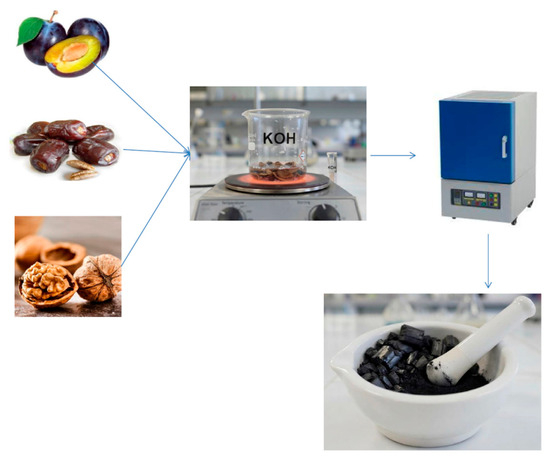
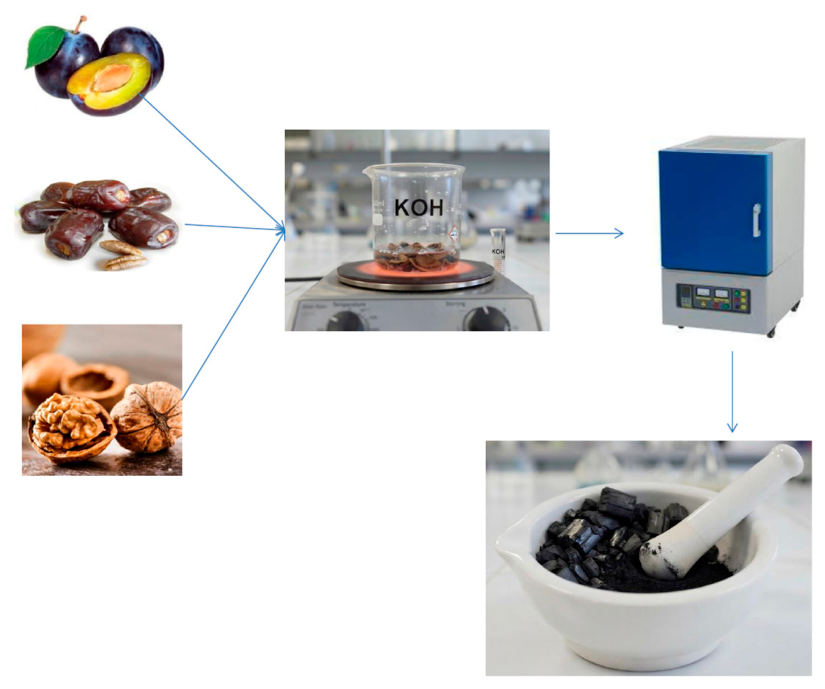
Separated biomass precursors—consisting of walnut shells, date stones, and plum stones sized between 1 and 5 mm—underwent individual impregnation using a concentrated potassium hydroxide (KOH, Valerus Ltd., Sofia, Bulgaria) solution at ambient temperature for a duration of 24 h. The ratio of the raw material blend to the activating agent was 1:1. Following impregnation, the mixture was dried at a temperature of 140 °C, followed by heating to 850 °C at a heating rate of 15 °C/min in an inert atmosphere. After holding the final product at 850 °C for 30 min, it was cooled to room temperature inside an inert gas environment (Figure 1). Residual potassium was removed by washing the material thoroughly with hot water until the wash liquid registered a neutral reaction. The obtained solid carbonaceous materials are designated in the text as ACplum, ACdate, and ACwalnut.
Figure 1.
Synthesis procedure of activated carbons obtained from plum stones, date stones and walnut shells.
2.2. Methods for Characterization of Raw Materials and Resulting Products
A STA 449 F3 Jupiter thermal system (NETZSCH, Selb, Germany) was employed for simultaneous TG–DSC testing. Operating across a temperature range of 25 to 1400 °C with a ±1 °C precision, the apparatus incorporates a high-precision microbalance (0.1 μg resolution). Analysis was carried out using 10–25 mg of material heated at a linear rate of 10 K/min.
All experiments were conducted under an inert argon atmosphere. The protective gas flow was maintained at 20 mL/min, while the purge gas flow was set to 30 mL/min. Depending on the required temperature range and sample characteristics, the system can be fitted with different crucible materials, including platinum, aluminum crucibles suitable for temperatures up to 600 °C, and corundum crucibles resistant to temperatures up to 1400 °C. The instrument is also compatible with a dedicated sample-clamp configuration for the analysis of liquid samples.
The elemental makeup was evaluated utilizing a Vario Macro Cube device from Elementar Analysensysteme GmbH (Langenselbold, Germany). Concentrations of sulfur, nitrogen, hydrogen, and carbon were determined explicitly, with oxygen content calculated through the mass balance difference. Quantification was performed using a thermal conductivity detector (TCD), with a reported analytical precision corresponding to a standard deviation below 0.1% for the determination of C, H, N, and S. For each measurement, approximately 1–50 mg of sample was enclosed in tin foil and introduced into the analyzer through an automated sampling system. The sample was combusted in an oxidation reactor maintained at 1150 °C in the presence of oxygen. During combustion, the organic constituents were converted primarily into CO2, H2O, SO2, and nitrogen-containing gaseous products, while the non-combustible mineral fraction remained as ash within the quartz tube.
The obtained gas blend was channeled into a copper reduction column, converting nitrogen oxides into gaseous nitrogen (N2). The gaseous products then passed through selective adsorption columns that retained CO2, H2O, and SO2. Nitrogen, which was not retained by these columns, was quantified directly by the TCD. The adsorbed CO2, H2O, and SO2 fractions were subsequently released in sequence and individually detected. The corresponding detector responses were used by the instrument software to calculate the mass fractions of carbon, hydrogen, nitrogen, and sulfur, expressed as wt %.
Textural properties of the activated carbon materials were evaluated via nitrogen adsorption–desorption measurements at −196 °C employing an automated Quantachrome Autosorb iQ-C-XR/MP volumetric system (Boynton Beach, FL, USA). The device incorporates a pressure transducer with an accuracy of 0.1% of full scale to ensure precise surface area and pore geometry calculations. Prior to analysis, specimens underwent vacuum degassing overnight at 350 °C to strip away moisture and physically bound impurities. Specific surface areas (SBET) were derived from the isotherms using the BET method, while total and micropore volumes (Vtotal and Vmicro) were quantified via the t-plot approach [17,1818,1919]. Additionally, the Barrett–Joyner–Halenda (BJH) model was applied to the desorption branch to determine mesopore volume and pore-size distribution, providing a thorough assessment of the mesoporous framework.
The type and amount of oxygen-containing surface functionalities with different acidic strengths were determined by the Boehm titration method using a series of bases with increasing neutralization capacity: NaHCO3 (≥99.5%), Na2CO3 (≥99.8%), NaOH (98–99%, pellets), and C2H5ONa (96% ethanol, NaOH 98–99%) supplied by Valerus Ltd., Sofia, Bulgaria [20,2121]. For each determination, a known amount of the solid material was equilibrated with a 0.05 N solution of the corresponding base under continuous shaking for at least 16 h.
After equilibration, the remaining amount of base in the supernatant was determined by back-titration with a standardized HCl solution, allowing the quantity of acidic surface groups neutralized by each base to be calculated. Basic surface functionalities were determined separately by treating the samples with 0.05 N HCl and quantifying the amount of acid consumed. Every measurement was performed in triplicate, with final values presented as the average of these three parallel runs [20,2121].
To observe the surface topography of the prepared carbon materials, a JEOL IT800SHL field-emission scanning electron microscope (JEOL Ltd., Tokyo, Japan) was employed. Imaging was carried out with both secondary-electron and backscattered-electron detection systems integrated into the microscope column and chamber, allowing detailed observation of the surface topography and compositional contrast of the samples.
Transmission electron microscopy (TEM) was conducted after dispersing the powdered samples in analytical-grade ethanol. The resulting suspensions were sonicated for 3 min and subsequently coated onto conventional copper TEM grids coated with an amorphous carbon film. A 24 h ambient drying period was provided for the prepared grids before conducting the microscopic analysis. The structural, microstructural, and phase characteristics of the carbon adsorbents were evaluated utilizing a JEOL JEM 2100 transmission electron microscope (JEOL Ltd., Tokyo, Japan) operated at a 200 kV accelerating potential. Material characterization was carried out via selected-area electron diffraction (SAED), high-resolution TEM (HR-TEM), and bright-field TEM (BF-TEM) techniques.
Determination of the activated carbon pH was carried out in accordance with standard NORIT testing methods. A 4.0 g portion of ground, non-dried activated carbon was placed in a 250 mL beaker and mixed with 100 mL of distilled water. The suspension was heated to boiling and maintained at this temperature for 5 min. After heating, the mixture was allowed to stand until the temperature decreased to approximately 60 °C, after which the supernatant was carefully decanted. The separated liquid phase was then cooled to 25 °C, and its pH was evaluated with an accuracy of ±0.1 pH units.
2.3. Adsorption
A series of working standards containing 5, 10, 20, 40, and 60 mg/L of sodium lauryl sulfate (SLS) were prepared through the dilution of a primary stock solution with distilled water. These solutions were used to obtain the equilibrium data required for the construction of the Langmuir adsorption isotherm. In every test run, a 50 mL volume of the respective SLS solution was mixed with 0.05 g of the activated carbon adsorbent. The suspensions were continuously stirred on a laboratory shaker for 1 h at room temperature to allow adsorption equilibrium to be established. The remaining SLS concentration in the filtrate was measured spectrophotometrically using a Pharo 300 UV–Vis spectrophotometer (Merck KGaA (Spectroquant Pharo 300), Darmstadt, Germany.
Direct spectrophotometric determination of the filtered solutions was performed by recording their absorbance at a wavelength of 282 nm. Furthermore, the equilibrium adsorption capacity, qe (mg/g), was derived via the mass balance equation presented below:
where C0 and Ce are the initial and equilibrium concentrations of SLS (mg/L), V is the solution volume (L), and m is the mass of the activated carbon (g).
3. Results and Discussion
3.1. TG—DSC Analysis
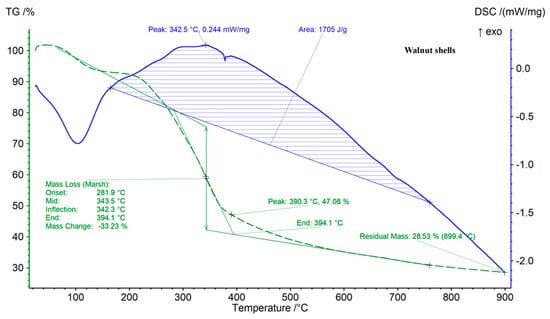
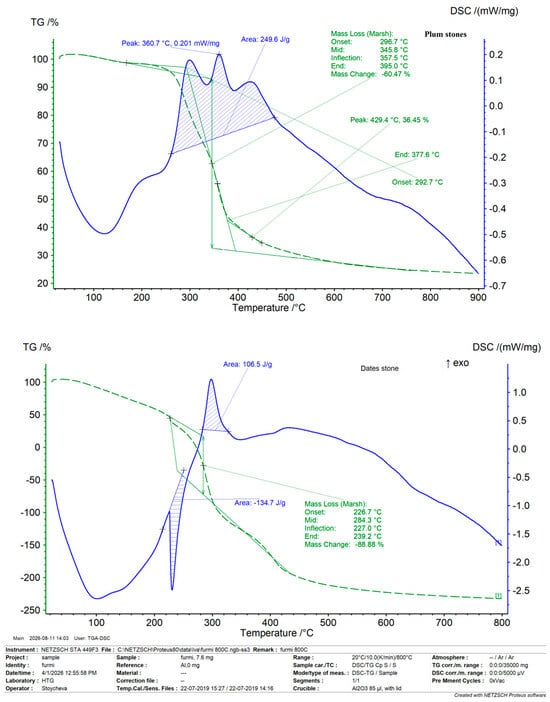
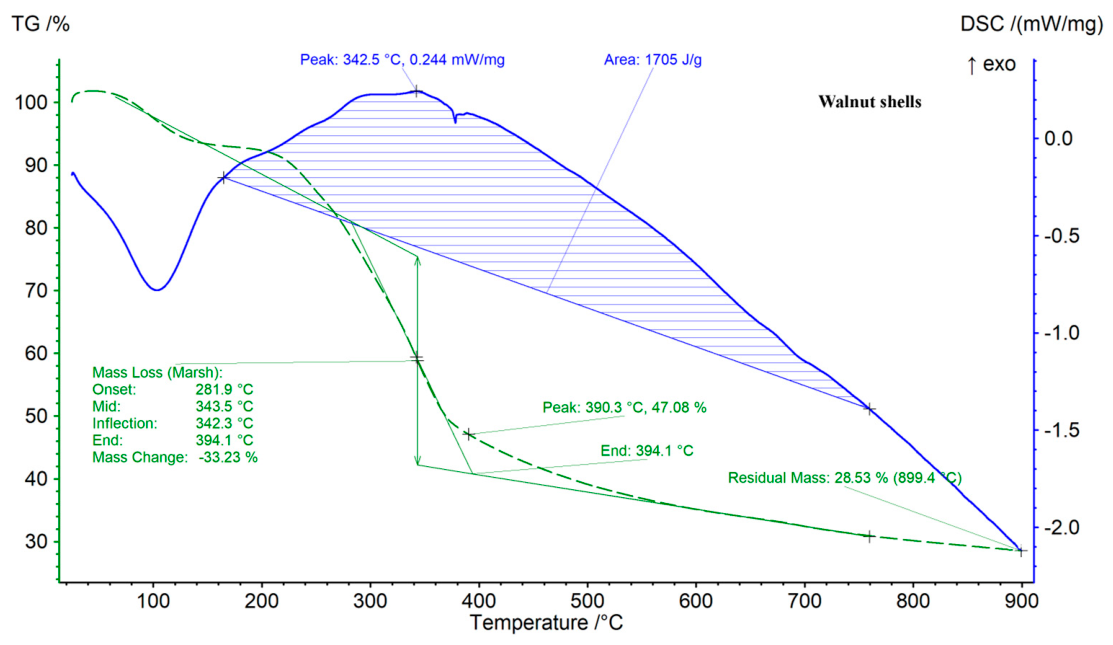
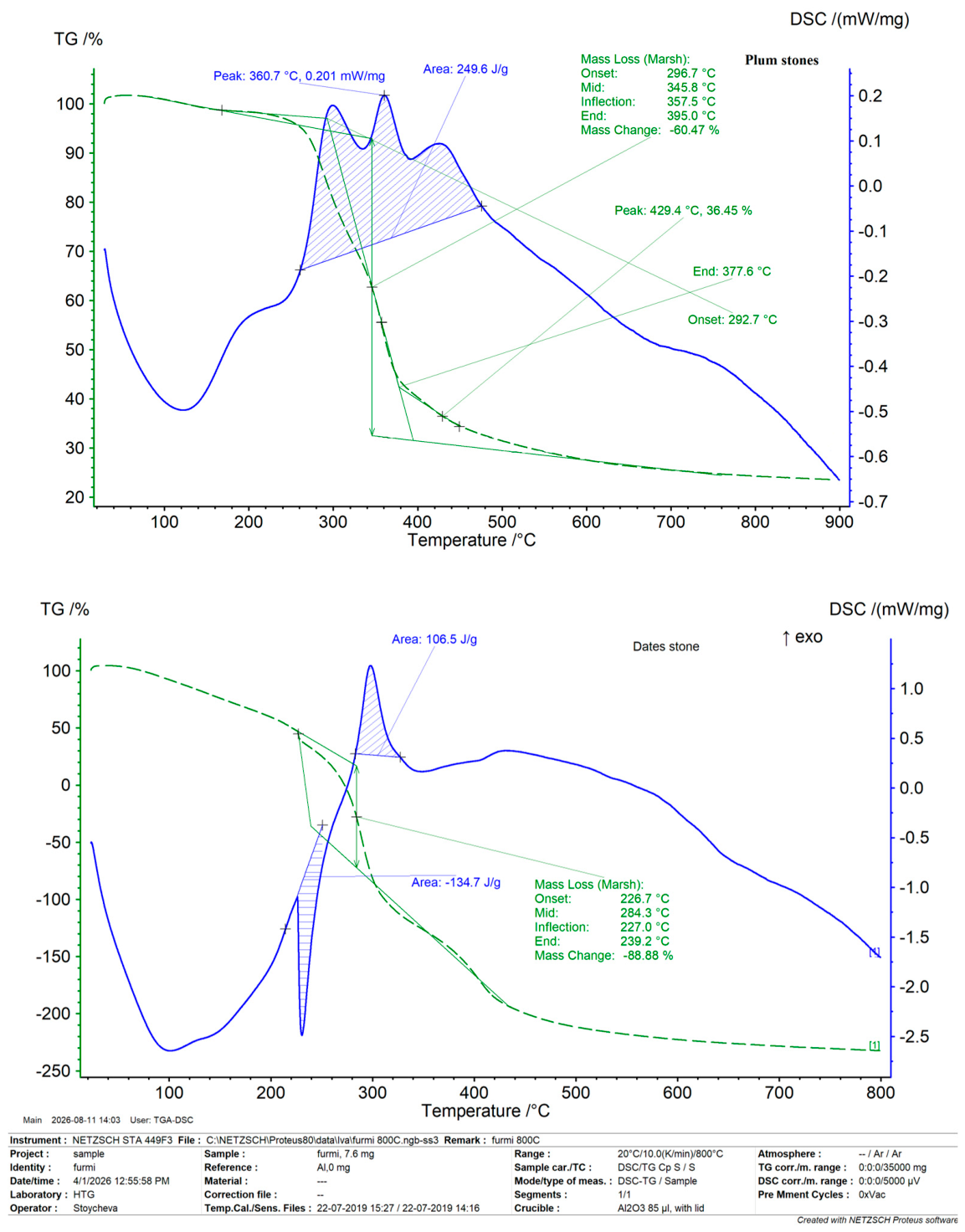
Thermogravimetric (TG) and differential scanning calorimetric (DSC) analyses were used to assess the thermal behavior of the investigated carbon materials and to identify the transformations occurring during heating (Figure 2). The obtained TG–DSC curves indicate that several physicochemical changes take place over the temperature interval from 20 to 900 °C. The relatively limited mass loss observed at elevated temperatures suggests a high degree of thermal stability of the carbon structure. Such an occurrence might stem from the existence of aromatic and condensed carbon structures, which are generally more resistant to thermal decomposition and contribute to the preservation of the solid carbon framework during heating.
Figure 2.
TG and DSC analysis of raw materials (dashed green—TG, blue line—DSC).
Regarding the TG data presented in Figure 2, the previously reported negative values of −216.60% for mass loss and −232.44% for residual mass resulted from an error in data scaling and baseline normalization during transfer of the thermal analysis data to the manuscript. The original instrumental data were subsequently re-evaluated, the thermogravimetric results were recalculated, and Figure 2 was corrected accordingly. Both the revised figure and the corresponding text now use the conventional TG representation, with the initial sample mass normalized to 100%.
With respect to the analyzed material, it should be clarified that the TG–DSC measurements for the date stone sample were performed on the raw date stone biomass prior to carbonization, rather than on the resulting carbon material. The terminology used in the previous version of the manuscript and in Figure 2 has therefore been revised to clearly identify the analyzed sample as the raw date stone precursor.
Analysis of the TG–DSC curves yields comprehensive insights into the thermal degradation characteristics of the tested samples. For the plum stone sample, the TG curve shows an overall mass loss of 60.47%, with the principal degradation stage occurring between 296.7 and 395.0 °C and an inflection point at 357.5 °C. The corresponding DSC curve exhibits distinct exothermic events, including peaks at 360.7 °C, with an intensity of 0.201 mW/mg, and at 429.4 °C. The integrated thermal effect associated with these transformations amounts to 249.6 J/g.
The raw date stone biomass exhibits considerably more pronounced thermal degradation. The primary thermal degradation step exhibits a significant mass reduction of 88.88%, starting at an onset temperature of 226.7 °C and concluding at 239.2 °C, accompanied by an inflection point located at 227.0 °C. Furthermore, at 799.4 °C, the residual solid accounts for roughly 23.3%. The DSC profile shows a pronounced exothermic event centered at approximately 297.9 °C, with an integrated thermal effect of 106.5 J/g.
For the walnut shell-derived carbon material, the main thermal degradation interval is associated with a comparatively lower mass loss of 33.23%, occurring between 281.9 and 394.1 °C. The DSC curve is characterized by a broad exothermic feature with a maximum at 342.5 °C and a considerably larger integrated thermal effect of 1705 J/g. At the end of the thermal treatment, the material retains a residual mass of 28.53% at 899.4 °C.
The exothermic events observed predominantly within the 250–700 °C temperature range can be associated with secondary reactions involving reactive fragments and radicals formed during the thermal decomposition of the organic matrix, together with condensation and structural rearrangement processes. The combined TG and DSC results therefore provide important information on the sequence and intensity of transformations occurring during pyrolysis and carbonization. These data can be used to define an appropriate thermal treatment regime and to select processing temperatures that favor the development of carbon materials with the desired physicochemical characteristics.
3.2. Chemical Composition of the Raw Materials and the Solid Products
Table 1 summarizes the proximate [22] and elemental composition of the three biomass precursors—plum stones, date stones, and walnut shells—as well as the activated carbons obtained from these materials. Elemental analysis was carried out employing a Vario Macro Cube instrument, yielding quantitative percentages for carbon, hydrogen, nitrogen, and sulfur, whereas oxygen proportions were estimated by subtraction.
Table 1.
Elemental and chemical profiles of the pristine starting materials and the solid residues derived via potassium hydroxide activation.
Among the untreated biomass samples, plum stones exhibited the lowest ash content. After activation, the walnut shell-derived carbon showed the lowest ash level, with 2.23% for Awalnut, compared with 2.48% for ACplum. In general, the activated carbons displayed a higher proportion of mineral matter than the corresponding raw precursors. This increase can be attributed to the progressive removal of volatile and organic constituents during thermal treatment, which results in a relative enrichment of the non-volatile inorganic fraction in the final carbonaceous material.
The activated carbon samples exhibit high carbon contents, in the range of approximately 81–86 wt.%, confirming the extensive carbonization of the biomass precursors. Following pyrolysis and KOH activation at 850 °C, an overall increase in carbon and sulfur contents is observed, whereas hydrogen and oxygen decrease markedly. This trend is consistent with the progressive elimination of moisture, volatile components, and oxygen-containing organic species during thermal treatment.
The nitrogen content shows a slight increase in most of the investigated materials; however, the walnut-derived samples display the opposite tendency, decreasing from 0.22% in the raw walnut shells to 0.18% in ACwalnut. The most pronounced reduction in oxygen content, accompanied by the strongest enrichment in carbon, is observed for the activated carbons obtained from stone-fruit precursors. This behavior suggests more extensive decomposition of oxygen-containing functionalities and enhanced condensation of the carbon matrix during the high-temperature treatment.
The very low hydrogen content of the activated carbons, approximately 1.2–1.3 wt.%, further indicates substantial dehydrogenation and aromatization of the carbon structure. This interpretation is also supported by the elevated atomic C/H ratios, reaching approximately 5.3 for the plum-derived carbon and 5.8 for the date-stone-derived carbon. Overall, the results demonstrate that chemical activation of the investigated agricultural residues promotes the formation of carbon-rich, highly aromatized materials with physicochemical characteristics that are favorable for adsorption applications, particularly for the remediation of aqueous systems containing organic compounds.
Analysis of the data in Table 1 reveals a clear relationship between the quantity of basic surface groups and the nitrogen (N) content in the synthesized activated carbons, with samples exhibiting larger overall quantities of alkaline surface functionalities generally showing elevated nitrogen concentrations. Regarding their origin, the basic characteristics of the carbon surfaces are primarily attributed to nitrogen-containing functional groups, heterocyclic nitrogen species incorporated into the carbon lattice during biomass carbonization, which act as Lewis sites accepting protons from the solution, as well as pyrone-like and chromene-like structures, where delocalized electron systems within the heavily condensed aromatic carbon layers also contribute significantly to the overall surface basicity.
3.3. Oxygen Functional Group Content
The data summarized in Table 2 yield insights into the quantity and spatial arrangement of surface oxygen-bearing functional groups with different acid–base properties on the activated carbons obtained from plum stones, date stones, and walnut shells, as determined by Boehm titration. These surface functionalities contribute significantly to the chemical behavior of the adsorbents and can affect their interaction with dissolved species. In particular, acidic and basic surface sites may participate in electrostatic interactions, hydrogen bonding, and other surface-mediated processes, thereby influencing the adsorption of anionic surfactants such as SLS from aqueous solutions.
Table 2.
Measurement of oxygen functional groups on activated carbon surfaces (mmol/g).
Marked differences in the abundance and distribution of surface functional groups are evident among the investigated activated carbons. ACplum contains the highest overall concentration of titratable surface functionalities, with a particularly large contribution from weakly acidic groups quantified by sodium ethoxide titration (4.85 mmol/g). In comparison, the amounts of more strongly acidic functionalities detected using NaHCO3 and Na2CO3 are considerably lower. ACdate and ACwalnut exhibit very low or, in some cases, undetectable levels of strongly acidic oxygen-containing groups while retaining appreciable concentrations of basic surface sites, corresponding to 1.60 mmol/g for ACdate and 1.00 mmol/g for ACwalnut.
Such variations in surface chemistry can substantially influence the adsorption behavior of the materials toward surfactants in aqueous media. Because SLS is an anionic amphiphilic compound, its interaction with the carbon surface depends not only on pore accessibility but also on the nature and charge of the available functional groups. Acidic oxygen-containing functionalities may promote electrostatic repulsion of negatively charged sulfate head groups under conditions where the carbon surface is negatively charged. Conversely, basic surface sites can favor the interaction with anionic surfactant species through electrostatic attraction and other surface interactions. In addition, hydrogen bonding and hydrophobic interactions between the hydrocarbon chain of SLS and the carbonaceous matrix may further contribute to the overall adsorption process. Consequently, the equilibrium between acidic and alkaline surface functionalities, combined with the porous architecture of the sorbent, exerts a crucial influence on its SLS removal performance.
3.4. Material Balance and Product Distribution Resulting from the Chemical Activation of the Various Raw Materials with Potassium Hydroxide (KOH) at a Temperature of 850 °C
The data presented in Table 3 illustrate the material balance and product distribution resulting from the chemical activation and treatment of the various raw materials with potassium hydroxide (KOH) at a temperature of 850 °C. The analysis of the results reveals remarkably consistent yield values across the three investigated biomass precursors—ACplum, ACdate, and ACwalnut.
Table 3.
Material balance of chemical activation of raw materials at different temperatures and the amount of products obtained.
Specifically, the yield of the solid product (activated carbon) varies in a narrow range between 21.1% for ACplum, 21.7% for ACdate, and 21.9% for ACwalnut. At the same time, the yield of the liquid fraction ranges from 23.9% to 24.4%, while gaseous products account for the largest share of the material balance, registering values between 53.9% and 55.0%.
The obtained results indicate that, under identical high-temperature treatment conditions and preliminary impregnation with the activating agent (KOH at a 1:1 ratio), the lignocellulosic plant biomasses exhibit identical thermal behavior and structural stability. Slight fluctuations in the overall mass balance stem from variations in the relative contents of lignin, hemicellulose, and cellulose, alongside differences in the initial ash levels. The significant yield of gaseous and liquid products highlights the extensive decomposition of volatile organic compounds during activation, which facilitates the formation of a well-developed porous structure and a high specific surface area in the final activated carbons. Understanding this material balance is crucial for optimizing the technological process and scaling up the synthesis of economical sorbents intended for the remediation of aqueous environments contaminated with organic pollutants, such as surfactants.
3.5. Porous Texture of the Obtained Activated Carbons
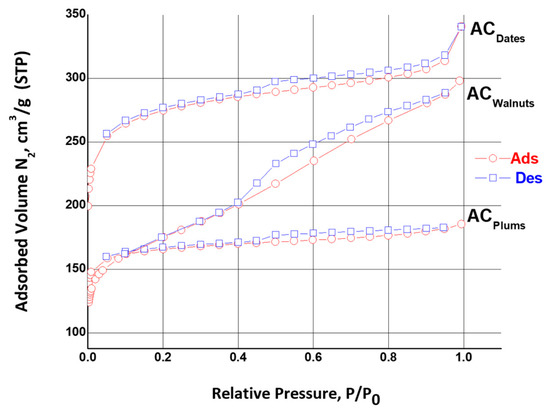
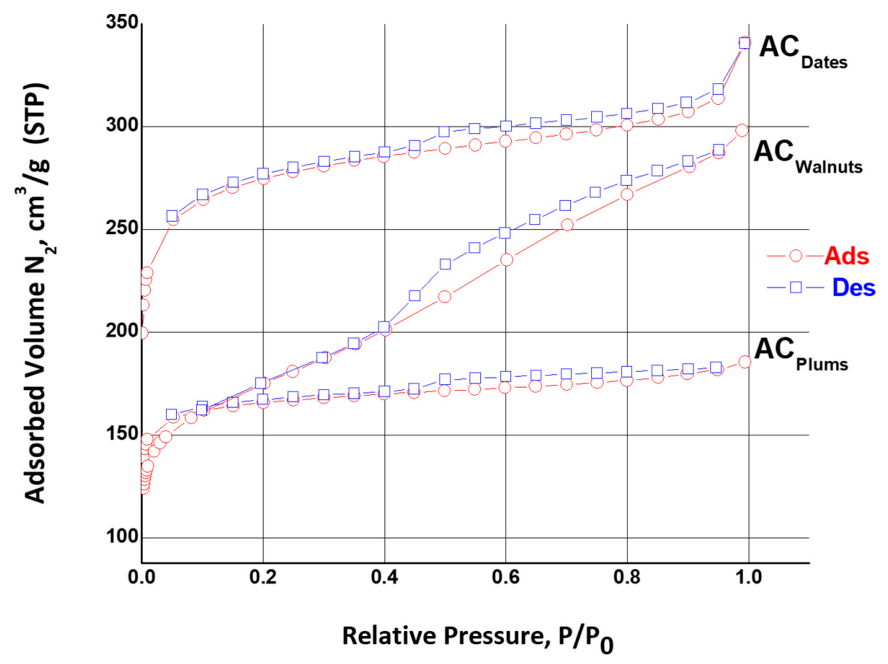
Figure 3 and Table 4 summarize the results of the nitrogen physisorption measurements performed at −196 °C. The obtained adsorption data show that the prepared activated carbons are characterized mainly by a microporous pore structure. The isotherms presented in Figure 3 display the typical features of IUPAC Type I behavior, with a pronounced nitrogen uptake at low relative pressures. Such a profile is generally associated with microporous carbon materials and reflects the filling of narrow pores through strong interactions between nitrogen molecules and the internal carbon surface.
Figure 3.
N2 (77 K) adsorption isotherms of activated carbons obtained by treatment with KOH from agricultural waste products.
Table 4.
Principal textural properties of the synthesized activated carbons following KOH treatment.
The nitrogen adsorption–desorption isotherms (Figure 3) exhibit characteristic hysteresis loops, which are most pronounced for the ACwalnut compared to the other materials. This prominent hysteresis loop is directly related to the presence of a well-developed mesoporous network in ACwalnut. Specifically, as confirmed by the pore volume data presented in Table 4, ACwalnut exhibits a significant mesopore volume (0.210 cm3/g), which is comparable to its micropore volume (0.226 cm3/g). In contrast, ACplum and ACdate show much narrower hysteresis loops, reflecting their predominantly microporous nature. Therefore, the observed differences in the desorption branch behavior and the extent of hysteresis are fully consistent with the pore-size distribution and textural characteristics summarized in Table 4.
The data in Table 4 demonstrate that the prepared porous carbon materials are characterized by a high specific surface area, reaching 1059.01 m2/g for ACdate, 640.16 m2/g for ACwalnut, and 590.37 m2/g for ACplum. Furthermore, the total pore volumes evaluated at p/p0 0.99 are 0.287 cm3/g for ACplum, 0.527 cm3/g for ACdate, and 0.461 cm3/g for ACwalnut, whereas the micropore volumes estimated via the t-plot method are 0.228 cm3/g, 0.458 cm3/g, and 0.226 cm3/g respectively. The mesopore volumes for these samples are recorded at 0.020 cm3/g for ACplum, 0.063 cm3/g for ACdate, and 0.210 cm3/g for ACwalnut. The substantially greater micropore volume and resultant specific surface area observed for the date-derived adsorbent stem from the higher concentration of cellulose and hemicellulose in date pits relative to the other two precursors, as the thermal decomposition of these polysaccharides generates an extensive network of micropores. The largest amount of mesopores in the activated carbons obtained from the walnut containing the largest amount of lignin, according to data from DTG analyses of raw materials, is striking. Although lignin is thermally more stable and generally favors the development of micropores, the combination of the powerful activator potassium base and the temperature of 850 °C changes the mechanism of pore formation. At temperatures above 700 °C, the activation reactions with KOH become extremely aggressive. A deep reduction occurs, in which potassium compounds react with carbon and the walls of some of the micropores are destroyed, leading to their transition into mesopores. This behavior stems from the nearly balanced contribution of micro- and mesopores in the activated carbons derived from walnut shells. These findings highlight the profound impact that the precursor chemical composition—specifically the proportions of lignin, cellulose, and hemicellulose—exerts on the resulting porous network. These results highlight the ability of different starting materials to form diverse porous structures with potential for specialized applications.
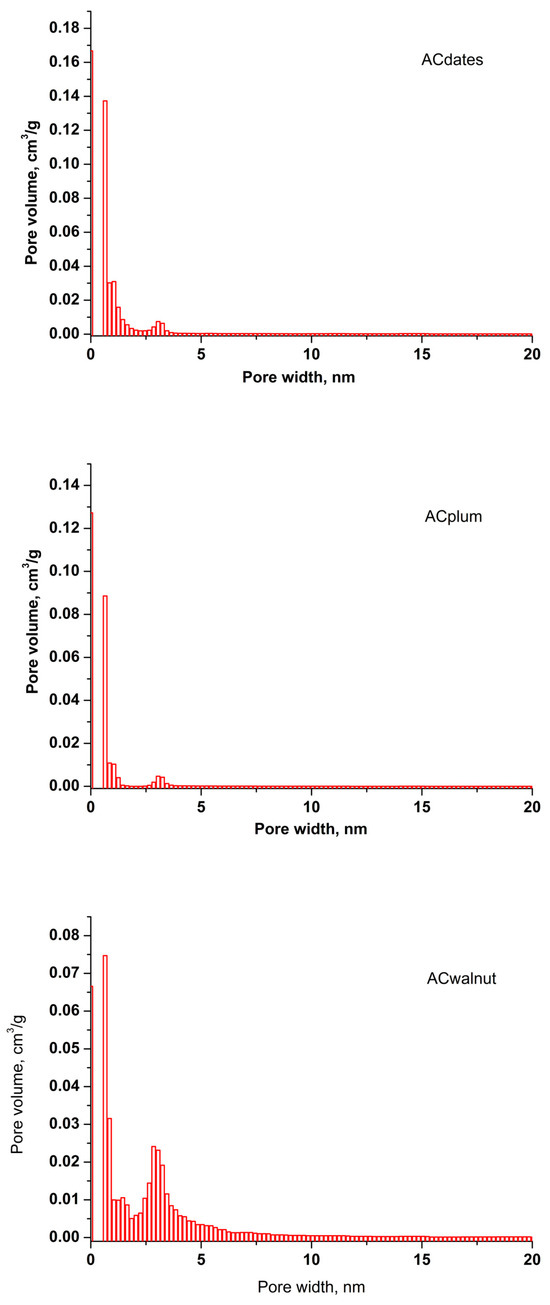
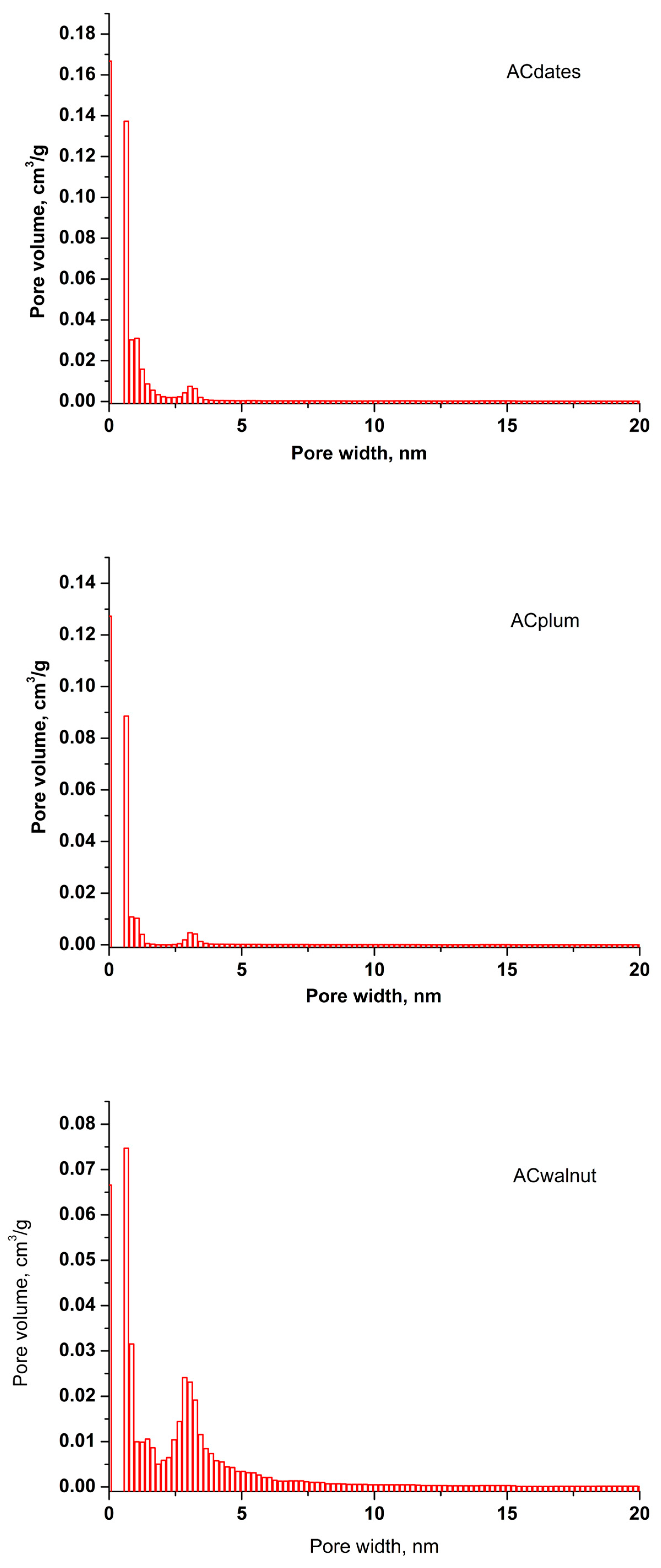
Figure 4 presents the pore-size distribution of the investigated activated carbons, confirming the development of both micropores, mainly within the 1.5–2.0 nm range, and narrow mesopores extending approximately from 2.0 to 3.0 nm. The textural parameters summarized in Table 4 show clear differences among the individual samples in terms of specific surface area, total pore volume, and the relative contributions of micro- and mesoporosity.
Figure 4.
Pore-size distribution of ACplum, ACdate and ACwalnut.
These variations can be associated primarily with differences in the chemical composition and structural properties of the initial biomass precursors, which influence pore development during carbonization and KOH activation. Surface functionalities generated or retained during thermal treatment may also affect the accessibility of the internal pore network. In particular, oxygen-containing groups located at pore entrances or within narrow pores can modify the local surface chemistry and, in some cases, partially hinder the mass transfer of adsorbate species into the narrowest micropores. Consequently, the final porous structure reflects the combined influence of precursor composition, activation-induced pore development, and surface chemical characteristics.
3.6. Scanning Electron Microscopy (SEM)
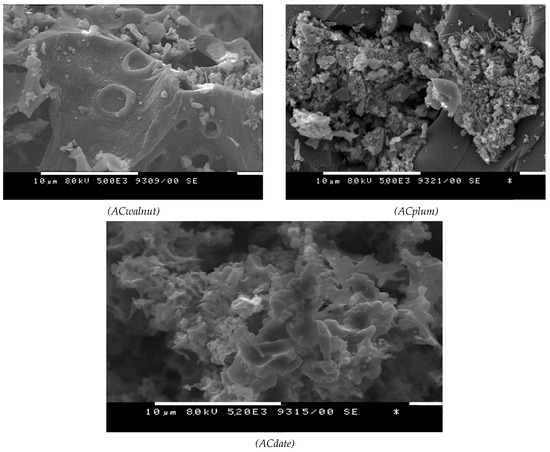
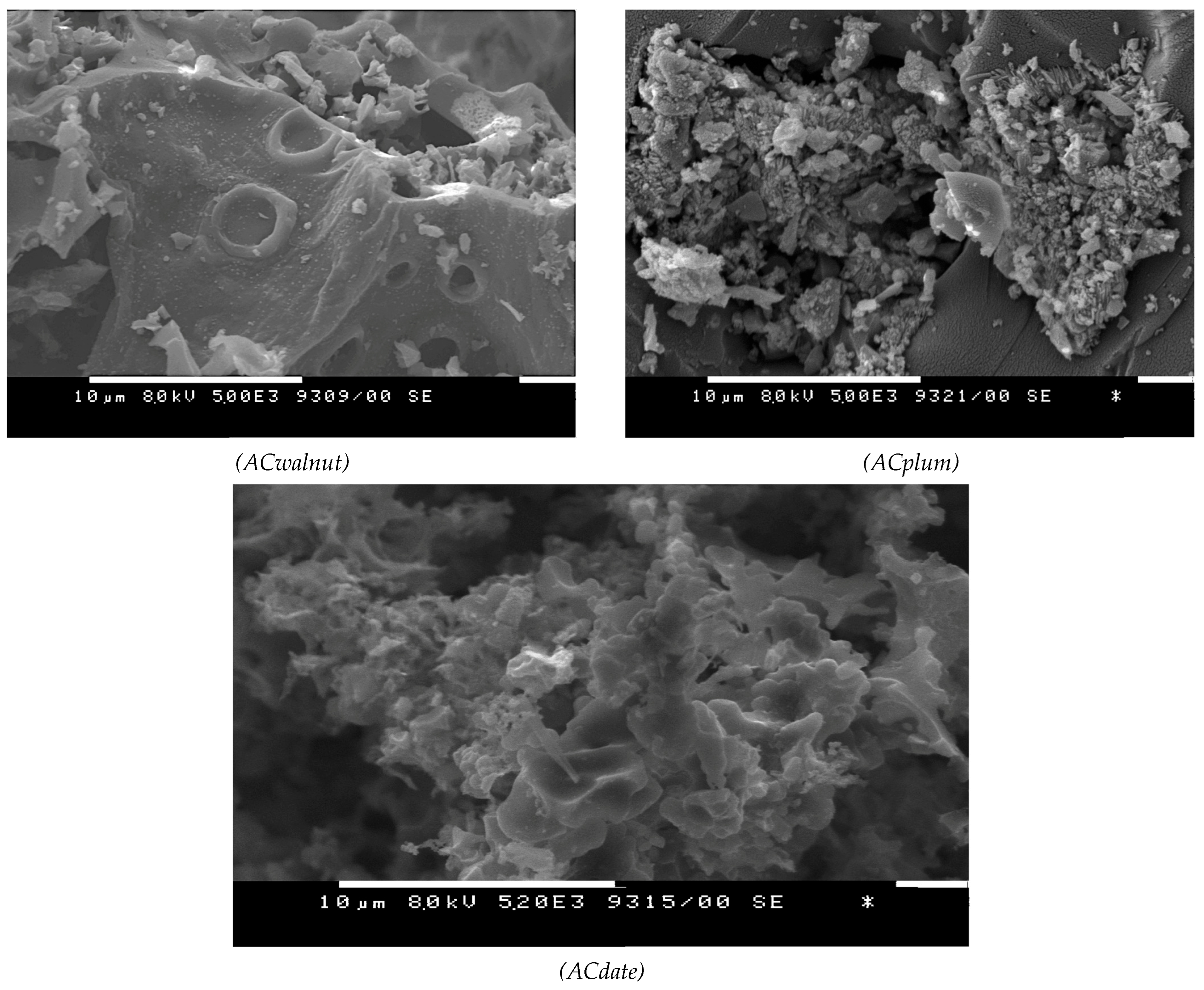
Figure 5 shows the surface morphology of the activated carbons prepared from walnut shells, plum stones, and date stones. The SEM images reveal a heterogeneous and highly porous surface for all three materials, although the degree of pore development and surface roughness varies among the samples. These morphological differences are likely related to the intrinsic composition and structural organization of the biomass precursors, as well as to their response to the applied carbonization and chemical activation conditions.
Figure 5.
SEM micrograph of sample treated with KOH.
The scanning electron microscopy findings align well with the structural properties determined via nitrogen physisorption measurements. In particular, the visible pore openings and irregular surface cavities support the formation of a developed internal pore network, while the differences observed among the samples correspond well with the variations in specific surface area, pore volume, and pore-size distribution reported from the adsorption measurements.
3.7. Transmission Electron Microscopy (TEM)
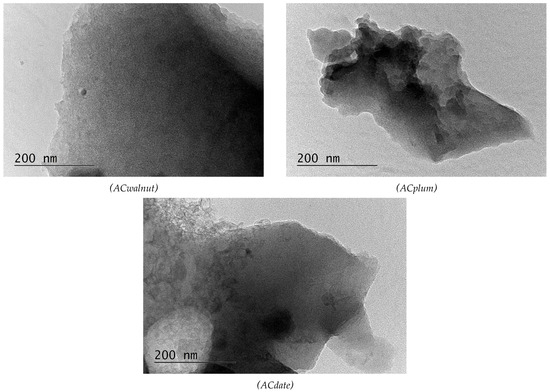
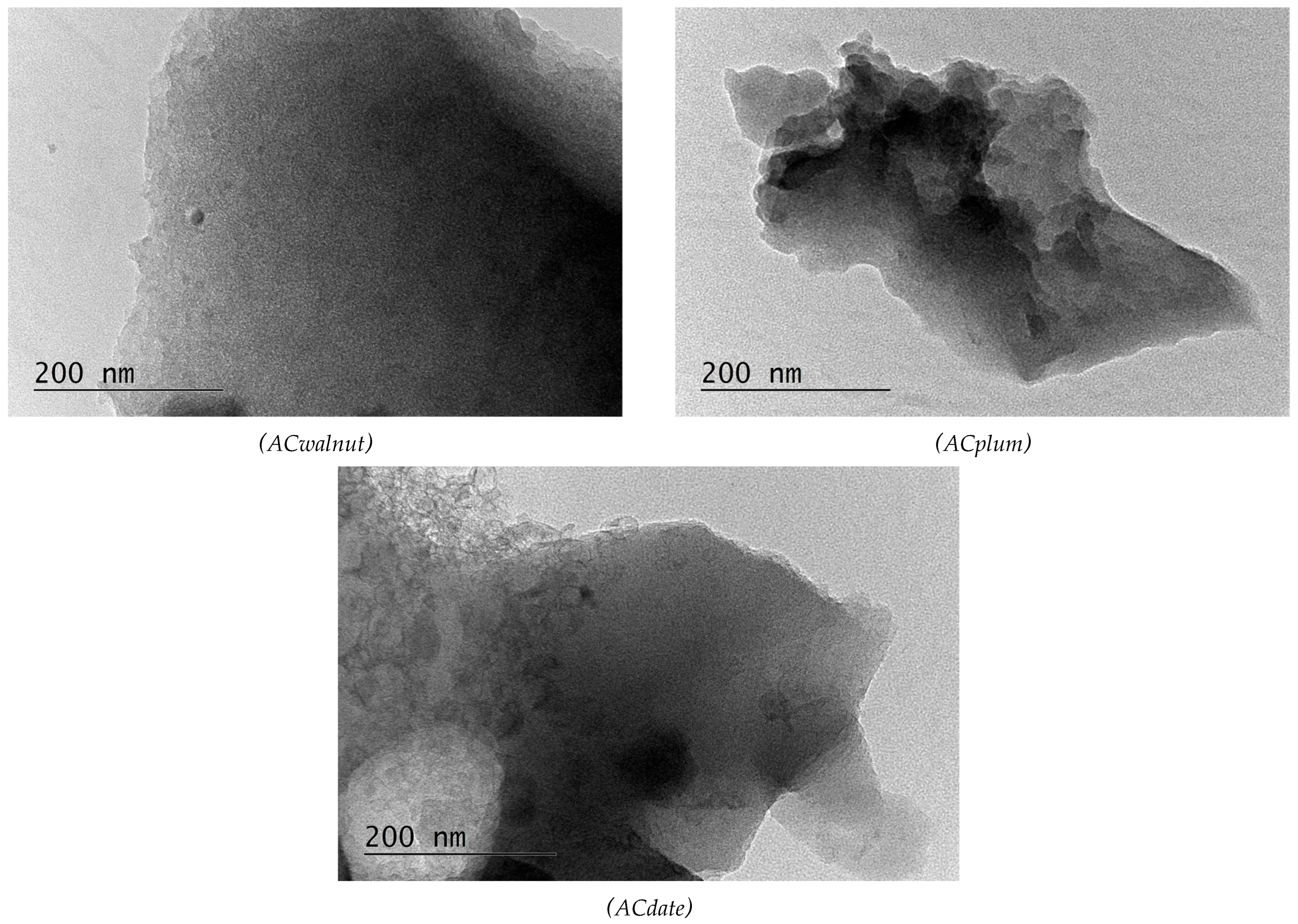
Transmission electron microscopy (TEM) analysis (Figure 6) of the obtained activated carbons derived from date stones, plum stones, and walnut shells reveals distinct morphological features that complement the data from nitrogen physisorption and scanning electron microscopy. The sample derived from date stones exhibits the most developed surface, with a specific surface area of up to 1059.01 m2/g and the largest total pore volume of 0.527 cm3/g. Compared to the other materials, date stone-derived carbon shows a unique combination of micropores, as well as well-formed small and large pores, including mesopores, while its structure transitions into ordered layers. Additionally, these samples feature small, dense, bright regions that reflect the specific local density and structural arrangement of the carbon matrix following KOH activation at 850 °C.
Figure 6.
Bright-field TEM (BF TEM) micrographs of ACwalnut, ACplum, and ACdate.
3.8. Adsorption Investigations
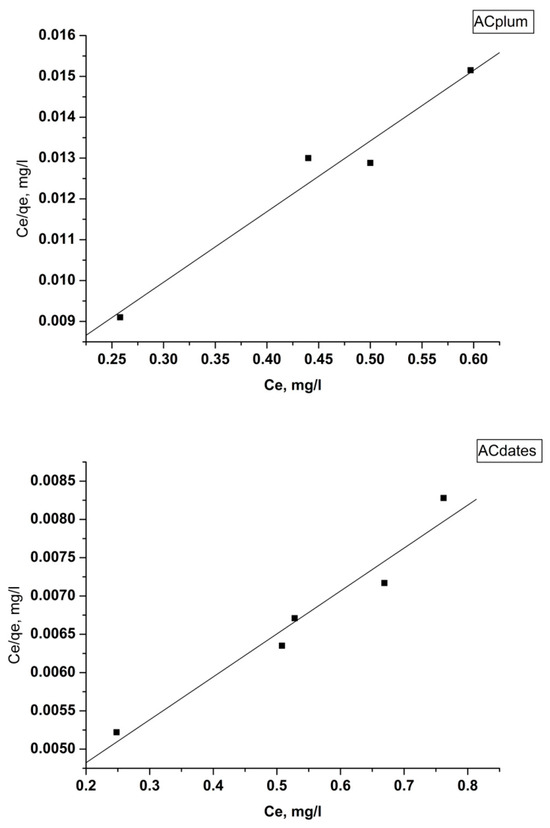
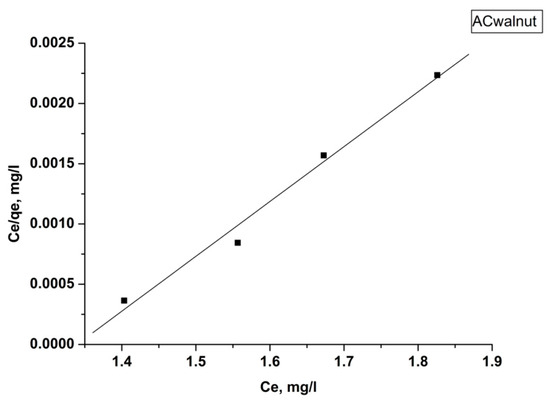
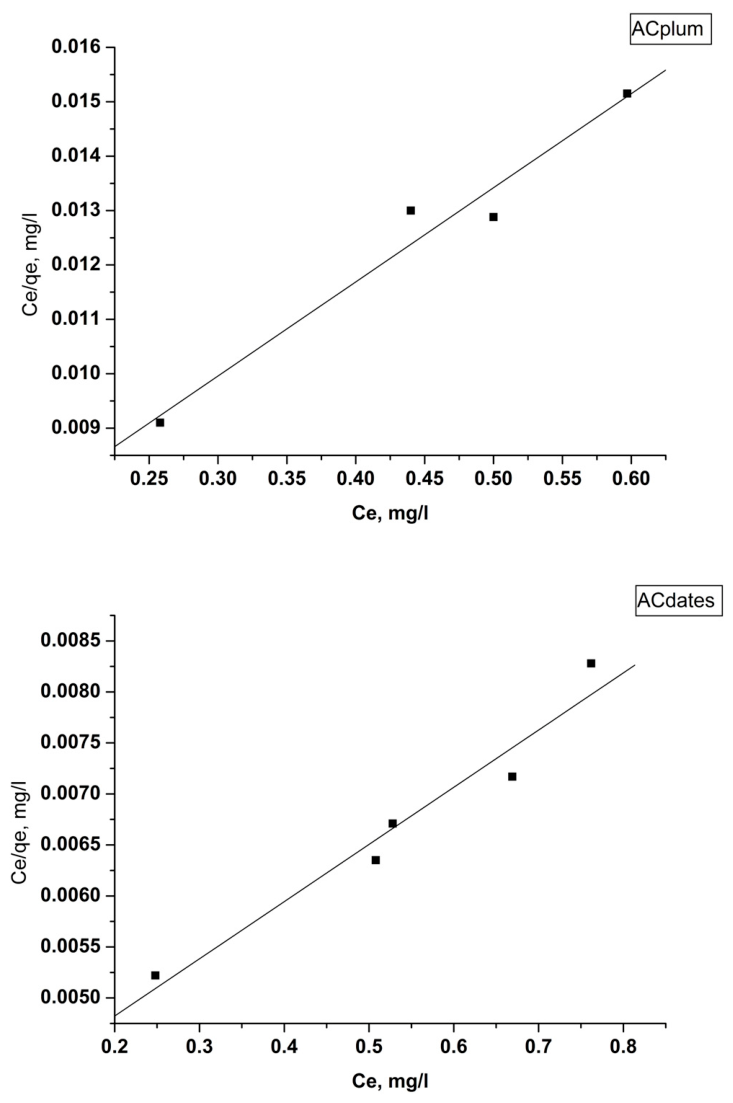
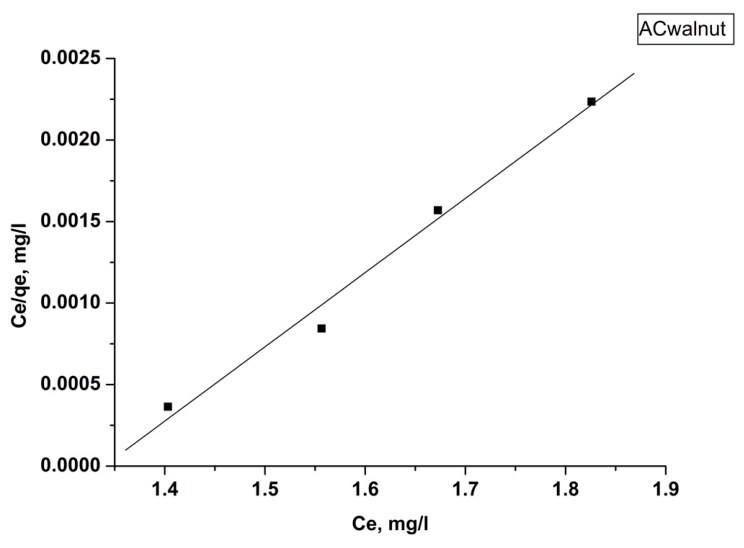
Batch adsorption experiments for sodium lauryl sulfate (SLS) removal from aqueous solutions using the synthesized activated carbons were conducted across various initial concentrations (5, 10, 20, 40, and 60 mg/L). Figure 7 illustrates the linear transformations of the SLS adsorption isotherms for the KOH-activated carbons. The experimental findings exhibit excellent agreement with the Langmuir model [23]:
where Ce (relative error of the measurement 1.0%) is the equilibrium pollutant concentration remaining in solution after adsorption (mg/L), qe (relative error 2.01%) is the amount of pollutant bound to the adsorbent (mg/g), qm is the model-estimated asymptotic adsorption capacity (mg/g), and KL is the Langmuir constant related to the apparent affinity between the adsorbate and the adsorbent (L/mg).
qe = qmKLCe/(1 + KLCe),
Figure 7.
Linearized Langmuir plots for SLS adsorption on KOH-activated carbons. The adsorption experiments were conducted at 25 °C with a contact time of 60 min, utilizing an adsorbent dosage of 0.05 g per 50 mL of solution across initial SLS concentrations of 5, 10, 20, 40, and 60 mg/L.
The equilibrium adsorption data demonstrated a high degree of conformity with the Langmuir isotherm within the investigated concentration range. The Langmuir analysis yielded model-estimated asymptotic adsorption capacities (qm) of 219.70 mg/g (R2 = 0.99271) for ACwalnut, 57.80 mg/g (R2 = 0.98154) for ACplum, and 178.25 mg/g (R2 = 0.97661) for ACdate (Figure 7). These qm values are parameters derived from the Langmuir model and should not be interpreted as experimentally attained adsorption capacities. In particular, the favorable alignment between the experimental measurements and the Langmuir model suggests that the model provides an appropriate mathematical description of the equilibrium data, but it does not by itself constitute direct evidence of ideal monolayer adsorption on energetically homogeneous surface sites.
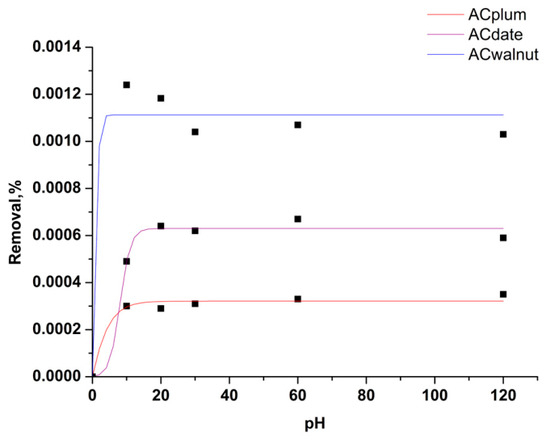
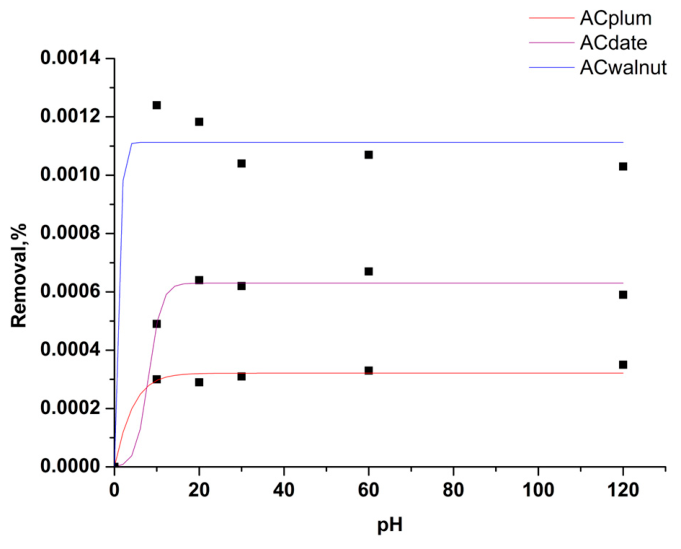
The kinetic profiles presented in Figure 8 illustrate the uptake kinetics of sodium lauryl sulfate (SLS) onto the prepared activated carbons from an initial solution concentration of 60 mg/L. A rapid uptake of SLS is observed during the initial stage of contact with the activated carbons. This pronounced early adsorption stems from the abundant presence of readily accessible surface sites available at the beginning of the process. The gradual decline in adsorption rate with extended contact time stems from the progressive occupation of active adsorption sites and the system’s approach to equilibrium. Additionally, the subsequent evolution of sorption capacity proceeds at a reduced rate, reaching equilibrium within approximately 30 min. The continuous, asymptotic nature of the adsorption curves further confirms the orderly attainment of equilibrium under the evaluated conditions. This behavior may be associated with the gradual occupation of readily accessible adsorption sites and increasing diffusional limitations as the adsorption proceeds.
Figure 8.
Influence of contact time on SLS sorption performance. Operating parameters: carbon dosage of 50 mg per 50 mL of solution, initial SLS concentration of 60 mg/L.
The superior adsorption capability of the evaluated activated carbons stems from a synergy between their well-developed porous framework, high accessible surface area, and the inherently hydrophobic nature of the carbon skeleton, which collectively promote the capture of amphiphilic surfactant molecules. Besides textural characteristics, surface chemistry also exerts a significant influence. Oxygen-containing functionalities and basic surface sites can influence the interaction of the adsorbent with sodium lauryl sulfate through electrostatic forces, hydrogen bonding, and non-polar interactions involving the aliphatic tail of the surfactant.
Among the studied materials, the activated carbons obtained from walnut shells and date stones exhibited particularly favorable adsorption behavior. Their performance indicates that these agricultural residues can serve as promising precursors for the preparation of effective and comparatively low-cost carbon adsorbents for the removal of anionic surfactants from contaminated aqueous systems.
The uptake of SLS onto the synthesized activated carbons is controlled by a synergy of physical and chemical forces stemming from the textural properties of the adsorbents and the amphiphilic structure of the surfactant. Furthermore, the strong conformity of the equilibrium data to the Langmuir isotherm confirms that the model reliably characterizes adsorption performance across the evaluated concentration range. However, such agreement alone cannot be considered direct evidence for the formation of an ideal monomolecular layer or for the presence of energetically homogeneous adsorption sites on the carbon surface. The extensive porous architecture and large specific surface area of the activated carbons offer abundant, readily available pore volume for the diffusion and confinement of SLS molecules. Moreover, because sodium lauryl sulfate features an extended aliphatic tail, the intrinsic hydrophobicity of the carbon surface promotes the uptake and stabilization of these amphiphilic surfactant species. Moreover, the presence of specific surface functional groups and basic centers dictates the electrostatic and physical interactions between the adsorbent surface and the ionic or polar molecules of sodium lauryl sulfate.
Concurrently, the analytical evaluation of the obtained porous structures indicates that although date stones exhibit the largest specific surface area of 1059.01 m2/g due to prevailing micropores, this does not guarantee optimal adsorption capacity for larger organic molecules. The majority of the surface area within these materials is concealed within narrow micropores, whereas walnut shells exhibit an optimal structural balance with a substantially higher mesopore volume (0.210 cm3/g compared to 0.063 cm3/g for date stones). This mesoporous volume functions as a transport network that facilitates intraparticle diffusion. Conversely, plum stone-derived carbons are characterized by the most restrictive parameters and a markedly low mesopore volume (0.020 cm3/g), which engenders severe diffusional resistance and renders this material the least efficient adsorbent. When these structural parameters are correlated with the molecular dimensions of sodium lauryl sulfate—which possesses a molecular length of approximately 1.5–2.0 nm—it becomes evident that micropores are excessively constricted for unhindered penetration, whereas the mesopores of the walnut-derived carbon provide favorable pathways for the free transport of these surfactant molecules toward internal active sites. Furthermore, the adsorption specificity is additionally governed by interactions between the hydrophobic alkyl chain of sodium lauryl sulfate and the oxygen-containing functional groups and aromatic graphene layers of the carbon surface; thus, the synergistic combination of accessible surface area and a well-developed transport network establishes walnut shell-derived carbon as an exceptionally efficient adsorbent for such bulky molecules.
3.9. Effect of pH of the Solution
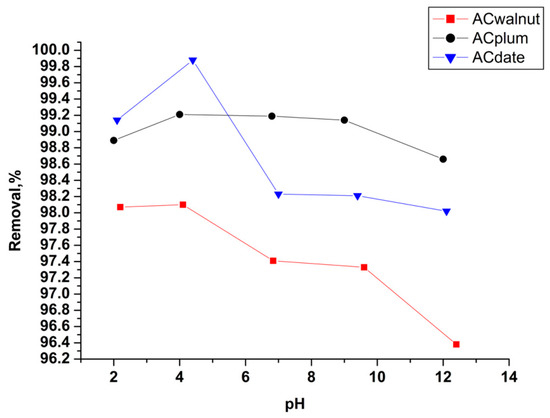
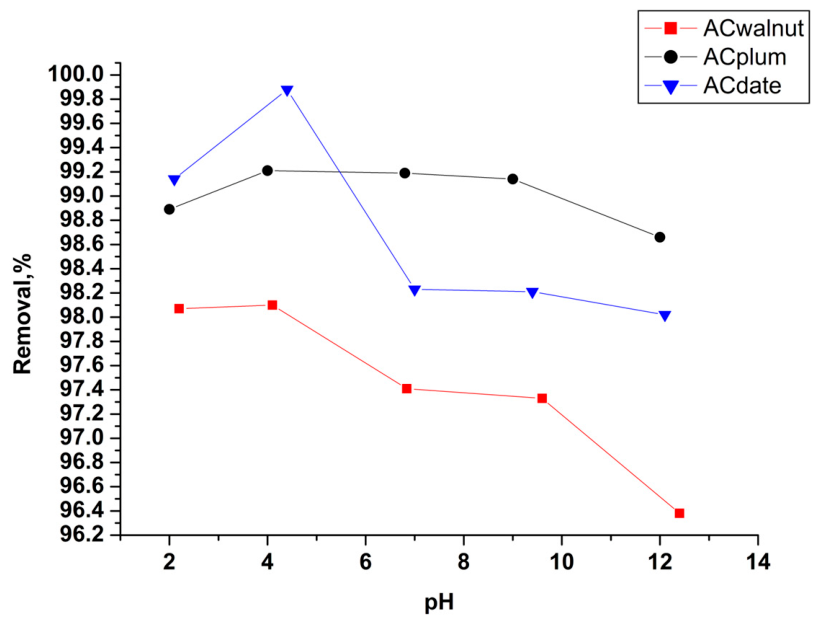
The influence of solution pH on SLS adsorption was examined over the range of pH 2–13, with the desired values adjusted using HCl or NaOH (Figure 9). This parameter holds critical significance, as it dictates the surface charge of the activated carbon and, consequently, modulates the magnitude of electrostatic interactions with the adsorbate. The point of zero charge (pHpzc) was evaluated using the mass titration method established by Noh and Schwarz [24]. Typically, the carbon surface carries a positive charge at pH levels below pHpzc, whereas it acquires a negative charge when the solution pH surpasses pHpzc. The pHpzc therefore reflects the overall contribution of acidic and basic surface functionalities and is closely related to the protonation and deprotonation behavior of the surface sites identified by Boehm titration.
Figure 9.
Influence of solution pH on sodium lauryl sulfate (SLS) sorption performance onto activated carbons. Operating parameters: contact duration of 60 min, sorbent loading of 0.05 g per 50 mL of solution, initial SLS concentration of 40 mg/L, and temperature maintained at 25 °C.
The experimental results show that SLS uptake is highest in the acidic region, particularly at pH 2–4, and gradually decreases as the pH increases. Since SLS is an anionic surfactant containing a negatively charged sulfate head group, favorable electrostatic attraction occurs when the activated carbon surface is positively charged at pH < pH_pzc. At higher pH values, deprotonation of the surface increases the negative charge of the carbon, thereby weakening the interaction with SLS and promoting electrostatic repulsion. The progressive decline in adsorption under alkaline conditions therefore indicates that surface charge plays an important role in controlling SLS retention on the investigated activated carbons.
The Langmuir-derived adsorption parameters obtained for the biomass-based activated carbons investigated in this work were compared with recent literature data for SDS/SLS adsorbents published during 2020–2026 (Table 5). Among the materials investigated in the present study, ACwalnut exhibited the highest Langmuir-estimated qm, followed by ACdate and ACplum. However, these values represent model-derived parameters and should not be interpreted as directly measured maximum adsorption capacities. Because the literature studies use different concentration ranges, adsorbent dosages, equilibrium conditions, and isotherm-fitting procedures, the comparison is intended primarily to place the present results in context rather than to establish a strict performance ranking.
Table 5.
Comparative data on SLS adsorption on adsorbents.
Recent studies report a broad range of adsorption capacities depending on adsorbent chemistry, pore architecture, and experimental conditions. ZIF-8/carbon fiber has been reported to reach an SDS adsorption capacity of 377 ± 7 mg/g [25], while activated coconut-shell carbon gave a Langmuir qm of 81.93 mg/g [26]. Natural anthracite reached 158.7 mg/g [27]. These values illustrate that the model-estimated qm obtained for ACwalnut and ACdate is within the range reported for several recent adsorbent systems, while direct numerical comparison should remain cautious because the experimental protocols differ among studies.
Recent adsorption studies also demonstrate the strong influence of adsorbent composition and surface chemistry on anionic-surfactant uptake. Bautista Quispe et al. [28] reported adsorption capacities of 80.65 mg/g for commercial activated carbon and 66.23 mg/g for wheat-straw biochar prepared at 550 °C. Polyvinyl butyral showed a maximum adsorption capacity of approximately 40.52 mg/g [11], whereas quaternary-ammonium-modified cellulose reached 22.8 mg/g [12]. Studies involving riverbank-filtration media [29] and ultrasound-assisted bagasse [30] further confirm that surfactant adsorption is strongly dependent on the physicochemical properties of the adsorbent and the solution conditions (Table 5).
For the activated carbons investigated in the present study, the reported values correspond to the Langmuir-derived asymptotic parameter qm and not to experimentally attained maximum adsorption capacities.
4. Conclusions
In conclusion, this study demonstrated the successful valorization of low-cost waste biomass (plum stones, date stones, and walnut shells) as sustainable raw materials for the synthesis of effective activated carbons. Through chemical activation with potassium hydroxide (KOH) at 850 °C and a 1:1 impregnation ratio, the formation of materials with a high specific surface area (up to 1059.01 m2/g for ACdate) was successfully achieved. The synthesized materials exhibited a developed pore structure, with ACplum and ACdate being predominantly microporous, whereas ACwalnut possessed comparable micropore and mesopore volumes (0.226 and 0.210 cm3/g, respectively) along with a noticeable hysteresis loop in its isotherm.
The equilibrium adsorption data for sodium lauryl sulfate were well described by the Langmuir model. The model yielded asymptotic qm values of 219.70 mg/g for ACwalnut, 178.25 mg/g for ACdate, and 57.80 mg/g for ACplum. These values represent Langmuir-derived model parameters rather than experimentally attained maximum adsorption capacities within the investigated concentration range. Furthermore, agreement with the Langmuir equation should not be interpreted as direct proof of ideal monolayer adsorption on homogeneous active sites.
Notably, despite having a lower specific surface area than ACdate, ACwalnut exhibited the highest Langmuir-estimated qm. Its developed mesoporous network (0.210 cm3/g) may facilitate intraparticle transport and improve the accessibility of adsorption sites for SLS molecules. The model-derived adsorption parameters obtained in this study are comparable to values reported for several conventional and alternative adsorbents; however, direct quantitative comparisons should be interpreted cautiously because experimental conditions and model-fitting procedures differ among studies.
Overall, the high efficiency of the obtained activated carbons stems from a synergistic combination of accessible porosity, a mesoporous transport network, specific surface functional groups, and favorable electrostatic/physical interactions with the anionic surfactant. These results highlight the excellent potential of the developed activated carbons as cost-effective and eco-friendly alternatives for surfactant-contaminated wastewater remediation.
Author Contributions
Conceptualization, I.S. and N.P.; methodology, I.S. and N.P.; investigation, I.S., D.K., G.I., B.P. and N.P.; writing—original draft preparation, I.S., A.K., B.T., G.I. and N.P.; writing—review and editing, I.S. and N.P.; funding acquisition, I.S., G.I. and N.P. All authors have read and agreed to the published version of the manuscript.
Funding
This research was funded by the Bulgarian National Scientific Fund, grant number KII-06-H97/14/2025.
Data Availability Statement
The data presented in this study are available on request from the corresponding author.
Acknowledgments
The research equipment used in this study was supported by project № BG16RFPR002-1.014-0015, titled “Clean Technologies for Sustainable Environment—Water, Waste, Energy for Circular Economy”, funded by the European Regional Development Fund through the Bulgarian program “Research, Innovation and Digitalization for Smart Transformation”. Research equipment from the Distributed Research Infrastructure INFRAMAT, part of the Bulgarian National Roadmap for Research Infrastructures and supported by the Bulgarian Ministry of Education and Science, was used in this investigation.
Conflicts of Interest
The authors declare no conflicts of interest.
Abbreviations
The following abbreviations are used in this manuscript:
| TEM | Transmission electron microscopy |
| SEM | Scanning electron microscopy |
| TG-DSC | Simultaneous thermogravimetric analysis and differential scanning calorimetry |
| ACplum | Activated carbon obtained from plum stones |
| ACwalnut | Activated carbon obtained from walnut shell |
| ACdate | Activated carbon obtained from date stones |
| SLS | Sodium lauryl sulfate |
References
- Asio, J.R.G.; Garcia, J.S.; Antonatos, C.; Sevilla-Nastor, J.B.; Trinidad, L.C. Sodium lauryl sulfate and its potential impacts on organisms and the environment: A thematic analysis. Emerg. Contam. 2023, 9, 100205. [Google Scholar] [CrossRef] [Scilit]
- Johnson, P.; Trybala, A.; Starov, V.; Pinfield, V.J. Effect of synthetic surfactants on the environment and the potential for substitution by biosurfactants. Adv. Colloid Interface Sci. 2021, 288, 102340. [Google Scholar] [CrossRef] [Scilit] [PubMed]
- Jena, G.; Dutta, K.; Daverey, A. Surfactants in water and wastewater (greywater): Environmental toxicity and treatment options. Chemosphere 2023, 341, 140082. [Google Scholar] [CrossRef] [Scilit] [PubMed]
- U.S. Environmental Protection Agency. EPA’s Safer Choice and Design for the Environment (DfE) Standard. Available online: https://www.epa.gov/system/files/documents/2024-08/epas-safer-choice-and-design-for-the-environment-dfe-standard.pdfU.S. Environmental Protection Agency: Washington, DC, USA, 2024; (accessed on 18 August 2026).
- European Parliament and Council. Regulation (EU) 2026/405 of 11 February 2026 on detergents and surfactants and repealing Regulation (EC) No 648/2004. Off. J. Eur. Union 2026. Available online: https://eur-lex.europa.eu/eli/reg/2026/405/oj/eng (accessed on 30 July 2026).
- Harif, S.; Aboulhassan, M.A.; Bammou, L.; Baicha, Z.; Hernández Fernández, F.J. Improving the Removal of Anionic Surfactant in Cardboard Industry Wastewater by Coagulation/Flocculation: Process Optimization with Response Surface Methodology. Water Air Soil Pollut. 2023, 234, 477. [Google Scholar] [CrossRef] [Scilit]
- Siyal, A.A.; Shamsuddin, M.R.; Low, A.; Rabat, N.E. A review on recent developments in the adsorption of surfactants from wastewater. J. Environ. Manag. 2020, 254, 109797. [Google Scholar] [CrossRef] [Scilit] [PubMed]
- Kharabsheh, R.M.; Bdour, A. Adsorption of SDBS-MBAS from aqueous solutions using natural zeolite and activated carbon: A comparative study. J. Ecol. Eng. 2025, 26, 102–113. [Google Scholar] [CrossRef] [Scilit] [PubMed]
- Doan, T.H.Y.; Le, T.T.; Nguyen, T.M.T.; Chu, T.H.; Pham, T.N.M.; Nguyen, T.A.H.; Pham, T.D. Simultaneous adsorption of anionic alkyl sulfate surfactants onto alpha alumina particles: Experimental consideration and modeling. Environ. Technol. Innov. 2021, 24, 101920. [Google Scholar] [CrossRef] [Scilit]
- Corona, R.R.B.; Sad, C.M.S.; da Silva, M.; Lopes, D.L.; Leite, J.S.D.; Viegas, G.M.F.; Gonçalves, G.R.; Filgueiras, P.R.; de Castro, E.V.R. Adsorption of anionic surfactant in graphite oxide: A study for treatment of laundry wastewater. J. Environ. Chem. Eng. 2021, 9, 106858. [Google Scholar] [CrossRef] [Scilit]
- Wang, H.; Sun, L.; Zeng, Z.; Xue, W. Adsorption of Sodium Dodecyl Sulfonate from Aqueous Solution by Polyvinyl Butyral: Kinetics and Thermodynamics. Ind. Eng. Chem. Res. 2023, 62, 10163–10174. [Google Scholar] [CrossRef] [Scilit]
- Zou, M.; Zhang, H.; Miyamoto, N.; Kano, N.; Okawa, H. Adsorption of an anionic surfactant (sodium dodecyl sulfate) from an aqueous solution by modified cellulose with quaternary ammonium. Polymers 2022, 14, 1473. [Google Scholar] [CrossRef] [Scilit] [PubMed]
- Çetinkaya Ateşçi, Z.; Inan, H. Removal of microfiber and surfactants from household laundry washing effluents by powdered activated carbon: Kinetics and isotherm studies. Water Sci. Technol. 2023, 88, 1578–1593. [Google Scholar] [CrossRef] [Scilit] [PubMed]
- Lopičić, Z.; Avdalović, J.; Milojković, J.; Antanasković, A.; Lješević, M.; Lugonja, N.; Šoštarić, T. Removal of diesel pollution by biochar-Support in water remediation. Hem. Ind. 2021, 75, 329–339. [Google Scholar] [CrossRef] [Scilit]
- Gayathiri, M.; Pulingam, T.; Lee, K.T.; Sudesh, K. Activated carbon from biomass waste precursors: Factors affecting production and adsorption mechanism. Chemosphere 2022, 294, 133764. [Google Scholar] [CrossRef] [Scilit] [PubMed]
- Jjagwe, J.; Olupot, P.W.; Menya, E.; Kalibbala, H.M. Synthesis and Application of Granular Activated Carbon from Biomass Waste Materials for Water Treatment: A Review. J. Bioresour. Bioprod. 2021, 6, 292–322. [Google Scholar] [CrossRef] [Scilit]
- ISO 9277:2022; Determination of the Specific Surface Area of Solids by Gas Adsorption—BET Method. International Organization for Standardization: Geneva, Switzerland, 2022.
- ISO 15901-2:2022; Pore Size Distribution and Porosity of Solid Materials by Mercury Porosimetry and Gas Adsorption—Part 2: Analysis of Nanopores by Gas Adsorption. International Organization for Standardization: Geneva, Switzerland, 2022.
- Baldovino-Medrano, V.G.; Niño-Celis, V.; Isaacs Giraldo, R. Systematic Analysis of the Nitrogen Adsorption-Desorption Isotherms Recorded for a Series of Materials Based on Microporous-Mesoporous Amorphous Aluminosilicates Using Classical Methods. J. Chem. Eng. Data 2023, 68, 2512–2528. [Google Scholar] [CrossRef] [Scilit]
- Breen, R.; Goggin, C.; Holmes, J.D.; Collins, G. A Collaborative Cocurricular Undergraduate Research Experience on Sustainable Materials: Analysis of Biochar Using the Boehm Titration and Spectroscopic Techniques. J. Chem. Educ. 2025, 102, 1323–1332. [Google Scholar] [CrossRef] [Scilit] [PubMed]
- Wu, H.; Lu, W.; Chen, Y.; Zhang, P.; Cheng, X. Application of Boehm Titration for the Quantitative Measurement of Soot Oxygen Functional Groups. Energy Fuels 2020, 34, 7363–7372. [Google Scholar] [CrossRef] [Scilit]
- ASTM D7582-24; Standard Test Methods for Proximate Analysis of Coal and Coke by Macro Thermogravimetric Analysis. ASTM International: West Conshohocken, PA, USA, 2024.
- Al-Ghouti, M.A.; Da’ana, D.A. Guidelines for the use and interpretation of adsorption isotherm models: A review. J. Hazard. Mater. 2020, 393, 122383. [Google Scholar] [CrossRef] [Scilit] [PubMed]
- Gutierrez-Martinez, J.; Martinez-Vargas, D.R.; Vences-Alvarez, E.; Arjona-Jaime, P.; López-Cázares, M.I.; Rios-Saldaña, L.E.; Isaacs-Páez, E.D.; Quijano-Meza, M.; Rocha-Medina, C.; Rangel-Mendez, R. Point of zero charge, isoelectric point, and potential of zero charge on activated carbons: A comprehensive interpretation about their interrelation. Curr. Opin. Solid State Mater. Sci. 2026, 40, 101247. [Google Scholar] [CrossRef] [Scilit]
- Shahmirzaee, M.; Hemmati-Sarapardeh, A.; Husein, M.M.; Schaffie, M.; Ranjbar, M. ZIF-8/carbon fiber for continuous adsorption of sodium dodecyl sulfate (SDS) from aqueous solutions: Kinetics and equilibrium studies. J. Water Process Eng. 2021, 44, 102437. [Google Scholar] [CrossRef] [Scilit]
- Sha’arani, S.A.W.; Yasid, N.A.; Halmi, M.I.E.; Othman, A.R.; Shukor, M.Y. Adsorption of Sodium Dodecyl Sulfate onto Activated Coconut Shell-Based Adsorbent: Isothermal Remodelling. J. Environ. Microbiol. Toxicol. 2023, 11, 52–61. [Google Scholar] [CrossRef] [Scilit]
- Saqr, A.H.; Hesham, A.E.L.; Attia, M.I.; Rafea, M.A.; Roshdy, M.A.; El-Aassar, M.R.; Zarea, K.I.; Althuqbi, M.N.; Mohamed, F.M. The bio-adsorptive treatment of detergent: Performance and mechanisms. Sci. Rep. 2026, 16, 19938. [Google Scholar] [CrossRef] [Scilit] [PubMed]
- Bautista Quispe, J.I.; Campos, L.C.; Mašek, O.; Bogush, A. Removal of anionic surfactant from aqueous solutions by adsorption onto biochars: Characterisation, kinetics, and mechanism. Environ. Technol. 2024, 45, 5723–5744. [Google Scholar] [CrossRef] [Scilit] [PubMed]
- Sahu, R.L.; Dash, R.R.; Pradhan, P.K. A study on adsorption of anionic surfactant from water during riverbank filtration. J. Mol. Liq. 2022, 359, 119247. [Google Scholar] [CrossRef] [Scilit]
- Singh, K.; Dixit, U.; Mohan, S. Comparative Study of Adsorption, Kinetics, and Thermodynamics of Selected Cationic and Anionic Surfactants on Ultrasound-Assisted Bagasse. Water Air Soil Pollut. 2024, 235, 10. [Google Scholar] [CrossRef] [Scilit]

Disclaimer/Publisher’s Note: The statements, opinions and data contained in all publications are solely those of the individual author(s) and contributor(s) and not of MDPI and/or the editor(s). MDPI and/or the editor(s) disclaim responsibility for any injury to people or property resulting from any ideas, methods, instructions or products referred to in the content. |
© 2026 by the authors. Licensee MDPI, Basel, Switzerland. This article is an open access article distributed under the terms and conditions of the Creative Commons Attribution (CC BY) license.