


Abstract
Ultrasound-driven acoustic cavitation has attracted considerable attention as a potential technology for environmental pollutant degradation because rapid bubble compression and bubble implosion can generate localized high-temperature and high-pressure conditions capable of initiating chemical reactions. Despite advances in sonochemistry, establishing quantitative relationships between acoustic operating conditions, bubble dynamics, bubble implosion-induced reactivity, and contaminant degradation remains challenging. Building on the fundamental mechanisms of nanobubble generation, cavitation inception, and bubble dynamics examined in Part 1 of the two-part review, this Part 2 review critically evaluates the physicochemical processes governing ultrasound-driven sonochemistry and their implications for environmental remediation. Attention is given to the intensity of bubble implosions, radical formation, thermal decomposition, and the spatially distinct reaction environments within the bubble interior, at the gas–liquid interface, and in the surrounding liquid. Per- and polyfluoroalkyl substances (PFAS) are examined as a principal case study because the surface-active properties of many PFAS compounds promote their accumulation at gas–liquid interfaces, where they may undergo bubble implosion-induced thermal and chemical transformation. The review distinguishes parent-compound degradation, defluorination, and mineralization, and synthesizes experimental findings concerning the effects of ultrasonic frequency, acoustic power density, dissolved gases, water-matrix composition, and reactor configuration. Particular emphasis is placed on the limitations of comparing treatment outcomes across different experimental systems and the challenges associated with energy efficiency and reactor scale-up. Broader environmental applications and hybrid cavitation approaches are also considered. The review identifies the need for experimentally validated frameworks connecting cavitation dynamics, interfacial transport, chemical reaction pathways, and contaminant transformation. Such integration is essential for advancing ultrasound-driven sonochemistry toward reproducible, energy-efficient, and scalable environmental treatment technologies.
1. Introduction
1.1. Background and Motivation
The persistence and widespread occurrence of organic contaminants in aquatic environments have increased interest in treatment technologies capable of degrading compounds resistant to conventional remediation processes. Ultrasound-driven sonochemistry has emerged as a potential treatment approach because acoustic cavitation can generate localized reactive environments through the nonlinear oscillation and bubble implosion of acoustically responsive gas- or vapor-containing nano-scale bubbles. Unlike conventional processes governed primarily by bulk-liquid reaction conditions, sonochemical reactions arise from the localized concentration of acoustic energy, which can promote thermal decomposition and radical-mediated chemical transformations [1,2,3,4,5]. Nanobubbles are generally described as gas-filled cavities with characteristic dimensions below approximately 1 μm that are dispersed in a liquid. However, the presence or generation of nanobubbles should be distinguished from the acoustic activation and subsequent implosion of cavitation bubbles. Although nanobubbles may serve as cavitation nuclei, their participation in energetic implosion depends on acoustic forcing, bubble size, gas composition, and surrounding liquid properties. These physical mechanisms are discussed in detail in Part 1 of this two-part review.
During acoustic cavitation, acoustically responsive bubbles expand under the rarefaction phase of an acoustic cycle and subsequently contract during compression. Under sufficiently strong acoustic forcing, rapid bubble implosions can generate localized extreme temperatures of several thousand Kelvin and elevated pressures, producing conditions favorable for molecular dissociation and the formation of reactive species, including hydroxyl (•OH) and hydrogen (•H) radicals that promote thermal decomposition and chemical reactions [1,6,7]. These localized high-temperature regions, commonly described as sonochemical hot spots, depend on bubble dynamics, acoustic forcing, dissolved gases, and vapor transport [8,9,10]. The resulting chemical reactions may occur within the bubble interior, at the gas–liquid interface, or in the surrounding liquid, with their relative importance determined by contaminant properties and the prevailing cavitation conditions [2,8,11].
Contaminant partitioning and interfacial transport are particularly important in determining sonochemical reaction pathways. Volatile compounds may partition into the bubble interior and undergo thermal decomposition during energetic bubble implosions, whereas nonvolatile compounds may react at the gas–liquid interface or in the surrounding liquid. Surface-active compounds can accumulate at bubble interfaces, potentially increasing their exposure to localized thermal and chemical conditions. These differences help explain why contaminants with distinct volatility, hydrophobicity, and interfacial behavior can exhibit different degradation responses under comparable ultrasonic conditions. Experimental investigations of phenol and carbon tetrachloride degradation have demonstrated that the influence of ultrasonic frequency depends on the characteristics of the target compound and the underlying reaction mechanisms [4]. More broadly, the relationships among operating parameters, cavitation activity, and chemical outcomes have been examined in parametric reviews of aqueous sonochemistry [11].
Per- and polyfluoroalkyl substances (PFAS) represent a particularly important group of contaminants for evaluating ultrasound-driven sonochemical degradation mechanisms. Their environmental persistence and resistance to many conventional treatment processes have motivated investigations of ultrasound-driven sonolysis as a potential PFAS destruction technology. Perfluoroalkyl acids, including perfluorooctanoic acid (PFOA) and perfluorooctane sulfonic acid (PFOS), exhibit surface-active properties that can promote enrichment at gas–liquid interfaces because their fluorinated carbon chains and polar headgroups produce amphiphilic characteristics. Such interfacial accumulation provides a potential pathway for exposure to the localized thermal conditions associated with bubble implosions [3,12,13]. Vecitis et al. (2008) [12] examined the sonolytic conversion of aqueous PFOA and PFOS into inorganic products, providing an important mechanistic foundation for subsequent PFAS treatment studies.
Recent experimental investigations have demonstrated that PFAS sonolysis is influenced by contaminant concentration, acoustic power density, ultrasonic frequency, and reactor configuration. Studies by Kewalramani et al. (2023) [14,15] have provided quantitative evidence of concentration-dependent degradation kinetics and the effects of reactor operating conditions on sonochemical performance. These findings emphasize the importance of evaluating PFAS treatment through experimentally measured kinetic and energy-related parameters. The relevant experimental results are examined in Section 4.3 and Section 5.
Beyond the chemical mechanisms, practical implementation of ultrasound-driven remediation is constrained by nonuniform acoustic-field distributions, interactions among cavitation bubbles, energy consumption, and reactor scale-up. Reactor geometry, transducer placement, and liquid properties influence the spatial distribution of cavitation activity, while bubble clustering and acoustic shielding may further modify local reaction conditions [14,16,17,18,19]. Multi-transducer and dual-frequency systems have therefore been investigated as potential approaches for modifying cavitation activity and improving treatment performance. Studies involving PFAS-containing aqueous film-forming foam (AFFF) and contaminated soils have examined the application of combined acoustic frequencies and larger reactor configurations [20,21]. More recent investigations have addressed treatment-volume increases and the practical challenges of PFAS sonolysis scale-up [22,23].
Despite substantial progress in sonochemical research, quantitative relationships connecting acoustic operating conditions, bubble dynamics, localized chemical reactivity, and contaminant transformation remain insufficiently established. Experimental studies frequently report degradation efficiencies, apparent reaction-rate constants, or energy consumption without fully characterizing the acoustic pressure field, bubble population, or spatial distribution of cavitation activity. Conversely, computational models may describe individual bubble dynamics and bubble implosion-induced conditions without accounting for contaminant-specific reaction pathways or reactor-scale heterogeneity [8,11,24]. Bridging these limitations is essential for developing more predictive and practically applicable sonochemical treatment systems.
1.2. Scope and Objectives
This review critically examines the physicochemical processes governing ultrasound-induced sonochemistry and their implications for environmental pollutant remediation. Building on the physical mechanisms of nanobubble nucleation, acoustic cavitation inception, and bubble dynamics discussed in Part 1 of this two-part review, focuses on the chemical consequences of acoustically induced bubble oscillation and bubble implosions. Particular attention is given to localized thermal conditions, radical formation, pyrolytic decomposition, and the spatial distribution of chemical reactions within the bubble interior, at the gas–liquid interface, and in the surrounding liquid [1,2,7,8,9]. The relationships among acoustic operating conditions, bubble implosion-induced reactivity, contaminant properties, and chemical transformation are critically evaluated, with emphasis on the limitations of existing experimental and theoretical approaches.
PFAS sonolysis is examined as the principal environmental remediation case study because their persistence, molecular structure, and interfacial properties present distinct challenges for conventional treatment technologies. The review evaluates PFAS adsorption and enrichment at cavitation-bubble interfaces, proposed degradation pathways, transformation products, and the effects of ultrasonic frequency, acoustic power density, dissolved gases, surrounding liquid properties, and reactor configuration. Particular emphasis is placed on quantitative experimental findings, including apparent reaction-rate constants, treatment efficiency, defluorination, and energy consumption, while distinguishing parent-compound disappearance from complete chemical destruction [12,13,25,26,27,28,29,30].
This review further examines representative applications involving other environmental contaminants, reactor design considerations, acoustic attenuation and bubble cloud shielding, and the challenges associated with energy efficiency and scale-up. By integrating sonochemical reaction mechanisms with experimental evidence and engineering considerations, this work aims to (i) identify the physicochemical factors controlling contaminant transformation, (ii) critically compare the performance and limitations of existing ultrasonic treatment systems, and (iii) identify research priorities for developing predictive relationships between cavitation activity, chemical reactivity, and reactor-scale treatment performance. These objectives provide a framework for evaluating the potential and practical limitations of ultrasound-driven environmental remediation [7,8,13,24].
2. Fundamentals of Ultrasound-Induced Sonochemistry
Ultrasound-induced sonochemistry arises primarily from acoustic cavitation, through which mechanical energy supplied to a liquid is concentrated into localized regions of elevated temperature and pressure during bubble compression and bubble implosions [1,2]. The resulting chemical reactions are governed by the coupled effects of acoustic forcing, bubble dynamics, gas and vapor composition, heat and mass transfer, and chemical kinetics. Although the mechanisms of cavitation inception, bubble oscillation, and bubble implosion are discussed in Part 1 of this two-part review, the present section examines their chemical consequences, particularly the formation of reactive species, thermal decomposition, and contaminant transformation. Importantly, sonochemical performance cannot be inferred solely from the maximum bubble implosions temperature or the presence of nanoscale bubble populations; it also depends on the number and distribution of cavitation events that generate conditions capable of initiating measurable chemical reactions and the accessibility of target compounds to reactive regions [2,6,8,11].
2.1. Bubble Implosions and Localized Reaction Conditions
Energetic bubble implosion of acoustically active cavitation bubbles provides a principal mechanism through which ultrasonic energy can initiate chemical reactions. Nanoscale gas nuclei may contribute to cavitation inception, but their subsequent evolution into chemically active cavitation bubbles depends on acoustic pressure amplitude, initial bubble size, gas composition, and surrounding liquid properties. During the application of acoustic energy, sufficiently activated nanobubbles may expand through gas and vapor transport, whereas subsequent compression can produce rapid contraction and substantial increases in internal temperature and pressure. Sufficiently high temperature and pressures may promote molecular dissociation, pyrolytic decomposition, and the formation of chemically reactive species [1,2,8]. However, the generation of nanobubbles does not independently establish that individual bubbles undergo energetic transient implosions. This distinction is particularly important when relating experimentally measured bubble populations to sonochemical reaction rates.
A simplified thermodynamic interpretation of nanobubble compression can be obtained by considering an ideal-gas approximation under idealized polytropic compression conditions [6]. For a fixed gas mass, the relation pVγ = constant, together with pV = mRT, gives TVγ = constant. Because the bubble volume scales as V ∝ R3, the temperature of the gas-vapor mixture within the bubble varies with bubble radius according to
where T0 and R0 are the reference temperature and radius, and γ is the effective polytropic exponent. This relationship illustrates how substantial compression can produce rapid temperature increases. However, it assumes a spatially uniform gas state and neglects important processes such as vapor condensation, heat transfer, chemical reactions, and changes in gas composition [8]. Consequently, it should be regarded as an illustrative approximation rather than a quantitative prediction of sonochemical hot-spot temperatures. The concept of localized sonochemical hot spots was established through foundational investigations by Suslick et al. (1986) [7], which provided experimental evidence of extremely high-temperature reaction environments during acoustic cavitation. More comprehensive models are required to resolve the coupled effects of gas dynamics, heat and mass transfer, and chemical kinetics during bubble implosions [8,10].
Sonochemical reactivity cannot be predicted from the maximum internal temperature alone. Duration of bubble implosions, vapor content, reactive-species formation, and the transport of chemical intermediates across the gas–liquid interface also influence the resulting reaction environment and chemical outcomes. Dissolved gases modify the thermodynamic properties of the bubble interior and affect the formation and subsequent reactions of reactive species [9]. Similarly, changes in external pressure can influence bubble expansion, intensity of bubble implosions, and sonochemical activity [31].
At the reactor scale, sonochemical performance depends not only on the severity of individual bubble implosions events but also on their frequency of occurrence and spatial distribution. Bubble clustering, acoustic shielding, and interactions among neighboring bubbles may modify the local acoustic pressure field and the conditions experienced by individual bubbles [16,17]. Consequently, overall chemical conversion depends on both the intensity and distribution of reactive bubble implosion events rather than the behavior of an isolated bubble alone [8,11,14]. These reactor-scale effects are examined further in Section 5.
2.2. Radical Formation, Pyrolysis, and Reaction Zones
Acoustic cavitation promotes chemical reactions through interconnected thermal and radical-mediated pathways. Under sufficiently energetic bubble implosions, water vapor and diffused gases within a cavitation bubble may undergo thermally induced dissociation, producing hydroxyl (•OH) and hydrogen (•H) radicals. The resulting radicals can undergo secondary reactions with water vapor, dissolved gases, and other chemical constituents. The initial dissociation of water vapor may be represented schematically as H2O → •OH + •H, although actual network includes multiple elementary reactions and competing recombination pathways [1,2,8,9]. The net production of reactive species depends on the time-dependent temperature, pressure, vapor concentration, and chemical composition within the bubble. Therefore, radical formation cannot be determined from the maximum bubble implosion temperature alone, and the resulting chemical yield must account for both production and consumption reactions.
The temperature dependence of an elementary chemical reaction is commonly represented by the Arrhenius expression,
where k is the reaction-rate constant, A is the pre-exponential factor, Ea is the activation energy, R is the universal gas constant, and T is the absolute temperature. In sonochemical systems, the rapid variation in temperature during bubble compression and bubble implosions produces strongly time-dependent reaction rates. Accordingly, the formation of reactive species depends not only on the peak temperature but also on the duration of exposure to elevated temperatures and the availability of reactants. For a simplified reaction involving hydroxyl radicals and a dissolved contaminant, the local consumption rate may be expressed as
where [C] represents contaminant concentration and kOH,C is the corresponding second-order rate constant. This expression illustrates the importance of both radical availability and contaminant concentration, although it does not account for spatial concentration gradients, interfacial transport, competing reactions, or direct pyrolytic transformation. Consequently, the overall degradation kinetics observed in ultrasonic reactors should not be interpreted as arising exclusively from hydroxyl-radical reactions [2,8,11].
Sonochemical reactions are commonly described using three interconnected regions: the bubble interior, the gas–liquid interface, and the surrounding bulk liquid. Within the bubble interior, volatile compounds and vapor-phase constituents may undergo pyrolytic decomposition under elevated temperatures. At the interfacial region, adsorbed or enriched compounds may be exposed to localized thermal conditions and reactive intermediates generated during cavitation. In the surrounding liquid, reactions are influenced by the transport and lifetime of species released from the bubble region. Consequently, contaminant transformation depends on both the formation of reactive conditions and the location of the target molecules relative to those conditions [2,8,11].
The relative contributions of these reaction zones are governed by contaminant partitioning, interfacial adsorption, and the transport and lifetime of reactive species. Although the three-zone representation provides a useful conceptual framework, the boundaries between the regions are not sharply defined during dynamic bubble oscillation and bubble implosions. Furthermore, the relative importance of thermal decomposition and radical-mediated reactions cannot be generalized across different contaminants. For example, a contaminant exhibiting strong interfacial affinity may undergo substantial transformation near the bubble surface even when its concentration in the surrounding liquid is relatively low. Conversely, a highly water-soluble compound with limited interfacial enrichment may depend more strongly on reactions occurring outside the immediate bubble region. These differences emphasize the need to interpret sonochemical degradation mechanisms using contaminant-specific physicochemical properties rather than assuming a common reaction pathway for all pollutants [2,8,11].
Figure 1 shows a schematic representation of the principal reaction zones associated with ultrasound-induced cavitation: (1) the bubble interior, where rapid compression produces localized heating and promotes water-vapor pyrolysis and reactive-species formation; (2) the gas–liquid interface, where PFAS molecules may accumulate, facilitating interfacial thermal decomposition and possible radical-mediated reactions; and (3) the surrounding liquid, where reactive-species transport, secondary transformation reactions, and release of inorganic products may occur. The illustrated pathways are conceptual and do not imply that all products form simultaneously or exclusively within a particular reaction zone.
Figure 1.
Schematic illustration of the three principal reaction zones associated with ultrasound-induced cavitation: (1) bubble interior (hot spot), where rapid compression, heating, and radical formation occur; (2) gas–liquid interface, where PFAS adsorption and thermal decomposition primarily occur; and (3) surrounding liquid, where reactive-species transport, secondary reactions, and product release occur. Conceptual illustration based on the sonochemical mechanisms described in [1,2,8,11,12].
Although hydroxyl-radical production is frequently used as an indicator of sonochemical activity, radical yield alone does not fully describe the treatment potential of an ultrasonic system. Thermal decomposition, interfacial adsorption, chemical selectivity, and competing reactions can substantially influence contaminant transformation. A high measured radical yield therefore does not necessarily correspond to a high degradation rate for every contaminant [8,11].
2.3. Factors Governing Sonochemical Reactivity
Sonochemical activity is governed by interacting acoustic, physicochemical, and reactor-specific parameters. Ultrasound frequency affects bubble oscillation behavior, the characteristics of active bubble populations, and the balance between physical and chemical cavitation effects. Experimental investigations have demonstrated that sonochemical reaction rates can vary substantially with frequency and that simultaneous application of different frequencies may alter chemical activity under particular operating conditions [4,11,32].
Acoustic power and pressure amplitude also influence cavitation activity, but their effects are not necessarily proportional to the energy supplied. Increasing power may increase the number of acoustically active bubbles or alter bubble implosions, while excessive bubble concentrations can contribute to acoustic attenuation and shielding. Consequently, the relationship between nominal electrical power, energy transferred to the liquid, and useful chemical conversion is reactor-dependent [11,14,16,17].
Quantitative evaluation of sonochemical performance requires distinguishing nominal electrical power from the acoustic energy effectively transferred to the liquid. The volumetric power density may be expressed as
where P is the specified power input, and V is the treated liquid volume. However, the interpretation of Pᵥ depends on whether P represents electrical input, calorimetrically determined power, or another measure of acoustic energy transfer [11,14]. The corresponding specific energy input for a batch treatment may be calculated as
where t is the treatment duration. These parameters provide a basis for comparing energy demand under defined experimental conditions but do not independently characterize cavitation intensity or chemical efficiency. In particular, two reactors operating at the same nominal power density may exhibit different acoustic-pressure distributions, bubble populations, and sonochemical reaction rates because of differences in geometry, transducer characteristics, and acoustic attenuation [11,14,16,17].
Liquid temperature, dissolved constituents, and contaminant concentration further influence sonochemical activity, while reactor geometry, liquid height, and transducer arrangement determine the spatial distribution of acoustic energy and cavitation events [11,20,23,24]. These dependencies demonstrate that sonochemical reactivity results from the coupled behavior of the acoustic field, bubble population, and chemical environment. A reliable assessment of treatment performance must therefore consider both the physical generation of reactive conditions and the chemical pathways through which those conditions produce measurable transformation.
An additional distinction is required between sonochemical activity and contaminant-specific treatment performance. Chemical dosimetry methods, including potassium iodide (KI) dosimetry, provide indirect measures of oxidizing-species production under defined experimental conditions, whereas contaminant degradation experiments quantify the transformation of particular target compounds. The corresponding yields are not interchangeable because the measured chemical response depends on reaction selectivity, competing reactions, contaminant partitioning, and analytical methodology. Therefore, meaningful comparisons among ultrasonic reactors should report the measured power basis, treatment volume, operating frequency, exposure duration, chemical endpoint, and, where available, reaction-rate constants and energy-normalized treatment metrics. This distinction is especially important for PFAS, for which parent-compound removal, defluorination, and mineralization may proceed to different extents under the same operating conditions [11,13,24].
3. Sonochemical Degradation of Environmental Pollutants
The applicability of ultrasound-induced sonochemistry to environmental remediation depends on contaminant properties and the chemical pathways accessible under cavitation conditions. This section examines representative contaminant classes and environmental applications, emphasizing differences in transformation behavior and the evidence supporting their treatment [2,5,8,11].
3.1. Contaminant Properties and Sonochemical Transformation Pathways
The sonochemical transformation of dissolved contaminants is governed by their physicochemical properties, particularly volatility, hydrophobicity, surface activity, aqueous solubility, and molecular (chemical) structure. These characteristics influence contaminant partitioning among the bubble interior, gas–liquid interface, and surrounding liquid, thereby determining exposure to localized thermal conditions and reactive species generated during acoustic cavitation. Consequently, contaminants subjected to similar ultrasonic operating conditions may exhibit substantially different degradation pathways and apparent reaction rates [2,4,8,11].
Volatile organic compounds may partition into the gas phase (bubble interior) during bubble expansion and subsequently undergo thermally induced decomposition during energetic bubble implosion. Carbon tetrachloride represents an example of a volatile compound for which reactions within or near the cavitation bubble can contribute to sonochemical transformation. In contrast, less-volatile, water-soluble organic compounds such as phenol generally remain predominantly in the aqueous phase, where transformation may involve reactions with hydroxyl radicals generated during cavitation. Pétrier and Francony [4] examined the frequency-dependent degradation of phenol and carbon tetrachloride, demonstrating that the influence of ultrasonic frequency depends on contaminant properties and the dominant reaction mechanisms. These findings indicate that ultrasonic frequency alone cannot be used to predict contaminant degradation without considering the accessibility of the target compound to the relevant reaction environment.
Surface-active contaminants constitute a distinct category because their molecular structures promote enrichment at gas–liquid interfaces. Interfacial adsorption can increase the local concentration of target contaminant molecules near cavitation bubbles, potentially enhancing their exposure to bubble implosion-induced thermal and chemical conditions. However, adsorption and chemical transformation are separate processes, and interfacial enrichment does not necessarily produce proportional increases in degradation. The resulting treatment performance depends on adsorption and desorption kinetics, interfacial coverage, bubble dynamics, chemical reaction rates, and the availability of reactive cavitation events. Perfluoroalkyl acids, including PFOA and PFOS, provide important examples of surface-active contaminants whose sonochemical behavior is strongly influenced by interfacial processes [12,13].
Contaminant concentration and water-matrix composition (water composition including dissolved ions, organic matter and coexisting contaminants) introduce additional kinetic limitations. At low concentrations, the rate of contaminant transport toward reactive regions may constrain transformation, whereas increasing concentration can enhance interfacial coverage until adsorption or reaction-site limitations become significant. Furthermore, dissolved organic matter, inorganic ions, and coexisting surfactants may influence treatment through competition for reactive species, modification of interfacial properties, or changes in cavitation behavior. Chang et al. [25] demonstrated that inorganic constituents influence the sonochemical degradation kinetics of PFOA and PFOS in groundwater, emphasizing that treatment performance in simplified laboratory solutions cannot necessarily be extrapolated to complex environmental water matrices.
These examples demonstrate that contaminant volatility, aqueous solubility, and interfacial affinity influence the relative importance of sonochemical reaction pathways. Nevertheless, quantitative prediction remains limited by incomplete characterization of transient reaction conditions and contaminant transport. The following subsection considers how these mechanisms have been applied in environmental treatment systems [8,11,24].
3.2. Environmental Applications and Hybrid-Cavitation Processes
Ultrasound-driven treatment has been investigated for various environmental contaminants, including conventional organic pollutants and persistent fluorinated compounds. Earlier described wastewater-treatment studies examined the degradation of compounds such as phenol and carbon tetrachloride, demonstrating the potential of acoustic cavitation to initiate chemical transformations under aqueous conditions [4]. Subsequent reviews have examined the broader use of power ultrasound for water treatment and the influence of operating parameters on sonochemical activity [5,11].
Acoustic cavitation has also been combined with other treatment mechanisms to improve pollutant transformation. Hybrid cavitation systems may incorporate hydrodynamic cavitation, multiple ultrasonic frequencies, or additional physical and chemical processes. Yi et al. (2018) [33] investigated the degradation of organic wastewater using combined hydrodynamic and acoustic cavitation. Such configurations may modify the distribution of cavitation activity and the interaction between mechanical and chemical treatment mechanisms. Nevertheless, improved performance cannot be assumed for every hybrid configuration, and reported benefits must be interpreted in relation to energy consumption, reactor conditions, and the treatment endpoints considered.
The effectiveness of hybrid cavitation systems should be assessed against their individual treatment components under comparable conditions. Claims of synergistic performance require appropriate experimental controls because increased degradation rates may also result from greater energy input or changes in treatment exposure. Energy-normalized comparisons are therefore necessary to determine whether combined processes offer a genuine performance advantage [11,24,33].
Ultrasound-assisted treatment has additionally been investigated for the removal of heavy metals from wastewater [34]. Unlike the destruction of organic molecules, however, heavy-metal removal generally involves changes in chemical form, separation, precipitation, or related processes rather than destruction of the metal elements. This distinction highlights the need to identify the specific role of ultrasound in each treatment application, whether it is chemical transformation, enhanced mass transfer, improved separation, or a combination of mechanisms.
Among the environmental applications of sonochemistry, PFAS remediation has attracted particular attention because of the persistence of many PFAS compounds and the challenges associated with their destruction. Studies involving groundwater, aqueous film-forming foams, contaminated soils, and concentrated PFAS-containing streams demonstrate the relevance of ultrasonic treatment across different environmental matrices [3,20,21,22,25,35,36]. However, the chemical behavior of PFAS differs from that of many conventional organic pollutants, particularly because of the importance of gas–liquid interfacial enrichment and thermal decomposition pathways. The following section therefore examines PFAS sonolysis in greater detail, focusing on the mechanistic relationship between interfacial behavior, cavitation-induced reactions, and experimentally measured degradation and defluorination outcomes.
4. PFAS Sonolysis: Mechanisms and Experimental Evidence
4.1. Interfacial Behavior and Degradation Mechanisms
Many perfluoroalkyl acids exhibit amphiphilic characteristics arising from their fluorinated carbon chains and polar functional groups. In aqueous environments, these molecular structures can favor adsorption at gas–liquid interfaces, with the fluorinated portion oriented preferentially toward the gas phase and the polar headgroup remaining in contact with the surrounding water. The extent of interfacial enrichment depends on PFAS molecular structure, chain length, functional headgroup, concentration, ionic composition, and the available interfacial area [12,13]. In general, differences in fluorinated-chain length and headgroup chemistry influence interfacial affinity, although these relationships depend on solution conditions and cannot be interpreted as universal predictors of sonochemical degradation rates. Furthermore, the gas–liquid interface is continuously modified during bubble expansion and contraction, so equilibrium adsorption characteristics alone may not adequately describe PFAS distribution during acoustic cavitation.
In environmentally relevant PFAS mixtures, interfacial adsorption may also be influenced by competition among compounds with different molecular structures and surface activities. Longer-chain perfluoroalkyl acids may exhibit stronger interfacial affinity than their shorter-chain counterparts under comparable conditions, while differences between carboxylate and sulfonate headgroups can further influence adsorption behavior. Coexisting hydrocarbon surfactants, particularly those present in AFFF formulations, may compete with PFAS for available interfacial sites and modify the local surface composition. Such competition may influence the accessibility of individual PFAS compounds to reactive bubble implosion, potentially altering compound-specific degradation kinetics [13,35,36]. However, quantitative relationships between competitive adsorption and sonolytic degradation remain insufficiently established, particularly under rapidly oscillating interfacial conditions. Consequently, equilibrium adsorption trends should not be interpreted as direct measurements of PFAS enrichment or chemical reactivity during individual bubble implosions.
Figure 2 shows a conceptual illustration of ultrasound-induced cavitation and its potential role in PFAS degradation. Alternating acoustic-pressure cycles promote the activation, growth, and oscillation of gas or vapor nuclei in the liquid, and under sufficiently strong acoustic excitation, rapid bubble implosion generates localized regions commonly referred to as cavitation hot spots. These regions facilitate thermal decomposition and reactive-species formation, potentially contributing to the degradation and defluorination of PFAS accumulated near the bubble interface. The illustration is schematic; the indicated hot-spot conditions are representative, and the extent of mineralization depends on the contaminant, reaction environment, and operating conditions.
Figure 2.
Schematic representation of ultrasound-induced cavitation and associated PFAS degradation through bubble nucleation, growth, oscillation, and energetic implosion. The indicated temperature and pressure represent illustrative, condition-dependent hot-spot conditions, while F−, CO, and CO2 represent selected degradation products. Conceptual illustration based on [1,7,8,12,13].
During acoustic cavitation, bubble expansion and contraction continuously modify the gas–liquid interfacial area and the local conditions experienced by adsorbed molecules. PFAS enriched near acoustically active bubbles may therefore be exposed to elevated temperatures and reactive intermediates during energetic bubble implosions, providing a potential mechanism for sonochemical transformation that differs from conventional oxidation processes occurring primarily in the surrounding aqueous phase [12,26].
A simplified kinetic description can illustrate the coupling between interfacial adsorption and contaminant transformation. For an oscillating bubble, the time-dependent interfacial surface excess, Γ, may be expressed as,
where A(t) is the bubble surface area, Γ is the surface excess, Γmax is the maximum surface excess, C is the local aqueous contaminant concentration, ka and kd represent effective adsorption and desorption coefficients, and rs is the interfacial reaction-consumption rate per unit area. Equivalently,
This formulation assumes a spatially averaged interface and does not independently resolve diffusion boundary layers or interfacial chemistry, and it illustrates how contaminant availability at the interface may depend on transport, adsorption, desorption, and chemical reaction. However, its direct application to acoustically oscillating bubbles requires additional consideration of time-dependent interfacial area, local concentration gradients, and competitive adsorption. Accordingly, the expression should be regarded as a conceptual framework rather than a validated kinetic model for PFAS sonolysis.
Vecitis et al. (2008) [12] investigated the kinetics and mechanisms of PFOA and PFOS sonolysis, providing experimental evidence of their transformation into inorganic products under high-frequency ultrasonic treatment. The proposed mechanisms involve the accumulation of surface-active PFAS near the cavitation-bubble interfaces, followed by thermally induced decomposition during energetic bubble implosions. Initial reactions may involve cleavage or transformation of the functional headgroup and subsequent reactions of fluorinated carbon-chain intermediates. The resulting reaction network can involve progressive carbon-chain fragmentation, defluorination, and formation of inorganic products, although the relative importance of individual pathways depends on PFAS molecular structure and reaction conditions. Thermal decomposition is particularly relevant for fully fluorinated perfluoroalkyl acids because their carbon-fluorine-rich structure exhibits limited susceptibility to direct oxidation by hydroxyl radicals under conventional aqueous conditions. Nevertheless, radical-mediated reactions may contribute to the subsequent transformation of intermediates, and the relative contributions of thermal and radical pathways should not be generalized without compound-specific experimental evidence [12,13].
An additional consideration is whether the deliberate introduction of externally generated nanobubbles can enhance PFAS sonolysis. Although nanobubbles may act as cavitation nuclei and increase the available gas–liquid interfacial area, these effects do not necessarily translate into increased chemical destruction. The additional bubble population must become acoustically active under the applied acoustic pressure field, and the resulting oscillations or bubble implosion events must generate conditions sufficient for PFAS transformation. Moreover, excessive bubble populations may increase acoustic scattering and shielding, potentially reducing energy transmission into the treatment volume. Therefore, the enhancement of PFAS sonolysis through exogenous nanobubble addition should be regarded as a potentially useful but insufficiently established strategy rather than a universally demonstrated treatment improvement. Controlled experiments comparing otherwise identical systems with and without nanobubble addition, together with acoustic characterization and chemical measurements, are needed to determine whether such enhancement occurs under specific operating conditions [13,14,16,17].
4.2. Degradation, Defluorination, and Mineralization
A critical consideration in evaluating PFAS sonolysis is the distinction between parent-compound removal (disappearance), chemical degradation, defluorination, and mineralization. Parent-compound removal refers to a reduction in the measured concentration of a target PFAS compound and does not independently establish its chemical transformation, because physical partitioning or analytical limitations may also affect the measured concentration. Chemical degradation involves transformation of the molecular structure and may produce shorter-chain or otherwise modified fluorinated compounds. Defluorination refers to the cleavage of carbon–fluorine bonds and release of fluorine from organic compounds, commonly quantified through inorganic fluoride measurements and fluorine mass balances. Mineralization represents conversion of the organic constituents, in this case PFAS molecules into inorganic carbon and fluoride ions or hydrofluoric acid. Accordingly, complete mineralization requires evidence beyond parent compound disappearance or fluoride release. These distinctions are essential for interpreting experimental results and comparing the effectiveness of ultrasonic PFAS treatment systems [12,13,25].
Parent-compound removal efficiency may be calculated from the initial and final aqueous concentrations as
where C0 and Ct are the measured concentrations of the target compound at the beginning and at treatment time t, respectively. For a solution containing a known initial inventory of organically bound fluorine, an apparent defluorination efficiency may be estimated from the increase in inorganic fluoride concentration relative to the initial organic fluorine inventory.
However, this calculation requires appropriate correction for background fluoride and consideration of other fluorine-containing species. In addition, fluoride release does not independently establish complete mineralization because fluorinated transformation products may remain in the treated solution. Therefore, parent-compound removal, fluoride release, and residual organically bound fluorine should be evaluated as complementary indicators rather than interchangeable measures of treatment effectiveness [12,13,25].
The fate of fluorinated transformation products is particularly important when evaluating the environmental effectiveness of PFAS sonolysis. Partial degradation of longer-chain PFAS may produce shorter-chain perfluoroalkyl acids or other fluorinated intermediates, depending on the compound and reaction conditions. Such products may remain persistent and mobile in aquatic environments even when the original parent compound is no longer detected. Ultrashort-chain perfluorocarboxylic acids, including trifluoroacetic acid (TFA), and volatile fluorinated products should therefore be considered where the proposed reaction pathways and analytical methods make their formation plausible. However, their occurrence should not be assumed without experimental verification. Because targeted PFAS analysis may not capture all transformation products, complementary measurements of inorganic fluoride, total or adsorbable organically bound fluorine, and inorganic carbon can provide additional information on treatment outcomes. A fluorine mass balance is particularly valuable for distinguishing genuine defluorination from redistribution of fluorine among unidentified organic products [12,13].
The same considerations apply to predictive sonochemical models. A kinetic model calibrated exclusively against parent-compound disappearance may reproduce concentration trends without accurately describing carbon–fluorine bond cleavage or the persistence of transformation products. Mechanistically meaningful validation therefore requires consideration of multiple chemical endpoints.
The experimental findings summarized in Table 1 demonstrate the influence of ultrasonic operating conditions, contaminant concentration, and water-matrix composition on PFAS sonolysis. Vecitis et al. [12] provided early evidence of PFAS conversion to inorganic products through elemental mass-balance analyses, while Shende et al. [30] and Kewalramani et al. [15] demonstrated the effects of acoustic power density and initial PFAS concentration on degradation kinetics. More recent investigations by Marsh et al. [37] and Meegoda et al. [38] extended these findings through fluorine mass-balance assessments and treatment of complex PFAS-containing matrices, respectively. Collectively, these studies highlight the need to distinguish parent-compound degradation from defluorination and mineralization, particularly when comparing results obtained under different experimental conditions. Standardized reporting of treatment conditions, degradation kinetics, and fluorine-transformation endpoints is therefore essential for evaluating sonochemical treatment performance across studies.
Table 1.
Representative experimental studies of PFAS sonolysis: operating conditions, degradation behavior, and chemical transformation endpoints.
4.3. Influence of Ultrasonic Operating Conditions on PFAS Sonolysis
This subsection examines experimental evidence concerning the effects of ultrasonic operating conditions on PFAS degradation, with particular emphasis on frequency-dependent behavior, acoustic power density, dissolved gases, and reactor-specific factors.
Ultrasonic frequency is among the most extensively investigated operating parameters in PFAS sonolysis. Rodriguez-Freire et al. (2015) [29] examined PFOS degradation at 25 kHz, 500 kHz, and 1 MHz over different initial concentrations, demonstrating that degradation behavior depends on the combined effects of frequency and contaminant concentration. Shende et al. (2021) [27] investigated frequency-dependent PFAS degradation alongside numerical analysis of cavitation-bubble dynamics, providing further evidence that ultrasonic frequency influences the physical conditions associated with chemical transformation. Frequency affects bubble oscillation, expansion, bubble implosion, and the distribution of cavitation activity; however, these effects are also dependent on acoustic pressure, amplitude, bubble population, and reactor geometry. Consequently, the available studies do not establish a universal optimum frequency for PFAS degradation. Instead, frequency-dependent performance must be evaluated in relation to the specific reactor configuration, contaminant composition, and measured acoustic and chemical conditions [13,27,29].
Kewalramani et al. (2023) [15] investigated the effects of acoustic power density and initial contaminant concentration on the sonochemical degradation kinetics of PFOA and PFOS. Their experiments considered power densities of 100–200 W/L and initial PFAS concentrations of 10–82 μM. The reported concentration-dependent behavior was consistent with saturation kinetics, indicating that the degradation rate may approach a limiting value as contaminant availability increases under fixed operating conditions. At 100 W/L, saturation was reported at approximately 40 μM, whereas saturation was not reached within the investigated concentration range at 200 W/L. These findings demonstrate that PFAS degradation kinetics cannot be described solely by ultrasonic frequency or nominal power input, because the relationship between contaminant concentration and reaction rate is influenced by the availability of chemically effective cavitation interfaces. Accordingly, kinetic parameters should be interpreted together with the initial contaminant concentration, power density, and reactor characteristics.
Acoustic power density and dissolved-gas composition also influence PFAS sonolysis by modifying cavitation activity and thermodynamic conditions associated with bubble implosion. Shende et al. (2021) [30] investigated PFOA and PFOS degradation under different acoustic power-density conditions, with and without argon sparging, demonstrating that treatment performance depends on the combined operating conditions. Increasing acoustic power may increase the number or intensity of chemically effective cavitation events, but the relationship is not necessarily proportional because changes in bubble-population density can also promote acoustic attenuation and bubble cloud shielding. Similarly, argon may modify bubble implosion thermodynamics and sonochemical reaction conditions, but its effects depend on gas concentration, frequency, reactor geometry, and the prevailing bubble population. Therefore, improved degradation under a particular combination of power density and gas conditions should not be generalized as a universal enhancement mechanism [9,13,14,16,17,30].
Reactor construction materials and acoustic coupling introduce additional variability in PFAS sonolysis. Khoshyan et al. (2024) [28] examined the effects of reactor materials on PFAS degradation, demonstrating that treatment outcomes can differ among reactor configurations. Such differences may arise from variations in acoustic transmission, reflection, boundary conditions, and the spatial distribution of cavitation activity. However, the effects of reactor materials cannot be separated from other experimental variables unless appropriate controls are used. Wood et al. (2020) [26] investigated the relationship between PFOS degradation and complementary sonochemical and sonoluminescence measurements, demonstrating the value of combining chemical treatment data with indicators of cavitation activity. Nevertheless, these measurements provide indirect evidence of the conditions governing contaminant transformation and should not be interpreted as direct measurements of the thermal or chemical conditions experienced by individual PFAS molecules.
Reactor-scale investigations further demonstrate the importance of acoustic-field distribution and treatment configuration. Kewalramani et al. (2023) [14] evaluated a 10 L sonochemical reactor operating at 700 and 950 kHz, examining the contributions of reactor geometry and ultrasonic frequency to sonochemical efficiency. The study employed chemical dosimetry and acoustic-power characterization to assess reactor performance, providing an experimental basis for evaluating the relationship between operating conditions and chemical activity. However, chemical dosimetry measures the response of a selected probe reaction and does not directly quantify PFAS degradation or mineralization. Consequently, dosimetry efficiency should be interpreted alongside contaminant-specific degradation measurements rather than used as an interchangeable indicator of PFAS destruction.
Figure 3 shows the effects of ultrasonic operating conditions, reactor material, and energy input on reported PFAS treatment performance. Figure 3a Influence of acoustic power density on PFOA and PFOS degradation under the experimental conditions investigated by Shende et al. (2021) [30]. Figure 3b Influence of ultrasonic frequency and reactor material on PFOA defluorination under the conditions reported by Khoshyan et al. (2024) [28]. Figure 3c Energy-specific PFAS mineralization yields at two acoustic power densities in the sonochemical reactor investigated by Marsh et al. (2024) [37]. Figure 3d illustrates matrix-dependent fluoride release following sonolytic treatment, as reported by Meegoda et al. (2025) [38]. The panels represent independent experimental investigations with different reactor configurations, treatment conditions, and analytical endpoints. Consequently, the results should be interpreted independently rather than used for direct quantitative comparisons of treatment efficiency.
Figure 3.
Influence of ultrasonic operating conditions, reactor characteristics, and environmental matrices on PFAS sonolysis: (a) effect of acoustic power density on PFOA and PFOS degradation, based on Shende et al. (2021) [30] (b) effect of ultrasonic frequency and reactor material on PFOA defluorination, based on Khoshyan et al. (2024) [28]; (c) energy-specific PFAS mineralization yields at different acoustic power densities, based on Marsh et al. (2024) [37]; and (d) initial and final fluoride concentrations in groundwater, still-bottom, and AFFF samples following 12 h of sonolytic treatment, based on Meegoda et al. (2025) [38]. The panels represent independent experimental investigations with different operating conditions and analytical endpoints and are not intended for direct quantitative comparison.
The available experimental evidence demonstrates that PFAS sonolysis depends on interacting acoustic, chemical, and reactor-specific parameters. However, differences in operating conditions, treatment volumes, and analytical endpoints limit direct quantitative comparisons among studies. Reliable performance assessment therefore requires consistent reporting of contaminant-specific kinetics, measured energy input, and relevant chemical transformation endpoints. These requirements provide the basis for the reactor-design and implementation considerations discussed in Section 5 and Section 6 [12,13,14,24,25,26,27,28,29,30].
5. Ultrasonic Reactor Configurations and Treatment Optimization
The performance of ultrasound treatment reactors is strongly influenced by acoustic-field distribution, transducer arrangement, and the physicochemical properties of the treatment medium. These factors determine how acoustic energy is delivered throughout the reactor and influence the spatial distribution of sonochemical activity. This section examines reactor configurations and operating parameters from an engineering perspective, emphasizing their implications for treatment uniformity and optimization [11,14,18,19].
5.1. Reactor Geometry and Acoustic-Field Distribution
Reactor geometry governs acoustic-wave propagation, reflection, and interference within the treatment volume. Vessel dimensions, liquid height, transducer position, and influence of boundary conditions on the formation of standing-wave patterns and spatial variations in acoustic pressure. Consequently, regions of high acoustic intensity may coexist with comparatively weakly excited regions, resulting in nonuniform sonochemical activity [14,18,19].
Kewalramani et al. (2023) [14] experimentally investigated the effects of reactor geometry and ultrasonic frequency using a 10 L sonochemical reactor operating at 700 and 950 kHz. Their investigation incorporated chemical dosimetry and acoustic-power characterization to evaluate reactor performance. Similarly, de La Rochebrochard et al. (2012) [18] demonstrated that liquid height and ultrasonic frequency influence sonochemical efficiency. These studies establish that the geometric parameters must be considered when interpreting reactor performance, although their findings cannot be directly generalized to reactors with different acoustic boundary conditions or treatment volumes.
The acoustic field within a reactor may also be modified by the presence of cavitating bubbles. At sufficiently high bubble concentrations, bubble populations can scatter and attenuate acoustic waves, altering the pressure distribution and reducing the acoustic energy transmitted to other regions of the liquid. Bubble clustering and collective interactions may further influence the dynamics of individual bubbles and the spatial distribution of bubble implosion events [16,17]. Consequently, the acoustic field in a cavitating liquid may differ from that predicted for an otherwise identical bubble-free system.
In addition to collective bubble interactions, acoustic cavitation bubbles may undergo translational migration under spatially varying acoustic fields. Primary and secondary Bjerknes forces can influence bubble motion and interactions, potentially promoting bubble accumulation, clustering, or redistribution within the reactor. Such migration may alter the spatial distribution of cavitation activity and the exposure of contaminants to chemically reactive regions. However, the resulting effects on sonochemical treatment depend on the acoustic field, bubble characteristics, and liquid-flow conditions, and should not be interpreted as a universal enhancement of chemical reactivity [39].
The attenuation of acoustic waves in cavitating liquids can be described using an effective attenuation coefficient, although the underlying mechanisms may include absorption, scattering, and interactions among oscillating bubbles. For an idealized one-dimensional wave propagating through an approximately homogeneous attenuating medium, acoustic-pressure amplitude may be represented as
where p0 is the reference pressure amplitude, x is the propagation distance, and α is the amplitude attenuation coefficient. In cavitating reactors, however, α may depend on frequency, acoustic pressure, bubble-size distribution, and local bubble concentration. The simplified exponential relation therefore provides a conceptual description of attenuation rather than a general predictive model for heterogeneous cavitating flows. Quantitative characterization of acoustic shielding requires experimentally constrained or coupled acoustic–bubble models that account for the spatially varying bubble population [16,17,19].
p(x) = p0exp(−αx)
Figure 4 shows a schematic comparison of ultrasonic transducer configurations and their influence on acoustic-pressure fields and cavitation activity: Figure 4a same-side configuration, with two transducers mounted on the same reactor wall; Figure 4b opposite-side configuration, with transducers facing each other and producing interfering acoustic fields that may result in standing-wave patterns; and Figure 4c bottom-and-side configuration, combining acoustic excitation from different directions. The middle and lower illustrations depict representative spatial variations in relative acoustic-pressure amplitude and cavitation activity, respectively. These distributions are conceptual and are intended to illustrate possible effects of transducer arrangement rather than experimentally measured or numerically predicted fields. Actual cavitation behavior depends on operating frequency, acoustic power, transducer characteristics, reactor geometry, and liquid properties.
Figure 4.
Schematic comparison of three ultrasonic transducer configurations: (a) same-side, (b) opposite-side, and (c) bottom-and-side, illustrating their potential influence on relative acoustic pressure amplitude and spatial bubble distribution. The illustrated pressure fields and cavitation distributions are conceptual representations based on acoustic and reactor-design principles [11,14,16,17,18,19] and do not represent experimentally measured or numerically simulated results.
5.2. Transducer Configuration and Multi-Frequency Ultrasound
Ultrasonic transducer configuration influences acoustic-energy delivery and the resulting pressure-field distribution within a treatment reactor. Common arrangements include probe-type transducers, externally coupled ultrasonic baths, and transducers mounted on the bottom or sidewalls of treatment vessels. The fundamental characteristics of these configurations are discussed in Part 1 of this two-part review. Here, the emphasis is on their implications for sonochemical treatment performance. Probe-type systems generally concentrate acoustic excitation near the probe tip, whereas externally mounted transducers transfer energy through the reactor wall. Bottom-mounted, side-mounted, and multiple-transducer arrangements produce different acoustic boundary conditions and spatial excitation patterns. Their relative performance depends on reactor geometry, operating frequency, acoustic coupling, and the treatment objective; consequently, no configuration can be regarded as universally superior [11,14,18,19].
Multi-frequency excitation has been investigated as a means of modifying acoustic-field interactions and sonochemical activity. Yasuda et al. (2007) [32] demonstrated changes in terephthalate-ion sonochemical reactions under superimposed ultrasonic frequencies. In environmental applications, Gole et al. (2018) [20] examined a multi-transducer, dual-frequency acoustic reactor for treating PFAS-containing aqueous film-forming foams (AFFF), while Kewalramani et al. (2022) [21] investigated coupled high- and low-frequency ultrasound for PFAS-contaminated soils. These studies demonstrate the feasibility of combined-frequency excitation in different applications but do not establish that multi-frequency operation consistently improves chemical conversion or energy efficiency. Accordingly, frequency combinations and transducer arrangements should be selected using reactor-specific acoustic characterization and measured treatment performance rather than assumed advantages of additional acoustic excitation.
5.3. Dissolved Gases, Operating Conditions, and Water-Matrix Effects
Dissolved-gas composition influences sonochemical performance by modifying bubble thermodynamics, vapor transport, and chemical reaction pathways. Gas-specific properties, including thermal conductivity, heat-capacity ratio, and chemical reactivity, affect the conditions attained during bubble compression and bubble implosions. Kerboua et al. (2021) [9] examined these coupled effects in the context of sonochemical hydrogen production. However, the influence of dissolved gases is reaction-specific and cannot be generalized solely from their thermophysical properties.
Gas sparging can also modify the bubble population and acoustic-wave propagation. Shende et al. (2021) [30] investigated the effects of argon sparging and acoustic power density on PFOA and PFOS degradation. Their findings indicate that gas introduction can influence treatment performance under operating conditions, although the response depends on the reactor and acoustic environment. Accordingly, dissolved-gas composition, gas-flow rate, and acoustic excitation should be considered together when evaluating gas-assisted ultrasonic treatment.
Other operating conditions, including liquid temperature, external pressure, and contaminant concentration, may also affect sonochemical activity. Liquid temperature influences vapor pressure, gas solubility, and the thermal conditions associated with cavitation. Increasing temperature may facilitate bubble growth under some conditions while simultaneously increasing vapor content, which can moderate compression-induced heating. External static pressure also affects cavitation thresholds and bubble oscillation behavior. Merouani et al. (2024) [31] reviewed the influence of external pressure on sonochemistry, emphasizing that the relationship between pressure and chemical activity depends on the operating regime. Consequently, temperature and pressure should be controlled and reported rather than treated as secondary experimental conditions.
The composition of the treated water, including dissolved inorganic ions, natural organic matter, and coexisting contaminants, can influence sonochemical performance. These constituents may modify solution properties, interfacial interactions, and chemical reaction pathways. Cheng et al. (2010) [25] investigated the influence of groundwater inorganic constituents on PFOA and PFOS sonolysis, demonstrating that treatment behavior depends on solution composition. Consequently, results obtained using purified water may not directly represent treatment performance in groundwater, industrial wastewater, or concentrated PFAS waste streams.
For PFAS mixtures, coexisting surface-active compounds may modify the distribution of individual contaminants at cavitation interfaces. Such effects are especially relevant to AFFF-derived streams, which can contain multiple PFAS compounds and hydrocarbon surfactants. However, quantitative relationships between competitive adsorption, acoustic operating conditions, and compound-specific degradation rates remain incompletely established. Therefore, treatment studies involving complex mixtures should characterize the principal matrix constituents and evaluate individual PFAS responses rather than relying exclusively on total parent-compound removal [13,25,35,36].
6. Scale-Up, Energy Efficiency, and Practical Implementation
6.1. Challenges in Scaling up Ultrasonic Treatment Systems
Scaling up ultrasonic treatment systems requires maintaining effective chemical conversion while increasing treatment capacity and controlling energy consumption. Although laboratory experiments can establish the feasibility of contaminant degradation, performance at larger treatment volumes depends on acoustic-field distribution, liquid circulation, transducer arrangement, and the residence time of contaminants within chemically active regions. Consequently, proportional increases in reactor volume and installed electrical power do not necessarily preserve treatment efficiency [14,18,19].
Experimental investigations have explored different approaches to increasing treatment capacity and addressing more complex PFAS-contaminated media. Gole et al. (2018) [20] investigated a dual-frequency reactor for AFFF treatment; Kewalramani et al. (2022) [21] examined coupled-frequency ultrasound for contaminated soils, and Sidnell et al. (2024) [22] evaluated approaches to improving PFAS sonolysis efficiency and treatment volume. Collectively, these studies demonstrate the importance of application-specific reactor development, although their operating conditions and performance endpoints differ.
A central scale-up consideration is the relationship between treatment volume, effective residence time, and contaminant conversion. For batch systems, treatment performance depends on the duration of acoustic exposure and the spatial distribution of reactive conditions. In continuous-flow systems, additional considerations include flow distribution, hydraulic residence time, and the possibility of bypassing regions with high sonochemical activity. Therefore, laboratory degradation kinetics should not be directly extrapolated to continuous or larger-scale systems without accounting for reactor hydrodynamics and the distribution of acoustic energy.
Successful scale-up therefore requires experimental verification of contaminant conversion, throughput, residence-time distribution, and operational stability at the intended treatment capacity. These measurements are necessary to establish whether laboratory-scale performance can be maintained under practical operating conditions [14,20,21,22,23,24].
6.2. Energy Efficiency and Performance Evaluation
Energy efficiency is a critical parameter for assessing the practical feasibility of ultrasound-driven environmental remediation. Although acoustic cavitation can produce highly reactive localized conditions, only a fraction of the electrical energy supplied to an ultrasonic reactor contributes to contaminant transformation. Accordingly, treatment performance should be evaluated using both chemical conversion and energy consumption rather than degradation efficiency alone [11,14,24].
Several energy-related metrics can be used depending on the treatment objective. Specific energy consumption expresses the energy supplied per unit volume of treated liquid, whereas energy consumption per unit mass removed relates electrical input to the measured reduction in contaminant mass. Electrical energy per order (EE/O) provides another commonly used measure, representing the electrical energy required to achieve a one-order-of-magnitude reduction in contaminant concentration per unit treatment volume. However, EE/O is most directly applicable when the concentration reduction follows an appropriate kinetic relationship and should be interpreted cautiously for systems exhibiting saturation kinetics or substantial deviations from pseudo-first-order behavior.
For a batch treatment system operating at approximately constant electrical power, electrical energy per order may be calculated as
where Pe is the electrical power input, t is the treatment duration, V is the treated liquid volume, and C0 and Ct are the initial and final concentrations of the selected contaminant [40]. When Pe is expressed in kW, t in hours, and V in m3, EE/O is obtained in kWh m−3 order−1. This metric quantifies electrical energy consumption per order of concentration reduction and should not be interpreted as a measure of complete chemical destruction. For systems exhibiting nonlinear or concentration-dependent kinetics, EE/O should be reported for the specified treatment interval rather than treated as an intrinsic reactor constant [40].
Experimental investigations have demonstrated the importance of considering reactor conditions and treatment performance together. Kewalramani et al. (2023) [14] examined sonochemical reactor efficiency in relation to reactor geometry and ultrasonic frequency, while Sidnell et al. (2024) [22] investigated approaches for improving PFAS sonolysis efficiency and treatment capacity. These studies provide useful engineering perspectives, although direct comparison of energy metrics requires consistent definitions of electrical power, acoustic power, treatment volume, and chemical conversion.
Future investigations should report measured electrical power consumption, treatment volume, exposure duration, initial and final contaminant concentrations, and the relevant chemical transformation endpoints. Where feasible, reporting both electrical energy demand and independently characterized acoustic power would help distinguish transducer-related energy losses from limitations in sonochemical treatment performance. Standardized reporting is essential for meaningful comparisons among reactor designs and for assessing the feasibility of larger-scale PFAS treatment [11,13,14,22,24].
6.3. Treatment of Complex Environmental Matrices
The practical applicability of PFAS sonolysis depends on its performance in representative environmental matrices rather than purified laboratory solutions alone. Groundwater, aqueous film-forming foam (AFFF) residues, foam resulting from foam fractionation, still bottom or regenerated concentrate from ion exchange treatment, industrial wastewater, landfill leachate and contaminated soils contain different PFAS mixtures and coexisting constituents that can affect treatment outcomes. Cheng et al. (2010) [25] investigated PFAS degradation in groundwater containing inorganic constituents, while Rodriguez-Freire et al. (2016) [35] and Awoyemi et al. (2024) [3] examined sonochemical treatment of PFAS-containing AFFF and related concentrated streams. These investigations demonstrate the relevance of matrix-specific experimental evaluation.
More recent experimental investigations have extended PFAS sonolysis research toward complex mixtures and treatment conditions relevant to practical applications. Such studies are particularly important because the degradation behavior of individual PFAS compounds in mixed-contaminant streams may differ from that observed in single-compound laboratory solutions. Evaluation of these systems requires compound-specific treatment data and, where available, complementary fluorine measurements to determine whether the observed reductions in target PFAS concentrations correspond to broader chemical destruction [38,41].
For complex PFAS mixtures, compound-specific measurements are essential because different PFAS structures may exhibit different degradation kinetics. The disappearance of selected target compounds may not represent the behavior of the complete fluorinated contaminant inventory. Accordingly, practical treatment studies should consider the distribution of PFAS compounds before and after treatment, the formation or persistence of transformation products, and suitable fluorine mass-balance measurements. Such analyses provide a stronger basis for evaluating the effectiveness of ultrasonic treatment under realistic environmental conditions [12,13,25,35,36].
6.4. Prospects for Integrated and Hybrid Treatment Systems
Integration of ultrasonic treatment with complementary separation technologies may improve the feasibility of PFAS treatment by reducing the liquid volume requiring sonochemical destruction. Adsorption, membrane separation, and foam fractionation can produce concentrated residual streams that may subsequently undergo ultrasonic treatment. However, the overall benefit depends on the composition of these concentrates, achievable contaminant destruction, energy consumption across the complete treatment train, and management of residual waste. Consequently, integrated processes should be evaluated using system-level performance rather than sonolysis efficiency alone [3,22,23,35].
Hybrid treatment systems may also combine ultrasound with other physical or chemical processes. However, their practical value should be assessed through improvements in treatment capacity, chemical destruction, or energy-normalized performance rather than the presence of multiple treatment mechanisms. The fundamental effects of combined cavitation and multi-frequency excitation have been discussed in Section 3.2 and Section 5.2, respectively, and are therefore not repeated here.
Beyond chemical treatment efficiency, practical implementation requires consideration of reactor throughput, transducer durability, maintenance requirements, heat management, operational reliability, and compatibility with existing treatment infrastructure. These factors influence the technical and economic feasibility of ultrasonic treatment but are not adequately represented by laboratory degradation kinetics alone.
Practical implementation also requires consideration of transducer durability, maintenance, thermal management, operational reliability, and compatibility with existing treatment infrastructure. These factors should be assessed alongside treatment throughput and system-level energy consumption when evaluating the technical and economic feasibility of integrated ultrasonic remediation systems [13,22,23,24].
7. Challenges, Knowledge Gaps, and Future Research Directions
Despite advances in ultrasound-induced sonochemistry, the development of predictive and scalable treatment technologies remains limited by incomplete connections among acoustic operating conditions, cavitation dynamics, chemical reaction pathways, and contaminant transformation. Although these processes have been investigated individually, their coupled behavior is not yet sufficiently characterized to reliably predict treatment performance across different reactor configurations and environmental matrices [8,11,13,24]. Addressing this limitation requires progress in several interconnected research areas.
A primary challenge is the quantitative characterization of chemically effective bubble implosion. Existing numerical models can estimate the thermodynamic and chemical conditions associated with individual bubble oscillations and up to the bubble implosions but translating these predictions to multibubble reactors remains difficult. In particular, the relationship between measured bubble populations, spatially distributed acoustic fields, and net chemical reaction yields is incompletely established. Future studies should integrate acoustic measurements, bubble-population characterization, and chemical diagnostics to identify the conditions under which cavitation activity produces measurable contaminant transformation. Such measurements are essential for developing experimentally constrained relationships between reactor operating conditions and sonochemical performance [8,14,16,17,26].
A second research priority concerns contaminant-specific reaction mechanisms and dynamic interfacial transport. For PFAS, interfacial enrichment is considered an important contributor to sonochemical transformation, but the rates of adsorption, desorption, and chemical reaction under rapidly varying bubble conditions remain insufficiently quantified. The influence of PFAS chain length, functional headgroup, and competition among surface-active constituents also requires further investigation. In addition, the relative contributions of thermal decomposition and radical-mediated reactions should be established using compound-specific experimental evidence and chemically resolved models rather than inferred exclusively from parent-compound disappearance [12,13].
A third challenge is the incomplete characterization of transformation products and fluorine mass balances. Although numerous studies report PFAS degradation, fewer provide comprehensive measurements capable of establishing the fate of the initial organically bound fluorine. Future investigations should combine targeted PFAS analysis with inorganic fluoride measurements, appropriate organic-fluorine measurements, and transformation-product identification. Particular attention should be given to short-chain and ultrashort-chain fluorinated products, including potentially volatile species, where their formation is mechanistically plausible. Such analyses would improve the distinction between partial transformation, defluorination, and mineralization and provide stronger evidence of environmentally meaningful destruction [12,13,25].
A fourth priority is the development of standardized experimental reporting and performance evaluation. Differences in reactor geometry, ultrasonic frequency, electrical and acoustic power measurements, treatment volume, initial contaminant concentration, and analytical endpoints currently limit quantitative comparisons among studies. Future investigations should report sufficient operating and chemical data to enable reproducible comparisons of reaction kinetics, treatment efficiency, and energy consumption. For nonlinear degradation kinetics, energy-performance metrics should also identify the relevant concentration range and treatment endpoint rather than being interpreted as universal reactor characteristics [11,13,14,22,24].
Finally, reactor-scale validation is necessary to establish the practical applicability of ultrasonic treatment. Future studies should evaluate treatment throughput, acoustic-field uniformity, operational stability, and energy demand under representative environmental conditions, including complex PFAS mixtures and concentrated waste streams. Particular emphasis should be placed on validating coupled acoustic, chemical, and transport models against experimental measurements obtained at increasing treatment volumes. Such investigations would provide a stronger basis for determining which reactor configurations and integrated treatment strategies offer measurable improvements in chemical destruction and operational feasibility [20,21,22,23,24].
8. Conclusions
This Part 2 of the two-part review examined the chemical mechanisms and environmental applications of ultrasound-induced acoustic cavitation, building on the physical framework of nanobubble nucleation and bubble dynamics presented in Part 1. Sonochemical treatment arises from localized thermal and chemical processes associated with acoustically active bubble implosions, with contaminant transformation governed by the accessibility of target compounds to reactive regions and the prevailing chemical reaction pathways. The presence of nanobubbles or increased interfacial area alone does not establish enhanced sonochemical activity.
PFAS sonolysis provides an important example of the role of interfacial processes in contaminant transformation. Experimental studies demonstrate that PFAS degradation is influenced by molecular structure, ultrasonic operating conditions, and reactor configuration. However, the available evidence also highlights the need to distinguish parent-compound disappearance from defluorination and mineralization, particularly when fluorinated transformation products may persist. Consequently, comprehensive treatment evaluation requires complementary chemical measurements rather than reliance on parent-compound removal alone [12,13,25,26,27,28,29,30].
From an engineering perspective, the available studies demonstrate the potential of ultrasonic treatment for PFAS-containing streams, while highlighting the challenges of maintaining effective chemical conversion at practical treatment capacities and energy demands. The future applicability of ultrasound-driven remediation will depend on integrating experimentally supported reaction mechanisms with reliable reactor-performance measurements and scalable engineering designs [14,20,21,22].
Author Contributions
Conceptualization: R.L.S., L.C., L.K., D.C.P., and J.N.M.; Methodology: R.L.S., L.C., L.K., D.C.P., and J.N.M.; Validation: R.L.S., L.C., L.K., and J.N.M.; Investigation: R.L.S., L.C., L.K., and J.N.M.; Resources: J.N.M.; Data curation: R.L.S., L.C., L.K., and J.N.M.; Writing—Original Draft Preparation: R.L.S.; Writing—Review and Editing: R.L.S., L.C., L.K., D.C.P., and J.N.M.; Visualization: R.L.S.; and D.C.P. Supervision: L.C., L.K., D.C.P., and J.N.M.; Project Administration: J.N.M.; Funding Acquisition: J.N.M. All authors have read and agreed to the published version of the manuscript.
Funding
This research was sponsored by the Office of Naval Research and was accomplished under contract #W911NF2510101.
Data Availability Statement
No new experimental or simulation datasets were generated as part of this review. The information discussed in this manuscript is derived from previously published literature as cited in the text.
Acknowledgments
The authors gratefully acknowledge the support of the Office of Naval Research. During the preparation of this review, the authors used ChatGPT Images 2.5 (OpenAI; September 2026 release) to assist in generating and refining selected schematic scientific illustrations. The prompts described the scientific concepts, figure layouts, and intended visual representations. Detailed prompts and corresponding illustrations have been provided separately to the Editorial Office for review. All AI-assisted illustrations were reviewed and refined by the authors to ensure scientific accuracy and clarity. The authors take full responsibility for the content of this publication.
Conflicts of Interest
The authors declare no conflicts of interest.
References
- Suslick, K.S. Sonochemistry. Science 1990, 247, 1439–1445. [Google Scholar] [CrossRef] [Scilit] [PubMed]
- Crum, L.A.; Mason, T.J.; Reisse, J.L.; Suslick, K.S. Sonochemistry and Sonoluminescence, 1st ed.; Springer: Dordrecht, The Netherlands, 1999. [Google Scholar] [CrossRef] [Scilit]
- Awoyemi, O.S.; Luo, Y.; Niu, J.; Naidu, R.; Fang, C. Ultrasonic degradation of per-and polyfluoroalkyl substances (PFAS), aqueous film-forming foam (AFFF) and foam fractionate (FF). Chemosphere 2024, 360, 142420. [Google Scholar] [CrossRef] [Scilit] [PubMed]
- Pétrier, C.; Francony, A. Ultrasonic wastewater treatment: Incidence of ultrasonic frequency on the rate of phenol and carbon tetrachloride degradation. Ultrason. Sonochem. 1997, 4, 295–300. [Google Scholar] [CrossRef] [Scilit] [PubMed]
- Pétrier, C. The use of power ultrasound for water treatment. In Power Ultrasonics; Elsevier: Amsterdam, The Netherlands, 2015; pp. 939–972. [Google Scholar] [CrossRef] [Scilit]
- Leighton, T.G. The Acoustic Bubble, 1st ed.; Elsevier: Cambridge, UK, 1994. [Google Scholar] [CrossRef] [Scilit]
- Suslick, K.S.; Hammerton, D.A.; Cline, R.E. Sonochemical hot spot. J. Am. Chem. Soc. 1986, 108, 5641–5642. [Google Scholar] [CrossRef] [Scilit]
- Yasui, K. Numerical simulations for sonochemistry. Ultrason. Sonochem. 2021, 78, 105728. [Google Scholar] [CrossRef] [Scilit] [PubMed]
- Kerboua, K.; Merouani, S.; Hamdaoui, O.; Alghyamah, A.; Islam, M.H.; Hansen, H.E.; Pollet, B.G. How do dissolved gases affect the sonochemical process of hydrogen production? An overview of thermodynamic and mechanistic effects—On the “hot spot theory”. Ultrason. Sonochem. 2021, 72, 105422. [Google Scholar] [CrossRef] [Scilit] [PubMed]
- Brenner, M.P.; Hilgenfeldt, S.; Lohse, D. Single-bubble sonoluminescence. Rev. Mod. Phys. 2002, 74, 425–484. [Google Scholar] [CrossRef] [Scilit]
- Wood, R.J.; Lee, J.; Bussemaker, M.J. A parametric review of sonochemistry: Control and augmentation of sonochemical activity in aqueous solutions. Ultrason. Sonochem. 2017, 38, 351–370. [Google Scholar] [CrossRef] [Scilit] [PubMed]
- Vecitis, C.D.; Park, H.; Cheng, J.; Mader, B.T.; Hoffmann, M.R. Kinetics and mechanism of the sonolytic conversion of the aqueous perfluorinated surfactants, perfluorooctanoate (PFOA), and perfluorooctane sulfonate (PFOS) into inorganic products. J. Phys. Chem. A 2008, 112, 4261–4270. [Google Scholar] [CrossRef] [Scilit] [PubMed]
- Sidnell, T.; Wood, R.J.; Hurst, J.; Lee, J.; Bussemaker, M.J. Sonolysis of per- and polyfluoroalkyl substances (PFAS): A meta-analysis. Ultrason. Sonochem. 2022, 87, 105944. [Google Scholar] [CrossRef] [Scilit] [PubMed]
- Kewalramani, J.A.; Bezerra de Souza, B.; Marsh, R.W.; Meegoda, J.N. Contributions of reactor geometry and ultrasound frequency on the efficiency of sonochemical reactor. Ultrason. Sonochem. 2023, 98, 106529. [Google Scholar] [CrossRef] [Scilit] [PubMed]
- Kewalramani, J.A.; Marsh, R.W.; Prajapati, D.; Meegoda, J.N. Kinetic effects of the power density and initial concentration on the sonochemical degradation of PFOS and PFOA in concentrated waste. J. Water Process Eng. 2023, 53, 103752. [Google Scholar] [CrossRef] [Scilit]
- Hatanaka, S.; Yasui, K.; Kozuka, T.; Tuziuti, T.; Mitome, H. Influence of bubble clustering on multi-bubble sonoluminescence. Ultrasonics 2002, 40, 655–660. [Google Scholar] [CrossRef] [Scilit] [PubMed]
- Wu, Y.; Zhao, D.; Zhang, L.; Li, Y. The collapse behavior and acoustic characteristics of bubble clusters with varied layers and fractions under the wall’s shielding effect. Phys. Fluids 2025, 37, 106105. [Google Scholar] [CrossRef] [Scilit]
- de La Rochebrochard, S.; Suptil, J.; Blais, J.-F.; Naffrechoux, E. Sonochemical efficiency dependence on liquid height and frequency in an improved sonochemical reactor. Ultrason. Sonochem. 2012, 19, 280–285. [Google Scholar] [CrossRef] [Scilit] [PubMed]
- Barchouchi, A.; Molina-Boisseau, S.; Gondrexon, N.; Baup, S. Sonochemical activity in ultrasonic reactors under heterogeneous conditions. Ultrason. Sonochem. 2021, 72, 105407. [Google Scholar] [CrossRef] [Scilit] [PubMed]
- Gole, V.L.; Sierra-Alvarez, R.; Peng, H.; Giesy, J.P.; Deymier, P.; Keswani, M. Sonochemical treatment of per- and poly-fluoroalkyl compounds in aqueous film-forming foams by use of a large-scale multi-transducer dual-frequency based acoustic reactor. Ultrason. Sonochem. 2018, 45, 213–222. [Google Scholar] [CrossRef] [Scilit] [PubMed]
- Kewalramani, J.A.; Wang, B.; Marsh, R.W.; Meegoda, J.N.; Rodriguez Freire, L. Coupled high and low-frequency ultrasound remediation of PFAS-contaminated soils. Ultrason. Sonochem. 2022, 88, 106063. [Google Scholar] [CrossRef] [Scilit] [PubMed]
- Sidnell, T.; Hurst, J.; Lee, J.; Bussemaker, M.J. Increasing efficiency and treatment volumes for sonolysis of per- and poly-fluorinated substances, applied to aqueous film-forming foam. Ultrason. Sonochem. 2024, 105, 106866. [Google Scholar] [CrossRef] [Scilit] [PubMed]
- Sidnell, T.P. Towards Upscaling the Sonolysis of Per- and Polyfluoroalkyl Substances (PFAS). Ph.D. Thesis, University of Surrey, Guildford, UK, 2023. [Google Scholar] [CrossRef]
- Preso, D.B.; Smirnov, I.; Salimi, M.; Kwan, J. Broadening the sonochemistry horizon: Hurdles and challenges to address in cavitation. Curr. Opin. Chem. Eng. 2025, 48, 101128. [Google Scholar] [CrossRef] [Scilit]
- Cheng, J.; Vecitis, C.D.; Park, H.; Mader, B.T.; Hoffmann, M.R. Sonochemical degradation of perfluorooctane sulfonate (PFOS) and perfluorooctanoate (PFOA) in groundwater: Kinetic effects of matrix inorganics. Environ. Sci. Technol. 2010, 44, 445–450. [Google Scholar] [CrossRef] [Scilit] [PubMed]
- Wood, R.J.; Sidnell, T.; Ross, I.; McDonough, J.; Lee, J.; Bussemaker, M.J. Ultrasonic degradation of perfluorooctane sulfonic acid (PFOS) correlated with sonochemical and sonoluminescence characterization. Ultrason. Sonochem. 2020, 68, 105196. [Google Scholar] [CrossRef] [Scilit] [PubMed]
- Shende, T.; Andaluri, G.; Suri, R. Frequency-dependent sonochemical degradation of perfluoroalkyl substances and numerical analysis of cavity dynamics. Sep. Purif. Technol. 2021, 261, 118250. [Google Scholar] [CrossRef] [Scilit]
- Khoshyan, A.; Luo, Y.; Nolan, A.; Megharaj, M.; Naidu, R.; Fang, C. Degradation of per- and polyfluoroalkyl substances (PFAS) using ultrasonication: Effect of reactor materials. J. Water Process Eng. 2024, 63, 105511. [Google Scholar] [CrossRef] [Scilit]
- Rodriguez-Freire, L.; Balachandran, R.; Sierra-Alvarez, R.; Keswani, M. Effect of sound frequency and initial concentration on the sonochemical degradation of perfluorooctane sulfonate (PFOS). J. Hazard. Mater. 2015, 300, 662–669. [Google Scholar] [CrossRef] [Scilit] [PubMed]
- Shende, T.; Andaluri, G.; Suri, R. Power density modulated ultrasonic degradation of perfluoroalkyl substances with and without sparging Argon. Ultrason. Sonochem. 2021, 76, 105639. [Google Scholar] [CrossRef] [Scilit] [PubMed]
- Merouani, S.; Dehane, A.; Hamdaoui, O.; Yasui, K.; Ashokkumar, M. Review on the impacts of external pressure on sonochemistry. Ultrason. Sonochem. 2024, 106, 106893. [Google Scholar] [CrossRef] [Scilit] [PubMed]
- Yasuda, K.; Torii, T.; Yasui, K.; Iida, Y.; Tuziuti, T.; Nakamura, M.; Asakura, Y. Enhancement of sonochemical reaction of terephthalate ion by superposition of ultrasonic fields of various frequencies. Ultrason. Sonochem. 2007, 14, 699–704. [Google Scholar] [CrossRef] [Scilit] [PubMed]
- Yi, C.; Lu, Q.; Wang, Y.; Wang, Y.; Yang, B. Degradation of organic wastewater by hydrodynamic cavitation combined with acoustic cavitation. Ultrason. Sonochem. 2018, 43, 156–165. [Google Scholar] [CrossRef] [Scilit] [PubMed]
- Pugazhenthiran, N.; Anandan, S.; Ashokkumar, M. Removal of heavy metal from wastewater. In Handbook of Ultrasonics and Sonochemistry; Springer: Singapore, 2015; pp. 1–27. [Google Scholar] [CrossRef] [Scilit]
- Rodriguez-Freire, L.; Abad-Fernández, N.; Sierra-Alvarez, R.; Hoppe-Jones, C.; Peng, H.; Giesy, J.P.; Snyder, S.; Keswani, M. Sonochemical degradation of perfluorinated chemicals in aqueous film-forming foams. J. Hazard. Mater. 2016, 317, 275–283. [Google Scholar] [CrossRef] [Scilit] [PubMed]
- Vecitis, C.D.; Wang, Y.; Cheng, J.; Park, H.; Mader, B.T.; Hoffmann, M.R. Sonochemical degradation of perfluorooctane sulfonate in aqueous film-forming foams. Environ. Sci. Technol. 2010, 44, 432–438. [Google Scholar] [CrossRef] [Scilit] [PubMed]
- Marsh, R.W.; Kewalramani, J.A.; Bezerra de Souza, B.; Meegoda, J.N. The use of a fluorine mass balance to demonstrate the mineralization of PFAS by high frequency and high power ultrasound. Chemosphere 2024, 352, 141270. [Google Scholar] [CrossRef] [Scilit] [PubMed]
- Meegoda, J.N.; de Souza, B.B.; Teymourian, T.; Perera, D.C.; Juriasingani, P.; Davis, J. Ultrasound for degradation of complex matrices of PFAS mixtures. Environ. Sci. Pollut. Res. 2025, 32, 23645–23666. [Google Scholar] [CrossRef] [Scilit] [PubMed]
- Zhang, A.-M.; Li, S.-M.; Cui, P.; Li, S.; Liu, Y.-L. A unified theory for bubble dynamics. Phys. Fluids 2023, 35, 033323. [Google Scholar] [CrossRef] [Scilit]
- Bolton, J.R.; Bircher, K.G.; Tumas, W.; Tolman, C.A. Figures-of-merit for the technical development and application of advanced oxidation technologies for both electric- and solar-driven systems (IUPAC Technical Report). Pure Appl. Chem. 2001, 73, 627–637. [Google Scholar] [CrossRef]
- Juriasingani, P.; Arnseth, R.; Davis, J.; Meegoda, J. Field Demonstration of a High-Frequency Ultrasonic Treatment Reactor for PFAS Destruction in Contaminated Groundwater. Groundw. Monit. Remediat. 2026, 46, 25–37. [Google Scholar] [CrossRef] [Scilit]
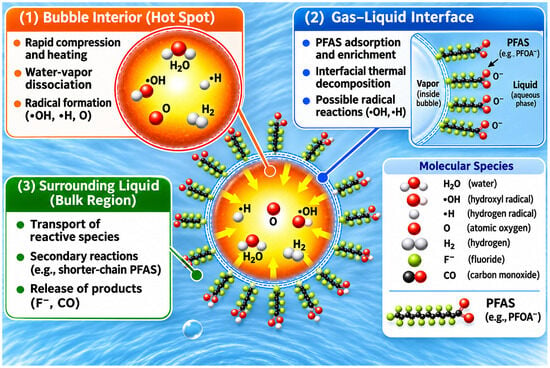
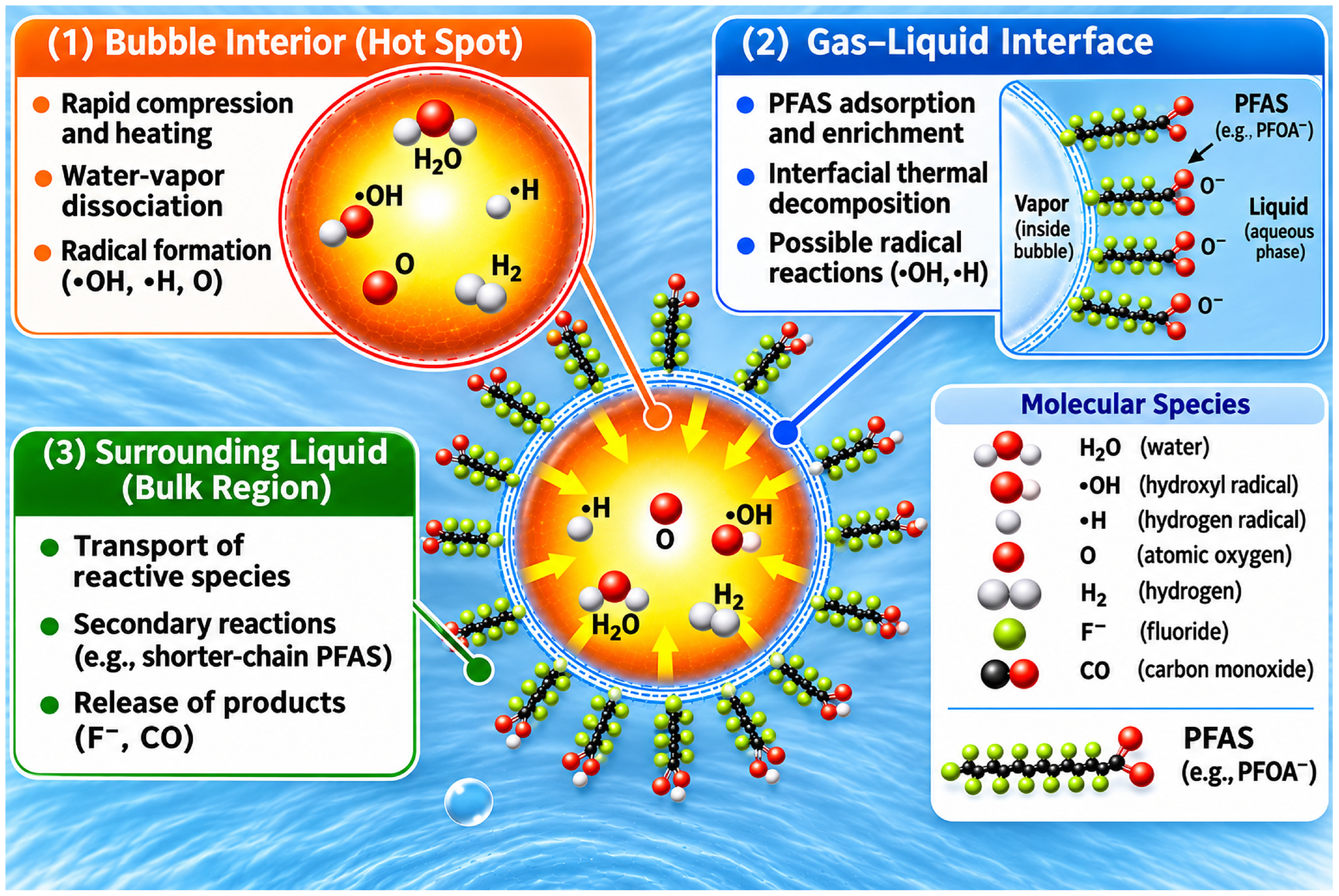
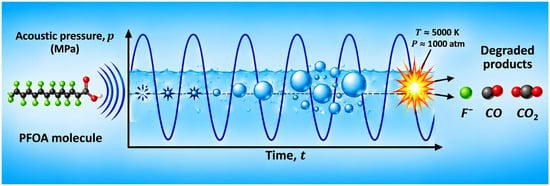
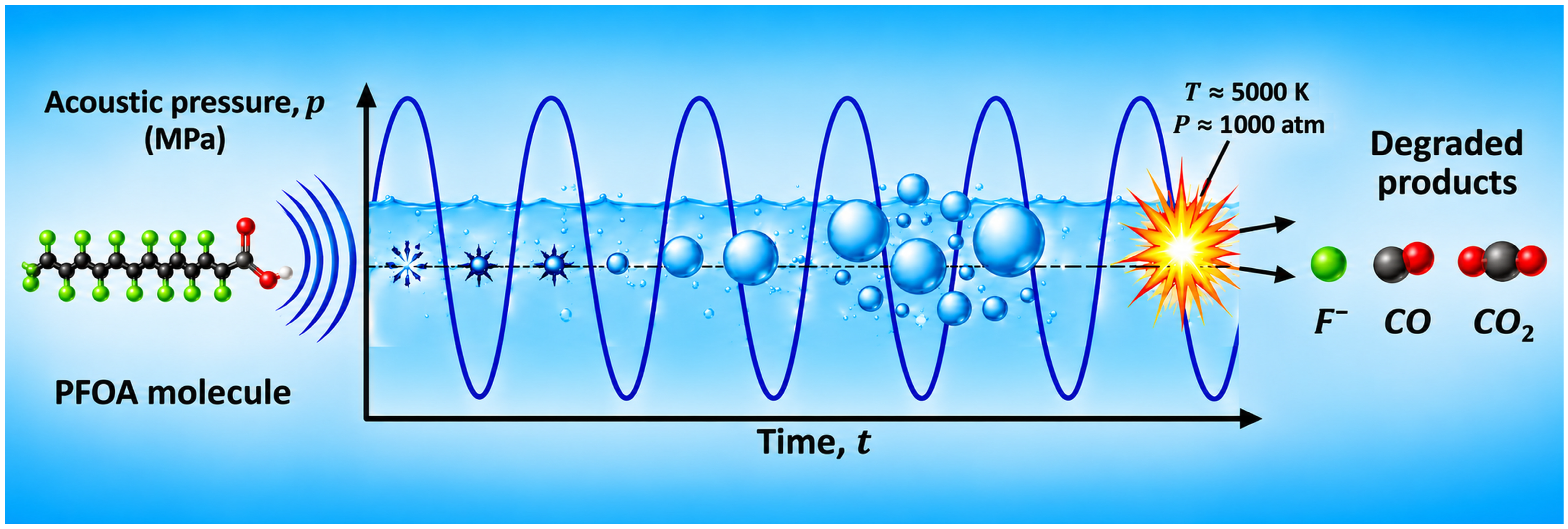
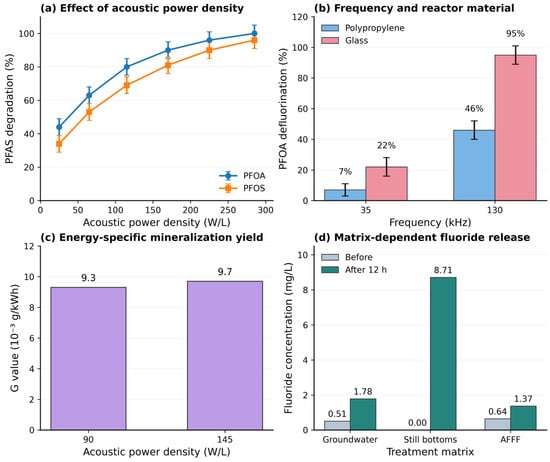
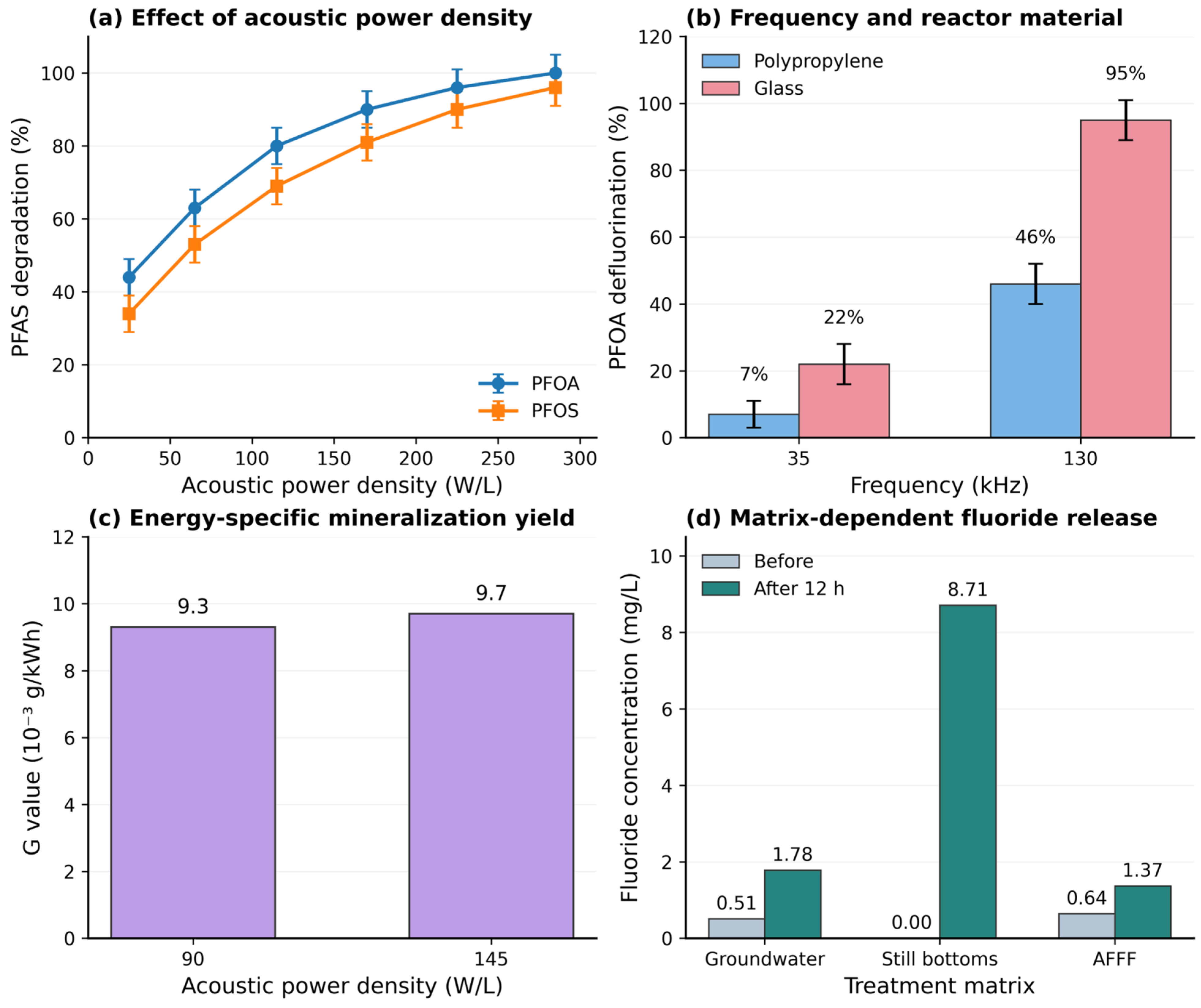
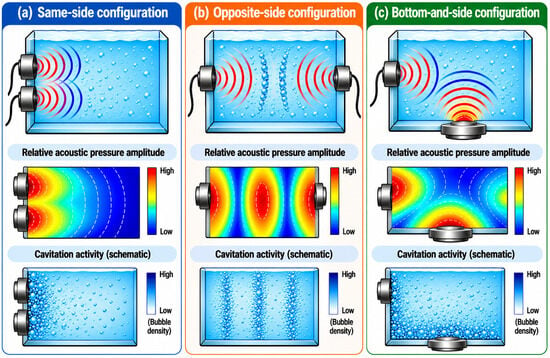
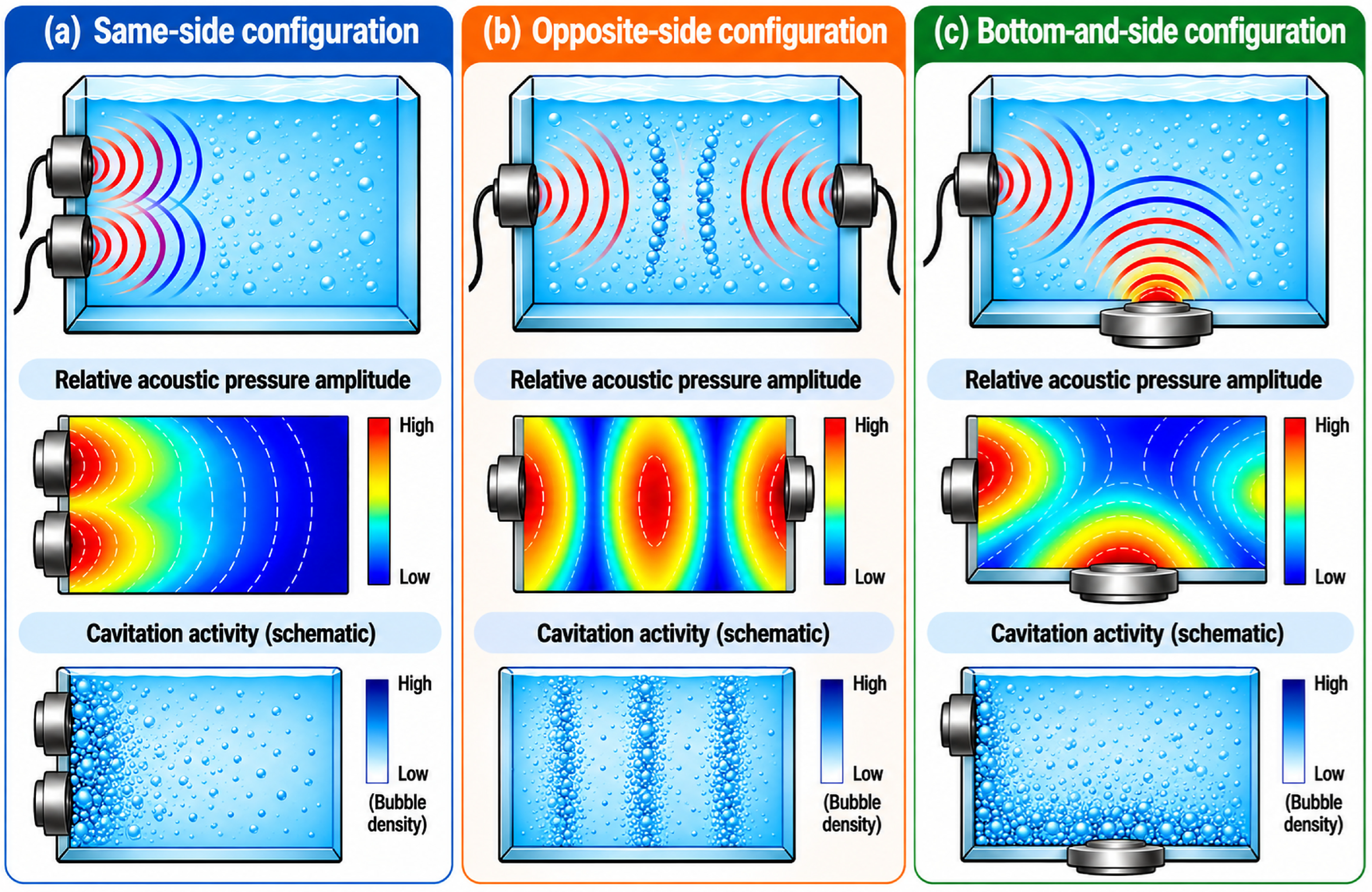

Disclaimer/Publisher’s Note: The statements, opinions and data contained in all publications are solely those of the individual author(s) and contributor(s) and not of MDPI and/or the editor(s). MDPI and/or the editor(s) disclaim responsibility for any injury to people or property resulting from any ideas, methods, instructions or products referred to in the content. |
© 2026 by the authors. Licensee MDPI, Basel, Switzerland. This article is an open access article distributed under the terms and conditions of the Creative Commons Attribution (CC BY) license.