Developing and Evaluating a Universal Primary School Body Image Program: An Uncontrolled Pilot Study of Butterfly Body Bright

Abstract
1. Introduction
2. Materials and Methods
2.1. Intervention
2.1.1. Development of Butterfly Body Bright
2.1.2. Description of Butterfly Body Bright
2.1.3. Current Study
2.2. Ethical Considerations
2.3. Procedure
2.4. Participants
2.5. Materials
2.5.1. Demographic Information
2.5.2. Child Outcomes
2.5.3. Teacher Feedback
2.5.4. Lesson Fidelity
2.6. Data Analysis
3. Results
3.1. Sample Characteristics
3.2. Program Impact
3.3. Teacher Feedback Outcomes
3.4. Fidelity Outcomes
4. Discussion
5. Conclusions
Author Contributions
Funding
Institutional Review Board Statement
Informed Consent Statement
Data Availability Statement
Conflicts of Interest
Abbreviation
| VAS | Visual analogue scale |
Appendix A
Appendix A.1

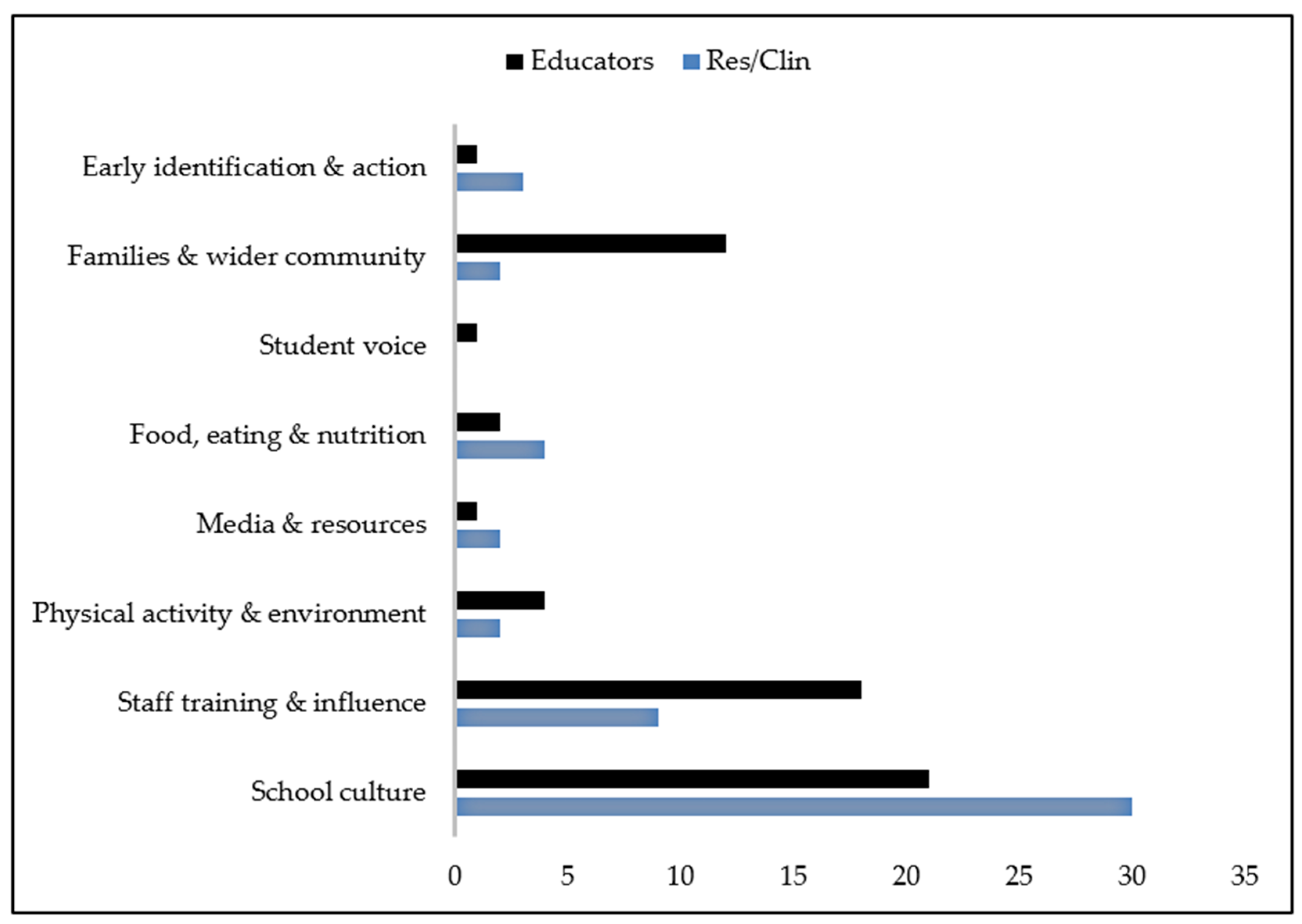
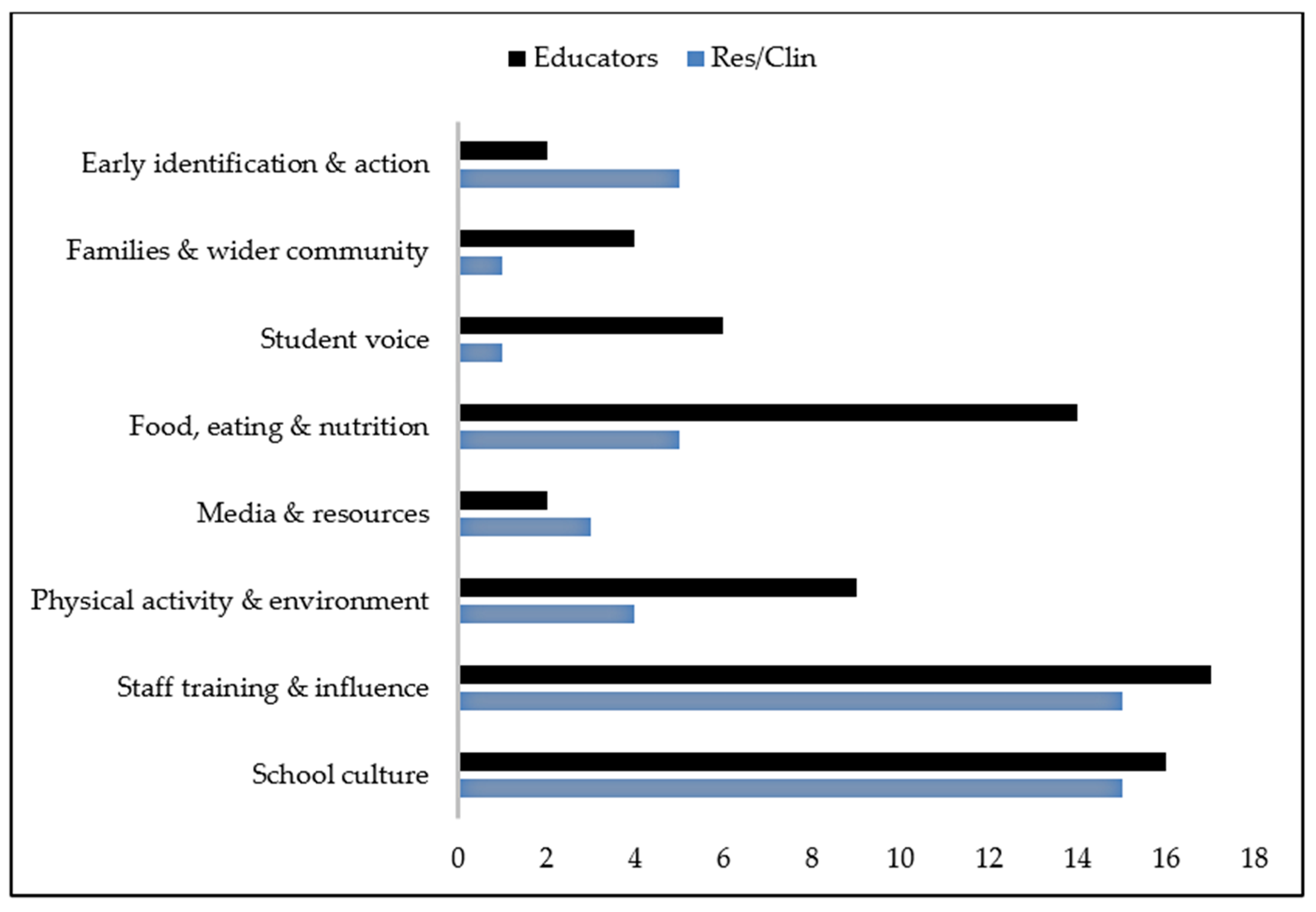
| Strategy | Content Experts (% Support) | Educators (% Support) |
|---|---|---|
| School culture: | ||
| 1. Primary schools should include a statement in the Code of Conduct about providing a body positive environment, one which celebrates diversity in, respect for, and inclusion of all body sizes, shapes and appearance of staff and students. | 94.3% | 85.1% |
| 2. Primary schools should implement a whole learning community approach to positive body image for staff, students, and families. | 94.3% | 89.2% |
| 3. Primary schools should demonstrate a wide diversity of body sizes, shapes, and appearance in all public and promotional material and posters. | 96.2% | 93.2% |
| 4. Primary schools should adopt zero tolerance to appearance-based teasing and/or bullying (including online and social media) and treat as seriously as any other kind of bullying within the school community. [This may be in addition to existing anti-bullying policies, student Code of Conduct, or embedded in classroom inclusion and engagement norms.] | 96.2% | 95.6% |
| Staff training and influence: | ||
| 5. Primary schools should aim to provide all staff with professional development on acceptance of appearance diversity, body dissatisfaction and eating disorder prevention, and strategies to facilitate early identification and referral. | 92.5% | 91.9% |
| 6. Primary school staff should be encouraged to be role models of positive body image and body attitudes, including acceptance of body diversity. | 92.5% | 95.9% |
| Physical activity and environment: | ||
| 7. Primary school staff and students should avoid weighing and calculating the Body Mass Index (BMI) of students (including but not limited to for classroom activities, as part of physical education or for the reporting to parents). [Exceptions may include: if a school nurse is required to weigh a child for a justified reason or for health research conducted by government or research organizations. However, measurement should not be done in front of peers, scale results should be disguised in a manner so a child is unaware of their weight (e.g., asking child to step on scales backwards), and not providing feedback on the number to the child.] | 94.3% | 85.1% |
| 8. As part of health, nutrition, and physical activity education, primary schools should include content and activities that aim to promote positive body image, and protect against negative body image messages and related negative attitudes. | 96.2% | 97.3% |
| 9. School-based physical activity should include a non-competitive, non-weight-loss, fun, safe, and secure focus, regardless of a student’s weight, size, or shape. | 92.5% | 90.5% |
| 10. Primary schools should aim to ensure the school’s physical environment is accessible to, and inclusive of, community members (staff, students, and families) of diverse body sizes and shapes. | 100% | 98.6% |
| 11. Primary schools should aim to ensure that their school uniform is inclusive of all children regardless of their size and shape, gender identity, and cultural norms. | 98.1% | 98.6% |
| Media and resources: | ||
| 12. Primary school staff should select learning materials and stimulus, including the use of newspapers or magazines for activities, which align with the school’s commitment to celebrating and respecting diversity in appearance. | 92.5% | 93.2% |
| 13. Primary schools should audit printed and digital content available to students to determine whether the accessible written and visual content is age appropriate and reflective of body positive messaging and imagery. | 84.9% | 83.6% |
| 14. Primary schools should provide media literacy programs to educate students to be media literate (including social media literate). | 96.2% | 93.2% |
| Food, eating, & nutrition: | ||
| 15. Food provided within the school environment (e.g., canteen, school events, prizes) should promote a balance of food options from all food groups. | 94.3% | 97.3% |
| 16. Primary school canteens should ensure their marketing does not increase stigma around food and the body (e.g., have one line for all foods rather than a separate line for salads and a line for ‘other/less nutritious foods’). | 94.3% | 89.0% |
| 17. In nutrition education and school activities, primary schools should aim to promote a positive relationship between the body and food by promoting healthy eating attitudes and behaviors, mindful eating, and eating and exploring all food groups. | 94.3% | 100% |
| 18. In nutrition education and school activities, primary schools should aim to avoid promoting negative attitudes towards food (e.g., labelling food as good/bad). | 96.2% | 86.3% |
| 19. In nutrition education and school activities, primary schools should aim to avoid content or activities that may increase the risk of eating disorders (e.g., teaching about dieting, reading food labels, keeping food diaries). | 94.3% | 90.4% |
| 20. Irrespective of a child’s weight, size, or shape, students should not be encouraged to diet or restrict food intake, or compensate (e.g., exercise) following the consumption of certain foods (e.g., low nutrient ‘sometimes’ foods). | 96.2% | 93.2% |
| 21. If a staff member is concerned about the contents of a child’s lunchbox, they should have a private conversation with the child’s parents about those concerns, rather than sending a note in the lunchbox. | 77.4% | 89.0% |
| 22. Primary school staff should avoid, and students should be discouraged from, commenting on and comparing lunchbox contents (whether positive or negative). | 90.6% | 75.3% |
| 23. Primary school staff should ensure that students are provided with adequate time and space to eat, but should not be responsible for monitoring the consumption of or nutrient contents of food. | 81.1% | 82.2% |
| 24. Primary schools should aim to provide opportunities for students to positively engage with food (e.g., school garden, cooking activities, celebration of multicultural events with food). | 94.3% | 100% |
| Student voice: | ||
| 25. Primary schools should provide opportunities for students to create campaigns or projects, or advocate for initiatives and strategies that support positive body image and appearance diversity in their school. | 98.1% | 97.2% |
| Families and wider community: | ||
| 26. Primary schools should provide families with information to help them to support children to develop positive body image and a healthy relationship with food. | 92.3% | 93.1% |
| 27. Primary schools should provide families with information about eating disorders and pathways for additional resources and support. | 82.7% | 77.8% |
| 28. Primary schools should encourage parents and families to be positive role models by demonstrating accepting attitudes and behaviors towards their own and other’s bodies. | 88.2% | 87.5% |
| 29. Primary schools should aim to form partnerships with services and organizations who can support them to promote positive body image in their school. | 92.3% | 95.8% |
| Early identification and action: | ||
| 30. Primary schools should have a protocol for appropriately supporting any student diagnosed with an eating disorder. | 92.3% | 91.7% |
| 31. Primary schools should have a protocol for response and appropriate action for when a child is showing concerns about their body image, eating, or weight. | 96.2% | 94.4% |
Appendix A.2

References
- Ahuja, L., Schneider, J., Budhraja, M., Diedrichs, P. C., & Williamson, H. (2025). A systematic review exploring the effectiveness of body image interventions among boys. Adolescent Research Review, 10(1), 97–143. [Google Scholar] [CrossRef] [Scilit]
- Bell, M. J., Rodgers, R. F., & Paxton, S. J. (2017). Towards successful evidence-based universal eating disorders prevention: The importance of zooming out. Eating Behaviors, 25, 89–92. [Google Scholar] [CrossRef] [Scilit] [PubMed]
- Berry, S. L., Burton, A. L., Rogers, K., Lee, C. M., & Berle, D. M. (2025). A systematic review and meta-analysis of eating disorder preventative interventions in schools. European Eating Disorders Review, 33(2), 390–410. [Google Scholar] [CrossRef] [Scilit] [PubMed]
- Bird, E. L., Halliwell, E., Diedrichs, P. C., & Harcourt, D. (2013). Happy Being Me in the UK: A controlled evaluation of a school-based body image intervention with pre-adolescent children. Body Image, 10(3), 326–334. [Google Scholar] [CrossRef] [Scilit] [PubMed]
- Braun, T. D., Park, C. L., & Gorin, A. (2016). Self-compassion, body image, and disordered eating: A review of the literature. Body Image, 17, 117–131. [Google Scholar] [CrossRef] [Scilit] [PubMed]
- Chua, J. Y. X., Tam, W., & Shorey, S. (2020). Research Review: Effectiveness of universal eating disorder prevention interventions in improving body image among children: A systematic review and meta-analysis. Journal of Child Psychology and Psychiatry, and Allied Disciplines, 61(5), 522–535. [Google Scholar] [CrossRef] [Scilit] [PubMed]
- Cohen, J. (1988). Statistical power analysis for the behavioral sciences (2nd ed.). Lawrence Earlbaum Associates. [Google Scholar]
- Craddock, N., Smith, H. G., Garbett, K. M., & Alleva, J. M. (2025). Functionality appreciation in young children. Body Image, 52, 101845. [Google Scholar] [CrossRef] [Scilit] [PubMed]
- Damiano, S. R., Gregg, K. J., Spiel, E. C., McLean, S. A., Wertheim, E. H., & Paxton, S. J. (2015). Relationships between body size attitudes and body image of 4-year-old boys and girls, and attitudes of their fathers and mothers. Journal of Eating Disorders, 3, 16. [Google Scholar] [CrossRef] [Scilit] [PubMed]
- Damiano, S. R., McLean, S. A., & Paxton, S. J. (2019). Do the levels of body esteem and dietary restraint remain stable in girls from age 6 to age 8? Journal of Eating Disorders, 7(1: O30), 43. [Google Scholar] [CrossRef] [Scilit]
- Damiano, S. R., Yager, Z., McLean, S. A., & Paxton, S. J. (2018). Achieving body confidence for young children: Development and pilot study of a universal teacher-led body image and weight stigma program for early primary school children. Eating Disorders, 26(6), 487–504. [Google Scholar] [CrossRef] [Scilit] [PubMed]
- Davison, K. K., Markey, C. N., & Birch, L. L. (2003). A longitudinal examination of patterns in girls’ weight concerns and body dissatisfaction from ages 5 to 9 years. International Journal of Eating Disorders, 33(3), 320–332. [Google Scholar] [CrossRef] [Scilit] [PubMed]
- De Coen, J., Verbeken, S., & Goossens, L. (2021). Media influence components as predictors of children’s body image and eating problems: A longitudinal study of boys and girls during middle childhood. Body Image, 37, 204–213. [Google Scholar] [CrossRef] [Scilit] [PubMed]
- De Coen, J., Verbeken, S., & Goossens, L. (2024). Body dissatisfaction and low self-esteem in elementary school-aged children: The role of media pressure and trust in parent-child relationships. Frontiers in Psychology, 14, 1228860. [Google Scholar] [CrossRef] [Scilit] [PubMed]
- Dunaev, J., Markey, C. H., & Brochu, P. M. (2018). An attitude of gratitude: The effects of body-focused gratitude on weight bias internalization and body image. Body Image, 25, 9–13. [Google Scholar] [CrossRef] [Scilit] [PubMed]
- Durkin, S. J., & Paxton, S. J. (2002). Predictors of vulnerability to reduced body image satisfaction and psychological wellbeing in response to exposure to idealized female media images in adolescent girls. Journal of Psychosomatic Research, 53(5), 995–1005. [Google Scholar] [CrossRef] [Scilit] [PubMed]
- Evans, E. H., Adamson, A. J., Basterfield, L., Le Couteur, A., Reilly, J. K., Reilly, J. J., & Parkinson, K. N. (2017). Risk factors for eating disorder symptoms at 12 years of age: A 6-year longitudinal cohort study. Appetite, 108, 12–20. [Google Scholar] [CrossRef] [Scilit] [PubMed]
- Fardouly, J., Magson, N. R., Rapee, R. M., Johnco, C. J., & Oar, E. L. (2020). The use of social media by Australian preadolescents and its links with mental health. Journal of Clinical Psychology, 76(7), 1304–1326. [Google Scholar] [CrossRef] [Scilit] [PubMed]
- Guimond, F.-A., & Laursen, B. (2022). Low body image satisfaction predicts declining academic engagement in primary school children. School Mental Health, 14(4), 891–901. [Google Scholar] [CrossRef] [Scilit]
- Haines, J., Neumark-Sztainer, D., & Thiel, L. (2007). Addressing weight-related issues in an elementary school: What do students, parents, and school staff recommend? Eating Disorders, 15(1), 5–21. [Google Scholar] [CrossRef] [Scilit] [PubMed]
- Halliwell, E., Jarman, H., Tylka, T., & Slater, A. (2017). Adapting the Body Appreciation Scale-2 for Children: A psychometric analysis of the BAS-2C. Body Image, 21, 97–102. [Google Scholar] [CrossRef] [Scilit] [PubMed]
- Halliwell, E., Yager, Z., Paraskeva, N., Diedrichs, P. C., Smith, H., & White, P. (2016). Body image in primary schools: A pilot evaluation of a primary school intervention program designed by teachers to improve children’s body satisfaction. Body Image, 19, 133–141. [Google Scholar] [CrossRef] [Scilit] [PubMed]
- Jarman, H. K. (2026). Strategic priorities for advancing eating disorder risk reduction: A narrative review. International Journal of Eating Disorders, 1–7. [Google Scholar] [CrossRef] [Scilit] [PubMed]
- Jarman, H. K., Slater, A., Tylka, T. L., & Halliwell, E. (2025). Body Appreciation Scale-2 for Children (BAS-2 C). In A. M. Landor, T. L. Tylka, & V. Ramseyer Winter (Eds.), Handbook of body image-related measures (pp. 52–54). Cambridge University Press. [Google Scholar] [CrossRef] [Scilit]
- Kaufman, A. R., & Augustson, E. M. (2008). Predictors of regular cigarette smoking among adolescent females: Does body image matter? Nicotine & Tobacco Research, 10(8), 1301–1309. [Google Scholar] [CrossRef] [Scilit] [PubMed]
- Kusina, J. R., & Exline, J. J. (2019). Beyond body image: A systematic review of classroom-based interventions targeting body image of adolescents. Adolescent Research Review, 4(3), 293–311. [Google Scholar] [CrossRef] [Scilit]
- Lacroix, E., Atkinson, M. J., Garbett, K. M., & Diedrichs, P. C. (2022). One size does not fit all: Trajectories of body image development and their predictors in early adolescence. Development and Psychopathology, 34(1), 285–294. [Google Scholar] [CrossRef] [Scilit] [PubMed]
- Levine, M. P., & McVey, G. L. (2012). Prevention, prevention science, and an ecological perspective: A framework for programs, research, and advocacy. In G. L. McVey, M. P. Levine, N. Piran, & H. B. Ferguson (Eds.), Preventing eating-related and weight-related disorders: Collaborative research, advocacy, and policy change (pp. 19–43). Wilfrid Laurier University Press. [Google Scholar]
- Levine, M. P., & Smolak, L. (2009). Recent developments and promising directions in the prevention of negative body image and disordered eating in children and adolescents. In L. Smolak, & J. K. Thompson (Eds.), Body image, eating disorders, and obesity in youth: Assessment, prevention, and treatment (2nd ed., pp. 215–239). American Psychological Association. [Google Scholar] [CrossRef] [Scilit]
- Lonergan, A. R., Bussey, K., Fardouly, J., Griffiths, S., Murray, S. B., Hay, P., Mond, J., Trompeter, N., & Mitchison, D. (2020). Protect me from my selfie: Examining the association between photo-based social media behaviors and self-reported eating disorders in adolescence. International Journal of Eating Disorders, 53, 755–766. [Google Scholar] [CrossRef] [Scilit] [PubMed]
- López-Gil, J. F., García-Hermoso, A., Smith, L., Firth, J., Trott, M., Mesas, A. E., Jiménez-López, E., Gutiérrez-Espinoza, H., Tárraga-López, P. J., & Victoria-Montesinos, D. (2023). Global proportion of disordered eating in children and adolescents: A systematic review and meta-analysis. JAMA Pediatrics, 177(4), 363–372. [Google Scholar] [CrossRef] [Scilit] [PubMed]
- Matheson, E. L., Lewis-Smith, H., & Diedrichs, P. C. (2020). The effectiveness of brief animated films as a scalable micro-intervention to improve children’s body image: A randomised controlled trial. Body Image, 35, 142–153. [Google Scholar] [CrossRef] [Scilit] [PubMed]
- Mazzeo, S. E., Weinstock, M., Vashro, T. N., Henning, T., & Derrigo, K. (2024). Mitigating harms of social media for adolescent body image and eating disorders: A Review. Psychology Research and Behavior Management, 17, 2587–2601. [Google Scholar] [CrossRef] [Scilit] [PubMed]
- McLean, S. A., Paxton, S. J., & Wertheim, E. H. (2016). Does media literacy mitigate risk for reduced body satisfaction following exposure to thin-ideal media? Journal of Youth and Adolescence, 45(8), 1678–1695. [Google Scholar] [CrossRef] [Scilit] [PubMed]
- McLean, S. A., Rodgers, R. F., Slater, A., Jarman, H. K., Gordon, C. S., & Paxton, S. J. (2022). Clinically significant body dissatisfaction: Prevalence and association with depressive symptoms in adolescent boys and girls. European Child & Adolescent Psychiatry, 31(12), 1921–1932. [Google Scholar] [CrossRef] [Scilit] [PubMed]
- McLean, S. A., Wertheim, E. H., & Paxton, S. J. (2018). Preferences for being muscular and thin in 6-year-old boys. Body Image, 26, 98–102. [Google Scholar] [CrossRef] [Scilit] [PubMed]
- McVey, G., Tweed, S., & Blackmore, E. (2007). Healthy Schools-Healthy Kids: A controlled evaluation of a comprehensive universal eating disorder prevention program. Body Image, 4(2), 115–136. [Google Scholar] [CrossRef] [Scilit] [PubMed]
- Neff, K. D. (2003). The development and validation of a scale to measure self-compassion. Self and Identity, 2(3), 223–250. [Google Scholar] [CrossRef] [Scilit]
- Neumark-Sztainer, D., Paxton, S. J., Hannan, P. J., Haines, J., & Story, M. (2006). Does body satisfaction matter? Five-year longitudinal associations between body satisfaction and health behaviors in adolescent females and males. Journal of Adolescent Health, 39(2), 244–251. [Google Scholar] [CrossRef] [Scilit] [PubMed]
- Nicula, M., Pellegrini, D., Grennan, L., Bhatnagar, N., McVey, G., & Couturier, J. (2022). Help-seeking attitudes and behaviours among youth with eating disorders: A scoping review. Journal of Eating Disorders, 10(1), 21. [Google Scholar] [CrossRef] [Scilit] [PubMed]
- Paxton, S. J., & Damiano, S. R. (2017). The development of body image and weight bias in childhood. In Advances in child development and behavior (Vol. 52, pp. 269–298). JAI. [Google Scholar] [CrossRef] [Scilit] [PubMed]
- Puhl, R. M., Neumark-Sztainer, D., Austin, S. B., Luedicke, J., & King, K. M. (2014). Setting policy priorities to address eating disorders and weight stigma: Views from the field of eating disorders and the US general public. BMC Public Health, 14(1), 524. [Google Scholar] [CrossRef] [Scilit] [PubMed]
- Pursey, K. M., Burrows, T. L., Barker, D., Hart, M., & Paxton, S. J. (2021). Disordered eating, body image concerns, and weight control behaviors in primary school aged children: A systematic review and meta-analysis of universal–selective prevention interventions. International Journal of Eating Disorders, 54(10), 1730–1765. [Google Scholar] [CrossRef] [Scilit] [PubMed]
- Pursey, K. M., Hart, M., Hure, A., Cheung, H. M., Ong, L., Burrows, T. L., & Yager, Z. (2022). The needs of school professionals for eating disorder prevention in Australian schools: A mixed-methods survey. Children, 9(12), 1979. [Google Scholar] [CrossRef] [Scilit] [PubMed]
- Ricciardelli, L. A. (2012). Body image development—Adolescent boys. In Encyclopedia of body image and human appearance (pp. 180–186). Elsevier Academic Press. [Google Scholar] [CrossRef] [Scilit]
- Rodgers, R. F., Gordon, A. R., Burke, N. L., & Ciao, A. (2024a). Parents and caregivers as key players in the prevention and identification of body image concerns and eating disorders among early adolescents. Eating Disorders, 32(6), 703–726. [Google Scholar] [CrossRef] [Scilit] [PubMed]
- Rodgers, R. F., McLean, S. A., & Paxton, S. J. (2024b). Enhancing understanding of social media literacy to better inform prevention of body image and eating disorders. Eating Disorders, 32(6), 763–781. [Google Scholar] [CrossRef] [Scilit] [PubMed]
- Rodgers, R. F., Wertheim, E. H., Damiano, S. R., & Paxton, S. J. (2020). Maternal influences on body image and eating concerns among 7- and 8-year-old boys and girls: Cross-sectional and prospective relations. International Journal of Eating Disorders, 53(1), 79–84. [Google Scholar] [CrossRef] [Scilit] [PubMed]
- Sagoe, D., Andreassen, C. S., & Pallesen, S. (2014). The aetiology and trajectory of anabolic-androgenic steroid use initiation: A systematic review and synthesis of qualitative research. Substance Abuse Treatment, Prevention, and Policy, 9, 27. [Google Scholar] [CrossRef] [Scilit] [PubMed]
- Schaefer, L. M., & Thompson, J. K. (2014). The development and validation of the Physical Appearance Comparison Scale-Revised (PACS-R). Eating Behaviors, 15(2), 209–217. [Google Scholar] [CrossRef] [Scilit] [PubMed]
- Schooler, D. (2013). Early adolescent body image predicts subsequent condom use behavior among girls. Sexuality Research and Social Policy, 10(1), 52–61. [Google Scholar] [CrossRef] [Scilit]
- Skivington, K., Simpson, S. A., Baird, J., Boyd, K. A., French, D. P., Petticrew, M., & White, M. (2021). A new framework for developing and evaluating complex interventions: Update of Medical Research Council guidance. BMJ, 374, n2061. [Google Scholar] [CrossRef] [Scilit] [PubMed]
- Slater, A., & Tiggemann, M. (2016). Little girls in a grown up world: Exposure to sexualized media, internalization of sexualization messages, and body image in 6–9 year-old girls. Body Image, 18, 19–22. [Google Scholar] [CrossRef] [Scilit] [PubMed]
- Stice, E., Marti, C. N., & Durant, S. (2011). Risk factors for onset of eating disorders: Evidence of multiple risk pathways from an 8-year prospective study. Behaviour Research and Therapy, 49(10), 622–627. [Google Scholar] [CrossRef] [Scilit] [PubMed]
- Tatangelo, G. L., & Ricciardelli, L. A. (2013). A qualitative study of preadolescent boys’ and girls’ body image: Gendered ideals and sociocultural influences. Body Image, 10(4), 591–598. [Google Scholar] [CrossRef] [Scilit] [PubMed]
- Thompson, J. K., Heinberg, L. J., Altabe, M., & Tantleff-Dunn, S. (1999). Exacting beauty: Theory, assessment, and treatment of body image disturbance (pp. xii, 396). American Psychological Association. [Google Scholar] [CrossRef] [Scilit]
- Wilksch, S. M. (2015). School-based eating disorder prevention: A pilot effectiveness trial of teacher-delivered Media Smart. Early Intervention in Psychiatry, 9(1), 21–28. [Google Scholar] [CrossRef] [Scilit] [PubMed]
- Wojtowicz, A. E., & von Ranson, K. M. (2012). Weighing in on risk factors for body dissatisfaction: A one-year prospective study of middle-adolescent girls. Body Image, 9(1), 20–30. [Google Scholar] [CrossRef] [Scilit] [PubMed]
- World Health Organization. (2021). Making every school a health-promoting school: Global standards and indicators for health-promoting schools and systems. World Health Organization; The United Nations Educational, Scientific and Cultural Organization. [Google Scholar]
- Yager, Z., & O’Dea, J. A. (2015). School-based prevention. In L. Smolak, & M. P. Levine (Eds.), The Wiley handbook of eating disorders (pp. 569–581). John Wiley & Sons, Ltd. [Google Scholar] [CrossRef] [Scilit]
- Zhou, W., Taylor, L., Boyle, L., Funk, S., DeBorst, L., & De Neve, J.-E. (2025). Whole school approach to wellbeing in childhood and adolescence: Literature review. International Baccalaureate Organization. [Google Scholar]
- Zimmer-Gembeck, M. J., Webb, H. J., Farrell, L. J., & Waters, A. M. (2018). Girls’ and boys’ trajectories of appearance anxiety from age 10 to 15 years are associated with earlier maturation and appearance-related teasing. Development and Psychopathology, 30(1), 337–350. [Google Scholar] [CrossRef] [Scilit] [PubMed]
| Lesson | Learning Focus | Learning Strategies |
|---|---|---|
| Grades 4–6 (Brave) Butterfly Body Bright Promise | To promote inclusion, connection, and a sense of belonging, and to prevent appearance-related negative comments, teasing, and exclusion. | Involve students in a brainstorming activity to develop a class agreement for positive peer interactions across the six Body Bright themes for greater impact and relevance (modeled from Haines et al., 2007). |
| Grade 4 (Resilient) Spot the difference: Photoshop vs. reality | To promote critical analysis of the way images have been manipulated to discourage students from ‘buying into’ the images they see in media. | Apply media literacy principles of ‘authorship’ and ‘format’ as students explore the fictional nature of media images and the use of manipulation techniques to modify media images (not appearance-focused). |
| Grade 5/6 (Resilient) Adverts of the future | To encourage students to challenge the appearance ideals they see in media. | Apply the media literacy principles of ‘format’, ‘content’, and ‘purpose’, and create media texts that promote appreciation of body function, rather than appearance. |
| Grade 4 (Grateful) I love that my body can | To encourage students to develop ways of feeling gratitude towards their body through reflection on their body senses. | Explore body gratitude for the senses and create positive body affirmations. |
| Grade 5 (Grateful) Body kindness | To encourage students to recognize the impact of appearance comparisons and to develop strategies to overcome comparisons. | Apply cognitive dissonance strategies to mitigate appearance comparison and promote self-acceptance. Practice self-compassion. Create positive affirmations. |
| Grade 6 (Grateful) Giving thanks for my body | To encourage students to recognize the impact of appearance comparisons and develop strategies to overcome comparisons and body gratitude. | Apply cognitive dissonance strategies to mitigate appearance comparison and cognitive restructuring. Practice body gratitude. Create positive affirmations. |
| Variable | Time 1 (N = 114) | Time 2 (N = 113) | Time 3 (N = 111) | |||
|---|---|---|---|---|---|---|
| M (SD) | Range | M (SD) | Range | M (SD) | Range | |
| Body satisfaction | 7.76 (1.74) | 2.00–10.00 | 8.20 (1.76) | 0.00–10.00 | - | - |
| Confidence to deal with appearance teasing | 2.20 (1.51) | 0.00–4.00 | 2.49 (1.45) | 0.00–4.00 | - | - |
| Appreciation of body functionality | 8.25 (1.93) | 0.00–10.00 | 8.56 (1.71) | 0.00–10.00 | - | - |
| Appearance comparison | 2.32 (1.44) | 0.00–4.00 | 2.56 (1.34) | 0.00–4.00 | - | - |
| Intention for help-seeking | 1.98 (1.27) | 0.00–4.00 | 2.19 (1.35) | 0.00–4.00 | - | - |
| Media literacy | 1.84 (1.06) | 0.00–4.00 | 2.07 (1.08) | 0.00–4.00 | - | - |
| Body appreciation | 3.26 (0.59) | 1.78–4.00 | - | - | 3.34 (0.58) | 1.50–4.00 |
| Boys | Girls | |||||
|---|---|---|---|---|---|---|
| Variable | T1 (n = 56) | T2 (n = 56) | T3 (n = 50) | T1 (n = 56) | T2 (n = 56) | T3 (n = 47) |
| M (SD) | M (SD) | M (SD) | M (SD) | M (SD) | M (SD) | |
| Body satisfaction | 8.05 (1.61) | 8.45 (1.75) | - | 7.47 (1.85) | 7.94 (1.78) | - |
| Confidence to deal with appearance teasing | 2.09 (1.47) | 2.64 (1.30) | - | 2.31 (1.56) | 2.33 (1.61) | - |
| Appreciation of body functionality | 8.56 (2.00) | 8.95 (1.31) | - | 7.96 (1.84) | 8.18 (1.98) | - |
| Appearance comparison | 2.27 (1.38) | 2.53 (1.27) | - | 2.35 (1.52) | 2.58 (1.43) | - |
| Intention for help-seeking | 1.87 (1.25) | 2.11 (1.33) | - | 2.07 (1.30) | 2.28 (1.38) | - |
| Media literacy | 2.07 (1.09) | 2.20 (1.13) | - | 1.61 (0.98) | 1.92 (1.00) | - |
| Body appreciation | 3.34 (0.54) | - | 3.48 (0.48) | 3.17 (0.64) | - | 3.21 (0.64) |
| Variable | Brave Lesson | Resilient Lesson | Grateful Lesson | ||||||
|---|---|---|---|---|---|---|---|---|---|
| T1 (n = 38) | T2 (n = 38) | T3 (n = 32) | T1 (n = 43) | T2 (n = 43) | T3 (n = 40) | T1 (n = 33) | T2 (n = 32) | T3 (n = 26) | |
| M (SD) | M (SD) | M (SD) | M (SD) | M (SD) | M (SD) | M (SD) | M (SD) | M (SD) | |
| Body satisfaction | 7.90 (1.65) | 8.55 (1.20) | - | 7.85 (1.61) | 8.51 (1.37) | - | 7.48 (2.03) | 7.34 (2.44) | - |
| Confidence to deal with appearance teasing | 2.23 (1.44) | 2.67 (1.37) | - | 2.00 (1.63) | 2.36 (1.50) | - | 2.42 (1.42) | 2.45 (1.50) | - |
| Appreciation of body functionality | 8.11 (2.10) | 8.42 (1.90) | - | 8.77 (1.36) | 9.02 (1.12) | - | 7.73 (2.24) | 8.13 (2.00) | - |
| Appearance comparison | 2.31 (1.47) | 2.86 (1.13) | - | 2.33 (1.51) | 2.59 (1.32) | - | 2.30 (1.36) | 2.19 (1.53) | - |
| Intention for help-seeking | 2.11 (1.16) | 2.25 (1.46) | - | 2.26 (1.26) | 2.44 (1.30) | - | 1.48 (1.30) | 1.78 (1.21) | - |
| Media literacy | 1.75 (1.08) | 1.74 (1.16) | - | 1.88 (1.20) | 2.51 (0.95) | - | 1.89 (0.83) | 1.84 (0.94) | - |
| Body appreciation | 3.18 (0.58) | - | 3.32 (0.60) | 3.37 (0.48) | - | 3.44 (0.48) | 3.19 (0.74) | - | 3.23 (0.68) |
| Item | % Agree | % Disagree | % Neutral |
|---|---|---|---|
| Important concepts/ideas (e.g., body image, weight bias) were explained well. | 100% | - | - |
| The online training filled an important gap in my professional development. | 41.7% | 8.3% | 50.0% |
| The online format of the training worked well. | 66.7% | 8.3% | 25.0% |
Disclaimer/Publisher’s Note: The statements, opinions and data contained in all publications are solely those of the individual author(s) and contributor(s) and not of MDPI and/or the editor(s). MDPI and/or the editor(s) disclaim responsibility for any injury to people or property resulting from any ideas, methods, instructions or products referred to in the content. |
© 2026 by the authors. Licensee MDPI, Basel, Switzerland. This article is an open access article distributed under the terms and conditions of the Creative Commons Attribution (CC BY) license.
Share and Cite
Damiano, S.R.; Jarman, H.K.; Paxton, S.J. Developing and Evaluating a Universal Primary School Body Image Program: An Uncontrolled Pilot Study of Butterfly Body Bright. Behav. Sci. 2026, 16, 1306. https://doi.org/10.3390/bs16081306
Damiano SR, Jarman HK, Paxton SJ. Developing and Evaluating a Universal Primary School Body Image Program: An Uncontrolled Pilot Study of Butterfly Body Bright. Behavioral Sciences. 2026; 16(8):1306. https://doi.org/10.3390/bs16081306
Chicago/Turabian StyleDamiano, Stephanie R., Hannah K. Jarman, and Susan J. Paxton. 2026. "Developing and Evaluating a Universal Primary School Body Image Program: An Uncontrolled Pilot Study of Butterfly Body Bright" Behavioral Sciences 16, no. 8: 1306. https://doi.org/10.3390/bs16081306
APA StyleDamiano, S. R., Jarman, H. K., & Paxton, S. J. (2026). Developing and Evaluating a Universal Primary School Body Image Program: An Uncontrolled Pilot Study of Butterfly Body Bright. Behavioral Sciences, 16(8), 1306. https://doi.org/10.3390/bs16081306