


Abstract
Background/Objectives: Phacoemulsification under topical anesthesia requires patient cooperation, and older adults often need sedation; however, midazolam–fentanyl may cause respiratory depression and paradoxical agitation. Intranasal dexmedetomidine provides arousable sedation with minimal respiratory depression, but it has not been compared with an active regimen in cataract surgery. This pilot study estimated variability and feasibility for a confirmatory trial. Methods: In this prospective observational pilot study at a Mexican public hospital, 30 consecutive patients aged ≥60 years, with American Society of Anesthesiologists physical status II, undergoing ambulatory phacoemulsification received intravenous midazolam 0.5 mg plus fentanyl 0.5 µg/kg (MF-IV, n = 15) or intranasal dexmedetomidine 0.7 µg/kg (DEX-IN, n = 15). Ramsay scores, vital signs, additional medication, and post-anesthesia care unit (PACU) stay were recorded. Results: All DEX-IN patients remained at a Ramsay score of 2 throughout, whereas MF-IV scores ranged from 1 to 3, with 5 patients (33.3%) at a score of 1 at the start of surgery (difference, 33.3%; 95% confidence interval [CI], 6.0–58.3). Additional medication was required in 53.3% of MF-IV patients and in no DEX-IN patients (95% CI, 22.4–75.2). No hypotension, bradycardia, or desaturation was recorded until operating-room exit. Median PACU stay was 20 min with DEX-IN and 60 min with MF-IV (difference, 35 min; 95% CI, 10–65); the estimated minimum time from administration to discharge was 55 vs. 87 min. Conclusions: Both regimens were feasible in routine practice. Because the comparator was a fixed low dose, allocation was nonrandomized, administration times differed, and assessments were unblinded, these differences do not establish superiority; this pilot study identified methodological requirements and provides recommendations for a confirmatory randomized clinical trial.
1. Introduction
Cataract, characterized by opacification of the crystalline lens, is the leading cause of visual impairment and reversible blindness worldwide among adults aged over 50 years [1,2]. Between 2000 and 2020, the numbers of people with cataract-related visual impairment and blindness increased by 93% and 30%, reaching 79 million and 15 million, respectively [1]. In Mexico, cataract was the second leading cause of blindness in 2019, with an estimated 1.1 million prevalent cases of vision impairment attributable to cataract [3]. Cataract prevalence rises markedly with age, from 3.9% among individuals aged 55–64 years to 92.6% among those aged 80 years and older [2,4].
In the absence of an approved pharmacological treatment to halt or reverse cataract formation [4], phacoemulsification with intraocular lens implantation remains the standard of care and a highly cost-effective intervention [1]. Older adults undergoing this procedure require a higher level of perioperative care, including an anesthetic approach that minimizes physiological stress and facilitates postoperative recovery [1,5].
Topical anesthesia is the most widely used technique for cataract surgery, as it avoids needle-related risks such as globe perforation [6], and it has the lowest complication rate [2]. Its main drawback is that it does not achieve ocular akinesia and therefore requires patient cooperation [2], and patients frequently experience emotional distress: previous studies have reported fear in 33% and tension in 32% of patients before first-eye surgery [7].
Sedation is therefore often used as an adjunct to relieve intraoperative discomfort and facilitate cooperation [8], procedural tolerance [9], and, in some cases, may determine whether surgery can be completed without complications [10]. The target is to achieve conscious sedation, corresponding to Ramsay Sedation Scale scores of 2–3 [8,11], which minimizes patient movement and encourages cooperation [8]. Nonetheless, the airway is not secured during sedation [2], and older adults have reduced respiratory reserve and increased sensitivity to sedatives and opioids, placing them at greater risk of hypoventilation, hypoxemia, and prolonged sedation [9,12]. These considerations favor the selection of agents with minimal respiratory depressant effects [9].
Benzodiazepines are frequently used in older adults because of their fast onset and short duration of action, but their use carries risks of cognitive impairment, confusion, and respiratory depression [12]. Current guidelines therefore recommend avoiding them in this population [13]; nevertheless, in the United States more than half of older surgical patients receive them during anesthesia care, although their use may be appropriate for periprocedural sedation [13,14]. Midazolam, the most widely used benzodiazepine for procedural sedation, lacks analgesic properties and is therefore usually co-administered with fentanyl [12], and this combination is an established sedation regimen for phacoemulsification [8]. However, the two agents exhibit a potent interaction: in healthy volunteers, the combination of midazolam (0.05 mg/kg) and fentanyl (2 µg/kg) has been shown to induce hypoxemia and apnea [15]. Midazolam may also cause paradoxical excitement [2,12], a particularly undesirable reaction in the absence of ocular akinesia [2].
In contrast, dexmedetomidine is a selective α2-adrenoceptor agonist that induces sedation resembling natural sleep. Patients are readily aroused from this sedation, and it causes minimal respiratory depression and has analgesic and opioid-sparing effects [16]. In patients undergoing phacoemulsification under topical anesthesia, intravenous dexmedetomidine improved patient comfort and surgeon satisfaction compared with placebo, without altering vital signs [17]. Similarly, in patients aged 65–85 years undergoing cataract surgery under peribulbar block, an intravenous infusion was not associated with significant hemodynamic changes [18]. The main limitation of dexmedetomidine is hemodynamic: an intravenous bolus produces a biphasic response consisting of hypertension with reflex bradycardia followed by hypotension, effects that may be more pronounced in patients older than 65 years [16]. Intranasal administration differs from intravenous administration in that it avoids the high peak plasma concentrations associated with an intravenous bolus, given the efficient absorption of the drug across the nasal mucosa [16]; however, it has a slower onset and does not allow rapid titration: in older adults, clinical effects appear after 20–30 min and peak after 60 min [19].
To our knowledge, no studies have evaluated intranasal dexmedetomidine for procedural sedation in older adults undergoing phacoemulsification under topical anesthesia or compared it with intravenous midazolam–fentanyl. Although two randomized trials evaluating intranasal dexmedetomidine in patients aged ≥65 years undergoing cataract surgery have been registered, both use placebo as the comparator and neither has reported results to date [20,21]; consequently, no evidence is yet available on how this route compares with an active sedation regimen in this setting. Such a comparison is clinically relevant because the decision faced in practice is not whether to sedate but which regimen to use, and an alternative must be evaluated against the regimen in routine use before it can be tested in a confirmatory trial. Evidence on this route derives mainly from pediatric populations [22,23,24], whereas in older adults it has been studied primarily to improve sleep or to reduce postoperative delirium and agitation [25,26,27,28,29]. In Mexico, published studies have evaluated it only as preanesthetic sedation in children and as an analgesic adjunct in adults aged up to 65 years [30,31,32]. The main safety evidence regarding sedation in this population reported dose-dependent hypotension, leading the authors to consider the technique unsuitable for routine use, although it was assessed against placebo and in the absence of procedural stimulation [19].
Therefore, the aim of this pilot study was to describe and compare the clinical course associated with intranasal dexmedetomidine and with intravenous midazolam–fentanyl in older Mexican adults undergoing outpatient phacoemulsification under topical anesthesia in routine clinical practice, to assess the feasibility of the procedures, obtain preliminary estimates of variability, and identify methodological problems to be addressed in the design of future confirmatory trials. The outcomes assessed included the achievement of conscious, cooperative sedation (Ramsay Sedation Scale scores of 2–3), the need for rescue medication, hemodynamic and respiratory stability, and length of stay in the post-anesthesia care unit (PACU).
2. Materials and Methods
2.1. Study Design
A prospective, observational, comparative pilot study was conducted in the Department of Anesthesiology of the Antiguo Hospital Civil de Guadalajara “Fray Antonio Alcalde” (Guadalajara, Jalisco, Mexico) and is reported in accordance with the Strengthening the Reporting of Observational Studies in Epidemiology (STROBE) guidelines (Table S1). Two sedation regimens used in routine practice were compared in patients undergoing phacoemulsification: intravenous midazolam plus fentanyl (MF-IV group) and intranasal dexmedetomidine (DEX-IN group); both regimens were already in use at the institution before the study period. The regimen was decided by the attending anesthesiologist according to the routine sedation protocol for this surgery and the hospital supply of dexmedetomidine and was not influenced by the study; the investigators’ role was limited to observation and data recording.
2.2. Patients
Patients of either sex, aged ≥60 years, classified as American Society of Anesthesiologists (ASA) physical status II, with a cataract diagnosis and scheduled for ambulatory phacoemulsification between November and December 2023 were enrolled by non-probabilistic consecutive sampling: eligible patients were invited to participate in order of arrival at the preoperative area, and enrollment continued until 15 patients had been included in each group. Group membership was determined by the sedation regimen that each patient received, and once a group had reached 15 patients, subsequent patients receiving that regimen were not enrolled. Patients were excluded if they had an allergy or hypersensitivity to the study drugs, liver disease, chronic kidney disease, pre-existing bradycardia (heart rate < 60 beats/min), pre-existing hypotension (systolic blood pressure < 90 mmHg and/or diastolic blood pressure < 60 mmHg), chronic use of sedative medications, use of beta-blockers, or an altered state of consciousness.
2.3. Ethics Statement
Approval for the study protocol was granted by the Comité de Ética en Investigación del Antiguo Hospital Civil de Guadalajara ‘Fray Antonio Alcalde’ (approval no. CEI 200/23). The approved protocol specified the intranasal administration and use of the intravenous formulation of dexmedetomidine as off-label use and documented its previous intranasal use in children, adults, and older adults [19,30,31]. The study was conducted in accordance with the Declaration of Helsinki, and informed consent was obtained from all patients who agreed to participate.
2.4. Sample Size
In the absence of prior data for a formal calculation, 15 patients per group were included, exceeding the minimum of 12 per group recommended for pilot studies [33,34] and matching the size recommended for an external pilot study when the future main trial targets a medium standardized effect (0.5) with 90% power and a two-sided α of 0.05 [34,35]. This pragmatic sample size was not intended to provide statistical power for between-group comparisons in the present study. The aim was to estimate variability and feasibility of the procedures for a confirmatory study, rather than to test hypotheses regarding efficacy.
2.5. Sedation Regimens
Patients in the MF-IV group received an intravenous dose of midazolam 0.5 mg combined with fentanyl 0.5 µg/kg, a regimen similar to the baseline sedation (midazolam 0.01 mg/kg plus fentanyl 0.5 µg/kg) used in patients aged 65–85 years undergoing cataract surgery under peribulbar block [18]. The fixed midazolam dose followed the recommendation to reduce the initial intravenous dose to 0.5–1.0 mg in patients older than 60 years, administered 5–10 min before the procedure [36]. Older adults are more sensitive to midazolam and require lower, carefully titrated doses [37]. Fentanyl was added because topical anesthesia may not prevent intraoperative discomfort [8], for example during insertion of the eyelid speculum, implantation of the intraocular lens, or instillation of tetracaine, and midazolam lacks analgesic properties [12]; the fentanyl dose (0.5 µg/kg) was one quarter of that associated with hypoxemia and apnea when combined with midazolam in healthy volunteers [15]. Patients in the DEX-IN group received intranasal dexmedetomidine drops at 0.7 µg/kg of actual body weight, a dose intermediate between those that produced no significant hemodynamic effect (0.5 µg/kg) and significant hypotension (1.0 µg/kg) in a dose-escalation study of intranasal dexmedetomidine in older adults [19]. In Mexico, dexmedetomidine is registered only as a solution for injection for intravenous sedation [38], and no intranasal formulation is available; its intranasal administration therefore constituted off-label use of the intravenous product, a practice reported in pediatric sedation [39]. Intranasal administration of the injectable solution has been characterized in older adults [19,28], and intranasal dexmedetomidine has been used in Mexican clinical studies in children and adults [30,31,32]. The undiluted intravenous solution (Kamedix®, dexmedetomidine 100 µg/mL, 2 mL vials; Farmadextrum, Mexico City, Mexico; Reg. No. 029M2021 SSA IV) was drawn directly from the original vial into 1 mL insulin syringes (graduated in 0.01 mL), without dilution, compounding, or repackaging, and the weight-based volume (0.007 mL/kg) was instilled as slow drops from the syringe after removal of the needle, divided equally between both nostrils; the volume per nostril did not exceed 0.5 mL. Rescue medication consisted of an additional intravenous dose of midazolam 0.5 mg plus fentanyl 0.5 µg/kg or magnesium sulfate 15 mg/kg, an adjuvant with analgesic effect [40], administered at the discretion of the attending anesthesiologist in the presence of agitation, pain, lack of cooperation, or patient movement. In the DEX-IN group, propofol (0.5 mg/kg) was available as rescue medication, because its rapid onset allows immediate treatment, whereas an additional intranasal dose would require a further latency of at least 20 min [19]. Intravenous access was secured before sedation in all patients, in accordance with national regulations for anesthesiology practice, and atropine, ephedrine, epinephrine, and airway management equipment were available in the operating room.
2.6. Procedure and Measurements
Prior to operating room entry and administration of sedative agents, the proper functioning of the anesthesia machine, airway management equipment, and adjuvant medications was verified. Baseline vital signs were recorded in the preoperative area before administration of any sedative agent. In the MF-IV group, the medication was administered inside the operating room 7 min before the start of surgery, an interval that exceeds the approximately 6 min required for fentanyl to reach peak brain concentration after an intravenous bolus [41] and falls within the 5–10 min recommended for midazolam [36]. In the DEX-IN group, the drug was administered in the pre-anesthetic care unit with the patient in the supine and “sniffing” positions. The patient was monitored (peripheral oxygen saturation, heart rate, and blood pressure) and, 15 min after administration, was transferred to the operating room accompanied by an anesthesiologist. This interval allowed part of the latency of intranasal dexmedetomidine, whose clinical effects begin 20–30 min after administration in older adults [19], to elapse before surgery.
In both groups, a variety of physiological parameters were monitored in the operating room, including systolic blood pressure (SBP), diastolic blood pressure (DBP), and mean arterial pressure (MAP). Blood pressure was measured non-invasively with an automated oscillometric monitor, and MAP was recorded as displayed by the monitor rather than calculated from SBP and DBP. Additionally, heart rate (HR), peripheral oxygen saturation (SpO2), and electrocardiographic data were recorded. Vital signs and the Ramsay score were documented at the start of surgery (minute 0) and at 5-min intervals until the end of the procedure (up to minute 30), in accordance with NOM-006-SSA3-2011 [42]; all procedures lasted 30 min or less. The Ramsay score was assessed by the attending anesthesiologist, who was aware of the sedation regimen.
During the surgical procedure, all patients received an intravenous infusion of 1 g of paracetamol and 8 mg of dexamethasone as adjuncts, together with a nonsteroidal anti-inflammatory drug (ketorolac 30 mg or dexketoprofen 50 mg, according to availability). All patients received supplemental oxygen at 3 L/min according to institutional protocol. Surgery was performed under topical anesthesia with tetracaine 5 mg/mL.
Following the completion of phacoemulsification, vital signs and the Ramsay score were recorded at operating-room exit (End), and patients were transferred to PACU. In the PACU, the length of stay until discharge and the Ramsay score at discharge (Ex) were documented. The anesthesiologist overseeing the recovery area authorized discharge, and this individual was not blinded to the sedation regimen, as required by NOM-006-SSA3-2011 [42]. All patients had an Aldrete score of 9–10 at discharge [43]. No additional home-readiness criteria were applied, and discharge was deferred in patients who still required supplemental oxygen.
2.7. Outcome Measures
The primary outcome was the level of sedation assessed with the Ramsay Sedation Scale, with scores of 2–3 considered adequate [8,11]. Secondary outcomes were SBP, DBP, MAP, HR, SpO2, the need for additional (rescue) medication, and PACU length of stay. Adverse events were defined as hypotension (a decrease in MAP > 30% from baseline lasting > 5 min) [19], bradycardia (HR < 60 beats/min) [44], and desaturation (SpO2 < 90%) [45].
2.8. Bias Control
To limit selection bias, all eligible patients were included consecutively during the recruitment period until the predefined sample size per group was reached, and patients with conditions that could alter the hemodynamic or sedative response were excluded to reduce confounding. Among the included patients, age and body weight were considered potential confounders of the sedative response, and baseline hemodynamic values potential confounders of the intraoperative hemodynamic measurements; these variables are reported for each study group in Table 1.
Table 1.
Baseline demographic and clinical characteristics by group.
2.9. Statistical Analysis
Continuous variables are presented as mean (standard deviation) or median (interquartile range), according to their distribution, and categorical variables as frequencies and percentages. Normality was assessed with the Shapiro–Wilk test. Baseline balance between groups was described with standardized mean differences (SMDs), calculated as the difference in means or proportions divided by the pooled standard deviation. Between-group comparisons at each time point were performed with Welch’s t-test or the Mann–Whitney U test, and categorical variables were compared with Fisher’s exact test. Between-group differences are reported with 95% confidence intervals (CI), calculated with the Newcombe method for proportions [46] and the Hodges–Lehmann method for nonparametric continuous variables [47]. The Ramsay score was analyzed as a categorical variable: for the main comparison, it was dichotomized as 1 versus 2–3 (adequate sedation), and in an exploratory analysis, the proportion of patients with a score other than 2 was compared between groups at each time point with Fisher’s exact test. Two sensitivity analyses of PACU length of stay excluded, respectively, MF-IV patients who received magnesium sulfate and those who received an additional sedative dose. Given the exploratory nature of this pilot study, no adjustment for multiple comparisons was applied, and the results are interpreted accordingly. Analyses and figures were produced with R version 4.6.1 (R Foundation for Statistical Computing, Vienna, Austria), and a two-sided p value ≤ 0.05 was considered statistically significant. The de-identified participant-level dataset is provided in Table S2. No formal hypotheses were prespecified, and neither confounder adjustment nor subgroup analyses were performed. The number of recordings decreased after minute 20 because procedures ended at different times (all within 30 min), not because of missing data; comparisons at each time point used all available observations; all patients underwent the same standardized phacoemulsification, and those still in surgery at 25 and 30 min were simply those whose procedures lasted longer, so comparisons at these time points are based on few patients and should be interpreted with caution. Generative artificial intelligence was used during the preparation of this manuscript as described in the Acknowledgments.
3. Results
3.1. Baseline Characteristics
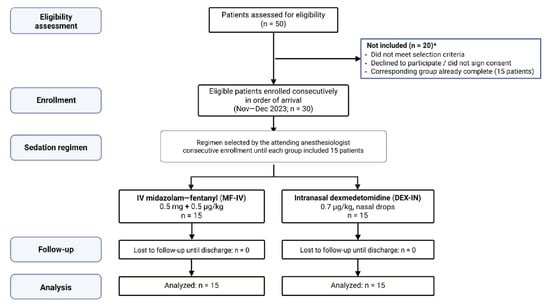
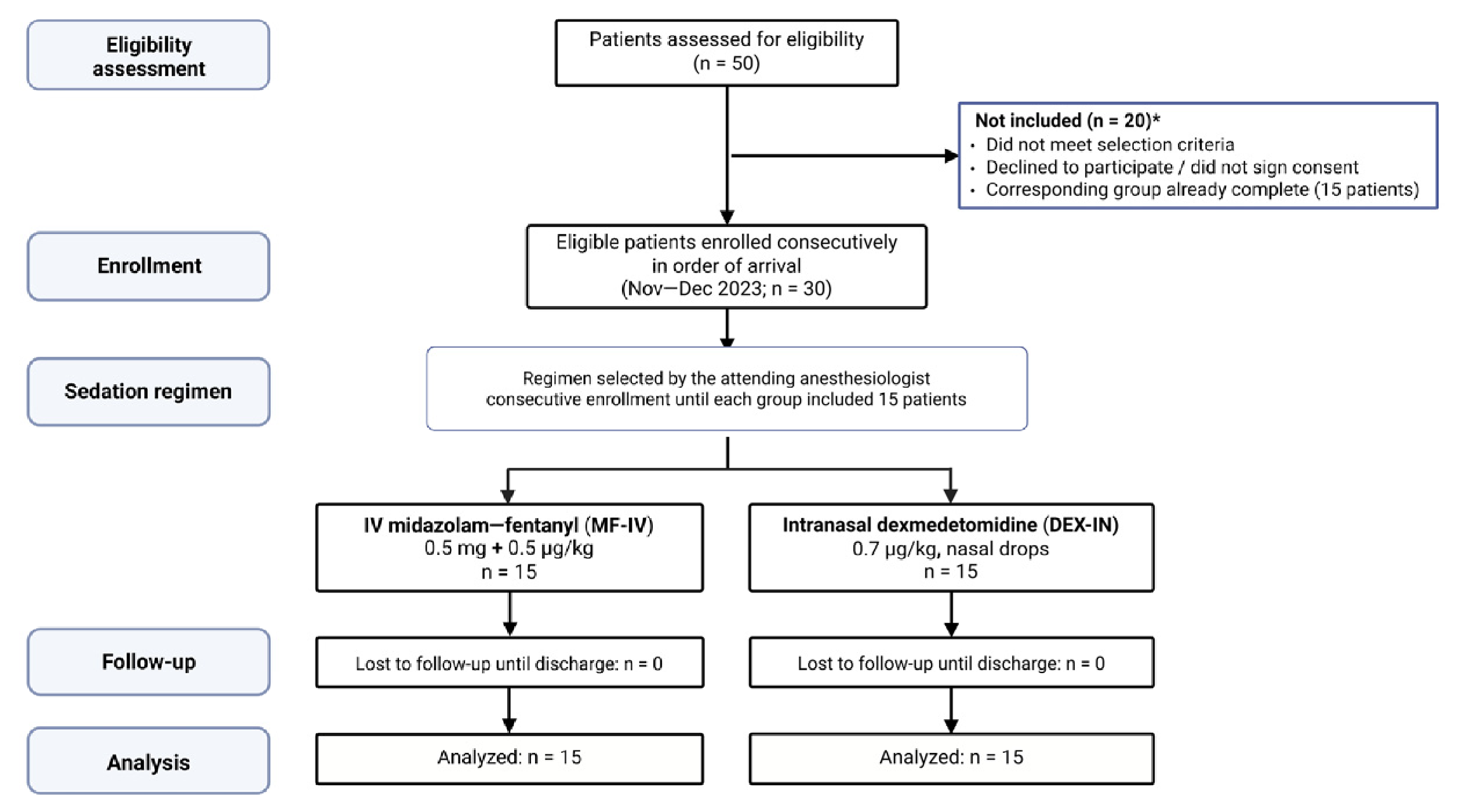
The baseline demographic and clinical characteristics of each group are presented in Table 1, and the flow of participants is shown in Figure 1. Compared with the DEX-IN group, the MF-IV group included a lower proportion of men (5/15 versus 10/15), had a higher mean age (70.1 versus 66.2 years), and had a lower mean weight (65.4 versus 72.5 kg). Standardized mean differences exceeded 0.5 for baseline heart rate (0.74), sex (0.71), weight (0.68), age (0.54), and body mass index (0.53) (Table 1). Of 50 patients assessed for eligibility, 20 were not included because they did not meet the selection criteria, declined to participate, or the corresponding group had already been completed (the specific reason was not recorded individually); the remaining 30 were included, 15 in each group. All enrolled patients received the assigned regimen without refusal or change of regimen, completed follow-up until hospital discharge, and were included in the analysis, with no missing data at the recorded time points. Follow-up extended from sedative administration to PACU stay and discharge. The last intraoperative recording occurred at a median of 25 min (range 20–30) in the MF-IV group and 20 min (range 15–30) in the DEX-IN group. Sedation-related variables are shown in Figure 2, and hemodynamic and oxygenation variables over time in Figure 3 and Figure 4.
Figure 1.
Flow diagram of study participants. Between November and December 2023, 50 patients scheduled for ambulatory phacoemulsification were assessed for eligibility, and 30 were enrolled consecutively in order of arrival. The sedation regimen was decided by the attending anesthesiologist according to the routine sedation protocol and the hospital supply of dexmedetomidine, and enrollment continued until each group included 15 patients. * The 20 patients not included comprised those who did not meet the selection criteria, declined to participate, or were not enrolled because the corresponding group was complete; the specific reason was not recorded individually. Selection criteria: age ≥60 years, ASA physical status II, and a diagnosis of cataract scheduled for ambulatory phacoemulsification, excluding patients with allergy or hypersensitivity to the study drugs, liver disease, chronic kidney disease, pre-existing bradycardia or hypotension, chronic use of sedative medications, use of beta-blockers, or an altered state of consciousness. DEX-IN, intranasal dexmedetomidine; MF-IV, intravenous midazolam plus fentanyl; IV, intravenous. Created in BioRender. Ramirez-Plascencia, H. (2027) https://BioRender.com/afkp3sb (accessed on 24 November 2026).
Figure 2.
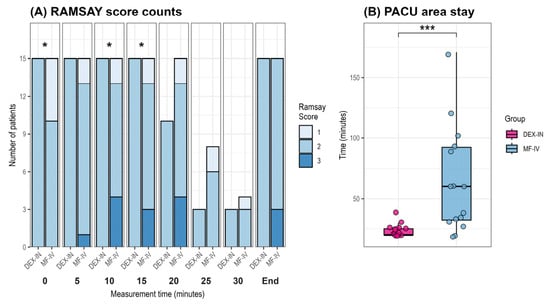
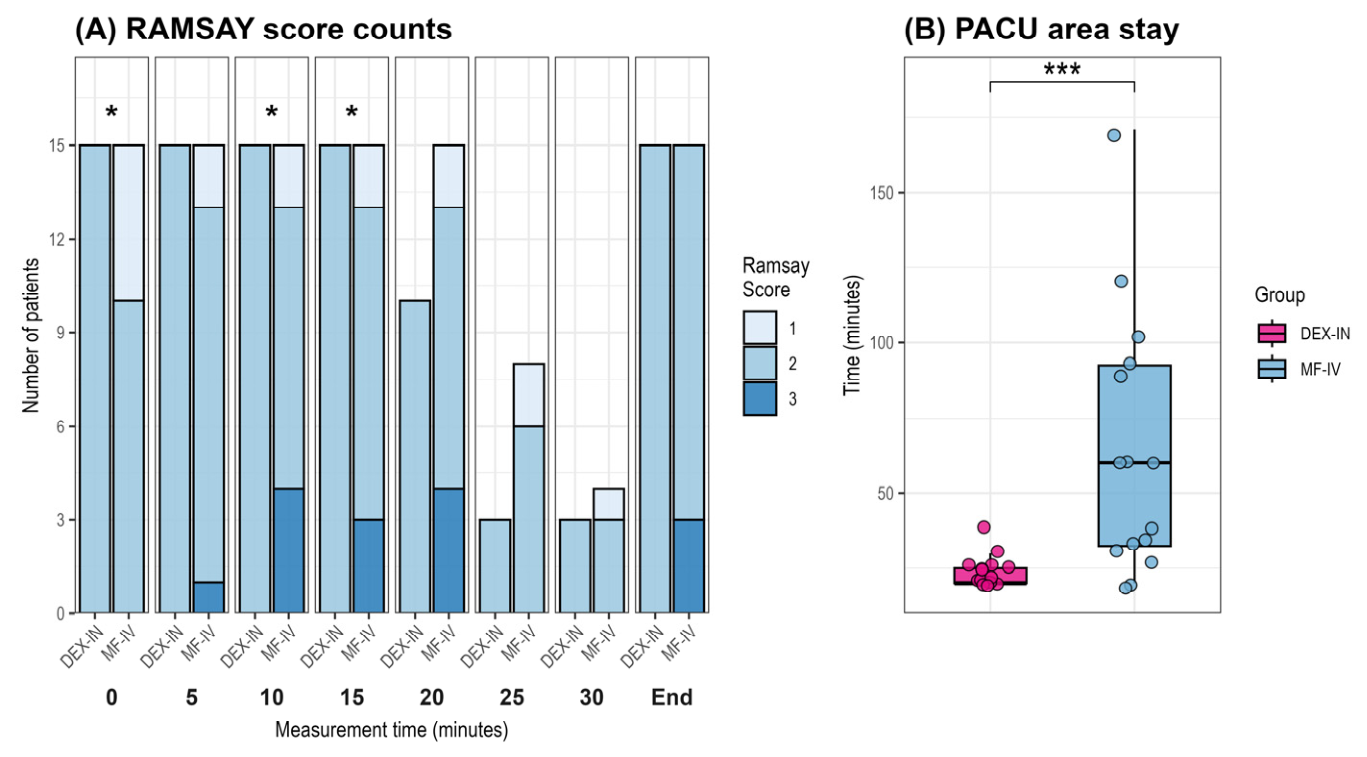
Sedation-related variables. (A) Ramsay Sedation Scale scores over time; bars represent the number of patients with each score in each group, and * p ≤ 0.05 indicates a between-group difference in the proportion of patients with a score other than 2 (Fisher’s exact test). (B) Length of stay in the post-anesthesia care unit (PACU) by group; each dot represents one patient, boxes represent the interquartile range, and horizontal lines indicate medians; *** p ≤ 0.001 (Mann–Whitney U test). 0, start of surgery; End, operating room exit; DEX-IN, intranasal dexmedetomidine; MF-IV, intravenous midazolam plus fentanyl. Number of patients per time point (DEX-IN/MF-IV): 0–15 min, 15/15; 20 min, 10/15; 25 min, 3/8; 30 min, 3/4; End, 15/15.
Figure 3.
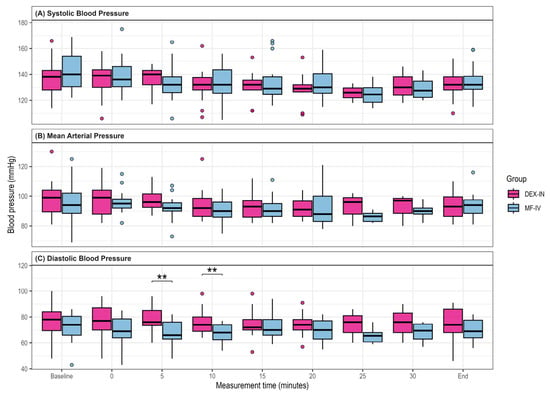
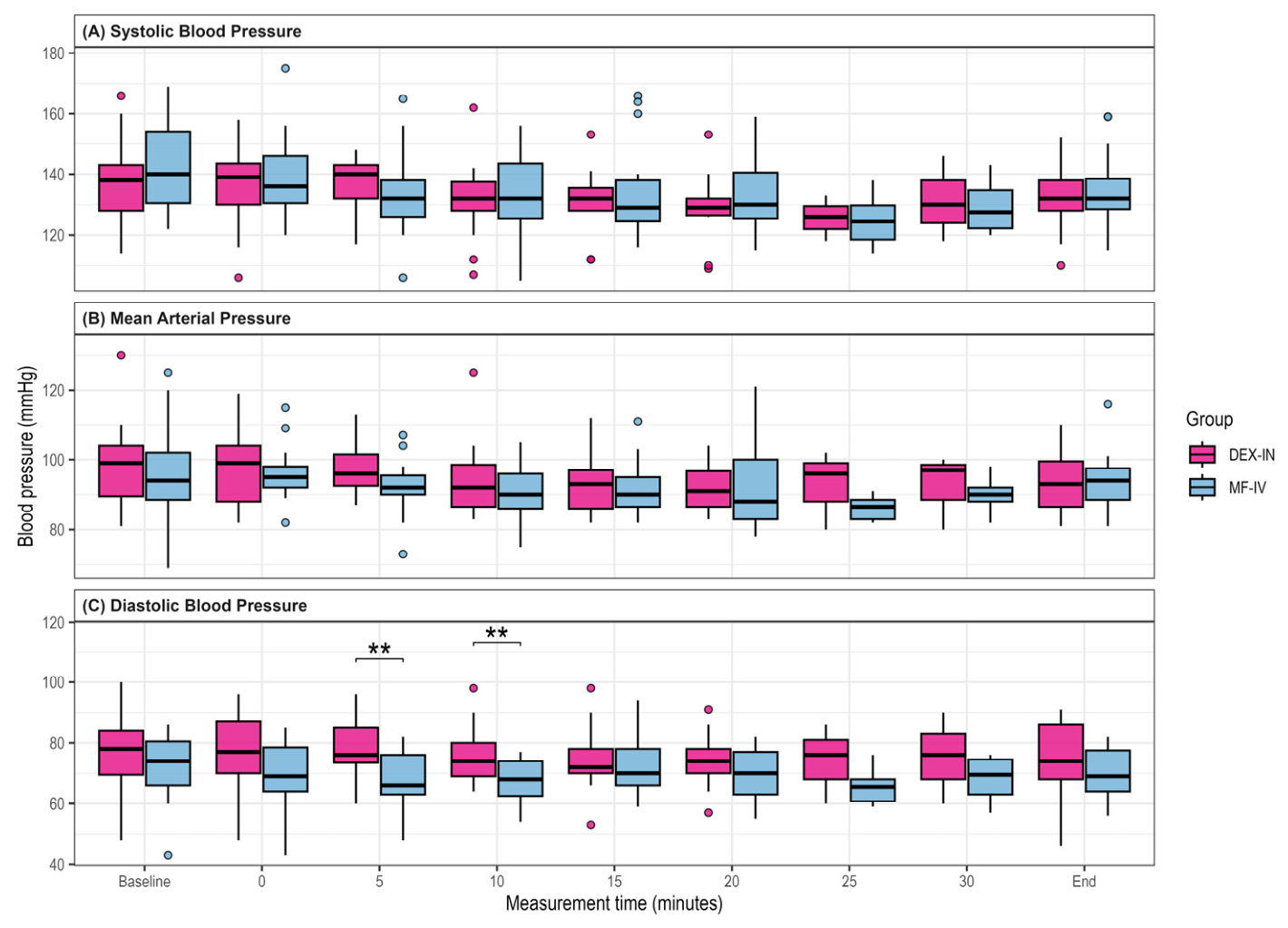
Blood pressure over time. (A) Systolic blood pressure (SBP). (B) Mean arterial pressure (MAP). (C) Diastolic blood pressure (DBP); between-group differences in DBP were significant at 5 and 10 min. Boxes represent the interquartile range, horizontal lines indicate medians, and dots denote outliers. Baseline, preoperative values; 0, start of surgery; End, operating room exit. DEX-IN, intranasal dexmedetomidine; MF-IV, intravenous midazolam plus fentanyl. Asterisks indicate between-group comparisons: ** p ≤ 0.01. Number of patients per time point (DEX-IN/MF-IV): 0–15 min, 15/15; 20 min, 10/15; 25 min, 3/8; 30 min, 3/4; End, 15/15.
Figure 4.
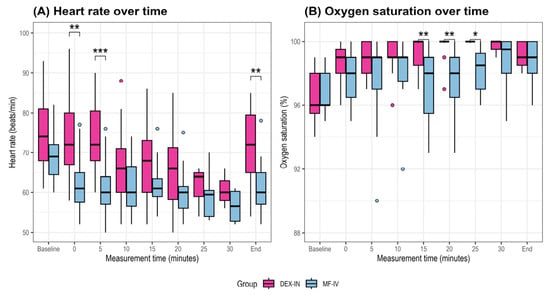
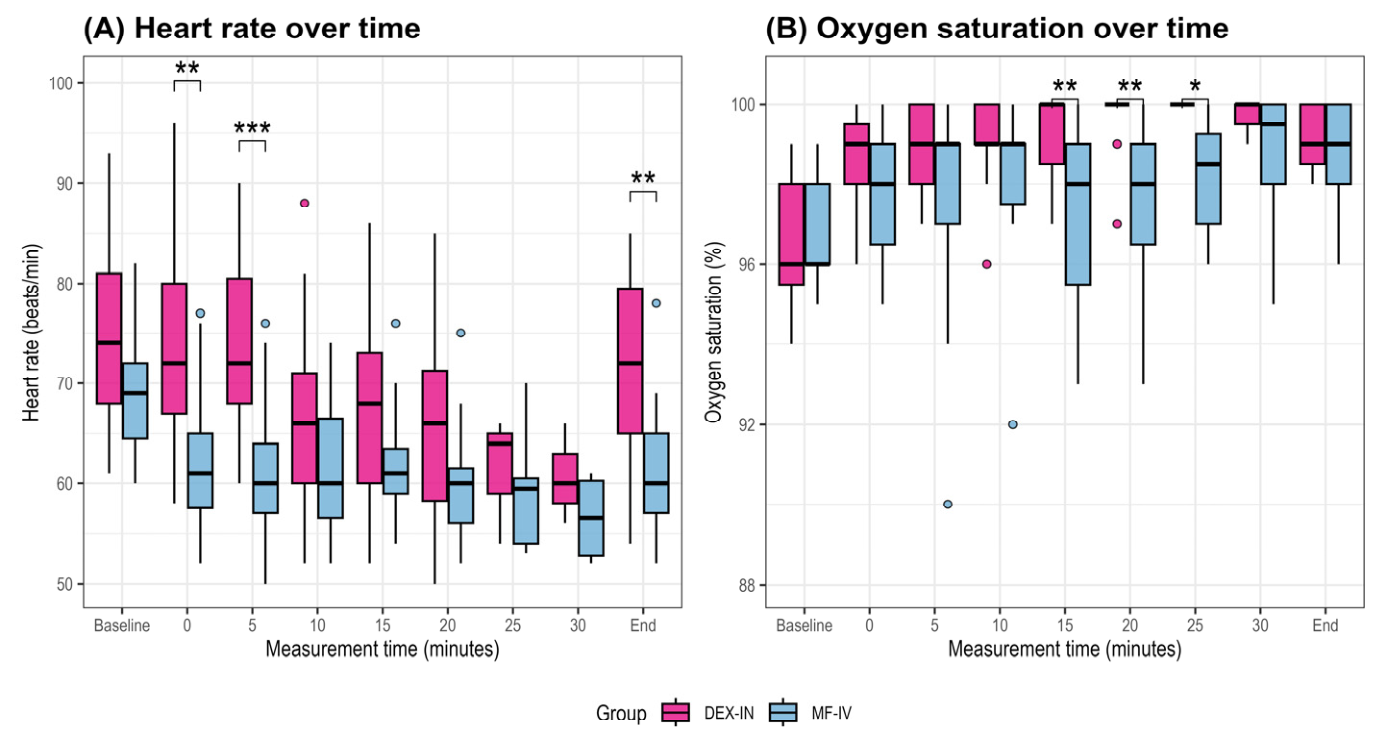
Heart rate and peripheral oxygen saturation over time. (A) Heart rate; between-group differences were significant at the start of surgery (minute 0), at 5 min, and at operating-room exit. (B) Peripheral oxygen saturation (SpO2); between-group differences were significant at 15, 20, and 25 min. Boxes represent the interquartile range, horizontal lines indicate medians, and dots denote outliers. Baseline, preoperative values; 0, start of surgery; End, operating room exit. DEX-IN, intranasal dexmedetomidine; MF-IV, intravenous midazolam plus fentanyl. Asterisks indicate between-group comparisons: * p ≤ 0.05; ** p ≤ 0.01; *** p ≤ 0.001. Number of patients per time point (DEX-IN/MF-IV): 0–15 min, 15/15; 20 min, 10/15; 25 min, 3/8; 30 min, 3/4; End, 15/15.
3.2. Sedation
The scores in the MF-IV group ranged from 1 to 3, whereas all patients in the DEX-IN group (15/15) maintained a Ramsay score of 2 at every intraoperative time point, at operating-room exit, and at discharge (Ex), as shown in Table 2 and Figure 2A. At the start of surgery (minute 0), 5 of 15 patients in the MF-IV group (33.3%) had a Ramsay 1 (anxious, agitated, or restless), compared with none in the DEX-IN group (difference, 33.3%; 95% CI, 6.0% to 58.3%; p = 0.042, Fisher’s exact test). In the MF-IV group, 7 patients (46.7%) received an additional dose of midazolam (0.5 mg) and fentanyl (0.5 µg/kg) and 3 (20%) received magnesium sulfate (15 mg/kg), 2 of whom received both; overall, 8 of 15 patients (53.3%) received at least one additional drug, compared with none in the DEX-IN group (difference, 53.3%; 95% CI, 22.4% to 75.2%; p = 0.002, Fisher’s exact test); for the additional sedative dose alone, the difference was 46.7% (95% CI, 16.8% to 69.9%; p = 0.006). The three MF-IV patients with a Ramsay score of 3 at operating-room exit had received an additional dose of midazolam–fentanyl.
Table 2.
Sedation level (Ramsay score) and need for additional medication during surgery by group.
The distribution of Ramsay scores at each time point is shown in Figure 2A. In the MF-IV group, a Ramsay score of 1 was observed in 5 of 15 patients at minute 0, in 2 patients from minute 5 to minute 25, and in 1 of the 4 patients still in surgery at minute 30; a score of 3 appeared from minute 5 (1 patient), reached its highest frequency at 10 and 20 min (4 of 15 patients, 26.7%), and was present in 3 patients (20.0%) at operating-room exit and at discharge. In the DEX-IN group, all patients had a Ramsay score of 2 at every time point. In the exploratory comparison of the proportion of patients with a Ramsay score other than 2, the difference was also significant at 10 min (6/15 vs. 0/15; p = 0.017) and 15 min (5/15 vs. 0/15; p = 0.042), but not at 20 min (6/15 vs. 0/10; p = 0.051).
3.3. Length of Stay in the Post-Anesthesia Care Unit
Patients who received MF-IV stayed in the PACU for significantly longer than those who received intranasal dexmedetomidine (median 60 min, IQR 32.5–92.5 min, mean 64.1 min vs. median 20 min, IQR 20–25 min, mean 23.7 min; p < 0.001, Mann–Whitney U test; Hodges–Lehmann median difference, 35 min; 95% CI, 10 to 65) (Figure 2B). In a sensitivity analysis excluding the three MF-IV patients who received magnesium sulfate, PACU stay remained longer in the MF-IV group (median 47.5 min, IQR 28.5–91.3 min, vs. median 20 min, IQR 20–25 min; p = 0.003). In a second sensitivity analysis excluding the seven MF-IV patients who received an additional sedative dose (remaining MF-IV patients, n = 8), the difference persisted (median 35 min, IQR 27.5–45.0 min, vs. 20 min, IQR 20–25 min; p = 0.023). The longest PACU stay (171 min, MF-IV group) corresponded to a patient who required supplemental oxygen despite a Ramsay score of 2. Considering the interval between administration and the start of surgery (at least 15 min in the DEX-IN group and 7 min in the MF-IV group), the duration of intraoperative recording, and the PACU stay, the estimated minimum time from sedative administration to discharge was a median of 55 min (IQR 52.5–60; range 50–85) in the DEX-IN group and 87 min (IQR 67–119.5; range 47–203) in the MF-IV group.
3.4. Hemodynamic Variables and Oxygenation
SBP and MAP did not differ between groups at any time point (Figure 3A,B), whereas DBP was higher in the DEX-IN group at 5 and 10 min (Figure 3C). Median HR in the MF-IV group decreased from 69 beats/min at baseline to 61 beats/min at minute 0 and 56.5 beats/min at minute 30, whereas in the DEX-IN group it remained close to baseline during the first 5 min (from 74 to 72 beats/min) and then decreased gradually to 60 beats/min at minute 30; HR was higher in the DEX-IN group at 0 and 5 min, as well as at operating-room exit (Figure 4A). Baseline HR and DBP were already higher in the DEX-IN group (SMDs, 0.74 and 0.47; Table 1). Median SpO2 was equal or higher in the DEX-IN group at all intraoperative time points, with statistically significant differences at 15, 20, and 25 min (Figure 4B).
3.5. Adverse Events
No patient in either group developed hypotension, bradycardia, or desaturation until operating-room exit. One patient in the MF-IV group had a single MAP reading more than 30% below baseline, which did not persist beyond 5 min.
4. Discussion
To our knowledge, this is the first study comparing intranasal dexmedetomidine with intravenous midazolam–fentanyl for sedation in older adults undergoing ambulatory phacoemulsification under topical anesthesia. Its principal contribution is a direct comparison with an active regimen in routine use, whereas previous and registered studies of intranasal dexmedetomidine in older adults have used placebo as the comparator [19,20,21], in a setting where patient cooperation is essential. In this sample, intranasal dexmedetomidine was associated with a Ramsay score of 2 throughout the procedure, no need for additional medication, and a shorter post-anesthesia care unit (PACU) stay. Nevertheless, the pilot, nonrandomized observational design limits interpretation to the specific regimens and administration conditions studied; the observed differences cannot be attributed solely to the pharmacological agents or taken as evidence of superiority.
During phacoemulsification under topical anesthesia, sedation should promote procedural tolerance while preserving patient cooperation, which is essential in the absence of ocular akinesia [2]. Accordingly, the maintenance of a Ramsay score of 2—calm, oriented, and cooperative—in the DEX-IN group represents the intended clinical state [11]. This finding is consistent with the readily arousable sedation described by Barends et al. [19] in older adults: even at intranasal doses of 1.0–1.5 µg/kg, only 45% of participants achieved a Modified Observer’s Assessment of Alertness/Sedation (MOAA/S) score ≤ 3, and stimulation restored nearly all participants to full alertness. Although differences between the scales preclude direct comparison, these observations provide context for the preserved alertness in our sample. However, a Ramsay score of 2 does not distinguish pharmacological sedation from baseline tranquility; thus, this result demonstrates maintenance of the intended clinical state without quantifying the drug’s contribution.
In contrast, five patients in the MF-IV group (33.3%) had a Ramsay score of 1 at the start of surgery, compared with none in the DEX-IN group (between-group difference, 33.3 percentage points; 95% CI, 6.0–58.3). In two of these patients, restlessness persisted until minutes 25–30 despite additional medication. The initial response may have been related to the fixed midazolam dose and the 7-min interval before surgery. Although 0.5 mg falls within the recommended initial dosing range for older adults, peak effects may develop more slowly in this population, warranting gradual, individualized titration [36].
Persistent restlessness may reflect anxiety or an inadequate response to the administered regimen. Another possibility is paradoxical excitation, reported in up to 10–15% of patients receiving midazolam [12]. In a trial involving patients older than 70 years, Silva-Jr et al. [48] reported psychomotor agitation in 15.1% of those receiving intravenous midazolam, compared with 1.5% of those receiving intravenous dexmedetomidine. In our sample, a Ramsay score of 1 occurred in 33.3% of patients receiving MF-IV and none receiving DEX-IN. However, this score encompasses anxiety, agitation, or restlessness and cannot specifically identify a paradoxical reaction; these outcomes therefore cannot be considered equivalent.
This distinction is clinically relevant because anxiety, the most common emotion before cataract surgery under local anesthesia, is often associated with fear of ocular manipulation, pain, or moving during the procedure. It may increase arterial and intraocular pressure and provoke involuntary movements associated with intraoperative complications [1,7]. Maintaining a calm, cooperative patient is therefore a central clinical objective. The consistent clinical state observed with DEX-IN warrants further assessment using direct measures of patient cooperation and surgical conditions to clarify its clinical relevance.
The exploratory analysis indicated that the difference was not limited to the start of surgery: at 10 and 15 min, a higher proportion of MF-IV patients had a Ramsay score other than 2, reflecting both persistent restlessness (score 1) and deeper sedation (score 3), which reached 4 of 15 patients at 10 and 20 min. Three of the five patients with a score of 3 had received an additional sedative dose, consistent with the greater sensitivity of older adults to sedatives and opioids [12] and with the potentiation of effects when midazolam and fentanyl are combined [15]. Although a score of 3 remains compatible with conscious sedation [8,11], the coexistence of insufficient and deeper sedation within the same regimen illustrates the difficulty of titrating a fixed low-dose regimen. In the DEX-IN group, all patients remained at a score of 2; however, because baseline Ramsay scores were not recorded, this finding cannot be attributed solely to the drug.
The need for additional medication also differed between the regimens: eight patients (53.3%) in the MF-IV group received some additional medication—another dose of intravenous midazolam–fentanyl (5 patients), intravenous magnesium sulfate (1 patient), or both (2 patients)—compared with none in the DEX-IN group (difference, 53.3%; 95% CI, 22.4–75.2). The interpretation of this finding requires consideration of the initial dosing: the MF-IV group received intravenous midazolam ≈0.008 mg/kg and intravenous fentanyl 0.5 µg/kg, doses lower than those used in other sedation studies. With midazolam 0.029 mg/kg and fentanyl 0.71 µg/kg, Faneli et al. [8] administered rescue doses in only 2 of 65 eyes; however, 10.8% reached a Ramsay score of 4–5, a deeper level than that sought in a procedure that requires cooperation. Similarly, in older adults undergoing spinal anesthesia or dental treatment, the titrated midazolam doses required to achieve sedation were 0.023–0.034 mg/kg [37,49]. Although differences between procedures limit direct comparison, these data show that a lower need for rescue medication may be accompanied by deeper sedation.
The choice of low doses reflects the greater sensitivity of older adults to sedatives and opioids [12] and is similar to the regimen used by Oriby et al. [18] in patients aged 65–85 years, although under peribulbar block. This conservative approach is consistent with the approximately 50% lower midazolam requirement of older adults, which is attributable to increased brain sensitivity rather than to pharmacokinetic changes [50], and with the “start low, go slow” principle recommended for this population [51]. Nevertheless, the initial midazolam dose (≈0.008 mg/kg) was lower than that used in other studies of sedation for cataract surgery, such as 0.015 mg/kg under topical anesthesia [52] or 2 mg combined with fentanyl 25 µg under peribulbar block [53], whereas the fentanyl dose (0.5 µg/kg, ≈33 µg) was comparable to that of the latter regimen. The MF-IV regimen therefore represented a conservative initial dose rather than a titrated regimen, which limits its comparison with intranasal dexmedetomidine. A titrated regimen with small incremental doses would probably have reduced the need for secondary interventions, whereas a continuous infusion is of limited practicality for a procedure lasting less than 30 min and may delay recovery, and higher midazolam doses increase the risk of cognitive impairment, confusion, and respiratory depression in older adults [12]. The additional medication observed with MF-IV may therefore reflect the need to complete a titration started conservatively rather than a lower intrinsic effectiveness of the combination. Consequently, the absence of additional doses with DEX-IN should not be interpreted as greater efficacy, because the comparator was not titrated to effect.
A relevant feature of the intranasal route is that it avoids an intravenous bolus. With intravenous dexmedetomidine, bradycardia and blood pressure changes are related to the plasma peak of the bolus and to the loading dose [16,54], and in direct comparisons, bradycardia was more frequent with the intravenous than with the intranasal route [28,55]. However, the intranasal route has a slower onset and does not allow titration, and intravenous access remained necessary for safety; whether these trade-offs are acceptable for short procedures should be evaluated in future trials, including a comparison with titrated intravenous dexmedetomidine.
Early hemodynamic changes differed between the regimens. In the DEX-IN group, heart rate remained close to baseline during the first minutes (from approximately 74 to 72 beats/min), whereas in the MF-IV group it decreased from 69 to 61 beats/min at the start of surgery. This pattern is consistent with the rapid onset of intravenous administration and with the vagally mediated bradycardia described experimentally for fentanyl [56], although baseline differences and the different intervals between administration and assessment preclude attributing it exclusively to the drugs. The preservation of heart rate with DEX-IN may reflect a systemic effect that had not yet fully developed and should not be interpreted as a clinical advantage.
No between-group differences were detected in systolic or mean arterial pressure, and no hypotension was recorded during the observation period. The higher diastolic pressure in the DEX-IN group at 5 and 10 min may be related to its higher baseline value (77.1 vs. 71.5 mmHg). Although α2-receptor-mediated peripheral vasoconstriction is part of the response to high dexmedetomidine concentrations, intranasal absorption avoids the abrupt plasma peak associated with an intravenous bolus [16]; this mechanism therefore cannot be assumed to explain the observed difference.
Regarding dose, Barends et al. [19] observed no significant hemodynamic effect with 0.5 µg/kg, whereas hypotension occurred from 1.0 µg/kg. Bradycardia and hypotension have also been described in older adults with intranasal doses of 1 µg/kg or higher [29,57]. These data suggest that the dose may influence the cardiovascular response, but they do not allow the assumption that the 0.7 µg/kg dose used in this study is free of these effects.
The timing of observation is essential for interpreting these results. In the DEX-IN group, the estimated minimum time from administration to discharge was a median of 55 min (maximum, 85 min); this period covers the onset of clinical effects in older adults (20–30 min) and approaches the peak clinical effect (approximately 60 min), but it reached 70 min in only 2 of 15 patients and therefore generally ended before the peak plasma concentration (approximately 70 min) and the nadir of mean arterial pressure (approximately 73 min) described after intranasal administration [19]. Mexican studies are consistent with this time course: in children receiving 2 µg/kg, adequate sedation was observed in 24% of patients at 30 min and in 95% at 60 min, with a lower heart rate than after oral administration from 40 min onward [30], whereas in adults receiving 1 µg/kg, between-group differences in heart rate were reported at 60–90 min of intraoperative recording [32] and in heart rate and systolic pressure 60 min after surgery [31]. In addition, serial vital signs were recorded only until operating-room exit. The administration technique may also influence these intervals: in healthy young adults receiving 1 µg/kg, Li et al. [58] described a median onset of sedation of 60 min with drops and 47.5 min with an atomizer, a nonsignificant difference, with a similar bioavailability of approximately 41%. The groups, doses, timing, and administration techniques of previously published clinical studies that administered the intravenous formulation of dexmedetomidine by the intranasal route are summarized in Table 3.
Table 3.
Published clinical studies of intranasal dexmedetomidine using the intravenous formulation: groups, dose, timing, and administration technique.
Consequently, the absence of hypotension and bradycardia in this study applies only to the immediate perioperative period that was observed, and later hemodynamic effects of intranasal dexmedetomidine cannot be excluded.
Although SpO2 was higher in the DEX-IN group at 15, 20, and 25 min, both groups received supplemental oxygen and no patient experienced desaturation during the recorded period; therefore, the higher SpO2 alone does not establish a clinically meaningful advantage. Moreover, supplemental oxygen may maintain saturation despite hypoventilation [59,60]. These results thus indicate a difference in oxygenation but do not establish better ventilation. Confirmation requires assessment of the magnitude of the observed differences and complementary measures, including capnography and documentation of airway interventions.
PACU length of stay was shorter with DEX-IN than with MF-IV—median, 20 vs. 60 min; Hodges–Lehmann difference, 35 min; 95% CI, 10–65. The difference persisted after excluding patients who received magnesium or additional sedative doses, although these analyses involved small, selected subgroups and cannot isolate the effect of the initial regimen. Fredman et al. [61] likewise reported later discharge with 0.5 mg of intravenous midazolam than with placebo—60 vs. 41 min—in older adults undergoing general anesthesia, supporting a possible contribution of midazolam to prolonged recovery.
The longest stay in the MF-IV group—171 min—was associated with a need for supplemental oxygen. In addition, three patients who received additional doses left the PACU with a Ramsay score of 3 and an Aldrete score of 9–10. These scales assess different domains: sedation and immediate postanesthetic recovery, respectively. An Aldrete score of 9 is possible even when the patient is arousable only on calling [43]. PACU discharge must therefore be distinguished from readiness for home discharge, which requires a specific assessment [62].
Unblinded discharge decisions and the preoperative administration period for DEX-IN preclude conclusions about reductions in total care time or costs. Any operational implication would require confirmation using standardized discharge criteria, sufficient monitoring, and documentation of the interval from drug administration to home discharge.
The principal strength of this study is its comparison of intranasal dexmedetomidine with intravenous midazolam–fentanyl, a regimen commonly used for sedation in ophthalmic surgery [8,54]. Propofol, another commonly used sedative, was not chosen as the comparator because in older adults it may cause dose-dependent hypotension [51] and, in the experience of the anesthesia team, sedative doses may compromise patient cooperation; at our institution, it is reserved as rescue medication. Unlike the registered placebo-controlled trials [20,21], this comparison allows assessment of its performance against an established clinical option and provides information to inform future superiority or noninferiority trials. In Mexico, where cataract is the second leading cause of blindness [3], previous studies in cataract surgery have evaluated intravenous dexmedetomidine [63,64]. The present study extends this experience to intranasal administration in older adults. Consistent with its pilot nature, the purpose of this comparison was not to establish superiority but to describe both regimens under routine conditions and to identify the methodological problems that a confirmatory trial should address (Table 4).
Table 4.
Methodological aspects of this pilot study and recommendations for future trials.
The study was conducted under routine clinical conditions in an exclusively geriatric population, with monitoring every 5 min, no losses during the planned follow-up, no refusals to participate, and no changes in regimen. These features support the feasibility of evaluating this alternative in clinical practice. Furthermore, the estimates obtained for sedation, additional medication, oxygenation, and PACU length of stay provide preliminary data to guide primary outcome selection and sample size planning for a confirmatory study.
These findings should be interpreted considering the pilot nature, small sample size, and single-center observational design, which limit the precision and generalizability of the estimates; the results apply to patients with ASA physical status II who were not receiving beta-blockers and to the specific doses and administration conditions studied. In addition, comorbidities other than those used as exclusion criteria were not recorded, which limits the assessment of baseline comparability. Regimen selection depended on hospital drug availability, routine practice, and the anesthesiologist’s judgment; although these factors were not determined solely by patient characteristics, confounding by indication cannot be excluded; standardized mean differences greater than 0.5 for age, sex, weight, body mass index, and baseline heart rate documented baseline imbalance, although these estimates are imprecise with 15 patients per group. Moreover, the treatments were administered at different times, so assessments did not necessarily reflect equivalent stages of drug exposure. Decisions to administer additional medication were made by an unblinded anesthesiologist without predefined criteria. The PACU comparison warrants particular caution: dexmedetomidine was administered in the preoperative area at least 15 min before transfer to the operating room, so part of its latency elapsed before surgery, whereas midazolam–fentanyl was administered 7 min before surgery; in addition, the anesthesiologist who authorized discharge was aware of the regimen and applied no criterion beyond the Aldrete score. Both factors would tend to favor DEX-IN, as would the fixed low-dose comparator, which required additional doses, and therefore additional recovery time, in more than half of the MF-IV patients. The estimated minimum time from administration to discharge, which accounts for the different administration times, was also shorter with DEX-IN (median, 55 vs. 87 min), and the difference persisted in the sensitivity analyses; however, neither approach eliminates these sources of bias, so the PACU findings should be regarded as hypothesis-generating.
Multiple comparisons across time points also warrant caution when interpreting isolated differences. The Ramsay scale described patients’ clinical state but could not distinguish baseline tranquility from pharmacological sedation, and it was assessed by the attending anesthesiologist, who was aware of the regimen, without evaluation of inter-observer agreement; satisfaction and cognitive function were not assessed, so no inference can be made regarding the cognitive effects of either regimen. Respiratory monitoring with pulse oximetry and continuous clinical observation met the requirements of the Mexican standard for anesthetic practice, which requires pulse oximetry and addresses capnography only for general anesthesia [42], and corresponds to the monitoring specified by the ASA for minimal sedation [65]; however, because both groups received supplemental oxygen and neither capnography nor respiratory rate was recorded, ventilation could not be assessed as a study outcome. Furthermore, the lack of systematic recording of nausea, vomiting, and paradoxical excitation limits a comprehensive evaluation of tolerability.
In addition, dexmedetomidine was administered off-label as nasal drops of the intravenous solution. With intranasal administration of any liquid formulation, a variable proportion of the administered volume may reach the pharynx and be swallowed, changing the absorption rate and possibly the maximum plasma concentration; Barends et al. noted that this uncertainty, together with the administration of different volumes at a fixed concentration, prevented more detailed analyses of the pharmacokinetic profile and pharmacodynamic effects [19]. With the parenteral formulation administered as drops or by atomizer, intranasal bioavailability in healthy adults was approximately 40%, with an inter-individual variability of around 30% [58], and a dedicated dexmedetomidine nasal spray that requires no dilution or preparation has been licensed in China since 2023 [39]. With that spray, optimizing the administration technique increased absolute bioavailability from 28.9–32.3% to 74.1–89.0% in healthy adults [66], which underscores the influence of the delivery technique. Although the volume per nostril in this study remained well below the 1 mL maximum recommended for intranasal administration [19], the swallowed fraction could not be quantified. Finally, the informed consent form specified the intranasal route of administration but did not explicitly state its off-label status.
As a pilot study, its main contribution lies in the identification of methodological limitations and feasibility issues that should be addressed in a confirmatory trial. Table 4 summarizes the methodological aspects of this study, together with recommendations to strengthen comparability in future trials.
5. Conclusions
In older adults undergoing ambulatory phacoemulsification under topical anesthesia, both sedation regimens were feasible in routine clinical practice. All patients who received intranasal dexmedetomidine 0.7 µg/kg remained at a Ramsay score of 2 without additional medication, whereas more than half of those who received the fixed low-dose intravenous midazolam–fentanyl regimen required additional medication; no patient developed hypotension, bradycardia, or desaturation until operating-room exit. Because the Ramsay score was assessed without blinding or a baseline measurement, the comparator was not titrated, and the regimens were administered at different times, these differences cannot be attributed to the drugs, and the shorter PACU stay and estimated minimum time from administration to discharge observed with intranasal dexmedetomidine (median, 55 vs. 87 min) should be regarded as hypothesis-generating. Given the small sample, the nonrandomized allocation, and a monitoring period that ended before the expected peak effect of intranasal dexmedetomidine, these findings are exploratory and do not establish superiority. The variability estimates obtained provide a basis for a randomized confirmatory trial with extended hemodynamic monitoring, a titrated intravenous comparator, and standardized rescue and discharge criteria. Beyond these estimates, the main value of this pilot study lies in its direct comparison with an active regimen in routine use in older adults undergoing an ophthalmic procedure that requires active patient cooperation, and in the identification of methodological requirements and the provision of recommendations to strengthen a future confirmatory clinical trial (Table 4).
Supplementary Materials
The following supporting information can be downloaded at: https://www.mdpi.com/article/10.3390/medsci14080827/s1, Table S1: STROBE Statement—Checklist of items that should be included in reports of cohort studies; Table S2: De-identified individual patient data.
Author Contributions
Conceptualization, E.F.R.-R. and M.J.G.-R.; methodology, H.H.F.R.-P. and O.T.-B.; formal analysis, D.J.; investigation, E.F.R.-R. and M.J.G.-R.; resources, E.F.R.-R.; data curation, D.J.; writing—original draft preparation, H.H.F.R.-P. and O.T.-B.; writing—review and editing, E.F.R.-R., M.J.G.-R., D.J., O.T.-B., M.W.L.-B. and H.H.F.R.-P.; visualization, M.W.L.-B.; supervision, E.F.R.-R. and H.H.F.R.-P.; project administration, E.F.R.-R. and H.H.F.R.-P. All authors have read and agreed to the published version of the manuscript.
Funding
This research received no external funding. The APC was funded by the Fondo Semilla of the Universidad Autónoma de Guadalajara. The funder had no role in the design, data collection, analysis, interpretation, or writing of the study.
Institutional Review Board Statement
This study was conducted in accordance with the Declaration of Helsinki and approved by the Comité de Ética en Investigación del Antiguo Hospital Civil de Guadalajara ‘Fray Antonio Alcalde’ (approval no. CEI 200/23, 18 October 2023); the approved protocol specified the intranasal administration and use of the intravenous formulation of dexmedetomidine as off-label use.
Informed Consent Statement
Written informed consent was obtained from all participants; the consent form specified the intranasal route of administration.
Data Availability Statement
The original contributions presented in this study are included in the article/Supplementary Material. Further inquiries can be directed to the corresponding author.
Acknowledgments
The authors thank the Universidad Autónoma de Guadalajara for supporting the publication of this article through its Fondo Semilla. During the preparation of this manuscript, the authors used Claude Opus 5.5 (Anthropic) to verify the correspondence between the text and the cited sources, reorganize the text, and assist with English translation syntax. The authors have reviewed and edited the output and take full responsibility for the content of this publication.
Conflicts of Interest
The authors declare no conflicts of interest.
Abbreviations
The following abbreviations are used in this manuscript:
| ASA | American Society of Anesthesiologists |
| BMI | Body mass index |
| CI | Confidence interval |
| DBP | Diastolic blood pressure |
| DEX-IN | Intranasal dexmedetomidine group |
| Ex | Discharge from the post-anesthesia care unit |
| HR | Heart rate |
| IQR | Interquartile range |
| IV | Intravenous |
| MAP | Mean arterial pressure |
| MF-IV | Intravenous midazolam plus fentanyl group |
| MOAA/S | Modified Observer’s Assessment of Alertness/Sedation |
| NOM | Norma Oficial Mexicana (Mexican Official Standard) |
| PACU | Post-anesthesia care unit |
| SBP | Systolic blood pressure |
| SMD | Standardized mean difference |
| SpO2 | Peripheral oxygen saturation |
| STROBE | Strengthening the Reporting of Observational Studies in Epidemiology |
References
- Cicinelli, M.V.; Buchan, J.C.; Nicholson, M.; Varadaraj, V.; Khanna, R.C. Cataracts. Lancet 2023, 401, 377–389. [Google Scholar] [CrossRef] [Scilit]
- Lapp, T.; Wacker, K.; Heinz, C.; Maier, P.; Eberwein, P.; Reinhard, T. Cataract Surgery—Indications, Techniques, and Intraocular Lens Selection. Dtsch. Arztebl. Int. 2023, 120, 377–386. [Google Scholar] [CrossRef] [Scilit]
- Madueña-Angulo, S.E.; Beltran-Ontiveros, S.A.; Leal-Leon, E.; Contreras-Gutierrez, J.A.; Lizarraga-Verdugo, E.; Gutierrez-Arzapalo, P.Y.; Lizarraga-Velarde, S.; Romo-Garcia, E.; Montero-Vela, J.; Moreno-Ortiz, J.M.; et al. National Sex- and Age-Specific Burden of Blindness and Vision Impairment by Cause in Mexico in 2019: A Secondary Analysis of the Global Burden of Disease Study 2019. Lancet Reg. Health Am. 2023, 24, 100552. [Google Scholar] [CrossRef] [Scilit]
- Heruye, S.H.; Maffofou Nkenyi, L.N.; Singh, N.U.; Yalzadeh, D.; Ngele, K.K.; Njie-Mbye, Y.-F.; Ohia, S.E.; Opere, C.A. Current Trends in the Pharmacotherapy of Cataracts. Pharmaceuticals 2020, 13, 15. [Google Scholar] [CrossRef] [Scilit]
- Lim, B.-G.; Lee, I.-O. Anesthetic Management of Geriatric Patients. Korean J. Anesthesiol. 2020, 73, 8–29. [Google Scholar] [CrossRef] [Scilit]
- Zhu, M.; Liu, Y.; Zeng, Z.; Zhang, Z.; Zhang, G. Effectiveness of Topical Anesthesia in Patients Undergoing Phacoemulsification Cataract Surgery Versus Femtosecond Laser-Assisted Cataract Surgery. Clin. Ophthalmol. 2026, 20, 622207. [Google Scholar] [CrossRef] [Scilit]
- Obuchowska, I.; Konopinska, J. Fear and Anxiety Associated with Cataract Surgery Under Local Anesthesia in Adults: A Systematic Review. Psychol. Res. Behav. Manag. 2021, 14, 781–793. [Google Scholar] [CrossRef] [Scilit]
- Faneli, A.C.; Oliveira, R.D.C.; Amado, P.; Marback, E.F.; Torres, R.A.; Marback, J.F.; Laporte, L.; Regatieri, C.V.S.; Muccioli, C. Comparing Benzodiazepine-Ketamine and Benzodiazepine-Fentanyl Sedation in Phacoemulsification: A Double-Blind Crossover Non-Inferiority Clinical Trial (BEKEF Study). Adv. Ophthalmol. Pract. Res. 2025, 5, 175–179. [Google Scholar] [CrossRef] [Scilit]
- Prado Fonseca, S.J.; Araya Padilla, F.M.; Rodríguez, N.; Anchía Jiménez, G.; Chacon Soto, J.I.; Ruiz Rojas, N. Anesthetic Considerations in Geriatric Patients Undergoing Cataract Surgery: A Review of Perioperative Management and Outcomes. Cureus 2026, 18, e105829. [Google Scholar] [CrossRef] [Scilit]
- Rossi, T.; Romano, M.R.; Iannetta, D.; Romano, V.; Gualdi, L.; D’Agostino, I.; Ripandelli, G. Cataract Surgery Practice Patterns Worldwide: A Survey. BMJ Open Ophthalmol. 2021, 6, e000464. [Google Scholar] [CrossRef] [Scilit]
- Ramsay, M.A.E.; Savege, T.M.; Simpson, B.R.J.; Goodwin, R. Controlled Sedation with Alphaxalone-Alphadolone. Br. Med. J. 1974, 2, 656–659. [Google Scholar] [CrossRef] [Scilit]
- Eldawlatly, A.A.; Delvi, M.B.; Ahmad, A. Procedural Sedation Analgesia in the Elderly Patient. Saudi J. Anaesth. 2023, 17, 533–539. [Google Scholar] [CrossRef] [Scilit]
- 2023 American Geriatrics Society Beers Criteria® Update Expert Panel. American Geriatrics Society 2023 Updated AGS Beers Criteria® for Potentially Inappropriate Medication Use in Older Adults. J. Am. Geriatr. Soc. 2023, 71, 2052–2081. [Google Scholar] [CrossRef] [Scilit]
- Neuman, M.D.; Feng, R.; Shukla, A.S.; Han, X.; Horan, A.D.; Whatley, K.; Schapira, M.M.; Marcantonio, E.R.; Dutton, R.P. Strategies to Limit Benzodiazepine Use in Anesthesia for Older Adults: A Randomized Clinical Trial. JAMA Netw. Open 2024, 7, e2442207. [Google Scholar] [CrossRef] [Scilit]
- Bailey, P.L.; Pace, N.L.; Ashburn, M.A.; Moll, J.W.B.; East, K.A.; Stanley, T.H. Frequent Hypoxemia and Apnea after Sedation with Midazolam and Fentanyl. Anesthesiology 1990, 73, 826–830. [Google Scholar] [CrossRef] [Scilit]
- Weerink, M.A.S.; Struys, M.M.R.F.; Hannivoort, L.N.; Barends, C.R.M.; Absalom, A.R.; Colin, P. Clinical Pharmacokinetics and Pharmacodynamics of Dexmedetomidine. Clin. Pharmacokinet. 2017, 56, 893–913. [Google Scholar] [CrossRef] [Scilit]
- Erdurmus, M.; Aydin, B.; Usta, B.; Yagci, R.; Gozdemir, M.; Totan, Y. Patient Comfort and Surgeon Satisfaction during Cataract Surgery Using Topical Anesthesia with or without Dexmedetomidine Sedation. Eur. J. Ophthalmol. 2008, 18, 361–367. [Google Scholar] [CrossRef] [Scilit]
- Oriby, M.E.; Elrashidy, A.A.; Elsharkawy, A.; Ahmed, S.A. Effects of Ketamine or Dexmedetomidine on Postoperative Cognitive Dysfunction after Cataract Surgery: A Randomized Controlled Trial. Indian J. Anaesth. 2023, 67, 186–193. [Google Scholar] [CrossRef] [Scilit]
- Barends, C.R.M.; Driesens, M.K.; Struys, M.M.R.F.; Visser, A.; Absalom, A.R. Intranasal Dexmedetomidine in Elderly Subjects with or without Beta Blockade: A Randomised Double-Blind Single-Ascending-Dose Cohort Study. Br. J. Anaesth. 2020, 124, 411–419. [Google Scholar] [CrossRef] [Scilit]
- ClinicalTrials.gov. A Randomized Controlled Trial of Intranasal Dexmedetomidine for Adult Patients Undergoing Phacoemulsification Cataract Surgery. Identifier NCT05698758. Available online: https://clinicaltrials.gov/study/NCT05698758 (accessed on 18 October 2026).
- ClinicalTrials.gov. The Effect of Intranasal Dexmedetomidine Compared to Placebo on Blood Pressure in Elderly Hypertensive Patients Undergoing Cataract Surgery: A Double-Blind Randomized Controlled Trial. Identifier NCT07080229. Available online: https://clinicaltrials.gov/study/NCT07080229 (accessed on 18 October 2026).
- Oliveira Rocha, K.; Santos, E.R.F.A.; Pombeiro, M.M.; Fidelis, M.N.S.L.; Kakehasi, F.M.; Teixeira, D.C. Intranasal Dexmedetomidine for Procedural Sedation in Children: A Systematic Review and Meta-Analysis. Braz. J. Anesthesiol. 2026, 76, 844717. [Google Scholar] [CrossRef] [Scilit]
- Marra, P.; Di Stadio, A.; Colacurcio, V.; Scarpa, A.; La Mantia, I.; Salzano, F.A.; De Luca, P. Sedation with Intranasal Dexmedetomidine in the Pediatric Population for Auditory Brainstem Response Testing: Review of the Existing Literature. Healthcare 2022, 10, 287. [Google Scholar] [CrossRef] [Scilit]
- Al Mutair, A.; Alabbasi, Y.; Alshammari, B.; Alrasheeday, A.M.; Alharbi, H.F.; Aleid, A.M. A Meta-Analysis of the Impact of Intranasal Dexmedetomidine on Emergence Delirium and Agitation in Children and Adolescents Undergoing Tonsillectomy and/or Adenoidectomy. J. Clin. Med. 2025, 14, 1586. [Google Scholar] [CrossRef] [Scilit]
- Wu, J.; Liu, X.; Ye, C.; Hu, J.; Ma, D.; Wang, E. Intranasal Dexmedetomidine Improves Postoperative Sleep Quality in Older Patients with Chronic Insomnia: A Randomized Double-Blind Controlled Trial. Front. Pharmacol. 2023, 14, 1223746. [Google Scholar] [CrossRef] [Scilit]
- He, J.; Zhang, X.; Li, C.; Fu, B.; Huang, Y.; Li, H. Dexmedetomidine Nasal Administration Improves Perioperative Sleep Quality and Neurocognitive Deficits in Elderly Patients Undergoing General Anesthesia. BMC Anesthesiol. 2024, 24, 42. [Google Scholar] [CrossRef] [Scilit]
- Chen, C.; Zhai, R.; Yang, S.; Xiong, X.; Lu, J.; Tang, G.; Tang, S.; Shi, Y.; Zhu, Z.; Chen, D.; et al. Preventive Effect of Preoperative Intranasal Dexmedetomidine for Postoperative Delirium in Elderly Patients with Sleep Disorders Undergoing Major Noncardiac Surgery: A Randomized, Triple-Blind, Placebo-Controlled Trial. Drug Des. Dev. Ther. 2025, 19, 10821–10834. [Google Scholar] [CrossRef] [Scilit]
- Niu, J.-Y.; Yang, N.; Tao, Q.-Y.; He, Y.; Hou, Y.-B.; Ning, R.-D.; Yu, J.-M. Effect of Different Administration Routes of Dexmedetomidine on Postoperative Delirium in Elderly Patients Undergoing Elective Spinal Surgery: A Prospective Randomized Double-Blinded Controlled Trial. Anesth. Analg. 2023, 136, 1075–1083. [Google Scholar] [CrossRef] [Scilit]
- Uusalo, P.; Seppänen, S.-M.; Järvisalo, M.J. Feasibility of Intranasal Dexmedetomidine in Treatment of Postoperative Restlessness, Agitation, and Pain in Geriatric Orthopedic Patients. Drugs Aging 2021, 38, 441–450. [Google Scholar] [CrossRef] [Scilit]
- Carrillo-Torres, O.; Arenas-Venegas, A.D.; Lara-Flores, Y.Y. Comparación de los efectos clínicos entre dexmedetomidina vía oral e intranasal para sedación preanestésica en niños entre 2 y 10 años. Rev. Mex. Anestesiol. 2014, 37, 235–239. (In Spanish) [Google Scholar]
- Ramírez-Tapia, Y.; Silva-Blas, L.; Cebrián-García, R.; Jiménez-Ponce, F. Dexmedetomidina vía nasal en colecistectomía laparoscópica. Rev. Mex. Anestesiol. 2023, 46, 10–14. (In Spanish) [Google Scholar] [CrossRef] [Scilit]
- González-Piñón, D.P.; Pedregón-Flores, F. Premedicación con dexmedetomidina intranasal como analgesia postoperatoria en pacientes sometidas a histerectomía abdominal. Rev. Mex. Anestesiol. 2025, 48, 85–89. (In Spanish) [Google Scholar] [CrossRef] [Scilit]
- Julious, S.A. Sample Size of 12 per Group Rule of Thumb for a Pilot Study. Pharm. Stat. 2005, 4, 287–291. [Google Scholar] [CrossRef] [Scilit]
- Ying, X.; Freedland, K.E.; Powell, L.H.; Stuart, E.A.; Ehrhardt, S.; Mayo-Wilson, E. Determining Sample Size for Pilot Trials: A Tutorial. BMJ 2025, 390, e083405. [Google Scholar] [CrossRef] [Scilit]
- Whitehead, A.L.; Julious, S.A.; Cooper, C.L.; Campbell, M.J. Estimating the Sample Size for a Pilot Randomised Trial to Minimise the Overall Trial Sample Size for the External Pilot and Main Trial for a Continuous Outcome Variable. Stat. Methods Med. Res. 2016, 25, 1057–1073. [Google Scholar] [CrossRef] [Scilit]
- Aurum Pharmaceuticals Ltd. Midazolam 1 mg/mL Injection: Summary of Product Characteristics. Electronic Medicines Compendium. Revised 2 August 2023. Available online: https://www.medicines.org.uk/emc/product/3605/smpc (accessed on 20 October 2026).
- Lim, S.M.; Kim, M.W. Evaluation of Minimal Dose of Midazolam for Sedation in Geriatric Spinal Anesthesia. Korean J. Anesthesiol. 2006, 51, 65–69. [Google Scholar] [CrossRef] [Scilit]
- Pfizer, S.A. de C.V. Precedex (Dexmedetomidina), Solución Inyectable: Información para Prescribir. Reg. Núm. 207M2000 SSA IV. Diccionario de Especialidades Farmacéuticas PLM México. Available online: https://medicamentosplm.com/home/productos/precedex-solucion/51/101/82822/146 (accessed on 26 October 2026). (In Spanish)
- Gao, J.; Wang, F.; Wang, X.; Zou, X.; Liu, H.-C.; Song, X.; Chai, X.; Jiang, R.; Zhao, P.; Zhang, J.; et al. Safety and Efficacy of a Novel Dexmedetomidine Nasal Spray for Pre-Anesthetic Sedation in Children: A Randomized, Double-Blind, Placebo-Controlled Trial. BMC Anesthesiol. 2024, 24, 315. [Google Scholar] [CrossRef] [Scilit]
- Albrecht, E.; Kirkham, K.R.; Liu, S.S.; Brull, R. Peri-Operative Intravenous Administration of Magnesium Sulphate and Postoperative Pain: A Meta-Analysis. Anaesthesia 2013, 68, 79–90. [Google Scholar] [CrossRef] [Scilit]
- Metz, C.; Göbel, L.; Gruber, M.; Hoerauf, K.H.; Taeger, K. Pharmacokinetics of Human Cerebral Opioid Extraction: A Comparative Study on Sufentanil, Fentanyl, and Alfentanil in a Patient after Severe Head Injury. Anesthesiology 2000, 92, 1559–1567. [Google Scholar] [CrossRef] [Scilit]
- NOM-006-SSA3-2011; Para la Práctica de la Anestesiología. Diario Oficial de la Federación: Mexico City, Mexico, 2012. (In Spanish)
- Aldrete, J.A. The Post-Anesthesia Recovery Score Revisited. J. Clin. Anesth. 1995, 7, 89–91. [Google Scholar] [CrossRef] [Scilit]
- Wigginton, J.G.; Agarwal, S.; Bartos, J.A.; Coute, R.A.; Drennan, I.R.; Haamid, A.; Kudenchuk, P.J.; Link, M.S.; Panchal, A.R.; Pelter, M.M.; et al. Part 9: Adult Advanced Life Support: 2025 American Heart Association Guidelines for Cardiopulmonary Resuscitation and Emergency Cardiovascular Care. Circulation 2025, 152, S538–S577. [Google Scholar] [CrossRef] [Scilit]
- Mason, K.P.; Green, S.M.; Piacevoli, Q.; International Sedation Task Force. Adverse Event Reporting Tool to Standardize the Reporting and Tracking of Adverse Events during Procedural Sedation: A Consensus Document from the World SIVA International Sedation Task Force. Br. J. Anaesth. 2012, 108, 13–20. [Google Scholar] [CrossRef] [Scilit]
- Newcombe, R.G. Interval Estimation for the Difference between Independent Proportions: Comparison of Eleven Methods. Stat. Med. 1998, 17, 873–890. [Google Scholar] [CrossRef] [Scilit]
- Hodges, J.L., Jr.; Lehmann, E.L. Estimates of Location Based on Rank Tests. Ann. Math. Stat. 1963, 34, 598–611. [Google Scholar] [CrossRef] [Scilit]
- Silva-Jr, J.M.; Katayama, H.T.; Nogueira, F.A.M.; Moura, T.B.; Alves, T.L.; de Oliveira, B.W. Comparison of Dexmedetomidine and Benzodiazepine for Intraoperative Sedation in Elderly Patients: A Randomized Clinical Trial. Reg. Anesth. Pain Med. 2019, 44, 319–324. [Google Scholar] [CrossRef] [Scilit]
- Tatsuno, Y.; Morimoto, Y.; Hayashi, M.; Iida, T. Comparison of Intravenous Sedation Using Midazolam during Dental Treatment in Elderly Patients with/without Dementia: A Prospective, Controlled Clinical Trial. Sci. Rep. 2021, 11, 3617. [Google Scholar] [CrossRef] [Scilit]
- Albrecht, S.; Ihmsen, H.; Hering, W.; Geisslinger, G.; Dingemanse, J.; Schwilden, H.; Schüttler, J. The Effect of Age on the Pharmacokinetics and Pharmacodynamics of Midazolam. Clin. Pharmacol. Ther. 1999, 65, 630–639. [Google Scholar] [CrossRef] [Scilit]
- Coetzee, E.; Absalom, A.R. Pharmacokinetic and Pharmacodynamic Changes in the Elderly: Impact on Anesthetics. Anesthesiol. Clin. 2023, 41, 549–565. [Google Scholar] [CrossRef] [Scilit]
- Venkatesh, R.; Kenia, H.; Sengupta, S.; Gopalakrishna, M.; Au Eong, K.-G. Effect of Intravenous Sedation on Patients’ Visual Experience and Vital Signs during Cataract Surgery under Topical Anesthesia: A Randomized Controlled Trial. Adv. Ophthalmol. Pract. Res. 2021, 1, 100006. [Google Scholar] [CrossRef] [Scilit]
- Hussien, R.M.; Ibrahim, D.A. Intravenous Magnesium-Fentanyl Sedation versus Midazolam-Fentanyl Sedation before Local Anesthesia for Eye Surgery: A Comparative Study. Ain-Shams J. Anesthesiol. 2018, 10, 5. [Google Scholar] [CrossRef] [Scilit]
- Ramaswamy, S.S.; Parimala, B. Comparative Evaluation of Two Different Loading Doses of Dexmedetomidine with Midazolam–Fentanyl for Sedation in Vitreoretinal Surgery under Peribulbar Anaesthesia. Indian J. Anaesth. 2016, 60, 89–93. [Google Scholar] [CrossRef] [Scilit]
- Wu, X.; Hang, L.-H.; Wang, H.; Shao, D.-H.; Xu, Y.-G.; Cui, W.; Chen, Z. Intranasally Administered Adjunctive Dexmedetomidine Reduces Perioperative Anesthetic Requirements in General Anesthesia. Yonsei Med. J. 2016, 57, 998–1005. [Google Scholar] [CrossRef] [Scilit]
- Reitan, J.A.; Stengert, K.B.; Wymore, M.L.; Martucci, R.W. Central Vagal Control of Fentanyl-Induced Bradycardia during Halothane Anesthesia. Anesth. Analg. 1978, 57, 31–36. [Google Scholar] [CrossRef] [Scilit]
- Xu, X.; Cao, Y.; Wu, Y.; Ding, M. Intranasal Dexmedetomidine in Elderly Patients (Aged >65 Years) during Maxillofacial Surgery: Sedative Properties and Safety Analysis. J. Oral Maxillofac. Surg. 2022, 80, 443–455. [Google Scholar] [CrossRef] [Scilit]
- Li, A.; Yuen, V.M.; Goulay-Dufaÿ, S.; Sheng, Y.; Standing, J.F.; Kwok, P.C.L.; Leung, M.K.M.; Leung, A.S.; Wong, I.C.K.; Irwin, M.G. Pharmacokinetic and Pharmacodynamic Study of Intranasal and Intravenous Dexmedetomidine. Br. J. Anaesth. 2018, 120, 960–968. [Google Scholar] [CrossRef] [Scilit]
- Arakawa, H.; Kaise, M.; Sumiyama, K.; Saito, S.; Suzuki, T.; Tajiri, H. Does Pulse Oximetry Accurately Monitor a Patient’s Ventilation during Sedated Endoscopy under Oxygen Supplementation? Singap. Med. J. 2013, 54, 212–215. [Google Scholar] [CrossRef] [Scilit]
- Fu, E.S.; Downs, J.B.; Schweiger, J.W.; Miguel, R.V.; Smith, R.A. Supplemental Oxygen Impairs Detection of Hypoventilation by Pulse Oximetry. Chest 2004, 126, 1552–1558. [Google Scholar] [CrossRef] [Scilit]
- Fredman, B.; Lahav, M.; Zohar, E.; Golod, M.; Paruta, I.; Jedeikin, R. The Effect of Midazolam Premedication on Mental and Psychomotor Recovery in Geriatric Patients Undergoing Brief Surgical Procedures. Anesth. Analg. 1999, 89, 1161–1166. [Google Scholar] [CrossRef] [Scilit]
- Chung, F.; Chan, V.W.S.; Ong, D. A Post-Anesthetic Discharge Scoring System for Home Readiness after Ambulatory Surgery. J. Clin. Anesth. 1995, 7, 500–506. [Google Scholar] [CrossRef] [Scilit]
- Niebla-Torres, M.L.; Martínez-Félix, J.I.; Gutiérrez-Jiménez, G.; Peraza-Garay, F.J.; Sandoval-Rivera, A.G.; Medina-López, F. Eficacia y seguridad de dexmedetomidina y midazolam para manejo de sedación en cirugía de catarata. Rev. Med. UAS 2014, 4, 4–9. Available online: https://hospital.uas.edu.mx/revmeduas/pdf/v4/n1/Eficiencia%20y%20seguridad%20de%20dexmedetomidina.pdf (accessed on 24 November 2026). (In Spanish)
- Torres Flores, R.; Fuentes Fernández, Y.; Cruz Ponce, R. Comparación vs midazolam y dexmetomidina en sedación intraoperatoria para extracción de catarata con anestesia local. Rev. Esp. Med. Quir. 2005, 10, 37–40. (In Spanish) [Google Scholar]
- American Society of Anesthesiologists. Standards for Basic Anesthetic Monitoring. Last Amended 15 October 2025. Available online: https://www.asahq.org/standards-and-practice-parameters/standards-for-basic-anesthetic-monitoring (accessed on 20 November 2026).
- Kuang, Y.; Wang, S.-Y.; Wang, M.-N.; Yang, G.-P.; Guo, C.; Yang, S.; Zhang, X.-F.; Yang, X.-Y.; Pei, Q.; Zou, C.; et al. Safety, Pharmacokinetics/Pharmacodynamics, and Absolute Bioavailability of Dexmedetomidine Hydrochloride Nasal Spray in Healthy Subjects: A Randomized, Parallel, Escalating Dose Study. Front. Pharmacol. 2022, 13, 871492. [Google Scholar] [CrossRef] [Scilit]

Disclaimer/Publisher’s Note: The statements, opinions and data contained in all publications are solely those of the individual author(s) and contributor(s) and not of MDPI and/or the editor(s). MDPI and/or the editor(s) disclaim responsibility for any injury to people or property resulting from any ideas, methods, instructions or products referred to in the content. |
© 2026 by the authors. Licensee MDPI, Basel, Switzerland. This article is an open access article distributed under the terms and conditions of the Creative Commons Attribution (CC BY) license.