


Abstract
Surface biomass, including litter, organic matter and ground vegetation, plays a very important role in forest ecosystems for regulating water retention and soil erosion. At the global and European temperate forest scale, no bibliometric analysis has previously been conducted, even though the scientific interest has been growing. This bibliometric analysis studied 1189 global and 178 European temperate forest articles retrieved from Scopus from 2005 to 2025 using RStudio (bibliometrix) and VOSviewer. The global output grew at an annual growth rate of almost 20.83%, coinciding with the Paris Agreement 2015 and the European Green Deal 2019 that may have brought scientific attention to climate change, hydrological process, forest ecosystem services and sustainable forest management, leading to the increases, while European research accounted for only 14.9% of global output and was mainly influenced by Mediterranean fire-related research, which limits its direct applicability to central European forest conditions. China and the USA dominated the global research output. Despite being the country with 30% of its area covered with forests, no Polish institution appeared in the top 10 contributors in both the global and European datasets. Thematic analysis showed that infiltration and surface runoff are poorly integrated with forest management and climate change research. Litter and soil organic carbon appeared as an emerging topic in the European Temperate Forest dataset. Three dominant tree species of the central European temperate forest, Scots Pine (Pinus sylvestris L.), Norway Spruce (Picea abies), and European aspen (Populus tremula L.), were each mentioned just once in 178 European publications, indicating the need for species-specific research about water retention and erosion susceptibility and surface runoff. This bibliometric analysis identified the significant species-specific, institutional, and regional knowledge gaps in European temperate forest research, most importantly, for the central European ecosystem and the dominant Polish forest. The study highlighted the limited incorporation of hydrological processes with forest management and climate adaptation strategies. Future research direction should focus on long-term field research analysing biomass changes, water retention and erosion susceptibility in the European temperate forest ecosystem, while promoting stronger international research collaborations.
1. Introduction
Forest ecosystems play a fundamental role in regulating the hydrological cycle by promoting rainfall infiltration, enhancing water storage, reducing surface runoff, and maintaining watershed stability. These ecosystem functions are essential for sustaining water resources, mitigating soil degradation, and increasing ecosystem resilience under ongoing climate change [1]. While considerable attention has been devoted to canopy interception, evapotranspiration, and mineral soil hydrology, the forest floor (surface biomass) remains one of the least investigated components of forest hydrological systems despite its pivotal ecological functions.
Surface biomass, comprising living ground vegetation, leaf litter, woody debris, and decomposing organic matter, forms the biologically active interface between precipitation and mineral soil. This organic layer performs several key hydrological functions. It dissipates raindrop kinetic energy, thereby reducing soil particle detachment and splash erosion, maintains soil macropore continuity and infiltration pathways, and enhances the infiltration capacity of forest soils, limiting overland flow. In addition, the forest floor acts as a temporary water reservoir by retaining moisture within the upper soil profile, buffering soil water deficits and supporting vegetation during prolonged dry periods [2]. The hydrological performance of this organic layer is highly dynamic because it depends not only on litter quantity but also on litter quality, decomposition stage, species composition, and organic matter structure, all of which determine its water-holding capacity and hydraulic behaviour. These properties are further modified by forest management practices and by climate-induced changes in litter production and decomposition rates [3].
Understanding these processes has become increasingly important as European forests experience rapid ecological transformation driven by climate change. Central Europe is currently undergoing three interconnected disturbances that are fundamentally altering forest structure and ecosystem functioning. First, recurrent droughts and increasing temperatures have caused a widespread decline in Scots pine (Pinus sylvestris L.), one of the dominant tree species in the region, representing approximately 20% of Europe’s productive forest area and constituting the largest share of Polish forests [4]. Extreme drought events, particularly the exceptionally warm and dry conditions of 2018, are projected to become increasingly frequent and severe across Europe [5,6], raising concerns regarding the long-term resilience of Scots pine and other economically and ecologically important tree species [7].
Second, drought-induced physiological stress has substantially increased forest susceptibility to bark beetle outbreaks, resulting in extensive tree mortality throughout central Europe, particularly in Poland and the Czech Republic, following the 2018 drought [8]. Third, these canopy disturbances have facilitated natural succession, with European aspen (Populus tremula L.) increasingly colonising canopy gaps left by declining conifer stands. This species replacement is likely to modify forest floor properties because deciduous litter decomposes considerably faster than pine needles and exhibits distinct physical and chemical characteristics [9]. Consequently, shifts in dominant tree species alter litter accumulation, organic layer structure, soil moisture dynamics, infiltration processes, and susceptibility to erosion. Despite their ecological importance, these cascading effects remain poorly quantified under temperate European forest conditions.
The degradation of the forest floor has important implications for both hydrological functioning and soil conservation. Soil erosion represents more than a physical process of sediment transport; it is a largely irreversible form of ecosystem degradation that diminishes soil fertility, reduces carbon sequestration, and disrupts watershed hydrology. Loss of the organic surface layer decreases soil water storage capacity, promotes concentrated surface runoff, and accelerates further erosion, creating a positive feedback that amplifies ecosystem degradation [10]. Climate projections further intensify these concerns. Under Representative Concentration Pathway (RCP) 4.5 and 8.5 scenarios, Poland is expected to experience increasing rainfall erosivity during the twenty-first century, leading to greater erosion risk even within forested landscapes that have historically exhibited relatively low erosion rates [11]. Given that forests occupy approximately 29.4% of Poland’s land area, understanding of how changes in forest floor biomass influence water retention and erosion has become increasingly important for sustainable forest management and climate adaptation.
Despite the recognised ecological importance of forest floor biomass, research examining its simultaneous influence on water retention and soil erosion remains fragmented. Over the past two decades, forest hydrology has emerged as a rapidly expanding research field. A recent bibliometric analysis of 17,006 publications indexed in the Web of Science between 2000 and 2022 identified climate change, runoff generation, erosion, and forest management as dominant research themes, with the United States and China leading global scientific output and the Chinese Academy of Sciences representing the most productive institution [12]. Other bibliometric studies have examined specific aspects of forest disturbance, including wildfire-induced soil erosion and land degradation [13] and forest gap dynamics [14]. However, no comprehensive synthesis has specifically addressed the interactions among forest floor biomass, water retention, and soil erosion. Furthermore, no previous study has systematically compared global research trends with those specific to temperate European forests, where ongoing changes in tree species composition may substantially modify forest floor characteristics and associated hydrological processes. Consequently, important knowledge gaps remain regarding how species composition, forest management, and climate-driven ecosystem transitions jointly influence forest floor functions in Central Europe.
Representation of Poland and other neighbouring central European countries in bibliometric datasets gives useful regional prospective, while remaining mainly focused on the assessment of global and European temperate forest research trends.
Therefore, this study aims to provide the first comprehensive bibliometric assessment of research on forest surface biomass, water retention, and soil erosion. Specifically, the objectives are to: (i) analyse the temporal evolution, geographical distribution, leading institutions, and publication sources of global research between 2005 and 2025; (ii) identify the principal research themes, emerging topics, and knowledge structures within this field; (iii) compare global research patterns with those focused on temperate European forests to identify regional knowledge gaps; and (iv) relate these gaps to the changing ecological conditions of central European forests, highlighting priorities for future field-based investigations of the regions dominant tree species under a changing climate.
2. Materials and Methods
2.1. Data Source, Search, and Collection
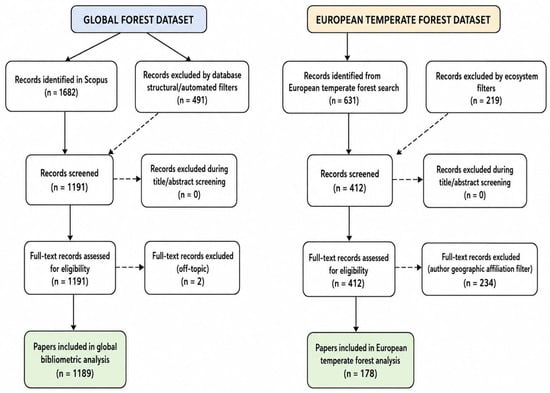
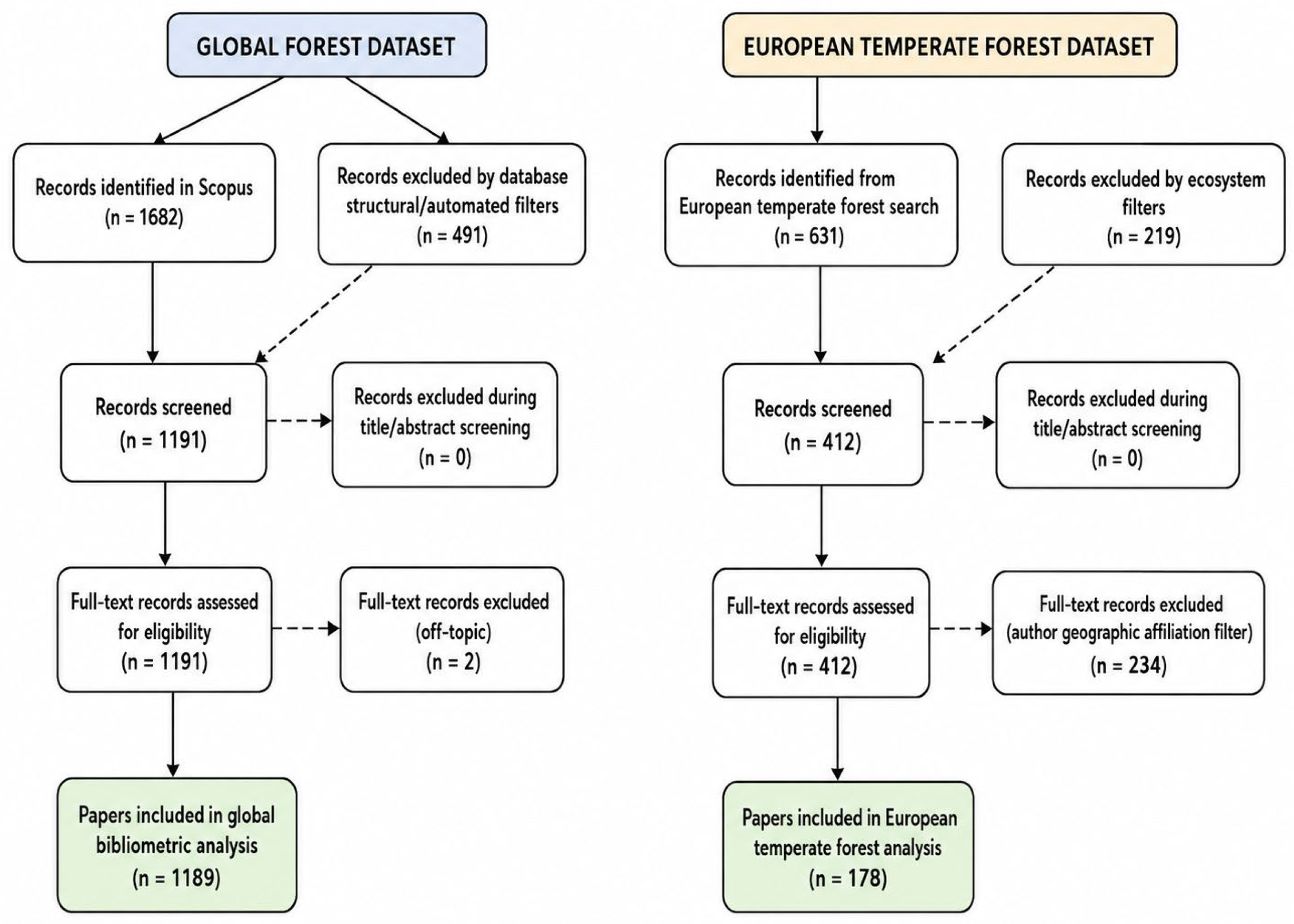
The methodology applied is based on the PRISMA guidelines [15] (Preferred Reporting Items for Systematic Reviews and Meta-Analyses). This framework, which provides a systematic structure for identifying and evaluating scientific literature, was followed for the processes of selection and screening. Records were filtered based on language, document type and temporal scope. Book chapters, monographs, grey literature, and non-English publications were excluded from the analysis. For dataset 2, studies where no author held a European institution were also removed, as they represented research conducted outside the European temperate forest context. The complete PRISMA flow diagram illustrating the identification, screening, eligibility and inclusion for both datasets is presented in Figure 1.
Figure 1.
PRISMA 2020 flow diagram showing the identification, screening, eligibility assessment, and inclusion of records in the Global Forest and European Temperate Forest bibliometric datasets. Blue-gray boxes indicate the Global Forest dataset, beige boxes indicate the European Temperate Forest dataset, and light green boxes indicate the final included records. The Global Forest dataset included 1189 records from 1682 identified records, while the European Temperate Forest dataset included 178 records from 631 identified records after database, ecosystem, screening and full-text eligibility criteria were applied.
Scopus and Web of Science are the databases which are widely used for bibliometric analyses. There are different benefits and restrictions for both databases, but the Scopus database provides wider coverage and a higher number of search document results [16]. For that reason, Scopus was used in this bibliometric analysis to review the scientific literature of global and European studies on the relationship between surface biomass, water retention and erosion susceptibility in forest ecosystems. Bibliometric analysis is a rigorous approach used to study large bodies of scientific literature to understand the development of a research field, identify emerging themes, and generate structured insights using methods that complement approaches like meta-analysis and systematic reviews [17]. Two different datasets were established at different geographic scales to address the research objectives, which enables the structured comparison between European temperate forest and global forest research, specifically. All searches were performed on Scopus on 2 February 2026, restricted to the period of 2005–2025, and limited to the English-language literature. In the document type field on Scopus, we focused on research articles, review papers and conference papers, while other document types such as books, book chapters, editorial notes, etc., were excluded using filters which are available in Scopus. The search field, which contains “article title, Abstract, Keywords”, was applied.
Dataset 1 for the global forest was constructed using a wide search string to find the intersection of surface biomass, soil erosion, hydrological process, and forest management under global warming conditions, and no geographic restriction was applied. The following keywords were used for first search: (“surface biomass” OR “forest floor” OR litter OR “forest cover”) AND (“soil moisture” OR “water retention” OR infiltration OR runoff OR “water balance”) AND (“soil erosion” OR “erosion susceptibility” OR “sediment transport” OR “overland flow”) AND (“forest management” OR thinning OR logging) AND (“forest”) AND (hydrolog* OR “hydrological processes”) AND (“climate change” OR drought OR “extreme precipitation”) AND PUBYEAR > 2004 AND PUBYEAR < 2026 AND PUBYEAR > 2004 AND PUBYEAR < 2026 AND (LIMIT-TO (DOCTYPE, “ar”) OR LIMIT-TO (DOCTYPE, “re”) OR LIMIT-TO (DOCTYPE, “cp”)) AND (LIMIT-TO (LANGUAGE, “English”)) AND (LIMIT-TO (PUBSTAGE, “final”)) AND (LIMIT-TO (SRCTYPE, “j”)). After applying the filters, the remaining publication records were exported in the CSV format from the Scopus database. A total of 1189 published articles were reviewed for the bibliometric analysis from 324 sources, with an annual growth of 20.83% in the first dataset of Global Forest.
In dataset 2, some additional filters were used to ensure geographic and thematic specificity. Firstly, in the search engine, thematic terms were restricted to temperate forest, mixed and deciduous forest ecosystems. Secondly, by using the Scopus country filter, author affiliation was restricted to European institutions. The following keywords were used for the 2nd search: (“surface biomass” OR “forest floor” OR litter OR “forest cover”) AND (“soil moisture” OR “water retention” OR infiltration OR runoff) AND (“soil erosion” OR “erosion susceptibility” OR “sediment transport”) AND (“forest management” OR thinning OR logging) AND (“temperate forest” OR “mixed forest” OR “deciduous forest”) AND (hydrolog* OR “hydrological processes”) AND (“climate change” OR drought) AND PUBYEAR > 2004 AND PUBYEAR < 2026 AND (LIMIT-TO (SRCTYPE, “j”)) AND (LIMIT-TO (PUBSTAGE, “final”)) AND (LIMIT-TO (AFFILCOUNTRY, “Germany”) OR LIMIT-TO (AFFILCOUNTRY, “Spain”) OR LIMIT-TO (AFFILCOUNTRY, “Italy”) OR LIMIT-TO (AFFILCOUNTRY, “France”) OR LIMIT-TO (AFFILCOUNTRY, “Netherlands”) OR LIMIT-TO (AFFILCOUNTRY, “Switzerland”) OR LIMIT-TO (AFFILCOUNTRY, “Poland”) OR LIMIT-TO (AFFILCOUNTRY, “Sweden”) OR LIMIT-TO (AFFILCOUNTRY, “Czech Republic”) OR LIMIT-TO (AFFILCOUNTRY, “Austria”) OR LIMIT-TO (AFFILCOUNTRY, “Finland”) OR LIMIT-TO (AFFILCOUNTRY, “Portugal”) OR LIMIT-TO (AFFILCOUNTRY, “Norway”) OR LIMIT-TO (AFFILCOUNTRY, “Belgium”) OR LIMIT-TO (AFFILCOUNTRY, “Lithuania”) OR LIMIT-TO (AFFILCOUNTRY, “Denmark”) OR LIMIT-TO (AFFILCOUNTRY, “Romania”) OR LIMIT-TO (AFFILCOUNTRY, “Hungary”) OR LIMIT-TO (AFFILCOUNTRY, “Slovakia”) OR LIMIT-TO (AFFILCOUNTRY, “Ireland”) OR LIMIT-TO (AFFILCOUNTRY, “Slovenia”) OR LIMIT-TO (AFFILCOUNTRY, “Latvia”) OR LIMIT-TO (AFFILCOUNTRY, “Greece”) OR LIMIT-TO (AFFILCOUNTRY, “Estonia”) OR LIMIT-TO (AFFILCOUNTRY, “Croatia”) OR LIMIT-TO (AFFILCOUNTRY, “United Kingdom”)) AND (LIMIT-TO (DOCTYPE, “ar”) OR LIMIT-TO (DOCTYPE, “re”) OR LIMIT-TO (DOCTYPE, “cp”)) AND (LIMIT-TO (LANGUAGE, “English”)). A total of 178 published articles were reviewed for analysis from 89 sources, with an annual growth of 14.25%.
2.2. Bibliometric Analysis and Visualisation
The data was retrieved from Scopus in the CSV format and analysed by two bibliometric software tools, which are widely used: the Bibliometrics R package (V5.0), and VOSviewer (v1.6.20). To measure the quality and scientific impact of scientific publications is the focus of bibliometric analysis [18]. It also handles bibliographic networks (co-citation, co-keywords, co-authors, etc.) by understanding the conceptual, social and intellectual structures [19]. VOSviewer, which is a free software, was used to make bibliometric maps [20]. Keyword co-occurrence networks and country co-authorship collaboration networks maps were made by using it. Identification of most-used research topics or fields by research is also possible with the help of VOSviewer (e.g., most frequently used keywords by authors) [21]. For the performance analysis, including annual publication trends, institutional and country output analysis, source and journal productivity analysis, thematic structure analysis and trending topic mapping, the Bibiometrix R package (v5.0) with its interactive Biblioshiny (v5.0) web interface was used [22]. The R ggplot2 package was used to make all comparative figures [23]. Various studies [24,25,26,27] used these software tools to determine publication trends and visualise collaboration networks for research topics and collaborations between authors, countries and academic institutions.
The main focus of the study was to identify research gaps and collaboration patterns related to surface biomass dynamics, water retention, and erosion susceptibility in forest ecosystems across both datasets. Collaborative relationships among countries, institutions, and authors were analysed. Additionally, the connection between frequently used keywords, emerging topics, and the connection between research themes was systematically examined. For the period of 2005 to 2025, overall publication output and annual growth trends were evaluated. Using authors’ affiliation data from the selected publications, the productivity of institutions and countries was assessed. Furthermore, to reveal the intellectual structure of the research field and highlight emerging directions, keyword co-occurrence networks and thematic maps were developed, associated with temperate forest hydrology and soil erosion in central Europe. All the data is available in Supplementary Table S1.
3. Results
The bibliometric analysis of two datasets, Global Forest with 1189 articles, and European Temperate Forest with 178 documents, showed distinct patterns in publication growth, thematic structure, international collaboration and geographic distribution. Three analytical dimensions, like publication performance, collaboration and network analysis, and thematic and keyword analysis, were used to present the results.
3.1. Publication Performance Analysis
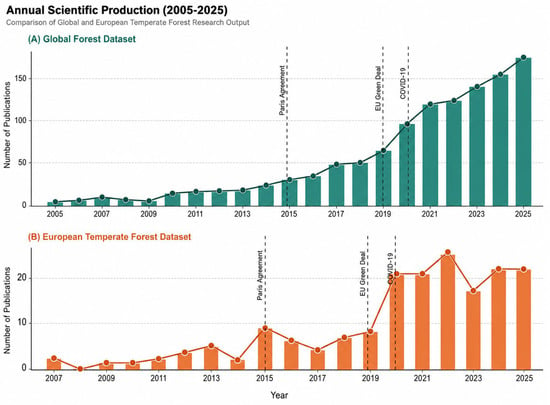
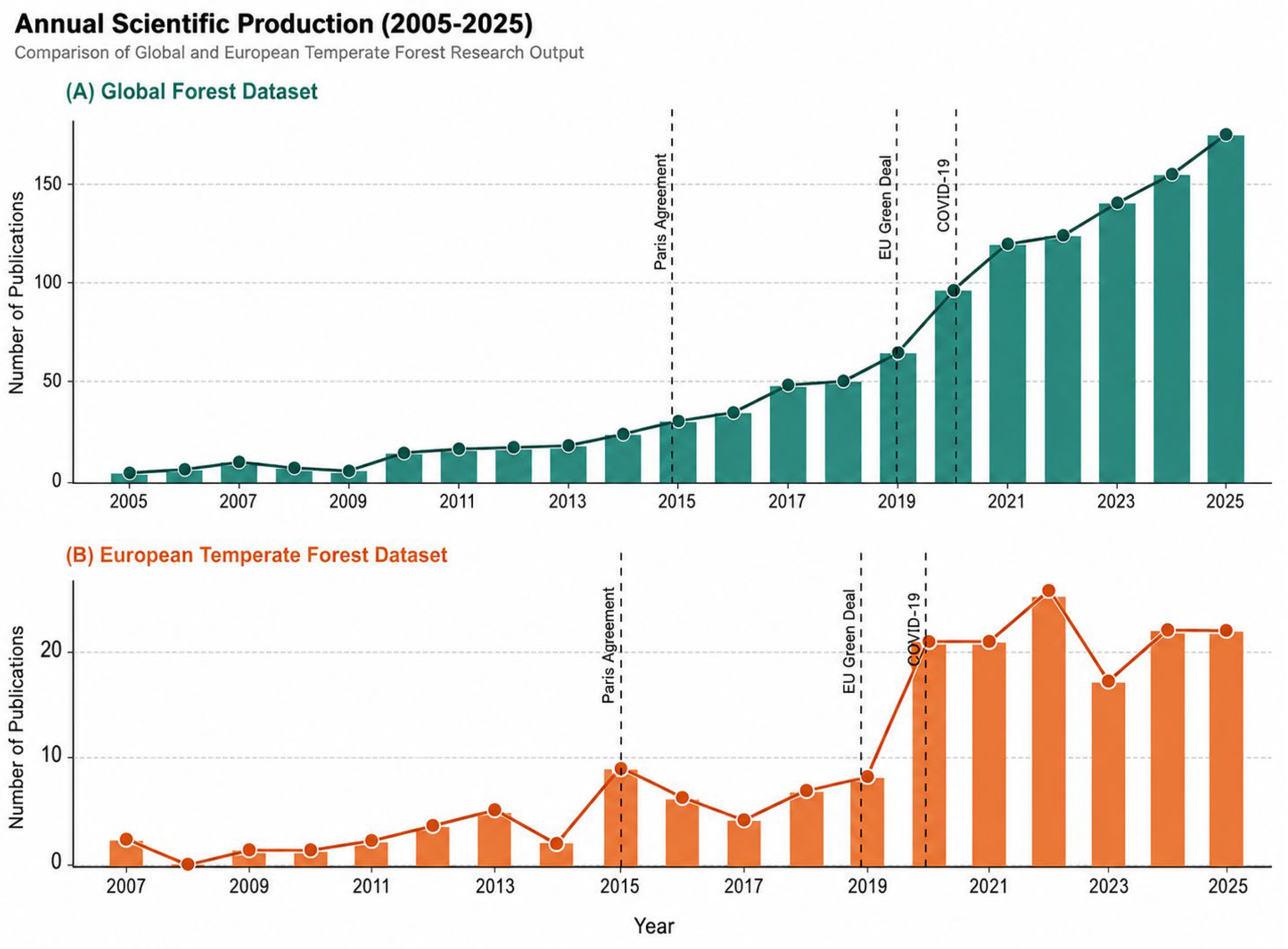
Figure 2 shows the annual publication trends over the period of 2005 to 2025 in both the global dataset and the European Temperate Forest dataset. The global dataset showed noticeable and sustained growth over time, with just 4 documents in 2005 and 176 documents in 2025, with an annual growth of almost 21%. During 2015, very noticeable acceleration occurred, coinciding with the adoption of the Paris Agreement on climate change, which increased the forest-related environmental research on a global level. Following the European Union Green Deal in 2019, the second acceleration was observed as the deal raised forest ecosystem service and climate adaptation to be central policy priorities. A very sharp and third acceleration happened in 2020, with annual output jumping from 67 to 98 articles with a 46% increase in a single year, partially connected to the COVID-19 pandemic as fieldwork limitations shifted resources towards literature synthesis and bibliometric work [28].
Figure 2.
Trends in annual publication output from 2005 to 2025 for both datasets. Teal bars and lines represent the Global Forest dataset, while orange bars and lines represent the European Temperate Forest dataset. Vertical dashed lines indicate key events: Paris Agreement (2015), EU Green Deal (2019), and the COVID-19 pandemic (2020).
European Temperate Forest showed almost a similar growth pattern, but on a very low scale, as the articles increased from only 2 in 2007 to 22 documents in 2025. European temperate forests represented only 15% of the global research output during 2005 to 2025, which shows a significant underrepresentation in the global scientific literature on forest hydrology and erosion despite the ecological importance of temperate forests in central and northern Europe.
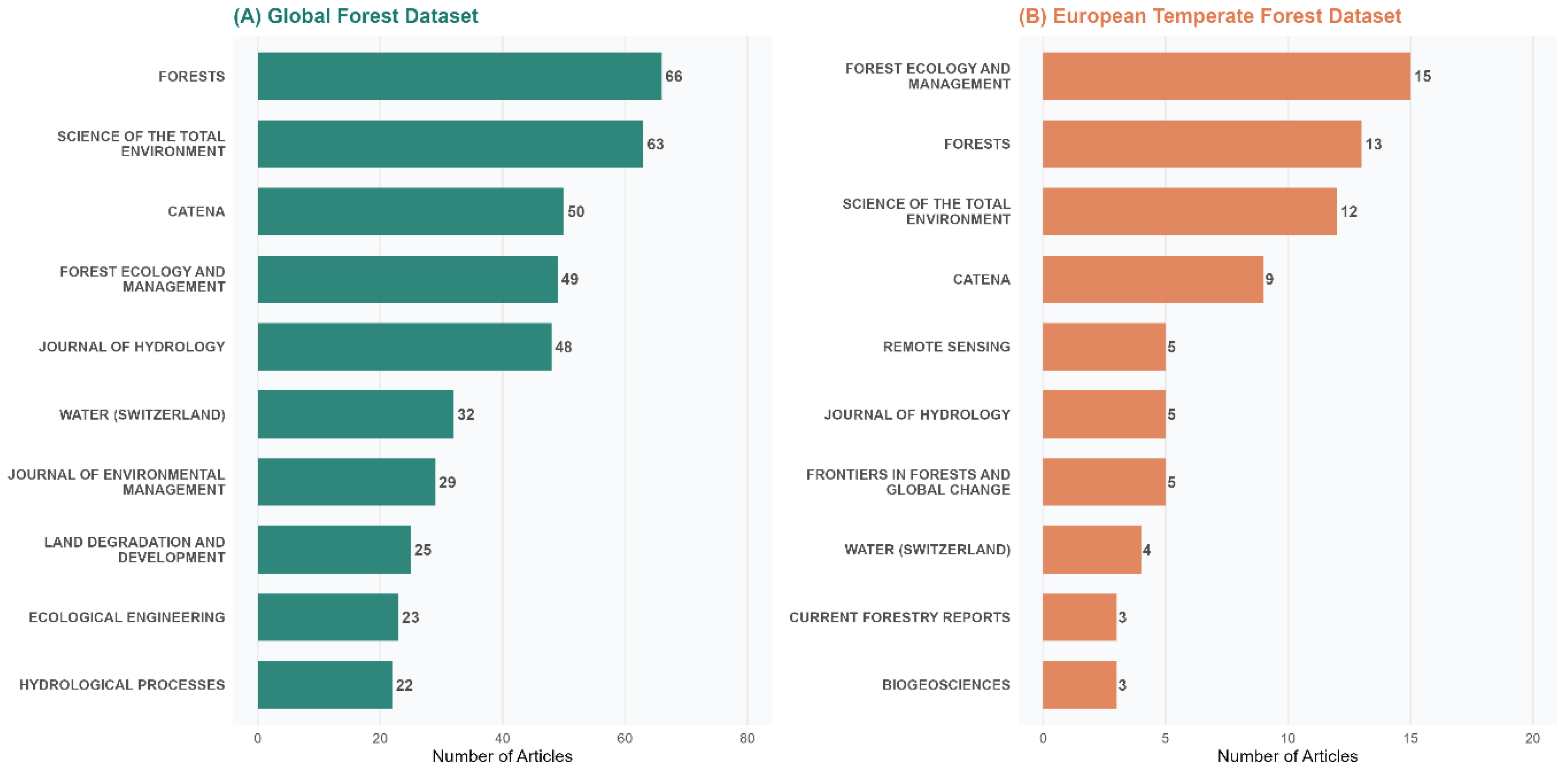
A total of 324 journals published 1189 articles for the Global Forest dataset 1, while, for the second dataset about the European Temperate Forest, 89 journals published 178 articles. The analysis of source journals (Figure 3) shows both shared and divergent publication patterns. In dataset 1, the top journals were Forests with 66 articles, followed by Science of Total Environment, Catena, Forest Ecology and Management and Journal of Hydrology with 63, 50, 49, and 48 articles, respectively. While, in dataset 2, the highest number of articles were published in Forest Ecology and Management Journal with 12 articles, followed by Forests, and Science of Total Environment with 13 and 12 articles, respectively. In dataset 2, Remote Sensing appeared in the top 10, showing the growing use of remote sensing technologies in European temperate forest monitoring.
Figure 3.
The top 10 most relevant journals with the maximum number of articles in both datasets. Teal bars represent the Global Forest dataset, while orange bars represent the European Temperate Forest dataset.
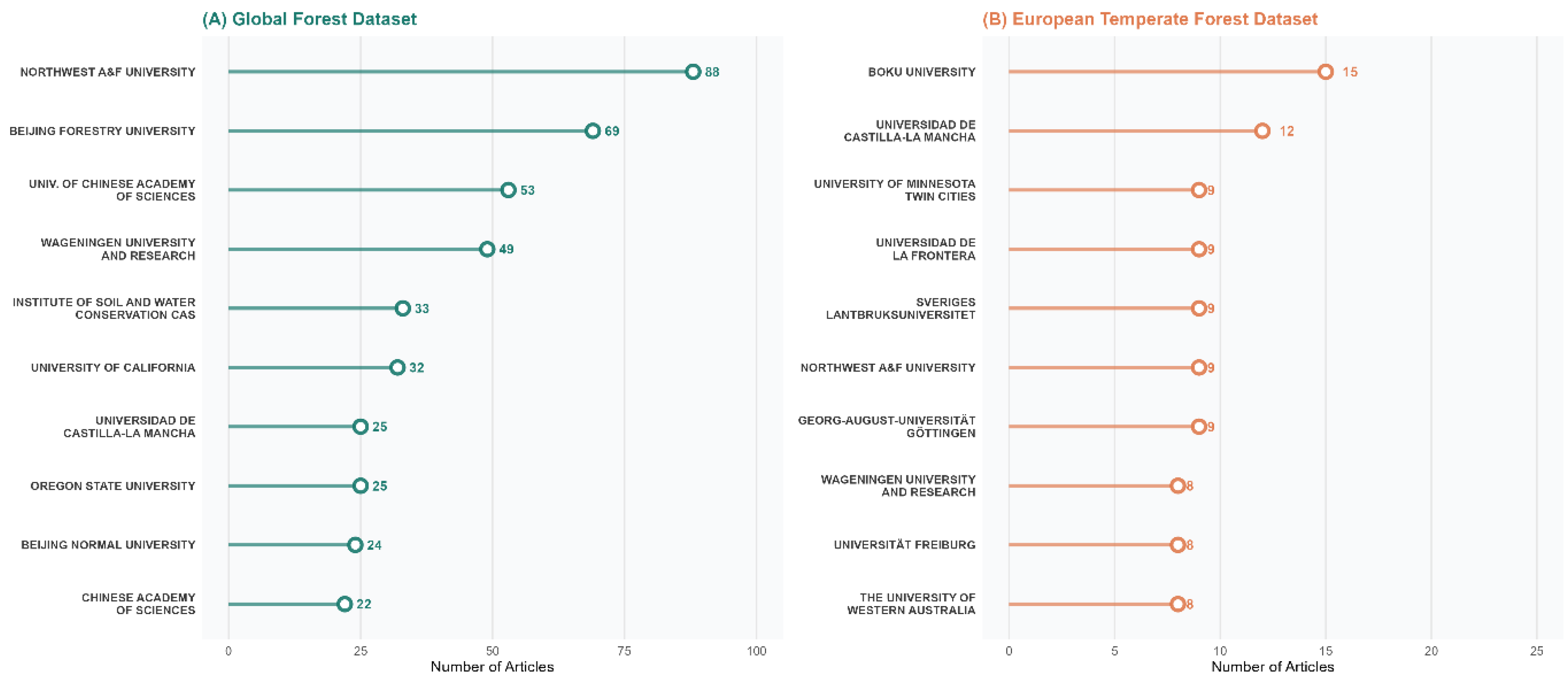
Chinese institutions were dominant in institutional analysis (Figure 4) in the global dataset, occupying the top three positions, with Northwest A&F University with 88 articles, Beijing Forestry University with 69 articles, and the Chinese Academy of Sciences with 53 articles. The highest-ranked university from a European institution was Wageningen University in the Netherlands, with 49 articles in the Global Forest dataset 1. Meanwhile, the University of Natural Resources and Life Science Vienna, BOKU, Austria, was the leader in dataset 2 with 15 articles, followed by the University of Castilla-la Mancha, Spain, with 12 articles during the period of 2005–2025. Critically, in both datasets, none of the Polish institutions appeared, which shows a significant gap for a country whose forests cover almost 30% of the country’s territory and is facing increasing pressures from climate change and altered precipitation regimes.
Figure 4.
Top 10 most productive institutions in both datasets. Teal lines and markers represent the Global Forest dataset, while orange lines and markers represent the European Temperate Forest dataset.
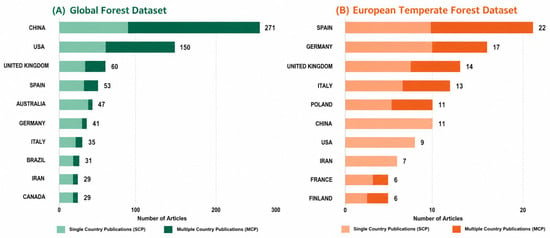
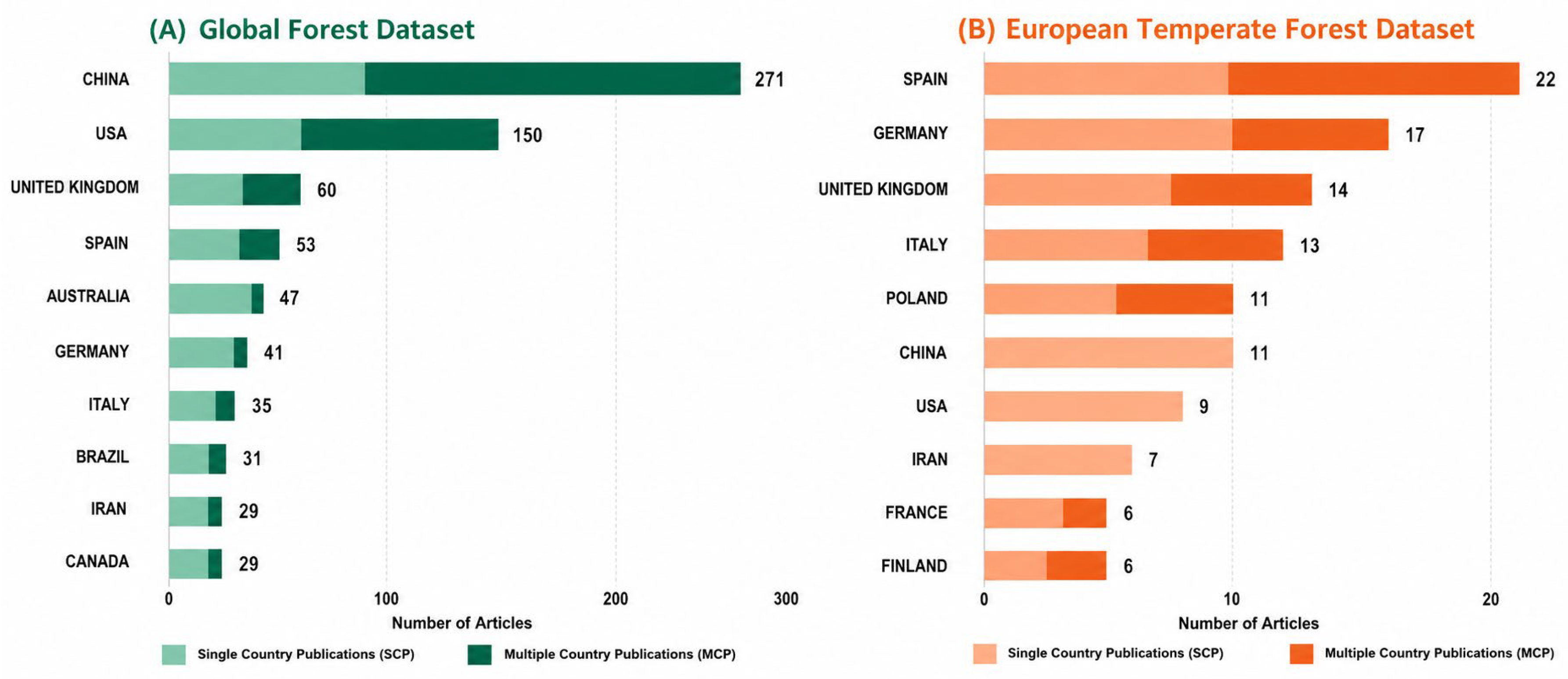
Figure 5 presents the corresponding authors with single- and multiple-country publications (SCPs and MCPs). Typically, corresponding authors are responsible for represent the study’s institutional or geographical origins, overseeing the research, and managing the manuscript submission process. The significance of first authorship is there, but we focused on corresponding authors because they are often seen as primary investigators or points of contact, specifically in multi-country collaborations. In dataset 1, the top contributing country was China with 271 documents, 195 SCPs, and 76 MCPs, followed by the USA with a total of 150 articles, 105 SCPs, and 45 MCPs. The UK, Spain and Australia came third, fourth and fifth, respectively, with 60, 53 and 47 articles. In dataset 2, the country with the most contributions was Spain with 22 documents, followed by Germany (n = 17), the UK (n = 14), Italy (n = 13), and China (n = 11). In dataset 2, Poland appeared in the sixth position with a total number of articles of 11, but with the highest percentage of SCP articles, with 63.6% within the top 10 countries in the European Temperate Forest dataset. It shows a relatively low level of international collaboration, which indicates that, rather than broader European or international research networks, Polish forest hydrology research operates largely within national boundaries. In dataset 2, China and the USA recorded zero SCP values, which shows that their research occurred exclusively through international collaboration with European partners.
Figure 5.
Top 10 countries by scientific production in the (A) Global Forest dataset and (B) European Temperate Forest dataset, showing single-country publications (SCP) and multiple-country publications (MCP). In panel (A), light green segments represent SCPs, whereas dark green segments represent MCPs. In panel (B), light orange segments represent SCPs, whereas dark orange segments represent MCPs.
3.2. Thematic and Keyword Analysis
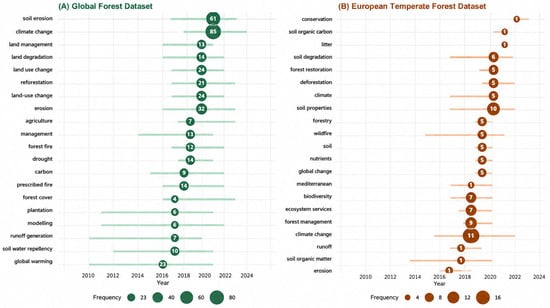
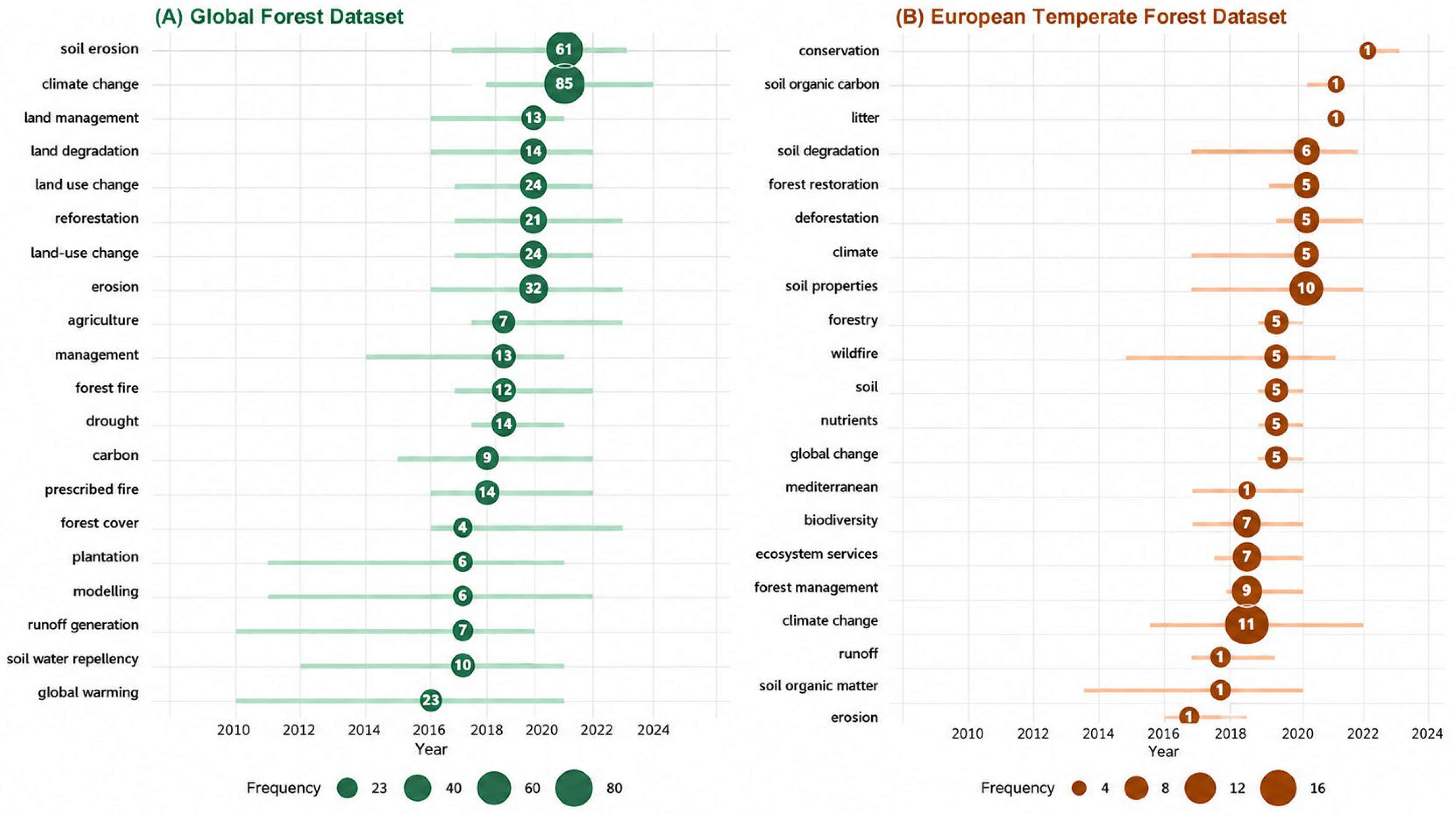
The trending topics with respect to time are presented in Figure 6, which reveals both shared and different priorities between the two datasets. In the trend topics plots Figure 6, the median publication year of each term was calculated as the 50th percentile of the year of all documents containing that term weighted by frequency, using the bibliometrix R package. The trending topics in both datasets varied strongly over time. In dataset A (Global Forest), the top research topics used in the literature with the median year 2021 were climate change (n = 89), soil erosion (n = 61), and erosion (n = 32) with a median year of 2020, which confirms the dominant global research preoccupation is represented by climate-driven erosion dynamics. In dataset A, fire-related topics including prescribed fire, forest fire and soil water repellence, were represented but completely absent from the European Temperate Forest dataset, which shows a fundamental difference between global forest and European temperate forest research goals.
Figure 6.
Trending research topics in both datasets. Green bubbles and confidence intervals represent the Global Forest dataset, while orange bubbles and confidence intervals represent the European Temperate Forest dataset. Bubble size is proportional to frequency, and position on the x-axis indicates the median publication year of the publications in which the topic occurred (calculated as the 50th percentile of the year distribution, weighted by frequency using the bibliometrix R package).
Climate change (n = 18, median year 2020) also dominated the European Temperate Forest dataset, followed by forest management, ecosystem service and soil properties. The most recently emerging topics in dataset B (European Temperate Forest), with the latest median publication year, were soil organic carbon with a median year of 2023, litter (median year 2023), and conservation with a 2024 median year. These results of emerging topics directly correspond to the PhD research underlying this review, as surface litter and soil organic carbon are arbitrators of water retention and erosion susceptibility, positioning the present PhD research at the active boundary of European temperate forest science.
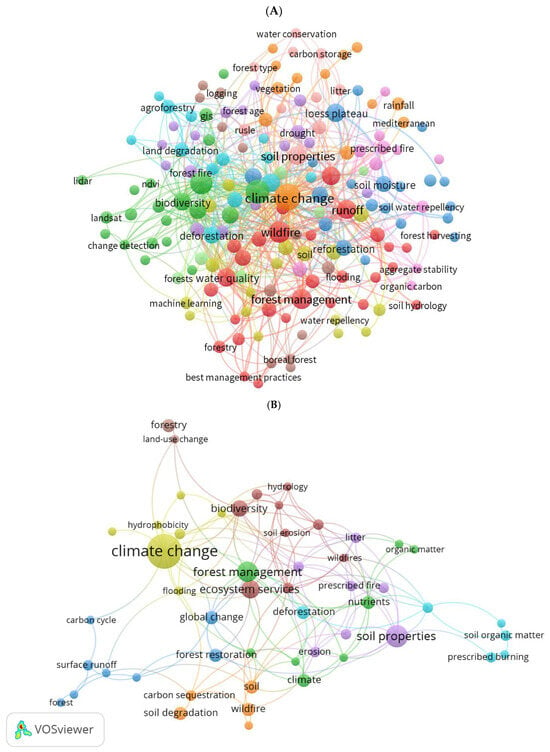
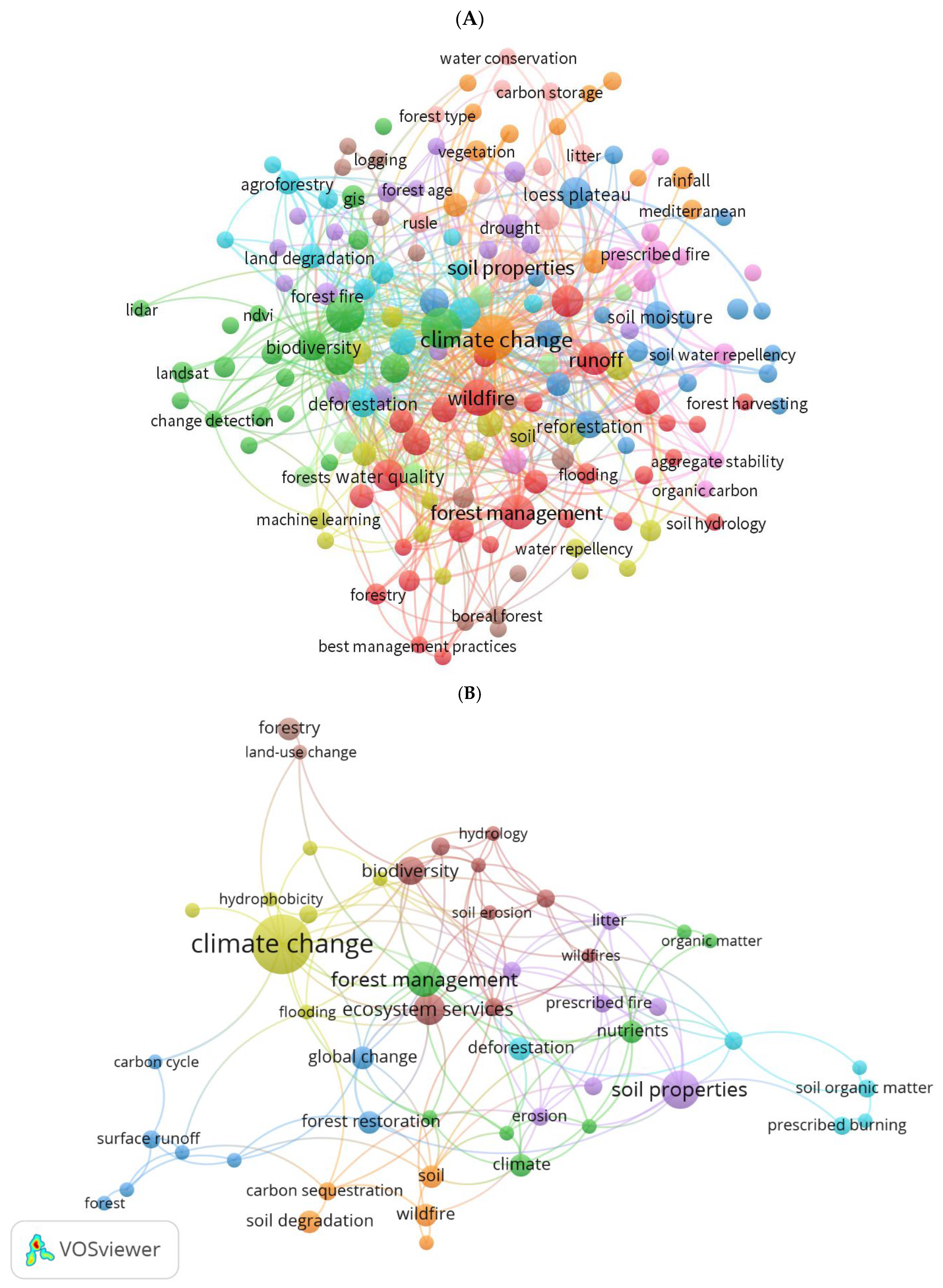
Figure 7 represents the keyword co-occurrence network generated using VOSviewer. It shows the relationship between trending research topics within the specific research area based on their co-occurrence. The frequency of use of author keywords in the literature is represented by the size of each node. Moreover, the lines show how often author keywords appear together in the same documents, while the strength of keywords’ co-occurrence is shown by the thickness of the lines. In dataset 1 (A), a keyword network was generated using VOSviewer, which shows climate change as the most frequently studied topic as it is in the centre of the cluster, which is strongly connected with different themes such as wildfire, forest management, soil properties, biodiversity and runoff, which indicates the wider interdisciplinary focus on climate impacts on forest and soil systems. Meanwhile, in dataset 2 (B), it presents the clearer thematic clusters, as the network was smaller and more loosely connected, and the central nodes are climate change and forest management, with soil properties, erosion, and litter forming peripheral but emerging clusters.
Figure 7.
Keyword co-occurrence networks for dataset 1 (A) Global Forest and dataset 2 (B) European Temperate Forest. Different colors indicate distinct keyword clusters. The size of the keyword’s circles shows the frequency of keyword appearance, and the lines show co-occurrence relationships among keywords; greater link thickness indicates stronger co-occurrence relationships.
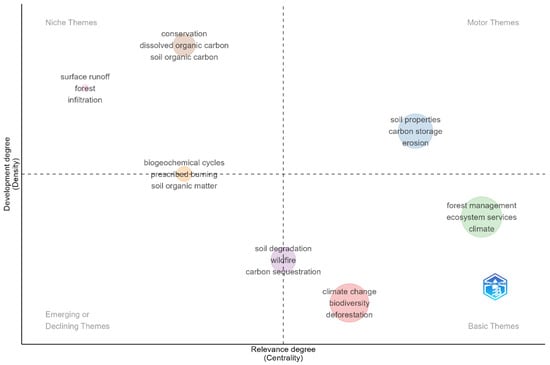
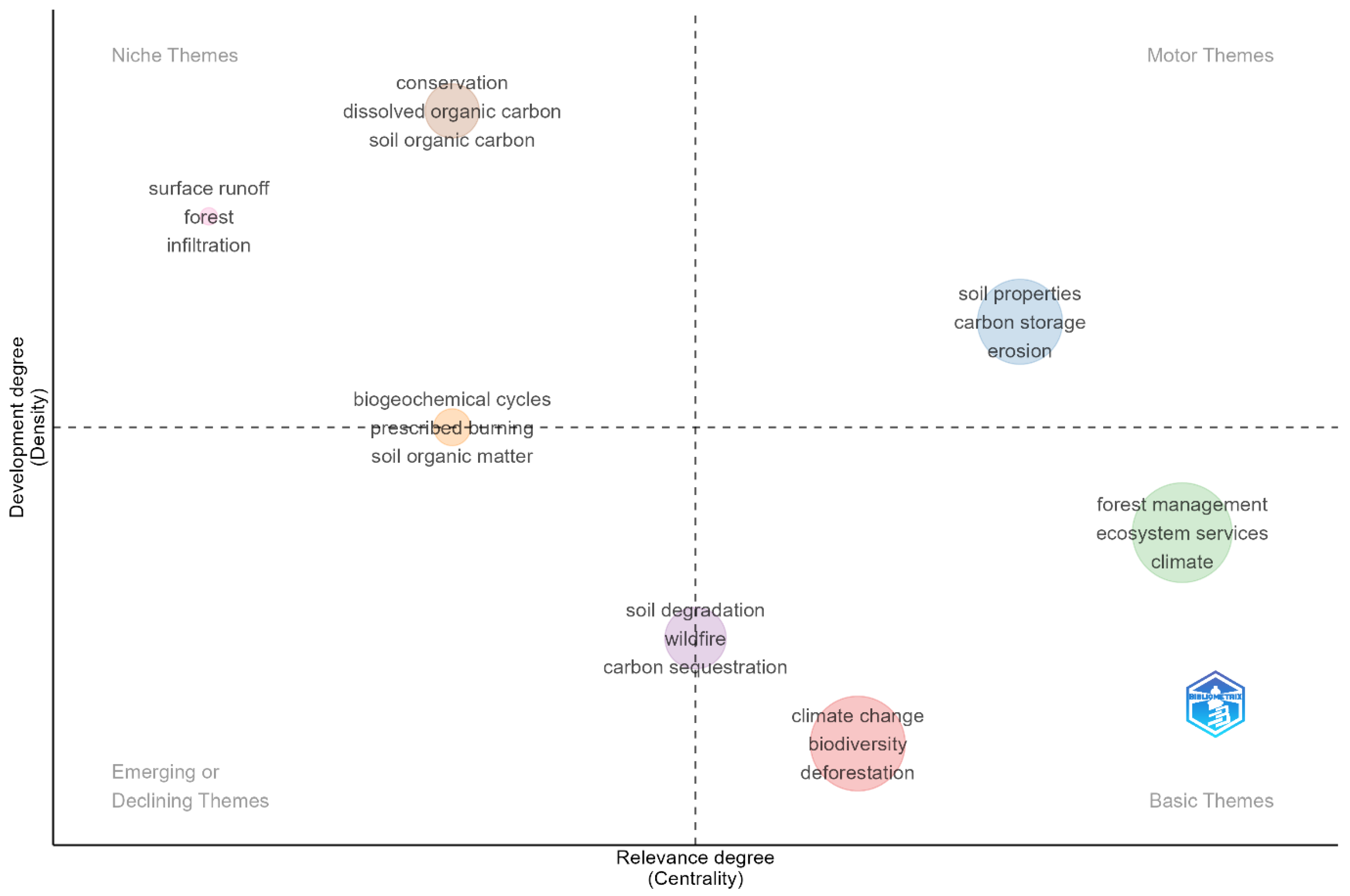
The thematic map analysis (Figure 8) produced by Bibliometrics from dataset 2 shows research topics according to their centrality and density. Soil properties, carbon storage, and erosion were in the motor theme quadrant, which highlights that these are core and actively developed areas in the field. In the basic themes, forest management, ecosystem service and climate are included, which shows high relevance but lower internal development, which means they form the fundamental background of the research area. Conservation, dissolved organic carbon, and soil organic carbon appeared well developed but less central in niche themes, suggesting specialised research topics. Meanwhile, emerging or declining themes, which show the topics that are newly developing or receiving decreasing research attention, were soil degradation, wildfire, and carbon sequestration.
Figure 8.
Thematic map of dataset 2 (European Temperate Forest). Different bubble colors distinguish thematic groups, while bubble position indicates relevance (centrality) on the x-axis and development (density) on the y-axis. The upper-right quadrant represents motor themes, the upper-left quadrant niche themes, the lower-right quadrant basic themes, and the lower-left quadrant emerging or declining themes.
3.3. Collaboration and Network Analysis
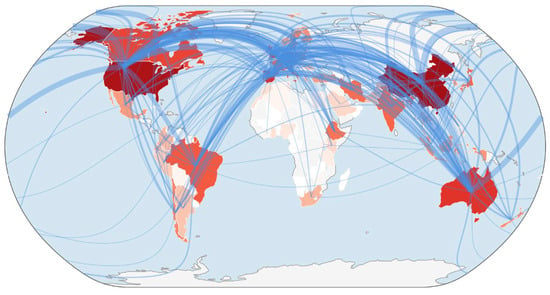
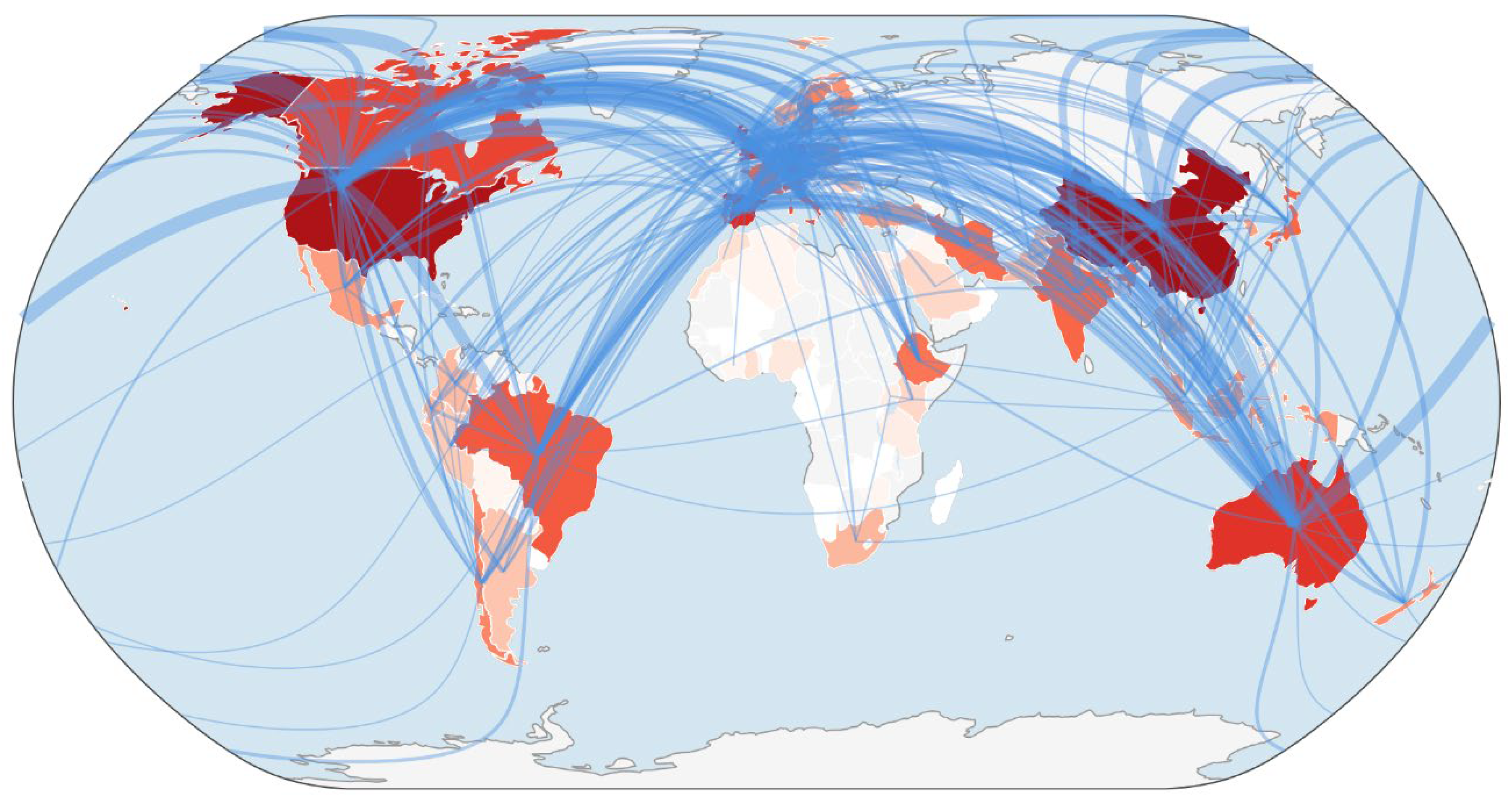
The global country collaboration map (Figure 9) revealed that countries like China, the USA, the UK, Australia, and Germany formed the core of the global collaboration network, with dense bilateral and multilateral linkages. Over the last two decades, China has shown the most dominant position as the largest producer and a central collaborative hub, as it is clear that Chinese academic institutions have made substantial investments in forest hydrology and erosion research. European countries, particularly Germany, Spain, the UK, and the Netherlands, serve as a bridge between the dominant Asian and Anglo-American research cluster, as they occupy the intermediate positions in the global Network.
Figure 9.
Global country collaboration map for dataset 1. Countries are shown in red tones, with darker red indicating greater scientific production, while blue lines represent international collaboration links between countries.
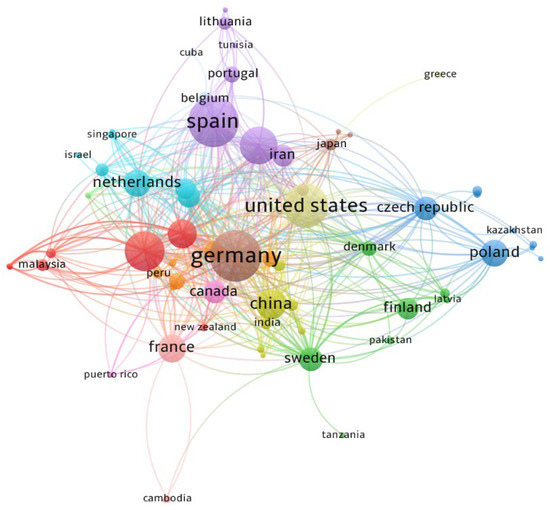
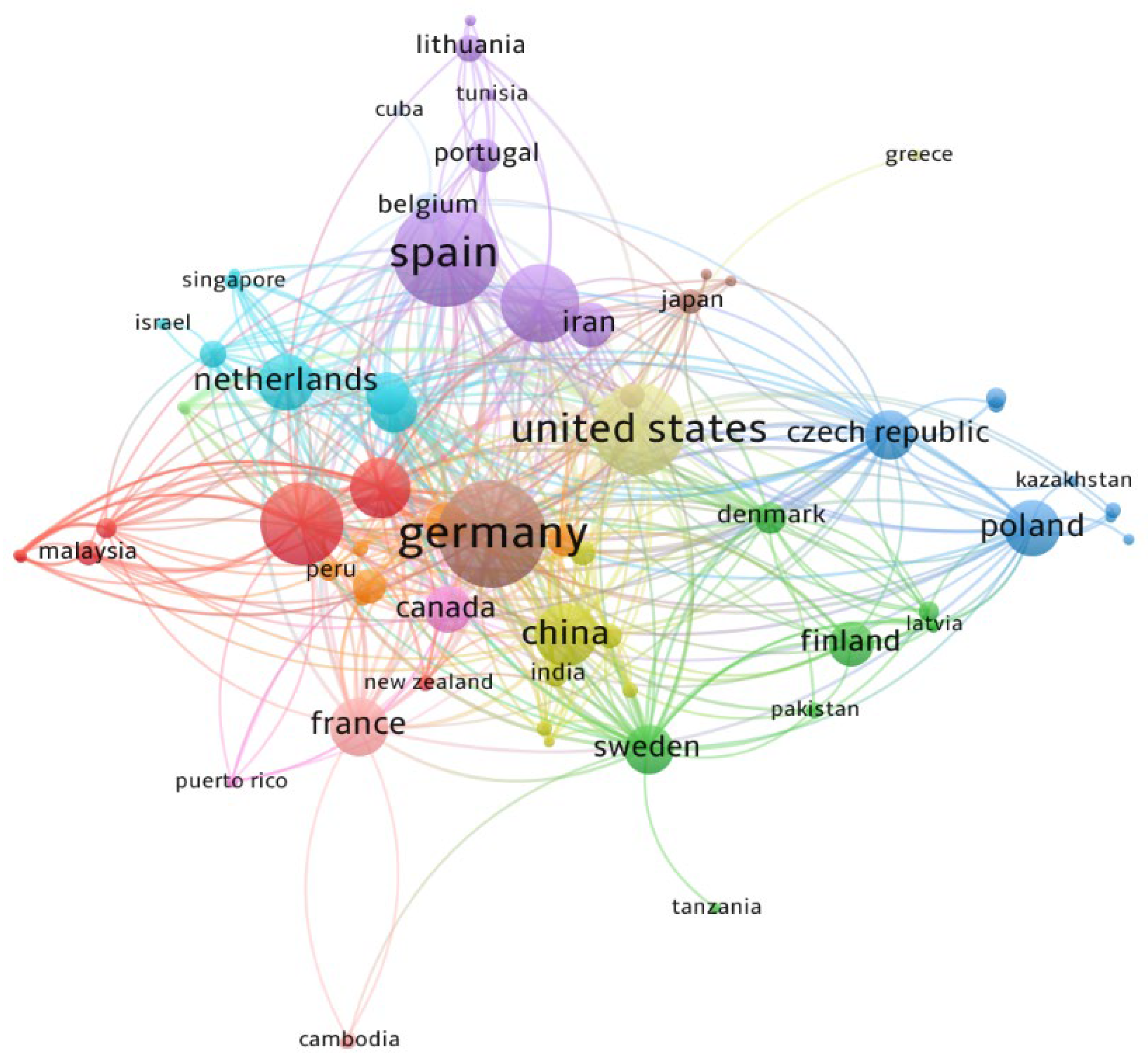
Figure 10 shows the European co-authorship network analysis, which revealed the different structure within the European temperate research community. Germany emerged as the main hub, with the strongest links to Spain, the UK, France, Sweden and Austria, while Poland, the Czech Republic, and Slovakia formed a central European cluster. Spain and Italy formed the Mediterranean cluster. The separation of these clusters is significant as it reflects the different disturbance regimes, forest management traditions, and hydrological contexts in two different regions. Poland’s position at the edge of the network shows limited international connections, with limited direct linkage to the dominant Spanish and German research hubs. This is a challenge and an opportunity in one sense, as it gives a chance to strengthen links with leading European research institutions and increase the visibility and impact of Polish forest research.
Figure 10.
Country co-authorship collaboration network for dataset 2. Different colors represent distinct country collaboration clusters; node size indicates the relative number of publications, and connecting lines represent co-authorship relationships, with thicker lines indicating stronger collaboration links.
Species-level analysis of the author’s keywords in dataset 2 revealed three species: Scots pine (Pinus sylvestris), Norway spruce (Picea abies), and aspen (Populus tremula), which are dominant in Polish temperate forests. Each appeared only once in 178 European publications, alongside European beech, which appeared two times, and the same goes for Aleppo pine. The almost-absence of species-specific hydrological and erosion research confirms a very critical species-level knowledge gap, which, under accelerating climate change pressure, is directly relevant to the management of the Polish temperate forest ecosystem.
4. Discussion
4.1. Publication Growth over Time and Global Contributions by Countries and Institutions
Our results revealed a significant expansion of the scientific literature addressing the interaction between surface biomass, water retention, soil erosion and climate change. The strong growth was observed after three big events happened. Firstly, after 2015, the Paris Agreement [29] occurred, which increased forest-related environmental research on a global level. After the European Union Green Deal in 2019 [30], a second acceleration was observed because this deal made forest ecosystems and climate change adaptation central policy priorities. Global and regional climates are influenced by forest ecosystems through complex interactions that involve evapotranspiration, energy exchange and carbon storage [31]. The global output grew from 4 documents in 2005 to 176 in 2025, with an increasing growth rate of 20.83%. This growth is almost in the same pattern as in the earlier bibliometric studies of similar research interest studies [12,24,32], showing it to be a topic relevant to modern research rather than an isolated topic.
The third and very sharp increase happened in 2020, by 46%. Single-year rise should be interpreted as a part of the wider expansion of research in this field. The bibliometric data shows a substantial increase in publication during this period, but do not allow the knowing of the exact factors for this growth. The European temperate forests research also followed the same pattern but on a substantially lower scale, which appeared to contribute to only 14.9% of global output across the study period, which justifies the need for dedicated research on central European temperate forest ecosystems, especially in relation to hydrology, biomass dynamics and soil erosion processes.
China and USA show strong contributions in the global dataset, which is consistent with previous bibliometric studies, as Farooqi et al. [12] had also identified China and the USA as major contributors to forest hydrology research. These contributions show that these countries may have sustained investments in the fields of forest hydrology, environmental monitoring, and research infrastructure. The European Forest dataset showed different countries that are contributing prominently such as Spain, Germany, the UK, Italy, and Poland. The prominent representation of Spain and other Mediterranean countries shows considerable European research activity around wildfire, soil erosion, and land degradation [33]. However, when it comes to central European temperate forests, the environmental conditions of Mediterranean forest are different, and because of that the findings of the Mediterranean systems cannot directly be transferred to temperate forests, where thinning, harvesting, drought, litter dynamics and extreme precipitation may represent different drivers of hydrological response.
4.2. Theme-Based Structure of Research Fields
The key term co-existing system indicates that changes in climate, soil deterioration, forest management and soil properties constitute the focal topics of research in this sector. These conclusions verify that the scientific community considers the forest ecosystem as an embedded socio-environmental system where climate trends, flora structure and soil processes work together to affect the environmental stability.
However, the results also show the difference between the worldwide and European research outlooks. At the worldwide level, inconvenience-related topics, like wildfire, soil water impermeability, and after-fire deterioration, rule over the syllabus. These topics show the environmental conditions of regions that are easy targets of fire, such as Mediterranean forests, North America and Australia. Wildfire can considerably change the natural properties of soil and hydrological reactions, which ultimately cause a rise in runoff and erosion risk [33].
On the contrary, the European Temperate Forest dataset focuses on forest management, ecosystem services and soil properties that showcase the ritual of versatile forest management in Europe. European forestry systems are usually constructed to balance timber output with ecosystem conservation, drainage landmark protection and climate relief objectives.
Despite that, the key term system suggests that hydrological processes, like infiltration, runoff and water retention, remain partially merged with forest structure and vegetation-linked topics. This suggests that despite soil erosion and hydrology being the most-studied topics, vegetation structure and surface biomass still feel the need to be fully researched within a wide research system.
4.3. Rising Topics and Changing Research Priorities
Thorough examinations of these themes point out several rising topics in the European temperate forest literature, especially litter dynamics, soil organic carbon and conservation strategies. These subjects are part of the expanding or rising section of this skeleton. It suggests that they contain new research directions which are now becoming the trend people are moving towards.
Forest debris and surface biomass are key elements behind soil hydrological processes. They have several effects; for example, surface litter decreases the rainfall impact, increases penetration, decreases surface runoff, ultimately restricting soil erosion [34]. Similarly, soil organic carbon enhances the structure of soil and aggregation, increasing water-holding capacity and decreasing sensitivity to erosion [35]. The developments of these topics within bibliometric evaluations imply the significance of soil–vegetation interaction in maintaining ecosystem flexibility under changing climatic conditions.
Though these topics are grabbing a lot of attention, the bibliometric network shows that the research that specifically links surface biomass dynamics with hydrological processes remains comparatively limited, especially in temperate forest ecosystems. This observation points out an important conceptual loophole within the literature.
4.4. Splitting Between Hydrological Research and Forest Management
One of the major discoveries in the bibliometric analysis is the comparatively poor coordination among hydro science investigation and operation themes. While the latter seems to be the core topic within the literature, its immediate link with water-related procedures like infiltration, surface water production, and soil hydrology is somewhat confined within keyword mapping. These findings should not be considered as evidence that forest management has little influence on hydrological processes. Rather, it indicates these processes were comparatively weakly connected within the keyword structure of the literature analysed in this study. Field studies prove that forest floors, surface biomass and management practices directly influence water cycles. However, confirming those links remains complex because researchers use different timelines, scales, and methodologies.
Experimental evidence shows that the forest floor can directly influence the movement of water across and into the soil. Wang et al. [34] found that, under simulated rainfall, surface litter increases water infiltration more effectively than incorporated litter, primarily by reducing soil sealing. It shows that the hydrological effectiveness of surface biomass depends on its positioning and structural arrangements, not just on quantity. Similarly, via the simulating of rainfall across different forest types and slopes, Neris et al. [36] proved that forest floor properties concurrently dictate water repellence, infiltration, runoff, and erosion, demonstrating that surface biomass serves as a critical boundary layer between vegetation and soil hydrology.
Forest management practices, involving garnering, thinning and debris handling, might greatly affect the surface biomass allocation, awning and debris collection. These variations could immediately influence percolation capacity, water retention and credibility. A global synthesis by del Campo et al. [37] found that silviculture thinning alters hydrological parameters like soil moisture and throughfall, but these responses vary based on forest type, climate and treatment specifics. Farahnak et al. [38] also demonstrated that, following thinning, different runoff responses can be generated with different arrangements of felled material.
The weak bibliometric connection observed in this study may therefore show a lack of integrated research designs, but not simply a lack of research because studies rarely track the entire chain of events from how forest management alters ground cover to how those changes affect soil water, runoff and erosion. Combining these measurements is important to truly understand how forestry affects water and soil health.
4.5. Research Loopholes and Future Path
The outcome of this bibliometric review enlightens various important research loopholes that demand further insight and research. First, a greater incorporation of forest ecology, soil sciences, and hydrology in studies of temperate forest ecosystems is needed. While these subject areas are often studied individually, the functioning of forest ecosystems depends on strong interactions between vegetation structure, soil properties and hydrological processes.
Second, the limited portrayal of species-specific research within the key term network indicates that the hydrological duties of dominant temperate forest species remain poorly understood. Species like Pinus Sylvestris, Picea abies, and Populus tremula vary significantly in debris production, awning and rooting patterns, which can affect soil moisture dynamics and erosion processes in different ways.
Finally, the development of research topics related to debris dynamics and soil organic carbon highlights a growing scientific interest in the surface-biomass-to-soil liaison. Understanding the way changes in surface biomass impact seepage, runoff generation, and erosion repellence is especially crucial for temperate forests that are experiencing a rise in climate variability. Dealing with these theoretical loopholes will be crucial for developing sustained forest management policies that boost water retention and decrease soil degradation risks under future climate scenarios.
5. Conclusions
This study of 1189 global and 178 European temperate forest publications from 2005 to 2025 revealed a rapid increase in research on soil erosion, surface biomass and water retention, with an annual growth rate of almost 20.83%, with this acceleration coinciding with the Paris Agreement (2015) and the European Green Deal (2019). China and USA dominated global research output, BOKU Vienna and the University of Gottingen led European contributions, while European research accounted for only 14.9% of global output and was mainly influenced by Mediterranean fire-related research, which limits its direct applicability to central European forest conditions. The analysis also revealed an unequal geographical distribution of research within European temperate forests, as several central and eastern European nations are less represented in the dataset than countries like Spain, Germany, and the UK. This imbalance does not necessarily point to domestic research deficit; instead, these patterns simply highlight the need for broader comparative research across European regions.
Thematic analysis showed that infiltration and surface runoff are poorly integrated with forest management and climate change research, which is a major knowledge gap. Litter and soil organic carbon have emerged as very recent topics which are active with a median value of 2023 in European temperate forest ecosystems. Central European countries such as Poland, Slovakia, and the Czech Republic remain less represented in the European temperate forest research network, with limited integration into the broader European collaboration network and high research isolation rates.
The dominant tree species in temperate forests are pine (Pinus sylvestris), Norway spruce (Picea abies), and aspen (Populus tremula), but they have appeared only once in 178 European publications across central European temperate forests, revealing a considerable species-specific knowledge gap. Future research should focus on field-based, species-specific investigations of surface biomass dynamics, water retention and soil erosion in central European temperate forest stands, integrated within stronger cross-border scientific partnerships.
Supplementary Materials
The following supporting information can be downloaded at: https://www.mdpi.com/article/10.3390/geosciences16090349/s1, Table S1: PRISMA 2020 Checklist.
Author Contributions
Conceptualization, A.K.-I.; methodology, A.K.-I., L.R.-B.; software, M.H.S.; validation, A.K.-I., L.R.-B.; formal analysis, A.K.-I.; investigation, M.H.S.; data curation, M.H.S.; writing—original draft preparation, M.H.S.; writing—review and editing, M.H.S.; visualisation, M.H.S.; supervision, A.K.-I., L.R.-B.; project administration, A.K.-I.; funding acquisition, A.K.-I. All authors have read and agreed to the published version of the manuscript.
Funding
This research received no external funding.
Data Availability Statement
The raw data supporting the conclusions of this article will be made available by the authors on request.
Acknowledgments
The authors would like to thank the Rector’s Ethics Committee for Research Involving Human Participants at the University of Agriculture in Krakow for approving the study (approval no. 336/2025). The authors also express their gratitude to all respondents for their voluntary participation in the study.
Conflicts of Interest
The authors declare no conflicts of interest.
Abbreviations
The following abbreviations are used in this manuscript:
| RCP | Representative Concentration Pathway |
| PRISMA | Preferred Reporting Items for Systematic Reviews and Meta-Analyses |
| SCP | Single-Country Publications |
| MCP | Multiple-Country Publications |
References
- Brauman, K.A.; Daily, G.C.; Eo Duarte, T.K.; Mooney, H.A. The nature and value of ecosystem services: An overview highlighting hydrologic services. Annu. Rev. Environ. Resour. 2007, 32, 67–98. [Google Scholar] [CrossRef] [Scilit]
- Zuazo, V.H.D.; Pleguezuelo, C.R.R. Soil-erosion and runoff prevention by plant covers. A review. Agron. Sustain. Dev. 2008, 28, 65–86. [Google Scholar] [CrossRef] [Scilit]
- Sun, L.; Zhu, Y.; Zhang, S.; Jamshidi, A.H.; Liu, X.; Lu, Y.; Jin, N. The contribution of litter and soil to water conservation capacity as affected by land use change and stand age in Carya cathayensis plantations. Agric. Water Manag. 2026, 329, 110380. [Google Scholar] [CrossRef] [Scilit]
- De Rigo, D.; Caudullo, G.; Durrant, T.; Mauri, A. European Atlas of Forest Tree Species. 2016. Available online: https://forest.jrc.ec.europa.eu/en/european-atlas/ (accessed on 13 May 2026).
- Samaniego, L.; Thober, S.; Kumar, R.; Wanders, N.; Rakovec, O.; Pan, M.; Zink, M.; Sheffield, J.; Wood, E.F.; Marx, A. Anthropogenic warming exacerbates European soil moisture droughts. Nat. Clim. Change 2018, 8, 421–426. [Google Scholar] [CrossRef] [Scilit]
- Teuling, A.J. A hot future for European droughts. Nat. Clim. Change 2018, 8, 364–365. [Google Scholar] [CrossRef] [Scilit]
- Haberstroh, S.; Werner, C.; Grün, M.; Kreuzwieser, J.; Seifert, T.; Schindler, D.; Christen, A. Central European 2018 hot drought shifts scots pine forest to its tipping point. Plant Biol. 2022, 24, 1186–1197. [Google Scholar] [CrossRef] [Scilit]
- Pirtskhalava-Karpova, N.; Trubin, A.; Karpov, A.; Jakuš, R. Drought initialised bark beetle outbreak in Central Europe: Meteorological factors and infestation dynamic. For. Ecol. Manag. 2024, 554, 121666. [Google Scholar] [CrossRef] [Scilit]
- Perala, D.A.; Alban, D.H. Rates of forest floor decomposition and nutrient turnover in aspen, pine, and spruce stands on two soils. In Research Paper NC-227; U.S. Dept. of Agriculture, Forest Service, North Central Forest Experiment Station: St. Paul, MN, USA, 1982; Volume 227. [Google Scholar] [CrossRef] [Scilit]
- Sun, H.; Zhao, Y.; Gao, L.; Xu, M. Reasonable grazing may balance the conflict between grassland utilization and soil conservation in the semi-arid hilly areas, China. J. Arid Land 2024, 16, 1130–1146. [Google Scholar] [CrossRef] [Scilit]
- Marcinkowski, P.; Szporak-Wasilewska, S.; Kardel, I. Assessment of soil erosion under long-term projections of climate change in Poland. J. Hydrol. 2022, 607, 127468. [Google Scholar] [CrossRef] [Scilit]
- Farooqi, T.J.A.; Portela, R.; Xu, Z.; Pan, S.; Irfan, M.; Ali, A. Advancing forest hydrological research: Exploring global research trends and future directions through scientometric analysis. J. For. Res. 2024, 35, 128. [Google Scholar] [CrossRef] [Scilit]
- Bento-Gonçalves, A.; Vieira, A.; dos Santos, S.M. Research on Wildfires, Soil Erosion and Land Degradation in the XXI Century. Fire 2024, 7, 327. [Google Scholar] [CrossRef] [Scilit]
- Xie, J.; Zhang, G.; Li, Y.; Yan, X.; Zang, L.; Liu, Q.; Chen, D.; Sui, M.; He, Y. A Bibliometric Analysis of Forest Gap Research during 1980–2021. Sustainability 2023, 15, 1994. [Google Scholar] [CrossRef] [Scilit]
- Page, M.J.; McKenzie, J.E.; Bossuyt, P.M.; Boutron, I.; Hoffmann, T.C.; Mulrow, C.D.; Shamseer, L.; Tetzlaff, J.M.; Akl, E.A.; Brennan, S.E.; et al. The PRISMA 2020 statement: An updated guideline for reporting systematic reviews. BMJ 2021, 372, n71. [Google Scholar] [CrossRef] [Scilit] [PubMed]
- Alryalat, S.A.S.; Malkawi, L.W.; Momani, S.M. Comparing Bibliometric Analysis Using PubMed, Scopus, and Web of Science Databases. J. Vis. Exp. 2019, 152, e58494. [Google Scholar] [CrossRef] [Scilit]
- Donthu, N.; Kumar, S.; Mukherjee, D.; Pandey, N.; Lim, W.M. How to conduct a bibliometric analysis: An overview and guidelines. J. Bus. Res. 2021, 133, 285–296. [Google Scholar] [CrossRef] [Scilit]
- Cobo, M.J.; López-Herrera, A.G.; Herrera-Viedma, E.; Herrera, F. An approach for detecting, quantifying, and visualizing the evolution of a research field: A practical application to the Fuzzy Sets Theory field. J. Informetr. 2011, 5, 146–166. [Google Scholar] [CrossRef] [Scilit]
- Batagelj, V.; Cerinšek, M. On bibliographic networks. Scientometrics 2013, 96, 845–864. [Google Scholar] [CrossRef] [Scilit]
- van Eck, N.J.; Waltman, L. Software survey: VOSviewer, a computer program for bibliometric mapping. Scientometrics 2010, 84, 523–538. [Google Scholar] [CrossRef] [Scilit] [PubMed]
- Romanelli, J.P.; Fujimoto, J.T.; Ferreira, M.D.; Milanez, D.H. Assessing ecological restoration as a research topic using bibliometric indicators. Ecol. Eng. 2018, 120, 311–320. [Google Scholar] [CrossRef] [Scilit]
- Aria, M.; Cuccurullo, C. Bibliometrix: An R-tool for comprehensive science mapping analysis. J. Informetr. 2017, 11, 959–975. [Google Scholar] [CrossRef] [Scilit]
- Wickham, H. Data Analysis. In ggplot2. Use R! Springer: Cham, Switzerland, 2016; pp. 189–201. [Google Scholar] [CrossRef] [Scilit]
- Khan, M.O.; Keesstra, S.D.; Słowik-Opoka, E.; Klamerus-Iwan, A.; Liaqat, W. Determining the Role of Urban Greenery in Soil Hydrology: A Bibliometric Analysis of Nature-Based Solutions in Urban Ecosystem. Water 2025, 17, 322. [Google Scholar] [CrossRef] [Scilit]
- Raza, S.; Irshad, A.; Margenot, A.; Zamanian, K.; Li, N.; Ullah, S.; Mehmood, K.; Khan, M.A.; Siddique, N.; Zhou, J.; et al. Inorganic carbon is overlooked in global soil carbon research: A bibliometric analysis. Geoderma 2024, 443, 116831. [Google Scholar] [CrossRef] [Scilit]
- Chen, W.; Geng, Y.; Zhong, S.; Zhuang, M.; Pan, H. A bibliometric analysis of ecosystem services evaluation from 1997 to 2016. Environ. Sci. Pollut. Res. Int. 2020, 27, 23503–23513. [Google Scholar] [CrossRef] [Scilit]
- Musa, H.G.; Fatmawati, I.; Nuryakin, N.; Suyanto, M. Marketing research trends using technology acceptance model (TAM): A comprehensive review of researches (2002–2022). Cogent Bus. Manag. 2024, 11, 2329375. [Google Scholar] [CrossRef] [Scilit]
- Casado-Aranda, L.A.; Sánchez-Fernández, J.; Viedma-del-Jesús, M.I. Analysis of the scientific production of the effect of COVID-19 on the environment: A bibliometric study. Environ. Res. 2021, 193, 110416. [Google Scholar] [CrossRef] [Scilit]
- Climate Change (21st Session, 2015: Paris), and Undefined 2015, “Paris agreement,” HeinOnlineP Agreement Report of the Conference of the Parties to the United Nations Framework, 2015•HeinOnline. 2017. Available online: https://heinonline.org/hol-cgi-bin/get_pdf.cgi?handle=hein.journals/intlm55§ion=46 (accessed on 18 May 2026).
- Report, Undefined December, and Undefined 2020, “The European Green Deal,” researchgate.net. 2020. Available online: https://www.researchgate.net/profile/Mario-Munta/publication/344161380_The_European_Green_Deal_A_game_changer_or_simply_a_buzzword/links/5f572eab458515e96d3906a4/The-European-Green-Deal-A-game-changer-or-simply-a-buzzword.pdf (accessed on 18 May 2026).
- Bonan, G.B. Forests and climate change: Forcings, feedbacks, and the climate benefits of forests. Science 2008, 320, 1444–1449. [Google Scholar] [CrossRef] [Scilit]
- Mnasri, H.; Nunes, A.; Sahnoun, H.; Abdelkarim, B.; Mahmoudi, S. Water soil erosion in the mediterranean and semi-arid region: Bibliometric analysis (2002–2023). Euro-Mediterr. J. Environ. Integr. 2025, 10, 4565–4574. [Google Scholar] [CrossRef] [Scilit]
- Doerr, S.H.; Shakesby, R.A.; Blake, W.H.; Chafer, C.J.; Humphreys, G.S.; Wallbrink, P.J. Effects of differing wildfire severities on soil wettability and implications for hydrological response. J. Hydrol. 2006, 319, 295–311. [Google Scholar] [CrossRef] [Scilit]
- Wang, L.; Zhang, G.; Zhu, P.; Wang, X. Comparison of the effects of litter covering and incorporation on infiltration and soil erosion under simulated rainfall. Hydrol. Process. 2020, 34, 2911–2922. [Google Scholar] [CrossRef] [Scilit]
- Acín-Carrera, M.; José Marques, M.; Carral, P.; Álvarez, A.M.; López, C.; Martín-López, B.; González, J.A. Impacts of land-use intensity on soil organic carbon content, soil structure and water-holding capacity. Soil Use Manag. 2013, 29, 547–556. [Google Scholar] [CrossRef] [Scilit]
- Neris, J.; Tejedor, M.; Rodríguez, M.; Fuentes, J.; Jiménez, C. Effect of forest floor characteristics on water repellency, infiltration, runoff and soil loss in Andisols of Tenerife (Canary Islands, Spain). CATENA 2013, 108, 50–57. [Google Scholar] [CrossRef] [Scilit]
- del Campo, A.D.; Otsuki, K.; Serengil, Y.; Blanco, J.A.; Yousefpour, R.; Wei, X. A Global Synthesis on the Effects of Thinning on Hydrological Processes: Implications for Forest Management. For. Ecol. Manag. 2022, 519, 120324. [Google Scholar] [CrossRef] [Scilit]
- Farahnak, M.; Tanaka, N.; Sato, T.; Nainar, A.; Gomyo, M.; Kuraji, K.; Suzaki, T.; Suzuki, H.; Nakane, Y. Enhancing Overland Flow Infiltration through Sustainable Well-Managed Thinning: Contour-Aligned Felled Log Placement in a Chamaecyparis obtusa Plantation. Sustainability 2023, 15, 14124. [Google Scholar] [CrossRef] [Scilit]
Disclaimer/Publisher’s Note: The statements, opinions and data contained in all publications are solely those of the individual author(s) and contributor(s) and not of MDPI and/or the editor(s). MDPI and/or the editor(s) disclaim responsibility for any injury to people or property resulting from any ideas, methods, instructions or products referred to in the content. |
© 2026 by the authors. Licensee MDPI, Basel, Switzerland. This article is an open access article distributed under the terms and conditions of the Creative Commons Attribution (CC BY) license.