


Abstract
The Artemis program led by NASA aims to establish a sustained human presence at the lunar south pole, increasing the need to characterise the mechanical behaviour of polar regolith, particularly within the highland terrains that dominate the lunar crust. This study investigates the compressive, shear and tensile strengths of the frozen lunar highland simulant LHS-1E under controlled moisture contents of 5–13 wt%, representing ice-bearing conditions reported in permanently shadowed regions. Freezing serves as a controlled terrestrial proxy for assessing ice-cemented behaviour, although full lunar vacuum and cryogenic conditions are not replicated. Results show systematic strengthening with increasing moisture content. Namely, the unconfined compressive strength increased from 1.09 MPa to 6.31 MPa, the Young’s modulus from 66 MPa to 238 MPa, the friction angle from 35° to 45°, and the tensile strength from 286 kPa to 463 kPa, while the cohesion remained between 6 and 8 kPa and the Poisson’s ratio decreased from 0.19 to 0.09. These findings capture and quantify the mechanical transition from friction-dominated to ice-bonded granular behaviour and provide strength bounds relevant to infrastructure development and excavation in ice-bearing lunar polar regolith.
1. Introduction
Research on the mechanical properties of lunar highland simulants is essential for getting more insight into the Moon’s surface and enabling future exploration missions [1,2]. The lunar south polar region is predominantly composed of highland terrain, which represents approximately 83% of the Moon’s crustal surface [3]. These areas are considered exceptionally resource-rich but present substantial geotechnical challenges for load-bearing infrastructure, rover traversal, and excavation activities due to their unique geological and mechanical properties [4,5]. Establishing a sustainable human presence in these regions will require the construction of resilient infrastructure capable of withstanding the harsh and unfamiliar lunar environment [6]. Achieving this goal requires a thorough understanding of the geotechnical properties of the lunar surface and how they differ from terrestrial conditions, so that Earth-based construction techniques can be appropriately adapted and improved for lunar applications [3,7].
Unlike Earth, the Moon lacks a protective atmosphere and liquid water and is exposed to vacuum conditions and extreme diurnal temperature variations, all of which significantly influence the physical and mechanical behaviour of lunar regolith. In addition, the Moon has a gravity approximately one-sixth that of the earth [3]. These factors give lunar regolith distinctive mineralogical, physical, and mechanical characteristics. Lunar regolith can be broadly classified into lowland (mare) and highland regions, formed on basaltic and anorthosite bedrock, respectively [8]. Given the limited quantity of the actual lunar regolith samples brought to earth through the Apollo and Luna missions, approximately 381.7 kg and 321 g, respectively, the development and use of high-fidelity lunar simulants, such as LHS-1E, are indispensable for terrestrial research [6,9]. Moreover, regolith within the permanently shadowed regions (PSRs) of the lunar poles carries water ice. At high ice contents the regolith–ice mixture behaves more like a solid rock than a soil, and there is very limited information available on the physical and mechanical characteristics of regolith containing frozen volatiles in the polar regions [10].
The moisture contents of 5–13 wt% selected in this study were chosen to investigate the mechanical response of ice-cemented regolith under conditions representative of ice-enriched polar deposits, rather than bulk average lunar surface values. Orbital neutron spectroscopy and near-infrared measurements indicate typical surface water-equivalent hydrogen concentrations of approximately 0.3–0.5 wt% in polar regions [11,12], with localised PSRs containing 1–2 wt% in near-surface layers [13,14]. Notably, the LCROSS impact experiment at the Cabeus crater reported water ice contents of 5.6 ± 2.6 wt%, demonstrating that locally elevated ice concentrations are possible [15]. The lower bound of 5 wt% adopted in this study aligns with these LCROSS-derived estimates, while higher contents of 9–13 wt% were selected to investigate strength development under increasingly ice-cemented conditions and to evaluate the transition from friction-dominated to bonded granular behaviour. These higher values should therefore be interpreted as representing locally enriched or consolidated regolith, rather than average dry lunar soil.
Recent studies have made significant progress in reproducing the mechanical behaviour of lunar regolith using simulants, enabling researchers to investigate critical geotechnical properties of the lunar soil, such as shear strength, compressibility, density, and particle size distribution [16,17,18]. These properties are necessary for predicting lunar soil behaviour under operational loading conditions, including lander pad bearing pressures, rover wheel–soil interaction, excavation forces, and foundation support for surface infrastructure [19]. In polar regions where ice-bearing regolith may exist, changes in shear strength and stiffness can significantly influence traction performance, sinkage behaviour, and slope stability. Moreover, simulant-based experiments have contributed significantly to the advancement of in situ resource utilisation (ISRU) technologies, which aim to extract water, oxygen, and other resources directly from lunar soil [2,20]. However, the development of simulants that fully capture the complex behaviour of lunar regolith, particularly with respect to particle morphology, mineralogy, and response under simulated lunar environmental conditions, remains a major challenge in the field [21,22]. Comparisons between different simulants and Apollo regolith samples show that many simulants are still unable to accurately reproduce the geotechnical behaviour of actual lunar regolith [16,23]. Although LHS-1E has achieved basic mineralogical and physical similarities to lunar highland material, studies of its geomechanical properties remain limited. This creates significant challenges for validating construction methods and ISRU operations for lunar environments.
Over the past decade many researchers have studied key geotechnical properties of lunar regolith such as its particle size distribution, density, shear strength, angle of repose, compressibility, and abrasivity, to better evaluate lunar soil behaviour [24,25,26,27]. Experimental methods such as direct shear and triaxial testing have been widely used to characterise these parameters in lunar simulants [28,29,30,31]. However, the accuracy of these investigations is still affected by the inadequate replication of lunar conditions, especially at low confining pressures and because of material processing [32,33]. Moreover, limited research has been conducted on the behaviour of the highland simulants under extreme conditions such as low temperatures and varying moisture content. Therefore, systematic studies are needed to characterise the mechanical properties of lunar highland regolith simulants and to assess how changes in moisture content influence these properties. Such understanding is essential because these parameters directly affect the feasibility, safety and design of ISRU and construction activities on the Moon.
This paper addresses this gap by investigating the mechanical properties of the lunar highland simulant LHS-1E under various moisture contents and low temperature. Specifically, experiments were conducted to evaluate the compressive, shear, and tensile strengths of frozen lunar regolith simulant LHS-1E at moisture contents of 5%, 7%, 9%, 11% and 13%. The paper is organised into five sections. Section 1 presents the introduction and problem statement. Section 2 describes the materials and methods used in this study, including the test setup and analysis procedures. Section 3 presents the results and discussion, while Section 4 summarises the findings and their implications, including the limitations of the study and recommendations for future work in simulant development and testing. The last section, namely Section 5, presents the conclusions. It should be noted that the present study does not attempt to replicate the complete lunar environment, including vacuum, radiation exposure, and extreme cryogenic temperatures. Instead, it focuses on isolating the mechanical contribution of ice bonding under controlled laboratory conditions to better understand strength evolution in ice-cemented regolith.
2. Materials and Methods
2.1. Lunar Simulants
The LHS-1E lunar highlands simulant was designed to reproduce the physical and chemical properties of lunar highland regolith samples from the Apollo missions. It has a bulk density of 1.27 g/cm3 and is composed primarily of anorthosite (75.0%) and glass-rich basalt (25.0%) [16]. The X-ray fluorescence (XRF) analysis shows that the chemical composition of the simulant contains approximately 47.10% SiO2 and 26.35% Al2O3, along with other oxides such as CaO, Fe2O3, MgO, and TiO2 [16]. Under dry conditions, its geotechnical properties include an angle of repose of 47.5° at 10 g and 41.8° at 250 g, a cohesion of 0.311 kPa, and an internal friction angle of 31.49°.
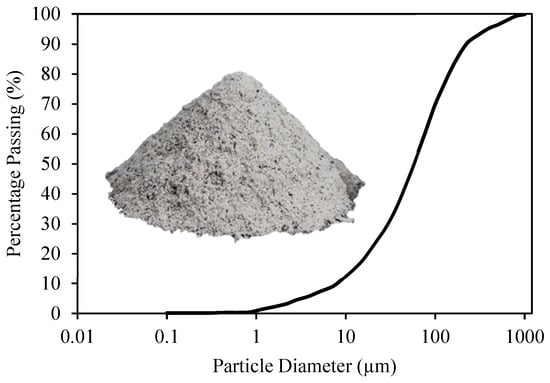
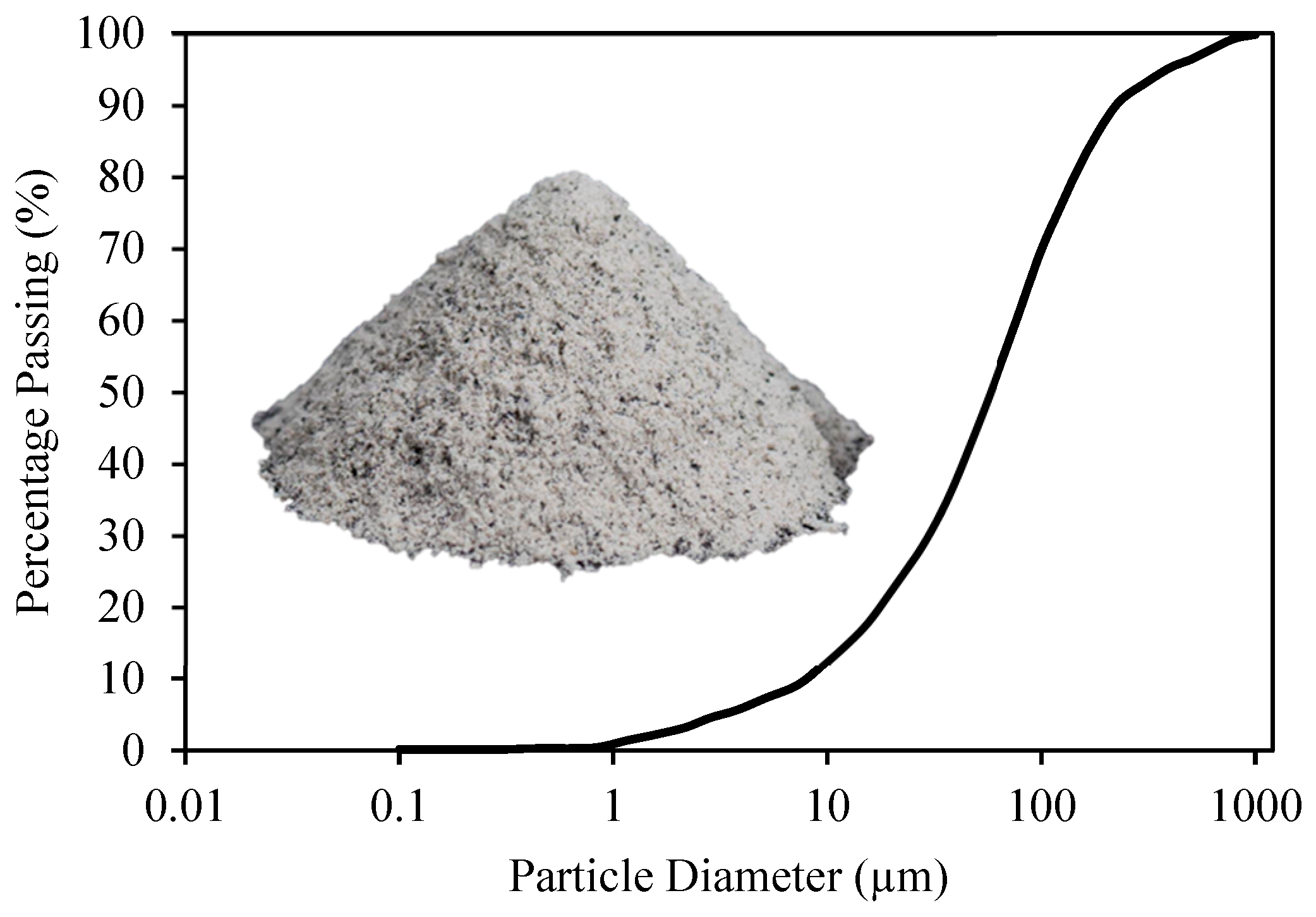
The LHS-1E also exhibits a broad particle size distribution, ranging from less than 0.1 μm to 1000 μm, with a median particle size of 60 μm, determined using both laser diffraction and sieve analysis as shown in Figure 1. This wide distribution supports its suitability as a high-fidelity lunar highlands simulant for investigating the mechanical and physical behaviours of the real lunar regolith [16].
Figure 1.
Particle size distribution of lunar regolith LHS-1E [16].
2.2. Sample Preparation
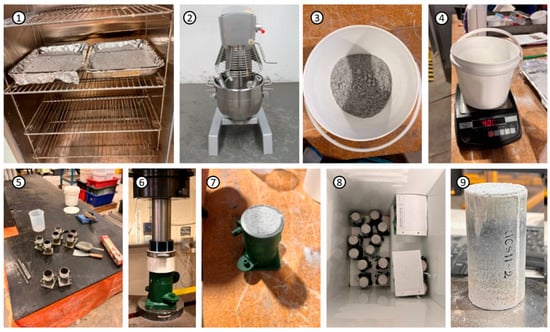
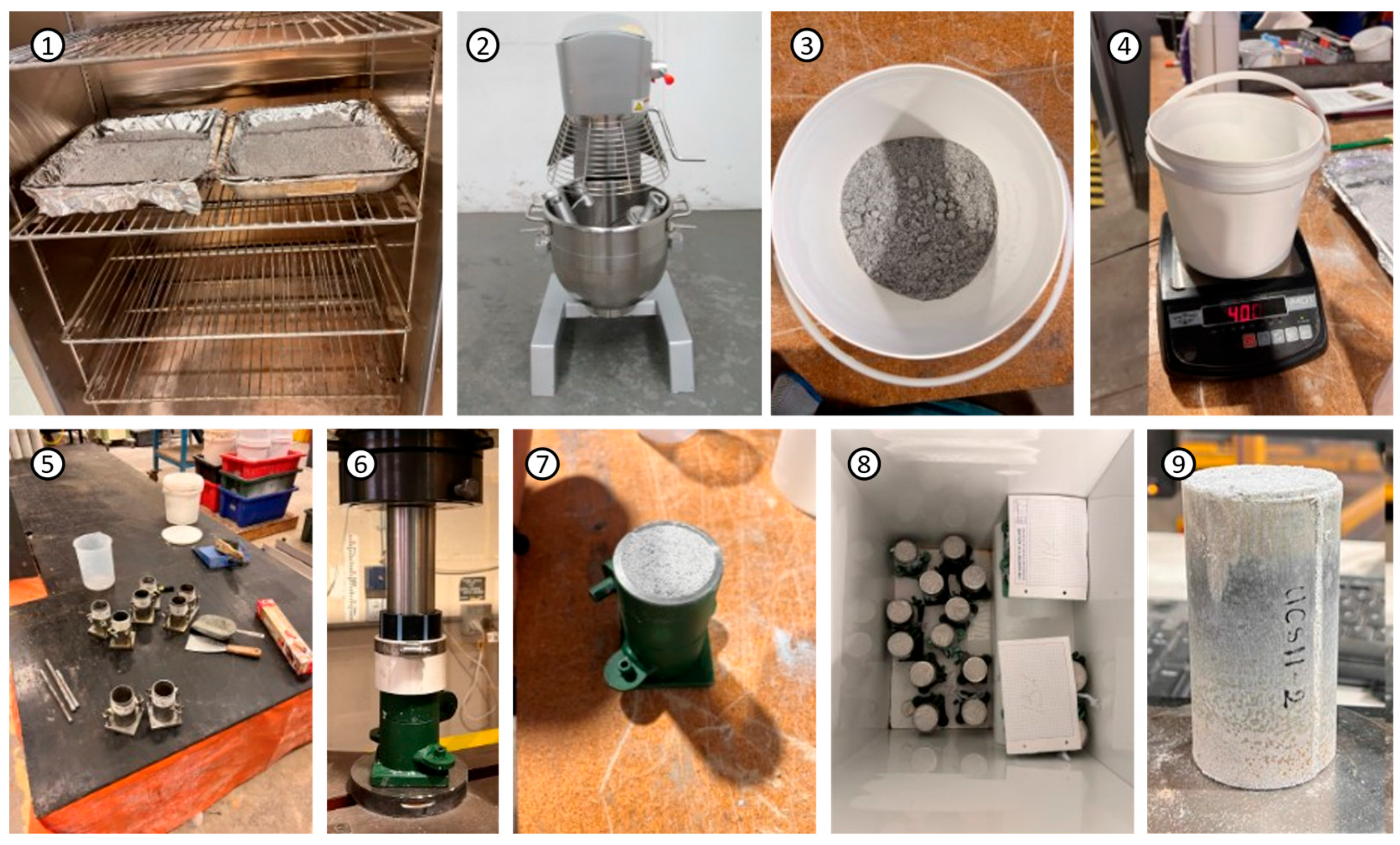
LHS-1E simulant specimens were prepared for unconfined compressive strength (UCS), indirect tensile, and direct shear testing at moisture contents of 5%, 7%, 9%, 11%, and 13%. Uniform moisture distribution was achieved by thoroughly mixing the simulant with water to achieve the desired moisture content. The prepared mixture was then compacted in relevant moulds using a 10 kN Load Frame from GDS instruments compression apparatus to produce a bulk density of 1.8–1.9 g/cm3 [34,35]. UCS specimens were prepared as cylinders 50 mm in diameter and 100 mm in height. Brazilian disk specimens were prepared directly as 25 mm thick and 50 mm diameter disks, as cutting them from UCS test specimens could disturb the moisture distribution and affect test outcomes. Direct shear test specimens were compacted into moulds of 60 × 60 × 20 mm. Specimen preparation for the UCS and Brazilian disc tests followed International Standard for Results Management (ISRM) standards, and specimen end surfaces were ground to within 0.02 mm to ensure flatness and perpendicularity. Prior to testing, all specimens were frozen in a chest freezer at −19 °C for at least 24 h to assess the material behaviour under simulated lunar conditions. This procedure aimed to replicate the thermal aspect of the lunar environment, particularly the extremely low temperatures found in permanently shadowed regions and during the lunar night [22]. Figure 2 presents the detailed sample preparation methodology of UCS specimens; an identical procedure was used for the Brazilian disc and direct shear test specimens with corresponding mould geometry for the relevant test requirements.
Figure 2.
(1) LHS-1E was placed in a dry oven for 24 h to eliminated all the moisture. (2) Each sample was placed in a mixer for 5 min and within an interval at each 1 min, a relevant amount of water was added to achieve a uniform water distribution. (3) To further create a uniform distribution, hand mixing was used to eliminated any clumps that would affect the test results. (4–6) A total of 400 g of wet regolith was separated and carefully compressed in a cylindrical mould of 100 mm height and 50 mm diameter with a mould collar in 3 layers using the GDS compression apparatus. (7) Upon compression, the excess material was trimmed off to generate a flat surface. (8) At the end, each sample was wrapped in a plastic foil to eliminate moisture changes and placed in a chest freezer. (9) Each sample was extracted from the mould using the same apparatus that was used for compression, providing the end product of sample preparation that was ready to be tested.
Furthermore, lunar regolith is exposed to thermal cycling, outgassing, and electrostatic charging [36], none of which were replicated in the presented test setup. While freezing at −19 °C helps preserve the moisture content and allows for assessing frozen regolith strength parameters, it does not fully capture the coupled thermo-mechanical and vacuum-related processes that influence regolith behaviour on the Moon [37]. Therefore, the results from this study should be interpreted as representing a partial thermal simulation only, rather than a full replication of lunar environmental conditions.
During specimen preparation, the samples with moisture contents of 5%, 7%, 9%, 11%, and 13% were successfully compacted, frozen, and demolded while maintaining their intended shape. However, the specimen with 3% moisture content failed during demolding, most likely because the water content was below the threshold required to generate sufficient ice bonding and inter-particle cohesion. As a result, effective ice bridges did not form during freezing, resulting in the specimen’s mechanically fragile and brittle structure. Consequently, the specimen could not withstand the tensile and shear stresses associated with demolding and disintegrated. This behaviour is consistent with previous studies reporting a critical moisture threshold of approximately 4–5%, below which freezing does not result in appreciable mechanical strength [38,39]. In such cases, the material lacks sufficient cohesion and behaves as a weak granular assembly that cannot tolerate handling stresses, such as those encountered during demolding the specimen with 3% moisture content.
2.3. Experimental Setup and Testing Scheme
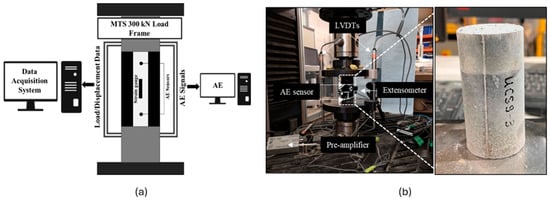
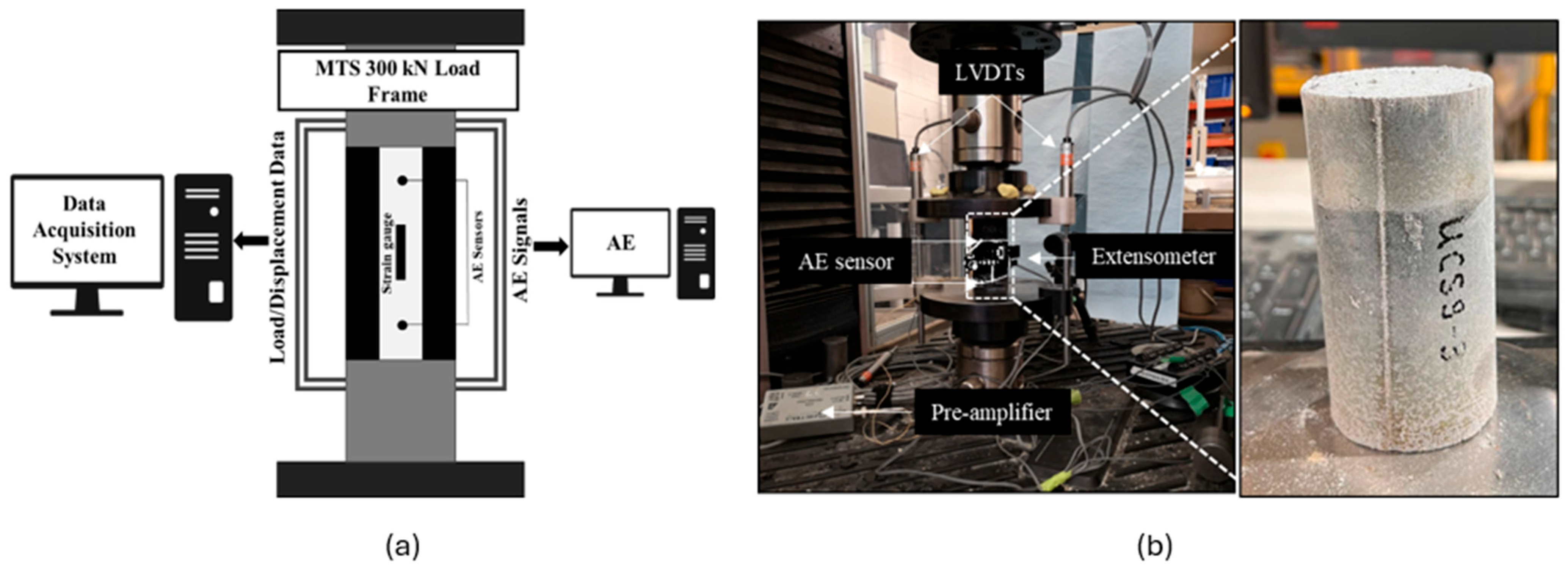
UCS and Brazilian disc tests were performed using an MTS 300 kN (MTS Systems Corporation, Minnesota, USA) closed-loop servo-controlled testing machine comprising an axial dynamic loading frame and a data acquisition system [40,41]. Axial deformation was monitored using two linear variable differential transformers (LVDTs) (RDP Electronics, Wolverhampton, UK) and a chain extensometer. Damage evolution was monitored using the acoustic emission (AE) monitoring system developed by [42], which incorporates AE Pico sensors (MISTRAS Group, New Jersey, USA) with a 200–800 kHz frequency bandwidth, a set of 2/4/6 series filters, single-ended differential preamplifiers with gains of 20/40/60 dB, and an NI PCI-6133 data acquisition unit. The system recorded AE events above a threshold value of 40 dB, which was set based on laboratory conditions and default sampling rates. However, for data analysis and comparison with the mechanical response, the AE data were normalised to match the stress–strain acquisition rate of 5 samples per second. For these tests, two AE parameters were specially used, which were AE hits, representing the number of thresholds crossing of the AE signal, and AE energy, representing the damage severity obtained by integrating the signal squared over time. The schematic and actual experimental setups for the UCS and Brazilian disc tests are shown in Figure 3. Both tests were conducted using a displacement control rate of 0.02 mm/min, which translates to strain rates in the order of 10−6 s−1.
Figure 3.
(a) Schematic of the UCS testing system showing the loading frame, data acquisition system and AE setup [40]. (b) Loaded simulant specimen showing the LVDTS, chain extensometer and AE sensors.
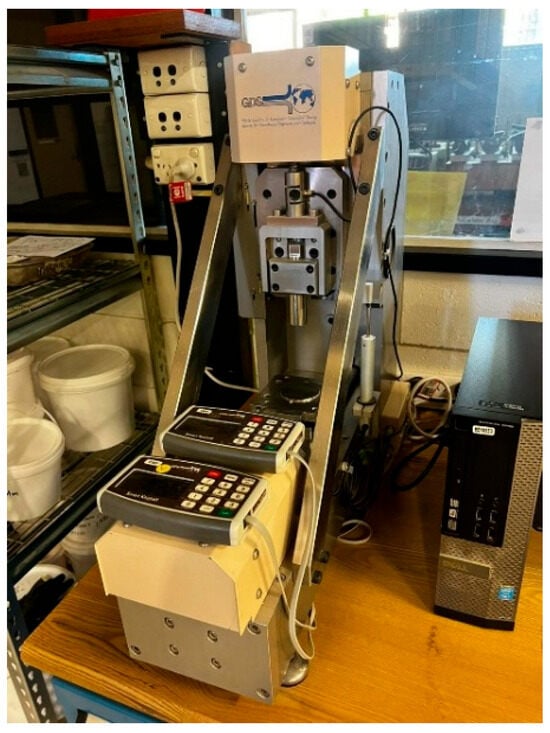
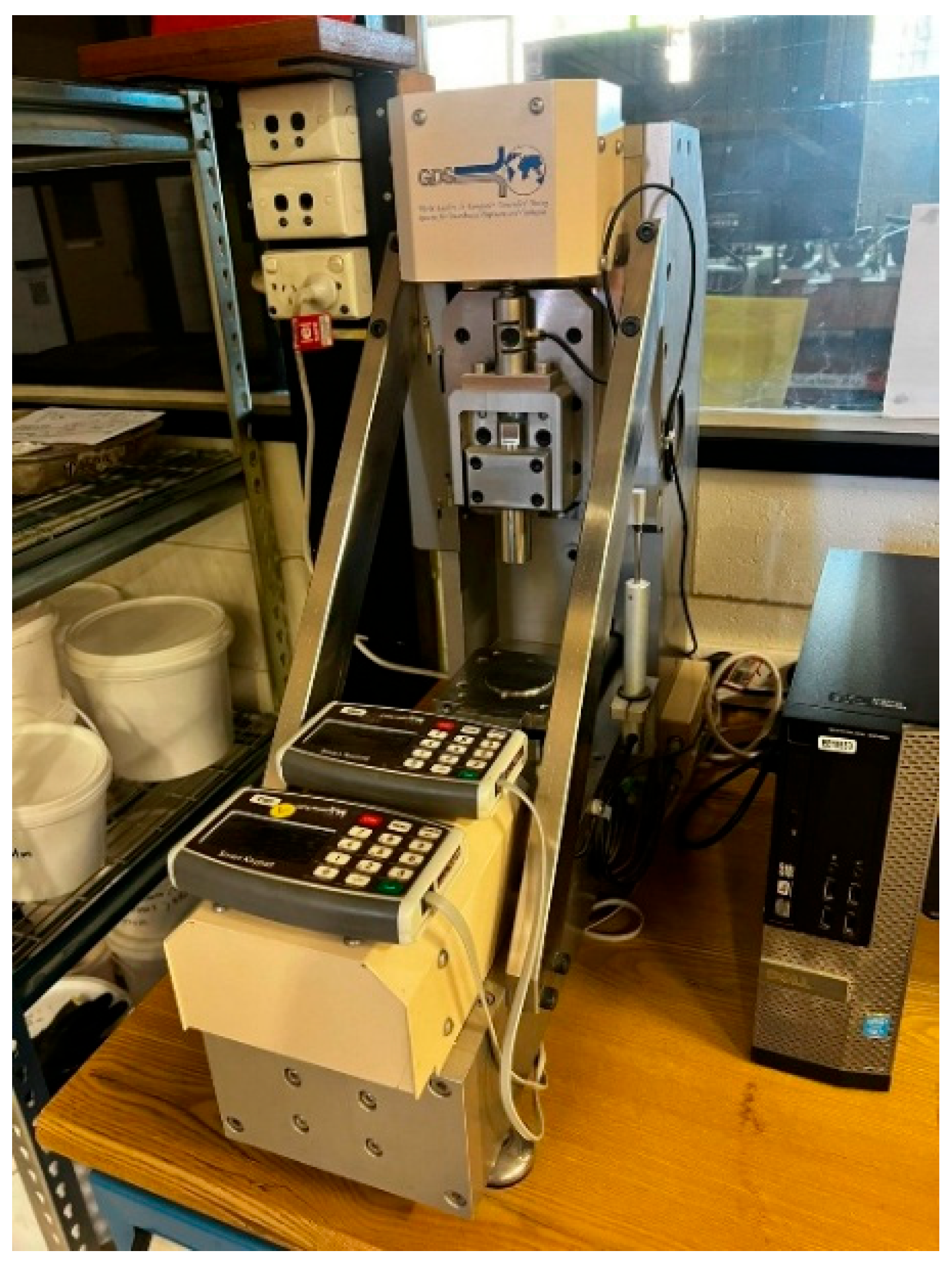
Direct shear tests were performed using a fully automated direct shear apparatus from GDS Instruments, called the GDS Shearbase System (Hook, UK), as shown in Figure 4, in accordance with ASTM D-3080. Testing was conducted in a shear box of the dimensions 60 mm width by 60 mm length by 20 mm height. Specimens were compacted in layers using a laboratory tamper to achieve the required density. Once prepared, vertical normal stresses of 1 kPa, 10 kPa and 20 kPa were applied by a servo-controlled hydraulic system and held constant during testing. Horizontal shearing was then applied at a constant displacement rate of 0.1 mm/min. Throughout shearing, the horizontal shear stress and vertical displacement were measured continuously, the latter indicating dilation or contraction.
Figure 4.
Fully automated direct shear testing equipment used for testing frozen regolith simulant specimens.
3. Results
3.1. UCS Test
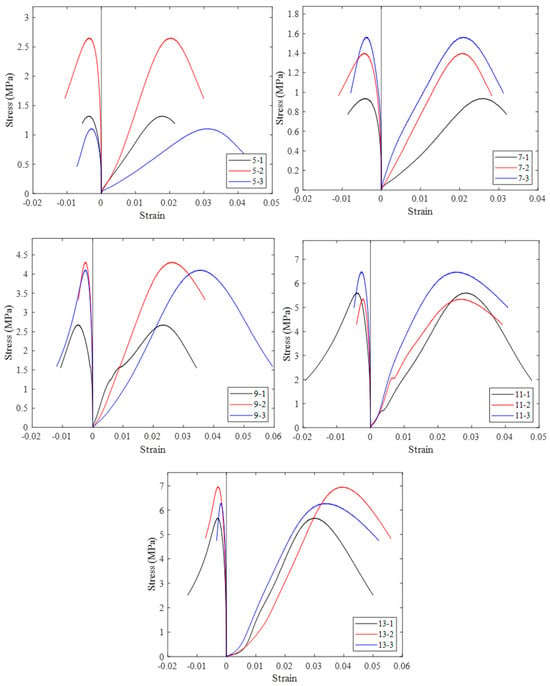
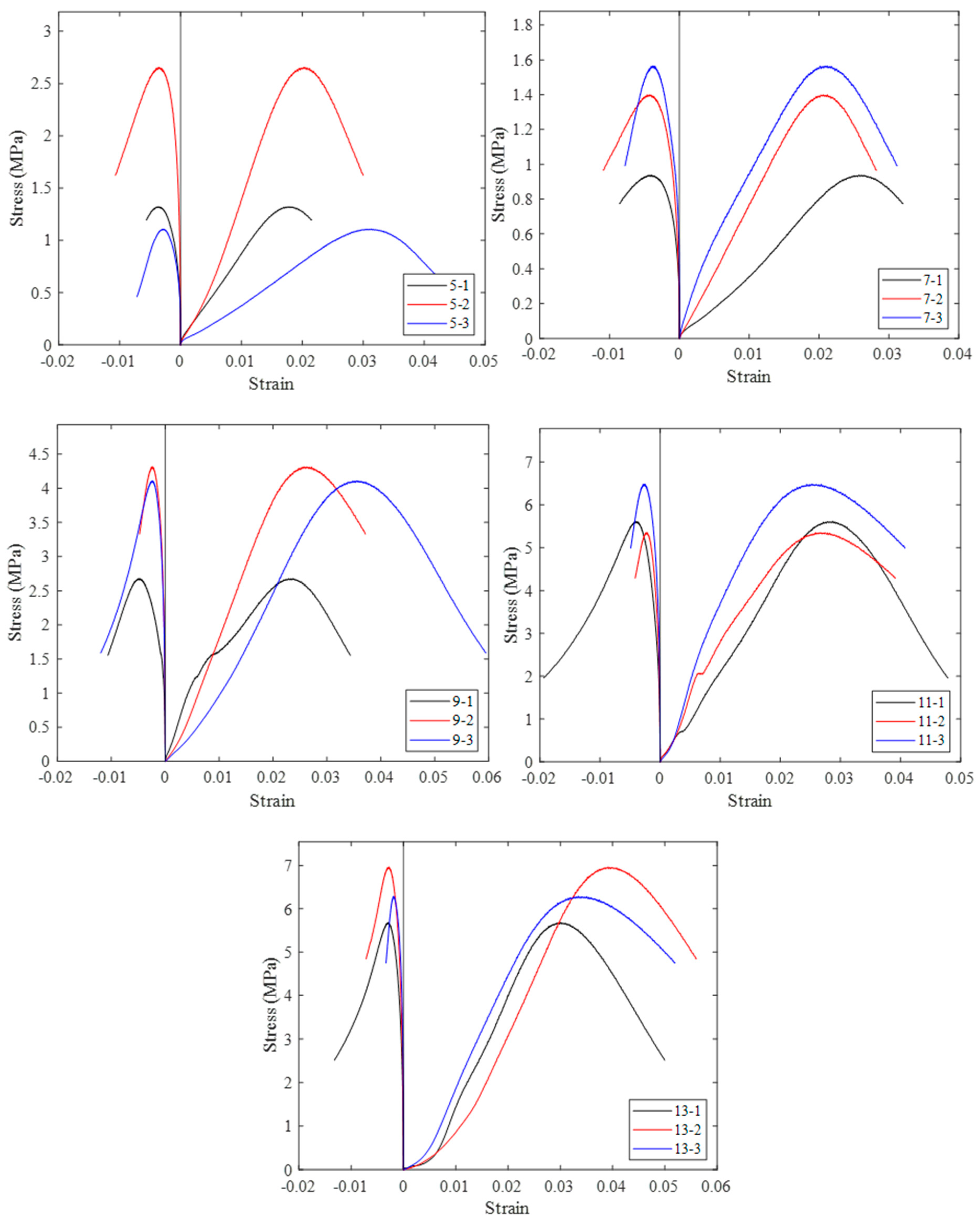
For all UCS test samples, conventional UCS tests were performed under displacement control at a displacement rate of 0.2 mm/min. The stress–strain responses from these tests for the frozen LHS-1E lunar highlands simulant at moisture contents of 5%, 7%, 9%, 11%, and 13% are shown in Figure 5. Notably, the specimen prepared at 3% moisture content could not be tested because it was too weak and failed and crumbled during the demolding process. It can be observed from Figure 5 that the samples exhibited different strengths at different moisture contents, indicating that the moisture content plays a critical role in the strength of the frozen regolith simulant. At the lower moisture content of 5%, the material exhibited the lowest peak stress values. With an increase in the moisture content, the UCS also increased, and the maximum strength was achieved at a moisture content of 13%. At 11% and 13% moisture contents, the strength of the frozen regolith simulant exceeded 6 MPa, while the maximum axial strain remained consistent between approximately 0.035 and 0.04 before failure, which indicates that moisture content significantly affects the strength of the frozen regolith simulant. All specimens displayed a broadly similar stress–strain pattern, characterised by minimal lateral deformation during the early stages of the loading. This response is likely due to the formation of ice bonds within the pore network, which increase internal cohesion and inter-particle locking and thereby restrain lateral expansion during loading. A more pronounced increase in lateral deformation was observed beyond a threshold limit, namely, at approximately 50% of the UCS, with this trend becoming clearer with the increase in the moisture content.
Figure 5.
Stress–strain curves of UCS tests for varying moisture contents of the LHS-1E regolith simulant. In the labels, the prefix represents the moisture content and the suffix represents the sample numbers. A clear increase in the compressive strength is observed with the increase in the moisture content. The positive strain values represent axial deformation while the negative strain values show lateral deformation in the specimens.
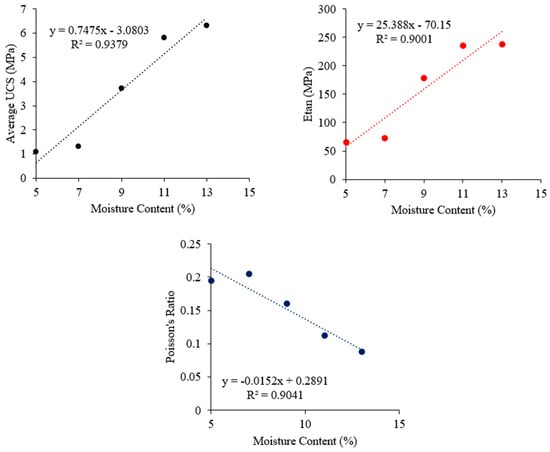
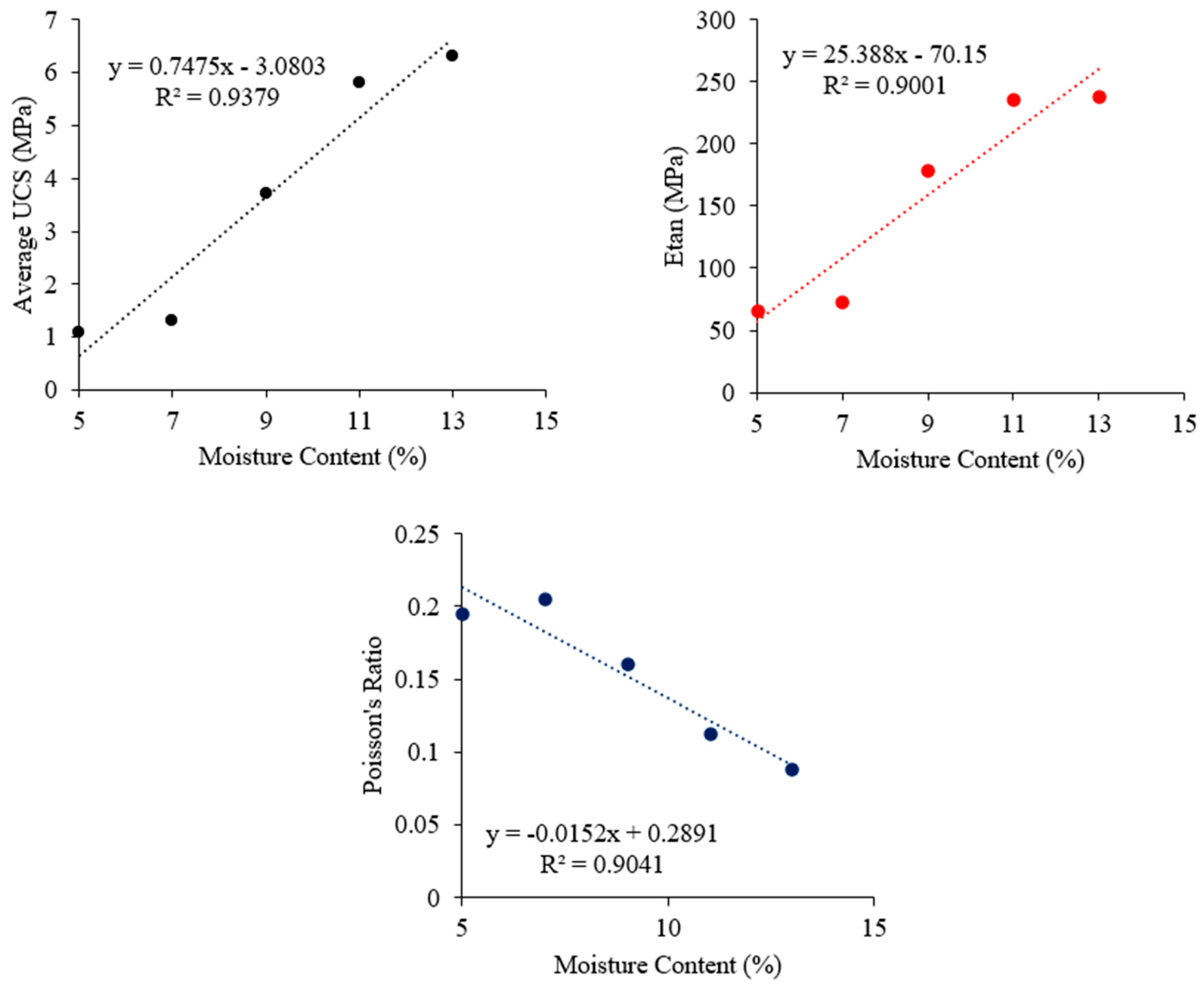
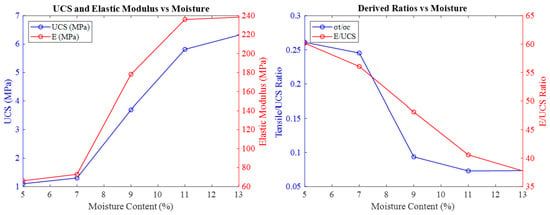
The analysis shows that increasing the moisture content enhances both the strength and stiffness of the frozen LHS-1E simulant, while reducing its lateral deformability, as shown in Figure 6. It can be observed from Figure 6 that the UCS increased from about 1 MPa at 5% moisture content to nearly 6.5 MPa at 13% moisture content, exhibiting a clear linear relationship with an R2 value of 0.94. This increase in strength is attributed to the formation of ice bonds between simulant particles, which act as a binding agent and strengthen the inter-particle structure. Similarly, the average Young’s modulus increased with increasing moisture content, also following a linear trend with an R2 value of 0.90. This behaviour suggests that frozen water restricts particle rearrangement under loading, thereby increasing the stiffness of the material. In contrast, the average Poisson’s ratio decreased as the moisture content increased, following a negative linear trend with an R2 of 0.96. This reduction is likely due to ice cementation between particles, which limits lateral deformation and results in a lower Poisson’s ratio, despite the increase in strength.
Figure 6.
Trends of the UCS, stiffness and Poisson ratio with an increase in the moisture content. Solid circles denote the experimentally measured average values, while the dotted lines indicate the corresponding linear regression fits. Regression equations and R2 values are provided on each graph.
3.2. Brazilian Disc Test
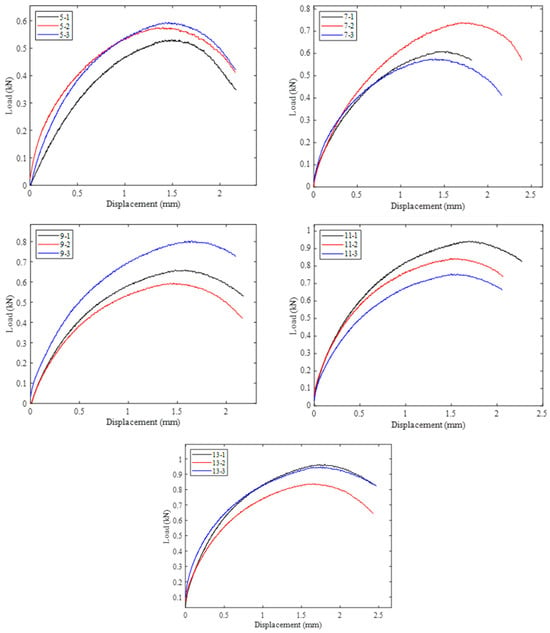
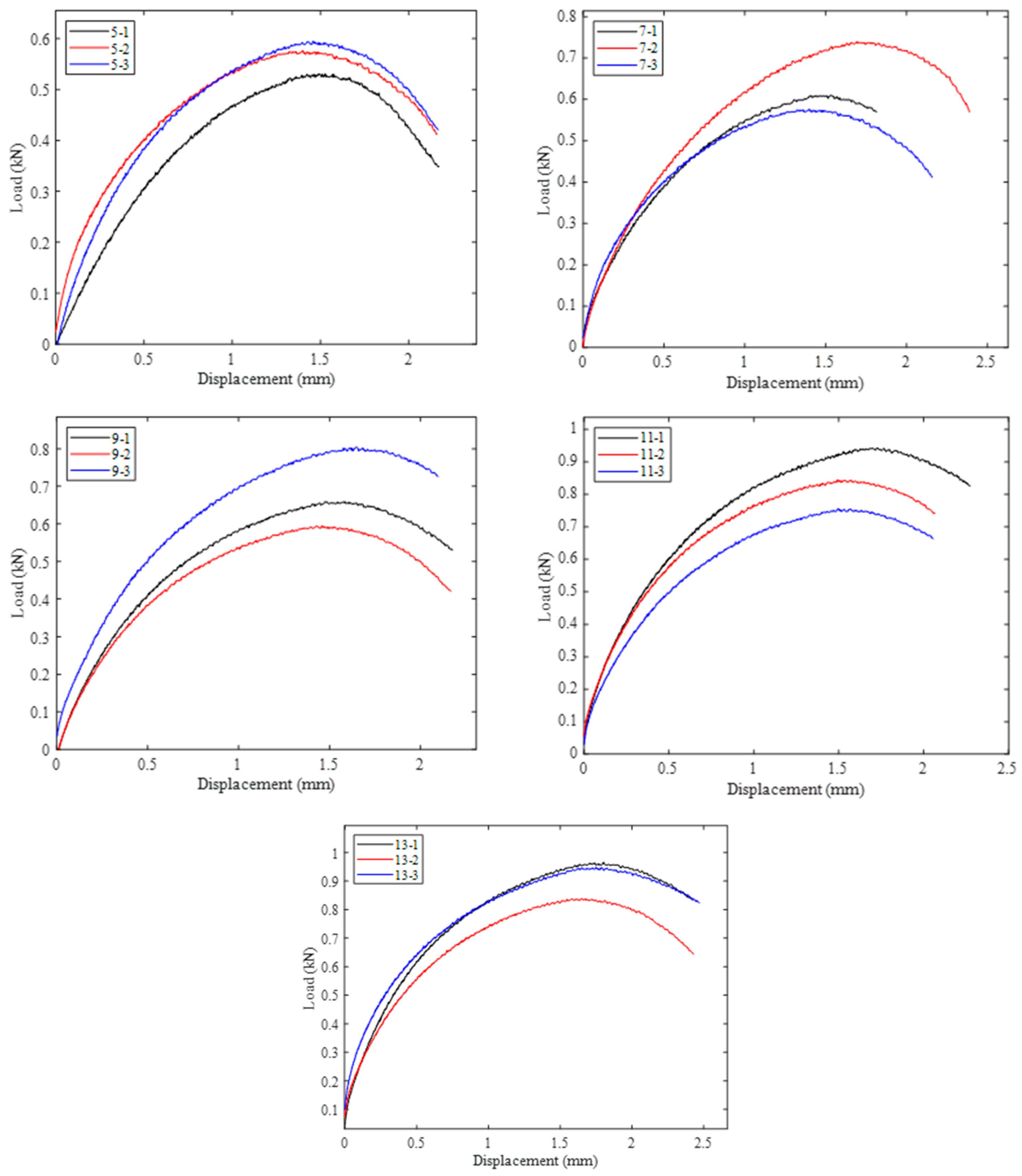
Brazilian disc tests on the frozen LHS-1E lunar highlands simulant showed that the tensile strength increased with increasing moisture content, consistent with the trend observed in UCS tests. Figure 7 shows the load vs displacement curves of the LHS-1E under indirect tensile loading. According to [43,44], under indirect tensile tests, a uniform stress field is not generated inside the specimen and the classical equation does not give the complete stress state; therefore, we use load vs displacement curves. At 5% moisture content, the samples failed at loads of approximately 0.55–0.6 kN, corresponding to a tensile strength of about 0.27 MPa. At 7% and 9% moisture contents, failure occurred at approximately 0.7–0.8 kN, equivalent to the tensile strength of about 0.319 MPa. At 11% and 13% moisture contents, the specimens failed at loads of approximately 0.9–1.0 kN, corresponding to a tensile strength of about 0.46 MPa. These results indicate that increasing the frozen moisture content enhances the tensile strength of the material, in a manner similar to its effect on compressive strength, due to the formation of ice bonds and the resulting cementation between particles. The maximum displacement at peak load remained within the same range for all samples, approximately 1.2–1.8 mm. These findings are consistent with the UCS results and confirm that frozen moisture content significantly improves both the tensile and compressive strength of the LHS-1E simulant. This behaviour is particularly important for evaluating its performance in potential lunar construction and in situ resource utilisation (ISRU) applications where the material may be subjected to tensile stresses under frozen regolith conditions.
Figure 7.
Load–displacement curves of LHS-1E under indirect tensile tests. The prefix in each plot represents the moisture content of the specimen, while the suffix shows the sample number tested.
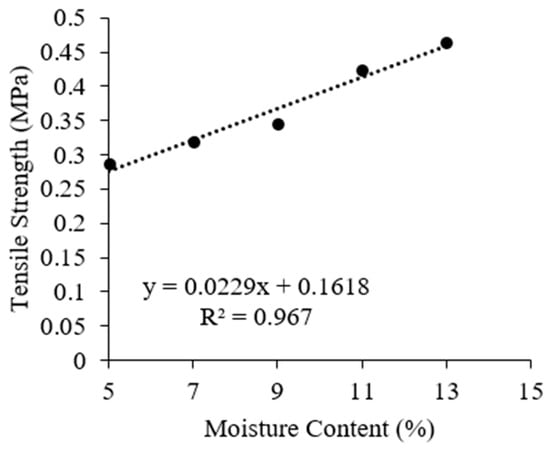
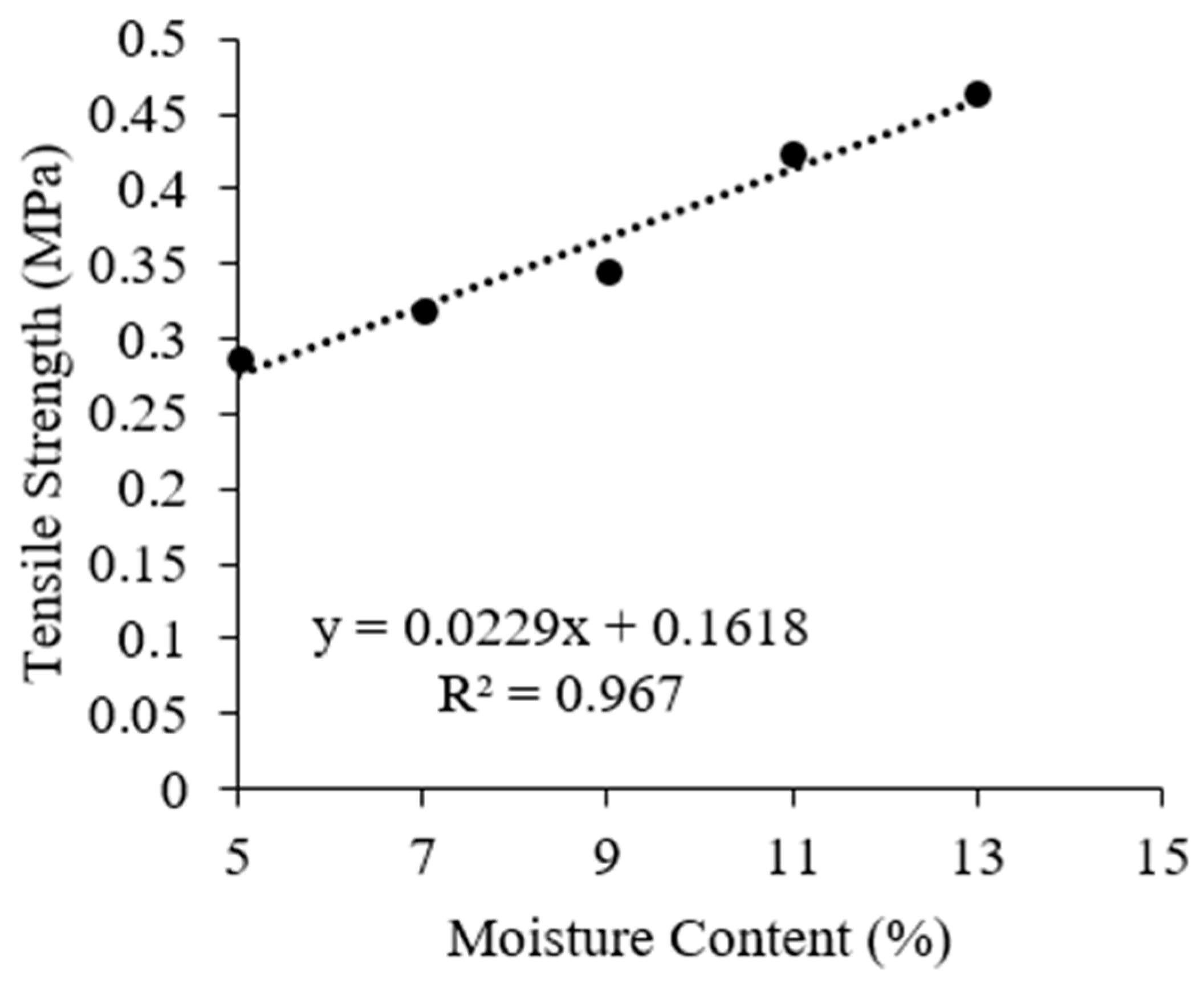
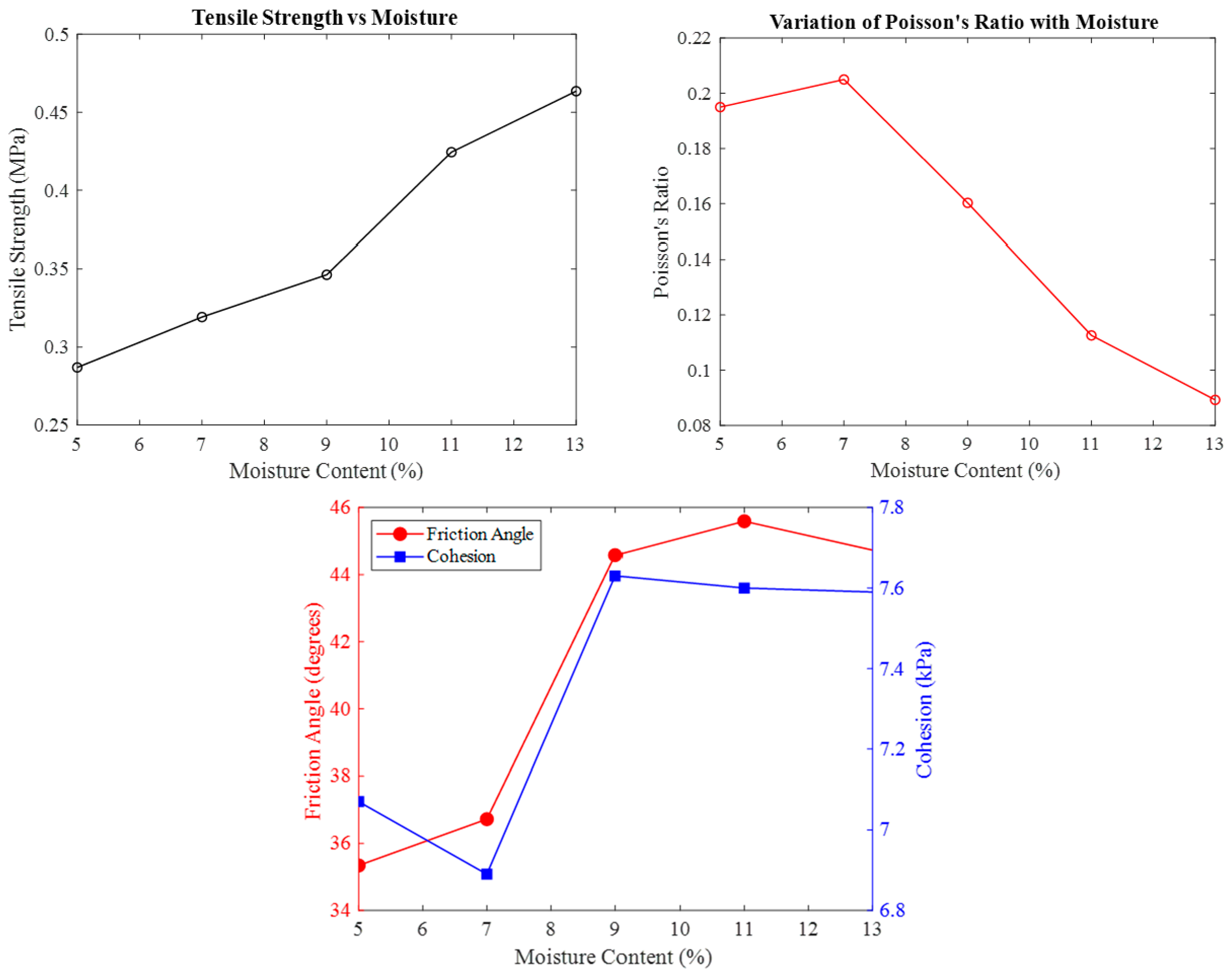
Figure 8 presents the relationship between the moisture content (%) and tensile strength for the LHS-1E regolith simulant. A clear linear relationship is observed between the tensile strength and moisture content, with a high coefficient of determination (). This strong correlation indicates that the moisture content is a highly predictive parameter for tensile strength, suggesting a consistent and reproducible mechanical response with increasing water addition. This trend is consistent with previous studies on lunar regolith simulants, which have reported a substantial increase in cohesive strength with increasing water content, influencing not only indirect tensile strength (ITS) but also other mechanical behaviours such as slope stability and bearing capacity. Previous research on the JSC-1 lunar soil simulant has also demonstrated that the tensile strength increases with density and, more broadly, with factors that enhance particle contact and bonding, thereby supporting the current observations.
Figure 8.
Effect of moisture content on the tensile strength of LSH-1E.
3.3. Direct Shear Test
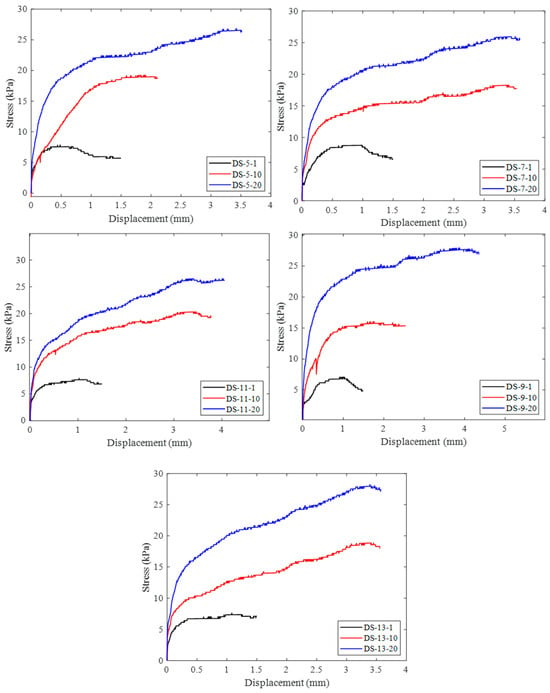
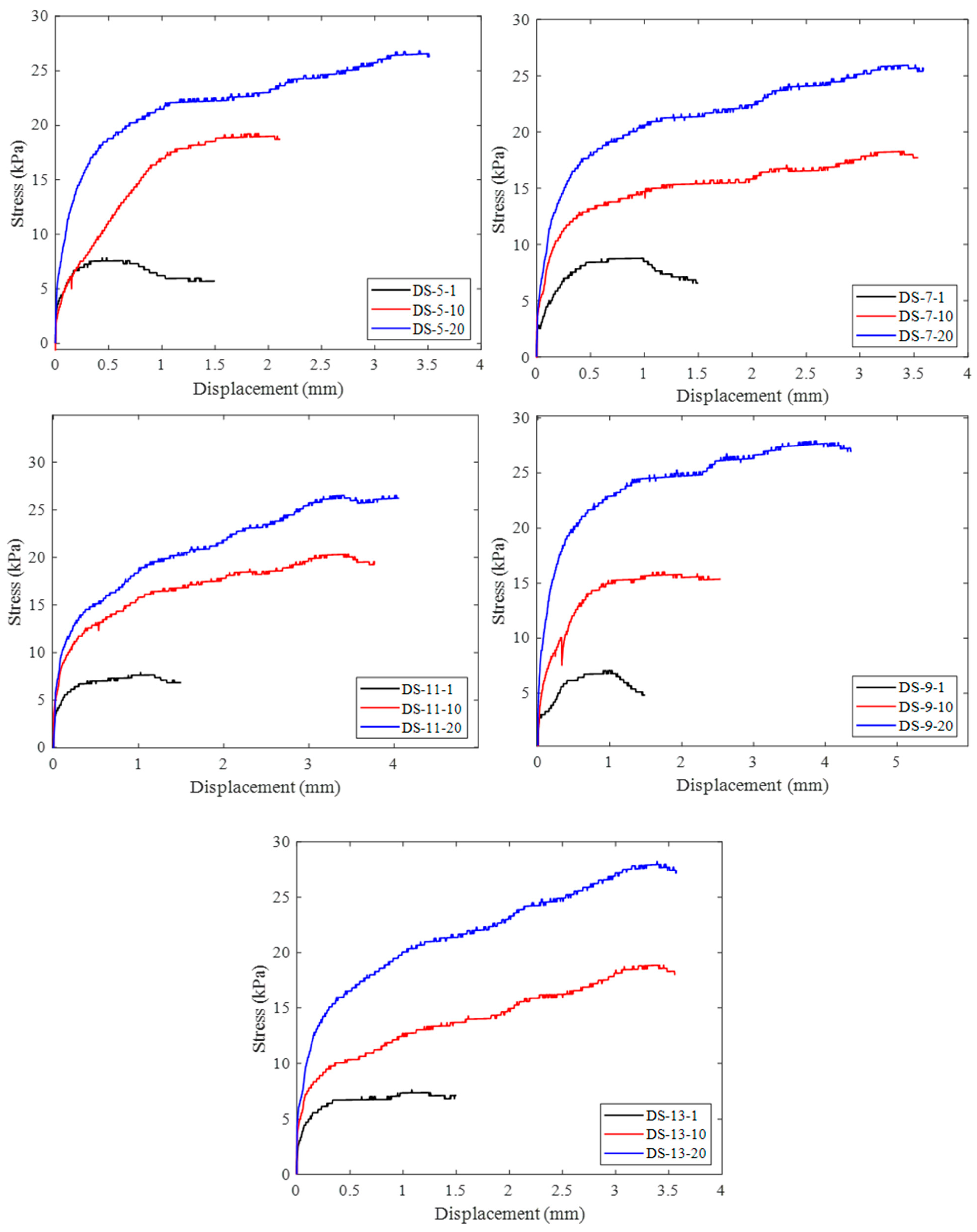
Direct shear tests were conducted on the frozen LHS-1E lunar highlands simulant at moisture contents of 5%, 7%, 9%, 11%, and 13% under normal stresses of 1 kPa, 10 kPa and 20 kPa. These show a trend similar to those observed in the UCS and Brazilian disc tests. Shear strength was lowest at 5% moisture content, while the highest values were recorded at 11% and 13%, as shown in Figure 9. The shear stress–displacement curves of the LHS-1E simulant under normal stresses of 10 kPa and 20 kPa reveal a consistent strain-hardening response across all moisture contents. In all cases, the shear stress increased rapidly at the onset of loading, followed by a more gradual rise and eventual stabilisation without a distinct post-peak drop. This behaviour indicates that the material does not undergo brittle failure. Instead, shear resistance developed progressively through inter-particle friction, ice bonding, and densification with increasing displacement.
Figure 9.
Stress–displacement curves of LHS-1E with various moisture contents under three different normal stresses. The plots show a clear peak and residual strength under 1 kPa normal stresses, while a strain-hardening behaviour is observed when the normal stresses are increased to 10 kPa and 20 kPa, respectively.
At the lowest normal stress of 1 kPa, the shear strength ranged approximately from 6 kPa to 9 kPa, with the stress–displacement curve showing identifiable peak and residual strengths. Under a normal stress of 10 kPa, the shear strength increased significantly from 6–9 kPa to 15–20 kPa, and no clear peak and residual strength were observed. Instead, the specimens exhibited strain-hardening behaviours throughout the test. Under a normal stress of 20 kPa, the material reached maximum shear strengths of approximately 25–32 kPa, and the curves showed strain-hardening behaviour even at the largest displacements (4–5 mm), indicating that the ultimate shear strength may not yet have been fully achieved within the tested displacement range. This continuous increase indicates that inter-particle friction and ice-bond cementation governed the shear response, with limited evidence of strain-softening.
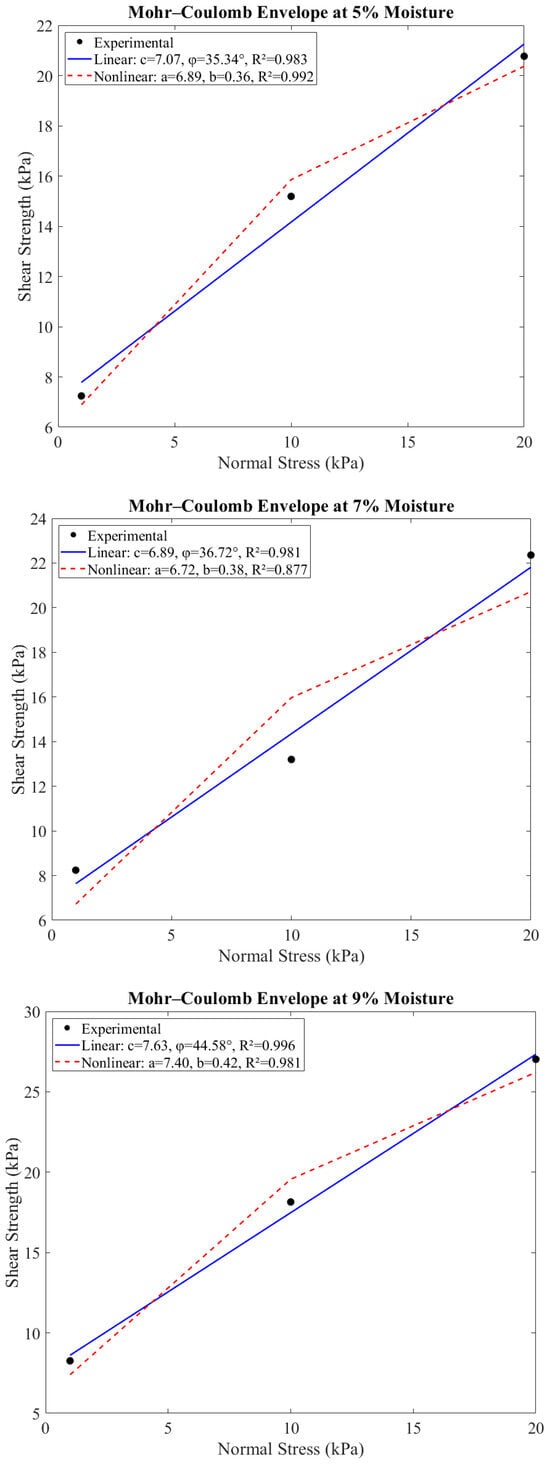
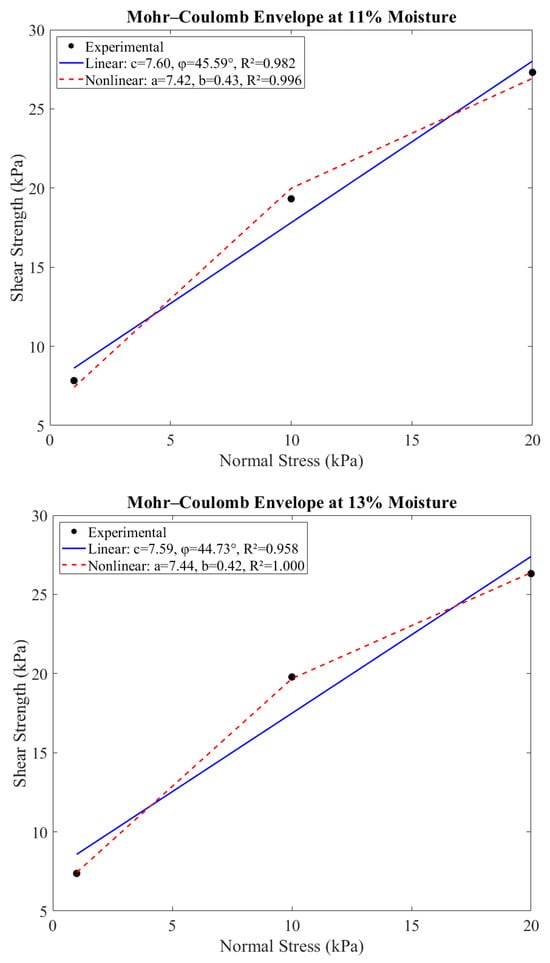
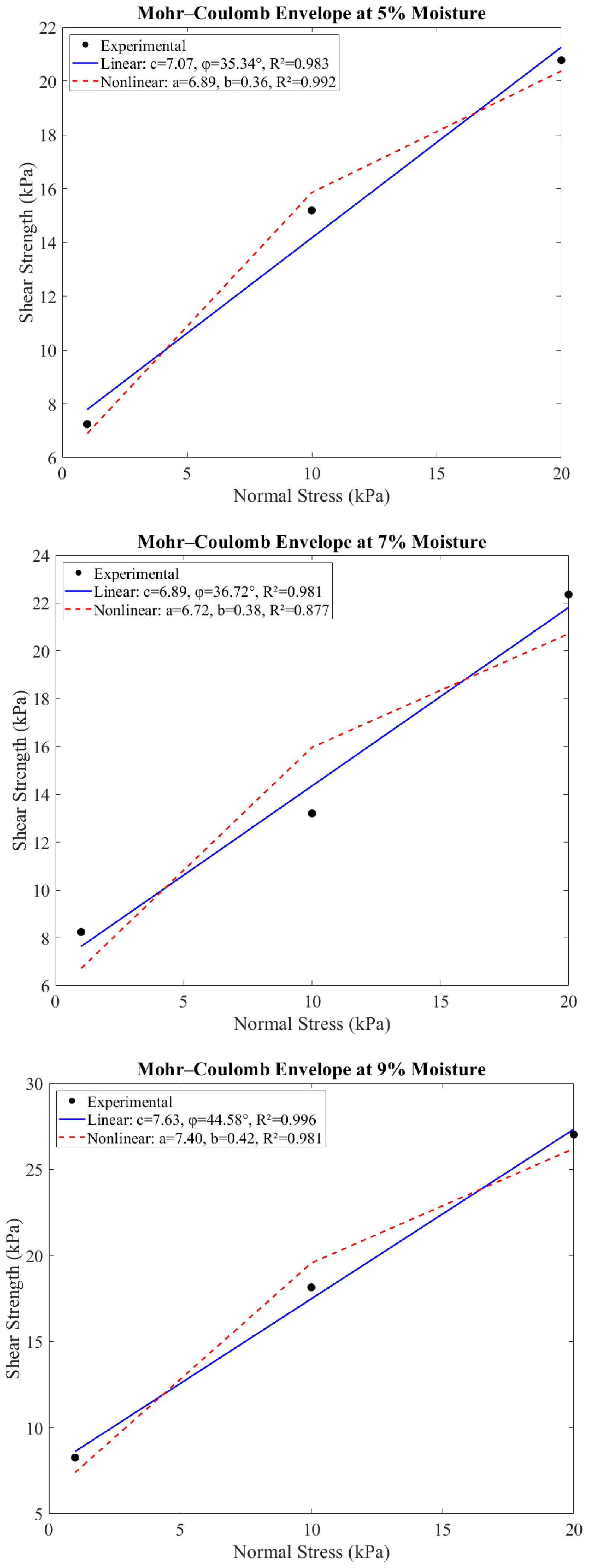
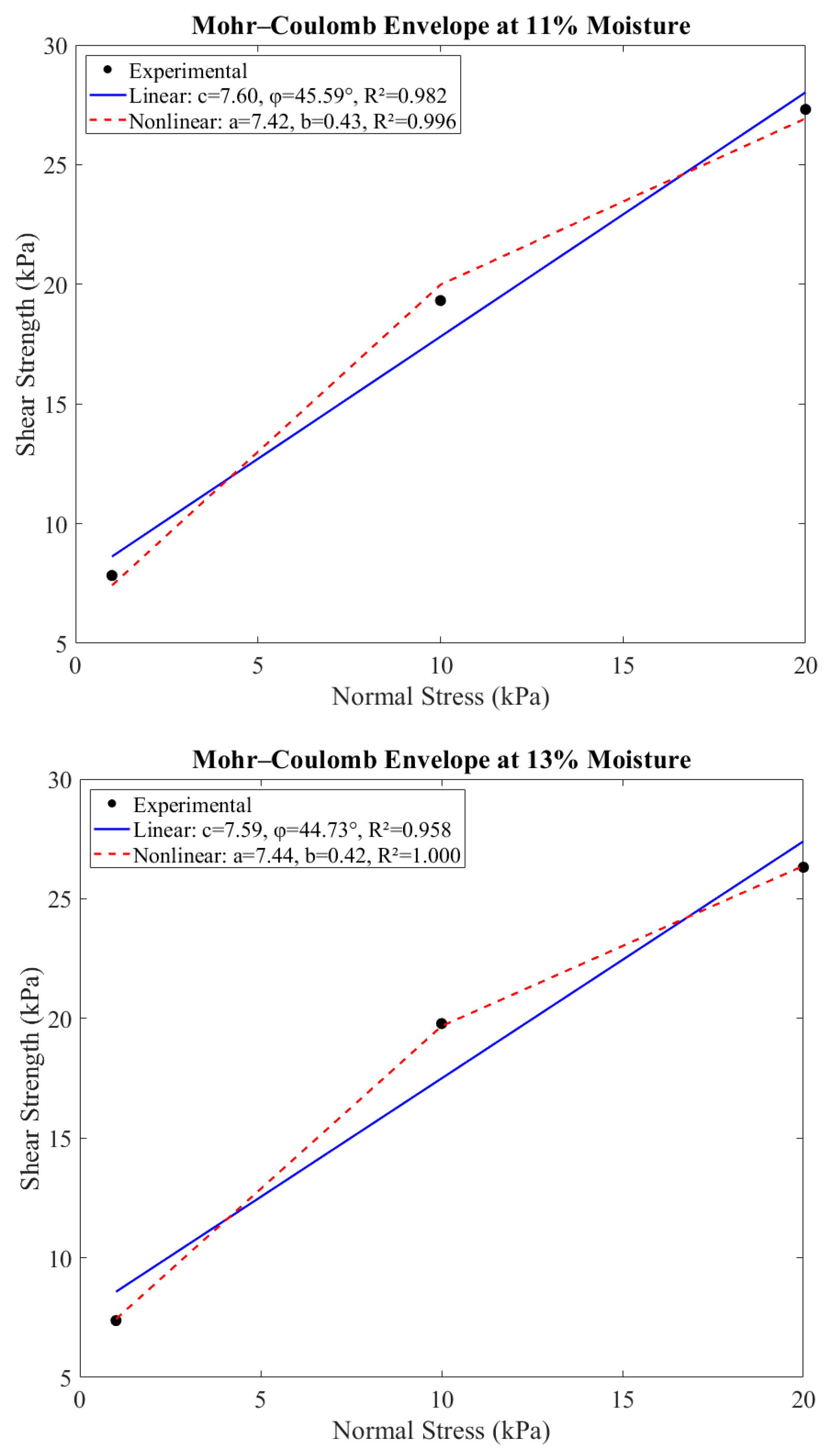
The consistent strain-hardening response observed in all tests indicates that the LHS-1E simulant behaves as a frozen, bonded granular material rather than a purely frictional soil. The absence of strain-softening and the steady increase in shear stress with displacement indicate a stable shear response, which is favourable for load-bearing applications but distinct from the behaviour of loose lunar regolith, which typically exhibits limited cohesion and lower shear stiffness. Because no distinct peak stress was observed in the shear stress–displacement curves, the apparent peak shear strength for each test was taken as the maximum recorded shear stress. This approach provided a consistent basis for comparing the strength evolution across different moisture contents and normal stress levels. The resulting peak shear strengths were used to construct the Mohr–Coulomb envelopes and to determine the material’s cohesion and friction angle, as shown in Figure 10.
Figure 10.
Relationship of shear stress vs normal stresses at different moisture contents.
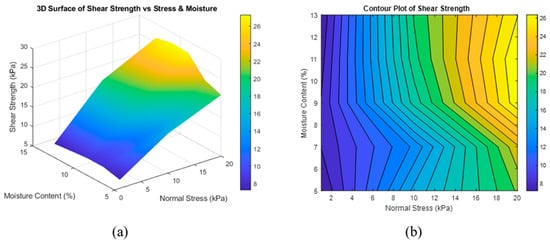
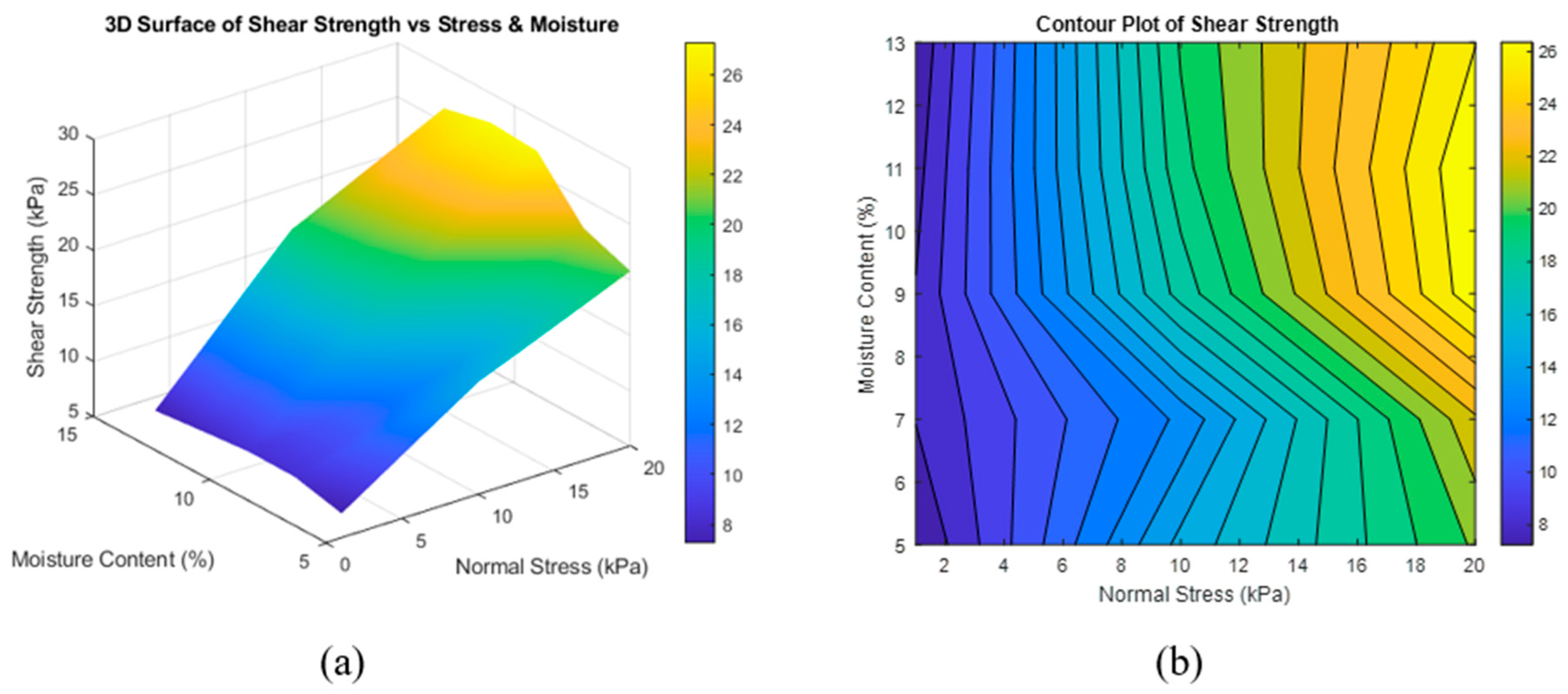
To further illustrate the combined influence of normal stress and moisture content on shear strength, a three-dimensional surface representation is presented in Figure 11a. The surface clearly shows a monotonic increase in shear strength with increasing normal stress and moisture content. At low moisture contents of 5–7%, shear strength remains relatively low even as normal stress increases, indicating a predominantly friction-dominated response. In contrast, at higher moisture contents of 11–13%, shear strength increases more rapidly with normal stress, reflecting the growing contribution of ice bonding and cementation under frozen conditions. The non-linear curvature of the surface suggests that the influence of moisture content becomes progressively more significant at higher normal stresses, consistent with the transition from purely frictional behaviour to bonded granular behaviour.
Figure 11.
(a) Three-dimensional surface showing the variation of shear strength as a function of normal stress and moisture content for the frozen LHS-1E lunar regolith simulant. (b) Contour map of shear strength (kPa) as a function of normal stress and moisture content for the frozen LHS-1E simulant, highlighting strength gradients and moisture-dependent bonding effects.
To complement the three-dimensional visualisation, a contour map of shear strength is presented in Figure 11b, providing a clearer view of the strength gradients across the tested normal stress–moisture domain. The contour plot highlights distinct zones of shear resistance, with more closely spaced contours observed at higher moisture contents and normal stresses, indicating a steeper strength gradient. This behaviour confirms that moisture content has a strong amplifying effect on shear strength under frozen conditions, particularly when combined with increasing normal stress. The contours also indicate that the increase in shear strength becomes more pronounced beyond approximately 9% moisture content, suggesting a threshold ice content above which bonding effects begin to dominate the shear response.
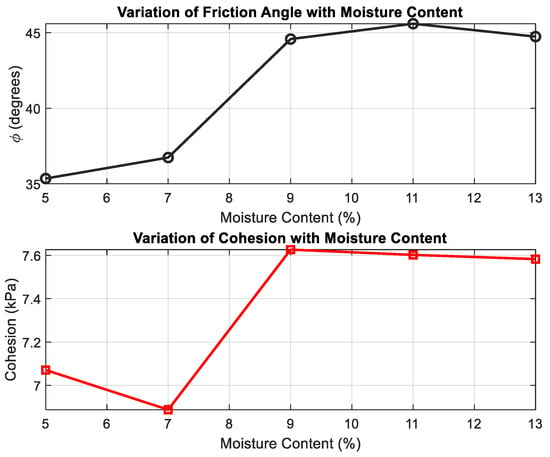
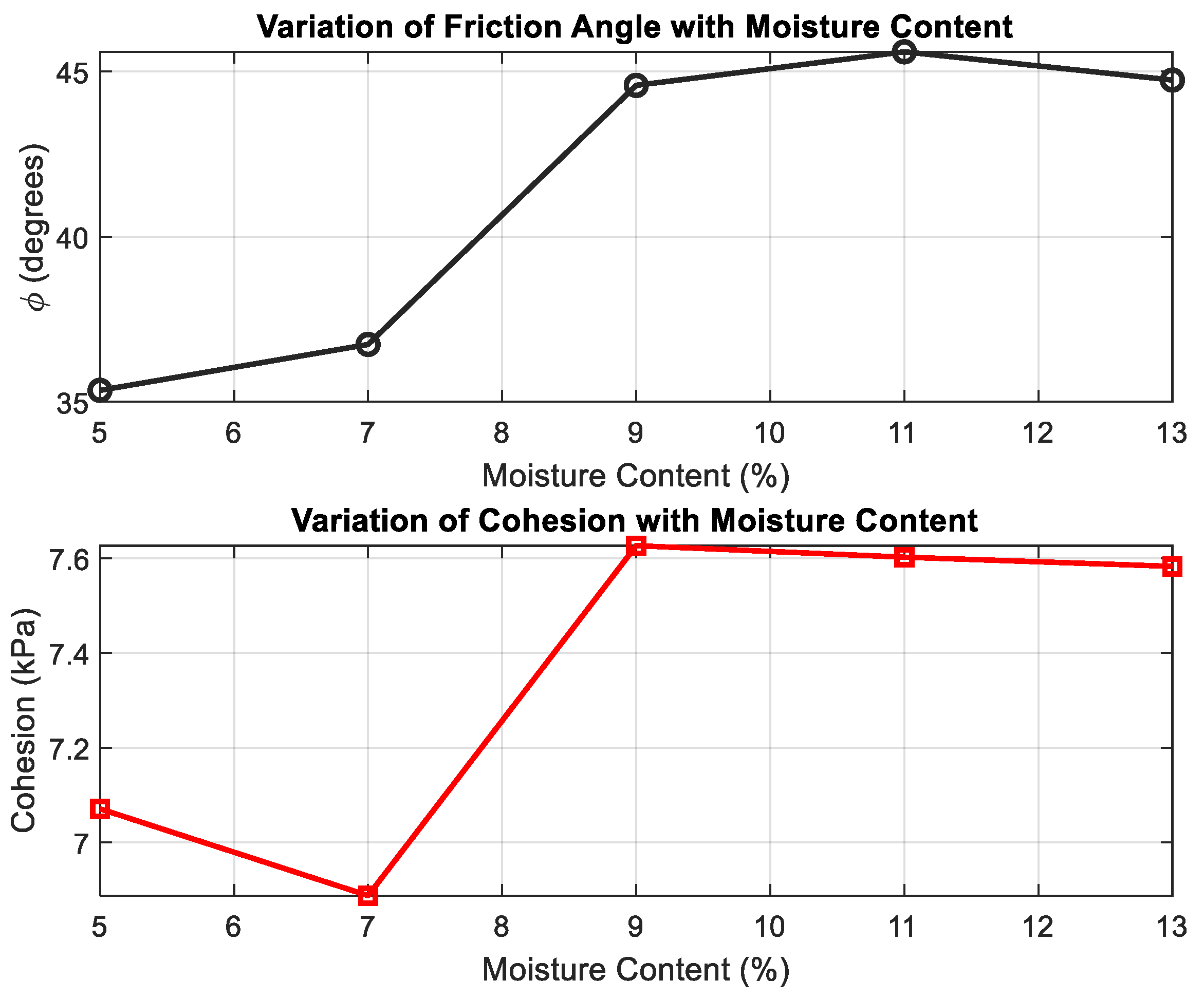
The direct shear tests conducted on the LHS-1E lunar regolith simulant at various moisture contents and under frozen conditions revealed apparent cohesion values ranging from approximately 6 to 8 kPa, with the internal friction angle (ϕ) increased from 35° to 46° with increasing moisture content. These results indicate that the simulant develops greater shear resistance as the moisture content increases, most likely due to the formation of ice bonding and enhanced inter-particle cementation, or capillary cohesion between particles. When compared with the published data, the obtained parameters are consistent with trends observed for other lunar and icy regolith simulants, where friction angles for dry or unbonded materials typically range between 30° and 40°, and may increase to 50–53° under frozen or partially bonded conditions [24]. However, the applied range of normal stresses, at 1 kPa, 10 kPa and 20 kPa, was relatively narrow, which may introduce some uncertainty into the extrapolation of the strength envelope, and the corresponding derived values of the cohesion and friction angle. Despite these limitations, the results suggest that the addition of moisture can substantially enhance the shear strength of the frozen simulant, as per Figure 12. The increase in shear strength with moisture content has direct implications for the bearing capacity, slope stability, and traction performance in ice-bearing regolith. Enhanced high friction angles and apparent cohesion improve resistance to shear failure and may therefore reduce rover wheel slip and sinkage, while also enhancing the stability of shallow foundations and excavated walls in permanently shadowed regions.
Figure 12.
Cohesion and friction angle of LHS-1E with changes in the moisture content.
4. Discussion
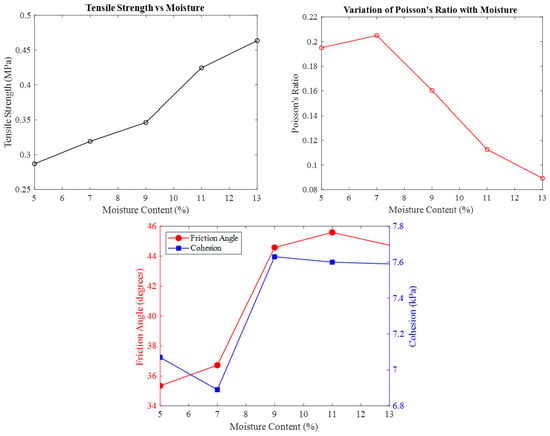
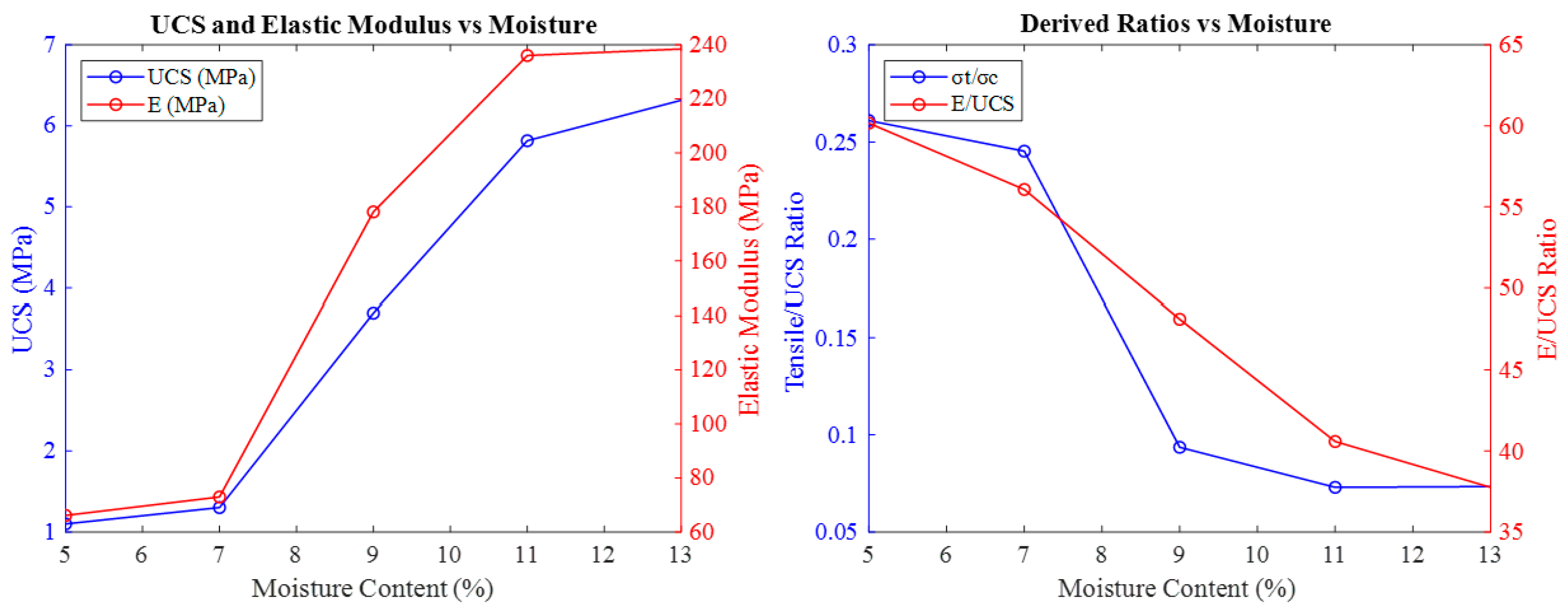
Here, we discuss how the mechanical properties of LHS-1E evolve with the moisture content and what these trends imply for the behaviour of ice-cemented regolith. The experimental results indicate that with an increase in the moisture content, the strength and stiffness of the LHS-1E substantially increases. Both the UCS and tensile strength showed similar improvements with the increase in the moisture content. A similar increase in material stiffness is observed, accompanied by an increase in the friction angle, indicating better particle interlocking and shear resistance at increased moisture content and frozen conditions. A reduction in the Poisson’s ratio indicates that with the increase in stiffness, the material also becomes less deformable laterally. Cohesion, however, does not show a strong dependence on moisture and remained relatively stable across the tested range. These trends suggest that higher moisture content enhances the internal bonding and overall mechanical stability of the material, as illustrated in Figure 13.
Figure 13.
Variation in strength properties with changes in the moisture content.
The observed behaviour clearly indicates development of inter-particle bonding through ice cementation with increasing moisture content under frozen conditions. This bonding increases stiffness (E), as shown by the rise in the Young’s modulus, by restricting particle displacement and suppressing internal rearrangement. It also increases peak strength, including UCS and tensile strength, by creating a bonded framework that requires higher stress for failure. The reduction in the Poisson’s ratio with increasing moisture content suggests a transition from a relatively loose and deformable granular material to a stiffer, more brittle bonded network with reduced lateral strain underloading.
A comparison with previously published results for lunar simulants shows broad agreement, together with some expected differences. The reported friction angles for dry, unbounded lunar simulants generally lie between 30° and 40°, whereas substantially higher strengths are observed in bonded or ice-cemented simulants [3]. The friction angles measured for LHS-1E lie in the range of 35–48° and cohesion values are between 6 and 8 kPa, which are consistent with the observations and reflect expected values for the bonded or frozen regolith specimens. The cohesion values are also notably higher than the reported values for dry LHS-1, confirming that ice cementation significantly enhances mechanical strength. Likewise, the UCS values of 1–6 MPa are high relative to loose, uncemented, unconsolidated lunar dust but remain reasonable for bonded regolith or with simulants designed to represent ice-cemented materials. The higher tensile strengths of 0.29–0.46 MPa further support the presence of a bonded particulate structure. Although the tensile-to-compressive strength ratios (0.04–0.07) remain relatively small, their increase with bonding is also consistent with ice-cementation effects. This pattern matches what researchers have found in terrestrial permafrost and icy geomaterials, where ice bonding enhances both the compressive and tensile capacity [33]. While these results help understand LHS-1E as a frozen or bonded lunar regolith analogue, particularly for studying infrastructure development, resource extraction, and mobility in permanently shadowed regions where ice is expected, they correspond to laboratory-prepared frozen simulant specimens and caution is required when extrapolating the outcomes of this research to in situ lunar conditions. Moreover, it is worth noting that these results should not be interpreted as representative of loose, dry, unconsolidated lunar surface soils, which would behave differently. The laboratory results for LHS-1E are summarised in Table 1.
Table 1.
Summary of the strength and stiffness properties of LHS-1E.
An important limitation of this study, and of the applicability of the obtained data, is that the direct shear tests were conducted over a relatively narrow normal stress range of 1 kPa, 10 kPa, and 20 kPa. In addition, actual lunar field conditions, including vacuum, cryogenic temperatures, and the absence of liquid water, differ substantially from the laboratory environment adopted for this work. Sample preparation factors, such as the initial density, tamping procedures, particle size distribution and fabric, also have a significant influence on the measured values of the Young’s modulus, UCS and friction angle. Consequently, any variation in density between specimens may have contributed to the observed strength increases independently of the moisture content.
Future work should address the key limitations of this study to validate the applicability of the LHS-1E simulant. First, direct shear testing should be conducted over a broader normal stress range and, if possible, in vacuum chambers at temperatures below −19 degrees Centigrade to better replicate the actual lunar surface conditions, including vacuum effects and extreme thermal environments. The same could be used for UCS and Brazilian disc tests. Second, mechanical properties should be tested across a wider temperature range to identify the critical transition points where the ice bonding behaviour changes significantly. Finally, microstructural characterisation using X-ray micro-CT scanning and SEM would provide direct insight into the ice-bonding morphology and particle contacts, which can allow for better understanding of how the moisture content affects the strength of the frozen regolith simulant.
5. Conclusions
This study provides important insights into the mechanical behaviour of the LHS-1E lunar regolith simulant under varying moisture contents. The results show that the UCS, Young’s modulus, and tensile strength all increase with increasing moisture content, while the Poisson’s ratio decreases and follows a negative linear trend. Likewise, the friction angle increases with increasing moisture content, whereas the cohesion remains largely unchanged. These trends indicate that increasing moisture under frozen conditions promotes the development of an increasingly bonded granular structure, leading to enhanced strength and stiffness. It should be noted, however, that the observed increase in strength and stiffness is associated with laboratory-induced ice bonding under controlled freezing conditions, rather than direct replication of the full lunar environment. Environmental factors such as vacuum, temperature extremes, and the natural heterogeneity of the actual regolith may further influence the mechanical properties and should be investigated in future studies. Overall, these findings are consistent with recent studies on the mechanical properties of the LHS-1 and JSC-1 simulants and support the relevance of LHS-1E as a robust analogue for highland lunar regolith. The results highlight the significant influence of water or binder addition on the mechanical properties of the simulant and provide a useful reference for future research and lunar engineering applications.
Author Contributions
Conceptualisation—G.-E.B., N.M., D.H. and R.A.; methodology—G.-E.B., N.M. and D.H.; software—G.-E.B.; validation—G.-E.B.; formal analysis—G.-E.B.; investigation—G.-E.B.; resources—N.M.; data curation—G.-E.B.; writing—original draft preparation—G.-E.B.; writing review and editing—N.M., D.H. and G.-E.B.; visualisation—G.-E.B. and N.M.; supervision—N.M., D.H. and R.A.; project administration—G.-E.B., N.M. and D.H.; funding acquisition—N.M. All authors have read and agreed to the published version of the manuscript.
Funding
This research received no external funding.
Data Availability Statement
The raw data supporting the conclusions of this article will be made available by the authors on request.
Conflicts of Interest
The authors declare no conflicts of interest.
References
- Li, C.; Wang, C.; Wei, Y.; Lin, Y. China’s present and future lunar exploration program. Science 2019, 365, 238–239. [Google Scholar] [CrossRef] [Scilit]
- Zhang, P.; Dai, W.; Niu, R.; Zhang, G.; Liu, G.; Liu, X.; Bo, Z.; Wang, Z.; Zheng, H.; Liu, C.; et al. Overview of the Lunar in situ resource utilization techniques for future lunar missions. Space Sci. Technol. 2023, 3, 0037. [Google Scholar] [CrossRef] [Scilit]
- Heiken, G.H.; Vaniman, D.T.; French, B.M. Lunar Sourcebook: A User’s Guide to the Moon; Cambridge University Press: Cambridge, UK, 1991. [Google Scholar]
- NASA. Architechture Concept Review 2022 Why Artemis Will Focus on the Lunar South Polar Region. 2023; pp. 1–5. Available online: https://www.nasa.gov/wp-content/uploads/2023/10/acr22-wp-why-lunar-south-polar-region.pdf (accessed on 31 March 2026).
- Marov, M.; Slyuta, E. Early steps toward the lunar base deployment: Some prospects. Acta Astronaut. 2021, 181, 28–39. [Google Scholar] [CrossRef] [Scilit]
- Agarwal, A.K.; Kuo, Y.L.; Jaksa, M.; Scott, B. Density, strength and compressibility characteristics of lunar regolith simulant. In Proceedings of the 14th Australia and New Zealand Conference on Geomechanics, Cairns, Australia, 2–5 July 2023. [Google Scholar] [CrossRef] [Scilit]
- Rahman, M.H.; Hayes, A.K.; Muralidharan, K.; Loy, D.A.; Shafae, M. Additive manufacturing of hydrogel-based lunar regolith pastes: A pathway toward in-situ resource utilization and in-space manufacturing. J. Manuf. Process. 2024, 118, 269–282. [Google Scholar] [CrossRef] [Scilit]
- Anbazhagan, S.; Venugopal, I.; Arivazhagan, S.; Chinnamuthu, M.; Paramasivam, C.R.; Nagesh, G.; Kannan, S.A.; Shamarao; Babu, V.C.; Annadurai, M.; et al. A lunar soil simulant (LSS-ISAC-1) for the lunar exploration programme of the Indian Space Research Organisation. Icarus 2021, 366, 114511. [Google Scholar] [CrossRef] [Scilit]
- Taylor, L.A.; Pieters, C.M.; Britt, D. Evaluations of lunar regolith simulants. Planet. Space Sci. 2016, 126, 1–7. [Google Scholar] [CrossRef] [Scilit]
- Jayathilake, B.A.C.S.; Ilankoon, I.M.S.K.; Dushyantha, M.N.P. Assessment of significant geotechnical parameters for lunar regolith excavations. Acta Astronaut. 2022, 196, 107–122. [Google Scholar] [CrossRef] [Scilit]
- Crider, D.H.; Vondrak, R.R. Space weathering effects on lunar cold trap deposits. J. Geophys. Res. Planets 2003, 108, 5079. [Google Scholar] [CrossRef] [Scilit]
- Haskin, L.; Warren, P. Lunar chemistry. Lunar Sourceb. 1991, 4, 357–474. [Google Scholar]
- Randall, G.G.; Retherford, K.D.; Egan, A.F.; Kaufmann, D.E.; Miles, P.F.; Parker, J.W.; Horvath, D.; Rojas, P.M.; Versteeg, M.H.; Davis, M.W.; et al. Far-ultraviolet reflectance properties of the Moon’s permanently shadowed regions. J. Geophys. Res. Planets 2012, 117, E00H04. [Google Scholar] [CrossRef] [Scilit]
- Hayne, P.; Hendrix, A.; Sefton-Nash, E.; Siegler, M.; Lucey, P.; Retherford, K.; Williams, J.; Greenhagen, B.; Paige, D. Evidence for exposed water ice in the Moon’s south polar regions from Lunar Reconnaissance Orbiter ultraviolet albedo and temperature measurements. Icarus 2015, 255, 58–69. [Google Scholar] [CrossRef] [Scilit]
- Colaprete, A.; Schultz, P.; Heldmann, J.; Wooden, D.; Shirley, M.; Ennico, K.; Hermalyn, B.; Marshall, W.; Ricco, A.; Elphic, R.C.; et al. Detection of water in the LCROSS ejecta plume. Science 2010, 330, 463–468. [Google Scholar] [CrossRef] [Scilit]
- Long-Fox, J.; Millwater, C.; Landsman, Z.; Britt, D. Quantitative analysis of the shear strength of lunar regolith simulant for large-scale testing applications. In Proceedings of the NASA Exploration Science Forum, Virtual, 19–21 July 2022. [Google Scholar] [CrossRef]
- Long-Fox, J.M.; Landsman, Z.A.; Easter, P.B.; Millwater, C.A.; Britt, D.T. Geomechanical properties of lunar regolith simulants LHS-1 and LMS-1. Adv. Space Res. 2023, 71, 5400–5412. [Google Scholar] [CrossRef] [Scilit]
- Lucas, M.P.; Neal, C.R.; Long-Fox, J.M.; Britt, D. Simulating lunar highlands regolith profiles on Earth to inform infrastructure development and ISRU activities on the Moon. Acta Astronaut. 2024, 224, 161–171. [Google Scholar] [CrossRef] [Scilit]
- Dewoolkar, M.M.; Edwards, M.; Walsh, D. Shear strength and stiffness characterization of lunar simulant GRC-3. J. Aerosp. Eng. 2018, 31, 04018024. [Google Scholar] [CrossRef] [Scilit]
- Liu, Y.; Zhang, X.; Chen, X.; Wang, C.; Yu, Y.; Jia, Y.; Yao, W. Boosting the mechanical and thermal properties of CUG-1A lunar regolith simulant by spark plasma sintering. Crystals 2024, 14, 1022. [Google Scholar] [CrossRef] [Scilit]
- Dotson, B.; Valencia, D.S.; Millwater, C.; Easter, P.; Long-Fox, J.; Britt, D.; Metzger, P. Cohesion and shear strength of compacted lunar and Martian regolith simulants. Icarus 2024, 411, 115943. [Google Scholar] [CrossRef] [Scilit]
- Liu, J.; Zhang, W.; Tian, Y.; Tao, L.; Li, P.; Jiang, S. Analysis and prediction of uniaxial compressive strength of icy lunar regolith under extreme temperature. Adv. Space Res. 2022, 69, 4391–4407. [Google Scholar] [CrossRef] [Scilit]
- Newson, T.; Ahmed, A.; Joshi, D.; Zhang, X.; Osinski, G.R. Assessment of the Geomechanical Properties of Lunar Simulant Soils. Earth Space 2021, 146–156. [Google Scholar] [CrossRef] [Scilit]
- Alshibli, K.A.; Hasan, A. Strength properties of JSC-1A lunar regolith simulant. J. Geotech. Geoenviron. Eng. 2009, 135, 673–679. [Google Scholar] [CrossRef] [Scilit]
- Isachenkov, M.; Chugunov, S.; Landsman, Z.; Akhatov, I.; Metke, A.; Tikhonov, A.; Shishkovsky, I. Characterization of novel lunar highland and mare simulants for ISRU research applications. Icarus 2022, 376, 114873. [Google Scholar] [CrossRef] [Scilit]
- Easter, P.; Long-Fox, J.; Britt, D.; Brisset, J. The effect of particle size distribution on lunar regolith simulant angle of repose. Adv. Space Res. 2024, 74, 3437–3447. [Google Scholar] [CrossRef] [Scilit]
- Wang, C.; Zhang, G.; Wang, Y.; Song, L. A review of lunar environment and in-situ resource utilization for achieving long-term lunar habitation. Galaxies 2025, 13, 103. [Google Scholar] [CrossRef] [Scilit]
- Renshaw, C.E.; Murdza, A.; Schulson, E.M. Experimental Verification of the Isotropic Onset of Percolation in 3D Crack Networks in Polycrystalline Materials with Implications for the Applicability of Percolation Theory to Crustal Rocks. J. Geophys. Res. Solid Earth 2021, 126, e2021JB023092. [Google Scholar] [CrossRef] [Scilit]
- Zhang, Q.; Wu, C.; Liu, J.; Wang, W.; Liu, J. Effect of specimen size and aspect ratio on the uniaxial compressive strength of brittle materials. J. Rock Mech. Geotech. Eng. 2016, 8, 789–797. [Google Scholar] [CrossRef] [Scilit]
- Chang, D.; Yan, Y.; Liu, J.; Xu, A.; Feng, L.; Zhang, M. Micro-macroscopic mechanical behavior of frozen sand based on a large-scale direct shear test. Comput. Geotech. 2023, 159, 105484. [Google Scholar] [CrossRef] [Scilit]
- Uvarova, A.; Slyuta, E.; Agapkin, I. Geotechnical properties of lunar soil analogue VI-75 in dry and frozen state. Sol. Syst. Res. 2025, 59, 89. [Google Scholar] [CrossRef] [Scilit]
- Arslan, H.; Batiste, S.; Sture, S. Engineering properties of lunar soil simulant JSC-1A. J. Aerosp. Eng. 2010, 23, 70–83. [Google Scholar] [CrossRef] [Scilit]
- Zhang, J.; Li, D.; Xie, K.; He, C.; Li, J.; Wang, J.; Li, C.; Wang, Y.; Jiang, Y.; Liu, A.; et al. Preparation and characterization of highland lunar regolith simulant NEU-2. Adv. Space Res. 2025, 76, 1782–1794. [Google Scholar] [CrossRef] [Scilit]
- Zacny, K.; Bar-Cohen, Y.; Brennan, M.; Briggs, G.A.; Cooper, G.A.; Davis, K.; Dolgin, B.P.; Glaser, D.; Glass, B.J.; Gorevan, S.; et al. Drilling systems for extraterrestrial subsurface exploration. Astrobiology 2008, 8, 665–706. [Google Scholar] [CrossRef] [Scilit]
- Atkinson, J.; Zacny, K. Mechanical properties of icy lunar regolith: Application to ISRU on the moon and mars. In Proceedings of the 16th Biennial International Conference on Engineering, Science, Construction, and Operations in Challenging Environments; American Society of Civil Engineers: Reston, VA, USA, 2018; pp. 109–120. [Google Scholar] [CrossRef] [Scilit]
- Ricardo, D.; Hodgkinson, J.; Rhamdhani, M.A.; Brooks, G. A review on the preparation techniques and geotechnical behaviour of icy lunar regolith simulants. Adv. Space Res. 2023, 72, 4553–4581. [Google Scholar] [CrossRef] [Scilit]
- Roman, L.T.; Tsarapov, M.N.; Kotov, P.; Volokhov, S.; Motenko, R.; Cherkasov, A.M.; Shtein, A.I. Manual on Determination of Physical and Mechanical Properties of Freezing, Frozen and Thawing Dispersed Soils; KDU, University Book Publ: Ratmalana, Sri Lanka, 2018. [Google Scholar]
- Ladanyi, B.; Andersland, O. Frozen Ground Engineering; Wiley: Hoboken, NJ, USA, 2004; Volume 414. [Google Scholar]
- Arenson, L.; Springman, S. Triaxial constant stress and constant strain rate tests on ice-rich permafrost samples. Can. Geotech. J. 2005, 42, 412–430. [Google Scholar] [CrossRef] [Scilit]
- Ali, Z.; Karakus, M.; Nguyen, G.D.; Amrouch, K. Secant Modulus Method: A Simplified Technique for Measuring in Situ Stresses in Rocks. Rock Mech. Rock Eng. 2025, 58, 4263–4279. [Google Scholar] [CrossRef] [Scilit]
- Ali, Z.; Karakus, M.; Nguyen, G.D.; Amrouch, K. Kaiser Effect Under Indirect Tensile Loading: Effect of Rotation of Principal Loading Axis and Application of Full-field Strain Measurements. Rock Mech. Rock Eng. 2026. Available online: https://link.springer.com/article/10.1007/s00603-026-05436-9#citeas (accessed on 15 March 2026).
- Karakus, M. Quantifying the discrepancy in preloads estimated by acoustic emission and deformation rate analysis. In Proceedings of the ISRM Regional Symposium—EUROCK 2014, Vigo, Spain, 27–29 May 2014. [Google Scholar]
- Verma, R.K.; Nguyen, G.D.; Karakus, M.; Taheri, A. Capturing snapback in indirect tensile testing using AUSBIT—Adelaide University Snap-Back Indirect Tensile test. Int. J. Rock Mech. Min. Sci. Géoméch. Abstr. 2021, 147, 104897. [Google Scholar] [CrossRef] [Scilit]
- Carrier, W.D.; Bromwell, L.G.; Martin, R.T. Strength and Compressibility of Returned Lunar Soil. In Proceedings of the 3rd 658 Lunar Science Conference, Houston, TX, USA, 10–13 January 1972. [Google Scholar]

Disclaimer/Publisher’s Note: The statements, opinions and data contained in all publications are solely those of the individual author(s) and contributor(s) and not of MDPI and/or the editor(s). MDPI and/or the editor(s) disclaim responsibility for any injury to people or property resulting from any ideas, methods, instructions or products referred to in the content. |
© 2026 by the authors. Licensee MDPI, Basel, Switzerland. This article is an open access article distributed under the terms and conditions of the Creative Commons Attribution (CC BY) license.