Amino Acid Digestibility of Different Formulations of Torula Yeast in an In Vitro Porcine Gastrointestinal Digestion Model and Their Protective Effects on Barrier Function and Inflammation in a Caco-2/THP1Co-Culture Model
by
 , and
, and
Lynn Verstrepen
1,†, 
Marta Calatayud-Arroyo
2,3,†,
Cindy Duysburgh
1,
Jelle De Medts
1,
Ricardo D. Ekmay
4 and
Massimo Marzorati
1,2,* 1
ProDigest BV, Technologiepark 82, 9052 Zwijnaarde, Belgium
2
Center for Microbial Ecology and Technology (CMET), Faculty of Bioscience Engineering, Ghent University, Coupure Links 653, 9000 Ghent, Belgium
3
Institute of Agrochemistry and Food Technology (IATA-CSIC), Spanish National Research Council, 46980 Valencia, Spain
4
Arbiom Inc., Durham, NC 27703, USA
*
Author to whom correspondence should be addressed.
†
These authors contributed equally to this work.
Animals 2023, 13(18), 2812; https://doi.org/10.3390/ani13182812
Submission received: 28 June 2023
/
Revised: 28 August 2023
/
Accepted: 31 August 2023
/
Published: 5 September 2023
(This article belongs to the Section Animal Nutrition)
Simple Summary
Pork meat consumption accounts for about 30% of worldwide meat consumption and its production process is known to have an environmental impact. Hence, targeting animal nutrition is an effective way to reduce the environmental impact of pig farming, and the use of alternative protein sources are appealing to supply the required building blocks to maintain pig health. One of these alternative protein sources is torula yeast. Using a simulation of the stomach and upper part of the gastrointestinal tract of pigs, this study showed that different manufacturing processes of torula yeast had an impact on the availability of the required building blocks for pig growth. In addition, after digestion, the ability to improve gut health in a cell culture model was affected by differences in cultivation and manufacturing of the protein source. Overall, this study provided novel insights into the mechanisms behind the health improvement of pigs fed with torula yeast and the importance of manufacturing processes for alternative protein sources.
Abstract
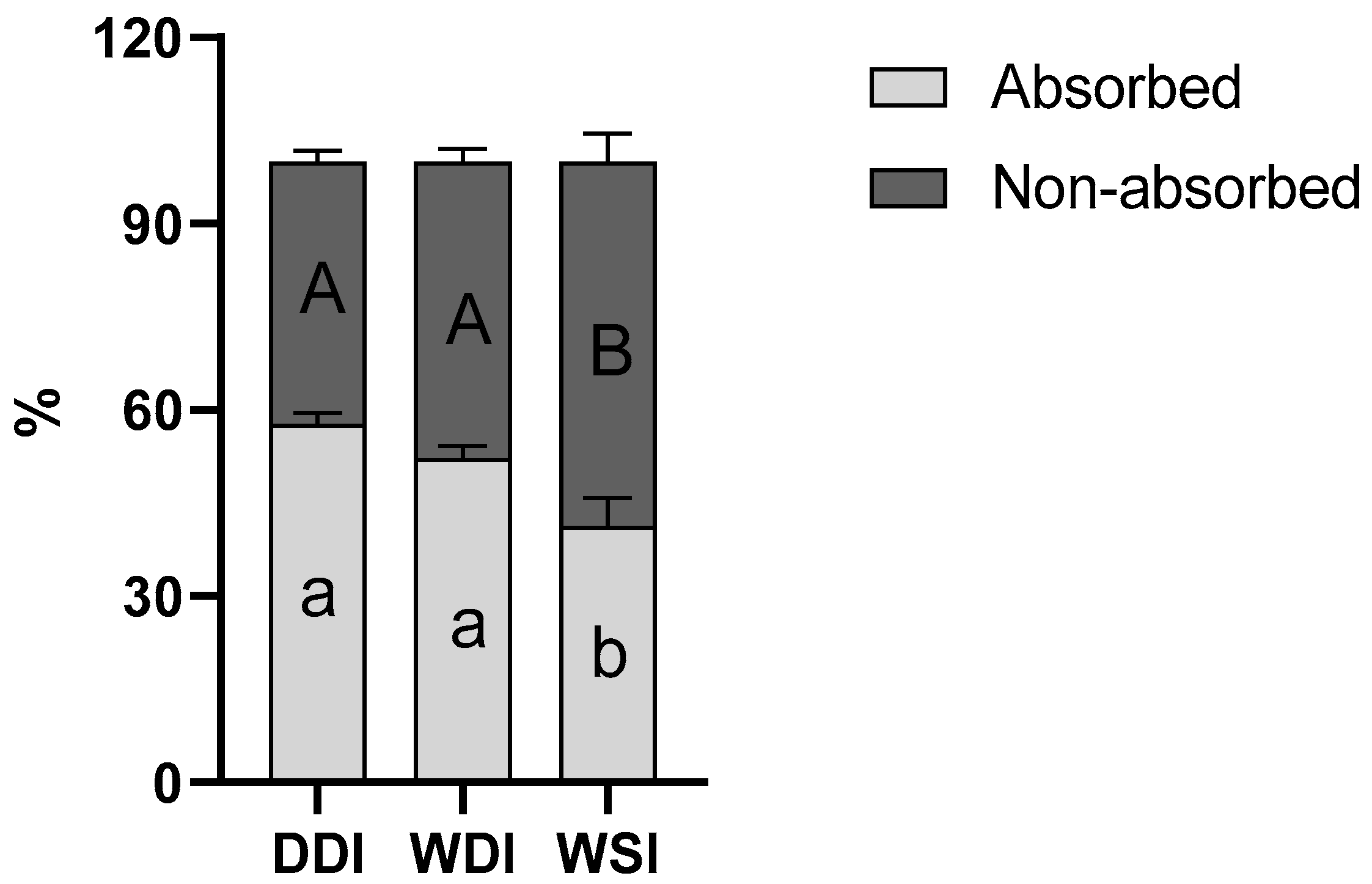
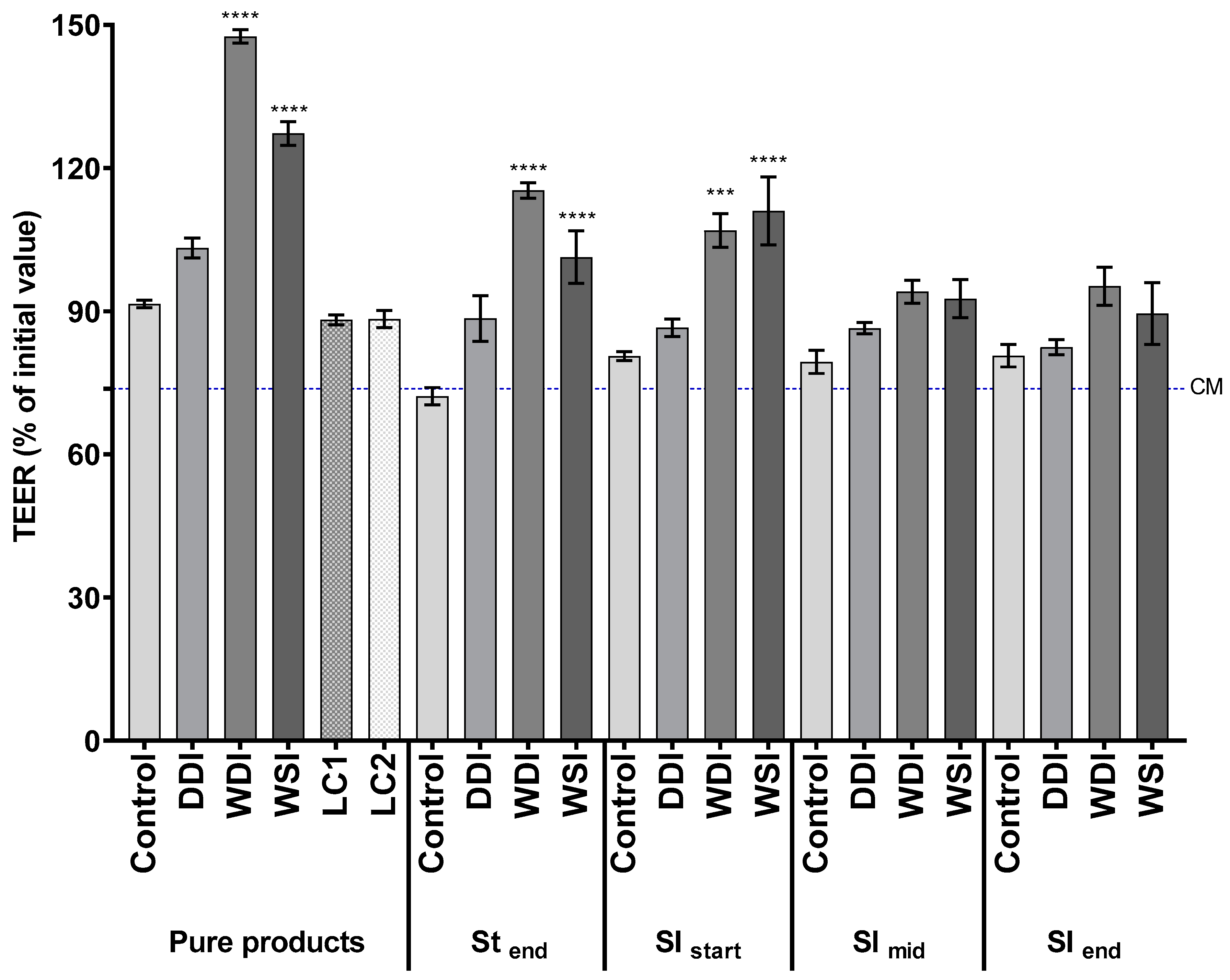
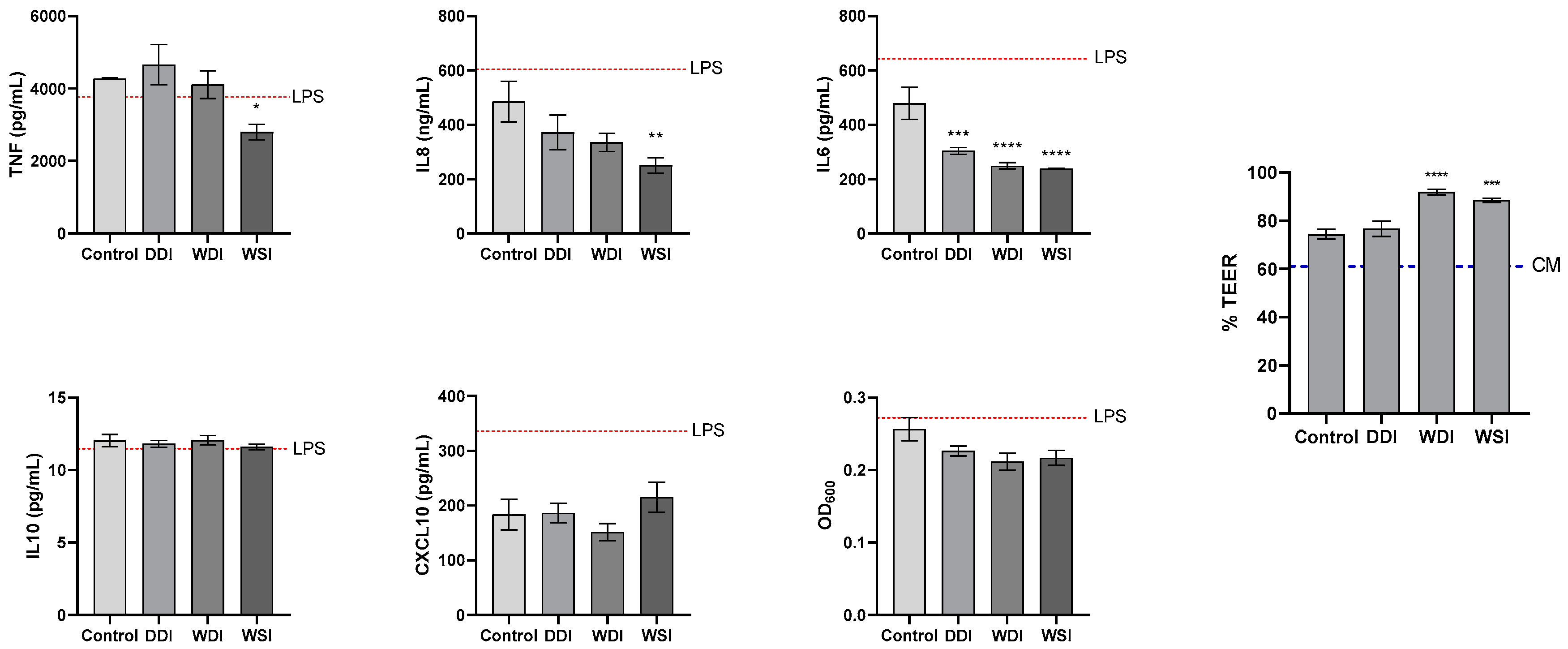
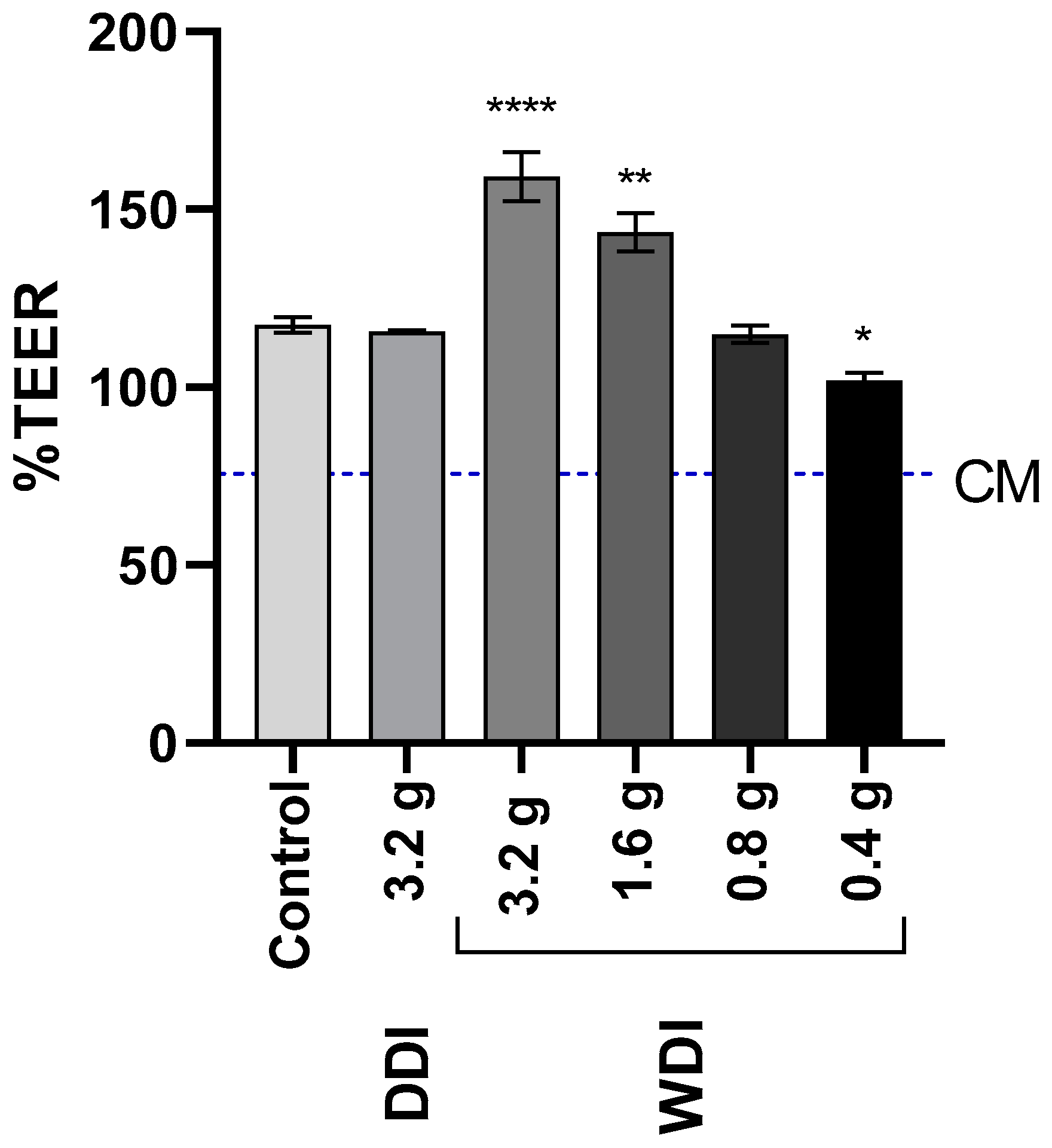
Single-cell protein from torula yeast (Cyberlindnera jadinii) grown on lignocellulosic biomass has been proven to be an excellent alternative protein source for animal feed. This study aimed to evaluate the amino acid (AA) digestibility by estimating intestinal absorption from three yeast-based ingredients, produced by cultivating C. jadinii on hydrolysate, using either mixed woody species (drum- (WDI) or spray-dried (WSI)) or corn dextrose (drum-dried (DDI)) as the carbon source. Further, the protective effect of intestinal digests on activated THP1-Blue™-induced epithelial damage and cytokine profile was evaluated. Total protein content from these three ingredients ranged from 34 to 45%, while the AA dialysis showed an estimated bioaccessibility between 41 and 58%, indicating good digestibility of all test products. A protective effect against epithelial-induced damage was observed for two of the three tested products. Torula yeast cultivated on wood and drum-dried (WDI) and torula yeast cultivated on wood and spray-dried (WSI) significantly increased transepithelial electrical resistance (TEER) values (111–147%, p < 0.05), recovering the epithelial barrier from the inflammation-induced damage in a dose-dependent manner. Further, WSI digests significantly reduced IL8 (250.8 ± 28.1 ng/mL), IL6 (237.9 ± 1.8 pg/mL) and TNF (2797.9 ± 216.3 pg/mL) compared to the blank control (IL8 = 485.7 ± 74.4 ng/mL, IL6 = 478.7 ± 58.9 pg/mL; TNF = 4273.5 ± 20.9 pg/mL) (p < 0.05). These results align with previous in vivo studies, supporting torula yeast-based ingredients as a high-quality protein source for pigs, protecting the intestinal barrier from inflammatory damage, and reducing the pro-inflammatory response. We provided novel insights into the mechanisms behind the health improvement of pigs fed on torula yeast-based ingredients, with potential applications for designing nutritional interventions to recover intestinal homeostasis during critical production periods, such as weaning.