Transport of Pigs of Two Market Weights at Two Space Allowances: Effects on Behaviour, Blood Parameters, and Meat Quality under Summer and Winter Conditions
by
 , , , , , ,
Jessica Gonçalves Vero
1,2 ,
,
Nicolas Devillers
1,
Ana Maria Bridi
2,
Kyle A. T. Moak
3,
Gizella Aboagye
4,
Guilherme Agostinis Ferreira
2,
Jansller Luiz Genova
5,
Sabine Conte
1 and
Luigi Faucitano
1,*
1
Agriculture and Agri-Food Canada, Sherbrooke Research and Development Centre, 2000 College Street, Sherbrooke, QC J1M 0C8, Canada
2
Departamento de Zootecnia, Universidade Estadual de Londrina, Londrina 86051-990, Brazil
3
Department of Animal Science, University of Saskatchewan, Saskatoon, SK S7N 5B4, Canada
4
European Food Safety Authority (EFSA), Via Carlo Magno 1A, 43126 Parma, Italy
5
Departamento de Zootecnia, Universidade Federal de Viçosa, Viçosa 36570-900, Brazil
*
Author to whom correspondence should be addressed.
Animals 2023, 13(17), 2767; https://doi.org/10.3390/ani13172767
Submission received: 20 June 2023
/
Revised: 15 August 2023
/
Accepted: 29 August 2023
/
Published: 30 August 2023
/
Corrected: 6 March 2024
(This article belongs to the Special Issue Live Animal Transportation: A Risk for Animal and Human Health and Welfare)
Simple Summary
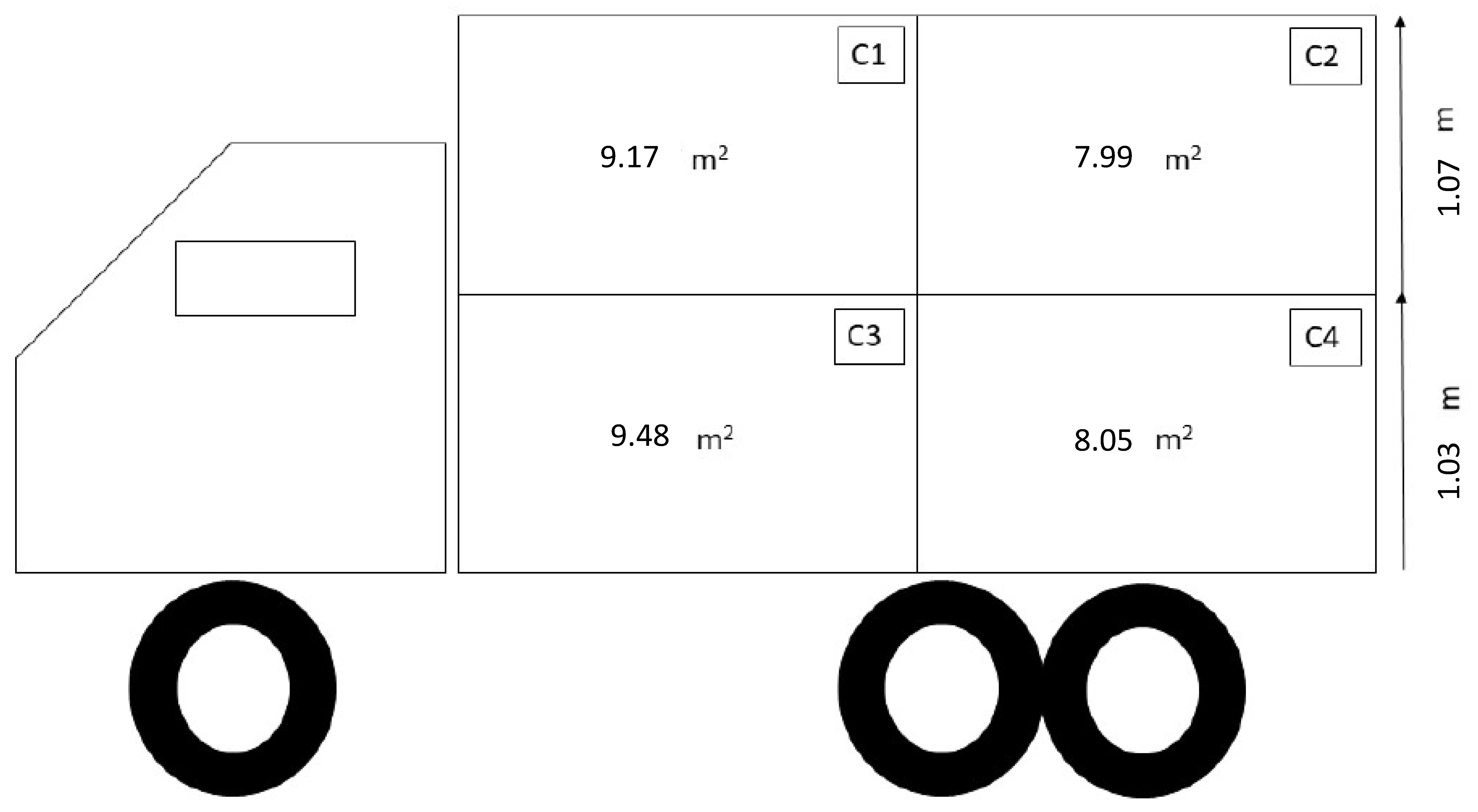
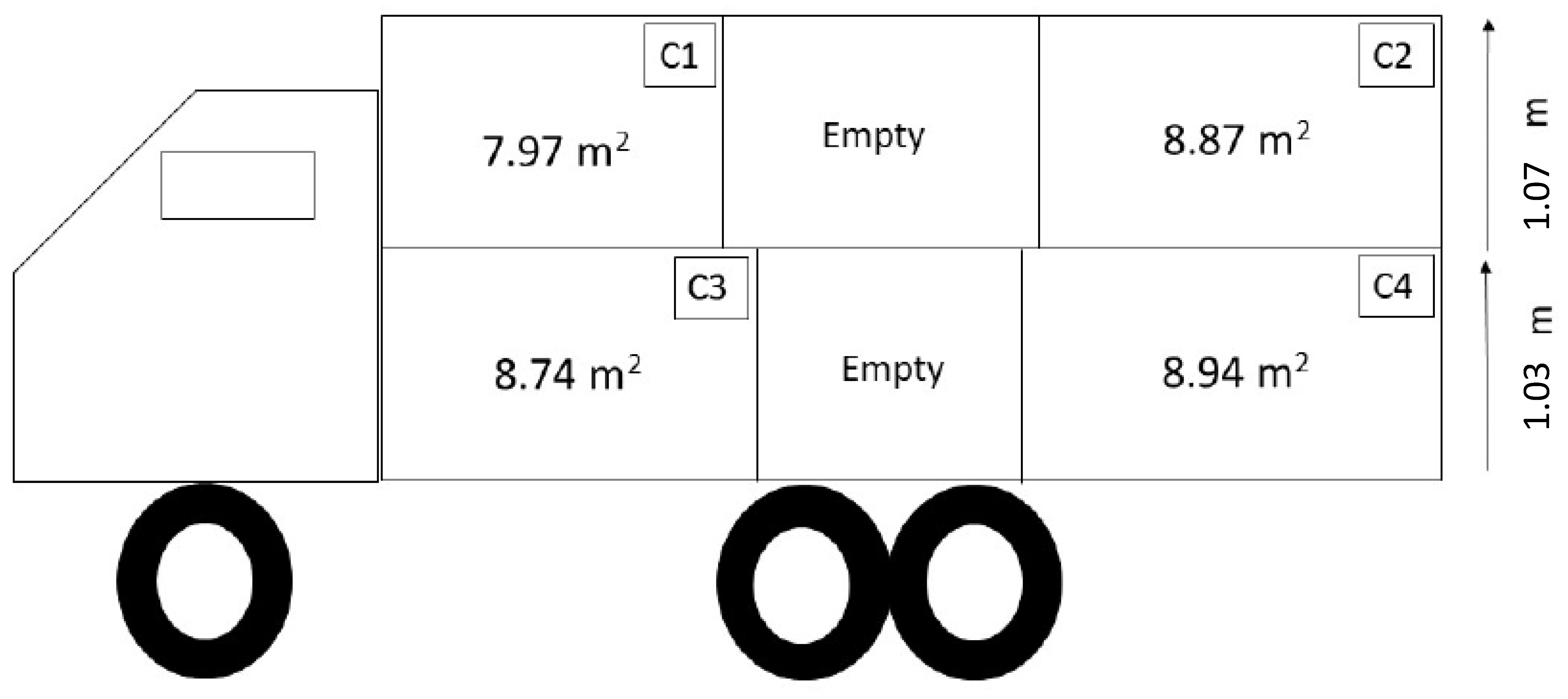
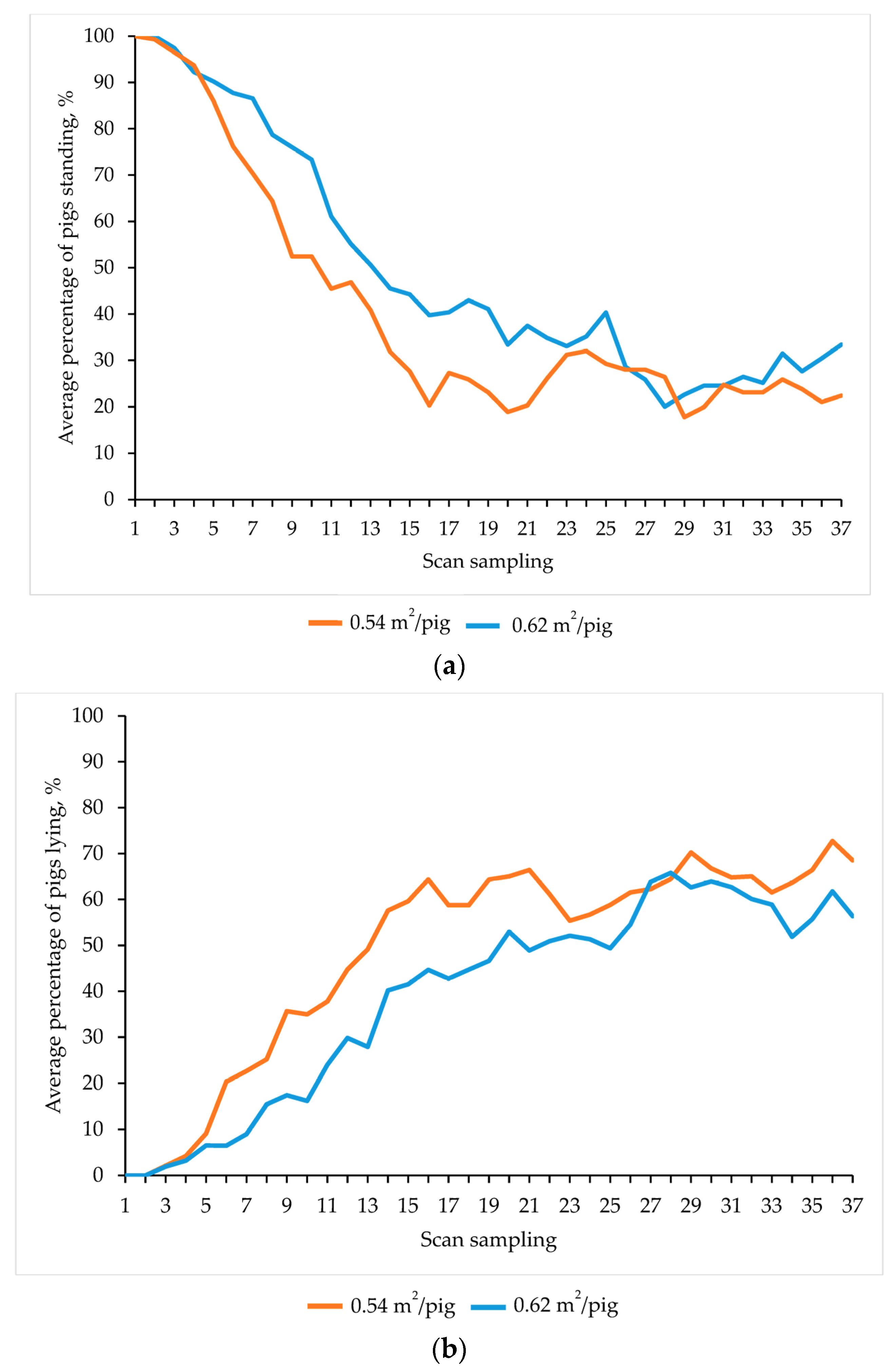
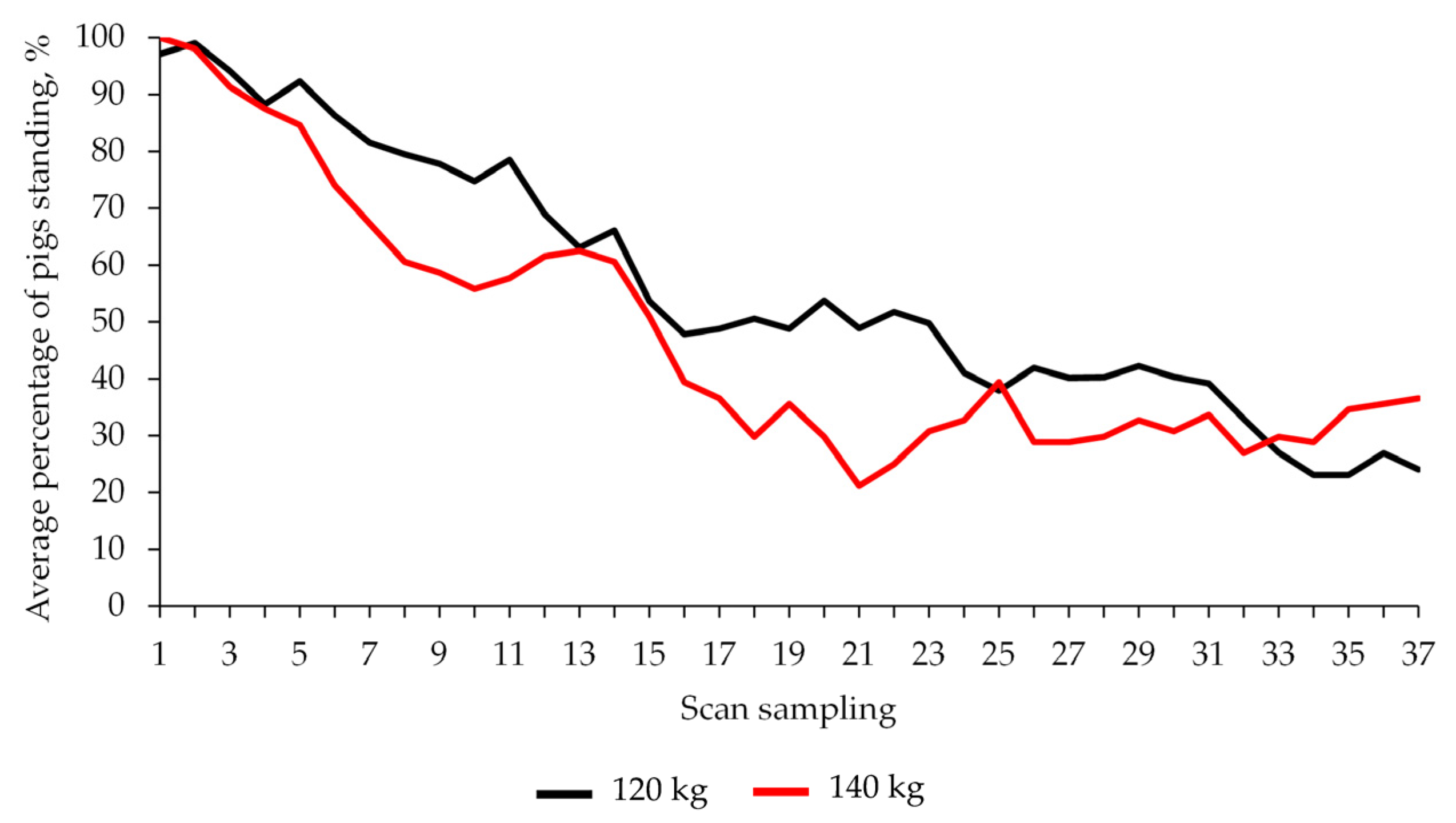
Increasing the slaughter weight of pigs can create challenges in handling and transport, affecting the welfare and the final meat quality. Heavier pigs have different space requirements to fit their physical and thermal needs. This research was conducted through two separate experiments with the aim of investigating the effects of two slaughter weights (120 and 140 kg) and two space allowances during summer and winter transports, i.e., 0.54 and 0.62 m2/pig and 0.44 m2/pig or 0.50 m2/pig, respectively, on the behavioural and physiological response, and carcass and meat quality of pigs. Overall, the effects of providing different space allowances during summer transports on within-truck ambient conditions, post-transport pigs’ welfare, and carcass and meat quality are similar, regardless of the slaughter weight. In summer loads, increased slaughter weight is associated with more aggressive pigs under mixed group conditions in lairage and a higher risk of DFD-like pork meat resulting from fatigue at slaughter. Winter transport results may have been biased by the short journey and the truck condition not travelling at its full load capacity. Further research aiming for longer journeys (>3 h) is needed to validate the space allowances applied in this study for heavier pigs during summer and winter conditions.
Abstract
This study was carried out through two separate experiments aiming at evaluating the effects of two space allowances (0.54 and 0.62 m2/pig in summer and 0.44 m2/pig and 0.50 m2/pig in winter) on the behavioural and physiological response, and meat quality of pigs of two slaughter weights (120 kg and 140 kg). In summer, higher blood haematocrit levels were found at slaughter in heavier pigs transported at a smaller space allowance (p = 0.04). During lairage, pigs transported at a smaller space allowance started fighting later (p = 0.04). Fighting behaviour was greater in heavier pigs (p ≤ 0.05), whilst their drinking activity was lower (p < 0.05). This resulted in greater exsanguination blood CK levels (p < 0.01) and drier hams (p = 0.05) in heavier pigs. In winter, only lower space allowance influenced some meat quality traits (p < 0.05), but these effects were minor. The effects of space allowance during summer transports on within-truck ambient conditions, post-transport pigs’ welfare, and meat quality are similar. Mixing heavier pigs may result in greater aggressiveness and more fatigue-related meat quality variation during summer. Overall, winter transport results may have been biased by the short journey and within-truck load distribution.
Keywords:
behaviour; meat quality; pigs; slaughter weight; space allowance; stress; summer; transport; winter