


Abstract
Cattle manure composting is an effective strategy for recycling agricultural waste. However, the presence of lignocellulosic materials in cattle manure–maize straw mixtures can limit the degradation efficiency during composting. This study investigated the effects of microbial inoculation on composting performance using three treatments: a lignocellulose-degrading microbial consortium (MC1), a commercial microbial inoculant (BS1), and a non-inoculated control (CK). The results showed that the MC1-treated pile entered the thermophilic phase (>50 °C) earlier than the BS1-treated pile. After 49 days of composting, the lignocellulose degradation rates in the MC1, BS1, and CK treatments were 46.25%, 37.5%, and 29.8%, respectively. Based on compost maturity indicators, including temperature, C/N ratio, pH, and electrical conductivity (EC), the composting period required to reach maturity was shortened by 8 days in the MC1 treatment compared with the BS1 treatment (37 vs. 45 days). Microbial community analysis indicated that MC1 inoculation increased the relative abundance of key microbial groups, particularly Ascomycota and Firmicutes, thereby enhancing lignocellulose degradation and accelerating composting. These findings provide insights into the application of lignocellulose-degrading microbial inoculants for improving cattle manure composting efficiency.
1. Introduction
The rapid expansion of livestock farming has created significant environmental and agricultural sustainability challenges regarding animal manure treatment and resource utilisation [1]. Global livestock manure production is nearly 6.3 billion tonnes annually, with China accounting for over one-fifth of this total through its annual output of 1.38 billion tonnes of cattle manure [2,3]. Currently, the disposal of these wastes primarily involves stacking, which can lead to serious water, soil and air pollution [4]. Effectively managing cattle manure has thus become pivotal to advancing China’s livestock sector [5]. Microaerophilic composting represents a vital pathway for resource recovery from cattle manure. This process facilitates the degradation of lignocellulose within manure compost, converting it into humus and nutrients [6]. However, both cattle manure and maize straw contain substantial quantities of recalcitrant organic carbon components, such as the lignocellulosic components hemicellulose, cellulose, and lignin [7]. As the major constituents of lignocellulose, cellulose and hemicellulose degradation presents a significant obstacle to the large-scale industrial application of biological composting. This is attributed to the highly resistant molecular hydrogen bonds among glucose units, resulting in the formation of compounds characterized by high crystallinity, mechanical strength, and chemical stability [8]. Consequently, its degradation constitutes the primary rate-limiting step influencing composting duration [9]. Thus, enhancing the biodegradation of lignocellulose holds significant importance for improving both compost quality and efficiency.
The inoculation of exogenous microorganisms in cattle manure composting enhances the diversity and abundance of lignocellulose-degrading microbes, stimulates microbial activity, accelerates lignocellulose biodegradation, and improves compost maturity and quality [10]. Furthermore, exogenous microbial inoculation reduces odour emissions, effectively suppresses harmful microbial proliferation, and renders the composting process more environmentally sustainable and hygienic [11]. Recently, fungal and bacterial degradation of lignocellulose has garnered increasing attention. Fungi are primary producers of lignocellulases, whereas bacteria typically exhibit faster growth rates and greater thermal tolerance for these enzymes [6]. Multiple studies have screened and identified microorganisms that promote cellulose degradation; applying these specific functional microbes to composting enhances lignocellulose breakdown [12,13,14]. Specific lignocellulose-degrading bacteria can enhance lignocellulose degradation efficiency and compost quality [15]. Yin et al. [16] added the PLC-8 microbial inoculant, resulting in significant enrichment of Proteobacteria and Ascomycota. After 60 days, the degradation rates of cellulose and hemicellulose reached 88.04% and 71.95%, respectively. Wei et al. [17] inoculated with actinomycetes during composting to accelerate lignin and cellulose decomposition. Wang et al. [2] inoculated with Bacillus, increasing the degradation rates of cellulose, hemicellulose, and lignin from 17.1–46.4%, 16.9–34.5%, and 30.6–69.4%, respectively. Wang et al. [18] added microbial inoculants (Bacillus roheii, Pseudomonas spp., and Aeromonas spp.) to efficiently degrade lignocellulosic components, generating humic precursors and promoting humic substance formation. In straw composting, inoculation with Geobacillus stearothermophilus B5 and Aspergillus fumigatus Z5 reduced cellulose content from 43% to approximately 20% and hemicellulose content from 37% to approximately 15%, thereby enhancing composting efficiency and maturity [19]. Zhu et al. [20] inoculated Gloeophyllum trabeum into pig manure and wheat straw, reducing the compost maturation period from 39 to 30 days while increasing the degradation rates of hemicellulose, lignin, and cellulose by 49.4%, 109.4%, and 181.1%, respectively. These findings highlight the potential of exogenous microorganisms in accelerating lignocellulose degradation and enhancing compost quality.
Although numerous studies have demonstrated the benefits of exogenous microbial inoculation in enhancing composting efficiency and lignocellulose degradation, most of these studies have focused on single microbial strains or commercially available inoculants [21,22,23]. Comparative analyses between self-developed lignocellulolytic microbial agents and commercial microbial inoculants are still limited. Furthermore, systematic investigations linking microbial community succession to the degradation dynamics of cellulose, hemicellulose, and lignin throughout the composting process remain scarce. Therefore, this study aimed to evaluate the effects of different microbial inoculants on lignocellulose degradation and microbial community dynamics during cattle manure composting. The results are expected to provide insights for optimizing microbial inoculation strategies and improving compost quality and efficiency.
2. Materials and Methods
2.1. Composting Materials and Experimental Design
The composting experiment was conducted at Yanbian University (Yanji City, China, 43.10° E, 129.18° N), which is located in a temperate semi-humid climate zone. Fresh cattle manure and corn straw were mixed at a mass ratio of 3:1 (w/w) and thoroughly homogenized to prepare the composting substrate. Three treatments were established: a non-inoculated control (CK) and two inoculated treatments with a lignocellulose-degrading microbial consortium (MC1) or a commercial microbial inoculant (BS1). The lignocellulose-degrading microbial consortium MC1, consisting mainly of members of the phyla Proteobacteria, Firmicutes, Bacteroidetes, Basidiomycota, and Actinobacteria, was provided by the research group of Prof. Zongjun Cui at China Agricultural University [24]. The commercial microbial inoculant BS1 (Haowangnong EM fermentation agent, Zhengzhou, China) contains Bacillus subtilis (>1 × 10¹⁰ CFU g−1) and yeast (>3 × 10⁹ CFU g−1). For the inoculated treatments, 2 kg of wheat bran was added to each compost pile as a carrier to facilitate microbial activation. Subsequently, 10 mL of MC1 culture (3 × 10⁸ CFU mL−1) or BS1 inoculant (containing approximately 5 × 10⁸ CFU mL−1 of Bacillus subtilis and 1.5 × 10⁸ CFU mL−1 of yeast) was applied and thoroughly mixed to ensure uniform distribution throughout the composting materials.
2.2. Composting Method and Sampling
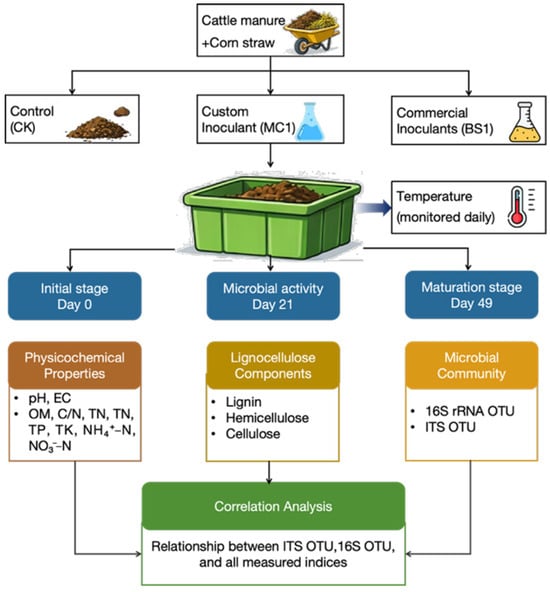
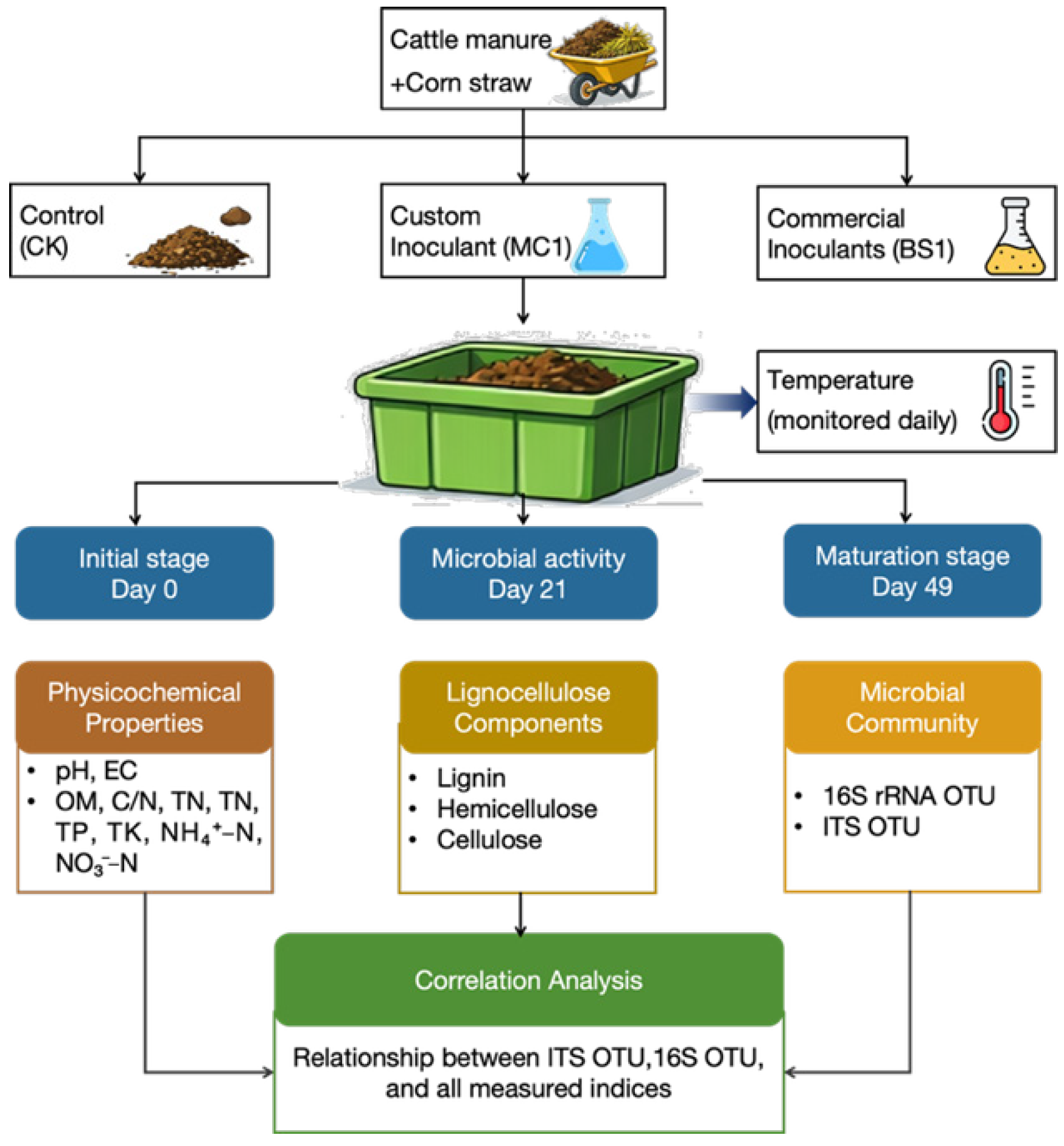
Each treatment was composted in a separate pile with a volume of 2 m3 and a height of approximately 1 m under natural fermentation conditions. When the pile temperature reached 50 °C, manual turning was conducted every 2 days. After the temperature dropped to 35 °C, turning was conducted every 5 days. The composting process lasted 49 days, with Day 0 defined as the start of composting. Samples were collected on Days 0, 21, and 49 at depths of 30, 80, and 100 cm from the pile surface. These sampling points were selected to represent the initial stage (Day 0), the thermophilic stage with the highest microbial activity (Day 21), and the maturation stage (Day 49) of the composting process. The collected samples were thoroughly homogenized, air-dried in the shade, and stored for subsequent analysis [16]. A Schematic diagram of the experimental design, showing treatments, sampling time points, and measured parameters, is shown in Figure 1.
Figure 1.
Schematic diagram of the experimental design for cattle manure composting, showing treatments (CK, BS1, MC1), sampling time points (Day 0, 21, 49), and measured parameters.
2.3. Pile Temperature Measurement
Pile temperature was measured daily at 12:00 throughout the composting period. Temperature sensors were inserted at depths of 20, 50, and 70 cm below the pile surface, and the mean value was recorded. Ambient temperature was measured simultaneously.
2.4. Chemical Parameter Analysis
pH measurements were conducted using a pH meter (pH-100A, Lichen Technology Co., Ltd., Shanghai, China). Samples were diluted with distilled water at a ratio of 1:5 (w/v) before measurement [25]. For the analysis of total potassium (TK) and total phosphorus (TP) components in the soil, a digestion method involving concentrated perchloric acid and sulfuric acid was employed [26]. The digested solution was filtered through a 0.45 μm PES membrane, and the content was quantified using a flame photometer (WGH series, Lichen Technology Co., Ltd., Shanghai, China) and the AA3 analyzer (AutoAnalyzer 3, SEAL Analytical GmbH, Norderstedt, Germany), respectively. The organic matter (OM) content was determined using the potassium dichromate volumetric method combined with the dilution-heat approach [27]. Total nitrogen (TN) was analysed by digesting samples via the Kjeldahl method, followed by nitrogen content analysis using the AA3 analyzer (AutoAnalyzer 3, SEAL Analytical GmbH, Norderstedt, Germany) [28]. Ammonium nitrogen (NH4+–N) and nitrate nitrogen (NO3−–N) were determined by extracting samples with 2 mol/L CaCl2 solution and analysing nitrogen components using a continuous flow analyser [29]. Cellulose, hemicellulose, and lignin content were measured by the acid washing method according to the standard procedure [30].
2.5. Determination of Microbial Dynamics Indicators
Total genomic DNA was extracted from compost samples using the DNA extraction kit (TIANGEN Biotech, Beijing, China) according to the manufacturer’s instructions. PCR amplification, library construction, and Illumina sequencing were performed by a commercial sequencing platform (Biomarker Technologies Co., Ltd., Beijing, China). The V3–V4 region of the bacterial 16S rRNA gene was amplified using primers 338F (5′-ACTCCTACGGGAGGCAGCA-3′) and 806R (5′-GGACTACHVGGGTWTCTAAT-3′) [31]. The fungal ITS region was amplified using primers ITS1F (5′-CTTGGTCATTTAGAGGAAGTAA-3′) and ITS2 (5′-GCTGCGTTCTTCATCGATGC-3′) [32]. Sequencing was performed on an Illumina MiSeq platform using paired-end 300 bp reads (PE300) (Illumina Inc., San Diego, CA, USA). Raw reads were quality-filtered using fastp with default parameters to remove low-quality sequences and adapter contamination. After quality control, the clean reads showed Q20 values above 99% and Q30 values above 96%, indicating high sequencing quality. Raw sequencing data were processed and analyzed using the BMKCloud platform (Biomarker Technologies Co., Beijing, China), where microbial community diversity analyses and ordination analyses were performed using default parameters. The sequencing statistics, taxonomic tables, and alpha-diversity indices for both bacterial 16S rRNA and fungal ITS datasets are provided in Supplementary Tables S1–S6.
2.6. Statistical Analysis
Raw data were processed and subjected to analysis of variance using Excel 2016 (Microsoft Co., Redmond, WA, USA) and SPSS 20.0 (IBM Co., Armonk, NY, USA). Structural equation modelling (SEM) was conducted using IBM SPSS Amos 26.0 (IBM Corp., Armonk, NY, USA). Graphical representations were produced using OriginPro 2021 (OriginLab Corporation, Northampton, MA, USA).
3. Results
3.1. Temperature Changes During Composting
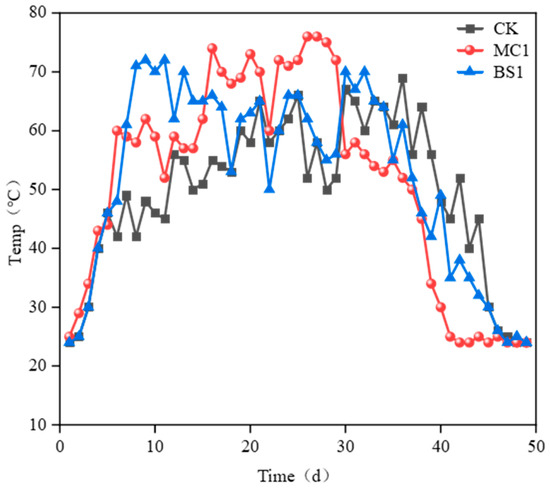
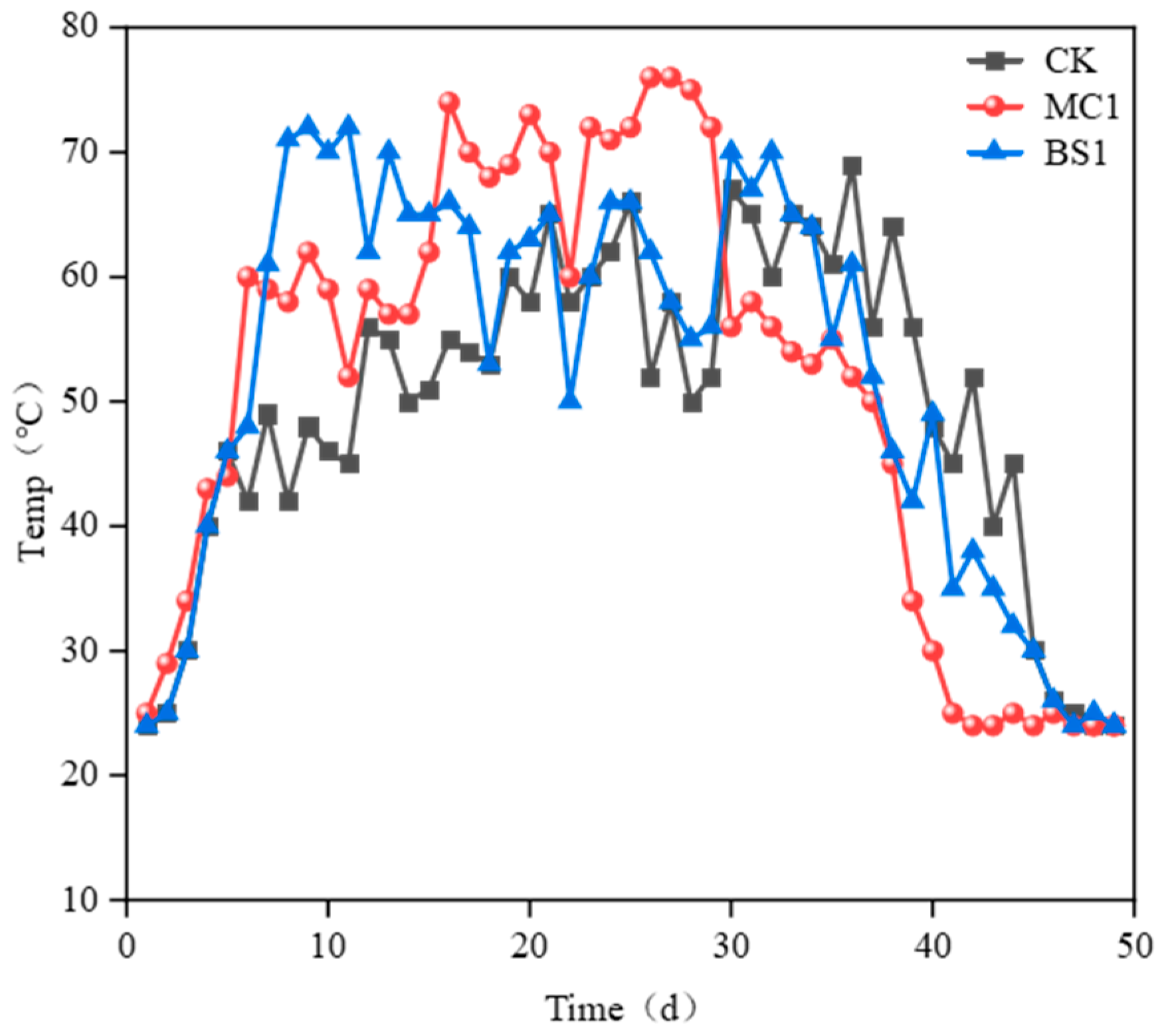
As shown in the compost pile temperature curve (Figure 2), groups inoculated with exogenous microorganisms (MC1, BS1) demonstrated superior performance to the CK group. During the composting heating phase (approximately 0–7 days), temperatures rose rapidly across all treatment groups. The MC1 treatment group entered the high-temperature phase (>50 °C) on day 6, persisting for 31 days, and the BS1 treatment group entered the high-temperature phase on day 7 (7–37 days), lasting 30 days. Both the MC1 and BS1 treatments groups entered the cooling-off period on day 37 (37–49 days), two days earlier than the CK group. The MC1 treatment group reached the high-temperature phase faster than the BS1 treatment group and maintained it for a longer duration.
Figure 2.
Composting temperature under different treatments during the composting process. MC1 (inoculated with lignocellulolytic microbial agent), BS1 (inoculated with commercial microbial agent), CK (control).
3.2. Physicochemical Properties During Composting
As shown in Table 1, physicochemical indicators exhibited systematic variations across treatment groups throughout the composting process, with significant differences (p < 0.05) observed between different stages within the same treatment. pH exhibited a decreasing trend followed by an increase, resulting in a weakly alkaline environment (7.5–8.2) upon completion. Electrical conductivity (EC) initially rose before declining, with all treatments falling below the safety standard of 4 ms/cm at the end of composting [33]. OM content showed an initial increase followed by a decrease. The MC1 treatment achieved the highest OM decomposition rate, reaching 1.44 times that of the BS1 treatment and 2.48 times that of the CK control. The C/N ratio decreased continuously, falling below the maturity standard of 20 in both MC1 and BS1 treatments by the end of composting [34]. TN content showed an upward trend and TP content increased dynamically, while TK content initially increased before decreasing and gradually stabilising. NH4+-N content initially increased before decreasing, while NO3−-N content decreased initially before increasing. The experiment demonstrated that adding MC1 significantly promoted OM decomposition, reduced the C/N ratio, and enhanced the retention and transformation of nutrients such as nitrogen and phosphorus.
Table 1.
Physicochemical parameters during the composting process.
3.3. Lignocellulose Content During Composting
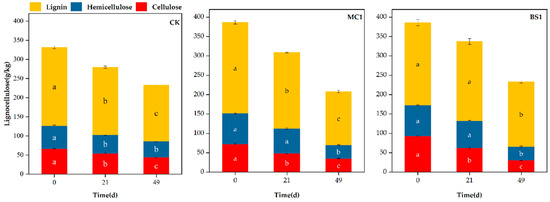
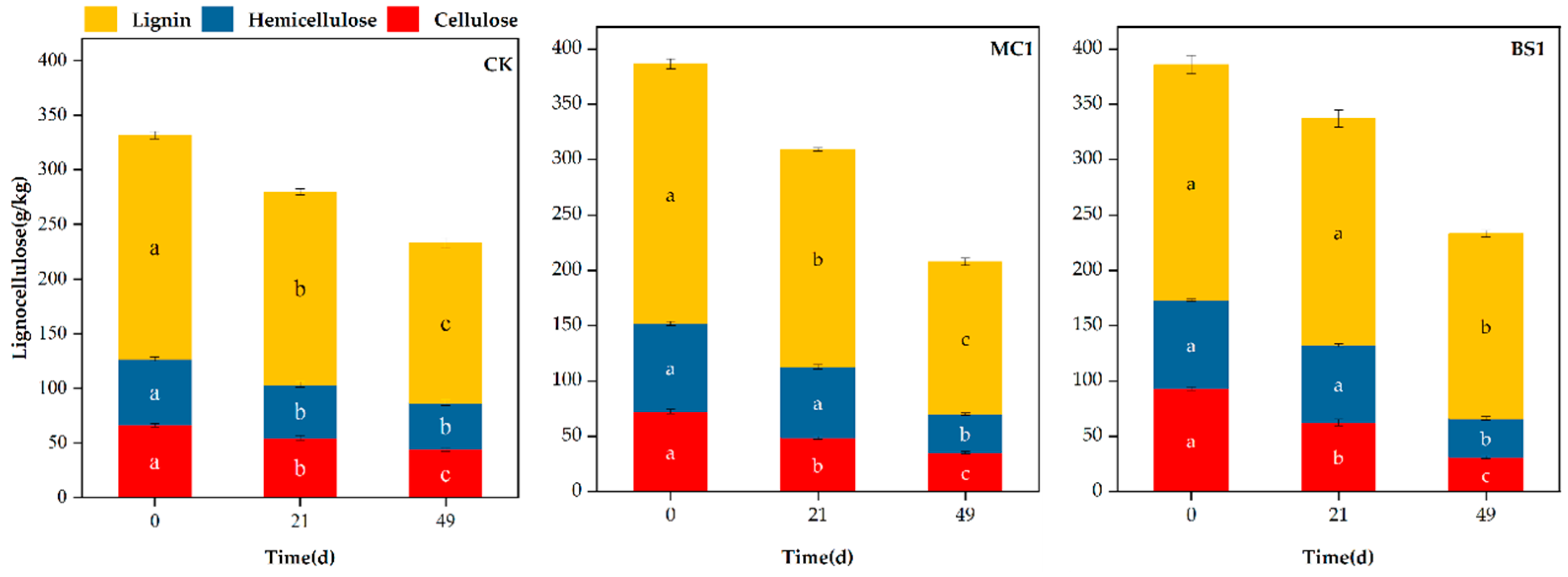
The lignocellulose content exhibited a decreasing trend with extended fermentation duration (Figure 3). Upon completion of composting (Day 49), the lignocellulose degradation rates for the MC1, BS1, and CK groups were 46.25%, 37.5%, and 29.8%, respectively. The lignocellulose degradation rate in the MC1 treatment group was 1.23 times and 1.55 times that of the BS1 and CK groups, respectively.
Figure 3.
Changes in lignocellulose content under different treatments. MC1 (inoculated with lignocellulose-degrading microbial agent), BS1 (inoculated with commercial microbial agent), CK (control). All data are expressed as mean ± standard error (n = 3). Different letters indicated significant differences (p < 0.05) according to Duncan’s multiple range test.
The degradation of cellulose and hemicellulose primarily occurred during the heating and high-temperature phases, indicating that thermophilic microorganisms play a pivotal role in their breakdown. Lignin, being an aromatic compound with a highly complex polymeric structure, is difficult for microorganisms to degrade [19]. By the end (Day 49) of composting, cellulose, hemicellulose, and lignin contents had decreased significantly. Compared to pre-composting levels (Day 0), MC1 treatment reduced these by 51.27%, 56.23%, and 41.32%, respectively; BS1 treatment reduced them by 66.51%, 56.00%, and 17.07%; and CK showed reductions of 33.69%, 29.46%, and 28.65%, respectively. At the end of composting (Day 49), cellulose degradation in the BS1-treated pile was 1.3 and 1.97 times higher than in the MC1-treated and CK piles, respectively; conversely, lignin degradation in the MC1-treated pile was 1.9 and 1.44 times higher than in the BS1-treated and control piles, respectively.
3.4. Microbial Community Phylum-Level Composition Analysis
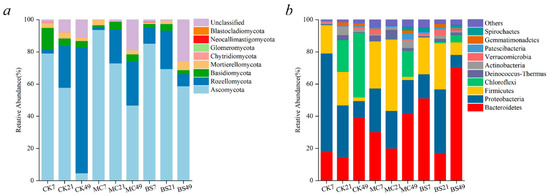
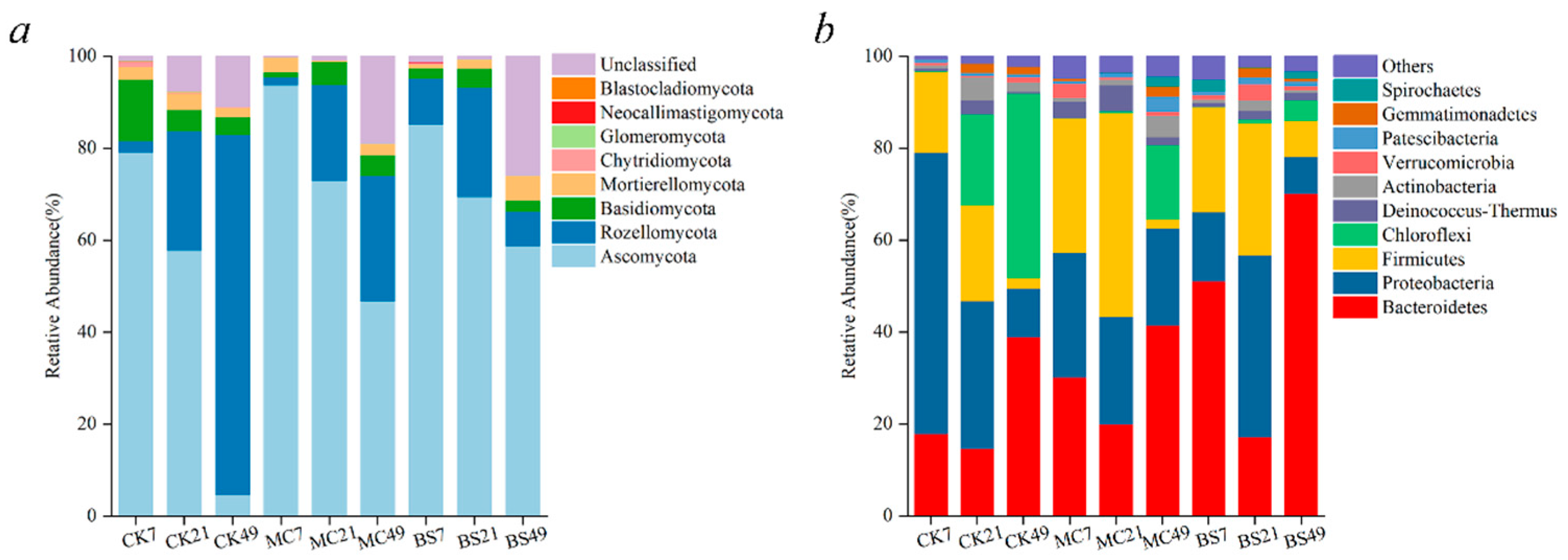
Ascomycota constituted the dominant fungal phylum throughout the composting process (Figure 4a). Inoculation with MC1 and BS1 significantly elevated the relative abundance of Ascomycota. The addition of exogenous microorganisms concurrently increased lignocellulose degradation rates, which was accompanied by an increase in Ascomycota abundance, indicating that Ascomycota may play an important role in the observed microbial community dynamics during composting. Moreover, the Firmicutes phylum exhibited high abundance throughout the composting process (Figure 4b). These microorganisms possess thermotolerant and thermophilic properties, thrive in extreme environments, and demonstrate exceptional capabilities in degrading cellulose and hemicellulose [35]. During the composting heating phase and early high-temperature period (0–21 days), degradation microbes within the Ascomycota phylum secreted extracellular oxidase systems such as laccase, manganese peroxidase, and peroxidase. These enzymes are responsible for attacking and breaking down the complex aromatic ring structures of lignin [36]. This breakdown exposes cellulose and hemicellulose, thereby promoting the proliferation of cellulose-degrading bacteria represented by the Firmicutes phylum. At 21 days, the Ascomycota abundance was highest in the MC1 treatment (44.31%), while BS1 and CK treatments recorded 28.6% and 20.84% (Figure 4b), respectively. Throughout the composting process, both Ascomycota and Basidiomycota abundances exhibited a declining trend due to microbial functional shifts, substrate depletion, and temperature dynamics.
Figure 4.
Differences in microbial community composition and dynamics at the phylum level during composting. (a) Fungal phyla. MC1 (inoculation with lignocellulolytic microbial agents), BS1 (inoculation with commercial microbial agents), (b) Bacterial phyla. Only the ten most abundant phyla are shown; the remaining are grouped as Others. CK (control), with numbers (7, 21, 49) indicating composting time (in days).
3.5. Microbial Community Heatmaps
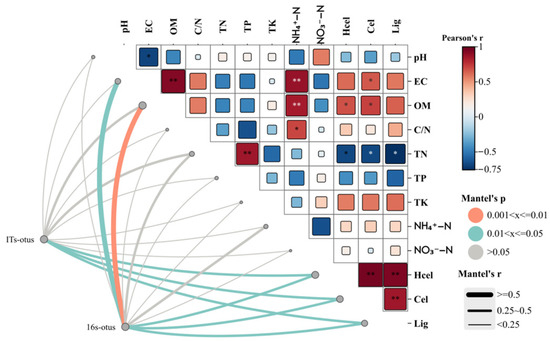
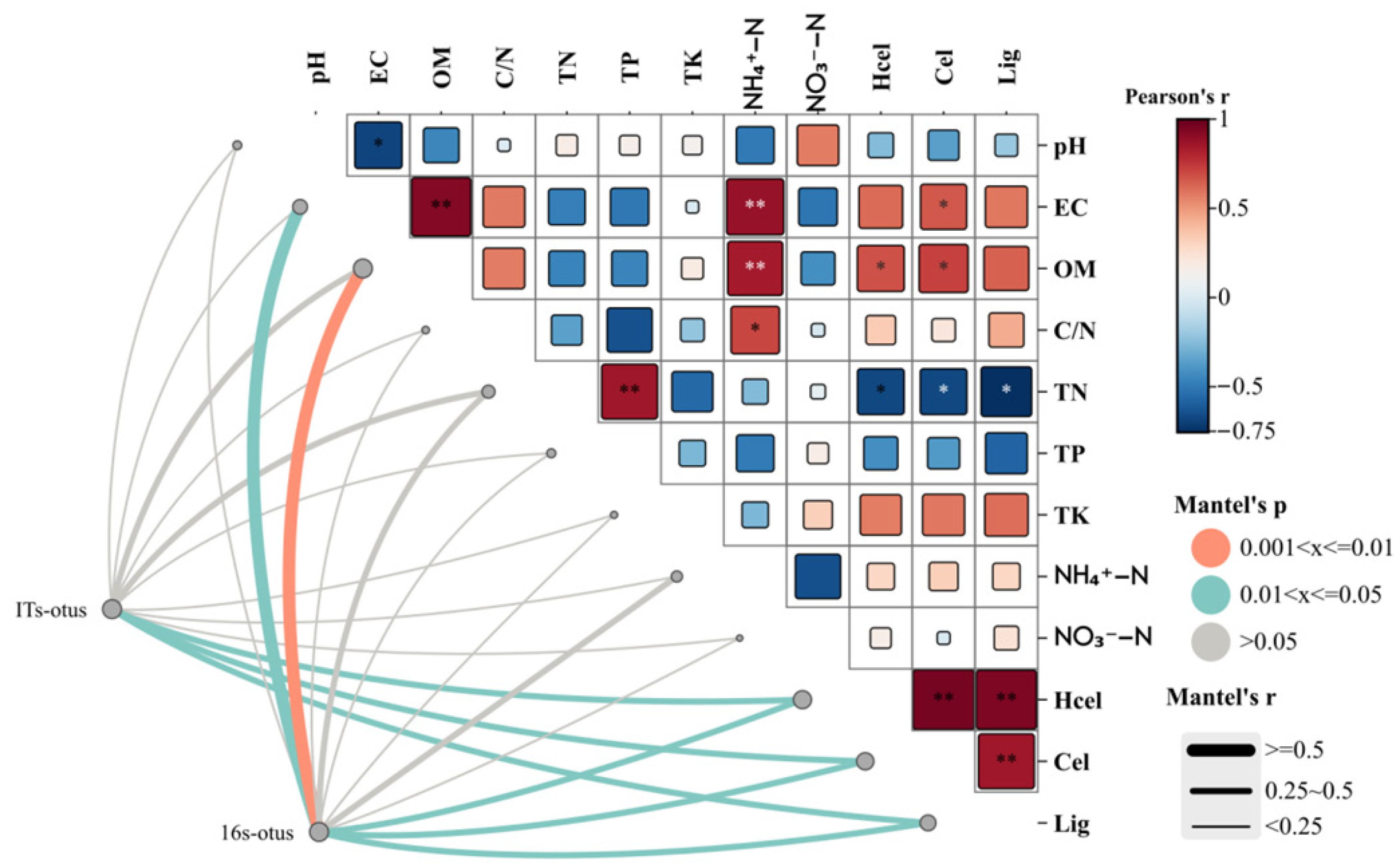
Bacterial communities (indicated as 16S-OTUs) exhibited extremely significant correlations with OM, and significant correlations with lignocellulosic components (indicated as Hcel, Cel, and Lig) and EC (Figure 5). Fungal communities (indicated as ITs-OTUs) showed significant correlations with lignocellulosic components. This indicates that bacterial and fungal community structures undergo corresponding adjustments with variations in lignocellulosic content, likely due to exogenous inoculation promoting bacterial and fungal degradation of lignocellulose, thereby influencing community composition. Furthermore, OM exhibited a highly significant correlation with bacterial communities, underscoring bacteria’s crucial role in accumulating and transforming OM during composting. Cellulose and hemicellulose showed significant positive correlations with OM, potentially linked to OM serving as energy for microbial metabolism. This energy source substantially promotes microbial enrichment, leading to reduced OM content. Consequently, degradation microorganisms extensively break down cellulose and hemicellulose, resulting in corresponding decreases in their concentrations. The lignocellulosic components exhibited significant negative correlations with TN. This result may relate to lignocellulose degradation during composting, wherein elevated TN levels inhibit the synthesis and activity of lignocellulolytic enzymes, thereby suppressing lignocellulose degradation.
Figure 5.
Microbial community correlation heatmap. Rows denote various environmental factors (pH, EC, OM, C/N ratio, TN, TP, TK, NH4+-N, NO3−-N, Hcel, Cel, Lig), and columns represent bacterial communities (16S-OTUs) and fungal communities (ITs-OTUs). The colour scale on the right indicates Pearson’s correlation coefficient (Pearson’s r), with red denoting positive correlations and blue representing negative correlations; deeper hues signify stronger associations. The figure also displays Mantel’s correlation coefficient (Mantel’s r) and significance range (Mantel’s p) to assess overall associations with microbial community structure. EC (electrical conductivity), OM (organic matter), TN (total nitrogen), TP (total phosphorus), TK (total potassium), NH4+-N (ammonium nitrogen), NO3−-N (nitrate nitrogen), Hcel (hemicellulose), Cel (cellulose), Lig (lignin). * p < 0.05, ** p < 0.01.
3.6. Structural Equation Modelling
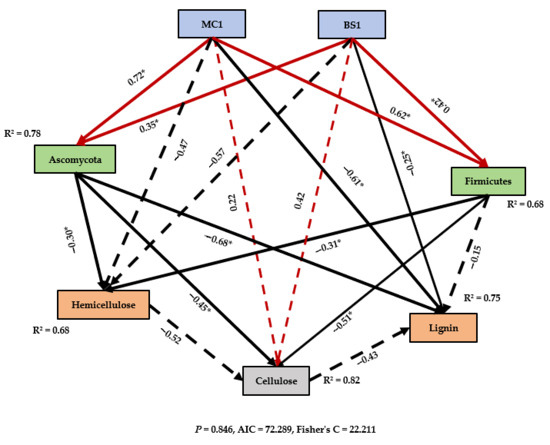
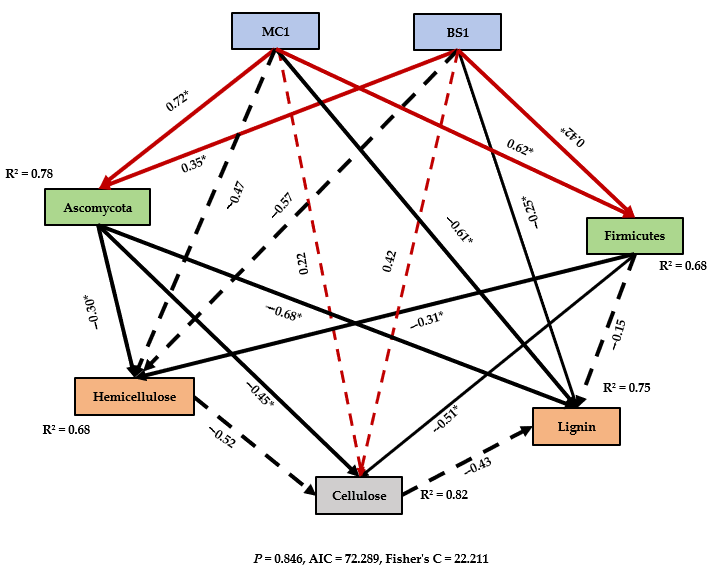
According to the SEM analysis in Figure 6, MC1 exerted a significant positive driving effect on the Firmicutes (0.62, p < 0.05) and Ascomycota (0.72, p < 0.05) phyla. BS1 also demonstrated a significant positive driving effect on the Firmicutes (0.42, p < 0.05) and Ascomycota (0.35, p < 0.05) phyla, indicating that exogenous microbial addition optimised the microbial community structure within the pile, promoting the enrichment of both Ascomycota and Firmicutes. However, MC1 exhibited higher path coefficients than BS1, suggesting MC1 exerted a more pronounced effect on Firmicutes and Ascomycota than BS1. Ascomycota exhibited significant negative correlations with cellulose (−0.45, p < 0.05), hemicellulose (−0.30, p < 0.05), and lignin (−0.68, p < 0.05). In this study, the significant degradation of lignin was observed in the lignocellulose-degrading bacteria (MC1). Treatment was closely associated with Ascomycota. During the composting process, the relative abundance of Ascomycota exhibited a declining trend, forming a significant negative correlation with the continuous decrease in lignin content. The Firmicutes phylum exhibited significant negative correlations with cellulose (−0.51, p < 0.05) and hemicellulose (−0.31, p < 0.05), while showing a non-significant negative effect on lignin (−0.15, p > 0.05). SEM analysis further revealed the core role of Ascomycota in cellulose degradation. During the composting process, the relative abundance of Ascomycota exhibited an overall trend of initial increase followed by decline, showing significant negative correlations with cellulose and hemicellulose content. Path coefficient analysis indicated that Ascomycota primarily degraded cellulose and hemicellulose. In summary, the lignocellulose-degrading MC1 microbial treatment demonstrated superior lignocellulose degradation performance compared to the commercially available BS1 microbial inoculant.
Figure 6.
Structural Equation Modelling (SEM) results. This figure illustrates the direct and indirect effects of the lignocellulose-degrading microbial agent (MC1) and commercial inoculum (BS1) on Ascomycota, Firmicutes, and lignocellulose components (cellulose, hemicellulose, and lignin). Numbers beside arrows denote standardised path coefficients, indicating the strength and direction of relationships between variables, with red and black representing positive and negative correlations, respectively (* p < 0.05); dashed lines indicate no significant correlation.
4. Discussion
4.1. Changes in Physicochemical Properties During Composting
The findings of this study indicate that the application of exogenous microorganisms significantly influences the physicochemical properties during the composting process and promotes OM transformation, which is closely linked to the dynamic changes in microbial communities within the composting system. Throughout the composting process, the pH values across all treatments fluctuated within the range of 7.5 to 8.2, providing a weakly alkaline environment conducive to microbial growth [37]. The pH values across treatments initially decreased before increasing, a phenomenon linked to organic acid production and ammonification [38]. Organic acid generation inhibited microbial activity, leading to increased H+ release and pH decline; conversely, ammonification produced OH−, causing pH elevation—a finding consistent with the observations of Wang et al. [2]. The OM content for all three treatments generally exhibited an initial increase followed by a decrease during composting, consistent with the findings of Wei et al. [39]. The transformation of organic carbon in composting primarily involves three stages: degradation, CO2 release, and microbial carbon fixation [39,40]. The initial increase in OM content may be attributed to the concentration effect caused by moisture loss and the preferential degradation of easily degradable components [41]. The addition of lignocellulose-degrading bacteria (MC1) demonstrated superior degradation efficacy compared to commercially available microbial inoculants (BS1). The enhanced OM degradation observed in the MC1 treatment may be attributed to the higher lignocellulose-degrading capacity of the inoculated microorganisms, which likely accelerated the breakdown of recalcitrant carbon fractions such as cellulose and hemicellulose [42]. This accelerated degradation may also have contributed to the higher TN concentration observed in the MC1 treatment through increased organic matter mineralization. TN exhibited an overall upward trend for the MC1 and BS1 groups, with organic nitrogen constituting the predominant fraction of TN in compost [43,44,45]. During decomposition, organic nitrogen undergoes mineralisation and decomposition. As inorganic nitrogen converts to ammonia and nitrous oxide, TN content gradually diminishes. Mineralization of organic matter results in a concentration effect. As compost mass decreases during composting, TN concentration typically increases [35]. This trend is consistent with Yang et al. [46].
4.2. Changes in Lignocellulose During Composting
Lignocellulose constitutes the major fraction of organic matter in composting substrates such as cattle manure and maize straw and is inherently recalcitrant to microbial degradation [22]. During composting, microbial activity progressively breaks down lignocellulosic components through the secretion of extracellular enzymes, including cellulases, hemicellulases, and lignin-degrading oxidases [47,48]. As composting progressed, lignocellulose content decreased in all treatments, although significant differences in degradation efficiency were observed among treatments. The commercial inoculum BS1 demonstrated robust cellulose degradation capacity. This capability is likely associated with the presence of cellulolytic bacteria such as Bacillus subtilis, which are known to secrete cellulases that hydrolyze cellulose into soluble sugars [49,50,51]. However, the relatively low lignin degradation observed in the BS1 treatment suggests that the microbial consortium lacked efficient ligninolytic microorganisms, which limited the overall lignocellulose degradation efficiency. In contrast, the MC1 treatment showed enhanced lignin degradation, indicating the potential presence of microorganisms capable of producing ligninolytic enzymes. Members of Ascomycota, which were enriched in the MC1 treatment, are known producers of enzymes such as laccase and peroxidase that catalyze oxidative lignin depolymerization [52]. The breakdown of lignin is particularly important because lignin forms a complex protective matrix that surrounds cellulose and hemicellulose, restricting microbial access to these polysaccharides [53,54,55]. Therefore, efficient lignin depolymerization in the MC1 treatment likely disrupted this structural barrier, increasing the accessibility of cellulose and hemicellulose to microbial enzymes and thereby promoting overall lignocellulose transformation [56,57]. This finding suggests that lignin degradation represents a key limiting step in lignocellulose conversion during composting, and microbial consortia with strong ligninolytic activity may substantially enhance composting efficiency.
4.3. Changes in Microbial Community During Composting
Composting represents a dynamic microbial-driven ecological succession process in which shifts in microbial communities directly influence organic matter transformation and compost maturation [58,59]. Previous studies have shown that exogenous microbial inoculation can reshape microbial community structure by enriching specific functional groups and thereby improving degradation pathways [60,61]. The lignocellulose-degrading inoculum (MC1) increased the relative abundance of Proteobacteria and Firmicutes during the warming and thermophilic phases (Figure 4b), whereas the commercial inoculum (BS1) exhibited higher Proteobacteria abundance mainly during the thermophilic phase. Proteobacteria are commonly abundant in organic-rich environments and are frequently associated with organic matter transformation, including the degradation of cellulose and hemicellulose and the release of mineral nutrients and intermediate metabolites that support microbial growth [62,63]. Numerous members of Firmicutes are facultative or obligate anaerobic cellulolytic bacteria capable of degrading cellulose and hemicellulose under the micro-anaerobic conditions commonly found in composting systems. Their increased relative abundance during the warming and thermophilic phases was associated with the rapid depletion of cellulose-based components [64]. Ascomycota represented the dominant fungal group throughout the composting process (Figure 4a). SEM analysis indicated that MC1 exerted a stronger positive effect on Ascomycota (path coefficient = 0.72, p < 0.05) compared with BS1 (path coefficient = 0.35, p < 0.05) (Figure 6). Members of Ascomycota are widely recognized as important contributors to lignin degradation in composting systems [65]. These fungi are capable of degrading lignin through the secretion of ligninolytic enzymes such as laccase and manganese peroxidase and exhibited a significant negative correlation with lignin content (path coefficient = −0.68, p < 0.05) in this study. Efficient lignin degradation may enhance the accessibility of cellulose and hemicellulose for subsequent degradation by other microorganisms, including members of Actinomycetota [36]. Overall, the addition of MC1 promoted the enrichment of key functional microbial groups associated with lignocellulose degradation, particularly lignin-degrading microorganisms, thereby facilitating overall lignocellulose transformation and accelerating the compost maturation process.
5. Conclusions
This study demonstrated that inoculation with lignocellulose-degrading microorganisms (MC1) and a commercial microbial inoculant (BS1) improved the composting performance of cattle manure and corn stover. Among the treatments, MC1 showed superior effectiveness in promoting lignocellulose degradation and accelerating compost maturation. The MC1 treatment optimised the microbial community structure, particularly by enriching Ascomycota and Firmicutes, which are closely associated with lignocellulose decomposition and the production of ligninolytic enzymes. Enhanced lignin degradation in the MC1 treatment likely facilitated the subsequent breakdown of cellulose and hemicellulose, thereby improving the overall efficiency of lignocellulose transformation during composting. Physicochemical indicators, including temperature, C/N ratio, pH, and EC, suggested that MC1-amended compost reached maturity earlier than the BS1 and control treatments, indicating an accelerated composting process. Overall, these findings highlight the importance of microbial consortia with strong ligninolytic potential for overcoming the recalcitrance of lignocellulosic materials in composting systems. The results provide a theoretical basis and practical guidance for developing effective microbial inoculants to enhance the efficiency and sustainability of agricultural waste composting.
Supplementary Materials
The following supporting information can be downloaded at: https://www.mdpi.com/article/10.3390/microorganisms14030629/s1, Table S1: 16S rRNA sequencing CCS reads statistics per sample; Table S2: 16S rRNA sample-level taxonomic (Kingdom–Species) OTU counts; Table S3: 16S rRNA alpha-diversity indices; Table S4: Fungal ITS sequencing CCS reads statistics per sample; Table S5: Fungal ITS sample-level taxonomic (Kingdom–Species) OTU counts; Table S6: Fungal ITS alpha-diversity indices.
Author Contributions
Investigation, S.F., Y.Y. and Z.X.; writing—original draft preparation, Y.H. and S.Q.; writing—review and editing, H.Z. and Z.C.; visualisation—J.Y. and X.W.; supervision, H.Z. All authors have read and agreed to the published version of the manuscript.
Funding
The work was supported by Key Research and Development Program of the Department of Science and Technology of Jilin Province (project No. 20250203157SF). The Special Fund for Agro-Scientific Research in the Public Interest (project No. 201503137). Yanbian Prefecture Science and Technology Development Program Projects (project No. 2023NS32).
Institutional Review Board Statement
Not applicable.
Informed Consent Statement
Not applicable.
Data Availability Statement
The original data presented in the study are openly available in Zenodo at https://doi.org/10.5281/zenodo.18465542.
Conflicts of Interest
The authors declare no conflicts of interest.
References
- Dong, W.; Zhou, R.; Li, X.; Yan, H.; Zheng, J.; Peng, N.; Zhao, S. Effect of simplified inoculum agent on performance and microbiome during cow manure-composting at industrial-scale. Bioresour. Technol. 2024, 393, 130097. [Google Scholar] [CrossRef] [Scilit]
- Wang, L.; Wang, T.; Xing, Z.; Zhang, Q.; Niu, X.; Yu, Y.; Teng, Z.; Chen, J. Enhanced lignocellulose degradation and composts fertility of cattle manure and wheat straw composting by Bacillus inoculation. J. Environ. Chem. Eng. 2023, 11, 109940. [Google Scholar] [CrossRef] [Scilit]
- Chen, Y.; Zhang, Y.; Shi, X.; Shi, E.; Zhao, T.; Zhang, Y.; Xu, L. The contribution of earthworms to carbon mineralization during vermicomposting of maize stover and cow dung. Bioresour. Technol. 2023, 368, 128283. [Google Scholar] [CrossRef] [Scilit]
- Qin, X.; Huang, W.; Li, Q. Lignocellulose biodegradation to humic substances in cow manure-straw composting: Characterization of dissolved organic matter and microbial community succession. Int. J. Biol. Macromol. 2024, 283, 137758. [Google Scholar] [CrossRef] [Scilit]
- Xu, Z.; Li, R.; Wu, S.; He, Q.; Ling, Z.; Liu, T.; Wang, Q.; Zhang, Z.; Quan, F. Cattle manure compost humification process by inoculation ammonia-oxidizing bacteria. Bioresour. Technol. 2022, 344, 126314. [Google Scholar] [CrossRef] [Scilit]
- Li, Y.; Kuramae, E.E.; Nasir, F.; Wang, E.; Zhang, Z.; Li, J.; Yao, Z.; Tian, L.; Sun, Y.; Luo, S.; et al. Addition of cellulose degrading bacterial agents promoting keystone fungal-mediated cellulose degradation during aerobic composting: Construction the complex co-degradation system. Bioresour. Technol. 2023, 381, 129132. [Google Scholar] [CrossRef] [Scilit] [PubMed]
- Zhao, Y.; Zhao, Y.; Zhang, Z.; Wei, Y.; Wang, H.; Lu, Q.; Li, Y.; Wei, Z. Effect of thermo-tolerant actinomycetes inoculation on cellulose degradation and the formation of humic substances during composting. Waste Manag. 2017, 68, 64–73. [Google Scholar] [CrossRef] [Scilit]
- Deng, W.; Feng, Y.; Fu, J.; Guo, H.; Guo, Y.; Han, B.; Jiang, Z.; Kong, L.; Li, C.; Liu, H.; et al. Catalytic conversion of lignocellulosic biomass into chemicals and fuels. Green Energy Environ. 2023, 8, 10–114. [Google Scholar] [CrossRef] [Scilit]
- Qu, F.; Cheng, H.; Han, Z.; Wei, Z.; Song, C. Identification of driving factors of lignocellulose degrading enzyme genes in different microbial communities during rice straw composting. Bioresour. Technol. 2023, 381, 129109. [Google Scholar] [CrossRef] [Scilit] [PubMed]
- Chen, S.; Huang, H.; Zhang, J.; Xu, Z.; Zhu, Y.; Liu, Y.; Liu, P.; Zhang, L. Effects of composite microbial agent with straw or sawdust on organic matter degradation, enzyme activity and functional genes during aerobic composting of food waste. Process Biochem. 2024, 146, 423–432. [Google Scholar] [CrossRef] [Scilit]
- Şevik, F.; Tosun, İ.; Ekinci, K. The effect of FAS and C/N ratios on co-composting of sewage sludge, dairy manure and tomato stalks. Waste Manag. 2018, 80, 450–456. [Google Scholar] [CrossRef] [Scilit]
- Zhang, G.; Dong, Y. Design and application of an efficient cellulose-degrading microbial consortium and carboxymethyl cellulase production optimization. Front. Microbiol. 2022, 13, 957444. [Google Scholar] [CrossRef] [Scilit]
- Duan, X.; Zhai, W.; Wang, Y.; Sun, K.; Wang, X.; Hao, P.; Meng, X.; Gao, Y.; Liang, X. Effects of adding exogenous microorganisms on nitrogen conversion and its mechanism of action in pig carcass composting. J. Clean. Prod. 2024, 449, 141734. [Google Scholar] [CrossRef] [Scilit]
- Liu, M.; Xu, L.; Yin, Z.; He, D.; Zhang, Y.; Liu, C. Harnessing the potential of exogenous microbial agents: A comprehensive review on enhancing lignocellulose degradation in agricultural waste composting. Arch. Microbiol. 2025, 207, 51. [Google Scholar] [CrossRef] [Scilit]
- Liu, Q.; He, X.; Luo, G.; Wang, K.; Li, D. Deciphering the dominant components and functions of bacterial communities for lignocellulose degradation at the composting thermophilic phase. Bioresour. Technol. 2022, 348, 126808. [Google Scholar] [CrossRef] [Scilit] [PubMed]
- Yin, J.; Yu, H.; Qi, S.; Hu, Y.; Chen, D.; Zhao, H.; Cui, Z. A Microbial Inoculum (PLC-8) Improves Composting of Spent Mushroom Substrate. Microorganisms 2025, 13, 2627. [Google Scholar] [CrossRef] [Scilit] [PubMed]
- Wei, Y.; Wu, D.; Wei, D.; Zhao, Y.; Wu, J.; Xie, X.; Zhang, R.; Wei, Z. Improved lignocellulose-degrading performance during straw composting from diverse sources with actinomycetes inoculation by regulating the key enzyme activities. Bioresour. Technol. 2019, 271, 66–74. [Google Scholar] [CrossRef] [Scilit]
- Wang, Y.; Yu, Q.; Zheng, C.; Wang, Y.; Chen, H.; Dong, S.; Hu, X. The impact of microbial inoculants on large-scale composting of straw and manure under natural low-temperature conditions. Bioresour. Technol. 2024, 400, 130696. [Google Scholar] [CrossRef] [Scilit] [PubMed]
- Wang, M.; Wang, X.; Wu, Y.; Wang, X.; Zhao, J.; Liu, Y.; Chen, Z.; Jiang, Z.; Tian, W.; Zhang, J. Effects of thermophiles inoculation on the efficiency and maturity of rice straw composting. Bioresour. Technol. 2022, 354, 127195. [Google Scholar] [CrossRef] [Scilit]
- Zhu, N.; Zhu, Y.; Li, B.; Jin, H.; Dong, Y. Increased enzyme activities and fungal degraders by Gloeophyllum trabeum inoculation improve lignocellulose degradation efficiency during manure-straw composting. Bioresour. Technol. 2021, 337, 125427. [Google Scholar] [CrossRef] [Scilit]
- Li, Y.; Zhang, G.; Xu, P.; Zhou, S.; Li, Y.; Ma, L.; Yang, Z.; Wu, Y. Effects of Exogenous Bacterial Agents on Material Transformation and Microbial Community Composition during Composting of Tomato Stalks. Sustainability 2022, 14, 16284. [Google Scholar] [CrossRef] [Scilit]
- Wang, X.; Tian, L.; Li, Y.; Zhong, C.; Tian, C. Effects of exogenous cellulose-degrading bacteria on humus formation and bacterial community stability during composting. Bioresour. Technol. 2022, 359, 127458. [Google Scholar] [CrossRef] [Scilit] [PubMed]
- Li, T.; Kong, Z.; Zhang, X.; Wang, X.; Chai, L.; Liu, D.; Shen, Q. Deciphering the effect of exogenous lignocellulases addition on the composting efficiency and microbial communities. Bioresour. Technol. 2022, 361, 127751. [Google Scholar] [CrossRef] [Scilit]
- Haruta, S.; Cui, Z.; Huang, Z.; Li, M.; Ishii, M.; Igarashi, Y. Construction of a stable microbial community with high cellulose-degradation ability. Appl. Microbiol. Biotechnol. 2002, 59, 529–534. [Google Scholar] [CrossRef] [Scilit]
- Lasta, C.S.; Hlavac, N.; Marcondes, N.A.; de Almeida Lacerda, L.; de Faria Valle, S.; González, F.H.D. Blood bank quality control: pH assessment methods in platelet concentrates. Vet. Res. Commun. 2024, 48, 4129–4132. [Google Scholar] [CrossRef] [Scilit]
- Zhang, L.; Zhu, J.; Zhang, Y.; Xia, K.; Yang, Y.; Wang, H.; Li, Q.; Cui, J. Maize, Peanut, and Millet Rotations Improve Crop Yields by Altering the Microbial Community and Chemistry of Sandy Saline–Alkaline Soils. Plants 2024, 13, 2170. [Google Scholar] [CrossRef] [Scilit] [PubMed]
- Huang, T.; Yang, N.; Lu, C.; Qin, X.; Siddique, K.H.M. Soil organic carbon, total nitrogen, available nutrients, and yield under different straw returning methods. Soil Tillage Res. 2021, 214, 105171. [Google Scholar] [CrossRef] [Scilit]
- Sáez-Plaza, P.; Michałowski, T.; Navas, M.J.; Asuero, A.G.; Wybraniec, S.a. An overview of the kjeldahl method of nitrogen determination. part I. early history, chemistry of the procedure, and titrimetric finish. Crit. Rev. Anal. Chem. 2013, 43, 178–223. [Google Scholar] [CrossRef] [Scilit]
- Dafner, E.V. Segmented continuous-flow analyses of nutrient in seawater: Intralaboratory comparison of Technicon AutoAnalyzer II and Bran+Luebbe Continuous Flow AutoAnalyzer III. Limnol. Oceanogr. Methods 2015, 13, 511–520. [Google Scholar] [CrossRef] [Scilit]
- Raffrenato, E.; Van Amburgh, M.E. Technical note: Improved methodology for analyses of acid detergent fiber and acid detergent lignin. J. Dairy Sci. 2011, 94, 3613–3617. [Google Scholar] [CrossRef] [Scilit]
- Yu, J. Characterization of Microaerobic Acidification and High Solid Content Two-Phase Anaerobic Digestion Technology Using Lignocellulosic Agricultural Waste. Ph.D. Thesis, China Agricultural University, Beijing, China, 2017. [Google Scholar]
- Martin, K.J.; Rygiewicz, P.T. Fungal-specific PCR primers developed for analysis of the ITS region of environmental DNA extracts. BMC Microbiol. 2005, 5, 28. [Google Scholar] [CrossRef] [Scilit]
- Zhang, L.; Sun, X. Effects of bean dregs and crab shell powder additives on the composting of green waste. Bioresour. Technol. 2018, 260, 283–293. [Google Scholar] [CrossRef] [Scilit]
- Bernal, M.P.; Alburquerque, J.A.; Moral, R. Composting of animal manures and chemical criteria for compost maturity assessment. A review. Bioresour. Technol. 2009, 100, 5444–5453. [Google Scholar] [CrossRef] [Scilit]
- Zhang, Z.; Yang, H.; Wang, B.; Chen, C.; Zou, X.; Cheng, T.; Li, J. Aerobic co-composting of mature compost with cattle manure: Organic matter conversion and microbial community characterization. Bioresour. Technol. 2023, 382, 129187. [Google Scholar] [CrossRef] [Scilit]
- Bugg, T.D.H.; Ahmad, M.; Hardiman, E.M.; Rahmanpour, R. Pathways for degradation of lignin in bacteria and fungi. Nat. Prod. Rep. 2011, 28, 1883–1896. [Google Scholar] [CrossRef] [Scilit] [PubMed]
- Puissant, J.; Jones, B.; Goodall, T.; Mang, D.; Blaud, A.; Gweon, H.S.; Malik, A.; Jones, D.L.; Clark, I.M.; Hirsch, P.R.; et al. The pH optimum of soil exoenzymes adapt to long term changes in soil pH. Soil Biol. Biochem. 2019, 138, 107601. [Google Scholar] [CrossRef] [Scilit]
- Aydın Temel, F.; Cagcag Yolcu, O.; Turan, N.G. Artificial intelligence and machine learning approaches in composting process: A review. Bioresour. Technol. 2023, 370, 128539. [Google Scholar] [CrossRef] [Scilit]
- Wei, Z.; Ahmed Mohamed, T.; Zhao, L.; Zhu, Z.; Zhao, Y.; Wu, J. Microhabitat drive microbial anabolism to promote carbon sequestration during composting. Bioresour. Technol. 2022, 346, 126577. [Google Scholar] [CrossRef] [Scilit]
- Qu, F.; Wang, Z.; Zhao, M.; Song, C.; Zhu, X.; Zhou, Z.; Wei, Z. Carbon fixation mechanism of fungal community bypass strategy in rice straw composting combined with functional microbes: Inhibition from cellobiose to glucose pathway. J. Clean. Prod. 2024, 465, 142838. [Google Scholar] [CrossRef] [Scilit]
- Lu, M.; Guo, R.; Feng, Q.; Qin, K.; Zhang, F.; Shi, X. Effect of calcium peroxide assisted microwave irradiation pretreatment on humus formation and microbial community in straw and dairy manure composting. Bioresour. Technol. 2023, 374, 128780. [Google Scholar] [CrossRef] [Scilit] [PubMed]
- Hua, B.; Dai, J.; Liu, B.; Zhang, H.; Yuan, X.; Wang, X.; Cui, Z. Pretreatment of non-sterile, rotted silage maize straw by the microbial community MC1 increases biogas production. Bioresour. Technol. 2016, 216, 699–705. [Google Scholar] [CrossRef] [Scilit]
- Zhou, L.; Yang, X.; Wang, X.; Feng, L.; Wang, Z.; Dai, J.; Zhang, H.; Xie, Y. Effects of bacterial inoculation on lignocellulose degradation and microbial properties during cow dung composting. Bioengineered 2023, 14, 2185945. [Google Scholar] [CrossRef] [Scilit]
- Feng, X.; Qiu, M.; Zhang, L. Construction of lignocellulose-degrading compound microbial inoculum and its effects on green waste composting. J. Environ. Manag. 2024, 370, 122502. [Google Scholar] [CrossRef] [Scilit]
- Li, H.; Liu, C.; Luo, X.; Zhuo, G.; Zheng, Y.; Zhen, G. Enhancing kitchen waste composting by cellulolytic microorganisms: New insights from quorum sensing and carbohydrates metabolic functions. Chem. Eng. J. 2025, 522, 168079. [Google Scholar] [CrossRef] [Scilit]
- Yang, F.; Li, Y.; Han, Y.; Qian, W.; Li, G.; Luo, W. Performance of mature compost to control gaseous emissions in kitchen waste composting. Sci. Total Environ. 2019, 657, 262–269. [Google Scholar] [CrossRef] [Scilit]
- Kumar, V.; Singh, V.S.; Sahu, P.K.; Mishra, T.; Chaurasia, R.; Tripathi, V.; Jaiswal, D.K. Role of microbial enzymes in agro-waste composting: A comprehensive review. Waste Biomass Valorization 2025, 1–16. [Google Scholar] [CrossRef] [Scilit]
- Tao, W.; Deng, Y.; Li, K.; Shen, B.; Wei, Z. Mechanistic insights into humic acid formation from lignocellulosic waste via aerobic composting: A review. Int. J. Biol. Macromol. 2025, 330, 148283. [Google Scholar] [CrossRef] [Scilit] [PubMed]
- Li, Z.; Su, Y.; Zhang, L.; Ren, X. Optimizing green waste composting with Bacillus siamensis inoculant: Impacts on decomposition and microbial dynamics. J. Environ. Manag. 2025, 388, 126017. [Google Scholar] [CrossRef] [Scilit]
- Deng, Y.; Wang, S.Y. Sorption of cellulases in biofilm enhances cellulose degradation by Bacillus subtilis. Microorganisms 2022, 10, 1505. [Google Scholar] [CrossRef] [Scilit] [PubMed]
- Li, H.; Zhang, M.; Zhang, Y.; Xu, X.; Zhao, Y.; Jiang, X.; Zhang, R.; Gui, Z. Characterization of cellulose-degrading bacteria isolated from silkworm excrement and optimization of its cellulase production. Polymers 2023, 15, 4142. [Google Scholar] [CrossRef] [Scilit]
- Sruthy, K.S.; Shukla, L.; Kundu, A.; Singh, S.K.; Abdulrahman Alodaini, H.; Hatamleh, A.A.; Santoyo, G.; Kumar, A. Effect of Microbial Consortium Constructed with Lignolytic Ascomycetes Fungi on Degradation of Rice Stubble. J. Fungi 2023, 9, 567. [Google Scholar] [CrossRef] [Scilit]
- Zang, X.; Liu, M.; Fan, Y.; Xu, J.; Xu, X.; Li, H. The structural and functional contributions of β-glucosidase-producing microbial communities to cellulose degradation in composting. Biotechnol. Biofuels 2018, 11, 51. [Google Scholar] [CrossRef] [Scilit]
- Atiwesh, G.; Parrish, C.C.; Banoub, J.; Le, T.-A.T. Lignin degradation by microorganisms: A review. Biotechnol. Prog. 2022, 38, e3226. [Google Scholar] [CrossRef] [Scilit] [PubMed]
- Grgas, D.; Rukavina, M.; Bešlo, D.; Štefanac, T.; Crnek, V.; Šikić, T.; Habuda-Stanić, M.; Landeka Dragičević, T. The bacterial degradation of lignin—A review. Water 2023, 15, 1272. [Google Scholar] [CrossRef] [Scilit]
- Zhu, X.; Liu, M.; Sun, Q.; Ma, J.; Xia, A.; Huang, Y.; Zhu, X.; Liao, Q. Elucidation of the interaction effects of cellulose, hemicellulose and lignin during degradative solvent extraction of lignocellulosic biomass. Fuel 2022, 327, 125141. [Google Scholar] [CrossRef] [Scilit]
- Wang, L.; Li, G.; Chen, X.; Yang, Y.; Liew, R.K.; Abo-Dief, H.M.; Lam, S.S.; Sellami, R.; Peng, W.; Li, H. Extraction strategies for lignin, cellulose, and hemicellulose to obtain valuable products from biomass. Adv. Compos. Hybrid Mater. 2024, 7, 219. [Google Scholar] [CrossRef] [Scilit]
- Ding, S.; Zhong, J.; Du, S.; Liu, X.; Yao, A.; Xu, X.; Wu, D. Exploring the function of key species in different composting stages for effective waste biotransformation. J. Environ. Manag. 2025, 381, 125234. [Google Scholar] [CrossRef] [Scilit]
- Mao, L.; Kang, J.; Sun, R.; Liu, J.; Ge, J.; Ping, W. Ecological succession of abundant and rare subcommunities during aerobic composting in the presence of residual amoxicillin. J. Hazard. Mater. 2024, 465, 133456. [Google Scholar] [CrossRef] [Scilit]
- Zhao, B.; Dong, W.; Chen, Z.; Zhao, X.; Cai, Z.; Feng, J.; Li, S.; Sun, X. Microbial inoculation accelerates rice straw decomposition by reshaping structure and function of lignocellulose-degrading microbial consortia in paddy fields. Bioresour. Technol. 2024, 413, 131545. [Google Scholar] [CrossRef] [Scilit]
- Liu, D.; Jiang, Z.; Feng, W.; Zhao, Y.; Tang, P.; Cui, J.; Zhao, Z.; Lu, Q. Dual role of multistage inoculation in manipulating bacterial community assembly patterns to improve degradation of lignocellulose during rice or corn straw composting. Chem. Eng. J. 2025, 505, 159283. [Google Scholar] [CrossRef] [Scilit]
- Wang, X.; Qiu, M.; Zhang, L. Effects of inoculation timing with lignocellulose-degrading compound microbial inoculum on green waste composting. Bioresour. Technol. 2026, 439, 133291. [Google Scholar] [CrossRef] [Scilit]
- Ai, Y.-J.; Li, F.-P.; Gu, H.-H.; Chi, X.-J.; Yuan, X.-T.; Han, D.-Y. Combined effects of green manure returning and addition of sewage sludge compost on plant growth and microorganism communities in gold tailings. Environ. Sci. Pollut. Res. Int. 2020, 27, 31686–31698. [Google Scholar] [CrossRef] [Scilit] [PubMed]
- Li, J.; Bao, H.; Xing, W.; Yang, J.; Liu, R.; Wang, X.; Lv, L.; Tong, X.; Wu, F. Succession of fungal dynamics and their influence on physicochemical parameters during pig manure composting employing with pine leaf biochar. Bioresour. Technol. 2020, 297, 122377. [Google Scholar] [CrossRef] [Scilit] [PubMed]
- Meng, L.; Xu, C.; Wu, F.; Huhe. Microbial co-occurrence networks driven by low-abundance microbial taxa during composting dominate lignocellulose degradation. Sci. Total Environ. 2022, 845, 157197. [Google Scholar] [CrossRef] [Scilit] [PubMed]

Disclaimer/Publisher’s Note: The statements, opinions and data contained in all publications are solely those of the individual author(s) and contributor(s) and not of MDPI and/or the editor(s). MDPI and/or the editor(s) disclaim responsibility for any injury to people or property resulting from any ideas, methods, instructions or products referred to in the content. |
© 2026 by the authors. Licensee MDPI, Basel, Switzerland. This article is an open access article distributed under the terms and conditions of the Creative Commons Attribution (CC BY) license.