


Abstract
Care work during emergency situations like the COVID-19 lockdowns increases among working parents, including academics. While research on academic mothers’ experiences has been extensive, evidence on academic fathers remains scarce and mixed. However, as highly educated men often lead gender-egalitarian shifts, academic fathers—among the most educated—may represent forerunners of ‘new’ fatherhood. During school closures and the breakdown of (in)formal care systems, academic fathers offer a critical case for both challenging hegemonic masculinity and revealing institutional barriers to caregiving. This study examines how academic fathers in Italy—a country low in gender equality rankings—navigated work and caregiving during the pandemic. Using an exploratory qualitative approach, we conducted 23 interviews with Italian academic heterosexual fathers across career stages and disciplines. Findings reveal emerging care-oriented experiences, but also persistent cultural and organizational resistances. The involved father model appears as a temporary, flickering discourse, activated and accepted mainly under exceptional conditions. The findings can inform the development of institutional policies and organizational practices.
1. Introduction
Feminist scholarship has long argued that academia is a gendered institution (Acker 1990), extensively illuminating the forms of inequality and the mechanisms through which asymmetries are reproduced within academic contexts. Far less attention has been devoted to male academics—and academic fathers in particular—within a scenario marked by profound transformations in both academic organisational cultures and models of parenthood.
A vast body of research documents a higher involvement of women in domestic and care work compared to their male partners during emergency situations, such as during lockdowns imposed by the COVID-19 pandemic, in many sectors including academia—a sector characterized by considerable gender gaps (e.g., Naldini and Poggio 2023). Numerous studies documented an “academic mother’s penalty” during the pandemic (Kasymova et al. 2021; Minello 2020; Minello et al. 2021) with academic mothers struggling in terms of work–life balance, well-being (Carreri and Dordoni 2020; Minello et al. 2021; Myers et al. 2020; Yildirim and Eslen-Ziya 2021) and research productivity (King and Frederickson 2021; Squazzoni et al. 2020).
While these studies draw attention to the persistent gender inequalities in academia–both during the pandemic and in its aftermath–they risk offering a reductive perspective for two reasons. First, they may (implicitly) subsume all fathers under the model of “hegemonic masculinity” (França et al. 2023), thereby perpetuating the invisibility of paternal identities and caregiving roles among working men within organizations (Atkinson 2022; Burnett et al. 2013). Second, they risk reinforcing the assumption that care responsibilities are the primary, if not sole, barrier to meeting normative standards of academic productivity–a crucial aspect in today’s neoliberal university (e.g., Ball 2016; Clarke et al. 2012)–particularly, in times of crisis (Corbera et al. 2020; Pereira 2021; Utoft 2020); while neglecting the broader structural and relational dynamics that shape academic performance, including household composition, and the partner’s involvement, employment, and working conditions (e.g., Carreri et al. 2024; Derrick et al. 2022; Martucci 2023; Tattarini et al. 2024).
This article, which is rooted in a recently increasing scholarship on gender, work and fatherhood, sheds new light on lived experiences of academic heterosexual fathers as they navigated work and family life during the COVID-19 pandemic in Italy. Focusing on male academics with young children employed at a university in Italy, we explore fathers’ work–family interface and potentially innovative care practices in time of crisis. As highly educated men often lead gender-egalitarian shifts (Pampel 2011), academic fathers—among the most educated—may represent forerunners of ‘new’ fatherhood. We argue that in the emergency context of the pandemic, which disrupted established work–family routines across the board, academic fathers provide a critical case for questioning the assumption that academic men uniformly embody hegemonic masculinity (França et al. 2023), and, simultaneously, to uncover the structural and cultural frictions between “new” fatherhood norms and scientific work ideals, during crises and beyond. Specifically, we ask whether the unprecedented conditions of the pandemic created opportunities for academic fathers to (partially) “undo” (Butler 2004) hegemonic masculinity by opening up alternative ways of performing fatherhood, while also examining the organizational and family-related circumstances that may hinder the durability of such transformations.
Italy represents a particularly compelling case study for at least three interrelated reasons. First, Italy continues to be a context marked by low levels of gender equality in the European landscape (World Economic Forum 2025) and is characterised by a markedly conservative configuration of both welfare provision and parenting practices. More specifically, the Italian context is shaped by a familialistic and (grand)mother-centred welfare regime (Saraceno and Keck 2011), a persistently unequal distribution of care responsibilities within heterosexual couples, and enduring gender norms that associate women with caregiving and men with breadwinning roles. Second, questions surrounding fatherhood and shifting gender attitudes have only recently begun to gain visibility within the Italian socio-political debate, and scholarly research focusing specifically on fatherhood within the Italian context remains limited. Third, Italy was among the first European countries to be dramatically impacted by the Coronavirus pandemic, giving rise to prolonged and recurrent periods of total lockdown during which nearly all social and economic activities—except those deemed essential—were either suspended or moved online, including university activities. This exceptionally acute crisis profoundly reconfigured the organisation of work, care, and everyday life, rendering the Italian context particularly significant for examining transformations in fathers’ care-work practices under conditions of emergency.
In the following section, we review the scholarly debate on changing models of fatherhood in Western countries and on the ideal worker model within contemporary academia. Subsequently, after outlining the rationale of the study, the data, and the organisational context, we shed light on the different forms of care practices enacted by the fathers in our sample—practices that often remain invisible within scholarly debates—while also revealing the persistence of cultural and organisational resistances to the full enactment of a ‘new’ fatherhood. We conclude by reflecting on the implications of these findings.
2. Theoretical Framework
Over recent decades, growing attention has been devoted—across political, public, and academic debates—to changing models of fatherhood, increasingly associated with emotional intimacy and caregiving. Existing scholarship points to a gradual reconfiguration of both social and individual expectations surrounding fatherhood, increasingly oriented toward an ideal of paternal involvement characterised by emotional engagement, care work, and the active investment of time in children’s everyday lives (Dermott 2008; Dermott and Miller 2015; Featherstone 2009; Miller 2011; Naldini 2015). Contemporary representations of the “good father” place growing emphasis on care, emotional intimacy, affective bonding, and the importance of “being there” for one’s children, including during early childhood (Bosoni et al. 2016; Dermott 2008; Dermott and Miller 2015; Miller 2011).
Particularly, highly educated men are leading in gender-egalitarian attitudes and behaviours, including childcare and family responsibilities (e.g., Sullivan et al. 2014). Compared to less-educated and older fathers, young, educated men place greater value on family commitment and active involvement with their children (Gracia 2014; Martínez-Pastor et al. 2024). Increasingly, they aspire to be hands-on, emotionally engaged fathers (e.g., Crespi and Ruspini 2016; Dermott and Miller 2015; Grau Grau et al. 2022). This shift is also visible in academia (Sallee 2012). Among younger cohorts of academic fathers, many face challenges similar to those of academic mothers—such as tensions between the ideal worker and ideal father roles, feeling less productive than childless colleagues, or reducing participation in conferences (Sallee 2014). They also increasingly hold progressive views on equal parenting (Reddick et al. 2012), partly as a result of cultural change, partly because economic crises and job precarity have led many fathers to spend more time at home (Brini et al. 2021; Carreri 2014; Chesley 2011). In academia, fathers increasingly aspire to and actively pursue a more “involved” model of fatherhood (e.g., Reddick et al. 2012; Sallee 2012, 2014; Sallee et al. 2016; Santero and Cannito 2024). Sallee writes that academic fathers are “redefining hegemonic masculinity, at least within the university context, to position caregiver as a valued masculine identity” (Sallee 2014, p. 187).
Nevertheless, the notion of “new fatherhood” remains both empirically and conceptually ambiguous. As Dermott and Miller (2015) observe, it remains unclear to what extent the transformations in family policies and fathers’ attitudes signal the emergence of a substantially new model of fatherhood and of paternal involvement in care practices comparable to that traditionally associated with motherhood. For example, fathers continue to be less engaged in routine care work than in leisure activities (Miller 2011; Naldini 2015; Wall and Arnold 2007; Zajczyk and Ruspini 2008). In the Italian context in particular, even “new fathers” largely remain secondary caregivers, while cases of men assuming primary caregiving roles are still exceptional and often linked to labour precarity or employment instability (Carreri 2014; Chesley 2011).
Some scholars argue that the culture of fatherhood has evolved faster than actual paternal practices (LaRossa 1997, 2012; Marsiglio and Pleck 2005). First, breadwinning and material provision continue to play a significant role in constructions of masculinity and fatherhood, particularly in contexts such as Italy, where men’s identities remain strongly tied to paid work (Magaraggia 2012). In this framework, time emerges as a crucial and contested resource, as fathers are expected to reconcile economic provision with active involvement in childcare.
Moreover, organizational cultures often act as barriers (Burnett et al. 2013; Humberd et al. 2015; Murgia and Poggio 2013). While fathers today are more engaged at home and such involvement is increasingly seen as “normal”, the entrenched “ideal worker” norm persists in societal expectations and institutional structures (Gerson 2009; Ranson 2001; Williams 2001)—including academia (Acker 1990; Ahmad 2017; Lynch 2010)—, resulting in multiple and conflicting meanings of what constitutes a “good father” (Humberd et al. 2015). Often described as “care-free zones” (Blackmore 2020; Lynch 2010; Rosa 2022), academic institutions systematically separate work from family responsibilities, disregarding the latter and imposing performance expectations that only a “care-less” worker can fully meet (Moreau 2017), even during the pandemic (Carreri et al. 2024; Pereira 2021).
The “ideal worker” model demands total commitment to work, organisational loyalty and devotion, and the absence of family obligations (Acker 1990; Townsend 2002; Williams 2001). Although it applies to all genders, the “ideal worker” aligns with the “ideal father” breadwinner model, wherein paid employment is prioritised above all else, while the “ideal mother” remains the primary provider of childcare (e.g., Marsiglio and Pleck 2005). These totalising cultural images—the provider and the carer—are difficult to reconcile, potentially creating ambivalences, conflicts, and contradictions for many fathers. Embodying the “involved father” identity requires a renegotiation of their (hegemonic) masculinity (Behnke and Meuser 2012; Connell and Messerschmidt 2005; Helfferich 2012), yet many still oscillate between carer and breadwinner roles (e.g., Cannito 2020; Kaufman 2013; Peukert 2019).
Paternal practices are shaped by the specific social and organisational contexts in which fathers are embedded (Oechsle et al. 2012). Context represents the set of opportunities and constraints shaping fathers’ ability to adopt active caregiving roles and to perform the ‘new’ fatherhood. The pandemic, for instance, altered divisions of paid and unpaid work, as school and childcare closures—alongside the loss of informal support—led mothers to take on significantly more unpaid labour than fathers (e.g., Ghislieri et al. 2022; Myers et al. 2020; Yildirim and Eslen-Ziya 2021). Likewise, couples negotiate caregiving and paid work based largely on each partner’s occupational position and time availability. Existing research suggests that household composition and the partner’s employment status significantly shape fathers’ engagement in childcare and domestic labour, both in the general population and within academia (Reddick et al. 2012; Sallee 2014). These factors also influence gender gaps in academic productivity (Derrick et al. 2022; Tattarini et al. 2024). Moreover, although academic work is seen as flexible, this flexibility—while a privilege—can also reinforce unequal divisions of care among dual-earner couples during crises situations (Martucci 2023).
We ask whether the unprecedented conditions of the pandemic created opportunities for academic fathers to (partially) “undo” (Butler 2004) hegemonic masculinity by unsettling taken-for-granted gender norms and opening up alternative ways of performing fatherhood. Drawing on Butler’s understanding of gender as a socially regulated and continuously reiterated performance, we explore whether the disruption of everyday routines enabled a synchronization of cultural expectations with daily practices of involved fatherhood in academia. At the same time, we interrogate organisational and family-related circumstances that might create the conditions for enduring resistances among fathers, hindering a sustained transformation.
3. Context
Italy has among the lowest fertility and female employment rates in Europe, and conservative gender norms around motherhood and fatherhood remain widespread. However, the country displays high regional variability in demographic behaviour, female employment, and social norms (Vitali and Billari 2017). The North-Eastern Provinces of Trento and Bolzano enjoy administrative autonomy and have shown strong commitment to family policies. Over the past two decades, both regions have reported considerably higher fertility and female employment levels than to the Italian average.
Located in the Province of Trento, the University of Trento—thereafter UNITN—includes eleven departments across STEM and SSH fields in the towns of Trento and Rovereto. As of June 2021, it counted over 16,000 students, 715 professors and researchers, and 722 administrative staff. It offered 27 undergraduate and five-year degree courses, 43 master’s degrees, and 17 doctoral programmes. The university has been a pioneer in gender and family policy: it published one of Italy’s first Gender Equality Plans in 2021, and it was the first university certified under the Family Audit for promoting work–life balance. Since 2006, it has operated a workplace-based nursery for children aged 0–3, offering flexible hours (8:00–17:30), high-quality care, and income-based fees (Vitali 2023). Despite this commitment, gender gaps persist. Male academics outnumber female colleagues across all career levels, with a clear “leaky pipeline”: women make up 50.9% of students, but only 38.9% of doctoral candidates, 43.3% of postdocs, 28.2% of tenured Assistant Professors, 31.9% of Associate Professors, and just 20.5% of Full Professors (University of Trento 2021).
These patterns mirror broader dynamics in Italian academia, shaped by structural and policy constraints. Three key policy changes have had lasting effects: the introduction of the VQR (Research Quality Assessment), the Gelmini Reform (Laws No. 133/2008 and No. 169/2008), and significant cuts to public funding for higher education (Gaiaschi and Musumeci 2020). These changes increased precarity—especially for early-career researchers—leading to widespread use of fixed-term contracts (Bozzon et al. 2015). A decade-long restriction on faculty turnover (2007–2017) further slowed career progression, disproportionately affecting women (Guarnascio et al. 2023). Career advancement depends on the National Habilitation System (ASN), a formal prerequisite for Associate and Full Professor appointments. While introduced to standardise promotions, the ASN has not closed gender gaps in hiring or advancement (Gaiaschi and Musumeci 2020; Picardi 2019). The academic profession in Italy is characterised by formal autonomy: faculty are not required to clock in, except for teaching and lab activities. While this flexibility can support work–life balance, national parental leave policies reinforce gender inequality. At the time of our data collection, mothers received five months of fully paid maternity leave, while fathers were entitled, since 2021, to only ten days. Optional parental leave is available to both parents at 30% pay, but precarious employees are ineligible for paid paternity leave (Santero and Cannito 2024).
In March 2020, Italy became the first European country to enforce a nationwide COVID-19 lockdown. Academia shifted to remote work. UNITN had already begun containment measures in February, as COVID-19 cases appeared in the province. Schools and day-care centres closed early—February 2020—and reopened only in July for ages 0–5 and September for school-aged children. Travel restrictions and limits on personal mobility rendered support from grandparents, relatives, and private carers largely unavailable. In this context, remote work and distance learning became the norm. Throughout the 2020/2021 academic year, further restrictions—including quarantines and temporary closures for COVID-19 cases—persisted in schools and childcare facilities.
4. Data & Methods
This article draws on qualitative data collected during the pandemic as part of two research projects we were involved in that explored the academic work, careers and reconciliation of academics in Italy from a gender perspective. The main project on which this work is based is “Parenting academia”, funded by the University of Trento. We supplemented the data with interviews from the national research project “GEA – GEndering Academia”, funded by the Italian Ministry of University and Research. In light of our research question, this article is focused on interviews with academic fathers with at least one young child aged below 10 years old, and based at the University of Trento in Italy for at least two years. The interviewees are from various disciplines and at different career stages, (postdoctoral researchers, tenured and non-tenured assistant professors, and associate professors) to ensure internal heterogeneity in terms of age and academic seniority.
Recruitment of participants took place on a voluntary basis at first through posters posted on the university’s social media pages, and on the walls of the university nursery and in other university buildings. In a subsequent phase, the research team employed snowball sampling, adhering to the selection criteria. We acknowledge that a self-selected sample may be more likely to include participants who are particularly aware of paternal responsibilities.
Overall, data from both projects combined consists of 38 qualitative video-interviews conducted online with parents working at the University of Trento (UNITN), 23 of whom are fathers and 15 are mothers. This article focuses on the detailed analysis of the 23 interviews with academic fathers, which are specifically composed as follows: three postdoctoral researcher, two non-tenured assistant professors, eight tenured assistant professors, and ten associate professors (see Table 1).
Table 1.
Sample Description.
Ten participants work in science, technology, engineering, and mathematics (STEM), and thirteen in social sciences and humanities (SSH). Twelve participants have one child, seven have two children, and four have three children. All interviewed fathers live with an employed female partner, one is separated and lives with his ex-partner at the time of interview. The interviews were conducted between May 2020 and January 2022, a period in Italy marked by lockdowns, school closures and quarantines (see Section 4 for details).
The research received a favourable opinion from the privacy office in place at the University of (omitted to ensure double-blind peer-review) regarding its Project Privacy Sheet and the Information on the processing of personal data for scientific research purposes. Before each interview, informed consent was obtained for participation, recording, and data processing, ensuring privacy and anonymity. Participants were free to withdraw from the study at any time.
The interviews, which lasted an average of one and a half hours and were conducted in Italian, explored academic fathers’ experiences in managing academic work and family life during the COVID-19 pandemic. More specifically, we inquired about changes in their routines, intra-couple negotiations, opportunities and difficulties arising from the pandemic-specific work–family arrangement, their reflection on the culture of their organisation and their considerations regarding academic work and fatherhood that the experience of the pandemic crisis had prompted. To gain insight into representations associated with the experience of academic work from home during the pandemic, the interviewees in the (omitted name of) project (18 out of 23 fathers) were asked to provide one representative photograph of their experience of fatherhood during the pandemic. This article presents some of these photographs, which give visibility to academic fathers’ caregiving role.
After full transcription and anonymisation (with pseudonyms assigned to all names), data analysis was carried out in several steps using the qualitative analysis software Atlas.ti. Initially, each of the first two authors conducted an independent thematic analysis focusing on fathers’ narratives about their care practices and work-life interface during the pandemic. They conducted a line-by-line codification, generating a codebook organized into code groups (such as “COVID-19 implications”, “ideal worker norm”, “fatherhood”, “strategies”) and individual codes. All authors then met to review the proposed classifications. Each code group was accompanied by a definition agreed upon by the researchers. Second, in a more interpretative phase, the first author sought to understand how these narratives were constructed (Riessman 2008) by paying attention to the conditions in which the involved fatherhood discourse to varying degrees emerged. Specifically, the analysis looked at when (i.e., under what circumstances) and how fathers engaged with a discourse of involved fatherhood and performed caring practices. To examine the circumstances under which this occurred, we considered the partner’s employment situation, the types of support available for care work, the number and age of children, disciplinary field, and key career stages for each participant. The analysis of “how” focused on fathers’ accounts of the caring identity and the organizational and personal resistances they encountered in performing it, paying specific attention to the ideal worker norm and job flexibility. In the exceptional context of the COVID-19 pandemic, academic fathers constitute a critical case for examining the personal and organizational tensions between emerging norms of “new” fatherhood and the ideal-worker model. Rather than developing yet another typology of fatherhood within a heterogeneous sample—an approach common in the literature—our analysis identifies varying degrees of involvement in caregiving, which emerged as a constrained choice during the pandemic. This perspective highlights fathers’ growing aspirations for greater involvement in care, work–family tensions resembling those experienced by mothers, and caregiving practices that often remain invisible in research. At the same time, it reveals the cultural and structural forms of resistance that constrain the enactment of involved fatherhood. To ensure the reliability and consistency of the analysis, the coded themes and their interrelationships were discussed by all the authors through continuous rereading and comparison of the excerpts with the theoretical framework, following an iterative process and triangulation. On a couple of occasions, disagreements emerged among us. Rather than treating these as problems to be resolved, we used them as opportunities for further analytical reflection. In a third phase of the analysis, which took place through extensive discussion among the authors, repeated engagement with the empirical material, and continuous comparison with the relevant literature, we were able to develop a critical interpretation shared by all authors. At this stage, we identified what we call the “flickering involved-fatherhood”: a temporary form of resistance to the ideal-worker norm and an emergency-driven suspension of traditional gender norms that enabled fathers to take on caregiving responsibilities when unforeseen needs arose. As we demonstrate below, this discourse both recalibrates the tensions between changing models of fatherhood and the imperative of the ideal academic, but also limits the transformative potential of the changes observed during the pandemic.
5. Results
5.1. Making Fathers’ Carer Identity Visible
5.1.1. Engaged Fathers: Valuing the Carer Identity
The analysis shows that, for academic fathers, the early lockdown phase—marked by working from home—created opportunities to rebalance caregiving and enjoy fatherhood. Many shared caregiving duties with their partners, often equally, alternating throughout the day or week and reducing work hours compared to pre-pandemic routines. Several practiced “engaged fatherhood” and re-evaluated their priorities, placing their children’s welfare first—within the constraints of the health crisis. Before the pandemic, fathers were already involved in caregiving, but to a more limited extent, despite their aspirations towards more egalitarian parental roles. Their narratives reflect identities that, to varying degrees, challenge “hegemonic masculinity” (Connell and Messerschmidt 2005; Peukert 2019) and make care work visible within academia, a traditionally masculine, “care-free zone” (Lynch 2010; Ahmad 2017). Emotional bonding and intimacy feature prominently in their accounts. Isacco, an associate professor father of one, recalls the pandemic as a rare chance to be fully present during a key stage of his child’s development, witnessing small daily milestones. He also notes the benefits for his child of having both parents at home. Similarly, Giacomo, a tenure-track assistant professor father of three, highlights quality time with his children as the most positive aspect of the pandemic.
My child was 5 months old at the time of the first lockdown […]. The great advantage of that period was that we saw him grow day by day, we really spent 24 h together. So from that point of view, it was a blessing to be home with him and see him grow day by day. That definitely! He definitely benefited from that too, because he always saw mom and dad together.[Isacco, Associate Professor, SSH, 1 child]
Parents who were at home always tried to involve the children: they were little ones, so it was hard work, but at the end the good thing is that you were able to spend a lot of time with the children, which is also heavy, but it’s something you can’t normally do, to spend, so much time with the children! So that’s the part that was good. […] This is the most positive thing that I want to keep, that I want to remember, from that period.[Giacomo, Tenure-track Assistant Professor, STEM, 3 children]
Similarly, the photos shared by fathers reflect a desire to affirm their caring role and challenge traditional hegemonic masculinity (Butler 2004). Forced cohabitation during the pandemic offered a unique opportunity to build intimacy and deepen emotional bonds with their children. Figure 1, for example, shows an academic father presenting himself as involved during the emergency. Other photos portray them playing with their children or children playing on their own.
Figure 1.
Academic father with his child during the lockdown.
5.1.2. Engaged Fathers: Practicing Caring Strategies
A recurring theme across interviews is fathers’ concern for their children’s psychosocial well-being during the pandemic. Several expressed feelings of frustration that these needs were largely ignored in policy debates. As one academic father put it:
Children were very much left out of the decisions that were being made, in my opinion. […] I mean, it didn’t even occur to them [i.e., policy makers] that children could go out, maybe take a walk in a park; I mean the parks were fenced off![Leonardo, Postdoctoral Researcher, SSH, 3 children]
Parents felt powerless in the face of limited opportunities for education, social interaction, recreation, and sports—activities seen as essential by fathers to their children’s development (Miller 2011; Naldini 2015; Wall and Arnold 2007; Zajczyk and Ruspini 2008). Several fathers described efforts to ease the psychological burden the pandemic placed on their children. A recurring theme was inventing games and physical activities, often outdoors on balconies, terraces, or in shared gardens. Luciano, an associate professor father of two, stressed helping his children cope by carving out outdoor time—restricted to balconies or their building’s common areas.
They would practically shoot you from their balconies if they saw you in the communal garden. So, I used to go down there with my son when we could be completely on our own, at times when there was nobody else around. […] I was the one who went downstairs or out on the balcony with him a bit more often. Basically, we carved out our own little moments. […] We devoted quite a lot of time to our son, because we were worried that all of this might have quite a strong impact on children, psychologically as well.[Luciano, Associate Professor, SSH, 2 children]
In addition to favoring outdoor spaces for play activities, academic fathers emphasized the need to provide “structure” by establishing routines, rules, and daily educational activities. Leonardo, an early-career father of three, recounted inventing ways to “do schooling”, maintaining schedules typical of the pre-lockdown routines.
We came up with ways to kind of to do schooling, without school though. So, I mean, it is not like “There’s no school, let’s live in chaos”; rather, we have schedules, to have rigid things in which we do things anyway. We wake up early—we don’t wake up at 10 o’clock–so to give the older children a structure, let’s say of a timetable for doing things, obviously the activities that are not schooling, to give them anyway. […] After that, it’s clear that there was the whole aspect of nervousness and stress, even of the children, of having to be housebound. […] With respect to that, the strategy was not very defined, […] but we were lucky enough [early in the lockdown] to have moved to a very big house, which is my mother-in-law’s house, which also has an outside terrace, so this strategy of being in a house with a terrace [helped].[Leonardo, Postdoctoral researcher, SSH, 3 children]
Fathers adopted a range of strategies to manage childcare and work, many resembling those documented among academic mothers during the pandemic (e.g., Myers et al. 2020; Minello et al. 2021; Yildirim and Eslen-Ziya 2021). These included working during children’s sleeping hours; working while children played or watched TV; repurposing garages or bedrooms for remote teaching; and, in some cases, reducing or pausing work to focus on full-time caregiving. In the next excerpt, Mattia describes juggling academic duties while caring for his three children, as his partner—a doctor in a COVID unit—worked on shifts.
For example, she [the daughter] was quite regular in her sleep in the early afternoon. That is, I knew that if I fed her around noon, half past noon, then I was almost certain that after lunch she would collapse and sleep an hour, an hour and a half. So, I would try to, for example, if I had a meeting, to put it in that hour, so the two big ones were in front of a cartoon, she was asleep, I was reasonably sure that I could talk quietly. […] In my opinion, the biggest difficulty, having three children of, let’s say, close but somewhat different ages, was the difficulty in giving … that is, the fact that they demanded individualized attention, that is, “we’re home with daddy”, each wanted to do something with daddy, often something incompatible with one another, right? So this was the most, most, most tiring thing to handle, in my opinion, even psychologically… I mean, the big child wants me to tell a story, the middle one wants to play toy cars, and the little one would like to be held. All these three things together, of course, you don’t do. So, […] you do a little bit of this, and then the other one starts crying, and so on. The easy, so to say, solution in those situations when one couldn’t take it anymore, was the video.[Mattia, Associate Professor, STEM, 3 children]
5.1.3. Engaged Fathers: Breaking the Organizational Taboo of Care-Lessness
In situations like Mattia’s, fathers were often compelled to reveal their parental role—sometimes for the first time—challenging academia’s dominant norm of treating fatherhood as private (Herschberg et al. 2014; Sallee 2012). Under emergency conditions, these academic fathers openly embodied dual identities as “parents” and “academics” (Amsler and Motta 2019; Ollilainen and Solomon 2014). Colleagues and students became aware of previously invisible caregiving roles, exposing the norm of silence around care in academia (Herschberg et al. 2014). As the excerpts below show, despite efforts to maintain professional boundaries, children occasionally “broke into” academic time-spaces—appearing or making noise during online meetings or classes. These interruptions, fathers report, were generally accepted given the exceptional context, breaking a long-standing taboo in academic settings (França et al. 2023; Herschberg et al. 2014).
It’s clear that we found ourselves in situations where I had [had to teach a] class and she [his wife] had a meeting that she couldn’t reschedule, and so in that case nothing, with the child at home without a babysitter we had to find a way to care for him, and maybe in a couple of situations I think he even entered the video while I was lecturing, but I mean in the end we couldn’t do anything about it. [….] It turned out, that I opened the door and picked him up. It’s just that little with children, they calm down; there were also students online: “Guys excuse me for a minute because I have a little emergency at home”. A little me, a little my wife, we solved it.[Isacco, Associate Professor, SSH, 2 children]
Isacco recounts that his son’s “intrusion” during a lecture was tolerated due to a “little emergency at home”. This can be seen as a compromise: he presented a version of himself at odds with organizational norms and the ideal scientist, yet one deemed “acceptable” by students under exceptional circumstances. A similar dynamic appears in Carlo’s account—his son is present and noisy during a meeting, but this is not an issue among familiar colleagues. As noted in other studies (Herschberg et al. 2014), academics may deviate from the norm of care-lessness, but typically only during emergency situations and within trusted circles.
Yes of course, it happened that both me and her [Carlo’s partner] were with him, took him to another place or joined an informal zoom meeting with him, while the other was doing something. I mean, with my research group, with the people with whom I also have more confidence, maybe [son’s name] was with me, he was two meters away on the ground playing, sometimes even making noise, and yet of course without, without problems, it was a kind of moment of entertainment for those attending the meeting.[Carlo, Tenure-track Assistant Professor, SSH, 1 child]
The question of whether to reveal or conceal aspects of one’s identity at work has been explored in prior research (Tyler and Cohen 2010). During the pandemic, boundaries around acceptable self-presentation at work blurred. This opened space for men with caring responsibilities to express a caring masculine identity more openly. Some of the photos we collected reflect this shift, capturing the unusual experience of working from home alongside children and their toys. Figure 2 is one such example.
Figure 2.
Academic father working while looking after his child on their balcony during the lockdown.
5.1.4. Engaged Fathers: Experiencing Work–Family ‘Meltdown’
In the final excerpt, Isacco describes a typical “meltdown” moment where fatherhood and academic roles collide—echoing patterns well documented among academic women during the pandemic (e.g., Carreri and Dordoni 2020; Minello et al. 2021). While many fathers spoke positively about discovering and valuing their caregiving role, the analysis also highlights the tensions and compromises involved in balancing work and family during lockdowns. Those who more explicitly identified as involved fathers, distancing themselves from “hegemonic masculinity” (Connell and Messerschmidt 2005; Peukert 2019), and who took on more childcare, often felt less productive. They struggled to concentrate or work during antisocial hours due to exhaustion. Enrico, a tenured assistant professor with a preschool-age daughter, explains that, in his view, academic parents were unable to fully perform either role without external childcare (cf. Minello et al. 2021). He felt disadvantaged compared to childless colleagues, sacrificing output and productivity due to caregiving demands—suggesting that active fatherhood may carry career penalties (Derrick et al. 2022; Reddick et al. 2012; Sallee 2012).
I worked much more remotely, which, however, was not an element of reconciliation for me. […] So there were situations, even unpleasant ones, where [daughter’s name] was bounced, literally speaking. You have a call at 10 o’clock, fine. Look, however, I have a meeting at 10:40, “or “Don’t yell Enrico when you are lecturing!” […] The room I’m broadcasting from, is nearby the room where [daughter’s name]—who in the meantime doesn’t go to the nursery—sleeps and so be careful not to wake her up and so on and so forth, and you lecture from the garden, but from the garden [the internet connection] doesn’t work… and so on. […] It was not possible for us to really do our work the way we would have done it, and at the same time do that other, more serious and more demanding work, which is parenting. Because a child, who at that point is one year old, a year and something, is a child who, for example, cannot be left alone somewhere to sleep, rather than to play, thinking that she will be there for three minutes… […] So, a little girl who in fact must be cared for, constantly, which means that constantly one of the two is not doing their job. […] I mean I can’t do data analysis ten minutes at a time, because I need to put my head for five hours on the data […] it happened to me to try to work also, even after dinner, even if in fact, having been with the child, (…), having slept the little that you sleep with a one-year-old, it is not that you have the energy of when you were 25 y.o. that you work until 2am, here, at 10pm I have, personally, perhaps I give up. […] If there had been no kid, the lockdown, as far as we’re concerned, beyond the obvious limitations on social life, would not have been particularly problematic.[Enrico, Tenure-track Assistant Professor, SSH, 1 child]
On the one hand, the data suggest that academic fathers embodied a caregiving identity alongside their academic role during the pandemic. On the other, this dual performance involved strain, fatigue, intra-couple negotiations, lowered expectations—both self-imposed and external—and resilience during an exceptional period, as the next section illustrates.
5.2. The Flickering Involved Fatherhood as a Resistance Mechanism
The “flickering involved fatherhood” emerged as a temporary form of resistance to the ideal worker norm and an emergency-driven suspension of traditional gender norms, enabling fathers to perform involved fatherhood. Our findings show that academic fathers’ adoption of a caring identity—challenging traditional organisational culture—was framed as exceptional. This discourse portrays academic work as offering job flexibility, specifically framed in terms of autonomy and temporal-spatial flexibility, enabling fathers to step in when unforeseen needs arose. They often scheduled academic duties around their partner’s availability for childcare.
It seems like I don’t do anything, but I’m a researcher; so, I don’t formally have working hours; […] I also manage myself with hours that are never 9am-3pm or 7pm, so even in that [emergency] period, I was able to manage those hours and days a little bit more, in a definitely autonomous way. […] Of course when [my partner] started working again, I took care of our son. And then I, precisely, having the good fortune to be able to organize myself independently, I would try a little bit to schedule appointments when I knew that she was not working. […] Just by the fact that I didn’t formally have a work schedule, that obviously allowed me to rearrange my schedule with a freedom that other types of work would not allow you.[Carlo, Tenure-track Assistant Professor, SSH, 1 child]
As the excerpt above illustrates, academic fathers describe their profession’s temporal and spatial autonomy as crucial for managing emergency childcare and expressing a caregiving identity. This flexibility is framed as a “privilege” compared to jobs with fixed schedules—one that existed before and beyond the pandemic. However, as Filippo and Mattia note, their availability is sporadic, triggered by unforeseen events rather than routine. Through the “flickering involved fatherhood,” fathers position themselves as secondary caregivers.
Whereas in my case, apart from institutional commitments or classes like that, I am more flexible, and I think it is a condition of privilege compared to other workers. I am very fortunate in managing my schedule as I want, almost as I want. […] This [the flexibility of his job over her partner] is certainly important especially in case of unforeseen events, because when one has a small child, they are on the agenda. One day he [his child] wakes up with a fever, so if he has to stay at home, it’s easier for me to, to be there if I don’t have a class, if I don’t have a commitment. Or anyway if I have a commitment, talking to a student or things like that, instead of doing it in presence, I do it on Zoom […] so there is no doubt that it is a position of privilege, sure.[Filippo, Associate Prof., STEM, 1 child]
I think it was crucial, even before but particularly during the pandemic, the flexibility of my job. That is, the fact that I could say “today I’m at home with the children, I’m not doing anything, maybe not even in the evening because I’m dead tired”. But the next day I could devote myself full time […] pull along in the evening and not having a regular schedule of 6 h a day every day. That would have been unmanageable.[Mattia, Associate Prof., STEM, 3 children]
Narratives of involved fatherhood are closely tied to the ability to “be available” at specific times and places, enabled by the flexibility of academic work—thus seeking social legitimacy within academia. The “flickering involved fatherhood” is shaped not only by the pandemic’s exceptional circumstances but also by couples’ lifestyle patterns and employment constellations. Our analysis shows that caregiving is activated only in particular, often exceptional, situations and described by fathers as a “forced choice”. Academic men’s engagement in family life appears primarily influenced by their partner’s employment (Derrick et al. 2022; Tattarini et al. 2024). In particular, when partners held inflexible jobs and no external help—such as grandparents, who play a central care role in Italy (Pasqualini et al. 2021)—was available, academic fathers’ flexibility translated into increased availability. In these cases, they assumed primary caregiving during their partners’ working hours. Although some tried to negotiate more equitable arrangements, the urgency and rigidity of pandemic schedules left little room for bargaining. If no other caregiver was present, academic fathers bore sole responsibility for childcare during those hours. This availability is consistently framed as situational. For example, Matteo, a non-tenured assistant professor whose partner works fixed office hours, described his flexibility as a family resource. He took on full-time childcare and prepared meals, enabling his partner to spend quality time with their child after work. Only once the child was asleep—when he was “no longer needed”—did Matteo turn to his research.
It happens that (…) when I know that (child) is sleeping and (partner) surely doesn’t need me because (daughter) is sleeping, I can put on my headphones and concentrate on my, on my analyses. It [this family organization] was forced by the schedules, by (wife name)’s hours since she had to work fixed hours and I was flexible, it was basically a forced choice.[Matteo, non-tenured Assistant Professor, SSH, 1 child]
Similarly, Giacomo, a father of three whose wife held an essential hospital job, was effectively forced to take full responsibility for childcare during her extended shifts—made longer by the emergency and compounded by school closures. He describes this period as disastrous for his academic career, leaving him unable to write at the same pace as colleagues in STEM fields who, freed from lab work, could focus on scientific output, as other research confirms (Carreri et al. 2024).
It all came unhinged brutally, in the sense that my wife was co-opted into the hospital to work for COVID […]. So she started working on shifts. […] For us, it was all a bit of a mess, plus she also worked Saturdays and Sundays, i.e., she did like 5–6 months without ever being at home for a day. They closed the schools so obviously in the end I was at home, but I had to work too so it was a bit of a disaster. And on top of that the university stopped relatively as you can imagine… So, I do experimental and lab work, and obviously for us it was an opportunity to say “now let’s write some things we have in the backlog, let’s put the data in order, let’s write projects”. There was actually a lot of work. And so we had to work, we had to take care of the children, and in the end it was decided that I would be in charge of the children until she came back from her shift, when she came back from her shift, “here, these are the children”, and I would get to work. […] There were 5–6 months that were really, really destructive.[Giacomo, Tenure-track Assistant Professor, STEM, 3 children]
It wasn’t only a partner’s inflexible job that led academic fathers to take on childcare during the pandemic—other household circumstances played a role. Leonardo’s third child was born just weeks before lockdown. Despite holding a temporary postdoc and facing strong pressure to publish and stay productive (Murgia and Poggio 2019), he assumed full responsibility for his two older children while his wife cared for the newborn. As he put it, there was simply no alternative.
For me it was just not being able to work in lockdown, that is, going from a full-time working life to zero hours of work, for at least six months I would say, I disconnected completely; and this is because my partner was busy with a new-born so (…) she had no way to manage two other children who didn’t go to school.[Leonardo, Postdoctoral Researcher, SSH, 3 children]
In Leonardo’s case, the decision to take on childcare wasn’t negotiated with his wife—it was simply the only viable option. As a postdoctoral researcher on a project-based fellowship, any negotiation would have been with his supervisor or collaborators. Aware he wouldn’t be able to work during the pandemic, Leonardo considered taking parental leave. Like all employed parents in Italy, he was entitled to several months of leave, though paid at only 30% of his salary. When he raised the idea, his supervisor responded with understanding and advised against it, suggesting he forgo formal leave to retain his full salary despite reduced productivity.
At some point I also suggested to my supervisor to suspend my scholarship (…) exploiting the paternity I would have received from INPS [National Institute for Social Protection] however 30% of my salary for six months and then he himself told me absolutely no, keep this contract in full, but he himself didn’t ask me for job-related tasks, he didn’t ask me (…) the bargaining was more with him than not, or with other people with whom I was collaborating on other things than with my wife because it was an immediate choice. It wasn’t in question.[Leonardo, Postdoctoral Researcher, SSH, 3 children]
This situation ultimately reinforces the organizational taboo surrounding paternity in academia (Ahmad 2017; Lynch 2010; Santero and Cannito 2024) and more broadly in other sectors (Atkinson 2022; Burnett et al. 2013). The supervisor’s decision not to formalize parental leave, despite Leonardo’s request and the ongoing emergency, left the symbolic gender order within academic institutions unchallenged (Murgia and Poggio 2013), effectively rendering his paternity invisible—as often occurs in Italian private organisations (Cannito 2022). Paternity remains a “ghost in the organizational machine,” enacted quietly to avoid disrupting work expectations (Atkinson 2022; Burnett et al. 2013). It is treated as a private and exceptional matter. One might ask whether the same response would have been given had the request come from an academic mother of three. This case illustrates the “fatherhood bonus,” where paternity—unlike maternity—can at times confer advantage (Hodges and Budig 2010). At the same time, it underscores that the identity of the academic man as primary caregiver still lacks institutional legitimacy (Tanquerel and Grau-Grau 2020). Even fathers engaging in caregiving in innovative ways may fail to disrupt academia’s gendered norms if their role remains hidden and organizational cultures continue to act as conservative forces (Murgia and Poggio 2013). The consequences are mixed: in the short term, the supervisor’s advice may have been economically beneficial. In the long term, however, the absence of formal leave may harm Leonardo’s career, as his reduced productivity cannot be officially justified. Paradoxically, by keeping his caregiving invisible, he continues to align with the male academic ideal—an identity that still yields rewards, as many studies have shown.
6. Discussion
By bringing academic fathers’ caregiving into view, this study contributes to the literature on the ideal worker norm, parenthood, and work–family balance. Results in this contribution make visible paternal identities and caregiving practices among working men within organizations (Atkinson 2022; Burnett et al. 2013) and challenge the widespread implicit assumption that all men embody hegemonic masculinity (França et al. 2023). The study focuses on a critical case which embodies theoretically relevant characteristics: academic fathers, who pursue highly competitive careers and are particularly exposed to the masculine ideal-worker norm within the neoliberal, care-free university system (Acker 1990; Townsend 2002; Williams 2001), while potentially also serving as forerunners of “new” fatherhood and gender-egalitarian attitudes and behaviours, given their high levels of educational attainment (Sullivan et al. 2014). Interestingly, the study observes academic fathers during a moment of global crisis—the pandemic—which disrupted the ordinary, “normal” organization of both work and family life. Etymologically, the notion of “crisis” itself evokes the possibility of undoing what is taken for granted as ordinary and remaking our social relations. This exceptional historical moment indeed provides an opportunity to shed light on household dynamics, partners’ employment, and other structural and relational dimensions that are often overlooked in the literature but significantly shape academic performance (Carreri et al. 2024; Tattarini et al. 2024).
Specifically, this study examines whether the unprecedented conditions of the COVID-19 pandemic enabled Italian academic fathers to partially unsettle hegemonic masculinity by challenging established gender norms and opening up more engaged forms of fatherhood. Drawing on Butler’s understanding of gender as a socially regulated and continually reproduced performance, we investigate whether the disruption of everyday routines facilitated greater alignment between cultural expectations of “new” fatherhood and fathers’ actual caregiving practices.
Indeed, the pandemic triggered significant changes in the everyday lives of the fathers interviewed. The first contribution of our analysis is to make visible the joy, struggles, emotional bonding, and intimacy involved in paternal care, dimensions that remain surprisingly underrepresented in scientific literature, despite the growing debate on the reconfiguration of fatherhood ideals in Western societies, towards more egalitarian parenting across different organizational contexts, including academia (Reddick et al. 2012; Sallee 2012, 2014; Sallee et al. 2016). This debate is also gaining increasing attention in the Italian context, although research has produced mixed findings (Bosoni et al. 2016; Cannito 2020; Santero and Cannito 2024). Specifically, we show that, for the interviewed fathers, lockdown created an opportunity to value their caregiving role (Dermott and Miller 2015) and to rebalance care work within the couple (see Section 5.1.1). It also provided an opportunity to invent alternative strategies of care and playful interaction (Miller 2011; Naldini 2015), aimed at alleviating children’s psychological stress and maintaining educational continuity (see Section 5.1.2). Interestingly, this moment of disruption of established patterns also provided a unique opportunity to break the organizational taboo of care-lessness (França et al. 2023; Herschberg et al. 2014; Pecis and Bauer 2026) and to disclose one’s paternal role at work—to supervisors, colleagues, and students—thereby exposing the norm of silence surrounding fatherhood at work, which remains particularly strong in the Italian context, both within and beyond academia (Cannito 2022) (see Section 5.1.3). Finally, the data indicate that, among fathers who identified strongly with involved fatherhood and most clearly challenged hegemonic masculinity, the exceptional circumstances of the pandemic disrupted work–family boundaries and generated tensions in balancing work and family responsibilities—experiences extensively documented in the literature on mothers (e.g., Minello et al. 2021). These tensions often foster a sense of diminished productivity and competitiveness at work, an issue of particular significance within the neoliberal university (Murgia and Poggio 2019) (see Section 5.1.4).
Fathers’ accounts, as well as the photographs they selected for us, articulate an image of the nurturing and involved father (Kaufman 2013) that reconfigures “hegemonic masculinity” (Connell and Messerschmidt 2005; Murgia and Poggio 2013; Peukert 2019). To some extent, the combination of this critical case and the emergency situation of forced homeworking created the conditions for undoing gender (Butler 2004), temporarily remaking fatherhood and challenging the masculine ideal worker model (Acker 1990; Townsend 2002; Williams 2001). Butler understands gender through the heterosexual matrix: the normative framework through which behaviour, driven by the desire for recognition, is rendered intelligible and accountable. The performance of gender along the heterosexual matrix reproduces the binary of masculinity and femininity; however, transformative performances may temporarily become possible at particular moments in life when this binary is read and enacted differently (Butler 2004). The pandemic offered precisely such a moment of suspension from the ordinary, in which involved fatherhood—embodied by fathers to varying degrees and within the logic of a constrained choice—could be performed in all its complexity and in profound tension with the ideal worker model and the ideals of science.
In this regard, our study makes a second important contribution by interrogating the organizational and family-related circumstances that may create enduring forms of resistance among fathers, hindering sustained transformation of gender norms. Our analysis identifies what we term the “flickering involved fatherhood”: a temporary form of resistance to the ideal worker norm and an emergency-driven suspension of traditional gender norms, enabling fathers to step into caregiving when unforeseen needs arise. Fathers’ accounts emphasize the role of job flexibility—understood as the spatio-temporal flexibility characteristic of goal-oriented work, an increasingly widespread mode of working that extends beyond advanced service sectors—in producing a progressively dynamic work–family interface that is increasingly framed as a matter of individual responsibility. Existing literature shows that job flexibility is often understood by men as a symbol of control (Carreri 2020); in this crisis scenario, however, it also emerges as a resource for work–family balance. Yet, this resource remains emergency-driven. The narratives suggest an intermittent model of involved fatherhood, closely tied to fathers’ ability to “be available” at specific times and places, enabled by the flexibility afforded by academic work. This indicates that the path towards the full social legitimacy of involved fatherhood within academia is still underway (Santero and Cannito 2024). Importantly, while the “flickering involved fatherhood” functions as a mechanism for temporarily realigning the tensions between changing models of fatherhood and the imperative of the ideal academic, it simultaneously limits the transformative potential of the changes that emerged during the pandemic. Moreover, the “flickering involved fatherhood” is shaped not only by the exceptional circumstances of the pandemic but also by couples’ lifestyles and employment constellations. Specifically, when female partners held inflexible jobs and no external support was available, academic fathers’ job flexibility translated into greater availability for care. Moreover, although the notion of the ideal worker does not match the reality of many employees (Davies and Frink 2014), when fathers engage in caregiving, their caring role continues paradoxically to be treated as exceptional, private, or even hidden (Atkinson 2022; Burnett et al. 2013), as though caregiving undermined the ideal of the productive scientist. When organizational cultures continue to operate as conservative forces that fail to grant full legitimacy to involved fatherhood (Murgia and Poggio 2013), they reiterate the idea of the ordinary worker as “a man, an abstract person who has few obligations outside work that could distract him from the centrality of work” (Acker 1998, p. 197). While the role of primary caregiver appears as a moral and social imperative for women, for men it remains largely framed as a private choice, socially and morally accepted only under specific, exceptional, and temporary conditions. Therefore, while the working men’s aspirations to develop caring identities cannot be ignored, the “flickering involved fatherhood” operates both as an organizational-cultural barrier and as an internalized barrier among the participants themselves.
7. Conclusions
The pandemic represented a turning point. While it profoundly affected academic women, it also—though in diverse ways and to varying degrees—impacted academic men. This article shifts the focus to academic fathers of young children and how they narrated their fathering during the pandemic’s emergency context, broadening the conversation beyond the dominant narratives (Santero and Cannito 2024). Under lockdown, many academic fathers (re)discovered the value of caregiving and, at times, enacted identities diverging from hegemonic masculinity (Connell and Messerschmidt 2005; Peukert 2019).
This article makes visible the caregiving of academic fathers and their efforts to (un)do hegemonic masculinity (Butler 2004), as well as the subjective compromises between work and family life. These narratives reflect both the privilege and challenges of caregiving: moments of joy and opportunity, but also stress, breakdowns, and attempts to reconcile competing demands—echoing findings that fathers generally increased their involvement during the pandemic (Del Boca et al. 2020; Zamberlan et al. 2021). The stories also signal a broader shift among highly educated fathers toward more involved parenting, marked by a deepened sense of responsibility (Crespi and Ruspini 2016; Grau Grau et al. 2022; Humberd et al. 2015).
At the same time, the fathers’ experiences parallel those of mothers in terms of developing new routines, managing work-care conflict, negotiating with partners, and adjusting priorities—though often temporarily. Importantly, our analysis reveals that involved fatherhood is constructed as a contingent, temporary discourse. Fathers’ caregiving is closely linked to academic work’s temporal-spatial flexibility and autonomy. Male narratives mobilise the neoliberal promise of flexibility as a coping tool in moments of crisis, not as a sustained practice. Paternity, therefore, lacks full academic legitimacy and, when exercised, often remains private or “ghostly” (Atkinson 2022; Burnett et al. 2013; Sallee 2012), as if caregiving undermines the ideal of the productive scientist. Despite institutional progress, academia continues to deny paternity full organizational citizenship. In our data, involved fatherhood emerges as an intermittent practice, enacted when strictly necessary. In such cases, male academics take on primary caregiving roles, using the “privilege” of job flexibility—a privilege that sometimes yields rewards, but only when the situation remains exceptional. Yet even extreme circumstances like the pandemic are not sufficient. What enables the assumption of caregiving responsibilities are specific social reproduction conditions: partners with inflexible or essential jobs and turning points such as the birth of a new child in a large family. These constraints compel men into caregiving roles. Still, the figure of the male academic as an involved father lacks full social legitimacy. For this reason, we define these practices as part of a “flickering involved fatherhood”—a model of fatherhood that is truly involved only intermittently. Drawing on a critical case of working fathers observed during the exceptional historical context of the pandemic crisis, these findings offer important insights into debates on changing models of fatherhood and the ideal worker norm. They point to a marked, albeit uneven, shift towards more demanding and intimate forms of involved fatherhood, facilitated by job flexibility. Such forms of fatherhood generally come into tension with the ideal worker norm in highly competitive organizational contexts yet become temporarily socially legitimized under specific and exceptional circumstances. In this sense, involved fatherhood appears to operate as a moral imperative that is activated intermittently—gaining legitimacy under particular conditions without sufficiently destabilizing the deeply rooted ideal worker norm.
Our findings raise critical questions about the transformative potential of these experiences in the post-pandemic era. We show that involved fatherhood, while more visible, remains selective and temporary, leveraging job flexibility and often without fully challenging masculine hegemony. While few fathers expressed plans to reallocate time or rethink their priorities in the long term, some voiced a clear interest in expanding paternity rights and advocating for more inclusive work–family reconciliation policies. Not only institutional policies but also organizational cultures are crucial and require a decisive break with the ideal worker norm in order to promote models in which parenthood, and care responsibilities more broadly, are fully legitimized, recognized, and supported. There is a need to strengthen flexibility policies specifically designed to support caregiving responsibilities, ensure fathers’ access to parental leave, expand work–family reconciliation policies and easily accessible care services, and develop evaluation and career progression systems that recognize the time devoted to caring for children or other dependent family members. More fundamentally, care time, and more generally social reproduction, need to be recognized as an integral part of workers’ lives rather than as an exception or a deviation from the ideal worker norm (Pecis and Bauer 2026). We argue that research like this carries political value by making visible the (un)doing of masculinity, helping to unmask the spectre of paternity and dismantle the persistent fiction of the male, childless scientist.
We acknowledge that our sample is based on a single institution and may be highly selected in that engaged fathers may have been more prone to participate in the research than non-involved fathers. These limitations of our study surely hamper generalizability of our findings to the general population of academic fathers; nevertheless, in terms of transferability, it does not affect our findings’ theoretical implications. Our critical case suggests that fathers’ expectations have shifted markedly towards caring identities and that the involved fatherhood discourse, despite being flickering, is present in academia challenging the norm of a care-less male academic. Moreover, job flexibility, goal-oriented work arrangements, and the high degree of autonomy characteristic of advanced service-sector employment appear to play an important role in facilitating involved fatherhood. Yet, tensions persist with organisational cultures that remain strongly centred on the ideal-worker norm, framing involved fatherhood as a situational practice related to specific family circumstances. Future research could examine family and contextual circumstances that may act as either facilitators or barriers, including single parenthood and caring for children with disabilities. Couple-level studies could also explore gender norms and models of fatherhood and motherhood within couples, paying attention to how these were negotiated and potentially transformed during the pandemic.
We acknowledge the specificity of our single-institutional context study: the considerable investment on gender-egalitarian and family-friendly policies promoted by both the University of Trento and the Province of Trento may facilitate the involved fatherhood and the departure from the ideal worker model compared to contexts where such policies are not in place. Comparative studies of different institutions beyond the University of Trento, possibly including a comparison between public and private universities, could further illuminate how different institutional contexts shape these experiences and are needed to test the transferability of our findings to other settings.
Assessing the impact of innovative university policies, alongside ethnographic analyses of organisational cultures, would also shed light on the informal dimensions of organisational life. Finally, longitudinal research would be valuable for examining how these experiences and gender norms evolve over time.
Author Contributions
Conceptualization, A.C. and A.V.; Methodology, A.C.; Software, A.C. and G.T.; Formal analysis, A.C.; Investigation, A.C. and G.T.; Data curation, A.C.; Writing—original draft, A.C., G.T. and A.V.; Writing—review & editing, A.C., G.T. and A.V.; Project administration, A.V.; Funding acquisition, A.V. All authors have read and agreed to the published version of the manuscript, however the contributions to the writing of the manuscript are as follows: 1. Introduction: A.C. and A.V.; 2. Theoretical Framework: G.T.; 3. The Context: G.T. and A.V. 4. Data & Methods: A.C. and G.T.; 5. Results: A.C.; 6. Discussion: A.C.; 7. Conclusions: A.C., G.T., and A.V.
Funding
The data were collected as part of the project Parenting academia’, funded by the University of Trento [Grant Number ATENEO_Progetti di Ricerca_2020_Covid 19], and the project ‘GEA—GEndering Academia’, funded by the Italian Ministry of University and Research [Grant Number 2017REPXXS].
Institutional Review Board Statement
The research ‘Parenting academia’ was conducted in accordance with the Declaration of Helsinki, and received a favorable opinion from the privacy office of University of Trento. The related Project Privacy Sheet and Information on the processing of personal data for scientific research purposes were archived on 6 September 2021 by the Administrative Secretary of the Department of Sociology and Social Research at the University of Trento. The ethics self-assessment procedure in place at the University of Trento concluded that the proposed research required a favorable opinion from the privacy office, while the approval from the ethics committee was not necessary. The research ‘GEA—Gendering Academia’ was conducted in accordance with the Declaration of Helsinki, and approved by the Ethics Committees of University of Turin, established by R.D. No. 6502 dated 23 October 2008. The project (as lead) was approved by Prot. No. 191917 dated 27 May 2020.
Informed Consent Statement
Informed consent was obtained from all subjects involved in the study.
Data Availability Statement
The data presented in this study are not publicly available on request from the corresponding author due to privacy restrictions.
Acknowledgments
A special thanks to all the men we interviewed for sharing with us their narratives.
Conflicts of Interest
The authors declare no conflicts of interest.
Abbreviations
The following abbreviations are used in this manuscript:
| SSH | Social Sciences and Humanities |
| STEM | Science, Technology, Engineering and Mathematics |
| COVID-19 | Corona Virus Disease 2019 |
| UNITN | University of Trento |
| ASN | National Habilitation System |
| INPS | National Institute for Social Protection |
References
- Acker, Joan. 1990. Hierarchies, Jobs, Bodies: A Theory of Gendered Organizations. Gender & Society 4: 139–58. [Google Scholar]
- Acker, Joan. 1998. The Future of ‘gender and Organizations’: Connections and Boundaries. Gender, Work & Organization 5: 195–206. [Google Scholar] [CrossRef] [Scilit]
- Ahmad, Seher. 2017. Family or Future in the Academy? Review of Educational Research 87: 204–39. [Google Scholar] [CrossRef] [Scilit]
- Amsler, Sarah, and Sara C. Motta. 2019. The Marketised University and the Politics of Motherhood. Gender and Education 31: 82–99. [Google Scholar] [CrossRef] [Scilit]
- Atkinson, Jamie. 2022. Involved Fatherhood and the Workplace Context: A New Theoretical Approach. Gender, Work & Organization 29: 845–62. [Google Scholar] [CrossRef] [Scilit]
- Ball, Stephen J. 2016. Neoliberal Education? Confronting the Slouching Beast. Policy Futures in Education 14: 1046–59. [Google Scholar] [CrossRef] [Scilit]
- Behnke, Cornelia, and Michael Meuser. 2012. Look Here Mate! I’m Taking Parental Leave for a Year’: Involved Fatherhood and Images of Masculinity. In Fatherhood in Late Modernity: Cultural Images, Social Practices, Structural Frames. Edited by Mechthild Oechsle, Ursula Müller and Sabine Hess. Opladen: Verlag Barbara Budrich. [Google Scholar]
- Blackmore, Jill. 2020. The Carelessness of Entrepreneurial Universities in a World Risk Society: A Feminist Reflection on the Impact of COVID-19 in Australia. Higher Education Research & Development 39: 1332–36. [Google Scholar] [CrossRef] [Scilit]
- Bosoni, Maria L., Isabella Crespi, and Elisabetta Ruspini. 2016. Between Change and Continuity: Fathers and Work-Family Balance in Italy. In Balancing Work and Family in a Changing Society: The Fathers’ Perspective. Edited by Isabella Crespi and Elisabetta Ruspini. Basingstoke: Palgrave Macmillan, pp. 129–45. [Google Scholar]
- Bozzon, Rossella, Annalisa Murgia, and Barbara Poggio. 2015. Italy. In Academic Careers and Gender Inequality: Leaky Pipeline and Interrelated Phenomena in Seven European Countries. GARCIA Working Paper 5. Edited by Farah Dubois-Shaik and Bernard Fusulier. Trento: University of Trento. [Google Scholar]
- Brini, Elisa, Michele Lenko, Stefani Scherer, and Agnese Vitali. 2021. Retraditionalisation? Work Patterns of Families with Children during the Pandemic in Italy. Demographic Research 45: 957–72. [Google Scholar] [CrossRef] [Scilit]
- Burnett, Simon B., Caroline J. Gatrell, Cary L. Cooper, and Paul Sparrow. 2013. Fathers at Work: A Ghost in the Organizational Machine. Gender, Work & Organization 20: 632–46. [Google Scholar] [CrossRef] [Scilit]
- Butler, Judith. 2004. Undoing Gender. New York: Routledge. [Google Scholar]
- Cannito, Maddalena. 2020. Beyond ‘Traditional’ and ‘New’: An Attempt of Redefinition of Contemporary Fatherhoods through Discursive Practices and Practices of Care. Men and Masculinities 23: 661–79. [Google Scholar] [CrossRef] [Scilit]
- Cannito, Maddalena. 2022. Fare Spazio alla Paternità. Essere Padri in Italia tra Nuovi Modelli di Welfare, Lavoro e Maschilità. Bologna: Il Mulino. [Google Scholar]
- Carreri, Anna. 2014. Fatherhood and Precarious Work: A Supporting Relation between Systems of Meanings. AG About Gender 3: 87–115. [Google Scholar]
- Carreri, Anna. 2020. Control on the ‘Boundary-Work’ in Work-Life Articulation for Flexible Knowledge Workers. Insights into Gender Asymmetries. Social Sciences 9: 107. [Google Scholar] [CrossRef] [Scilit]
- Carreri, Anna, and Annalisa Dordoni. 2020. Academic and Research Work from Home during the COVID-19 Pandemic in Italy: A Gender Perspective. Italian Sociological Review 10: 821–21. [Google Scholar]
- Carreri, Anna, Manuela Naldini, and Alessia Tuselli. 2024. Inequalities in Academic Work during COVID-19: The Intersection of Gender, Class, and Individuals’ Life-Course Stage. Social Sciences 13: 162. [Google Scholar] [CrossRef] [Scilit]
- Chesley, Noelle. 2011. Stay-at-Home Fathers and Breadwinning Mothers: Gender, Couple Dynamics, and Social Change. Gender & Society 25: 642–64. [Google Scholar]
- Clarke, Caroline, David Knights, and Cliff Jarvis. 2012. A Labour of Love? Academics in Business Schools. Scandinavian Journal of Management 28: 5–15. [Google Scholar] [CrossRef] [Scilit]
- Connell, Raewyn W., and James Messerschmidt. 2005. Hegemonic Masculinity: Rethinking the Concept. Gender & Society 19: 829–59. [Google Scholar]
- Corbera, Esteve, Isabelle Anguelovski, Jordi Honey-Rosés, and Isabel Ruiz-Mallén. 2020. Academia in the Time of COVID-19: Towards an Ethics of Care. Planning Theory & Practice 21: 191–99. [Google Scholar] [CrossRef] [Scilit]
- Crespi, Isabella, and Elisabetta Ruspini. 2016. Balancing Work and Family in a Changing Society: The Fathers’ Perspective. New York: Palgrave Macmillan. [Google Scholar]
- Davies, Andrea Rees, and Brenda D. Frink. 2014. The Origins of the Ideal Worker: The Separation of Work and Home in the United States. Work and Occupations 41: 18–39. [Google Scholar] [CrossRef] [Scilit]
- Del Boca, Daniela, Noemi Oggero, Paola Profeta, and Mariacristina Rossi. 2020. Women’s Work, Housework and Childcare, Before and During COVID-19. SSRN Scholarly Paper No. 3644817. Rochester: Social Science Research Network. [Google Scholar]
- Dermott, Esther. 2008. Intimate Fatherhood: A Sociological Analysis. New York: Routledge. [Google Scholar]
- Dermott, Esther, and Tina Miller. 2015. More than the Sum of Its Parts? Contemporary Fatherhood Policy, Practice and Discourse. Families, Relationships and Societies 4: 183–96. [Google Scholar] [CrossRef] [Scilit]
- Derrick, Gemma E., Pei-Ying Chen, Thed van Leeuwen, Vincent Larivière, and Cassidy R. Sugimoto. 2022. The Relationship between Parenting Engagement and Academic Performance. Scientific Reports 12: 22300. [Google Scholar] [CrossRef] [Scilit] [PubMed]
- Featherstone, Brid. 2009. Contemporary Fathering: Theory, Policy and Practice. Bristol: Policy Press. [Google Scholar]
- França, Thais, Filipa Godinho, Beatriz Padilla, Mara Vicente, Lígia Amâncio, and Ana Fernandes. 2023. ‘Having a Family Is the New Normal’: Parenting in Neoliberal Academia during the COVID-19 Pandemic. Gender, Work & Organization 30: 35–51. [Google Scholar] [CrossRef] [Scilit] [PubMed]
- Gaiaschi, Camilla, and Rosy Musumeci. 2020. Just a Matter of Time? Women’s Career Advancement in Neo-Liberal Academia: An Analysis of Recruitment Trends in Italian Universities. Social Sciences 9: 163. [Google Scholar] [CrossRef] [Scilit]
- Gerson, Kathleen. 2009. The Unfinished Revolution: Coming of Age in a New Era of Gender, Work, and Family. Oxford: Oxford University Press. [Google Scholar]
- Ghislieri, Chiara, Daniela Sanseverino, Tindara Addabbo, Vincenzo Bochicchio, Rosy Musumeci, Ilenia Picardi, Patrizia Tomio, Gloria Guidetti, and Daniela Converso. 2022. The Show Must Go On: A Snapshot of Italian Academic Working Life during Mandatory Work from Home through the Results of a National Survey. Social Sciences 11: 111. [Google Scholar] [CrossRef] [Scilit]
- Gracia, Pablo. 2014. Fathers’ Child Care Involvement and Children’s Age in Spain: A Time Use Study on Differences by Education and Mothers’ Employment. European Sociological Review 30: 137–50. [Google Scholar] [CrossRef] [Scilit]
- Grau Grau, Marc, Mireia las Heras Maestro, and Hannah Riley Bowles, eds. 2022. Engaged Fatherhood for Men, Families and Gender Equality: Healthcare, Social Policy, and Work Perspectives. Contributions to Management Science. Cham: Springer International Publishing. [Google Scholar]
- Guarnascio, Cristina, Rosy Musumeci, and Paola Villa. 2023. Il contesto macro: Cambiamenti legislativi e disparità di genere. In Genere e Accademia: Carriere, Culture e Politiche. Edited by Manuela Naldini and Barbara Poggio. Bologna: Il Mulino, pp. 35–62. [Google Scholar]
- Helfferich, Cornelia. 2012. Fatherhood as a Transformation of Masculinity. In Fatherhood in Late Modernity: Cultural Images, Social Practices, Structural Frames. Edited by Mechthild Oechsle, Ursula Müller and Sabine Hess. Opladen: Verlag Barbara Budrich. [Google Scholar]
- Herschberg, Channah, Claartje J. Vinkenburg, Inge L. Bleijenbergh, and Marloes L. van Engen. 2014. Dare to Care: Negotiating Organizational Norms on Combining Career and Care in an Engineering Faculty. In Women in STEM Careers: International Perspectives on Increasing Workforce Participation, Advancement and Leadership. Edited by Diana Bilimoria and Linley Lord. Cheltenham: Edward Elgar Publishing, pp. 204–34. [Google Scholar]
- Hodges, Melissa J., and Michelle J. Budig. 2010. Who Gets the Daddy Bonus? Gender & Society 24: 717–45. [Google Scholar] [CrossRef] [Scilit]
- Humberd, Beth K., Jamie J. Ladge, and Brad Harrington. 2015. The ‘New’ Dad: Navigating Fathering Identity within Organizational Contexts. Journal of Business and Psychology 30: 249–66. [Google Scholar] [CrossRef] [Scilit]
- Kasymova, Salima, Jean M. S. Place, Deborah L. Billings, and Jennifer D. Aldape. 2021. Impacts of the COVID-19 Pandemic on the Productivity of Academics Who Mother. Gender, Work & Organization 28: 419–33. [Google Scholar] [CrossRef] [Scilit] [PubMed]
- Kaufman, Gayle. 2013. Superdads: How Fathers Balance Work and Family in the 21st Century. New York: New York University Press. [Google Scholar]
- King, Molly M., and Megan E. Frederickson. 2021. The Pandemic Penalty: The Gendered Effects of COVID-19 on Scientific Productivity. Socius 7: 23780231211006977. [Google Scholar] [CrossRef] [Scilit]
- LaRossa, Ralph. 1997. The Modernization of Fatherhood: A Social and Political History. Chicago: University of Chicago Press. [Google Scholar]
- LaRossa, Ralph. 2012. The Historical Study of Fatherhood: Theoretical and Methodological Considerations. In Fatherhood in Late Modernity: Cultural Images, Social Practices, Structural Frames. Edited by Mechthild Oechsle, Ursula Müller and Sabine Hess. Opladen: Verlag Barbara Budrich. [Google Scholar]
- Lynch, Kathleen. 2010. Carelessness: A Hidden Doxa of Higher Education. Arts and Humanities in Higher Education 9: 54–67. [Google Scholar] [CrossRef] [Scilit]
- Magaraggia, Sveva. 2012. Tensions between Fatherhood and the Social Construction of Masculinity in Italy. Current Sociology 61: 76–92. [Google Scholar] [CrossRef] [Scilit]
- Marsiglio, William, and Joseph Pleck. 2005. Fatherhood and Masculinities. In Handbook of Studies on Men and Masculinities. Edited by Michael S. Kimmel, Jeff Hearn and R. W. Connell. London: Sage, pp. 249–70. [Google Scholar]
- Martínez-Pastor, Juan Ignacio, Teresa Jurado-Guerrero, Irina Fernández-Lozano, and Cristina Castellanos-Serrano. 2024. Caring Fathers in Europe: Toward Universal Caregiver Families? Gender, Work & Organization 31: 1616–38. [Google Scholar] [CrossRef] [Scilit]
- Martucci, Sara. 2023. He’s Working from Home and I’m at Home Trying to Work: Experiences of Childcare and the Work–Family Balance among Mothers during COVID-19. Journal of Family Issues 44: 291–314. [Google Scholar] [CrossRef] [Scilit] [PubMed]
- Miller, Tina. 2011. Making Sense of Fatherhood: Gender, Caring and Work. Cambridge: Cambridge University Press. [Google Scholar]
- Minello, Alessandra. 2020. The Pandemic and the Female Academic. Nature, April 17.
- Minello, Alessandra, Sara Martucci, and Lidia K. C. Manzo. 2021. The Pandemic and the Academic Mothers: Present Hardships and Future Perspectives. European Societies 23: S82–S94. [Google Scholar] [CrossRef] [Scilit]
- Moreau, Marie-Pierre. 2017. How Can Universities Create a Carer-Friendly Culture? The Guardian, June 15.
- Murgia, Annalisa, and Barbara Poggio. 2013. Fathers’ Stories of Resistance and Hegemony in Organizational Cultures. Gender, Work & Organization 20: 413–24. [Google Scholar] [CrossRef] [Scilit]
- Murgia, Annalisa, and Barbara Poggio, eds. 2019. Gender and Precarious Research Careers: A Comparative Analysis. Routledge Research in Gender and Society. vol. 74. Abingdon: Routledge. [Google Scholar]
- Myers, Kyle R., Wei Yang Tham, Yian Yin, Nina Cohodes, Jerry G. Thursby, Marie C. Thursby, Peter Schiffer, Joseph T. Walsh, Karim R. Lakhani, and Dashun Wang. 2020. Unequal Effects of the COVID-19 Pandemic on Scientists. Nature Human Behaviour 4: 880–83. [Google Scholar] [CrossRef] [Scilit] [PubMed]
- Naldini, Manuela, ed. 2015. La Transizione alla Genitorialità: Da Coppie Moderne a Famiglie Tradizionali. Bologna: Il Mulino. [Google Scholar]
- Naldini, Manuela, and Barbara Poggio, eds. 2023. Genere e accademia. Carriere, culture e politiche. Bologna: Il Mulino. [Google Scholar]
- Oechsle, Mechthild, Ursula Müller, and Sabine Hess, eds. 2012. Fatherhood in Late Modernity: Cultural Images, Social Practices, Structural Frames. Opladen: Verlag Barbara Budrich. [Google Scholar]
- Ollilainen, Marjukka, and Cynthia R. Solomon. 2014. Carving a ‘Third Path’: Faculty Parents’ Resistance to the Ideal Academic Worker Norm. In Gender Transformation in the Academy. Bingley: Emerald Group Publishing, pp. 21–39. [Google Scholar]
- Pampel, Fred. 2011. Cohort changes in the socio-demographic determinants of gender egalitarianism. Social Forces 89: 961–82. [Google Scholar] [CrossRef] [Scilit] [PubMed]
- Pasqualini, Marta, Giorgio Di Gessa, and Cecilia Tomassini. 2021. A Change Is (Not) Gonna Come: A 20-Year Overview of Italian Grandparent–Grandchild Exchanges. Genus 77: 33. [Google Scholar] [CrossRef] [Scilit]
- Pecis, Lara, and Florian Bauer. 2026. When Thriving for More Collapses the System: The Academic Reproduction of Uncaring Structures. British Journal of Management, e70066. [Google Scholar] [CrossRef] [Scilit]
- Pereira, Maria do Mar. 2021. Researching Gender Inequalities in Academic Labor during the COVID-19 Pandemic: Avoiding Common Problems and Asking Different Questions. Gender, Work & Organization 28: 498–509. [Google Scholar] [CrossRef] [Scilit] [PubMed]
- Peukert, Almut. 2019. ‘Little Children Are Not for Dad’s?’ Challenging and Undoing Hegemonic Masculinity. Gender, Work & Organization 26: 1451–66. [Google Scholar] [CrossRef] [Scilit]
- Picardi, Ilaria. 2019. The glass door of academia: Unveiling new gendered bias in academic recruitment. Social Sciences 8: 160. [Google Scholar] [CrossRef] [Scilit]
- Ranson, Gillian. 2001. Men at Work: Change—Or No Change?—In the Era of the ‘New Father’. Men and Masculinities 4: 3–26. [Google Scholar]
- Reddick, Richard J., Aaron B. Rochlen, Joseph R. Grasso, Stephanie A. Reilly, and Dara Spikes. 2012. Academic Fathers Pursuing Tenure: A Qualitative Study of Work-Family Conflict, Coping Strategies, and Departmental Culture. Psychology of Men & Masculinity 13: 1–15. [Google Scholar] [CrossRef] [Scilit]
- Riessman, Catherine Kohler. 2008. Narrative Methods for the Human Sciences. Thousand Oaks: Sage Publications. [Google Scholar]
- Rosa, Rodrigo. 2022. The Trouble with ‘Work–Life Balance’ in Neoliberal Academia: A Systematic and Critical Review. Journal of Gender Studies 31: 55–73. [Google Scholar] [CrossRef] [Scilit]
- Sallee, Margaret W. 2012. The Ideal Worker or the Ideal Father: Organizational Structures and Culture in the Gendered University. Research in Higher Education 53: 782–802. [Google Scholar] [CrossRef] [Scilit]
- Sallee, Margaret W. 2014. Faculty Fathers: Toward a New Ideal in the Research University. Albany: State University of New York Press. [Google Scholar]
- Sallee, Margaret W., Kelly Ward, and Lisa Wolf-Wendel. 2016. Can Anyone Have It All? Gendered Views on Parenting and Academic Careers. Innovative Higher Education 41: 187–202. [Google Scholar] [CrossRef] [Scilit]
- Santero, Arianna, and Maddalena Cannito. 2024. Balancing Work, Life, and Care Responsibilities in Academia: The Male Perspective. Sociologia del Lavoro 168: 88–111. [Google Scholar] [CrossRef] [Scilit]
- Saraceno, Chiara, and Wolfgang Keck. 2011. Towards an integrated approach for the analysis of gender equity in policies supporting paid work and care responsibilities. Demographic Research 25: 371–406. [Google Scholar] [CrossRef] [Scilit]
- Squazzoni, Flaminio, Giangiacomo Bravo, Francisco Grimaldo, Daniel García-Costa, Mike Farjam, and Bahar Mehmani. 2020. Only Second-Class Tickets for Women in the COVID-19 Race: A Study on Manuscript Submissions and Reviews in 2329 Elsevier Journals. SSRN Scholarly Paper No. 3712813. Rochester: Social Science Research Network. [Google Scholar]
- Sullivan, Oriel, Francesco C. Billari, and Evrim Altintas. 2014. Fathers’ Changing Contributions to Child Care and Domestic Work in Very Low-Fertility Countries: The Effect of Education. Journal of Family Issues 35: 1048–65. [Google Scholar] [CrossRef] [Scilit]
- Tanquerel, Sabrina, and Marc Grau-Grau. 2020. Unmasking work-family balance barriers and strategies among working fathers in the workplace. Organization 27: 680–700. [Google Scholar] [CrossRef] [Scilit]
- Tattarini, Giulia, Olga Gorodetskaya, and Agnese Vitali. 2024. Parenthood Premium but Fatherhood Super-Premium in Academic Productivity? A Matter of Partner’s Employment. Community, Work & Family, 1–27. [Google Scholar] [CrossRef] [Scilit]
- Townsend, Nicholas W. 2002. The Package Deal. Marriage, Work, and Fatherhood in Men’s Lives. Philadelphia: Temple University Press. [Google Scholar]
- Tyler, Melissa, and Laurie Cohen. 2010. Spaces That Matter: Gender Performativity and Organizational Space. Organization Studies 31: 175–98. [Google Scholar] [CrossRef] [Scilit]
- University of Trento. 2021. Bilancio di Genere 2021. Trento: Università degli Studi di Trento. [Google Scholar]
- Utoft, Ea Høg. 2020. ‘All the Single Ladies’ as the Ideal Academic during Times of COVID-19? Gender, Work & Organization 27: 778–87. [Google Scholar] [CrossRef] [Scilit]
- Vitali, Agnese. 2023. Genitori al nido. Trento: VITREND, Vita Trentina Editrice sc. [Google Scholar]
- Vitali, Agnese, and Francesco C. Billari. 2017. Changing determinants of low fertility and diffusion: A spatial analysis for Italy. Population, Space and Place 23: e1998. [Google Scholar] [CrossRef] [Scilit]
- Wall, Glenda, and Stephanie Arnold. 2007. How Involved Is Involved Fathering? An Exploration of the Contemporary Culture of Fatherhood. Gender & Society 21: 508–27. [Google Scholar]
- Williams, Joan. 2001. Unbending Gender: Why Family and Work Conflict and What to Do about It. Oxford: Oxford University Press. [Google Scholar]
- World Economic Forum. 2025. Global Gender Gap Report 2025. Geneva: World Economic Forum. Available online: https://www.weforum.org/publications/global-gender-gap-report-2025/ (accessed on 10 December 2025).
- Yildirim, Tevfik Murat, and Hande Eslen-Ziya. 2021. The Differential Impact of COVID-19 on the Work Conditions of Women and Men Academics during the Lockdown. Gender, Work & Organization 28: 243–49. [Google Scholar] [CrossRef] [Scilit] [PubMed]
- Zajczyk, Francesca, and Elisabetta Ruspini, eds. 2008. Nuovi Padri? Mutamenti della Paternità in Italia e in Europa. Milano: Baldini Castoldi Dalai. [Google Scholar]
- Zamberlan, Anna, Filippo Gioachin, and Davide Gritti. 2021. Work Less, Help Out More? The Persistence of Gender Inequality in Housework and Childcare during UK COVID-19. Research in Social Stratification and Mobility 73: 100583. [Google Scholar] [CrossRef] [Scilit]
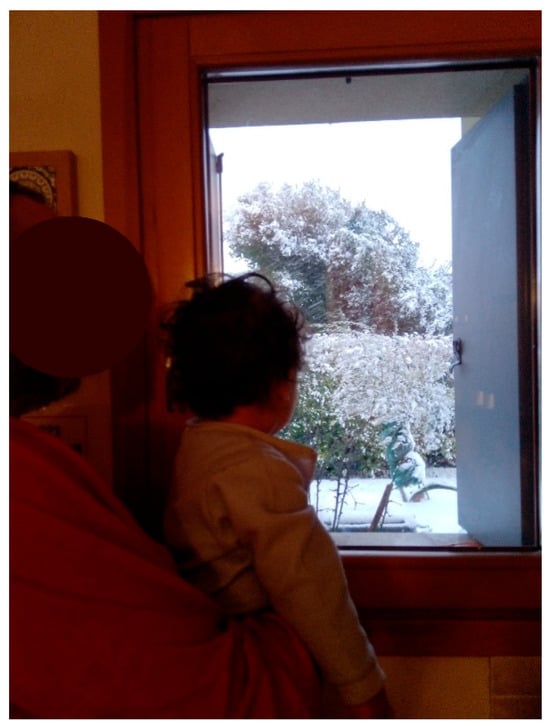
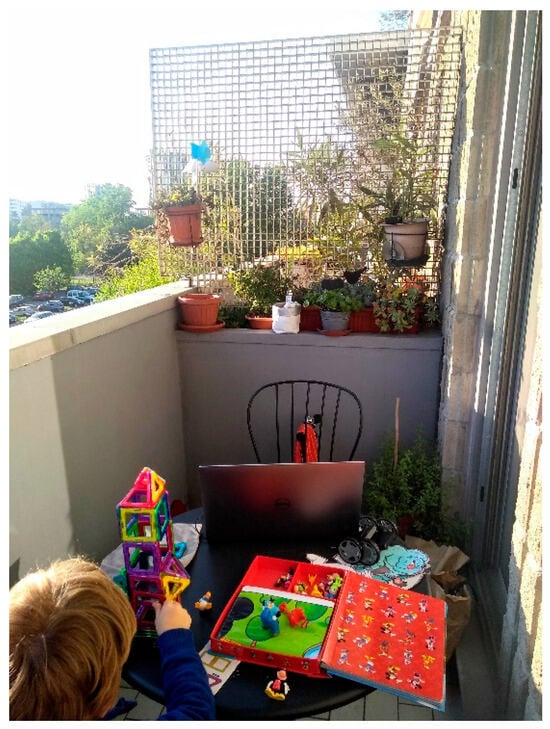

Disclaimer/Publisher’s Note: The statements, opinions and data contained in all publications are solely those of the individual author(s) and contributor(s) and not of MDPI and/or the editor(s). MDPI and/or the editor(s) disclaim responsibility for any injury to people or property resulting from any ideas, methods, instructions or products referred to in the content. |
© 2026 by the authors. Licensee MDPI, Basel, Switzerland. This article is an open access article distributed under the terms and conditions of the Creative Commons Attribution (CC BY) license.