Development and Validation of a Safety Attitude Scale for Construction Workers

Abstract
1. Introduction
1.1. Applicability of Safety Attitude Scales Developed in Other High-Risk Industries
1.2. Methodological Review of Existing Construction Safety Research
1.2.1. Cross-Context Transferability of Measurement Instruments
1.2.2. Incomplete Procedures in Scale Development
1.2.3. Structural Gaps in the Dimensional Coverage of Existing Scales
1.3. Research Gap and Objectives of This Study
- Contextual Mismatch: Scales derived from stable environments such as medical and aviation have an underlying logic that is seriously disconnected from the dynamic, high-risk, and high-turnover characteristics of construction sites, lacking context-specificity.
- Lack of Methodological Rigor: Some studies on the construction industry lack a systematic theoretical construction process (such as grounded theory) in the scale development process, or have deficiencies in psychometric validation (such as lack of CFA, insufficient sample size, and incomplete reliability and validity reports).
2. Materials and Methods
2.1. Stage One: Initial Dimension and Item Pool Construction
2.1.1. Grounded Theory Interviews
2.1.2. Literature Review and Item Writing
2.2. Stage Two: Delphi Method Expert Consultation
2.3. Stage Three: Questionnaire Survey and Scale Validation
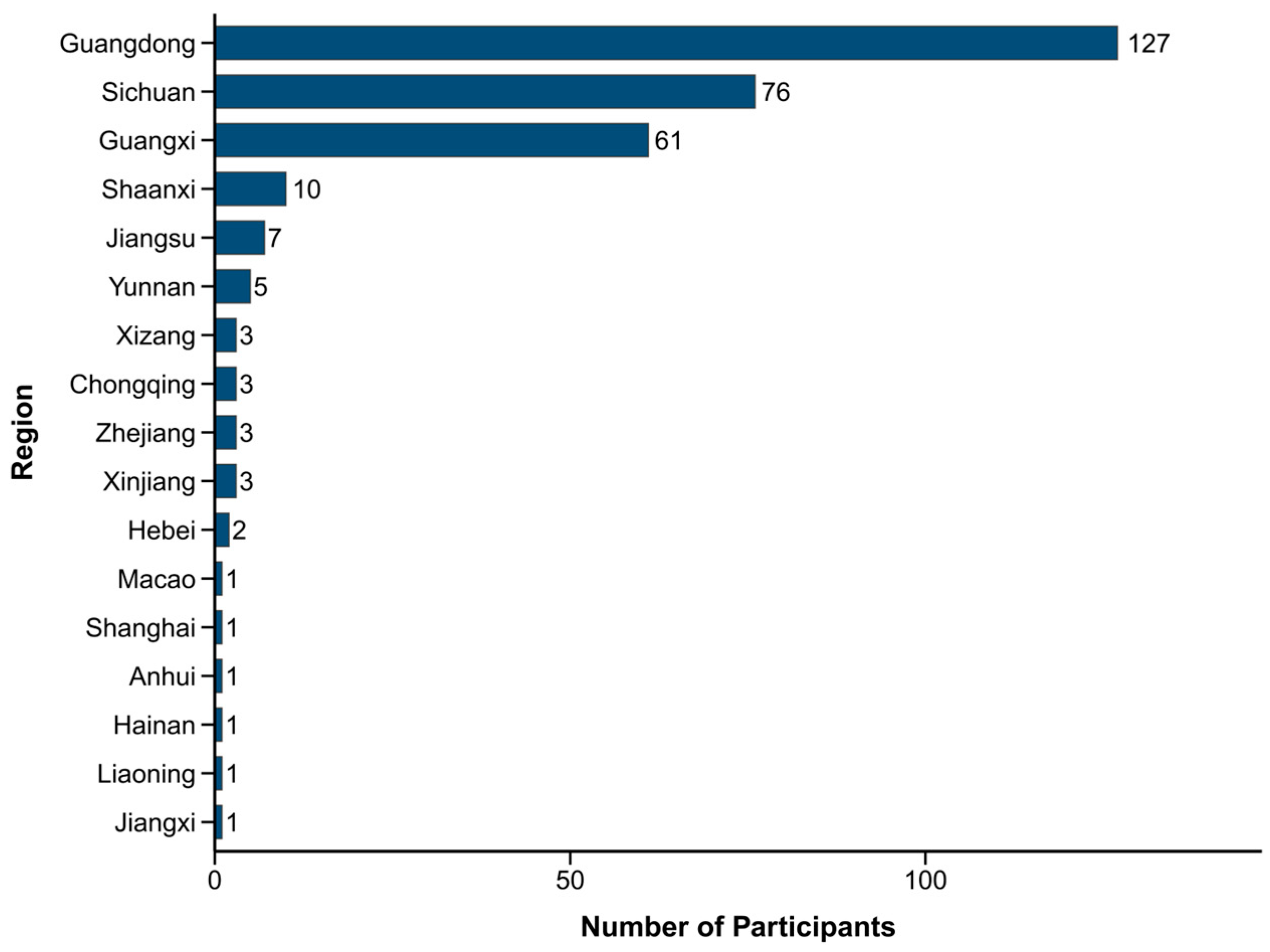
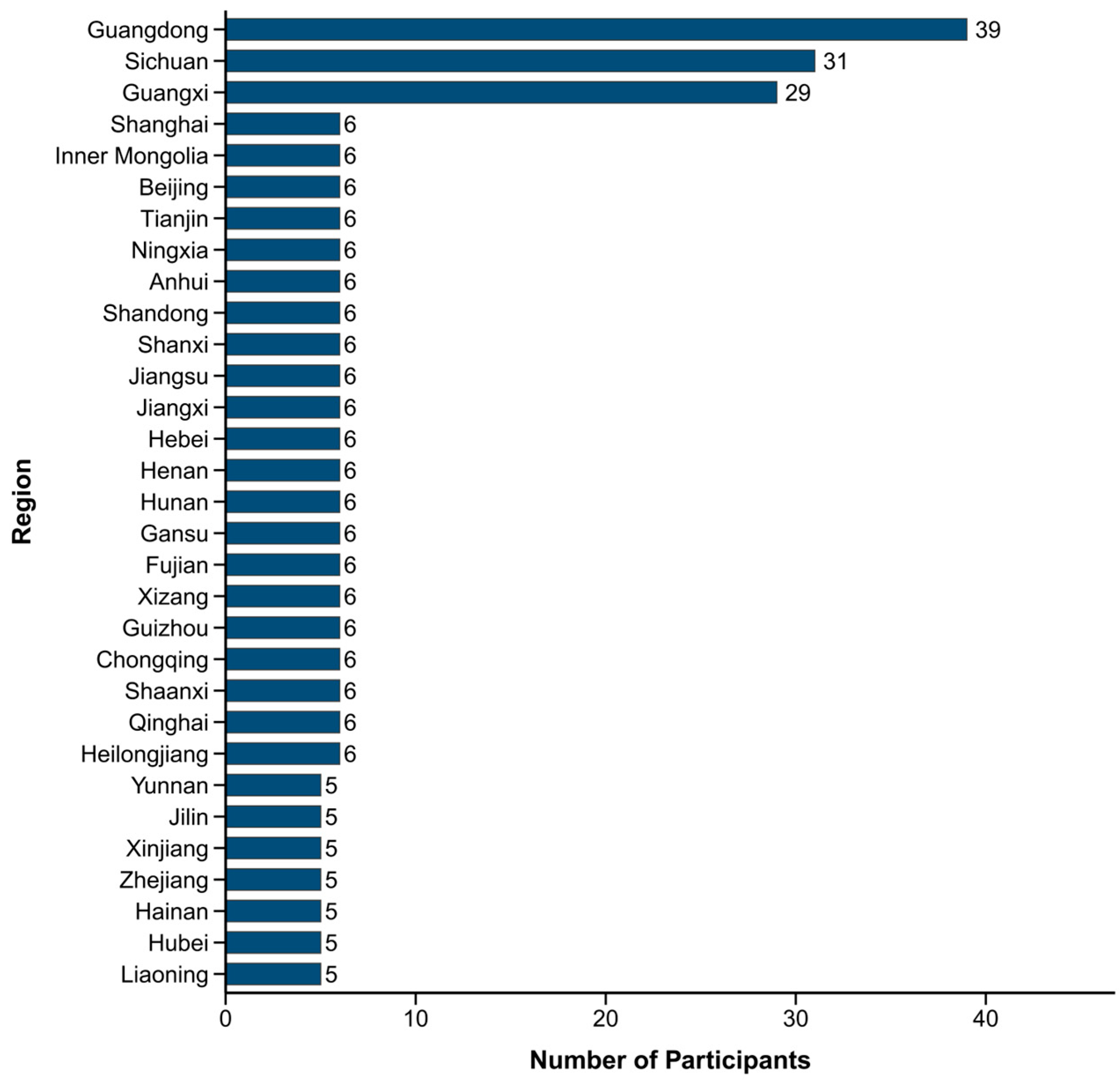
2.3.1. Sample and Data Collection
2.3.2. Scale Items and Scoring
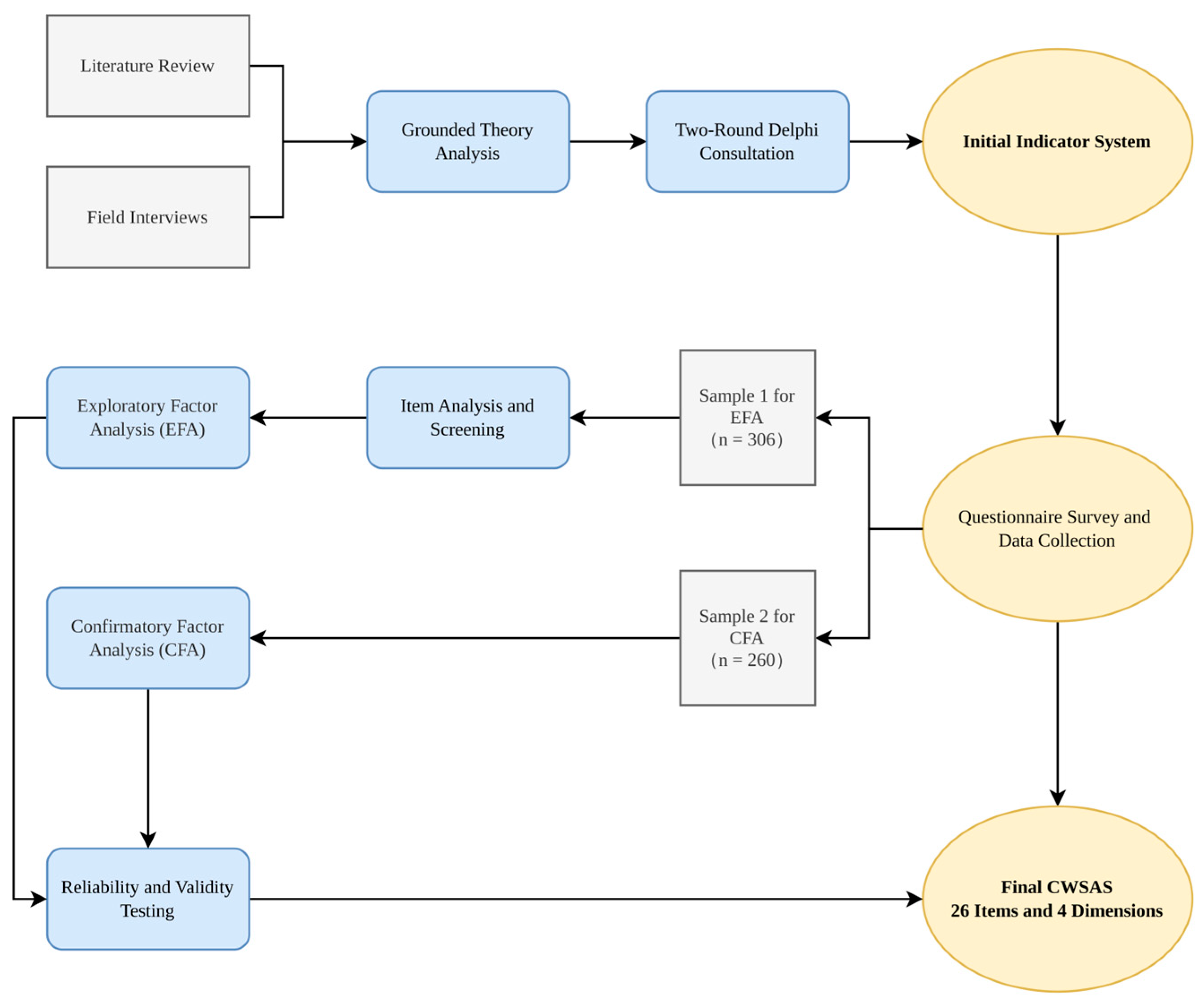
2.3.3. Data Analysis
- Item analysis: Based on Sample 1, SPSS 26.0 was used to calculate the critical ratio (CR) and item–total correlation for each item in order to identify and remove items with poor discrimination.
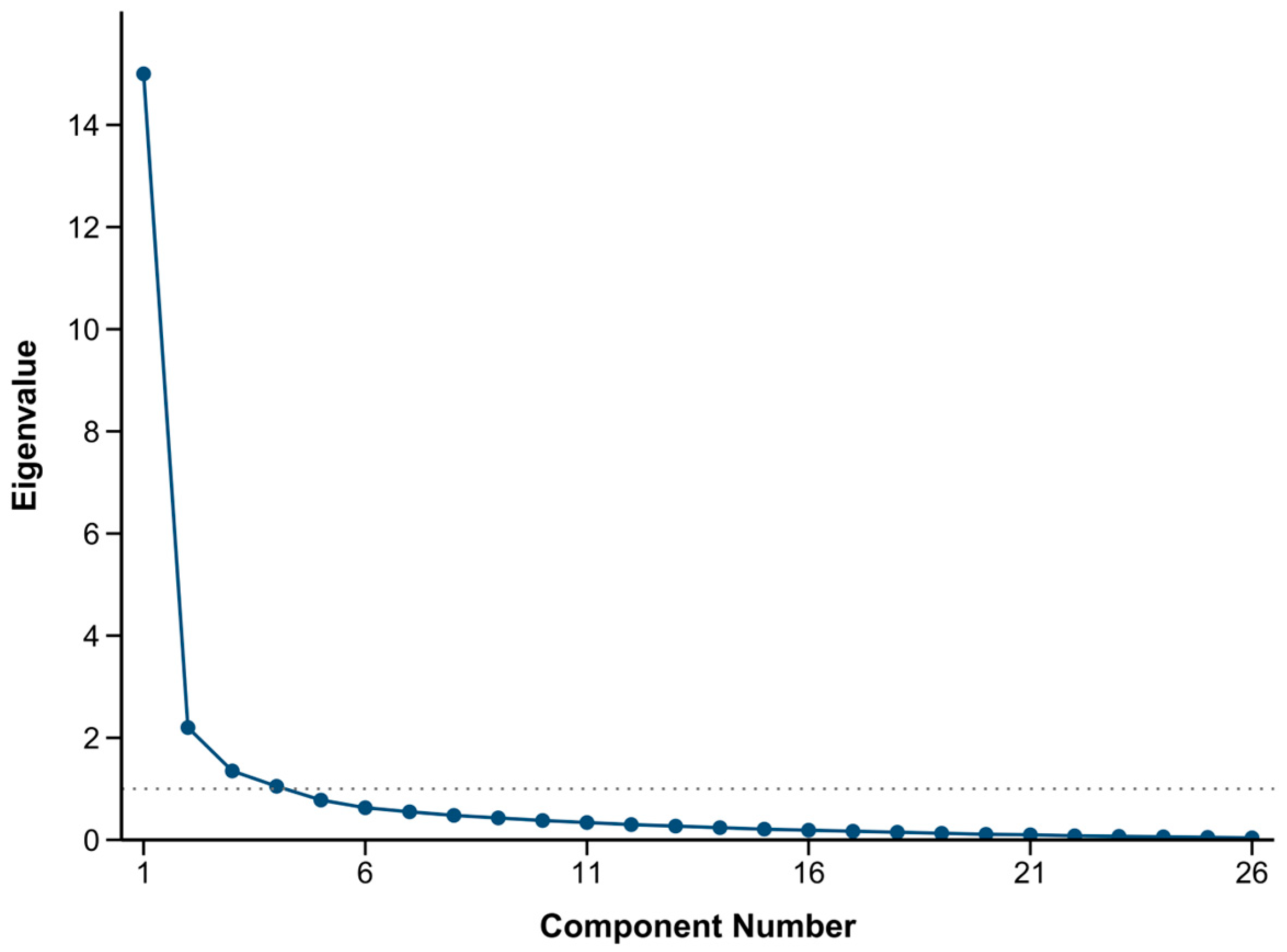
- Exploratory factor analysis (EFA): Based on Sample 1, SPSS 26.0 was used to perform principal component analysis with varimax rotation to explore the underlying factor structure of the scale.
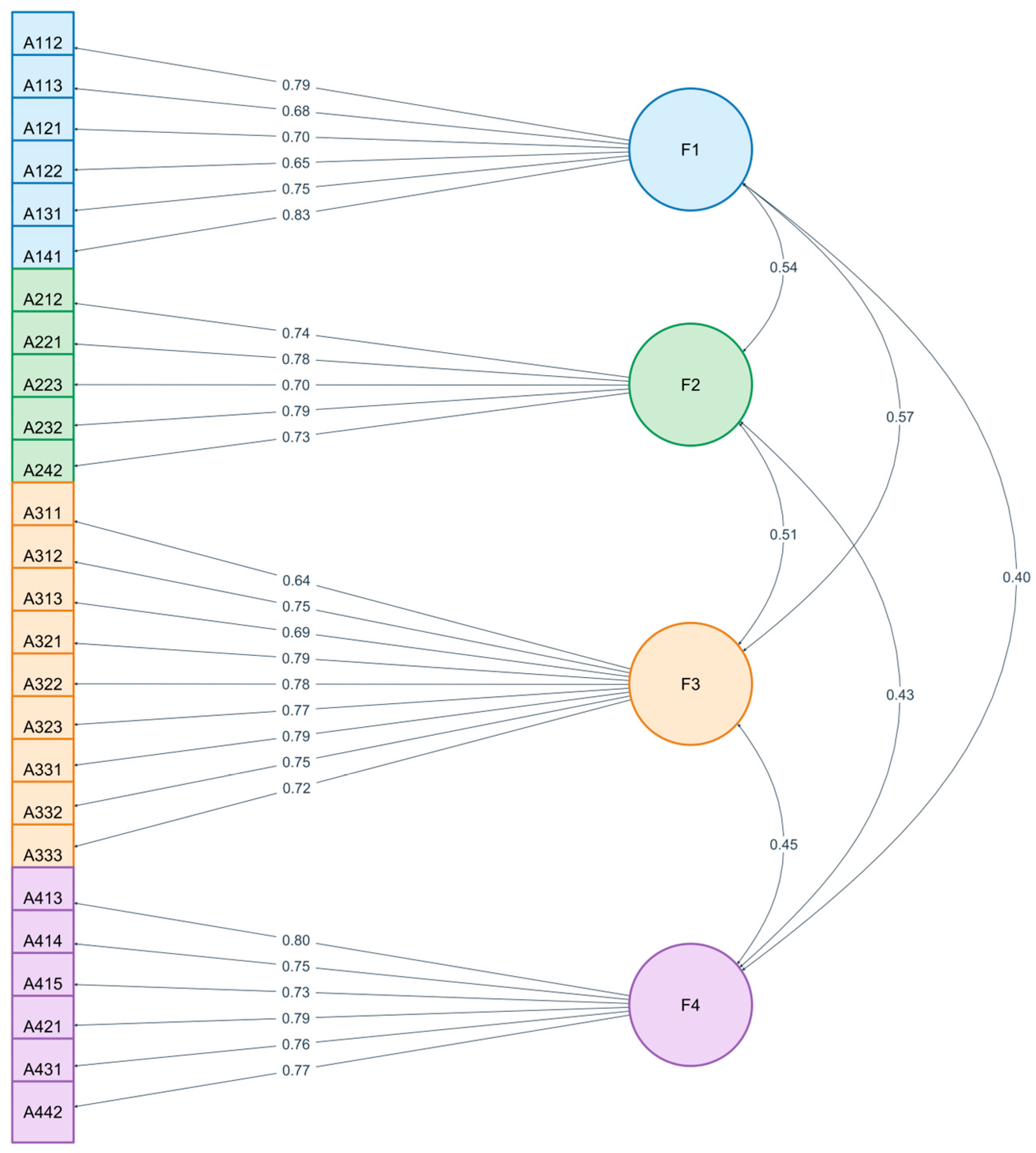
- Confirmatory factor analysis (CFA): Based on Sample 2, the lavaan package in R was used to validate the factor structure obtained from the EFA and to assess the goodness-of-fit of the model.
- Reliability and validity testing: Based on Sample 2, Cronbach’s alpha, composite reliability (CR), and average variance extracted (AVE) were calculated, and discriminant validity was further assessed using the heterotrait–monotrait ratio of correlations (HTMT) [54], in order to comprehensively evaluate the reliability and validity of the scale.
3. Results
3.1. Item Analysis
3.2. Exploratory Factor Analysis (EFA)
3.3. Confirmatory Factor Analysis (CFA)
3.4. Reliability and Validity Test
3.4.1. Reliability Test
3.4.2. Validity Test
4. Discussion
4.1. Theoretical Contributions and Interpretation of Findings
4.2. Practical Implications
4.3. Limitations and Future Research Directions
4.4. Comparison with Safety Attitude Scales from Other Countries/Regions
5. Conclusions
Author Contributions
Funding
Institutional Review Board Statement
Informed Consent Statement
Data Availability Statement
Conflicts of Interest
Appendix A

| No. | Representative Statement | Initial Concept | Category |
|---|---|---|---|
| 1 | I always check the equipment before starting work. | Performing operations in compliance with safety regulations | Safe operational behavior |
| 2 | The safety knowledge training organized by the company is not very effective. Most workers think safety management policies are just for show, and few people really take them seriously. | Insufficient mastery of safety knowledge, inadequate understanding of policies, and low motivation to participate in safety training | Safety knowledge, policy interpretation ability, safety training |
| 3 | I believe many accidents can be avoided through experience. Experienced co-workers are often able to predict accidents well. | Safety experience helps workers predict accidents | Accident warning sign recognition, safety experience |
| 4 | If my family and co-workers all attach great importance to safety and remind me frequently, I will also subconsciously remind myself not to get into trouble. | Family and co-workers’ emphasis on safety creates a positive safety climate, encouraging workers to set safety goals proactively | Perception of safety climate, safety goals |
| 5 | Most co-workers think it does not matter if the company fails to provide qualified safety protective equipment, and that accidents have nothing to do with it. | Insufficient awareness of accident responsibility, weak legal awareness, and inadequate understanding of safety protection | Attitudes toward accident responsibility, safety protection |
| 6 | When close co-workers engage in unsafe operations, I will remind them in time. But not if we are not on good terms. | Insufficient understanding of the consequences of unsafe operations | Attitudes toward unsafe operations |
| 7 | I will share the safety knowledge and skills I have mastered with younger co-workers I am close to. | Sharing behavior related to safety knowledge and skills | Safety-sharing behavior |
| 8 | If I have conflicts with co-workers or arguments at home, I may work emotionally and ignore some potential accident risks. | Emotion-driven stress at work reduces the ability to anticipate accidents | Emergency response behavior, accident warning sign recognition |
| 9 | Most co-workers think accidents happen because of bad luck and are unrelated to anything else. | Inadequate understanding of accidents and responsibility | Attitudes toward accident responsibility |
| 10 | Safety training and drills are somewhat helpful for actual work, but if they are organized too often, they waste time. | Low willingness to participate in safety drills and training, and insufficient understanding of the relationship between safety and productivity | Safety training, safety drills, judgment of the relationship between safety and productivity |
| 11 | People who pay more attention to safety in daily life are also more likely to comply with safety regulations at work. | Daily safety behavior reflects safety attitudes | Daily safety behavior |
| 12 | Sudden and prolonged overtime makes people tired, leading them to want to finish work quickly and rest, which relaxes their safety requirements and shifts their focus to efficiency. | Prolonged stress at work may shift workers’ attitudes toward the relationship between safety and productivity | Emergency response behavior, judgment of the relationship between safety and productivity |
| Axial Coding Category | Definition |
|---|---|
| Safe operational behavior | Refers to the conscious and habitual operational behaviors that construction workers develop over time in specific work environments. |
| Daily safety behavior | Refers to behaviors through which construction workers manage their own safety in daily life, including actively avoiding danger and potential loss. |
| Safety-sharing behavior | Refers to the behavior of construction workers sharing their safety knowledge, experience, and skills with co-workers or family members. |
| Emergency response behavior | Refers to the behavioral state of construction workers when performing tasks under adverse stimulation, such as family-related events or environmental stress. |
| Attitude toward unsafe operations | Includes construction workers’ tolerance of their own unsafe operations as well as those of their co-workers. |
| Judgment of the relationship between safety and production | Refers to the extent to which construction workers understand and evaluate the relationship between production and safety. |
| Attitude toward accident responsibility | Refers to the sense of responsibility that construction workers hold regarding the prevention and occurrence of safety accidents. |
| Perception of safety climate | Refers to construction workers’ dynamic subjective understanding and feelings about safety, shaped by internal safety management, the working environment, and the spontaneously formed safety awareness among employees over a specific period of time. |
| Policy interpretation ability | Refers to construction workers’ ability to understand and comply with newly implemented policies and regulations. |
| Recognition of accident precursors | Refers to construction workers’ ability to identify hazards and make judgments about the likelihood and severity of accidents in specific situations. |
| Safety experience | Refers to the highly practical safety knowledge and skills that construction workers accumulate through personal learning, operational experience, witnessing accidents involving others, and learning from others’ skills and experiences. |
| Safety knowledge | Refers to the systematic and professional safety-related knowledge that construction workers acquire through self-learning, safety training, and emergency drills. |
| Safety training | Includes the frequency, content, procedures, methods, and effectiveness of safety training. |
| Safety drills | Refers to practical training activities in which construction workers participate to enrich safety knowledge, improve safe operational skills, and promote the integration of theory and practice. |
| Safety goals | Refers to the expected standards that construction workers set for their own safety performance evaluation. |
| Safety protection | Refers to the self-protective and preparatory measures taken by construction workers during operations to cope with crises or avoid hazards, thereby maintaining a safe state free from injury and accidents. |
Appendix B
| Questions | Response Options | ||||
|---|---|---|---|---|---|
| 1. I am a person who pays great attention to safety in my daily life. | 1 | 2 | 3 | 4 | 5 |
| 2. Before going out, I always check whether the gas and power switches are turned off. | 1 | 2 | 3 | 4 | 5 |
| 3. I always check the equipment before work. | 1 | 2 | 3 | 4 | 5 |
| 4. I always wear protective gear when working with hazardous sources. | 1 | 2 | 3 | 4 | 5 |
| 5. * When the working environment is bad, I will work emotionally. | 1 | 2 | 3 | 4 | 5 |
| 6. I often discuss safety operations with my co-workers. | 1 | 2 | 3 | 4 | 5 |
| 7. * I think sometimes it is appropriate to relax some safety requirements for the sake of efficiency. | 1 | 2 | 3 | 4 | 5 |
| 8. * I think other people’s violations have nothing to do with me. | 1 | 2 | 3 | 4 | 5 |
| 9. * I think it’s okay to violate the rules once or twice. | 1 | 2 | 3 | 4 | 5 |
| 10. I think everyone has a responsibility to improve construction safety. | 1 | 2 | 3 | 4 | 5 |
| 11. I believe a good working atmosphere can have a positive impact on safety work. | 1 | 2 | 3 | 4 | 5 |
| 12. I understand the occupational hazards of my position. | 1 | 2 | 3 | 4 | 5 |
| 13. I understand the relevant national and industry policies on construction safety. | 1 | 2 | 3 | 4 | 5 |
| 14. I am able to master the behavioral norms of safety production in this position. | 1 | 2 | 3 | 4 | 5 |
| 15. The construction industry has a high accident rate. | 1 | 2 | 3 | 4 | 5 |
| 16. I am aware of the common types of accidents that occur in my daily work. | 1 | 2 | 3 | 4 | 5 |
| 17. I can correctly judge the signs of an accident or danger. | 1 | 2 | 3 | 4 | 5 |
| 18. I have a certain ability to predict the dangers caused by illegal operations. | 1 | 2 | 3 | 4 | 5 |
| 19. I can detect the signs of an accident. | 1 | 2 | 3 | 4 | 5 |
| 20. I understand the hidden dangers of construction operations and can effectively avoid risks. | 1 | 2 | 3 | 4 | 5 |
| 21. I think training is very important to my work. | 1 | 2 | 3 | 4 | 5 |
| 22. I think strengthening training can ensure production safety. | 1 | 2 | 3 | 4 | 5 |
| 23. * I sometimes think that training is a burden on my job. | 1 | 2 | 3 | 4 | 5 |
| 24. I actively participate in every safety drill. | 1 | 2 | 3 | 4 | 5 |
| 25. I think setting safety goals is very important. | 1 | 2 | 3 | 4 | 5 |
| 26. I think it is very important to do a good job of safety protection when working at height. | 1 | 2 | 3 | 4 | 5 |
| Primary Dimension | Secondary Dimension | Item Statement |
|---|---|---|
| A1 Safety behavior tendency | A11 Daily safety behaviors | A111 Whether crossing the road or driving a vehicle, I strictly abide by traffic regulations. A112 I am a person who pays great attention to safety in my daily life. A113 Before I go out, I always check whether the gas and power switches are turned off. |
| A12 Safe operating behavior | A121 I always check the equipment before work. A122 I always wear protective gear correctly when working with hazardous sources. | |
| A13 Accident emergency behavior | A131 * When the working environment is bad, I will work with emotion. A132 When faced with an emergency, I can perform the correct actions. A133 I can stay calm when an accident occurs. | |
| A14 Safe Sharing Behavior | A141 I often discuss safety issues with my coworkers. A142 I will share safety knowledge, safety skills and safety experience with my fellow workers. | |
| A2 Safety Emotion | A21 Judgment on the relationship between safety and production | A211 Strengthening safety knowledge learning will promote safe production. A212 * I think sometimes it is appropriate to relax some safety requirements for efficiency. A213 * I think that too much emphasis on safety is not conducive to promoting production. |
| A22 Attitude towards illegal operations | A221 * I think other people’s violations have nothing to do with me. A222 I think people who violate the rules are very hateful. A223 * I think one or two violations are okay. | |
| A23 Attitude towards accident responsibility | A231 * I think the accident caused by illegal operation was just bad luck. A232 I think everyone has a responsibility to improve construction safety. | |
| A24 Safety atmosphere perception | A241 * I think the safety of other jobs has nothing to do with me. A242 I believe a good working atmosphere can have a positive impact on safety work. A243 My family and I take safety very seriously. | |
| A3 Safety Cognition | A31 Safety knowledge | A311 I understand the occupational hazards of my position. A312 I understand the relevant national and industry policies on construction safety. A313 I am able to master the behavioral norms of safe production in this position. |
| A32 Safety experience | A321 The construction industry has a high accident rate. A322 I am aware of the types of accidents that occur in my daily work. A323 I can correctly judge the signs of an accident or danger. | |
| A33 Accident sign recognition | A331 I have a certain ability to predict the dangers caused by illegal operations. A332 I can detect the signs of an accident. A333 I understand the hidden dangers of construction operations and can effectively avoid risks. | |
| A4 Organization and Management | A41 Safety training | A411 * I am not familiar with construction safety regulations. A412 I can understand the spirit of every safety meeting. A413 I think training is very important for my job. A414 I think strengthening training can ensure production safety. A415 * I think training is sometimes a burden on my job. |
| A42 Safety drills | A421 I actively participate in every safety drill. | |
| A43 Safety Goals | A431 I think it is very important to set safety goals. A432 I will set appropriate safety goals based on my own situation. | |
| A44 Safety protection | A441 * I think it is not necessary to wear safety equipment when working on the ground. A442 I think it is very important to do a good job of safety protection when working at height. |
Appendix C
| Characteristic | Category | Number of Experts | % |
|---|---|---|---|
| Education | Bachelor’s degree and below | 1 | 14% |
| Master’s degree | 4 | 57% | |
| Doctoral degree | 2 | 29% | |
| Professional Title | Intermediate | 1 | 14% |
| Associate Senior | 0 | 0 | |
| Senior | 6 | 86% | |
| Working Experience (years) | 10–20 | 3 | 42% |
| 20–30 | 2 | 29% | |
| 30–40 | 2 | 29% | |
| Area of Expertise | Civil Engineering | 4 | 57% |
| Engineering Management | 2 | 29% | |
| Safety Engineering | 1 | 14% |
| Correlation Coefficient | Round 1 | Round 2 |
|---|---|---|
| Kendall-W | 0.568 | 0.630 |
| p-value | 0.000 | 0.000 |
| Index | Mean | Coefficient of Variation (CV) |
|---|---|---|
| Safety behavior tendency | 0.83 | 0.09 |
| Safety Emotion | 0.69 | 0.23 |
| Safety Cognition | 0.89 | 0.12 |
| Organization and Management | 0.91 | 0.12 |
| Daily safety behaviors | 0.89 | 0.12 |
| Safe operating behavior | 0.83 | 0.17 |
| Accident emergency behavior | 0.86 | 0.18 |
| Safe Sharing Behavior | 0.40 | 0.76 |
| Judgment on the relationship between | 0.97 | 0.08 |
| Policy interpretation ability | 0.17 | 0.81 |
| Attitude towards illegal operations | 0.31 | 0.50 |
| Attitude towards accident responsibility | 0.89 | 0.12 |
| Safety atmosphere perception | 0.86 | 0.18 |
| Safety knowledge | 0.89 | 0.12 |
| Safety experience | 0.89 | 0.18 |
| Accident sign recognition | 0.83 | 0.17 |
| Policy interpretation ability | 0.89 | 0.12 |
| Safety training | 0.94 | 0.10 |
| Safety drills | 0.89 | 0.18 |
| Safety Goals | 0.97 | 0.08 |
| Safety protection | 0.83 | 0.09 |
| Index | Mean | Coefficient of Variation (CV) |
|---|---|---|
| Safety behavior tendency | 0.89 | 0.12 |
| Safety Emotion | 0.94 | 0.10 |
| Safety Cognition | 0.97 | 0.08 |
| Organization and Management | 0.94 | 0.10 |
| Daily safety behaviors | 0.49 | 0.22 |
| Safe operating behavior | 0.94 | 0.10 |
| Accident emergency behavior | 0.94 | 0.10 |
| Safe Sharing Behavior | 0.46 | 0.21 |
| Judgment on the relationship between | 0.86 | 0.18 |
| Attitude towards illegal operations | 0.94 | 0.10 |
| Attitude towards accident responsibility | 0.69 | 0.28 |
| Safety atmosphere perception | 0.86 | 0.18 |
| Safety knowledge | 0.94 | 0.10 |
| Safety experience | 0.89 | 0.11 |
| Accident sign recognition | 0.94 | 0.10 |
| Policy interpretation ability | 0.89 | 0.12 |
| Safety training | 0.77 | 0.18 |
| Safety drills | 0.57 | 0.24 |
| Safety Goals | 0.94 | 0.10 |
| Safety protection | 0.89 | 0.12 |
References
- Lingard, H. Occupational Health and Safety in the Construction Industry. Constr. Manag. Econ. 2013, 31, 505–514. [Google Scholar] [CrossRef] [Scilit]
- Lyu, S.; Hon, C.K.H.; Chan, A.P.C.; Wong, F.K.W.; Javed, A.A. Relationships among Safety Climate, Safety Behavior, and Safety Outcomes for Ethnic Minority Construction Workers. Int. J. Environ. Res. Public Health 2018, 15, 484. [Google Scholar] [CrossRef] [Scilit]
- Takala, J.; Hämäläinen, P.; Sauni, R.; Nygård, C.-H.; Gagliardi, D.; Neupane, S. Global-, Regional- and Country-Level Estimates of the Work-Related Burden of Diseases and Accidents in 2019. Scand. J. Work Environ. Health 2024, 50, 73–82. [Google Scholar] [CrossRef] [Scilit] [PubMed]
- Wadsworth, E.; Walters, D. Safety and Health at the Heart of the Future of Work: Building on 100 Years of Experience; International Labour Office: Geneva, Switzerland, 2019. [Google Scholar]
- Suraji, A.; Duff, A.R.; Peckitt, S.J. Development of Causal Model of Construction Accident Causation. J. Constr. Eng. Manag. 2001, 127, 337–344. [Google Scholar] [CrossRef] [Scilit]
- Javanmardi, A.; Abbasian-Hosseini, S.A.; Liu, M.; Hsiang, S.M. Improving Effectiveness of Constraints Removal in Construction Planning Meetings: Information-Theoretic Approach. J. Constr. Eng. Manag. 2020, 146, 04020015. [Google Scholar] [CrossRef] [Scilit]
- Xia, N.; Xie, Q.; Griffin, M.A.; Ye, G.; Yuan, J. Antecedents of Safety Behavior in Construction: A Literature Review and an Integrated Conceptual Framework. Accid. Anal. Prev. 2020, 148, 105834. [Google Scholar] [CrossRef] [Scilit] [PubMed]
- Xia, N.; Griffin, M.A.; Xie, Q.; Hu, X. Antecedents of Workplace Safety Behavior: Meta-Analysis in the Construction Industry. J. Constr. Eng. Manag. 2023, 149, 04023009. [Google Scholar] [CrossRef] [Scilit]
- Eagly, A.H.; Chaiken, S. The Psychology of Attitudes; Harcourt Brace Jovanovich College Publishers: Fort Worth, TX, USA, 1993. [Google Scholar]
- Fishbein, M.; Ajzen, I. Belief, Attitude, Intention and Behavior: An Introduction to Theory and Research; Addison-Wesley: Reading, MA, USA, 1975. [Google Scholar]
- Ajzen, I. The Theory of Planned Behavior. Organ. Behav. Hum. Decis. Process. 1991, 50, 179–211. [Google Scholar] [CrossRef] [Scilit]
- Liang, Q.; Zhou, Z.; Ye, G.; Shen, L. Unveiling the Mechanism of Construction Workers’ Unsafe Behaviors from an Occupational Stress Perspective: A Qualitative and Quantitative Examination of a Stress–Cognition–Safety Model. Saf. Sci. 2022, 145, 105486. [Google Scholar] [CrossRef] [Scilit]
- Yang, S.; Liu, L.; Wang, T.; Guo, Y.; Qian, Y.; Chen, H. The Impact of Accident Experience on Unsafe Behaviors of Construction Workers Within Social Cognitive Theory. Buildings 2024, 15, 59. [Google Scholar] [CrossRef] [Scilit]
- Christian, M.S.; Bradley, J.C.; Wallace, J.C.; Burke, M.J. Workplace Safety: A Meta-Analysis of the Roles of Person and Situation Factors. J. Appl. Psychol. 2009, 94, 1103–1127. [Google Scholar] [CrossRef] [Scilit] [PubMed]
- Neal, A.; Griffin, M.A. A Study of the Lagged Relationships among Safety Climate, Safety Motivation, Safety Behavior, and Accidents at the Individual and Group Levels. J. Appl. Psychol. 2006, 91, 946–953. [Google Scholar] [CrossRef] [Scilit]
- Zohar, D. Safety Climate in Industrial Organizations: Theoretical and Applied Implications. J. Appl. Psychol. 1980, 65, 96–102. [Google Scholar] [CrossRef]
- DeVellis, R.F. Scale Development: Theory and Applications, 4th ed.; SAGE: Los Angeles, CA, USA, 2017. [Google Scholar]
- Nunnally, J.C.; Bernstein, I.H. Psychometric Theory, 3rd ed.; McGraw-Hill: New York, NY, USA, 1994. [Google Scholar]
- Kline, R.B. Principles and Practice of Structural Equation Modeling, 4th ed.; Guilford Press: New York, NY, USA, 2016. [Google Scholar]
- Flin, R.; Mearns, K.; O’Connor, P.; Bryden, R. Measuring Safety Climate: Identifying the Common Features. Saf. Sci. 2000, 34, 177–192. [Google Scholar] [CrossRef] [Scilit]
- Dedobbeleer, N.; Béland, F. A Safety Climate Measure for Construction Sites. J. Saf. Res. 1991, 22, 97–103. [Google Scholar] [CrossRef] [Scilit]
- Glendon, A.I.; Litherland, D.K. Safety Climate Factors, Group Differences and Safety Behaviour in Road Construction. Saf. Sci. 2001, 39, 157–188. [Google Scholar] [CrossRef] [Scilit]
- Sexton, J.B.; Helmreich, R.L.; Neilands, T.B.; Rowan, K.; Vella, K.; Boyden, J.; Roberts, P.R.; Thomas, E.J. The Safety Attitudes Questionnaire: Psychometric Properties, Benchmarking Data, and Emerging Research. BMC Health Serv. Res. 2006, 6, 44. [Google Scholar] [CrossRef] [Scilit]
- Siu, O.; Phillips, D.R.; Leung, T. Age Differences in Safety Attitudes and Safety Performance in Hong Kong Construction Workers. J. Saf. Res. 2003, 34, 199–205. [Google Scholar] [CrossRef] [Scilit]
- Helmreich, R.L.; Merritt, A.C.; Wilhelm, J.A. The Evolution of Crew Resource Management Training in Commercial Aviation. Int. J. Aviat. Psychol. 1999, 9, 19–32. [Google Scholar] [CrossRef] [Scilit] [PubMed]
- Hayes, B.E.; Perander, J.; Smecko, T.; Trask, J. Measuring Perceptions of Workplace Safety. J. Saf. Res. 1998, 29, 145–161. [Google Scholar] [CrossRef] [Scilit]
- Cooper, M.D.; Phillips, R.A. Exploratory Analysis of the Safety Climate and Safety Behavior Relationship. J. Saf. Res. 2004, 35, 497–512. [Google Scholar] [CrossRef] [Scilit]
- Mearns, K.; Whitaker, S.M.; Flin, R. Safety Climate, Safety Management Practice and Safety Performance in Offshore Environments. Saf. Sci. 2003, 41, 641–680. [Google Scholar] [CrossRef] [Scilit]
- Guo, B.H.W.; Yiu, T.W.; González, V.A. Predicting Safety Behavior in the Construction Industry: Development and Test of an Integrative Model. Saf. Sci. 2016, 84, 1–11. [Google Scholar] [CrossRef] [Scilit]
- Fang, D.; Chen, Y.; Wong, L. Safety Climate in Construction Industry: A Case Study in Hong Kong. J. Constr. Eng. Manag. 2006, 132, 573–584. [Google Scholar] [CrossRef] [Scilit]
- Choudhry, R.M.; Fang, D. Why Operatives Engage in Unsafe Work Behavior: Investigating Factors on Construction Sites. Saf. Sci. 2008, 46, 566–584. [Google Scholar] [CrossRef] [Scilit]
- Brown, T.A. Confirmatory Factor Analysis for Applied Research, 2nd ed.; The Guilford Press: New York, NY, USA, 2015. [Google Scholar]
- Hair, J.F.; Black, W.C.; Babin, B.J.; Anderson, R.E. Multivariate Data Analysis, 8th ed.; Cengage: Andover, UK, 2019. [Google Scholar]
- Fornell, C.; Larcker, D.F. Evaluating Structural Equation Models with Unobservable Variables and Measurement Error. J. Mark. Res. 1981, 18, 39–50. [Google Scholar] [CrossRef] [Scilit]
- Man, S.S.; Chan, A.H.S.; Alabdulkarim, S. Quantification of Risk Perception: Development and Validation of the Construction Worker Risk Perception (CoWoRP) Scale. J. Saf. Res. 2019, 71, 25–39. [Google Scholar] [CrossRef] [Scilit] [PubMed]
- Namian, M.; Tafazzoli, M.; Al-Bayati, A.J.; Kermanshachi, S. Are Construction Managers from Mars and Workers from Venus? Exploring Differences in Construction Safety Perception of Two Key Field Stakeholders. Int. J. Environ. Res. Public Health 2022, 19, 6172. [Google Scholar] [CrossRef] [Scilit]
- Basahel, A.M. Safety Leadership, Safety Attitudes, Safety Knowledge and Motivation toward Safety-Related Behaviors in Electrical Substation Construction Projects. Int. J. Environ. Res. Public Health 2021, 18, 4196. [Google Scholar] [CrossRef] [Scilit] [PubMed]
- Nik Him, N.F.; Amirah, N.A.; Tun Ismail, W.N.A.; Tuan Abdullah, T.N.Z. Assessment of Safety Management Attitude Practices Toward the Safety Culture of the Construction Sector. Plan. Malays. J. 2023, 21, 1220. [Google Scholar] [CrossRef] [Scilit]
- Goh, Y.M.; Binte Sa’adon, N.F. Cognitive Factors Influencing Safety Behavior at Height: A Multimethod Exploratory Study. J. Constr. Eng. Manag. 2015, 141, 04015003. [Google Scholar] [CrossRef] [Scilit]
- Liu, Y.; Ye, G.; Xiang, Q.; Yang, J.; Miang Goh, Y.; Gan, L. Antecedents of Construction Workers’ Safety Cognition: A Systematic Review. Saf. Sci. 2023, 157, 105923. [Google Scholar] [CrossRef] [Scilit]
- Neal, A.; Griffin, M.A.; Hart, P.M. The Impact of Organizational Climate on Safety Climate and Individual Behavior. Saf. Sci. 2000, 34, 99–109. [Google Scholar] [CrossRef] [Scilit]
- Mosly, I.; Makki, A.A. The Effects of Multi-Sociodemographic Characteristics of Construction Sites Personnel on Perceptions of Safety Climate-Influencing Factors: The Construction Industry in Saudi Arabia. Int. J. Environ. Res. Public Health 2021, 18, 1674. [Google Scholar] [CrossRef] [Scilit] [PubMed]
- Chen, H.; Li, H.; Goh, Y.M. A Review of Construction Safety Climate: Definitions, Factors, Relationship with Safety Behavior and Research Agenda. Saf. Sci. 2021, 142, 105391. [Google Scholar] [CrossRef] [Scilit]
- Zohar, D.; Luria, G. A Multilevel Model of Safety Climate: Cross-Level Relationships Between Organization and Group-Level Climates. J. Appl. Psychol. 2005, 90, 616–628. [Google Scholar] [CrossRef] [Scilit]
- Pandit, B.; Albert, A.; Patil, Y.; Al-Bayati, A.J. Impact of Safety Climate on Hazard Recognition and Safety Risk Perception. Saf. Sci. 2019, 113, 44–53. [Google Scholar] [CrossRef] [Scilit]
- Patel, D.A.; Jha, K.N. Neural Network Model for the Prediction of Safe Work Behavior in Construction Projects. J. Constr. Eng. Manag. 2015, 141, 04014066. [Google Scholar] [CrossRef] [Scilit]
- Vinodkumar, M.N.; Bhasi, M. Safety Management Practices and Safety Behaviour: Assessing the Mediating Role of Safety Knowledge and Motivation. Accid. Anal. Prev. 2010, 42, 2082–2093. [Google Scholar] [CrossRef] [Scilit] [PubMed]
- Yuan, B.; Xu, S.; Chen, L.; Niu, M. How Do Psychological Cognition and Institutional Environment Affect the Unsafe Behavior of Construction Workers?—Research on fsQCA Method. Front. Psychol. 2022, 13, 875348. [Google Scholar] [CrossRef] [Scilit] [PubMed]
- Hu, S.H.; Wang, T.; Ramalho, N.C.; Zhou, D.; Hu, X.; Zhao, H. Relationship between Patient Safety Culture and Safety Performance in Nursing: The Role of Safety Behaviour. Int. J. Nurs. Pract. 2021, 27, e12937. [Google Scholar] [CrossRef] [Scilit]
- Kishore, K.; Jaswal, V.; Kulkarni, V.; De, D. Practical Guidelines to Develop and Evaluate a Questionnaire. Indian Dermatol. Online J. 2021, 12, 266–275. [Google Scholar] [CrossRef] [Scilit]
- Sadeghi, E.; Shafaroodi, N.; Fallahpour, M.; Abolghasemi, J.; Hassani Mehraban, A. Cross-Cultural Adaptation and Psychometric Evaluation of the Persian Version of the ADL Taxonomy Questionnaire in Persons with Stroke: A Rasch Analysis. Occup. Ther. Int. 2026, 2026, 6677040. [Google Scholar] [CrossRef] [Scilit] [PubMed]
- Hsu, C.-C.; Sandford, B.A. The Delphi Technique: Making Sense of Consensus. Pract. Assess. Res. Eval. 2007, 12, 10. [Google Scholar] [CrossRef]
- Song, J.; Ma, R.; Zhao, X.-W.; Zhang, X.-X.; Wang, Y.-N.; Ling, M.; Zhou, Y.-Q. Development and Validation of the Help-Seeking Motivation Scale for Patients with Schizophrenia (HSMS). BMC Psychiatry 2025, 25, 439. [Google Scholar] [CrossRef] [Scilit]
- Henseler, J.; Ringle, C.M.; Sarstedt, M. A New Criterion for Assessing Discriminant Validity in Variance-Based Structural Equation Modeling. J. Acad. Mark. Sci. 2015, 43, 115–135. [Google Scholar] [CrossRef] [Scilit]
- Ding, Z.; Ng, F.; Wang, J.; Zou, L. Distinction between Team-Based Self-Esteem and Company-Based Self-Esteem in the Construction Industry. J. Constr. Eng. Manag. 2012, 138, 1212–1219. [Google Scholar] [CrossRef] [Scilit]
- Costello, A.B.; Osborne, J. Best Practices in Exploratory Factor Analysis: Four Recommendations for Getting the Most from Your Analysis. Pract. Assess. Res. Eval. 2005, 10, 7. [Google Scholar] [CrossRef]
- Hair, J.F.; Black, W.C.; Babin, B.J.; Anderson, R.E. Multivariate Data Analysis, 7th ed.; Prentice Hall: Upper Saddle River, NJ, USA, 2010. [Google Scholar]
- Taber, K.S. The Use of Cronbach’s Alpha When Developing and Reporting Research Instruments in Science Education. Res. Sci. Educ. 2018, 48, 1273–1296. [Google Scholar] [CrossRef] [Scilit]
- Truxillo, D.M.; Bauer, T.N.; Erdogan, B. Psychology and Work: An Introduction to Industrial and Organizational Psychology, 2nd ed.; Routledge: New York, NY, USA, 2021. [Google Scholar]
- Jarrar, M.; Al-Bsheish, M.; Samarkandi, L.; Albishi, S.; Alanazi, S.A.; Zubaidi, F. The Mediating Role of Nurses’ Prosocial Voice in the Relationship between Safety Training and Safety Behaviors: Implications for Practice and Education. Int. J. Workplace Health Manag. 2026, 19, 70–88. [Google Scholar] [CrossRef] [Scilit]
- Shoji, T.; Egawa, Y. The Structure of Safety Climates and Its Effects on Workers’ Attitudes and Work Safety at Japanese Construction Work Sites. J. UOEH 2006, 28, 29–43. [Google Scholar] [CrossRef] [Scilit] [PubMed]
- Khaday, S.; Li, K.W.; Man, S.S.; Chan, A.H.S. Risky Scenario Identification in a Risk Perception Scale for Construction Workers in Thailand. J. Saf. Res. 2021, 78, 105–114. [Google Scholar] [CrossRef] [Scilit] [PubMed]



| Authors | Instrument or Method | Industry | Study Context | Validation Procedure | Key Contribution | Main Gap |
|---|---|---|---|---|---|---|
| Sexton et al. [23] | Safety Attitudes Questionnaire (SAQ) | Healthcare | Hospital settings | Mature multidimensional instrument | Established a widely recognized framework for measuring safety attitudes across multiple dimensions in healthcare | Limited applicability to construction due to standardized indoor environments, stable workflows, and different organizational structures |
| Ford et al. [25] | FSAQ/CMAQ based on CRM | Aviation | Cockpit and flight operations | Context-specific instrument | Highlighted the importance of compliance, communication, and team coordination in high-risk operations | Limited transferability to construction because of strong procedural standardization and closed-system assumptions |
| Hayes et al. [26] | Workplace safety perception scale | Manufacturing | Repetitive industrial/assembly-line work settings | Empirical scale-based study | Provided methodological reference for measuring safety-related perceptions in industrial production environments | Risk dimensions may not adequately capture dynamic, changing, and task-diverse construction activities |
| Cooper and Phillips [27] | Safety climate and safety behavior analysis | Manufacturing | Industrial production settings | Empirical correlational study | Provided evidence on the relationship between safety climate and safety behavior | Findings are rooted in repetitive industrial environments and are not directly transferable to open, non-routine construction settings |
| Mearns et al. [28] | Safety climate, safety management, and safety performance study | Offshore/high-risk industry | Offshore operations | Empirical industry-specific study | Demonstrated the importance of safety climate and management practice in high-risk settings | Hazard structures and organizational contexts differ substantially from those of construction sites |
| Choudhry and Fang [31] | Investigation of unsafe work behavior factors | Construction | Construction sites/operatives | Construction-specific empirical study | Examined why construction workers engage in unsafe work behavior and highlighted contextual factors at worksites | Did not provide a dedicated, psychometrically validated multidimensional safety attitude scale |
| Man et al. [35] | CoWoRP scale development and validation | Construction | Construction workers | Scale development and validation study | Developed and validated a construction worker risk perception scale with multiple forms of validity evidence | Focused on risk perception rather than the broader multidimensional construct of safety attitude |
| Goh and Binte Sa’adon [39] | Multimethod exploratory study of cognitive factors influencing safety behavior at height | Construction | Work-at-height situations | Exploratory multimethod study | Highlighted the role of cognitive factors in specific unsafe situations | Focused mainly on cognition rather than a complete tripartite safety attitude structure |
| Liu et al. [40] | Systematic review of antecedents of construction workers’ safety cognition | Construction | Construction workers | Systematic review | Synthesized evidence on factors shaping workers’ safety cognition | Focused specifically on safety cognition, without fully covering affect and behavioral tendency |
| Neal et al. [41] | Organizational climate, safety climate, and individual behavior model | General/cross-industry | Organizational settings | Empirical behavioral model | Clarified the behavioral relevance of safety climate and safety-related psychological processes | Did not operationalize safety attitude as a construction-specific multidimensional scale |
| Liang et al. [12] | Qualitative and quantitative examination of a stress–cognition–safety model | Construction | Construction workers; unsafe behavior under occupational stress | Mixed-method empirical study; not a dedicated scale-development study | Clarified that occupational stress influences unsafe behavior through cognitive and safety-related pathways, providing evidence that psychological factors are central to construction safety behavior | Focused on mechanism testing rather than developing a multidimensional safety attitude scale with full psychometric validation |
| Yang et al. [13] | Social cognitive theory-based empirical analysis | Construction | Construction workers; effect of accident experience on unsafe behavior | Empirical behavioral study; not a psychometric scale-development study | Showed that accident experience shapes unsafe behavior through cognitive and behavioral processes, reinforcing the importance of psychological antecedents in construction safety | Focused on accident experience and unsafe behavior, rather than providing a construction-specific multidimensional safety attitude instrument |
| Xia et al. [8] | Meta-analysis of antecedents of workplace safety behavior | Construction | Construction industry | Meta-analytic synthesis; not a primary scale-validation study | Provided recent high-level evidence that individual and organizational factors jointly shape safety behavior in construction | Synthesized safety behavior antecedents, but did not develop or validate a dedicated safety attitude scale for construction workers |
| Namian et al. [36] | Survey (perceptions of safety knowledge, culture, performance, communication) | Construction | Construction practitioners; perceptions of safety knowledge, culture, performance, communication | Not a scale development study; focuses on perception differences. | Examined perception differences between managers and workers on safety aspects. | Measures safety perception, not a systematically developed multi-dimensional safety attitude scale with psychometric validation (EFA/CFA). |
| Basahel [37] | Adapted general safety attitude scale; SEM | Electrical construction | Electrical construction workers; safety attitude, motivation, knowledge, compliance, and participation | SEM for relationships, but tool is adapted, not systematically developed. | Confirmed safety attitude predicts safety compliance and participation via motivation and knowledge in Arabic context. | Uses an adapted general scale, not a systematically developed multi-dimensional scale specific to construction with EFA/CFA. |
| Mosly & Makki [42] | Survey (perceptions of safety climate factors) | Construction | Construction workers; influence of sociodemographic factors on safety climate perception | Not a scale development study; focuses on perception differences. | Examined how sociodemographic factors influence workers’ perceptions of safety climate factors. | Focuses on safety climate (shared perceptions) rather than individual multi-dimensional safety attitudes. |
| Him et al. [38] | Survey (safety management attitude practices) | Construction | Construction industry; relationship between safety management attitude practices and safety culture | Assessed relationship, but no reported systematic scale development (item analysis, EFA/CFA). | Evaluated relationship between safety management attitude practices and safety culture in Malaysian construction. | Focuses on management practices; no reported systematic development of a dedicated multi-dimensional safety attitude scale for workers. |
| Construct | Definition | Measurement Level | Focus of Measurement |
|---|---|---|---|
| Safety Climate | Shared perceptions of organizational safety policies and practices [16]. | Organizational/Group | Organizational context and management commitment. |
| Safety Perception | Individual cognitive assessment of hazard likelihood and severity [35]. | Individual | Cognitive judgment of specific risks. |
| Safety Attitude | A stable individual psychological tendency encompassing beliefs, emotions, and behavioral readiness. | Individual | Internal psychological disposition and value judgment |
| Variable | Category | Sample 1, n (%) | Sample 2, n (%) |
|---|---|---|---|
| Gender | Male | 80% | 90% |
| Female | 20% | 10% | |
| Age | Under 20 | 1% | 3% |
| 20–30 | 57% | 13% | |
| 31–40 | 21% | 38% | |
| 41–50 | 11% | 33% | |
| 51 and above | 10% | 13% | |
| Education level | Primary school or below | 6% | 8% |
| Junior middle school | 84% | 46% | |
| High school/technical secondary school | 8% | 38% | |
| Junior college or above | 2% | 8% | |
| Years of work experience | Less than 1 year | 13% | 6% |
| 1–5 years | 40% | 16% | |
| 6–10 years | 20% | 38% | |
| More than 10 years | 27% | 40% |
| Factor 1 | Factor 2 | Factor 3 | Factor 4 | |
|---|---|---|---|---|
| A311 | 0.835 | |||
| A312 | 0.808 | |||
| A313 | 0.806 | |||
| A321 | 0.779 | |||
| A322 | 0.757 | |||
| A323 | 0.737 | |||
| A331 | 0.718 | |||
| A332 | 0.598 | |||
| A333 | 0.575 | |||
| A113 | 0.806 | |||
| A112 | 0.733 | |||
| A121 | 0.673 | |||
| A122 | 0.670 | |||
| A131 | 0.652 | |||
| A141 | 0.614 | |||
| A212 | 0.847 | |||
| A221 | 0.816 | |||
| A223 | 0.709 | |||
| A232 | 0.575 | |||
| A242 | 0.548 | |||
| A413 | 0.471 | |||
| A414 | 0.783 | |||
| A415 | 0.747 | |||
| A421 | 0.717 | |||
| A431 | 0.532 | |||
| A442 | 0.508 |
| Fit Index | Recommended Standard | Measurement | Fit Evaluation |
|---|---|---|---|
| p-value | >0.05 | 0.680 | Good |
| CFI | >0.90 | 1.000 | Good |
| TLI | >0.90 | 1.004 | Good |
| RMSEA | <0.08 | 0.000 | Good |
| GFI | >0.90 | 0.926 | Good |
| AGFI | >0.90 | 0.911 | Good |
| IFI | >0.90 | 1.003 | Good |
| SRMR | <0.08 | 0.036 | Good |
| χ2/df | <3 | 0.960 | Good |
| Dimension | Number of Items | Cronbach’s α | Composite Reliability (CR) |
|---|---|---|---|
| Safety Cognition | 9 | 0.952 | 0.876 |
| Safety Behavioral Tendency | 6 | 0.919 | 0.864 |
| Safety Emotion | 6 | 0.923 | 0.917 |
| Organization and Management | 5 | 0.899 | 0.897 |
| Total Scale | 26 | 0.953 |
| Dimension | AVE | CR | 1 | 2 | 3 | 4 |
|---|---|---|---|---|---|---|
| 1. Safety Cognition | 0.542 | 0.876 | 0.736 | |||
| 2. Safety Behavioral Tendency | 0.561 | 0.864 | 0.546 | 0.749 | ||
| 3. Safety Emotion | 0.553 | 0.917 | 0.566 | 0.510 | 0.744 | |
| 4. Organization and Management | 0.591 | 0.897 | 0.400 | 0.425 | 0.452 | 0.769 |
| Level 1 Dimension | Level 2 Indicator | Scale Items |
|---|---|---|
| A1 Safety behavior tendency | A11 Daily safety behaviors | 1. I am a person who pays great attention to safety in my daily life. 2. Before going out, I always check whether the gas and power switches are turned off. |
| A12 Safe operating behavior | 3. I always check the equipment before work. 4. I always wear protective gear when working with hazardous sources. | |
| A13 Accident emergency behavior | 5. When the working environment is bad, I will work emotionally. | |
| A14 Safe Sharing Behavior | 6. I often discuss safety operations with my co-workers. | |
| A2 Safety Emotion | A21 Judgment on the relationship between safety and production | 7. I think sometimes it is appropriate to relax some safety requirements for the sake of efficiency. |
| A22 Attitude towards illegal operations | 8. I think other people’s violations have nothing to do with me. 9. I think it’s okay to violate the rules once or twice. | |
| A23 Attitude towards accident responsibility | 10. I think everyone has a responsibility to improve construction safety. | |
| A24 Safety atmosphere perception | 11. I believe a good working atmosphere can have a positive impact on safety work. | |
| A3 Safety Cognition | A31 Safety knowledge | 12. I understand the occupational hazards of my position. 13. I understand the relevant national and industry policies on construction safety. 14. I am able to master the behavioral norms of safety production in this position. |
| A32 Safety experience | 15. The construction industry has a high accident rate. 16. I am aware of the common types of accidents that occur in my daily work. 17. I can correctly judge the signs of an accident or danger. | |
| A33 Accident sign recognition | 18. I have a certain ability to predict the dangers caused by illegal operations. 19. I can detect the signs of an accident. 20. I understand the hidden dangers of construction operations and can effectively avoid risks. | |
| A4 Organization and Management | A41 Safety training | 21. I think training is very important to my work. 22. I think strengthening training can ensure production safety. 23. I sometimes think that training is a burden on my job. |
| A42 Safety drills | 24. I actively participate in every safety drill. | |
| A43 Safety Goals | 25. I think setting safety goals is very important. | |
| A44 Safety protection | 26. I think it is very important to do a good job of safety protection when working at height. |
Disclaimer/Publisher’s Note: The statements, opinions and data contained in all publications are solely those of the individual author(s) and contributor(s) and not of MDPI and/or the editor(s). MDPI and/or the editor(s) disclaim responsibility for any injury to people or property resulting from any ideas, methods, instructions or products referred to in the content. |
© 2026 by the authors. Licensee MDPI, Basel, Switzerland. This article is an open access article distributed under the terms and conditions of the Creative Commons Attribution (CC BY) license.
Share and Cite
Zhou, Q.; Liu, Y.; Pan, H. Development and Validation of a Safety Attitude Scale for Construction Workers. Buildings 2026, 16, 1832. https://doi.org/10.3390/buildings16091832
Zhou Q, Liu Y, Pan H. Development and Validation of a Safety Attitude Scale for Construction Workers. Buildings. 2026; 16(9):1832. https://doi.org/10.3390/buildings16091832
Chicago/Turabian StyleZhou, Qilin, Yunhong Liu, and Haize Pan. 2026. "Development and Validation of a Safety Attitude Scale for Construction Workers" Buildings 16, no. 9: 1832. https://doi.org/10.3390/buildings16091832
APA StyleZhou, Q., Liu, Y., & Pan, H. (2026). Development and Validation of a Safety Attitude Scale for Construction Workers. Buildings, 16(9), 1832. https://doi.org/10.3390/buildings16091832