


Abstract
Water-induced deterioration of silty soil subgrade in the lower Yellow River floodplain poses a critical, long-standing engineering challenge. Most existing studies on silty soil modification prioritize strength enhancement via traditional cementitious binders (i.e., cement, lime), yet these strategies fail to fundamentally block water migration in the soil matrix. A distinct scientific gap persists: the capillary water inhibition mechanism of nano-superhydrophobic modified Yellow River alluvial silt, along with the correlation between its microstructural evolution and macroscopic engineering performance, has yet to be systematically elucidated. To fill this gap, we conducted hydrophobic modification of the targeted silt using a nano-superhydrophobic material (NSHM), and performed a systematic suite of laboratory tests to characterize its hydrophobicity, mechanical properties, water stability, and microstructural characteristics. Quantitative experimental results demonstrate that NSHM imparts remarkable water resistance to the silt: at an NSHM dosage ≥0.5%, the modified soil exhibits stable superhydrophobicity across all tested compaction degrees, with over a 99% reduction in saturated hydraulic conductivity. Notably, the hydrophobic modification only incurs a <12% reduction in the dry unconfined compressive strength (UCS) of the silt. Microscopic characterization results reveal that NSHM modifies the silt via two core pathways: uniform particle encapsulation and pore infilling, without altering the inherent mineral functional groups of the soil. This microstructural regulation reduces the average pore diameter by 38.2% and total porosity by 15.6%, while optimizing the uniformity of pore size distribution. Based on comprehensive evaluation of overall performance, a minimum NSHM dosage of 0.5% is recommended for in situ application in local silty soil subgrade. This study provides critical theoretical guidance and technical support for water damage mitigation in alluvial silty soil subgrade.
1. Introduction
With the continuous economic development in the lower Yellow River region, the demand for transportation infrastructure such as highways has been growing rapidly [1,2]. Due to the shortage of high-quality coarse-grained fillers in this area, the widely distributed alluvial silty soil has become the primary filling material for highway subgrade construction [3]. However, this type of silty soil exhibits unfavorable engineering properties, including high particle roundness, low plasticity index and shear strength, weak interparticle cohesion, and poor water stability [4,5]. Under rainfall infiltration and strong capillary water rise, the silty soil subgrade is highly prone to moisture absorption and strength softening [6,7]. The coupled action of wetting–drying cycles, freeze–thaw cycles, and long-term traffic loads further aggravates the performance deterioration of the softened subgrade, eventually inducing a series of typical subgrade distresses such as severe frost heave, rutting, and pavement cracking [8,9,10,11,12]. At present, the effective control of silty soil subgrade distresses in the lower Yellow River region remains a critical challenge in highway engineering.
Existing remediation methods for silty soil subgrade can be mainly divided into two categories: traditional stabilization and novel material modification [13,14]. Traditional stabilization, including physical modification with crushed stone and chemical solidification with cement or lime, can improve the strength and stability of subgrade soil to a certain extent [15,16]. Nevertheless, cement and lime production rely heavily on quarrying activities, which not only cause irreversible damage to the ecological environment but also emit massive amounts of greenhouse gases and dust [17,18]. With the increasing global emphasis on ecological and environmental protection, quarrying activities have been subjected to stringent restrictions, leading to a sharp rise in the cost and difficulty of raw material acquisition. However, most of these materials only enhance interparticle bonding, while failing to fundamentally block water infiltration into the soil. As a result, the performance of subgrade treated with these materials deteriorates significantly after wetting–drying or freeze–thaw cycles. Some cementitious additives may even induce volume expansion during hydration, further causing problems such as subgrade cracking and structural collapse.
As noted above, external water infiltration and internal water migration are the dominant triggers of silty soil subgrade distresses [19,20,21,22,23,24]. Therefore, reducing the hydrophilicity of soil to inhibit water infiltration and migration is a fundamental strategy to improve the long-term service performance of silty soil subgrade in the lower Yellow River region [25]. Currently, the dry mixing method is the most widely used approach to impart hydrophobicity to soil: during the mixing process, low-surface-energy hydrophobic materials are encapsulated on the surface of soil particles, thus endowing the soil with stable hydrophobicity [26,27,28]. This method has the advantages of convenient construction and low cost, showing great application potential in highway subgrade engineering [29,30,31]. With the development of functional materials, various hydrophobic agents have been applied to soil’s hydrophobic modification [32,33,34]. For instance, Chan used three different silicone-based hydrophobic agents to modify sandy soil, and found that excellent hydrophobic performance can be achieved with only a small dosage of hydrophobic materials [35]. Zhou modified clay subgrade with sodium methyl silicate and established a hydrophobic modification model suitable for clay soil [36]. Lu applied sodium methyl silicate to cement sand and saline soil in Qinghai, China, and verified its positive effect on improving the mechanical properties and inhibiting salt expansion of the treated soil [37]. Despite extensive research efforts, critical research gaps still remain [38,39]. To date, most existing studies on soil’s hydrophobic modification have focused on sandy soil, clay, and saline soil, while systematic investigations on the hydrophobic modification of alluvial silty soil in the lower Yellow River region are still lacking [40,41]. This restricts the large-scale application of hydrophobic modification technology in silty soil subgrade engineering in this region, and further in-depth research is urgently needed.
To fill the aforementioned scientific gap and address the practical engineering challenge of water-induced damage of silty soil subgrade in the Yellow River flood area, this study conducts hydrophobic modification on the Yellow River alluvial silty soil using nano-superhydrophobic material (NSHM), with clearly defined scientific and applied objectives. For the scientific objectives, this study aims to reveal the hydrophobic modification mechanism of NSHM on the target alluvial silty soil, systematically analyze the regulation law of NSHM modification on the hydrophobic performance of silty soil through water drop penetration time (WDPT) and surface contact angle tests, clarify the influence characteristics of modification on the mechanical properties of silty soil via unconfined compressive strength tests and direct shear tests, and elucidate the microscale internal mechanism of hydrophobic modification of silty soil combined with multi-method microscopic characterizations. For the applied objectives, this study aims to propose the optimal NSHM dosage range based on the collaborative optimization of hydrophobic and mechanical properties of modified soil to meet the long-term service requirements of highway subgrade engineering, and provide a theoretical basis and technical support for the hydrophobic modification treatment of silty soil subgrade in the Yellow River flood area.
2. Materials and Methods
This section presents the experimental program aligned with the study’s objectives, to clarify NSHM’s hydrophobic modification mechanism on Yellow River alluvial silt and optimize its engineering parameters. The technical route covers four interrelated modules (Section 2.1, Section 2.2, Section 2.3, Section 2.4, Section 2.4.1, Section 2.4.2, Section 2.4.3, Section 2.4.4, Section 2.4.5, Section 2.4.6 and Section 2.4.7) from material characterization to parameter optimization, with all designs complying with actual engineering conditions, existing research and JTG 3430-2020 specification [42].
2.1. Test Soil
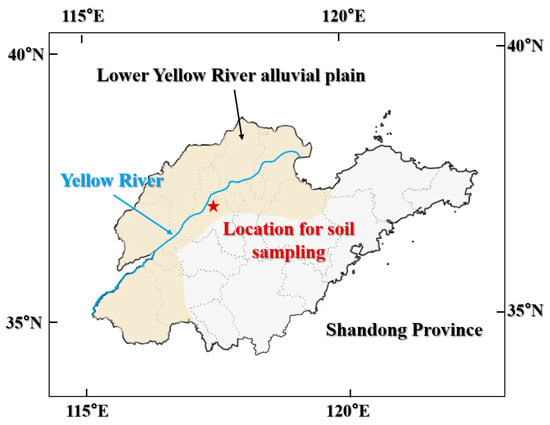
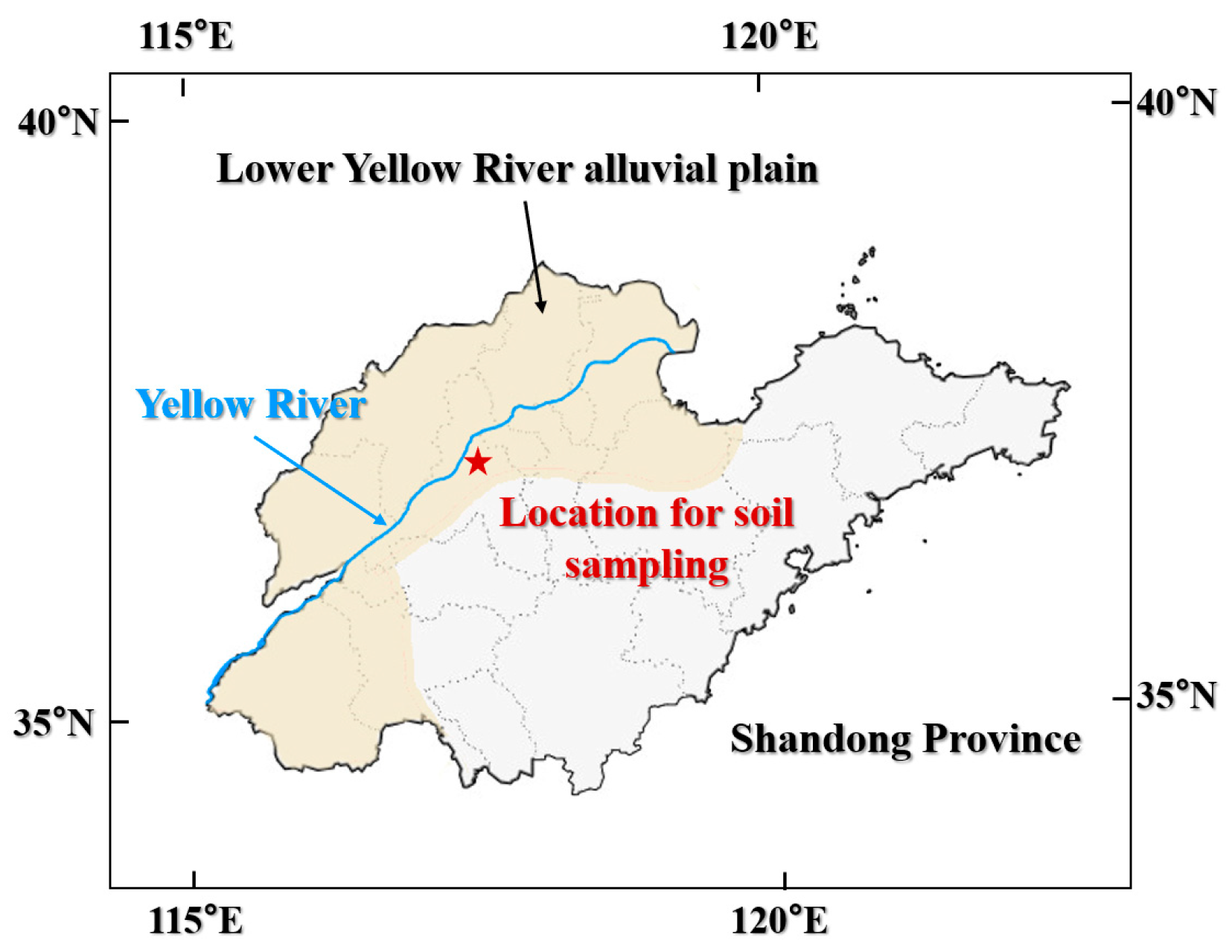
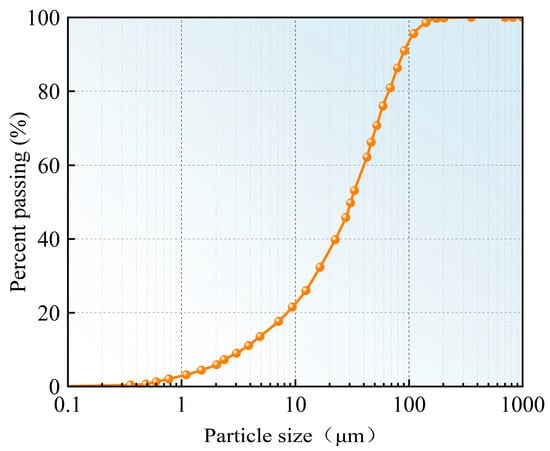
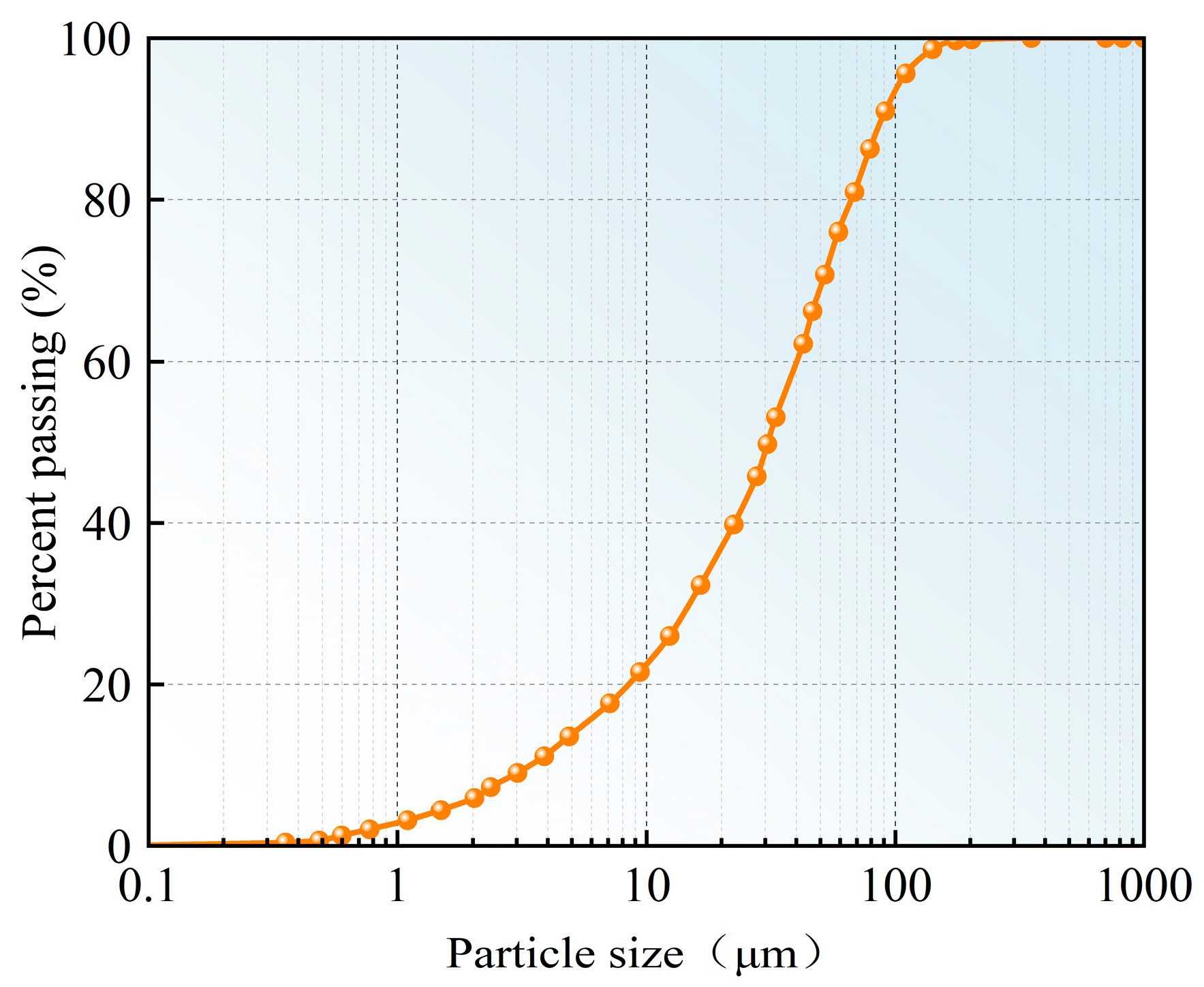
In this study, alluvial silt collected from the lower Yellow River basin was employed as the experimental soil material. The soil sample was obtained from the construction site at K10 + 334 of Wenliang Road, Jinan City, Shandong Province, with the detailed sampling location illustrated in Figure 1. The soil at this site is classified as low-liquid-limit silt, characterized by a light-yellow hue, and its particle size is predominantly distributed within the range of 1–100 μm, as presented in Figure 2. The fundamental physical properties of the tested silt are summarized in Table 1.
Figure 1.
Sampling site of the tested silty soil.
Figure 2.
Particle size distribution curve.
Table 1.
Basic physical parameters of silt.
2.2. Hydrophobic Material
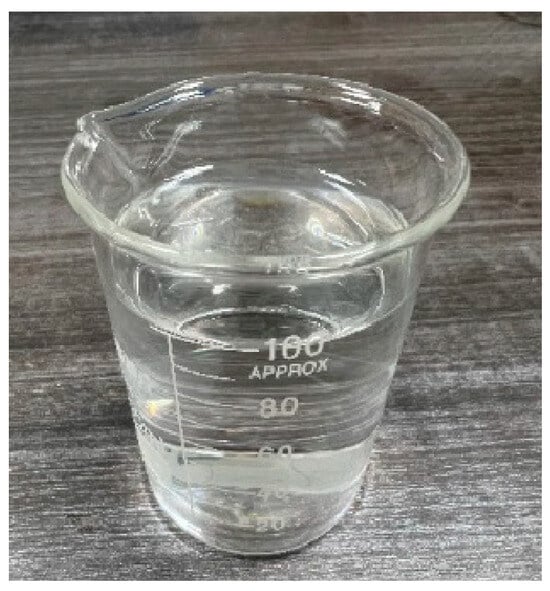
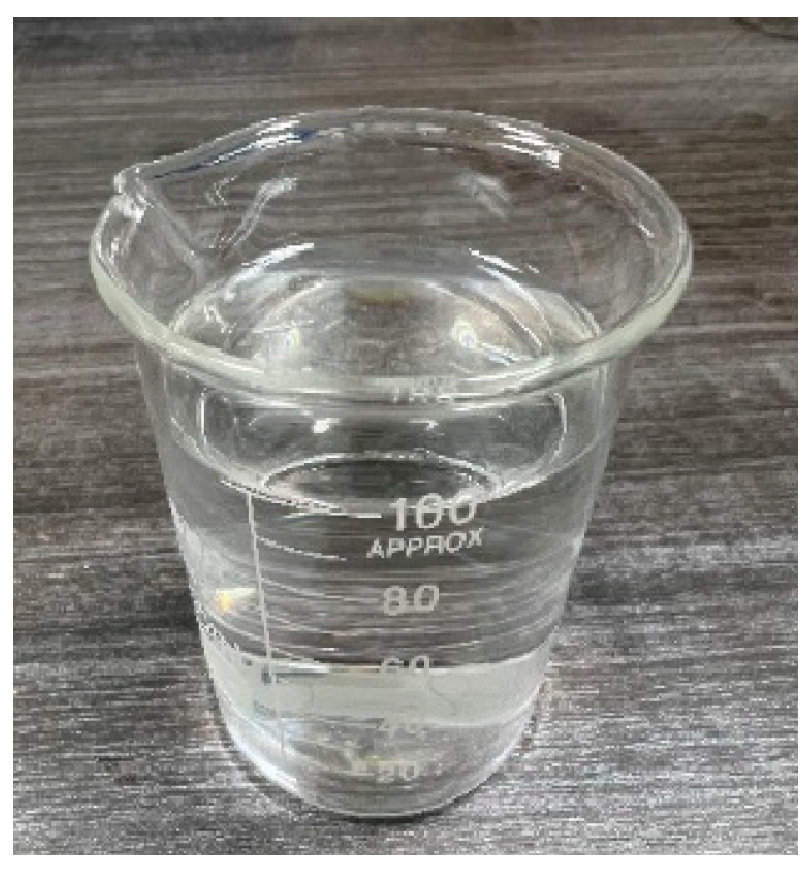
In the present study, an environmentally benign soil additive, nano-superhydrophobic material (NSHM), independently developed by Shandong University, was employed. This additive is mainly constituted by silicone-based hydrophobic components and nano-silica, with its key physical properties summarized in Table 2. As depicted in Figure 3, NSHM exists as a semi-transparent liquid and possesses multiple merits, such as simple preparation, non-toxicity, low cost, and remarkable effectiveness in hydrophobic soil modification [41].
Table 2.
Basic parameters of NSHM [41].
Figure 3.
NSHM.
2.3. Hydrophobized Silt Sample Preparation
Extensive studies have investigated soil’s hydrophobic modification, with consistent results showing that the mass dosage of hydrophobic modifiers in soil matrices generally does not exceed 1% [17,27,34]. Accordingly, an orthogonal test scheme was designed with five NSHM dosage levels and three compaction degrees (detailed in Table 3), to account for the influence of subgrade compaction on modification efficiency.
Table 3.
Experimental design under orthogonal conditions.
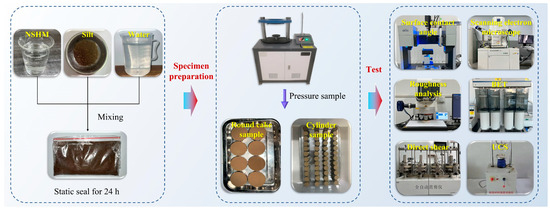
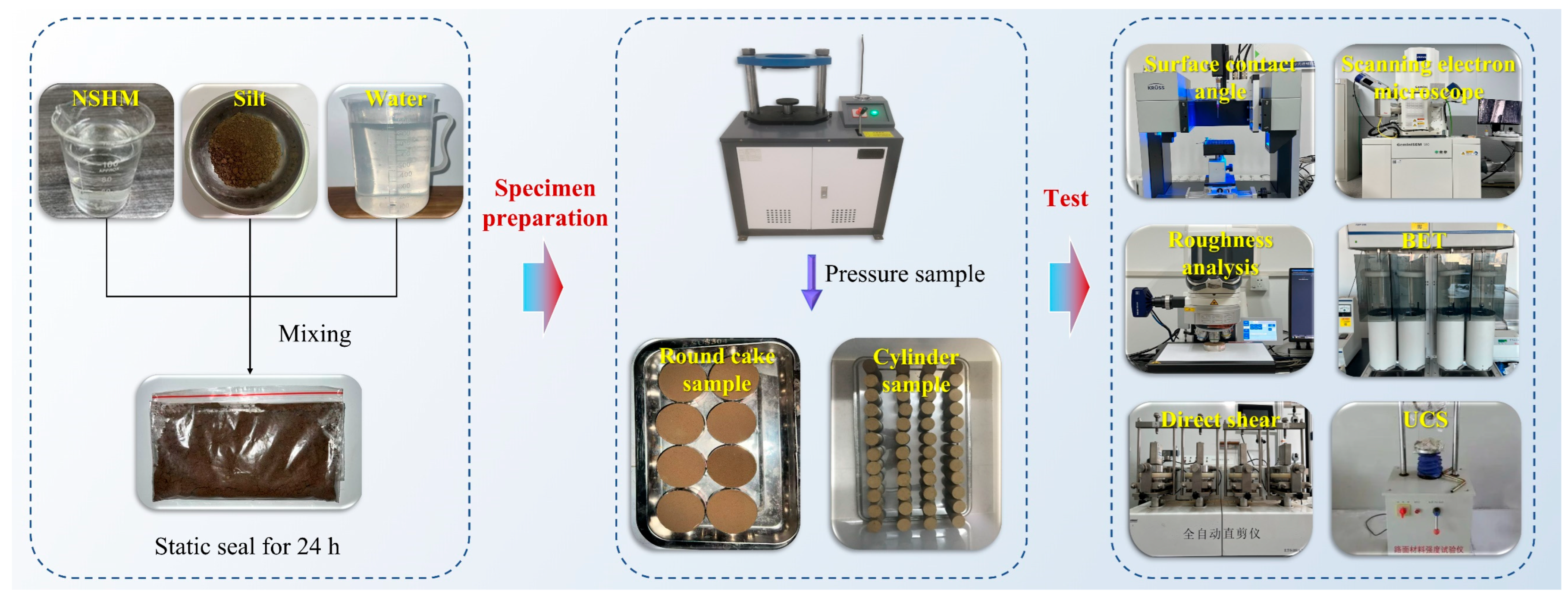
All specimens were prepared in strict accordance with the Test Methods of Soils for Highway Engineering [42], with the molding moisture content controlled at the in situ optimum moisture content of the soil [43]. The oven-dried and crushed alluvial silty soil was thoroughly mixed with NSHM at predetermined dosages, sealed and cured for 24 h to ensure homogeneous modification, and then statically compacted to the target compaction degree to form cylindrical specimens of two dimensions: φ 61.8 mm × 20 mm and φ50 mm × 50 mm. After compaction, all specimens were sealed with polyethylene film and cured in a standard constant temperature and humidity curing box at 25 ± 2 °C with a relative humidity of 95 ± 5% for 7 days before mechanical tests, to ensure the stable formation of the hydrophobic structure of NSHM-modified silt. The complete specimen preparation procedure is illustrated in Figure 4.
Figure 4.
Test procedure.
2.4. Experimental Test
2.4.1. Water Drop Penetration Time
Soil wettability (hydrophobic and hydrophilic properties) of silty soil was quantitatively evaluated via the water drop penetration time (WDPT) method, with longer infiltration time corresponding to stronger hydrophobicity. Soil hydrophobicity grades were classified per the widely accepted threshold criteria proposed by Bisdom [44] (Table 4). All tests were conducted on oven-dried cylindrical specimens (61.8 mm diameter, 20 mm height) at a constant 25 °C. An 80 μL deionized water droplet was deposited on the specimen’s surface via a micropipette, and WDPT was defined as the time from initial droplet contact to complete infiltration. Five replicate measurements were performed at random positions on each specimen, with the mean WDPT adopted for subsequent analysis.
Table 4.
Classification of water repellence of soil (WDPT method) [44].
2.4.2. Surface Contact Angle
We tested the hydrophobicity of NSHM-modified silty soil through surface contact angle testing [45]. Tests were performed using a Germany Kruss DSA100S contact angle goniometer on oven-dried, compacted cylindrical specimens. A 20 μL distilled water droplet was deposited on the specimen’s surface via the sessile drop method, and the contact angle was recorded after 5 s of droplet stabilization, with the value fitted using the Young–Laplace equation. Five replicate measurements were conducted at random positions for each specimen, and the mean value was adopted for analysis.
2.4.3. Unconfined Compression Strength
Unconfined compressive strength (UCS), a core index for evaluating geotechnical structural stability, was tested in accordance with JTG 3430-2020 using a universal testing machine, to characterize the strength variation in silty soil at the optimal NSHM modification dosage [42]. Cylindrical specimens (φ50 mm × 50 mm) were prepared at compaction degrees of 90%, 93% and 96%, with three replicate specimens tested for each condition at a constant loading rate of 1 mm/min. The test was conducted in a standard laboratory environment with a constant temperature of 25 ± 2 °C and relative humidity of 50 ± 5%, to eliminate the influence of environmental fluctuations on test results.
2.4.4. Direct Shear Test
Shear strength, a core mechanical parameter of silty soil, was determined via direct shear tests in accordance with the JTG 3430-2020 standard [42]. Tests were conducted using a Beijing Huakan automated direct shear apparatus (Beijing, China) at a constant shear rate of 0.8 mm/min until specimen shear failure occurred. All specimens were cylindrical, with a diameter of 61.8 mm and height of 20 mm. The test was conducted in a standard laboratory environment with a constant temperature of 25 ± 2 °C and relative humidity of 50 ± 5%, to eliminate the influence of environmental fluctuations on test results. Shear strength was calculated by substituting test data into Equation (1), where τ is shear strength, c is cohesion, and φ is the internal friction angle of the soil.
2.4.5. SEM
The micromorphology of NSHM-modified silty soil was characterized using a ZEISS Gemini SEM 500 field emission scanning electron microscope (Jena, Germany). Prior to testing, dried specimens were trimmed to 0.5 × 0.5 mm, mounted on a sample stage with conductive adhesive, and cleaned with a dust blower to avoid interference with vacuum pumping. To enhance electrical conductivity, the mounted specimens were sputter-coated with gold. All observations were conducted at 20 μm and 100 μm scales.
2.4.6. Roughness Analysis
Surface roughness, a key factor governing the hydrophobicity of silty soil, is directly driven by microstructural evolution of the soil matrix. White light interference confocal microscopy was employed to characterize the specimen’s surface morphology, with areal average roughness (S) adopted to quantify the surface roughness of unmodified and NSHM-modified silty soil [46].
In the formula, A is the projected area of the study area. The matrix area , where is the absolute value of the height difference between each point and the average surface. The image size of the sample obtained in the x–y plane is 0.6 mm × 0.6 mm, and the corresponding area size is 0.36 mm2. To minimize measurement errors, five replicate measurements were conducted at distinct random positions for each specimen, with the mean value used for subsequent analysis.
2.4.7. Gas Adsorption Test
SEM results showed that the particle and pore sizes of silt are mostly less than 100 μm. Thus, the nitrogen adsorption method was used to measure and compare the specific surface area, pore volume, and average pore size via BET testing on a Micromeritics ASAP 2460 (McMurray, USA) surface area and porosity analyzer. Since NSHM decomposes easily at temperatures above 200 °C, sample temperature was controlled during vacuuming. After the experiment, the condensed gas volume of the sample at different pressures was measured to plot isothermal adsorption–desorption curves, and the sample’s pore volume and pore size distribution curves were calculated.
3. Results
3.1. Water Droplet Penetration Time Analysis
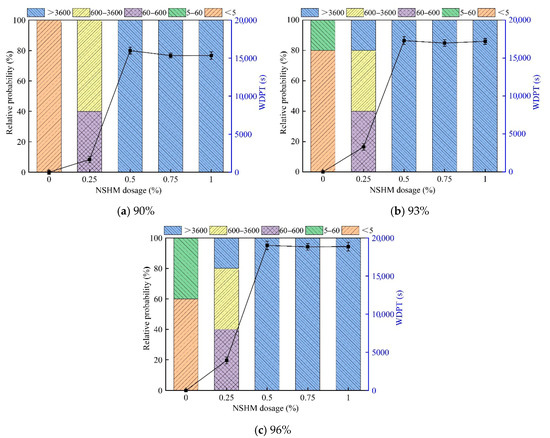
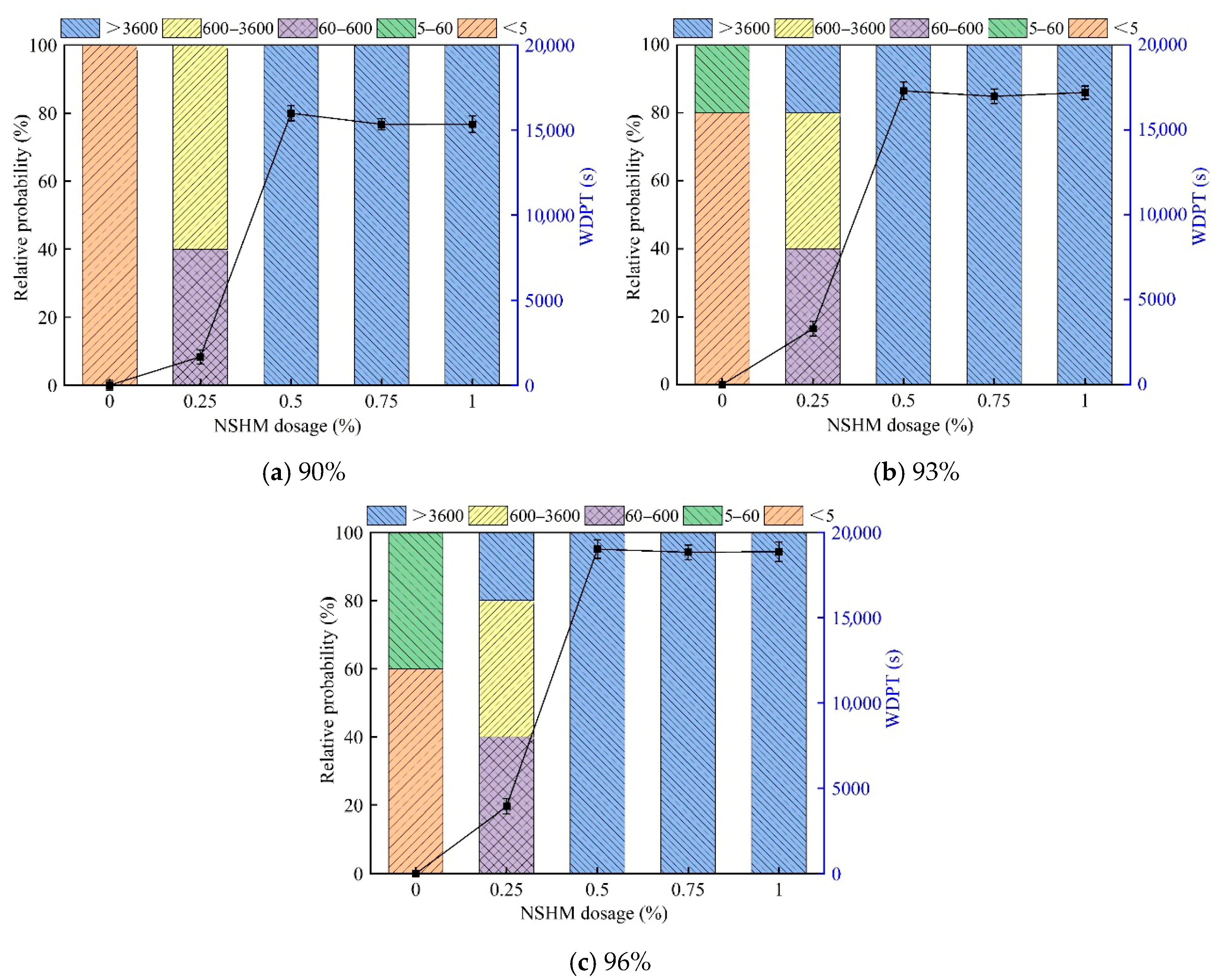
Figure 5 presents the water drop penetration time (WDPT) test results for NSHM-modified silty soil with five dosage levels (0%, 0.25%, 0.5%, 0.75%, and 1%) prepared at three compaction degrees (90%, 93%, and 96%). Different colors in the figure denote water drop penetration periods; black dots represent error bars, and the blue ordinate indicates specific WDPT values. All WDPT durations are rounded to the nearest integer, with the classification criteria for penetration periods listed in Table 4. To minimize experimental errors, relative probability was adopted to quantify the occurrence frequency of different hydrophobic grades across parallel tests.
Figure 5.
Hydrophobic silt WDPT under different compaction degrees.
As observed from Figure 5, the NSHM dosage exerts a significant effect on the hydrophobic performance of silty soil under all three compaction conditions. Water droplets infiltrate rapidly upon contact with unmodified silty soil (US), demonstrating the strong inherent hydrophilicity of the raw soil. For NSHM dosages ranging from 0 to 0.5%, the WDPT of NSHM-modified silty soil increases markedly with increasing NSHM content at all three compaction degrees. In conjunction with the classification criteria in Table 4, it is evident that the silty soil gradually transitions from a hydrophilic to a superhydrophobic state with a rising NSHM dosage within this range. At NSHM dosages between 0.5% and 0.75%, WDPT exhibits a slight decrease with further NSHM addition. As the NSHM dosage increases further from 0.75% to 1%, the hydrophobic performance of the modified silty soil tends to stabilize, with WDPT remaining nearly constant, and the soil maintains a stable superhydrophobic state throughout this dosage interval.
This phenomenon can be elucidated by the underlying modification mechanism. At low NSHM dosages (<0.5%), hydrophobic functional groups cannot fully cover the surfaces of silty soil particles. Consequently, soil particles continuously adsorb hydrophobic moieties and nano-SiO2 particles from NSHM, resulting in a rapid enhancement of hydrophobic performance. At an NSHM dosage of 0.5%, hydrophobic groups on particle surfaces reach near-saturation, and interparticle pores are sufficiently filled, yielding the maximum WDPT and optimal hydrophobic modification effect. However, at NSHM dosages ranging from 0.5% to 0.75%, excess NSHM persists after the soil specimens are fully modified. Self-aggregation occurs among the redundant NSHM molecules, forcing hydrophilic segments in the NSHM molecular chains to orient away from the soil particle surfaces, thereby slightly diminishing the soil hydrophobicity. With a further increase in the NSHM dosage (0.75–1%), although self-aggregation of excess NSHM still occurs, it barely interferes with the pre-adsorbed hydrophobic layers on the soil particle surfaces. Accordingly, WDPT shows negligible variation, and the hydrophobic performance stabilizes within this dosage interval.
Comparison of the hydrophobic behavior of NSHM-modified silty soil across the three compaction degrees reveals that, at a fixed NSHM dosage, WDPT is positively correlated with the compaction degree. This is attributed to the lower porosity and higher particle number per unit volume in more densely compacted specimens, which provide more available surface sites for NSHM modification and thus enhance hydrophobic performance. The peak hydrophobic performance for all three compaction levels is achieved at an NSHM dosage of 0.5%, as the difference in porosity among the three compaction degrees is negligible relative to the influence of the NSHM dosage. In summary, the incorporation of NSHM effectively improves the hydrophobic performance of silty soil, and the optimal NSHM dosage range for silty soil modification is recommended as 0.5–0.75%.
3.2. Contact Angle Analysis
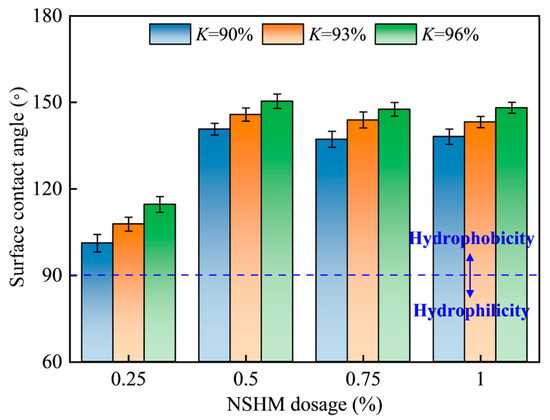
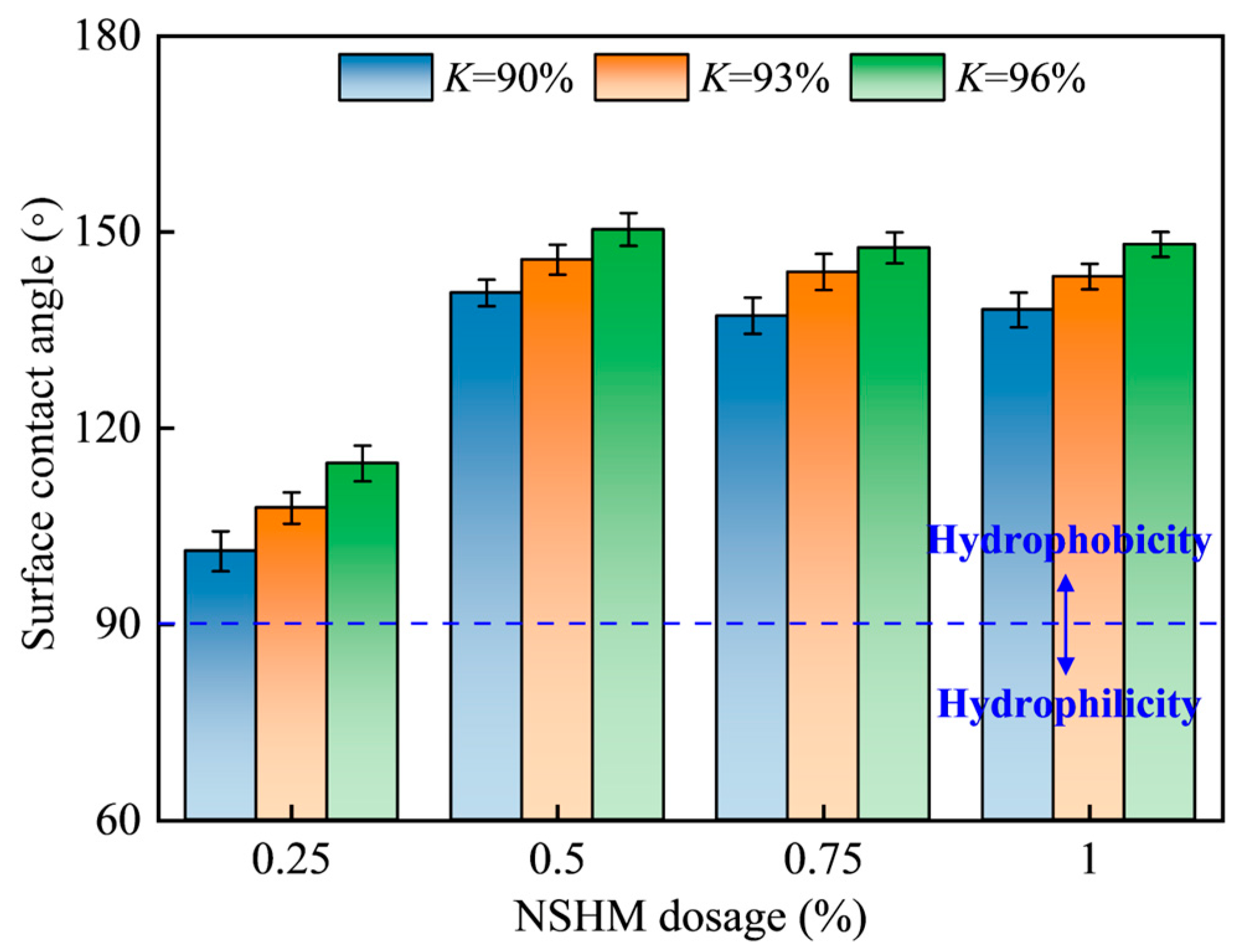
Measurements of the surface contact angle of NSHM-modified silty soil are presented in Figure 6. The unmodified silty soil has strong inherent hydrophilicity, and water droplets spread and infiltrate rapidly immediately after contacting the sample surface, making it impossible to obtain stable and accurate surface contact angle test results. Therefore, this group of data is not included in Figure 6. As observed from the figure, the surface contact angle of the specimens shows an initial rapid increase followed by gradual stabilization with a rising NSHM dosage. Furthermore, in conjunction with the variation law of WDPT for NSHM-modified silty soil detailed in Section 3.1, a positive correlation is identified between the surface contact angle and WDPT of the modified soil. Specifically, the silty soil is transformed from hydrophilic to hydrophobic after NSHM modification, and the increase in the surface contact angle directly reflects the evolution of its hydrophobic properties.
Figure 6.
The effect of NSHM content on the contact angle of silt surface.
For an NSHM dosage ranging from 0.25% to 0.5%, hydrophobic functional groups in NSHM gradually encapsulate silty soil particles to form a dense hydrophobic oil film. Meanwhile, nano-silica particles derived from NSHM embed within this hydrophobic film, which elevates the surface roughness of soil particles and thereby induces a gradual increase in the surface contact angle. The surface contact angle reaches its peak value at an NSHM dosage of 0.5%, which corresponds to the optimal hydrophobic modification performance. For NSHM dosages between 0.5% and 0.75%, hydrophilic moieties in NSHM are exposed on the outer surface of soil particles under polar effects, leading to a slight decrease in the surface contact angle. With a further increase in the NSHM dosage to the range of 0.75–1%, soil particles are completely covered by the hydrophobic oil film, and excess NSHM can barely interact with the pre-formed hydrophobic layer or alter the surface free energy of the specimens. Consequently, the surface contact angle remains essentially stable within this dosage range.
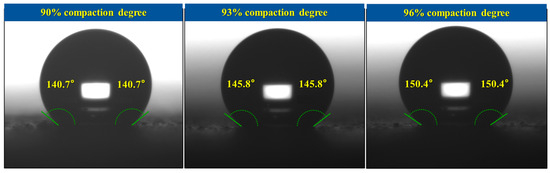
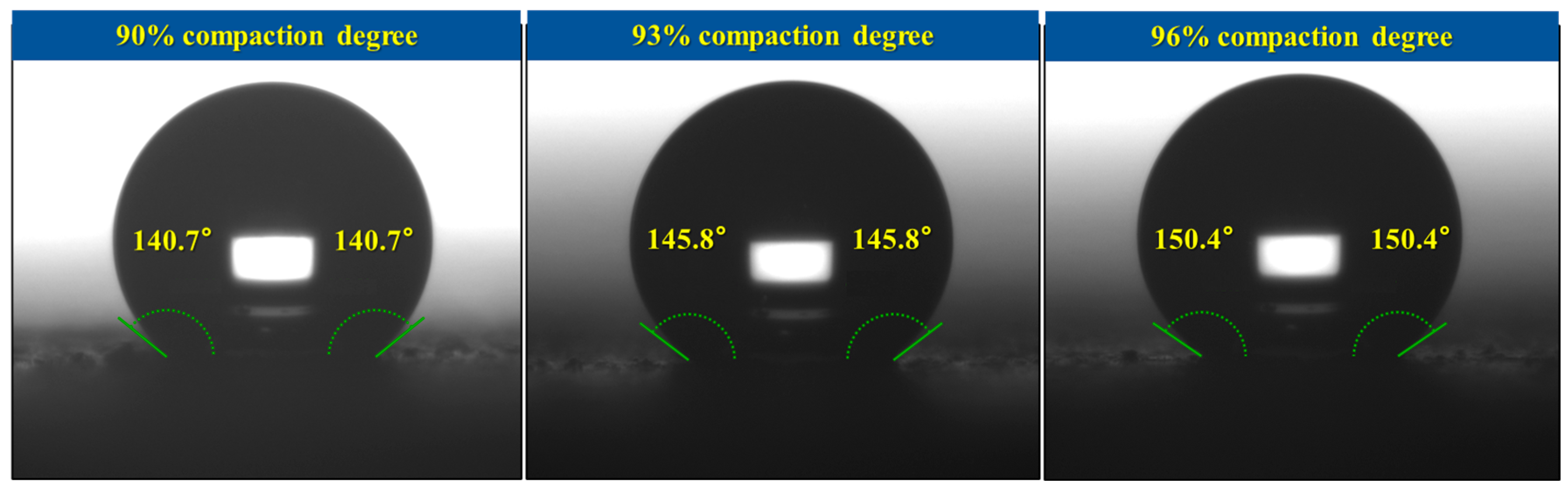
Figure 7 presents the analysis of the relationship between the compaction degree and surface contact angle of NSHM-modified silty soil, using HS-0.5% specimens prepared at three compaction levels as representative samples. The surface contact angles of HS-0.5% specimens at compaction degrees of 90%, 93%, and 96% are 140.7°, 145.8°, and 150.4°, respectively, confirming a positive correlation between the surface contact angle and compaction degree. This phenomenon is attributed to the increased number of interparticle contact points and reduced total internal pore volume with an increasing compaction degree. Accordingly, at an identical NSHM dosage, specimens with a higher compaction degree exhibit larger surface contact angles.
Figure 7.
The effect of compaction degree on the contact angle of NSHM-modified silt’s surface (HS-0.5%).
3.3. Unconfined Compressive Strength Analysis
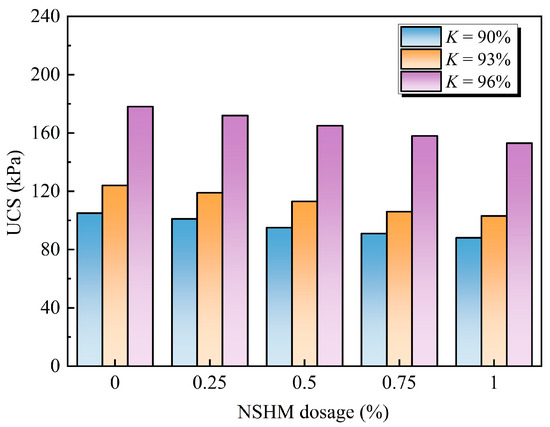
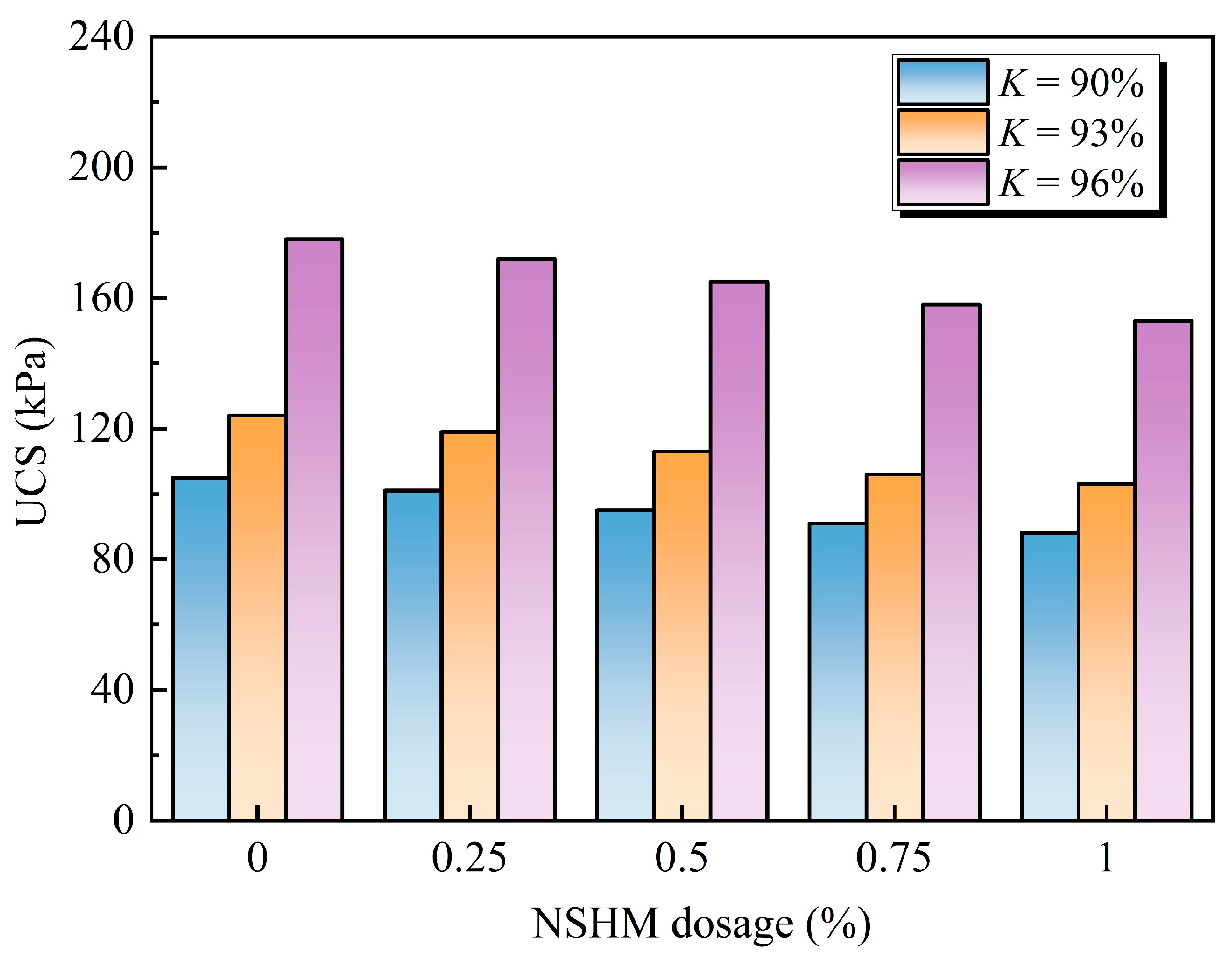
The results of unconfined compressive strength tests are presented in Figure 8. Test results demonstrate that the UCS of NSHM-modified silty soil exhibits a monotonic decreasing trend with an increasing NSHM dosage. This phenomenon can be mechanistically explained from two perspectives: interparticle interaction and the specimen molding state. On the one hand, the dense hydrophobic oil film formed by NSHM on silty soil particle surfaces fully encapsulates the particles and blocks direct interparticle surface contact, which fundamentally weakens the interlocking effect and inherent cohesion of soil particles, acting as the dominant factor for UCS reduction in modified soil. On the other hand, free water introduced by the NSHM modifier slightly elevates the molding moisture content of specimens, further weakening interparticle cementation and exacerbating strength deterioration. Although NSHM can fill micropores between silty soil particles and improve specimen compactness to a certain extent, the resulting strength gain is far insufficient to offset the strength loss caused by particle encapsulation and increased moisture content, which ultimately manifests as a continuous decrease in UCS with a rising NSHM dosage at the macroscale.
Figure 8.
Variation law of unconfined compressive strength.
The compaction degree exerts a significant regulating effect on the UCS of modified silty soil. At an identical NSHM dosage, the UCS of modified silty soil shows a significant linear increasing trend with a rising compaction degree. Meanwhile, a higher compaction degree corresponds to a lower attenuation rate of UCS with an increasing NSHM dosage; that is, a high compaction degree can effectively inhibit the strength deterioration induced by NSHM modification. Specifically, for specimens at the optimal hydrophobic modification dosage, the UCS of modified silty soil at a 96% compaction degree only decreases by 7.3% compared with US, while the attenuation amplitude of specimens at a 90% compaction degree reaches 9.5%, confirming the regulating effect of the compaction degree on modified soil strength. This finding has clear engineering guiding implications: in the field application of NSHM-modified silty soil in subgrade engineering, the compaction degree should be adopted as the core construction control parameter. By reasonably increasing the subgrade compaction degree, the strength loss caused by modification can be minimized while ensuring the hydrophobic modification effect, thus realizing the synergistic optimization of subgrade hydrophobic performance and bearing capacity.
3.4. Maximum Shear Strength
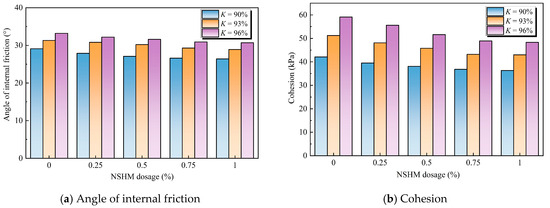
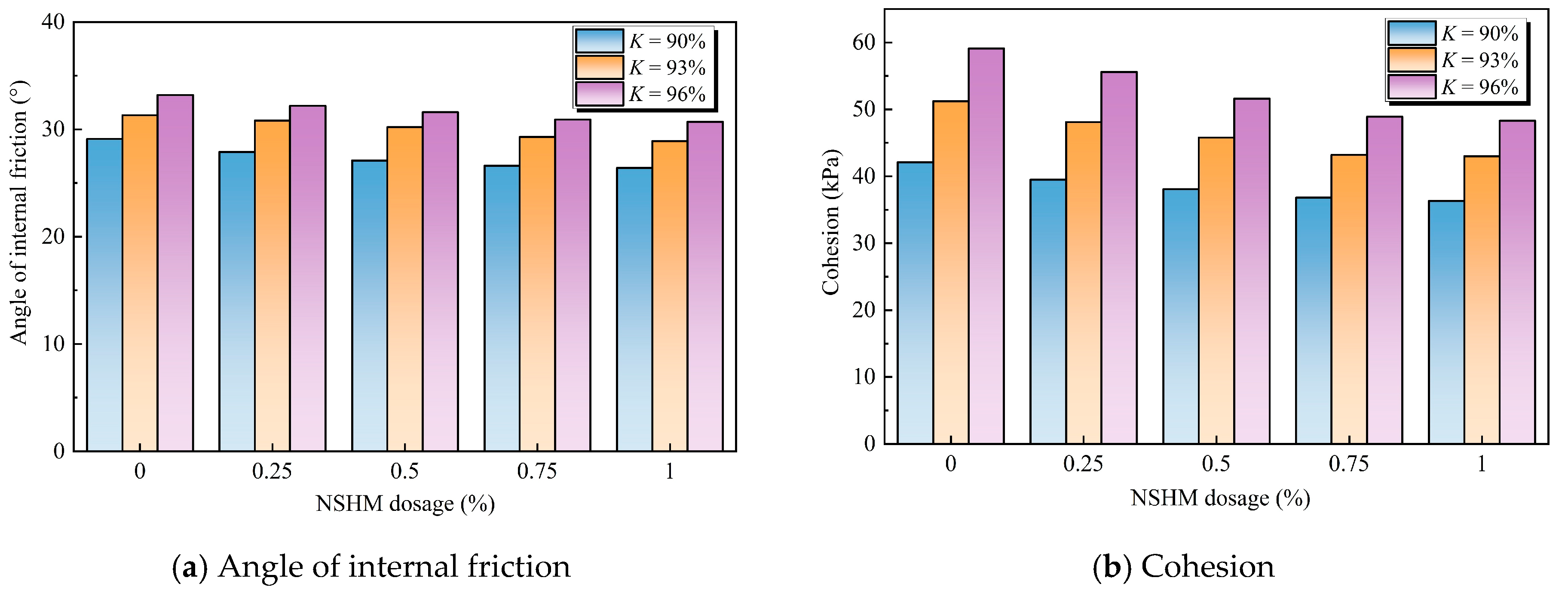
The results of direct shear tests are presented in Figure 9. It can be seen that the incorporation of NSHM leads to a decrease in both the cohesion and internal friction angle of silty soil, with an overall trend that a higher NSHM dosage corresponds to lower initial shear strength parameters of the modified soil. The underlying mechanism is as follows: after NSHM incorporation, silty soil particles are gradually encapsulated by the NSHM-formed hydrophobic oil film, which destroys the original water film cementation between soil particles and acts as the dominant factor for cohesion reduction. Although nano-silica particles adsorbed on the soil particle surface can improve interparticle bonding strength to a certain extent, this effect is far insufficient to offset the negative impact of oil film encapsulation, resulting in a continuous decrease in cohesion with an increasing NSHM dosage. Meanwhile, the lubrication effect of the hydrophobic oil film reduces the tangential interlocking effect and sliding frictional resistance between soil particles, thereby lowering the internal friction angle of the silty soil. In addition, at a constant NSHM dosage, both the cohesion and internal friction angle of all specimens increase significantly with a rising compaction degree.
Figure 9.
Shear strength parameters of silty soil with varying NSHM dosages and compaction degrees.
3.5. SEM Analysis
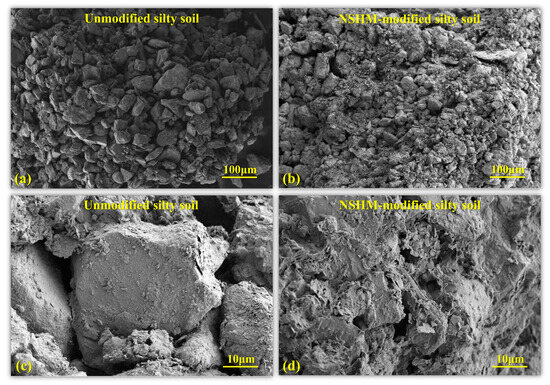
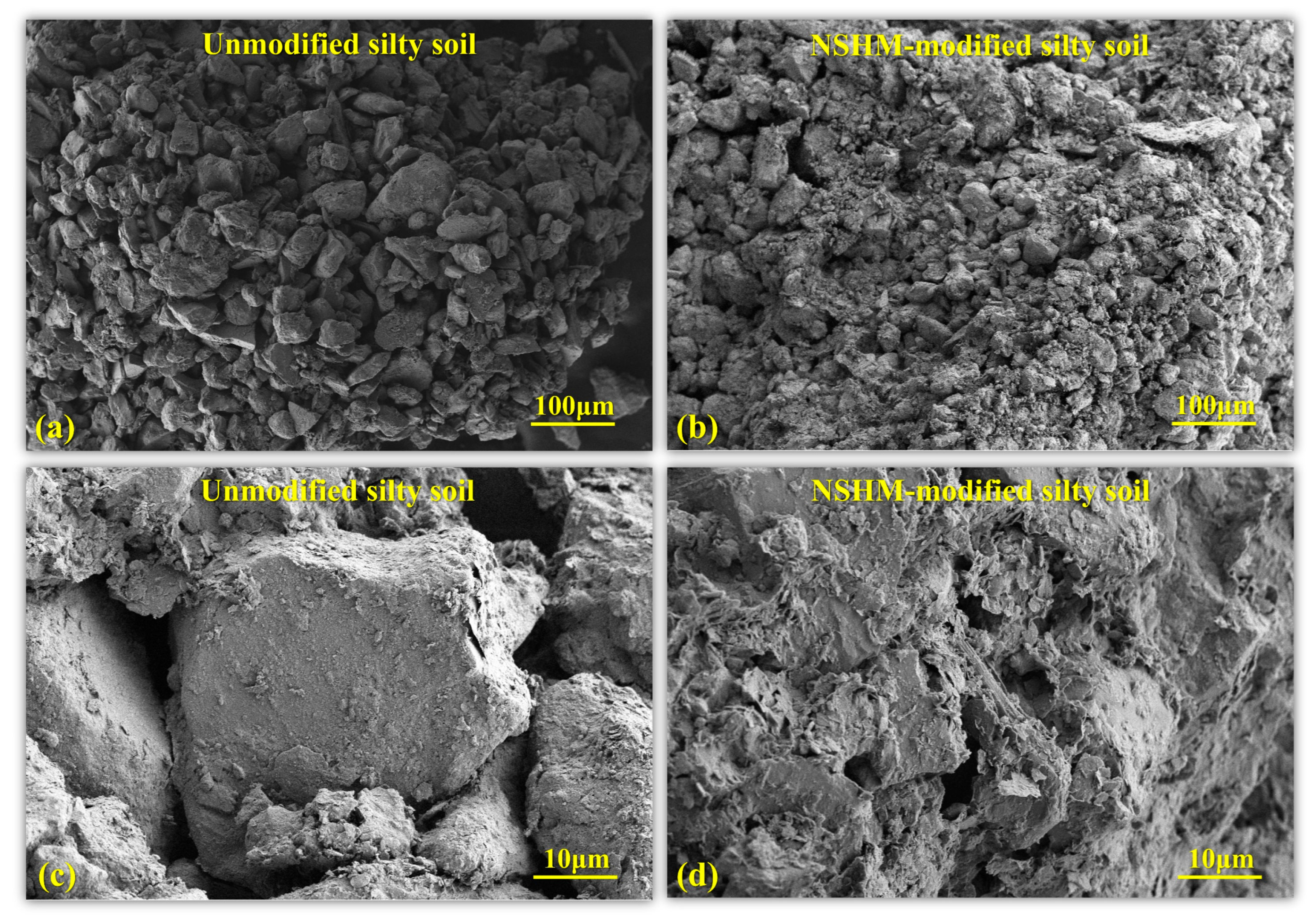
In this study, unmodified silty soil and 0.5% NSHM-modified silty soil, both compacted to a compaction degree of 96%, were selected as representative specimens for systematic experimental analysis. The micromorphology and internal pore structure of the silty soil before and after hydrophobic modification were characterized via scanning electron microscopy. Figure 10a,b show the micrographs of unmodified silty soil particles, while Figure 10c,d present those of NSHM-modified silty soil particles. As observed from Figure 10, the particle morphology and size distribution of the silty soil exhibit no significant alteration after NSHM incorporation. This demonstrates that NSHM achieves hydrophobic modification via surface functionalization of silty soil particles, without damaging the inherent internal structure of the soil matrix.
Figure 10.
Microstructure of silt. (a) unmodified silty soil; (b) NSHM-modified silty soil; (c) unmodified silty soil; (d) NSHM-modified silty soil.
Unmodified silty soil particles, as shown in Figure 10a, exhibit distinct anisotropic and multidirectional morphological characteristics, with a well-developed internal pore structure and high porosity, which accounts for their strong hydrophilicity at the macroscale. In contrast, NSHM-modified silty soil, as shown in Figure 10b, displays obvious particle agglomeration, with interparticle pores filled by NSHM, leading to a notable reduction in the porosity of the specimens. Under high magnification, as shown in Figure 10c, unmodified silty soil particles present a monodisperse, lamellar and flocculent structure, with a smooth and dense particle surface. In comparison, after NSHM incorporation, as shown in Figure 10d, the soil particle surface is uniformly covered by NSHM, accompanied by a marked increase in surface roughness, a significant rise in aggregate structure content, and a substantial decrease in specific surface area. This phenomenon is attributed to the reduction in hydroxyl groups and the increase in methyl groups on the surface of modified silty soil particles, along with the formation of a stable Si-O-Si network structure. The Si-O-Si network structure contributes to pore-filling, as reported by Salazar-Hernández and co-workers in 2019, thereby enhancing the interparticle agglomeration effect. On the other hand, the inherent micro-expansibility of NSHM increases the interparticle spacing of silty soil particles.
3.6. Surface Roughness Analysis
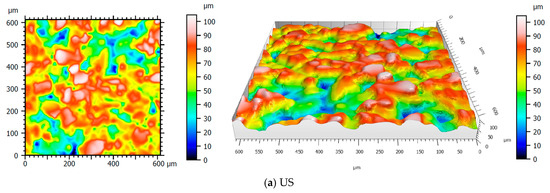
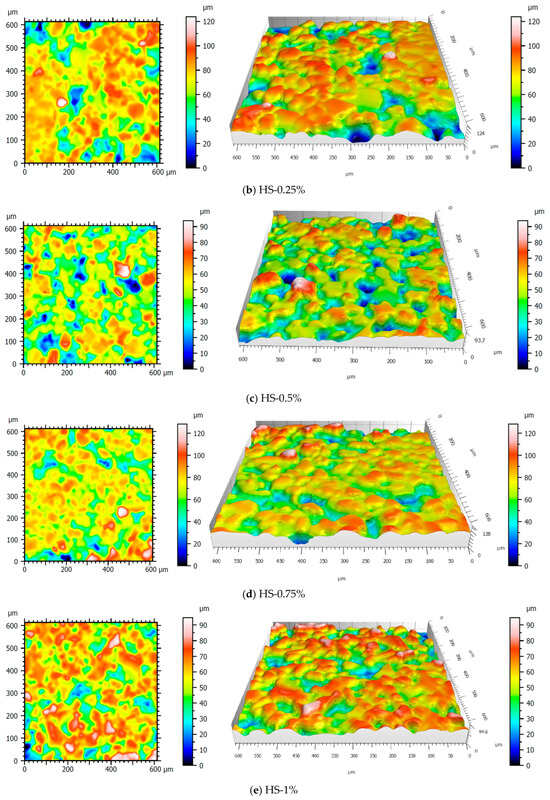
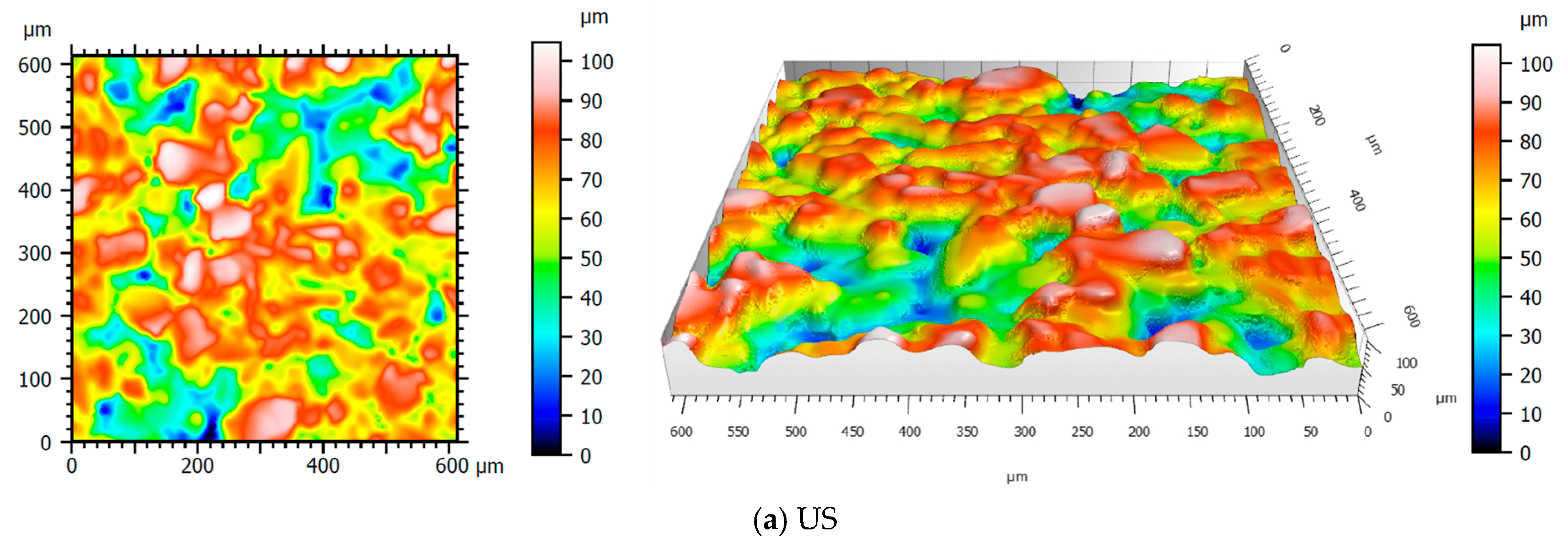
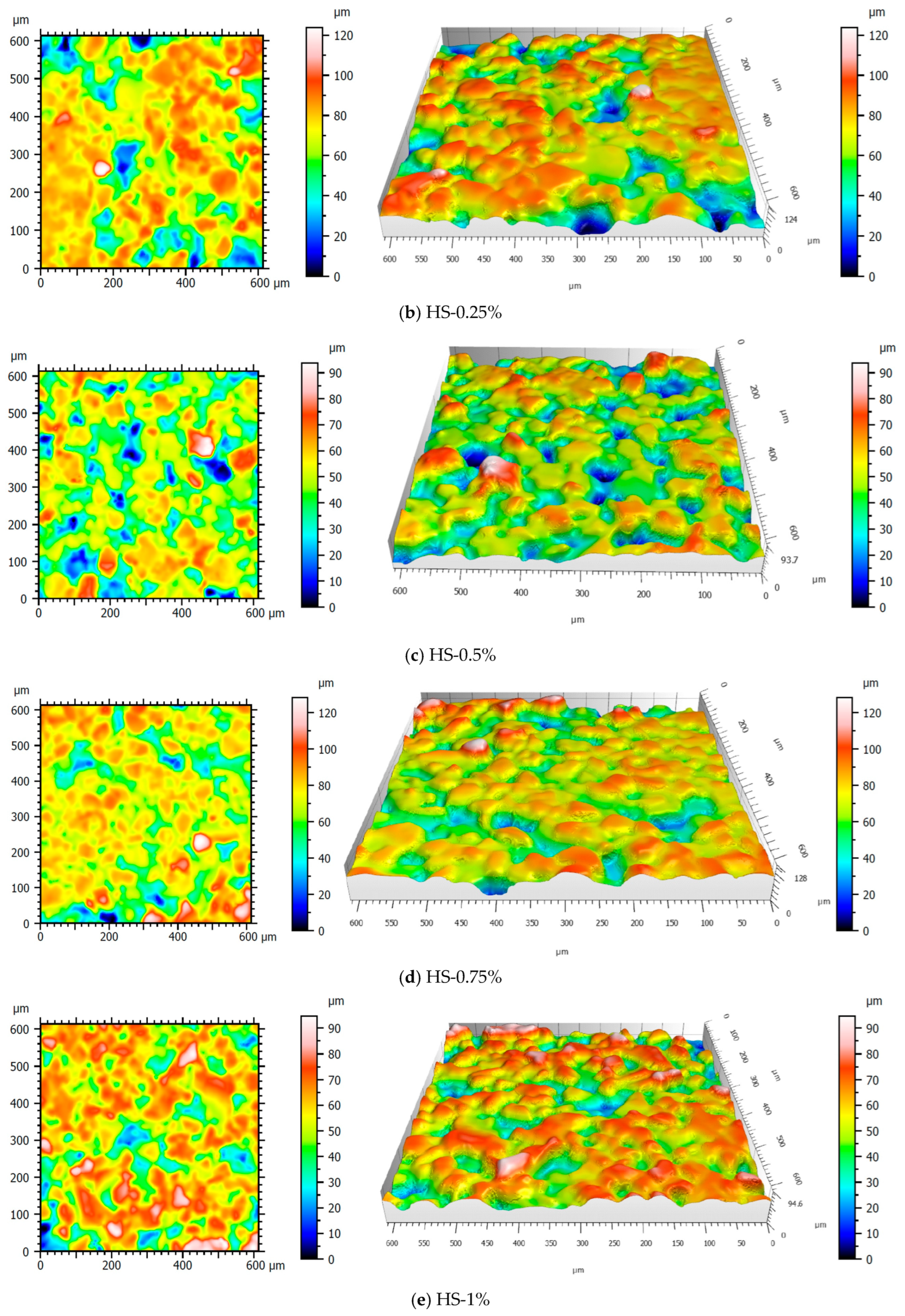
Previous studies have demonstrated that the compaction degree exerts a negligible effect on soil surface roughness [26]. Accordingly, silty soil specimens compacted to the 96% degree were selected for testing herein. During hydrophobic modification, organosilicon-based materials encapsulate soil particles to form a dense hydrophobic film, which reduces soil surface free energy and alters surface roughness, while nano-silica particles in the modifier increase surface roughness by constructing microscale structures. These two effects exert opposite influences on surface roughness, which is identified as a key factor governing soil hydrophobicity by the Wenzel model [47]. Thus, the variation law of surface roughness of silty soil with NSHM incorporation was investigated. The maximum surface height difference was adopted to characterize the overall roughness of specimens, with US set as the control group. Test results are presented in Figure 11, and the surface roughness and maximum surface height difference in silty soil with varying NSHM dosages (HS-0.25%, HS-0.5%, HS-0.75%, HS-1%) are listed in Table 5.
Figure 11.
Surface morphology of NSHM-modified silt.
Table 5.
Surface roughness and maximum height difference.
As shown in Figure 11a, US presents a non-smooth surface morphology. With NSHM incorporation, the surface roughness and maximum surface height difference in silty soil change notably: surface roughness exhibits an initial decrease followed by an increase with a rising NSHM dosage. Compared with US, the surface roughness of HS-0.25%, HS-0.5%, HS-0.75% and HS-1% specimens decreases by 9.3%, 30.1%, 26.8% and 23%, respectively. This reduction arises from the encapsulation effect of NSHM, which smooths soil particle surfaces, and its pore-filling effect, which enhances specimen density. Once soil particles are fully encapsulated by the hydrophobic oil film, further NSHM addition does not alter the film’s existing state, but increases the number of nano-silica particles attached to particle surfaces, thereby raising the surface roughness of modified soil.
The maximum surface height difference of HS-0.25%, HS-0.5%, HS-0.75% and HS-1% specimens is 3.3%, 11.3%, 10.4% and 9.8% lower than that of US, respectively. This decline is attributed to NSHM’s filling effect, which improves the structural flatness of silty soil. However, nano-silica particles in NSHM attach to the hydrophobic oil film surface to form a hierarchical structure, leading to a gradual increase in the maximum surface height difference with further NSHM addition, even after full hydrophobic modification of the soil.
3.7. Specific Surface Area and Pore Size Distribution
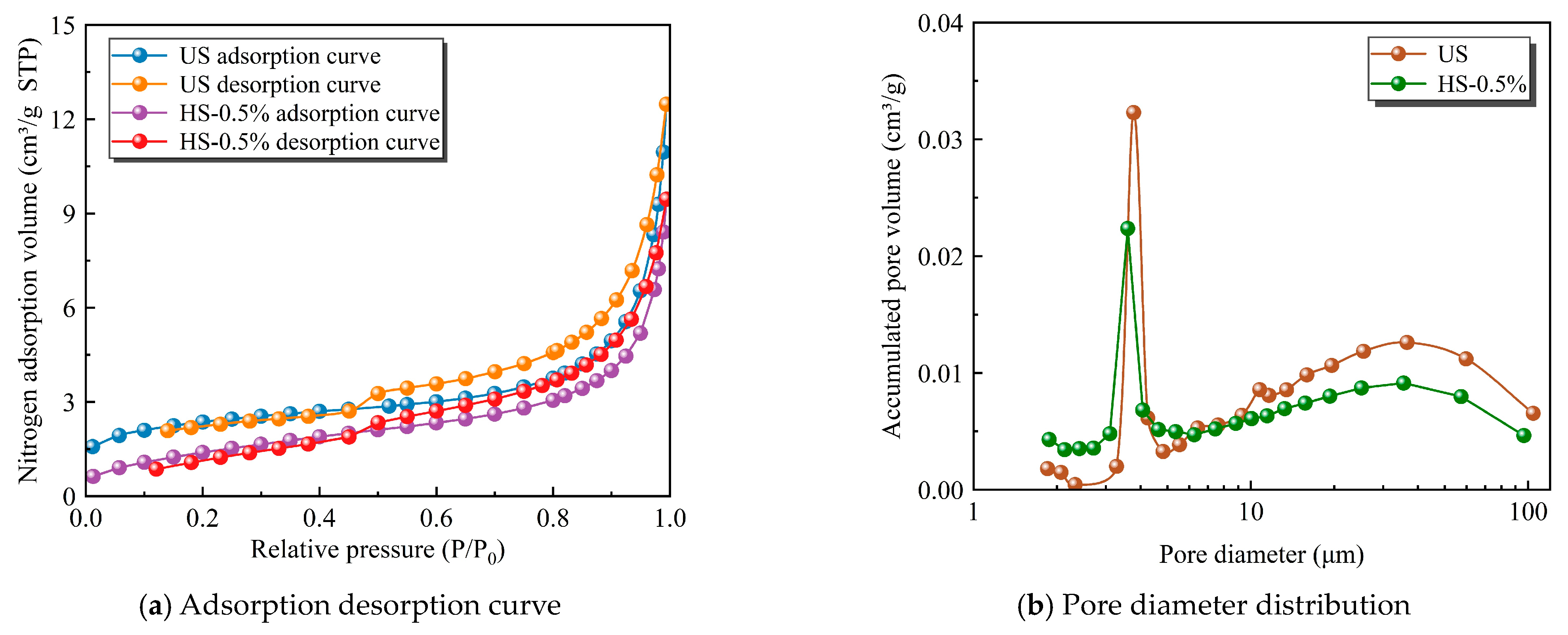
Figure 12 shows the N2 adsorption–desorption isotherms and pore size distribution curves of the unmodified soil (US) and 0.5% NSHM-modified soil (HS-0.5%), both prepared at a compaction degree of 96%, with the corresponding characteristic pore structure parameters summarized in Table 6. According to the type of adsorption–desorption hysteresis loop, both specimens conform to the characteristics of the uniform pore model [48]; that is, the pore size distribution inside the specimens is uniform with a low dispersion of pore size. The pore size distribution characteristics can directly reflect the accumulation state of soil particles and the interparticle bonding properties, and the tightness of interparticle bonding directly determines the proportion of pores with different diameters. Comparison of the adsorption–desorption curves shows that the N2 adsorption capacity of the HS-0.5% specimen is significantly lower than that of the US specimen, corresponding to a decrease in the specific surface area of the specimen from 7.8135 m2/g to 5.3764 m2/g. The vertical axis of the pore size distribution curve reflects the variation law of pore volume in the unit pore size interval, and the peak of the curve corresponds to the dominant pore size with the highest distribution proportion in the specimen. By comparing the pore size distribution curves of specimens before and after NSHM incorporation, the proportion of small-diameter pores in silty soil increases significantly after NSHM modification, and the average pore size of silty soil decreases from 13.4289 μm to 9.7668 μm, with a reduction rate of 27.3%. Meanwhile, the particle encapsulation effect and inter-pore-filling effect of NSHM reduce the total internal pore volume of the modified silty soil from 0.019297 cm3/g to 0.014623 cm3/g, with a reduction rate of 24.2%.
Figure 12.
Adsorption curve and pore size distribution.
Table 6.
Void structure distribution.
Overall, the incorporation of NSHM significantly alters the original pore structure distribution of silty soil, resulting in a remarkable reduction in the specific surface area, total pore volume and average pore size of the modified soil.
4. Discussion
This study reveals the multi-scale hydrophobic modification mechanism of nano-superhydrophobic material (NSHM) on Yellow River alluvial silt and establishes the micro–macro performance correlation of modified soil, thereby clarifying its theoretical significance and engineering applicability.
The key mechanism is that NSHM modifies silt through particle encapsulation and pore-filling, rather than altering soil mineral functional groups. This dual effect reduces pore size and porosity, blocks capillary water channels, and converts the soil surface from hydrophilic to superhydrophobic. As a result, the modified soil exhibits outstanding water resistance with only a slight strength loss (less than 12%), and at a dosage of 0.5% under 96% compaction, the strength loss is merely 7.3%, which fully satisfies subgrade engineering requirements.
Compared with conventional cement- or lime-stabilized soils, which improve strength but cannot suppress capillary water rise, the proposed method fundamentally enhances water stability. In contrast to many existing hydrophobic modification techniques that require high dosages and ignore compaction effects, this study achieves stable superhydrophobicity at a low NSHM dosage and clarifies the influence of the compaction degree, leading to better engineering applicability and economy than both traditional additives and geomembrane isolation measures.
This work fills the research gap regarding nano-superhydrophobic modification of Yellow River alluvial silt, supplements the technical system for silty soil stabilization in floodplain areas, and provides a feasible strategy for mitigating water-induced subgrade damage. Future research will focus on field tests to further promote engineering application.
5. Conclusions
This study takes the widely distributed alluvial silty soil in the Yellow River flood area of the lower Yellow River region as the research object, and systematically investigates the hydrophobic performance, road mechanical properties and microstructure characteristics of NSHM-modified silty soil under different compaction degrees. The main research conclusions are as follows:
- (1)
- The incorporation of NSHM can significantly improve the hydrophobic performance of silty soil. When the NSHM dosage was ≥0.5%, the modified silty soil under different compaction degrees all reached a superhydrophobic state, and its hydraulic conductivity was reduced by more than 99% compared with unmodified silty soil. The surface contact angle of modified silty soil showed a trend of a rapid increase first and then stabilization with an increasing NSHM dosage, while the hydraulic conductivity showed a trend of first decreasing and then stabilizing. At a constant NSHM dosage, both the WDPT and surface contact angle of the specimens increased with the rising compaction degree.
- (2)
- Although NSHM modification can fill the interparticle pores of silty soil and improve the overall compactness of the soil matrix, the encapsulation effect of the hydrophobic oil film on soil particles weakens the interparticle interlocking and cementation force, resulting in a certain degree of reduction in the dry UCS of the modified silty soil.
- (3)
- NSHM modification did not cause significant changes in the characteristic mineral functional groups of silty soil, and the surface roughness and maximum surface height difference of the soil both showed a trend to first decrease and then increase with an increasing NSHM dosage. After NSHM incorporation, silty soil particles were gradually encapsulated by the hydrophobic oil film, the particle surface tended to be smooth, and the interparticle contact mode gradually changed from the original point contact to surface contact. Meanwhile, NSHM filled the primary pores of the soil, making the internal structure of silty soil denser, which ultimately led to a significant reduction in the specific surface area, average pore size and porosity of the soil.
In summary, considering the hydrophobic performance, water stability and mechanical properties of modified silty soil, the recommended dosage of NSHM should be no less than 0.5% in the practical application of silty soil subgrade engineering in the Yellow River flood area. In terms of theoretical development, subsequent research will focus on the long-term performance evolution of modified silt under complex multi-field coupling conditions and improve the corresponding theoretical model to enrich the theory of silty soil’s hydrophobic modification. For engineering implementation, we will carry out field tests, formulate standardized construction specifications, and promote the popularization and application of this technology in practical subgrade projects.
Author Contributions
W.D.: Formal analysis. S.G.: Writing—original draft. R.P.: Funding acquisition. X.Z.: Methodology. C.Z.: Conceptualization. T.C.: Writing—original draft. H.Z.: Methodology. All authors have read and agreed to the published version of the manuscript.
Funding
This study is supported by the National Natural Science Foundation of China (No. U22A20235, 52478456) and Natural Science Foundation of Shandong Province, China (No. ZR2024LZN001), whose support is gratefully acknowledged.
Data Availability Statement
The data presented in this study are available on request from the corresponding author. The data are not publicly available due to the inclusion of unpublished ongoing research results.
Conflicts of Interest
Authors Wenqiang Dou, Runsheng Pei, and Chenhao Zhang were employed by the company Shandong Expressway Infrastructure Construction Company Limited and Shandong Expressway Qingzhang Expressway Company Limited. The remaining authors declare that the research was conducted in the absence of any commercial or financial relationships that could be construed as a potential conflict of interest.
References
- Cui, X.; Du, Y.; Zhang, X.; Hao, J.; Bao, Z.; Jin, Q.; Li, X. Characterizing the Dynamic Resilient Modulus of Subgrade Soil Treated by BT-SAP Subjected to Freeze-Thaw Cycles. Cold Reg. Sci. Technol. 2024, 220, 104153. [Google Scholar] [CrossRef] [Scilit]
- Hao, J.; Cui, X.; Bao, Z.; Jin, Q.; Li, X.; Du, Y.; Zhou, J.; Zhang, X. Dynamic Resilient Modulus of Heavy-Haul Subgrade Silt Subjected to Freeze-Thaw Cycles: Experimental Investigation and Evolution Analysis. Soil Dyn. Earthq. Eng. 2023, 173, 108092. [Google Scholar] [CrossRef] [Scilit]
- Bao, Z.; Cui, X.; Du, Y.; Jin, Q.; Hao, J.; Cao, T.; Li, X.; Zhang, X. Development and Verification of Subgrade Service Performance Test System Considering the Principal Stress Rotation. Transp. Geotech. 2025, 50, 101474. [Google Scholar] [CrossRef] [Scilit]
- Zhan, L.; Li, G.; Jiao, W.; Wu, T.; Lan, J.; Chen, Y. Field Measurements of Water Storage Capacity in a Loess–Gravel Capillary Barrier Cover Using Rainfall Simulation Tests. Can. Geotech. J. 2017, 54, 1523–1536. [Google Scholar] [CrossRef] [Scilit]
- Huo, W.; Zhu, Z.; Hao, J.; Zhang, W.; Peng, Y. Experimental Study and Numerical Simulation on Effectiveness of Different Capillary Barriers in Silt Low Subgrade. Bull. Eng. Geol. Environ. 2022, 81, 246. [Google Scholar] [CrossRef] [Scilit]
- Ma, Q.; Liu, S. Effect on Silt Capillary Water Absorption upon Addition of Sodium Methyl Silicate (SMS) and Microscopic Mechanism Analysis. Coatings 2020, 10, 724. [Google Scholar] [CrossRef] [Scilit]
- Czachor, H. Modelling the Effect of Pore Structure and Wetting Angles on Capillary Rise in Soils Having Different Wettabilities. J. Hydrol. 2006, 328, 604–613. [Google Scholar] [CrossRef] [Scilit]
- Lu, Y.; Liu, S.; Zhang, Y.; Li, Z.; Xu, L. Freeze-Thaw Performance of a Cement-Treated Expansive Soil. Cold Reg. Sci. Technol. 2020, 170, 102926. [Google Scholar] [CrossRef] [Scilit]
- Lu, Z.; She, J.; Wu, X.; Yao, H. Cumulative Strain Characteristics of Compacted Soil under Effect of Freeze-Thaw Cycles with Water Supply. Transp. Geotech. 2019, 21, 100291. [Google Scholar] [CrossRef] [Scilit]
- Wang, T.; Li, P.; Liu, Y.; Hou, J.; Li, Z.; Ren, Z.; Cheng, S.; Zhao, J.; Hinkelmann, R. Experimental Investigation of Freeze-Thaw Meltwater Compound Erosion and Runoff Energy Consumption on Loessal Slopes. CATENA 2020, 185, 104310. [Google Scholar] [CrossRef] [Scilit]
- Ying, Z.; Cui, Y.-J.; Benahmed, N.; Duc, M. Changes of Small Strain Shear Modulus and Microstructure for a Lime-Treated Silt Subjected to Wetting-Drying Cycles. Eng. Geol. 2021, 293, 106334. [Google Scholar] [CrossRef] [Scilit]
- Ding, L.; Vanapalli, S.K.; Zou, W.; Han, Z.; Wang, X. Freeze-Thaw and Wetting-Drying Effects on the Hydromechanical Behavior of a Stabilized Expansive Soil. Constr. Build. Mater. 2021, 275, 122162. [Google Scholar] [CrossRef] [Scilit]
- Zhang, J.; Ding, L.; Zheng, J.; Gu, F. Deterioration Mechanism and Rapid Detection of Performances of an Existing Subgrade in Southern China. J. Cent. South Univ. 2020, 27, 2134–2147. [Google Scholar] [CrossRef] [Scilit]
- Zhang, J.; Shang, H.; Fan, H. Resilient Modulus Characteristics of Subgrade Soil Considering Dynamic and Static Effects. Int. J. Pavement Eng. 2025, 26, 2546522. [Google Scholar] [CrossRef] [Scilit]
- Zhao, J.; Gao, X.; Chen, S.; Lin, H.; Li, Z.; Lin, X. Hydrophobic or Superhydrophobic Modification of Cement-Based Materials: A Systematic Review. Compos. B Eng. 2022, 243, 110104. [Google Scholar] [CrossRef] [Scilit]
- Wang, S.; He, X.; Gong, S.; Cai, G.; Lang, L.; Ma, H.; Niu, Z.; Zhou, F. Influence Mechanism of Fulvic Acid on the Strength of Cement-Solidified Dredged Sludge. Water 2022, 14, 2616. [Google Scholar] [CrossRef] [Scilit]
- Lin, H.; Lourenço, S.D.N.; Yao, T.; Zhou, Z.; Yeung, A.T.; Hallett, P.D.; Paton, G.I.; Shih, K.; Hau, B.C.H.; Cheuk, J. Imparting Water Repellency in Completely Decomposed Granite with Tung Oil. J. Clean. Prod. 2019, 230, 1316–1328. [Google Scholar] [CrossRef] [Scilit]
- Wan, Y.; Hui, X.; He, X.; Xue, J.; Feng, D.; Chen, Z.; Li, J.; Liu, L.; Xue, Q. Utilization of Flue Gas Desulfurization Gypsum to Produce Green Binder for Dredged Soil Solidification: Strength, Durability, and Planting Performance. J. Clean. Prod. 2022, 367, 133076. [Google Scholar] [CrossRef] [Scilit]
- Zhang, X.; Cui, X.; Jin, Q.; Jiang, P.; Du, Y.; Chen, L. Experimental Investigation of Automatic Drainage Reinforcement for Overwet Subgrades in Yellow River Alluvial Plain of China. Geotech. Geol. Eng. 2023, 41, 985–1003. [Google Scholar] [CrossRef] [Scilit]
- Li, X.; Liang, Z.; Ren, K.; Yin, S.; Sun, Y. The Effect of Hydraulic History on Shear Strength of Silt. Int. J. Geomech. 2023, 23, 04023137. [Google Scholar] [CrossRef] [Scilit]
- Guo, J.; Li, X.; Shi, S.; Wu, Y. Strength Properties and Water-Blocking Stability of Hydrophobically Modified Silty Clay. Water 2025, 17, 340. [Google Scholar] [CrossRef] [Scilit]
- Zhao, Y.; Gao, J.; Bai, R.; Zhang, Y.; Yang, X. Experimental Study on Dynamic Characteristics of Frozen Saline Silty Clay under Cyclic Loading. Soil Dyn. Earthq. Eng. 2024, 183, 108761. [Google Scholar] [CrossRef] [Scilit]
- Lu, X.; Su, X.; Feng, D.; Zhou, A.; Zhang, F. Frost Heave Characteristics of Subgrade Silty Clay Affected by Cyclic Stress: Experiments and Prediction Model. Eng. Geol. 2024, 340, 107676. [Google Scholar] [CrossRef] [Scilit]
- Li, Y.; Wei, A.; Hu, P.; Cheng, Y.; Yao, K.; Zheng, A.; Satchithananthan, U.; Yao, Z. Contrastive Study on Mechanical and Microstructure Properties of Silt Improved by Nano Material Stabilizers. Constr. Build. Mater. 2024, 429, 136392. [Google Scholar] [CrossRef] [Scilit]
- Zou, W.; Li, Y.; Han, Z.; Xiang, Q.; Wang, X. Stress-Strain Responses of EPS Geofoam upon Cyclic Simple Shearing: Experimental Investigations and Constitutive Modeling. Geotext. Geomembr. 2025, 53, 350–364. [Google Scholar] [CrossRef] [Scilit]
- Zhang, Q.; Chen, W.; Zhang, J. Mechanism of PVA Hydrophobic Cushion Layer to Prevent Basal Erosion in Earthen Sites: Three-Dimensional Model Tests and Numerical Simulation Studies. Eng. Geol. 2023, 323, 107218. [Google Scholar] [CrossRef] [Scilit]
- Gao, S.; Cui, X.; Jin, Q.; Zhang, X.; Zhang, W.; Ye, S. Evolution of Cumulative Plastic Strain in Hydrophobically Modified Subgrade Silt during Dry-Wet Cycles and Dynamic Loading. Transp. Geotech. 2026, 56, 101787. [Google Scholar] [CrossRef] [Scilit]
- Huang, G.; Lin, H.; Li, J.; Liu, J. Inducing Hydrophobicity in Saline Soils: A Comparison of Hydrophobic Agents and Mechanisms. Powder Technol. 2023, 424, 118475. [Google Scholar] [CrossRef] [Scilit]
- Lin, H.; Huang, G.; Lourenço, S.D.N.; Beckett, C.T.S.; Xing, X.; Liu, J. An Exploration on the Degradation of Hydrophobized Sands as a Subgrade Impervious Barrier during One-Year Outdoor Weathering. Acta Geotech. 2024, 19, 6005–6019. [Google Scholar] [CrossRef] [Scilit]
- Moret-Fernández, D.; Latorre, B. Hydraulic Characterization and Modeling of Hydrophobic Substrates. J. Hydrol. 2023, 625, 130173. [Google Scholar] [CrossRef] [Scilit]
- Hu, H.; Cheng, Z.; Song, H.; Li, H.; Wang, H.; Wang, Y.; Zhang, Q.; Lu, Y. Preparation and Properties of Loess-Based Hydrophobic Materials. Mater. Chem. Phys. 2023, 305, 127962. [Google Scholar] [CrossRef] [Scilit]
- Li, J.; Lin, H.; Liu, J.; Lourenço, S.D.N.; Huang, G.; Fang, J. Hydraulic Properties of the Subgrade with a Hydrophobic Barrier in Saline Soil Areas: Soil Column Tests and Numerical Analysis. J. Geotech. Geoenviron. Eng. 2026, 152, 04026005. [Google Scholar] [CrossRef] [Scilit]
- Ai, X.; Luo, F.; Ma, W.; Qi, Y.; Zhu, Z. The Study on the Dynamic Deformation Characteristics of Loess Reinforced by Nano-Silica Based on Shakedown Theory. Constr. Build. Mater. 2025, 458, 139546. [Google Scholar] [CrossRef] [Scilit]
- Shu, H.; Yu, Q.; Han, Y.; Sun, D.; Wang, Q. Study on the Mechanics and Mechanism of Synergistic Solidification of Saline Soil by Sulfur-Free Lignin, Basalt Fiber, and Hydrophobic Polymer. J. Mater. Civ. Eng. 2024, 36, 04024357. [Google Scholar] [CrossRef] [Scilit]
- Chan, C.S.H.; Lourenço, S.D.N. Comparison of Three Silane Compounds to Impart Water Repellency in an Industrial Sand. Géotech. Lett. 2016, 6, 263–266. [Google Scholar] [CrossRef] [Scilit]
- Zhou, H.; Han, C.; Li, X.; Xue, H.; Zhao, J.; Yin, G.; Zong, Y.; Li, Y.; Liu, Z.; Song, X. Research on Waterproof Performance and Mechanism of Organic Silicon Hydrophobic Material for Roadbed Soil. Road. Mater. Pavement Des. 2023, 24, 2113–2132. [Google Scholar] [CrossRef] [Scilit]
- Lu, S.; Wang, M.; He, P.; Sun, X.; Wang, X.; Tang, D.; Jia, D. Effect of Sodium Methyl-Silicate on the Performance and Structure of Geopolymer. Mater. Lett. 2023, 350, 134893. [Google Scholar] [CrossRef] [Scilit]
- Wu, H.; Wu, M.; Wu, X.; Zhang, F.; Zhang, J.; Qiao, H.; Zhang, Y.; Zhang, Y. Study on the Performance of Collapsible Loess Subgrade Improved by Steel Slag. J. Build. Eng. 2024, 84, 108642. [Google Scholar] [CrossRef] [Scilit]
- Jia, J.; Wei, H.; Yang, D.; Wu, Y. The Impact of Freeze–Thaw Cycles on the Shear and Microstructural Characteristics of Compacted Silty Clay. Buildings 2023, 13, 2308. [Google Scholar] [CrossRef] [Scilit]
- Hu, J.; Zhou, B.; Li, P.; Wang, J.; Yang, Y. Pressure-Amplified Structural Superiority in Silty Clays: Dynamic Divergence Between Undisturbed and Remolded States. Buildings 2025, 15, 2319. [Google Scholar] [CrossRef] [Scilit]
- Gao, S.; Cui, X.; Ma, X.; Jin, Q.; Zhang, X.; Zeng, H. Experimental Investigation on Dynamic Characteristics of Hydrophobic Modified Silt after Freezing-Thawing under Cyclic Loading. Cold Reg. Sci. Technol. 2025, 239, 104606. [Google Scholar] [CrossRef] [Scilit]
- JTG 3430; Test Methods of Soils for Highway Engineering. Ministry of Transport of the People’s Republic of China: Beijing, China, 2020.
- Gao, Y.; Xu, Y.; Zeng, W.; Fang, Z.; Duan, K.; Pei, G.; Zhou, W. Salt-Frost Resistance and Mechanism Analysis of Super-Hydrophobic Pavement Cement Concrete for Different Deicing Salts. Road Mater. Pavement Des. 2021, 22, 1908–1929. [Google Scholar] [CrossRef] [Scilit]
- Bisdom, E.B.A.; Dekker, L.W.; Schoute, J.F.T. Water Repellency of Sieve Fractions from Sandy Soils and Relationships with Organic Material and Soil Structure. Geoderma 1993, 56, 105–118. [Google Scholar] [CrossRef] [Scilit]
- Bachmann, J.; Ellies, A.; Hartge, K.H. Development and Application of a New Sessile Drop Contact Angle Method to Assess Soil Water Repellency. J. Hydrol. 2000, 231–232, 66–75. [Google Scholar] [CrossRef] [Scilit]
- Yang, C.; Tartaglino, U.; Persson, B.N.J. Influence of Surface Roughness on Superhydrophobicity. Phys. Rev. Lett. 2006, 97, 116103. [Google Scholar] [CrossRef] [Scilit] [PubMed]
- Wenzel, R.N. Resistance of solid surfaces to wetting by water. Ind. Eng. Chem. 1936, 28, 988–994. [Google Scholar] [CrossRef] [Scilit]
- Chen, D.; Cao, L.; Han, M.; Li, J.; Tong, Z.; Tang, C.; Yang, Y.; Zhang, S. A Hydrophobic and High-Toughness Elastomer-Modified Bio-Based Film-Coated Controlled-Release Fertilizer. Sustain. Mater. Technol. 2026, 47, e01877. [Google Scholar] [CrossRef] [Scilit]

Disclaimer/Publisher’s Note: The statements, opinions and data contained in all publications are solely those of the individual author(s) and contributor(s) and not of MDPI and/or the editor(s). MDPI and/or the editor(s) disclaim responsibility for any injury to people or property resulting from any ideas, methods, instructions or products referred to in the content. |
© 2026 by the authors. Licensee MDPI, Basel, Switzerland. This article is an open access article distributed under the terms and conditions of the Creative Commons Attribution (CC BY) license.