


Abstract
This study evaluates the performance of foamed geopolymer concrete (FGC) incorporating rigid polyurethane (PU) waste as a partial sand replacement and aluminum powder (AP, 1%) as a foaming agent. The mixtures were based on metakaolin, fly ash, and silica fume. Fresh and hardened properties were assessed, including workability, setting time, density, compressive strength, flexural strength, splitting tensile strength, elastic modulus, water absorption, porosity, gas permeability, and chloride ion penetration. Microstructural characteristics were examined using scanning electron microscopy (SEM). The results show that moderate PU incorporation significantly enhances mechanical performance. The optimal mixture (PU30) achieved a compressive strength of 47.25 MPa at 180 days, representing a 15.6% increase compared to the control. Flexural and splitting tensile strengths improved by 19.9% and 16.7%, respectively, while the elastic modulus increased by 33.8% to 0.95 GPa. These improvements are attributed to enhanced particle packing and more efficient stress transfer within the matrix. In contrast, higher PU contents (>30%) reduced mechanical performance due to increased total porosity and weakened interfacial bonding. Durability-related properties indicated that mixtures PU20–PU30 exhibited reduced permeability and optimized pore structure, characterized by lower pore connectivity. SEM observations confirmed a denser matrix with uniformly distributed pores at optimal PU levels. Additionally, the integration of Random Forest regression with GLCM-based texture analysis demonstrated strong capability in predicting mechanical properties from SEM images. Overall, the combined use of PU waste and AP enables the production of lightweight, structurally efficient, and sustainable FGC with improved mechanical and durability performance.
1. Introduction
Foamed geopolymer concrete (GPC) is a novel construction material that combines lightweight properties with the advanced features of geopolymer technology [1]. It mainly consists of alkali-activated binders, aggregates, foaming agents, and mineral admixtures, achieving a balance between sustainability and operational effectiveness [2,3]. Most importantly, in comparison with concrete based on Portland cement, GPC can reduce carbon dioxide emissions by up to 80%, thus significantly aiding environmental sustainability within the construction sector [4]. The investigation and implementation of foamed geopolymer concrete have grown, owing to its remarkable insulation properties, durability, and soundproofing capabilities, all of which advance eco-friendly construction practices [5]. These advantages make GPC appropriate for a wide range of uses, including lightweight concrete and thermal and acoustic insulation in architectural and building construction. Moreover, owing to the lightweight and porous structure of GPC, it could also be useful for environmental remediation efforts because it can immobilize contaminants [6]. The applicability of foamed geopolymer concrete is still limited by several factors, such as strength constraints and issues with thermal shrinkage [7,8]. Historically, the material has lower tensile and compressive strengths than other types of concrete, which poses a threat to its structural integrity when subjected to significant loads [9]. This particular setback makes it difficult to use in massive foundation projects and other constructions where a high load-bearing capability is required [10].
Lightweight geopolymer concrete (LWGC) has developed as an eco-friendly option compared to Portland cement concrete due to its lower carbon emissions and better thermal insulation properties. Zhang et al. [5] achieved a balance between the mechanical and thermal insulation properties of high-strength LWGC by incorporating expanded perlite into the mix. Thukkaram and Ammasi [11] sought to lower the carbon footprint of LWGC relative to that of conventional concrete by revising the ACI guidelines to develop a new mixture design approach for LWGC. Hilal et al. [2] investigated the partial and full replacement of fly ash with waste zeolite, illustrating the possibility of producing sustainable LWGC with lower density and adequate compressive strength. Tayeh et al. [12] analyzed the addition of air agents like AP and ferrosilicon slag into LWGC and noted a decrease in compressive strength due to increased porosity. However, their strength levels were acceptable for structural purposes. Chanda et al. [1] reviewed LWGC based on slag and noted shortcomings in foam stabilization, along with efflorescence control, while providing suggestions for future work. Swaminathan et al. [13] evaluated the strength properties of LWGC with acidic pumice and expanded perlite and remarked on their improvements in thermal and acoustic insulation due to increased porosity.
An additional study was presented by Youssf et al. [14], who substituted a portion of sand with lightweight aggregates, such as rubber and vermiculite, which improved the impact resistance and workability. Rawat and Dinakar [15] constructed a mix design for LWGC utilizing fly ash, ground-granulated blast furnace slag, and sintered fly ash aggregate, showing property enhancements owing to the synergism observed within the concrete. Alnasur and Al-hydary [4] studied the use of crumb rubber as a partial substitute for conventional aggregates in LWGC, which reduced the density while preserving compressive strength. Kalinowska-Wichrowska et al. [16] described the physical and mechanical properties of geopolymer concrete with lightweight artificial aggregates and determined the optimal concentration of NaOH that positively affects its performance. Udvardi et al. [17] studied the use of glass foam aggregates in the LWGC production process and noted that the lightweight nature of the material did not compromise its mechanical strength, thus exhibiting potential as a construction material.
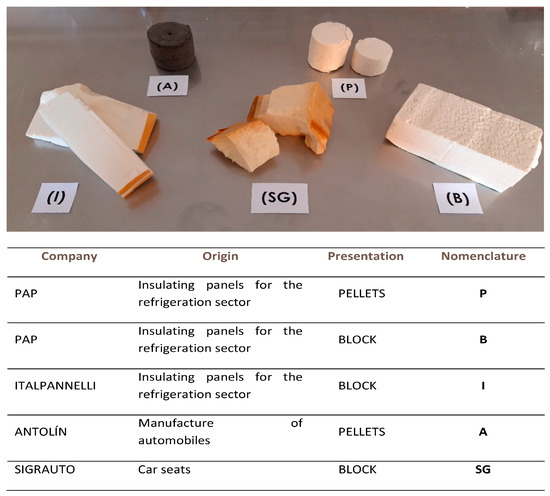
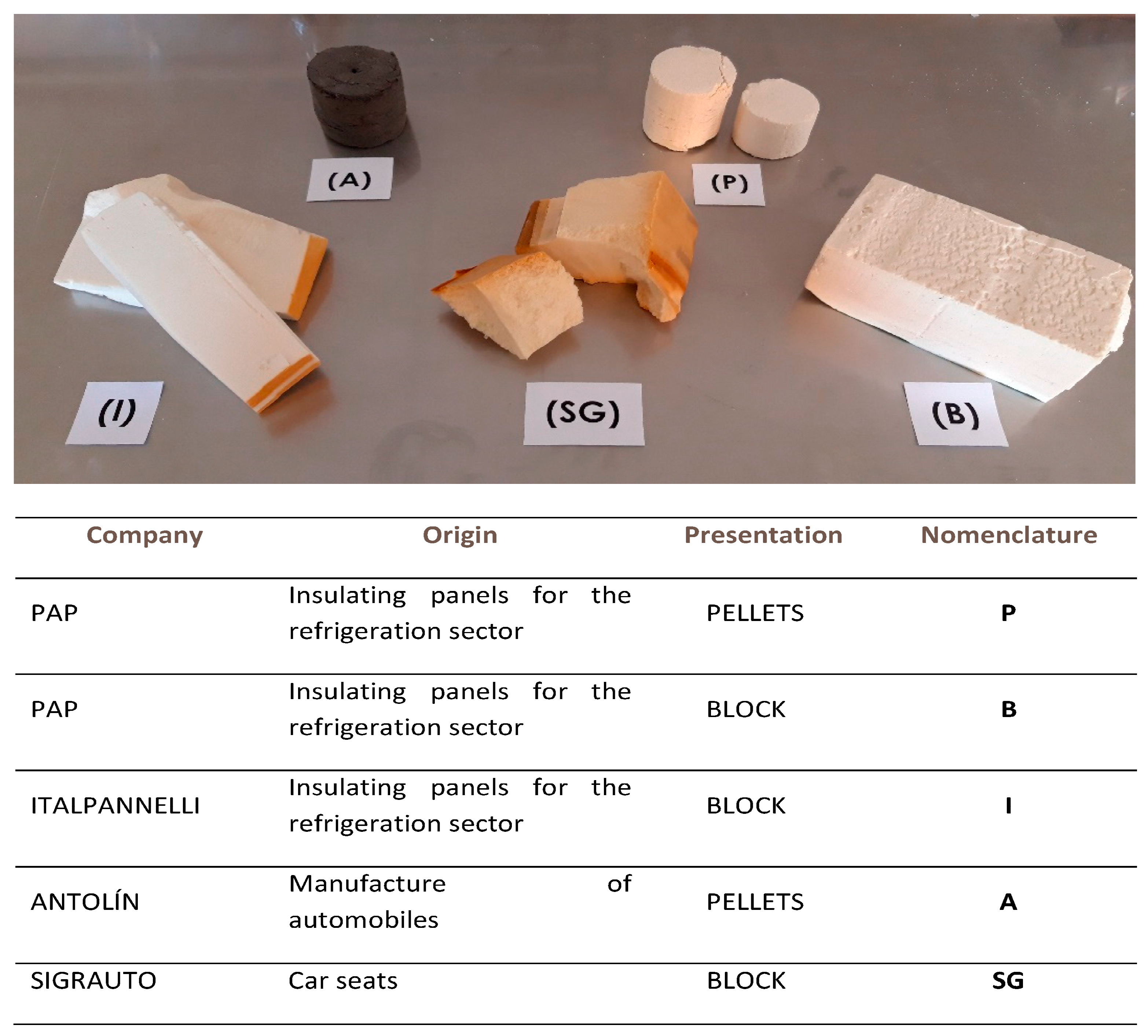
Polyurethane (PU) is widely applied in concrete as a binder or mechanical modifier to improve shrinkage resistance, reduce water absorption, enhance thermal insulation, and strengthen interfacial bonding. Among the various preparation techniques according to its source [18]. Figure 1 shows forms of polyurethane from different industries
Figure 1.
Polyurethane foams from different industries [18].
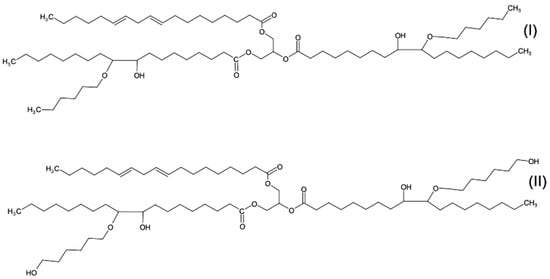
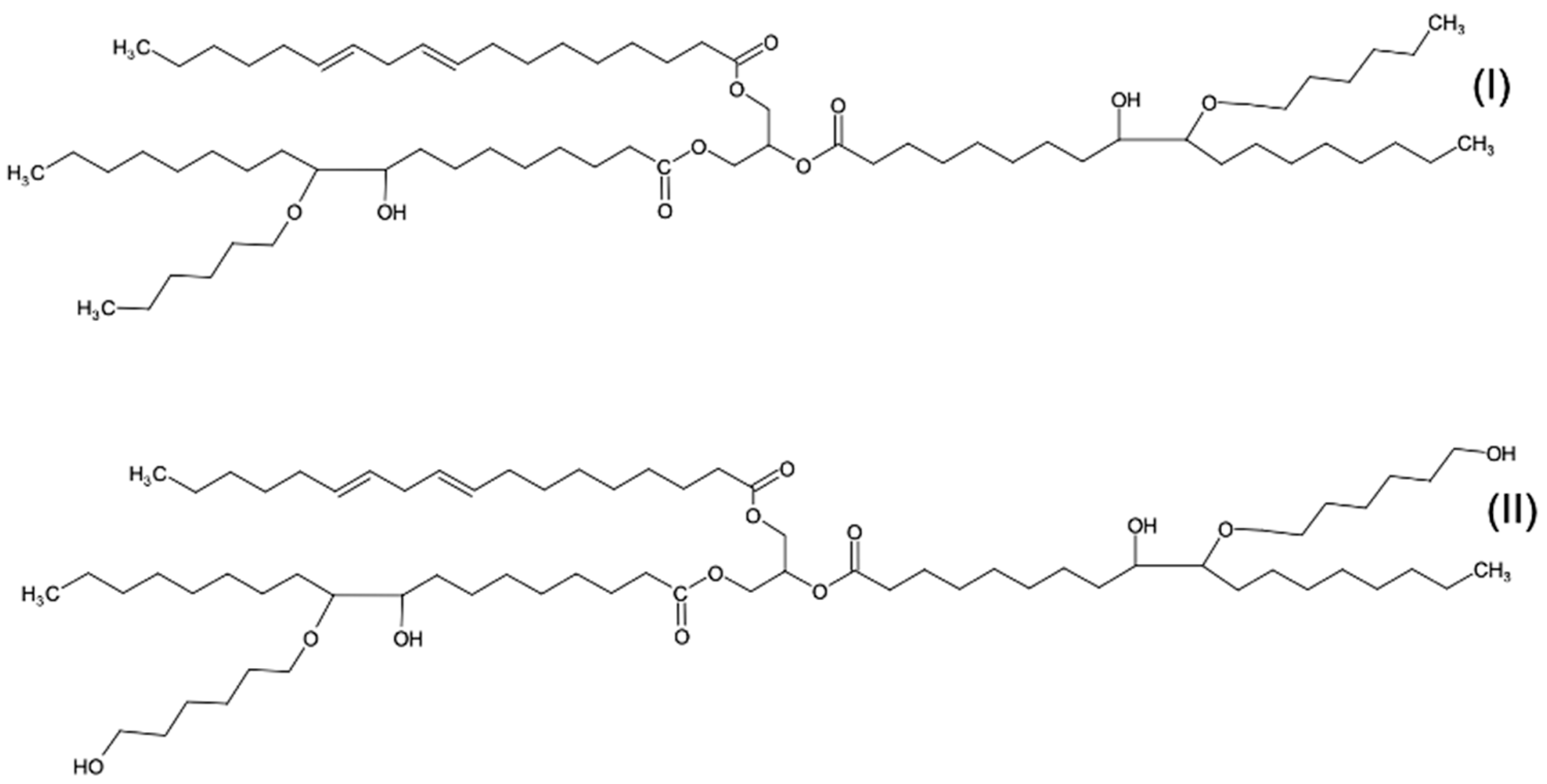
Integrating rigid PU foam waste into concrete is a novel method to increase the sustainability of construction by recycling materials with metric porosity and density. Rigid PUR waste comes from the peeling off of thermal insulation panels. These materials have a low bulk density and high porosity, surpassing 95%. If finely ground and used in concrete mixes, PUR waste could decrease the weight of the composite, thus enhancing the thermal insulation suitable for lightweight non-structural components such as blocks and insulating screeds. Because of this, hydrophobic and compressible PUR waste becomes softer, which influences workability and reduces the compressive strength of the mixture; therefore, optimization of the mix design is required. Despite these drawbacks, its incorporation into concrete reduces disposal and is more aligned with circular economy principles, while contributing to the creation of greener construction composites. The addition of vermiculite has minimal impact on foam reactivity and overall morphology, indicating stable processing behavior with improved structural characteristics, as illustrated in Figure 2 [19]. Which presents the hypothetical chemical structures of the synthesized bio-based polyols, highlighting the variation in molecular configuration and functional groups resulting from different synthesis pathways. These structural characteristics are directly relevant to the current study, as they influence the reactivity, crosslinking density, and overall performance of polyurethane-modified geopolymer systems.
Figure 2.
Hypothetical structure of C.HEX (I) and C.1.6HEX (II) [19].
Mohi-Ud-Din et al. [20] studied the effectiveness of rigid polyurethane foam (PUR) waste as a coarse aggregate replacement material on the mechanical properties of structural lightweight concrete, using 10% silica fume for enhancement. They evaluated the mixtures for density, compressive and flexural strength, modulus of elasticity, shrinkage, thermal conductivity, freeze–thaw durability, and other relevant factors. PUR concrete without coating achieved a density of 1829 kg/m3, along with 19.5 MPa compressive strength, 2.78 MPa flexural strength, and 6.98–12.52 GPa elasticity. Additionally, it reduced shrinkage by 30% and enhanced freeze–thaw resistance by 5%, demonstrating the benefits of PUR in enhancing the thermal and mechanical performance of sustainable concrete. Al-kahtani et al. [21] assessed the impacts of adding bio-based polyurethane (PU) on the properties of ordinary and rapid-hardening Portland cement mortars. Their study found that the inclusion of PU enhanced the flexural strength by 10.62%, reduced water absorption by 67.97%, and mitigated cracking, as measured by the RESRD device, while controlling the PU content at 15%. The autotrophic mortars exhibited reduced shrinkage, improved durability, and cracking control, while maintaining adequate pliability.
Sousa Leão et al. [22] demonstrated that incorporating recycled expanded polystyrene (EPS) as a partial volumetric replacement of sand in rendering mortars (30%) significantly improved workability while maintaining comparable compressive strength, flexural strength, and adhesion to the reference mix; notably, recycled EPS outperformed virgin EPS in mechanical performance, particularly when optimized mixing procedures were applied.
Kytinou et al. [23] reported that extruded polystyrene (XPS) waste can be effectively utilized as a lightweight aggregate in cement-based composites, achieving a balanced performance characterized by reduced density and enhanced thermal insulation, while preserving sufficient mechanical strength for structural and rehabilitation applications, with optimal replacement ratios identified based on performance requirements.
Recent studies have focused on the use of AP as a foaming agent in concrete to improve its sustainability and cost-effectiveness. Liu et al. [24] demonstrated that aluminum dust, which is generated from the recycling of aluminum dross, can substitute for AP in the production of autoclaved aerated concrete (AAC). It was noted that 15.6 g of aluminum dust could produce as much gas as 1 g of AP, yielding AAC with a density of approximately 800 kg/m3 and compressive strength of approximately 2.5 MPa. Bouglada et al. [25] studied a non-autoclaved cellular concrete composite containing APs and mineral additives, including slag and pozzolana. The study showed that the mechanical properties and density of the composites were further improved when 15% of the sand was replaced by slag and 10% by pozzolana and AP. Leiva et al. [26] considered the use of Paval, a waste product of the aluminum industry, as a pore-forming agent in geopolymers. The incorporation of Paval resulted in porous geopolymers with better acoustic properties, thus broadening their application as noise barriers. Anggarini et al. [27] studied the application of synthetic foaming agents together with AP in non-autoclaved aerated concrete. In this study, it was found that AP provided better mechanical characteristics owing to its more uniform pore structure.
Research Significance
The purpose of this study is to create an efficient approach for producing sustainable lightweight high-strength structural foamed geopolymer concrete using waste PU as a partial sand substitute alongside AP as a foaming agent. This study presents a new method for preparing foamed geopolymer concrete (FGC) using discarded rigid polyurethane foam and a measured dose of AP. Substituting part of the sand with PU and the aluminum waste generates gas that not only recycles industry waste but also eases the strain cement production puts on air and water, thus echoing worldwide sustainability goals. By doing so, the approach hopes to create lightweight, low-carbon concrete that does not impart strength, longevity, or efficient use of raw materials.
2. Materials and Mix Proportion
2.1. Materials
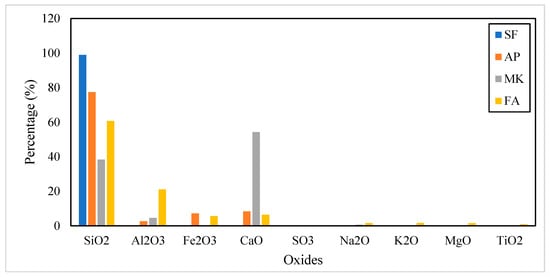
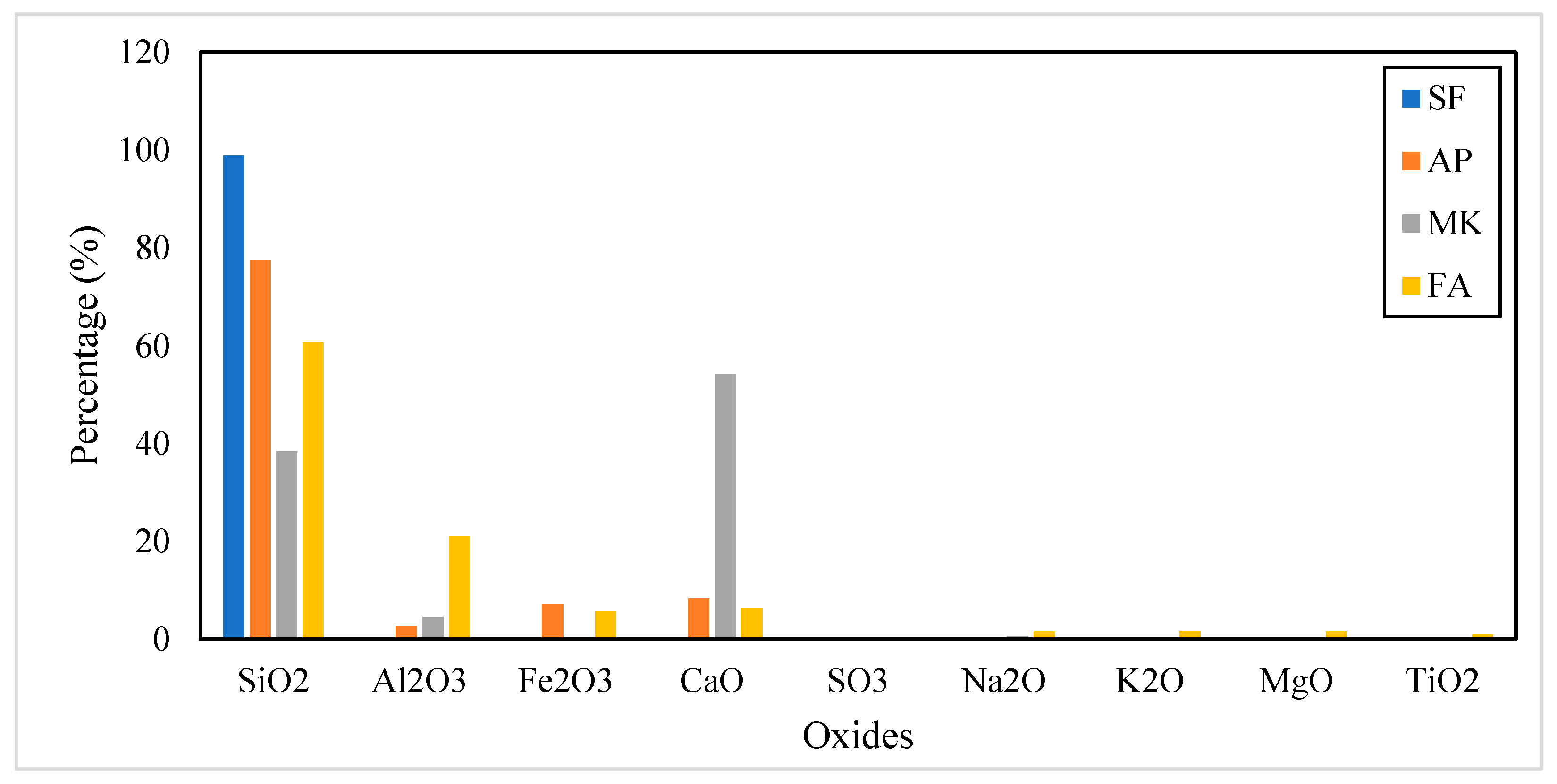
The raw materials used in the production of lightweight geopolymer foam concrete were carefully characterized to ensure optimal performance and compatibility. Figure 3 outlines the chemical oxide composition and key physical properties of fly ash (FA) obtained from sika Egypt, which is a major precursor material. Fine sand (FS), used as a filler material, exhibited a specific gravity of 2.52 and a fineness modulus of 2.29. The water used in the mixes complied with the British Standard Methods of test for water for making concrete BS 3148, thereby ensuring the purity and consistency required for high-performance cementitious materials. For activator solution, sodium silicate solution with a specific density of 1.531 g/cm3 was used. The solution was provided from the Suez region by the Egypt Global Company, with a pH value of 12.7. In this case, the SiO2/Na2O ratio was used along with SiO2 and Na2O percentages of 29.5% and 14.9%, respectively, and A flaky form of Sodium hydroxide was procured from Al-Nasr Intermediate Chemicals Company with a purity of 98–99%. A 14 molar solution was prepared 24 h prior to mixing. Arabic gum was used to improve workability.
Figure 3.
Chemical composition and physical properties of FA, MK, AP, and SF.
2.2. Polyurethane Foam Waste
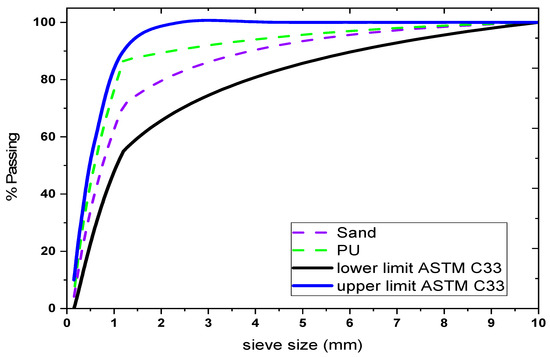
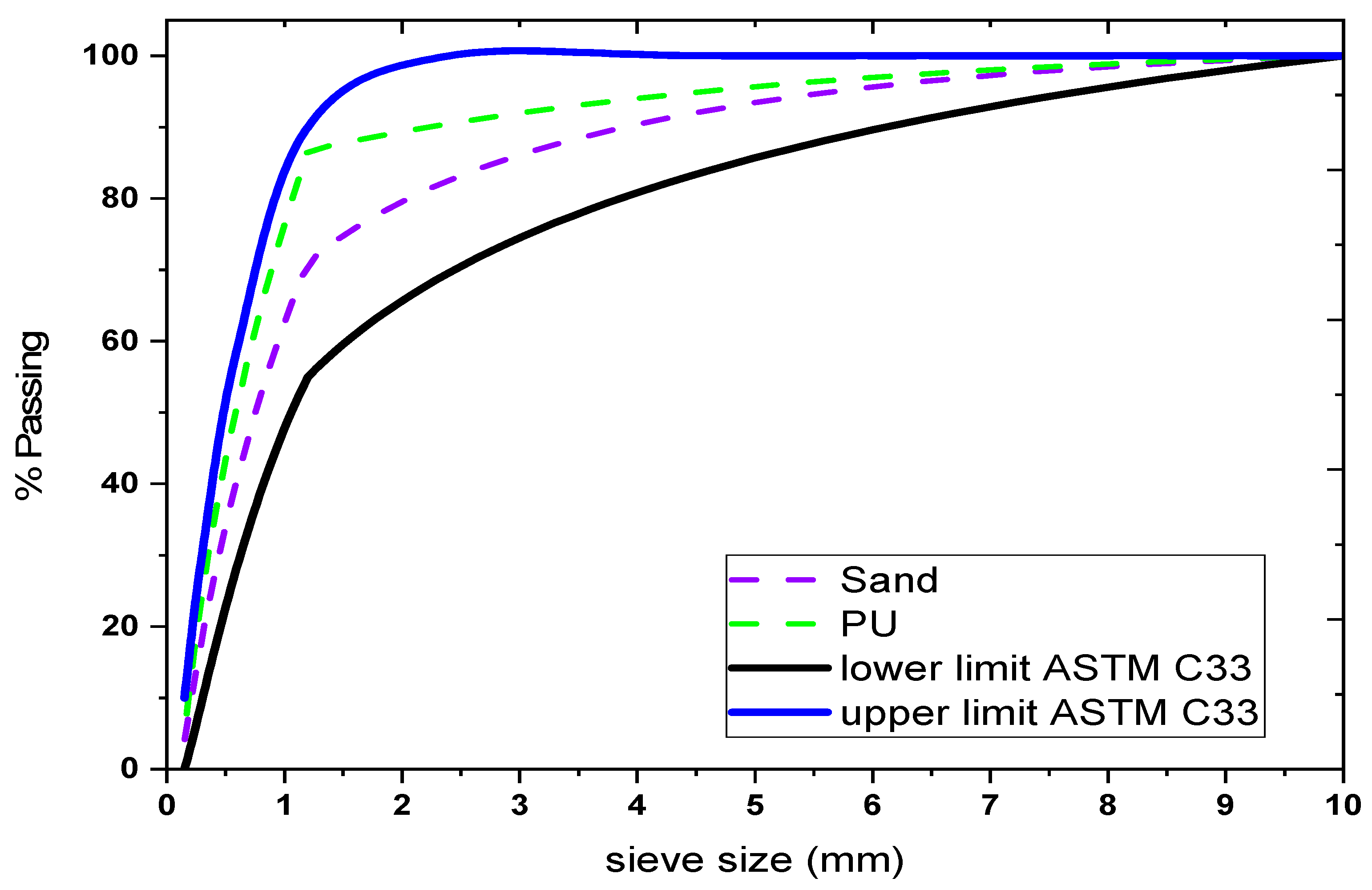
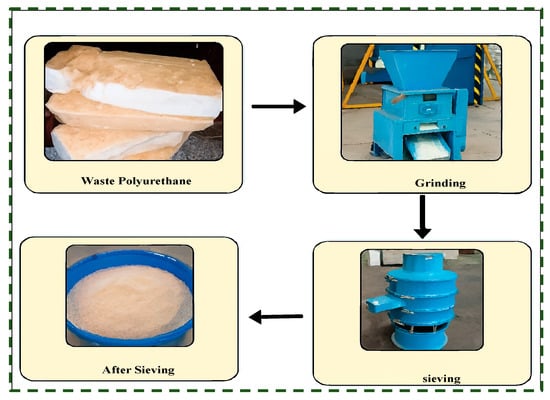
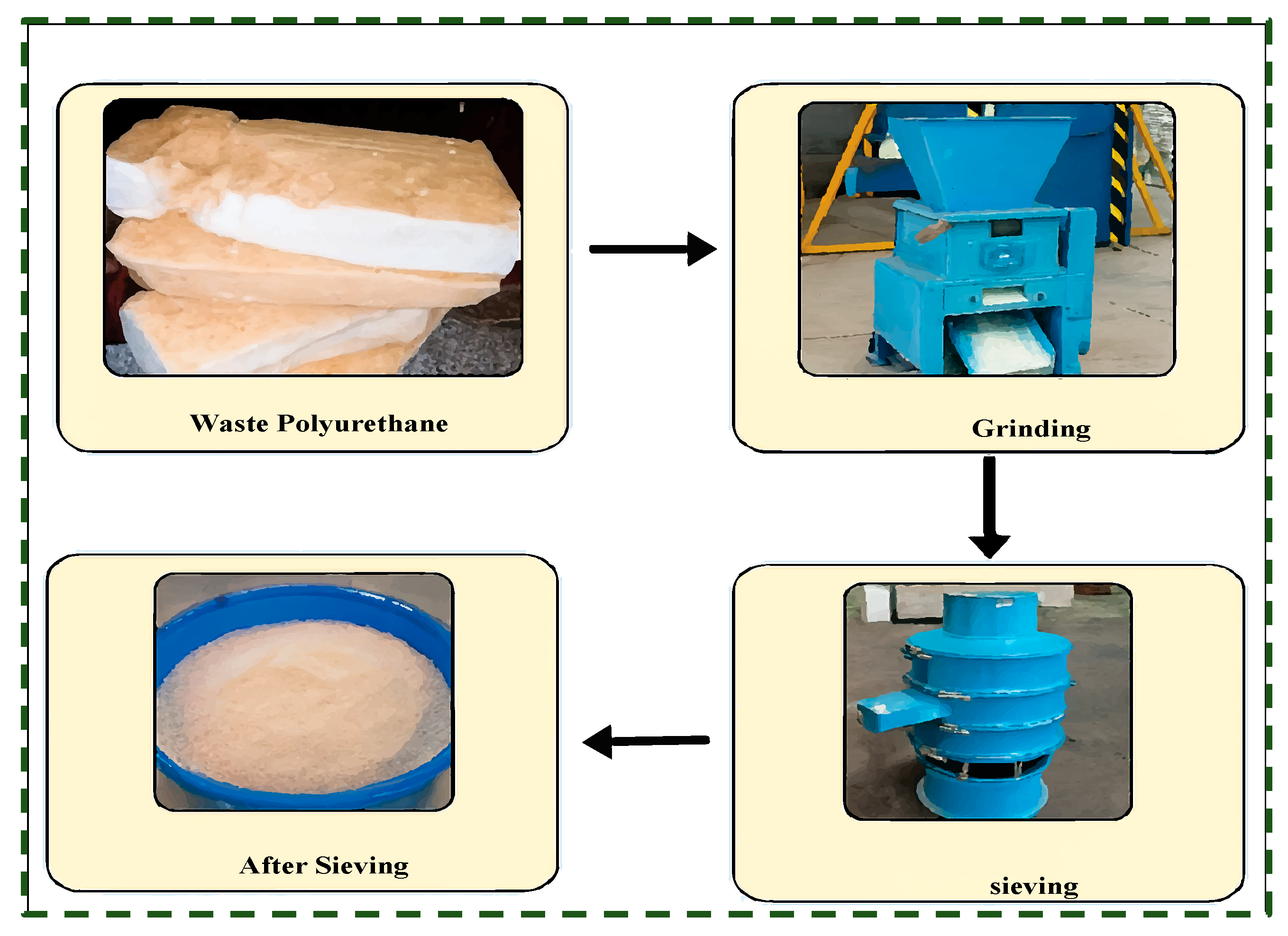
PUR foam waste originates from the insulation panels used in construction. This type of waste originates from a fabrication plant that produces insulating panels and is brought into two bulk containers. One of the containers consisted of coarse waste containing particles larger than 10 mm, whereas the other contained fine waste consisting of a high proportion of particles with diameters less than 10 mm Figure 4. Coarse and fine, not accurate with the ASTM aggregate classifications, were used here to partition the two categories based on the two ranges of particle size. In this paper, we concentrate on the latter, which is the fine fraction. The intermediate material of fine waste is composed of the uniformity and the degree of particle size. From the collected samples, a wide range of particle sizes was observed with high levels of fineness. In this case, a certain degree of refinement was observed, as up to approximately 68% of the total volume was composed of particles smaller than 2 mm. The bulk density (density) relating to the polyurethane foam, ρ PUR foam, was measured experimentally as 45 ± 2 kg/m3, and it was in reasonable agreement with the manufacturer’s value of 40 kg/m3 using three cubic specimens, where 45 ± 2 kg/m3. Based on the material datasheet of the polyurethane foam, it should also be noted that the foam has a porosity n of 98%. The value of 45 kg/m3 is the density of the foam under the dry and unstressed conditions. From the above parameters, the true density of the non-porous solid polyurethane material, ρ PUR, can be calculated with: ρ PUR = ρ PUR foam 1 − n − n·ρair, where ρ PUR is the value of reasonable true density calculated for the solid polyurethane without pores. ρ PUR foam is the measured apparent density of the foam (kg/m3), and ρ air is the density of air (20 degrees Celsius, assuming 1.2 kg/m3). Figure 5 shows the appearance of the PU before and after grinding.
Figure 4.
Grain size distribution of natural sand and polyurethane (PU) particles, in comparison with the lower and upper limits of ASTM C33 [28] standard for fine aggregates.
Figure 5.
Process of preparing PU.
2.3. Experimental Program
2.3.1. Mixing Ratios and Procedures
The mixing ratios of the FGC containing 1% AP powder (AP) by weight, which has a particle size of 150–300 μm, are shown in Table 1. The blend incorporated ash (FA), metakaolin (MK), silica fume (SF), and waste polyurethane (PU) as the primary binder and foaming agents in defined ratios. FA was set to a value of 600 kg/m3, whereas MK was maintained between 240 and 300 kg/m3. The SF was held constant at 60 kg/m3 across all the mixes. To evaluate the impact of PU waste on the pore structure and density, the dosage was varied from 0 to 200 kg/m3. A constant AP dosage of 6 kg/m3 was used in all mixes as a blowing agent. Sand was added in controlled amounts (up to 300 kg/m3) to the selected mixtures to improve their mechanical and rheological performance [29]. A sodium hydroxide solution (SHS) and a sodium silicate solution (SSS) composed the alkaline activator system, used at a 1:1 ratio with a molar ratio of activator-to-binder (AS/MA) of 14 and a solution-to-solid ratio of 2.5. A superplasticizer (SP) was added at a consistent 2% by mass at a ratio of 0.37 to maintain proper workability. This strategy of mixed design aids in the evaluation of the decreased density, optimized pore structure, and improved mechanical performance of lightweight geopolymer foamed concretes with industrial waste materials.
Table 1.
Mix proportions of FGC mixtures.
2.3.2. Mixing Procedures
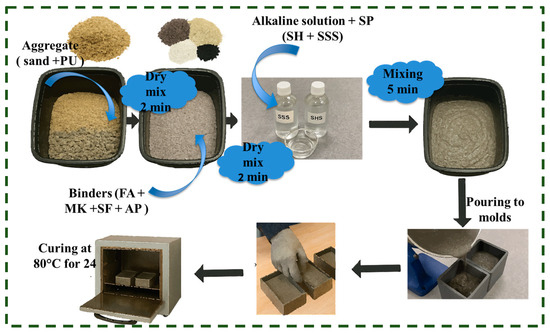
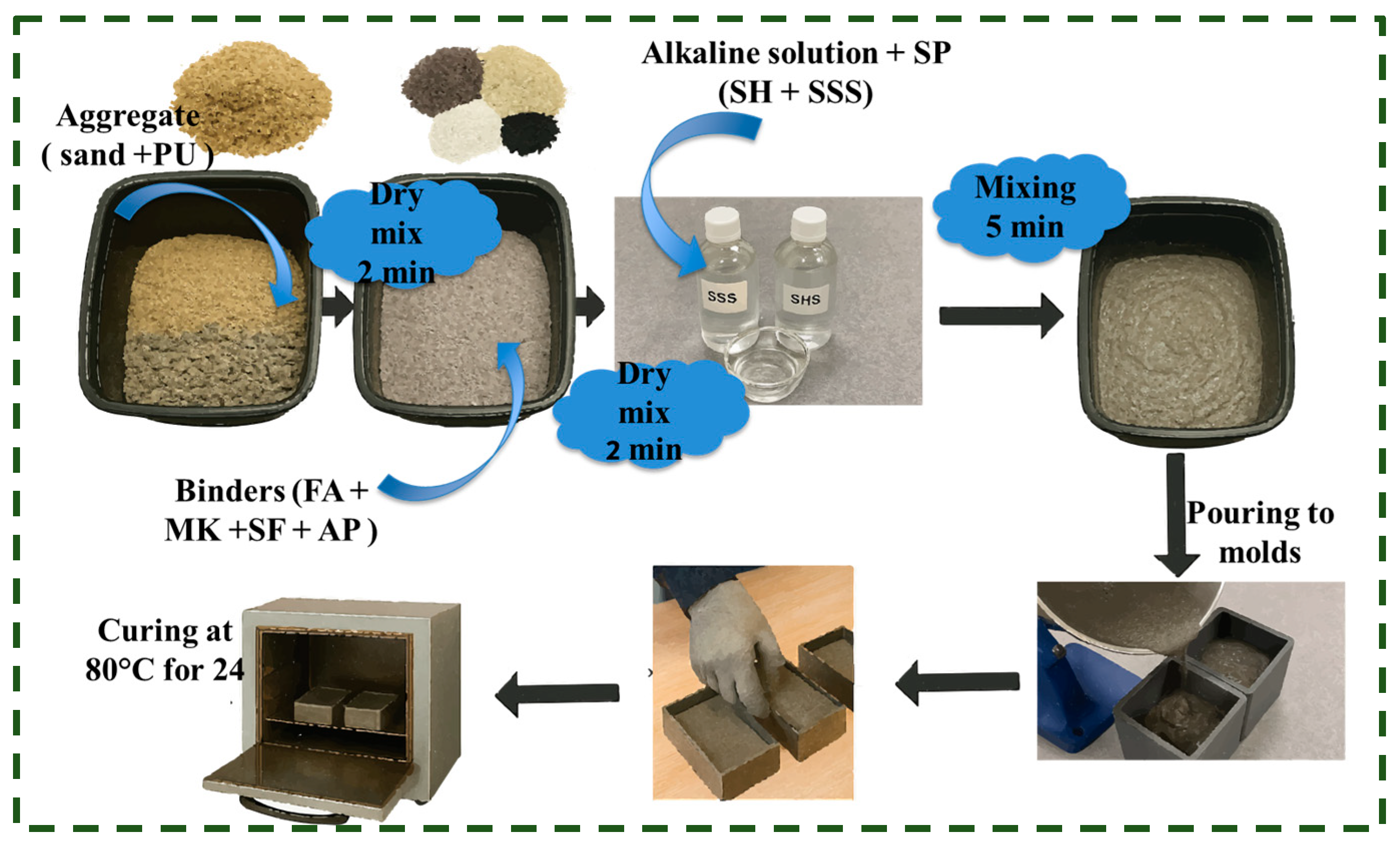
The mixing process was performed using a standard drum-type mixer intended for cement and geopolymer concretes [30]. The mixing steps were as follows: First, all ingredients were carefully weighed. FA, Mk, SF, and AP were added to the dry mixture and mixed for 2 min, after which sand and PU were added and mixed for 2 min. Simultaneously, an alkaline solution was prepared using sodium silicate and sodium hydroxide, and AG was added to the alkaline solution. Next, the lye solution was poured into the blender and mixed for 5 min to ensure that the mixture was completely homogeneous. After achieving homogeneity, the mixture was poured into molds, as shown in Figure 6. The molds were covered with plastic to prevent the evaporation of the alkaline solution. Finally, the samples were heated in an oven at 80 °C for 24 h to ensure the completion of the chemical reactions and the formation of the final mold. Table 1 shows the mixing ratios of the mixtures by weight.
Figure 6.
Mixing procedures for FGC.
3. Experimental Setup
3.1. Fresh-State Properties
To evaluate the fresh-state parameters, the handling and placing characteristics of the foamed concrete were checked. The workability in this case was evaluated using the slump flow test according to ASTM C 230-97 [31], which requires the measurement of the spread diameter to verify that it is within the optimal range of 210–250 mm. The value of the fresh density was derived as per BS 12350-6 [32], which provides a measure of the mass-to-volume ratio of the material before hardening. In addition, the setting time was determined using a Vicat apparatus as per BS EN 196-3 [33] by measuring the needle penetration resistance inside cylindrical samples. These tests provide a relative assessment of the rheological behavior of the material in the fresh state.
3.2. Strength Properties
To evaluate the mechanical properties of the foamed concrete, a suite of tests was conducted in accordance with international standards. The compressive strength was measured using 100 mm cubical molds as per BS 12390-3 [34]. The flexural strength was measured on prismatic specimens 100 × 100 × 500 mm in size, as per BS 12390-5 [35]. The splitting tensile strength was determined for cylindrical specimens 100 mm in diameter and 200 mm in height, as specified in BS 12390-6 [36]. The static modulus of elasticity was evaluated according to ASTM C469 [37]. All values were based on the average of three specimens to ensure the accuracy and reliability of each specimen tested.
3.3. Transport Properties Testing
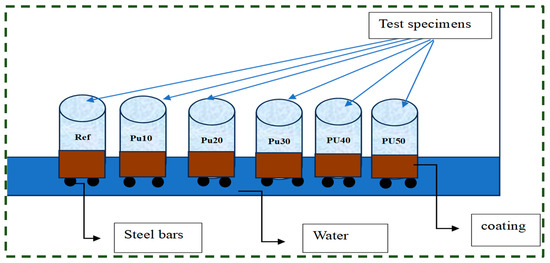
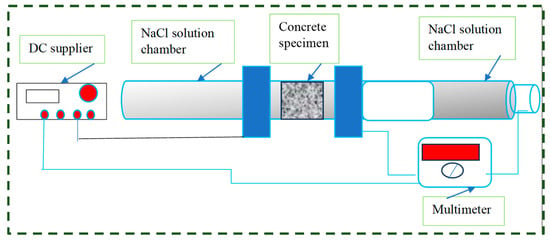
To assess the durability-related transport characteristics of foamed concrete (FC), a set of standardized assessments was performed on the 28th day. Water absorption was carried out using cylindrical samples with a diameter of 50 mm and a height of 100 mm, in accordance with BS 1881-122 [38], as shown in Figure 7. According to the ASTM C1202 [39] standard, we used the chloride ion migration cell developed by Djerbi et al. [40] by placing the specimen between two chambers with NaCl (0.513 mol/L), KOH (0.083 mol/L), and NaOH (0.025 mol/L), as shown in Figure 8. All values presented in this report are the averages of three tests conducted on separate specimens for reproducibility and consistent precision in measuring experimental variance across all tests.
Figure 7.
Schematic layout of the experimental setup for sorptivity for FGC.
Figure 8.
Chloride ion migration cell.
3.4. Pore Structure
Both qualitative and quantitative methods were used to study the characteristics of the pore structure of the foamed concrete. Scanning Electron Microscopy (SEM) was performed according to ISO 16700 using a Quanta FEG 650 electron microscope. Sample blocks with dimensions of 10 × 10 × 10 mm were prepared and observed at a magnification of 120× to assess the surface topography and pore space pore morphology. We determined the pore size and pore distribution, which in turn determine the total porosity and pore interconnectivity of the material. These complementary techniques provide a complete perspective on the microstructural features that affect the performance characteristics of foamed concrete. To perform texture-based feature extraction on the SEM images using the GLCM, the images were first preprocessed and converted to grayscale. For every image, GLCMs were calculated in various directions and distances, and statistical descriptors such as mean and standard deviation were extracted to describe the texture patterns, voids, and cracks of the hydration products. These descriptors were used as input variables to train the supervised Random Forest regression model. The model was designed to predict the compressive strength, density, porosity, and water absorption of multiple targets based on the features derived from the images. Cross-validation was performed to ensure the robustness and generalizability of the model.
4. Results and Discussion
4.1. Fresh-State Properties Results
4.1.1. Slump Flow
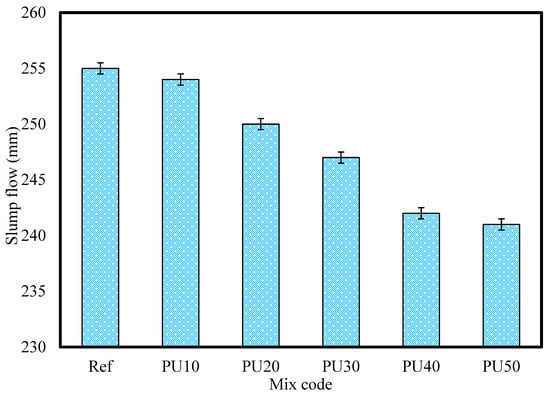
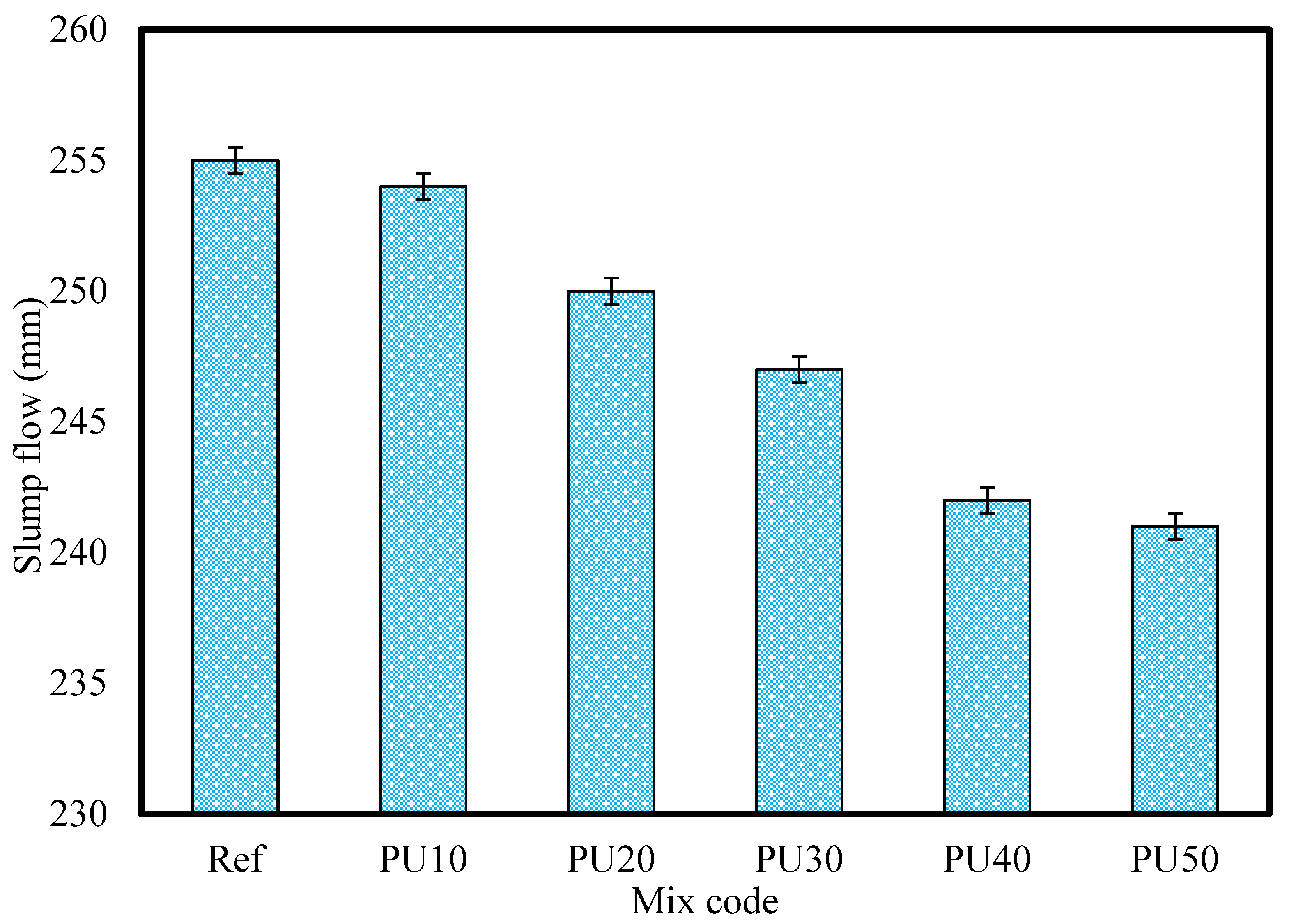
Figure 9 shows the slump flow results of the foamed geopolymer concrete containing AP as a foaming agent, PU as a partial sand replacement, and AG as a superplasticizer. The results demonstrate that the reference mix, which did not contain PU waste, had a slump flow of 255 mm. However, when the PU replacement reached 10–50%, the slump flow further decreased to 241 mm. The reductions in the slump flow were 0.39%, 1.96%, 3.14%, 5.10%, and 5.49% for PU10, PU20, PU30, PU40, and PU50, respectively, compared with the reference. This continuous decrease demonstrated the dominant effect of PU waste on the rheological properties of the geopolymer mixture in the fresh state [41]. The inclusion of PU waste may disrupt this process in two ways: First, the hydrophobic and polymeric characteristics of PU particles limit the water accessibility for the reaction, hinder ion mobility in the activating solution, and increase the internal resistance to flow. Second, replacing dense angular sand with irregular low-density PU particles increases the surface area for air entrapment and decreases the viscosity of the fresh mix, thereby increasing the slump flow [42]. Additionally, the AP contributes to internal foaming by gas eruption under alkaline conditions, increasing flow homogeneity, weakening structural integrity, and decreasing porosity, exacerbating the rheology of the mix [25].
Figure 9.
Slump flow of different FGC mixtures.
4.1.2. Initial and Final Setting Times
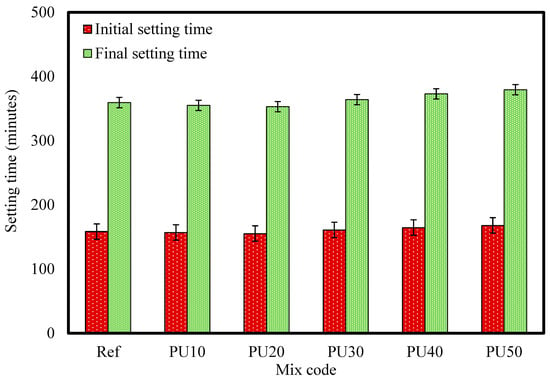
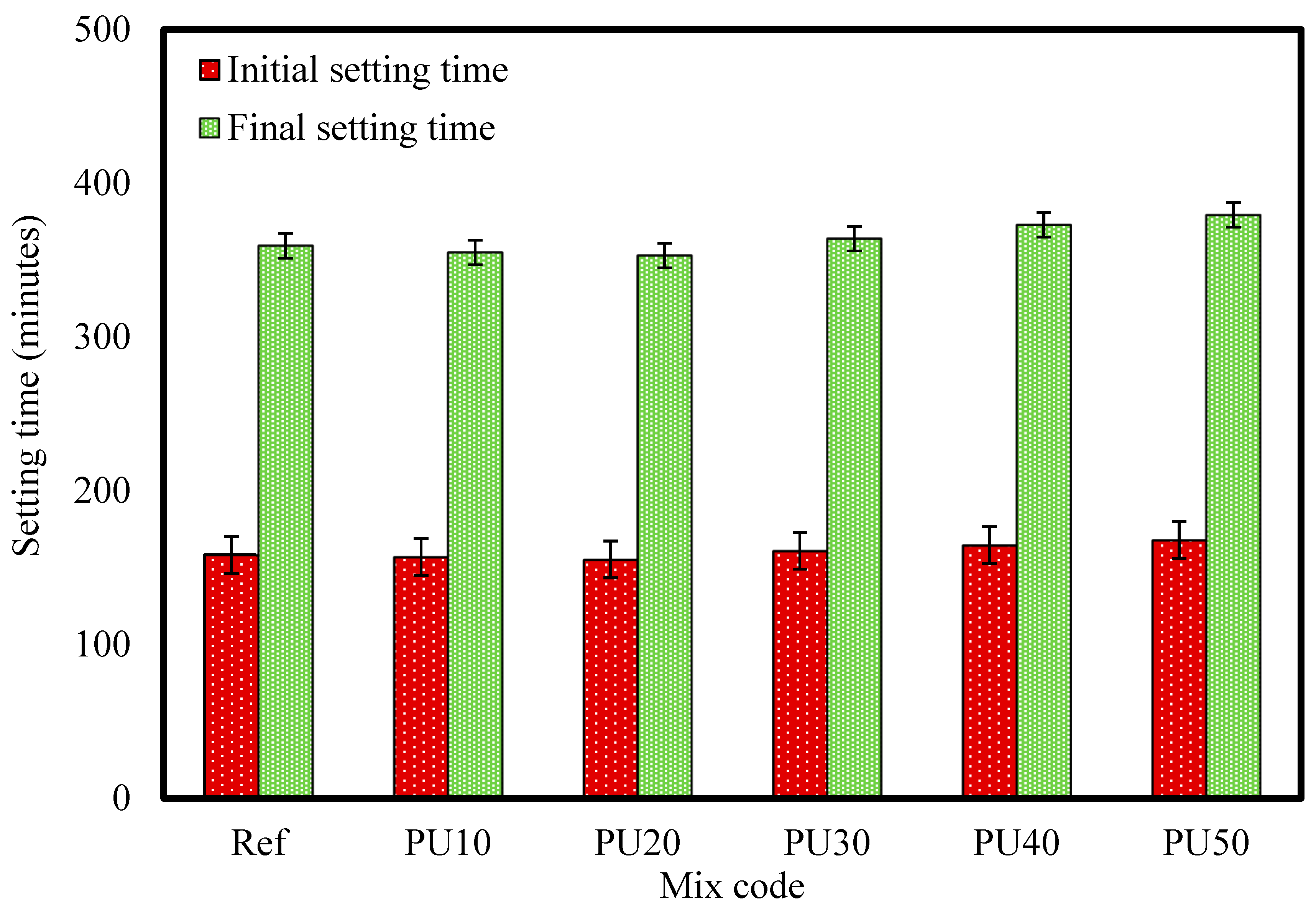
Figure 10 presents the initial and final setting times of foamed geopolymer concrete incorporating AP and PU as partial sand replacements. The reference mix exhibited an initial setting time of 158 min and a final setting time of 359 min. With increasing PU content from 10% to 50%, the initial setting time ranged from 157 to 168 min, while the final setting time slightly increased to a maximum of 379 min. The corresponding increases of 6.3% and 5.6% for the initial and final setting times, respectively, are relatively small and fall within the range of experimental variability. Accordingly, these results indicate that the variation in PU content has no significant influence on the setting behavior. The setting process is primarily governed by the geopolymer binder system, particularly the dissolution of aluminosilicate precursors (FA, MK, and SF) in the alkaline activator (14 M NaOH), followed by the formation of N-A-S-H or C-A-S-H gels [43]. While hydrogen gas generation from AP contributes to pore formation and may slightly influence early-stage kinetics, its overall effect on setting time remains limited [24]. Furthermore, PU waste acts as an inert filler with minimal chemical interaction with the geopolymer matrix. Therefore, it does not significantly affect the geopolymerization process, and any minor variations observed in setting times are attributed to normal experimental fluctuations rather than a systematic effect of aggregate replacement [44], particularly at high replacement levels. The increased setting time can also be due to the altered thermal conductivity and internal compaction of the material, which has low thermal conductivity and diminishes the local heat buildup, which is critical for accelerating geopolymer reactions and time delay [42]. Simultaneously, the cobalt produced by the AP foaming effect, along with PU replacement, also limits the structural rigidity of the system. As a result of the combined chemical retardation from aluminum-induced foaming and the physical hindrance of reaction pathways due to the inert, low-density, non-polar PU waste, the extension in both the initial and final setting times was observed to increase with the PU waste content. The results from this study emphasize the importance of balancing the accessibility of the activator with the foaming efficiency in geopolymers containing lightweight polymeric fillers.
Figure 10.
Setting time of different FGC mixtures.
4.1.3. Plastic, Demold, and Oven-Dried Density
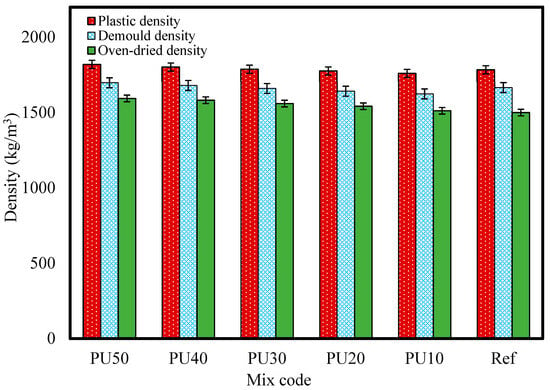
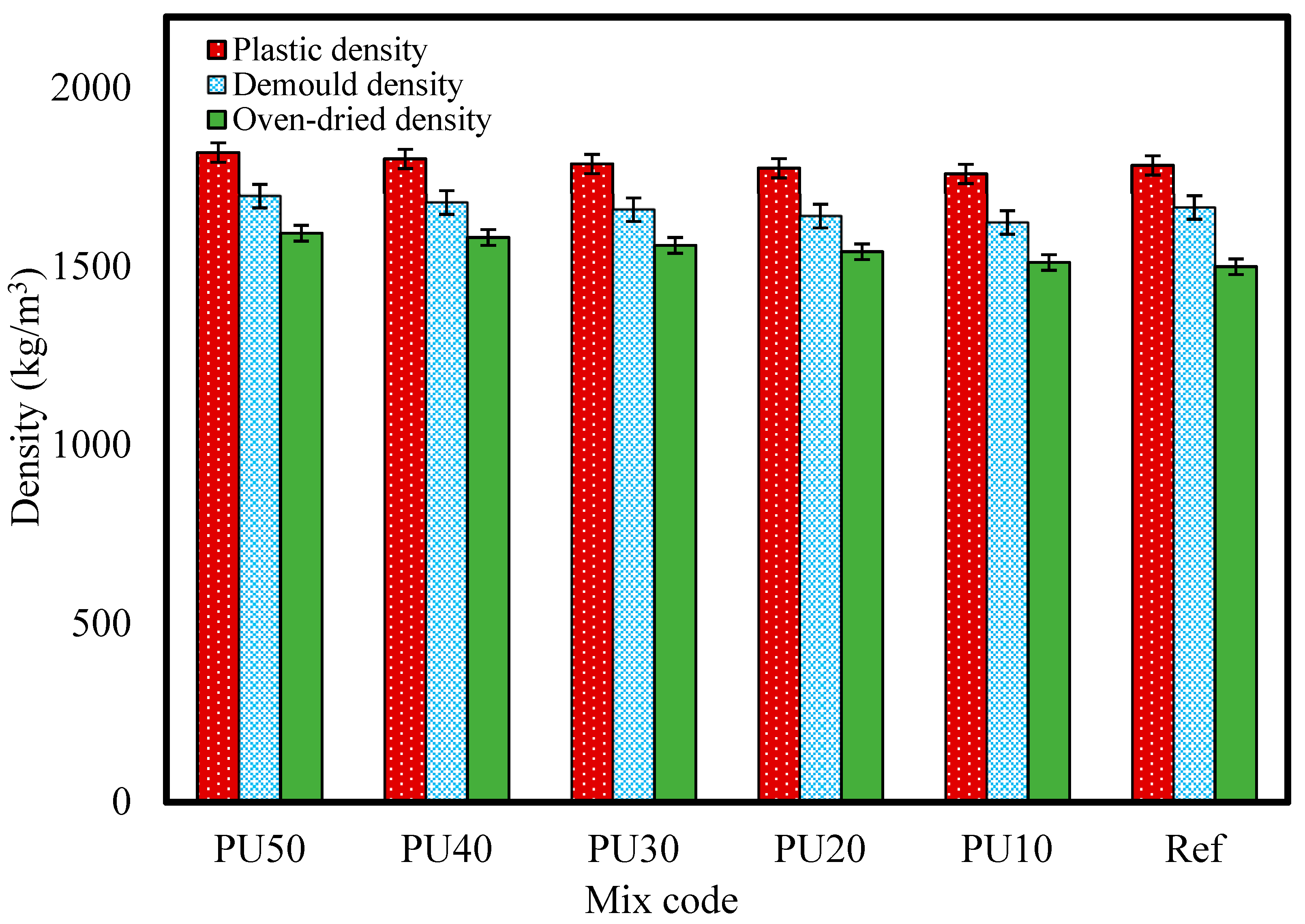
Figure 11 shows the density of 6 mixes with different dosages of PU. The effect of replacing sand with PU on the density of geopolymer foamed concrete was assessed based on plastic, demolding, and oven-drying density measurements. In comparison to the reference mix that was oven dried, demoulded, and had plastic densities of 1500, 1606, and 1744 kg/m3, respectively, all modified mixes showed progressive increases across the three density states as PU replacement increased from 10% to 50%. Furthermore, the increase in PU replacement from 10% to 50% resulted in increases of 0.8%, 2.8%, 4.0%, 5.5%, and 6.3% for oven-dried density and 0.9%, 1.8%, 2.5%, 3.3%, and 4.4% for plastic density, respectively. This is in contrast to the typical behavior of lightweight concrete and indicates the prevalence of competing influences. The partial replacement of sand with PU did not result in a reduction in the density, even though it was a lightweight material. First, the addition of AP generates gas evolution via its reaction with the alkaline medium, creating a cellular matrix [45]. At the same time, however, this is countered by the mix’s increase in viscosity and cohesion discussed earlier, reducing the amount of air voids that can be trapped as the PU content increases. The second reason could be that the elastic recovery and low water absorption of the PU particles can lead to an increased degree of compaction during mixing, decreased bleeding, and improved matrix packing. In addition, PU particles can act as microscale fillers based on their irregular morphology, thus contributing to the solid content within a particular volume and offsetting the density reduction that is expected to arise from their low specific gravity [46]. This is supported by the as-demoulded density values, which showed increases of up to 5.7% at PU50, indicating better internal consolidation during the curing phase. The chemical inertness of PU waste does not largely impact binder gel formation; therefore, the geopolymerization reaction, caused by the activation of metakaolin and FA, still proceeds normally. Physically, however, PU may restrict the expansion of the gel, leading to a denser hardened matrix as pores form. This physical effect is believed to explain the observed trends in oven-dried density increasing with increasing PU content. Ultimately, the increased PU substitution reveals the complexity of interactions, whereby hydrophobicity, compaction, and microstructure densification dominate the behavior of strength reduction normally expected from foamed or polymer-modified concretes.
Figure 11.
Plastic, demoulded and oven-dried density of different FGC mixtures.
4.2. Mechanical Properties
Foamed geopolymer concrete blended with waste AP and PU waste as a partial sand substitution was tested for compressive strength, splitting tensile strength and flexural strength at curing ages of 7, 14, 28, 56, and 180 days in addition to modulus of elasticity.
4.2.1. Compressive Strength
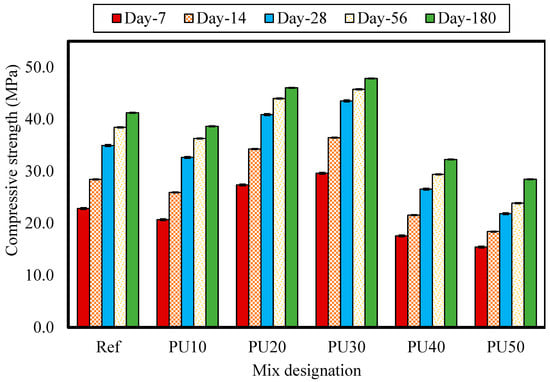
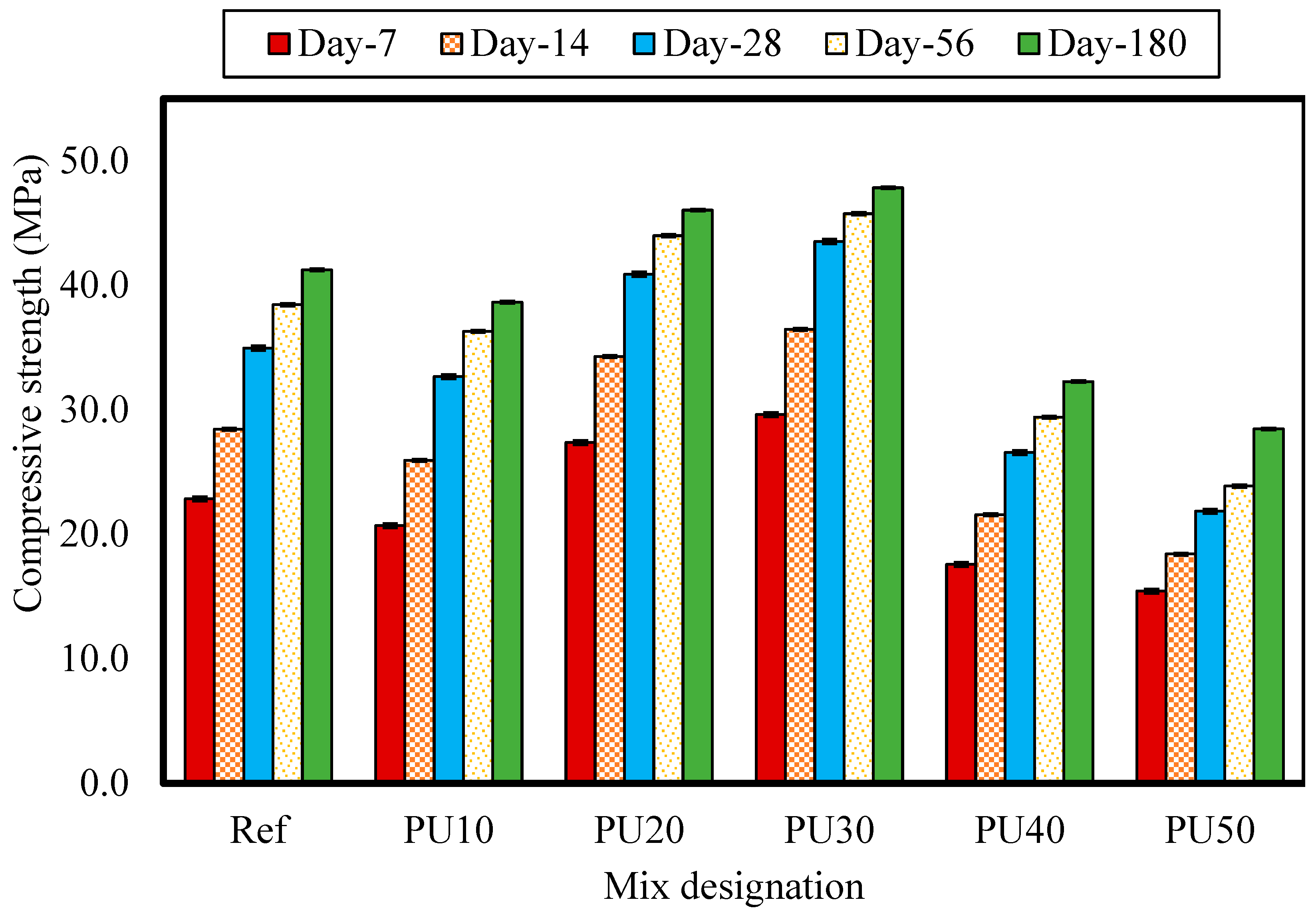
Figure 12 shows the compressive strength results for FGC at 7, 14, 28, 56, and 180 days. At 7 days, the early compressive strength captures the progression of geopolymerization and assembly of the first primary aluminosilicate skeletal crosslinked network. The reference mix achieved 22.84 Mpa, while the PU-modified mixes varied in performance based on PU content. PU20 and PU30 outperformed the reference, achieving 27.37 and 29.62 MPa, respectively, which is an increase of 19.8% and 29.7%. These increases indicate that a moderate PU content is beneficial because of the enhanced ionic mobility during early geopolymer reactions [47]. In contrast, high PU content led to severe strength losses for PU40 and PU50, where PU50 only reached 15.45 MPa, which was 32.3% lower than the reference. This is attributed to the excessive non-reactive PU particles, which inhibit gelatinous network formation and create too many air voids, exacerbated by the release of hydrogen gas from the AP [25].
Figure 12.
Compressive strength of different FGC mixtures.
At 14 days, geopolymer concretes experienced a significant strength improvement rather quickly as polymeric gel structures matured and densified, which usually occurred after approximately two weeks. For the reference mix, it reached 28.45 MPa, and PU30 retained the highest value of 36.48 MPa, with a 28.2% improvement. PU20 closely followed the top performer at 32.49 MPa, indicating that moderate PU replacement continues to foster advantageous microstructural development. On the other hand, PU40 and PU50 lagged behind the reference, sitting at 21.58 MPa and 18.41 MPa, respectively, demonstrating that excessive PU is detrimental by disrupting binder continuity and creating an unstable pore network [45].
At 28 days, which serves as the primary indicator for most structural concretes. The reference mix reached 34.97 MPa, while PU20 and PU30 notably exceeded this value, achieving 40.89 MPa and 42.56 MPa, respectively. This corresponds to increases of 16.9% and 21.7%, respectively. These improvements resulted from continuous geopolymerization and densification of the N-A-S-H/C-A-S-H gels owing to the ongoing alkaline activation of MK and FA [47,48]. Modest amounts of PU waste supplementation bolster this process by functioning as a micro filler that assists in sustaining internal moisture [49], which is essential for prolonged reaction kinetics. In the meantime, PU40 and PU50 diverged further, only producing 26.59 MPa and 21.86 MPa, respectively. Therefore, although AP inclusion lightens the overall system, the balance of reactive to inert phases limits the effectiveness observed by the 28-day performance [44].
Geopolymer concretes are expected to show secondary reaction phases and continuous gel maturation by 56 days, which is also a secondary reaction phase. The reference mix gained compressive strength of 38.45 MPa, while PU30 further improved to 45.76 MPa, which represents an approximate 18.9% improvement in strength. The PU30 geopolymer continues to explain the steady strength gain, indicating that it provides the best compromise between the internal porosity, mechanical interlock, and enduring geopolymer sustenance development [50]. Additionally, PU20 retained strong support at 39.63 MPa. A prolonged curing period increases the metakaolin reaction rate along with silica fume, which is likely sustained by enhanced internal curing and metakaolin reactivity. PU40 and PU50 incrementally improved in compressive strength, achieving values of 32.42 MPa and 28.47 MPa, respectively, but still significantly lagged behind the control. At these higher replacement levels, the pores formed by hydrogen gas and entrapped air occupy the center stage within the matrix, reducing the stiffness and continuity of the hardened binder phase [51]. Thus, the 56-day strength measurement serves to demonstrate the beneficial influence exerted by PU in moderation within the hydration kinetics and long-term densification, albeit subdued to an optimum point.
At 180 days, the compressive strength of the PU30 specimens is 47.24, indicating a 14.6% increase over the reference mix’s 41.24 MPa. With 46.04 MPa, PU20 followed and surpassed the reference by 11.6%, confirming the sustained reactivity and densification afforded by the optimal PU content. These results illustrate the hypothesis that internal curing resulting from hydrophobic yet structurally confined PU particles enables prolonged polycondensation and gel compaction beyond the 28-day mark [7]. On the other hand, PU40 and PU50 did not perform as well, reaching only 32.27 MPa and 28.42 MPa, respectively, which is 31.1% less than the reference.
4.2.2. Flexural Strength
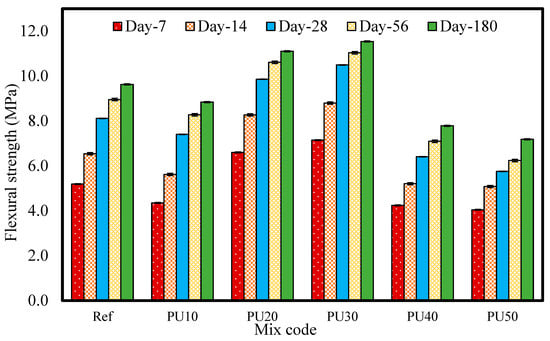
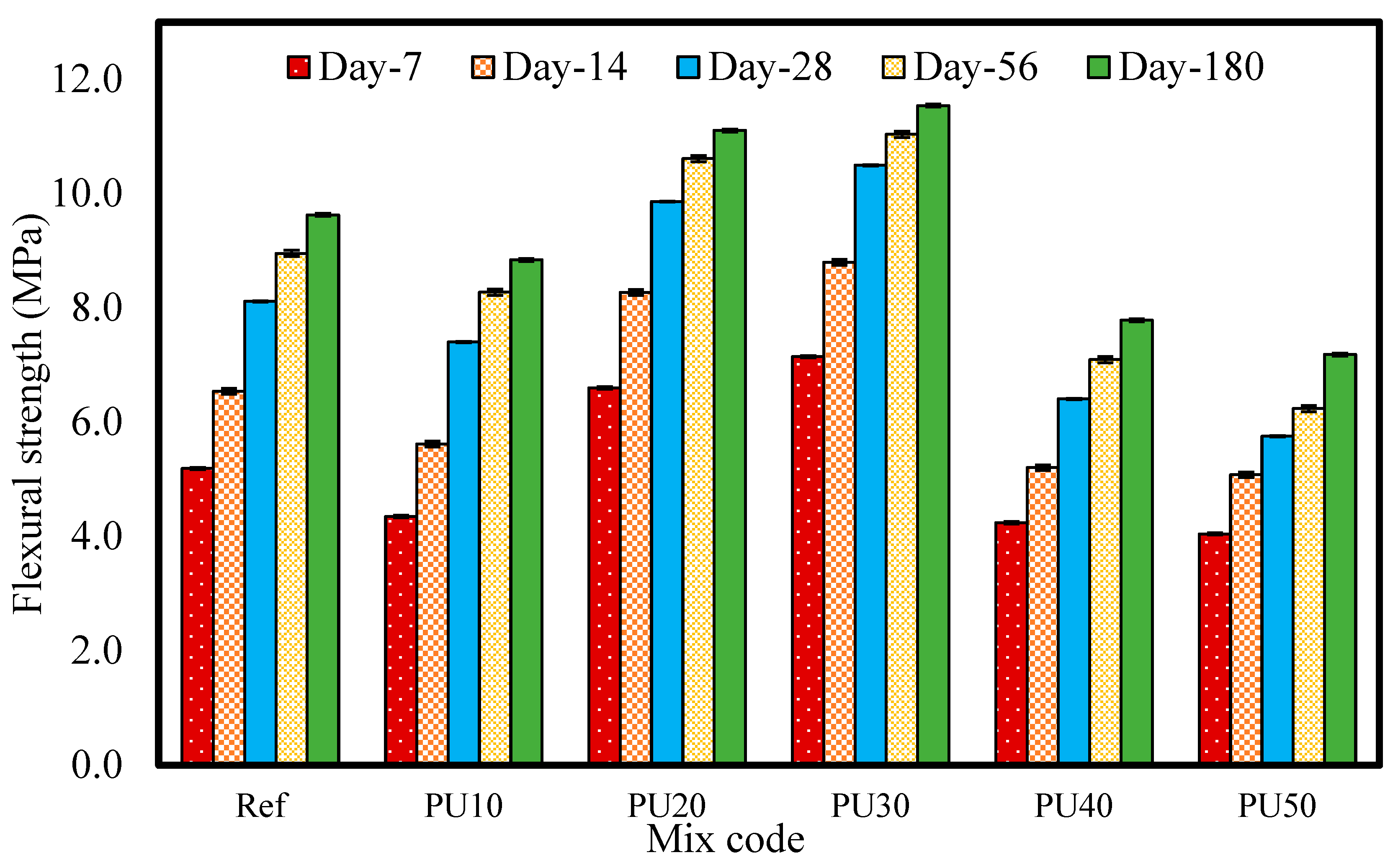
Figure 13 demonstrates the flexural strength results of FGC at 7, 14, 28, 56, and 180 days. At 7 days, the reference mix achieved a flexural strength value of 5.19 MPa, which is indicative of the initial formation of geopolymer binder networks. The performance of the PU-modified mixes varied with the replacement ratio. PU30 exhibited the highest flexural strength at 7.15 MPa, which indicates an improvement of approximately 37.7% over the reference value, whereas PU20 was closely followed at 6.60 MPa. Heah et al. [52] noted that the early age flexural strength of geopolymer systems is enhanced by crack-bridging mechanisms distributed through fine, uniform filler stress pathways. PU50, however, suffered a drastic drop to 3.85 MPa (25.8% lower than Ref), clearly demonstrating the disruptive effect of binder skeleton stores at higher PU levels due to excessive porosity and weak matrix continuity.
Figure 13.
Flexural strength of different FGC mixtures.
At 14 days, the continued geopolymerization, in addition to curing to further densify the matrix, increased the flexural strength. The reference mix achieved a strength of 6.54 MPa, while PU30 and PU20 experienced notable gains at 8.80 and 8.27 MPa, respectively. This represents an increase of 34.6% and 26.5%, respectively, suggesting that moderate PU content continues to improve the matrix toughness as well as the resistance to cracking. PU30’s advantage aligns with the work of Deb et al. [53], who noted that hybrid compositions of geopolymers with fillers improved flexural performance owing to energy absorption, which aided in post-crack recovery. PU10 also showed improvement over the control, whereas PU40 and PU50 stayed lower at 6.05 MPa and 5.75 MPa, respectively, again showing the detrimental impact of excessive PU-induced voids and weak particle bonding on load transfer during bending stress.
On day 28, the control mix achieved 8.11 MPa while PU30 once again pulled ahead, providing 10.50 MPa, which is a 29.5% improvement, confirming the effectiveness of this replacement level. PU20 followed next at 9.86 MPa. Both of these values are significantly greater than those of conventional foamed concretes, which generally range between 5 and 8 MPa at 28 days. The increased flexural performance is likely a result of the synergetic effects formed from the geopolymer gel and cross-linked polymer foam, which increase the energy dissipation. These observations are in agreement with the results reported by Zhao et al. [54], who found that polygon-modified alkali-activated systems had diminished stress concentration and, therefore, greater flexural strength. In contrast, PU40 and PU50 showed low flexural strength development (7.42 MPa and 6.24 MPa) which corroborates the hypothesis that elevated PU levels impair the matrix’s capacity to tensile crack suture and force the cracks to undergo negative pressure tensile construction bonding.
At day 56, the control mix achieved 8.95 MPa, while PU30’s maximum reached 11.04 MPa, indicating a 23.4% increase, which shows that matrix strengthening continued to occur because of further polycondensation along with void refinement. PU20 also performed well at 10.51 MPa. PU10 was similar to the control, while PU40 and PU50 lagged significantly (7.00 MPa and 7.19 MPa, respectively), confirming the high PU dosage’s adverse impact on long-term integration of the matrix. These results align with the findings of Soutsos et al. [55] regarding the optimum particle gradation and pore structure control for preserving lightweight geopolymer bulk bending strength foams [56]. The reference concrete achieved a strength of 9.63 MPa, whereas PU30 attained a maximum value of 11.54 MPa, which indicates a 19.9% improvement and sustained strength gain. PU20 followed closely at 11.10 MPa, indicating that both mixes accommodated further internal structural strengthening. The elevated strength at this age is likely due to the enhanced pore structure, gel-phase densification, and ongoing resistance to cracking, which are all sustaining conditions reported by Nath and Sarker [57] for long-term flexural durability in polymer-modified geopolymer systems. PU10 had stabilized at 8.84 MPa (slightly below Ref) while PU40 and PU50 reported 7.78 MPa and 7.19 MPa, respectively, confirming their inadequate structural performance due to excessive entrained air and low stiffness contribution. These findings demonstrate the importance of the proportion of PU added to achieve light weight and bending resistance in foamed concretes.
4.2.3. Splitting Tensile Strength
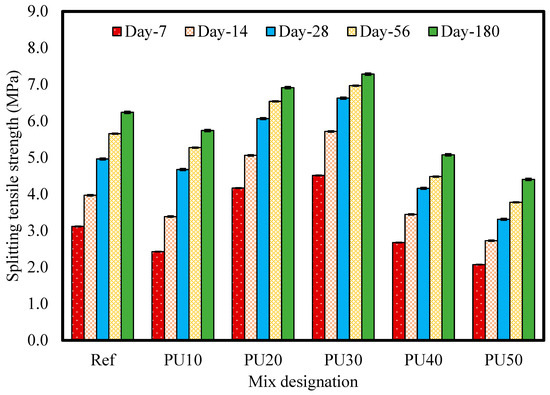
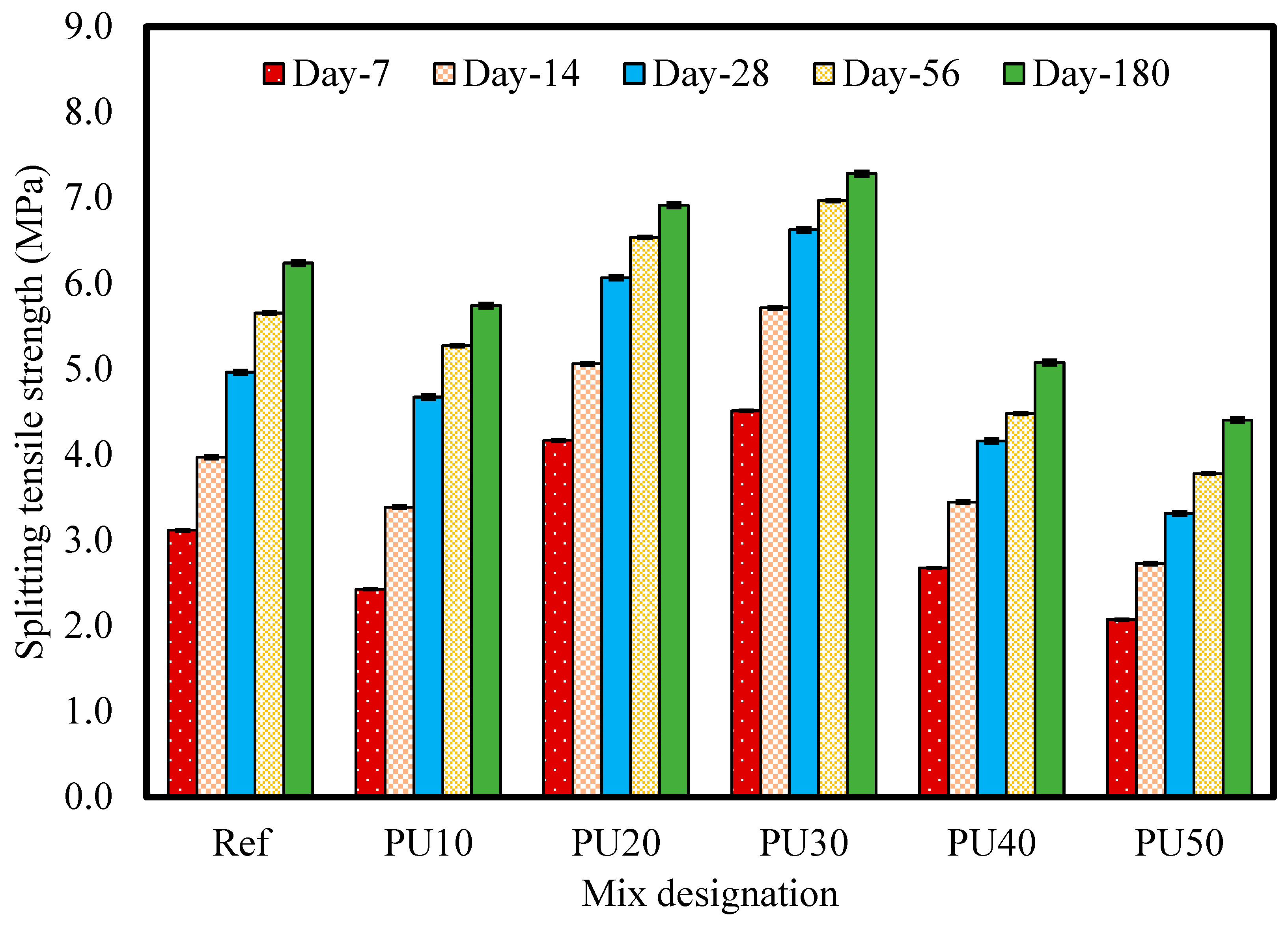
Figure 14 explains the results of the splitting tensile strength. The reference mix reached a splitting tensile strength of 3.12 MPa at 7 d, indicating the initial formation of geopolymer gels and some degree of mechanical interlocking. The performance of the PU-modified mixes varied, with PU30 achieving 4.51 MPa, which represents a 44.5% increase over the reference. PU20 also surpassed the control figure, achieving 4.17 MPa, indicating that the microstructural connectivity was enhanced with moderate PU waste addition. Nath and Sarker [57] also reported a greater early geopolymer tensile strength owing to fine polymeric fillers, resulting from improved stress distribution and advanced crack-bridging mechanisms. On the other hand, PU50 dropped significantly to 2.07 MPa (~33.6% lower than Ref) due to increased porosity and weak interfacial transition zones caused by excess PU and gas from the AP. These results support the idea that moderate levels of PU enhance the early tensile strength, while excessive amounts worsen cohesion.
Figure 14.
Splitting tensile strength results for FGC.
After 14 days, the splitting tensile strength improvement was uniform across all mixes because geopolymer gel polymerization and densification continued to occur. The reference mix attained 3.97 MPa, whereas PU20 and PU30 outperformed the reference by more than 40% at 5.60 MPa and 5.71 MPa, respectively. This improvement is consistent with the results. It can be attributed to foaming created from AP, assisted by internal pore refinement at the optimal PU levels [58]. PU40 and PU50 lagged behind at 3.45 MPa and 3.31 MPa. The declining performance of high-PU mixes is consistent with the known behavior of foam concretes, where the porosity surpasses a threshold, and the exponential strength loss due to the lack of compressive load continuity and weak particle bonding severely weakens.
The 28-day splitting tensile strength is a critical indicator of structural applications. The control mix showed 4.96 MPa, whereas PU30 achieved 6.63 MPa (an increase of 33.7%), with PU20 trailing closely at 6.06 MPa. PU40 and PU50, however, only achieved 4.16 MPa and 3.78 MPa, respectively, suggesting a critical turning point where the destabilization of foam begins to dominate over matrix adhesion [6,59].
At 56 d, the geopolymer gel system continued polycondensation along with refinement of the internal structure, which contributed to noticeable gains in strength. The control mix attained 5.65 MPa, whereas PU30 achieved 6.97 MPa, which is approximately 23.3% greater. PU20 was also competitive at 6.54 MPa, confirming its contribution to improving the long-term matrix toughness. This supports the previous findings of Deb et al. [53], who noted the tendency of geopolymer systems with hybrid fillers to increase the tensile strength over time through gradual densification and improved stress redistribution. In contrast, PU40 and PU50, although showing some incremental gains relative to older ages, remained below the reference mix with 4.98 MPa and 4.42 MPa, respectively. This decrease was due to the combination of pore connectivity and weak binding due to excess waste.
At 180 d, the splitting tensile strength showed the maximum deterioration and compressive adhesion of the geopolymer foamed concrete. PU30 reached its highest value of 7.28 MPa, exceeding the reference mix of 6.24 MPa by approximately 16.7% MPa, followed by PU20 at 6.89 MPa. All these results surpass the estimated tensile strength of cement-based foam concrete, which at 180 days is rarely above 5 MPa. This reinforces the combined synergistic effect of incorporating AP for controlled foaming and optimally dosing PU waste to achieve lightweight and toughened matrices. PU10 converged around the reference value at 5.74 MPa, suggesting that a lower PU content had reached a point of diminishing returns. However, PU50 remained the weakest, measuring at 4.40 MPa, which was 29.5% lower than that of the control. This also emphasizes that excess PU continues to cause microstructural discontinuities, coalescence of air voids, and increases over time. In agreement with Li et al. [60], these results indicate that the tensile strength of foamed geopolymer systems is extremely dependent on the configuration of pore size, binder continuity, and filler–matrix interaction.
4.2.4. Elastic Modulus
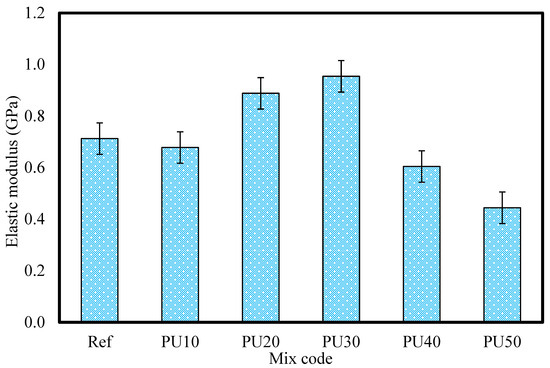
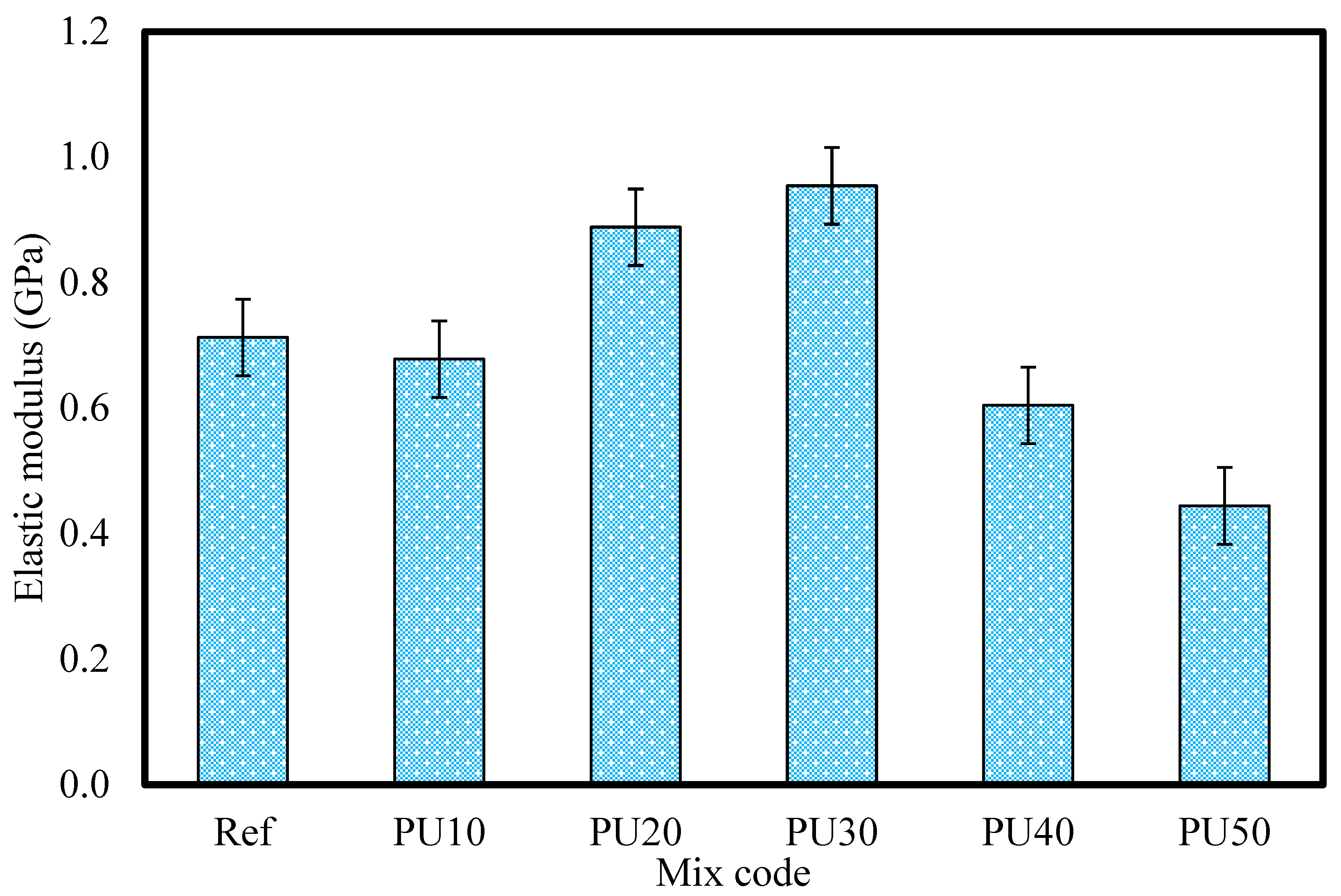
Figure 15 explains the elastic modulus of FGC blends containing 1% Al powder (as a foaming agent), and different amounts of PU waste as a sand substitute are presented in the chart and table. The reference mix with no PU waste had a baseline modulus value of 0.71 GPa. With 10%, it slightly reduced to 0.68 GPa, a decrease of 4.2%. However, at 20% PU, it surpassed the reference value, improving to 0.89 GPa, which is a 25.4% increase compared to the reference. The peak value was observed at 30% PU, reaching 0.95 GPa, an increase of ~33.8%, suggesting enhanced internal stiffness and pore structure. Increasing the PU replacement further to 40% saw the modulus value drop to 0.60 GPa (15.5% decrease from the reference), and then further to its lowest value of 0.44 GPa at 50%, reflecting a 38% reduction. This decreasing trend with higher PU values is due to the higher porosity and loss of matrix cohesion caused by excessively low-density fillers. In summary, these findings indicate that moderate PU replacement, especially near 30%, dramatically improves elastic performance, whereas excessive replacement undermines structural integrity because of diminished matrix connectivity [61].
Figure 15.
Modulus of elasticity of different FGC mixtures.
4.3. Transport Properties
4.3.1. Water Absorption
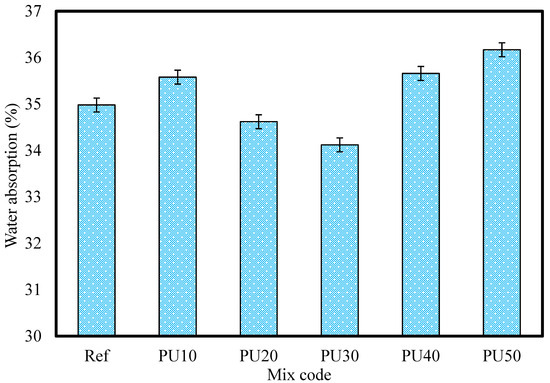
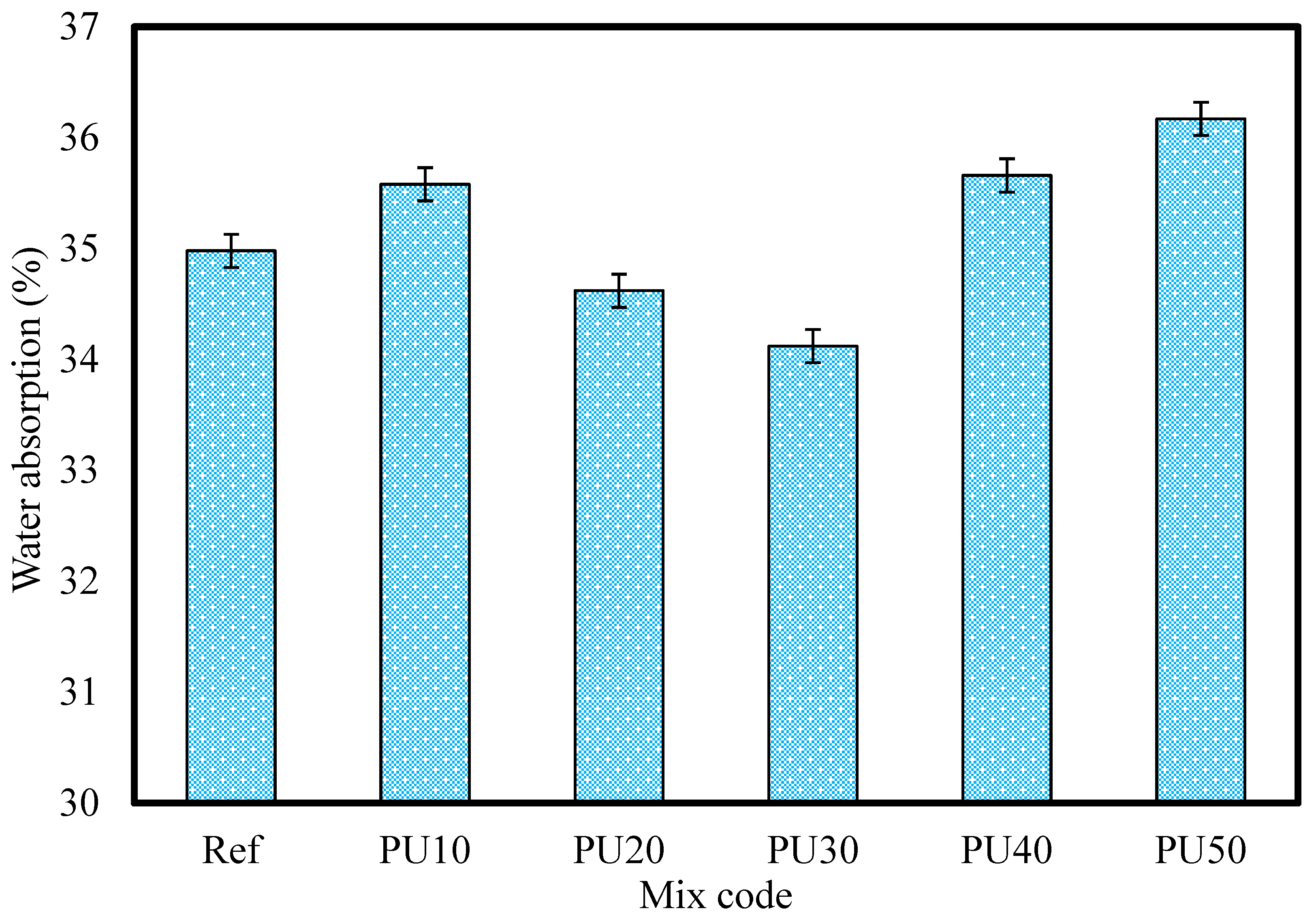
Figure 16 shows the water absorption ratio of FGC mixes containing 1% AP, and different amounts of PU waste were evaluated to determine their durability and pore interconnectivity in the context of water absorption capacity. The reference mix without any PU replacement absorbed 34.38% of water. This increased slightly to 35.55% at 10% PU replacement, an increase of 3.4%. Notably, at 20 and 30% PU content, the absorption values decreased to 34.62% (0.7% increase) and 34.12% (0.8% decrease), respectively, indicating improved pore refinement and reduced capillary absorption at moderate PU dosages. However, higher PU content resulted in significantly higher water absorption; at 40% PU, the value increased to 35.66% (3.7% increase) and peaked at 36.17% at 50%, a 5.2% increase over the reference absorption. These moderate incorporation results indicate matrix densification, while excessive replacement suggests weak structural integration and increased interconnect porosity due to poorly integrated polymeric phases. This trend accentuates the balance between lightweight design and the durability of foamed geopolymer systems [7,48].
Figure 16.
Water absorption of different FGC mixtures.
4.3.2. Chloride Ion Diffusion
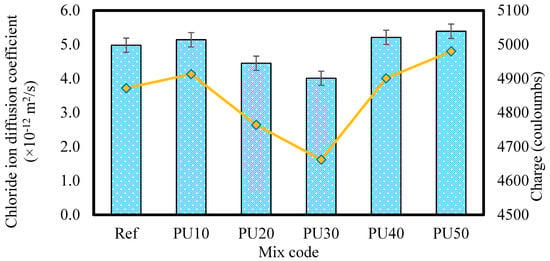
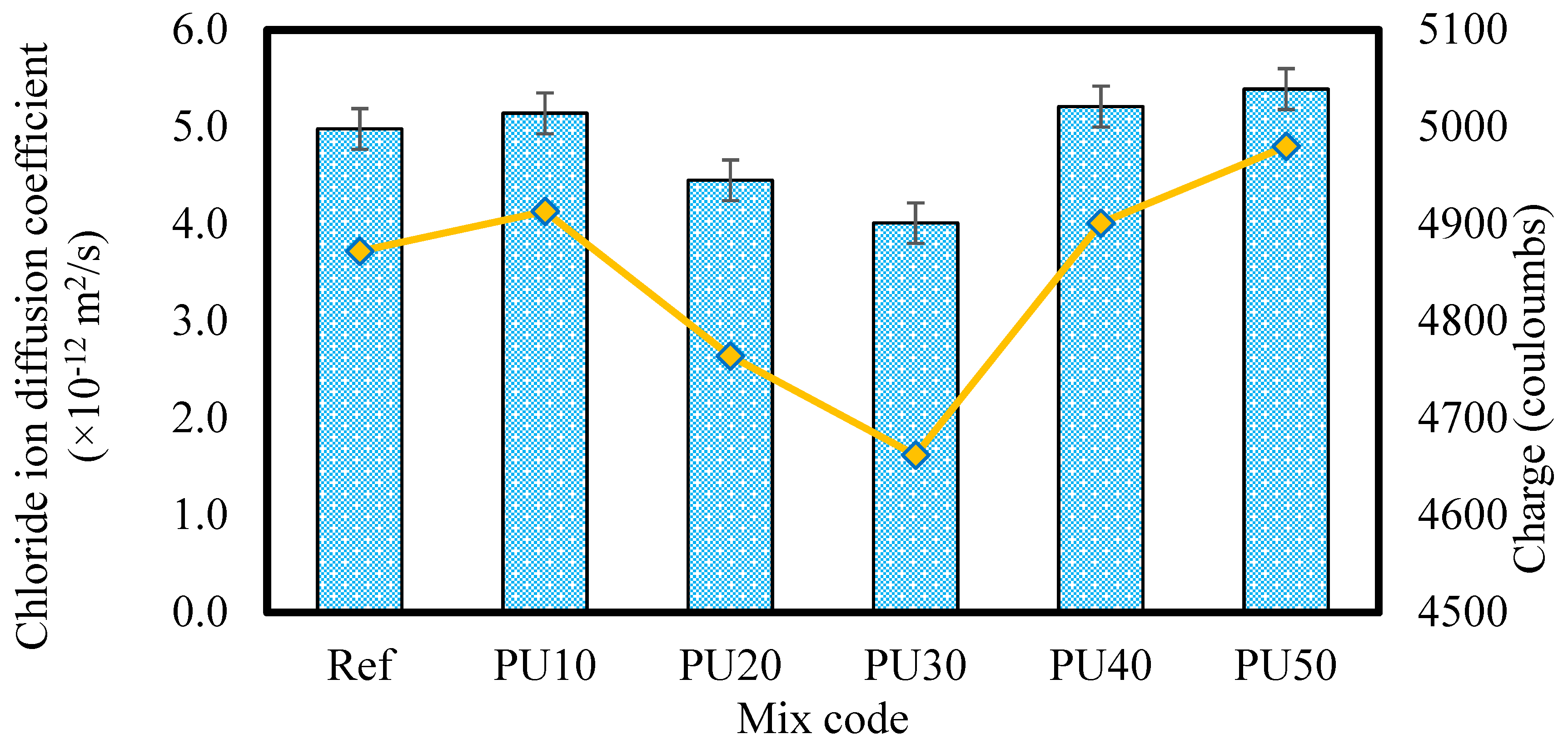
Figure 17 shows FGC containing 1% AP, and different proportions of PU waste were tested for durability under aggressive chloride exposure by measuring their chloride ion penetration resistance. The critical factors for assessing durability are the chloride ion diffusion coefficient and total electric charge calculated using the test. The reference mix yielded a diffusion coefficient of 4.98 × 10⁻¹² m2/s with a charge of 4872 coulombs. A blend with 10% PU showed an increase in both values, 5.14 × 10⁻¹² m2/s and 4913 C, suggesting improved connectivity in the pore structure owing to the increased air voids from the polymeric phase. However, at 20% and 30% PU, the values declined sharply to 4.45 and 4.01 × 10⁻¹² m2/s, respectively, translating to reductions of 10.6% and 19.4% compared to the control. These improvements are attributed to the increased pore structure uniformity and packing density of the hydrophobic PU fragments, which reduce the aqueous transport continuity [62]. The increased charge passed, as expected [63], prior to reaching a minimum of 4662 C at 30% PU, which is a 4.3% reduction from the reference, improving the matrix resistivity. However, all in all, performance dropped beyond 30% PU: diffusion coefficients increased to 5.21 and 5.39 × 10⁻¹² m2/s for 40% and 50% PU, and at the same time charge values increased to 4901 and 4980 C, respectively. This is attributed to the excessive PU addition, which interferes with the geopolymer gel, resulting in a network with large pores connected to weak regions and substandard interstitials. Moreover, at higher volumes, the chemical reactivity of PU is too low, restricting the continuous binding matrix kinetics, thus decreasing the capacity of the binding matrix to chloride ions [20]. These data support the conclusion that moderate PU addition, especially at 30%, improves the structural performance-to-weight ratio, whereas excessive PU undermines structural ion transport mitigation.
Figure 17.
Chloride ion diffusion of different FGC mixtures.
4.4. Microstructural Characteristics
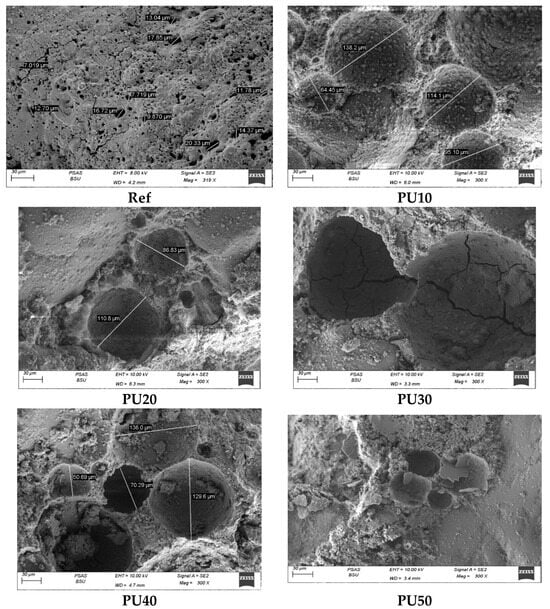
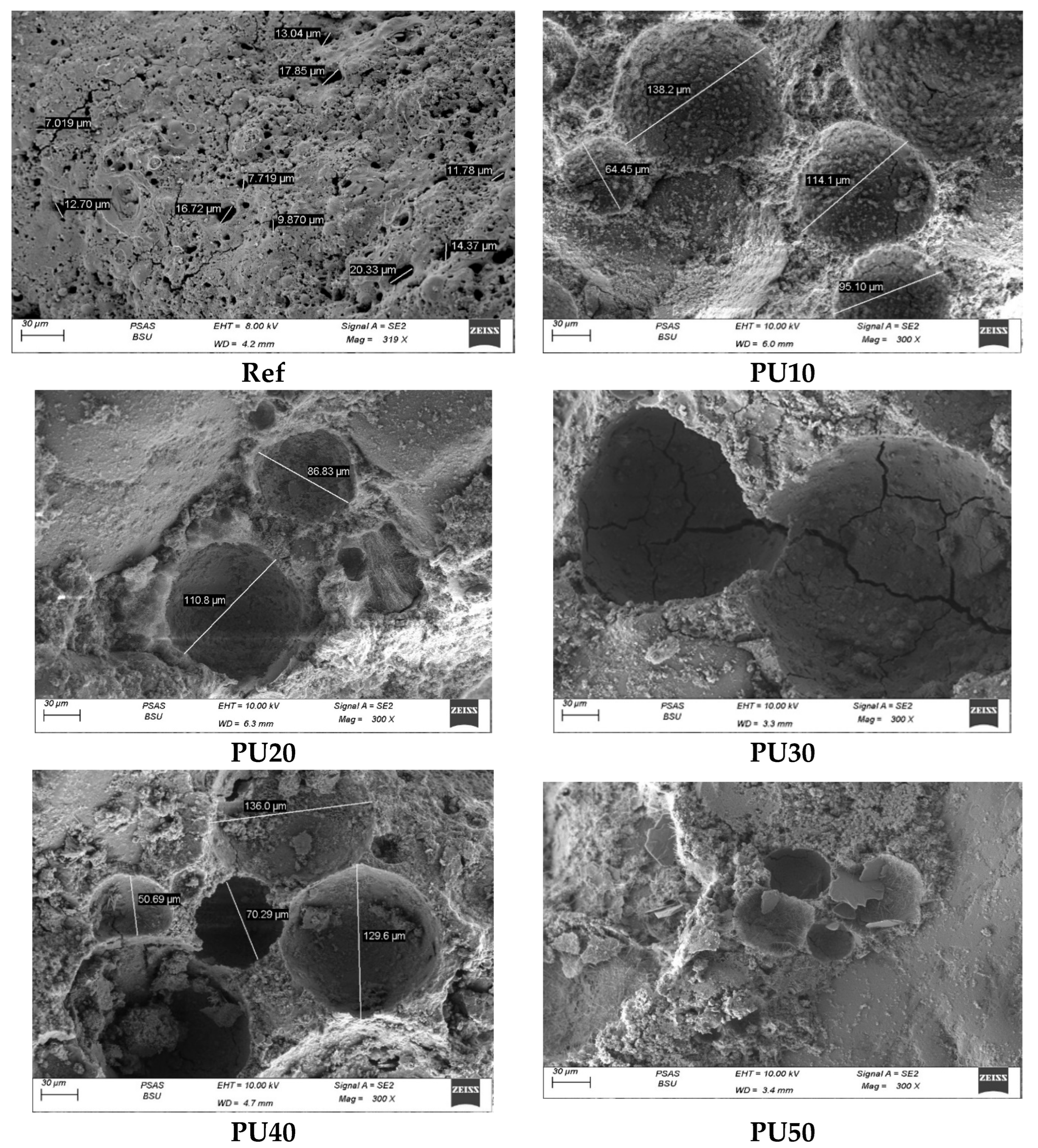
Figure 18 shows SEM micrographs that were used to examine the microstructural characteristics of FGC. The image shows a heterogeneous but cohesive matrix consisting of unreacted fly ash particles encapsulated in a continuous geopolymer gel network. At moderate PU contents (PU30), the micrograph shows a relatively dense matrix with lower pore wall refinement interconnectivity. In dense geopolymer gels, geopolymerization and pore-stabilizing processes are greatly enhanced [64,65]. The role of AP as a foaming agent is clearly demonstrated by the presence of uniformly dispersed, rounded voids, which aid in achieving a low-weight structure without significant damage to the integrity of the matrix. Furthermore, the compact, well-bonded interface formed between the geopolymer gel and residual particulates indicated strong cohesive bonds and systems with low-flow pathways.
Figure 18.
SEM images of different FGC mixtures.
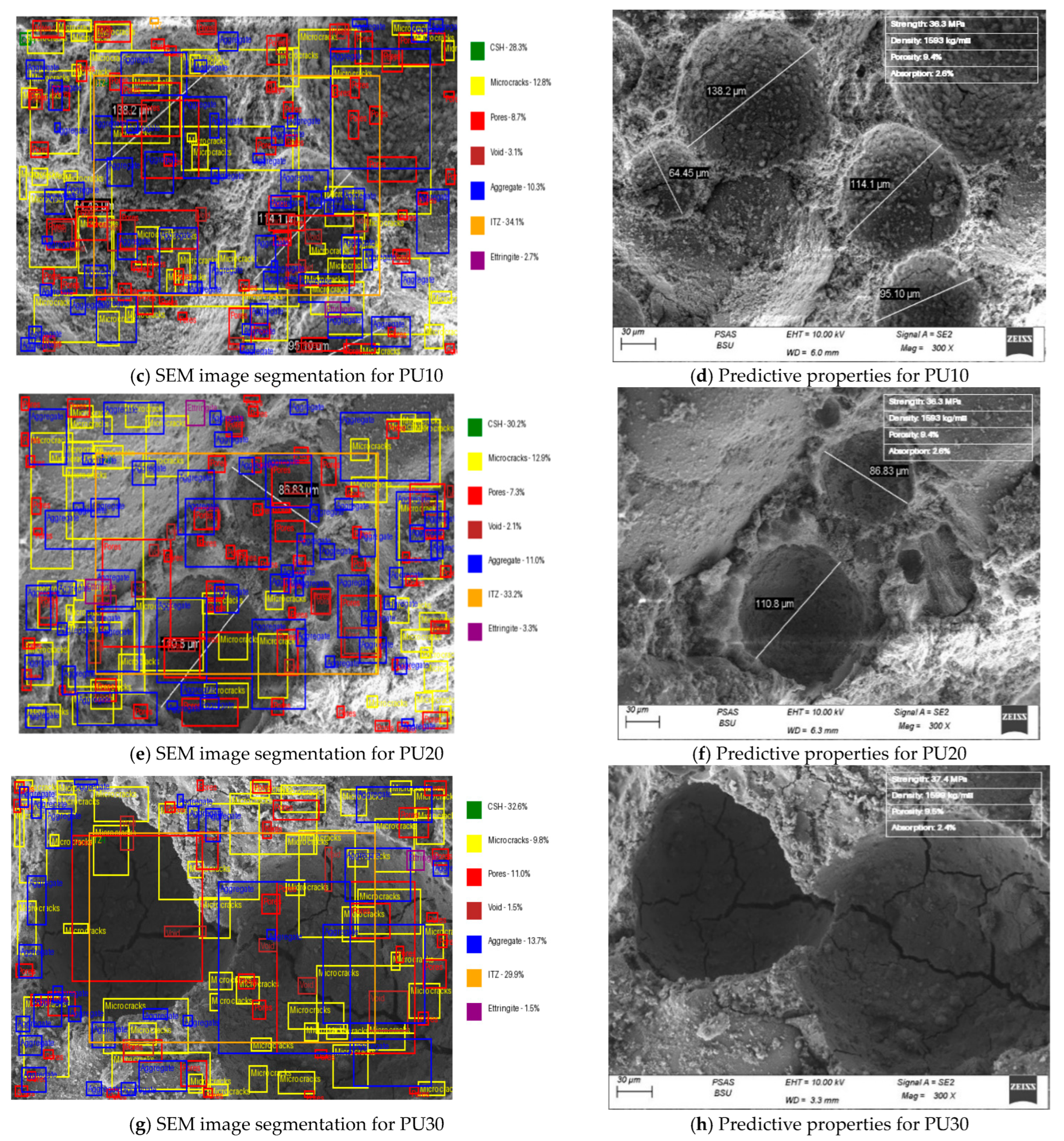
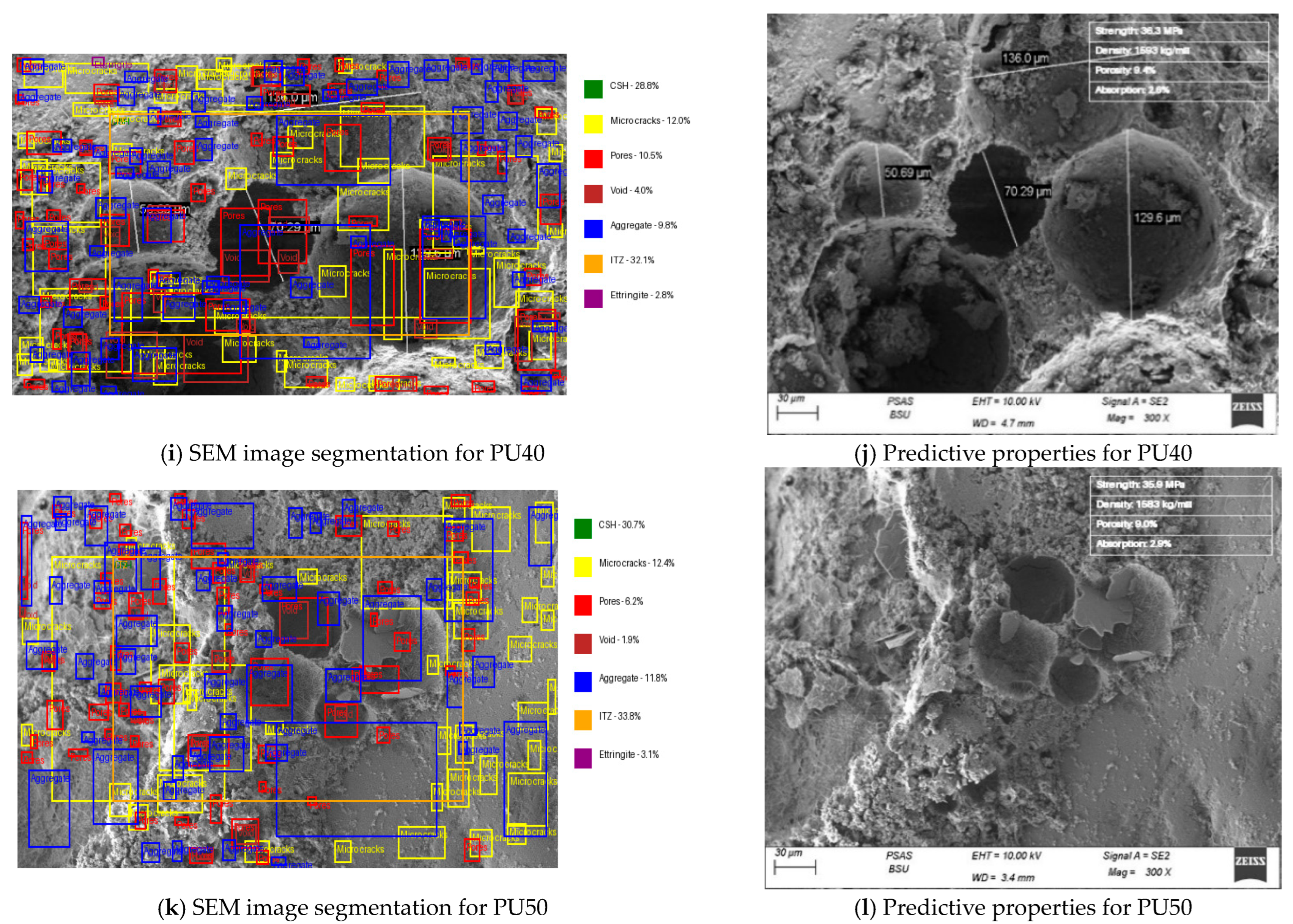
In contrast, higher PU content mixes (noting that such mixes are not visible here but reported elsewhere) are mostly connected with the presence of disrupted microstructures and enlarged interconnected pores, accompanied by decreased continuity of the gel owing to the excessive addition of inert fragments of the lightweight aggregate [66,67]. The SEM images illustrate the microstructural changes in foamed geopolymer concrete with rigid PU waste for varying replacement levels (10–50%) relative to a control mix. Among these mixes, PU30 has the most well-balanced internal porosity. It contains moderately sized spherical pores, measuring roughly 70–135 µm, embedded in a gelatinous matrix, which indicates effective matrix strength ideal for lightweight concrete without severe structural compromises. In PU10 and PU20 mixes, pore diameters are between 50 and 114 µm. In addition, the sputtered gel matrix maintains continuous integrity, albeit microcracking isolation is evident. These mixes exhibit light-weight material traits attributed to moderated structure pore growth. When PU content reaches 40% and 50%, micrographs display even larger, coalesced voids (>136 µm), which portray distinct matrix disruption along with cracking at the surface. Excessive foaming caused by PU decomposition leads to lowered material homogeneity alongside degrading material strength. Alternatively, control mix portrays a dense matrix with low porosity < 20 µm of pore size, denoting that sparsely cellular geopolymerization occurs but without PU’s lightweight properties. In summary, PU30 stands out as the most suitable formulation because it strikes a reasonable balance between lower density and preserved structural strength, which is supported by the SEM microstructure analysis of foamed geopolymer composites.
4.5. Compressive Strength Prediction and SEM Images Segmentations
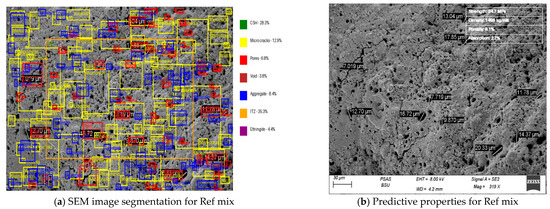
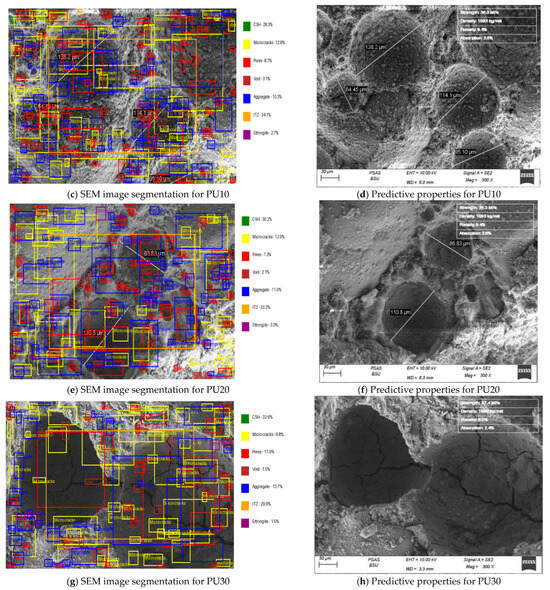
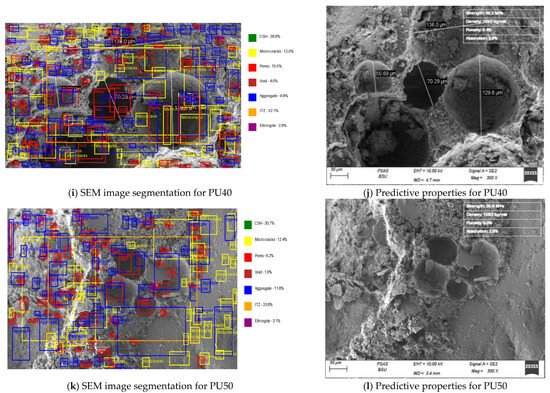
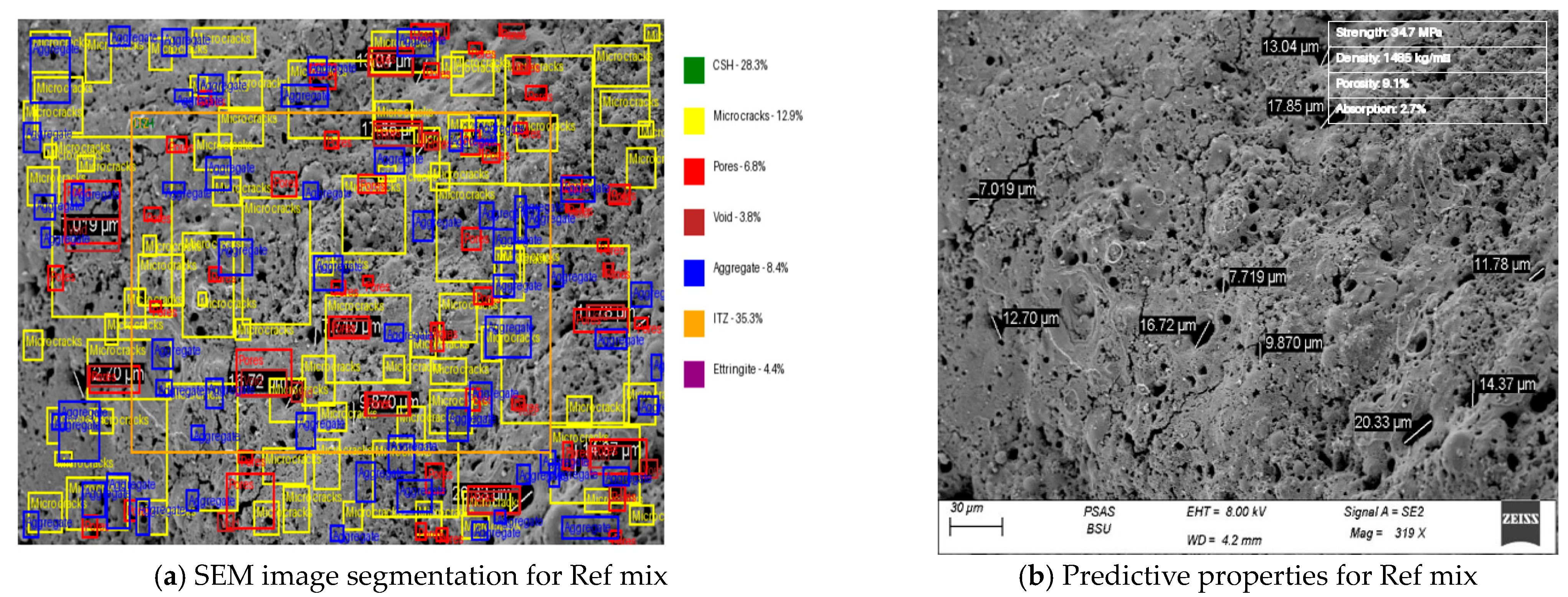
The predictive analysis performed on the foamed geopolymer concrete samples with aluminum powder as the foaming agent indicated a strong correlation between the actual and predicted properties, as shown in Figure 19. For compressive strength, the model predicted values of 34.7 MPa to 37.4 MPa, while actual values ranged from 21.86 MPa to 43.52 MPa. Although the model overestimated the strength in low-strength samples such as PU50, it maintained logic-defying over the predictions. The model also appeared to capture the upper trend and reflect sensitivity to strength-related features in the SEM images. For density, the predicted values were consistent (1485–1598 kg/m3), whereas the actual measured densities were between 1594 kg/m3 and 1680 kg/m3. This particular modeling flaw demonstrates that while the model effectively identifies microstructural patterns related to density, it requires refinement to capture higher-order mixing effects. The reference mix shows that the interfacial transition zone (ITZ) dominates the microstructure at 35.3%, followed by CSH at 28.3%, microcracks at 12.9%, aggregates at 8.4%, pores at 6.8%, voids at 3.8%, and ettringite at 4.4%. In the second image, the ITZ also holds the highest proportion at 34.1%, with CSH again at 28.3%, but here aggregates increase to 10.3%, and pores are higher at 8.7%, while microcracks decrease slightly to 12.8%, and ettringite decreases to 2.7%. The void content decreased slightly to 3.1%. These variations suggest local heterogeneity in the microstructure, which may be influenced by different hydration rates, material distributions, or mechanical loading effects during sample preparation or curing [68,69]. This study highlights the potential of integrating deep-learning-based image analysis into cementitious material research for automated microstructural quantification. The consistent dominance of the ITZ and CSH in both images reinforces their central role in determining the mechanical performance and durability of the material [70]. The higher aggregate and pore content in the second image may imply weaker particle-paste bonding or a more porous structure in that region. Conversely, the higher ettringite content in the first image indicates localized expansive reactions, such as delayed ettringite formation, which may lead to microcracking [71]. These subtle but significant differences underline the importance of multiregion SEM analysis in gaining a holistic understanding of concrete behavior [72]. Overall, such diagnostic imaging approaches not only enhance the precision of microstructural characterization but also support the development of more durable and optimized concrete formulations [73]. In summary, the findings validate the capability of image-based machine learning models to estimate the mechanical and physical properties of foamed geopolymer concretes. Low accuracy for low-density or low-strength specimens that are highly porous suggests that diversifying the training data and feature extraction would improve the predictive accuracy [74].
Figure 19.
SEM images segmentation and concrete performance prediction of GFC.
It should be noted that the pore structure characterization derived from the SEM image segmentation provides a qualitative to semi-quantitative assessment. While this approach offers valuable insights into pore distribution and morphology, it does not replace direct pore characterization techniques such as mercury intrusion porosimetry (MIP). Therefore, the interpretations are supported indirectly by consistency with measured porosity, permeability, and water absorption results.
5. Discussion
The outcomes of this investigation extend the understanding of the performance characteristics of FGC incorporating PU waste and AP. The results indicated that a moderate substitution of sand with PU waste, especially at 30% (PU30), resulted in a notable enhancement of mechanical properties and microstructure. The improved compressive, flexural, and split tensile strengths of the PU30 mix indicated that at this level of PU waste inclusion, there is a favorable compromise between matrix density and pore distribution. This improvement is due to the combined effects of PU particles and the geopolymer matrix, enhancing microstructural uniformity and cohesion. The substantial increase in elastic modulus also supports the theory that moderate PU content enhances concrete durability. On the other hand, the study also shows that high PU content (>30%) has a detrimental effect on mechanical properties as a result of increased porosity and diminished matrix adhesion. This finding highlights the critical need to balance PU waste utilization and structural performance. The optimal porosity and permeability attained at PU20-PU30 also reflect better pore structure and diminished interconnectivity. These revelations hold significant importance regarding the effectiveness and longevity of FGC, as reduced permeability may strengthen defense against aggressive environmental influences and minimize structural reinforcement corrosion in civil engineering applications [75,76,77]. The SEM analysis, along with macroscopic property assessment, satisfy equilibrium between uniform pore structure and denser matrix at intermediate PU levels. This agreement reinforces the necessity of material characterization efforts at different scales for performance tailoring, which cannot be overlooked. The analysis of varying PU content concerning multiple performance parameters through RSM illustrates how a single model can be built to capture all effects [78] simultaneously, demonstrating the power of response surface methodology. The determination of 30% PU content as the optimal level offers excellent instruction for targeted improvement on matrix continuity and foam distribution.
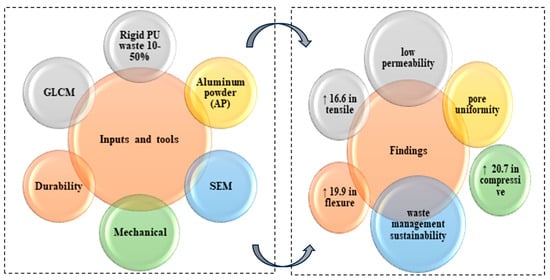
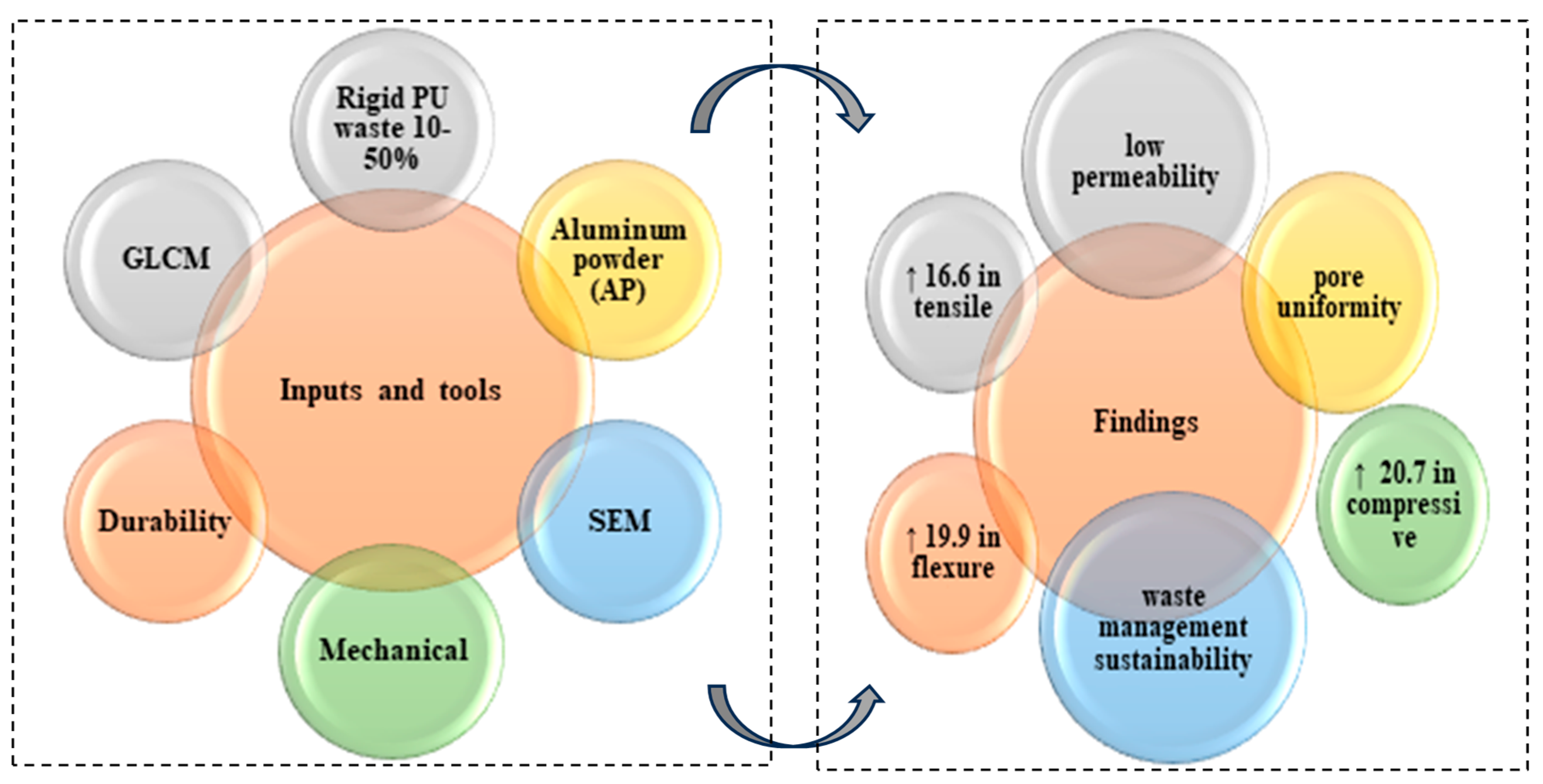
To summarize, this research shows the incorporation of PU waste into FGC as a viable method for waste management and performance enhancement of concrete. This addition of PU helps improve the performance of concrete while simultaneously aiding in waste management. With this, the research can help in contributing towards more sustainable construction materials, while also aiding in producing more environmentally conscious concrete, as shown in Figure 20.
Figure 20.
The inputs and findings of the study.
6. Conclusions
This study evaluated the formulations of sustainable, lightweight, high-strength structural foamed geopolymer concrete utilizing waste polyurethane and AP. The results of these tests are as follows.
- The increase in PU waste content reduced the workability of the mixture due to the hydrophobic inhibition of the reactions of the geopolymer.
- A higher PU content resulted in an increase in setting times
- The addition of PU up to 30% is thought to increase the density owing to the enhanced packing of the particles, which is contrary to expectations.
- The maximum water absorption and porosity were recorded at 20–30% PU content, indicating optimal pore refinement at these PU percentages.
- The peak compressive, flexural, and splitting tensile strengths were recorded at 30% PU replacement, with increases of 21.7%, 19.9%, and 16.7%, respectively, over the control at 180 days.
- There was a 33.8% increase in the elastic modulus at a PU content of 30%.
- Microstructural analysis at 20–30% PU levels showed some enhancement in the pore structure and densification of the matrix.
- At PU30, the AP foaming agent produced a uniform pore structure throughout the specimen.
- The results indicate that sustainable, lightweight, high-strength structural foamed geopolymer concrete can be developed using PU waste and AP at optimized levels.
- Combining Random Forest regression with GLCM-based texture analysis provides an effective and interpretable method for predicting concrete properties from SEM images.
- Traditional AI techniques play a crucial role in linking microstructural image analysis to performance characteristics in construction material engineering.
- An optimal balance of lowered density, increased advanced mechanical properties, and improved durability was achieved at a 30% PU replacement level.
Author Contributions
Conceptualization, A.H.A., A.A.A. and S.A.M.; Methodology, S.A.M.; Investigation, S.A.M.; Writing—original draft, A.H.A., T.S.A., R.S.A., A.A.A. and S.A.M.; Writing—review & editing, A.H.A., T.S.A., R.S.A., A.A.A. and S.A.M.; Funding acquisition, T.S.A., R.S.A. and A.A.A. All authors have read and agreed to the published version of the manuscript.
Funding
This research received no external funding.
Data Availability Statement
The data presented in this study are available on request from the corresponding authors.
Conflicts of Interest
The authors declare no conflicts of interest.
Abbreviations
| FGC | Foamed Geopolymer Concrete |
| PU | Polyurethane |
| AP | Aluminum Powder |
| SEM | Scanning Electron Microscopy |
| RF | Random Forest |
| GLCM | Gray-Level Co-occurrence Matrix |
References
- Chanda, S.S.; Guchhait, S. A comprehensive review on the factors influencing engineering characteristics of lightweight geopolymer concrete. J. Build. Eng. 2024, 86, 108887. [Google Scholar] [CrossRef] [Scilit]
- Hilal, A.A.; Nader, A.S.; Kurji, B.M. Producing Sustainable Lightweight Geopolymer Concrete Using Waste Materials. Civ. Environ. Eng. 2024, 20, 1120–1128. [Google Scholar] [CrossRef] [Scilit]
- Agwa, I.S.; Aldahdooh, M.A.; Zeyad, A.M.; Mostafa, S.A.; Amin, M. Novel use of fava bean stalk ash in ultra-high-performance geopolymer concrete: A sustainable approach to improving strength and durability. J. Build. Eng. 2025, 113, 114163. [Google Scholar] [CrossRef] [Scilit]
- Alnasur, M.S.; Al-hydary, I.D. Development of Lightweight Geopolymer Concrete: Strength and Density Studied. J. Univ. Babylon Eng. Sci. 2023, 31, 15–25. [Google Scholar]
- Zhang, Y.; Wang, H.; Zhong, W.; Fan, L. Development of a high-strength lightweight geopolymer concrete for structural and thermal insulation applications. Case Stud. Constr. Mater. 2024, 21, e03949. [Google Scholar] [CrossRef] [Scilit]
- Liu, M.Y.J.; Alengaram, U.J.; Jumaat, M.Z.; Mo, K.H. Evaluation of thermal conductivity, mechanical and transport properties of lightweight aggregate foamed geopolymer concrete. Energy Build. 2014, 72, 238–245. [Google Scholar] [CrossRef] [Scilit]
- Risdanareni, P.; Hilmi, A.; Susanto, P.B. The effect of foaming agent doses on lightweight geopolymer concrete metakaolin based. In AIP Conference Proceedings; AIP Publishing LLC: Melville, NY, USA, 2017; Volume 1842, p. 020057. [Google Scholar] [CrossRef] [Scilit]
- Nerilli, F.; Ahmadi, H.M.; Imperatore, S.; Vairo, G. Bond–Slip Performance of GFRP Rebars in Concrete Under Alkaline and Thermal Conditioning. J. Compos. Sci. 2026, 10, 131. [Google Scholar] [CrossRef] [Scilit]
- Fernando, P.L.N.; Jayasinghe, M.T.R.; Jayasinghe, C. Structural feasibility of Expanded Polystyrene (EPS) based lightweight concrete sandwich wall panels. Constr. Build. Mater. 2017, 139, 45–51. [Google Scholar] [CrossRef] [Scilit]
- Yong, Z.C.; Yew, M.K.; Yew, M.C.; Beh, J.H.; Lee, F.W.; Lim, S.K.; Saw, L.H. Utilizing bio-based and industrial waste aggregates to improve mechanical properties and thermal insulation in lightweight foamed macro polypropylene fibre-reinforced concrete. J. Build. Eng. 2024, 91, 109588. [Google Scholar] [CrossRef] [Scilit]
- Thukkaram, S.; Ammasi, A.K. Mixture Design for Lightweight Geopolymer Concrete. ACI Mater. J. 2024, 121, 91. [Google Scholar] [CrossRef] [Scilit]
- Tayeh, B.A.; Hakamy, A.; Amin, M.; Zeyad, A.M.; Agwa, I.S. Effect of air agent on mechanical properties and microstructure of lightweight geopolymer concrete under high temperature. Case Stud. Constr. Mater. 2022, 16, e00951. [Google Scholar] [CrossRef] [Scilit]
- Swaminathan, N.; Elangovan, N.; Anandan, J. Experimental study on the strength of lightweight geopolymer concrete with eco-friendly material. Građevinar 2020, 72, 523–532. [Google Scholar]
- Youssf, O.; Mills, J.E.; Elchalakani, M.; Alanazi, F.; Yosri, A.M. Geopolymer concrete with lightweight fine aggregate: Material performance and structural application. Polymers 2022, 15, 171. [Google Scholar] [CrossRef] [Scilit] [PubMed]
- Rawat, R.; Pasla, D. Mix design of FA-GGBS based lightweight geopolymer concrete incorporating sintered fly ash aggregate as coarse aggregate. J. Sustain. Cem.-Based Mater. 2024, 13, 1164–1179. [Google Scholar]
- Kalinowska-Wichrowska, K.; Pawluczuk, E.; Bołtryk, M.; Nietupski, A. Geopolymer concrete with lightweight artificial aggregates. Materials 2022, 15, 3012. [Google Scholar] [CrossRef] [Scilit] [PubMed]
- Udvardi, B.; Hamza, A.; Kurovics, E.; Kocserha, I.; Géber, R.; Simon, A. Production of lightweight geopolymer concrete. J. Phys. Conf. Ser. 2020, 1527, 012045. [Google Scholar]
- Gomez-Rojo, R.; Alameda, L.; Rodriguez, A.; Calderon, V.; Gutierrez-Gonzalez, S. Characterization of Polyurethane Foam Waste for Reuse in Eco-Efficient Building Materials. Polymers 2019, 11, 359. [Google Scholar] [CrossRef] [Scilit]
- Prociak, A.; Kucała, M.; Kurańska, M.; Barczewski, M. Effect of selected bio-components on the cell structure and properties of rigid polyurethane foams. Polymers 2023, 15, 3660. [Google Scholar] [CrossRef] [Scilit]
- Mohi-Ud-Din, M.M.; Khan, M.Z.N.; Hafeez, M.O.; Cheema, U.S.; Khokhar, S.A.; Arshad, M.H. Exploring the potential of rigid polyurethane foam waste in structural lightweight concrete. Next Mater. 2025, 6, 100399. [Google Scholar]
- Al-kahtani, M.S.M.; Zhu, H.; Ibrahim, Y.E.; Haruna, S.I. Experimental study on the strength and durability-related properties of ordinary Portland and rapid hardening Portland cement mortar containing polyurethane binder. Case Stud. Constr. Mater. 2022, 17, e01530. [Google Scholar] [CrossRef] [Scilit]
- Leão, L.S.; Spini, G.P.; de França, M.S.; Costa, E.B.C. Recycled expanded polystyrene (EPS) as an eco-friendly alternative for sand in rendering mortars. Constr. Build. Mater. 2024, 414, 135018. [Google Scholar] [CrossRef] [Scilit]
- Kytinou, V.K.; Metaxa, Z.S.; Zapris, A.G.; Kosheleva, R.I.; Prokopiou, V.D.; Alexopoulos, N.D. Exploitation of extruded polystyrene (XPS) waste for lightweight, thermal insulation and rehabilitation building applications. Dev. Built Environ. 2024, 20, 100580. [Google Scholar] [CrossRef] [Scilit]
- Liu, Y.; Leong, B.S.; Hu, Z.-T.; Yang, E.-H. Autoclaved aerated concrete incorporating waste aluminum dust as foaming agent. Constr. Build. Mater. 2017, 148, 140–147. [Google Scholar] [CrossRef] [Scilit]
- Bouglada, M.S.; Ammar, N.; Larbi, B. Optimization of cellular concrete formulation with aluminum waste and mineral additions. Civ. Eng. J. 2021, 7, 1222–1234. [Google Scholar] [CrossRef] [Scilit]
- Leiva, C.; Luna-Galiano, Y.; Arenas, C.; Alonso-Fariñas, B.; Fernández-Pereira, C. A porous geopolymer based on aluminum-waste with acoustic properties. Waste Manag. 2019, 95, 504–512. [Google Scholar] [CrossRef] [Scilit] [PubMed]
- Anggarini, U.; Pratapa, S.; Purnomo, V.; Sukmana, N.C. A comparative study of the utilization of synthetic foaming agent and aluminum powder as pore-forming agents in lightweight geopolymer synthesis. Open Chem. 2019, 17, 629–638. [Google Scholar] [CrossRef] [Scilit]
- ASTM C33-03; Standard Specification for Concrete Aggregates. American Society for Testing and Materials (ASTM International): West Conshohocken, PA, USA, 2010.
- Zheng, D.; AlAteah, A.H.; Alsubeai, A.; Mostafa, S.A. Integrating micro-and nanowaste glass with waste foundry sand in ultra-high-performance concrete to enhance material performance and sustainability. Rev. Adv. Mater. Sci. 2024, 63, 20240012. [Google Scholar] [CrossRef] [Scilit]
- Rezzoug, A.; AlAteah, A.H.; Alahmari, T.S.; Mostafa, S.A. Sustainable Ultra-High-Performance Basalt Fiber-Reinforced Geopolymer Concrete Incorporating Carbon Nanotubes and Treated Recycled Aggregates. Case Stud. Constr. Mater. 2025, 23, e05608. [Google Scholar]
- ASTM C1621/C1621M-09b; Standard Test Method for Passing Ability of Self-Consolidating Concrete by J-Ring. American Society for Testing and Materials, ASTM International: West Conshohocken, PA, USA, 2009.
- BS EN 12350-6; Testing Fresh Concrete Density. British Standards Institute: London, UK, 2016.
- BS EN 196-3; Methods of Testing Cement. Determination of Setting Times and Soundness. British Standards Institute: London, UK, 2016.
- BS EN 12390-3; Testing Hardened Concrete. Compressive Strength of Test Specimens. British Standards Institute: London, UK, 2011.
- BS EN 12390-5; Testing Hardened Concrete. Flexural Strength of Test Specimens. British Standards Institute: London, UK, 2019.
- BS EN 12390-6; Testing Hardened Concrete. Tensile Splitting Strength of Test Specimens. British Standards Institute: London, UK, 2009.
- ASTM C469; Standard Test Method for Static Modulus of Elasticity and Poisson’s Ratio of Concrete in Compression. American Society for Testing and Materials, ASTM International: West Conshohocken, PA, USA, 2002.
- BS EN 1881-122; Testing concrete Method for Determination of Water Absorption. British Standards Institute: London, UK, 2020.
- ASTM C1202; Standard Test Method for Electrical Indication of Concrete’s Ability to Resist Chloride Ion Penetration. American Society for Testing and Materials: West Conshohocken, PA, USA, 2022.
- Djerbi, A.; Bonnet, S.; Khelidj, A.; Baroghel-Bouny, V. Influence of traversing crack on chloride diffusion into concrete. Cem. Concr. Res. 2008, 38, 877–883. [Google Scholar] [CrossRef] [Scilit]
- Amran, Y.H.M.; Farzadnia, N.; Abang Ali, A.A. Properties and applications of foamed concrete; a review. Constr. Build. Mater. 2015, 101, 990–1005. [Google Scholar] [CrossRef] [Scilit]
- Kuzielová, E.; Pach, L.; Palou, M. Effect of activated foaming agent on the foam concrete properties. Constr. Build. Mater. 2016, 125, 998–1004. [Google Scholar] [CrossRef] [Scilit]
- Ahmed, M.M.; El-Naggar, K.A.M.; Tarek, D.; Ragab, A.; Sameh, H.; Zeyad, A.M.; Tayeh, B.A.; Maafa, I.M.; Yousef, A. Fabrication of thermal insulation geopolymer bricks using ferrosilicon slag and alumina waste. Case Stud. Constr. Mater. 2021, 15, e00737. [Google Scholar] [CrossRef] [Scilit]
- Bergamonti, L.; Taurino, R.; Cattani, L.; Ferretti, D.; Bondioli, F. Lightweight hybrid organic-inorganic geopolymers obtained using polyurethane waste. Constr. Build. Mater. 2018, 185, 285–292. [Google Scholar] [CrossRef] [Scilit]
- Mohseni, E.; Kazemi, M.J.; Koushkbaghi, M.; Zehtab, B.; Behforouz, B. Evaluation of mechanical and durability properties of fiber-reinforced lightweight geopolymer composites based on rice husk ash and nano-alumina. Constr. Build. Mater. 2019, 209, 532–540, Corrigendum in Constr. Build. Mater. 2020, 232, 117262. https://doi.org/10.1016/j.conbuildmat.2019.117262. [Google Scholar] [CrossRef] [Scilit]
- Mistry, M.; Prajapati, V.; Dholakiya, B.Z. Redefining Construction: An In-Depth Review of Sustainable Polyurethane Applications. J. Polym. Environ. 2024, 32, 3448–3489. [Google Scholar] [CrossRef] [Scilit]
- Al Bakri Abdullah, M.M.; Yahya, Z.; Mohd Tahir, M.F.; Hussin, K.; Binhussain, M.; Sandhu, A.V. Fly Ash Based Lightweight Geopolymer Concrete Using Foaming Agent Technology. Appl. Mech. Mater. 2014, 679, 20–24. [Google Scholar] [CrossRef] [Scilit]
- Ibrahim, W.M.W.; Hussin, K.; Abdullah, M.M.A.B.; Kadir, A.A. Geopolymer lightweight bricks manufactured from fly ash and foaming agent. In AIP Conference Proceedings; AIP Publishing LLC: Melville, NY, USA, 2017; Volume 1835, p. 020048. [Google Scholar] [CrossRef] [Scilit]
- Wongsa, A.; Sata, V.; Nuaklong, P.; Chindaprasirt, P. Use of crushed clay brick and pumice aggregates in lightweight geopolymer concrete. Constr. Build. Mater. 2018, 188, 1025–1034. [Google Scholar] [CrossRef] [Scilit]
- Posi, P.; Ridtirud, C.; Ekvong, C.; Chammanee, D.; Janthowong, K.; Chindaprasirt, P. Properties of lightweight high calcium fly ash geopolymer concretes containing recycled packaging foam. Constr. Build. Mater. 2015, 94, 408–413. [Google Scholar] [CrossRef] [Scilit]
- Raj, A.; Sathyan, D.; Mini, K.M. Physical and functional characteristics of foam concrete: A review. Constr. Build. Mater. 2019, 221, 787–799. [Google Scholar] [CrossRef] [Scilit]
- Heah, C.; Kamarudin, H.; Al Bakri, A.M.; Bnhussain, M.; Luqman, M.; Nizar, I.K.; Ruzaidi, C.; Liew, Y. Study on solids-to-liquid and alkaline activator ratios on kaolin-based geopolymers. Constr. Build. Mater. 2012, 35, 912–922. [Google Scholar]
- Deb, P.S.; Nath, P.; Sarker, P.K. The effects of ground granulated blast-furnace slag blending with fly ash and activator content on the workability and strength properties of geopolymer concrete cured at ambient temperature. Mater. Des. 2014, 62, 32–39. [Google Scholar] [CrossRef] [Scilit]
- Zhao, J.; Tong, L.; Li, B.; Chen, T.; Wang, C.; Yang, G.; Zheng, Y. Eco-friendly geopolymer materials: A review of performance improvement, potential application and sustainability assessment. J. Clean. Prod. 2021, 307, 127085. [Google Scholar] [CrossRef] [Scilit]
- Soutsos, M.; Boyle, A.P.; Vinai, R.; Hadjierakleous, A.; Barnett, S.J. Factors influencing the compressive strength of fly ash based geopolymers. Constr. Build. Mater. 2016, 110, 355–368. [Google Scholar] [CrossRef] [Scilit]
- Lin, Y.; Zhou, W.; AlAteah, A.H.; Mostafa, S.A. Recycling and reuse of waste banded iron formation as fine aggregate in the production of lightweight foamed concrete: Fresh-state, mechanical, thermal, microstructure and durability properties assessment. Constr. Build. Mater. 2024, 439, 137369. [Google Scholar] [CrossRef] [Scilit]
- Nath, P.; Sarker, P.K. Use of OPC to improve setting and early strength properties of low calcium fly ash geopolymer concrete cured at room temperature. Cem. Concr. Compos. 2015, 55, 205–214. [Google Scholar] [CrossRef] [Scilit]
- Li, Y.; Chai, J.; Li, Y.; Wang, R.; Qin, Y.; Cao, Z. Experimental investigation of the interfacial bonding properties between polyurethane mortar and concrete under different influencing factors. Constr. Build. Mater. 2023, 408, 133800. [Google Scholar] [CrossRef] [Scilit]
- Linul, E.; Korniejenko, K.; Şerban, D.A.; Negru, R.; Marşavina, L.; Łach, M.; Mikuła, J. Quasi-Static Mechanical Characterization of Lightweight Fly Ash-Based Geopolymer Foams. IOP Conf. Ser. Mater. Sci. Eng. 2018, 416, 012102. [Google Scholar] [CrossRef] [Scilit]
- Hou, L.; Li, J.; Lu, Z.-Y. Effect of Na/Al on formation, structures and properties of metakaolin based Na-geopolymer. Constr. Build. Mater. 2019, 226, 250–258. [Google Scholar] [CrossRef] [Scilit]
- Jia, Z.; Jia, D.; Sun, Q.; Wang, Y.; Ding, H. Preparation and mechanical-fatigue properties of elastic polyurethane concrete composites. Materials 2021, 14, 3839. [Google Scholar] [CrossRef] [Scilit]
- Wasim, M.; Roychand, R.; Barnes, R.T.; Talevski, J.; Law, D.; Li, J.; Saberian, M. Performance of Reinforced Foam and Geopolymer Concretes against Prolonged Exposures to Chloride in a Normal Environment. Materials 2022, 16, 149. [Google Scholar] [CrossRef] [Scilit] [PubMed]
- Du, B.; Xu, F.; AlAteah, A.H.; Mostafa, S.A. Sustainable development of ultra high-performance concrete using basil plant waste: Investigation at normal and extreme conditions. J. Build. Eng. 2023, 80, 107997. [Google Scholar] [CrossRef] [Scilit]
- Pawlak, T.; Szymczak-Graczyk, A.; Garbowski, T. Numerical homogenization of irregular and inhomogeneous three-layered composites based on polyurea (polyurethane-urea) and rigid polyurethane. In Proceedings of the 43rd Solid Mechanics Conference: SolMech 2024, Wroclaw, Poland, 16–18 September 2024. [Google Scholar]
- Rezzoug, A.; AlAteah, A.H.; Alinsaif, S.; Mostafa, S.A. Durability prediction of sustainable marine concrete under freeze-thaw cycles using multi-objective machine learning models. Case Stud. Constr. Mater. 2025, 22, e04787. [Google Scholar]
- Ummin, O.; Li, Y.; Li, K.; Chen, Y.; Jia, H.; Zuo, J. Influence of surface roughness and interfacial agent on the interface bonding characteristics of polyurethane concrete and cement concrete. J. Build. Eng. 2024, 91, 109596. [Google Scholar] [CrossRef] [Scilit]
- Mostafa, S.A.; Agwa, I.S.; Elboshy, B.; Zeyad, A.M.; Hassan, A.M.S. The effect of lightweight geopolymer concrete containing air agent on building envelope performance and internal thermal comfort. Case Stud. Constr. Mater. 2024, 20, e03365. [Google Scholar] [CrossRef] [Scilit]
- Singh, T.; Kanchan, R.; Verma, A.; Saigal, K. A comparative study of ANN and neuro-fuzzy for the prediction of dynamic constant of rockmass. J. Earth Syst. Sci. 2005, 114, 75–86. [Google Scholar] [CrossRef] [Scilit]
- Quanwei, Z.; Qi, C.; AlAteah, A.H.; Alfares, A.M.; Alinsaif, S.; Mostafa, S.A. AI-based prediction for the strength, cost, and sustainability of eggshell and date palm ash-blended concrete. Rev. Adv. Mater. Sci. 2025, 64, 20250113. [Google Scholar] [CrossRef] [Scilit]
- Feng, D.-C.; Liu, Z.-T.; Wang, X.-D.; Chen, Y.; Chang, J.-Q.; Wei, D.-F.; Jiang, Z.-M. Machine learning-based compressive strength prediction for concrete: An adaptive boosting approach. Constr. Build. Mater. 2020, 230, 117000. [Google Scholar] [CrossRef] [Scilit]
- Yusuf, M.O.; Al-Sodani, K.A.A.; Adewumi, A.A.; Alateah, A.H.; Al-Tholaia, M.M.; Shamsah, S.M.I.; Qazi, U.Y.; Alanazi, G.D.S. Microstructural Characteristics, Modeling of Mechanical Strength and Thermal Performance of Industrial Waste Glass Blended Concrete. Appl. Sci. 2022, 12, 8600. [Google Scholar] [CrossRef] [Scilit]
- Liu, X.; AlAteah, A.H.; Alsubeai, A.; Alahmari, T.S.; Mostafa, S.A. Prediction of flexural strength of concrete with eggshell and glass powders: Advanced cutting-edge approach for sustainable materials. Rev. Adv. Mater. Sci. 2024, 63, 20240055. [Google Scholar] [CrossRef] [Scilit]
- Sobuz, M.H.R.; Kabbo, M.K.I.; Khan, M.H.; Alahmari, T.S. Predicting the compressive strength of sustainable cement mortar composite incorporating biochar: A machine learning modeling approach. In Applications of Artificial Intelligence in Removal of Emerging Contaminants; Elsevier: Amsterdam, The Netherlands, 2026; pp. 39–62. [Google Scholar]
- Dhasan, T.; Alrashidi, R.S.; Saleem, M.; Veedu, J.C.; Alam, S. Performance Evaluation of Self-Compacting Geopolymer Concrete with Recycled Brick Aggregate under Varied Curing and Temperature Conditions. Yanbu J. Eng. Sci. 2026, 23, 85–99. [Google Scholar] [CrossRef] [Scilit]
- Sharafati, A.; Naderpour, H.; Salih, S.Q.; Onyari, E.; Yaseen, Z.M. Simulation of foamed concrete compressive strength prediction using adaptive neuro-fuzzy inference system optimized by nature-inspired algorithms. Front. Struct. Civ. Eng. 2021, 15, 61–79. [Google Scholar] [CrossRef] [Scilit]
- Amiri, M.; Hatami, F. Prediction of mechanical and durability characteristics of concrete including slag and recycled aggregate concrete with artificial neural networks (ANNs). Constr. Build. Mater. 2022, 325, 126839. [Google Scholar] [CrossRef] [Scilit]
- Kaplan, G.; Öz, A.; Bayrak, B.; Aydın, A.C. The effect of geopolymer slurries with clinker aggregates and marble waste powder on embodied energy and high-temperature resistance in prepacked concrete: ANFIS-based prediction model. J. Build. Eng. 2023, 67, 105987. [Google Scholar] [CrossRef] [Scilit]
- Hammoudi, A.; Moussaceb, K.; Belebchouche, C.; Dahmoune, F. Comparison of artificial neural network (ANN) and response surface methodology (RSM) prediction in compressive strength of recycled concrete aggregates. Constr. Build. Mater. 2019, 209, 425–436. [Google Scholar] [CrossRef] [Scilit]

Disclaimer/Publisher’s Note: The statements, opinions and data contained in all publications are solely those of the individual author(s) and contributor(s) and not of MDPI and/or the editor(s). MDPI and/or the editor(s) disclaim responsibility for any injury to people or property resulting from any ideas, methods, instructions or products referred to in the content. |
© 2026 by the authors. Licensee MDPI, Basel, Switzerland. This article is an open access article distributed under the terms and conditions of the Creative Commons Attribution (CC BY) license.