Acoustic Performance and Life Cycle Assessment of a Mycelium-Based Insulation Composite Produced from Agricultural Waste



Abstract
1. Introduction
2. Materials and Methods
2.1. Preparation and Testing of Mycelium-Based Composite Acoustic Samples
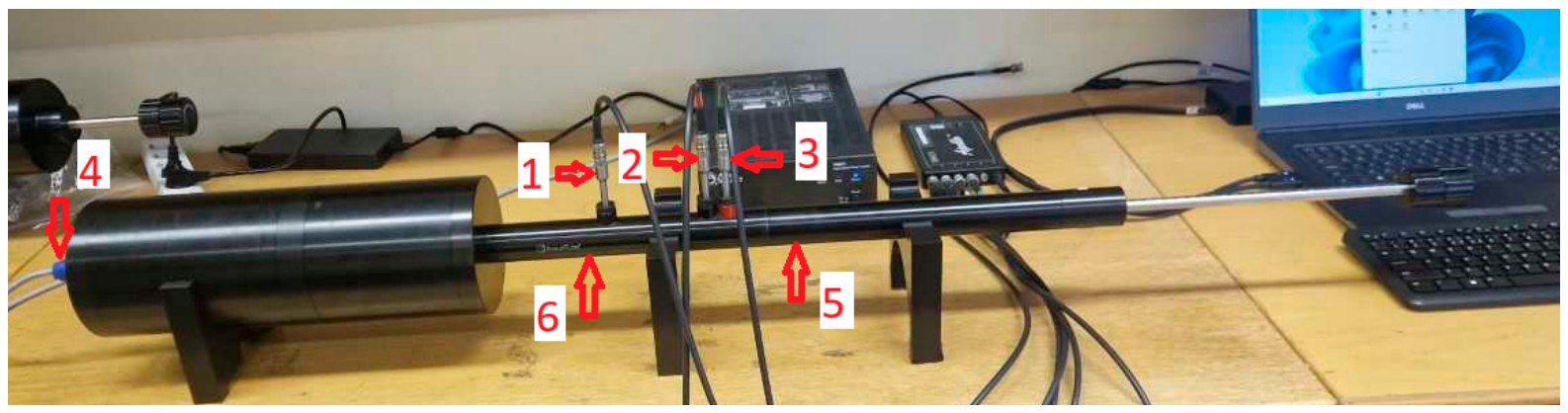
- Sound source (4);
- Three microphones (1–3) (Microphone type: 1/4″, BNC (female) coaxial connector, class 1 precision with a frequency range of 20 Hz to 20 kHz);
- Place for fixing the sample (Specimen is inside the tube) (5);
- Tube through which sound waves travel (6).
2.2. Life Cycle Assessment Methodology of Acoustic Panels Employing Different Substrates
2.2.1. Goal and Scope
2.2.2. Inventory
3. Results
3.1. Sound Absorption Results of Mycelium-Based Composite Acoustic Samples
3.2. Comparison of the Mycelium-Based Specimens and Commercially Available Acoustical Panel Sound Absorption Coefficients
3.3. Results of the Mycelium-Based Biocomposite Life Cycle Assessment
4. Discussion
5. Conclusions
Author Contributions
Funding
Data Availability Statement
Conflicts of Interest
Abbreviations
| MBC | Mycelium-based composite |
| LCA | Life cycle assessment |
| GHG | Greenhouse gases |
| kg CO2 eq. | Kilograms of carbon dioxide equivalent |
| kg CFC11 eq. | Kilograms of trichlorofluoromethane equivalent |
| kBq Co-60 eq. | Kilobecquerels of Cobalt-60 equivalent |
| kg NOx eq. | Kilograms of nitrogen oxides equivalent |
| kg PM2.5 eq. | Kilograms of fine particulate matter equivalent |
| kg SO2 eq. | kilograms of sulfur dioxide equivalent |
| kg P eq. | Kilogram of phosphorus equivalent |
| kg N eq. | kilograms of nitrogen equivalent |
| kg 1.4-DCB | kilograms of 1,4-dichlorobenzene equivalent (toxicity potential) |
| m2a crop eq. | square meter-years crop equivalent (land use impact) |
| kg Cu eq. | kilograms of copper equivalent (resource scarcity) |
| kg oil eq. | kilograms of oil equivalent (42–46 MJ/kg) |
| MJ | Mega joule (unit of energy measurement) |
References
- European Commission. Directive (EU) 2024/1760 of the European Parliament and of the Council of 13 June 2024 on Corporate Sustainability Due Diligence and Amending Directive (EU) 2019/1937 and Regulation (EU) 2023/2859. Off. J. Eur. Union 2024. Available online: https://eur-lex.europa.eu/eli/dir/2024/1760/oj (accessed on 19 April 2026).
- European Commission. Renovation Wave for Europe—Greening Our Buildings, Creating Jobs, Improving Lives; COM(2020) 662 final. Off. J. Eur. Union 2020. Available online: https://eur-lex.europa.eu/legal-content/EN/TXT/?uri=celex:52020DC0662 (accessed on 19 April 2026).
- Alaux, N.; Vašatko, H.; Maierhofer, D.; Saade, M.R.M.; Stavric, M.; Passer, A. Environmental potential of fungal insulation: A prospective life cycle assessment of mycelium-based composites. Int. J. Life Cycle Assess. 2024, 29, 255–272. [Google Scholar] [CrossRef]
- Javadian, A.; Le Ferrand, H.; Hebel, D.E.; Saeidi, N. Application of mycelium-bound composite materials in construction industry: A short review. SOJ Mater. Sci. Eng. 2020, 7, 1–9. [Google Scholar] [CrossRef]
- Sun, W.; Tajvidi, M.; Howell, C.; Hunt, C.G. Insight into mycelium-lignocellulosic bio-composites: Essential factors and properties. Compos. Part A Appl. Sci. Manuf. 2022, 161, 107125. [Google Scholar] [CrossRef]
- Udayanga, D.; Miriyagalla, S. Fungal mycelium-based biocomposites: An emerging source of renewable materials. In Microbial Technology for Sustainable Environment; Springer: Singapore, 2021; pp. 529–550. [Google Scholar] [CrossRef]
- Yang, T.; Hu, L.; Xiong, X.; Petrů, M.; Noman, M.T.; Mishra, R.; Militký, J. Sound absorption properties of natural fibers: A review. Sustainability 2020, 12, 8477. [Google Scholar] [CrossRef]
- Bagheriehnajjar, G.; Yousefpour, H.; Rahimnejad, M. Environmental impacts of mycelium-based bio-composite construction materials. Int. J. Environ. Sci. Technol. 2024, 21, 5437–5458. [Google Scholar] [CrossRef]
- Voutetaki, M.E.; Mpalaskas, A.C. Natural fiber-reinforced mycelium composite for innovative and sustainable construction materials. Fibers 2024, 12, 57. [Google Scholar] [CrossRef]
- Mendanha, D.; Carvalho, D.; Silva, M.; Silva, S.; Ferreira, P.; Rodrigues, R.; Silva, C.J.; Oliveira, C.; Marques, R. Driving sustainability in the automotive industry: Bio-coated materials and modern strategies. Acad. Mater. Sci. 2024, 1, 1–14. [Google Scholar] [CrossRef]
- Uysal, N. Sustainable materials for automotive interiors: Trends, challenges, and circular design strategies. J. Hendese Tech. Sci. Eng. 2025, 2, 26–31. [Google Scholar] [CrossRef]
- Pertile, B.; Fontana, R.C.; Isoton, R.; Brandalise, R.N.; Camassola, M. Mycelium-based products: Multifunctional flexible mycomaterial, a textile alternative produced from fungi and lignocellulose waste. World J. Microbiol. Biotechnol. 2025, 41, 265. [Google Scholar] [CrossRef]
- Rathinamoorthy, R.; Bharathi, T.S.; Snehaa, M.; Swetha, C. Mycelium as sustainable textile material—Review on recent research and future prospective. Int. J. Cloth. Sci. Technol. 2023, 35, 454–476. [Google Scholar] [CrossRef]
- Danninger, D.; Pruckner, R.; Holzinger, L.; Koeppe, R.; Kaltenbrunner, M. MycelioTronics: Fungal mycelium skin for sustainable electronics. Sci. Adv. 2022, 8, eadd7118. [Google Scholar] [CrossRef]
- Pruckner, R.; Holzinger, L.; Preninger, D.; Breitwieser, M.; Lehner, L.; Putz, C.; Demchyshyn, S.; Berrer, S.; Hirz, A.; Koeppe, R.; et al. Advanced mycelium skins for sustainable electronics. Adv. Funct. Mater. 2025, 35, 2412196. [Google Scholar] [CrossRef]
- Alaneme, K.K.; Anaele, J.U.; Oke, T.M.; Kareem, S.A.; Adediran, M.; Ajibuwa, O.A.; Anabaranze, Y.O. Mycelium based composites: A review of their bio-fabrication procedures, material properties and potential for green building and construction applications. Alex. Eng. J. 2023, 83, 234–250. [Google Scholar] [CrossRef]
- Weinland, F.; Lingner, T.; Schritt, H.; Gradl, D.; Reintjes, N.; Schuler, M. Life cycle assessment of mycelium based composite acoustic insulation panels. Clean. Circ. Bioecon. 2024, 9, 100106. [Google Scholar] [CrossRef]
- Hemmat, W.; Hesam, A.M.; Atifnigar, H. Exploring noise pollution, causes, effects, and mitigation strategies: A review paper. Eur. J. Theor. Appl. Sci. 2023, 1, 995–1005. [Google Scholar] [CrossRef]
- Karki, T.B.; Manandhar, R.B.; Neupane, D.; Mahat, D.; Ban, P. Critical analysis of noise pollution and its effect on human health. Int. J. Educ. Life Sci. 2024, 2, 161–176. [Google Scholar] [CrossRef]
- European Parliament; Council of the European Union. Directive 2002/49/EC of 25 June 2002 relating to the assessment and management of environmental noise. Off. J. Eur. Union 2002, 189, 12–25. Available online: https://eur-lex.europa.eu/legal-content/EN/TXT/?uri=CELEX:32002L0049 (accessed on 19 April 2026).
- World Health Organization. Environmental Noise Guidelines for the European Region; World Health Organization Regional Office for Europe: Copenhagen, Denmark, 2018; Available online: https://www.who.int/europe/publications/i/item/9789289053563 (accessed on 19 April 2026).
- Muhammad Anees, M.; Qasim, M.; Bashir, A. Physiological and physical impact of noise pollution on environment. Earth Sci. Pak. 2017, 1, 8–10. [Google Scholar] [CrossRef]
- European Environment Agency. Exposure of Europe’s population to environmental noise. Updated 13 December 2024. Available online: https://www.eea.europa.eu/en/analysis/indicators/exposure-of-europe-population-to-noise (accessed on 19 April 2026).
- Mohamed, A.-M.O.; Paleologos, E.K.; Howari, F.M. Noise pollution and its impact on human health and the environment. In Pollution Assessment for Sustainable Practices in Applied Sciences and Engineering; Elsevier: Amsterdam, The Netherlands, 2021; pp. 975–1026. [Google Scholar] [CrossRef]
- Parikvaš, A.; Janulevičius, A. Research of noise emitted by the flows of traffic in the town of Karmelava. Agroeng. Energetics 2021, 26, 125–130. Available online: https://hdl.handle.net/20.500.12259/145718 (accessed on 19 April 2026).
- Bernstein, D.M. The health effects of short fiber chrysotile and amphibole asbestos. Crit. Rev. Toxicol. 2022, 52, 89–112. [Google Scholar] [CrossRef] [PubMed]
- Sydor, M.; Cofta, G.; Doczekalska, B.; Bonenberg, A. Fungi in mycelium-based composites: Usage and recommendations. Materials 2022, 15, 6283. [Google Scholar] [CrossRef]
- Zimele, Z.; Irbe, I.; Grinins, J.; Bikovens, O.; Verovkins, A.; Bajare, D. Novel mycelium-based biocomposites (MBB) as building materials made from local by-products. J. Renew. Mater. 2020, 8, 1067–1076. [Google Scholar] [CrossRef]
- Rafiee, K.; Kaur, G.; Brar, S.K. Fungal biocomposites: How process engineering affects composition and properties? Bioresour. Technol. Rep. 2021, 14, 100692. [Google Scholar] [CrossRef]
- Volk, R.; Schröter, M.; Saeidi, N.; Steffl, S.; Javadian, A.; Hebel, D.E.; Schultmann, F. Life cycle assessment of mycelium-based composite materials. Resour. Conserv. Recycl. 2024, 205, 107579. [Google Scholar] [CrossRef]
- Parhizi, Z.; Dearnaley, J.; Kauter, K.; Mikkelsen, D.; Pal, P.; Shelley, T.; Burey, P. The fungus among us: Innovations and applications of mycelium-based composites. J. Fungi 2025, 11, 549. [Google Scholar] [CrossRef]
- Motamedi, S.; Rousse, D.R.; Promis, G. A review of mycelium bio-composites as energy-efficient sustainable building materials. Energies 2025, 18, 4225. [Google Scholar] [CrossRef]
- Roth, M.; Jan, P.; Smetana, K. LCA of myco-composite. IOP Conf. Ser. Earth Environ. Sci. 2025, 1546, 012060. [Google Scholar] [CrossRef]
- Akromah, S.; Chandarana, N.; Eichhorn, S.J. Mycelium composites for sustainable development in developing countries: The case for Africa. Adv. Sustain. Syst. 2024, 8, 2300305. [Google Scholar] [CrossRef]
- Aiduang, W.; Chanthaluck, A.; Kumla, J.; Jatuwong, K.; Srinuanpan, S.; Waroonkun, T.; Oranratmanee, R.; Lumyong, S.; Suwannarach, N. Amazing fungi for eco-friendly composite materials: A comprehensive review. J. Fungi 2022, 8, 842. [Google Scholar] [CrossRef]
- Christofides, S.R.; Hiscox, J.; Savoury, M.; Boddy, L.; Weightman, A.J. Fungal control of early-stage bacterial community development in decomposing wood. Fungal Ecol. 2019, 42, 100868. [Google Scholar] [CrossRef]
- Cerimi, K.; Akkaya, K.C.; Pohl, C.; Schmidt, B.; Neubauer, P. Fungi as source for new bio-based materials: A patent review. Fungal Biol. Biotechnol. 2019, 6, 17. [Google Scholar] [CrossRef]
- Escaleira, R.M.; Campos, M.J.; Alves, M.L. Mycelium-based composites: A new approach to sustainable materials. In Trends in Chemistry and Chemical Engineering; Springer: Cham, Switzerland, 2021; pp. 261–266. [Google Scholar] [CrossRef]
- Vašatko, H.; Gosch, L.; Jauk, J.; Stavric, M. Basic research of material properties of mycelium-based composites. Biomimetics 2022, 7, 51. [Google Scholar] [CrossRef]
- Yang, L.; Park, D.; Qin, Z. Material function of mycelium-based bio-composite: A review. Front. Mater. 2021, 8, 737377. [Google Scholar] [CrossRef]
- Soh, E.; Saeidi, N.; Javadian, A.; Hebel, D.E.; Le Ferrand, H. Effect of common foods as supplements for the mycelium growth of Ganoderma lucidum and Pleurotus ostreatus on solid substrates. PLoS ONE 2021, 16, e0260170. [Google Scholar] [CrossRef] [PubMed]
- Zhang, H.; Xu, X.; Shi, Z.; Zhu, L.; Shi, S.; Wang, X.; Liu, X.; Han, L. Lignocellulose deconstruction and mechanistic insights into wheat straw using extrusion-ammoniation synergistic pretreatment. Ind. Crops Prod. 2025, 228, 120820. [Google Scholar] [CrossRef]
- Kuştaş, S.; Gezer, E.D. Physical and mechanical properties of mycelium-based insulation materials produced from desilicated wheat straws—Part A. BioResources 2024, 19, 1330–1347. [Google Scholar] [CrossRef]
- Garlisi, A.; Said, A.; Cesareo, C.; Yilmaz, G.; Brancato, V.; Proietto, F.; Ingaglio, M.; D’Agata, R.; Trivini, A.; Russo, P.; et al. Mycelium-based composites as a sustainable solution for waste management and circular economy. Materials 2024, 17, 404. [Google Scholar] [CrossRef] [PubMed]
- Lewandowska, A.; Sydor, M.; Bonenberg, A. A review of mycelium-based composites in architectural and design applications. Sustainability 2025, 17, 11350. [Google Scholar] [CrossRef]
- Gómez, T.; Rychtarikova, M.; Armstrong, R.; Piana, E.; Glorieux, C. Acoustic applications of bio-mycelium composites, current trends and opportunities: A systematic literature review. In Proceedings of the 29th International Congress on Sound and Vibration (ICSV29); IIAV CZECH s.r.o.: Prague, Czech Republic, 2023; pp. 1–8. Available online: https://www.proceedings.com/content/070/070313webtoc.pdf (accessed on 19 April 2026).
- Jones, M.; Mautner, A.; Luenco, S.; Bismarck, A.; John, S. Engineered mycelium composite construction materials from fungal biorefineries: A critical review. Mater. Des. 2020, 187, 108397. [Google Scholar] [CrossRef]
- Strazdas, E.; Januševičius, T. Pluoštinių kanapių spalių garso sugerties ir garso perdavimo sumažėjimo tyrimai. In 27-Osios Jaunųjų Mokslininkų Konferencijos „Mokslas–Lietuvos Ateitis” Teminės Konferencijos DARNI APLINKA Straipsnių Rinkinys; Vilnius Gediminas Technical University: Vilnius, Lithuania, 2024. [Google Scholar] [CrossRef]
- Ružickij, R.; Romagnoli, F.; Grubliauskas, R. Waste tyre textile fibre composite material: Acoustic performance and life cycle assessment. Sustainability 2024, 16, 6281. [Google Scholar] [CrossRef]
- ISO 10534-2:2023; Acoustics—Determination of Acoustic Properties in Impedance Tubes—Part 2: Two-Microphone Technique for Normal Sound Absorption Coefficient and Normal Surface Impedance. International Organization for Standardization (ISO): Geneva, Switzerland, 2023. Available online: https://cdn.standards.iteh.ai/samples/81294/3a864844b77c40328e79fdd8b5c82257/ISO-10534-2-2023.pdf (accessed on 19 April 2026).
- Astrauskas, T. Kompozitinių Plokščių iš Popieriaus Gamybos Dumblo Akustinių Savybių Tyrimai ir Garso Absorberio Kūrimas. Doctoral Dissertation, Vilnius Gediminas Technical University (Vilnius Tech.), Vilnius, Lithuania, 2022. Available online: https://gs.elaba.lt/object/elaba:129826752/129826752.pdf (accessed on 19 April 2026).
- ISO 14040:2006; Environmental Management—Life Cycle Assessment—Principles and Framework. International Organization for Standardization (ISO): Geneva, Switzerland, 2006. Available online: https://www.iso.org/standard/37456.html (accessed on 19 April 2026).
- Casadesús, M.; Álvarez, M.D.; Garrido, N.; Molins, G.; Macanás, J.; Colom, X.; Carrillo, F. Environmental impact assessment of sound absorbing nonwovens based on chicken feathers waste. Resour. Conserv. Recycl. 2019, 149, 489–499. [Google Scholar] [CrossRef]
- Rockfon (ROCKWOOL Group). Rockfon Mono Acoustic—Environmental Product Declaration. 2023. Available online: https://www.rockfon.com/syssiteassets/commerce/en-gb/tiles/documents/documentation/environmental-product-declaration-epd/epd-_-rockfon---mono-acoustic.pdf?f=20260202124459 (accessed on 19 April 2026).
- Leiva, F.J.; Saenz-Díez, J.C.; Martínez, E.; Jiménez, E.; Blanco, J. Environmental impact of Agaricus bisporus cultivation process. Eur. J. Agron. 2015, 71, 141–148. [Google Scholar] [CrossRef]
- Rockfon (ROCKWOOL Group). Rockfon Mono Acoustic—Data Sheet. 2025. Available online: https://www.rockfon.com/syssiteassets/commerce/en-gb/tiles/documents/documentation/datasheets-tiles-and-panels/uk-tile-datasheet-rockfon-mono-acoustic_d_03_2025.pdf?f=20260401084522 (accessed on 19 April 2026).
- Andrei, C.C.; Stan, C.S.; Deaconu, M.; Pirvu, C.; Dragomirescu, A.; Corneschi, I.; Stan, I. Influence of pore size on the acoustic absorption properties of open-cell AlSi porous cylinders. Materials 2026, 19, 989. [Google Scholar] [CrossRef] [PubMed]
- Walter, N.; Gürsoy, B. A study on the sound absorption properties of mycelium-based composites cultivated on waste paper-based substrates. Biomimetics 2022, 7, 100. [Google Scholar] [CrossRef]



| Fungi Species | Substrate | Water Content |
|---|---|---|
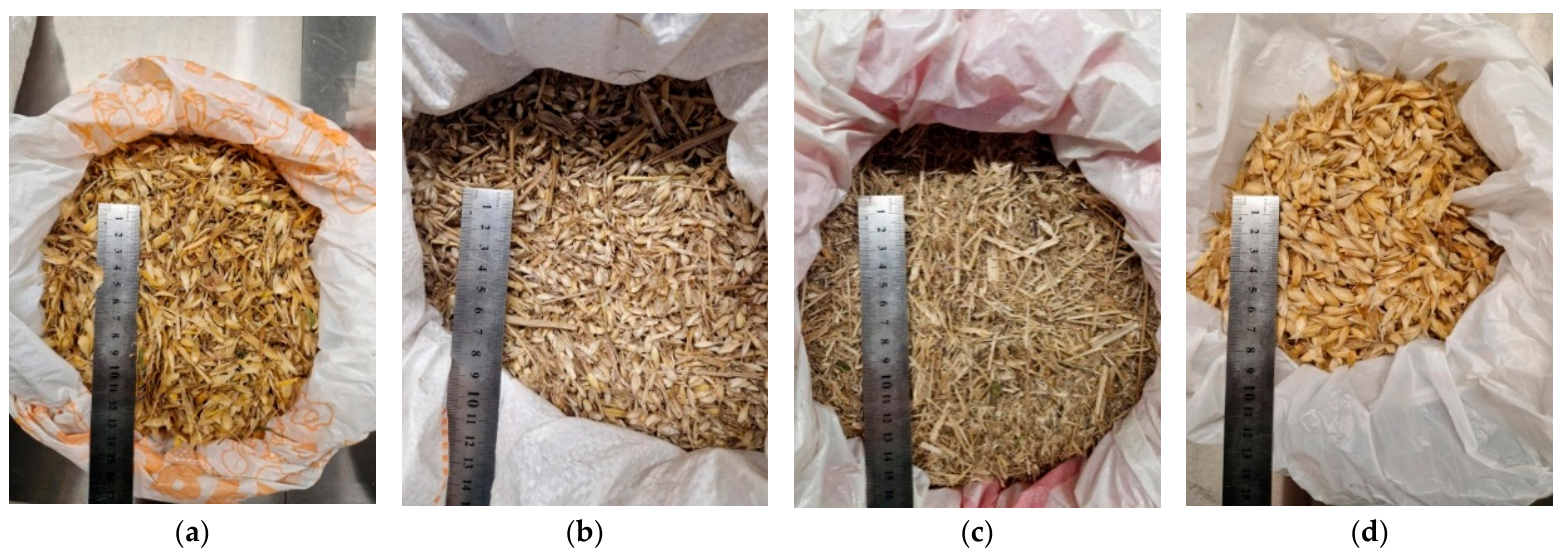
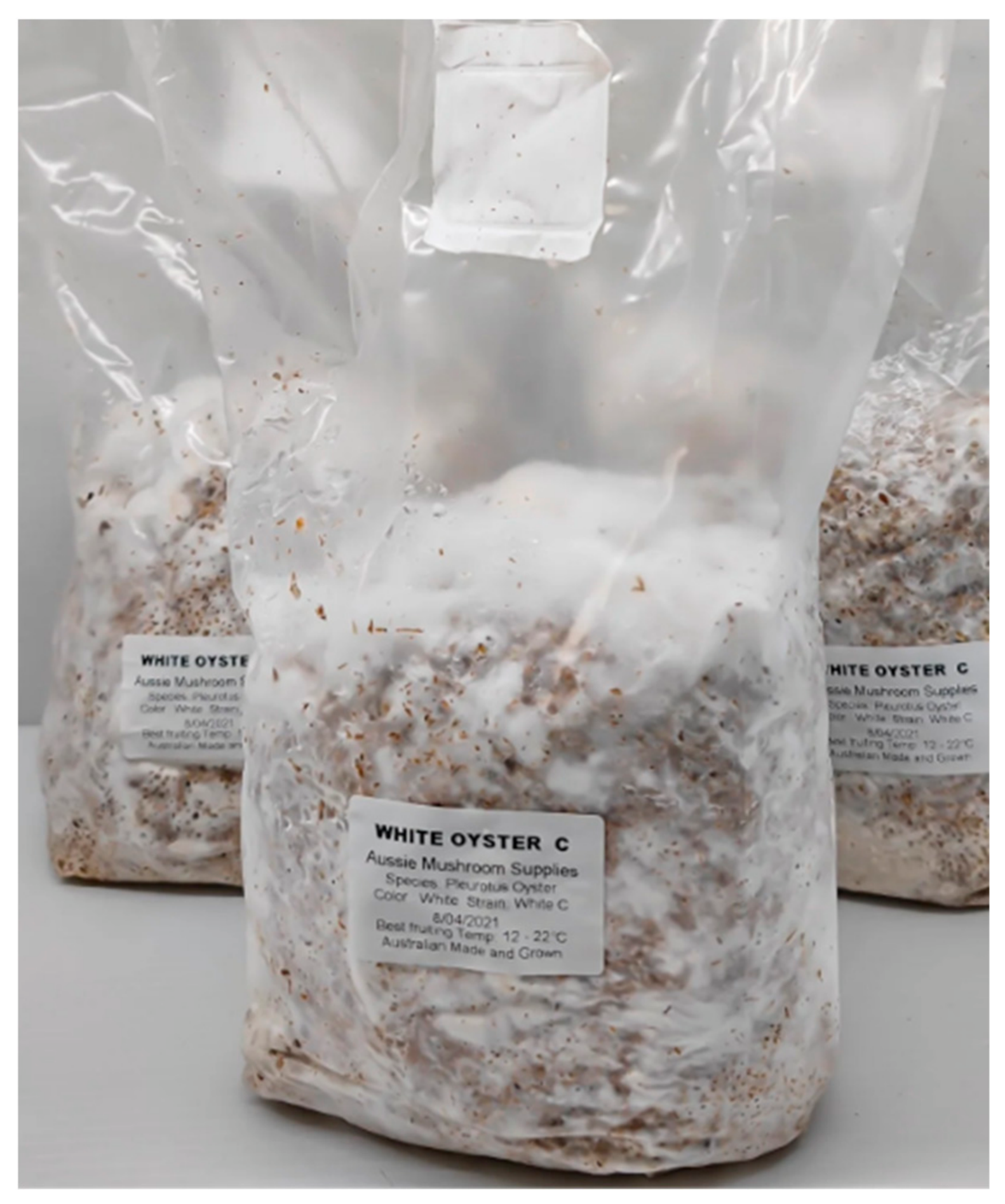
| Pleurotus ostreatus spawn (4 g) | Oat husks/straw (coarse) (20 g) | 13 mL |
| Pleurotus ostreatus spawn (4 g) | Oat husks/straw (fine) (20 g) | 13 mL |
| Pleurotus ostreatus spawn (4 g) | Rye husks/straw (20 g) | 13 mL |
| Pleurotus ostreatus spawn (4 g) | Wheat husks/straw (20 g) | 13 mL |
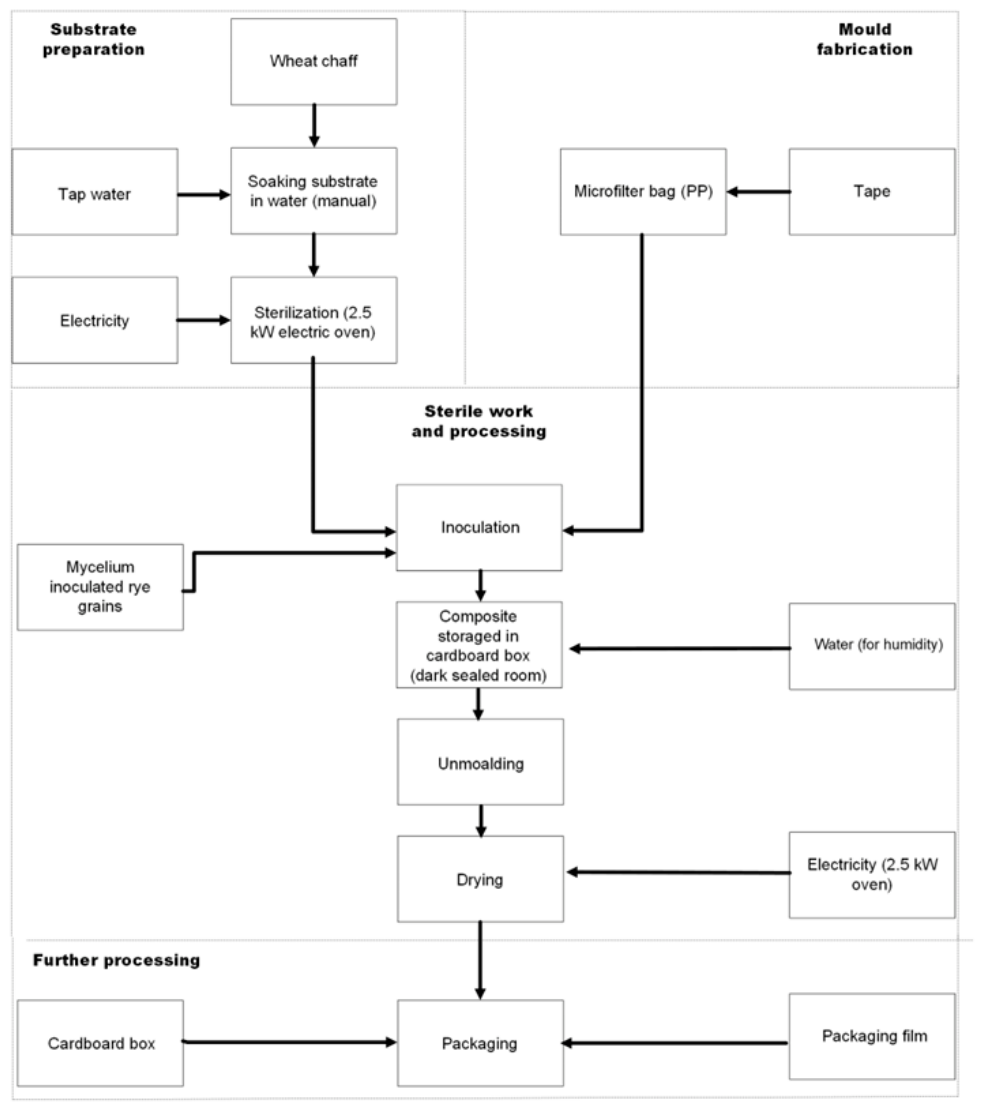
| Process Name | Amount | Literature Source |
|---|---|---|
| Mycelium—inoculated rye grains production | 0.5586 kg | [55] |
| Mycelium—inoculated rye grains transportation | 15 km (from contributor (Vilnius district) to manufacturing site (Vilnius)) | Ecoinvent database v3.3 |
| Wheat chaff production | 2.793 kg | Ecoinvent database v3.3 (proxy: straw) |
| Wheat chaff transportation | 90 km (from contributor (Varėna) to manufacturing site (Vilnius)) | Ecoinvent database v3.3 |
| Mounting materials transportation | 15 km (from contributor (Vilnius district) to manufacturing site (Vilnius)) | Ecoinvent database v3.3 |
| Process Name | Sub-Process Name | Amount | Literature Source |
|---|---|---|---|
| Sterilization of the substrate | Substrate | 2.793 kg | Primary data |
| Water | 69.83 L | Primary data | |
| Electricity (low voltage) | 3.75 kWh | Primary data | |
| Fungal inoculation | Sterilized substrate | 2.793 kg | Primary data |
| Mycelium—inoculated rye grains | 0.5586 kg | [55] | |
| PP bags for the substrate | 0.18 kg | Ecoinvent database v3.3 | |
| Cardboard box | 0.1095 kg | Ecoinvent database v3.3 | |
| Plastic tape | 0.024 kg | Primary data | |
| Humidity preservation | Water | 5 L | Primary data |
| Electricity (low voltage) | 0.6 kWh | Ecoinvent database v3.3 | |
| Drying/stabilization | Acoustic insulation panel | 3.351 kg | Primary data |
| Electricity (low voltage) | 5 kWh | Ecoinvent database v3.3 | |
| Transportation to the sale site | Acoustic insulation panel | 3.351 kg | Primary data |
| Mounting materials | 1.116 kg | [17] | |
| Cardboard box | 0.86 kg | [17] | |
| Packaging film | 0.02934 kg | [17] | |
| Product transportation | 100 km | Ecoinvent database v3.3 | |
| Mounting the panel | Acoustic insulation panel | 3.351 kg | Primary data |
| Mounting materials | 1.116 kg | [17] | |
| Electricity (low voltage) | 0.06 kWh | [17] | |
| Dismounting the panel | Electricity (low voltage) | 0.06 kWh | [17] |
| Transportation to the waste disposal site | Acoustic insulation panel | 3.351 kg | Primary data |
| Waste disposal | Transportation | 10 km | Primary data |
| Biological waste, municipal waste incineration | 3.351 kg | Ecoinvent database v3.3 | |
| Plastic waste, melting and granulation | 0.302 kg | Ecoinvent database v3.3 | |
| Wood waste, municipal waste incineration | 1 kg | Ecoinvent database v3.3 | |
| Paper waste, municipal waste incineration | 0.86 kg | Ecoinvent database v3.3 | |
| Metal waste, melting and molding | 0.048 kg | Ecoinvent database v3.3 |
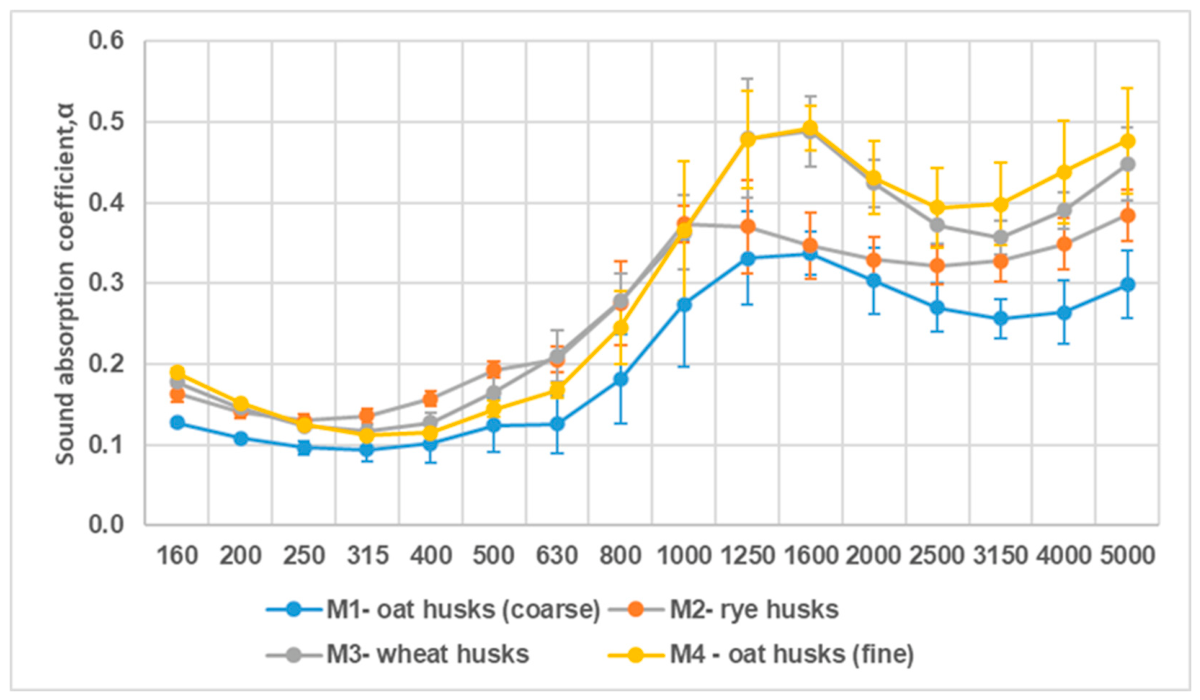
| Specimen Name | Thickness, cm | Mass, g | Volume, cm3 | Density, g/cm3 |
|---|---|---|---|---|
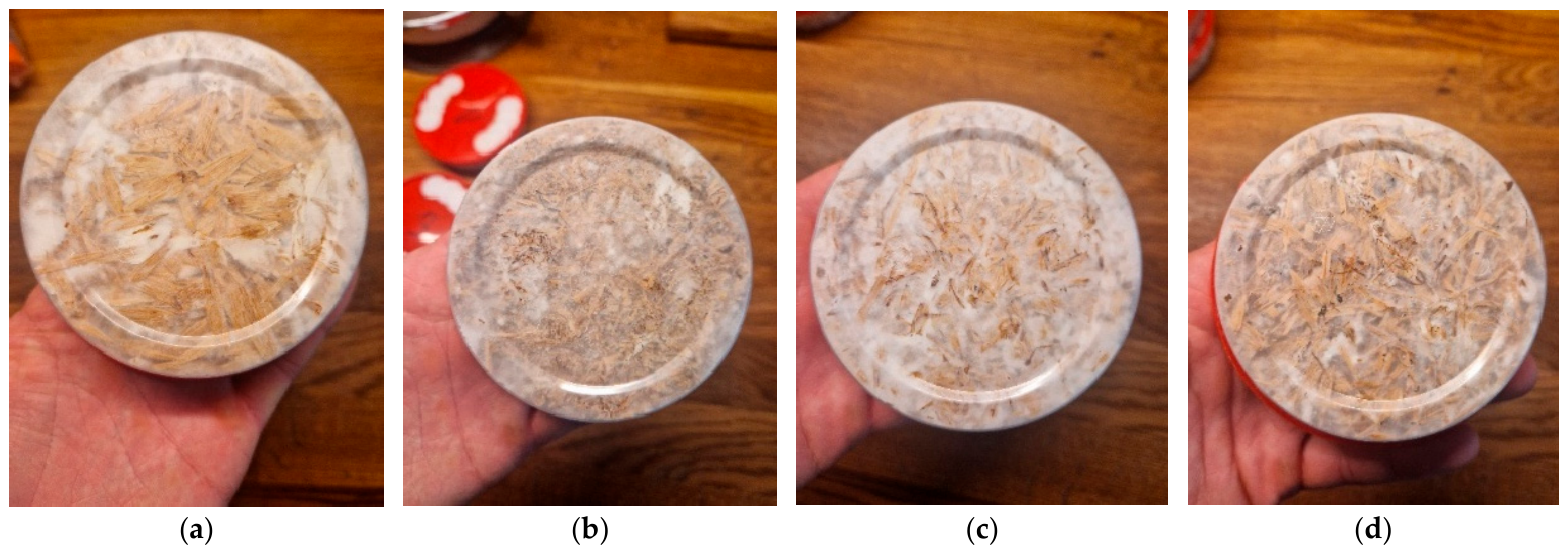
| Oat husks (fine) | 1.27 | 4.9 | 8.95 | 0.55 |
| Wheat husks | 1.3 | 4.37 | 9.18 | 0.47 |
| Rye husks | 1.26 | 4.22 | 8.94 | 0.47 |
| Oat husks (coarse) | 1.1 | 5.51 | 7.77 | 0.77 |
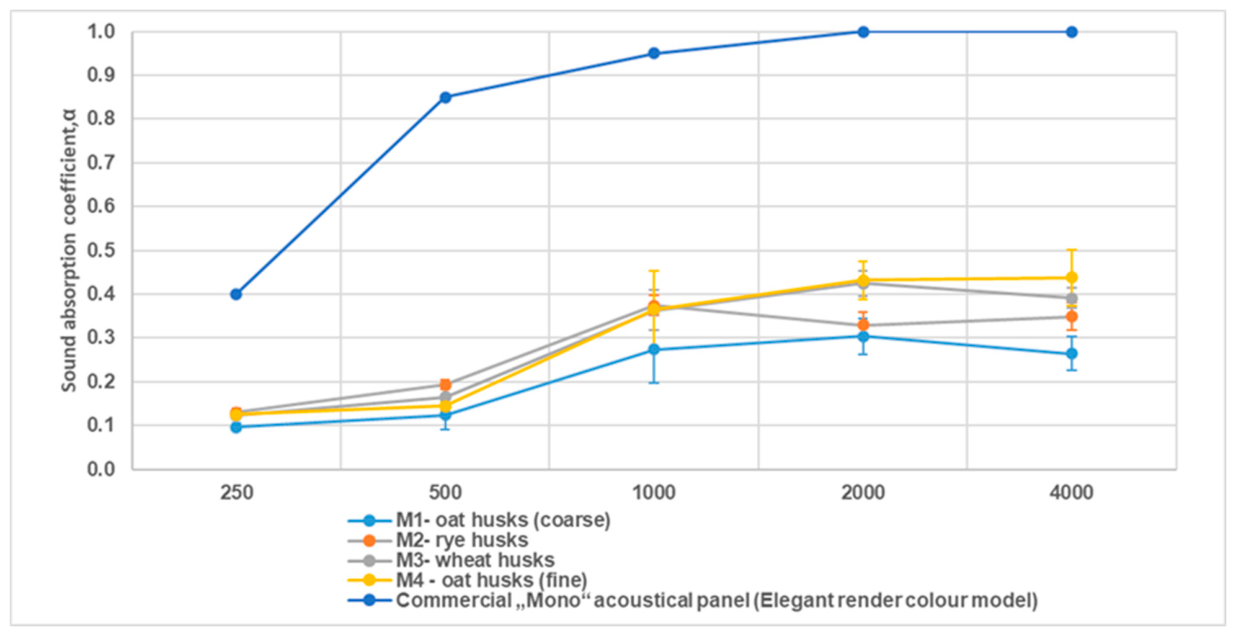
| Product | Weight | Thickness |
|---|---|---|
| Commercial “Mono” acoustical panel (Elegant render color) | 6 kg/m2 | 2.5 cm |
| Biocomposite (Oat husks (fine)) | 6.93 kg/m2 | 1.27 cm |
| Biocomposite (Wheat husks) | 6.2 kg/m2 | 1.3 cm |
| Biocomposite (Rye husks) | 5.97 kg/m2 | 1.26 cm |
| Biocomposite (Oat husks (coarse)) | 7.8 kg/m2 | 1.1 cm |
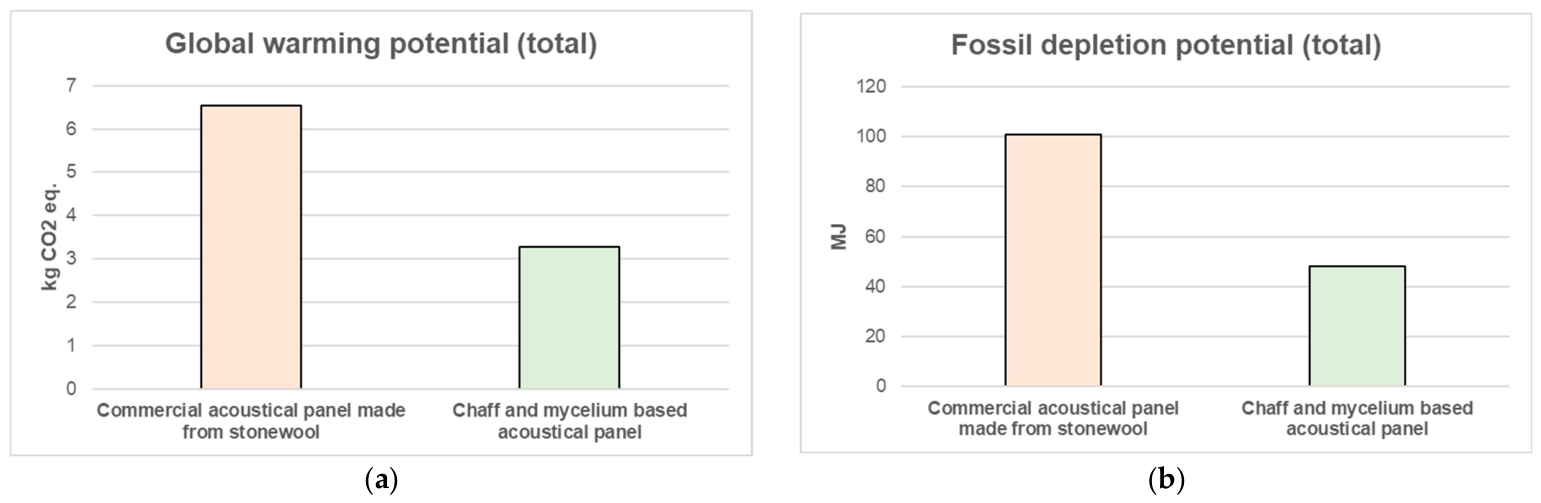
| Impact Category | Unit | Total Impact |
|---|---|---|
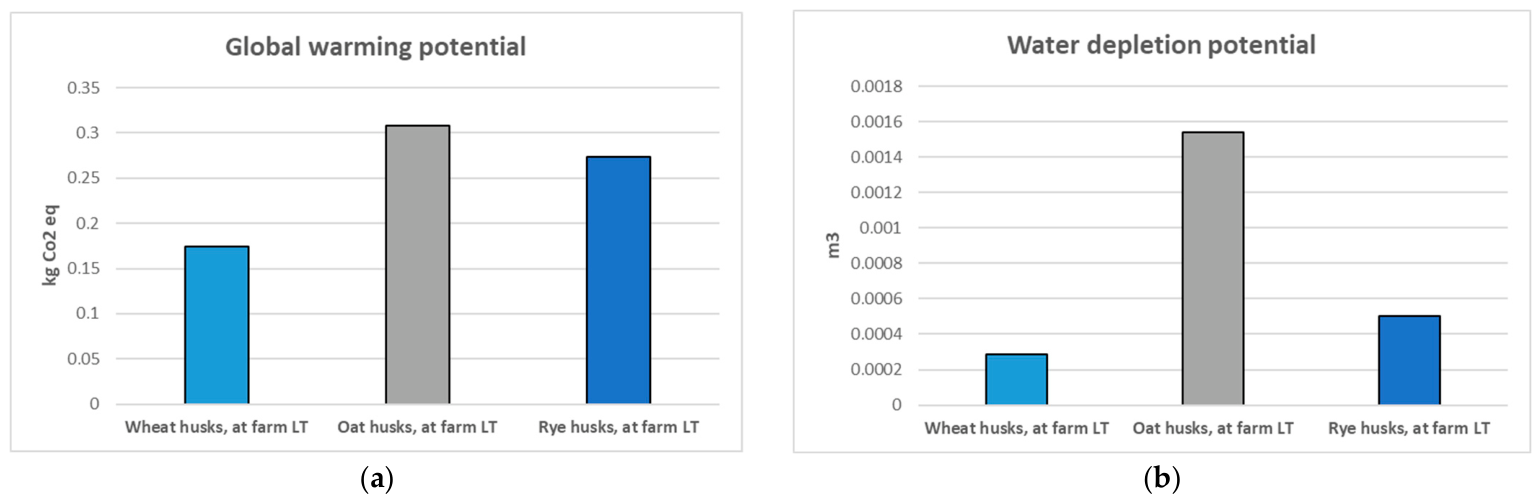
| Global warming | kg CO2 eq. | 3.271 |
| Stratospheric ozone depletion | kg CFC11 eq. | 0.0000036 |
| Ionizing radiation | kBq Co-60 eq. | 0.062 |
| Ozone formation, Human health | kg NOx eq. | 0.008 |
| Fine particulate matter formation | kg PM2.5 eq. | 0.0043 |
| Ozone formation, Terrestrial ecosystems | kg NOx eq. | 0.0085 |
| Terrestrial acidification | kg SO2 eq. | 0.0092 |
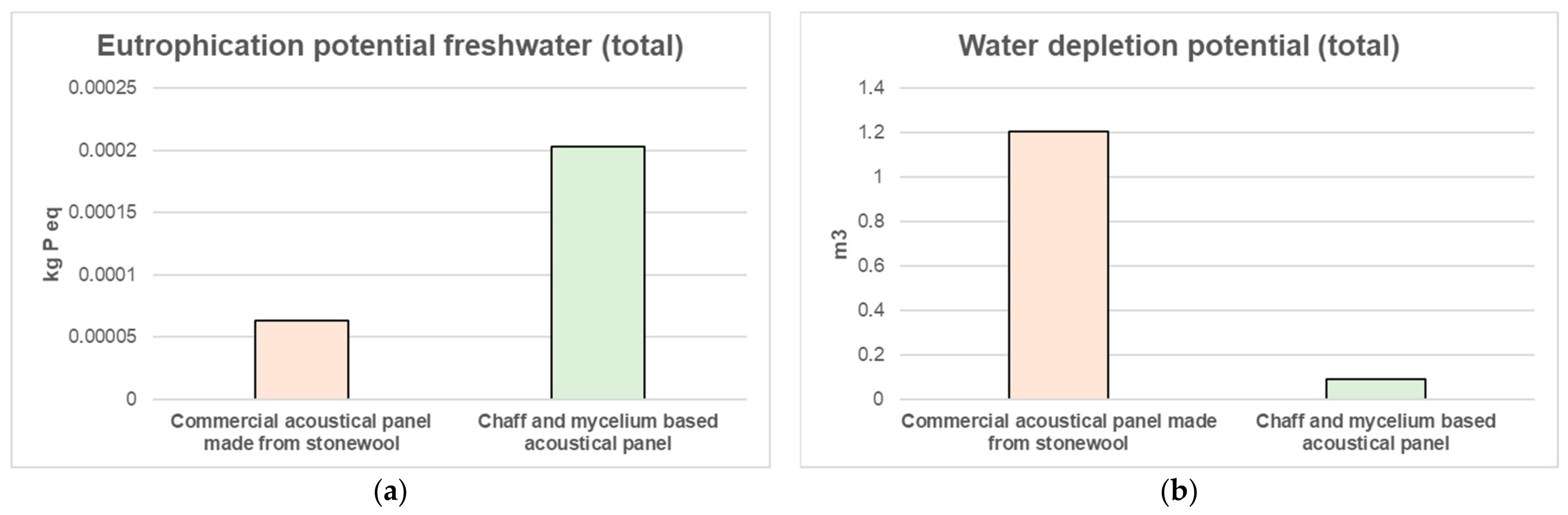
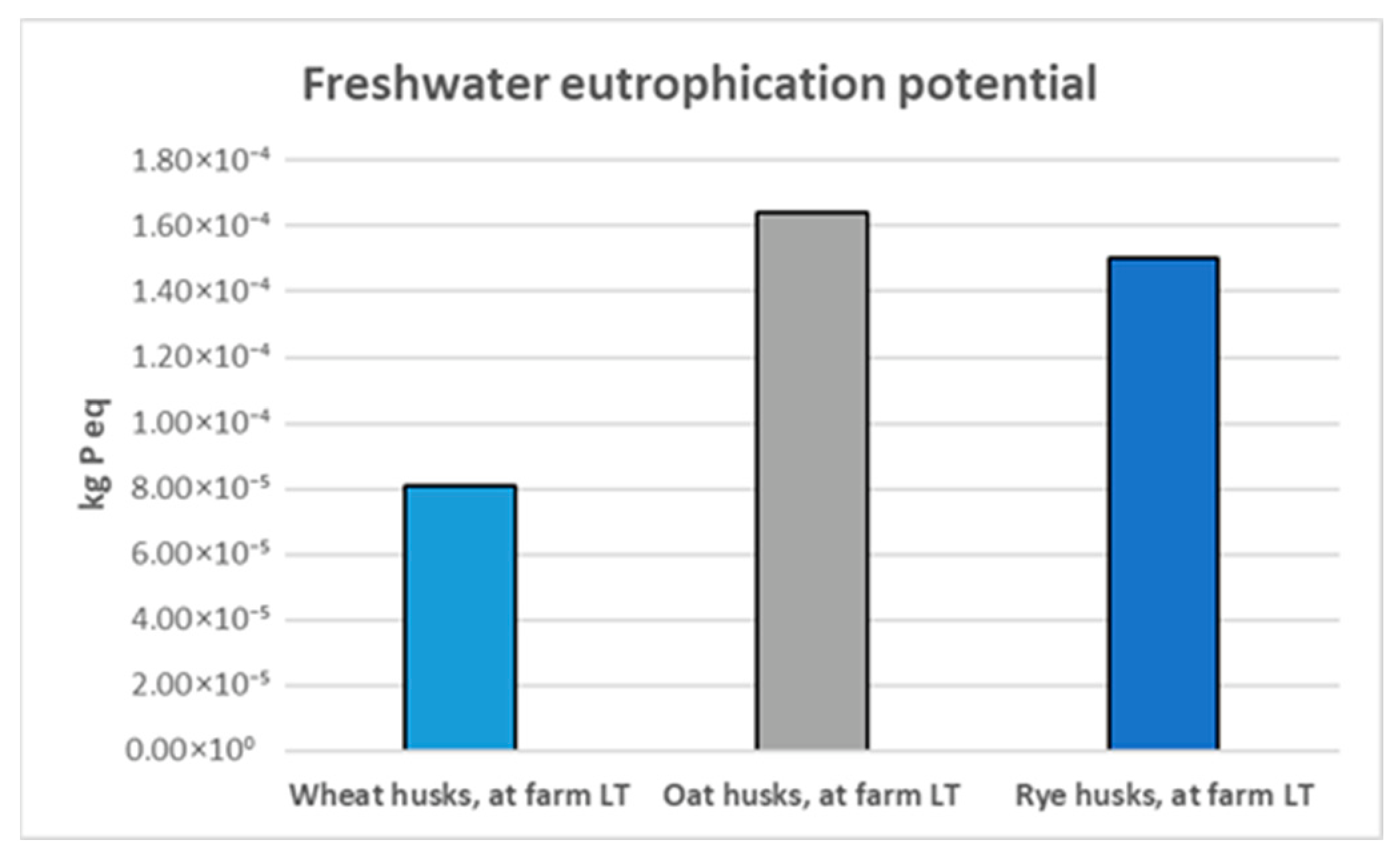
| Freshwater eutrophication | kg P eq. | 0.0002 |
| Marine eutrophication | kg N eq. | 0.00046 |
| Terrestrial ecotoxicity | kg 1.4-DCB | 12.348 |
| Freshwater ecotoxicity | kg 1.4-DCB | 0.0036 |
| Marine ecotoxicity | kg 1.4-DCB | 0.0104 |
| Human carcinogenic toxicity | kg 1.4-DCB | 0.0526 |
| Human non-carcinogenic toxicity | kg 1.4-DCB | 1.188 |
| Land use | m2a crop eq. | 0.958 |
| Mineral resource scarcity | kg Cu eq. | 0.011 |
| Fossil resource scarcity | kg oil eq. | 1.152 |
| Water consumption | m3 | 0.0901 |
Disclaimer/Publisher’s Note: The statements, opinions and data contained in all publications are solely those of the individual author(s) and contributor(s) and not of MDPI and/or the editor(s). MDPI and/or the editor(s) disclaim responsibility for any injury to people or property resulting from any ideas, methods, instructions or products referred to in the content. |
© 2026 by the authors. Licensee MDPI, Basel, Switzerland. This article is an open access article distributed under the terms and conditions of the Creative Commons Attribution (CC BY) license.
Share and Cite
Garnevičius, M.; Rutkauskas, D.; Grubliauskas, R. Acoustic Performance and Life Cycle Assessment of a Mycelium-Based Insulation Composite Produced from Agricultural Waste. Buildings 2026, 16, 1643. https://doi.org/10.3390/buildings16091643
Garnevičius M, Rutkauskas D, Grubliauskas R. Acoustic Performance and Life Cycle Assessment of a Mycelium-Based Insulation Composite Produced from Agricultural Waste. Buildings. 2026; 16(9):1643. https://doi.org/10.3390/buildings16091643
Chicago/Turabian StyleGarnevičius, Mantas, Dovydas Rutkauskas, and Raimondas Grubliauskas. 2026. "Acoustic Performance and Life Cycle Assessment of a Mycelium-Based Insulation Composite Produced from Agricultural Waste" Buildings 16, no. 9: 1643. https://doi.org/10.3390/buildings16091643
APA StyleGarnevičius, M., Rutkauskas, D., & Grubliauskas, R. (2026). Acoustic Performance and Life Cycle Assessment of a Mycelium-Based Insulation Composite Produced from Agricultural Waste. Buildings, 16(9), 1643. https://doi.org/10.3390/buildings16091643