


Abstract
Cement production accounts for approximately 8% of global CO2 emissions, and while calcined clays have attracted growing attention as supplementary cementitious materials, the literature remains fragmented across clay types and performance metrics, with no unified comparative framework examining how mineralogical composition and calcination conditions jointly govern pozzolanic reactivity and downstream performance outcomes. This study addresses that gap through a PRISMA-guided systematic review of 32 peer-reviewed studies, validated by structured expert interviews, and a comparative assessment of five calcined clay categories: metakaolin (MK), limestone-calcined clay blends (LC3), illite-rich clays, montmorillonite (MM)- based clays, and ceramic waste (CW)- derived clays. Findings establish clear performance hierarchies with direct implications for the construction sector. MK at 10–15% cement replacement delivers compressive strength gains of 8–36%, chloride permeability reductions of 61–87%, and sulphate expansion reductions of up to 89%, confirming its suitability for high-performance, chemically aggressive-environment structural concrete. LC3 systems enable 30–50% clinker substitution, yielding an estimated 30–40% embodied CO2 reduction alongside 6–10% strength gains and 64–90% reductions in chloride migration, representing the most significant decarbonisation opportunity reviewed. Illite-rich clays reduce compressive strength by 6–25%, limiting application to non-structural uses despite moderate durability gains. MM-based clays exhibit highly variable performance, ranging from a 60% strength loss to an 8% gain, with workability penalties of up to a 90% slump reduction, constraining adoption. CW-derived clays achieve 50–69% reductions in chloride diffusion while valorising industrial waste, though strength reductions of 11–20% limit structural applications. Across all clay types, superplasticiser demand increases by 1.5–3.6 times, posing a universal cost and logistics challenge for practitioners in mix design.
1. Introduction
Concrete is the most widely used construction material in the world, with annual production exceeding 30 billion tonnes, making it the second-most-consumed substance on Earth after water [1]. Its extensive utilisation underpins global infrastructure expansion, urbanisation, and economic development. However, this scale of production is associated with significant environmental consequences. Cement, which constitutes only 10–15% of concrete by mass yet contributes almost all of its embodied carbon, is responsible for approximately 8% of global anthropogenic CO2 emissions [2]. Emissions arise from both the combustion of fossil fuels required to heat rotary kilns to approximately 1450 °C and the calcination of limestone (LS), which chemically releases CO2 [3]. Each tonne of Portland cement clinker generates approximately 0.8–0.9 tonnes of CO2 while consuming around 4 GJ of energy, positioning cement manufacturing among the most carbon-intensive industrial processes globally [4].
Achieving global climate targets that limit warming to 1.5–2.0 °C above pre-industrial levels requires substantial reductions in cement-related emissions while simultaneously meeting increasing infrastructure demand, particularly in rapidly developing regions [5]. Supplementary cementitious materials (SCMs) are among the most effective strategies for reducing clinker content and lowering embodied carbon without compromising structural integrity or durability [6]. Traditional SCMs such as fly ash, ground granulated blast furnace slag, and silica fume have demonstrated substantial environmental benefits [7]. However, their long-term availability is increasingly constrained due to declining coal-fired power generation and evolving steel production technologies, creating supply uncertainties that necessitate alternative solutions.
In this context, clay minerals form through chemical weathering of primary silicate minerals such as feldspars and micas across virtually all climatic zones and geological terrains, accumulating in diverse environments, including river floodplains, marine sedimentary basins, and residual soil profiles [8,9]. Kaolinite, illite, and smectite deposits are consequently found on every inhabited continent. Unlike fly ash and silica fume, which are concentrated near industrial facilities, these clay minerals can be sourced regionally worldwide, significantly reducing transportation distances, carbon emissions, and supply chain vulnerability [10]. Clay calcination typically occurs at 700–900 °C, substantially lower than clinker production temperatures, resulting in lower energy consumption and reduced associated emissions. When thermally activated, certain clay minerals transform into amorphous aluminosilicate phases, called calcined clay (CC), that can react with calcium hydroxide released during cement hydration. These pozzolanic reactions produce additional calcium silicate hydrate (C-S-H) and calcium aluminate hydrate (C-A-H), refining pore structure and enhancing durability [11]. Five principal categories of CCs have received significant research attention.
- Metakaolin (MK), derived from high-purity kaolinite, exhibits superior pozzolanic reactivity and consistently enhances mechanical and durability performance [12].
- LS-CC blends (LC3 systems), formally introduced by Antoni et al. [13], enable 40–50% clinker replacement through synergistic mechanisms involving pozzolanic reactions and carboaluminate formation.
- Illite-rich clays, although globally abundant and potentially cost-effective, generally display moderate reactivity and require higher calcination temperatures for effective activation [14].
- Montmorillonite (MM)-based clays exhibit complex behaviour due to their expandable 2:1 phyllosilicate structure and high water-absorption capacity, leading to highly variable performance outcomes [15].
- Ceramic waste (CW)-derived clays align with circular economy principles by valorising industrial byproducts, although their reactivity may be limited due to prior high-temperature firing [16].
Despite rapid growth in research output over the past decade, the literature remains fragmented. Most investigations focus on individual clay types under varying experimental conditions, limiting direct comparison and obscuring performance hierarchies essential for informed material selection [17]. Variability in mineralogical composition, calcination parameters, replacement levels, and testing protocols further complicates cross-study synthesis. Moreover, a persistent gap exists between laboratory-scale findings and industrial implementation. Practical barriers, including high MK costs, limitations in batching plant infrastructure, supply chain logistics, quality variability, and insufficient regulatory standardisation, remain underexplored in academic discourse, despite representing critical impediments to widespread commercial adoption.
This systematic review addresses these gaps by synthesising evidence from 32 peer-reviewed studies selected according to PRISMA guidelines and supported by structured expert validation. The review pursues five interrelated objectives. First, it characterises and compares the chemical composition and calcination conditions of five CC categories and their influence on pozzolanic reactivity. Building on this foundation, the second objective comparatively evaluates the mechanical performance, specifically compressive strength development, of concrete incorporating different CC types across multiple replacement levels and curing ages. The third objective assesses the durability characteristics of CC concretes across multiple degradation mechanisms, including chloride penetration resistance, water absorption, sorptivity, permeability, and sulphate attack resistance. The fourth objective quantifies and analyses the workability impacts of CC incorporation and identifies practical strategies for managing increased superplasticiser (SP) demand. Finally, the review identifies critical knowledge gaps and practical implementation barriers, including cost, infrastructure, regulatory constraints, and supply chain logistics that impede the transition of CCs from laboratory demonstration to commercial-scale deployment.
2. Methodology
This study employs a dual-methodological approach, combining a systematic literature review (SLR) with structured expert validation [18], to examine the mechanical, durability, and workability performance of five CC types used as supplementary cementitious materials in concrete: MK, LC3, MM-based clays, illite-rich clays, and CW-derived clays. The SLR was conducted in compliance with PRISMA (Preferred Reporting Items for Systematic Reviews and Meta-Analyses) guidelines to ensure methodological rigour and reproducibility. A complete PRISMA checklist is included in Table S1. To complement and validate the synthesised evidence, structured expert interviews were conducted with experienced researchers and industry practitioners, providing contextual insight and real-world validation of the findings emerging from the literature.
This study adopts a structured research approach to systematically address the scientific problem of fragmented, incomparable evidence on calcined clay performance in cement systems. The scientific gap was established through a preliminary literature review, which revealed that existing studies examine individual calcined clay types in isolation under non-comparable experimental conditions, with no unified framework to bridge mineralogical composition, calcination parameters, and performance outcomes across the major clay categories. Five clay categories were identified for comparative assessment: metakaolin (MK), limestone-calcined clay blends (LC3), illite-rich clays, montmorillonite (MM)-based clays, and ceramic waste (CW)-derived clays, representing the full range of clay types reported in the construction materials literature. These five were selected based on research prevalence, global availability, and relevance to construction sector decarbonisation.
2.1. Search Strategy and Database Selection
Structured searches were conducted across three major databases (Scopus, ScienceDirect, and Google Scholar, all accessed in 2025) using Boolean search strings combining clay type descriptors with performance-related terms. Structured search strings were developed combining clay type descriptors with performance-related terms, including “metakaolin AND concrete AND compressive strength,” “LC3 AND concrete AND durability,” “montmorillonite AND concrete AND compressive strength,” “illite AND concrete AND compressive strength,” and “ceramic waste AND concrete AND compressive strength.” An initial yield of 245 records was processed through duplicate removal, relevance screening, and full-text assessment in accordance with PRISMA guidelines, resulting in a final corpus of 32 peer-reviewed studies. This corpus constitutes the primary database for quantitative synthesis [19].
2.2. Inclusion and Exclusion Criteria
Studies were included if they satisfied the following criteria: published from 2010 to 2025; investigated one of the five specified CC types; provided quantitative data on compressive strength, durability, or workability; classified under Engineering and Materials Science subject areas; available as full-text English-language publications. Studies with insufficient quantitative data, unavailable full texts, or non-English language were excluded. Two foundational pre-2010 references were incorporated through citation snowballing, a recognised supplementary search technique in which reference lists of included studies are systematically examined to identify seminal works not captured by database searches alone [20,21]. Their inclusion was warranted given their essential and widely cited contributions to the foundational understanding of clay mineral structure and chemical behaviour, knowledge that underpins the interpretation of calcination-induced reactivity across all five clay categories examined in this review. Excluding these works solely on the basis of publication date would have introduced an artificial gap in the theoretical foundation of the synthesis.
2.3. Screening and Selection Process
The initial search yielded 245 records. After removing 47 duplicates and 28 non-relevant entries, 170 unique records underwent title and abstract screening. Subsequently, 57 records were excluded for failing to meet the inclusion criteria, leaving 113 articles for full-text retrieval. Of these, 10 could not be retrieved, and 71 additional studies were excluded during full-text assessment due to insufficient quantitative data (n = 32), unavailability of complete text (n = 15), or other eligibility failures. This process ultimately identified 32 studies meeting all inclusion criteria. All screening stages, including title and abstract screening, full-text eligibility assessment, and data extraction, were conducted manually by three independent reviewers without the use of automation tools. Each reviewer applied the pre-specified eligibility criteria independently, and discrepancies in inclusion and exclusion decisions were resolved through structured discussion and consensus among all three reviewers. This multi-reviewer approach aligns with PRISMA guidelines and reduces the risk of subjective selection bias that single-reviewer screening would have introduced. To further enhance consistency and traceability, all exclusion decisions were recorded with explicit reasons directly traceable to the stated inclusion and exclusion criteria, and the data extraction template was piloted and agreed upon by all three reviewers before commencement. Readers may independently verify inclusion and exclusion decisions, as the full screening record is available from the corresponding author upon request.
2.4. Data Extraction and Synthesis
Data were extracted manually from all 32 studies using a standardised Microsoft Excel template capturing chemical composition (SiO2, Al2O3, Fe2O3 weight percentages), calcination temperature, cement replacement levels, water-to-binder ratios, compressive strength at 7, 28, 56, and 90 days, durability indicators (chloride permeability, water absorption, sorptivity, sulphate resistance), and fresh concrete workability (slump). This structured extraction produced a comparable, cross-study dataset enabling performance hierarchies to be established across clay types, an approach not previously undertaken in the literature.
2.5. Risk of Bias Assessment
Descriptive narrative synthesis was employed to compare performance outcomes across clay types, given high variability in mix proportions and testing protocols that precluded statistical meta-analysis. Risk of bias was assessed qualitatively across four dimensions: methodological transparency, experimental design clarity, adequacy of control mixes, and completeness of data reporting. To validate and contextualise the synthesised findings, semi-structured expert interviews were conducted with three experienced practitioners and researchers in the cement and clay industries, providing real-world implementation insight that the published literature alone cannot supply.
2.6. Expert Interviews
To complement the systematic literature review, semi-structured interviews were conducted with three industry experts to provide a broader contextual understanding of both technical performance and practical implementation challenges. The three interviewees represent diverse yet complementary expertise within the cement and clay industries. Expert A holds a PhD in MK of concrete and has decades of professional experience in the development, testing, and commercial application of CCs as supplementary cementitious materials. Expert B is an experienced kaolin consultant with an extensive background in commercial operations and material characterisation within the clay and minerals sector. Expert C is a top executive of a mineral processing company specialising in the production of MK. The discussion section integrates evidence from the reviewed literature with insights from these expert interviews to provide a comprehensive understanding of CC performance and industry practice. It is acknowledged that all three interviewees hold professional backgrounds directly linked to metakaolin and the kaolinite-based clay sector. Expert A through academic specialisation and commercial development of MK-based concrete, Expert B through commercial operations in the kaolin and clay minerals industry, and Expert C through executive leadership of an MK production company. This shared MK-oriented expertise, while providing deep and credible insights into the highest-performing clay category reviewed, constitutes a systematic sampling bias that limits the study’s ability to obtain equally expert and commercially grounded qualitative validation for illite-rich, montmorillonite-based, and ceramic waste-derived clay categories. Readers should interpret expert commentary throughout the manuscript with this bias explicitly in mind, particularly where expert perspectives reinforce or extend MK performance claims beyond what the peer-reviewed literature alone establishes.
Expert validation interviews were conducted online via Microsoft Teams. Before each interview, participants were briefed on the study’s objectives, procedures, and the voluntary nature of their participation. Assurances of confidentiality and anonymity were provided in accordance with the applicable ethical guidelines governing this research. The PRISMA flow diagram summarising the selection process is presented in Figure 1.
Figure 1.
PRISMA flow diagram of the systematic literature review in this study.
3. Findings and Analysis
This section presents findings from a systematic review of 32 studies investigating five CC categories: MK, LC3, illite-rich clays, MM-based clays, and CW-derived clays. Each category is analysed across four performance domains. First, the chemical composition and calcination conditions, as well as the oxide content (SiO2, Al2O3, and Fe2O3) and thermal activation parameters, govern pozzolanic reactivity. Second, mechanical performance through compressive strength development at 7, 28, 56, and 90 days relative to ordinary Portland cement. Third, durability characteristics including chloride penetration resistance, water absorption, sorptivity, permeability, and sulphate resistance. Fourth, workability behaviour, as measured by slump and SP demand, represents the primary practical barrier to industrial adoption. The following subsections present detailed findings for each clay category, integrating quantitative data with mechanistic explanations to clarify performance potential, limitations, and optimal deployment strategies.
3.1. Kaolinite-Based Clay
MK is the most extensively investigated and highest-performing CC across multiple performance metrics. Dinakar et al. [22] found that a 10% replacement of cement content with MK yielded an 8% strength gain, along with exceptional durability improvements: permeability decreased by 78%, water penetration by 60%, and chloride permeability by 87%, reflecting superior microstructural densification. Douamba et al. [6] tested replacement levels up to 30%, with 25% achieving a 9% increase in strength, while 30% reduced sorptivity by 81% and capillary absorption by 71%. Ramezanianpour & Jovein [23] reported the highest strength gain across all reviewed studies: a 36% increase at 12.5% replacement (w/b = 0.40, 800 °C calcination), alongside a 61% reduction in chloride permeability. Haider et al. [24] confirmed the optimal 10% replacement level, reporting an 8% strength improvement and a doubling of acid resistance under sulfuric acid immersion. Trümer & Ludwig [25] further demonstrated that 30% MK replacement achieved 22% higher compressive strength and 89% lower sulphate expansion than the control, definitively establishing MK’s superiority over illite and MM alternatives. Across all studies [6,22,23], optimal replacement levels consistently ranged between 10% and 15%. Table 1 summarises the compressive strength performance of metakaolin (MK)-blended concrete across varying cement replacement levels.
Table 1.
Performance of metakaolin as partial cement replacement. Note: ↓ decrease.
3.2. Illite-Rich Clays
Illite-rich clays are globally abundant and cost-effective, but they consistently underperform MK. Across all reviewed studies, compressive strength reductions ranged from 3% to 25%, with blending strategies offering partial mitigation. Jayathilakage et al. [2] found that pure 20% illite replacement reduced strength by 14%, while blending with equal parts kaolinite limited the reduction to 9% and decreased porosity by 7%, demonstrating improved pore structure through synergistic effects. Cordoba et al. [27] confirmed an 11.7% strength reduction at 25% replacement, yet recorded a 23% improvement in chloride diffusion resistance, along with a 2-fold increase in SP requirements. Lemma et al. [28] showed that strength reductions of 6–25% persisted even at calcination temperatures up to 950 °C, though higher temperatures maximised pozzolanic activity as confirmed by the Frattini test. Irassar et al. [29] reported 3–16% strength reductions with illite–chlorite shale at 900–1000 °C, highlighting durability potential from prior studies. Trümer & Ludwig [25] observed a 15% decrease in strength but a 43% reduction in sulphate expansion, confirming moderate durability gains. Illite-rich clays are best suited to non-structural, durability-governed, or cost-sensitive applications rather than high-strength concrete. Table 2 summarises the performance of illite-rich calcined clay (CC) as a supplementary cementitious material (SCM) for partial cement replacement.
Table 2.
Performance of illite-rich calcined clay as partial cement replacement. Note: ↓ decrease.
3.3. Montmorillonite-Based Clays
MM-based clays exhibit highly variable performance, ranging from a 60% strength loss to an 8% gain, depending critically on replacement level, particle dispersion, and calcination conditions. Rehman et al. [30] achieved strength-neutral performance at 15% replacement (98% of OPC), with water absorption decreasing by 67.4%, indicating improved compactness through pore-filling effects. Yan et al. [15] recorded an 8.1% strength gain at 8% replacement calcined at 750 °C, confirmed by SEM analysis showing finer crack patterns and reduced moisture ingress. However, this came at the cost of a 90% slump reduction, the most severe workability penalty observed across all clay types reviewed. Rahmani & Imani Asbagh [31] tested nano-MM at ultra-low dosages (0.2–0.4%), where a 0.4% replacement caused a 60% strength loss due to agglomeration, yet delivered a 400% improvement in corrosion resistance, delaying reinforcement corrosion onset from 4 to 20 weeks. Chi & Huang [32] confirmed beneficial effects at low dosages (5%), with water absorption decreasing by 9.3%. Trümer & Ludwig [25] observed a 9% strength reduction at 30% replacement but a 43% reduction in sulphate expansion. Best results are consistently achieved at replacement rates below 10%. Table 3 presents the mechanical and durability performance of MM-based CCs as partial cement replacement materials in cementitious systems.
Table 3.
Performance of montmorillonite-based calcined clays as partial cement replacement. Note: ↑ increase; ↓ decrease.
3.4. Ceramic Waste-Derived Calcined Clays
CW-derived clays support circular economy principles by valorising industrial byproducts, typically delivering acceptable performance at 10–20% replacement levels while offering meaningful environmental benefits. Pacheco-Torgal & Jalali [16] found that 20% ceramic brick waste reduced strength by 16% but improved chloride diffusion resistance by 69%, suggesting that over-firing during manufacturing limits reactivity. Yet, residual pozzolanic activity still enhances transport properties. Barreto et al. [33] reported 11–20% strength reductions and 12–22% increases in water absorption at 10–20% replacement, reflecting modest but acceptable performance for non-critical applications. Zito et al. [34] identified an optimal 8% replacement of sanitary ware waste, achieving a 2.1% strength gain and 43% reduction in water absorption. Higher replacement rates of 24–40% led to progressive strength losses of 8.6–13.5%. Kannan et al. [35] observed 3–10% strength reductions across 10–40% replacement levels but recorded a 50% decrease in chloride permeability at 40%, highlighting durability value in aggressive environments. Cheng et al. [36] confirmed minimal strength loss at 10% replacement and a 62.6% reduction in water penetration at 30%. CW clays are best suited to durability-governed, non-structural applications where waste valorisation and resource conservation are prioritised over mechanical performance. Table 4 presents the mechanical and durability performance of CW-derived CCs as partial cement replacement materials in cementitious systems.
Table 4.
Performance of ceramic waste-derived calcined clays as partial cement replacement. Note: ↑ increase; ↓ decrease.
3.5. Limestone-Calcined Clay Blends (LC3 System)
The LC3 system enables 30–50% clinker replacement through synergistic mechanisms, where CC provides pozzolanic reactivity and LS acts as both a filler and a reactive component, forming carboaluminate phases. Du & Dai Pang [37] tested two replacement levels: B30 (20% clay + 10% LS) and B45 (30% clay + 15% LS), calcined at 800 °C. B30 achieved a 6% strength gain, while B45 showed a 9.4% reduction, indicating excessive dilution at higher levels. Despite this, sorptivity decreased by 55% for both mixes, and chloride migration reduced by 73% (B30) and 64% (B45). Workability required 2× and 2.8× more SP, respectively. Shafiee et al. [38] demonstrated that even low-grade clay at 50% clinker replacement achieved 6% higher strength than the pozzolanic cement reference, with a surface resistivity 87% higher than that of OPC. Dhandapani et al. [39] confirmed a 10% strength gain and 90% reduction in chloride migration at 50% replacement, despite requiring 3.6× SP. Antoni et al. [13] validated strength improvements through carboaluminate formation, while Nguyen et al. [40] reported 58 MPa at 15% replacement, with pore refinement confirmed at moderate levels. Table 5 presents the mechanical and durability performance of LC3 blends as partial cement replacement materials in cementitious systems.
Table 5.
Performance of limestone-calcined clay blend (LC3) as partial cement replacement. Note: ↑ increase; ↓ decrease.
4. Risk of Bias Across Included Studies
Risk of bias assessment across 32 included studies reveals generally low (L) to moderate (M) risk levels, with variability primarily attributable to differences in reporting completeness rather than fundamental methodological weaknesses. Four bias domains were evaluated: selection bias (material characterisation and mix design transparency), performance bias (consistency of experimental procedures), detection bias (appropriateness of testing methods), and reporting bias (completeness of result presentation). Selection bias was generally low, with most studies providing detailed chemical composition data, mix design parameters, and source information. Performance bias remained low across most investigations, with studies employing controlled laboratory conditions, standardised curing regimes (23 ± 2 °C), and replicated testing. Detection bias was minimised through established standards, including ASTM C39 [41] for compressive strength, ASTM C1202 [42] for chloride permeability, and ASTM C143 [43] for workability assessment.
Moderate risk occurred when calcination processing details were incompletely specified, mix design parameters were partially reported, durability testing was limited to a single mechanism, or long-term data beyond 90 days was absent. These instances limited cross-study comparability but did not fundamentally compromise study validity [44]. Notably, no studies exhibited high risk across multiple domains. Most studies reported both favourable and unfavourable outcomes transparently. However, selective emphasis on positive results was occasionally observed, reflecting common academic practice rather than intentional suppression. Publication bias likely exists given journal preferences for positive findings, potentially inflating apparent benefits in the literature. The evidence base reflects appropriate methodological rigour and generally transparent reporting, providing reasonable confidence in the findings. Table 1, Table 2, Table 3, Table 4 and Table 5 present detailed bias assessments organised by clay category.
4.1. Metakaolin Studies: Consistency and Methodological Rigour
MK investigations demonstrate exceptional methodological consistency across diverse research groups and experimental conditions, establishing it as the most comprehensively validated CC for concrete applications. Low-risk studies, including Haider et al. [24], Douamba et al. [6], and Dinakar et al. [22], consistently report superior performance through rigorous protocols: complete material characterisation (SiO2 54.3–74.3%, Al2O3 17.8–38.3%), standardised testing following ASTM and international standards, and comprehensive outcome reporting. These investigations converge on consistent findings: optimal replacement levels of 10–15% yield 8–36% improvements in compressive strength, 78–87% reductions in chloride permeability, and 71–81% decreases in sorptivity, with strength–durability trade-offs predictable across replacement levels.
Moderate-risk studies, including Trümer & Ludwig [25] and Ramezanianpour & Jovein [23], reflect limitations in reporting completeness rather than methodological flaws. Both employed standard testing protocols and reported primary outcomes with sufficient detail. Their findings align closely with those of low-risk investigations: 22% strength improvement and 89% reduction in sulphate expansion at 30% replacement [25], and up to 36% strength gain at optimal conditions [23]. Workability management emerged as a universal challenge, with all studies reporting a 1.5–2.5-fold increase in SP demand, reflecting MK’s high specific surface area (15,000–20,000 m2/kg). However, this proved consistently manageable through admixture optimisation across all reviewed studies. The convergence of findings across varying risk profiles confirms that MK performance is reproducible and predictable, positioning it as the reference standard CC with sufficient evidence certainty to support confident specification in structural concrete applications. Table 6 summarised the risk of bias assessment for metakaolin studies.
Table 6.
Risk of bias assessment for metakaolin studies.
4.2. Illite-Rich Calcined Clay Studies: Performance Limitations and Cost–Benefit Considerations
Illite-rich clay investigations consistently reveal reduced mechanical performance compared to MK, partially offset by moderate durability improvements and cost advantages. Low-risk studies establish illite’s fundamental limitations: pure illite replacement causes 14% strength reduction [2] and 3–16% decreases depending on mineralogy [29], attributed to illite’s complex 2:1 phyllosilicate structure requiring higher calcination temperatures (900–950 °C) yet achieving less complete amorphisation than kaolinite. Blending illite with kaolinite reduced strength loss from 14% to 9% while decreasing porosity by 7%, demonstrating a viable mitigation strategy.
Moderate-risk studies corroborate these patterns. Cordoba et al. [27] confirmed 11.7% strength reduction alongside 23% improved chloride resistance; Trümer & Ludwig [25] observed 15% strength decrease but 43% reduced sulphate expansion; Lemma et al. [28] showed that strength reductions of 6–25% persisted even at optimal 950 °C calcination. These consistent findings confirm that illite’s inferior performance reflects fundamental mineralogical characteristics rather than processing failures. Workability management presents an additional challenge, with illite requiring 2× SP dosage despite its lower reactivity, suggesting particle characteristics independently drive water demand. Illite is best suited to cost-sensitive, durability-governed, or non-structural applications where modest strength reductions are acceptable, locally available deposits offer logistical advantages, and blending strategies can balance performance with cost optimisation. Table 7 details the risk of bias assessment for included illite-rich CC studies across key methodological quality domains.
Table 7.
Risk of bias assessment—illite-rich calcined clay studies.
4.3. Montmorillonite-Based Calcined Clay Studies: Highly Variable Performance and Critical Dispersion Dependencies
MM-based CC investigations reveal exceptionally variable performance, ranging from a 60% strength loss to an 8% gain, reflecting fundamental challenges associated with its expandable 2:1 phyllosilicate structure, high water absorption, and sensitivity to particle dispersion quality. In a single low-risk study, Yan et al. [15] documented an 8.1% strength gain at 8% replacement through well-dispersed particles confirmed via SEM analysis. However, this came at the cost of a catastrophic 90% slump reduction, the most severe workability penalty observed across all clay types reviewed, raising fundamental questions about practical implementability even at low dosages. Moderate-risk studies highlight contrasting outcomes. Rehman et al. [30] achieved near-neutral strength (98% of OPC) with a 67.4% reduction in water absorption at 15% replacement, suggesting successful dispersion. Rahmani & Imani Asbagh [31] recorded a 60% strength loss at only 0.4% nano-MM due to agglomeration, yet achieved a 400% improvement in corrosion resistance. Trümer & Ludwig [25] observed a 9% strength reduction but 43% less sulphate expansion at 30% replacement. The evidence confirms that MM success depends critically on dispersion quality, calcination conditions, and replacement levels below 10%. It is best suited to specialised, durability-critical applications where unique benefits justify the severe workability challenges and performance variability. Table 8 captures the risk of bias assessment for included MM-based CC studies across key methodological quality domains.
Table 8.
Risk of bias assessment—montmorillonite-based calcined clay studies. Note: ↓ decrease.
4.4. Ceramic Waste-Derived Calcined Clay Studies: Circular Economy Potential with Performance Trade-Offs
CW-derived clay investigations demonstrate modest but acceptable performance at 10–20% replacement levels, offering environmental benefits through industrial byproduct valorisation rather than competing with purpose-CCs on technical performance. Barreto et al. [33] documented 11–20% strength reductions and 12–22% increases in water absorption at 10–20% replacement, reflecting limitations imposed by original manufacturing temperatures (600–700 °C), which cause partial recrystallisation and reduced reactivity. Cheng et al. [36] reported more favourable outcomes with waste ceramic polishing powder, showing only 1.8% strength loss at 10% replacement and a 62.6% reduction in water penetration at 30%, suggesting lower firing temperatures preserve greater reactivity. Zito et al. [34] identified an optimal 8% replacement of sanitary ware waste, achieving a 2.1% strength gain and a 43% reduction in water absorption, with progressive strength losses of 8.6–13.5% at higher levels. Kannan et al. [35] confirmed 3–10% strength declines across 10–40% replacement, but recorded 50% chloride permeability reduction at the highest level. Pacheco-Torgal & Jalali [16] reported a 16% reduction in strength yet a 69% improvement in chloride diffusion resistance, confirming that residual pozzolanic activity is sufficient to enhance transport properties. CW clays serve a complementary role in sustainable concrete, best suited to durability-driven, non-structural applications where circular-economy benefits are prioritised. Table 9 presents the risk of bias assessment for included CW-derived CC studies across key methodological quality domains.
Table 9.
Risk of bias assessment—ceramic waste-derived calcined clay studies. Note: ↓ decrease.
4.5. Limestone-Calcined Clay Blend (LC3) Studies: Methodological Excellence and Performance Consistency
Under laboratory conditions, at assessment periods of up to 90 days, LC3 systems have demonstrated durability benefits, including 55–90% reductions in chloride migration coefficients and 39–55% decreases in sorptivity. These results are consistent across multiple independent research groups, providing reasonable confidence in the short- to medium-term durability performance of LC3 concrete. However, long-term field durability data beyond 90–180 days remains limited, and the designation of LC3 as delivering “superior long-term durability” should be understood as a projection grounded in laboratory mechanistic evidence rather than a conclusion confirmed by sustained field performance monitoring. For low-risk studies, Shafiee et al. [38], Du & Dai Pang [37], and Dhandapani et al. [39] converge on consistent findings: moderate replacement levels (30% total) achieving 6–10% compressive strength improvements, 55–90% reductions in chloride migration coefficients, and 39–55% sorptivity decreases. These results confirm that LC3 delivers both carbon-reduction benefits (30–40% embodied CO2 reduction) and superior long-term durability, even when using low-grade clays. The universal workability challenge, requiring a 2–3.6× increase in SP dosage, is consistently documented across all studies. This remains manageable through established admixture technology rather than representing a fundamental barrier to commercial deployment. Moderate-risk studies corroborate these findings. Nguyen et al. [40] achieved 58 MPa at 15% replacement against a 50 MPa target, with mercury intrusion porosimetry confirming progressive pore refinement. Antoni et al. [13] provided pioneering evidence that 45% substitution yielded superior strength through carboalumination formation. The convergence of results across varying risk profiles, geographic locations, and clay sources confirms that LC3 performance derives from fundamental synergistic mechanisms, pozzolanic reactions, carboalumination formation, and filler effects supporting confident implementation at commercial scale. Table 10 outlines the risk of bias assessment for included LC3 systems studies across key methodological quality domains.
Table 10.
Risk of bias assessment—limestone-calcined clay blend (LC3) studies. Note: ↓ decrease.
5. Results of Syntheses and Discussion
This section synthesises evidence from 32 studies examining five CC categories as supplementary cementitious materials. Comparative analysis reveals clear performance hierarchies. MK and LC3 systems consistently deliver superior outcomes: 8–36% increases in compressive strength, 55–90% reductions in chloride transport, and exceptional sulphate resistance, establishing them as immediately deployable technologies for high-performance applications. Both require 2- to 3.6× higher SP dosages, representing a manageable but universal workability challenge. Illite-rich clays exhibit consistent underperformance, with 6–25% strength reductions, attributable to incomplete thermal activation even at 900–950 °C; however, modest durability improvements and cost advantages make them viable for non-structural applications. MM-based clays exhibit highly variable performance, ranging from 60% strength loss to 8% gain depending on dispersion quality, with catastrophic workability penalties representing fundamental implementation barriers. CW-derived clays demonstrate acceptable performance at 10–20% replacement with modest strength reductions offset by selective durability improvements, positioning them for circular economy applications. Beyond performance, synthesis identifies critical knowledge gaps: research bias favouring compressive strength over workability optimisation; limited long-term field validation beyond 28–90 days; insufficient attention to low-grade clay characterisation and quality control protocols; inadequate techno-economic analysis. Implementation barriers, including high costs, material variability, lack of standardisation, and infrastructure limitations, collectively impede commercial adoption. These findings will be contextualised through structured expert interviews with industry professionals to validate conclusions and identify practical barriers that are underrepresented in the academic literature.
5.1. Chemical Composition
The chemical composition of CCs and the calcination temperature significantly influence their reactivity in concrete [45]. This section compares the chemical composition and calcination temperature ranges of the five major types of CC used as supplementary cementitious materials (SCMs), drawn from the full body of articles reviewed in this study. Among the five clay types examined, MK exhibits the highest chemical purity and the narrowest optimal calcination window (700–800 °C) [6]. Its SiO2 content ranges from 54.3% to 74.3% and Al2O3 from 17.8% to 38.3%, while impurity oxides remain exceptionally low, with Fe2O3 below 4.3%, MgO below 0.22%, and combined alkalis (Na2O + K2O) below 0.62%. According to Fernandez et al. [46], high pozzolanic reactivity requires clays containing more than 65% combined SiO2 and Al2O3 alongside less than 5% fluxing oxides such as Fe2O3, CaO, and MgO, as these interfere with the formation of reactive amorphous aluminosilicate phases during calcination. MK consistently satisfies these thresholds, which accounts for its superior compressive strength performance of 8–36% above the OPC control at replacement levels of 5–30%, as reported across the reviewed literature [22].
Illite-rich CCs present a markedly different chemical profile, with substantially elevated Fe2O3 (3.7–8.3%), higher alkali contents, particularly K2O (3.0–5.4%) and Na2O (1.1–2.1%), and a wider calcination range spanning 600–950 °C, with an optimum around 900 °C [2]. These compositional characteristics reduce the proportion of reactive aluminosilicate phases available for pozzolanic reaction, contributing to the compressive strength reductions of 6–25% relative to OPC observed in studies by [2,25,27,28]. Similarly, MM-based clays display broad compositional variability, with SiO2 ranging from 52.89% to 75.92% and Fe2O3 from 3.18% to 11.33%, alongside a very wide calcination range of 100–800 °C, reflecting the heterogeneous mineralogical nature of this clay group. The higher Fe2O3 and CaO (up to 1.2%) contents in MM clays further dilute pozzolanic efficiency, consistent with the more pronounced strength losses of 8–60% documented by [15,47].
CW-derived CCs occupy an intermediate position chemically, with SiO2 (51.7–70.8%) and Al2O3 (18.2–32.3%) contents approaching those of MK in some cases but exhibiting greater variability in Fe2O3 (0.9–6.1%), CaO (0.7–6.1%), and K2O (1.6–4.6%). The wide calcination range of 600–1290 °C reflects the diverse firing histories of ceramic production waste. These compositional and thermal inconsistencies contribute to variable reactivity outcomes, as reported by [16,33,34,35,36].
LC3 blend presents a distinct case, as it functions not as a single-component SCM but as a binary system in which CC and LS interact synergistically. Its Al2O3 content (19.22–40.1%) is among the highest of the five types, and while CaO levels can reach 13.16%, considerably higher than in the other clay types, this is largely attributable to the LS fraction rather than the clay component itself [38]. The calcination temperature range of 600–800 °C aligns closely with that of MK. The synergistic reaction between CC and LS, wherein the aluminates from the clay react with the calcite to form carboaluminate-hydration products, compensates for the dilution effect of the LS and enables balanced compressive strength gains of up to 16%, as documented by [37,39].
Taken together, these compositional profiles confirm that the pozzolanic reactivity of CCs and their consequent effect on compressive strength are primarily governed by the combined SiO2 and Al2O3 content, the level of fluxing oxide impurities, and the appropriateness of the calcination temperature to the specific clay mineralogy. MK remains the benchmark for reactivity, while illite, MM, and CW clays require more careful processing control to achieve comparable performance. Figure 2 illustrates the transformation of clay minerals through thermal activation, highlighting temperature-dependent mineralogical changes and their influence on pozzolanic reactivity.
Figure 2.
Calcination pathways and relative reactivity of major calcined clay systems used as supplementary cementitious materials. Note: Reactivity depends on mineralogical composition, degree of dehydroxylation, calcination temperature, and resulting amorphous phase formation.
5.2. Temperature and Mineralogical Structure
Calcination temperature governs the degree of dehydroxylation and formation of reactive amorphous phases, with optimal temperature windows varying considerably across clay mineralogy. For LC3 systems, optimal reactivity has been demonstrated at around 800 °C, while superior results with low-grade clays have been achieved at slightly higher temperatures of 850 °C. For MK, optimum reactivity has been reported at 700 °C, yielding meaningful compressive strength gains. CW clays showed greater variability in their response to calcination temperature, with over-firing above 900 °C diminishing reactivity, while lower temperatures in the range of 600–700 °C better preserved pozzolanic potential. Sanitary ware waste fired at very high temperatures retained only limited reactivity, enhancing durability despite moderate strength losses. For MM, low-temperature oven-drying provided only limited activation, whereas calcination at 750 °C produced a more reactive amorphous phase associated with improved strength and Durability Indicators. Illite required notably higher temperatures to achieve meaningful activation, with moderate reactivity observed at 600 °C, improved durability at 750 °C, and maximum pozzolanic activity reached at 950 °C. Collectively, optimal calcination falls within the 700–850 °C range for kaolinite and MM clays, while illite requires temperatures of up to 950 °C for full pozzolanic activation. The experts emphasised that “the variability in strength performance is largely influenced by particle fineness, clay mineralogy, and processing control,” noting that calcination temperature alone cannot be considered in isolation when evaluating calcined clay performance. Instead, the mechanical properties of clay-based supplementary cementitious materials are governed by a combination of factors, including mineralogical composition, particle-size distribution, degree of calcination, and grinding conditions, all of which influence pozzolanic reactivity and hydration kinetics. The experts further noted that while highly reactive systems such as metakaolin (MK) and limestone-calcined clay cement (LC3) consistently demonstrate reliable strength enhancement, the performance of other clay types remains more variable. In particular, clays dominated by minerals such as illite or montmorillonite often require more precise processing conditions and optimised mix designs to achieve comparable mechanical performance. As one expert noted, “the use of other clays requires further optimisation to ensure consistent performance without compromising workability or cost efficiency.” This observation underscores the importance of developing clay-specific processing protocols tailored to mineralogical composition, including optimised calcination regimes, controlled grinding, and appropriate replacement ratios. Such tailored approaches are essential for ensuring consistent mechanical performance while maintaining the practical workability and economic feasibility required for large-scale structural concrete applications.
CW clays are fired at extreme temperatures during original manufacturing, often reaching 1290 °C, causing over-calcination, stable crystalline phase formation, and significantly reduced pozzolanic reactivity. This results in compressive strength variations of −20% to +2% at 10–40% replacement, further compounded by high impurity levels of alkalis (Na2O up to 2.7%) and Fe2O3 (up to 6.1%). Among the remaining clay types, intrinsic mineralogical structure largely determines post-calcination reactivity. Kaolinite’s simple 1:1 layered structure breaks down completely upon dehydroxylation above 600 °C, forming MK, a highly amorphous, disordered aluminosilicate phase with aluminium in tetrahedral and penta-coordinated states [46]. This exposes reactive alumina sites, facilitating formation of strength-contributing phases including strätlingite (C2ASH8) and Al-enriched C-S-H, explaining MK’s exceptional strength gains of up to 36% [23]. In contrast, illite and MM possess complex 2:1-layer structures stabilised by interlayer cations (K+, Na+, Ca2+), hindering complete structural collapse even at elevated temperatures. Residual crystallinity limits pozzolanic potential, resulting in 6–25% strength reductions for illite and up to 60% reductions for MM, reflecting limited dehydroxylation and minimal generation of reactive aluminium species compared to the complete structural transformation achieved in MK.
5.3. Compressive Strength
The table below provides a comparative overview of the 28-day compressive strength performance of concrete incorporating various types of CCs as partial replacements for ordinary Portland cement (OPC). The results reveal considerable variation in strength development depending on the clay type and replacement level, which will be further discussed in the following section. Overall, MK stands out as the most effective CC for enhancing compressive strength, confirming its superior pozzolanic reactivity. Strength gains ranging from 8% to 36% have been consistently observed across multiple studies, and this aligns with expert commentary on the material’s potential. Expert A observed that metakaolin (MK) “can even double compressive strength in optimised mixes,” highlighting the significant performance potential of highly reactive calcined clays when appropriate mix design strategies are applied. The expert emphasised that such strength improvements depend strongly on precise control of mix proportions, particle fineness, and curing conditions, all of which influence pozzolanic reactivity and hydration processes within the cement matrix. In particular, the high aluminosilicate reactivity of MK promotes the formation of additional calcium silicate hydrate (C-S-H) and alumina-bearing hydration products, thereby refining the pore structure and enhancing matrix densification. These microstructural improvements contribute to higher compressive strength and improved mechanical integrity of the concrete. Consequently, the observation underscores that while metakaolin has the potential to enhance mechanical performance, realising these benefits significantly requires careful optimisation of processing conditions and mix design parameters to ensure consistent and reliable strength development in practical applications.
The LC3 system also provides moderate compressive strength improvements in the range of 6% to 10%, supported by synergistic reactions between CC and LS filler. In contrast, lower-reactivity clays such as illite-, MM-, and ceramic-derived clays generally reduce or only marginally improve strength, owing to incomplete dehydroxylation and limited amorphous phase formation during calcination. These materials therefore offer less reliable performance when used as cement replacements without further optimisation.
Experts broadly emphasised that variability in strength performance across clay types is largely governed by particle fineness, clay mineralogy, and the degree of control during calcination. While MK and LC3 demonstrate consistent and reliable strength enhancement, the use of other CCs requires further optimisation to ensure satisfactory performance without compromising workability or cost efficiency. Expert C noted that “variability in strength performance is largely influenced by particle fineness, clay mineralogy, and processing control,” emphasising that the performance of calcined clays (CCs) is highly dependent on the intrinsic material characteristics and the precision of the production process. The expert further highlighted that variations in mineral composition, particularly the proportion of reactive phases such as metakaolin, significantly affect the pozzolanic reactivity and resulting mechanical properties of the blended cement system. Consequently, rigorous material characterisation, including mineralogical and particle-size analysis, alongside strict quality control during calcination and processing, is essential to ensure consistent performance. Figure 3 illustrates the compressive strength development of concrete incorporating different CC types as partial cement replacement materials.
Figure 3.
Comparative analysis of compressive strength in calcined clay replacement versus OPC baseline.
Compressive strength performance varies considerably across clay types depending on mineral composition, calcination conditions, and replacement levels. MK is consistently the most effective strength enhancer, with optimal dosages of 10–25% producing 8–36% strength improvements over control mixes. LC3 systems also demonstrate strong performance, achieving 6–10% strength gains at moderate replacement levels, with even low-grade clays outperforming pozzolanic Portland cement at 28 days. Higher LC3 replacements (45%) reduce strength by approximately 9%, indicating an upper dilution threshold. CW clays typically reduce strength by 16–20% at 20% replacement, though sanitary ware waste at 8% achieved a modest +2.1% gain. MM exhibits mixed results: low dosages (8–15%) improve strength by up to 8%, while higher levels cause reductions due to dispersion and workability challenges. Illite consistently underperforms, reducing strength by 9–14% at 20–25% replacement, though blending with kaolinite partially mitigates losses. Only MK and LC3 provide consistent and reliable strength improvements, while CW, MM, and illite require careful optimisation to achieve competitive mechanical performance. Table 11 summarises the compressive strength outcomes of concrete mixtures incorporating different CC types as partial cement replacement materials.
Table 11.
Summary of compressive strength analysis of concrete with different calcined clays.
Figure 3 presents the changes in compressive strength of concrete at 28 days compared to a control mix when different types of CC are used as partial replacements for ordinary Portland cement. MK exhibits the most significant improvement, with a compressive strength increase of 8% to 36%, confirming its high pozzolanic reactivity. The LC3 system also demonstrates positive results, with strength gains ranging from 6% to 10%. In contrast, MM-based clays exhibit a wide range, from 60% to +8%. CW-derived CCs range from −20% to +2%, while illite-rich CCs range from −25% to +5%. These results indicate that while kaolinite-based and LC3 systems significantly enhance compressive strength, other clay types, particularly those with lower kaolinite content, tend to reduce or only slightly improve performance due to their limited reactivity.
5.4. Durability Performance
Under controlled laboratory conditions and based predominantly on short- to medium-term assessments conducted over 28 to 90 days (Table 12), CCs have demonstrated meaningful improvements in concrete durability, particularly by reducing permeability, chloride ingress, and susceptibility to chemical attack. It should be noted that these findings derive from laboratory-scale studies and that their translation to long-term field performance under real environmental exposure conditions remains largely unvalidated. The durability improvements reported below should therefore be interpreted as indicative of the potential performance of CC-blended concrete rather than as established long-term field outcomes.
Table 12.
Durability indicators of concrete with different calcined clays. Note: ↑ increase; ↓ decrease.
All three experts agreed that calcined clays significantly contribute to the durability of cementitious systems. Expert C emphasised that “durability improvements are directly proportional to the pozzolanic reactivity of the clay,” highlighting the central role of mineralogical composition and reactivity in determining long-term performance. This observation aligns with the broader literature, which consistently reports that highly reactive calcined clays generate additional calcium silicate hydrate (C-S-H) and alumina-rich hydration products that refine pore structure and enhance matrix densification. The relationship is clearly reflected in the performance differential observed among the clay systems examined. Highly reactive materials, such as metakaolin (MK) and limestone-calcined clay cement (LC3), demonstrated the strongest durability performance. In contrast, lower-reactivity clays, such as montmorillonite (MM) and illite, and ceramic-derived materials contributed more modestly to improvements in long-term durability.
Expert A further highlighted the durability advantages associated with metakaolin, noting that “metakaolin can significantly reduce water permeability,” thereby limiting the ingress of deleterious agents such as chlorides and sulphates. In addition, Expert A observed that “concrete containing metakaolin exhibits superior resistance to sulphate attack,” indicating that MK-modified systems offer enhanced chemical durability in aggressive environments. Complementing these observations, Expert B emphasised the microstructural mechanisms responsible for these improvements, explaining that “the densification of the interfacial transition zone (ITZ) plays a crucial role in enhancing the long-term durability of metakaolin-blended concrete.” This densification reduces microcracking and permeability at the aggregate paste interface, thereby improving the overall integrity of the cement matrix.
Taken together, the expert insights suggest that the durability benefits of calcined clays arise from both chemical and microstructural mechanisms, including enhanced pozzolanic reactions, pore refinement, and ITZ densification. These mechanisms collectively enhance resistance to permeability-related deterioration, thereby reinforcing the suitability of highly reactive calcined clays, particularly metakaolin and LC3 systems, for durable, sustainable structural concrete applications. Figure 4 illustrates the microstructure-level mechanism of the pozzolanic reaction, highlighting the consumption of calcium hydroxide (CH) and the subsequent formation of calcium silicate hydrate (C–S–H) and calcium aluminate hydrate (C–A–H) phases, which contribute to pore refinement and the densification of the interfacial transition zone (ITZ) within the cement matrix.
Figure 4.
Microstructural mechanisms governing durability enhancement in calcined clay-blended cement systems.
Table 13 consolidates the durability performance outcomes of concrete mixtures incorporating different CC types as partial cement replacement materials. MK and LC3 achieved the highest durability ratings (5/5). MK reduced permeability by up to 78%, chloride penetration by 87%, and doubled acid resistance at 10–15% replacement. LC3 systems delivered 64–90% reductions in chloride migration and 39–55% decreases in sorptivity at 30–45% replacement, reflecting dense microstructures and enhanced ion-transport resistance. MM-based clays rated 4/5, reducing water absorption by up to 67% and improving corrosion resistance fourfold at optimal dosages. CW-derived clays rated 3/5, achieving 50–69% chloride diffusion reductions but occasionally increasing water absorption at higher replacement levels. Illite-rich clays rated 2/5, offering only moderate chloride resistance (23% reduction) while increasing water penetration by over 100%.
Table 13.
Summary of the durability performance of concrete with different calcined clays. Note: ↑ increase; ↓ decrease.
5.5. Workability and Superplasticiser Demand
CCs consistently reduce workability in concrete mixes, requiring either more water or higher superplasticiser dosages to compensate. Research has shown that LC3 mixes can require significantly more superplasticiser than conventional concrete to achieve target slump values, with the magnitude of this increase depending on the replacement level. Other studies have similarly documented slump reductions of around 50% in LC3 mixes without superplasticiser addition. This pattern extends to MK-containing mixes, which tend to require higher admixture dosages, particularly when replacement levels exceed 10%. Other clay types, including MM and illite, show comparable or even greater reductions in workability at higher replacement levels. Expert perspectives broadly support the empirical findings regarding the workability challenges associated with calcined clay (CC) incorporation, though with one notable exception. Expert C observed that while “finer calcined clays generally tend to increase the water demand of concrete,” his specially engineered metakaolin product “does not negatively affect workability and, in some cases, can even enhance it.” This suggests that advances in material processing and particle engineering can mitigate some of the commonly reported workability limitations associated with highly reactive clays.
In contrast, Expert A highlighted the more typical behaviour of metakaolin-modified systems, noting that “metakaolin can reduce slump by up to 50%, depending on fineness,” thereby illustrating the strong influence of particle characteristics on fresh concrete properties. Supporting this view, Expert B emphasised that “particle size critically affects fluidity, with finer particles being more reactive but less workable,” reflecting the well-recognised trade-off between increased pozzolanic reactivity and reduced workability in highly refined supplementary cementitious materials. The experts further pointed to the practical implications of these workability challenges for admixture usage and cost efficiency. Expert C indicated that “up to three times more admixtures may be needed for finer grades.” At the same time, Expert A reported that metakaolin mixes may require “up to a 50% increase in superplasticiser dosage.” Complementing these observations, Expert B highlighted “the trade-off between workability and cost when using superplasticisers in high-SCM concretes,” underscoring an important practical consideration in mix design.
Therefore, these expert insights suggest that although calcined clays, particularly highly reactive grades, offer substantial performance benefits, their incorporation often requires careful optimisation of particle fineness, admixture dosage, and mix proportions to maintain acceptable workability while preserving economic feasibility in large-scale concrete applications. Table 14 compares the workability results of concrete mixtures incorporating different CC types as partial cement replacement materials.
Table 14.
Workability indicators of concrete with different calcined clays. Note: ↑ increase.
From Table 14, the universal increase in superplasticiser demand across all five calcined clay types is not uniform, and its mechanistic drivers differ meaningfully between clay categories, with important implications for construction practice and mix economy. For MK, the primary driver is its exceptionally high specific surface area, typically 15,000–20,000 m2/kg compared to approximately 350–450 m2/kg for ordinary Portland cement, which dramatically increases the water demand of fresh concrete through surface adsorption. This explains why MK’s workability penalty is strongly correlated with replacement level and particle fineness, and why SP dosage increases of 1.5–2.5× are consistently reported across studies even when replacement levels are held at the recommended 10–15% optimum. The relationship between MK fineness, reactivity, and workability represents a fundamental production trade-off: finer grinding increases pozzolanic reactivity and strength performance. Still, it simultaneously amplifies workability penalties and SP cost, a balance that producers and mix designers must optimise for each specific application context.
For LC3 systems, the workability challenge is compounded by the blend’s binary nature. At 30% total replacement (20% CC + 10% LS), SP demand increases to approximately 2× the OPC reference. In comparison, at 45% replacement (30% CC + 15% LS), demand escalates to 2.8×, reflecting the combined surface area contributions of calcined clay and limestone filler. This progressive escalation with replacement level is a critical practical constraint on the commercial deployment of high-substitution LC3 mixes, as the cost of superplasticiser additions at 2.8–3.6× OPC dosage can substantially erode the economic benefits of reduced clinker content, particularly in markets where polycarboxylate-based admixtures carry high unit costs.
For MM-based clays, the workability penalty is categorically different in nature and severity from that of MK and LC3. MM’s expandable 2:1 phyllosilicate structure causes substantial interlayer water absorption, reducing free water availability in the mix independently of surface area effects, resulting in slump reductions of up to 90% at just 8% replacement. This outcome is not proportional to dosage and cannot be reliably managed solely through standard SP dosage adjustments. This structural water-absorption mechanism makes workability management in MM fundamentally more challenging than in kaolinite-based clays. It distinguishes it as a material that requires not merely admixture optimisation but potentially novel mix design approaches, including pre-saturation of clay particles or the use of viscosity-modifying agents, before it can be practically deployed in construction-scale applications.
For illite-rich clays, a 2× SP requirement at 25% replacement despite their lower pozzolanic reactivity compared to MK suggests that particle surface characteristics, rather than reactivity alone, drive water demand an observation with important implications for the economic viability of illite as a low-cost SCM, since the admixture cost premium partially offsets the feedstock cost advantage that constitutes illite’s primary construction value proposition.
For CW-derived clays, the workability impact manifests differently, as an increase in the water-to-cement ratio of 10–24% rather than superplasticiser demand per se, reflecting the water-absorption characteristics of porous ceramic waste particles rather than their high specific surface area. This distinction matters practically, as water-to-binder ratio increases directly compromise concrete durability and strength in a way that SP-managed slump reduction does not, and must be accounted for explicitly in mix design to avoid inadvertent performance degradation.
Collectively, these mechanistic differences underscore that the workability challenge associated with calcined clay concrete is not a single, uniform problem amenable to a single admixture solution, but rather a set of clay-type-specific phenomena requiring targeted mix design strategies. For MK and LC3, the SP demand is manageable and well-characterised through established polycarboxylate admixture technology and represents a cost rather than a fundamental technical barrier. For MM, it represents a genuine implementation obstacle that limits practical application to specialist contexts. For illite and CW-derived clays, it partially undermines their respective cost and sustainability value propositions and must be factored into full economic assessments of these materials.
6. Discussion
This study integrates findings from a systematic review of 32 peer-reviewed studies with insights drawn from three expert interviews: Expert A (a PhD-qualified researcher in MK with decades of development and commercial experience), Expert B (a consultant specialising in commercial operations and material characterisation), and Expert C (a representative of a mineral processing company specialising in MK production). Cross-validation reveals consistent patterns across key performance domains in both the literature and industry perspectives. Workability challenges are universally reported. The literature documents that CCs reduce slump, necessitating 2- to 3.6× higher SP dosages. This is corroborated by Expert A, who reported up to 50% slump reduction, and Expert B, who noted up to 3× admixture increases for finer particle grades. Notably, Expert C’s specially engineered MK product reportedly enhances rather than reduces workability, an observation not yet documented in peer-reviewed literature and warranting further investigation.
Compressive strength hierarchies align closely between sources. MK achieves 8–36% strength improvements, LC3 systems yield 6–10% gains, while illite-rich (−25% to +5%) and MM-based (−60% to +8%) clays exhibit inferior and highly variable performance. Expert C confirmed that MK can double compressive strength in specific mix designs, whereas low-reactivity clays risk compromising structural performance. Durability improvements receive unanimous endorsement across both sources. The literature reports reductions of up to 87% in chloride permeability and substantial decreases in sorptivity. Expert B assigned MK and LC3 durability ratings of 5/5, and Expert A highlighted MK’s superior resistance to sulphate attack.
Practical implementation barriers extend well beyond technical performance considerations. The literature identifies workability reduction across all five clay types, particularly severe for MM owing to its high water absorption, narrow optimal calcination windows that risk under- or over-burning, energy-intensive grinding requirements, and geographic constraints on high-quality kaolinite sources. Expert interviews surface additional real-world constraints: Expert A notes that concrete batching plants typically lack spare silos for MK, necessitating the displacement of existing SCMs and complicating mix redesign; Expert B identifies cost as a prohibitive factor, with high-quality MK priced at approximately $500/tonne in US markets; Expert C highlights transport agency standards and regulatory requirements as further barriers to widespread deployment.
Persistent knowledge gaps continue to constrain the translation of laboratory findings into practice. The literature emphasises a disconnect between controlled laboratory experiments and full-scale field applications, with long-term exposure data typically limited to 90–180 days. Expert A underscores the need to better understand performance differences between flash- and rotary-calcined MK; Expert B stresses the importance of optimising calcination conditions for non-kaolinite clays, where variable reactivity stems from inconsistent processing; and Expert C highlights challenges posed by feed clay quality variability, particularly in regions such as Australia, where low alumina content and inconsistent mineralogy impede performance predictability.
Evidence limitations require careful interpretation. Literature derives predominantly from controlled laboratory settings, and variability in clay composition, calcination temperatures, particle size, and replacement levels limits cross-study comparability. An over-reliance on short-term indicators, such as 28-day compressive strength, inadequately captures long-term behaviour, while incomplete reporting of mixed proportions and admixture dosages in some studies limits reproducibility. The expert interviews are further limited by the small sample of three participants, whose perspectives may reflect regional practices, specific commercial products, or individual experience; qualitative observations cannot substitute for systematic quantitative measurement. At the review level, the restriction to English-language publications, potential exclusion of grey literature, and methodological heterogeneity across studies complicate direct comparisons.
The findings carry clear implications across three domains. For practice, consistent durability improvements and moderate strength gains, particularly from MK and LC3, support broader adoption, with workability challenges managed through SP optimisation or particle engineering. For policy, the demonstrated environmental benefits support regulatory incentivisation of low-carbon cements and the development of standards governing feedstock quality and performance acceptance criteria. For research, priorities include field performance studies of low-grade clays, long-term durability investigations beyond 180 days, calcination and admixture optimisation, rapid quality-control method development, comprehensive life-cycle assessments, and field demonstration projects that provide validation data essential for large-scale industrial adoption. Table 15 was constructed entirely from evidence presented in Section 3, Section 4, Section 5 and Section 6 of this manuscript, ensuring internal consistency between the tabulated claims and the supporting quantitative data.
Table 15.
Comparative summary of the five calcined clay categories across key scientific and applied dimensions.
Figure 5 presents a comparative framework of calcined clay systems used as supplementary cementitious materials (SCMs) in concrete. The horizontal axis represents reactivity/performance, increasing from left (low) to right (high), while the vertical axis represents durability and compressive strength performance, increasing from bottom (low) to top (high). Highly reactive materials such as metakaolin (MK) occupy the upper-right region, indicating superior pozzolanic reactivity and the highest contributions to strength and durability. Limestone-calcined clay cement (LC3) also demonstrates strong performance, positioned slightly below MK due to its composite formulation. In contrast, illite and montmorillonite (MM) show moderate reactivity and performance, reflecting their partial activation during calcination. Ceramic waste (CW) appears in the lower-left region, indicating relatively low reactivity and more limited contributions to mechanical and durability properties due to over-firing and reduced pozzolanic activity. Therefore, the figure highlights the performance gradient among different clay types, emphasising that mineralogical composition and reactivity significantly influence the mechanical and durability outcomes of calcined clay-blended concrete systems.
Figure 5.
Comparative performance framework of calcined clay systems used as supplementary cementitious materials. Note: Relative positions represent interpretive comparative rankings derived from systematic synthesis of reviewed studies and Table 15 comparative analysis, rather than direct experimental measurements.
6.1. Contributions to Theory and Practice
This review makes several contributions to theory and practice in sustainable cementitious materials research. Theoretically, it advances understanding of the mineralogical determinants of CC reactivity by establishing a unified comparative framework absent from prior literature that maps calcination temperature, crystal structure, and amorphous phase formation to performance outcomes across all five clay categories. The systematic synthesis of 32 studies clarifies the mechanistic distinctions between high-reactivity kaolinite-derived phases and the structurally complex, partially crystalline products of illite and MM calcination, providing a more rigorous basis for predicting performance from feedstock characteristics. The integration of expert interview data with systematic review evidence also contributes a methodologically novel approach to bridging the laboratory field divide in SCM research, surfacing implementation constraints including infrastructure limitations, cost structures, and regulatory barriers that are systematically underrepresented in the academic literature.
From a practical standpoint, the review provides practitioners with evidence-based guidance on clay selection and optimal replacement levels, supporting more informed material specification decisions. The identification of MK and LC3 as sufficiently mature to offer indicative carbon reduction potential in the range of 20–40% relative to ordinary Portland cement, subject to the specific clinker replacement level achieved, local production conditions, system boundaries adopted in life-cycle assessment, and the carbon intensity of the regional energy grid. Engineers and procurement bodies are advised to commission project-specific life-cycle assessments rather than applying this indicative range directly as a design or procurement performance parameter. For industry and policymakers, the synthesis of economic, logistical, and regulatory barriers offers a structured basis for targeted intervention, including silo infrastructure investment, feedstock quality standards, and regulatory pathway development to accelerate commercial deployment. For producers, the delineation of calcination optima and the identification of rapid quality control as a critical gap point to actionable process optimisation priorities.
6.2. Limitations of the Study
Several limitations should be considered when interpreting these findings. The review is restricted to English-language publications, introducing potential language bias and risking exclusion of relevant research published in other languages. The database search strategy may have missed grey literature, unpublished studies, and industry reports that contain valuable field performance data not yet appearing in peer-reviewed sources. Heterogeneous methodologies across included studies spanning different clay types, calcination temperatures, replacement levels, curing conditions, and test methods complicate direct comparisons and preclude meta-analytical synthesis. Incomplete reporting of mix proportions, water-to-binder ratios, and SP dosages in some studies further limits reproducibility and cross-study comparability.
The expert interview component carries a specific and material limitation that warrants explicit acknowledgement. All three participating experts hold professional identities and commercial interests directly tied to metakaolin and the broader kaolinite-based clay sector. Expert A’s academic career and industry engagement are focused on MK in concrete; Expert B’s consultancy practice operates within the kaolin and clay minerals commercial sector; and Expert C represents a company whose core business is MK production. As a consequence, the qualitative validation evidence presented in this study is systematically weighted towards MK’s performance, commercial applicability, and implementation experience. It is correspondingly thin on equivalent expert insight for illite, montmorillonite, and ceramic waste-derived clay categories. Expert enthusiasm for MK’s workability, strength, and durability characteristics should therefore be interpreted partly as reflecting genuine material performance and partly as reflecting the professional orientation of the interviewees. The study’s quantitative systematic review evidence, drawn from 32 independently published peer-reviewed studies, provides a more balanced cross-clay comparative foundation and should be accorded proportionally greater weight in evaluating the relative performance of non-kaolinite clay categories. Future research employing the expert interview methodology should actively recruit experts with specialised knowledge across a broader range of clay types, including illite geochemistry, montmorillonite processing, and ceramic waste valorisation, to achieve the cross-clay qualitative validation balance that the present study was unable to attain. Finally, risk of bias assessments may underestimate certain biases when study reporting is incomplete and time and resource constraints prevent repeated independent screening, potentially introducing unintentional selection bias.
7. Conclusions
This systematic review, validated through structured expert interviews, evaluated five categories of calcined clay as supplementary cementitious materials in cement systems: metakaolin (MK), limestone-calcined clay blends (LC3), illite-rich clays, montmorillonite (MM)-based clays, and ceramic waste (CW)-derived clays. The following conclusions summarise the principal scientific findings, applied construction outcomes, and future research priorities emerging from this work.
7.1. Scientific Conclusions
Mineralogical composition is the primary determinant of pozzolanic reactivity across all five calcined clay categories. MK’s simple 1:1 kaolinite structure undergoes complete dehydroxylation at 700–800 °C, producing a highly amorphous aluminosilicate phase with aluminium in tetrahedral and penta-coordinated states that facilitates strätlingite (C2ASH8) and Al-enriched C-S-H formation. Illite and MM, with their complex 2:1 phyllosilicate structure stabilised by interlayer cations (K+, Na+, Ca2+), resist complete structural collapse even at 900–950 °C, explaining their inferior and more variable performance outcomes. Calcination temperature windows are clay type-specific and non-interchangeable. Optimal activation is achieved at 700–800 °C for MK, 800–850 °C for LC3 systems, 750 °C for MM, 600–700 °C for CW-derived clays, and 900–950 °C for illite. Deviation from these windows due to under- or over-calcination results in diminished amorphous phase formation, reduced pozzolanic reactivity, and degraded concrete performance, regardless of clay type.
MK is confirmed as the benchmark supplementary cementitious material across all performance dimensions. At optimal 10–15% cement replacement, MK consistently delivers compressive strength gains of 8–36%, chloride permeability reductions of 61–87%, water permeability decreases of up to 78%, sorptivity reductions of up to 81%, and sulphate expansion reductions of up to 89%. These outcomes are reproducible across multiple research groups, geographic locations, and experimental conditions, conferring high evidence certainty. LC3 systems demonstrate that synergistic binary design combining pozzolanic CC reactions with carboaluminate formation from limestone can compensate for clinker dilution effects and deliver balanced mechanical and durability performance at 30–50% clinker replacement levels. At optimal proportioning (30% CC + 15% LS), strength gains of 6–10% and chloride migration reductions of 64–90% are achieved alongside an estimated 30–40% reduction in embodied CO2, the highest decarbonisation benefit of any clay type reviewed. Dispersion quality, not replacement level, is the governing variable for MM-based clay performance. At dosages below 10%, well-dispersed MM achieves near-neutral to slightly positive strength outcomes and significant durability improvements, including a 400% improvement in corrosion resistance at nano-dosages. Above 10%, agglomeration and high water absorption drive catastrophic strength losses of up to 60%, and the most severe workability penalty observed across all five clay types is a 90% slump reduction at 8% replacement.
CW-derived clays occupy a scientifically distinct position as clays that have already undergone high-temperature firing (600–1290 °C) during original manufacture, producing stable, partially crystalline phases with reduced but non-negligible residual pozzolanic activity. Their performance is governed by original firing temperature: lower-fired ceramic blocks (600–700 °C) retain greater reactivity than high-fired sanitary ware (1250–1290 °C), and chloride diffusion resistance improvements of 50–69% are achievable despite strength reductions of 11–20%. Superplasticiser demand increases universally across all five clay types, ranging from 1.5× to 3.6× the OPC reference dosage. This is attributable to the increased specific surface area and water-absorption characteristics of calcined clay particles and represents the single most consistent practical challenge to large-scale adoption, regardless of clay type or replacement level.
7.2. Applied Construction Conclusions
MK and LC3 systems are sufficiently technically mature for confident specification in structural concrete applications. MK is most appropriate for high-performance, chemically aggressive, and durability-critical infrastructure, including marine structures, bridges, tunnels, and industrial flooring, where its verified chloride and sulphate resistance directly translates into extended design service life. LC3 is the preferred choice for projects with mandated embodied carbon targets, green building certification requirements (LEED, Green Star), or large-volume concrete applications where clinker substitution at scale is commercially necessary. Illite-rich clays are suitable for non-structural, durability-governed, and cost-sensitive construction contexts where modest compressive strength reductions (6–25%) are structurally acceptable, locally available illite deposits offer logistical and economic advantages, and blending with kaolinite can partially restore performance. They are not suitable for specification in load-bearing structural elements without demonstrated mix optimisation and quality control protocols.
MM-based clays are not recommended for routine structural concrete specification at their current state of development. Their application should be limited to specialist corrosion-resistant concrete in marine or industrial environments at dosages below 10%, and only where rigorous pre-qualification mix testing and dispersion quality control can be guaranteed. Their severe workability penalty presents a fundamental logistics challenge for standard batching plant operations. CW-derived clays are most applicable to non-structural and secondary structural concrete elements within sustainability-focused design briefs, including pavements, infill concrete, and landscaping elements, where circular-economy credentials, waste valorisation, and procurement requirements are prioritised over maximum mechanical performance. Their use in the production of building materials is viable near ceramic manufacturing clusters, where waste stream consistency can be monitored and controlled. Across all five clay types, the universal 1.5–3.6× increase in superplasticiser demand must be explicitly accounted for in mix design, cost estimation, and materials procurement planning for any construction project specifying calcined clay concrete. Failure to incorporate this into project specifications risks workability failures, programme delays, and cost overruns at the batching and placement stages.
7.3. Future Research Priorities
Long-term field performance studies with monitoring periods extending beyond the current 90–180 day laboratory norm to five, ten, and twenty-year timeframes are urgently needed for all five clay types to validate laboratory durability findings under real environmental exposure conditions and to generate the performance data required for design standard development and regulatory acceptance. Standardised testing and characterisation protocols specific to non-kaolinite calcined clays (illite, MM, CW) must be developed to enable reliable cross-study comparison, reproducible material specification, and evidence-based inclusion in national and international concrete design standards. The current absence of such protocols is the primary barrier to consistent performance prediction for these clay types. Techno-economic and life-cycle assessment studies are required to quantify the full cost–benefit profile of each clay type across the complete production chain from feedstock extraction and calcination through batching, placement, and long-term maintenance cost implications to support evidence-based adoption decisions by engineers, procurement bodies, and policymakers.
Calcination and admixture optimisation research for low-grade and non-kaolinite clays represents a high-priority avenue for expanding the accessible feedstock base beyond high-purity kaolinite. This includes investigating flash calcination as an energy-efficient alternative to rotary kilns, particle engineering to reduce specific surface area and associated SP demand and blending strategies that combine two or more clay types to achieve performance profiles unavailable from any single clay type alone. Field demonstration projects with rigorous performance monitoring, involving all five clay types in real construction contexts and across diverse climate zones and exposure conditions, are essential to bridge the persistent gap between controlled laboratory evidence and commercial deployment. These projects will generate the validation data upon which large-scale industrial adoption and the construction sector’s contribution to global decarbonisation targets ultimately depend.
Supplementary Materials
The following supporting information can be downloaded at: https://www.mdpi.com/article/10.3390/buildings16081608/s1, Table S1: PRISMA 2020 Checklist [48].
Author Contributions
Conceptualisation, R.K. and R.B.; methodology, R.K., F.E.R. and R.B.; formal analysis, data curation, R.B. and R.K.; investigation, R.B. and T.D.M.; writing—original draft preparation, T.D.M. and R.B.; writing—review and editing, visualisation, F.E.R. and R.K. All authors have read and agreed to the published version of the manuscript.
Funding
This research received no external funding.
Data Availability Statement
No new data were created or analysed in this study. Data sharing does not apply to this article.
Conflicts of Interest
The authors declare no conflicts of interest.
References
- Kamal, M.A.H.; Salleh, N.; Hamid, N.A.A.; Jamellodin, Z.; Ali, N.; Abdullah, S.R.; Adnan, S.H. Review on metakaolin impact on the workability and compressive strength of concrete. IOP Conf. Ser. Earth Environ. Sci. 2024, 1347, 12085. [Google Scholar] [CrossRef] [Scilit]
- Jayathilakage, R.; Gunasekara, C.; Law, D.; Setunge, S. A combination technique to improve natural low-grade illite as supplementary cementitious material for concrete. Constr. Build. Mater. 2025, 477, 141334. [Google Scholar] [CrossRef] [Scilit]
- Bărbulescu, A.; Hosen, K. Cement industry pollution and its impact on the environment and population health: A review. Toxics 2025, 13, 587. [Google Scholar] [CrossRef] [Scilit]
- Rende, K.; Ercan, Ö.; Hilmioğlu, B.; Ergenekon, P.; Sadıkoğlu, H. Assessment of CO2 reduction techniques of cement production in Turkey. Int. J. Glob. Warm. 2018, 16, 18–38. [Google Scholar] [CrossRef] [Scilit]
- Nkemelang, T.; New, M.; Zaroug, M. Temperature and precipitation extremes under current, 1.5 °C and 2.0 °C global warming above pre-industrial levels over Botswana, implications for climate change vulnerability. Environ. Res. Lett. 2018, 13, 65016. [Google Scholar] [CrossRef] [Scilit]
- Douamba, W.; Gildas, C.; Bello, A.; Lawane, L.; Messan, A. Effect of Metakaolin as partial substitution to Portland cement on the mechanical and durability properties of high performance concrete. Am. J. Civ. Eng. Arch. 2018, 6, 253–259. [Google Scholar]
- Samad, S.; Shah, A. Role of binary cement including Supplementary Cementitious Material (SCM), in production of environmentally sustainable concrete: A critical review. Int. J. Sustain. Built Environ. 2017, 6, 663–674. [Google Scholar] [CrossRef] [Scilit]
- Brigatti, M.F.; Galan, E.; Theng, B.K.G. Structures and mineralogy of clay minerals. Dev. Clay Sci. 2006, 1, 19–86. [Google Scholar]
- Murray, H.H. Applied clay mineralogy: Occurrences. In Processing and Applications of Kaolins, Bentonites, Palygorskitesepiolite, Common Clays; Elsevier: Amsterdam, The Netherlands, 2006; Volume 2. [Google Scholar]
- Lothenbach, B.; Scrivener, K.; Hooton, R.D. Supplementary cementitious materials. Cem. Concr. Res. 2011, 41, 1244–1256. [Google Scholar] [CrossRef] [Scilit]
- Homayoonmehr, R.; Ramezanianpour, A.A.; Mirdarsoltany, M. Influence of metakaolin on fresh properties, mechanical properties and corrosion resistance of concrete and its sustainability issues: A review. J. Build. Eng. 2021, 44, 103011. [Google Scholar] [CrossRef] [Scilit]
- Boakye, K.; Khorami, M. Performance of calcined impure Kaolinitic clay as a partial substitute for Portland cement concrete: A review. J. Compos. Sci. 2025, 9, 145. [Google Scholar] [CrossRef] [Scilit]
- Antoni, M.; Rossen, J.; Martirena, F.; Scrivener, K. Cement substitution by a combination of metakaolin and limestone. Cem. Concr. Res. 2012, 42, 1579–1589. [Google Scholar] [CrossRef] [Scilit]
- Fatima, M.; Ltifi, M.; Rashid, K.; Zafar, I. Clay mineralogy and its role in advancing limestone calcined clay cement (LC3): A comprehensive review with scientometric analysis. J. Adv. Concr. Technol. 2025, 23, 596–611. [Google Scholar] [CrossRef] [Scilit]
- Yan, J.; Zhou, M.; Fan, J.; Duan, P.; Zhang, Z. Exploration of the compressive strength and microscopic properties of portland cement taking attapulgite and montmorillonite clay as an additive. Materials 2023, 16, 1794. [Google Scholar] [CrossRef] [Scilit]
- Pacheco-Torgal, F.; Jalali, S. Reusing ceramic wastes in concrete. Constr. Build. Mater. 2010, 24, 832–838. [Google Scholar] [CrossRef] [Scilit]
- Huang, G.; Liu, Y.; Benn, T.; Luo, L.; Xie, T.; Zhuge, Y. A comprehensive framework for the design and optimisation of limestone-calcined clay cement: Integrating mechanical, environmental, financial performance. J. Compos. Sci. 2024, 8, 524. [Google Scholar] [CrossRef] [Scilit]
- Yesuf, Y.; Fields, Z. Artificial intelligence adoption as a driver of innovation and competitiveness in SMEs: A bibliometric and systematic review. F1000Research 2025, 14, 1187. [Google Scholar] [CrossRef] [Scilit]
- Kamaruzzaman, W.M.I.W.M.; Nasir, N.A.; Hamidi, N.A.; Yusof, N.; Shaifudin, M.S.; Suhaimi, A.M.; Badruddin, M.A.; Adnan, A.; Nik, W.M.; Ghazali, M.S. 25 years of progress on plants as corrosion inhibitors through a bibliometric analysis using the Scopus database (1995–2020). Arab. J. Chem. 2022, 15, 103655. [Google Scholar] [CrossRef] [Scilit]
- Wohlin, C. Guidelines for snowballing in systematic literature studies and a replication in software engineering. In Proceedings of the 18th International Conference on Evaluation and Assessment in Software Engineering, London, UK, 13–14 May 2014; pp. 1–10. [Google Scholar]
- Jalali, S.; Wohlin, C. Systematic literature studies: Database searches vs. backward snowballing. In Proceedings of the ACM-IEEE International Symposium on Empirical Software Engineering and Measurement, Lund, Sweden, 19–20 September 2012; pp. 29–38. [Google Scholar]
- Dinakar, P.; Sahoo, P.K.; Sriram, G. Effect of metakaolin content on the properties of high strength concrete. Int. J. Concr. Struct. Mater. 2013, 7, 215–223. [Google Scholar] [CrossRef] [Scilit]
- Ramezanianpour, A.A.; Jovein, H.B. Influence of metakaolin as supplementary cementing material on strength and durability of concretes. Constr. Build. Mater. 2012, 30, 470–479. [Google Scholar] [CrossRef] [Scilit]
- Haider, I.; Yaqub, M.; Inam, I.; Ali, T.; Qureshi, M.Z.; Kahla, N.B.; Ahmed, A.; Ahmed, H. Investigating the synergistic effects of Metakaolin and silica fume on the strength and durability of recycled aggregate concrete at elevated temperatures. Sci. Rep. 2025, 15, 29510. [Google Scholar] [CrossRef] [Scilit]
- Trümer, A.; Ludwig, H.-M. Sulphate and ASR resistance of concrete made with calcined clay blended cements. In Calcined Clays for Sustainable Concrete: Proceedings of the 1st International Conference on Calcined Clays for Sustainable Concrete, Lausanne, Switzerland, 23–25 June 2015; Springer: Dordrecht, The Netherlands, 2015; pp. 3–9. [Google Scholar]
- Chen, K.; Wu, D.; Fei, S.; Pan, C.; Shen, X.; Zhang, C.; Hu, J. Resistance of blended alkali-activated fly ash-OPC mortar to mild-concentration sulfuric and acetic acid attack. Environ. Sci. Pollut. Res. 2022, 29, 25694–25708. [Google Scholar] [CrossRef] [Scilit] [PubMed]
- Cordoba, G.; Zito, S.; Tironi, A.; Rahhal, V.F.; Irassar, E.F. Durability of concrete containing calcined clays: Comparison of illite and low-grade kaolin. In Calcined Clays for Sustainable Concrete: Proceedings of the 3rd International Conference on Calcined Clays for Sustainable Concrete, New Delhi, India, 15–17 October 2019; Springer: Singapore, 2020; pp. 631–640. [Google Scholar]
- Lemma, R.; Irassar, E.F.; Rahhal, V. Calcined illitic clays as portland cement replacements. In Calcined Clays for Sustainable Concrete: Proceedings of the 1st International Conference on Calcined Clays for Sustainable Concrete, Lausanne, Switzerland, 23–25 June 2015; Springer: Dordrecht, The Netherlands, 2015; pp. 269–276. [Google Scholar]
- Irassar, E.F.; Bonavetti, V.L.; Castellano, C.C.; Trezza, M.A.; Rahhal, V.F.; Cordoba, G.; Lemma, R. Calcined illite-chlorite shale as supplementary cementing material: Thermal treatment, grinding, color and pozzolanic activity. Appl. Clay Sci. 2019, 179, 105143. [Google Scholar] [CrossRef] [Scilit]
- Rehman, S.U.; Kiani, U.A.; Yaqub, M.; Ali, T. Controlling natural resources depletion through Montmorillonite replacement for cement-low cost construction. Constr. Build. Mater. 2020, 232, 117188. [Google Scholar] [CrossRef] [Scilit]
- Rahmani, H.; Asbagh, Y.I. Corrosion resistance of montmorillonite-modified dense concretes. Int. J. Civ. Eng. 2018, 16, 137–146. [Google Scholar] [CrossRef] [Scilit]
- Chi, M.; Huang, R. Effect of montmorillonite as additive on the properties of cement-based composites. Sci. Eng. Compos. Mater. 2012, 19, 45–54. [Google Scholar] [CrossRef] [Scilit]
- Barreto, E.d.S.; Stafanato, K.V.; Marvila, M.T.; de Azevedo, A.R.; Ali, M.; Pereira, R.M.; Monteiro, S.N. Clay ceramic waste as pozzolan constituent in cement for structural concrete. Materials 2021, 14, 2917. [Google Scholar] [CrossRef] [Scilit]
- Zito, S.V.; Irassar, E.F.; Rahhal, V.F. Management of sanitary ware wastes as supplementary cementing materials in concretes. J. Sustain. Cem. Mater. 2020, 9, 35–49. [Google Scholar] [CrossRef] [Scilit]
- Kannan, D.M.; Aboubakr, S.H.; El-Dieb, A.S.; Taha, M.M.R. High performance concrete incorporating ceramic waste powder as large partial replacement of Portland cement. Constr. Build. Mater. 2017, 144, 35–41. [Google Scholar] [CrossRef] [Scilit]
- Cheng, Y.; Huang, F.; Liu, R.; Hou, J.; Li, G. Test research on effects of waste ceramic polishing powder on the permeability resistance of concrete. Mater. Struct. 2016, 49, 729–738. [Google Scholar] [CrossRef] [Scilit]
- Du, H.; Pang, S.D. High-performance concrete incorporating calcined kaolin clay and limestone as cement substitute. Constr. Build. Mater. 2020, 264, 120152. [Google Scholar] [CrossRef] [Scilit]
- Shafiee, M.; Rahmani, F.; Farazmand, R. Grade Clay: A Case Study of Iran/Kerman Cement Factory Clay Deposit. In Calcined Clays for Sustainable Concrete: Proceedings of the International Conference on Calcined Clays for Sustainable Concrete, Lausanne, Switzerland, 5–7 July 2022; Springer: Cham, Switzerland, 2022; Volume 2025, p. 363. [Google Scholar]
- Dhandapani, Y.; Sakthivel, T.; Santhanam, M.; Gettu, R.; Pillai, R.G. Mechanical properties and durability performance of concretes with Limestone Calcined Clay Cement (LC3). Cem. Concr. Res. 2018, 107, 136–151. [Google Scholar] [CrossRef] [Scilit]
- Nguyen, Q.D.; Khan, M.S.H.; Castel, A. Engineering properties of limestone calcined clay concrete. J. Adv. Concr. Technol. 2018, 16, 343–357. [Google Scholar] [CrossRef] [Scilit]
- ASTM C39/C39M-12; Standard Test Method for Compressive Strength of Cylindrical Concrete Specimens. ASTM International: West Conshohocken, PA, USA, 2012.
- ASTM C1202-22; Standard Test Method for Electrical Indication of Concrete’s Ability to Resist Chloride Ion Penetrationk. ASTM International: West Conshohocken, PA, USA, 2022.
- ASTM C143/C143M-20; Standard Test Method for Slump of Hydraulic-Cement Concrete. ASTM International: West Conshohocken, PA, USA, 2020.
- Akram, N.; Ashraf, M.Z.; Jamil, M.; Hasan, B.; Haq, M.u. Green Concrete: Enhancing Strength And Workability For Sustainable Construction. Kashf J. MultidisciRes. 2025, 2, 87–120. [Google Scholar]
- Seelapureddy, J.; Bommisetty, J.; Rao, M.V.S. Effect of metakaolin and micro silica on strength characteristics of standard grades of self-compacting concrete. Mater. Today Proc. 2021, 45, 884–890. [Google Scholar] [CrossRef] [Scilit]
- Fernandez, R.; Martirena, F.; Scrivener, K.L. The origin of the pozzolanic activity of calcined clay minerals: A comparison between kaolinite, illite and montmorillonite. Cem. Concr. Res. 2011, 41, 113–122. [Google Scholar] [CrossRef] [Scilit]
- Overmann, S.; Vollpracht, A.; Matschei, T. Reactivity of calcined clays as SCM—A review. Materials 2024, 17, 312. [Google Scholar] [CrossRef] [Scilit]
- Page, M.J.; McKenzie, J.E.; Bossuyt, P.M.; Boutron, I.; Hoffmann, T.C.; Mulrow, C.D.; Shamseer, L.; Tetzlaff, J.M.; Akl, E.A.; Brennan, S.E.; et al. The PRISMA 2020 statement: An updated guideline for reporting systematic reviews. BMJ 2021, 372, n71. [Google Scholar] [CrossRef] [Scilit] [PubMed]
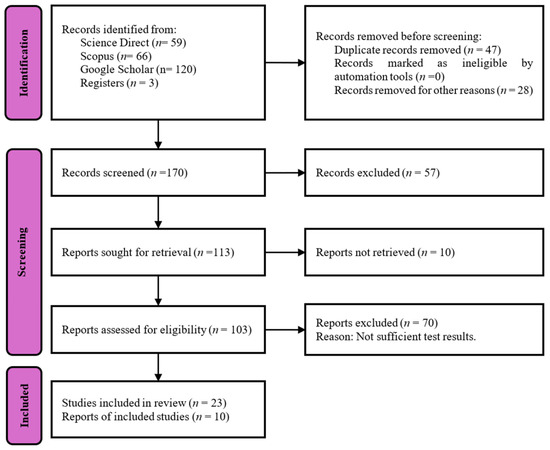
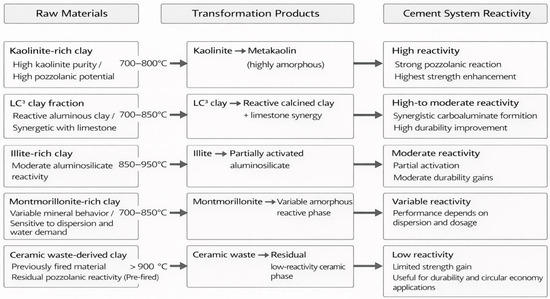
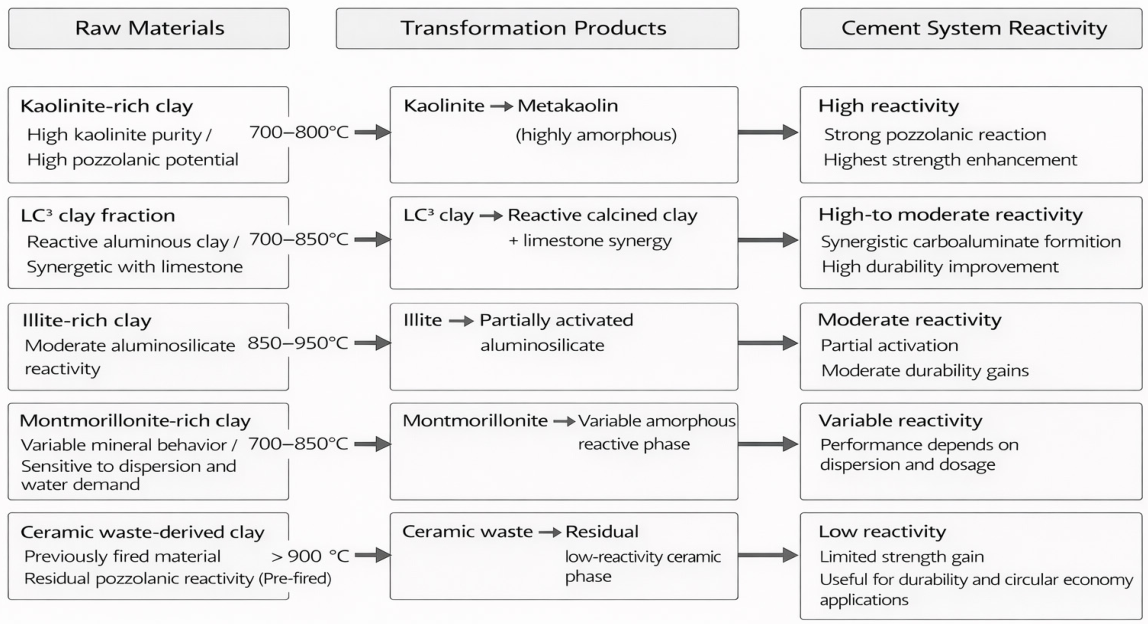
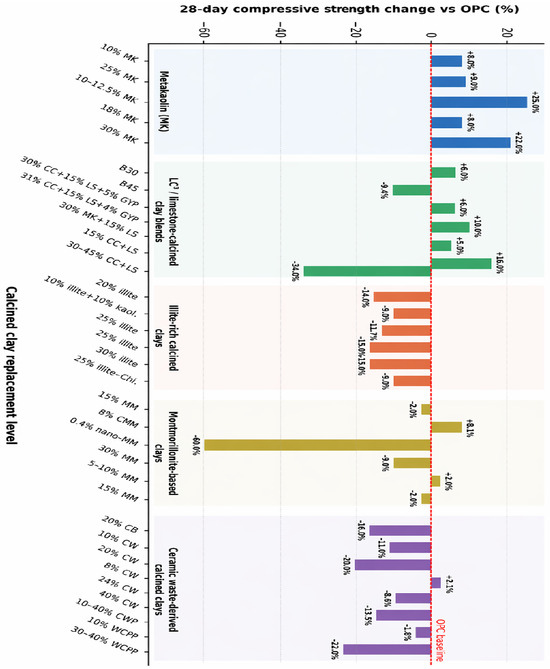
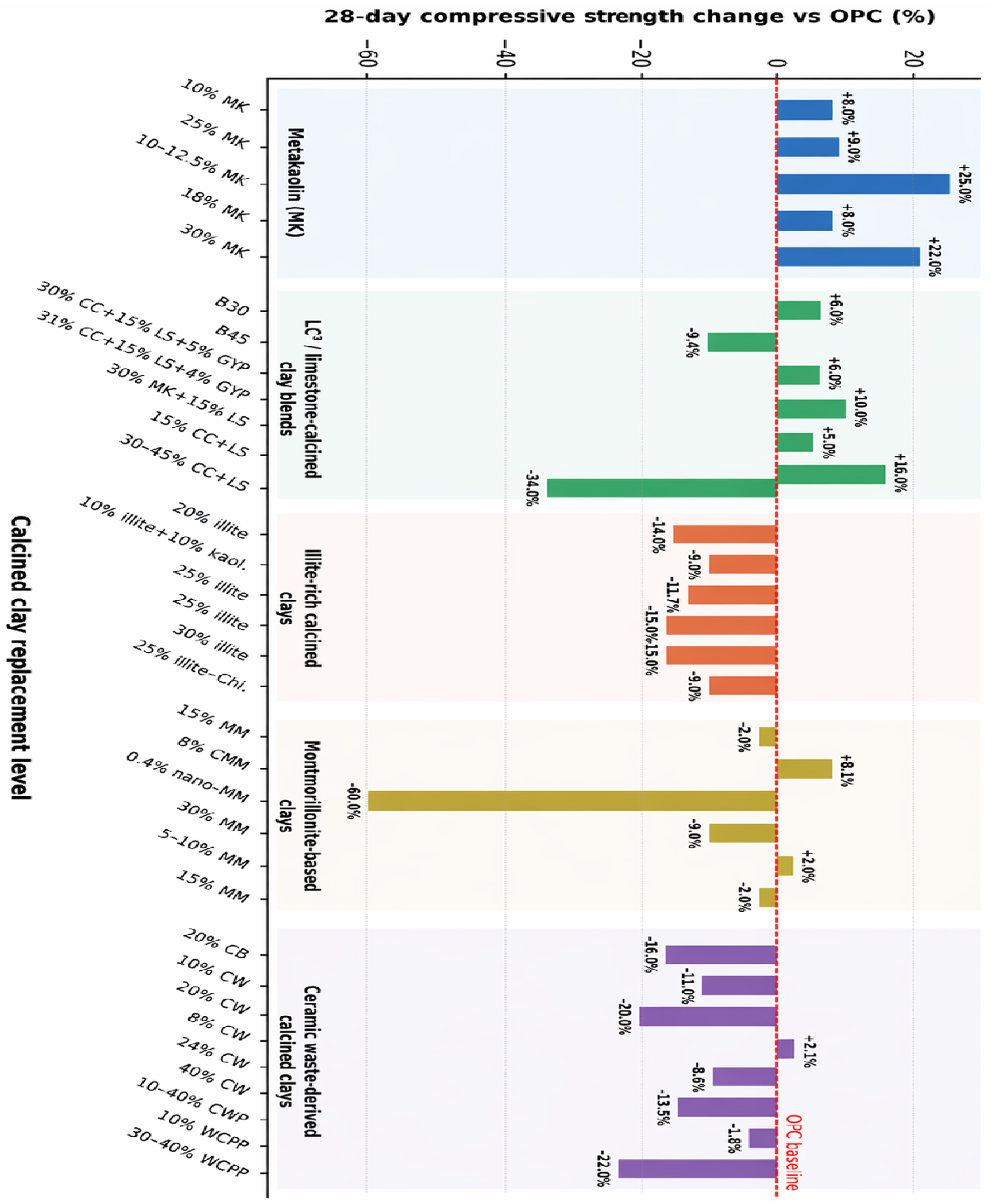
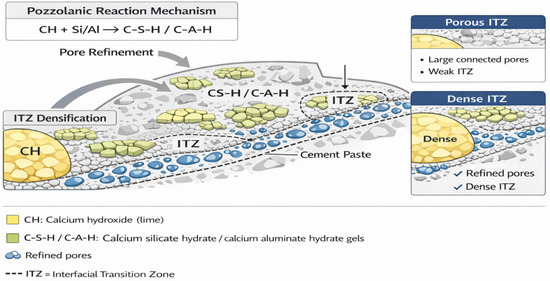
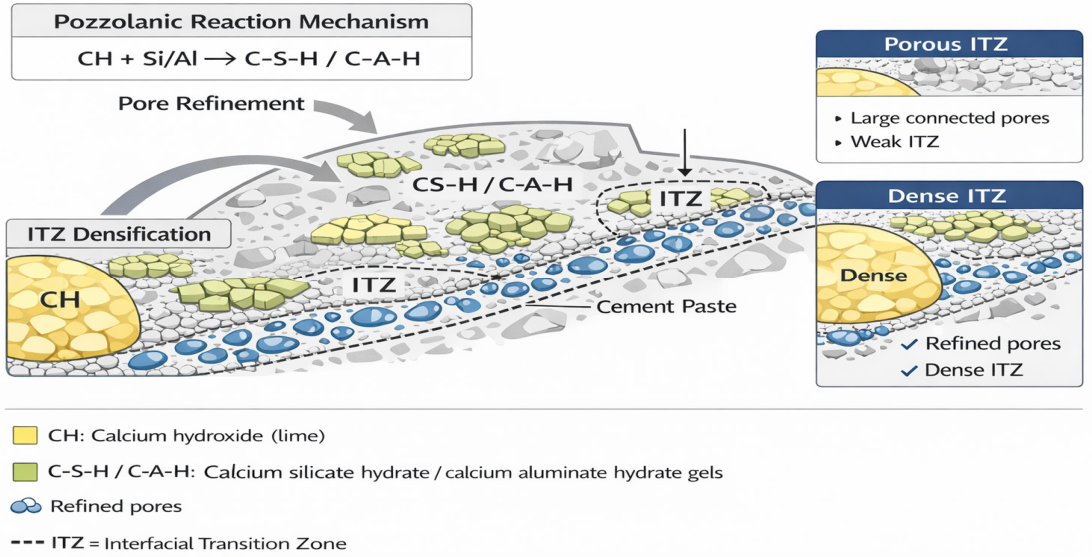
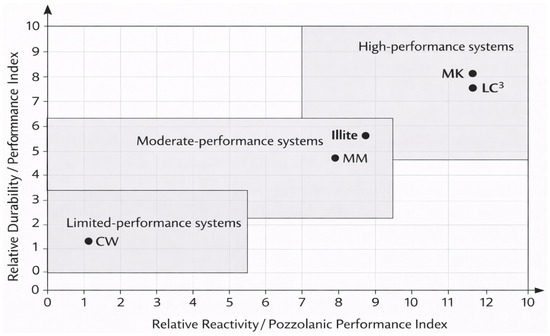
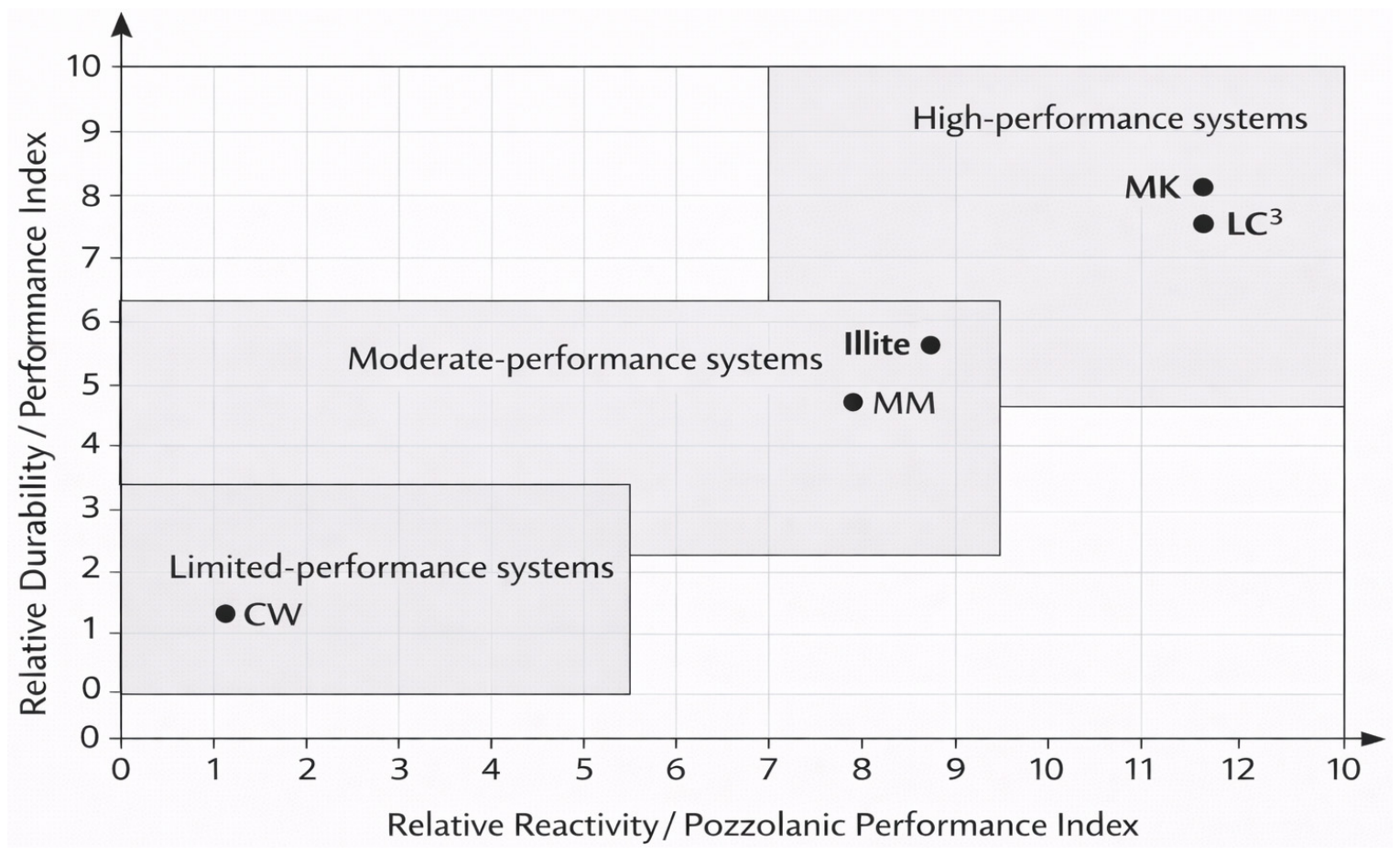

Disclaimer/Publisher’s Note: The statements, opinions and data contained in all publications are solely those of the individual author(s) and contributor(s) and not of MDPI and/or the editor(s). MDPI and/or the editor(s) disclaim responsibility for any injury to people or property resulting from any ideas, methods, instructions or products referred to in the content. |
© 2026 by the authors. Licensee MDPI, Basel, Switzerland. This article is an open access article distributed under the terms and conditions of the Creative Commons Attribution (CC BY) license.