


Abstract
This study investigates the development of sustainable dry-mix shotcrete incorporating fly ash and silica fume as partial cement replacements in order to reduce the environmental impact of cement production. A total of 24 mixtures were systematically evaluated, with 10–30% supplementary cementitious material and 0.9–1.8 kg/m3 polypropylene fiber dosages. This research establishes a quantitative framework for optimizing mechanical performance, durability, and Global Warming Potential. Experimental results reveal that silica fume replacement increases 28-day compressive strength by up to 31.13%, while an optimal polypropylene fiber dosage of 0.9 kg/m3 provides a 15.87% strength enhancement through a matrix-bridging effect. Conversely, excessive fiber content (1.8 kg/m3) increases porosity, leading to a 14.94% reduction in strength. Durability analysis demonstrates that silica fume and fly ash significantly refine the microstructure, reducing sorptivity and limiting freeze–thaw strength loss to a range of 18.13% to 41.03%. Crucially, the 30% by volume of the cement replaced with silica fume mixture was identified as the optimum design, achieving the lowest Global Warming Potential per unit strength at 8.82 kg CO2-eq/m3/MPa, compared to 18.75 for the high-fiber mixture. These findings provide new, specific evidence that these supplementary cementitious material blends can successfully produce dry-mix shotcrete with significantly lower carbon emissions.
1. Introduction
The construction sector is one of the leading sectors affecting global warming and climate change [1]. Concrete is the most widely used material in the construction industry, with approximately 6 billion tons of concrete produced worldwide each year [2]. The CO2 released during the calcination of limestone into CaO in cement production is a significant greenhouse gas that contributes substantially to global warming. Ordinary Portland Cement (OPC) production is the leading source of these emissions, contributing to approximately 90% of the total Global Warming Potential (GWP) [1,3,4,5]. The current rate of carbon emissions poses a serious threat to present and future generations in terms of resource depletion, global warming, and climate change. In concrete production, using existing waste materials as alternatives to cement and other high-carbon-footprint components is one of the strategies aimed at minimizing dependence on cement and ensuring the sustainable consumption of resources.
To achieve sustainable development in concrete production, utilizing waste materials and industrial by-products such as fly ash (FA), silica fume (SF), and blast furnace slag instead of traditional materials is an effective approach [6]. Within the context of the cement industry’s low-carbon transformation, developing low-carbon cement-based materials from solid waste represents a promising method for reducing carbon emissions [7]. The necessity of safely disposing of these materials is an important factor driving researchers to investigate this issue. In this context, one of the main areas where these wastes and by-products can be utilized is sustainable concrete production.
Supplementary cementitious materials (SCM), such as FA and SF, have many innovative applications in sustainable concrete technology due to their benefits, which include improved concrete performance, reduced cement consumption, and lower carbon footprint [8]. Therefore, low-carbon sustainable concrete mixtures can be obtained using SCM.
Shotcrete, when properly proportioned and adequately installed by experienced operators, is a special type of concrete that provides a versatile and feasible solution, offering both technical and economic advantages over traditional concrete [9,10]. Shotcrete differs from traditional concrete not only in terms of the composition of the mixture but also in terms of its application to the structure [11]. Shotcrete is a type of concrete obtained by mixing cementitious materials and aggregates in specific proportions, and can be instantly compacted by spraying it onto a surface using a pressure gun [12]. Its application involves various complex processes, including pumping, spraying, and its impact on the surface (rebound, dynamic compaction, etc) [13]. The speed and efficiency of the installation process, its resistance to environmental factors, long-term performance, and reduced maintenance costs are its key advantages [14]. Shotcrete mixtures are typically produced with a high cement content [15].
Shotcrete is applied using two methods: dry mix and wet mix. Considering the wide range of applications for shotcrete, the use of fly ash and silica fume can have a positive impact on the sustainability of the industry. In this context, in terms of environmental awareness and sustainability requirements, replacing cement with FA and SF in dry-mix shotcrete to reduce the cement ratio has been evaluated as an alternative solution method, in a sense, to reduce CO2 emissions.
The effect of replacing cement with FA or SF on the performance of shotcrete has been investigated in previous studies. Lu et al. [16] designed eight experimental groups with FA replacement ratios of 0%, 10%, 15%, 20%, 25%, 30%, 35%, and 40% in a study examining the mechanical properties of FA-containing shotcrete. Under standard 28-day curing conditions, it was noted that the compressive strength, tensile strength, and flexural strength of the shotcrete were negatively correlated with FA content. It was also recommended that the FA replacement ratio should not exceed 9% of the cement. Armengaud et al. [17] discussed mixture design in their study, which examined the relationship between the fresh properties of dry-mix shotcrete, rebound, and the effect of SCM. In the study, five mixtures were produced in which cement was partially replaced with metakaolin, ground granulated blast furnace slag, or SF, and the mixtures were sprayed at different consistencies in the laboratory facility. The binder and aggregate ratios were kept constant. The SF mixture was made with a 10% cement replacement. It was concluded that SCM is effective in reducing rebound. The authors stated that water is an important parameter in rebound but that it is difficult to control because it is adjusted by the operator, and that this dependence is reduced in mixtures containing metakaolin and SF. Menu et al. [18] investigated the effect of cement paste and aggregate content on the early shrinkage and associated cracking potential of dry-mix shotcrete mixtures using a modified AASHTO ring test. The study also examined the relationship between rebound loss, shrinkage, and the likelihood of limited shrinkage cracking in dry-mix shotcrete exposed to drying. It was determined that the use of SF or SF combined with FA in dry-mix shotcrete mixtures increased the cracking tendency of the mixtures. In a study investigating the durability of dry-mix shotcrete with different aggregate sizes using SCM such as metakaolin, SF, and ground granulated blast furnace slag, it was noted that SCM improved performance despite high porosity [19].
The effect of silica fume on the durability of concrete [20], the freeze–thaw resistance of shotcrete [21], investigating the radiation attenuation coefficients of dry-mix shotcrete with different proportions of fly ash, silica fume, and polypropylene fiber [22], examining the effect of silica fume on the properties of wet and dry-mix shotcrete [23], the use of four mineral additives (silica fume, fly ash, high-reactivity metakaolin, and carbon black) in terms of rebound and other properties of plain and fiber-reinforced dry-mix shotcrete [24] are some of the studies in the literature on the subject.
While existing studies have extensively investigated the use of mineral admixtures in dry-mix shotcrete, there is a distinct gap in the literature regarding the simultaneous replacement of Portland cement with fly ash (FA) and silica fume (SF), particularly concerning their combined contribution to reducing CO2 emissions. Therefore, there is always a need for studies on replacing different additives (e.g., SCM) in shotcrete. Furthermore, the use of these SCMs in shotcrete helps reduce costs while remaining a sustainable material. This study aims to develop sustainable technology by replacing cement with supplementary cementitious materials (SCM) such as fly ash (FA) and silica fume (SF) in dry-mix shotcrete production to both enhance mechanical performance and minimize environmental impact. In this study, 24 different dry-mix shotcrete mixtures incorporating two types of fly ash (FA), silica fume (SF), and polypropylene fibers (PPF) at various replacement levels (10%, 20%, and 30% by volume) are evaluated. The core specimens were extracted from sprayed panels and subjected to compressive strength test, water absorption and sorptivity measurements, freeze–thaw resistance testing. Additionally, the environmental impact was evaluated by calculating the Global Warming Potential (GWP) and eco-efficiency (GWP per MPa) based on Environmental Product Declarations (EPD) and Life Cycle Assessment (LCA) data.
2. Materials and Methods
2.1. Materials
In this study, CEM I Portland cement with strength class 42.5 R was used. This type of Portland cement has 3356 cm2/g fineness and 3.13 g/cm3 density. The main chemical components of the cement are given in Table 1. The cement was supplied in 50 kg kraft paper bags and stored in airtight bags.
Table 1.
Physical and chemical properties of cement and SCM used in this study.
Crushed sand was used as the fine aggregate, while crushed stone with a maximum size of 8 mm was used as the coarse aggregate (CA).
In this study, fly ash from Seyitömer Thermal Power Plant, Kütahya, Türkiye (FA1) with a fineness of 2870 cm2/g and a density of 2.15 g/cm3, as well as fly ash from the Tunçbilek Thermal Power Plant, Kütahya, Türkiye (FA2) with a fineness of 3210 cm2/g and a density of 2.26 g/cm3, were used. Silica fume (SF) with a density of 2.31 g/cm3 (~200,000 cm2/g specific area), obtained from the Antalya Eti Electrometallurgy Ferrochrome plant in Türkiye, was also used in this study. The properties of fly ash and silica fume are given in Table 1.
A powder setting accelerator (SA) additive for dry-mix shotcrete, which complies with the EN 934-5 [25] standard, was used in the mixtures.
In this study, polypropylene fiber (PPF) with a length of 19 mm and a diameter of 18–20 μm was used as the fiber additive.
2.2. Mix Design
The cement dosage in the reference specimen was taken as C = 500 kg/m3. In all concrete series produced, the setting accelerator powder shotcrete additive was used at a rate of 7% of the total binder amount. No fly ash, silica fume, or fiber admixture was used in the reference specimen. SF, Seyitömer fly ash (FA1) and Tunçbilek fly ash (FA2) were replaced for cement by volume at three different ratios of 10%, 20%, and 30%, while fiber admixture was added at two different ratios (0.9 kg/m3 as recommended by the manufacturer, and 1.8 kg/m3, which is twice the recommendation) to prepare shotcrete mixtures. In addition, FA1 and FA2 were mixed with SF in three different ratios (10% FA + 20% SF, 10% FA + 10% SF, and 20% FA + 10% SF), and 0.9 kg/m3 of fiber was added to these mixtures. A total of 24 different series of shotcrete were produced. The quantities of materials used in the mixtures for the shotcrete series produced are given in Table 2.
Table 2.
Quantities of materials used in the mixtures (kg/m3).
2.3. Casting and Curing of Test Specimens
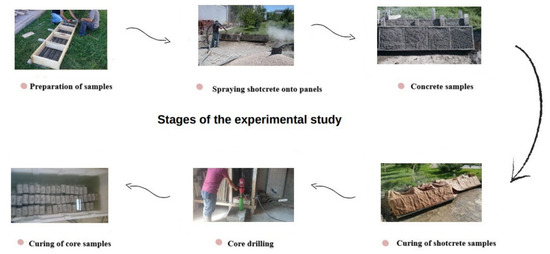
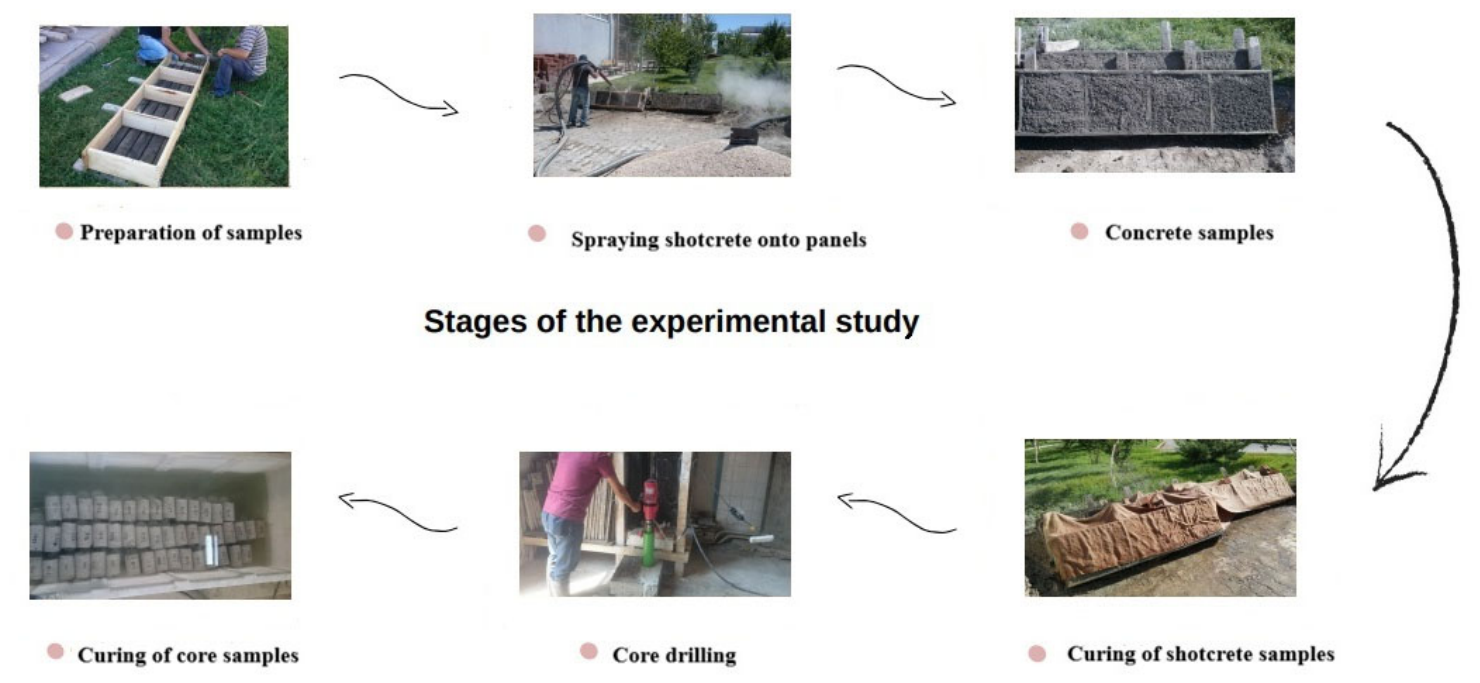
Wooden panels with dimensions of 45 cm × 45 cm × 15 cm and three cells were prepared for each shotcrete mixture. After the spraying application, the shotcrete in these panels was cured by covering it with a cotton cloth and moistening it to keep it wet until coring. Specimens with a diameter of 100 mm were taken from the concrete and removed from the panels. A total of 18 specimens were taken, with at least 6 specimens from each panel produced for each concrete series. Both surfaces of the core specimens were sawn to obtain smooth and parallel faces. The cores were kept in water at a temperature of 20 ± 2 °C until the day of testing. Two sets of three cores were used for the 28-day compressive strength test. The remaining cores were used in other tests. The production stages of the shotcrete specimens are shown in Figure 1.
Figure 1.
Production stages of specimens.
2.4. Test Procedures
Tests were conducted on the obtained core specimens to determine the compressive strength, water absorption, sorptivity and freeze–thaw resistance. No capping was performed on the core specimens for the compressive strength test. Instead, neoprene pressure pads and pad holder plates are compliant with ASTM C1231 [26] were used to distribute the test load uniformly, even on surface irregularities, thus ensuring reliable test results. The average compressive strength of six core specimens was calculated for each concrete series. When evaluating the compressive strength test results, correction factors specified in the ASTM C42/C42M [27] standard were applied to the specimens based on their length-to-diameter (L/D) ratio.
The water absorption and sorptivity tests were conducted on three 28-day specimens for each concrete series, in accordance with ASTM C642-21 [28] and EN 13057:2002 [29] standards, respectively.
In the freeze–thaw tests, three specimens from each concrete series were subjected to a 30-cycle freeze–thaw test (−18 ± 2 °C for 2 h of freezing and 4 ± 1 °C water for 1 h of thawing according to ASTM C 666/C 666M [30]) after 28 days, and their compressive strengths were determined. The average of the three specimens was used in the calculations of compressive strength loss after freeze–thaw cycles.
2.5. Global Warming Potential (GWP) Calculation Methodology
To provide a comprehensive environmental impact assessment, the GWP of the dry-mix shotcrete mixtures was evaluated using a systematic framework.
The assessment is based on the protocols of Environmental Product Declarations (EPD), which follow a Life Cycle Assessment (LCA) approach according to specific Product Category Rules (PCR) [31]. The boundary is defined from the extraction of raw materials to the finished product stage (cradle-to-gate), focusing on the carbon emissions associated with the materials’ production.
Two functional units were utilized to analyze the environmental performance:
1. Total GWP per unit volume (kg CO2-eq/m3): This unit measures the absolute carbon footprint of 1 m3 of shotcrete.
2. GWP per unit compressive strength (kg CO2-eq/m3/MPa): This eco-efficiency indicator evaluates the environmental cost of achieving a specific level of mechanical performance. In this study, the GWP per unit compressive strength was calculated using Equation (1).
The GWP values for the cement (CEM I 42.5 R) were obtained from the specific EPD report of the manufacturer. This EPD was developed using SimaPro 9.0 LCA software and the Ecoinvent 3.5 LCA database to ensure high-quality environmental data. The GWP value of cement has been obtained as 927.1 kg CO2-eq/m3 [32].
In accordance with established literature and sustainability standards for industrial by-products, the GWP values for FA and SF were considered to be zero [2,33]. As these materials are industrial wastes, their environmental burdens are allocated to their original production processes (e.g., electricity generation or ferrochrome production) rather than their use as supplementary cementitious materials in shotcrete.
3. Results and Discussion
3.1. Compressive Strength
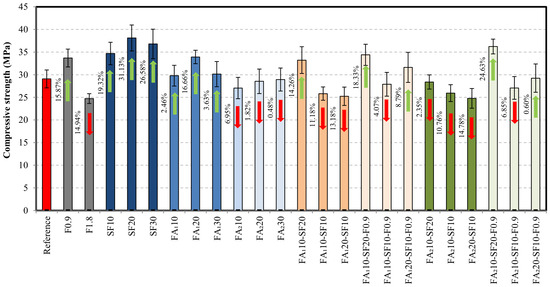
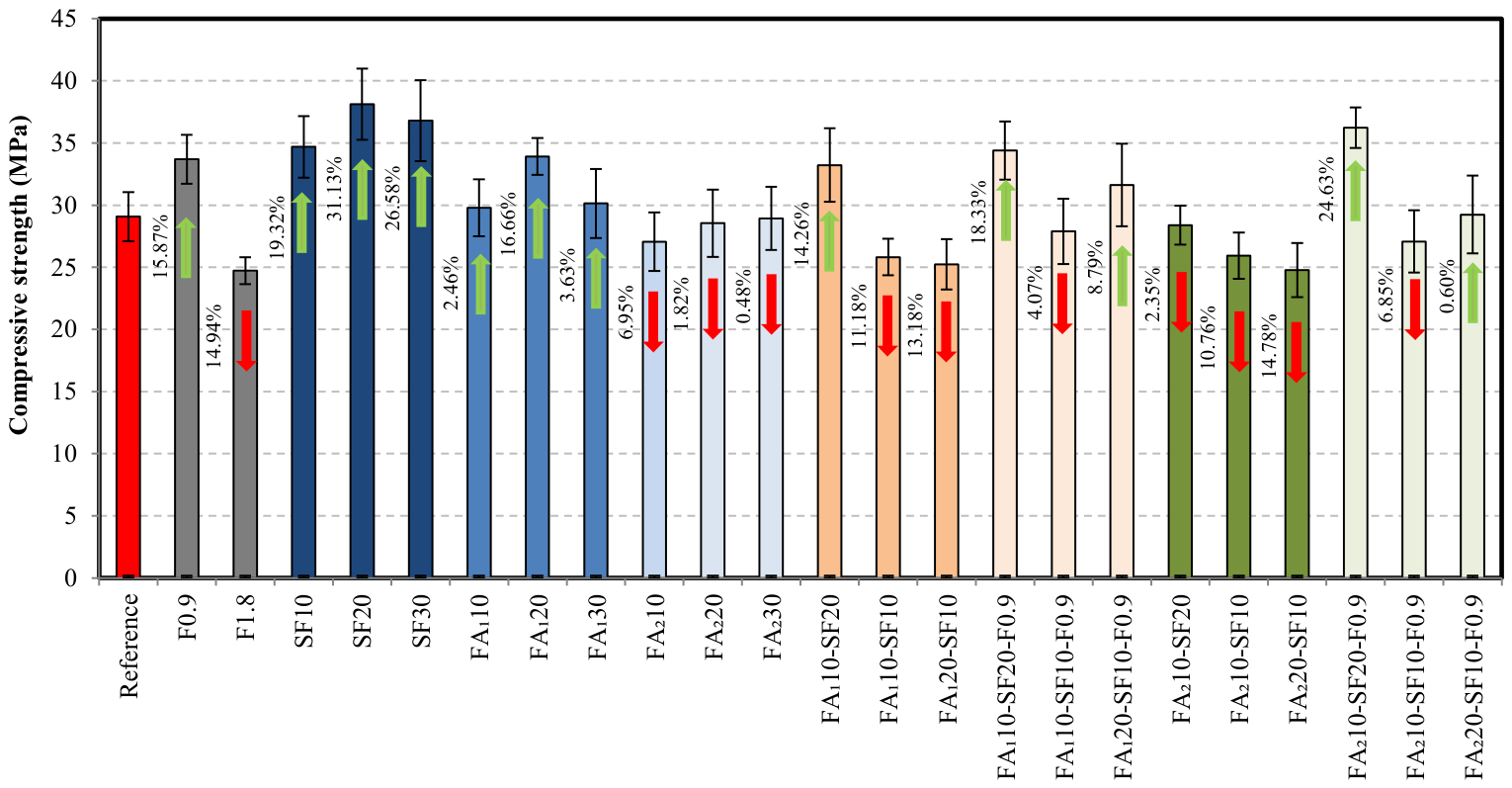
Twenty-eight-day compressive strength test results and the percentage strength variations relative to the reference specimen are given in Figure 2.
Figure 2.
Twenty-eight-day compressive strength results and percentage strength variations relative to the reference specimen.
Compared to the reference concrete, there was an increase of 2.46% to 16.66% in 28-day compressive strength for FA1 mixtures, a decrease of 0.48% to 1.82% for FA2 mixtures, and an increase of 19.32% to 31.13% for SF mixtures, as shown in Figure 1. There was a 15.87% increase in the compressive strength of shotcrete containing 0.9 kg/m3 of fiber (F0.9), as recommended by the manufacturer. The reason is that PPF effectively bonds with the concrete matrix, creating a bridging effect between the cement–fiber matrix. This prevents cracks from widening and opening, thereby increasing ductility and compressive strength under loading. There was a 14.94% decrease in 28-day compressive strength when the fiber content was doubled to 1.8 kg/m3 (F1.8) in the mixture. This was due to the uneven distribution of the fiber in the matrix and the clumping of the fibers, which led to increased porosity. A significant increase in porosity can cause a decrease in strength. Therefore, the recommended fiber ratio of 0.9 kg/m3 was determined as the optimum ratio and used in subsequent mixtures. The use of 0.9 kg/m3 PPF in specimens where FA and SF were used together increased the compressive strengths, as in the reference concrete. The lowest 28-day compressive strength was observed in concrete with 1.8 kg/m3 fiber content. The highest strength was achieved in the specimen with 20% SF replacement. SF has an exceptionally high SiO2 content (91.57%) and an extremely specific surface area (200,000 cm2/g). This allows SF to react rapidly with the calcium hydroxide (Ca(OH)2) produced during cement hydration, transforming it into additional calcium-silicate-hydrate (C-S-H) gel. This is consistent with literature indicating that SF enhances the uniformity and density of the cement paste matrix [6,7,8,22,23,24]. Additionally, when considering all series, the highest strength increases were observed in the SF-replaced specimens. The 20% replacement level appears to be the optimum threshold for this dry-mix shotcrete; at 30%, the relative reduction in OPC content (the primary source of Ca(OH)2) may slightly limit the total gain compared to the 20% level, despite still outperforming the reference.
According to the chemical analysis (Table 1), FA1 (Seyitömer) has a higher CaO content (5.32%) compared to FA2 (Tunçbilek) (2.98%). Higher lime content in fly ash often contributes to faster early-age reactivity and better binding properties in the short term. Additionally, while FA2 has a higher total pozzolanic index (S + A + F = 87.82% vs. 82.94% for FA1), its slightly higher fineness (3210 cm2/g) may increase water demand in a dry-mix application where water control is manual and critical.
3.2. Water Absorption and Sorptivity
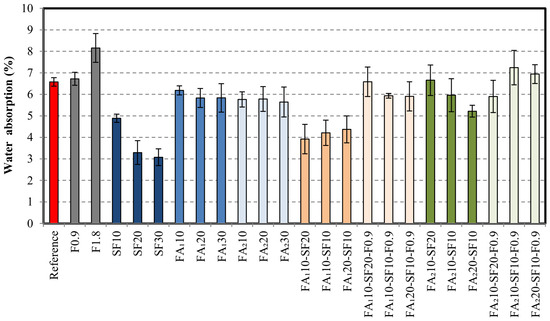
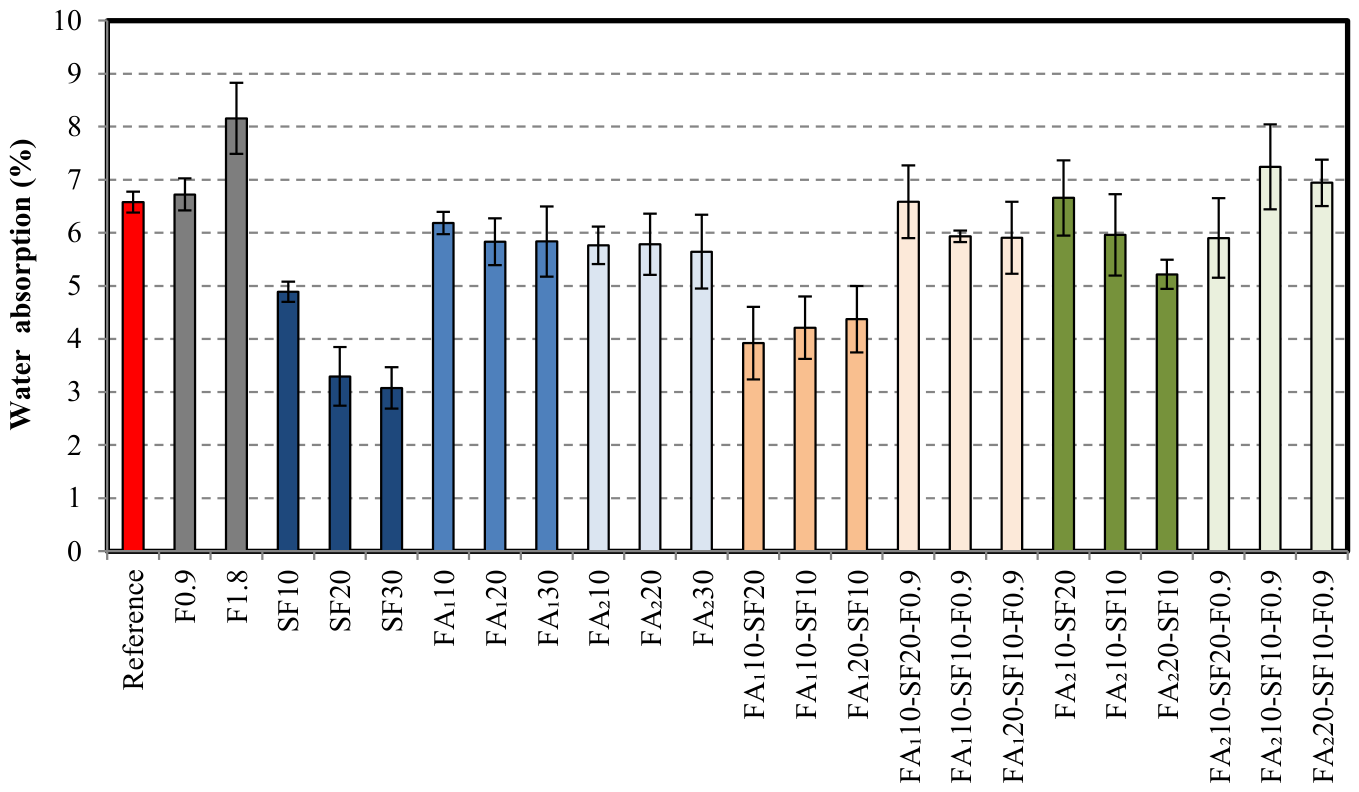
Figure 3 shows the water absorption rate (% by weight) test results for the specimens. The determined water absorption rates by weight in the shotcrete series ranged from 3.07% to 8.16%. As shown in Figure 3, the water absorption rates by weight were lower in the SCM-containing specimens compared to the reference specimen. The lowest values were observed in the SF series specimens. The highest water absorption rate by weight belongs to the F1.8 specimen.
Figure 3.
Water absorption rates (%, by weight) of the specimens.
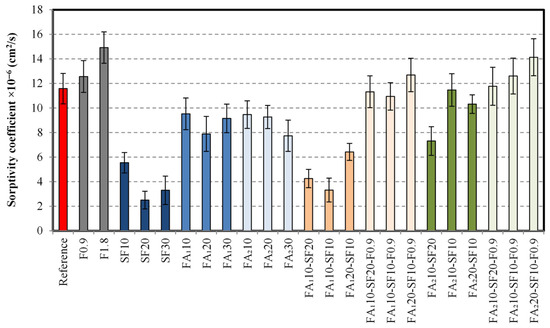
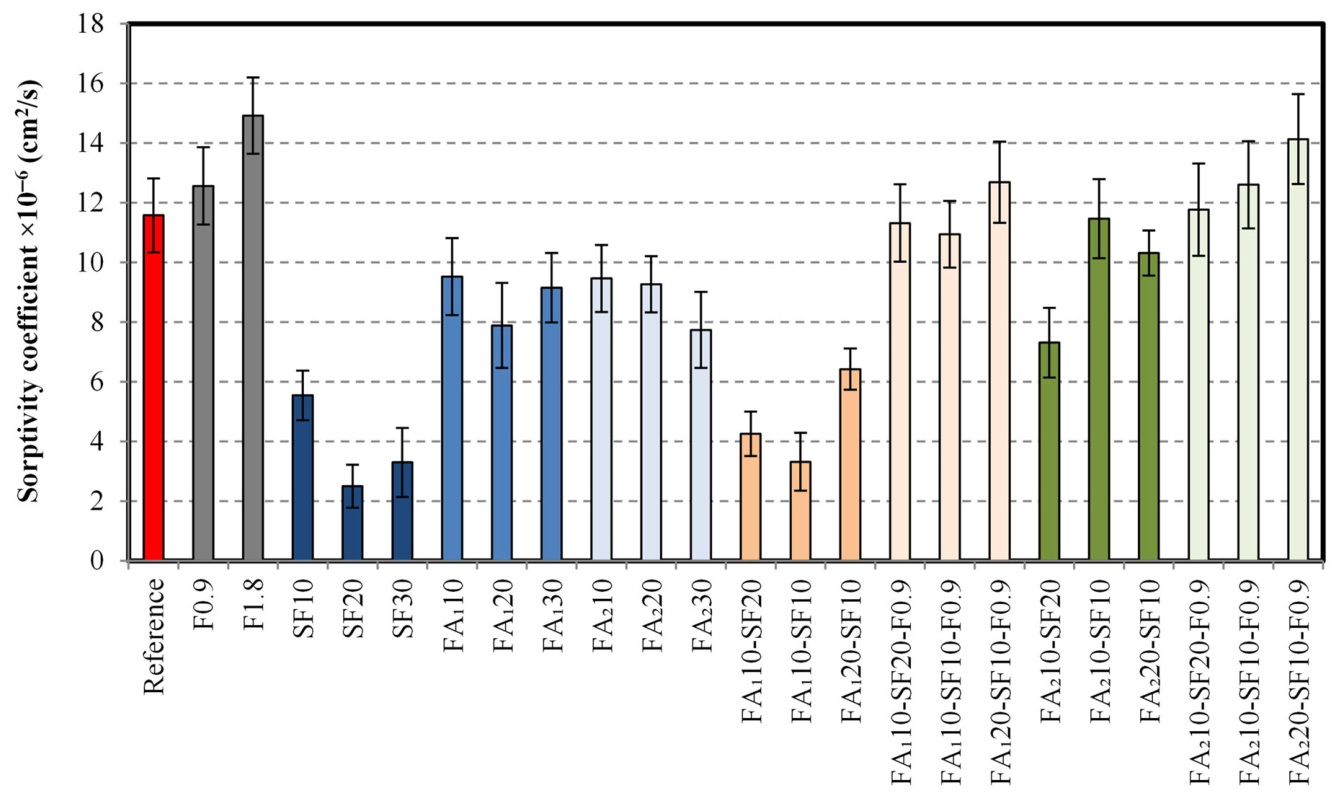
Sorptivity test results are given in Figure 4. The low sorptivity coefficients are attributed to the dense microstructure, with poor interconnection of open pores, restricting the flow of water. The lowest measured sorptivity coefficient of the shotcrete series was obtained from the SF series (the lowest SF20). Moreover, the presence of silica fume facilitates the absorption of calcium hydroxide produced by the hydration of cement, resulting in an enhanced and uniform microstructure [34,35]. Due to its extreme fineness, SF particles occupy the tiny voids between cement grains. This “filler effect” reduces the connectivity of open pores and narrows capillary voids [36], which is evidenced by the SF series achieving the lowest sorptivity coefficients.
Figure 4.
Sorptivity coefficients.
The sorptivity coefficient values of FA mixtures were measured to be lower than those of the reference specimen. One of the most important factors affecting the number of capillary voids is the hydration of cement. As hydration progresses, the structure formed fills the capillary voids and breaks their connections [37]. Similarly, the reaction of fly ash with Ca(OH)2 results in the formation of additional C-S-H gel, which also reduces the amount of capillary voids [38]. It can be said that FA breaks continuity by blocking capillary voids or may have narrowed the capillary voids. Both fly ashes successfully reduced sorptivity by breaking the continuity of capillary voids through the formation of secondary C-S-H. However, the mechanical “dilution effect” (where FA replaces more reactive OPC) was more pronounced in FA2, likely because its pozzolanic reaction progressed more slowly than the faster-reacting FA1 or the high-reactivity SF.
There is also a direct relationship between the sorptivity coefficient and the addition of PPF. Whereby the sorptivity coefficient of specimens increases by 9.33% and 29.5% via the addition of PPF, for mix designs F0.9 and F1.8, respectively, compared to the reference specimen. The addition of PPF provides a different water path for water to infiltrate into the specimen, offering more connectivity between the open voids formed within the fiber-cement matrix [39]. This is most prominent for the high fiber content specimen (F1.8). The sorptivity coefficient has also increased in other fiber-containing series compared to fiber-free series.
3.3. Freezing Thawing
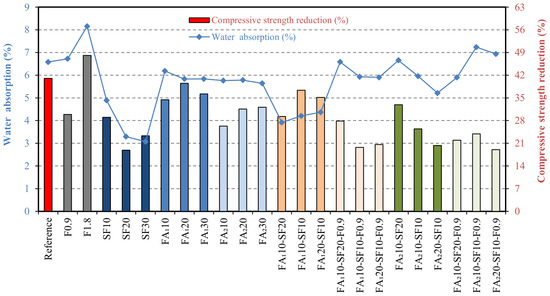
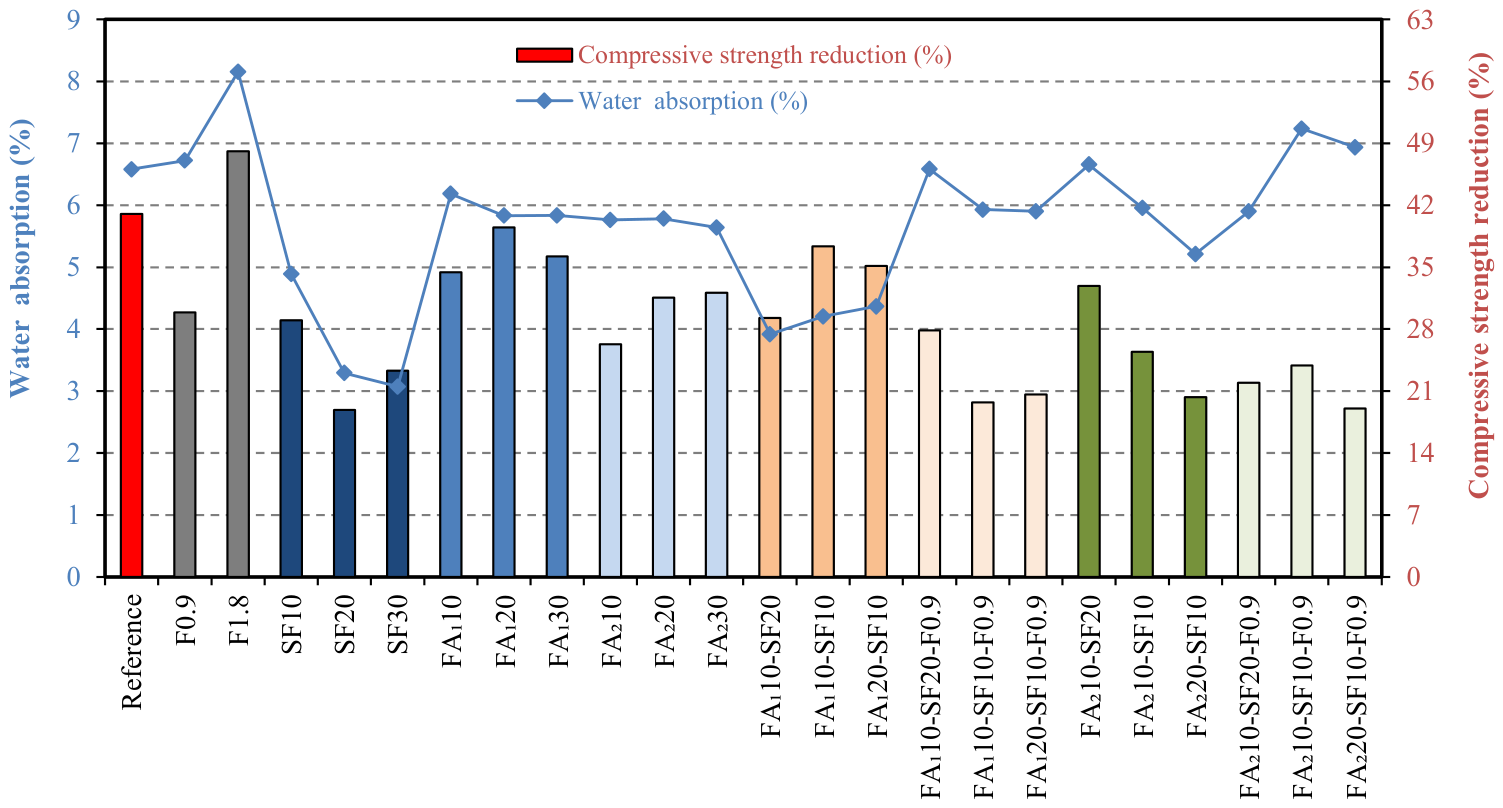
Figure 5 shows the compressive strength of the specimens measured after 30 freeze–thaw cycles, along with the strength reduction rates (%) relative to the 28-day specimens and the water absorption rates.
Figure 5.
Water absorption (%) and compressive strength reduction results of the specimens after the freeze–thaw cycles.
It was determined that the pressure strength reduction rates measured after the freeze–thaw cycle ranged between 18.13% and 41.03%. Except for F1.8, the strength reduction rates after the freeze–thaw cycle were measured to be lower than the reference specimen in all specimens containing SCM and/or PPF.
Water absorption values in FA-containing specimens were measured to be lower than those in the reference specimen. This is because the pozzolanic reaction between fly ash and Ca(OH)2 reduces voids. Consequently, the rate of decrease in compressive strength after the freeze–thaw cycle was also measured to be lower in FA-containing specimens than in the reference specimen.
The use of silica fume in mixtures facilitates the absorption of calcium hydroxide produced by the hydration of cement, resulting in an improved and uniform microstructure. Thus, the porous structure of the mix is significantly reduced, and the ability of shotcrete to absorb water is also reduced. The findings align with studies by Armengaud et al. [17], which noted that SCMs like SF are effective in reducing rebound and refining the matrix despite high initial porosity in shotcrete.
The addition of excessive fiber (1.8 kg/m3) has negatively impacted the microstructure of the concrete, leading to progressive freeze–thaw cycle compressive strength reduction (%) of the specimens. This is because the addition of PPF increased the porosity of the developed dry-mix shotcrete mixtures, resulting in the clumping of fibers, which reduced the particle density of the mix [39]. This suggests that, at 1.8 kg/m3 fiber content, there is a weak interface layer formed between the fiber and cementitious matrix, hindering the dense structure. The increase in open pore increases the risk for water access and allows freeze–thaw cycle action to take place. The opposite trend for mix designs with 0.9 kg/m3 PPF content, as the fiber present within the mix effectively bonds with the concrete matrix, elevating the friction within the mixtures. At the same time, the interlocking nature of the fiber matrix could constrain the generation of connected cracks, block the seepage channels of concrete pores, upgrade the micropore structures of concretes, and delay the expansion stresses caused by water freezing.
Although specimens containing PPF generally have lower compressive strength than control specimens, the percentage strength loss in PPF-containing specimens has been lower than in control specimens. In concrete containing PPF, lower strength losses have been observed after freeze–thaw cycles compared to fiber-free specimens. This is because the fibers have prevented crack propagation.
3.4. GWP
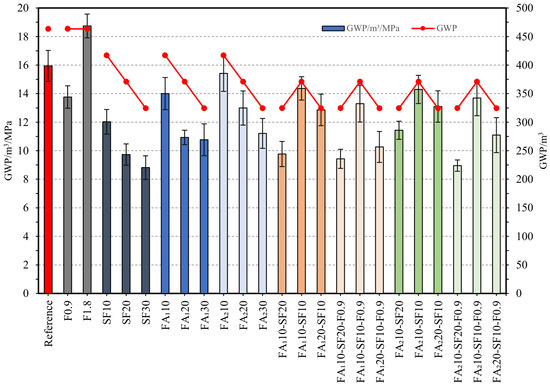
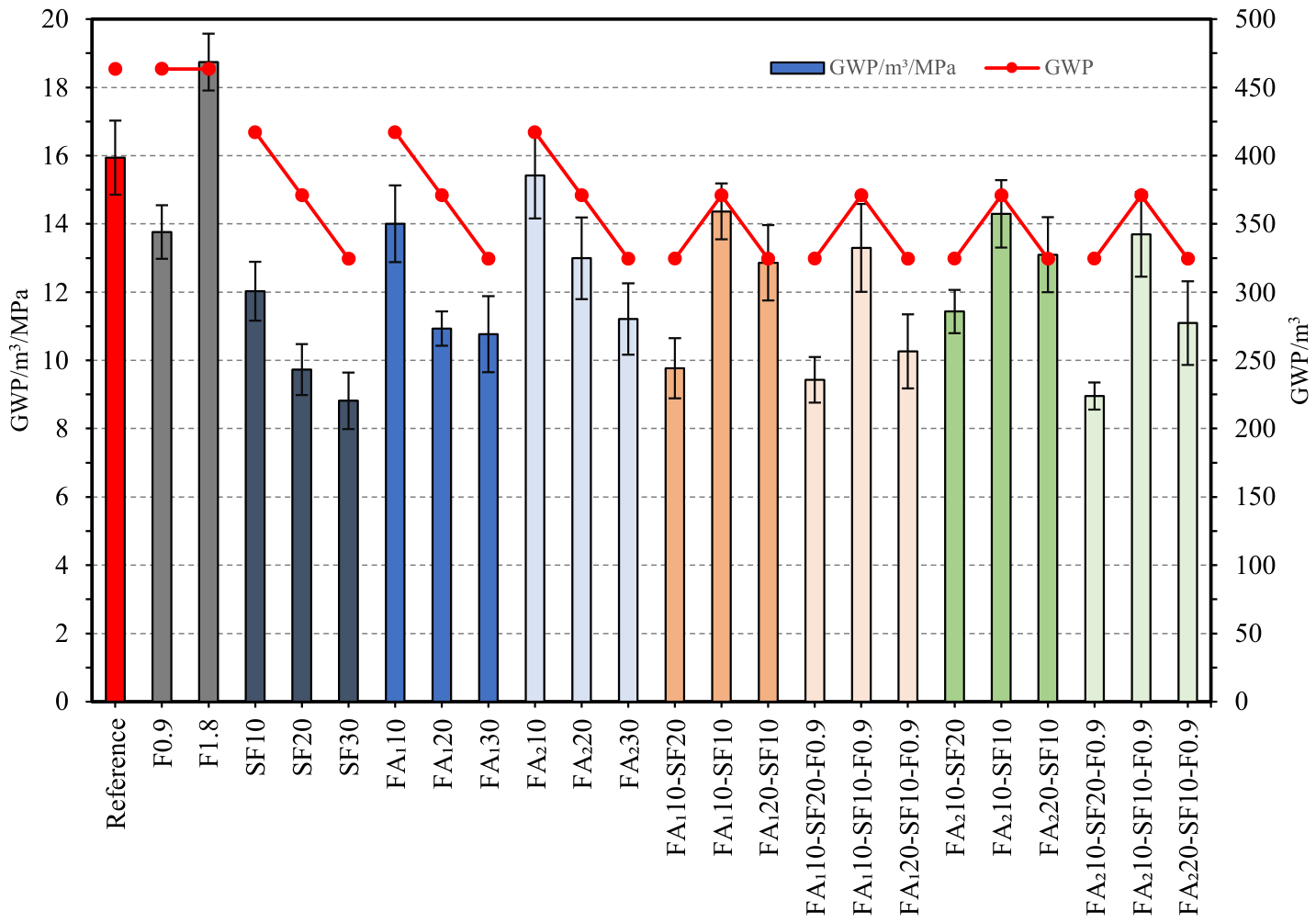
The results of the total GWP and GWP per MPa for shotcrete mixes are shown in Figure 6.
Figure 6.
Results of total GWP and GWP per MPa for shotcrete mixes.
Figure 6 shows that the highest GWP was achieved for the 500-dose specimens (Reference, F0.9, and F1.8), with a value of 463.55 kg CO2-eq/m3. Shotcrete mixtures with a total of 30% SCM replacement and 350 cement dosage (SF30; FA130; FA230; FA110-SF20; FA120-SF10; FA110-SF20-F0.9; FA120-SF10-F0.9; FA210-SF20; FA220-SF10; FA210-SF20-F0.9; and FA220-SF10-F0.9) had the lowest GWP at 24.49 kg CO2-eq/m3. Since the strengths of the specimen mixtures varied, the total GWP was evaluated per strength. The GWP values per unit compressive strength ranged from a maximum of 18.75 (F1.8) to a minimum of 8.82 (SF30) kg CO2-eq/m3/MPa.
Accordingly, the highest strength and lowest GWP (optimum) were found in specimens containing 30% SF mineral admixture (SF30). Additionally, approximately the same value was obtained for the FA210-SF20-F0.9 specimen, where FA-SF-PPF additives were used together. In contrast, for F1.8, both the absence of SCM replacement and the low strength resulted in an increase in GWP per unit compressive strength compared to the reference specimen.
Lu et al. [16] suggest that relatively lower fly ash replacement levels may be preferable to avoid strength loss, this study demonstrates that in dry-mix shotcrete, higher replacement levels (up to 30%) are viable—especially when considering the environmental trade-off.
4. Conclusions
This study demonstrates that the integration of supplementary cementitious materials (SCM) and polypropylene fibers (PPF) into dry-mix shotcrete creates a synergistic effect that enhances both engineering performance and environmental sustainability. The following core findings distill the primary contributions of this research:
- The research identifies a pathway to lower shotcrete’s carbon footprint while maintaining or even improving its strength and durability. Specifically, replacing 30% of cement with silica fume (SF30) represents an optimal balance, achieving one of the highest compressive strengths while simultaneously reaching the lowest Global Warming Potential (GWP) per MPa. This proves that industrial waste utilization is not merely a disposal strategy but a high-performance alternative to traditional Ordinary Portland Cement (OPC) binders.
- The inclusion of SF and fly ash (FA) alters the shotcrete’s microstructure. By facilitating pozzolanic reactions and creating a denser matrix through the filling of capillary voids, these materials significantly lower sorptivity and water absorption. This microstructural densification is the primary mechanism behind the improved resistance to freeze–thaw cycles observed in SCM-incorporated mixtures.
- While PPF improves ductility and limits crack propagation during environmental loading, its dosage is critical. An optimum dosage of 0.9 kg/m3 enhances the bridging effect within the cement matrix, thereby increasing compressive strength and frost resistance. Conversely, excessive fiber content (1.8 kg/m3) introduces deleterious porosity and fiber clumping, which increases the GWP per unit of strength.
- The study highlights that mixtures combining fly ash (FA) and silica fume (SF) can achieve performance levels comparable to single-SCM mixtures, along with low Global Warming Potential (GWP) levels, thereby offering an approach to sustainable construction.
In summary, the transition from traditional high-dosage cement shotcrete to SCM-optimized mixtures provides a dual advantage: it mitigates the environmental impact of the construction sector while delivering a better material capable of withstanding harsh environmental conditions.
Author Contributions
Conceptualization, H.H.İ.; methodology, H.H.İ., M.A.Ç. and C.Ö.; validation, H.H.İ.; formal analysis, H.H.İ. and C.Ö.; investigation, H.H.İ., M.A.Ç., C.Ö. and G.İ.; resources, H.H.İ. and M.A.Ç.; data curation, H.H.İ.; writing—original draft preparation, H.H.İ., M.A.Ç. and G.İ.; writing—review and editing, H.H.İ., M.A.Ç., C.Ö. and G.İ.; visualization, H.H.İ. and M.A.Ç.; project administration, H.H.İ. All authors have read and agreed to the published version of the manuscript.
Funding
This research was funded by Burdur Mehmet Akif Ersoy University Scientific Research Projects Commission, grant number 0328-NAP-16.
Data Availability Statement
The original contributions presented in this study are included in this article; further inquiries can be directed to the corresponding author.
Conflicts of Interest
The authors declare no conflicts of interest.
Abbreviations
The following abbreviations are used in this manuscript:
| 10 | 10% by volume of the cement replaced with fly ash or silica fume |
| 20 | 20% by volume of the cement replaced with fly ash or silica fume |
| 30 | 30% by volume of the cement replaced with fly ash or silica fume |
| CA | Coarse aggregate |
| EPD | Environmental Product Declarations |
| F0.9 | 0.9 kg/m3 polypropylene fiber additive |
| F1.8 | 1.8 kg/m3 polypropylene fiber additive |
| FA | Fly ash |
| FA1 | Seyitömer Thermal Power Plant fly ash |
| FA2 | Tunçbilek Thermal Power Plant fly ash |
| GWP | Global Warming Potential |
| OPC | Ordinary Portland cement |
| PPF | Polypropylene fiber |
| SA | Setting accelerator |
| SCM | Supplementary cementitious materials |
| SF | Silica fume |
References
- Onyelowe, K.C.; Ebid, A.M.; Riofrio, A.; Soleymani, A.; Baykara, H.; Kontoni, D.-P.N.; Mahdi, H.A.; Jahangir, H. Global Warming Potential-Based Life Cycle Assessment and Optimization of the Compressive Strength of Fly Ash-Silica Fume Concrete; Environmental Impact Consideration. Front. Built Environ. 2022, 8, 992552. [Google Scholar] [CrossRef] [Scilit]
- Asadollahfardi, G.; Katebi, A.; Taherian, P.; Panahandeh, A. Environmental Life Cycle Assessment of Concrete with Different Mixed Designs. Int. J. Constr. Manag. 2021, 21, 665–676. [Google Scholar] [CrossRef] [Scilit]
- Nayır, S.; Bahadır, Ü.; Toğan, V. Investigation of Global Warming Potential of Concrete with Silica Fume and Blast Furnace Slag. Iran. J. Sci. Technol. Trans. Civ. Eng. 2024, 48, 1965–1975. [Google Scholar] [CrossRef] [Scilit]
- Mostafaei, H.; Badarloo, B.; Chamasemani, N.F.; Rostampour, M.A.; Lehner, P. Investigating the Effects of Concrete Mix Design on the Environmental Impacts of Reinforced Concrete Structures. Buildings 2023, 13, 1313. [Google Scholar] [CrossRef] [Scilit]
- Chand, G. Microstructural Study of Sustainable Cements Produced from Industrial By-Products, Natural Minerals and Agricultural Wastes: A Critical Review on Engineering Properties. Clean. Eng. Technol. 2021, 4, 100224. [Google Scholar] [CrossRef] [Scilit]
- Prakash, R.; Raman, S.N.; Subramanian, C.; Divyah, N. 6—Eco-Friendly Fiber-Reinforced Concretes. In Handbook of Sustainable Concrete and Industrial Waste Management; Colangelo, F., Cioffi, R., Farina, I., Eds.; Woodhead Publishing Series in Civil and Structural Engineering; Woodhead Publishing: Cambridge, UK, 2022; pp. 109–145. [Google Scholar]
- Cheng, L.; Zhou, D.; Zhang, Q.; Wang, L.; Hu, N.; Wang, Z. Mechanism and CO2 Emissions Analysis of Multi-Solid-Waste Synergistic Red Mud-Based Composite Cementitious Materials under Orthogonal Tests. Sci. Rep. 2025, 15, 3097. [Google Scholar] [CrossRef] [Scilit]
- Khan, M.I. 14—Nanosilica/Silica Fume. In Waste and Supplementary Cementitious Materials in Concrete; Siddique, R., Cachim, P., Eds.; Woodhead Publishing Series in Civil and Structural Engineering; Woodhead Publishing: Cambridge, UK, 2018; pp. 461–491. [Google Scholar]
- Galan, I.; Baldermann, A.; Kusterle, W.; Dietzel, M.; Mittermayr, F. Durability of Shotcrete for Underground Support—Review and Update. Constr. Build. Mater. 2019, 202, 465–493. [Google Scholar] [CrossRef] [Scilit]
- Ikumi, T.; Salvador, R.P.; Aguado, A. Mix Proportioning of Sprayed Concrete: A Systematic Literature Review. Tunn. Undergr. Space Technol. 2022, 124, 104456. [Google Scholar] [CrossRef] [Scilit]
- Hubáček, A.; Brožovský, J.; Hela, R. Comparison of Properties of Shotcrete Tested Using Destructive and Non-Destructive Methods. Procedia Eng. 2013, 65, 63–68. [Google Scholar] [CrossRef] [Scilit]
- Wang, J.; Wu, S.; Zhang, Y.; Qian, X. Study on the Mechanics and Self-Sensing Properties of Ultrahigh-Performance Shotcrete Containing Waste Glass Aggregates. Sci. Rep. 2025, 15, 2936. [Google Scholar] [CrossRef] [Scilit]
- Ginouse, N.; Jolin, M. Investigation of Spray Pattern in Shotcrete Applications. Constr. Build. Mater. 2015, 93, 966–972. [Google Scholar] [CrossRef] [Scilit]
- Ebadi-Jamkhaneh, M.; Kontoni, D.-P.N.; Ebrahimi, A.H. Three-Dimensional Printing of Structural Members with Shotcrete Technique: Design, Construction, and Future Directions. E3S Web Conf. 2023, 436, 08010. [Google Scholar] [CrossRef] [Scilit]
- Kozak, M. Çelik Lifli Betonlar ve Kullanım Alanlarının Araştırılması. Tek. Bilim. Derg. 2013, 3, 26–35. [Google Scholar]
- Lu, W.; Wang, J.; Peng, Z.; Zhang, B. Research on Influences of Fly Ash Content on Mechanical Properties of Shotcrete. IOP Conf. Ser. Mater. Sci. Eng. 2018, 452, 022063. [Google Scholar] [CrossRef] [Scilit]
- Armengaud, J.; Casaux-Ginestet, G.; Cyr, M.; Husson, B.; Jolin, M. Characterization of Fresh Dry-Mix Shotcrete and Correlation to Rebound. Constr. Build. Mater. 2017, 135, 225–232. [Google Scholar] [CrossRef] [Scilit]
- Menu, B.; Pepin Beaudet, A.; Jolin, M.; Bissonnette, B. Experimental Study on the Effect of Key Mix Design Parameters on Shrinkage and Cracking Resistance of Dry-Mix Shotcrete. Constr. Build. Mater. 2022, 320, 126216. [Google Scholar] [CrossRef] [Scilit]
- Armengaud, J.; Cyr, M.; Casaux-Ginestet, G.; Husson, B. Durability of Dry-Mix Shotcrete Using Supplementary Cementitious Materials. Constr. Build. Mater. 2018, 190, 1–12. [Google Scholar] [CrossRef] [Scilit]
- Khan, M.I.; Siddique, R. Utilization of Silica Fume in Concrete: Review of Durability Properties. Resour. Conserv. Recycl. 2011, 57, 30–35. [Google Scholar] [CrossRef] [Scilit]
- Wang, J.; Niu, D.; He, H. Frost Durability and Stress–Strain Relationship of Lining Shotcrete in Cold Environment. Constr. Build. Mater. 2019, 198, 58–69. [Google Scholar] [CrossRef] [Scilit]
- Çakıroğlu, M.A.; Kaplan, A.N.; Süzen, A.A. Experimental and DBN-Based Neural Network Extraction of Radiation Attenuation Coefficient of Dry Mixture Shotcrete Produced Using Different Additives. Radiat. Phys. Chem. 2021, 188, 109636. [Google Scholar] [CrossRef] [Scilit]
- Morgan, D.R.; Wolsiefer, J. Silica Fume in Shotcrete. In CANMET/ACI International Workshop on Silica Fume in Concrete: Compilation of Papers; Canada Centre for Mineral and Energy Technology: Washington, DC, USA, 1991; pp. 1–19. [Google Scholar]
- Bindiganavile, V.; Banthia, N. Rebound in Dry-Mix Shotcrete: Influence of Type of Mineral Admixture. Mater. J. 2000, 97, 115–119. [Google Scholar]
- EN 934-5; Admixtures for Sprayed Concrete Definitions & Requirements. European Committee for Standardization: Brussels, Belgium, 2007.
- ASTM C1231/C1231M-15; Standard Practice for Use of Unbonded Caps in Determination of Compressive Strength of Hardened Cylindrical Concrete Specimens. ASTM International: West Conshohocken, PA, USA, 2015. [CrossRef] [Scilit]
- ASTM C42/C42M-16; Standard Test Method for Obtaining and Testing Drilled Cores and Sawed Beams of Concrete. ASTM International: West Conshohocken, PA, USA, 2016. [CrossRef] [Scilit]
- ASTM C642-21; Standard Test Method for Density, Absorption, and Voids in Hardened Concrete. ASTM International: West Conshohocken, PA, USA, 2021.
- EN 13057; Products and Systems for the Protection and Repair of Concrete Structures—Test Methods—Determination of Resistance of Capillary Absorption. European Committee for Standardization: Brussels, Belgium, 2002.
- ASTM C0666/C0666M-15; Standard Test Method for Resistance of Concrete to Rapid Freezing and Thawing. ASTM International: West Conshohocken, PA, USA, 2015. [CrossRef] [Scilit]
- Witte, A.; Garg, N. Quantifying the Global Warming Potential of Low Carbon Concrete Mixes: Comparison of Existing Life Cycle Analysis Tools. Case Stud. Constr. Mater. 2024, 20, e02832. [Google Scholar] [CrossRef] [Scilit]
- EPD EPD-IES-0004132:001 (S-P-04132)-ADOCİM CEM I 42.5 R. Available online: https://environdec.com/library/epd4132 (accessed on 3 September 2025).
- Turner, L.K.; Collins, F.G. Carbon Dioxide Equivalent (CO2-e) Emissions: A Comparison between Geopolymer and OPC Cement Concrete. Constr. Build. Mater. 2013, 43, 125–130. [Google Scholar] [CrossRef] [Scilit]
- Erdem, Y.; Kocak, Y. Microstructural Characterization, Hydration Reactions and Mechanical Properties of Cement-Based Composites Produced with Silica Fume Used to Develop Green, Clean and Sustainable Cement. Powder Technol. 2026, 467, 121545. [Google Scholar] [CrossRef] [Scilit]
- Song, H.-W.; Pack, S.-W.; Nam, S.-H.; Jang, J.-C.; Saraswathy, V. Estimation of the Permeability of Silica Fume Cement Concrete. Constr. Build. Mater. 2010, 24, 315–321. [Google Scholar] [CrossRef] [Scilit]
- Ji, Y.; Peng, X.; Tian, H.; Ding, X. Analysis of Pore Structure and Its Relationship to Water Transport and Electrical Flux in Mortars Incorporated with Slag and Silica Fume. Buildings 2025, 15, 3450. [Google Scholar] [CrossRef] [Scilit]
- Yu, Z.; Ni, C.; Tang, M.; Shen, X. Relationship between Water Permeability and Pore Structure of Portland Cement Paste Blended with Fly Ash. Constr. Build. Mater. 2018, 175, 458–466. [Google Scholar] [CrossRef] [Scilit]
- Manomi, N.; Sathyan, D.; Anand, K.B. Coupled Effect of Superplasticizer Dosage and Fly Ash Content on Strength and Durability of Concrete. Mater. Today Proc. 2018, 5, 24033–24042. [Google Scholar] [CrossRef] [Scilit]
- Al-Ameen, E.; Blanco, A.; Cavalaro, S. Durability, Permeability, and Mechanical Performance of Sprayed UHPC, as an Attribute of Fibre Content and Geometric Stability. Constr. Build. Mater. 2023, 407, 133393. [Google Scholar] [CrossRef] [Scilit]

Disclaimer/Publisher’s Note: The statements, opinions and data contained in all publications are solely those of the individual author(s) and contributor(s) and not of MDPI and/or the editor(s). MDPI and/or the editor(s) disclaim responsibility for any injury to people or property resulting from any ideas, methods, instructions or products referred to in the content. |
© 2026 by the authors. Licensee MDPI, Basel, Switzerland. This article is an open access article distributed under the terms and conditions of the Creative Commons Attribution (CC BY) license.