Durability Prediction Model for Shear Behavior of GFRP Connectors in Precast Concrete Sandwich Panels

Abstract
1. Introduction
- (1)
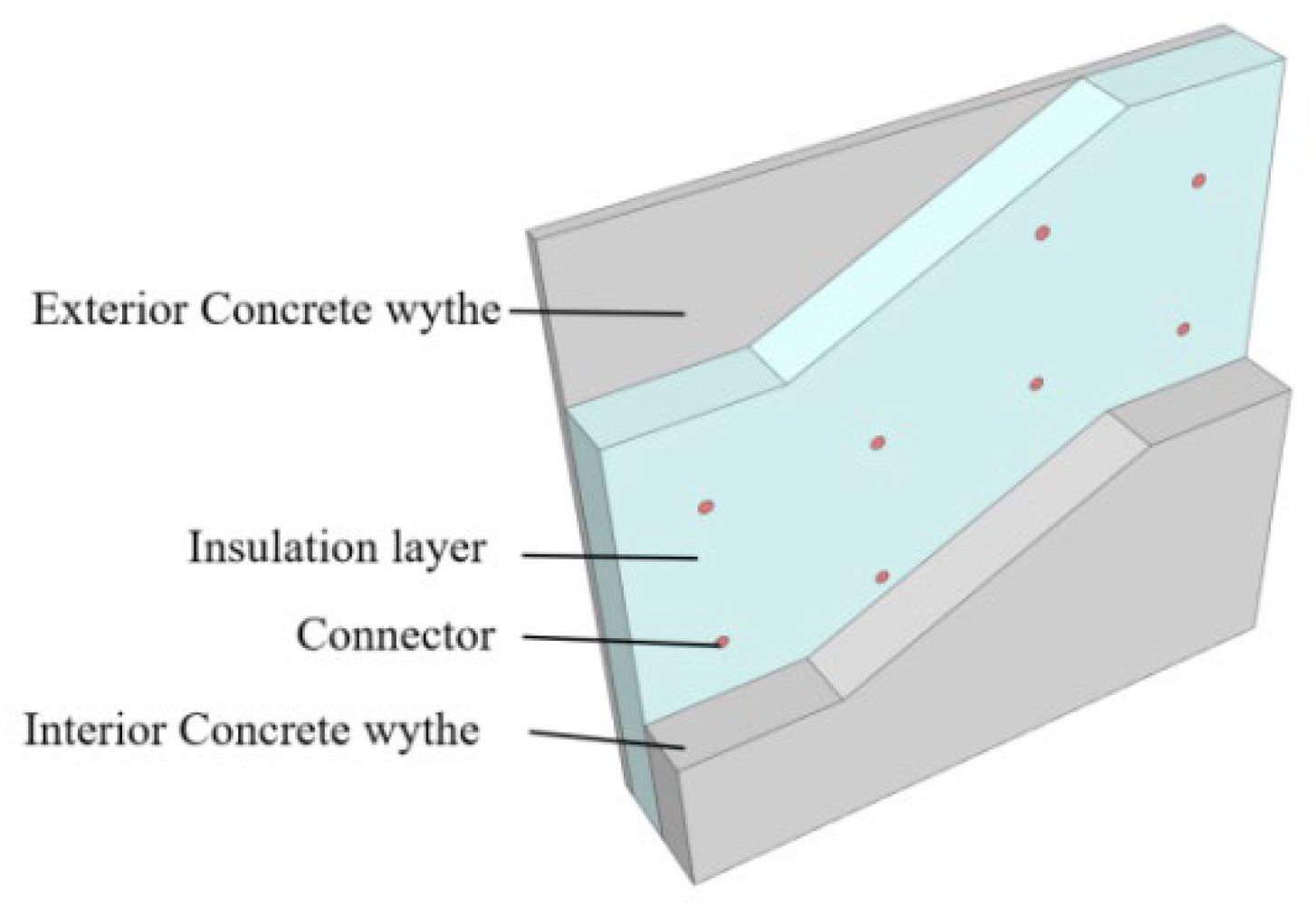
- GFRP connectors are key components of PCSP. Durability and mechanical properties directly determine the overall service life of the walls. It is necessary to investigate the behavior of GFRP connectors.
- (2)
- Most studies have focused on the durability and mechanical properties of GFRP bars, and the relevant research has been well established; however, research on the long-term durability of GFRP connectors in alkaline environments remains almost absent.
- (3)
- AC320-06 specifies that GFRP connectors are exposed to a solution at 23 °C and pH 12 for 1000 h (41.67 days) and 3000 h (125 days). These exposure durations are too short compared with the minimum 50-year design service life of structures, making it difficult to predict the long-term behavior of GFRP connectors over the design life. In addition, neither ACI 440.3R-12 nor AC320-06 specifies the interlaminar shear strength retention rate of GFRP connectors. Hence, it is necessary to investigate this retention rate, so as to enrich the experimental database and lay a foundation for formulating new standards.
2. Experimental Program
2.1. Specimen Parameters
2.2. Testing Methods
3. Results and Discussion
3.1. Observation and Image Analysis
3.1.1. Surface Condition
- (1)
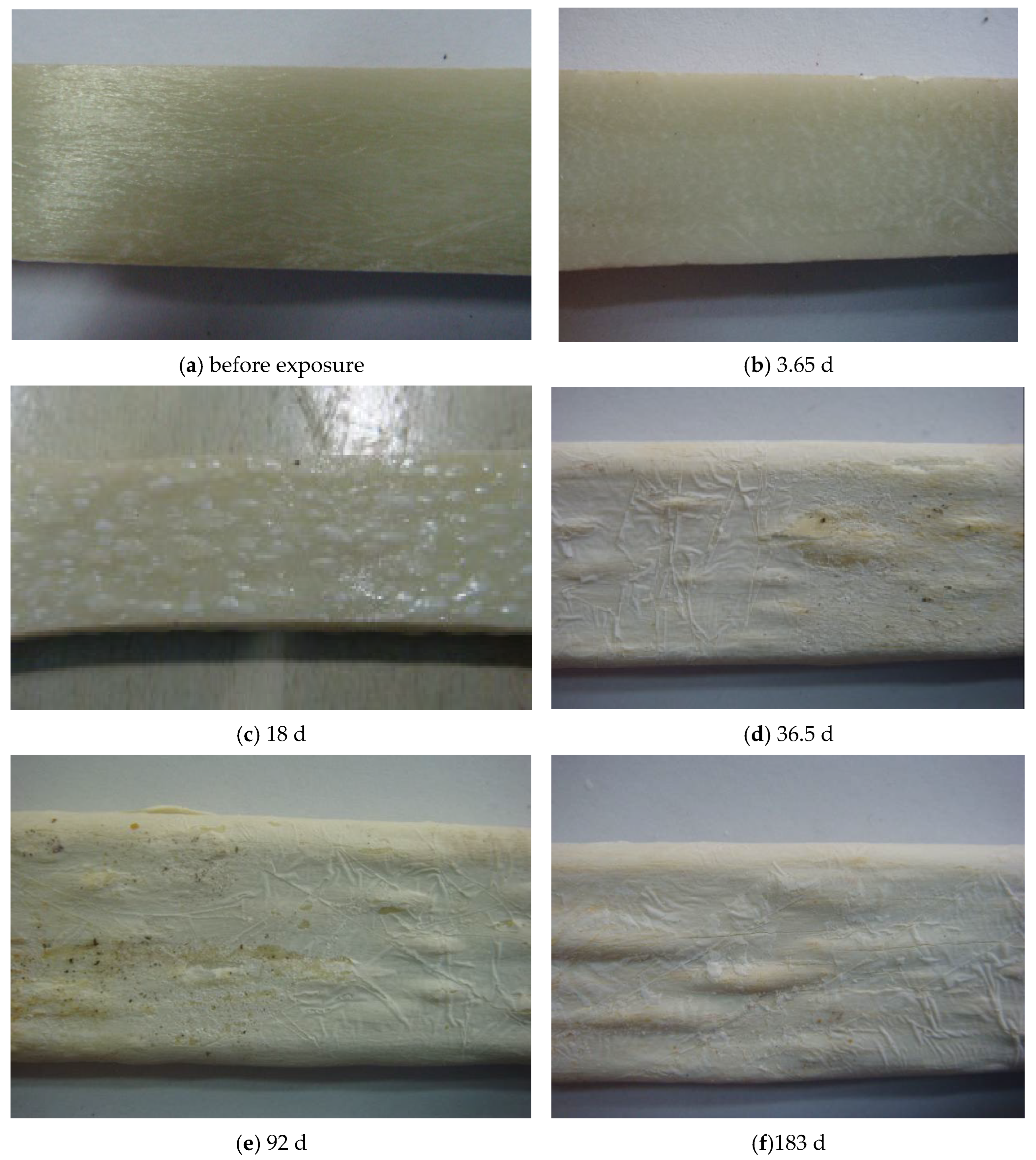
- Before exposure, the GFRP connectors exhibited a smooth surface. With increasing exposure duration, resin dissolution became apparent, and the initially uniform resin distribution turned increasingly non-uniform. This phenomenon was more severe at higher temperatures.
- (2)
- After 36.5 days of exposure in the alkaline solution, the specimens showed a noticeable reduction in surface gloss. Their color changed from initially semi-transparent white to an opaque, milky white with a slight yellowish tint. Surface blistering was also observed at this stage.
- (3)
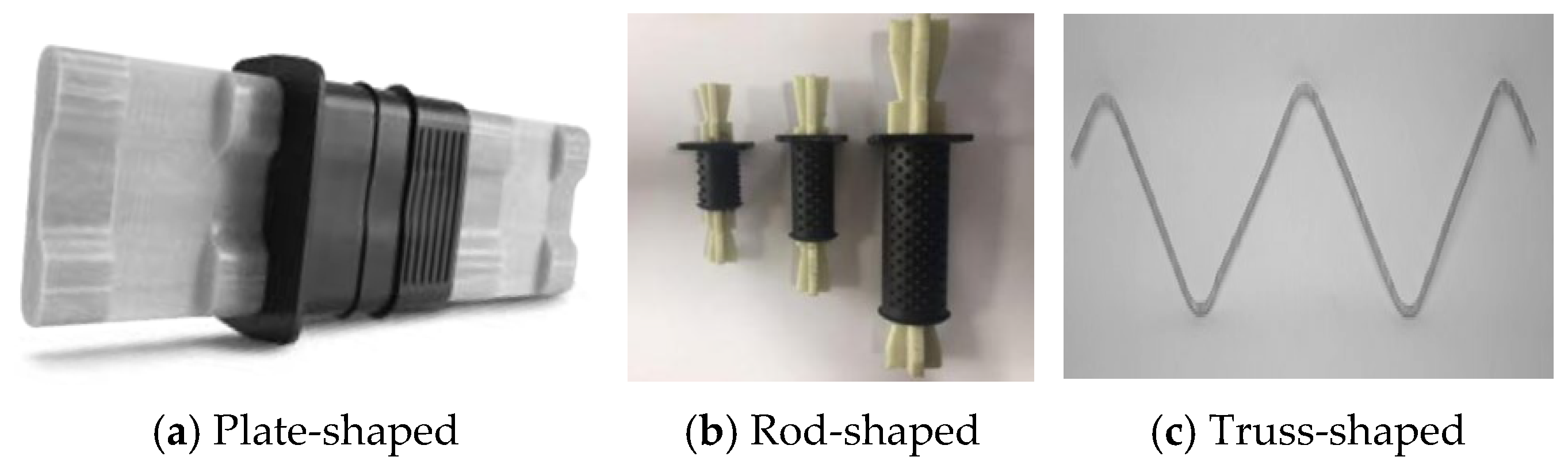
- After 183 days of exposure at 80 °C, the GFRP connectors suffered complete macroscopic failure, the overall structure of the connectors was loose and brittle, with severe peeling and shedding of the surface resin matrix, and the internal glass fiber bundles were exposed and even broken into loose filamentous structures; the connectors lost their original structural integrity and mechanical bearing capacity, and could not maintain the basic rod/plate shape, showing brittle fracture and interfacial debonding mixed failure mode—the resin matrix was completely hydrolyzed and cracked, the fiber-matrix interface was completely debonded, and the glass fiber bundles were corroded and fractured due to chemical reaction, leading to the overall collapse of the material structure. It was impossible to obtain complete and valid samples from the failed connectors for SEM microscopic observation.
3.1.2. Microstructural Analysis
- (1)
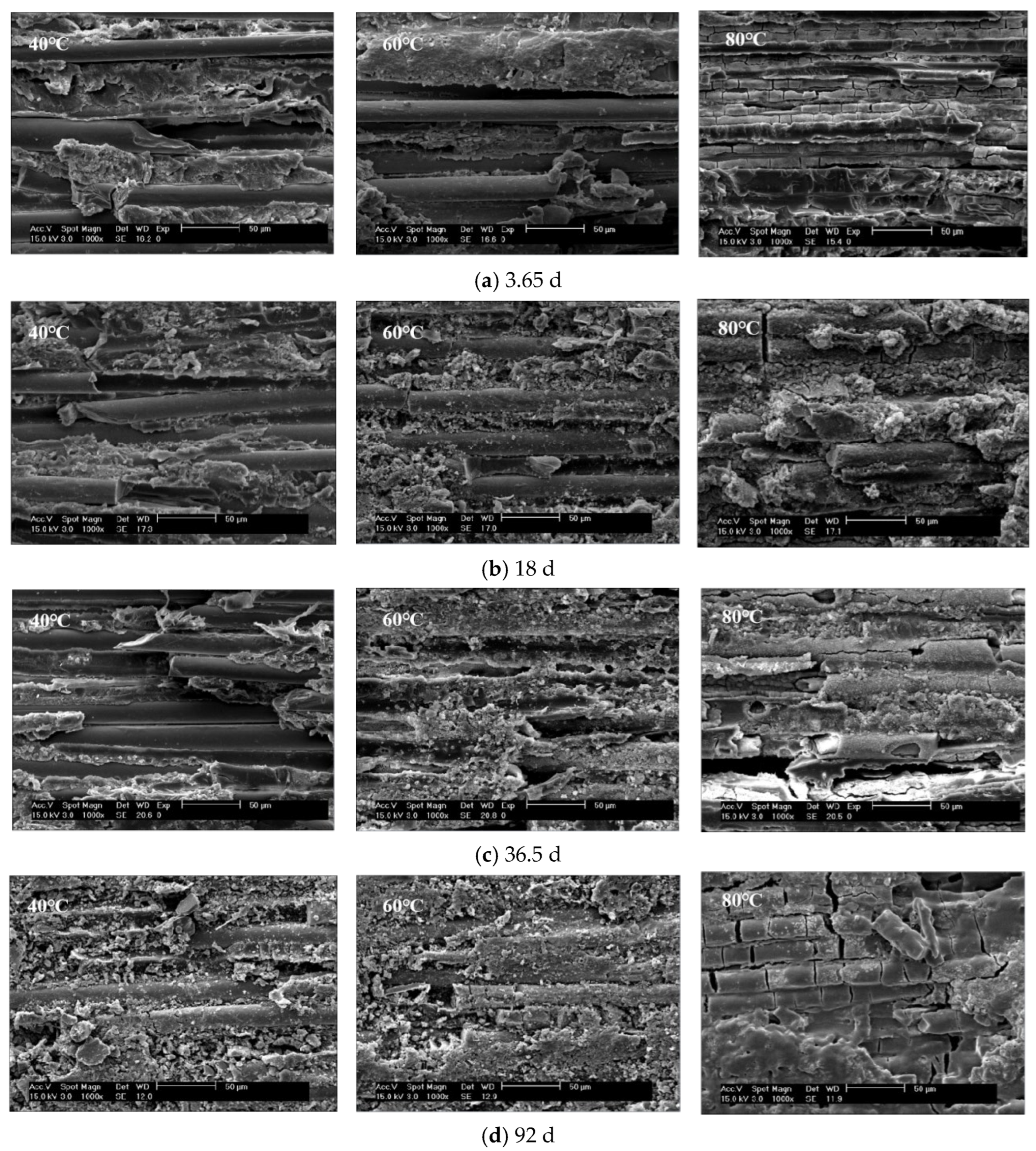
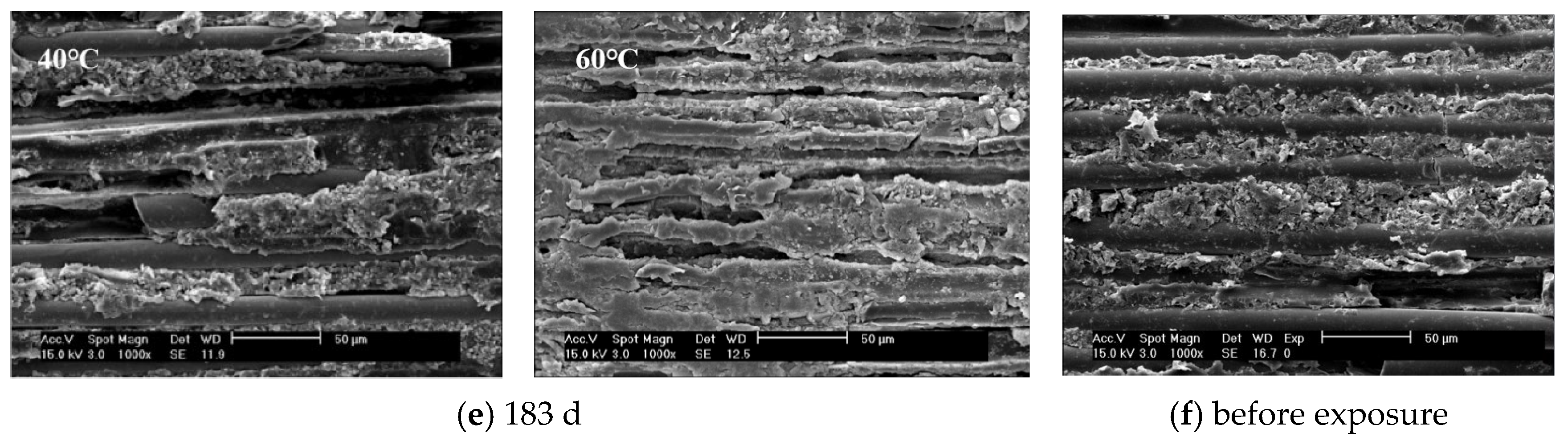
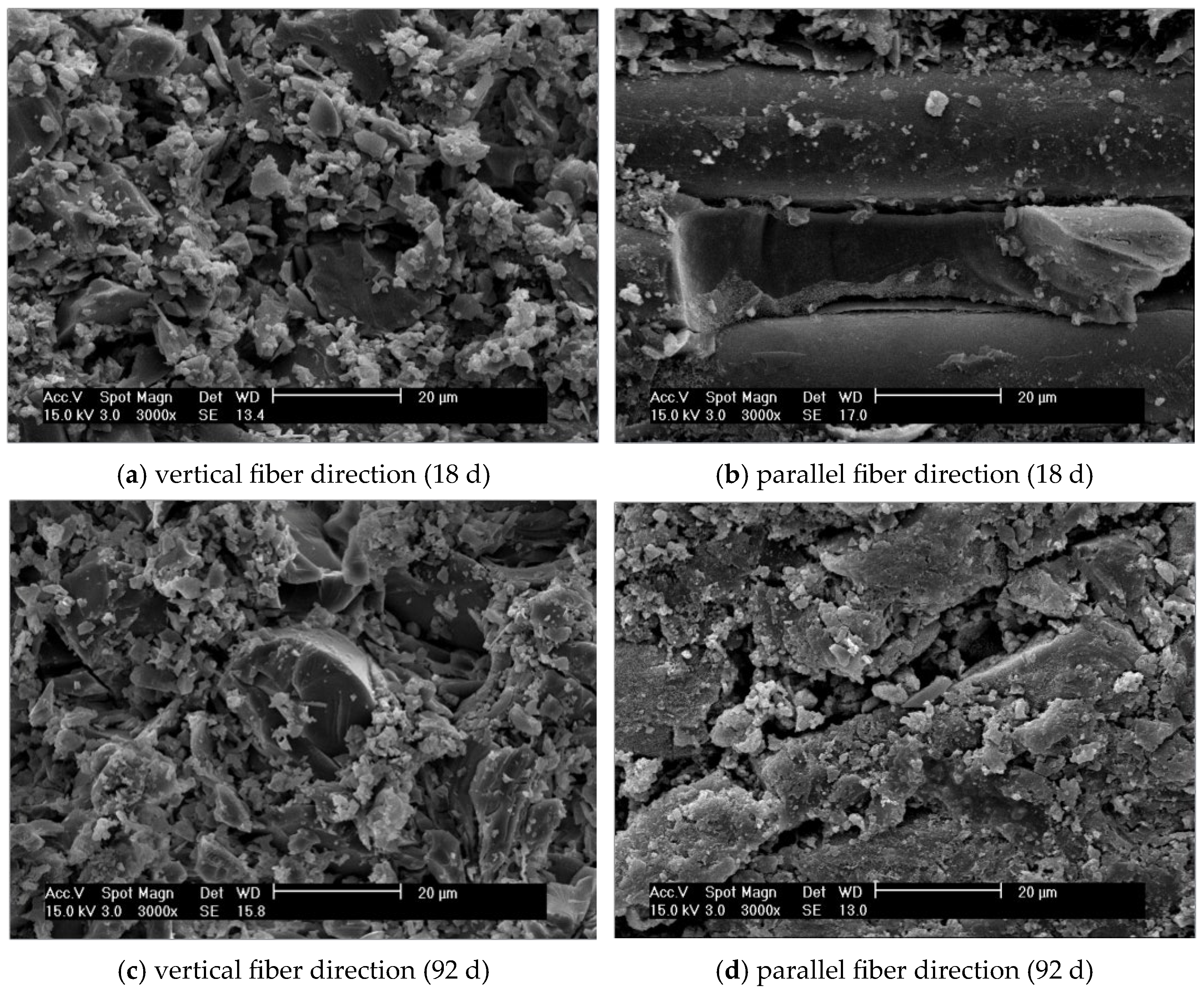
- The unexposed GFRP connectors exhibited a dense internal structure with well-rounded fibers and a tight fiber-matrix interface. After exposure, the extent of degradation progressively increased with both longer exposure times and higher temperatures.
- (2)
- Following alkaline exposure, a tendency for interface debonding between the fibers and the resin matrix was observed. The condition of this interface varied significantly with temperature and exposure duration. For instance, after 18 days at 60 °C, the fiber-matrix interface remained relatively tight without significant debonding. In contrast, specimens exposed to the 80 °C solution displayed pronounced debonding. After 183 days at 60 °C, severe interface debonding was evident within the degraded regions of the connectors. For specimens subjected to the 80 °C, the solutions were completely damaging by this stage, precluding the extraction of viable samples for SEM observation.
- (3)
- With increasing temperature and exposure durations, micro-cracks initiated and propagated within the resin matrix. The number and width of these cracks increased over time. This phenomenon is attributed to the hydrolysis reaction between the resin and water molecules, leading to a progressive loss of adhesion between the resin and the fibers. Concurrently, the glass fibers underwent a chemical reaction with hydroxyl ions (OH−) in the alkaline solution, resulting in the breakdown of Si-O bonds. These combined mechanisms ultimately led to the deterioration of the mechanical properties of the GFRP connectors.
3.2. Hygroscopic Properties
- (1)
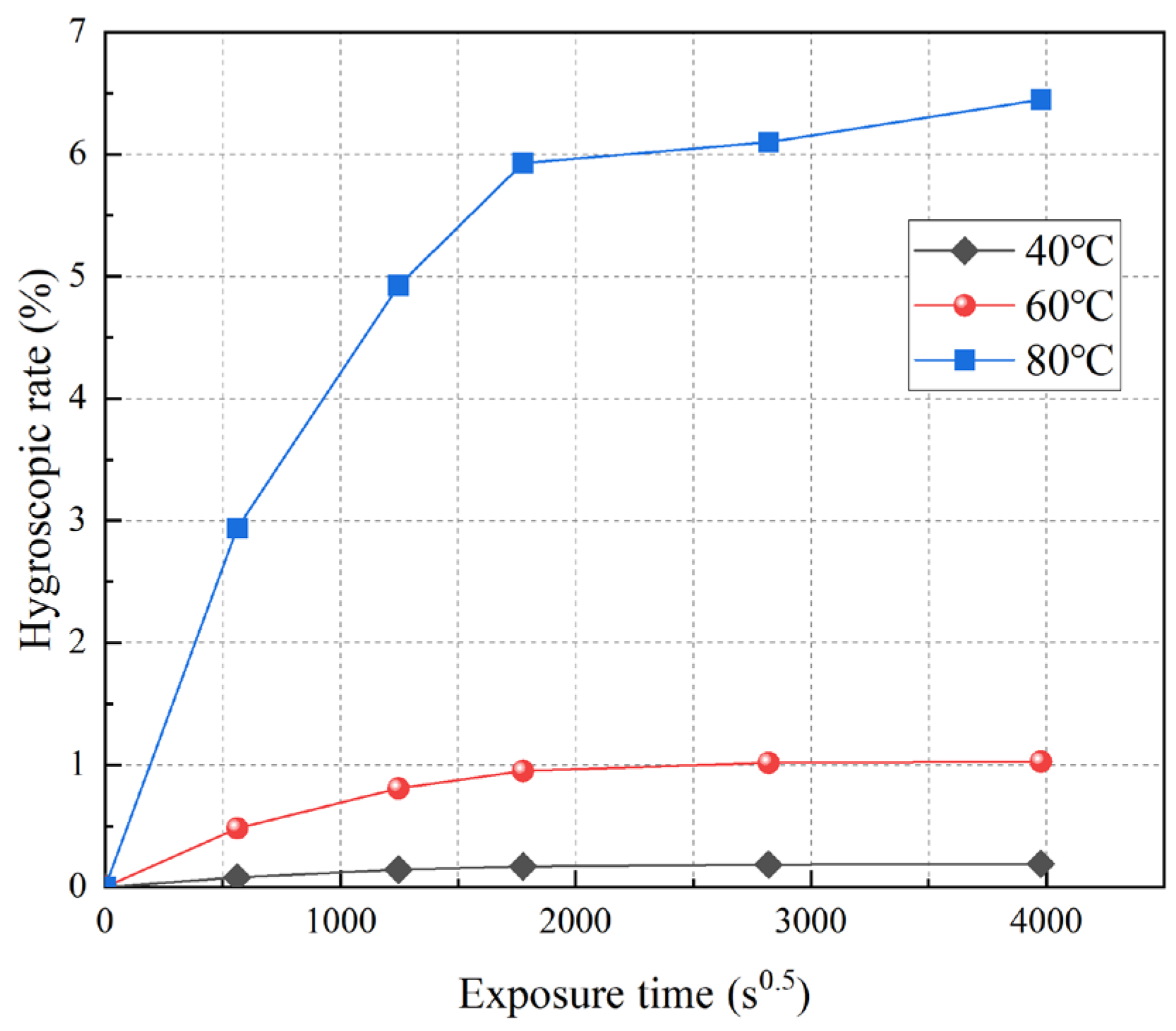
- At the initial corrosion stage, the hygroscopic curve of GFRP connectors increased approximately linearly. With corrosion time, the curve gradually flattened and approached equilibrium. This suggests that the physical diffusion of corrosive ions within GFRP connectors follows Fick’s law.
- (2)
- For relatively short exposure durations (≤36.5 d), the hygroscopic rate of GFRP connectors was approximately proportional to the square root of time, and the hygroscopic kinetic curve exhibited an approximately linear behavior. After 36.5 d of corrosion, the rate of increase in hygroscopic rate gradually slowed and stabilized. This was mainly caused by the reaction between OH− ions and fibers during diffusion, which produced new products and blocked the internal diffusion pathways of OH− ions, eventually leading to hygroscopic equilibrium.
- (3)
- Temperature had a significant effect on the hygroscopic behavior of GFRP connectors. After 183 days of exposure in alkaline solutions at 40 °C, 60 °C, and 80 °C, the hygroscopic rates of GFRP connectors were 0.19%, 1.03%, and 6.45%, respectively. This was primarily because higher solution temperature accelerated the formation of internal pores and debonding at the fiber–matrix interface, creating interfacial voids that enhanced the hygroscopic capacity of GFRP connectors and thus increased the hygroscopic rate.
3.3. Shear Strength
- (1)
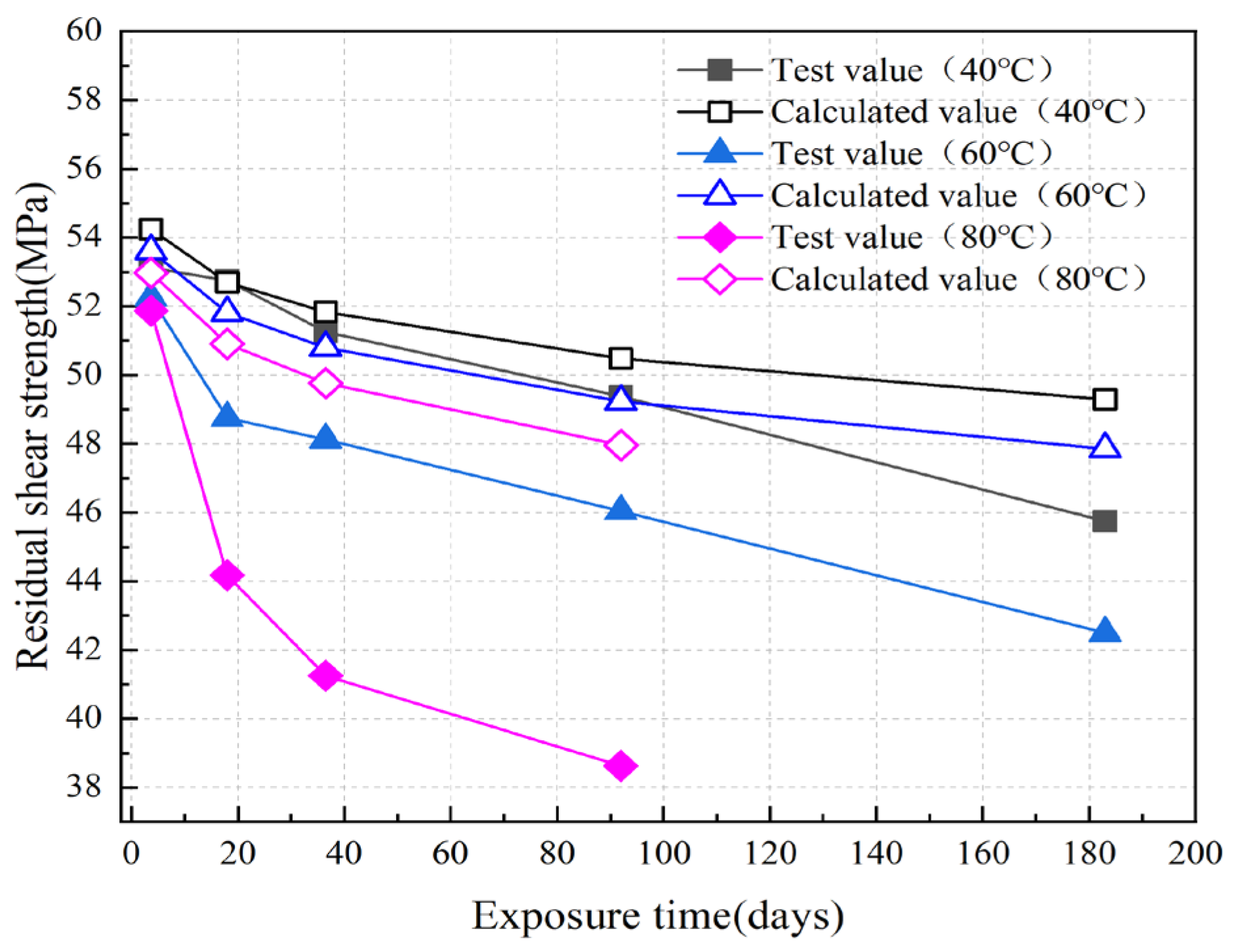
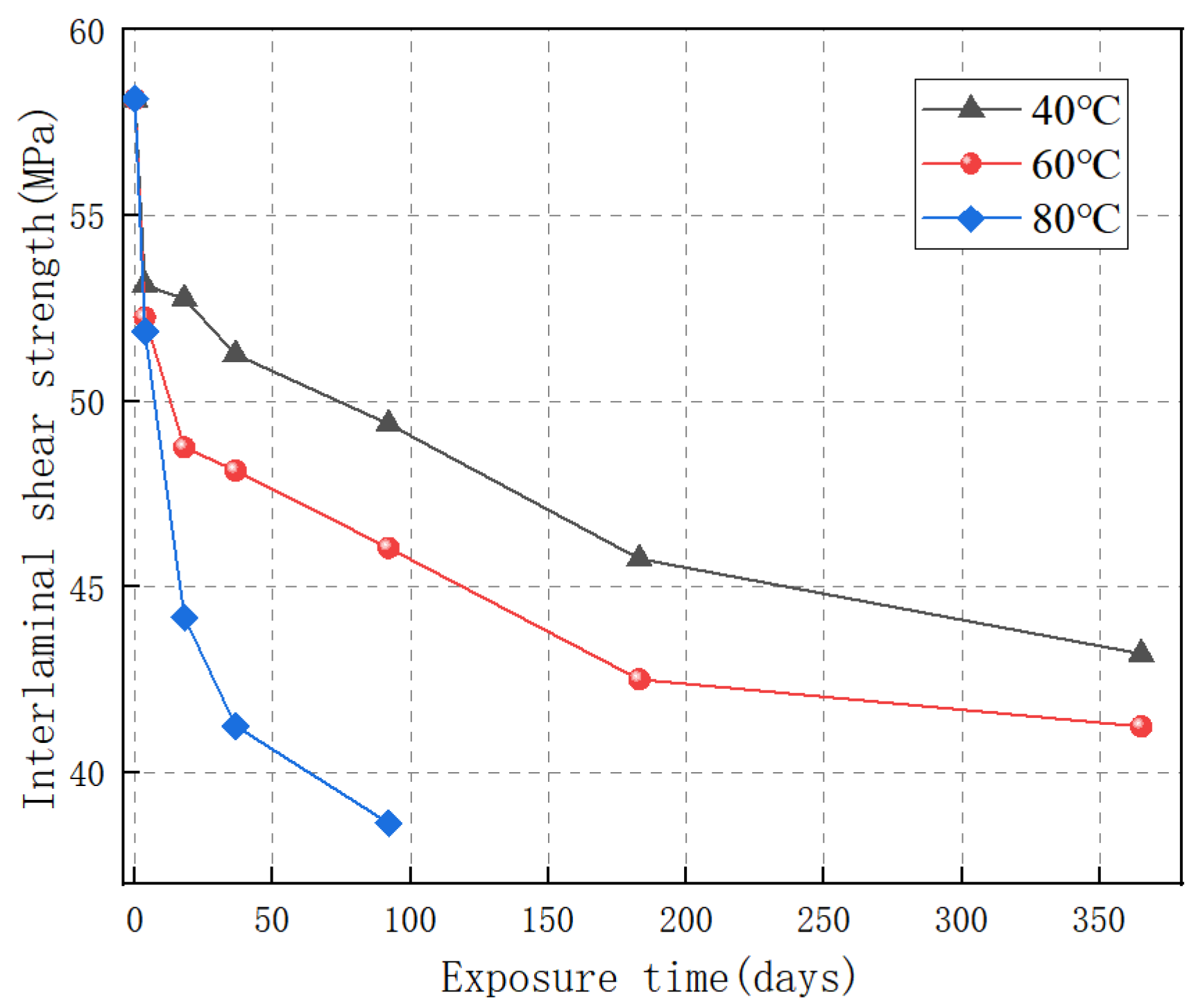
- The shear strength of GFRP connectors decreased with prolonged exposure time. After exposure to the alkaline solution at 60 °C for 3.65, 18, 36.5, 92, and 183 days (corresponding to approximately 1, 5, 10, 25, and 50 years in a natural environment, respectively), the shear strength decreased by 10.12%, 16.14%, 17.22%, 20.80% and 26.89%, respectively. Following exposure to the 40 °C alkaline solution, the reductions were 8.62%, 9.26%, 11.84%, 15.05%, and 21.30%, respectively. Under the 80 °C alkaline environment, exposure for 3.65, 18, 36.5, and 92 days led to reductions of 10.77%, 24.02% 29.04%, and 33.55%, respectively. Specimens exposed for 183 days at 80 °C experienced complete failure. These results indicate a continuous decline in shear strength with extended exposure duration, primarily due to progressive degradation within the simulated concrete pore solution. Notably, the degradation rate was more pronounced during the initial exposure period (up to 18 days for 40 °C and 60 °C, and up to 36.5 days for 80 °C) and gradually decelerated thereafter.
- (2)
- Elevated temperatures significantly accelerated the degradation of the shear strength. Compared to the strength reduction observed at 40 °C, the additional reductions (refer to the increased percentage of the shear strength reduction in GFRP connectors at a certain temperature compared with that at 40 °C for the same exposure durations) at 60 °C after 3.65, 18, 36.5, 92, and 183 days were 1.49%, 6.89%, 5.40%, 5.75%, and 5.59%, respectively. At 80 °C, the additional reductions after 3.65, 18, 36.5, and 92 days were 2.15%, 14.76%, 17.21%, and 23.86%, respectively. The vinyl ester resin in GFRP rapidly absorbs moisture in hygrothermal environments. Initially, a significant moisture gradient between the surface and the interior leads to a high diffusion rate, causing swift resin matrix swelling and plasticization. The aged specimens exhibited continuous micro-crack propagation and minor apparent deformation before reaching the peak load, which originated from surface resin cracking, shrinkage and local interface debonding; After the peak load, the bearing capacity decreased rapidly. Furthermore, higher temperatures accelerate the corrosive action of the medium, enhancing the mobility of OH− ions within the GFRP connectors.
- (3)
- After exposure at 60 °C for 183 days (equivalent to approximately 50 years in a natural environment), the shear strength decreased by 26.89%, respectively. Accordingly, environmental influence factors of 1.4 are recommended for 50-year service life predictions, respectively, to incorporate an appropriate safety margin.
4. Deterioration Mechanism and Degradation Model
4.1. Deterioration Mechanism
4.2. Degradation Model
4.2.1. Critical Concentration (Cx,t)
4.2.2. Diffusion Coefficient (D)
4.2.3. Degradation Model
5. Discussion on Durability Behavior in AC 320 and ACI 440.3R-12
6. Conclusions
- (1)
- With increasing exposure time, the surface of the GFRP connectors exhibited blistering, a reduction in glossiness, and the development of cracks. Microscopically, significant debonding between fibers and the surrounding resin was observed in the degraded regions. This phenomenon became more pronounced with longer exposure durations and higher environmental temperatures.
- (2)
- The interlaminar shear strength of GFRP connectors decreased with increasing exposure time. After exposure to the alkaline solution at 60 °C for 3.65, 18, 36.5, 92, and 183 days (corresponding to approximately 1, 5, 10, 25, and 50 years in a natural environment, respectively), the strength decreased by 10.12%, 16.14%, 17.22%, 20.80%, and 26.89%, respectively. At 40 °C, the strength decreased by 8.62%, 9.26%, 11.84%, 15.05%, and 21.30% for the respective exposure durations. At 80 °C, exposure for 3.65, 18, 36.5, and 92 days resulted in strength reductions of 10.77%, 24.02%, 29.04%, and 33.55%, respectively. Specimens exposed for 183 days at 80 °C experienced complete failure.
- (3)
- After exposure at 60 °C for 183 (equivalent to approximately 50 years in a natural environment), the shear strength decreased by 26.89%. Based on these results, for a 50-year service life in natural environments, a conservative environmental impact factor of 1.4 is recommended for the interlaminar shear strength of GFRP connectors.
- (4)
- A predictive model for the time-dependent interlaminar shear strength of GFRP connectors under different temperature conditions was established based on Fick’s law. The model predictions show good agreement with the experimental results.
Author Contributions
Funding
Data Availability Statement
Conflicts of Interest
References
- O’hegarty, R.; Kinnane, O. Review of precast concrete sandwich panels and their innovations. Constr. Build. Mater. 2020, 233, 117145. [Google Scholar] [CrossRef]
- Hodicky, K.; Sopal, G.; Rizkalla, S.; Hulin, T.; Stang, H. Experimental and numerical investigation of the FRP shear mechanism for concrete sandwich panels. J. Compos. Constr. 2015, 19, 04014083. [Google Scholar] [CrossRef]
- Amin Einea, P.E.; Salmon, D.C.; Fogarasi, G.J.; Culp, T.D.; Tadros, M.K. State of the art of precast concrete sandwich panels. PCI J. 1991, 36, 78–98. [Google Scholar] [CrossRef]
- Kurama, Y.C.; Pessiki, S. Seismic behavior and design of unbonded post-tensioned precast concrete walls. PCI J. 1999, 44, 72–89. [Google Scholar] [CrossRef]
- Hu, X.; Xue, W.; Jiang, J. Experimental and numerical studies on the axial capacity of steel plate-to-sleeve connections. Constr. Build. Mater. 2026, 522, 146260. [Google Scholar] [CrossRef]
- Xue, W.; Fu, K.; Hu, X.; Li, Y. Accelerated ageing test and durability prediction model for mechanical properties of GFRP connectors in precast concrete sandwich panels. Constr. Build. Mater. 2020, 237, 117632. [Google Scholar] [CrossRef]
- Diamond, S. Effects of two Danish flyashes on alkali contents of pore solutions of cement fly ash pastes. Cem. Concr. Res. 1981, 11, 383–394. [Google Scholar] [CrossRef]
- Taylor, H.F.W. A method for predicting alkali ion concentration in cement pore water solutions. Adv. Cem. Res. 1987, 1, 5–16. [Google Scholar] [CrossRef]
- An, Y.; Huang, W.; Quan, W.; Guo, Q.; Miao, X.; Wang, M. Study on the shear behavior of GFRP ultra-long two-way connectors for precast concrete sandwich walls. Structures 2025, 71, 107962. [Google Scholar] [CrossRef]
- Li, Y.; Yin, S.; Zhang, J.; Wang, F. Experimental investigation on shear behavior of ECC sandwich insulation wall panel with GFRP connectors. J. Build. Eng. 2024, 97, 110845. [Google Scholar] [CrossRef]
- Xue, W.; Yan, D.; Wang, Y.; Zhang, S. Shear behavior of multi-row perforated GFRP rib shear connectors in GFRP-concrete hybrid beams/desks. Constr. Build. Mater. 2024, 449, 138284. [Google Scholar] [CrossRef]
- Xue, W.; Yan, D.; Dai, Y.; Wang, W. Experimental research on shear behavior of multiple Perfobond rib shear connectors in steel-concrete composite girder. Structures 2025, 71, 108089. [Google Scholar] [CrossRef]
- Abbasi, A.; Hogg, P.J. Temperature and environmental effects on glass fibre rebar: Modulus, strength and interfacial bond strength with concrete. Compos. Part B Eng. 2005, 36, 394–404. [Google Scholar] [CrossRef]
- Chen, Y.; Davalos, J.F.; Ray, I. Durability prediction for GFRP reinforcing bars using short-term data of accelerated aging tests. J. Compos. Constr. 2006, 10, 279–286. [Google Scholar] [CrossRef]
- ACI 440.3R–12; Guide Test Methods for Fiber–Reinforced Polymer (FRP) Composites for Reinforcing or Strengthening Concrete and Masonry Structures. ACI Committee 440, American Concrete Institute: Farmington Hills, MI, USA, 2012.
- Al Rifai, M.; El-Hassan, H.; El-Maaddawy, T.; Abed, F. Durability of basalt FRP reinforcing bars in alkaline solution and moist concrete environments. Constr. Build. Mater. 2020, 243, 118258. [Google Scholar] [CrossRef]
- Ceroni, F.; Cosenza, E.; Gaetano, M.; Pecce, M. Durability issues of FRP rebars in reinforced concrete members. Cem. Concr. Compos. 2006, 28, 857–868. [Google Scholar] [CrossRef]
- Zhang, Z.; Ji, Q.; Guo, Z.; Li, C.; Guo, R.; Tian, J.; Zhang, Z.; He, T.; Xian, G. Design, preparation, and mechanical properties of glass fiber reinforced thermoplastic self-anchor plate cable exposed in alkaline solution environment. Polym. Compos. 2024, 45, 11687–11700. [Google Scholar] [CrossRef]
- Yu, Y.; Pan, Y.; Zhou, R.; Miao, X. Effects of Water and Alkaline Solution on Durability of Carbon-Glass Hybrid Fiber Reinforced Polymer Bars. Polymers 2021, 13, 3844. [Google Scholar] [CrossRef] [PubMed]
- AC320–2006; Acceptance Criteria for Fiber-Reinforced Composite Connectors Anchored in Concrete. ICC Evaluation Service, ICC-ES: Brea, CA, USA, 2006.
- JG/T 561-2019; Fiber-Reinforced Polymer Connectors for Precast Sandwich Insulated Wall. China Standards Press: Beijing, China, 2019.
- Beddow, J.; Purnell, P.; Mottram, J.T. Allocation of GRC Accelerated Ageing Rationales to Pultruded Structural GRP. In 9th International Conference on Fiber Reinforced Composite; University of Newcastle upon Tyne: Newcastle upon Tyne, UK, 2002; pp. 215–221. [Google Scholar]
- Tannous, F.E.; Saadatmanesh, H. Environmental effects on the mechanical properties of E-glass FRP rebars. Mater. J. 1998, 95, 87–100. [Google Scholar]
- Chongqing Polycomp International Corporation. Report of Comparison on Glassfiber Properties; Chongqing Polycomp International Corporation: Chongqing, China, 2012. [Google Scholar]
- Dejke, V. Durability of FRP Reinforcement in Concrete—Literature Review and Experiments; Department of Building Materials, Chalmers University of Technology: Göteborg, Sweden, 2001. [Google Scholar]
- Porter, M.L.; Barnes, B.A. Accelerated Aging Degradation of Glass Fiber Composites, Fiber Composites in Infrastructure. In Proceedings of the Second International Conference on Fiber Composites in Infrastructure (ICCI’98), Tucson, AZ, USA, 5–7 January 1998; pp. 446–459. [Google Scholar]
- ASTM D2344; Standard Test Method for Short-Beam Strength of Polymer Matrix Composite Materials and Their Laminates. Department of Defense: York, PA, USA, 2016.
- ASTM D5229; Standard Test Method for Moisture Absorption Properties and Equilibrium Conditioning of Polymer Matrix Composite Materials. Department of Defense: York, PA, USA, 2014.
- GB/T 1446-2005; Fiber-Reinforced Plastics—General Guidance for Testing. China National Standardization Administration Committee: Beijing, China, 2005.
- Litherland, K.L.; Oakley, D.R.; Proctor, B.A. The use of accelerated aging procedures to predict the long term strength of GRF composites. Cem. Concr. Res. 1981, 11, 455–466. [Google Scholar] [CrossRef]
- Wang, S. Physical Chemistry; Metallurgical Industry Press: Beijing, China, 2007. (In Chinese) [Google Scholar]
- Yu, H.F.; Sun, W.; Ma, H.Y.; Yan, L.H. Diffusion equations of chloride ion in concrete under the combined action of durability factors. J. Build. Mater. 2002, 5, 240–247. [Google Scholar]
- Alsayed, S.; Alhozaimy, A. Effect of High temperature and Alkaline Solutions on the Durability of GFRP Bars. In Proceedings of the First International Conference on Durability of Fiber Reinforced Polymer (FRP) Composites for Construction, Sherbrooke, QC, Canada, 29–31 May 1998; pp. 623–634. [Google Scholar]
- Case, S.W.; Lesko, J.J.; Cousins, T.E. Development of a Life Prediction Scheme for the Assessment of Fatigue Performance of Composite Infrastructures. In Proceedings of the First International Conference on Durability of Fiber Reinforced Polymer (FRP) Composites for Construction, Sherbrooke, QC, Canada, 29–31 May 1998; pp. 69–80. [Google Scholar]
- Wang, W. Durability Test and Theoretical Research of GFRP Bars in Alkaline Environment. Doctor’s Thesis, Tongji University, Shanghai, China, 2011. [Google Scholar]
- Fu, K. FRP Connection Component Durability Test Report; Tongji University: Shanghai, China, 2012. [Google Scholar]





| Temperature/°C | Exposure Time/Day | Number of Specimens | Total Number of Specimens |
|---|---|---|---|
| 40/60/80 | 0 | 5 | 90 |
| 3.65 | 5 | ||
| 18 | 5 | ||
| 36.5 | 5 | ||
| 92 | 5 | ||
| 183 | 5 |
| Temperature /°C | Exposure Time/Day | |||||
|---|---|---|---|---|---|---|
| 0 | 3.65 | 18 | 36.5 | 92 | 183 | |
| 40 | 27.557 | 27.579 | 27.596 | 27.603 | 27.608 | 27.609 |
| 60 | 27.448 | 27.581 | 27.670 | 27.709 | 27.728 | 27.730 |
| 80 | 27.398 | 28.203 | 28.747 | 29.022 | 29.069 | 29.164 |
| Temperature | Calculation Formula |
|---|---|
| 40 °C | |
| 60 °C | |
| 80 °C |
| Temperature | Time | Test Value (ft)/MPa | Calculated Value (fc)/MPa | ft/fc |
|---|---|---|---|---|
| 40 °C | 3.65 d | 53.12 | 54.24 | 0.98 |
| 18 d | 52.75 | 52.70 | 1.00 | |
| 36.5 d | 51.25 | 51.83 | 0.99 | |
| 92 d | 49.38 | 50.48 | 0.98 | |
| 183 d | 45.75 | 49.29 | 0.93 | |
| 60 °C | 3.65 d | 52.25 | 53.61 | 0.97 |
| 18 d | 48.75 | 51.81 | 0.94 | |
| 36.5 d | 48.12 | 50.80 | 0.95 | |
| 92 d | 46.04 | 49.23 | 0.94 | |
| 183 d | 42.50 | 47.85 | 0.89 | |
| 80 °C | 3.65 d | 51.87 | 52.97 | 0.98 |
| 18 d | 44.17 | 50.91 | 0.87 | |
| 36.5 d | 41.25 | 49.76 | 0.83 | |
| 92 d | 38.63 | 47.96 | 0.81 | |
| Average value | 0.93 | |||
| Standard deviation | 0.06 | |||
Disclaimer/Publisher’s Note: The statements, opinions and data contained in all publications are solely those of the individual author(s) and contributor(s) and not of MDPI and/or the editor(s). MDPI and/or the editor(s) disclaim responsibility for any injury to people or property resulting from any ideas, methods, instructions or products referred to in the content. |
© 2026 by the authors. Licensee MDPI, Basel, Switzerland. This article is an open access article distributed under the terms and conditions of the Creative Commons Attribution (CC BY) license.
Share and Cite
Xue, W.; Chen, L.; Fu, K.; Sun, Q.; Zhang, Y. Durability Prediction Model for Shear Behavior of GFRP Connectors in Precast Concrete Sandwich Panels. Buildings 2026, 16, 1602. https://doi.org/10.3390/buildings16081602
Xue W, Chen L, Fu K, Sun Q, Zhang Y. Durability Prediction Model for Shear Behavior of GFRP Connectors in Precast Concrete Sandwich Panels. Buildings. 2026; 16(8):1602. https://doi.org/10.3390/buildings16081602
Chicago/Turabian StyleXue, Weichen, Li Chen, Kai Fu, Qingchen Sun, and Yanxin Zhang. 2026. "Durability Prediction Model for Shear Behavior of GFRP Connectors in Precast Concrete Sandwich Panels" Buildings 16, no. 8: 1602. https://doi.org/10.3390/buildings16081602
APA StyleXue, W., Chen, L., Fu, K., Sun, Q., & Zhang, Y. (2026). Durability Prediction Model for Shear Behavior of GFRP Connectors in Precast Concrete Sandwich Panels. Buildings, 16(8), 1602. https://doi.org/10.3390/buildings16081602