


Abstract
Radon is a significant indoor air pollutant and a leading cause of lung cancer in non-smokers. While geogenic radon potential is well-documented, the specific contribution of building materials—particularly historic stones and those containing industrial by-products—requires precise in situ characterization to ensure public safety. This study investigates radon activity concentrations and surface exhalation rates across three distinct case studies in Slovakia: a mid-20th-century structure with cinder blocks, a UNESCO-protected Gothic building featuring volcanic andesite, and a historic stone plinth. Continuous radon monitoring and accumulation chamber measurements were employed, integrated with the tracking of meteorological parameters. The results revealed the highest surface exhalation rate in cinder block masonry (8.98 Bq m−2 h−1), followed by andesite ashlars (7.9 Bq m−2 h−1) and stone (1.87 Bq m−2 h−1). A clear correlation was observed between indoor radon levels and barometric pressure, whereas the influence of outdoor temperature appeared negligible. An estimated Activity Concentration Index of 0.30 suggests that the volcanic rock is likely radiologically safe for use as a bulk building material. The study concludes that while specific materials contribute to exhalation, indoor radon stability is primarily governed by barometric variations and the effectiveness of floor barriers against geogenic ingress rather than the masonry itself.
1. Introduction
Radon (222Rn) is a naturally occurring radioactive noble gas that sits at the centre of discussions in environmental health, geology, and detector science. 222Rn is produced by alpha decay of 226Ra within the uranium-238 decay chain, is colourless, odourless, and tasteless, and has a half-life of 3.82 days [1]. Its chemistry is inert, which allows it to migrate through soils, rocks, building materials, and air, where it decays to short-lived progeny that emit alpha and beta radiation and contribute significantly to human radiation dose, especially in indoor environments and occupational settings.
As the leading cause of lung cancer in non-smokers, it is a hazardous indoor carcinogen. Key findings from three major pooling studies conducted across Europe, North America, and China have been synthesized and published within the WHO Handbook on Indoor Radon: A Public Health Perspective, providing a global framework for assessing its health impacts [2].
The primary sources of indoor radon are exhalation from the Earth’s crust and building materials. According to the European Basic Safety Standards (BSS), the reference level for the annual average activity concentration in air should not exceed 300 Bq m−3 [3]. Since Europeans spend about 90% of their time indoors, according to 2010 Eurostat surveys [4,5], identifying potential health risks through accurate measurement and ensuring concentrations remain below this regulatory threshold is of great significance for public health and safety.
Recent research on radon exhalation from building materials has primarily focused on three areas: materials in modern construction, such as concrete, ceramic blocks, gypsum board, ceramic tiles and marble [6,7,8,9]; the incorporation of industrial waste, including fly ash, slag, phosphogypsum, bauxite residue, and other metallurgical by-products in novel materials [10,11,12]; and coverage materials for mitigation [13,14,15].
The specific contribution of building materials, especially historical stones or those incorporating industrial by-products, e.g., bottom ash (BA), remains less characterized in in situ settings. In the former Czechoslovakia, the use of BA from local coal-fired power plants was prevalent during the mid-20th century due to its availability as a by-product of power plants and the chronic shortage of cement. Recent studies reporting higher radiological risks in BA-rich materials produced using advanced technology imply a potential impact on indoor radon levels [16,17,18].
While radon exhalation rates from various rock types, such as volcanic grey tuff, sandstone, limestone or granite [19,20,21] have been studied in regions where they are common in construction, a significant gap remains regarding the quantification of other specimens. This research addresses this gap by examining three case studies:
- Ochodnica: A mid-20th-century structure utilizing self-built blocks containing bottom ash (cinder), an industrial by-product.
- Banská Štiavnica: A UNESCO-protected Gothic structure featuring volcanic andesite ashlars sourced from local mountains.
- Topoľčianky: A family house built of unfired bricks on a stone foundation and an unfinished concrete slab featuring visible cracks, providing a potential pathway for soil-gas ingress.
The objective of this work is to evaluate how these diverse materials and structural conditions influence indoor radon levels. By employing non-linear regression modelling to estimate surface exhalation rates, this study seeks to provide a framework for distinguishing between material emanation and geogenic entry. Such a distinction is vital for Civil Engineers when determining whether remediation should focus on building envelope insulation or material-specific mitigation strategies.
2. Materials and Methods
2.1. Initial Investigative Phase
To establish a baseline and identify areas of interest, preliminary screenings were conducted using continuous short-term monitoring over a period of two to three weeks during the winter season. All measurements were performed using a pulsed ion chamber radon detector, FTlab RD200P2 (Radon FTLab, San Jose, CA, USA), a continuous radon monitor (CRM).
2.2. Radon Concentration Monitoring
The selection of spaces for radon concentration measurement followed WHO recommendations. Specifically, rooms were selected on the ground level in areas that are frequently occupied but characterized by minimal airflow; this was ensured by restricting access to the appointed spaces during the experimental period [2]. To further minimize environmental bias, it should be noted that none of the selected spaces are equipped with active ventilation or cooling systems. The specific heating conditions present during the monitoring period are detailed within each respective case study description. The radon detector was positioned 1–2 m above the floor, and the walls in these same spaces were subsequently used for exhalation rate estimation.
2.3. Wall Exhalation Rate Estimation Measurement
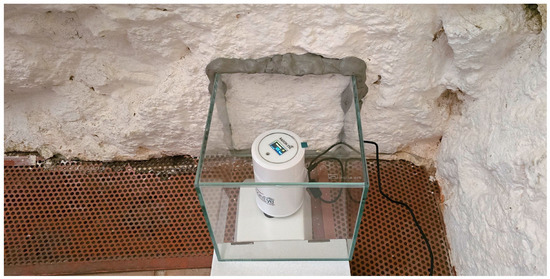
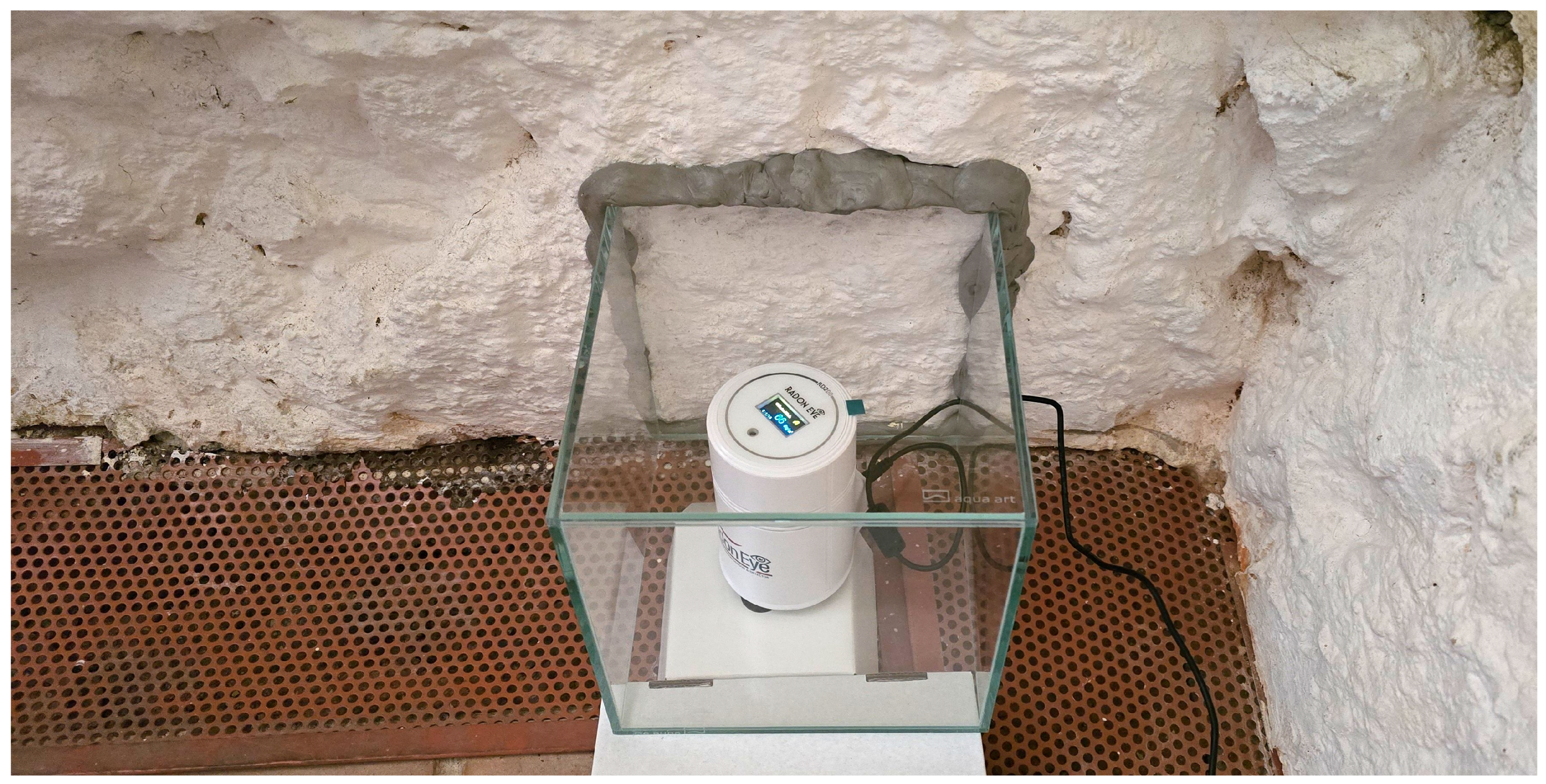
In situ measurements to estimate the surface exhalation rate were carried out on exterior-facing structures. Radon accumulation chambers were installed over masonry joints to determine the combined contribution of the masonry units and the filler material (mortar) as illustrated in Figure 1.
Figure 1.
In situ wall exhalation rate estimation measurement using an accumulation chamber and an RD200P2 monitor on a stone wall in Banská Štiavnica.
The experiment was conducted in accordance with ISO 11665-7 [22]. An 8 dm3 or 10 dm3 (litres) glazed accumulation chamber—secured to the surface with kneadable clay and Bostik Prestik adhesive sealant—was used. The FTlab RD200P2 CRM was enclosed within the chamber to record data at 10 min intervals.
2.4. Case Studies
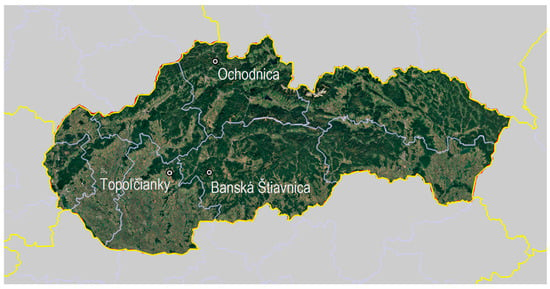
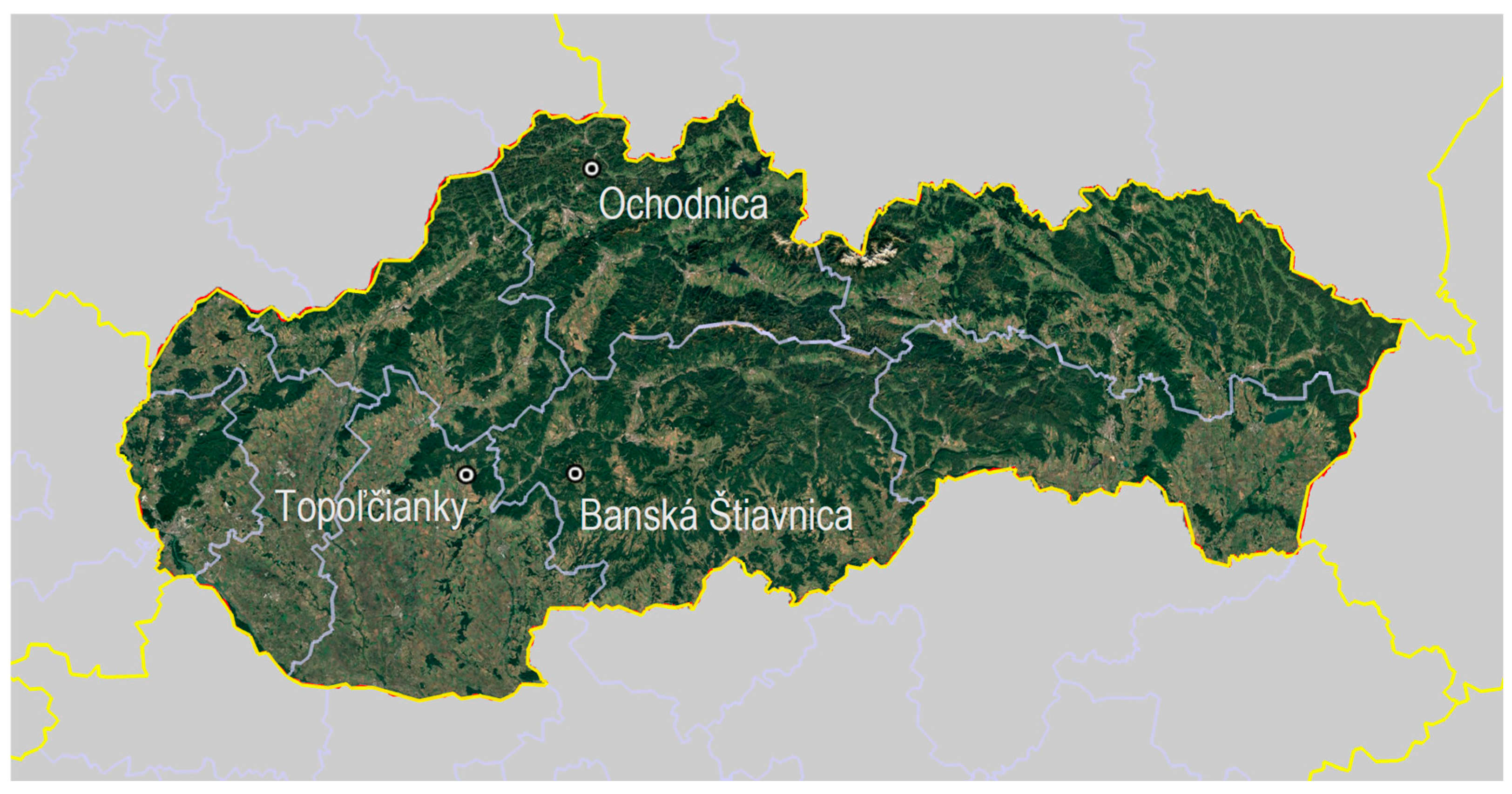
The research examined three distinct buildings in various geographical locations across Slovakia, shown in Figure 2, each representing different construction periods and material compositions.
Figure 2.
Geographical locations of the measurement sites in Slovakia: Ochodnica, Topoľčianky, and Banská Štiavnica [23].
2.4.1. Case Study 1: Ochodnica (Northern Slovakia)
- Construction: Erected in 1958 via self-build methods.
- Masonry: On-site manufactured blocks using a ratio of 1 part cement: 6–8 parts aggregate: 0.5–0.9 parts water. The aggregate consisted of either pure bottom ash (cinder) or a mixture of 2 parts sand and 6 parts cinder [24].
- Fenestration: Traditional timber box windows (double-casement) and solid wood doors.
- Flooring: Wooden floors laid over a cinder-concrete slab.
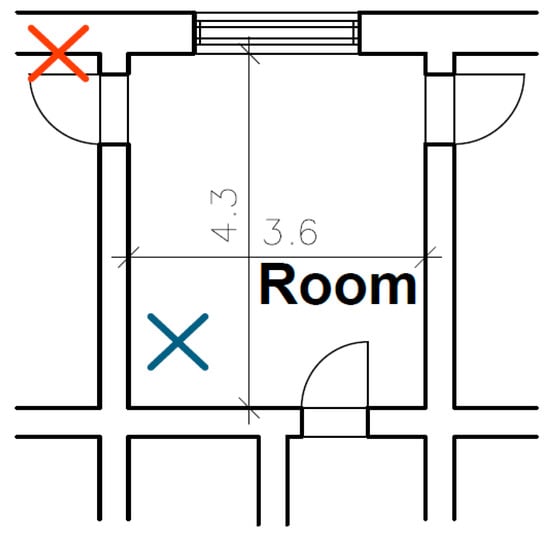
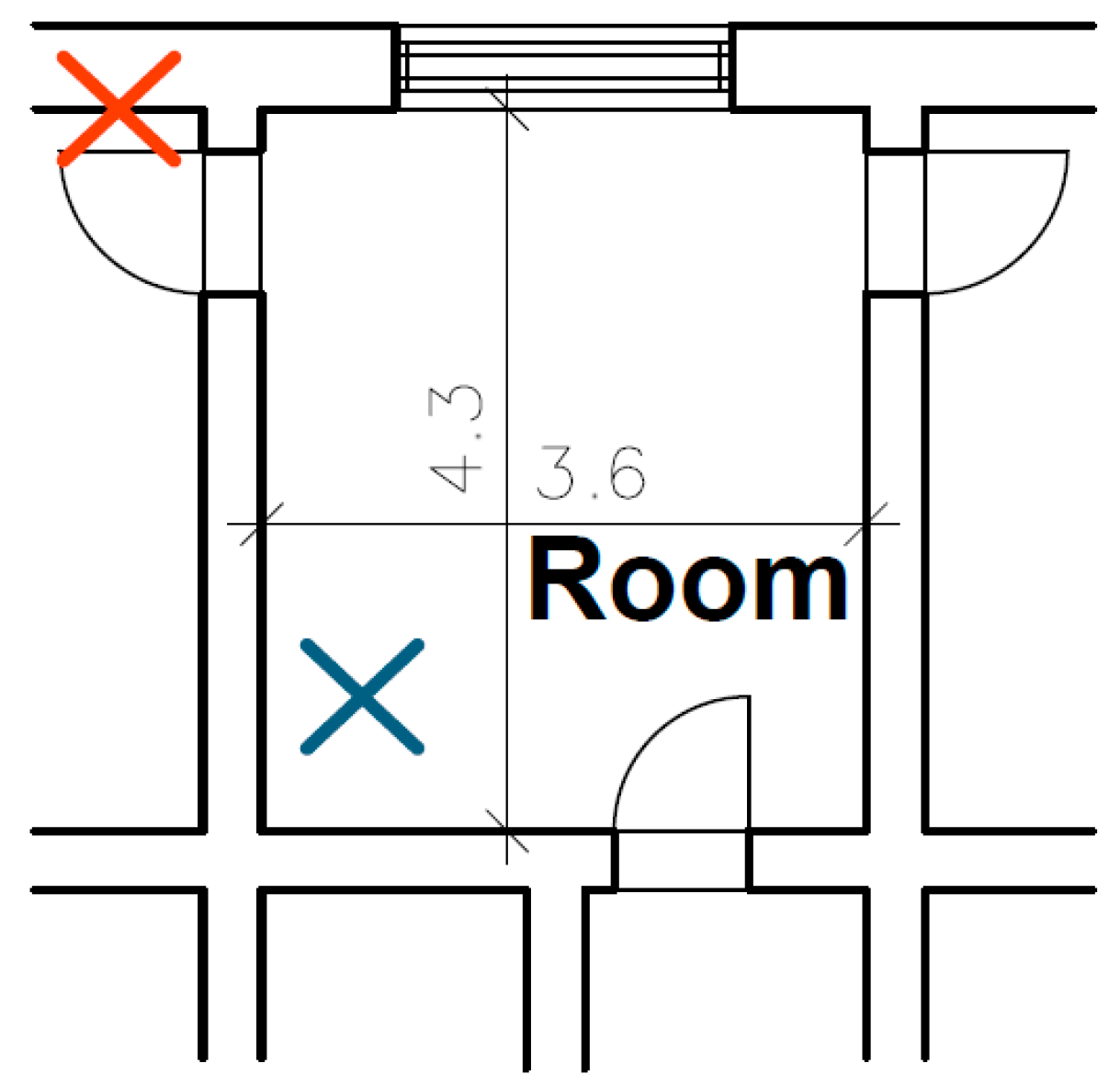
- Dimensions: 3.6 m × 4.3 m × 2.7 m (W × L × H), Figure 3.
- Heating: Central heating system regulated by a thermostat set to 15.5 °C, with a 10.0 °C activation threshold.
- Monitoring period: 11 October 2025–25 October 2025, 2 weeks.
Figure 3.
Room geometry, dimensions, and the experimental setup at the Ochodnica site. The red cross indicates the placement of the accumulation chamber for the in situ surface exhalation measurement. The blue cross marks the location of the continuous radon monitor used to measure the indoor radon activity concentration.
2.4.2. Case Study 2: Banská Štiavnica (Central Slovakia)
- Context: Located in the historic centre, inscribed on the UNESCO World Heritage List [25].
- Construction: A Gothic structure dating back to the 14th century.
- Masonry: Composed of andesite ashlars, a volcanic rock locally sourced from the surrounding mountains [26].
- Fenestration: Double-glazed timber frame joinery.
- Flooring: Restored fired clay tiles laid in a lime mortar bed.
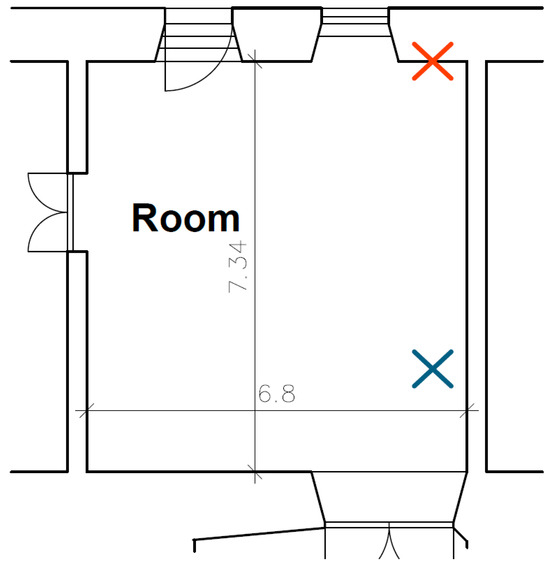
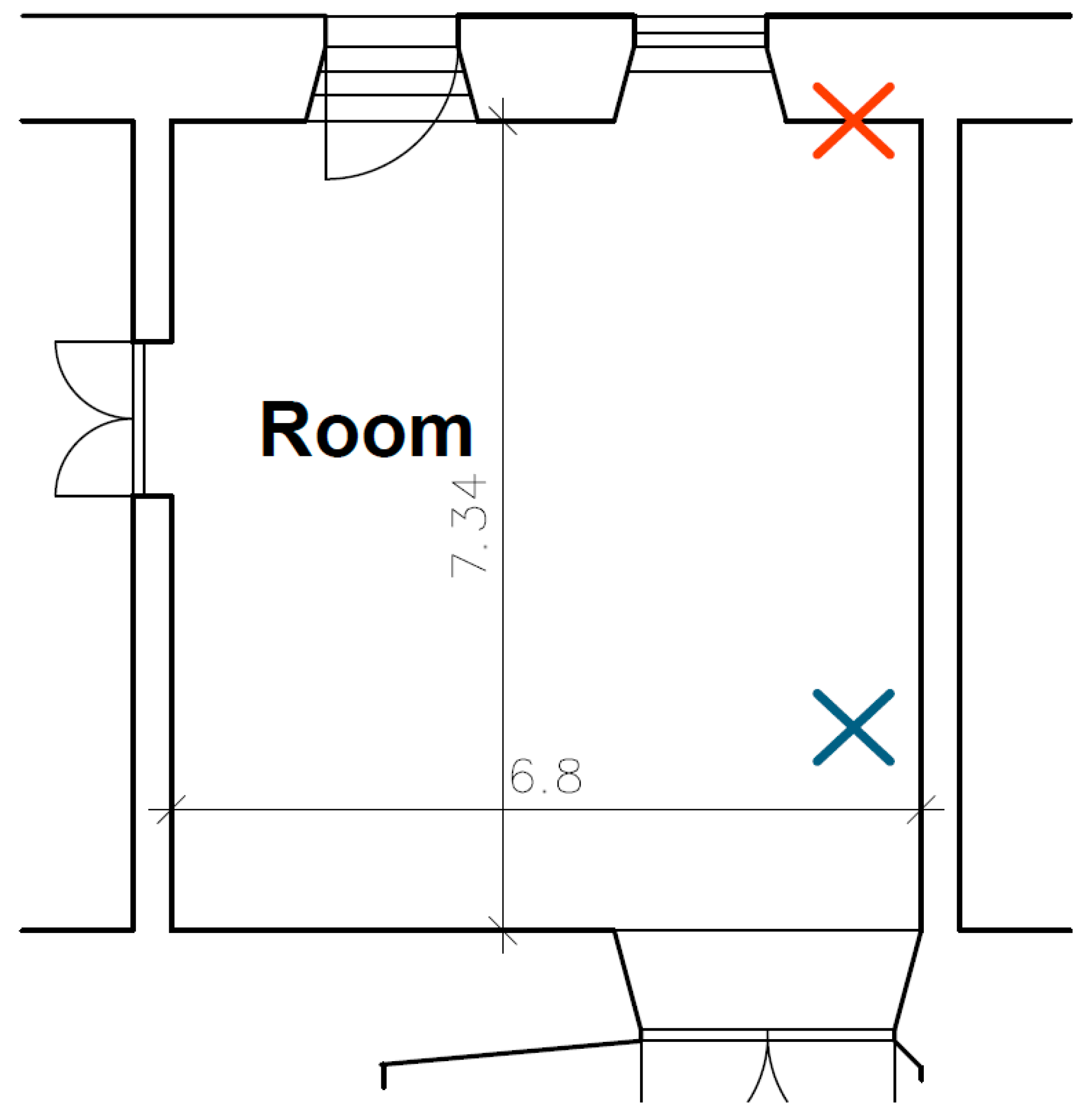
- Dimensions: 6.8 m × 7.4 m × 2.8 m (W × L × H), Figure 4.
- Heating: Radiators equipped with thermostatic valves, set to maintain a constant temperature of 21 °C.
- Monitoring period: 29 November 2025–13 December 2025, 2 weeks.
Figure 4.
Room geometry, dimensions, and the experimental setup at the Banská Štiavnica site. The red cross indicates the placement of the accumulation chamber for the in situ surface exhalation measurement. The blue cross marks the location of the continuous radon monitor used to measure the indoor radon activity concentration.
2.4.3. Case Study 3: Topoľčianky (Western Slovakia)
- Construction: Family house completed in 1910 near the Topoľčianky Chateau.
- Masonry: Walls made of unfired bricks supported by a plinth of locally sourced stones (unidentified geological type).
- Flooring: Unfinished concrete slab featuring several visible cracks (potential radon entry pathways).
- Fenestration: Wooden frames with single-pane glazing.
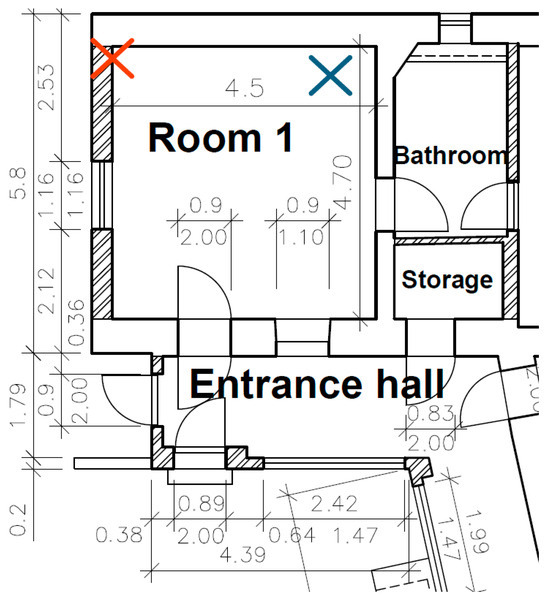
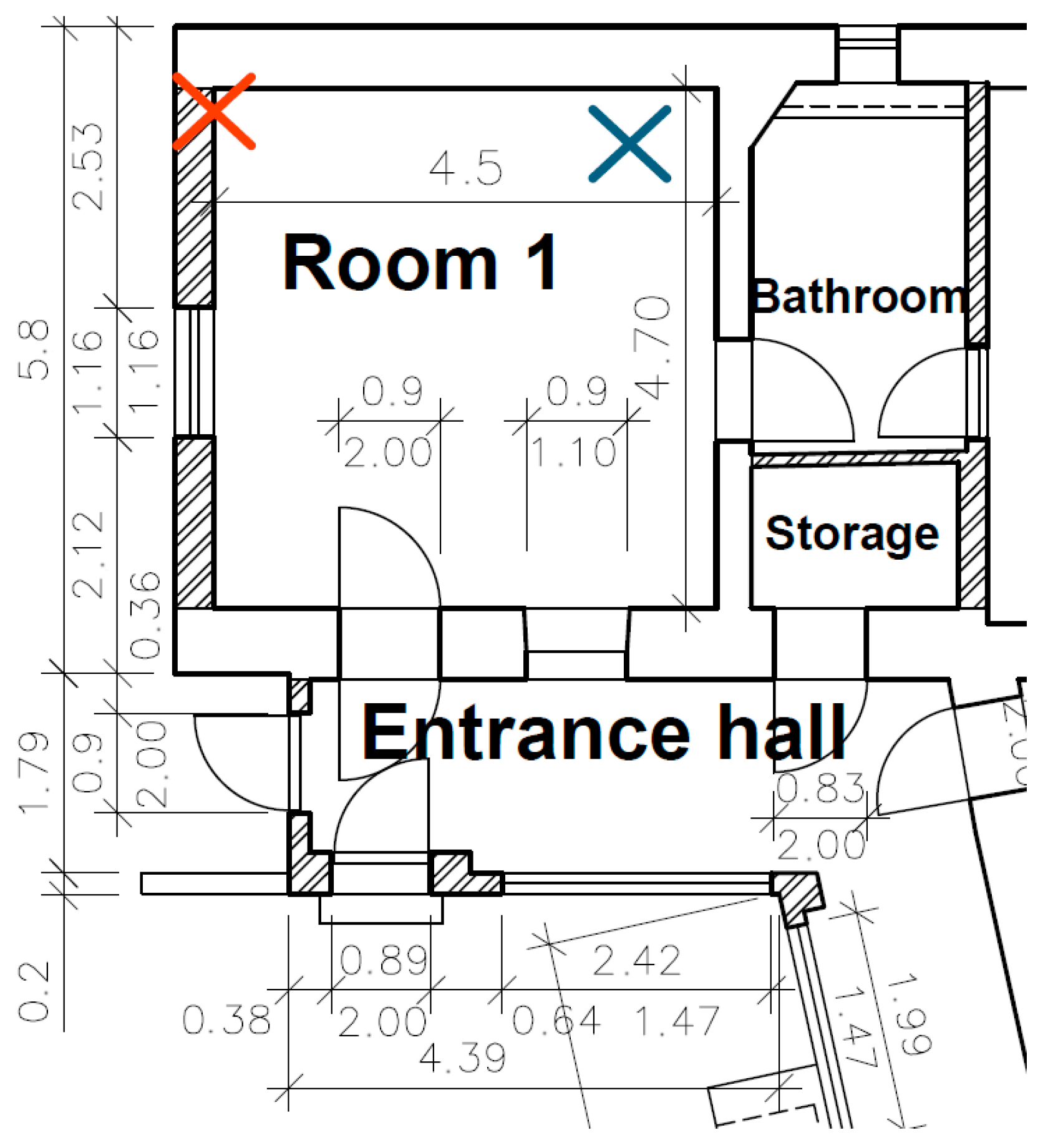
- Dimensions: 4.5 m × 4.7 m × 2.5 m (W × L × H), Figure 5.
- Heating: Unheated space. The indoor temperature naturally fluctuated between 7.1 °C and 9.5 °C during the monitoring period and was measured by device-TFA—Thermo-Hydro Sensor.
- Monitoring period: 22 November 2025–13 December 2025, 3 weeks.
Figure 5.
Room geometry, dimensions, and the experimental setup at the Topoľčianky site. The red cross indicates the placement of the accumulation chamber for the in situ surface exhalation measurement. The blue cross marks the location of the continuous radon monitor used to measure the indoor radon activity concentration.
2.5. Wall Exhalation Rate Modelling
To calculate the radon exhalation rate, the accumulation of radon inside the measurement chamber was modelled using an effective decay constant (λeff) that accounts for radioactive decay, chamber leakage, and back-diffusion. Such a combined approach is necessary because time-dependent radon concentrations in closed chambers are significantly influenced by physical loss mechanisms alongside natural decay [27]. This process is governed by the following Equation (1):
where C(t): Radon concentration in the chamber [Bq m−3].
C0: The initial value of radon concentration inside the ventilation chamber [Bq m−3]
J: Surface radon exhalation rate [Bq m−2 s−1].
λeff: The Effective Decay Constant of 222Rn. This accounts for the radioactive decay of radon [2.1 × 10⁻⁶. s−1] plus any back-diffusion or minor leakage [s−1].
V: The volume of the accumulation chamber [m3].
S: The exhalation surface area [m2].
t: The elapsed time from the start of the measurement [s−1].
In cases where the initial indoor radon concentration (C0) is lower than 20 Bq m−3, its impact is considered negligible and can be ignored [28]. For the nonlinear regression (fitting) of the experimental data, the following simplified function is utilized:
where A is the saturation activity. This represents the theoretical maximum concentration the chamber would reach if it were perfectly sealed and left for an infinite time [Bq m−3], defined as follows:
The numerical modelling and nonlinear regression were performed using Microsoft Excel equipped with the Solver add-in. The model setup employed the Generalized Reduced Gradient (GRG) nonlinear solving method to fit the experimental time-series concentration data to the accumulation model. The objective function was configured to minimize the sum of squared residuals (SSR) between the measured in situ radon concentrations and the theoretical values calculated by Equation (2). During the optimization process, the saturation activity (A) and the effective decay constant (λeff) were treated as the variable parameters. To maintain physical validity, a boundary constraint was applied to the model, ensuring that the effective decay constant could not fall below the natural radioactive decay constant of 222Rn (λeff ≥ 2.1 × 10⁻⁶. s−1). The constant parameter values for the measurement setup were defined by the specific geometry of the accumulation chamber, with the volume (V) set to (V = 0.008 m3 or 0.01 m3) and the exhalation surface area (S) set to (S = 0.04 m2).
During the initial phase of the experiment, the radon concentration exhibits a nearly linear increase, where the slope is primarily governed by the surface exhalation rate (J). As the experiment progresses, the rate of increase diminishes due to the increasing influence of back-diffusion and potential micro-leakage, characterized by the effective decay constant (λeff). The fitting process continues until the concentration approaches a theoretically steady state, or Saturation Activity (A), which represents the maximum concentration the chamber would reach if left for an infinite time. By applying this regression over the full duration of the measurement, both A and λeff are determined, allowing for a precise estimation of the exhalation rate (J) [29].
2.6. Statistical Analysis of Radon and Outdoor Meteorological Parameters
To evaluate the influence of environmental factors on indoor radon dynamics, a formal statistical analysis was conducted. The relationship between continuous indoor radon activity concentrations and corresponding outdoor meteorological parameters (barometric pressure and air temperature) was assessed using the Pearson correlation coefficient (r). This metric is widely established for quantifying the strength and direction of linear associations between continuous variables [30,31]. To determine the statistical significance of the observed correlations under the null hypothesis of zero population correlation (ρ), a two-tailed Student’s t-test was performed based on the sample size and r value [32,33]. The threshold for statistical significance was established at p < 0.05. All statistical evaluations were performed using Microsoft Excel.
3. Results
The experimental campaign was conducted between October and December 2025. During this period, measurements of the indoor radon concentration and the surface radon exhalation within the accumulation chamber were performed simultaneously. External meteorological conditions, including hourly temperature and barometric pressure data, were provided by the Slovak Hydrometeorological Institute (SHMÚ), Regional Office in Banská Bystrica, upon formal request [34]. The statistical relationship between these meteorological parameters and the indoor radon dynamics was evaluated using Pearson correlation analysis, with results summarized in Table 1. A comprehensive summary of the measured indoor radon concentrations and calculated surface exhalation rates for all three case studies is presented in Table 2.
Table 1.
Pearson correlation coefficients (r) and associated p-values for the relationship between indoor radon activity concentrations and meteorological parameters (temperature and barometric pressure).
Table 2.
Measured minimum (RCmin) and maximum (RCmax) radon activity concentrations and corresponding surface exhalation rates (J) for the investigated sites.
3.1. Radon Concentration Monitoring
3.1.1. Case Study 1: Ochodnica
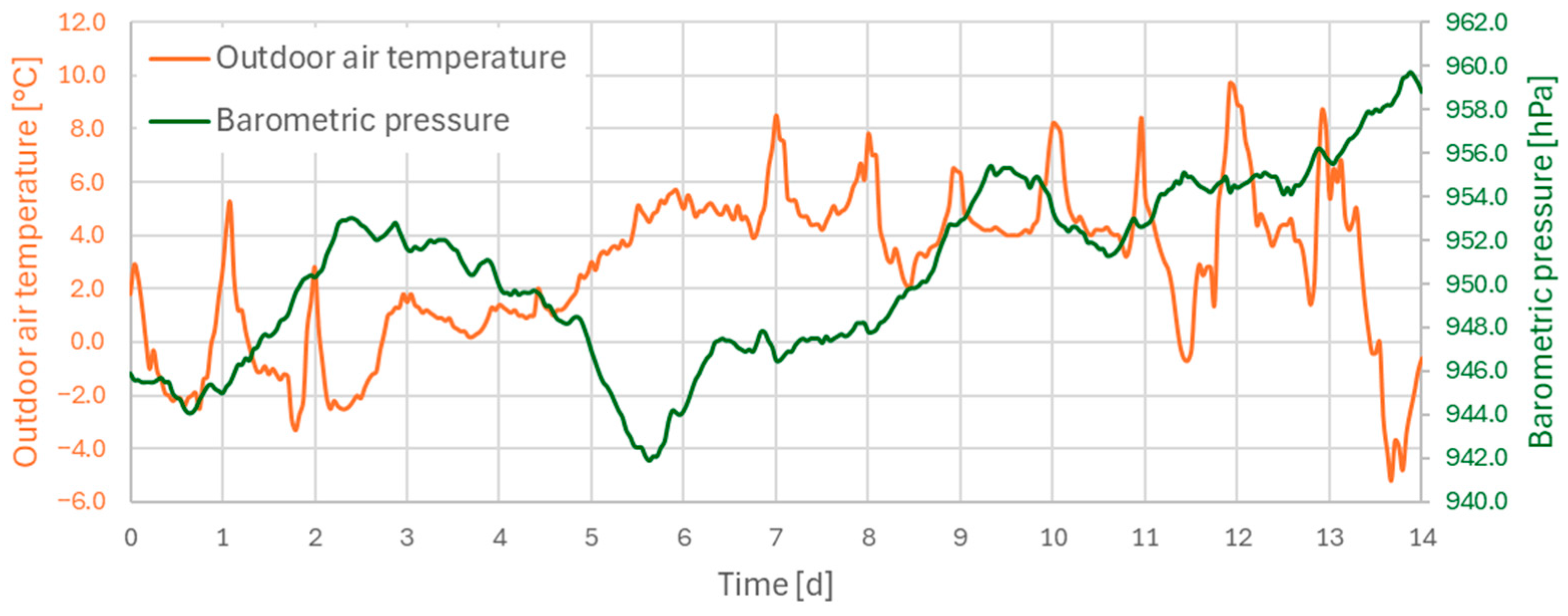
In Ochodnica, the indoor radon concentration (RC) measured over a two-week period fluctuated between 80 Bq m−3 and 442 Bq m−3, Figure 6. To identify the drivers of these fluctuations, a correlation analysis with outdoor meteorological parameters was performed, as illustrated in Figure 7. The statistical results, summarized in Table 1, revealed a direct correlation between indoor radon levels and barometric pressure (r = 0.754, p < 0.001). In contrast, the correlation with outdoor temperature was found to be statistically negligible (r = −0.010, p = 0.8587).
Figure 6.
Time series of indoor radon activity concentration during the 14-day measurement period at the Ochodnica site.
Figure 7.
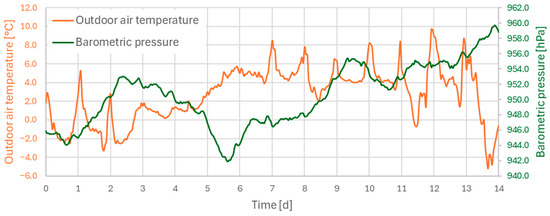
Time series of barometric pressure and outdoor air temperature during the 14-day measurement period in Ochodnica from the Turzovka meteorological station [34].
Generally, increases in outdoor barometric pressure can reduce the driving force for soil-gas ingress into buildings, leading to lower indoor radon levels, whereas reductions in barometric pressure can enhance entry and elevate concentrations [35,36]. However, in this instance, the correlation was positive. This positive relationship suggests that the indoor radon dynamics at this site are significantly influenced by barometric pressure changes. When compared with the high surface exhalation rate (J) reported in Table 2, these results indicate that the building material, specifically the bottom ash cinder blocks, plays a dominant role in the observed radon activity.
3.1.2. Case Study 2: Banská Štiavnica
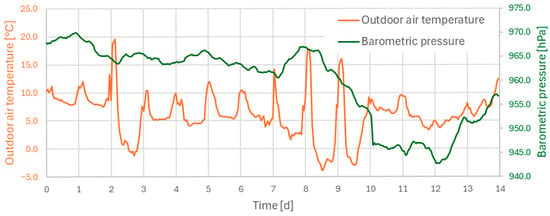
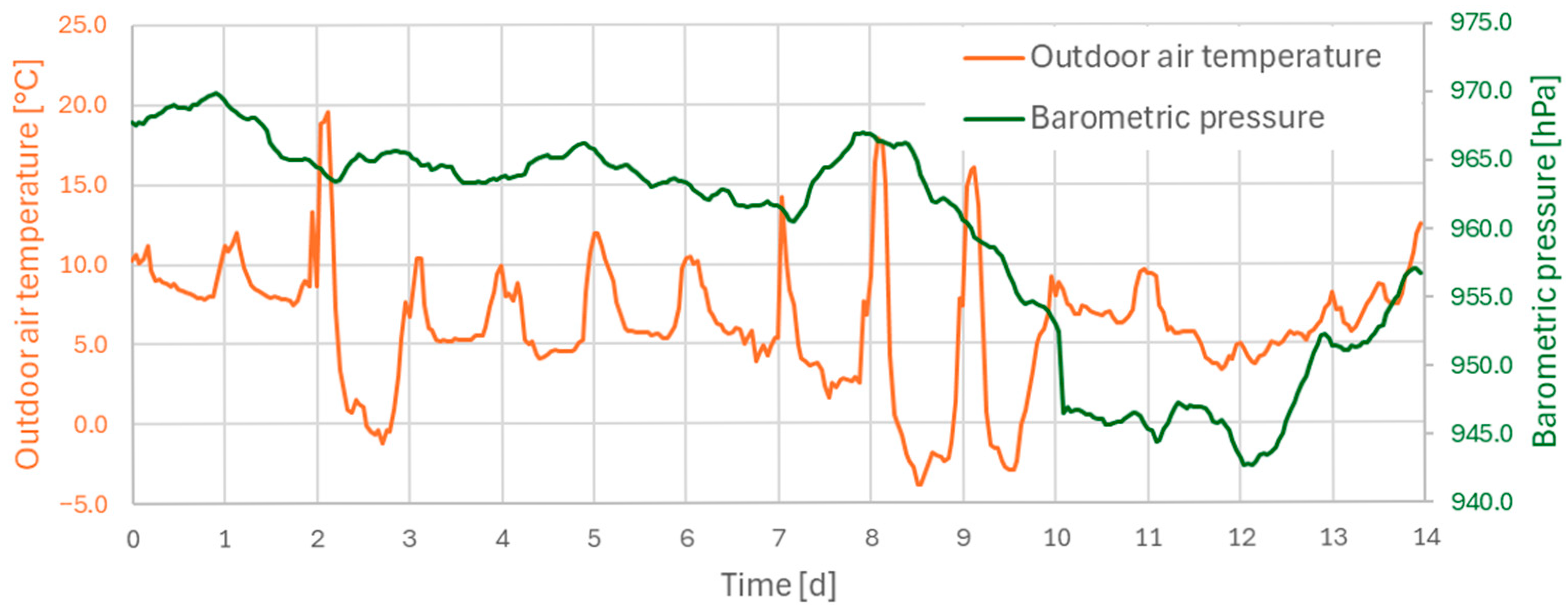
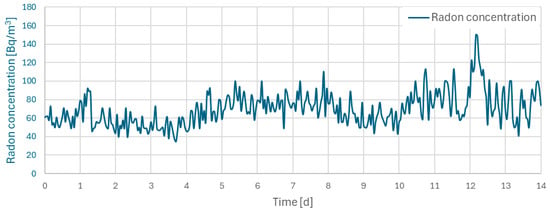
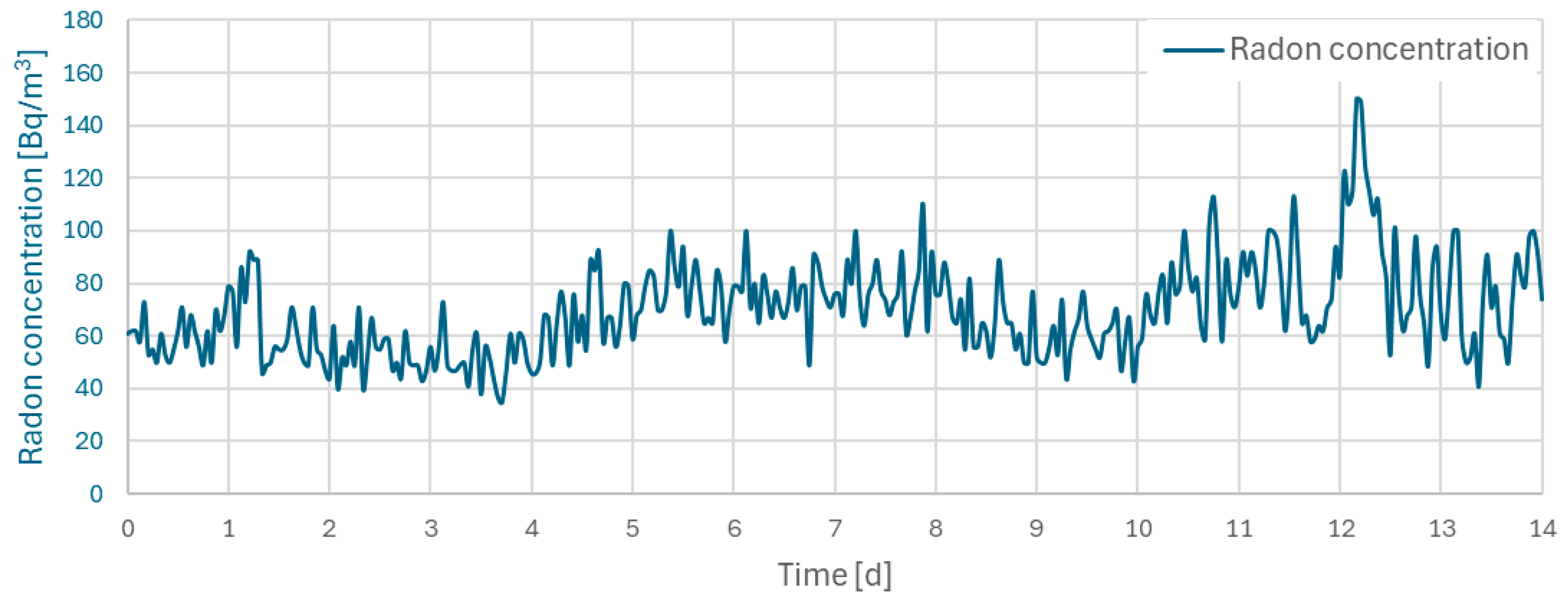
The RC values for Banská Štiavnica ranged from 37 Bq m−3 to 149 Bq m−3, Figure 8. As summarized in Table 1, these values correlated positively with outdoor temperature (r = 0.348, p < 0.001) but showed no significant correlation with barometric pressure (r = 0.062, p = 0.2584). These meteorological parameters are further visualized in Figure 9. The measured results presented in Table 2 align with the classification of the region as an area with variable low and medium radon risk [37].
Figure 8.
Time series of indoor radon activity concentration during the 14-day measurement period at the Banská Štiavnica site.
Figure 9.
Time series of barometric pressure and outdoor air temperature during the 14-day measurement period in Banská Štiavnica from the meteorological station in Banská Štiavnica [34].
3.1.3. Case Study 3: Topoľčianky
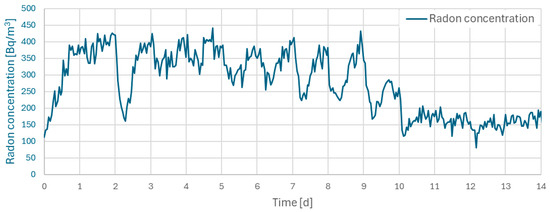
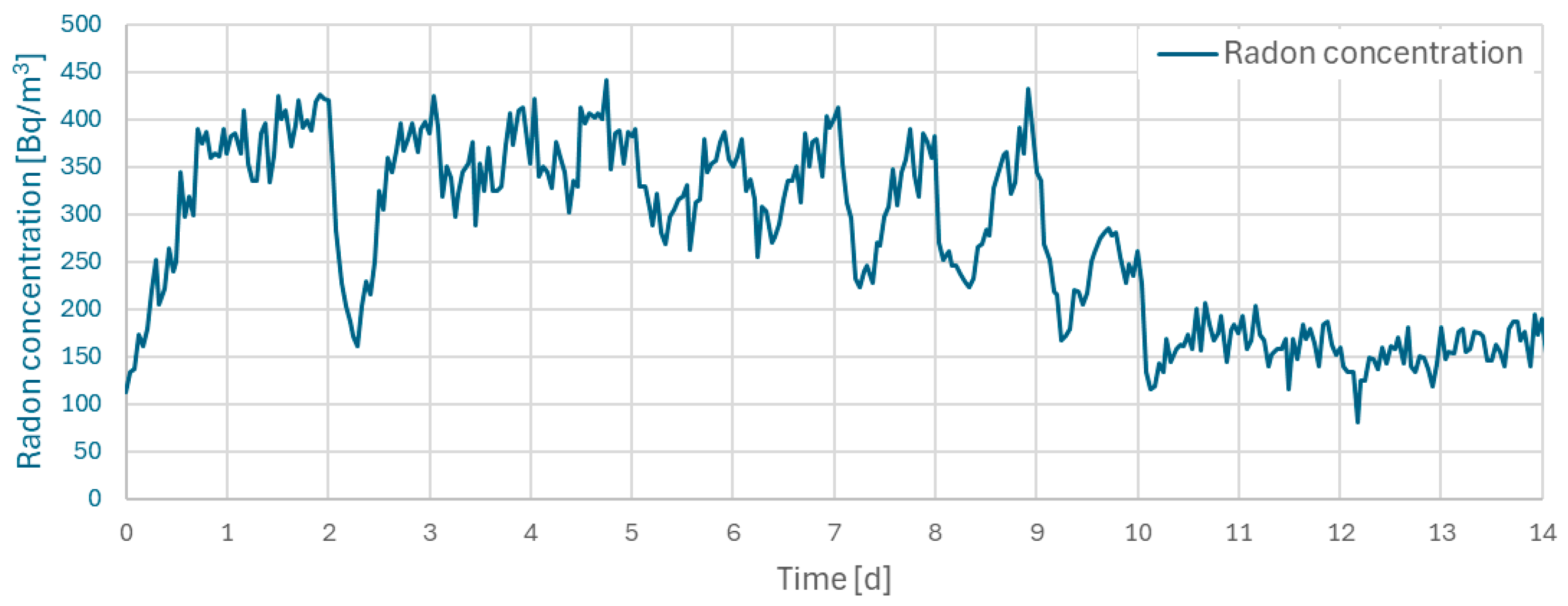
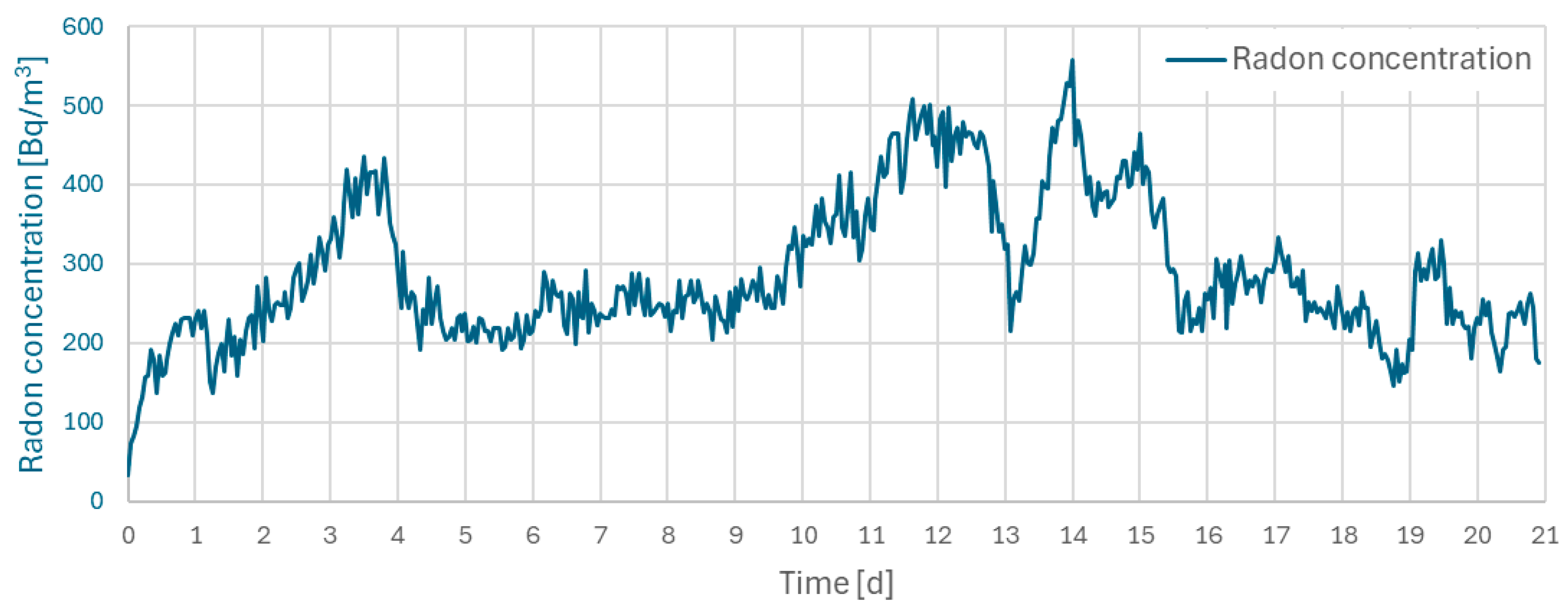
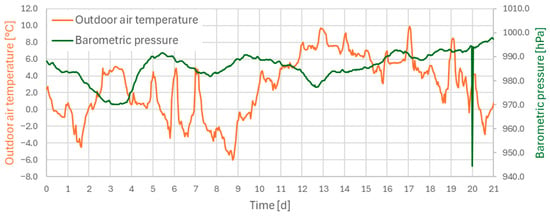
In Topoľčianky, radon concentration values varied from 137 Bq m−3, reaching peaks of 557 Bq m−3, Figure 10. The Pearson correlation analysis, summarized in Table 1, confirmed a distinct influence of outdoor conditions on radon levels. Specifically, a significant negative correlation was observed with barometric pressure (r = −0.330, p < 0.001), alongside a strong positive correlation with outdoor temperature (r = 0.592, p < 0.001). These relationships are further visualized in Figure 11.
Figure 10.
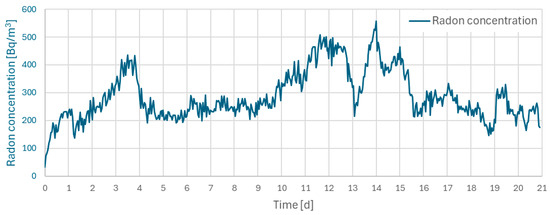
Time series of indoor radon activity concentration during the 21-day measurement period at the Topoľčianky site.
Figure 11.
Time series of barometric pressure and outdoor air temperature during the 21-day measurement period in Topoľčianky from meteorological stations in Žikava and Mochovce [34].
While some studies suggest that barometric pressure does not significantly affect indoor radon levels, the relationship is often dependent on numerous variables [38]. These include local geology, temperature gradients, building materials, HVAC systems, ventilation habits, and the age of the structure. Discrepancies between predicted and measured concentrations are often believed to result from the uncertainty inherent in model implementation and the complexity of these environmental interactions [35]. To mitigate these uncertainties and distinguish between stochastic fluctuations and physically driven trends, formal statistical methods, such as Pearson correlation analysis, are increasingly employed to quantify the strength of these environmental dependencies.
3.2. Radon Exhalation Rate from Building Materials
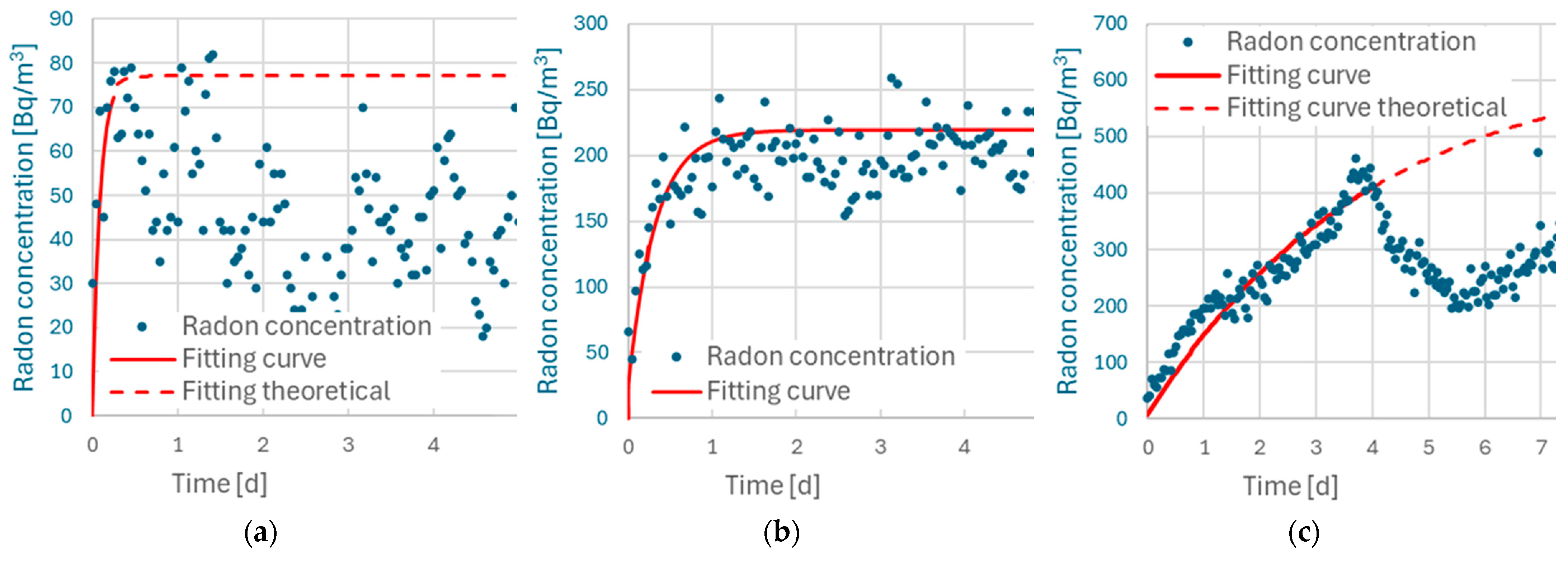
The in situ radon exhalation measurements for the three studied locations—Ochodnica, Banská Štiavnica, and Topoľčianky are illustrated by the accumulation curves in Figure 12. These results were obtained by monitoring the time-dependent radon concentration within a closed 10 dm−3 accumulation chamber over a period sufficient to observe the characteristic buildup of the gas. As shown by the flattening of the data point clusters in the figures, equilibrium within the accumulation chambers was typically reached within approximately 4 days. This saturation period is directly related to the physical properties of 222Rn, which has a half-life of 3.82 days. Reaching this steady state confirms that the measurement duration was adequate to capture the full emanation potential of the specific masonry materials.
Figure 12.
Radon accumulation curves obtained from in situ measurements at (a) Ochodnica; (b) Banská Štiavnica; and (c) Topoľčianky. The solid red lines show the non-linear regression fits applied to the recorded activity concentrations to calculate the exhalation rate for each masonry structure.
The highest surface exhalation rate (J) was determined for the Ochodnica site, 8.98 Bq m−2 h−1, where bottom ash cinder blocks are the primary construction material. The Banská Štiavnica site, featuring volcanic andesite ashlars, followed with a rate of 7.9 Bq m−2 h−1, while the stone plinth in Topoľčianky yielded the lowest rate of 1.87 Bq m−2 h−1 (Table 1). These values were derived from the nonlinear regression (fitting) represented by the solid red lines, which account for the natural radioactive decay and the effective decay constant (λeff) of the system. In all three figures, the dashed continuation of the fitting line represents the theoretical extrapolation toward the Saturation Activity (A). This line frequently reaches values significantly above the real measured results, as it represents a theoretical maximum that does not fully account for the increasing influence of back-diffusion as the chamber concentration rises. The discrepancy between the extrapolated dashed line and the measured data points highlights the importance of the nonlinear model in addressing the physical loss mechanisms—such as back-diffusion and minor chamber leakage—that occur alongside natural decay.
4. Discussion
The results across the three Slovak sites demonstrate that indoor radon levels are governed by a complex interplay between geogenic ingress (radon from soil) and material exhalation (radon from masonry). The dominance of one source over the other depends largely on the geological setting, the radiological properties of the building units, and the integrity of the floor structures. The application of Pearson correlation analysis (Table 1) provided a quantitative basis for distinguishing these transport mechanisms.
4.1. Analysis of Radon Source Mechanisms
The experimental data reveal distinct differences in how radon enters the building envelope at each location.
4.1.1. Ochodnica (Combined Source Effect)
- The high surface exhalation rate confirms the bottom ash (cinder) blocks as a radon source.
- A strong positive correlation with barometric pressure was observed (r = 0.754, p < 0.001, Table 1). This suggests that the indoor radon environment is dominated by “barometric pumping” from the porous building material. When barometric pressure increases, it may enhance the exhalation from the high-volume cinder block masonry or reflect a localized pressure-driven accumulation.
- The floor structure, wood laid over a cinder-concrete slab without a specialized radon barrier, likely permits geogenic ingress from the surrounding soil, which is classified as a medium radon risk area [37], but the statistical evidence points toward the building material as the primary driver of the observed peaks.
4.1.2. Topoľčianky (Geogenic Dominance)
- This site recorded the highest indoor peaks despite having the lowest material exhalation rate.
- The negative correlation with barometric pressure (r = −0.330, p < 0.001) is a classic indicator of geogenic advection. This statistical relationship confirms that falling pressure enhances the “suction effect,” drawing radon from the soil through the floor.
- The visible cracks in the unfinished concrete floor slab act as high-permeability pathways, allowing geogenic radon to become the dominant source.
4.1.3. Banská Štiavnica (Material-Driven Stability)
- The relatively stable indoor environment presents a contrast to the material’s exhalation rate with RC within safety limits. This is the opposite of the Topoľčianky case.
- The lack of correlation with barometric pressure (r = 0.062, p = 0.258) suggests that geogenic advection is effectively suppressed at this site. This indicates that the restored clay tile floor serves as a functional barrier against soil-gas entry.
- The positive correlation with temperature (r = 0.062, p = 0.258) suggests that radon levels are driven by natural emanation from the andesite.
4.2. Preliminary Radiological Safety of Volcanic Andesite
The exact radiological assessment for the local Slovak andesite used in Banská Štiavnica is unknown. As the building is a protected heritage site, invasive sampling to obtain material for direct radionuclide measurements was not permitted. Therefore, a preliminary estimation of the Activity Concentration Index (ACI) was utilized:
- The index was calculated based on radionuclide analysis of Turkish andesite using specific activities of 40.5 Bq/kg for 238U, 19.0 Bq/kg for 232Th, and 205.0 Bq/kg for 40K [39].
- The resulting value of 0.30 is well below the European safety limit (I ≤ 1). Although the actual radionuclide content of the local Slovak andesite might differ from the Turkish reference data, this preliminary estimation indicates that the andesite ashlars do not pose a radiological hazard as a bulk building material [3].
- Unlike studies of some historic Roman buildings where wall filler was a major radon source, the andesite masonry remains a safe building component when geogenic ingress is controlled [21].
5. Conclusions
This study highlights the importance of identifying specific radon sources to ensure indoor safety. Key findings from the three Slovak sites include:
- Statistical Diagnostics: The application of Pearson correlation analysis (Table 1) served as a quantitative tool to distinguish between radon sources. The divergence between positive (r = 0.754 in Ochodnica) and negative (r = −0.330 in Topoľčianky) correlations with barometric pressure provided empirical evidence to differentiate between material-driven exhalation and geogenic advection.
- Ingress Pathways: Low material exhalation rates do not guarantee safety; in Topoľčianky, the negative correlation with barometric pressure (r = −0.330, p < 0.001) confirmed that the building envelope failure (floor cracks) allowed geogenic radon to drive the highest indoor concentrations.
- Material Safety: Results suggest that buildings constructed from andesite do not exhibit elevated indoor radon concentration levels attributable to the masonry.
- Site-Specific Investigation: A year-long monitoring of radon concentrations and a detailed soil examination are recommended for the Ochodnica site to better distinguish the ratio of geogenic ingress versus material-based contributions.
- Predictive Methodology: Efforts should be directed toward creating a standardized methodology for predicting indoor Radon Concentration (RC) levels derived solely from surface exhalation measurements (J), facilitating non-invasive radiological assessments for historical or heritage protected buildings.
Author Contributions
Conceptualization, J.P.; methodology, J.P.; software, J.P.; validation, R.R. and R.I.; formal analysis, J.P.; investigation, J.P.; resources, J.P. and R.R.; data curation, J.P.; writing—original draft preparation, J.P.; writing—review and editing, J.P., R.R. and R.I.; visualization, J.P.; supervision, R.R.; project administration, J.P.; funding acquisition, J.P. and R.I. All authors have read and agreed to the published version of the manuscript.
Funding
This research was funded by the EU NextGenerationEU through the Recovery and Resilience Plan for Slovakia under the project No. 09I03-03-V05-00005. The presented paper and the partial research regarding the analysis and renovation of historical buildings were supported by the KEGA project No. 046STU-4/2025: Update and modernization of selected building construction subjects, reflecting current requirements in the field of building renovation and architecture.
Data Availability Statement
The original contributions presented in the study are included in the article, further inquiries can be directed to the corresponding author.
Acknowledgments
The authors would like to express their gratitude to the Slovak Hydrometeorological Institute (SHMÚ) for providing the meteorological data used in this study. Special thanks are also extended to Ing. arch. Katarína Terao Vošková for her invaluable assistance in securing access to the measurement site in Banská Štiavnica.
Conflicts of Interest
The authors declare no conflicts of interest. The funders had no role in the design of the study; in the collection, analyses, or interpretation of data; in the writing of the manuscript; or in the decision to publish the results.
Abbreviations
The following abbreviations are used in this manuscript:
| ACI | Activity Concentration Index |
| BA | Bottom Ash |
| BSS | Basic Safety Standards |
| CRM | Continuous Radon Monitor |
| GRG | Generalized Reduced Gradient (nonlinear solving method) |
| HVAC | Heating, Ventilation, and Air Conditioning |
| ISO | International Organization for Standardization |
| J | Surface radon exhalation rate |
| p | p-value (denotes statistical significance) |
| r | Pearson correlation coefficient |
| RC | Radon Activity Concentration |
| RCmax | Maximum radon activity concentration |
| RCmin | Minimum radon activity concentration |
| SHMÚ | Slovak Hydrometeorological Institute |
| SSR | Sum of squared residuals |
| UNESCO | United Nations Educational, Scientific and Cultural Organization |
| WHO | World Health Organization |
References
- Baldoncini, M.; Albéri, M.; Bottardi, C.; Minty, B.; Raptis, K.G.C.; Strati, V.; Mantovani, F. Exploring Atmospheric Radon with Airborne Gamma-Ray Spectroscopy. Atmos. Environ. 2017, 170, 259–268. [Google Scholar] [CrossRef] [Scilit]
- World Health Organization (Ed.) WHO Handbook on Indoor Radon: A Public Health Perspective; World Health Organization: Geneva, Switzerland, 2009. [Google Scholar]
- Council Directive 2013/59/Euratom of 5 December 2013 Laying down Basic Safety Standards for Protection Against the Dangers Arising from Exposure to Ionising Radiation, and Repealing Directives 89/618/Euratom, 90/641/Euratom, 96/29/Euratom, 97/43/Euratom and 2003/122/Euratom. Available online: https://eur-lex.europa.eu/eli/dir/2013/59/oj/eng (accessed on 16 April 2026).
- European Commission; Statistical Office of the European Union. Harmonised European Time Use Surveys: 2018 Guidelines; Publications Office: Luxembourg, 2019. [Google Scholar]
- Database—Harmonised European Time Use Surveys (HETUS)—Eurostat. Available online: https://ec.europa.eu/eurostat/web/time-use-surveys/database (accessed on 3 April 2026).
- Lee, C.; Gwak, Y.; Lee, D.; Lee, D.; Cho, Y. A study on the Prediction of Indoor Concentration due to Radon Exhalation from Domestic Building Materials. J. Environ. Sci. Int. 2015, 24, 1131–1138. [Google Scholar] [CrossRef] [Scilit]
- Avramović, D.; Čeliković, I.; Ujić, P.; Vukanac, I.; Kandić, A.; Jevremović, A.; Antonijević, D.; Lončar, B. Radon Exhalation Rate of Some Building Materials Common in Serbia. In Proceedings of the 6th International Conference on Radiation in Various Fields of Research, Ohrid, Macedonia, 18–22 June 2018. [Google Scholar]
- Jasaitis, D.; Pečiulienė, M. Natural Radioactivity and Radon Exhalation from Building Materials in Underground Parking Lots. Appl. Sci. 2021, 11, 7475. [Google Scholar] [CrossRef] [Scilit]
- Bulut, H.A.; Şahin, R. Radon, Concrete, Buildings and Human Health—A Review Study. Buildings 2024, 14, 510. [Google Scholar] [CrossRef] [Scilit]
- Schroeyers, W.; Sas, Z.; Bátor, G.; Trevisi, R.; Nuccetelli, C.; Leonardi, F.; Schreurs, S.; Kovács, T. The NORM4Building Database, a Tool for Radiological Assessment When Using by-Products in Building Materials. Constr. Build. Mater. 2018, 159, 755–767. [Google Scholar] [CrossRef] [Scilit]
- Sas, Z.; Szántó, J.; Kovács, J.; Somlai, J.; Kovács, T. Influencing Effect of Heat-Treatment on Radon Emanation and Exhalation Characteristic of Red Mud. J. Environ. Radioact. 2015, 148, 27–32. [Google Scholar] [CrossRef] [Scilit]
- Puertas, F.; Suárez-Navarro, J.A.; Alonso, M.M.; Gascó, C. NORM Waste, Cements, and Concretes. A Review. Mater. Construcción 2021, 71, e259. [Google Scholar] [CrossRef] [Scilit]
- Wang, C.; Xie, D.; Yu, C.W.; Wang, H. Evaluation of the Effect of Cover Layer on Radon Exhalation from Building Materials. Indoor Built Environ. 2020, 30, 1390–1399. [Google Scholar] [CrossRef] [Scilit]
- Portaro, M.; Tuccimei, P.; Galli, G.; Soligo, M.; Longoni, C.; Vasquez, D. Testing the Properties of Radon Barrier Materials and Home Ventilation to Mitigate Indoor Radon. Atmosphere 2022, 14, 15. [Google Scholar] [CrossRef] [Scilit]
- Sayfetdinova, M.K.; Tertychnaya, S.V.; Vinogradova, N.A.; Bezborodova, O.E.; Kazakov, A.Y.; Kurakin, V.S. Current Problems of Radiation-Ecological Monitoring in Penza Region. In Proceedings of the International Symposium “Engineering and Earth Sciences: Applied and Fundamental Research” (ISEES 2018); Atlantis Press: Grozny, Russia, 2018. [Google Scholar]
- Boukhair, A.; Belahbib, L.; Azkour, K.; Nebdi, H.; Benjelloun, M.; Nourreddine, A. Assessment of the Radiological Impact on the Environment near a Storage Site of Coal Ashes in a Thermal Power Plant. World J. Nucl. Sci. Technol. 2016, 6, 206–216. [Google Scholar] [CrossRef]
- Ignjatović, I.; Sas, Z.; Dragaš, J.; Somlai, J.; Kovács, T. Radiological and Material Characterization of High Volume Fly Ash Concrete. J. Environ. Radioact. 2017, 168, 38–45. [Google Scholar] [CrossRef] [Scilit]
- You, M.; Hu, Y.; Lu, J.; Li, C. Evaluation of the Radiological Characterization in a Coal-fired Power Plant, China. Environ. Prog. Sustain. Energy 2015, 34, 1080–1084. [Google Scholar] [CrossRef] [Scilit]
- Ambrosino, F.; Verde, G.L.; Gagliardo, G.; Mottareale, R.; Peruta, G.D.; Imparato, C.; D’Elia, A.; Pugliese, M. Radon Exhalation Rate: A Metrological Approach for Radiation Protection. Sensors 2024, 24, 3633. [Google Scholar] [CrossRef] [Scilit]
- Caridi, F.; Paladini, G.; Gregorio, F.; Lanza, S.; Lando, G.; Sfacteria, M.; Tuccinardi, S.; Venuti, M.; Cardiano, P.; Majolino, D.; et al. Natural Radioactivity Content and Radon Exhalation Rate Assessment for Building Materials from the Archaeological Park of Tindari, Sicily, Southern Italy: A Case Study. Int. J. Environ. Res. Public Health 2025, 22, 379. [Google Scholar] [CrossRef] [Scilit]
- Frutos, B.; Martín-Consuegra, F.; Alonso, C.; Perez, G.; Peón, J.; Ruano-Ravina, A.; Barros, J.M.; Santorun, A.M. Inner Wall Filler as a Singular and Significant Source of Indoor Radon Pollution in Heritage Buildings: An Exhalation Method-Based Approach. Build. Environ. 2021, 201, 108005. [Google Scholar] [CrossRef] [Scilit]
- ISO 11665-7:2012(En); Measurement of Radioactivity in the Environment—Air: Radon-222—Part 7: Accumulation Method for Estimating Surface Exhalation Rate. ISO: Geneva, Switzerland, 2012.
- GADM. Available online: https://gadm.org/download_country.html#google_vignette (accessed on 9 March 2026).
- Walpitagama, W.; Baskaran, K. Use of Bottom Ash from Waste to Energy Plant in Manufacturing Cement Blocks. In Proceedings of Civil Engineering Research Symposium; University of Moratuwa: Moratuwa, Sri Lanka, 2024; pp. 53–54. [Google Scholar] [CrossRef] [Scilit]
- Centre, U.W.H. Historic Town of Banská Štiavnica and the Technical Monuments in Its Vicinity. Available online: https://whc.unesco.org/en/list/618/ (accessed on 25 February 2026).
- Šimon, L.; Lacika, J. Genesis and Development of the Volcanic Landscape in the Slovenské Stredohorie Mts. In Landscapes and Landforms of Slovakia; Lehotský, M., Boltižiar, M., Eds.; Springer International Publishing: Cham, Switzerland, 2022; pp. 137–161. ISBN 978-3-030-89293-7. [Google Scholar]
- Butterweck-Dempewolf, G.; Schuler, C. An Extended Radon Chamber Model. Environ. Int. 1996, 22, 891–898. [Google Scholar] [CrossRef] [Scilit]
- Tan, Y.; Xiao, D. Revision for Measuring the Radon Exhalation Rate from the Medium Surface. IEEE Trans. Nucl. Sci. 2011, 58, 209–213. [Google Scholar] [CrossRef] [Scilit]
- Tan, Y.; Xiao, D. A Simple Model for Automatically Measuring Radon Exhalation Rate from Medium Surface. Radiat. Meas. 2014, 64, 44–47. [Google Scholar] [CrossRef] [Scilit]
- Chatzipantsiou, C.; Dimitriadis, M.; Papadakis, M.; Tsagris, M. JMASM 52: Extremely Efficient Permutation and Bootstrap Hypothesis Tests Using R. J. Mod. Appl. Stat. Methods 2019, 18, 2–16. [Google Scholar] [CrossRef] [Scilit]
- Troug, H.; Murray, M. Crisis Determination and Financial Contagion: An Analysis of the Hong Kong and Tokyo Stock Markets Using an MSBVAR Approach. J. Econ. Stud. 2021, 48, 1548–1572. [Google Scholar] [CrossRef] [Scilit]
- Aguilera-Francisco, A.; Serrano-Pedraza, I. The Stereoscopic Anisotropy Is Smaller in Elderly Population. Investig. Ophthalmol. Vis. Sci. 2022, 63, 26. [Google Scholar] [CrossRef] [Scilit] [PubMed]
- High Throughput Screening of Co-Expressed Gene Pairs with Controlled False Discovery Rate (FDR) and Minimum Acceptable Strength (MAS). Available online: https://deepblue.lib.umich.edu/items/808253b4-3ffd-4070-a5b6-f7596f447b7d (accessed on 6 April 2026).
- Slovak Hydrometeorological Institute (SHMÚ). Meteorological Data; SHMÚ: Nové Mesto, Slovakia, 2026. [Google Scholar]
- Hahn, E.J.; Haneberg, W.C.; Stanifer, S.R.; Rademacher, K.; Backus, J.; Rayens, M.K. Geologic, Seasonal, and Atmospheric Predictors of Indoor Home Radon Values. Environ. Res. Health 2023, 1, 025011. [Google Scholar] [CrossRef] [Scilit] [PubMed]
- Spasić, D.; Gulan, L. High Indoor Radon Case Study: Influence of Meteorological Parameters and Indication of Radon Prone Area. Atmosphere 2022, 13, 2120. [Google Scholar] [CrossRef] [Scilit]
- Natural Radioactivity Maps. Available online: https://app.geology.sk/radio/ (accessed on 28 February 2026).
- Kitto, M.E. Interrelationship of Indoor Radon Concentrations, Soil-Gas Flux, and Meteorological Parameters. J. Radioanal. Nucl. Chem. 2005, 264, 381–385. [Google Scholar] [CrossRef] [Scilit]
- Gumrukcuoglu, N.; UzunDuran, S.; Bayram, T.; Küçükömeroğlu, B.; Yılmaz, A.H. Gamma Ray Shielding Properties and Natural Radioactivity of Some Rocks of Trabzon District, Türkiye. Egypt. J. Soil Sci. 2023, 63, 381–390. [Google Scholar] [CrossRef] [Scilit]

Disclaimer/Publisher’s Note: The statements, opinions and data contained in all publications are solely those of the individual author(s) and contributor(s) and not of MDPI and/or the editor(s). MDPI and/or the editor(s) disclaim responsibility for any injury to people or property resulting from any ideas, methods, instructions or products referred to in the content. |
© 2026 by the authors. Licensee MDPI, Basel, Switzerland. This article is an open access article distributed under the terms and conditions of the Creative Commons Attribution (CC BY) license.