


Abstract
The chemical and mineral composition, physical and mechanical properties, and pozzolanic activity of ancient bricks from Hubei Province, China were investigated in this study. X-ray diffraction (XRD), thermogravimetric analysis (TG-DSC), X-ray fluorescence analysis (XRF) and scanning electron microscopy–energy dispersive spectroscopy (SEM-EDS) were adopted to characterize the chemical composition, crystalline minerals and microstructure of the ancient bricks. The results show that quartz is the dominant component in most ancient bricks, with a content exceeding 70% in samples BB-2, BB-5, BB-6 and BB-7. Some bricks contain minor non-clay minerals such as calcite, dolomite and albite. On some points in the SEM image, substances such as gypsum, calcite, and quartz can be clearly seen. The calcining temperature of the ancient bricks from Yupan Village, Xiantao City (sample BB-1), does not exceed 600 °C, while that of other samples ranges from 800 to 1100 °C. The compressive strength of most ancient bricks is around 10 MPa, with the highest value of 14.3 MPa (BB-6) and the lowest of 1.2 MPa (BB-3). The apparent density of all samples is approximately 2.2 g/cm3, and the water absorption rate ranges from 6.5% to 23.1%. The pozzolanic activity index of some samples reaches 76% at 28 days, with the 150-year-old sample BB-7 showing the best activity. This study provides a reliable experimental basis for analyzing the weathering resistance and deterioration mechanism of ancient bricks in Hubei Province, offers technical support for the restoration of local ancient buildings, and lays a foundation for the development of antique-style brick craftsmanship.
1. Introduction
Ancient grey bricks were key raw material of traditional residential structures in China, undertaking key load-bearing and enclosure functions. The origin of black bricks can be traced back to the Taosi culture period over 4100 years ago, and their large-scale application began in the early Ming Dynasty [1]. Hubei Province, located in the middle reaches of the Yangtze River, is rich in historical and cultural heritage, with a large number of ancient buildings preserved, most of which use local ancient bricks as the main structural material. However, due to long-term exposure to complex natural environments, such as humidity, temperature changes, salt erosion, and human activities, these ancient bricks have experienced varying degrees of deterioration, such as strength reduction, cracking, and weathering, which seriously threaten the safety and durability of ancient buildings.
Existing research on ancient bricks has been conducted by numerous scholars. Soil excavation and color assessment are conducted as the initial step. High-quality clay with appropriate cohesiveness, free from looseness and dustiness, is screened out. The clay is hydrated with water and kneaded thoroughly to produce a thick, homogeneous slurry. The slurry is cast into wooden brick molds, followed by compaction and natural air-drying. The pre-cured brick billets are subsequently fired in a specialized brick kiln. Ding et al. [2] established a specialized rebound-strength curve for blue bricks from the ancient Great Wall in Hebei Province, providing a basis for non-destructive testing. Subsequently, Gao et al. [3] performed a comprehensive analysis of the composition, microstructure, and mechanical properties of bricks from the Xi’an city wall using SEM, XRD, and XRF, finding their density and water absorption to be superior to those of modern sintered bricks. Further investigating material properties, Li et al. [4] reported a positive correlation between the porosity of ancient bricks and their 5-h boiling water absorption, identifying quartz and feldspar as the primary phases. Meanwhile, research into firing conditions has also progressed. Shen et al. [5] inferred the firing temperature by measuring the magnetic susceptibility of bricks at different temperatures, while Piero et al. [6] estimated the equivalent firing temperature and distinguished clay processing methods based on color measurements of ancient ceramics. Further studies have extensively characterized the raw materials used in historic structures through various analytical techniques. For instance, Liu et al. [7] identified hematite, cinnabar, malachite, calcite, and ochre as the primary pigments in Ming Dynasty murals using a suite of techniques including Raman spectroscopy and XRD. Regarding masonry components, Qian et al. [8] reported that the mortar derived from the ancient city wall of Qufu was primarily composed of quicklime and sand, with some samples containing kaolinite and illite. Mineralogical analyses of ancient bricks from multiple sites consistently identified quartz and feldspar as the dominant phases [9,10,11]. Specifically, Zhang et al. [12] further identified calcite, halite, and augite in bricks from the Baiyi Temple Pagoda, while Wu et al. [13] quantified the major oxides (SiO2, Al2O3, CaO, Fe2O3) in bricks from Inner Mongolia using XRF. Beyond composition, Xia et al. [10] established the stress–strain constitutive relationship for ancient bricks and developed models to simulate crack development.
The deterioration of blue brick masonry in historical buildings, exacerbated by long-term exposure to complex geological and environmental conditions [14,15], poses a significant threat to their preservation. In aggressive environments, erosive ions readily penetrate the brick matrix through inherent defects, initiating a cycle of deterioration that accelerates material decay [16]. This process compromises structural integrity and safety, ultimately shortening the service life of the structures. Research into these mechanisms has shown that capillary rise in salt-laden water is a primary cause of weathering in the brick walls of Pingyao Ancient City [17]. Furthermore, long-term immersion in saline groundwater has been found to promote microcrack formation in underground bricks, leading to severe performance degradation [18]. Ma et al. [19] systematically revealed the deterioration patterns of blue bricks under multi-salt erosion, thereby contributing to a comprehensive performance evaluation system and offering a scientific foundation for the diagnosis and conservation of historic masonry structures.
Previous research on brick materials has primarily focused on utilizing industrial waste slag for producing lightweight, heat-insulating sintered bricks and analyzing their sintering mechanisms, mineral composition, and microstructure, as well as the compatibility between bricks and mortar. However, limited attention has been given to the mineralogical and microstructural analysis of soil bricks and fired bricks across different historical periods. To address this gap, the present study systematically investigates ancient bricks from various ages and regions in Hubei Province based on field research. The chemical and mineral compositions of these bricks are analyzed to establish a theoretical foundation for the restoration of ancient buildings and the production of replica antique bricks.
To address the above research gaps, this study selects ancient bricks from different periods and regions in Hubei Province as research objects. Through XRF, XRD, TG-DSC, SEM-EDS, and mechanical property tests, the chemical composition, mineral composition, microstructure, physical and mechanical properties, and pozzolanic activity of the samples are systematically analyzed. The research results are expected to clarify the material characteristics and deterioration mechanism of ancient bricks in Hubei Province, provide a theoretical basis for the restoration of ancient buildings and the development of replica antique bricks, and enrich the research system of ancient brick materials in China.
2. Experimental Program
2.1. Source of Samples
Ancient bricks from historical residential buildings of different ages and regions in Hubei Province were collected through field investigation. The basic information of the samples is shown in Table 1, and the sample numbers are used consistently throughout the text.
Table 1.
Basic information of ancient brick samples in Hubei Province.
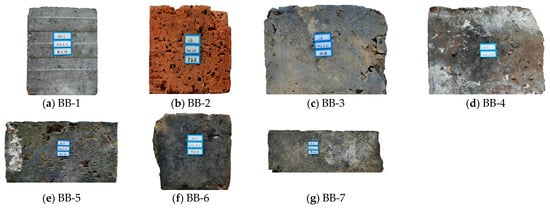
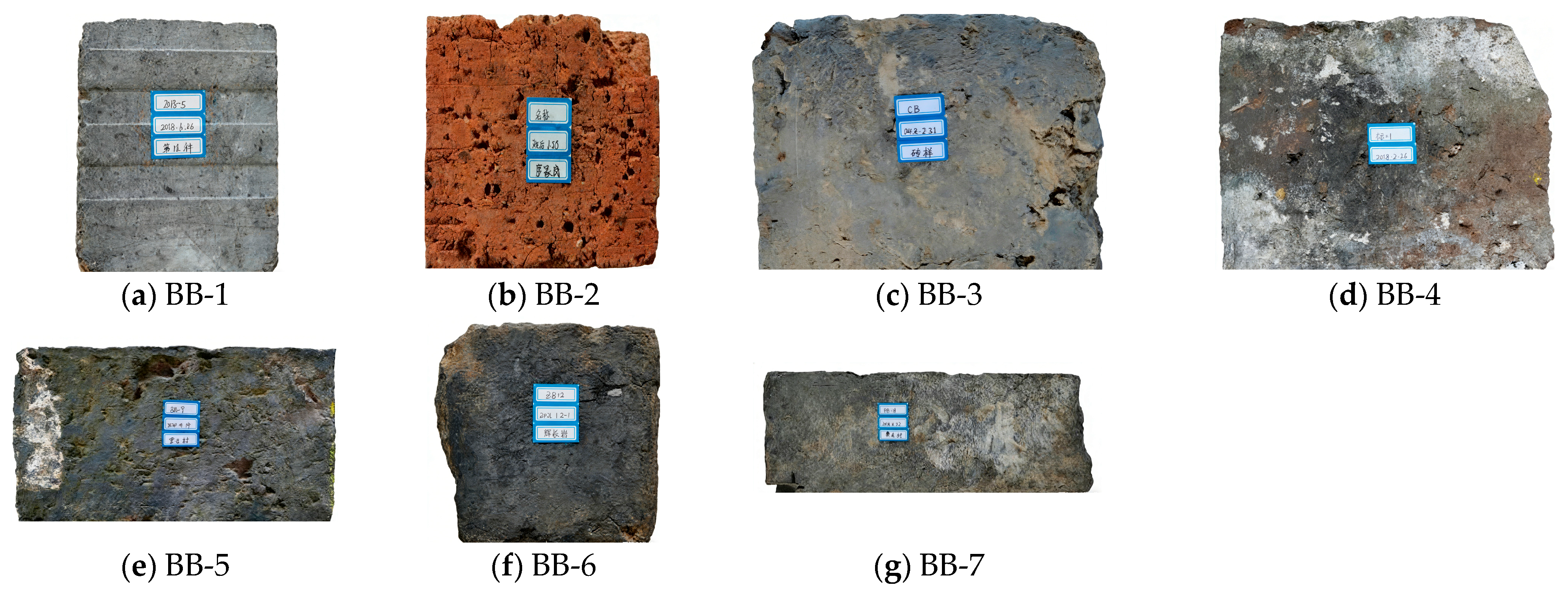
The appearance of each sample is shown in Figure 1. It can be seen that the surface of BB-1 (sintered brick) is relatively smooth, BB-2 (red brick) shows a typical red color, BB-3 (unburned soil brick) has a rough surface with obvious pores, BB-4 (calcined soil brick) is reddish-brown, and BB-5, BB-6 and BB-7 present a characteristic blue-grey color.
Figure 1.
Appearance of ancient brick samples.
2.2. Sample Preparation
The main raw material of blue brick was clay, which was sintered according to traditional processes. Due to the non-standard size and large differences in dimensions of ancient bricks, the following pretreatment steps were carried out before testing: The selected bricks were cleaned to remove surface dust and dried for subsequent use. After drying, the bricks were cut into cubic specimens with dimensions of 40 mm × 40 mm × 40 mm for mechanical property testing. Following the mechanical tests, the specimens were crushed, and the central parts of the crushed fragments were ground into a homogeneous powder for XRD and TG analysis.
2.3. Experimental Methods
2.3.1. Compressive Strength Test
The compressive strength was determined in accordance with the Chinese standard GB/T 17671-2021 [20]. The prepared cubic specimens (40 mm × 40 mm × 40 mm) were tested using a YAW-200/300 automatic pressure testing machine, which is manufactured by Hengsi Shengda Instrument Corporation, located in Jinan, China, with a loading rate of (2.4 ± 0.2) kN/s. Three parallel specimens were tested for each sample, and the average value was taken as the compressive strength of the sample.
2.3.2. XRD Analysis
XRD analysis was performed using a SmartLab SE X-ray diffractometer made in Rigaku Corporation, located in Tokyo, Japan. Before microstructure testing, the sample needs to be ground and then sieved through a 45-micron mesh. Approximately 1–2 g of each sample was collected for analysis. For XRD analysis, the scanning range was set to 5–90° with a scanning rate of 5°/min.
2.3.3. Thermogravimetric Analysis
Thermogravimetric analysis (TG/DTG) serves as a complementary technique for the analysis of gel-like substances. We conducted TG/DTG analysis using a Netzsch STA 449F3 thermogravimetric analyzer manufactured by NETZSCH in Selb, Germany. During the test, the sample was heated from 30 °C to 1000 °C at a heating rate of 10 °C/min under a N2 protective atmosphere (flow rate: 50 mL/min). The mass loss and heat change in the sample during heating were recorded to analyze the decomposition behavior of minerals.
2.3.4. Pozzolanic Activity Index
The pozzolanic activity of ancient brick powder was evaluated by the activity index method. Brick powder with a particle size of less than 75 μm was used to replace 15% ordinary Portland cement with a fixed water–cement ratio of 0.5. The mixture was poured into 40 mm × 40 mm × 160 mm molds, cured under standard conditions (temperature: 20 ± 2 °C, relative humidity: ≥95%) for 3, 7, and 28 days, and then the compressive strength was tested. The pozzolanic activity index (A) of ancient brick sample was calculated using Equation (1):
where A represents the pozzolanic activity index of ancient bricks (%); m1 represents the compressive strength of specimens with brick powder replacement (MPa); m2 represents the compressive strength of benchmark cement specimens (MPa).
2.3.5. SEM-EDS
Take a portion of the block shaped sample and place it in a (45 °C) oven for drying and modification to a size of 1 cm3, then place it in a dryer for SEM testing. The observation surface of the block sample is the natural fracture area of the material. Before testing, the raw material should be kept dry and evacuated. Testing was conducted using the ZEISS GeminiSEM 300 scanning electron microscope produced in Germany.
2.3.6. Apparent Density and Water Absorption
In accordance with the Chinese standard GB/T 4111-2013 [21], the apparent density and water absorption of seven groups of test blocks were determined. During testing, the specimens were dried to constant mass at 105 °C, and the corresponding mass was recorded as m1. The dried specimens were then immersed in boiling water for 2 h, removed, and soaked in water at room temperature for an additional 12 h. The suspended mass m2 was measured using the suspension method. Finally, the specimen surfaces were wiped with a damp cloth, and the saturated mass m3 was recorded. The water absorption () and apparent density () were calculated using Equations (2) and (3), respectively.
3. Results and Discussion
3.1. Chemical Composition
The main chemical compositions of the brick samples are shown in Table 2. It can be seen that the chemical composition of ancient bricks from different periods and regions in Hubei Province has certain similarities but also obvious differences.
Table 2.
Chemical composition of the brick samples (wt%).
As shown in Table 2, SiO2 is the main component of most samples, with sample BB-5 having the highest content (75.25%), followed by BB-2 (73.16%), BB-7 (71.38%), and BB-6 (70.46%), all exceeding 70%. In contrast, the SiO2 content of BB-1 is only 30.12%, which is significantly lower than other samples, while its CaO content is as high as 25.23%, indicating that the raw material of BB-1 may contain a large amount of calcareous minerals.
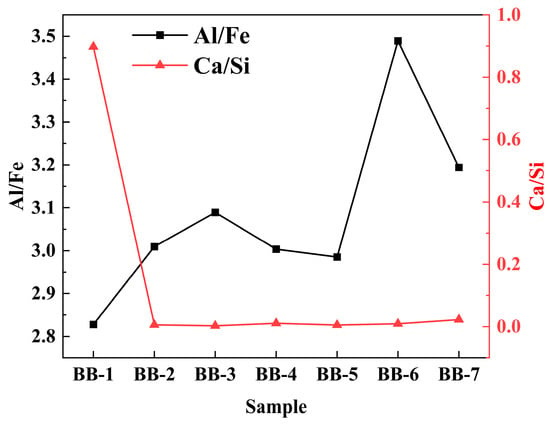
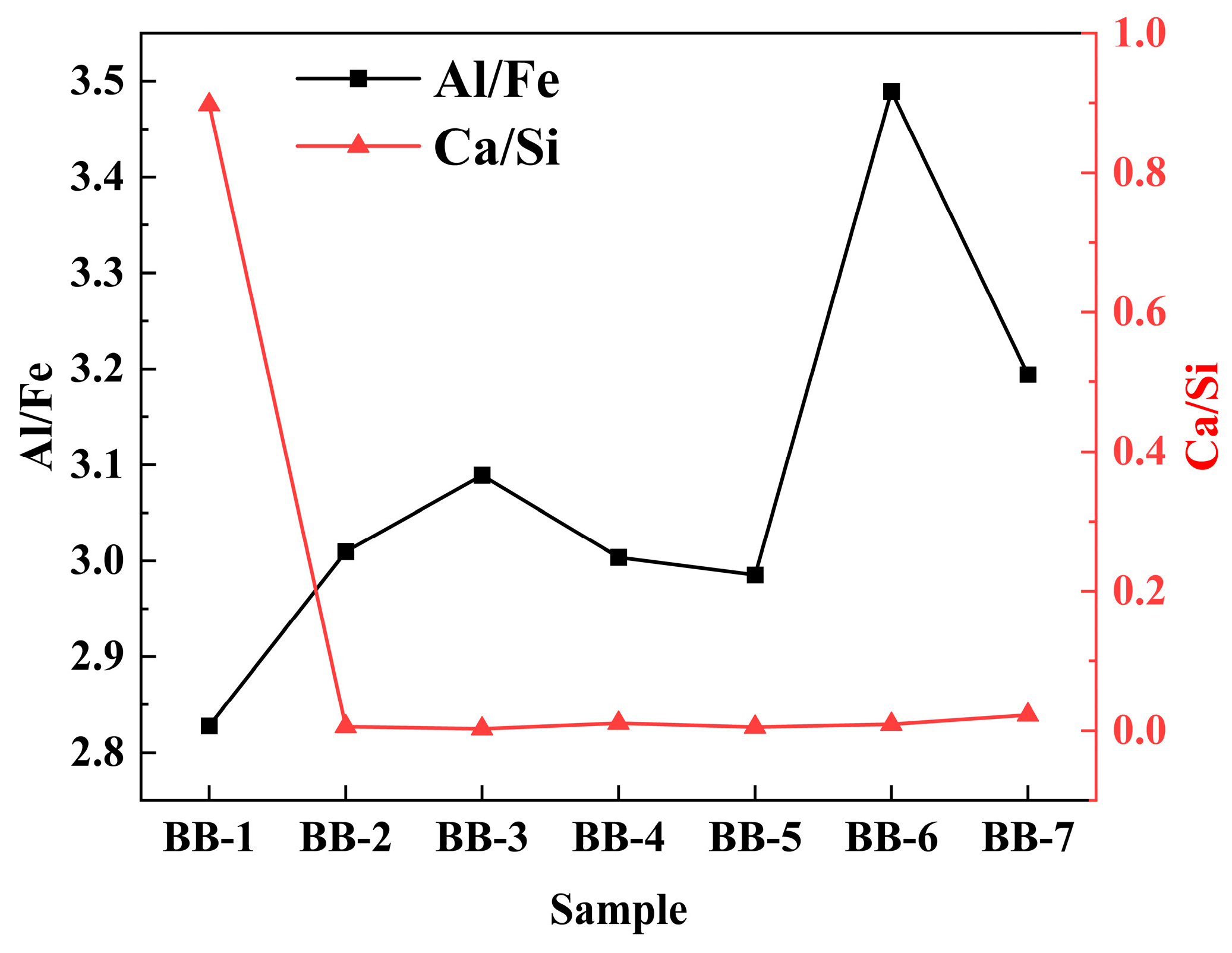
The Fe2O3 content of the samples ranges from 3.60% (BB-1) to 10.21% (BB-4). Fe2O3 is an important coloring agent for ancient bricks: during calcination, if Fe2O3 is reduced to FeO under a reducing atmosphere, the brick will present a blue-grey color (blue brick); if Fe2O3 is fully oxidized, the brick will show a red color (red brick) [22]. A higher Fe2O3 content generally leads to a more intense red coloration. Additionally, TiO2 content significantly affects brick color: pure TiO2 is white, and even small amounts can impart a light tone to the bricks [22]. As shown in Figure 1, BB-4 is a calcined soil brick with a reddish-brown color, which is consistent with its highest Fe2O3 content (10.21%). The TiO2 content also varies slightly among these four samples. A higher Al/Fe ratio generally corresponds to lower iron content and is commonly associated with better brick quality. According to Figure 2, sample BB-6 exhibits the highest Al/Fe ratio and compressive strength.
Figure 2.
Al/Fe ratio and Ca/Si ratio of brick samples.
As shown in Table 2, the calcium oxide content in sample BB-1 is 25.23%. The Ca/Si ratio directly influences the refractory properties of bricks: while a higher ratio can enhance fire resistance, it may also increase brittleness. According to Figure 2, BB-1 exhibits a relatively high Ca/Si ratio. The calcium in fired bricks originates primarily from CaCO3 minerals. During the firing process, CaCO3 decomposes into CaO and CO2 at temperatures around 800 °C. The release of CO2 generates numerous pores within the brick structure, thereby reducing compactness and compromising mechanical strength. Furthermore, the resulting CaO can progressively absorb moisture from the air to form Ca(OH)2, a reaction accompanied by volumetric expansion. As this process continues, the induced internal stress may surpass the tensile strength of the brick, resulting in the development of microcracks. These microcracks subsequently diminish the compressive strength and overall durability of the brick.
The relatively high content in the sample also contributes to the enhancement of the compressive strength of the ancient bricks. Owing to the excellent chemical stability of itself and the inertness of aluminosilicate minerals toward acidic substances, the chemical corrosion resistance of the ancient bricks is further improved. Meanwhile, a higher content is positively correlated with the elevated refractory performance and high-temperature resistance of the bricks.
3.2. Crystal Phase Mineral Composition
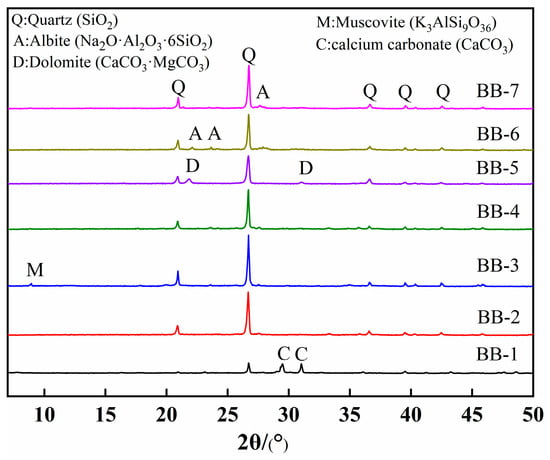
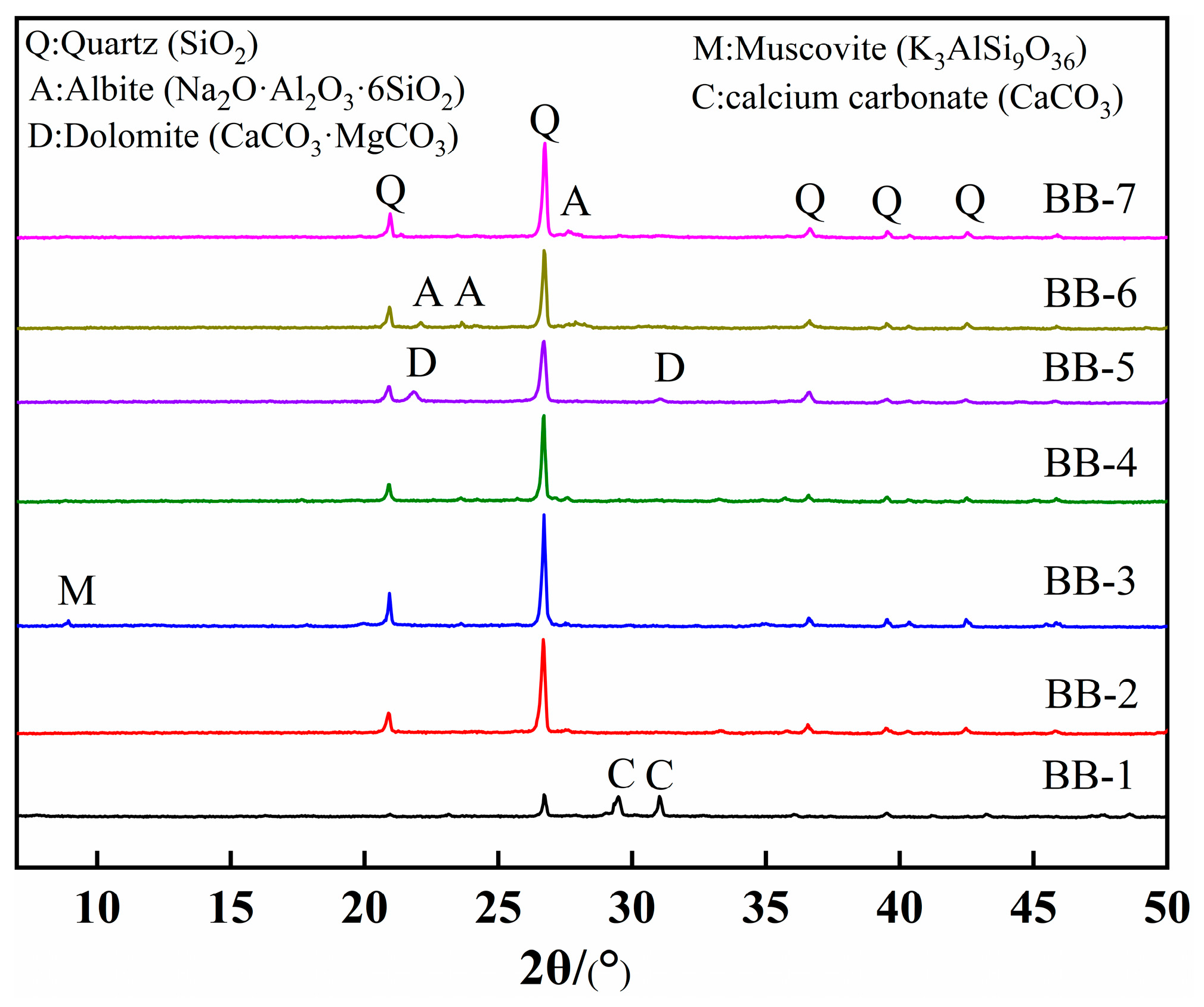
The brick samples BB-1, BB-2, BB-3, BB-4, BB-5, BB-6 and BB-7 were analyzed by XRD (X-ray diffraction). The XRD patterns are presented in Figure 3. It can be seen that quartz is the main mineral component of all samples, with obvious characteristic diffraction peaks at 20.8°, 26.6°, 36.5°, etc., which is consistent with the results of previous studies [3,9]. Quartz has high hardness and stability, and acts as an inert filler in the brick, which can improve the mechanical strength of the brick [23].
Figure 3.
XRD patterns of the brick samples.
As shown in Figure 3, diffraction peaks corresponding to albite are observed in sample BB-6, with weak characteristic peaks consistent with those previously reported ancient bricks et al. A similar pattern is noted in BB-7. In addition, a weak characteristic peak of dolomite is detected in BB-5 [24], while muscovite is identified in BB-3, and calcite is present in BB-1. In contrast, BB-2 exhibits only a single characteristic peak, attributed to quartz. Notably, samples BB-1 through BB-5 show no evidence of albite. This absence may be attributed to regional variations in soil and mineral deposits, as well as the relatively low sodium oxide content in these samples, which aligns with the chemical composition data presented in Table 2. In comparison, BB-6 and BB-7 contain higher sodium oxide levels, thereby favoring the formation of albite [25].
According to XRD results, quartz is identified as the primary mineral component in all brick samples, exhibiting a relatively high degree of crystallization. During the firing process, quartz acts mainly as an inert filler [23]. Feldspar, on the other hand, serves as a flux, compensating for the limitations of clay and inert quartz [26]. In addition, feldspar aids in the melting process at high firing temperatures. Quartz transforms into cristobalite or tridymite when temperatures reach between 1100 °C and 1300 °C [27]. Although quartz is detected in all seven brick samples, no other polymorphs were observed, suggesting that the firing temperature likely did not surpass 1100 °C. Furthermore, the presence of calcium carbonate in sample BB-1—indicated by its characteristic diffraction peak—implies that decarbonation did not occur. Given that the thermal decomposition of CaCO3 typically occurs between 600 °C and 800 °C, it can be concluded that the firing temperature of this brick was no higher than 600 °C.
3.3. SEM-EDS Analysis
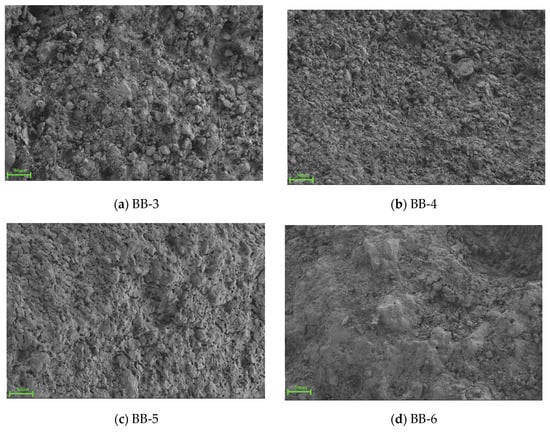
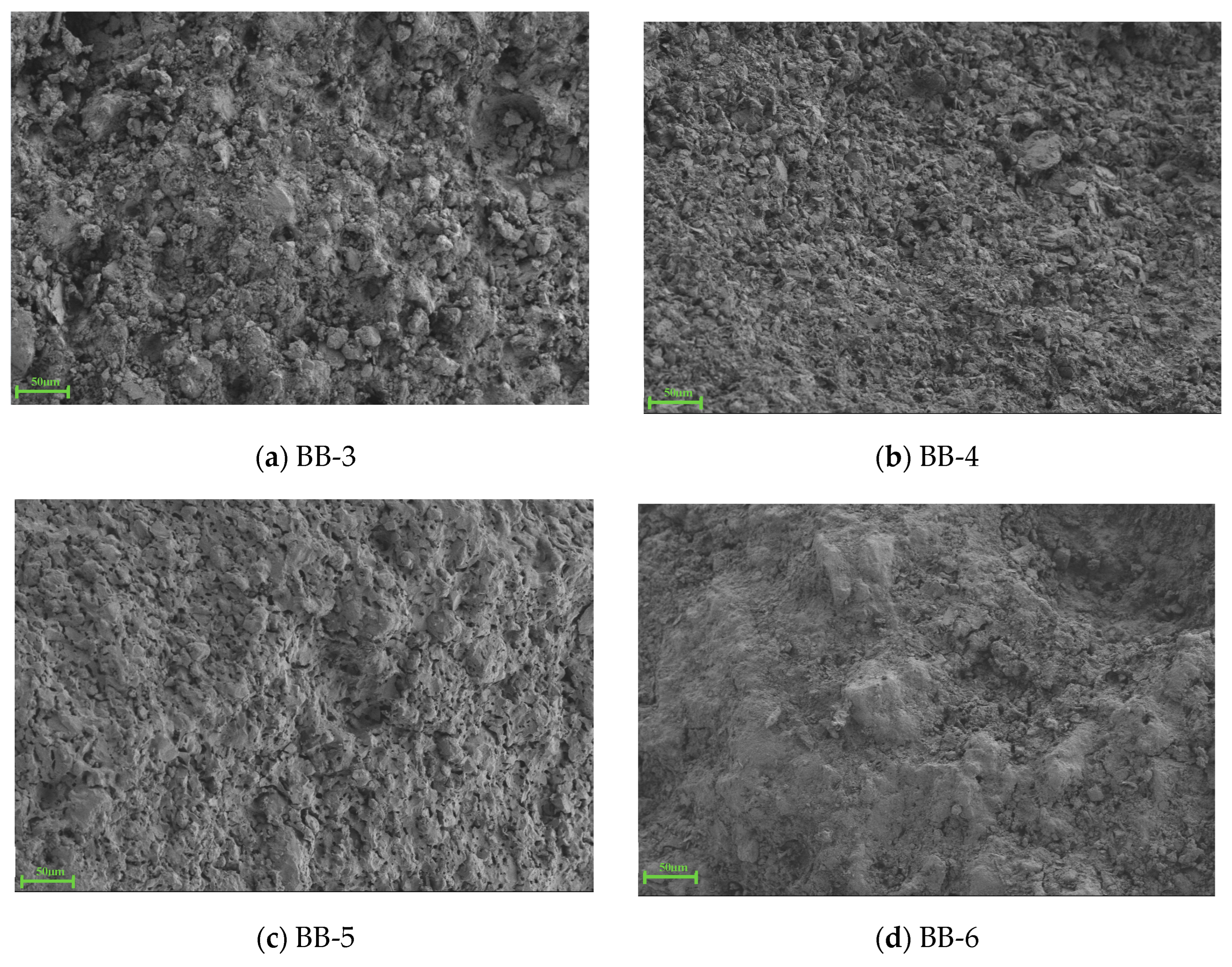
The SEM images of the brick samples are shown in Figure 4. It can be seen from Figure 4 that the microstructure of the samples varies significantly due to differences in firing temperature and raw material composition.
Figure 4.
SEM pictures of the brick samples.
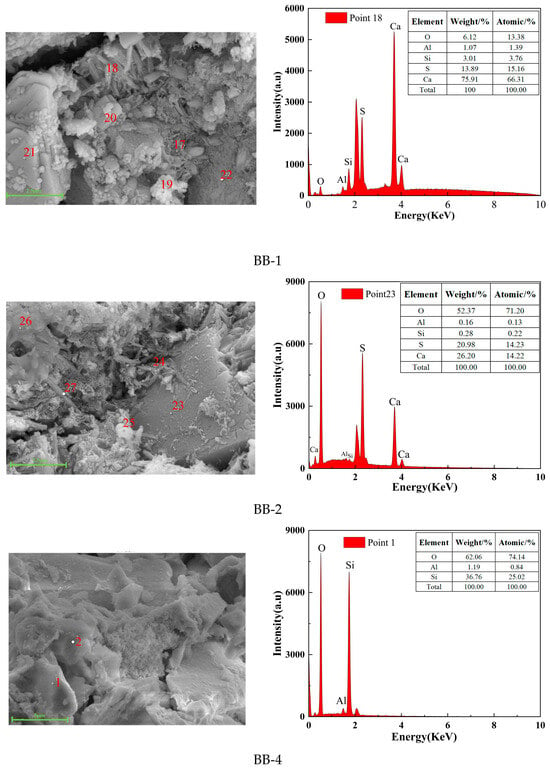
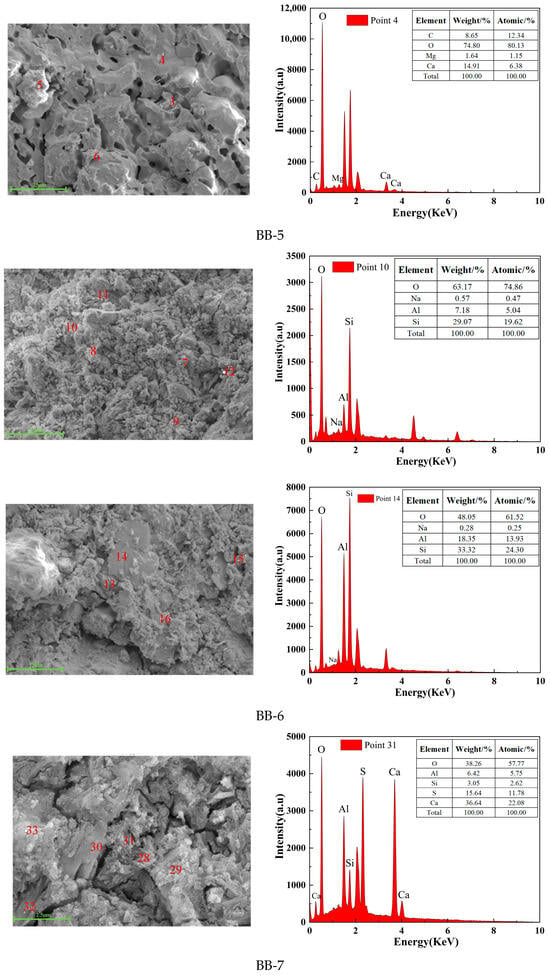
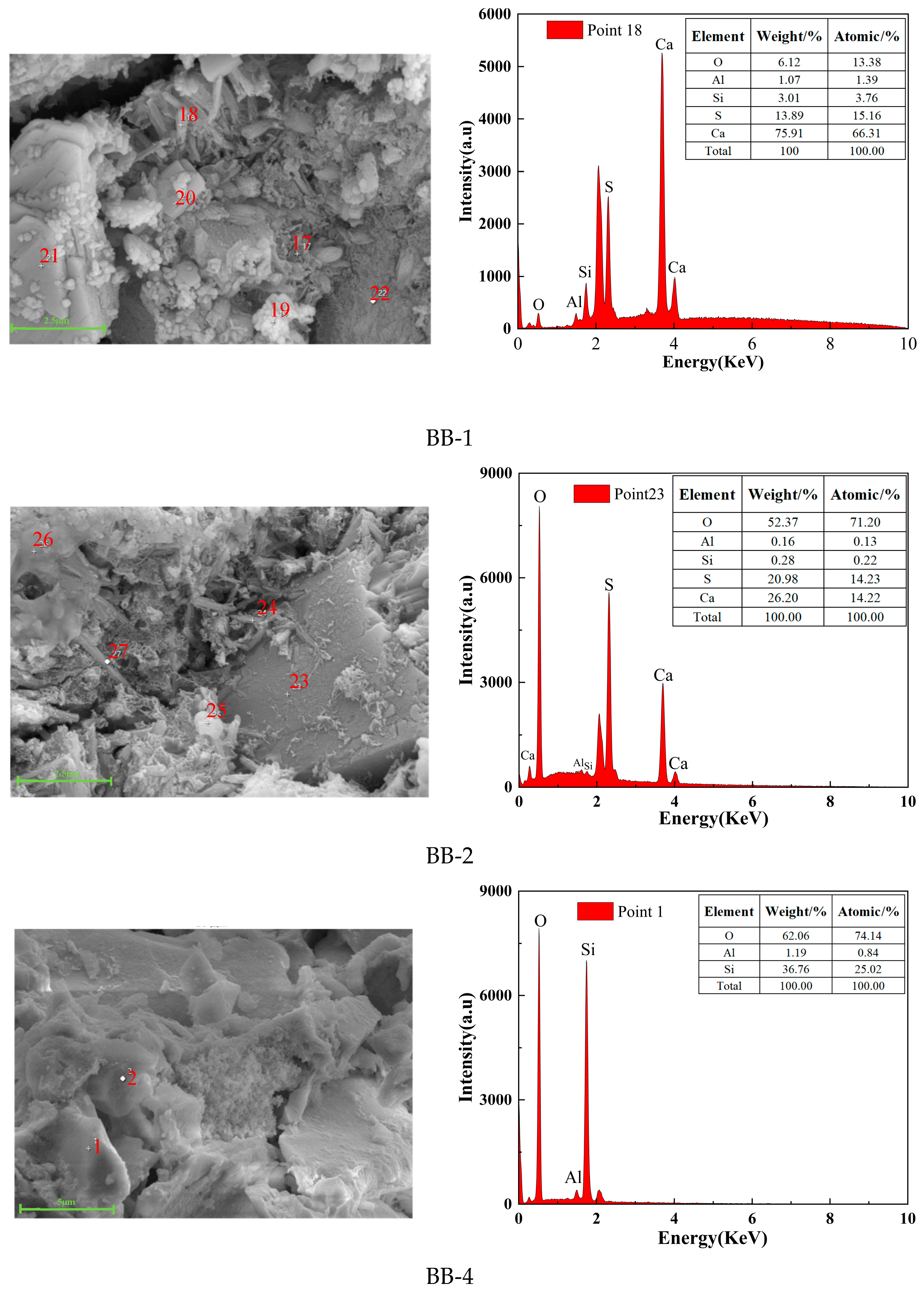
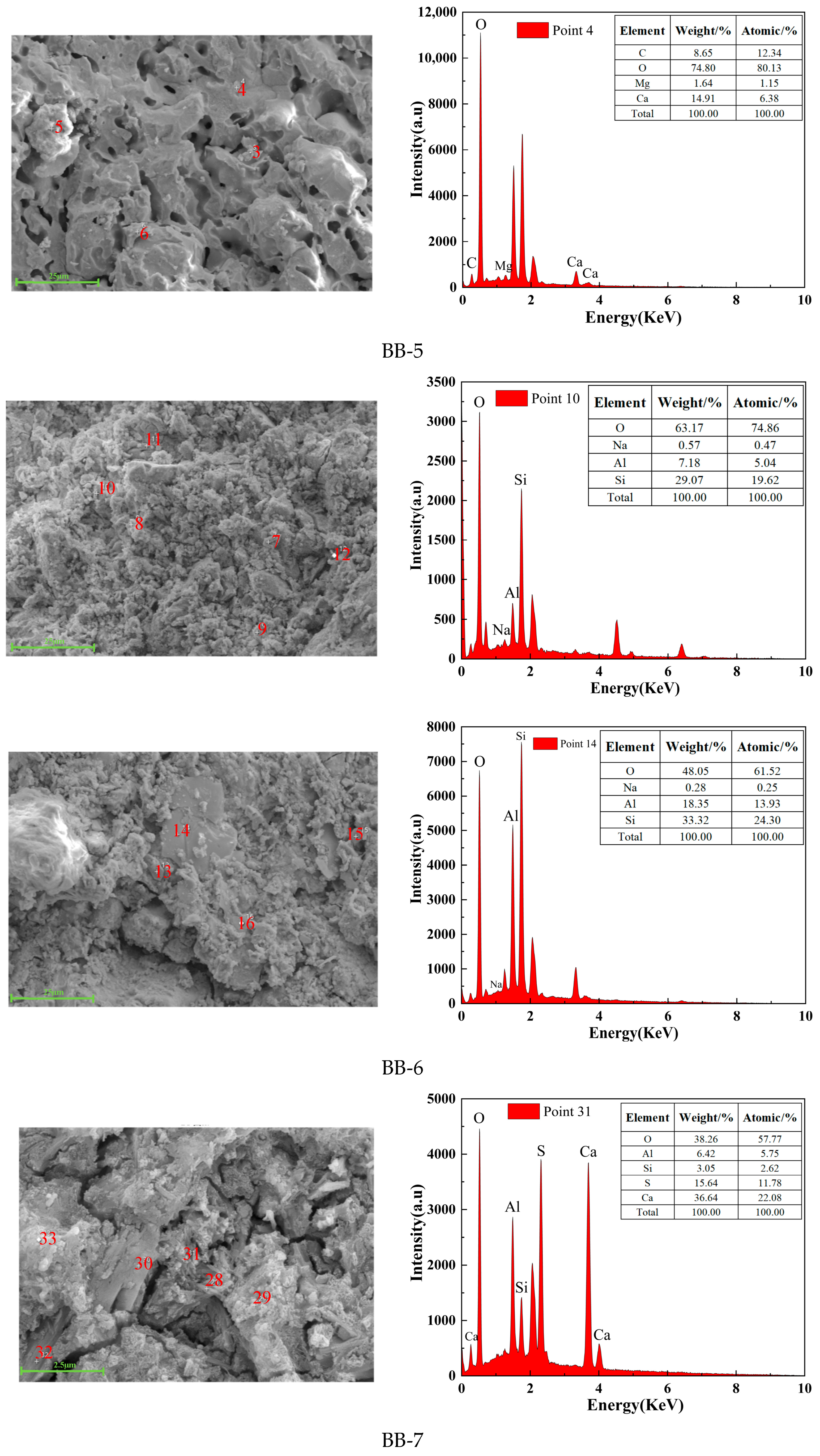
SEM images of samples BB-3, BB-4, BB-5, and BB-6 are presented in Figure 4. The surface of the brick is relatively porous and loose. Apart from the pores generated during the original firing process, long-term external erosion has further induced various types of surface morphologies on the brick. For ancient bricks, more severe weathering corresponds to weaker bonding between weathered particles, more pronounced interparticle gaps and pores, and consequently an increasingly loose internal structure [28]. Under long-term exposure to aggressive environmental conditions, the microstructure of ancient bricks undergoes gradual deterioration, which in turn impairs their macroscopic mechanical properties and long-term durability [29]. The microstructure of BB-4, representative of ancient bricks subjected to high-temperature firing, appears relatively smooth and dense, with no obvious pores or cracks. This compact morphology likely contributes to its higher mechanical strength after firing. Quartz particles are identified as the primary constituent of the bricks and play a key role in enhancing their strength, which is corroborated by EDS analysis showing significant quartz content. Additionally, flaky muscovite is observed in BB-3 [30], with numerous quartz particles adhering to its surface. From Figure 5, it can be clearly seen that points 14, 21, and 23 represent tabular gypsum; point 18 represents calcium carbonate crystals; and points 1 and 2 represent quartz.
Figure 5.
SEM images of special areas of ancient bricks.
Among the samples, BB-6 exhibits the highest strength, which may be attributed to a greater abundance of quartz particles filling the pore space. Although the surface of BB-6 shows some roughness, the overall structure is denser and free of major cracks. In sample BB-5, hexagonal crystalline calcite is detected; however, due to severe weathering in certain areas—some of which can be easily crushed by hand [31]—its contribution to strength appears limited. Trace amounts of sodium feldspar are identified in BB-6, consistent with the XRD peaks reported earlier.
Figure 5 presents SEM images of specific regions in the ancient brick samples, with multiple areas labeled for each specimen. Table 3 summarizes the corresponding EDS analysis, which was used to identify the phase types in the selected regions. The main elements detected in the ancient bricks are Ca, Al, S, O, and Si; their quantitative results are provided in Table 3. According to the quantitative elemental analysis in Table 3, the EDS measurement points for sample BB-7 (Points 28–33) show that the primary constituents were Ca, Al, O, S, and Si. Among these, Si and O are significantly more abundant than the other elements, indicating that the dominant mineral phase at these locations was SiO2. This finding is in agreement with the XRD analysis results.
Table 3.
EDS analysis results of the points in Figure 5 (wt.%).
It can be seen that the Ca/Si ratio and Ca/Al ratio of Points 18 and 21 are significantly higher than that of other points, indicating that these regions are rich in calcium and poor in silicon and aluminum, and the main mineral phase is calcite (CaCO3). The Ca/Si ratio and Ca/Al ratio of Points 25, 27, 29, and 33 are lower, indicating that these regions are rich in silicon and poor in calcium, and the main mineral phase is quartz (SiO2).
3.4. Thermogravimetric Analysis
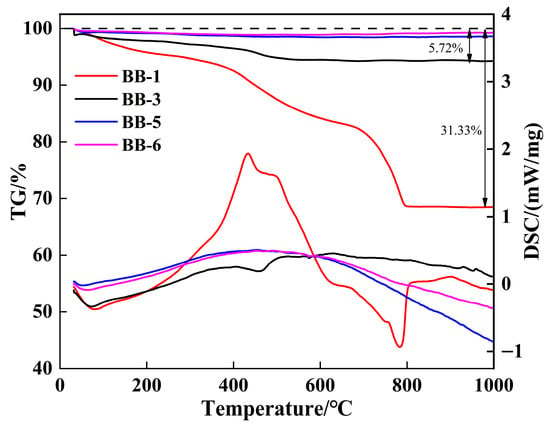
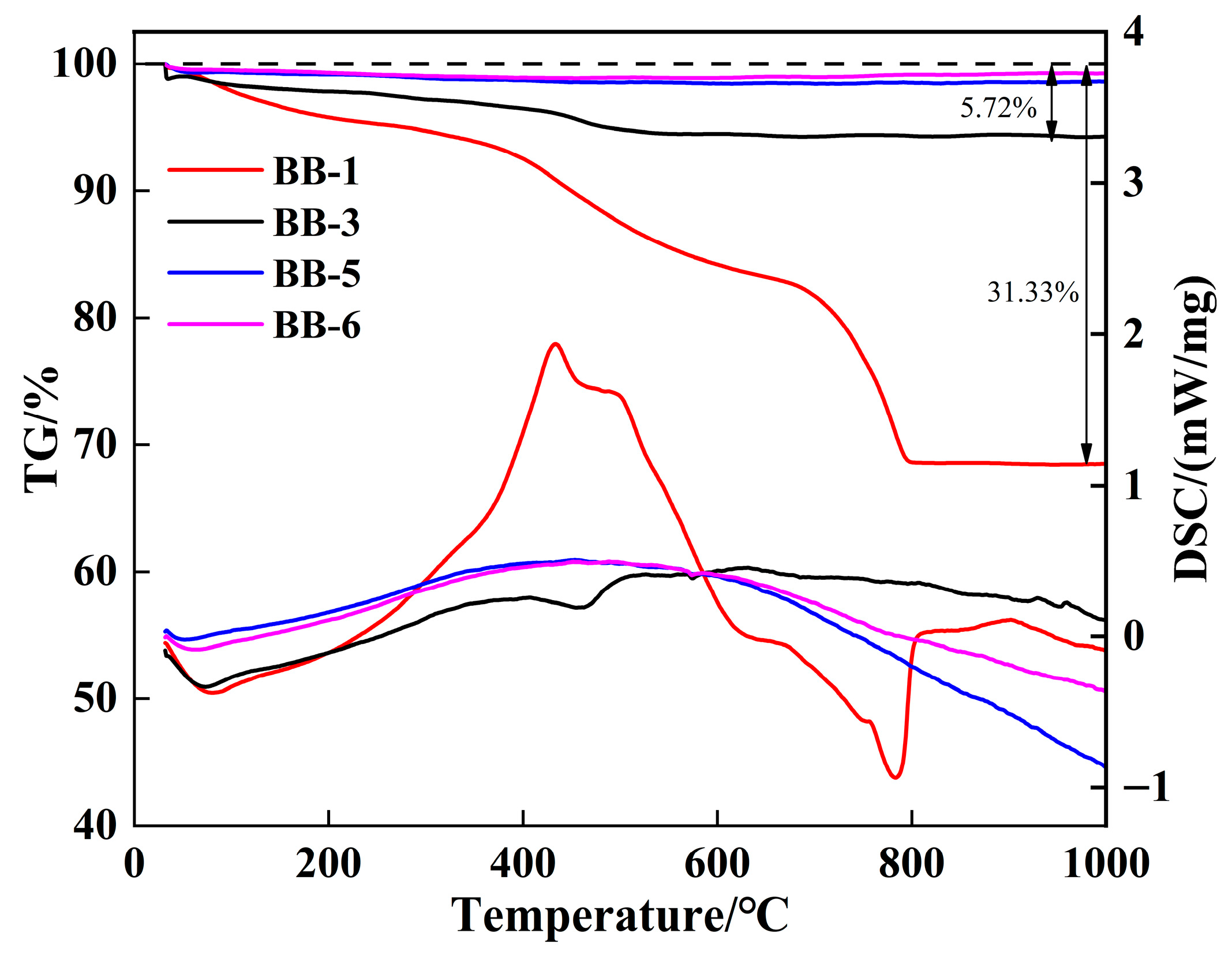
The TG-DSC curves of the brick samples (BB-1, BB-3, BB-5 and BB-6) are shown in Figure 6. The TG curve reflects the mass loss of the sample during heating, and the DSC curve reflects the heat change during the heating process.
Figure 6.
TG-DSC curves of the brick samples.
As illustrated in Figure 6, the thermogravimetric (TG) curves exhibit varying degrees of mass loss with increasing temperature. Sample BB-1 shows the most significant decrease, with a total mass loss of 31.33%, consistent with the loss on ignition (LOI) result obtained from XRF analysis. In comparison, the mass losses for sintered bricks BB-3, BB-5, and BB-6 are 5.72%, 1.40%, and 0.76%, respectively. The differential scanning calorimetry (DSC) curves display a distinct endothermic peak between 0 °C and 200 °C, centered around 80 °C, which corresponds to the evaporation of free and adsorbed water—a process requiring energy input. The DSC profiles of BB-5 and BB-6 show generally similar trends. BB-1 may have been pressed using organic binders and has not undergone sintering. It is speculated that BB-1 may also contain a large amount of limestone, shells, or chalk. A second endothermic peak appears in the range of 700–800 °C, primarily associated with the decomposition of calcium carbonate. The CaO content in brick sample BB-1 can be calculated using Equation (4).
where W represents the content of CaO in the brick (wt%); m3 represents the mass loss of the brick between 600 °C and 800 °C (%).
According to the above formula, the CaO content in BB-1 is calculated as 20.02%, which is roughly consistent with the XRF test result (25.23%). The difference may be due to the presence of other calcium-containing minerals in BB-1 (such as calcium hydroxide) that do not decompose in the 600–800 °C stage.
3.5. Physical and Mechanical Properties
The physical and mechanical properties of the brick samples are shown in Table 4. It can be seen that the compressive strength, apparent density, and water absorption of the samples vary significantly due to differences in type, firing temperature, and age.
Table 4.
Mechanical properties and physical properties of brick samples.
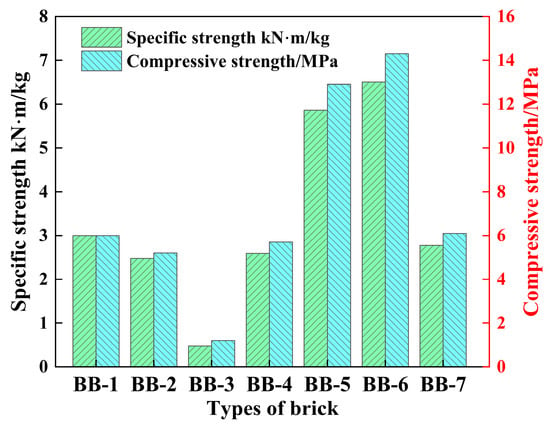
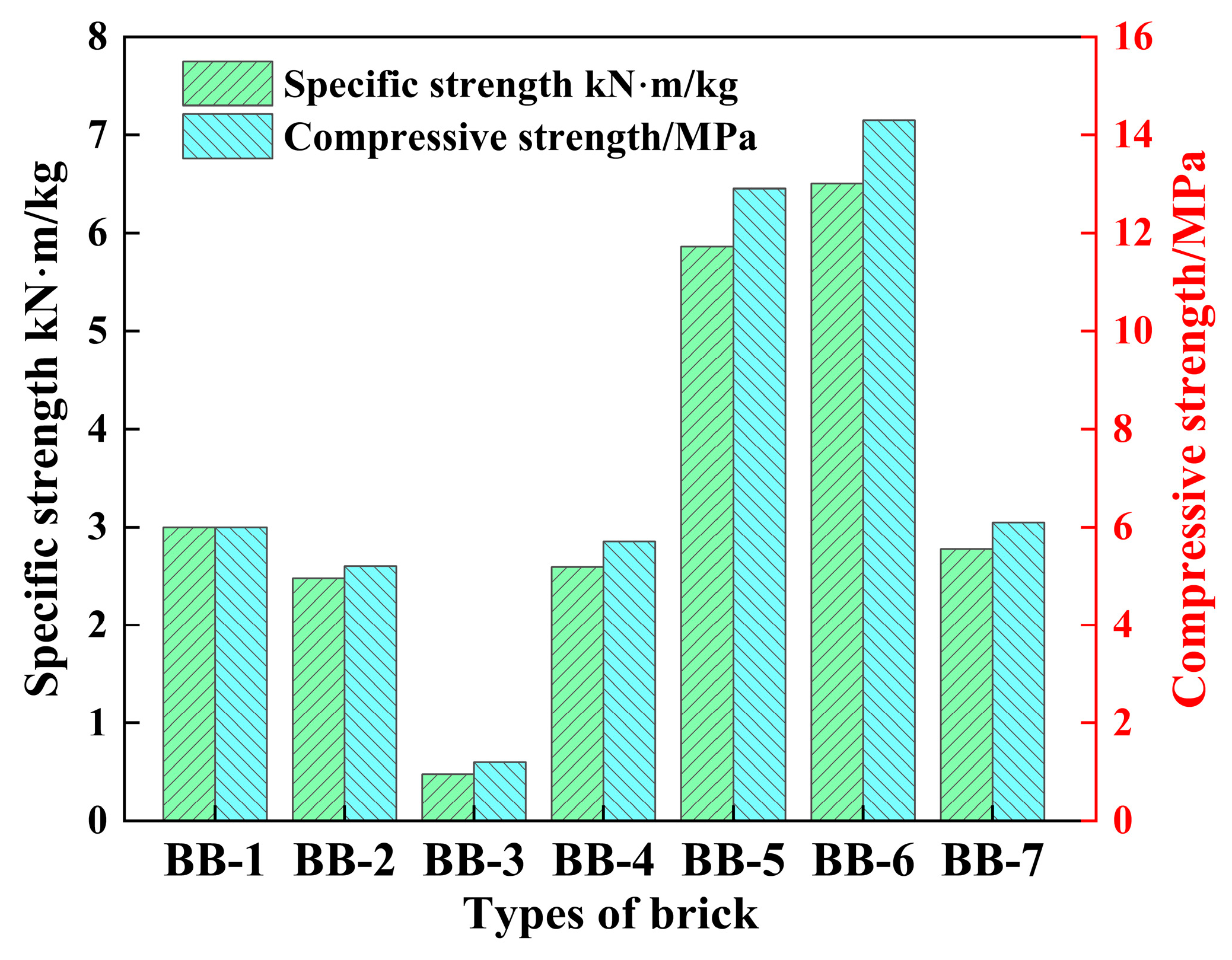
The compressive strength of the samples ranges from 1.2 MPa (BB-3) to 14.3 MPa (BB-6), apparent density from 2.0 (BB-1) to 2.5 g/cm3 (BB-3), and water absorption from 6.8% (BB-5) to 23.1% (BB-4). Sample BB-3, an uncalcined earth brick, is not water-resistant and disintegrates upon immersion; therefore, its water absorption is not measured. BB-3 and BB-4 are earth bricks of the same age and origin. However, BB-4 was calcined, whereas BB-3 is not, resulting in a notable difference in strength between them. This can be attributed to the higher sintering temperature of BB-4, which intensifies the sintering process, thereby leading to a decrease in porosity [32]. In addition, the smaller dimensions of BB-4 likely enable more uniform calcination, further contributing to its relatively higher strength. Most brick samples exhibit strengths below 10 MPa, which does not meet the MU 10 strength grade specified in GB/T 5101-2017 [33] for fired common bricks. The compressive strength of bricks is influenced by raw material composition, manufacturing techniques, and firing conditions. Typically, when fired around 1000 °C, quartz and feldspar in bricks undergo melting, while CO2 is released, generating internal pores and further diminishing compressive strength. External environmental factors also contribute to strength degradation. Salt crystallization and freeze–thaw cycles are major causes of brick deterioration. Due to the porous nature of sintered bricks, interconnected pores provide pathways for salt ingress. Soluble salts—mainly sulfates and carbonates—dissolve in water and penetrate the brick matrix. The resulting crystallization pressure, combined with the expansive force of freezing water and acidic corrosion, can lead to progressive strength loss in sintered porous bricks [34]. In addition, carbonate and silicate components in masonry materials can react with moisture in the air via the following processes.
Upon the completion of the aforementioned reactions, insoluble calcite (CaCO3) in the brick is converted into water-soluble calcium bicarbonate Ca(HCO3)2. Under fluctuating humidity and temperature conditions, the repeated dissolution and recrystallization of minerals within the brick lead to a progressive loss of strength. Furthermore, albite in the brick undergoes hydrolysis with water to form kaolinite, sodium hydroxide, and quartz [35]. Sodium ions are leached out in ionic form by water, while quartz particles are physically washed away. The remaining kaolinite provides limited contribution to the brick strength, thereby further reducing the overall compressive performance. After freeze–thaw cycles, sintered bricks undergo significant deterioration. Capillary water adsorbed in the pores freezes at low temperatures, resulting in volumetric expansion and generating internal stress. Once this stress exceeds the load-bearing capacity of the brick, microcracks develop. With an increasing the count of freeze–thaw cycles, the porosity of the bricks rises accordingly. This increase in porosity promotes the expansion and interconnection of micropores, thereby diminishing the brick strength [36]. The specific strength (the ratio of compressive strength to apparent density) of each brick sample is presented in Figure 7. Based on the calculations, BB-6 exhibits the highest specific strength coefficient of 6.5, while BB-3 shows the lowest value of 0.5. A positive correlation is observed between compressive strength and specific strength.
Figure 7.
Specific strength and compressive strength of brick samples.
3.6. Pozzolanic Activity Index
Ancient bricks act as the essential structural materials for heritage buildings. Prolonged environmental erosion inevitably leads to the performance deterioration of these bricks. One prominent deterioration phenomenon is the decline in mechanical strength. Studies on the pozzolanic activity of ancient bricks facilitate the elucidation of reaction mechanisms between ancient bricks and cementitious composites. Such elucidation establishes a theoretical and experimental basis for the development of compatible conservation and restoration materials. The pozzolanic activity index can function as a quantitative evaluation parameter. This parameter enables the accurate assessment of the weathering level of ancient bricks. It also offers scientific evidence for designing targeted reinforcement and preservation protocols. Simultaneously, the feasibility of utilizing recycled brick powder as a supplementary component in cement mortar binders warrants further investigation.
SiO2 exhibits high pozzolanic activity. However, its pozzolanic activity cannot be fully exerted in the early phase of the hydration reaction. When the samples were cured under water-containing conditions, sufficient water promoted the exertion of pozzolanic activity.
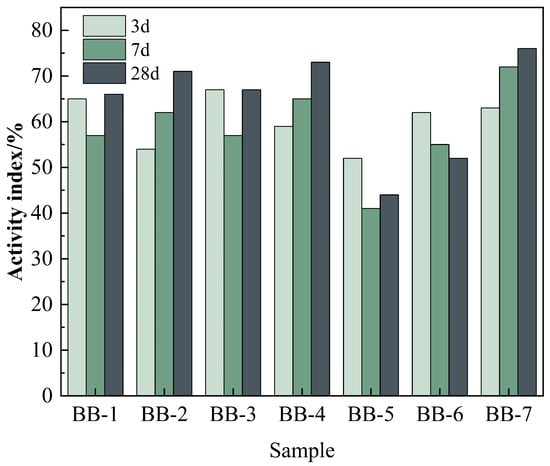
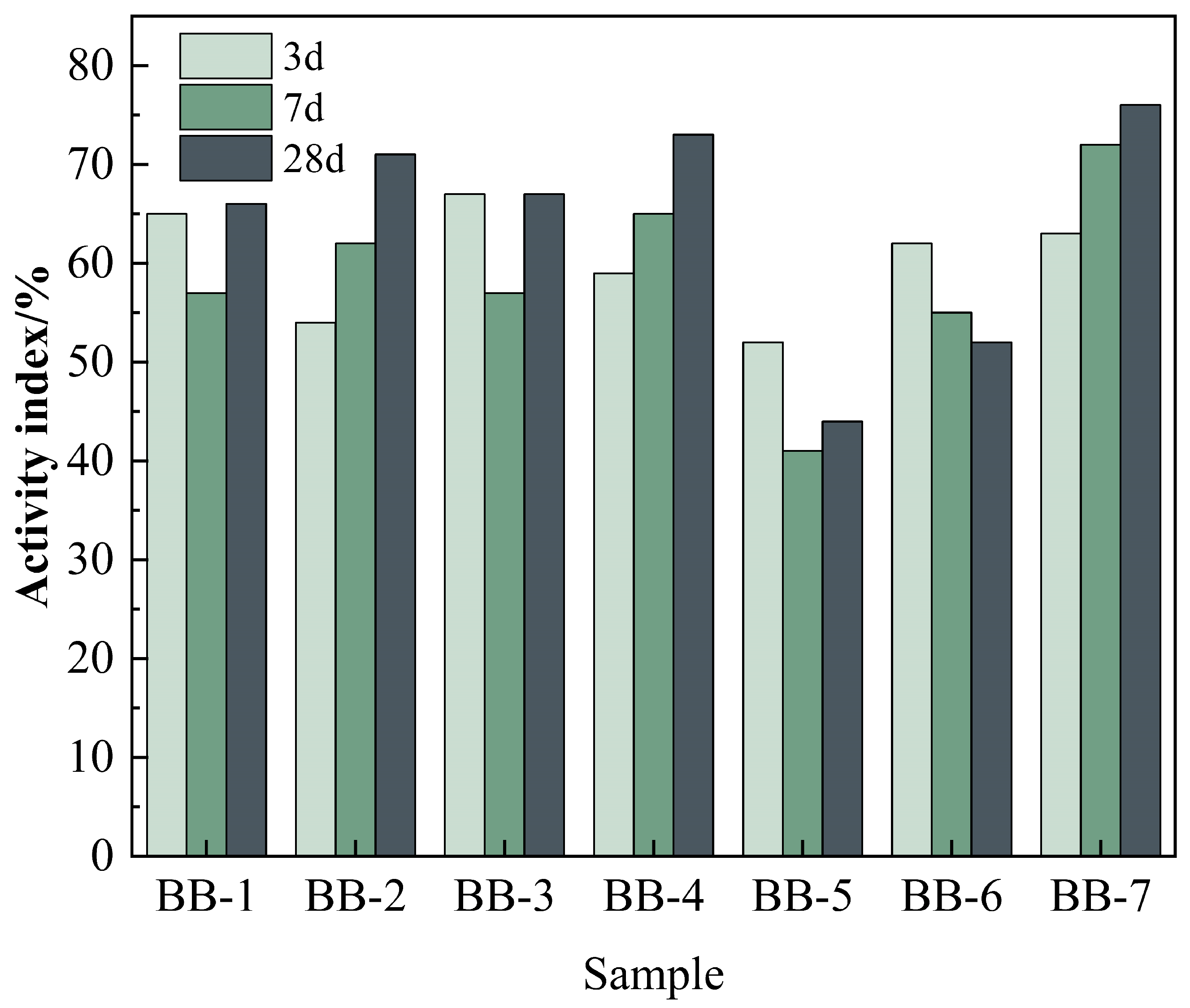
As shown in Figure 8, the pozzolanic activity index of BB-2, BB-4, and BB-7 brick powders increased gradually with the increase in curing age. At the age of 28 d, the activity index reaches 76%, 73%, and 78%, respectively. This is because SiO2 in the brick powder has high pozzolanic activity, but it cannot be fully exerted in the early stage of hydration. With the extension of curing age, sufficient water promotes the hydration reaction between SiO2 and Ca(OH)2 generated by cement hydration, forming calcium silicate hydrate (C-S-H) gel. C-S-H gel fills the pores in the cement paste, making the microstructure denser and improving the compressive strength of the paste. The above principles confirm the technical feasibility of using recycled bricks as a partial replacement for cement mortar.
Figure 8.
The activity index of the brick samples.
Furthermore, it induced a remarkable increase in the strength of the cement paste. In addition, the activity indices at 28 d all reached more than 70%. Although BB-7 brick powder has a history of 150 years, it had the highest activity index (78% at 28 d), which indicates that the pozzolanic activity of ancient bricks is not only related to their age but also to their raw material composition, firing temperature, and preservation environment. In contrast, the activity index of BB-6 brick powder decreased with the increase in curing age. The activity indices of BB-1 and BB-3 brick powders both decreased at 7 d. However, their activity indices at 28 d showed almost no change compared with those at 3 d. BB-5 brick powder, which has a history of 100 years, had the lowest activity. Its minimum activity index was 41%. The activity of calcined BB-4 brick powder was more stable than that of uncalcined BB-3 brick powder. This result is consistent with the higher strength of BB-4 mentioned earlier. It indicates that an appropriate calcination temperature is beneficial to the exertion of pozzolanic activity. It also helps to improve the strength. In conclusion, when brick powder is mixed into Portland cement, it has different degrees of influence on the strength of cement. Among all the samples, the 150-year-old brick powder showed the best activity.
4. Conclusions
This paper investigates the chemical and mineral composition, physical and mechanical properties, and pozzolanic activity of ancient bricks from Hubei Province, China. The main conclusions are as follows:
- (1)
- The chemical composition of ancient bricks in Hubei Province is dominated by SiO2 and Al2O3. The SiO2 content of BB-2, BB-5, BB-6, and BB-7 exceeds 70%, and the Al2O3 content ranges from 6.49% to 19.55%. The Fe2O3 content is the main factor affecting the color of the brick, and the CaO content of BB-1 is as high as 25.23%, which is significantly higher than other samples. The mineral composition is mainly quartz, and some samples contain minor non-clay minerals such as calcite (BB-1), muscovite (BB-3), dolomite (BB-5), and albite (BB-6). Among them, gypsum, calcite, and quartz can be clearly seen in the SEM image.
- (2)
- The firing temperature of ancient bricks in Hubei Province varies significantly. The firing temperature of BB-1 does not exceed 600 °C, while the firing temperature of other samples ranges from 800 °C to 1100 °C. BB-1 exhibited the highest mass loss in the TG curve, reaching 31.33%, while the mass losses of sintered bricks BB-3, BB-5, and BB-6 were 5.72%, 1.40%, and 0.76%, respectively.
- (3)
- The compressive strength of the bricks varies from 1.2 MPa (BB-3, unburned soil brick) to 14.3 MPa (BB-6, blue brick), the apparent density averages about 2.2 g/cm3, and the water absorption ranges from 6.8% (BB-5) to 23.1% (BB-4). Calcination can significantly improve the compressive strength and water resistance of the brick.
- (4)
- The pozzolanic activity of ancient bricks varies with the sample type and curing age. The activity index of BB-2, BB-4, and BB-7 increases with the extension of curing age, and the activity index of BB-7 reaches 78% at 28 days, which is the highest among all samples. The activity index of BB-1 and BB-3 is relatively low, less than 55% at 28 days. Appropriate calcination temperature is conducive to improving the pozzolanic activity of the brick.
- (5)
- The above results demonstrate that calcination can significantly enhance the compressive strength and water resistance of bricks. Meanwhile, an appropriate calcination temperature is conducive to improving the pozzolanic activity of bricks. These findings provide technical guidance for the manufacturing of antique-style bricks and lay a theoretical foundation for their application in the conservation and restoration of historic buildings.
Author Contributions
Conceptualization, C.W., Y.L. and L.W.; methodology, J.D., M.J. and H.L.; writing—original draft preparation, M.J. and H.L.; writing—review and editing, C.W., J.D., L.W. and Y.L.; supervision, C.W. and Y.L.; funding acquisition, C.W. and Y.L. All authors have read and agreed to the published version of the manuscript.
Funding
This research was funded by The Program for Youth Talent in Science and Technology of Hubei Province grant number 2023DJC182.
Data Availability Statement
Data will be made available on request.
Acknowledgments
The authors gratefully acknowledge the financial support of the Program for Youth Talent in Science and Technology of Hubei Province.
Conflicts of Interest
The authors declare no conflicts of interest.
References
- Fu, S.; Zhan, X. History of Chinese Bricks and Tiles; China Building Materials Industry Press: Beijing, China, 2006. [Google Scholar]
- Ding, W.; Wang, Z.L.; Liu, B.; Liu, C.; Li, P. Study on Modern Handmade Grey Brick Rebound Curve. Eng. Qual. 2013, 31, 18–21. [Google Scholar] [CrossRef]
- Gao, H.; Sun, S. Study on the Properties of Ancient Brick Materials for the Xi’an Ming Circumvallation. J. Ningxia Univ. 2019, 40, 351–354. [Google Scholar] [CrossRef]
- Li, B.; Du, H.; Liu, X.; Wang, C. Physical properties and composition analysis of ancient bricks of Ming and Qing Dynasties in Shanxi Province. Bull. Chin. Ceram. Soc. 2020, 39, 2944–2949+2963. [Google Scholar] [CrossRef]
- Shen, J.; Zhang, Z. Measuring the firing temperature of ancient bricks in Pingyao ancient city based on magnetic susceptibility. Sci. Conserv. Archaeol. 2020, 32, 81–85. [Google Scholar] [CrossRef]
- Mirti, P.; Davit, P. New Developments in the Study of Ancient Pottery by Colour Measurement. J. Archaeol. Sci. 2004, 31, 741–751. [Google Scholar] [CrossRef] [Scilit]
- Liu, Z.; Yang, R.; Wang, W.; Xu, W.; Zhang, M. Multi-analytical approach to the mural painting from an ancient tomb of Ming Dynasty in Jiyuan, China: Characterization of materials and techniques. Spectrochim. Acta A Mol. Biomol. Spectrosc. 2022, 279, 121419. [Google Scholar] [CrossRef] [Scilit]
- Qian, K.; Song, Y.; Lai, J.; Qian, X.; Zhang, Z.; Liang, Y.; Ruan, S. Characterization of Historical Mortar from Ancient City Walls of Xindeng in Fuyang, China. Constr. Build. Mater. 2022, 315, 125780. [Google Scholar] [CrossRef] [Scilit]
- Xia, Q.; Sun, Y.; Wu, J.; Li, J.; Li, Y.; Shen, C. Investigation of Compression Constitutive Relationship of Ancient Brick Masonry. Constr. Build. Mater. 2022, 317, 126093. [Google Scholar] [CrossRef] [Scilit]
- Xia, Q.; Sun, Y.; Li, Y.; Pang, L.; Yang, Y. Development Law of Axial Compression and Cracks in Ancient Brick Masonry. Constr. Build. Mater. 2021, 299, 123936. [Google Scholar] [CrossRef] [Scilit]
- Shen, C. Study on the Permeability, Mechanical Properties, and Durability of Modified Rammed Earth Inside the Xi’an City Wall. Master’s Thesis, Xi’an University of Technology, Xi’an, China, 2024. [Google Scholar]
- Zhang, H.; Li, Z.; Zheng, W.; Liu, X. Preliminary study on the surface weathering characteristics and mechanism of ancient bricks at the pagoda foundation of Baiyi Temple. J. Northwest Norm. Univ. (Nat. Sci. Ed.) 2023, 59, 126–134. [Google Scholar] [CrossRef]
- Wu, A.; Guo, Z.; Hao, Y.; Wu, R.; Xuan, J. Research on corrosion mechanism and remaining life prediction of ancient building blue bricks in saline environment. Eng. Sci. Technol. 2024, 1–12. [Google Scholar]
- Ma, S.; Wang, Y.; Bao, P.; Wang, D. Explored the cause analysis and protective measures of cracks in the masonry structure of Kaifeng Jade Emperor Cabinet. J. Henan Univ. (Nat. Sci.) 2022, 52, 218–226. [Google Scholar]
- Wonganan, N.; Athisakul, C.; Mahasuwanchai, P. Ancient materials and substitution materials used in Thai historical masonry structure preservation. J. Renew. Mater. 2021, 9, 179–204. [Google Scholar] [CrossRef] [Scilit]
- Ma, S.; Li, L.; Bao, P.; Zhong, S. Static and dynamic analysis of hexagonal pavilion style gray brick Po Pagoda in Northern Song Dynasty. J. Henan Univ. (Nat. Sci.) 2022, 52, 587–594. [Google Scholar]
- Liu, J.-B.; Zhang, Z.-J. Characteristics and weathering mechanisms of the traditional Chinese blue brick from the ancient city of Pingyao. R. Soc. Open Sci. 2020, 7, 200058. [Google Scholar] [CrossRef] [Scilit]
- Shi, J.; Chun, Q.; Cao, G.; Dong, Q. Comparison study on properties of overground and underground brick materials of brick masonry building heritages. J. Basic Sci. Eng. 2022, 30, 1287–1295. [Google Scholar] [CrossRef]
- Ma, S.; Li, L.; Miao, C.; Bao, P.; Kong, L.; Wang, M. Evaluation of salt erosion resistance of green bricks of historical buildings under different degrees of damage. J. Henan Univ. (Nat. Sci.) 2025, 55, 236–245. [Google Scholar]
- GB/T 17671-2021; Test Method of Cement Mortar Strength (ISO Method). State Administration for Market Regulation of the People’s Republic of China: Beijing, China, 2021.
- GB/T 4111-2013; Test Methods for the Concrete Block and Brick. General Administration of Quality Supervision, Inspection and Quarantine of the People’s Republic of China: Beijing, China, 2013.
- Zhu, Y. Formation and influencing factors of brick surface color. Brick-Tile 2005, 5, 117–119. [Google Scholar] [CrossRef]
- Zhan, X. Mineralogy and production of sintered bricks and tiles. Brick Tile World 2007, 47–55. [Google Scholar] [CrossRef]
- Wang, Y.; Wu, X.; Wu, G.; Liu, X. Factors influencing the surface quality of ancient blue bricks based on instrument analysis. J. Build. Mater. 2021, 24, 851–857. [Google Scholar] [CrossRef]
- Qi, C.; Xiao, H.; Wang, D. Effect of sodium oxide content on ash sintering strength of high alkali coal. Therm. Power Gener. 2018, 47, 19–25+32. [Google Scholar] [CrossRef]
- Gao, H.; Sun, S.; Jin, P. Composition, structure and properties of the Ming Dynasty bricks engraved with “Qian wei” used in Xi’an circumvallation. J. Build. Mater. 2020, 23, 122–127+155. [Google Scholar] [CrossRef]
- Liu, J. Effect of iron mineralizer on phase formation and properties of siliceous products. Refract. Lime 1997, 4, 57–60. [Google Scholar] [CrossRef]
- Fan, Y.; Song, S.; Lu, Y. Research on the weathering and erosion of wall bricks (carvings) using thermodynamics. Cult. Relics Prot. Archaeol. Sci. 2020, 32, 1–9. [Google Scholar] [CrossRef]
- Zhao, P. Damage and Deterioration Mechanisms of Blue Bricks and Their Masonry Structures under Load and Environmental Effects. Ph.D. Thesis, Southeast University, Nanjing, China, 2016. [Google Scholar]
- Cloutier, J.; Piercey, S.J.; Huntington, J. Mineralogy, Mineral Chemistry and SWIR Spectral Reflectance of Chlorite and White Mica. Minerals 2021, 11, 471. [Google Scholar] [CrossRef] [Scilit]
- Liu, F.; Yan, F.; Liu, L. Geological characteristics and assessment of development and utilization of south slope calcite and dolomite deposits. China Non-Met. Min. Ind. Guide 2001, 1, 31–33. [Google Scholar] [CrossRef]
- Lemougn, P.; Ylinieme, J.; Ismailov, A.; Levanen, E.; Tanskanen, P.; Kinnunen, P. Spodumene tailings for porcelain and structural materials: Effect of temperature (1050–1200 °C) on the sintering and properties. Miner. Eng. 2019, 141, 105843. [Google Scholar] [CrossRef] [Scilit]
- GB/T 5101-2017; Fired Common Bricks. General Administration of Quality Supervision, Inspection and Quarantine of the People’s Republic of China: Beijing, China, 2017.
- Han, B.; Zhang, L.; Li, C. Disaster analysis and control countermeasures of brick-wood structure type protective buildings. J. Nat. Disasters 2004, 13, 105–111. [Google Scholar] [CrossRef]
- Liu, X. Research on the Deterioration Characteristics and Mechanism of Brick Buildings Facades in Lanzhou. Master’s Thesis, Lanzhou University, Lanzhou, China, 2020. [Google Scholar] [CrossRef]
- Zhang, D.M.; Wang, L.; Guo, G.L.; Wang, Y.; Wang, W. Effect of the freeze-thaw on macroscopic properties and microstructural degradation of ancient grey bricks. Sci. Conserv. Archaeol. 2021, 33, 9–15. [Google Scholar] [CrossRef]

Disclaimer/Publisher’s Note: The statements, opinions and data contained in all publications are solely those of the individual author(s) and contributor(s) and not of MDPI and/or the editor(s). MDPI and/or the editor(s) disclaim responsibility for any injury to people or property resulting from any ideas, methods, instructions or products referred to in the content. |
© 2026 by the authors. Licensee MDPI, Basel, Switzerland. This article is an open access article distributed under the terms and conditions of the Creative Commons Attribution (CC BY) license.