


Abstract
This research investigates the dynamic response of three-dimensional concrete beams with coated aggregates subjected to transient wave propagation induced by piezoelectric actuators (PZT-lead zirconate titanate). The aim was to assess the effects of coated aggregates on concrete’s damping behavior and wave attenuation. The effect of various coating materials (epoxy and rubber) and replacement levels ranging from 5% to 25% by volume of the natural coarse aggregates on wave attenuation and energy dissipation were investigated through Finite Element Modeling (FEM) using Abaqus/CAE 6.14-1 software. Moreover, the effect of coating thickness is investigated for thicknesses ranging from 1.0 mm to 3.5 mm. The findings show that the replacement level, coating thickness, and coating material have a major effect on damping characteristics of concrete. It was also observed that rubber-coated aggregates with a 3.0 mm coating thickness (20% replacement level) exhibited an optimal damping ratio of 6.15%, representing a 29.5% increase, and offer enhanced energy dissipation, better damping performance, and the ability to alter wave travel paths, all of which could be advantageous for Structural Health Monitoring (SHM) applications. In line with this, the damping ratio of concrete beam models with epoxy- and rubber-coated aggregates, embedded with PZT material, was significantly higher (by approximately 1% to 18%) compared to that of the concrete model without PZT materials. Additionally, the findings showed that the concrete’s damping properties were greatly impacted by the interaction between PZT materials and coated aggregates. All things considered, the dynamic response and damping performance of concrete with coated-aggregate surface properties were successfully assessed using PZT-based simulations.
1. Introduction
Concrete is the most essential, commonly used construction material, due to its affordability and versatility [1]. However, its long-term durability is often limited by its brittle nature and susceptibility to cracking under dynamic and cyclic loads. Conventional inspection techniques are frequently inadequate for detecting damage at an early stage. To address this issue, researchers have investigated structural health monitoring (SHM) systems that employ piezoelectric actuators and sensors to monitor wave propagation and detect damage in concrete elements in real time [2,3,4].
Advancements in SHM technology have further enhanced the effectiveness of piezoelectric actuators and sensors in generating and detecting guided waves within structural components [5,6,7]. Because piezoelectric patches can convert electrical energy into mechanical waves, and vice versa, they are widely used in nondestructive testing (NDT) and SHM applications [5,7].
SHM systems play a vital role in detecting and monitoring structural degradation [8,9,10], and improving the intrinsic performance of concrete materials is equally important for enhancing durability and vibration resistance. In this regard, modifying aggregate surfaces with coatings such as polymeric films, epoxy, epoxy–sand, rubber, clay, polyurethane, silicone and other coating materials have shown promising results in the mechanical and damping properties of concrete [11,12,13,14]. Recent studies indicate that aggregate surface coating improves the mechanical properties of concrete and its resistance to vibration by strengthening the aggregate–matrix interface, thereby increasing energy dissipation under dynamic loading [14,15,16,17].
For instance, rubber coatings improve flexibility and shock absorption, while epoxy–sand coatings increase the compressive strength. Commonly researched replacement levels range from 5% to 20% with rubber coating, with a 15% replacement level demonstrating the best improvement in damping [2,11,12,18]. Additionally, studies show that coated aggregates improve concrete’s internal damping ratio and wave-attenuation capability.
Coated aggregates, particularly those with rubber and epoxy coatings, have been extensively studied for their impact on the mechanical and dynamic properties of concrete. Recent research indicates that replacing up to 20% of coarse aggregates with rubber-coated aggregates can enhance the damping ratio of concrete by 22% to 32%, depending on the coating thickness and aggregate size [12,19,20].
The optimal coating thickness for maximizing damping performance was found to be 5.0 mm. Additionally, smaller aggregate sizes were associated with higher damping ratios, suggesting that both coating material and aggregate size significantly influence the dynamic behavior of concrete [18,19].
Moreover, recently, there has been increased interest in using meta concrete. Meta concrete is a new type of concrete in which natural coarse aggregates are replaced by engineered inclusions consisting of a heavy spherical core (e.g., steel) coated with a thin, compliant (e.g., polymeric) outer layer. This structure allows for resonance at or near the eigenfrequencies of the inclusions, allowing the aggregates to be tuned so that resonance is activated at specific frequencies of the applied load. It is primarily designed to improve damping, vibration attenuation, or energy dissipation under dynamic loading conditions, such as cyclic-, impact-, or vibration-induced loads [21,22,23].
Finite Element Modeling (FEM) is a crucial tool for simulating guided wave propagation in heterogeneous materials like concrete. Abaqus/Explicit is commonly used to capture high-frequency transient waves, with simulation results often validated against experiments showing good agreement in wave speed and damping [24,25,26]. Piezoelectric materials, such as PZT and PVDF (polyvinylidene fluoride), serve as both actuators and sensors in SHM systems [25]. Recent studies have integrated piezoelectric devices into concrete structures to monitor wave propagation and detect damage.
The combination of coated aggregates and embedded piezoelectric sensors (PZT) presents a novel approach for simultaneously enhancing concrete performance and enabling structural health monitoring (SHM). While substantial research has addressed aggregate modification and SHM separately, explicit studies combining coated aggregates with embedded piezoelectric materials remain limited. Accordingly, the combined application of epoxy- or rubber-coated aggregate with piezoelectric-based SHM systems has not yet been well established and studied.
To address this research gap, this study investigates wave propagation in 3D concrete beams incorporating spherical coated aggregates with piezoelectric patches, employing Abaqus 6.14-1 software for numerical simulations. Therefore, the objective of the present study is to investigate the effect of PZT materials on the damping behavior of concrete with rubber- and epoxy-coated aggregates, in which 5–25% of the natural coarse aggregates are replaced by volume. In addition, various coating thicknesses ranging from 1.0 mm to 3.5 mm are considered, to investigate their effect on the damping properties of concrete.
2. Finite Element Modeling
The study employed a three-dimensional finite element model developed in Abaqus 6.14-1 software to simulate wave propagation in a concrete beam-incorporating aggregates coated with rubber and epoxy at replacement levels of 5–25%. Piezoelectric patches were modeled as thin solid layers bonded to the beam surface to assess their effects on energy dissipation. A total of ten PZT-5A elements were strategically embedded to simulate actuation, enabling the evaluation of wave propagation characteristics such as velocity, acceleration, and electrical potential. A numerical program was developed using Python 3.12.4 scripting in Abaqus/CAE 6.14-1 to generate spherical aggregates, thin solid layers and PZT elements within prismatic concrete beam.
The coating material was modeled using linear elastic representation to investigate wave propagation behavior in concrete with coated aggregates. However, more advanced viscoelastic formulations, such as the Prony series or Kelvin–Voigt models, were not considered in the present study.
2.1. Geometry Definition
The numerical model consists of a three-dimensional prismatic concrete beam with dimensions of 500 mm × 100 mm × 100 mm, incorporating randomly generated and distributed spherical aggregates with diameters between 18 and 32 mm.
In practice, aggregates exhibit angular surface features, irregular shapes, and complex spatial distributions. However, with recent advances in research on numerical modeling, the spherical approximation is a widely used and practical simplification in 3D simulations [27,28,29,30]. It reduces computational difficulties while still capturing the overall behavior and stress transfer in concrete. For this study, which focuses on the effects of coated aggregates with PZT, spherical aggregates were adopted, as they allow interactions with the cementitious matrix.
2.2. Coating Thickness and Piezoelectric (PZT) Patch Elements
A concentric coating layer (thin shell layers) with thicknesses ranging from 1.0 to 3.5 mm was applied to simulate surface modification effects on the damping behavior of concrete. Additionally, ten piezoelectric (PZT) patch elements are randomly embedded in the beam and modeled as square patches with dimensions 12.7 mm× 12.7 mm × 0.25 mm [8].
2.3. Aggregate Size Distribution
The Fuller ideal grading curve describes the distribution of the gradation of aggregate particle sizes in the concrete sample. In this study, the Fuller ideal grading curve was used to define the aggregate size distribution. The curve ensures that the concrete mix attains optimal aggregate strength and compaction [29].
Aggregate coatings of epoxy and rubber were modeled at replacement levels of 5–25%, consistent with damping-oriented concrete studies. Coatings were implemented as thin shell layers covered with aggregate surfaces, enabling realistic simulation of interfacial energy dissipation.
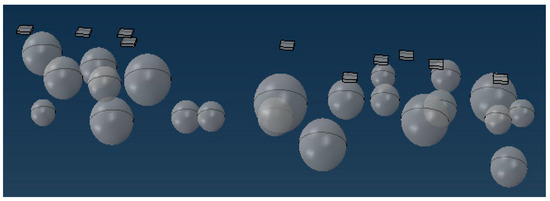
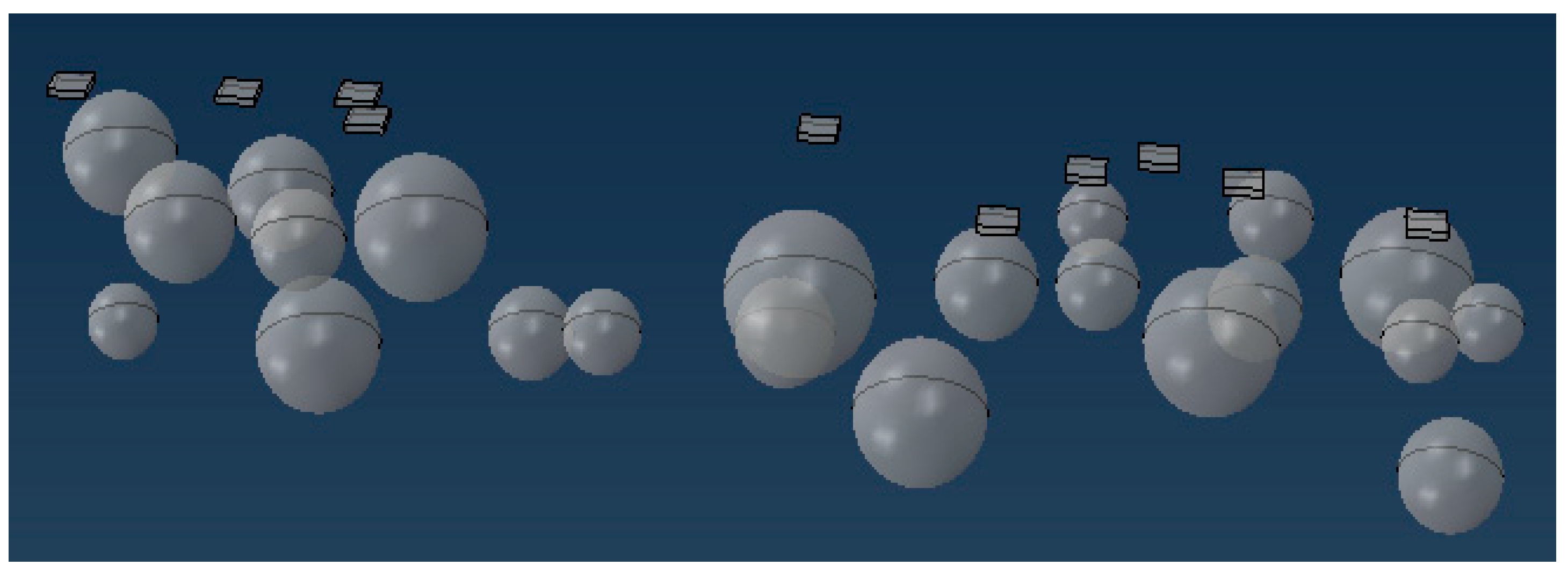
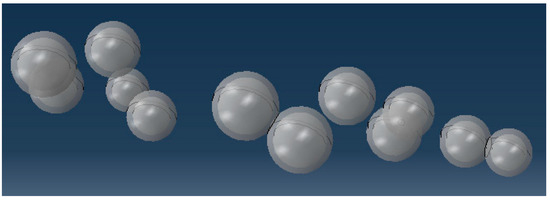
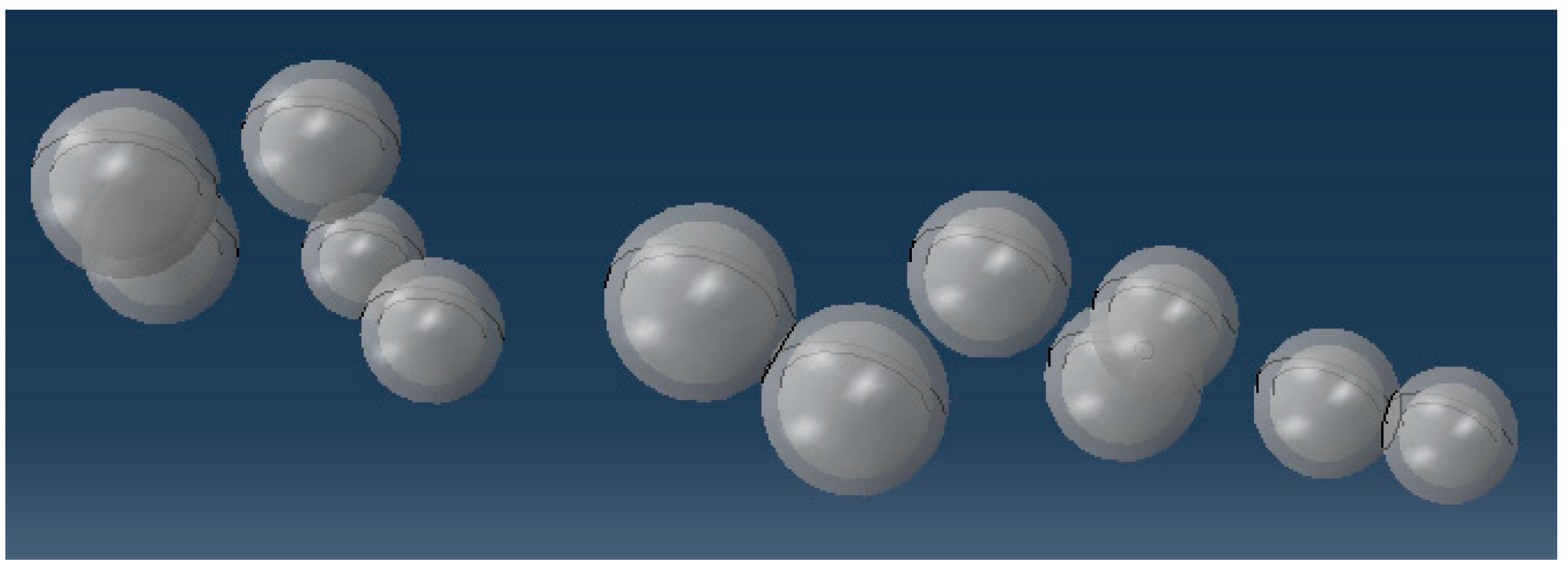
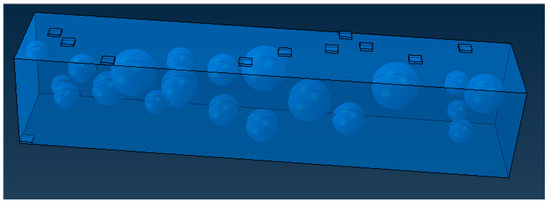
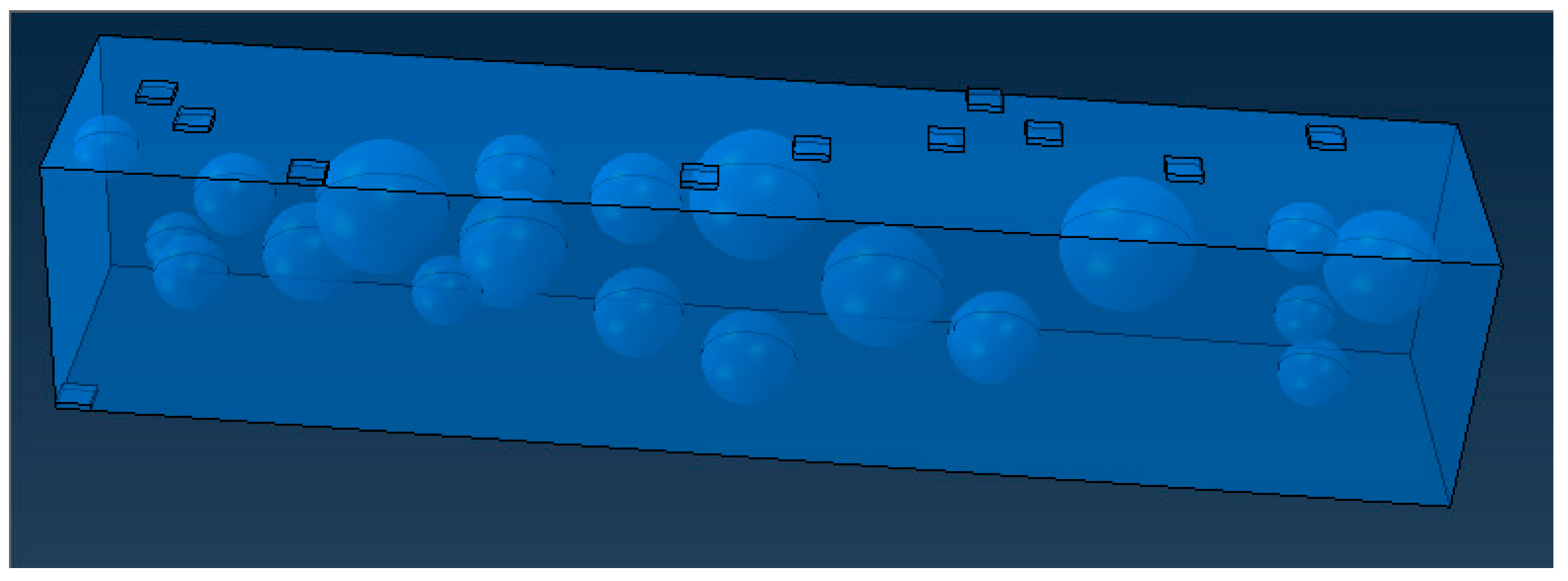
Figure 1 shows randomly generated spherical aggregates and piezoelectric (PZT) elements, whereas Figure 2 represents randomly generated spherical aggregates with a coating shell layer of 2.0 mm.
Figure 1.
Randomly generated spherical aggregates and PZT elements.
Figure 2.
Spherical aggregates with coating layer thickness of 2.0 mm.
2.4. Material Properties
The material properties of the concrete, aggregate, epoxy, rubber, and piezoelectric patches such as density, Young’s modulus, and Poisson’s ratio were assigned accordingly, for the simulation. The piezoelectric patches were modeled as orthotropic [8] using PZT-5A [31,32], a widely used material in structural health-monitoring applications, due to its reliable electromechanical coupling characteristics. Similar formulations have been adopted for actuator–sensor modeling in wave propagation studies [33,34].
The piezoelectric strain coefficients were defined as d1,31 = d1,32 = 1.74 × 10⁻⁸ F/m, d1,33 = 3.94 × 10⁻⁸ F/m, d2,12 = d2,21 = 5.35 × 10⁻⁸ F/m [8]. The dielectric permittivity at constant strain was taken as ε = 1.46 × 10⁻⁸ C/Vm [8]. These parameters were implemented in Abaqus/CAE 6.14-1 using the coupled electromechanical material formulation to accurately capture the interaction between the piezoelectric patches and the concrete matrix containing-coated aggregates with epoxy and rubber [35].
The material properties (model parameters) of the concrete mortar, aggregates, epoxy, rubber, and Piezoelectric patches [36] used in the numerical simulations are presented in Table 1.
Table 1.
Material properties of concrete, aggregates, epoxy, rubber and PZT patch.
2.5. Model Designations
In the simulation, concrete models incorporating natural coarse aggregates partially replaced with epoxy- or rubber-coated aggregates are assigned specific designations. The conventional concrete model is labeled CCM-0, while the concrete models containing epoxy-coated and rubber-coated aggregates with piezoelectric materials are denoted as ECM-n and RCM-n, respectively. Here, n represents the percentage level of natural coarse aggregates replaced by coated aggregates. For example, ECM-5 refers to a concrete model in which 5% of the natural coarse aggregates are replaced by epoxy-coated aggregates incorporating piezoelectric materials.
2.6. Assembly and Meshing
The model components including the concrete beam, aggregates, coating layers, and piezoelectric elements were assembled in a global coordinate system. Piezoelectric patches were surface-bonded to the beam using positioning constraints. A finite-element mesh is then generated, incorporating refined zones near the piezoelectric (PZT) sensors and around aggregate boundaries, to accurately capture stress-wave interactions. Hexahedral elements were used for the beam (C3D8R) and the piezoelectric patches used C3D8E, while the spherical aggregates were meshed with tetrahedral elements (C3D10). Element size was chosen to ensure at least ten elements per wavelength at the maximum excitation frequency [37,38] and to ensure accurate simulation of both the concrete and PZT interactions.
Based on the maximum excitation frequency and the corresponding wave-propagation velocity, the minimum wavelength was calculated and the finite-element mesh was designed such that at least ten elements are used per minimum wavelength, thereby satisfying the commonly accepted criterion for mesh adequacy in dynamic analyses.
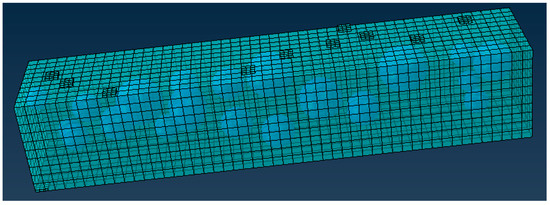
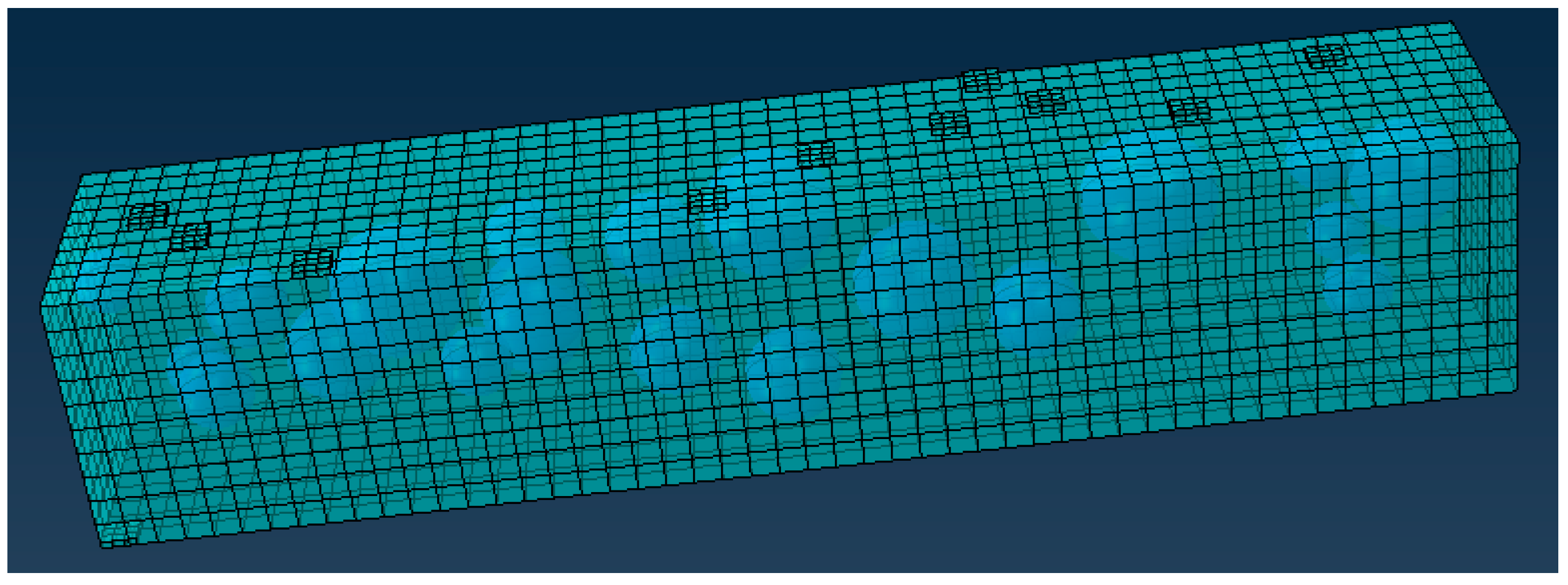
Figure 3 shows the assembled model in the global coordinate system, while Figure 4 presents the finite-element mesh with piezoelectric (PZT) elements, illustrating the discretization used for analysis.
Figure 3.
Assembled 3D beam model.
Figure 4.
Finite-element mesh with piezoelectric (PZT) elements.
2.7. Boundary Conditions
Boundary conditions (BCs) refer to constraints and loading conditions applied to FEM. To develop a numerical model beam, the beam is modeled as fixed at one end and free at the other end. These BCs ensure that the simulation accurately represents the physical behavior of a cantilever structure under dynamic loads. Moreover, a tie constraint was applied between the different element types, which is appropriate for perfectly bonded interfaces and is a common practice in multi-material finite element modeling. These simplified boundary conditions differ from the more complex constraints present in real concrete structures, which may influence wave propagation paths, stress distribution, and energy-dissipation mechanisms.
2.8. Analysis Step
A coupled mechanical–electrical analysis step was established to simulate the interaction between the concrete beam and the piezoelectric patches. Loads or voltages were applied to the actuator, and the simulation was executed, followed by post processing to evaluate displacement, stress, and electric potential distributions, ensuring accurate representation of the piezoelectric behavior.
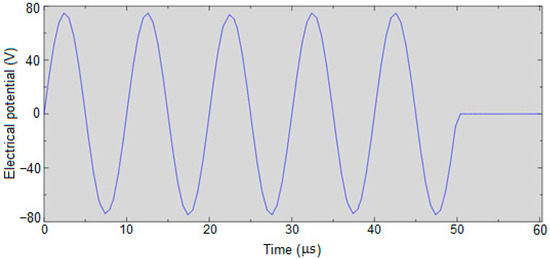
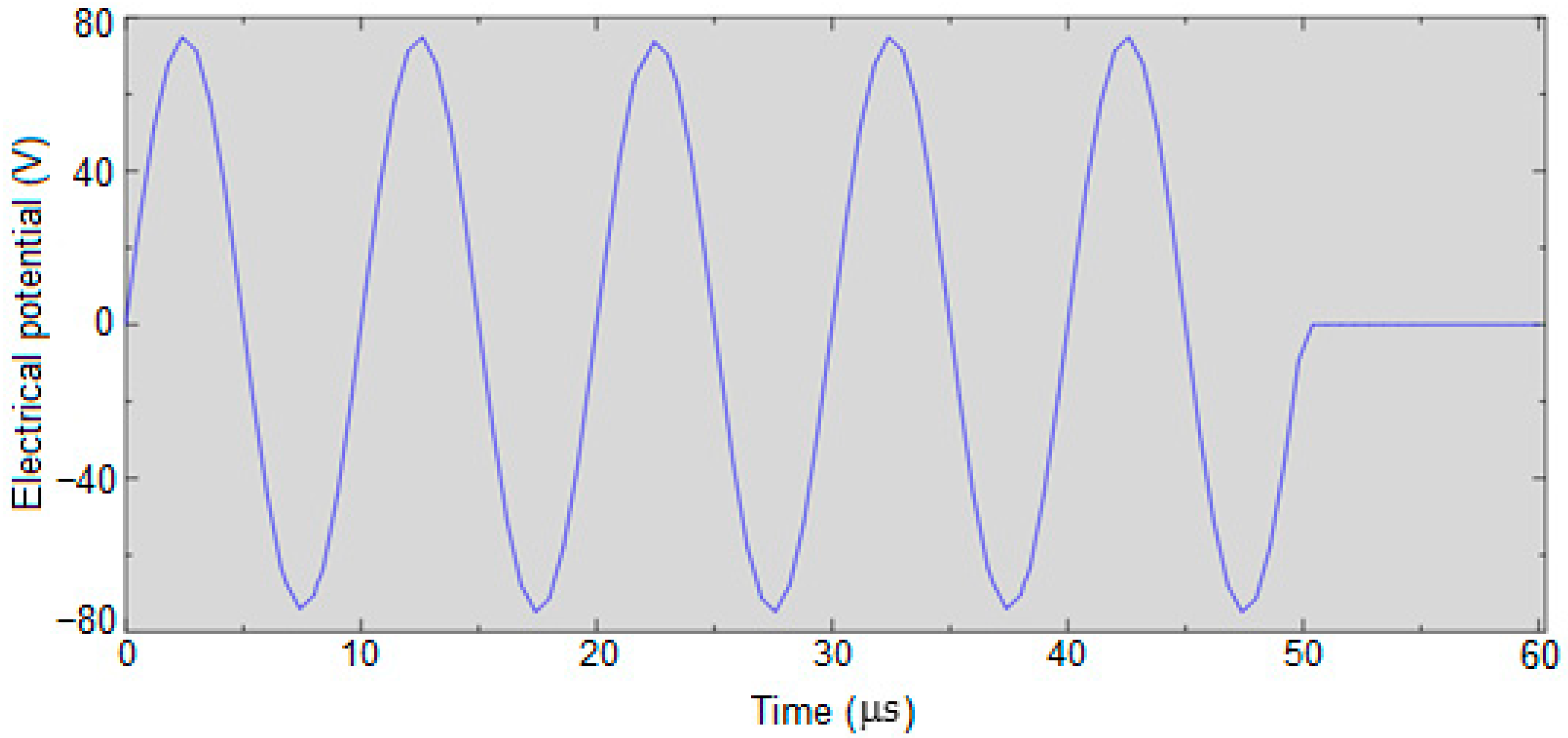
The actuator was excited using a five-cycle sinusoidal burst at 100 kHz with a peak amplitude of 150 V (total burst duration = 50 µs), generating stress waves through the beam. The sensor patch captured the resulting wave propagation for analysis. Consistent with previous studies, Lim, Yee Yan, et al. [39] demonstrated that a five-peak sinusoidal tone burst actuated at 30–120 kHz effectively propagates stress waves in concrete structures. In particular, a peak-to-peak voltage of 150 V at 120 kHz was applied to a PZT actuator to generate measurable wave signals [39,40].
The excitation frequency of 100 kHz was selected based on a review of the previous literature [39,40] and also to ensure that the generated wavelength is of the same order of magnitude as the characteristic size of the aggregates, thereby promoting strong wave-inclusion interaction and resonance effects. Moreover, the analysis is conducted under controlled numerical conditions where material damping is explicitly modeled, allowing the effects of high-frequency excitation to be meaningfully assessed.
The time-domain waveform of the sinusoidal burst, showing how the signal amplitude varies over time, is described by Equation (1).
where v(t) is the voltage at time t, A is the amplitude (peak voltage) in volt, f is the frequency in Hz, and t is the time in seconds.
Upon substitution of a five-cycle sinusoidal burst at 100 kHz with a peak amplitude of 150 V into Equation (1), the time-domain waveform of the sinusoidal burst can be expressed as Equation (2).
3. Results and Discussion
Following the numerical simulation process, the dynamic behavior of 3D concrete beam models with spherical aggregates incorporating various coating materials were analyzed under transient wave propagation induced by PZT materials. The design implications for SHM scenarios are addressed by considering sensor placement, excitation-frequency selection, and signal sensitivity to structural damage. The effects of coating type on wave transmission, attenuation, and structural response are examined in detail, and in the following subsection.
3.1. Simulation Field Outputs
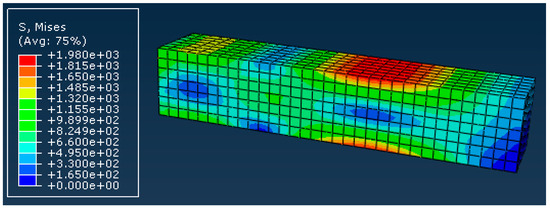
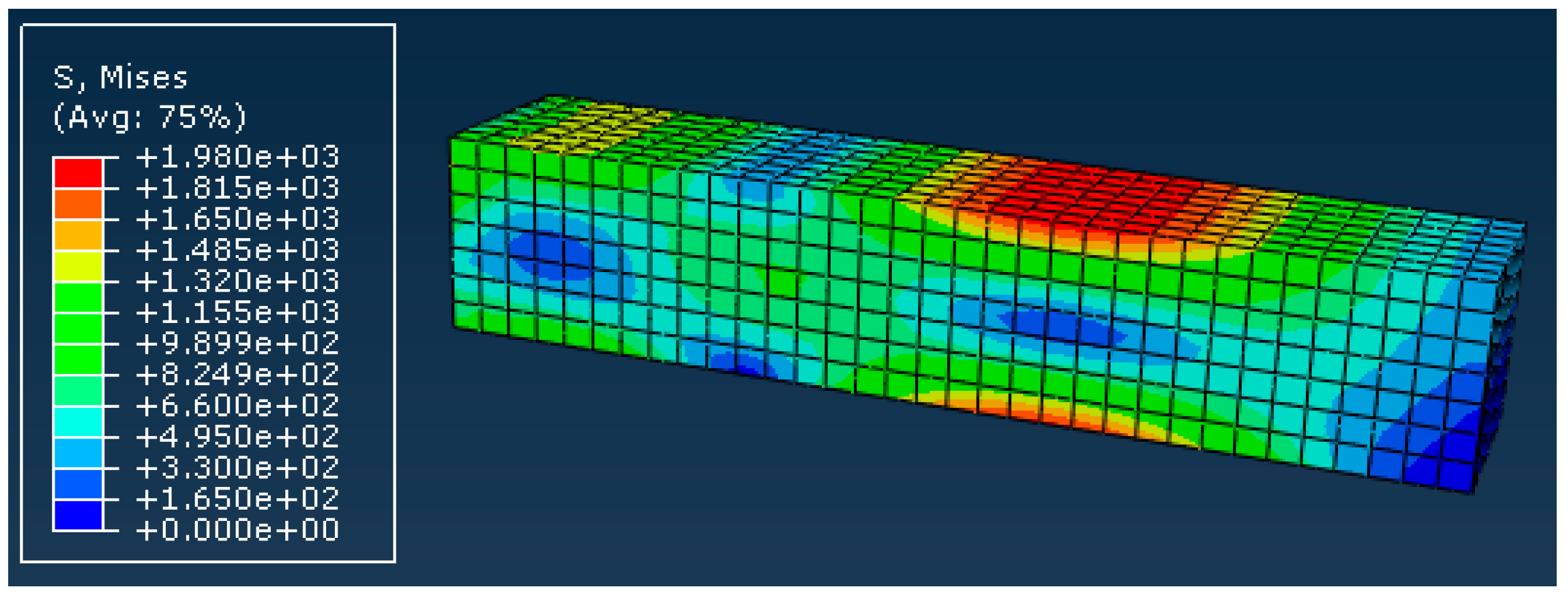
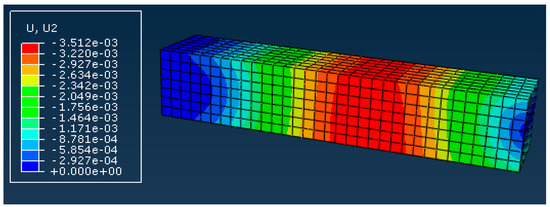
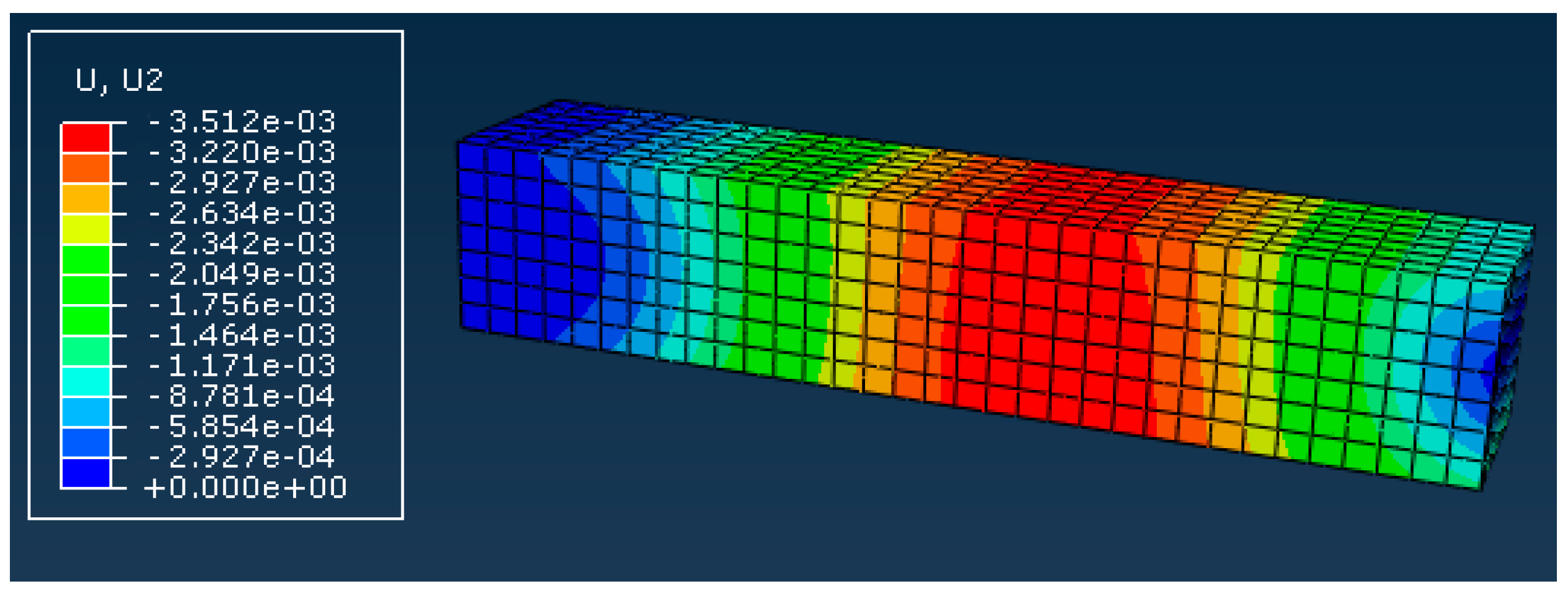
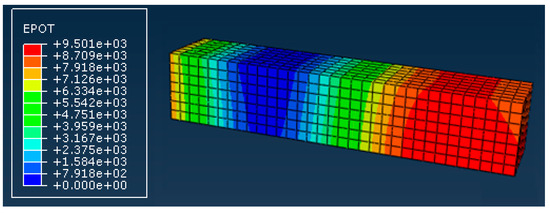
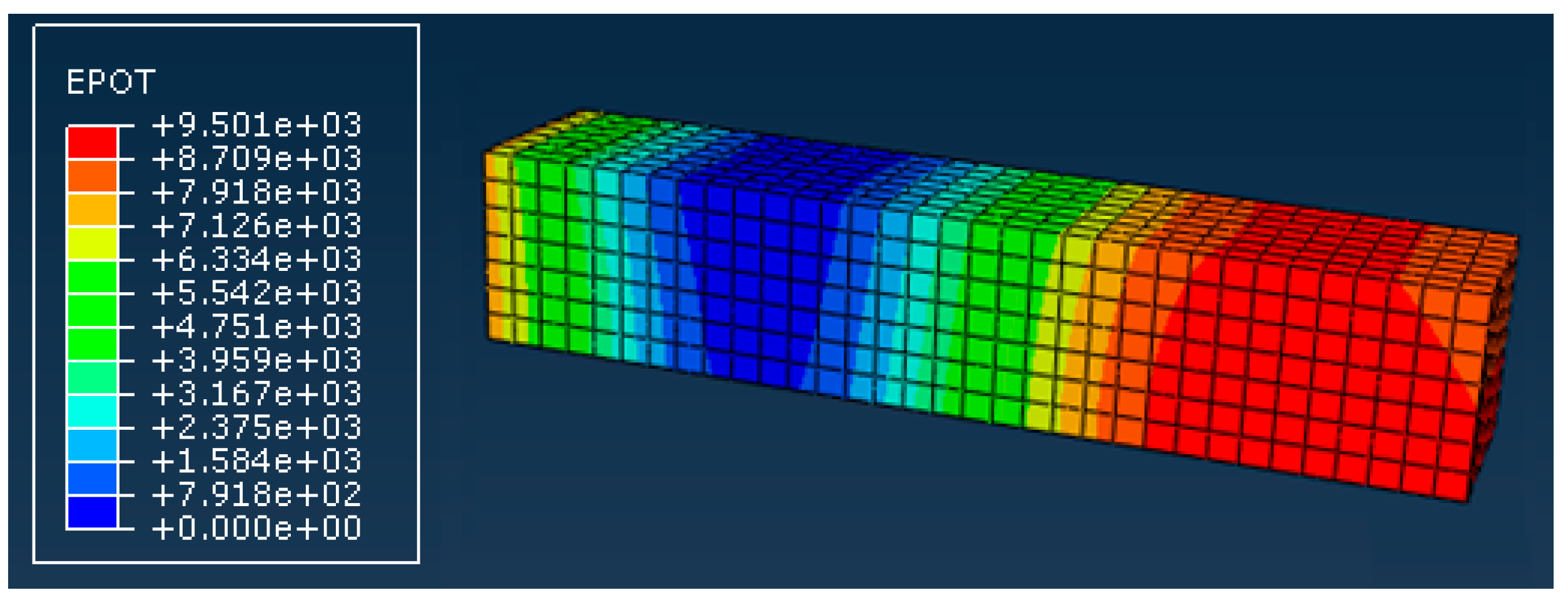
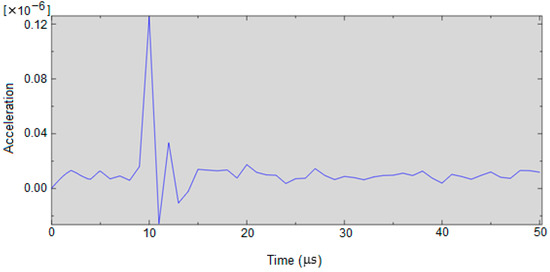
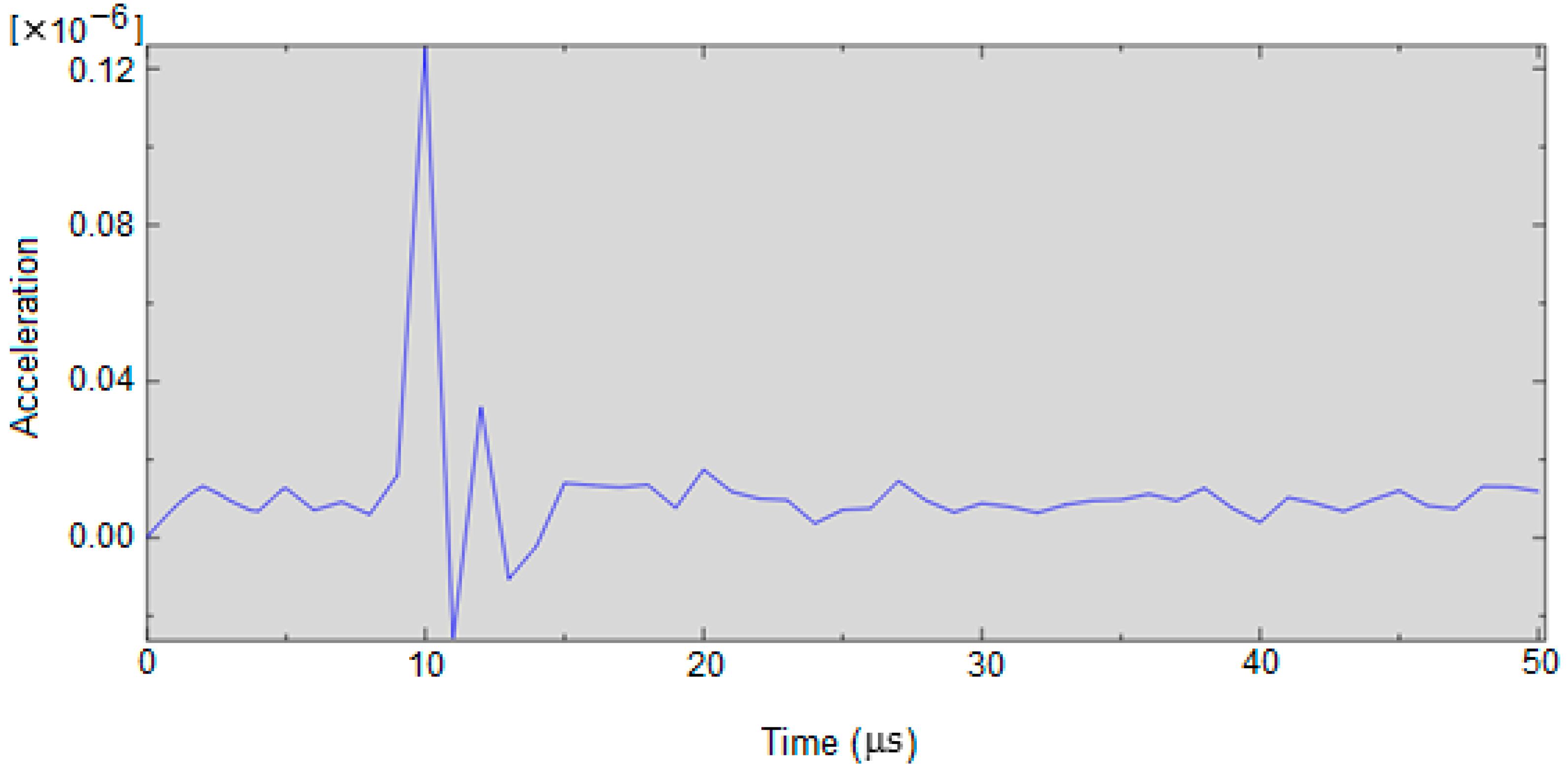
Field outputs, including displacement (U) and stress (S), were recorded to track wave propagation, while electrical outputs, represented by potential (V), were also monitored. The following figures (Figure 5, Figure 6, Figure 7, Figure 8 and Figure 9) present sample simulations of field outputs for different concrete beam models with PZT materials, with a coating thickness of 2.0 mm.
Figure 5.
Von Mises stress distribution in ECM–10.
Figure 6.
Displacement field output in RCM-10.
Figure 7.
Simulated electrical-potential (V) response in ECM-15.
Figure 8.
Voltage waveform for 5-cycle burst at 100 kHz.
Figure 9.
Acceleration in ECM–10.
3.2. Validation of Numerical Simulation
The model without PZT material was validated using experimental test results obtained from the findings of a previous study conducted by Tarekegn, Y. [19]. In the study, the damping behavior of concrete, in which coarse aggregates were partially replaced by epoxy- and rubber-coated aggregates at different volume fractions, was investigated experimentally. The damping ratio predicted by the numerical simulations were compared with the values obtained from physical tests [19]. A summary of the comparison between the experimental results and the corresponding simulation data is provided in Table 2.
Table 2.
Validation of simulation results.
As shown in Table 2, the variation of the experimentally measured values and the predicted damping ratio of concrete obtained from Abaqus simulation without PZT materials ranges from 1% to 3%. This lower variability between the experiment and simulation results can be considered good for numerical simulations.
The experimental investigation was carried out in the Materials Testing Laboratory of Addis Ababa University (AAU), College of Technology and Built Environment (CTBE, formerly AAiT), School of Civil and Environmental Engineering (SCEE).
3.3. Damping Ratio
The damping characteristics of a material are generally quantified by its damping ratio, which can be determined from wave response analysis using approaches such as the logarithmic decrement method [41,42] or the half-power bandwidth method [43].
The half-power bandwidth method is an approach for estimating the damping ratio from its Frequency Response Function (FRF). To determine the damping ratio, the system is excited by performing free oscillations, and the resonant frequency (fo) and frequencies at the half-power amplitude (f1 and f2) either side of fo, where the amplitude of vibration drops to 0.707 of the peak amplitude, were measured [43].
In the present study, the damping ratio was evaluated based on frequency response data following the ASTM E756-05 standard [44], employing the half-power bandwidth technique as defined in Equation (3).
where ξ is the damping ratio, fo is the resonance frequency, and f1 and f2 are the frequencies at the half-power amplitude.
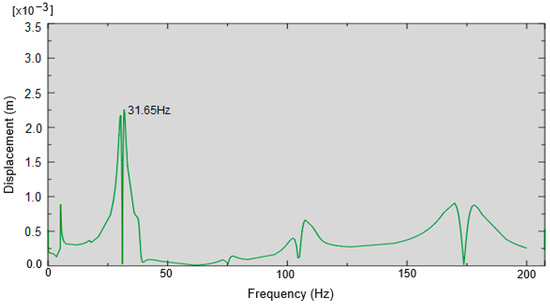
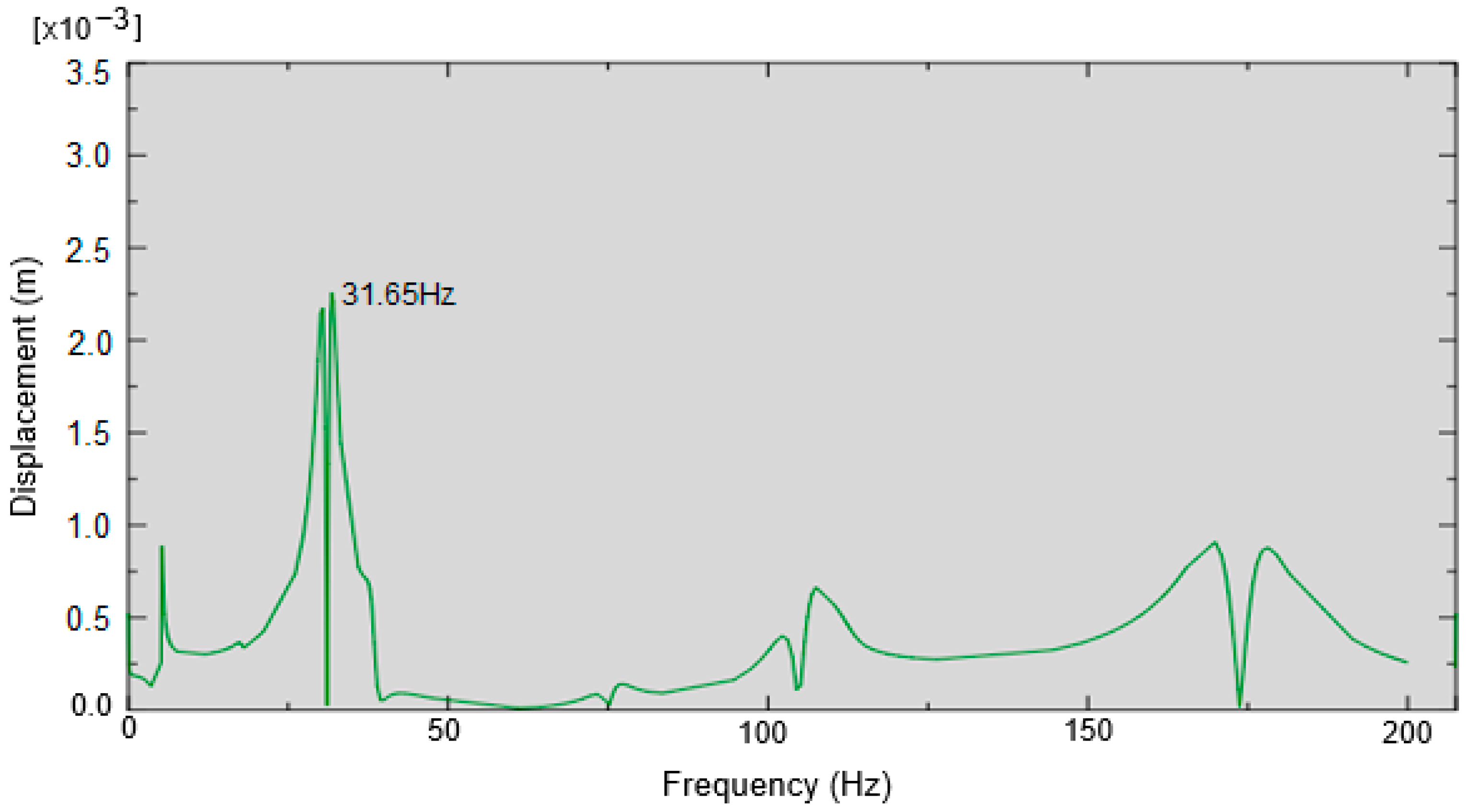
Following the FRF analysis, the frequency response data were obtained, as shown in Figure 10, in the form of displacement–frequency plots. From these plots, the resonance frequency and the corresponding half-power frequencies (f1 and f2) were identified, allowing the damping ratio to be calculated using Equation (3). This process involves determining the resonance peak and its associated half-power points, which are critical for evaluating the energy dissipation capacity of the concrete specimens [43].
Figure 10.
Frequency response in ECM-20 with PZT.
Due to the random generation of spherical aggregates with coating layers and PZT materials, each configuration was generated three times with specific volume fractions. Subsequently, FRF analysis was performed for each configuration, and the resulting frequency responses were used to determine the concrete’s damping ratio. The average damping ratio for each configuration for the various concrete beam models incorporating epoxy- and rubber-coated aggregates with PZT elements is shown below.
To determine the damping ratio of concrete without piezoelectric (PZT) but with epoxy- and rubber-coated aggregates, using Abaqus software, the same procedures outlined in Section 2.1, Section 2.2, Section 2.3, Section 2.4, Section 2.5, Section 2.6, Section 2.7, Section 2.8 and Section 3.3 were followed, employing FRF analysis. The damping ratio of concrete with coated aggregates incorporating PZT for various coating thicknesses, ranging from 1.0 mm to 3.5 mm, is summarized in Table 3.
Table 3.
Damping ratio (%) with various coating thicknesses.
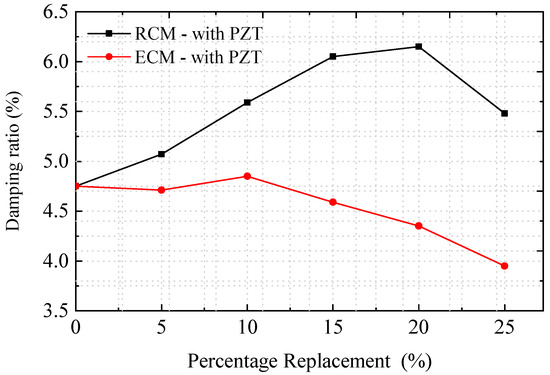
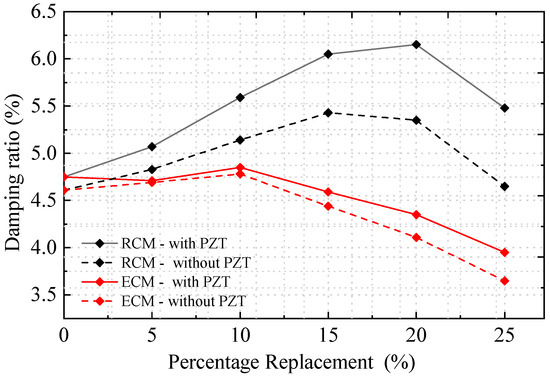
As presented in Table 3, for most concrete models, the maximum damping ratio was observed for a coating thickness of 3.0 mm. Based on this finding, the damping ratio of concrete with coated aggregates without PZT was determined, and the simulated results are compared with those of coated aggregates incorporating piezoelectric patches. A comparison of the damping ratio of concrete with and without piezoelectric patches incorporating epoxy- and rubber-coated aggregates at a coating thickness of 3.0 mm is presented in Table 4. Moreover, the damping ratio of concrete with coated aggregates including PZT elements is illustrated in Figure 11. In addition, Figure 12 presents a comparison of the damping ratio of concrete incorporating epoxy- and rubber-coated aggregates, both with and without piezoelectric (PZT) patches.
Table 4.
Summary or field-output results in different beam models.
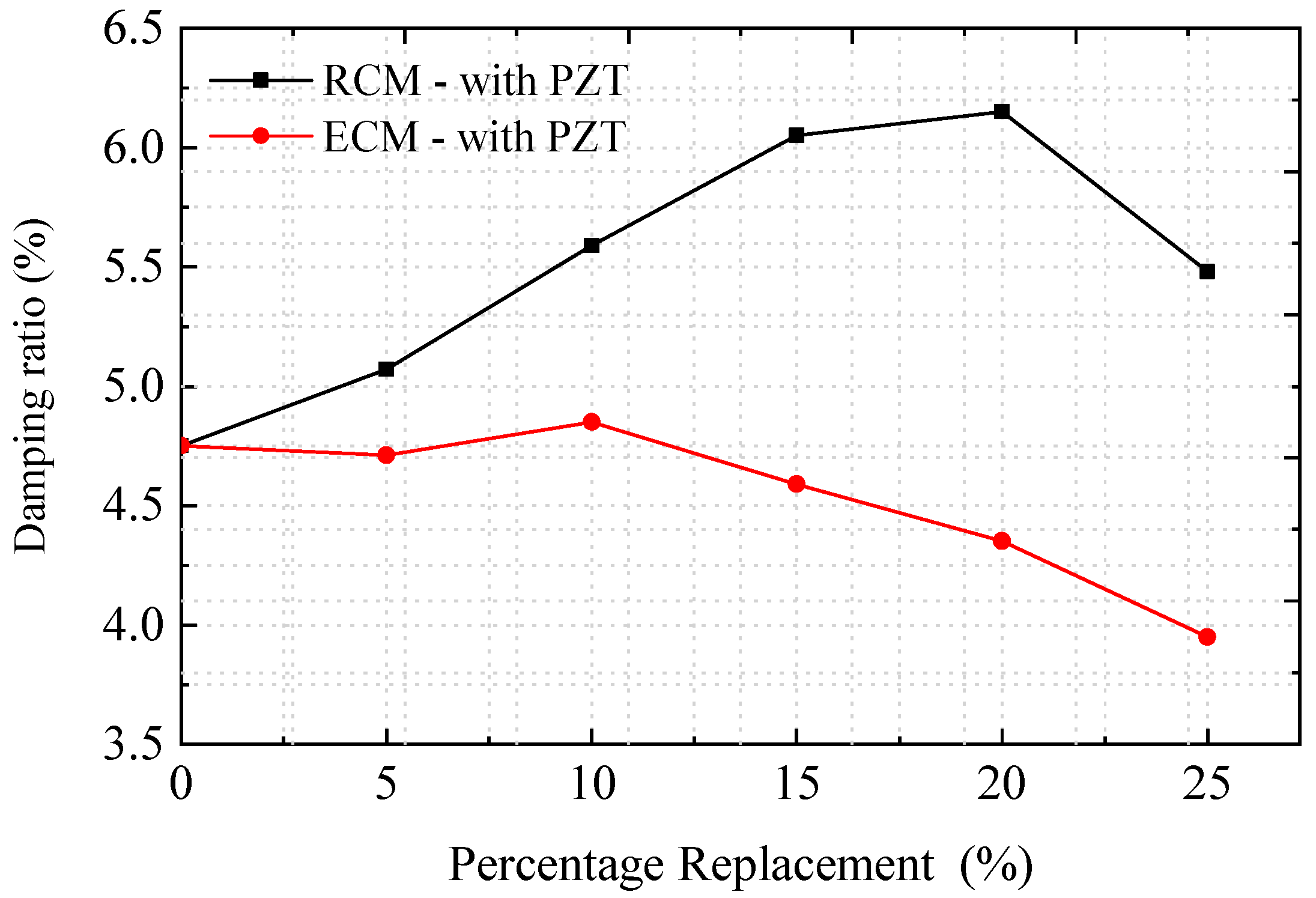
Figure 11.
Damping ratio vs. replacement level-3 mm coating thickness (with PZT).
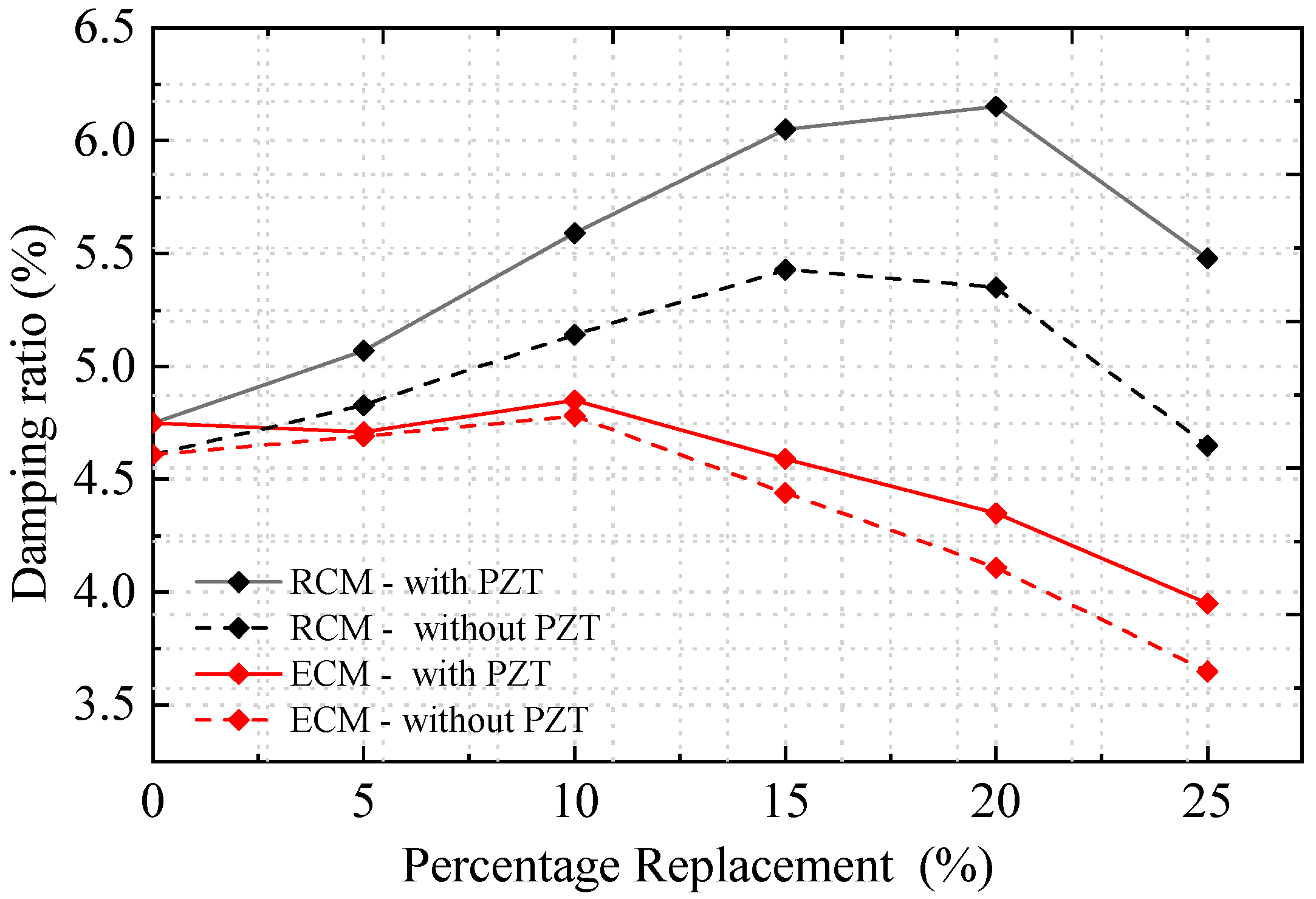
Figure 12.
Comparison of the damping ratio with and without PZT (3 mm coating thickness).
Based on the numerical simulations of the concrete beam with coated aggregates presented in Table 3 and Table 4 and Figure 11 and Figure 12, the following results are observed.
- As presented in Table 3, the RCM-10 to RCM-25 models exhibited enhanced damping ratio for coating thicknesses in the range of 1.0 to 3.0 mm. Beyond 3.0 mm coating thickness, the damping ratio declines; however, it remains higher than that of the conventional concrete model. The RCM-20 concrete model exhibited an increase in damping ratio ranging from 22.5% to 29.5%, whereas RCM-25 showed an increase of 14% to 24%. Overall, these findings suggest that a 20% replacement level provides an optimal damping performance.
- Moreover, for the ECM-10 concrete model, an increase in damping ratio ranging from 1–4% was observed for a coating thickness ranging from 1.0 mm to 3.0 mm. However, for the ECM-15 to ECM-25 concrete models, a reduction in damping ratio was observed, with a maximum reduction of 16.8% for the ECM-25 concrete model at a coating thickness of 3.5 mm.
- The optimal damping ratio of concrete with coated aggregates was observed for the RCM-20 concrete model (3.0 mm coating thickness), showing an increase of 29.5% for models incorporating PZT patches. However, the optimal damping ratio of concrete without PZT patches was observed for the RCM-15 model at the same coating thickness, with an increase of 17.9%. This shows that embedding PZT patches results in the highest damping ratio. As described in the research conducted by Al-Souqi, K., et al. [45], PZT have a strong potential to provide effective damping vibration through their piezoelectric properties.
- Rubber coatings provide higher damping than epoxy coatings because rubber is a much more compliant and viscoelastic material; this allows it to deform and dissipate vibrational energy more effectively [12]. The increased material damping of rubber enhances energy absorption at the aggregate matrix interfaces, leading to higher overall damping in the concrete composite compared to stiffer, low-damping epoxy coatings [12,18].
- As shown in Table 4, all concrete models without PZT elements, except the ECM-15 to ECM-25 models, exhibited a higher damping ratio compared to the conventional concrete model. Similarly, all concrete models with PZT elements, except the ECM-15 to ECM-25 models, showed a higher damping ratio than the conventional concrete model. This reduction may be due to the fact that the epoxy coating is relatively stiff and has low inherent damping compared to the surrounding concrete matrix. As a result, the coated aggregates are less effective in dissipating vibrational energy, which reduces the overall damping of the composite system [19].
- As shown in Table 4, the damping ratio of concrete beam models with epoxy- and rubber-coated aggregates, embedded with PZT material, was significantly higher (by approximately 1% to 18%) compared to that of the concrete model without PZT materials. Comparable findings have been reported in previous studies, where PZT patches were shown to substantially increase structural damping under optimal electromechanical tuning, due to enhanced interfacial energy dissipation [45,46,47].
- The simulation results of concrete models with embedded PZT show higher variation compared to the literature on the damping ratio of concrete incorporating coated aggregates without PZT (experimental investigation) [19], with differences ranging from 5% to 13%. These results indicate that PZT materials in concrete models enhance damping through electromechanical-energy conversion. Previous studies have shown that embedded PZT in concrete influences both its impedance and energy-dissipation characteristics [45,46].
4. Conclusions
This simulation-based study demonstrates how coated aggregates influence damping ratio in concrete beams when analyzed using embedded piezoelectric (PZT) actuators. Specifically, it presents a finite element simulation of transient wave propagation in three-dimensional concrete beams containing coated aggregates, excited by PZT actuators. Based on the simulation results, the following conclusions were drawn:
- The combined finite-element and signal-based analysis approach successfully reproduces transient wave behavior and energy-dissipation mechanisms in coated concrete systems.
- The concrete model with coated aggregates exhibited improved damping and energy dissipation compared to the conventional concrete, mainly due to viscoelastic behavior of the coatings and enhanced interfacial friction. Rubber coatings produced higher damping than epoxy coatings.
- Different coating materials exhibit distinct dynamic responses, indicating a potential for optimized combinations tailored to targeted vibration or wave-control applications.
- Integrating coated aggregates with embedded PZT elements enhances damping and monitoring capabilities, supporting the development of smart-concrete structures with improved durability.
- When piezoelectric (PZT) elements were embedded, the damping performance increased further, due to electromechanical-energy conversion. The combination of coated aggregates and PZT elements yielded the highest damping ratios, confirming a synergistic interaction between mechanical- and electromechanical-dissipation mechanisms.
- Overall, integrating coated aggregates with embedded PZT elements enhances the dynamic performance (by approximately 1% to 18%) and self-sensing capability of concrete, offering a promising approach for developing smart and durable structural materials.
- While direct prior studies of concrete with coated-aggregate and embedded PZT are limited, the observed trend aligns with theoretical and experimental results from piezoelectric damping in concrete.
5. Future Works
In the future, this study can be extended by exploring the effects of different coating materials, together with embedded PZT elements, on the mechanical and damping properties of concrete. Additionally, further research is needed for nonlinear damage modeling and hybrid sensor arrays, and their implementation in physical structural systems. Future work may also explore the effect of more realistic aggregate geometries on concrete behavior to better capture local stress concentrations, crack initiation, and wave-propagation phenomena.
The combination of coated aggregates and embedded PZT sensors shows strong potential for structural monitoring and vibration control; hence, future studies will focus on optimizing sensor installation, evaluating effects on concrete casting and constructability, and providing guidelines for large-scale application.
Moreover, in future studies, the incorporation of viscoelastic coating models, such as the Prony series or Kelvin–Voigt models, is expected to further improve the accuracy of damping and energy-dissipation predictions in concrete with coated aggregates.
Author Contributions
Conceptualization, software, formal analysis, and writing—original draft preparation, Y.G.T.; methodology, Y.G.T. and A.G.T.; writing—review and editing, T.L. and A.G.T.; supervision, T.L. and A.G.T. All authors have read and agreed to the published version of the manuscript.
Funding
This work was supported by the Carl-Zeiss Foundation (Project number: P2018-01-005), Bauhaus-Universität Weimar (ThüLHO 2024), and Addis Ababa University (AAU).
Data Availability Statement
The original contributions presented in this study are included in the article. Further inquiries can be directed to the corresponding author.
Acknowledgments
We acknowledge support for the publication costs from the Open Access Publication Fund of Bauhaus Universität Weimar and the Deutsche Forschungsgemeinschaft (DFG).
Conflicts of Interest
The authors declare no conflicts of interest.
Abbreviations
The following abbreviations are used in this manuscript:
| 3D | Three-Dimensional |
| AAiT | Addis Ababa Institute of Technology |
| AAU | Addis Ababa University |
| ASTM | American Society for Testing and Materials |
| BCs | Boundary Conditions |
| CAE | Complete Abaqus Environment |
| CCM | Conventional Concrete Model |
| CTBE | College of Technology and Built Environment |
| ECM | Epoxy-Coated Model |
| FEM | Finite Element Modeling |
| FRF | Frequency Response Function |
| NDT | Nondestructive Testing |
| PVDF | Polyvinylidene Fluoride |
| PZT | Lead Zirconate Titanate (Piezoelectric Material) |
| RCM | Rubber-Coated Model |
| SHM | Structural Health Monitoring |
References
- Ali, Y.R.M.H. Why We Use Concrete in Building. Int. J. Civ. Struct. Eng. Res. 2025, 12, 105–107. [Google Scholar]
- Li, H.; Di, B.; Zheng, Y.; Ma, H.; Huang, X.; Wu, H.; Zhang, J. Concrete Damage Identification and Localization for Structural Health Monitoring Based on Piezoelectric Sensors. Sensors 2025, 25, 2532. [Google Scholar] [CrossRef] [Scilit]
- Jin, J.; Xu, W.; Li, P.; Takahashi, Y.; Gong, F. Advances in the development of piezoelectric smart aggregates for structural health monitoring. J. Intell. Constr. 2024, 2, 9180016. [Google Scholar] [CrossRef] [Scilit]
- Sun, X.; Fan, S.; Liu, C. Attenuation characteristics of concrete using smart aggregate transducers: Experiments and numerical simulations of P-wave propagation. J. Intell. Mater. Syst. Struct. 2024, 35, 556–572. [Google Scholar] [CrossRef] [Scilit]
- Park, G.; Sohn, H.; Farrar, C.R.; Inman, D.J. Overview of piezoelectric impedance-based health monitoring and path forward. Shock Vib. Dig. 2003, 35, 451–464. [Google Scholar] [CrossRef] [Scilit]
- Su, Z.; Ye, L.; Lu, Y. Guided Lamb waves for identification of damage in composite structures: A review. J. Sound Vib. 2006, 295, 753–780. [Google Scholar] [CrossRef] [Scilit]
- Farrar, C.R.; Worden, K. Structural Health Monitoring: A Machine Learning Perspective; John Wiley & Sons: Chichester, UK, 2012. [Google Scholar]
- Markovic, N.; Nestorovic, T.; Stojic, D. Numerical modeling of damage detection in concrete beams using piezoelectric patches. Mech. Res. Commun. 2015, 64, 15–22. [Google Scholar] [CrossRef] [Scilit]
- Hu, J.; He, L. Piezoelectric actuator/sensor wave propagation based nondestructive active monitoring method of concrete structures. J. Wuhan Univ. Technol.-Mat. Sci. Edit. 2011, 26, 541–547. [Google Scholar]
- Mateescu, D.; Han, Y.; Misra, A. Dynamics of structures with piezoelectric sensors and actuators for structural health monitoring. Key Eng. Mater. 2007, 347, 493–498. [Google Scholar] [CrossRef] [Scilit]
- Cheng, L.; Zhong, J.; Sun, Y. Novel approach to enhance the damping performance of cement-based materials through polymer/carbon nanotube composite coating and gradation of aggregates. Constr. Build. Mater. 2025, 471, 140708. [Google Scholar]
- Tarekegn, Y.G.; Lahmer, T.; Muller, M.; Tarekegn, A.G.; Fitwi, E. Effects of Coating Aggregates on Dynamic Properties of Concrete by Impact Resonance Method. Int. J. Eng. Appl. Sci. 2023, 15, 110–124. [Google Scholar] [CrossRef] [Scilit]
- Kim, J.-S.; Lee, H.-Y.; Kim, J.-H.J. High-Performance Mortar with Epoxy-Coated Lightweight Aggregates for Marine Structures. Materials 2025, 18, 4257. [Google Scholar] [CrossRef] [Scilit]
- Sambucci, M.; Valente, M. Functional Coatings and Surface Modifications in Cement–Matrix Composites. Coatings 2022, 12, 1284. [Google Scholar] [CrossRef] [Scilit]
- Lee, K.S.; Choi, J.I.; Park, S.E.; Hwang, J.S.; Lee, B.Y. Damping property of prepacked concrete incorporating coarse aggregates coated with polyurethane. Cem. Concr. Compos. 2018, 93, 301–308. [Google Scholar] [CrossRef] [Scilit]
- Nie, R.; Huang, Y.; Li, X.; Sun, H.; Li, D.; Ying, J. Bond of epoxy-coated reinforcement to seawater coral aggregate concrete. Ocean. Eng. 2020, 208, 107350. [Google Scholar] [CrossRef] [Scilit]
- Vahabi, M.Y.; Tahmouresi, B.; Mosavi, H.; Fakhretaha Aval, S. Effect of pre-coating lightweight aggregates on the self-compacting concrete. Struct. Concr. 2022, 23, 2120–2131. [Google Scholar] [CrossRef] [Scilit]
- Tarekegn, Y.G.; Lahmer, T.; Tarekegn, A.G.; Ftwi, E.G. Effects of coating thickness and aggregate size on the damping properties of concrete. Coatings 2025, 15, 610. [Google Scholar] [CrossRef] [Scilit]
- Tarekegn, Y. Experimental and Numerical Analysis of the Effects of Aggregate Coatings on Concrete Properties. Ph.D. Dissertation, Digitale Bibliothek Thüringen, Jena, Germany, 2024. [Google Scholar]
- Gebre, Y.; Lahmer, T.; Müller, M.; Tarekegn, A.G.; Gebreyouhannes, E. Damping Properties of Concrete with Sand Coated Rubber Aggregates. Zede J. Ethiop. Eng. Archit. 2023, 41, 84–97. [Google Scholar]
- Mitchell, S.J. Metaconcrete: Engineered Aggregates for Enhanced Dynamic Performance. Ph.D. Thesis, California Institute of Technology, Pasadena, CA, USA, 2016. [Google Scholar]
- Ansari, M.; Zacharias, C.; Könke, C. Metaconcrete: An experimental study on the impact of the core-coating inclusions on mechanical vibration. Materials 2023, 16, 1836. [Google Scholar] [CrossRef] [Scilit]
- Jin, H.; Hao, H.; Chen, W.; Xu, C. Effect of enhanced coating layer on the bandgap characteristics and response of metaconcrete. Mech. Adv. Mater. Struct. 2021, 30, 175–188. [Google Scholar] [CrossRef] [Scilit]
- Ghaderiaram, A.; Schlangen, E.; Fotouhi, M. Structural Fatigue Life Monitoring with Piezoelectric-Based Sensors: Fundamentals, Current Advances, and Future Directions. Sensors 2025, 25, 334. [Google Scholar] [CrossRef] [Scilit]
- Aydin, A.C.; Celebi, O. Piezoelectric materials in civil engineering applications: A review. ACS Omega 2023, 8, 19168–19193. [Google Scholar] [CrossRef] [Scilit] [PubMed]
- Nakahata, K.; Kawamura, G.; Yano, T.; Hirose, S. Three-dimensional numerical modeling of ultrasonic wave propagation in concrete and its experimental validation. Constr. Build. Mater. 2015, 78, 217–223. [Google Scholar] [CrossRef] [Scilit]
- Mengxi, Z.; Min, Q.; Zhao, Q.; Li, M.; Zhang, J. Effect of aggregate sphericity on the mechanical properties of ERCC based on highly detailed simulation. J. Mater. Res. Technol. 2023, 25, 1406–1420. [Google Scholar] [CrossRef] [Scilit]
- Fernández-Muñiz, Z.; Montero-Chacón, F.; Lopez-Colina, C.; Alonso-Martinez, M.; del Coz-Diaz, J.J.; López-Gayarre, F. Numerical Study of Concrete: A Mesoscopic Scale Simulation Methodology. Appl. Sci. 2024, 14, 5495. [Google Scholar] [CrossRef] [Scilit]
- Wriggers, P.; Moftah, S. Mesoscale models for concrete: Homogenisation and damage behavior. Finite Elem. Anal. Des. 2006, 42, 623–636. [Google Scholar] [CrossRef] [Scilit]
- Tarekegn, Y.G.; Lahmer, T.; Tarekegn, A.G.; Ftwi, E.G. Three-Dimensional Simulation on the Influence of Coated Rubber Chips on Concrete Properties. Buildings 2025, 15, 4186. [Google Scholar] [CrossRef] [Scilit]
- Lanza di Scalea, F.; Salamone, S. Temperature effects in ultrasonic Lamb wave structural health monitoring systems. J. Acoust. Soc. Am. 2008, 124, 161–174. [Google Scholar] [CrossRef] [Scilit]
- Abbas, S.; Abbas, Z.; Zhu, Y.; Toor, W.T.; Tu, X. Experimental Investigation of Performance Characteristics of PZT-5A with Application to Fault Diagnosis. SDHM Struct. Durab. Health Monit. 2022, 16, 307–322. [Google Scholar] [CrossRef] [Scilit]
- Luo, Z.; Deng, H.; Li, L.; Luo, M. A simple PZT transducer design for electromechanical impedance (EMI)-based multi-sensing interrogation. J. Civ. Struct. Health Monit. 2021, 11, 235–249. [Google Scholar] [CrossRef] [Scilit]
- Loveday, P.W. Simulation of piezoelectric excitation of guided waves using waveguide finite elements. IEEE Trans. Ultrason. Ferroelectr. Freq. Control 2008, 55, 2038–2045. [Google Scholar] [CrossRef] [Scilit] [PubMed]
- Dassault Systèmes. ABAQUS 6.11, Abaqus/CAE User’s Manual, Dassault Systèmes, V’elizy-Villacoublay, Fr 2011. Available online: http://abaqusdocs.eait.uq.edu.au/v6.11/books/usi/default.htm?startat=pt01.html (accessed on 15 October 2025).
- Meetei, M.S.; Singh, H.S. Design, Simulation and Optimization of PZT-5A Cantilever Piezoelectric Pressure Sensor. J. Sci. Res. Rep. 2023, 29, 23–31. [Google Scholar] [CrossRef] [Scilit]
- De Medeiros, R.; Sartorato, M.; Ribeiro, M.L.; Vandepitte, D.; Tita, V. Numerical and experimental analyses about SHM metrics using piezoelectric materials. In Proceedings of the International Conference on Noise and Vibration Engineering (ISMA2012), Leuven, Belgium, 17–19 September 2012. [Google Scholar]
- Balmes, E.; Guskov, M.; Bianchi, J.P. Validation and verification of FE models of piezo based SHM systems. In Proceedings of the ISMA International Conference on Noise and Vibration Engineering, Leuven, Belgium, 19–21 September 2016; p. ID-807. [Google Scholar]
- Lim, Y.Y.; Kwong, K.Z.; Liew, W.Y.H.; Soh, C.K. Practical issues related to the application of piezoelectric based wave propagation technique in monitoring of concrete curing. Constr. Build. Mater. 2017, 152, 506–519. [Google Scholar] [CrossRef] [Scilit]
- Lim, Y.Y.; Kwong, K.Z.; Liew, W.Y.H.; Padilla, R.V.; Soh, C.K. Parametric study and modeling of PZT based wave propagation technique related to practical issues in monitoring of concrete curing. Constr. Build. Mater. 2018, 176, 519–530. [Google Scholar] [CrossRef] [Scilit]
- Faizah, R.; Aminullah, A. Simple laboratory test to measure damping properties of hardened mortar or concrete elements. Int. J. Sustain. Constr. Eng. Technol. 2020, 11, 76–86. [Google Scholar]
- Yan, L.; Jenkins, C.; Pendleton, R. Polyolefn fber-reinforced concrete composites: Part I. damping and frequency characteristics. Cem. Concr. Res. 2000, 30, 391–401. [Google Scholar] [CrossRef] [Scilit]
- Papagiannopoulos, G.A.; Hatzigeorgiou, G.D. On the use of the half-power bandwidth method to estimate damping in building structures. Soil Dyn. Earthq. Eng. 2011, 31, 1075–1079. [Google Scholar] [CrossRef] [Scilit]
- ASTM E756-05; Standard Test Method for Measuring Vibration-Damping Properties of Materials. ASTM International: West Conshohocken, PA, USA, 2017.
- Al-Souqi, K.; Kadri, K.; Emam, S. A Review on Vibration Control Using Piezoelectric Shunt Circuits. Appl. Sci. 2025, 15, 6035. [Google Scholar] [CrossRef] [Scilit]
- Aabid, A.; Parveez, B.; Raheman, M.A.; Ibrahim, Y.E.; Anjum, A.; Hrairi, M.; Parveen, N.; Mohammed Zayan, J. A Review of Piezoelectric Material-Based Structural Control and Health Monitoring Techniques for Engineering Structures: Challenges and Opportunities. Actuators 2021, 10, 101. [Google Scholar] [CrossRef] [Scilit]
- Negi, P.; Chakraborty, T.; Kaur, N.; Bhalla, S. Investigations on effectiveness of embedded PZT patches at varying orientations for monitoring concrete hydration using EMI technique. Constr. Build. Mater. 2018, 169, 489–498. [Google Scholar] [CrossRef] [Scilit]

Disclaimer/Publisher’s Note: The statements, opinions and data contained in all publications are solely those of the individual author(s) and contributor(s) and not of MDPI and/or the editor(s). MDPI and/or the editor(s) disclaim responsibility for any injury to people or property resulting from any ideas, methods, instructions or products referred to in the content. |
© 2026 by the authors. Licensee MDPI, Basel, Switzerland. This article is an open access article distributed under the terms and conditions of the Creative Commons Attribution (CC BY) license.