


Abstract
To promote the application of wrap-around reinforced soil structures in high-intensity seismic regions, this study systematically investigated the influence of different wrap-around facing types on the seismic performance of reinforced loess slopes. Through shaking table model tests, the dynamic responses of three wrap-around facing types—C-shaped wrap-around facing, secondary-reinforcement wrap-around facing, and self-wrap facing—under the excitation of two seismic waves (El Centro wave and Wenchuan Wolong wave) were compared and analyzed. The test introduced the marginal spectrum energy analysis method to accurately identify the location and evolution process of slope damage. The results indicated that reinforcement significantly enhances the global integrity of the slope, yet the influence of the wrap-around facing type on seismic performance is significant. The C-shaped wrap-around facing exhibited the best global stability and seismic performance, with damage initiating inside the slope body and a good energy dissipation mechanism. The secondary-reinforcement wrap-around facing is prone to stress release and local loosening in the slope crest region due to weak constraints. The self-wrap facing has insufficient restraint at the top, where the reinforcement tends to experience pullout. Compared with the El Centro wave, the Wolong wave, rich in long-period components, induced stronger dynamic responses, resulting in greater slope face displacement, acceleration amplification, marginal spectral amplitude, and reinforcement strain. Significant damage in the slopes initiated in the mid-upper region, and the damage pattern was directly related to the wrap-around facing type. The research findings provide a theoretical basis for the optimal design of reinforced loess slopes in high-intensity seismic zones.
1. Introduction
As a flexible retaining structure, a wrap-faced reinforced soil slope produced by wrapping geogrids around fabric–soil bags (geobags) forms a protective layer, effectively transferring earth pressure to the mass of the internal soil via soil–reinforcement interface friction. This creates an efficient self-anchoring system [1]. A key innovation of this approach is the ability to plant grass seeds within the geobags, converting the slope face into a green wall. The vegetation acts as a natural UV protection layer, significantly slowing the photooxidative degradation of the geogrid and thereby extending its service life [2]. Additionally, through photosynthesis, vegetation absorbs carbon dioxide, contributing to a negative carbon footprint throughout the entire life cycle of the structure [3], in alignment with the current global carbon neutrality goals.
Loess covers approximately 10% of the Earth’s land surface. Loess slopes are highly susceptible to instability under seismic loads, posing a significant threat to residents located in loess regions worldwide [4,5]. The wrap-around reinforced structure offers a flexible and ecologically integrated solution for these regions. A typical example is the treatment of the unstable loess slope at Yangchang Gully in Gansu Province, China. Stability calculations conducted before and after the treatment process revealed a 72.2% increase in the stability factor of the reinforced loess slope when the wrap-around technique was used [6].
In recent years, numerous studies have explored the dynamic response characteristics of wrap-around reinforced earth structures. Li Qinghai et al. [7] conducted shaking table tests to compare the seismic performances of conventional and wrap-around-faced reinforced soil retaining walls. They reported that the wrap-around facing scheme effectively attenuated seismic wave propagation, reducing the acceleration response by 10% to 20%. Huang et al. [8] conducted shaking table tests on reinforced slopes with a secondary reinforcement wrap-around configuration. Their results demonstrated that this configuration significantly inhibited the propagation of cracks within the slope body, enhancing the overall stability of the system. In the model test of wrap-faced reinforced slopes conducted by Gidday [9], the number of reinforcement layers was varied. The results indicated that as the number of reinforcement layers increased, the settlement at the slope crest and the horizontal displacement of the slope face decreased. Xu et al. [10] focused on the response mechanisms of self-wrap-faced retaining walls under strong seismic motions and revealed that the acceleration amplification factors of these structures are significantly influenced by the nonlinear characteristics of the underlying soil. The deformation process progressed through three distinct stages: elastic, plastic, and failure stages. Costa et al. [11] investigated the behavior of wrap-faced reinforced soil retaining walls under sustained loading through centrifuge tests. Their study showed that wrap-faced reinforced soil retaining walls exhibit significant time-dependent deformation and creep failure under continuous loading, highlighting the importance of considering creep in the design of reinforced soil retaining walls. Meng et al. [12] compared the seismic performances of gabion mesh facings and wrap-faced geobag facings. Their study indicated that while the acceleration and earth pressure response differences between the two facing types were minimal, the wrap-around technique outperformed the competing method in terms of controlling settlement at the crest of the slope. Li et al. [13] analyzed the performance of various facing types through FLAC3D modeling and reported that a modular block with wrap-around composite facing exhibited superior performance in terms of controlling the displacement and earth pressure distribution. Zhu et al. [14] employed the random finite-element method (RFEM) to investigate the probabilistic stability of two-layer undrained slopes, highlighting how soil spatial variability significantly influences failure mechanisms and system reliability. Yan [15] investigated the mechanical behavior of double-sided wrap-faced reinforced structures under strip loading at the top through a combination of model tests and numerical simulations. The research results showed that double-sided wrap-faced reinforced embankments exhibit favorable deformation control and stress distribution characteristics. Based on shaking table tests that involved comparing wrap-faced retaining walls with rigid panel walls, Cai et al. [16] confirmed that the type of facing significantly influences the distribution of the acceleration amplification factor. Ma et al. [17] investigated the effect of in-tire backfill material weight on geogrid-wrapped tire-faced retaining walls, revealing that heavier panels improve seismic performance by altering deformation patterns and shifting the potential rupture surface. Zhuang et al. [18] proposed a fiber-reinforced rubber-sand mixture (FRRSM) for wrapped retaining walls, demonstrating through numerical simulation that incorporating fibers significantly enhances the seismic performance of the structure by improving the backfill’s strength and damping characteristics. Ma Bin et al. [19] systematically explored the influence of various factors on the seismic performance of geogrid-wrapped tire-faced retaining walls. They pointed out that the order of significance of the factors affecting seismic performance is: wrap-around configuration > reinforcement length > foundation depth > tire binding mode, further underscoring the critical role of the wrap-around technique.
In summary, while existing studies have substantially advanced the understanding of seismic behaviors associated with individual wrap-around facing types—such as C-shaped, secondary reinforcement, and self-wrap configurations—they have predominantly focused on evaluating each type in isolation. A systematic and direct comparison of the seismic performance across these different wrap-around configurations remains notably absent. Moreover, the dynamic assessments in prior research have largely relied on single seismic wave inputs, limiting the generalizability of findings under varied seismic excitations. As the wrap-around configuration serves as a core design feature that directly governs the safety, economy, and seismic resilience of reinforced soil structures, the lack of comparative analysis represents a critical gap in current knowledge. To address this, the present study conducts shaking table model tests on three groups of reinforced loess slopes, each employing a distinct wrap-around facing type. By examining and comparing their seismic responses under two different seismic waves, this research aims to elucidate the mechanistic influences of various wrap-around forms on slope performance, thereby providing a practical reference for selecting optimal configurations in high-intensity seismic regions.
2. Test Model
2.1. Testing Equipment
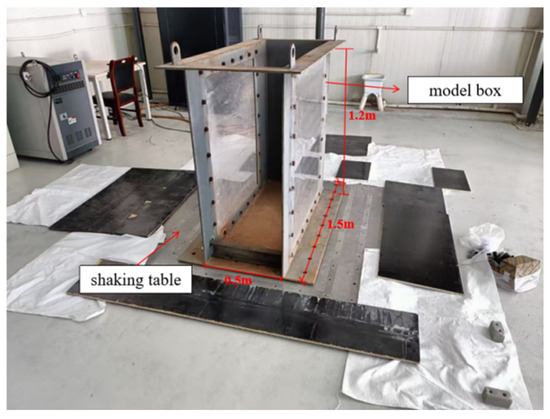
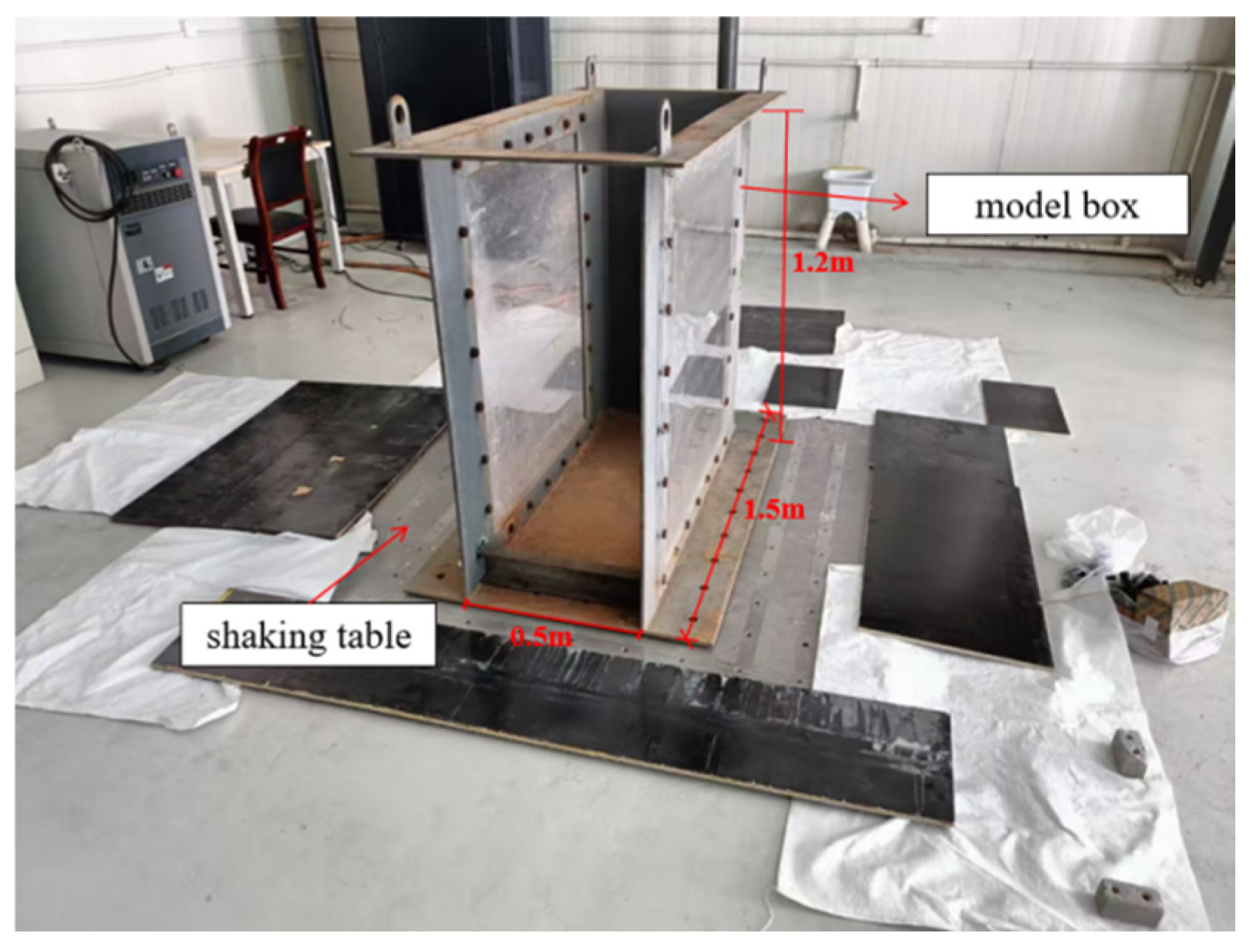
Model tests were conducted at the Underground Fluid Dynamics Response Laboratory of the Institute of Disaster Prevention. The vibration table(Beijing Sanqiang Tongwei Mechanical & Electrical Hydraulic Technology Development Co., Ltd., Beijing, China), measuring 1.8 m × 1.8 m (length × width), had a maximum load capacity of 2000 kg. It featured a maximum stroke of ±0.1 m and operated within a frequency range of 0 to 50 Hz. The rigid model box, which was bolted to the vibration table, had dimensions of 1.5 m × 0.5 m × 1.2 m (length × width × height). Transparent acrylic panels were installed on both sides of the model box to facilitate the observation of slope deformation and fill material changes during testing. The vibration table and model box are shown in Figure 1.
Figure 1.
Shaking table test device.
2.2. Similarity Relationship
Considering both the model box dimensions and the load capacity of the vibration table, the similarity ratio for the test model was set to 1:3 (model to prototype). On the basis of the seismic simulation similarity relationship proposed by Iai [20], the primary similarity parameters for the model were derived, as presented in Table 1.
Table 1.
Model similarity parameters.
2.3. Test Materials
The reinforcement material consisted of unidirectional stretched polypropylene (PP) geogrids. Based on the model test similarity ratio and following rib removal, the ultimate tensile strength of the geogrid was 17.67 kN/m. At elongation rates of 2% and 5%, the corresponding tensile strengths were 4.2 kN/m and 7.93 kN/m, respectively.
The slope was constructed using geogrid-reinforced homemade geotextile bags with three sizes: 0.25 m × 0.10 m × 0.10 m, 0.20 m × 0.10 m × 0.10 m, and 0.10 m × 0.10 m × 0.10 m (length × width × height). The fill material inside the geotextile bags was the same as the backfill soil used during the test. The upper and lower layers of the geotextile bags were stacked using an offset jointing method.
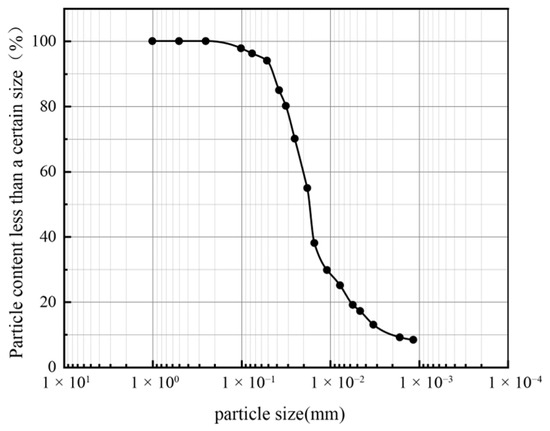
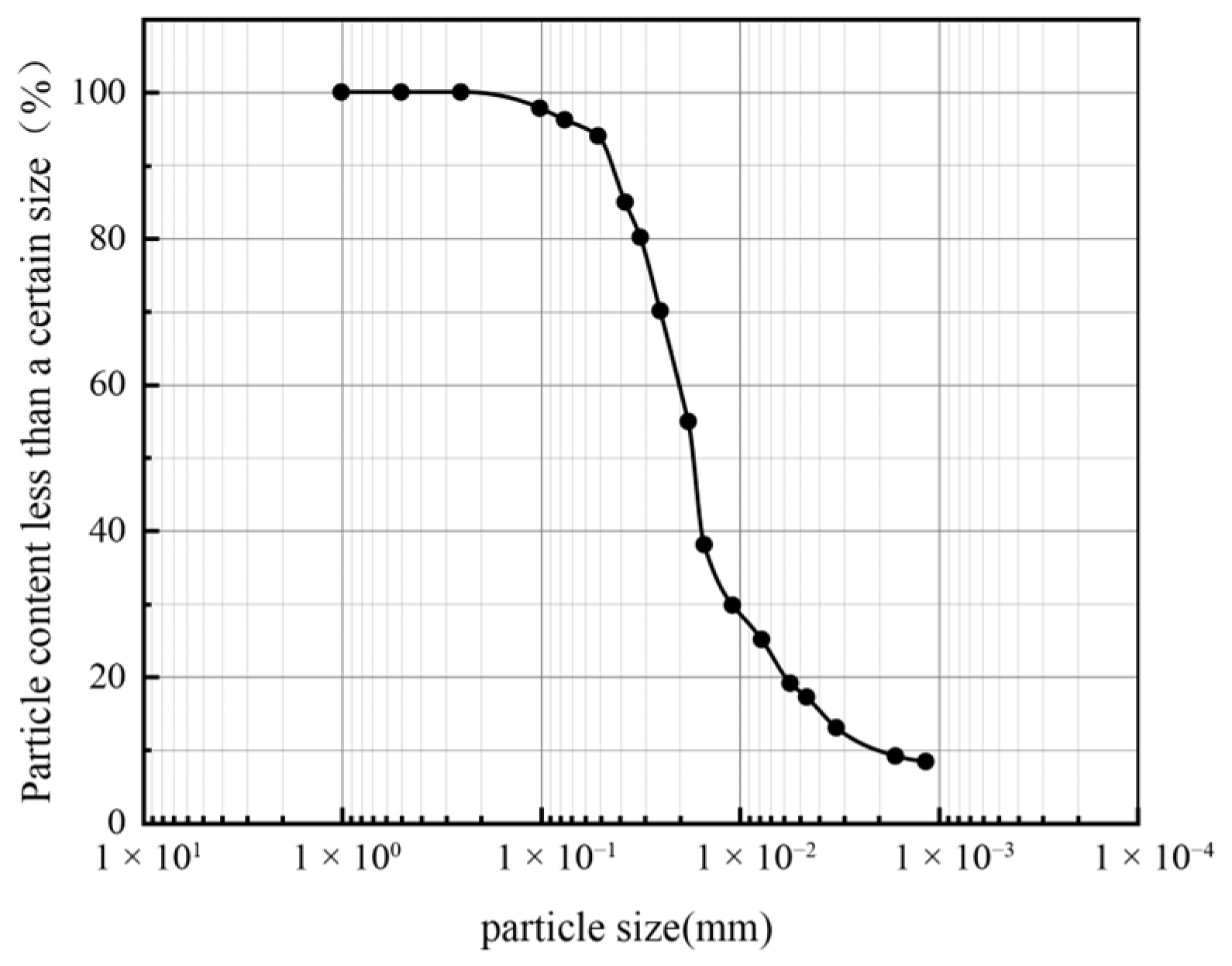
The backfill material consisted of reprocessed Malan loess, and its particle size distribution curve is shown in Figure 2. Its physical and mechanical properties were as follows: internal friction angle φ = 26.10°, cohesion c = 22.70 kPa, maximum dry density ρ = 1.76 g/cm3, optimal moisture content w = 13.2%, liquid limit = 30.6%, and plastic limit = 15.4%. The processing procedure for the remolded Malan loess was as follows: the natural Malan loess was first air-dried, then crushed and sieved to remove coarse particles and organic matter. Subsequently, the soil was mixed with distilled water to reach the optimum moisture content of 13.2% and stored in a sealed container for more than 24 h to ensure uniform moisture distribution throughout the soil mass. It is important to note that, due to practical constraints in material preparation, the loess filler itself was not scaled according to the dynamic similarity laws. This decision, while common in physical modeling to maintain feasibility, may result in deviations in the stiffness and damping characteristics of the model soil compared to an ideally scaled prototype. However, as the primary aim of this study is the comparative evaluation of different facing types under identical soil conditions, the relative performance conclusions remain valid.
Figure 2.
Particle size distribution curve.
2.4. Trial Protocol
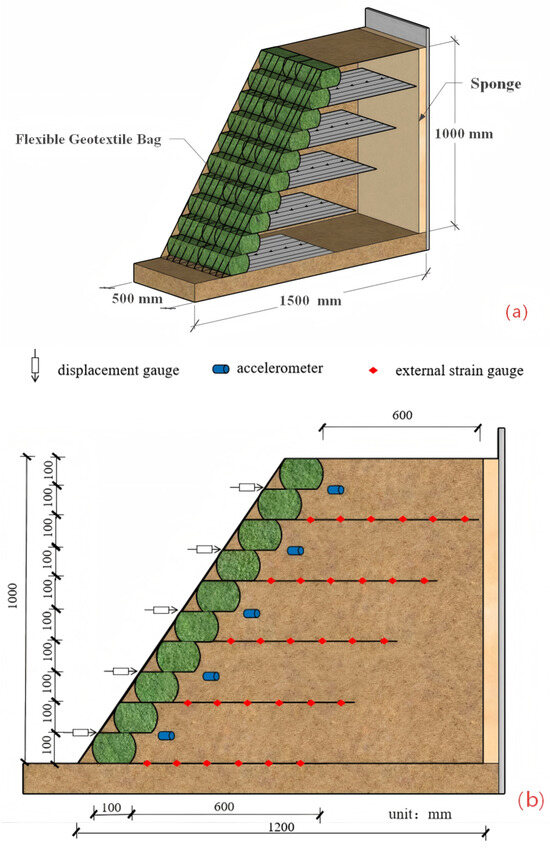
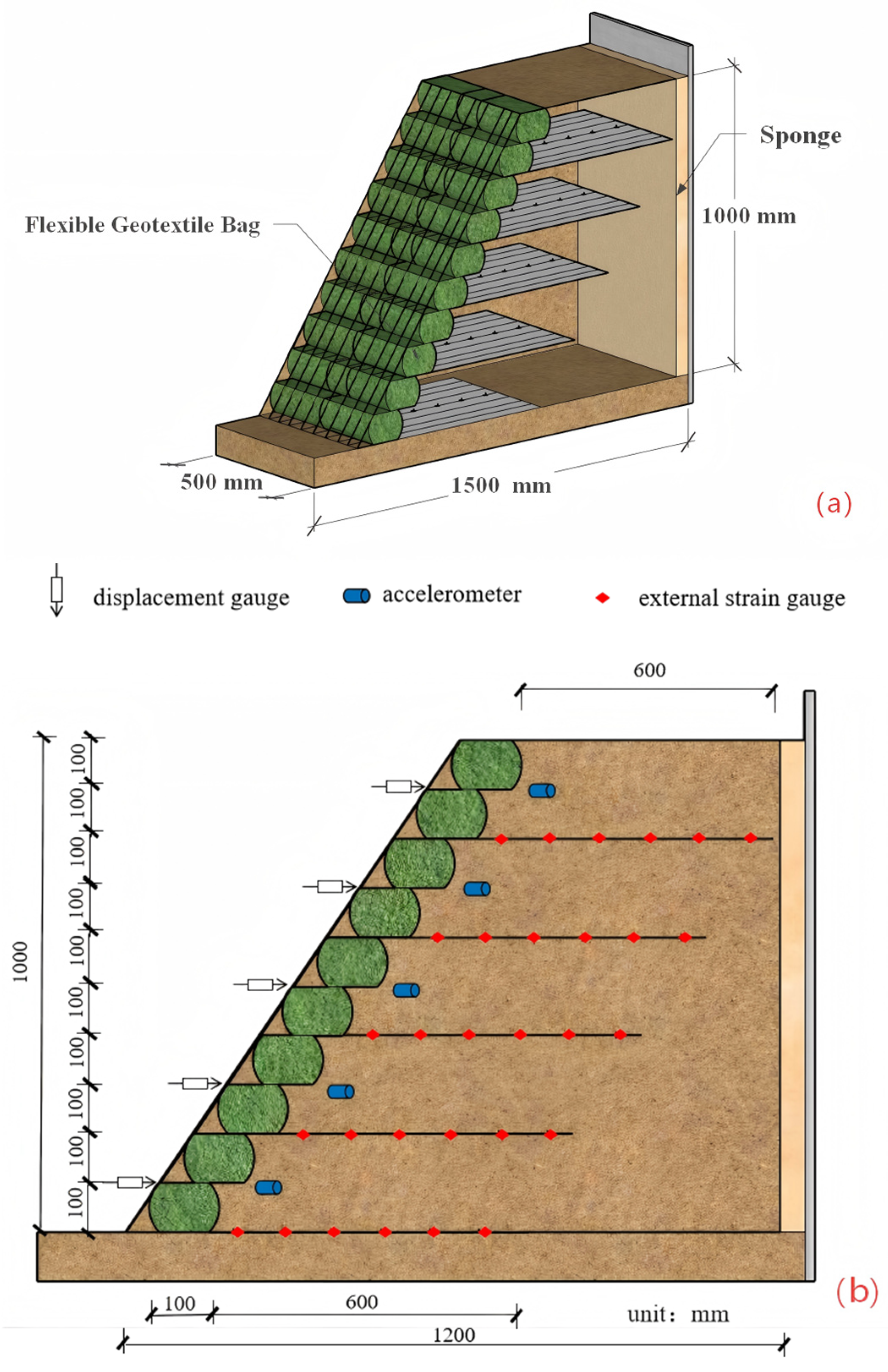
The design layout of the experimental model is shown in Figure 3. The three model sets had the following dimensions: slope height = 1 m, crest length = 0.6 m, slope width = 0.5 m, and slope angle = 63°. This resulted in a combined slope ratio of 1:0.5. The reinforcement spacing was 0.2 m, with the reinforcement length L = 0.6 H = 0.6 m, satisfying the reinforcement length requirements of reinforced soil slopes [21]. The model used a layered filling method, with each layer compacted using a homemade rammer after the placement step. During the test, petroleum jelly was applied to both sides of the model box to reduce the amount of friction between the soil and the box walls. Additionally, to minimize the seismic wave reflections produced by the rigid boundaries, a 5 cm-thick sponge layer was affixed to the rear wall in the vibration direction. However, it should be noted that these measures may not completely eliminate the boundary effects. The acceleration amplification factors and damage patterns observed in this study might be influenced by the rigid model box.
Figure 3.
Experimental model design drawing: (a) Three-dimensional model diagram of reinforced loess slope; (b) Schematic of Sensor Layout.
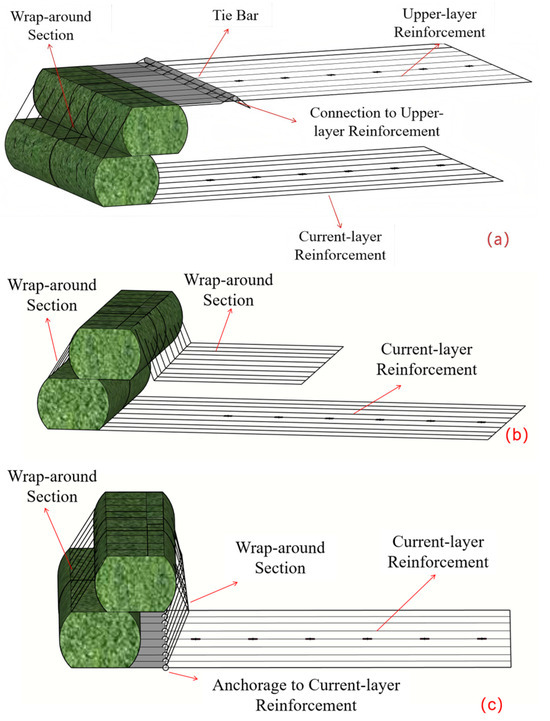
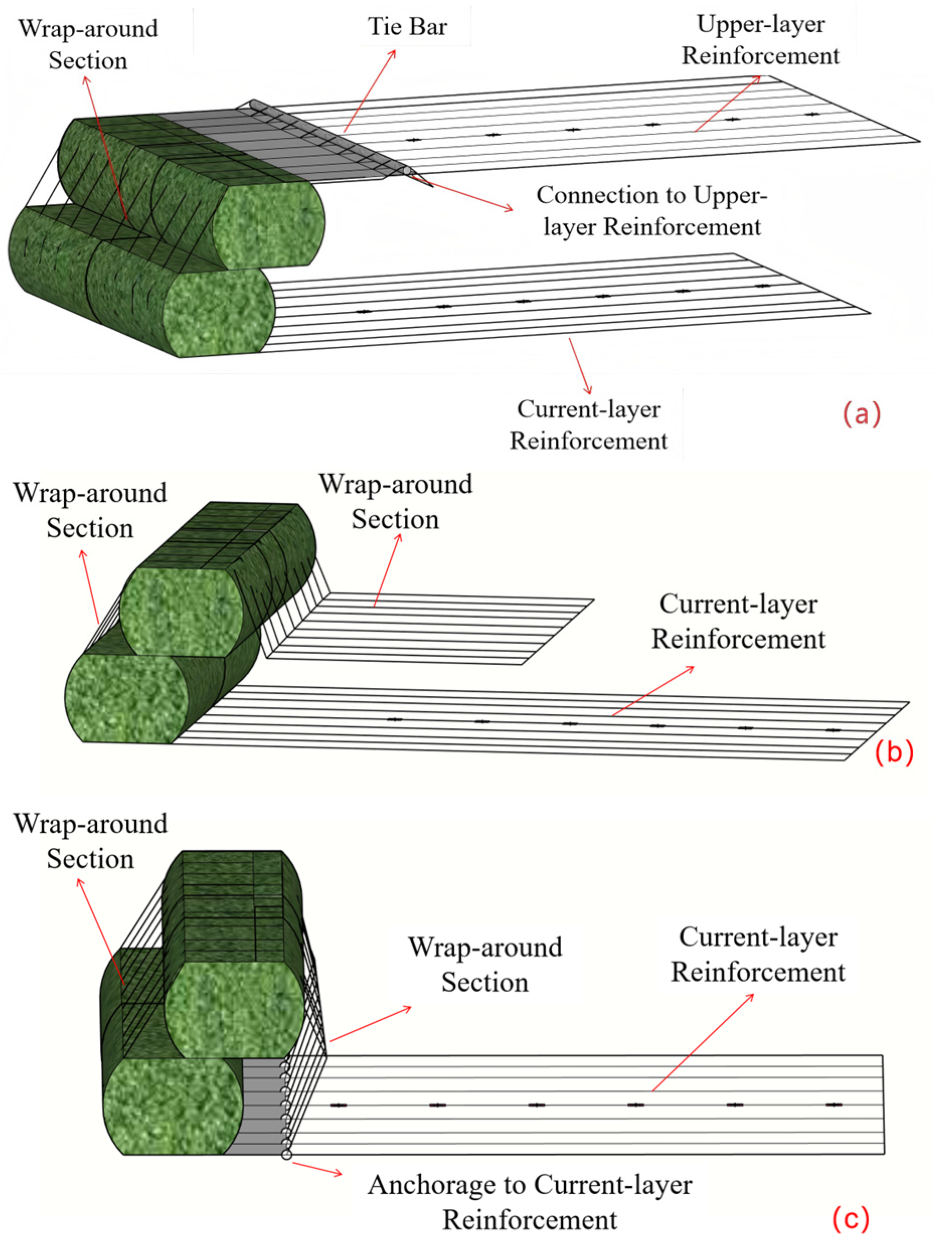
The return wrap types were categorized into C-shaped wrap-around facing, secondary-reinforcement wrap-around facing, and self-wrap facing, as shown in Figure 4. C-shaped wrap-around facing is characterized by the geogrid extending a short distance into the backfill soil after the geotextile bag is wrapped. It is anchored by iron rods at the intersection of the longitudinal ribs of the geogrid in the return wrap section and those of the adjacent layer. However, this return wrapping type cannot be fixed at the top layer. In the test, secondary-reinforcement wrap-around facing was used at the top layer, which was consistent with the method employed in the study conducted by [22]. Secondary-reinforcement wrap-around facing involves geogrid geotextile bags that are folded back to a certain depth after being installed and then extended inwards into the fill material. They rely on the friction between the upper fill material and the geogrid for achieving stabilization, presenting the lowest construction difficulty among the three reinforcement types. Self-wrap facing is characterized by the geogrid being folded back into the geotextile bag, fully folding back to the bottom layer of the geogrid and connecting with it.
Figure 4.
Schematic diagram of different wrap-around facing types: (a) C-shaped wrap-around facing; (b) Secondary reinforcement wrap-around facing; (c) Self-wrap-facing.
The sensor layout is shown in Figure 3b. A total of five displacement transducers were installed to monitor slope displacement changes. Five accelerometers recorded the horizontal acceleration data of the slope body. Additionally, one accelerometer each was placed at the crest and on both sides of the model box to monitor the horizontal acceleration data produced on the shake table surface and at the slope crest. Thirty strain gauges were used to measure the stress conditions of the geogrid, and they were uniformly distributed across the five reinforcement layers.
2.5. Seismic Load Input
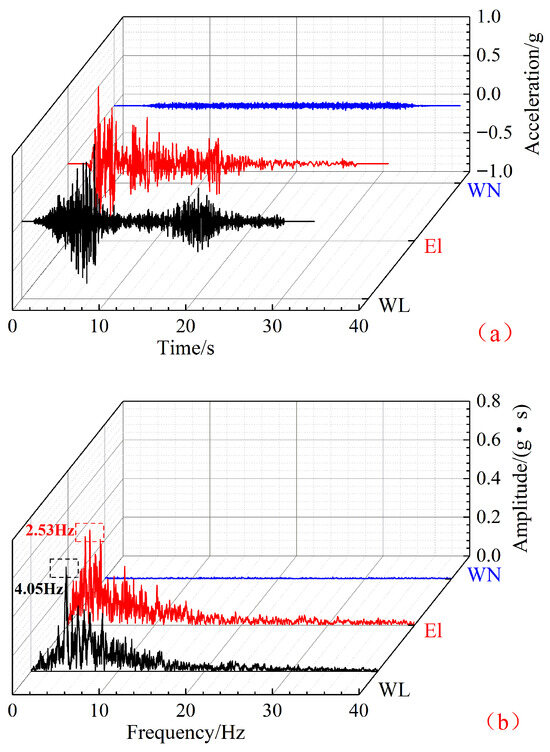
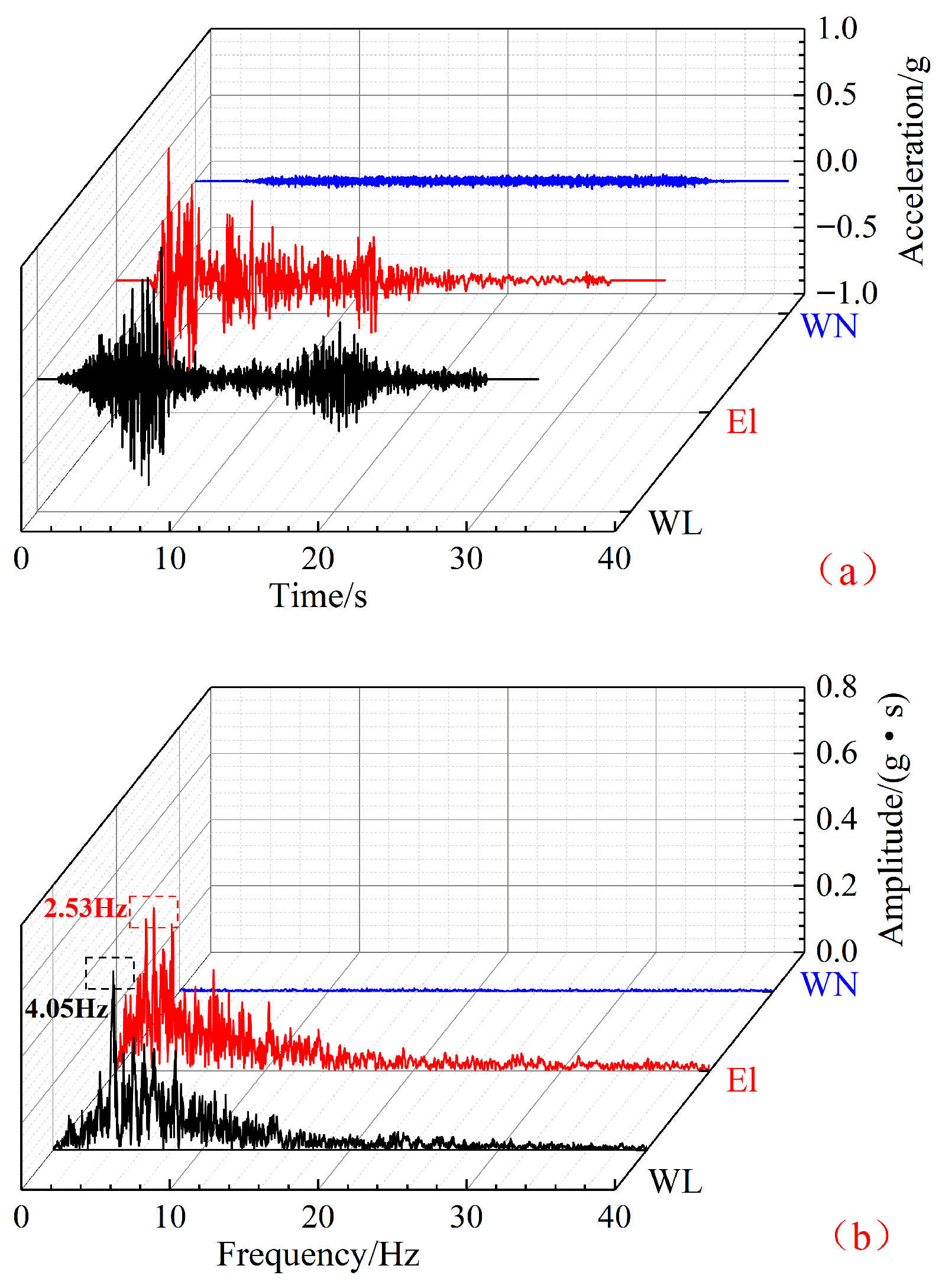
The model was loaded using a seismic motion sequence employing a progressively increasing peak ground acceleration (PGA). During the test, El Centro (El) waves and Wolong (WL) waves, which were scaled using similarity ratios, were selected as the input seismic motions. The selection of these two seismic waves was based on their distinct spectral characteristics and energy distributions, which are representative of different types of seismic excitations. The El Centro wave is a typical far-field motion with broadband frequency content, while the Wolong wave, recorded during the Wenchuan earthquake, exhibits prominent long-period components and higher energy intensity, making it more effective in exciting the dynamic responses of flexible geogrid-reinforced structures [10]. White noise (WN) waves with a peak acceleration of 0.05 g were applied before and after implementing the test conditions for frequency sweep testing. The input seismic waves were scaled according to the similarity laws proposed by Iai [20], with a scale factor of 1:3 (model to prototype). Prior to scaling, the raw signals were filtered using a band-pass filter (0.1–50 Hz) to remove high-frequency noise [10]. The seismic motions are shown in Figure 5. The loading conditions for the peak acceleration amplitude variations are shown in Table 2.
Figure 5.
Input ground motion: (a) Seismic time-history curves; (b) Fourier spectrum.
Table 2.
Loading cases.
3. Test Results and Analysis
It should be specifically noted that this test employed a loading sequence with incrementally applied PGA using the same specimen, meaning subsequent stages’ responses were influenced by cumulative damage from earlier phases. The “damage initiation PGA values” (e.g., 0.8 g or 1.0 g) referenced in the subsequent results analysis do not represent the structure’s inherent damage threshold but rather observed performance behavior under specific loading conditions.
3.1. Slope Displacement Analysis
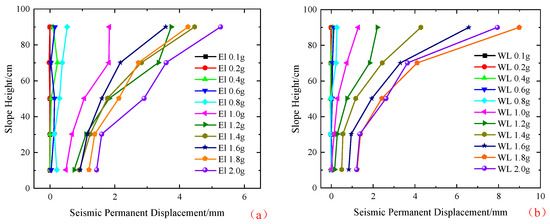
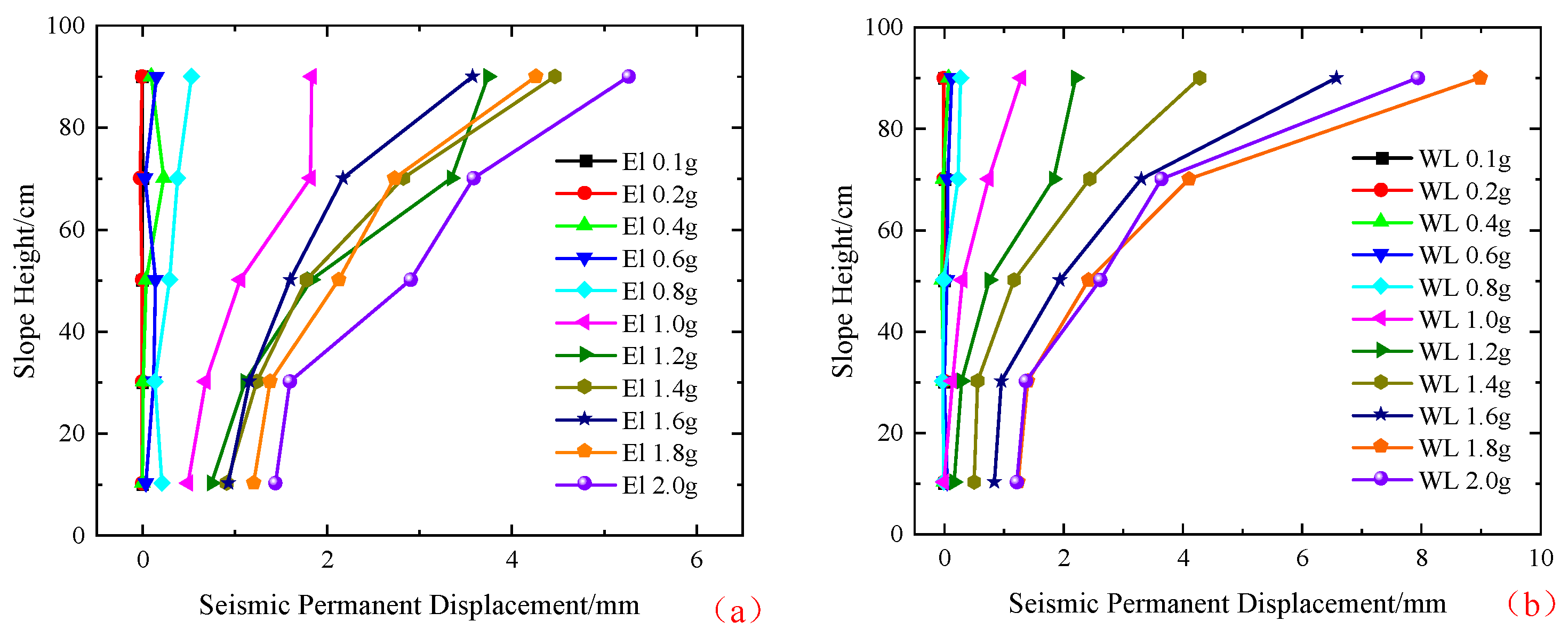
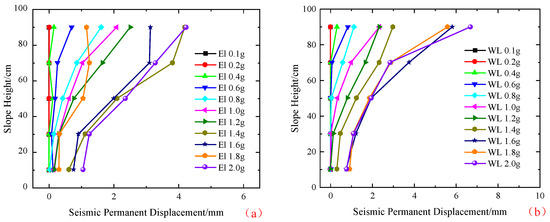
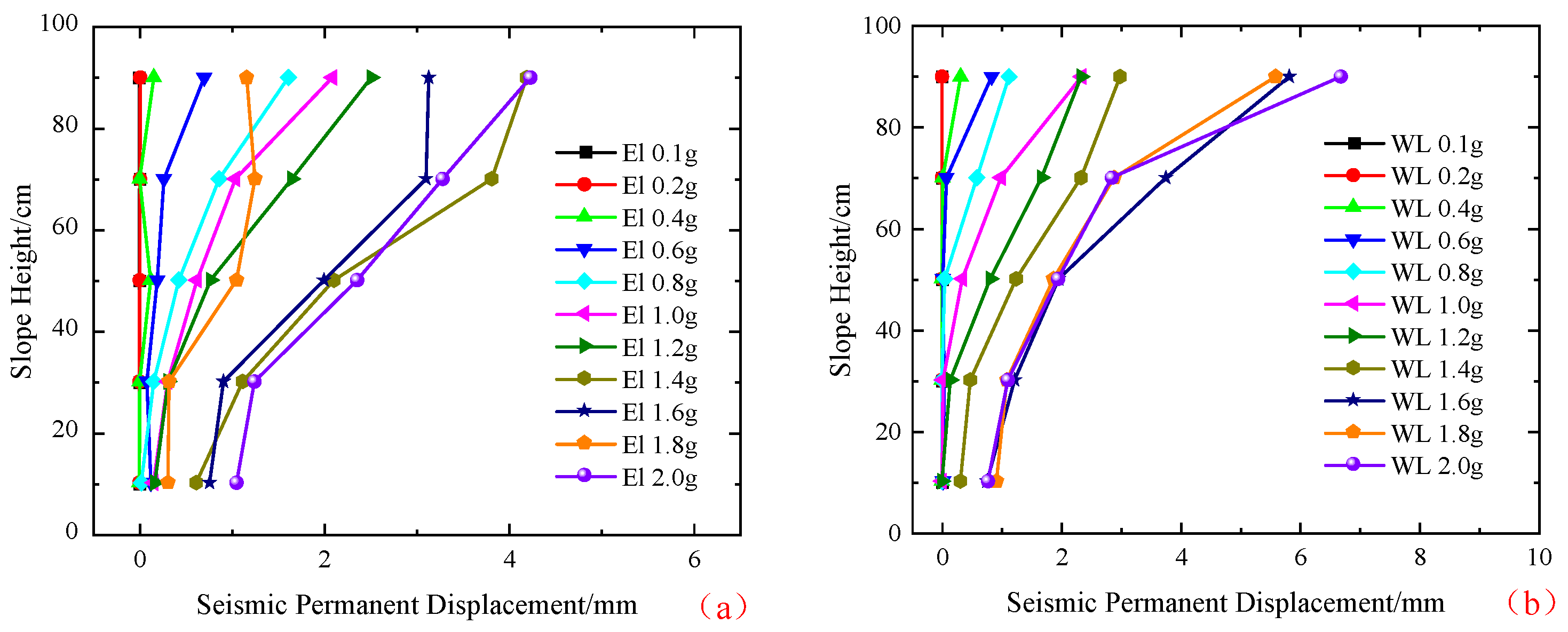
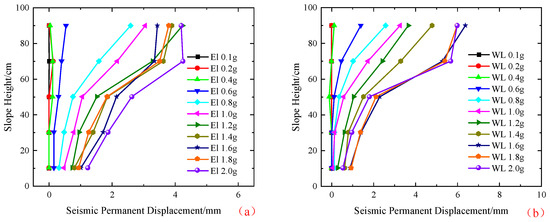
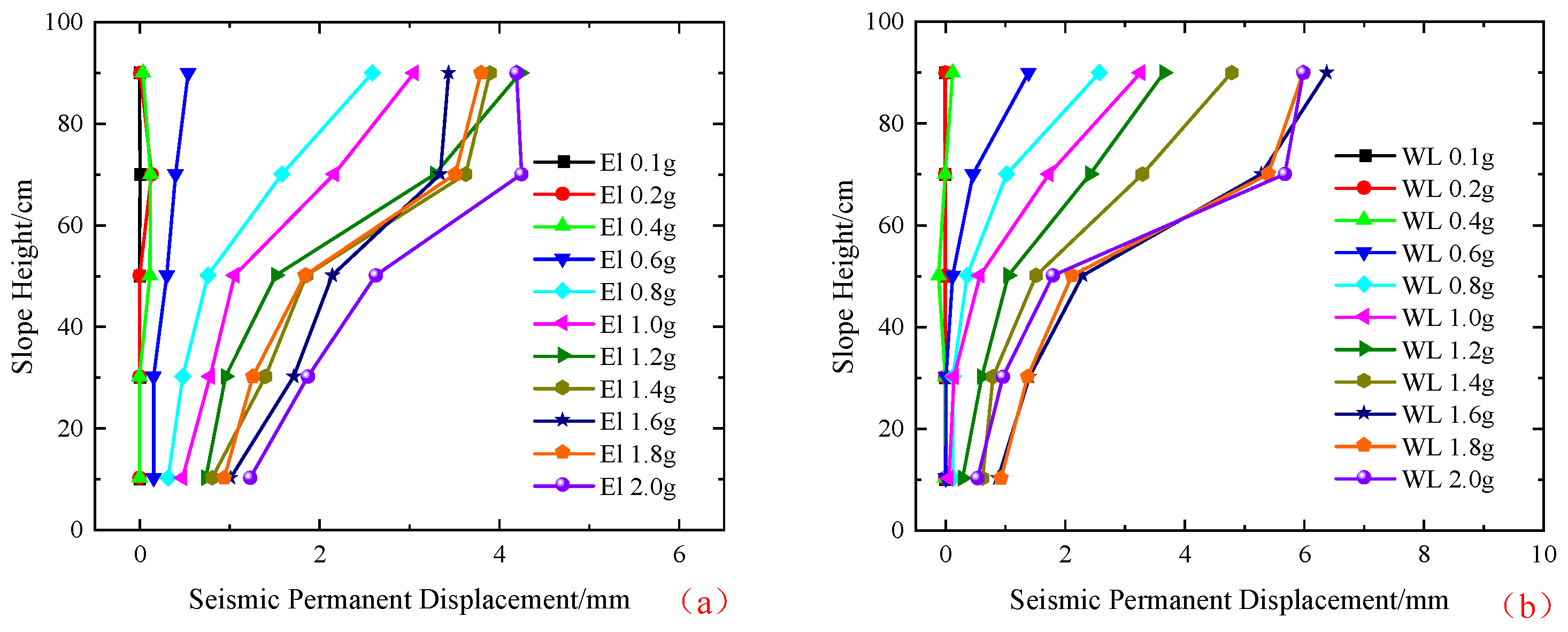
The permanent seismic displacement distributions observed along the slope height for the three groups of wrap-faced reinforced slopes are shown in Figure 6, Figure 7 and Figure 8. The data indicate the following. ① The permanent seismic displacements of all three model groups increased with increasing slope height. ② As the peak acceleration increased, the permanent displacement value of the slope increased significantly. ③ For the C-shaped wrap-around facing-reinforced slope, before sequentially loading to a PGA of 0.8 g, the permanent seismic displacement remained relatively small; however, a significant increase in displacement occurred upon subsequent loading to 1.0 g PGA, which may be related to the exacerbation of cumulative damage from prior loading stages. Under El wave conditions, the maximum displacements at the crest and toe were 5.3 mm (0.53% H) and 1.4 mm (0.14% H), respectively. Under WL wave conditions, the maximum displacements at the crest and toe were 9 mm (0.9% H) and 1.2 mm (0.12% H), respectively. ④ For the slope reinforced with the secondary-reinforcement wrap-around facing, after undergoing loading at 0.8 g PGA, the permanent seismic displacement increased markedly, indicating that this stage may have triggered further development of pre-existing damage. The maximum permanent seismic displacements for the secondary-reinforcement wrap-around facing-reinforced slope were 4.2 mm at the crest and 1.1 mm at the toe under El wave conditions and 6.7 mm at the crest and 0.9 mm at the toe under WL wave conditions.
Figure 6.
Seismic Permanent Displacement of the C-Shaped Wrap-Around Facing: (a) El Wave; (b) WL Wave.
Figure 7.
Seismic Permanent Displacement of the Secondary Reinforcement Wrap-Around Facing: (a) El Wave; (b) WL Wave.
Figure 8.
Seismic Permanent Displacement of the Self-Wrap-Facing: (a) El Wave; (b) WL Wave.
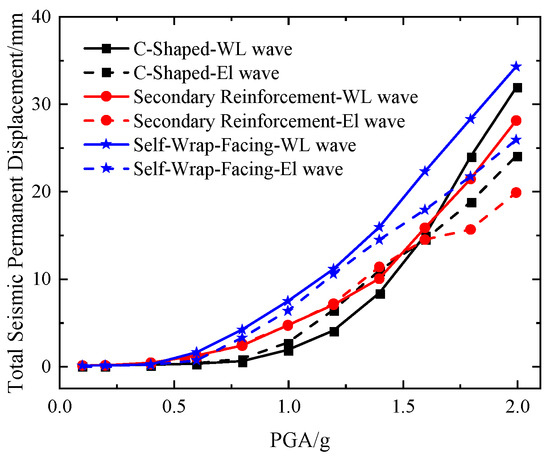
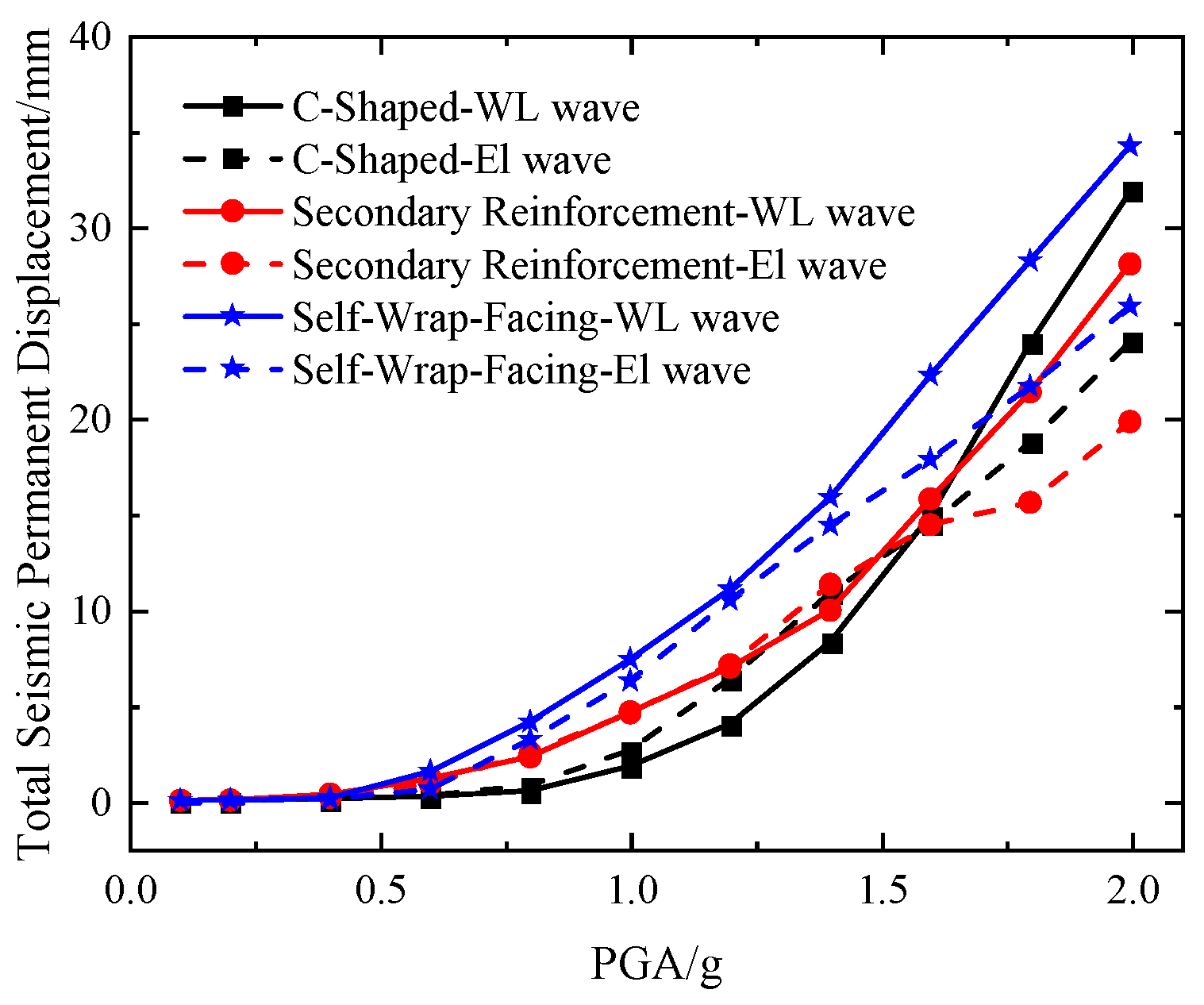
The total permanent seismic displacement was obtained by summing the permanent seismic displacements generated at the crest (0.9 H) under various loading conditions. A comparison among the total permanent seismic displacements calculated for the three types of slopes with wrap-around facing is presented in Figure 9. As the peak acceleration increased, the total permanent displacement exhibited nonlinear growth. When the PGA reached 0.8 g, the total permanent seismic displacements for all three model groups were less than 0.5 mm. However, when the PGA exceeded 1.0 g, the total permanent displacements increased nonlinearly with increasing PGA. After all loading conditions were completed, the permanent seismic displacements of all three models under WL wave loading exceeded those observed under El wave loading. This is because WL waves carry more energy than El waves do at equivalent peak accelerations [16], and their spectral characteristics feature prominent long-period components that more effectively excite flexible structural responses. The maximum total permanent seismic displacements attained under WL wave conditions were ranked as follows: self-wrap facing (34.3 mm, 3.43% H) > C-shaped wrap-around facing (31.9 mm, 3.19% H) > secondary-reinforcement wrap-around facing (28.1 mm, 2.81% H).
Figure 9.
Relationship between total residual displacement and peak acceleration.
3.2. Acceleration Responses
The root mean square (RMS) method was employed to process acceleration time histories under various operating conditions. The ratio of the RMS acceleration values observed at different locations within the slope to the RMS acceleration value at the platform surface was defined as the acceleration amplification factor. The formula for calculating the RMS value is shown in Equation (1).
where td denotes the acceleration recording time history and a(t) denotes the acceleration time history.
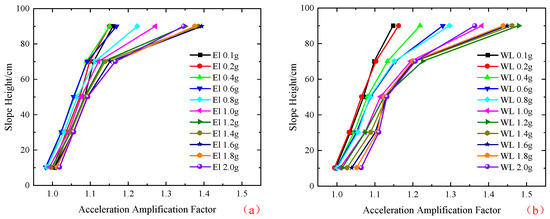
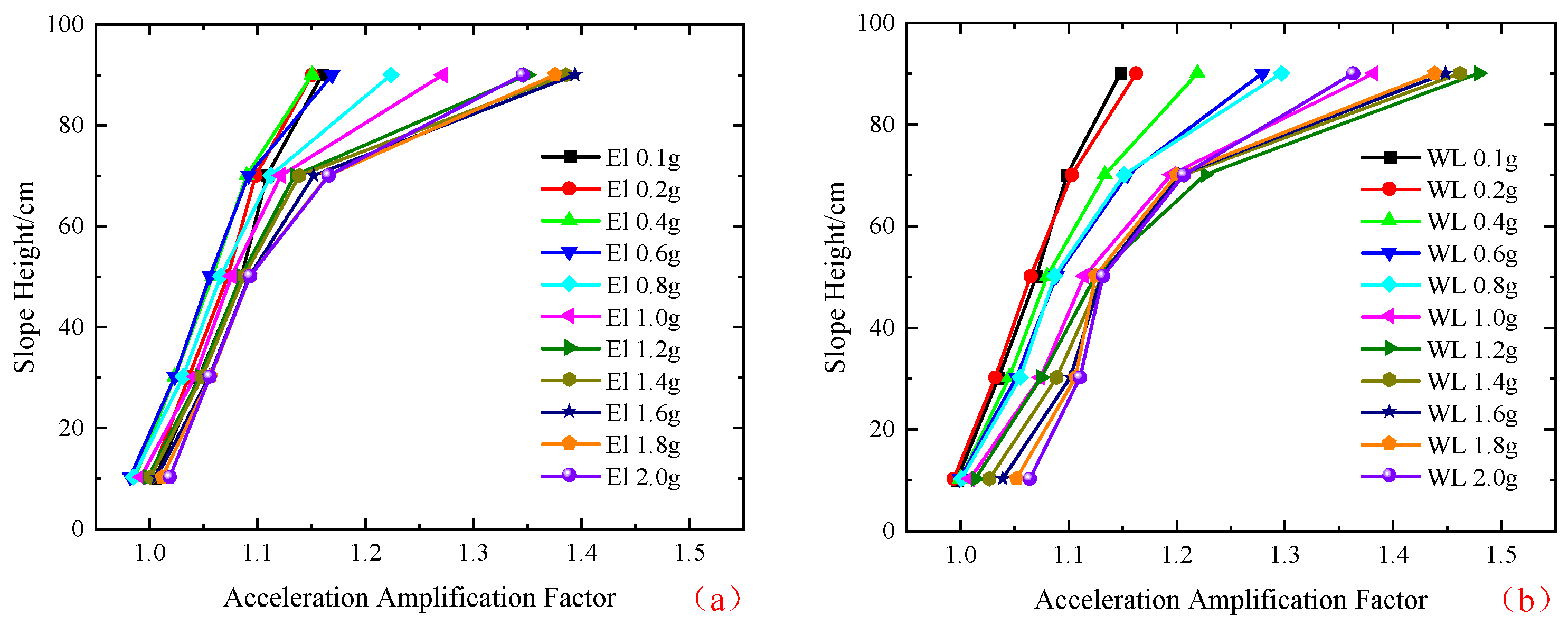
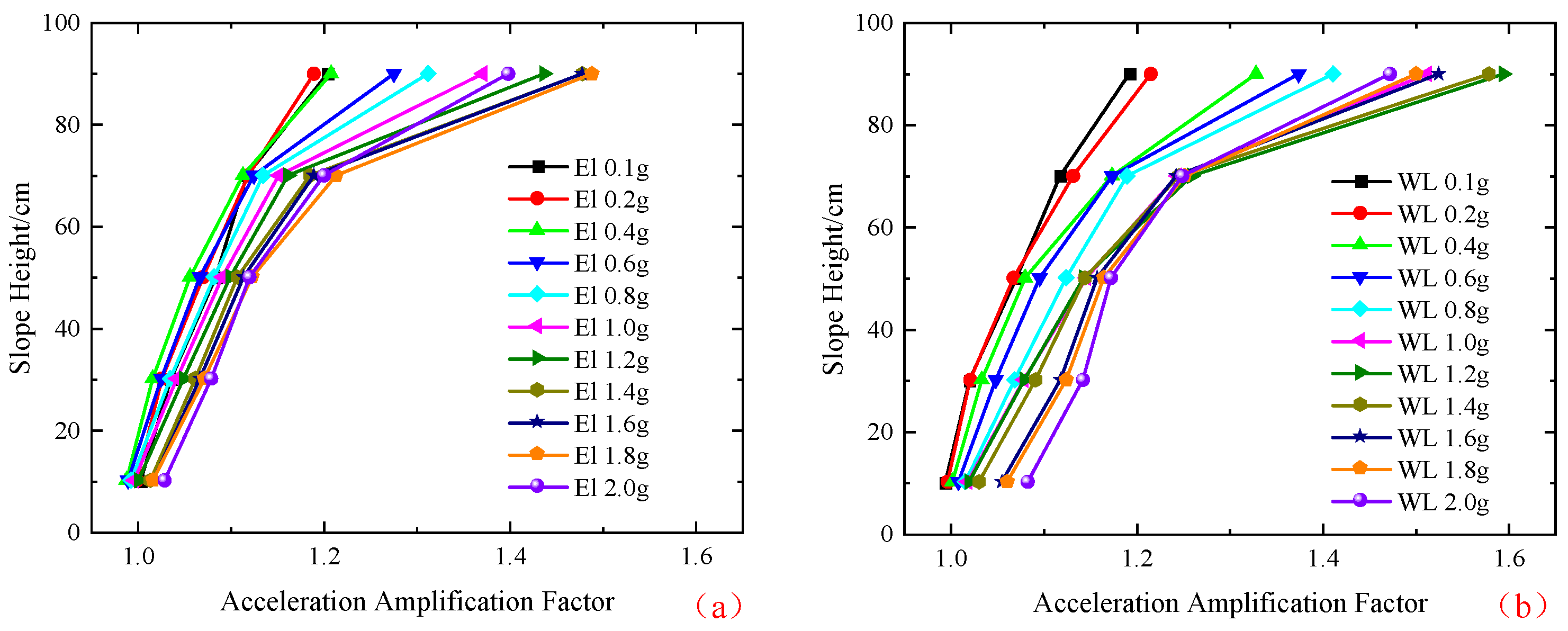
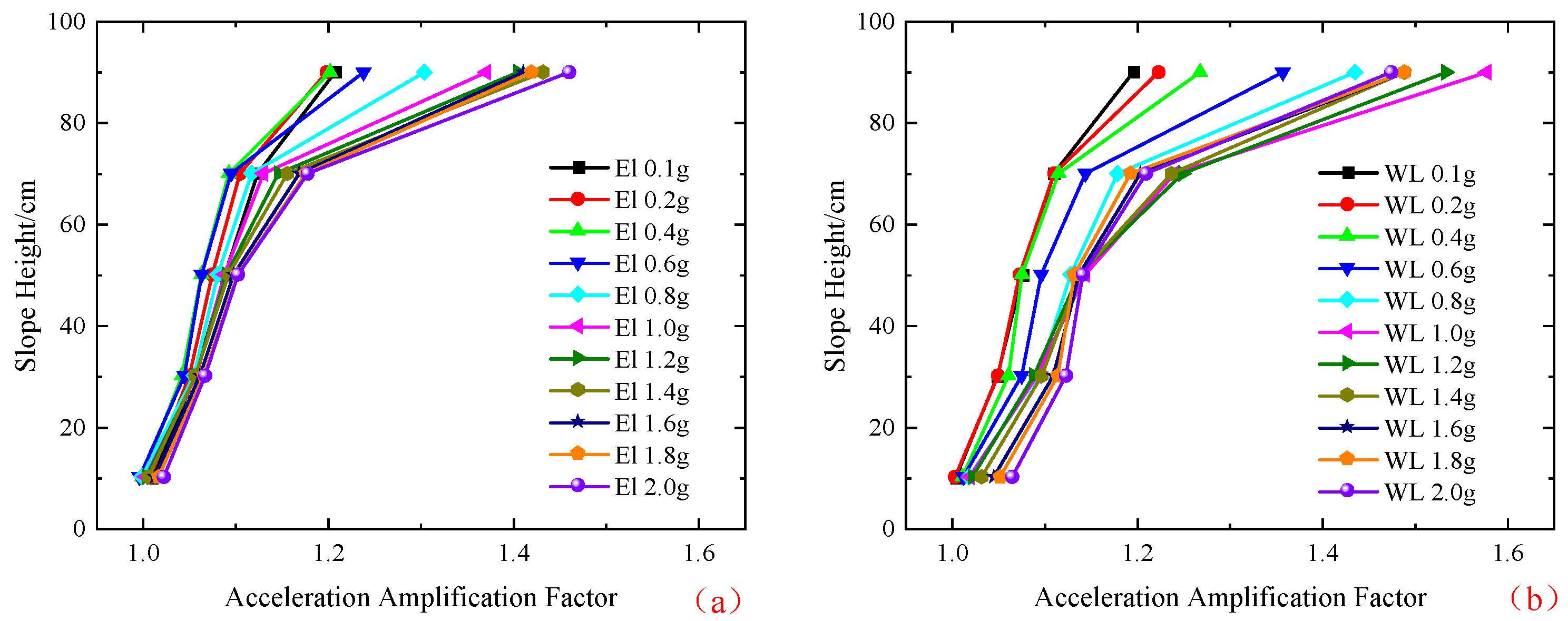
The acceleration amplification factors observed for the three groups of reinforced slopes are shown in Figure 10, Figure 11 and Figure 12. As depicted in the figures, ① for all three model groups under both seismic wave excitation types, the acceleration amplification factor increased nonlinearly with the slope height, reaching its maximum at the top of the structure. This phenomenon primarily resulted from relatively weak boundary constraints imposed at the crest, leading to the significant amplification of the dynamic response in this region under seismic loading and increased soil deformation. This pattern was consistent with the whipping effect observed in high-rise buildings. ② In terms of C-shaped wrap-around facing, the acceleration amplification factors produced under WL and El wave interactions ranged from 1.0 to 1.48 and from 0.98 to 1.40, respectively. For secondary-reinforcement wrap-around facing, these factors ranged from 0.99 to 1.60 and from 0.99 to 1.49. For self-wrap-facing, the factors ranged from 1.0 to 1.58 and from 1.0 to 1.46. A comparison among the acceleration amplification results reveals the following order: secondary-reinforcement wrap-around facing > self-wrap facing > C-shaped wrap-around facing. The better the integrity of the reinforced soil slope, the smaller the variation in the acceleration amplification factor. Among the three types of wrap-around facings, the C-shaped wrap-around facing resulted in lower variations in the acceleration amplification factor, indicating that the C-shaped wrap-around facing exhibits superior integrity and greater seismic stability compared to the other two types.
Figure 10.
Acceleration Amplification Factor of the C-Shaped Wrap-Around Facing: (a) El Wave; (b) WL Wave.
Figure 11.
Acceleration Amplification Factor of the Secondary Reinforcement Wrap-Around Facing: (a) El Wave; (b) WL Wave.
Figure 12.
Acceleration Amplification Factor of the Self-Wrap-Facing: (a) El Wave; (b) WL Wave.
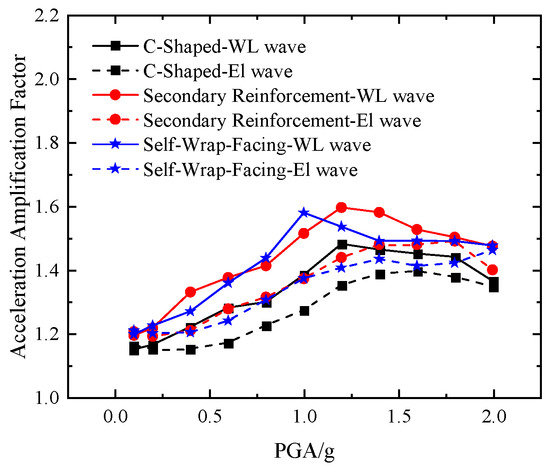
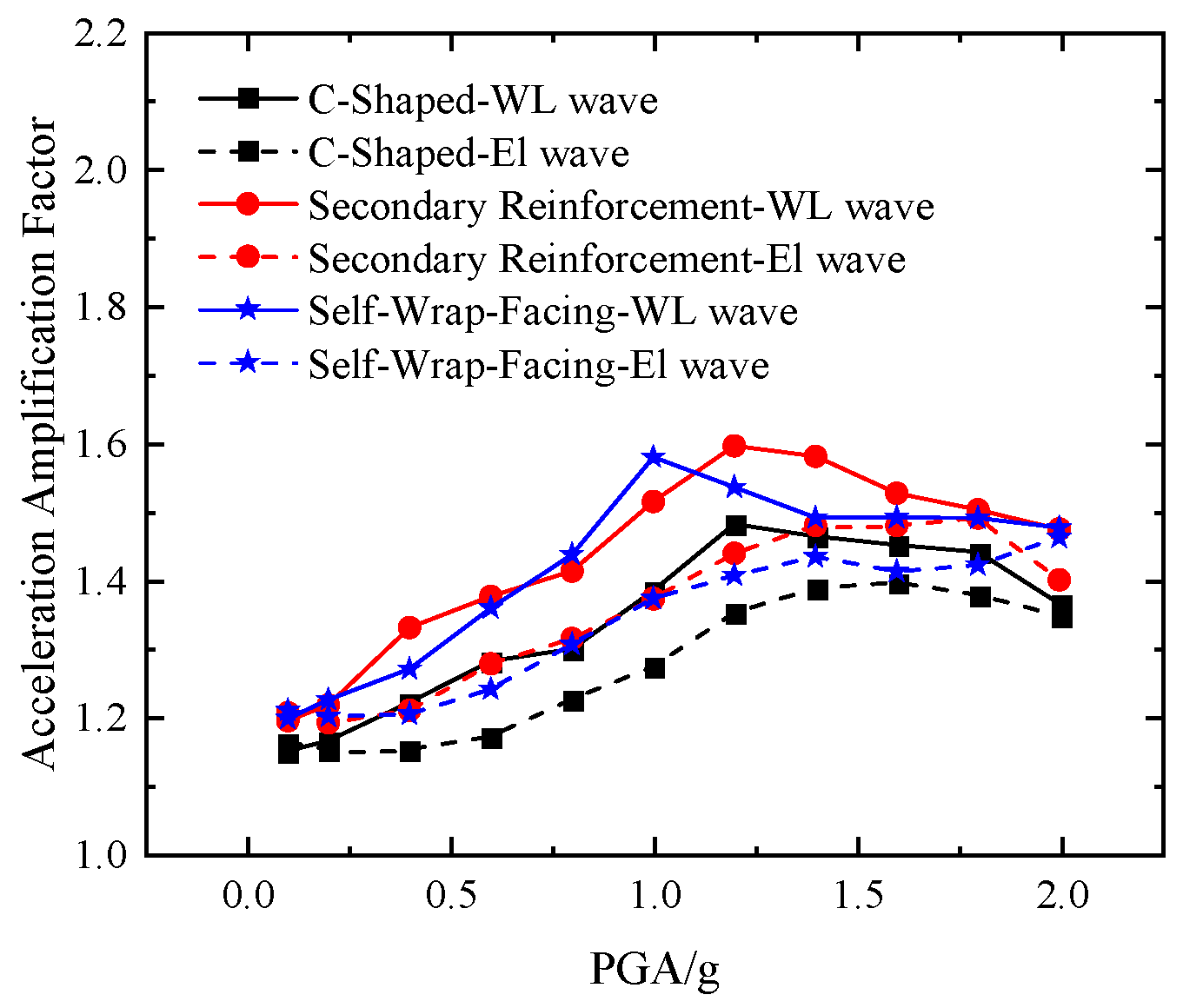
A comparison among the maximum acceleration amplification factors observed within the reinforced zones for the three types of reinforced loess slopes with wrap-around faces is presented in Figure 13. The data indicate the following. ① The acceleration amplification factors produced for all three model groups first increased but then decreased as the peak acceleration increased. This behavior occurred because during the initial phase of the test, as the seismic energy increased, the slope displacement responses remained small, resulting in limited energy dissipation and a significant increase in the acceleration amplification factor. ② As the PGA continued to increase, the amount of slope displacement increased significantly, and the seismic energy dissipation process intensified. ③ For the wrap-faced reinforced slope, the stacked geobags underwent certain deformations under seismic loading. These deformations contributed to a reduction in the acceleration amplification factor. ④ Under progressively increasing peak acceleration, the acceleration amplification factors of all three models tended to decrease under WL wave conditions prior to implementing the El wave conditions. This occurred because WL waves deliver more seismic energy than El waves do at equivalent peak accelerations. Consequently, when the input energy reached critical levels in the reinforced soil slopes, nonelastic deformation within the slope bodies was more readily induced, reducing the efficiency of seismic energy transmission.
Figure 13.
Acceleration amplification factor changes with peak acceleration.
3.3. Strain of the Geotextile
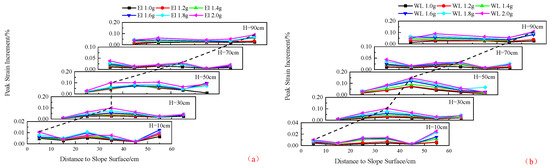
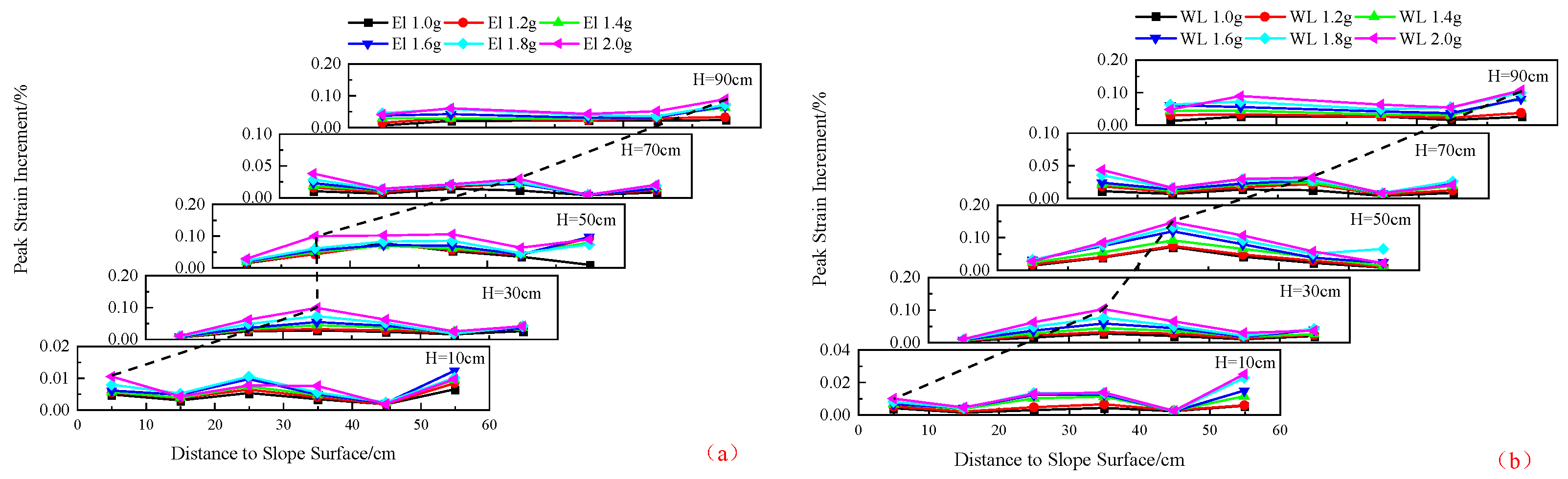
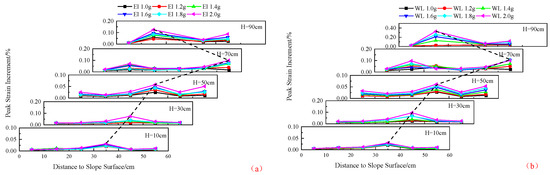
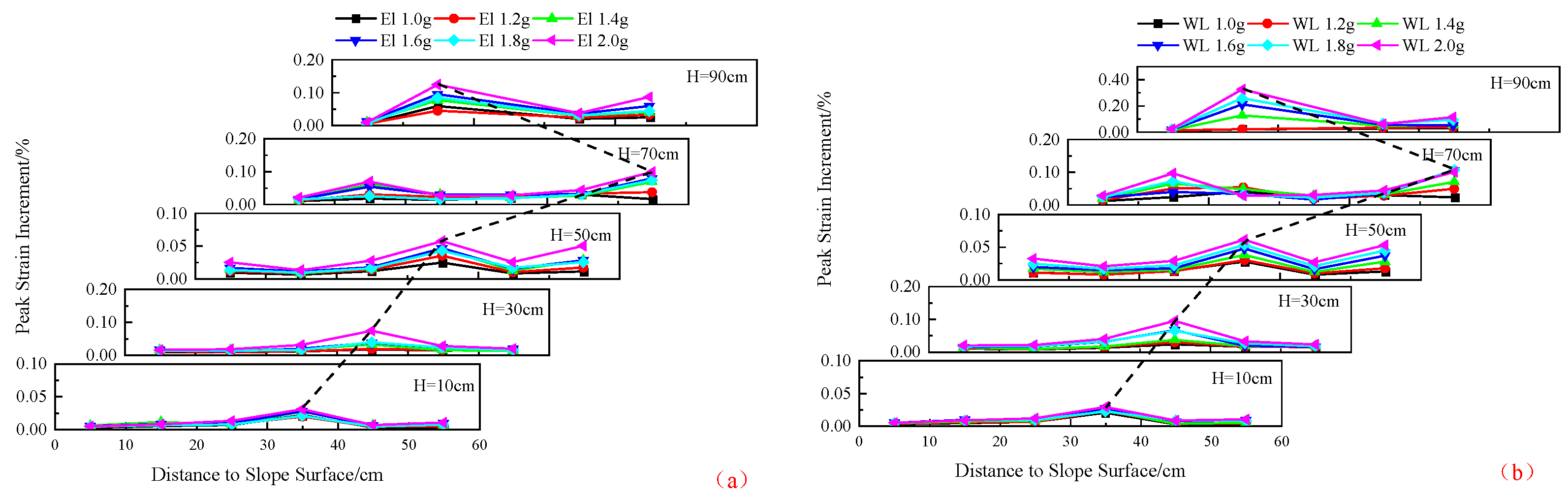
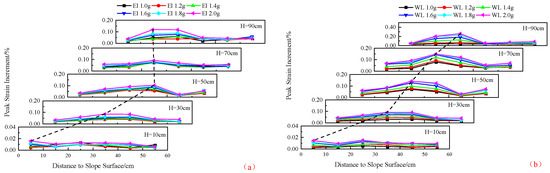
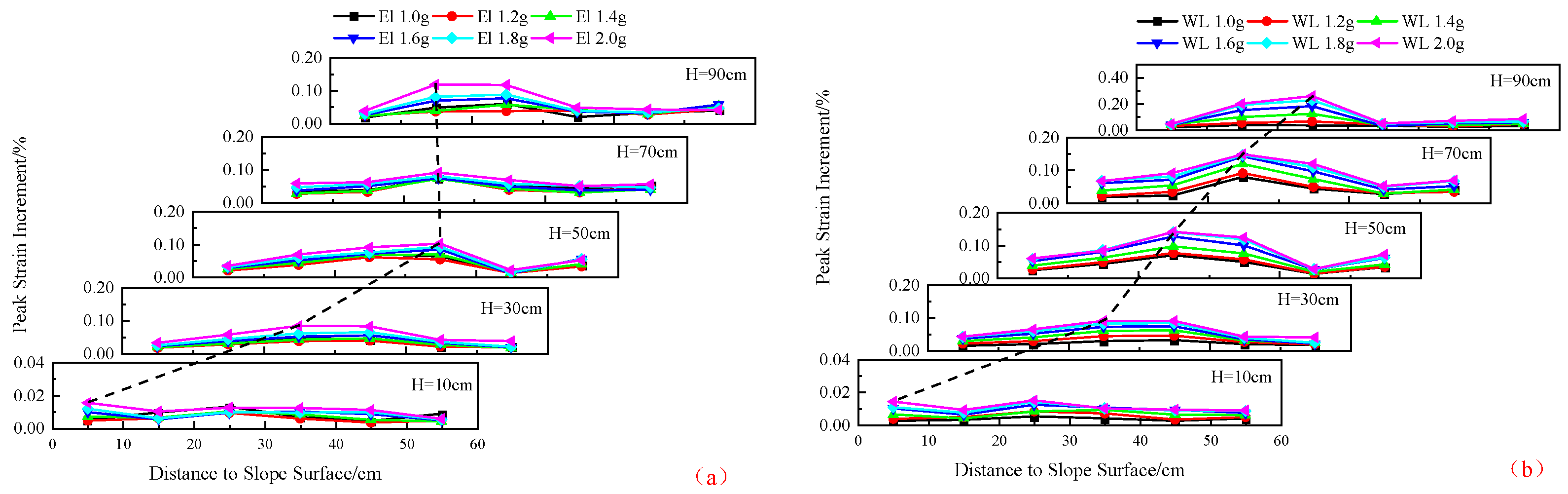
The stress characteristics of geogrids are crucial for determining the deformation behaviors and stability levels of slopes. The strain conditions of the reinforcement in the model are summarized in Figure 14, Figure 15 and Figure 16 (owing to the numerous load cases, only those with strains ≥1.0 g are analyzed here). The data in the figures indicate the following. ① As the PGA of the input motion increased, the peak strain increments observed in the geogrids for all three model groups increased. Furthermore, the peak strain increase in the bottommost geogrid layer was significantly lower than that in the layers above. ② Under the excitation of different seismic waves (El wave and WL wave), the development trends of the peak strain increments across the various geogrid layers were fundamentally consistent. ③ For the C-shaped wrap-around facing-reinforced slope, the maximum increases in the peak strain under the El wave and WL wave excitations were 0.1% and 0.15%, respectively. In both cases, the maximum values occurred at the third reinforcement layer, specifically at a distance of 25 cm from the slope face. ④ For the reinforced slope with the secondary-reinforcement wrap-around facing configuration, the maximum peak strain increases observed under the El wave and WL wave excitations were 0.12% and 0.32%, respectively. In both cases, the maximum values occurred in the top reinforcement layer, at a distance of 15 cm from the slope face. The strain increments at positions that were 5 cm from the slope face in each geogrid layer were significantly smaller than those observed at other locations. The underlying mechanism for this observation is that the terminal end of the wrap-around section in this configuration relies on the overlying fill for fixation. Under strong seismic shaking, slight loosening occurs in the upper soil mass, leading to insufficient constraints being imposed on the geogrid in the upper region near the slope face. ⑤ For the self-wrap facing slope, the maximum peak strain increases observed under the El wave and WL wave excitations were 0.12% and 0.26%, respectively. These maxima were located in the top geogrid layer at distances of 15 cm and 25 cm from the slope face. The strain distribution in the reinforcements was larger in the upper section and smaller in the lower section. Combined with the results of the horizontal displacement analysis (shown in Figure 8), this phenomenon is attributed to the following mechanism: the wrap-around section of the self-wrap facing structure forms an integrated unit. However, the restraint on the top wrap-around section is relatively weak. Under strong seismic shaking, this section tends to experience significant outwards tilting, which consequently pulls the entire reinforced zone to displace outwards, leading to a tendency for the top reinforcement layer to be pulled out. ⑥ The C-shaped wrap-around reinforced slope exhibited a lower increase in overall geogrid strain than the secondary-reinforcement and self-wrap-facing types did, indicating its superior structural integrity.
Figure 14.
Strain of C-shaped Wrap-Around Reinforcement: (a) El Wave; (b) WL Wave.
Figure 15.
Strain of Secondary Reinforcement in Wrap-Around Configuration: (a) El Wave; (b) WL Wave.
Figure 16.
Strain of Self-wrap-facing: (a) El Wave; (b) WL Wave.
3.4. Structural Damage Analysis Based on Marginal Spectra
The existing structural damage identification methods fall into two categories: (1) damage identification methods based on dynamic characteristics and (2) energy-based structural damage identification methods. Damage identification methods based on dynamic characteristics can only determine whether damage has occurred in the target structure as a whole [23,24,25] but cannot pinpoint the location of the damage. Therefore, in this section, the location of structural damage and the slope failure process are clarified on the basis of energy identification methods. After the Hilbert–Hullot transform (HHT) was applied to the acquired acceleration time history, the marginal spectrum representing the frequency-domain energy distribution characteristics was obtained through integration in the time domain. Under seismic wave excitation, when slope damage occurred, fluctuations or abrupt changes in the marginal spectral amplitude were observed, preventing the complete upwards transmission of seismic energy and thereby leading to the identification of dynamic structural damage [26,27].
Before the Hilbert–Huang transform was performed, empirical mode decomposition (EMD) needed to be conducted. Any complex signal can be decomposed into a finite number of intrinsic mode functions (IMFs) and residuals through empirical mode decomposition, as shown in Equation (2).
In the equation, IMFi(t) denotes the i-th intrinsic modal function (IMF) and r(t) represents the residual obtained after performing n-fold empirical mode decomposition, which is a time function.
Utilizing the Hilbert–Huang transform, the instantaneous frequency wi(t) corresponding to each order IMFi(t) was calculated. Let ai(t,wi) denote the amplitude of IMFi(t) at the instantaneous frequency wi(t) at time t. Combining all ai(t,wi) yielded the time-frequency distribution H(t,w) of the entire signal’s amplitude of the entire signal (energy), which is known as the Hilbert–Huang time-frequency spectrum, as shown in Equation (3).
Finally, integrating H(t,w) over the time axis yielded the marginal energy spectrum distributed across the frequency domain, as shown in Equation (4).
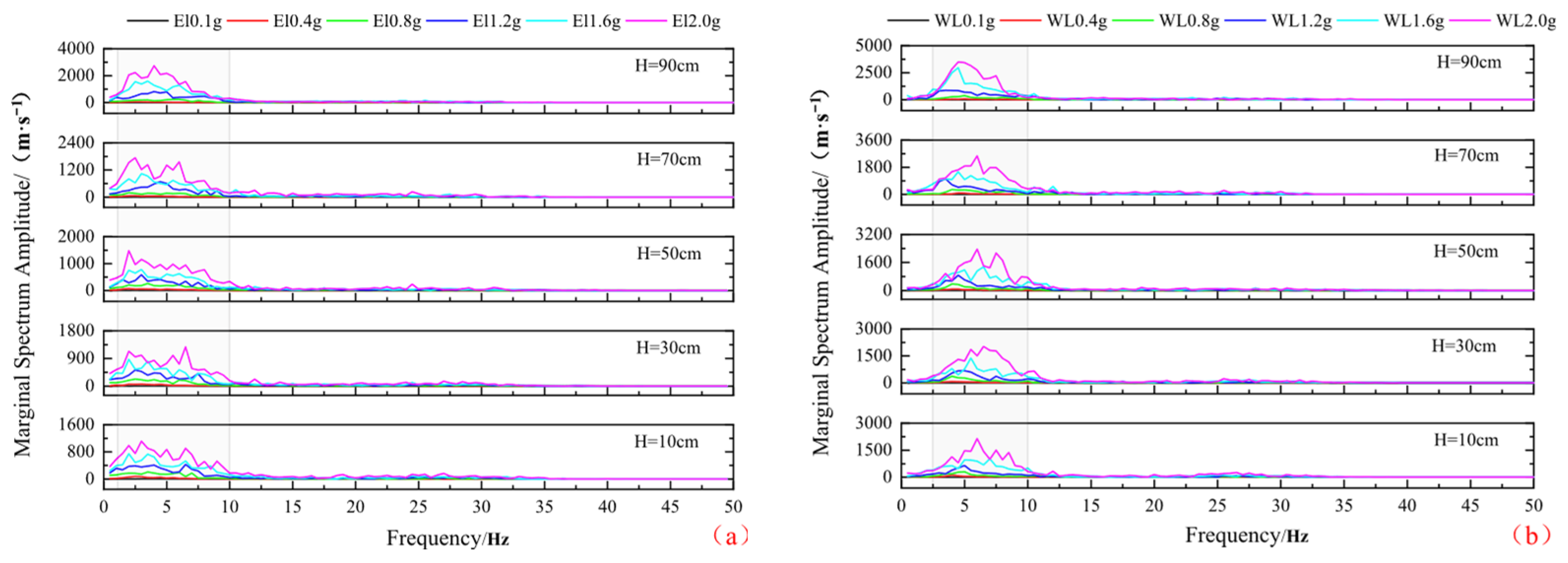
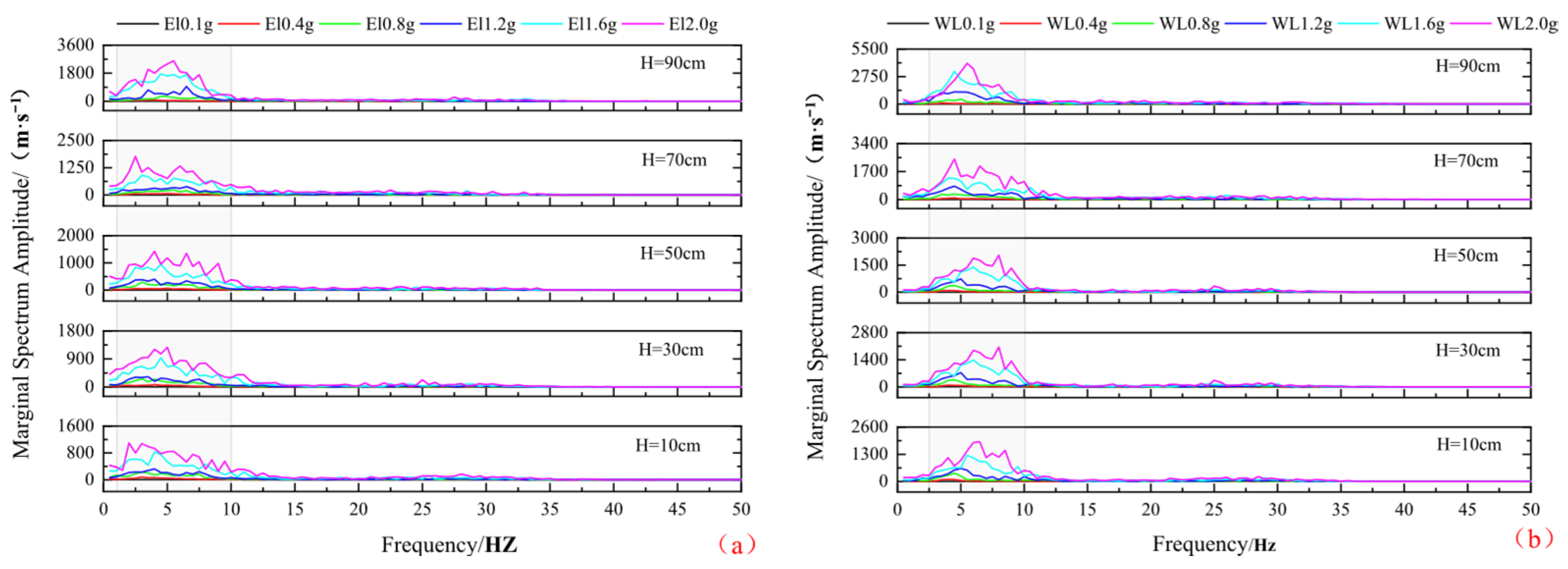
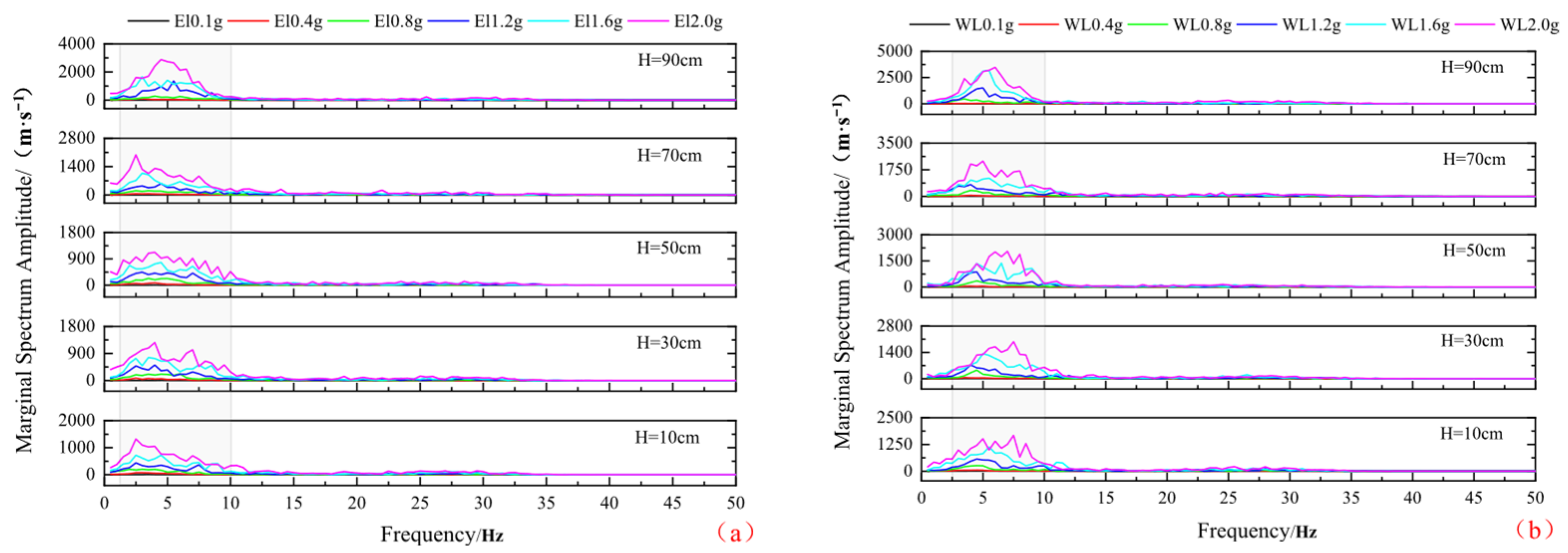
Figure 17, Figure 18 and Figure 19 show the frequency-domain distributions of the marginal spectrum amplitudes for three sets of model tests. The data indicate the following. ① The frequency-domain distribution trends of the three reinforced slopes under El waves were essentially identical to those produced under WL waves, exhibiting an initial increase followed by a decrease in the frequency domain, although with slightly smaller amplitudes than those observed for WL waves. ② The marginal spectral amplitude increased with the magnitude of the input acceleration. This is because the marginal spectrum represents the distribution of energy in the frequency domain; as the energy of the input seismic wave increased, the marginal spectral amplitude correspondingly increased. ③ The marginal spectral amplitudes of the El and WL waves were concentrated in the frequency ranges of 1 Hz to 10 Hz and 2.5 Hz to 10 Hz, respectively. As the slope height increased, the high-frequency components of seismic ground motions were amplified. This occurred because the addition of reinforcement materials effectively increased the structural stiffness level.
Figure 17.
Marginal Spectrum Amplitude Frequency-Domain Distribution of the C-Shaped Wrap-Around Facing: (a) El Wave; (b) WL Wave.
Figure 18.
Marginal Spectrum Amplitude Frequency-Domain Distribution of the Secondary Reinforcement Wrap-Around Facing: (a) El Wave; (b) WL Wave.
Figure 19.
Marginal Spectrum Amplitude Frequency-Domain Distribution of the Self-Wrap-Facing: (a) El Wave; (b) WL Wave.
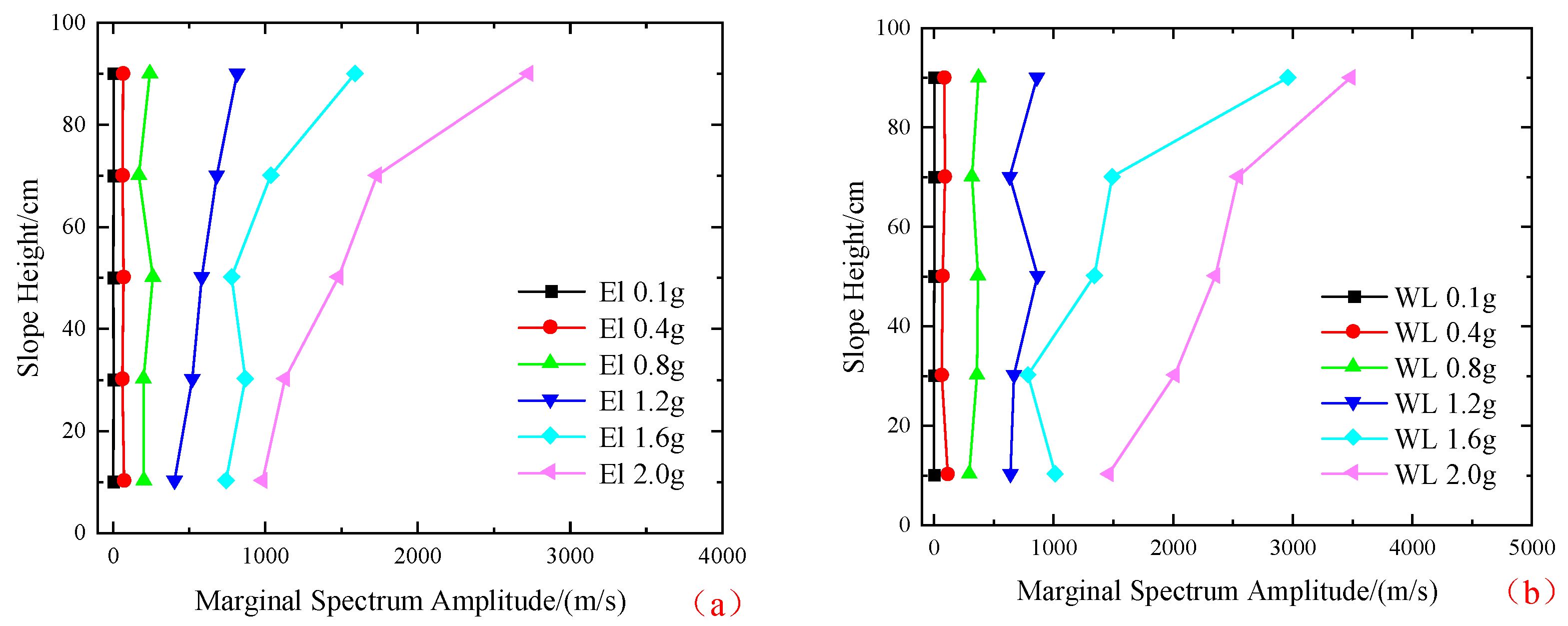
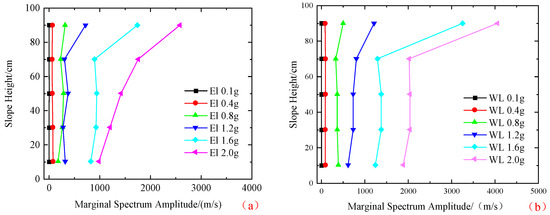
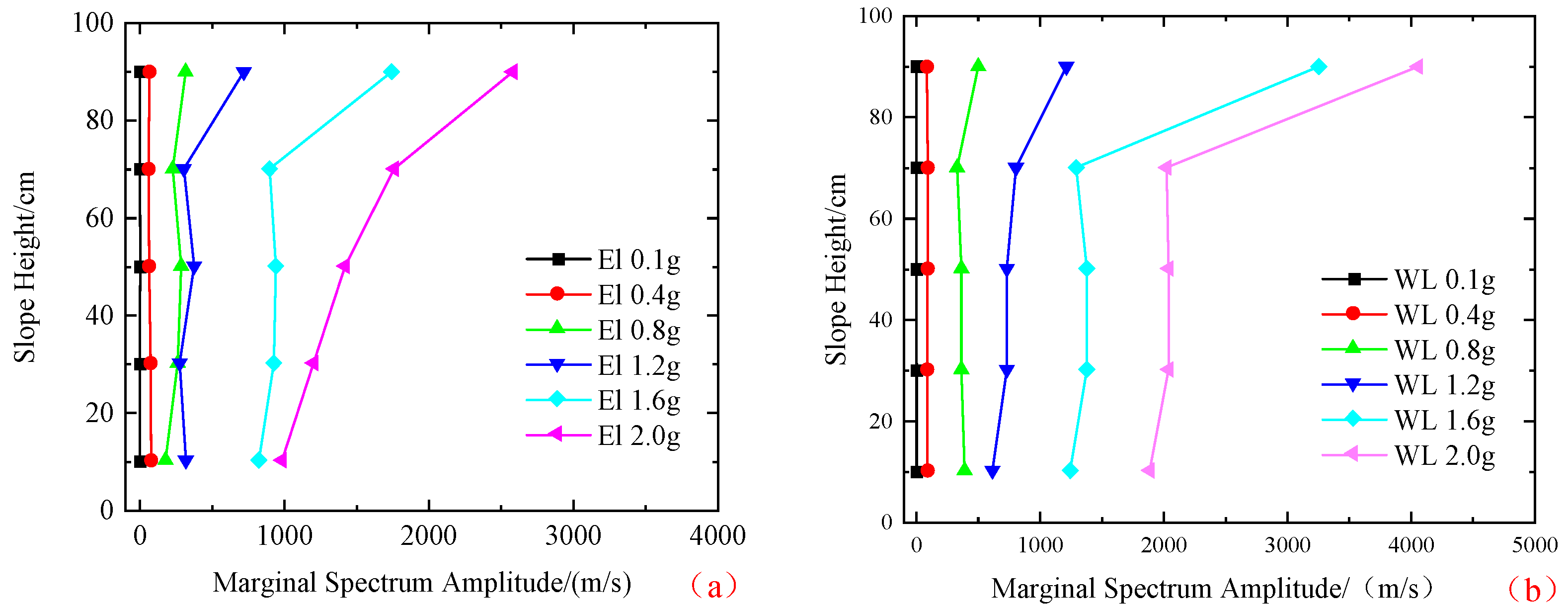
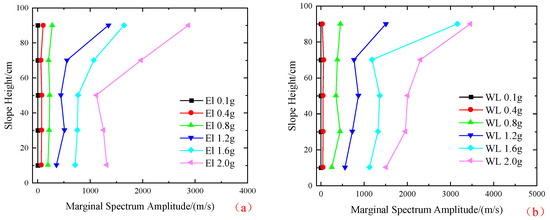
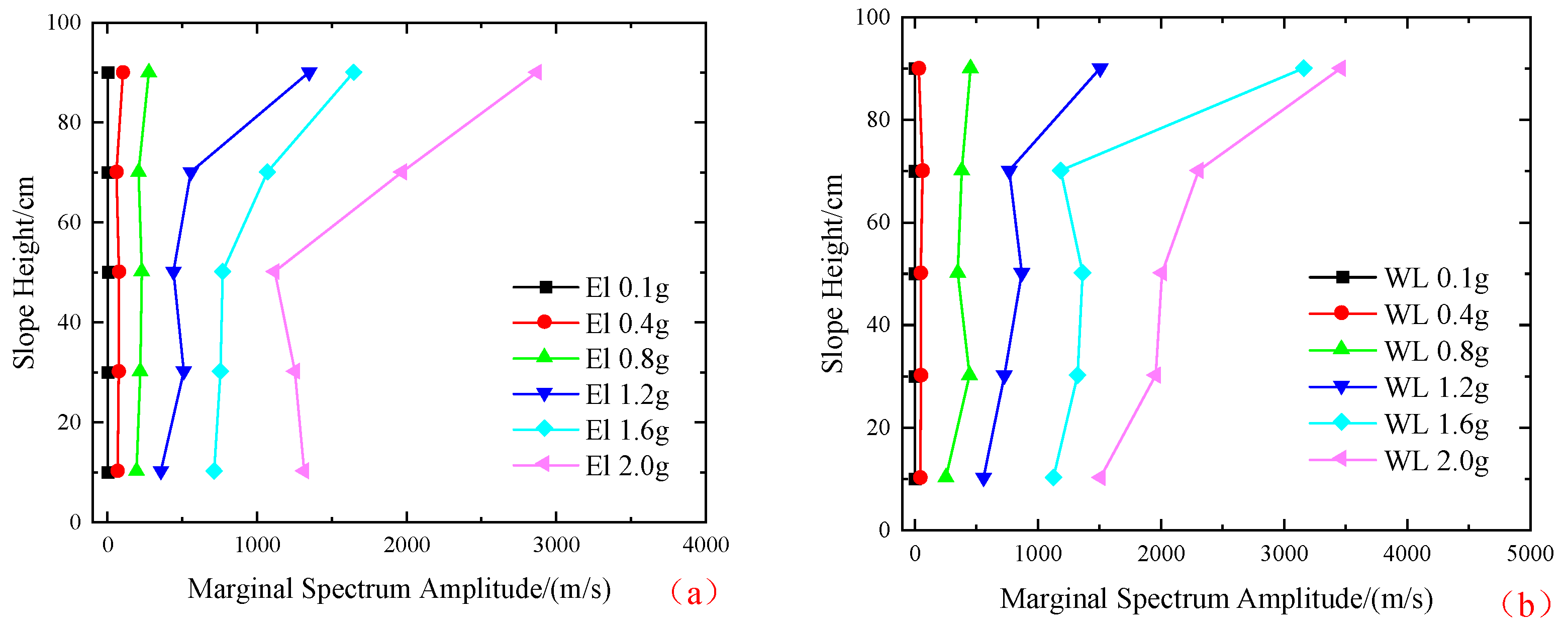
The distributions of the marginal spectral amplitudes along the slope height for the three model groups are shown in Figure 20, Figure 21 and Figure 22. The data reveal the following. ① Before the 0.8 g loading stage, the marginal spectrum amplitude of the three models decreased at multiple locations along the slope height. This is because the seismic energy was relatively small at this stage, and the slope surface displacement under both types of seismic waves was minimal. This indicates that minor stress redistribution or geogrid strain may have occurred within the slope, but it was insufficient to cause significant damage. ② After the 0.8 g loading condition, as the seismic energy gradually increased, the marginal spectral amplitudes of the three models under both seismic wave types displayed distinctly nonlinear distributions along the slope height. This indicates energy loss during the upward propagation of seismic motion through the slope. Concurrently, significant increases in slope face displacement were observed, suggesting that the slopes sustained relatively severe damage. ③ For the C-shaped wrap-around facing slope, significant damage first occurred under El wave excitation within the slope height range of 0.3 m to 0.5 m under the 1.6 g condition, and under WL wave excitation within the range of 0.5 m to 0.7 m under the 1.2 g condition, with marginal spectral amplitude decreases of 10.3% and 26.6%, respectively. These intervals precisely correspond to the locations where the peak strain increments in the geogrid were maximum (the third reinforcement layer, 25 cm from the slope face), as described in Section 3.3. This indicates that energy was largely absorbed in these zones due to geogrid elongation and soil plastic deformation, forming internal damage areas rather than slope face failure. ④ For the secondary-reinforcement wrap-around facing slope, significant damage under El wave excitation was characterized by abrupt changes in the marginal spectral amplitude. Under the El 1.2 g condition, the marginal spectral amplitude at the slope crest increased by 151.7% compared to the previous measurement point. Under the WL 1.6 g condition, the marginal spectral amplitude at the 70 cm slope height decreased by 35.1% compared to the point at 50 cm, while at the crest it increased by 151.6% compared to the point at 70 cm. The abrupt change in marginal spectral amplitude at the crest closely corresponds to the strain concentration observed at 15 cm from the slope face in the top reinforcement layer of this facing type and the accelerated increase in slope face displacement in the upper region. This reveals a key damage mechanism for the secondary-reinforcement type: under strong seismic shaking, the frictional restraint between the wrap-around segment and the overlying backfill at the crest may weaken, leading to local soil loosening, which could potentially develop into the starting point of progressive failure. ⑤ For the self-wrap facing slope, the first significant abrupt change in marginal spectral amplitude occurred within the slope height range of 0.7 m to 0.9 m under the El 1.2 g condition, with an increase of 141.4%. This phenomenon perfectly corresponds to the significantly higher crest displacement under the El 1.2 g condition shown in Figure 8a and the strain distribution characteristic described in Section 3.3, where the top geogrid layer is prone to “pullout.” ⑥ The marginal spectrum analysis indicates that the C-shaped wrap-around facing possesses the best overall integrity. Its damage occurs internally within the slope body and requires higher seismic energy input, demonstrating excellent seismic stability. In contrast, damage for both the secondary-reinforcement and self-wrap facing types initiates in the crest region, where constraints are relatively weak, representing a vulnerable aspect of their seismic performance. These findings are consistent with the acceleration response analysis results presented in Section 3.2.
Figure 20.
Marginal Spectrum Amplitude Elevation Distribution of the C-Shaped Wrap-Around Facing: (a) El Wave; (b) WL Wave.
Figure 21.
Marginal Spectrum Amplitude Elevation Distribution of the Secondary Reinforcement Wrap-Around Facing: (a) El Wave; (b) WL Wave.
Figure 22.
Marginal Spectrum Amplitude Elevation Distribution of the Self-Wrap-Facing: (a) El Wave; (b) WL Wave.
4. Discussion
This study conducted shaking table tests to compare the seismic responses of reinforced loess slopes with three wrap-around facing configurations: C-shaped, secondary-reinforcement, and self-wrap facing. The objective was to elucidate the influence of the wrap-around facing type on the seismic performance and underlying mechanisms of these structures. The following discussion integrates and interprets the key findings.
The test results indicate that the secondary-reinforcement wrap-around facing exhibited the best performance in restraining horizontal displacement of the slope face. Its seismic advantage primarily stems from the relatively high frictional resistance developed between the wrap-around folded segment and the overlying backfill, which effectively enhances the confinement in the slope face area, thereby suppressing overall deformation. However, a phenomenon of stress release was observed near the slope face in the secondary-reinforcement configuration, where the incremental geogrid strain was significantly low. This phenomenon may be attributed to the fact that the anchoring effect at the end of the wrap-around segment is highly dependent on the compaction degree of the overlying soil. Under repeated strong seismic loading, soil loosening can occur, leading to a potential weakening of the local constraint. This localized failure risk, seldom identified in previous studies, was clearly recognized in this test through the dense arrangement of strain gauges.
Analysis from multiple perspectives, including acceleration response, marginal spectrum characteristics, and geogrid strain distribution, consistently demonstrated that the C-shaped wrap-around facing possessed the best overall structural integrity. Its performance superiority is closely related to its structural configuration: the C-shaped facing utilizes a steel bar to anchor the wrap-around segment to the adjacent reinforcement layer, forming a rigid connection node. This node allows for a more direct and efficient transfer of earth pressure and seismic inertial forces from the slope face into the internal stable soil mass, maximizing the reinforcement effect of the geogrid. In contrast, the fixation of the folded segment in the secondary-reinforcement type relies on the frictional resistance between the soil and the geogrid. Its mechanism is analogous to adding a secondary reinforcement layer, enhancing stability by increasing the reinforced length and confinement zone, but its force transfer efficiency is lower than that of the rigid connection in the C-shaped type. The self-wrap facing type forms a closed loop with the geogrid, and its mechanical behavior depends primarily on the friction and interlocking between the geogrid and the fill. The mutual constraint between adjacent wrap-around layers is relatively weak, making its top wrap-around segment prone to outward leaning, thus forming a potential weak point.
It should be pointed out that this test is a scaled shaking table model test, and the physical similarity law between the model and the prototype is the key to ensuring that the results can be extended to practical engineering. The geobags and geogrids used in the model satisfied the similarity requirements. However, due to the limitation of materials, the model does not scale the loess filler, which is an inevitable problem in the shaking table model test. The soil’s dynamic properties (e.g., natural frequency, damping ratio) may not perfectly simulate those of a full-scale prototype slope due to the lack of strict scaling. Consequently, the quantitative values of acceleration amplification, PGA thresholds for damage initiation, and damage progression rates are model-specific.
5. Conclusions
Shaking table tests were conducted on three groups of reinforced loess slopes with C-shaped wrap-around facing, secondary-reinforcement, and self-wrap facing configurations to perform a comparative analysis among their response characteristics under seismic loading. This study aimed to investigate the influence of the wrap-around facing type on the seismic performance of reinforced soil slopes. The main conclusions are as follows.
- (1)
- The permanent seismic displacement of the slope face in a reinforced loess slope is influenced by the PGA. Significant displacement commenced for C-shaped wrap-around facing under the 1.0 g PGA condition, whereas for the secondary-reinforcement and self-wrap facing types, it initiated under the 0.8 g PGA condition. The total permanent seismic displacement exhibited a nonlinear increase with increasing dynamic loading. The displacement magnitudes observed under WL wave excitation were generally greater than those produced under El wave excitation.
- (2)
- The acceleration amplification factor increased nonlinearly along the slope height, reaching its maximum at the crest. As the PGA increased, the amplification factor first increased and then decreased, with an earlier decrease under WL wave excitation. The C-shaped facing exhibited the best structural integrity and the most effective control of acceleration response.
- (3)
- The geogrid strain increased with PGA, with upper-layer strains significantly higher than those in lower layers. The top reinforcement layer, due to weak constraint, showed a tendency toward pullout. The C-shaped facing exhibited the lowest overall strain level, with its maximum peak strain under WL waves being only 46.9% and 57.7% of those for the secondary-reinforcement and self-wrap facings, respectively.
- (4)
- Marginal spectrum analysis indicated that the energy under El wave and WL wave excitations was primarily concentrated in the frequency ranges of 1–10 Hz and 2.5–10 Hz, respectively. Significant damage initiated in the mid-upper part of the slope, and the damage location was closely related to the facing type: damage in the C-shaped facing started inside the slope body, demonstrating good integrity; the secondary-reinforcement facing showed an abrupt change in marginal spectral amplitude near the slope crest, indicating weaker constraint and a tendency for local loosening; the self-wrap facing exhibited a sharp increase in spectral amplitude near the crest, consistent with the observed strain characteristic that the top reinforcement layer is prone to pull-out.
- (5)
- Considering displacement, acceleration, strain, and marginal spectrum responses comprehensively, the C-shaped facing demonstrated the best overall structural integrity and seismic stability. The secondary-reinforcement facing performed well in restraining slope face displacement but showed local stress-release risks. The self-wrap facing exhibited relatively weak restraint at the top, resulting in inferior seismic performance.
- (6)
- Finally, it should be noted that this study is based on a scaled shaking table model test. Due to material limitations, the loess fill was not scaled according to dynamic similitude, which may affect the stiffness, damping, and natural frequency of the model slope. Therefore, the reported PGA thresholds and quantitative response parameters are model-specific. Future research incorporating field monitoring and numerical simulation is recommended to enhance the applicability of these findings.
Author Contributions
Conceptualization, Z.Z. and X.H.; writing—original draft preparation, Z.Z. and X.C.; visualization, S.L.; data curation, H.X.; validation, J.F.; formal Analysis, W.W. All authors have read and agreed to the published version of the manuscript.
Funding
This research was funded by the Science and Technology Innovation Program for Postgraduate students in IDP subsidized by Fundamental Research Funds for the Central Universities, grant number CXZZSS2025145.
Institutional Review Board Statement
Not applicable.
Informed Consent Statement
Not applicable.
Data Availability Statement
The original contributions presented in this study are included in the article.
Acknowledgments
The writers appreciate Yanyang Qiao, Xinyang Wang, Guoqi Li, Chao Yuan, Weinan Zhang and Menghao Lou for their help in the shaking table model test.
Conflicts of Interest
Authors Xin Huang and Sihan Li were employed by the Beijing Disaster Prevention Science and Technology Company Limited. The remaining authors declare that the research was conducted in the absence of any commercial or financial relationships that could be construed as a potential conflict of interest.
References
- Huang, L.; He, W.; Hou, Y.; Liu, D.; Wang, B.; Zhu, J.; Wang, J. Seismic Behavior of Flexible Geogrid Wrap-Reinforced Soil Slope. Adv. Civ. Eng. 2021, 2021, 8833662. [Google Scholar] [CrossRef] [Scilit]
- Ma, W.; Zhou, Y. Mechanical and deformation properties of eco-bag reinforced soil retaining walls under the synergistic effect of roots and geogrids. Bull. Eng. Geol. Environ. 2024, 83, 211. [Google Scholar] [CrossRef] [Scilit]
- Yu, Y. Construction Technology of Reinforced Soil with Eco Bag Geogrid on High and Steep Slope. Sci. Technol. Innov. 2022, 11, 141–144. [Google Scholar] [CrossRef]
- Peng, J.; Tong, X.; Wang, S.; Ma, P. Three-dimensional geological structures and sliding factors and modes of loess landslides. Environ. Earth Sci. 2018, 77, 675. [Google Scholar] [CrossRef] [Scilit]
- An, M.; Li, X.-A.; Gao, R.; Liu, X.; Axel, M.; Hao, Z. Study on the causes, deformation and failure mechanisms of loess multistage collapse. Bull. Eng. Geol. Environ. 2024, 83, 297. [Google Scholar] [CrossRef] [Scilit]
- Huan, C. The application of geogrid reinforced soil supporting structure in the treatment of geological disasters in Gansu loess area. Gansu Sci. Technol. 2024, 40, 55–59. [Google Scholar]
- Li, Q.H.; Wang, B.K.; Jiang, C.S.; Duan, Z.C. Seismic Tests and Analysis of Warped Reinforced Earth—Retaining Wall. J. Railw. Eng. Soc. 2012, 29, 27–33. [Google Scholar]
- Huang, C.C. Seismic responses of vertical-faced wrap-around reinforced soil walls. Geosynth. Int. 2019, 26, 146–163. [Google Scholar] [CrossRef] [Scilit]
- Gidday, B.G.; Mittal, S. Modeling the Response of Wrap-faced Reinforced Lime Treated Soil Retaining Walls under Static Condition. IOP Conf. Ser. Mater. Sci. Eng. 2020, 901, 012036. [Google Scholar] [CrossRef] [Scilit]
- Xu, H.; Cai, X.; Wang, H.; Li, S.; Huang, X.; Zhang, S. Analysis of the working response mechanism of wrapped face reinforced soil retaining wall under strong vibration. Sustainability 2022, 14, 9741. [Google Scholar] [CrossRef] [Scilit]
- Costa, C.M.L.; Zornberg, J.G.; de Souza Bueno, B.; Costa, Y.D.J. Centrifuge evaluation of the time-dependent behavior of geotextile-reinforced soil walls. Geotext. Geomembr. 2016, 44, 188–200. [Google Scholar] [CrossRef] [Scilit]
- Meng, Y.; Xu, C.; Yang, Y.; Li, G.; Wei, X.; Jia, B. Seismic performance of reinforced soil slopes with gabions and geobags as slope facings in shaking table test. Soil Dyn. Earthq. Eng. 2025, 198, 109645. [Google Scholar] [CrossRef] [Scilit]
- Li, S.H.; Cai, X.G.; Wang, X.P.; Xu, H.L.; Huang, X. Numerical simulation of the vibration responses of reinforced soikretainingwalls with different facings. China Earthq. Eng. J. 2024, 46, 163–173. [Google Scholar] [CrossRef]
- Zhu, D.; Griffiths, D.V.; Fenton, G.A.; Huang, J. Probabilistic stability analyses of two-layer undrained slopes. Comput. Geotech. 2025, 182, 107178. [Google Scholar] [CrossRef] [Scilit]
- Yan, Q.; Yang, H.; Xiao, S. Large-Scale Model Tests on a Bilaterally Wrapped Geogrid-Reinforced Embankment. Int. J. Civ. Eng. 2022, 21, 159–172. [Google Scholar] [CrossRef] [Scilit]
- Cai, X.G.; Xu, H.L.; Wang, H.Y.; Li, S.H.; Li, Y. Horizontal seismic coefficient of geogrid reinforced soil retaining wall. Rock Soil Mech. 2025, 2025, 3033–3044. [Google Scholar]
- Ma, B.; Wang, L.; Wang, S.; Hu, X.; Wu, H.; Wang, B. Effect of in-tire backfill material weights on the seismic performance of geogrid-wrapped tire-faced retaining walls. Soil Dyn. Earthq. Eng. 2025, 198, 109634. [Google Scholar] [CrossRef] [Scilit]
- Haiyang, Z.; Fan, Y.; Chen, P.; Yingyao, C. Seismic performances of the wrapped retaining wall backfilled with polypropylene fiber reinforced rubber-sand mixture. Geotext. Geomembr. 2024, 52, 542–553. [Google Scholar] [CrossRef] [Scilit]
- Ma, B.; Wang, L.; Ji, W.; Wu, H.; Cai, X.; Wang, B. Experimental study of seismic performances of geogrid-wrapped tire-facedretaining soil walls under strong earthquakes. Rock Soil Mech. 2025, 46, 2792–2804. [Google Scholar]
- Iai, S. Similitude for shaking table tests on soil-structure-fluid model in 1 g gravitational field. Soils Found. 1989, 29, 105–118. [Google Scholar] [CrossRef] [Scilit]
- TB 10025-2006; Ministry of Railways of the People’s Republic of China, Code for Design on Retaining Structures of Railway Subgrade. China Railway Publishing House: Beijing, China, 2006.
- Yu, Y.; Bathurst, R.J.; Allen, T.M. Numerical modelling of two full-scale reinforced soil wrapped-face walls. Geotext. Geomembr. 2017, 45, 237–249. [Google Scholar] [CrossRef] [Scilit]
- Xu, H.L.; Cai, X.G.; Wang, H.Y.; Li, S.H.; Zhu, C. Study on evaluation indexes of seismic damage state of wrap-faced reinforced soil retaining walls. J. Vib. Shock 2024, 43, 24–33+47. [Google Scholar]
- Du, Y.; Xie, M.W.; Jiang, Y.J.; Li, B.; Gao, Y.; Liu, Q.Q. A new method for landslide safety assessments based on natural vibration frequency. Chin. J. Eng. 2015, 37, 1118–1123. [Google Scholar]
- Li, S.H.; Cai, X.G.; Jing, L.P.; Cai, B.U.; Huang, X.; Xu, H.L. Health status identification of modular-block-reinforced soiretaining walls after earthquakes. Chin. J. Geotech. Eng. 2023, 45, 116–121. [Google Scholar] [CrossRef]
- Song, D.; Liu, X.; Huang, J.; Zhang, J. Energy-based analysis of seismic failure mechanism of a rock slope with discontinuities using Hilbert-Huang transform and marginal spectrum in the time-frequency domain. Landslides 2020, 18, 105–123. [Google Scholar] [CrossRef] [Scilit]
- Zhang, X.; Shen, Y.S.; Chang, M.Y.; Su, W.; Zhou, P.F.; Wang, H.K. Shaking table test research on seismic damage and failure oftunnel segmental lining crossing multiple rupture surfaces. Chin. J. Rock Mech. Eng. 2023, 18, 105–123. [Google Scholar]

Disclaimer/Publisher’s Note: The statements, opinions and data contained in all publications are solely those of the individual author(s) and contributor(s) and not of MDPI and/or the editor(s). MDPI and/or the editor(s) disclaim responsibility for any injury to people or property resulting from any ideas, methods, instructions or products referred to in the content. |
© 2026 by the authors. Licensee MDPI, Basel, Switzerland. This article is an open access article distributed under the terms and conditions of the Creative Commons Attribution (CC BY) license.