


Abstract
Designing free-form, doubly curved, and special-shaped building structures requires geometry, structural verification, and fabrication to be reconciled, but evidence for these linked decisions is dispersed across disciplines. This review develops a documented evidence map and focused critical synthesis of method–typology links for integrated building design. A Scopus search on 25 July 2026 returned 3489 records; deduplication left 3413, title screening retained 3058; and rule-based title, abstract, and metadata classification produced a 1493-record mapping pool. A purposive 89-study synthesis corpus combined 40 query-traceable and 49 curated records across six engineering axes. Force density, surface stress density, and dynamic relaxation methods remain the main form-finding families, with their suitability dependent on structural typology and construction route. Isogeometric and semi-analytical formulations can reduce geometry-transfer approximation, whereas conventional finite-element workflows predominate in practice. Evidence is strongest for the stability of canonical and single-layer reticulated shells; dynamic studies remain concentrated on spherical domes. Fabrication research addresses knitted formwork, robotic spraying, additive manufacturing, cold-bent glass, and component rationalisation, but few studies close the design–analysis–fabrication loop. By linking methods to structural typologies and distinguishing the mapping pool from the selected full-text corpus, this review offers an auditable basis for qualified method selection and identifies priorities for transferable verification without claiming exhaustive coverage.
1. Introduction
1.1. Background and Motivation
Over the last two decades, advances in computational geometry, numerical analysis and digital fabrication have made load-bearing free-form, doubly curved, and special-shaped surfaces increasingly practicable in building engineering. PRISMA 2020 provides the reporting framework used here to document how evidence across these domains was identified and assembled [1]. The Armadillo Vault and KnitCandela demonstrate that curvature can carry loads while simultaneously organising space and fabrication [2,3]. Their NURBS patches, subdivision surfaces, minimal surfaces or stress-adapted funicular geometries must satisfy mechanical and manufacturing constraints, creating a tightly coupled design–analysis–fabrication workflow [4].
In this review, a free-form structure denotes a load-bearing surface not restricted to a standard analytic form, such as a cylinder, cone or sphere, but is shaped by architectural, environmental or structural intent [5]. A doubly curved surface has non-zero curvature in two principal directions and can develop a membrane action that is unavailable to planar or single-curved alternatives [6,7]. The term special-shaped serves as the broader retrieval descriptor used in the source literature for non-standard shells, roofs and spatial structures. Gridshells, cable nets, membrane roofs, concrete shells, glass façades and composite shells all fall within this scope when geometry, structural behaviour and constructability are treated as coupled design variables [8,9].
Design of these structures is commonly organised into three interdependent stages. First, the geometry is generated and, where necessary, rationalised into buildable panels or members [10,11,12]. Second, form-finding establishes an equilibrium shape so that the surface carries external loads primarily by in-plane forces rather than bending [13,14,15]. Third, the resulting shape is analysed and optimised for strength, stiffness, stability, dynamics and fabrication cost [16,17,18]. Because changes at any one stage propagate to the others, iteration between geometry, mechanics and fabrication is unavoidable [19].
This historical lineage remains instructive. Early concrete-shell designers, such as Isler and Nervi, relied on physical form-finding with hanging models and Catalan vaulting rules; the digital era has supplemented these physical experiments with numerical procedures that retain the same mechanical intuition [7,20]. Gridshells, by contrast, emerged from the bending-active tradition exemplified by the Mannheim Multihalle, where laths were elastically bent into doubly curved grids [21]. Membrane and cable-net structures have always been form-active, meaning that shape and internal forces cannot be prescribed independently [14,15]. Understanding these lineages helps to explain why different communities favour different methods today.
The literature remains fragmented across architectural geometry, computational mechanics, structural engineering, materials science and construction robotics. A designer selecting a form-finding method for a doubly curved concrete shell, for example, must reconcile the distinct bodies of literature on membrane theory, concrete technology, robotic fabrication and structural optimisation. A transparent evidence map is therefore needed to compare methods without implying that heterogeneous numerical, experimental and case-study findings can be pooled as a single effect estimate. Accordingly, this review uses PRISMA 2020 as its reporting framework and traces the workflow from geometry generation to fabrication.
1.2. Need for a Transparent Mapping Review
Several reviews have addressed sub-domains of this literature. A systematic mapping study of gridshell research documented rapid growth in form-finding, mechanical characterisation and construction technology, but it explicitly limited its scope to gridshells and did not cover concrete shells, membranes or panelised façades [8]. Kookalani and Aung reviewed GFRP elastic gridshells, emphasising fabrication methods and material opportunities [9]. Veres and Tănase [22] focused on sustainable shells, buckling, and material-efficient design, whereas Ismail et al. [23] surveyed curved-shell buckling across theory and applications. Senatore et al. [24] assessed energy and costs in adaptive-structure case studies, though their article was not a literature review. These works do not jointly compare how geometry generation, form-finding, structural verification, and fabrication interact across building-structure typologies. This separation complicates method selection for both researchers and practitioners.
At the study level, Schek’s network-equilibrium formulation [13], Maurin and Motro’s surface stress density method [14], dynamic relaxation models of bending-active gridshells [25,26], and geometry-continuous shell analyses [27,28] address different mechanical regimes. KnitCandela [3] and robotic concrete spraying [29,30] further show that constructability constraints enter at different stages. Their inputs, verification methods, and fabrication assumptions cannot be interchanged solely because the resulting geometries are curved. The present review therefore compares method–typology links and their evidence boundaries instead of aggregating unlike performance outcomes.
PRISMA 2020 provides a coherent structure for reporting the identification, screening, and assembly of the corpus [1]. The present study is described as PRISMA-informed rather than as an exhaustive PRISMA systematic review because the archived workflow maps a large Scopus corpus and then combines a query-traceable subset with curated archive records for focused full-text synthesis. This distinction is consequential: the mapping stage supports reproducible characterisation of the available search space, whereas method-level comparisons and research-gap judgements apply only to the purposive 89-study synthesis corpus. The contribution is thus threefold: it separates the reproducible Scopus branch from the curated branch; it translates the literature into a method–typology matrix for building structures; and it identifies where geometries, mechanics, and fabrication remain disconnected. Providing the query, screening rules, corpus roles, figure data, and scoring rules allows readers to audit the selection logic and update the map.
1.3. Research Questions and Paper Structure
This review addresses three research questions:
- RQ1. What temporal, source, citation-coverage, and thematic patterns are visible in the documented mapping branch and the clearly delimited focused synthesis corpus?
- RQ2. Which form-finding, analysis, and optimisation methods have been applied to specific building-structure typologies, and what are their documented strengths, limitations, and fabrication implications?
- RQ3. Which evidence gaps most constrain integrated design, structural verification, and fabrication of non-standard building surfaces?
Section 2 describes the PRISMA-informed mapping method, selection framework, and synthesis procedure. Section 3 reports the corpus characteristics and thematic findings. Section 4 interprets the evidence, distinguishes supported conclusions from transferability gaps, and sets out the limitations. Section 5 summarises implications for research and practice.
2. Materials and Methods
2.1. Review Design, Reporting Framework, and Eligibility Criteria
The study combines a documented Scopus evidence-map branch with a focused critical synthesis. PRISMA 2020 [1] informed the reporting of the search, deduplication, and screening stages and its corpus assembly, but the paper does not claim to be a complete systematic review. The review was not prospectively registered, and the available archive does not demonstrate that every decision preceded screening; the protocol should therefore be interpreted as a documented reproducible workflow rather than a registered prospective protocol. Quantitative meta-analysis was not attempted because the corpus spanned analytical derivations, numerical benchmarks, experiments, and project case studies with incompatible geometries, loads, materials, and outcomes.
The archived query, screening scripts, and working guide define the eligibility criteria summarised in Table 1. The criteria govern the focused synthesis corpus. Two pre-2000 methodological anchors and selected conference, book-chapter and project records were retained from the curated archive even though they lay outside the principal Scopus query filters; these records are identified separately in Supplementary Material File S1.
Table 1.
Inclusion and exclusion criteria.
2.2. Information Sources, Search Strategy and Selection Process
Scopus was the sole database contributing records to the reproducible database-search branch. The final search was conducted on 25 July 2026 and returned 3489 records before deduplication. The query integrated surface descriptors (including “free-form”, “doubly curved”, “hyperboloid” and “special-shaped”); terms denoting a building or spatial-structure context; and exclusions for optical, machining, marine, turbine, and biomedical applications. Results were limited to English-language articles and reviews published after 1999. The exact API query is reproduced in Supplementary Material File S1. Although the original writing plan proposed a Web of Science search, the project archive does not contain a complete Web of Science export; no Web of Science records or counts are therefore attributed to this review. The curated archive branch supplied 49 synthesis records that were not traceable to the Scopus result snapshot, including historical anchors and source types outside the query filters; these records are not included in the Scopus stage counts.
Deduplication used normalised DOI and title keys, removing 76 records and leaving 3413. The archived screen.py title filter excluded 355 records with strong non-building signals and retained 3058 candidates. The subsequent enrichment snapshot contains 2578 of those candidates. Because no per-record log explains why 480 title-screened candidates are absent from that snapshot, they are reported as archive attrition rather than as eligibility exclusions. Reapplication of the archived rule classifier to the 2578 enriched records excluded 1085 records dominated by non-building composite mechanics, generic vibration or buckling without a building context, or unrelated engineering applications, leaving a 1493-record Scopus mapping pool. These stages were computationally assisted; the archive does not support a claim of independent duplicate screening or complete disposition reporting.
2.3. Focused Synthesis Corpus and Corpus Boundary
The 89-study full-text corpus is a purposive archival synthesis set rather than a conventional all-eligible-studies set or a probability sample. Forty records are directly traceable to the Scopus search snapshot. Forty-nine were retained from the project’s curated seed, reference, and replacement files to retain historical foundations and built case studies while preserving coverage of under-represented stability, dynamic, and fabrication topics. The archived selector used topical rules, publication recency, available citation metadata, and minimum coverage across six thematic axes, but the project did not retain a version-controlled decision log for each curated addition. Representative records spanned seismic response, imperfection tolerance, knitted formwork, and composite-shell optimisation [31,32,33,34]. The final corpus contains 87 non-review studies assigned to thematic axes and two review papers. A further 17 sources supported the reporting guidance or contextual framing; they are cited where needed but are excluded from the 89-study bibliometric counts and axis distributions. Supplementary Material File S1 records each source’s corpus role and query-traceability status. Consequently, all frequency, venue, and citation summaries for the 89 records are descriptive of the synthesis set only and are not estimates of the whole field.
2.4. Data Collection and Critical Appraisal
The available study map documents bibliographic metadata, year, source outlet, DOI and thematic axis. Full texts were then read to extract the method family, structural typology, material or construction system, reported validation approach, and stated limitations reported in the narrative synthesis. Claims of duplicate extraction or a fixed 10% reliability sample were removed because no supporting agreement log is present. Supplementary Material File S1 provides the final study map, corpus role key, and the saved citation snapshot used for the citation-coverage analysis.
The heterogeneous evidence was appraised using five questions of engineering relevance: whether geometry was defined clearly; whether the numerical, analytical, or experimental method matched the stated question; whether boundary conditions and material assumptions were reported; whether findings were checked against experiments, benchmarks, or established formulations; and whether the evidence could transfer beyond the analysed geometry. This is a structured narrative appraisal and not a validated risk-of-bias instrument. Because the archive does not contain a completed study-level appraisal matrix, it serves to qualify the axis-level synthesis and transferability statements rather than to generate study-level scores, rankings, or pooled certainty estimates.
2.5. Synthesis Methods
The synthesis is organised around six axes that correspond to recurring engineering decisions: geometry and form-finding; structural analysis; static and stability performance; dynamic, seismic, and wind performance; materials and fabrication; and optimisation. Within each axis, studies were compared by inputs, outputs, structural typologies, material systems, validation evidence, and stated limitations. The cross-axis synthesis then examined where geometries, analyses, and fabrication were coupled or separated. Effect sizes were not pooled because geometries, load cases, material models, and outcomes were not commensurable. Frequency and citation plots are descriptive maps of the selected corpus and not estimates of treatment effects or evidence quality.
The six axes were operationalised around recurring decisions in the engineering workflow and documented through the archived thematic dictionaries in Supplementary Material File S1. In the initial selection, title-and-abstract keyword hits were counted for each axis; the highest count determined a provisional assignment, while ties or zero-hit records defaulted to A3. This automated rule was not an independent full-text coding exercise. In the final study map, each of the 87 non-review studies has one principal axis, while the two review papers are listed separately. Cross-axis contributions inform the narrative synthesis but do not increase the axis frequency counts. The archive contains no independent duplicate-coding or disagreement-adjudication log for the final corpus; therefore, neither inter-rater agreement nor a retrospective consensus process can be reported.
3. Results
3.1. Search and Selection
Figure 1 distinguishes verifiable stage counts from undocumented archive attrition and the curated augmentation branch. Scopus returned 3489 records. DOI- and title-based deduplication removed 76 records, leaving 3413 for scripted title screening. The archived title filter excluded 355 records and retained 3058 candidates. The subsequent enriched snapshot contains 2578 records; 480 title-screened candidates have no logged disposition. Rule-based title, abstract, and metadata classification excluded 1085 of the enriched records, leaving a 1493-record Scopus mapping pool. Forty of these records entered the focused synthesis, while 1453 were not sampled and were not described as full-text ineligible. A separate curated archive branch contributed 49 records. All 89 final reports were present in the project archive and passed the final relevance audit; their descriptive results are reported as corpus characteristics rather than as field-wide estimates.
Figure 1.
Flow of the documented Scopus mapping branch, undocumented archive attrition, and independent curated augmentation of the 89-study focused synthesis corpus; the 17 contextual or methodological sources included in the reference list are excluded from corpus-level counts.
3.2. Study Characteristics
Temporal and thematic distribution. The earliest methodological foundation represented in the corpus is Schek’s force density method (1974) [13]; subsequent landmarks include panelisation studies (2008, 2010) [10,12], the Armadillo Vault case study (2016) [2], and the KnitCandela and KnitNervi formwork projects (2019–2023) [3,33]. Publication activity accelerated after 2010. Fifty-eight of the 89 studies (65.2%) were published from 2015 to 2026. Figure 2 distinguishes the two historical anchors from the 2000–2026 search window and presents the annual distribution by thematic axis.
Figure 2.
Annual publication distribution of the 89-study synthesis corpus by thematic axes.
Publication venues. The corpus extends across structural engineering, computational mechanics, architectural geometry and construction research. The most frequent venues were Buildings (10), Engineering Structures (7), ACM Transactions on Graphics (5) and the combined Advances in Architectural Geometry series (5). Six further venues each contributed four studies: Applied Sciences, Composite Structures, Computer Methods in Applied Mechanics and Engineering, Automation in Construction, Structures, and Structural and Multidisciplinary Optimization (Figure 3). Venue counts describe the selected corpus and should not be interpreted as field-wide publication shares.
Figure 3.
Leading publication venues in the 89-study synthesis corpus.
Thematic axis distribution. Geometry and form-finding was the most strongly represented axis (A1, 35 studies, 39.3%), followed by materials and fabrication (A5, 13, 14.6%); optimisation and performance-driven design (A6, 11, 12.4%); dynamic, seismic and wind performance (A4, 10, 11.2%); structural analysis (A2, 9, 10.1%); and static and stability performance (A3, 9, 10.1%). Two review papers (2.2%) informed the review’s framing [8,9]. Figure 4 uses bars rather than angular sectors so that the differences between the smaller axes remain legible.
Figure 4.
Distribution of the 89-study synthesis corpus across six thematic axes and a review category.
Citation coverage and impact. The archived Scopus records record cited-by counts for 75 of the 89 core studies. Fourteen records, mainly recent additions or non-index-matched proceedings, had no traceable count in the saved dataset and were classified as missing rather than assigned a value of zero. Among the 75 matched studies, citation distributions were strongly right-skewed and age-dependent; the distributions are therefore reported descriptively in Figure 5, with the retrieval dates and coverage stated explicitly.
Figure 5.
Saved Scopus cited-by counts by thematic axes for 75 matched core studies (snapshot: 25 July 2026).
3.3. Critical-Appraisal Findings
The corpus draws together analytical, numerical, experimental, hybrid, and project-based evidence. Numerical studies commonly defined geometry and constitutive assumptions clearly, but validation depth varied from analytical benchmarks to comparisons with a single model. Experimental studies offered direct evidence of connection behaviour, instability, or construction response, although the specimen scale and geometry often constrained transferability. Project reports documented buildability at the full scale but rarely isolated causal effects or reported unsuccessful iterations. Across these study types, the recurring appraisal questions were the transparency of boundary conditions, treatment of geometric imperfections, construction-stage modelling, and independence of validation. Accordingly, Table 2 reports only axis-level confidence and transferability judgements; it does not imply a study-level risk-of-bias score or numerical evidence grade.
3.4. Thematic Synthesis Across Six Research Axes
3.4.1. Geometry Generation and Form-Finding
This axis examines how to generate or discover geometry that is simultaneously constructible, structurally efficient and architecturally expressive. The included studies fall into five interrelated strands: mathematical surface representation; classical form-finding methods; dynamic relaxation and bending-active systems; emerging physics-informed and machine-learning approaches; and panelisation and fabrication-aware rationalisation.
Geometry representation and fabrication-aware rationalisation. NURBS and subdivision surfaces are prominent design-level representations in the corpus [35,36]. Pottmann et al. [11] analysed multi-layer free-form structures and distinguished planar, single-curved and doubly curved panel layers. These representation choices have downstream consequences: NURBS patches align with many CAD kernels and isogeometric formulations, but trimming and joining can introduce geometry-transfer errors [27,28]. Cirak et al. [28] used subdivision surfaces for integrated modelling and thin-shell analysis; smooth limit surfaces and local refinement are useful for shells with irregular boundaries. Generative and parametric workflows can also rationalise free-form architectures into buildable components [5,37]. Discrete differential geometry offers a complementary framework for relating surface quality, meshing, and fabrication constraints [19].
Equilibrium-based form-finding. For a fixed network topology and prescribed force densities, the force density method (FDM) introduced by Schek [13] gives a linear equilibrium system for cable-net form-finding. The included studies extend FDM in several directions: adaptive force densities for tensegrity structures [38]; constrained cable-net form-finding with geometric boundaries [39]; nonlinear FDM for minimal-surface membranes [15]; extended nonlinear FDM for cable–membrane coupled systems [40]; modified FDM for cable nets [41]; updated FDM for gridshells supported by branching columns [42]; and simplified FDM for funicular arches in spatial bridges [43]. These variants share the FDM lineage but address different constraints: topology variation, prescribed stress distribution, large displacements, and mixed cable–membrane systems. FDM’s practical advantage is its robustness and ease of implementation; the limitation is that it is most naturally suited to networks of axial members and must be extended to accommodate bending stiffness, anisotropic materials, or fabrication constraints.
Surface stress density, membrane theory, and minimal surfaces. Surface stress density methods enforce a target stress state over the membrane and have been applied to tensile membranes [14] and concrete shells [20]. Particle-based methods provide an alternative discretisation that avoids traditional finite-element meshing [44]. Membrane theory provides a direct equilibrium description for shells dominated by in-plane forces [7]. Minimal-surface form-finding seeks surfaces with a zero-mean curvature and has been investigated numerically by Shimoda and Yamane [45], as well as more recently through physics-informed neural networks (PINNs) by Kabasi et al. [46].
Bending-active, tensegrity, and deployable systems. Dynamic relaxation (DR) approaches equilibrium by damping the kinetic energy of a fictitious dynamic system. It is especially useful for bending-active gridshells, where the erected shape results from elastic deformation of initially straight or flat strips. Collins and Cosgrove [25] modelled braced bending-active gridshells with rectangular sections, while Sakai et al. [26] proposed a three-dimensional elastic beam model for form-finding of bending-active gridshells. Naboni [47] traced the full path from form-finding to fabrication for a super-thin anisotropic gridshell. The timber gridshell tradition reviewed by D’Amico et al. [21] offers further context; post-formed timber gridshells are shaped by bending slender laths on site, and the numerical simulation of the forming process is essential to predict the final geometries and internal forces. Collectively, these studies show that DR naturally accommodates geometric nonlinearity and material anisotropy, but convergence and boundary-friction modelling remain practical challenges.
Physics-informed and machine-learning form-finding. Two recent studies applied PINNs to the Euler–Lagrange equations of minimal surfaces [46] and anisotropic pre-stress distributions in frame-supported membranes [48]. PINNs solve governing partial differential equations without conventional meshing and can represent constraints, such as bounded curvature, minimum panel size, or target stress ratios within the loss function. Lee et al. [49] proposed a machine-learning-based parametric workflow for free-form surface classification. Evidence remains limited to proof-of-concept geometries, with no shared benchmark in the focused corpus for comparing data-driven and conventional form-finding methods.
Panelisation and fabrication-aware rationalisation. Structural efficiency alone does not by itself make a surface economical to construct. Free-form surfaces can be approximated by single-curved panels [10], assembled from planar elements [50], or optimised across panel families and mould costs [12,51]. Quadrilateral panelisation [52] and bidirectionally flat-foldable meshes [53] provide further routes to component regularity. Robotic production of free-form foam structures provides contextual evidence for linking rationalisation to manufacturing [54]. Across these approaches, increasing geometric fidelity generally requires more unique tooling or forming operations; the practical challenge is therefore to balance approximation error, visual continuity, structural response and component repetition rather than impose a universal ranking of panel types.
Tensegrity, deployable and self-actuated shells. Tensegrity shells combine compression struts and tension cables in self-stressed equilibrium [55,56]. Guseinov et al. [57] extended the concept to temporally morphing self-actuated shells. Pillwein and Musialski [58] offered a broader exploration of deployable elastic geodesic grids outside the included set but relevant to the same design space. Deployable and adaptive structures introduce time as an additional design variable: the folded or deployed configuration, the kinematic path and the locked-in pre-stress must all be controlled, which goes beyond conventional form-finding.
The Armadillo Vault [2] exemplifies an integrated workflow: thrust-network analysis established the geometry of the free-form dry-jointed stone shell, its voussoirs were rationalised for fabrication, and limit analysis and physical testing were used for structural verification. The project illustrates how structural form, component geometry, and fabrication can be coordinated within one design process.
Synthesis. Across the focused corpus, form-finding methods remain strongly associated with structural typology. FDM and its variants dominate tensile and cable-net structures, DR dominates bending-active gridshells, and surface stress density or membrane theory dominate concrete shells. Method selection therefore depends on the structural system and required geometric control. Few studies co-optimised form-finding, structural performance, and fabrication constraints [59]. Such integration would allow designers to evaluate structural efficiency, geometric quality, and construction cost within one optimisation loop. Figure 6 summarises the selected milestones in the transition from equilibrium-based form-finding to geometry–analysis integration, fabrication-aware workflows, and data-informed methods. Schek’s axial-network formulation [13], Maurin and Motro’s membrane-stress formulation [14], and beam-based dynamic relaxation models [25,26] make different assumptions about internal forces and erection. The methods should therefore be compared by their structural mechanisms and construction routes and not by their surface shape alone.
Figure 6.
Selected milestones in form-finding, geometry representation, and data-informed methods.
3.4.2. Structural Analysis Methods
This axis examines how free-form and doubly curved structures are analysed once a candidate geometry has been established. The shared challenge is to minimise the geometric discretisation errors that arise when a smooth NURBS or subdivision surface is meshed with conventional finite elements.
Geometry-continuous analysis methods. IGA uses compatible basis functions for CAD geometry and structural approximation, thereby reducing geometry-transfer error introduced by conventional remeshing. Dornisch et al. [27] formulated an isogeometric Reissner–Mindlin shell with exactly calculated director vectors. Kiendl et al. [60] combined isogeometric shell analysis with semi-analytical shape sensitivity for optimisation, and Chianese et al. [36] applied IGA to membrane–shell form-finding. IGA is well suited to free-form shells because curvature information can be retained, but specialised preprocessing, trimming, and refinement remain obstacles to routine engineering adoption. Conventional finite elements therefore remain the more accessible production workflow.
Subdivision surfaces. Cirak et al. [28] used loop subdivision surfaces for integrated modelling, finite-element analysis, and engineering design of thin-shell structures. The work remains a key example of geometry–analysis integration because a smooth limit surface is constructed directly from an unstructured control mesh.
Specialised analysis and construction-stage workflows. Generalised differential quadrature (GDQ) and Jacobi–Ritz methods can provide high accuracy for doubly curved panels and shells with variable thickness or anisotropic layup. Tornabene et al. [61] applied a Carrera unified formulation (CUF) combined with differential geometry and GDQ to doubly curved anisotropic shells. Bacciocchi et al. [62] used GDQ for vibration analysis of variable-thickness plates and shells, while Wang et al. [63] used the Jacobi–Ritz method for coupled doubly curved revolution shells. These methods are efficient for regular geometries but less flexible for arbitrary free-form boundaries.
Non-finite-element tension membrane calculations. Brew and Lewis [64] reviewed non-finite-element approaches to computational form-finding of tension membrane structures, including triangular mesh discretisation and control of mesh distortion. Their work augments the FDM and surface stress density literature by focusing on mesh quality and geometric control rather than equilibrium equations alone.
Analysis-driven falsework designs. Rombouts et al. [65] used numerical optimisation to design bending-active gridshells as falsework for concrete shells, demonstrating that the analysis method should reflect the construction sequence.
Synthesis. The literature shows growing interest in IGA and semi-analytical methods that retain more of the design geometry than conventional mesh-transfer workflows. IGA reduces geometry-approximation error and preserves curvature information relevant to thin-shell buckling and vibration. Semi-analytical methods can be highly accurate for regular panels but are less flexible for arbitrary boundaries. Conventional FEM remains dominant because of the availability of established FEM tools, established verification procedures and practitioner familiarity. Closing the gap between research formulations and production design requires reliable preprocessors, common benchmarks and interfaces with panelisation and optimisation tools. The geometry-consistent formulations in [27,28] address particular shell models, while the semi-analytical studies [61,62,63] largely examine regular panels or shells of revolution. Neither body of evidence establishes universal project-level superiority over conventional FEM for arbitrary free-form boundaries or construction stages [65].
3.4.3. Static and Stability Performance
Static and stability performance governs whether a free-form shell can carry design loads without excessive deformation, material failure or buckling. The axis is dominated by buckling and imperfection sensitivity, reflecting the slenderness typical of optimised shells.
Stability, imperfection, and geometry–mechanical interactions. Veres and Tănase [22] provided a bibliometric and critical review of sustainable shell structures, highlighting buckling behaviour and material-efficient design strategies. Ismail et al. [23] reviewed buckling failures in curved shell structures, emphasising the enduring gap between theoretical buckling loads and experimental or design values due to imperfections. These two reviews frame the stability axis.
Imperfection and thickness sensitivity. San and Yin [66] studied the effects of shell thickness deviation on the buckling load of free-form shells under uncertainties, using Latin hypercube sampling. Liu et al. [32] analysed the imperfection and damage tolerance of a spiral single-layer reticulated shell, deriving stability-capacity formulations for conceptual design. Kato and Yanagisawa [67] examined reliability analyses of the buckling of reticulated single-layer roofs of a general form under vertical loads, showing that probabilistic imperfection modelling can reduce the conservatism of deterministic knockdown factors. Together, these studies indicate that manufacturing variability can dominate structural safety for thin shells.
Shape–mechanical-property interactions. Cui and Cui [68] investigated shape optimisation and mechanical-property interactions of free-form concrete shells, showing how changes to the control geometry alter the strain energy, displacement, and ultimate response. This evidence supports geometry-sensitive stability assessment but does not establish a transferable optimum across shell typologies. Takiuchi et al.’s related two-mode seismic-load formulation [69] is discussed in Section 3.4.4.
System-specific and material-level stability implications. Adriaenssens and Barnes [55] explored tensegrity spline beam and gridshell structures, while Akgün et al. [70] proposed an adaptive spatial scissor-hinge mechanism for convertible roofs. Popescu et al. [71] documented a concrete-shell bridge constructed with an ultra-lightweight knitted stay-in-place formwork, demonstrating that stability assessment must include the construction-phase support system.
Layer-wise stress recovery. Tornabene et al. [72] addressed accurate inter-laminar stress recovery for plates and doubly curved composite shells with variable radii of curvature, a prerequisite for failure prediction in laminated free-form panels.
Synthesis. Stability research is well developed for spherical and cylindrical shells but remains less developed for genuinely free-form geometries. Imperfection modelling, thickness variability, and construction-stage support are the main uncertainty sources identified in this axis. Global knockdown factors calibrated on canonical shapes may be over-conservative or non-conservative when applied to free-form shells with different imperfection sensitivity. Geometry-specific imperfection databases derived from laser scanning of built shells could reduce this uncertainty, but such datasets remain scarce [66].
3.4.4. Dynamic, Seismic, and Wind Performance
Dynamic performance influences serviceability under wind, occupant loading, and seismic action. Unlike static stability, this axis remains comparatively limited in the free-form literature, with most studies concentrating on single-layer spherical or cylindrical reticulated shells.
Wind-induced response. Zhao et al. [73] combined proper orthogonal decomposition (POD) with the pseudo-excitation method for the conch-shaped lattice roof of Yujiapu Railway Station. In a contextual study, Su et al. [74] examined downburst pressures on a large-span double-curved spherical roof. Together, these studies indicate that pressure fields and modal participation depend on the roof geometry, wind direction, and terrain, such that simplified load patterns warrant verification for non-standard forms.
Seismic behaviour of spherical domes. Li and Zhi [31] investigated the strong-earthquake failure of single-layer spherical reticulated shells with suspended equipment, while Fan et al. [75] analysed the acceleration response spectra of this structural type. Zhao et al. [76] conducted shake-table tests on cable-stiffened spherical latticed shells, Lu et al. [77] tested an aluminium-alloy shell with welded connections, and Liu et al. [78] used high-speed videogrammetry during shake-table testing. These studies provide a coherent evidence base for regular spherical systems but cannot be transferred directly to free-form roofs with irregular boundaries and non-uniform curvatures. Guo et al. [79] instead addressed vertical-load instability of a rhombic hyperboloid-latticed shell, which is treated here as complementary stability evidence and not as a seismic experiment.
Simplified seismic modelling. Takiuchi et al. [69] proposed statically equivalent seismic loads based on a two-mode approach for single-layer reticulated shells. Zhang and Zhou [80] developed a simplified finite-element model for a reticulated dome coupled with an air-duct system. Reduced-order methods may support design iteration, but their assumptions require validation against experiments or higher-fidelity models before they can be applied to irregular geometries.
Shell element dynamics and uncertainty. Lee et al. [81] examined the modal behaviour of the MITC3+ triangular-shell element, and Mukhopadhyay et al. [82] critically assessed Kriging model variants for uncertainty quantification in composite-shell dynamics. Tornabene and Bacciocchi [83] evaluated the dynamic stability of doubly curved multi-layered shells under angular velocities.
Synthesis. Dynamic and seismic research is concentrated on spherical single-layer reticulated shells. True free-form surfaces, doubly curved concrete shells under earthquake loading, and wind–structure interactions for architecturally complex roofs remain under-represented. Spherical domes are easier to parameterise, test on shake tables, and compare with code spectra. Free-form roofs require site-specific ground motions, complex modal coupling, and often wind-tunnel testing, which increases the costs of validation. This concentration leaves limited evidence for transferring dynamic models from regular domes to irregular roofs. The conch-shaped roof wind study [73] and the spherical-dome seismic studies [31,75,76,77,78] test different actions on different typologies. They cannot jointly validate seismic or wind response predictions for an irregular roof without geometry- and load-specific checks.
3.4.5. Materials and Fabrication
Material choice and fabrication method determine which geometries are economically viable and how the structure behaves during construction. This axis is organised by material systems.
Concrete shells—formwork, robotic deposition, and additive construction. The KnitCandela project [3] demonstrated a cable-net and knitted formwork system for a thin concrete shell, integrating structural design, digital fabrication and construction. Scheder-Bieschin et al. [33] extended this approach in the KnitNervi project, using a bending-active gridshell as falsework and integrated reinforcement with textile shuttering. Tang and Pedreschi [84] tested a gridshell as formwork for thin concrete shells, while Méndez Echenagucia et al. [85] reported a cable-net and fabric formwork system outside the included set but relevant to the same paradigm. Kromoser and Kollegger [86] described the efficient construction of concrete shells by pneumatic forming of hardened concrete, a complementary approach that uses air pressure rather than mechanical formwork to create curvature.
Robotic and additive concrete spraying. Nuh et al. [29] developed ARCS, an automated robotic concrete spraying process for variable-thickness doubly curved shells. Nuh et al. [30] also reported robotic spraying of ribbed concrete shells. Susic and Baseta [87] proposed a low-tech foam-and-solvent self-forming casting technique for double-curved asymmetrical concrete panels. These studies represent two contrasting strategies: high-tech robotic deposition versus low-tech mouldless casting.
3D printing and geopolymers. Borg Costanzi et al. [88] designed and fabricated a 3D-printed concrete shell on temporary surfaces. Panda and Tan [89] studied the mix proportion and fresh properties of fly-ash-based geopolymer for 3D concrete printing, providing material characterisation for the printing route. Additive manufacturing reduces reliance on traditional formwork, but layer-by-layer deposition introduces anisotropy in strength and bond quality that must be accounted for in structural analysis. Felbrich et al. [90] presented a rapid additive manufacturing concept for architectural composite-shell construction inspired by biological fibre layup, illustrating how robotic fibre placement could extend 3D printing beyond concrete.
These construction routes solve different problems and supply different levels of evidence. KnitCandela [3] links a cable-net support system and knitted formwork to a built concrete shell; KnitNervi [33] combines bending-active falsework, integrated reinforcement, and textile shuttering. Automated spraying [29,30] addresses material placement on variable-thickness or ribbed geometries, whereas the printed shell in [88] still uses temporary surfaces. The geopolymer study [89] characterises mix proportions and fresh properties, not the structural capacity of a completed shell. Built demonstrations, process studies, and material tests should therefore remain distinct when judging transferability to another geometry or scale.
Composite, glass, and metal façade systems. Douthe et al. [91] reviewed gridshell structures in glass-fibre-reinforced polymers (GFRPs), and du Peloux et al. [92] described the construction of a large pultruded GFRP-tube gridshell. Kookalani and Aung [9] offered a broader review of GFRP elastic gridshells, including opportunities and challenges.
Cold-bent glass and metal façades. Cold bending allows planar glass sheets to approximate doubly curved façades [93,94]. Nehring and Siebert [93] proposed a design concept for cold-bent shell structures made of thin glass, while van Herwijnen et al. [94] reported early evidence on cold-bent glass sheets in façade structures. Schmieder and Mehrtens [95] described a complete digital production chain for cladding free-form surfaces with curved metal panels. The economics of these systems are strongly influenced by the number of unique panel shapes: the fewer unique panels, the lower the tooling and templating cost. Clustering and rationalisation algorithms therefore matter just as much as the structural analysis of the cladding itself [96,97].
Discrete material and wire-mesh optimisation. Stegmann and Lund [34] introduced discrete material optimisation for general composite-shell structures, enabling fibre-angle optimisation at the lamina level. Garg et al. [98] addressed wire-mesh design for architectural surfaces.
Synthesis. Textile formwork, robotic spraying and additive manufacturing have expanded the range of feasible geometries for concrete shells. Each route has a different process envelope: knitted formwork is lightweight and adaptable to complex topology; robotic spraying can vary thickness but requires calibrated deposition control; and additive manufacturing reduces conventional formwork while introducing build-volume, interlayer-bond and anisotropy constraints. Pultruded GFRP gridshells offer high specific strength, whereas glass and metal façades often rely on panel rationalisation or controlled cold bending. Across material systems, fabrication constraints are still introduced later in the process than the geometric and structural decisions they affect.
3.4.6. Optimisation and Performance-Driven Design
Optimisation provides a formal means of negotiating trade-offs between structural efficiency, geometric quality, and fabrication cost.
Form, size, topology, and thickness optimisation. Winslow et al. [17] used multi-objective optimisation of free-form grid structures. Wang et al. [99] combined sensitivity analysis with a hybrid multi-objective evolutionary algorithm for free-form grid structures, while Wang et al. [100] improved a hybrid genetic algorithm for the shape and size optimisation of free-form latticed structures. Liu et al. [101] optimised grid layouts of free-form spatial structures with mechanical properties explicitly considered.
Coupled shape, topology, and thickness optimisation. Hassani et al. [102] performed simultaneous shape and topology optimisation of shell structures. Meng et al. [103] extended this to shape–thickness–topology coupled optimisation of free-form shells. These works show that coupling shape and topology can discover structurally efficient free-form topologies, but the resulting designs may be difficult to fabricate.
Fabrication-aware and façade optimisation. Afonso et al. [18] reviewed structural optimisation strategies for simple and integrally stiffened plates and shells. Bi et al. [96] clustered and optimised nodes, beams and panels for cost-effective fabrication of free-form surfaces, demonstrating that fabrication cost can be reduced by rationalising repeated components.
Glass and façade optimisation. Glymph et al. [104] introduced a parametric strategy for free-form glass structures using planar quadrilateral facets. Gołębiowska [97] optimised glass-panel geometry for a free-form pavilion using curvature-based criteria. Stefańska and Rokicki [105] optimised architectural design of reticulated free-form canopies.
Synthesis. Most optimisation studies in the focused corpus treat structural performance and fabrication cost separately. The few exceptions, including Kimura et al. [59], illustrate how form-finding can be linked with structural performance and formwork constraints. Optimisers can produce structurally efficient shapes and topologies that remain impracticable to build when manufacturing limits are omitted. Relevant fabrication constraints include minimum panel size, maximum curvature, connector repetition, and mould reuse [96].
3.5. Evidence Quality, Reporting Bias, and Transferability
The corpus supports a qualitative assessment of reporting risks rather than a statistical test of publication bias. Negative or null outcomes are uncommon, as papers seldom document geometries that failed to converge, prototypes that could not be fabricated, or optimisation runs that produced impractical designs. Conference papers and project reports typically emphasise completed construction, while methodological papers frequently reuse canonical benchmarks. These patterns could overstate implementation readiness and reduce the independence of apparent validation.
Confidence was assessed qualitatively according to whether findings recur across independent methods or typologies and whether they are supported by experiments or built examples. The labels in Table 2 are interpretive summaries and not formal certainty grades. Classical form-finding and analysis methods have strong conceptual support, but their transferability to complex built geometries remains variable. Static and stability evidence is more mature for canonical shells than for free-form cases. Dynamic evidence has the narrowest typological base. Fabrication and optimisation studies are expanding, although their evidence remains specific to particular materials, machines, and objectives.
Table 2.
Qualitative confidence and transferability by thematic axes.
4. Discussion
4.1. Method Landscape and Structural Typologies
The synthesis defines a method–typology matrix in which techniques cluster around particular structural systems (Figure 7). Force density methods are mature for cable nets and membranes; dynamic relaxation is well developed for bending-active gridshells; membrane theory and surface stress density support concrete-shell form-finding; and IGA or semi-analytical methods provide high-fidelity analysis for selected shell classes. This clustering reflects the mechanical regimes for which each method was developed, but it also complicates integrated design. Moving geometry between CAD, finite-element, rationalisation and fabrication tools often requires remeshing or reparameterisation, with approximation error introduced at each transfer [4].
Figure 7.
Qualitative maturity of method families across structural application domains.
For designers, method selection should respond to both the target structural behaviour and the downstream fabrication route. A cable-net shape found by FDM may be structurally efficient, but its cladding strategy and connection detailing must be considered before the geometry is fixed [12,52]. Conversely, panelisation-driven rationalisation can compromise structural efficiency if it forces the design away from a funicular shape [2]. Table 3 summarises the main form-finding methods, their primary inputs, typical outputs, and limitations.
Table 3.
Comparison of principal form-finding methods.
The extent of verification also differs across representative projects. The Armadillo Vault [2] connected thrust-network geometry and fabricated stone voussoirs with limit analysis and physical testing. KnitCandela [3] documented a built formwork-and-concrete workflow, whereas the robotic spraying studies [29,30] primarily addressed fabrication processes and the geopolymer study [89] addressed fresh-state material behaviour. These outputs are complementary rather than a common structural-performance benchmark. A method–typology comparison must therefore record what was built or tested before recommending transfer to another structural system.
4.2. Research Gaps
Six related gaps were identified through the synthesis. Figure 8 summarises their maturity on a four-level qualitative scale; lower maturity denotes a larger evidence gap, not a numerical effect size.
Figure 8.
Qualitative evidence maturity across six research gaps; lower values indicate less mature evidence.
Data-driven and physics-informed form-finding. Two core studies used PINNs for membrane form-finding [46,48]. These methods can encode equilibrium and boundary conditions in the loss function, but the available evidence consists of proof-of-concept geometries and lacks shared benchmarks or broad experimental validation. Open datasets linking design variables, structural responses and fabrication outcomes would enable comparison of data-driven methods on common problems.
Closed design–analysis–fabrication loops. Most studies optimise one stage while treating the others as fixed constraints. Kimura et al. [59] is a notable exception, coupling form-finding with structural performance and formwork constraints for reinforced concrete shells. The broader research agenda should advance towards co-optimisation loops in which geometry, performance and cost are updated simultaneously.
Scalable manufacture of doubly curved components. Doubly curved cladding often requires unique tooling or forming paths. Bi et al. [96] examined component clustering, while Susic and Baseta [87] explored self-forming casting. A contextual mass-customisation case study [106] shows that hybrid sheet-metal processing can reduce dedicated tooling, but evidence on the repeatability, tolerances, production scale, and architectural-scale economics remains limited.
Dynamic design of irregular free-form shells. The seismic literature in the corpus is dominated by spherical single-layer reticulated shells [31,75,76,77,78]. Substantially fewer studies address irregular boundaries, varying curvatures, and non-uniform mass. The resulting gap is not evidence that existing provisions are invalid; it shows that the transfer from regular reference geometries to special-shaped roofs needs explicit sensitivity analysis and validation.
As-built imperfection and uncertainty datasets. Thickness deviation, geometric imperfections, joint stiffness and construction-stage support can govern thin-shell capacity [66,67]. However, few studies connect measured as-built geometry with probabilistic models and structural reliability. Shared scan-derived imperfection datasets would make robustness assessments more representative of construction practice.
Common benchmarks and reporting standards. Comparisons across methods remain difficult because studies use different geometries, boundary conditions, loads and success criteria. Common benchmark problems, open geometry files and minimum reporting fields could improve reproducibility and reveal where a method’s apparent advantage depends on a particular test case.
4.3. Implications for Practice
Free-form shell design is best treated as an iterative workflow. Geometry tools should be selected with the downstream analysis representation in mind; construction stages and plausible imperfections should be tested; and fabrication constraints should be incorporated into optimisation before the global form is fixed. For unusual roofs, project-specific wind assessment may be necessary because pressure fields depend on geometry and terrain [74]. In seismic regions, models calibrated on regular domes should be accompanied by sensitivity studies before they are transferred to irregular free-form roofs. New materials and construction processes require validation at a scale that captures connections, tolerances, and erection sequence.
The synthesis suggests a practical decision framework. For tensile or cable-net structures with prescribed boundaries, the force density method and its variants provide a robust and efficient starting point. Dynamic relaxation or three-dimensional beam models are suited to bending-active gridshells because they can represent the forming process and elastic locking effects. For concrete or masonry shells, thrust-network analysis, surface stress density, or membrane theory can identify efficient funicular shapes, followed by finite-element verification of bending and cracking. For panelised glass or metal façades, early geometric rationalisation allows cladding feasibility to inform the global shape. For composite or laminated shells in which inter-laminar stresses are critical, IGA or layer-wise semi-analytical methods offer higher-fidelity stress recovery.
4.4. Limitations
This review is subject to six substantive limitations. First, Scopus was the sole database contributing records to the reproducible search branch; the planned Web of Science export was unavailable and is therefore not represented as complete. Second, 480 of the 3058 title-screened candidates are absent from the 2578-record enrichment snapshot without a per-record disposition log. Third, automated rules assisted the title-, abstract-, and metadata-based screens and may miss relevant papers that use unusual terminology. Fourth, the 89-study corpus combines 40 query-traceable records with 49 curated archive records; it is not an exhaustive full-text synthesis of the 1493-record Scopus mapping pool, and thematic proportions therefore describe the focused sample. Fifth, 17 contextual sources are included in the reference list but were excluded from the 89-study counts, and saved cited-by data were available for only 75 core studies. Sixth, the critical appraisal is structured albeit narratively, as a completed duplicate-screening log, seed-selection decision log, and study-level appraisal matrix were unavailable. English-language and source-type restrictions introduce additional selection effects. These constraints support the paper’s positioning as a documented evidence map with focused critical synthesis rather than an exhaustive systematic review or meta-analysis. Although the archived provisional selector and the final axis assignments are available in Supplementary Material File S1, the subjective full-text assignment decisions cannot be reconstructed from a documented disagreement-adjudication trail.
5. Conclusions
This documented evidence map and focused critical synthesis synthesised evidence from 89 studies on free-form, doubly curved, and special-shaped building structures. The conclusions must be interpreted in light of the single-database search, incomplete archive disposition, and hybrid query-plus-curated sampling strategy.
- RQ1. Temporal and thematic patterns. Of the selected 89 studies, 58 (65.2%) were published from 2015 to 2026. Geometry and form-finding was the largest assigned axis (35 studies, 39.3%), followed by materials and fabrication (13 studies, 14.6%). These values characterise the purposive corpus, which combines 40 search-traceable and 49 curated records; however, they are not estimates of topic prevalence across the entire field.
- RQ2. Methods and structural typologies. Force density methods offer an established starting point for cable nets, surface stress density, and membrane approaches when addressing shell form-finding, and dynamic relaxation is particularly relevant to bending-active gridshells. Isogeometric and semi-analytical formulations provide geometry-consistent analysis for selected shell classes but do not replace project-specific finite-element verification. Stability evidence is stronger for canonical and single-layer reticulated shells than dynamic evidence for irregular free-form roofs; findings from spherical domes require explicit transfer checks.
- RQ3. Research gaps. Few studies carry the same geometry through form-finding, structural verification, fabrication, and measured as-built performance. The most actionable gaps are shared geometries and load cases for benchmarking, recorded fabrication tolerances and imperfections, dynamic assessment of irregular roofs, and independent validation of emerging data-driven methods. These priorities follow from the selected literature and do not imply exhaustive coverage.
For engineering practice, geometry, structural performance and fabrication constraints should be considered jointly from the earliest design stages. Research should connect computational form-finding to measured as-built performance through shared benchmarks, transparent geometry files and monitoring of prototypes. Such evidence infrastructure is needed to compare emerging optimisation and machine-learning methods reliably and to transfer them across materials and structural typologies.
Supplementary Materials
The following supporting information can be downloaded at: https://www.mdpi.com/article/10.3390/buildings16203984/s1, Supplementary Material File S1. Integrated search strategy and archived workflow, final 89-study map, 17-source contextual set, corpus roles, saved citation snapshot, figure data, scoring rules, and interpretive evidence bases.
Author Contributions
Conceptualisation, C.W., T.D. and X.L.; methodology, C.W., Z.Z. and T.D.; investigation, C.W., Z.Z., T.X., Y.D. and J.T.; data curation, Z.Z., Y.D. and J.T.; formal analysis, C.W., Z.Z. and T.D.; visualisation, Z.Z. and Y.D.; writing—original draft preparation, C.W. and Z.Z.; writing—review and editing, C.W., Z.Z., T.D., T.X., Y.D. and J.T.; supervision, C.W., T.D. and X.L.; project administration, C.W.; funding acquisition, C.W. All authors have read and agreed to the published version of the manuscript.
Funding
This work was supported by the Zhejiang Provincial Natural Science Foundation of China (LTGG23E080001); Hangzhou City University’s 2025 Digital and Intelligent Curriculum Development Project (SZKC2507); and the 2023 self-initiated project of its Zhejiang History Research Center, a Zhejiang Provincial Key Cultivation Research Base for Philosophy and Social Sciences (23ZJLS-1).
Data Availability Statement
No new experimental data were created in this study. The study map, search workflow, citation snapshot, and figure data supporting this review are provided in Supplementary Material File S1.
Conflicts of Interest
Author Tong Xu was employed by the company Sichuan Construction Mechanization Engineering Co., Ltd. The remaining authors declare that the research was conducted in the absence of any commercial or financial relationships that could be construed as potential conflicts of interest.
References
- Page, M.J.; McKenzie, J.E.; Bossuyt, P.M.; Boutron, I.; Hoffmann, T.C.; Mulrow, C.D.; Shamseer, L.; Tetzlaff, J.M.; Akl, E.A.; Brennan, S.E.; et al. The PRISMA 2020 statement: An updated guideline for reporting systematic reviews. BMJ 2021, 372, n71. [Google Scholar] [CrossRef] [Scilit] [PubMed]
- Rippmann, M.; Van Mele, T.; Popescu, M.; Augustynowicz, E.; Méndez Echenagucia, T.; Calvo Barentin, C.; Frick, U.; Block, P. The Armadillo Vault: Computational design and digital fabrication of a freeform stone shell. In Advances in Architectural Geometry 2016; vdf Hochschulverlag: Zurich, Switzerland, 2016; Chapter 23, pp. 344–363. [Google Scholar] [CrossRef] [Scilit] [PubMed]
- Popescu, M.; Rippmann, M.; Liew, A.; Reiter, L.; Flatt, R.J.; Van Mele, T.; Block, P. Structural design, digital fabrication and construction of the cable-net and knitted formwork of the KnitCandela concrete shell. Structures 2021, 31, 1287–1299. [Google Scholar] [CrossRef] [Scilit]
- Pottmann, H. Architectural Geometry and Fabrication-Aware Design. Nexus Netw. J. 2013, 15, 195–208. [Google Scholar] [CrossRef] [Scilit]
- Lee, C.; Shin, S.; Issa, R.R.A. Rationalization of free-form architecture using generative and parametric designs. Buildings 2023, 13, 1250. [Google Scholar] [CrossRef] [Scilit]
- Carrera, E. Developments, ideas, and evaluations based upon Reissner’s Mixed Variational Theorem in the modeling of multilayered plates and shells. Appl. Mech. Rev. 2001, 54, 301–329. [Google Scholar] [CrossRef] [Scilit]
- Marmo, F.; Vaiana, N. Form Finding of Shell Structures by Using Membrane Theory. In Mathematical Applications in Continuum and Structural Mechanics; Advanced Structured Materials; Springer: Cham, Switzerland, 2021; pp. 213–237. [Google Scholar] [CrossRef] [Scilit] [PubMed]
- Dyvik, S.H.; Manum, B.; Rønnquist, A. Gridshells in recent research—A systematic mapping study. Appl. Sci. 2021, 11, 11731. [Google Scholar] [CrossRef] [Scilit]
- Kookalani, S.; Aung, H.H. GFRP elastic gridshell structures: A review of methods, research, applications, opportunities, and challenges. J. Civ. Eng. Mater. Appl. 2023, 7, 71–94. [Google Scholar] [CrossRef]
- Pottmann, H.; Schiftner, A.; Bo, P.; Schmiedhofer, H.; Wang, W.; Baldassini, N.; Wallner, J. Freeform surfaces from single curved panels. ACM Trans. Graph. 2008, 27, 1–10. [Google Scholar] [CrossRef] [Scilit]
- Pottmann, H.; Liu, Y.; Wallner, J.; Bobenko, A.; Wang, W. Geometry of multi-layer freeform structures for architecture. In ACM SIGGRAPH 2007 Papers; Association for Computing Machinery: New York, NY, USA, 2007; p. 65. [Google Scholar] [CrossRef] [Scilit]
- Eigensatz, M.; Kilian, M.; Schiftner, A.; Mitra, N.J.; Pottmann, H.; Pauly, M. Paneling architectural freeform surfaces. ACM Trans. Graph. 2010, 29, 45. [Google Scholar] [CrossRef]
- Schek, H.-J. The force density method for form finding and computation of general networks. Comput. Methods Appl. Mech. Eng. 1974, 3, 115–134. [Google Scholar] [CrossRef] [Scilit]
- Maurin, B.; Motro, R. The surface stress density method as a form-finding tool for tensile membranes. Eng. Struct. 1998, 20, 712–719. [Google Scholar] [CrossRef] [Scilit]
- Koohestani, K. Nonlinear force density method for the form-finding of minimal surface membrane structures. Commun. Nonlinear Sci. Numer. Simul. 2014, 19, 2071–2087. [Google Scholar] [CrossRef] [Scilit]
- Bletzinger, K.-U.; Wüchner, R.; Daoud, F.; Camprubí, N. Computational methods for form finding and optimization of shells and membranes. Comput. Methods Appl. Mech. Eng. 2005, 194, 3438–3452. [Google Scholar] [CrossRef] [Scilit]
- Winslow, P.; Pellegrino, S.; Sharma, S.B. Multi-objective optimization of free-form grid structures. Struct. Multidiscip. Optim. 2009, 40, 257–269. [Google Scholar] [CrossRef] [Scilit]
- Afonso, S.M.B.; Sienz, J.; Belblidia, F. Structural optimization strategies for simple and integrally stiffened plates and shells. Eng. Comput. 2005, 22, 429–452. [Google Scholar] [CrossRef] [Scilit][Green Version]
- Pottmann, H.; Wallner, J. Freeform Architecture and Discrete Differential Geometry. In Discrete Geometry for Computer Imagery; Lecture Notes in Computer Science; Springer: Cham, Switzerland, 2017; pp. 3–8. [Google Scholar] [CrossRef] [Scilit]
- Maurin, B.; Motro, R. Concrete Shells Form-Finding with Surface Stress Density Method. J. Struct. Eng. 2004, 130, 961–968. [Google Scholar] [CrossRef] [Scilit]
- D’Amico, B.; Kermani, A.; Zhang, H.; Pugnale, A.; Colabella, S.; Pone, S. Timber gridshells: Numerical simulation, design and construction of a full scale structure. Structures 2015, 3, 227–235. [Google Scholar] [CrossRef] [Scilit]
- Veres, C.; Tănase, M. Sustainable shell structures: A bibliometric and critical review of buckling behavior and material-efficient design strategies. Appl. Sci. 2025, 15, 9394. [Google Scholar] [CrossRef] [Scilit]
- Ismail, M.S.; Mahmud, J.; Ifayefunmi, O.; Purbolaksono, J. Buckling failures in curved shell structures: A comprehensive review of theory, design, and applications. J. Braz. Soc. Mech. Sci. Eng. 2026, 48, 83. [Google Scholar] [CrossRef] [Scilit]
- Senatore, G.; Duffour, P.; Winslow, P. Energy and Cost Assessment of Adaptive Structures: Case Studies. J. Struct. Eng. 2018, 144, 04018107. [Google Scholar] [CrossRef] [Scilit]
- Collins, M.; Cosgrove, T. Dynamic relaxation modelling of braced bending active gridshells with rectangular sections. Eng. Struct. 2019, 187, 16–24. [Google Scholar] [CrossRef] [Scilit]
- Sakai, Y.; Ohsaki, M.; Adriaenssens, S. A 3-dimensional elastic beam model for form-finding of bending-active gridshells. Int. J. Solids Struct. 2020, 193–194, 328–337. [Google Scholar] [CrossRef] [Scilit]
- Dornisch, W.; Klinkel, S.; Simeon, B. Isogeometric Reissner–Mindlin shell analysis with exactly calculated director vectors. Comput. Methods Appl. Mech. Eng. 2013, 253, 491–504. [Google Scholar] [CrossRef] [Scilit]
- Cirak, F.; Scott, M.J.; Antonsson, E.K.; Ortiz, M.; Schröder, P. Integrated modeling, finite-element analysis, and engineering design for thin-shell structures using subdivision. Comput.-Aided Des. 2002, 34, 137–148. [Google Scholar] [CrossRef] [Scilit]
- Nuh, M.; Oval, R.; Orr, J. ARCS: Automated robotic concrete spraying for the fabrication of variable thickness doubly curved shells. In Third RILEM International Conference on Concrete and Digital Fabrication (Digital Concrete 2022); Springer: Cham, Switzerland, 2022; pp. 267–273. [Google Scholar] [CrossRef] [Scilit]
- Nuh, M.; Oval, R.; Orr, J.; Shepherd, P. Digital fabrication of ribbed concrete shells using automated robotic concrete spraying. Addit. Manuf. 2022, 59, 103159. [Google Scholar] [CrossRef] [Scilit]
- Li, W.; Zhi, X. Study on strong earthquake failure of single-layer spherical reticulated shell structures with central suspended equipment. Buildings 2024, 14, 1706. [Google Scholar] [CrossRef] [Scilit]
- Liu, H.; Li, F.; Yuan, H.; Ai, D.; Xu, C. A spiral single-layer reticulated shell structure: Imperfection and damage tolerance analysis and stability capacity formulation for conceptual design. Buildings 2021, 11, 280. [Google Scholar] [CrossRef] [Scilit]
- Scheder-Bieschin, L.; Bodea, S.; Popescu, M.; Van Mele, T.; Block, P. A bending-active gridshell as falsework and integrated reinforcement for a ribbed concrete shell with textile shuttering: Design, engineering, and construction of KnitNervi. Structures 2023, 57, 105058. [Google Scholar] [CrossRef] [Scilit]
- Stegmann, J.; Lund, E. Discrete material optimization of general composite shell structures. Int. J. Numer. Methods Eng. 2005, 62, 2009–2027. [Google Scholar] [CrossRef] [Scilit]
- Miki, M.; Mitchell, T. NURBS-Based Grid Shell Form Finding on Domains with Topologically Arbitrary Boundaries. ACM Trans. Graph. 2025, 44, 227. [Google Scholar] [CrossRef] [Scilit]
- Chianese, C.; Marmo, F.; Rosati, L. Form-Finding of Membrane Shells via Isogeometric Analysis. In Shell and Spatial Structures; Lecture Notes in Civil Engineering; Springer: Cham, Switzerland, 2023; pp. 41–50. [Google Scholar] [CrossRef] [Scilit]
- Abramczyk, J.; Prokopska, A. Parametric creative design of building free-forms roofed with transformed shells introducing architect’s and civil engineer’s responsible artistic concepts. Buildings 2019, 9, 58. [Google Scholar] [CrossRef] [Scilit]
- Zhang, J.Y.; Ohsaki, M. Adaptive force density method for form-finding problem of tensegrity structures. Int. J. Solids Struct. 2006, 43, 5658–5673. [Google Scholar] [CrossRef] [Scilit]
- Aboul-Nasr, G.; Mourad, S.A. An extended force density method for form finding of constrained cable nets. Case Stud. Struct. Eng. 2015, 3, 19–32. [Google Scholar] [CrossRef] [Scilit]
- Tang, Y.; Li, T.; Ma, X.; Hao, L. Extended Nonlinear Force Density Method for Form-Finding of Cable-Membrane Structures. J. Aerosp. Eng. 2017, 30, 04016101. [Google Scholar] [CrossRef] [Scilit]
- Li, X.; Liu, C.; Xue, S.; Li, X.; Zhang, C.; Huang, L.; Wang, W. The modified force density method for form-finding of cable net structure. Thin-Walled Struct. 2024, 195, 111363. [Google Scholar] [CrossRef] [Scilit]
- Zhao, Z.; Yu, D.; Zhang, T.; Gao, H. Form-finding and optimization for free form grid structures supported by branching columns based on updated force density method. Structures 2022, 44, 1190–1203. [Google Scholar] [CrossRef] [Scilit]
- Jorquera-Lucerga, J.J. Form-Finding of Funicular Geometries in Spatial Arch Bridges through Simplified Force Density Method. Appl. Sci. 2018, 8, 2553. [Google Scholar] [CrossRef] [Scilit]
- Aish, F.; Joyce, S.; Malek, S.; Williams, C.J.K. The use of a particle method for the modelling of isotropic membrane stress for the form finding of shell structures. Comput.-Aided Des. 2015, 61, 24–31. [Google Scholar] [CrossRef] [Scilit]
- Shimoda, M.; Yamane, K. A numerical form-finding method for the minimal surface of membrane structures. Struct. Multidiscip. Optim. 2014, 51, 333–345. [Google Scholar] [CrossRef] [Scilit]
- Kabasi, S.; Marbaniang, A.L.; Ghosh, S. Physics-informed neural networks for the form-finding of tensile membranes by solving the Euler–Lagrange equation of minimal surfaces. Thin-Walled Struct. 2023, 182, 110309. [Google Scholar] [CrossRef] [Scilit]
- Naboni, R. Form-finding to fabrication of super-thin anisotropic gridshell. Blucher Des. Proc. 2016, 3, 418–425. [Google Scholar] [CrossRef] [Scilit]
- Kabasi, S.; Marbaniang, A.L.; Ghosh, S. Form-finding of frame-supported non-minimal tensile membrane structures for anisotropic prestress using physics-informed neural networks. Struct. Multidiscip. Optim. 2024, 67, 56. [Google Scholar] [CrossRef] [Scilit]
- Lee, C.; Shin, S.; Issa, R.R.A. Machine Learning-Based Parametric Design Workflow for Free-Form Surface Classification. Appl. Sci. 2026, 16, 4768. [Google Scholar] [CrossRef] [Scilit]
- Deuss, M.; Panozzo, D.; Whiting, E.; Liu, Y.; Block, P.; Sorkine-Hornung, O.; Pauly, M. Assembling self-supporting structures. ACM Trans. Graph. 2014, 33, 214. [Google Scholar] [CrossRef] [Scilit]
- Eigensatz, M.; Deuss, M.; Schiftner, A.; Kilian, M.; Mitra, N.J.; Pottmann, H.; Pauly, M. Case Studies in Cost-Optimized Paneling of Architectural Freeform Surfaces. In Advances in Architectural Geometry 2010; Springer: Vienna, Austria, 2010; pp. 49–72. [Google Scholar] [CrossRef] [Scilit]
- Berk, A.; Giles, H. Quadrilateral panelization of freeform surface structures. Autom. Constr. 2017, 76, 36–44. [Google Scholar] [CrossRef] [Scilit]
- Tachi, T. Freeform Rigid-Foldable Structure using Bidirectionally Flat-Foldable Planar Quadrilateral Mesh. In Advances in Architectural Geometry 2010; Springer: Vienna, Austria, 2010; pp. 87–102. [Google Scholar] [CrossRef] [Scilit]
- Jovanović, M.; Raković, M.; Tepavčević, B.; Borovac, B.; Nikolić, M. Robotic fabrication of freeform foam structures with quadrilateral and puzzle shaped panels. Autom. Constr. 2017, 74, 28–38. [Google Scholar] [CrossRef] [Scilit]
- Adriaenssens, S.M.L.; Barnes, M.R. Tensegrity spline beam and grid shell structures. Eng. Struct. 2001, 23, 29–36. [Google Scholar] [CrossRef] [Scilit]
- Tachi, T. Interactive Freeform Design of Tensegrity. In Advances in Architectural Geometry 2012; Springer: Vienna, Austria, 2013; pp. 259–268. [Google Scholar] [CrossRef] [Scilit]
- Guseinov, R.; McMahan, C.; Pérez, J.; Daraio, C.; Bickel, B. Programming temporal morphing of self-actuated shells. Nat. Commun. 2020, 11, 237. [Google Scholar] [CrossRef] [Scilit] [PubMed]
- Pillwein, S.; Musialski, P. Generalized deployable elastic geodesic grids. ACM Trans. Graph. 2021, 40, 271. [Google Scholar] [CrossRef] [Scilit]
- Kimura, T.; Hayashi, S.; Muto, T.; Yamasaki, K.; Sakai, Y.; Gondo, T. Form-finding for free-curved reinforced concrete shell structure considering structural performance and construction formwork. Eng. Struct. 2024, 301, 117332. [Google Scholar] [CrossRef] [Scilit]
- Kiendl, J.; Schmidt, R.; Wüchner, R.; Bletzinger, K.-U. Isogeometric shape optimization of shells using semi-analytical sensitivity analysis and sensitivity weighting. Comput. Methods Appl. Mech. Eng. 2014, 274, 148–167. [Google Scholar] [CrossRef] [Scilit]
- Tornabene, F.; Fantuzzi, N.; Viola, E.; Carrera, E. Static analysis of doubly-curved anisotropic shells and panels using CUF approach, differential geometry and differential quadrature method. Compos. Struct. 2014, 107, 675–697. [Google Scholar] [CrossRef] [Scilit]
- Bacciocchi, M.; Eisenberger, M.; Fantuzzi, N.; Tornabene, F.; Viola, E. Vibration analysis of variable thickness plates and shells by the Generalized Differential Quadrature method. Compos. Struct. 2016, 156, 218–237. [Google Scholar] [CrossRef] [Scilit]
- Wang, Q.; Choe, K.; Shi, D.; Sin, K. Vibration analysis of the coupled doubly-curved revolution shell structures by using Jacobi-Ritz method. Int. J. Mech. Sci. 2018, 135, 517–531. [Google Scholar] [CrossRef] [Scilit]
- Brew, J.S.; Lewis, W.J. Computational form-finding of tension membrane structures—Non-finite element approaches: Part 2. Triangular mesh discretization and control of mesh distortion in modelling minimal surface membranes. Int. J. Numer. Methods Eng. 2002, 56, 669–684. [Google Scholar] [CrossRef] [Scilit]
- Rombouts, J.; Liew, A.; Lombaert, G.; De Laet, L.; Block, P.; Schevenels, M. Designing bending-active gridshells as falsework for concrete shells through numerical optimization. Eng. Struct. 2021, 240, 112352. [Google Scholar] [CrossRef] [Scilit]
- San, B.; Yin, L. Effect of shell thickness deviation on buckling load of free-form shells under uncertainties. In Proceedings of the 2nd International Conference on Civil, Transportation and Environmental Engineering (ICCTE 2017), Advances in Engineering Research; Atlantis Press: Paris, France, 2017; Volume 135, pp. 359–363. [Google Scholar]
- Kato, S.; Yanagisawa, T. Reliability Analysis of Buckling of Reticulated Single Layer Roofs of General Form Under Vertical Loads. J. Int. Assoc. Shell Spat. Struct. 2016, 57, 227–244. [Google Scholar] [CrossRef] [Scilit]
- Cui, G.; Cui, C. Shape optimization and mechanical properties analysis of the free-form surface. Sci. Rep. 2025, 15, 27585. [Google Scholar] [CrossRef] [Scilit] [PubMed]
- Takiuchi, Y.; Kato, S.; Nakazawa, S.; Higashiyama, Y. Statically equivalent seismic loads based on two-mode-based approach for single layer reticulated shells. Eng. Struct. 2022, 260, 114242. [Google Scholar] [CrossRef] [Scilit]
- Akgün, Y.; Gantes, C.J.; Sobek, W.; Korkmaz, K.; Kalochairetis, K. A novel adaptive spatial scissor-hinge structural mechanism for convertible roofs. Eng. Struct. 2011, 33, 1365–1376. [Google Scholar] [CrossRef] [Scilit]
- Popescu, M.; Reiter, L.; Liew, A.; Van Mele, T.; Flatt, R.J.; Block, P. Building in Concrete with an Ultra-lightweight Knitted Stay-in-place Formwork: Prototype of a Concrete Shell Bridge. Structures 2018, 14, 322–332. [Google Scholar] [CrossRef] [Scilit]
- Tornabene, F.; Fantuzzi, N.; Bacciocchi, M.; Viola, E. Accurate inter-laminar recovery for plates and doubly-curved shells with variable radii of curvature using layer-wise theories. Compos. Struct. 2015, 124, 368–393. [Google Scholar] [CrossRef] [Scilit]
- Zhao, Z.; Chen, Z.; Wang, X.; Xu, H.; Liu, H. Wind-induced response of large-span structures based on POD-pseudo-excitation method. Adv. Steel Constr. 2016, 12, 1–16. [Google Scholar] [CrossRef] [Scilit]
- Su, L.; Li, X.; Yan, Q.; Yao, Y.; Deng, Y.; Li, M. Experimental and numerical analysis of wind load distribution on large-span double-curved spherical shell roofs under downburst conditions: Terrain effects and radial position sensitivity. Dev. Built Environ. 2025, 24, 100767. [Google Scholar] [CrossRef] [Scilit]
- Fan, F.; Zhi, X.; Li, W. Analysis of the acceleration response spectra of single-layer spherical reticulated shell structures. Appl. Sci. 2022, 12, 2116. [Google Scholar] [CrossRef] [Scilit]
- Zhao, Y.; Zhang, Z.; Chen, Y.; Lu, C.; Zhou, Y.; Zhang, T.; Li, P.; Xiong, G. Experimental study on small-scale shake table testing of cable-stiffened single-layer spherical latticed shell. Buildings 2024, 14, 1826. [Google Scholar] [CrossRef] [Scilit]
- Lu, J.; Ning, Q.; Lu, X.; Yang, F.; Wang, Y. Shaking table tests and numerical analysis conducted on an aluminum alloy single-layer spherical reticulated shell with fully welded connections. Buildings 2024, 14, 1354. [Google Scholar] [CrossRef] [Scilit]
- Liu, X.; Zhang, P.; Jia, Z.; Chen, Y.; Li, S.; Wang, R. High-speed videogrammetry for seismic performance of the spherical reticulated shell structure on the shaking table. Buildings 2023, 13, 553. [Google Scholar] [CrossRef] [Scilit]
- Guo, Y.-L.; Zhang, Y.-H.; Zhu, B.-L.; Zhou, P.; Pi, Y.-L. Experimental and numerical studies of instability mechanism and load resistance of rhombic grid hyperboloid-latticed shells under vertical load. Eng. Struct. 2018, 166, 167–186. [Google Scholar] [CrossRef] [Scilit]
- Zhang, T.; Zhou, Y. A simplified finite element model for seismic analysis of a single-layer reticulated dome coupled with an air duct system. Sustainability 2023, 15, 12902. [Google Scholar] [CrossRef] [Scilit]
- Lee, Y.; Jeon, H.-M.; Lee, P.-S.; Bathe, K.-J. The modal behavior of the MITC3+ triangular shell element. Comput. Struct. 2015, 153, 148–164. [Google Scholar] [CrossRef] [Scilit]
- Mukhopadhyay, T.; Chakraborty, S.; Dey, S.; Adhikari, S.; Chowdhury, R. A Critical Assessment of Kriging Model Variants for High-Fidelity Uncertainty Quantification in Dynamics of composite Shells. Arch. Comput. Methods Eng. 2016, 24, 495–518. [Google Scholar] [CrossRef] [Scilit]
- Tornabene, F.; Bacciocchi, M. Dynamic stability of doubly-curved multilayered shells subjected to arbitrarily oriented angular velocities: Numerical evaluation of the critical speed. Compos. Struct. 2018, 201, 1031–1055. [Google Scholar] [CrossRef] [Scilit]
- Tang, G.; Pedreschi, R. Gridshell as Formwork: Proof of Concept for a New Technique for Constructing Thin Concrete Shells Supported by Gridshell as Formwork. J. Archit. Eng. 2020, 26, 04020036. [Google Scholar] [CrossRef] [Scilit]
- Méndez Echenagucia, T.; Pigram, D.; Liew, A.; Van Mele, T.; Block, P. A Cable-Net and Fabric Formwork System for the Construction of Concrete Shells: Design, Fabrication and Construction of a Full Scale Prototype. Structures 2019, 18, 72–82. [Google Scholar] [CrossRef] [Scilit]
- Kromoser, B.; Kollegger, J. Efficient construction of concrete shells by Pneumatic Forming of Hardened Concrete: Construction of a concrete shell bridge in Austria by inflation. Struct. Concr. 2019, 21, 4–14. [Google Scholar] [CrossRef] [Scilit]
- Susic, I.; Baseta, E. Foam and solvent: A low-tech self-forming casting technique for the production of double-curved asymmetrical concrete panels. In Proceedings of the IASS 2024 Symposium: Redefining the Art of Structural Design; IASS: Zurich, Switzerland, 2024. [Google Scholar]
- Borg Costanzi, C.; Ahmed, Z.Y.; Schipper, H.R.; Bos, F.P.; Knaack, U.; Wolfs, R.J.M. 3D Printing Concrete on temporary surfaces: The design and fabrication of a concrete shell structure. Autom. Constr. 2018, 94, 395–404. [Google Scholar] [CrossRef] [Scilit]
- Panda, B.; Tan, M.J. Experimental study on mix proportion and fresh properties of fly ash based geopolymer for 3D concrete printing. Ceram. Int. 2018, 44, 10258–10265. [Google Scholar] [CrossRef] [Scilit]
- Felbrich, B.; Wulle, F.; Allgaier, C.; Menges, A.; Verl, A.; Wurst, K.H.; Nebelsick, J.H. A novel rapid additive manufacturing concept for architectural composite shell construction inspired by the shell formation in land snails. Bioinspir. Biomim. 2018, 13, 026010. [Google Scholar] [CrossRef] [Scilit] [PubMed]
- Douthe, C.; Caron, J.F.; Baverel, O. Gridshell structures in glass fibre reinforced polymers. Constr. Build. Mater. 2010, 24, 1580–1589. [Google Scholar] [CrossRef] [Scilit]
- du Peloux, L.; Tayeb, F.; Baverel, O.; Caron, J.-F. Construction of a Large Composite Gridshell Structure: A Lightweight Structure Made with Pultruded Glass Fibre Reinforced Polymer Tubes. Struct. Eng. Int. 2016, 26, 160–167. [Google Scholar] [CrossRef] [Scilit]
- Nehring, G.; Siebert, G. Design concept for cold bent shell structures made of thin glass. Ce/Papers 2018, 2, 43–56. [Google Scholar] [CrossRef] [Scilit]
- van Herwijnen, F.; Staaks, D.; Eekhout, M. Cold Bent Glass Sheets in Façade Structures. Struct. Eng. Int. 2004, 14, 98–101. [Google Scholar] [CrossRef] [Scilit]
- Schmieder, M.; Mehrtens, P. Cladding Freeform Surfaces with Curved Metal Panels—A Complete Digital Production Chain. In Advances in Architectural Geometry 2012; Springer: Vienna, Austria, 2013; pp. 237–242. [Google Scholar] [CrossRef] [Scilit]
- Bi, M.; Liu, Y.; Xu, T.; He, Y.; Ma, J.; Zhuang, Z.; Xie, Y.M. Clustering and optimization of nodes, beams and panels for cost-effective fabrication of free-form surfaces. Eng. Struct. 2024, 307, 117912. [Google Scholar] [CrossRef] [Scilit]
- Gołębiowska, M. Optimizing glass panel geometry for freeform architecture: A curvature-based pavilion study. Buildings 2025, 15, 3635. [Google Scholar] [CrossRef] [Scilit]
- Garg, A.; Sageman-Furnas, A.O.; Deng, B.; Yue, Y.; Grinspun, E.; Pauly, M.; Wardetzky, M. Wire mesh design. ACM Trans. Graph. 2014, 33, 66. [Google Scholar] [CrossRef] [Scilit]
- Wang, Z.; Cao, Z.; Fan, F.; Sun, Y. Shape optimization of free-form grid structures based on the sensitivity hybrid multi-objective evolutionary algorithm. J. Build. Eng. 2021, 44, 102538. [Google Scholar] [CrossRef] [Scilit]
- Wang, X.; Zhu, S.; Zeng, Q.; Guo, X. Improved multi-objective Hybrid Genetic Algorithm for Shape and Size Optimization of Free-form latticed structures. J. Build. Eng. 2021, 43, 102902. [Google Scholar] [CrossRef] [Scilit]
- Liu, F.; Xu, T.; Chan, Y.W.S.; Tsavdaridis, K.D. Grid optimization of free-form spatial structures considering the mechanical properties. Buildings 2024, 14, 3191. [Google Scholar] [CrossRef] [Scilit]
- Hassani, B.; Tavakkoli, S.M.; Ghasemnejad, H. Simultaneous shape and topology optimization of shell structures. Struct. Multidiscip. Optim. 2013, 48, 221–233. [Google Scholar] [CrossRef] [Scilit]
- Meng, X.; Xiong, Y.; Xie, Y.M.; Sun, Y.; Zhao, Z.-L. Shape–thickness–topology coupled optimization of free-form shells. Autom. Constr. 2022, 142, 104476. [Google Scholar] [CrossRef] [Scilit]
- Glymph, J.; Shelden, D.; Ceccato, C.; Mussel, J.; Schober, H. A parametric strategy for free-form glass structures using quadrilateral planar facets. Autom. Constr. 2004, 13, 187–202. [Google Scholar] [CrossRef] [Scilit]
- Stefańska, A.; Rokicki, W. Architectural design optimisation in reticulated free-form canopies. Buildings 2022, 12, 1068. [Google Scholar] [CrossRef] [Scilit]
- Lee, G.; Kim, S. Case Study of Mass Customization of Double-Curved Metal Façade Panels Using a New Hybrid Sheet Metal Processing Technique. J. Constr. Eng. Manag. 2012, 138, 1322–1330. [Google Scholar] [CrossRef] [Scilit]
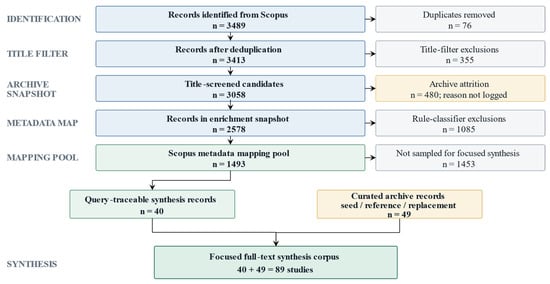
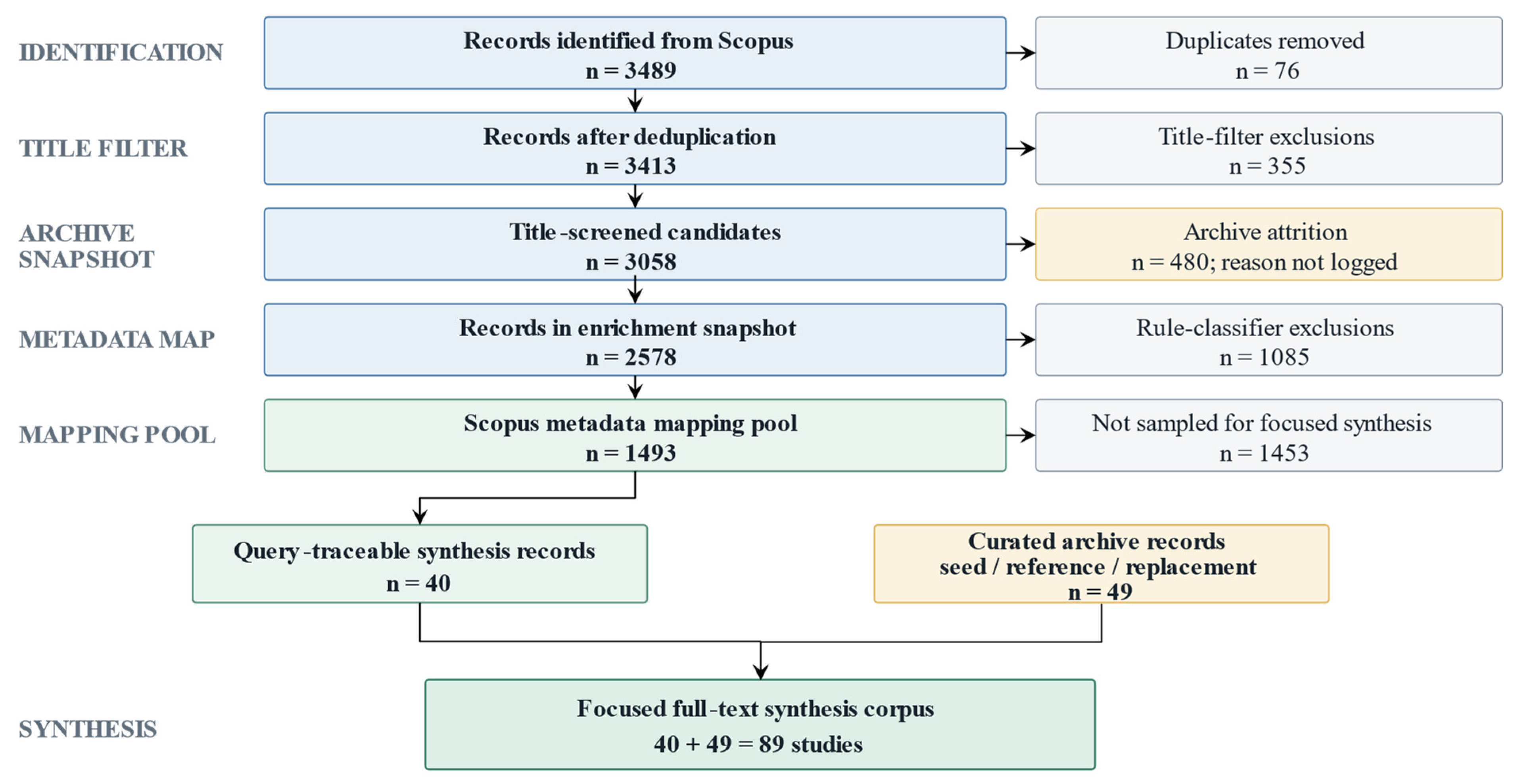
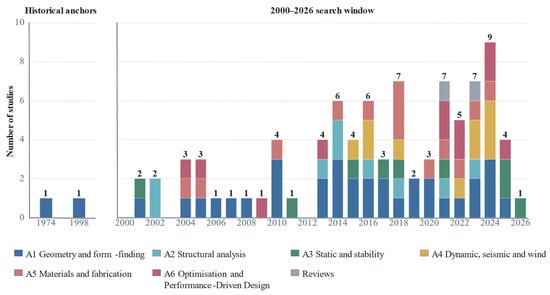
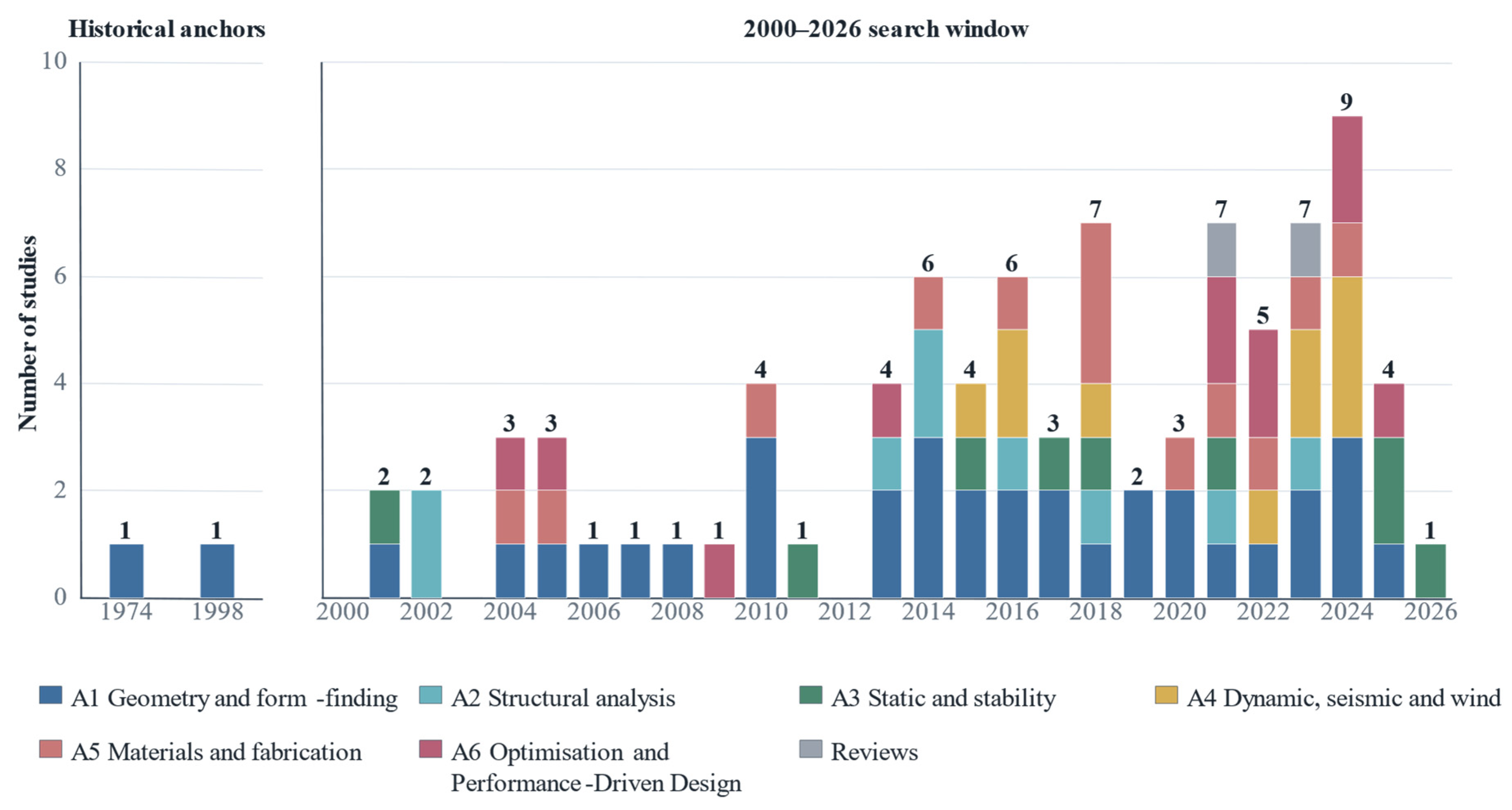
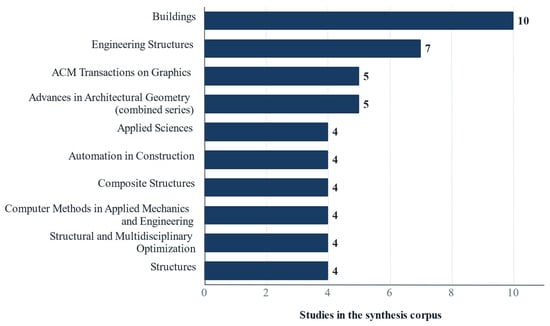
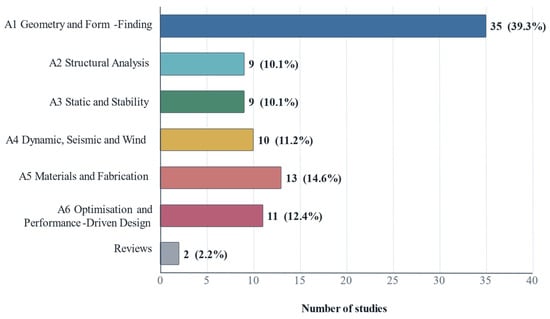
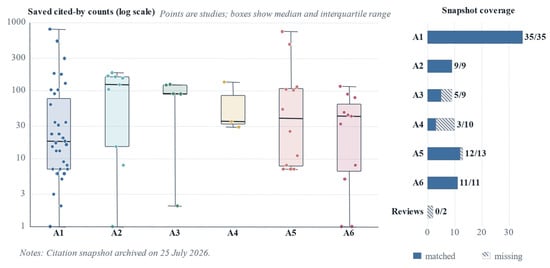
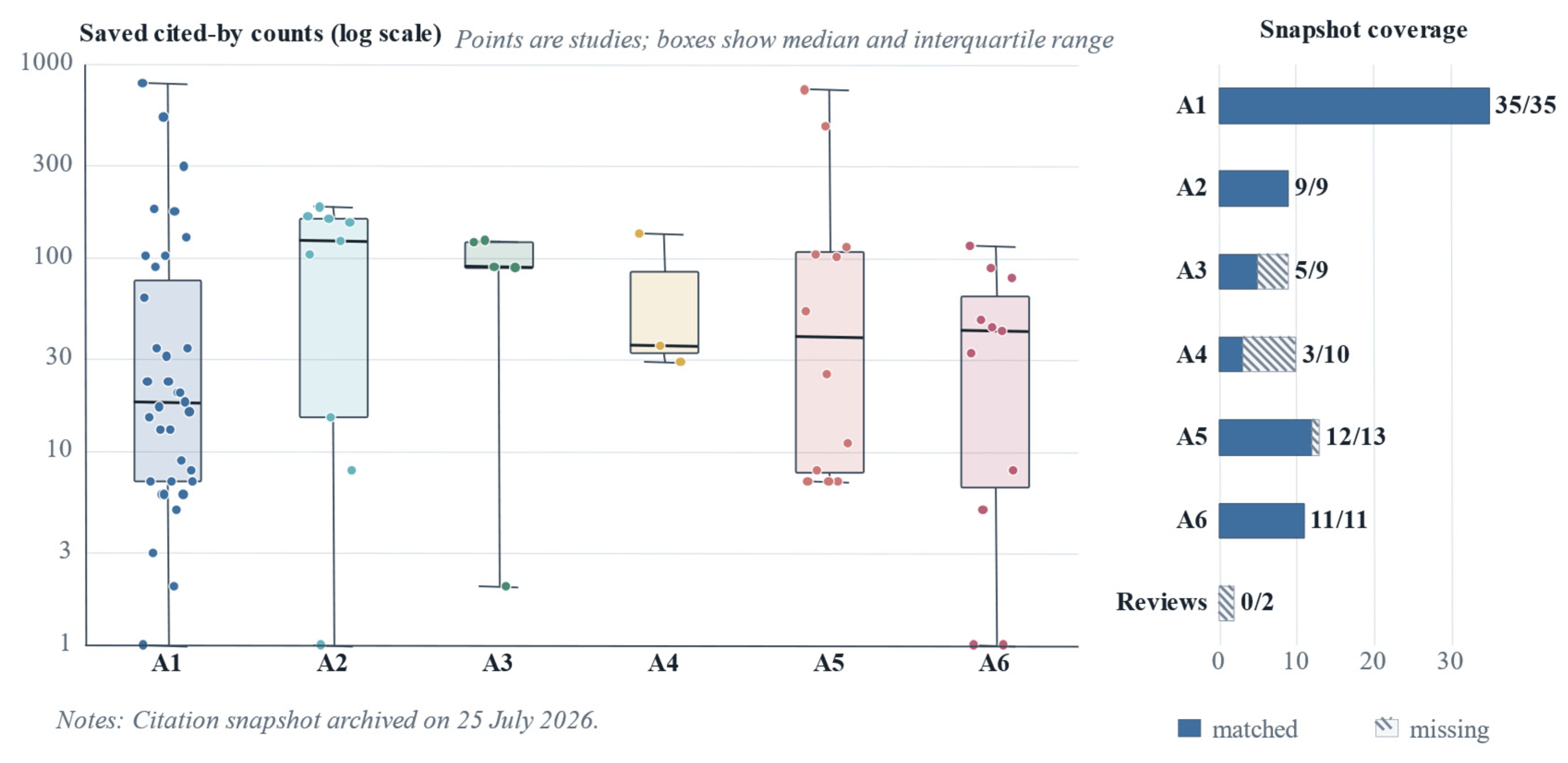
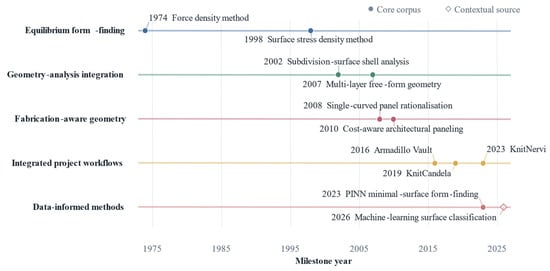
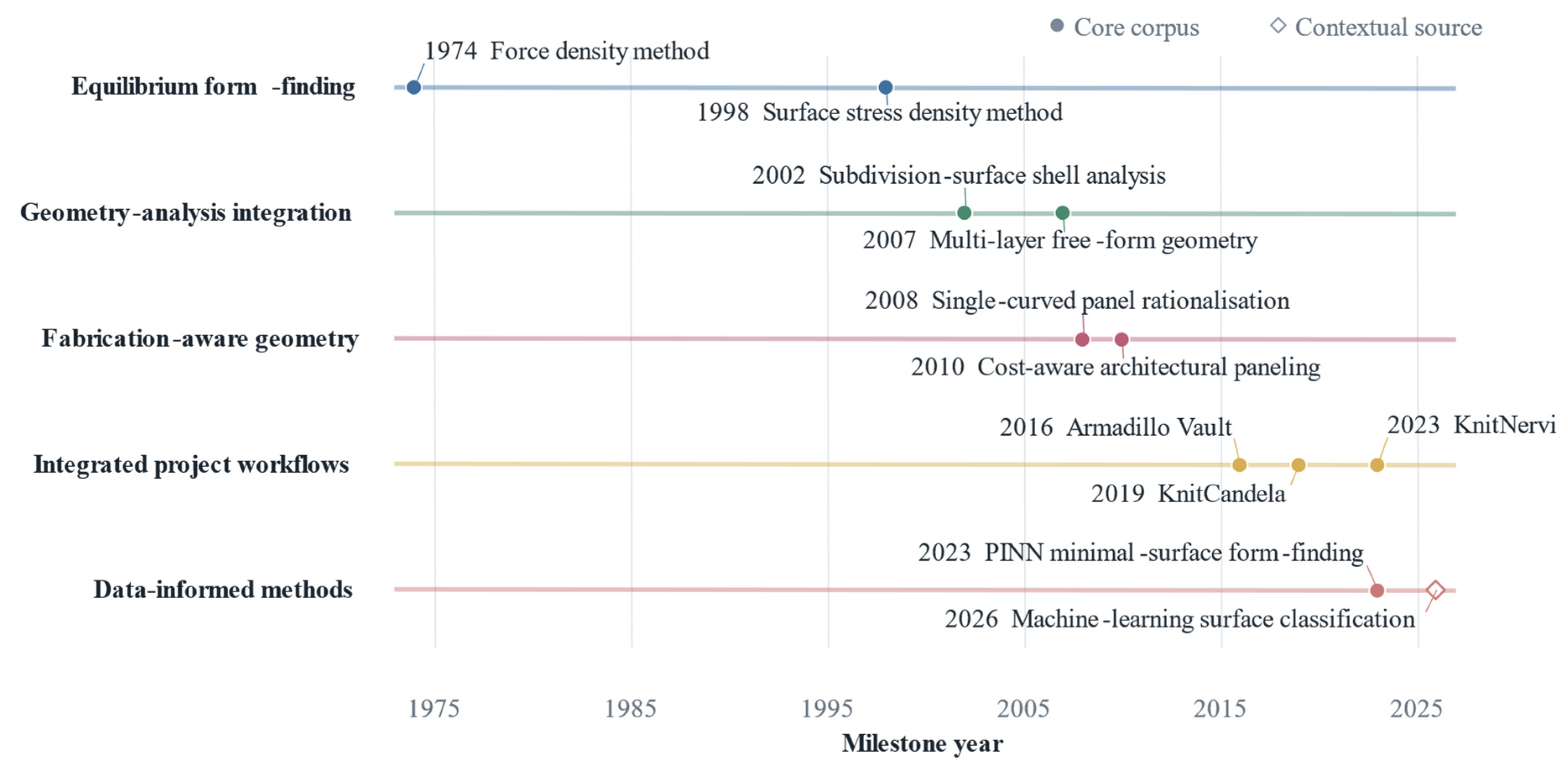
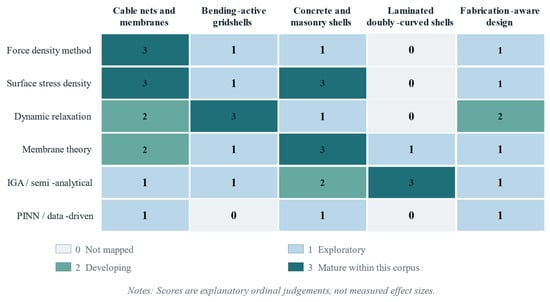
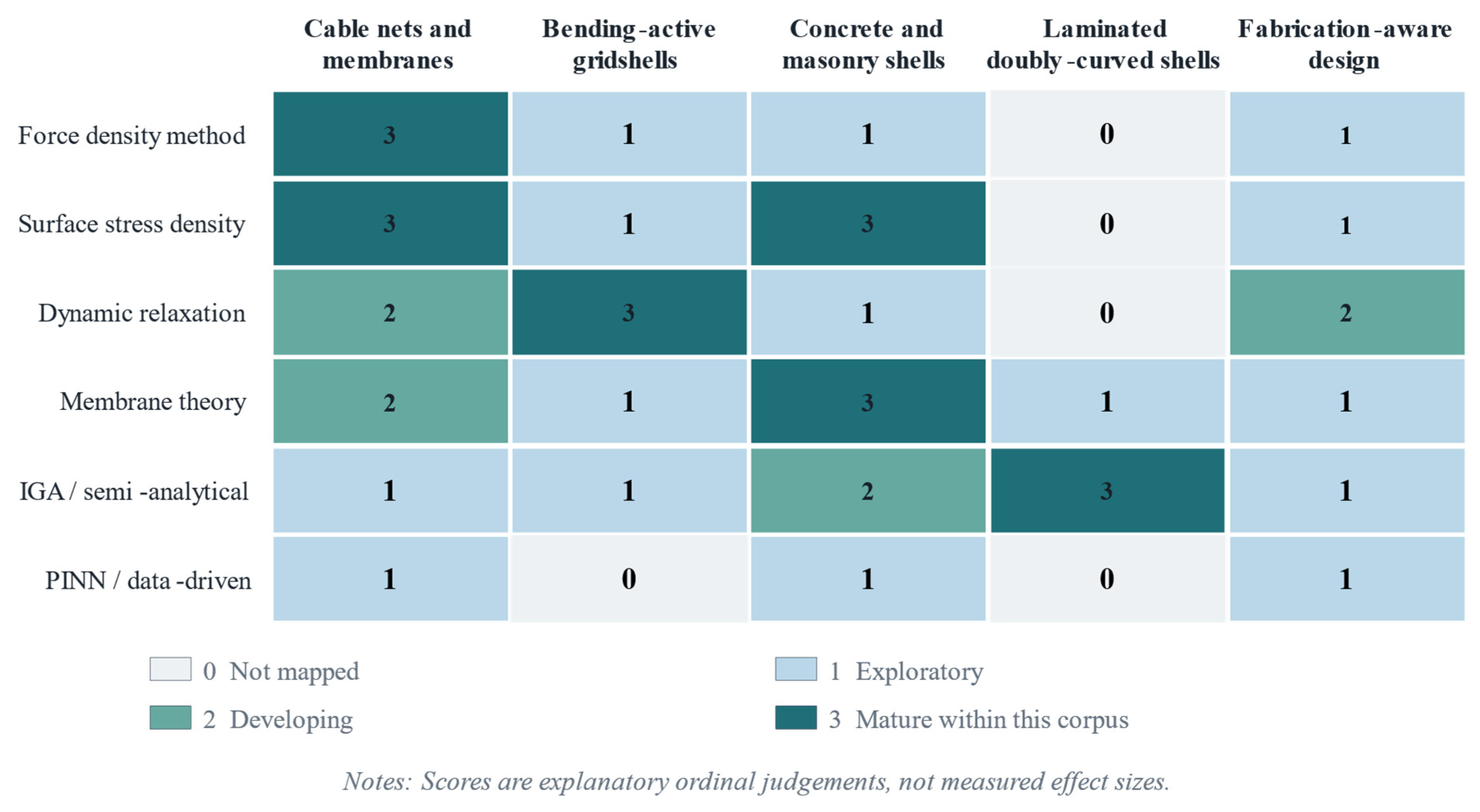
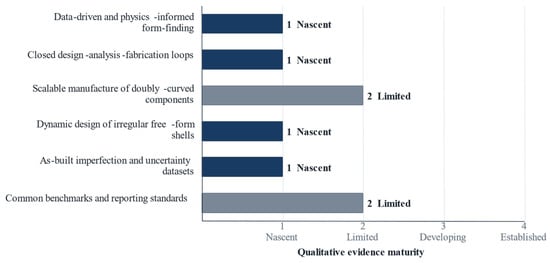
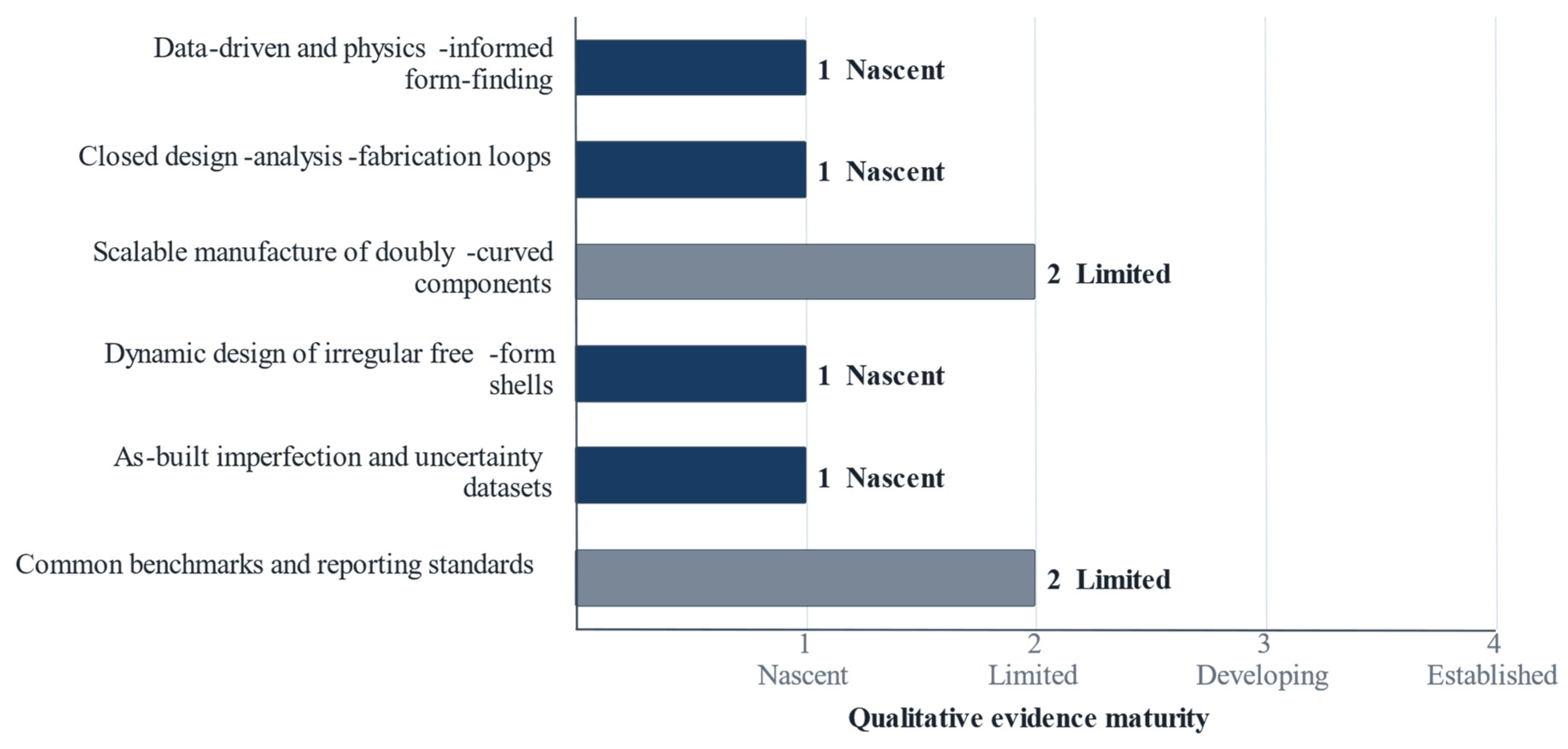

Disclaimer/Publisher’s Note: The statements, opinions and data contained in all publications are solely those of the individual author(s) and contributor(s) and not of MDPI and/or the editor(s). MDPI and/or the editor(s) disclaim responsibility for any injury to people or property resulting from any ideas, methods, instructions or products referred to in the content. |
© 2026 by the authors. Licensee MDPI, Basel, Switzerland. This article is an open access article distributed under the terms and conditions of the Creative Commons Attribution (CC BY) license.