


Abstract
This study evaluates the mechanical properties and carbonation resistance of alkali-activated mortars (AAMs) formulated with ground granulated blast-furnace slag (GGBS) and recycled construction spoil (CS). The experimental variables included the water-to-solid ratio, alkali content, activator type (NaOH vs. Na2SiO3), and GGBS/CS mass ratio. The effects of these parameters on workability, flexural strength, and compressive strength were analyzed, along with the influence of accelerated carbonation curing. Results indicate that CS incorporation reduces flowability, with NaOH-activated mortars displaying marginally better workability than the Na2SiO3-activated counterparts. At an alkali content of 6.5% and a water-to-solid ratio of 0.45–0.5, a 30% CS replacement significantly improved the 7-day flexural strength in Na2SiO3-activated systems. Compressive strength generally increased with higher alkali content, though this effect diminished at elevated CS substitution levels. Under supercritical carbonation, NaOH-activated GGBS exhibited a ~20% strength increase, whereas Na2SiO3-activated GGBS showed negligible change or a slight reduction. Blends containing 50% CS demonstrated minimal carbonation-induced alterations. These findings provide insights into optimizing industrial byproduct utilization in AAMs while improving their carbonation durability, supporting sustainable construction material development.
1. Introduction
The global construction industry is a key driver of urbanization and infrastructure development, significantly contributing to economic growth and employment. However, its heavy reliance on ordinary Portland cement (OPC) raises environmental concerns due to the material’s substantial carbon footprint. Cement production accounts for approximately 8% of global CO2 emissions, primarily from limestone calcination (CaCO3 → CaO + CO2) and fossil fuel combustion during clinker production [1]. Meeting the Paris Agreement’s targets—reducing CO2 emissions by 45% by 2030 and achieving net-zero by 2050—necessitates the development of low-carbon alternatives to conventional construction materials.
Alkali-activated materials (AAMs) have emerged as a sustainable substitute, utilizing industrial byproducts such as ground granulated blast-furnace slag (GGBS), fly ash (FA), and silica fume as precursors [2,3]. These materials undergo alkali activation, where high-pH solutions (e.g., NaOH, Na2SiO3) dissolve amorphous silica (SiO2) and alumina (Al2O3) in the precursors, forming a cohesive matrix of calcium (C-A-S-H) or sodium aluminosilicate hydrate (N-A-S-H) gels [4,5]. Compared to OPC, AAMs offer a 50–80% reduction in carbon emissions [6], alongside additional benefits: (a) Reduced dependence on virgin raw materials (e.g., limestone, clay); (b) Utilization of industrial waste (>100 million tons diverted annually from landfills); (c) Enhanced mechanical properties and durability, including early strength and chemical resistance [7,8,9]. For instance, GGBS-based AAMs typically achieve compressive strengths exceeding 60 MPa within 28 days [10], comparable to high-performance OPC concretes.
Despite these advantages, AAM commercialization faces several challenges: (a) Brittleness and low tensile strength (tensile-to-compressive strength ratios of ~0.05–0.08 vs. ~0.1 for OPC [11]), increasing susceptibility to cracking under service loads; (b) High drying shrinkage (2–3 times that of OPC [12]) arises from the dense, low-porosity microstructure and rapid moisture loss, leading to shrinkage, cracking, and reduced durability; (c) Limited precursor availability, particularly GGBS, which is regionally constrained by steel production and competing demand in blended cements [13,14].
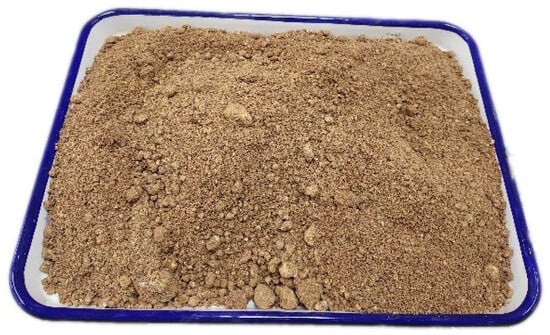
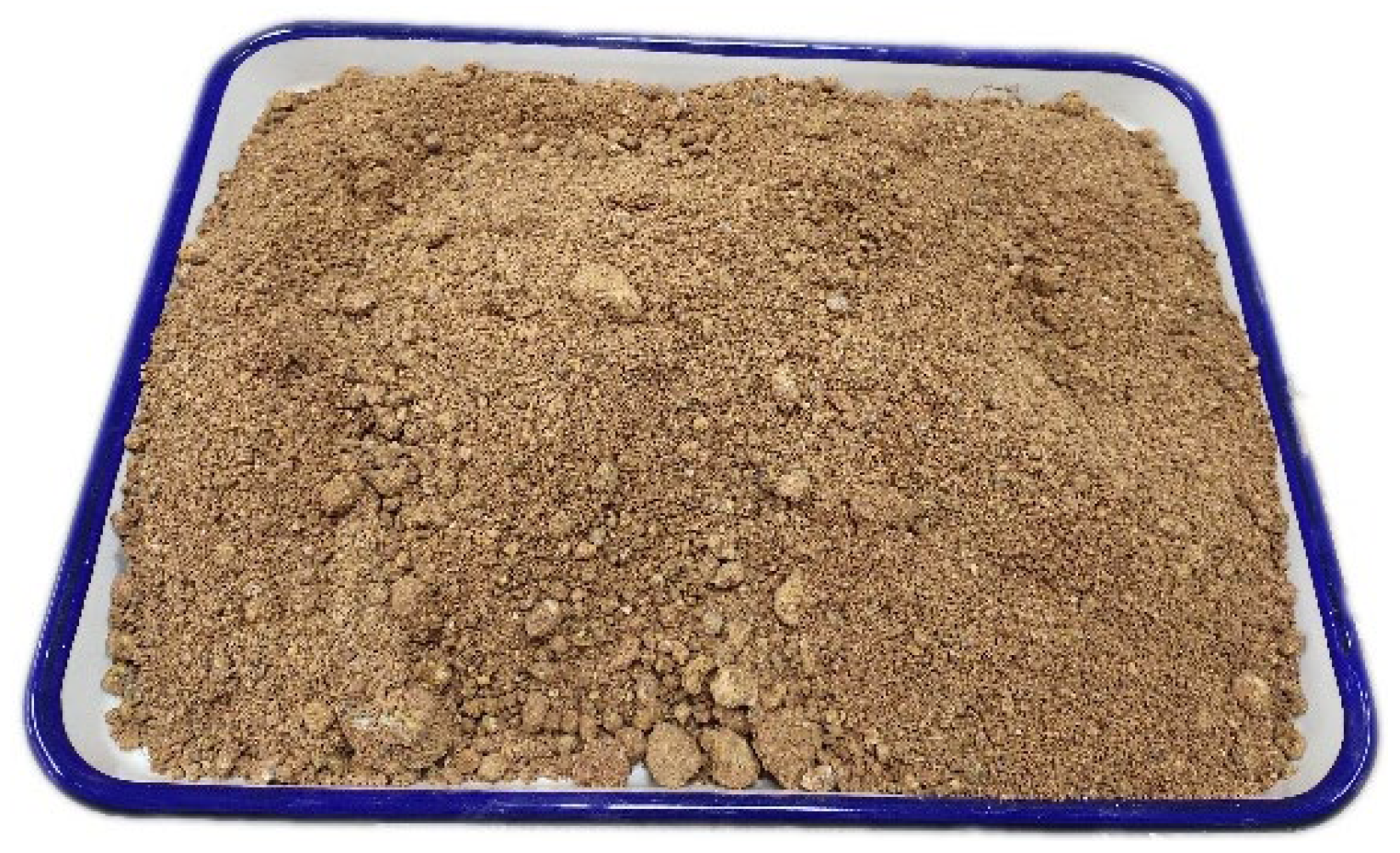
Construction spoil (CS, Figure 1)—a silica- and alumina-rich waste generated from excavation, demolition, and infrastructure projects—has recently garnered attention as a supplementary precursor for AAMs [15]. CS encompasses excavated soil, rock fragments, and residual concrete from construction sites, with global generation exceeding 3 billion tons annually. Currently, ~80% of CS is landfilled or stockpiled, posing environmental risks (e.g., leachate contamination, soil degradation, and methane emissions from anaerobic decomposition) and economic burdens [16]. Its chemical composition—typically 40–60% SiO2, 10–25% Al2O3, 5–15% CaO, and trace oxides (Fe2O3, MgO) [17]—resembles that of low-calcium precursors (e.g., FA), making it a potential candidate for alkali activation.
Figure 1.
Appearance of construction spoil used in this study.
Prior studies have explored CS in cementitious systems, primarily as a fine aggregate or partial OPC replacement [17,18,19,20], but its use as a supplementary binder in GGBS-based AAMs remains underexplored. Early research suggests CS can partially replace GGBS (e.g., 10–30% substitution) to reduce costs and precursor demand [21], but critical knowledge gaps persist: (a) Optimal blending ratios: How do varying GGBS/CS proportions influence reaction kinetics, gel formation, and mechanical performance? Excess CS may dilute reactive components, while insufficient CS limits sustainability gains. (b) Microstructural and durability implications: CS’s lower CaO content (vs. GGBS: 35–45% CaO [16]) may shift gel chemistry from C-A-S-H (Ca-rich) to N-A-S-H (Na-rich), altering porosity, shrinkage, and resistance to degradation (e.g., carbonation, sulfate attack). (c) Long-term carbonation resistance: Carbonation is a major durability concern for AAMs, as CO2 ingress reacts with C-A-S-H/N-A-S-H gels to form CaCO3 and silica gels, reducing matrix alkalinity and weakening the microstructure [22,23]. CS’s mineralogy (e.g., reactive vs. inert phases) may exacerbate or mitigate this process, but data on long-term carbonation behavior is lacking.
Recent advancements in supercritical CO2(scCO2) curing [23,24] offer a promising approach to enhance the performance of AAMs by accelerating reaction kinetics and densifying the matrix through the precipitation of nanoscale calcite (CaCO3). Studies on magnesium oxide cement-based composites indicate that scCO2 curing enables rapid strength gain while reducing capillary porosity and specific surface area [25]. However, the effects of scCO2 on CS-GGBS blends remain unexplored, particularly how CS’s variable composition interacts with CO2 to influence phase evolution. For instance, the reactive silica in CS may promote carbonate formation, while its inert components (e.g., quartz) could dilute binding capacity. Additionally, the interplay between activator type (NaOH vs. Na2SiO3) and scCO2 curing in CS-rich systems is not well understood, despite evidence that Na2SiO3 activation better preserves gel stability under CO2 exposure.
This study addresses these gaps by systematically investigating the fresh properties, mechanical strength, and carbonation resistance of CS-GGBS-based AAMs under varying formulations and curing regimes. By valorizing CS and optimizing scCO2, this work advances the development of low-carbon, durable AAMs for infrastructure applications, providing actionable insights for precast elements and non-structural components. The findings will inform standards for CS utilization in AAMs, supporting the construction sector’s transition to a circular economy while addressing global decarbonization targets.
2. Materials and Methods
2.1. Raw Materials
The raw materials are construction spoil (CS), ground granulated blast-furnace slag (GGBS), sodium silicate activator (SiO2/Na2O molar ratio = 1.0), ISO 679-compliant standard [26] sand (0.08–2 mm), and deionized water. The CS, sourced from the Shenzhen Longgang Metro Line 16 Phase II construction site, was preprocessed by sieving (1.25 mm mesh) to eliminate coarse aggregates (e.g., gravel) and organic debris. The CS used in this study belongs to the completely decomposed granite residual soil, with the main component being layered aluminosilicates [27,28].
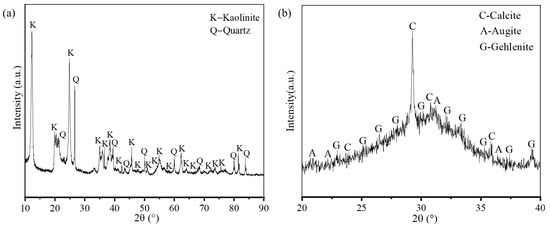
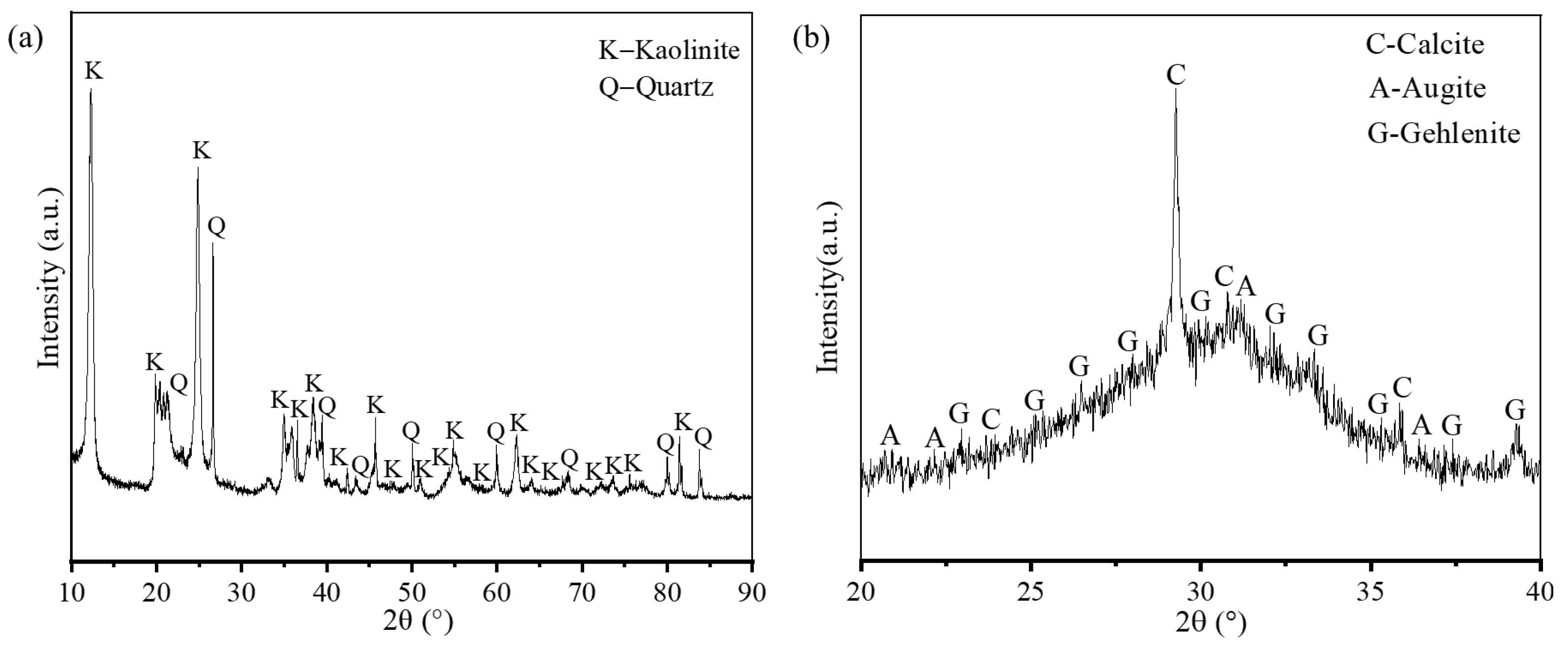
Particle size distribution analysis showed that 79.30% of the as-received CS passed through the 1.25 mm sieve, with a negligible moisture content (1.47%). Chemical composition (Table 1), determined by X-ray fluorescence (XRF) spectroscopy (Specification: Fluoro Max-4, Manufacturer: HORIBA Instruments Incorporated, Irvine, CA, USA) was dominated by SiO2 (58.05%) and Al2O3 (34.08%), accounting for 92.13% of the total mass. Trace oxides (Fe2O3: 5.63%; MgO, TiO2, K2O: <2% combined) were also detected. X-ray diffraction (XRD, Specification: SmartLab 3kW, Manufacturer: Rigaku Corporation, Tokyo, Japan) patterns confirmed kaolinite and quartz as the predominant crystalline phases (Figure 2). These results corroborate earlier reports [15], validating the suitability of CS as an aluminosilicate precursor for alkali activation.
Table 1.
XRF analysis of the CS and GGBS (wt, %).
Figure 2.
XRD analysis of (a) CS and (b) GGBS.
The ground granulated blast-furnace slag (GGBS) employed in this investigation conformed to the S105 grade per GB/T 18046-2017 [29] (aligned with EN 15167-1 standards [30]) and was sourced from an industrial steel producer. X-ray fluorescence (XRF) spectroscopy revealed a chemical composition dominated by CaO (38.30 ± 0.45 wt%), SiO2 (34.20 ± 0.38 wt%), and Al2O3 (16.70 ± 0.25 wt%), with MgO (5.01 ± 0.12 wt%) as a secondary component (Table 1). This oxide distribution is typical of high-reactivity GGBS optimized for alkali activation.
The material’s hydraulic behavior was further evidenced by its CaO/SiO2 molar ratio (1.12) and basicity coefficient [(CaO + MgO)/(SiO2 + Al2O3) = 0.89], both of which meet the requirements for S105-grade GGBS (glass content > 95%, crystalline phases < 1.5%). These properties ensure rapid reactivity in alkaline environments, as demonstrated in prior studies of similar systems.
2.2. Experimental Design
2.2.1. Mix Ratio Design
Preliminary tests revealed that a water-to-solid (w/s) ratio below 0.40 resulted in poor workability of the CS-GGBS-based alkali-activated mortar, rendering it unsuitable for casting. Furthermore, excessive efflorescence was observed when the alkali content exceeded 8%, while concentrations below 5% proved insufficient to dissolve the aluminosilicate phases in GGBS and CS. Based on iterative optimization, w/s ratios of 0.45 and 0.50, along with alkali contents of 5.0%, 6.5%, and 8.0%, were selected for further study. Two alkali activation systems were employed: sodium silicate (Na2SiO3) and sodium hydroxide (NaOH). For the Na2SiO3 system, the experimental variables included the following:
- GGBS/CS mass ratios (10:0, 7:3, 5:5, 3:7),
- w/s ratios (0.45, 0.50),
- Alkali contents (5.0%, 6.5%, 8.0%).
The GGBS/CS mass ratios were determined based on two key considerations: (1) Technical Feasibility: Preliminary tests showed that CS content > 80% resulted in unacceptably slow strength development (less than 2 MPa at 28 days), establishing the upper limit for CS incorporation. (2) Sustainability–Performance Balance: The ratios were optimized to (a) maximize CS utilization (promoting circular economy and carbon reduction) and (b) maintain adequate mechanical performance through strategic GGBS supplementation. In the water-to-solid ratio, the solid refers to precursor materials (GGBS + CS) and solid components in alkali activators.
In contrast, the NaOH system adopted a fixed w/s ratio of 0.45 and an alkali content of 6.5%, with GGBS/CS mass ratios (10:0, 5:5) as the sole variables. The complete mix design for the CS-GGBS-based AAM is detailed in Table 2, in which Nos. 1–26 represent the proportion designs of CS-incorporated alkali-activated GGBS materials under standard curing conditions, while Nos. M1–M4 correspond to those under carbonation curing.
Table 2.
Mix proportions of CS-GGBS-based alkali-activated materials.
2.2.2. Curing Protocol
Two curing regimes were employed: standard curing and carbonation curing. Prismatic specimens (40 mm × 40 mm × 160 mm) were cast in accordance with ISO 679 [26], with each mix formulation producing 18 specimens to enable triplicate testing at multiple ages.
- (1)
- Standard Curing
Specimens were membrane-sealed and stored in an environmental chamber (20 ± 1 °C, RH ≥ 90%) until testing.
- (2)
- Carbonation Curing
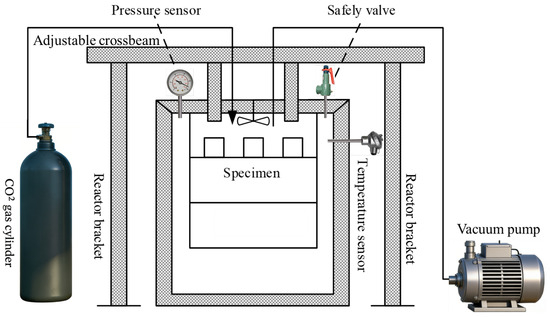
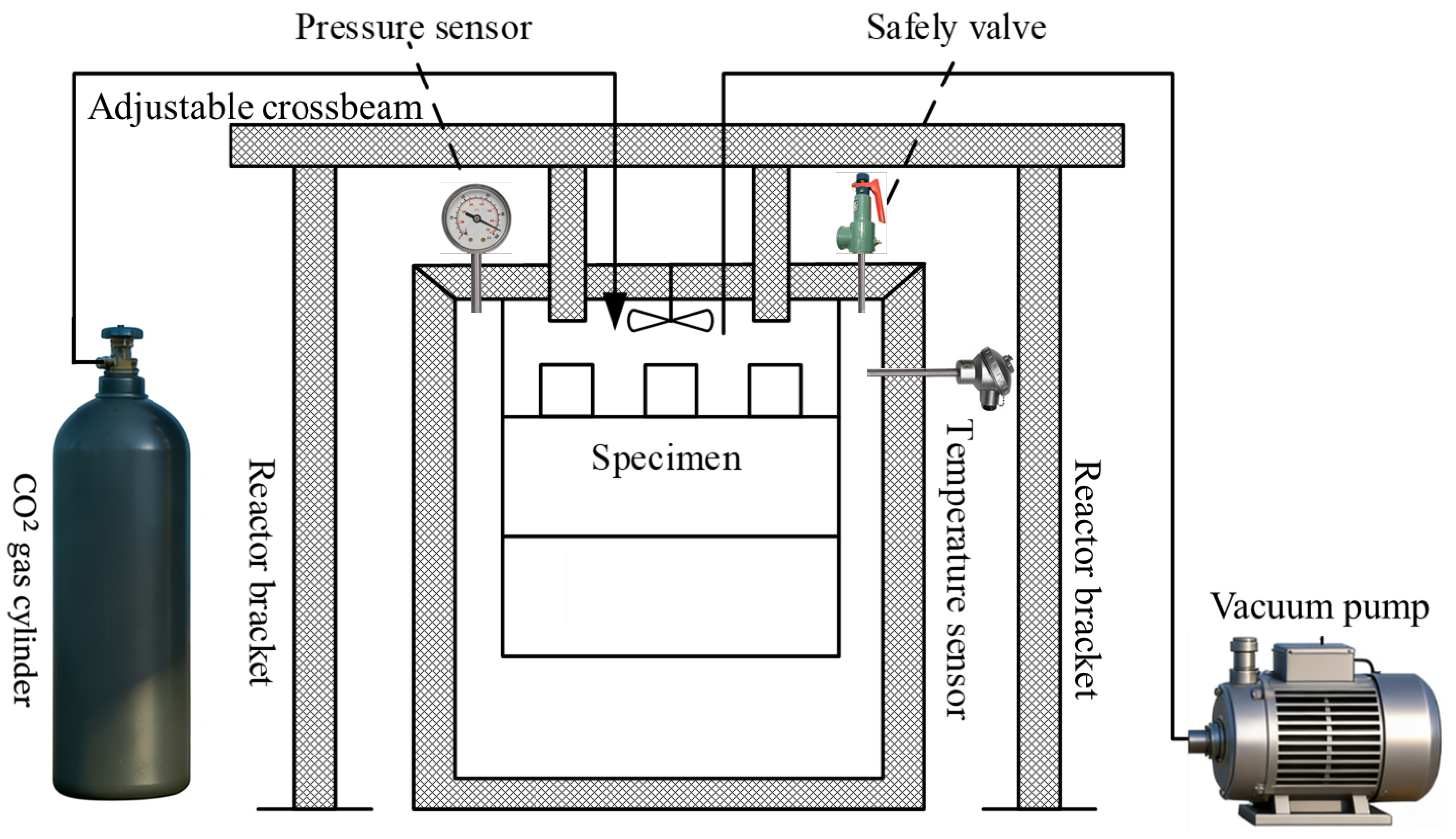
A more complex procedure was adopted, with key parameters summarized in Table 3. The experimental setup (Figure 3) included a cement mortar mixer, a vibration table, a standard curing chamber, a carbonation curing device (Specification: BR100/12.0-304, Manufacturer: Weihai Borui Chemical Machinery Co., Ltd., Weihai, China), and supplementary equipment (high-pressure carbonation reactor, air compressor, air purifier).
Table 3.
Carbonation curing protocol.
Figure 3.
Schematic diagram of the carbonation curing test setup.
The carbonation curing protocol involved three key steps [31]. First, specimens were placed in an autoclave, and residual air was evacuated using a vacuum pump to establish near-vacuum conditions. Next, CO2 was introduced until the autoclave pressure reached 8 MPa at 40 °C, maintained using electric heaters and refrigeration units. To accelerate pressurization, a multi-stage filling method was employed: initial pressurization using multiple CO2 cylinders until equilibrium, followed by further compression via a compressor to achieve the target pressure, inducing a supercritical CO2 state. The CO2 filling process took approximately 4 h, while depressurization required about 1 h—both durations excluded from the 8 MPa carbonation curing period.
2.3. Testing Methods
2.3.1. Flowability Measurement
The flowability of fresh mortar was evaluated using the flow table test method, in accordance with GB/T 2419-2005 [32]. The mortar mixture, prepared with a water-to-solid ratio of 0.5, was immediately poured into a truncated conical mold (60 mm top diameter, 70 mm bottom diameter, 40 mm height) positioned at the center of the flow table. After filling and leveling the surface, the mold was carefully lifted vertically, and the table was then subjected to 25 drops within 15 s. The resulting spread diameter of the mortar was measured along four perpendicular directions with an accuracy of 1 mm, and the average of these measurements was recorded as the flowability value. All flowability tests were conducted under controlled environmental conditions maintained at 20 ± 2 °C and 50 ± 5% relative humidity to ensure consistent testing conditions.
2.3.2. Mechanical Strength Testing
The mechanical strength of alkali-activated mortar specimens (40 × 40 × 160 mm) was evaluated in accordance with GB/T 679-2009 [26]. Following curing, specimens were firstly subjected to three-point flexural testing. Freshly fractured surfaces were then sprayed with 1% phenolphthalein ethanol solution for carbonation front analysis. The resulting fragments were subsequently tested for compressive strength. Each mix formulation underwent triplicate testing, with the median value reported as the representative strength.
2.3.3. Carbonation Depth Measurement
Carbonation depth was determined using a 1% phenolphthalein ethanol solution (pH detection range: 8.3–10.0), according to the GB/T 42277-2022 [33]. Immediately after flexural failure, the freshly fractured surfaces were uniformly sprayed with the indicator solution. After 30 s of exposure, the boundary between the purple-red zone (uncarbonated, pH > 10.5) and the colorless zones (carbonated, pH < 8.5) was measured at four symmetrical points per face using a digital caliper (resolution: 0.01 mm). The average of eight measurements (four per face) was recorded as the final carbonation depth.
3. Results and Discussion
3.1. Mortar Flowability
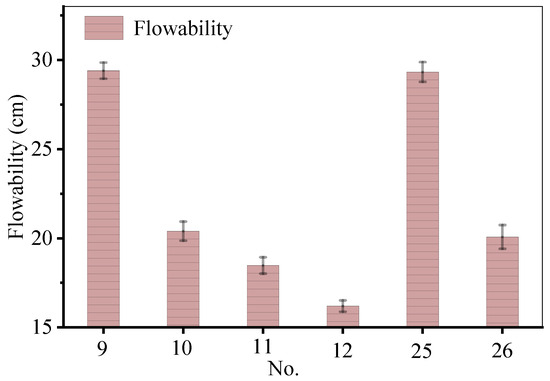
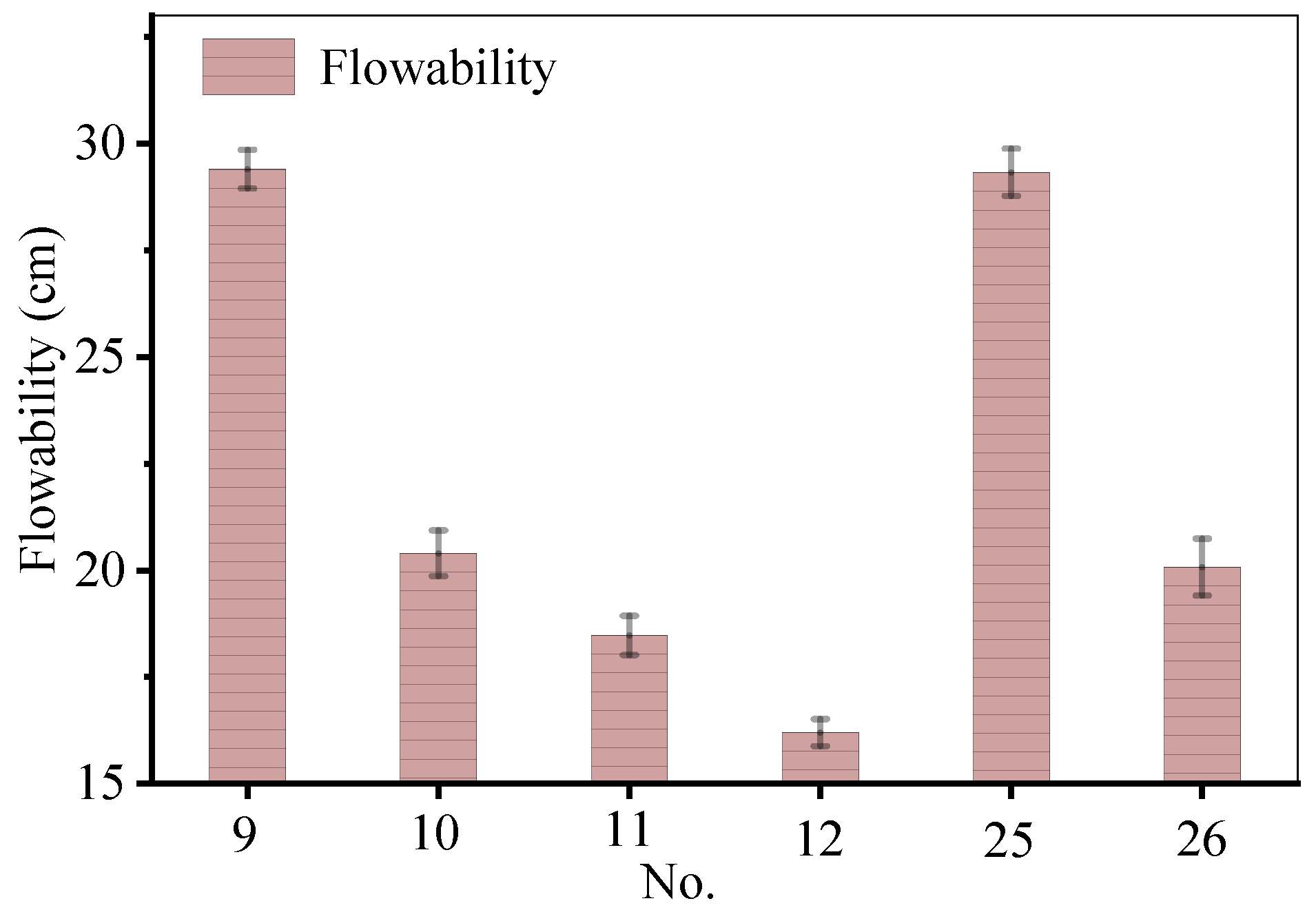
The flowability of sodium silicate-activated mixtures (Nos. 9–12, Table 2) and sodium hydroxide-activated mixtures (Nos. 25–26, Table 2) is illustrated in Figure 4. Notably, specimens No. 9 (sodium silicate system) and No. 25 (sodium hydroxide system) exhibited excessive flowability, spreading completely across the flow table before the standard 25 jolts could be completed, rendering accurate measurement impossible.
Figure 4.
Mortar flowability test results.
Based on the flowability test results, the following conclusions can be drawn:
- (1)
- Sodium Silicate Activation System.
From No. 9 to No. 10, the incorporation of 30% CS significantly reduced mortar flowability with further decreases observed at higher CS content. This behavior is attributed to the layered silicate structure of clay minerals (e.g., kaolinite) within CS, which exhibits strong water absorption [16,17,34].
- (2)
- Sodium Hydroxide vs. Sodium Silicate Systems.
Under identical conditions, the sodium hydroxide-activated system demonstrates marginally higher fluidity than the sodium silicate system. This difference stems from the hydration of silicate ions () during sodium silicate dissolution, where these ions bind with free water molecules, reducing system workability [35]. In contrast, sodium hydroxide activation lacks such ion hydration effects, thereby preserving flowability.
3.2. Mortar Mechanical Strength
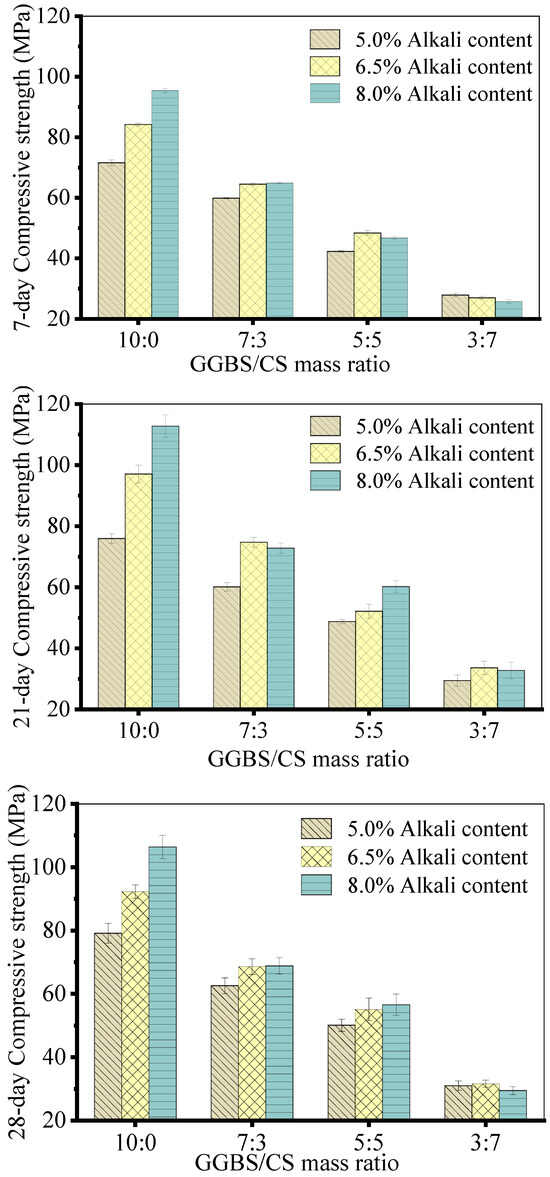
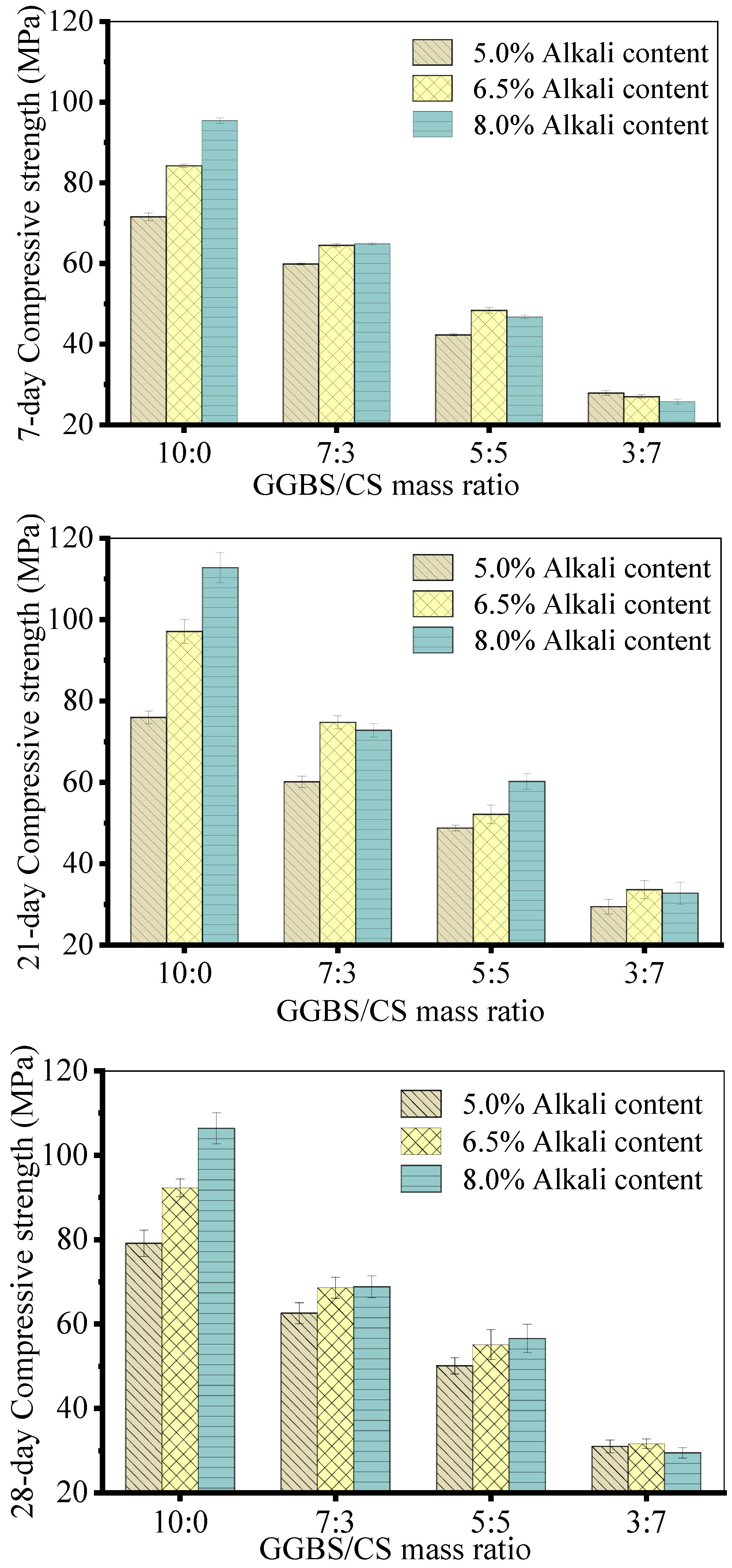
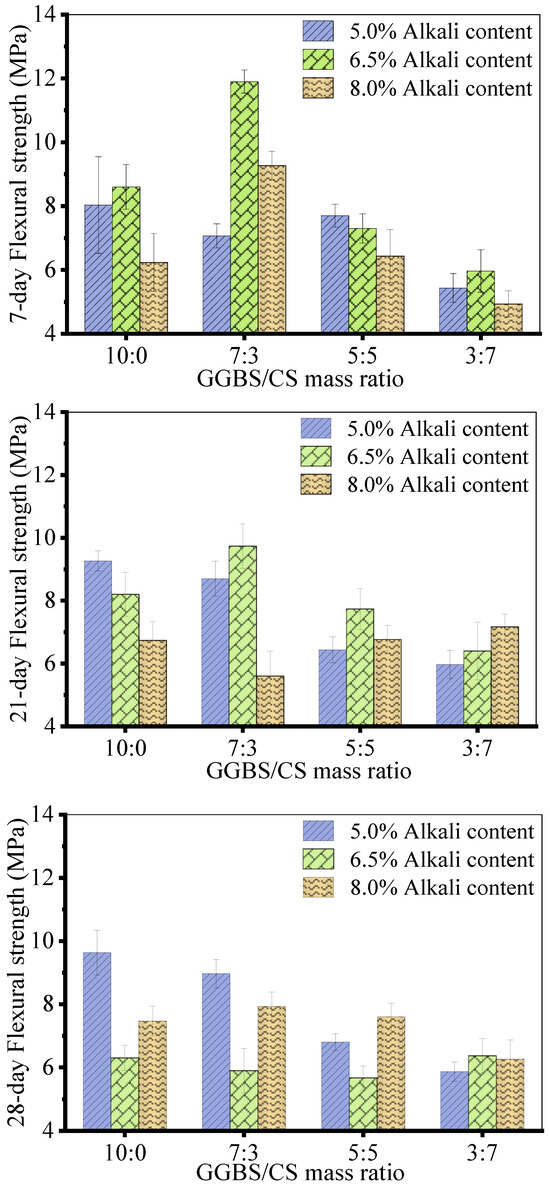
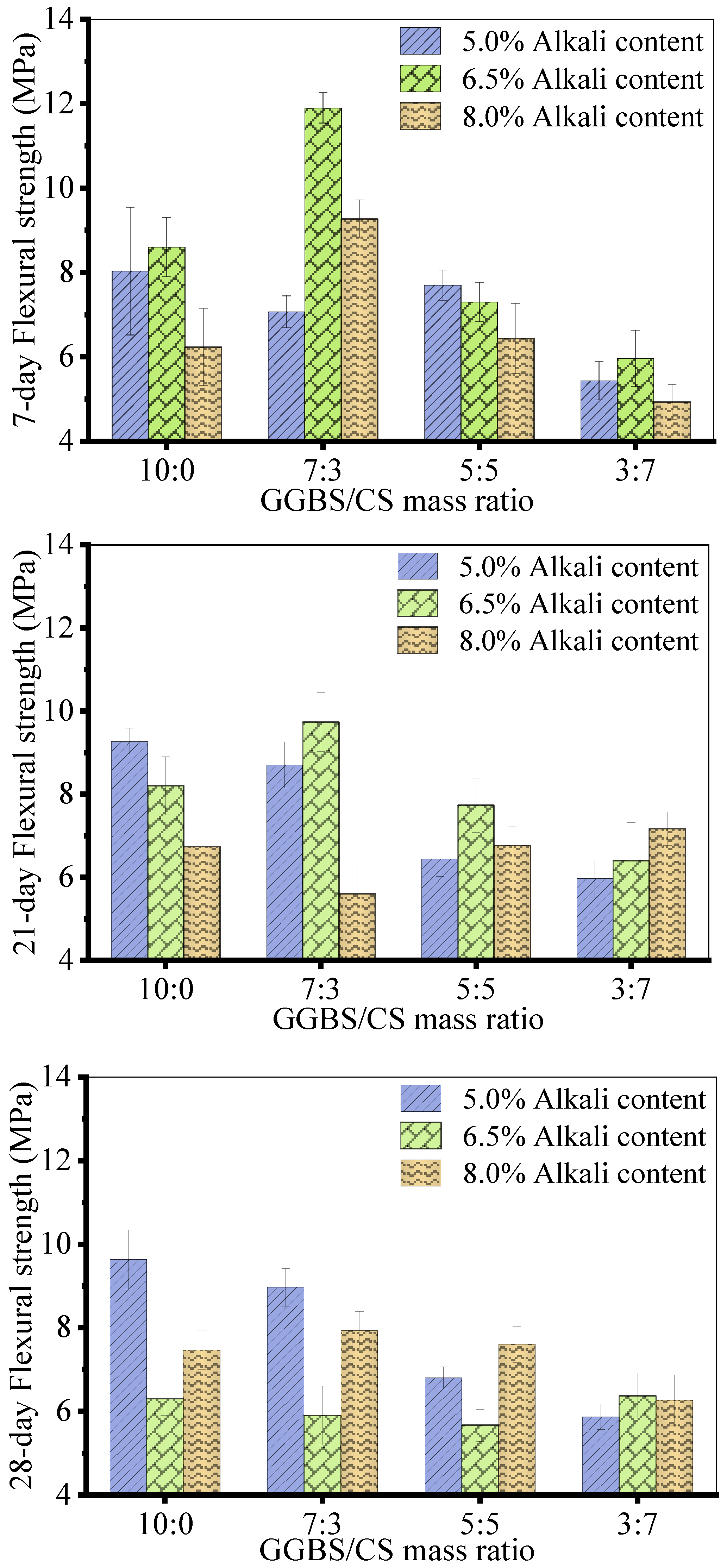
The compressive and flexural strengths of alkali-activated GGBS-CS mortar specimens at 7 d, 21 d, and 28 d were tested in accordance with GB/T 17671-2021 (Test Method for Strength of Cement Mortar), as presented in Figure 5 and Figure 6.
Figure 5.
Compressive strength development of Na2SiO3-activated GGBS-CS-based AAMs at 7 d, 21 d, and 28 d (w/s = 0.50).
Figure 6.
Flexural strength development of Na2SiO3-activated GGBS-CS-based AAMs at 7 d, 21 d, and 28 d (w/s = 0.50).
Figure 5 demonstrates that under constant alkali content and water-to-solid ratio, the compressive strength of sodium silicate-activated GGBS-CS AAMs exhibits a progressive decline with the increasing CS content. This trend is consistently observed across all curing ages (7, 21, and 28 days), with the most significant strength reduction occurring at the early age (7 days) compared to later stages (21 and 28 days). These findings suggest that GGBS incorporation adversely affects the compressive strength development of GGBS-CS-based AAMs [36,37]. The targeted mean strength was determined based on preliminary trials, with the optimal mix (m(GGBS):m(CS) = 3:7) achieving 7-day compressive strengths exceeding 25 MPa and 28-day compressive strengths exceeding 30 MPa, meeting structural mortar requirements.
When maintaining a constant GGBS/CS mass ratio, the compressive strength shows a general improvement with a higher alkali content. However, this positive correlation becomes less pronounced at elevated CS contents, indicating that excessive CS addition may compromise the beneficial effects of increased alkali activation. This phenomenon highlights the pivotal role of alkali-activated GGBS in the total compressive strength improvement, which can be found in references [38,39].
In terms of flexural strength, as shown in Figure 6, when the alkali content and water-to-solid ratio remain constant, the flexural strength generally shows a trend of initially increasing and then decreasing with the rise in CS content. The optimal effect is observed when the CS content reaches 30%. This demonstrates that the appropriate incorporation of CS can enhance the flexural strength. This improvement can be attributed to the fact that the addition of GGBS can appropriately mitigate the shrinkage of the alkali-activated GGBS system, thereby boosting its flexural strength. However, when the CS content becomes excessively high, the flexural strength declines rapidly, indicating that alkali-activated GGBS makes a significant contribution to the system’s flexural strength improvement. Under the condition that other variables remain unchanged, when the alkali content is set at 6.5%, the test specimen achieve the highest flexural strength at 7-day and 21-day curing ages, but their flexural strength at 28 days is unsatisfactory. This proves that this alkalinity hinders the long-term strength development.
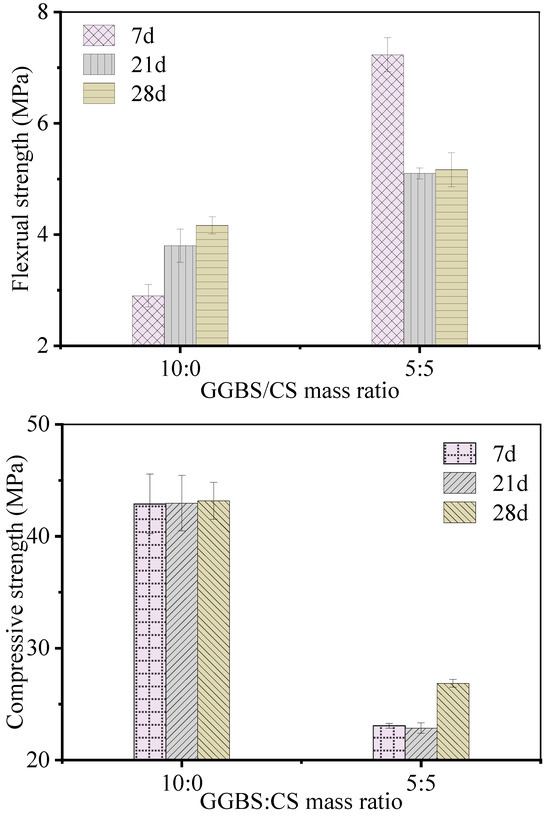
As shown in Figure 7, the incorporation of 50% CS led to contrasting effects on the mechanical properties of NaOH-activated slag:
Figure 7.
Compressive and flexural strength of NaOH-activated GGBS-CS-based AAMs at 7 d, 21 d, and 28 d (w/s = 0.50).
Flexural strength: Increased by >30% at all tested ages, likely due to CS’s filler effect and potential pozzolanic contribution.
Compressive strength: Decreased by >40%, attributed to CS’s higher porosity and dilution of the reactive slag component.
3.3. Mortar Carbonation Resistance
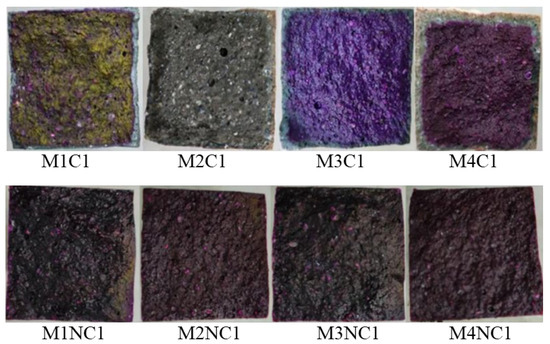
The specimens’ carbonation resistance was evaluated through phenolphthalein testing. Figure 8 displays the fracture surfaces of specimens M1C1, M2C1, M3C1, and M4C1 immediately after spraying with phenolphthalein solution, revealing their carbonation patterns. The corresponding fracture surfaces of non-carbonated specimens M1NC1, M2NC1, M3NC1, and M4NC1 following phenolphthalein application are also presented in Figure 8. This series of images allows for comprehensive visual assessment of the carbonation front progression in different specimen types under varying conditions.
Figure 8.
Phenolphthalein colorimetric results of carbonated and non-carbonated specimens.
The incorporation of CS significantly enhances the carbonation depth of GGBS-CS-based alkali-activated mortar under supercritical carbonation curing. Under identical curing conditions, NaOH-activated GGBS-CS AAMs (M3 and M4) exhibit higher carbonation susceptibility than Na2SiO3-activated systems (M1 and M2).
This difference arises because NaOH solely provides an alkaline environment (OH−) without supplying additional SiO32−, leading to a lower Si/Al ratio in the C-(N)-A-S-H gel. The resulting incomplete 3D Si-O-Si network contains numerous defect sites vulnerable to CO2 attack, promoting dealumination, desilication, and carbonate formation. In contrast, Na2SiO3 contributes both OH− and SiO32−, forming a denser, more stable C-(N)-A-S-H gel with a higher Si/Al ratio. Additionally, excess SiO32− fills interparticle pores, reducing connectivity and hindering CO2 penetration, thereby limiting carbonation to the surface layer [40,41,42,43].
Furthermore, the alkalinity of NaOH-activated systems relies solely on free OH−, which rapidly depletes during early carbonation, causing a sharp pH drop and accelerating gel decomposition. In Na2SiO3 systems, however, the buffering effect of HSiO3− ⇌ SiO32− + H+ stabilizes pH, maintaining high alkalinity and delaying carbonation [44,45].
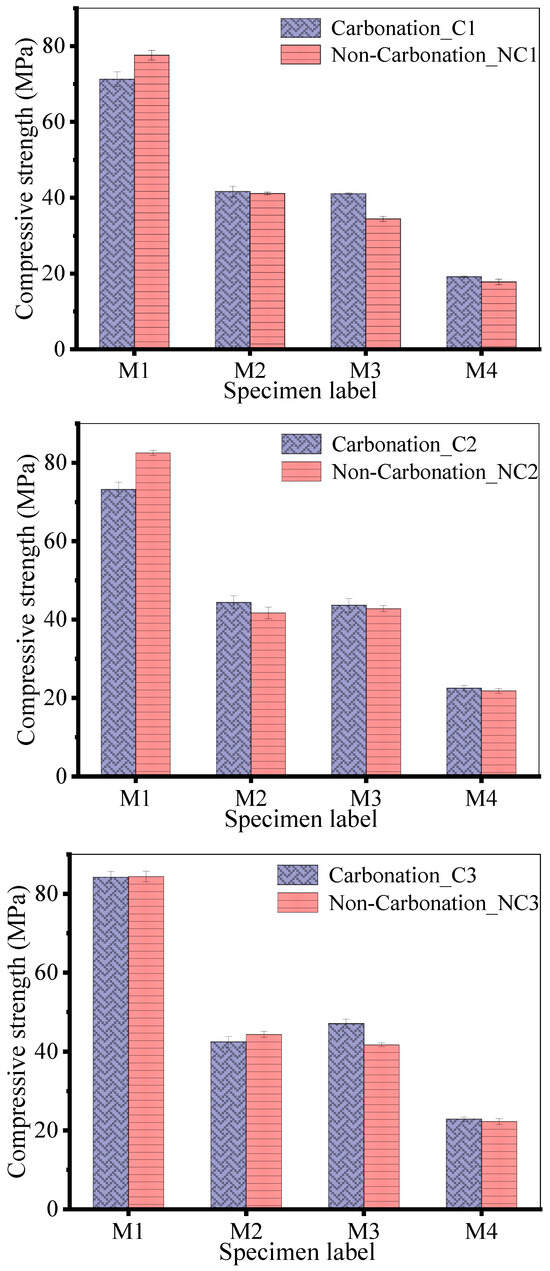
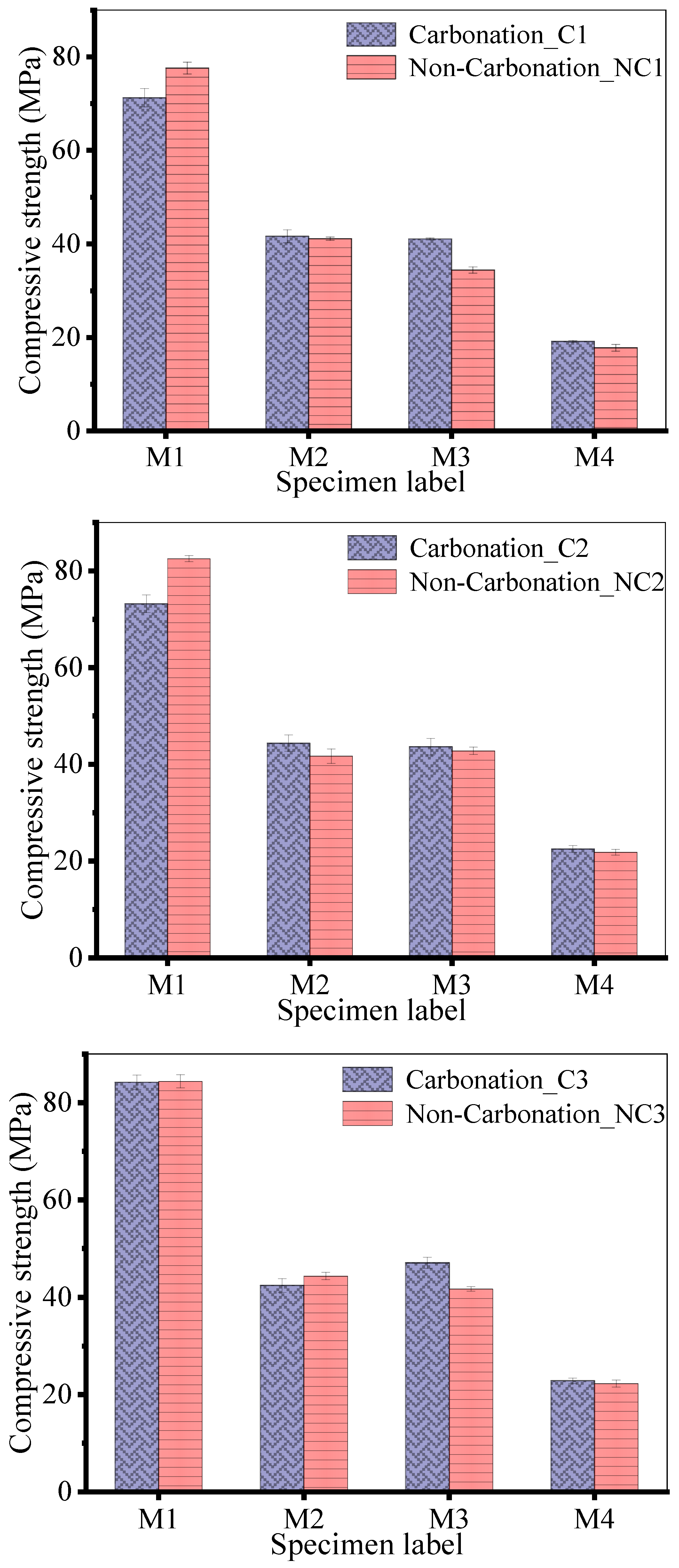
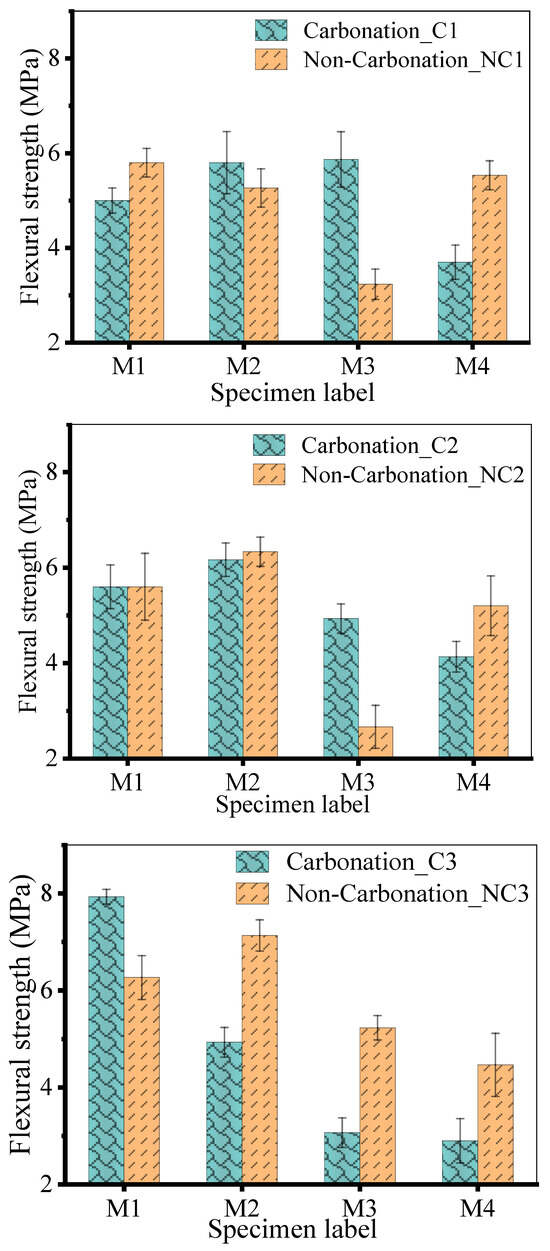
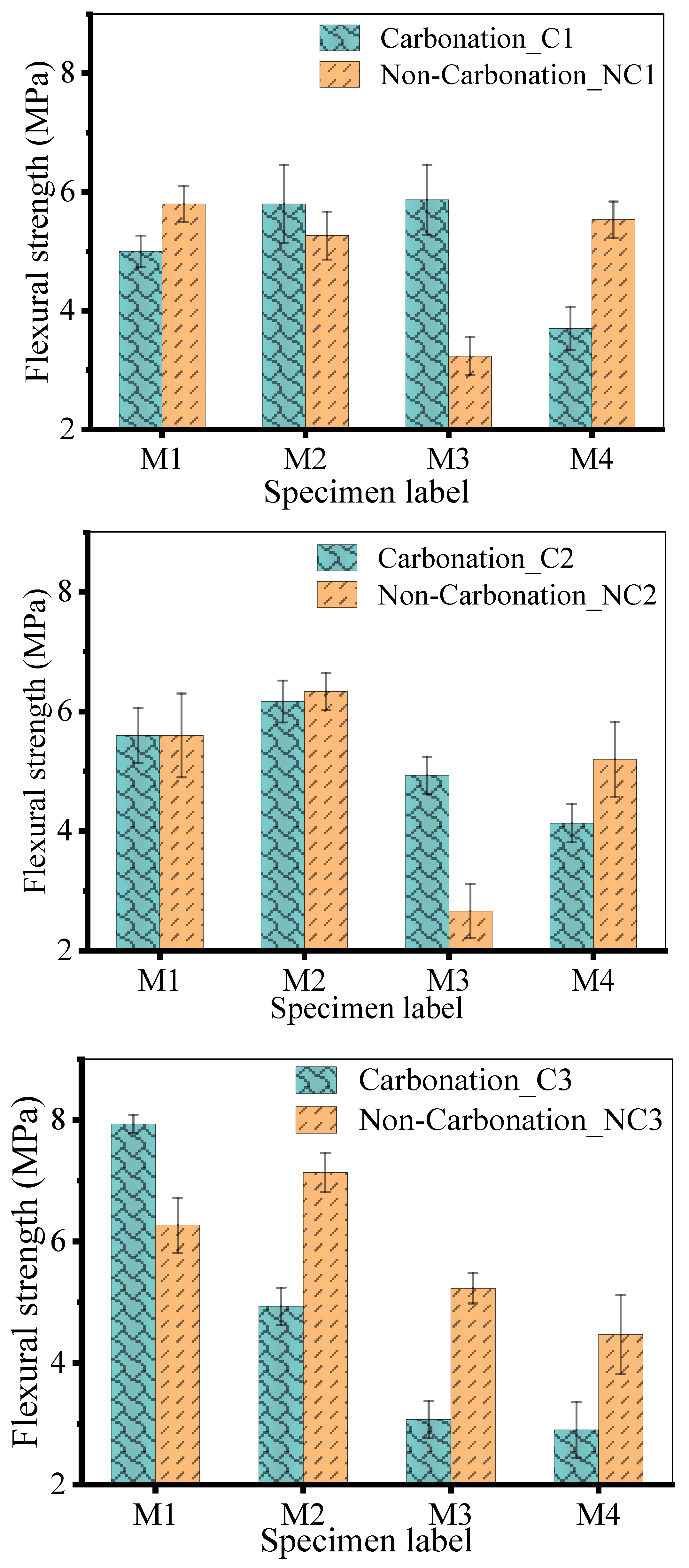
Figure 9 compares the compressive strength of specimens with varying mix proportions under C1, C2, and C3 and NC1, NC2, and NC3 at the same age. Figure 10 presents the corresponding flexural strength under the same curing protocol, highlighting the effects of extended carbonation exposure.
Figure 9.
Compressive strength development of specimens M1, M2, and M3 under the C1, C2, and C3 curing and NC1, NC2, and NC3 curing protocols.
Figure 10.
Flexural strength development of specimens M1, M2, and M3 under the C1, C2, and C3 curing and NC1, NC2, and NC3 curing protocols.
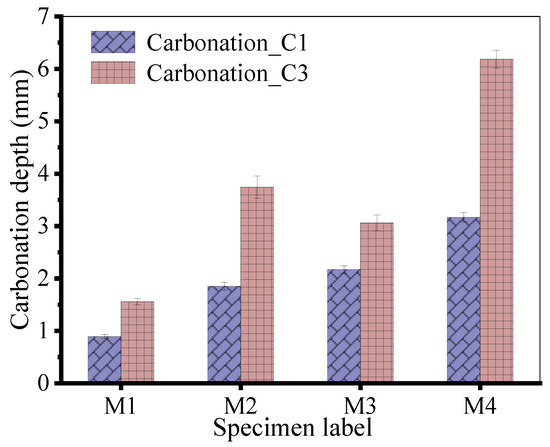
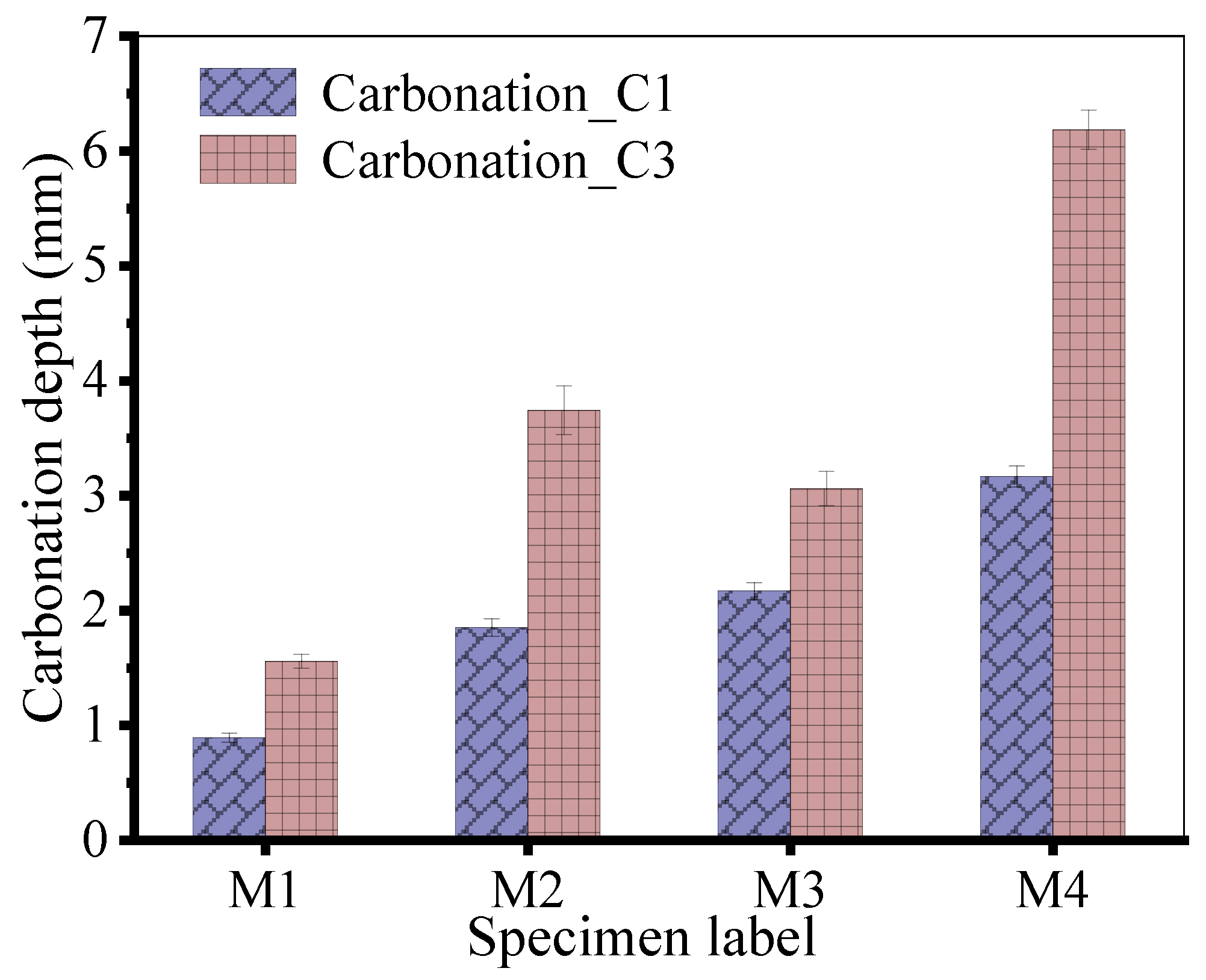
As illustrated in Figure 9 and Figure 10, for Na2SiO3-activated GGBS-CS-based AAMs (specimens M1 and M2), the early-stage (3 d) supercritical carbonation curing reduces compressive strength. At mature ages (30 day), the same curing method has negligible impact on strength, suggesting age-dependent reactivity. For NaOH-activated GGBS-CS-based AAMs (specimens M3 and M4), supercritical carbonation curing consistently enhances compressive strength across all ages, which could be attributed to the improved pore refinement and secondary reaction products. The incorporation of CS mitigates the strength-altering effects of supercritical carbonation, regardless of activator type (NaOH/Na2SiO3). This indicates that CS may dominate reaction pathways, limiting CO2-induced matrix modifications. Figure 11 presents the carbonation depth of specimens M1, M2, M3, and M4 under the carbonation protocols C1 and C3.
Figure 11.
Carbonation depth of specimens M1, M2, M3, and M4 under the C1 and C3 curing protocols.
The results presented in Figure 11 demonstrate that early-age carbonation curing has varying effects on the long-term compressive strength of different alkali-activated mixtures. The carbonation depth variation suggests that the addition of CS plays a crucial role in stabilizing the material’s performance under carbonation conditions. The strength reduction observed in pure GGBS systems likely results from excessive decalcification or microstructural coarsening during CO2 exposure. In contrast, mixtures containing CS benefit from the formation of stable calcium carbonate phases that densify the matrix, either enhancing strength or maintaining it at comparable levels to standard-cured specimens. These findings highlight the importance of mix design optimization when implementing carbonation curing in alkali-activated systems.
4. Conclusions
This study systematically investigated the formulation and performance of GGBS-CS-based alkali-activated mortars, focusing on the effects of key parameters—water-to-solid ratio, alkali content, activator type (NaOH vs. Na2SiO3), and GGBS/CS mass ratio—on flowability and mechanical strength. The impact of supercritical carbonation curing on these properties was also evaluated. The principal findings are summarized below:
- (1)
- Flowability behavior: The incorporation of CS reduces mortar flowability, due to its irregular particle morphology and high porosity. Under identical mix conditions, NaOH-activated mortars exhibit slightly higher flowability than Na2SiO3-activated systems, attributed to differences in activator viscosity and reactivity with CS.
- (2)
- Strength development: At a water-to-solid ratio of 0.45–0.50 and 6.5% alkali content, incorporating 30% CS enhances the 7-day flexural strength of Na2SiO3-activated GGBS-CS-based AAMs, due to the improved particle packing or reactive silica/alumina contributions from CS. Compressive strength generally increases with higher alkali content but shows diminishing returns at elevated CS levels, suggesting that excessive CS may dilute the reactive GGBS content or introduce weak interfacial zones.
- (3)
- Supercritical carbonation effects: For Na2SiO3-activated pure GGBS, supercritical carbonation either maintains or slightly reduces early-age strength, potentially due to incomplete activation or carbonation-induced microcracking. NaOH-activated GGBS exhibits a ~20% strength increase post-carbonation, possibly because CO2 reaction products (e.g., carbonates) densify the matrix. In GGBS-CS blends (50% CS), carbonation has a negligible impact on strength, regardless of activator type, indicating that CS may buffer carbonation reactions or reduce CO2 accessibility.
The key industrial advantages of our findings include (1) demonstrating the feasibility of using CS-GGBS blends as sustainable construction materials, (2) optimizing alkali activation parameters for cost-effective production, and (3) establishing performance benchmarks for carbonation resistance.
Future work should focus on three key areas: (1) microstructural characterization of the CS-GGBS interface under carbonation, (2) pilot-scale production trials to validate industrial feasibility, and (3) long-term durability testing under combined environmental stressors to establish service-life predictions. This work establishes a foundation for developing more sustainable, carbonation-resistant alkali-activated materials using industrial byproducts.
Author Contributions
Conceptualization, resources, supervision, project administration, funding acquisition: X.Z.; Investigation, methodology, data curation, writing—original draft preparation, writing—review and editing, visualization: K.W. and Y.L. All authors have read and agreed to the published version of the manuscript.
Funding
This work was financially supported by the Shenzhen Science and Technology Plan Projects, grant number GJHZ20220913143007013 and grant number KCXST20221021111408021. The support provided by the laboratory staff is gratefully acknowledged.
Data Availability Statement
Data is contained within the article.
Conflicts of Interest
Author Yu Lei is employed by the company China Jiangxi International Economic and Technical Cooperation Co., Ltd. The authors declare that they have no known competing financial interests or personal relationships that could have appeared to influence the work reported in this paper.
References
- Guner, N.U.; Kutuk, S.; Kutuk-Sert, T. Role of calcination process of natural colemanite powder on compressive strength property of concrete. Heliyon 2025, 11, e41264. [Google Scholar] [CrossRef] [Scilit] [PubMed]
- Provis, J.L. Alkali-activated materials: State-of-the-art report. Cem. Concr. Res. 2018, 114, 40–48. [Google Scholar] [CrossRef] [Scilit]
- Ohemeng, E.A.; Ramabodu, M.S.; Nena, T.D. Utilization of Blast Furnace Slag as an Enhancer in Masonry Mortars Made with Thermally Treated Waste Concrete Powder. Buildings 2023, 13, 2616. [Google Scholar] [CrossRef] [Scilit]
- Abulencia, A.B.; Villoria, M.B.D.; Libre, R.G.D., Jr.; Quiatchon, P.R.J.; Dollente, I.J.R.; Guades, E.J.; Promentilla, M.A.B.; Garciano, L.E.O.; Ongpeng, J.M.C. Geopolymers as Sustainable Material for Strengthening and Restoring Unreinforced Masonry Structures: A Review. Buildings 2021, 11, 532. [Google Scholar] [CrossRef] [Scilit]
- Feng, L.; Yi, S.; Zhao, S.; Zhong, Q.; Ren, F.; Liu, C.; Zhang, Y.; Wang, W.; Xie, N.; Li, Z.; et al. Recycling of Aluminosilicate-Based Solid Wastes through Alkali-Activation: Preparation, Characterization, and Challenges. Buildings 2024, 14, 226. [Google Scholar] [CrossRef] [Scilit]
- Zheng, Y.; Zhang, Z.-Y.; Liu, Y.; Zhang, X.; Kang, S.; Lv, L.; Zhou, J. Preparation of Low Carbon Silicomanganese Slag-Based Alkali-Activated Materials Using Alkali-Activated Silica Waste. Buildings 2024, 14, 3835. [Google Scholar] [CrossRef] [Scilit]
- Silva, A.C.P.d.; Rodrigues, K.H.d.P.; Nalon, G.H.; Pitanga, H.N.; Silva, N.A.B.; Silva, T.O.d.; Lopes, E.C.; Rodrigues, M.H.R. Mechanical Behavior of Geopolymers Containing Soil and Red Mud Stabilized by Alkali Activation. Buildings 2025, 15, 3105. [Google Scholar] [CrossRef] [Scilit]
- Kara, C.; Kutuk, S.; Kutuk-Sert, T. Improvement of the durability of concrete by substitution of raw ground colemanite. Case Stud. Constr. Mater. 2023, 19, e02393. [Google Scholar] [CrossRef] [Scilit]
- Zou, Z.; Gao, H.; Zhang, Y.; Li, J.; Li, M.; Yu, Y. Multi-Variable Optimization of Sustainable Alkali-Activated Mortar with High Waste Concrete Powder Dosage for Enhanced Drying Shrinkage Resistance. Buildings 2025, 15, 3903. [Google Scholar] [CrossRef] [Scilit]
- Guo, Y.; Xu, X.; Guo, W. Utilization of sulfur iron ore tailing (SIOT) in GGBS-metakaolin based alkali-activated mortar. Constr. Build. Mater. 2024, 447, 138139. [Google Scholar] [CrossRef] [Scilit]
- Ahmed, H.U.; Mohammed, A.A.; Rafiq, S.; Mohammed, A.S.; Mosavi, A.; Sor, N.H.; Qaidi, S.M.A. Compressive Strength of Sustainable Geopolymer Concrete Composites: A State-of-the-Art Review. Sustainability 2021, 13, 13502. [Google Scholar] [CrossRef] [Scilit]
- Camargo, W.F.; Segadães, A.M.; Cruz, R.C.D. Assessing the Drying Sensitivity of Alkali-Activated Binders Through Mechanical Reliability: Effect of Particle Size and Packing. Materials 2024, 17, 5461. [Google Scholar] [CrossRef] [Scilit] [PubMed]
- Amadi, I.G.; Mahachi, J. Towards Sustainable Concrete: Current Trends and Future Projections of Supplementary Cementitious Materials in South Africa. Constr. Mater. 2025, 5, 70. [Google Scholar] [CrossRef] [Scilit]
- Wu, Y.-H.; Huang, R.; Tsai, C.-J.; Lin, W.-T. Recycling of Sustainable Co-Firing Fly Ashes as an Alkali Activator for GGBS in Blended Cements. Materials 2015, 8, 784–798. [Google Scholar] [CrossRef] [Scilit]
- Wang, K.; Zha, X. Optimizing Construction Spoil Reactivity for Cementitious Applications: Effects of Thermal Treatment and Alkaline Activation. Buildings 2024, 14, 2954. [Google Scholar] [CrossRef] [Scilit]
- Wang, B.; Xiao, J.; Zheng, Z.; Gan, W.; Shen, J.; Wang, J. Assessment of construction spoil generation: A case study in China. J. Clean. Prod. 2025, 532, 146879. [Google Scholar] [CrossRef] [Scilit]
- Zhang, Y.; Zhang, Z.; Jiang, S.; Wang, C.; Ma, Z. Characterization of geopolymer with 100% thermoactivated construction spoil powder: Effects of alkali dosage, silicate modulus and curing temperature. J. Build. Eng. 2024, 98, 111511. [Google Scholar] [CrossRef] [Scilit]
- Wu, H.; Yao, P.; Yang, D.; Wang, C.; Shen, J.; Ma, Z. Upcycling of construction spoil powder as partial cement replacement for sustainable cement-based materials: Properties and modification. J. Clean. Prod. 2022, 369, 133361. [Google Scholar] [CrossRef] [Scilit]
- Sun, X.; Liao, B.; Huang, S.; Liu, M.; Wu, S.; Chen, X.; He, H.; Xiong, H.; Dong, Z. Evaluation of the particle characteristics of aggregates from construction spoils treatment through a real-time detection multimodal module based on 3D point cloud technology. Waste Manag. 2025, 208, 115165. [Google Scholar] [CrossRef] [Scilit]
- Soldati, L.; Bacciocchi, M.; Tarantino, A.M. Mechanical Characterization of Sustainable Mortars with Recycled Aggregates from Construction and Demolition Wastes: An Experimental Investigation. Materials 2024, 17, 5409. [Google Scholar] [CrossRef] [Scilit]
- Wang, J.; Zhu, L.; Wan, D.; Xue, Y. Research Progress and Trend Analysis of Solid Waste Resource Utilization in Geopolymer Concrete. Buildings 2025, 15, 3370. [Google Scholar] [CrossRef] [Scilit]
- Lamaa, G.; Duarte, A.P.C.; Silva, R.V.; de Brito, J. Carbonation of Alkali-Activated Materials: A Review. Materials 2023, 16, 3086. [Google Scholar] [CrossRef] [Scilit]
- Cho, S.; Lee, N.; Kim, M.O. A comprehensive review on CO2 utilization in cement and concrete: From microstructural transformations to structural applications. Case Stud. Constr. Mater. 2025, 23, e05265. [Google Scholar] [CrossRef] [Scilit]
- Kim, M.-S.; Sim, S.-R.; Ryu, D.-W. Supercritical CO2 Curing of Resource-Recycling Secondary Cement Products Containing Concrete Sludge Waste as Main Materials. Materials 2022, 15, 4581. [Google Scholar] [CrossRef] [Scilit]
- Hay, R.; Celik, K. Accelerated carbonation of reactive magnesium oxide cement (RMC)-based composite with supercritical carbon dioxide (scCO2). J. Clean. Prod. 2020, 248, 119282. [Google Scholar] [CrossRef] [Scilit]
- ISO679-2009; Cement. Test Methods. Determination of Strength. International Organization for Standardization: Geneva, Switzerland, 2009.
- Dassekpo, J.-B.M.; Miao, L.; Bai, J.; Gong, Q.; Shao, N.N.; Dong, Z.; Xing, F.; Ye, J. Phase dissolution and improving properties of completely decomposed granite through alkali fusion method. Cem. Concr. Compos. 2022, 127, 104407. [Google Scholar] [CrossRef] [Scilit]
- Dassekpo, J.B.M.; Zhang, C.; Bai, J.; Liu, D.; Li, Y.; Dong, Z.; Xing, F. Alkali-activation of calcined granitic waste: Reaction mechanisms and environmental implication for waste minimization. Constr. Build. Mater. 2022, 327, 126976. [Google Scholar] [CrossRef] [Scilit]
- GB/T 18046-2017; Ground Granulated Blast Furnace Slag Used for Cement, Mortar and Concrete. General Administration of Quality Supervision, Inspection and Quarantine of the People’s Republic of China. Standardization Administration of the People’s Republic of China: Beijing, China, 2017.
- EN 15167-1; Ground Granulated Blast Furnace Slag for Use in Concrete, Mortar and Grout—Part 1: Definitions, Specifications and Conformity Criteria. International Organization for Standardization/Committee on Conformity Assessment: Geneva, Switzerland, 2006.
- Ning, J. Whole Process Carbonation Mechanism and Multiphysics Modeling of Carbon Sequestration in Cement-Based Materials; Harbin Institute of Technology: Harbin, China, 2022. [Google Scholar]
- GB/T 2419-2005; Test Method for Fluidity of Cement Mortar. General Administration of Quality Supervision, Inspection and Quarantine of the People’s Republic of China. Standardization Administration of the People’s Republic of China: Beijing, China, 2005.
- GB/T 42277-2022; Test Method for Carbonation of Cement Mortar. State Administration for Market Regulation, Inspection and Quarantine of the People’s Republic of China. Standardization Administration of the People’s Republic of China: Beijing, China, 2022.
- Poussardin, V.; Wilson, W.; Paris, M.; Tagnit-Hamou, A.; Deneele, D. Calcined clays as supplementary cementitious materials: A comparison between palygorskite and kaolinite. Constr. Build. Mater. 2024, 416, 135180. [Google Scholar] [CrossRef] [Scilit]
- Yang, N.R. Non-Tradition Cementitious Materials Chemistry; Wuhan University of Technology, Press: Wuhan, China, 2018. [Google Scholar]
- Terzi, C.; Kutuk, S.; Kutuk-Sert, T. Influence of processed tea waste ash on the hydration products and mechanical property of hybrid cement as an eco-friendly solution. Waste Manag. 2025, 191, 242–252. [Google Scholar] [CrossRef] [Scilit]
- Rabi, M.; Abarkan, I.; Sarfarazi, S.; Ferreira, F.P.V.; Alkherret, A.J. Automated design and optimization of concrete beams reinforced with stainless steel. Struct. Concr. 2025, 1–14. [Google Scholar] [CrossRef] [Scilit]
- Si, Y.; Wu, H.; La, R.; Yang, B.; Liu, T.; Huang, Y.; Zhou, M.; Li, M. Physicochemical Properties of Alkali-Activated Ground-Granulated Blast Furnace Slag (GGBS)/High-Calcium Fly Ash (HCFA) Cementitious Composites. Buildings 2025, 15, 3265. [Google Scholar] [CrossRef] [Scilit]
- Oti, J.; Adeleke, B.O.; Casabuena, L.R.; Kinuthia, J.M.; Sule, S. Utilization of a PFA-GGBS-Based Precursor in Geopolymer Concrete Production as a Sustainable Substitute for Conventional Concrete. Materials 2025, 18, 1309. [Google Scholar] [CrossRef] [Scilit]
- Bernal, S.A.; Provis, J.L.; San Nicolas, R.; de Gutiérrez, R.M.; van Deventer, J.S.J. Natural carbonation of aged alkali-activated slag concretes. Mater. Struct. 2014, 47, 693–707. [Google Scholar] [CrossRef] [Scilit]
- Taenzer, R.; Buchwald, A.; Stephan, D. Effect of slag chemistry on the hydration of alkali-activated blast-furnace slag. Mater. Struct. 2015, 48, 629–641. [Google Scholar] [CrossRef] [Scilit]
- Mohamed, O.A. A Review of Durability and Strength Characteristics of Alkali-Activated Slag Concrete. Materials 2019, 12, 1198. [Google Scholar] [CrossRef] [Scilit] [PubMed]
- Hao, W.; Zhu, Z. Effect of Synthetic Pregelatinized Starch-Modified C-S-H Particles on the Chemical Structure of C-A-S-H Generated from GGBS. Materials 2023, 16, 5736. [Google Scholar] [CrossRef] [Scilit]
- Amer, I.; Kohail, M.; Elfeky, M.S.; Rashad, A.; Khalaf, M.A. A review on alkali-activated slag concrete. Ain Shams Eng. J. 2021, 12, 1475–1499. [Google Scholar] [CrossRef] [Scilit]
- Fu, Q.; Bu, M.; Zhang, Z.; Xu, W.; Yuan, Q.; Niu, D. Hydration Characteristics and Microstructure of Alkali-Activated Slag Concrete: A Review. Engineering 2023, 20, 162–179. [Google Scholar] [CrossRef] [Scilit]

Disclaimer/Publisher’s Note: The statements, opinions and data contained in all publications are solely those of the individual author(s) and contributor(s) and not of MDPI and/or the editor(s). MDPI and/or the editor(s) disclaim responsibility for any injury to people or property resulting from any ideas, methods, instructions or products referred to in the content. |
© 2026 by the authors. Licensee MDPI, Basel, Switzerland. This article is an open access article distributed under the terms and conditions of the Creative Commons Attribution (CC BY) license.