


Abstract
The applied design of recycled aggregate concrete (RAC) with supplementary cementitious materials (SCMs) requires reliable estimation of 28-day flexural strength (FS28) before trial batching. This is challenging because RAC–SCM mixtures involve nonlinear interactions among binder chemistry, aggregate replacement, water-to-binder ratio, and admixture dosage. However, most predictive models focus on compressive strength or sustainability optimization, while fewer address FS28 using chemically informed descriptors and independent validation. This study developed and externally validated an XGBoost framework for FS28 prediction. The methodology combined binder characterization by XRF, XRD, SEM, and particle-size analysis; reactivity descriptors; database development; modeling; and experimental validation. A database of 397 mixtures from 22 sources was refined to 382 observations for training and testing, and the model was validated with 58 RAC–SCM mixtures and 174 prismatic specimens tested according to ASTM C78/C78M-22. XGBoost achieved R2 values of 91.61%, 80.75%, and 77.62% for training, testing, and validation, with RMSE values of 0.559, 0.835, and 0.364 MPa. Compared with the best alternative models, XGBoost reduced RMSE by 8.6% in testing and 9.5% in validation. Interpretability analysis identified binder reactivity, water-to-binder ratio, aggregate composition, cement content, SCM replacement, and superplasticizer dosage as key factors.
1. Introduction
Concrete is one of the most widely used construction materials worldwide, with an annual production exceeding 30 billion tons and a demand that continues to increase faster than that of many other structural materials, including steel and wood [1]. However, this extensive use also entails major environmental challenges. Cement production contributes substantially to greenhouse gas emissions, since the manufacture of one ton of clinker—the main constituent of Portland cement—can release approximately one ton of CO2 [2]. At the same time, the extraction of natural aggregates (NA) accelerates the depletion of non-renewable mineral resources, alters ecosystems, and increases the pressure on local supply chains [3]. These concerns are further intensified by the growing generation of construction and demolition waste, largely associated with the demolition of old structures and residual materials from new construction activities [4]. Consequently, the development of concrete mixtures with lower environmental impact, while preserving mechanical and durability performance, remains a central challenge in sustainable construction.
A promising strategy to address this challenge is the reuse of concrete waste as recycled concrete aggregate (RCA). Depending on particle size, RCA can be classified as coarse recycled aggregate (CRA) or fine recycled aggregate (FRA), both of which may partially replace natural aggregates in new concrete mixtures. Although these materials have traditionally been used in applications such as road bases, gabions, and rehabilitation works [5], their use in concrete production has gained increasing attention because it can reduce NA extraction, divert waste from landfills, and decrease the environmental burden associated with aggregate production and disposal [6,7]. For example, Attri et al. [7] reported that RCA production can generate approximately 10% lower CO2 emissions and 18.5% lower primary energy consumption per ton than manufactured sand, highlighting its potential contribution to circular construction practices.
Despite these environmental benefits, the incorporation of RCA often leads to reductions in mechanical performance, particularly in strength-related properties. This behavior is mainly attributed to the residual adhered mortar attached to RCA particles, which increases porosity, water absorption, and heterogeneity within the concrete matrix. Moreover, RCA introduces a more complex interfacial transition zone (ITZ), including the old ITZ from the original concrete and the new ITZ formed between the recycled particle and the fresh cement paste [8]. These features weaken stress transfer mechanisms and may compromise the strength and durability of recycled aggregate concrete (RAC), especially when high replacement levels are used.
Several approaches have been proposed to overcome these limitations, including mechanical grinding, chemical treatment, carbonation, and thermal processing of recycled aggregates before their incorporation into new concrete [9,10]. These techniques can improve aggregate quality, reduce porosity, and enhance the bond between recycled particles and the cementitious matrix [11,12]. They may also contribute to higher strength and improved durability while supporting waste valorization and resource conservation [9,10,13]. Nevertheless, many of these treatments involve additional costs, energy consumption, operational complexity, or limited scalability, which may restrict their practical implementation beyond controlled laboratory conditions [14,15]. Therefore, complementary strategies that can improve RAC performance through mixture design rather than aggregate pretreatment remain highly relevant.
In this context, supplementary cementitious materials (SCMs) represent an effective and comparatively simple route to improve the performance of RAC. SCMs such as metakaolin, silica fume, fly ash, blast furnace slag, rice husk ash, and sugarcane bagasse ash can partially replace Portland cement while enhancing strength and durability and reducing the environmental impact of concrete [16,17,18]. Depending on their chemistry and mineralogy, SCMs may exhibit hydraulic or pozzolanic behavior. Hydraulic reactions produce cementitious compounds in the presence of water, whereas pozzolanic reactions consume calcium hydroxide (CH), released during cement hydration, to form additional calcium silicate hydrate (C–S–H), which is the primary binding phase responsible for strength development [19,20]. In RAC, these reactions are particularly relevant because the additional hydration products may densify the cement paste and improve the ITZ around recycled aggregate particles.
However, the design of RAC mixtures incorporating both RCA and SCMs remains complex. Traditional trial-and-error procedures are often unable to capture the nonlinear interactions among binder chemistry, aggregate replacement level, water demand, admixture dosage, and curing conditions. Moreover, mixture optimization should not rely only on empirical proportions, but should also account for the chemical and mineralogical characteristics of the binder system [20]. In this regard, data-driven tools can support more rational and efficient mixture design. Among these tools, XGBoost is a tree-based ensemble learning algorithm that builds predictive models by sequentially optimizing a loss function through gradient boosting [21]. Its ability to capture nonlinear relationships and variable interactions has made it increasingly useful in materials engineering, and previous studies have shown that XGBoost-based models can accurately estimate mechanical properties of cementitious composites [22,23].
Flexural strength at 28 days (FS28) is particularly relevant for infrastructure applications such as pavements, bridge elements, slabs, and precast components, where resistance to bending and load distribution capacity govern service performance. Nevertheless, compared with compressive strength, the prediction of flexural strength in RAC mixtures containing SCMs has received less attention, especially when the model is expected to account for both recycled aggregate content and binder reactivity. Furthermore, many existing predictive studies rely exclusively on literature databases, with limited independent experimental validation. This restricts their practical reliability, particularly for mixtures containing SCMs with different chemical and physical characteristics.
The literature sources used to build the database did not correspond to identical concrete mixtures or to tests performed under exactly the same conditions. Instead, they covered a broad range of RAC-related experimental programs with different mixture proportions, aggregate replacement levels, SCM types, curing conditions, and testing configurations. For clarity, these studies can be grouped into three main categories. The first group includes studies focused mainly on the effect of natural aggregate replacement by recycled coarse and/or fine aggregates on mechanical performance, where changes in attached mortar content, aggregate absorption, and interfacial transition zone quality were the dominant factors. The second group includes studies that incorporated supplementary cementitious materials, such as fly ash, silica fume, metakaolin, ground granulated blast-furnace slag, rice husk ash, or palm oil fuel ash, to compensate for the weaker characteristics of recycled aggregates through matrix densification, pore refinement, and secondary hydration reactions [9,17,24,25,26,27,28,29,30,31,32,33,34,35,36,37,38]. The third group includes studies in which mixture-design variables such as water-to-binder ratio, cement content, aggregate grading, superplasticizer dosage, and maximum aggregate size were varied together with recycled aggregate and SCM contents [39,40,41,42,43]. Therefore, the compiled database was intentionally heterogeneous, since the objective was not to reproduce a single experimental condition but to train and evaluate a predictive model capable of learning general trends across different RAC–SCM mixture designs.
Recent studies published between 2022 and 2026 have further expanded the understanding of recycled aggregate concrete incorporating supplementary cementitious materials. Experimental investigations have shown that fly ash, ground granulated blast-furnace slag, silica fume, metakaolin, rice husk ash, and other industrial by-products can improve the mechanical and durability performance of RAC by reducing matrix porosity, refining the pore structure, and improving the interfacial transition zone around recycled aggregates [44,45,46,47,48,49,50,51,52,53]. However, these studies also confirm that the effectiveness of SCMs depends strongly on recycled aggregate quality, replacement level, water demand, curing conditions, and binder composition. In parallel, recent data-driven studies have used artificial intelligence, ensemble learning, multi-objective optimization, and interpretable machine-learning tools to predict the strength and durability-related performance of concretes produced using different technologies, including lightweight concretes, fiber-reinforced concretes, recycled aggregate concretes, and concretes exposed to aggressive sulfate or chloride environments [54,55,56,57,58,59]. These studies demonstrate the increasing relevance of machine-learning approaches for concrete-property prediction, but they also show that model performance depends strongly on the target property, material system, input-variable definition, and availability of independent validation data. Nevertheless, most available models still focus mainly on compressive strength or general sustainability optimization, while fewer studies address 28-day flexural strength in RAC–SCM mixtures using chemically informed binder descriptors and independent experimental validation. This gap motivates the present study.
To address this gap, the scientific problem considered in this study is the limited ability of current predictive approaches to estimate the 28-day flexural strength of RAC–SCM mixtures while simultaneously accounting for recycled aggregate incorporation, binder chemistry, water-to-binder ratio, and admixture dosage. Therefore, the aim of this study is to develop and experimentally validate an interpretable XGBoost-based framework for predicting FS28 in concrete mixtures incorporating RCA and SCMs. A curated database comprising 397 mixtures from 22 published sources was compiled to train and test the predictive model. In addition, an independent experimental program involving 58 mixtures was conducted using different SCMs, namely silica fume, metakaolin, fly ash, and ground granulated blast-furnace slag, combined with different CRA replacement levels. The specific objectives were to: (i) characterize the selected binder materials and calculate chemically informed reactivity descriptors; (ii) train, benchmark, and evaluate the XGBoost model for FS28 prediction; (iii) validate the model using independently produced RAC–SCM mixtures; and (iv) interpret the influence of binder reactivity, water-to-binder ratio, admixture dosage, and recycled aggregate incorporation on flexural strength.
2. Materials and Methods
2.1. Materials
The experimental program used ordinary Portland cement (OPC), four supplementary cementitious materials (SCMs)—silica fume (SF), ground granulated blast-furnace slag (GGBFS), low-calcium fly ash (FA), and metakaolin (MK)—natural siliceous sand, natural coarse aggregate, coarse recycled aggregate (CRA), potable water, and a high-range water-reducing admixture. CRA was produced by crushing 35–40 MPa concrete specimens with a laboratory jaw crusher and sieving the material to match the 12.5 mm maximum size of the natural coarse aggregate. The admixture was a polycarboxylate-based superplasticizer with a specific gravity of 1.09 at 20 °C, complying with ASTM C494. These materials represented different binder chemistries and aggregate conditions, enabling evaluation of the combined influence of binder reactivity and recycled aggregate incorporation on flexural performance. Figure 1 shows the raw materials used.
Figure 1.
Raw materials used in the experimental program: (a) ordinary Portland cement; (b) silica fume; (c) ground granulated blast-furnace slag; (d) fly ash; (e) metakaolin; (f) natural fine aggregate; (g) natural coarse aggregate; and (h) coarse recycled aggregate.
The selected precursors were chosen to represent a broad range of chemical, mineralogical, and physical characteristics relevant to RAC–SCM mixture design. Portland cement was used as the reference binder, while the selected SCMs were included to cover different reactivity levels, particle-size distributions, and oxide compositions. Recycled aggregates were incorporated to evaluate the effect of aggregate replacement on flexural performance, considering their higher absorption capacity, adhered mortar content, and influence on water demand and matrix–aggregate interaction.
To improve the visual description of the experimental program without repeating the raw materials already shown in Figure 1, Figure 2 summarizes the main stages of RAC–SCM mixture preparation and specimen production, including binder addition, fresh mixture condition, casting of prismatic specimens, and specimens prepared for flexural testing.
Figure 2.
Main stages of RAC–SCM mixture preparation and specimen production: (a) binder materials in the mixer; (b) final fresh mixture; (c) casting of prismatic specimens; and (d) prismatic specimens prepared for flexural testing.
A comprehensive physicochemical characterization of the solid raw materials was performed to describe their role in both the experimental mixtures and the predictive framework. The chemical composition of OPC, SF, GGBFS, FA, and MK was determined by X-ray fluorescence (XRF) using an Epsilon 4 benchtop XRF analyzer (Malvern Panalytical, Malvern, UK). Scanning electron microscopy (SEM) images were obtained using a Quanta 650 FEG scanning electron microscope (FEI Company, Hillsboro, OR, USA). X-ray diffraction (XRD) patterns were collected using an Empyrean X-ray diffractometer (Malvern Panalytical, Malvern, UK). Particle-size distribution (PSD) was determined by laser diffraction using a Mastersizer 3000 particle-size analyzer (Malvern Panalytical, Malvern, UK). The corresponding oxide composition, together with the individual reactivity modulus (RM), silica modulus (SM), and alumina modulus (AM), is summarized in Table 1.
Table 1.
Chemical composition determined by X-ray fluorescence and individual RM, SM, and AM values.
The chemical results reported in Table 1 reveal marked differences among the binder constituents. OPC exhibited the highest CaO content, which is consistent with its role as the main hydraulic binder, whereas SF was predominantly composed of SiO2, resulting in a very high SM value and supporting its expected contribution through microfiller and pozzolanic effects. GGBFS presented a more balanced composition of CaO, SiO2, and Al2O3, suggesting latent hydraulic potential, while FA and MK showed aluminosilicate-rich compositions, with MK presenting a markedly elevated AM value. These differences are relevant because the machine learning model incorporates binder reactivity descriptors, allowing the predictive framework to account not only for SCM dosage but also for the chemical nature of the cementitious system. Complementary physical and mineralogical characterization is presented in Figure 3, Figure 4 and Figure 5. The SEM micrographs in Figure 3 show clear morphological differences among the binder materials: OPC and GGBFS exhibited irregular angular particles, SF showed a much finer particle structure, FA displayed a predominantly spherical morphology, and MK presented irregular and clustered particles. These features may influence water demand, particle packing, dispersion, and matrix development. The XRD patterns in Figure 4 further distinguish the crystalline and amorphous characteristics of the binders, while the PSD curves in Figure 5 confirm clear differences in particle fineness among the powdered constituents, with direct implications for filler effects, packing density, water demand, and early-age reactivity.
Figure 3.
SEM micrographs of the binder materials: (a) OPC; (b) SF; (c) GGBFS; (d) FA; and (e) MK.
Figure 4.
XRD patterns of the binder materials: (a) OPC; (b) SF; (c) GGBFS; (d) FA; and (e) MK.
Figure 5.
Laser-diffraction particle size distribution of the powdered binders.
2.2. Database Compilation and Input Variables
A literature-based database was compiled to develop the XGBoost model for predicting the 28-day flexural strength (FS28) of concrete mixtures incorporating natural aggregates, recycled concrete aggregates, and supplementary cementitious materials. The database was constructed from 22 published sources [9,17,24,25,26,27,28,29,30,31,32,33,34,35,36,37,38,39,40,41,42,43] and included mixtures with different combinations of natural aggregates (NA), coarse recycled aggregates (CRA), fine recycled aggregates (FRA), and SCMs, including ground granulated blast-furnace slag, fly ash, metakaolin, silica fume, rice husk ash, and palm oil fuel ash.
To ensure consistency and reliability, only mixtures reporting sufficient information for model development were retained. The inclusion criteria required: complete mixture proportions; oxide composition of cement and SCMs for calculating binder reactivity indices; clear identification of silica fume, which was treated separately because of its high fineness, reactivity, and particle-packing effect; reported flexural strength values; and curing under standard laboratory conditions, such as water or moist chamber curing.
Following these criteria, 397 unique mixtures were initially collected. The input variables included material proportions, aggregate contents, binder reactivity descriptors, maximum aggregate size, and water-to-binder ratio, as summarized in Table 2. All mixture proportions were harmonized in kg/m3, except for MSA, expressed in mm, and WB, which was dimensionless. The target output variable was FS28, expressed in MPa.
Table 2.
Input variables considered for the XGBoost model.
Because the database was compiled from independent literature sources, differences in flexural testing standards, specimen geometry, loading configuration, and reporting format could not be completely eliminated. To improve comparability, only results explicitly reported as 28-day flexural strength and obtained under standard laboratory curing conditions were retained. When necessary, reported flexural strength values were converted to MPa, but no empirical conversion factor was applied between different flexural test configurations. Therefore, the remaining differences among standards and specimen configurations were treated as part of the inherent variability of the literature-based database and are acknowledged as a limitation of the model.
2.3. Reactivity Indices of Binder Systems
To incorporate the chemical nature of the binder system into the predictive framework, reactivity-related indices were calculated from the oxide composition of cement and SCMs. Following the approach proposed by Xie and Visintin [60], three indices were considered: the reactivity modulus (RM), associated with the self-cementing or hydraulic potential of the binder; the silica modulus (SM); and the alumina modulus (AM), both related to the pozzolanic character of aluminosilicate-based materials. The oxide compositions required for these calculations were obtained from X-ray fluorescence (XRF) data.
The individual reactivity-related indices for each cementitious constituent were calculated from the oxide composition, as expressed in Equations (1)–(3).
where , and are the individual reactivity, silica, and alumina moduli of binder constituent, respectively. and correspond to the oxide contents of each cementitious constituent, expressed as mass percentages.
Because each concrete mixture may contain more than one cementitious constituent, equivalent mixture-level indices were calculated as weighted averages according to the mass fraction of each binder component. This approach reduces the number of chemical input variables while preserving the effect of binder chemistry on the predicted flexural strength. The equivalent mixture-level indices were calculated as expressed in Equations (4)–(6).
In Equations (4)–(6), , and are the equivalent mixture-level reactivity, silica, and alumina moduli, respectively; , and are the corresponding individual indices of binder constituent i; is the mass ratio of binder constituent i relative to the total binder mass; and is the number of cementitious constituents in the mixture.
As an example, the calculation procedure can be illustrated using mixture MK-1, which contained 528 kg/m3 of OPC and 22 kg/m3 of MK, for a total binder content of 550 kg/m3. Therefore, the binder mass fractions of OPC and MK were 0.960 and 0.040, respectively. Using the individual values reported in Table 1, the equivalent mixture-level descriptors were obtained as weighted averages of the corresponding binder fractions. Thus, the equivalent reactivity modulus was calculated as RM = (3.475 × 0.960) + (0.800 × 0.040), giving approximately 3.367; the equivalent silica modulus was calculated as SM = (2.607 × 0.960) + (1.260 × 0.040), giving 2.553; and the equivalent alumina modulus was calculated as AM = (1.075 × 0.960) + (38.300 × 0.040), giving 2.564. These values correspond to the RM, SM, and AM values used for the MK-1 mixture in the experimental matrix. Minor differences at the third decimal place may occur because the values displayed in Table 1 are rounded, whereas the calculations were performed using the full numerical values. The same weighted-average procedure was applied to all mixtures containing more than one cementitious constituent.
2.4. Outlier Detection and Dataset Partitioning
To improve the reliability of the database before model training, potential outliers and influential observations were evaluated using two complementary statistical procedures: the Mahalanobis distance and Cook’s distance [61,62]. The Mahalanobis distance was first used to identify observations located far from the multivariate distribution of the input variables. However, because some chemically meaningful mixtures may naturally present extreme values in specific descriptors, each flagged observation was individually reviewed before removal. This was particularly relevant for mixtures containing highly reactive or very fine SCMs, such as silica fume or rice husk ash, which can substantially increase the silica modulus (SM) and may therefore appear statistically unusual despite being technically valid.
After this preliminary screening, Cook’s distance was applied to identify influential observations for potential removal, rather than as an automatic deletion criterion. Cook’s distance was calculated using an initial regression model fitted with the complete set of input variables and FS28 as the response variable. The commonly used criterion (Di > 4/n) was adopted as the influence threshold, where (Di) is the Cook’s distance of observation (i) and (n) is the number of observations in the original database. For the initial database of 397 mixtures, this criterion corresponded to (Di > 0.010). Observations exceeding this threshold were individually reviewed to verify whether their influence was associated with leverage-driven behavior or inconsistent response values, rather than with technically meaningful extreme mixture compositions. Based on this combined procedure, 15 observations were removed from the original database of 397 mixtures, resulting in a refined dataset of 382 observations for model development. The Cook’s distance analysis and the adopted threshold are shown in Figure 6.
Figure 6.
Cook’s distance analysis used to identify influential observations in the compiled database.
The removal process was not intended to discard valid high-performance mixtures only because they showed high FS28 values. Instead, the objective was to reduce the influence of observations that simultaneously showed unusual leverage in the input-variable space and an influential effect on the fitted response. Therefore, the cleaned dataset was considered more suitable for developing a general predictive model. The possible influence of outlier treatment on model performance was considered when interpreting the results, and the final model evaluation was based on the refined dataset together with an independent experimental validation dataset.
Descriptive analyses were then performed on the cleaned dataset to verify the distribution of the response variable and the structure of the input space. Figure 7 shows the histogram of 28-day flexural strength (FS28), Figure 8 presents the correlation heatmap among the input variables and FS28, and Figure 9 summarizes the distribution of the input variables through boxplots. These analyses provided a statistical overview of the final database and supported the subsequent model training and interpretation.
Figure 7.
Histogram of 28-day flexural strength (FS28) values after outlier treatment.
Figure 8.
Correlation heatmap of the input variables and FS28 after outlier treatment.
Figure 9.
Boxplot analysis of the input variables after outlier treatment.
The refined dataset was divided into two subsets. A total of 286 observations were used for model training, whereas the remaining 96 observations were reserved for model testing. This partitioning strategy enabled the predictive performance of the XGBoost model to be evaluated using data not involved in the training process, while the independent experimental dataset described in Section 2.7 was used later for external validation.
2.5. XGBoost Model Development
The predictive model was developed using eXtreme Gradient Boosting (XGBoost), a tree-based ensemble learning algorithm that constructs predictive models by sequentially optimizing a loss function through gradient boosting [21]. This characteristic is particularly relevant for recycled aggregate concrete mixtures containing SCMs, where flexural strength depends on coupled effects among binder chemistry, aggregate replacement level, water content, and admixture dosage. In this study, XGBoost was used to predict the 28-day flexural strength (FS28) from the input variables described in Section 2.2.
The cleaned dataset can be represented as a set of observations, where each observation contains an input vector with m attributes and a corresponding target value [63]:
In Equation (7), is the dataset, is the vector of mixture descriptors for observation i, is the corresponding measured FS28 value, is the number of observations, and mmm is the number of input variables.
In XGBoost, the predicted value is obtained by combining several regression trees through an additive learning process [64]:
In Equation (8), is the predicted FS28 value for observation i, K is the number of regression trees, is the prediction generated by the k-th tree, and represents the space of regression-tree functions.
The model was trained by minimizing an objective function that combines prediction error and regularization to penalize excessive model complexity [64]:
In Equations (9) and (10), is the loss function measuring the difference between predicted and measured FS28 values, is the regularization term, T is the number of leaves in a tree, represents the leaf weights, and and are regularization parameters controlling tree complexity and weight penalization, respectively.
Because the complete ensemble cannot be optimized directly in a single step, XGBoost builds the model sequentially. At each boosting iteration, a new tree is added to improve the predictions from the previous iteration [64]:
In Equation (11), is the prediction obtained up to iteration t − 1, and is the new regression tree added at iteration t. Through this iterative procedure, the model progressively reduces prediction error while controlling overfitting. The final trained model was then used to predict FS28 for the training, testing, and independent experimental validation datasets. The XGBoost model was implemented in Python 3.14.6 using the XGBoost library. Data preprocessing, model evaluation, and metric calculation were performed using NumPy, pandas, and scikit-learn. The final trained model was then used to predict FS28 for the training, testing, and independent experimental validation datasets. The main hyperparameters, including the number of estimators, maximum tree depth, learning rate, subsampling ratio, and regularization terms, were selected to minimize prediction error while avoiding overfitting. A fixed random seed was used to ensure reproducibility of the training–testing partition and model results.
The hyperparameters of the XGBoost model were optimized using a systematic search procedure within the training dataset. The search focused on the main parameters controlling model complexity, learning rate, subsampling, and regularization. Because an independent testing subset and a separate experimental validation dataset were available, these datasets were not used during hyperparameter tuning. Instead, candidate configurations were screened within the training stage by minimizing prediction error while avoiding unnecessarily complex model configurations. The testing dataset and the independent experimental validation dataset were reserved exclusively for evaluating model generalization. The final hyperparameter settings used in the XGBoost model are summarized in Table 3.
Table 3.
Final hyperparameter settings used for the XGBoost model.
After defining the final XGBoost configuration, and as part of the model selection procedure, a benchmark comparison was also performed using representative regression algorithms commonly applied to concrete-property prediction problems. The comparison considered Linear Regression, Decision Tree Regression, Random Forest Regression, Support Vector Regression, Gradient Boosting Regression, and XGBoost. All models were trained and evaluated using the same cleaned dataset, input variables, training–testing partition, random seed, and performance metrics. The independent experimental dataset was not used during model fitting and was reserved exclusively for external validation. This procedure allowed the final model to be selected based on comparative predictive performance and generalization capacity, rather than on the theoretical suitability of the algorithm alone. For further information about these models and their training and validation processes, references [65,66] can be consulted.
2.6. Model Evaluation and Interpretability
The predictive performance of the XGBoost model was evaluated using standard regression metrics, including the mean absolute error (MAE), mean squared error (MSE), root mean squared error (RMSE), and coefficient of determination () [67]. These indicators provide complementary information on model performance. MAE quantifies the average absolute prediction error, MSE penalizes larger errors more strongly, RMSE expresses the prediction error in the same units as FS28, and R2 indicates the proportion of variance in the measured response explained by the model. Low MSE and RMSE values indicate reduced prediction error, whereas high values indicate stronger agreement between predicted and measured FS28.
In addition, the mean bias error (MBE) and its normalized form, the normalized mean bias error (NMBE), were used to assess systematic bias in the predictions [68]. Positive MBE or NMBE values indicate model underestimation, whereas negative values indicate overprediction. Although bias indicators may be affected by error cancellation, they are useful for identifying whether the model tends to systematically overestimate or underestimate the experimental response.
After evaluating model accuracy, Partial Dependence Plots (PDPs) and Variable Importance Plots (VIPs) were used to interpret the trained XGBoost model [23]. Three-dimensional PDPs were employed to analyze the interaction between pairs of input variables and their combined marginal effect on predicted FS28. In these plots, two predictor variables are represented on the horizontal axes, while the vertical axis represents the model-predicted FS28. This approach enables the identification of nonlinear trends, threshold regions, and interaction effects among mixture variables such as cement content, SCM content, recycled aggregate content, water-to-binder ratio, and superplasticizer dosage. VIPs were used to rank the relative influence of each input variable on model predictions. A higher importance score indicates a greater contribution of that variable to the predictive performance of the model. The statistical plots, regression graphs, PDP surfaces, and variable-importance visualization were generated using R 4.6.1 (R Foundation for Statistical Computing, Vienna, Austria) in RStudio 2026.05.1+225.pro10 (Posit Software, PBC, Boston, MA, USA).
Although SHAP analysis can provide useful local and global explanations of model predictions, it was not included in the present study because the interpretability strategy focused on VIP and combined-effect PDPs. This choice was consistent with the main objective of the work, which was to understand not only the relative importance of individual variables, but also how pairs of mixture-design variables jointly influence the predicted FS28 response. Combined-effect PDPs were therefore used to visualize nonlinear interaction regions, threshold-like behavior, and coupled effects among variables such as cement content, SCM replacement, CRA incorporation, WB, and SP dosage.
2.7. Experimental Mix Design and Specimen Preparation
The experimental campaign was designed to provide an independent validation dataset for the trained XGBoost model. Four supplementary cementitious materials—silica fume (SF), ground granulated blast-furnace slag (GGBFS), fly ash (FA), and metakaolin (MK)—were incorporated as partial replacements for ordinary Portland cement (OPC). The mixture proportions were defined according to a central composite design (CCD) considering three main factors: the percentage of OPC replaced by SCMs, the percentage of natural coarse aggregate (CNA) replaced by coarse recycled aggregate (CRA), and the superplasticizer (SP) dosage.
Five levels were considered for each factor, corresponding to the axial, factorial, and central points of the CCD. The SCM replacement levels were 0%, 4%, 10%, 16%, and 20% by mass of OPC. The CRA replacement levels were 0%, 14%, 20%, 26%, and 40% by mass of CNA. The SP dosages were 3.66, 4.00, 4.50, 5.00, and 5.34 kg/m3. The water-to-binder ratio was kept constant at 0.36 for all mixtures to ensure consistency across the experimental matrix. For the control mixture, which contained neither SCMs nor CRA, this water-to-binder ratio enabled a slump flow diameter of approximately 700 mm, measured according to ASTM C1611/C1611M-21 [69], using 4.50 kg/m3 of SP. The CRA was incorporated in saturated surface-dry (SSD) condition to minimize variations in effective water content during mixing.
To present the experimental validation stage more clearly, the overall structure of the Experimental Research Program is summarized in Figure 10. The flowchart includes the materials, mixture-design variables, number of mixtures and specimens, curing procedure, flexural testing method, and the use of the experimental results for external validation of the XGBoost model.
Figure 10.
Experimental Research Program: schematic summary of the materials, mixture-design variables, mixture production, specimen preparation and curing, flexural testing, and independent validation of the XGBoost model.
The selected factor levels were defined considering both the structure of the central composite design and the mixture ranges commonly reported in previous RAC–SCM studies already included in the compiled database. SCM replacement levels up to 20% were selected to cover the reference binder system, moderate cement-replacement contents, and an upper replacement level consistent with studies evaluating fly ash, metakaolin, silica fume, and GGBFS in recycled aggregate concrete [9,17,24,25,26,27,28,29,30,31,32,33,34,35,36,37,38,39,40,41,42,43]. The CRA replacement range from 0% to 40% was chosen to represent the transition from natural coarse aggregate concrete to moderate recycled aggregate incorporation, in agreement with previous studies analyzing the influence of recycled aggregate content on mechanical performance [9,17,24,25,26,27,28,29,30,31,32,33,34,35,36,37,38,39,40,41,42,43]. The SP dosage range was centered around 4.50 kg/m3, which provided a slump flow of approximately 700 mm for the control mixture at WB = 0.36, and was varied to evaluate the influence of admixture dosage on particle dispersion and workability control without modifying the water-to-binder ratio. This range is consistent with the need to adjust superplasticizer dosage in RAC–SCM mixtures because recycled aggregate absorption, SCM fineness, and cement–superplasticizer compatibility can strongly affect fresh-state behavior [9,17,24,25,26,27,28,29,30,31,32,33,34,35,36,37,38,39,40,41,42,43]. Therefore, the experimental levels were selected to remain within technically relevant and literature-supported ranges while enabling the combined effects of SCM replacement, CRA incorporation, and SP dosage to be assessed under a controlled validation matrix.
The complete experimental matrix comprised 58 concrete mixtures, including the control and NSCM mixtures. To illustrate the structure of the experimental matrix, Table 4 presents a representative subset of mixture proportions and equivalent binder reactivity indices. The complete set of mixture proportions, reactivity indices, aggregate contents, water content, SP dosage, maximum aggregate size, and water-to-binder ratio for all 58 mixtures is provided in Appendix A, Table A1.
Table 4.
Representative subset of experimental mixture proportions and equivalent binder reactivity indices.
All mixtures were prepared in a 200 L pan mixer, model 54-C0199/11 (CONTROLS Group, Cernusco sul Naviglio, Milan, Italy), following a controlled mixing procedure to ensure adequate homogenization of the aggregates and binder constituents. Aggregates and binders, including OPC and SCMs, were initially dry mixed for 30 s. Water and SP were then incorporated, and mixing was continued until a homogeneous appearance was achieved. The total mixing time ranged from approximately 2.0 to 2.5 min, depending on the mixture.
After casting, the specimens were cured in water at 20 °C for 28 days. For flexural testing, three prismatic specimens were prepared for each of the 58 mixture designs, resulting in a total of 174 prismatic specimens. These specimens were subsequently used to experimentally validate the predictive performance of the XGBoost model.
2.8. Flexural Strength Test
The 28-day flexural strength of the concrete mixtures was determined using beam-shaped specimens with dimensions of 100 mm × 100 mm × 500 mm. The tests were performed using a flexural test device for concrete beams, model 50-C9010/C (CONTROLS Group, Cernusco sul Naviglio, Milan, Italy), fitted to a testing machine and configured for third-point loading in accordance with ASTM C78/C78M-22 [70]. The load was applied monotonically at a displacement rate of 0.5 mm/min until failure. The experimental configuration, including the schematic representation and the test setup, is shown in Figure 11.
Figure 11.
Flexural strength test setup according to ASTM C78/C78M-22: (a) schematic diagram of the third-point loading configuration; and (b) experimental test setup.
The flexural strength was calculated using Equation (12):
In Equation (12), is the flexural strength, is the ultimate applied load, l is the span length, b is the specimen width, and d is the specimen depth. For each mixture, the reported FS28 value corresponded to the average of three prismatic specimens, and the associated standard deviation was used to evaluate the experimental variability.
3. Results
3.1. Experimental Flexural Strength of RAC–SCM Mixtures
Figure 12 presents the experimental 28-day flexural strength (FS28) results obtained for the 58 concrete mixtures considered in the validation program. Each bar represents the average value of three prismatic specimens tested for the same mixture, while the error bars indicate the corresponding standard deviation. The mixtures include the reference control concrete, the NSCM mixture containing CRA without SCM replacement, and the four SCM-based families incorporating silica fume (SF), metakaolin (MK), fly ash (FA), and ground granulated blast-furnace slag (GGBFS).
Figure 12.
Experimental 28-day flexural strength of the RAC–SCM mixtures, including standard deviation bars.
The experimental results show that the flexural response of the RAC–SCM mixtures remained within a relatively consistent range despite the variations in SCM type, SCM replacement level, CRA content, and SP dosage. This behavior indicates that the incorporation of recycled coarse aggregate did not lead to a uniform loss of flexural strength across all mixtures; instead, the response depended on the combined effect of binder composition, recycled aggregate replacement, and admixture dosage. The presence of standard deviation bars further confirms that the experimental variability was generally controlled, supporting the reliability of the dataset used for external model validation.
From a comparative standpoint, Figure 12 enables a direct evaluation of the effect of each SCM system under equivalent experimental design conditions. The observed differences among the SF, MK, FA, and GGBFS families suggest that the chemical nature and reactivity of the cementitious system play an important role in governing FS28. These experimental results provide the basis for assessing whether the XGBoost model, trained using the literature-based database, can generalize its predictions to independently produced RAC mixtures containing different SCMs and CRA replacement levels.
3.2. Predictive Performance of the XGBoost Model
The predictive performance of the XGBoost model was evaluated using the training, testing, and independent experimental validation datasets. The corresponding performance metrics, including MAE, RMSE, R2, and NMBE, are summarized in Table 5, while the regression plots comparing predicted and measured FS28 values are shown in Figure 13 and Figure 14. In addition, a benchmark comparison with alternative regression models was included in Table 6 to justify the selection of XGBoost as the final predictive model.
Table 5.
Performance metrics of the XGBoost model for training, testing, and independent experimental validation datasets.
Figure 13.
Predicted versus measured FS28 values obtained with the XGBoost model for: (a) the training dataset and (b) the testing dataset.
Figure 14.
Regression plot of predicted versus measured FS28 values for the independent experimental validation dataset.
Table 6.
Benchmark comparison of regression models for FS28 prediction using the testing and independent experimental validation datasets.
For the training dataset, the model achieved an MAE of 0.483 MPa, an RMSE of 0.559 MPa, and an R2 value of 91.61%, indicating a strong ability to capture the nonlinear relationships between mixture proportions, binder reactivity descriptors, recycled aggregate contents, and flexural strength. For the testing dataset, the predictive performance decreased slightly, with an MAE of 0.687 MPa, an RMSE of 0.835 MPa, and an R2 value of 80.75%. This reduction is expected because the testing subset contains observations not used during model training and therefore provides a more demanding assessment of model generalization.
The independent experimental validation dataset yielded an MAE of 0.289 MPa, an RMSE of 0.364 MPa, and an R2 value of 77.62%. Although the coefficient of determination was lower than that obtained for the training and testing datasets, the error magnitudes remained low in absolute terms. This result is relevant because the experimental mixtures were produced independently from the literature-based training database and included different SCM systems and CRA replacement levels. Therefore, the model demonstrated acceptable external predictive capability for RAC–SCM mixtures with complex material interactions.
The NMBE values were negative for the three datasets, indicating a slight tendency of the model to overpredict FS28. However, the magnitude of this bias remained low, with values of −1.92%, −1.81%, and −1.27% for the training, testing, and experimental datasets, respectively. Overall, the results indicate that the XGBoost model provides a reliable and interpretable predictive framework for estimating the 28-day flexural strength of sustainable concrete mixtures incorporating recycled aggregates and SCMs.
3.3. Partial Dependence Plot Analysis
After evaluating the XGBoost model using the training, testing, and independent experimental validation datasets, three-dimensional Partial Dependence Plots (3D PDPs) were used to examine the marginal effects of selected input-variable interactions on the predicted 28-day flexural strength (FS28). To improve the focus and readability of the analysis, the PDP discussion was reduced to six representative variable pairs. These pairs were selected according to four criteria: (i) involvement of variables with high relative importance in the XGBoost model; (ii) direct relevance to the experimental design variables, particularly SCM replacement, CRA incorporation, and SP dosage; (iii) ability to describe non-redundant material mechanisms, including binder dilution, water management, recycled aggregate effects, and admixture-assisted dispersion; and (iv) practical relevance for RAC–SCM mixture design. Accordingly, the retained interactions were C–SCM, C–CRA, CRA–WB, SCM–WB, SCM–CRA, and SCM–SP.
It should be noted that PDPs describe the response learned by the model after averaging the influence of the remaining variables. Therefore, the trends discussed in this section should be interpreted as model-based indications of material behavior rather than direct causal evidence. In the input structure of the model, silica fume (SF) was treated as an independent variable, whereas SCM represents the grouped content of other supplementary cementitious materials. Accordingly, the interpretation of SCM-related PDPs refers to this model-level descriptor rather than to a single cementitious addition.
Figure 15 presents the interaction between cement content and SCM content. The PDP suggests that the predicted FS28 is more strongly governed by cement content than by the total SCM dosage alone. Higher cement contents combined with low-to-moderate SCM replacement levels led to the highest predicted FS28 values, whereas mixtures with low cement content and high SCM content showed the lowest predicted response. This trend is consistent with the role of cement hydration in producing primary calcium silicate hydrate (C–S–H) and calcium hydroxide (CH), which subsequently supports the pozzolanic reactions of reactive SCMs [71,72].
Figure 15.
3D PDP analyzing interactions between C and SCM, influencing FS28.
To clarify these mechanisms, cement-chemistry notation is used, where C, S, A, F, and H denote CaO, SiO2, Al2O3, Fe2O3, and H2O, respectively. The main hydration reactions of Portland cement phases can be schematically represented in Equations (13)–(16):
In Equations (13)–(16), , , and represent the main clinker phases involved in hydration, while , and represent hydration products contributing to the development and refinement of the cementitious matrix. The CH generated during silicate hydration is particularly relevant because it can react with pozzolanic SCMs to form additional cementitious products.
For silica-rich and aluminosilicate SCMs, the pozzolanic reactions can be schematically described using Equations (17)–(20). In this notation, S represents reactive silica and represents an aluminosilicate phase, commonly associated with metakaolin-type reactions [71,72]:
Equations (17)–(20) show that the pozzolanic contribution of SCMs depends on the availability of CH produced during cement hydration. Therefore, when the SCM replacement level becomes excessive relative to the cement content, the available CH may be insufficient to sustain secondary C–S–H or calcium aluminosilicate hydrate formation. Under such conditions, part of the SCM may behave mainly as a filler or as an additional water-demanding component rather than as an effective reactive binder [72]. This explains why the PDP in Figure 15 indicates lower predicted FS28 values in regions combining low cement contents with high SCM dosages. Thus, the model suggests that SCM incorporation is beneficial only when an adequate balance is maintained between cement hydration, CH availability, SCM reactivity, and water demand.
The interaction between cement content and CRA content is presented in Figure 16. The PDP shows a sustained reduction in predicted FS28 as CRA content increases, with the highest values generally associated with lower CRA replacement levels. Compared with FRA, CRA appears to exhibit a more gradual initial effect at low replacement levels, but higher CRA contents lead to lower predicted FS28 values. This trend can be attributed to the presence of adhered mortar, higher porosity, and a more complex interfacial transition zone in recycled coarse aggregates. CRA particles generally contain an old ITZ from the original concrete and a new ITZ formed with the fresh cement paste, which may reduce stress transfer efficiency under flexural loading [73]. However, at low replacement levels, CRA may also contribute to internal curing because part of the water initially absorbed by the recycled aggregate can be gradually released during hydration. This dual behavior helps explain why the model response does not show an immediate sharp reduction at low CRA contents, but does indicate a clearer strength penalty as the amount of CRA increases [74,75].
Figure 16.
3D PDP analyzing interactions between C and CRA, influencing FS28.
The combined effect of CRA content and WB is shown in Figure 17. The predicted response confirms the strong sensitivity of FS28 to WB. Higher WB values generally reduce flexural strength because excess water increases capillary porosity and weakens the hardened cementitious matrix [60]. Conversely, very low WB values may compromise workability and limit the availability of water for hydration, particularly when porous CRA is incorporated. The PDP suggests that an intermediate WB region provides a more favorable balance between hydration, matrix compactness, and workability. This behavior is especially important in RAC mixtures because CRA can absorb part of the mixing water during the early stages and later release it, contributing to internal curing under certain conditions [76]. Therefore, the model indicates that CRA does not act independently from WB; rather, its effect on FS28 depends on the balance between aggregate absorption, effective water availability, and matrix densification.
Figure 17.
3D PDP analyzing interactions between CRA and WB, influencing FS28.
The interaction between SCM content and WB is presented in Figure 18. The PDP shows that suitable combinations of SCM content and WB can lead to higher predicted FS28 values, while excessive SCM replacement or high WBs reduce the predicted response. This behavior reflects the need to ensure both adequate binder hydration and effective pozzolanic or latent hydraulic activity. Proper SCM incorporation can refine the pore structure, reduce median pore diameter, and improve matrix compactness through filler effects and secondary hydration products [77,78]. However, these benefits require an adequate water balance. If the WB is too low, hydration and SCM reactions may be limited; if it is too high, the increase in capillary porosity may dominate over the benefits of SCM addition. The PDP therefore indicates that SCM efficiency depends not only on its dosage, but also on the water available for hydration and the ability of the matrix to remain dense after hardening.
Figure 18.
3D PDP analyzing interactions between SCM and WB, influencing FS28.
The combined effect of SCM content and CRA content is shown in Figure 19. Similar to the FRA-related response, the PDP indicates that high CRA contents tend to reduce predicted FS28, but SCM incorporation may partially compensate for this effect when used within a suitable range. SCMs can improve the matrix surrounding recycled coarse aggregates by refining the pore structure and enhancing the quality of the new ITZ through secondary hydration products. This is particularly relevant because the ITZ around CRA is usually more porous and mechanically weaker than that around natural aggregate [79]. However, the model also suggests that excessive SCM contents do not necessarily improve FS28, especially when cement content is reduced to levels that limit CH production. In this situation, the positive effects of SCMs on the CRA–paste interface may be reduced, and the mixture may become more sensitive to water demand and incomplete reaction. These trends agree with the idea that SCMs can contribute to RAC performance, but only when the binder system maintains a balanced chemical and physical composition [79].
Figure 19.
3D PDP analyzing interactions between SCM and CRA, influencing FS28.
Finally, Figure 20 presents the interaction between SCM content and SP dosage. The PDP suggests that the highest predicted FS28 values occur when SCM content remains within a controlled range and SP dosage is sufficient to improve particle dispersion without causing adverse effects. SCMs can alter both the rheology and the hydration environment of concrete. For example, fine and angular SCM particles may increase water demand, whereas spherical particles such as fly ash can improve flowability by reducing interparticle friction. In this context, SP can help maintain workability at low WBs and improve dispersion of cementitious particles. Nevertheless, the model indicates that high SCM contents combined with inappropriate SP dosages may not lead to additional strength gains. This behavior may be related to cement–superplasticizer compatibility, SCM fineness, particle packing, and the availability of CH for secondary reactions [9,17,24,25,26,27,28,29,30,31,32,33,34,35,36,37,38,39,40,41,42,43]. Therefore, the SCM–SP interaction reinforces the need for a balanced design approach in which workability, binder reactivity, water demand, and recycled aggregate content are optimized simultaneously.
Figure 20.
3D PDP analyzing interactions between SCM and SP, influencing FS28.
Overall, the PDP analysis indicates that FS28 in RAC–SCM mixtures is governed by coupled interactions rather than by isolated mixture variables. Cement content and WB strongly influence the predicted response because they control hydration potential, matrix porosity, and binder efficiency. FRA and CRA generally reduce predicted FS28 because of their higher porosity, water absorption, and weaker interfacial characteristics, although their effect can be moderated by suitable binder design and water management. SCMs may improve predicted FS28 through filler effects, pozzolanic or latent hydraulic reactions, and ITZ refinement, but their effectiveness depends on cement content, CH availability, WB, and SP dosage. These model-based trends support the need for performance-based mixture optimization when designing sustainable concretes incorporating recycled aggregates and supplementary cementitious materials.
3.4. Variable Importance Analysis
Figure 21 presents the Variable Importance Plot (VIP) obtained from the trained XGBoost model for FS28 prediction. The VIP assigns an importance score to each input variable according to its relative contribution to the predictive structure of the model. Therefore, the ranking should be interpreted as a model-based measure of influence rather than as direct experimental causality. Nevertheless, when combined with the PDP results discussed in Section 3.3, the VIP provides useful insight into the variables that most strongly govern the predicted flexural response of RAC–SCM mixtures.
Figure 21.
Variable importance ranking of the input variables used by the XGBoost model for FS28 prediction.
The VIP ranking should also be interpreted with caution because importance scores may be affected by correlations among input variables, interactions between mixture parameters, and the internal structure of the tree ensemble. For this reason, the VIP results were not interpreted independently, but together with the combined-effect PDPs and the corresponding material-based mechanisms.
The most influential variable was the equivalent reactivity modulus (RM), indicating that the chemical nature of the binder system played a central role in the prediction of FS28. This result is consistent with the purpose of incorporating reactivity-related indices into the model: RM captures the potential contribution of hydraulic and self-cementing constituents within the binder. Binders with relatively high RM values, such as Portland cement, ground granulated blast-furnace slag, and type F fly ash, can contribute to strength development through hydration or secondary reactions, depending on their chemical composition and interaction with the remaining mixture constituents. This finding confirms that the model did not rely only on SCM dosage, but also on the chemical reactivity of the binder system.
The second most influential variable was the water-to-binder ratio (WB), followed by fine natural aggregate (FNA) and cement content (C). The importance of WB is technically consistent with its direct influence on matrix porosity, hydration efficiency, and compactness. Lower WB values generally reduce capillary porosity and improve mechanical performance, provided that sufficient water remains available for binder hydration and that the mixture maintains adequate workability [80]. The relevance of cement content also agrees with the PDP analysis, where cement was shown to strongly affect FS28 by controlling the production of primary hydration products and the availability of CH for subsequent SCM reactions.
Variables with lower relative importance included silica fume (SF) and fine recycled aggregate (FRA). In the case of FRA, this lower ranking does not imply that its effect is negligible; rather, it suggests that its influence may be more interaction-dependent and partially captured through related variables such as WB, aggregate contents, and binder descriptors. FRA is known to increase water demand because of its high specific surface area and capillary retention, which may reduce workability and limit the effective water available for cement hydration [76]. For SF, the lower importance score may be associated with its separate treatment in the database and with its dominant role as a very fine, silica-rich material. SCMs with high SiO2 content, such as SF and rice husk ash, may act strongly through filler and particle-packing effects, while their pozzolanic contribution depends on CH availability, curing conditions, and replacement level [60].
Overall, the VIP results reinforce the main findings from the PDP analysis. The prediction of FS28 in RAC–SCM mixtures is governed primarily by binder chemistry, represented by RM, and by water management, represented by WB. Aggregate-related variables and cement content also contribute to the model response, but their influence depends on their interaction with binder composition and admixture dosage. These findings support the use of chemically informed descriptors in machine learning models for sustainable concrete, particularly when the objective is to predict mechanical performance across mixtures containing different SCMs and recycled aggregate contents.
4. Discussion
4.1. Predictive Reliability and External Validation
The results obtained in this study confirm the suitability of XGBoost for predicting the 28-day flexural strength (FS28) of recycled aggregate concrete incorporating supplementary cementitious materials. The model achieved high predictive performance in the training dataset and maintained acceptable generalization capacity in the testing and independent experimental validation datasets. The reduction in R2 from training to testing and experimental validation is expected, since the latter datasets contain observations not used during model fitting and therefore provide a more demanding evaluation of the model response.
Although the experimental validation dataset produced a lower R2 than the training and testing subsets, the absolute error values remained low. This distinction is important because R2 is sensitive to the spread of the response variable, whereas MAE and RMSE directly quantify prediction errors in MPa. Therefore, the combination of low MAE and RMSE values with a moderate experimental R2 indicates that the model preserved useful predictive capacity when applied to independently produced mixtures. This is particularly relevant because these mixtures included different SCM systems and CRA replacement levels, which were not simply repetitions of the literature-based training data.
The NMBE values were negative for the training, testing, and experimental datasets, indicating a slight tendency toward overprediction. However, the magnitude of the bias remained low, suggesting that the model did not exhibit severe systematic deviation. From a practical standpoint, this level of bias is acceptable for preliminary mixture screening, provided that final structural applications are still supported by experimental verification. These findings indicate that XGBoost can be used as a reliable decision-support tool for reducing the number of trial batches required during RAC–SCM mixture development, rather than as a complete replacement for laboratory testing [67,68].
4.2. Binder Reactivity and Water Management as Key Drivers of FS28
The variable importance analysis identified the equivalent reactivity modulus (RM) as the most influential descriptor for FS28 prediction. This result highlights the importance of incorporating chemically informed variables into machine learning models for sustainable concrete. In contrast to simple SCM dosage, RM captures information related to the oxide composition and potential hydraulic or self-cementing contribution of the binder system [60]. Therefore, its high importance suggests that flexural strength is not governed only by how much cement or SCM is used, but also by the chemical nature of the cementitious constituents.
This finding is consistent with the PDP analysis, which showed that cement content and SCM content must be balanced to achieve higher predicted FS28 values. Portland cement hydration produces primary C–S–H and CH, while reactive SCMs may consume part of the available CH to form secondary cementitious products [71,72,81]. However, the beneficial effect of SCMs depends on their reactivity, replacement level, and the availability of CH. When cement content is too low or SCM replacement is excessive, the pozzolanic contribution may be limited, and part of the SCM may behave mainly as a filler or as an additional water-demanding constituent. This explains why the model did not associate higher SCM contents with uniformly higher FS28 values.
The effect of each SCM type should therefore be interpreted according to its chemical and physical characteristics. Silica fume, with its very high SiO2 content and fine particle size, may contribute through microfiller action, improved packing density, and pozzolanic consumption of CH, which can densify the paste and improve the ITZ around recycled aggregates. Metakaolin, as a highly reactive aluminosilicate, can promote the formation of additional C–S–H and calcium aluminosilicate hydrates, but its angular morphology and high surface area may also increase water demand. Fly ash may improve particle dispersion and workability because of its spherical morphology, although its pozzolanic contribution is generally more dependent on curing and available CH. GGBFS, with a more balanced CaO–SiO2–Al2O3 composition, can contribute through latent hydraulic reactions and matrix refinement. These differences explain why SCM effects on FS28 cannot be interpreted only from replacement percentage, but must also consider oxide composition, fineness, morphology, water demand, and interaction with recycled aggregates.
The water-to-binder ratio (WB), identified as the second most important variable, also plays a central role in the predicted flexural response. WB controls the balance between hydration, workability, and capillary porosity. Lower WB values generally favor matrix densification and strength development, but excessively low values may limit hydration or reduce workability, particularly in mixtures containing recycled aggregates with high absorption capacity [80,82]. Conversely, higher WB values improve flowability but may increase capillary porosity and weaken the hardened matrix. The PDPs involving WB confirm that an adequate water balance is required to activate the binder system while preserving matrix compactness.
The interaction between SCMs, WB, and SP further indicates that binder efficiency is controlled by both chemical and physical mechanisms. SCMs may improve packing density, refine pore structure, and promote secondary hydration products, but these effects depend on adequate dispersion and water availability [77,78]. SP helps maintain workability at reduced WB values, but excessive dosages may not produce further strength gains and can negatively affect the fresh or hardened state. Consequently, the model reinforces the need to design RAC–SCM mixtures through a balanced approach that considers binder chemistry, water management, and admixture dosage simultaneously.
4.3. Influence of Recycled Aggregates and SCM Interactions
The PDPs involving FRA and CRA confirm that recycled aggregate incorporation generally reduces predicted FS28, although the magnitude of this reduction depends on the surrounding mixture design. This trend agrees with the known characteristics of recycled aggregates, including adhered mortar, higher porosity, greater water absorption, and weaker interfacial transition zones compared with natural aggregates. These characteristics may reduce stress transfer efficiency and increase matrix heterogeneity, which is particularly relevant under flexural loading.
The model response suggested different behavior for FRA and CRA. FRA tends to increase water demand because of its larger specific surface area and capillary retention, which can reduce the effective water available for cement hydration and compromise workability [76]. CRA, in contrast, may show a less abrupt effect at low replacement levels, partly because absorbed water can contribute to internal curing under certain conditions. However, at higher CRA contents, the increased volume of old mortar and weaker ITZ becomes more detrimental to flexural strength [73,74,75]. These trends indicate that recycled aggregate effects should not be interpreted only in terms of replacement percentage, but also in terms of particle size, absorption, surface texture, and interaction with the cementitious matrix.
The interaction between SCMs and recycled aggregates is one of the most relevant outcomes of the model interpretation. Suitable SCM incorporation may partially mitigate the negative effects of recycled aggregates by refining the pore structure, improving paste compactness, and enhancing the quality of the ITZ through secondary hydration products. This effect is especially important in CRA-containing mixtures, where the new ITZ around the recycled aggregate is often a critical weakness. However, the model also indicates that SCM incorporation is not universally beneficial. If SCM dosage is excessive or the binder system lacks sufficient CH or water availability, the expected densification effect may be reduced.
Therefore, the combined interpretation of PDP and VIP results suggests that the performance of RAC–SCM mixtures depends on a coupled balance among recycled aggregate content, binder reactivity, WB, and SP dosage. Recycled aggregates introduce physical weaknesses related to porosity and ITZ quality, while SCMs can contribute to matrix refinement only when the binder chemistry and water balance are adequate. This supports the use of performance-based mixture design instead of fixed prescriptive limits for recycled aggregate replacement [79].
From a threshold-oriented perspective, the model suggests that FS28 is more likely to fall below a practical reference value of 4.5 MPa when CRA replacement approaches the upper level considered in the experimental program, particularly around 40%, and when this condition is combined with high SCM replacement or reduced cement content. In contrast, mixtures with low-to-moderate CRA contents, approximately up to 20–26%, and balanced binder compositions with moderate SCM replacement are generally predicted to remain above this reference value. This indicates that the critical response is not controlled by CRA replacement alone, but by its interaction with binder composition. Therefore, high CRA contents should be combined with a sufficiently reactive and well-balanced binder system to reduce the risk of FS28 falling below structurally relevant levels.
Overall, these findings provide three complementary contributions. From the perspective of sustainable construction, the model supports the use of recycled aggregates and SCMs by identifying mixture regions where flexural performance can be preserved. From the perspective of concrete science, the results show that FS28 in RAC–SCM mixtures is not controlled by recycled aggregate content or SCM dosage alone, but by coupled effects involving binder reactivity, water-to-binder ratio, aggregate composition, and admixture dosage. From the perspective of applied concrete production, the framework can support preliminary mixture screening by identifying promising combinations of CRA content, SCM replacement, WB, and SP dosage before extensive trial batching and experimental qualification.
4.4. Practical Implications and Limitations
From an engineering perspective, the proposed XGBoost framework provides a practical tool for preliminary mixture optimization of sustainable concretes containing recycled aggregates and SCMs. The model can help identify promising combinations of binder composition, recycled aggregate content, WB, and SP dosage before conducting extensive experimental campaigns. This is particularly useful for applications where flexural performance is critical, such as pavements, slabs, precast elements, and other components subjected to bending.
The inclusion of RM, SM, and AM as input descriptors represents an important advantage because it allows the model to account for binder chemistry rather than relying only on mass replacement percentages. This is relevant for sustainable concrete design, where different SCMs may produce similar replacement levels but very different mechanical responses due to differences in oxide composition, fineness, and reactivity. In this sense, chemically informed machine learning models may provide more transferable predictions across different material systems than models based only on conventional mixture proportions [20,22,23].
Despite these advantages, several limitations should be acknowledged. First, the model was trained using a literature-based database, and therefore its accuracy depends on the quality, consistency, and completeness of the reported experimental data. Differences in aggregate source, recycled aggregate processing, curing conditions, specimen geometry, and testing procedures may introduce variability that is not fully captured by the available input variables. Second, although the database included both FRA and CRA, the independent experimental validation focused on mixtures containing CRA, which means that additional experimental validation involving FRA-rich mixtures would strengthen the model’s applicability. Third, the present study focused on FS28; therefore, the model should not be directly extrapolated to durability-related properties such as chloride penetration, carbonation, shrinkage, or long-term deformation without additional data.
In addition, specific recycled aggregate properties such as water absorption capacity, particle density, adhered old mortar content, and aggregate processing history were not included as independent input variables because they were not consistently reported across the literature sources used to build the database. These properties are known to affect water demand, ITZ quality, porosity, and stress transfer in RAC mixtures. Therefore, part of their influence may only be indirectly captured through mixture-level variables such as CRA, FRA, WB, aggregate contents, and binder descriptors. This limitation should be considered when applying the model to recycled aggregates with properties that differ substantially from those represented in the compiled database.
Another limitation is that the independent experimental validation program was conducted at a fixed water-to-binder ratio of 0.36. This choice was adopted to isolate the effects of SCM type, SCM replacement level, CRA content, and SP dosage within a controlled experimental matrix. However, because the variable importance analysis identified WB as the second most influential input variable, the external validation only assesses the model response at one point along this highly sensitive design axis. Therefore, although the literature-based training and testing datasets include mixtures with different WB values, additional experimental validation covering a broader WB range would be necessary to further confirm the model’s predictive reliability across different water-to-binder conditions.
Future research should expand the database with additional SCMs, recycled aggregate sources, curing regimes, and durability indicators. Incorporating microstructural descriptors, aggregate absorption kinetics, and rheological parameters may also improve the physical interpretability of the model. Moreover, adaptive or transfer-learning approaches could help recalibrate predictive models for local materials and production conditions. Overall, the proposed framework should be viewed as a decision-support tool that complements experimental testing and contributes to more efficient, sustainable, and performance-based concrete mixture design.
5. Conclusions
This study developed and externally validated an XGBoost-based framework for predicting the 28-day flexural strength (FS28) of recycled aggregate concrete incorporating supplementary cementitious materials. The model was trained and tested using a refined literature-based database of 382 mixtures and was independently validated with 58 RAC–SCM mixtures produced experimentally. From the present study, the following conclusions can be drawn:
- The model showed adequate predictive performance across the evaluated datasets. XGBoost achieved R2 values of 91.61%, 80.75%, and 77.62% for the training, testing, and independent experimental validation datasets, respectively, with corresponding RMSE values of 0.559, 0.835, and 0.364 MPa. Although the external validation dataset produced a lower R2 than the training and testing subsets, the absolute prediction error remained limited, indicating that the model retained useful predictive capacity for independently produced mixtures within the range investigated.
- The interpretability analysis indicated that FS28 was mainly governed by coupled effects between binder chemistry, water management, and recycled aggregate incorporation. The equivalent reactivity modulus (RM) and water-to-binder ratio (WB) were the most influential variables, suggesting that chemically informed descriptors can improve the interpretation of machine-learning models for RAC–SCM mixtures. The retained PDPs further indicated that higher predicted FS28 values are associated with balanced combinations of cement content, SCM replacement, CRA content, WB, and SP dosage, rather than with isolated changes in a single mixture variable.
- From a practical perspective, the proposed framework may support preliminary mixture screening for RAC–SCM concretes, particularly in applications where flexural performance is relevant, such as pavements, slabs, and precast elements. In concrete plants, it may help narrow the range of feasible mixture combinations before trial batching. In concrete plants, it may help narrow the range of feasible mixture combinations before trial batching. At construction sites, it may support the selection of previously qualified RAC–SCM mixtures for flexural-demanding applications. For design organizations, it may provide early-stage quantitative guidance for comparing alternative binder–aggregate combinations. However, the framework should be used as a decision-support tool and not as a substitute for experimental verification, quality control, code-based requirements, or final mixture qualification.
As a final remark, future research prospects, the database should be expanded with additional recycled aggregate sources, SCM types, curing regimes, durability-related properties, and long-term mechanical performance data. Future experimental validation should also include a wider range of water-to-binder ratios, since WB was identified as one of the most influential variables in the predictive model. These developments would strengthen the reliability, transferability, and practical implementation of data-driven tools in concrete technology.
Author Contributions
Conceptualization, J.E.A.-R. and J.A.-G.; methodology, J.E.A.-R., P.C.-B. and J.A.-G.; software, J.E.A.-R. and P.C.-B.; validation, J.E.A.-R., P.C.-B. and J.A.-G.; formal analysis, J.E.A.-R., A.M.-C., P.C.-B. and J.A.-G.; investigation, J.E.A.-R., A.M.-C. and P.C.-B.; resources, J.A.-G.; data curation, J.E.A.-R. and P.C.-B.; writing—original draft preparation, J.E.A.-R.; writing—review and editing, J.E.A.-R., J.A.-G., A.M.-C. and P.C.-B.; visualization, J.E.A.-R. and P.C.-B.; supervision, J.A.-G.; project administration, J.A.-G.; funding acquisition, J.A.-G. All authors have read and agreed to the published version of the manuscript.
Funding
This research received no external funding. The APC was funded by Universidad del Norte.
Data Availability Statement
The datasets presented in this article are not readily available because they are part of an ongoing doctoral dissertation and related research outputs that are still under preparation. The cleaned training–testing dataset, the independent experimental validation dataset, the trained XGBoost model, and the Python prediction scripts can be made available upon reasonable request from the corresponding author. Public deposition of these materials is planned after completion of the doctoral dissertation and associated publications.
Acknowledgments
The authors gratefully acknowledge the support of the Materials Laboratory at Universidad del Norte. The authors also thank Ultracem for providing materials used in the experimental program.
Conflicts of Interest
The authors declare no conflicts of interest. The funders had no role in the design of the study; in the collection, analyses, or interpretation of data; in the writing of the manuscript; or in the decision to publish the results.
Abbreviations
The following abbreviations are used in this manuscript:
| AI | Artificial intelligence |
| AM | Alumina modulus |
| ASTM | American Society for Testing and Materials |
| CCD | Central composite design |
| CH | Calcium hydroxide |
| CNA | Coarse natural aggregate |
| CRA | Coarse recycled aggregate |
| C–S–H | Calcium silicate hydrate |
| FA | Fly ash |
| FNA | Fine natural aggregate |
| FRA | Fine recycled aggregate |
| FS28 | 28-day flexural strength |
| GGBFS | Ground granulated blast-furnace slag |
| ITZ | Interfacial transition zone |
| MAE | Mean absolute error |
| MBE | Mean bias error |
| MK | Metakaolin |
| ML | Machine learning |
| MSA | Maximum aggregate size |
| NA | Natural aggregate |
| NMBE | Normalized mean bias error |
| OPC | Ordinary Portland cement |
| PDP | Partial dependence plot |
| SP | Superplasticizer |
| PSD | Particle size distribution |
| R2 | Coefficient of determination |
| RAC | Recycled aggregate concrete |
| RCA | Recycled concrete aggregate |
| RM | Reactivity modulus |
| RMSE | Root mean squared error |
| SCM | Supplementary cementitious material |
| SF | Silica fume |
| SM | Silica modulus |
| SSD | Saturated surface-dry |
| VIP | Variable importance plot |
| WB | Water-to-binder ratio |
| XGBoost | eXtreme Gradient Boosting |
| XRD | X-ray diffraction |
| XRF | X-ray fluorescence |
Appendix A
Table A1.
Complete experimental mixture proportions and equivalent binder reactivity indices.
References
- Monteiro, P.J.M.; Miller, S.A.; Horvath, A. Towards sustainable concrete. Nat. Mater. 2017, 16, 698–699. [Google Scholar] [CrossRef] [Scilit] [PubMed]
- Latawiec, R.; Woyciechowski, P.; Kowalski, K.J. Sustainable Concrete Performance—CO2-Emission. Environments 2018, 5, 27. [Google Scholar] [CrossRef] [Scilit]
- Mondal, S.; Palit, D. Chapter 2—Challenges in natural resource management for ecological sustainability. In Natural Resources Conservation and Advances for Sustainability; Jhariya, M.K., Meena, R.S., Banerjee, A., Meena, S.N., Eds.; Elsevier: Amsterdam, The Netherlands, 2022; pp. 29–59. [Google Scholar] [CrossRef] [Scilit]
- Behera, M.; Bhattacharyya, S.K.; Minocha, A.K.; Deoliya, R.; Maiti, S. Recycled aggregate from C&D waste & its use in concrete—A breakthrough towards sustainability in construction sector: A review. Constr. Build. Mater. 2014, 68, 501–516. [Google Scholar] [CrossRef] [Scilit]
- Soto-Paz, J.; Arroyo, O.; Torres-Guevara, L.E.; Parra-Orobio, B.A.; Casallas-Ojeda, M. The circular economy in the construction and demolition waste management: A comparative analysis in emerging and developed countries. J. Build. Eng. 2023, 78, 107724. [Google Scholar] [CrossRef] [Scilit]
- Monkman, S.; MacDonald, M. On carbon dioxide utilization as a means to improve the sustainability of ready-mixed concrete. J. Clean. Prod. 2017, 167, 365–375. [Google Scholar] [CrossRef] [Scilit]
- Attri, G.K.; Gupta, R.C.; Shrivastava, S. Comparative Environmental Impacts of Recycled Concrete Aggregate and Manufactured Sand Production. Process Integr. Optim. Sustain. 2022, 6, 737–749. [Google Scholar] [CrossRef] [Scilit]
- Verian, K.P.; Ashraf, W.; Cao, Y. Properties of recycled concrete aggregate and their influence in new concrete production. Resour. Conserv. Recycl. 2018, 133, 30–49. [Google Scholar] [CrossRef] [Scilit]
- Lu, B.; Shi, C.; Cao, Z.; Guo, M.; Zheng, J. Effect of carbonated coarse recycled concrete aggregate on the properties and microstructure of recycled concrete. J. Clean. Prod. 2019, 233, 421–428. [Google Scholar] [CrossRef] [Scilit]
- Bui, P.T.; Le, H.S.; Nguyen, P.P.U.; Ly, T.N.; Nguyen, N.T.; Ogawa, Y.; Kawai, K. Effect of sodium-silicate treatment for recycled concrete aggregate on slump and compressive strength of concrete. Lect. Notes Civ. Eng. 2020, 80, 457–465. [Google Scholar] [CrossRef] [Scilit]
- Hanif, A. 9—Influence of the pretreatment of recycled aggregates. In Advances in Construction and Demolition Waste Recycling; Pacheco-Torgal, F., Ding, Y., Colangelo, F., Tuladhar, R., Koutamanis, A., Eds.; Woodhead Publishing: Cambridge, UK, 2020; pp. 159–180. [Google Scholar] [CrossRef] [Scilit]
- Kim, Y.; Hanif, A.; Usman, M.; Park, W. Influence of bonded mortar of recycled concrete aggregates on interfacial characteristics—Porosity assessment based on pore segmentation from backscattered electron image analysis. Constr. Build. Mater. 2019, 212, 149–163. [Google Scholar] [CrossRef] [Scilit]
- Ismail, S.; Ramli, M. Engineering properties of treated recycled concrete aggregate (RCA) for structural applications. Constr. Build. Mater. 2013, 44, 464–476. [Google Scholar] [CrossRef] [Scilit]
- Purohit, B.D.; Samaiya, N.K.; Babu, V.S. A pragmatic review paper on the use of recycled aggregates in concrete. IOP Conf. Ser. Earth Environ. Sci. 2024, 1327, 12020. [Google Scholar] [CrossRef] [Scilit]
- Shaban, W.M.; Yang, J.; Su, H.; Mo, K.H.; Li, L.; Xie, J. Quality Improvement Techniques for Recycled Concrete Aggregate: A review. J. Adv. Concr. Technol. 2019, 17, 151–167. [Google Scholar] [CrossRef] [Scilit]
- Kubissa, W.; Jaskulski, R.; Brodňan, M. Influence of SCM on the permeability of concrete with recycled aggregate. Period. Polytech. Civ. Eng. 2016, 60, 583–590. [Google Scholar] [CrossRef] [Scilit]
- Alnahhal, M.F.; Alengaram, U.J.; Jumaat, M.Z.; Alqedra, M.A.; Mo, K.H.; Sumesh, M. Evaluation of industrial by-products as sustainable pozzolanic materials in recycled aggregate concrete. Sustainability 2017, 9, 767. [Google Scholar] [CrossRef] [Scilit]
- Ouldkhaoua, Y.; Benabed, B.; Abousnina, R.; Kadri, E.H.; Khatib, J. Effect of using metakaolin as supplementary cementitious material and recycled CRT funnel glass as fine aggregate on the durability of green self-compacting concrete. Constr. Build. Mater. 2020, 235, 117802. [Google Scholar] [CrossRef] [Scilit]
- Aprianti, E.; Shafigh, P.; Bahri, S.; Farahani, J.N. Supplementary cementitious materials origin from agricultural wastes—A review. Constr. Build. Mater. 2015, 74, 176–187. [Google Scholar] [CrossRef] [Scilit]
- Xie, T.; Yang, G.; Zhao, X.; Xu, J.; Fang, C. A unified model for predicting the compressive strength of recycled aggregate concrete containing supplementary cementitious materials. J. Clean. Prod. 2020, 251, 119752. [Google Scholar] [CrossRef] [Scilit]
- Chen, T.; Guestrin, C. XGBoost: A Scalable Tree Boosting System. In Proceedings of the 22nd ACM SIGKDD International Conference on Knowledge Discovery and Data Mining; Association for Computing Machinery: New York, NY, USA, 2016; pp. 785–794. [Google Scholar] [CrossRef] [Scilit]
- Khan, M.I.; Abbas, Y.M.; Fares, G.; Alqahtani, F.K. Strength prediction and optimization for ultrahigh-performance concrete with low-carbon cementitious materials—XG boost model and experimental validation. Constr. Build. Mater. 2023, 387, 131606. [Google Scholar] [CrossRef] [Scilit]
- Nguyen, N.-H.; Abellán-García, J.; Lee, S.; Garcia-Castano, E.; Vo, T.P. Efficient estimating compressive strength of ultra-high performance concrete using XGBoost model. J. Build. Eng. 2022, 52, 104302. [Google Scholar] [CrossRef] [Scilit]
- Ozbakkaloglu, T.; Gholampour, A.; Xie, T. Mechanical and durability properties of recycled aggregate concrete: Effect of recycled aggregate properties and content. J. Mater. Civ. Eng. 2018, 30, 04017275. [Google Scholar] [CrossRef] [Scilit]
- Evangelista, L.; De Brito, J. Criteria for the use of fine recycled concrete aggregates in concrete production. In Proceedings of the International RILEM Conference on the Use of Recycled Materials in Building Structures, Barcelona, Spain, 8–11 November 2004. [Google Scholar]
- Letelier, V.; Ortega, J.M.; Tarela, E.; Muñoz, P.; Henríquez-Jara, B.I.; Moriconi, G. Mechanical performance of eco-friendly concretes with volcanic powder and recycled concrete aggregates. Sustainability 2018, 10, 3036. [Google Scholar] [CrossRef] [Scilit]
- Limbachiya, M.; Meddah, M.S.; Ouchagour, Y. Use of recycled concrete aggregate in fly-ash concrete. Constr. Build. Mater. 2012, 27, 439–449. [Google Scholar] [CrossRef] [Scilit]
- Majhi, R.K.; Nayak, A.N. Production of sustainable concrete utilising high-volume blast furnace slag and recycled aggregate with lime activator. J. Clean. Prod. 2020, 255, 120188. [Google Scholar] [CrossRef] [Scilit]
- Younis, K.H.; Jirjees, F.F.; Khoshnaw, G.; Ali, B.H. Experimental study on performance of recycled aggregate concrete: Effect of reactive mineral admixtures. Int. J. Civ. Eng. Technol. 2019, 10, 2566–2576. [Google Scholar] [CrossRef] [Scilit]
- Hasanzadeh, M.; Rezaifar, O.; Gholhaki, M.; Sharbatdar, M.K. Performance optimization of ground rubberized green concrete with metakaolin. Structures 2021, 34, 433–448. [Google Scholar] [CrossRef] [Scilit]
- Elsayed, M.; Tayeh, B.A.; Abu Aisheh, Y.I.; El-Nasser, N.A.; Elmaaty, M.A. Shear strength of eco-friendly self-compacting concrete beams containing ground granulated blast furnace slag and fly ash as cement replacement. Case Stud. Constr. Mater. 2022, 17, e01354. [Google Scholar] [CrossRef] [Scilit]
- Gonzalez-Corominas, A.; Etxeberria, M.; Poon, C.S. Influence of steam curing on the pore structures and mechanical properties of fly-ash high performance concrete prepared with recycled aggregates. Cem. Concr. Compos. 2016, 71, 77–84. [Google Scholar] [CrossRef] [Scilit]
- Khudhair, J.; Chkheiwer, A. Mechanical Properties of Self Compacting Concrete Made with Local Materials. Univ. Thi-Qar J. Eng. Sci. 2016, 7, 87–100. [Google Scholar] [CrossRef] [Scilit]
- Choi, H.B.; Park, J.O.; Lee, H.D.; Lee, K.R. Mechanical and Pore Properties of Concrete Using Basalt-Based Recycled Aggregates According to Mixture Conditions. Materials 2022, 15, 5677. [Google Scholar] [CrossRef] [Scilit] [PubMed]
- Fiol, F.; Thomas, C.; Muñoz, C.; Ortega-López, V.; Manso, J.M. The influence of recycled aggregates from precast elements on the mechanical properties of structural self-compacting concrete. Constr. Build. Mater. 2018, 182, 309–323. [Google Scholar] [CrossRef] [Scilit]
- Padhi, R.S.; Patra, R.K.; Mukharjee, B.B.; Dey, T. Influence of incorporation of rice husk ash and coarse recycled concrete aggregates on properties of concrete. Constr. Build. Mater. 2018, 173, 289–297. [Google Scholar] [CrossRef] [Scilit]
- Reddy, A.N.; Meena, T. An experimental investigation on mechanical behaviour of eco-friendly concrete. IOP Conf. Ser. Mater. Sci. Eng. 2017, 263, 032010. [Google Scholar] [CrossRef] [Scilit]
- Afroughsabet, V.; Biolzi, L.; Ozbakkaloglu, T. Influence of double hooked-end steel fibers and slag on mechanical and durability properties of high performance recycled aggregate concrete. Compos. Struct. 2017, 181, 273–284. [Google Scholar] [CrossRef] [Scilit]
- Kubiba, W.; Jaskulski, R.; Koper, A.; Supera, M. High performance concrete with scm and recycled aggregate. Key Eng. Mater. 2016, 677, 233–240. [Google Scholar] [CrossRef] [Scilit]
- Kubissa, W.; Jaskulski, R.; Reiterman, P. Ecological concrete based on blast-furnace cement with incorporated coarse recycled concrete aggregate and fly ash addition. J. Renew. Mater. 2017, 5, 53–61. [Google Scholar] [CrossRef] [Scilit]
- Limbachiya, M.; Meddah, M.S.; Ouchagour, Y. Performance of portland/silica fume cement concrete produced with recycled concrete aggregate. ACI Mater. J. 2012, 109, 91–100. [Google Scholar] [CrossRef] [Scilit]
- Majhi, R.K.; Nayak, A.N.; Mukharjee, B.B. Development of sustainable concrete using recycled coarse aggregate and ground granulated blast furnace slag. Constr. Build. Mater. 2018, 159, 417–430. [Google Scholar] [CrossRef] [Scilit]
- Yazici, Ş.; Mardani-Aghabaglou, A.; Tuyan, M. Properties of self-consolidating concrete incorporating coarse recycled concrete aggregate. Cem. Wapno Beton 2017, 22, 168–178. [Google Scholar]
- Rapallo, A.C.M.; Kuchta, K. Recycled Concrete Aggregate in Self-Consolidating Concrete: A Systematic Review and Meta-Analysis of Mechanical Properties. RCA Pre-Treatment and Durability Behaviour. Recycling 2025, 10, 214. [Google Scholar] [CrossRef] [Scilit]
- Sankar, B.; Ramadoss, P.; Sankar, B.; Ramadoss, P. Assessment of mechanical and durability performance of silica fume and metakaolin as cementitious materials in high-performance concrete. Int. Rev. Appl. Sci. Eng. 2023, 15, 44–54. [Google Scholar] [CrossRef] [Scilit]
- Shariq, M.; Ahmad, F.; Masood, A.; Hashmi, A.F.; Ayaz, M. Development of novel concrete with sustainable waste materials: A comprehensive study on strength, pulse velocity, and rebound hammer number at elevated temperatures using predictive models. Constr. Build. Mater. 2025, 486, 141992. [Google Scholar] [CrossRef] [Scilit]
- Alamri, M.; Ali, T.; Ahmed, H.; Qureshi, M.Z.; Elmagarhe, A.; Khan, M.A.; Ajwad, A.; Mahmood, M.S. Enhancing the engineering characteristics of sustainable recycled aggregate concrete using fly ash, metakaolin and silica fume. Heliyon 2024, 10, e29014. [Google Scholar] [CrossRef] [Scilit] [PubMed]
- Fatiha, A.; Karim, E.; Mhamed, A.; Abed, F. Enhancing performance of recycled aggregate concrete with supplementary cementitious materials. Clean. Mater. 2025, 15, 100298. [Google Scholar] [CrossRef] [Scilit]
- Kumar, A.; Singh, G.J.; Chauhan, B.L.; Kumar, R. Strength and Durability Performance of Recycled Aggregate Structural Concrete with Silica Fume. Furnace Slag, and M-Fine. J. Mater. Civ. Eng. 2024, 36, 04024165. [Google Scholar] [CrossRef] [Scilit]
- Al-Naghi, A.A.A.; Ali, T.; Inam, I.; Qureshi, M.Z.; Kahla, N.B.; Ghazouani, N. An innovative approach to enhancing the strength and durability of recycled aggregate concrete through fly ash-silica fume coating and rice husk ash supplementation. Sci. Rep. 2025, 15, 32780. [Google Scholar] [CrossRef] [Scilit] [PubMed]
- Sahani, K.; Kunwar, A.; Dhakal, P.; Kunwar, A.; Sahani, S.K.; Pandey, B.K.; Pandey, D. Evaluating Properties and Applications of Innovative Recycled Aggregate Concrete. Eng. Rep. 2025, 7, e70251. [Google Scholar] [CrossRef] [Scilit]
- Patil, R.D.; Sharma, A.; Kumavat, H.R. The Performance of Concrete with Various Recycled Aggregates and Blended Admixtures in Different Replacement Ratios. Eng. Technol. Appl. Sci. Res. 2025, 15, 29428–29434. [Google Scholar] [CrossRef] [Scilit]
- Rajprasad, J. A comprehensive review and evaluation of recycled aggregates as a sustainable construction material. Eng. Res. Express 2026, 8, 042101. [Google Scholar] [CrossRef] [Scilit]
- Abellan-Garcia, J.; Fernández-Gómez, J.; Khan, M.I.; Abbas, Y.M.; Pacheco-Bustos, C. ANN approach to evaluate the effects of supplementary cementitious materials on the compressive strength of recycled aggregate concrete. Constr. Build. Mater. 2023, 402, 132992. [Google Scholar] [CrossRef] [Scilit]
- Alkharisi, M.K.; Dahish, H.A. Tensile Strength of RA Concrete Containing Supplementary Cementitious Materials and Polypropylene Fibers Utilizing Machine Learning with GUI. Buildings 2025, 15, 4473. [Google Scholar] [CrossRef] [Scilit]
- Almutairi, A. Explainable Machine Learning-Based Prediction of Compressive Strength in Sustainable Recycled Aggregate Self-Compacting Concrete Using SHAP Analysis. Sustainability 2025, 17, 11334. [Google Scholar] [CrossRef] [Scilit]
- Golafshani, E.; Khodadadi, N.; Ngo, T.; Nanni, A.; Behnood, A. Modelling the compressive strength of geopolymer recycled aggregate concrete using ensemble machine learning. Adv. Eng. Softw. 2024, 191, 103611. [Google Scholar] [CrossRef] [Scilit]
- Golafshani, E.M.; Kim, T.; Behnood, A.; Ngo, T.; Kashani, A. Sustainable mix design of recycled aggregate concrete using artificial intelligence. J. Clean. Prod. 2024, 442, 140994. [Google Scholar] [CrossRef] [Scilit]
- Golafshani, E.M.; Behnood, A.; Kim, T.; Ngo, T.; Kashani, A. A framework for low-carbon mix design of recycled aggregate concrete with supplementary cementitious materials using machine learning and optimization algorithms. Structures 2024, 61, 106143. [Google Scholar] [CrossRef] [Scilit]
- Xie, T.; Visintin, P. A unified approach for mix design of concrete containing supplementary cementitious materials based on reactivity moduli. J. Clean. Prod. 2018, 203, 68–82. [Google Scholar] [CrossRef] [Scilit]
- Härdle, W.K.; Simar, L. Applied Multivariate Statistical Analysis; Springer: Berlin/Heidelberg, Germany, 2012. [Google Scholar]
- Cook, R.D. Detection of Influential Observation in Linear Regression. Technometrics 1977, 19, 15–18. [Google Scholar] [CrossRef] [Scilit]
- Quinlan, J.R. Induction of decision trees. Mach. Learn. 1986, 1, 81–106. [Google Scholar] [CrossRef] [Scilit]
- Breiman, L. Random forests. Mach. Learn. 2001, 45, 5–32. [Google Scholar] [CrossRef] [Scilit]
- Escalante-Tovar, J.D.; Abellán-García, J.; Fernández-Gómez, J. Predicting and Unraveling Flexural Behavior in Fiber-Reinforced UHPC Through Based Machine Learning Models. J. Compos. Sci. 2025, 9, 333. [Google Scholar] [CrossRef] [Scilit]
- Sarmiento-Pupo, K.D.; Escalante-Tovar, J.D.; Altamiranda, J.E.; Abellan-Garcia, J.; Vélez, J.I. Predicting flexural strength in fiber-reinforced UHPC via random forest. Sci. Rep. 2025, 15, 42045. [Google Scholar] [CrossRef] [Scilit] [PubMed]
- Plevris, V.; Solorzano, G.; Bakas, N.P.; El, M.; Ben, A. Investigation of Performance Metrics in Regression Analysis and Machine Learning-Based Prediction Models. In Proceedings of the 8th European Congress on Computational Methods in Applied Sciences and Engineering ECCOMAS Congress 2022, Oslo, Norway, 5–9 June 2022. [Google Scholar] [CrossRef] [Scilit]
- Ruiz, G.R.; Bandera, C.F. Validation of Calibrated Energy Models: Common Errors. Energies 2017, 10, 1587. [Google Scholar] [CrossRef] [Scilit]
- ASTM C1611/C1611M-21; Standard Test Method for Slump Flow of Self-Consolidating Concrete. ASTM International: West Conshohocken, PA, USA, 2021.
- ASTM C78/C78M; ASTM C78/C78M Standard Test Method for Flexural Strength of Concrete (Using Simple Beam with Third Point Loading). ASTM International: Singapore, 2022. [CrossRef] [Scilit]
- Wang, X.-Y.; Lee, H.-S. A model predicting carbonation depth of concrete containing silica fume. Mater. Struct. 2009, 42, 691–704. [Google Scholar] [CrossRef] [Scilit]
- Weise, K.; Ukrainczyk, N.; Duncan, A.; Koenders, E. Enhanced Metakaolin Reactivity in Blended Cement with Additional Calcium Hydroxide. Materials 2022, 15, 367. [Google Scholar] [CrossRef] [Scilit] [PubMed]
- Abushanab, A.; Alnahhal, W. Flexural behavior of reinforced concrete beams prepared with treated Wastewater. recycled concrete Aggregates, and fly ash. Structures 2022, 45, 2067–2079. [Google Scholar] [CrossRef] [Scilit]
- Lin, L.; Wu, B. Fracture and flexural behaviors of recycled lump-aggregate concrete. Constr. Build. Mater. 2023, 393, 132104. [Google Scholar] [CrossRef] [Scilit]
- Gao, S.; Guo, J.; Zhu, Y.; Jin, Z. Study on the influence of the properties of interfacial transition zones on the performance of recycled aggregate concrete. Constr. Build. Mater. 2023, 408, 133592. [Google Scholar] [CrossRef] [Scilit]
- Singh, A.; Miao, X.; Zhou, X.; Deng, Q.; Li, J.; Zou, S.; Duan, Z. Use of recycled fine aggregates and recycled powders in sustainable recycled concrete. J. Build. Eng. 2023, 77, 107370. [Google Scholar] [CrossRef] [Scilit]
- Arif, R.; Khitab, A.; Kırgız, M.S.; Khan, R.B.N.; Tayyab, S.; Khan, R.A.; Anwar, W.; Arshad, M.T. Experimental analysis on partial replacement of cement with brick powder in concrete. Case Stud. Constr. Mater. 2021, 15, e00749. [Google Scholar] [CrossRef] [Scilit]
- Ke, G.; Zhang, J.; Liu, Y.; Xie, S. Pore characteristics of calcium sulfoaluminate cement paste with impact of supplementary cementitious materials and water to binder ratio. Powder Technol. 2021, 387, 146–155. [Google Scholar] [CrossRef] [Scilit]
- Huang, P.; Dai, K.; Yu, X. Machine learning approach for investigating compressive strength of self-compacting concrete containing supplementary cementitious materials and recycled aggregate. J. Build. Eng. 2023, 79, 107904. [Google Scholar] [CrossRef] [Scilit]
- Basu, P.; Gupta, R.C.; Agrawal, V. Effects of sandstone slurry, the dosage of superplasticizer and water/binder ratio on the fresh properties and compressive strength of self-compacting concrete. Mater. Today Proc. 2020, 21, 1250–1254. [Google Scholar] [CrossRef] [Scilit]
- Pérez, N.R.C.; Abellán-García, J.; Fuentes, L. Use of rice husk ash as a supplementary cementitious material in concrete mix for road pavements. J. Mater. Res. Technol. 2023, 25, 6167–6182. [Google Scholar] [CrossRef] [Scilit]
- Kurhade, S.D.; Patankar, S.V. Effect of water-to-binder (W/B) ratio and various zones of river sand on properties of geopolymer concrete. Mater. Today Proc, 2023; in press. [CrossRef] [Scilit]
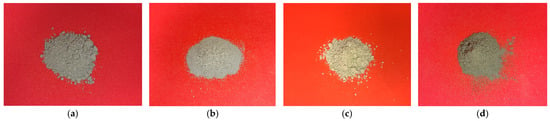
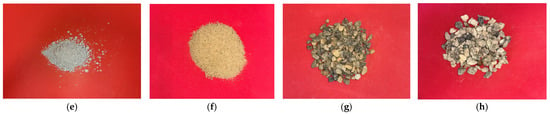
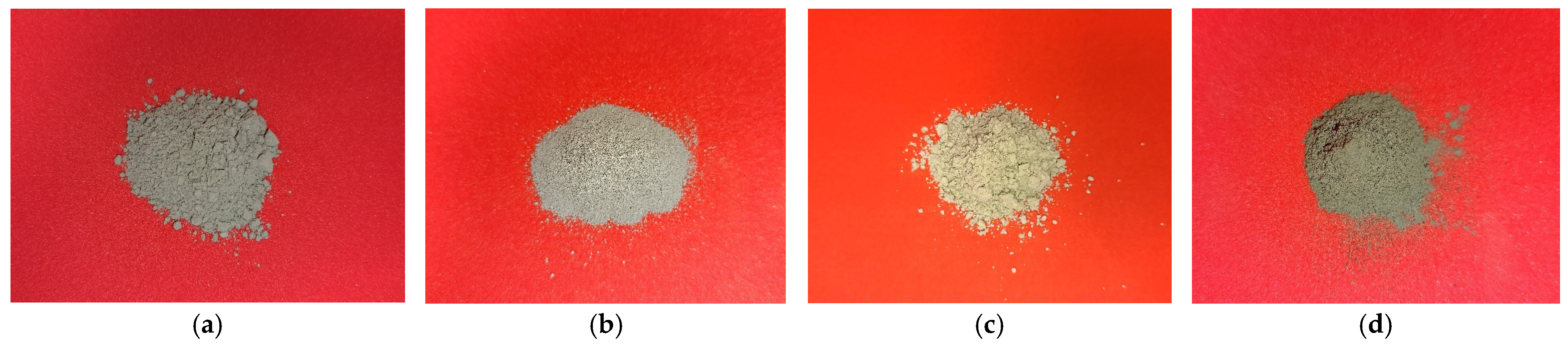
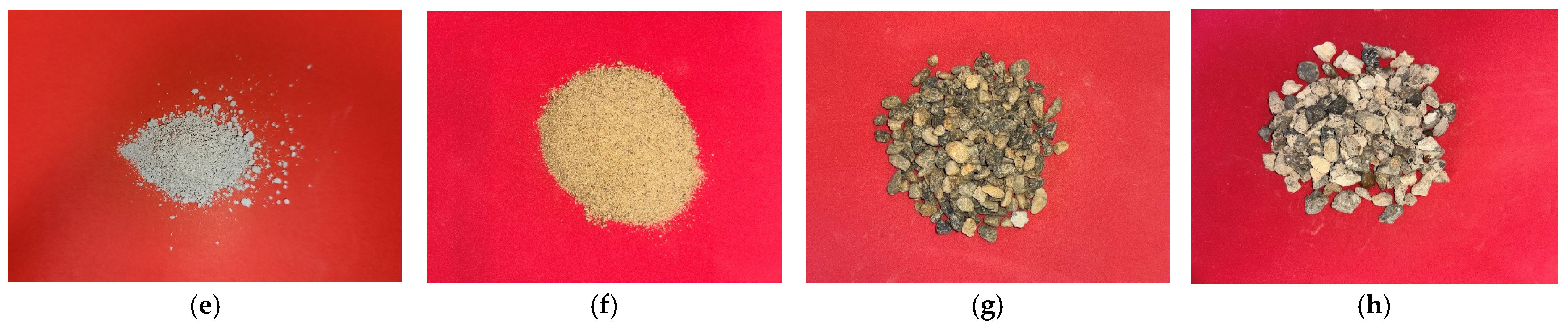
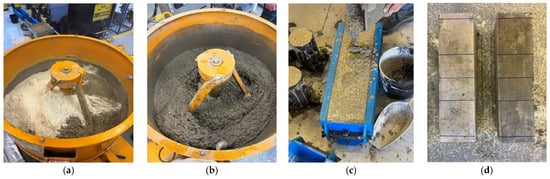
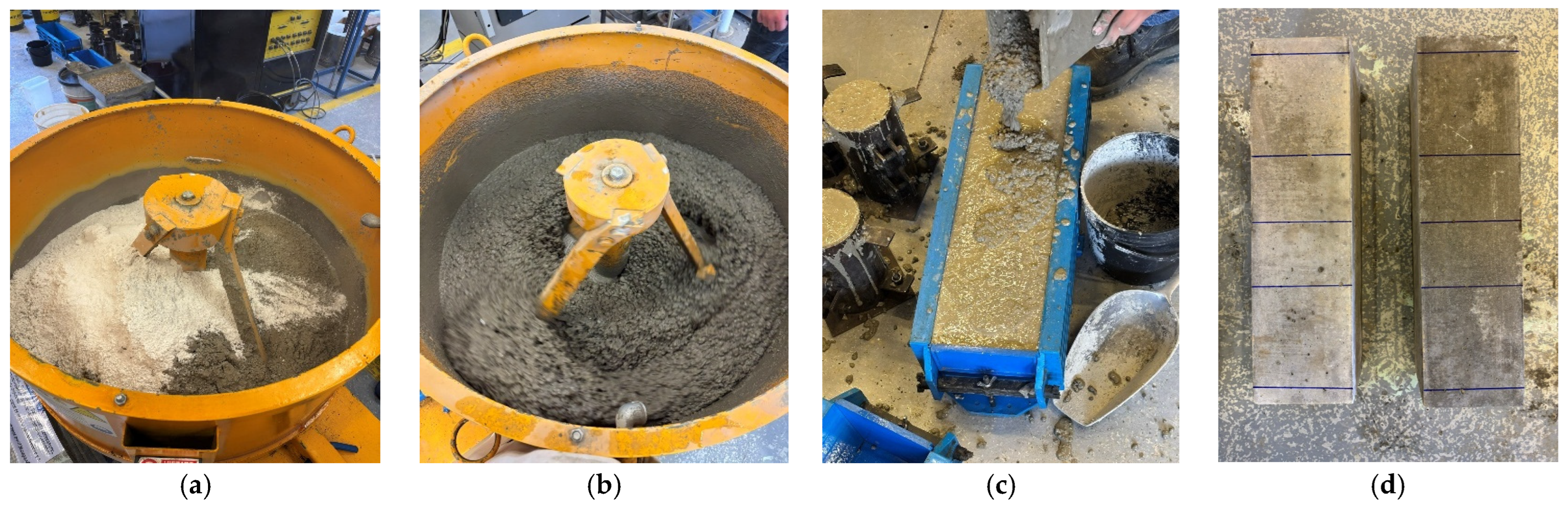
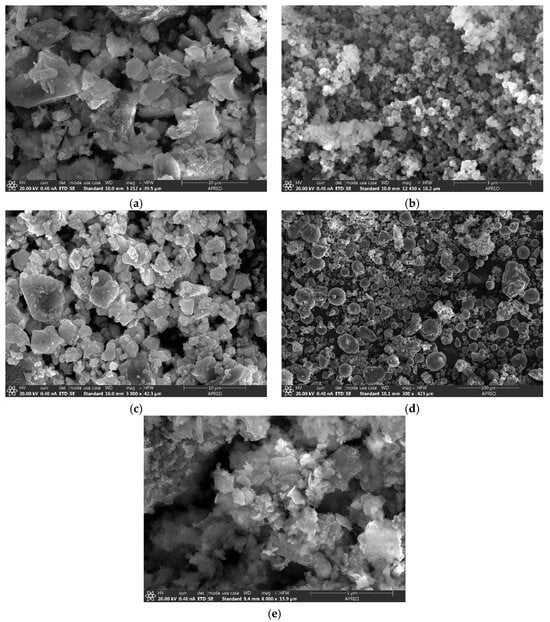
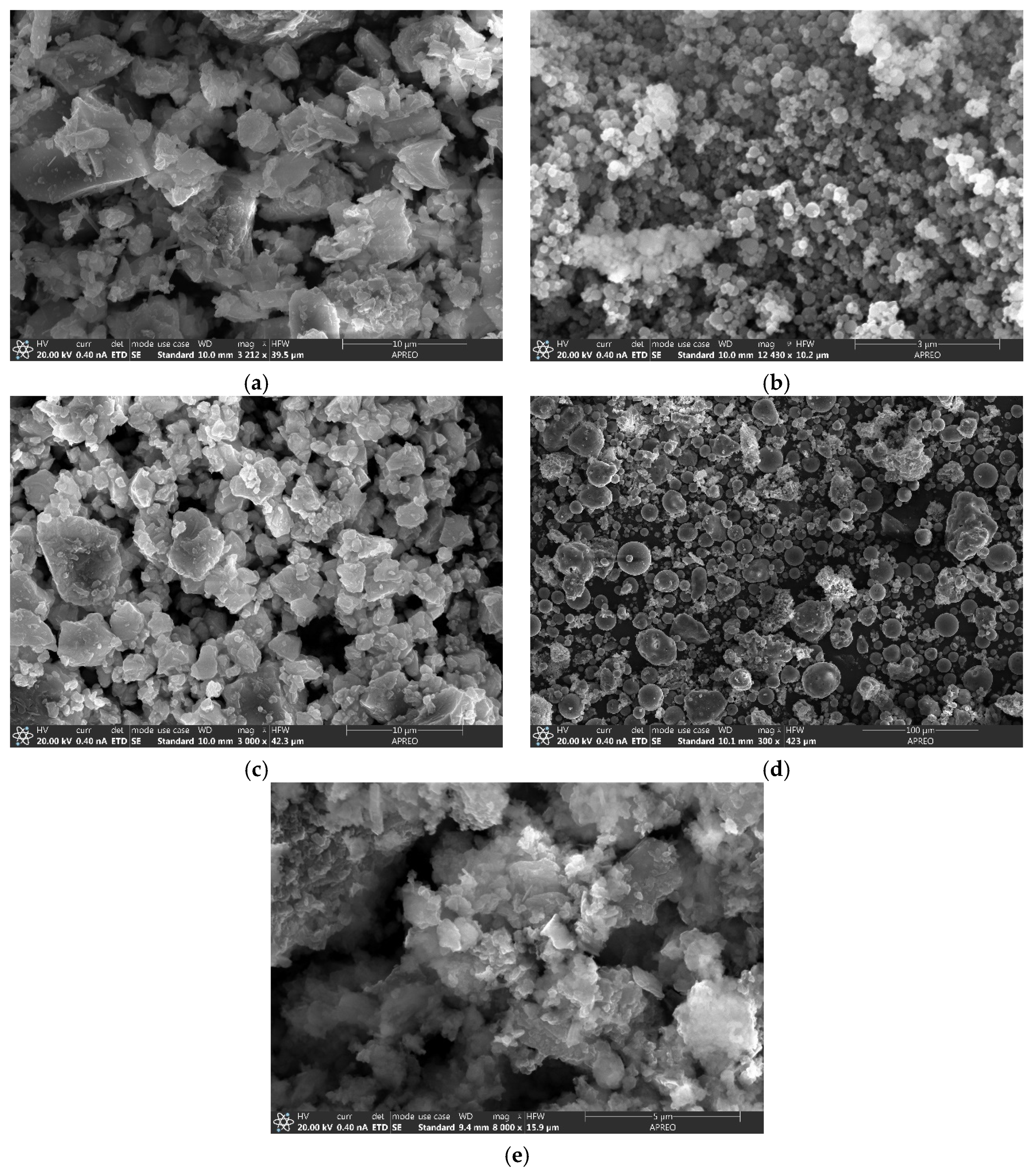
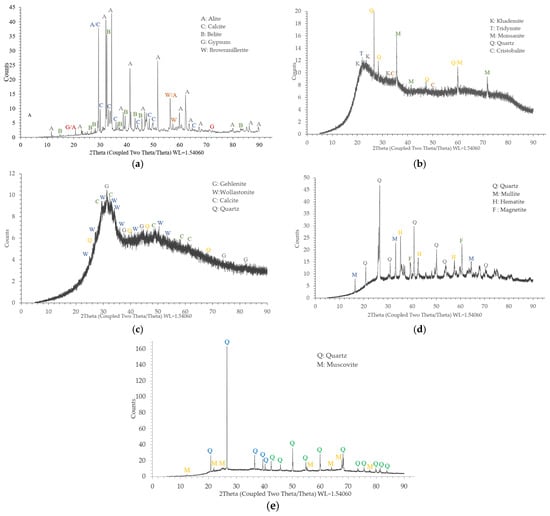
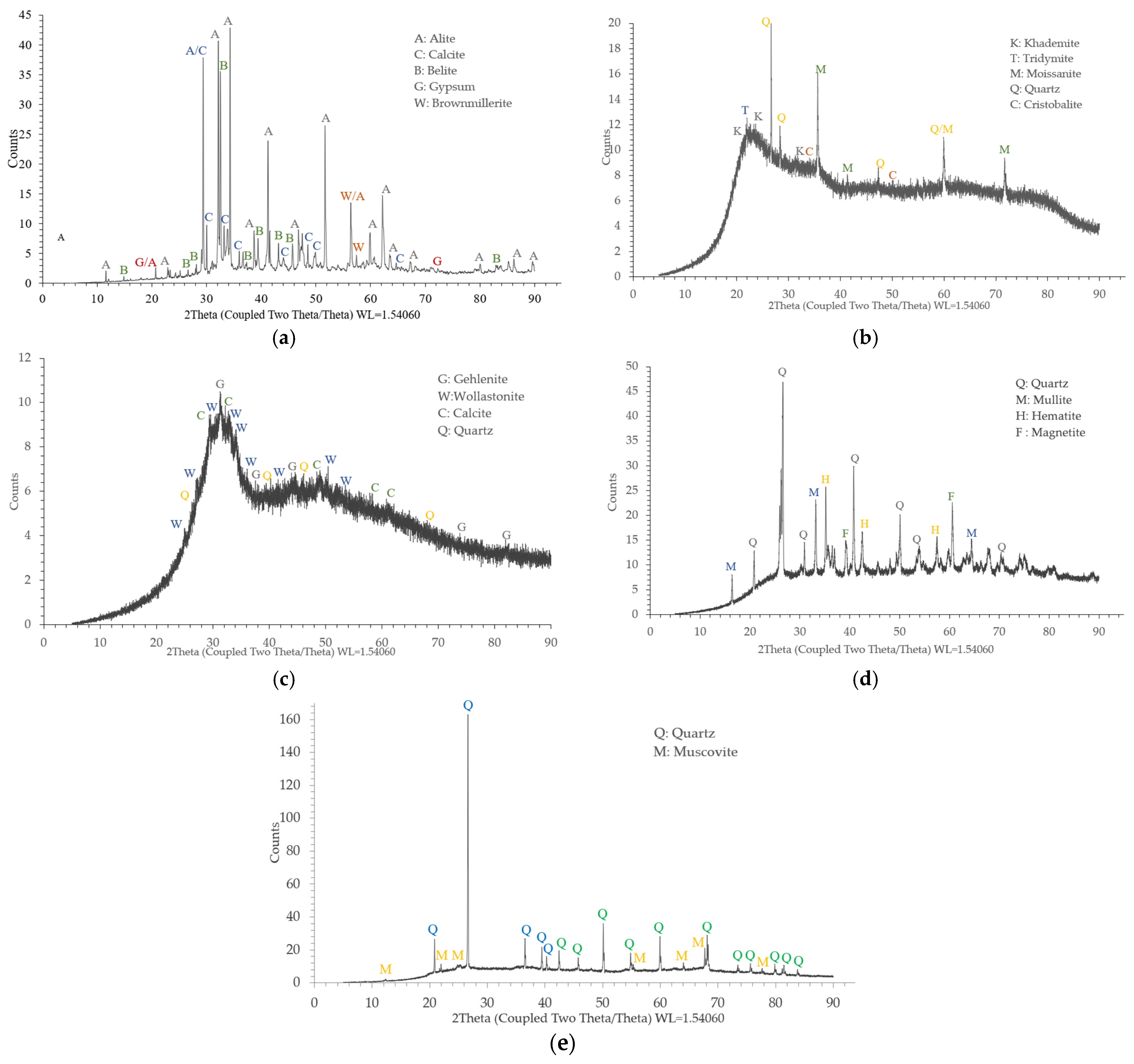
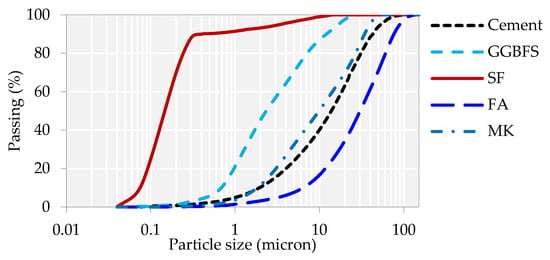
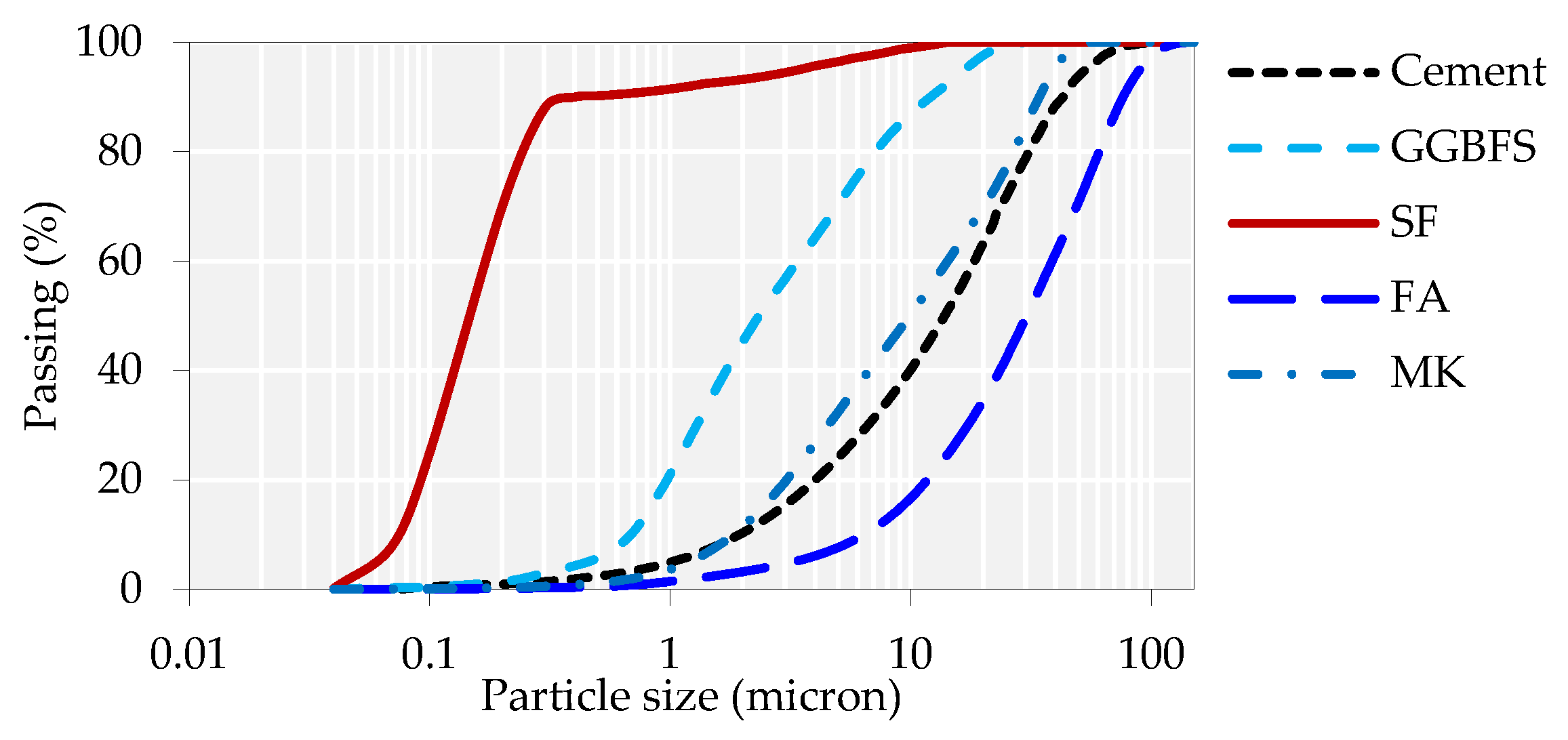
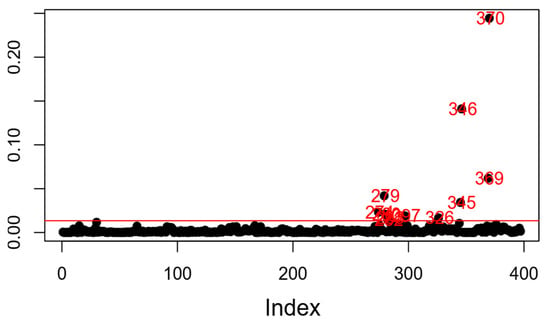
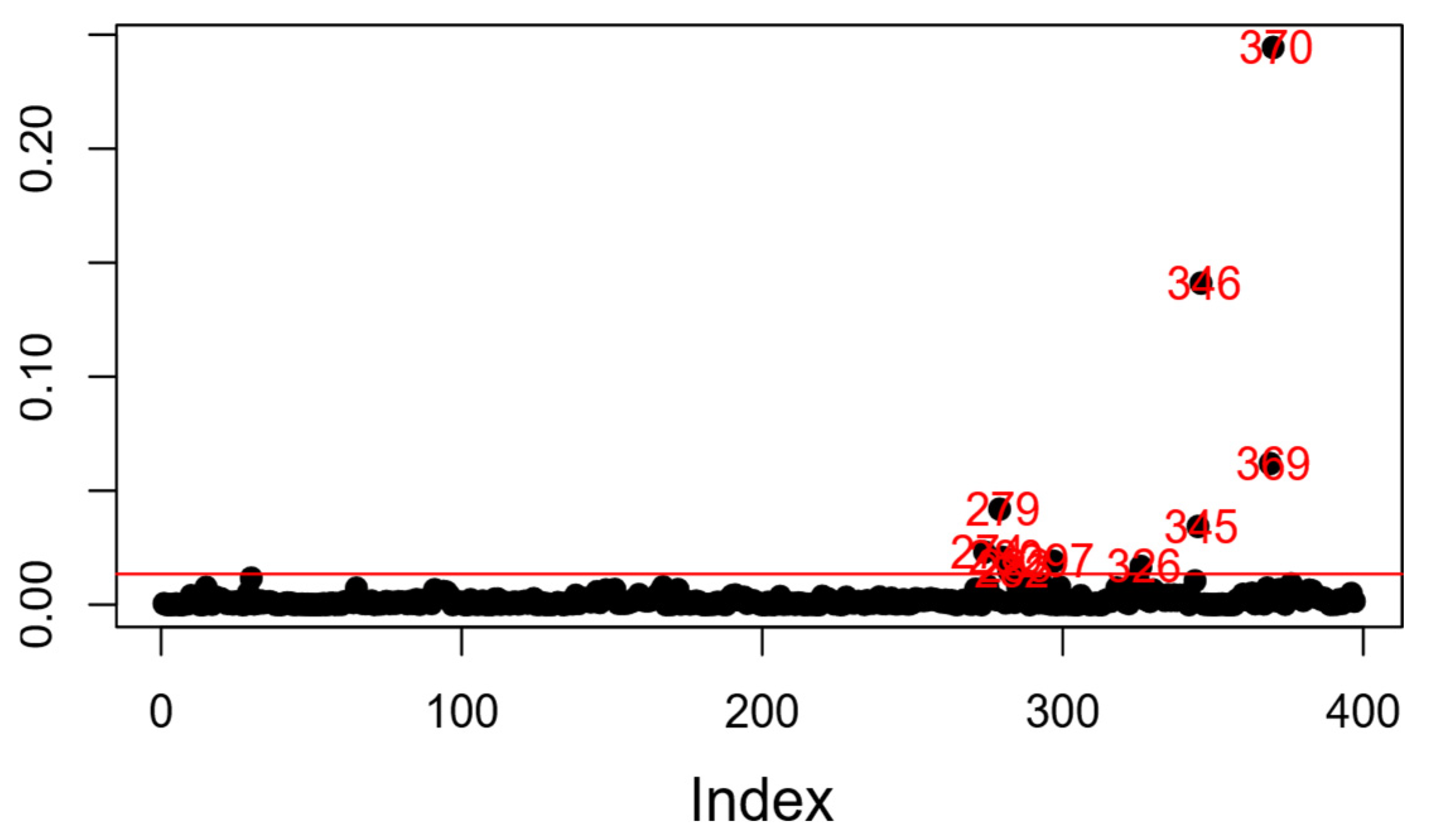
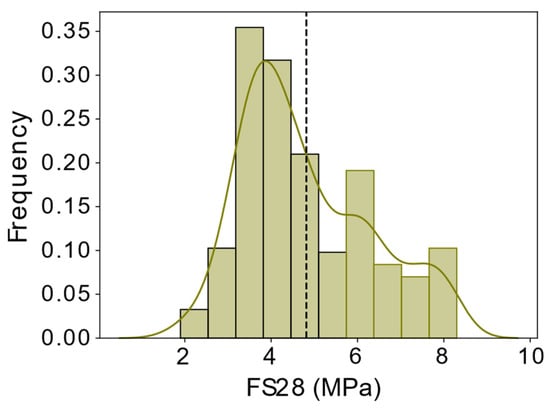
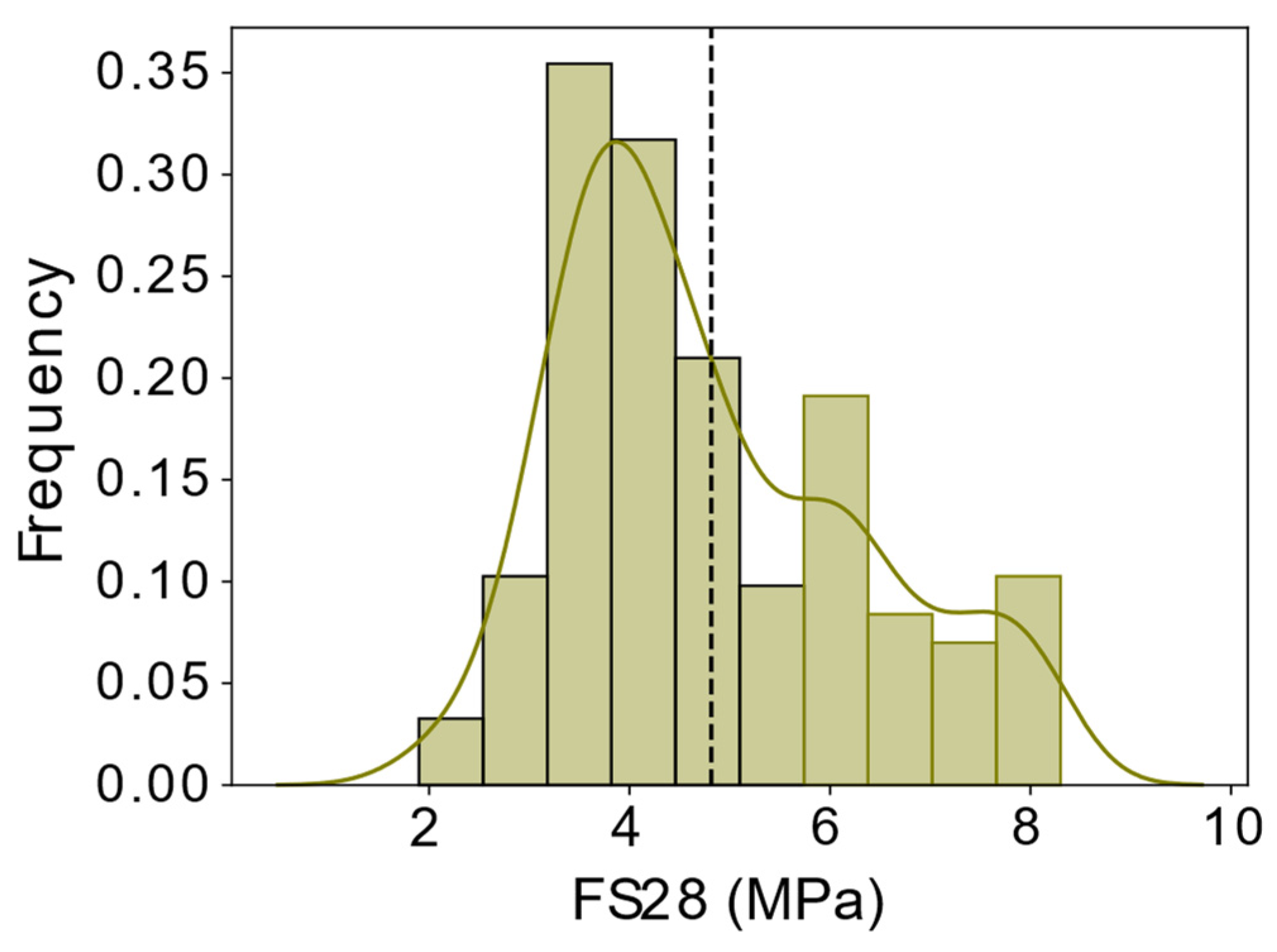
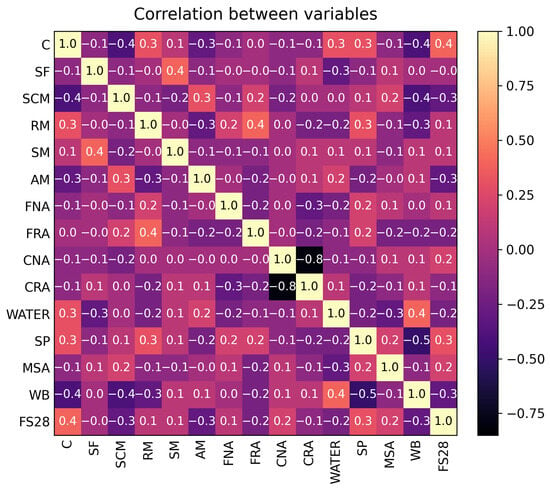
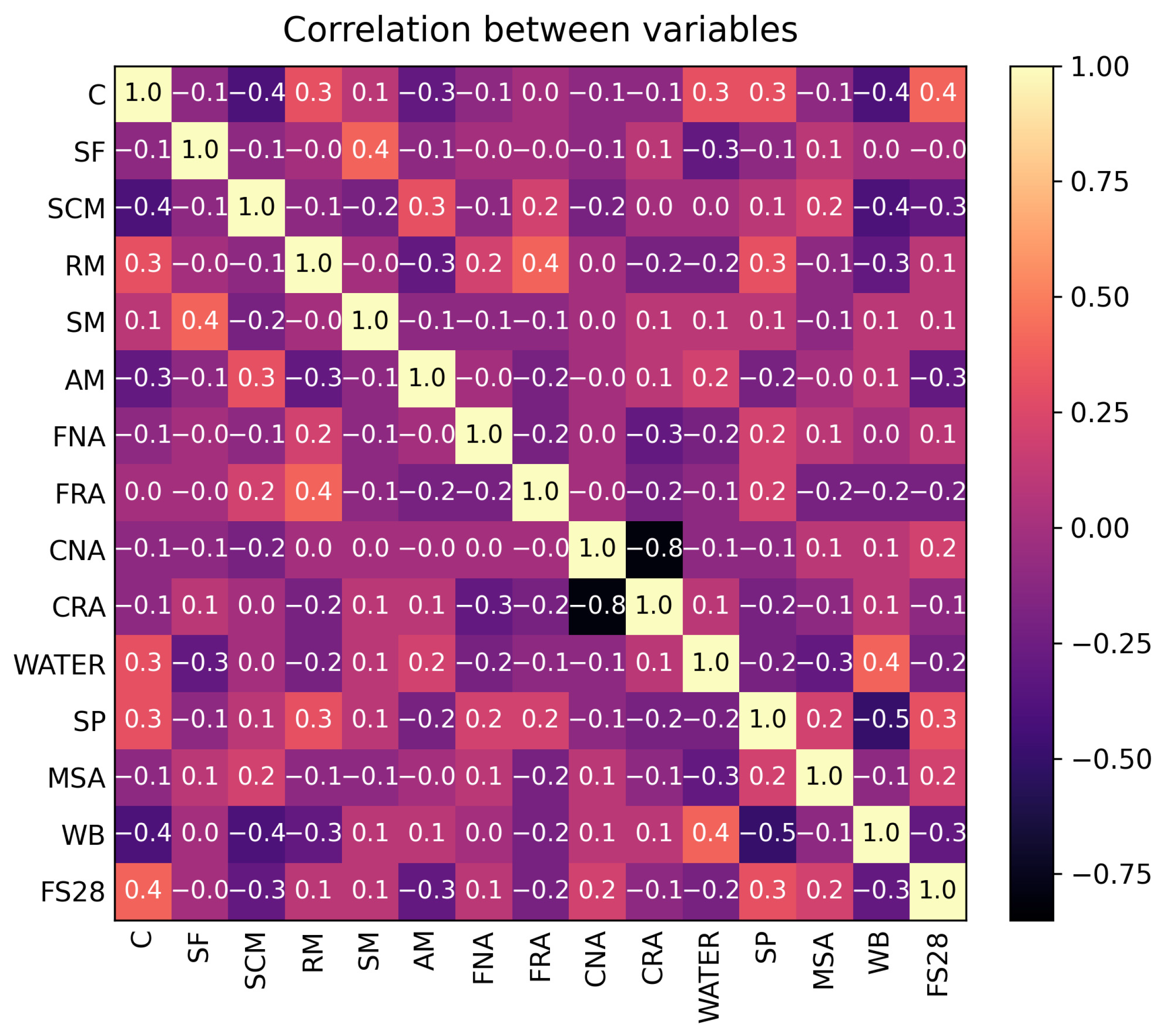
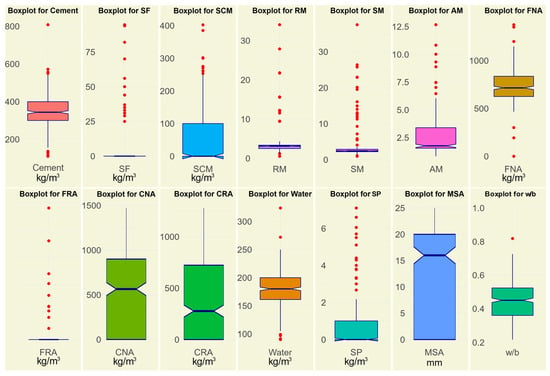
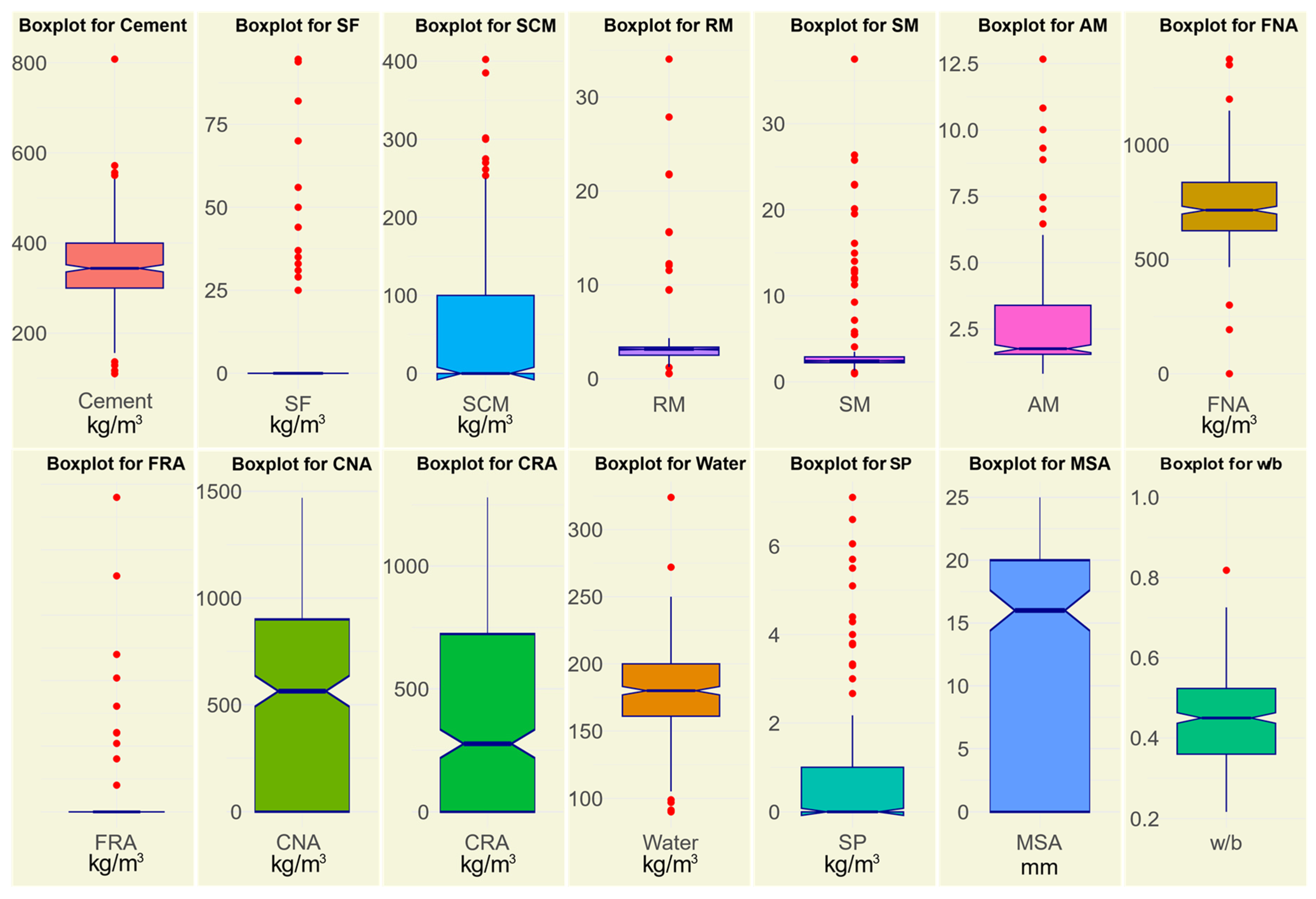
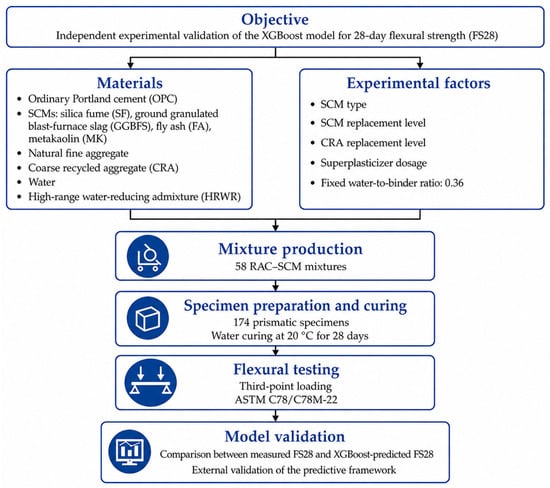
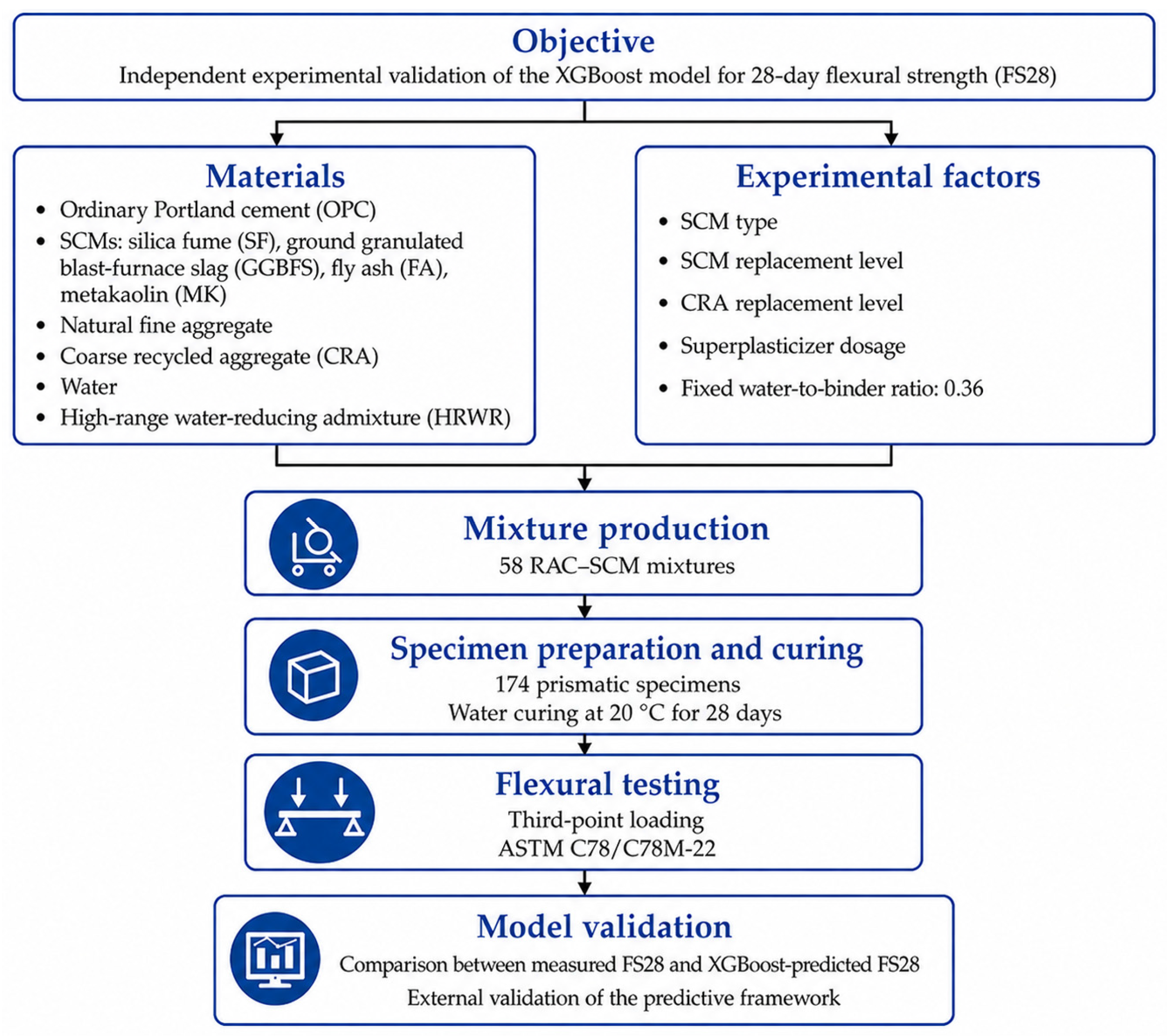
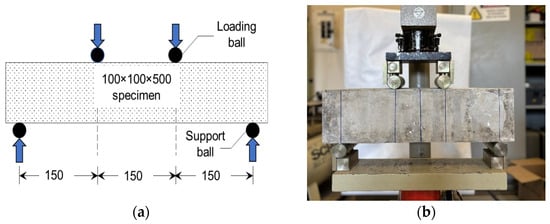
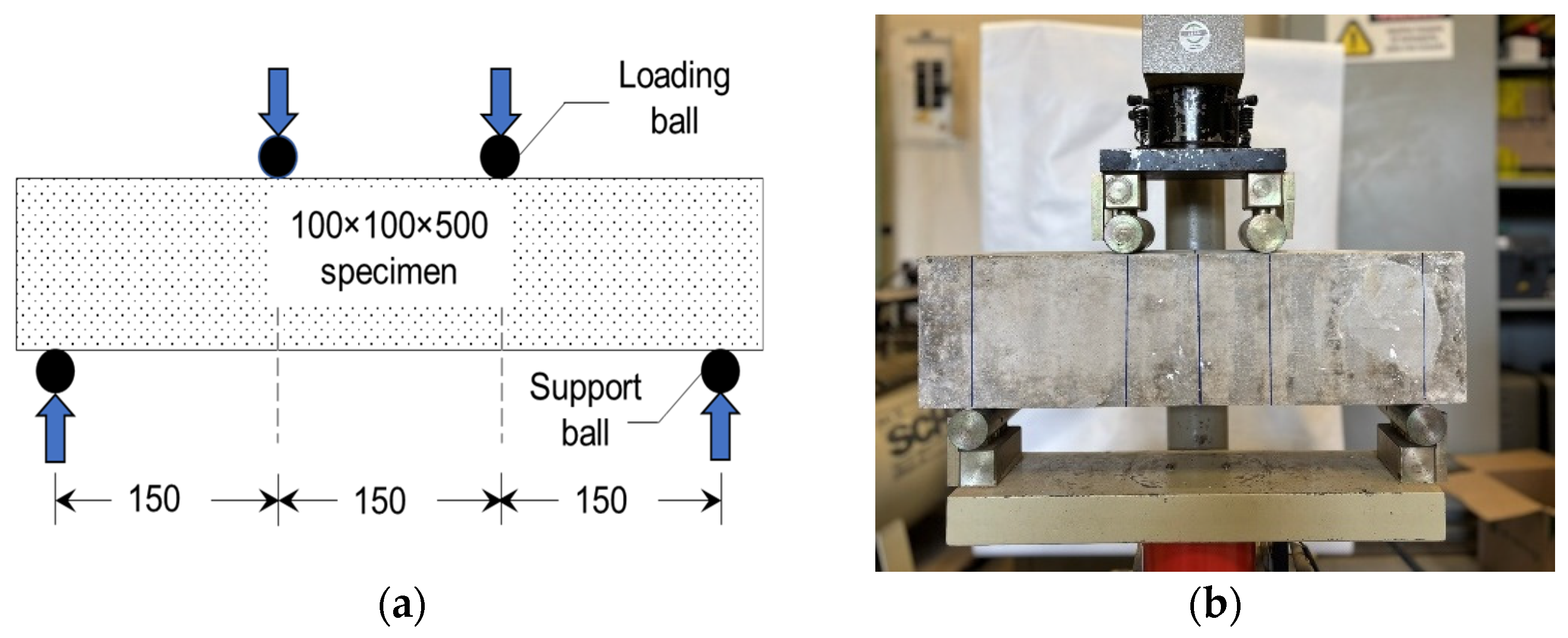
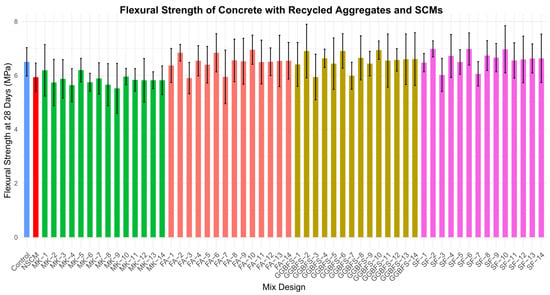
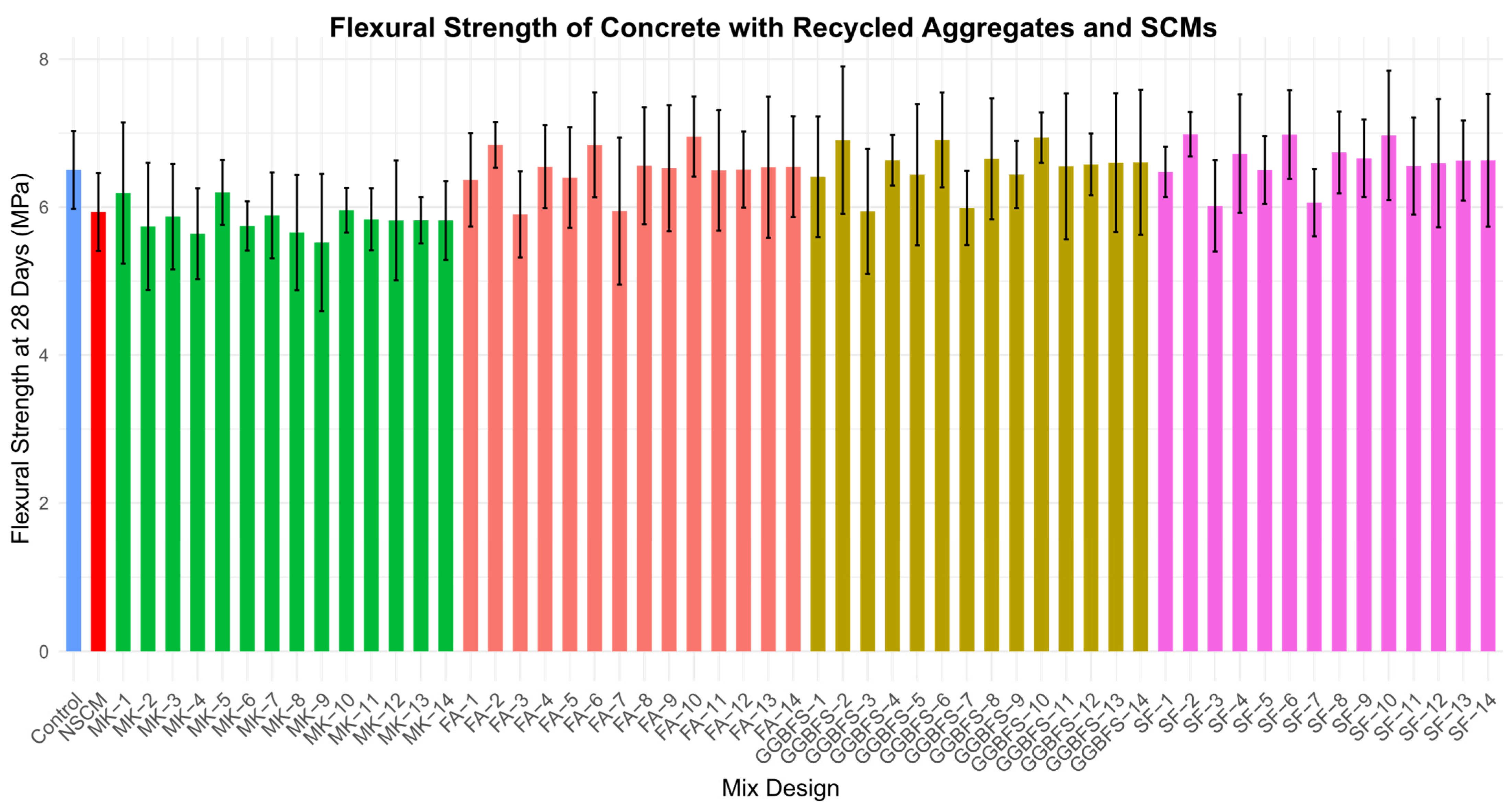
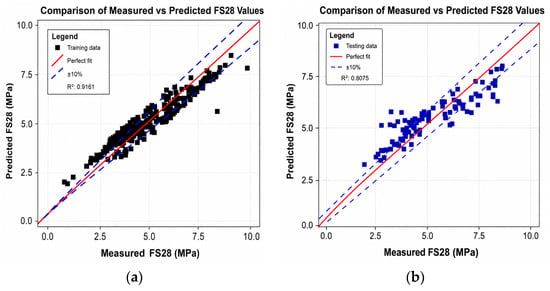
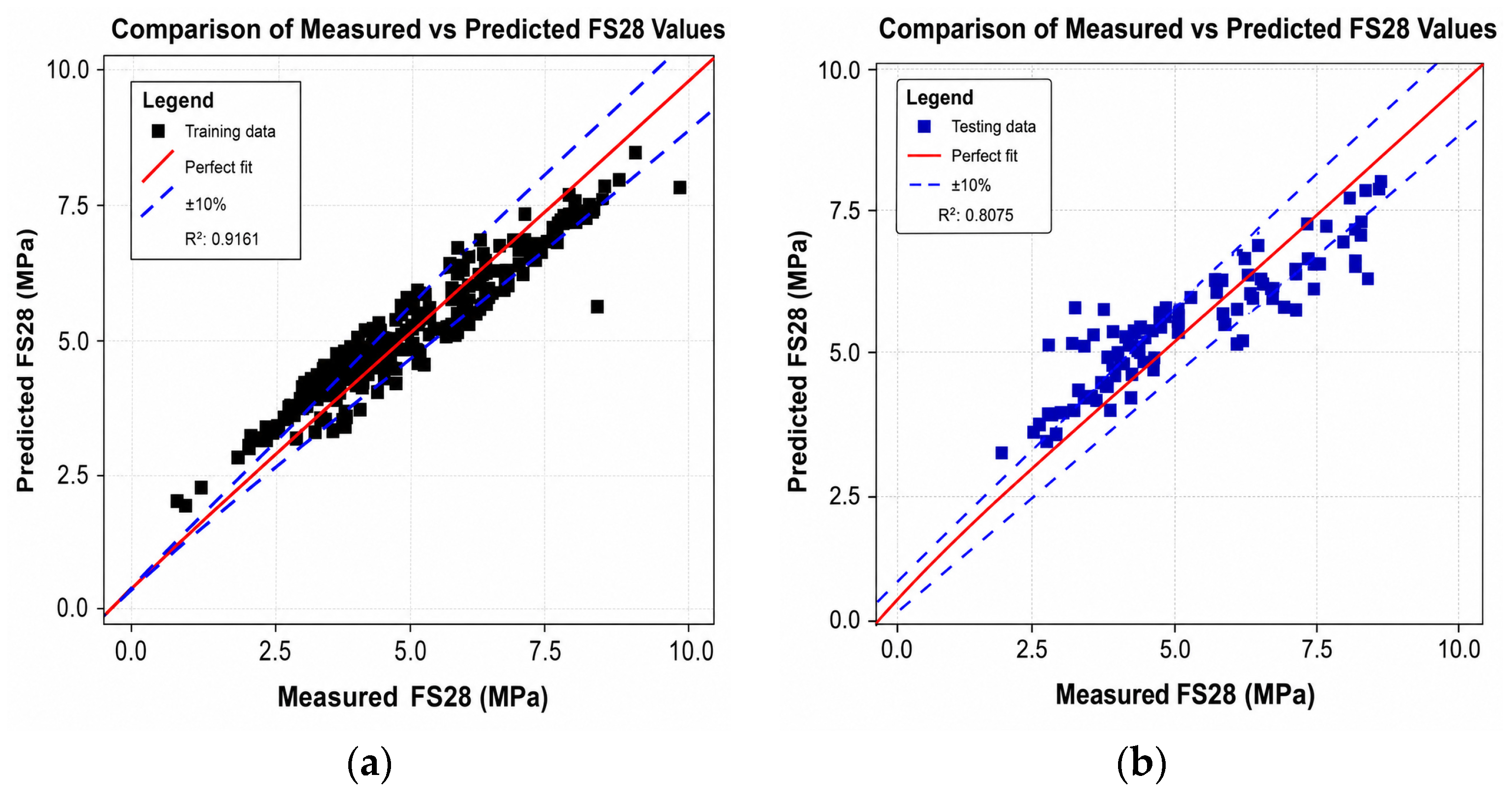
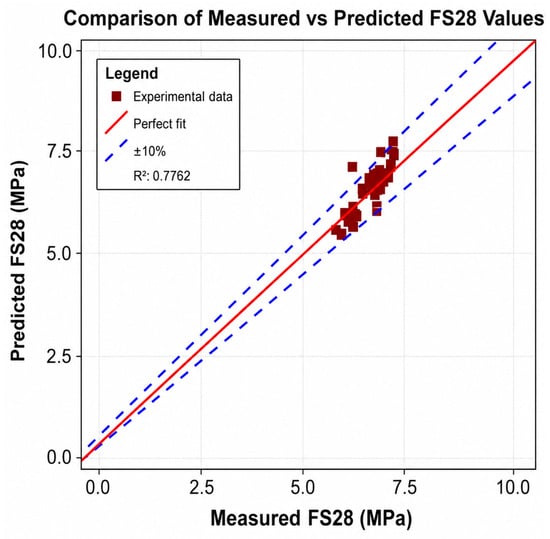
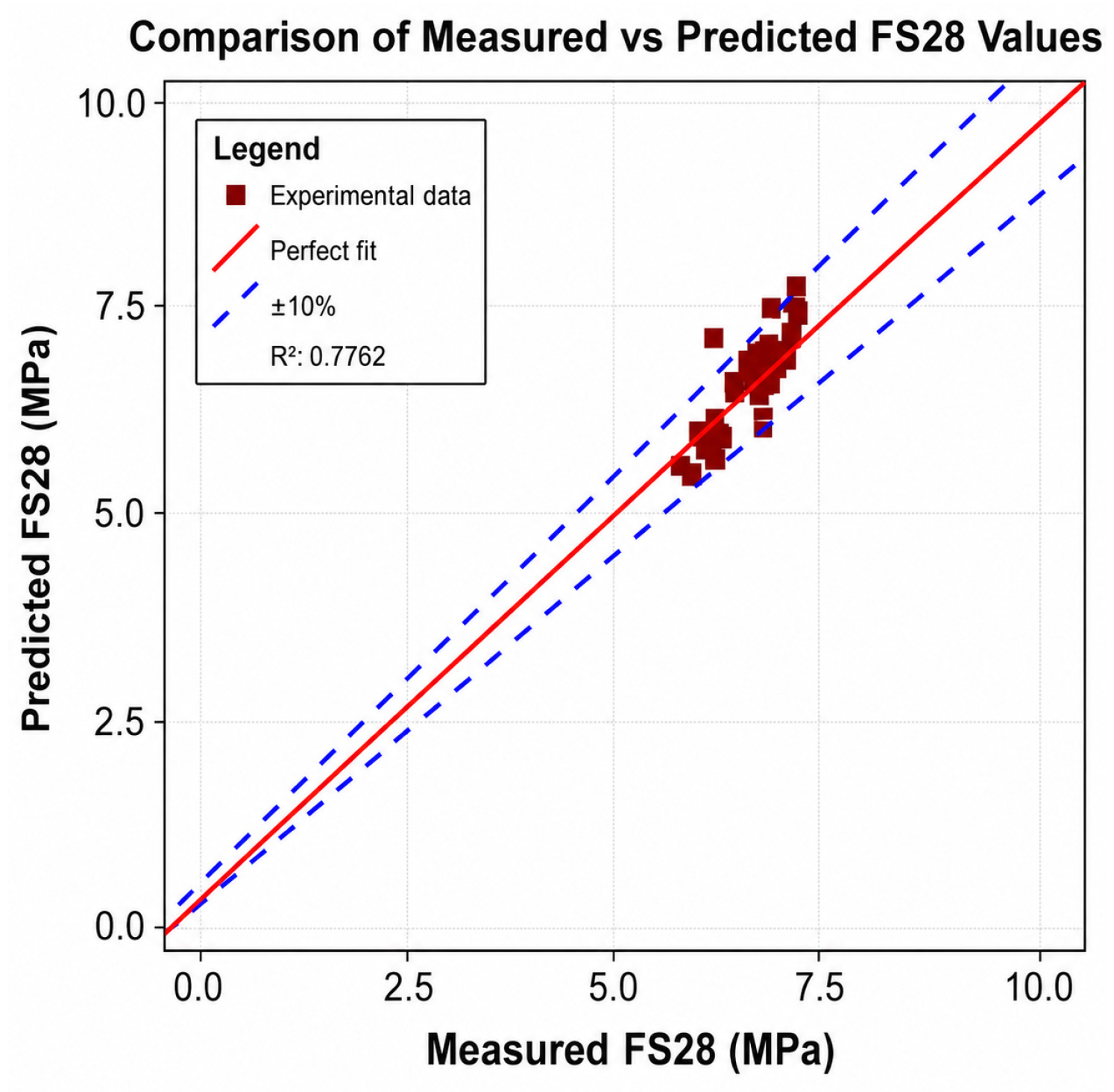
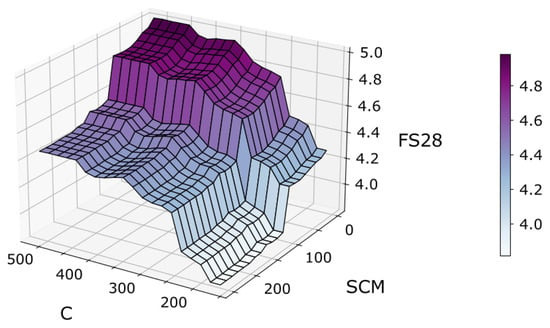
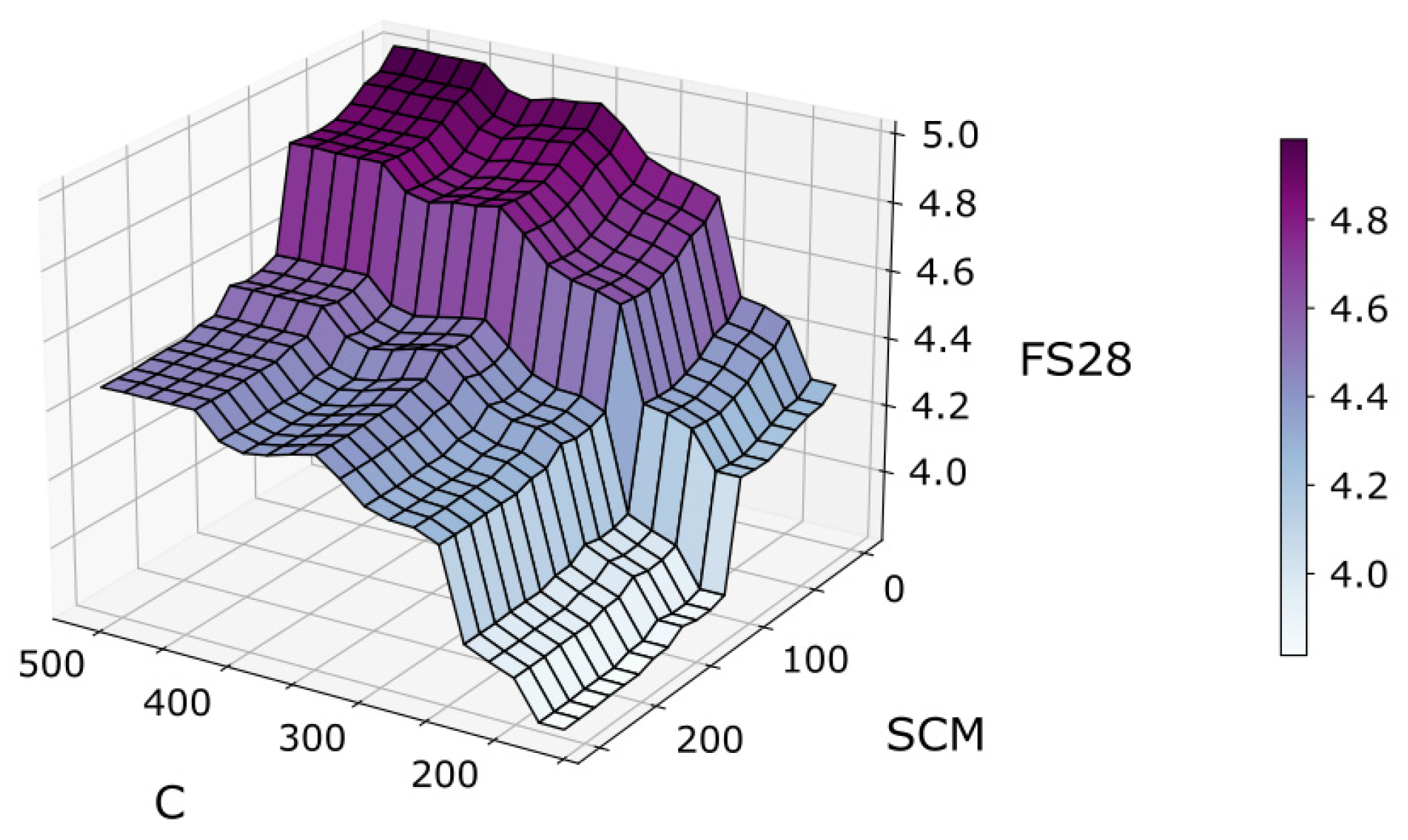
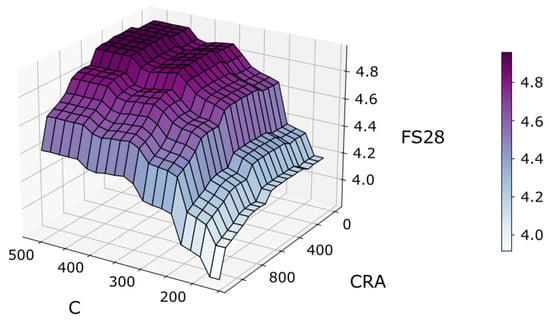
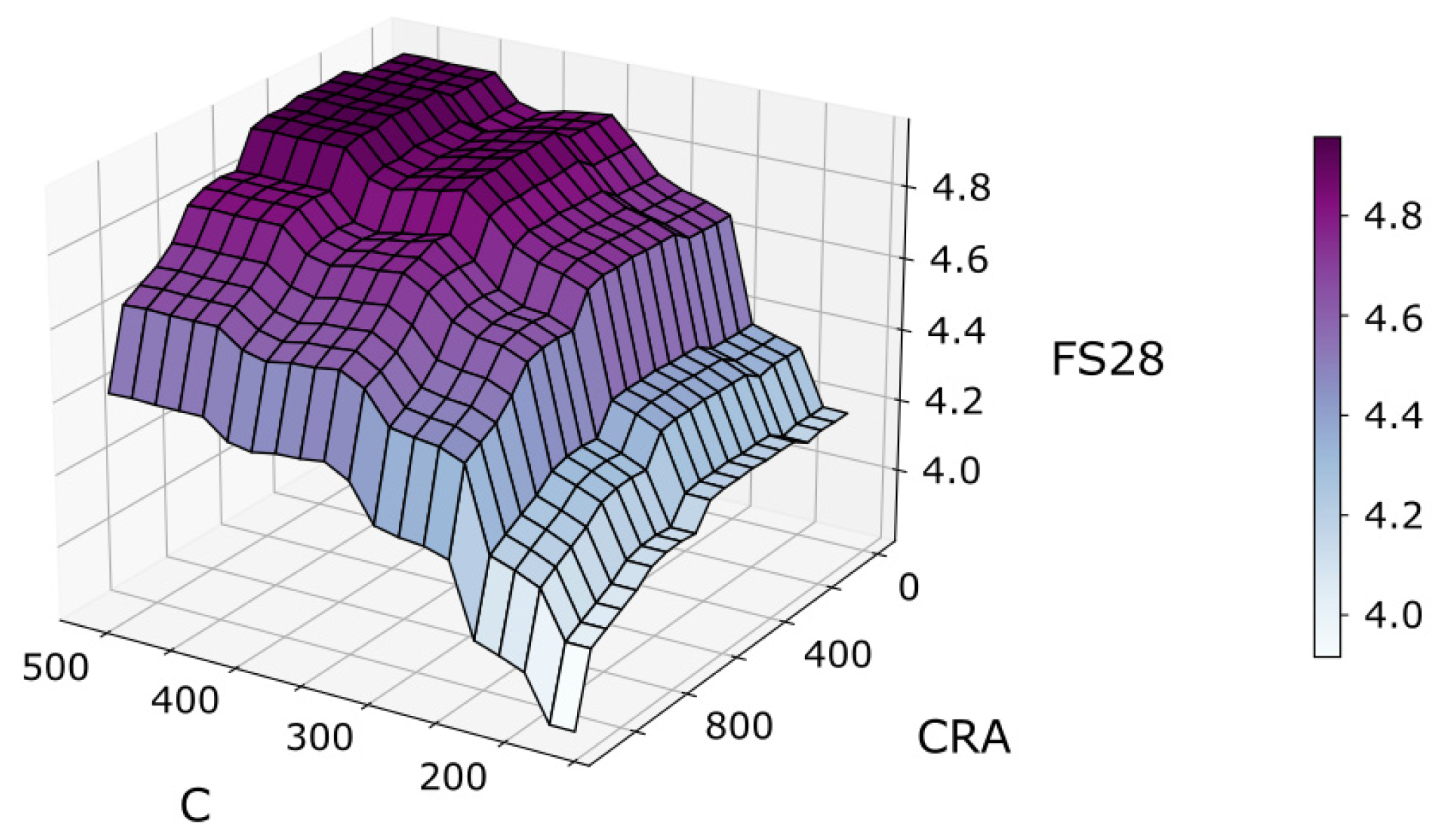
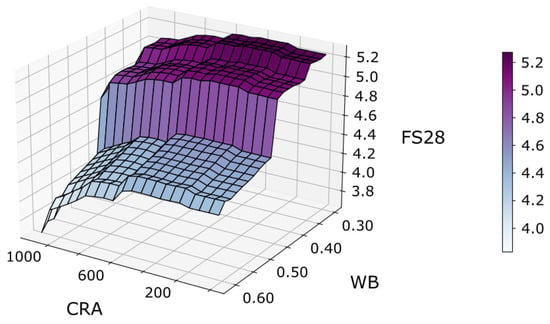
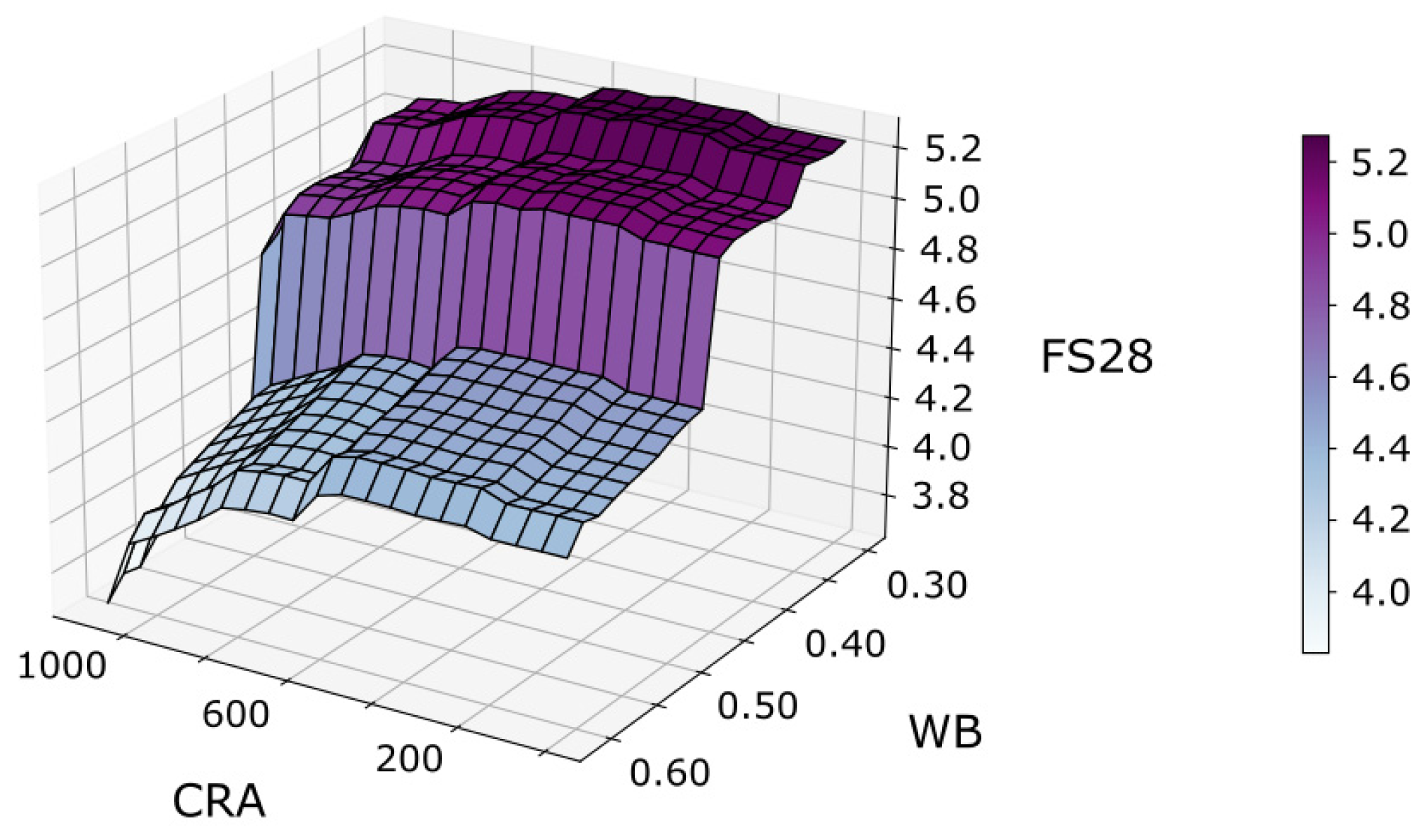
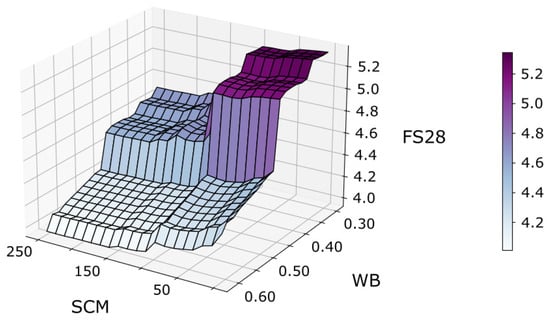
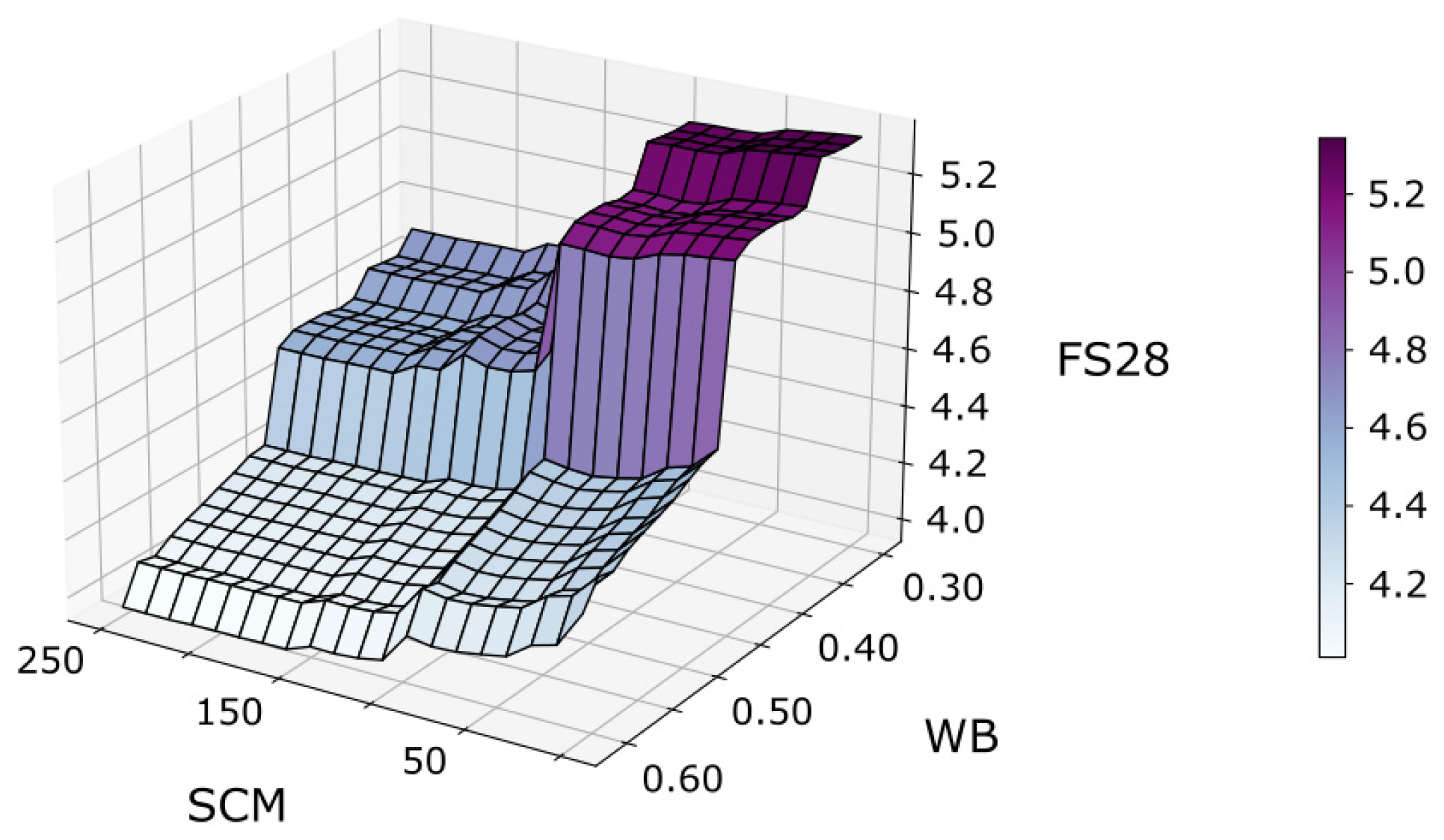
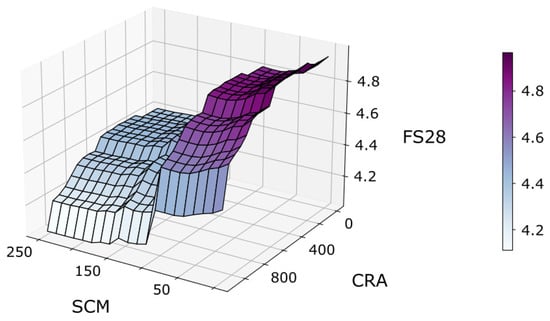
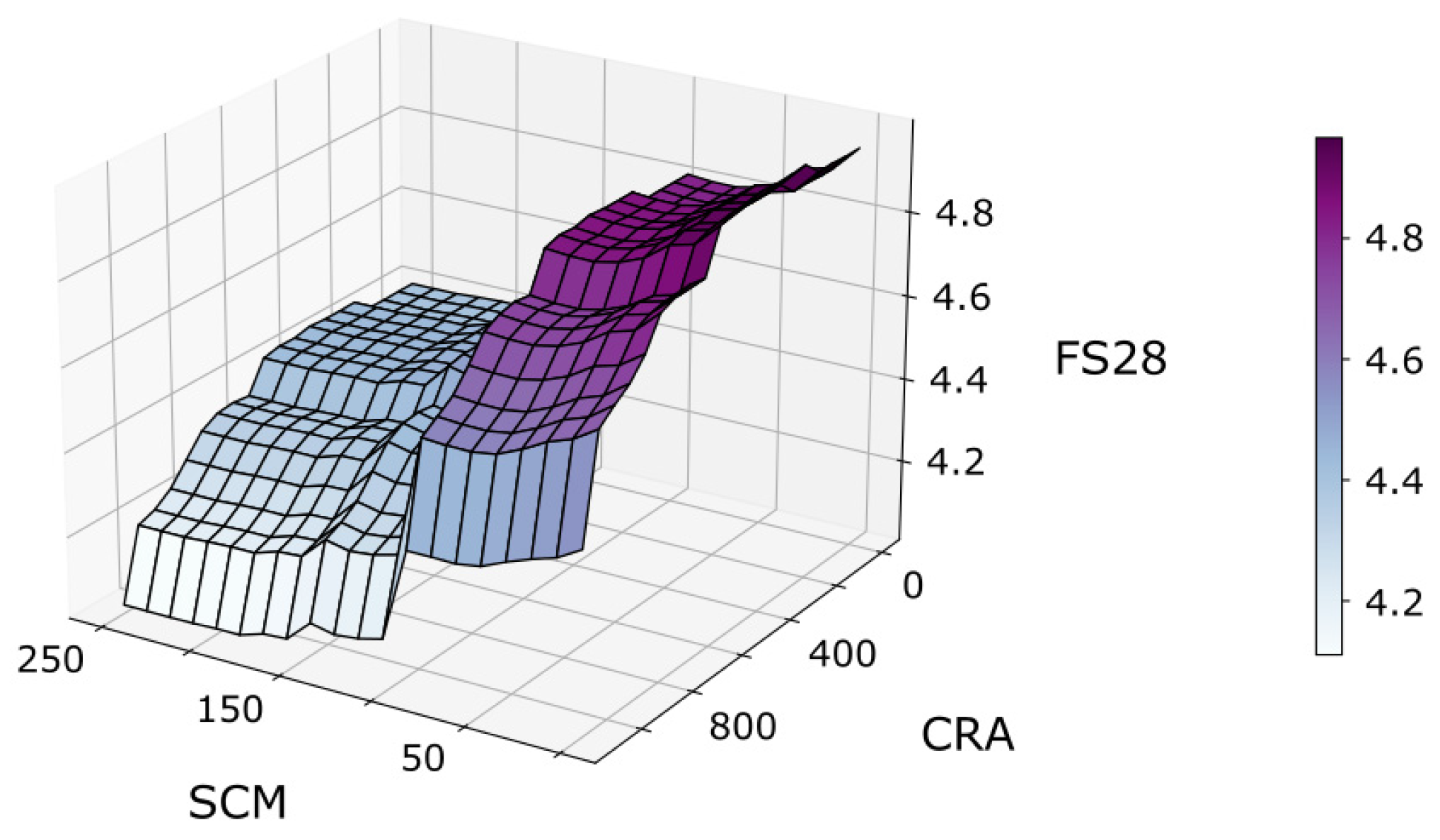
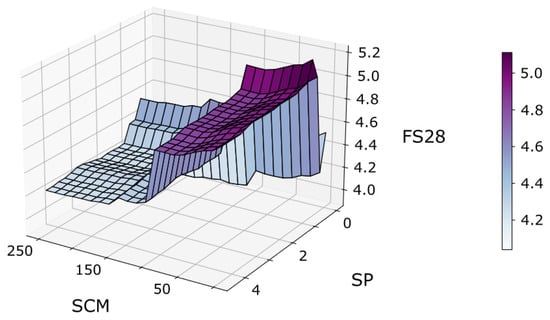
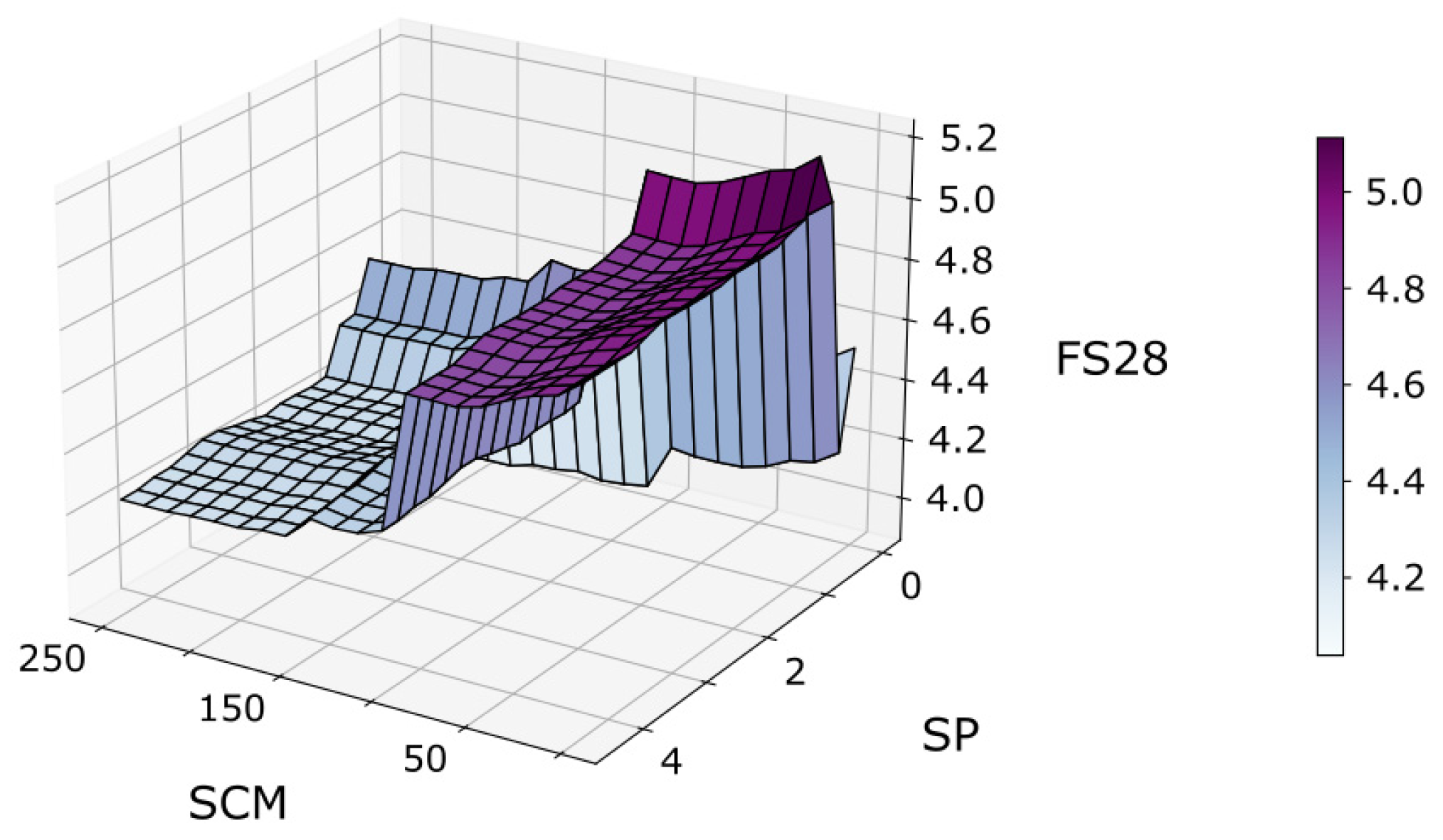
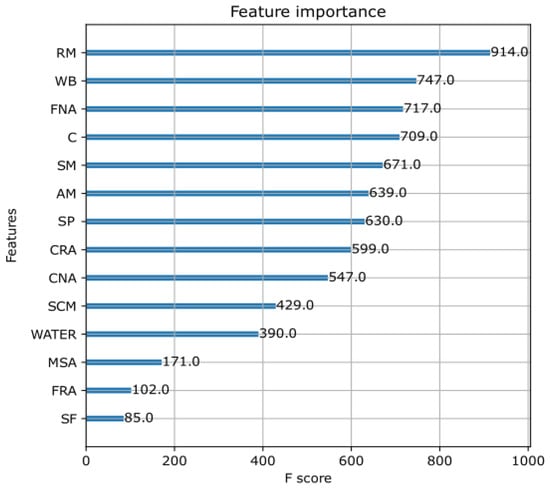
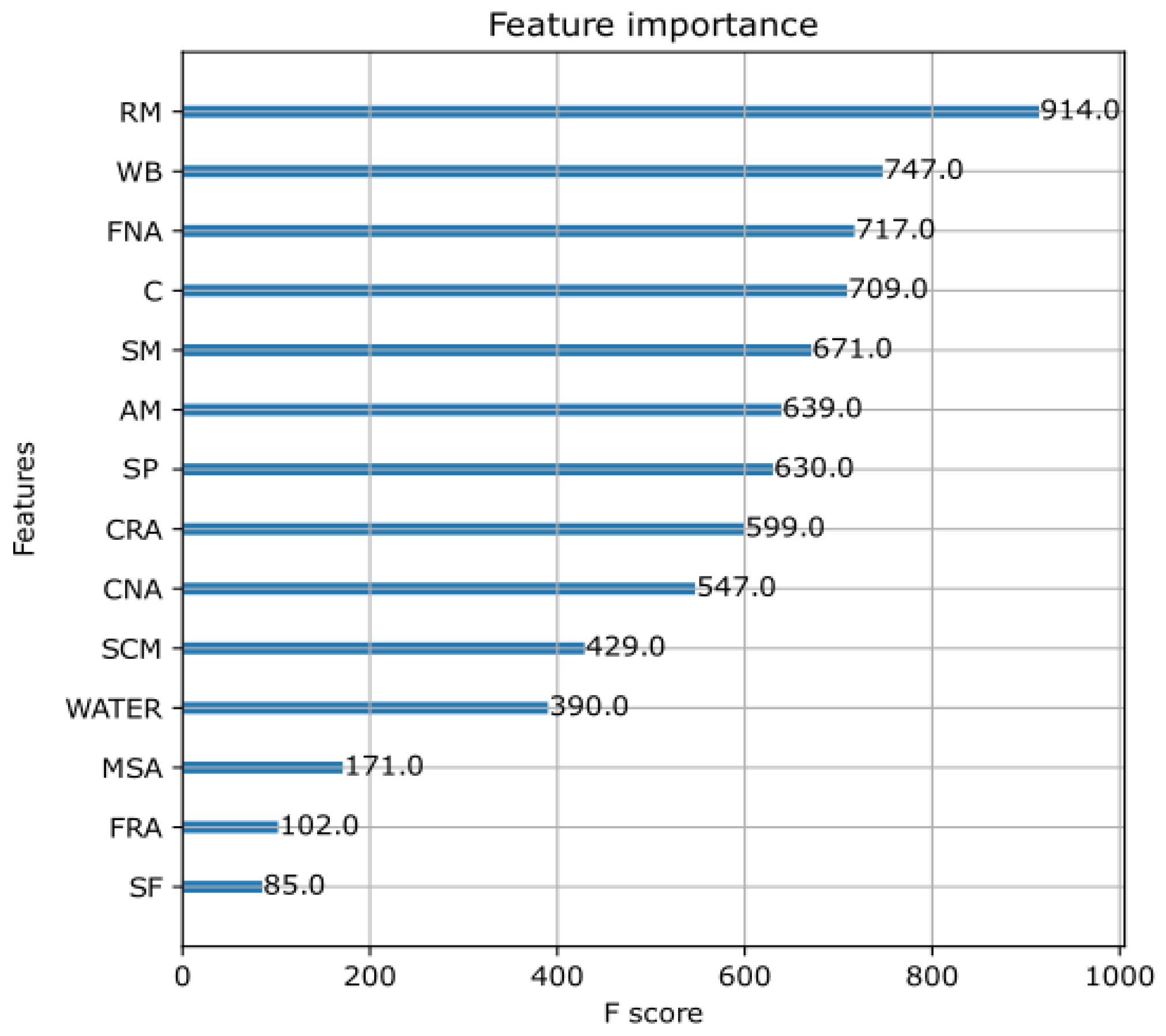

Disclaimer/Publisher’s Note: The statements, opinions and data contained in all publications are solely those of the individual author(s) and contributor(s) and not of MDPI and/or the editor(s). MDPI and/or the editor(s) disclaim responsibility for any injury to people or property resulting from any ideas, methods, instructions or products referred to in the content. |
© 2026 by the authors. Licensee MDPI, Basel, Switzerland. This article is an open access article distributed under the terms and conditions of the Creative Commons Attribution (CC BY) license.