


Abstract
Sustainability targets in contemporary construction projects are increasingly defined through embodied carbon limits, circular material obligations, waste diversion benchmarks, and energy performance requirements. However, a persistent gap remains between the establishment of these commitments during policy and design stages and their effective verification throughout project delivery and post-handover operation. Although Building Information Modelling (BIM), digital twins, and associated digital monitoring systems are widely discussed in sustainable construction research, their collective role in enabling continuous sustainability compliance assurance within construction management remains insufficiently synthesised. This study addresses this gap through a PRISMA-guided systematic review and structured comparative thematic synthesis of 117 peer-reviewed studies published between 2016 and 2026. A structured analytical coding matrix, MMAT-informed methodological quality appraisal, and descriptive evidence mapping were used to evaluate dominant digital technologies, sustainability compliance domains, lifecycle verification gaps, and study validation approaches. The findings indicate that current research remains concentrated around BIM-enabled design modelling and isolated operational analytics, with comparatively limited attention to integrated multi-stage sustainability verification during procurement, construction, commissioning, and operation. Four recurring sustainability compliance domains requiring stronger construction management control are identified, including embodied carbon verification, material reuse traceability, waste diversion monitoring, and energy performance validation. In response, the study proposes a Digital Sustainability Compliance Framework that conceptually integrates sustainability targets, PMBOK-aligned project control functions, BIM information models, digital twins, sensor systems, and centralised construction data platforms within a continuous lifecycle verification architecture. The study repositions digital technologies as governance-oriented infrastructures for more transparent, auditable, and continuously monitored sustainability compliance assurance while highlighting the need for future empirical validation.
1. Introduction
The building and construction sector is central to global sustainability transitions due to its substantial contribution to energy use, material consumption, and greenhouse gas (GHG) emissions. Recent estimates indicate that buildings account for approximately 40% of global energy-related carbon emissions when both operational and embodied impacts are considered [1,2]. In response, governments, industry organisations, and environmental certification systems have introduced increasingly stringent sustainability targets focused on embodied carbon reduction, circular material use, construction waste minimisation, and improved building energy performance [3,4,5]. Achieving these targets, however, requires more than the establishment of environmental benchmarks at policy or design stages. It requires reliable mechanisms capable of verifying whether such commitments are consistently maintained throughout project delivery and building operation.
Digital technologies have emerged as an important enabler of sustainability performance within the built environment. Building Information Modelling (BIM), digital twins, Internet of Things (IoT) sensing, and integrated construction data systems are increasingly used to support lifecycle assessment, material quantification, operational energy analytics, and environmental reporting [6,7,8,9,10,11,12]. BIM-based sustainability tools have enabled more automated embodied carbon estimation and environmental simulation during design, while digital twins have been proposed as platforms for real-time synchronisation of physical building performance with digital asset models [13,14,15]. These developments have significantly improved the analytical capacity of project teams to model, predict, and assess sustainability-related outcomes.
Despite these advances, an important research gap remains between sustainability modelling and sustainability compliance verification during active construction delivery and post-handover performance assurance. Much of the existing literature continues to focus on digital sustainability applications as isolated technical functions, particularly design-stage lifecycle assessment, embodied carbon estimation, or operational energy analytics [16,17,18]. While these applications are valuable for sustainability analysis, they do not necessarily ensure that sustainability obligations established within procurement requirements, contractual commitments, certification systems, or client sustainability plans are effectively implemented and continuously verified during construction activities. Consequently, sustainability targets defined in planning documentation may not always translate into measurable project outcomes.
This reflects a broader governance problem within sustainable construction. In practice, contractors and project managers are increasingly required to demonstrate compliance with embodied carbon limits, recycled material obligations, landfill diversion rates, and energy performance benchmarks; however, these obligations are frequently monitored through fragmented documentation systems, manual reporting, supplier declarations, and retrospective audits rather than integrated real-time digital verification [19,20,21,22]. Sustainability information is often dispersed across procurement records, subcontractor submissions, waste reports, commissioning documents, and operational monitoring platforms, limiting transparency and reducing the ability of project teams to detect non-compliance before sustainability deviations become embedded within completed works.
From a construction management perspective, this indicates that sustainability verification should not be treated solely as an environmental reporting exercise, but as an emerging project control function. Construction management provides the procedural mechanisms through which project objectives are translated into procurement decisions, contractor coordination, quality assurance, resource control, documentation management, commissioning, and handover [23,24,25]. While cost, time, quality, and safety are typically supported by mature monitoring systems, sustainability indicators often remain externalised as post hoc reporting obligations rather than embedded within routine project controls [26]. Yet embodied carbon thresholds directly influence procurement substitutions, material reuse targets require supply chain traceability, waste diversion obligations depend on logistics documentation, and energy performance commitments extend into commissioning and operational validation [27]. Sustainability assurance therefore increasingly intersects with mainstream project governance activities.
This governance challenge can be interpreted through the Project Management Body of Knowledge (PMBOK), which identifies integration, procurement, quality, communications, resource, risk, and stakeholder management as the principal domains through which project objectives are controlled throughout delivery [28]. Sustainability obligations intersect with each of these knowledge areas, suggesting that environmental compliance monitoring is progressively becoming a formal construction management responsibility rather than an external certification task. Accordingly, stronger sustainability outcomes may depend not only on improved environmental targets, but also on the digital information infrastructures capable of embedding these targets within day-to-day project monitoring and verification systems.
Digital information systems offer a potential pathway for addressing this disconnect. BIM models contain detailed information on material quantities, component specifications, and construction sequencing, while digital twins and sensor-based platforms enable synchronisation of live construction or operational data with the digital project environment [29,30,31,32,33]. When linked with procurement databases, supplier certifications, logistics records, commissioning outputs, and building performance monitoring systems, these digital environments provide the technical basis for continuous comparison between sustainability targets and actual project delivery conditions. Rather than functioning solely as modelling or simulation tools, digital technologies can therefore be repositioned as governance-oriented infrastructures for transparent and auditable sustainability compliance assurance.
While previous studies have proposed BIM-enabled lifecycle assessment models, digital twin architectures for building performance monitoring, and material passport systems for circular resource management, these existing frameworks generally remain fragmented in both lifecycle scope and management integration [34,35,36]. Most are developed around isolated technical applications such as carbon calculation, facility analytics, or material inventorying, rather than as unified construction management systems capable of linking sustainability obligations with procurement verification, construction execution, commissioning, and operational accountability. A clearer synthesis is therefore needed regarding how current digital technologies can collectively support sustainability compliance as a continuous lifecycle management function [37,38].
Accordingly, this study undertakes a PRISMA-guided systematic review and structured comparative thematic synthesis of 117 peer-reviewed studies published between 2016 and 2026. The review examines the dominant digital technologies currently applied to sustainability monitoring, the principal construction management verification gaps recurring across project lifecycle stages, and the convergent digital monitoring capabilities reported in the literature. Based on this synthesis, the study proposes a Digital Sustainability Compliance Framework that conceptually integrates sustainability targets, PMBOK-aligned construction management controls, BIM information models, digital twins, sensor systems, and centralised construction data platforms within a unified lifecycle verification architecture.
Research Questions and Analytical Propositions
To guide the systematic review and framework synthesis, the study was structured around three research questions:
RQ1: What digital technologies are currently reported in the literature for supporting sustainability compliance monitoring and verification in construction management?
RQ2: Which sustainability compliance indicators and project lifecycle stages remain most affected by fragmented verification practices and limited digital traceability?
RQ3: How can the recurring digital monitoring capabilities identified across the reviewed literature be conceptually integrated into a unified construction management framework for lifecycle sustainability compliance assurance?
The review proceeds from the analytical proposition that although BIM, digital twins, and sensor-based monitoring systems are frequently discussed as isolated sustainability technologies, their broader contribution may lie in their integration as a continuous digital governance architecture capable of embedding sustainability verification within routine project delivery controls. The systematic review and comparative thematic synthesis were therefore designed not only to map existing digital applications, but also to evaluate the extent to which the literature supports this governance-oriented proposition.
2. Research Methodology
This study adopts a PRISMA-guided systematic review combined with comparative thematic synthesis to examine the role of digital technologies in sustainability compliance verification within construction management. The objective of the review is not only to identify the dominant digital systems discussed in the literature, but also to systematically evaluate how existing studies address sustainability monitoring, compliance verification limitations, and construction management applicability across project delivery stages. The review protocol was prospectively registered on the Open Science Framework (OSF) (Supplementary Materials https://osf.io/fk6b5 (accessed on 8 April 2026)). Literature identification, screening, and reporting were undertaken in accordance with the PRISMA 2020 framework to ensure transparency in study selection [39]. However, given the heterogeneous nature of the included studies (conceptual papers, digital framework studies, empirical case studies, applied BIM investigations, and sustainability monitoring research), the post-selection analysis was conducted using a structured comparative coding and appraisal procedure rather than a meta-analytic synthesis. Figure 1 presents the PRISMA-guided flow diagram illustrating the literature selection process adopted in this study. The review process consisted of three main stages: identification, screening, and inclusion.
Figure 1.
PRISMA Methodology.
2.1. Literature Identification and Screening
Relevant peer-reviewed studies were identified through searches conducted in Scopus, Web of Science, and ScienceDirect, selected for their strong coverage of the construction management, sustainability, and digital engineering literature. Searches were undertaken across titles, abstracts, and keywords using combinations of the following terms:
- “Digital construction technologies”
- “BIM” OR “digital twin”
- “Sustainability compliance” OR “sustainability monitoring”
- “Construction management”
- “Embodied carbon” OR “material reuse” OR “waste diversion” OR “energy performance”
The search focused on studies published between 2016 and 2026 to capture the recent acceleration of BIM-enabled sustainability and digital twin research. Duplicate records were removed, followed by title and abstract screening against predefined eligibility criteria. Studies were excluded if they were unrelated to the built environment, did not address digital technologies, lacked sustainability verification relevance, were non-peer-reviewed or inaccessible, or provided insufficient methodological detail for analytical extraction. Following full-text eligibility assessment, a final dataset of 117 studies was retained for structured synthesis.
2.2. Structured Analytical Coding Procedure
Following eligibility confirmation, each included study was subjected to a structured data extraction and analytical coding procedure using a comparative review matrix. For each paper, the following variables were systematically recorded:
- Publication year and study type;
- Primary sustainability compliance domain addressed;
- Dominant digital technology investigated;
- Lifecycle stage emphasis (design, procurement, construction, commissioning, operation);
- Construction management relevance;
- Reported sustainability verification limitation;
- Proposed digital monitoring or compliance mechanism.
This coding procedure enabled cross-comparison of studies according to both technological orientation and construction management applicability, while also allowing recurring sustainability verification patterns to be traced across the full evidence base. The coded dataset was then thematically synthesised to identify dominant sustainability compliance domains, recurring construction management verification deficiencies, and convergent digital monitoring opportunities that collectively informed the development of the proposed Digital Sustainability Compliance Framework.
2.3. Methodological Quality Appraisal and Interpretive Weighting
In addition to thematic coding, the methodological quality and analytical relevance of the included studies were appraised using an MMAT-informed mixed evidence assessment protocol adapted to the heterogeneous nature of construction management review sources. Rather than relying solely on inclusion/exclusion screening, each paper was evaluated against six appraisal dimensions:
- Clarity of research objective;
- Adequacy of methodological description;
- Reliability of data sources;
- Direct construction management applicability;
- Specificity of digital technology application;
- Relevance to sustainability compliance verification.
Each criterion was assessed on a three-point scale (high, moderate, low), enabling the studies to be comparatively weighted according to both methodological rigour and analytical usefulness to the present review. Studies demonstrating stronger methodological transparency and direct relevance to construction management sustainability verification were given greater interpretive weighting during the framework synthesis, while lower-rigour conceptual discussions were used primarily to provide contextual support. A summary of the appraisal outcomes is presented in Table 1.
Table 1.
Methodological quality appraisal summary of included studies using MMAT-informed review criteria (n = 117).
2.4. Descriptive Evidence Mapping
To strengthen analytical transparency, a simple quantitative descriptive analysis was undertaken to map the distribution of the 117 included studies across the principal coded variables. For each category within the review matrix, including digital technology type, sustainability compliance domain, lifecycle stage emphasis, and study validation approach, absolute study frequencies (n) were first calculated. Relative proportions were then computed as percentages of the total reviewed dataset to provide a descriptive overview of where current digital sustainability compliance research is most heavily concentrated and where significant gaps remain.
2.5. Comparative Thematic Synthesis
The final stage of the methodology involved comparative thematic synthesis of the coded and appraised dataset. Rather than narratively summarising studies in isolation, the review sought to identify recurring sustainability verification deficiencies, common construction management control problems, and convergent digital monitoring opportunities repeatedly reported across the literature. Through this process, four dominant sustainability compliance domains requiring stronger lifecycle verification emerged consistently: embodied carbon compliance, material reuse traceability, waste diversion monitoring, and energy performance validation.
To account for differences in methodological robustness across the reviewed evidence base, the thematic synthesis was also informed by the MMAT appraisal weighting bands. Studies categorised as having higher appraisal relevance were given stronger interpretive influence during recurring theme identification and framework development, while moderate and lower appraisal studies were used primarily for triangulation and contextual comparison. This combined descriptive and weighted thematic procedure enabled the review to move beyond a purely narrative interpretation by providing both measurable evidence distributions and analytically prioritised conceptual pattern extraction. Unless otherwise indicated, all tables and conceptual figures presented in this paper were developed by the authors from the coded review dataset, descriptive evidence mapping, and comparative thematic synthesis.
3. Descriptive Profile of the Reviewed Literature
To strengthen analytical transparency and provide a clearer overview of the evidence base, the 117 included studies were quantitatively mapped across four principal variables: dominant digital technology investigated, targeted sustainability compliance domain, project lifecycle stage emphasis, and study validation approach. This descriptive profiling provides an objective overview of where current digital sustainability compliance research is concentrated and where major analytical gaps remain, as summarised in Table 2.
Table 2.
Synthesis of reviewed studies across sustainability verification domains, construction management challenges, and digital technology applications.
3.1. Distribution by Digital Technology Type
Of the 117 included studies, BIM-based investigations represented the largest category (n = 46; 39.3%), reflecting the maturity of BIM as the dominant digital information platform in sustainability-related construction research. Digital twin studies accounted for 24 papers (20.5%), while IoT and sensor-based monitoring applications represented 18 papers (15.4%). Integrated construction data platform studies accounted for 12 papers (10.3%), while the remaining studies addressed mixed digital ecosystems, blockchain traceability, AI-enabled analytics, or broader digital compliance architectures (n = 17; 14.5%). This distribution indicates that while BIM remains the foundational digital technology in the literature, recent studies increasingly emphasise synchronised monitoring environments beyond static modelling applications.
3.2. Distribution by Sustainability Compliance Domain
Embodied carbon verification was the most frequently addressed sustainability indicator within the reviewed literature (n = 34; 29.1%), followed by energy performance validation (n = 29; 24.8%), material reuse and circularity verification (n = 27; 23.1%), and waste diversion monitoring (n = 18; 15.4%). A smaller subset of studies addressed broader multi-indicator sustainability reporting systems (n = 9; 7.6%). This pattern demonstrates that existing digital sustainability research remains concentrated around carbon and energy performance, while operational construction waste and circular material verification remain comparatively underdeveloped.
3.3. Distribution by Project Lifecycle Stage
The coded dataset also revealed a strong lifecycle imbalance. Design and pre-construction-focused studies constituted the largest proportion of the literature (n = 41; 35.0%), primarily through BIM-enabled modelling and lifecycle assessment applications. Construction execution stage studies accounted for 33 papers (28.2%), while post-handover operational validation studies represented 26 papers (22.2%). Only 17 studies (14.5%) explicitly addressed integrated multi-stage lifecycle verification spanning procurement, construction, and operation. This confirms that much of the current literature remains fragmented across individual lifecycle stages rather than providing continuous sustainability assurance pathways.
3.4. Distribution by Study Validation Approach
In terms of validation method, empirical case studies represented 38 papers (32.5%), simulation or digital modelling studies represented 31 papers (26.5%), conceptual framework studies represented 24 papers (20.5%), comparative review studies represented 13 papers (11.1%), and pilot digital prototype or sensor demonstration studies represented 11 papers (9.4%). The relatively high proportion of simulation and conceptual studies indicates that despite strong technological development, the literature still contains limited real-world project validation of integrated digital sustainability compliance systems. Collectively, the descriptive mapping demonstrates that the current evidence base is technologically promising but methodologically uneven, lifecycle-discontinuous, and still limited in integrated empirical verification. Figure 2 further visualises the concentration of studies across the four principal analytical variables.
Figure 2.
Quantitative distribution of studies.
4. Current Digital Technology Trajectories in Construction Sustainability Verification
Recent construction management research demonstrates a clear acceleration in the adoption of BIM, digital twins, IoT sensing, and integrated data environments as the technological basis for more data-driven project delivery [40,41]. While these systems have traditionally been developed to improve coordination efficiency, visualisation, and operational analytics, they also establish the digital information infrastructure necessary for stronger project-wide sustainability verification. BIM provides structured material, quantity, and specification datasets [42]. Digital twins extend these static models through synchronisation with live construction and operational data; and integrated digital reporting platforms enable continuous aggregation of procurement, logistics, sensor, and compliance information [43]. Collectively, these technologies indicate an industry shift away from isolated modelling applications toward more centralised digital governance systems capable of supporting lifecycle sustainability monitoring [44,45].
More recently, digital twins have emerged as an extension of BIM-enabled information systems by linking static digital models with real-time operational and construction data [46]. Through the integration of sensors, IoT devices, automated reporting systems, and analytics platforms, digital twins enable continuous synchronisation between physical construction activities and digital project records [47]. This allows project managers to move beyond periodic reporting toward dynamic monitoring of project performance indicators [48]. Although BIM and digital twins are widely discussed in relation to visualisation, design optimisation, and operational analytics, their strategic significance within construction management is their ability to function as project information-control systems [49]. Construction delivery increasingly depends on digital environments for procurement verification, quality inspections, subcontractor reporting, material traceability, and compliance documentation. This evolution creates the technical foundation for embedding sustainability indicators within the same digital workflows used to control traditional project objectives such as cost, time, quality, and risk [50]. Consequently, digital technologies should be viewed not only as modelling tools, but as governance infrastructures capable of supporting integrated sustainability compliance verification throughout project delivery [51,52].
5. Construction Management Verification Domains for Digital Sustainability Compliance
The descriptive evidence mapping and comparative synthesis indicate that the principal limitation in current digital sustainability research is not the absence of technical modelling capability, but the absence of integrated mechanisms for verifying whether sustainability commitments remain compliant as construction delivery evolves. Across the reviewed studies, BIM, digital twins, IoT sensing, and digital reporting platforms are frequently used to estimate, simulate, document, or monitor sustainability indicators [53,54,55]. However, these applications are commonly developed around isolated lifecycle functions rather than continuous project-wide compliance assurance [56,57,58].
A consistent pattern emerging from the literature is that sustainability obligations become most vulnerable at the point where environmental targets intersect with active construction management decisions [59,60]. Procurement substitutions can alter embodied carbon assumptions, decentralised supplier sourcing can weaken circular material verification, fragmented logistics reporting can undermine waste diversion evidence, and commissioning or operational drift can compromise intended energy performance outcomes [61,62,63,64]. In each case, sustainability targets are initially established, but the mechanisms for continuously validating whether those targets are maintained remain weak [65,66].
Comparative thematic synthesis of the reviewed studies revealed four recurring sustainability compliance domains in which this verification problem is most pronounced: (i) embodied carbon compliance, (ii) material reuse traceability, (iii) waste diversion monitoring, and (iv) energy performance validation. These domains collectively represent the most persistent points at which sustainability commitments intersect with procurement management, documentation control, resource coordination, contractor reporting, commissioning assurance, and lifecycle operational accountability. The following subsections examine each domain in greater detail.
5.1. Embodied Carbon Verification
Within construction management practice, embodied carbon limits primarily affect procurement control, supplier verification, material substitution decisions, and change management during project delivery [67]. While embodied carbon assessments are commonly undertaken during design using lifecycle assessment tools, maintaining compliance with these targets during construction is substantially more difficult. Variations in supplier availability, procurement substitutions, construction sequencing, and contractor-driven material changes can significantly alter the carbon profile of a project relative to its original design assumptions [68,69]. Current verification processes remain largely dependent on static documentation, environmental product declarations, supplier certifications, and periodic sustainability reporting [70]. These approaches provide only fragmented visibility of whether installed materials continue to align with project carbon benchmarks. In large projects involving multiple subcontractors and distributed supply chains, the manual tracking of embodied carbon data becomes administratively intensive and often reactive rather than preventative [71]. Recent studies suggest that embodied emissions can represent between 20% and 50% of the total lifecycle carbon footprint of new buildings, particularly in highly energy-efficient developments where operational emissions are substantially reduced [72]. Recognising this growing impact, governments and industry organisations have begun to introduce policy frameworks and assessment tools aimed at reducing embodied carbon within the construction sector [73,74]. In the Australian context, several policy initiatives are encouraging or requiring the measurement and reduction of embodied carbon in buildings and infrastructure projects. For example, the Australian Government Department of Climate Change, Energy, the Environment and Water has identified embodied emissions in construction materials such as steel, concrete, and aluminium as a key component of national decarbonisation pathways within the built environment sector [75]. These national climate strategies emphasise the importance of improving material efficiency and supporting low-carbon construction materials as part of broader net-zero transition policies.
Digital systems provide a more robust construction management solution by enabling continuous traceability of material information throughout procurement and installation workflows [76]. BIM models already contain detailed component quantities, specifications, and classifications that can be linked to embodied carbon databases and environmental declarations. When integrated with procurement platforms, supplier records, and delivery verification systems, these digital models can dynamically update project carbon profiles as material selections change during construction [77]. The addition of digital twin environments further strengthens this capability by synchronising real-time procurement and installation data with the digital model, allowing project teams to identify carbon deviations before they become embedded within completed works [65,78]. Embodied carbon limits represent a clear example of sustainability compliance requiring integration within formal construction management controls rather than isolated design-stage assessment. Digital monitoring environments enable embodied carbon to be treated as an actively managed project performance variable subject to procurement verification, corrective action, and continuous reporting throughout construction delivery [79].
5.2. Material Reuse Traceability
Material reuse verification intersects with procurement traceability, resource coordination, subcontractor compliance, and supply chain documentation management [63]. Circular economy targets increasingly require projects to demonstrate the use of recycled, reclaimed, or reusable materials; however, verifying these commitments during active construction remains difficult due to fragmented supplier information and inconsistent material certification practices [80,81]. Traditional verification methods typically rely on procurement records, supplier declarations, and post-installation sustainability submissions. While these documents may provide nominal evidence of recycled content or reused material sourcing, they often do not provide continuous visibility of whether project-level circular economy targets are being maintained as procurement decisions evolve. Material substitutions, undocumented sourcing changes, and decentralised subcontractor purchasing can reduce the reliability of conventional reporting mechanisms [82,83].
Digital information systems offer a more effective approach by creating traceable digital inventories of project materials linked directly to BIM objects, supplier certifications, and procurement transactions [84]. Within such environments, material passports and digital product records can be embedded into the construction information model, allowing project teams to verify the origin, composition, and reuse characteristics of installed components [85]. When synchronised with digital twin or construction data platforms, these records can provide real-time confirmation that delivered and installed materials remain aligned with project sustainability obligations [86]. This shifts material reuse verification from a retrospective documentation exercise toward an active construction management monitoring process. By embedding circular material targets within procurement and supply chain control systems, digital construction environments improve accountability and provide stronger assurance that material reuse commitments are achieved during project delivery rather than only reported after completion.
5.3. Waste Diversion Monitoring
Waste diversion targets are closely associated with construction site logistics management, environmental quality assurance, contractor reporting obligations, and documentation control [87]. Although many projects establish landfill diversion or recycling benchmarks within sustainability plans, verifying these outcomes during active construction remains challenging due to the episodic and fragmented nature of waste reporting [88]. Reducing waste generation and improving recycling rates within construction projects is therefore a critical component of sustainable construction strategies. Conventional waste management verification generally depends on weighbridge dockets, contractor declarations, recycling certificates, and periodic environmental audits [89]. While these documents provide evidence of disposal transactions, they often fail to provide continuous insight into waste composition, on-site handling practices, or emerging inefficiencies in material use [90]. As a result, waste diversion performance is commonly assessed retrospectively, limiting the ability of project teams to intervene during construction when targets begin to drift.
Digital monitoring platforms provide an opportunity to integrate waste monitoring into routine construction management workflows [91]. BIM-based quantity take-offs can establish baseline expectations for material use and predicted waste generation, while digital logistics systems can capture real-time data on skip movements, waste volumes, transport destinations, and recycling outcomes [92]. When linked through digital twin or centralised construction data environments, project managers are able to compare expected and actual waste performance continuously and identify non-compliant disposal trends at earlier stages of delivery [93]. Consequently, waste diversion monitoring becomes more than an environmental reporting obligation. It becomes a measurable site performance control variable. Embedding digital waste tracking within construction logistics and reporting systems improves transparency, enables corrective management actions, and strengthens the reliability of sustainability compliance evidence [94].
5.4. Energy Performance Validation
Energy performance validation extends construction management responsibilities beyond physical completion toward commissioning assurance, systems verification, and post-handover performance accountability. Although design-stage energy modelling is routinely used to demonstrate anticipated compliance with regulatory and certification benchmarks, significant differences frequently emerge between predicted and actual building energy performance once projects become operational [95]. While energy modelling provides valuable insights into expected building performance, numerous studies have highlighted discrepancies between predicted and actual energy consumption in buildings [96,97,98]. This performance gap is often driven by commissioning deficiencies, construction tolerances, equipment substitutions, controls calibration issues, and operational usage patterns that are not fully captured during design simulation. As a result, demonstrating that a completed building has achieved its intended sustainability performance requires verification systems that continue beyond design documentation and practical completion [99]. Digital twin technologies provide a stronger mechanism for bridging this gap by linking BIM-based design intent with real-time operational performance data from sensors, meters, and building management systems [100]. Through continuous synchronisation of measured energy use, indoor environmental conditions, and equipment behaviour, digital twins enable project stakeholders to compare actual operational outcomes against modelled benchmarks and identify underperformance at commissioning and early occupancy stages [101]. Within this context, energy performance validation represents a broader shift in construction management toward lifecycle accountability rather than handover-based completion. Digital monitoring systems enable energy efficiency commitments to be treated as verifiable long-term delivery outcomes, thereby extending sustainability compliance beyond documentation into measurable operational assurance.
Across these four sustainability compliance domains, a common set of recurring construction management deficiencies becomes evident. These include fragmented procurement documentation, weak supply chain traceability, reliance on retrospective contractor reporting, discontinuous commissioning evidence, and the absence of synchronised digital comparison between sustainability targets and verified project activities. Although the specific sustainability indicators differ, the underlying governance problem remains consistent: sustainability obligations are established at project inception but are not systematically embedded within continuous lifecycle monitoring systems.
At the same time, the reviewed literature demonstrates that BIM, digital twins, IoT sensing, material passport systems, digital logistics tracking, and centralised reporting platforms offer convergent technical capabilities capable of addressing these deficiencies when integrated within a unified information environment. This indicates that the key unresolved issue is not the absence of digital tools, but the absence of a coherent governance architecture capable of linking these tools to formal construction management control processes.
Figure 3 illustrates the analytical progression through which the systematic review findings informed the conceptual development of the proposed Digital Sustainability Compliance Framework, while Table 3 consolidates the recurring relationships between sustainability verification deficiencies, associated construction management challenges, and the principal digital monitoring opportunities identified across the reviewed literature.
Figure 3.
Analytical progression from systematic literature review findings to framework development.
Table 3.
Descriptive statistical profile of the 117 reviewed studies across coded analytical variables.
6. Digital Sustainability Compliance Framework
The comparative synthesis undertaken in this review demonstrates that current digital sustainability studies remain technologically promising but fragmented in lifecycle scope and management integration [102]. BIM-enabled lifecycle assessment models predominantly concentrate on design-stage simulation and embodied carbon estimation, digital twin studies are frequently centred on operational analytics and facility management optimisation, while material passport and digital reporting systems often emphasise isolated documentation functions [103,104,105]. Comparatively limited attention has been given to how these technologies can be integrated into a continuous construction management verification architecture extending from sustainability target definition through procurement, construction execution, commissioning, and post-handover performance assurance [106,107,108].
To address this gap, this study proposes a Digital Sustainability Compliance Framework that conceptually integrates sustainability targets, project-level environmental obligations, PMBOK-aligned construction management controls, BIM information models, digital twins, sensor systems, and centralised construction data platforms within a unified lifecycle assurance process. As illustrated in Figure 4, the framework positions sustainability compliance not as a periodic certification or reporting exercise, but as a continuously monitored project governance function in which target sustainability benchmarks are repeatedly reconciled against verified procurement decisions, construction records, commissioning outputs, and measured operational data.
Figure 4.
Digital Sustainability Compliance Framework for construction projects.
The framework consists of five interrelated stages. First, sustainability objectives originate from policy frameworks, regulatory standards, certification systems, and client environmental commitments that define target project outcomes. Second, these objectives are translated into project-level sustainability obligations embedded within procurement specifications, contractual clauses, sustainability management plans, and reporting requirements. Third, these obligations become aligned with formal construction management control domains including procurement management, quality assurance, resource coordination, subcontractor verification, documentation control, and commissioning assurance. Fourth, BIM models, digital twins, sensor systems, and integrated data platforms provide the digital information infrastructure through which these control activities can be continuously monitored. Finally, sustainability compliance verification is achieved through repeated digital comparison between target environmental benchmarks, recorded project delivery activities, and measured operational performance indicators.
Rather than relying solely on static design assessments or retrospective sustainability submissions, the proposed framework establishes a governance-oriented digital verification pathway through which sustainability indicators may be continuously tracked, variance-detected, and subjected to corrective intervention throughout project delivery. In this way, digital technologies are repositioned from isolated analytical tools to integrated lifecycle accountability infrastructures.
Although BIM-enabled sustainability models, digital twin performance architectures, and circular material tracking systems have been increasingly discussed in the recent literature, these approaches generally remain focused in lifecycle scope. To clarify the contribution of the proposed framework, it is important to benchmark it against the dominant categories of existing digital sustainability architectures. As summarised in Table 4, the principal distinction of the proposed framework lies in its explicit integration of PMBOK-aligned construction management controls with continuous multi-stage digital sustainability verification.
Table 4.
Comparative positioning of existing digital sustainability architectures and the proposed Digital Sustainability Compliance Framework.
In order to further clarify the construction management relevance of the identified sustainability indicators, the principal compliance domains were mapped against PMBOK-aligned project management knowledge areas and associated digital monitoring systems, as presented in Table 5.
Table 5.
Alignment of sustainability compliance indicators with PMBOK-aligned construction management domains and digital monitoring systems.
The comparison demonstrates that most existing digital sustainability architectures concentrate on isolated analytical functions such as design-stage carbon modelling, operational building analytics, or material inventory documentation. While these studies provide important technical foundations, they do not fully address the project governance challenge of verifying whether sustainability commitments are continuously maintained as construction delivery evolves. In contrast, the proposed Digital Sustainability Compliance Framework positions sustainability assurance as a lifecycle construction management control problem in which procurement decisions, contractor activities, commissioning outputs, and operational performance are continuously reconciled against target environmental benchmarks. This broader governance orientation represents the principal conceptual advancement of the present study. Building on the conceptual framework, digital sustainability compliance can also be understood operationally as a continuous project delivery verification loop in which sustainability targets are repeatedly compared against live construction and operational data. This dynamic monitoring logic is illustrated in Figure 5.
Figure 5.
Continuous digital sustainability compliance verification loop within construction project delivery.
Illustrative Hypothetical Application of the Framework
To demonstrate the practical feasibility of the proposed framework, a hypothetical construction delivery scenario involving embodied carbon compliance verification is presented. Consider a mid-rise commercial building project in which the client sustainability brief establishes a maximum embodied carbon threshold for structural concrete, reinforcement steel, and façade materials during procurement and delivery. At the design stage, the BIM model contains detailed quantities, specifications, and baseline embodied carbon values linked to approved environmental product declarations and lifecycle assessment databases. As procurement progresses, supplier selections, product certifications, and material delivery records are digitally linked to the BIM objects representing each major building component. During construction, if a subcontractor proposes an alternative reinforcement supplier or modified façade material due to availability or cost pressures, these procurement substitutions are automatically uploaded into the centralised digital construction data platform. The digital twin environment synchronises these updated material records with the project BIM model and recalculates the embodied carbon profile of the affected building systems in real-time.
Simultaneously, delivery logs, procurement approvals, and installation confirmations provide traceable evidence that the physical materials delivered to site correspond with the digitally recorded substitutions. The system continuously compares the updated embodied carbon totals against the client’s approved project threshold. Where the revised material package causes the project carbon benchmark to be exceeded, the dashboard generates an automated compliance deviation alert to the project manager and sustainability coordinator. This provides a corrective action before installation is completed, such as supplier reselection, material redesign, or carbon offset approval, rather than relying on post-construction sustainability reporting when deviations are no longer practically reversible. In this way, the proposed framework demonstrates how BIM data, digital twin synchronisation, procurement records, and site verification inputs can collectively operate as a live construction management control system for sustainability compliance assurance. The same verification logic can be extended to material reuse and waste diversion applications, where supplier certifications, material passport records, skip tracking data, weighbridge logs, and recycling confirmations are similarly integrated into the digital project environment to provide continuous sustainability performance validation throughout project delivery.
While the proposed Digital Sustainability Compliance Framework establishes the conceptual architecture for lifecycle sustainability verification, its practical feasibility can be further demonstrated through an illustrative project delivery scenario. Figure 6 presents a hypothetical embodied carbon compliance workflow for a mid-rise commercial building project, showing how BIM-based quantity models, procurement and supplier updates, digital twin synchronisation, site verification inputs, and live KPI recalculation can be integrated within a centralised digital data environment. The figure demonstrates how sustainability thresholds can be continuously compared against verified construction activities, enabling automated compliance alerts and corrective interventions before non-conforming material decisions become embedded within completed works. This illustrative application provides a practical example of how the proposed framework can operate as a live construction management control system rather than a purely conceptual sustainability reporting model.
Figure 6.
Hypothetical embodied carbon compliance verification workflow using BIM, digital twin and sensor.
Although illustrated here through embodied carbon verification, the same digital monitoring logic is transferable to material reuse validation, waste diversion monitoring, and post-handover energy performance assurance where project sustainability benchmarks require continuous comparison against live construction and operational data inputs.
7. Discussion
7.1. Sustainability Compliance as a Construction Management Control Challenge
A principal finding of this review is that the contemporary sustainability challenge in construction projects is not merely the establishment of environmental targets, but the absence of integrated control mechanisms capable of verifying whether those targets are maintained throughout project delivery. Embodied carbon thresholds, circular material obligations, waste diversion benchmarks, and energy performance commitments are increasingly embedded within procurement specifications, certification systems, and client sustainability plans; however, unlike conventional project variables such as cost, time, quality, and safety, these indicators are still frequently monitored through fragmented documentation, contractor declarations, and retrospective audits rather than continuous management controls. This creates a persistent implementation gap between sustainability intent and measurable sustainability outcomes.
The comparative synthesis indicates that sustainability verification is fundamentally a construction management problem because compliance depends on procurement substitutions, subcontractor coordination, documentation quality, commissioning outputs, and lifecycle operational accountability. In practice, many sustainability commitments remain vulnerable to supplier changes, incomplete reporting, weak traceability, and post-design deviations that conventional audit-based verification methods fail to capture in real-time. Consequently, sustainability obligations increasingly require the same systematic monitoring logic applied to other project performance domains: target definition, progress verification, variance detection, corrective action, and auditable compliance assurance.
7.2. Digital Technologies as Construction Governance Infrastructures
The review further demonstrates that BIM, digital twins, IoT sensing, and integrated data platforms provide the technical foundation necessary to embed sustainability verification within formal project delivery workflows. Existing studies have predominantly positioned these technologies as tools for visualisation, design simulation, lifecycle assessment, or operational analytics. However, their more significant strategic contribution lies in their capacity to function as synchronised project information control systems capable of integrating procurement records, supplier documentation, material traceability, logistics movements, commissioning evidence, sensor outputs, and operational performance data within a unified digital environment. This changes the role of digital systems from passive analytical platforms to active governance infrastructures. Through synchronised digital records, project teams can continuously compare planned sustainability targets with verified project activities rather than relying on delayed sustainability submissions after key construction decisions have already been made. Such visibility improves transparency, enables earlier identification of compliance deviations, reduces dependence on manual reporting, and strengthens the reliability of environmental assurance evidence required by clients, regulators, and certification bodies. In this sense, the findings suggest that the future value of digital construction systems may lie as much in project accountability and information governance as in traditional productivity or visualisation gains.
7.3. Implications of the Digital Sustainability Compliance Framework
The Digital Sustainability Compliance Framework developed in this study provides a conceptual pathway for integrating sustainability obligations within routine project delivery controls. Rather than treating environmental commitments as standalone reporting or certification exercises, the framework demonstrates how sustainability indicators can be aligned with procurement verification, quality inspections, resource coordination, subcontractor reporting, commissioning assurance, and lifecycle operational monitoring. This integration is significant because it applies the same managerial control logic traditionally used for cost, quality, and schedule management to environmental performance obligations that have historically remained peripheral to mainstream construction governance.
The contribution of the framework lies not in introducing an additional isolated BIM sustainability model, but in offering a transferable managerial verification logic derived from cross-domain convergence in the reviewed evidence base. Specifically, the framework advances a lifecycle governance architecture in which sustainability targets are repeatedly reconciled against procurement decisions, construction records, and measured operational outcomes through digitally synchronised information systems. In doing so, it repositions digital sustainability from fragmented technical assessment toward continuous project accountability. The contribution of the framework therefore lies not in proposing a technology-specific implementation model, but in establishing a transferable managerial verification logic through which heterogeneous digital systems can be aligned to continuous sustainability compliance assurance across project delivery.
7.4. Comparative Contribution to Existing Digital Sustainability Frameworks
An important contribution of this review emerges when the proposed framework is considered in relation to prior BIM-enabled sustainability architectures, digital twin performance systems, and circular material tracking models reported in the literature. Existing studies have made significant advances in automating embodied carbon estimation, enabling digital material inventories, improving operational energy analytics, and strengthening isolated forms of construction monitoring. However, these approaches are generally developed as discrete technical applications addressing singular sustainability functions or isolated lifecycle stages. As a result, they provide valuable analytical tools but do not fully resolve the broader governance challenge of ensuring that sustainability commitments remain continuously verified as construction delivery evolves.
The present study suggests that the principal limitation of many existing digital sustainability frameworks is not a lack of technical sophistication, but a lack of integrated lifecycle governance orientation. Most prior models stop at simulation, documentation, or post-handover analytics, whereas the proposed Digital Sustainability Compliance Framework extends digital technologies into a continuous assurance architecture linking target setting, procurement verification, construction monitoring, deviation detection, corrective intervention, and auditable reporting. This governance-level synthesis represents the principal conceptual advancement of the study.
7.5. Research Limitations and Future Research
Several limitations of the present study should be acknowledged. First, although the review adopted a structured PRISMA-guided selection, coding, and methodological appraisal procedure, the included evidence base remained methodologically heterogeneous, comprising empirical case studies, simulation studies, conceptual frameworks, pilot digital demonstrations, and comparative reviews. This diversity strengthened the breadth of technological insight but limited the feasibility of formal quantitative meta-analysis or direct statistical comparison across study outcomes.
Second, the descriptive frequencies and thematic synthesis presented in this review are based on interpretive coding of reported study characteristics rather than standardised quantitative performance metrics. Accordingly, while recurring digital technology trajectories and sustainability verification deficiencies could be systematically mapped, the study does not claim statistically pooled effectiveness of BIM, digital twins, or sensor systems across all contexts.
Third, the proposed Digital Sustainability Compliance Framework remains a literature-derived conceptual synthesis and has not yet been empirically validated through live project deployment. Although the hypothetical application scenario demonstrates operational plausibility, the framework should be interpreted as a theoretically informed governance model requiring future case-study testing, pilot implementation, and industry validation before definitive claims regarding measurable project performance effectiveness can be established.
Future research should therefore focus on empirical application of the framework within active construction projects, including comparative evaluation of BIM-based procurement verification, digital waste monitoring, material passport traceability, and digital twin commissioning validation under real delivery conditions. Such studies would provide important evidence regarding implementation barriers, interoperability constraints, and measurable sustainability compliance outcomes.
8. Conclusions
This study examined how digital technologies can support lifecycle sustainability compliance verification within construction management and developed a conceptually integrated framework for continuous sustainability assurance. Based on the PRISMA-guided systematic review, structured evidence mapping, and comparative thematic synthesis of 117 peer-reviewed studies, the three research questions can now be clearly addressed.
In response to RQ1, the review confirms that BIM remains the dominant foundational digital information platform in sustainability-related construction research, particularly in relation to design-stage modelling, material quantification, and embodied carbon estimation. However, the literature also demonstrates a clear technological progression toward integrated real-time digital ecosystems involving digital twins, IoT sensing, material passport systems, and centralised construction data platforms capable of extending sustainability verification beyond static modelling into live project monitoring.
In response to RQ2, the coded evidence shows that sustainability compliance verification remains most fragmented across four dominant project delivery domains: embodied carbon compliance, material reuse traceability, waste diversion monitoring, and energy performance validation. Across these domains, sustainability commitments are commonly established during policy and design stages but are not consistently maintained through procurement substitutions, subcontractor reporting, commissioning assurance, and post-handover operational accountability. This reveals that the principal sustainability challenge is not the absence of environmental targets, but the lack of integrated construction management systems capable of continuously validating whether those targets remain compliant during delivery.
In response to RQ3, the review demonstrates that the recurring digital monitoring capabilities identified across the literature can be conceptually integrated into a unified lifecycle governance architecture. Accordingly, this study proposes the Digital Sustainability Compliance Framework, which aligns sustainability targets, PMBOK-based construction management controls, BIM information models, digital twins, sensor systems, and centralised reporting platforms within a continuous digital verification process. Unlike existing digital sustainability studies that predominantly focus on isolated lifecycle applications, the proposed framework repositions digital technologies as coordinated governance infrastructures capable of enabling auditable sustainability compliance assurance across design, procurement, construction, commissioning, and operation.
The principal contribution of this study is the governance reorientation of BIM, digital twins, and associated digital monitoring technologies from fragmented sustainability assessment tools toward integrated project accountability systems. While the proposed framework remains literature-derived and requires future empirical validation under live project conditions, the findings establish a stronger analytical basis for moving sustainability compliance beyond retrospective reporting toward more continuous, transparent, and data-informed lifecycle assurance within construction management.
Supplementary Materials
The following supporting information can be downloaded at: https://www.mdpi.com/article/10.3390/buildings16112113/s1. This systematic review was prospectively registered on the Open Science Framework (OSF), registration https://osf.io/fk6b5 accessed on 8 April 2026.
Author Contributions
Conceptualisation, R.H.; methodology, R.H.; software, R.H.; validation, R.H.; formal analysis, R.H.; investigation, R.H.; resources, R.H.; data curation, R.H.; writing—original draft preparation, R.H.; writing—review and editing, R.H., M.C. and W.Y.; visualisation, R.H.; project administration, R.H. All authors have read and agreed to the published version of the manuscript.
Funding
This research received no external funding.
Data Availability Statement
The original contributions presented in this study are included in the article/Supplementary Materials. Further inquiries can be directed to the corresponding author.
Conflicts of Interest
The authors declare no conflicts of interest.
References
- Nemati Aghdam, M.; Dixit, M.K. A systematic review of methods and frameworks integrating environmental sustainability and resilience in building design and construction. Build. Environ. 2026, 293, 114381. [Google Scholar] [CrossRef] [Scilit]
- Dharmarathna, D.; Graham, P.; Bunster, V. Unpacking the evolution of Green Star rating tools and their certification trends in Australian building projects. J. Build. Eng. 2025, 111, 113328. [Google Scholar] [CrossRef] [Scilit]
- Global_Alliance_for_Buildings_and_Construction, U.N.E.P., Global Status Report for Buildings and Construction: Beyond Foundations–Mainstreaming Sustainable Solutions to Cut Emissions from the Buildings Sector. 2024. Available online: https://www.unep.org/resources/report/global-status-report-buildings-and-construction-20242025 (accessed on 22 January 2026).
- Intergovernmental_Panel_of_Climate_Change. Chapter 6: Cities, Settlements and Key Infrastructure. 2022. Available online: https://www.ipcc.ch/report/ar6/wg2/chapter/chapter-6/ (accessed on 20 January 2026).
- World_Green_Building_Council. The Net Zero Carbon Buildings Commitment. 2026. Available online: https://worldgbc.org/thecommitment/?_sfm_signatory_type=cities (accessed on 20 January 2026).
- Aigbavboa, C.; Kissi, E. 3–Understanding digital construction management. In Digital Management of Construction Costs; Woodhead Publishing: Sawston, UK, 2025; pp. 27–38. [Google Scholar] [CrossRef] [Scilit]
- Zou, X.; Tan, Y.; Zhang, G.; Hou, L. Bim-based sustainability analysis for building green retrofit: A systematic review. Energy Build. 2026, 354, 116982. [Google Scholar] [CrossRef] [Scilit]
- Padovano, A.; Sammarco, C.; Balakera, N.; Konstantinidis, F. Towards sustainable cognitive digital twins: A portfolio management tool for waste mitigation. Comput. Ind. Eng. 2024, 198, 110715. [Google Scholar] [CrossRef] [Scilit]
- Chen, Z.-S.; Chen, K.-D.; Govindan, K.; Antwi-Afari, M.F. Evaluating digital transformation readiness in prefabricated construction supply chains: A multi-level model and fairness-aware optimization approach. J. Ind. Inf. Integr. 2025, 45, 100831. [Google Scholar] [CrossRef] [Scilit]
- Zheng, B.; Yang, Y.; Chi, H.-L.; Luk, C.; Chan, A. Development of a BIM-based application for visualizing the reuse and recycling potential of modular building systems. J. Build. Eng. 2025, 45, 100831. [Google Scholar] [CrossRef] [Scilit]
- Aragón, A.; Alberti, M.G. Limitations of machine-interpretability of digital EPDs used for a BIM-based sustainability assessment of construction assets. J. Build. Eng. 2024, 96, 110418. [Google Scholar] [CrossRef] [Scilit]
- Dong, B.; Shahbaz, A.; Karavasilis, T.L. Integration of cyber-physical systems and digital twins in structural engineering: Applications, challenges and future advancements. J. Build. Eng. 2026, 119, 115259. [Google Scholar] [CrossRef] [Scilit]
- Xu, J.; Teng, Y.; Pan, W.; Zhang, Y. BIM-integrated LCA to automate embodied carbon assessment of prefabricated buildings. J. Clean. Prod. 2022, 374, 133894. [Google Scholar] [CrossRef] [Scilit]
- Huang, B.; Zhang, H.; Ullah, H.; Lv, Y. BIM-based embodied carbon evaluation during building early-design stage: A systematic literature review. Environ. Impact Assess. Rev. 2025, 112, 107768. [Google Scholar] [CrossRef] [Scilit]
- Munro, M.; Kanavaris, F.; Orr, J. A critical review of embodied carbon classification schemes for concrete. Case Stud. Constr. Mater. 2024, 21, e04021. [Google Scholar] [CrossRef] [Scilit]
- Dharmarathna, D.; Bunster, V.; Graham, P. Barriers and drivers of sustainable building adoption and influencing factor dynamics: A systematic review and meta-analysis. Renew. Sustain. Energy Rev. 2026, 226, 116361. [Google Scholar] [CrossRef] [Scilit]
- Liu, Z.; Zhou, L.; Qian, Q.K.; Visscher, H.; Zhang, G. Towards sustainable development: Analyzing policy frameworks and barriers in China’s green construction transition. Sustain. Energy Technol. Assess. 2025, 82, 104499. [Google Scholar] [CrossRef] [Scilit]
- Sotorrío Ortega, G.; Otero Seseña, S.; Cobo Escamilla, A.; Tenorio Ríos, J.A. Assessment of industrialised construction through sustainability tools. Results Eng. 2024, 24, 103663. [Google Scholar] [CrossRef] [Scilit]
- Opoku, A.; Deng, J.; Elmualim, A.; Ekung, S.; Hussien, A.A.; Buhashima Abdalla, S. Sustainable procurement in construction and the realisation of the sustainable development goal (SDG) 12. J. Clean. Prod. 2022, 376, 134294. [Google Scholar] [CrossRef] [Scilit]
- Green_Building_Council_Australia. Green Star in Focus. Available online: https://www.gbca.au/ (accessed on 20 January 2026).
- Taha, O.S.; Alshibani, A.; AlTuraik, A.S.; Mahmoud, M.A.; Mohammed, A.; Hassanain, M.A. Digital technologies and sustainability barriers in heavy construction: A structural equation modeling study on triple-bottom-line outcomes. Results Eng. 2025, 28, 107808. [Google Scholar] [CrossRef] [Scilit]
- Hong, T.; Koo, C.; Kim, J.; Lee, M.; Jeong, K. A review on sustainable construction management strategies for monitoring, diagnosing, and retrofitting the building’s dynamic energy performance: Focused on the operation and maintenance phase. Appl. Energy 2015, 155, 671–707. [Google Scholar] [CrossRef] [Scilit]
- Almeida, R.; Chaves, L.; Silva, M.; Carvalho, M.; Caldas, L. Integration between BIM and EPDs: Evaluation of the main difficulties and proposal of a framework based on ISO 19650:2018. J. Build. Eng. 2023, 68, 106091. [Google Scholar] [CrossRef] [Scilit]
- Abbas, A.; Din, Z.U.; Farooqui, R. Integration of BIM in Construction Management Education: An Overview of Pakistani Engineering Universities. Procedia Eng. 2016, 145, 151–157. [Google Scholar] [CrossRef] [Scilit]
- Hasselsteen, L.; Otovic, A.P.; Birgisdóttir, H.; Kanafani, K. Linking predictive modelling of site-level resource use with life cycle assessment of construction-phase emissions for managing carbon limits. Dev. Built Environ. 2026, 25, 100875. [Google Scholar] [CrossRef] [Scilit]
- Jaberi, M.; Dautremont, C.; Poirier, E.A. An evaluation of digital capabilities to enable a sustainable built asset industry: Developing a Consolidated Sustainability Matrix to inform digital use cases and practices. J. Build. Eng. 2025, 114, 114421. [Google Scholar] [CrossRef] [Scilit]
- Wang, W.; Hao, S.; He, W.; Mohamed, M.A. Carbon emission reduction decisions in construction supply chain based on differential game with government subsidies. Build. Environ. 2022, 222, 109149. [Google Scholar] [CrossRef] [Scilit]
- Institute, P.M. The Standard for Project Management and a Guide to the Project Management Body of Knowledge (PMBOK® Guide), 7th ed.; Project Management Institute: Newtown Square, PA, USA, 2021. [Google Scholar]
- Zhang, Q.; Li, J.; Du, B. Carbon emission transfer and shared responsibility allocation in the supply chain: Evidence from the construction sector in China. Sustain. Prod. Consum. 2025, 55, 285–296. [Google Scholar] [CrossRef] [Scilit]
- Yevu, S.K.; Owusu, E.K.; Chan, A.P.C.; Sepasgozar, S.M.E.; Kamat, V.R. Digital twin-enabled prefabrication supply chain for smart construction and carbon emissions evaluation in building projects. J. Build. Eng. 2023, 78, 107598. [Google Scholar] [CrossRef] [Scilit]
- World_Green_Building_Council. Bring Embodied Carbon Upfront. Coordinated Action for the Building and Construction Sector to Tackle Embodied Carbon. Available online: https://worldgbc.s3.eu-west-2.amazonaws.com/wp-content/uploads/2022/09/22123951/WorldGBC_Bringing_Embodied_Carbon_Upfront.pdf (accessed on 22 January 2026).
- Haigh, R. A game-theoretic approach to stakeholder decision-making in the adoption of composite materials in sustainable building design. Int. J. Constr. Manag. 2026, 1–18. [Google Scholar] [CrossRef] [Scilit]
- Ding, Z.; Wen, X.; Zuo, J.; Chen, Y. Determinants of contractor’s construction and demolition waste recycling intention in China: Integrating theory of planned behavior and norm activation model. Waste Manag. 2023, 161, 213–224. [Google Scholar] [CrossRef] [Scilit]
- Leon-Romero, L.P.; Aguilar-Fernandez, M.; Luque-Sendra, A.; Zamora-Polo, F.; Francisco-Marquez, M. Characterization of the information system integrated to the construction project management systems. Heliyon 2024, 10, e31886. [Google Scholar] [CrossRef] [Scilit]
- Zhao, Q.; Shi, H.; Zhou, L.; Lv, G. Automated BIM generation for MEP systems from CAD data using multi-drawing graph integration. Autom. Constr. 2025, 180, 106542. [Google Scholar] [CrossRef] [Scilit]
- Bibri, S.E.; Huang, J. AI and AI-powered digital twins for smart, green, and zero-energy buildings: A systematic review of leading-edge solutions for advancing environmental sustainability goals. Environ. Sci. Ecotechnol. 2025, 28, 100628. [Google Scholar] [CrossRef] [Scilit]
- Rodriguez-Amigo, A.; Fernandez-Alvarado, J.F.; Fernandez-Rodriguez, S. Case of study on a sustainability building: Environmental risk assessment related with allergenicity from air quality considering meteorological and urban green infrastructure data on BIM. Sci. Total Environ. 2022, 838, 155910. [Google Scholar] [CrossRef] [Scilit]
- Karapanagiotis, P.; Kottagaha, W.M.K.; Rovere, D.; Bokhorst, J.A.C.; Valdata, A.; Emmanouilidis, C. Enabling interoperable human–AI teaming for automation in construction and manufacturing via Digital Twins and Sliding Work Sharing ontologies. J. Ind. Inf. Integr. 2025, 48, 100962. [Google Scholar] [CrossRef] [Scilit]
- PRISMA. Welcome to PRISMA. Available online: https://www.prisma-statement.org/ (accessed on 15 January 2026).
- de Almeida Vittori Ferreira, M.; Morgado, C.; Estellita Lins, M.P. Organizations and stakeholders’ roles and influence on implementing sustainability requirements in construction projects. Heliyon 2024, 10, e23762. [Google Scholar] [CrossRef] [Scilit] [PubMed]
- Elmousalami, H.; Maxy, M.; Hui, F.K.P.; Aye, L. AI in automated sustainable construction engineering management. Autom. Constr. 2025, 175, 106202. [Google Scholar] [CrossRef] [Scilit]
- You, K.; Chen, K.; Xue, F. Automated scan-to-BIM for construction digital transformation: Conceptual framework, processing methods and best-practice guidelines. Autom. Constr. 2026, 182, 106755. [Google Scholar] [CrossRef] [Scilit]
- Zhang, W.; Wang, Z.; Yang, Z.; Cai, Z. BIM-based construction scheduling optimization through graph neural network-driven spatial semantic reasoning. J. Ind. Inf. Integr. 2026, 51, 101088. [Google Scholar] [CrossRef] [Scilit]
- Rehman, I.U.; Mazher, K.M.; Wuni, I.Y. Systematic review of 4D BIM benefits in construction projects. Results Eng. 2025, 28, 107091. [Google Scholar] [CrossRef] [Scilit]
- Guo, Q.; Su, S.; Gan, V.J.L.; Liu, C.; Feng, J.; Ding, W. Daily construction carbon emissions and costs assessment from an interaction perspective: Integration of BIM and agent-based modeling. Environ. Impact Assess. Rev. 2026, 116, 108109. [Google Scholar] [CrossRef] [Scilit]
- Cho, J.; Lee, J.; So, B.-D.; Kim, J.-H.; Yu, J.-D.; Yeon, J. BIM-driven digital risk twins for tunnel reinforcement maintenance. Autom. Constr. 2026, 182, 106710. [Google Scholar] [CrossRef] [Scilit]
- Chacón, R.; Posada, H.; Ramonell, C.; Jungmann, M.; Hartmann, T.; Khan, R.; Tomar, R. Digital twinning of building construction processes. Case study: A reinforced concrete cast-in structure. J. Build. Eng. 2024, 84, 108522. [Google Scholar] [CrossRef] [Scilit]
- Ma, T.; Xiao, F.; Zhang, C.; Zhang, J.; Zhang, H.; Xu, K.; Luo, X. Digital twin for 3D interactive building operations: Integrating BIM, IoT-enabled building automation systems, AI, and mixed reality. Autom. Constr. 2025, 176, 106277. [Google Scholar] [CrossRef] [Scilit]
- Yilei, H. A Review of Approaches and Challenges of BIM Education in Construction Management. J. Civ. Eng. Archit. 2018, 12, 401–407. [Google Scholar] [CrossRef] [Scilit]
- Haigh, R.; Ameri Sianaki, O. Traditional and Advanced Curing Strategies for Concrete Materials: A Systematic Review of Mechanical Performance, Sustainability, and Future Directions. Appl. Sci. 2025, 15, 11055. [Google Scholar] [CrossRef] [Scilit]
- Boje, C.; Guerriero, A.; Kubicki, S.; Rezgui, Y. Towards a semantic Construction Digital Twin: Directions for future research. Autom. Constr. 2020, 114, 103179. [Google Scholar] [CrossRef] [Scilit]
- Li, Z.; Zheng, H.; Liu, S.; Huang, W.; Ding, X.; Chen, X. Information scene-augmented mapping for smart bearing whole life cycle digital twin. J. Ind. Inf. Integr. 2026, 50, 101021. [Google Scholar] [CrossRef] [Scilit]
- Petri, I.; Amin, A.; Ghoroghi, A.; Hodorog, A.; Rezgui, Y. Digital twins for dynamic life cycle assessment in the built environment. Sci. Total Environ. 2025, 993, 179930. [Google Scholar] [CrossRef] [Scilit]
- Liew, E.F.Y.; Ong, D.E.L.; Peerun, M.I. Mapping the future of sustainable construction: Review on digitalisation and life cycle assessment trends in Asia-pacific. Energy Build. 2026, 350, 116547. [Google Scholar] [CrossRef] [Scilit]
- Haigh, R. A Life Cycle Assessment of HDPE Plastic Milk Bottle Waste Within Concrete Composites and Their Potential in Residential Building and Construction Applications. Urban Sci. 2025, 9, 116. [Google Scholar] [CrossRef] [Scilit]
- Kocaer, O. Environmental assessment of waste-derived materials in 3D concrete printing and cast-in-place construction through a BIM-integrated multi-scale life cycle assessment framework. J. Build. Eng. 2026, 120, 115554. [Google Scholar] [CrossRef] [Scilit]
- Parece, S.; Resende, R.; Rato, V. BIM-based life cycle assessment: A systematic review on automation and decision-making during design. Build. Environ. 2025, 282, 113248. [Google Scholar] [CrossRef] [Scilit]
- Haigh, R.; Sandanayake, M.; Bouras, Y.; Vrcelj, Z. A life cycle assessment of cardboard waste in low stress grade concrete applications. Environ. Manag. 2024, 354, 120428. [Google Scholar] [CrossRef] [Scilit]
- Parece, S.; Resende, R.; Rato, V. A BIM-based tool for embodied carbon assessment using a Construction Classification System. Dev. Built Environ. 2024, 19, 100467. [Google Scholar] [CrossRef] [Scilit]
- Muta, L.F.; Giuzio, G.F.; Melo, A.P.; Buonomano, A. Design misdirection: How BIM modeling granularity compromises energy performance assessment in integrated BIM-to-BEM workflows. Energy Build. 2026, 351, 116739. [Google Scholar] [CrossRef] [Scilit]
- Pei, W.; Wang, X.; Yuan, P.F.; Stouffs, R. From lifecycle material tracking to urban-scale material stock modeling: A tool for building material assessment from low-LOD BIM models. Resour. Conserv. Recycl. 2026, 226, 108659. [Google Scholar] [CrossRef] [Scilit]
- Yildizbasi, A.; Celik, S.E.; Arioz, Y.; Chen, Z.; Sun, L.; Ozturk, C. Exploring the synergy between circular economy and emerging technologies for transportation infrastructure: A systematic literature review. J. Clean. Prod. 2025, 486, 144553. [Google Scholar] [CrossRef] [Scilit]
- Gobbo, É.; Nia, E.M.; Straub, A.; Stephan, A. Exploring the effective reuse rate of materials and elements in the construction sector. J. Build. Eng. 2024, 98, 111344. [Google Scholar] [CrossRef] [Scilit]
- Zhu, H.; Huang, M.; Ji, P.; Xiao, F.; Zhang, Q.-B. Transforming the maintenance of underground infrastructure through Digital Twins: State of the art and outlook. Tunn. Undergr. Space Technol. 2025, 161, 106508. [Google Scholar] [CrossRef] [Scilit]
- Boje, C.; Hahn Menacho, Á.J.; Marvuglia, A.; Benetto, E.; Kubicki, S.; Schaubroeck, T.; Navarrete Gutiérrez, T. A framework using BIM and digital twins in facilitating LCSA for buildings. J. Build. Eng. 2023, 76, 107232. [Google Scholar] [CrossRef] [Scilit]
- Ren, Y.; Hu, Y.; Zhang, K.; Zhang, Y.; Qin, Z. Assessing the role of digital governance construction in sustainable development: Evidence from China’s resource-based cities. J. Environ. Manag. 2025, 393, 127058. [Google Scholar] [CrossRef] [Scilit] [PubMed]
- Amarasinghe, I.; Liu, T.; Stewart, R.A.; Mostafa, S. Paving the way for lowering embodied carbon emissions in the building and construction sector. Clean. Technol. Environ. Policy 2024, 27, 1825–1843. [Google Scholar] [CrossRef] [Scilit]
- Zhang, Y.-C.; Liu, J.-B.; Wang, S.-Y. The impact of carbon trading policy on embodied carbon emission in China’s construction Industry: Evidence from a quasi-natural experiment. J. Clean. Prod. 2025, 522, 146354. [Google Scholar] [CrossRef] [Scilit]
- Santos, A.K.; Ferreira, V.M.; Dias, A.C. Promoting decarbonisation in the construction of new buildings: A strategy to calculate the Embodied Carbon Footprint. J. Build. Eng. 2025, 103, 112037. [Google Scholar] [CrossRef] [Scilit]
- Robati, M.; Daly, D.; Kokogiannakis, G. A method of uncertainty analysis for whole-life embodied carbon emissions (CO2-e) of building materials of a net-zero energy building in Australia. J. Clean. Prod. 2019, 225, 541–553. [Google Scholar] [CrossRef] [Scilit]
- Abushama, K.; Hawkins, W.; Pelecanos, L.; Ibell, T. Optimisation of embodied carbon and construction cost of concrete, steel and timber piles. Dev. Built Environ. 2025, 22, 100656. [Google Scholar] [CrossRef] [Scilit]
- Pomponi, F.; Moncaster, A. Embodied carbon mitigation and reduction in the built environment—What does the evidence say? J. Environ. Manag. 2016, 181, 687–700. [Google Scholar] [CrossRef] [Scilit] [PubMed]
- Marcos-Martinez, R.; Soonsawad, N.; Emami, N.; Schandl, H.; Whitten, S.; Fasanella, Y.; Miatto, A. Embodied impacts of Australian building materials highlight trade-offs for sustainability policy. Cell Rep. Sustain. 2026, 3, 100580. [Google Scholar] [CrossRef] [Scilit]
- Ng, W.L.; Mulya, K.S.; Wong, K.Y.; Tan, H.; Bao, Z.; Chen, L.; Yap, P.S.; Jiang, P.; Woon, K.S. Decarbonization in green building rating systems: A systematic review on embodied and operational carbon credits. J. Environ. Manag. 2026, 401, 128757. [Google Scholar] [CrossRef] [Scilit]
- The Australian Government Submission to the United Nations Framework Convention on Climate Change. Available online: https://www.dcceew.gov.au/sites/default/files/documents/national-inventory-report-2023-volume-1.pdf (accessed on 24 January 2026).
- Abd El-Hameed, A.K. Digital technologies as supporting tools for resource circularity in the construction industry: A review reflecting on the building lifecycle. J. Build. Eng. 2025, 114, 114420. [Google Scholar] [CrossRef] [Scilit]
- Kathiravel, R.; Feng, H. Structural and embodied carbon performance optimization for low carbon buildings through BIM-based integrated design. J. Build. Eng. 2024, 98, 111008. [Google Scholar] [CrossRef] [Scilit]
- Geng, L.; Li, S.; Farsangi, E.N.; Xu, X.; Tam, V.W.Y. How do digital technologies reduce carbon emissions in the construction industry? A systematic review. Energy Build. 2026, 350, 116605. [Google Scholar] [CrossRef] [Scilit]
- Li, Y.; Pittau, F.; Masera, G. Global embodied carbon in buildings: Meta-analysis and science-based decarbonization through technological solutions. J. Build. Eng. 2026, 117, 114909. [Google Scholar] [CrossRef] [Scilit]
- Haigh, R. A Decade Review of Research Trends Using Waste Materials in the Building and Construction Industry: A Pathway towards a Circular Economy. Waste 2023, 1, 935–959. [Google Scholar] [CrossRef] [Scilit]
- Shooshtarian, S.; Wong, P.S.P.; Caldera, S.; Jayarathna, C.; Ryley, T.; Maqsood, T.; Zaman, A.; Caceres Ruiz, A.M. Circular economy policies and the use of recycled materials in the Australian built environment. J. Environ. Manag. 2025, 389, 126108. [Google Scholar] [CrossRef] [Scilit]
- Liu, J.; Ye, G.; Wu, P.; Li, Y.; Zhu, J. Material flow analysis of construction and demolition waste recycling under circular economy. Clean. Waste Syst. 2025, 11, 100303. [Google Scholar] [CrossRef] [Scilit]
- Haigh, R. A Review and Thermal Conductivity Experimental Program of Mattress Waste Material as Insulation in Building and Construction Systems. Constr. Mater. 2024, 4, 401–424. [Google Scholar] [CrossRef] [Scilit]
- Mahmoud, M.; Li, Y.; Adham, M.; Chen, W. Automated material-aware BIM generation using deep learning for comprehensive indoor element reconstruction. Autom. Constr. 2025, 175, 106196. [Google Scholar] [CrossRef] [Scilit]
- Aftab, U.; Agliata, R. Material passports for digital and circular construction: A bibliometric and thematic analysis. J. Clean. Prod. 2026, 543, 147651. [Google Scholar] [CrossRef] [Scilit]
- Çetin, S.; Raghu, D.; Honic, M.; Straub, A.; Gruis, V. Data requirements and availabilities for material passports: A digitally enabled framework for improving the circularity of existing buildings. Sustain. Prod. Consum. 2023, 40, 422–437. [Google Scholar] [CrossRef] [Scilit]
- Ajayi, S.O.; Oyedele, L.O.; Akinade, O.O.; Bilal, M.; Alaka, H.A.; Owolabi, H.A. Optimising material procurement for construction waste minimization: An exploration of success factors. Sustain. Mater. Technol. 2017, 11, 38–46. [Google Scholar] [CrossRef] [Scilit]
- Tavares Gomes, N.; Miranda de Souza Tavares, K.; da Silva Barroso, L.; de Castro Xavier, G.; Rangel Garcez de Azevedo, A.; Neves Monteiro, S.; Pinto Ribeiro, R. Application of construction and demolition waste in mortars and after heat treatment: A review. J. Mater. Res. Technol. 2026, 40, 3689–3720. [Google Scholar] [CrossRef] [Scilit]
- Chen, R.; Wu, H.; Li, J.; Wang, H.; Li, L.; Sun, L.; Ren, F. Identifying hundredfold carbon emission gaps in multiple resource recycling routes of construction waste via process and hybrid life cycle assessment. Waste Manag. 2025, 207, 115107. [Google Scholar] [CrossRef] [Scilit] [PubMed]
- Commission, E. EU Construction and Demolition Waste Protocol and Guidelines. Available online: https://ec.europa.eu/growth/content/eu-construction-and-demolition-waste-protocol-0_en (accessed on 22 January 2026).
- Cheng, B.; Huang, J.; Lu, K.; Li, J.; Gao, G.; Wang, T.; Chen, H. BIM-enabled life cycle assessment of concrete formwork waste reduction through prefabrication. Sustain. Energy Technol. Assess. 2022, 53, 102449. [Google Scholar] [CrossRef] [Scilit]
- Fazeli, A.; Mohandes, S.R.; LeNguyen, K.; Banihashemi, S. Advanced digital solutions for construction waste management: A 4D BIM integrated scenario analysis. Green Technol. Sustain. 2026, 4, 100318. [Google Scholar] [CrossRef] [Scilit]
- Su, S.; Yang, Y.; Besklubova, S.; Song, J.; Kong, X.T.R.; Zhong, R.Y. Digital Twin-Enabled Reverse Supply Chain for Building Demolition Waste Management. Comput. Ind. Eng. 2026, 211, 111605. [Google Scholar] [CrossRef] [Scilit]
- Su, S.; Yu, C.; Jiang, Y.; Kang, K.; Zhong, R.Y. Trading building demolition waste via digital twins. Autom. Constr. 2023, 156, 105105. [Google Scholar] [CrossRef] [Scilit]
- Zhaurova, M.; Horttanainen, M.; Child, M.; Soukka, R. Reducing indoor CO2 levels in office buildings via CCUS: An LCA perspective for energy and emission reduction. Energy Build. 2026, 357, 117133. [Google Scholar] [CrossRef] [Scilit]
- Khovalyg, D.; Berquand, C.A.; Vergerio, G.; Barthelmes, V.M.; Chatterjee, A.; Becchio, C.; Licina, D. Energy, SBS symptoms, and productivity in Swiss open-space offices: Economic evaluation of standard, actual, and optimum scenarios. Build. Environ. 2023, 242, 110565. [Google Scholar] [CrossRef] [Scilit]
- Yin, R.; Liu, J.; Piette, M.A.; Xie, J.; Pritoni, M.; Casillas, A.; Yu, L.; Schwartz, P. Comparing simulated demand flexibility against actual performance in commercial office buildings. Build. Environ. 2023, 243, 110663. [Google Scholar] [CrossRef] [Scilit]
- Cozza, S.; Chambers, J.; Deb, C.; Scartezzini, J.-L.; Schlüter, A.; Patel, M.K. Do energy performance certificates allow reliable predictions of actual energy consumption and savings? Learning from the Swiss national database. Energy Build. 2020, 224, 110235. [Google Scholar] [CrossRef] [Scilit]
- Desai, S.; Gunay, B.; Ouf, M.; Liu, W.; Coady, J. Rethinking building energy performance gap: A workflow for bridging measured, modeled, designed, and optimized strategies–a review with real-world examples. Energy Build. 2026, 355, 117065. [Google Scholar] [CrossRef] [Scilit]
- Almatared, M.; Abuhussain, M.; Andleeb, Z.; Bashir, F.M. Adaptive reinforcement learning algorithm for real-time energy optimization in building digital twins with heterogeneous IoT sensor networks. Autom. Constr. 2026, 182, 106714. [Google Scholar] [CrossRef] [Scilit]
- Liu, Z.; Li, M.; Ji, W. Development and application of a digital twin model for Net zero energy building operation and maintenance utilizing BIM-IoT integration. Energy Build. 2025, 328, 115170. [Google Scholar] [CrossRef] [Scilit]
- Murali, D.; Suresh, M.; Martin, H.; Raman, R. Aligning net zero carbon-built environments with sustainable development goals: Topic modelling approach to integrating technologies and policies. Build. Environ. 2025, 281, 113156. [Google Scholar] [CrossRef] [Scilit]
- Zhang, C.; Behrens, P.; Myers, R.J. Aligning circular economy and low-carbon economy for a sustainable built environment. Cell Rep. Sustain. 2026, 3, 100609. [Google Scholar] [CrossRef] [Scilit]
- Hasan, S.; Işık, Z.; Demirdöğen, G. A BIM-enabled framework for evaluating mega construction projects through sustainable development goal indicators. Ain Shams Eng. J. 2026, 17, 104148. [Google Scholar] [CrossRef] [Scilit]
- Kineber, A.F.; Singh, A.K.; Fazeli, A.; Mohandes, S.R.; Cheung, C.; Arashpour, M.; Ejohwomu, O.; Zayed, T. Modelling the relationship between digital twins implementation barriers and sustainability pillars: Insights from building and construction sector. Sustain. Cities Soc. 2023, 99, 104930. [Google Scholar] [CrossRef] [Scilit]
- Geremicca, F.; Fascetti, A.; Brigham, J.C.; Bilec, M.M. Digital twins for sustainable buildings: From framework to strategy guidelines and application. Energy Build. 2026, 359, 117332. [Google Scholar] [CrossRef] [Scilit]
- Nguyen, T.D.H.N.; Ly, D.H.; Jang, H.; Dinh, H.N.N.; Ahn, Y. Digital twin framework to enhance facility management for relocatable modular buildings. Autom. Constr. 2025, 176, 106249. [Google Scholar] [CrossRef] [Scilit]
- Gonçalves, M.; Freire, F.; Garcia, R. Understanding key factors driving circularity in plastic systems through material flow analysis: Findings from Portugal. J. Clean. Prod. 2026, 551, 147941. [Google Scholar] [CrossRef] [Scilit]
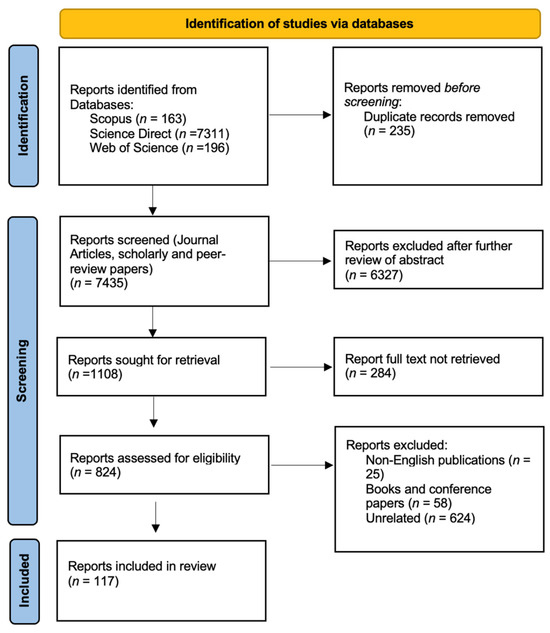
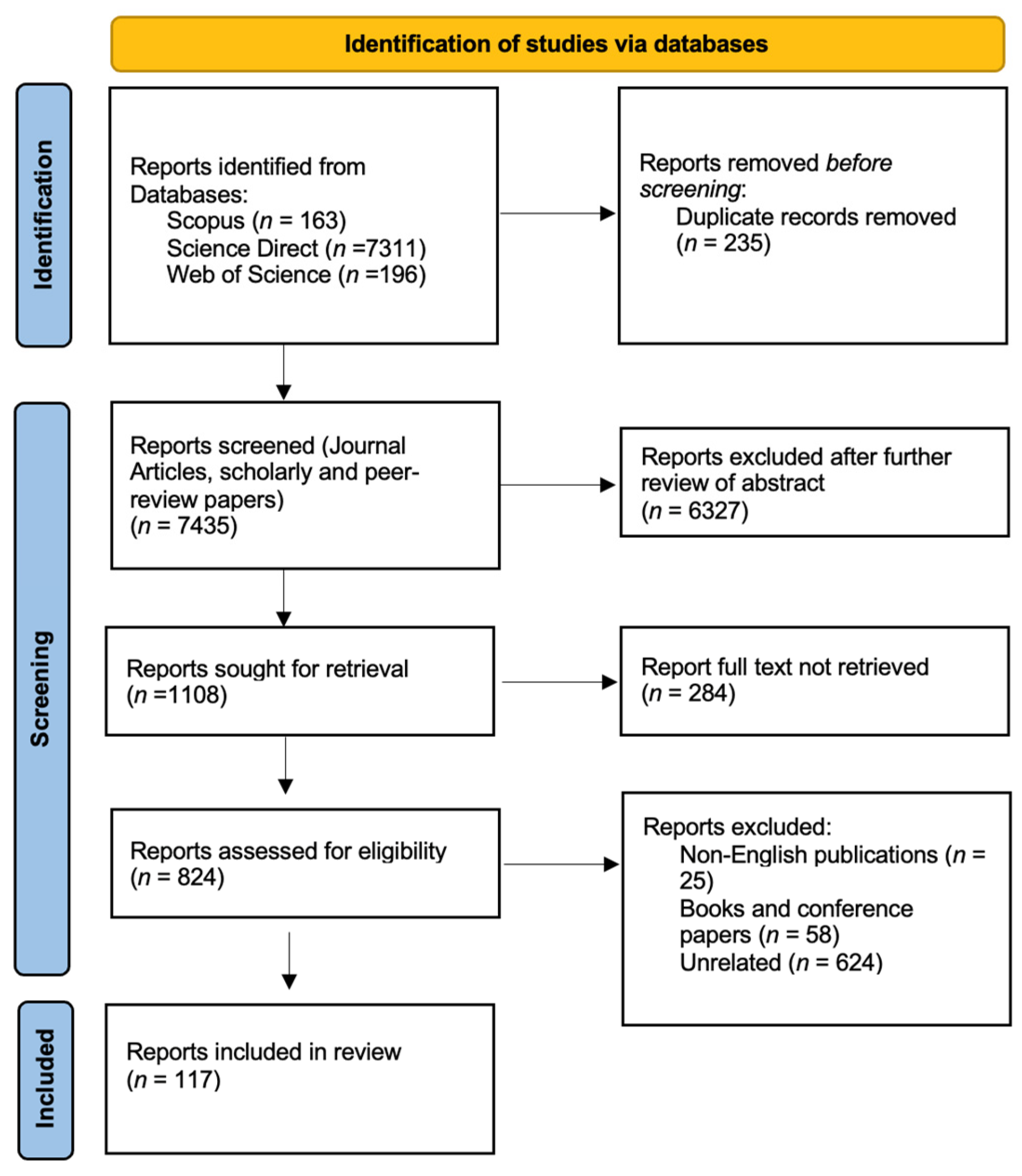
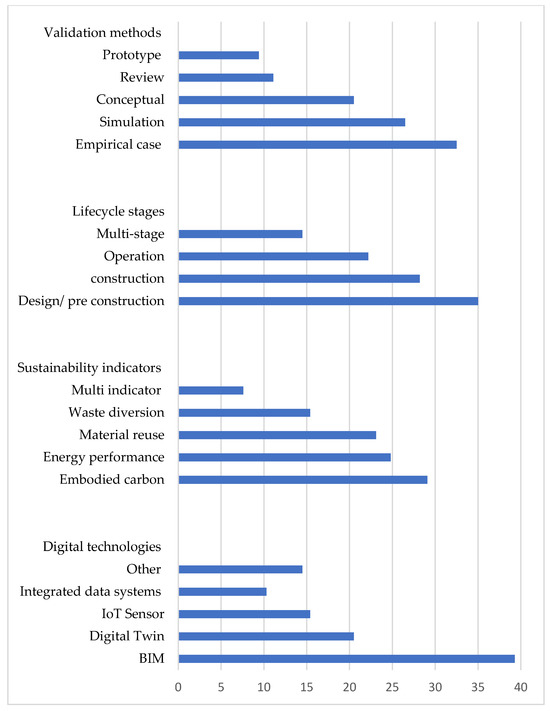
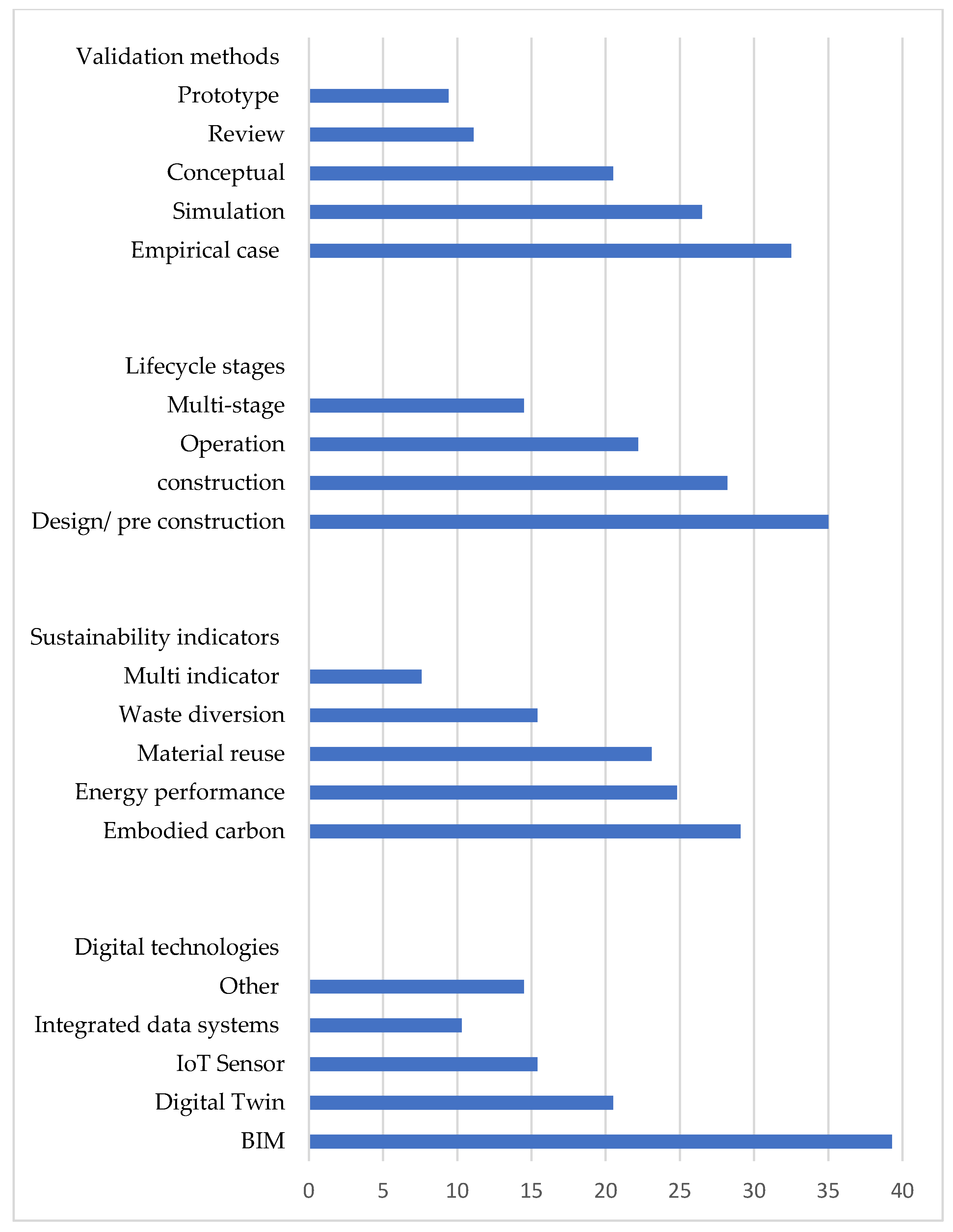
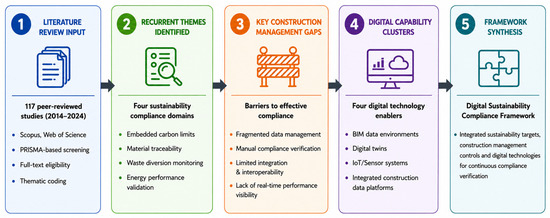
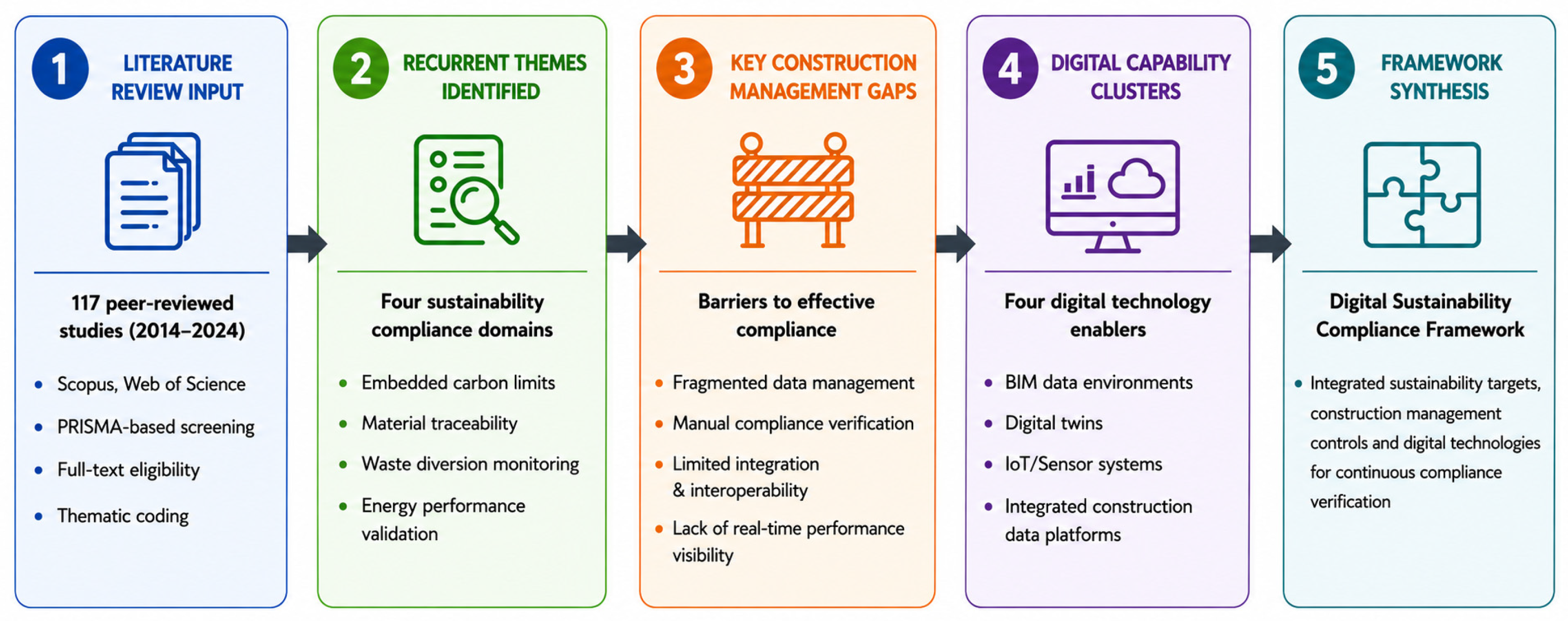
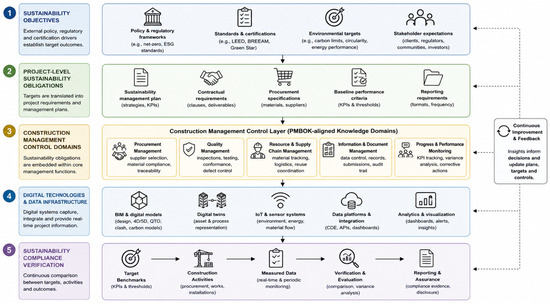
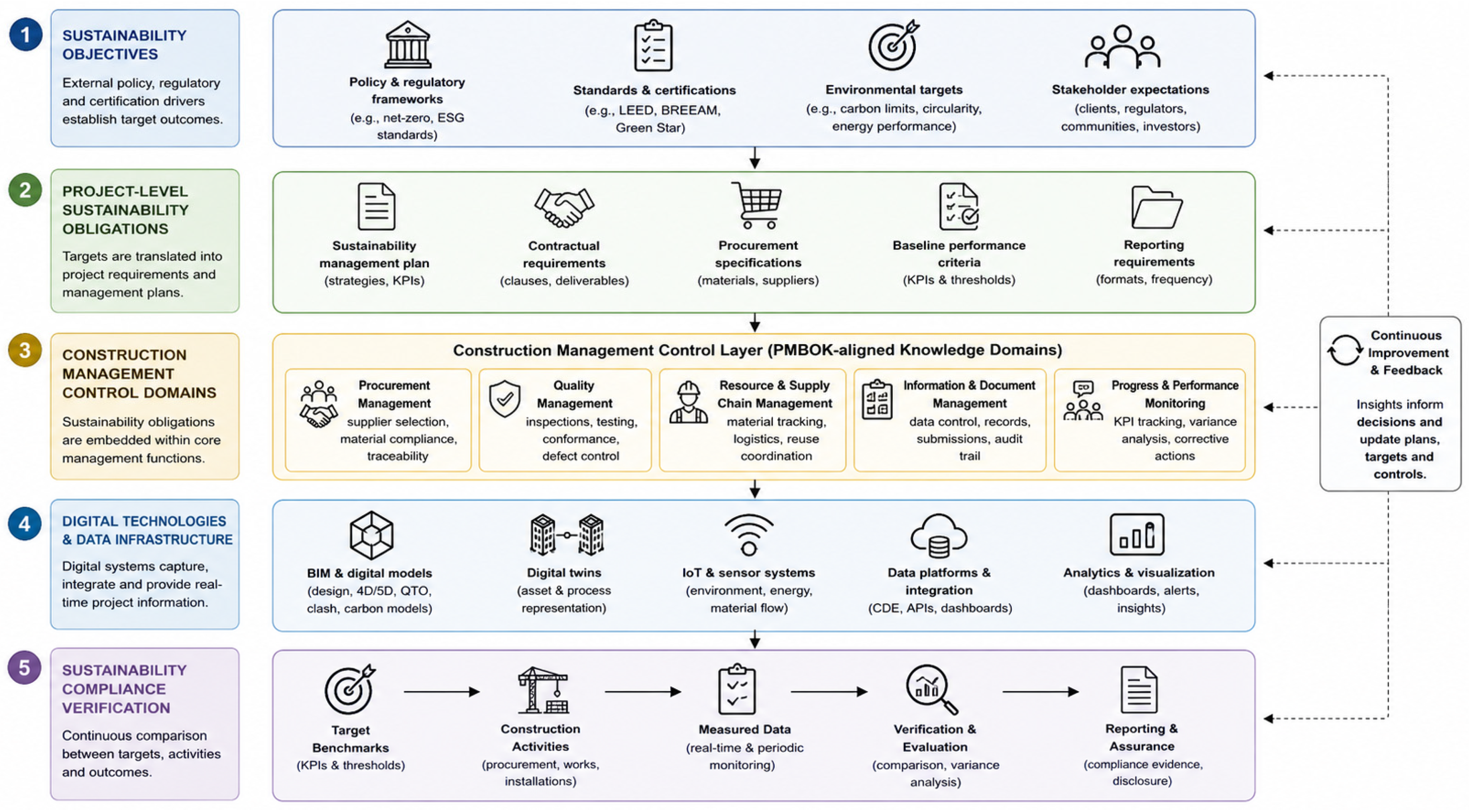
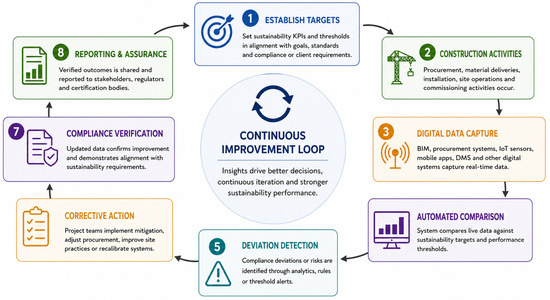
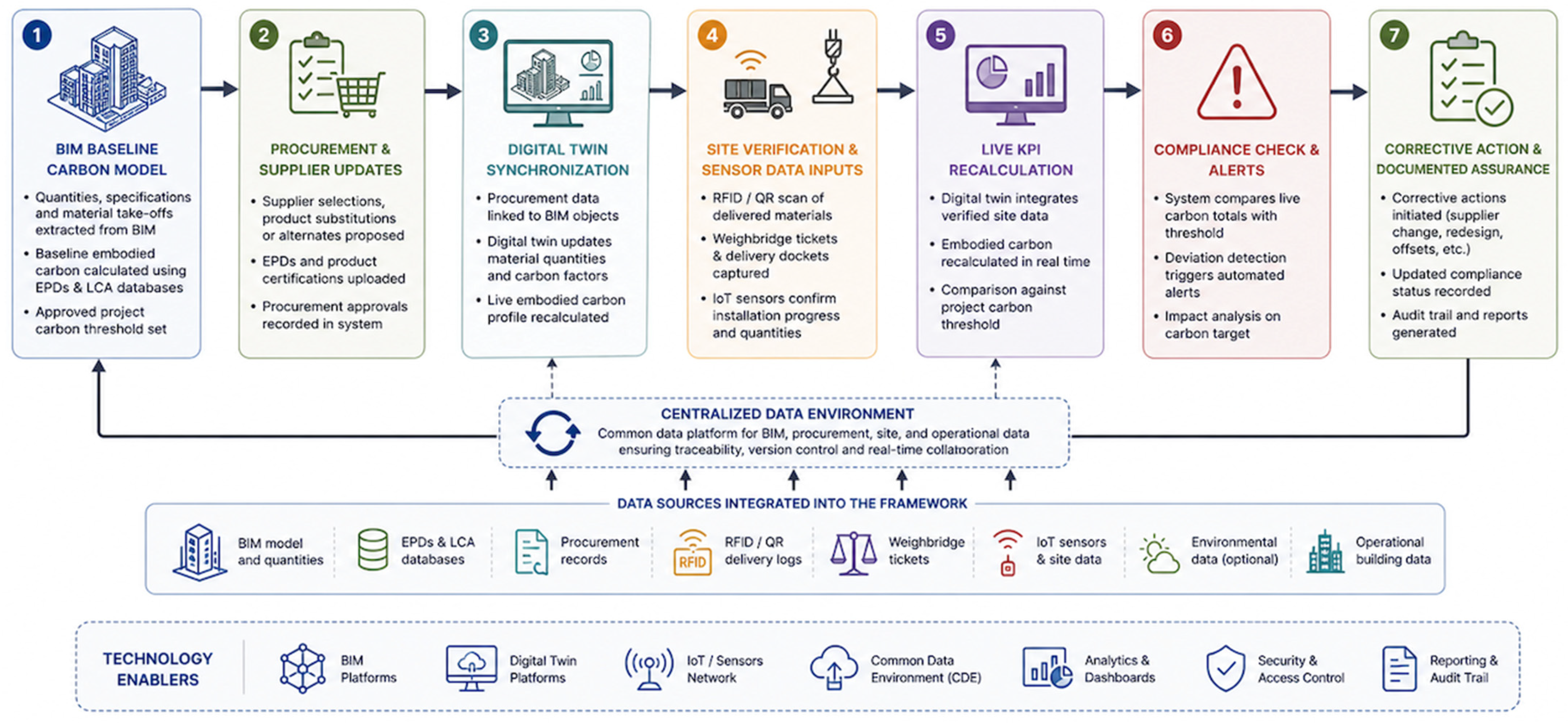

Disclaimer/Publisher’s Note: The statements, opinions and data contained in all publications are solely those of the individual author(s) and contributor(s) and not of MDPI and/or the editor(s). MDPI and/or the editor(s) disclaim responsibility for any injury to people or property resulting from any ideas, methods, instructions or products referred to in the content. |
© 2026 by the authors. Licensee MDPI, Basel, Switzerland. This article is an open access article distributed under the terms and conditions of the Creative Commons Attribution (CC BY) license.