Article

Numerical Simulation and Experimental Study of Discrete Element Method for Iron Ore Tailing Roadbed Material
1
Shanghai Municipal Engineering Design Institute (Group) Co., Ltd., Shanghai 200092, China
2
Chongqing Vocational Institute of Engineering, Chongqing 402260, China
3
School of Civil Engineering, Chongqing University, Chongqing 400045, China
*
Author to whom correspondence should be addressed.
Buildings 2026, 16(11), 2117; https://doi.org/10.3390/buildings16112117

Submission received: 23 April 2026 / Revised: 7 May 2026 / Accepted: 12 May 2026 / Published: 25 May 2026
(This article belongs to the Section Building Materials, and Repair & Renovation)

Abstract

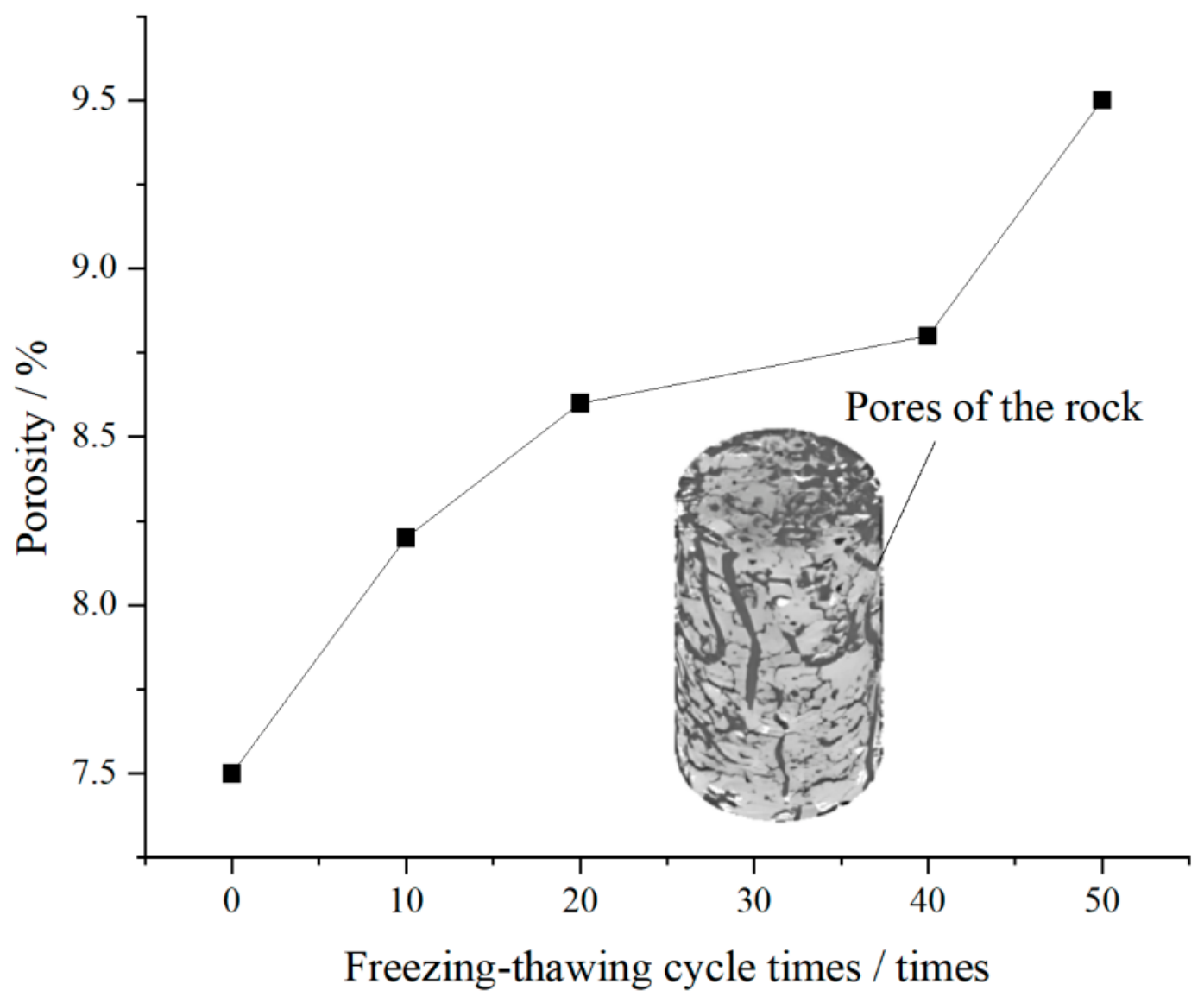
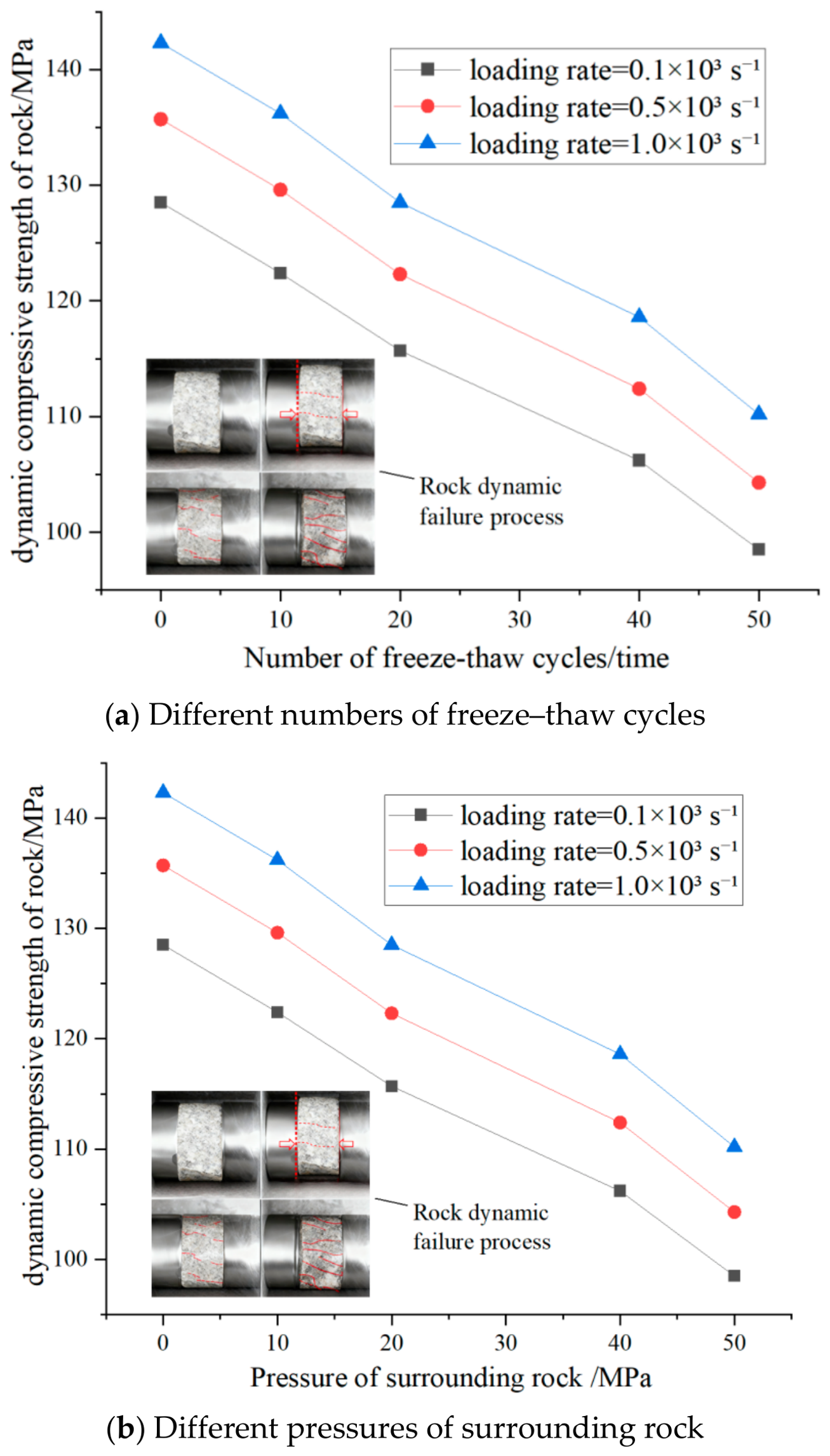
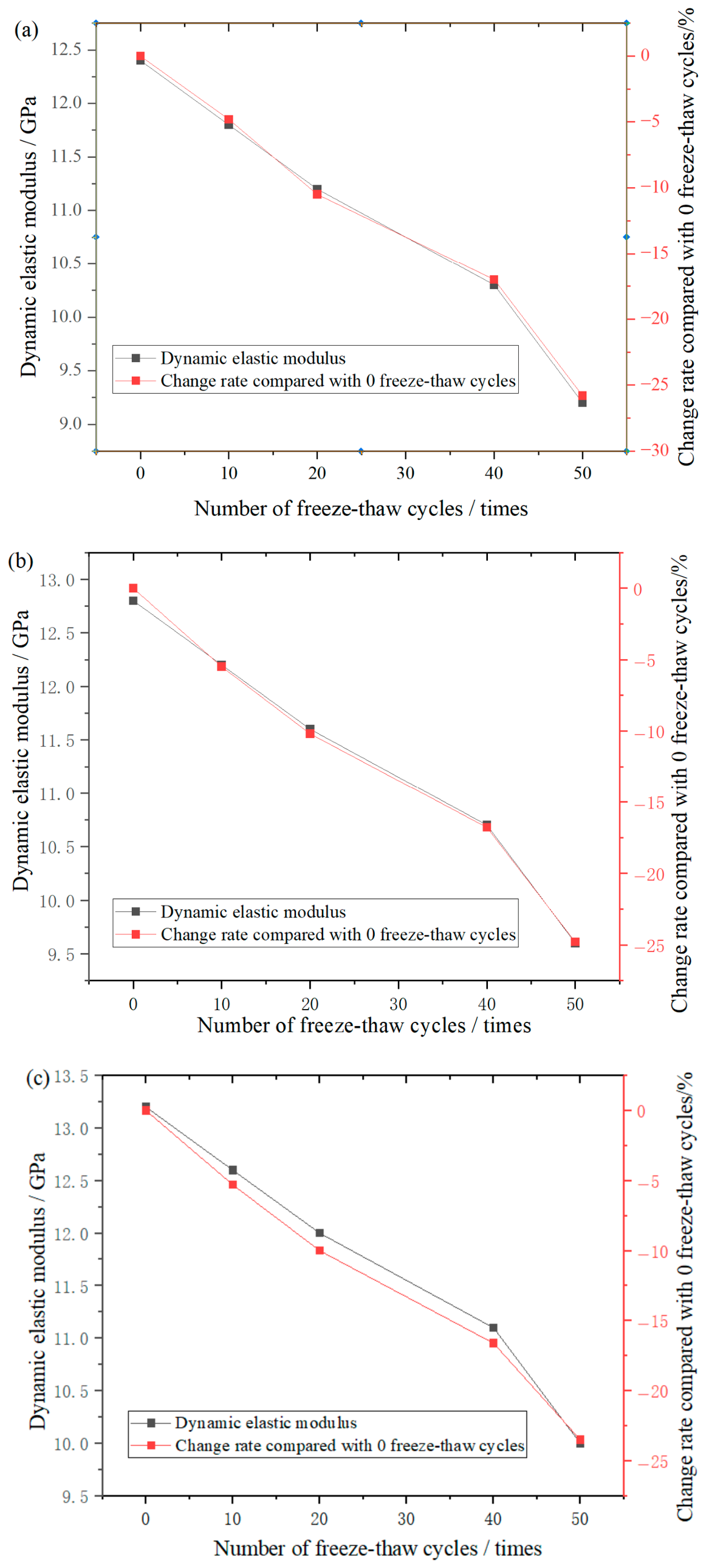
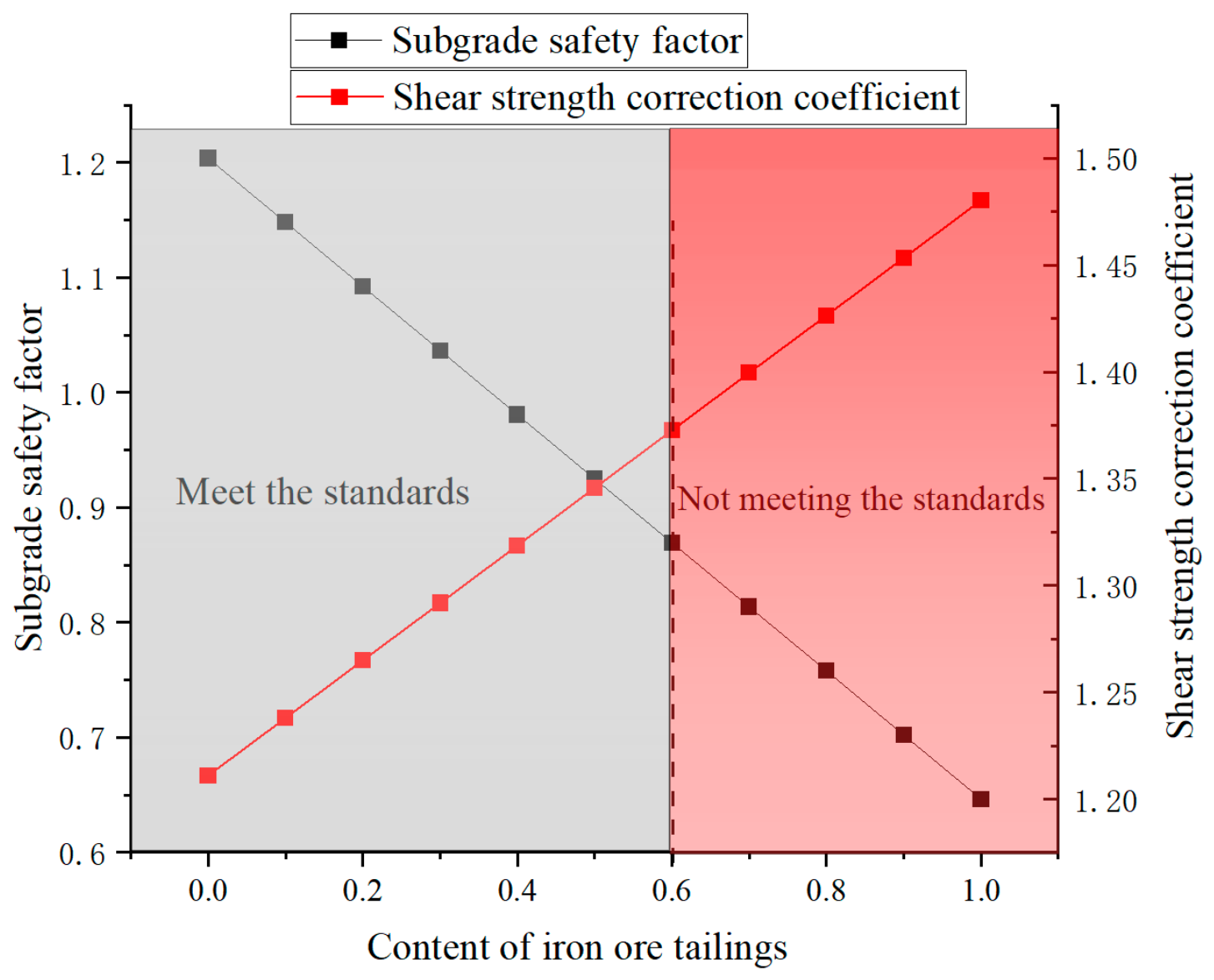
This study focuses on the mechanical behavior of iron ore failings as base materials for roads. It is the first to systematically integrate freeze–thaw static load tests, SHPB dynamic tests, PFC discrete element microscopic simulation, and road stability analysis, to reveal the coupling mechanism of freeze–thaw, confining pressure and loading rate in cold environments, and to clarify the critical threshold of porosity and the safe threshold of failing content, as well as the intrinsic relationship between force chain evolution and macroscopic strength degradation. Firstly, a two-dimensional particle flow model of iron ore failing aggregates (150 mm × 150 mm, 11,530 particles) was constructed using PFC2D 2025 software, and the optimal microscopic parameters such as normal stiffness of 350 N/m and tangential stiffness of 175 N/m were determined (the error between simulation and experimental peak strength is less than 2.5%). The study revealed a negative correlation between high loading rate, local dense force chain and overall strength reduction. The initial porosity critical threshold is 0.23, and the optimal control range is 0.18–0.23 (this threshold varies with particle gradation). Secondly, taking iron ore failings from Lanzhou Daiquiri County, Sichuan Province, as the object, the static mechanical degradation law under freeze–thaw cycles (porosity from 7.5% to 9.5%, elastic modulus decreased by 52.3%, peak strength decayed by 13.0%) was clarified. The three-dimensional coupling effect of freeze–thaw times, confining pressure, and loading rate was investigated. The loading rate was also revealed (the average strength increased by 15% due to confining pressure, and the dynamic strength dropped to 110.2 MPa after 50 freeze–thaw cycles). Finally, the stability of the iron failing roadbed was analyzed, and it was found that the tailing content and safety factor FS(x) decreased linearly, the correction coefficient k(x) increased linearly, and the critical content was 66.67% (FS = 1.3), reaching the specification threshold. The poor tailing gradation led to insufficient stability, and stabilization agents were needed for improvement. This study did not investigate the long-term freeze–thaw durability, dissolution risks, and optimal dosage of the stabilizer, and thus has certain limitations.
Keywords: iron ore failings; roadbed; freeze–thaw; roadbed stability; particle gradation iron ore failings; roadbed; freeze–thaw; roadbed stability; particle gradation