


Abstract
Chinese universities are expanding outward, with more campuses now located on the urban fringe. Their boundaries are often open, and the surrounding land uses are mixed. This study examines four spatial attributes, edge definition, night-time lighting, visibility, and environmental maintenance, and how they relate to students’ perceived safety and environmental satisfaction. We draw on crime prevention through environmental design (CPTED) and the stimulus–organism–response (SOR) framework to develop a mediation model: spatial attributes are associated with satisfaction through perceived safety. Survey data were collected from 411 students across two suburban campuses and were analyzed using partial least squares structural equation modeling (PLS-SEM). Visibility and environmental maintenance both strengthen perceived safety, whereas edge definition and night-time lighting do not exhibit significant effects. Perceived safety, in turn, strongly predicts environmental satisfaction and serves as a key design priority in rapidly urbanizing campus settings, and is further translated into reusable spatial design patterns for campus safety assessment and targeted environmental intervention, and may also inform broader discussions of urban wellbeing in suburban contexts.
1. Introduction
Over the past two decades, China’s rapid urban expansion has profoundly changed city spatial patterns. As central urban areas grow crowded and land prices rise, more universities are moving from traditional city centers to suburbs. Several factors have shaped the form of suburban campuses: the dual land system between urban and rural areas, state-led campus planning, and significant expansion of higher education. Suburban campuses are often more systematic at the planning level but present fragmented spaces in practice. Previous studies show that newly built suburban campuses typically have extensive land use, clear functional zoning, but low integration with surrounding urban areas [1,2]. These campus boundaries are usually more open and more intertwined with nearby rural or semi-urban areas in terms of land use, but infrastructure is often inadequate. Such arrangements have eased urban development pressures but have also brought new spatial and management challenges.
Traditional city center campuses blend into the urban fabric [3]. In contrast, suburban university campuses often have blurred boundaries and many transitional zones between campus land and neighboring residential or undeveloped land. With uneven urban–rural development in China, infrastructure construction sometimes lags behind campus construction [4]. These edge definition and permeability conditions can worsen people’s sense of uncertainty. Students on suburban campuses often travel long distances at night, moving between dormitories, teaching buildings, and commercial areas. Environmental psychology research shows that visibility and environmental maintenance are widely recognized as important factors influencing perceived safety in the built environment, while the role of lighting may vary depending on context [5,6,7]. Insufficient night-time lighting and wayfinding, limited natural monitoring, and poor environmental maintenance all increase perceptions of environmental risks. Spatial boundaries and edge conditions, therefore, become key factors affecting campus safety [8].
Crime Prevention Through Environmental Design (CPTED) provides a widely used analytical framework for understanding spatial attributes and perceived safety. Its core principles include domain strengthening, natural surveillance, access control, and environmental maintenance [9]. These principles have been widely applied in residential and urban public spaces. In recent years, more studies have focused on CPTED’s role in educational environments. Researchers emphasize the impact of spatial layout, visibility, and edge definition and permeability management on campus safety [6,10]. However, most existing research targets densely populated urban areas. Studies pay relatively little attention to the unique spatial typology of suburban university campuses. This study draws on Crime Prevention Through Environmental Design (CPTED) to define spatial boundaries using four key attributes: edge delineation and permeability (domain reinforcement and access control), night-time lighting and wayfinding and guidance (supports natural surveillance), visibility (reflects natural surveillance), and environmental maintenance (maintenance and image management). Such sorting clarifies and systematizes the theoretical basis for spatial variables [11].
CPTED identifies important spatial attributes. The Stimulus Organism Response (SOR) framework in environmental psychology explains how these attributes affect environmental assessment through psychological mechanisms [12]. This framework describes environmental impact as a process: external stimuli shape internal states, which then trigger behavioral or evaluative responses [13]. On campuses, perceived safety can be seen as a cognitive assessment of environmental risks and controllability. Recent studies show that perceived safety often mediates the relationship between spatial features and behavioral or evaluative outcomes in the built environment [14,15]. This evaluation likely serves as an intermediary, turning spatial features into overall environmental satisfaction with campus spatial conditions.
Both perspectives have theoretical value, but few empirical studies systematically explore how suburban campus spatial attributes affect environmental satisfaction, especially with rapid urbanization in China. Previous studies have mostly analyzed the direct relationship between spatial features and perceived safety [16], while broader reviews of campus public space research indicate that maintenance, safety, and surrounding built form remain underexplored in relation to satisfaction and wellbeing [15]. Some treat satisfaction as an independent outcome, often ignoring the mediating process, which may include factors such as social interactions, accessibility to resources, and the influence of the surrounding environment on students’ perceptions [17,18]. Suburban university campuses have unique spatial characteristics: open boundaries, large spatial scales, and locations at the urban–rural border. These may foster a psychological spatial interaction different from that of traditional urban campuses. As a result, the structural relationship among spatial boundaries, perceived safety, and environmental satisfaction remains unclear [19].
To address this research gap, this study explores the relationship between the spatial boundaries of suburban university campuses and environmental satisfaction. The focus is on the mediating role of perceived safety. Through questionnaire surveys and partial least squares structural equation modeling (PLS-SEM) analysis, this study aims to contribute in three ways. First, at the theoretical level, it expands CPTED’s applicability in non-Western suburban university environments. Second, at the methodological level, it uses PLS-SEM to examine the mediation mechanism model. Third, at the practical level, it provides evidence-based guidelines for edge definition and permeability treatment, night-time lighting and wayfinding, and environmental maintenance strategies for new suburban campuses. By integrating CPTED’s spatial principles and the SOR psychological framework, this study provides a systematic explanation of how spatial edge definition and permeability conditions affect environmental evaluation in contemporary suburban campuses.
2. Materials and Methods
2.1. Theoretical Framework and Hypothesis Development
This study integrates Crime Prevention Through Environmental Design (CPTED) and the Stimulus–Organism–Response (SOR) framework to construct a mediation model. CPTED provides a framework for categorizing spatial boundary attributes that influence perceived safety in campus settings. These attributes include territorial reinforcement, natural surveillance, access control, and environmental maintenance [11]. These principles indicate that spatial configuration and environmental management can affect perceived risk and informal social control [20]. The SOR framework explains how environmental stimuli influence internal psychological states and subsequent evaluative responses [13]. It has been widely applied in environmental psychology.
In suburban university campuses, CPTED principles manifest in boundary-sensitive forms. Open perimeters and rural–urban interfaces require clearer edge definition and entrance organization. Natural surveillance depends on visibility and night-time lighting, while environmental maintenance reflects institutional control. Prior studies indicate that visibility, night-time lighting, and maintenance are closely associated with perceived safety [9]. Accordingly, spatial boundaries are operationalized into four attributes: edge definition and permeability; night-time lighting and wayfinding; Visibility; and environmental maintenance. In this study, visibility refers to the extent to which pedestrian routes, entrances, and transitional spaces remain visually open and legible, while environmental maintenance refers to the observable upkeep of paving, edge spaces, and routine signs of spatial management.
Within this integrated framework, spatial characteristics act as environmental stimuli (S). Perceived safety represents the internal psychological state (O), and environmental satisfaction is the evaluative response (R). Therefore, it is suggested that spatial attributes are associated with perceived safety, which then associated with environmental satisfaction.
2.2. Variables and Measurement
This study used a five-point Likert scale (1 = strongly disagree, 5 = strongly agree) to measure all constructs. Each construct contains four to five items, all of which are adapted from existing CPTED and environmental psychology research to ensure a theoretical foundation and measurement reliability.
Spatial boundary attributes were operationalized into four dimensions:
(1) Edge delineation and transparency: used to measure the clarity of campus boundaries and the organization of entrances, corresponding to the concepts of domain reinforcement and access control in CPTED [21]. Although boundary clarity and permeability may operate differently in certain contexts, they are conceptually integrated within the CPTED framework as complementary aspects of spatial definition and access regulation. In addition, the measurement items did not show evidence of sub-dimensional separation in preliminary analysis, supporting their treatment as a single construct in this study. The questions were adapted from relevant research on campus and community perceptions of spatial boundaries [22,23]. In the adaptation, we replaced general expressions such as “community” with “campus” to better fit the university context. Representative questions include “clear campus boundaries, clearly distinguishable from surrounding areas” and “easy to identify main campus entrance.”
(2) Night-time lighting and wayfinding: addresses the adequacy of outdoor lighting and the clarity of navigational signage. These primarily support spatial orientation and may contribute to perceived safety by enhancing visibility under certain conditions [24,25]. Example questions include “sufficient night-time lighting and wayfinding on main sidewalks” and “clear and visible nighttime directional signs.”
(3) Visibility: considers how open the view is and whether visual obstructions or concealed areas exist. This dimension is grounded in the literature on natural surveillance, focusing on visibility to reduce environmental uncertainty [26,27]. Example questions include “the main pedestrian area has a wide view” and “there are few hidden corners caused by buildings or vegetation.”
(4) Environmental maintenance: measures the cleanliness, integrity, and order of campus space. This follows CPTED principles of environmental maintenance and image management. The questions were adapted from research on environmental maintenance and public space quality [28]. Example questions include “good environmental maintenance of campus facilities” and “clean and tidy campus environment”.
Perceived safety refers to how secure users feel on campus, while environmental satisfaction reflects students’ overall evaluation of the campus environment. The measurement items for perceived safety draw on past campus and community safety research [29], covering emotional and cognitive levels, including calmness and confidence in sudden situations. Example questions include “I feel safe walking alone on campus” and “I can relax my body and mind on campus without worrying about personal safety.” Environmental satisfaction is based on environmental psychology research on evaluation and place satisfaction [30], including emotional satisfaction, perceptions of environmental quality, and comparisons with other institutions. Representative questions include “overall, I am satisfied with the campus environment” and “compared to other campuses, I prefer the environment of this school.” To keep the concept distinct from perceived safety, explicit safety statements were avoided in all items.
All questions have been translated and contextualized for suburban campuses. Terms like “community” and “residents” were replaced with “campus,” “students,” or “faculty.” Three experts in environmental psychology and campus planning reviewed the adapted questionnaire for content validity. Clarity and preliminary reliability were tested in a pre-test (n = 32). Based on feedback, some expressions were improved for consistent understanding. Preliminary reliability analysis shows that each construct’s Cronbach’s alpha coefficient is above 0.70, indicating good internal consistency [31].
The measurement model will be validated using PLS-SEM standards [32]. Internal consistency will be assessed using Cronbach’s alpha and composite reliability (CR), with values above 0.70. Convergent validity will be measured using Average Variance Extracted (AVE), with values above 0.50 indicating good convergence [33]. Discriminant validity will be tested using the Fornell–Larcker criterion and the heterotrait–monotrait ratio (HTMT), where values below 0.85 indicate acceptable discriminant validity between constructs [34].
2.3. Research Background and Data Collection
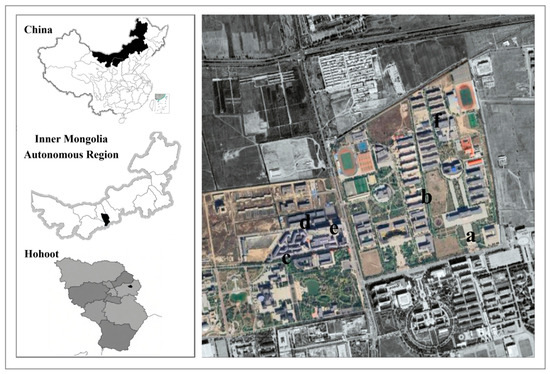
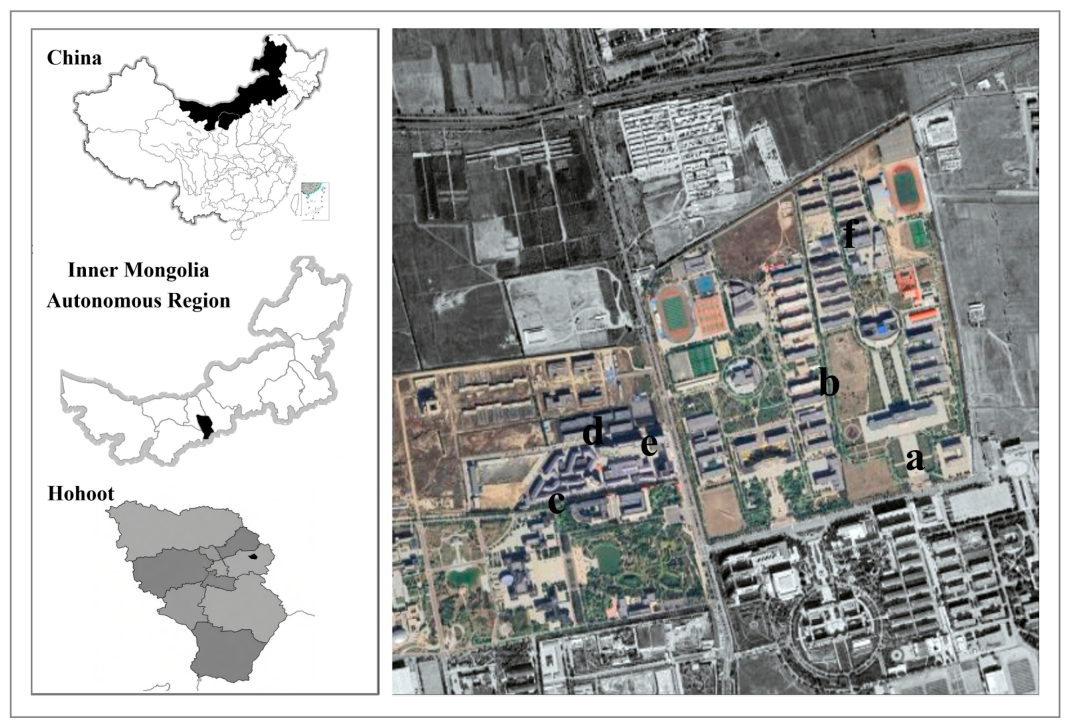
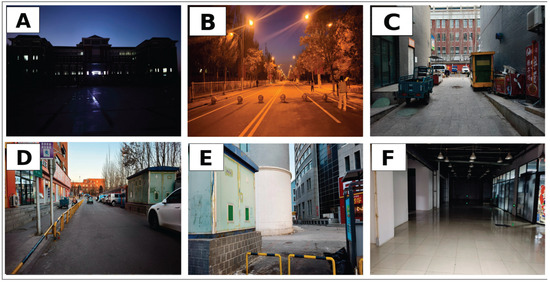
This study was conducted on two suburban university campuses in Hohhot, Inner Mongolia, a rapidly urbanizing city in northern China. The two campuses were established in 2001 and 2003, respectively. with student populations of approximately 10,365 and 10,952, respectively. Their spatial characteristics are similar, both with open campus boundaries and adjacent to mixed urban-rural land, which is a common spatial form in emerging university towns in China. The geographical context of the study area and the distribution of representative observation points are illustrated in Figure 1. The corresponding on-site spatial conditions of these observation points are further presented in Figure 2.
Figure 1.
Study area location and observation points (a–f).
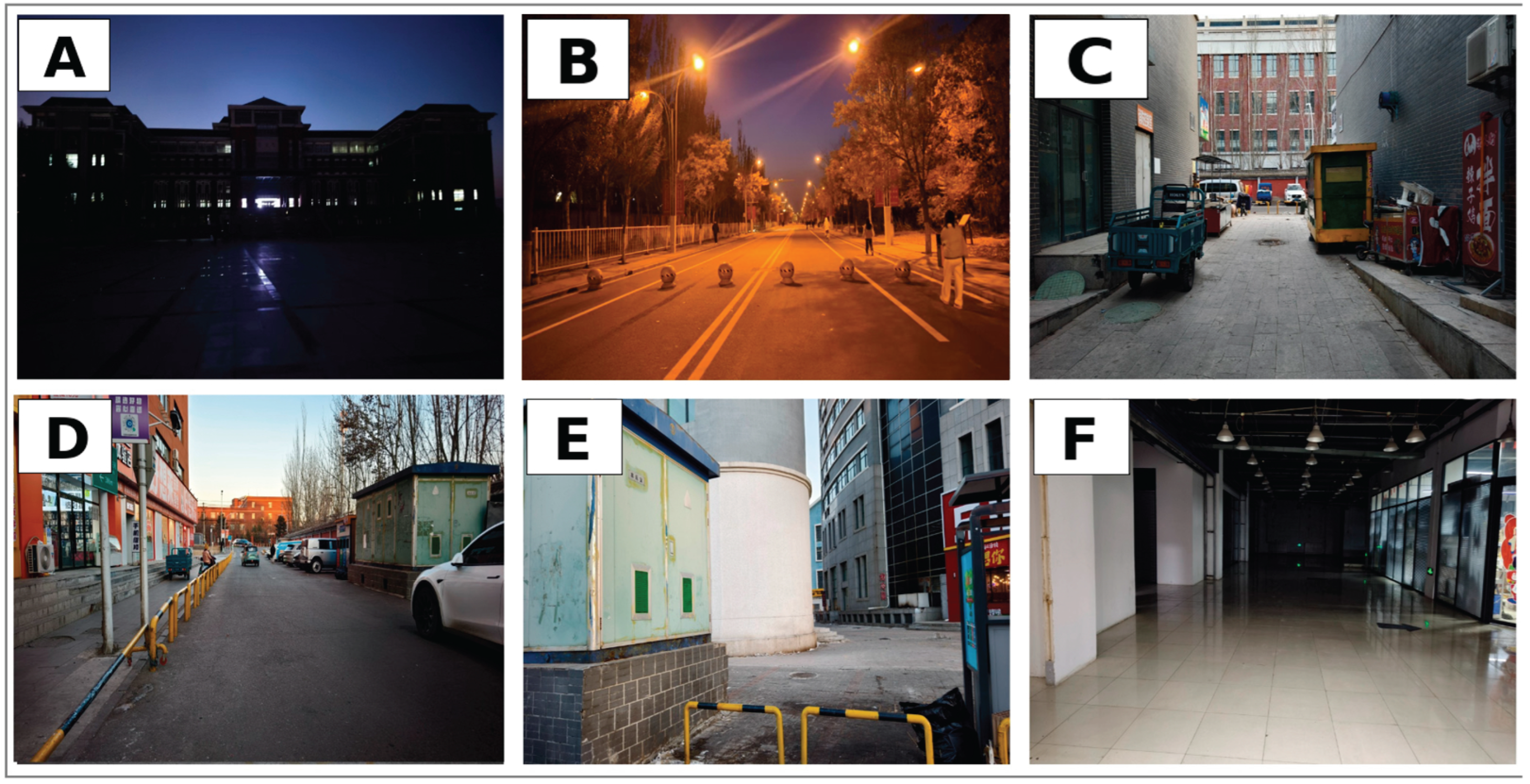
Figure 2.
Field photographs of the six representative observation points corresponding to Figure 1: (A) low-light open plaza; (B) well-lit street environment; (C) visually enclosed back alley; (D) open commercial corridor; (E) boundary interface with service infrastructure; and (F) low-light indoor transitional space. Source: Photographs taken by the authors during field investigation.
We use a stratified convenience sampling method to stratify based on campus functional areas (teaching area, dormitory area, and main pedestrian pathways) and time periods (daytime and nighttime). The questionnaire is distributed on-site by trained research assistants to reduce response bias. All participation is voluntary and anonymous.
A total of 452 questionnaires were collected. Through data quality screening, we excluded questionnaires with the following conditions: (1) incomplete answers (missing values exceeding 10%); (2) Presenting patterned answers (such as linear choices for most questions); (3) Failed to pass the attention check question. Finally, 411 valid questionnaires were retained, with an effective rate of 89.4%.
In the final sample, females accounted for 52.3%, with an average age of 20.6 years (standard deviation = 1.4). Undergraduate students account for 78% and graduate students account for 22%. Although demographic information was recorded, these variables were not included as control factors in the structural model to maintain model simplicity and consistency with previous environmental perception studies. The measured spatial attributes were treated as perception-based evaluations of observable campus conditions, allowing the model results to be interpreted in relation to spatial design and environmental management.
This study followed the ethical standards of the institution, and all participants signed informed consent forms.
2.4. Statistical Analysis
We used SmartPLS 4 software (SmartPLS GmbH, Oststeinbek, Germany) to analyze the data using Partial Least Squares Structural Equation Modeling (PLS-SEM). The selection of PLS-SEM is mainly based on the following reasons: this study focuses on prediction, the model involves multiple constructs and mediation paths, and this method does not require data to strictly follow a multivariate normal distribution [35,36]. There are very few missing values in the sample (<1%), and mean imputation is used for processing. The analysis follows a two-stage process: first, the measurement model is evaluated; subsequently, the structural model is assessed. This sequence ensures systematic data evaluation. Measurement model evaluation. The test is mainly conducted from three aspects: internal consistency reliability, convergent validity, and discriminant validity. Reliability was assessed using Cronbach’s alpha and composite reliability (CR), where a threshold of 0.70 or higher is deemed acceptable [37]. Convergent validity was determined through the Average Variance Extracted (AVE), with a minimum value of 0.50 indicating adequate validity [38]. Furthermore, discriminant validity was examined employing the Fornell-Larcker criterion and the Heterogeneity Homogeneity Ratio (HTMT) [38].
An HTMT value below 0.85 indicates good discriminability between constructs. Structural model evaluation Use the Bootstrap method (repeated sampling 5000 times) to test the significance of path coefficients. The model’s explanatory power is measured by the coefficient of determination (R2). To evaluate the strength of the impact of predictor variables, calculate the effect size (f2), where 0.02, 0.15, and 0.35 correspond to small, medium, and large effects, respectively. The model’s predictive power is assessed using Stone-Geisser’s Q2 statistic. A Q2 value greater than 0 indicates that the model has predictive validity [39].
Model fit is gauged by the standardized root mean square residual (SRMR), and a value under 0.08 is deemed acceptable. To initially assess the possibility of common-method bias, a Harman single-factor test was performed, utilizing all items in an unrotated exploratory factor analysis. A single factor explaining the majority of the covariance (>50%) suggests the presence of common-method bias [40].
In addition, we examined variance inflation factor (VIF) values using the full collinearity assessment approach, where VIF values above 3.3 have been proposed as indicative of potential common method bias [41]. However, the use of fixed VIF thresholds as diagnostic “rules of thumb” has been questioned in the broader methodological literature, and results should therefore be interpreted with caution.
3. Results
3.1. Common Method Bias Test
To reduce potential common method bias, several procedural remedies were applied during data collection, including anonymous responses and careful questionnaire design. Given that all variables were measured using self-reported data from the same respondents, statistical tests were further conducted to assess potential bias.
Harman’s single-factor test was first performed by entering all measurement items into an unrotated exploratory factor analysis. A single factor explaining more than 50% of the variance is typically considered indicative of serious common method bias [42]. The results show that the first factor accounts for 53.0% of the total variance, slightly exceeding this threshold, suggesting that common method bias may be present based on this test alone. Therefore, additional tests were conducted to further assess this potential bias.
In addition, following Kock [41], a full collinearity assessment was conducted using variance inflation factor (VIF) values. All VIF values ranged from 1.28 to 2.65, well below the threshold of 3.3. This result indicates that, despite the limitations of Harman’s test, common method bias is unlikely to pose a serious threat to the validity of the model estimates.
3.2. Sample Characteristics
The demographic characteristics of the respondents are presented in Table 1. After screening, a total of 411 valid questionnaires were retained. Female students accounted for 52.3% and male students accounted for 47.7% of the sample, with an average age of 20.6 years (standard deviation = 1.4). In terms of educational distribution, undergraduate students account for 78% and graduate students account for 22%.
Table 1.
Sample Demographic Characteristics (N = 411).
In terms of campus living and usage experience, 85% of the respondents have studied or lived on campus for more than two years, indicating that most participants are familiar with the campus space environment. Regarding the frequency of nighttime activities, 56% of respondents stated that they use campus space at least three to four days a week after dark, indicating that they are often in a nighttime campus environment, which is highly correlated with the night-time lighting and wayfinding, visibility, and other conditions that this study focuses on.
Among the valid samples, 48% came from Campus A and 52% came from Campus B. The independent sample t-test results showed that there was no significant difference (p > 0.05) in the key research variables between the two campuses. These results provide preliminary evidence of comparability between the two groups. Therefore, data from the two campuses were combined for subsequent analysis. The demographic characteristics of the sample are basically consistent with the overall student structure of the institution, indicating that the sample has a certain representativeness.
The sample has a rich experience of campus space and nighttime environmental contact, which provides a favorable foundation for examining the relationship between spatial edge definition and permeability attributes, perceived safety, and environmental satisfaction. These characteristics also indicate that the respondents have the ability to make relatively reliable evaluations of the attributes of the campus environment.
To check whether the two campus samples could be pooled, we ran a MICOM (Measurement Invariance of Composite Models) test. Configural and compositional invariance both held, and the permutation test found no significant differences in composite means or variances between the two groups. This supports full measurement invariance. Taken together, these results show that the two samples are comparable, so pooling them for the structural model analysis is reasonable. Table 2 reports the detailed MICOM results.
Table 2.
MICOM results for sample pooling.
3.3. Measurement Model Assessment
We followed standard PLS-SEM procedures to assess the measurement model, checking indicator reliability, internal consistency, convergent validity, and discriminant validity [32,36]. Item loadings were all above 0.70—between 0.76 and 0.94—meaning that each indicator adequately reflected its intended construct. Cronbach’s α and composite reliability (CR) both exceeded the 0.70 benchmark. As Table 3 shows, α ranged from 0.85 to 0.94, and CR from 0.90 to 0.96, indicating good internal consistency across the scales.
Table 3.
Measurement Model Results.
Average variance extracted (AVE) values ranged from 0.64 to 0.85, all above the 0.50 cutoff [44], indicating that each construct explained more than half of the variance in its indicators.
Discriminant validity was evaluated through the heterotrait–monotrait (HTMT) ratio. As shown in Table 4, all HTMT values were below the conservative threshold of 0.85, with a range from 0.55 to 0.85, thereby supporting the empirical distinctiveness of the constructs [38]. The HTMT between perceived safety (PS) and environmental satisfaction (ES) is 0.846, slightly under the 0.85 cutoff; discriminant validity is therefore acceptable, though the two constructs are closely related. These two constructs also occupy different positions within the SOR framework: perceived safety captures an immediate sense of security, whereas environmental satisfaction reflects a broader judgment of the campus environment. The Fornell–Larcker criterion offers additional support, as each construct’s AVE exceeds its correlations with other constructs. Together, these results confirm that perceived safety and environmental satisfaction are empirically distinct.
Table 4.
Discriminant Validity Assessment (HTMT values).
Furthermore, the Fornell–Larcker criterion was met: the square root of each construct’s AVE surpassed its correlations with the other constructs [44]. In summary, the measurement model exhibited sufficient reliability and validity, thus establishing a robust foundation for the subsequent structural model analysis. The following section details the structural model findings and hypothesis tests.
3.4. Structural Model Results
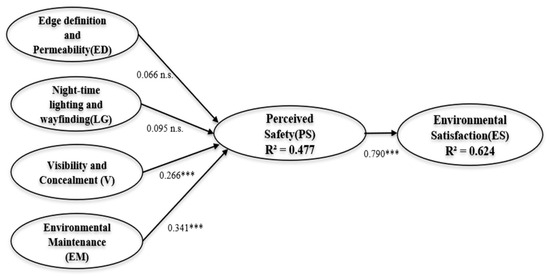
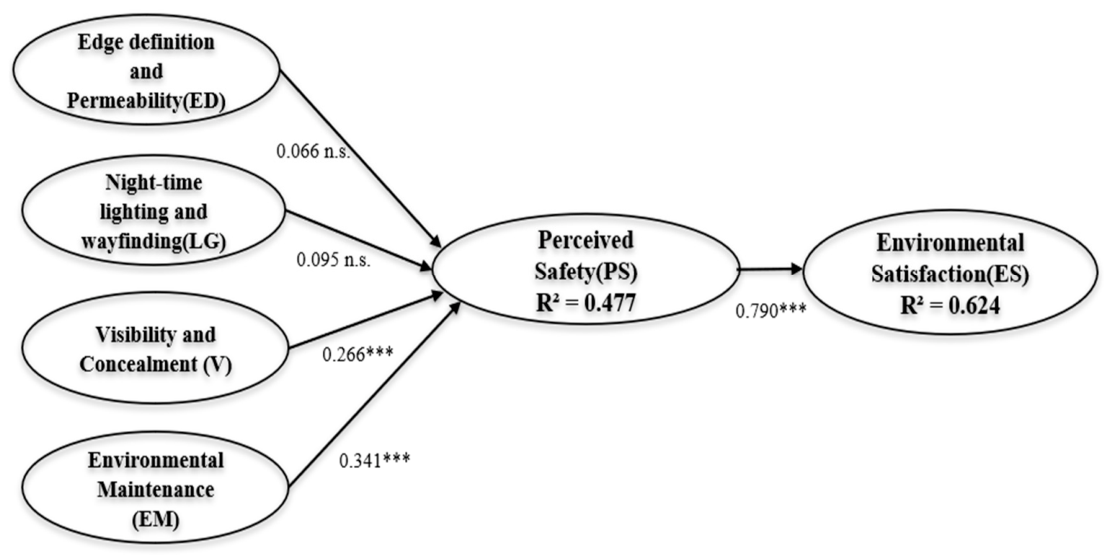
After verifying the reliability and validity of the measurement model, we evaluated the structural model to test the hypothesized relationship between spatial edge definition and permeability attributes, perceived safety, and environmental satisfaction. The structural model with standardized path coefficients is presented in Figure 3.
Figure 3.
Structural Model with Standardized Path Coefficients and R2 Values. Note: *** p < 0.001; n.s. = not significant (p ≥ 0.05).
The path coefficients and their significance were tested using Bootstrap method (repeated sampling 5000 times), which conforms to the recommendation process of PLS-SEM. The structural model results are shown in Table 5.
Table 5.
Structural Model Path Coefficients and Hypothesis Testing Results.
Analysis shows that Visibility has a significant association with impact on perceived safety (β = 0.266, p < 0.001), supporting hypothesis H1c. Environmental maintenance also has a significant positive association with on perceived safety (β = 0.341, p < 0.001), assuming H1d holds true. However, the associations of edge definition and permeability (β = 0.066, p = 0.280), night-time lighting and wayfinding (β = 0.095, p = 0.123), did not show a statistically significant association with perceived safety. Therefore, hypotheses H1a and H1b were not supported. Among all significant predictor variables, environmental maintenance has the greatest impact on perceived safety, followed by visibility.
In addition, perceived safety has a significant positive association with environmental satisfaction (β = 0.79, p < 0.0001), supporting hypothesis H2. This indicates that students who perceive campus environment as safer also have higher overall environmental satisfaction.
The explanatory power of the structural model is measured by the coefficient of determination (R2). As shown in Table 6, the explanatory power of the model for perceived safety is 47.7% (R2 = 0.477), and the explanatory power for environmental satisfaction is 62.4% (R2 = 0.624).
Table 6.
Coefficient of Determination (R2).
According to Hair et al. [32]’s suggested criteria, these values indicate that the model has moderate to strong explanatory power, which is consistent with the R 2 level of similar constructs in previous environmental psychology studies [32], indicating that the model can better capture the main influencing factors of perceived safety and satisfaction in campus environments.
Evaluate the strength of the impact of each predictor variable on endogenous constructs by calculating the effect size (f2). According to Cohen’s [45] criteria, f2 values of 0.02, 0.15, and 0.35 represent small, medium, and large effects, respectively. The results show that perceived safety has a significant impact on environmental satisfaction (f2 = 1.660). The impact of environmental maintenance (f2 = 0.079) and visibility (f2 = 0.043) on perceived safety is relatively small, while the effects of edge definition and permeability (f2 = 0.004) and night-time lighting and wayfinding (f2 = 0.007) can be ignored.
Calculate the Stone Geisser Q2 value using the Blindfolding program to evaluate the predictive correlation of the model. The Q2 values of perceived safety (Q2 = 0.457) and environmental satisfaction (Q2 = 0.492) are both greater than zero, indicating that the model has good predictive power for these two endogenous variables. These significant predictors were further interpreted in relation to recurring spatial conditions across the case campuses.
3.5. Mediation Analysis
To test whether perceived safety mediates the relationship between spatial edge definition and permeability attributes and environmental satisfaction, we conducted a mediation analysis using the bootstrapping method in PLS-SEM. According to Hair et al. [32], the significance of indirect effects was estimated through 5000 repeated samples, and this method does not require indirect effects to follow a normal distribution.
The results of the mediation analysis are presented in Table 7. Research has found that perceived safety partially mediates the relationship between spatial edge definition and permeability attributes and environmental satisfaction.
Table 7.
Mediation Analysis Results (Indirect Effects Based on Bootstrapping).
Specifically, the perceived safety significantly mediates the relationship between visibility and environmental satisfaction (β = 0.211, 95% CI [0.097, 0.325], p < 0.001), as well as the relationship between environmental maintenance and environmental satisfaction (β = 0.270, 95% CI [0.162, 0.378], p < 0.001). However, the indirect effects of edge definition and permeability (β = 0.052, 95% CI [−0.042, 0.146], p = 0.280) and night-time lighting and wayfinding (β = 0.075, 95% CI [−0.019, 0.169], p = 0.122) on environmental satisfaction through perceived safety were not significant. Among the significant mediating pathways, environmental maintenance has the greatest indirect effect on environmental satisfaction through perceived safety.
To clarify the type of mediating effect, we introduced the mediator into the model and further examined the direct effect of spatial edge definition and permeability attributes on environmental satisfaction. As shown in Table 7, after controlling for perceived safety, the direct effect of visibility is no longer significant (β = 0.09, p > 0.05), indicating complete mediation; the direct effect of environmental maintenance remains significant (β = 0.180, p < 0.05), indicating partial mediation. The direct effects of edge definition and permeability (β = 0.066, p > 0.05) and night-time lighting and wayfinding (β = 0.095, p > 0.05) were not significant, regardless of whether the mediator were included, consistent with their overall insignificant effects.
These results indicate that certain spatial attributes primarily shape students’ evaluations of the campus environment by influencing their perceived safety. In other words, improving key spatial conditions, such as visibility and environmental maintenance, can help enhance students’ perceived safety and thus increase their satisfaction with the environment.
However, in the context of this study, edge definition and permeability and night-time lighting and wayfinding did not directly relate to environmental satisfaction, nor did they have an indirect impact through perceived safety.
These results offer partial empirical support for the stimulus–organism–response (SOR) framework. This framework suggests that spatial environmental attributes (stimuli) are associated with internal psychological states (perceived safety, organism), which, in turn, are associated with evaluation outcomes (environmental satisfaction, response). This study found that perceived safety fully mediates the role of visibility, indicating that this spatial attribute is mainly linked to psychological safety mechanisms. Besides providing perceived safety, there are other ways to improve satisfaction in environmental maintenance. If the indirect effect of edge definition and permeability and night-time lighting and wayfinding is not significant, it suggests that these attributes may not have effectively stimulated the SOR framework in specific environments.
4. Discussion
4.1. Overview of Research Results
This study examines how spatial attributes, perceived safety, and environmental satisfaction are related on suburban university campuses through the combined lens of CPTED and the stimulus-organism-response (SOR) framework. The focus is on suburban campuses, a setting that has received relatively limited attention in the context of China’s urbanization.
The results show clear differences in how spatial attributes relate to perceived safety. Among the variables examined, environmental maintenance shows the strongest association, followed by visibility. By contrast, night-time lighting and wayfinding and edge definition are not significantly associated with perceived safety.
Mediation analysis further reveals that perceived safety fully mediates the relationship between visibility and environmental satisfaction, and partially mediates the relationship between environmental maintenance and environmental satisfaction. In contrast, neither edge definition and permeability nor night-time lighting and wayfinding showed a mediating effect. Perceived safety therefore functions as the key psychological link between spatial attributes and environmental evaluation, supporting the central position of the “organism” within the SOR framework.
4.2. Theoretical Significance
This study extends the existing literature on CPTED by examining the role of edge definition and permeability-related spatial attributes on perceived safety on suburban university campuses. Traditional research focuses on residential areas and urban public spaces, while suburban campuses display unique spatial attributes, such as ambiguous boundaries and scattered activities [19]. In this study, spatial attributes are operationalized across four dimensions: edge definition and permeability, illumination and navigation, visibility, and Environmental maintenance. The results indicate that, in such environment, perceived safety is more closely associated with visibility and environmental maintenance than with edge definition and permeability or night-time lighting and wayfinding. In spatial terms, this suggests that long pedestrian sightlines, reduced visual obstruction, and more visible entrances may help strengthen everyday perceptions of safety in open campus settings.
The results show that environmental maintenance and visibility have the greatest associations with perceived safety, while edge definition and permeability and night-time lighting and wayfinding have little impact. This aligns with a recent study in school settings, which found that CPTED design features significantly enhanced security perceptions [46]. The non-significant role of edge definition and permeability may be related to the openness of suburban campus boundaries, where territorial cues are less clearly defined. The non-significant effect of night-time lighting and wayfinding may be associated with relatively uniform infrastructure conditions across campus, resulting in limited variation in users’ perception. Another possibility is that visibility captures part of the functional role typically attributed to lighting and wayfinding. However, collinearity diagnostics indicate that the variance inflation factor (VIF) values are below the recommended threshold, suggesting that multicollinearity is not a concern and that the two constructs capture distinct aspects of the environment. Taken together, these results suggest that users rely more on environmental cues, such as visual openness and maintenance conditions, than on physical boundary features when evaluating safety. This finding is supported by Li et al. [47].
This study also contributes to environmental psychology by revealing how spatial attributes relate to satisfaction through psychological mechanisms. Perceived safety fully mediates the relationship between visibility and satisfaction, while environmental maintenance has both direct and indirect associations. The finding that perceived safety only partially mediates the link between environmental maintenance and environmental satisfaction suggests that maintenance operates as a multidimensional stimulus. Well-kept environments may enhance perceived safety by reducing uncertainty and signaling order, but may also influence environmental satisfaction through other means. Maintenance, for instance, can improve aesthetic experience by creating cleaner and more visually appealing surroundings. It may further signal institutional quality and effective management, both of which positively shape users’ evaluations. These multiple pathways help explain why environmental maintenance retains a significant direct effect on satisfaction, beyond the indirect effect running through perceived safety. These findings suggest that different spatial attributes may operate through distinct psychological pathways within the SOR framework. Visibility appears to function primarily through perceived safety, whereas environmental maintenance may activate multiple evaluative processes simultaneously [8].
The findings also provide further insight into the contextual application of CPTED theory [48]. On suburban campuses with open borders, traditional domain reinforcement mechanisms are less effective, while natural monitoring through visibility and environmental maintenance takes precedence, particularly in suburban university settings in China characterized by open layouts and proximity to rural environments.
In summary, this study extends CPTED research to suburban campus environments, highlights the role of perceived safety as a key psychological mechanism, and underscores the need to adapt environmental design theories to specific spatial and cultural contexts.
4.3. Spatial Safety of Suburban Campuses in China
The findings of this study need to be understood in the specific context of suburban campuses in China. Unlike Western campuses that typically undergo long-term natural growth, suburban university towns in China are often large-scale master planned projects built on suburban land [3]. These campuses feature open borders, clear functional zoning, and adjacent rural or newly built residential areas, offering students a unique spatial experience. Recent research on Chinese university campuses confirms that this semi-enclosed management model creates a distinctive spatial context for examining student satisfaction and belonging [49].
Suburban environments may contribute to reduced perceived safety through several mechanisms. There is often a “grey space” between the campus and the surrounding areas that is not clearly owned or maintained. These places can easily make people feel uneasy, especially at night when the campus is well-lit, and the area around it is dark, which makes a strong contrast. Such spatial conditions may explain why visibility and environmental maintenance rather than edge definition and permeability or night-time lighting and wayfinding are identified as key factors in predicting perceived safety in this study. When the surrounding environment appears unpredictable, being able to “be seen” and “see the surroundings” (visibility), as well as to reflect the traces of institutional management, becomes an important basis for maintaining perceived safety [19].
Several factors may explain why visibility and environmental maintenance play a more prominent role in this context than edge definition and permeability. First, these campus spaces have a large scale and frequent nighttime activities, making visual long-distance transparency particularly important [8]. Secondly, due to varying environmental maintenance standards in adjacent areas, the well-maintained campus environment contrasts with the relatively chaotic external environment, thereby strengthening the safety signals conveyed by environmental maintenance [50]. Thirdly, the daily routine of Chinese university students means many walk through the campus at night, making visibility particularly important for maintaining environmental awareness.
The insignificant impact of night-time lighting and wayfinding, although somewhat unexpected, may also be explained by this background. The night-time lighting and wayfinding infrastructure of these relatively new campuses may have reached a sufficient level, reducing differences in night-time lighting and wayfinding conditions across the campus. In addition, night-time lighting and wayfinding may indirectly contribute to perceived safety by improving visibility, although their direct effects were not statistically significant in this study. This indicates that, under acceptable overall night-time lighting and wayfinding conditions, the distribution and position of light (affecting the visible range) may be more critical than the subjective perception of the night-time lighting and wayfinding itself [51].
These findings can be compared with CPTED research in Western campus environments. Although research in North America and Europe typically emphasizes strengthening domains through edge definition and permeability and access control, this study suggests that visual cues related to visibility and environmental maintenance have a greater impact on safety in suburban campuses in China, while night-time lighting and wayfinding and edge definition and permeability, which are often emphasized in Western CPTED literature, have not shown significant effects [52]. Traditional Western campuses typically have clear boundaries and controlled entrances and exits, which align with CPTED’s domain logic. In contrast, Chinese suburban university towns find it difficult to rely on physical edge definition and permeability control as the primary perceived safety mechanism; rather, perceived safety relies more on environmental quality that supports natural monitoring and reflects the presence of institutions.
This comparison indicates that the CPTED principle needs to be contextualized when applied to different types of spaces. In suburban campuses with open borders, the relative importance of various CPTED mechanisms has changed: natural monitoring (supported by visibility) is more critical than strengthening domain boundaries, while environmental maintenance continues to convey signals of institutional presence and care. For campus planners in China’s urbanization process, these findings indicate that investing in Visibility and environmental maintenance may foster greater perceived safety than reinforcing physical boundaries, representing a pragmatic adaptation of CPTED in modern Chinese campus contexts. This study did not find that night-time lighting and wayfinding were a strong predictor, but it can still help improve nighttime environments. This non-significant effect may reflect a potential saturation effect; however, given the absence of direct illuminance or photometric measurements in this study, this interpretation should be considered speculative and warrants further investigation in future research.
4.4. Design and Planning Implications
The findings provide two practical directions for campus design and planning in suburban settings. The first concerns intervention: how existing campuses can be improved to better support perceived safety in everyday use. The second concerns diagnosis: how spatial conditions associated with lower perceived safety can be identified in routine campus assessment.
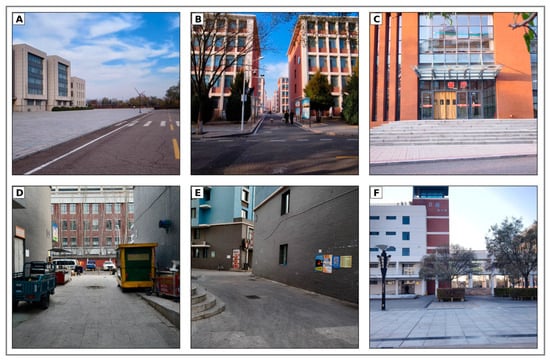
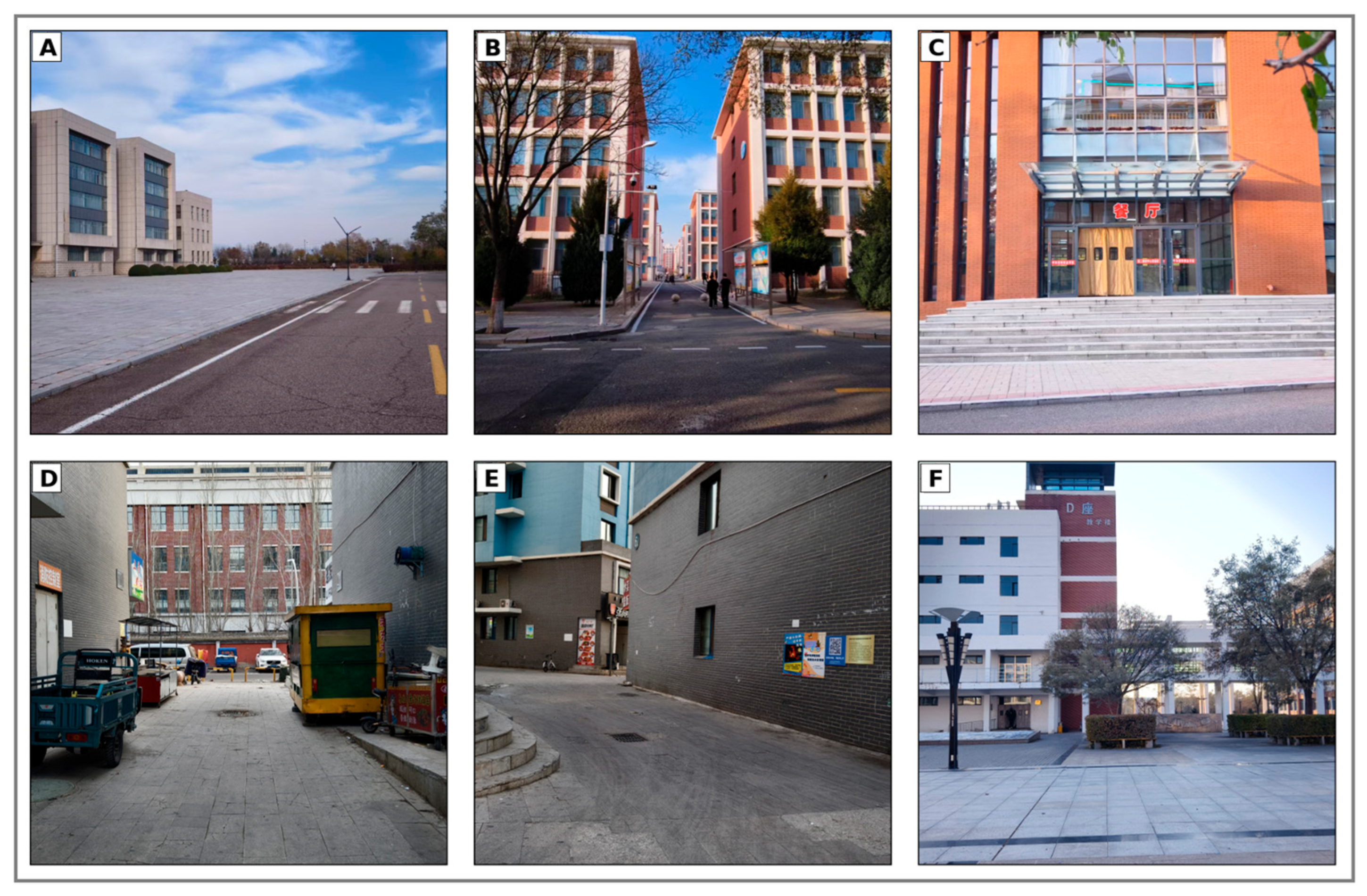
For existing campuses, the findings suggest that safety improvements should focus less on reinforcing territorial boundaries and more on maintaining clear visual conditions and well-managed everyday environments. In practice, this means keeping pedestrian routes visually open, limiting hidden corners through building and planting layout, and avoiding recessed entrances or deep edge spaces that weaken natural surveillance [53]. In transitional areas, low or permeable planting tends to work better than solid barriers because they keep the space readable while allowing clear lines of sight. Environmental maintenance should be treated as a routine safety strategy rather than a cosmetic concern. Clean pathways, intact paving, orderly transitional spaces, and visible signs of routine management can all reinforce perceptions of care, order, and institutional presence [54]. Although night-time lighting and wayfinding were not significant independent predictors in this study, they remain important as supporting conditions, particularly where they improve visual continuity and reduce shadowed blind spots along key movement routes [52,55]. Figure 4 illustrates recurring spatial contrasts associated with relatively higher and lower perceived safety across the two campuses.
Figure 4.
Comparative spatial patterns associated with relatively higher and lower perceived safety across the two campuses. Top row: spatial conditions associated with relatively higher perceived safety, including clearer sightlines (A), better-maintained transitional space (B), and more legible threshold conditions (C). Bottom row: spatial conditions associated with relatively lower perceived safety, including visually constrained pedestrian space (D), poorly maintained residual space (E), and concealed threshold geometry (F). Source: Photographs taken by the authors during field investigation.
During routine campus safety assessments, several spatial warning signs may be used to identify areas more likely to generate lower perceived safety. These include blind corners, recessed entrances, deep colonnades, visually obstructed thresholds, and poorly maintained residual spaces near campus edges. Such conditions tend to weaken visual legibility, reduce informal surveillance, and increase uncertainty in everyday movement. Rather than treating safety risks as a matter of isolated incidents, these cues can be used as practical diagnostic indicators to identify where spatial intervention is most needed. This makes campus safety assessment more spatially specific and more directly actionable in planning and design practice [56].
4.5. Research Limitations and Future Directions
This study is based on data from two suburban university campuses within the same city. This inevitably places some limits on how far the findings can be extended. They are most relevant to campuses with similar spatial conditions, particularly those located in rapidly urbanizing suburban areas. Whether the same patterns hold in other contexts, such as dense city-center campuses or institutions in different cultural settings, still needs to be examined.
The cross-sectional design introduces another constraint. The analysis reveals consistent associations among spatial attributes, perceived safety, and environmental satisfaction, but it does not allow us to determine how these relationships unfold over time. In other words, the direction of influence remains uncertain. A more convincing picture would likely come from longitudinal data or quasi-experimental settings, for example, by observing changes before and after adjustments to lighting or wayfinding systems.
There is also a limitation in how the environment is measured. All spatial attributes are based on respondents’ perceptions rather than independently verified conditions. While the statistical checks suggest that common method bias is not a dominant issue, it cannot be fully excluded. Bringing in more objective evidence, such as spatial analysis, field-based lighting audits, or even behavioral tracking, would make future studies more robust.
Another point concerns the treatment of perceived safety. In this study, it is modeled as a single construct, which keeps the analysis manageable but likely simplifies a more complex experience. Separating its emotional, cognitive, and behavioral dimensions could open up a more detailed understanding of how different spatial features are actually interpreted by users.
Night-time activity presents a similar case. A large share of participants reported being active on campus after dark, yet this factor was not included in the structural model. This was a deliberate choice to keep the model focused on environmental variables, but it leaves open the possibility that activity patterns shape how lighting and visibility are experienced. Related to this, other psychological processes, such as aesthetic response or place attachment, may also be part of the mechanism linking space to satisfaction but were not explicitly tested here. These issues point to several useful directions for extending the present model in future research.
5. Conclusions
This study focuses on suburban university campuses in China and examines the relationships among spatial boundary attributes, perceived safety, and environmental satisfaction in the built environment. Based on the CPTED theory and the stimulus–organism–response (SOR) framework, we construct and test a mediation model to understand how spatial environmental characteristics relate to affect students’ overall evaluation of the campus through psychological perception.
In the two suburban campuses examined here, students’ sense of safety was shaped less by formal boundary definition than by how the environment was seen and maintained in everyday use. Spaces with clearer sightlines, fewer concealed edges, and more visible signs of upkeep were more likely to support positive safety judgments. In contrast, boundary form and night-time lighting alone did not appear to substantially change how safe these environments were perceived to be. Perceived safety remained the main pathway through which these spatial conditions carried forward into broader evaluations of the campus environment. Taken together, these findings suggest that the practical value of CPTED in open campus settings lies less in boundary hardening than in maintaining visible, legible, and well-managed everyday spaces.
For campus design practice, the findings point to two immediate priorities. The first is intervention: improving everyday safety on existing campuses depends less on reinforcing boundaries than on preserving sightlines, reducing concealed edges, and maintaining visible signs of care in transitional and edge spaces. The second is diagnosis: spaces with blind corners, recessed entrances, deep colonnades, and poorly maintained residual areas may serve as practical warning signs of lower perceived safety and should be prioritized in campus safety assessment. These findings suggest that campus safety design should pay closer attention to how everyday spatial conditions are perceived and managed. They may also have implications for urban wellbeing, as perceived safety and environmental satisfaction are closely related to everyday experience in built environments.
Author Contributions
Conceptualization, R.N.; Methodology, R.N.; Software, R.N.; Validation, R.N.; Formal analysis, R.N.; Investigation, R.N.; Resources, R.N.; Data curation, R.N.; Writing—original draft, R.N.; Writing—review and editing, R.N.; Visualization, S.H.H.; Supervision, S.H.H. All authors have read and agreed to the published version of the manuscript.
Funding
This research received no external funding.
Institutional Review Board Statement
Ethical review and approval were waived for this study due to this study involving an anonymous questionnaire survey of university students on their perceptions of campus environments. According to the institutional guidelines of Universiti Sains Malaysia, formal ethics committee approval is not required for non-interventional, anonymous surveys that involve no experimental procedures, no collection of sensitive personal data, and where participation is entirely voluntary. The study was conducted in accordance with these guidelines and the principles of the Declaration of Helsinki. All participants were informed of the research purpose, the voluntary nature of participation, and the anonymity of their responses before completing the questionnaire.
Informed Consent Statement
Informed consent was obtained from all subjects involved in the study.
Data Availability Statement
The data presented in this study are available on request from the corresponding author.
Conflicts of Interest
The authors declare no conflicts of interest.
Abbreviations
The following abbreviations are used in this manuscript:
| CPTED | Crime Prevention Through Environmental Design |
| SOR | Stimulus–Organism–Response |
| PLS-SEM | Partial Least Squares Structural Equation Modeling |
| AVE | Average Variance Extracted |
| CR | Composite Reliability |
| HTMT | Heterotrait–Monotrait Ratio |
| VIF | Variance Inflation Factor |
| CMB | Common Method Bias |
References
- Sum, C.-Y. A Great Leap of Faith: Limits to China’s University Cities. Urban Stud. 2018, 55, 1460–1476. [Google Scholar] [CrossRef] [Scilit]
- Deng, H.; Zhang, K.; Wang, F.; Dang, A. Compact or Disperse? Evolution Patterns of Urban Land Expansion. Habitat Int. 2021, 108, 102324. [Google Scholar] [CrossRef] [Scilit]
- Guo, W.; Ding, Y.; Yang, G.; Liu, X. Indicators of Sustainable Campus Renewal. Buildings 2022, 12, 1508. [Google Scholar] [CrossRef] [Scilit]
- Zhang, Z.; Wang, H.; Pang, L.; Fisher, T.; Yang, S. Built Environment and Walking in Campuses. Land 2023, 12, 1972. [Google Scholar] [CrossRef] [Scilit]
- Huang, D.; Ceccato, V.; Kyttä, M. Safety Perceptions in University Campuses. Crime Prev. Community Saf. 2022, 24, 266–285. [Google Scholar] [CrossRef] [Scilit]
- Azevedo, V.; Nunes, L.M.; Sani, A. Campus Security Perceptions. Eur. J. Investig. Health Psychol. Educ. 2022, 12, 193–208. [Google Scholar] [CrossRef] [Scilit] [PubMed]
- Qin, T.; Van de Weghe, N.; Huang, H. Built Environment and Safety Perception. Environ. Impact Assess. Rev. 2025, 114, 107915. [Google Scholar] [CrossRef] [Scilit]
- Peng, Y.-L.; Li, Y.; Cheng, W.-Y.; Wang, K. Campus Safety Evaluation. Sustainability 2024, 16, 1256. [Google Scholar] [CrossRef] [Scilit]
- Cozens, P.; Love, T. CPTED Review. J. Plan. Lit. 2015, 30, 393–412. [Google Scholar] [CrossRef] [Scilit]
- Lee, S.; Lee, C.; Nam, J.W.; Moudon, A.V.; Mendoza, J.A. Street Environment and Crime. Landsc. Urban Plan. 2023, 232, 104676. [Google Scholar] [CrossRef] [Scilit]
- Cozens, P.M.; Saville, G.; Hillier, D. CPTED Bibliography. Prop. Manag. 2005, 23, 328–356. [Google Scholar] [CrossRef] [Scilit]
- Hochreiter, V.; Benedetto, C.; Loesch, M. S-O-R Paradigm. J. Entrep. Bus. Dev. 2023, 3, 7–16. [Google Scholar] [CrossRef] [Scilit]
- Mehrabian, A.; Russell, J.A. An Approach to Environmental Psychology; MIT Press: Cambridge, MA, USA, 1980. [Google Scholar]
- Zeng, E.; Dong, Y.; Yan, L.; Lin, A. Neighborhood Safety. Buildings 2022, 13, 2. [Google Scholar] [CrossRef] [Scilit]
- Li, H.; Du, J.; Chow, D. Environmental Factors and Wellbeing. Build. Environ. 2024, 265, 112023. [Google Scholar] [CrossRef] [Scilit]
- Ding, Y.; Lee, C.; Chen, X.; Song, Y.; Newman, G.; Lee, R.; Lee, S.; Li, D.; Sohn, W. Campus Environment and Health. Urban For. Urban Green. 2024, 91, 128168. [Google Scholar] [CrossRef] [Scilit]
- Sun, B.; Liu, J.; Yin, C.; Cao, J. Neighborhood and Life Satisfaction. J. Transp. Geogr. 2022, 104, 103435. [Google Scholar] [CrossRef] [Scilit]
- Du, Y.; Jiang, H.; Huang, Z.; Yang, H. Community Belonging. Front. Public Health 2023, 10, 1105473. [Google Scholar] [CrossRef] [Scilit]
- Popov, A.V.; Syrova, O.I. University Campuses Typology. Nexo Rev. Cient. 2021, 34, 1826–1839. [Google Scholar] [CrossRef] [Scilit]
- Armitage, R. Crime Prevention Through Environmental Design. In Oxford Research Encyclopedia of Criminology and Criminal Justice; Oxford University Press: Oxford, UK, 2018. [Google Scholar]
- Seifi, M.; Abdullah, A.; Haron, S.; Salman, A.; Seifi, M. Creating Secured Residential Places: Conflicting Design Elements of Natural Surveillance, Access Control and Territoriality. IOP Conf. Ser. Mater. Sci. Eng. 2019, 636, 012017. [Google Scholar] [CrossRef] [Scilit]
- Kinney, J.B.; Mann, E.; Winterdyk, A.J.A. Crime Prevention through Environmental Design (CPTED). In Crime Prevention; Routledge: London, UK, 2017. [Google Scholar]
- Zhang, H.; Ou, Y.-H.; Chang, Y.-M. Boundary Space and Residents’ Perception. Asian J. Qual. Life 2019, 4, 16–32. [Google Scholar] [CrossRef] [Scilit]
- Portnov, B.A.; Saad, R.; Trop, T.; Kliger, D.; Svechkina, A. Nighttime Lighting and Safety Perception. PLoS ONE 2020, 15, e0242172. [Google Scholar] [CrossRef] [Scilit]
- Liu, M.; Zhang, B.; Luo, T.; Liu, Y.; Portnov, B.A.; Trop, T.; Jiao, W.; Liu, H.; Li, Y.; Liu, Q. Street Lighting Quality Evaluation. Remote Sens. 2022, 14, 826. [Google Scholar] [CrossRef] [Scilit]
- Lis, A.; Pardela, Ł.; Iwankowski, P. Vegetation and Perceived Safety. Sustainability 2019, 11, 6324. [Google Scholar] [CrossRef] [Scilit]
- Lis, A.; Pardela, Ł.; Iwankowski, P.; Haans, A. The Impact of Plants Offering Cover on Female Students’ Perception of Danger in Urban Green Spaces in Crime Hot Spots. Landsc. Online 2021, 91, 1–14. [Google Scholar] [CrossRef] [Scilit]
- Chen, G.; Zhang, S.; Yan, B.; Miao, S. Environmental Safety Evaluation. PLoS ONE 2021, 16, e0260316. [Google Scholar] [CrossRef] [Scilit]
- Fisher, B.S.; Nasar, J.L. Fear of Crime and Environmental Features. Environ. Behav. 1992, 24, 35–65. [Google Scholar] [CrossRef] [Scilit]
- Chen, N.; Hall, C.M.; Yu, K.; Qian, C. Environmental Satisfaction and Place Attachment. Sustainability 2019, 11, 6439. [Google Scholar] [CrossRef] [Scilit]
- Boateng, G.O.; Neilands, T.B.; Frongillo, E.A.; Melgar-Quiñonez, H.R.; Young, S.L. Scale Development Best Practices. Front. Public Health 2018, 6, 149. [Google Scholar] [CrossRef] [Scilit]
- Hair, J.F.; Risher, J.J.; Sarstedt, M.; Ringle, C.M. Reporting PLS-SEM Results. Eur. Bus. Rev. 2019, 31, 2–24. [Google Scholar] [CrossRef] [Scilit]
- Panahi, S.; Bazrafshani, A.; Mirzaie, A. LibQUAL Scale Validation. J. Med. Libr. Assoc. 2023, 111, 792–801. [Google Scholar] [CrossRef] [Scilit] [PubMed]
- Ab Hamid, M.R.; Sami, W.; Mohmad Sidek, M.H. Discriminant Validity Assessment. J. Phys. Conf. Ser. 2017, 890, 012163. [Google Scholar] [CrossRef] [Scilit]
- Sarstedt, M.; Ringle, C.M.; Hair, J.F. Partial Least Squares Structural Equation Modeling. In Handbook of Market Research; Springer: Cham, Switzerland, 2017; pp. 1–40. [Google Scholar]
- Hair, J.; Alamer, A. PLS-SEM in Applied Linguistics. Res. Methods Appl. Linguist. 2022, 1, 100027. [Google Scholar] [CrossRef] [Scilit]
- Hair, J.F.; Hult, G.T.M.; Ringle, C.M.; Sarstedt, M.; Danks, N.P.; Ray, S. Evaluation of Reflective Measurement Models. In Partial Least Squares Structural Equation Modeling (PLS-SEM) Using R: A Workbook; Springer: Cham, Switzerland, 2021; pp. 75–90. [Google Scholar]
- Henseler, J.; Ringle, C.M.; Sarstedt, M. Discriminant Validity in SEM. J. Acad. Mark. Sci. 2015, 43, 115–135. [Google Scholar] [CrossRef] [Scilit]
- Orth, U.; Meier, L.L.; Bühler, J.L.; Dapp, L.C.; Krauss, S.; Messerli, D.; Robins, R.W. Effect Size Guidelines. Psychol. Methods 2024, 29, 421–433. [Google Scholar] [CrossRef] [Scilit]
- Aguirre-Urreta, M.I.; Hu, J. Detecting Common Method Bias. ACM SIGMIS Database 2019, 50, 45–70. [Google Scholar] [CrossRef] [Scilit]
- Kock, N. Common Method Bias in PLS-SEM: A Full Collinearity Assessment Approach. Int. J. e-Collab. 2015, 11, 1–10. [Google Scholar] [CrossRef] [Scilit]
- Podsakoff, P.M.; MacKenzie, S.B.; Lee, J.-Y.; Podsakoff, N.P. Common Method Biases in Behavioral Research: A Critical Review of the Literature and Recommended Remedies. J. Appl. Psychol. 2003, 88, 879–903. [Google Scholar] [CrossRef] [Scilit] [PubMed]
- Henseler, J.; Ringle, C.M.; Sarstedt, M. Testing Measurement Invariance of Composites Using Partial Least Squares. Int. Mark. Rev. 2016, 33, 405–431. [Google Scholar] [CrossRef] [Scilit]
- Fornell, C.; Larcker, D.F. Evaluating Structural Equation Models with Unobservable Variables and Measurement Error. J. Mark. Res. 1981, 18, 39–50. [Google Scholar] [CrossRef] [Scilit]
- Cohen, J. Statistical Power Analysis for the Behavioral Sciences, 2nd ed.; Lawrence Erlbaum Associates: Hillsdale, NJ, USA, 1988. [Google Scholar]
- Ekren, E.; Hall, R.E.; Pierdolla, E.; Barnes, V.; Jarzombek-Torralva, A.; Morrish, D.; Martinez-Prather, K. CPTED in Schools. Saf. Sci. 2025, 185, 106781. [Google Scholar] [CrossRef] [Scilit]
- Li, Y.; Wu, L.; Xue, Y.; Jiang, H. Safety Perception and Stay Behavior. Buildings 2025, 15, 3310. [Google Scholar] [CrossRef] [Scilit]
- Mihinjac, M.; Saville, G. Third-Generation CPTED. Soc. Sci. 2019, 8, 182. [Google Scholar] [CrossRef] [Scilit]
- Ou, H.; Yao, M.; Zhai, Z.; Huang, M.; Bian, C.; Ou, Y. Campus Satisfaction and Belonging. Buildings 2025, 16, 77. [Google Scholar] [CrossRef] [Scilit]
- Stessens, P.; Canters, F.; Huysmans, M.; Khan, A.Z. Urban Green Space Quality. Land Use Policy 2020, 91, 104319. [Google Scholar] [CrossRef] [Scilit]
- Trop, T.; Tavory, S.S.; Portnov, B.A. Public Space Lighting and Safety. Environ. Behav. 2023, 55, 3–46. [Google Scholar] [CrossRef] [Scilit]
- Zielinska-Dabkowska, K.M. Urban Illumination Framework. Sustainability 2022, 14, 14525. [Google Scholar] [CrossRef] [Scilit]
- Senna, I.; Iglesias, F.; Matsunaga, L.H. CPTED and Fear of Crime. Crime Prev. Community Saf. 2025, 27, 1–17. [Google Scholar] [CrossRef] [Scilit]
- Kofanov, O.; Kofanova, O.; Tverda, O.; Tkachuk, K.; Huzan, A.; Borysov, O. Ecological Safety of Campuses. Environ. Res. Eng. Manag. 2024, 80, 101–114. [Google Scholar] [CrossRef] [Scilit]
- Zielinska-Dabkowska, K.M.; Bobkowska, K. Sustainable Cities at Night. Sustainability 2022, 14, 6062. [Google Scholar] [CrossRef] [Scilit]
- Dalton, L.C.; Hajrasouliha, A.H.; Riggs, W.W. Planning for University Campuses. J. Am. Plan. Assoc. 2018, 84, 145–161. [Google Scholar] [CrossRef] [Scilit]

Disclaimer/Publisher’s Note: The statements, opinions and data contained in all publications are solely those of the individual author(s) and contributor(s) and not of MDPI and/or the editor(s). MDPI and/or the editor(s) disclaim responsibility for any injury to people or property resulting from any ideas, methods, instructions or products referred to in the content. |
© 2026 by the authors. Licensee MDPI, Basel, Switzerland. This article is an open access article distributed under the terms and conditions of the Creative Commons Attribution (CC BY) license.