Article

Research on the Bearing Mechanism of Lightweight Surface-Mounted Slewing Cable Anchorage for the Yellow River Three Gorges Bridge

1
School of Civil Engineering and Architecture, China Three Gorges University, Yichang 443002, China
2
CCCC Second Highway Consultants Co., Ltd., Wuhan 430056, China
*
Author to whom correspondence should be addressed.
Buildings 2026, 16(10), 1945; https://doi.org/10.3390/buildings16101945
Submission received: 23 March 2026 / Revised: 30 April 2026 / Accepted: 8 May 2026 / Published: 14 May 2026

Abstract

To investigate the load-bearing characteristics of lightweight surface-mounted slewing cable anchorage, this paper takes the Yellow River Three Gorges Bridge project as an example, establishing a nonlinear finite element model and verifying its effectiveness through a 1:100 scale physical model test. Furthermore, a theoretical stability analysis model was established to quantify the contributions of base friction and toothed block clamping action. By analyzing displacement behavior, rock mass shear characteristics, and plastic zone evolution, the combined load-bearing mechanism was revealed. The results show that the anchorage system begins to destabilize when the load reaches 18P. Both numerical and theoretical analyses confirm that the toothed blocks significantly improve the stability of the anchorage system; the safety factor increases from 6.84 considering only friction to 16.59 considering clamping action, which is consistent with the 17P plastic threshold observed in the simulation. Rock mass resistance is generated from bottom to top, providing passive resistance through shear action. The final determined failure mode is the interconnection of local plastic zones and the overturning failure of the anchorage system.

1. Introduction

Suspension bridges, with their advantages of high span capacity and good load-bearing performance, are widely used in canyon areas [1,2]. Anchorages are mainly used to anchor the load-bearing main cables; therefore, the stability of the anchorages directly affects the overall safety of the bridge. Gravity anchorages are more widely used than other anchorage types due to their low environmental dependence [3,4].
At present, some scholars have conducted relevant research on the working mechanism and bearing capacity of toothed gravity anchorages [5,6,7,8]. Li et al. conducted a similar indoor model test on the gravity anchorage of the Ningbo Qingfeng Suspension Bridge. The study showed that under the action of anchor cable force, the front end of the anchorage sinks and the rear end rises and rotates rigidly. The soil covering around the anchorage can greatly improve the stability and anti-slip properties of the anchorage [9]. Dong et al. conducted large-scale physical model tests to systematically explore the deformation and failure evolution of tunnel anchors under complex loads. Their research pointed out that the final instability of the structure does not occur instantaneously but rather undergoes a gradual process from local plastic development to the penetration of the slip surface [10]. Yin et al. found that the coordinated deformation and joint bearing mechanism of gravity anchorage structure–foundation is a combination of friction effect, clamping effect and backfilling effect [11]. Wang et al. provided insights into the load-bearing behaviors of composite gravity-type anchorages through a combination of physical models and numerical validation, highlighting the significant role of the toothed sill in redistributing contact stresses [12]. Han et al. showed that after the anchorage is displaced under the action of cable force load, it can mobilize the surrounding foundation rock mass to bear the load through the base friction and toothed clamping effect [13]. The order of mobilizing the rock mass bearing the load is to mobilize each level of toothed clamp from the base upwards, which can significantly improve the ultimate bearing capacity of the anchorage.
In terms of displacement characteristics of gravity anchors and interaction between anchors and surrounding soil [14], Li et al. studied how changing the bottom form of gravity anchors under different geological conditions can effectively improve the anti-sliding force of gravity anchors and how the anti-sliding performance of keyed gravity anchors is better than that of flat-bottomed anchors [15]. Feng et al. used ABAQUS to analyze the displacement, base stress and bearing capacity of traditional gravity anchors and side-wall-clamped gravity anchors. The results showed that the anti-sliding and anti-overturning performance of side-wall-clamped gravity anchors was better than that of traditional gravity anchors [16]. Wu et al. studied the differences in bearing capacity and anti-sliding mechanism of toothed gravity anchors and flat-bottomed gravity anchors under different burial depths through model tests and proved that toothed gravity anchors can effectively limit the horizontal displacement of gravity anchors, fully mobilize the resistance of the front soil and rock mass, and substantially improve the anti-sliding bearing capacity of anchors [17].
However, traditional gravity anchorages, due to their large size, high cost, and significant impact on the surrounding environment, do not conform to the construction concept of modern green engineering. Especially in ecologically sensitive areas or areas with limited land resources, the construction of gravity anchorages not only occupies a large amount of land resources but may also cause ecological damage [18,19]. Therefore, it is necessary to develop new, efficient, and environmentally friendly anchorage structures [20,21]. In view of this, this paper proposes a lightweight, surface-mounted rotating cable ground anchorage (hereinafter referred to as slewing cable anchorage) [3,22]. The structural design concept of this anchorage is derived from the engineering characteristics of ground-anchored rotating cable suspension bridges, aiming to reduce construction costs and environmental disturbances through engineering technology innovation. One of the significant features of rotating cable suspension bridges is the horizontal rotating arrangement of the main cable; that is, the main cable changes direction at the anchorage end through a rotating structure so that the main cable in the anchorage section is horizontal. Because the main cable at the anchorage point tends to be horizontal, theoretically no vertical pull force is generated. Therefore, the huge self-weight required by traditional gravity anchors is not needed, which can significantly reduce the size and volume of the anchor and achieve its lightweight goal [23,24,25]. Slewing cable anchors are suitable for mountain bridge projects with high requirements for anchor size control, large terrain undulations, and strict environmental protection standards.
This paper takes the gravity anchor project of the rotating cable on the Jiyuan bank of the Sanmenxia Highway Bridge on the Yellow River as an example to study the bearing mechanism and stability of the rotating cable anchor. A nonlinear finite element model of the anchor–rock contact surface was established and verified based on the experimental results of the rotating cable anchor model. The numerical model and the experimental results are in good agreement, indicating that the established finite element model can accurately evaluate the bearing mechanism and stability of the structure. Furthermore, using the verified model, the displacement characteristics of the rotating cable anchor, the shear bearing characteristics and plastic zone evolution of the rock mass embedded in the anchorage section, and the horizontal displacement distribution characteristics of the deep foundation rock mass are analyzed. This research focuses on the shear bearing characteristics, plastic zone evolution, and horizontal displacement distribution of the deep foundation rock mass under the constraint of the anchorage section. In addition, the common bearing mechanism and stability of the anchor–foundation system are discussed, aiming to provide a theoretical basis for the optimized design and ultimate bearing capacity analysis of the rotating cable anchor.

2. Brief Overview of a Prototype Project

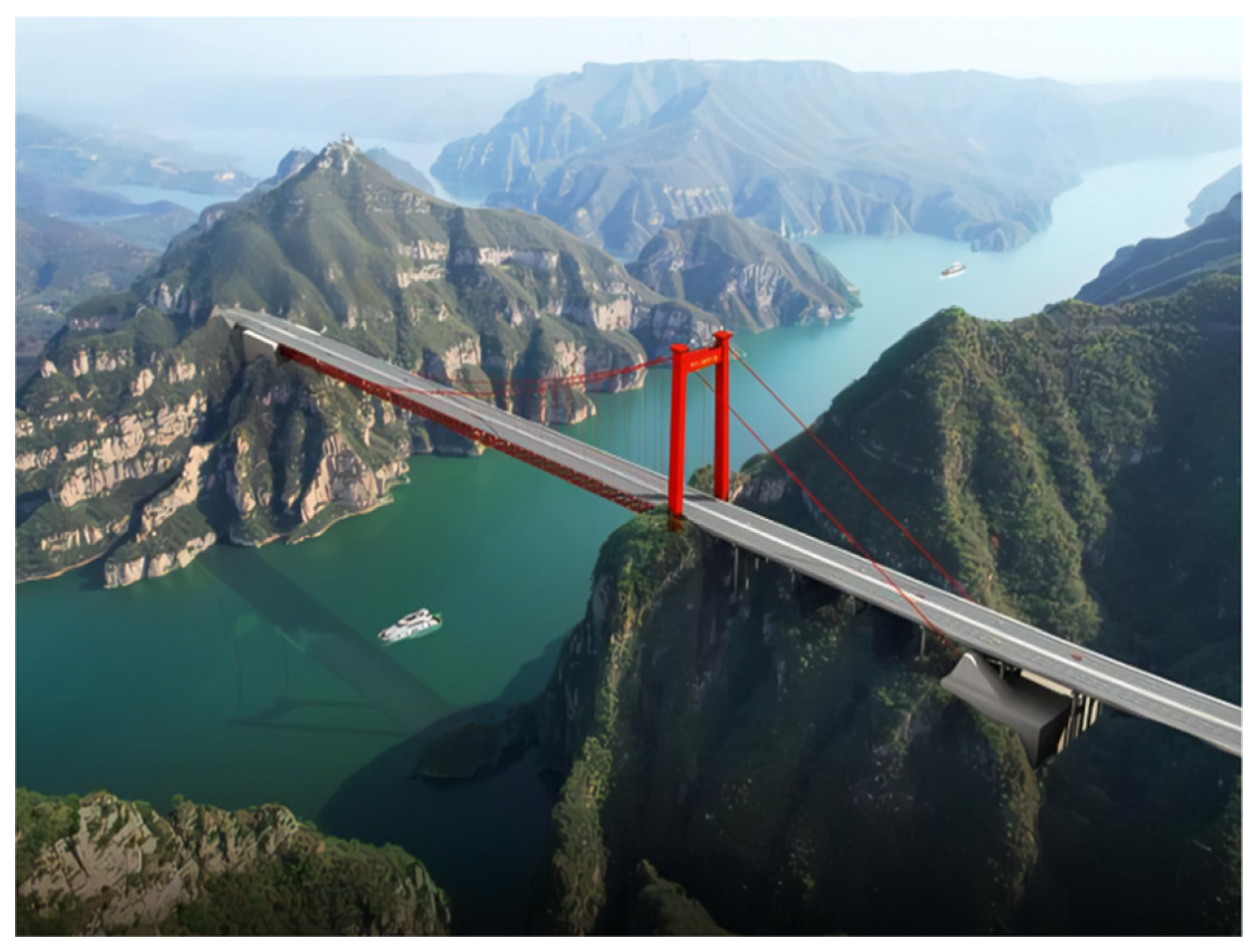
The Yellow River Three Gorges Bridge is located in the Yellow River Three Gorges Scenic Area, Xin’an County, Luoyang City, Henan Province, and is a key project of the planned Jiyuan–Xin’an Expressway (see Figure 1). The bridge spans the Yellow River, with a main span of 510 m and a width of 34.7 m. It adopts a single-tower, single-span ground-anchored slewing cable structure. The bridge tower is located on the south bank, and the stiffening girder is a Warren-type steel truss girder with vertical members. The main cable span arrangement is (60 + 510 + 160) m, with a calculated span of 570 m, a side-to-middle span ratio of 0.314, a middle span rise of 35.625 m, and a sag-to-span ratio of 1/16. A gravity anchor for the slewing cable is used on the north bank, and a gravity-type rock-embedded anchor is used on the south bank. The approach bridges are 4 × 40 m prestressed concrete T-beam bridges. This study focuses on the slewing cable anchorage on the Jiyuan bank. The main cable is arranged in a U-shape, and a saddle system consisting of a main cable saddle and a slewing cable saddle is used to achieve 180° rotation of the cable strands. The main body of the anchorage is 61.5 m long and 45 m wide. The anchorage foundation is set in a stepped, toothed block shape according to the terrain conditions. There are four steps in the anchorage foundation. The maximum excavation depth of the foundation is about 30 m. The rock mass of the anchorage area is mainly composed of strongly unloaded moderately weathered limestone and strongly unloaded moderately weathered argillaceous dolomite.

3. Model Tests

3.1. Similarity Ratio Design and Physical Models

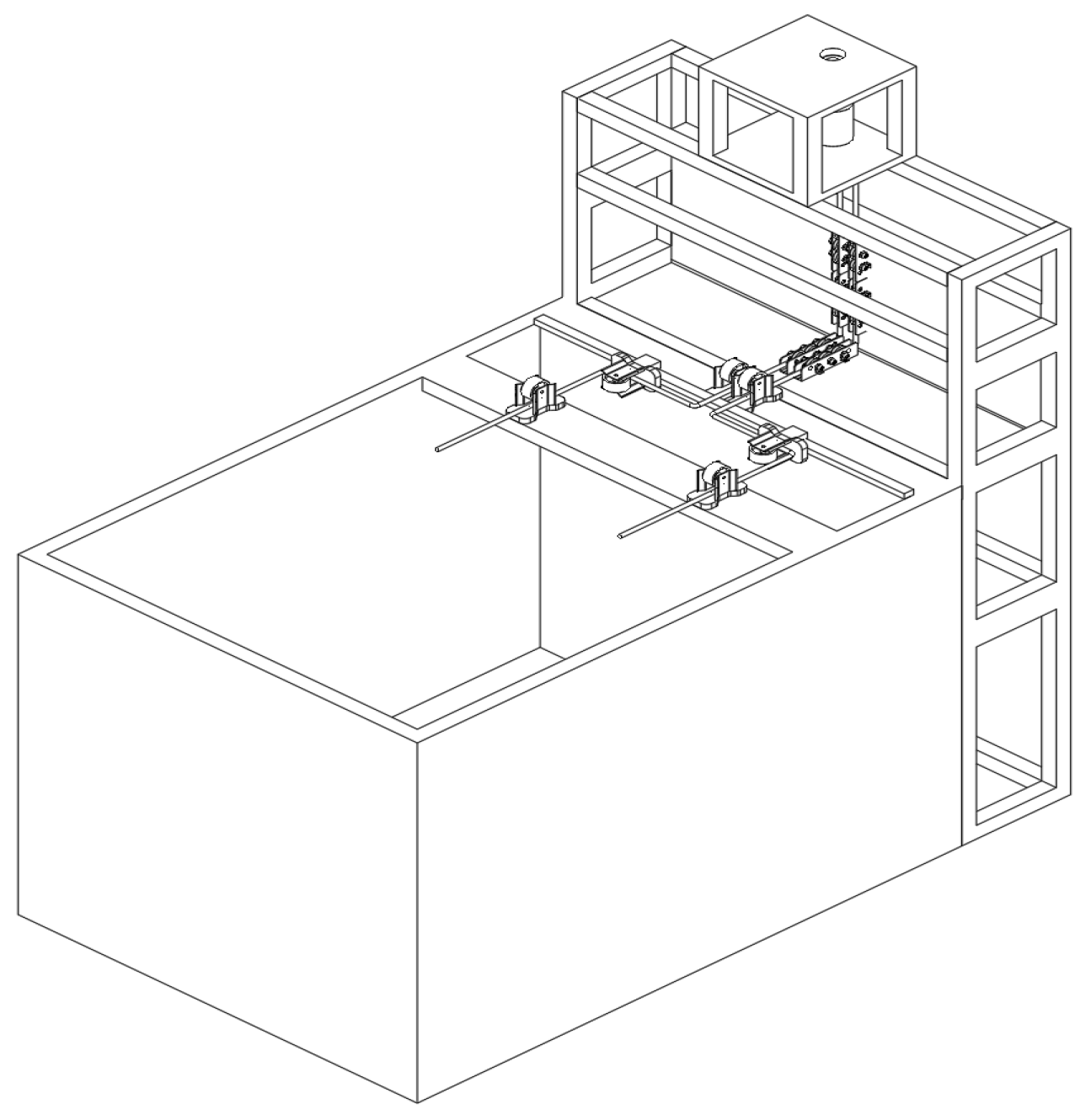
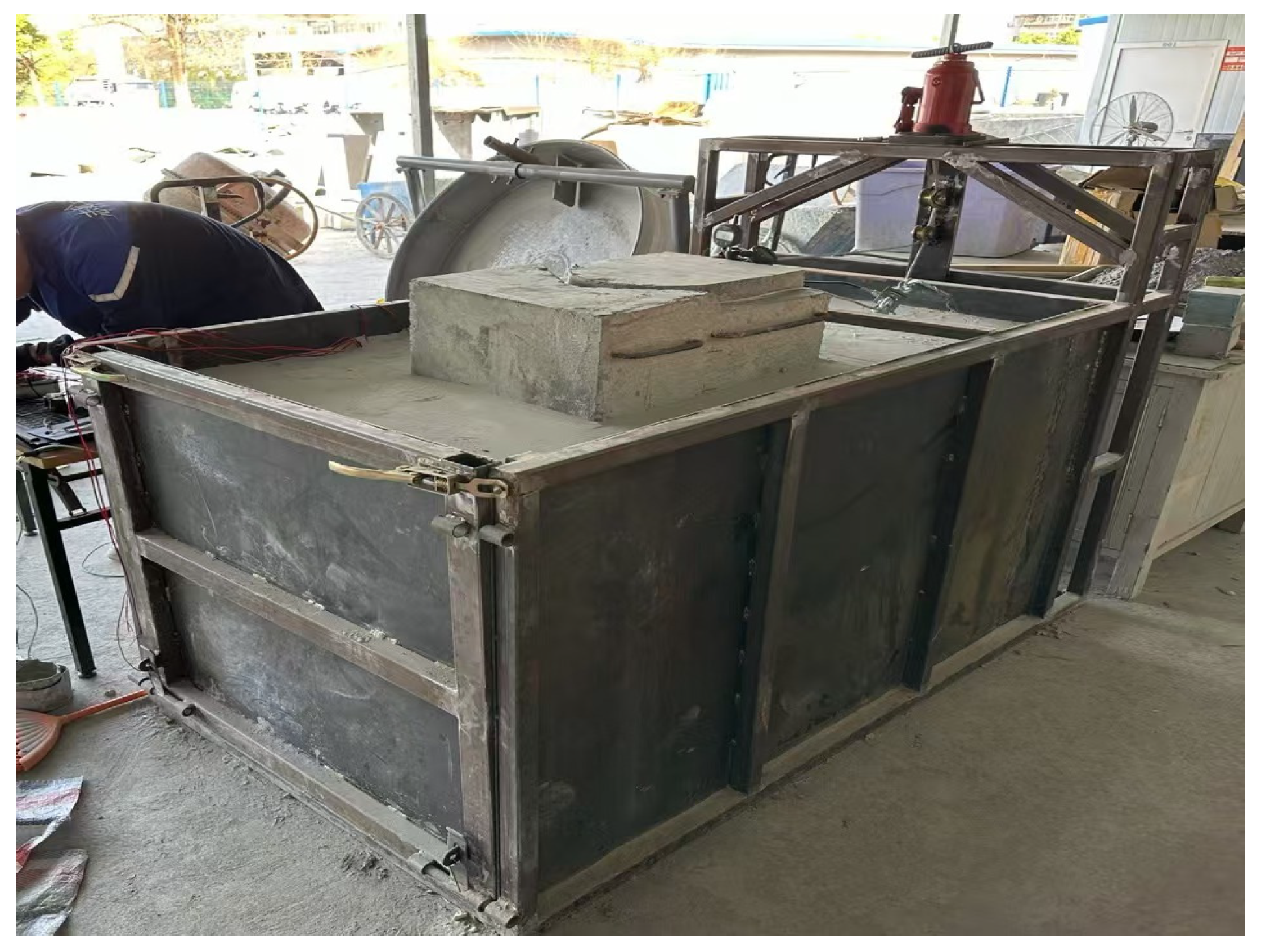
In this model test, a test box measuring 1.6 m in length, 1.0 m in width, and 0.9 m in height was employed; its structural configuration is shown in Figure 2.
Based on the similarity principle in geomechanical model tests [26,27,28,29], the similitude relations and similitude ratios of the model’s physical quantities were derived. Considering the actual test conditions (loading system, test site, etc.) and objectives, the geometric similarity ratio was set to 1/100 in this study; the similarity ratios of each physical quantity are shown in Table 1. Since the internal friction angle remains constant, the friction coefficient of the interface also follows a 1:1 similarity ratio. According to the geometric similarity ratio determined in the literature, a generalized anchorage–foundation model was obtained and is displayed in Figure 3. The prototype slewing cable anchorage has a length of 61 m along the bridge axis, and the scaled model dimensions are 61 cm × 45 cm × 22 cm (length × width × height).

3.2. Preparation of Materials

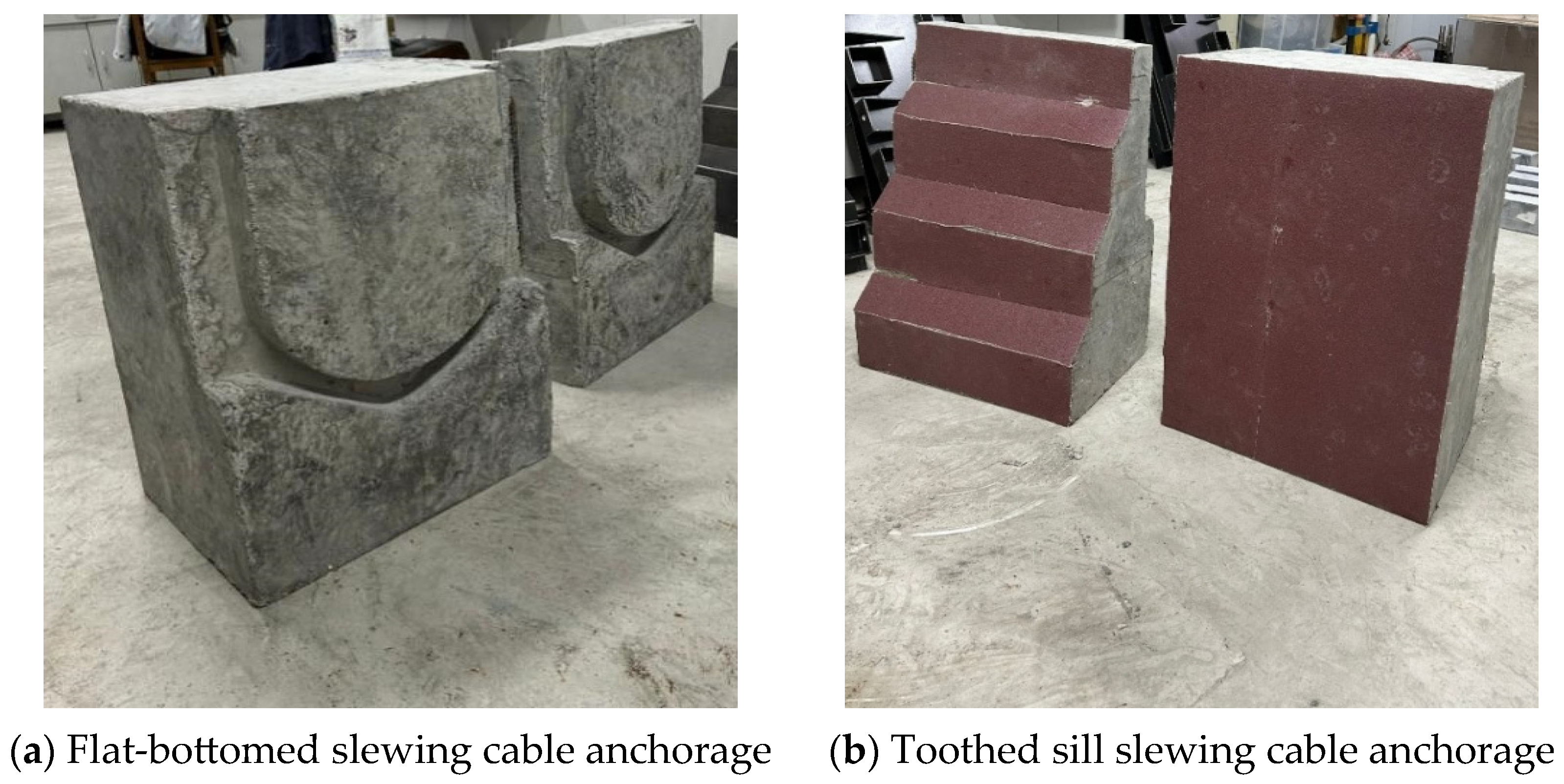
The main model materials in this study include the foundation and the anchorage. Table 2 lists the main mechanical parameters of the foundation materials and the anchorage–foundation interface in the prototype and model. Referring to existing research on similar materials for moderately weathered limestone, similar foundation materials were prepared using sand, barite powder, cement, and water. To accurately simulate the mechanical properties of the anchorage–foundation interface, a four-pole direct shear test was used to measure the friction coefficient between the concrete and the foundation, and the friction coefficient was calibrated using sandpaper of different grit sizes. The results show that the friction coefficient obtained using 60 CW sandpaper was 0.612, which is closest to the reported result and also effectively simulates the mechanical interlocking effect on the foundation material. Therefore, 60 CW sandpaper was chosen to simulate the contact surface between the anchorage and the rock mass. For the anchorage model (see Figure 4), the prototype slewing cable anchorage was cast with C40 concrete. Therefore, in the experiment, the slewing cable anchorage model was regarded as a rigid body and directly made of concrete [29,30], including toothed anchorage and flat-bottomed slewing cable anchorage, where the toothed slewing cable anchorage inclination angle α = 45° ± 2°, step height h = 60 mm ± 2 mm, and the main cable position is 31 cm from the bottom surface.

3.3. Test Procedures

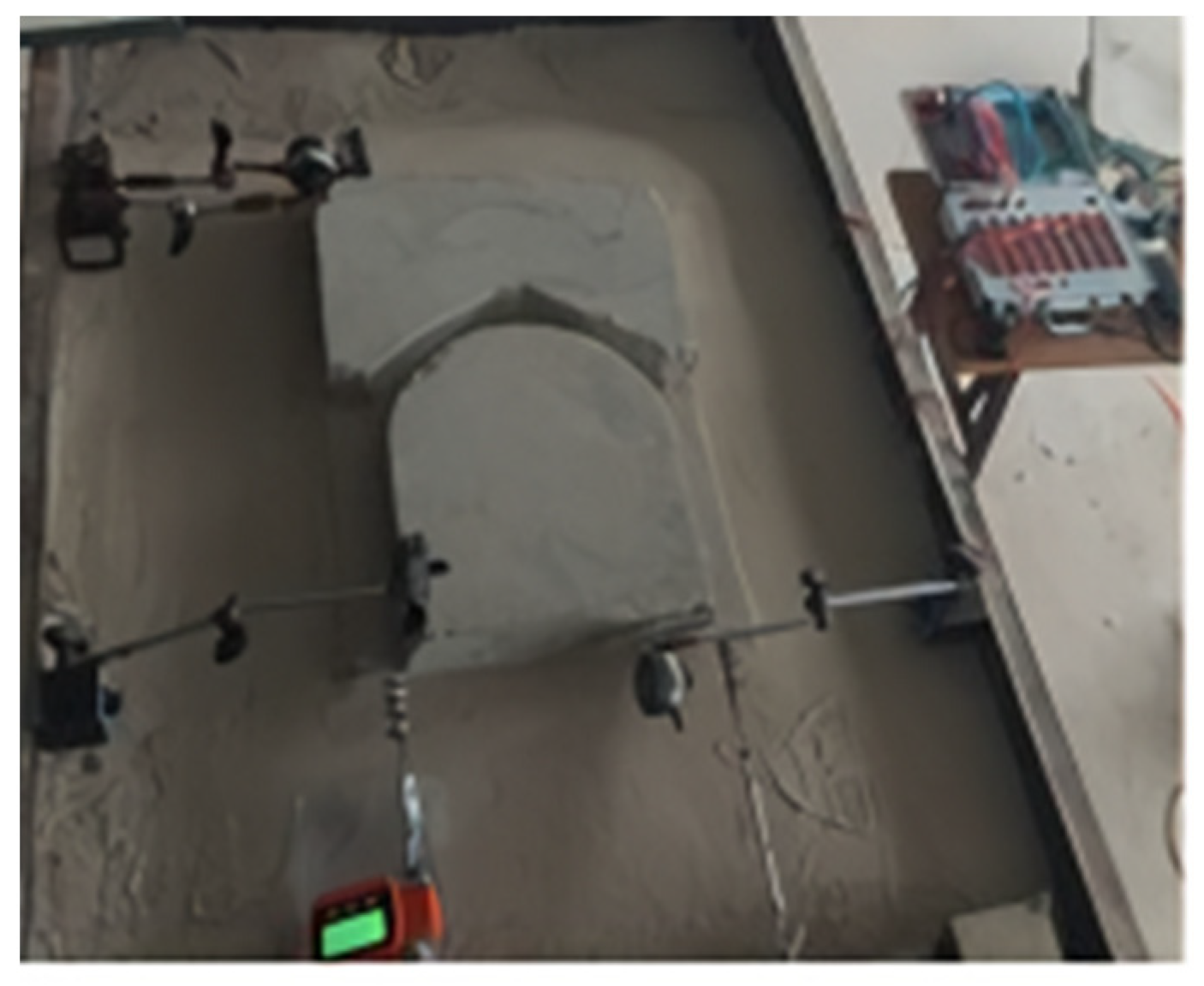
In the model test, cable tension was applied using a graded loading method, as shown in Figure 5. Loads were applied sequentially at 1P, 2P, …, nP until failure (P is the corresponding design load in the test; based on the similarity ratio, P in the model test was determined to be 230 N). A servo-hydraulic control system maintained load stability.
Each loading level was maintained for 3 min, and the stability of the structure was assessed by monitoring displacement and strain. Real-time monitoring during the experiment confirmed that the displacement rapidly stabilized after each loading increment, and the high consistency of the three sampling iterations at each stage indicated that the anchorage–foundation system had reached mechanical equilibrium. This process was repeated until the anchorage–foundation system became unstable and failed. When the foundation failed and the applied load could no longer maintain stability and rapidly decreased, it indicated that the anchor could no longer bear the load, the anchor–foundation system had failed, and loading was stopped.

4. Finite Element Analysis

4.1. Model Establishment

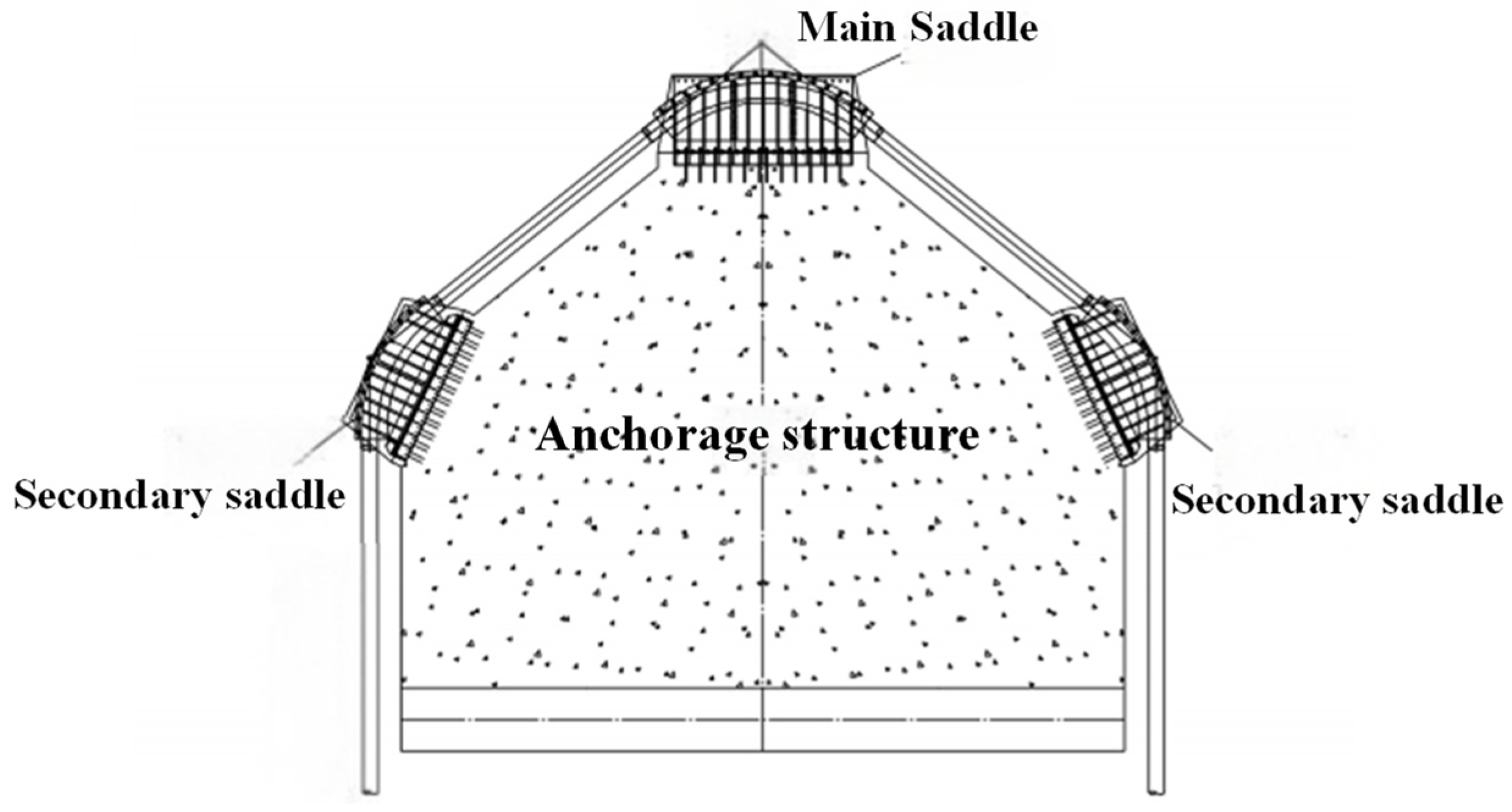
To realistically reflect the stress characteristics of the slewing cable anchorage under cable force, a three-dimensional numerical model including the anchorage, surrounding soil and rock, and slewing cable was established using ANSYS 2024 software. The loading method followed the experimental loading method, with a focus on ensuring that the weight and center of gravity of the anchorage were completely consistent with the design drawings (see Figure 6). The dimensions of the surrounding soil and rock were calculated multiple times, and the model range was set at 305 m × 220 m × 110 m, with a total of 169,568 nodes and 117,284 elements. At this point, the influence of boundary conditions on the anchorage stress calculation results can be ignored. The main cable is arranged in a configuration where it originates from one anchorage, passes around the opposite anchorage, returns, and anchors back to the originating anchorage. The direction of the main cable tension on the anchorage is defined as the positive x-axis. The slewing cable anchorage structure and surrounding soil and rock mass are all modeled using SOLID185 elements.
Since this study primarily investigates the stability failure of anchoring systems and employs a three-cable saddle system for the anchoring structure (as shown in Figure 6), it effectively prevents anchoring structure failure. Furthermore, model tests and numerical simulations demonstrate that the main failure modes of the anchoring structure are rock mass shear failure and rigid overturning of the anchoring structure, while the anchoring structure itself remains intact. Therefore, the slewing cable anchoring structure in this model is designed using linear elastic materials. The Mohr–Coulomb constitutive model was adopted for the rock mass [23,31,32]. This was chosen because the parameters of the Mohr–Coulomb model can be directly obtained from field geotechnical investigations and are reliable. Using the Mohr–Coulomb model minimizes potential computational uncertainties caused by the lack of complex parameters required by more advanced models. Furthermore, since this study focuses on the stability failure and bearing mechanism of the re-anchored structure, the M-C model combined with the extended Lagrange contact algorithm achieves a good balance between computational efficiency and accuracy. As shown in Section 4.2, the numerical results are in high agreement with the physical model test results, confirming that the Mohr–Coulomb model can fully characterize the structural performance and failure mode of the anchoring system.
To ensure that the numerical results are independent of element size, a mesh convergence study was conducted before the final analysis. A multi-scale meshing strategy was employed for the computational domain: a fine mesh of 1.0 m was applied in the anchorage zone and near-surface bedrock. Preliminary sensitivity tests showed that further refining the mesh density had negligible impact on the predicted ultimate bearing capacity and load–displacement response. For the far-field region, the mesh size was gradually increased to 10–15 m to optimize computational efficiency without sacrificing accuracy. This hierarchical mesh refinement strategy ensured that the local shear behavior at the toothed beam was captured with high accuracy while maintaining the overall stability of the numerical solution. The rock mass at the anchorage location is mainly composed of strongly unloaded moderately weathered limestone and strongly unloaded moderately weathered argillaceous dolomite, and its physical and mechanical properties are shown in Table 3.
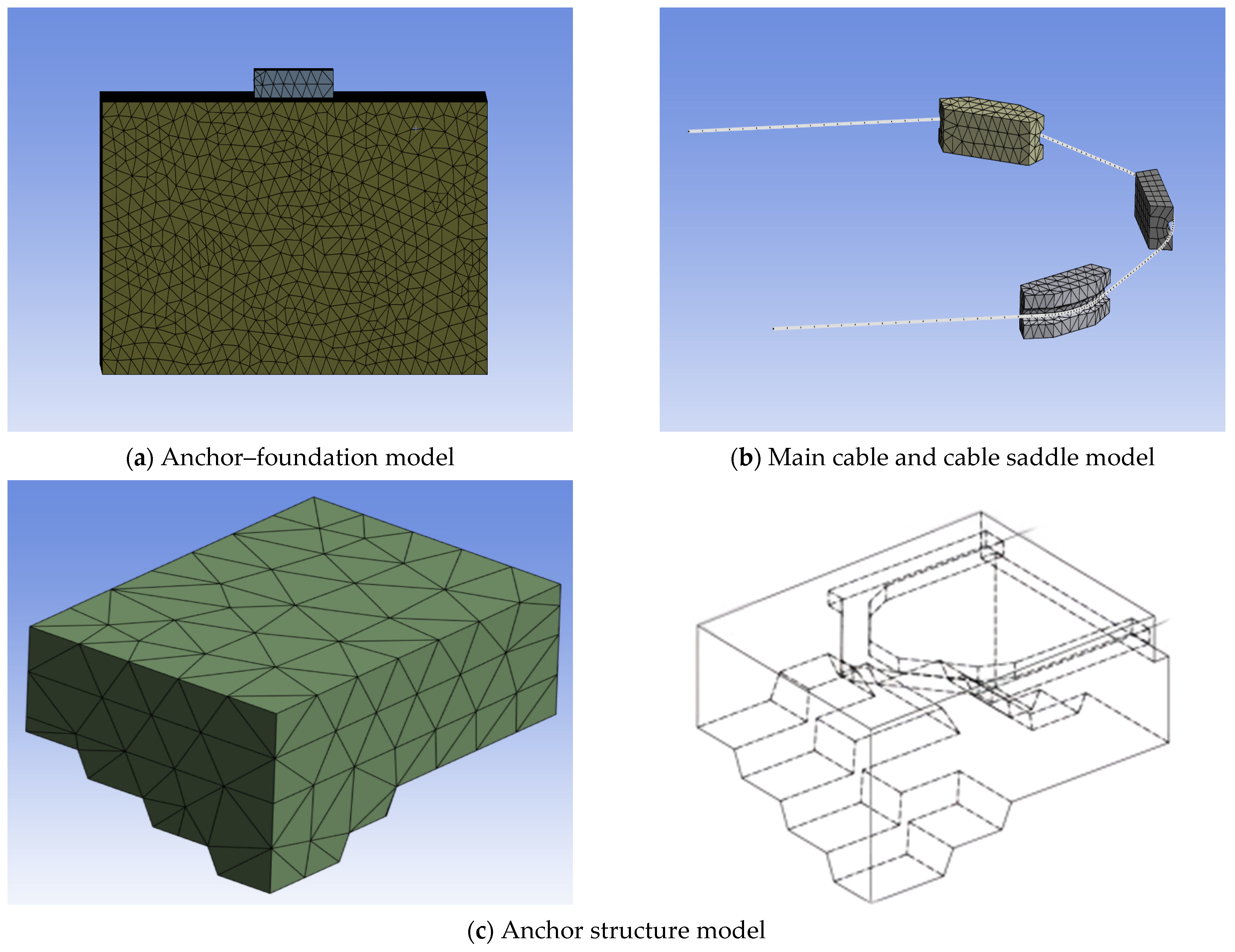
The interaction between the anchorage foundation and the underlying soil and rock was simulated using CONTA174 contact elements and TARGE170 target elements, employing the extended Lagrange contact algorithm (ELA). The ELA offers good convergence and high computational accuracy. Contact pairs were configured as standard contacts with automatically updated contact stiffness and separable characteristics, with a friction coefficient of 0.6. All degrees of freedom at the bottom of the soil mass were constrained, while the horizontal degrees of freedom at each node were constrained on the open surface surrounding the soil mass. Due to the coupling relationship between the anchorage displacement and the main cable force, a cable saddle system was added to the anchorage–soil mass model to improve computational accuracy. This system includes a main cable saddle located on the bridge’s central axis and two corner saddles arranged in a triangular configuration. The main cable saddle is used to lock the main cable and serves as its fixed point. The corner saddles are designed with sliding constraints. The slewing cable load was simulated using CABLE280 cable elements. The slewing cable was bound to the main cable saddle, and the friction coefficient with the two auxiliary cable saddles was 0.2. The anchor foundation is designed as a stepped, toothed block shape according to the terrain conditions. The anchor foundation has four steps, with a total length of 61.5 m, a total width of 45 m, and a maximum excavation depth of approximately 30 m. The finite element calculation model is shown in Figure 7.
The cable force load on the slewing cable anchor is applied according to the treatment method in the model experiment. The main cable force is applied to the horizontal main cable in a staged loading manner. This treatment method conforms to the actual stress state of the anchor. The slewing cable anchor mainly bears the huge tensile force of the main cable in the horizontal direction. The initial stress will deviate from the foundation stress state. Therefore, the initial ground stress balance must be performed first in the simulation. The cable force is applied according to different multiples, and the balance is calculated after each load is applied.

4.2. Validation of FE Models

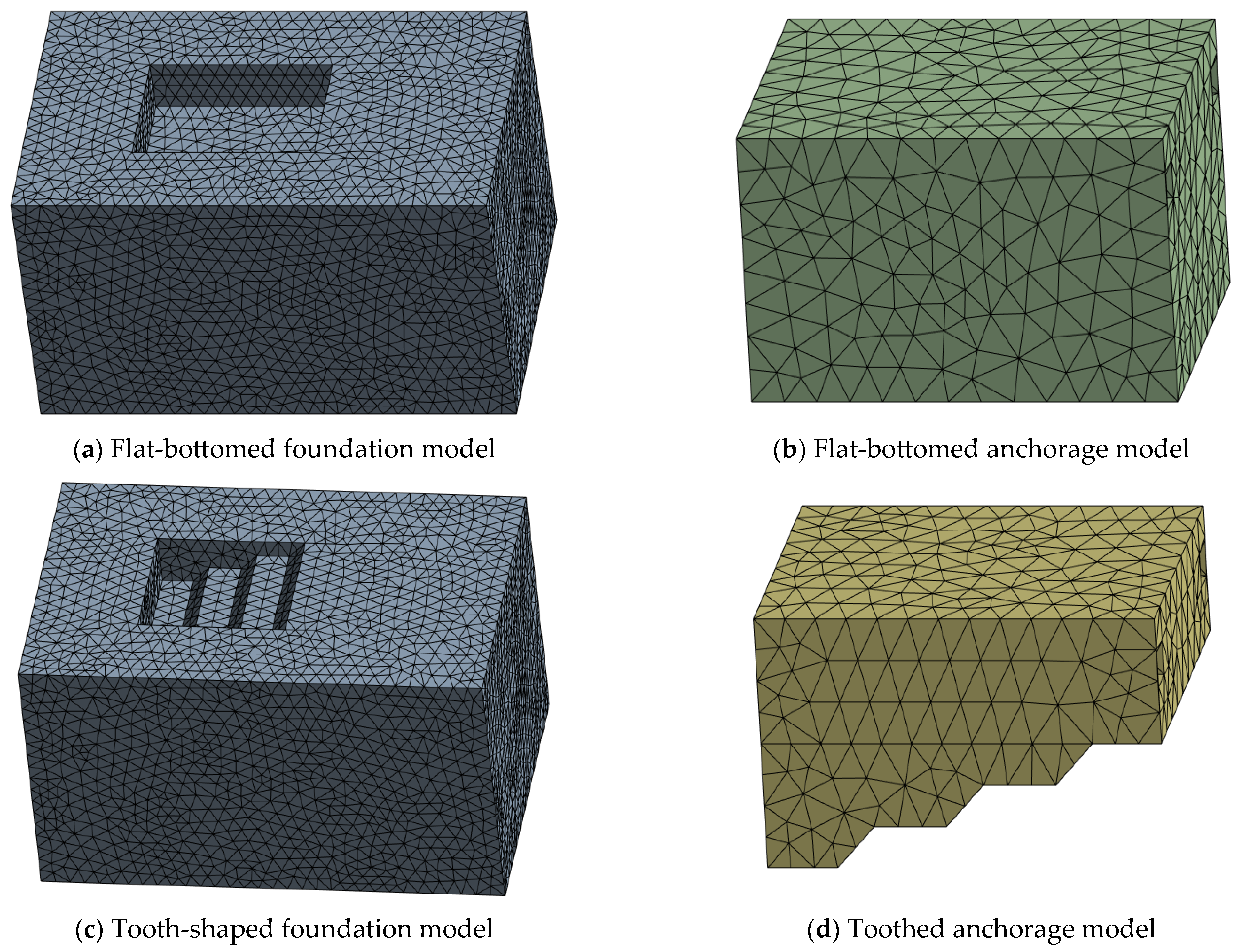
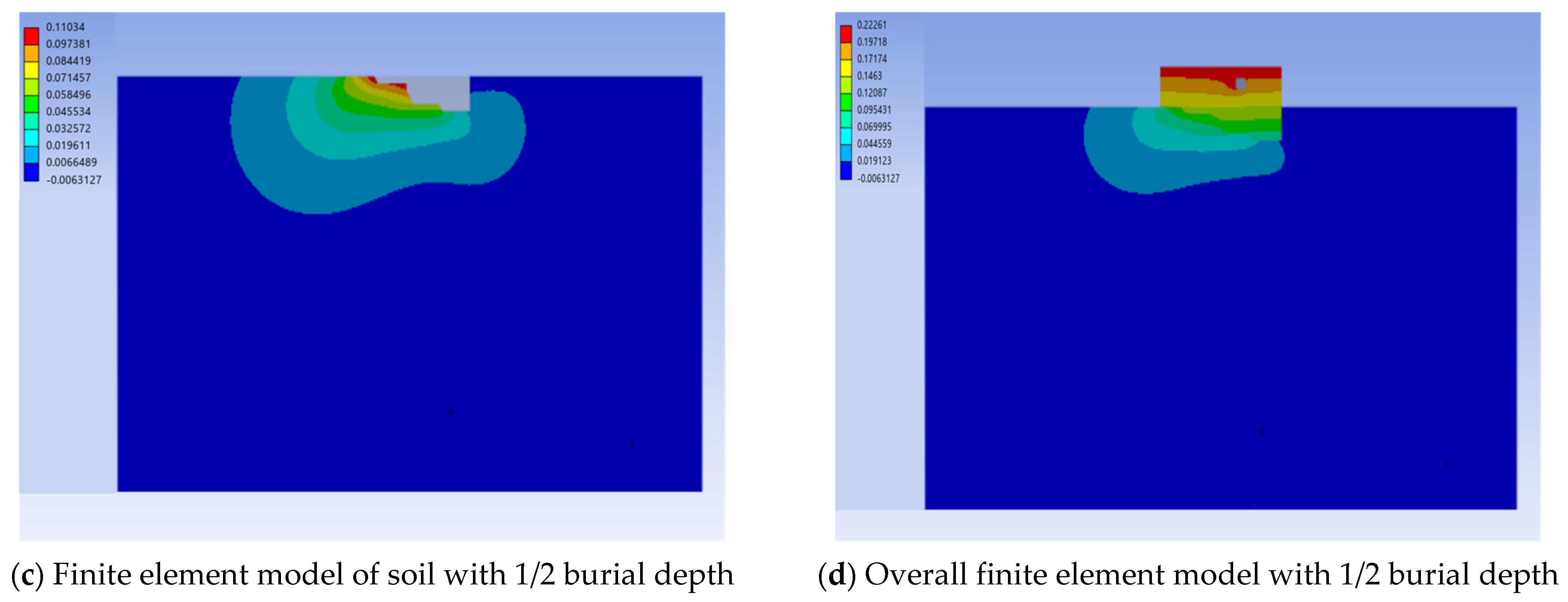
In the study of the bearing capacity of the anchor–foundation system, the reliability of numerical simulation depends on the effective calibration of the model parameters. This study calibrated the anchor–foundation model using test data from four typical working conditions (1/2 burial depth of flat-bottomed anchor, 1/4 burial depth of flat-bottomed anchor, 1/2 burial depth of toothed anchor, and 1/4 burial depth of toothed anchor). The calibration model is shown in Figure 8.
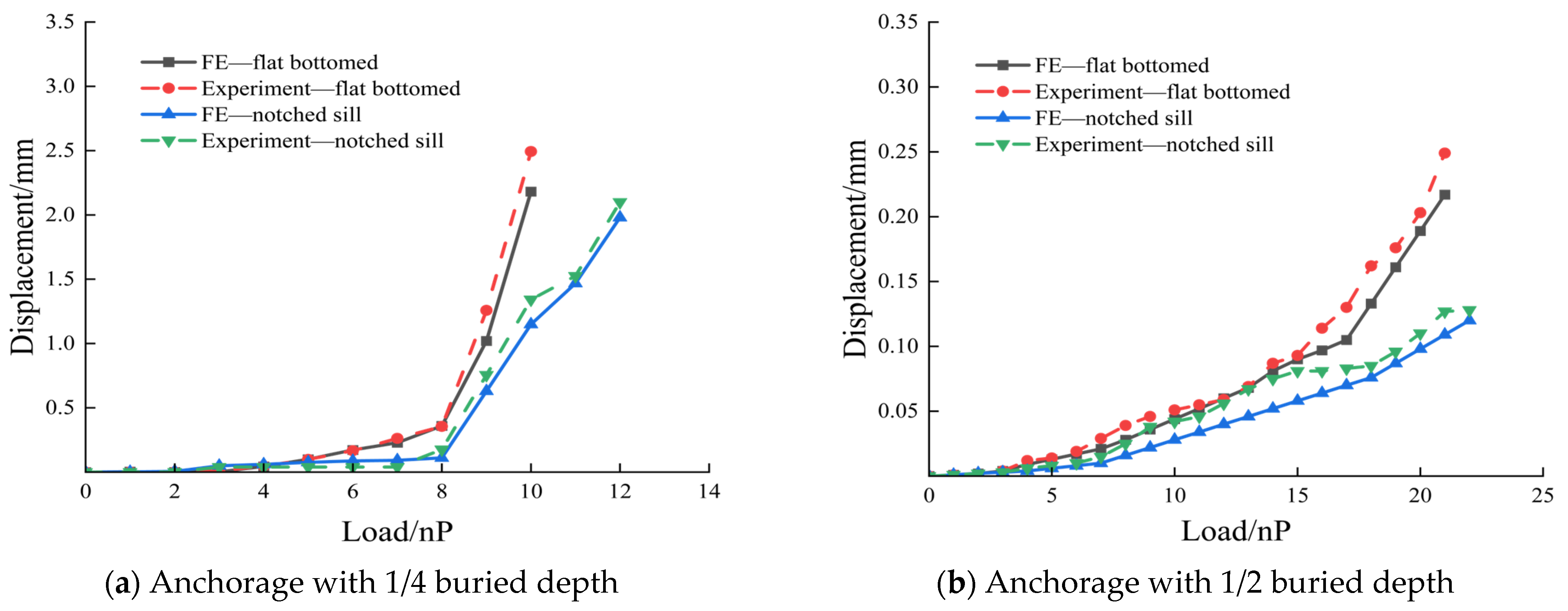
Model tests were conducted on the contact surfaces of flat-bottomed and toothed slewing cable anchorage with soil and rock masses under horizontal loads, and numerical simulation comparative analysis was performed. Figure 9 shows that under loads of 1P to 7P, the horizontal displacement values of the anchorages at 1/4 burial depth are relatively close to the experimental and numerical simulation results. However, when the load continuously increases beyond the anchorage’s ultimate bearing capacity, the horizontal displacement of the anchorage increases rapidly, and the numerical simulation results show that the horizontal displacement value is smaller than the experimental value. As shown in Figure 9, the numerical prediction results agree well with the experimental data in both the elastic and plastic yielding stages. Analysis indicates that for the toothed slewing cable anchorage device with a 1/2 burial depth, in the initial elastic stage (1P–10P), the maximum horizontal displacements in the experimental and numerical results are 0.044 mm and 0.046 mm, respectively, with a maximum error of 4.6%. As the system enters the plastic yielding stage (10P–17P), the error increases slightly, with the maximum horizontal displacements in the experimental and numerical results being 0.105 mm and 0.114 mm, respectively, with a maximum error within 8.57%. When the load reached 18P, overturning failure began to occur, and the deviation between the simulation results and the experimental results was approximately 10.06%. This systematic evaluation demonstrates that the established finite element model can accurately characterize the structural performance and failure modes of the slewing cable anchorage device throughout the entire load history. This deviation stems from the systematic differences between the idealized numerical environment and actual physical experimental conditions. Specifically, the finite element model employs continuous constitutive relations, simplifying particle-level interactions and potential localized cracking in similar base materials. Furthermore, the boundary conditions in the laboratory test chamber may include slight wall interference and frictional constraints, which cannot be fully simulated in the numerical model using ideal fixed or sliding boundaries.
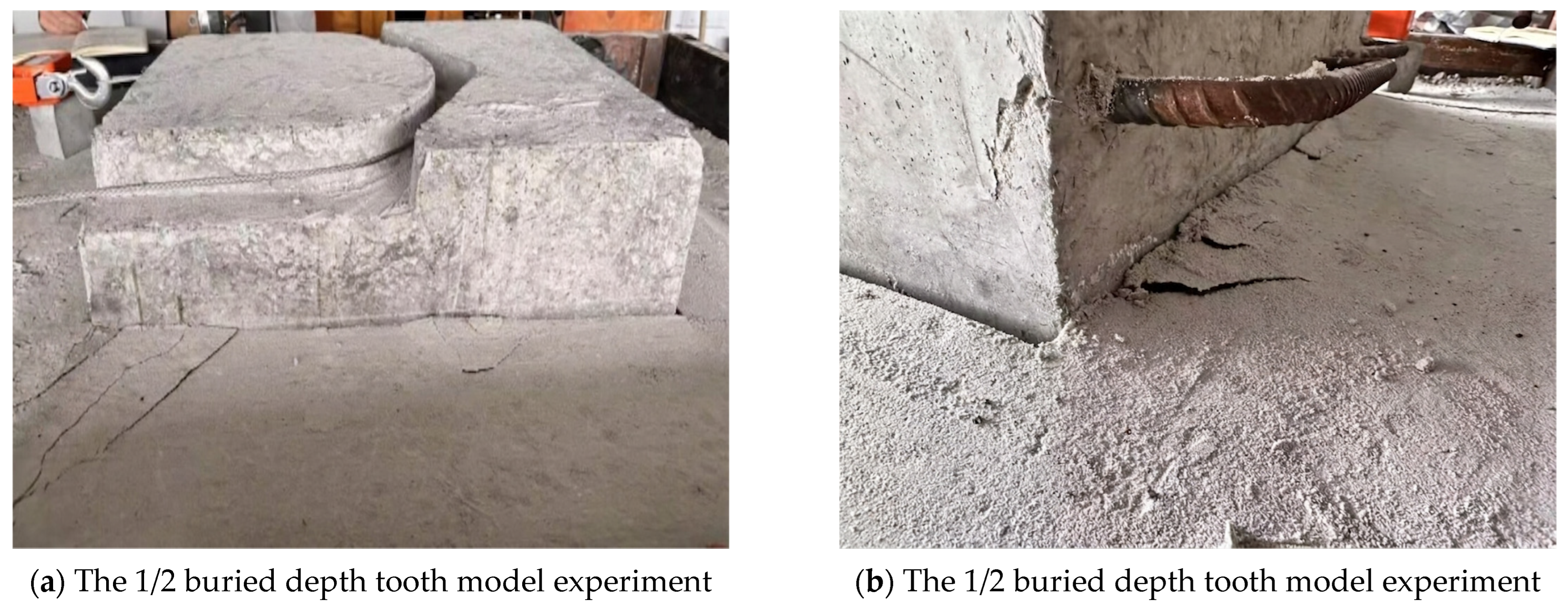
To further verify the accuracy of the numerical model in capturing the physical failure process, Figure 10 shows a comparison of failure modes between the model test and the finite element simulation. The test results show that upon loading to failure, a significant shear slip surface forms in the rock mass in front of the toothed block, accompanied by overturning failure of the anchored structure. This physical phenomenon is highly consistent with the distribution of the plastic zone and the displacement vector field in the finite element model. The consistency between the overall response and the local failure modes confirms that the established finite element model can effectively characterize the structure–soil interaction mechanism of the gyratory cable anchorage.
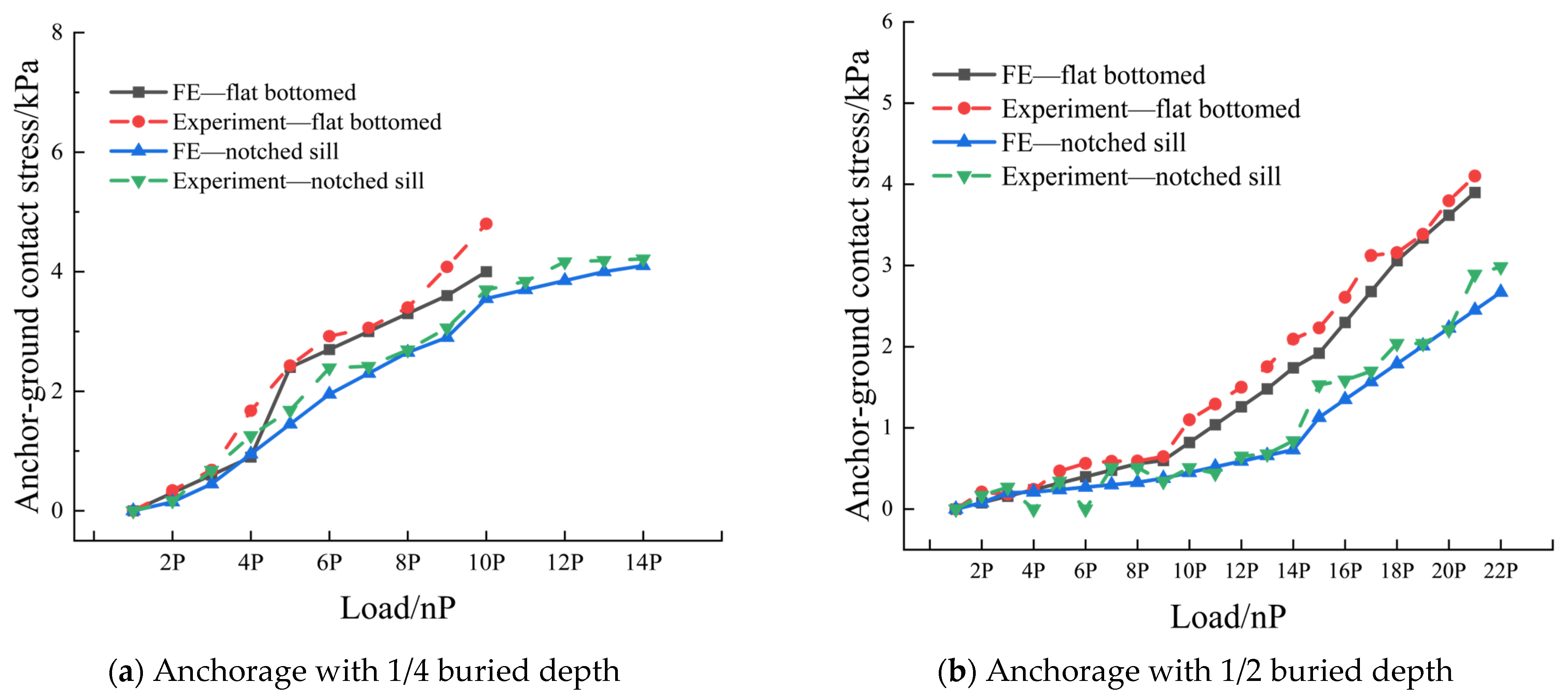
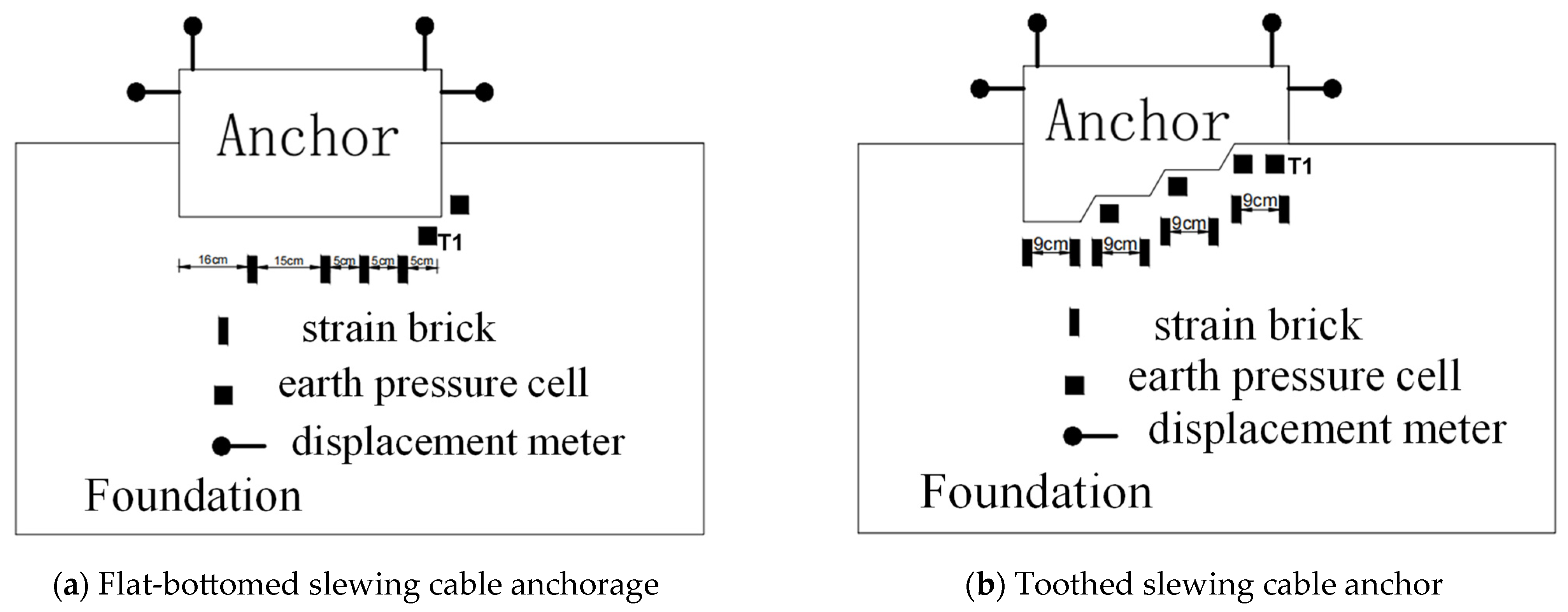
Earth pressure cells were arranged at the bottom of the anchorage, as shown in Figure 11. By comparing and analyzing the contact pressure at the front position of flat-bottomed and toothed slewing cable anchorage under different burial depths (T1 is the vertical contact pressure measurement point between the bottom of the anchorage’s front toe and the foundation), Figure 12 shows that the contact pressure between the flat-bottomed and toothed slewing cable anchorage and the front foundation increases with the increase in the main cable tension. At 1/2 burial depth, the contact stress results from experiments and numerical calculations are relatively consistent. The vertical contact pressure between the flat-bottomed slewing cable anchorage and the front toe exhibits a significant lag, only appearing when the load increases to a certain extent. The vertical contact pressure at the bottom of the toothed section of the toothed slewing cable anchorage continuously increases with the increase in the main cable tension, showing a clear interaction relationship. The experimental results and numerical simulation results are in good agreement. Therefore, the numerical simulation method used in this paper is feasible.
The effectiveness of the proposed method was validated by comparing experimental data from the 1/100 scale model with a prototype-calibrated numerical model. Despite the geometric scale being reduced, scale effects were effectively controlled through the use of precisely calibrated similar materials and a multi-scale numerical refinement strategy. The consistency in horizontal displacement trends—where the error remained within 4.6% in the elastic stage and 10.06% under ultimate loading—indicates that the scaled model reliably captures the system’s behavior. Furthermore, the physical failure phenomenon observed in the laboratory was highly consistent with the distribution of the plastic zone in the finite element model. Such high agreement between the overall response and local failure modes confirms that the identified joint bearing mechanism and ultimate stability predictions are scale-independent and representative of full-scale slewing cable anchorage engineering.

5. Simulation Results and Analysis

5.1. Anchorage Displacement Behavior

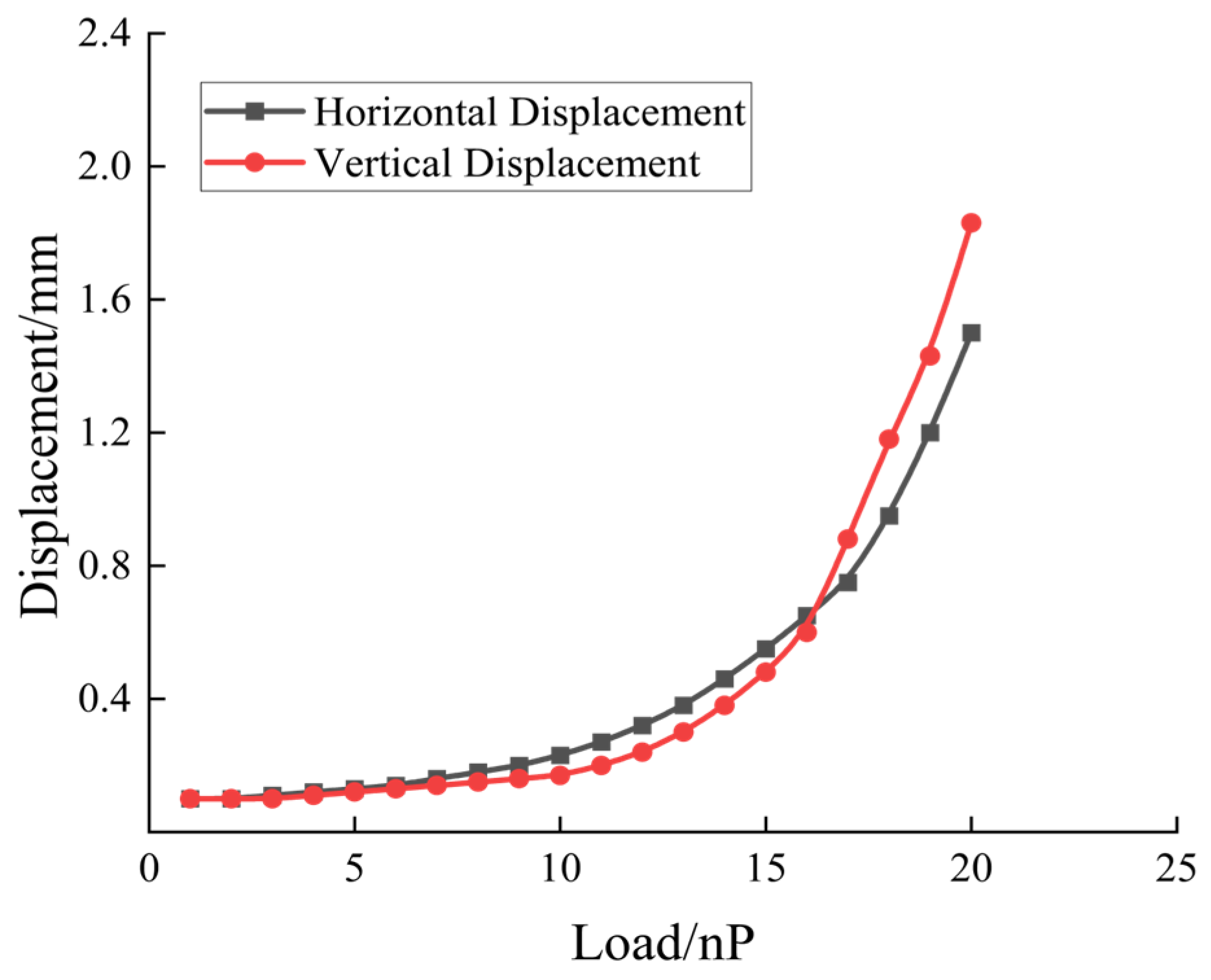
Figure 13 shows the curves of horizontal and vertical displacement of the anchorage point as a function of cable force. As shown, the horizontal and vertical displacement of the anchorage point exhibits a distinct three-stage characteristic as a function of cable force: Stage 1: Elastic stage (1P–10P). The system reaches maximum horizontal and vertical displacement values of 0.22 mm and 0.168 mm, respectively. In this stage, the load–displacement relationship is linear, the rock mass remains elastic, and no yielding occurs. Stage 2: Plastic yielding stage (10P–17P). This stage begins when the horizontal displacement exceeds the elastic limit, reaching 0.84 mm at 17P. It is characterized by the plastic zone expanding upwards from the bottom to the toothed portion. Stage 3: the fully plastic stage (17P–20P). This stage begins when the vertical displacement rate increases significantly, exceeding 0.96 mm. At the threshold (17P), the local plastic zones within the toothed portion become fully connected, leading to a rapid loss of stability. Upon loading to 18P, the anchorage structure begins to overturn and fail. This value represents the critical point of the fully plastic stage, at which point the anchorage–foundation system can no longer maintain a stable equilibrium due to the complete shearing of the rock mass between the toothed bases.

5.2. Shear Behavior Slewing Cable Anchorage

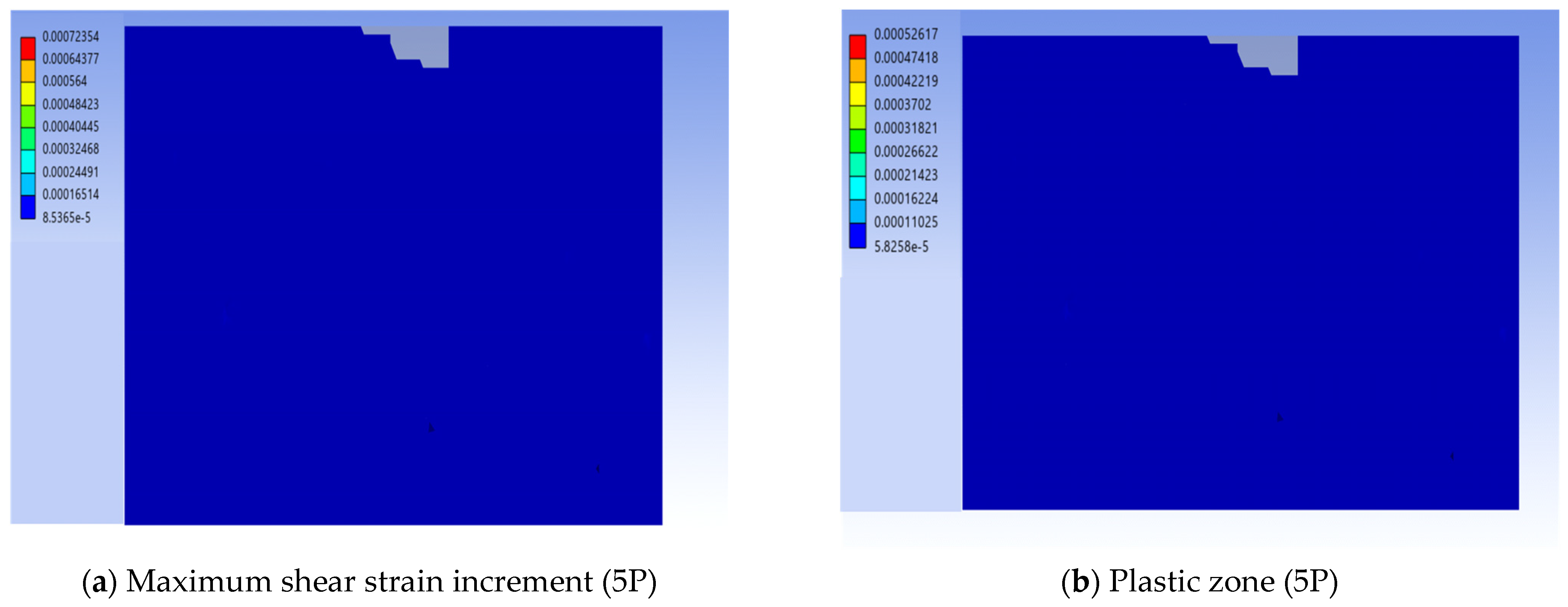
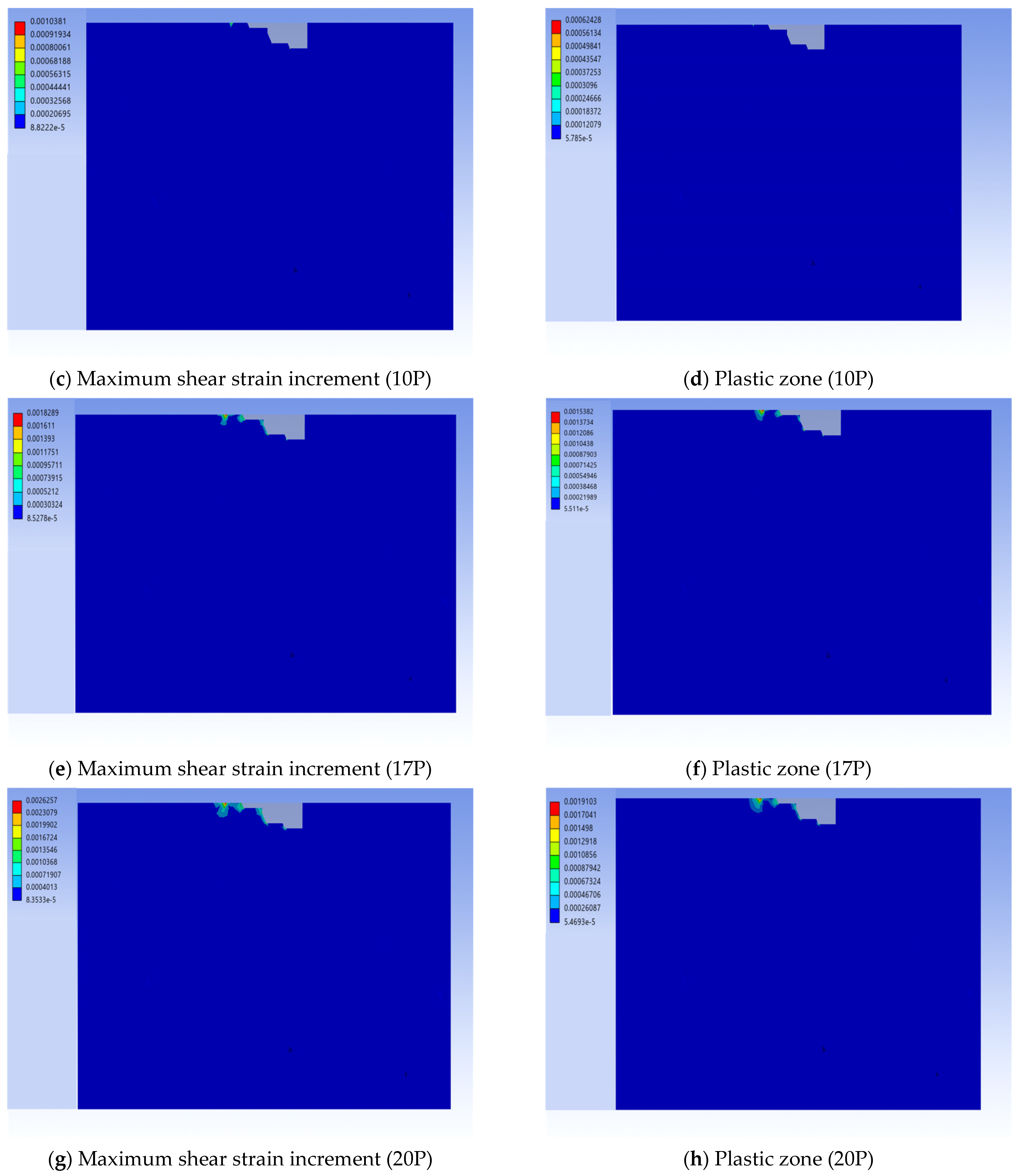
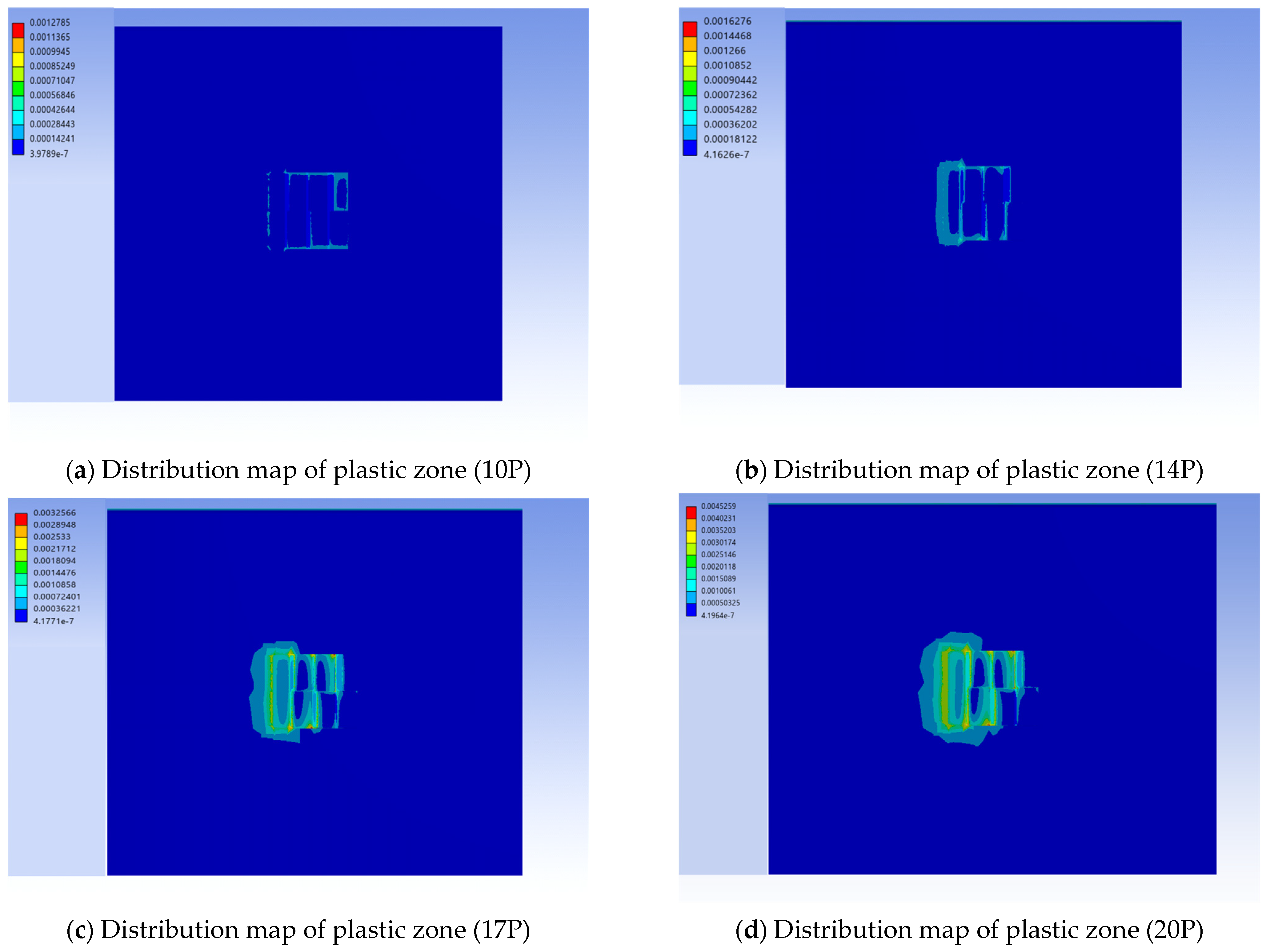
In order to understand the shear behavior and characteristics of the rock mass clamped by the front teeth of the anchor block during the failure of the anchor block foundation system, this study analyzed the evolution of the maximum shear strain increment and the plastic zone in the rock mass clamped by the teeth under design cable loads of varying multiples. The calculation results for typical load multiples are shown in Figure 14. During the initial loading (1P–10P), the maximum shear strain increment is mainly concentrated at the first-stage tooth of the slewing cable anchor and the corner of the anchor foundation tooth. As the load further increases, the stress concentration at the first-stage tooth of the slewing cable anchor becomes more and more obvious. When the load further increases to 17P, the location of the maximum shear strain increment shifts to the third- and fourth-stage teeth. Finally, when the load increases to 20P, the location of the maximum shear strain increment shifts to the first-stage tooth of the slewing cable anchor. As shown in Figure 14, no plastic zone was generated in the soil and rock during the initial loading stage. As the cable force increased to 10P, the plastic zone first appeared at the junction of the anchor and the base and gradually expanded upward with the increase in the cable force. When the cable force reached 17P, the plastic zone was completely connected, and a plastic zone appeared at the toothed part. At this time, it could still withstand the load. When the load reaches 20P, the plastic zone develops further, and the plastic zone of the slewing cable anchor tooth section becomes completely connected, making it impossible to continue loading.

5.3. Composite Bearing Mechanism of the Anchorage–Foundation System

To reveal the sequence of bearing capacity of each layer of toothed rock mass during the joint bearing process of the anchored foundation system, the figure shows the distribution of the plastic zone of the foundation under different multiples of design cable force load. As shown in Figure 15, the plastic zone of the foundation rock mass first develops from the bottom of the anchorage and gradually expands upwards. Finally, when the cable force increases to 20P, the plastic zone of the rock mass clamped in front of the anchorage is completely closed. This also indicates that the load transfer sequence of the foundation rock mass is from the bottom toothed segment upwards.
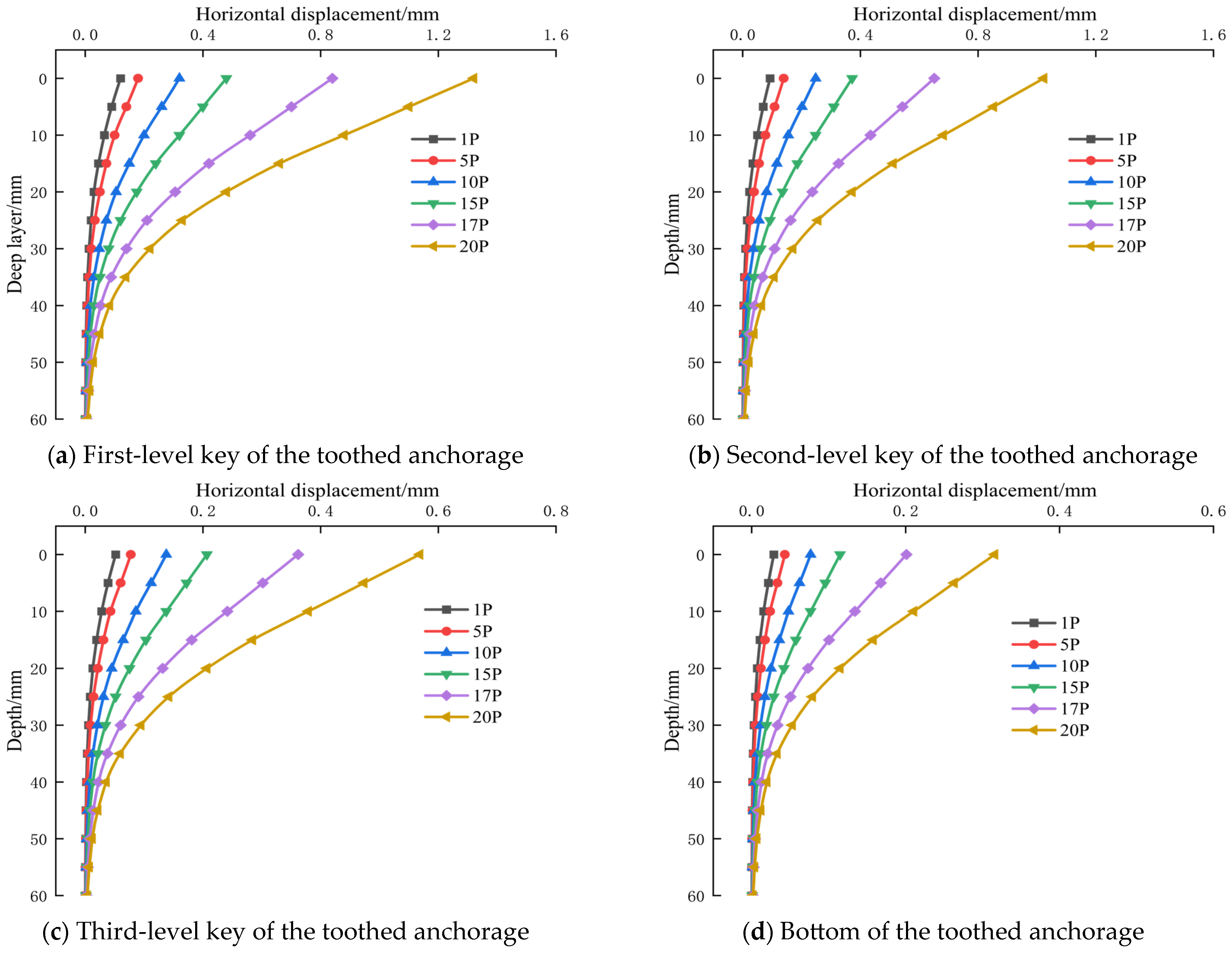
Furthermore, the variation law of deep horizontal displacement of the rock mass clamped by the anchor teeth with loading was analyzed to reveal the influence range of the joint bearing capacity of the anchor foundation. As shown in Figure 16, the deep horizontal displacement of the bedrock of the anchor base teeth is the smallest, while the deep horizontal displacement of the bedrock of the first-order teeth is the largest. Moreover, from the anchor base to the first-order teeth, the deep horizontal displacement of the bedrock at the bottom of each order of teeth gradually increases. When the cable force is increased to 20P, the corresponding maximum horizontal displacements from the bedrock of the bottom teeth of the anchor foundation to the bedrock of the first-order teeth are 0.31 mm, 0.56 mm, 1.02 mm, and 1.42 mm, respectively. At the initial loading, the maximum horizontal displacement is at the bedrock of the first-order teeth and at the corner. As the load is increased to 17P, the maximum horizontal displacement is at the corner of the second- and third-order teeth. When the load is increased to 20P, the maximum horizontal displacement shifts to the first-order teeth.
As shown in Figure 16, in the initial loading stage (0P–10P), the maximum influence depth is approximately 30 m below the bottom of the anchor foundation and the bottom of each level of retaining wall teeth. When the load is further increased to 17P, the maximum influence depth is approximately 40 m below the bottom of the first- and second-level retaining walls, while the influence is smaller at the third level and 40 m below the bottom of the anchor. Finally, when the load increases to 20P, the maximum influence depth is approximately 40 m below the anchor base and the bottom of each level of retaining wall teeth. Overall, within the 20P cable force load range, the deep deformation of the foundation rock mass remains relatively small, and no plastic deformation has occurred; the operation is within the elastic range.
Based on the above analysis of the anchor displacement characteristics, the shear bearing characteristics of the rock mass clamped by the toothed retainer, and the evolution law of the plastic zone of the basement, the joint bearing mechanism of the anchor–foundation system can be summarized as follows: The anchor is displaced under the action of cable force load, and then the basement rock mass is mobilized to jointly bear the load through the base friction and the toothed retainer clamping effect. The rock mass clamped by the toothed retainer in front of the anchor provides passive resistance through shear resistance. As the shear load increases, the plastic yield range gradually expands upward from the basement. Finally, when the plastic zone is completely connected, it loses its bearing capacity. At this time, the anchor–foundation system fails. That is, the bearing capacity of the anchor base friction and the toothed retainer clamping effect run through the entire stress process of the anchor–foundation system.

5.4. Stability Analysis of Anchorage Foundation System

In the initial stage of bearing capacity, the base can be considered to be under uniform stress, with friction being the dominant factor.
τ a k = σ n 1 × tan φ 1 × S 1 + σ n 2 × tan φ 2 × S 2 ,
In the formula, σ n 1 is the normal stress of the toothed sill base; σ n 2 is the normal stress of the anchor body base; φ is the friction angle between the concrete and rock foundation; and S 1 and S 2 are the areas of the toothed sill base and the anchor body base, respectively.
The formula for estimating the ultimate horizontal force in reference [33,34,35,36,37,38], considering both the base friction effect and the shear bearing characteristics of the rock mass clamped by the toothed ledge, is as follows:
τ a k = ( σ n 1 × tan φ 1 + c ) × S 1 + σ n 2 × tan φ 2 × S 2 ,
In the formula, c represents the cohesion of the rock mass held together by the toothed ridge.
For the Jiyuan shore slewing cable anchorage, the concrete volume is 82,442 m3, the concrete density is considered to be 25.0 kN/m3, the steel reinforcement volume is 3799.31 t, the single-sided cable force design value is P = 230,000 kN, and the friction angle is 35°. The horizontal projected area of the anchorage is 2767.5 m2, and the friction area of the anchorage tooth base is 2582.25 m2. Substituting into the relevant Formulas (1) and (2), we can obtain the ultimate bearing capacity considering only friction bearing and the ultimate bearing capacity considering the clamping effect. Compared with the anchorage structure under the most unfavorable load, it yields a safety factor of 6.84 for the anchorage structure considering only friction bearing; when considering both clamping and friction effects, the safety factor of the anchorage structure is 16.59. This closely matches the critical load (17P) at which the system enters the fully plastic stage in the finite element simulation, effectively predicting the physical threshold for the anchorage structure to transition from local plasticity to overall instability. Further simulation analysis shows that after entering the fully plastic stage, the anchorage–foundation system still possesses a certain post-plastic bearing capacity until the load reaches 18P, at which point complete failure occurs due to the complete penetration of the plastic zone in the rock mass between the toothed sections and structural instability.

5.5. Discussion

The bottom-up development pattern of the plastic zone observed in this study significantly differs from classical geomechanical failure theories. In classical mechanisms, such as General Shear Failure, a continuous slip surface typically originates at the foundation edges and extends outward and upward to the ground surface. However, the stepped toothed anchorage fundamentally alters the stress transfer path: the plastic zone initiates at the foundation base due to the immediate mobilization of base friction and subsequently extends upward as each toothed sill sequentially engages through anchorage displacement. This progressive shear mobilization ensures that the rock mass confined between the teeth is fully utilized before global failure occurs. Consequently, the failure mode is characterized by the interconnectivity of localized plastic regions within the toothed sections, rather than a monolithic rupture surface, effectively demonstrating how the toothed geometry optimizes bearing capacity by redirecting the conventional failure trajectory.
However, certain limitations of this study must be acknowledged. First, although the 1/100 scale physical model follows strict similarity laws, it utilizes simplified similar materials that may not fully capture the complex anisotropic fracturing behavior of in situ limestone under high-stress conditions. Second, the finite element model assumes a continuous Mohr–Coulomb medium, which idealizes the discrete rock mass discontinuities prevalent in real-world scenarios. Despite these idealized assumptions, the high consistency between the experimental data and the prototype-calibrated numerical results confirms that scale effects and boundary conditions were effectively controlled, validating the reliability of the identified joint bearing mechanism.

6. Conclusions

(1)
Load–displacement response characteristics: The horizontal and vertical displacements of the anchorage points exhibit a distinct three-stage characteristic: in the elastic stage (1P–10P), the load–displacement relationship is linear; in the plastic yielding stage (10P–17P), the plastic zone extends from the bottom to the toothed abutment; after 17P, it enters the fully plastic stage, with the displacement rate increasing sharply, and overturning failure begins at 18P.
(2)
The toothed sill mobilization mechanism: The synergistic bearing capacity of the back-cable anchorage exhibits a clear temporal sequence. Initially, it mainly relies on the base friction bearing capacity; as the cable force increases, the toothed sill effect gradually becomes dominant. The mobilization sequence of the rock mass bearing capacity strictly follows the principle of “from the base upwards,” triggering each level of the toothed sill. The rock mass in front of each level of the toothed sill balances the enormous horizontal cable force by providing passive shear resistance.
(3)
Evolution and Failure Mode of the Plastic Zone: The plastic zone first forms at the bottom corner where the anchorage contacts the foundation and extends upwards with increasing load, which differs from the shear plane extending to the ground surface in classical foundation failure theory. The final failure mode manifests as shear failure triggered by the penetration of the local plastic zone between the rock masses and the anchorage structure, as well as the overall rigid overturning of the anchorage structure.
(4)
Stability analysis considering the base friction and rock-socketing effect of the anchorage structure. Theoretical calculations show that the safety factor (16.59) considering the rock-socketing effect is 2.4 times higher when considering only friction (6.84). This theoretical prediction is in high agreement with the critical point (17P) at which the system enters the fully plastic stage in the numerical simulation, verifying the accuracy of the finite element results.
(5)
The stability of the slewing cable anchorage stems from the combined effects of base friction, the clamping force of the toothed retaining wall, and the shear strength of the rock mass. This special geometric design of the toothed retaining wall alters the traditional stress transmission path, forcing the rock mass to undergo more thorough shearing before overall instability occurs, thereby significantly reducing the anchorage volume while achieving extremely high bearing capacity and safety reserve.

Author Contributions

Conceptualization, Y.Z. and D.G.; Formal analysis, Y.L. and K.D.; Investigation, Y.Z. and Y.L.; Data curation, Y.L.; Writing—original draft, Y.L.; Supervision, Y.Z. and D.G. All authors have read and agreed to the published version of the manuscript.

Funding

This research received no external funding.

Data Availability Statement

The original contributions presented in this study are included in the article. Further inquiries can be directed to the corresponding author.

Conflicts of Interest

Author Yu Zhu was employed by the company CCCC Second Highway Consultants Co., Ltd. The remaining authors declare that the research was conducted in the absence of any commercial or financial relationships that could be construed as a potential conflict of interest.

References

  1. Yan, G.M. Modern Suspension Bridge; People’s Communications Press: Beijing, China, 2002. [Google Scholar]
  2. Kondoh, M.; Okuda, M.; Kawaguchi, K. Design method of a hanger system for long-span suspension bridge. J. Bridge Eng. 2001, 6, 176–182. [Google Scholar] [CrossRef]
  3. Zhai, X.L.; Qing, Z.; Cheng, Q.L. Study on Wind-resistance Performance of Steel Truss Girder Suspension Bridges in Mountainous Canyon. J. Highw. Transp. Res. Dev. 2020, 37, 56–62. [Google Scholar]
  4. Feng, Y.C.; Chen, Y.T.; Zhang, X.K. Comparison and Selection of Bridge Site and Bridge Type for Jiyang Yellow River Highway-railway Combined Super Major Bridge. Railw. Stand. Des. 2023, 67, 75. [Google Scholar]
  5. Han, X.Y.; Liu, X.R.; Li, D.L.; Tu, Y.; Deng, Z.; Liu, D.; Wu, X. Model test on the bearing behaviors of the tunnel-type anchorage in soft rock with underlying weak interlayers. Bull. Eng. Geol. Environ. 2020, 79, 1023–1040. [Google Scholar] [CrossRef]
  6. Han, X.Y.; Liu, X.R.; Du, L.B.; Deng, Z.; Zhou, X.; Xiao, Y.; Zhang, G.; Lai, G. Physical model test on the mechanical behavior and progressive failure of tunnel-type anchorages. Int. J. Rock Mech. Min. Sci. 2023, 169, 105423. [Google Scholar] [CrossRef]
  7. Jiang, N.; Wang, D.; Feng, J.; Zhang, S.-L.; Huang, L. Bearing mechanism of a tunnel-type anchorage in a railway suspension bridge. J. Mt. Sci. 2021, 18, 2143–2158. [Google Scholar] [CrossRef]
  8. Han, X.Y.; Liu, X.R.; Abi, E.; Tu, Y.-L.; Xu, B.; Zhou, X.-H.; Deng, Z.-Y.; Wang, Z.-H. Effects of anti-pull ties on the bearing behaviors of shallow tunnel-type anchorages in soft rock. J. Mt. Sci. 2023, 20, 2708–2730. [Google Scholar] [CrossRef]
  9. Li, J.P.; Zhang, Z.X.; Huang, H.W. Research on similarity model test of anchorage of Qingfeng Suspension Bridge in Ningbo. Tongji Daxue Xuebao J. Tongji Univ. (Nat. Sci.) 2005, 33, 1011–1016. [Google Scholar]
  10. Dong, M.; Shen, Z.; Geng, X.; Zhang, L.; Tang, A.; Zhang, H. Study on Deformation–Failure Behavior and Bearing Mechanism of Tunnel-Type Anchorage for Suspension Bridges Based on Physical Model Tests. Appl. Sci. 2025, 15, 9871. [Google Scholar] [CrossRef]
  11. Yin, X.T.; Yan, F.; Zhou, L. Joint bearing mechanism of structure and foundation for gravity anchor block of suspension bridge. J. Traffic Transp. Eng. 2017, 17, 1–11. [Google Scholar]
  12. Wang, C.T.; Han, H.J.; Wang, H.; Zhang, X.; Liu, X.; Leng, X.; Qin, W.; Fang, K. Load-bearing behaviors of the composite gravity-type anchorage: Insights from physical model and numerical tests. Eng. Fail. Anal. 2025, 167, 108959. [Google Scholar] [CrossRef]
  13. Han, H.J.; Liu, X.H.; Wu, W.T. Study on the Bearing Mechanism and Stability of the Gravity Anchorage of Zangkejiang River Super Large Bridge. Chin. J. Undergr. Space Eng. 2024, 20, 316–323+349. [Google Scholar] [CrossRef]
  14. Shen, Z.; Jia, J.; Jiang, N.; Zhu, B.; Sun, W. Field-scale experiment on deformation characteristics and bearing capacity of tunnel-type anchorage of suspension bridge. Energies 2022, 15, 4772. [Google Scholar] [CrossRef]
  15. Li, S.; Zhu, X.W.; Li, H.L. Model test and numerical simulation analysis on failure mechanism of gravity anchor under lateral load. China Offshore Oil Gas 2018, 30, 152–157. [Google Scholar]
  16. Liu, Y.; Feng, J.; Li, X.G. Bearing mechanism of new type combined gravity anchor of suspension bridge. Chin. J. Undergr. Space Eng. 2022, 18, 187–193. [Google Scholar]
  17. Wu, W.T.; Li, Q.; Xu, J. Anti-slide Mechanism of the Notched Sill Gravity Anchorage Based on Model Test. Sci. Technol. Eng. 2024, 24, 2927–2936. [Google Scholar]
  18. Xiong, W.; Jiang, C.; Wang, T.; Wang, R.; Zhou, X. Safety-Margin Design for Gravity-Type Anchorage of Suspension Bridges over 2,000 m Long Based on Target Reliability. J. Bridge Eng. 2024, 29, 04024003. [Google Scholar] [CrossRef]
  19. Zhang, P.Y.; Dong, H.J.; Le, C.H. Finite element analysis of the horizontal load-bearing characteristics of offshore wind turbine rock-socketed piles. J. Harbin Eng. Univ. 2021, 42, 132–138. [Google Scholar]
  20. Wang, Z.C.; Yan, Y.L.; Xu, G.P. Overall design of main bridge of Qipanzhou Changjiang River Highway Bridge. Bridge Constr. 2022, 52, 106–112. [Google Scholar]
  21. Bie, Y.S.; Shu, S.L.; Wan, T.B. North anchorage design of Oujiang North Estuary Bridge in Wenzhou. Bridge Constr. 2022, 52, 97–103. [Google Scholar]
  22. Xue, Y.L.; He, B.W.; Lin, Y. Bridge Type Selection for Yellow River Three Gorges Bridge. Bridge Constr. 2023, 53, 134–139. [Google Scholar] [CrossRef]
  23. Chen, Y.; Zhang, J.; Wang, X. Evaluation method for ultimate bearing capacity of lightweight covered rotary cable ground anchorage. J. Chang. Univ. (Nat. Sci. Ed.) 2026, 1, 142–152. [Google Scholar]
  24. Xiong, X.R.; Tang, H.; Liao, M.J. Laboratory model test on” wedge-effect” of pullout capacity of tunnel-type anchorage. Rock Soil Mech. 2018, 39, 181–190. [Google Scholar]
  25. Wang, X.; Zhong, X.; Ren, W.; Chen, Y.; Sun, Y.; Qiu, Y. A deduction model for combined bearing capacity of a looped cable anchorage-foundation in suspension bridges considering in situ stress. Structures 2026, 87, 111522. [Google Scholar] [CrossRef]
  26. Fang, K.; Jia, S.; Tang, H.; Zhou, R.; Kong, Z.; Fu, Y.; An, P.; Zhang, B.; Wu, Q. Arching effect in slopes under excavation: Classification and features. Eng. Geol. 2024, 337, 107563. [Google Scholar] [CrossRef]
  27. Wang, C.; Wang, H.; Qin, W.; Wei, S.; Tian, H.; Fang, K. Behaviour of pile-anchor reinforced landslides under varying water level, rainfall, and thrust load: Insight from physical modelling. Eng. Geol. 2023, 325, 107293. [Google Scholar] [CrossRef]
  28. Han, Y.; Liu, X.; Liu, M.; Xu, B.; Deng, Z.; Zhou, X.; Zhang, G.; Lai, G. The effects of interface roughness on the pull-out performance and failure characteristics of tunnel-type anchorages in soft rock. Rock Mech. Rock Eng. 2023, 56, 4379–4404. [Google Scholar] [CrossRef]
  29. Tovar-Valencia, R.D.; Galvis-Castro, A.; Salgado, R.; Ankenman, B.; Karr, A.F. Effect of surface roughness on the shaft resistance of displacement model piles in sand. J. Geotech. Geoenviron. Eng. 2018, 144, 04017120. [Google Scholar] [CrossRef]
  30. Yin, J.Z.; Guo, C.; Zhang, X.M. Model Test on Bearing Capacity of Gravity Anchor Foundation Considering Rock Socketed Effect. J. China Foreign Highw. 2025, 45, 174–180. [Google Scholar]
  31. Yin, Q.; Wei, L.; Li, X.; Gong, W.; Yang, X.; Dai, G.; Peng, S. Finite Element Analysis of Horizontal Bearing Capacity for the Composite Diaphragm Wall Anchor Foundation. Buildings 2025, 15, 251. [Google Scholar] [CrossRef]
  32. Dahal, B.K.; Regmi, S.; Paudyal, K.; Dahal, D.; Kc, D. Enhancing deep excavation optimization: Selection of an appropriate constitutive model. CivilEng 2024, 5, 785–800. [Google Scholar] [CrossRef]
  33. Bai, Y.D.; Wang, S.; Zhang, Y.H. Load sharing ratio of gravity anchor pier foundation and anchor block of Xiushan bridge. J. Chang. River Sci. Res. Inst. 2018, 35, 176. [Google Scholar]
  34. Yin, X.T.; Yan, F.; Zhou, L. Explorationonthe Horizontal Limit Bearing Capacity Formula of Gravity Anchorage. J. Railw. Eng. Soc. 2017, 34, 41–46. [Google Scholar]
  35. Yuxiang, D.; Xiaodong, F.; Qian, S.; Dongge, C.H.N. Study on the bearing mechanism of gravity anchorage-foundation system of suspension bridges. J. Eng. Geol. 2025, 33, 758–771. [Google Scholar]
  36. Liu, X.; Shao, G.; Huang, J.; Su, J.; Xu, H. Stability analysis of gravity anchorage: A case study of Taizhou Yangtze River Bridge. Eur. J. Environ. Civ. Eng. 2021, 25, 1002–1024. [Google Scholar] [CrossRef]
  37. Xie, Z.; Qian, Z.; Zhang, Y.; Xie, Q.; Duan, J. Numerical study on bearing performance of rock socketed pile anchored by inclined anchors under uplift and horizontal combined load. Sci. Rep. 2025, 15, 29987. [Google Scholar] [CrossRef] [PubMed]
  38. Zhou, Z.; Chen, C.; Wang, L.; Wang, K. Stability analysis of the gravity anchorage of a suspension bridge based on large-scale field tests. Stavební Obz.-Civ. Eng. J. 2021, 30, 282–297. [Google Scholar] [CrossRef]
Figure 1. Yellow River Three Gorges Bridge.
Buildings 16 01945 g001
Figure 2. Model experiment box.
Buildings 16 01945 g002
Figure 3. Anchorage—basic model.
Buildings 16 01945 g003
Figure 4. Two types of slewing cable anchorage.
Buildings 16 01945 g004
Figure 5. Applying load to the main cable of the slewing cable anchor.
Buildings 16 01945 g005
Figure 6. Slewing cable saddle system.
Buildings 16 01945 g006
Figure 7. Three-dimensional schematic model of the anchorage–foundation system.
Buildings 16 01945 g007
Figure 8. Anchorage–foundation calibration model.
Buildings 16 01945 g008
Figure 9. The relationship curve of load and horizontal displacement of anchorage.
Buildings 16 01945 g009
Figure 10. Comparison of failure modes in model experiments and simulations.
Buildings 16 01945 g010aBuildings 16 01945 g010b
Figure 11. Specific sensor deployment locations of anchorage.
Buildings 16 01945 g011
Figure 12. The relationship curve of contact stress and load.
Buildings 16 01945 g012
Figure 13. Load–displacement curves of slewing cable anchorage.
Buildings 16 01945 g013
Figure 14. The distribution map of maximum shear strain increment and plastic zone.
Buildings 16 01945 g014aBuildings 16 01945 g014b
Figure 15. The evolution of the distribution map of the plastic zone of the foundation rock mass with loading.
Buildings 16 01945 g015
Figure 16. Distribution curves of horizontal displacement in the deep layer of bedrock at the anchor base and bottom of the toothed anchorage.
Buildings 16 01945 g016
Table 1. Similarity ratio of each physical quantity.
Physical QuantityUnitSimilaritySimilarity Constants
Geometric length (L)m C L 100
Density ( ρ )kg/m3 C ρ 1
Severity γkN/m3 C γ 1
Displacement (δ)m C L 100
Stress (σ)Pa C ρ C L C γ 100
Strain (ε)/ C ε 1
Elastic modulus (E)Pa C ρ C L C γ 100
Cohesion (c)Pa C ρ C L C γ 100
Concentrated load (P)N C ρ C γ C L 3 1003
Table 2. Mechanical parameters of anchorage and foundation materials.
ObjectCompressive Strength
(MPa)
Cohesion
(kPa)
Friction
(◦)
Young’s Modulus (MPa)Poisson’s Ratio
Similar materials for foundations600.5736.823000.34
Anchor40//3 × 1040.18
Table 3. Physical and mechanical parameters of soil in the anchorage area.
Geotechnical GroupDensity
KN/m3
Compressive Strength
MPa
Deformation Modulus
GPa
Poisson’s RatioCohesion
MPa
Internal Friction AngleExpansion Angle
Strongly weathered dolomite25.067.30.80.350.328.8°/
Moderately weathered dolomite25.590.54.00.30.835°
Disclaimer/Publisher’s Note: The statements, opinions and data contained in all publications are solely those of the individual author(s) and contributor(s) and not of MDPI and/or the editor(s). MDPI and/or the editor(s) disclaim responsibility for any injury to people or property resulting from any ideas, methods, instructions or products referred to in the content.