


Abstract
This work contributes to reinforcing cork-based mortar, with the potential of developing a new eco-friendly lightweight mortar for specific structural applications. Thirteen lightweight mortars were produced by adding cork aggregates (CAs) at fractions of 0.30%, 0.60%, and 0.90% of mortar weight. For each level of CA content, three volume fractions of polyethylene fibers (PFs) were added: 0.25%, 0.50%, and 0.75%. The results indicate that lightening mortar with CA considerably reduces its workability, density, mechanical strengths, and thermal conductivity, as well as increasing its porosity. However, adding PFs to the matrix significantly improves the mortar’s flexural strength by up to 26% and reduces its cracking and brittleness. The 28-day compressive strengths of all mortars remain higher than 15 MPa and can be used in the production of structural elements, according to the RILEM recommendations. The thermal conductivity and dry density decreased, respectively, from 1.73 W/m·K and 2050 kg/m3 for the control mixture to 0.73 W/m·K and 1583 kg/m3 for mortar with 0.90% CA and 0.75% PF. The combination of up to 0.90% CA with 0.75% PF demonstrates satisfactory mechanical and thermal properties and is strongly recommended for use in construction across numerous types of mortar, such as screed mortar for repair and flooring.
1. Introduction
Lightweight mortars are characterized by low thermal conductivity and low bulk density, which helps improve the energy efficiency of buildings by slowing the flow of heat through the walls and thus reducing the need for indoor air conditioning in countries with hot climates [1,2,3]. As reported by the majority of researchers, the thermal conductivity of aggregates is a key factor influencing the conductive and insulating properties of cementitious materials [4,5]. Nevertheless, in the case of mortars, where aggregates constitute 75% of their volume, the produced porous structure has a greater impact on the resulting thermal conductivity [6]. Furthermore, to minimize the consumption of raw materials, stop greenhouse gas emissions, and thus prevent global warming, the current sustainable development program advocates both energy conservation and the adoption of materials with a low environmental impact. Industrial waste materials have been used as lightweight aggregate in a number of global research initiatives to develop novel thermal insulation systems for buildings and to satisfy environmental and economic demands [7,8,9,10,11].
Various industrial by-products [12,13,14], waste materials [15,16,17], and plant resources [18,19,20,21] are presently utilized as lightweight aggregates instead of conventional mineral aggregates in concrete, mortar, or screed applications to reduce their weight and improve their thermal and acoustic characteristics. Cork is among the most renewable plant resources available, serving as a lightweight material in the construction industry to enhance energy efficiency in buildings. It is a lightweight cellular material found in nature, extracted from the bark of cork trees, which predominantly thrive in the Mediterranean region [22]. Approximately 340,000 tonnes of cork are produced each year globally from around 22,000 square kilometers of cork forest [23]. Algeria ranks third among countries that have cork oak, covering an area of 410,000 hectares [24]. It is estimated that between 68,000 and 85,000 tonnes of cork are wasted annually [25]. Owing to its unique cellular structure and elevated gas content, cork exhibits low density, minimal heat conductivity, excellent sound absorption, and resistance to water. Recently, numerous research experiments have been carried out in various countries focusing on cementitious composites containing cork as lightweight aggregates [26,27,28]. According to more literature reviews, there is broad agreement that adding cork aggregates to concrete increases its thermal resistance while degrading its mechanical qualities [26,29,30,31,32]. Panesar and Shindman [22] investigated the impact of cork size and percentage (0–20%) instead of sand or stone on the properties of mortar and concrete. They found that the best mechanical and transport capabilities were obtained with finer cork sizes; nevertheless, high permeability values suggest that concrete–cork composites may be susceptible to poor durability performance. Thermal resistance was most affected by higher percentages of cork used to replace sand or stone. Tedjditi et al. [28] found that by replacing 25 to 100% of natural aggregates with virgin cork (VC) aggregates, the concrete’s porosity varied remarkably from 26 to 47%, and the thermal conductivity of concrete increased by 28–98% compared to control concrete. However, the concrete’s compressive and flexural strength values were only 0.48 and 0.72 MPa, respectively, when the totality of the mineral aggregates were replaced by cork aggregates. Menor et al. [30] investigated replacing 10%, 20%, 30%, and 40% of the natural aggregate with an equivalent volume of granulated cork with bark (GCB) of 3.2–5 mm particle sizes as lightweight aggregates to produce non-structural concrete blocks. Their results showed a decrease in consistency and fresh density with an increase in the air content of GCB-based concrete. However, the flexural and compression strength, modulus of elasticity, density, capillary water absorption, and thermal conductivity of hardened concrete were reduced. Novais et al. [31] developed ultra-lightweight composites with a density of 260 kg/m3 and a thermal conductivity of 72 W/(m·K) by using expanded cork as lightweight particles to create inorganic polymer composites. Moreira et al. [32] investigated the production of lightweight screeds as an overlay for a structural concrete slab by combining cement-based compositions with industrial expanded cork granule waste. The expanded cork granules were used to partially replace the sand with three cement dosages (150 kg/m3, 250 kg/m3, and 400 kg/m3). According to their results, the screeds’ density, compressive strength, and thermal conductivity all decrease when expanded cork grains are added, while their water vapor permeability increases. Recently, Abdelhadi et al. [33] studied the replacement of 20, 40, 60, 80, and 100% natural sand with cork aggregates in lightweight self-compacting mortar (LWSCM) formulations. Their findings demonstrated the possibility of totally replacing natural sand with cork aggregates, which decreased the thermal conductivity and density to 0.221 W/m·K and 1022 kg/m3, respectively. The findings of El Wardi et al. [34] indicate that a cork concentration of 2–10% by mass in clay composite greatly increases porosity (16–59%) and decreases bulk density (1261–620 kg/m3), with thermal conductivity falling from 0.356 to 0.130 W/m3K. But as porosity increases, mechanical strength decreases, ranging from 5.64 MPa to 0.09 MPa in compression.
Using mesh or structural fibers can increase the strength of cork-based mortars and improve their resistance to brittleness. Numerous studies have demonstrated that incorporating fibers of various types into mortar or concrete significantly enhances its ductility, flexural strength, and tensile strength, while also decreasing shrinkage and improving crack resistance [35,36,37,38,39]. A diverse range of fibers is presently accessible. Among the most commonly utilized are polypropylene, glass, steel, and asbestos fibers [40,41,42,43,44]. Owing to their exceptional tensile strength, remarkable impact absorption capabilities, and economic efficiency, polypropylene fibers (PFs) have attracted growing interest [45]. Additionally, they offer further benefits, including significant elongation at break and resistance to corrosion, both of which contribute to enhanced long-term durability [46]. The findings from the research conducted by Yang et al. [47] indicated that the incorporation of polyvinyl alcohol (PVA) fibers into high-strength cementitious grout (HSCG) initially enhances its compressive and splitting tensile strengths, followed by a decline. The peak compressive and splitting tensile strengths at 28 days are recorded at 42.9 and 3.32 MPa, respectively, which represent increases of 41.1% and 55.9% compared to the control mix. According to various studies, the incorporation of plastic fibers into concrete significantly enhanced its split tensile strength, ductility, and toughness. Adebayo et al. [48] investigated the effects of adding 0.25%, 0.5%, and 0.75% polyethylene fiber (PEF) to concrete, in which natural sand was replaced by crumb rubber (CR) at volume fractions of 5%, 10%, and 15%. Their results showed that PEF significantly improved toughness and mechanical strength, which enhanced the failure mode. Hybrid mixes of 5% CR and 0.75% PEF were found to provide the best toughness and moderate strength. Al-Alusi et al. [49] found that for volumetric fractions of between 0% and 1%, the addition of waste plastic fibers to the concrete mixes increased the compressive strength; however, higher proportions of volumetric fibers, up to 1.5%, reduced the compressive strength. Wetchakornborirak et al. [50] examined the addition of five volume fractions of polyethylene terephthalate (PET) fibers (0%, 0.3%, 0.6%, 0.9%, and 1.2%) in aerogel-incorporated concrete, with 60% replacement of sand volume by aerogel. Their results indicated that the addition of 0.9% PET fiber yielded the highest compressive strength of 50.01 MPa and the lowest thermal conductivity of 1.75 W/(m·K). Wu et al. [51] investigated the addition of 0.1%, 0.3%, 0.5%, and 0.7% ultra-high molecular weight polyethylene (UHMWPE) fibers to the mass of foamed concrete (FC). Their results showed that UHMWPE fibers exhibit good thermal stability and improve adhesion with FC. The improvement of FC’s mechanical characteristics is most noticeable when the dosage of modified UHMWPE fibers is 0.5%. The compressive, flexural, and tensile strengths improve by 216%, 688%, and 120%, respectively, while the drying shrinkage lowers by 20.6% in comparison to the control group. Additionally, research by Kuranlı et al. [52] has demonstrated that synthetic polypropylene fibers (PPFs) effectively mitigate shrinkage and cracking in geopolymer concrete.
Considering the aforementioned literature, it is clear from most of the papers on cork composites that the application of recycled cork waste as coarse and fine aggregates in concrete and mortar should be limited mainly to non-structural applications due to their low mechanical properties. Additionally, despite the extensive ongoing search on the exploration of polyethylene fibers in cementitious materials for sustainable constructions, the application of polyethylene fiber-reinforced mortar made with cork waste in various building applications, such as screed flooring and repair, has not yet been investigated. Therefore, the novelty of this experimental research is to study the possibility of reinforcing cork aggregate-based screed mortar with polyethylene fibers, aiming to develop a new eco-friendly lightweight screed mortar suitable for structural building applications. Different mixtures were prepared in this research, with varying CA and PF dosages. The effect of using CA and PF simultaneously on the mechanical, physical, and thermal properties of various screed mortars was investigated and discussed.
2. Materials and Methods
2.1. Materials
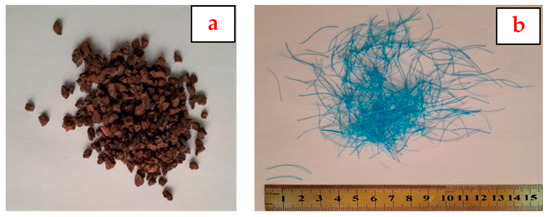
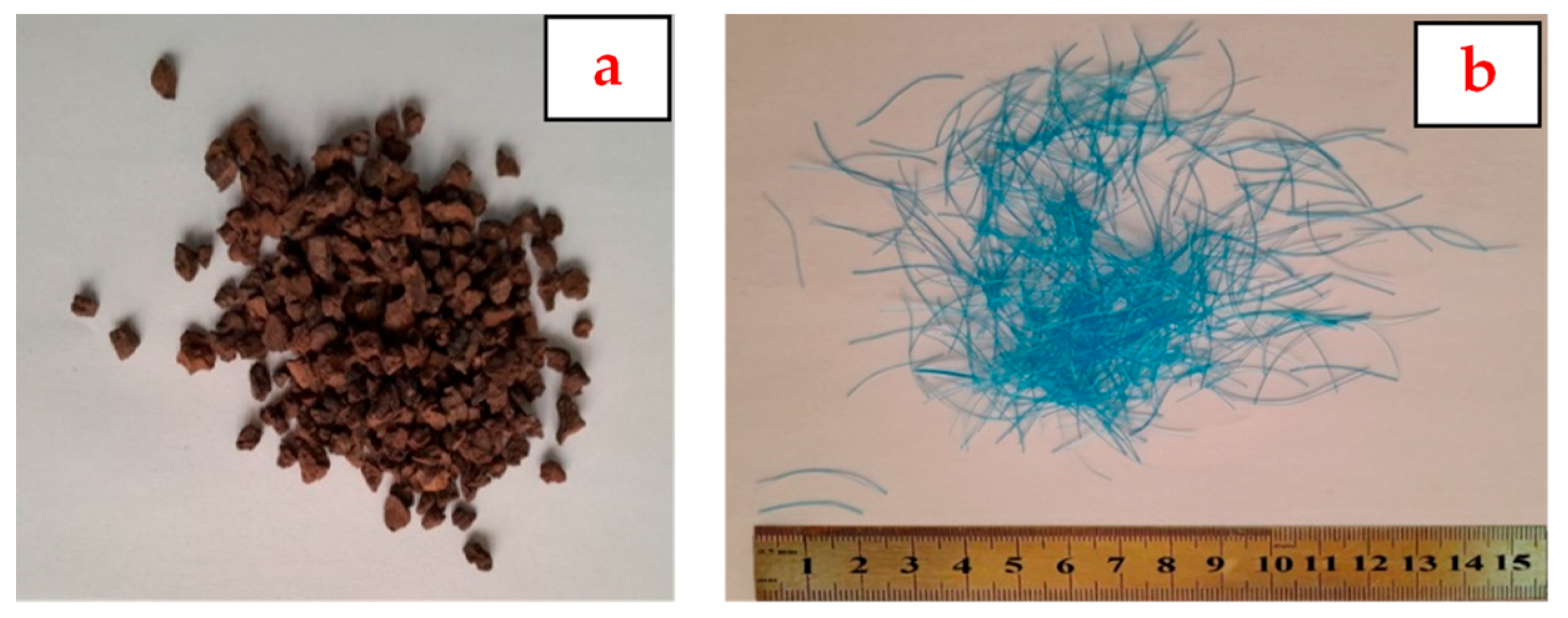
This study used a composite cement class II/A 42.5 that met the NF EN 197-1 standard [53] as a binder. It had a specific surface area of 4300 cm2/g and a specific density of 3.03 g/cm3. The chemical composition and physical properties of cement used are presented in Table 1. Natural siliceous sand with a grain size of up to 5 mm was used as fine aggregate. Its specific density, absorption rate, and fineness modulus were 2.59 g/cm3, 0.53%, and 2.25, respectively. Cork aggregate (Figure 1a) with a fraction of 2/5 was used as lightweight aggregate. It was collected from a cork factory near Bejaia, eastern Algeria, and then added to a cement matrix without any prior treatment, after being thoroughly cleaned of all contaminants and dried in an oven for 24 hours at a temperature of 60 °C [54]. Its specific density and water absorption capacity were 0.138 g/cm3 and 2.15%, respectively.
Table 1.
Chemical composition and physical properties of cement used.
Figure 1.
Recycled materials used: (a) Cork aggregate; (b) Polyethylene fibers.
Polyethylene fibers that were taken from fishing gear and marine ropes (Figure 1b) were utilized, without any pretreatment except cutting, as reinforcement. Table 2 summarizes these fibers’ geometrical and physical properties.
Table 2.
Geometric and physical characteristics of polyethylene fibers.
2.2. Mix Design
The formulation of the different mortars was based on the composition of the standard mortar described in the NF EN 196-1 standard [55], with improvements made to the method of selecting the content of fine aggregates and the addition of CA and PF to adapt to the requirements of local materials and to obtain workable mortars. The choice of the volume fractions of CA (0.3%, 0.6%, and 0.9%) and PF (0.25%, 0.50%, and 0.75%) was determined based on the existing literature [33,48,49,50,56,57,58] and preliminary workability tests carried out on different mortars. Thirteen mortars were made, with an overall cement content of 450 kg/m3 and keeping the water/cement (W/C) ratio at 0.50. There was a reference mortar (control) without CA and PFs, designated RM, and three mortars that were manufactured by adding cork aggregates in volumes 0.3%, 0.6%, and 0.9%, designated CM3, CM6, and CM9, respectively. For the other nine mixtures, at each level of cork aggregate content, three mortars were prepared with different percentages of polyethylene fibers: 0.25 wt%, 0.50 wt%, and 0.75 wt%.
The composition for 1 m3 of each of the several mortars under investigation is shown in Table 3. The mixture’s name, CMxFy, as seen in this table, has x% cork aggregate content and y% fiber content. For example, the CM6F50 mixture calls for 0.60% cork aggregate to replace sand and 0.50% polyethylene fibers.
Table 3.
Composition of different studied mortars.
2.3. Mixing, Casting, and Testing
In compliance with the NF EN 196-1 standard [55], a 5 L mixer was used to produce all mixtures. The mixing process consists first of adding the cement to the water and starting the mixer at a slow speed for 30 s. Gradually add the aggregates over the next 30 s. Increase the mixer speed to high and continue mixing for another 30 s. Stop the mixer for 1 min and 30 s. Then, resume mixing at maximum speed for 60 s. The flow time was then determined using the LCPC handling meter test in accordance with the NF P 18-452 standard [59] to evaluate the workability of mortars in the fresh state. The consistency in this test is characterized by the time that it takes, in seconds, for the mortar to flow under the effect of vibration. The more fluid the mortar, the shorter the time will be. For a standard (plastic) masonry mortar, a flow time of between 20 and 40 s is often targeted [60].
To evaluate the different hardened qualities of the mortars under investigation, 4 × 4 × 16 cm3 prismatic molds were used to create all the mix’s specimens. The mortar is compacted in this mold by introducing it in two layers, applying 60 impacts to the mold after each layer. The mold is then leveled and covered with a glass plate. After 24 h of initial mixing, all specimens are removed from the mold and stored in water-saturated lime at 20 °C ± 1 °C until the time of testing. The compressive and flexural strengths of the various mortars were measured at 7, 14, and 28 days of age, using a hydraulic crushing machine with a capacity of 250 kN and loading rates of 14 MPa/min and 0.7 MPa/min, in accordance with the NF EN 196-1 standard [55]. In accordance with the NF EN 1015-10 standard [61], the dry apparent density was calculated. Each prism’s three dimensions, length, width, and thickness, were used to calculate the specimens’ volume. Three measurements were taken on each side. Next, the volume of each of the three prismatic examples was divided by its weight. The hardened porosity was measured according to the NF EN 1936 standard [62] at 28 days. The 4 × 4 × 16 cm3 prismatic specimens were placed in an oven at a temperature of around 80 °C until they had a constant mass (dry mass, Ms). After, the specimens were placed in a vacuum container to eliminate the air contained in the pores for 24 h, and the specimens were immersed once water was added. For a further 24 h, the pressure was kept constant. Hydrostatic weighing (mass of the specimen immersed in water, Mh) was applied to the submerged specimens. The specimens were then taken out of the water, the extra water was removed, and they were weighed once again (saturated mass, Msat). The open porosity was determined then using the following Equation (1).
The thermal conductivity characteristics were evaluated at 28 days of age, in accordance with NF EN 993-15 [63] standards on three 40 × 80 × 160 mm3 samples, using the CT-meter device. For each experimental test and age, the result in the hardened state was calculated as the average value of three identical specimens, and all experimental tests were carried out under laboratory conditions.
Stereomicroscope and scanning electron microscope (SEM) observations were used on cut surfaces of 28-day mortars, using the BS-3090M Motorized Research Zoom Stereo Microscope, from FOB (Beijing, China), and VEGA3-TESCAN Microscope, from TESCAN (Brno, Czech Republic), with a 25 kV accelerating voltage, to evaluate in depth their morphology and microstructure, providing a comprehensive analysis that complemented other characteristics.
3. Results and Discussion
3.1. Workability of Fresh Mixes
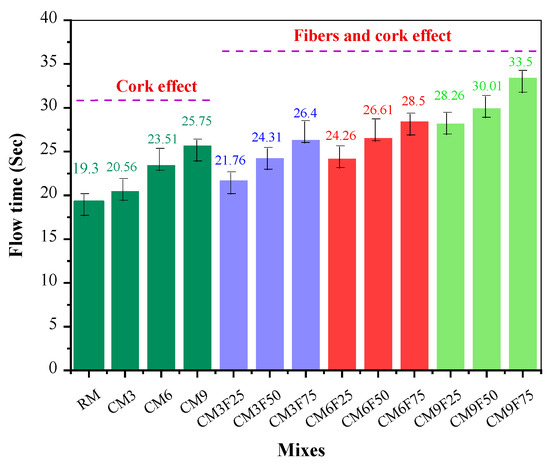
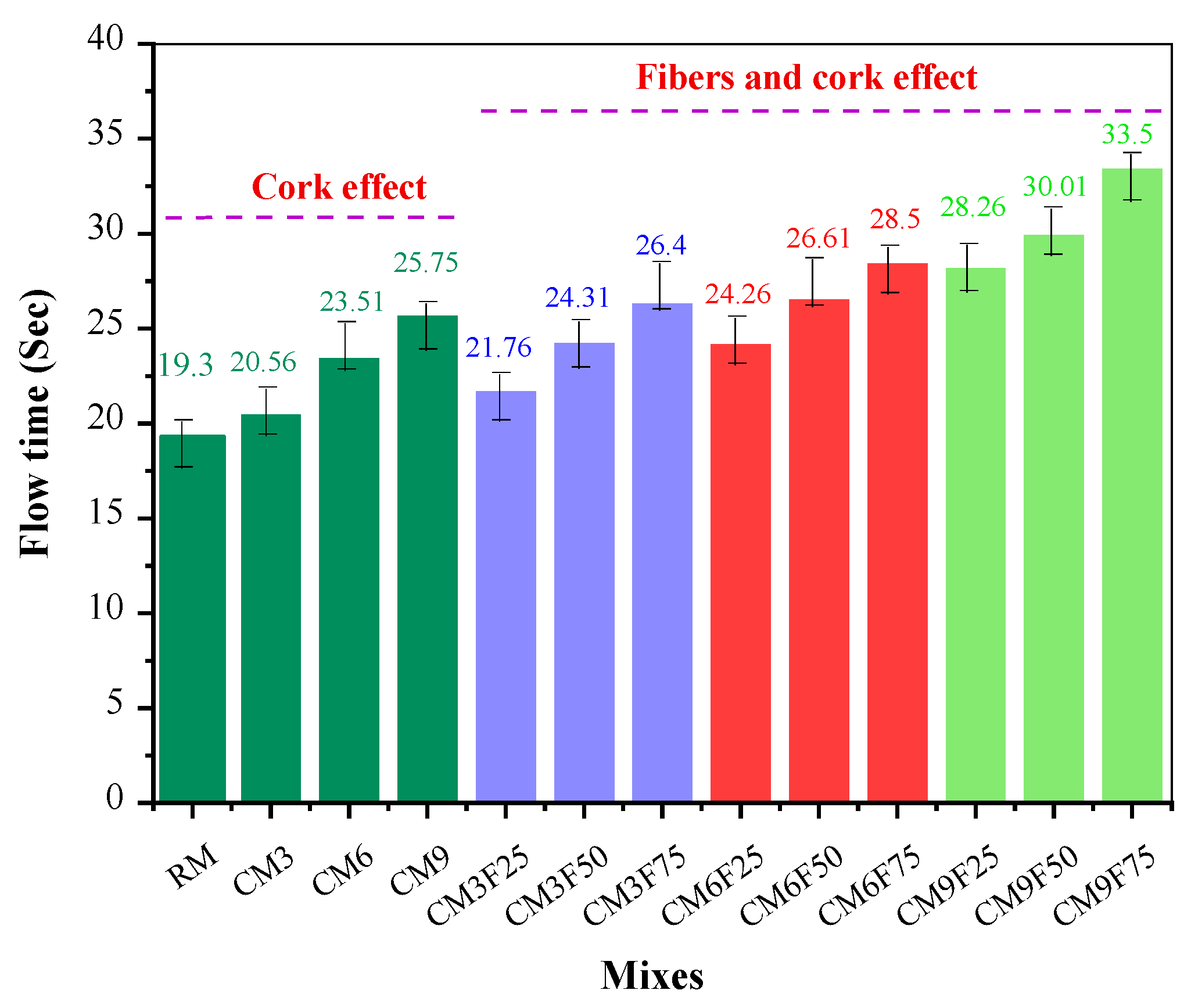
Determining the workability of fresh concrete is essential to understanding its ease of implementation. The flow time values of different mortars are displayed in Figure 2. It is clearly shown from this figure that the flow time of all mixtures is between 20 and 40 s, which shows good workability (plastic) for construction mortar in accordance with the NF P 18-452 standard [59]. Furthermore, this figure clearly indicates the loss of workability in all mortars, as illustrated by an increase in flow time as the amount of cork aggregate and polyethylene fiber increases. Compared to the RM mixture, the three quantities of cork aggregates (0.3, 0.6, and 0.9%) that correspond to CM3, CM6, and CM9 mortars result in increases in flow time of approximately 6.53%, 21.81%, and 33.42%, respectively. This decrease in workability may be explained by the cork aggregates’ rough surface and extremely high water absorption capacity, which impede mortar flow and lengthen its flow time. This mortar’s workability reduction was intensified by the addition of polyethylene fibers. For instance, the flow time of the CM9F75 mixture, which has the highest content of cork aggregate and fiber, was 33.5 s, representing a 73.58% increase compared to the RM mixture, which has a flow time of 19.3 s. This proves that the addition of fibers to the mortar causes blocking problems and negatively affects the mix’s workability. Most studies converge on this conclusion [64,65]. It is clear that cork aggregates and fibers of all kinds produce a less plastic mortar. According to Kumar et al. [57], the workability of concrete was reduced by approximately 11.11%, 19.44%, and 45.83% with 0.5%, 0.7%, and 0.5% polypropylene fiber addition, respectively. Yong et al. [58] also found that the addition of polypropylene fiber negatively affects the workability of lightweight foamed concrete (LWFC) and decreases its slump value by 1.7–17.5%. Chen et al. [66] demonstrated that with a small amount of fibers, they are evenly distributed and adhere strongly to the concrete matrix. However, with increased amounts, the fibers clump and become intertwined.
Figure 2.
Variation in flow time for different types of mortar.
3.2. Dry Density
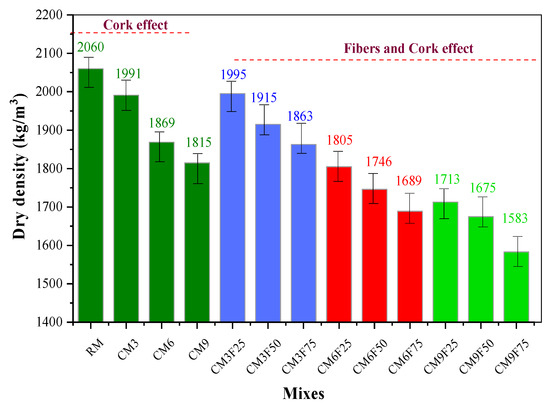
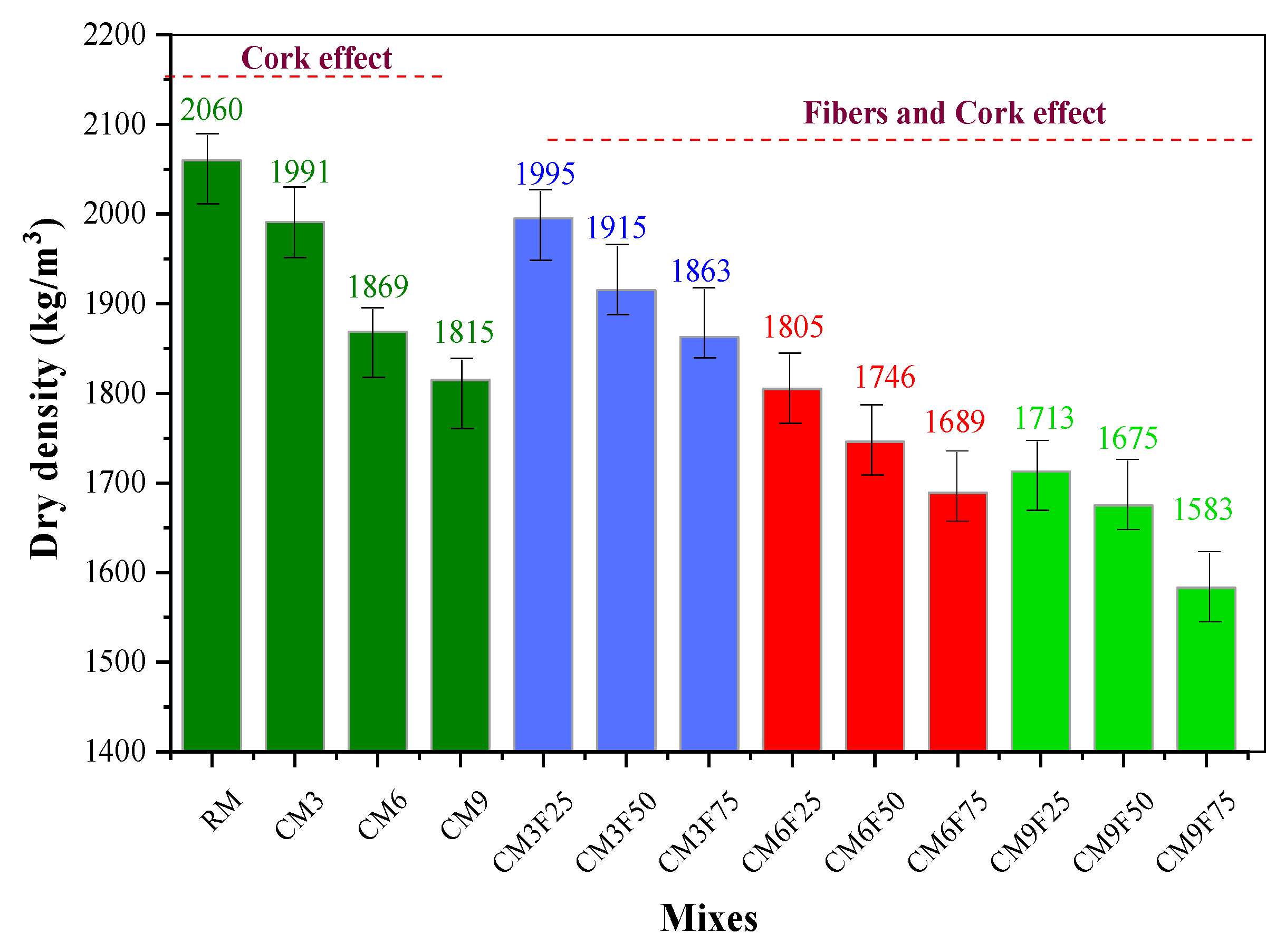
The dry density results of the different mortars depending on the cork aggregate and polyethylene fiber content are shown in Figure 3. As presented in this figure, the dry density values decrease with increasing addition of CA and PFs. The values of dry density obtained in this research range from 1583 kg/m3 for mortar with 0.9% CA and 0.75% PF to 2060 kg/m3 for control mortar (RM), with approximately a 23% decrease. This decrease in mixtures is certainly attributed to the lower density of CA (approximately 20 times) than the natural sand. The same results were found by other authors, finding that the density of composite materials decreased significantly with the increase in CA [29,30,32,33,56]. El Wardi et al. [34] found that a 2–10% by mass concentration of cork in a clay composite greatly decreases the bulk density from 620 kg/m3 to 261 kg/m3. In addition, increasing the PF content in the mixtures results in a maximum reduction in concrete density, owing to the comparatively low specific gravity of PFs. This phenomenon also arises from the fact that the density of PFs (1050 kg/m3) is lower compared to the density of the control mix (2050 kg/m3). This result is in line with the behavior that is frequently seen when lightweight fibers are added to lightweight cementitious materials [48,65,67,68,69]. According to Al-Alusi et al. [49], the addition of low-density PFs leads to the presence of voids, resulting in a decrease in the concrete density. Forevermore, the obtained results clearly demonstrated that regardless of the percentage of fiber, all the produced mortars with CA exhibit density values under 2000 kg/m3, and they can be categorized according to RILEM classification as lightweight structural mortars [70].
Figure 3.
Dry density for different mortars.
3.3. Compressive Strength
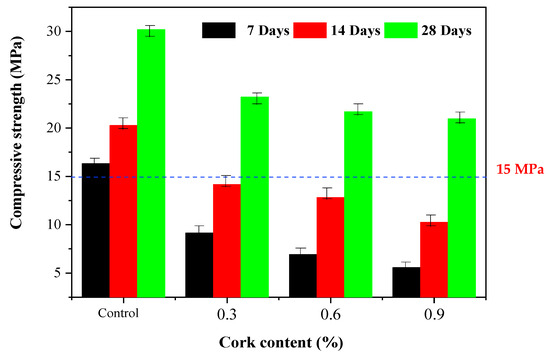
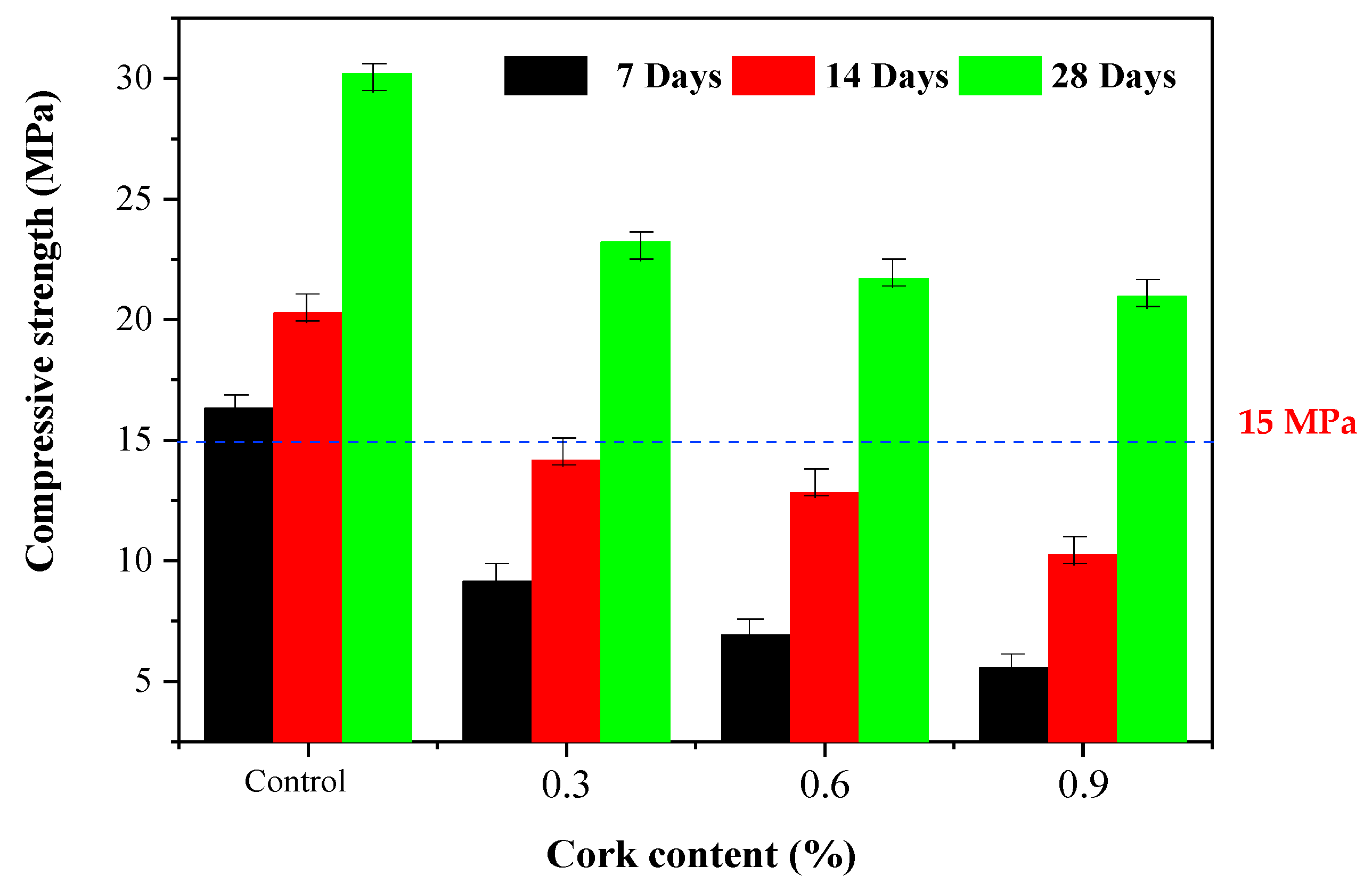
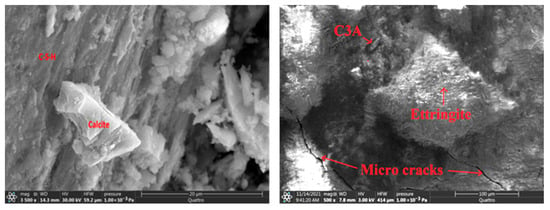
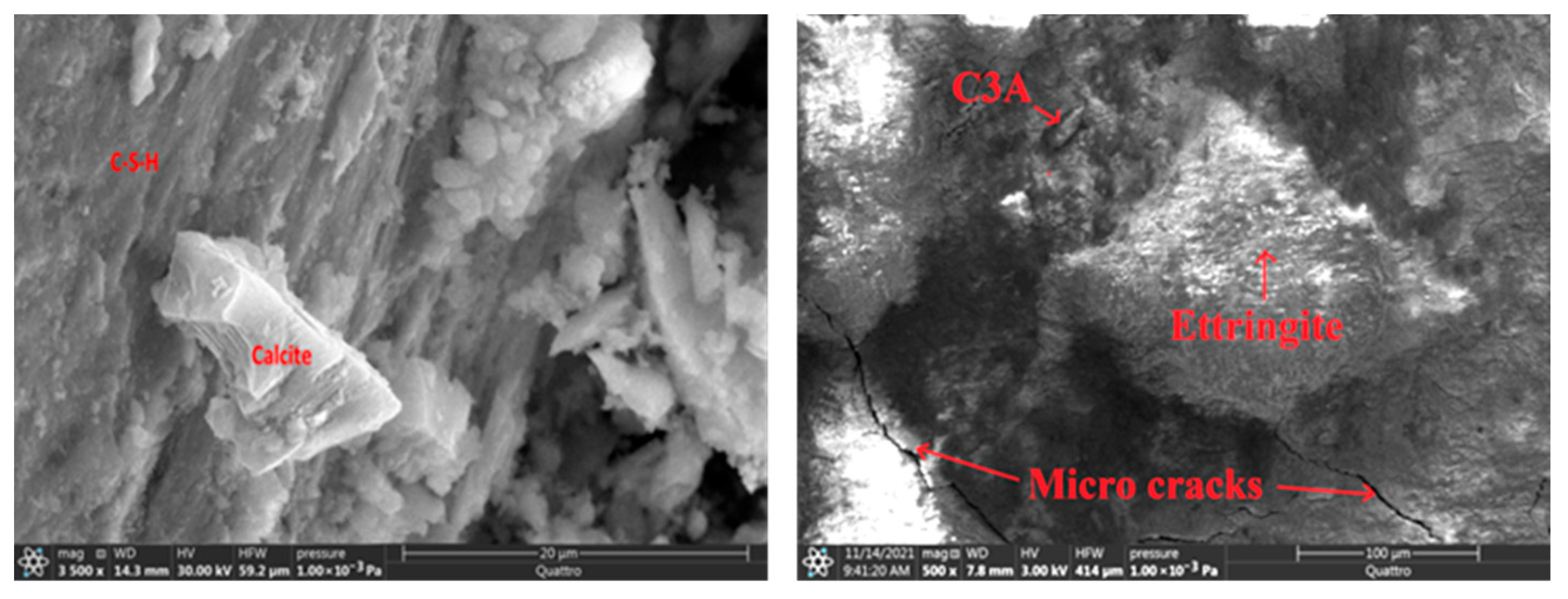
Figure 4 displays the compressive strength values of mortar samples as a function of CA contents. The reference mortar samples’ relative compressive strengths at 7, 14, and 28 days are approximately 16, 20, and 30 MPa. The cement hydration process and the subsequent formation of portlandite and calcium hydrosilicates (CSH and CaOH) are responsible for this increase in concrete compressive strength over time, as shown in Figure 5. It is clearly shown that adding cork aggregates to mortar significantly reduces its compressive strength. For instance, the 28-day values were decreased by 23, 28, and 30% for CM3, CM6, and CM9, respectively, compared to RM. This decrease in compressive strength can be attributed, on the one hand, to the absorbent nature of cork aggregate, which leads to an increase in voids and, consequently, increases porosity of the material, and on the other hand, to the poor cement paste–cork aggregate bond (ITZ). The same findings have been noted by other researchers [11,71]. According to Bellei et al. [71], the disconnection from the hydraulic paste and expanded cork particles in some areas exhibits an insufficient adhesion between the aggregates and the hydraulic lime paste. Ziregue et al. [72] also showed that expanded cork reduces the mechanical strength of cork mortar.
Figure 4.
Effect of cork agregates content on the compressive strength of mortar.
Figure 5.
Structure of the matrix of hydration products.
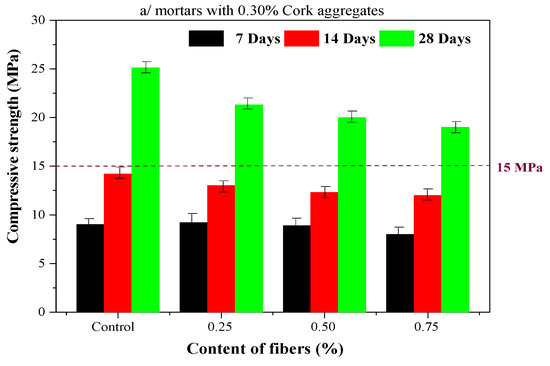
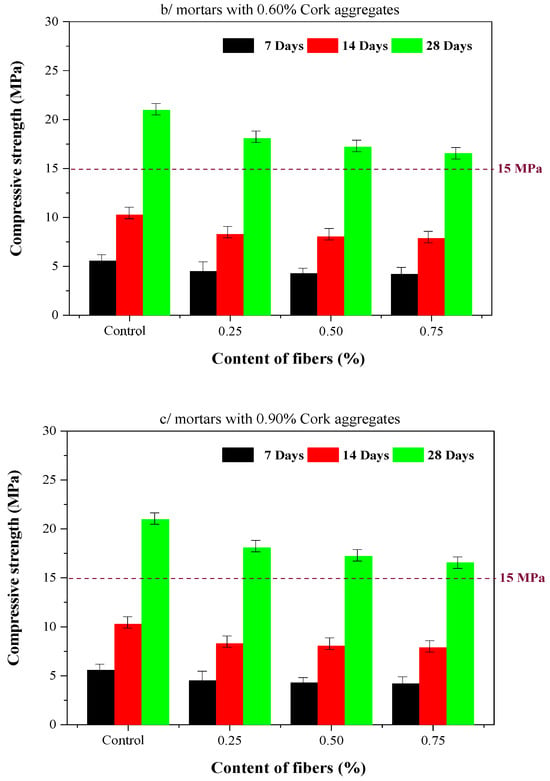
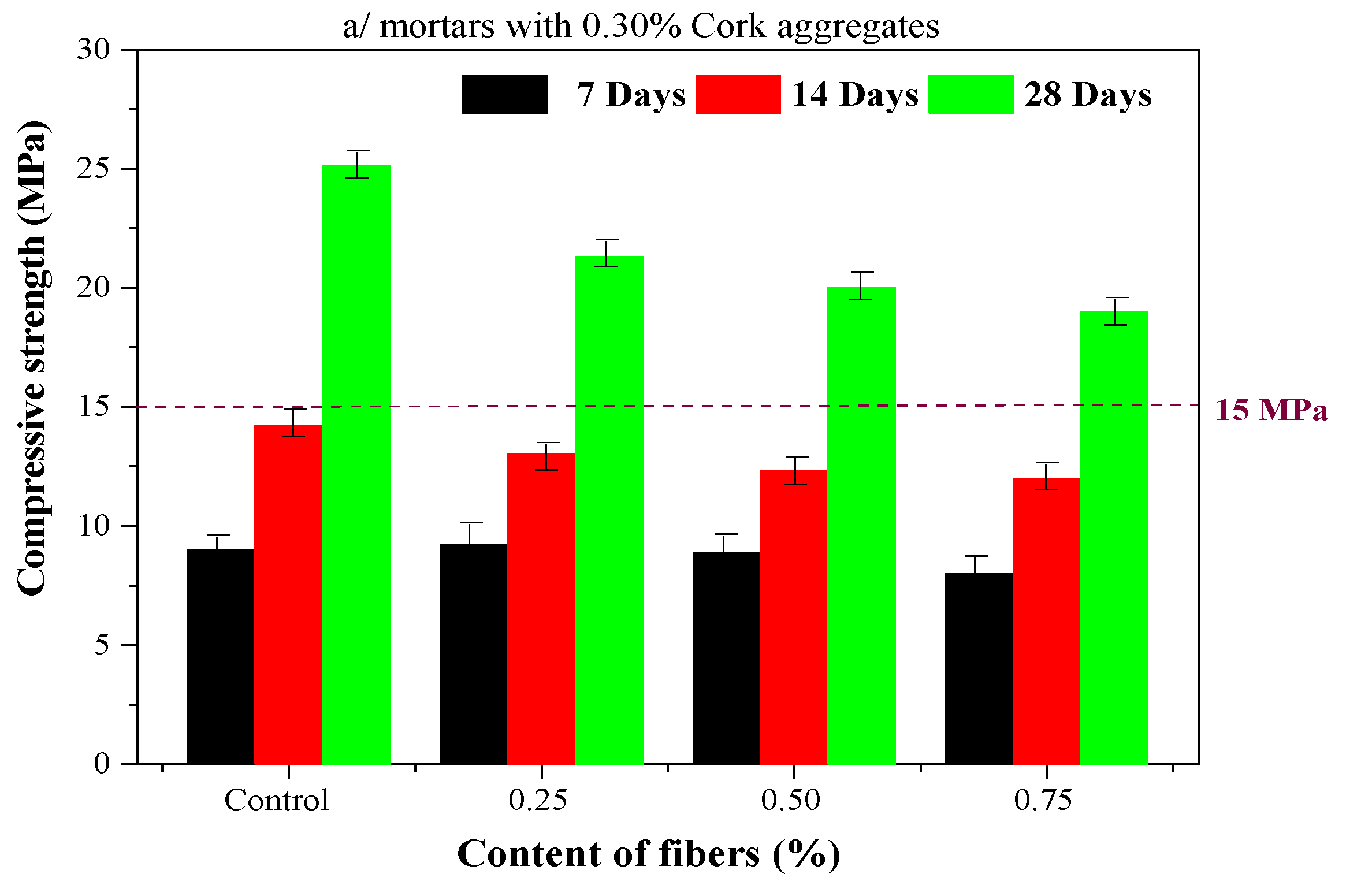
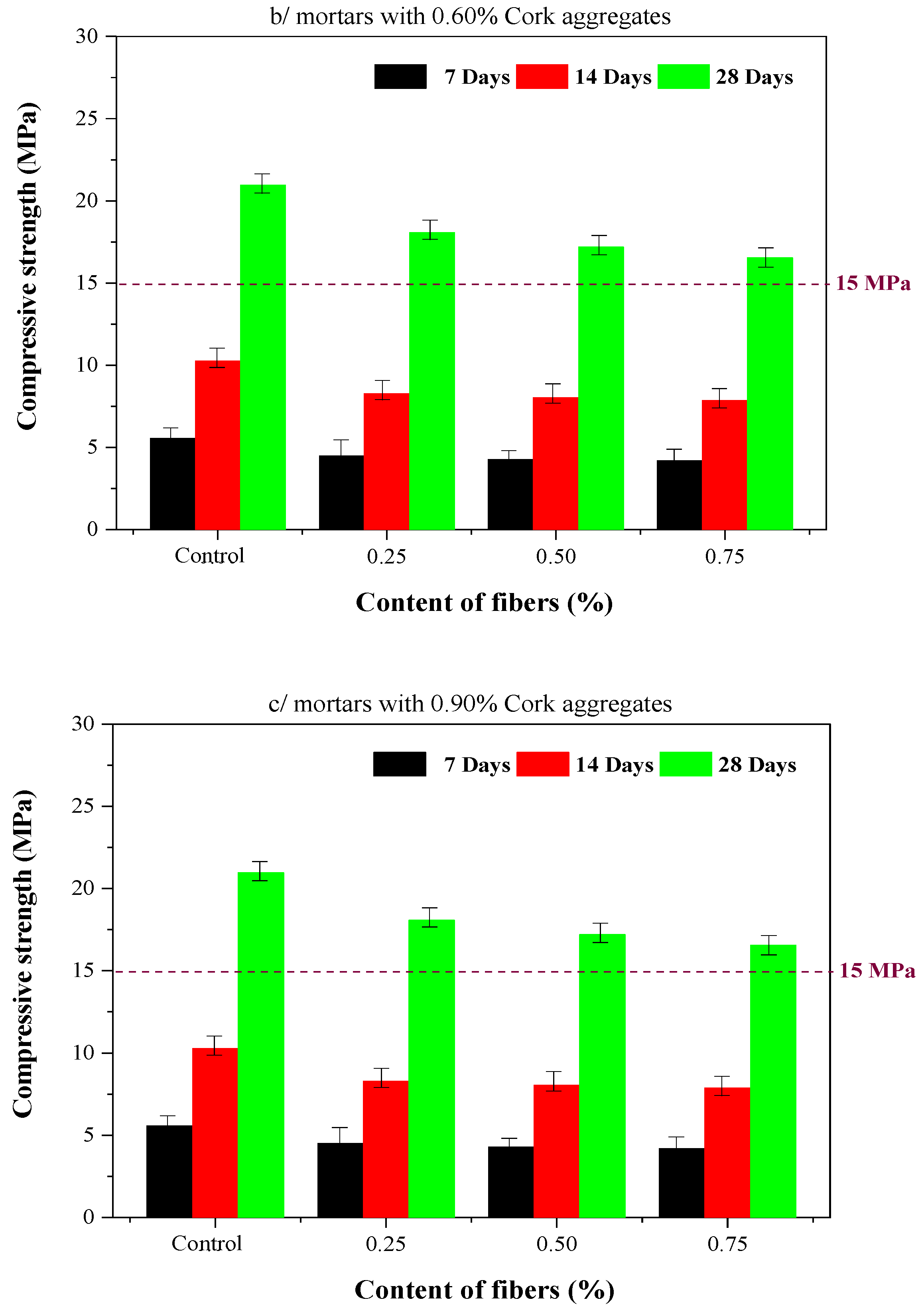
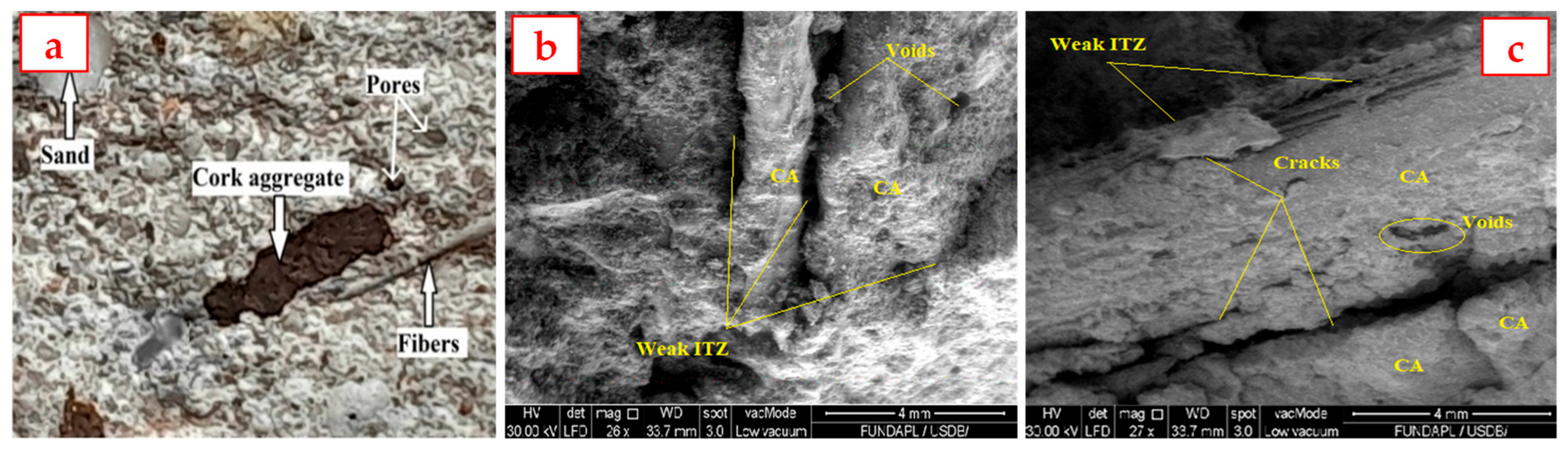
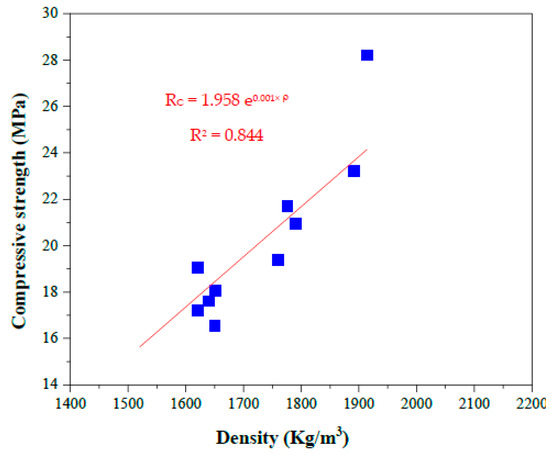
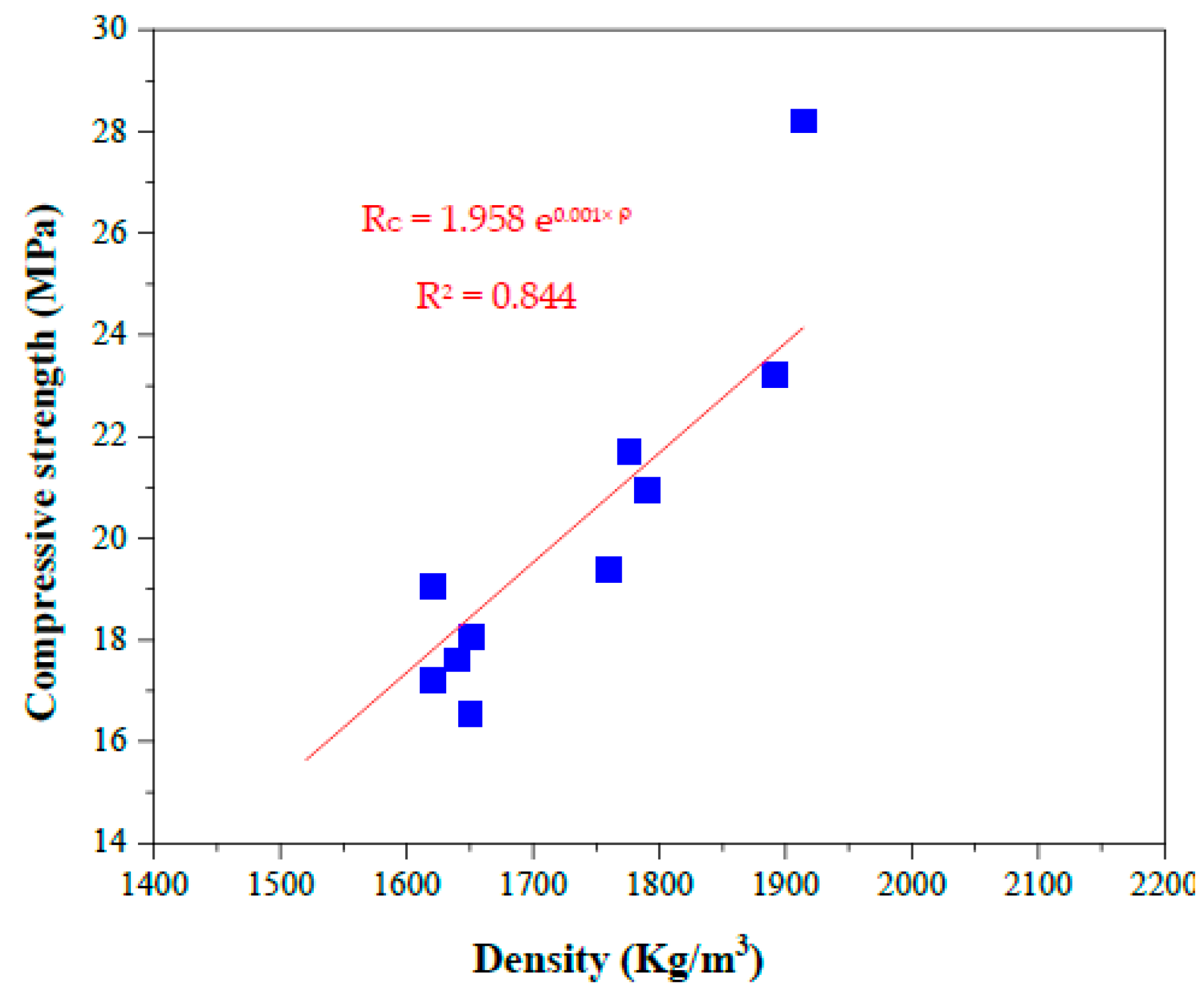
Figure 6 displays the impact of polyethylene fiber addition on the 7, 14, and 28-day compressive strength outcomes of cork-based mortars. When compared to the CM3, CM6, and CM9 mortars, the results clearly demonstrate that increasing the fiber content reduces the compressive strength of fiber-reinforced materials for all fiber dosages. At 28 days, CM3, CM6, and CM9 mortars with 0.25% and 0.50% fiber, respectively, showed a strength loss of between 13% and 18% compared to the same mixtures without fiber. However, when the fiber concentration is at its maximum (0.75%), the compressive strength significantly decreases by around 20, 19, and 21% for CM3, CM6, and CM9, respectively. This reduction in mortar strength can be attributed to the addition of fiber, which alters the mineral composition of the mortar, increasing the porosity and causing voids inside the paste, as shown in Figure 7. Oliveira et al. reported similar outcomes [73]. The distribution, shape, and smooth surface of the fibers are among the issues associated with their introduction that primarily cause the porosity of the composite caused by intra- and extra-fiber voids. According to the American Institute classification [70] and based on the obtained compressive strength results higher than 15 Mpa, all produced mortars can be classified as structural lightweight mortar. On the other hand, this decrease in the compressive strength of different mortars by adding CA and PF waste may also be due to the decrease in dry density of the mixes. As shown in Figure 8, a good linear relationship (R2 ≈ 0.844) was found between the 28-day compressive strengths and their corresponding dry densities of mortar with CA and PF waste.
Figure 6.
Effect of polyethylene fiber content on the compressive strength of (a) mortars with 0.30% CA; (b) mortars with 0.60% CA; (c) mortars with 0.90% CA.
Figure 7.
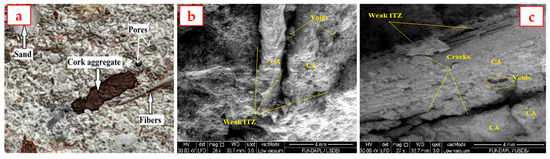
Cork aggregates and polyethylene fiber distribution within the cement matrix (a), matrix microstructure (b), and ITZ (c) of cork-based mortar reinforced with polyethylene fiber.
Figure 8.
Relationship between the dry density and the compressive strength of the different produced mortars.
3.4. Flexural Strength
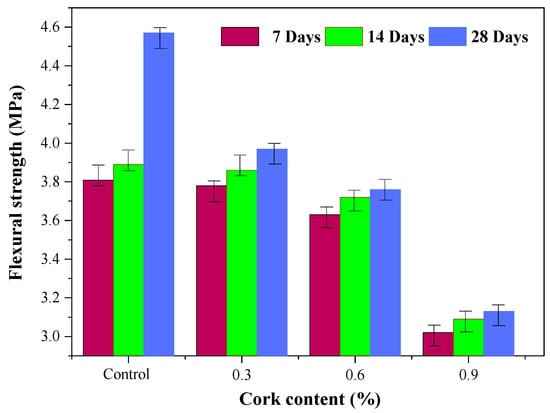
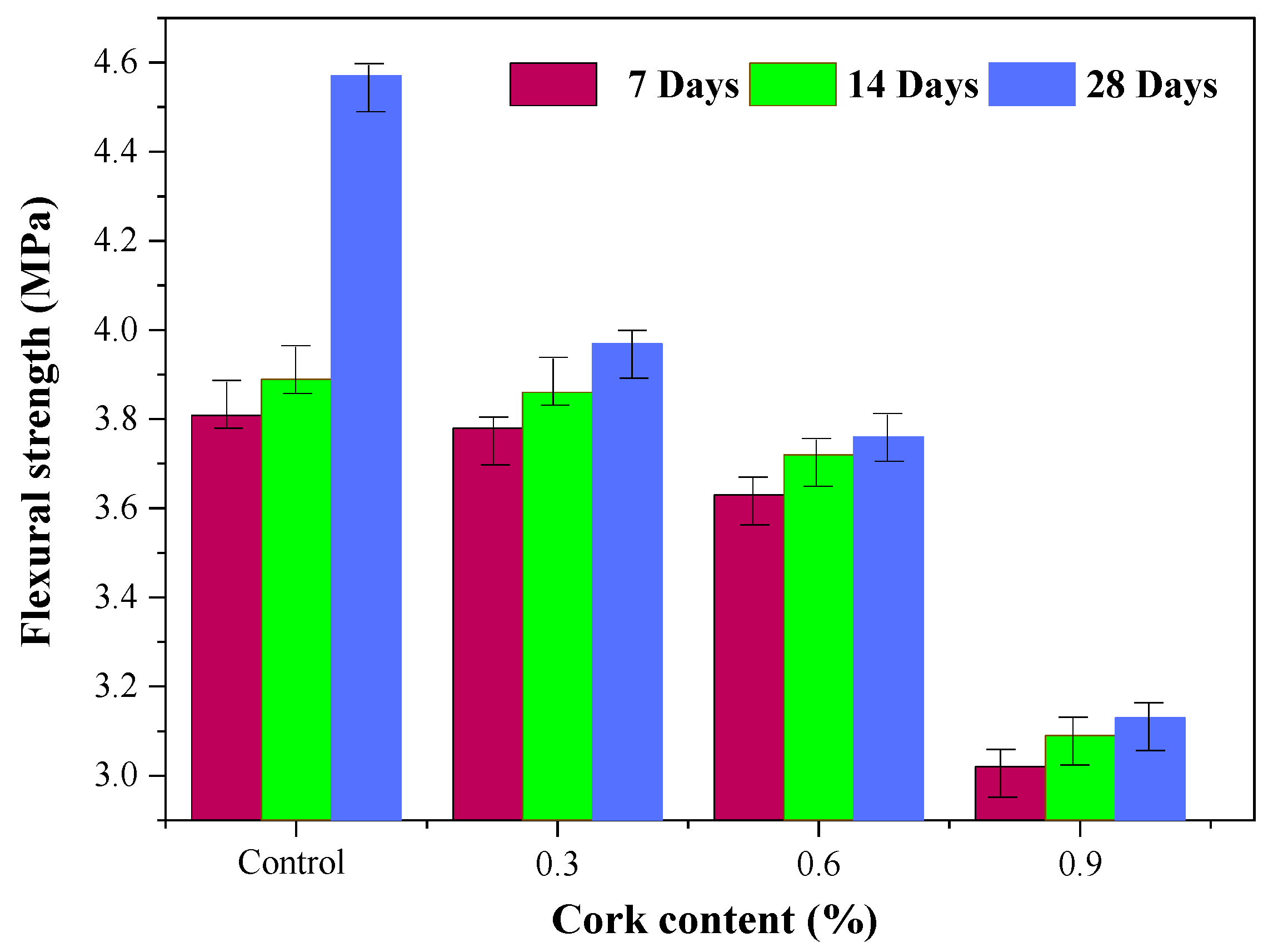
The effect of cork aggregates on the flexural strength results of different mortars at 7, 14, and 28 days is shown in Figure 9. For all mixtures, the flexural strength clearly increases from 7 to 28 days. Similarly to compressive strength results, the flexural strength is decreased when the volume of cork aggregates increases. The poor mechanical strength and rigidity of cork aggregates, along with the porous and weaker bond between the cork aggregates and cement matrix (ITZ) (Figure 7c) brought on by the cork extractives released to the cement matrix, are the main causes of this phenomenon, which has also been documented in the literature [9,25,30,74]. At 7, 14, and 28 days, the RM mixture’s flexural strength is 3.81, 3.89, and 4.57 MPa, respectively. When 0.30 to 0.9% cork aggregates are added, these values gradually drop by approximately 13 to 31% over time.
Figure 9.
Effect of cork agregates content on the flexural strength of mortar.
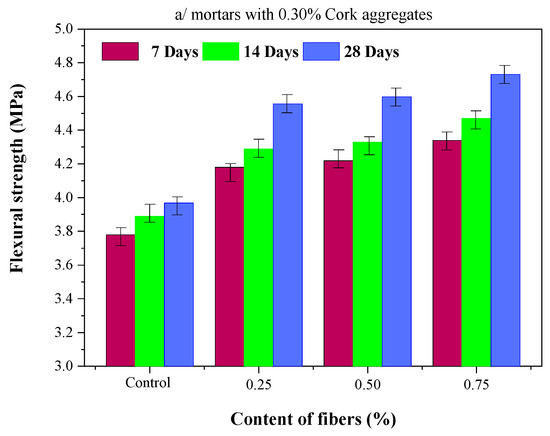
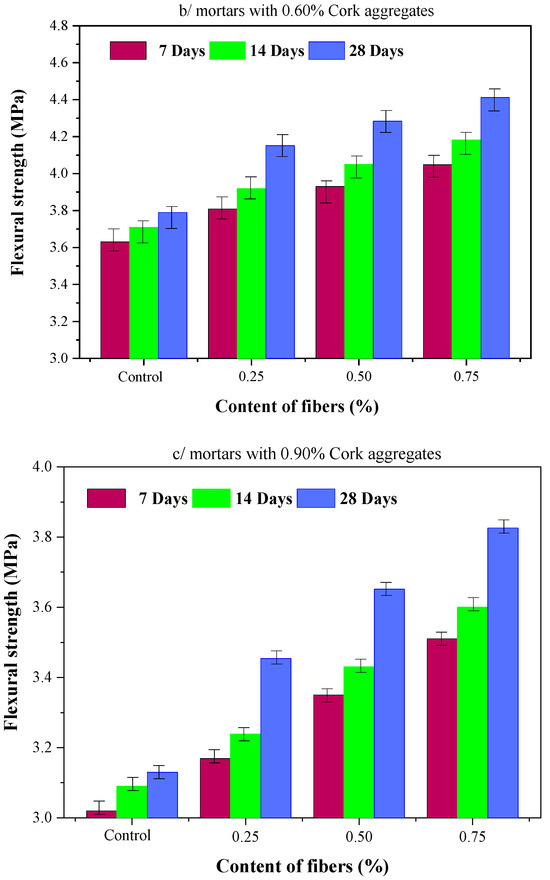
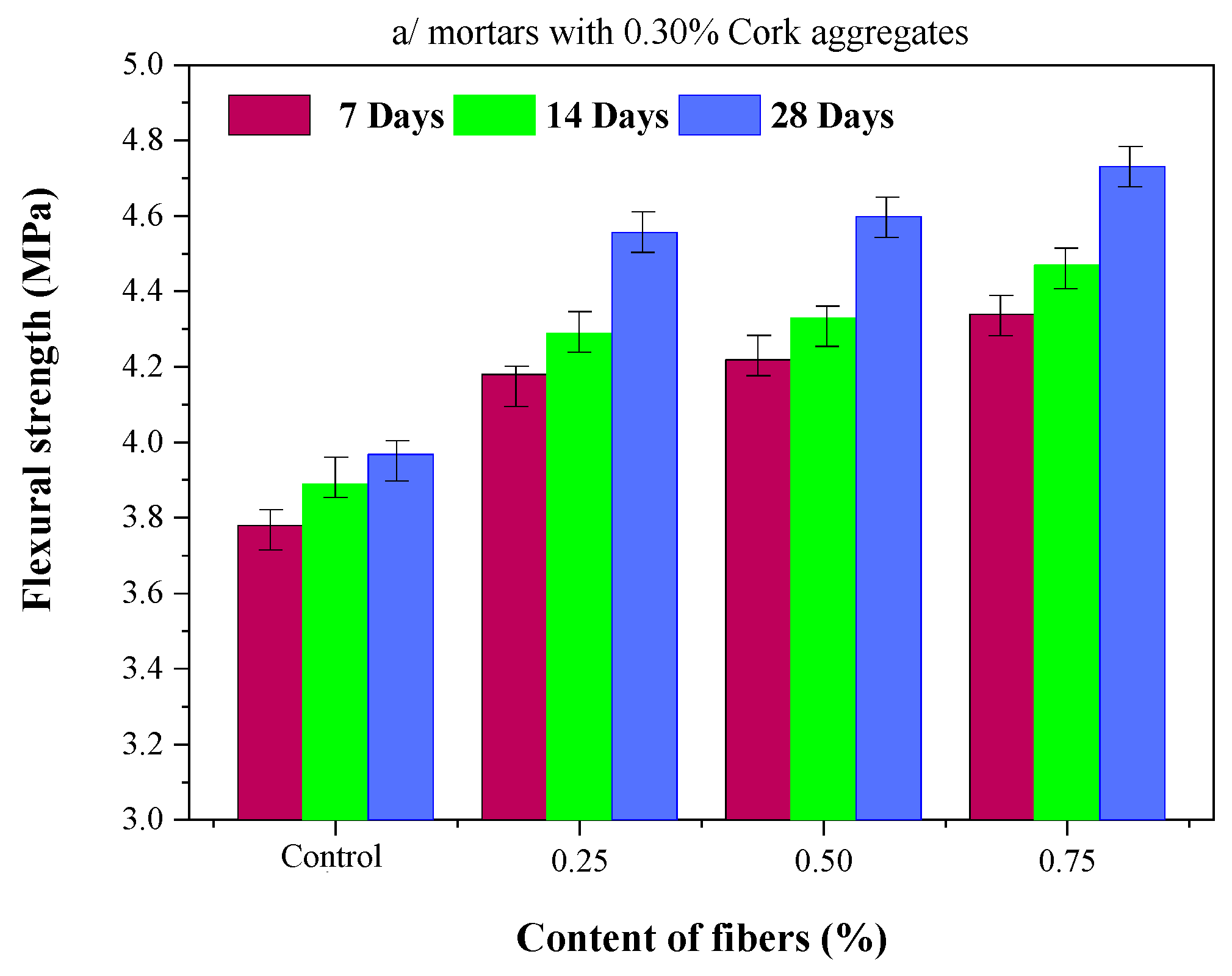
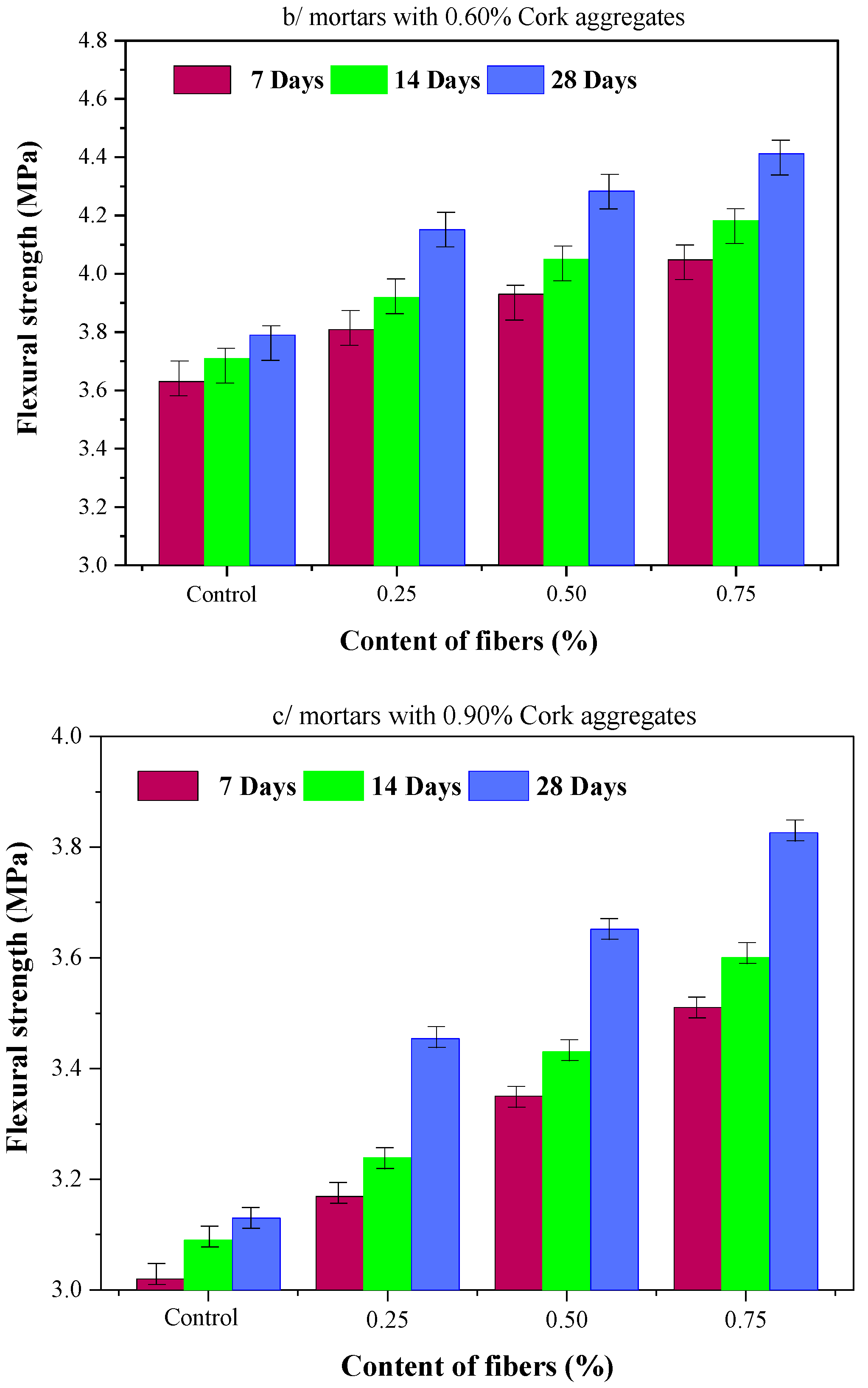
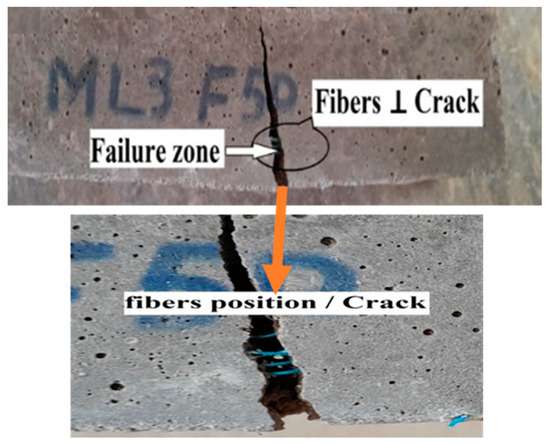
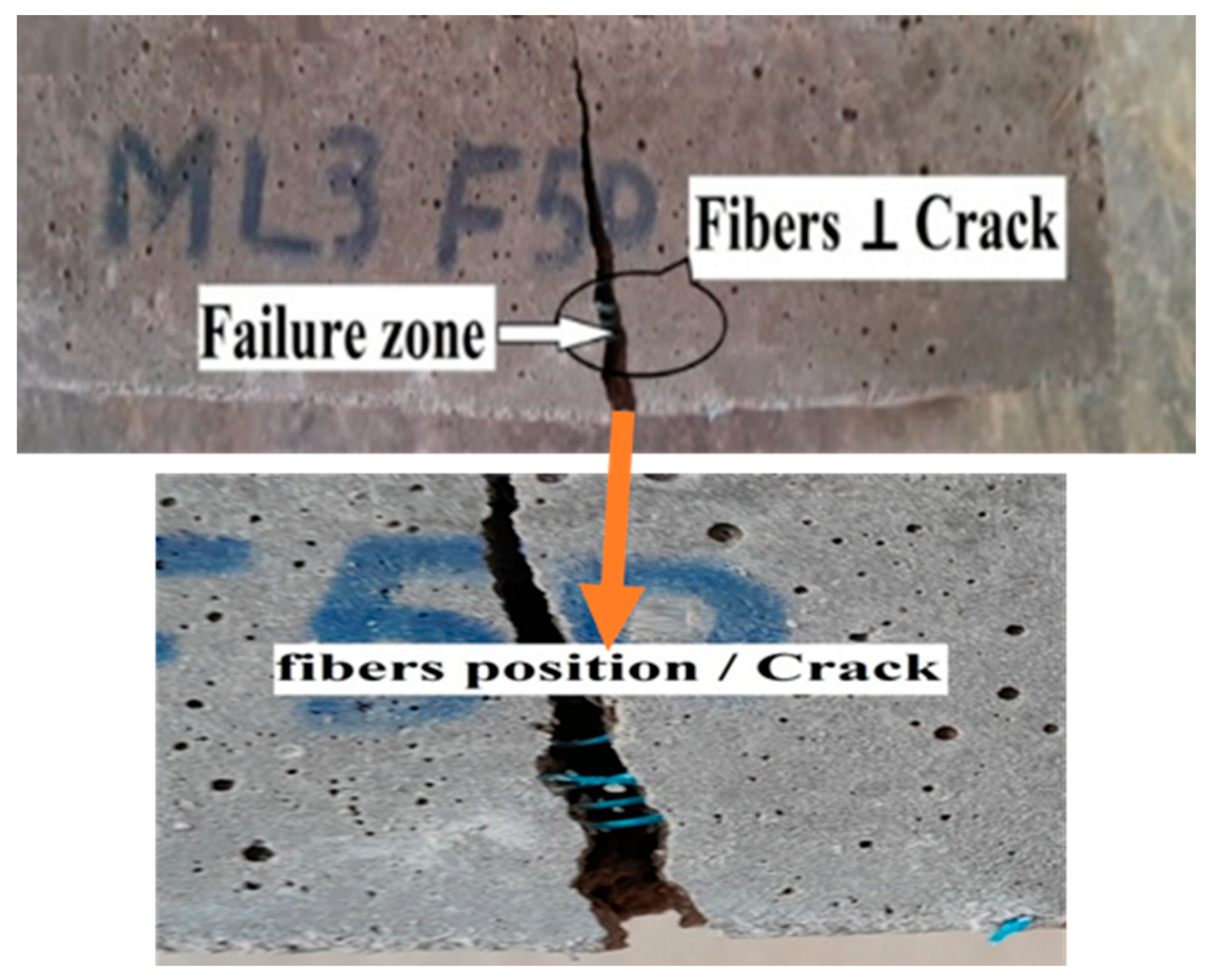
Figure 10 shows the effect of PFs on the flexural strength of the produced mortars. According to the data shown in this figure, the flexural strength of all fiber-reinforced mortars increases as the fiber content increases. This is consistent with all of the findings in the literature about this feature [75,76]. This improvement in flexural strength can be attributed to the presence of fibers that accomplish three roles: they increase the energy used surrounding the fracture, allow for the mobilization of a greater proportion of the material’s elastic energy, and, finally, serve as a stitching element on the lips of the cracks. In comparison to the control mortar (RM), a fiber content of 0.25 to 0.75% results in an increase of 11% to 26% in 28-day flexural strength, respectively. This increase in flexural strength is also associated with the significance of these fibers’ distribution and orientation (Figure 7a). The specimens can sustain higher loading after the initial fracture emerges when the matrix is homogeneous and regular, as shown in Figure 11. This is indicated by larger force values in relation to the final load. As the load increases, the mortar fibers pull out, causing the crack to gradually widen. Similarly, Kumar et al. [57] discovered that adding 0.25% polypropylene fibers to conventional concrete increased its flexural strength by 15.78% and 10.29% after 28 and 56 days, respectively. The mechanical properties of composites are mostly determined by the interfacial bonding between the matrix and fibers. Since the stresses that are transferred between the matrix and the fiber pass at this interface, optimal reinforcing requires good interfacial (ITZ) bonding [77]. According to Liao et al. [65], fibers can provide bridging stress in the tensile part of mortar. Furthermore, greater fiber availability makes it possible to more successfully inhibit the establishment of microcracks, enhancing ultimate tensile strength [78]. According to Liao et al. [65] and Hong et al. [79], using PET fibers adversely affects the compression strength of lightweight concrete. However, the tensile strain capacity and toughness were improved by increasing fiber content.
Figure 10.
Effect of polyethylene fiber content on the flexural strength of (a) mortars with 0.30% CA; (b) mortars with 0.60% CA; (c) mortars with 0.90% CA.
Figure 11.
Fracture pattern crack propagation of the sample after three-point bending tests.
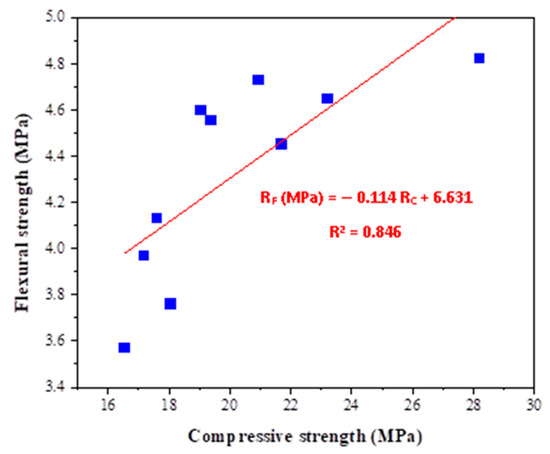
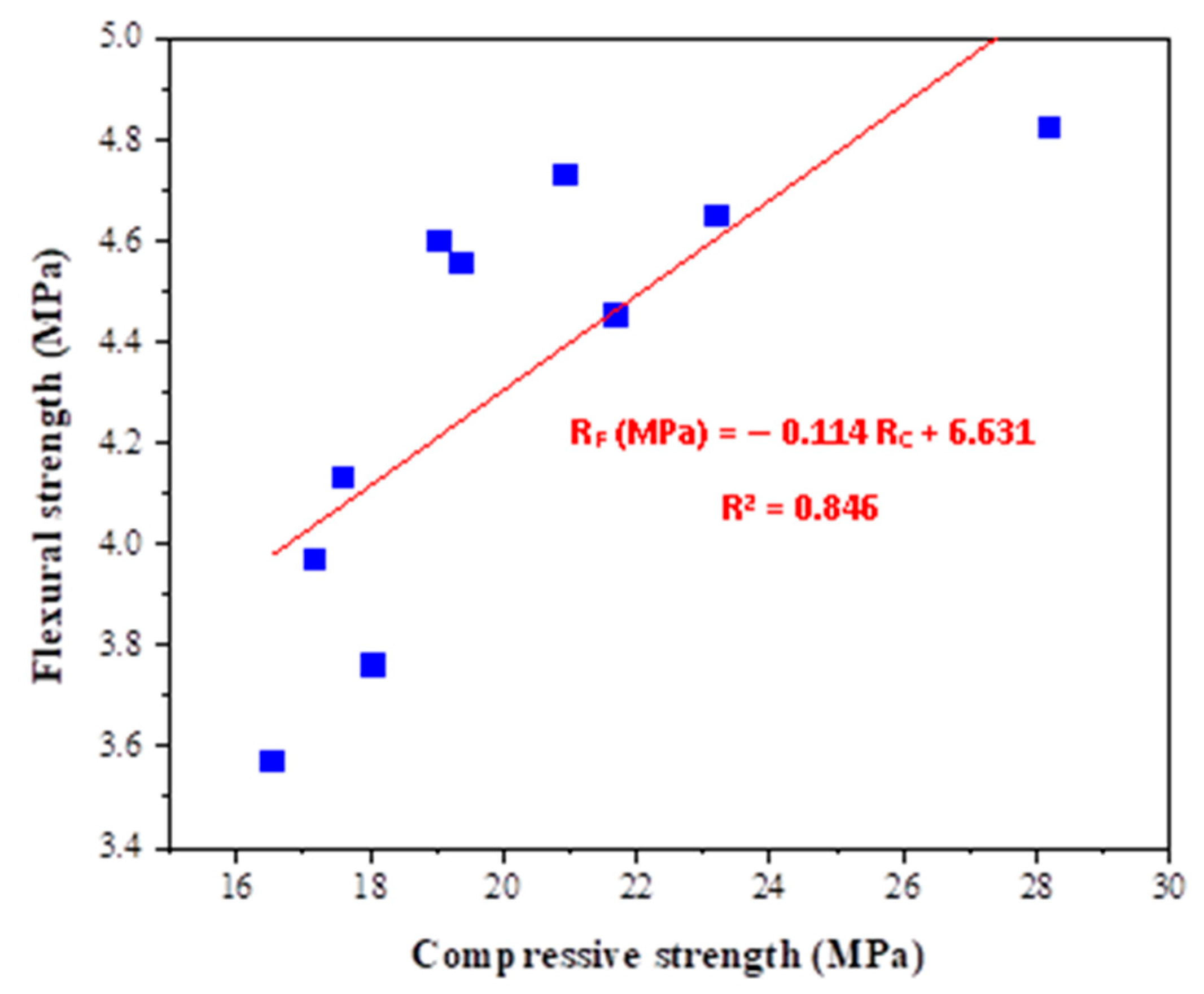
The flexural strength can be directly related to the compressive strength. The results of these two characteristics are correlated for all produced mortars with different levels of CA and PFs, as illustrated in Figure 12. A strong correlation with a linear regression was found between compressive and flexural strength with a determination coefficient R2 up to 0.846, indicating a very good confidence for the relationship between these two characteristics for mortar incorporation CA combined with PFs.
Figure 12.
Relationship between the compressive strength and flexural strength of the different produced mortars.
3.5. Porosity
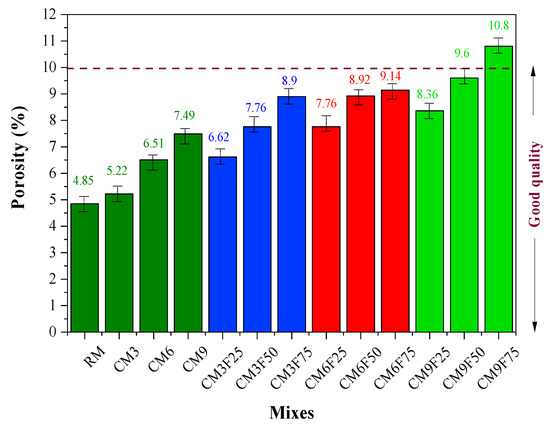
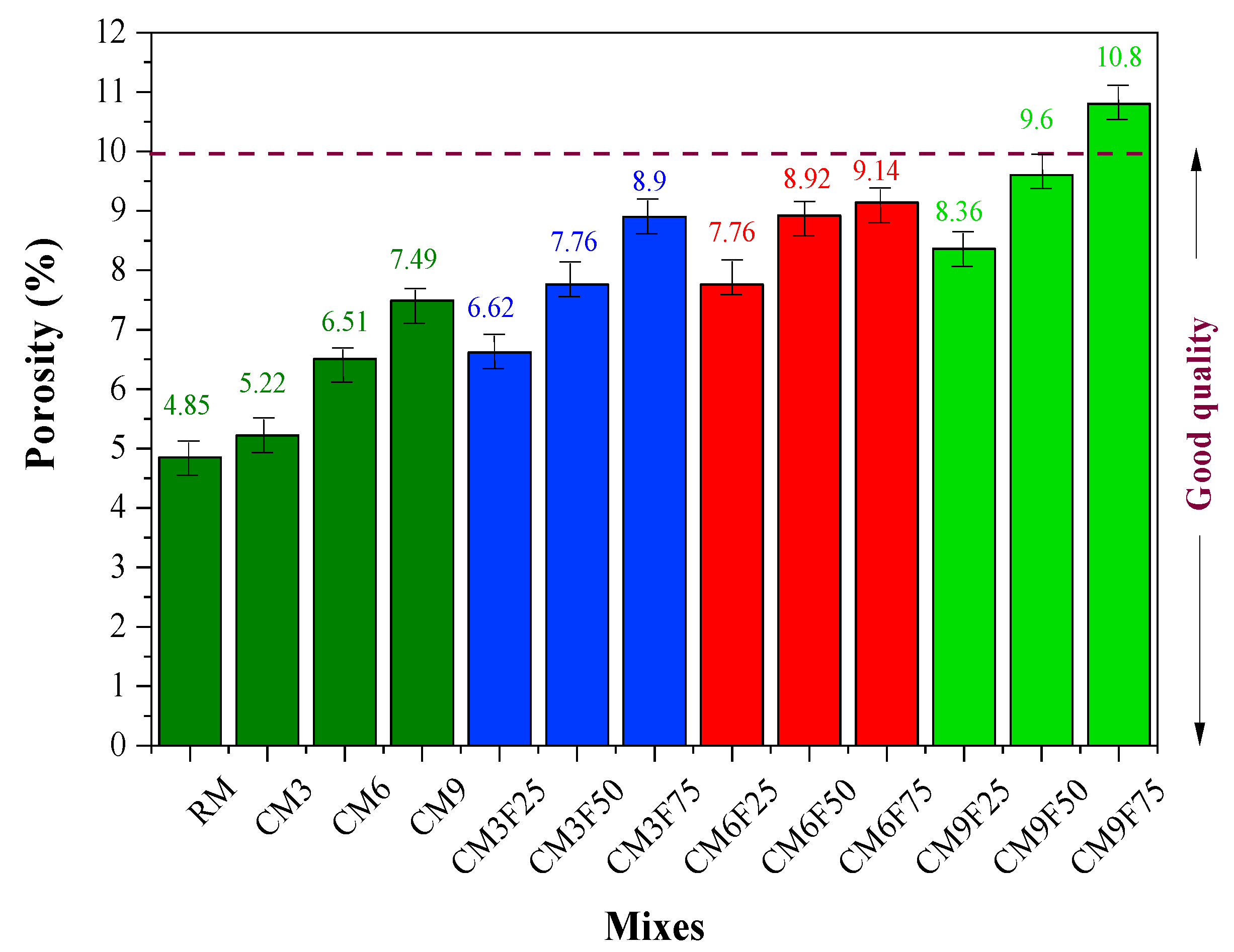
Concrete’s durability is significantly impacted by its porosity, which controls how strongly it interacts with aggressive chemicals [2]. Figure 13 presents the effect of CA and PFs on the porosity values of the different mortars after 28 days of hardening. It is clearly shown from this figure that the porosity increased proportionally with increasing CA and PF content, and the mixture with the highest waste replacement has the highest porosity value. For instance, the porosity is approximately doubled (123%) for mortar with 0.90% CA and 0.75% PF (CM9G75), with a value of 10.8%, compared to the control mortar (RM), with a value of 4.85%. This increase in porosity is surely due to the poor adhesion between the matrix and CA, which results from the morphology structure of the CA particles and their higher water absorption compared to the natural sand. In addition, the incorporation of fibers created significant porosity in the material. Guendouz and Boukhelkhal [18] also noted that adding high water absorption particles to concrete negatively affects the material microstructure by increasing the paste porosity within the interfacial zone. Furthermore, examining the distribution of CA waste in the mortar matrix (Figure 7b) reveals a highly varied situation. The enclosing of heterogeneous material in a homogeneous body generally results in an increase in porosity by disrupting the continuity of the material microstructure. Therefore, all mortars can be considered as satisfactory for structural application since their porosity values are close to or less than 10% [80]. This increase in porosity of mortar with the addition of CA and PFs is quite similar to the results found by other researchers [29,81,82].
Figure 13.
Porosity of different mortars.
3.6. Thermal Conductivity
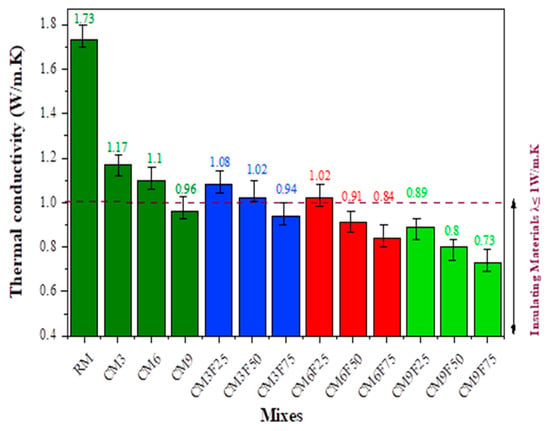
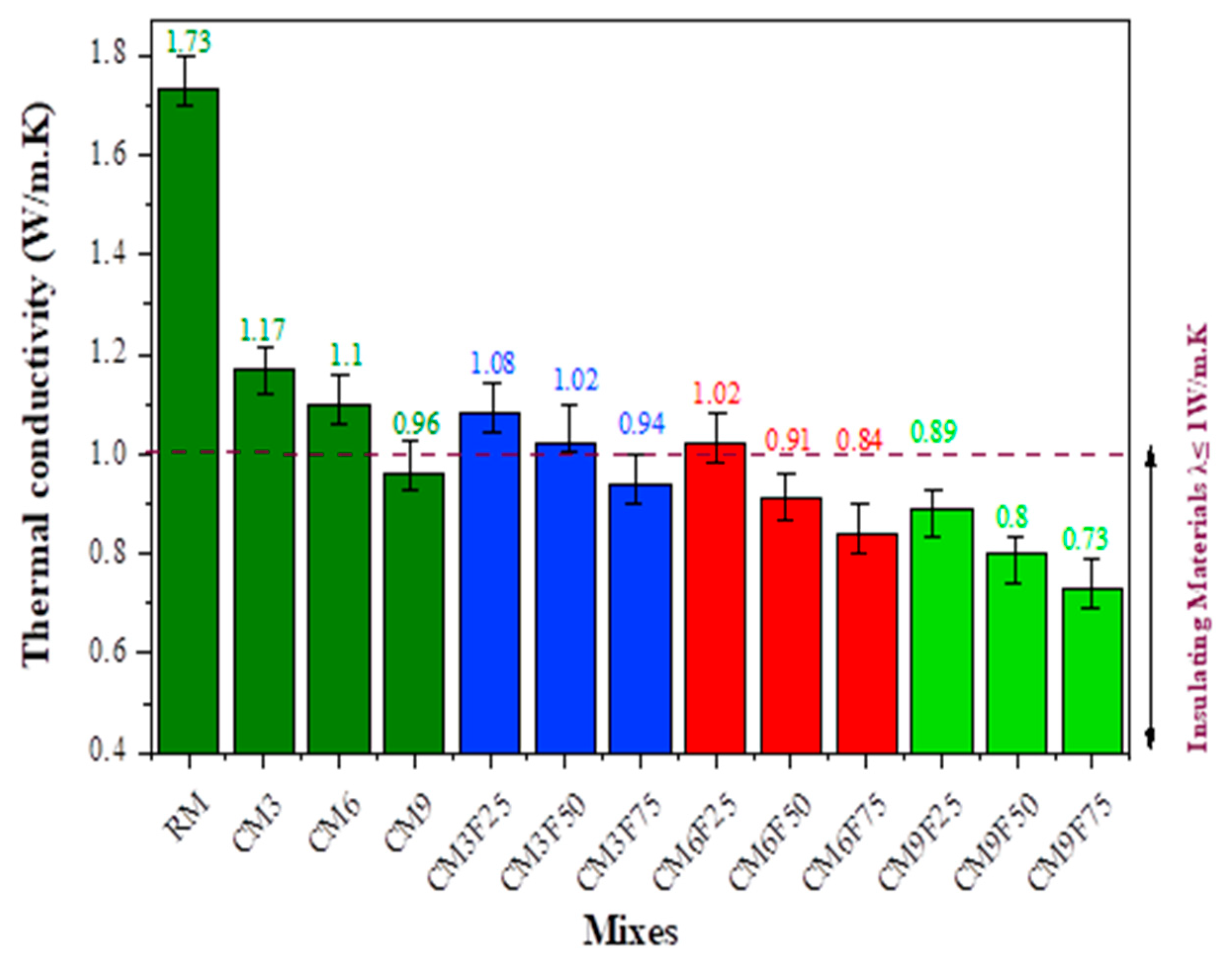
The thermal conductivity of the material is frequently associated with its density. The thermal conductivity values for all mortars after 28 days of curing are displayed in Figure 14. As seen from this figure, the thermal conductivity values decreased exponentially with increasing cork aggregate content. The higher thermal conductivity value (1.73 W/m·K) was observed for RM and decreased to 1.17, 1.10, and 0.96 W/m·K for mortars with 0.3%, 0.6%, and 0.9% cork aggregate, respectively, with a reduction of about 32.37%, 36.42%, and 44.51% compared to RM. This decrease in thermal conductivity can be attributed to the extremely low thermal conductivity value of the included cork aggregates (λ = 0.04 W/m·K). Consequently, the thermal conductivity decreases with increasing cork aggregate content, thus improving thermal insulation. Additionally, the thermal conductivity of mortar composites decreases with increasing fiber content. For instance, the incorporation of 0.25 to 0.75% fiber significantly reduced the thermal conductivity by 37.57 to 57.80% for all lightweight mortars (CM3, CM6, CM9). These findings are consistent with those of other researchers, who concluded that adding CA and PFs reduces the heat conductivity of cementitious materials [26,83,84,85,86,87,88]. Penazzato et al. [87] found an 80% decrease in thermal conductivity by replacing 20% granite sand with cork aggregates. Similarly, Panesar et al. [22] and Ziregue et al. [72] discovered a significant drop in the material’s thermal conductivity when cork aggregates were added to concrete.
Figure 14.
Thermal conductivity for different mortars.
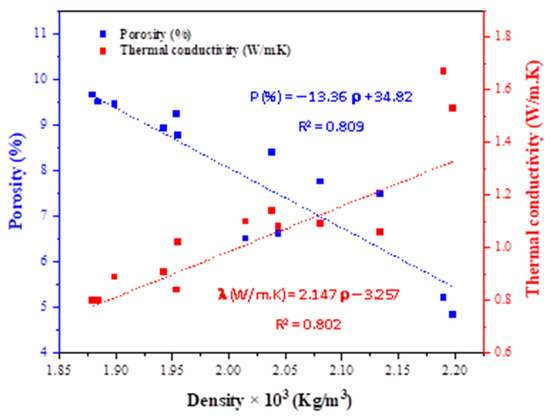
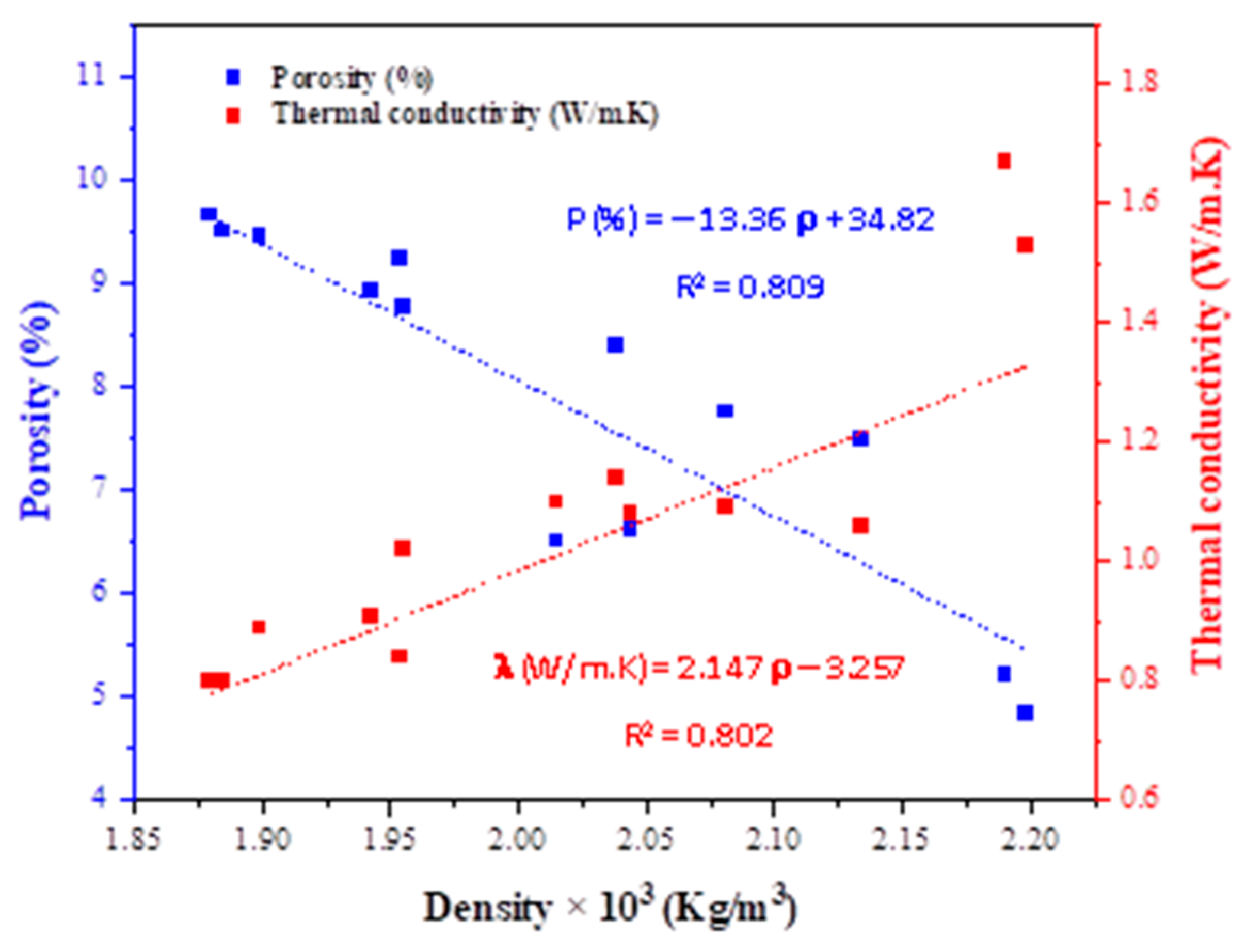
Moreover, the results of the thermal conductivity of different mortars have been confirmed by those of their dry density and porosity, as can be seen from Figure 15. According to this figure, the hardened properties of mortar containing CA and PFs are strongly related to each other, since the voids present inside the cement-based materials have a significant effect on their thermal conductivity [80,84]. A high coefficient of determination (R2 > 0.80) was found, indicating a decrease in thermal conductivity as the dry density decreases and porosity increases. According to the RILEM classification [70] and the dry density and thermal conductivity (λ) values, adding up to 0.90% CA and 0.75% PFs results in lightweight mortar with density and λ values below 2000 kg/m3 and 1 W/m·K, respectively.
Figure 15.
Relationship between density, porosity, and thermal conductivity of different mortars.
4. Conclusions
This research focuses on the recovery and valorization of industrial by-products (CA and PF), with the aim of producing a new screed mortar that satisfies specific and environmental requirements. The results of this study led to the following interesting and valuable conclusions:
- Adding CAs to mortar reduces its workability by a third due to their irregular shape and absorbent nature. This decrease in workability becomes more significantly pronounced with the incorporation of PFs. However, all produced mortars show satisfactory workability for construction mortar in accordance with the NF P 18-452 standard.
- The early- and later-age compressive strengths are inversely proportional to the rise in CA and PF. The 28-day compressive strengths of all mortars remain higher than 15 MPa. According to the RILEM recommendations [70], these mortars can be used in the production of structural elements.
- Increasing CA content as a replacement for natural sand leads to a reduction of up to 33% in the flexural strength of mortar. Nevertheless, incorporating PF mitigates this adverse effect and greatly enhances the flexural strength and energy absorption capacity of the mortar, thereby lowering its cracking and brittleness.
- Increasing CA and PFs decreases mortar dry density and increases its porosity. According to the RILEM classification [70], all the studied mortars are classified as lightweight with good quality, with densities and porosities below 2000 kg/m3 and 10%, respectively.
- The addition of CA and PFs to mortars greatly enhances their thermal insulation, making them suitable for use as materials that promote thermal comfort. The optimal performance regarding thermal conductivity was achieved with mortar that includes 0.9% CA and 0.75% PFs (CM9F75), resulting in a 58% decrease in thermal conductivity when compared to the reference mortar (RM). Given that their thermal conductivity (λ) is close to or less than 1 W/m·K, all mortars based on cork fiber are classified as insulating materials.
Finally, the results indicate that adding PFs into the CA-based mortar aids not only in reducing waste but also in enhancing its thermal insulation and improving its tensile strength, thus diminishing brittleness and improving its ductility. Moreover, this particular screed mortar can serve as a substitute for traditional cement mortars for repair and flooring applications, cladding panels, interior partitions, and insulating plaster for interior walls and roofs. The combination of up to 0.90% CA with 0.75% PFs demonstrates satisfactory mechanical and thermal properties and is strongly recommended for use in construction across numerous structural elements, such as screed mortar for repair and flooring.
Long-term durability testing of cork-based incorporation PF is highly recommended for future studies to assess the material’s performance under various environmental conditions, such as shrinkage, permeability, carbonation resistance, sulfate resistance, freeze–thaw, and high temperature resistance. The energy efficiency and environmental impact assessment are also recommended to know how the industry of this new mortar contributes to the circular economy and environmental protection.
Author Contributions
Conceptualization, L.G. and S.A.; methodology, L.G. and S.A.; formal analysis, L.G. and D.B.; investigation, L.G., D.B. and M.G.; resources, L.G. and D.B.; data curation, M.H.; writing—original draft preparation, L.G., M.H. and D.B.; writing—review and editing, L.G., M.G. and D.B.; visualization, M.G.; supervision, M.G. All authors have read and agreed to the published version of the manuscript.
Funding
This research received no external funding.
Data Availability Statement
Data are contained within the article.
Acknowledgments
The authors would like to express their gratitude to the University of Medea’s civil engineering laboratory engineers for providing technical assistance in making this study a reality.
Conflicts of Interest
The authors declare no conflicts of interest.
References
- Qadir, G.; Rashid, Y.; Hassan, A.; Vall, E.; Saleh, S.; Salim, K. Development and mechanical testing of porous-lightweight geopolymer mortar. Buildings 2021, 11, 1. [Google Scholar] [CrossRef] [Scilit]
- Boukhelkhal, D.; Guendouz, M.; Bourdot, A.; Cheriet, H.; Messaoudi, K. Elaboration of bio-based building materials made from recycled olive core. MRS Energy Sustain. 2021, 8, 98–109. [Google Scholar] [CrossRef] [Scilit]
- Cavalline, T.L.; Gallegos, J.; Castrodale, R.W.; Freeman, C.; Liner, J.; Wall, J. Influence of lightweight aggregate concrete materials on building energy performance. Buildings 2021, 11, 94. [Google Scholar] [CrossRef] [Scilit]
- Khan, M. Factors affecting the thermal properties of concrete and applicability of its prediction models. Build. Environ. 2002, 37, 607–614. [Google Scholar] [CrossRef] [Scilit]
- Marie, I. Thermal conductivity of hybrid recycled aggregate–Rubberized concrete. Constr. Build. Mater. 2017, 133, 516–524. [Google Scholar] [CrossRef] [Scilit]
- Schackow, A.; Effting, C.; Folgueras, M.V.; Güths, S.; Mendes, G.A. Mechanical and thermal properties of lightweight concretes with vermiculite and EPS using air-entraining agent. Constr. Build. Mater. 2014, 57, 190–197. [Google Scholar] [CrossRef] [Scilit]
- Hariz, S.; Ghomari, F.; Touil, B. Characterization of a bio-based concrete using virgin cork aggregate. J. Build. Mater. Struct. 2022, 9, 141–149. [Google Scholar] [CrossRef] [Scilit]
- Laoud, B. Mechanical and physical characterization of lightweight concrete based on limestone sand and cork granules. Int. J. Innov. Appl. Stud. 2013, 3, 739–748. [Google Scholar]
- Merabti, S.; Kenai, S.; Belarbi, R.; Khatib, J. Thermo-mechanical and physical properties of waste granular cork composite with slag cement. Constr. Build. Mater. 2021, 272, 121923. [Google Scholar] [CrossRef] [Scilit]
- Shoukry, H.; Kotkata, M.; Abo-EL-Enein, S.; Morsy, M.; Shebl, S. Thermo-physical properties of nanostructured lightweight fiber reinforced cementitious composites. Constr. Build. Mater. 2016, 102, 167–174. [Google Scholar] [CrossRef] [Scilit]
- Ziregue, A.; Khenfer, M.M.; Quéneudec-t’Kint, M.; Montrelay, N. Developmental potentiality of insulating lightweight concrete based on cork and calcareous sand. J. Adhes. Sci. Technol. 2016, 30, 934–946. [Google Scholar] [CrossRef] [Scilit]
- Blaifi, H.; Guendouz, M.; Belhadj, A.-E.; Boukhelkhal, D.; Hadjadj, M. Sustainable use of recycled plastic and ceramic industrial wastes in eco-friendly construction materials. Environ. Eng. Manag. J. 2023, 22, 1471–1486. [Google Scholar] [CrossRef] [Scilit]
- Guendouz, M.; Boukhelkhal, D.; Hadjadj, M.; Benatallah, L. Study of the physical and mechanical properties of green flowable sand concrete based on waste foundry sand as fine aggregate. Stud. Eng. Exact Sci. 2025, 6, e13160. [Google Scholar] [CrossRef] [Scilit]
- de Assis Neto, P.C.; Bonfim Sales, L.P.; Santos Oliveira, P.K.; da Silva, I.C.; da Silva Barros, I.M.; da Nóbrega, A.F.; Pereira Carneiro, A.M. Expanded vermiculite: A short review about its production, characteristics, and effects on the properties of lightweight mortars. Buildings 2023, 13, 823. [Google Scholar] [CrossRef] [Scilit]
- Guendouz, M.; Boukhelkhal, D. Properties of flowable sand concrete containing ceramic wastes. J. Adhes. Sci. Technol. 2019, 33, 2661–2683. [Google Scholar] [CrossRef] [Scilit]
- Hadjadj, M.; Guendouz, M.; Boukhelkhal, D. The effect of using seashells as cementitious bio-material and granite industrial waste as fine aggregate on mechanical and durability properties of green flowable sand concrete. J. Build. Eng. 2024, 87, 108968. [Google Scholar] [CrossRef] [Scilit]
- Meglio, E.; Davino, A.; Formisano, A. Experimental tests on lightweight cement mortar and concrete with recycled plastic wastes. Buildings 2023, 13, 1181. [Google Scholar] [CrossRef] [Scilit]
- Guendouz, M.; Boukhelkhal, D.; Mechantel, A.; Boukerma, T. Valorization of coffee waste as bio-aggregates in crushed sand concrete production. Environ. Eng. Manag. J. 2023, 22, 147–156. [Google Scholar] [CrossRef] [Scilit]
- Prakash, R.; Srividhya, S.; Vijayalakshmi, R.; Muruganantham, R. Characterization and performance evaluation of coconut shell concrete with alccofine supplements. Zast. Mater. 2024, 65, 481–492. [Google Scholar] [CrossRef] [Scilit]
- Boukhelkhal, D.; Guendouz, M.; Triki, Z. Physical and thermal properties of lightweight self-compacting mortar made with recycled walnut shells as fine agreggrates. Alger. J. Environ. Sci. Technol. 2023, 9, 3292–3299. [Google Scholar]
- Ferreiro-Cabello, J.; Fraile-Garcia, E.; Martinez-de-Pison, F.J. Strength performance of different mortars doped using olive stones as lightweight aggregate. Buildings 2022, 12, 1668. [Google Scholar] [CrossRef] [Scilit]
- Panesar, D.; Shindman, B. The mechanical, transport and thermal properties of mortar and concrete containing waste cork. Cem. Concr. Compos. 2012, 34, 982–992. [Google Scholar] [CrossRef] [Scilit]
- Fonseca, T.J.; Parresol, B.R. A new model for cork weight estimation in Northern Portugal with methodology for construction of confidence intervals. For. Ecol. Manag. 2001, 152, 131–139. [Google Scholar] [CrossRef] [Scilit]
- Tedjditi, A.K.; Ghomari, F.; Belarbi, R.; Cherif, R.; Boukhelf, F.; Bouhraoua, R.T. Towards understanding cork concrete behaviour: Impact of considering cork absorption during mixing process. Constr. Build. Mater. 2022, 317, 125905. [Google Scholar] [CrossRef] [Scilit]
- Aziz, M.; Murphy, C.; Ramaswamy, S. Lightweight concrete using cork granules. Int. J. Cem. Compos. Lightweight Concr. 1979, 1, 29–33. [Google Scholar] [CrossRef] [Scilit]
- Gomes, M.G.; Flores-Colen, I.; Melo, H.; Soares, A. Physical performance of industrial and EPS and cork experimental thermal insulation renders. Constr. Build. Mater. 2019, 198, 786–795. [Google Scholar] [CrossRef] [Scilit]
- Marques, B.; Tadeu, A.; António, J.; Almeida, J.; de Brito, J. Mechanical, thermal and acoustic behaviour of polymer-based composite materials produced with rice husk and expanded cork by-products. Constr. Build. Mater. 2020, 239, 117851. [Google Scholar] [CrossRef] [Scilit]
- Tedjditi, A.K.; Ghomari, F.; Taleb, O.; Belarbi, R.; Bouhraoua, R.T. Potential of using virgin cork as aggregates in development of new lightweight concrete. Constr. Build. Mater. 2020, 265, 120734. [Google Scholar] [CrossRef] [Scilit]
- Borges, A.; Flores-Colen, I.; de Brito, J. Physical and mechanical performance of cement-based renders with different contents of fly ash, expanded cork granules and expanded clay. Constr. Build. Mater. 2018, 191, 535–543. [Google Scholar] [CrossRef] [Scilit]
- Menor, M.C.P.; Caballero, M.J.A.; García, A.M.; Ros, P.S. Multiproperty characterization of non-structural concrete for block made with granulated cork with bark. Constr. Build. Mater. 2024, 418, 135404. [Google Scholar] [CrossRef] [Scilit]
- Novais, R.M.; Senff, L.; Carvalheiras, J.; Seabra, M.P.; Pullar, R.C.; Labrincha, J.A. Sustainable and efficient cork-inorganic polymer composites: An innovative and eco-friendly approach to produce ultra-lightweight and low thermal conductivity materials. Cem. Concr. Compos. 2019, 97, 107–117. [Google Scholar] [CrossRef] [Scilit]
- Moreira, A.; António, J.; Tadeu, A. Lightweight screed containing cork granules: Mechanical and hygrothermal characterization. Cem. Concr. Compos. 2014, 49, 1–8. [Google Scholar] [CrossRef] [Scilit]
- Abdelhadi, H.; Senhadji, Y.; Badache, A.; Mouli, M. Properties of eco-friendly lightweight self-compacting mortar produced by sand replacement with agro-wastes cork particles: A feasibility study. Constr. Build. Mater. 2025, 489, 142289. [Google Scholar] [CrossRef] [Scilit]
- El Wardi, F.Z.; Annaba, K.; Mounir, S.; Maaloufa, Y.; Belarouf, S.; Khabbazi, A.; El Haddaji, B. Study of the design process and thermomechanical properties of a low carbon porous fired clay-cork composite for building insulation. Open Ceram. 2025, 23, 100833. [Google Scholar] [CrossRef] [Scilit]
- Abou Kheir, S.; Wakim, J.; Awwad, E. Flexural resistance of the polypropylene fibres reinforced cement mixes with waste material. MATEC Web Conf. 2019, 281, 01010. [Google Scholar] [CrossRef] [Scilit]
- Guermiti, L.; Benamara, D.; Guendouz, M. Experimental and numerical investigation of the workability and mechanical properties of High-performance fiber-reinforced fluid concrete (HPFRFC). Int. J. Adv. Stud. Comput. Sci. Eng. 2022, 11, 8–25. [Google Scholar]
- Prakash, R.J.; Soundara, B.; Johnson, C. Serviceability performance of fibre reinforced no fine concrete pavement. Zast. Mater. 2024, 65, 360–370. [Google Scholar] [CrossRef] [Scilit]
- Pons Ribera, S.; Hamzaoui, R.; Colin, J.; Bessette, L.; Audouin, M. Valorization of vegetal fibers (Hemp, Flax, Miscanthus and Bamboo) in a fiber reinforced screed (FRS) formulation. Materials 2023, 16, 2203. [Google Scholar] [CrossRef] [Scilit]
- Li, Y.F.; Hsu, C.F.; Syu, J.Y.; Chen, F.W.; Wu, J.-H. Experimental investigation on the mechanical characteristics of ultra-high-molecular-weight polyethylene (UHMWPE) based fiber-reinforced concrete. Case Stud. Constr. Mater. 2024, 21, e03762. [Google Scholar] [CrossRef] [Scilit]
- Al-Ridha, A.S.; Ibrahim, A.K.; Al-Taweel, H.M.; Dheyab, L.S. Effect of Steel Fiber on Ultrasonic Pulse Velocity and Mechanical Properties of Self-Compact Light Weight Concrete. In IOP Conference Series: Materials Science and Engineering; IOP Publishing: Bristol, UK, 2019; p. 022017. [Google Scholar]
- Atea, R.S. A case study on concrete column strength improvement with different steel fibers and polypropylene fibers. J. Mater. Res. Technol. 2019, 8, 6106–6114. [Google Scholar] [CrossRef] [Scilit]
- Mahdi, R.S. Experimental study effect of using glass fiber on cement mortar. J. Babylon Univ. Sci. 2014, 22, 162–181. [Google Scholar]
- Noushini, A.; Samali, B.; Vessalas, K. Effect of polyvinyl alcohol (PVA) fibre on dynamic and material properties of fibre reinforced concrete. Constr. Build. Mater. 2013, 49, 374–383. [Google Scholar] [CrossRef] [Scilit]
- Zhang, Y.; Xiong, R.; Zhang, S.; Jiang, X.; Hu, Z.; Han, K.; Yan, Z.; Zhu, H.; Ju, J.W. Novel lightweight high-performance concrete: Integrating multi-scale fibers and hollow microspheres for superior tensile behavior and thermal resistance. Constr. Build. Mater. 2025, 476, 141233. [Google Scholar] [CrossRef] [Scilit]
- Yan, X.; Jin, X.; Chen, W.; Zhang, H.; Mao, H. Dynamic mechanical behavior of basalt-polyethylene fiber-reinforced concrete after chloride attack. Compos. Struct. 2025, 372, 119582. [Google Scholar] [CrossRef] [Scilit]
- Li, Z.; Guo, T.; Chen, Y.; Fang, C.; Chang, Y.; Nie, J. Influence of basalt fiber and polypropylene fiber on the mechanical and durability properties of cement-based composite materials. J. Build. Eng. 2024, 90, 109335. [Google Scholar] [CrossRef] [Scilit]
- Yang, Y.; Chen, B.; Chen, Y.; Liu, F.; Xie, X.; Guo, W.; Wang, H. Effect of admixtures and PVA fiber on the mechanical properties of high strength cementitious grout. Case Stud. Constr. Mater. 2023, 18, e01884. [Google Scholar] [CrossRef] [Scilit]
- Adebayo, I.W.; Long, G.; Tang, Z.; Ghone, M.O.; Zaland, S.; Garba, M.J.; Yang, K.; Akhunzada, K.; Oluwasina, U.A. Effect of crumb rubber and polyethylene fiber on the strength and toughness of fly ash/slag-based geopolymer concrete. Constr. Build. Mater. 2024, 455, 139133. [Google Scholar] [CrossRef] [Scilit]
- Al-Alusi, M.R.M.; Kurdi, N.H.; Al-Hadithi, A.I.; Hammad, A. An experimental investigation of the mechanical characteristics and drying shrinkage of a single-size expanded polystyrene lightweight concrete reinforced with waste plastic fibres. Constr. Build. Mater. 2024, 415, 135048. [Google Scholar] [CrossRef] [Scilit]
- Wetchakornborirak, K.; Prommanee, P.; Supakata, N. Characteristics of aerogel-incorporated concrete with polyethylene terephthalate fiber. Results Eng. 2025, 27, 107135. [Google Scholar] [CrossRef] [Scilit]
- Wu, Y.; Chen, M.; Chen, D.; Zhou, X.; He, J. Modification of ultra-high molecular weight polyethylene fiber to improve mechanical properties of foamed concrete. Constr. Build. Mater. 2024, 450, 138681. [Google Scholar] [CrossRef] [Scilit]
- Kuranlı, Ö.F.; Uysal, M.; Mele Tidjani, A.; Cosgun, T.; Niş, A.; Aygörmez, Y.; Canpolat, O.; Al-mashhadani, M.M. Evaluation of slag/fly ash based geopolymer concrete with steel, polypropylene and polyamide fibers. Constr. Build. Mater. 2022, 325, 126747. [Google Scholar] [CrossRef] [Scilit]
- NF EN 197-1; Cement: Part 1: Composition, Specifications and Conformity Criteria for Common Cements. AFNOR Standards Institution: Paris, France, 2012; p. 38.
- Amziane, S.; Collet, F.; Lawrence, M.; Magniont, C.; Picandet, V.; Sonebi, M. Recommendation of the RILEM TC 236-BBM: Characterisation testing of hemp shiv to determine the initial water content, water absorption, dry density, particle size distribution and thermal conductivity. Mater. Struct. 2017, 50, 167. [Google Scholar] [CrossRef] [Scilit]
- NF EN 196-1; Test Methods for Cements—Part 1: Determination of Strengths. AFNOR Standards Institution: Paris, France, 2016; p. 39.
- Malchiodi, B.; Marchetti, R.; Barbieri, L.; Pozzi, P. Recovery of Cork Manufacturing Waste within Mortar and Polyurethane: Feasibility of Use and Physical, Mechanical, Thermal Insulating Properties of the Final Green Composite Construction Materials. Appl. Sci. 2022, 12, 3844. [Google Scholar] [CrossRef] [Scilit]
- Kumar, N.; Sahu, A.; Noor, I.M.; Singh, P.K.; Singh, L.K. Investigating the effect of polypropylene fibres and curing parameters on the workability and mechanical properties of concrete. Zast. Mater. 2025, 66, 179–186. [Google Scholar] [CrossRef] [Scilit]
- Yong, Z.C.; Yewa, M.K.; Yewa, M.C.; Behc, J.H.; Leea, F.W.; Lima, S.K.; Sawd, L.H. Utilizing bio-based and industrial waste aggregates to improve mechanical properties and thermal insulation in lightweight foamed macro polypropylene fibre-reinforced concrete. J. Build. Eng. 2024, 91, 109588. [Google Scholar] [CrossRef] [Scilit]
- NF P 18-452; Concrete—Measuring the Flow Time of Concrete and Mortar Using a Flow Meter. AFNOR Standards Institution: Paris, France, 2017; p. 11.
- Schlupp, F.; Page, J.; Djelal, C.; Libessart, L. Influence of recycled sand from biomass combustion on the mechanical, hydration and porous properties of mortar mixtures. Constr. Build. Mater. 2023, 404, 133193. [Google Scholar] [CrossRef] [Scilit]
- NF EN 1015-10; Test Methods for Masonry Mortars—Part 10: Determination of the Apparent Dry Density of Hardened Mortar. AFNOR Standards Institution: Paris, France, 2000; p. 8.
- NF EN 1936; Testing Methods for Natural Stones—Determination of Actual and Apparent Densities and Open and Total Porosities. AFNOR Standards Institution: Paris, France, 2007; p. 12.
- NF EN 993-15; Test Methods for Dense Shaped Refractory Products—Part 15: Determination of Thermal Conductivity by the Hot Wire (Parallel) Method. AFNOR Standards Institution: Paris, France, 2005; p. 19.
- Seshaiah, B.; Rao, P.S.; Rao, P.S. Effect of mineral admixtures on the properties of steel fibre reinforced SCC proportioned using plastic viscosity and development of regression & ANN model. Comput. Concr. 2021, 27, 523. [Google Scholar]
- Liao, Q.; Zhao, X.D.; Wu, W.W.; Lu, J.X.; Yu, K.Q.; Poon, C.S. A review on the mechanical performance and durability of fiber reinforced lightweight concrete. J. Build. Eng. 2024, 88, 10912. [Google Scholar] [CrossRef] [Scilit]
- Chen, Z.; Yu, L.; Jin, W.; Jiang, L.; Guo, M. Effect of ultra-high molecular weight polyethylene fiber on the early mechanical strength and shrinkage crack resistance of concrete. Struct. Concr. 2022, 23, 412–422. [Google Scholar] [CrossRef] [Scilit]
- El-Mir, A.; Fayad, E.; Assaad, J.J.; El-Hassan, H. Multi-Response Optimization of Semi-Lightweight Concrete Incorporating Expanded Polystyrene Beads. Sustainability 2023, 15, 8757. [Google Scholar] [CrossRef] [Scilit]
- Mahmmod, L.M.R.; Abdul Rasoul, Z.M.R.; Radhi, M.S.; Wajde, S.S. Sustainable utilization of polyethylene terephthalate in producing local precast flooring concrete slabs. Period. Eng. Nat. Sci. 2019, 7, 1990–1995. [Google Scholar] [CrossRef] [Scilit]
- Frahat, N.B.; Malek, A.S.; Ali, A.; Omar Ibrahim, O.M. New strategy for closing the plastic loop: Lightweight concrete by the waste of recycled synthetic fibers. Constr. Build. Mater. 2024, 423, 135896. [Google Scholar] [CrossRef] [Scilit]
- RILEM. Functional Classification of Lightweight Concrete. Mater. Struct. 1978, 11, 281–282. [Google Scholar]
- Bellei, P.; Magalhães, F.; Pereira, M.; Torres, I.; Solstad, R.; Flores-Colen, I. Innovative Thermal Renders Incorporating Oyster Shells for Sustainable Insulation. Sustainability 2023, 15, 15952. [Google Scholar] [CrossRef] [Scilit]
- Ziregue, A.; Krobba, B.; Khenfer, M.M.; Dheilly, R.; Houessou, J.; Quéneudec-t’Kint, M. Study of the physicochemical and mechanical compatibility of expanded cork with a cement matrix based on limestone sand. Építöanyag 2022, 2, 71–76. [Google Scholar] [CrossRef] [Scilit]
- de Oliveira, L.A.P.; Castro-Gomes, J.P. Physical and mechanical behaviour of recycled PET fibre reinforced mortar. Constr. Build. Mater. 2011, 25, 1712–1717. [Google Scholar] [CrossRef] [Scilit]
- Parra, C.; Sánchez, E.M.; Miñano, I.; Benito, F.; Hidalgo, P. Recycled plastic and cork waste for structural lightweight concrete production. Sustainability 2019, 11, 1876. [Google Scholar] [CrossRef] [Scilit]
- Bagherzadeh, R.; Pakravan, H.R.; Sadeghi, A.-H.; Latifi, M.; Merati, A.A. An investigation on adding polypropylene fibers to reinforce lightweight cement composites (LWC). J. Eng. Fibers Fabr. 2012, 7, 155892501200700400. [Google Scholar] [CrossRef] [Scilit]
- Ghone, M.O.; Long, G.; Yang, K.; Ma, X.; Islam, N. Toughness improvement of low strength ceramsite lightweight concrete by polypropylene fiber and recycled rubber particle. Constr. Build. Mater. 2024, 422, 135716. [Google Scholar] [CrossRef] [Scilit]
- Xie, X.; Zhou, Z.; Jiang, M.; Xu, X.; Wang, Z.; Hui, D. Cellulosic fibers from rice straw and bamboo used as reinforcement of cement-based composites for remarkably improving mechanical properties. Compos. Part B Eng. 2015, 78, 153–161. [Google Scholar] [CrossRef] [Scilit]
- Al-Hadithi, A.I.; Almawla, S.A.; Mohammed, M.K. Fresh, mechanical and impact properties of self-compacting lightweight concrete containing waste PET fibers. Innov. Infrastruct. Solut. 2023, 8, 268. [Google Scholar] [CrossRef] [Scilit]
- Hong, S.H.; Choi, J.S.; Lee, H.J.; Park, H.J.; Yoon, Y.S. Optimizing hybrid ratio of steel and polyethylene fibers on the compressive and tensile properties of ultra-high-strength lightweight concrete. Constr. Build. Mater. 2025, 494, 143515. [Google Scholar] [CrossRef] [Scilit]
- Yew, M.K.; Beh, J.H.; Yew, M.C.; Lee, F.W.; Saw, L.H.; Lim, S.K. Performance of surface modification on bio-based aggregate for high strength lightweight concrete. Case Stud. Constr. Mater. 2022, 16, e00910. [Google Scholar] [CrossRef] [Scilit]
- Guendouz, M.; Boukhelkhal, D. Physical, mechanical and thermal properties of Crushed Sand Concrete containing Rubber Waste. MATEC Web Conf. 2018, 149, 01076. [Google Scholar] [CrossRef]
- Ortega, J.M.; Branco, F.G.; Pereira, L. Long-Term Behavior Related to Water Ingress in Mortars Which Combine Expanded and Natural Cork Lightweight Aggregates and Eco-Friendly Cements. Buildings 2023, 13, 1651. [Google Scholar] [CrossRef] [Scilit]
- Brás, A.; Leal, M.; Faria, P. Cement-cork mortars for thermal bridges correction. Comparison with cement-EPS mortars performance. Constr. Build. Mater. 2013, 49, 315–327. [Google Scholar] [CrossRef] [Scilit]
- Asadi, I.; Shafigh, P.; Hassan, Z.F.B.A.; Mahyuddin, N.B. Thermal conductivity of concrete–A review. J. Build. Eng. 2018, 20, 81–93. [Google Scholar] [CrossRef] [Scilit]
- Karade, S.R.; Irle, M.; Maher, K. Influence of granule properties and concentration on cork-cement compatibility. Holz Als Roh-Und Werkst. 2006, 64, 281–286. [Google Scholar] [CrossRef] [Scilit]
- Hwalla, J.; El-Hassan, H.; Assaad, J.J.; El-Maaddawy, T. Fiber-reinforced geopolymers made with recycled aggregates for screed flooring and repair applications. Clean. Mater. 2025, 15, 100293. [Google Scholar] [CrossRef] [Scilit]
- Penazzato, L.; Cosentino, L.; Turco, C.; Mateus, R.; Oliveira, D.V. Thermal properties of multi-purpose mortar mixtures: Experimental characterization and influencing parameters. J. Build. Eng. 2025, 116, 114701. [Google Scholar] [CrossRef] [Scilit]
- Carvalho, R.; Teixeira-Dias, F.; Varum, H. Cyclic behaviour of a lightweight mortar with cork granulate composite. Compos. Struct. 2013, 95, 748–755. [Google Scholar] [CrossRef] [Scilit]

Disclaimer/Publisher’s Note: The statements, opinions and data contained in all publications are solely those of the individual author(s) and contributor(s) and not of MDPI and/or the editor(s). MDPI and/or the editor(s) disclaim responsibility for any injury to people or property resulting from any ideas, methods, instructions or products referred to in the content. |
© 2025 by the authors. Licensee MDPI, Basel, Switzerland. This article is an open access article distributed under the terms and conditions of the Creative Commons Attribution (CC BY) license.