


Abstract
To study the effects of different spliced forms and spliced lengths on the flexural performance of traditional spliced timber columns, four-point bending tests were conducted. A total of 14 specimens were designed across three groups, including one group of solid timber columns and two groups of spliced timber columns featuring the half-lap joint and cross-lap joint forms, all with a combined length of 2000 mm. Test results indicate that the half-lap joints exhibited discrete surface strain and stress concentration due to the discontinuity of the joint structure. Their flexural load-bearing capacities ranged from 6.6% to 11.6% of the solid timber columns. In contrast, the cross-lap joints achieved continuous strain distribution by virtue of the spliced head’s self-locking effect, demonstrating superior overall deformation coordination. Their flexural load-bearing capacities ranged from 8.4% to 11.1% of the solid timber columns. A noticeable reduction in initial stiffness was observed for the spliced columns. The solid timber columns and half-lap joints primarily exhibited brittle failure, while the cross-lap joints displayed plastic failure. Furthermore, a flexural load-bearing capacity model was developed for the spliced timber columns. By comprehensively considering the material strength reduction and the geometric parameters of the joint, the model was validated through experiments, demonstrating high reliability. The mean ratio of test-to-theoretical values was 1.0005, with a mean absolute percentage error of 3.2%; the coefficient of determination was 0.998 for the half-lap joints and 0.986 for the cross-lap joints. This model provides an accurate theoretical assessment tool for the repair projects of traditional timber structures.
1. Introduction
In recent years, heightened awareness of cultural heritage protection has drawn increasing academic and engineering attention to the safety performance and durability of timber structures, which serve as important carriers of history and technology [1,2]. As a natural and renewable material, wood is susceptible to erosion from the natural environment and man-made damage during long-term service, leading to the gradual degradation of its mechanical properties [3]. Early investigations into the mechanical properties of wood included explorations of its microstructure. For instance, as early as the mid-twentieth century, researchers like Tabarsa [4] and Farruggia [5] analyzed the dynamic response of wood fibers under load by means of microscope technology. In terms of macroscopic properties, Uhmeier et al. [6] found that temperature had a significant effect on the compressive yield stress of spruce, with its value at 200 °C being 10% lower than that at 0 °C. Reiterer et al. [7] systematically revealed the stress–strain characteristics of spruce under different loading directions through experiments. On the basis of these experiments, the construction of theoretical models is deepened. Khennane’s team [8] introduced the concept of damage energy release rate and established a tensile constitutive model of wood. Oudjene et al. [9] focused on describing the secondary hardening behavior of wood under transverse compression, established the corresponding elastic–plastic constitutive model, and developed a numerical algorithm for ABAQUS. In addition, Valipour et al. [10] regarded wood as a natural fiber-reinforced polymer (FRP) and proposed another constitutive model. The study also extended to the influence of environmental factors. These studies on the microstructure, macroscopic mechanical properties, and constitutive relationship of wood lay a theoretical and experimental foundation for further understanding and accurately predicting the crucial flexural properties in wood structure buildings.
At the level of wood structural members, flexural performance, as a key mechanical index, has been widely studied. In terms of experimental research, Li et al. [11] carried out the static bending test on a timber column with an inner notch in a traditional Japanese wood structure. The test and statistical analysis showed that the continuous wood on both sides of the notch was helpful in maintaining high flexural strength and reducing the stress concentration around the notch. The fracture location and strength standard deviation are affected by both the notch depth and the width of the tension side notch. Ahmad et al. [12] evaluated the flexural resistance of Malaysian tropical hardwood finger-jointed beams through experiments and found that vertical finger-jointed direction and longer finger length can significantly improve the flexural strength of finger-jointed beams. Scholars pay more attention to glued laminated timber. As the representative of modern engineering wood, cross-laminated timber (CLT) and glued laminated timber (GLT) have attracted wide attention due to their excellent mechanical properties and environmental friendliness. Ou et al. [13] explored and analyzed the flexural resistance and failure mechanism of domestic fast-growing Chinese fir GLT through flexural testing. Xuan et al. [14] proposed a dovetail mortise–tenon connection GLT beam joint. The stress state, failure mode and bending resistance were investigated by finite element analysis. The results show that the connection performance and flexural capacity of the joints are significantly improved with the increase in tenon length. Altaher et al. [15] found that the average density of the panel is the best predictor of mechanical properties by performing bending performance tests on homogeneous and hybrid CLT panels of beech, poplar, and spruce. Brandner et al. [16] verified the first CLT out-of-plane flexural capacity model proposed in 2006 through numerical simulation and a large number of tests and confirmed that its prediction accuracy was better than other candidate models, additionally confirming that the density and elastic modulus models suitable for laminated GLT were also suitable for CLT, which provided a key basis for promoting the establishment of a European CLT strength grading system and improving product reliability and market acceptance. In terms of theoretical research, scholars are committed to establishing a prediction model for wood bending resistance. In terms of theoretical research, Schneeweiß et al. [17] reviewed the flexural strength of wood and its main influencing factors and pointed out that it was not only affected by size effect and loading mode, but also closely related to annual ring direction and transverse compressive strength. The actual stress distribution and deformation of the bearing point lead to significant differences between the measured values and the predicted values of the classical beam theory. Based on the experimental data of 17 kinds of Brazilian hardwood, Arroyo et al. [18] systematically proposed a linear prediction model of flexural strength. Muñoz et al. [19] used 26 European oak trees to make plate samples and established a failure modulus prediction model with elastic modulus as the only predictor variable based on their mechanical properties. Osuna-Sequera et al. [20] studied 21 Sarzmann pine rafters and summarized the representative nominal cross-sections of the members and their influence on the measured values of static elastic modulus.
In view of the performance limitations of natural wood, FRP has shown great potential in the flexural reinforcement of timber structures, forming another important research direction. Borri et al. [21] conducted a four-point flexural test on old wooden beams strengthened with carbon fiber-reinforced polymer (CFRP) sheets. The results show that CFRP sheets can significantly improve their flexural stiffness and bearing capacity. Khelifa et al. [22] conducted a four-point flexural test on finger-jointed timber beams strengthened with CFRP sheets. CFRP sheets enhance the stiffness, ductility, and strength values of finger-jointed timber beams. The composite reinforcement method can significantly improve the bearing capacity and deformation capacity of timber columns and effectively delay the damage process. Ou et al. [23] studied the flexural deformation and mechanical properties of circular-section timber beams with longitudinal through-thickness cracks strengthened with FRP sheets by establishing analytical solutions and performing parameter analysis. Zhu et al. [24] studied the effects of different process parameters of glass fiber-reinforced polymer (GFRP) on the flexural mechanical properties and reliability of timber structural specifications by using finite element and non-destructive testing methods.
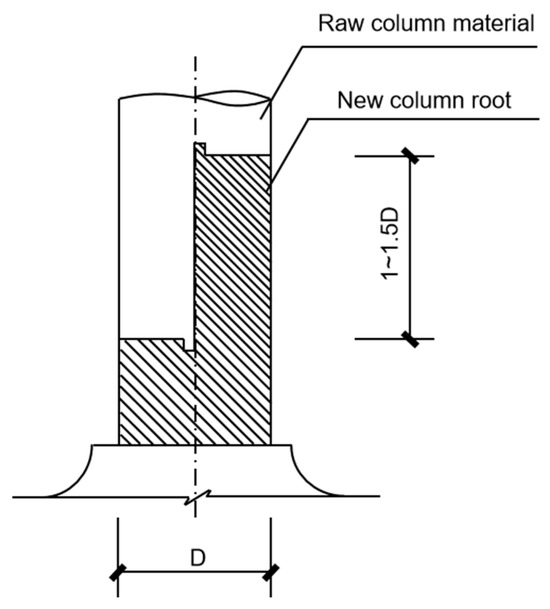
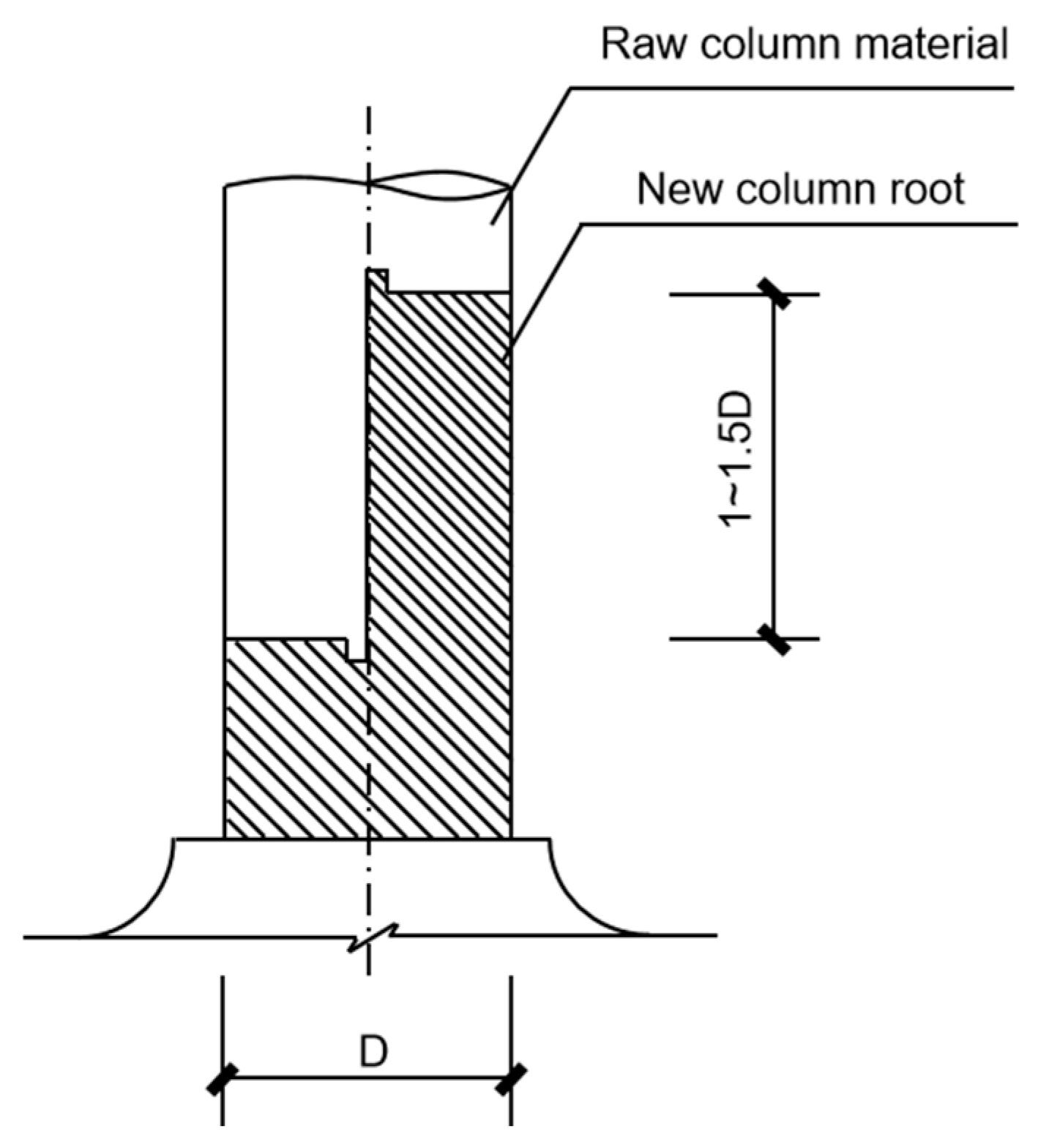
However, currently, research on the mechanical properties of the spliced timber columns commonly used for the restoration of cultural relics in traditional wooden structures is still relatively scarce. In particular, there is no systematic understanding of the influence mechanism of different spliced forms and geometric parameters on the flexural mechanism of spliced timber columns. In the restoration practice of historical buildings and wooden cultural relics, in order to retain the original materials and shapes to the greatest extent, the restoration method of removing the rotten parts and then splicing with the same kind of wood is (Figure 1) often adopted. This method follows the principles of ‘minimum intervention’ and ‘repairing the old as the old’. However, for this specific application, its mechanical properties and long-term safety have not been fully studied and quantitatively evaluated, resulting in some challenges in balancing the ‘authenticity’ and ‘safety’ of the structure. To this end, the purpose of this study is to systematically evaluate the flexural performance of spliced timber columns under different spliced forms and geometric parameters by designing a special test device and using a four-point bending test, and to reveal its mechanical mechanism and failure mode, so as to make up for the research gap in this field and provide a theoretical basis for the scientific application of traditional spliced repair technology and the refined protection of wooden structural cultural relics.
Figure 1.
Spliced diagram.
2. Overview of Test
2.1. Specimen Design
The design and fabrication process of all specimens strictly followed the relevant regulations and technical requirements in the national standard GB/T 50329-2012 [25] of the People’s Republic of China. The high-quality natural Chinese fir produced in Taishun County, Wenzhou City, Zhejiang Province was selected as the specimen wood. In the selection of materials, special attention was paid to the screening of wood sections without obvious knots, cracks, decay, and other visible large defects, so as to ensure the consistency of the specimen material and the reliability of the test results.
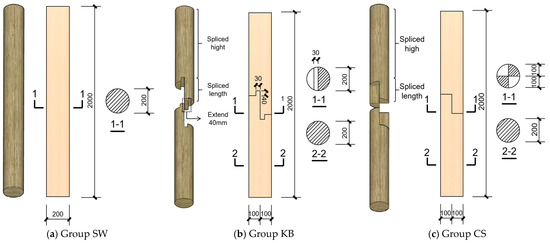
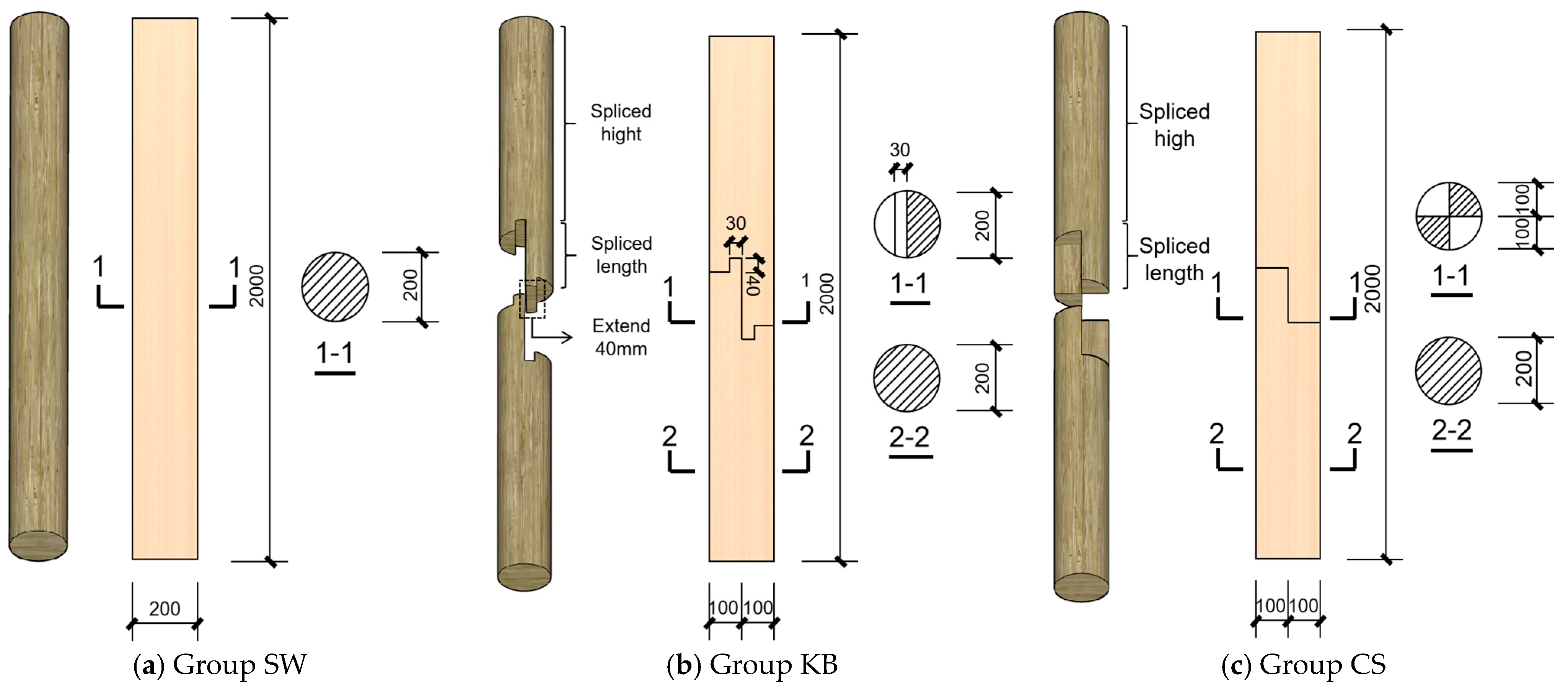
The specimen is designed to have a total length of 2000 mm when spliced together, and the cross-section is a circle with a diameter of 200 mm. In this study, a total of 3 groups of specimens were set up, a total of 14. The first group was a complete solid wood column as a control group for evaluation criteria; the other two groups were spliced timber columns using the traditional spliced form of the wood structure, as the experimental group for investigation, including the half-lap joint and cross-lap joint. The style of the specimens and parameters are shown in Figure 2 and Table 1. In Figure 2, the shadow part is the part cut by the cut line.
Figure 2.
Specimen style.
Table 1.
Parameters of specimens.
2.2. Material Properties
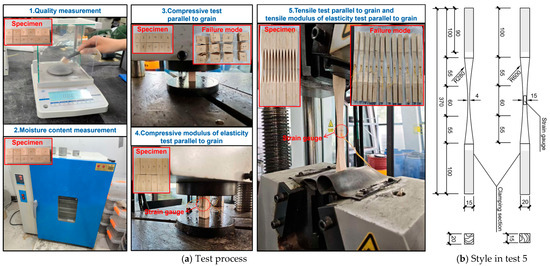
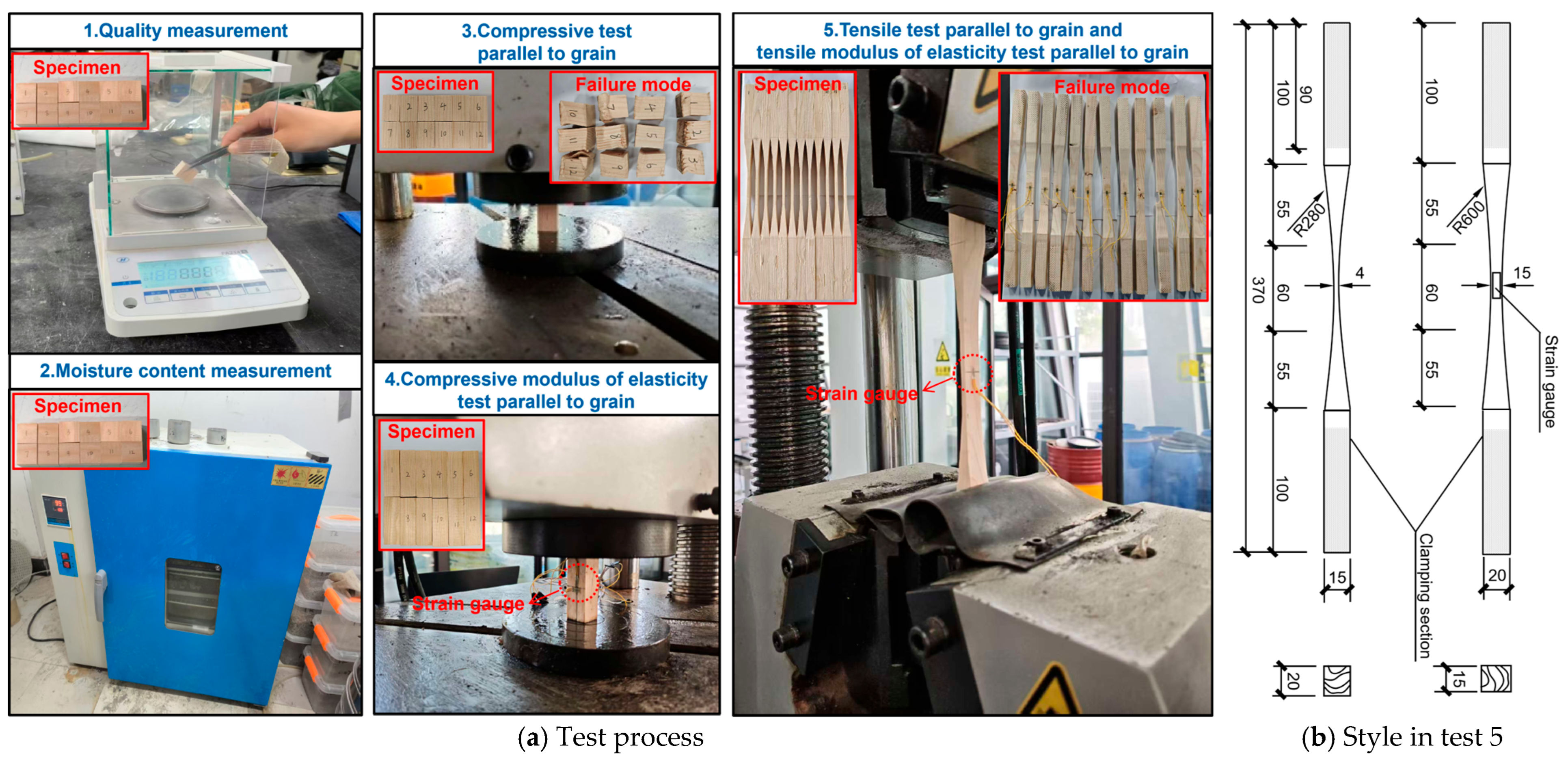
According to GB/T 50329-2012 [25], standard specimens of the same batch as the flexural test were made and the mechanical properties test was carried out. The moisture content and density of the specimens were measured according to GB/T 1931-2009 [26], the compressive strength parallel to grain was measured according to GB/T 1935-2009 [27], the compressive modulus of elasticity parallel to the grain was measured according to GB/T 15777-2017 [28], and the tensile strength parallel to grain was measured according to GB/T 1938-2009 [29]. On the test image of the tensile test parallel to the grain, the linear section was taken to calculate the tensile modulus of elasticity parallel to grain of the wood. The test process is shown in Figure 3, and the obtained data were corrected to the results when the moisture content is 12%, as shown in Table 2.
Figure 3.
Test process of material properties.
Table 2.
Mechanical properties of wood materials.
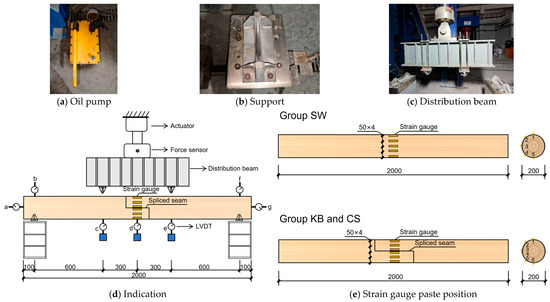
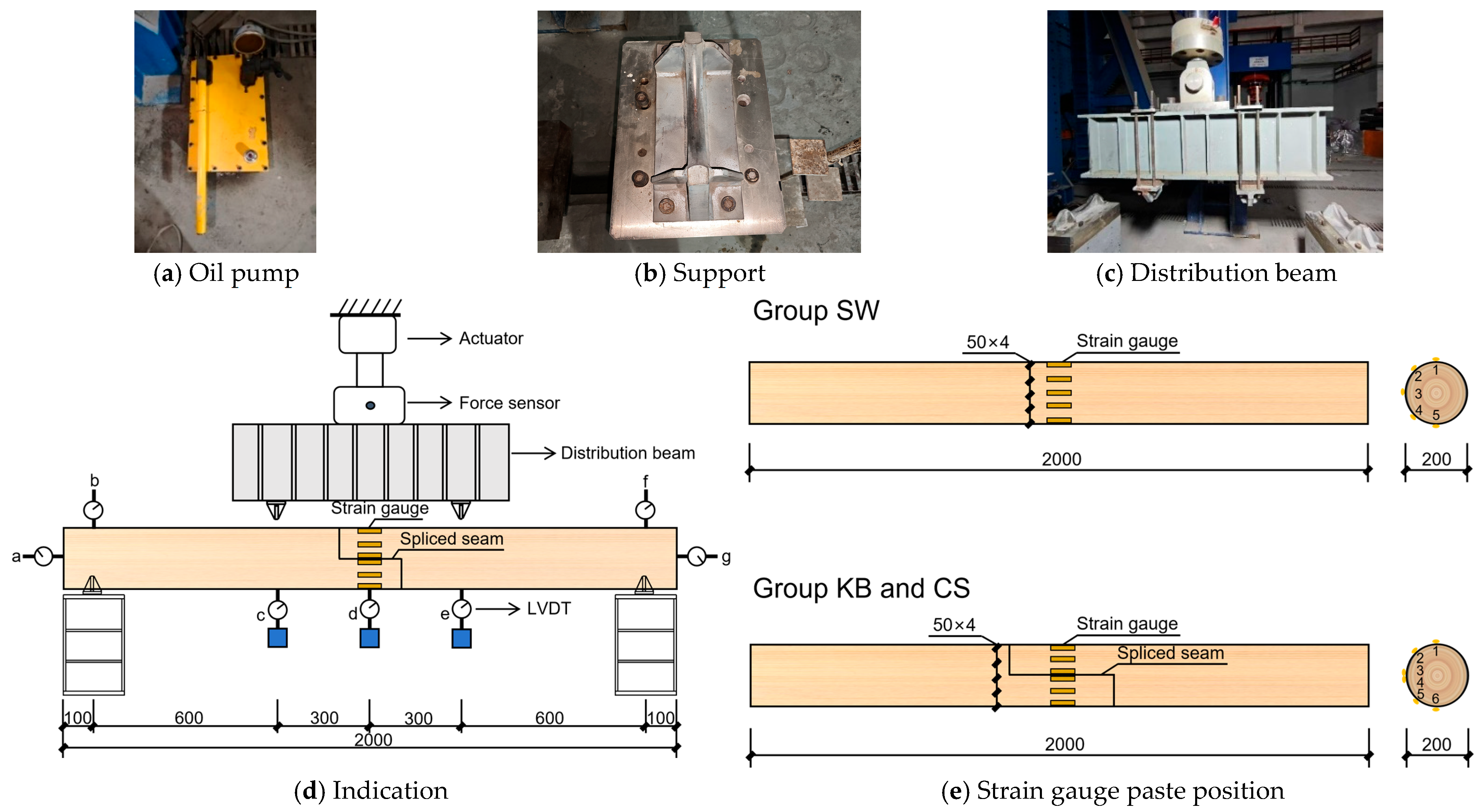
2.3. Test Scheme
The test was carried out on a 1000 kN flexural loading system using symmetrical four-point bending loading. The test equipment is shown in Figure 4. A total of seven linear variable displacement transducer (LVDTs) were arranged. LVDTs a and g were used to measure the slip of the left and right supports, respectively. LVDTs b and f were used to measure the settlement of the specimens at the left and right supports, respectively. LVDTs c, d, and e were used to measure the displacement of the left and right shear spans and mid-span, respectively. In the control group, five strain gauges along the grain direction were arranged at the mid-span position along the section height, numbered S1 to S5 from top to bottom. Six strain gauges were arranged in the test group, numbered from top to bottom as S1 to S6, and the upper and lower of the spliced seam were S3 and S4 strain gauges respectively. Before the test, the specimens should be placed in an indoor ventilation environment for uniform drying to ensure that its moisture content meets the test standards, and the surfaces of the specimens should be polished with wood-specific sandpaper. The test steps are as follows:
Figure 4.
Test equipment.
(1) After adjusting the position of the support and the loading point, the specimen is placed on the support. In order to prevent the displacement meter from slipping on the surface during the test, the acrylic plate is pasted at the top of the displacement meter, and then the displacement meter is placed at the specified position. The strain gauge and the displacement meter are, respectively, connected to the static strain acquisition instrument.
(2) Preload the specimen, observe whether the LVDT and the dial indicator are inclined, whether the strain gauge is off, and whether the specimen slips during the loading process.
(3) The displacement loading is adopted. The loading is carried out by the test device. The loading is manually controlled. The loading rod of the oil pump needs to be slowly rotated during the loading to ensure that the rate is consistent, so that the increase value of each rotation displacement is roughly the same.
(4) In the test, the data change of the acquisition instrument is observed, and the failure mode and process of the specimen are recorded at all times. When the load reaches 70% of the peak bearing capacity, or the structure has a large deformation, the test is stopped.
3. Test Results and Analyses
3.1. Test Phenomena and Failure Modes
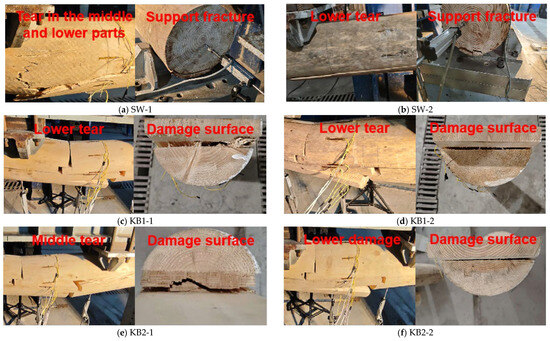
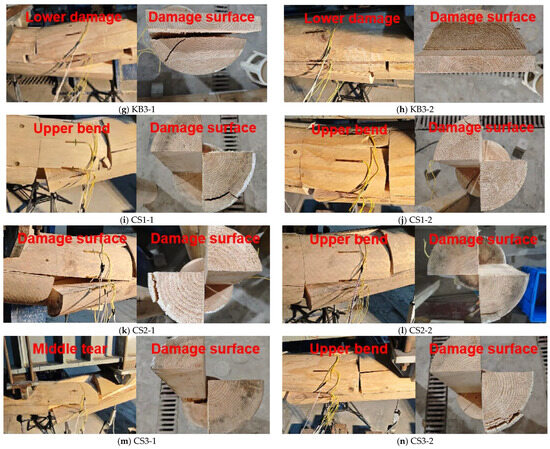
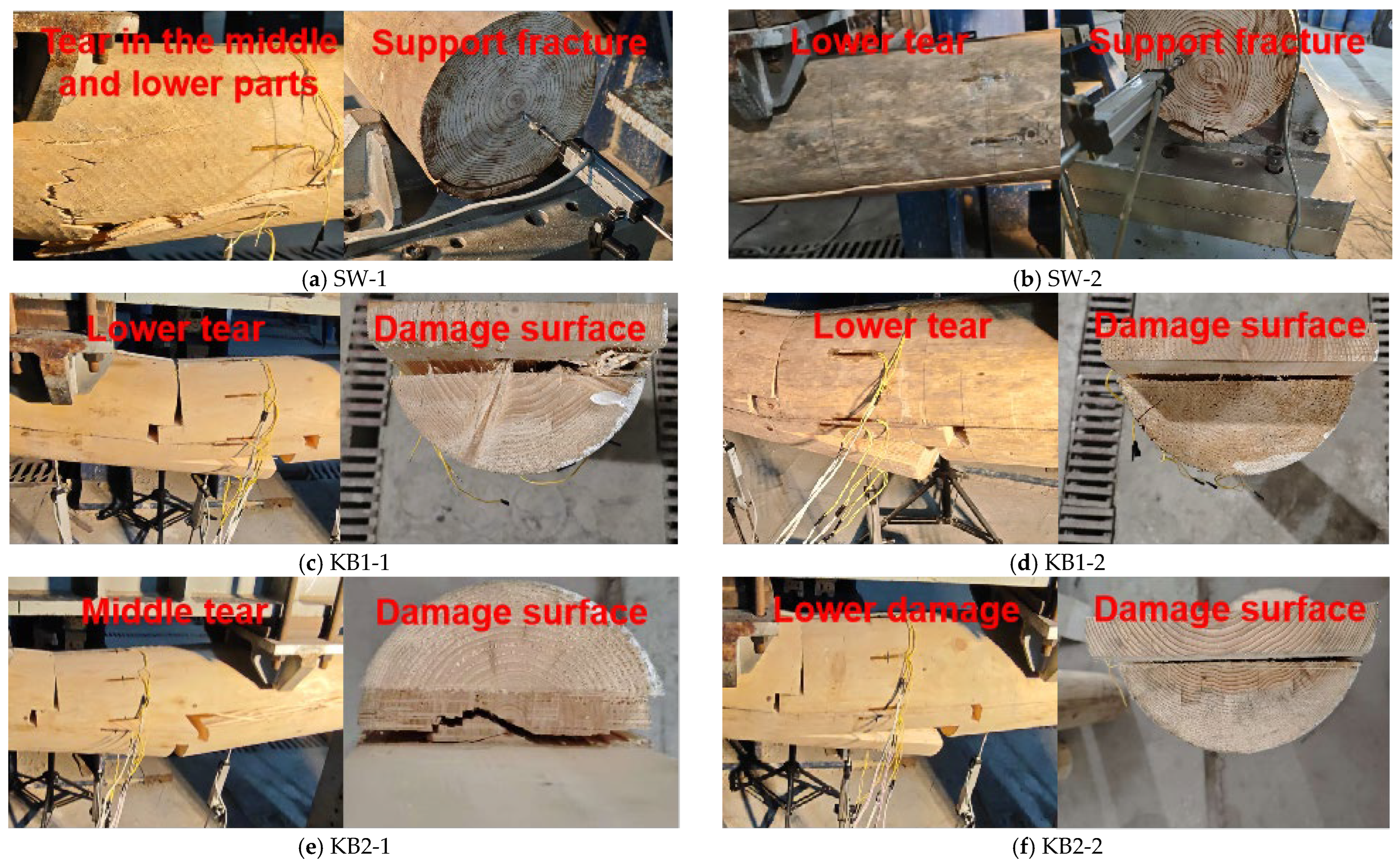
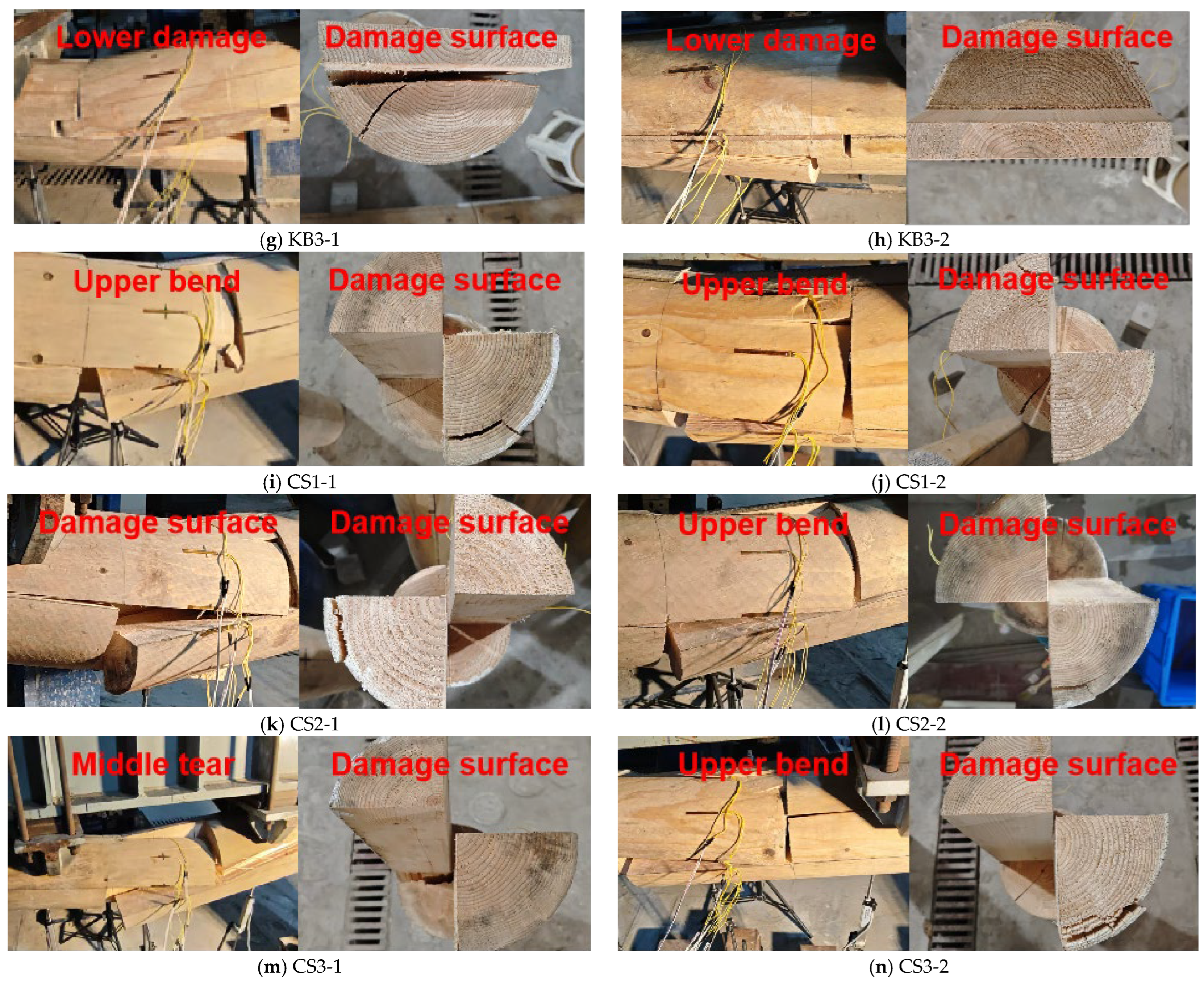
This test systematically observed the entire process of three specimen groups from the initial loading stage to final failure, and the failure mechanisms of different spliced forms differed significantly. The failure phenomena of the specimens are shown in Figure 5.
Figure 5.
Test phenomena.
Taking the test phenomenon of SW-2 as an example, the specimen failure process shows the typical brittle tensile failure characteristic of wood: the load and displacement basically maintain a linear relationship at the initial stage of loading. With the increase in load, the specimen begins to emit a slight fiber tearing sound, but there is no obvious change on the surface. When the loading continues, the splitting sound inside the wood increases significantly, which eventually leads to local fragmentation of the wood at the right support, and multiple small cracks appear near the middle and lower parts of the specimen. These cracks then rapidly extend to both ends of the specimen, and finally after a loud noise, the specimen suddenly loses its bearing capacity and is destroyed. Finally, the middle and lower parts of specimen SW-2 are severely torn, and the bottom of specimen SW-1 forms a long penetrating crack. The failure modes of the specimens are shown in Figure 4.
Different from the brittle failure of solid timber columns, the damage to the spliced specimens (group KB and group CS) is concentrated in the spliced areas. The test phenomena of specimens in the group KB are roughly similar, and there is a slight friction sound during loading. Then, with the increase in load, the two spliced heads at the spliced area gradually slip back, accompanied by a continuous slight tearing sound. In the process of continuous loading, the stress concentration leads to the increase in wood fiber tearing at the lower part of the spliced head, and the cracks continue to expand near this part. Finally, all the specimens were destroyed due to the phenomenon of spliced head detachment, and the cracking phenomenon in the lower tensile zone was particularly serious. Except for the middle tearing of specimen KB2-1, the rest of the specimens showed serious tearing of the lower spliced head, indicating that the failure mode was controlled by the tensile shear failure of the spliced head root. The CS group specimens showed different flexible characteristics, and the two parts of the specimens were slightly staggered at the initial stage of loading. With the increase in load, the spliced head began to bend gradually, accompanied by a tearing sound; with continuing load, the upper spliced head first bent and turned over at the edge of the spliced head. Finally, each specimen showed obvious spliced head flexural deformation and serious overall deformation, and there were cracks in the head and tail of the spliced surface. The cracks in specimen CS3-1 even extended to the support, which indicated that the failure mechanism of the cross-lap joint was dominated by the flexible yield and excessive deformation of the spliced head under the combined action of shear force and flexural moment.
There are mainly two failure modes in the SW group, one of which was the shrinkage crack inside the wood. Under the action of external load, the internal shear deformation increases, and the local deformation on the upper and lower sides of the crack is inconsistent, resulting in the development of the crack through the whole specimen section, with the section producing layered damage. The second mode is the tensile failure of the fiber at the bottom of the wood. The specimen is destroyed immediately after reaching the peak load, which is a brittle failure. In the KB group, except that the specimen KB2-1 is mainly characterized by central tearing failure, the other specimens are characterized by fiber tearing of the lower splicing head, which are all brittle failure. The spliced heads of the CS group had large flexural failure. Besides specimen CS1-2 showing brittle failure, the other specimens exhibited plastic failure.
3.2. Load–Displacement Curve
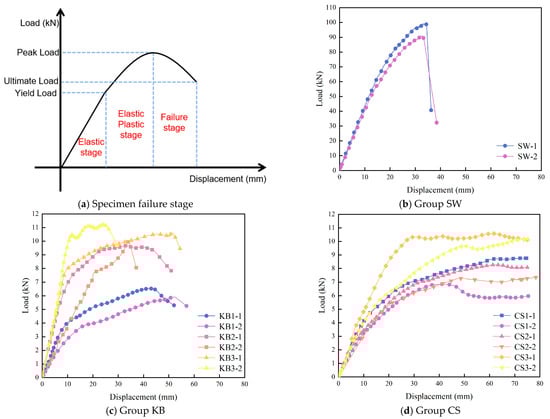
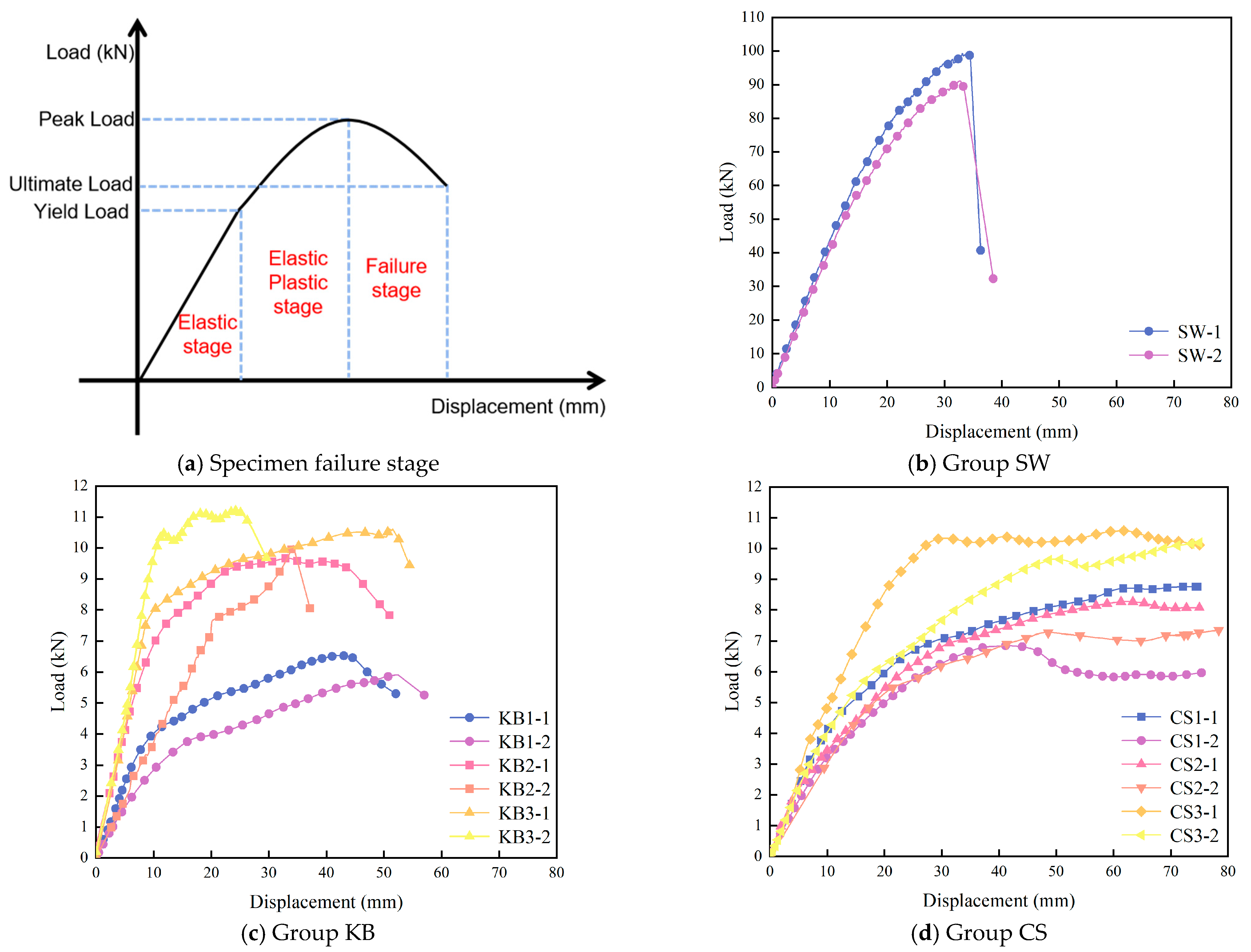
The load versus displacement curve of the specimen is shown in Figure 6. There are three main mechanical stages: linear stage, nonlinear stage, and failure stage.
Figure 6.
Load versus displacement curve.
Firstly, in the initial linear elastic stage, the load and displacement of the three groups of specimens show an approximately proportional relationship. Due to the excellent integrity of the solid timber specimen, the load–displacement curve shows good continuity. For the half-lap joint specimens, the increase in the spliced length is positively correlated with the increase in the rate of load growth with displacement, which indicates that the longer the spliced length, the larger the spliced area, and the better the continuity of the force transmission path. The specimens show good consistency in the elastic stage, and there is little difference in the initial stiffness and load increase between different groups of specimens. After entering the nonlinear stage, the mechanical behavior differences between the three types of specimens are more significant. After the solid timber specimen reaches peak load, brittle failure occurs rapidly due to the tearing of the fiber at the bottom of the tensile zone, and the load drops sharply, reflecting the typical flexural failure mode of the wood. The half-lap joint specimen maintains a certain bearing capacity near the peak load; subsequently, due to slippage, extrusion, or local tearing at the spliced areas, the load growth trend slows down significantly, accompanied by slight fluctuations, and finally fails due to excessive tearing in the lower tension zone. In the nonlinear stage, the specimen shows excellent ductility behavior: the load does not decay rapidly after reaching the peak value but remains near the peak load for a long time, and the deflection continues to increase significantly, showing excellent deformation adaptability and energy dissipation capacity.
In general, the load–deflection curves of the half-lap joint specimens and the cross-lap joint specimens experienced a linear elastic stage followed by a nonlinear plastic stage, similar to the solid timber specimen. However, significant differences were observed in their specific mechanical responses, bearing capacity evolution, and final failure modes, highlighting the decisive influence of different spliced forms on the flexural behavior of timber members. For the half-lap joint specimens, increasing the spliced length can effectively enhance the peak bearing capacity; nevertheless, their post-peak behavior remains constrained by the local weakness of the spliced area, resulting in limited deformation capacity after failure. In contrast, although the cross-lap joint specimens exhibit a relatively limited improvement in peak bearing capacity, they demonstrate superior deformation capacity and a more gradual post-peak response, leading to a more stable and reliable overall mechanical performance.
3.3. Peak Load and Initial Stiffness
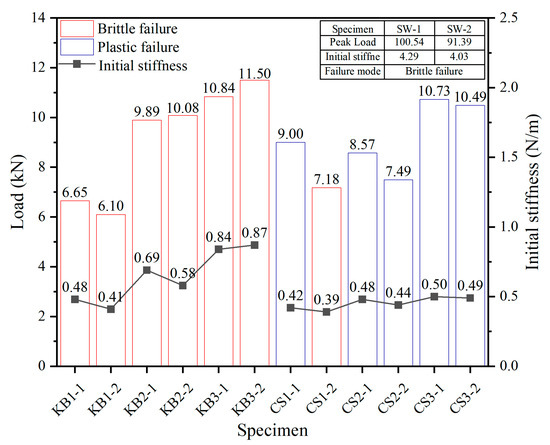
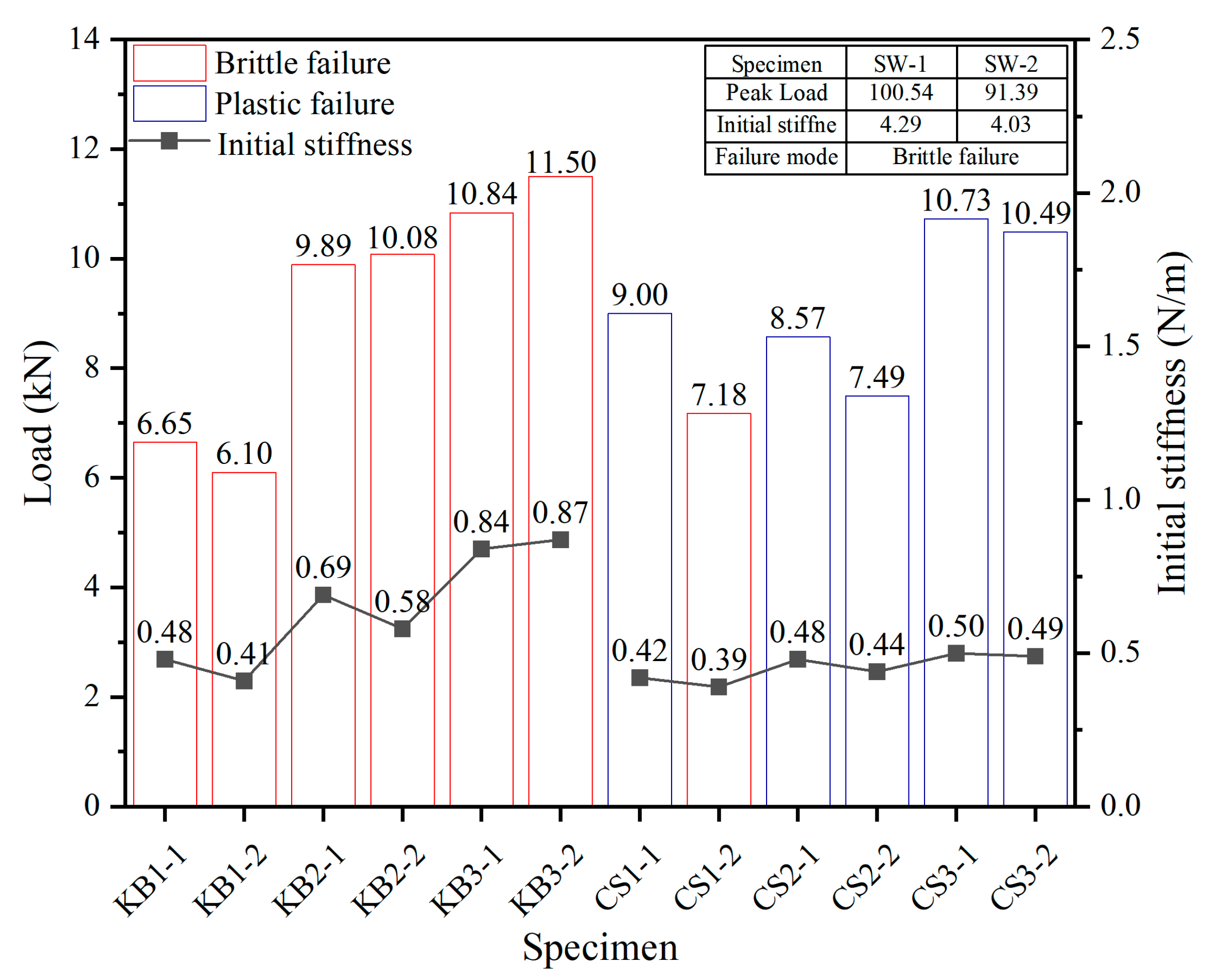
The peak load and initial stiffness of each group of specimens are shown in Figure 7.
Figure 7.
Peak load and initial stiffness.
In terms of peak load, the overall bearing capacities of the KB and CS groups were significantly lower than that of the SW group. The peak bearing capacity of the KB group was 6.6% to 11.6% of the average bearing capacity of the SW group, and the peak bearing capacity of the CS group was 8.4% to 11.1%. It can be seen from the results that under the constraint of no axial load at both ends, the direct spliced method encounters difficulty in effectively transferring the load, and the mechanical potential of the wood itself cannot be fully utilized. The spliced area is the weak link of the structure. In the KB group, the peak bearing capacity increases gradually with the increase in spliced length. In the transition from KB1 to KB2, it can be seen that the peak bearing capacity significantly increases. However, in the transition from KB2 to KB3, although the peak bearing capacity still increases, the increase is small. This shows that an increase in spliced length can effectively enhance the overall stability and load-bearing capacity of the structure, but there is an optimal threshold of the spliced length. After exceeding the threshold, the benefits of increasing the spliced length will gradually decrease. Similarly, in the CS group, except for CS1-1, the other specimens also showed a trend of increasing peak bearing capacity with the increase in spliced length. This shows that the cross-lap joint can better realize the transmission of force under the condition of longer spliced length.
In terms of initial stiffness, the corresponding point of 0.4 times the peak load in the load–displacement curve is taken as the feature point, and the slope of the front section is defined as the initial stiffness. It can be seen from the figure, the initial stiffness of the group KB and the group CS was more severely weakened than that of the SW group. The overall initial stiffness of the group KB was slightly higher than that of the group CS. The initial stiffness of the group KB specimens increases with the overall spliced length, while the initial stiffness of the group CS specimens does not change significantly with the spliced length. This weakening is mainly because the mortise and spliced head joint replaces the continuous wood, resulting in the interruption of the force transmission path, the reduction in the effective bearing cross-sectional area, and the increase in the local deformation of the connection part.
Although the overall stress trend of each group of specimens in the elastic stage is basically the same, there is still a certain degree of initial stiffness dispersion between the same group of specimens. This difference mainly comes from the following aspects: First, the inevitable size error and assembly gap difference in the processing of spliced seam will directly affect the contact state and force path in the initial stage. Second, natural wood itself has anisotropy and discreteness. Even if the same wood is selected, its local defects, annual ring distribution, and fiber orientation differences will still lead to fluctuations in mechanical response. Third, in the initial stage of loading, the micro-slip and local crushing in the spliced areas will have a more sensitive effect on the initial stiffness. Therefore, the initial stiffness difference of the same group of specimens belongs to the test discreteness within a reasonable range, which does not affect the judgment of the influence of spliced forms and spliced lengths on the overall flexural performance.
3.4. Load–Strain Curve
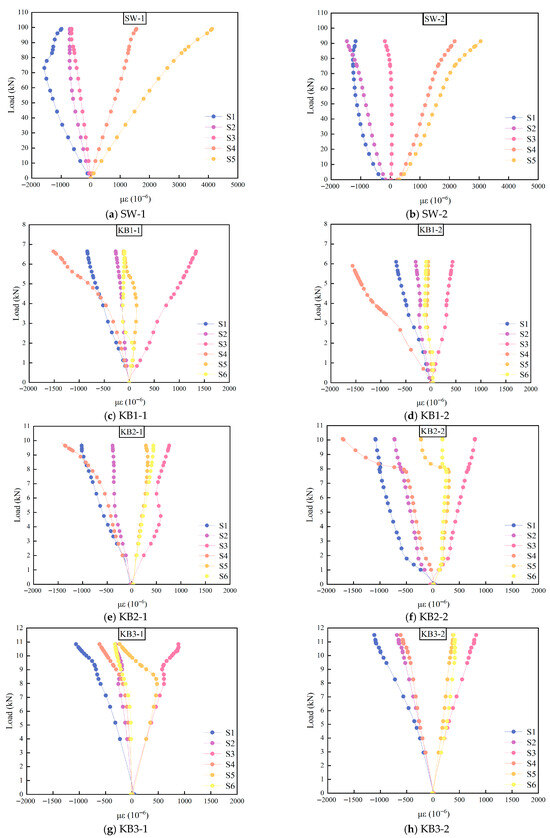
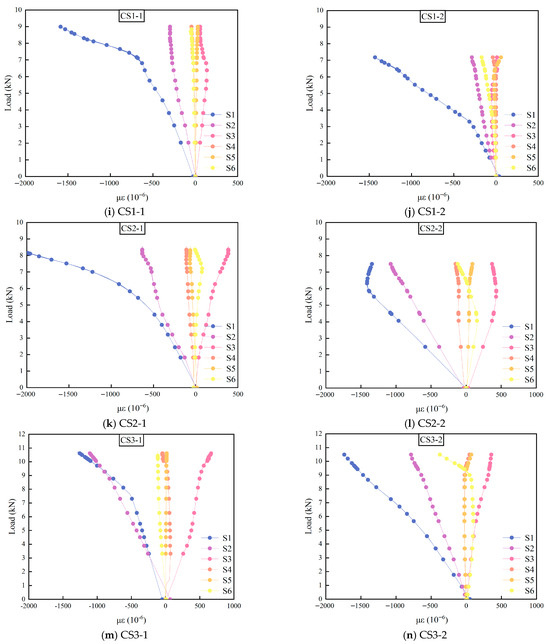
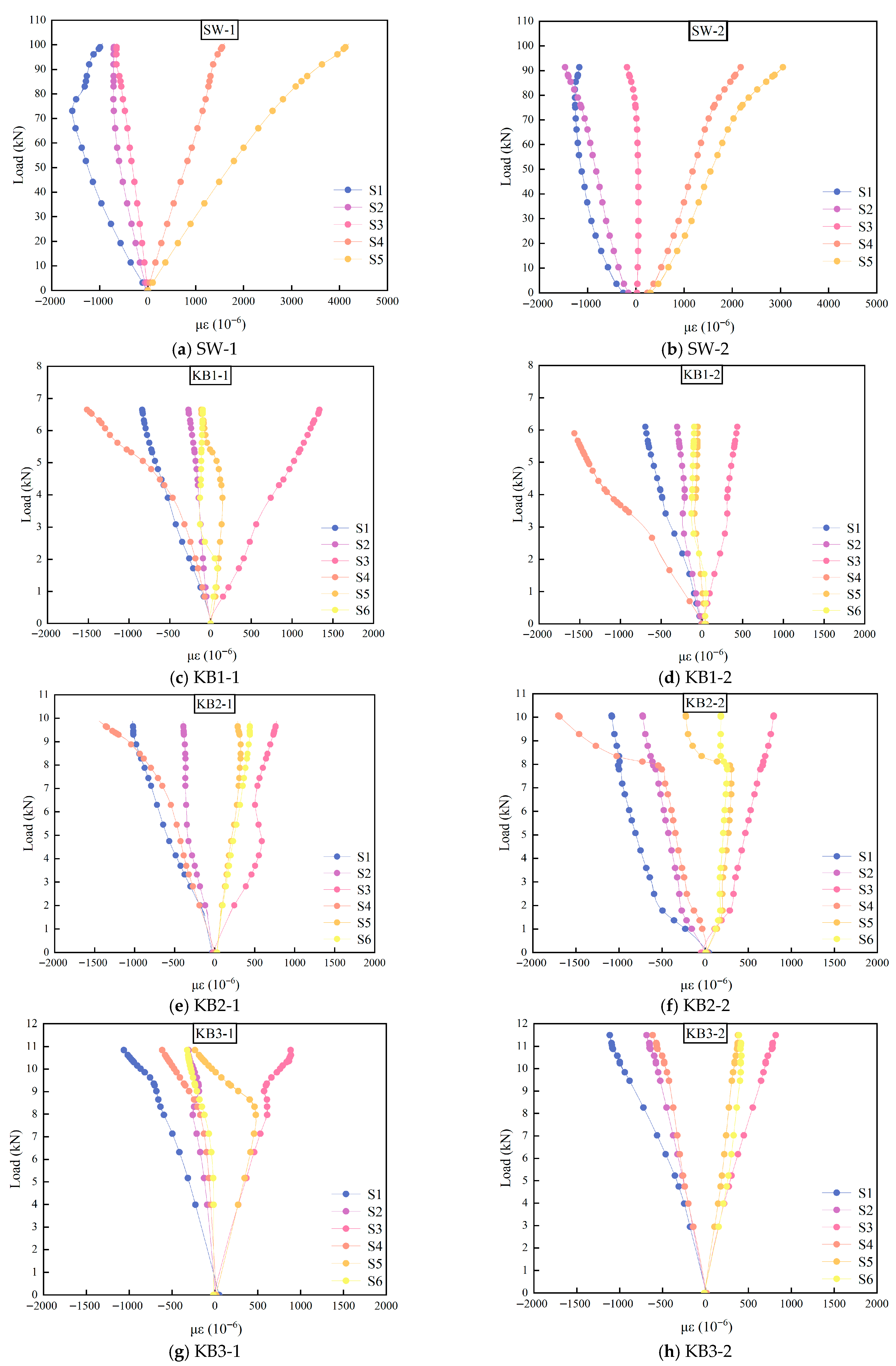
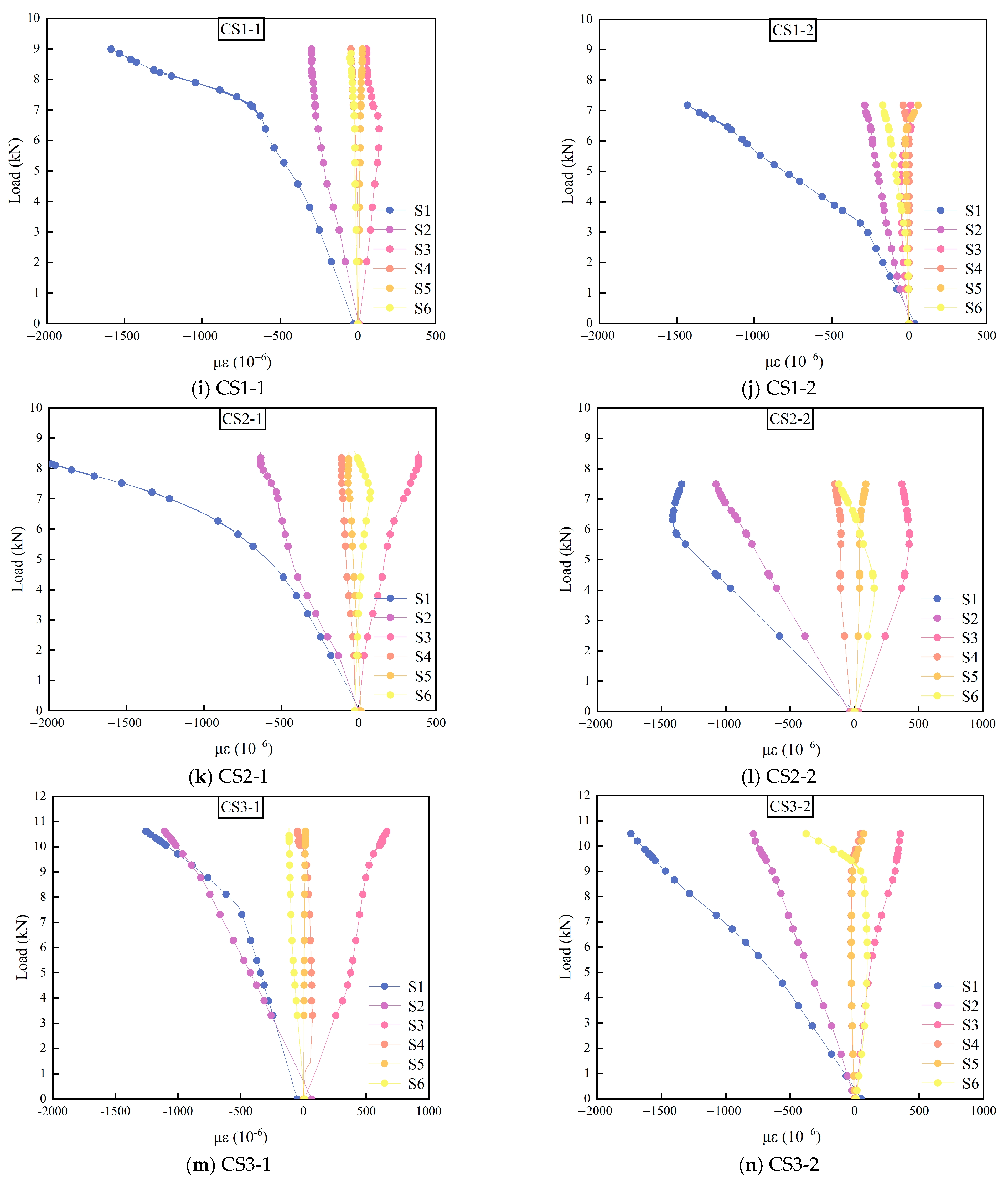
The load–strain curve of the specimens is shown in Figure 8.
Figure 8.
Load–strain curve.
According to the SW group specimen curve, it can be seen that the neutral axis of the section is in the lower part of the section during the flexural process due to the tensile strength of the wood along the grain is higher than its compressive strength. When subjected to load, the upper half of the region is in a state of compression, while the lower half of the region is divided into two parts: the part near the neutral axis is still compressed, but the part closer to the bottom of the position is gradually transformed into a tensile zone. With the increase in load, the tensile strain gradually accumulates and increases in the lower part, especially in the bottom area.
The strain distribution of KB specimens shows significant dispersion due to the obvious structural weakening in the middle. Near the spliced interface, the local stress concentration often occurs in the compression zone due to the uncompacted contact between the spliced head and the mortise, which leads to the early crushing of the upper compression fiber. At the same time, due to the limited spliced length in the lower spliced head, the force transmission path is interrupted, the tensile strain increases sharply at the spliced seam, and even obvious slip or dislocation occurs.
The CS group specimens can transfer the tensile and compressive internal forces more effectively during the flexural process, and the strain distribution is relatively continuous. Although the neutral axis also moves down, the strain gradient of the upper and lower fibers in the spliced area changes gently, and there is no obvious mutation. In the early stage of loading, the development trend of compressive strain and tensile strain in the upper and lower regions is similar to that of the solid timber specimen. After entering the nonlinear stage, although the tensile strain at the bottom continues to grow, due to the self-locking effect of the mortise and spliced head and the large contact area, the tension can be effectively transmitted through the spliced head, which inhibits the local strain concentration. Therefore, the cross-lap joint specimen can still maintain a large deformation capacity after reaching the peak load, and the tensile strain expands slowly and stably, showing good coordinated deformation capacity.
4. Calculation and Analysis of Flexural Load-Bearing Capacity
4.1. Specimen Strength
The test results of the mechanical properties of the wood measured in Section 2.2 are the strength of small standard clearwood specimens. The clearwood specimens are small in size and have no defects, while the actual large-size specimens have defects. Therefore, according to GB 50005-2017 [30], the strength reduction of the specimen is shown in Table 3.
Table 3.
Reduced strength.
4.2. Calculation of Flexural Load-Bearing Capacity of Group SW
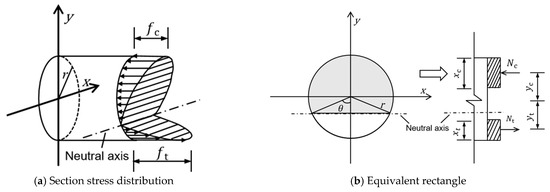
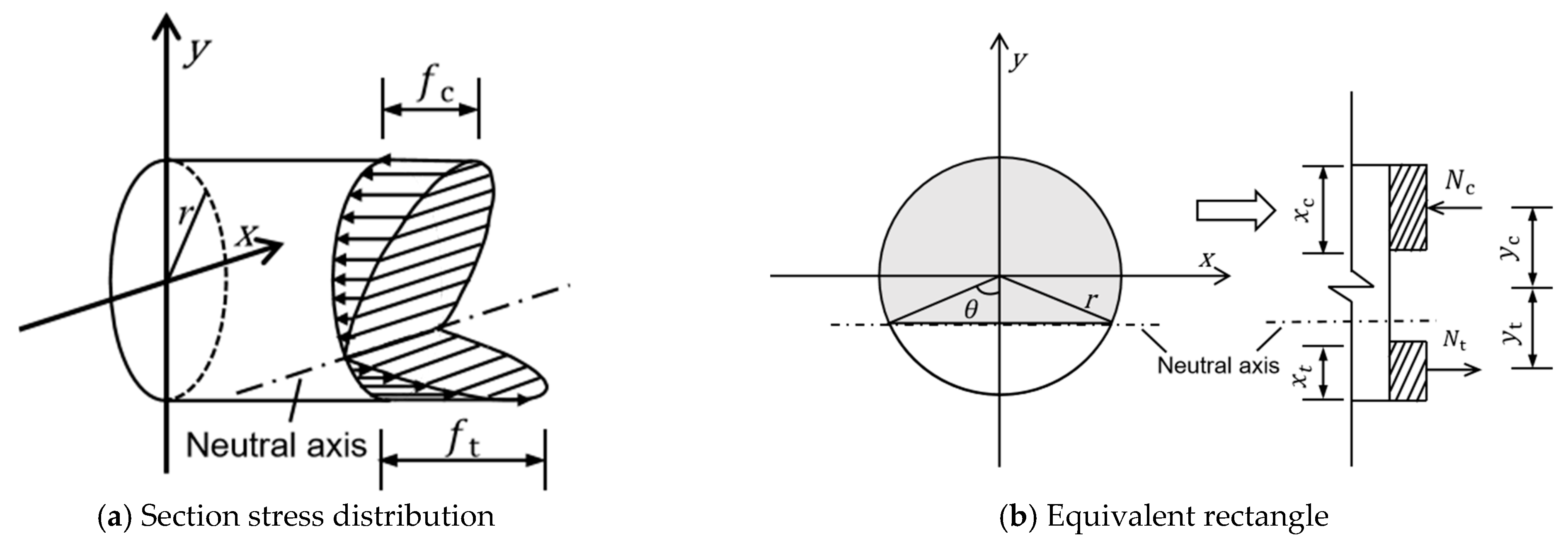
Figure 9 is the schematic diagram of the stress model of the SW group before the failure. In the figure, is the radius of the original section, is the compressive strength of the wood along the grain, is the tensile strength of the wood along the grain, is the distance from the center of the relative compression zone to the axis, is the distance from the center of the relative tension zone to the axis, is the height of the relative compression zone, is the height of the relative tension zone, is the compression concentrated force of the timber column, is the tension concentrated force of the timber column, and is the angle between the tension and compression junction and the x-axis. Before the failure of the SW group, the neutral axis of the section should be below the center of the circle because the compressive strength along the grain is less than the tensile strength along the grain. It is assumed that the cross section remains flat after deformation, which conforms to the plane section assumption, and the influence of shear force in the section on the flexural load-bearing capacity is ignored.
Figure 9.
Simplified diagram for flexural load-bearing capacity calculation.
The upper half of the shadow in the image is the compression area, the area is , the lower half is the tension area, and the area is , then:
The compressive stress and tensile stress are converted into equivalent rectangular stress. The width of the rectangular stress is set to be the stress coefficient of the rectangular stress diagram in the compression zone and the stress coefficient of the rectangular stress diagram in the tension zone. The resultant forces of the compression zone and the tension zone are, respectively:
Let ; then, we get
The flexural moment of the relative compression zone to the x-axis is
The flexural moment of the relative tensile zone to the x-axis is
Finally, the flexural bearing capacity of the timber column can be obtained as
Among them, the rectangular stress coefficient and are 1.0, and the final calculation result is 27.876 .
4.3. Calculation of Flexural Load-Bearing Capacity of Group KB and Group CS
The flexural load-bearing capacity of the spliced timber column will be greatly weakened due to the existence of the spliced surface, and according to the different spliced forms, that is, the change in the spliced surface form, the overall flexural load-bearing capacity weakening range is inconsistent. Therefore, according to the half-lap joint and cross-lap joint specimens studied in the previous article, the average flexural load-bearing capacity of the solid timber is taken as the standard value, and the flexural load-bearing capacity weakening coefficient and that of each spliced form is introduced. According to the test value and equation, it is inversely calculated, and then the spliced height, spliced length, and extended height in the half-lap joint are fitted, and the fitting values and are obtained, respectively. The relevant equations are shown in Equations (9)–(11). It is noteworthy that the model proposed in this study is specifically designed for non-adhesive traditional splicing techniques (half-lap joint and cross-lap joint). It utilizes a geometrically parameterized ‘reduction factor’ to quantify the influence of the mortise–tenon connection, making it a semi-empirical theoretical model. Consequently, its formulas and coefficients cannot be directly applied to modern splicing technologies that rely on adhesive bonding or metal connectors.
where is the flexural load-bearing capacity of the spliced timber column, the unit is ; is the weakening coefficient; is the flexural load-bearing capacity of the solid wood column, the unit is ; is the diameter of the timber column, the unit is mm; is the height of the wooden column, the unit is mm; is the spliced length of the timber column, the unit is mm; is the spliced height of the timber column, the unit is mm; is the extended height to of the half-lap joint, the unit is mm; , b, and are the fitting coefficients.
The relevant fitting parameters of the maximum flexural load-bearing capacity of the half-lap joints are listed in Table 4. According to the data in the table, the specific calculation equation can be obtained as Equation (12).
Table 4.
Mechanical properties of wood materials in group KB.
The relevant fitting parameters of the maximum flexural load-bearing capacity of the cross-lap joints are listed in Table 5. According to the data in the table, the specific calculation equation can be obtained as Equation (13).
Table 5.
Mechanical properties of wood materials in group CS.
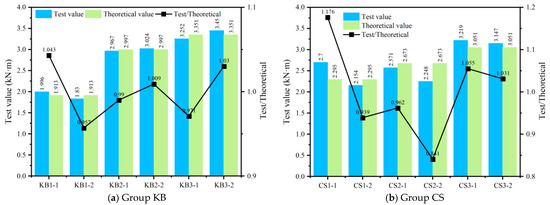
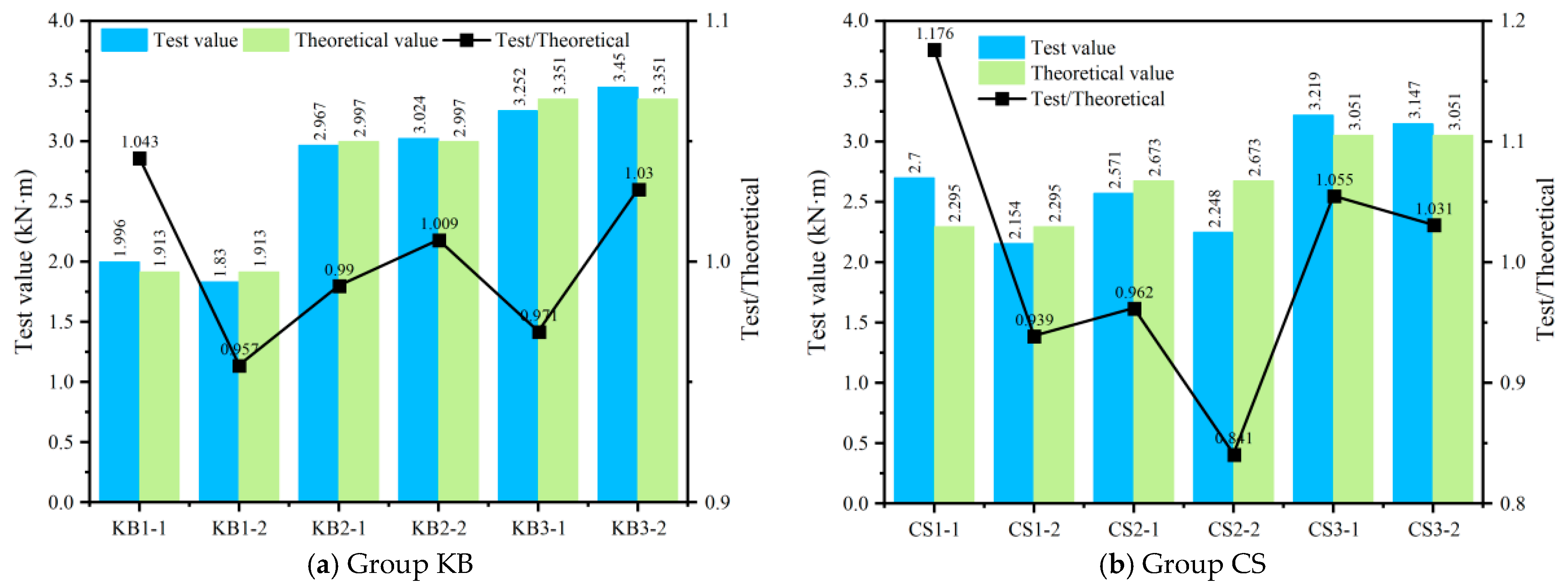
The data in Table 4 and Table 5 were visualized, and the results are presented in Figure 10. The mean ratio of the test to theoretical values is 1.0005, with a mean absolute percentage error of 3.2%. The coefficients of determination () are 0.998 for the half-lap joints and 0.986 for the cross-lap joints, respectively.
Figure 10.
Comparison of predicted and experimental values of flexural capacity.
5. Conclusions
In this paper, a total of 14 specimens of solid wood, half-lap joint, and cross-lap joint were tested for flexural performance. The load versus displacement curve, peak bearing capacity, initial stiffness, failure mode, and load–strain curve were analyzed. The equations for calculating the maximum flexural moment of solid and spliced timber columns were established. The main conclusions are as follows:
(1) The connection form of joints is the key factor in determining the failure mode and deformation characteristics. The solid wood shows typical brittle tensile failure, with rapid development of cracks and sudden loss of bearing capacity. The half-lap joint group is mainly characterized by spliced head slip and spliced head detachment, which is controlled by the tensile–shear composite failure of the spliced head root. The cross-lap joint group shows flexible yield characteristics, and the spliced head undergoes progressive bending deformation under the combined action of bending and shearing.
(2) The three groups of specimens show linear, nonlinear, and failure three-stage mechanical response, but the evolution law is different. In the linear stage, the solid wood specimen is ideally elastic, the initial stiffness of the half-lap joint specimen increases with the spliced length, and the response of the cross-lap joint specimen is consistent. In the nonlinear stage, the brittle failure of the solid wood specimen occurred suddenly. The bearing capacity of the half-lap joint specimen increased slowly and fluctuated, while the cross-lap joint specimen showed excellent ductility and maintained the peak load in the continuous deformation.
(3) The peak load of the spliced specimens was significantly lower than that of the solid wood, which was only 6.6–11.6% and 8.4–11.1% of the latter. With the increase in spliced length, the bearing capacity of the two forms of specimens is improved, but the growth rate of the half-lap joint group gradually slows down, suggesting that there is an optimal spliced threshold. In terms of initial stiffness, the spliced specimens were significantly weakened compared with the solid wood. The initial stiffness of the half-lap joint increased with the increase in spliced length, while the change in the cross-lap joint was not obvious.
(4) The neutral axis of the solid wood specimen is lower, and the lower part of the specimen transits from compressive strain to tensile strain, and the tensile strain at the bottom accumulates significantly with the load. Due to the weakening of the central structure, the strain distribution is discrete, and the stress concentration occurs at the interface of the spliced face, resulting in the collapse of the upper fiber, the sharp increase in lower tensile strain, and the accompanying slip. In contrast, the strain distribution of the cross-lap is continuous and uniform. The self-locking effect of the mortise and spliced head makes the strain gradient change gently, effectively suppresses the local strain concentration, and maintains a stable tensile strain expansion after reaching the peak load, showing excellent coordinated deformation ability.
(5) The calculation model of flexural bearing capacity of spliced timber columns established in this study comprehensively considers the influence of material strength reduction and spliced geometric parameters. The model prediction results are highly consistent with the experimental data. The average ratio of the overall experimental value to the theoretical value is 1.0005, and the average absolute percentage error is controlled within 3.2%. The fitting determination coefficient of the half-lap joint specimen is 0.998, and the of the cross-lap specimen is 0.986. Both of them have reliable prediction accuracy and provide an effective theoretical tool for the evaluation of bearing capacity in traditional wood structure repair.
The follow-up research will continue to explore the flexural performance of the spliced timber column, especially the application of numerical simulation calculation. By establishing a more detailed finite element model, the bending numerical simulation of the spliced timber column under different loading conditions will be carried out to comprehensively evaluate its mechanical response and potential failure mode. This process will consider the effects of different wood types, spliced methods, connection forms, and loading methods on structural performance, and strive to accurately reproduce the behavior observed in the experiment and verify the reliability of existing experimental data.
In view of the fact that the flexural bearing capacity of the current direct spliced timber column fails to meet the actual engineering requirements, future research will further explore different reinforcement methods for the spliced timber column. Traditional reinforcement methods, such as rattan reinforcement, have been reported in some of the literature and applied to the repair of timber structures. Rattan reinforcement can provide certain structural stability and ductility. For the spliced timber column, the cane reinforcement can not only enhance the bending resistance of the timber column but also improve the local stress concentration problem and improve the toughness of the structure.
At the same time, modern reinforcement techniques, such as steel ring reinforcement, will also be explored in subsequent studies. As a common modern structural reinforcement method, steel ring reinforcement has high strength and good bending resistance and can provide effective bearing capacity improvement without changing the appearance of the original structure. In subsequent experiments and numerical simulations, steel ring reinforcement will be compared with the traditional reinforcement method to evaluate its advantages and limitations in practical applications, especially in the restoration of historical buildings and cultural relics.
Author Contributions
Y.C.: Methodology, Funding acquisition. J.-J.Z.: Investigation, Data curation, Writing—original draft. K.-W.C.: Investigation, Data curation, Writing—original draft. W.L.: Methodology, Investigation, Writing—review and editing. All authors have read and agreed to the published version of the manuscript.
Funding
This research was financially supported by National Natural Science Foundation of China (No. 52208030 and 52578240), and Wenzhou Science & Technology Bureau (No. GG20250218).
Data Availability Statement
Data are contained within the article.
Conflicts of Interest
The authors declare no conflicts of interest.
References
- Yu, S.; Pan, W.; Su, H.; Ye, L.; Wang, D. Experimental study on tenon and mortise joints of wood-structure houses reinforced by innovative metal dampers. Forests 2022, 13, 1177. [Google Scholar] [CrossRef] [Scilit]
- Xue, J.; Wu, C.; Zhang, X.; Qi, Z. Experimental and numerical study of mortise-tenon joints reinforced with innovative friction damper. Eng. Struct. 2021, 230, 111701. [Google Scholar] [CrossRef] [Scilit]
- Huang, J.; She, Y.; He, J. Effect of CFRP winding modes on axial compressive damage performance of wood components. Constr. Build. Mater. 2024, 426, 136148. [Google Scholar] [CrossRef] [Scilit]
- Tabarsa, T.; Chui, Y.H. Stress-strain response of wood under radial compression. Part I. Test method and influences of cellular properties. Wood Fiber Sci. 2000, 32, 144–152. [Google Scholar]
- Farruggia, F.; Perré, P. Microscopic tensile tests in the transverse plane of earlywood and latewood parts of spruce. Wood Sci. Technol. 2000, 34, 65–82. [Google Scholar] [CrossRef] [Scilit]
- Uhmeier, A.; Morooka, T.; Norimoto, M. Influence of thermal softening and degradation on the radial compression behavior of wet spruce. Holzforschung 2009, 52, 77–81. [Google Scholar] [CrossRef] [Scilit]
- Renaud, M.; Rueff, M.; Rocaboy, A.C. Mechanical behaviour of saturated wood under compression: Part 1. Behaviour of wood at high rates of strain. Wood Sci. Technol. 1996, 30, 153–164. [Google Scholar] [CrossRef] [Scilit]
- Khennane, A.; Khelifa, M.; Bleron, L.; Viguier, J. Numerical modelling of ductile damage evolution in tensile and bending tests of timber structures. Mech. Mater. 2014, 68, 228–236. [Google Scholar] [CrossRef] [Scilit]
- Oudjene, M.; Khelifa, M. Elasto-plastic constitutive law for wood behaviour under compressive loadings. Constr. Build. Mater. 2009, 23, 3359–3366. [Google Scholar] [CrossRef] [Scilit]
- Valipour, H.; Khorsandnia, N.; Crews, K.; Foster, S. A simple strategy for constitutive modelling of timber. Constr. Build. Mater. 2014, 53, 138–148. [Google Scholar] [CrossRef] [Scilit]
- Li, Z.; Hiroshi, I.; Akihisa, K.; Nakagawa, T.; Araki, Y.; Kawai, N. Experimental study on flexural properties of timber columns with interior notches in traditional Japanese timber structures. J. Wood Sci. 2021, 67, 49. [Google Scholar] [CrossRef] [Scilit]
- Ahmad, Z.; Lum, C.W.; Lee, H.S.; Razlan, M.A.; Mohamad, W.H.W. Mechanical properties of finger jointed beams fabricated from eight Malaysian hardwood species. Constr. Build. Mater. 2017, 145, 464–473. [Google Scholar] [CrossRef] [Scilit]
- Ou, J.; Zhang, Y.; Long, W.; Chen, D.; Zhong, Y. Flexural resistance of fast-growing Chinese fir glulam. J. Build. Mater. 2023, 26, 1286–1291. [Google Scholar] [CrossRef]
- Xuan, S.; Dai, L. Study on flexural resistance of dovetail mortise-tenon connected glued laminated timber beams. China For. Prod. Ind. 2021, 58, 21–31. [Google Scholar] [CrossRef]
- Altaher, A.; Garab, J.; Horváth-Szováti, E.; Kozelka, J.; Bejó, L. The bending properties of hybrid cross-laminated timber (CLT) using various species combinations. Materials 2023, 16, 7153. [Google Scholar] [CrossRef] [Scilit] [PubMed]
- Brandner, R.; Ringhofer, A.; Sieder, R. Out-of-plane bending properties of cross laminated timber (CLT). Constr. Build. Mater 2024, 438, 136991. [Google Scholar] [CrossRef] [Scilit]
- Schneeweiß, G.; Felber, S. Review on the flexural strength of wood and influencing factors. Am. J. Mater. Sci. 2013, 3, 41–45. [Google Scholar]
- Arroyo, N.F.; Borges, F.J.; Junior, P.M.W.; Santos, H.F.; Oliveira, I.A.; Panzera, T.H.; Christoforo, A.L.; Lahr, F.A.R. Estimation of flexural tensile strength as a function of shear of timber structures. Forests 2023, 14, 1552. [Google Scholar] [CrossRef] [Scilit]
- Muñoz, R.; Gete, R. Prediction of bending strength in oak beams on the basis of elasticity, density, and wood defects. J. Mater. Civ. Eng. 2012, 24, 629–634. [Google Scholar] [CrossRef] [Scilit]
- Osuna-Sequera, C.; Llana, D.; Íñiguez-González, G.; Arriaga, F. The influence of cross-section variation on bending stiffness assessment in existing timber structures. Eng. Struct. 2020, 204, 110082. [Google Scholar] [CrossRef] [Scilit]
- Borri, A.; Corradi, M.; Grazini, A. A method for flexural reinforcement of old wood beams with CFRP materials. Compos. Part B Eng. 2004, 36, 143–153. [Google Scholar] [CrossRef] [Scilit]
- Khelifa, M.; Celzard, A.; Oudjene, M.; Ruelle, J. Experimental and numerical analysis of CFRP-strengthened finger-jointed timber beams. Int. J. Adhes. Adhes. 2016, 68, 283–297. [Google Scholar] [CrossRef] [Scilit]
- Ouyang, Y.; Fan, L. Flexural of cracked circular timber beams strengthened with fiber reinforced polymer. J. Shanghai Univ. 2014, 20, 385–396. [Google Scholar] [CrossRef]
- Zhu, X.; He, X.; Liu, Y. Study on the flexural mechanical properties and reliability of GFRP strengthened timber structural specifications. J. Northwest For. Univ. 2014, 29, 181–185. [Google Scholar] [CrossRef]
- GB/T 50329-2012; Standard for Test Methods of Timber Structures. China Construction Industry Publishing: Beijing, China, 2012.
- GB/T 1931-2009; Method for Determination of Wood Moisture Content. China Standard Publishing House: Beijing, China, 2009.
- GB/T 1935-2009; Test Method for Compressive Strength Parallel to Grain of Wood. China Standard Publishing House: Beijing, China, 2009.
- GB/T 15777-2017; Method for Determination of Compressive Modulus of Elasticity of Wood Parallel to Grain. China Standard Publishing House: Beijing, China, 2017.
- GB/T 1938-2009; Method of Testing in Tensile Strength Parallel to Grain of Wood. China Standard Publishing House: Beijing, China, 2009.
- GB 50005-2017; Timber Structure Design Standard. China Standard Publishing House: Beijing, China, 2017.

Disclaimer/Publisher’s Note: The statements, opinions and data contained in all publications are solely those of the individual author(s) and contributor(s) and not of MDPI and/or the editor(s). MDPI and/or the editor(s) disclaim responsibility for any injury to people or property resulting from any ideas, methods, instructions or products referred to in the content. |
© 2025 by the authors. Licensee MDPI, Basel, Switzerland. This article is an open access article distributed under the terms and conditions of the Creative Commons Attribution (CC BY) license.