Article

Decision-Making Based on Network Analyses of New Infrastructure Layouts
1
School of Public Policy and Administration, Chongqing University, Chongqing 400044, China
2
School of Civil and Hydraulic Engineering, Huazhong University of Science and Technology, 1037 Luoyu Road, Hongshan District, Wuhan 430074, China
*
Author to whom correspondence should be addressed.
Buildings 2022, 12(7), 937; https://doi.org/10.3390/buildings12070937

Submission received: 28 May 2022 / Revised: 25 June 2022 / Accepted: 29 June 2022 / Published: 1 July 2022
(This article belongs to the Collection Buildings, Infrastructure and SDGs 2030)

Abstract

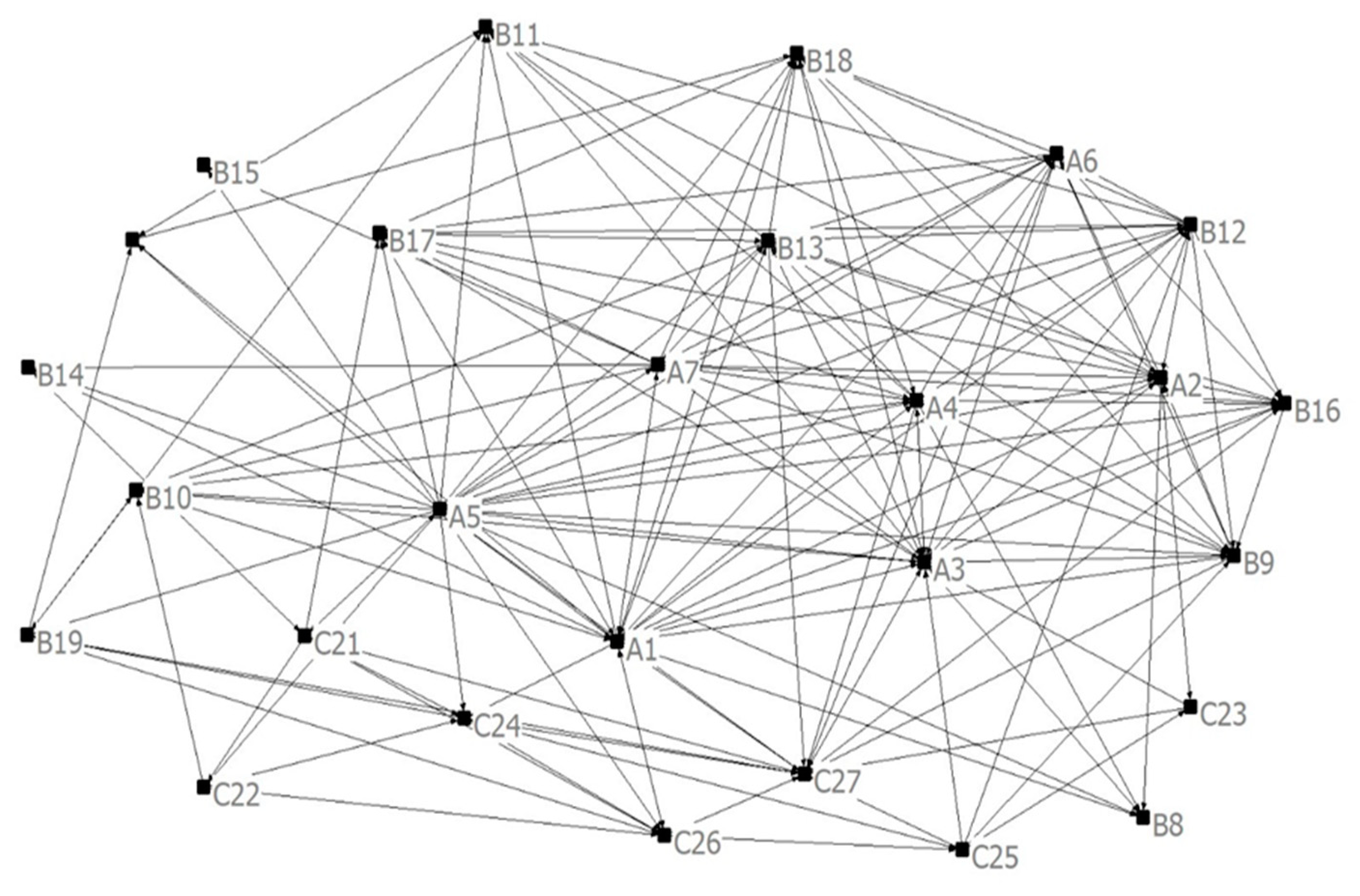
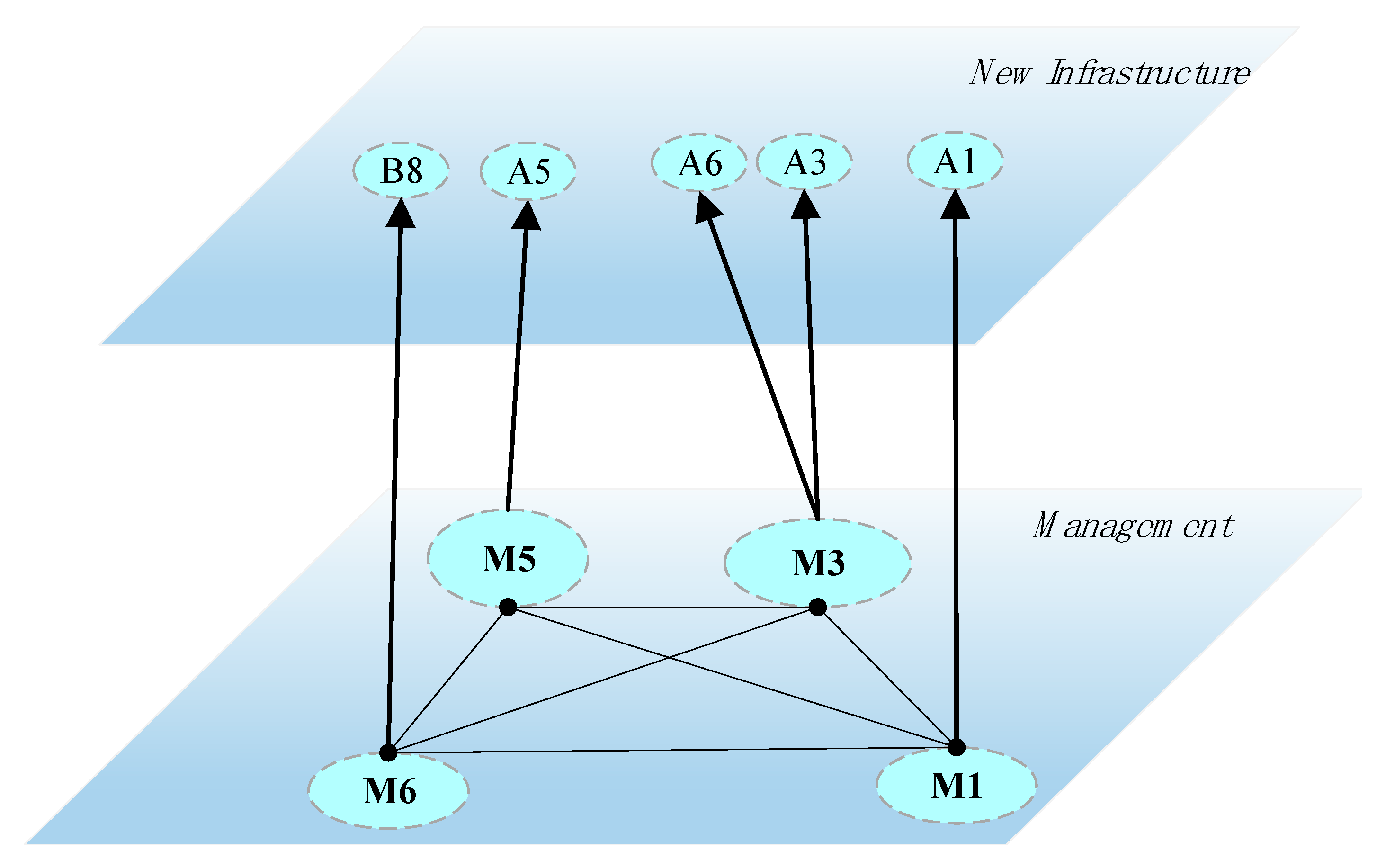
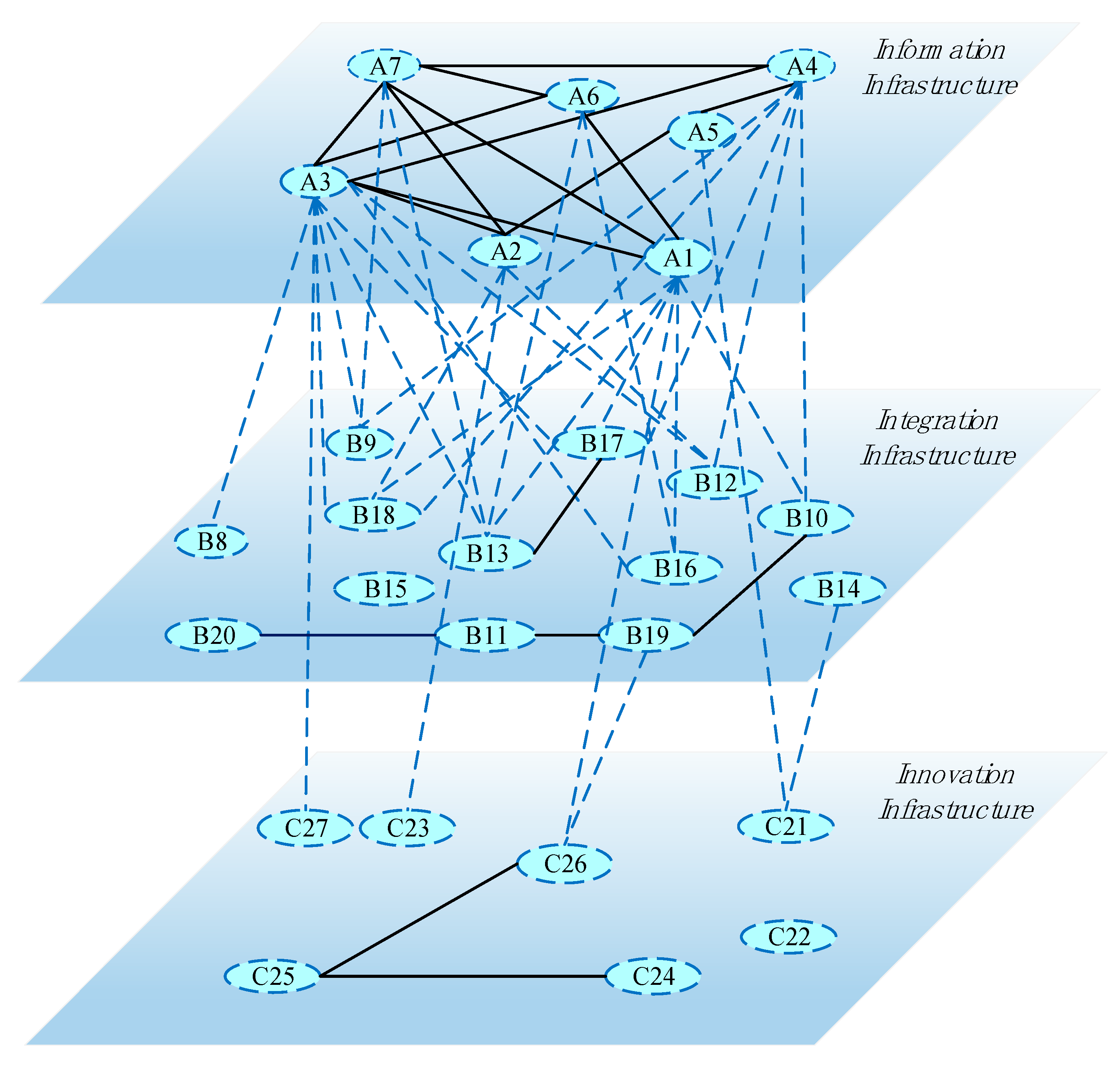
New Infrastructure (NI) has gradually become a new driving force for regional economic growth and an important part of the construction of new urban infrastructure in many countries, including China. Compared with traditional infrastructures, these NIs have mutually supportive functions and complex interrelationships that create interconnected networks of resources, information, and other interactions during the construction of the NIs. Therefore, it is important to analyze such correlation networks and explore their formation mechanisms in order to develop more scientific and reasonable strategies for NI investment and construction. In this study, the interdependence between NIs in Chongqing was analyzed as an example. Social network analysis (SNA) was used for the overall characteristics of the interdependency network of the NIs and an exponential random graph model (ERGM) was used to reveal the formation mechanism of this network. The results showed that information infrastructure is the key node for enhancing the effectiveness of Chongqing’s NI needs and its government should play a coordinating role. The network of related relationships is characterized by “reciprocity” and “small group”. The aggregation of NIs with such characteristics can produce an agglomeration effect. So, in the planning of NIs, the coordination among management departments should be strengthened and project locations should be reasonably arranged according to the functional interactive characteristics of the projects.
Keywords: new infrastructure; network analysis; decision-making; exponential random graph model new infrastructure; network analysis; decision-making; exponential random graph model