


Abstract
With the rapid development of the nuclear power industry, the requirement for nuclear structural materials is continuously growing. Eu-Ni intermetallic alloys are promising structural candidates for nuclear applications, while relevant fundamental investigations and underlying mechanisms remain insufficient worldwide. In this work, four Eu-Ni alloys with Eu mass fractions from 30 wt.% to 75 wt.% were fabricated via vacuum electromagnetic levitation melting. Thermodynamic calculations were performed to analyze high-temperature evaporation behaviors of Eu and Ni, and desired compositions were accurately achieved by evaporation loss compensation. XRD, SEM-EDS, TEM-SAED and hardness measurements were used to characterize phase constituents, microstructure and mechanical properties. The maximum evaporation rates of Eu and Ni increase with rising respective elemental contents. As Eu content increases, the dominant phase evolves from hexagonal EuNi5 to EuNi2 and finally FCC Eu-rich Eu0.56Ni0.44. The average grain size decreases from 127.82 μm to 67.59 μm, and intergranular spacing increases from 9.09 μm to 17.72 μm. Grain-boundary segregation of Eu softens the matrix, leading to a gradual hardness reduction from 529.2 kg/mm2 to 247.4 kg/mm2. This study clarifies composition-dependent evolution rules and provides fundamental data for industrial preparation and nuclear application of Eu-Ni alloys.
1. Introduction
Energy serves as the cornerstone and driving force behind the sustained development of social production and human life. With the advent of the modern industrial era, the depletion of energy resources and the worsening of environmental pollution have increasingly drawn public and scientific attention. Nuclear energy is not only economical and efficient but also a low-carbon and environmentally sustainable energy source, playing a significant role in advancing social sustainability. It represents a strategic option for China to mitigate environmental pressures and address the ongoing energy crisis [1,2]. Given the significant future potential of nuclear energy, extensive research has been conducted on nuclear power systems. These systems have now advanced to the third generation. Control rods serve as the primary regulating component to guarantee the safe operation of nuclear reactors, owing to their prominent merits of rapid response and high operational reliability. In the event of any operational abnormality, the control system will rapidly insert control rods into the reactor core to achieve reactor shutdown. Accordingly, control rod materials are required to possess outstanding thermophysical properties and favorable chemical compatibility under reactor service environments [3,4,5,6,7].
Among lanthanide rare earths, Sm, Eu, Gd and Dy possess excellent physicochemical properties and are widely developed as structural materials for nuclear power systems [8]. Although Sm, Gd and Dy exhibit favorable initial service performance, their properties degrade progressively during long-term reactor operation, limiting their application in long-running nuclear reactors [9,10,11,12,13,14]. By contrast, europium exhibits distinct advantages over the above-mentioned rare-earth elements. Natural europium possesses two stable isotopes, 151Eu and 153Eu, with natural abundances of ~47.8 at.% and ~52.2 at.%, respectively. These two isotopes feature high thermal neutron absorption cross-sections of 5300 barns and 2800 barns, correspondingly. In addition, europium is characterized by low thermal conductivity alongside radioactive decay chains with high radiative capacity. Benefiting from its long-lived neutron capture mechanism, Eu-bearing materials can sustain stable comprehensive properties under prolonged reactor service conditions, rendering europium a superior candidate for nuclear structural materials [15,16,17,18,19,20,21,22,23].
Europium-based compounds have attracted extensive attention in the research of advanced nuclear structural materials owing to their outstanding properties and tunable microstructures. V. V. Popo et al. [24] synthesized Eu2Hf2O7 powder via the coprecipitation method and investigated the formation and evolution of the crystal structure of Eu2Hf2O7 using X-ray absorption spectroscopy. M. Stopyra et al. [25] demonstrated that Eu2Zr2O7 and Eu2Hf2O7 neutron-absorbing materials synthesized via chemical coprecipitation exhibit superior structural homogeneity compared to those fabricated by powder metallurgy. Furthermore, the thermal diffusivity of Eu2Zr2O7 was found to be approximately 23% lower than that of Eu2Hf2O7. Nesrin Cetiner et al. [26] investigated the irradiation performance of Eu2HfO5, thermal analysis results revealed that the designed operating temperature range for the Eu2HfO5 material specimen was 212–355 °C, with helium employed as the fill gas and an interfacial gas gap of 40 μm. Ma Lei et al. [27] demonstrated that Eu2Zr2O7 powder synthesized via the hydrothermal method exhibited a smaller particle size and higher reactivity compared to the counterpart prepared by the coprecipitation method. Ge Lifen et al. [28,29] reported that the activation energy for Eu2Zr2O7 grain growth was lower in precursors with a pH of 11 compared to those with a pH of 12. Wei da et al. [30] reported that europium-based compounds, such as Eu2O3, are potential neutron absorber materials, exhibiting significantly greater dimensional stability compared to 90% B4C., notably, the thermal expansion of Eu2O3 is nearly negligible under low-temperature conditions. C. S. Wu Paul et al. [31] reported that Eu2O3 is an attractive alternative to B4C for nuclear reactor structural applications. Although EuN possesses high melting point and superior thermal stability, it is susceptible to oxidation in ambient air and thus unsuitable for practical service. C. H. Tung et al. [32] investigated Eu-Ni alloys with Eu concentrations ranging from 0 to 20 at.%, and determined the crystal structures of Eu-Ni intermetallic compounds across the compositional range. The predominant phase identified was hexagonal EuNi5.
With the advancement of national defense, nuclear industry and radiation medicine, stricter specifications are required for nuclear structural materials. Eu-Ni alloys possess great application potential in this field, yet relevant fundamental studies are still limited globally. In the present work, Eu-Ni ingots with varied Eu fractions were prepared via vacuum electromagnetic levitation melting to investigate the dependence of microstructure and properties on Eu content. It realizes the precisely controllable fabrication of Eu–Ni alloys with Eu mass fractions ranging from 30 to 75 wt.%, and establishes a quantitative correlation model linking Eu content, phase constitution, microstructure, and hardness. The present findings provide fundamental theoretical guidance for the engineering deployment of Eu–Ni intermetallic alloys as nuclear structural materials.
2. Materials and Methods
2.1. Experimental Materials
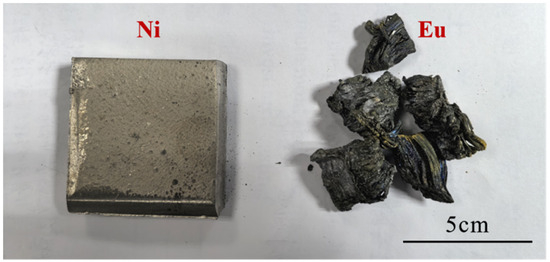
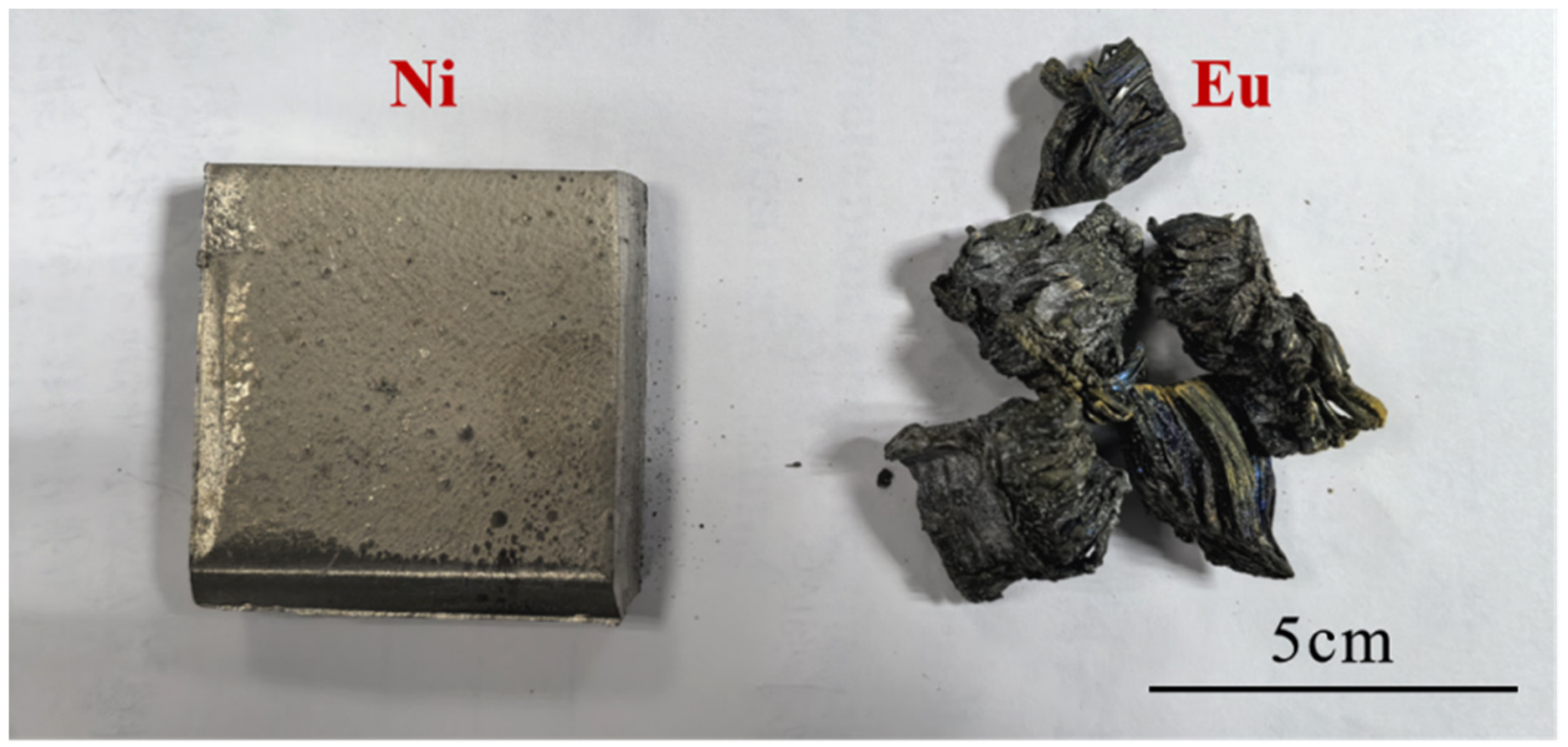
High-purity europium blocks (99.99%) and high-purity nickel plates (99.99%) were employed as starting materials in this experiment, with their physical appearances illustrated in Figure 1. The europium blocks are irregular solid pieces with mainly grayish-black surfaces. However, owing to the high chemical reactivity of europium, localized yellowish discolorations resulting from surface oxidation are observed in certain regions. The nickel plates are in the form of sheets and exhibit a characteristic silvery-white metallic luster. The experiment was conducted in an atmosphere of high-purity argon gas (99.999% purity) to effectively exclude moisture and oxygen, thereby preventing oxidation and degradation of the europium raw material.
Figure 1.
Raw materials of Eu and Ni.
2.2. Experimental Methods
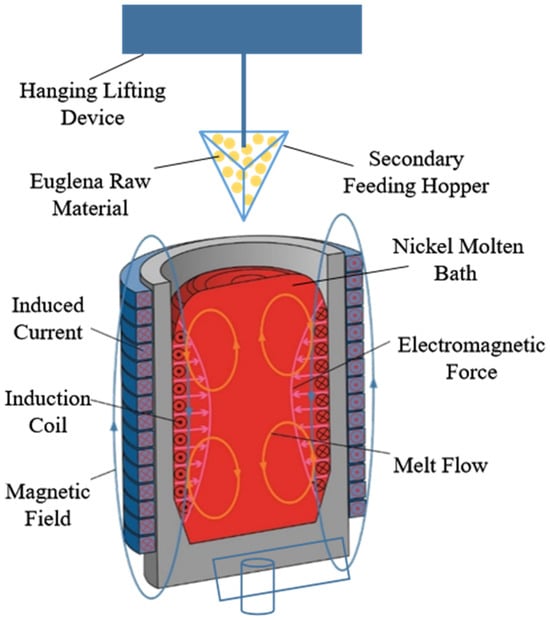
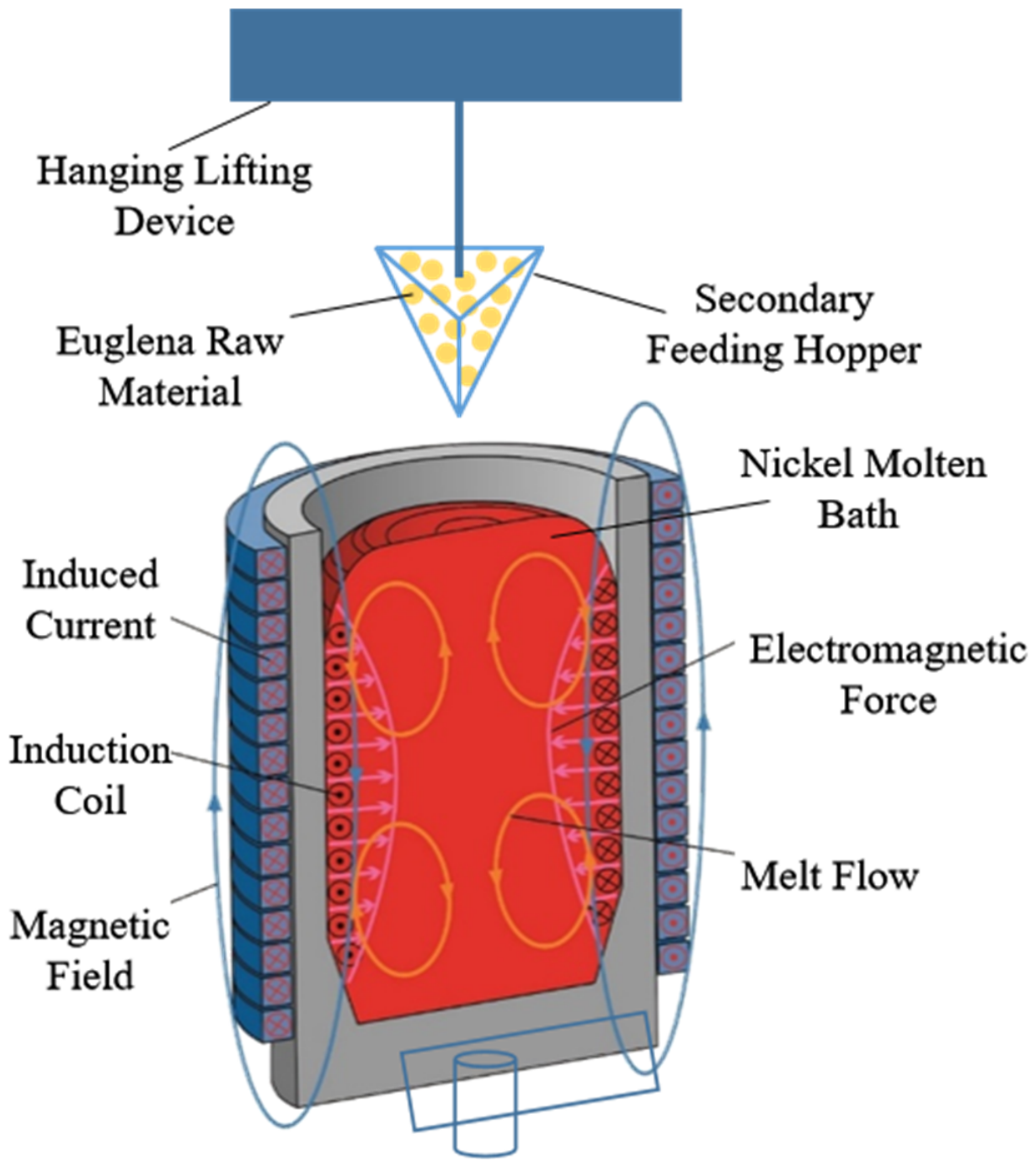
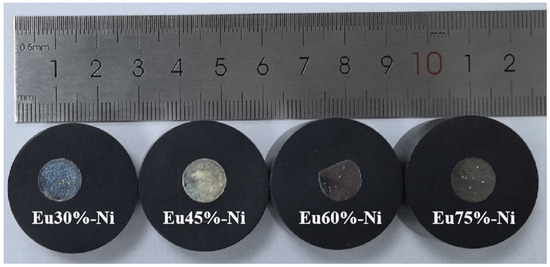
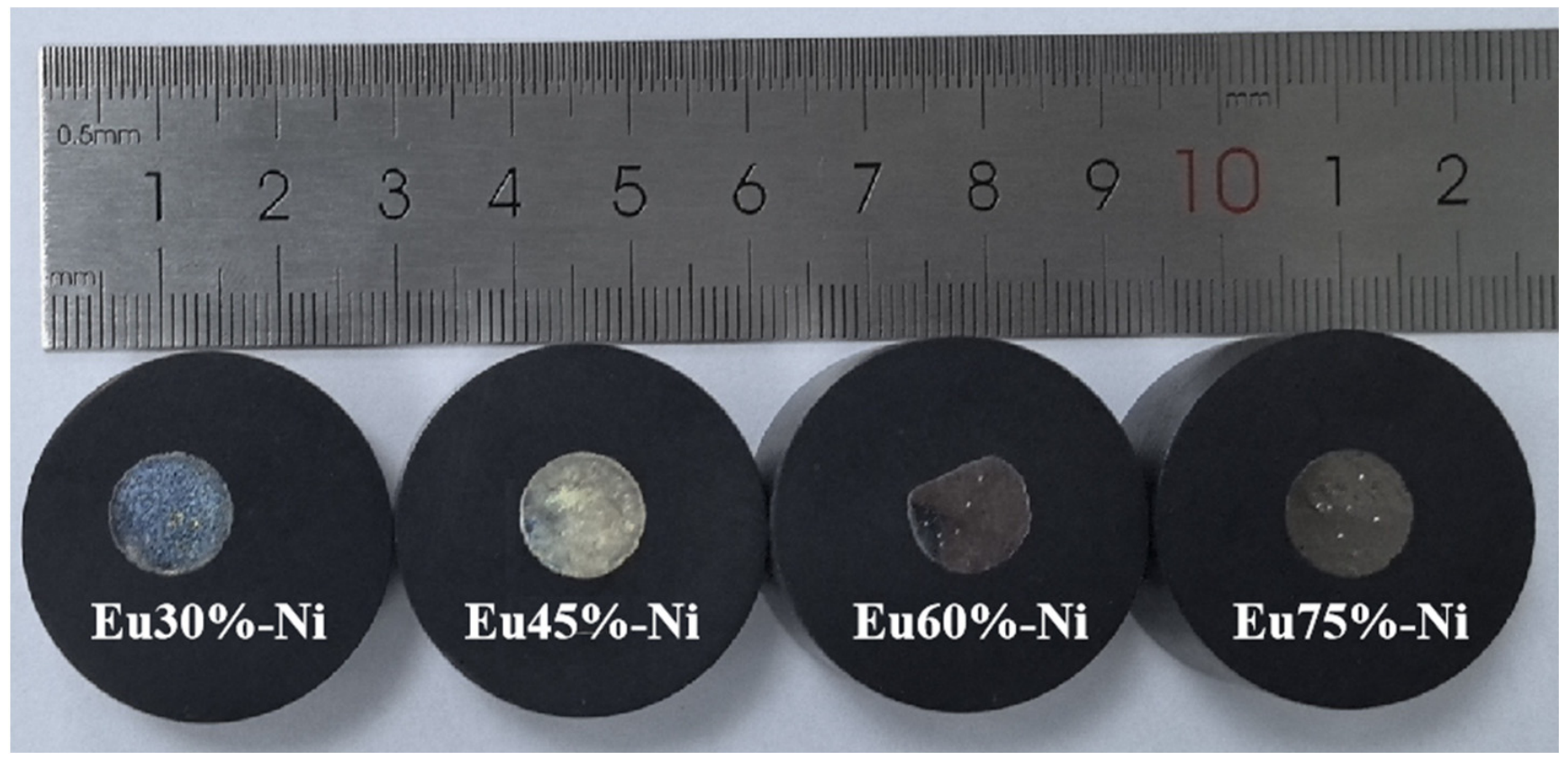
The europium blocks and nickel plates were weighed according to a predetermined mass ratio. The nickel plates were placed into the water-cooled copper crucible of the vacuum suspension melting and casting furnace, while the europium blocks were loaded into the secondary feeding hopper. The pressure within the melting chamber was first reduced to 1 × 10⁻² Pa using a vacuum system, followed by the controlled introduction of high-purity argon gas (99.999% purity) to raise the internal pressure to 4 × 10⁴ Pa. The above furnace purging procedure cycle was repeated twice to ensure atmospheric purity within the chamber and to prevent the occurrence of diffusion arcs and edge arcs during the melting process. Arc melting was subsequently initiated, and the power was gradually increased to fully melt the nickel plates. Once complete melting was achieved, the secondary feeding system was activated to introduce europium blocks into the molten pool under controlled conditions. Given that the melting point of Ni is approximately 1455 °C and the volatilization point of Eu is 1529 °C, a holding temperature of 1465 °C was selected during the smelting process. This temperature ensures complete melting of Ni while simultaneously minimizing Eu volatilization to a limited extent. The alloy was held at 1465 °C for 5 min to ensure complete melting and homogenization. Subsequently, the furnace was cooled naturally under an argon atmosphere, yielding a primary Eu-Ni alloy ingot. The as-prepared Eu-Ni alloy ingot was inverted by 180° and repositioned in the crucible. The previously described furnace purging procedure, melting process, and cooling under argon atmosphere were subsequently repeated to obtain the final high-quality Eu-Ni alloy sample. Figure 2 shows the suspension melting apparatus. In this study, Eu-Ni alloy samples with Eu mass fractions (Eu30%-Ni, Eu45%-Ni, Eu60%-Ni and Eu75%-Ni) were fabricated through a gradient composition design by precisely adjusting the mass ratios of Eu and Ni, the prepared test specimens are presented in Figure 3. The microstructure and properties of Eu-Ni alloys fabricated via suspension melting were further systematically investigated using XRD, SEM-EDS, TEM, metallographic observation, and surface hardness testing.
Figure 2.
Schematic diagram of the suspension smelting device.
Figure 3.
Test sample of Eu-Ni alloy after processing.
3. Results and Discussion
3.1. Thermodynamic Analysis of the Enthalpy of Vaporization for Eu-Ni Alloy Constituents
During the preparation of Eu-Ni alloys via vacuum levitation melting, the high vacuum level and elevated melt pool temperature lead to a measurable degree of volatilization loss for both constituent elements of the binary alloy. The saturated vapor pressures of the individual components differ, leading to varying degrees of volatilization loss among the constituent elements. According to vacuum evaporation theory, in a binary alloy subjected to high temperature and negative pressure, the higher the saturated vapor pressure of an element, the greater its evaporation rate, resulting in a larger volatilization loss per unit time and unit area within the molten phase.
The reaction equation representing the phase transition of metal evaporation during the smelting process is:
Me(l,s) ⇌ Me(g)
Assuming the metal vapor behaves as an ideal gas, at gas–liquid equilibrium, the application of the Clausius–Clapeyron equation [33] to 1 mol of liquid metal, together with the temperature dependence of , yields the relationship between the saturated vapor pressure and temperature for the pure substance:
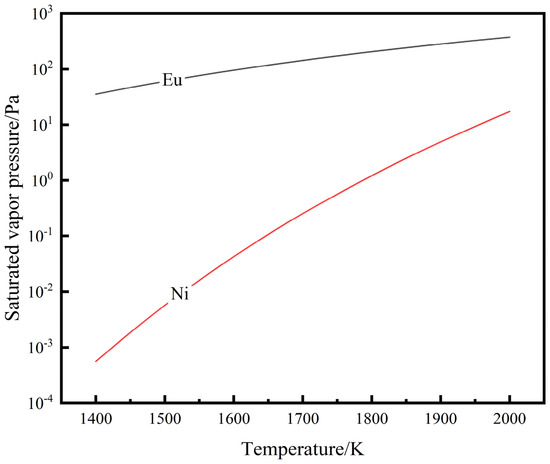
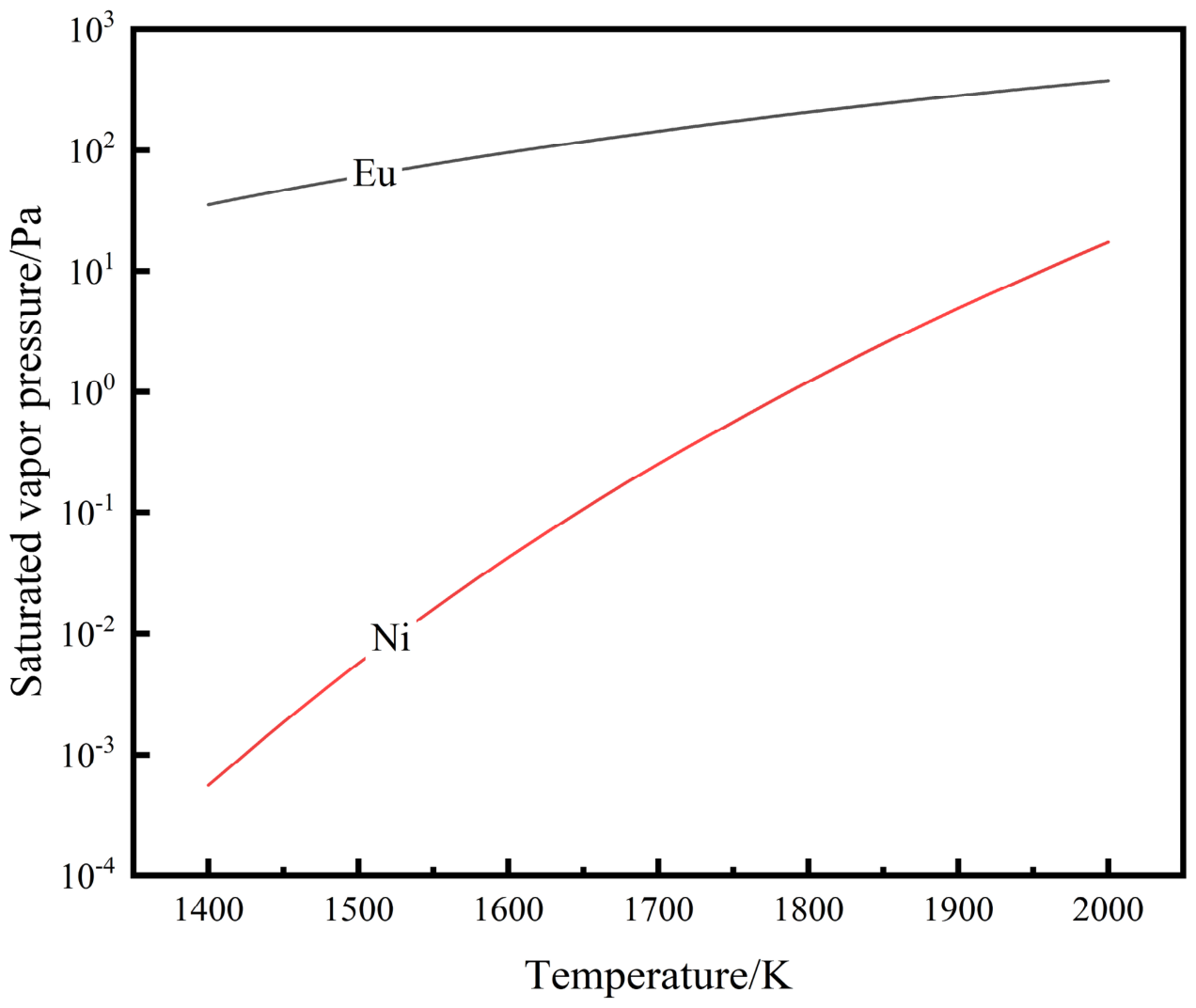
The parameters A, B, C, and D represent the metal vapor pressure constants. Table 1 lists the values of these parameters for the Eu and Ni elements [34]. Figure 4 illustrates the relationship between saturated vapor pressure and temperature for pure Eu and Ni substances.
Table 1.
Parameters associated with the saturated vapor pressure of pure Eu and Ni substances [34].
Figure 4.
Relationship between saturated vapor pressure and temperature for pure Eu and Ni substances.
As shown in the curves of Figure 4, the saturated vapor pressures of the two pure substances increase with rising temperature. However, the saturated vapor pressure of pure Ni exhibits greater sensitivity to temperature variations than that of pure Eu and displays an overall trend of approximately exponential growth.
According to the Miedema formation enthalpy model [35], the saturated vapor pressure Pi of metal component i in an alloy melt can be expressed as:
The activity coefficient γi and activity αi of component i are expressed as:
In the formula, , , , and Mi are respectively the activity coefficient, mole fraction, partial molar free energy, and molar mass of component i; Pi is the vapor partial pressure of component i in a multi-component alloy melt; αi is the activity of component i; is the saturated vapor pressure of component i pure substance; R is a gas constant; T is the absolute temperature.
The enthalpy of formation of the alloy can be derived and expressed as:
Among them:
In the formula, Vi and Vj represent the molar volumes of components i and j; xi and xj, mole fractions of components i and j; (nws)i and (nws)j, electron densities of components i and j; φi and φj, the electronegativity of components i and j; p, q, r, a, μ, all empirical constants; and q/p = 9.4. For the Eu and Ni components, the parameter values of r/p, φ, , , μ, p, and a are shown in Table 2 [34].
Table 2.
Parameters related to r/p, φ, , , μ, p, and a of Eu and Ni elements [34].
The activity αij of binary alloys can be expressed as:
In the formula, T represents the melting temperature and Tm represents the melting point temperature of the component.
The activity coefficients γ of components i and j are further derived as:
Based on the foundational work on the Langmuir equation, Hertz and Knudsen derived the expression for the theoretical maximum evaporation rate of alloy component i (or j) at the gas–liquid interface during the smelting process [36,37]:
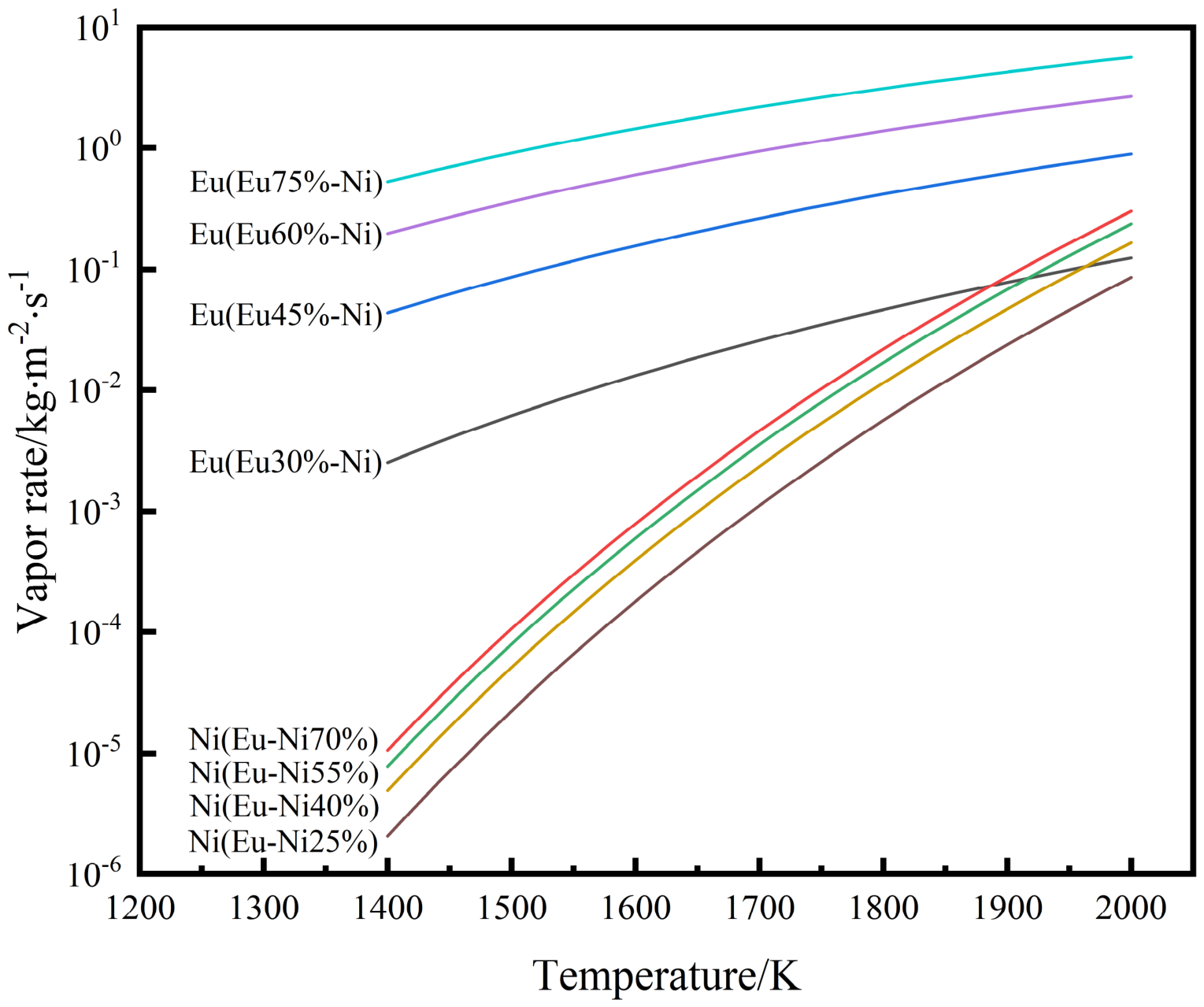
Based on the aforementioned thermodynamic calculations, varying the temperature T yields the relationship between the theoretical maximum evaporation rate V and temperature T for Eu-Ni alloy components with different Eu/Ni compositions, as illustrated in Figure 5.
Figure 5.
The relationship between the theoretical maximum evaporation rate V and temperature T for Eu-Ni alloy components.
As shown in Figure 5, in the Eu-Ni alloy, the maximum evaporation rate of europium is significantly higher than that of nickel at lower temperatures. As temperature increases, the evaporation rates of europium and nickel both rise. However, the evaporation rate of europium increases gradually, whereas that of nickel exhibits a sharp increase by several orders of magnitude. A trend is observed wherein the maximum evaporation rate of nickel surpasses that of europium at a specific temperature. For example, upon reaching a temperature of 1890 K, the maximum evaporation rate of nickel in the Eu30%-Ni70% alloy exceeds that of europium. Furthermore, the maximum evaporation rates of both elements increase with increasing elemental content in the alloy composition. When considered together with Figure 4, it is evident that in the Eu-Ni binary alloy, temperature and elemental composition significantly influence the activity and saturated vapor pressure of the constituent elements, resulting in pronounced changes in their maximum evaporation rates. In this experiment, the melting temperature was set at 1465 °C (1738 K). Based on the thermodynamic properties of evaporation enthalpies for the components of the Eu-Ni binary alloy, the theoretical maximum evaporation rates of various alloy compositions at 1738 K were determined, as presented in Table 3.
Table 3.
Theoretical maximum evaporation rates (kg·m−2·s−1) of alloy components with different compositions at 1738K.
By employing the burn-off compensation mechanism, samples meeting the specified requirements can be successfully fabricated. The chemical composition analysis results of the Eu-Ni alloys prepared in this study are presented in Table 4, with the compositional data for each sample representing the mean value derived from three repeated measurements.
Table 4.
Chemical composition analysis results of Eu-Ni Alloy (wt.%).
3.2. Effects of Different Eu and Ni Content Ratios on the Phase Composition of Eu-Ni Alloys
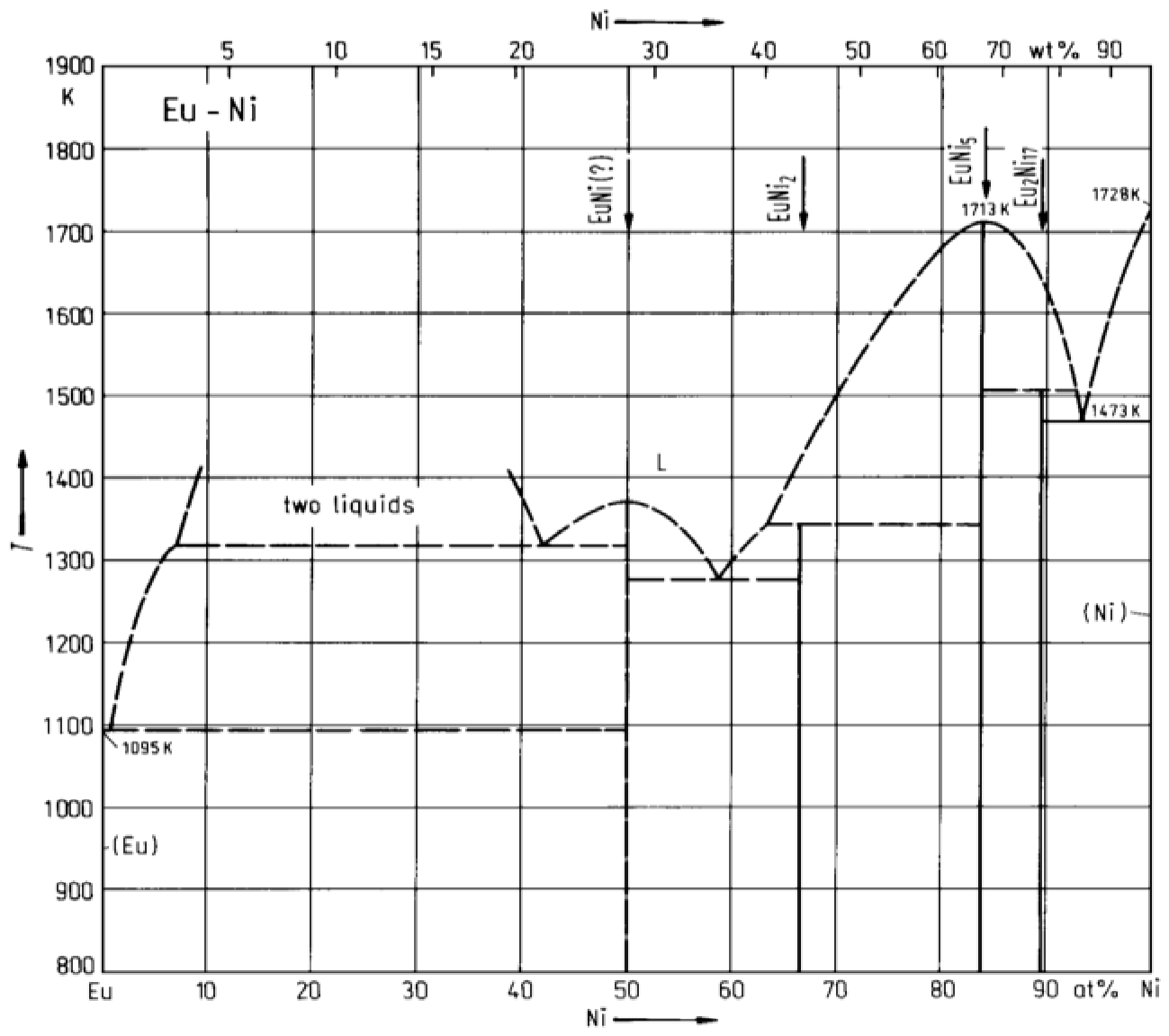
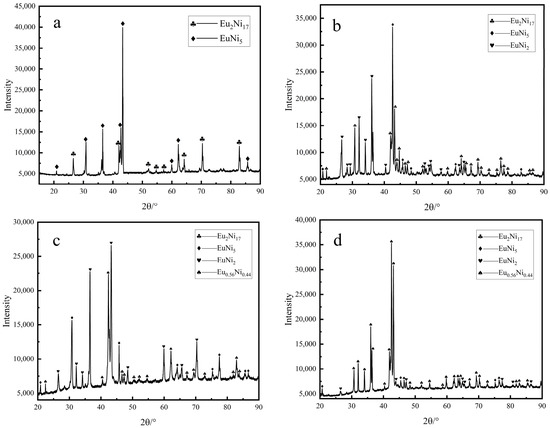
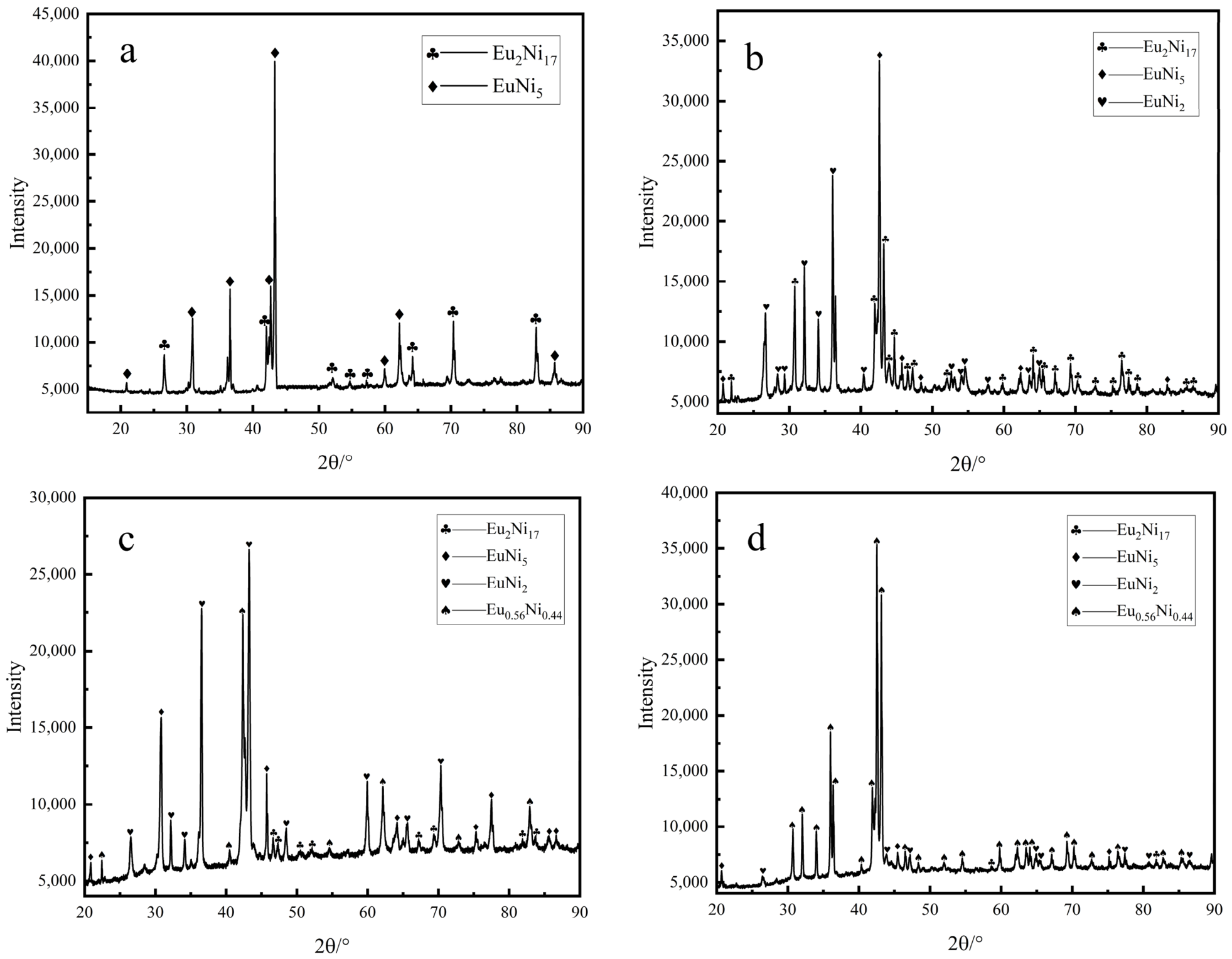
The binary alloy phase diagram of EuNi is shown in Figure 6 [32]. Eu-Ni alloy samples with varying compositions were prepared by systematically adjusting the mass fractions of Eu and Ni; the phase composition was determined via X-ray diffraction (XRD) analysis using HighScore Plus (V3.0.5) and quantitative phase analysis was performed through Rietveld refinement. The resulting XRD phase identification results are presented in Figure 7.
Figure 6.
The binary alloy phase diagram of EuNi.
Figure 7.
XRD phase composition analysis of Eu-Ni alloy samples: (a) Eu30%-Ni; (b) Eu45%-Ni; (c) Eu60%-Ni; (d) Eu75%-Ni.
From the Eu-Ni binary equilibrium phase diagram, it can be seen that in different content ratios, the system contains four types of intermetallic compounds: EuNi5, EuNi2, Eu2Ni17, and the rich-Eu phase EuNi alloy. As shown in Figure 7a, at a Eu content of 30%, the system exhibits a distinct two-phase structure consisting of EuNi5 and Eu2Ni17. The primary diffraction peaks are attributed to EuNi5 (67.75 wt.%), with residual contributions from the Eu2Ni17 phase (32.25 wt.%). As shown in Figure 7b, at a Eu content of 45%, the diffraction pattern exhibits increased complexity: a multiphase coexistence structure was established, predominantly composed of EuNi2 (56.95 wt.%), along with minor phases of EuNi5 (30.41 wt.%) and Eu2Ni17 (12.64 wt.%). This phase assemblage is attributed to the melt residing within a multiphase region during rapid solidification, accompanied by successive multi-stage reactions. As shown in Figure 7c, at a Eu content of 60%, the Eu0.56Ni0.44 phase is additionally formed within the system, resulting in a multiphase assemblage comprising Eu0.56Ni0.44 (43.20 wt.%), EuNi2 (32.14 wt.%), EuNi5 (18.39 wt.%) and Eu2Ni17 (6.27 wt.%). As shown in Figure 7d, when the Eu content is increased to 75%, the system is predominantly composed of the Eu0.56Ni0.44 phase (95.26 wt.%), with minor amounts of EuNi2 (3.04 wt.%), EuNi5 (1.17 wt.%), and Eu2Ni17 (0.53 wt.%). In summary, the phase composition of Eu-Ni alloys is strongly governed by alloy stoichiometry. As the Eu content increases from 30% to 75%, the phase evolution progresses sequentially: from a binary structure dominated by EuNi5, through a ternary structure primarily composed of EuNi2, to a multiphase assemblage co-dominated by Eu0.56Ni0.44 and EuNi2, and ultimately to a complex multiphase system in which the Eu-rich Eu0.56Ni0.44 phase becomes predominant.
3.3. Effect of Varying Eu/Ni Compositional Ratios on the Microstructure of Eu-Ni Alloys
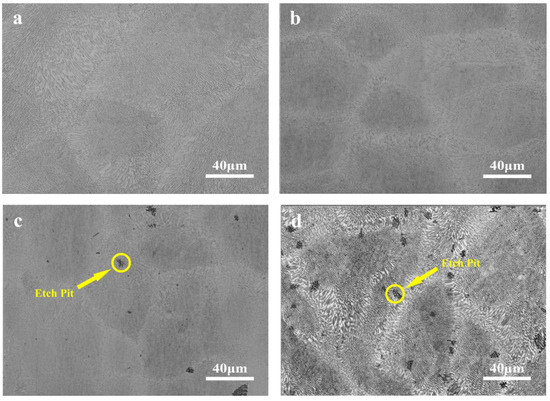
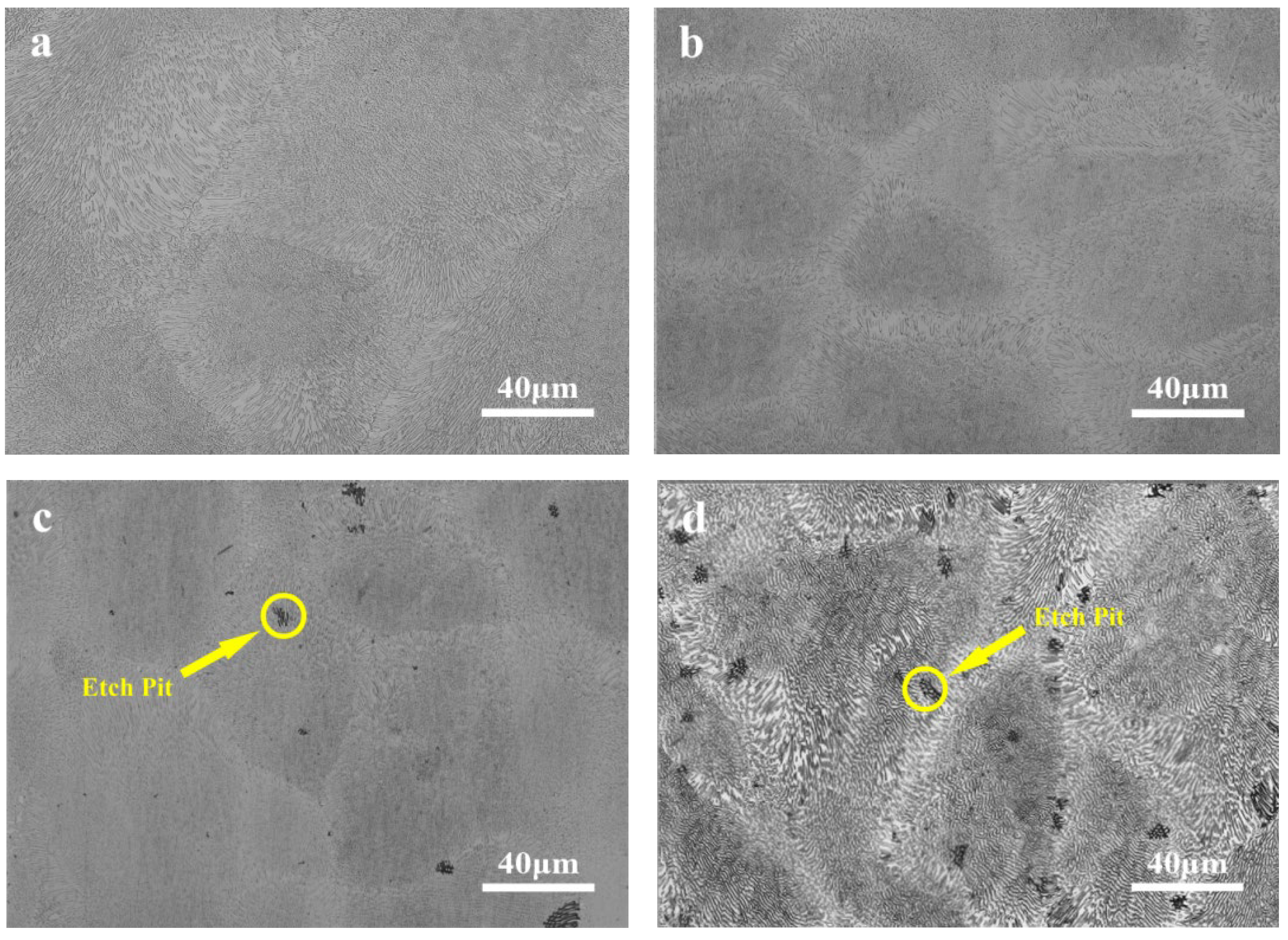
Different Eu-Ni alloy samples were fabricated by systematically varying the mass fractions of Eu and Ni through a gradient composition design. The corresponding metallographic microstructure, structural parameters, and elemental distributions characterized by SEM-EDS are presented in Figure 8, Figure 9 and Figure 10.
Figure 8.
Microstructure analysis of Eu-Ni alloy samples: (a) Eu30%-Ni; (b) Eu45%-Ni; (c) Eu60%-Ni; (d) Eu75%-Ni.
Figure 9.
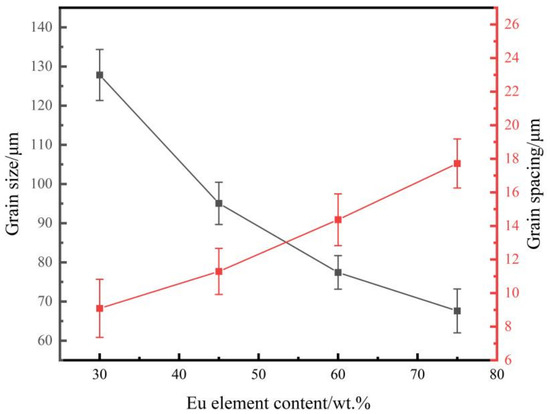
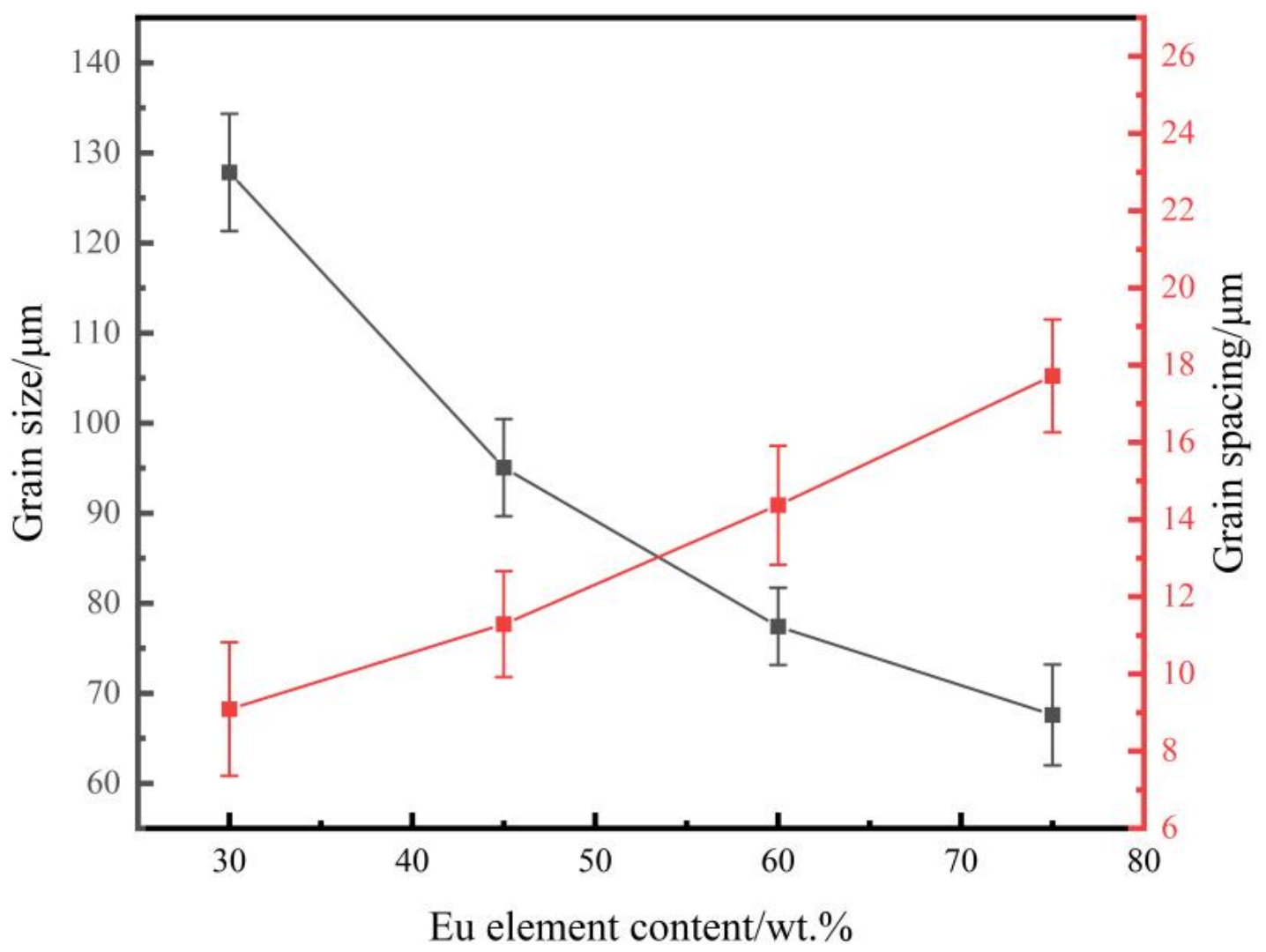
Quantitative analysis of structural parameters for Eu-Ni alloy samples.
Figure 10.
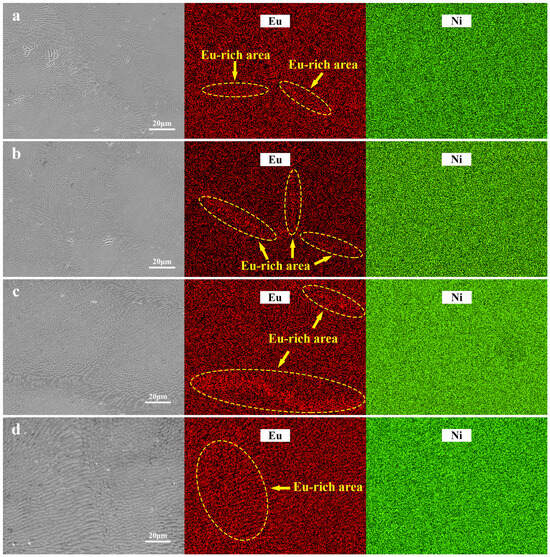
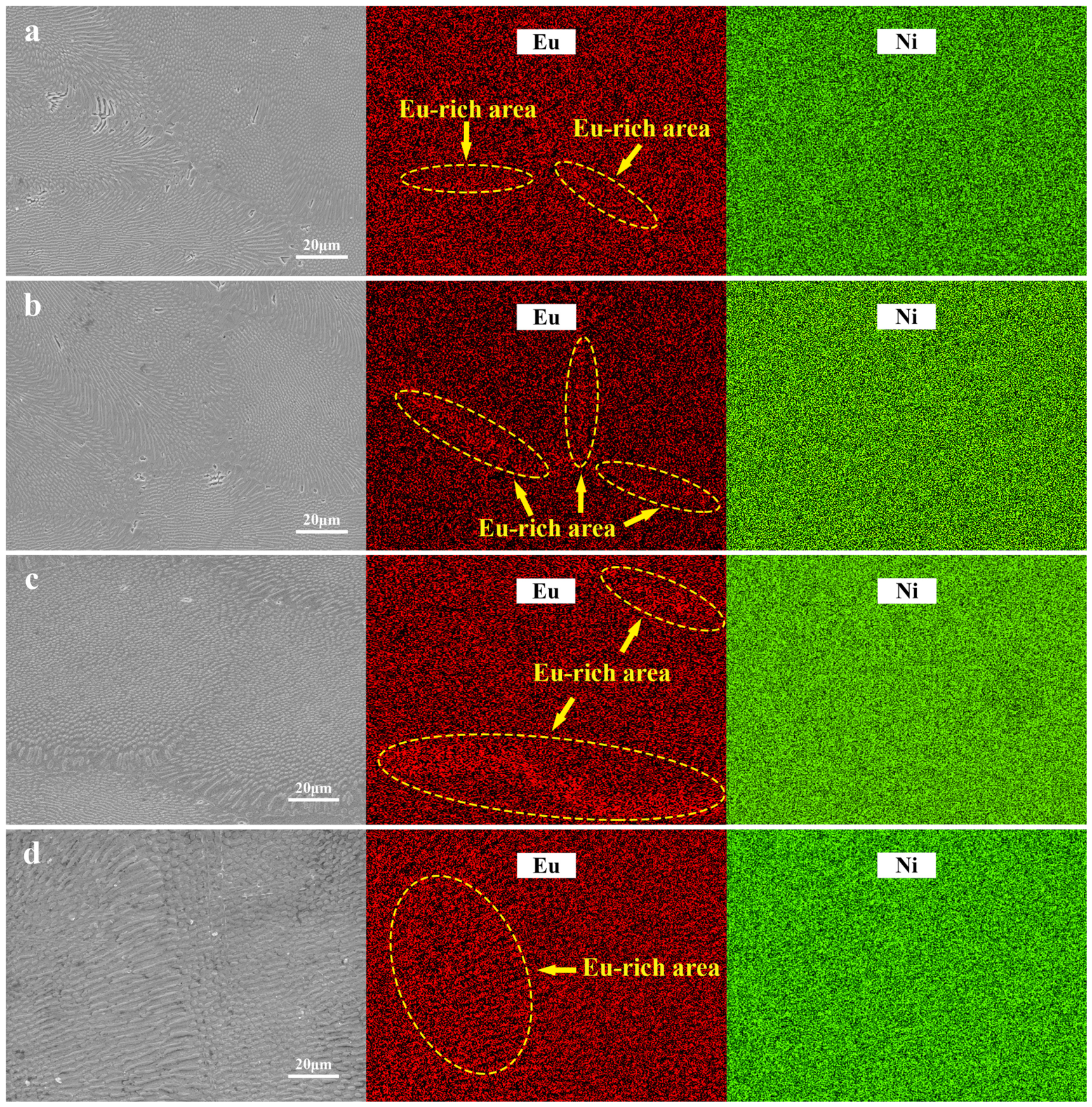
SEM-EDS analysis of Eu-Ni alloy samples: (a) Eu30%-Ni; (b) Eu45%-Ni; (c) Eu60%-Ni; (d) Eu75%-Ni.
As shown in Figure 8 and Figure 9, the intragranular regions of the Eu-Ni alloy are predominantly characterized by clustered, round microstructure, whereas the grain boundaries are primarily occupied by elongated morphologies. No distinct second-phase precipitation is observed. At an Eu content of 30%, the average grain diameter and average grain spacing reach 127.82 μm and 9.09 μm, respectively, with a relatively dense microstructure. With increasing Eu content, the intragranular cluster-like round microstructure gradually evolves into elongated morphologies, while the pre-existing elongated microstructure at the grain boundaries undergoes further coarsening and elongation. Furthermore, it is observed that with increasing Eu content, the grain size of the Eu-Ni alloy decreases progressively, while the grain spacing increases accordingly. This indicates that the microstructure and structural parameters of the Eu-Ni alloy samples fabricated with gradient composition ratios of Eu and Ni are strongly influenced by the elemental composition.
As shown in Figure 10, the elemental distribution in the Eu-Ni binary alloy is predominantly characterized by Eu and Ni, with no detectable impurity elements. With variations in the Eu-Ni content ratio, the Ni element remains uniformly dispersed, whereas the Eu element exhibits a dual distribution pattern characterized by intragranular dispersion and grain boundary enrichment. Furthermore, as the Eu content increases, the degree of enrichment at grain boundaries progressively intensifies, indicating a continuous rise in Eu concentration at these interfacial regions. The occurrence of this phenomenon is likely attributed to the differences in atomic size and electronegativity between Eu and Ni. At low Eu content, Eu behaves as a solvent species and is influenced by grain boundary interfacial energy, leading to a tendency for enrichment at grain boundaries. As the Eu content increases, Eu transitions to a solute role, modifying interatomic interactions and satisfying the thermodynamic criteria for new phase formation. This newly formed phase exhibits a fixed stoichiometry and an ordered crystal structure, which promotes the characteristic enrichment of Eu at grain boundaries.
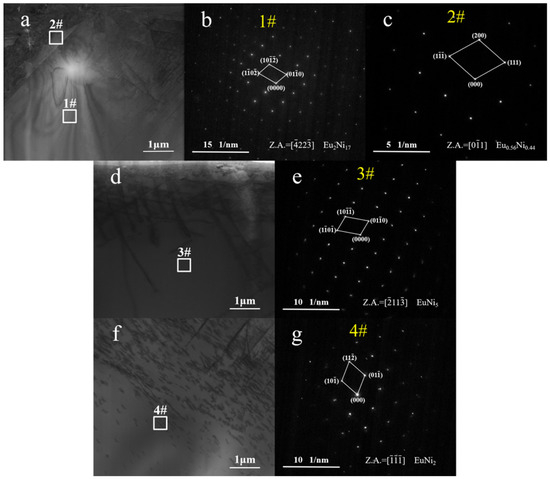
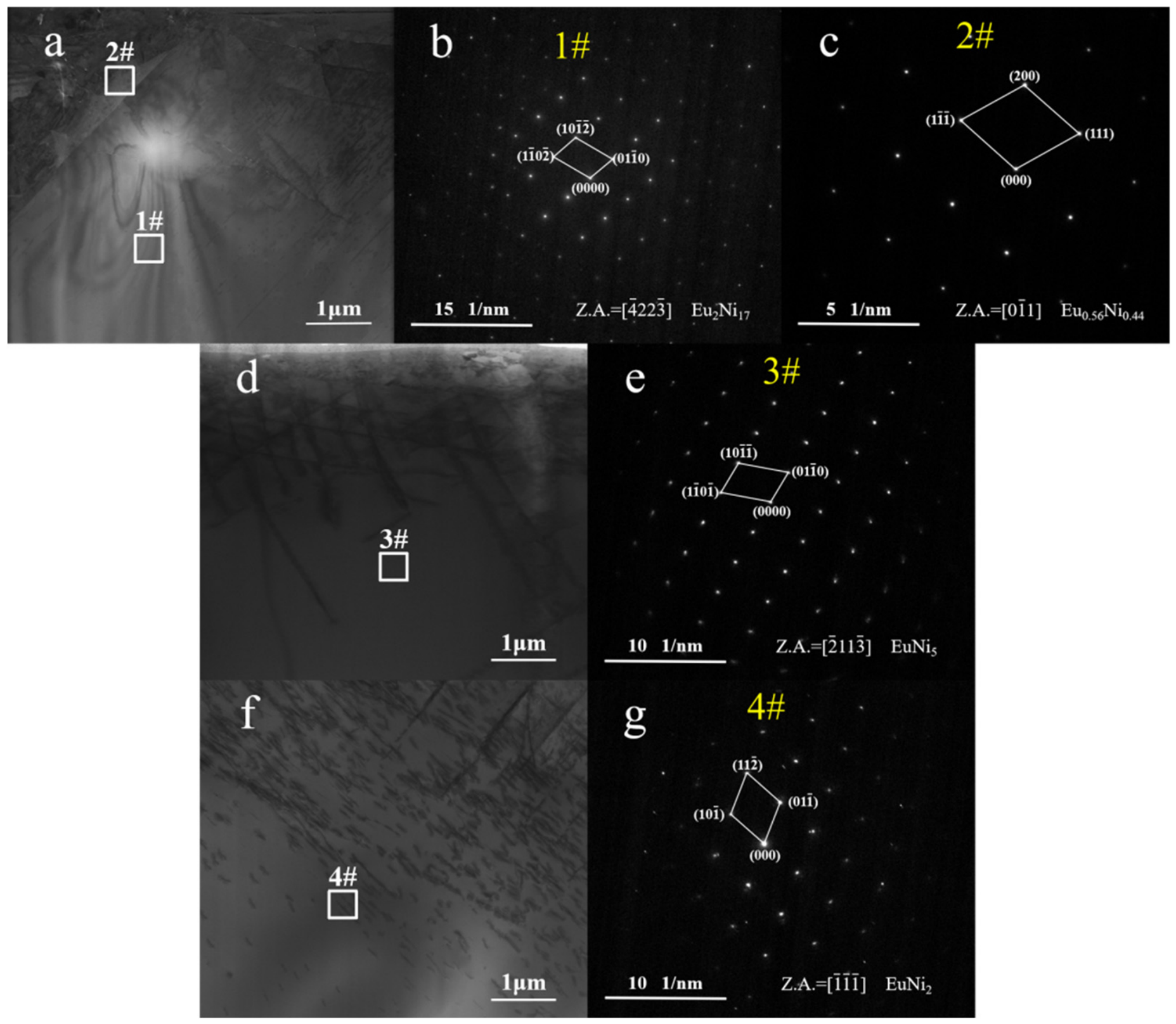
The TEM and SAED analyses of the Eu60%-Ni sample are shown in Figure 11.
Figure 11.
TEM and SAED analysis of Eu60%-Ni alloy samples: (a,d,f) STEM; (b) 1# SAED; (c) 2# SAED; (e) 3# SAED; (g) 4# SAED.
As shown in Figure 11, each phase in the Eu-Ni alloy system exhibits sharp and well-defined diffraction spots. Eu2Ni17 and EuNi5 crystallize in the hexagonal crystal system with a simple lattice structure. The lattice parameters for Eu2Ni17 are a = b = 3.27 Å, c = 5.08 Å, whereas those for EuNi5 are a = b = 4.92 Å, c = 3.96 Å. EuNi2 crystallizes in the cubic crystal system with a body-centered lattice structure, and its lattice parameter is a = b = c = 4.58 Å. Eu0.56Ni0.44 crystallizes in the cubic crystal system with a face-centered lattice structure, and its lattice parameter is a = b = c = 7.329 Å. The combined analysis of SAED patterns, STEM imaging, elemental mapping, and XRD data confirms that with increasing Eu content, the four aforementioned phases progressively form within the system and are all present as intermetallic compounds. However, due to the predominance of Eu and Ni in the matrix composition, no distinct morphological characteristics indicative of a second phase are observed.
3.4. Influence of Eu and Ni Composition Variations on the Hardness Behavior of Eu-Ni Alloys
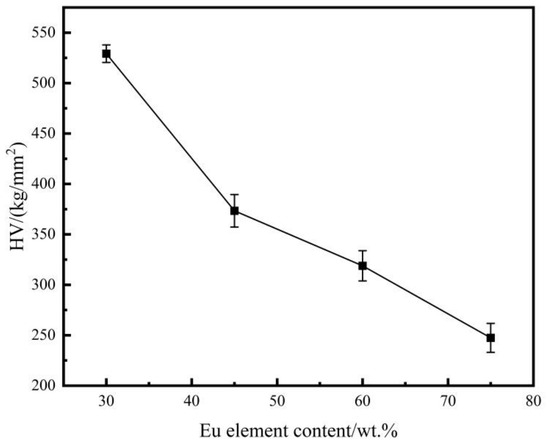
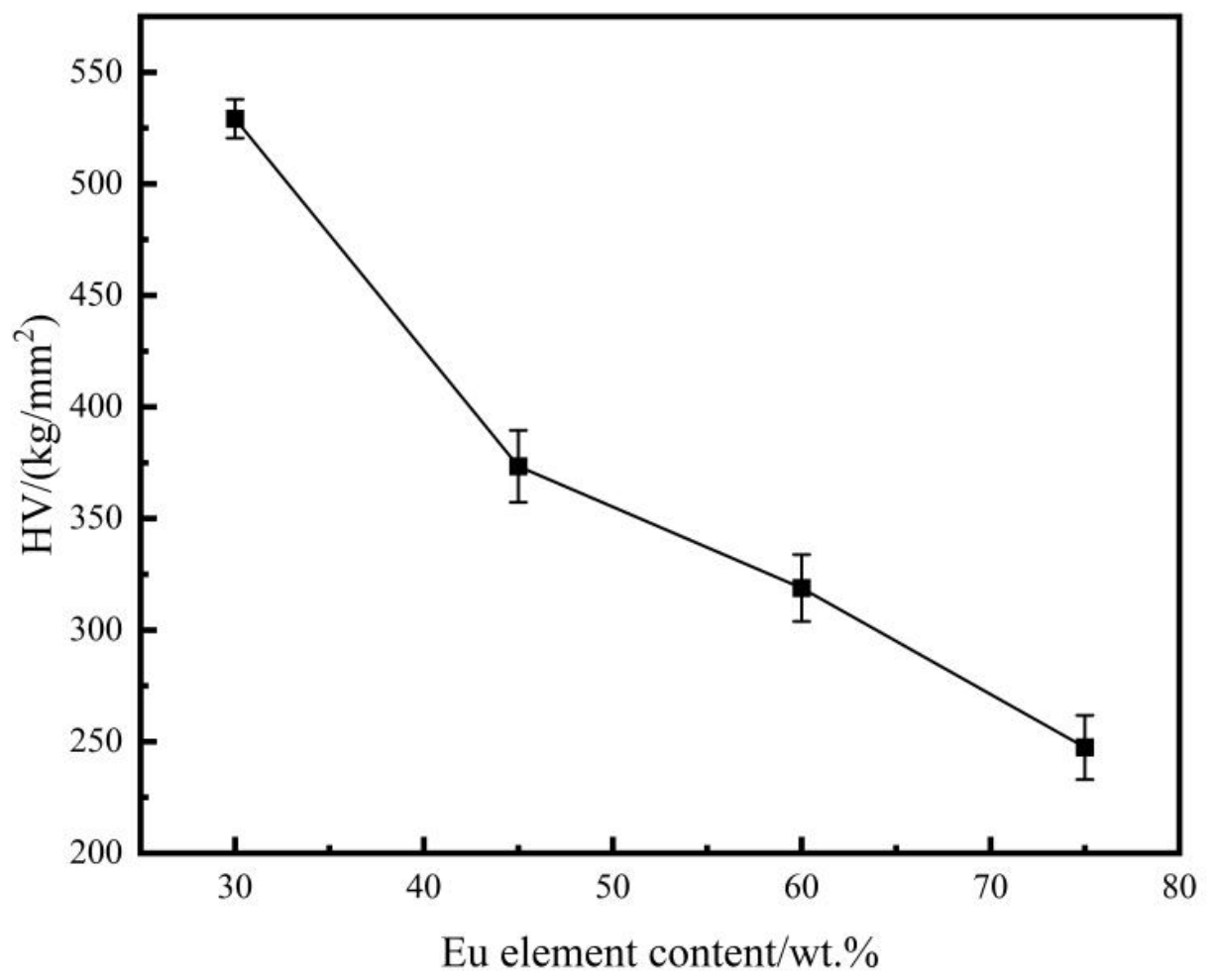
Eu-Ni alloy samples with varying compositions were fabricated by systematically adjusting the mass fractions of Eu and Ni. For each sample, five Vickers hardness measurements were performed, and the mean values were calculated. The resulting hardness data are presented in Figure 12.
Figure 12.
Hardness analysis of Eu-Ni alloy samples.
Compared with Eu2Zr2O7, Eu2Hf2O7, Eu2O3, etc., mentioned in the Introduction, the surface hardness of the Eu-Ni binary alloy is lower [25,30]. As shown in Figure 11, the hardness of the Eu-Ni binary alloy decreases from 529.2 kg/mm2 to 247.4 kg/mm2 with increasing Eu content, exhibiting a pronounced decreasing trend. Based on the previous phase analysis and microstructural characterization, it can be concluded that europium, as a typical soft-phase rare earth element, progressively segregates to grain boundaries with increasing Eu content, resulting in an incremental increase in grain spacing. This enrichment induces grain boundary softening and weakens intergranular cohesion, thereby reducing the resistance to dislocation motion. Consequently, the mechanical integrity of the grain boundaries is compromised, leading to a significant decrease in the overall hardness of the Eu-Ni alloy. High-hardness europium-based materials suffer from severe brittleness, which severely restricts their machinability. In contrast, Eu–Ni metallic alloys possess moderate hardness, enabling mechanical machining and the fabrication of intricate structural components. Consequently, they exhibit superior application potential compared with other europium-based material systems.
4. Conclusions
(1) In the Eu-Ni binary alloy system, the maximum evaporation rates of both Eu and Ni elements increase with increasing elemental content. As temperature rises, the evaporation rate of Eu increases gradually, whereas that of Ni exhibits a significant increase by several orders of magnitude. By employing a burn-off compensation strategy, EuNi alloy samples with targeted compositions can be successfully fabricated.
(2) As the Eu content increases from 30 wt.% to 75 wt.%, the phase evolution of Eu-Ni alloys proceeds sequentially: initially forming a binary-phase structure dominated by EuNi5, followed by a transition to a ternary-phase structure primarily composed of EuNi2, then evolving into a multiphase system co-dominated by Eu0.56Ni0.44 and EuNi2, and ultimately resulting in a complex multiphase composite structure predominantly featuring the Eu-rich Eu0.56Ni0.44 phase.
(3) As the Eu content increases, the initially cluster-like round morphology within the Eu-Ni alloy matrix progressively evolves into an elongated strip-like structure, while the strip-shaped features at the grain boundaries undergo coarsening and further elongation. With increasing Eu content, the average grain diameter of the alloy decreased from 127.82 μm to 67.59 μm, whereas the average grain spacing increased from 9.09 μm to 17.72 μm. The microstructural morphology and structural parameters of Eu-Ni alloy samples are strongly dependent on their compositional variations.
(4) All phases in the Eu-Ni alloy system are intermetallic compounds. Specifically, Eu2Ni17 and EuNi5 crystallize in the hexagonal crystal system with a simple lattice structure, EuNi2 adopts a cubic body-centered lattice structure, while Eu0.56Ni0.44 exhibits a cubic face-centered lattice structure.
(5) With increasing Eu content, Eu atoms progressively enrich grain boundaries, leading to an increase in grain spacing. This segregation induces grain boundary softening and weakens intergranular cohesion, thereby reducing the grain boundary binding strength and diminishing the dislocation pinning effect. Consequently, the sample hardness decreases significantly from 529.2 kg/mm2 to 247.4 kg/mm2. Compared with other europium-based alloys, the surface hardness of Eu-Ni binary alloys is lower. Compared with other europium-based alloys, the Eu–Ni binary alloy exhibits a reduced surface hardness and superior machinability, thereby presenting broader application prospects.
Author Contributions
Conceptualization, W.Q. and H.L.; methodology, W.Q. and Q.Y.; validation, W.W., S.L. and K.S.; formal analysis, W.Q. and Q.Y.; investigation, W.Q.; resources, H.L.; data curation, K.S. and J.Z.; writing—original draft preparation, W.Q.; writing—review and editing, W.Q.; visualization, J.Z.; supervision, Q.Y. and S.L.; project administration, W.W.; funding acquisition, K.S. All authors have read and agreed to the published version of the manuscript.
Funding
This research was funded by the 2023 Liaoning Province Joint Fund Project General Support Program, grant number 2023-MSLH-340.
Data Availability Statement
The original contributions presented in this study are included in the article. Further inquiries can be directed to the first authors.
Conflicts of Interest
All authors were employed by the company China Academy of Machinery Shenyang Research Institute of Foundry Co., Ltd. The authors declare that the research was conducted in the absence of any commercial or financial relationships that could be construed as potential conflicts of interest.
References
- Tong, H. Preparation and Performance Study of New Ceramic Matrix Grey Rod Neutron Absorption Materials. Master’s Thesis, Changchun University of Science and Technology, Changchun, China, 2018. [Google Scholar]
- Zhang, Y.B. Preparation and Performance Research of Gadolinium Oxide Neutron Absorption Materials. Master’s Thesis, Shandong University, Qingdao, China, 2017. [Google Scholar]
- Ou, Y.Y.; Du, S.H. Qinshan Nuclear Power Project, 1st ed.; Atomic Energy Press: Beijing, China, 2000; pp. 1–35. [Google Scholar]
- Ou, Y.Y.; Wang, D.S. International Nuclear Energy Application and Its Prospect Prospect and the Development of Nuclear Power in China. J. N. China Electr. Power Univ. 2007, 34, 1–10. [Google Scholar] [CrossRef] [Scilit]
- Li, W.T. Introduction to Nuclear Materials, 1st ed.; Chemical Industry Press: Beijing, China, 2007; pp. 96–101. [Google Scholar]
- Yang, P.H. Structural Design and Manufacture of Rod Forming Drive Mechanism for Pressurized Water Reactor. Equip. Mach. 2014, 2, 20–26. [Google Scholar]
- Zhou, J. Structure and Manufacture of Control Rod Drive Mechanism for Nuclear Reactor. Equip. Mach. 2010, 4, 32–35. [Google Scholar]
- Wu, Y.Z. Development of Lanthanide Titanate Neutron Absorption Materials and Study on Their Irradiation Performance. Master’s Thesis, Xiamen University, Xiamen, China, 2018. [Google Scholar]
- Wang, Y.R.; Zhao, Y.; Xing, J.; Sun, H. Research Progress of Nuclear-Grade Ag-In-Cd Alloy Bar Materials. Foundry Technol. 2019, 40, 1018–1021. [Google Scholar]
- Ma, J. Preparation and Performance Research of Rare Earth Samarium Photoluminescent Materials. Master’s Thesis, Shanxi University of Science and Technology, Xian, China, 2014. [Google Scholar]
- Guo, C.F. Research Status and Progress of Rare Earth Samarium Complex Luminescent Materials. Yunnan Chem. Ind. 2018, 45, 6–8. [Google Scholar]
- Zheng, Y.L. Preparation of TiO2 and ZrO2 Ultrafine Ceramic Powders Doped with Rare Earth Dy Element. Master’s Thesis, Harbin Engineering University, Harbin, China, 2003. [Google Scholar]
- Liu, Q. Preparation and Characterization of Rare Earth Erbium Organic Complexes with Near-Infrared Luminescence Properties. Master’s Thesis, Jilin University, Changchun China, 2008. [Google Scholar]
- Qin, J.F.; Chen, X.Y.; Li, Z.X. Biological Effects of Rare Earths. Guangdong Trace Elem. Sci. 2002, 3, 1–16. [Google Scholar] [CrossRef] [Scilit][Green Version]
- Parvathavarthini, N.; Dayal, R.K.; Gnanamoorthy, J.B. Influence of Prior Deformation on the Sensitization of AISI Type 316LN Stainless Steel. Corros. Sci. Technol. 1994, 208, 251–258. [Google Scholar] [CrossRef] [Scilit]
- Jacquart, G. Advance Light Water Reactor Utility Requirements Document, 8th ed.; ALWR Passive Plant: Waynesboro, GA, USA, 2015; Volume III, pp. 23–73. [Google Scholar]
- Wu, H.B. Preparation and Performance Research of B4C-Al Neutron Absorption Material. Master’s Thesis, Southwest University of Science and Technology, Mianyang, China, 2015. [Google Scholar]
- Yuan, N. Preparation and Mechanical Properties of Boron Carbide Aluminum Matrix Composites. Master’s Thesis, Hefei University of Technology, Hefei, China, 2016. [Google Scholar]
- Gao, X.J.; Yan, D.M.; Cao, J.W.; Wang, Y.; Li, W.; Sun, S.; Qu, F. Research Status of Neutron Absorbing Materials for Nuclear Protection. Ceramics 2016, 11, 15–22. [Google Scholar]
- Ni, D.Y.; Liu, K.; Wei, Y.Q. Value Analysis of Hafnium Replacing Silver-Indium-Cadmium Alloy Control Rods. Nucl. Power Eng. 2020, 41, 194–198. [Google Scholar]
- Xu, Z.G.; Wu, Y.K.; Zhang, J.D.; Li, J.; Chi, R. Research Progress of Zirconium and Hafnium Separation Technology. Rare Met. 2010, 34, 444–454. [Google Scholar]
- Zhu, C. The Influence of Ion Doping and Sintering Atmosphere on the Microstructure and Electrical Properties of A2Zr2O7 Ceramics. Master’s Thesis, Harbin Institute of Technology, Harbin, China, 2015. [Google Scholar]
- Allen Donomae, T.; Akasaka, N. Mechanical Properties and Microstructural Development in Irradiated 316 Stainless Steel. Nucl. Sci. Technol. 1979, 8, 588–595. [Google Scholar]
- Popov, V.V.; Menushenkov, A.P.; Zubavichus, Y.V.; Yaroslavtsev, A.A.; Veligzhanin, A.A.; Kolyshkin, N.A.; Kulik, E.S. Studying Processes of Crystallization and Cation Ordering in Eu2Hf2O7. Russ. J. Inorg. Chem. 2015, 60, 602–609. [Google Scholar] [CrossRef] [Scilit]
- Stopyra, M.; Moskal, G.; Niemiec, D. Synthesis and Thermal Properties of Europium Zirconate and Hafnate via Solid State Reaction and Polymerized Complex Method. Surf. Coat. Technol. 2015, 284, 38–43. [Google Scholar] [CrossRef] [Scilit]
- Christian, M.P.; Kurt, S.; Tyler, G. Design and Thermal Analysis for Irradiation of Pyrolytic Carbon/Silicon Carbibe Diffusion Couples in the High Flux Isotope Reactor. Knoxv. Oak Ridge Natl. Lab. 2018, 13, 11–41. [Google Scholar]
- Ma, L.; Li, Q.; Cao, J.T.; Wu, C.; Zhang, P.; Zhang, P. Preparation and Sintering Densification of Eu2Zr2O7 nanocrystals. Chin. J. Artif. Crystallogr. 2015, 44, 2158–2163. [Google Scholar]
- Ge, L.F.; Ma, W.M.; Wei, M.W.; Zhou, Y.; Ma, L.; Li, J. The Influence of Different PH Values on the Activation Energy of Eu2Zr2O7/ZrO2(3Y) Powder. Funct. Mater. 2016, 47, 2148–2159. [Google Scholar]
- Ge, L.F.; Ma, W.M.; Ma, L.; Wei, M.; Zhou, Y.; Li, J. Synthetic kinetics of Eu2ZrO7/ZrO2(3Y) material preparation process. J. Shenyang Univ. Chem. Technol. 2016, 47, 2148–2153. [Google Scholar]
- Wei, D. Preparation and Application Research of Europium-based Compound Materials. Master’s Thesis, Chengdu University of Technology, Chengdu, China, 2019. [Google Scholar]
- Wu, C.S. Europia as a Nuclear Control Material, Nuclear Technology. Nucl. Saf. Anal. 1978, 39, 84–94. [Google Scholar] [CrossRef] [Scilit]
- Tung, C.H.N.P. The Eu-Ni (Europium-Nickel) System. Bull. Alloy Phase Diagr. 1989, 10, 127–129. [Google Scholar] [CrossRef] [Scilit]
- Sun, Q.; Wang, Y.Y.; Wang, H. Physical Chemistry, 2nd ed.; Chemical Industry Press: Beijing, China, 2024; p. 386. [Google Scholar]
- Ivanchenko, V.G.; Ivasishin, O.M.; Semiatin, S.L. Evaluation of Evaporation Losses During Electron-beam Melting of Ti-Al-V alloys. Metall. Mater. Trans. B 2003, 34, 911–915. [Google Scholar] [CrossRef] [Scilit]
- Miedema, A.R.; Châtel, P.F.D.; Boer, F.R.D. Cohesion in alloys-fundamentals of a semi-empirical model. Phys. B+C 1980, 100, 1–28. [Google Scholar] [CrossRef] [Scilit]
- Langmuir, I.; Iklé, M. The Vapor Pressure of Metallic Tungsten. Phys. Rev. 1913, 2, 329–342. [Google Scholar] [CrossRef] [Scilit]
- Kubaschewiski, O.; Evans, E.L.; Alcock, C.B. Metallurgical Thermo-Chemistry, 4th ed.; Pergamon Press: Oxford, UK, 1967; pp. 231–240. [Google Scholar]

Disclaimer/Publisher’s Note: The statements, opinions and data contained in all publications are solely those of the individual author(s) and contributor(s) and not of MDPI and/or the editor(s). MDPI and/or the editor(s) disclaim responsibility for any injury to people or property resulting from any ideas, methods, instructions or products referred to in the content. |
© 2026 by the authors. Licensee MDPI, Basel, Switzerland. This article is an open access article distributed under the terms and conditions of the Creative Commons Attribution (CC BY) license.