


Abstract
To address the key problems of the dual-phase magnesium–lithium alloy LAZ931, such as easy corrosion, flammability and low strength, an AA6061 protective coating was fabricated on LAZ931 alloy via cold spraying to form an Al6061/LAZ931/Al6061 sandwich structure. The strengthening mechanism of the coating on interfacial microstructure, mechanical properties, creep behavior and corrosion resistance was systematically investigated. The results show that the cold-sprayed AA6061 coating is compact and uniform with a low porosity of 0.3% and surface roughness of 37.02 μm, which significantly improves the combustion resistance and corrosion resistance of the alloy. The coating/substrate interface exhibits jagged and tight bonding without obvious cracks or delamination. Abundant dislocations and Al–Mg–Li composite precipitates form at the interface, which effectively strengthen the interfacial bonding and enhance the tensile and yield strengths. Room-temperature creep tests reveal that the creep behavior of the composite is dominated by the LAZ931 matrix, and the coating remains intact and well-bonded throughout creep deformation without compromising the creep resistance. Electrochemical impedance spectroscopy shows that the coating increases the low-frequency impedance by more than two orders of magnitude, greatly elevating corrosion resistance. This study confirms that a cold-sprayed AA6061 protective layer can comprehensively enhance LAZ931 alloy through interfacial bonding, microstructural strengthening and protective barrier effects, providing a new strategy for protection and toughening of ultra-light Mg-Li alloys.
1. Introduction
Magnesium–lithium (Mg-Li) alloys are the lightest metallic structural materials available at present. With their ultra-low density, high specific strength, favorable ductility, and damping capacity, they possess irreplaceable advantages for application in fields requiring lightweight materials, including aerospace, rail transportation, electronic devices, and advanced equipment manufacturing [1,2,3,4,5,6]. Conventional magnesium alloys are limited by their hexagonal close-packed (HCP) crystal structure, which results in few slip systems, poor room-temperature ductility, and difficult deformability, making it hard for them to meet the service requirements of complex components. By alloying magnesium with lithium, the HCP structure of Mg can be transformed into a body-centered cubic (BCC) structure, which significantly improves ductility and formability. When the Li content reaches an appropriate range, dual-phase Mg-Li alloys can be obtained, achieving a synergistic improvement in strength and ductility while maintaining ultra-light characteristics. As a typical dual-phase Mg-Li alloy, LAZ931 features low density, good plasticity, and easy forming, making it an ideal candidate for a new generation of lightweight structural components [5]. However, Mg-Li alloys have high chemical activity and low electrode potential, making them highly susceptible to corrosion in complex environments such as those with high humidity and salt exposure. Meanwhile, their low melting point and poor thermal stability lead to easy burning and oxidation during fabrication and service, which severely restrict their engineering applications. Therefore, improving the corrosion resistance, combustion resistance, and mechanical properties of LAZ931 Mg-Li alloy without significantly increasing its weight has become a critical issue to be solved urgently for the practical application of Mg-Li alloys [7,8,9,10]. Aluminum and its alloys offer good corrosion resistance, formability, and cost-effectiveness, making them ideal coating materials for Mg alloy protection. As one of the most widely used wrought Al alloys, AA6061 provides moderate strength, favorable corrosion resistance, and excellent sprayability. Fabricating AA6061 protective coatings on LAZ931 Mg-Li alloy via cold spraying can form an Al-Mg-Li composite system, giving full play to the barrier protection of Al coatings and the strengthening of interfacial bonding. On the one hand, a dense Al coating can isolate the environmental media from the Mg-Li substrate, remarkably improving corrosion and combustion resistance. On the other hand, the plastic deformation and interfacial bonding induced by high-velocity impact of cold-sprayed particles can introduce abundant crystal defects and strengthening phases near the interface, optimizing interfacial bonding and enhancing the overall mechanical properties. Constructing an Al6061/LAZ931/Al6061 sandwich structure through double-sided deposition enables symmetrical reinforcement and uniform loading, further optimizing the mechanical stability and deformation uniformity of the composite, providing a new route for performance improvement of Mg-Li alloys [2,11].
Current studies on Al/Mg layered composites mostly focus on processes such as hot rolling, explosive cladding, and friction stir welding. Systematic research on cold-sprayed Al coating-reinforced dual-phase Mg-Li alloys remains insufficient, especially regarding the interfacial bonding mechanism, creep behavior evolution, and performance-strengthening mechanism [12,13,14]. The interface is a key region dominating coating/substrate bonding strength, load transfer efficiency, and service stability. Interfacial microstructure, elemental distribution, and defect characteristics directly affect the mechanical properties, creep behavior, and corrosion resistance of composites [15]. Despite extensive studies on Al/Mg composites via hot rolling or explosive welding, the application of cold spraying on BCC-structured dual-phase Mg-Li alloys remains rarely explored. Three critical knowledge gaps persist: (i) the nanoscale interfacial bonding mechanism between cold-sprayed Al and the active Mg-Li substrate, (ii) the creep deformation behavior of such a sandwich-structured composite, and (iii) the correlation between the coating’s barrier effect and the suppression of micro-galvanic corrosion between the α-Mg and β-Li phases. This study fills these gaps by conducting a systematic investigation integrating TEM interfacial characterization, tensile/creep testing, and electrochemical impedance spectroscopy. The novelty of the study is threefold: (1) it reveals dislocation-mediated interfacial strengthening via TEM for the first time in this system; (2) it represents the first-ever reporting of the room-temperature creep behavior of cold-sprayed Al-coated Mg-Li composites; and (3) it clarifies how the dense Al coating suppresses the phase-selective corrosion inherent to dual-phase Mg-Li alloys [16].
In this paper, AA6061 aluminum alloy protective coatings are deposited on both sides of LAZ931 dual-phase Mg-Li alloy by cold spraying to prepare a sandwich-structured composite. The coating morphology and interfacial microstructure are characterized by optical microscopy, scanning electron microscopy, energy-dispersive X-ray spectroscopy, and transmission electron microscopy. Room-temperature tensile, small-punch creep, and electrochemical impedance spectroscopy tests are performed to evaluate the relevant properties. The effects of an AA6061 coating on the microstructure, mechanical properties, creep behavior, and corrosion resistance of LAZ931 alloy are systematically analyzed, with emphasis on revealing the interfacial bonding and performance strengthening mechanism [17,18]. This work aims to provide experimental evidence and theoretical support for the application of cold spraying in the protection and toughening of Mg-Li alloys.
2. Experimental Procedure
The chemical compositions of the as-rolled Mg–Li alloy LAZ931 plates were 8–10 wt% Li, 2.5–3.8 wt% Al, 0.5–1.5 wt% Zn, and Mg balance. Tensile specimens with a gauge length of 90 mm, a width of 15 mm and a thickness of 3 mm, according to ASTM E8/E8M-2011 [19], were taken from the rolled plates. Cold spraying was performed using a cold-spray system (Plasma Giken, Yorii, Japan) equipped with a standard convergent–divergent nozzle. Nitrogen gas was used as both the carrier and propellant gas, with a gas pressure of 4 MPa and a preheating temperature of 400 °C. The spraying distance was 30 mm, and the traverse speed of the spray gun was 50 mm/s. The feedstock was commercial gas-atomized AA6061 powder with a spherical morphology and a particle size distribution ranging from 15 to 45 μm (d50 ≈ 30 μm). The thickness of the coating was about 0.5 mm. The thickness of the AA6061 coating was measured using a digital micrometer (Mitutoyo, Sakado, Japan, accuracy ±0.001 mm) at 10 randomly selected positions on each coated sample. Additionally, cross-sectional optical microscopy images were used to verify the thickness measurements. The average coating thickness was determined to be approximately 0.5 mm with a standard deviation of less than 0.03 mm.
The microstructure of the alloy was examined using an optical microscope (OM, DVM6, Leica, Wetzlar, Germany), and a scanning electron microscope (SEM, Apreo 2, Thermo Fisher Scientific, Waltham, MA, USA) equipped with Energy Dispersive Spectroscopy (EDS), and a Transmission Electron Microscope (TEM) (JEOL-2100 F, JEOL, Tokyo, Japan). In addition, a small-punch creep test was used to test the creep behavior of the alloy. The test was carried out at 25 °C. The specimens used were round thin sheets, which had a thickness of 1 mm and a diameter of 8 mm.
The corrosion EIS measurements were carried out on different samples. Electrochemical impedance spectroscopy (EIS) measurements were performed using a PARSTAT 4000A electrochemical workstation (Princeton Applied Research, Oak Ridge, TN, USA) in a conventional three-electrode cell configuration. A saturated calomel electrode (SCE) served as the reference electrode, a platinum mesh (1 cm × 1 cm) as the counter electrode, and the sample with an exposed working area of 1 cm2 as the working electrode. The electrolyte was 3.5 wt% NaCl aqueous solution prepared from analytical-grade NaCl and deionized water, maintained at room temperature (25 ± 1 °C) throughout the tests. Prior to each measurement, the open-circuit potential (OCP) was monitored for 30 min to ensure a stable steady state. EIS measurements were conducted at the stabilized OCP with a sinusoidal AC voltage signal with a 10 mV (RMS) amplitude over the frequency range from 100 kHz to 10 mHz, acquiring 7 points per frequency decade. All EIS tests were repeated at least three times to confirm reproducibility, and representative results are presented. A 30 min hold at OCP was applied to stabilize the exposed working area before the test.
All tensile, creep, and EIS tests were performed at least three times under identical conditions to ensure reproducibility. The data presented represent either the average values with standard deviations (indicated by error bars in figures) or typical results confirmed by repeated measurements.
3. Results and Discussion
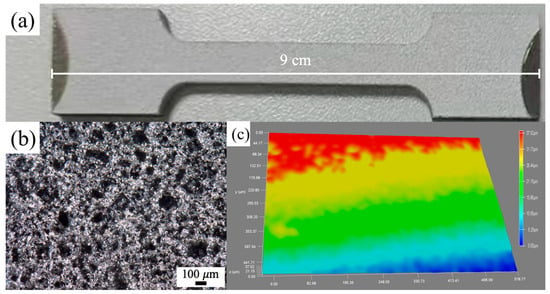
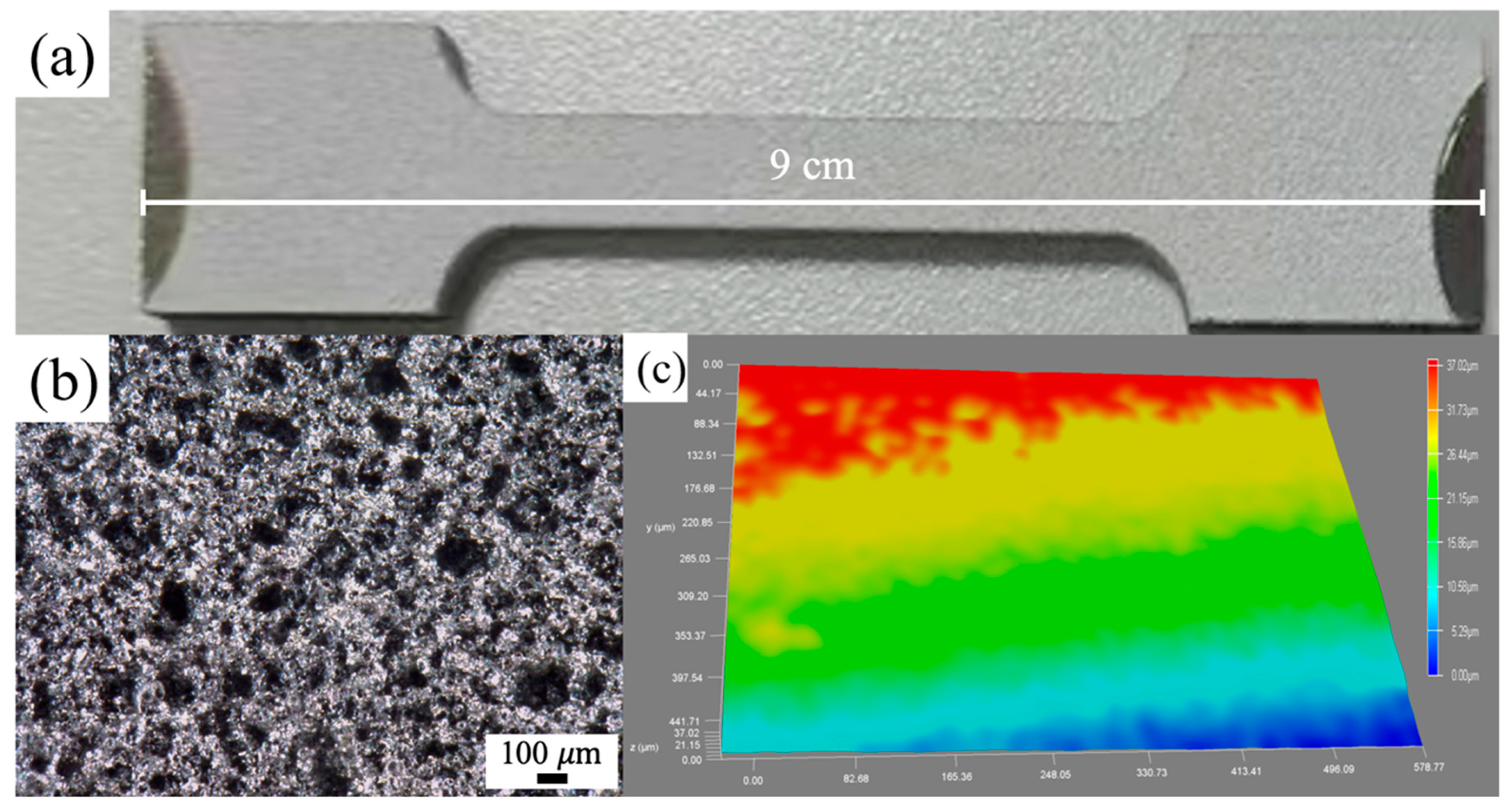
Figure 1 systematically characterizes the macroscopic morphology, microscopic structure, and surface roughness of the cold-sprayed AA6061 aluminum coating on LAZ931 Mg-Li alloy. As shown in Figure 1a, the coating exhibits excellent macroscopic uniformity and integrity, fully covering the 9 cm-long tensile specimen without peeling, cracks, or other defects, demonstrating stable and uniform deposition via cold spraying. Figure 1b presents the high-magnification OM morphology, where the coating shows a dense and compact microstructure with only a few scattered micro-pores, corresponding to an extremely low porosity of ~0.3%. The AA6061 particles are tightly bonded through severe plastic deformation induced by high-velocity impact, forming continuous metallic interfaces, which provides a reliable barrier to prevent corrosive media penetration and enhance the alloy’s corrosion and combustion resistance. Figure 1c displays the 3D surface roughness profile, with a maximum height of 37.02 μm, consistent with the measured surface roughness value. The typical rough morphology originates from the stacking and plastic deformation of high-velocity aluminum particles, which does not impair the protective performance of the dense coating [19,20,21]. Overall, the cold-sprayed AA6061 coating features excellent forming quality, high density, and uniform distribution, laying a solid foundation for the synergistic enhancement of the mechanical, creep, and corrosion resistance properties of the LAZ931 Mg-Li alloy composite.
Figure 1.
Optical microscopy (OM) surface observation of the Al 6061 cold-sprayed coating: (a) low-magnification macroscopic surface image showing the overall coating morphology (scale bar: 9 cm); (b) optical micrograph at intermediate magnification revealing surface features such as particle deformation and splat boundaries (scale bar: 100 μm); (c) higher-magnification OM image showing detailed microstructure, including porosity, oxide stringers, and inter-particle bonding (scale bar: 100 μm).
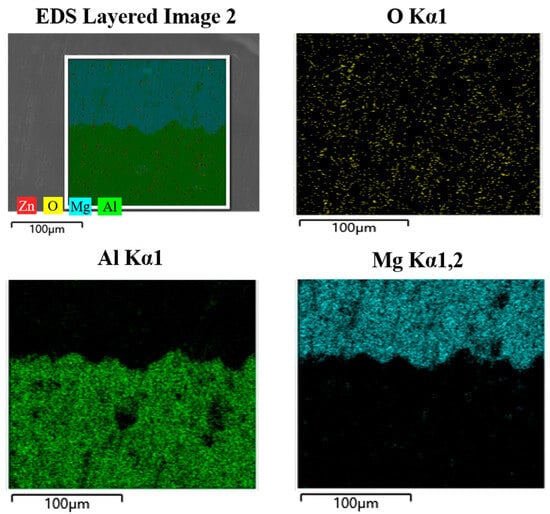
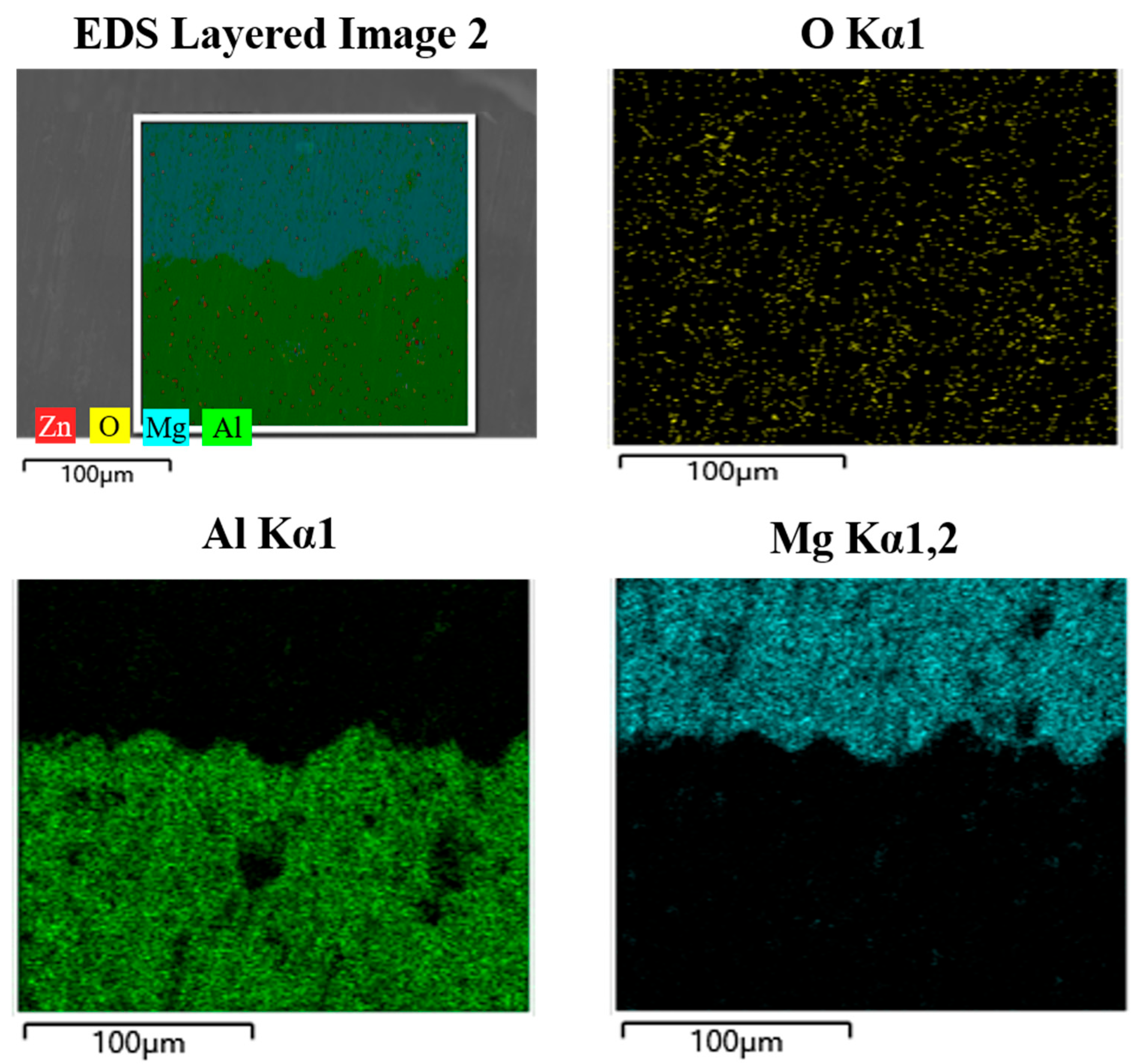
Figure 2 presents the EDS elemental mapping results of the interface between the cold-sprayed AA6061 coating and the LAZ931 Mg-Li alloy substrate, systematically revealing the interfacial elemental distribution and bonding characteristics. The composite elemental map (top-left) clearly delineates two distinct regions: the upper region dominated by Al (green) corresponds to the AA6061 coating, while the lower region dominated by Mg (cyan) corresponds to the LAZ931 substrate, with a clear but serrated, wave-like interface between them. This irregular, interlocking interface morphology confirms that the high-velocity impact of cold-sprayed Al particles induces severe plastic deformation in the LAZ931 substrate, forming a mechanical interlocking structure that significantly enhances the interfacial bonding strength, rather than a flat, weak mechanical contact [16]. The individual elemental maps further verify the interfacial characteristics. The Al Kα1 map (bottom-left) shows a dense, continuous distribution of Al in the coating region, with no obvious penetration into the Mg substrate, indicating minimal interfacial diffusion during the low-temperature cold-spraying process, which effectively avoids the formation of brittle intermetallic compounds (IMCs) that would degrade interfacial performance. The Mg Kα1,2 map (bottom-right) shows a complementary distribution, with Mg concentrated in the substrate region and a sharp transition at the interface, consistent with the serrated boundary observed in the composite map. The O Kα1 map (top-right) reveals a uniform, low-concentration distribution of oxygen across both the coating and substrate, indicating that both Al and Mg undergo mild oxidation during the cold-spraying process. However, the dense AA6061 coating acts as an effective barrier, preventing further oxidation and corrosion of the LAZ931 substrate, which is critical for improving the alloy’s corrosion and combustion resistance [22]. Notably, the absence of significant elemental interdiffusion and brittle IMC formation at the interface is a key advantage of cold spraying over high-temperature processes (e.g., hot rolling, diffusion welding), as it preserves the intrinsic properties of both the coating and substrate while achieving robust interfacial bonding. The serrated mechanical interlocking, combined with the dense coating structure, ensures efficient load transfer between the AA6061 coating and LAZ931 substrate, which is the fundamental mechanism for the enhanced mechanical properties of the composite. In summary, the Energy-dispersive X-ray spectroscopy (EDS) mapping results confirm that the cold-sprayed AA6061 coating forms a tightly bonded, defect-free interface with the LAZ931 substrate, laying a solid microstructural foundation for the synergistic improvement of the alloy’s mechanical, creep, and corrosion resistance properties [23].
Figure 2.
Energy-dispersive X-ray spectroscopy (EDS) mapping of the interface between LAZ931 and Al 6061 cold-sprayed coating.
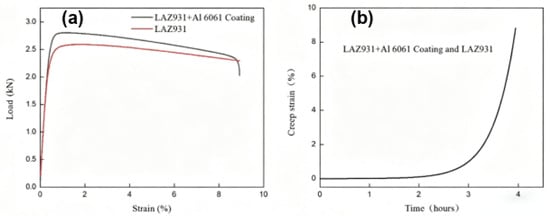
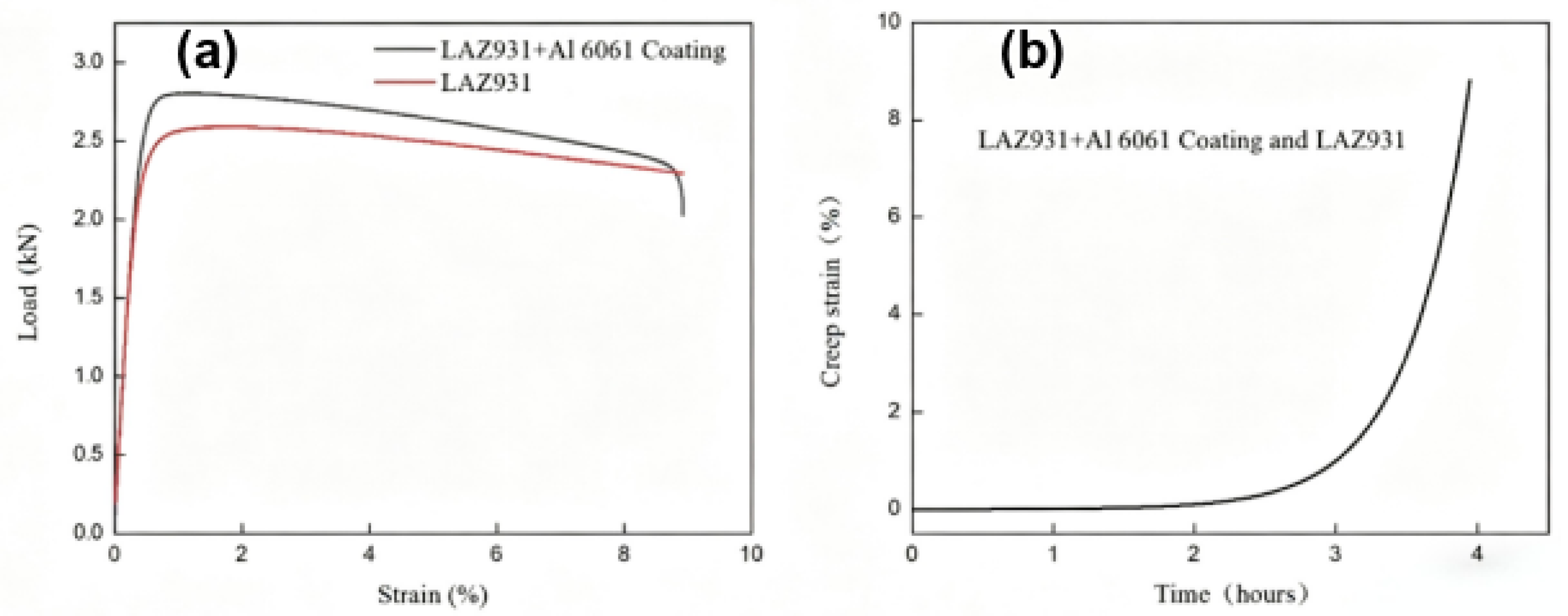
Figure 3 systematically investigates the room-temperature tensile and creep behaviors of bare LAZ931 Mg-Li alloy and LAZ931 reinforced with the cold-sprayed AA6061 coating. As shown in Figure 3a, the stress–strain curves demonstrate that the AA6061 coating significantly enhances the mechanical performance of the LAZ931 substrate: the coated composite exhibits a higher peak load (~2.8 kN) and yield strength than the bare alloy (~2.6 kN) while maintaining comparable ductility, proving that the cold-sprayed coating effectively improves load-bearing capacity without sacrificing the matrix’s intrinsic plasticity. This enhancement stems from excellent interfacial bonding, enabling efficient load transfer from the soft Mg-Li matrix to the high-strength aluminum coating during tensile deformation. Figure 3b presents the room-temperature creep curves, where the coated composite and bare LAZ931 show nearly overlapping creep strain–time profiles, indicating the composite’s creep behavior is predominantly governed by the LAZ931 matrix. Both curves follow the typical three-stage creep characteristics: initial transient creep with a rapidly decreasing strain rate, steady-state creep with a constant minimum strain rate, and accelerated creep leading to final fracture. Although the creep curves of the bare and coated samples are nearly identical, the post-creep fracture morphology (Figure 4) confirms that the AA6061 coating remains intact and well-bonded to the substrate throughout the creep process, with no evidence of interfacial delamination or coating spallation. This indicates that the coating does not degrade the creep resistance of the LAZ931 matrix, and its primary role during creep is to maintain structural integrity and interfacial stability. In summary, the cold-sprayed AA6061 coating effectively boosts LAZ931’s tensile strength while preserving matrix-dominated creep behavior, achieving synergistic mechanical performance improvement and confirming the feasibility of the Al6061/LAZ931/Al6061 sandwich structure for lightweight structural applications.
Figure 3.
Mechanical behaviors of LAZ931 and LAZ931 + Al 6061 coating. (a) Representative tensile stress–strain curves at 25 °C (the shaded bands represent standard deviations from three repeated tests); (b) representative tensile creep strain–time curves at 25 °C.
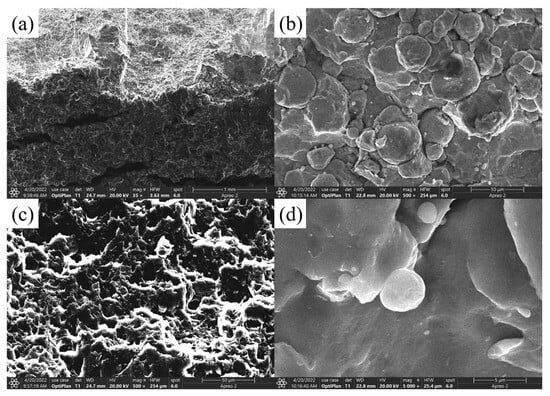
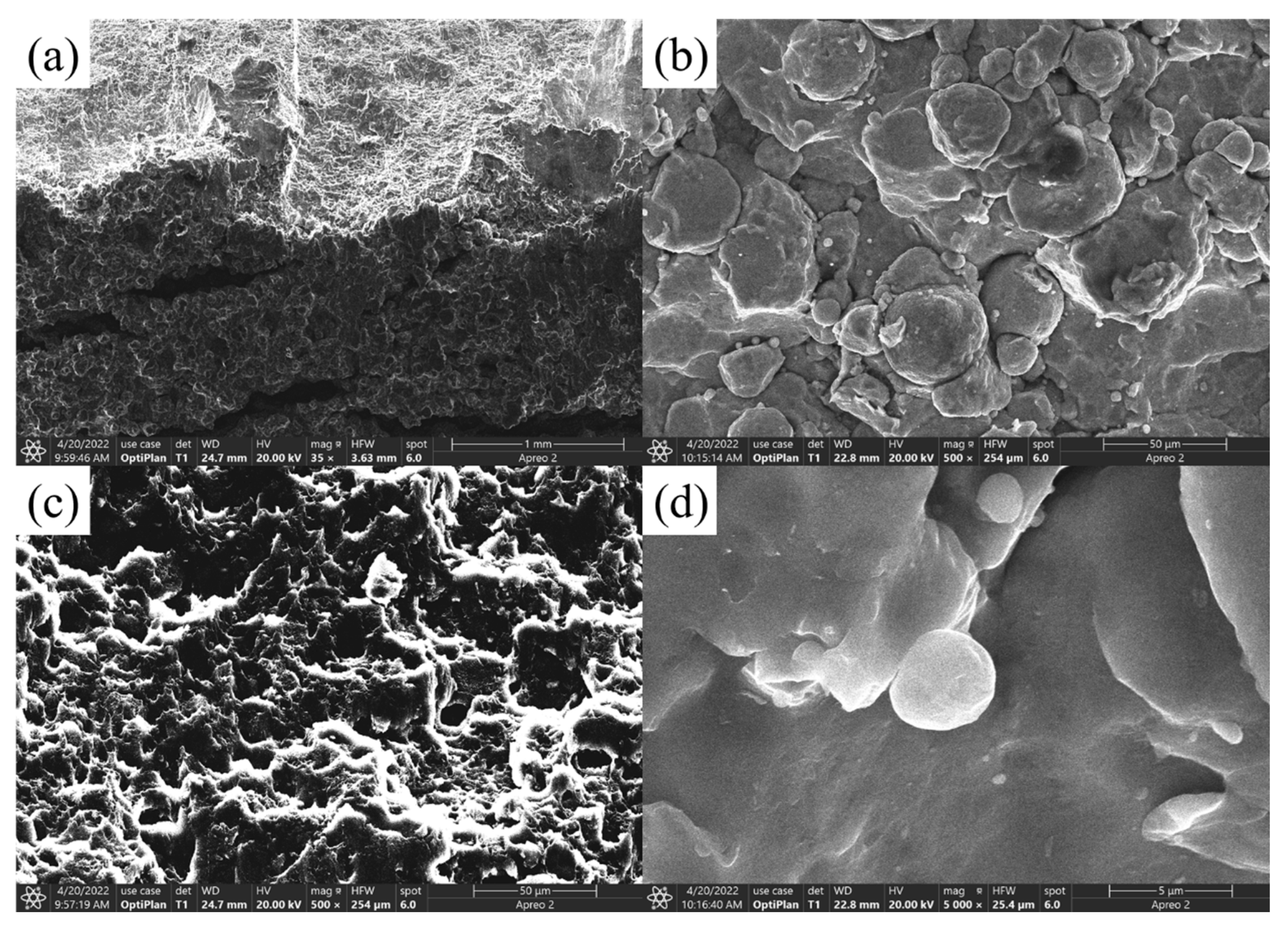
Figure 4.
The crack morphology of the LAZ 931 + Al 6061 coating after creep fracture under different magnifications: (a,c) cross-section view; (b,d) plane view.
Figure 4 presents the SEM crack and fracture morphologies of the cold-sprayed AA6061/LAZ931 composite after creep fracture, systematically revealing the failure behavior of the coating and substrate, and their interface, under different magnifications. The cross-sectional views (Figure 4a,c) clearly distinguish the upper AA6061 coating and lower LAZ931 substrate with a distinct boundary: the coating exhibits a brittle, layered fracture with visible transverse cracks, while the LAZ931 substrate shows a rough, ductile fracture dominated by deep, uniform dimples, confirming that the composite’s overall creep behavior is governed by the matrix, consistent with the creep curve results. The plane views (Figure 4b,d) characterize the AA6061 coating’s fracture morphology, showing a typical cold-sprayed particle stacking structure with flattened, disk-shaped Al particles tightly bonded via severe plastic deformation. Fracture occurs primarily at particle/particle interfaces, exhibiting brittle fracture characteristics, which indicates the coating effectively shares the creep load applied to the LAZ931 matrix. The high-magnification view (Figure 4d) further verifies the tight coating/substrate interface without delamination, with embedded nano-sized Al particles confirming the mechanical interlocking effect induced by high-velocity particle impact, which ensures efficient load transfer between the coating and substrate [24].
It is noteworthy that cold spraying may introduce residual stresses in the coating and at the coating/substrate interface due to the high-velocity impact of particles and the associated plastic deformation. Although the present study focuses on the effects of the AA6061 coating on tensile properties, creep behavior, and corrosion resistance, the potential influence of residual stresses on fatigue crack initiation, propagation behavior, and long-term interfacial durability warrants further investigation. This will be addressed in our future work. In summary, the analysis confirms the synergistic effect of the AA6061 coating and LAZ931 matrix: the coating bears the load and provides barrier protection, while the matrix dominates creep deformation, achieving synergistic improvement in the composite’s comprehensive mechanical properties and laying a solid microstructural foundation for the Al6061/LAZ931/Al6061 sandwich structure.
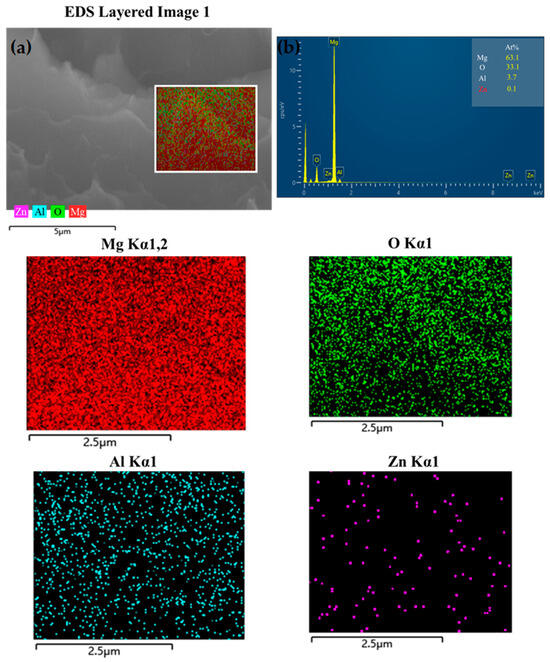
Figure 5 presents the EDS elemental analysis of the creep fracture crack in the cold-sprayed AA6061/LAZ931 composite, revealing the elemental distribution and fracture characteristics at the failure site. The EDS spectrum confirms the primary elemental composition of the fracture region: Mg (63.1 at.%), O (33.1 at.%), Al (3.7 at.%), and Zn (0.1 at.%). This is consistent with the LAZ931 Mg-Li alloy matrix, indicating that crack propagation and final fracture occur predominantly within the LAZ931 substrate rather than at the coating/substrate interface. This verifies that the excellent interfacial bonding between the AA6061 coating and LAZ931 matrix remains intact during creep deformation, and the composite’s creep failure is dominated by the plastic deformation and fracture of the LAZ931 matrix, aligning with the creep curve and fracture morphology results. The elemental mapping further elucidates the distribution: the Mg map shows uniform high-density distribution, confirming matrix-dominated fracture; the O map exhibits homogeneous distribution, indicating mild matrix oxidation without severe interfacial degradation; the Al map shows scattered low-concentration signals from residual coating particles, verifying the interfacial mechanical interlocking effect; the Zn map displays sparse uniform signals, consistent with the alloy’s low Zn content, confirming the fracture is a typical ductile dimple fracture of dual-phase Mg-Li alloy, unrelated to grain boundary segregation or brittle intermetallic formation [9]. In summary, the EDS analysis confirms that the composite’s creep failure occurs within the LAZ931 matrix, with the AA6061 coating maintaining excellent interfacial bonding and load-bearing capacity, laying a solid microstructural foundation for the composite’s synergistic mechanical property enhancement.
Figure 5.
Crack-EDS analysis of the LAZ931 + Al-6061 coating after creep-fracture: (a) Scanning electron microscopy (SEM) image showing the crack morphology and the EDS acquisition point/area (marked in red); (b) corresponding energy-dispersive X-ray spectroscopy (EDS) spectrum and elemental composition (at.%) of the crack region (the red font highlights the dominant elements, i.e., Mg and O). The results indicate significant oxidation and elemental diffusion near the crack surface.
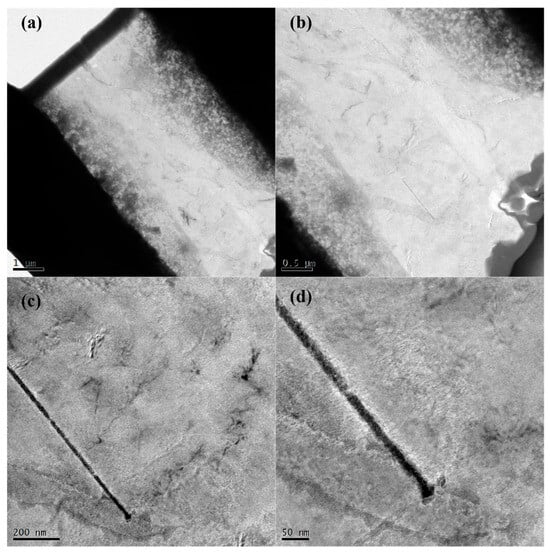
Figure 6 displays the Transmission electron microscopy (TEM) examination results of the AA6061/LAZ931 composite following creep fracture, revealing the nanoscale defect structures and microstructural evolution induced by creep deformation. At low magnifications (Figure 6a,b), the overall lattice structure remains relatively continuous, though subtle contrast variations indicate a high density of inherent defects accumulated during creep. High-resolution TEM images (Figure 6c,d) clearly identify a prominent, elongated linear defect traversing the matrix, identified as a high-density dislocation channel or shear band. This feature serves as a primary stress concentration site and propagation pathway during creep, directly contributing to the accelerated creep stage and subsequent fracture. The surrounding matrix exhibits a tangled dislocation network, confirming intense plastic deformation and dislocation multiplication under sustained stress. The atomic-scale clarity of the dislocation core (Figure 6d) demonstrates strong interfacial bonding and mechanical interlocking between the coating and matrix, with no evidence of brittle intermetallic formation or amorphization at the defect boundaries. In conclusion, the TEM analysis confirms that creep failure is dominated by the formation and propagation of dislocation-rich shear bands in the LAZ931 matrix [25,26,27,28,29]. The preservation of lattice integrity and strong interfacial bonding validate the efficacy of cold-sprayed AA6061 in enhancing the creep performance of the LAZ931 alloy through microstructural defect engineering.
Figure 6.
Transmission electron microscopy (TEM) examination results of the LAZ931 + Al 6061 coating after creep fracture: (a) bright-field TEM image showing the overall microstructure of the coating near the fracture zone; (b) enlarged TEM image revealing the distribution of secondary phases and dislocation tangles (scale bar: 0.5 μm); (c) high-resolution TEM image displaying lattice fringes and fine precipitates within the matrix (scale bar: 200 nm); (d) detailed TEM image illustrating the interfacial structure between the LAZ931 substrate and the Al 6061 coating, as well as creep-induced deformation features (scale bar: 50 nm).
Prior to the EIS measurements, the open-circuit potential (OCP) was monitored for 30 min to ensure a stable electrochemical state. The bare LAZ931 substrate exhibited a relatively negative OCP of approximately −1.6 V vs. SCE, while the AA6061-coated sample showed a markedly nobler OCP of about −0.75 V vs. SCE. This significant positive shift (over 800 mV) thermodynamically confirms the effective barrier protection provided by the cold-sprayed Al coating.
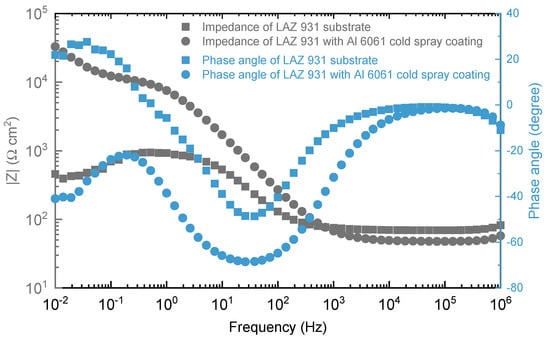
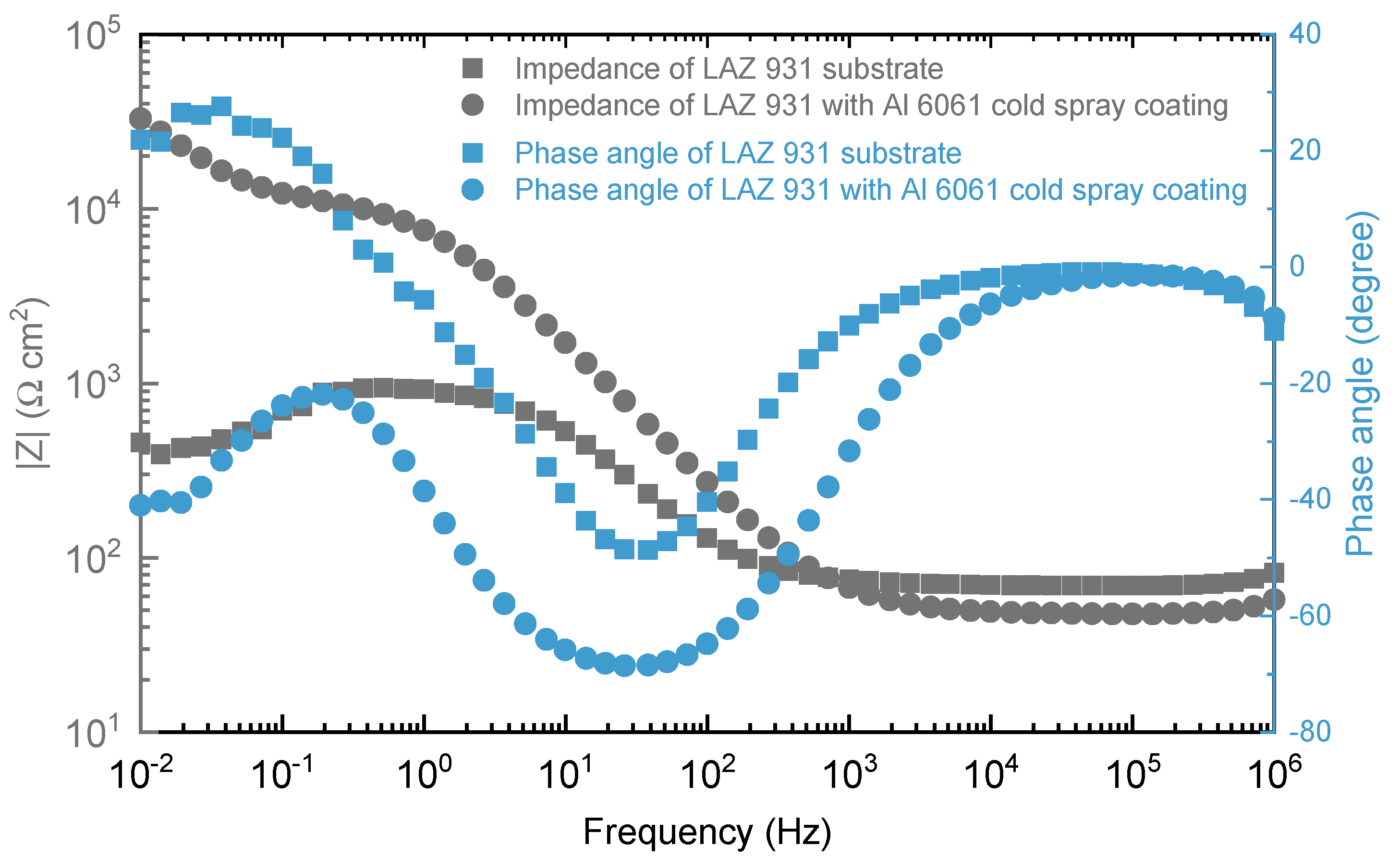
Figure 7 shows the Electrochemical impedance spectroscopy (EIS) Bode plots of bare LAZ931 Mg-Li alloy and LAZ931 with the cold-sprayed AA6061 coating in 3.5 wt% NaCl solution, evaluating their corrosion resistance. The EIS Bode plots in Figure 7 provide critical insights into the corrosion behavior and interfacial electrochemical processes. For the bare LAZ931 alloy, the impedance modulus (|Z|) at the low-frequency limit (0.01 Hz) is only about 102 Ω·cm2, accompanied by a low phase angle (around −20° to −30°) across the entire frequency range. This behavior indicates a rapidly deteriorating surface film and a dominant charge-transfer-controlled corrosion process, characteristic of the high chemical activity of the Mg-Li matrix. In stark contrast, the AA6061-coated sample exhibits a |Z| value exceeding 3 × 10⁴ Ω·cm2 at 0.01 Hz—an improvement of over two orders of magnitude—and maintains a high phase angle of approximately −60° in the medium-to-high frequency region, reflecting a stable, capacitive protective layer. To rationalize these electrochemical responses, an equivalent electrical circuit (EEC) model can be adopted as Rs(Qc(Rc(QdlRct))), where Rs represents the solution resistance, Qc and Rc correspond to the constant phase element and resistance of the coating (or surface film), and Qdl and Rct denote the double-layer capacitance and the charge-transfer resistance at the electrode/electrolyte interface [30,31,32]. The use of a CPE instead of an ideal capacitor accounts for the surface roughness and heterogeneity revealed in the microstructure (Figure 1 and Figure 2). The significantly higher phase angle plateau and the greatly increased low-frequency |Z| for the coated sample imply a dramatically elevated Rct value, confirming that the dense AA6061 layer effectively blocks the penetration of Cl− ions and suppresses the faradaic charge-transfer reactions. Regarding the dual-phase LAZ931 substrate, the inferior EIS response of the bare alloy is intrinsically linked to its two-phase (α-Mg and β-Li) structure. The α-Mg phase possesses a lower electrode potential and acts as the anodic site, while the β-Li phase, being relatively noble, serves as the cathodic site, forming numerous microscopic galvanic couples. In the bare alloy, the low phase angle and low impedance modulus reflect the preferential dissolution of the α-Mg phase at the phase boundaries [33]., leaving behind a porous β-Li-rich network that accelerates further corrosion. However, in the coated sample, the continuous and dense AA6061 layer physically isolates the entire dual-phase substrate from the aggressive electrolyte, thereby eliminating the direct exposure of the α/β phase boundaries to Cl− attack. This barrier effect not only enhances the overall corrosion resistance (as evidenced by the high |Z|) but also effectively suppresses the selective phase corrosion that is otherwise inevitable in the bare LAZ931 alloy.
Figure 7.
The EIS Bode plots of LAZ931 and LAZ931 with the Al6061 cold-sprayed coating. The EIS corrosion test was conducted under immersion in 3.5 wt% NaCl solution. All EIS measurements were repeated three times, showing good reproducibility with a relative standard deviation of <5% for the |Z| values.
The electrochemical results collectively demonstrate that the cold-sprayed AA6061 coating provides robust barrier protection by: (i) significantly increasing the charge-transfer resistance, (ii) maintaining a high phase angle characteristic of a stable capacitive film, and (iii) effectively suppressing the micro-galvanic corrosion between the α-Mg and β-Li phases. The low porosity (~0.3%) and dense microstructure of the coating (Figure 1) are key factors contributing to this enhanced corrosion performance.
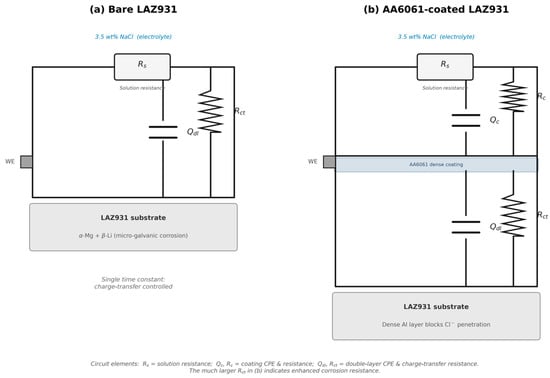
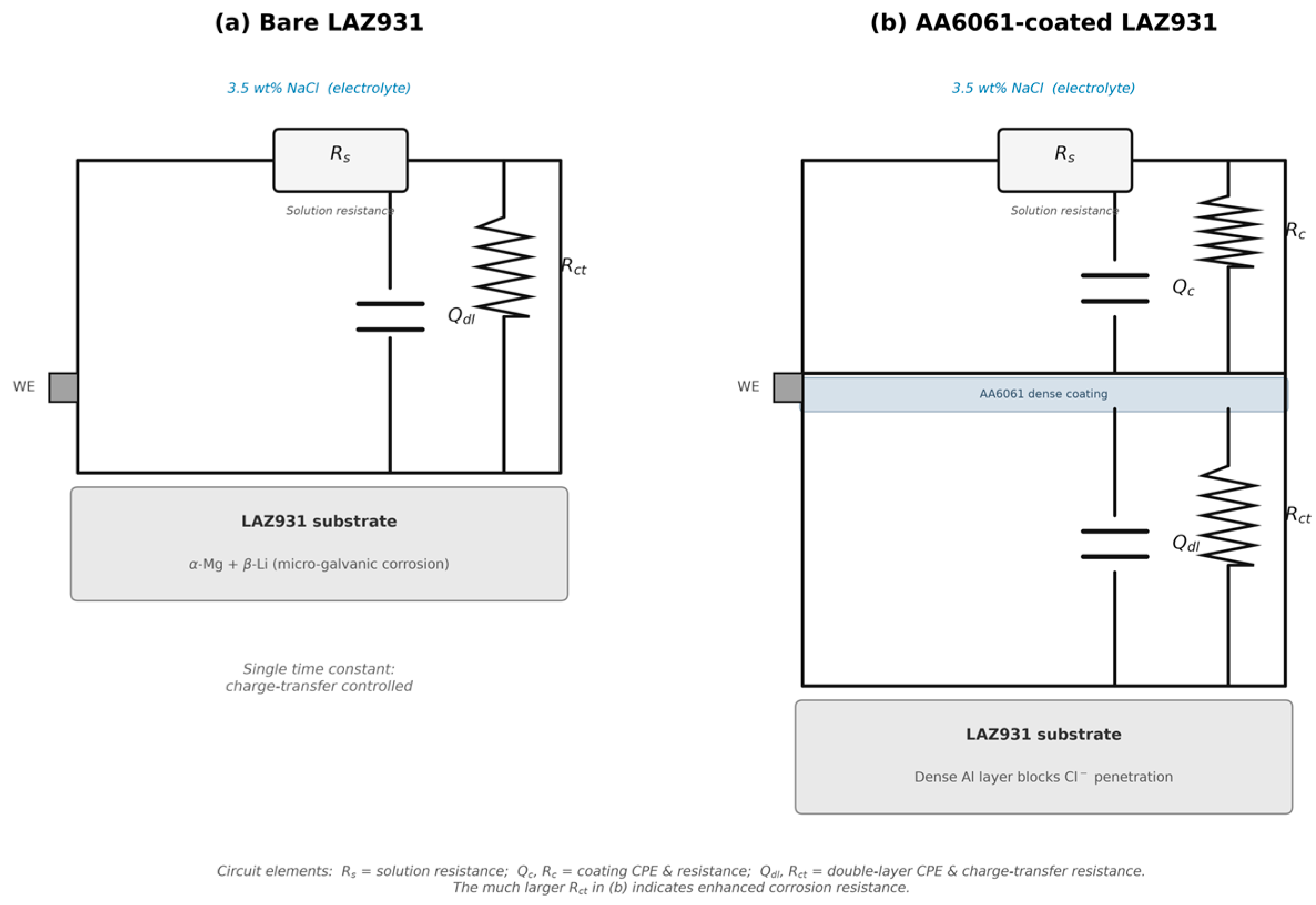
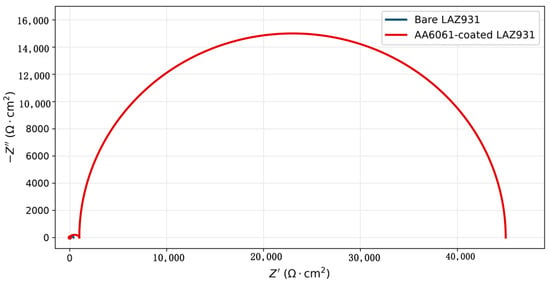
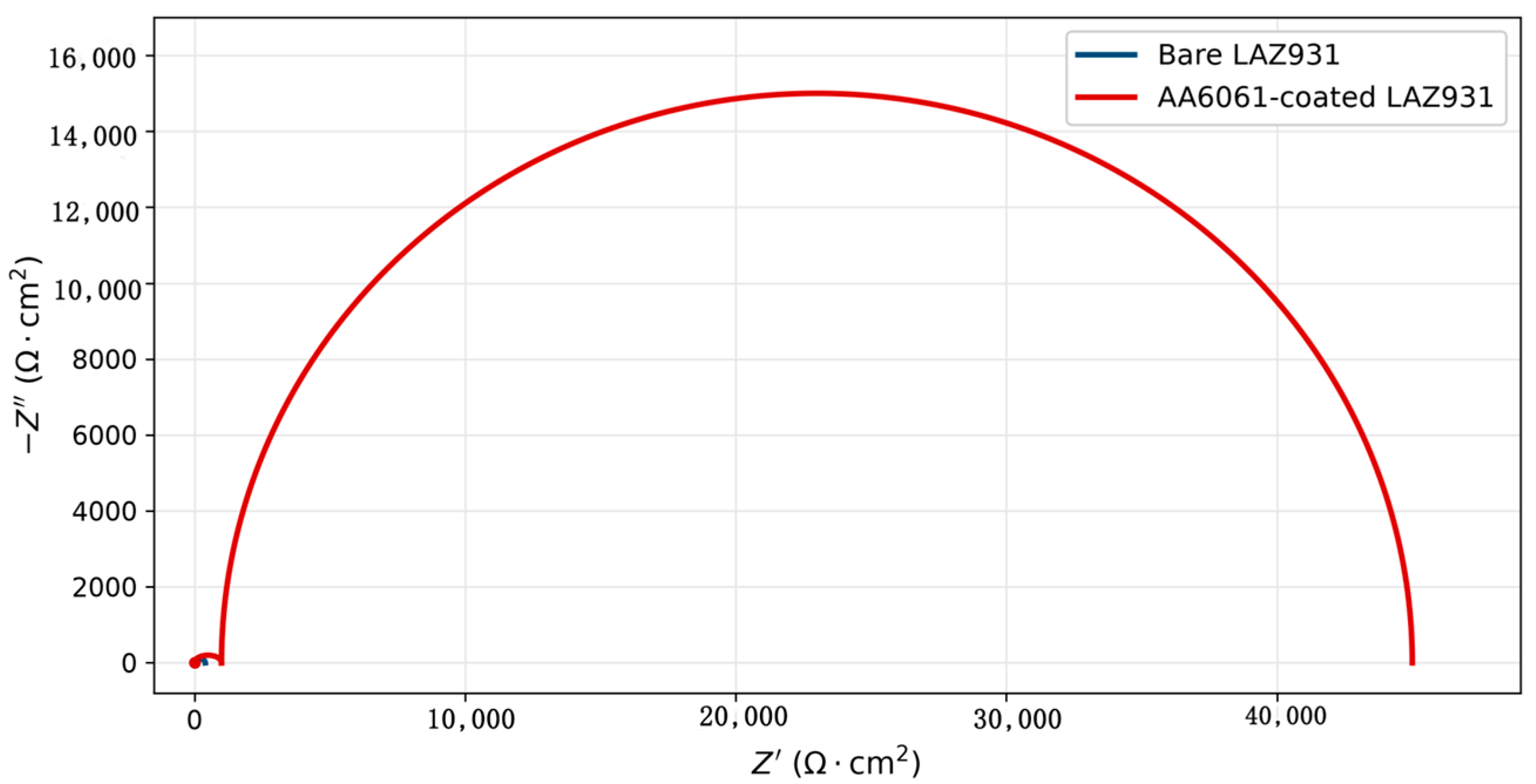
To further quantify the corrosion resistance and complement the Bode plot analysis, the EIS data were also presented in Nyquist format and fitted using the equivalent electrical circuits shown in Figure 8. Figure 9 displays the Nyquist plots for both the bare LAZ931 and the AA6061-coated sample. The bare alloy exhibits a single, depressed capacitive semicircle at high frequencies followed by a diffusional tail, characteristic of a charge-transfer-controlled dissolution process. In contrast, the coated sample shows two distinct, well-separated capacitive semicircles, which correspond to the response of the outer AA6061 coating and the inner charge-transfer process at the coating/substrate interface. This evolution confirms that the dense Al layer acts as an effective physical barrier. The fitted electrochemical parameters are summarized in Table 1. Notably, the charge-transfer resistance (Rct) of the coated sample reaches 4.2 × 10⁴ Ω·cm2, which is more than two orders of magnitude higher than that of the bare substrate (1.8 × 10² Ω·cm2), providing strong quantitative evidence of the superior barrier performance. The coating resistance (Rc) also remains high (2.5 × 10³ Ω·cm2), indicating the integrity of the cold-sprayed layer. These results, together with the Bode plots in Figure 7, demonstrate that the AA6061 coating effectively blocks Cl− penetration and suppresses the micro-galvanic corrosion between the α-Mg and β-Li phases.
Figure 8.
Schematic of equivalent electrical circuits for (a) bare LAZ931 and (b) AA6061-coated LAZ931. Rs: solution resistance; Qc and Rc: coating capacitance and resistance; Qdl and Rct: double-layer ca-pacitance and charge-transfer resistance. The much larger Rct in (b) indicates enhanced corrosion resistance.
Figure 9.
Nyquist plots of bare LAZ931 and the AA6061-coated LAZ931 in 3.5 wt% NaCl solution. The solid lines represent the fitting results using the equivalent circuits shown in Figure 8.
Table 1.
Electrochemical parameters obtained from equivalent-circuit fitting of the EIS data.
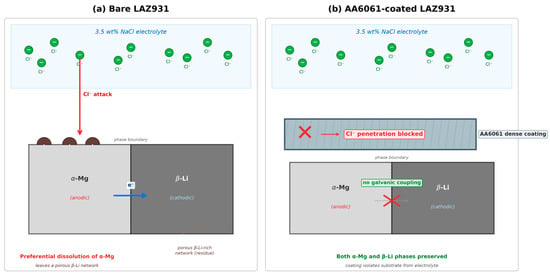
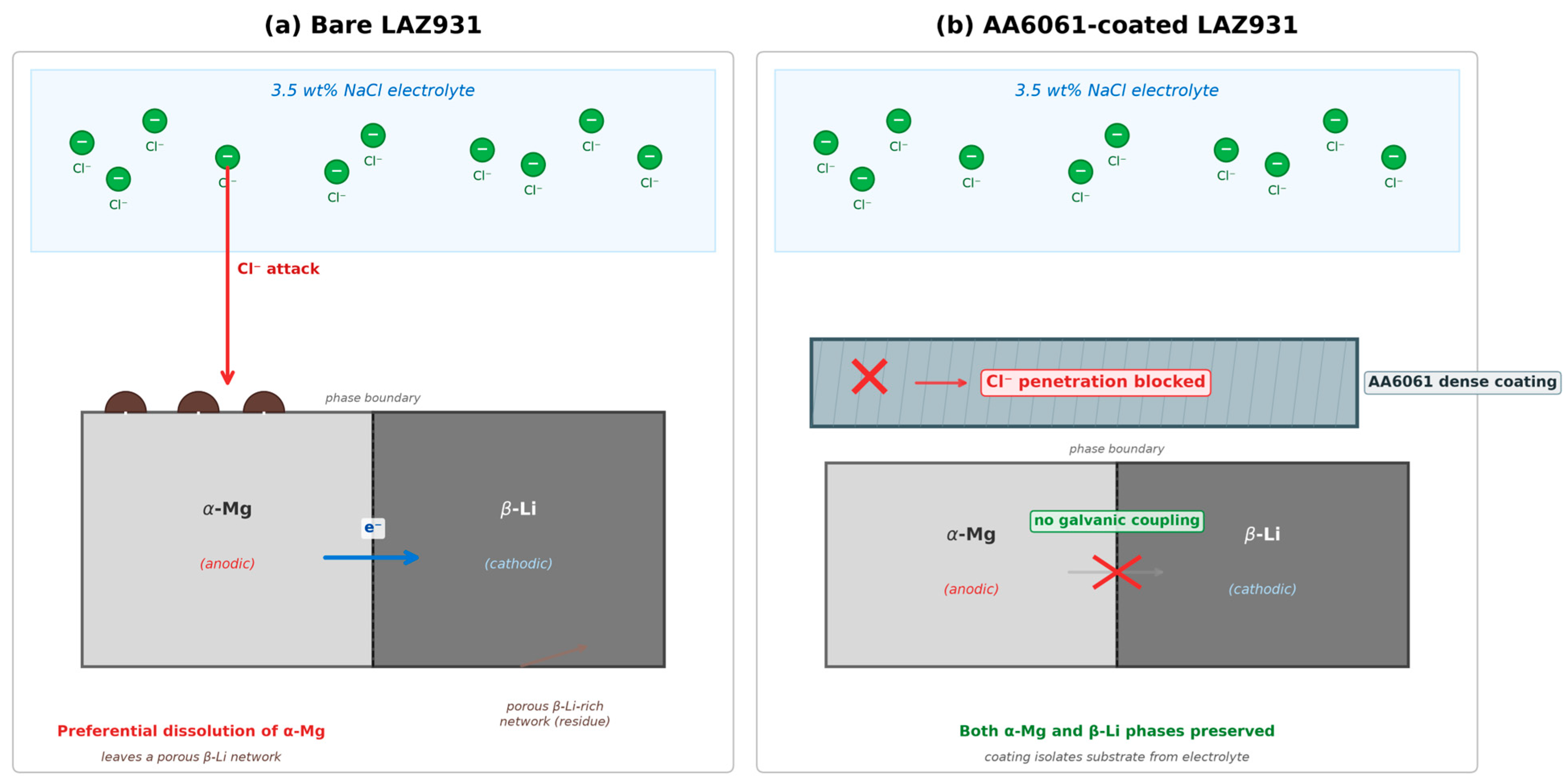
The equivalent electrical circuits used to fit the EIS spectra are shown in Figure 8, and the corresponding corrosion mechanisms are schematically illustrated in Figure 10.
Figure 10.
Schematic illustration of corrosion mechanisms: (a) bare LAZ931—Cl− ions attack the α-Mg phase (anodic site), which preferentially dissolves due to micro-galvanic coupling with the β-Li phase (cathodic site), forming a porous β-Li-rich network; (b) AA6061-coated LAZ931—the dense coating blocks Cl− penetration and suppresses phase-selective corrosion, preserving both the α and β phases.
4. Conclusions
In this study, the potential of a cold-sprayed AA6061 coating to enhance the comprehensive performance of LAZ931 Mg-Li alloy was systematically evaluated. The results confirm that the cold-sprayed AA6061 coating exhibits superior forming quality, with a low porosity of ~0.3% and a dense surface morphology, effectively acting as a physical barrier to isolate the LAZ931 matrix from corrosive environments. Energy-dispersive X-ray spectroscopy (EDS) mapping and TEM analyses reveal a robust, serrated coating/matrix interface featuring mechanical interlocking and high-density dislocations, which ensures efficient load transfer and eliminates interfacial delamination during deformation. Tensile tests demonstrate that the AA6061 coating significantly boosts the tensile and yield strengths of LAZ931 while preserving its inherent plasticity. Creep behavior analysis indicates that the composite failure is dominated by the ductile fracture of the LAZ931 matrix, while the AA6061 coating remains intact and well-bonded throughout creep deformation. This confirms that the coating can serve as a protective layer without negatively affecting the creep resistance of the LAZ931 alloy. Furthermore, EIS measurements and equivalent-circuit fitting reveal that the coated alloy achieves drastically enhanced corrosion resistance compared to the bare substrate, with the charge-transfer resistance (Rct) increasing from ~1.8 × 10² Ω·cm2 to ~4.2 × 10⁴ Ω·cm2, confirming that the dense AA6061 coating effectively blocks the penetration of corrosive media such as Cl− ions.
Author Contributions
Z.Z., Y.W. and Q.A.: Methodology, Investigation, Writing—Original Draft Preparation, Investigation, Writing—Review and Editing. J.W. and D.Y.: Resources, Writing—review and editing, Validation. All authors have read and agreed to the published version of the manuscript.
Funding
This work was supported by the Qianke Joint Central Introduction Area [2026]026 and the Natural Science Foundation of Henan Outstanding Youth Project (Grant No. 242300421015), the National Natural Science Foundation of China Regional Innovation and Development Joint Fund Key Project (Grant No. U23A20672), the International Science and Technology Cooperation Program of Henan Province (Grant No. 252102520083), the Project of the School-level Department of Bijie Vocational and Technical College (2025-15), the Bijie City Joint Fund (2025-98), and the BZYKYTD-2024-4 Research Team for Intelligent Monitoring of Building Structures. Henan Province International Science and Technology Cooperation Project, Project Numbe: 252102520083. Supported by International Science and Technology Cooperation Program of Henan Province.
Data Availability Statement
The original contributions presented in this study are included in the article. Further inquiries can be directed to the corresponding authors.
Conflicts of Interest
Dong Yan was employed by Xinyang Lingshi Technology Co., Ltd. The remaining authors declare that the research was conducted in the absence of any commercial or financial relationships that could be construed as potential conflicts of interest.
References
- Xu, W.; Birbilis, N.; Sha, G.; Wang, Y.; Daniels, J.E.; Xiao, Y.; Ferry, M. A high-specific-strength and corrosion-resistant magnesium alloy. Nat. Mater. 2015, 14, 1229–1235. [Google Scholar]
- Zhou, M.R.; Morisada, Y.; Fujii, H.; Wang, J.Y. Microstructure and mechanical properties of friction stir welded duplex Mg-Li alloy LZ91. Mater. Sci. Eng. A 2020, 773, 138730. [Google Scholar]
- Bozkurt, Y.; Kentli, A.; Uzun, H.; Salman, S. Experimental Investigation and Prediction of Mechanical Properties of Friction Stir Welded Aluminium Metal Matrix Composite Plates. Mater. Sci. 2012, 18, 336–340. [Google Scholar]
- Li, J.; Wu, J.L.; Jin, L.; Celikin, M.; Wang, F.H.; Dong, S.; Dong, J. The role of dislocation-solute interactions on the creep behaviour of binary Mg-RE alloys. Sci. Rep. 2021, 11, 2860. [Google Scholar]
- Zhao, Z.; Liu, X.; Li, S.; Mao, Y.; Feng, Z.; Ke, W.; Liu, F. Study on Strengthening and Toughening of Mechanical Properties of Mg-Li Alloy by Adding Non-Rare-Earth Elements Al and Si. JOM 2022, 74, 2554–2565. [Google Scholar]
- Feng, Z.; Xu, C.C.; Zhang, D.; Buchheit, R. Corrosion Protective Film Formation on Mg Alloy AZ31 by Exposure to Dilute Selenite Solutions. Materials 2021, 14, 286. [Google Scholar]
- Zheng, X.; Lai, H.S.; Zhao, Z. Preparation of Iron Tetradecanoate Coating on the Surface of Mg-Li Alloy and Its Corrosion Resistance. Int. J. Electrochem. Sci. 2021, 16, 150914. [Google Scholar]
- Zhang, C.; Wu, L.; Zhao, Z.; Huang, G.; Jiang, B.; Atrens, A.; Pan, F. Effect of the Al-Si eutectic on the microstructure and corrosion behavior of the single-phase Mg alloy Mg-4Li. J. Magnes. Alloys 2021, 9, 1339–1348. [Google Scholar]
- Wu, R.; Yan, Y.; Wang, G.; Murr, L.E.; Han, W.; Zhang, Z.; Zhang, M. Recent progress in magnesium-lithium alloys. Int. Mater. Rev. 2015, 60, 65–100. [Google Scholar]
- Zhou, M.R.; Morisada, Y.; Fujii, H.; Wang, J.Y. Pronounced low-temperature superplasticity of friction stir processed Mg-9Li-1Zn alloy. Mater. Sci. Eng. A 2020, 780, 139071. [Google Scholar]
- Zeng, Z.R.; Zhou, M.R.; Esmaily, M.; Zhu, Y.M.; Choudhary, S.; Griffith, J.C.; Ma, J.S.; Hora, Y.; Chen, Y.; Gullino, A.; et al. Corrosion resistant and high-strength dual-phase Mg-Li-Al-Zn alloy by friction stir processing. Commun. Mater. 2022, 3, 18. [Google Scholar]
- Feng, B.; Sun, Z.; Wu, Y.; Feng, X.W.; Wang, J.; Zheng, K.H. Microstructure and mechanical behavior of Mg ZK60/Al 1100 composite plates fabricated by co-extrusion. J. Alloys Compd. 2020, 842, 155676. [Google Scholar]
- Zhu, B.; Liang, W.; Li, X.R. Interfacial microstructure, bonding strength and fracture of magnesium-aluminum laminated composite plates fabricated by direct hot pressing. Mater. Sci. Eng. A 2011, 528, 6584–6588. [Google Scholar]
- Fan, D.H.; Yang, B.H.; Song, J.K.; Wei, S.G. A Finite Element Analysis on Mechanical Behavior of Aluminum/Magnesium Composite Plates. Mech. Solids 2019, 54, 1256–1270. [Google Scholar]
- Yang, H.K.; Qiu, J.; Cao, C.; Li, Y.D.; Song, Z.X.; Liu, W.J. Theoretical design and experimental study of the interlayer of Al/Mg bimetallic composite plate by solid-liquid cast rolling. Mater. Sci. Eng. A 2022, 835, 142677. [Google Scholar]
- Zhao, Y.D.; Ding, Z.M.; Shen, C.B.; Chen, Y. Interfacial microstructure and properties of aluminum-magnesium AZ31B multi-pass friction stir processed composite plate. Mater. Des. 2016, 94, 240–252. [Google Scholar]
- Luo, C.Z.; Liang, W.; Chen, Z.Q.; Zhang, J.J.; Chi, C.Z.; Yang, F.Q. Effect of high temperature annealing and subsequent hot rolling on microstructural evolution at the bond-interface of Al/Mg/Al alloy laminated composites. Mater. Charact. 2013, 84, 34–40. [Google Scholar]
- Qi, Z.C.; Yu, C.; Xiao, H. Microstructure and bonding properties of magnesium alloy AZ31/CP-Ti clad plates fabricated by rolling bonding. J. Manuf. Process. 2018, 32, 175–186. [Google Scholar]
- ASTM E8/E8M-2011; Standard Test Methods for Tension Testing of Metallic Materials. ASTM: Conshohocken, PA, USA, 2011.
- Gao, H.Q.; Wang, L.D.; Fei, W.D. Effect of aluminum borate whisker coating on interface and mechanical properties of 6061AI matrix composites. Rare Met. 2007, 26, 41–45. [Google Scholar]
- Zhang, J.J.; Liang, W.; Li, H.T. Effect of thickness of interfacial intermetallic compound layers on the interfacial bond strength and the uniaxial tensile behaviour of 5052 Al/AZ31B Mg/5052 Al clad sheets. RSC Adv. 2015, 5, 104954–104959. [Google Scholar]
- Zhang, X.P.; Castagne, S.; Yang, T.H.; Gu, C.F.; Wang, J.T. Entrance analysis of 7075 Al/Mg-Gd-Y-Zr/7075 Al laminated composite prepared by hot rolling and its mechanical properties. Mater. Des. 2011, 32, 1152–1158. [Google Scholar]
- Zhang, N.; Wang, W.X.; Cao, X.Q.; Wu, J.Q. The effect of annealing on the interface microstructure and mechanical characteristics of AZ31B/AA6061 composite plates fabricated by explosive welding. Mater. Des. 2015, 65, 1100–1109. [Google Scholar]
- Yang, H.K.; Li, Y.D.; Qiu, J.; Song, Z.X.; Bi, G.L.; Zhou, H.W. Interfacial Characteristics of 6061/AZ31B Composites in Multi-Pass Rolling. Materials 2022, 15, 1199. [Google Scholar]
- Xin, Y.C.; Hong, R.; Feng, B.; Yu, H.H.; Wu, Y.; Liu, Q. Fabrication of Mg/AL multilayer plates using an accumulative extrusion bonding process. Mater. Sci. Eng. A 2015, 640, 210–216. [Google Scholar]
- Zhao, Z.L.; Zhuang, Y.L.; Wang, T.; Zhao, D.S.; Wu, X. Influence of Al-Si eutectic alloy on the mechanical behaviors and microstructure feature of ultralight dual-phase Mg-8Li-x(Al-12.6 Si) alloys. Mater. Today Commun. 2022, 30, 103201. [Google Scholar]
- Zhao, Z.; Sun, Z.; Liang, W.; Wang, Y.; Bian, L. Influence of Al and Si additions on the microstructure and mechanical properties of Mg-4Li alloys. Mater. Sci. Eng. A 2017, 702, 206–217. [Google Scholar]
- Zhao, Z.; Duan, B.; Ying, J.; Li, L. Effect of Al Addition on Microstructure and Tensile Properties of Mg-8Li-3Al Alloy. JOM 2021, 73, 2558–2564. [Google Scholar]
- Zhao, Z.; Chen, J.; Wu, X.; Liu, F. Design of a Mg-7Li-2.6Al-0.4Si alloy with simultaneously improved strength and ductility. Mater. Today Commun. 2021, 27, 102244. [Google Scholar]
- Mansfeld, F. Electrochemical impedance spectroscopy (EIS) as a new tool for investigating methods of corrosion protection. Electrochim. Acta 1990, 35, 1533–1544. [Google Scholar]
- Bonora, P.L.; Deflorian, F.; Fedrizzi, L. Electrochemical impedance spectroscopy as a tool for investigating underpaint corrosion. Electrochim. Acta 1996, 41, 1073–1082. [Google Scholar]
- Wang, S.; Zhang, J.; Gharbi, O.; Vivier, V.; Gao, M.; Orazem, M.E. Electrochemical impedance spectroscopy. Nat. Rev. Methods Prim. 2021, 1, 41. [Google Scholar]
- Zhang, C.; Wu, L.; Zhao, Z.-l.; Xie, Z.-h.; Huang, G.-s.; Liu, L.; Jiang, B.; Atrens, A.; Pan, F.-s. Effect of Li content on microstructure and mechanical property of Mg-xLi-3(Al-Si) alloys. Trans. Nonferrous Met. Soc. China 2019, 29, 2506–2513. [Google Scholar]

Disclaimer/Publisher’s Note: The statements, opinions and data contained in all publications are solely those of the individual author(s) and contributor(s) and not of MDPI and/or the editor(s). MDPI and/or the editor(s) disclaim responsibility for any injury to people or property resulting from any ideas, methods, instructions or products referred to in the content. |
© 2026 by the authors. Licensee MDPI, Basel, Switzerland. This article is an open access article distributed under the terms and conditions of the Creative Commons Attribution (CC BY) license.