


Abstract
Hot pressing is a promising technique for fabricating high-density molybdenum (Mo) alloys; however, obtaining low oxygen content remains a significant challenge. In this study, Mo10Cr alloy billets were prepared by hot pressing with nanocarbon addition and a two-step pressurization strategy to reduce the oxygen content. Results show that the relative density of the Mo10Cr alloy increases with hot-pressing temperature and eventually remains above 98%, accompanied by grain growth and an increased degree of solid solution. The incorporation of nanocarbon facilitates in situ oxygen reduction during hot pressing under one-step pressurization, but this deoxygenation process is impeded by the applied pressure. In contrast, the two-step pressurization method effectively reduces the oxygen content of the nanocarbon-added Mo10Cr alloy to 169 ppm while maintaining a low residual carbon level. Furthermore, this approach significantly improves the compositional uniformity of the alloy. It is also observed that increasing the applied pressure promotes densification alongside grain growth. Consequently, the combination of two-step pressurization and in situ nanocarbon deoxygenation presents an effective pathway for fabricating dense, low-oxygen Mo alloys.
1. Introduction
Molybdenum (Mo) serves as a barrier or adhesion layer between copper (Cu) and substrate in displays [1,2,3]. Unfortunately, Mo is easily oxidized in air, especially in hot and humid environments, which would severely reduce the quality of the display device [3,4,5]. Moreover, Mo and Cu exhibit significantly different optimal pH levels and etch rates. Consequently, simultaneous etching of the Cu/Mo stack in display devices frequently results in a poor etch profile and unwanted metal residues [6,7]. It is reported that the addition of certain alloying elements such as Ti, Cr, Al, Ni, Nb, and Ta to Mo can solve the above problems [7,8,9,10]. Recently, we investigated the influence of alloying elements on the adhesion work and electron structure of a Cu/Mo interface and found that the adhesion performance of the interface can be improved by Cr [11]. Therefore, Mo–Cr alloys could be a potential barrier or adhesion material.
The barrier or adhesion layer is prepared by magnetron sputtering in displays, and a low-oxygen and dense target is required to obtain a high-quality film [12,13]. Bulk Mo and Mo alloys are generally prepared by pressureless sintering, which makes it difficult to obtain a high-density product with fine grains [13,14]. Pressure sintering technologies such as hot pressing (HP) [15,16], hot isostatic pressing [17,18], and spark plasma sintering [19,20] were employed to improve the density of the alloys. Unfortunately, the size of products fabricated by spark plasma sintering is limited and hot isostatic pressing is an expensive process. Therefore, HP is a good way to prepare Mo alloys with high density and fine grains.
In addition, molybdenum alloys produced via powder metallurgy tend to have high oxygen content due to the presence of elements with a strong affinity for oxygen [21,22]. Carbon thermal deoxygenation is a well-established method for removing oxygen in the powder metallurgy of molybdenum alloys [22,23]. The reaction of carbon with metal oxides generates CO gas and reducing the CO partial pressure facilitates the deoxygenation process [23]. Recently, we successfully reduced the oxygen content of a Mo10Nb alloy during sintering by introducing nanocarbon into raw powder [24]. However, the chemical reaction between carbon and oxygen (i.e., C + O → CO) can be inhibited under pressure, as the external load may restrict the escape of CO gas from the compact [25]. This poses a dilemma: pressure is essential for achieving high density, yet it may simultaneously hinder the deoxygenation reaction. To address this challenge, we adopted a two-step pressurization strategy, which allowed sufficient degassing and carbothermal deoxygenation to take place under low pressure.
In this study, a dense, low-oxygen Mo10Cr alloy was prepared via in situ nanocarbon deoxygenation and hot pressing, employing a two-step pressurization strategy. Subsequent to the optimization of hot-pressing temperature, the effects of the nanocarbon addition and hot-pressing process on oxygen content and microstructure of the Mo10Cr alloy were investigated in detail.
2. Experimental Procedures
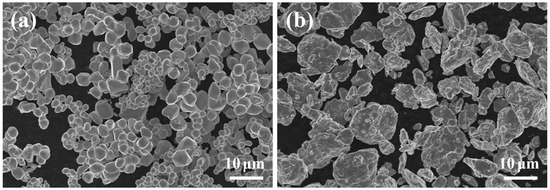
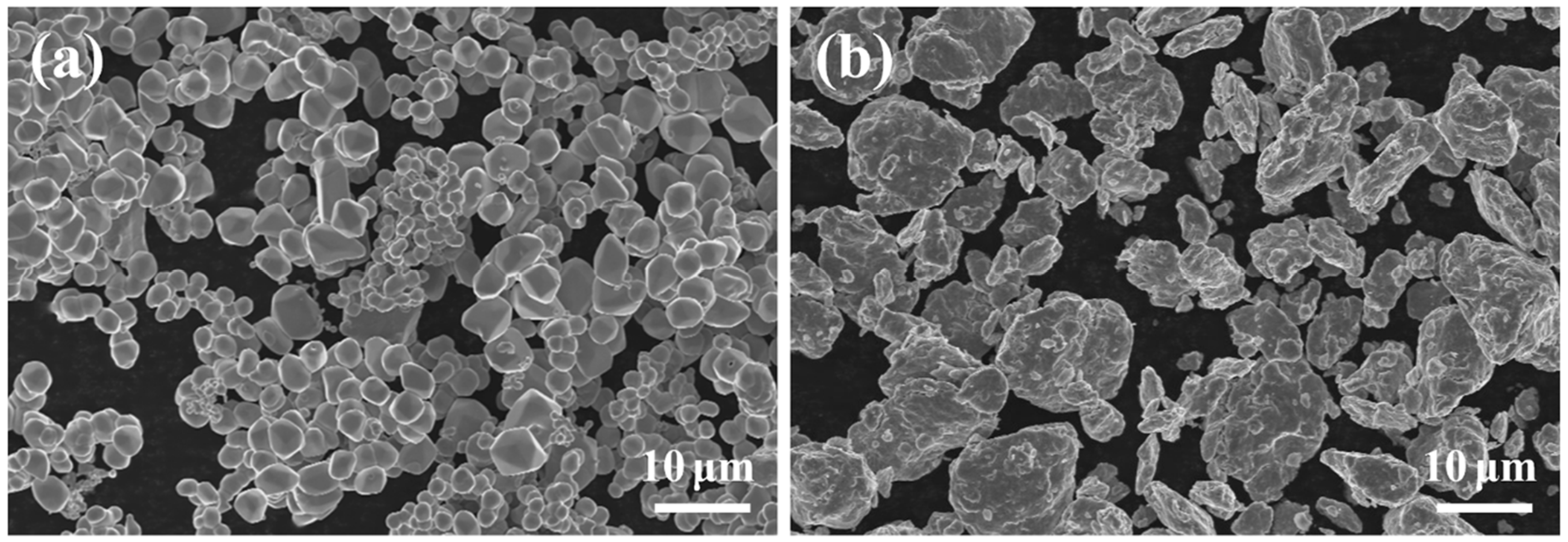
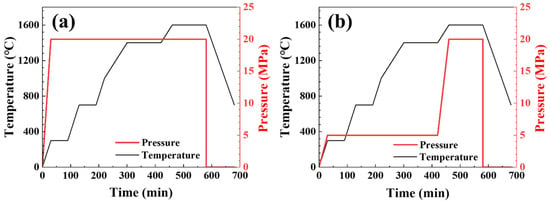
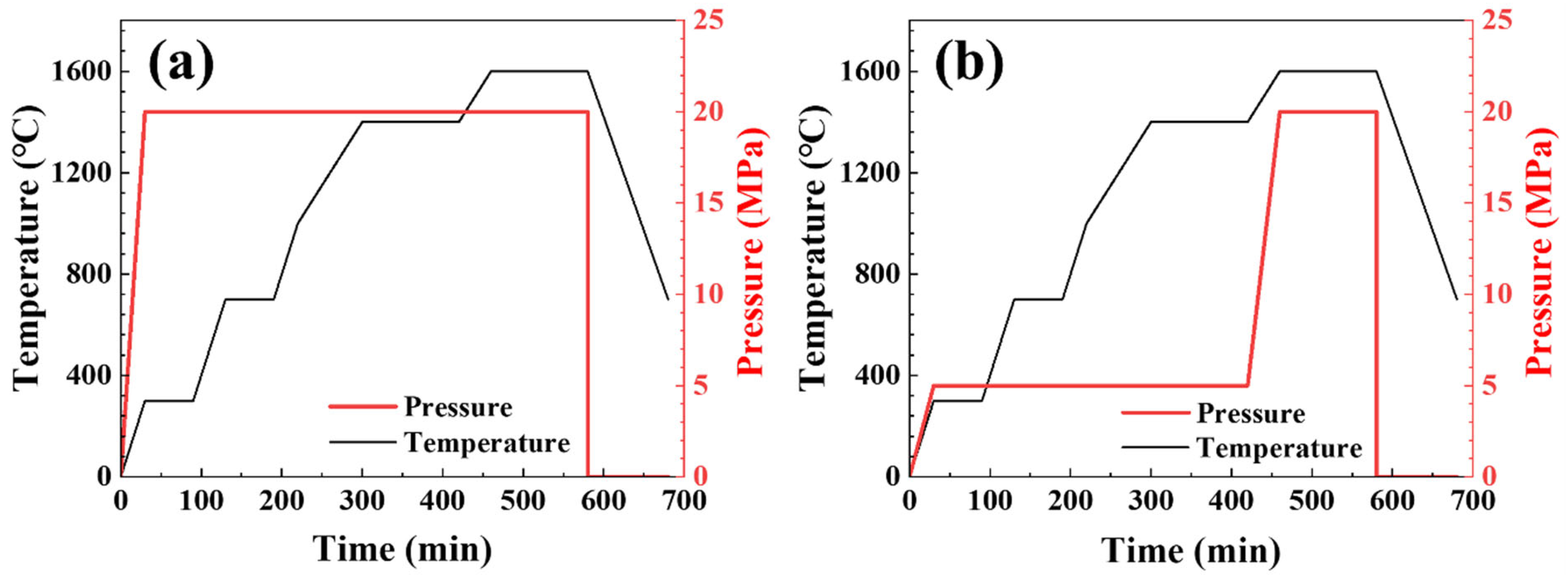
The Mo10Cr alloy was fabricated using 10 μm Cr powder (≥99.9%, Chengdu Hongbo Industrial Co., Ltd., Chengdu, China) and 4 μm Mo powder (≥99.95%, Zhangjiakou Yuzheng Powder Materials Co., Ltd., Zhangjiakou, China), and their morphologies are shown in Figure 1. The Mo powder had an oxygen content of 445 ppm, while that of the Cr powder was 1500 ppm. Mo and Cr powders (atomic ratio 9:1) were ball-milled at 200 rpm for 10 h under an argon atmosphere. To lower the oxygen level in the alloy, 0.15 wt.% nanocarbon powder was added during the milling process. The mixed powders were placed in graphite/carbon-fiber molds and sintered at 1400 °C, 1500 °C, 1600 °C, and 1700 °C under a constant pressure of 20 MPa (one-step pressurization, designated as OHP20). Before reaching the final sintering temperature, the furnace was sequentially held at 300 °C for 1 h to evacuate adsorbed gases, 700 °C for 1 h to volatilize molybdenum oxide, and 1400 °C for 2 h to eliminate chromium oxide. In OHP20, the pressure was ramped to 20 MPa within 30 min and maintained for 550 min. To minimize the oxygen content, a two-step pressurization strategy was applied at 1600 °C. In this approach, the pressure was maintained at 5 MPa from 30 min to 420 min, then increased to 20 MPa at 460 min and kept constant for 120 min at 1600 °C (denoted as THP20). The two protocols are shown in Figure 2. To further improve the density, the second-stage pressure in the two-step protocol was raised to 100 MPa at 460 min and held for 120 min at 1600 °C (designated as THP100). The sintering process was performed under a vacuum of 5 × 10⁻³ Pa. After sintering, the furnace was cooled to 700 °C at a rate of 9 °C/min, followed by natural cooling within the furnace.
Figure 1.
Morphological characteristics of (a) Mo and (b) Cr powders.
Figure 2.
Pressure and temperature programs for (a) one-step pressurization method and (b) two-step pressurization method.
The Archimedes method was used to measure the density of the sintered billets. The relative density is defined as the ratio of the measured density to the theoretical density. The oxygen and carbon contents were determined using an ONH-3000 oxygen–nitrogen–hydrogen analyzer (NCS Testing Technology Co., Ltd., Beijing, China) and a CS-3000 carbon–sulfur analyzer (NCS, Beijing, China), respectively. In the oxygen content measurement, niobium powder and nickel foil are used as the standard sample and cosolvent, respectively. For each experimental condition, three samples were used to determine the relative density and oxygen and carbon contents. The valence states of elements in the high-oxygen billets were investigated via X-ray photoelectron spectroscopy (XPS) using a K-Alpha spectrometer (Thermo Fisher Scientific, East Grinstead, UK). X-ray diffraction (XRD) was employed to identify the phase composition, utilizing a Rigaku Smarta diffractometer (Rigaku Corporation, Tokyo, Japan) with Cu Kα radiation. The microstructure and elemental distribution were characterized using a scanning electron microscope (SEM, Zeiss Gemini 300, Carl Zeiss Microscopy GmbH, Oberkochen, Germany) coupled with an energy-dispersive X-ray spectroscopy (EDS) system. The samples were polished with 0.5 μm diamond after grinding.
3. Results and Discussion
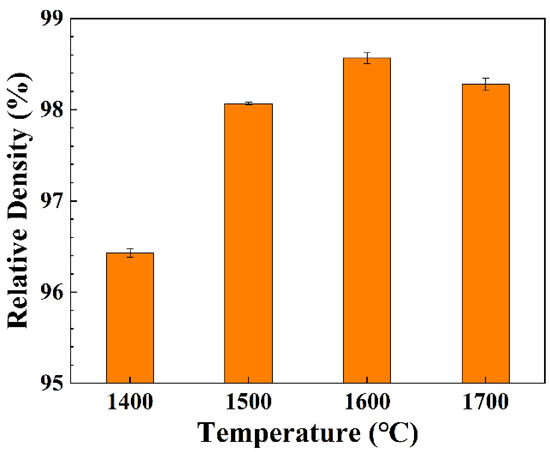
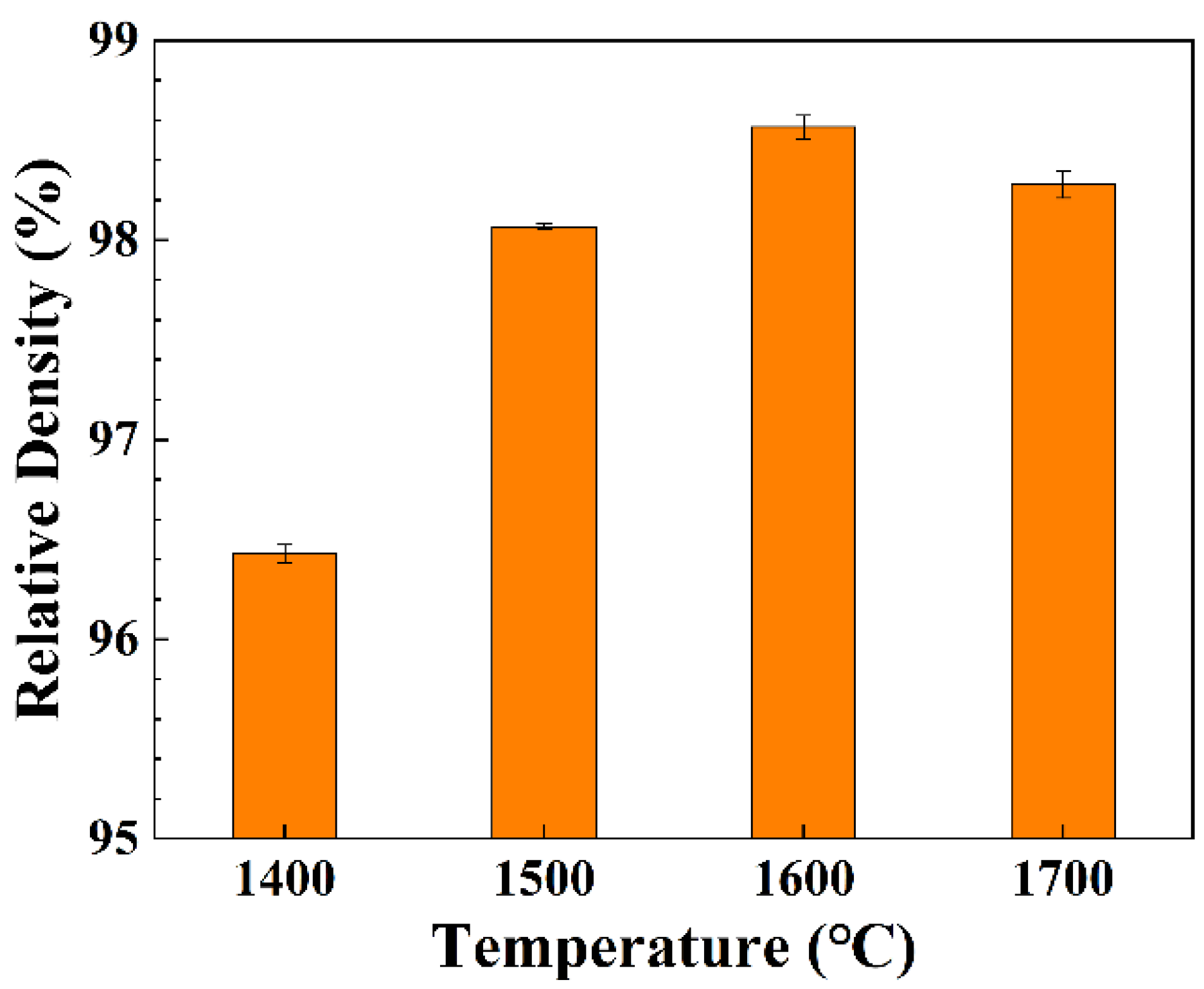
The relative density (ratio of measured values to theoretical values) of Mo10Cr sintered billets fabricated via OHP20 at various temperatures is shown in Figure 3. The relative density of Mo10Cr sintered billets exhibits a non-monotonic temperature dependence. The value significantly increases from 96.43% at 1400 °C to 98.07% at 1500 °C, reaches a peak of 98.57% at 1600 °C, and then slightly declines to 98.28% at 1700 °C.
Figure 3.
Relative density of the Mo10Cr sintered billets prepared by OHP20 at various temperatures.
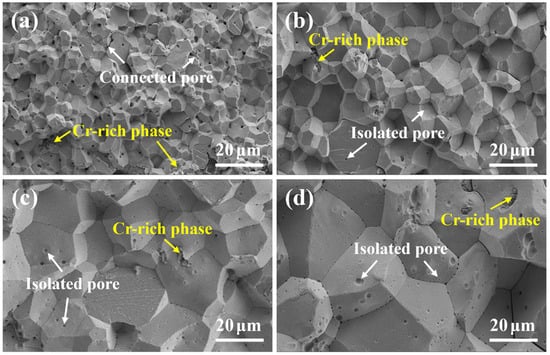
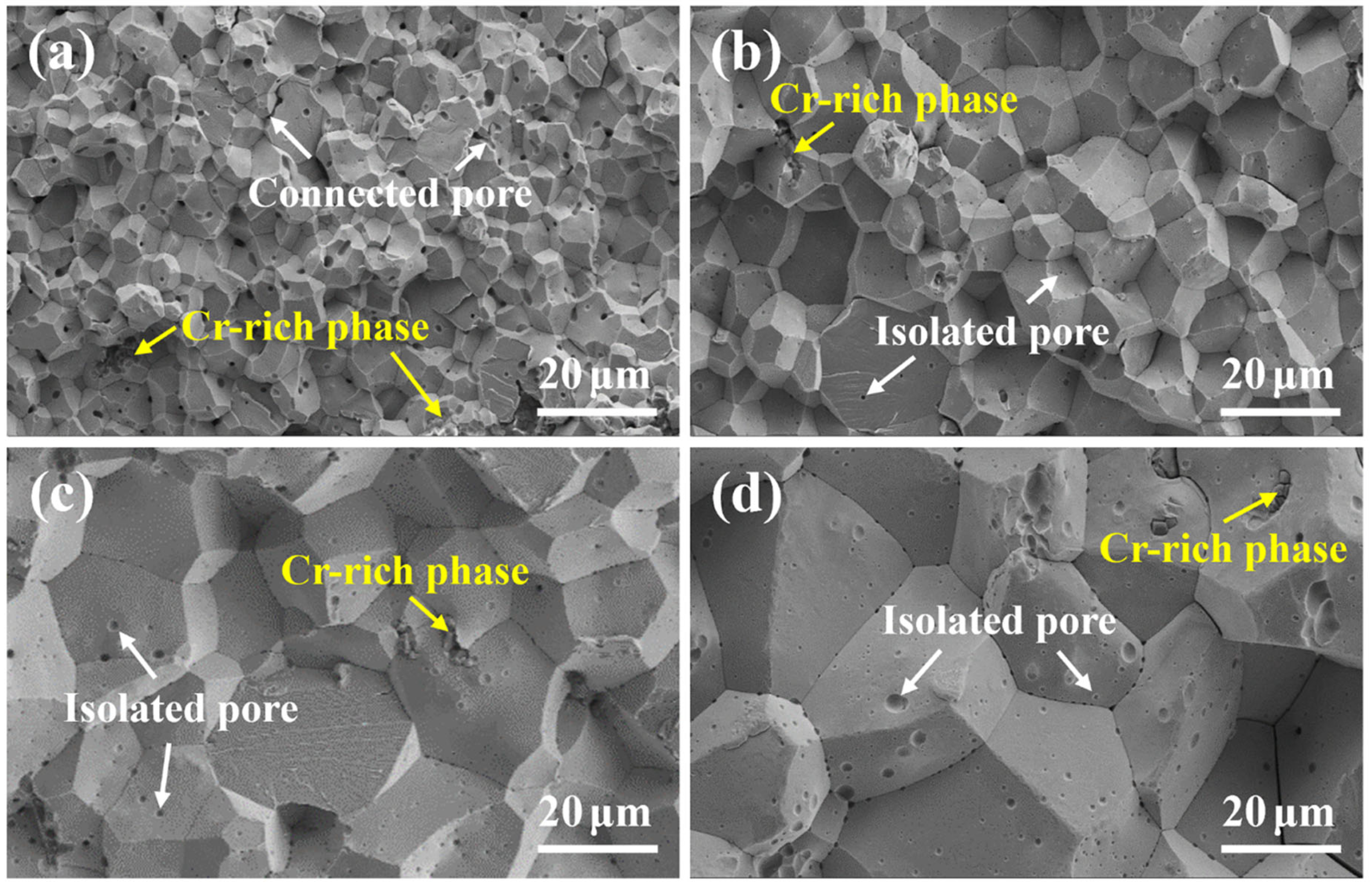
The fracture morphologies of the Mo10Cr alloys sintered via OHP20 at different temperatures are shown in Figure 4. The Mo10Cr alloy sintered at 1400 °C consists of fine grains (~6 μm in diameter), and contains numerous interconnected pores larger than 2 μm and isolated pores smaller than 2 μm, suggesting that sintering is in the intermediate stage. There are only isolated pores in the Mo10Cr billet as the sintering temperature is increased to 1500 °C with grains growing to approximately 10 μm. More importantly, the isolated pores are predominantly reduced to below 0.5 μm, with only a few remaining at around 2 μm. At 1400–1500 °C, the grain-boundary diffusion exponentially increases and facilitates rapid pore closure with rising temperature, thereby sharply increasing the relative density of the alloy. The number of isolated pores in the Mo10Cr alloy sintered at 1600 °C decreases by more than half with the grain size increasing to ~16 μm, and its density reaches the peak (Figure 3). Here, grain-boundary diffusion flux is maximized and Cr solute drag effectively suppresses grain-boundary migration, thus preventing premature pore–boundary separation and ensuring efficient vacancy annihilation at boundaries. For the Mo10Cr alloy sintered at 1700 °C, some isolated closed pores are enlarged by more than 2 μm, resulting in a slight decrease in relative density to 98.28% (Figure 3). This phenomenon can be rationalized by three dominant mechanisms. First, excessive thermal activation accelerates grain-boundary migration to outpace pore migration, causing grains to coarsen to >20 μm and detached pores to become intragranular. Second, the thermal expansion mismatch between Mo and Cr induces localized micro-strain fields, which may promote the expansion of trapped gas within closed pores. Third, preferential Cr evaporation at >1600 °C generates excess vacancies that may coalesce into micro-voids. It should be pointed out that some pores are filled with particles as indicated by the yellow arrows, which should be the undissolved Cr particles.
Figure 4.
Fracture morphologies of the Mo10Cr alloys sintered via OHP20 at (a) 1400 °C, (b) 1500 °C, (c) 1600 °C, and (d) 1700 °C.
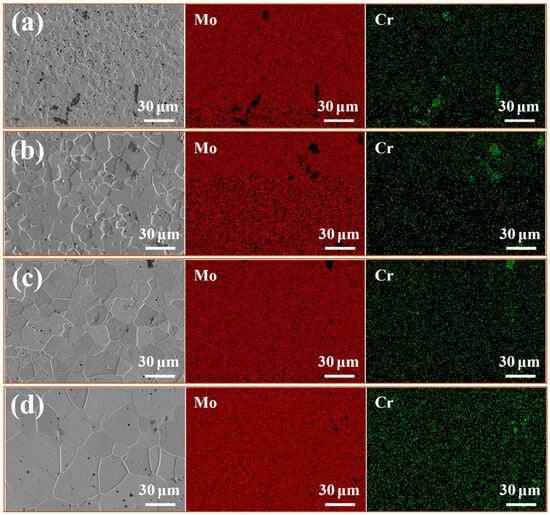
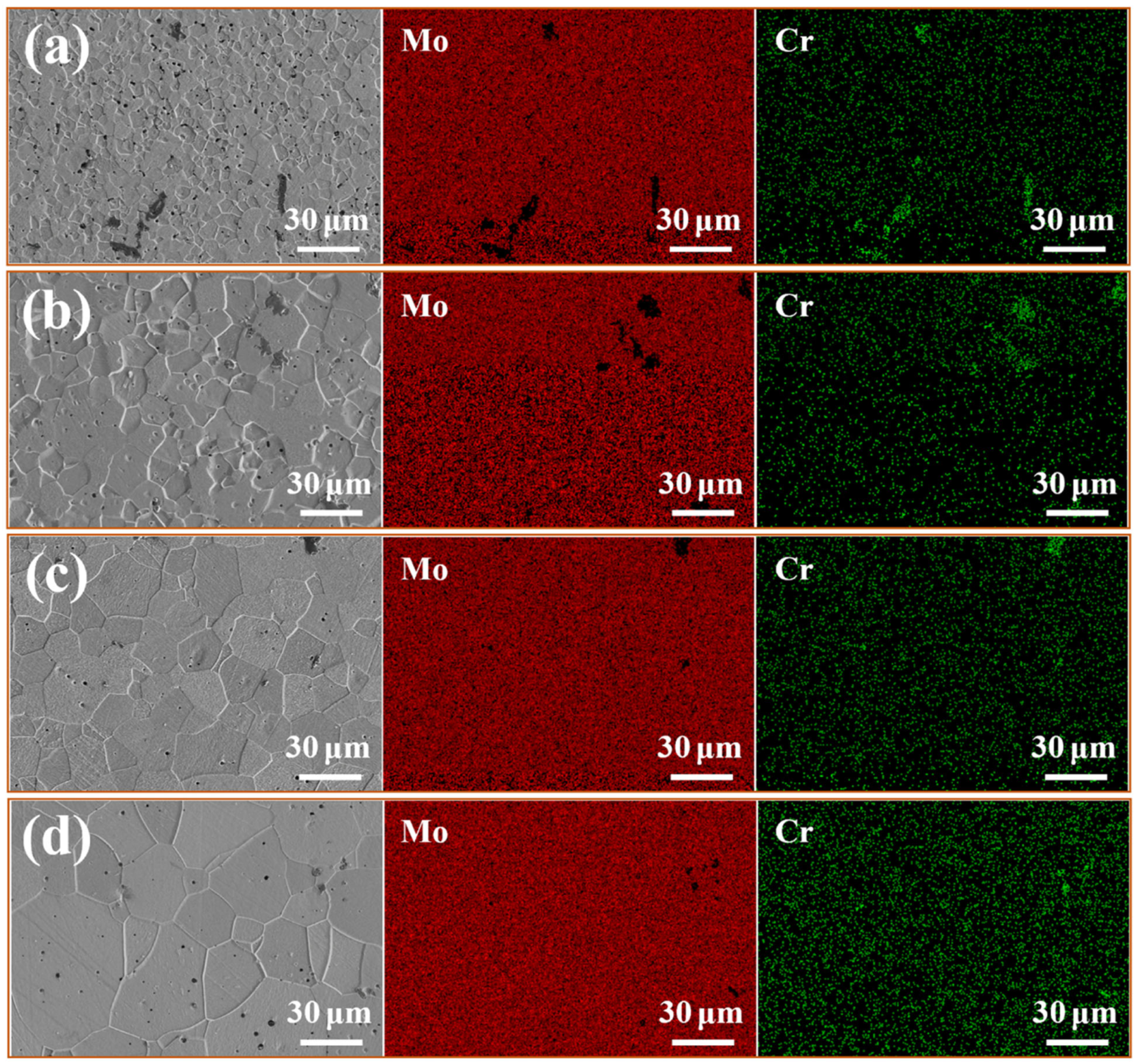
Figure 5 shows the microstructural characteristics and elemental distribution of Mo10Cr sintered billets prepared by OHP20 at different temperatures. Cr-rich regions are observed in Mo10Cr, and these regions become fewer and smaller with increasing temperature. The diffusion coefficient of Cr increases exponentially with increasing temperature [26]. This makes it easier for Cr atoms to migrate outward from Cr-enriched regions into the surrounding Mo matrix, and thus the Cr-rich zones decompose and even disappear at elevated temperatures. Moreover, the average grain size of the alloy exhibits a continuous increase with rising temperature, from 5.8 ± 0.9 μm at 1400 °C to 10.6 ± 1.5 μm at 1500 °C, 16.7 ± 1.3 μm at 1600 °C, and 23.2 ± 2.6 μm at 1700 °C.
Figure 5.
SEM and corresponding EDS images of Mo10Cr sintered billets prepared by OHP20 at (a) 1400 °C, (b) 1500 °C, (c) 1600 °C, and (d) 1700 °C.
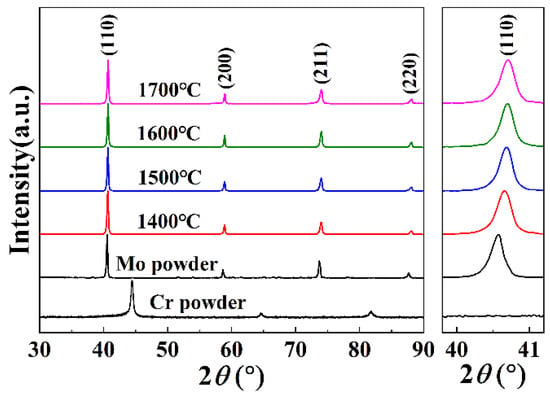
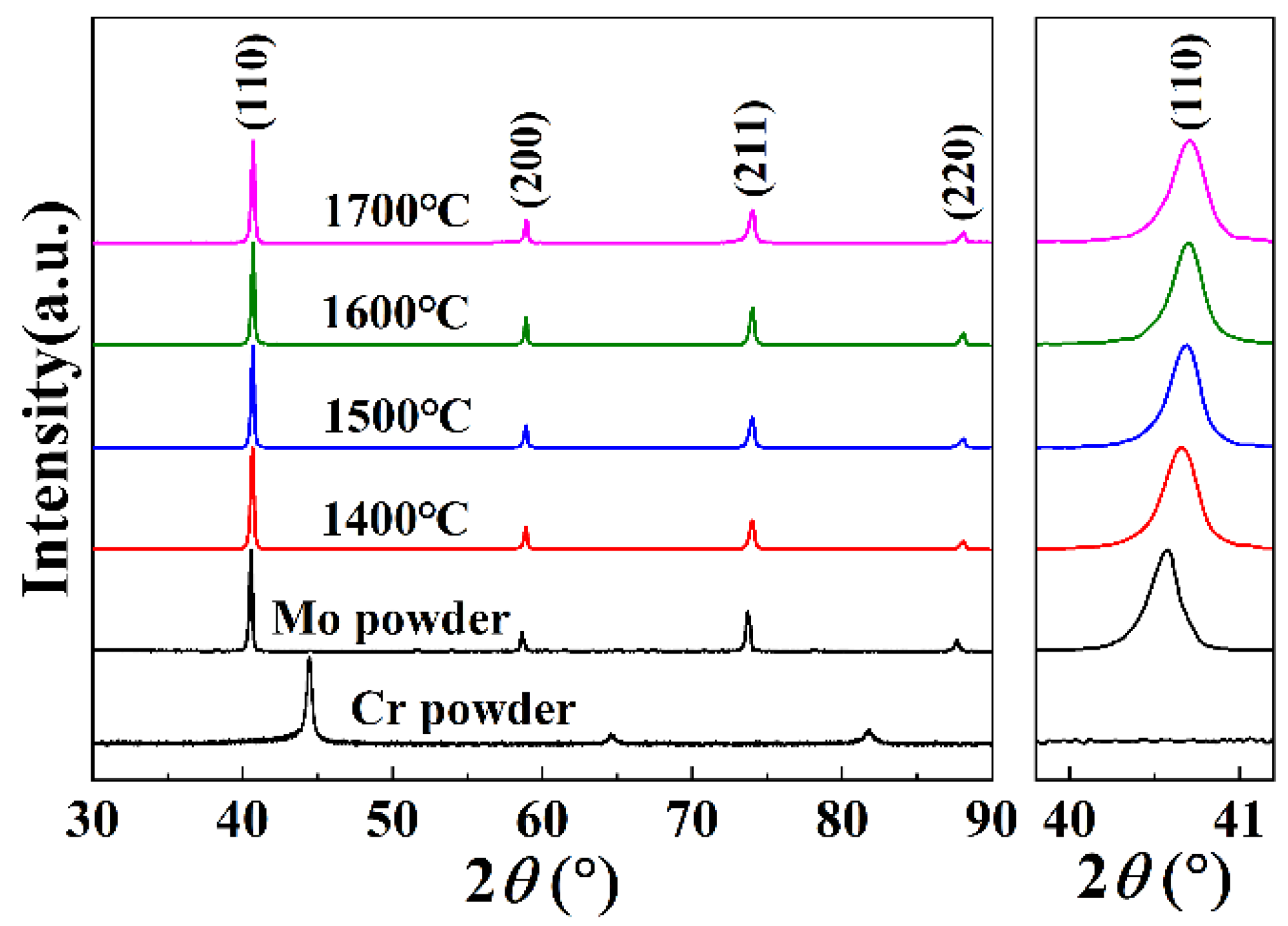
Figure 6 presents the XRD patterns and enlarged view near the (110) peak of Mo10Cr prepared by OHP20. The patterns of Mo and Cr powders are included for comparison. Here, only Mo diffraction peaks of Mo10Cr are observed, indicating that the residual Cr-rich regions (Figure 5) are too small to exceed the instrument’s detection limit and that the majority of the Cr is dissolved in the Mo matrix. Notably, the (110) peaks of all Mo10Cr alloys shift to the right relative to that of Mo powder. Moreover, as the sintering temperature increases, the (110) peak of Mo10Cr exhibits a gradual shift towards higher Bragg angles. This behavior can be attributed to the increased dissolution of smaller Cr atoms into the Mo lattice, which leads to a contraction of the lattice parameter.
Figure 6.
XRD patterns and enlarged view near the (110) peak of Mo10Cr prepared by OHP20. The patterns of Mo and Cr powders are included for comparison.
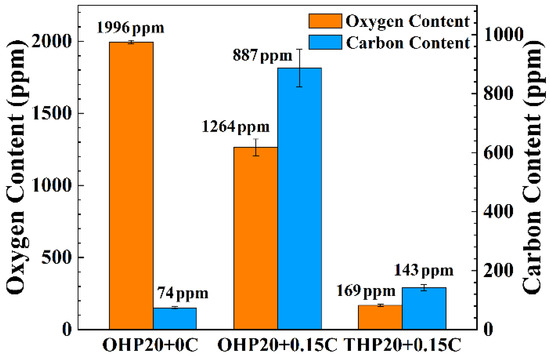
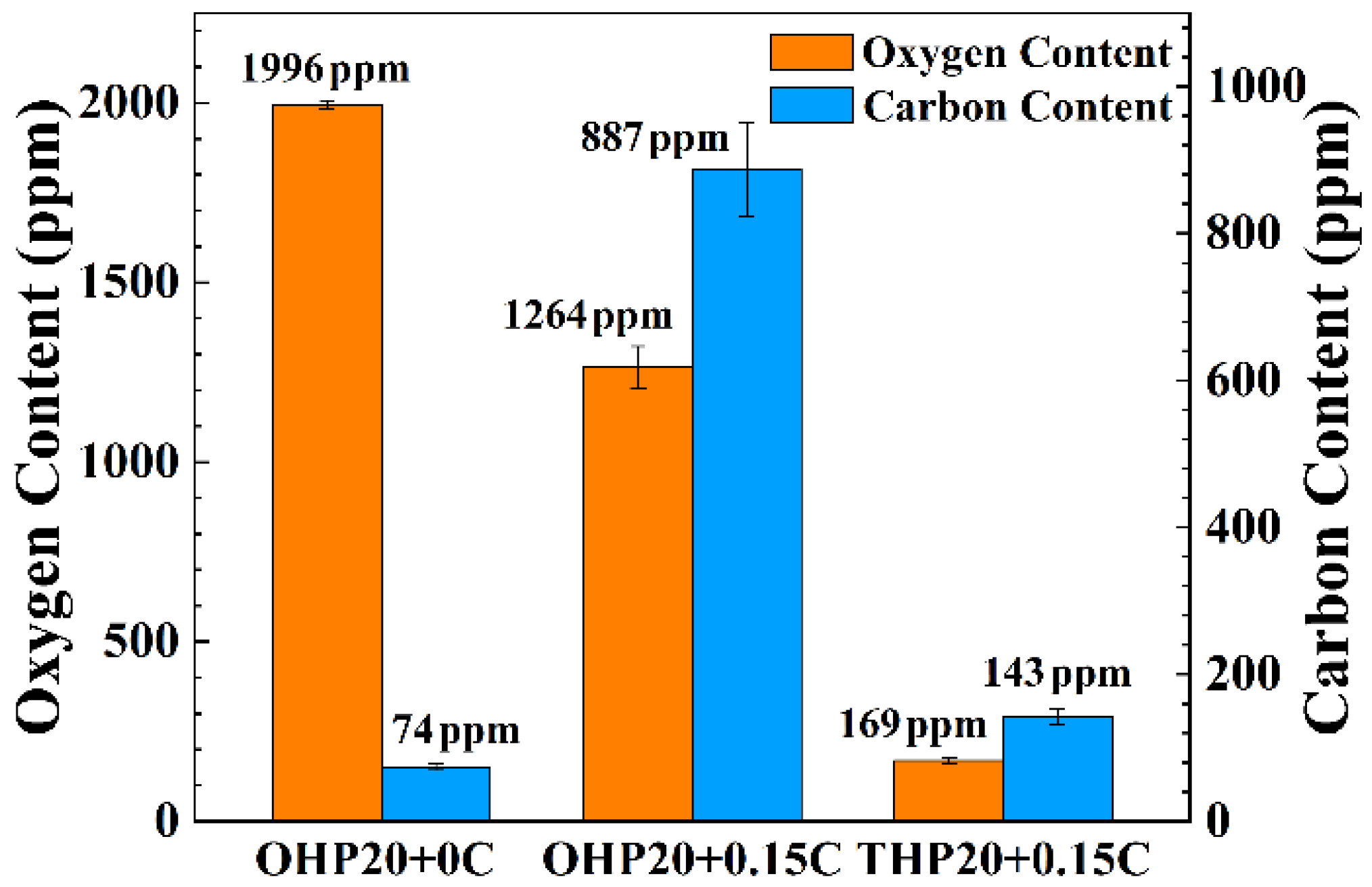
Figure 7 shows the oxygen and carbon contents of Mo10Cr alloys with 0.15 wt.% nanocarbon prepared by OHP20 and THP20 at 1600 °C, along with those of a nanocarbon-free alloy prepared by OHP20 at the same temperature for comparison. The oxygen content of the Mo10Cr alloy without nanocarbon prepared by OHP20 reaches 1996 ppm, and its carbon content is measured at 74 ppm, which is from the inherent carbon in the raw material. The introduction of 0.15 wt.% nanocarbon into the OHP20 alloy leads to a reduction in oxygen content to 1264 ppm, accompanied by a sharp increase in carbon content to 887 ppm. In contrast, the alloy prepared by THP20 (with the same nanocarbon addition) shows significantly lower levels, with oxygen and carbon contents dropping to 169 ppm and 143 ppm, respectively. A summary table of the oxygen and carbon contents is shown in Table 1. The reduction in oxygen content upon adding 0.15 wt.% nanocarbon to Mo10Cr alloys is primarily attributed to carbothermal reduction. In this process, nanocarbon acts as a solid reducing agent converting the metal oxides into carbon monoxide (CO) rather than CO2, which then escapes under vacuum conditions [23,24,27]. However, the chemical reaction between C and O can be inhibited under pressure, as the external load may restrict the escape of CO gas from the compact [25,28]. Meanwhile, the pressure induces early pore closure in the Mo10Cr alloys, which traps the CO gas generated by the carbothermal reaction. By adopting a two-step pressurization strategy, the carbothermal deoxygenation proceeds under low pressure, facilitating CO gas release. As a result, both the oxygen and carbon contents in the THP20 Mo10Cr alloy are drastically reduced.
Figure 7.
Oxygen and carbon contents of Mo10Cr alloys with the addition of 0.15 wt.% nanocarbon (prepared by OHP20 and THP20 at 1600 °C) and without nanocarbon (prepared by OHP20 at 1600 °C) for comparison.
Table 1.
Relative densities and oxygen and carbon contents of Mo10Cr alloys with 0.15 wt.% nanocarbon prepared by OHP20, THP20, and THP100 at 1600 °C and without nanocarbon prepared by OHP20 at 1600 °C.
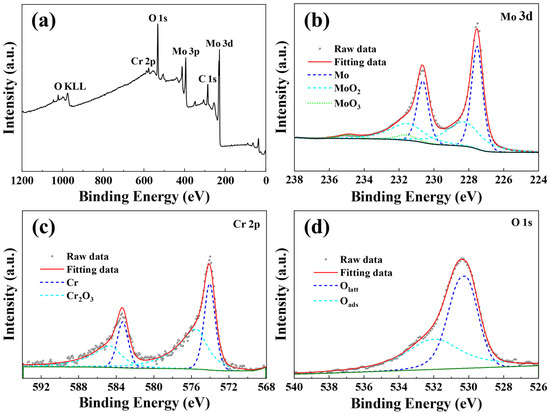
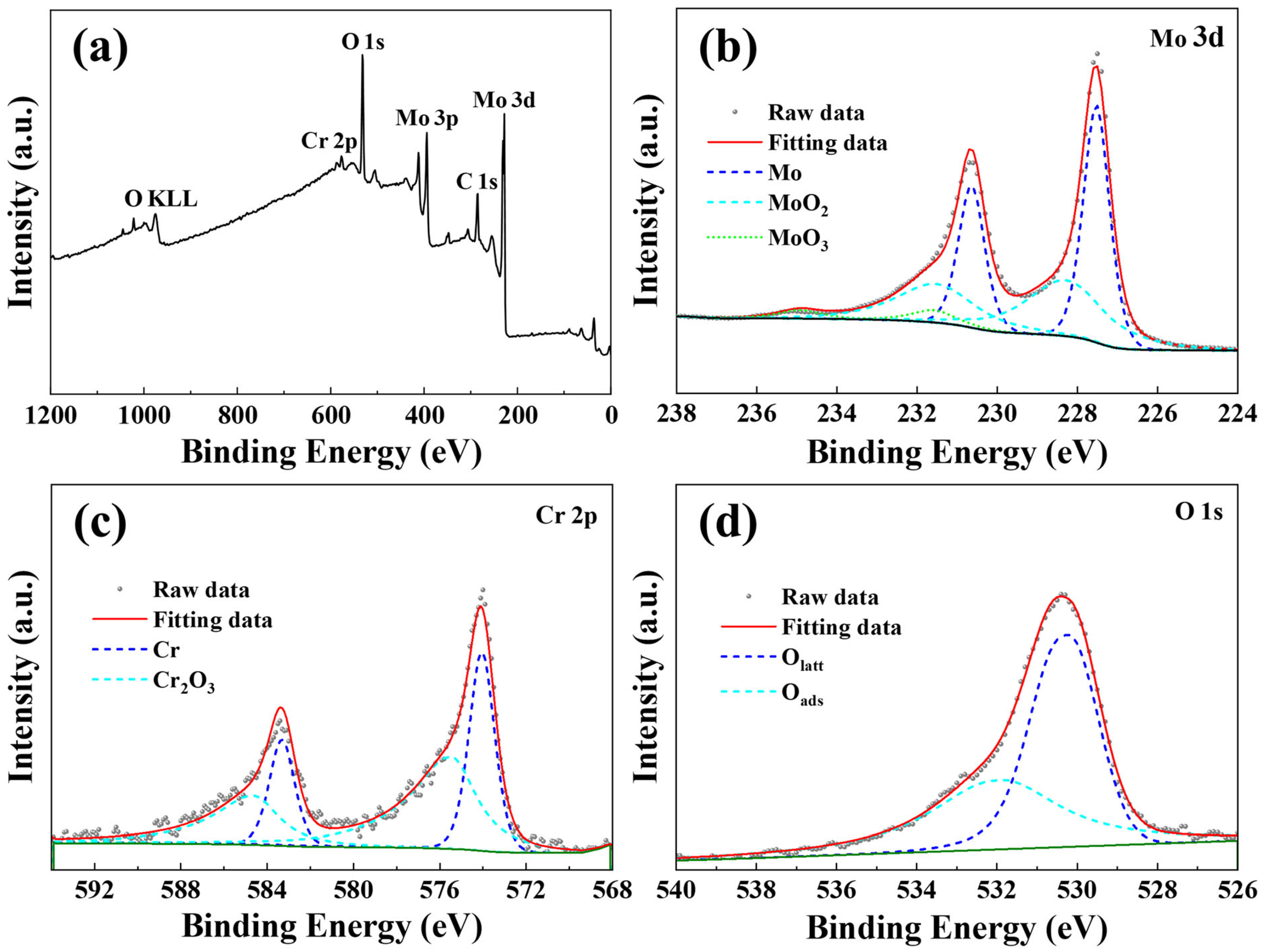
Figure 8 shows the chemical state of oxygen in the nanocarbon-free alloy. From the XPS survey spectrum (Figure 8a), peaks corresponding to O 1s, O KLL, Mo 3p, Mo 3d, Cr 2p, and C 1s are observed. Among these, the C 1s peak is employed for binding energy calibration, serving as a reference. The Mo 3d spectrum (Figure 8b) exhibits spin–orbit doublets corresponding to three valence states (Mo0, Mo4+, Mo6+), which are assigned to Mo, MoO2, and MoO3, respectively. The Cr 2p spectrum (Figure 8c) is also characterized by spin–orbit doublets, and the binding energies of CrO3 (Cr6+) shift to higher positions. The O 1s spectrum (Figure 8d) can be resolved into two distinct peaks, which are assigned to interstitial and surface oxygen, respectively.
Figure 8.
XPS spectra of the nanocarbon-free Mo10Cr alloy prepared by OHP20 at 1600 °C: (a) survey spectrum, (b) Mo3d, (c) Cr2p, and (d) O1s.
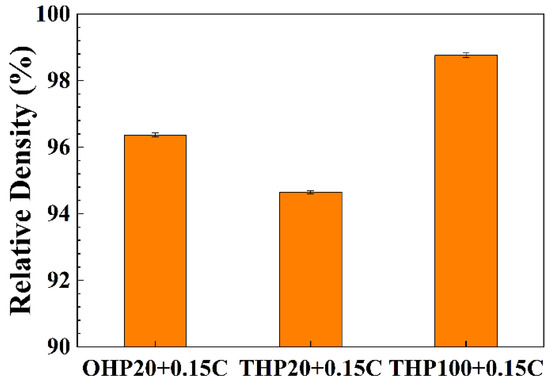
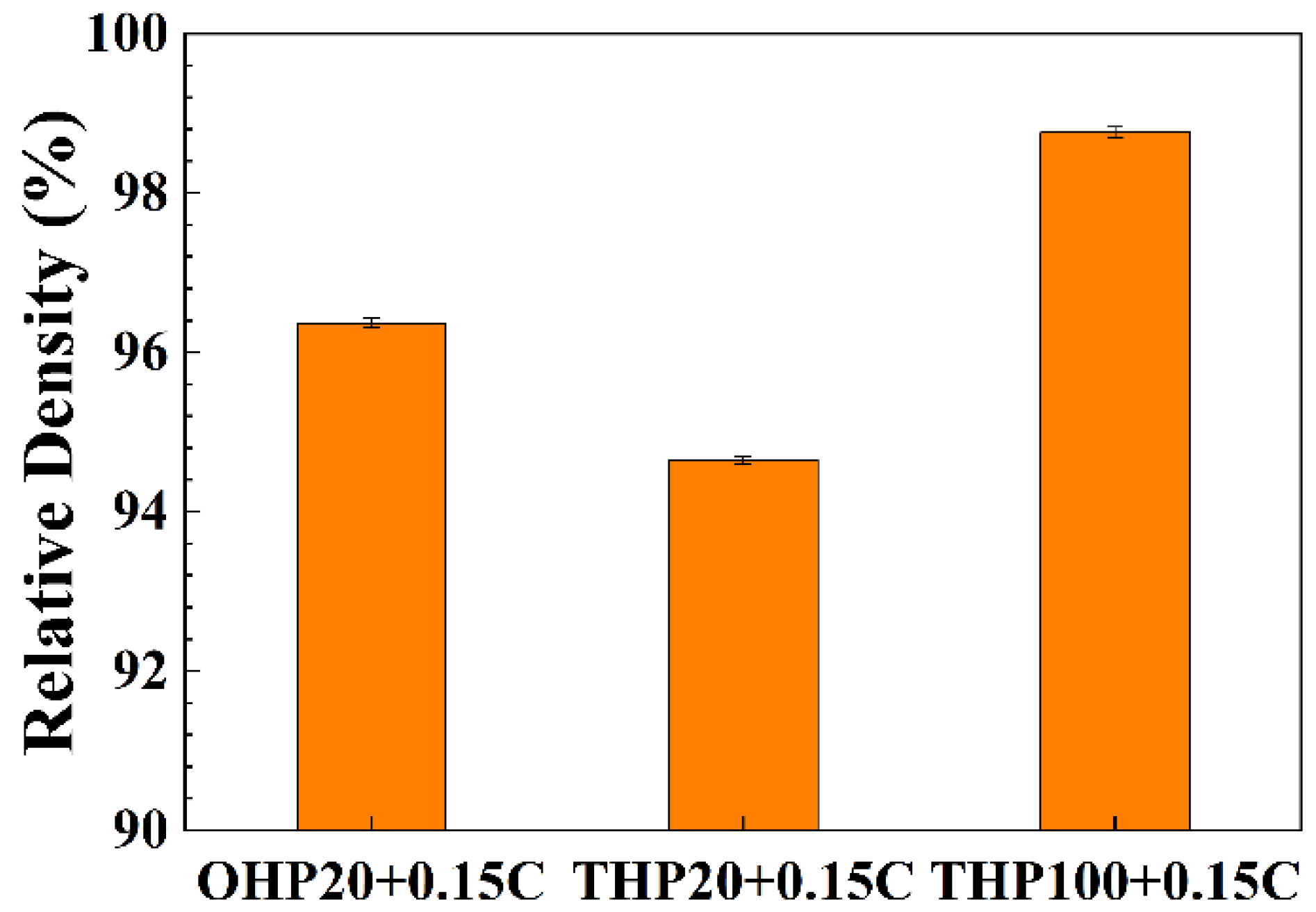
The relative densities of Mo10Cr alloys with 0.15 wt.% nanocarbon prepared by OHP20, THP20, and THP100 at 1600 °C are shown in Figure 9. The relative densities of Mo10Cr alloys with 0.15 wt.% nanocarbon prepared by OHP20 and THP20 are 96.37% and 94.65, respectively. The lower relative density of Mo10Cr prepared by THP20 compared to OHP20 is attributed to the delayed application of most external pressure (three-quarters applied at a later stage). If the 20 MPa press is applied by one-step pressurization, it is sufficient to cause densification. As one-quarter of the pressure (5 MPa) is applied at the initial stage until 1400 °C, the growth of sintering necks and the formation of particle bridges occur even under low pressure [29]. More importantly, the sintering activity of the coarsening particles decreases at 1400 °C, as grain-boundary diffusion is not effectively promoted. When the majority of the external pressure (15 MPa) is applied at a later stage, the rigidified skeleton and low activity of the powder would hinder further densification [30,31]. Under these conditions, the 20 MPa press is insufficient to obtain high-density alloys. In contrast, the OHP20 Mo10Cr alloy benefits from the earlier application of substantial pressure, which facilitates more effective densification prior to significant skeletal hardening. To improve the density, the pressure of the two-step pressurization method is increased to 100 MPa in the second stage (denoted as THP100). Clearly, the relative density of the Mo10Cr alloy prepared by THP100 reaches 98.76%. The application of higher pressure overcomes the increased deformation resistance of the partially sintered compact, disrupts particle bridges, and accelerates dislocation creep, thereby significantly improving density [30,32].
Figure 9.
Relative density of Mo10Cr alloys with 0.15 wt.% nanocarbon prepared by OHP20, THP20, and THP100 at 1600 °C.
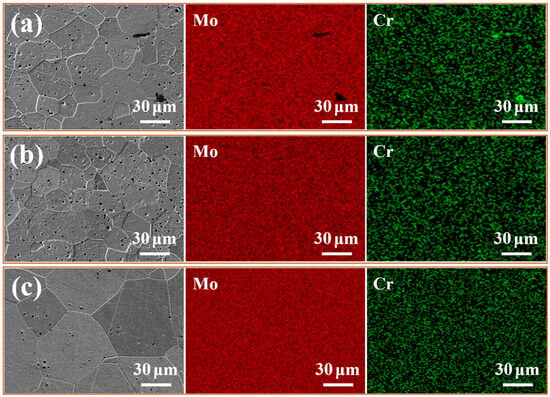
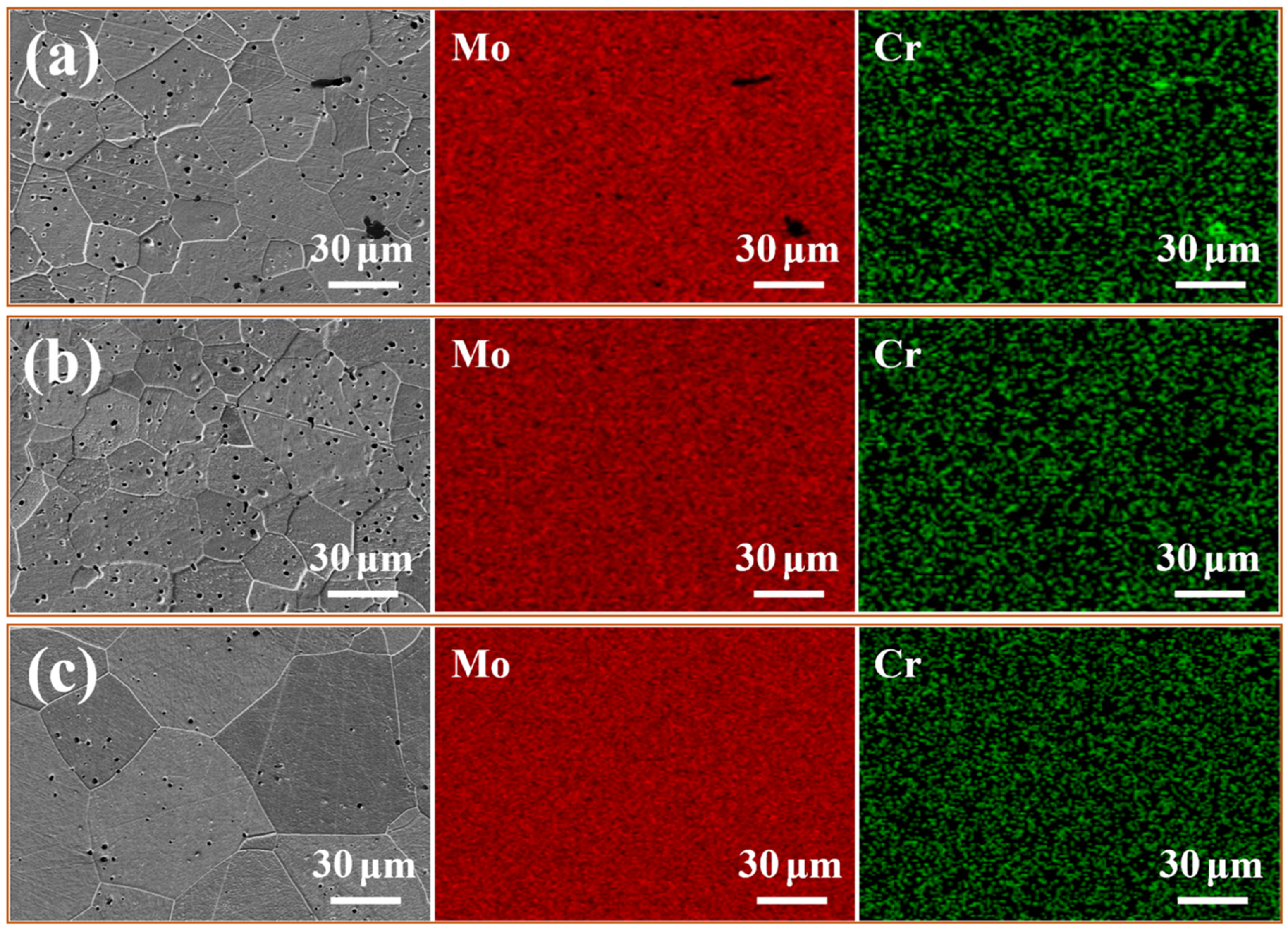
Figure 10 shows the microstructural characteristics and elemental distribution of Mo10Cr alloys with 0.15 wt.% nanocarbon prepared by OHP20, THP20, and THP100 at 1600 °C. The Cr-rich regions still exist in Mo10Cr alloy with nanocarbon prepared by OHP20 (Figure 10a), but the number of pores significantly increases compared with that in the Mo10Cr alloy without nanocarbon prepared under the same conditions (Figure 5c). The formation of pores is attributed to gas evolution during the reaction between nanocarbon and metal oxides. The Cr-rich regions in the alloy prepared by THP20 disappear (Figure 10b), which means Cr is completely dissolved in Mo. Cr forms a substitutional solid solution with Mo, which can be attributed to the less than 15% difference in their atomic radii, as well as their identical body-centered cubic (bcc) crystal structure [33,34]. The migration of Cr atoms into the Mo matrix is predominantly governed by the vacancy diffusion mechanism and this process can be suppressed by external pressure [35,36]. Therefore, the diffusion between Mo and Cr becomes more favorable due to the small pressure (5 MPa) applied at the initial stage until 1400 °C for the THP20. As the pressure is increased to 100 MPa in the second step, grain-boundary diffusion and volume diffusion are facilitated [37]. As a result, the average grain size of the THP100 alloy increases to 44.8 ± 3.2 μm and the number of pores significantly decreases (Figure 10c).
Figure 10.
SEM and corresponding EDS images of Mo10Cr alloys with 0.15 wt.% nanocarbon prepared by (a) OHP20, (b) THP20, and (c) THP100.
4. Conclusions
Based on the optimization of the hot-pressing temperature, the effects of nanocarbon addition, pressure application method, and pressure level on the oxygen content and density are investigated to achieve a dense, low-oxygen Mo10Cr alloy. The main findings are summarized as follows:
- (1)
- With increasing hot-pressing temperature, the Mo10Cr alloy density rises and eventually stabilizes above 98%. Concurrently, the grain size increases and the degree of solid solution is enhanced.
- (2)
- Nanocarbon can reduce the oxygen content of the Mo10Cr alloy in situ during hot-pressing sintering, but the deoxygenation process is hindered by the applied pressure during one-step pressurization.
- (3)
- Compared to the one-step pressurization method, the two-step approach can effectively reduce the oxygen content of the nanocarbon-added Mo10Cr alloy to 169 ppm while maintaining a low residual carbon level. Meanwhile, the compositional uniformity of the alloy is significantly enhanced.
- (4)
- Increasing the applied pressure improves the density of the Mo10Cr alloy alongside grain growth.
Author Contributions
Z.L., Investigation, Data curation; X.C., Writing—original draft, Visualization; C.W., Methodology, Writing—review & editing, Funding acquisition; H.S., Validation, Formal analysis; Y.L., Data curation, Visualization; J.Y., Formal analysis, Software; N.L., Visualization, Project administration; Q.L., Conceptualization, Resources; B.S., Supervision, Data curation; J.H., Conceptualization, Resources. All authors have read and agreed to the published version of the manuscript.
Funding
This work was supported by the National Natural Science Foundation of China (No. 52374373) and the Research Project of Zhongyuan Critical Metals Laboratory (Grant No. GJJSGFZD202302).
Data Availability Statement
The original contributions presented in this study are included in the article. Further inquiries can be directed to the corresponding author.
Conflicts of Interest
The authors declare no conflicts of interest. The funders had no role in the design of the study; in the collection, analyses, or interpretation of data; in the writing of the manuscript; or in the decision to publish the results.
References
- Yen, Y.W.; Kuo, Y.L.; Chen, J.Y.; Lee, C.; Lee, C.Y. Investigation of thermal stability of Mo thin-films as the buffer layer and various Cu metallization as interconnection materials for thin film transistor–liquid crystal display applications. Thin Solid Films 2007, 515, 7209–7216. [Google Scholar] [CrossRef] [Scilit]
- Kim, J.L.; Lee, C.K.; Kim, M.J.; Lee, S.H.; Jeong, J.K. Role of MoTi diffusion barrier in amorphous indium-gallium-zinc-oxide thin-film transistors with a copper source/drain electrode. Thin Solid Films 2021, 731, 138759. [Google Scholar] [CrossRef] [Scilit]
- Li, J.; Fu, Z.; Wei, L.; Zhang, G.; Wei, S.; Xu, L.; Pan, K.; Shen, J.; Yang, J. Characterization of Mo-6Ta alloy targets and its magnetron sputtering deposited thin film. Int. J. Refract. Met. Hard Mater. 2022, 103, 105770. [Google Scholar] [CrossRef] [Scilit]
- Hofer, A.M.; Mori, G.; Fian, A.; Winkler, J.; Mitterer, C. Improvement of oxidation and corrosion resistance of Mo thin films by alloying with Ta. Thin Solid Films 2016, 599, 1–6. [Google Scholar] [CrossRef] [Scilit]
- Putthisigamany, Y.; Rahman, K.S.; Sapeli, M.M.I.; Shafian, S.; Syafiq, U.; Su’ait, M.S.; Ludin, N.A.; Ibrahim, M.A.; Chelvanathan, P. Native surface oxidation phenomena of DC-Sputtered molybdenum thin film in tropical environment. Mater. Lett. 2024, 370, 136787. [Google Scholar] [CrossRef] [Scilit]
- Seo, B.-H.; Lee, S.-H.; Park, I.-S.; Seo, J.H.; Choe, H.H.; Jeon, J.-H.; Hong, M. Effect of nitric acid on wet etching behavior of Cu/Mo for TFT application. Curr. Appl. Phys. 2011, 11, S262–S265. [Google Scholar] [CrossRef] [Scilit]
- Kim, D.E.; Cho, S.W.; Kim, S.C.; Kang, W.J.; Cho, H.K. Corrosion behavior and metallization of Cu-based electrodes using MoNi alloy and multilayer structure for back-channel-etched oxide thin-film transistor circuit integration. IEEE Trans. Electron Devices 2017, 64, 447–454. [Google Scholar] [CrossRef] [Scilit]
- Lorenz, R.; O’Sullivan, M.; Sprenger, D.; Lang, B.; Köstenbauer, H.; Winkler, J.; Mitterer, C. Oxidation and wet-etching behavior of MoAlTi thin films deposited by sputtering from a rotatable MoAlTi compound target. J. Vac. Sci. Technol. B 2019, 37, 021202. [Google Scholar] [CrossRef] [Scilit]
- Liu, D.; Fang, L.; Huang, Z.; Ruan, H.; Chen, W.; Xiang, J.; Wu, F.; Liu, G. Formation mechanism and prevention of Cu undercut defects in the photoresist stripping process of MoNb/Cu stacked electrodes. Materials 2024, 17, 5008. [Google Scholar] [CrossRef] [Scilit] [PubMed]
- List, A.; Mitterer, C.; Mori, G.; Winkler, J.; Reinfried, N.; Knabl, W. Oxidation of sputtered thin films of molybdenum alloys at ambient conditions. In Proceedings of the 17th Plansee Seminar 2009, Reutte, Austria, 25–29 May 2009; pp. 1–9. [Google Scholar]
- Li, Z.; Ding, P.; Wang, R.; Wang, C.; Li, Q.; Sun, B.; Zhang, Y. First-principles investigation on the effects of alloying elements on Cu/Mo interface. Chem. Phys. Lett. 2023, 832, 140895. [Google Scholar] [CrossRef] [Scilit]
- Zhang, J.; Wu, X.; Yang, K.; Li, Q.; Guo, M.; Wang, J.; Pan, K.; Huang, Z.; He, J. A novelsurface design for preparing a Mo-10%Nb sputtering target with ultra-low oxygencontent: Coating a NbC layer on Nb powder particles via chemical vapour reactionunder CH4 atmosphere. Surf. Coat. Technol. 2020, 400, 126213. [Google Scholar] [CrossRef] [Scilit]
- An, G.; Sun, J.; Sun, Y.; Cao, W. Preparation and influencing factors of molybdenum targets and magnetron-sputter-deposited molybdenum thin films. Mater. Sci. Forum 2018, 913, 853–861. [Google Scholar] [CrossRef] [Scilit]
- Dong, Z.; Chen, S.; Liu, S.; Ma, Z.; Yu, L. Low-temperature accelerated sintering of high-performance oxide dispersion strengthened ultrafine grained Mo alloy. J. Alloys Compd. 2022, 903, 163982. [Google Scholar] [CrossRef] [Scilit]
- Gao, J.; Lu, Y.; Hou, J.; Yuan, Z.; Luo, W.; Hu, B. Comparison of Mo-10Nb alloy target materials prepared by different techniques. Key Eng. Mater. 2017, 726, 316–320. [Google Scholar] [CrossRef] [Scilit]
- Bayrak, Y.; Kisasoz, A.; Sezer, R. Production and characterization of B4C content-dependent aluminum matrix composites fabricated via hot pressing. J. Mater. Eng. Perform. 2025, 34, 1607–1618. [Google Scholar] [CrossRef] [Scilit]
- Wu, Z.; Che, L.; He, J.; Li, H.; Zhang, P.; Li, X. Preparation of high-quality Mo-Nb (Ti/Ni-Ti) sputtering target by hot isostatic pressing. Mater. Res. Proc. 2023, 38, 113–119. [Google Scholar] [CrossRef] [Scilit]
- Becker, L.; Lentz, J.; Kramer, B.; Rottstegge, A.; Broeckmann, C.; Theisen, W.; Weber, S. Validation of the powder metallurgical processing of duplex stainless steels through hot isostatic pressing with integrated heat treatment. Materials 2022, 15, 6224. [Google Scholar] [CrossRef] [Scilit] [PubMed]
- Huang, L.; Pan, Y.; Zhang, J.; Du, Y.; Zhang, Y.; Zhang, S. Densification, grain growth mechanism and mechanical properties of Mo10Nb refractory targets fabricated by SPS. Int. J. Refract. Met. Hard Mater. 2021, 99, 105575. [Google Scholar] [CrossRef] [Scilit]
- Kim, S.; Kim, G.; Oh, B.; Kim, M.J.; Cho, B.; Lee, B.; Lee, D. Enhancing sputtering process efficiency and thin-film properties of Mo10Nb targets through spark plasma sintering of nanopowders. Int. J. Refract. Met. Hard Mater. 2026, 134, 107482. [Google Scholar] [CrossRef] [Scilit]
- Li, H.; Wu, X.; Wang, P.; Li, Q.; Zhang, T.; Yang, K.; Wang, J.; Pan, K.; Huang, Z.; He, J. Stability, deoxidation, and sintering characteristics of activated Mo–10%Nb solid-solution powders prepared by mechanical alloying. J. Mater. Res. Technol. 2022, 18, 3373–3385. [Google Scholar] [CrossRef] [Scilit]
- Li, S.L.; Hu, P.; Zuo, Y.G.; Xing, H.R.; Han, J.Y.; Ge, S.W.; Hua, X.J.; Hu, B.L.; Cui, C.J.; Wang, K.S. Precise control of oxygen for titanium-zirconium-molybdenum alloy. Int. J. Refract. Met. Hard Mater. 2022, 103, 105768. [Google Scholar] [CrossRef] [Scilit]
- Liang, J.; Li, L.; Xi, Z.; Tang, H. Deoxidation mechanism of TZM molybdenum alloys during vacuum sintering. Rare Metal. Mat. Eng. 2011, 40, 987–990. [Google Scholar]
- Zhang, X.; Ren, F.; Wang, C.; Li, Q.; Sun, B.; He, J. Low-oxygen, uniform, and dense Mo10Nb alloys obtained by combining in situ deoxygenation and mechanical alloying. Int. J. Refract. Met. Hard Mater. 2024, 123, 106794. [Google Scholar] [CrossRef] [Scilit]
- Neuman, E.; Fahrenholtz, W.; Hilmas, G. Microstructure and mechanical properties of reaction-hot-pressed zirconium diboride based ceramics. Int. J. Appl. Ceram. Technol. 2019, 16, 1715–1722. [Google Scholar] [CrossRef] [Scilit]
- Tunca, N.; Delamore, G.W.; Smith, R.W. Corrosion of Mo, Nb, Cr, and Y in molten aluminum. Metall. Mater. Trans. A 1990, 21, 2919–2928. [Google Scholar] [CrossRef] [Scilit]
- de Oro Calderon, R.; Gierl-Mayer, C.; Danninger, H. Interstitial chemistry in sintering of metallic materials—Often overlooked but decisive. Eur. J. Mater. 2022, 2, 381–406. [Google Scholar] [CrossRef] [Scilit]
- Ono, K.; Ueda, Y.; Moriyama, J. Carbothermic reduction of molybdenum dioxide under reduced pressure. J. Jpn. Inst. Met. 1981, 45, 311–316. [Google Scholar]
- Lu, P.; German, R.M.; Xu, X. Microstructural evolution and macroscopic behaviour during solid state sintering. Powder Metall. 2001, 44, 363–368. [Google Scholar] [CrossRef]
- Watanabe, R.; Yodoshi, N.; Kato, H.; Kawasaki, A. Densification control in hot pressing of metallic glass powders. J. Jpn. Soc. Powder Powder Metall. 2008, 55, 709–714. [Google Scholar] [CrossRef] [Scilit]
- Mehdi, M.; Simchi, A.; Golestani-Fard, F. Densification and grain growth of nanocrystalline 3Y-TZP during two-step sintering. J. Eur. Ceram. Soc. 2008, 28, 2933–2939. [Google Scholar] [CrossRef] [Scilit]
- Antou, G.; Guyot, P.; Pradeilles, N.; Vandenhende, M.; Maître, A. Identification of densification mechanisms of pressure-assisted sintering: Application to hot pressing and spark plasma sintering of alumina. J. Mater. Sci. 2015, 50, 2327–2336. [Google Scholar] [CrossRef] [Scilit]
- Cordero, B.; Gómez, V.; Platero-Prats, A.E.; Revés, M.; Echeverría, J.; Cremades, E.; Barragán, F.; Alvarez, S. Covalent Radii Revisited. Dalton Trans. 2008, 37, 2832–2838. [Google Scholar] [CrossRef] [Scilit] [PubMed]
- Chen, W.; Xu, G.; Martin-Bragado, I.; Cui, Y. Non-empirical phase equilibria in the Cr–Mo system: A combination of first-principles calculations, cluster expansion and Monte Carlo simulations. Solid State Sci. 2015, 41, 19–24. [Google Scholar] [CrossRef] [Scilit]
- Yang, K.; Tao, X.; Zeng, Z.; Wang, X. Effects of pressure on hydrogen diffusion behaviors in MgO. Phys. Chem. Chem. Phys. 2023, 25, 19824–19833. [Google Scholar] [CrossRef] [Scilit] [PubMed]
- Ding, P.; Song, H.; Wang, C.; Wu, X.; Li, Q.; Cao, W. Dense and uniform Mo10W alloy prepared by combining a vacuum sintering process with a hot-pressing process. Mater. Sci. Technol. 2026, 42, 397–403. [Google Scholar] [CrossRef] [Scilit]
- Nöthe, M.; Rasp, T.; Kraft, T.; Kieback, B. Theory of sintering in presence of pressure and torque. J. Am. Ceram. Soc. 2015, 98, 3453–3459. [Google Scholar] [CrossRef] [Scilit]

Disclaimer/Publisher’s Note: The statements, opinions and data contained in all publications are solely those of the individual author(s) and contributor(s) and not of MDPI and/or the editor(s). MDPI and/or the editor(s) disclaim responsibility for any injury to people or property resulting from any ideas, methods, instructions or products referred to in the content. |
© 2026 by the authors. Licensee MDPI, Basel, Switzerland. This article is an open access article distributed under the terms and conditions of the Creative Commons Attribution (CC BY) license.