


Abstract
The selective flotation separation of chalcopyrite from pyrite under low-alkalinity conditions remains a challenge due to their similar surface properties. In this study, a sulfonated dextrin (SD) was synthesized via chemical modification and evaluated as a selective depressant for pyrite in the chalcopyrite–pyrite flotation system. Micro-flotation experiments demonstrated that SD exhibited significantly superior selective depression for pyrite compared to unmodified dextrin. At pH 8.0, SD achieved over 95% depression of pyrite with negligible impact on chalcopyrite flotation. In mixed-mineral flotation, SD reduced pyrite recovery from 75.01% to 27.08% at a dosage of 100 mg/L, while chalcopyrite recovery increased from 80.56% to 87.65%. Contact angle measurements revealed that SD markedly enhanced the hydrophilicity of pyrite surfaces, whereas chalcopyrite surfaces retained strong hydrophobicity in the presence of SBX. Zeta potential and FTIR analyses indicated that SD strongly adsorbed onto pyrite surfaces through the introduced sulfonic groups (−SO3−), effectively hindering subsequent SBX adsorption. XPS analysis further suggested chemical interactions between SD and oxidized iron species on pyrite surfaces, forming a stable organic–inorganic composite adsorption layer. These findings demonstrate SD to be a promising environmentally friendly depressant for selective copper–sulfur separation under low-alkalinity conditions, offering a viable alternative to conventional lime-based processes.
1. Introduction
With the rapid development of power transmission, renewable energy, electronic information technology, and infrastructure construction, copper has been widely utilized owing to its excellent electrical conductivity, ductility, and corrosion resistance [1,2,3]. Chalcopyrite (CuFeS2) is the most important copper-bearing mineral in nature, while often associated with pyrite (FeS2) [4,5]. Therefore, the selective separation of these two minerals is crucial for efficient utilization of copper resources. Flotation is currently the most widely used and effective technique for separating valuable minerals from gangue [6]. However, the similar surface chemical properties of chalcopyrite and pyrite result in strong adsorption of commonly used sulfhydryl collectors, such as xanthates (e.g., sodium butyl xanthate, SBX), on both mineral surfaces, thereby reducing flotation selectivity and presenting a major challenge for efficient copper–sulfur separation [7,8]. In industrial practice, lime is commonly added to create a highly alkaline environment to depress pyrite flotation. Nevertheless, this approach often results in increased pulp viscosity, higher reagent consumption, and greater difficulty in tailings water treatment [9,10,11]. Therefore, achieving efficient selective separation of chalcopyrite and pyrite under low-alkalinity conditions is of great practical importance for reducing operational costs and environmental impacts.
Recently, environmentally friendly depressants based on functional polymers or biopolymers have garnered increasing attention due to their abundance, high separation efficiency, low cost, and eco-friendliness [12,13]. Polymers bearing functional groups such as hydroxyl, carboxyl, sulfonate, and glycosidic bonds can form hydrophilic adsorption layers on mineral surfaces, thereby reducing collector adsorption [14,15,16]. Among these, naturally derived polysaccharides are particularly attractive. Dextrin, a typical natural polysaccharide derivative, has been widely researched as a depressant in copper and sulfur flotation systems owing to its renewability, low cost, and availability [4,12]. However, the depression performance of conventional dextrin remains limited in practice. Specifically, it interacts weakly with mineral surfaces mainly through hydroxyl groups, and its low density of functional groups and weak adsorption strength result in insufficient selective depression, particularly under low-alkalinity flotation conditions [17,18,19]. Therefore, targeted modification of the dextrin to enhance its selective adsorption capability is essential for improving depression performance.
Various methods, including thermal treatment, alkali treatment, and chemical modification, have been explored for dextrin modification. For example, Drzymała prepared different dextrins from potato starch via thermal treatment and found that thermally modified dextrin effectively depressed galena and chalcocite flotation [5]. Yamamoto reported that strong alkaline conditions disrupt starch granule structure and promote molecular chain expansion, providing a theoretical basis for the alkali-induced modification of polysaccharides such as dextrin [20]. However, thermal and alkaline treatments primarily alter the molecular structure and dispersion behavior of dextrin but offer limited control over mineral surface selectivity. Consequently, introducing specific functional groups onto the dextrin backbone via chemical modification represents a promising strategy to enhance its coordination ability and selective adsorption toward target minerals [21]. Beaussart et al. showed that modified dextrin, such as carboxymethyl dextrin and hydroxypropyl dextrin, adsorb onto molybdenite surfaces through hydrogen bonding and electrostatic interactions, forming hydrophilic layers that reduce surface hydrophobicity [22]. These studies demonstrated that substituent groups significantly affect the adsorption amount and surface coverage morphology of dextrin, thereby influencing mineral hydrophobicity and flotation recovery [11,23,24]. On the other hand, sulfonic groups (–SO3−) have been proven to exhibit strong binding capacity to Fe3+ active sites on mineral surfaces [11,25], which offers great potential for introducing sulfonic groups into dextrin to obtain a high-efficiency depressant for pyrite.
In this study, sulfonated dextrin (SD) was designed and synthesized as a selective depressant for copper–sulfur flotation separation under low-alkalinity conditions. The depression performance of SD was systematically evaluated through single-mineral and artificially mixed-mineral flotation tests, with unmodified dextrin as the benchmark. To elucidate the selective depression mechanism, a combination of surface characterization techniques–including contact angle measurements, zeta potential analysis, Fourier transform infrared spectroscopy (FTIR), and X-ray photoelectron spectroscopy (XPS)–was employed to probe the interfacial interactions of SD with chalcopyrite and pyrite surfaces, respectively. The flotation results demonstrate that SD achieves superior selective depression of pyrite while preserving the floatability of chalcopyrite under low-alkalinity conditions. Mechanistic investigations reveal that SD preferentially adsorbs onto pyrite surfaces via chemical coordination between its sulfonic groups and surface iron species, forming a hydrophilic layer that effectively hinders subsequent collector adsorption; in contrast, the limited interaction of SD with chalcopyrite allows the collector to maintain surface hydrophobicity. These findings not only provide a molecular-level understanding of selective depression in sulfide mineral flotation but also offer a promising strategy for developing environmentally friendly depressants towards sustainable copper production.
2. Experimental
2.1. Mineral Samples and Reagents
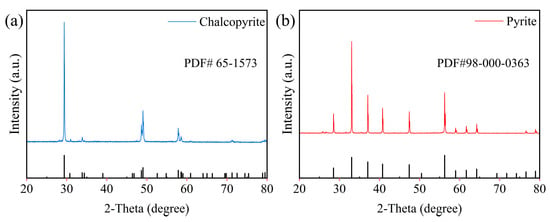
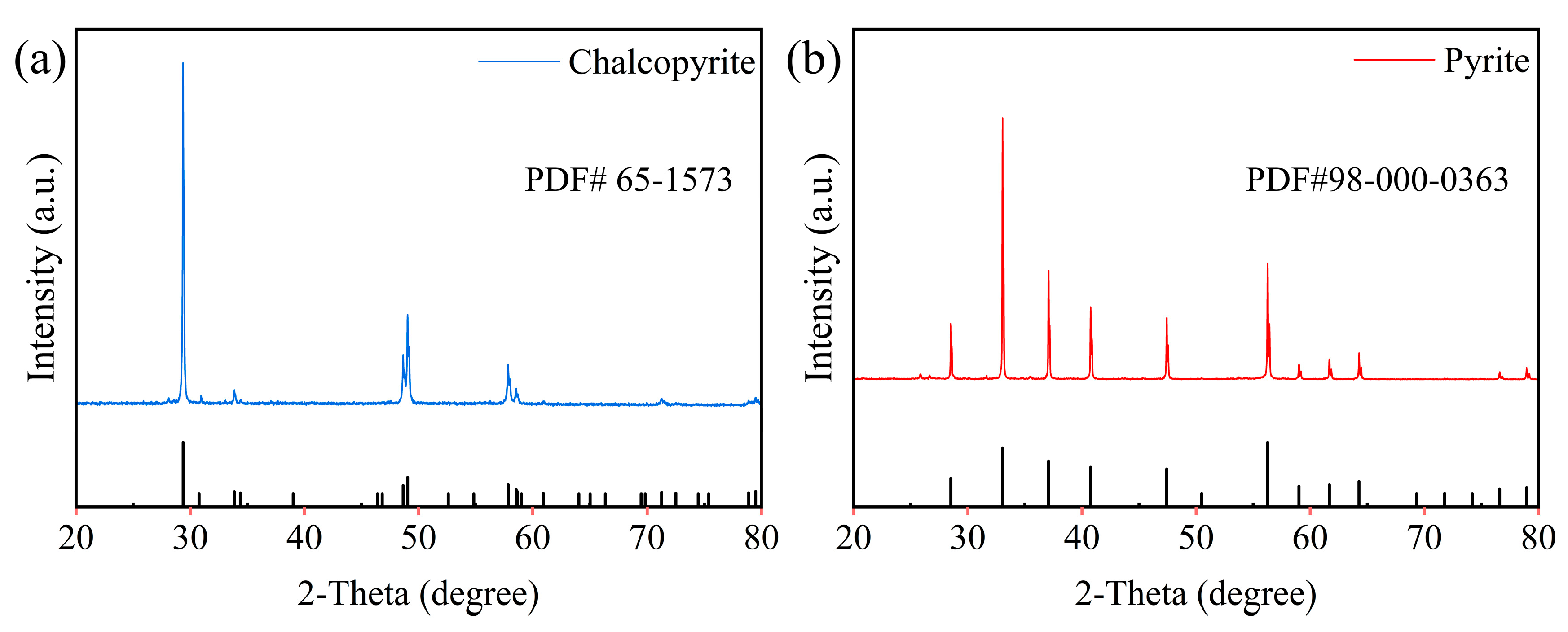
The chalcopyrite used in this study was sourced from Yunnan Province, China, while the pyrite was obtained from Hubei Province, China. The X-ray diffraction (XRD) patterns and chemical compositions of the samples are presented in Figure 1 and Table 1, respectively, confirming the high purity of both minerals with only minor impurities.
Figure 1.
XRD patterns of (a) chalcopyrite and (b) pyrite.
Table 1.
Chemical composition of chalcopyrite and pyrite (wt%).
The collector used in this study was sodium butyl xanthate (SBX), supplied by Rohm & Haas. Terpineol, used as the frother, was provided by Shanghai Macklin Biochemical Technology Co., Ltd, Shanghai, China. Hydrochloric acid (HCl) and sodium hydroxide (NaOH) for pH adjustment were purchased from Hengxing Chemical Reagent Co., Ltd., Tianjin, China. Dextrin was obtained from China National Pharmaceutical Group Chemical Reagent Co., Ltd, Shanghai, China. Hydrogen peroxide (H2O2, 30 wt%), used for sulfonation and partial oxidation, was purchased from Comio Chemical Reagent Co., Ltd., Tianjin, China, and anhydrous sodium sulfite (Na2SO3), employed as the sulfonating agent, was supplied by Beichen Fangzheng Reagent Factory, Tianjin, China.
2.2. Preparation of SD
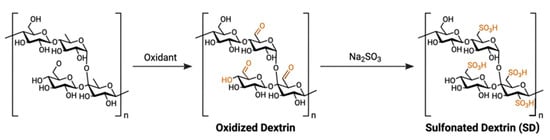
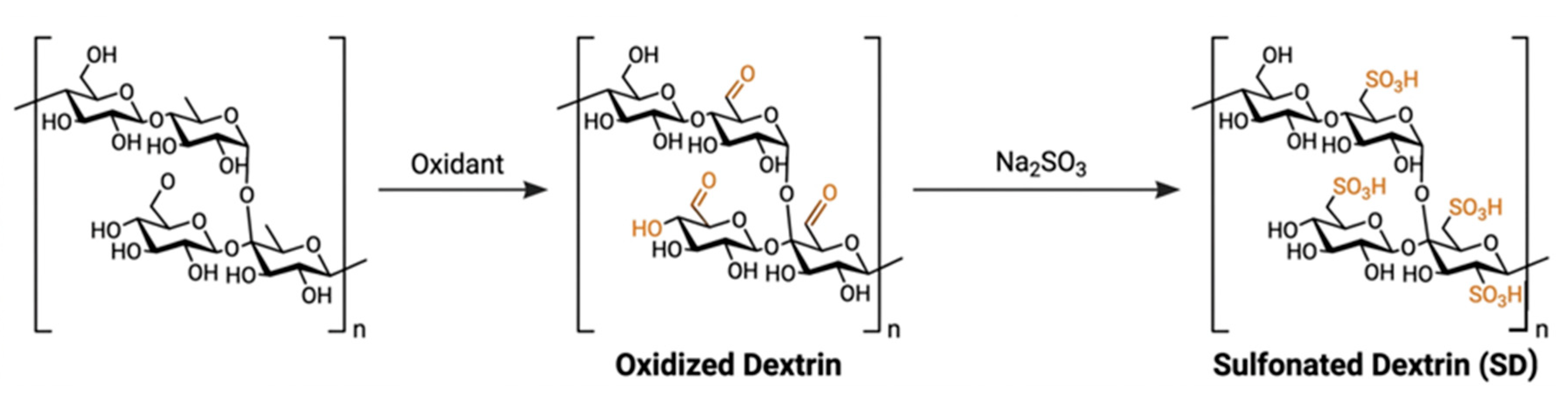
Under alkaline conditions, dextrin reacts with the sulfonating agent sodium sulfite (Na2SO3), introducing sulfonic groups (–SO3−) onto the dextrin molecular chain to generate sulfonated dextrin [26,27]. The sulfonation modification procedure is illustrated in Figure 2. Briefly, 30 g dextrin was dissolved in 100 mL deionized water at 75 °C, and the pH was adjusted to 8–10. Subsequently, H2O2 (8 wt% relative to dextrin) was added dropwise, and the oxidation proceeded for 1 h. Then, Na2SO3 (30 wt% relative to dextrin) was introduced, and the reaction was maintained at 85 °C for 3 h to graft −SO3− groups onto the dextrin chains. After the reaction, the solution was neutralized, precipitated with ethanol, filtered, washed, and vacuum-dried at 60 °C to obtain light-yellow SD powder [28,29].
Figure 2.
Synthesis route of SD.
2.3. Micro-Flotation Tests
Single-mineral and mixed-mineral flotation experiments were conducted using an XFG flotation machine (Hunan Zhongtai Instrument Equipment Co., Ltd, Changsha, China) equipped with a 40 mL flotation cell, with the impeller operated at a rotational speed of 1800 rpm. For each single-mineral test, 2 g of the sample was placed in a beaker containing deionized water and ultrasonically treated for 5 min to remove surface oxides. The sample was then transferred to the flotation cell and diluted with 40 mL of deionized water, followed by stirring for 5 min. The pulp pH was adjusted using pre-prepared HCl or NaOH solutions, with an additional 5 min of stirring. Subsequently, the depressant, collector, and frother were added sequentially, with conditioning times of 2, 2, and 1 min, respectively. Flotation was carried out for 3 min, after which the concentrates and tailings were filtered, dried, and weighed to calculate the recovery. Each experiment was repeated three times, and the mean recovery was reported as the final value.
The recovery of a single mineral was calculated using the following equation:
where (g) is the mass of the concentrate, (g) is the mass of the tailings, and R (%) is the recovery. For mixed-mineral flotation tests, equal masses of chalcopyrite (1 g) and pyrite (1 g) were ultrasonically cleaned to remove surface oxides and then mixed for flotation. Based on the stoichiometric compositions of chalcopyrite (Cp) and pyrite (Py), the Cu and Fe grades were converted into mineral compositions using the following mathematical relationships [30].
2.4. Contact Angle Measurements
Contact angles were measured using a video contact angle goniometer (Chengde Dingsheng Instrument Co., Ltd, Chengde, China.). High-purity, hand-selected block minerals were sectioned, polished, and ground to prepare smooth surfaces. Before each measurement, the surfaces were re-polished to ensure freshness and to avoid interference from oxidized films. The mineral samples were treated according to the flotation experimental scheme and then rinsed three times with deionized water to remove residual reagents. Subsequently, the samples were naturally dried before measurement.
2.5. Zeta Potential Measurements
Zeta potential measurements were conducted using a nanoparticle size and zeta potential analyzer (Malvern Instruments Ltd., Malvern UK). All measurements were performed at room temperature, with a 1 mmol/L KCl solution used as the background electrolyte. In each test, the KCl solution and 2 g of mineral sample were added to a 250 mL beaker, and the resulting suspension was stirred for 5 min. The pH was adjusted using dilute NaOH or HCl solutions during stirring. Appropriate amounts of SD and SBX were added sequentially, with a 5 min reaction interval for each reagent. After standing for 5 min, the supernatant was collected for zeta potential measurement. For each sample, measurements were performed in triplicate, and the average value was reported as the final result.
2.6. Fourier Transform Infrared Spectroscopy (FTIR) Analysis
Fourier transform infrared (FTIR) spectra were recorded using an FTIR spectrometer (Shimadzu Corporation, Kyoto, Japan) over the wavenumber range of 4000–400 cm−1. The preparation procedure for the mineral samples was as follows: 2.0 g of −5 µm pyrite or chalcopyrite was placed in a beaker containing deionized water and ultrasonically cleaned for 5 min. The cleaned sample was then transferred to a beaker with 40 mL of deionized water, and the pulp pH was adjusted with pre-prepared HCl or NaOH solutions. The mixture was stirred for 5 min and, where applicable, further treated with a predetermined dosage of SD/SBX for an additional 30 min of stirring. The slurry was then filtered, and the resulting filter cake was washed three times with deionized water and vacuum-dried at 45 °C for 48 h prior to FTIR analysis.
2.7. X-Ray Photoelectron Spectroscopy (XPS) Analysis
The mineral sample (2 g, −5 μm) was placed in a beaker filled with deionized water and ultrasonically cleaned for 5 min. The cleaned sample and 40 mL of deionized water were then placed in a beaker and stirred for 5 min. The pH of the suspension was adjusted to 8.0, and SD or SBX was added with stirring for 5 min, after which the sample was vacuum-dried for subsequent detection. XPS measurements of the Fe 2p and S 2p core levels on the pyrite surfaces were conducted using an X-ray photoelectron spectrometer (Thermo Fisher Scientific, Brno, Czech Republic). All binding energies were calibrated with reference to the C 1s peak at 284.8 eV to compensate for surface charging effects.
3. Results and Discussion
3.1. Micro-Flotation Tests
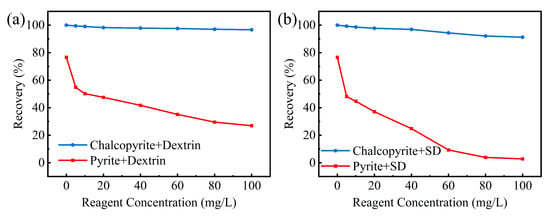
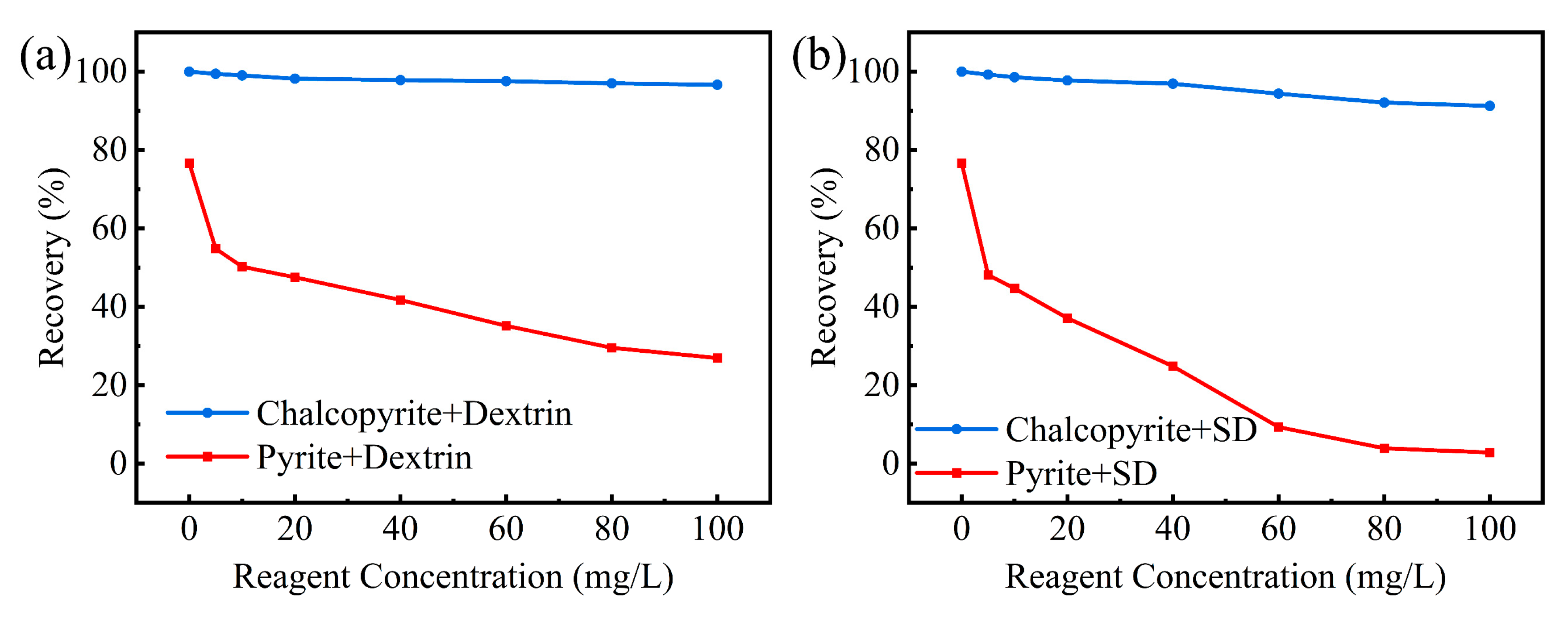
Flotation experiments were conducted to evaluate the depression effects of dextrin and sulfonated dextrin (SD) on chalcopyrite and pyrite flotation at pH 8.0. As shown in Figure 3a, dextrin exerted a negligible effect on chalcopyrite flotation, with the recovery consistently exceeding 95%. In contrast, the addition of dextrin led to a marked decrease in pyrite recovery, which dropped to 26.95% at a dextrin concentration of 100 mg/L. When SD was used as the depressant (Figure 3b), chalcopyrite still maintained high floatability, with recoveries above 90%. For pyrite, the depressing effect of SD was significantly stronger than that of dextrin, achieving an extremely low pyrite recovery (<5%) at an SD concentration of 80 mg/L.
Figure 3.
Flotation recovery of chalcopyrite and pyrite as a function of (a) dextrin and (b) SD concentration (SBX: 1 × 10⁻⁴ mol/L; terpineol: 50 mg/L).
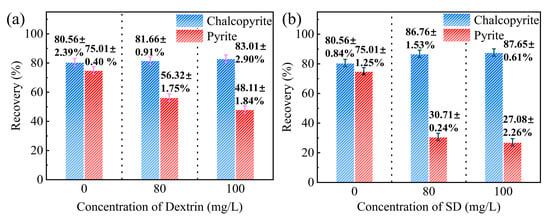
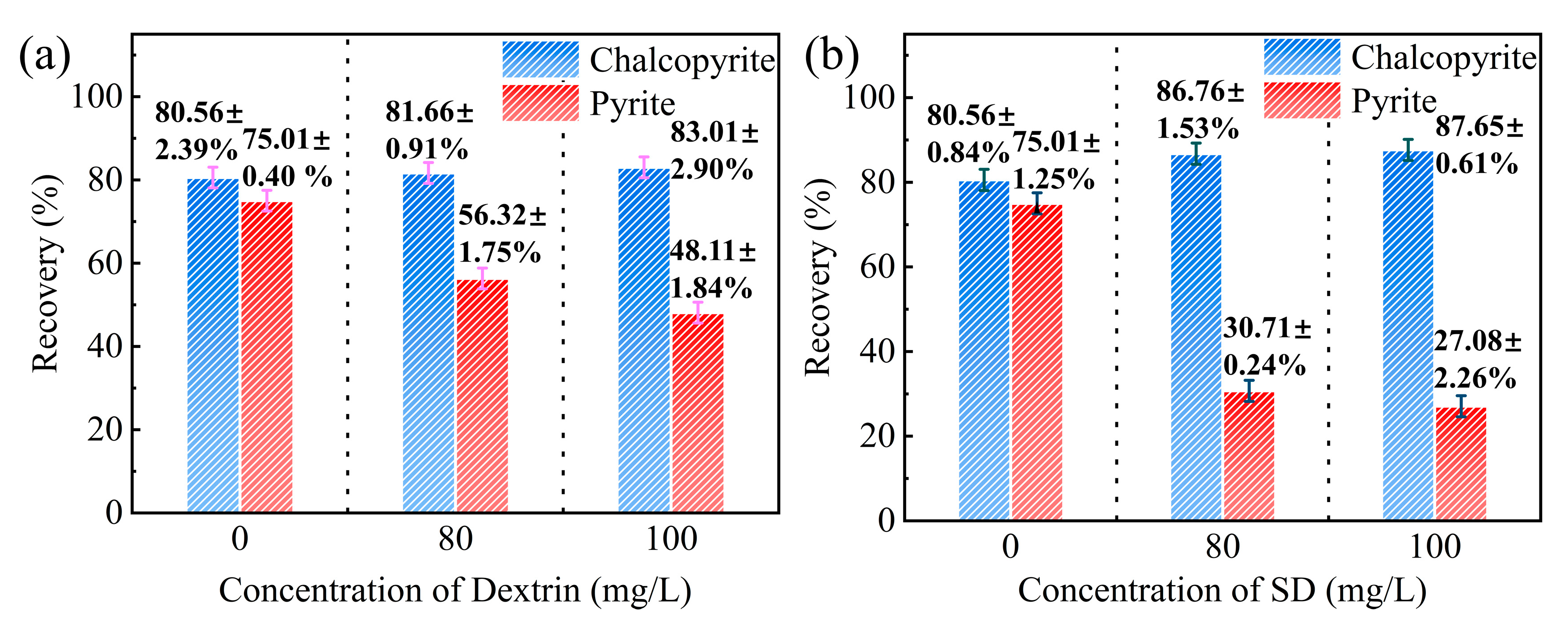
To further verify the selective depression performance of dextrin and SD toward pyrite, micro-flotation experiments were carried out on artificially mixed minerals (chalcopyrite : pyrite = 1:1) at pH 8.0 with varying depressant concentrations. As shown in Figure 4, the pyrite recovery decreased from 75.01% to 56.32% and 48.11% when 80 mg/L and 100 mg/L of dextrin were applied, respectively, while the chalcopyrite recovery remained above 80%. In contrast, when SD was used as the depressant, the pyrite recovery sharply dropped to 27.08% at an SD concentration of 100 mg/L. Notably, the chalcopyrite recovery increased from 80.56% to 87.65%, which is mainly attributed to the reduced interference from pyrite on chalcopyrite flotation. These results clearly demonstrate that SD possesses superior selective depression properties compared to dextrin for the chalcopyrite–pyrite separation.
Figure 4.
Effect of (a) dextrin and (b) SD on flotation recovery of artificially mixed minerals (SBX: 1 × 10⁻⁴ mol/L; terpineol: 50 mg/L). (Error bars represent the standard deviation calculated from three independent flotation experiments.)
3.2. Contact Angle Measurements
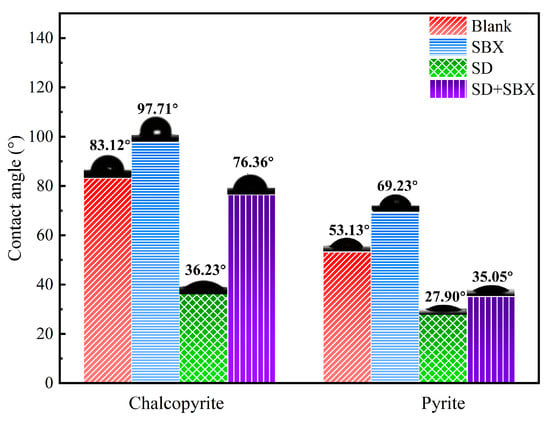
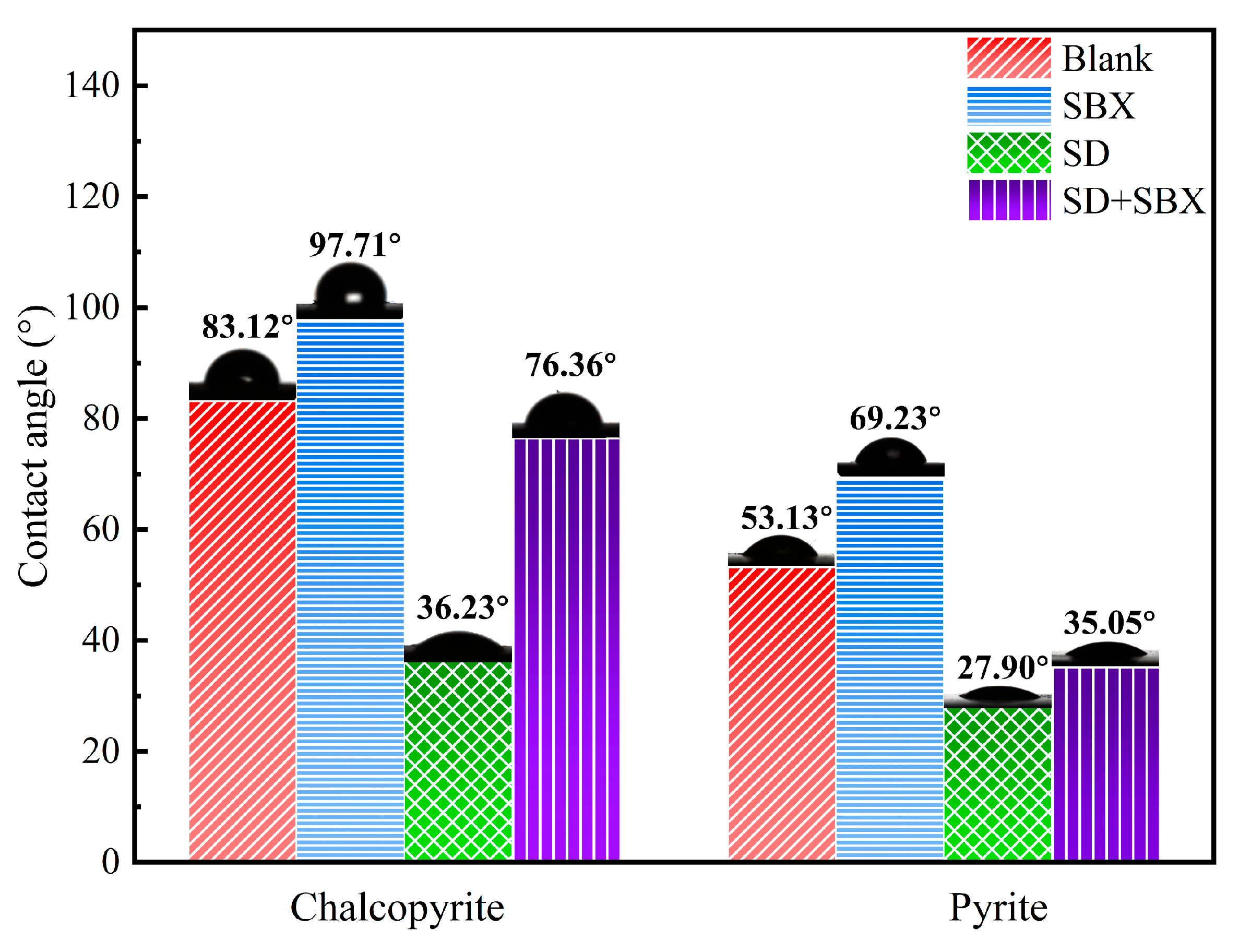
The wettability of mineral surfaces plays a decisive role in their flotation behavior, and contact angle measurement is an effective and intuitive technique for characterizing surface hydrophobicity or hydrophilicity. Generally, a larger contact angle indicates a more hydrophobic surface and, consequently, stronger floatability [31]. Figure 5 shows the contact angles of chalcopyrite and pyrite under various treatment conditions. The pristine chalcopyrite exhibited a contact angle of 83.12°, indicating its inherently strong hydrophobicity. After SBX treatment, the contact angle significantly increased to 97.71° due to the formation of hydrophobic metal–xanthate complexes on the surface [32]. Upon interaction with SD alone, the contact angle of chalcopyrite decreased to 36.23°; however, with the subsequent addition of SBX, it recovered to 76.36° with the subsequent addition of SBX, restoring surface hydrophobicity and high floatability.
Figure 5.
Contact angle measurements of chalcopyrite and pyrite surfaces under various treatments. (SBX: 1 × 10⁻⁴ mol/L; SD: 80 mg/L).
For pyrite, the pristine surface exhibited a contact angle of 53.13°, which markedly increased to 69.23° after SBX addition. After treatment with SD, the contact angle dropped sharply to 27.90°, indicating that SD significantly enhanced the surface hydrophilicity of pyrite. When SD and SBX were added sequentially, the contact angle of pyrite was only 35.05°, substantially lower than that achieved with SBX alone. This result suggests that the SD-treated pyrite surface has a poor affinity for SBX, thereby maintaining high hydrophilicity and low floatability. These pronounced differences indicate that SD can strongly adsorb onto the pyrite surface, amplifying the wettability contrast between chalcopyrite and pyrite. Such an effect is beneficial for the preferential flotation of chalcopyrite and the effective depression of pyrite, ultimately enabling efficient separation of the two minerals.
3.3. Zeta Potential Measurements
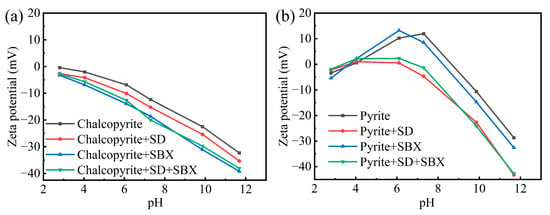
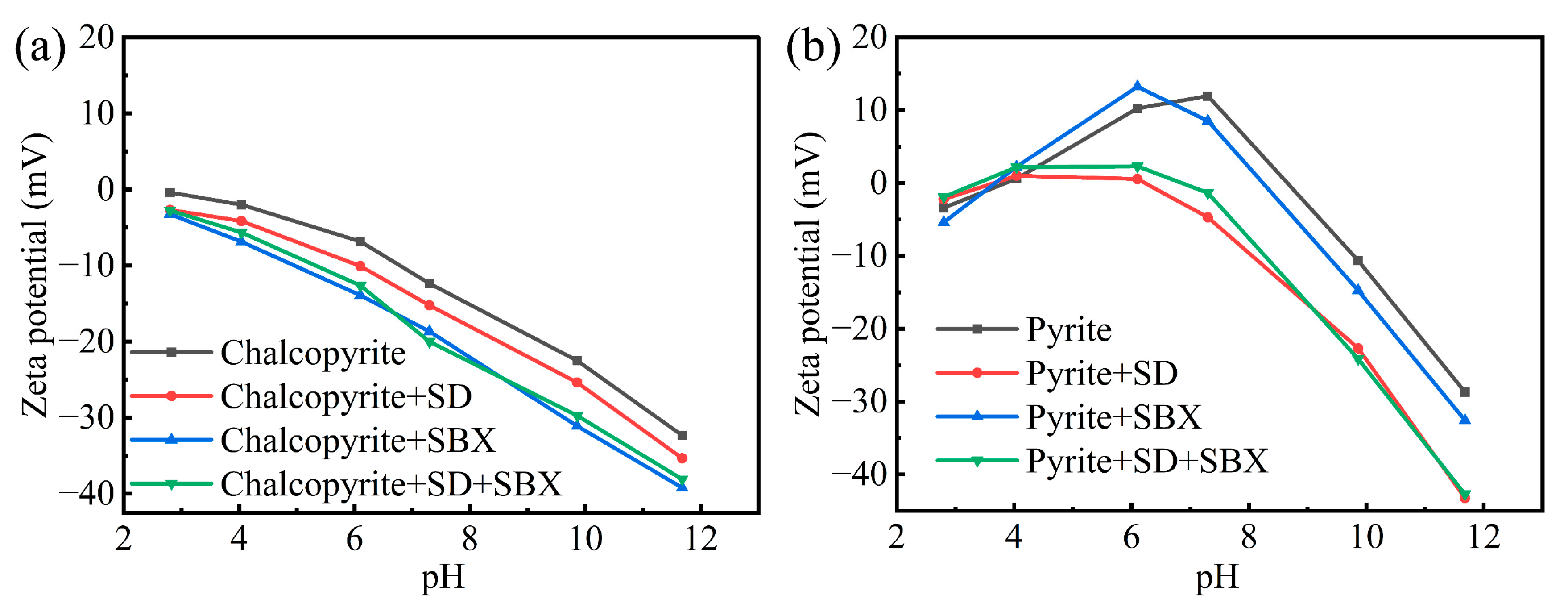
The adsorption of ionic reagents at the mineral–solution interface primarily influences the surface electrical properties of minerals [33]. Changes in zeta potential are closely correlated with reagent adsorption; a greater shift in zeta potential generally corresponds to higher adsorption capacity [34]. Figure 6 presents the zeta potentials of chalcopyrite and pyrite treated with different reagents over the pH range of 2–12. As shown in Figure 6a, the addition of SBX caused a negative shift in the zeta potential of chalcopyrite, indicating successful adsorption of the collector onto the mineral surface. SD treatment induced only a slight decrease in the zeta potential of chalcopyrite, and the subsequent addition of SBX further shifted the potential negatively. This phenomenon suggests that the weak interaction between SD and chalcopyrite has negligible influence on SBX adsorption onto the chalcopyrite surface.
Figure 6.
Zeta potentials of (a) chalcopyrite and (b) pyrite under various treatments.
In contrast, the zeta potential of untreated pyrite (Figure 6b) exhibited a non-monotonic trend with increasing pH, initially increasing and then sharply decreasing. This behavior is mainly attributed to partial surface oxidation. Under acidic to near-neutral conditions, Fe2+/Fe3+ species and their hydrolysis products dominate the surface charge, resulting in relatively high potentials. Under alkaline conditions, however, the formation of iron oxyhydroxides and extensive adsorption of OH− substantially increase the surface negative charge [35]. This behavior reflects the strong susceptibility of pyrite to surface oxidation and hydrolysis [36]. Within the pH range of 7–12, the addition of SBX resulted in a negative shift in the zeta potential, indicating successful collector adsorption on the pyrite surface. SD treatment caused a significant decrease in the zeta potential of pyrite. After the subsequent addition of SBX, the zeta potential remained essentially unchanged, indicating that the strong interaction between SD and pyrite significantly suppresses SBX adsorption on the pyrite surface.
3.4. Fourier Transform Infrared Spectroscopy (FTIR) Analysis
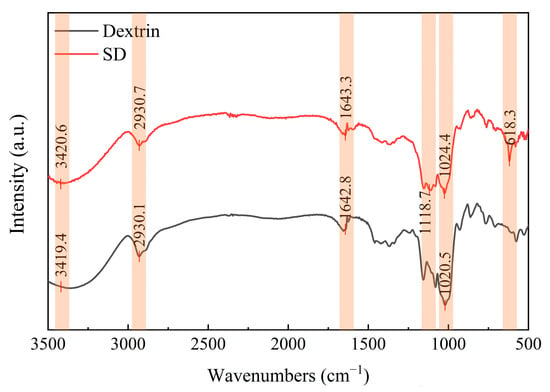
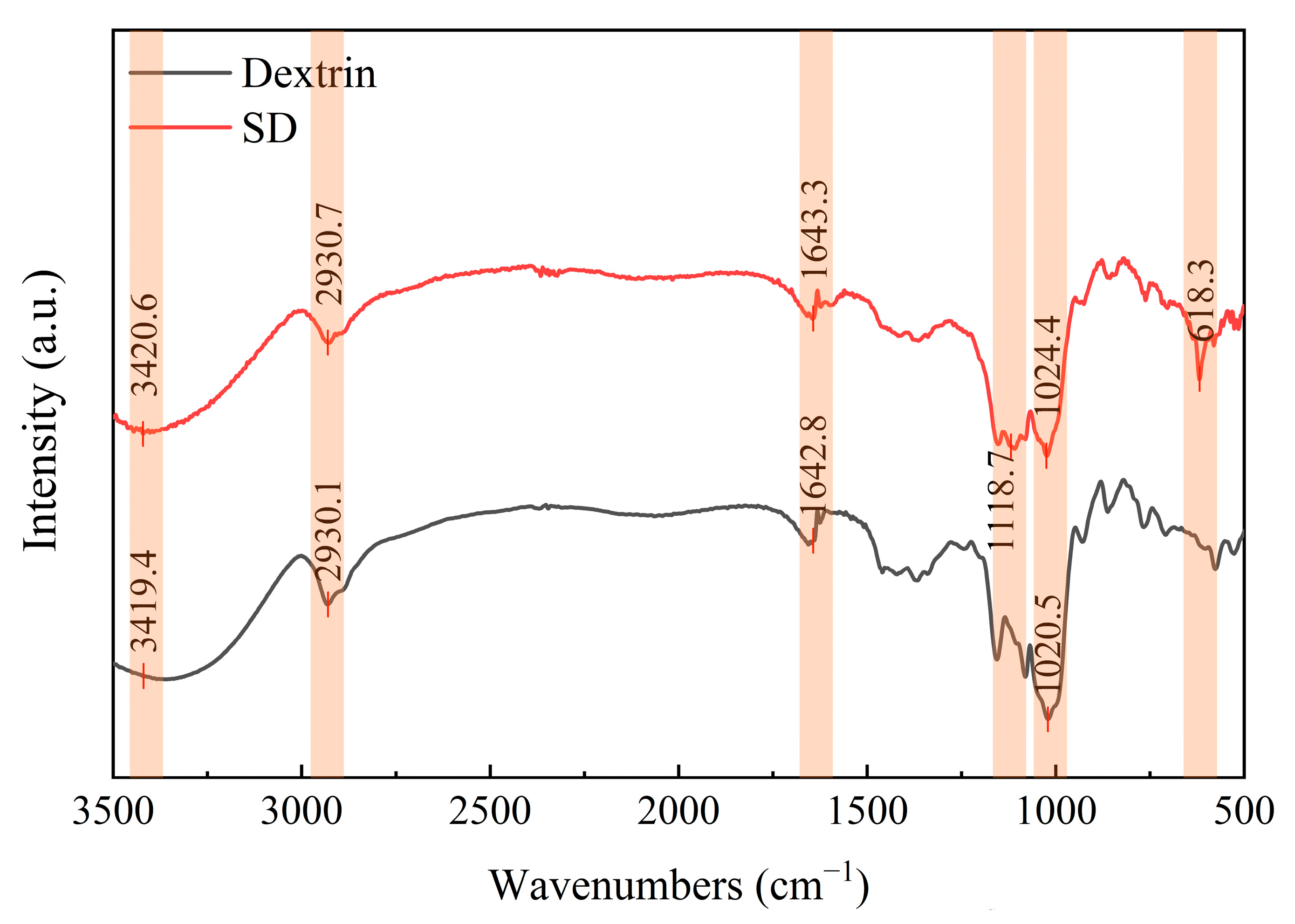
FTIR spectroscopy was employed to further elucidate the selective depression mechanism of SD on chalcopyrite and pyrite. Figure 7 shows the FTIR spectra of dextrin and SD. In the spectrum of dextrin, the broad absorption band at 3419.4 cm−1 corresponds to the O−H stretching vibration [37]. After sulfonation, the intensity of this band decreases, indicating that part of the hydroxyl groups participated in the sulfonation reaction. The peaks at 2930.1 cm−1 and 1020.5 cm−1 in dextrin, corresponding to C−H and CH−OH stretching vibrations, respectively, remain largely unchanged in SD at 2930.7 cm−1 and 1024.4 cm−1, suggesting that the dextrin carbon backbone was not disrupted [37,38]. The band at 1642.8 cm−1 in dextrin, attributed to H−O−H bending of adsorbed water, is also observed in SD at 1643.3 cm−1 [37]. In the spectrum of SD, a new absorption band appears at 1118.7 cm−1, corresponding to the asymmetric and symmetric stretching vibrations of the −SO3− group, which is a characteristic feature of sulfonic groups [39,40]. Additionally, a band at 618.3 cm−1 corresponding to S−O vibrations further confirms that sulfur is chemically incorporated in the form of sulfonic groups [41,42]. These peaks are absent in the spectrum of unmodified dextrin, indicating that the sulfonation reaction altered the functional group composition of dextrin.
Figure 7.
FTIR spectra of dextrin and SD.
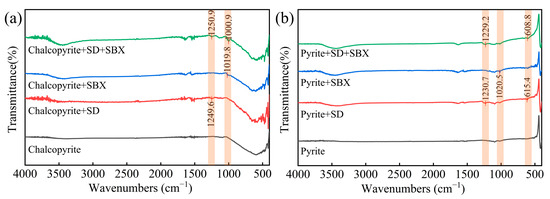
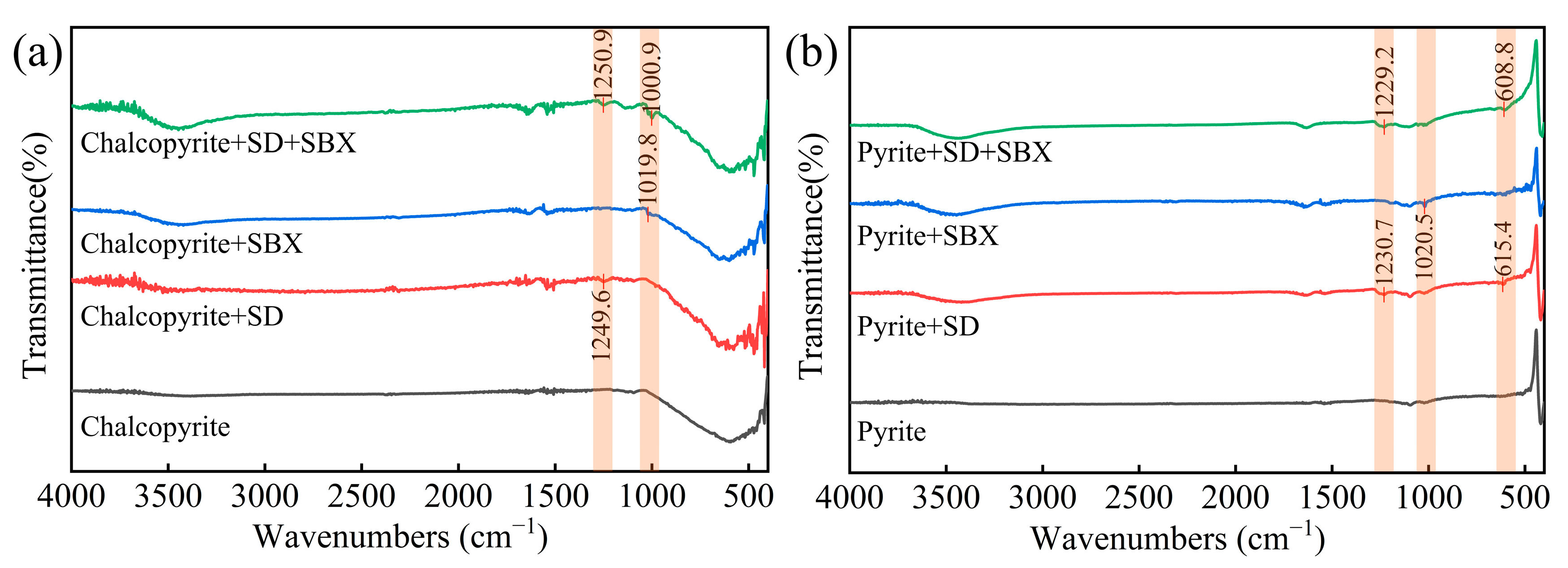
Figure 8a shows the FTIR spectra of chalcopyrite after treatment with SD and SBX. After SD treatment, a characteristic stretching vibration peak of the sulfonate group appeared at 1249.6 cm−1 on the chalcopyrite surface, indicating the adsorption of SD. After SBX treatment, a peak at approximately 1019.8 cm−1 was observed, corresponding to the C−O−C stretching vibration of xanthate molecules [43,44,45]. When both reagents were applied, a distinct xanthate characteristic peak was still observed at 1000.9 cm−1, along with the sulfonate peak of SD at 1250.9 cm−1. These results indicate that the adsorption of SBX on chalcopyrite surface is insensitive in the presence of SD.
Figure 8.
FTIR spectra of (a) chalcopyrite and (b) pyrite under different treatments.
For pyrite (Figure 8b), new peaks at 615.4 cm−1 and 1230.7 cm−1 appeared after SD treatment, which correspond to the S−O and −SO3− stretching vibrations of SD, respectively. Treatment with SBX also caused appearance of C−O−C stretching vibration peak at approximately 1020.5 cm−1. When both reagents were applied, the characteristic SD peaks appeared at 608.8 cm−1 and 1229.2 cm−1, while the characteristic peaks of xanthate disappeared. This indicates that SD strongly adsorbs onto the pyrite surface and effectively suppresses SBX adsorption.
3.5. X-Ray Photoelectron Spectroscopy (XPS) Analysis
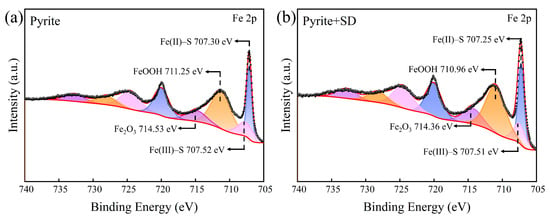
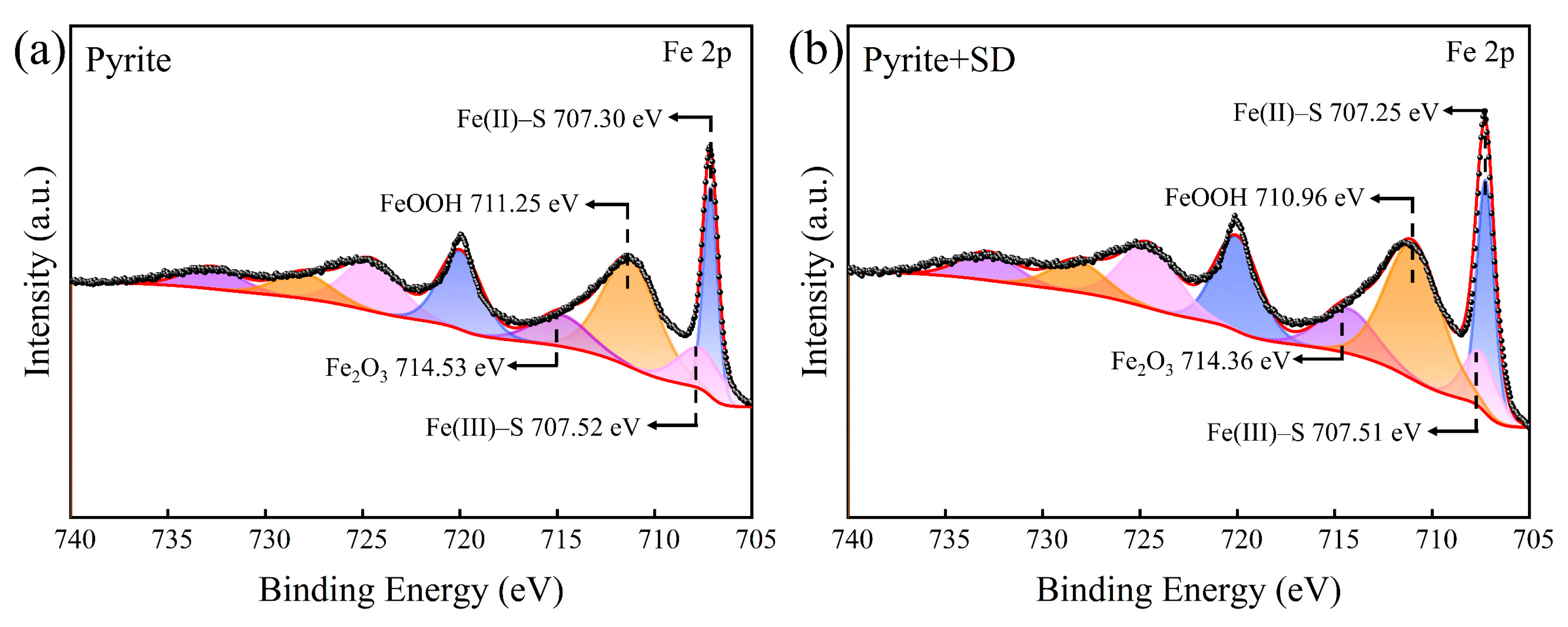
XPS characterization was performed to reveal the interaction mechanism of SD on pyrite surface. Figure 9a,b present the resolved Fe 2p spectra of the pyrite sample before and after SD pretreatment. The Fe 2p spectrum of pyrite exhibited four pairs of doublets: the peak at 707.30 eV corresponds to Fe(II)−S, the peak at 707.52 eV corresponds to Fe(III)−S, while those at 711.25 eV and 714.53 eV are attributed to FeOOH and Fe2O3 [46,47]. After SD treatment, the binding energy of the FeOOH component shifted from 711.25 eV to 710.96 eV, indicating the chemical interaction between FeOOH component and SD.
Figure 9.
Fe 2p XPS spectra of pyrite (a) before and (b) after treatment with SD.
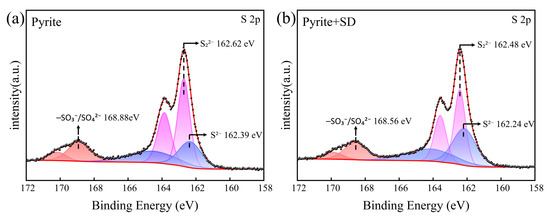
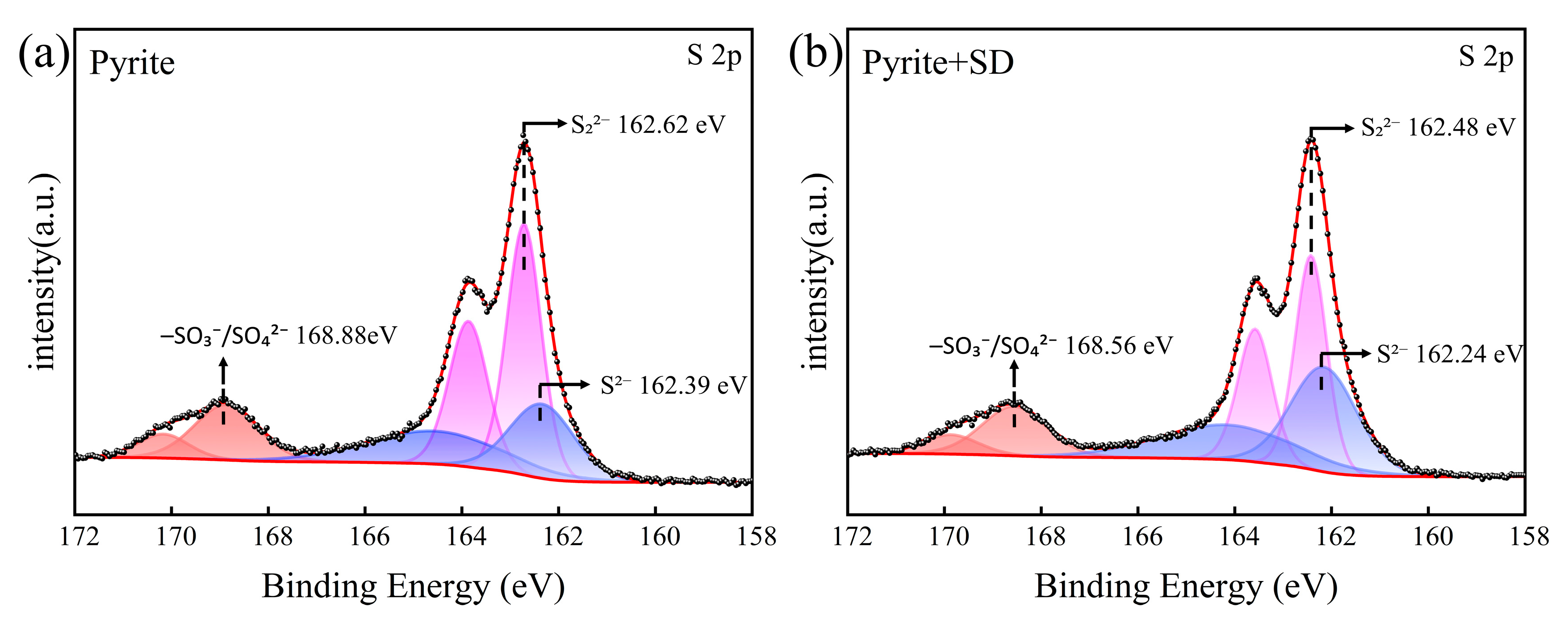
Figure 10 shows the high-resolution S 2p spectra of pyrite before and after SD treatment, where peaks at 162.62 eV, 162.39 eV, and 168.88 eV correspond to S22−, S2− and −SO3−/SO42− [48]. After SD addition, the binding energy of −SO3−/SO42− shifted from 168.88 eV to 168.56 eV, with a variation of 0.32 eV. This result is mainly induced by the introduction of −SO3− group of SD on pyrite surface.
Figure 10.
S 2p XPS spectra of pyrite (a) before and (b) after treatment with SD.
3.6. Discussion
Based on the above analysis, the interfacial interactions between pyrite and SD can be rationalized by Equations (5) and (6). In the flotation pulp, dissolved oxygen and water promote the hydroxylation of surface Fe sites on pyrite, generating FeOOH species that act as preferential adsorption sites for SD. The sulfonic groups (−SO3−) of SD then undergo chemical coordination with these hydroxylated Fe species, giving rise to a robust organic−inorganic composite adsorption layer on the pyrite surface. This surface layer serves a dual function: it significantly enhances surface hydrophilicity and simultaneously acts as a physical/chemical barrier that suppresses the subsequent adsorption of xanthate. As a result, pyrite is effectively depressed, reducing pyrite recovery from 75.01% to 27.08% in mixed-mineral flotation.
For chalcopyrite, in contrast, the density of available oxidized Fe sites is substantially lower, and SD adsorption is consequently limited. Meanwhile, the abundant Cu sites on the chalcopyrite surface retain their strong affinity for xanthate, ensuring effective collector adsorption and sustained surface hydrophobicity. This marked difference in surface chemistry between the two minerals ultimately accounts for the superior selective depression performance of SD in the chalcopyrite−pyrite flotation system.
Compared with unmodified and other polysaccharide-based depressants, SD provides improved selectivity at a lower dosage and under mild alkaline conditions. The sulfonation modification enhances its affinity toward pyrite surfaces, highlighting its potential as an environmentally friendly reagent for chalcopyrite–pyrite separation [49,50]. Furthermore, it should be noted that parameters such as the degree of sulfonation and molecular structure have a significant influence on the depressing performance of SD, which deserves comprehensive investigation in future studies.
4. Conclusions
In this study, sulfonated dextrin (SD) was synthesized as a novel selective depressant for the flotation separation of chalcopyrite and pyrite under low-alkalinity conditions. The main conclusions are drawn as follows:
- (1)
- SD exhibited superior selective depression of pyrite over chalcopyrite under low-alkalinity conditions. At pH 8.0, SD depressed pyrite recovery to <5% at 80 mg/L in single-mineral tests, while chalcopyrite recovery remained >90%. In mixed-mineral flotation, SD reduced pyrite recovery to 27.08% at 100 mg/L, with chalcopyrite recovery increasing to 87.65%.
- (2)
- Interfacial characterizations suggested that the adsorption of SD on pyrite surface significantly enhanced its surface hydrophilicity and hindered subsequent SBX adsorption. In contrast, SD exhibited slight interaction with chalcopyrite, allowing effective collector adsorption and sustained surface hydrophobicity.
- (3)
- Spectroscopic analyses (FTIR and XPS) revealed that the sulfonic groups of SD chemically coordinated with oxidized iron species (FeOOH) on pyrite surfaces, forming a stable hydrophilic adsorption layer.
Author Contributions
Conceptualization, F.J.; methodology, F.J.; software, S.H.; formal analysis, S.H.; investigation, F.J., Y.L. and W.S.; resources, W.S.; data curation, Y.L.; writing—original draft preparation, F.J.; writing—review and editing, H.-H.T., Y.L. and S.H.; visualization, H.-H.T.; supervision, W.S.; project administration, H.-H.T.; funding acquisition, F.J. All authors have read and agreed to the published version of the manuscript.
Funding
We gratefully appreciate the financial support from the National Key R&D Program of China (2022YFC2904502, 2022YFC2904501).
Data Availability Statement
The data presented in this study are available from the corresponding author upon reasonable request.
Conflicts of Interest
The authors declare no conflict of interest.
References
- Cheng, G.; Li, Y.; Cao, Y.; Wang, X.; Li, E.; Guo, Y.; Lau, E.V. New insights on the understanding of sulfur-containing coal flotation desulfurization. Minerals 2024, 14, 981. [Google Scholar] [CrossRef] [Scilit]
- Wang, Y.F.; Wei, D.Y.; Wen, S.M.; Lin, Q.Q.; Song, Z.G.; Luo, X.M. Enhanced pyrite depression through nitrogen-aerated flotation under low alkalinity conditions. Adv. Powder Technol. 2024, 35, 104424. [Google Scholar] [CrossRef] [Scilit]
- Ling, S.S.; Shang, Y.B.; Wang, Y.; Lai, H.; Lu, X.M.; Shen, P.L.; Liu, D.W.; Wei, X.; Jin, J.X.; Li, M.Y. Selective depression of pyrite by cyanuric acid trisodium salt in chalcopyrite flotation: Surface characterization and DFT insights. Appl. Surf. Sci. 2026, 716, 164740. [Google Scholar] [CrossRef] [Scilit]
- López-Valdivieso, A.; Sánchez-López, A.A.; Padilla-Ortega, E.; Robledo-Cabrera, A.; Galvez, E.; Cisternas, L. Pyrite depression by dextrin in flotation with xanthates. Adsorption and floatability studies. Physicochem. Probl. Miner. Pro. 2018, 54, 1159–1171. [Google Scholar]
- Drzymala, J.; Tomasik, P.; Sychowska, B.; Sikora, M. Dextrins as selective flotation depressants for sulfide minerals. Physicochem. Probl. Miner. Pro. 2002, 36, 273–278. [Google Scholar]
- Sun, D.; Li, M.L.; Fu, Y.Y.; Pan, Z.Q.; Cui, R.; Wang, D.W.; Zhang, M.; Yao, W. Selective Separation of Chalcopyrite from Pyrite Using Sodium Humate: Flotation Behavior and Adsorption Mechanism. ACS Omega 2023, 8, 45129–45136. [Google Scholar] [CrossRef] [Scilit] [PubMed]
- Sun, X.; Huang, L.Y.; Wu, D.D.; Tong, X.; Yang, S.Y.; Hu, B. The selective depression effect of dextrin on pyrite during the Zn-Fe sulfides flotation under low alkaline conditions. Colloid Surf. A-Physicochem. Eng. Asp. 2022, 650, 129573. [Google Scholar] [CrossRef] [Scilit]
- Neisiani, A.A.; Saneie, R.; Mohammadzadeh, A.; Wonyen, D.G.; Chelgani, S.C. Polysaccharides-based pyrite depressants for green flotation separation: An overview. Int. J. Min. Sci. Technol. 2023, 33, 1229–1241. [Google Scholar] [CrossRef] [Scilit]
- Yang, Y.K.; Kostovic, M.; Deng, R.D.; Liao, Y.Y. Study on the Inhibition and Activation of Pyrite Under Low Alkalinity Conditions Created by Hydrogen Peroxide and Lime. Minerals 2025, 15, 1177. [Google Scholar] [CrossRef] [Scilit]
- Yuan, J.Q.; Li, Y.M.; Ding, Z.; Zhang, Y.J.; Chen, L.; Wen, S.M.; Bai, S.J. Cleaner flotation separation of chalcopyrite from pyrite at low alkalinity: Based on calcium hypochlorite oxidative modification in acid mine drainage system. Sep. Purif. Technol. 2024, 344, 127325. [Google Scholar] [CrossRef] [Scilit]
- Khoso, S.A.; Hu, Y.; Liu, R.; Tian, M.; Sun, W.; Gao, Y.; Han, H.; Gao, Z. Selective depression of pyrite with a novel functionally modified biopolymer in a Cu–Fe flotation system. Miner. Eng. 2019, 135, 55–63. [Google Scholar] [CrossRef] [Scilit]
- Deng, W.; Xu, L.H.; Tian, J.; Hu, Y.H.; Han, Y.X. Flotation and Adsorption of a New Polysaccharide Depressant on Pyrite and Talc in the Presence of a Pre-Adsorbed Xanthate Collector. Minerals 2017, 7, 40. [Google Scholar] [CrossRef] [Scilit]
- Qian, H.; Bao, J.P.; Shen, C.X.; Wu, D.; Wang, J.S.; Hao, H.Q.; Zhang, Y.S. Improved Flotation Separation of Scheelite from Calcite by Sulfomethylated Kraft Lignin. Materials 2023, 16, 4690. [Google Scholar] [CrossRef] [Scilit] [PubMed]
- Li, K.Y.; Zhao, L.X.R.; Liu, S.; Huang, L.Y.; Wang, H.Y.; Liu, C.; Yang, S.Y. Hydroxypropyl distarch phosphate as a green depressant for the flotation separation of chalcopyrite from pyrite under low-alkalinity conditions. Colloids Surf. A Physicochem. Eng. 2025, 726, 137970. [Google Scholar] [CrossRef] [Scilit]
- Chen, M.J.; Bi, Y.X.; Ding, Z.; Yuan, J.Q.; Yu, A.M.; Chen, L.; Bai, S.J.; Mao, Y.B. Application of calcium hypochlorite and carboxymethyl chitosan as combined depressants for selective flotation separation of chalcopyrite from pyrite at low alkalinity. Adv. Powder Technol. 2024, 35, 104649. [Google Scholar] [CrossRef] [Scilit]
- Dong, S.Q.; He, H.Y.; Qiu, Z.L.; Peng, L.G.; Qin, S.; Fang, J.J.; Liu, D.W.; Shen, P.L. An eco-friendly depressant derived from grape seed extract (GSE) as depressant for flotation separation of pyrite from chalcopyrite under low-alkalinity conditions. Miner. Eng. 2024, 213, 108758. [Google Scholar] [CrossRef] [Scilit]
- Nyamekye, G.A. Adsorption of Dextrin onto Sulphide Minerals and Its Effect on the Differential Flotation of the Inco Matte. Ph.D. Thesis, University of British Columbia, Vancouver, BC, Canada, 1993. [Google Scholar]
- Valdivieso, A.L.; Cervantes, T.C.; Song, S.; Cabrera, A.R.; Laskowski, J.S. Dextrin as a non-toxic depressant for pyrite in flotation with xanthates as collector. Miner. Eng. 2004, 17, 1001–1006. [Google Scholar] [CrossRef] [Scilit]
- Valdivieso, A.L.; López, A.A.S.; Song, S.; Martínez, H.A.G.; Almada, S.L. Dextrin as a regulator for the selective flotation of chalcopyrite, galena and pyrite. Can. Metall. Q. 2007, 46, 301–309. [Google Scholar] [CrossRef]
- Yamamoto, H.; Makita, E.; Oki, Y.; Otani, M. Flow characteristics and gelatinization kinetics of rice starch under strong alkali conditions. Food Hydrocoll. 2006, 20, 9–20. [Google Scholar] [CrossRef] [Scilit]
- Beattie, D.; Huynh, L.; Mierczynska-Vasilev, A.; Myllynen, M.; Flatt, J. Effect of modified dextrins on the depression of talc and their selectivity in sulphide mineral flotation: Adsorption isotherms, AFM imaging and flotation studies. Can. Metall. Q. 2007, 46, 349–358. [Google Scholar] [CrossRef] [Scilit]
- Beaussart, A.; Parkinson, L.; Mierczynska-Vasilev, A.; Beattie, D.A. Adsorption of modified dextrins on molybdenite: AFM imaging, contact angle, and flotation studies. J. Colloid Interface Sci. 2012, 368, 608–615. [Google Scholar] [CrossRef] [Scilit] [PubMed]
- Luo, Y.J.; Xia, Y.Q.; Zhou, H.Y.; Yin, C.Z.; Yang, H.; Chen, J.H.; Ou, L.M. Effect of calcium ions on surface properties of chalcopyrite and arsenopyrite and its response to flotation separation under low-alkalinity conditions. Appl. Surf. Sci. 2022, 602, 154191. [Google Scholar] [CrossRef] [Scilit]
- Corona-Arroyo, M.A.; López-Frías, K.; Solorzano, K.; Echeveste, C.; Salazar-Hernández, M.M.; Pineda-Urbina, K.; Yang, B.Q. Pyrite depression by sodium metabisulfite and dextrin with xanthates: Contact angle, floatability, zeta potential and IR spectroscopy studies. Physicochem. Probl. Miner. Process. 2024, 60, 197068. [Google Scholar] [CrossRef] [Scilit]
- Mu, Y.; Peng, Y.; Lauten, R.A. The mechanism of pyrite depression at acidic pH by lignosulfonate-based biopolymers with different molecular compositions. Miner. Eng. 2016, 92, 37–46. [Google Scholar] [CrossRef] [Scilit]
- Qian, Y.L.; Zou, D.; Chen, R.F.; Huang, X.L.; Wang, Z. Improving xanthate flotation of fine pyrite using SPAM and the mechanism. Sep. Sci. Technol. 2023, 58, 2208–2216. [Google Scholar] [CrossRef] [Scilit]
- Pan, Y.; Wu, Z.; Zhang, B.; Li, X.-M.; Meng, R.; Chen, H.-Q.; Jin, Z.-Y. Preparation and characterization of emulsion stabilized by octenyl succinic anhydride-modified dextrin for improving storage stability and curcumin encapsulation. Food Chem. 2019, 294, 326–332. [Google Scholar] [CrossRef] [Scilit] [PubMed]
- Wang, H.; Gurau, G.; Rogers, R.D. Ionic liquid processing of cellulose. Chem. Soc. Rev. 2012, 41, 1519–1537. [Google Scholar] [CrossRef] [Scilit] [PubMed]
- Zhang, Y.-R.; Wang, X.-L.; Zhao, G.-M.; Wang, Y.-Z. Preparation and properties of oxidized starch with high degree of oxidation. Carbohydr. Polym. 2012, 87, 2554–2562. [Google Scholar] [CrossRef] [Scilit]
- Mu, Y.F.; Peng, Y.J.; Lauten, R.A. The galvanic interaction between chalcopyrite and pyrite in the presence of I lignosulfonate-based biopolymers and its effects on flotation performance. Miner. Eng. 2018, 122, 91–98. [Google Scholar] [CrossRef] [Scilit]
- Fuerstenau, M.C.; Miller, J.D.; Kuhn, M.C. Chemistry of flotation; Society of Mining Engineers of AIME: New York, NY, USA, 1985. [Google Scholar]
- Owusu, C.; e Abreu, S.B.; Skinner, W.; Addai-Mensah, J.; Zanin, M. The influence of pyrite content on the flotation of chalcopyrite/pyrite mixtures. Miner. Eng. 2014, 55, 87–95. [Google Scholar] [CrossRef] [Scilit]
- Fuerstenau, D. Zeta potentials in the flotation of oxide and silicate minerals. Adv. Colloid Interface Sci. 2005, 114, 9–26. [Google Scholar] [CrossRef] [Scilit] [PubMed]
- Rao, S.R. Surface Chemistry of Froth Flotation: Volume 1: Fundamentals; Springer Science & Business Media: Berlin/Heidelberg, Germany, 2013. [Google Scholar]
- Castellón, C.I.; Toro, N.; Gálvez, E.; Robles, P.; Leiva, W.H.; Jeldres, R. Froth Flotation of Chalcopyrite/Pyrite Ore: A Critical Review. Materials 2022, 15, 6536. [Google Scholar] [CrossRef] [Scilit] [PubMed]
- Chandra, A.; Gerson, A.R. The mechanisms of pyrite oxidation and leaching: A fundamental perspective. Surf. Sci. Rep. 2010, 65, 293–315. [Google Scholar] [CrossRef] [Scilit]
- Kačuráková, M.; Wilson, R. Developments in mid-infrared FT-IR spectroscopy of selected carbohydrates. Carbohydr. Polym. 2001, 44, 291–303. [Google Scholar] [CrossRef] [Scilit]
- Kizil, R.; Irudayaraj, J.; Seetharaman, K. Characterization of irradiated starches by using FT-Raman and FTIR spectroscopy. J. Agric. Food Chem. 2002, 50, 3912–3918. [Google Scholar] [CrossRef] [Scilit] [PubMed]
- Robert, M.S.; Webster, F.X.; Kiemle, D. Solutions Manual for Spectrometric Identification of Organic Compounds; Wiley: Hoboken, NJ, USA, 2005. [Google Scholar]
- Adams, L.; Oki, A.; Grady, T.; McWhinney, H.; Luo, Z. Preparation and characterization of sulfonic acid-functionalized single-walled carbon nanotubes. Phys. E Low-Dimens. Syst. Nanostructures 2009, 41, 723–728. [Google Scholar] [CrossRef] [Scilit]
- Laurichesse, S.; Avérous, L. Chemical modification of lignins: Towards biobased polymers. Prog. Polym. Sci. 2014, 39, 1266–1290. [Google Scholar] [CrossRef] [Scilit]
- Sadiq, H.; Noor, H.; Garcia-Garcia, A.; Dildar, S.; Sharif, M. Synthesis and characterization of sulfanilic-acid mediated by ZnO/Graphene oxide composite with preliminary electrochemical assessment. J. Mater. Sci. Mater. Eng. 2025, 20, 148. [Google Scholar] [CrossRef] [Scilit]
- Cozzolino, D.; Degner, S.; Eglinton, J. A review on the role of vibrational spectroscopy as an analytical method to measure starch biochemical and biophysical properties in cereals and starchy foods. Foods 2014, 3, 605–621. [Google Scholar] [CrossRef] [Scilit] [PubMed]
- Shurvell, H. Spectra-structure correlations in the mid-and far-infrared. Handb. Vib. Spectrosc. 2006, 3, 1783–1816. [Google Scholar] [CrossRef]
- Liu, Z.; Qi, Y.; Gui, M.; Feng, C.; Wang, X.; Lei, Y. Sulfonated carbon derived from the residue obtained after recovery of essential oil from the leaves of Cinnamomum longepaniculatum using Brønsted acid ionic liquid, and its use in the preparation of ellagic acid and gallic acid. RSC Adv. 2019, 9, 5142–5150. [Google Scholar] [CrossRef] [Scilit] [PubMed]
- Wang, X.-H. Interfacial electrochemistry of pyrite oxidation and flotation: II. FTIR studies of xanthate adsorption on pyrite surfaces in neutral pH solutions. J. Colloid Interface Sci. 1995, 171, 413–428. [Google Scholar] [CrossRef] [Scilit]
- Han, G.; Wen, S.; Wang, H.; Feng, Q. Lactic acid as selective depressant for flotation separation of chalcopyrite from pyrite and its depression mechanism. J. Mol. Liq. 2019, 296, 111774. [Google Scholar] [CrossRef] [Scilit]
- Chen, S.; Song, Z.; Shen, Z.; Han, G.; Feng, Q. Flotation separation of chalcopyrite from pyrite using levodopa as a novel depressant under low-alkalinity conditions. Appl. Surf. Sci. 2025, 696, 162965. [Google Scholar] [CrossRef] [Scilit]
- Rath, R.K.; Subramanian, S.; Pradeep, T. Surface chemical studies on pyrite in the presence of polysaccharide-based flotation depressants. J. Colloid Interface Sci. 2000, 229, 82–91. [Google Scholar] [CrossRef] [Scilit] [PubMed]
- Taner, H.A.; Aras, A.; Ismail, A. Effect of Dextrin on Pyrite Depression in Sulfide Cu Ore Flotation Using Response Surface Methodology. Jom 2026, 78, 3382–3395. [Google Scholar] [CrossRef] [Scilit]

Disclaimer/Publisher’s Note: The statements, opinions and data contained in all publications are solely those of the individual author(s) and contributor(s) and not of MDPI and/or the editor(s). MDPI and/or the editor(s) disclaim responsibility for any injury to people or property resulting from any ideas, methods, instructions or products referred to in the content. |
© 2026 by the authors. Licensee MDPI, Basel, Switzerland. This article is an open access article distributed under the terms and conditions of the Creative Commons Attribution (CC BY) license.